
21+ Stunning Wet Room Decor Ideas that Look Like a Spa and Actually Survive Daily Use in 2026

I’ll be straight with you – a wet room is not just “a bathroom with a really nice shower.” It’s a fully tanked, waterproofed room with a level-access shower, a floor that slopes to a linear or point drain, and usually no tray and no enclosure at all. That changes every single decor decision you make in there, because everything in that room is going to get damp eventually. I’ve styled a handful of these now, and the ones that look incredible five years later are the ones where the pretty choices and the waterproofing choices were made in the same conversation.
Wet Room Decor Ideas
1. Floor-to-Ceiling Large-Format Porcelain in a Warm Stone Look
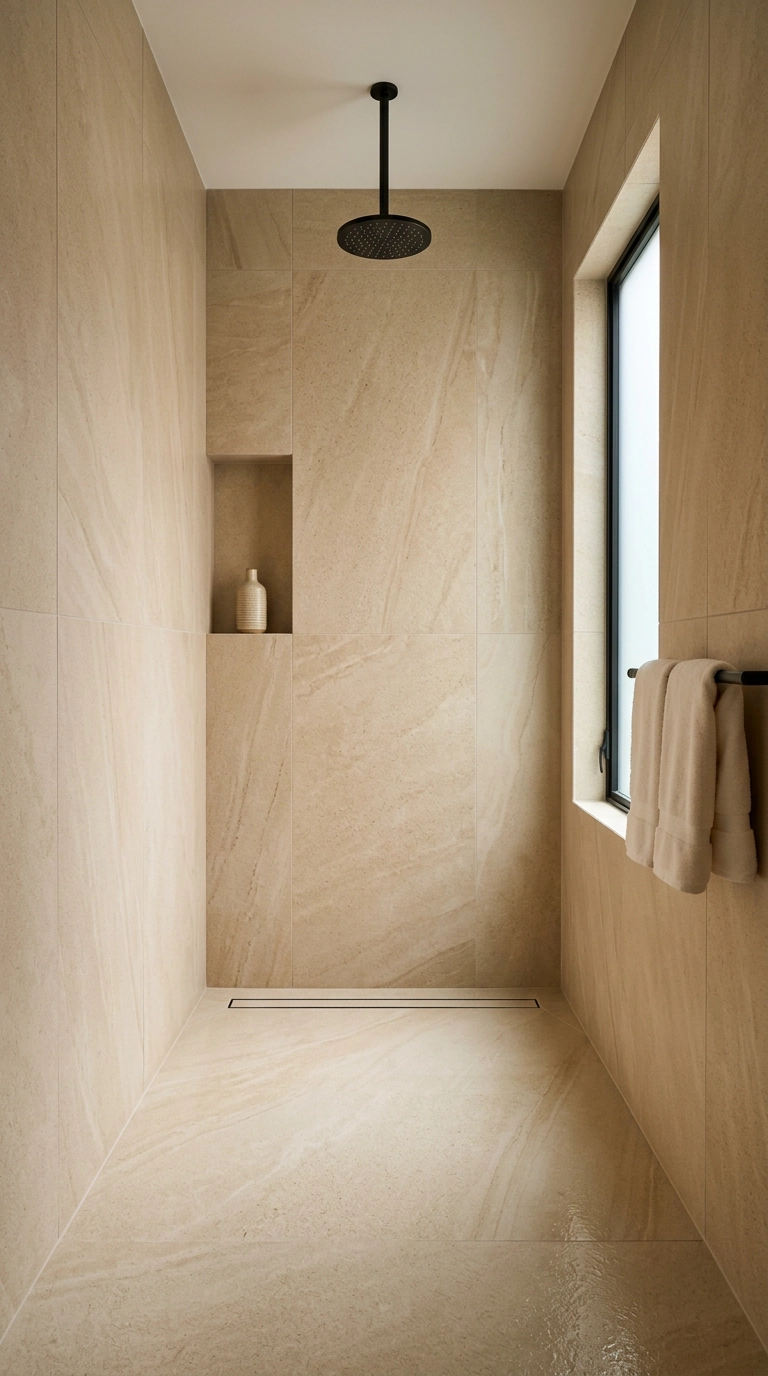
If you only take one thing from this article, take this: go as large as your installer can physically carry up the stairs. Slabs around 47 by 47 inches or bigger mean dramatically fewer grout lines, and grout is where mildew and staining live in a room that never fully dries.
2. Choose Honed or Textured Stone Underfoot, Never Polished
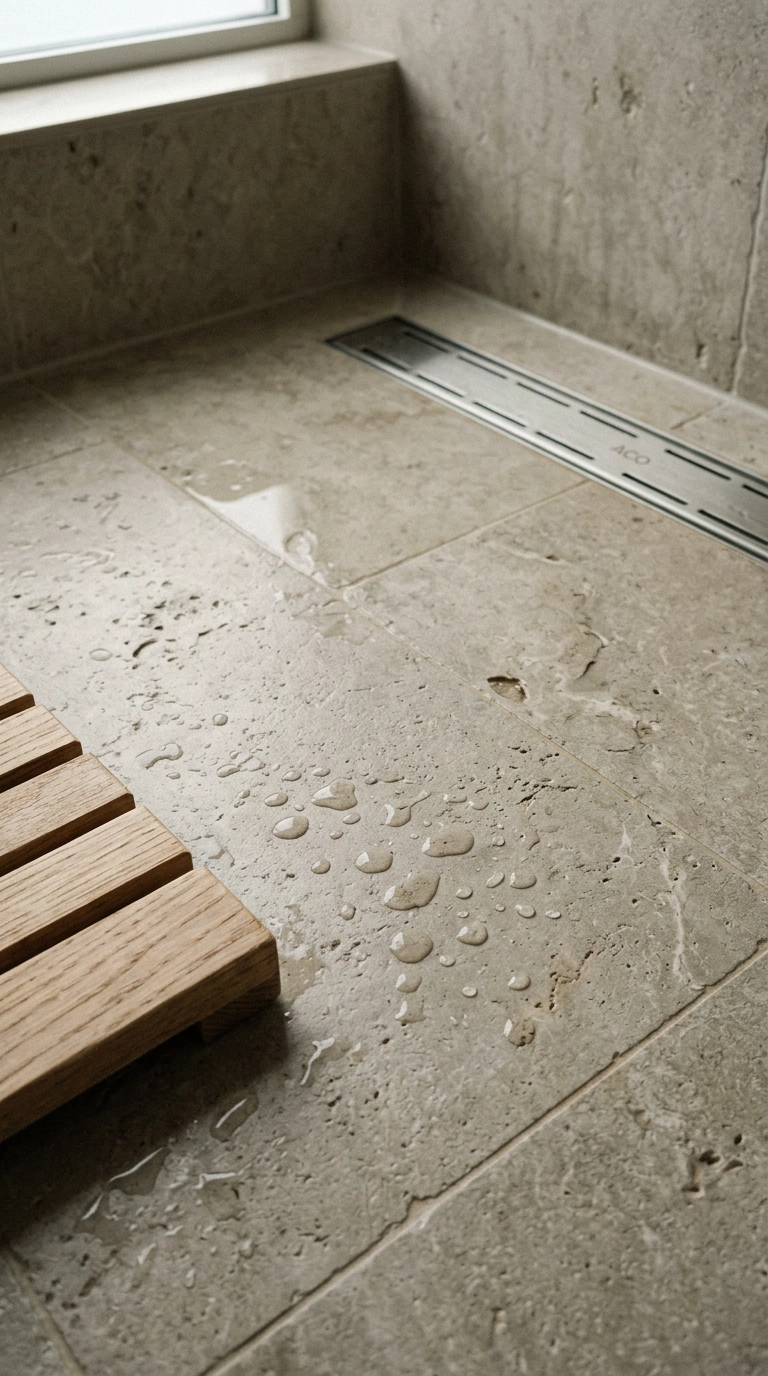
Polished stone in a wet room is a genuinely bad idea, and I’ll say that louder for the people in the back. Ask your supplier for the slip rating – you want something in the R11 range or a honed, flamed, or lightly textured finish for the floor.
3. Build a Recessed Niche Instead of Hanging Shelves
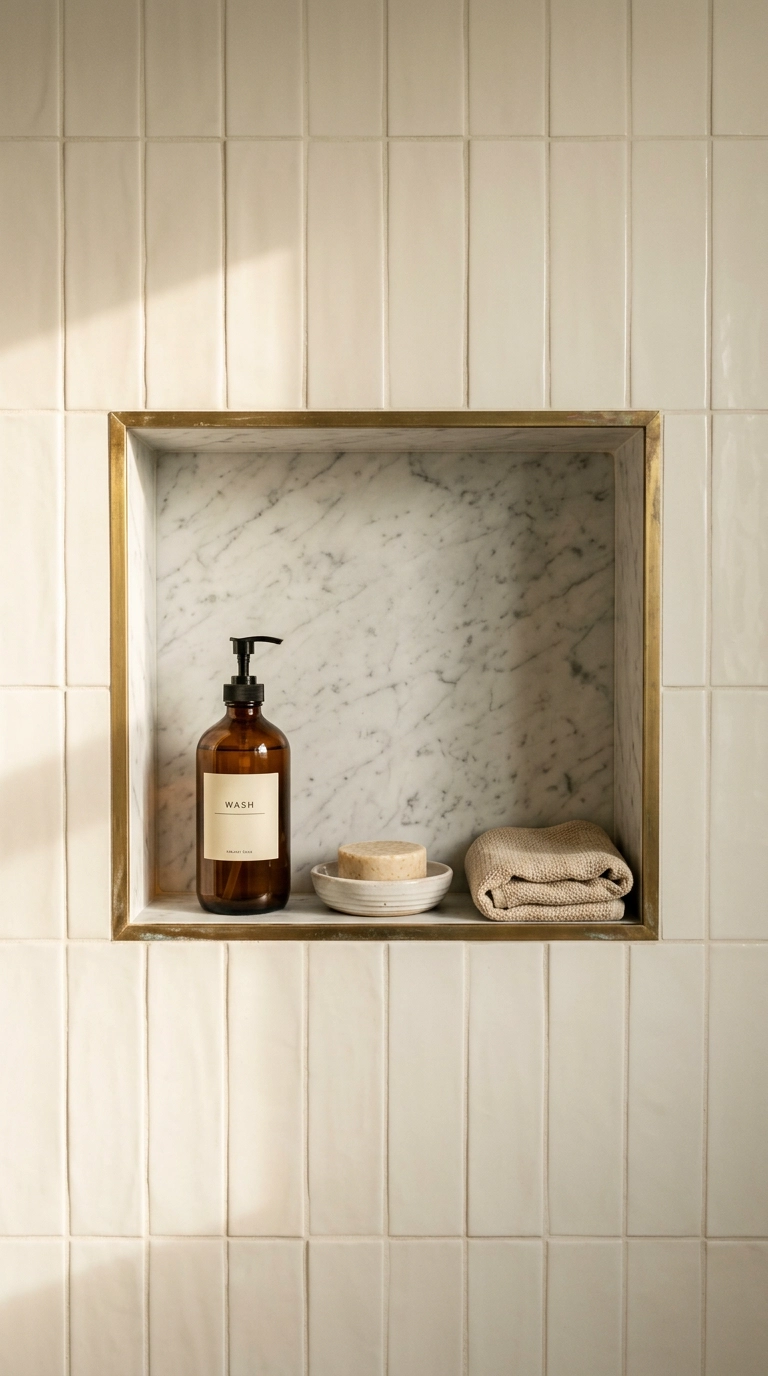
Open shelves and shower caddies are the wrong answer in a wet room, because anything protruding into an open shower collects standing water and soap film. A niche recessed into the wall keeps the sightline clean and gives water somewhere to run off.
4. One Frameless Glass Splash Panel, Nothing More
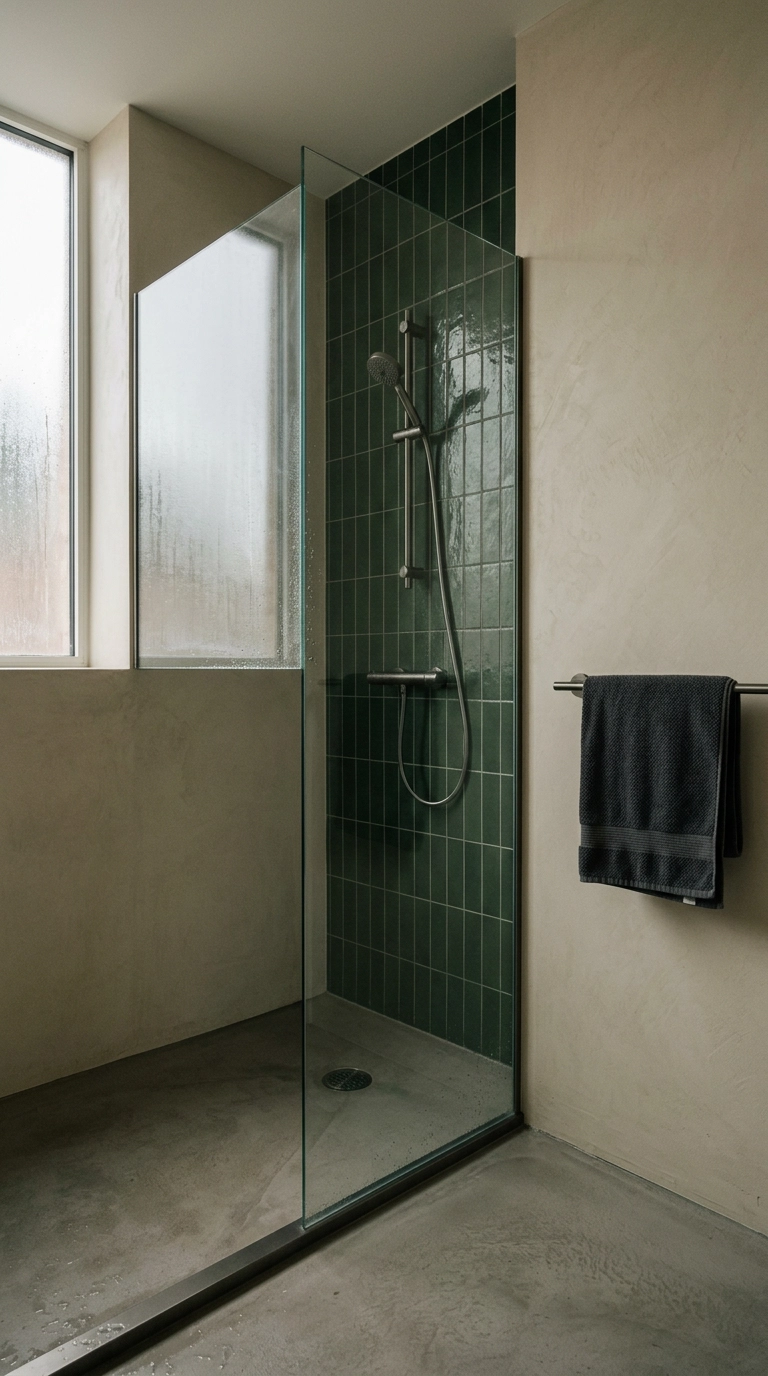
The whole point of a wet room is openness, so resist the urge to add doors back in. A single fixed panel around 35 to 47 inches wide keeps the worst of the spray off your vanity while leaving the room feeling like one continuous space.
5. Float the Vanity Off the Floor
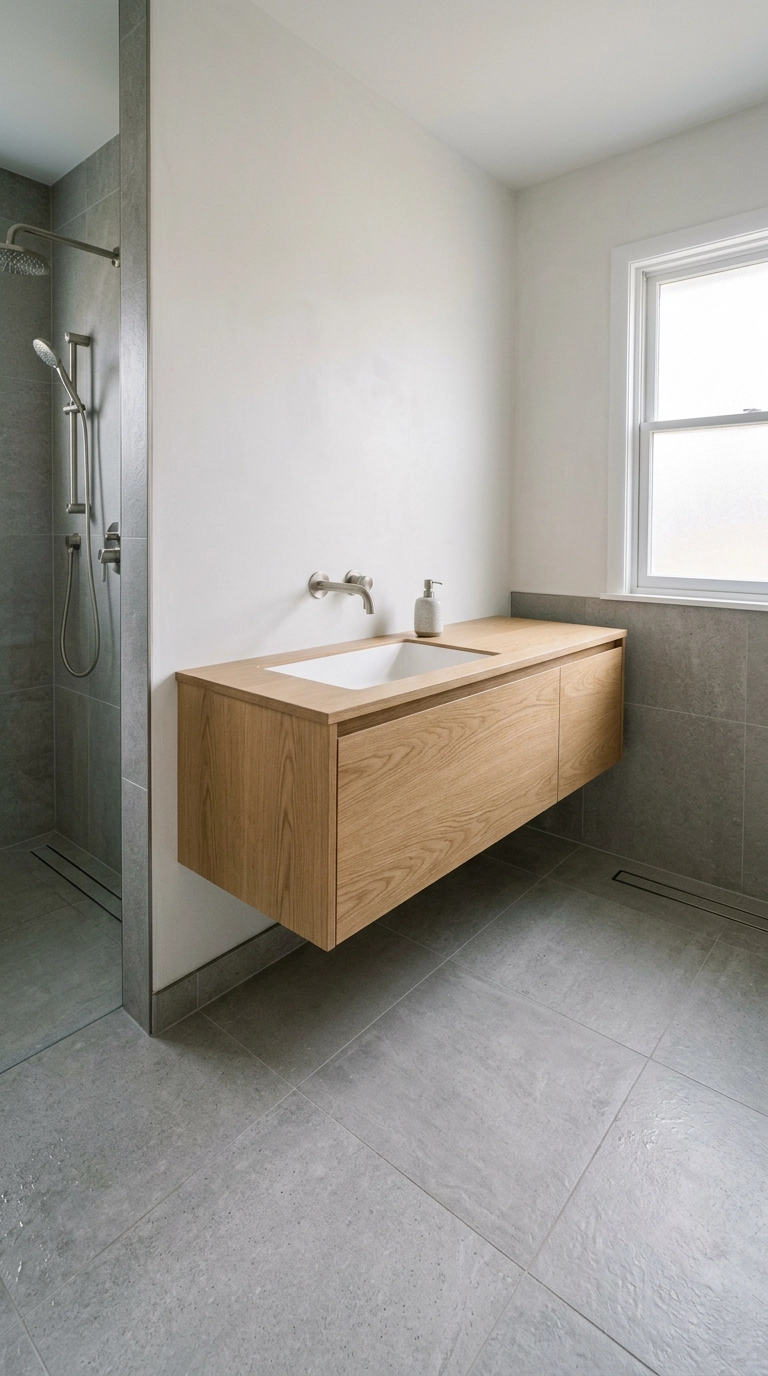
A floor-standing vanity in a wet room traps water at the plinth, and that dark damp gap is where the trouble starts. Mount it on the wall with roughly 8 to 10 inches of clear air underneath so the floor drains and dries in one uninterrupted plane.
6. Add a Teak or Iroko Slatted Bench
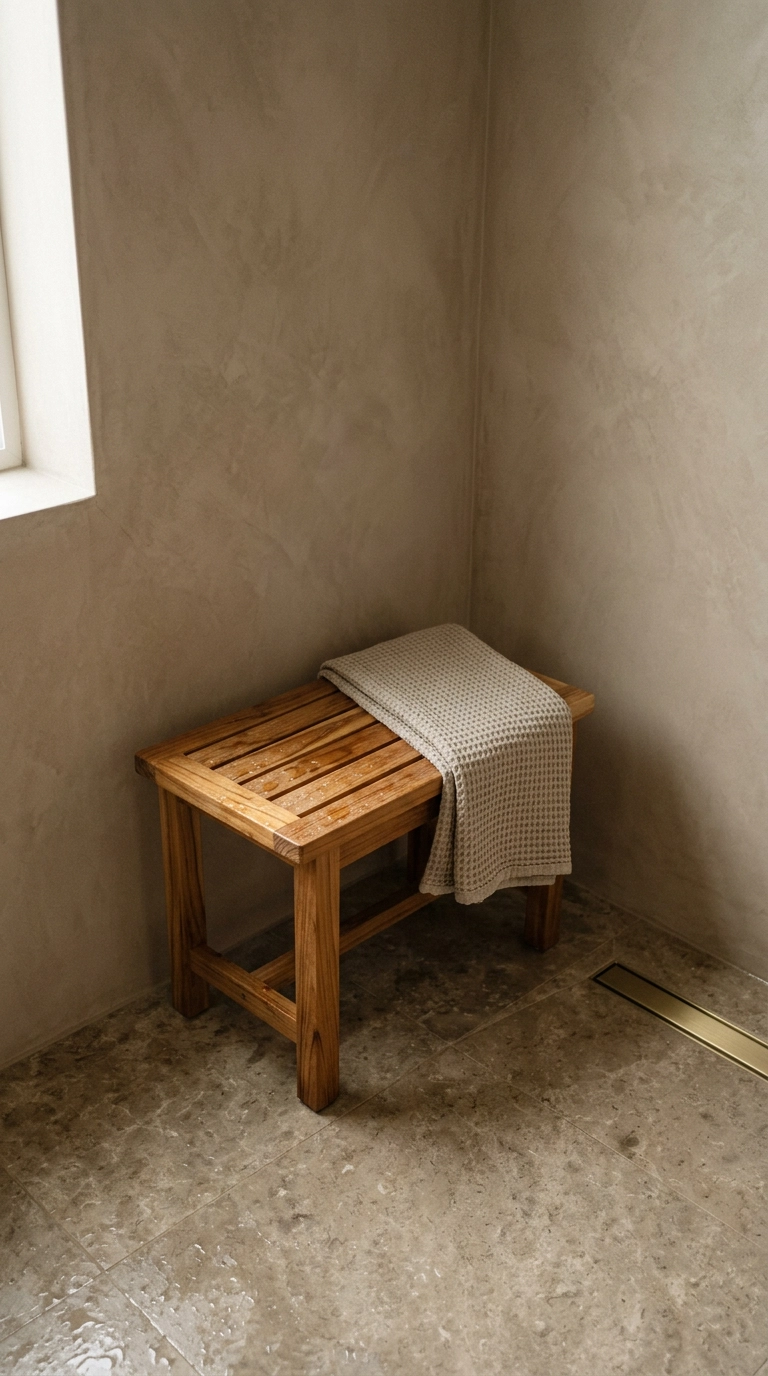
Teak and iroko are boat woods – they’re dense and oily enough to shrug off constant wetting, which is exactly the brief here. A simple slatted bench or duckboard is one of the few pieces of real furniture that belongs in a wet room, and it’s usually a sub-$200 buy rather than a project.
7. Hang a Heated Towel Rail Where the Spray Can’t Reach
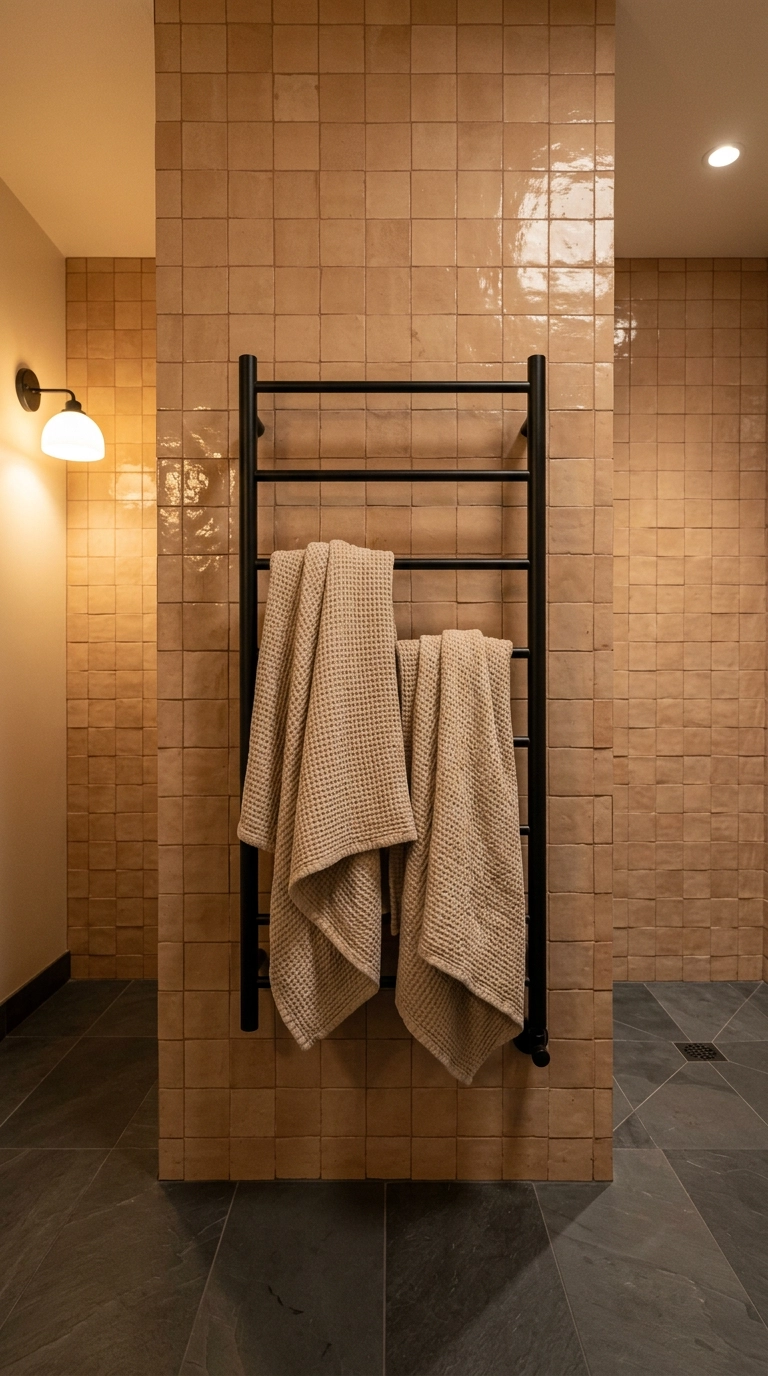
In a wet room the towels are the problem child, because ambient humidity means they never quite dry on their own. A heated rail solves it, but placement is everything – put it on the wall furthest from the shower head, ideally near the door.
8. Give Every Textile a Closed Cabinet
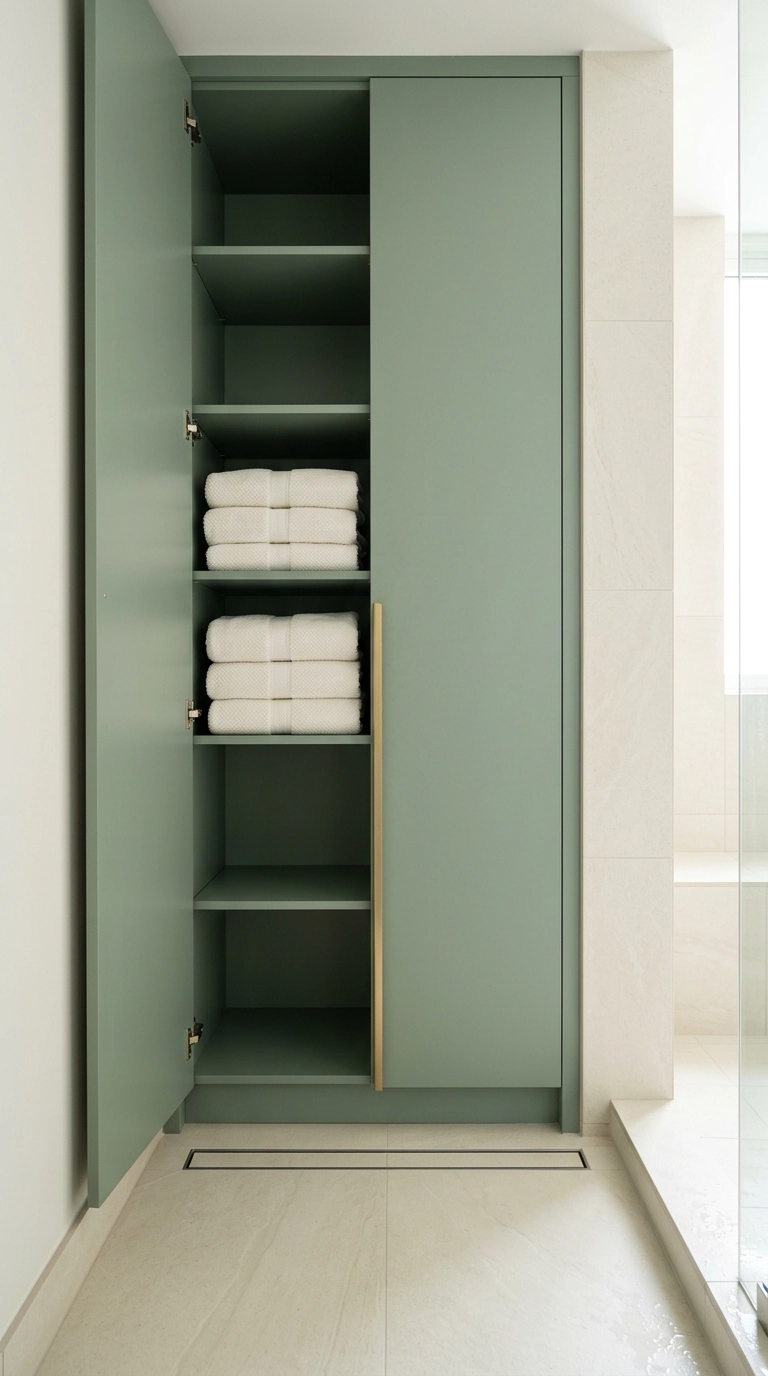
Here’s the honest tradeoff nobody puts in the pretty photos: in a wet room, open shelving stacked with spare towels and toilet paper is a bad plan. Fine mist travels, and everything on display slowly gets damp and starts to smell like a gym bag.
9. Fit a Backlit Demister Mirror
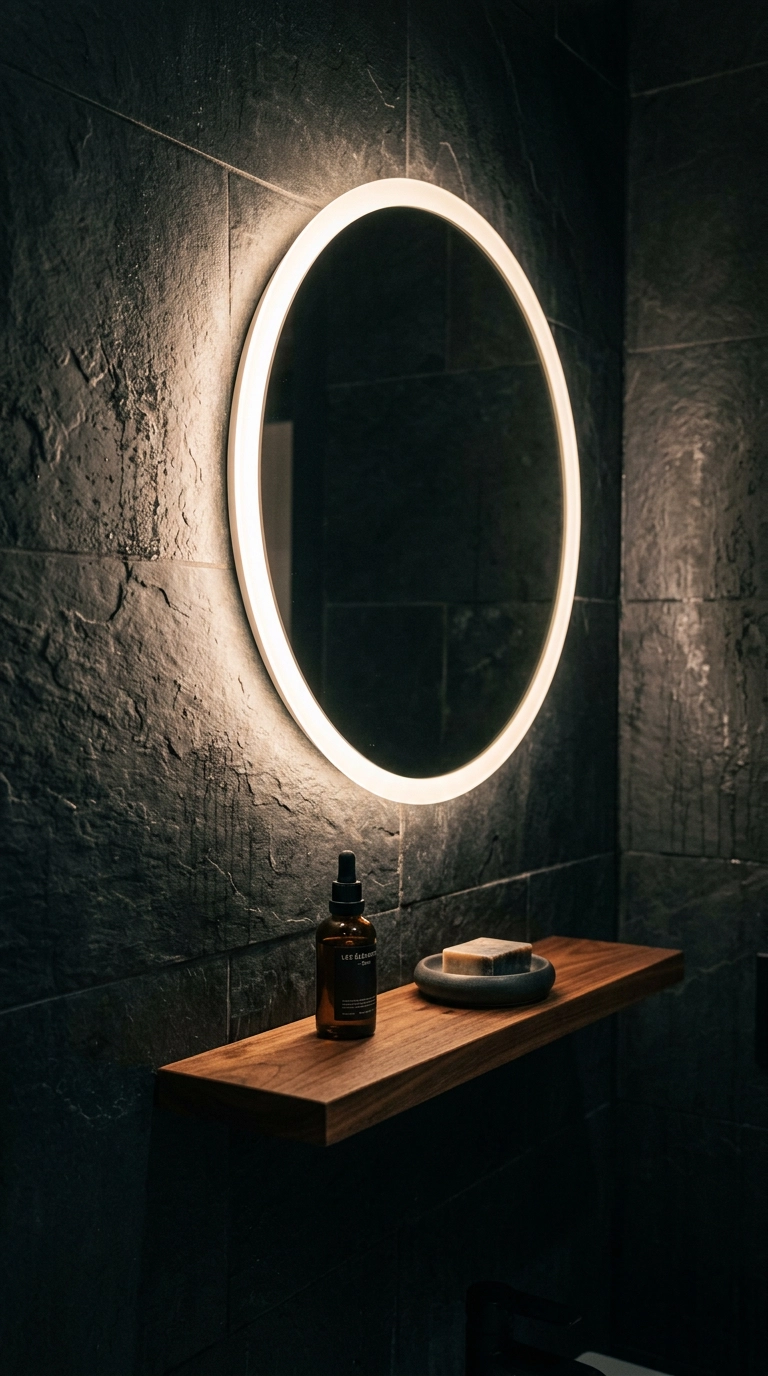
Steam is a permanent resident in a wet room, so a mirror with a built-in demister pad is worth every penny of the upgrade. The pad is a thin heating element behind the glass that keeps that patch above dew point.
10. Commit to One Metal Finish in a Durable Coating
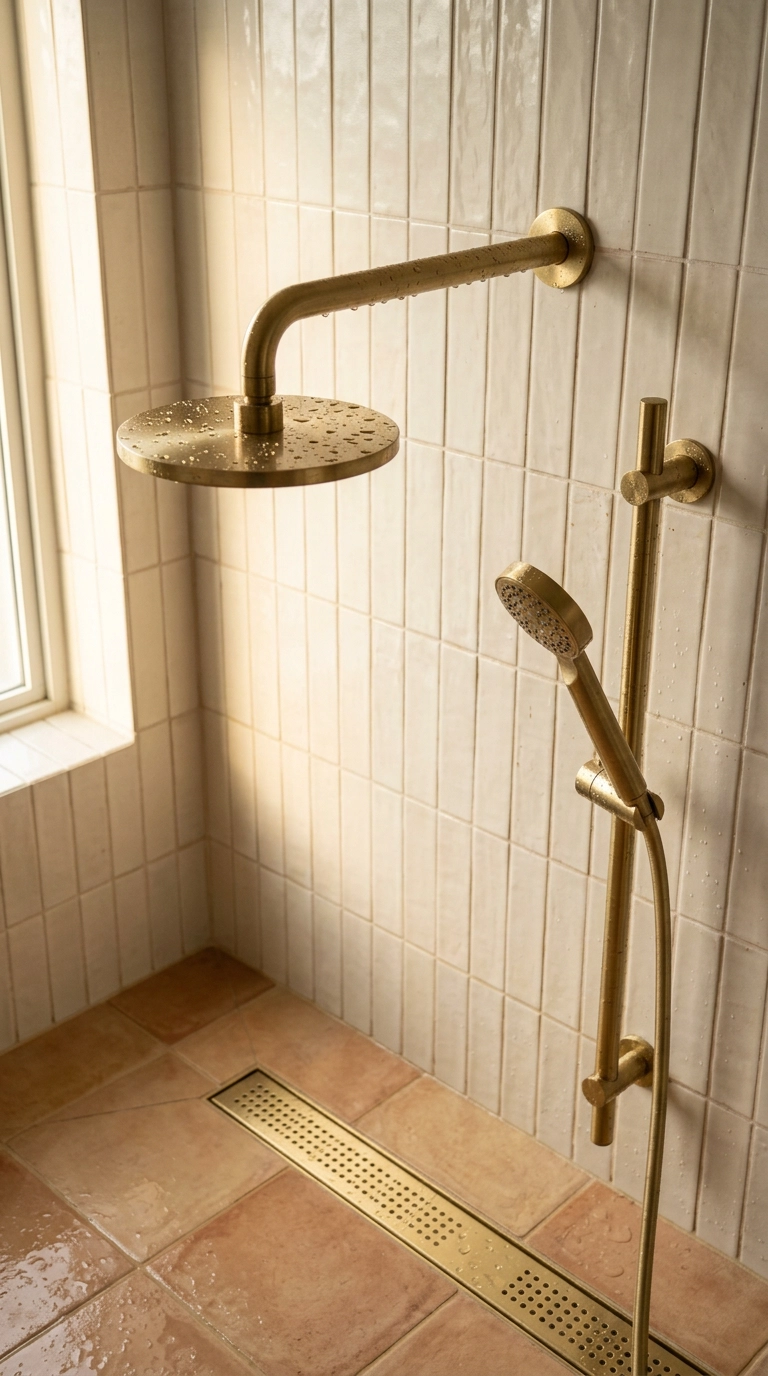
Mixed metals are a fun move in a bedroom. In a wet room, pick one finish and repeat it on the shower, the drain grate, the towel bar, and the faucet – repetition is what makes a small tiled space feel intentional rather than accidental.
11. Wrap the Walls in Seamless Microcement
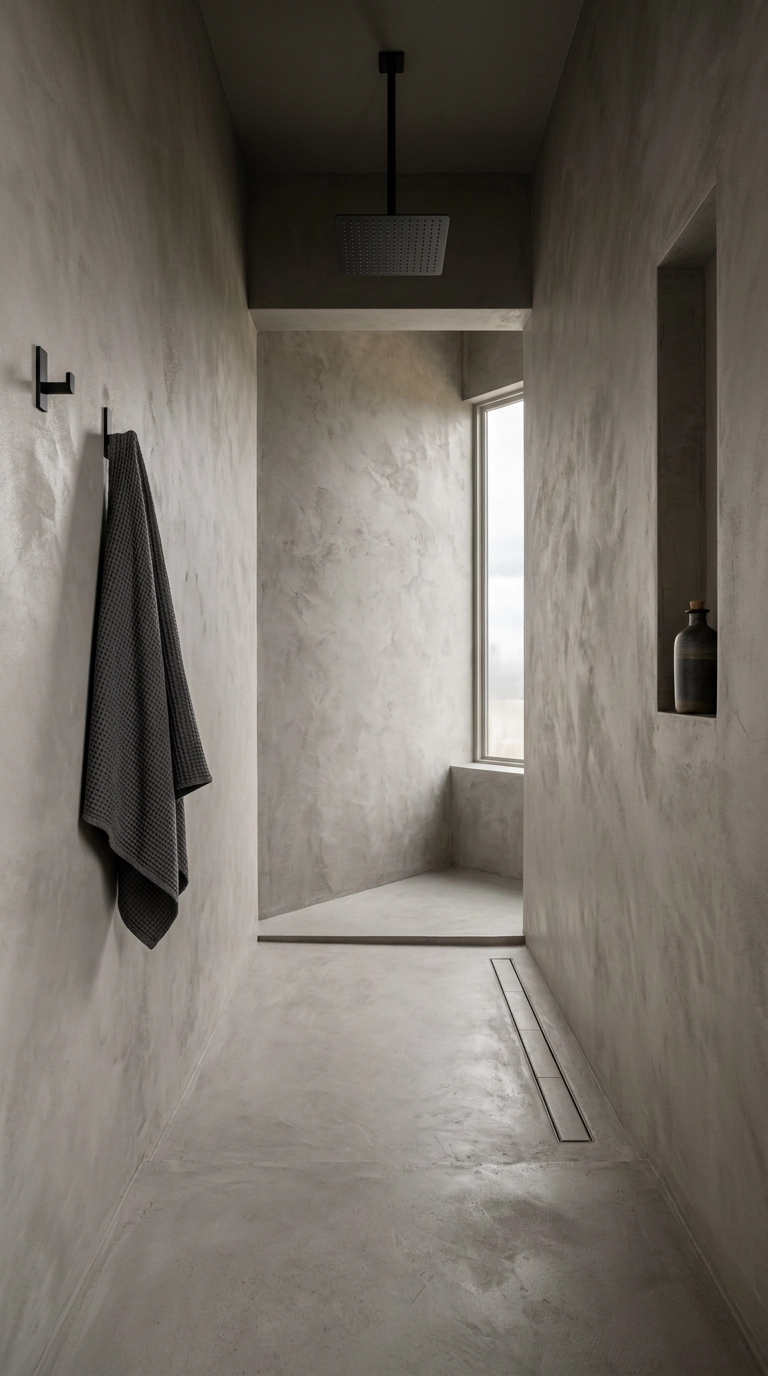
Microcement is the grout-free option – a thin cementitious coating troweled over the waterproofed substrate and then sealed. Zero grout lines, continuous surface, and that soft mottled movement that photographs beautifully.
12. Run the Linear Drain Along a Wall
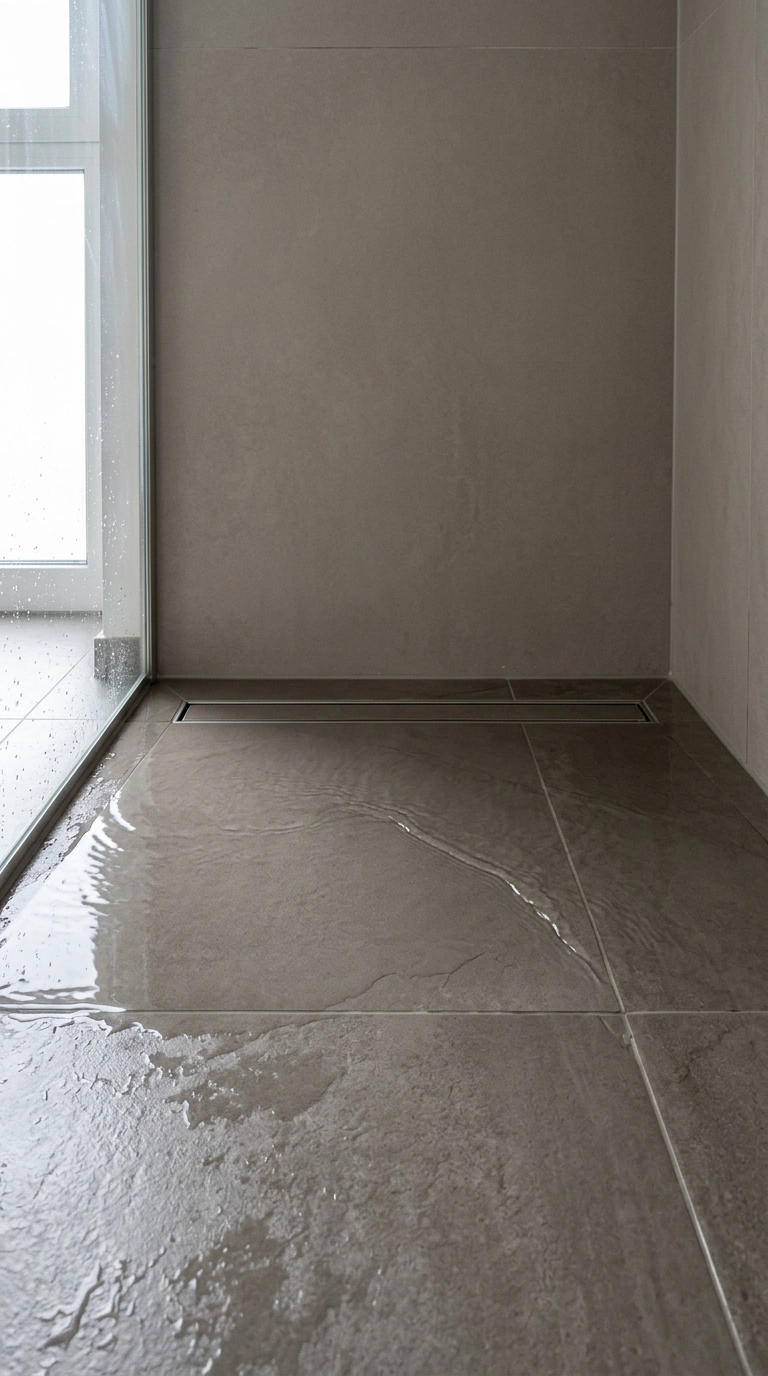
A center point drain forces the floor to slope in four directions, which means cutting your beautiful large tiles into small triangles. A linear channel along one wall lets the whole floor fall in a single plane, so your tile stays big and the lines stay straight.
13. Put Heat Under the Floor
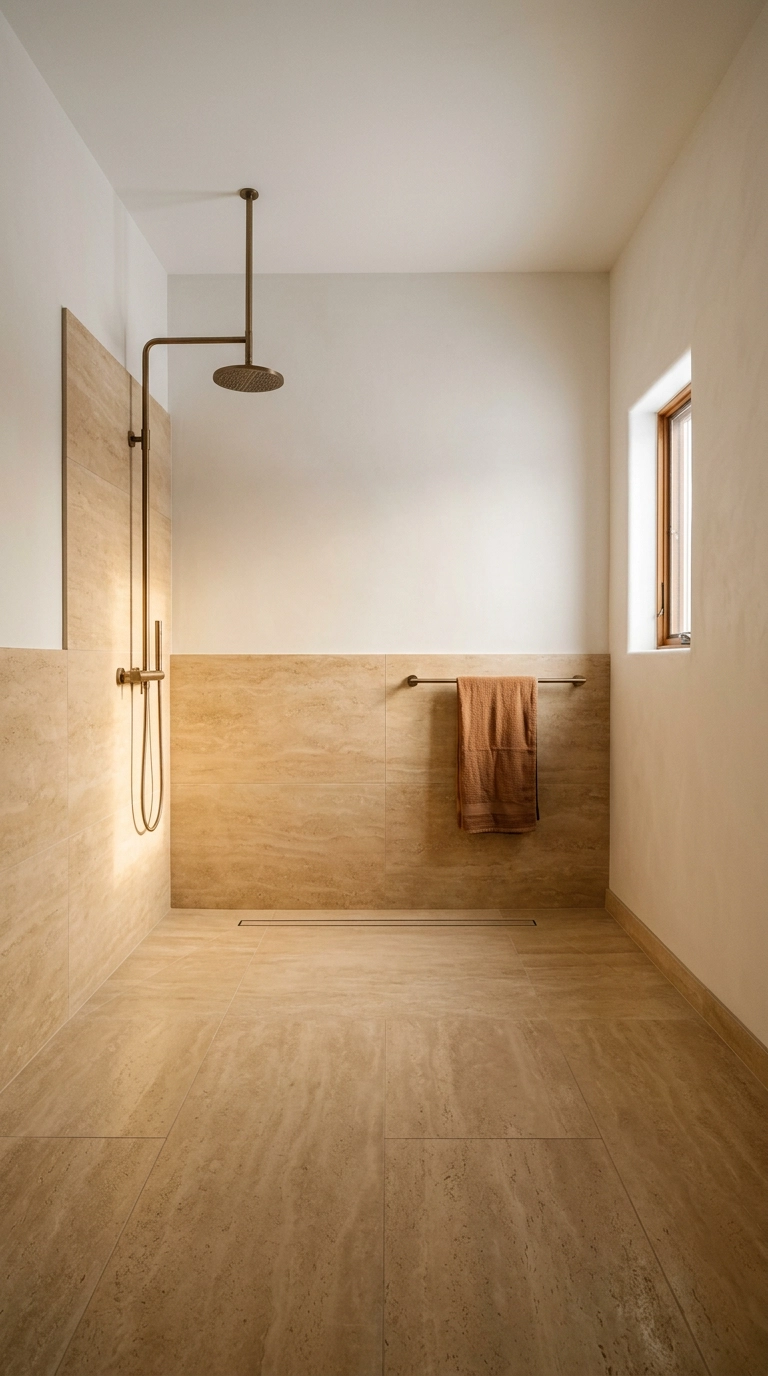
Underfloor heating in a wet room isn’t a luxury, it’s a drying strategy. Electric mats under the tile keep the slab a few degrees above room temperature, which pulls residual moisture off the floor far faster than air alone.
14. Take Ventilation as Seriously as the Tile
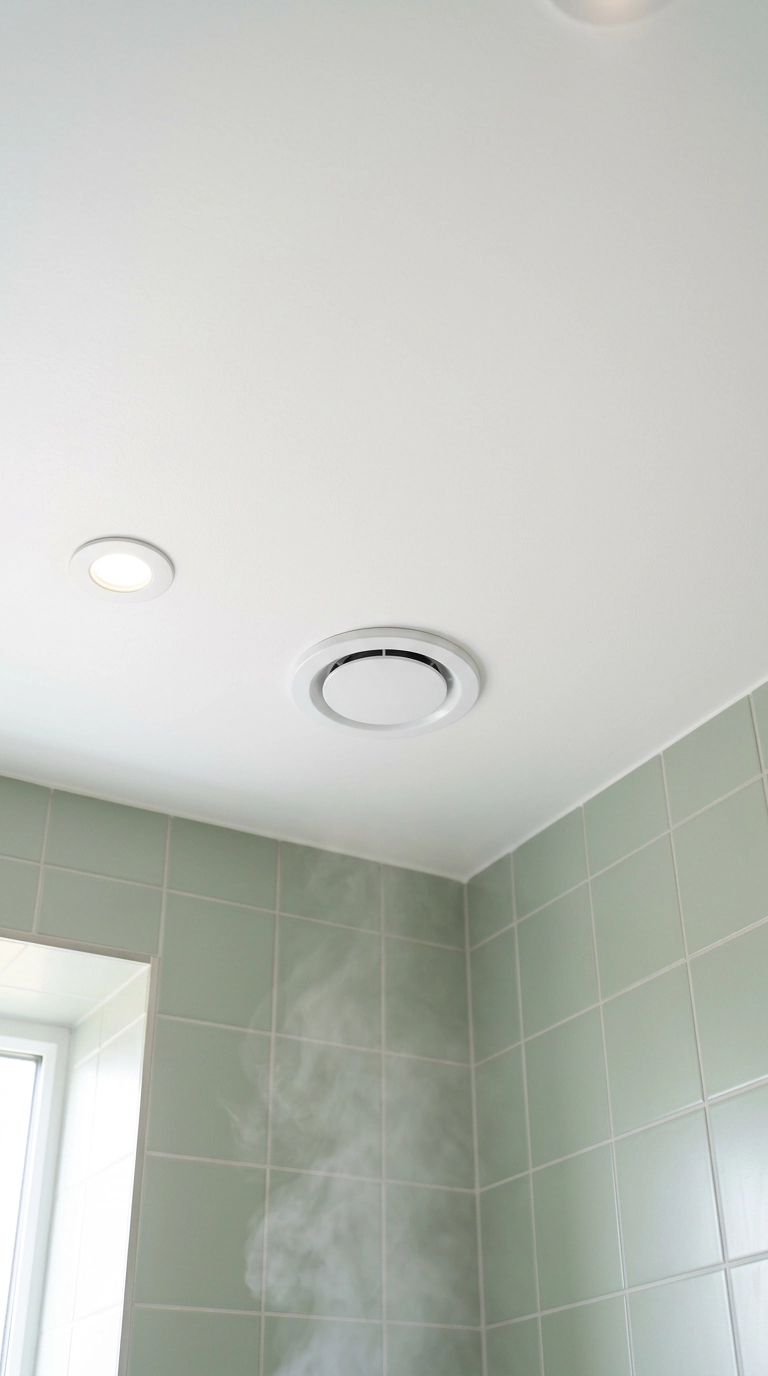
The prettiest wet room in the world will still smell musty if the air doesn’t move. You want a properly sized inline extractor with a humidity sensor and an overrun timer that keeps pulling for 15 minutes after you leave.
15. Match Your Grout to the Tile
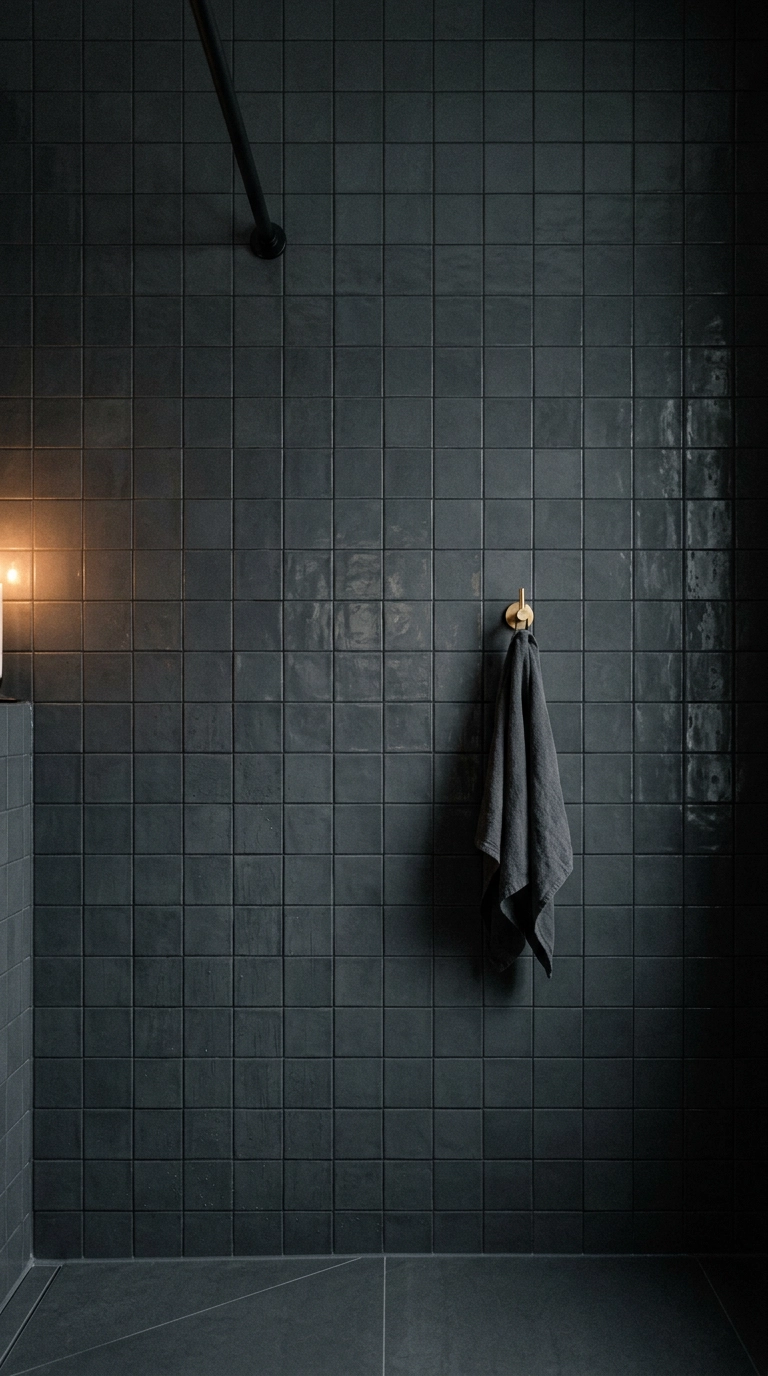
Contrasting grout turns your wall into a grid, and in a small wet room that grid is visually busy and unforgivably honest about limescale. Matching the grout tone to the tile lets the surface read as one continuous plane.
16. Run Finger Mosaic Tile Vertically on One Wall
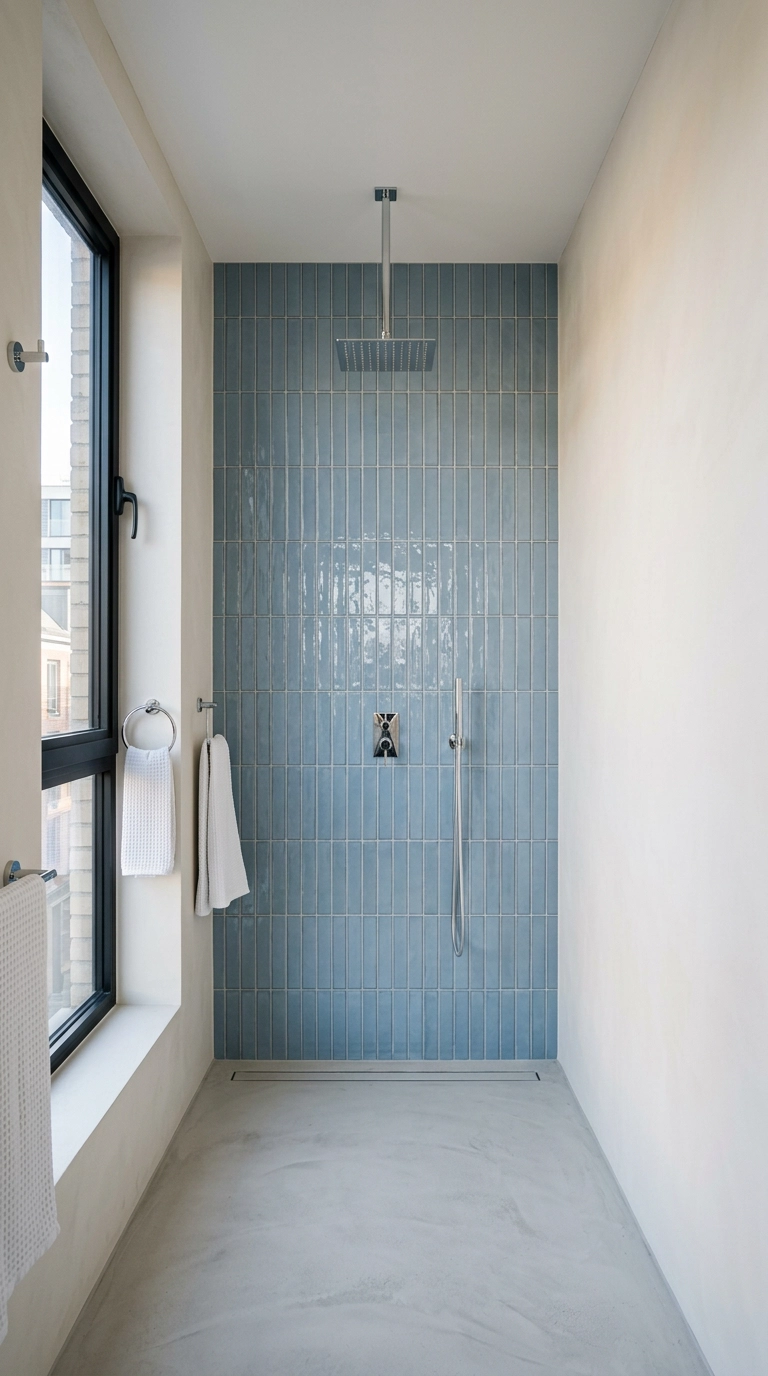
Narrow vertical tiles pull the eye upward, which is genuinely useful in a wet room with a standard 8-foot ceiling. Keep it to one wall – usually the shower wall – and let everything else stay quiet.
17. Use Zellige-Style Tile for Texture in a Tiny Wet Room
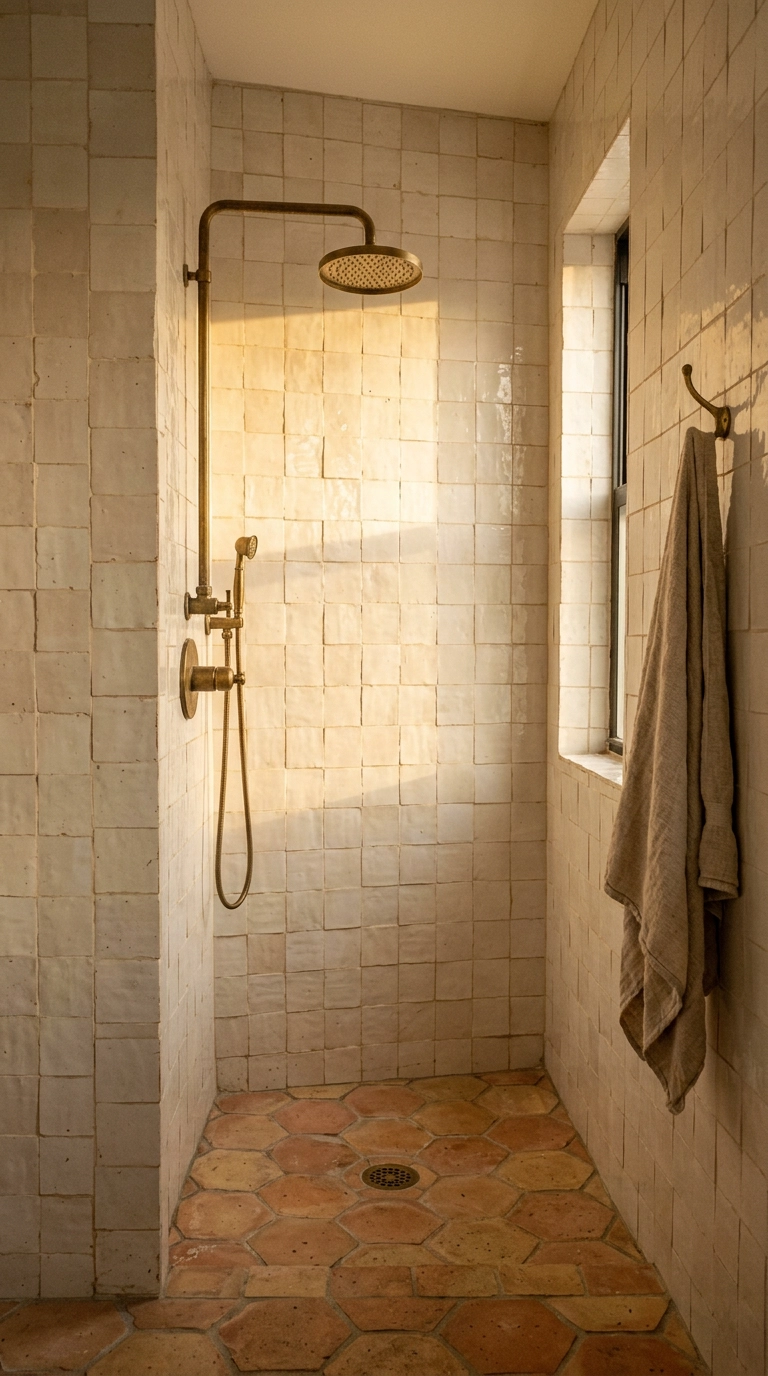
In a room this small, texture does the work that furniture would do anywhere else. Handmade-look tile with irregular edges catches light unevenly, so a plain white wall stops being plain.
18. Color Drench the Whole Room in One Deep Shade
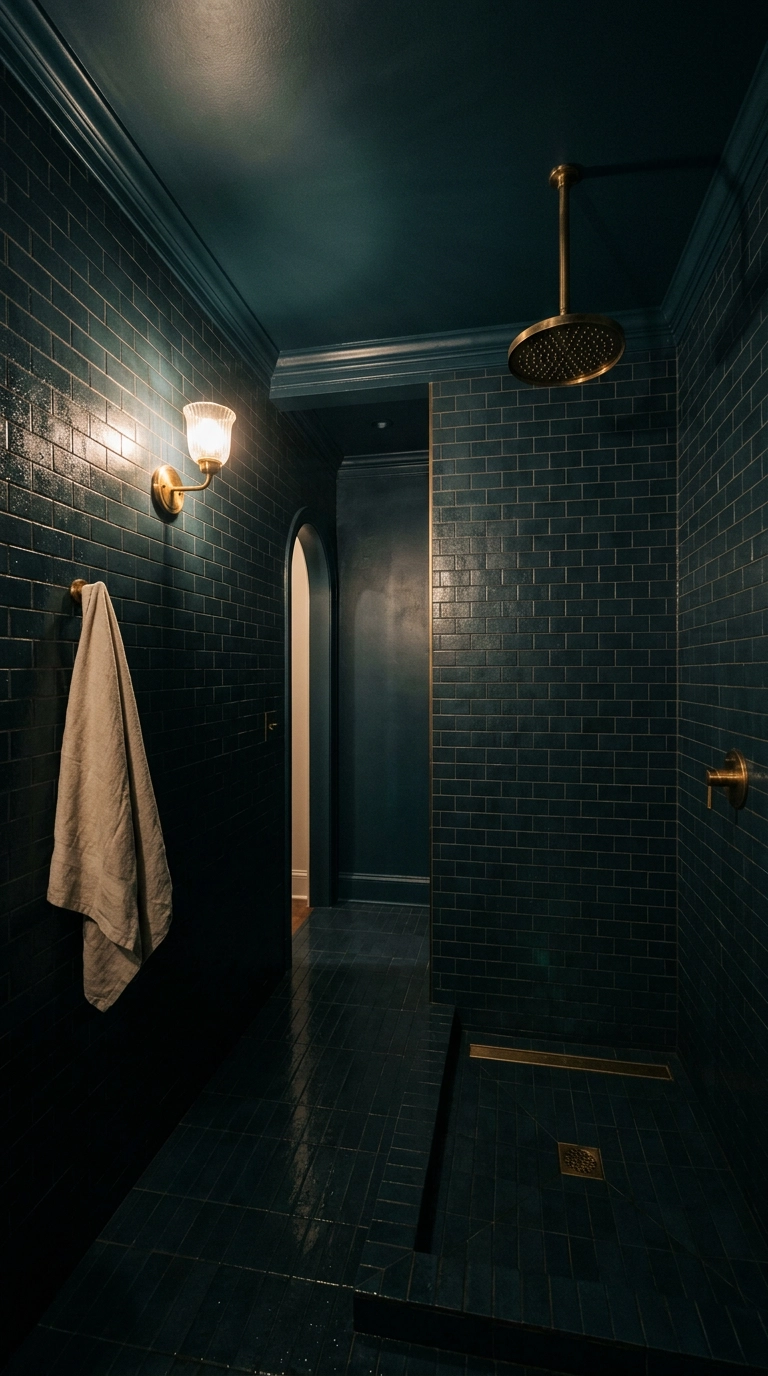
Color drenching means taking one shade across walls, ceiling, and joinery so the eye never hits a break. In a wet room it’s the fastest route to that dark spa-hotel mood, and something in the Farrow & Ball Hague Blue or Studio Green family is a safe place to start.
19. Lay a Terrazzo Floor That Hides Everything
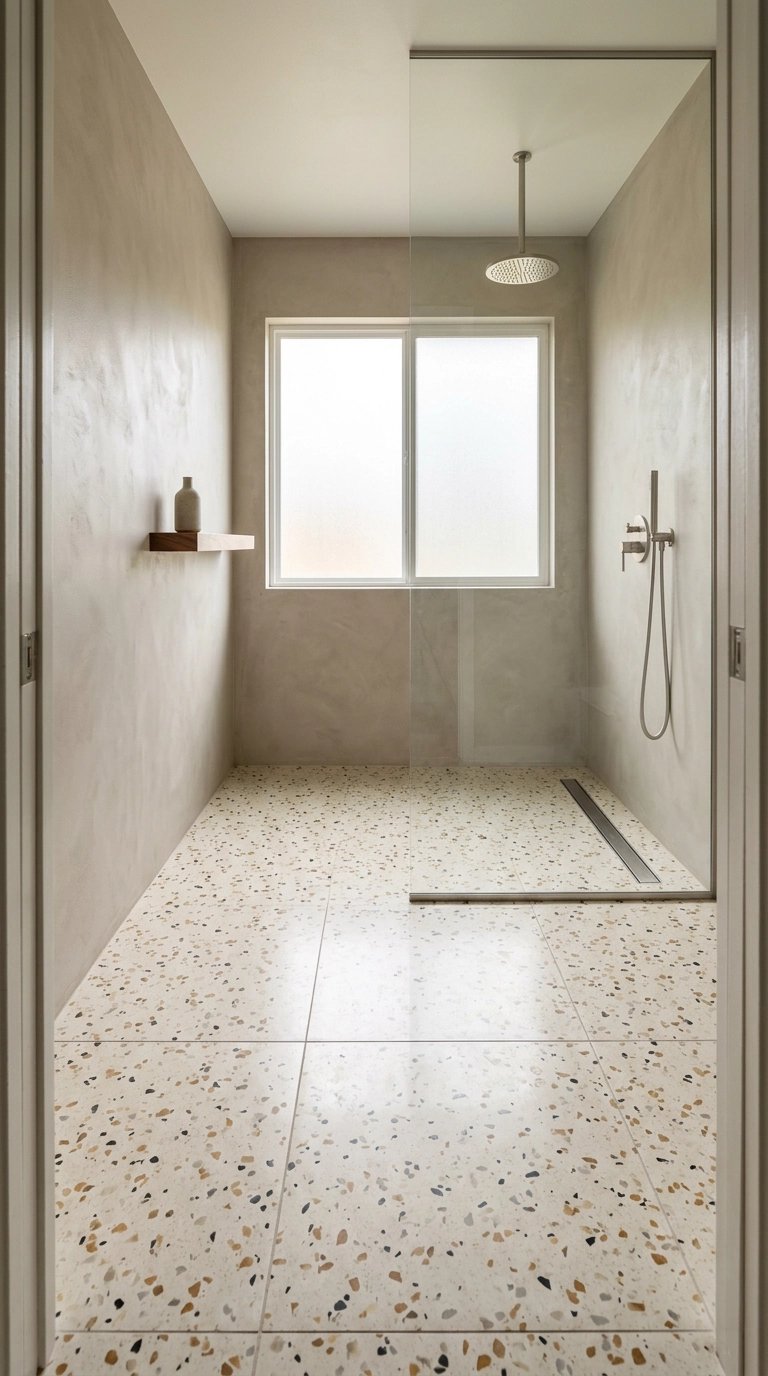
Terrazzo is the most forgiving floor you can put in a wet room, because the speckled aggregate camouflages water marks, hair, and the general chaos of a family bathroom. Choose a porcelain terrazzo-look tile over real poured terrazzo unless you have the budget and the structure for it.
20. Swap the Window Glass for Fluted or Reeded
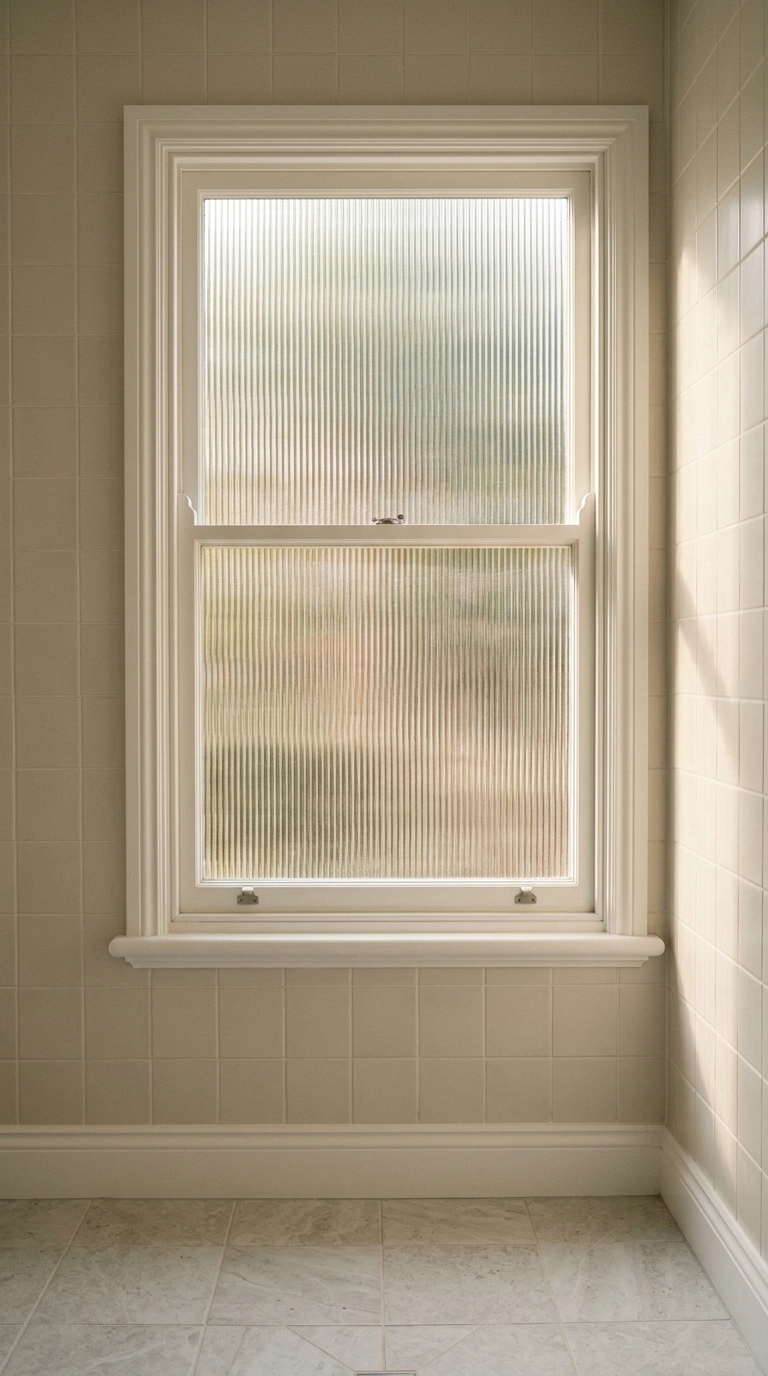
Curtains and blinds are a losing battle in a wet room – fabric plus permanent humidity equals a science experiment. Reeded or fluted glass gives you privacy with zero textiles and zero maintenance.
21. Build In a Tiled Ledge Seat
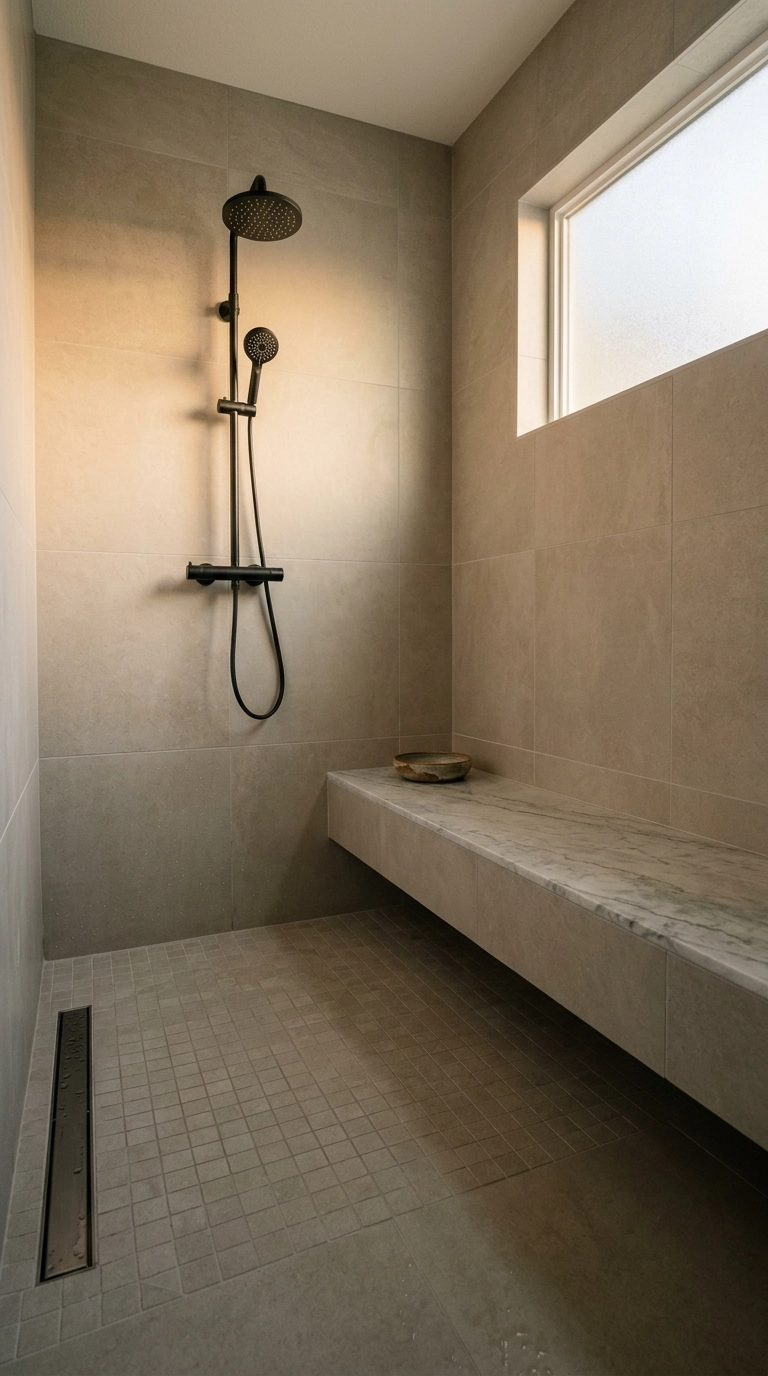
A built-in bench turns a wet room into somewhere you’d actually linger, and it’s the accessibility feature that doesn’t look like an accessibility feature. Standard seat height is around 17 to 19 inches, with a depth of about 15 inches so it’s usable without eating the floor.
22. End on Overhead Light
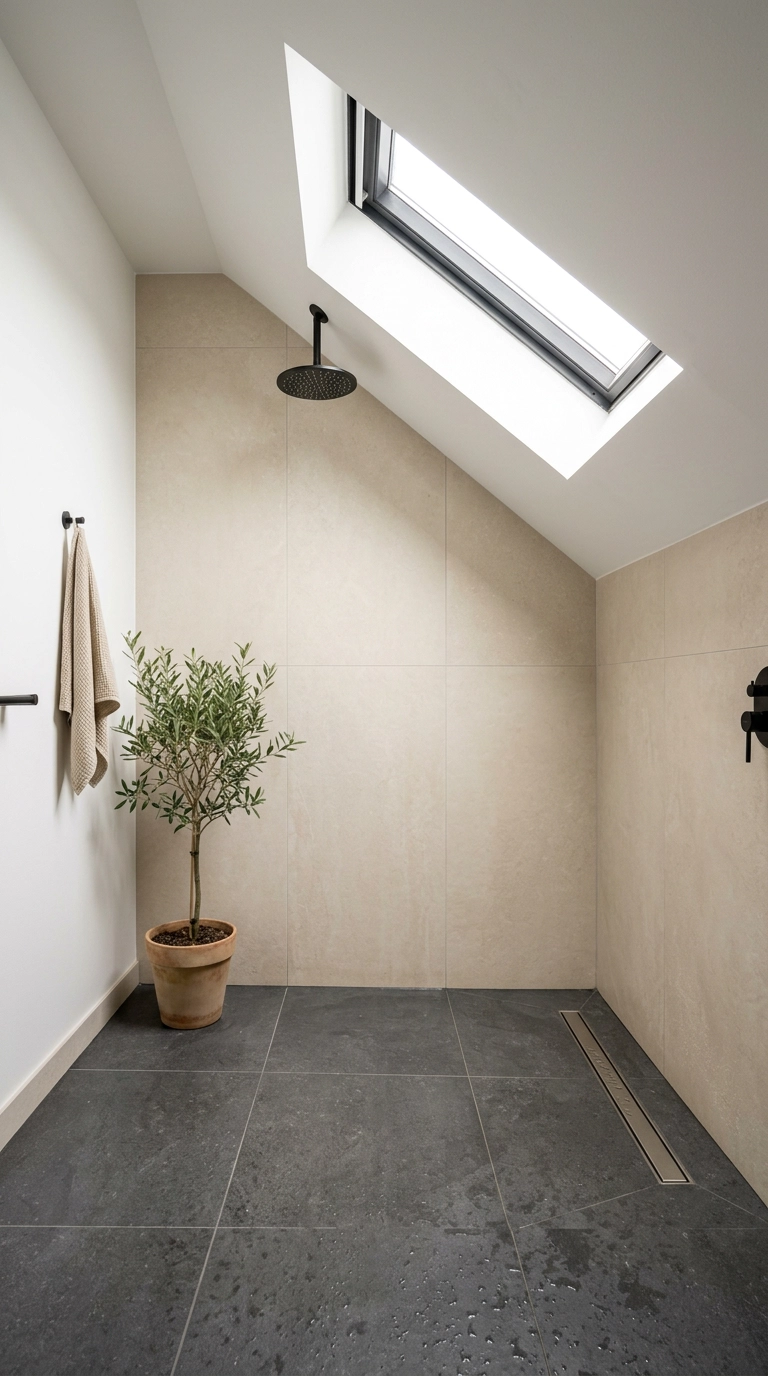
If your wet room sits under a roof, a skylight over the shower is the single most transformative thing you can do, and it’s the shot everyone saves. Overhead daylight makes tile look expensive in a way no fixture can fake.
Before You Pick Up a Tile Sample
Every wet room I’ve worked on has taught me the same lesson, which is that the decisions people fall in love with on Pinterest and the decisions that make the room work are usually the same decisions – just explained badly. Large-format porcelain isn’t only beautiful, it’s fewer grout lines. A recessed niche isn’t only tidy, it’s the only storage that drains. The floating vanity, the matched grout, the honed rather than polished stone – all of it is the intersection of looking good and surviving a room that gets soaked twice a day.
What I’m seeing everywhere right now is the shift away from cold grey minimalism toward warm, tactile wet rooms – microcement in mushroom and clay tones, unlacquered brass left to patina, handmade zellige-style tile with all its lovely irregularity. Kelly Wearstler’s habit of letting one heavy material carry the whole room translates beautifully here, and the color-drenched dark bathroom that Farrow & Ball shades like Hague Blue kicked off a few years ago has landed permanently in the wet room world. Terrazzo is back too, mercifully in warmer creams rather than the mint-and-grey of 2019.
One last honest note: tanking is a professional job, full stop. I can talk you through tile, lighting, storage, and finishes all day, but the waterproof membrane underneath all of it belongs to someone qualified and insured, and no amount of good styling saves a room that leaks into the joists. Get that part right and the fun part is genuinely fun. If you want more of this – the real specs, the honest tradeoffs, and the ideas worth saving – sign up for my weekly newsletter and I’ll send the good stuff straight to your inbox.


