
23+ Stunning Black and White Fireplace Decor Ideas that Look Expensive in 2026

I’ll be honest with you – black and white fireplaces are the easiest thing in the world to get wrong. Done lazily, you end up with a cold, flat, dry-erase-board of a wall that makes your living room feel like a dentist’s waiting area. But done right, with one warm wood tone or a bit of aged brass thrown in to break the ice, a black and white fireplace is the single most expensive-looking thing you can do to a room without moving a wall. I’ve styled dozens of these over the years, from full masonry rebuilds to a $40 can of paint in a rental, and the ones that work all follow the same handful of rules.
Black and White Fireplace Decor Ideas
1. Limewash the Brick Matte Black and Leave the Mantel Raw Wood
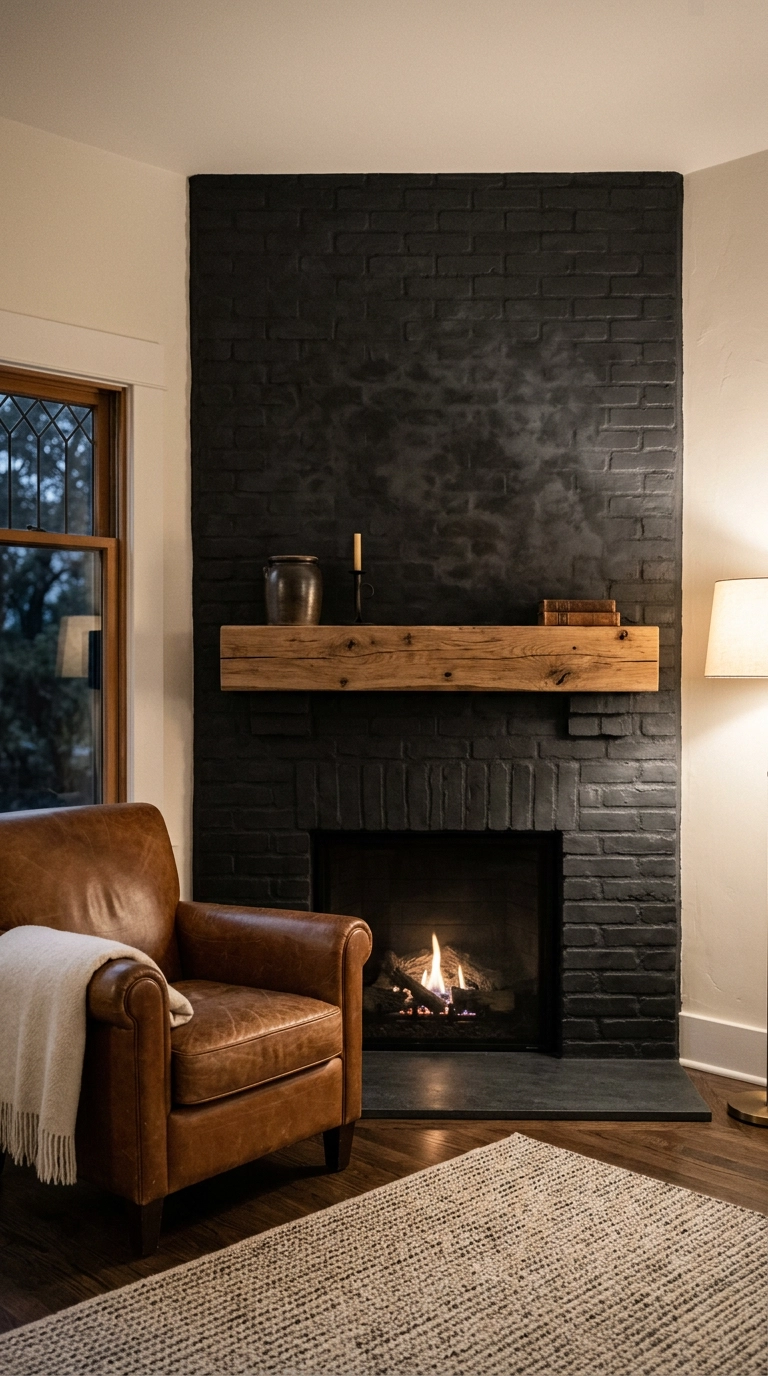
Limewash is my favorite way to go black on brick because it soaks in instead of sitting on top, so you keep every bit of the brick’s texture. Regular paint turns brick into a flat black rectangle, and that’s exactly the trap that makes these rooms feel lifeless.
2. Hang One Oversized Black and White Artwork at Two-Thirds the Mantel Width
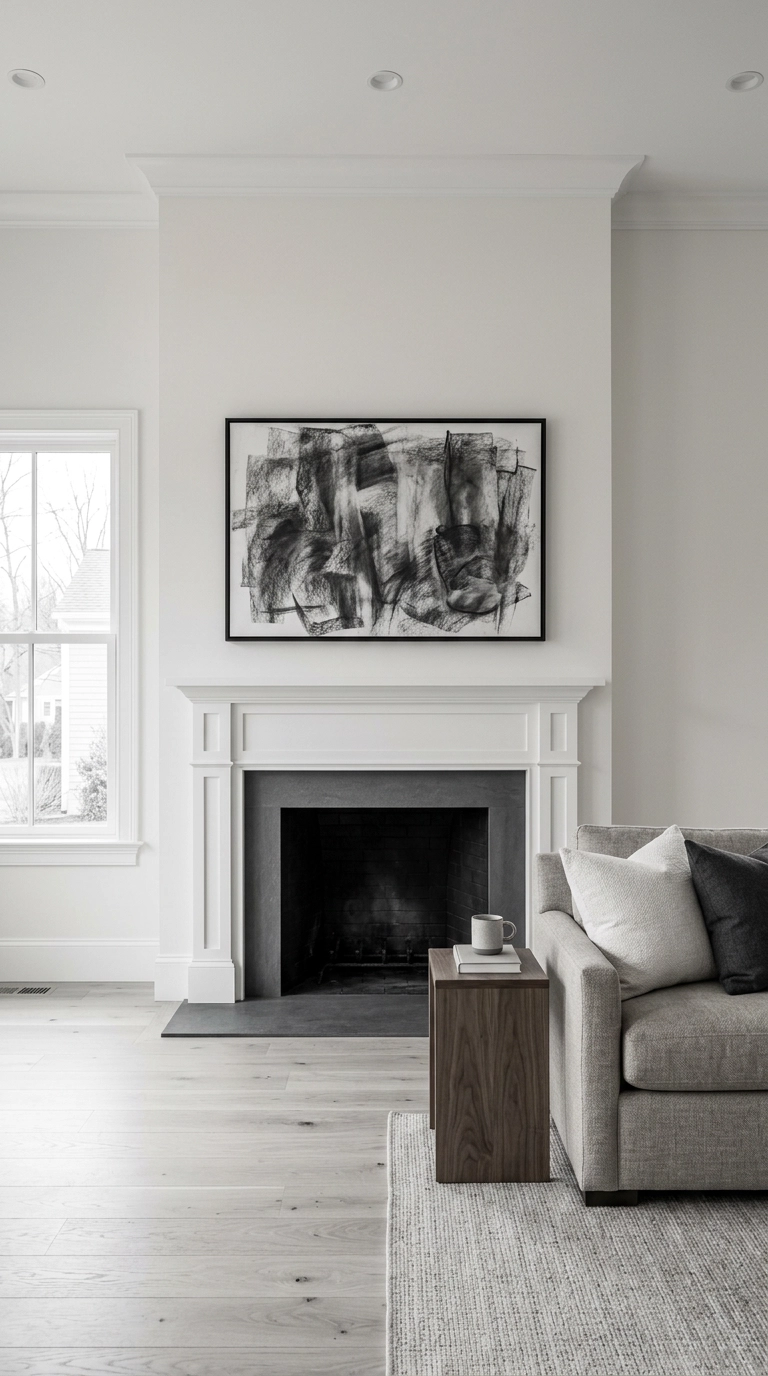
Here’s the rule I repeat more than any other: art above a mantel should be roughly two-thirds to three-quarters the width of the mantel shelf. Anything smaller floats up there looking apologetic, and anything wider fights the surround for attention.
3. Paint the Inside of the Firebox Matte Black
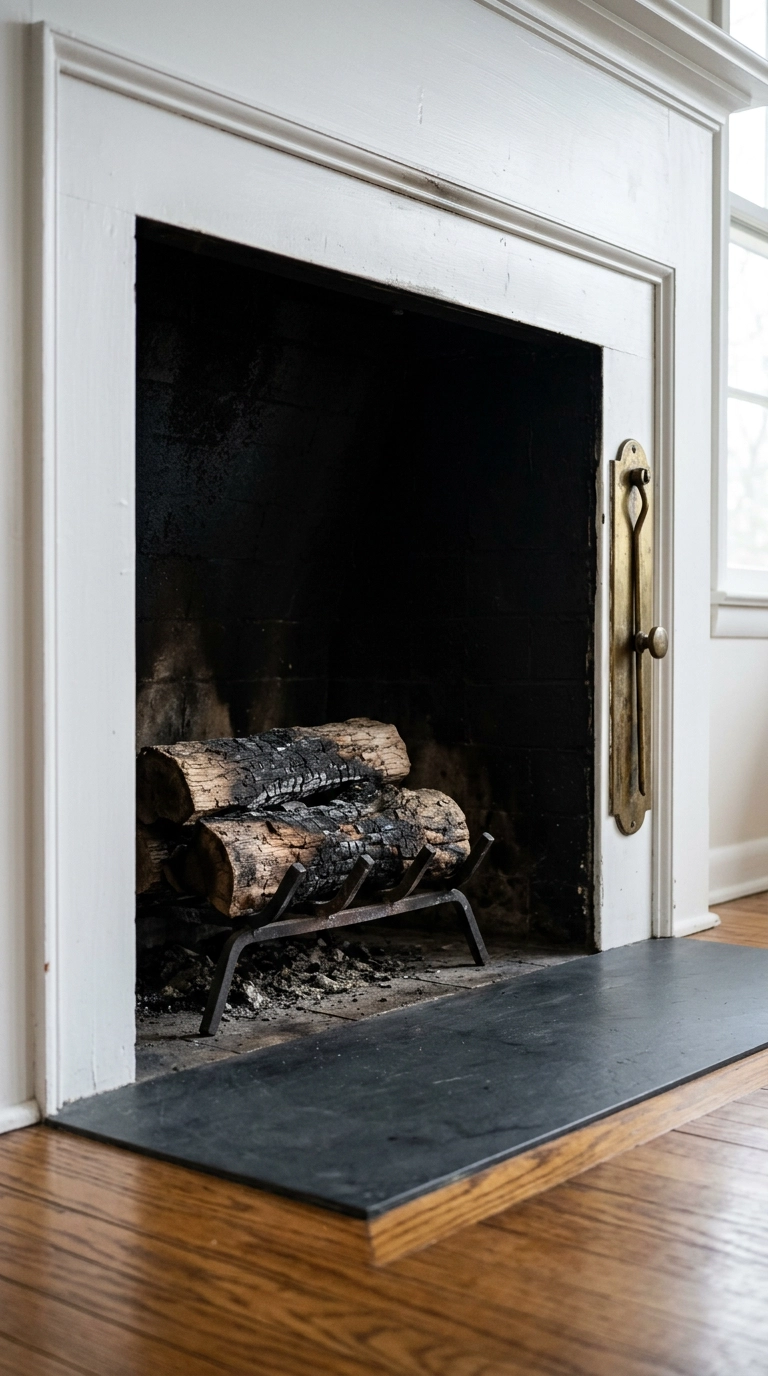
This is the cheapest, highest-return trick in the entire article. One can of high-heat matte black spray paint, around $12, and about twenty minutes of taping off gets rid of that patchy grey soot-and-crumbling-mortar situation inside the opening.
4. Style the Mantel in Odd Numbers at Three Different Heights
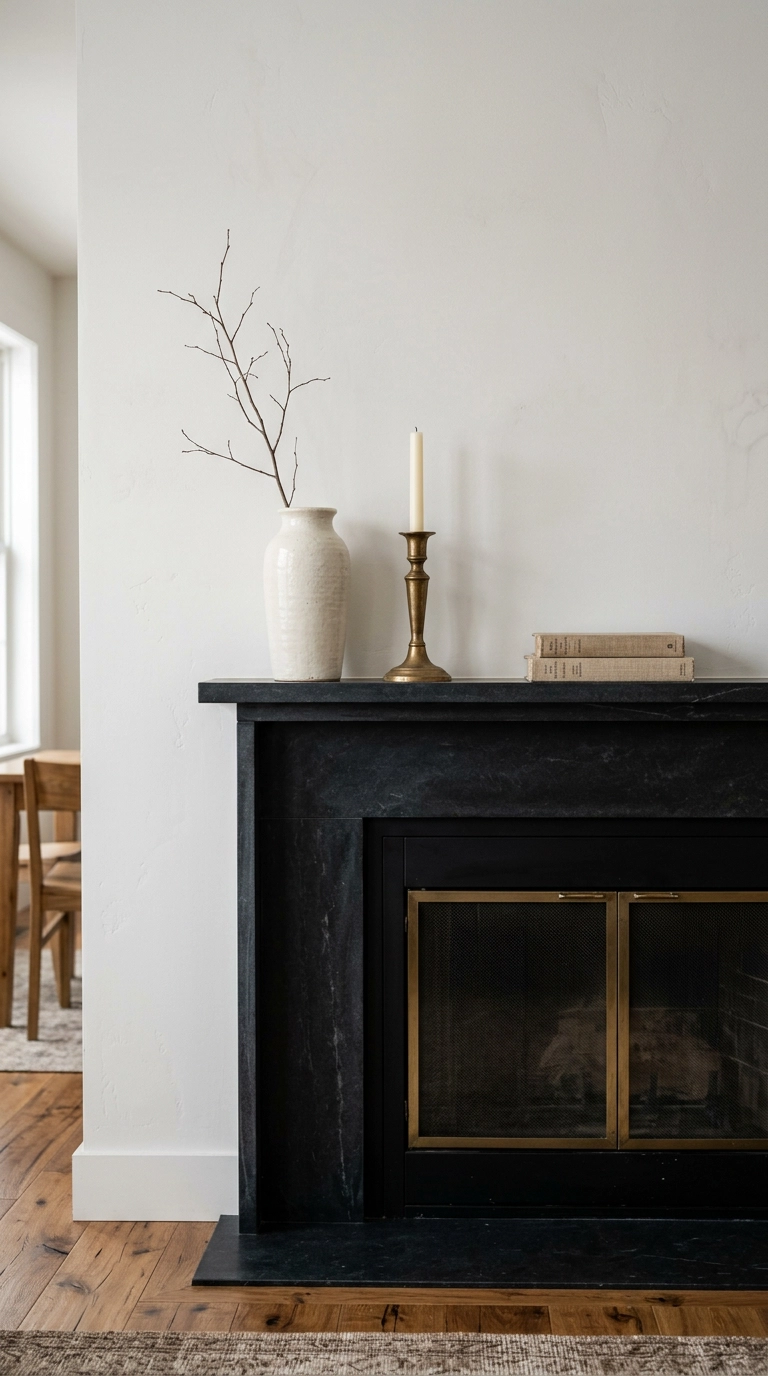
Odd numbers work because your eye can’t split three objects into a tidy pair, so it keeps moving across the shelf instead of stopping dead in the middle. Three is the sweet spot on a standard 5-foot mantel, five if you have a wide one.
5. Whitewash the Brick and Let a Black Cast Iron Insert Do the Talking
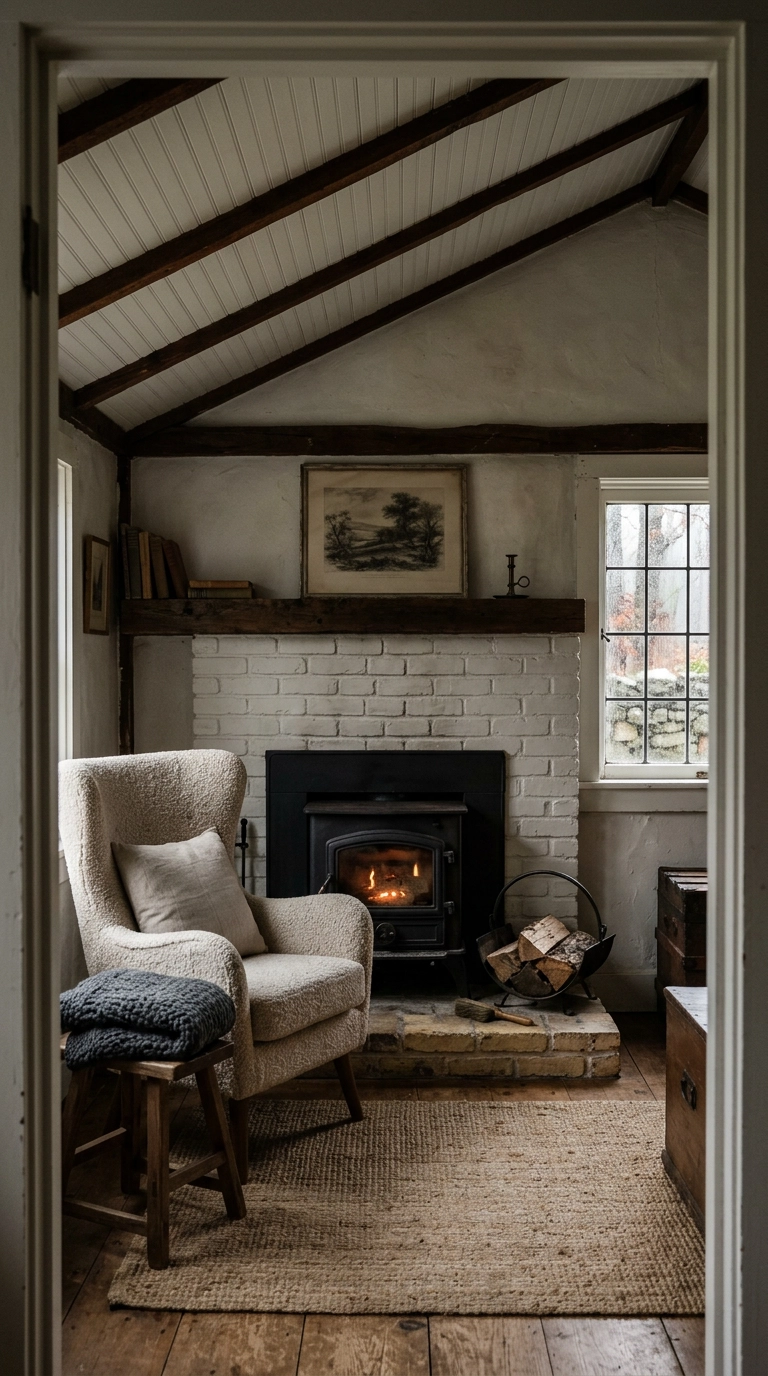
Whitewash is diluted paint, so unlike solid white it lets the mortar lines and brick variation show through. That texture is what keeps the surround from flattening into a blank panel, especially in a north-facing room where flat white goes grey and sad by 3pm.
6. Use Peel-and-Stick Tile on the Surround if You Rent
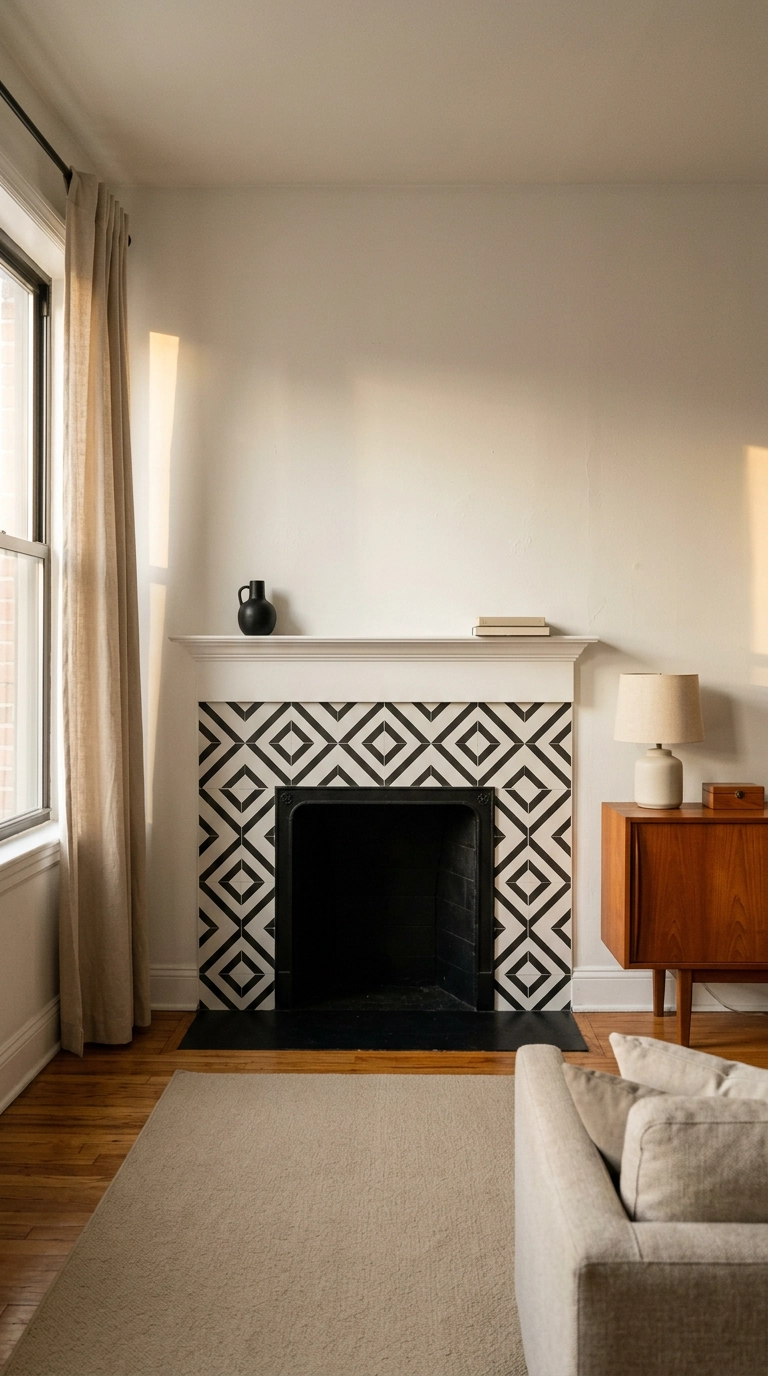
Good peel-and-stick has come a long way, and on a vertical surround that never gets wet it genuinely holds up for years. Expect roughly $3 to $6 a square foot, and a standard surround takes maybe two hours with a sharp utility knife and a ruler.
7. Lean a Salvaged Mantel Shelf Instead of Mounting One
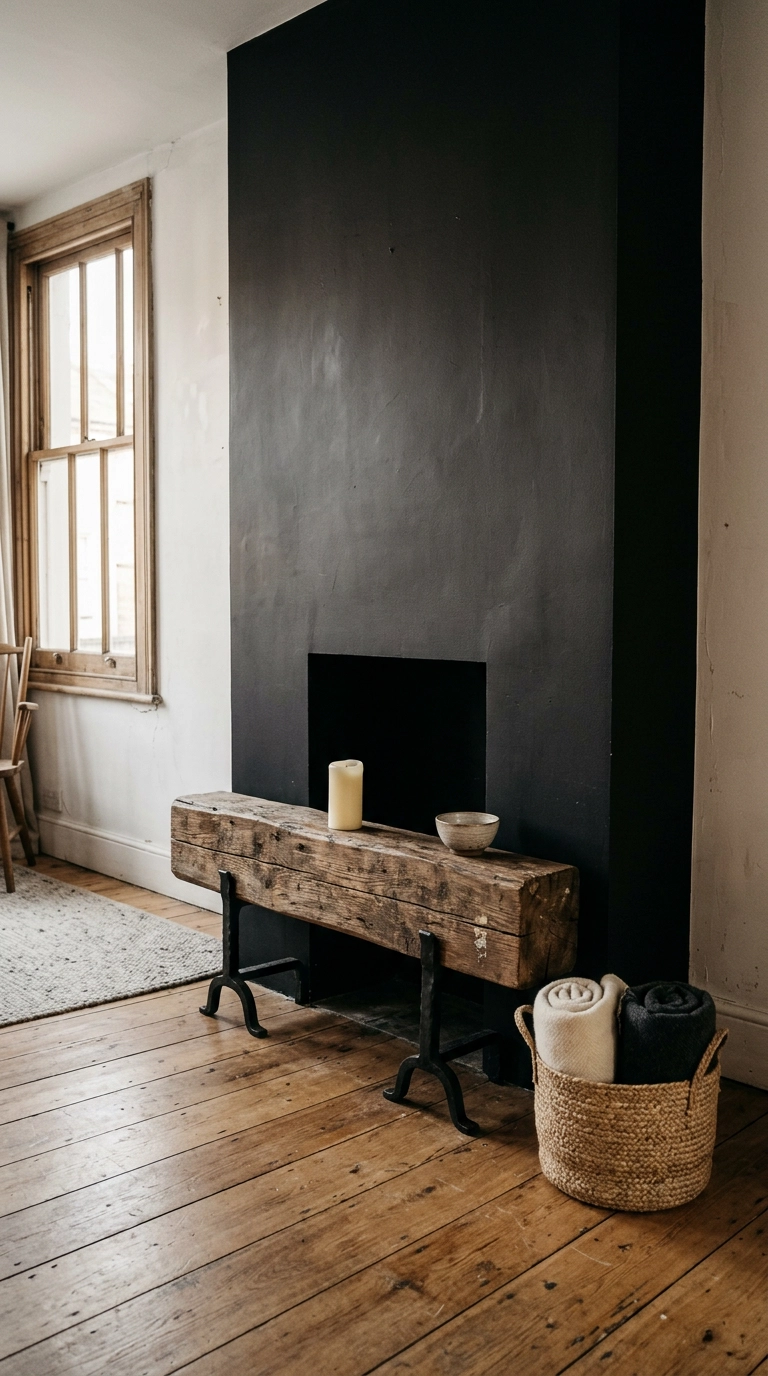
If you have a firebox with no mantel, or a landlord who flinches at the word “anchor,” a floor-supported leaning mantel gives you the whole look with zero holes. Salvage yards sell old beams for $50 to $150 depending on length and character.
8. Fill a Non-Working Firebox With Stacked White Birch Logs
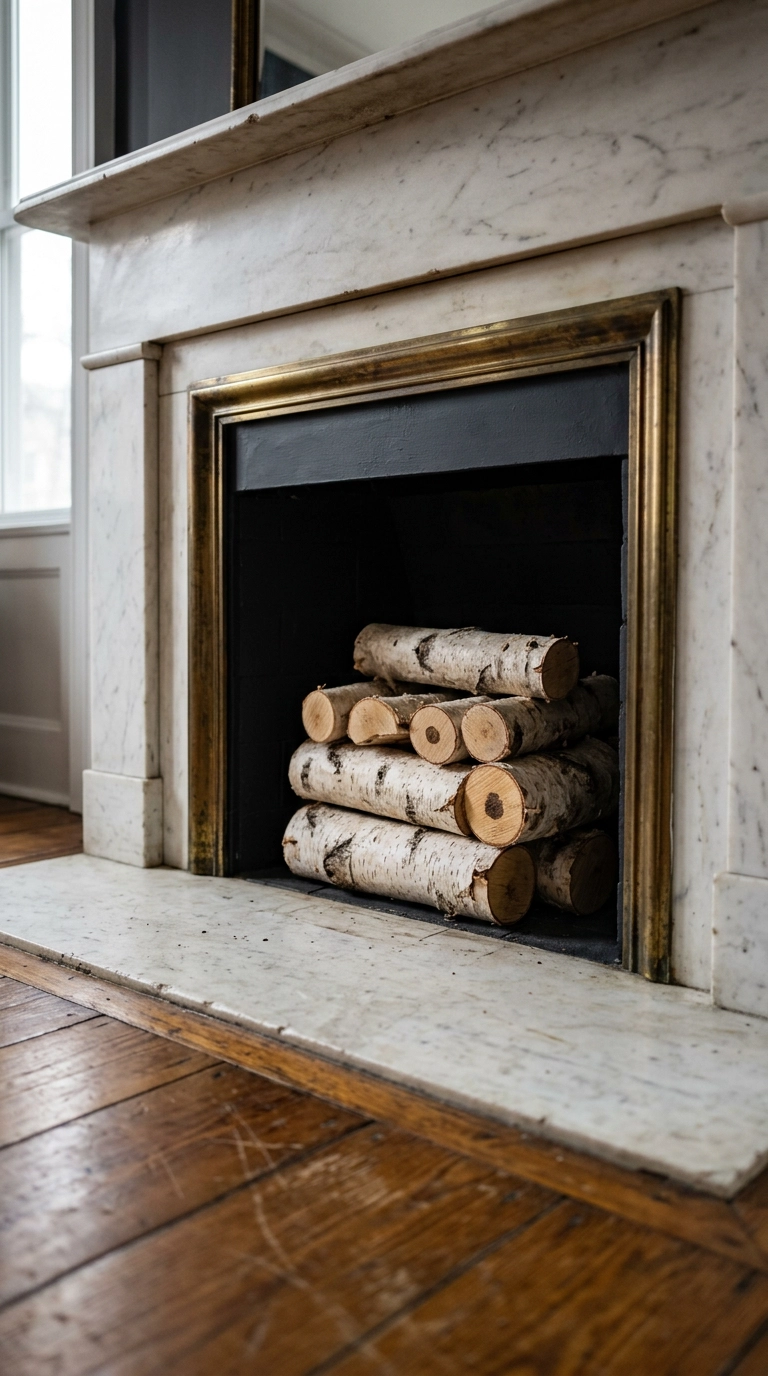
A dead firebox is a black hole in the middle of your best wall, and birch is the classic fix because the pale bark against a black interior is doing the entire black-and-white job for you. Cut logs run about $30 to $60 for enough to fill a standard opening.
9. Add a Black Mesh Screen and One Piece of Warm Brass
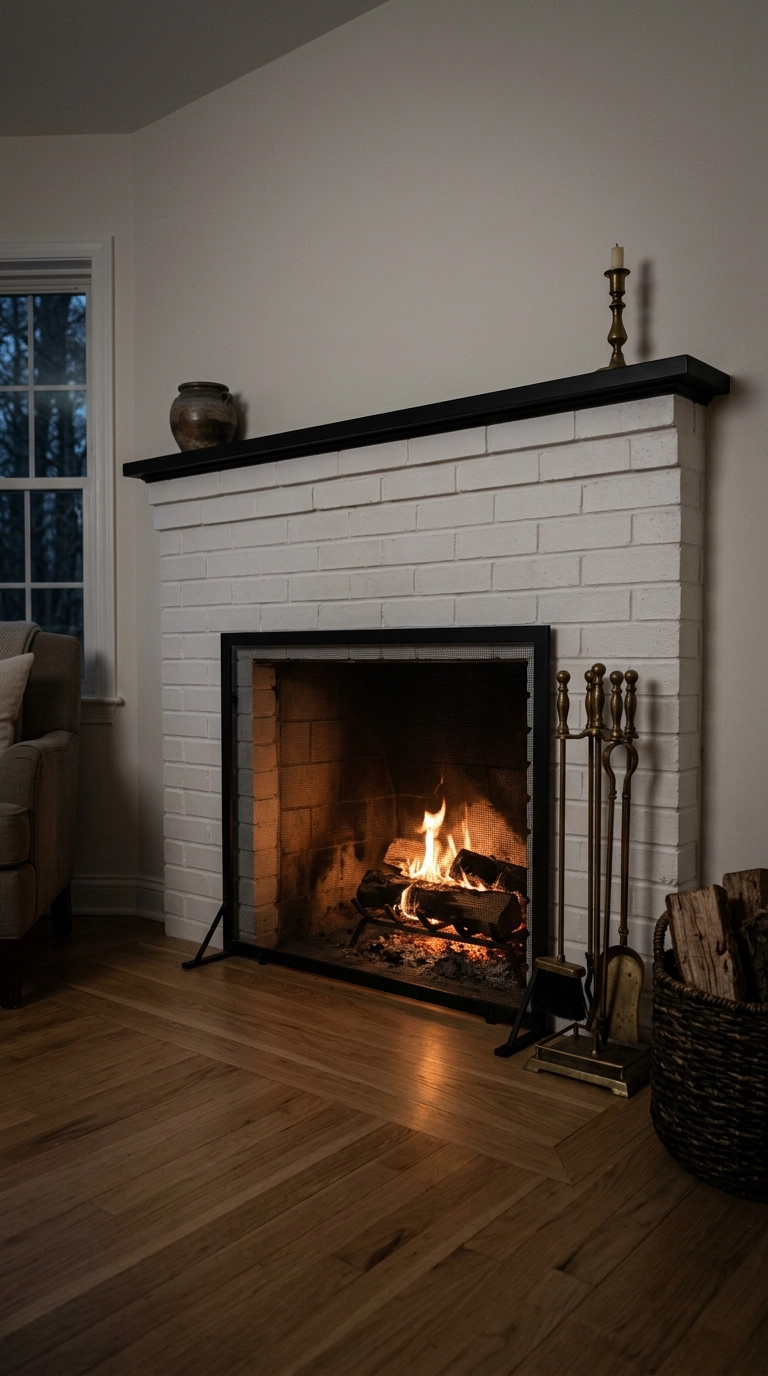
Flat black mesh screens read as modern and almost disappear, where the old brass-and-glass folding kind screams 1994. Good ones run $80 to $250, and it’s a five-minute swap with genuinely outsized impact.
10. Run Checkerboard Tile Across the Hearth
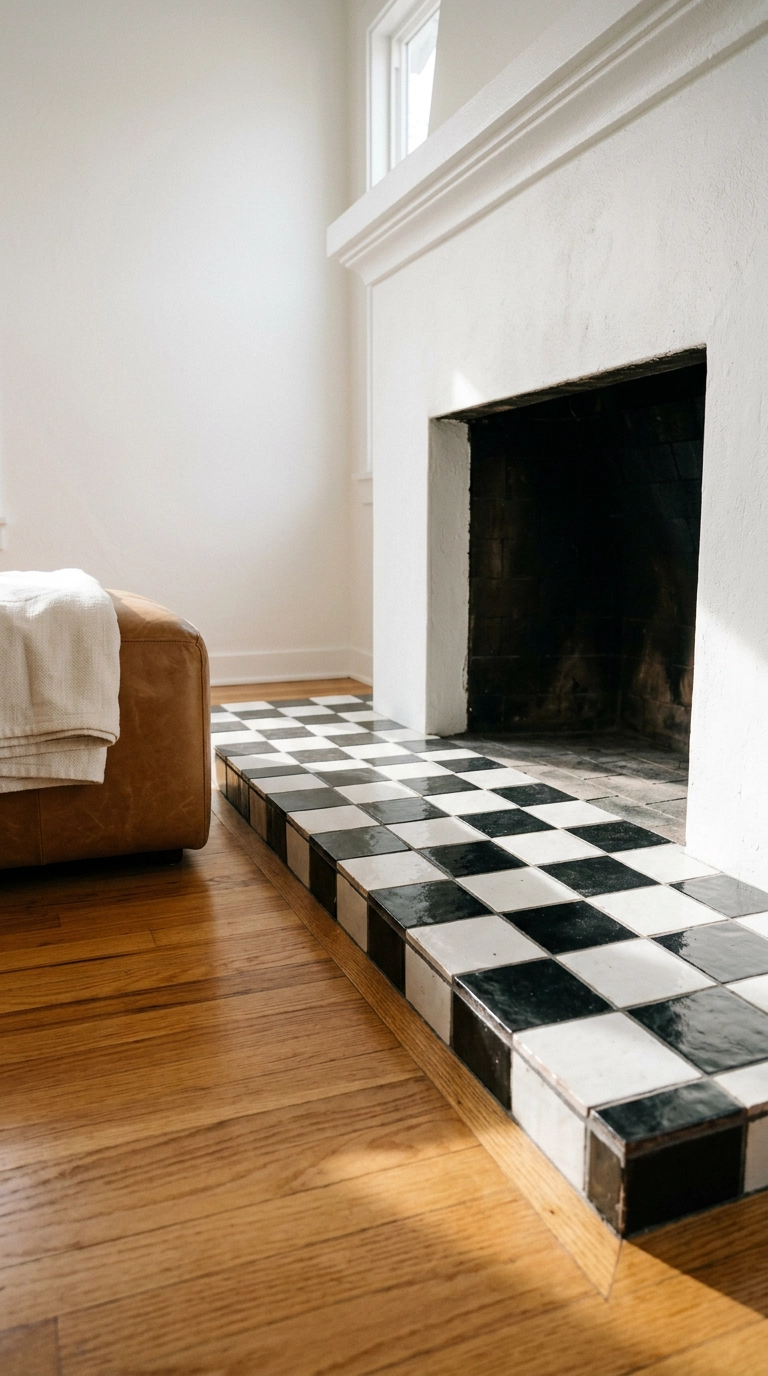
The hearth is the most overlooked square footage in the room, and it’s the safest place to be bold because it’s low, horizontal, and mostly out of your sightline when you’re standing. Checkerboard on a hearth reads playful without hijacking the whole space.
11. Slab a Honed White Marble Surround With a Slim Black Steel Mantel
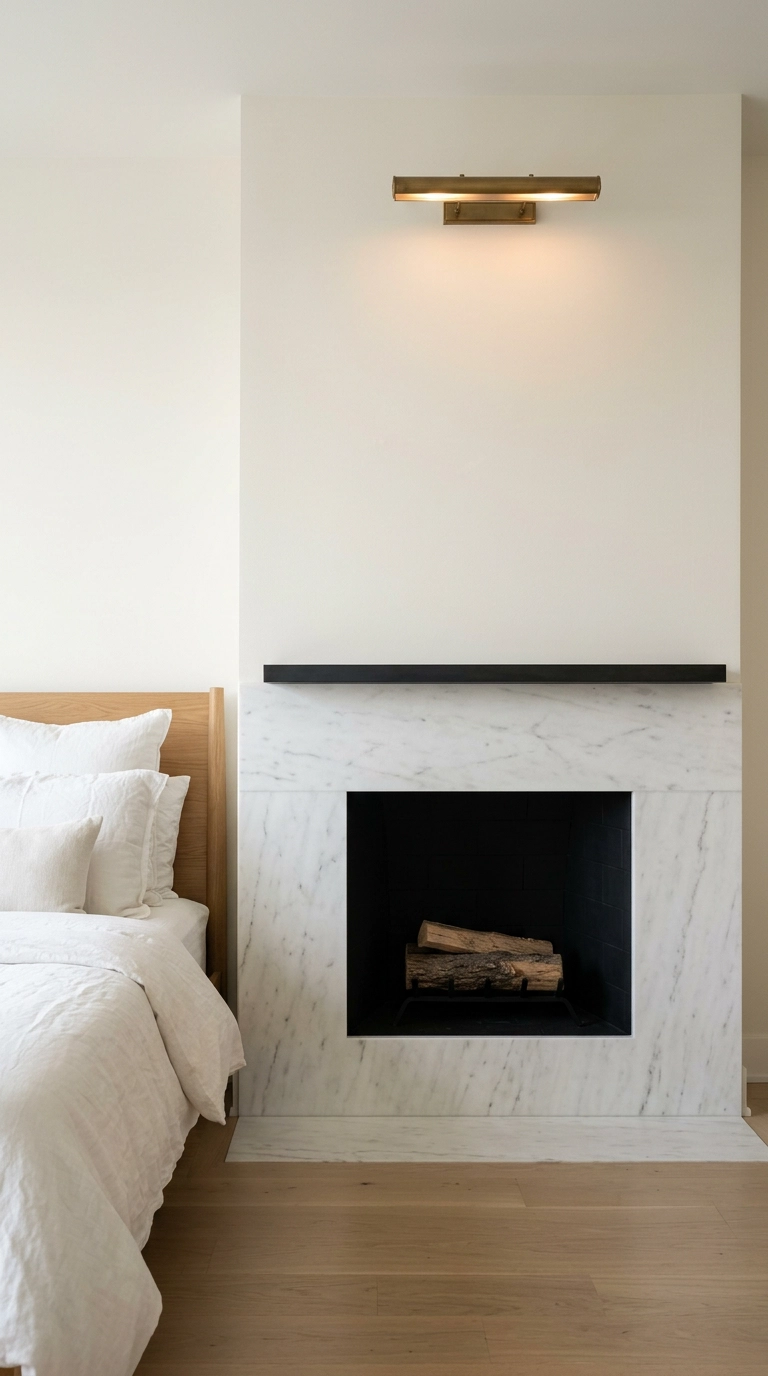
This is the splurge of the article, no way around it – fabricated and installed marble slab typically starts in the low four figures. But a full-height slab with the veining running vertically is the single most expensive-looking fireplace treatment there is.
12. Skim the Whole Chimney Breast in Soft Charcoal Plaster
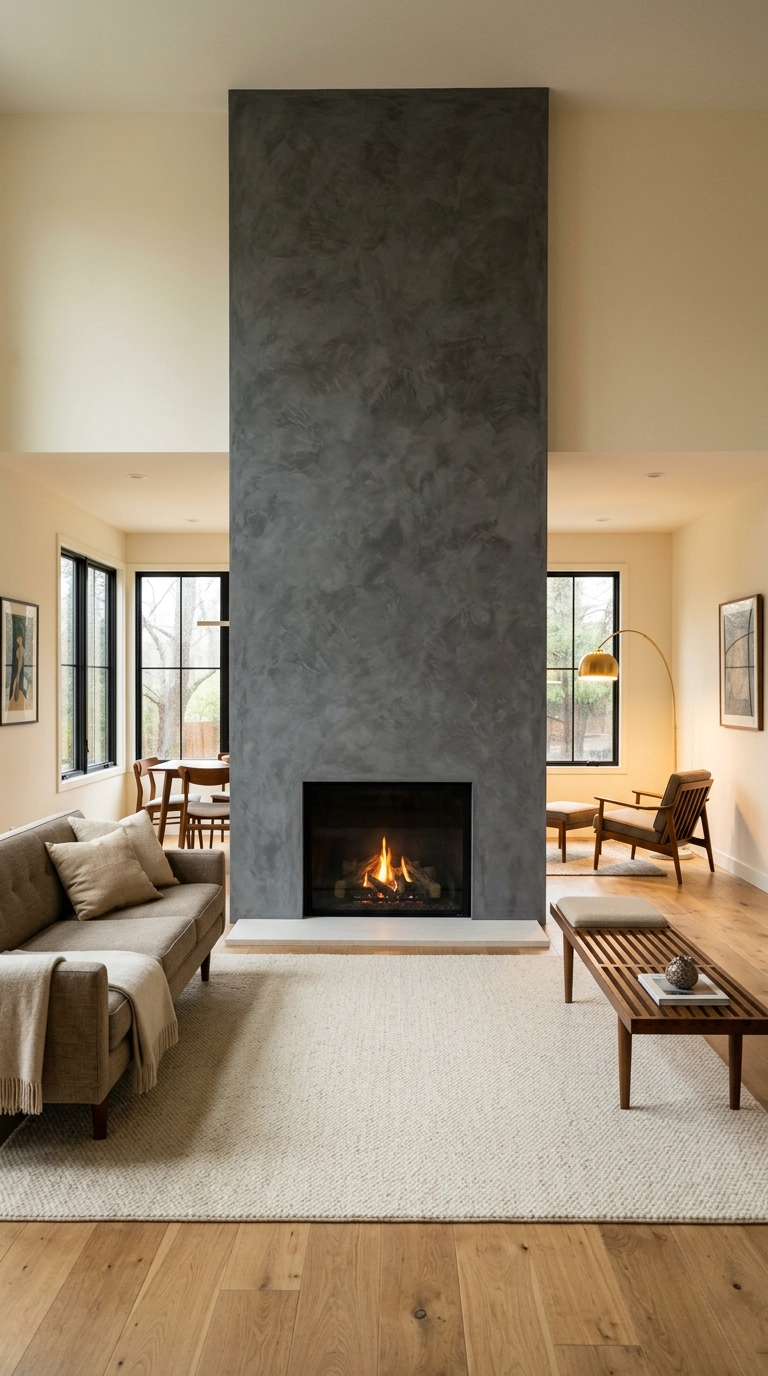
If true black feels like a commitment you’re not ready for, soft charcoal plaster is the gentler cousin. The hand-troweled variation catches light differently through the day, so the wall never looks like a solid block of grey.
13. Go Two-Tone: White Surround, Black Mantel Shelf
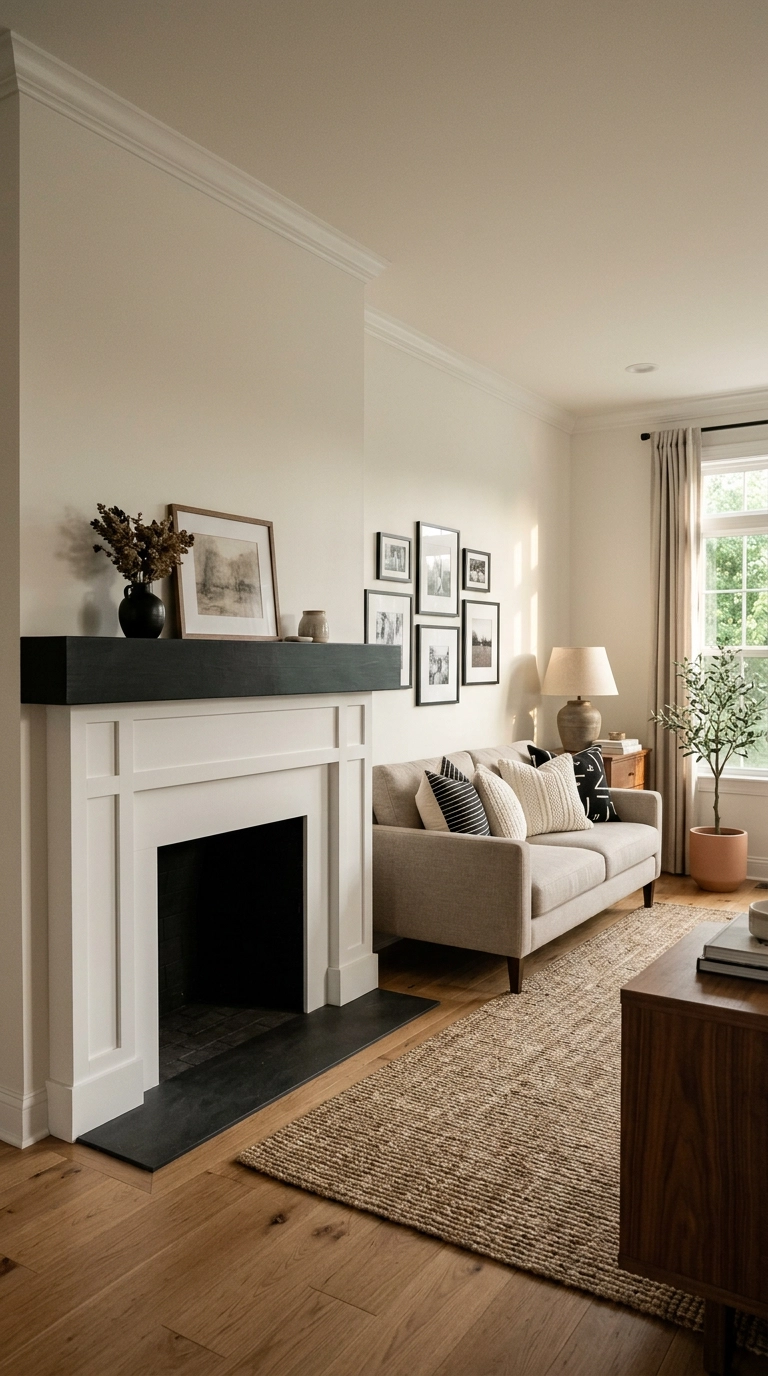
Two-tone is the lowest-risk version of this whole trend and honestly the one I recommend most often. You keep the surround light so the wall stays open, and the black shelf draws one confident horizontal line across it.
14. Tile in Handmade White Square Tile With Black Grout
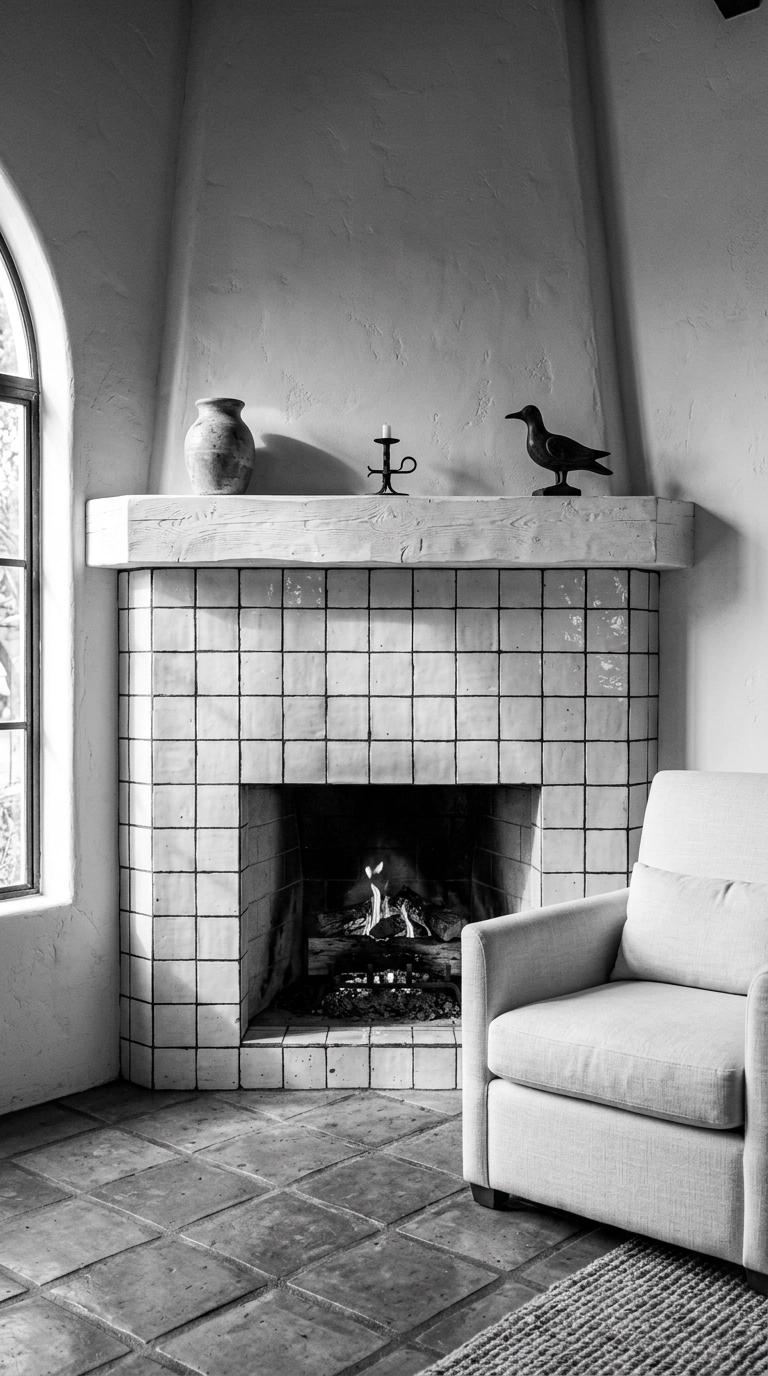
Dark grout against white tile is how you get pattern without buying patterned anything – the grid itself becomes the graphic. Handmade tile with slightly wobbly edges makes those lines irregular in a way that machine-cut tile never manages.
15. Add White Picture Frame Wall Molding Above the Mantel
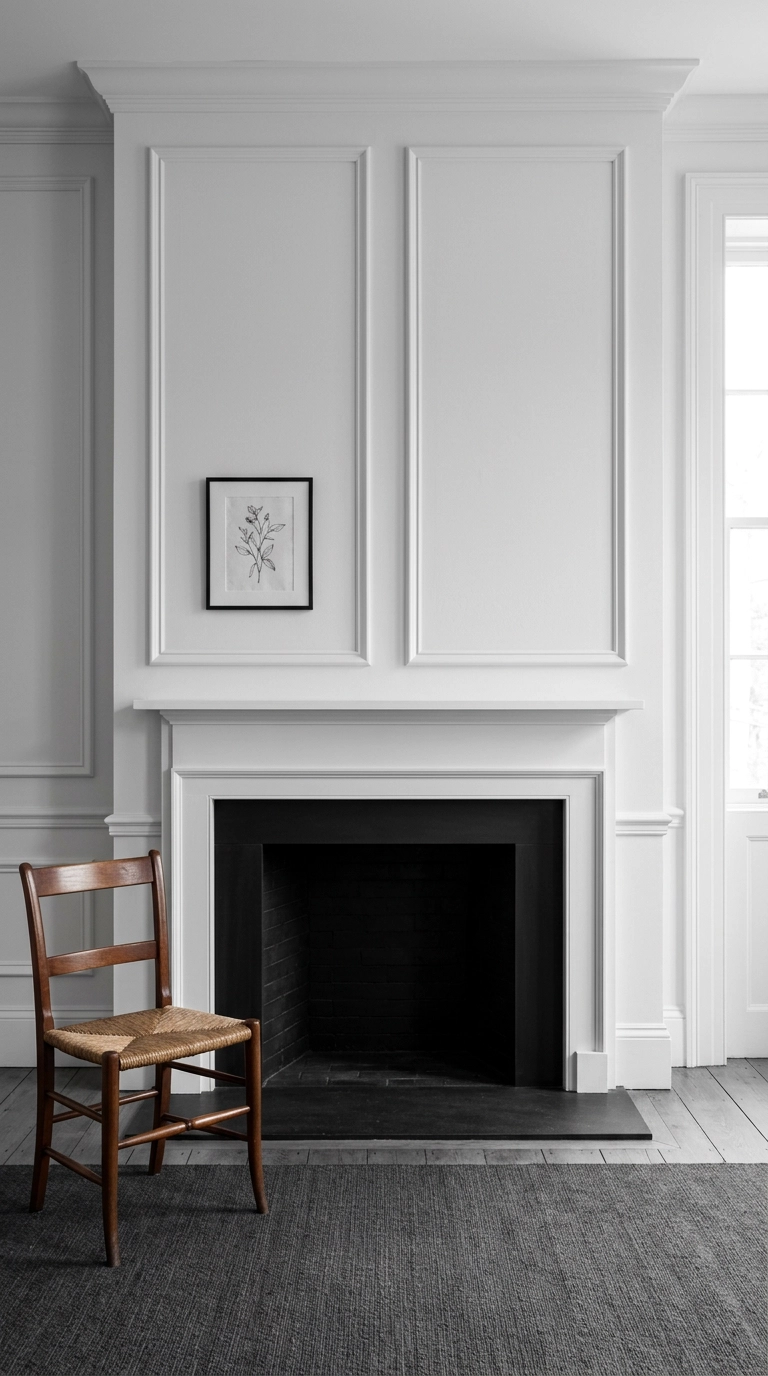
Painting the molding the same color as the wall is the whole point – you get architecture and shadow lines without adding a second color to fight the fireplace below. It’s the trick that makes builder-grade drywall look like it came with the house in 1910.
16. Extend the Hearth With a Single Black Slate Slab
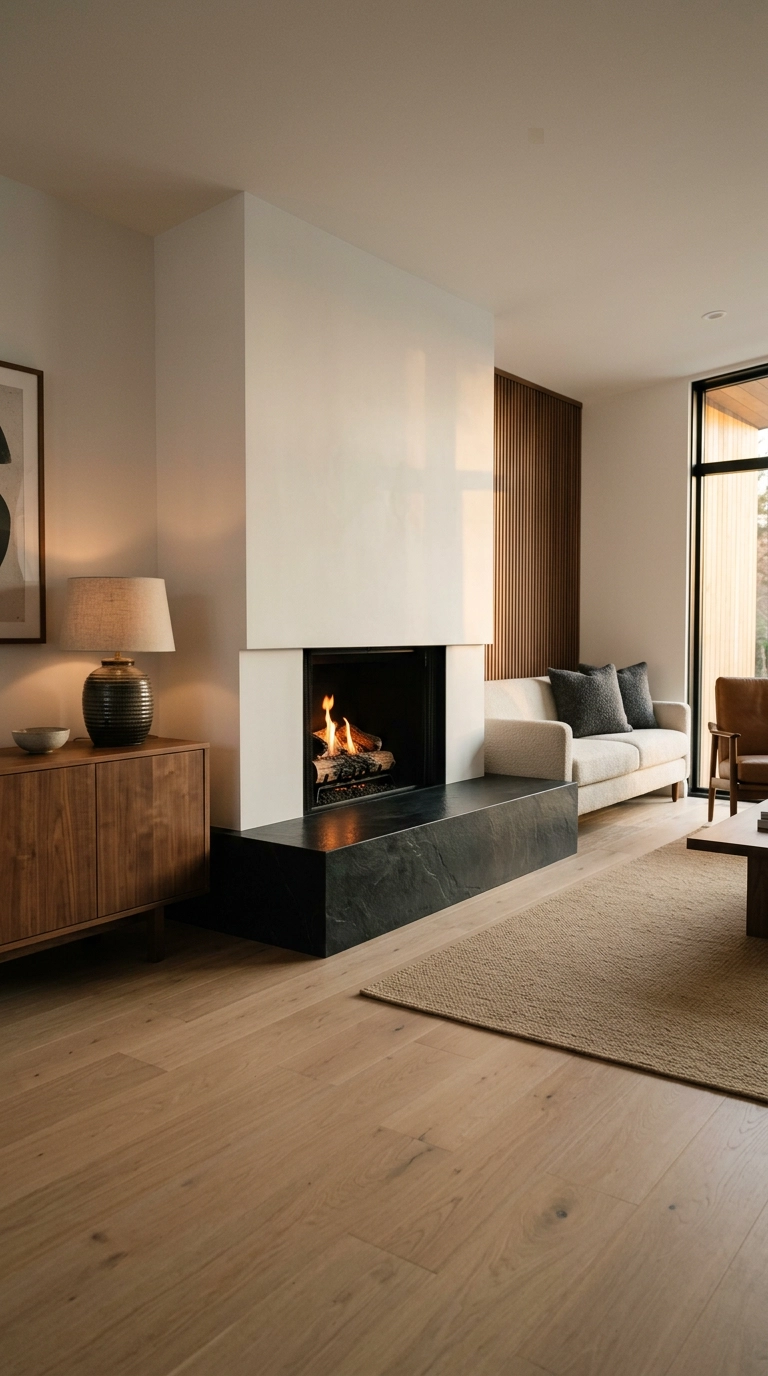
A wide single-slab hearth does something a tiled one can’t – no grout lines means your eye reads it as one clean shape, which visually widens the whole fireplace. Setting it flush with the floor instead of raised also keeps a small room feeling open.
17. Shape the Opening Into a Soft Arch
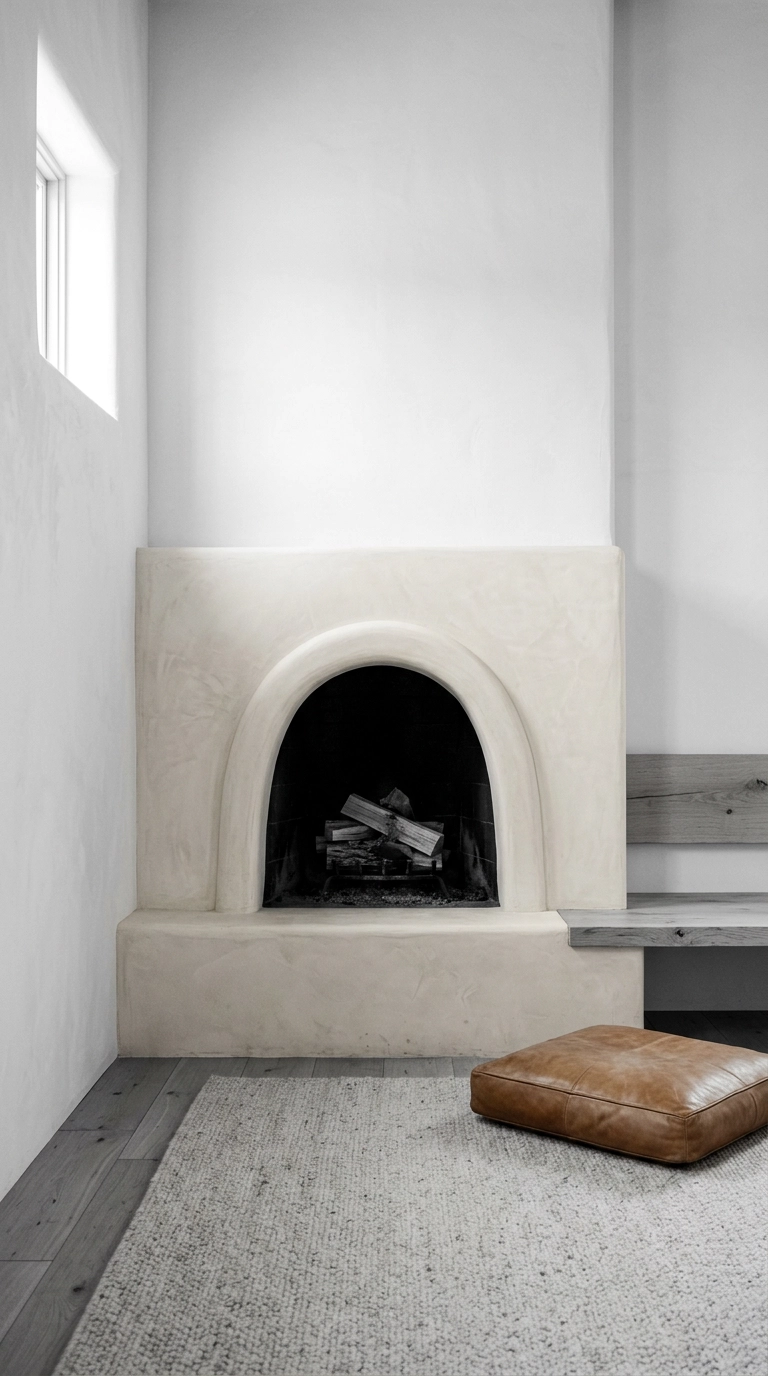
Arched openings have been everywhere for a few years now and they still work, mostly because a curve is the fastest way to soften a room full of right angles. The black interior against creamy white plaster gives you the contrast without needing any hardware at all.
18. Wrap the Surround in Fluted White Plaster
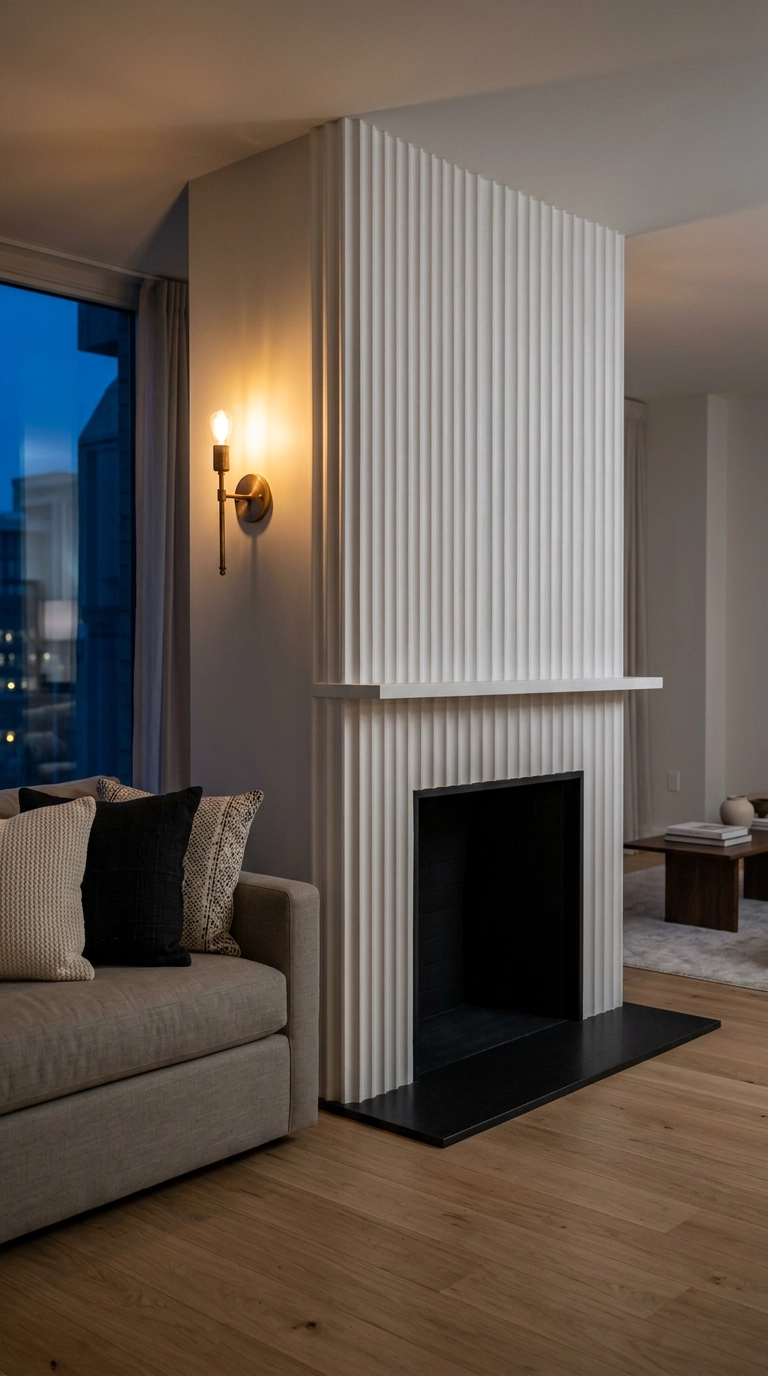
Fluting is texture doing the work of color, which is exactly what an all-white surround needs so it doesn’t disappear into the wall. The ridges throw tiny shadows that shift all day, so the fireplace still has presence at noon and at 8pm.
19. Pair Black Soapstone With a White Oak Mantel
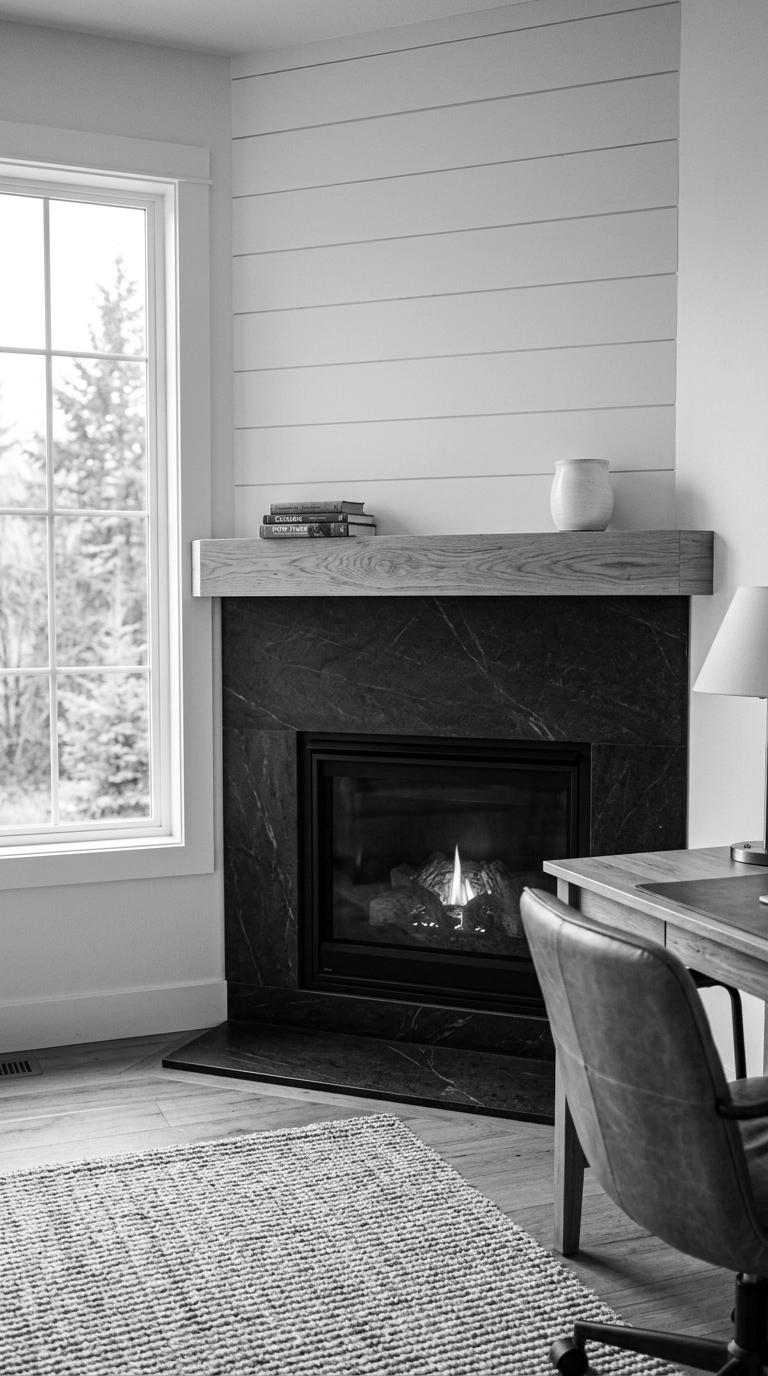
Soapstone is my quiet favorite for a black surround because it’s genuinely soft to the touch and has a slight waxy depth that painted surfaces can’t fake. It also handles heat better than almost anything, so it’s a real choice for a working fireplace.
20. Drop an Electric Insert Into a Dead Firebox
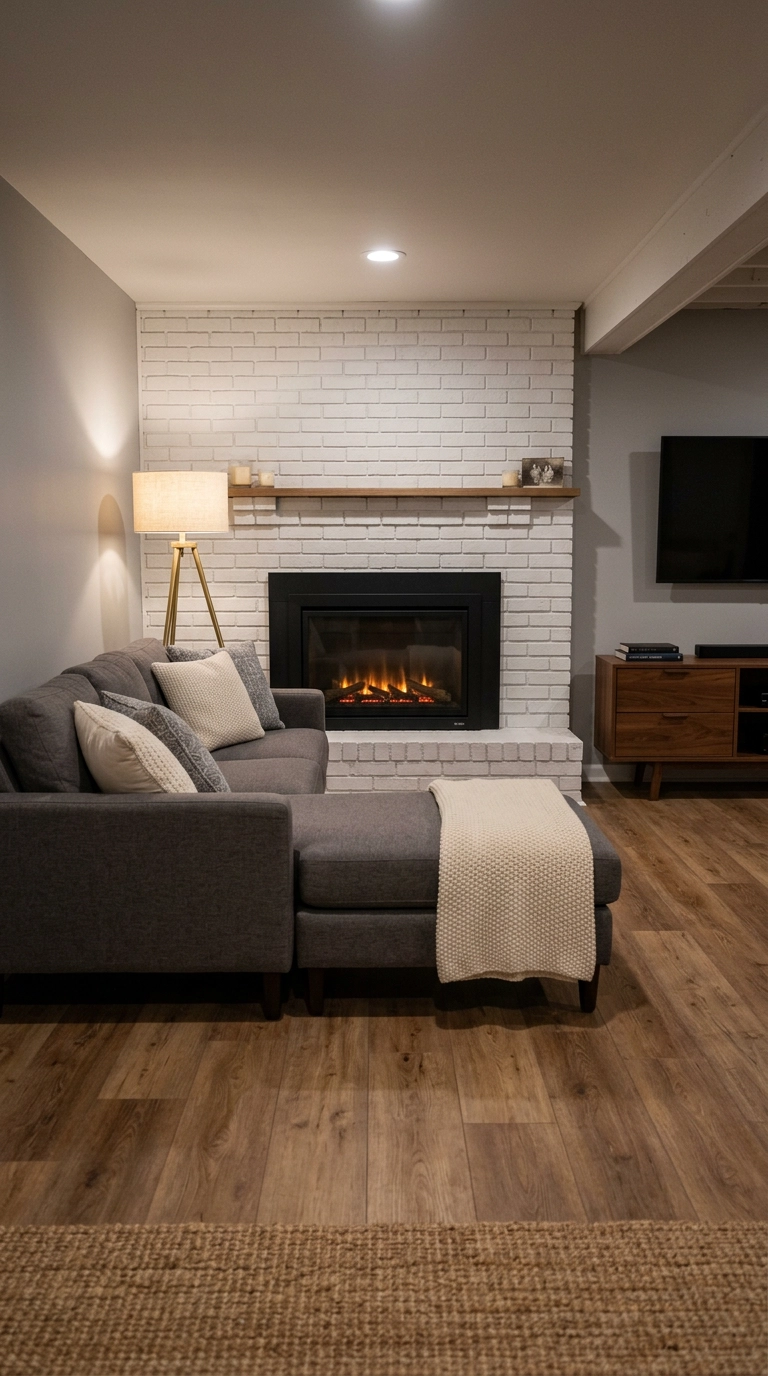
If your chimney is capped, condemned, or you simply don’t want to deal with wood, a modern electric insert is the honest answer. Decent ones run $300 to $900, they plug into a standard outlet, and most let you run the flame effect with the heat off in summer.
21. Build a Faux Fireplace on a Blank Wall
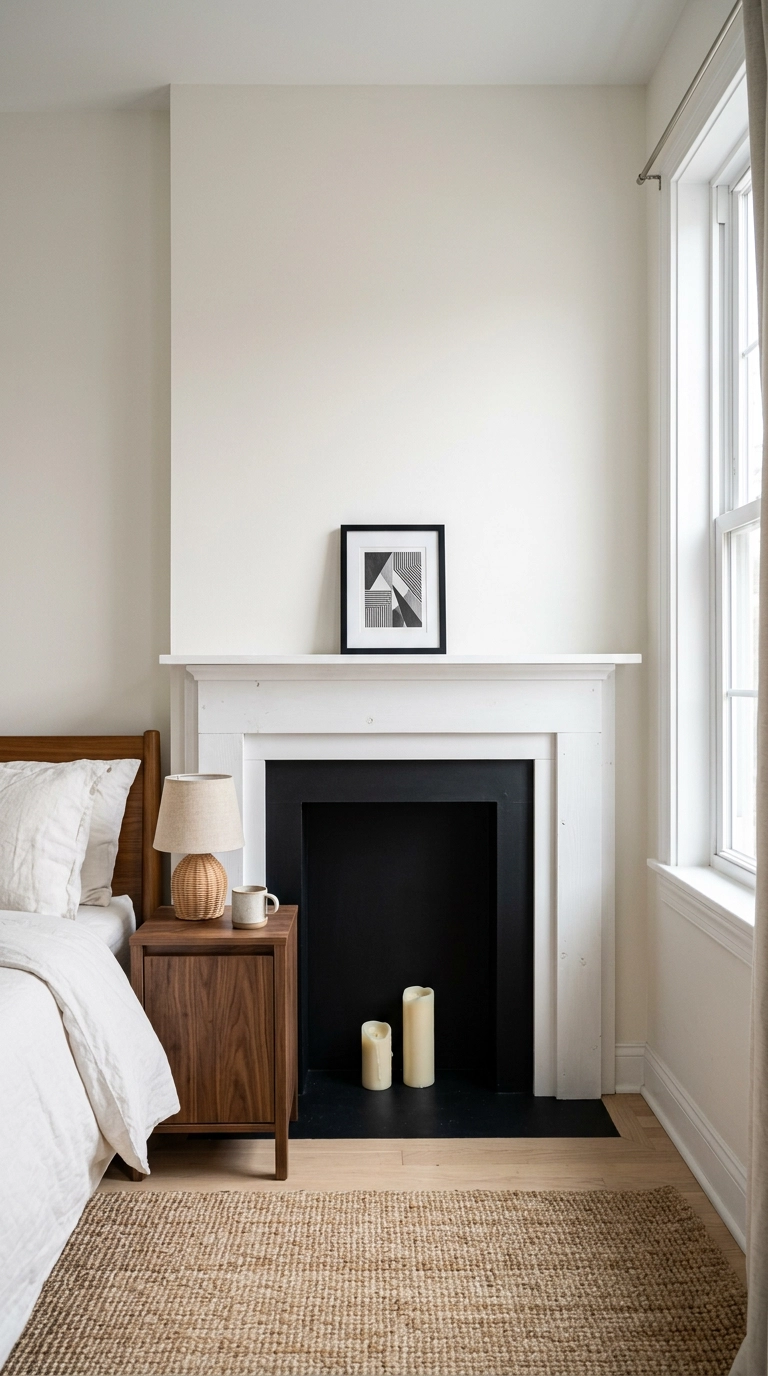
No fireplace at all? Build one. A faux surround from pine trim and MDF costs about $120 and gives a bedroom or dining room the architectural anchor it’s been missing.
22. Flank a Black Fireplace With White Built-In Bookcases
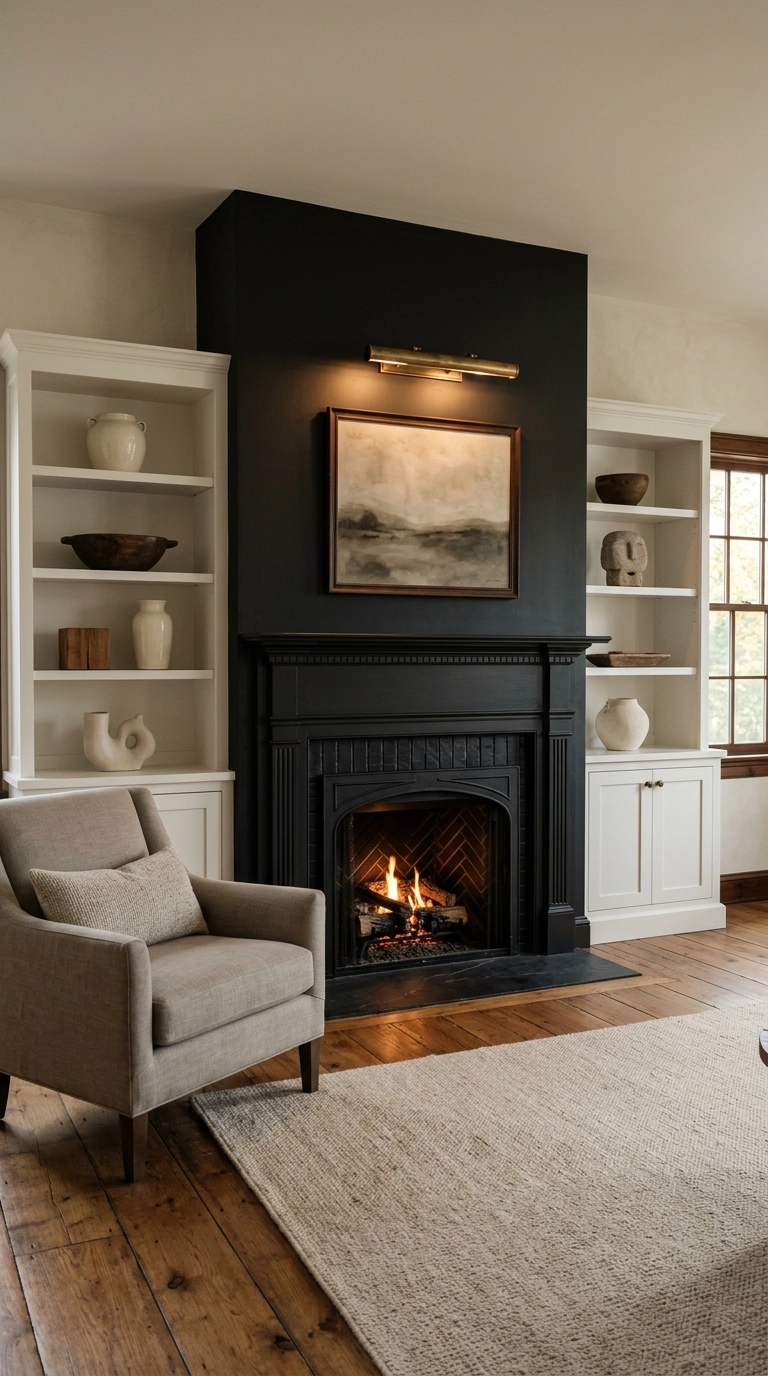
Black in the middle, white on either side – it’s the highest-contrast layout in this article and it turns the fireplace into a piece of furniture rather than a hole in a wall. Symmetry is doing a lot of heavy lifting, so keep the two sides genuinely matched.
23. Color-Drench the Entire Chimney Breast in Black
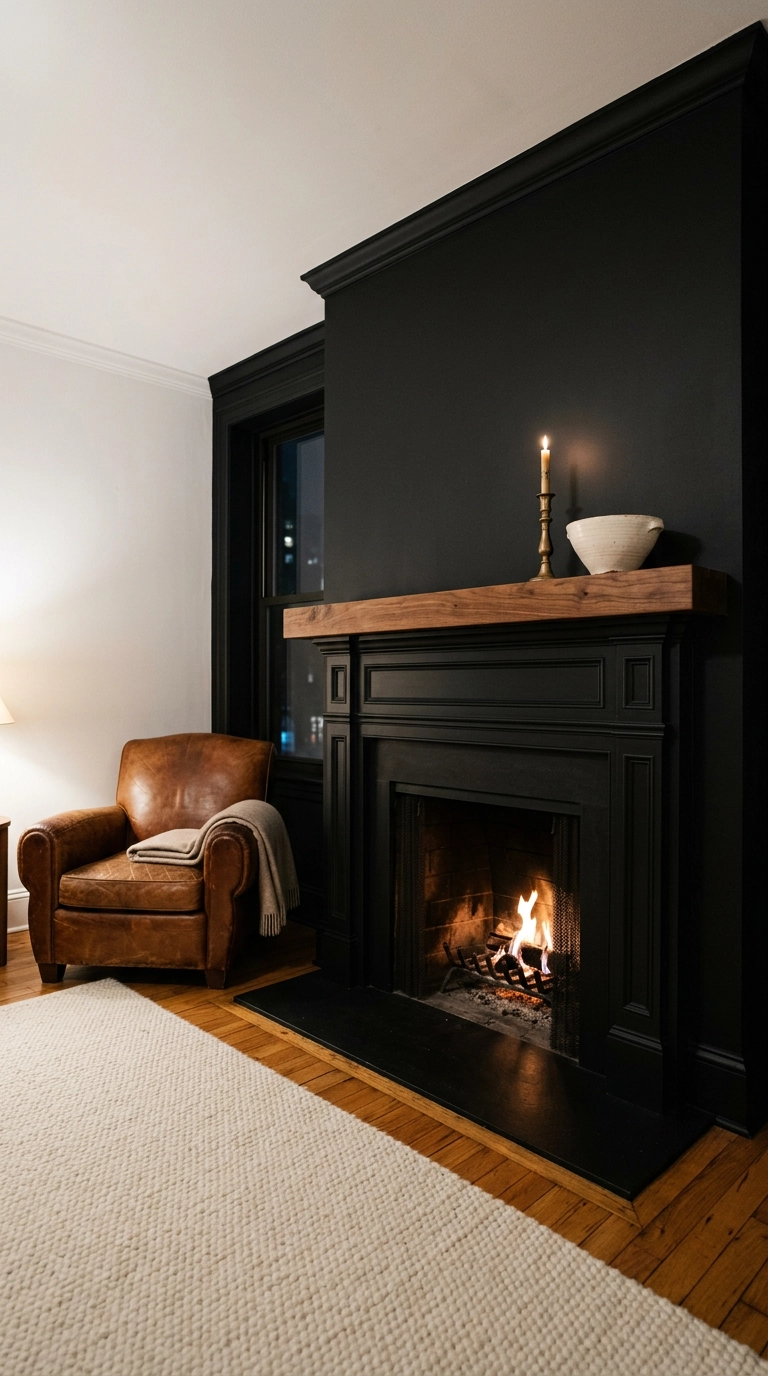
Color drenching just means painting the wall, trim, and mantel all one shade so there are no visual breaks. On a chimney breast it’s spectacular, because the whole projection reads as a single sculptural block instead of a wall with stuff stuck to it.
Now Go Pick Your Ratio
If you take one thing from this whole list, let it be this: black and white fireplaces fail when they’re only black and white. Every single room above has a warm wood mantel, a cognac leather chair, an aged brass sconce, or a wool rug in it, and that one warm note is what keeps the contrast from feeling like a bathroom in a rental office building. Decide your ratio first – mostly black and dramatic like the color-drenched den, mostly white with black accents like the two-tone shelf, or a soft charcoal and cream middle ground – and everything else gets easier.
What I’m seeing most in 2026 is people moving away from the flat, hard, high-gloss version of this look toward texture: limewash, hand-troweled plaster, fluted panels, handmade tile with dark grout. Designers like Athena Calderone have been pushing that soft-plaster-and-warm-wood direction for years, and the whole industry has finally caught up. On the paint side, Benjamin Moore Black Beauty and Sherwin-Williams Tricorn Black are still the two I specify most, and they behave very differently in a room, so buy sample pots and look at them at night before you commit to a gallon.
Start small if you’re nervous – paint the firebox interior matte black, swap in a flat black mesh screen, and re-style the mantel with three objects at three heights. That’s under fifty dollars and one afternoon, and it’ll tell you fast whether you want to go all the way. If you’d like more of this kind of thing, sign up for my weekly newsletter and I’ll send you one real project, one honest cost breakdown, and one thing I got wrong that week, straight to your inbox.


