
23+ Moody Basement Bathroom Decor Ideas that Look Gorgeous Without Windows in 2026

I’ll be honest with you – the first basement bathroom I ever designed, I tried to make it look like a sunroom. Pale greige walls, white tile, the whole “let’s pretend there’s daylight down here” routine, and it came out looking like a dentist’s office in a bunker. The fix was the opposite of what I expected: I went dark, warm, and deliberate, and suddenly the room read as intentional instead of apologetic. So that’s the whole philosophy here – stop fighting the no-window situation and start decorating for it.
Basement Bathroom Decor Ideas
1. Color Drench the Whole Room in One Deep Saturated Shade
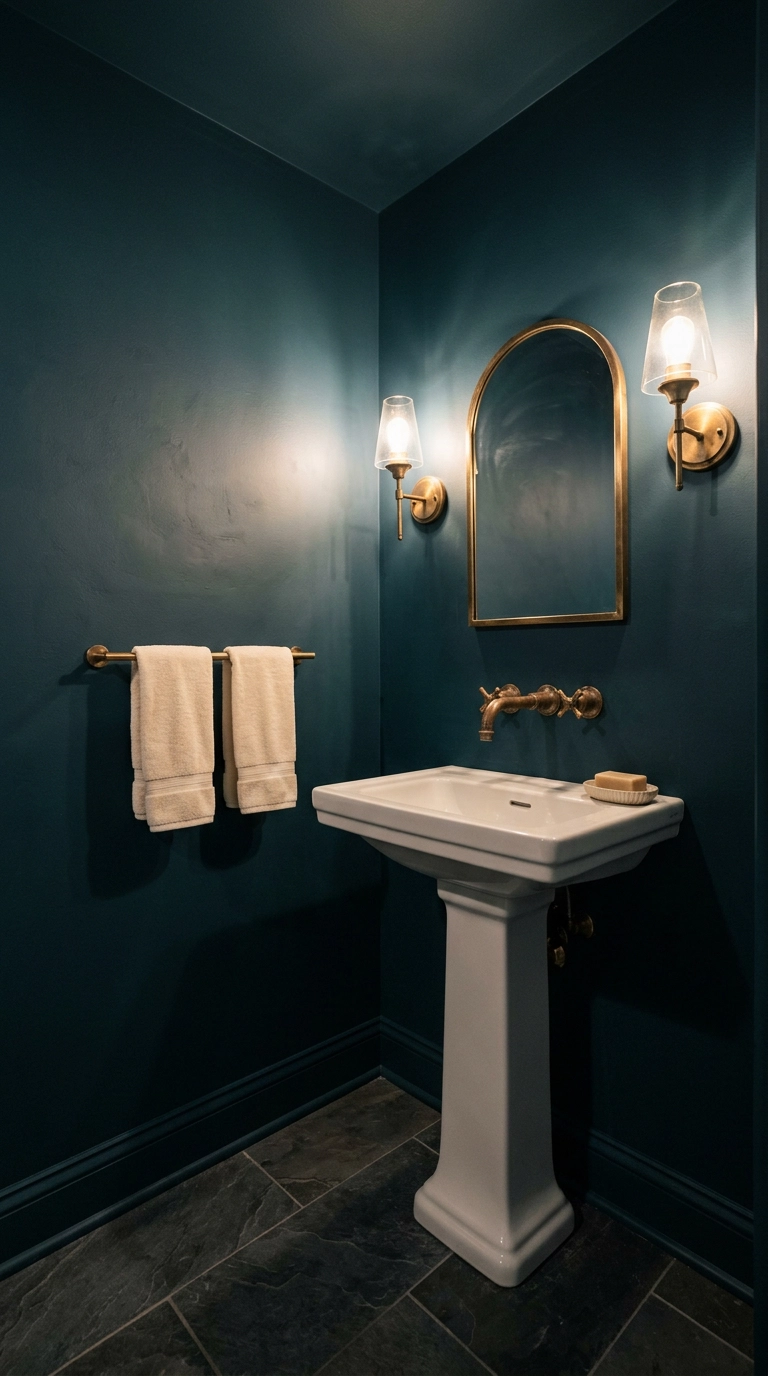
Color drenching just means walls, trim, and ceiling all wear the same color, and it is the single best thing you can do to a windowless bathroom. Without a window, there’s no daylight to reveal where the wall stops and the ceiling starts, so painting them separately creates hard visual breaks that make a low room feel even shorter. One color erases those seams and the box reads taller and calmer.
2. Hang the Mirror Where It Can Actually Steal Light
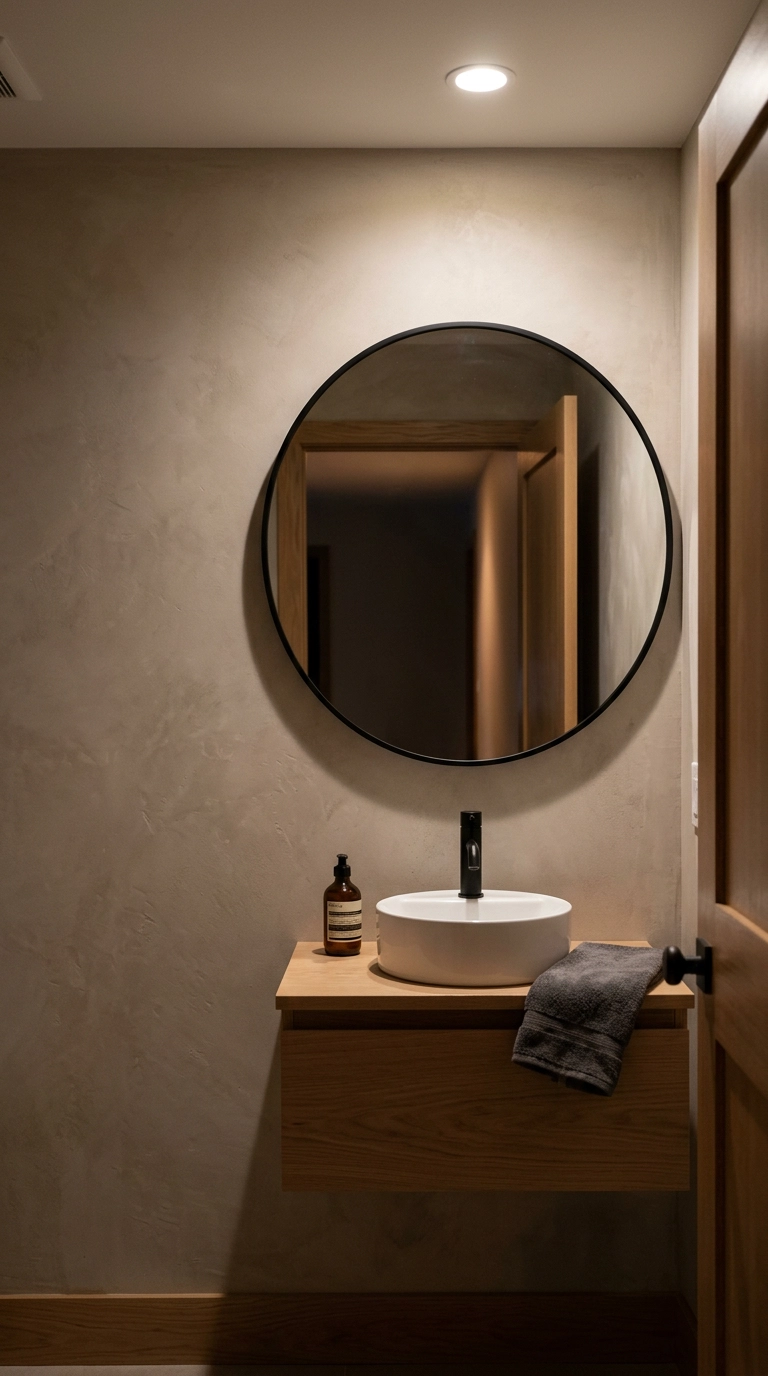
This one is free and takes twenty minutes with a stud finder. In a room with no window, the only light worth bouncing is what comes from your fixtures and the doorway, so put the mirror where it can catch both instead of defaulting to dead center over the sink.
3. Swap Every Bulb to 2700K and Put It on a Dimmer
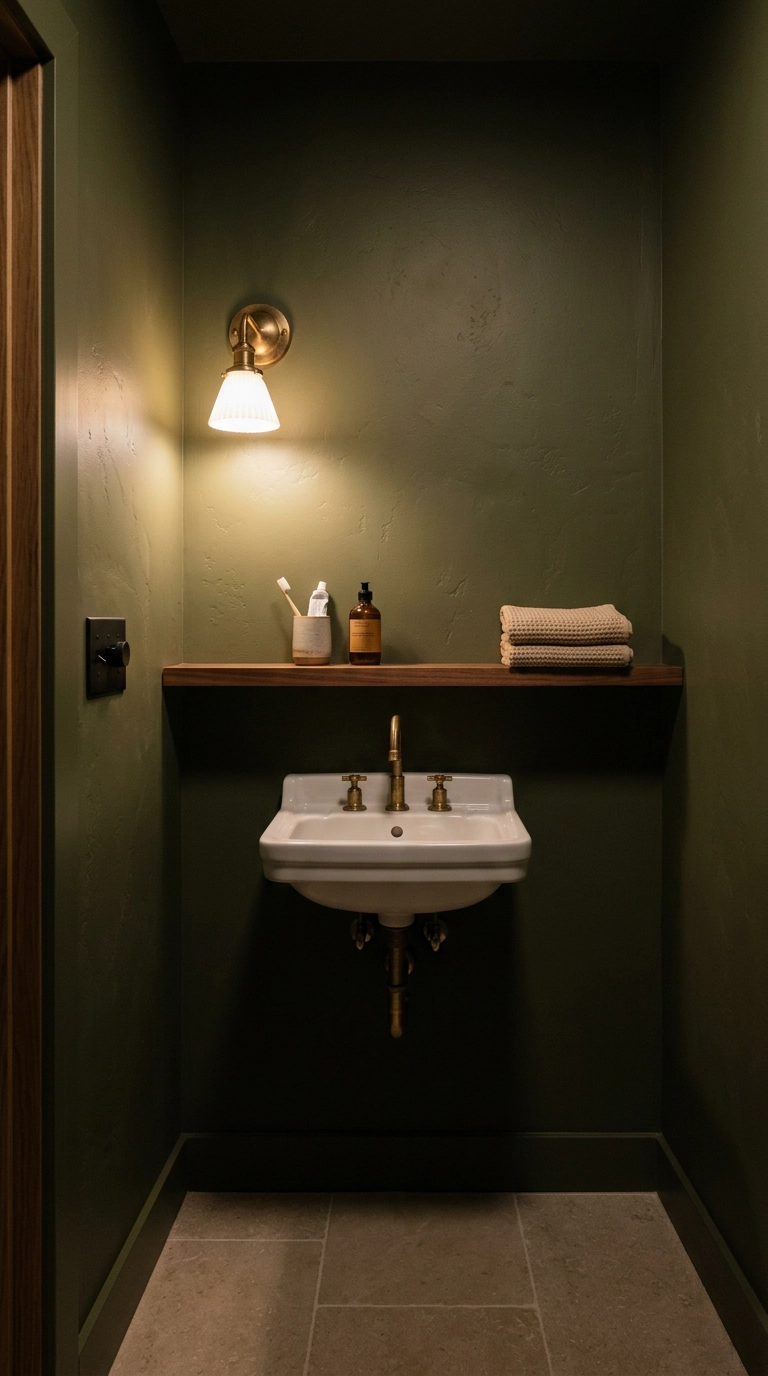
Basement bathrooms almost always ship with one cold 4000K ceiling can light, which is why the room feels like a walk-in cooler. Swap every bulb to 2700K warm white and the same paint, same tile, same everything suddenly looks expensive. Bulbs run a few dollars each and it takes ten minutes.
4. Layer Three Light Sources Instead of Relying on One Ceiling Can
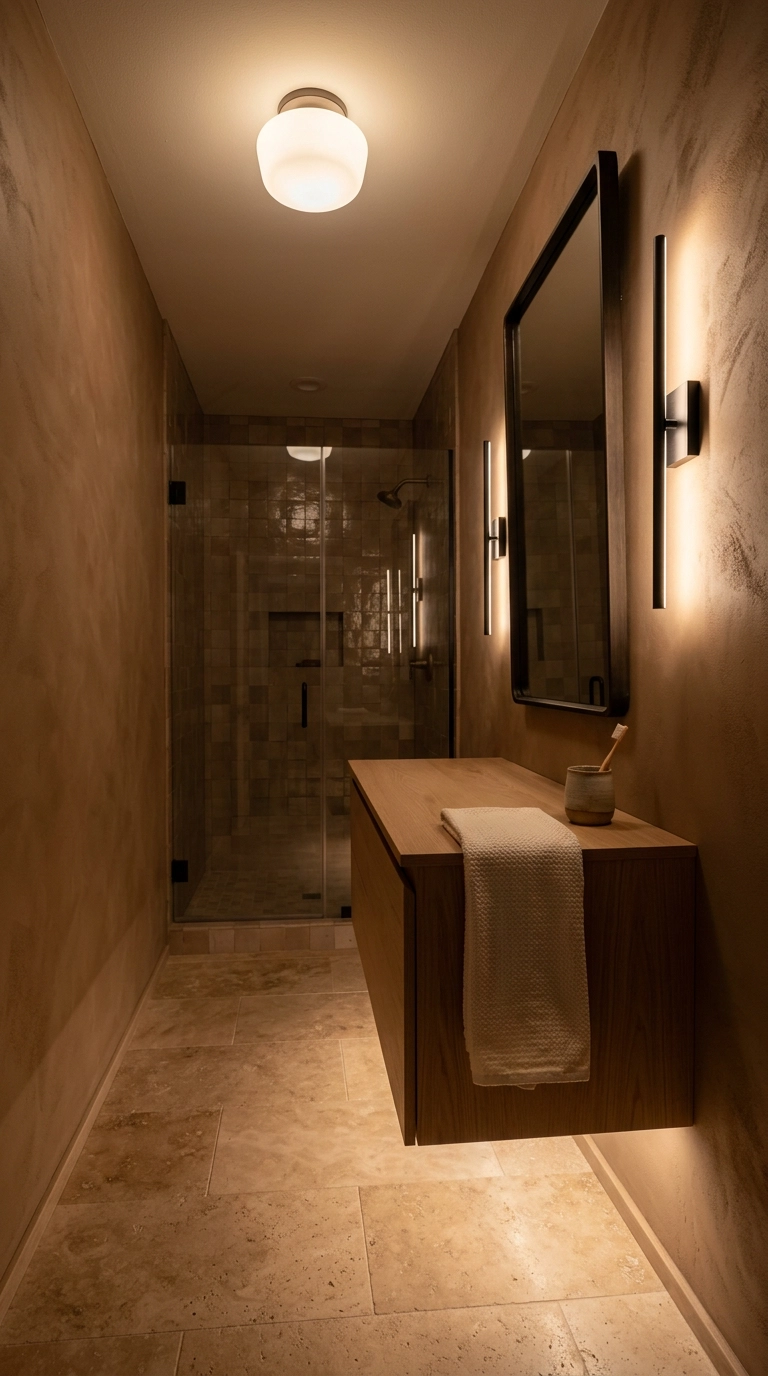
One overhead fixture throws every shadow straight down, which is unflattering in any room and brutal in a windowless one. You want three layers: ambient overhead, task light at the mirror, and a low accent glow near the floor. That’s what makes a basement bath feel designed rather than utility.
5. Mount Sconces at Eye Level Beside the Mirror, Not Above It
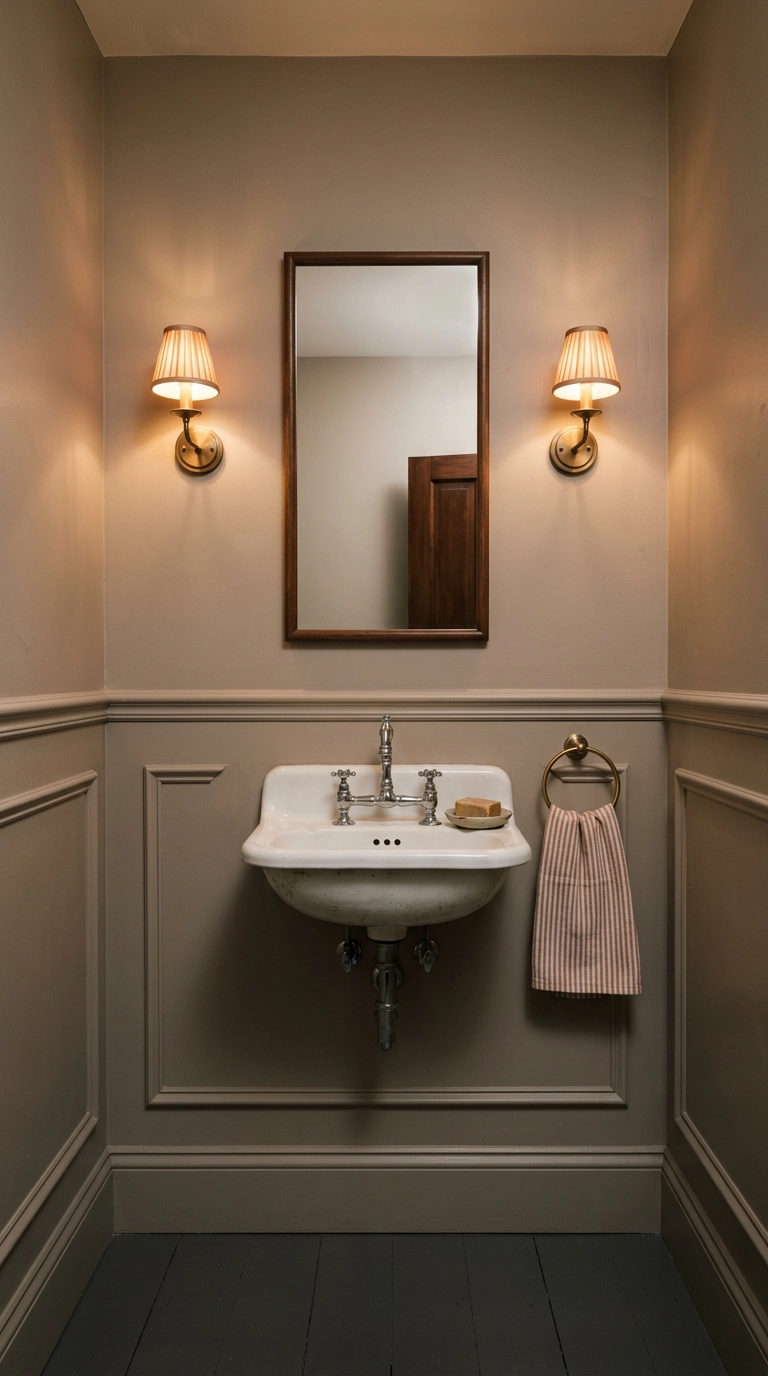
A light above a mirror casts shadows into your eye sockets and under your chin, which is why hotel bathrooms with vanity bars look so much better than the one in your basement. Sconces at roughly 64 to 66 inches from the floor, one on each side of the mirror, light your face from the front instead of the top.
6. Take the Exhaust Fan Seriously Before You Decorate Anything
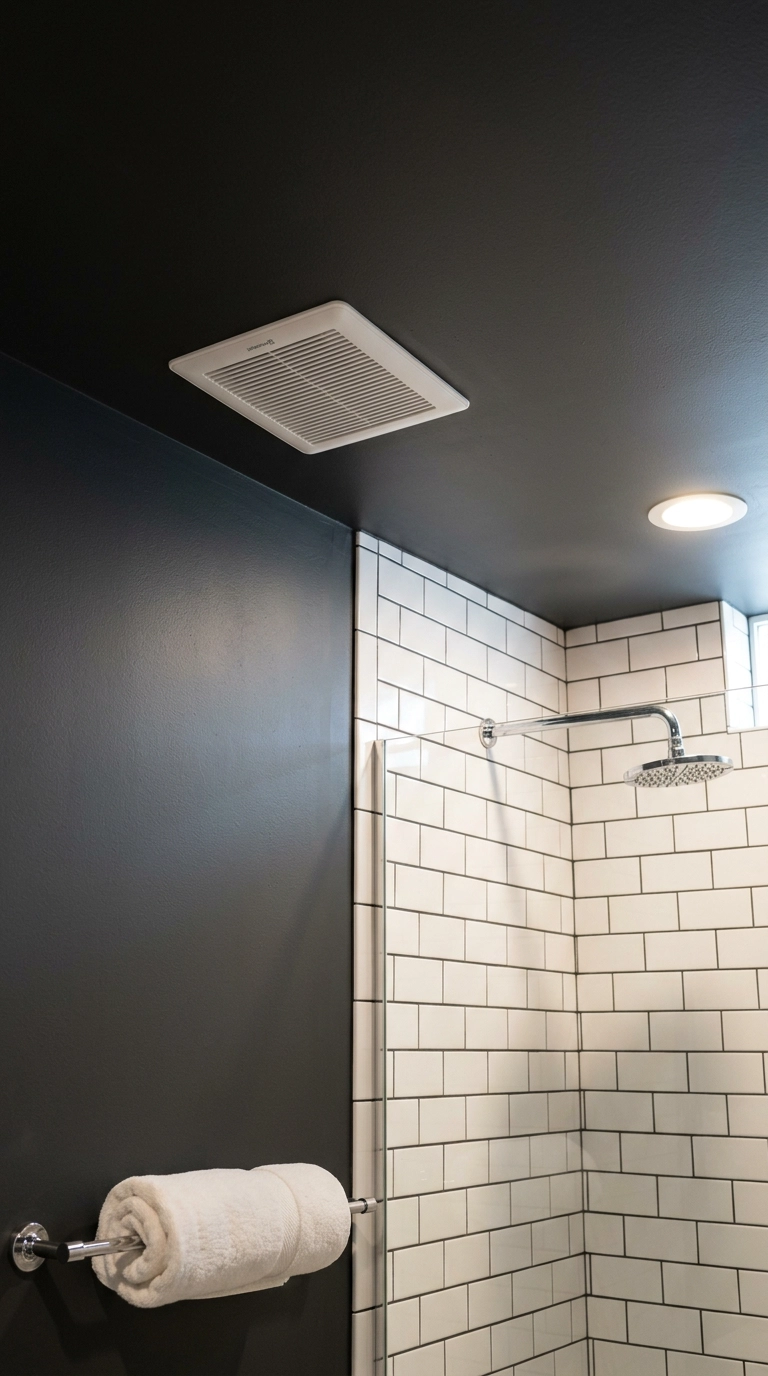
Nothing ruins a basement bathroom faster than moisture, and basements start out damp before you add a shower. Look at the CFM rating on your fan – you want roughly one CFM per square foot of floor, minimum 50, and it needs to actually vent outside rather than into the joist bay.
7. Make the Shower Curtain the One Bold Pattern in the Room
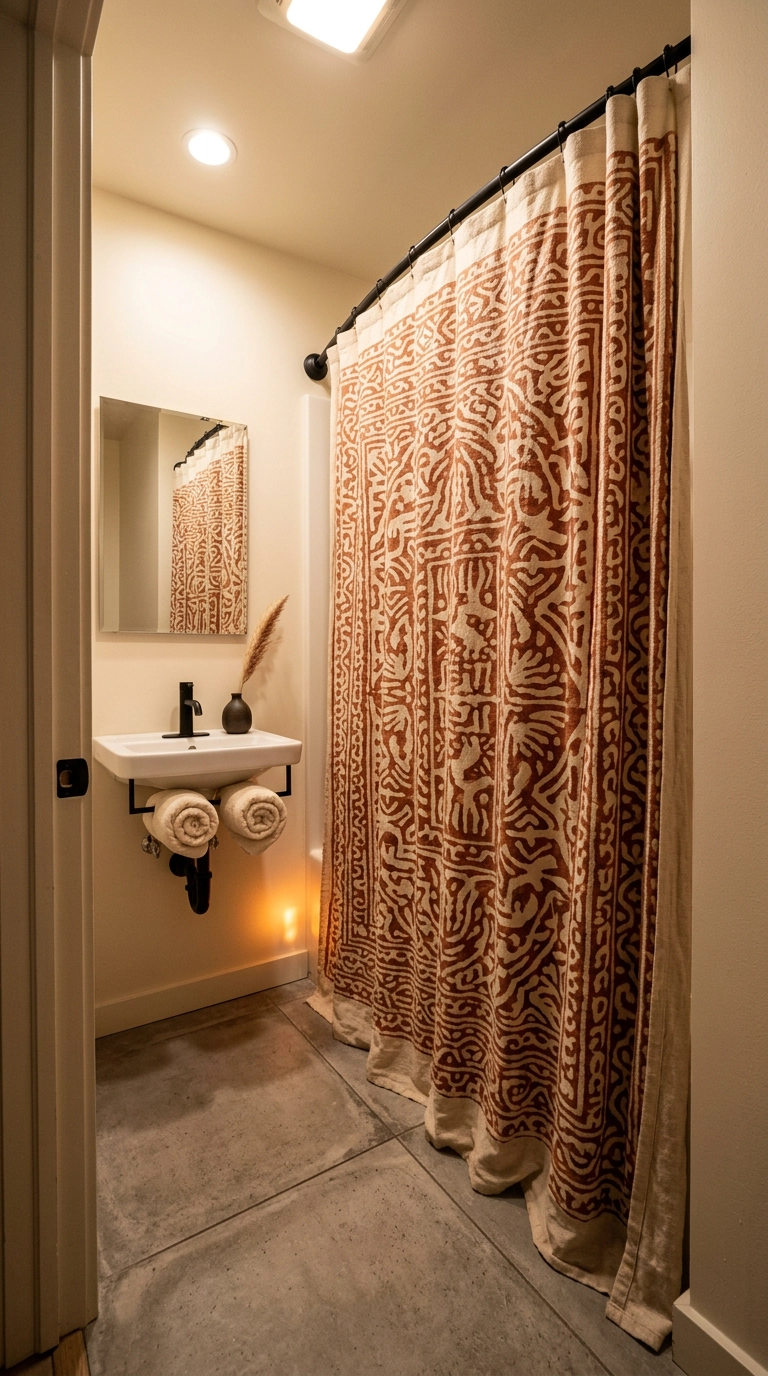
A shower curtain is the largest single piece of fabric in the room, so it carries more visual weight than anything else you hang – meaning your eye goes there first. Give it the boldest pattern in the space and keep towels, rug, and walls solid, or the whole room starts arguing with itself.
8. Change the Hardware and Fixtures to Warm Metal in an Afternoon
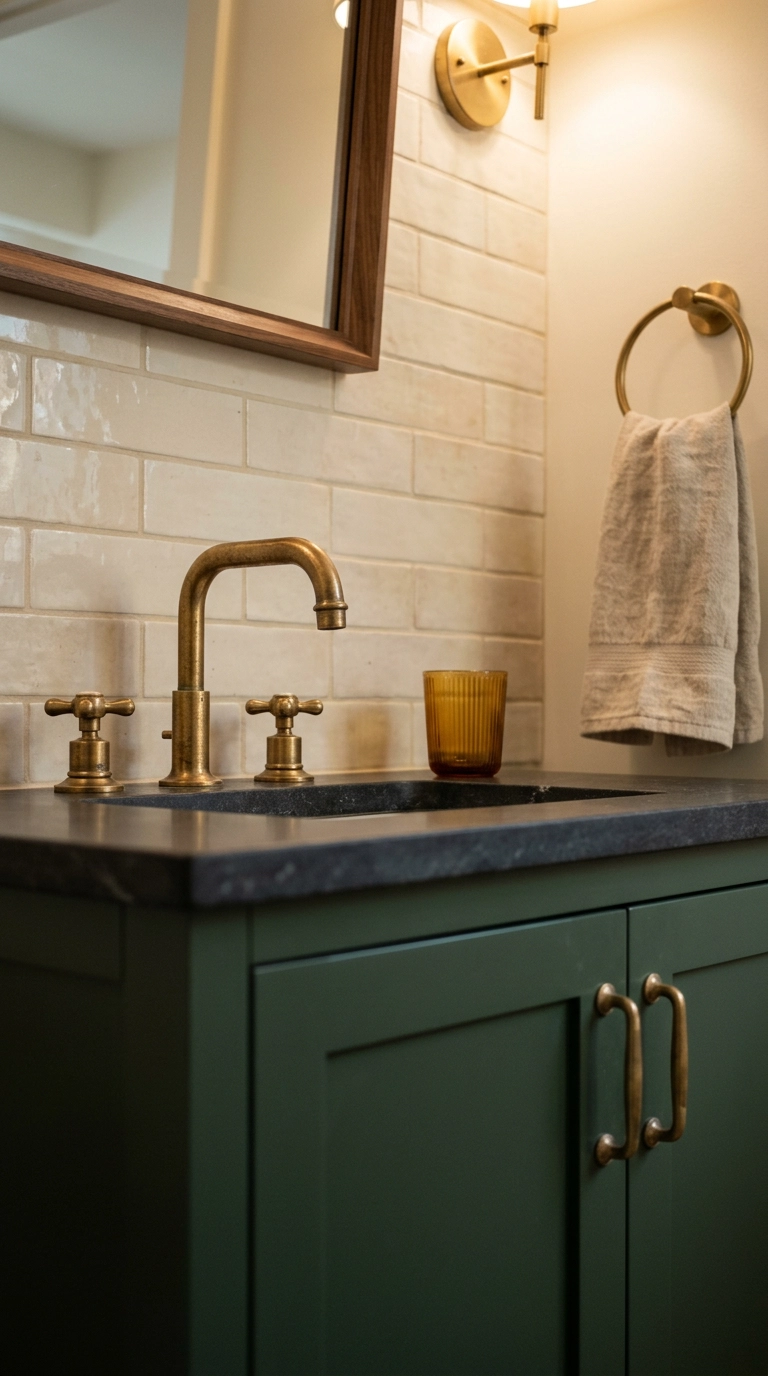
Chrome and polished nickel reflect whatever light is in the room, and in a basement that light is artificial and slightly grey, so chrome ends up looking cold. Warm metals – unlacquered brass, aged bronze, matte black with a warm undertone – hold their character under bulb light instead of going flat.
9. Use Small-Scale Dark Wallpaper That Doesn’t Need Daylight
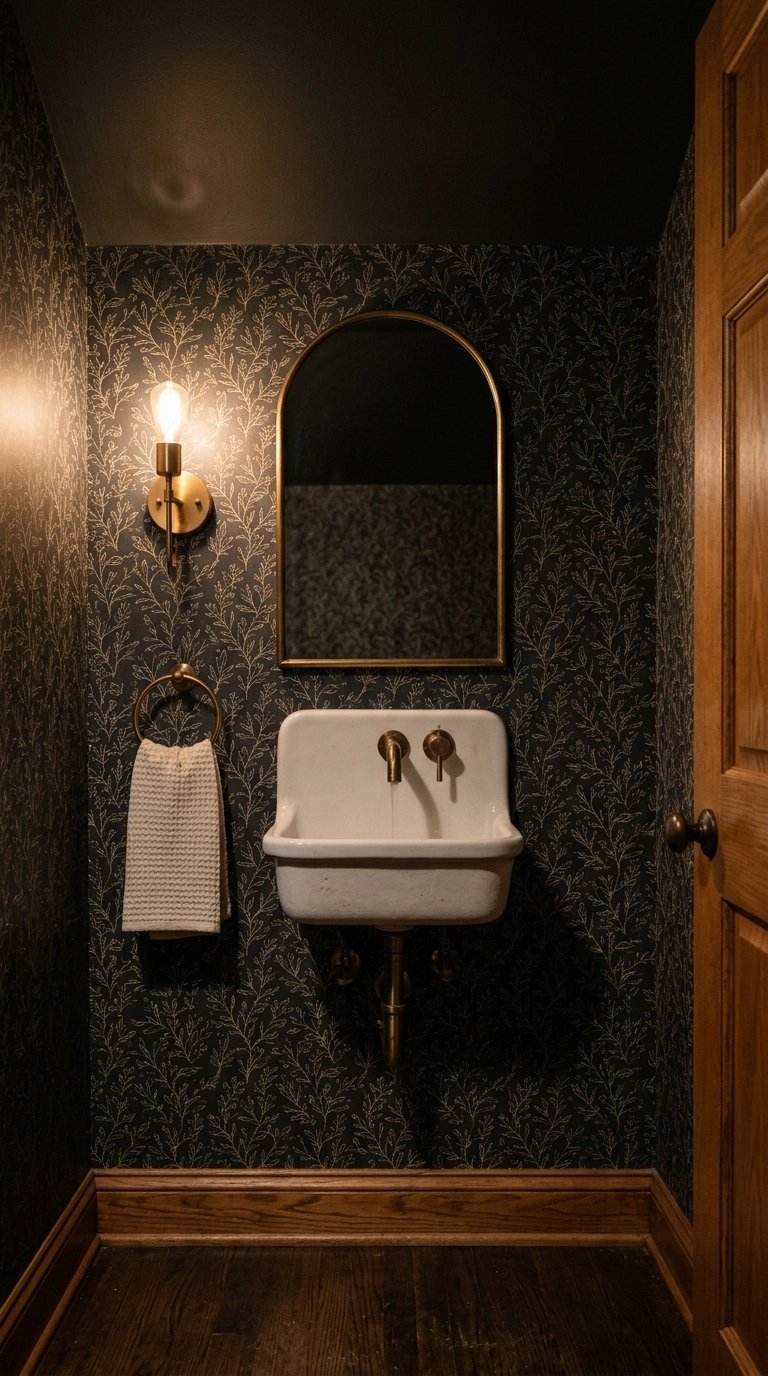
Big airy florals and watercolor prints are designed to be read in daylight – under a single warm bulb they turn to mush. What works down here is small-scale, high-contrast pattern: fine line work, tight geometrics, dark grounds with a light motif. The contrast does the job that sunlight normally would.
10. Paint the Exposed Pipes and Joists the Same Color as the Ceiling
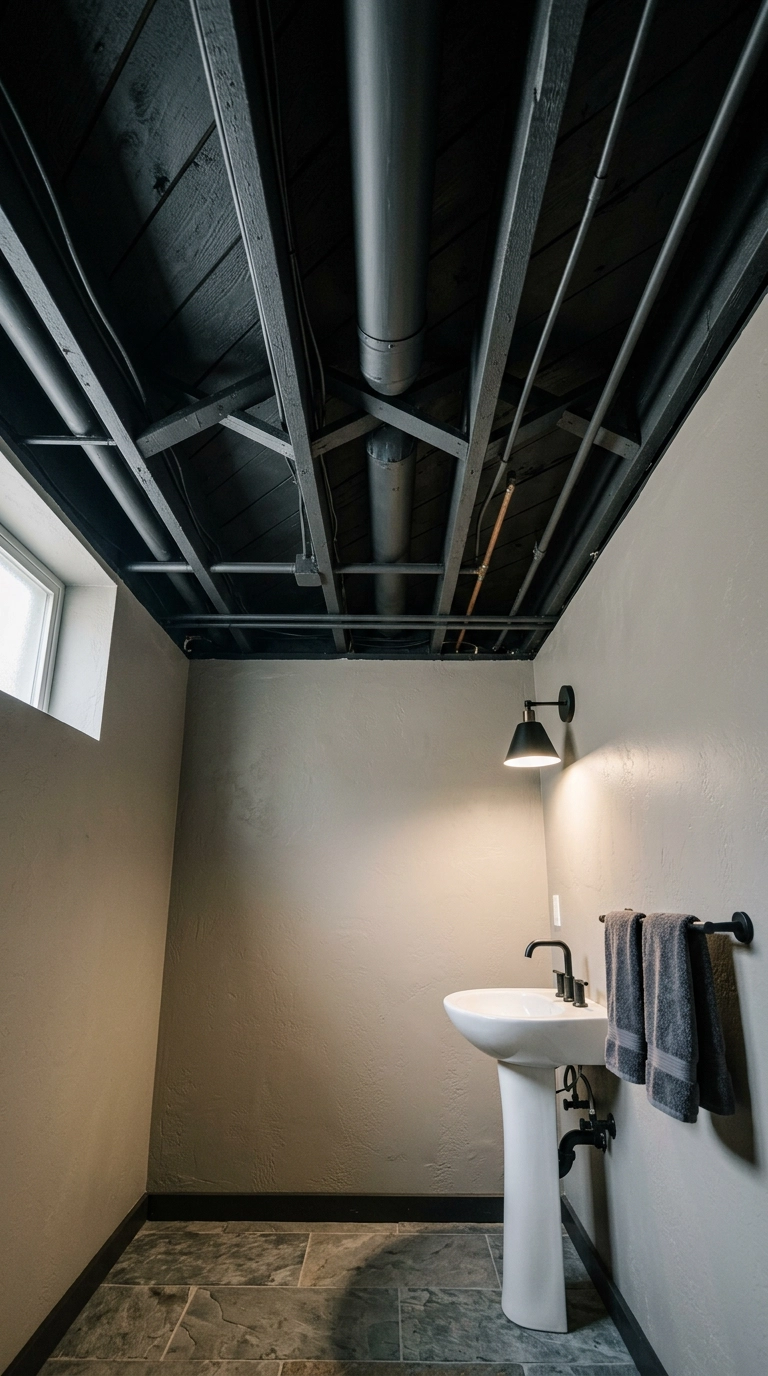
You are not going to hide the pipes, and boxing them in eats three inches of headroom you cannot spare. So paint them out instead – joists, ducts, pipes, and ceiling all one flat dark color, and the whole overhead mess recedes into shadow because there’s no contrast for your eye to catch.
11. Choose a Low-Profile Ceiling Fixture Built for a Seven-Foot Ceiling
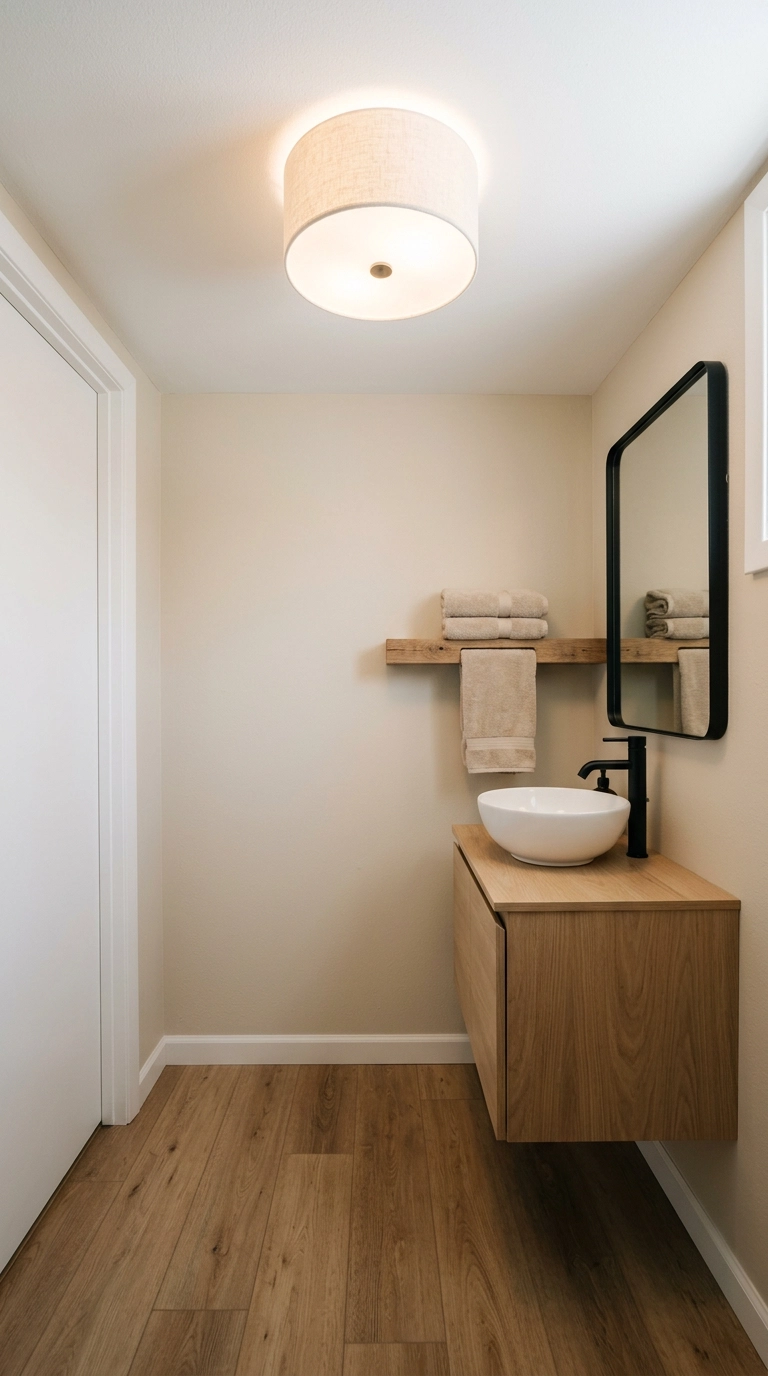
A pendant in a seven-foot basement bathroom is a head injury waiting to happen, and semi-flush fixtures with a four-inch drop still crowd the room. Go true flush mount with a diffused shade, because a bare bulb that close to eye level creates glare you’ll feel every morning.
12. Warm the Cold Concrete Floor with Peel-and-Stick Wood-Look Vinyl
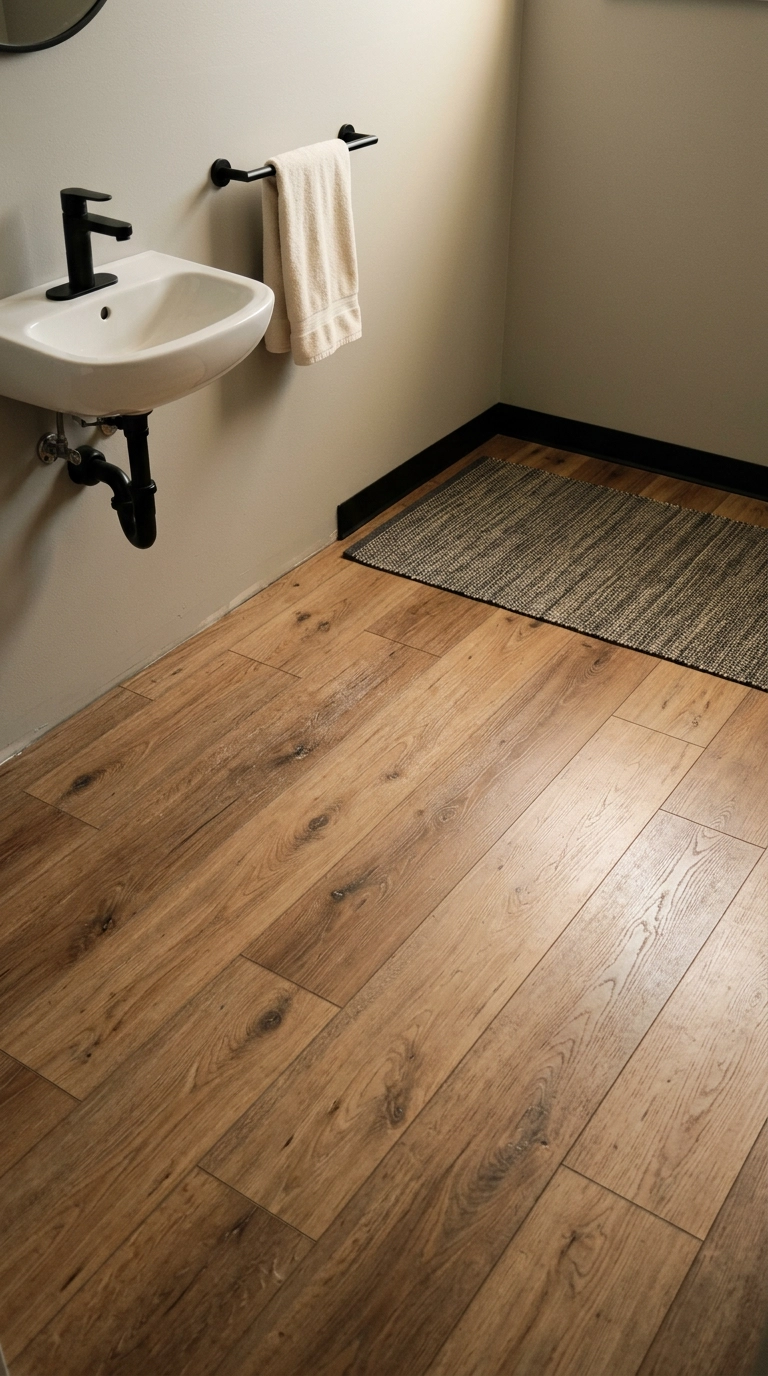
Concrete and cold grey tile are the two things that make a basement bathroom feel like a basement, and floors carry more of that feeling than walls do because you’re standing on them barefoot. A warm mid-tone wood look breaks the association instantly.
13. Tile the Shower in a Glossy Deep Color to Bounce Fixture Light
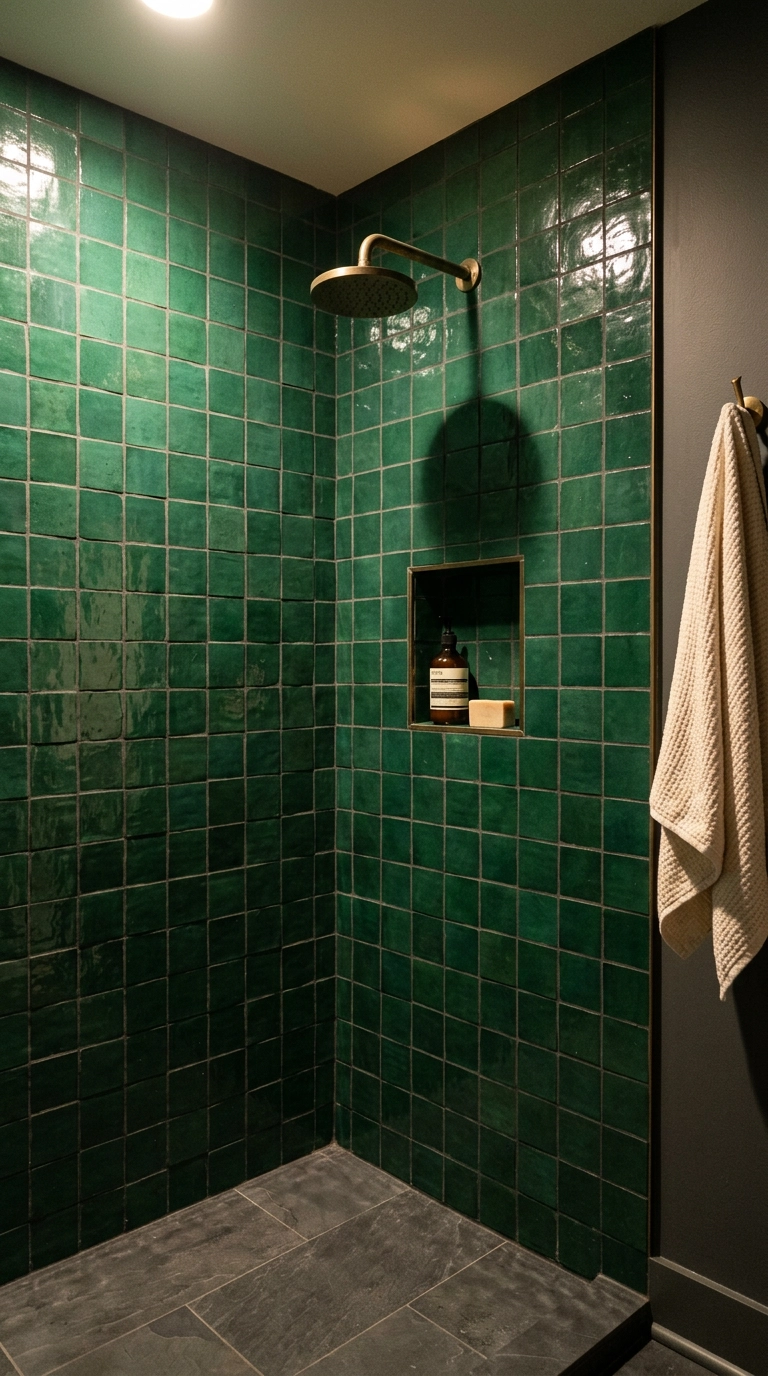
Here’s the trick that makes dark basement bathrooms work: matte finishes absorb light, glossy finishes throw it back. A deep saturated tile in a glossy or hand-glazed finish gives you the drama of dark color while actively multiplying the small amount of light you have.
14. Add a Board and Batten Half Wall to Cover Rough Drywall
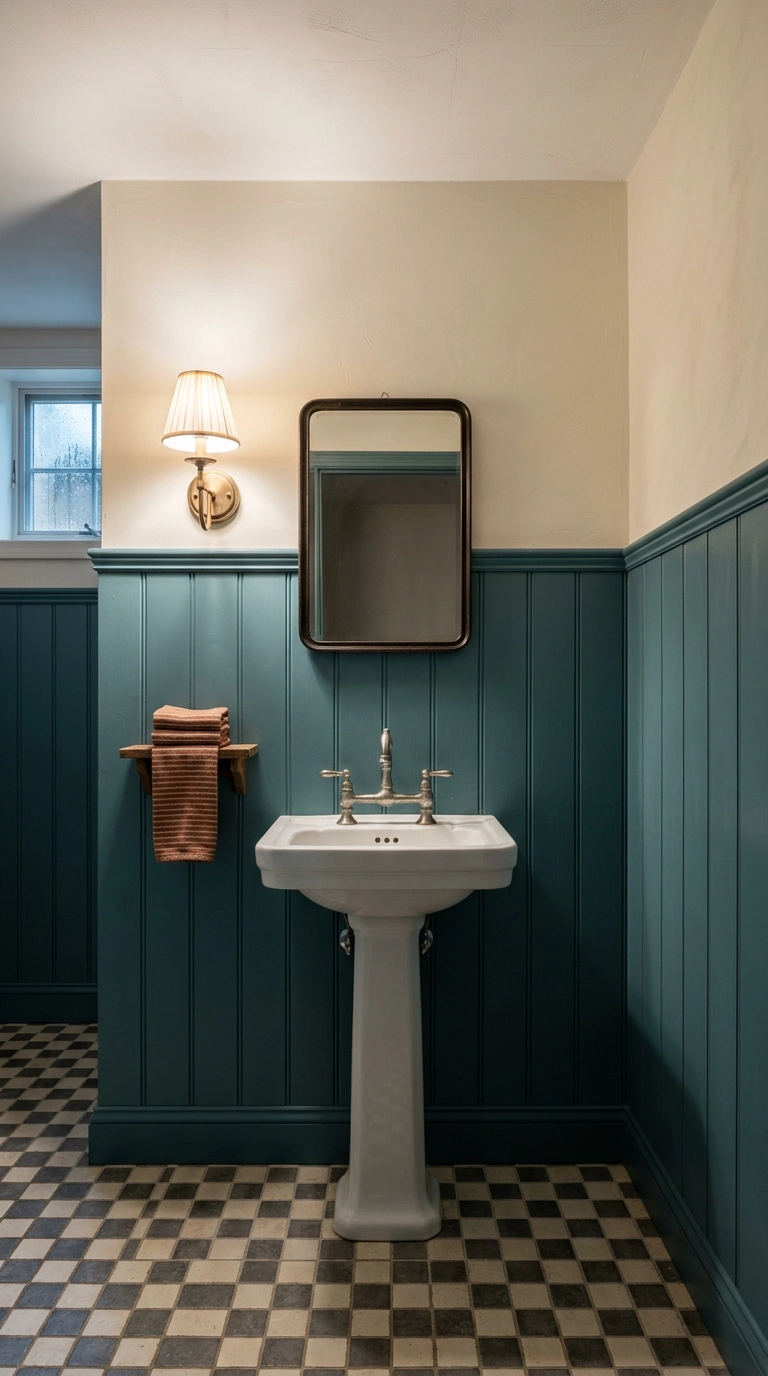
Basement drywall takes abuse – moisture waves, patched plumbing access, uneven mud work from whoever finished it in 1994. Board and batten molding on the lower two-thirds hides all of it and adds the kind of architectural detail basements almost never have.
15. Lean a Small Antique Mirror Instead of Buying Wall Art
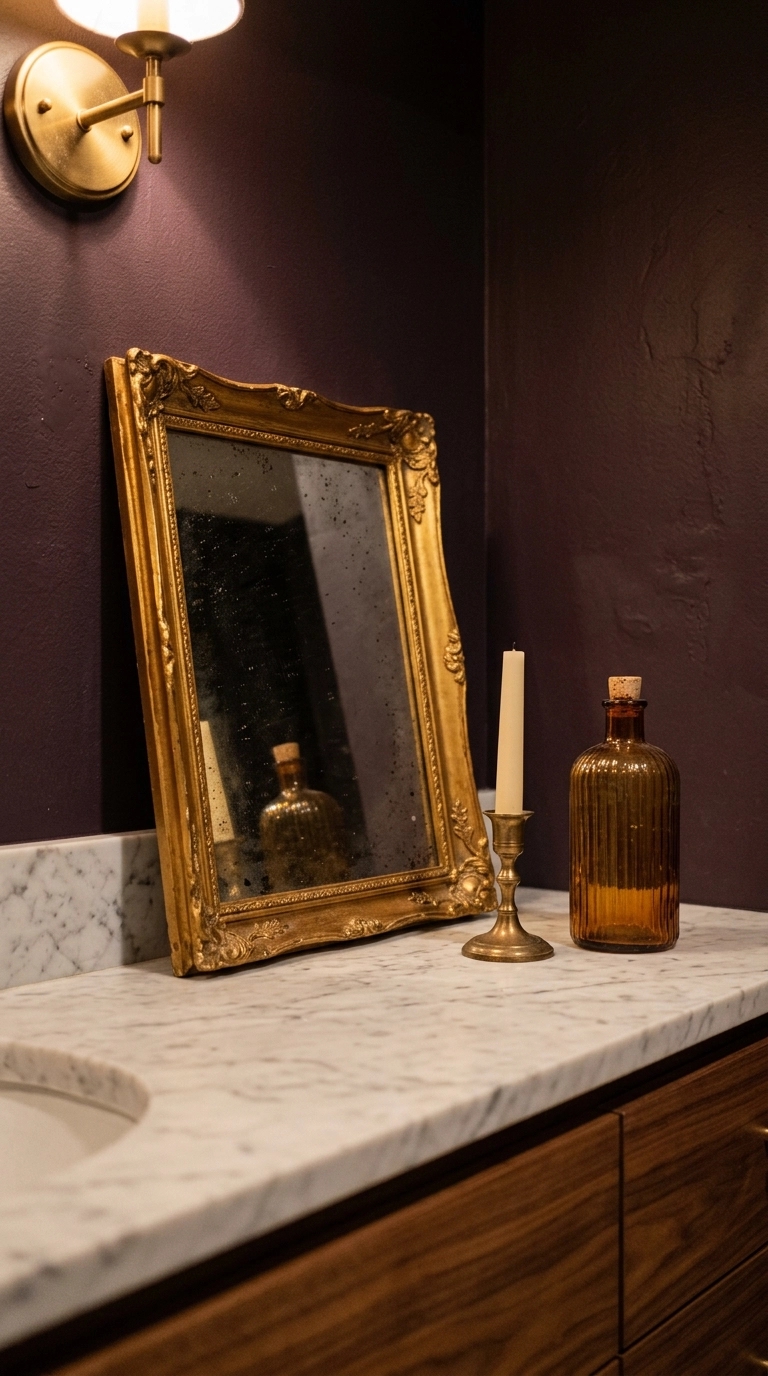
Framed paper art and basement humidity are a bad marriage – the mat buckles and the print waves within a year. A small antique mirror sidesteps that entirely and does double duty by bouncing your sconce light around.
16. Carve Storage Into the Stud Bays You Already Have
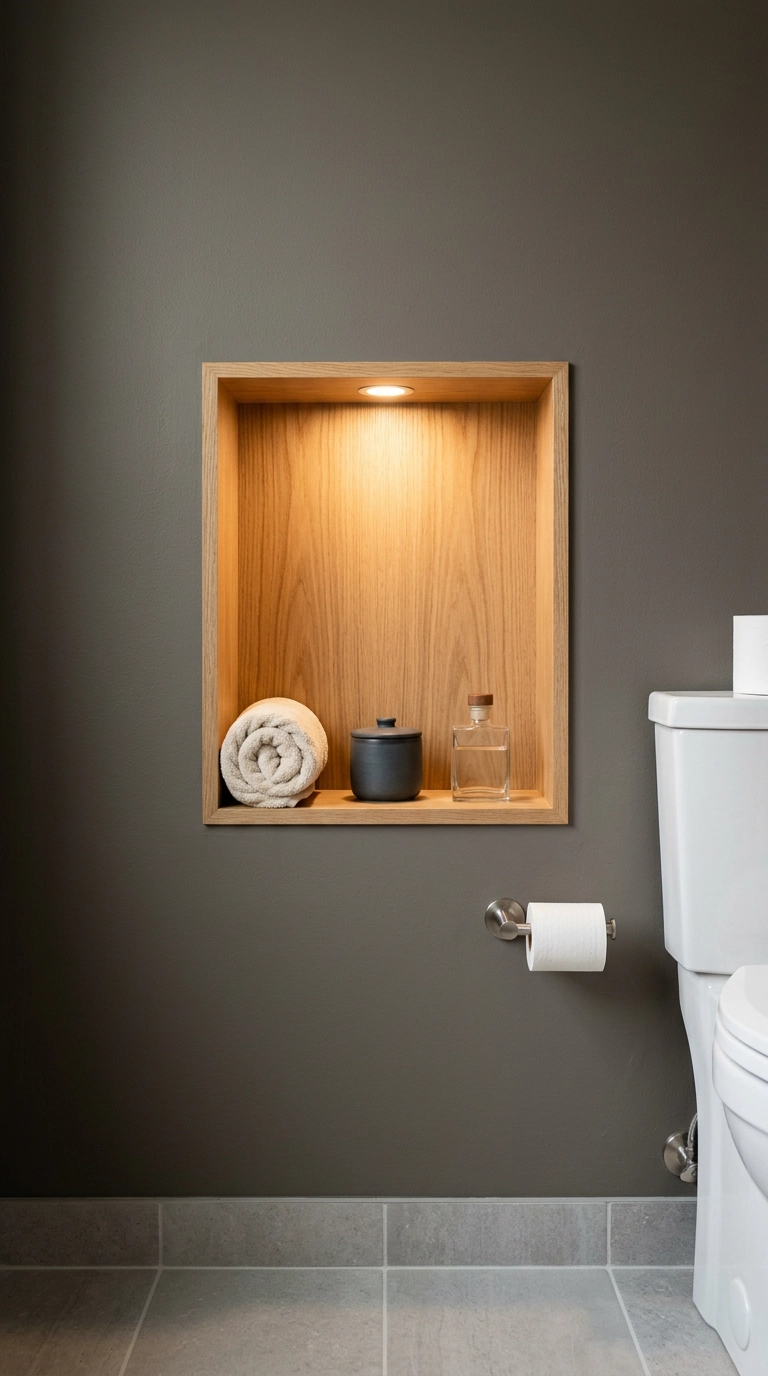
Basement bathrooms are usually tight, and a floor cabinet steals the square footage you need to actually turn around. The space between studs is three and a half inches deep and already there – plenty for towels, a spare roll, and a bottle or two.
17. Swap the Bath Mat for a Washable Flatweave Runner
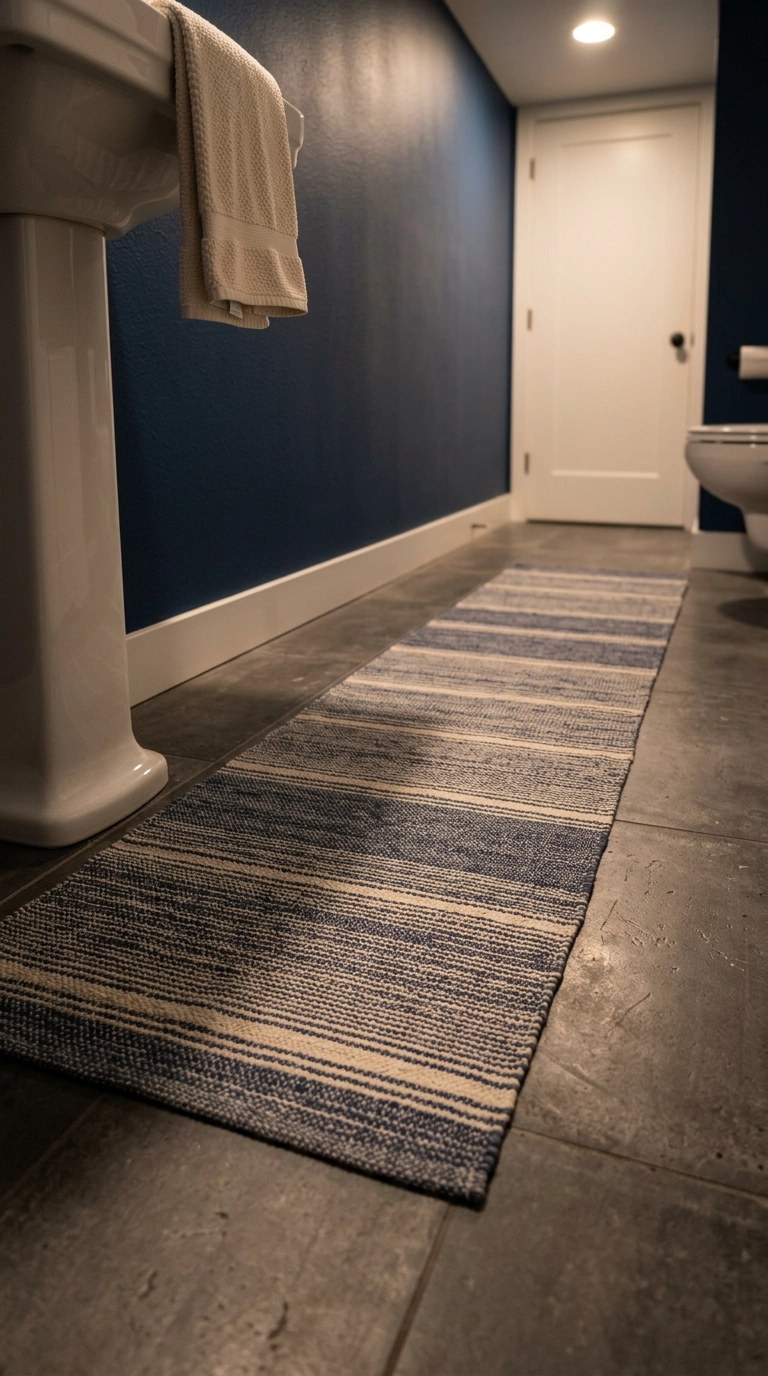
Standard plush bath mats sit on a damp basement floor and stay damp, which is how you end up with that smell. A low-pile washable flatweave dries fast and goes in the machine whole, and visually a long runner stretches a narrow room the way a wide one never will.
18. Install a Backlit LED Mirror Where Sconces Won’t Fit
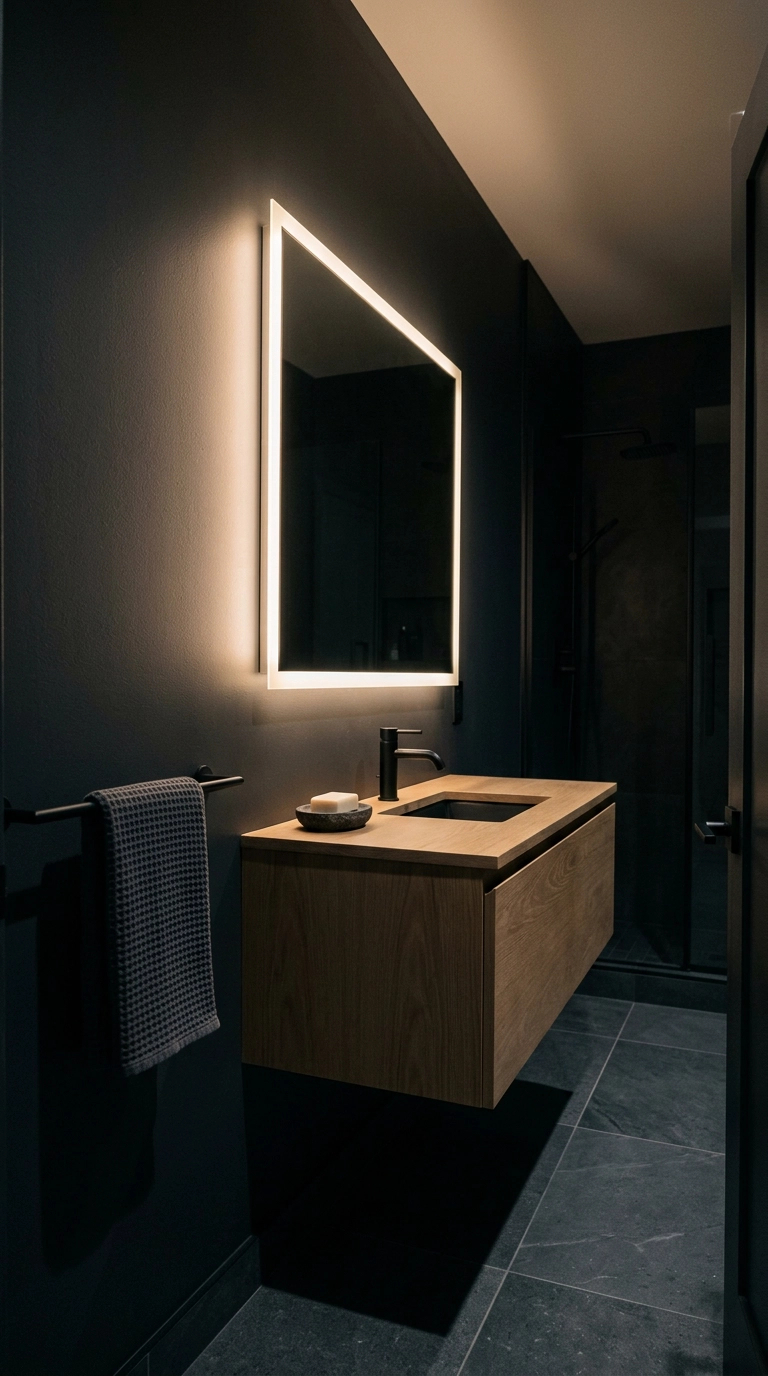
Some basement bathrooms simply don’t have wall real estate for sconces – the mirror wall is squeezed between a door and a corner. A backlit mirror solves it by putting a soft even halo behind the glass, which lights your face from all sides instead of from above.
19. Run a Motion-Sensor LED Strip Under the Vanity
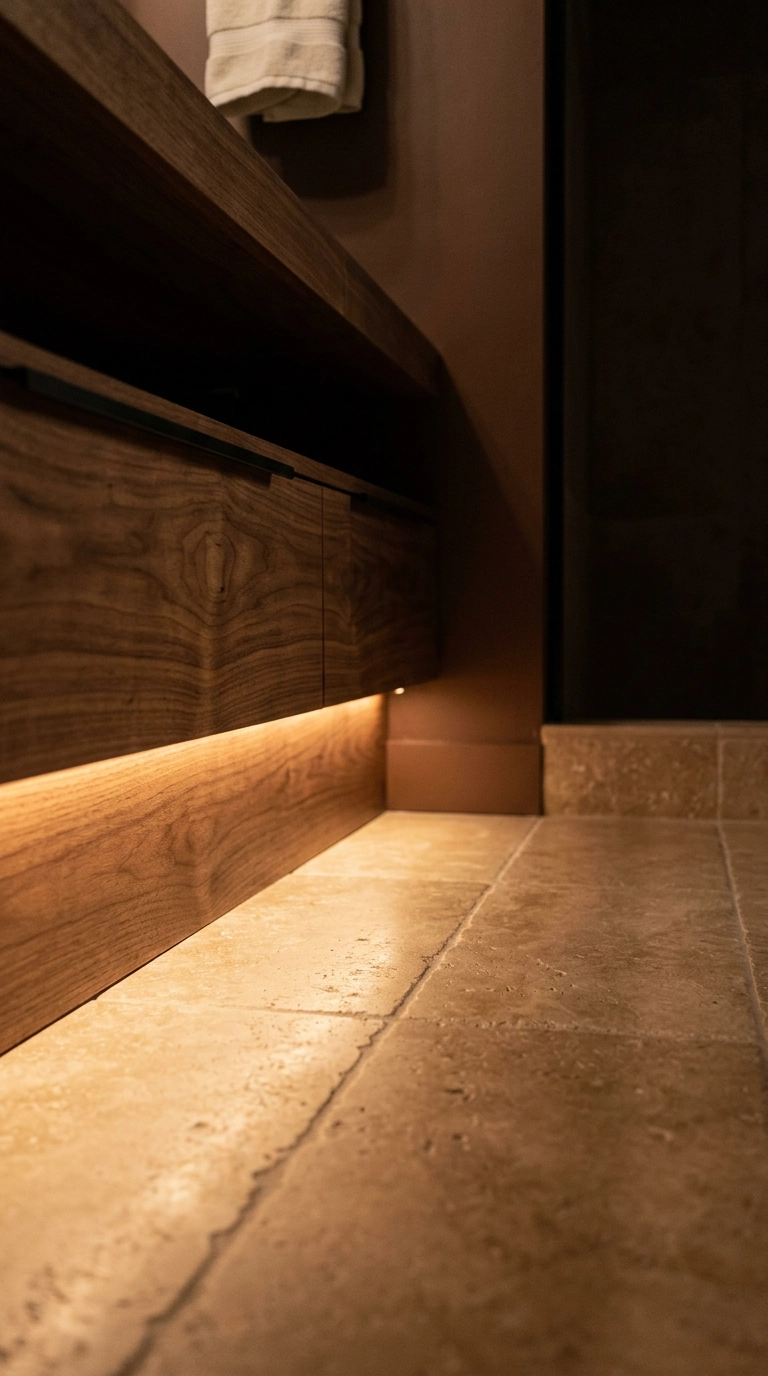
A basement bathroom at 2am is pitch black, and flipping on the overhead is an assault. A warm LED strip stuck under the vanity toe kick with a motion sensor gives you just enough light to navigate without waking yourself all the way up.
20. Edit the Counter Down to Three Objects and Hide the Rest
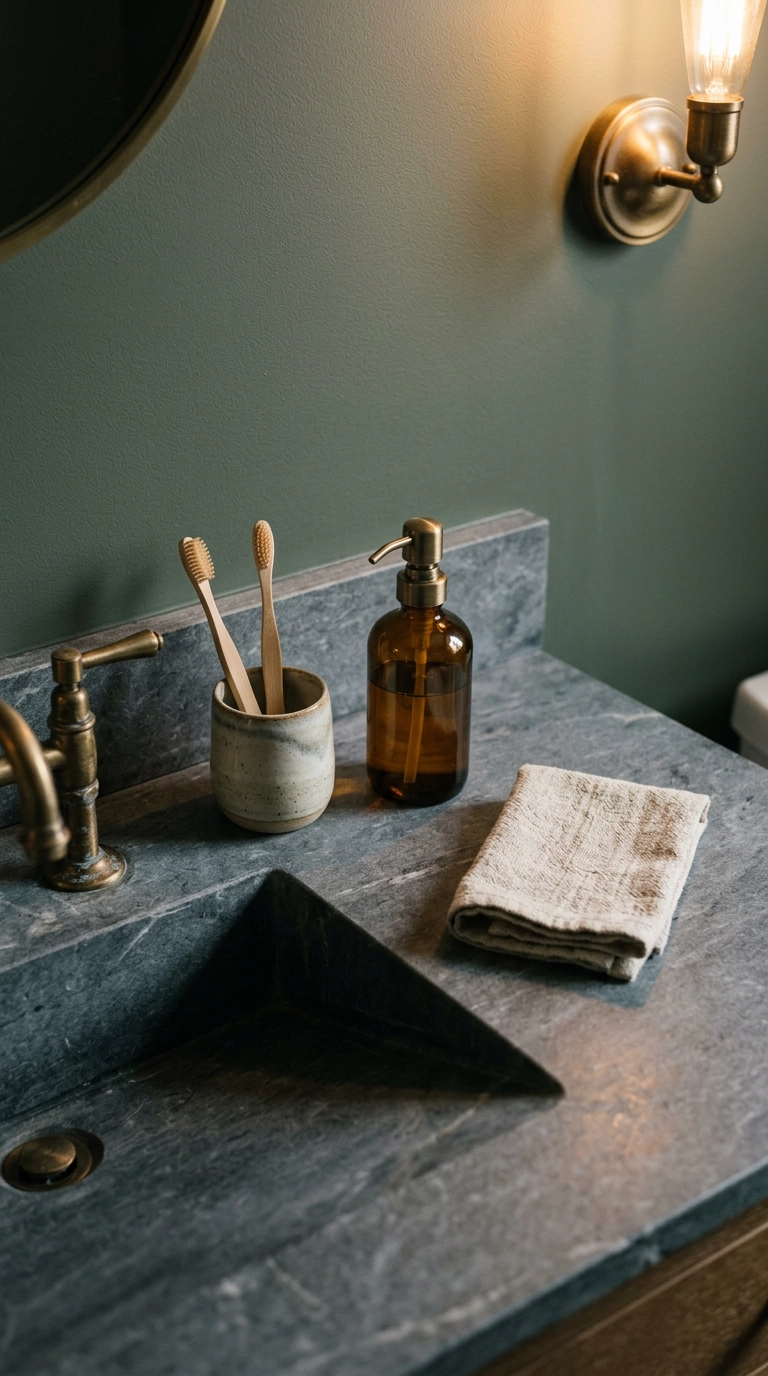
This one is completely free and it’s the highest-impact thing on the list after paint. Small windowless rooms have no visual breathing room to spare, so every extra bottle on the counter costs you more than it would in a big bright bathroom.
21. Work With the Under-Stair Slope Instead of Around It
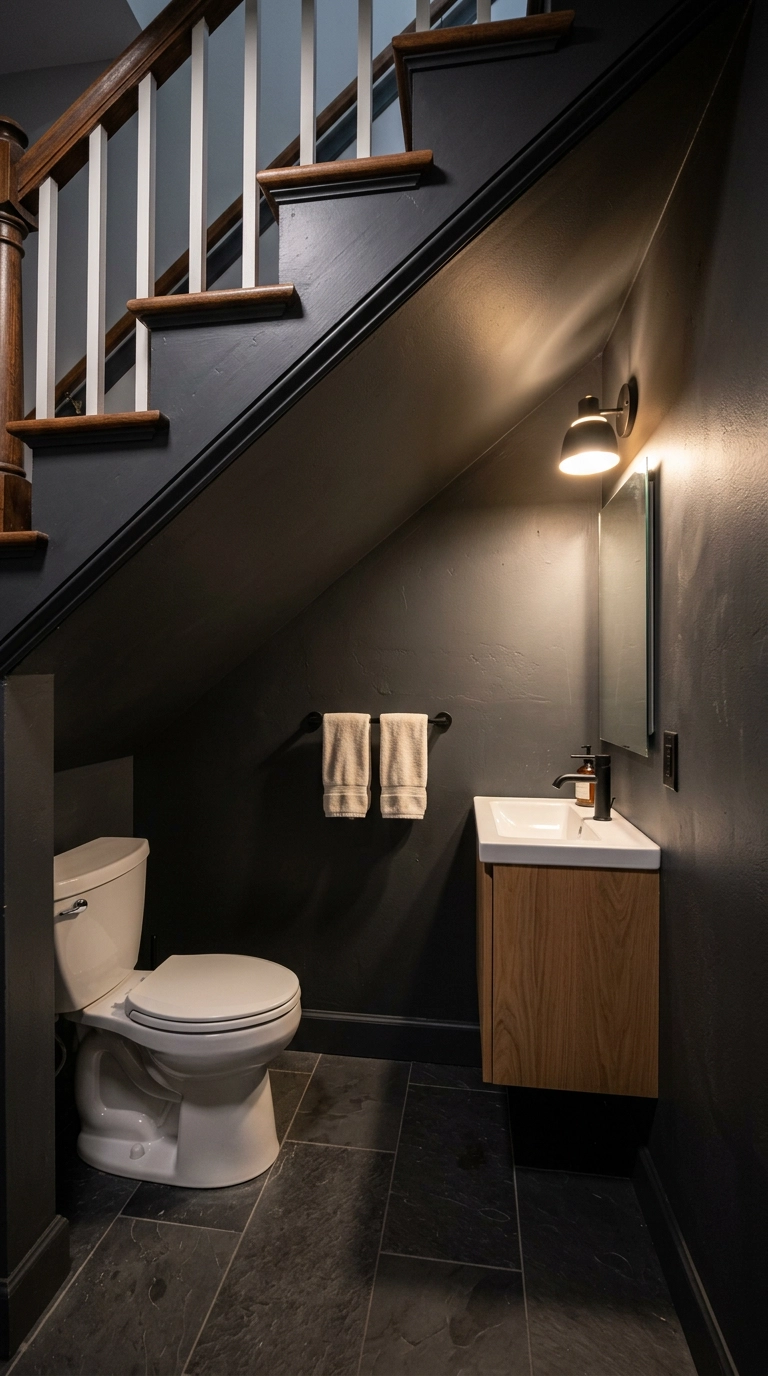
Half the basement bathrooms I’ve worked on are wedged under the stairs, and the instinct is to pretend the slope isn’t there. Better plan: put the toilet or the shower bench at the lowest point, since neither one needs standing headroom, and save the tall wall for the vanity and mirror.
22. Steal the Hotel Move: One Bar, Two Rolled Towels, Warm Color
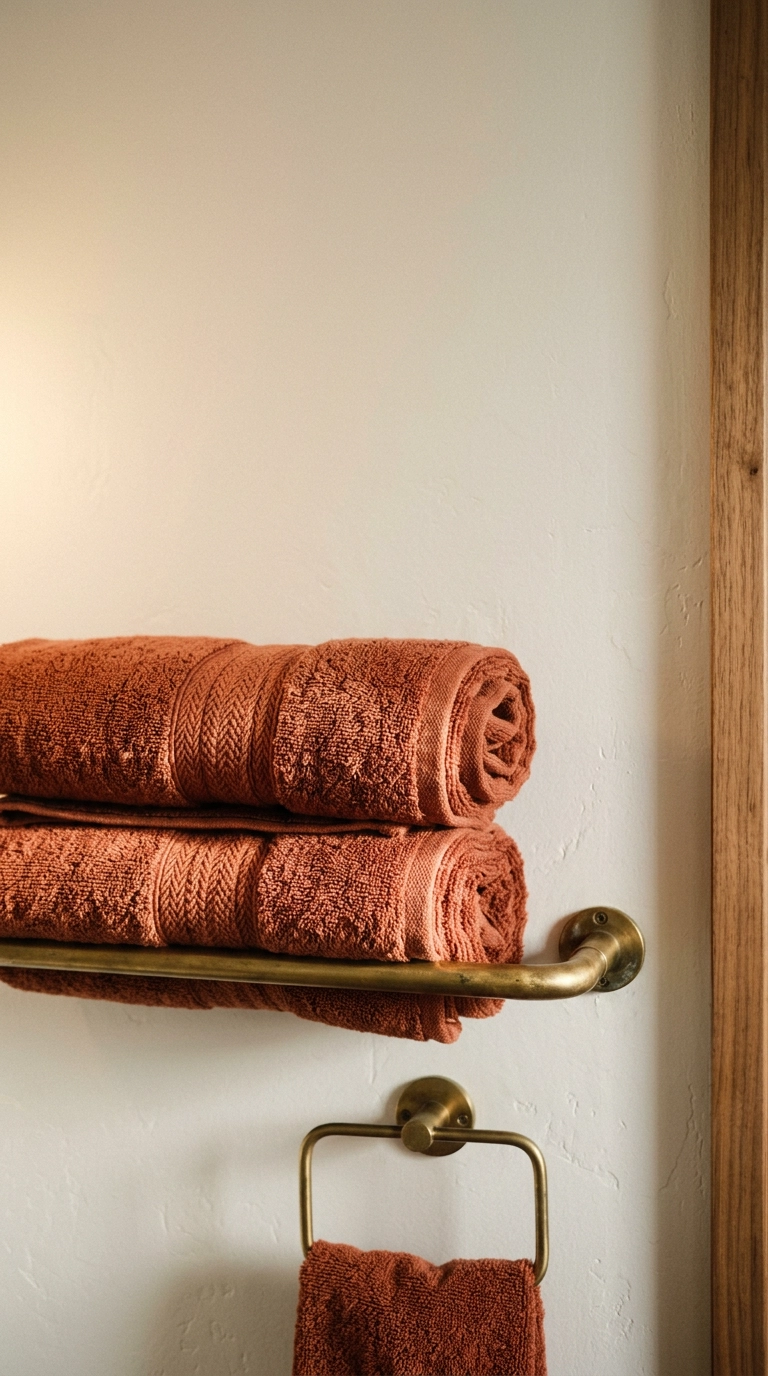
Mismatched towels in three shades of faded blue are what make a basement bathroom read as the afterthought bathroom. Buy one set in a single warm color – terracotta, camel, deep rust, mushroom – and get rid of the rest.
23. Treat It Like a Tiny Library: Dark Walls, Wood Stool, One Candle
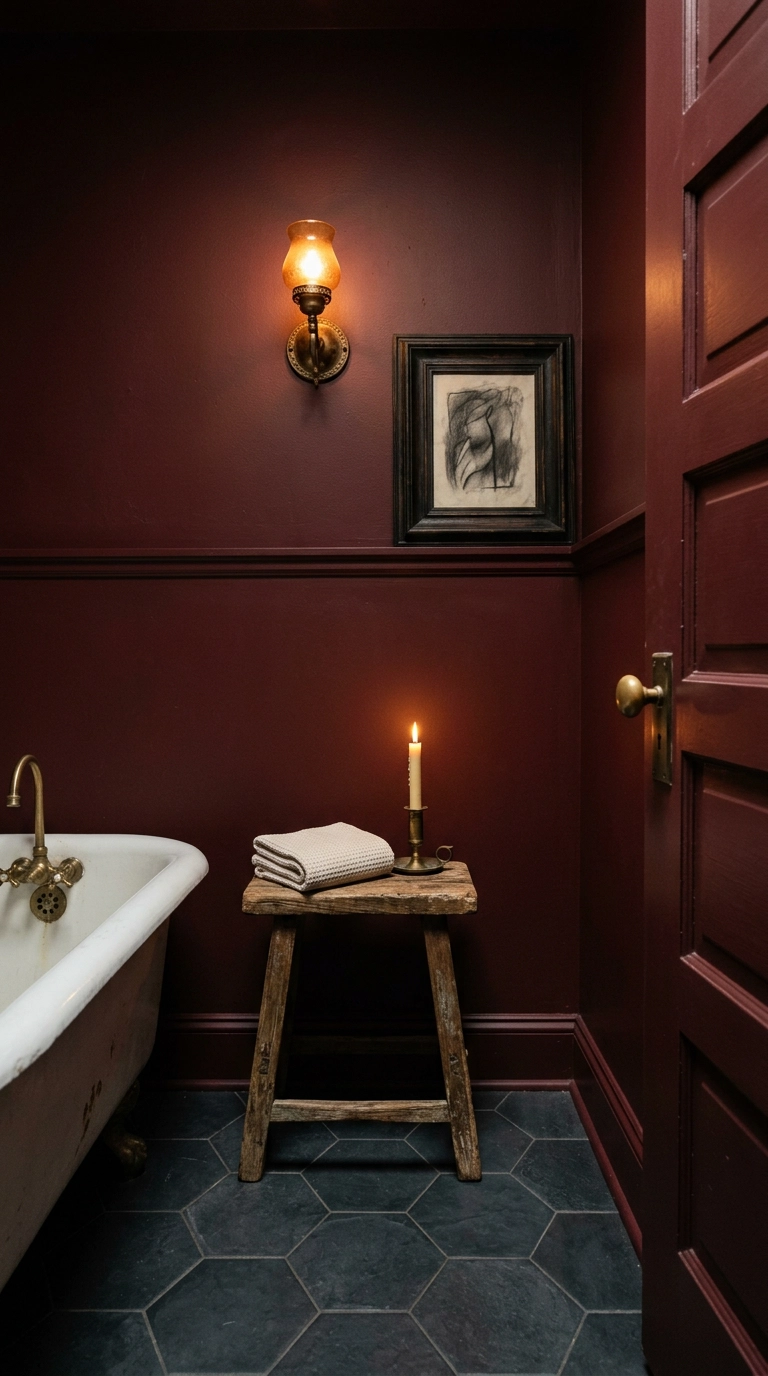
This is where I’d end up if it were my own basement: deep oxblood or near-black on every surface including the door, one aged brass sconce, and a little vintage wood stool doing the work a chrome towel rack would normally do. It stops feeling like a bathroom and starts feeling like a room with a bathtub in it.
Making Peace With the Room Downstairs
If you take one thing from all of this, let it be that a basement bathroom stops being sad the moment you quit apologizing for it. Every pale, bright, faux-daylight basement bath I’ve seen looks like it’s trying to be somewhere else. The dark ones – the color drenched oxblood, the emerald zellige shower, the charcoal ceiling with the pipes painted right out – look like somebody made a decision.
The good news is that the moves with the biggest payoff are also the cheapest. Editing the counter down to three objects costs nothing. Swapping to 2700K bulbs costs about twelve dollars. Moving the mirror to where it can actually catch the light from the doorway costs a stud finder and twenty minutes. Save your real money for the glossy tile and the exhaust fan, in that order, and let paint do the rest. Dark saturated bathrooms have been having a long moment – Farrow & Ball’s Hague Blue and Studio Green keep showing up in bathrooms half this size, and designers like Athena Calderone have been proving for years that a small dark room with one good material in it beats a big beige one.
My favorite thing about this particular project is how forgiving it is. Nobody spends an hour scrutinizing the guest half-bath, so it’s the lowest-stakes place in your house to try the color you’ve been too nervous to put in the living room. If you want more of this kind of thing – real budgets, honest effort levels, and the occasional cautionary tale from my own house – come join my weekly newsletter. I send one email, it’s short, and there’s usually a paint color in it.


