
22 Vintage Kitchen Ideas That Bring Old-World Charm Into Modern Homes

There’s a reason vintage kitchens never really go out of style — they don’t chase trends, they borrow from decades of design that already proved itself. A checkerboard floor, a deep farmhouse sink, an old iron pot rack hanging overhead — none of it feels forced, because it wasn’t designed to impress anyone in the first place. It was just designed to last.
What makes vintage kitchens genuinely appealing today isn’t nostalgia alone, though. It’s that these design choices tend to hold up: solid wood cabinetry, honest materials, fixtures built before anyone worried about planned obsolescence. Bringing that sensibility into a modern home doesn’t mean recreating a museum piece — it means picking the details that still make sense and letting them anchor the room. Here are 22 ways to do exactly that, from small styling touches to bigger structural choices.
1. Checkerboard Flooring That Never Gets Old
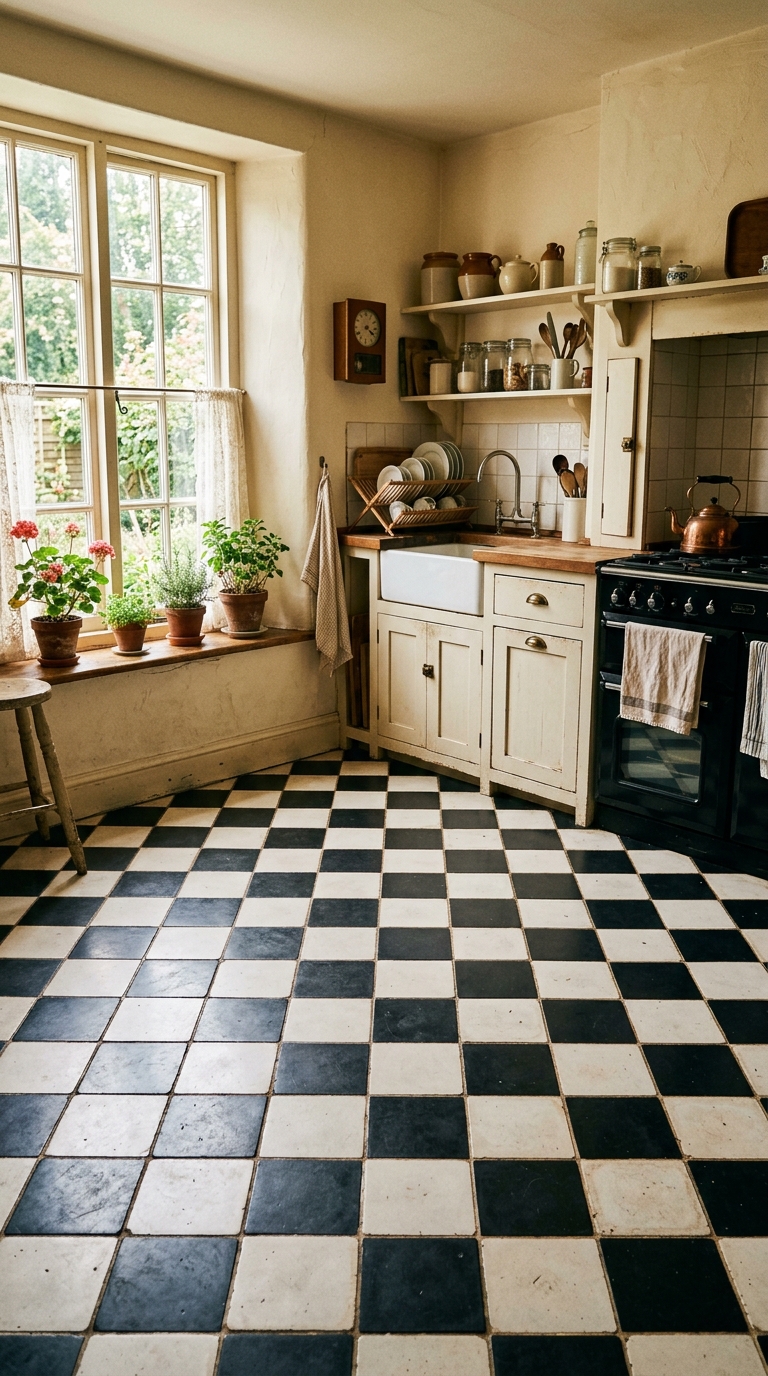
Few flooring choices carry as much instant character as black-and-white checkerboard tile. It’s graphic without being loud, and it does something clever to a room — the contrast tricks the eye into reading the space as larger and more structured than it actually is. Beyond the visual punch, the material itself tends to be tough, standing up to decades of foot traffic without losing its finish. It’s one of those details that feels equally at home in a full vintage renovation or dropped into an otherwise modern kitchen as a single statement move.
2. Retro Appliances With Modern Guts
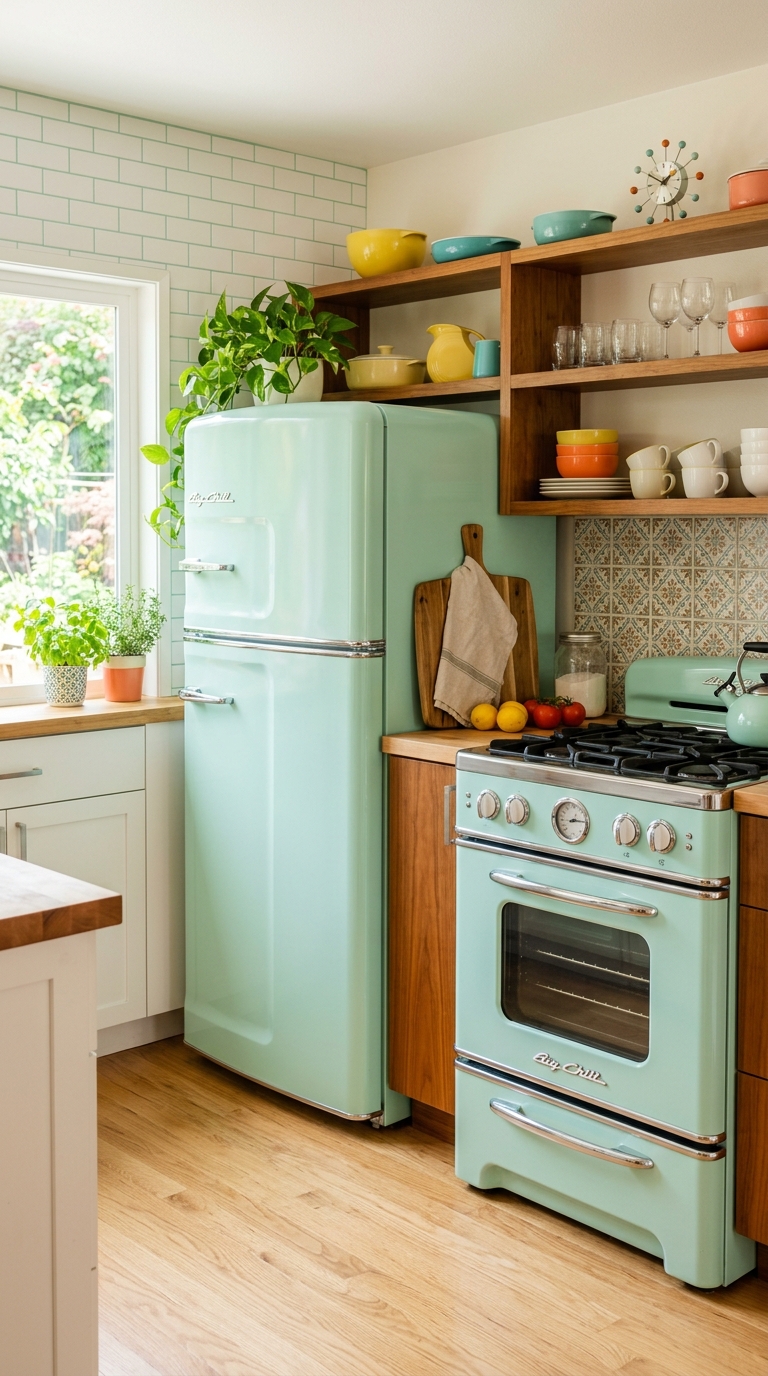
The pastel refrigerators and curved-edge stoves of decades past are having a real moment again, and it’s not hard to see why — they add color and personality to a room in a way stainless steel just can’t. The best part is that today’s versions aren’t actually old; they’re built on current technology and energy efficiency, just wrapped in a shell that looks like it time-traveled. It’s a rare case where you genuinely get the best of both eras in one appliance.
3. Cabinetry With Real Character
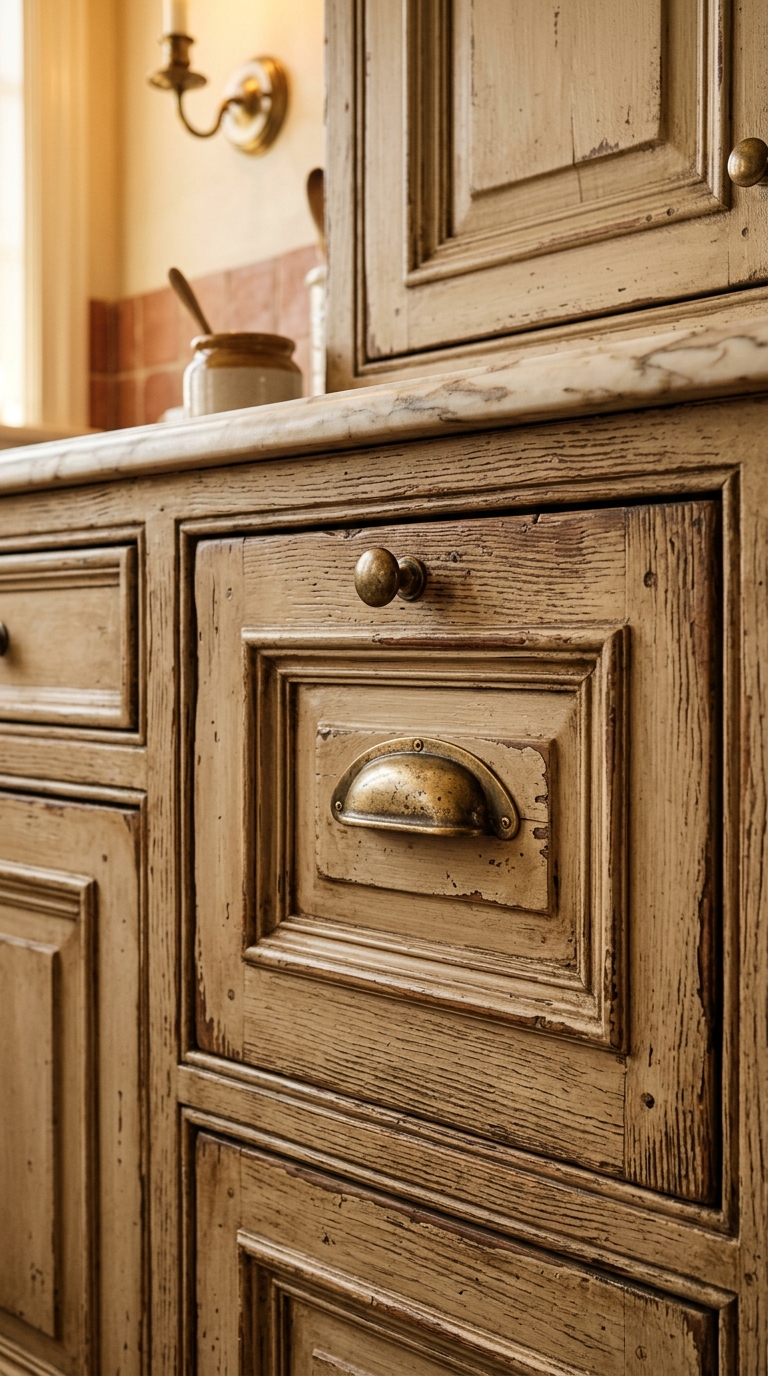
Vintage-inspired cabinetry stands apart from flat modern slab doors the moment you look closely — the paneling, the hand-applied distressing, the slightly imperfect finish that says this was actually crafted rather than mass-produced. It brings warmth into a kitchen in a way that’s hard to fake with newer materials. And practically speaking, well-built wood cabinetry from decades past was often over-engineered compared to today’s standards, meaning it can handle another few decades of daily use without complaint.
4. A Hanging Pot Rack for Everyday Storage
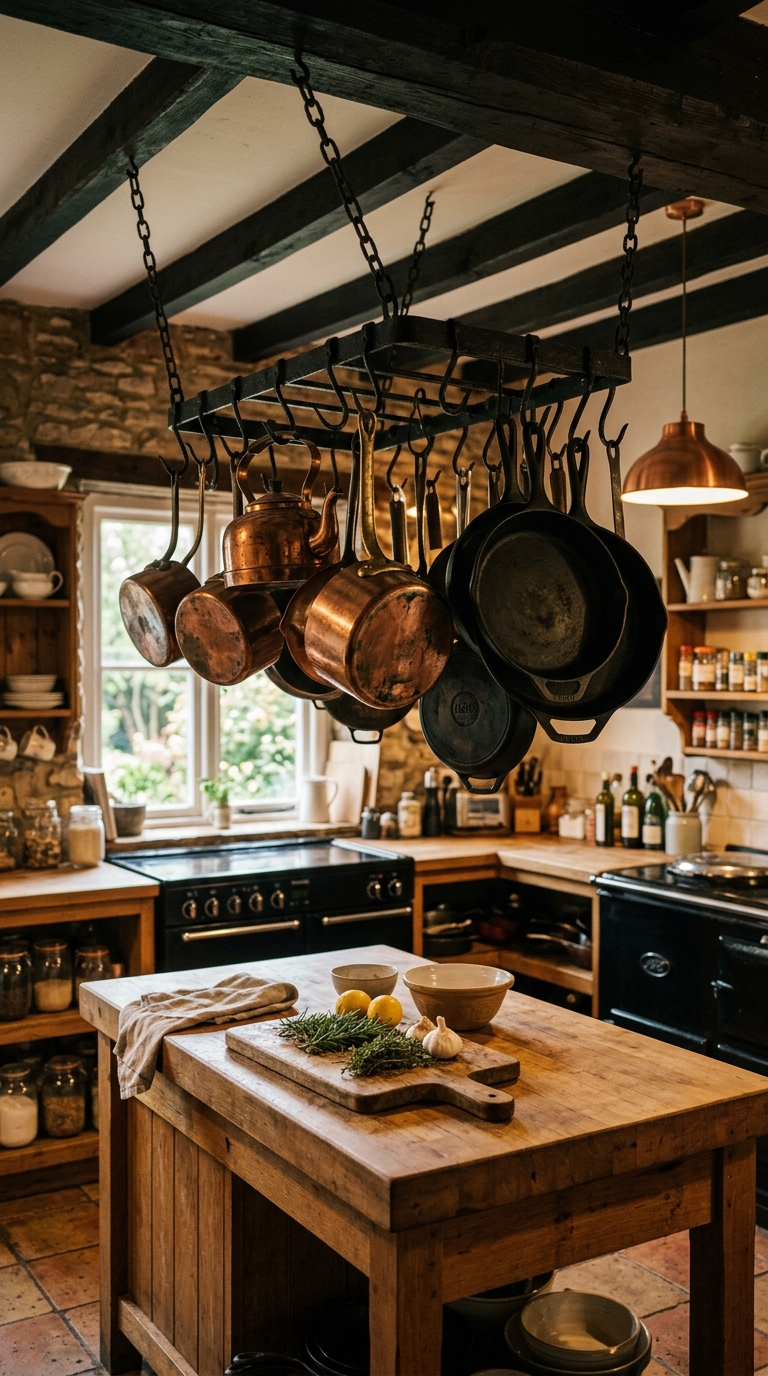
An overhead pot rack solves a real problem — cabinet space always runs out — while doubling as decor. Cast iron skillets and copper pots hanging within reach aren’t just functional, they add a layered, collected look that a closed cabinet never could. It’s the kind of detail that makes a kitchen look like it’s been cooked in for years, which, if you’re leaning into a vintage aesthetic, is exactly the point.
5. Walls That Tell a Story
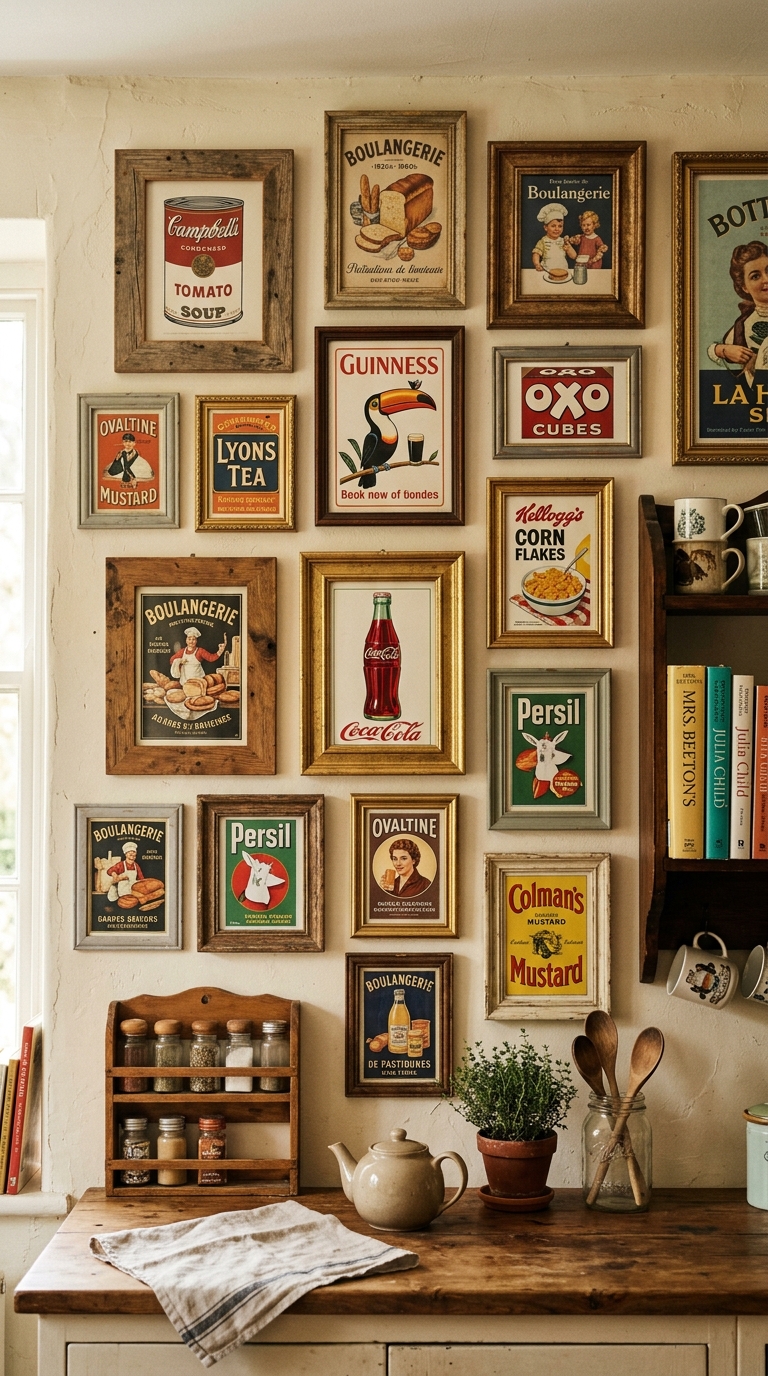
Empty walls in a kitchen are a missed opportunity. Vintage posters, framed maps, old advertisements, or hand-painted signage turn blank space into something worth looking at twice. This is one of the lowest-effort, lowest-cost ways to bring personality into a kitchen — no renovation required, just a careful eye for pieces that actually mean something to you rather than generic reproductions bought in bulk.
6. The Farmhouse Sink Everyone Still Wants
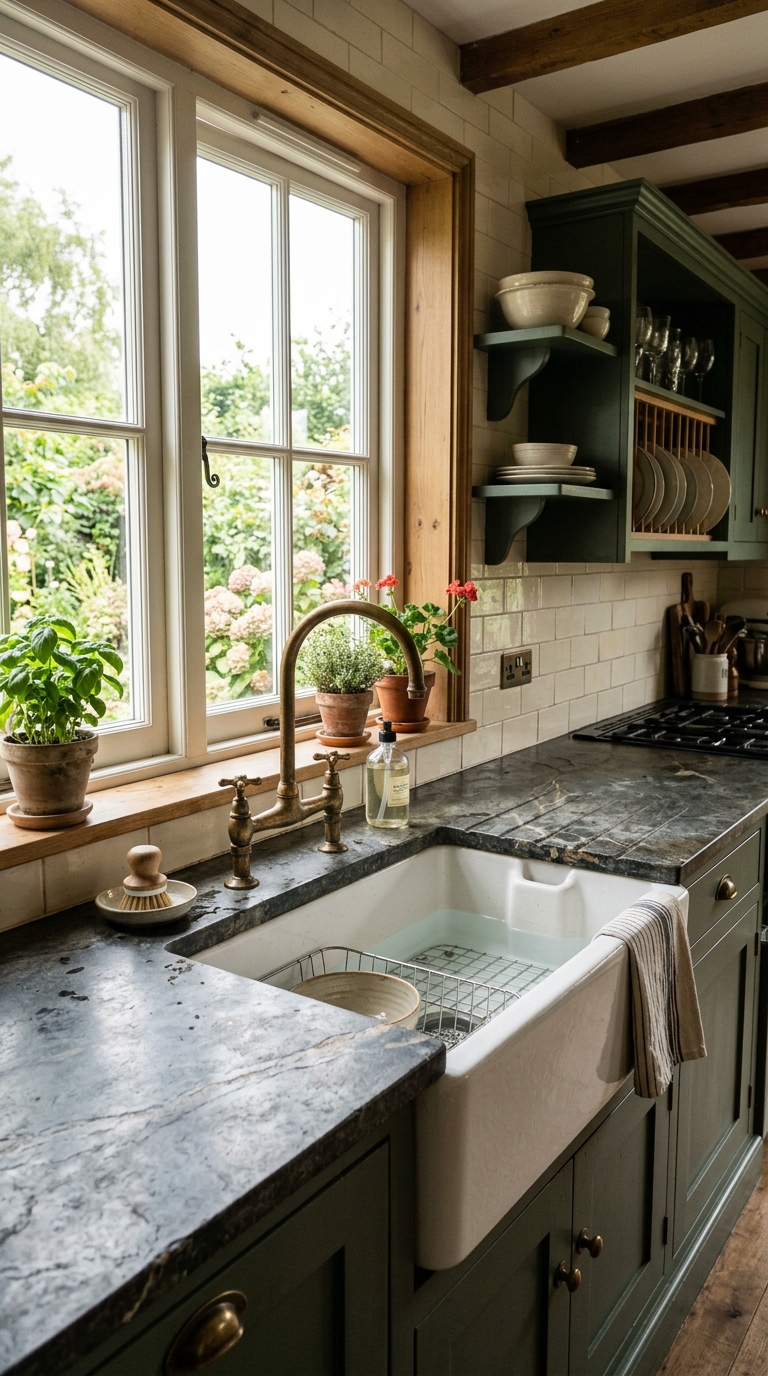
There’s a reason the deep apron-front farmhouse sink survived every kitchen trend cycle since it was introduced — it’s genuinely useful. The oversized basin handles big pots and baking sheets without a fight, and the exposed front panel gives the whole setup a substantial, grounded presence that a standard undermount sink doesn’t have. It pairs naturally with almost any vintage element you add around it, which is part of why it’s usually one of the first upgrades people make.
7. An Island Built Like Furniture, Not Cabinetry
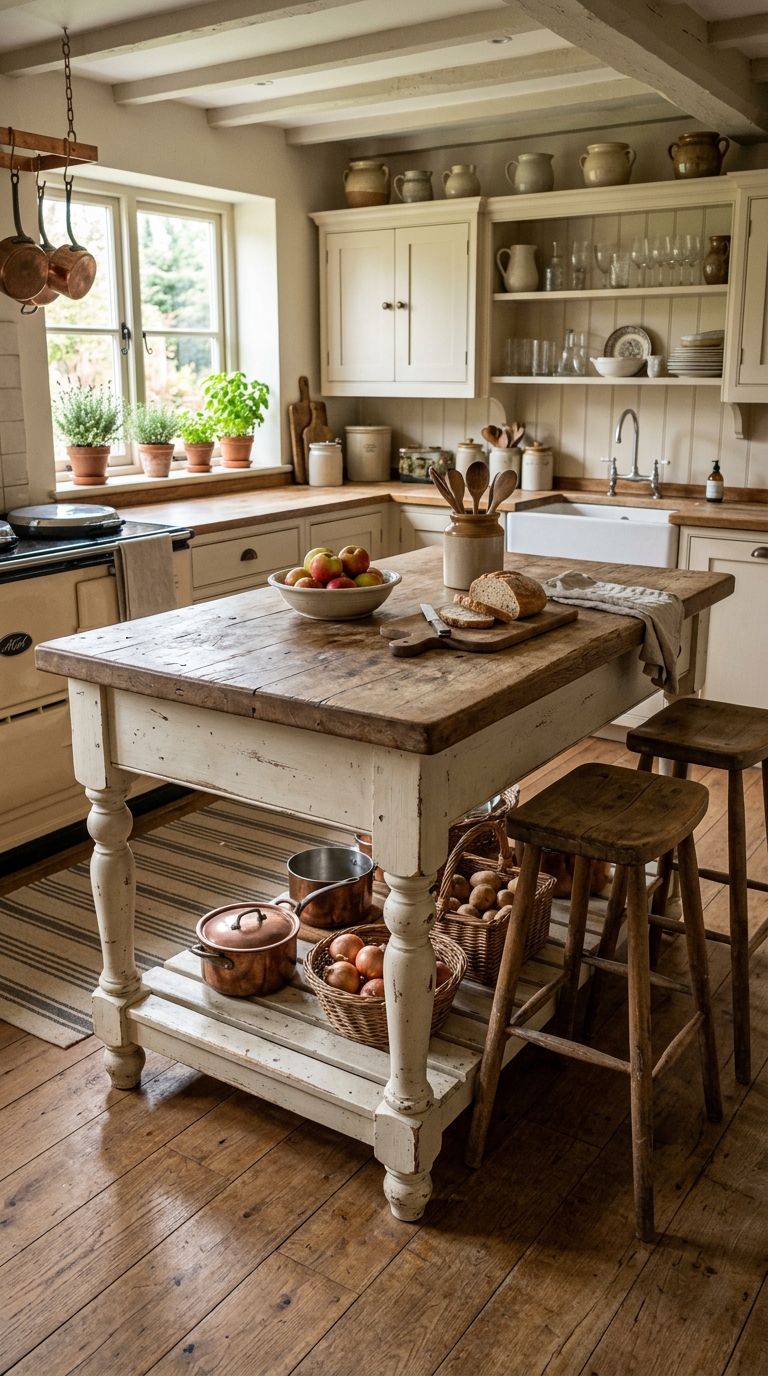
Older kitchen islands often weren’t built-in at all — they were freestanding pieces of furniture, complete with turned legs, worn tops, and a bit of visible wear from years of use. That approach still works beautifully today. It gives the island a sense of history the second it’s installed, and it tends to create a more social, gathering-focused kitchen than a sleek built-in ever could.
8. A Backsplash With Actual Pattern
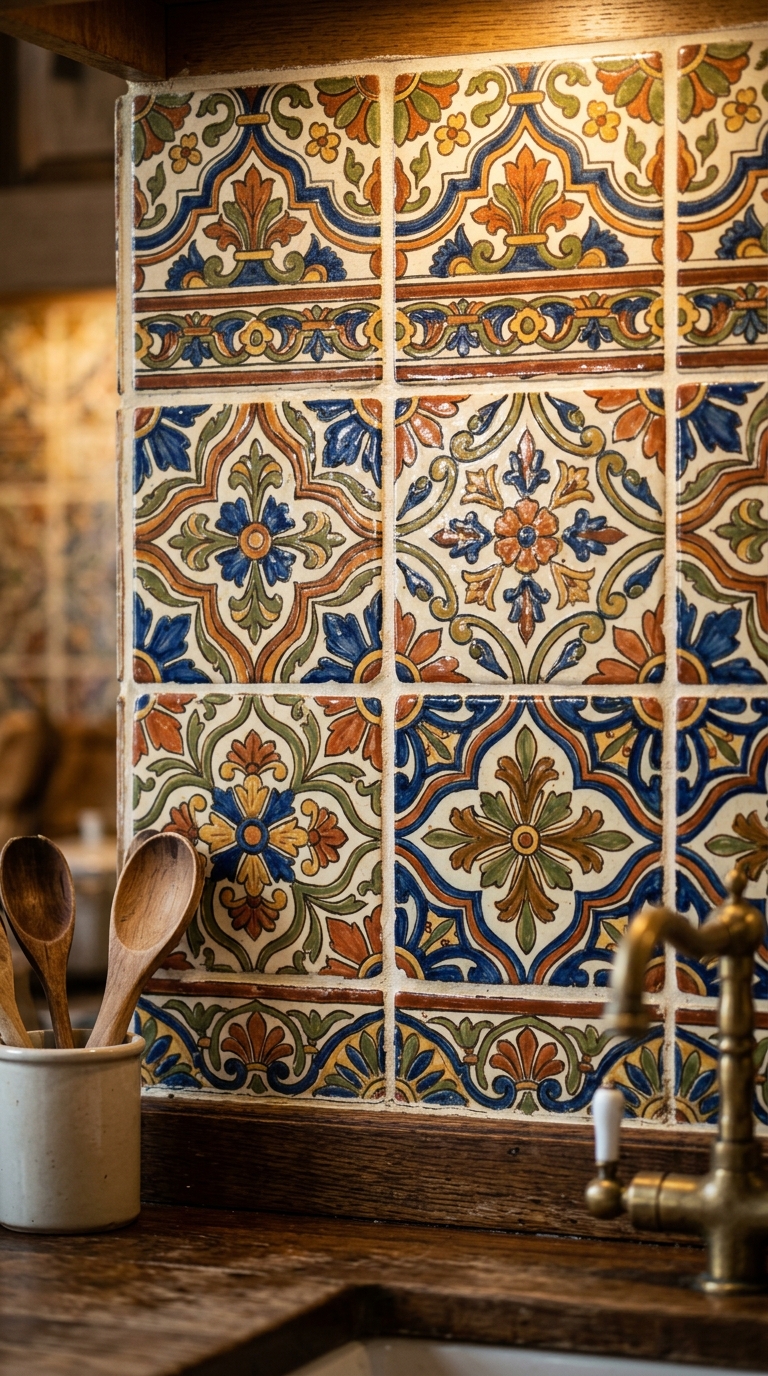
Period-style backsplashes — think hand-painted tile, small hexagon mosaics, or classic subway with contrasting grout — do more visual work than a plain slab ever will. They protect the wall, sure, but they also give the kitchen a focal point that ties everything else in the room together. It’s a detail worth spending a little extra time selecting, since it’s one of the few elements you’ll be looking at every single day.
9. Lighting That Actually Glows
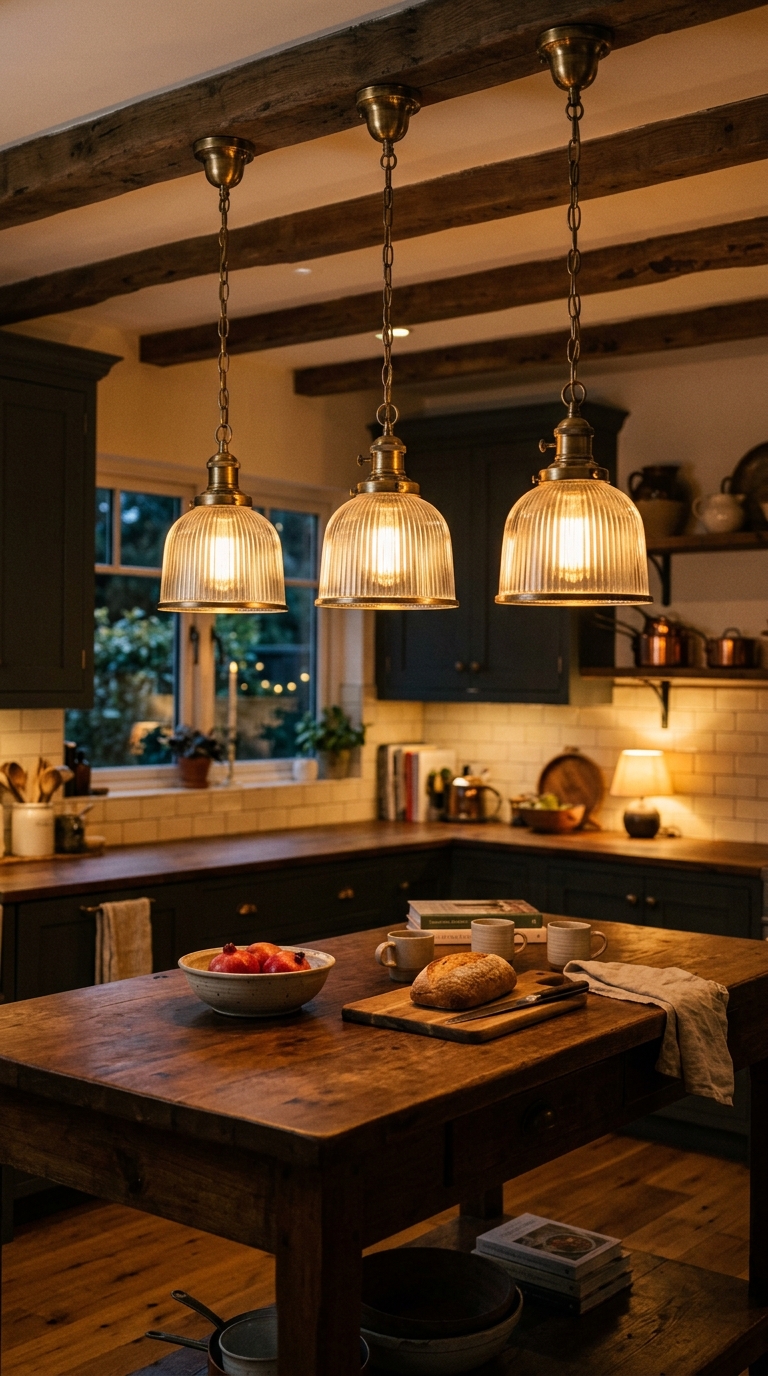
Vintage light fixtures — ribbed glass shades, aged brass finishes, filament bulbs — cast a warmer, softer light than most modern LED fixtures manage. That warmth changes how a whole room feels in the evening, turning a bright utilitarian kitchen into something closer to a candlelit dining room. It’s a relatively small investment for how much atmosphere it adds.
10. Refrigerators as Design Statements
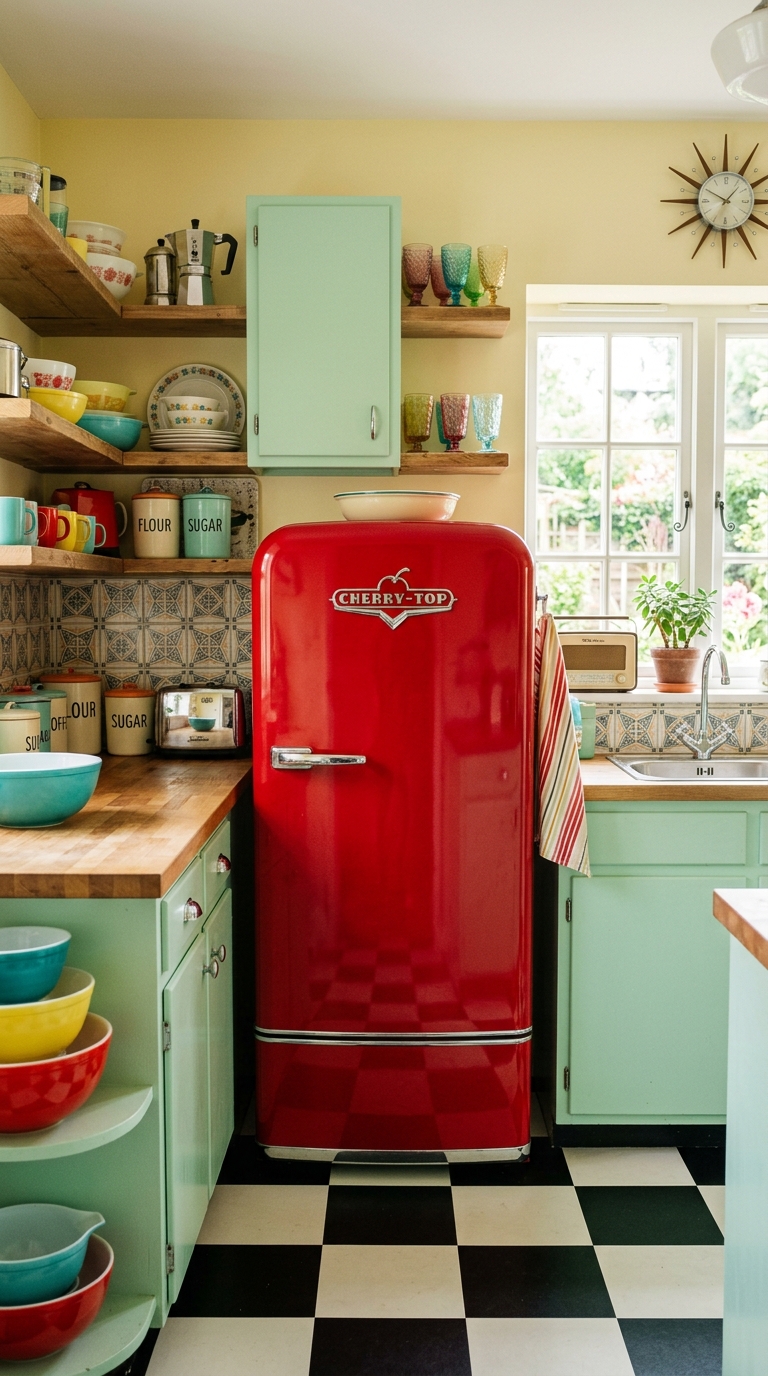
Beyond the color, retro-styled refrigerators bring a rounded, almost sculptural shape that today’s boxy stainless models rarely attempt. They function as a genuine design anchor for the room instead of disappearing into the cabinetry. If you’re building a kitchen around a specific era’s aesthetic, the fridge is often the single piece that sets the tone for everything else.
11. A Proper Wooden Pantry
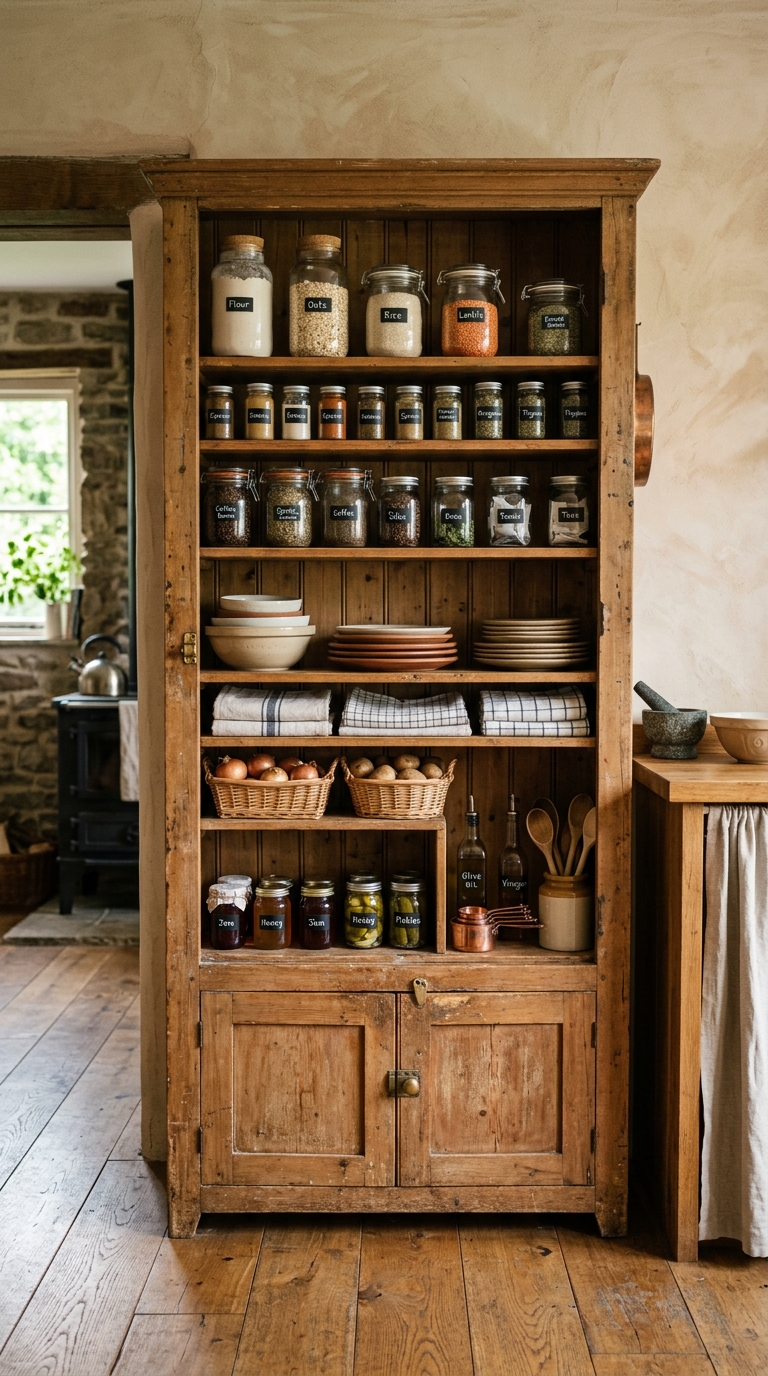
Before walk-in pantries became standard, a freestanding wooden pantry cabinet did the job — and did it with far more charm than a closet ever could. Aged timber, simple hardware, and generous shelving inside make it as practical as it is good-looking. It’s a strong option for kitchens that don’t have room for a full walk-in but still want serious dry storage with some visual presence.
12. Open Shelving With a Bit of Wear
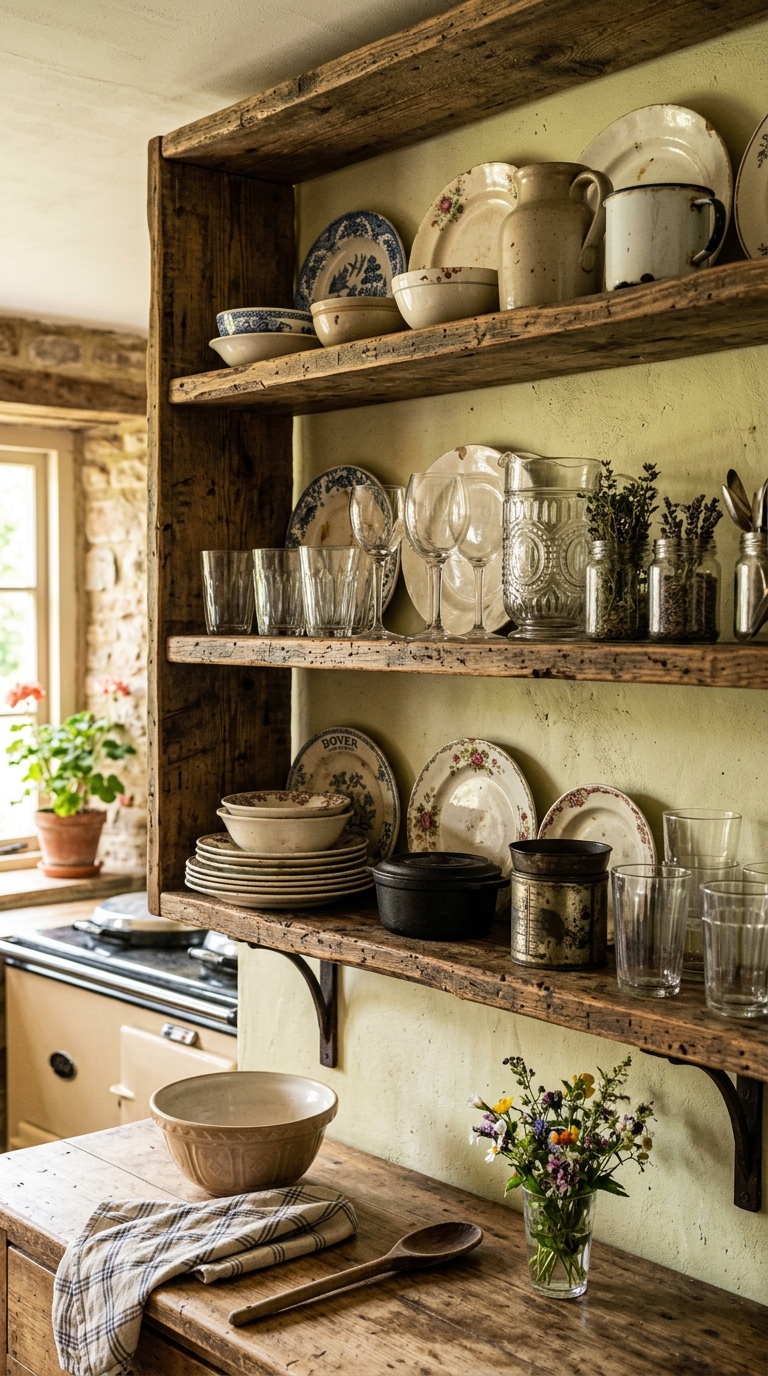
Distressed open shelving does something closed cabinetry can’t — it invites you to actually curate what’s on display. Chipped enamelware, mismatched vintage glassware, a stack of well-used cookbooks — it all reads as intentional rather than cluttered, as long as the shelves themselves have that same weathered character tying it together. It’s a low-cost way to bring texture into a kitchen that might otherwise feel too uniform.
13. A Table Built for Long Dinners
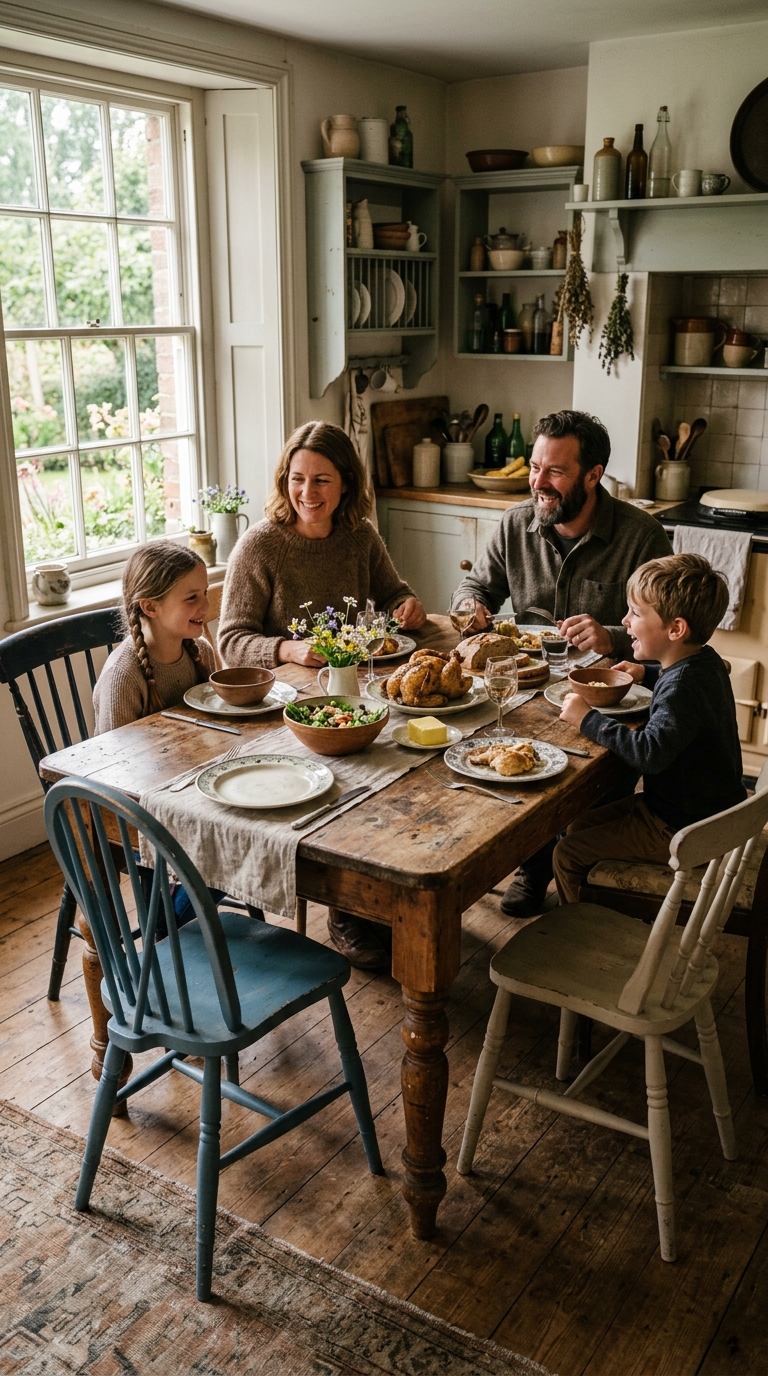
A retro kitchen table — solid, a little worn at the edges, with enough surface area for a real family dinner — still does what it was designed to do decades ago. There’s a certain honesty to a table that shows its age gracefully instead of hiding behind a glossy finish. It becomes less of a furniture piece and more of a fixture in the household’s daily routine.
14. Cookware Worth Showing Off
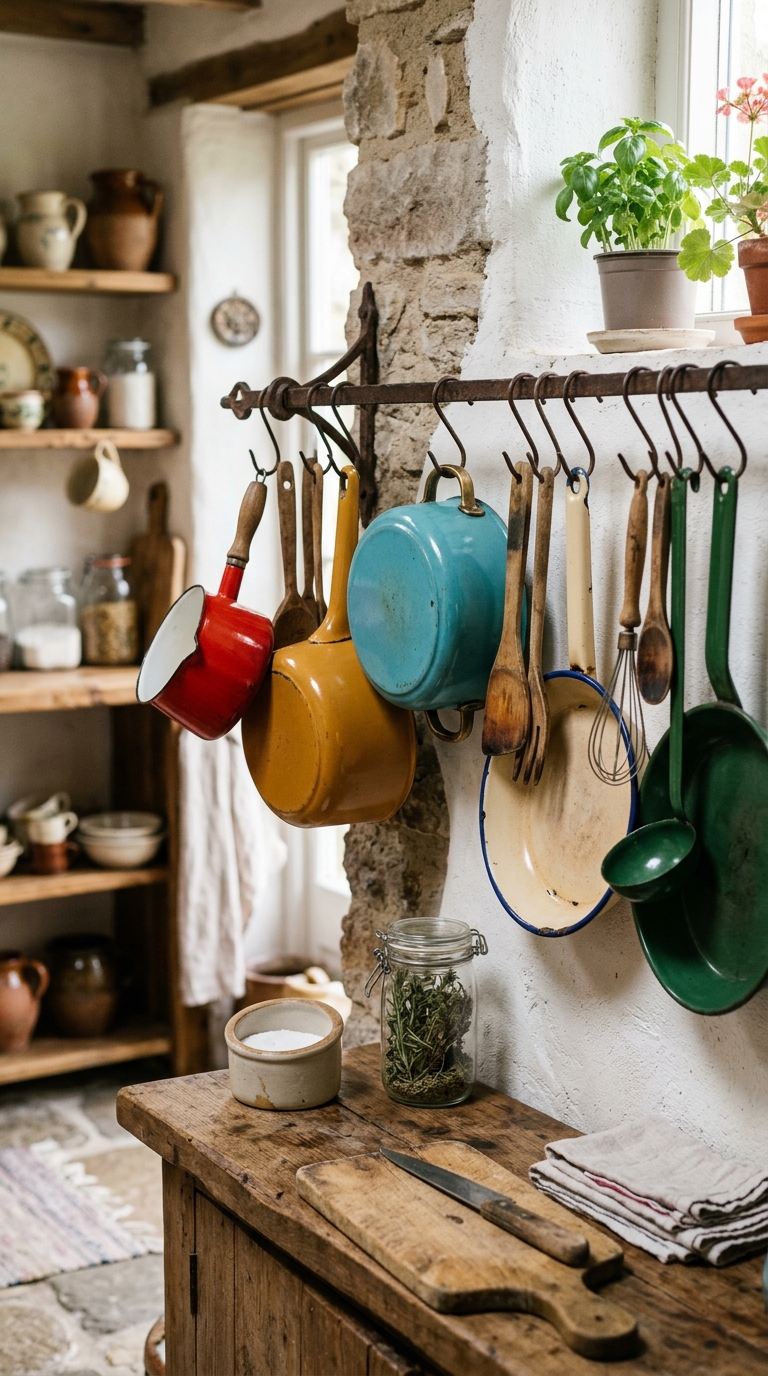
Enamel pots, cast iron skillets, and well-used wooden spoons have a visual warmth that modern nonstick sets rarely achieve. Displaying them openly — on a rack, a shelf, or hooks along the wall — turns everyday tools into decor, and it saves cabinet space in the process. It’s functional nostalgia: nothing here is purely decorative, everything still earns its place through actual use.
15. A Brick Oven as the Centerpiece
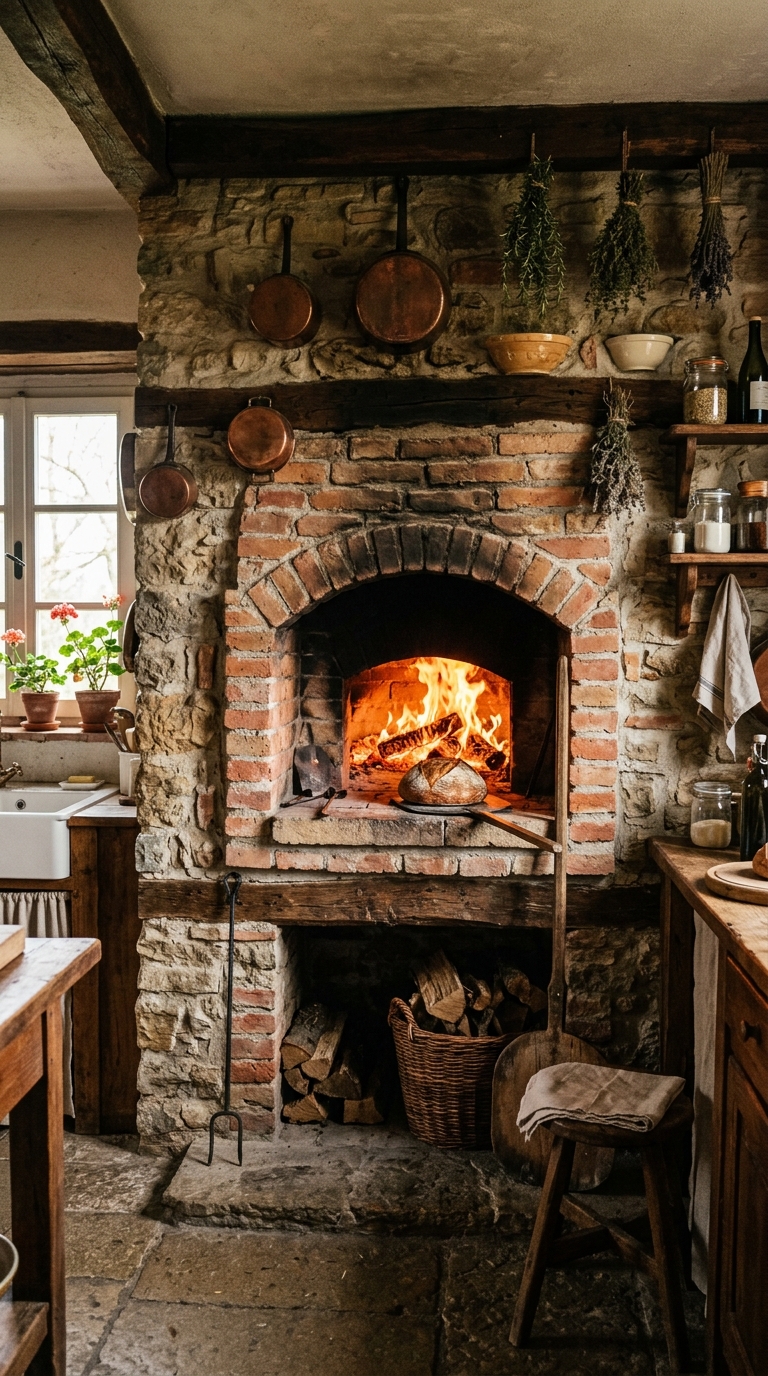
Not every kitchen has room for this one, but where it fits, a brick oven becomes the undeniable focal point of the whole space. Beyond looks, brick genuinely holds and radiates heat more evenly than most modern ovens, which is part of why the technique never fully disappeared from serious home cooking. It’s a bigger commitment than most items on this list, but it delivers a level of authenticity nothing else quite matches.
16. Diner Energy, Right at Home
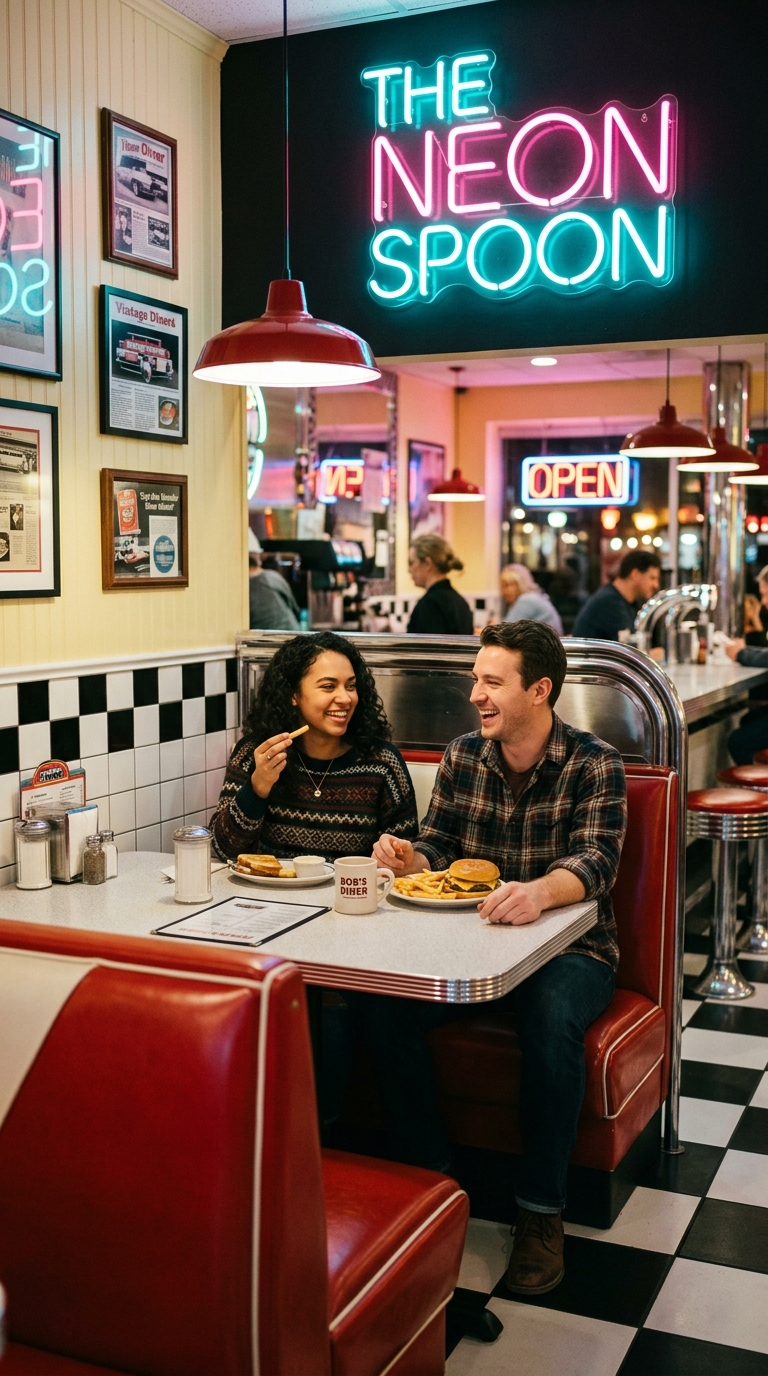
Bring a little of that classic American diner spirit into your kitchen with bold color combinations, checkered accents, and vinyl or chrome seating. It’s a livelier, more playful take on vintage than some of the quieter farmhouse-inspired looks — better suited for households that want their kitchen to feel energetic rather than serene. Done well, it turns breakfast into an event.
17. Window Frames With Real Weathering
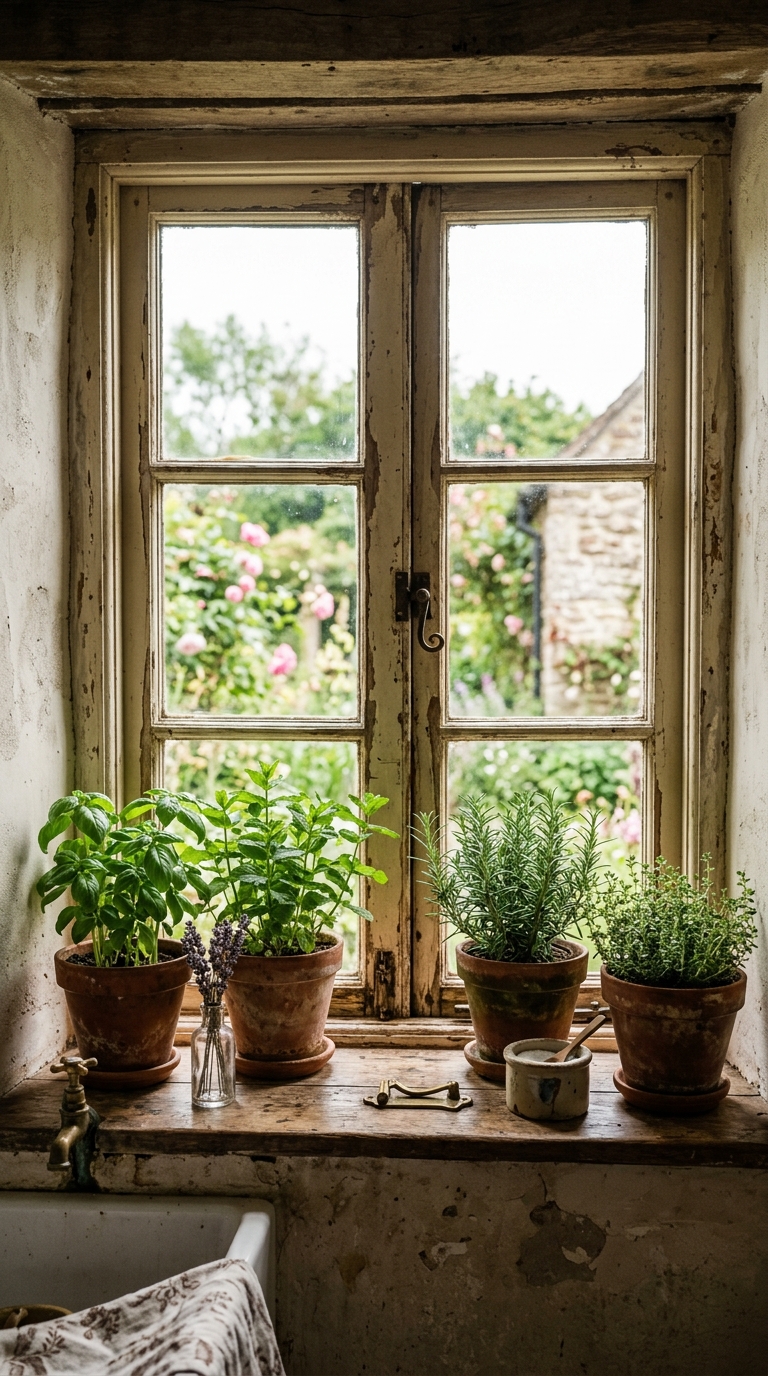
Original wood window frames, left with a bit of natural wear rather than stripped and repainted flawlessly, let a kitchen breathe with light in a softer, less filtered way than modern aluminum frames manage. They also tend to age better visually — a little weathering reads as character, not neglect, when the rest of the design supports it. It’s a subtle detail that makes a bigger difference than people expect once it’s actually installed.
18. Countertops With Retro Pattern
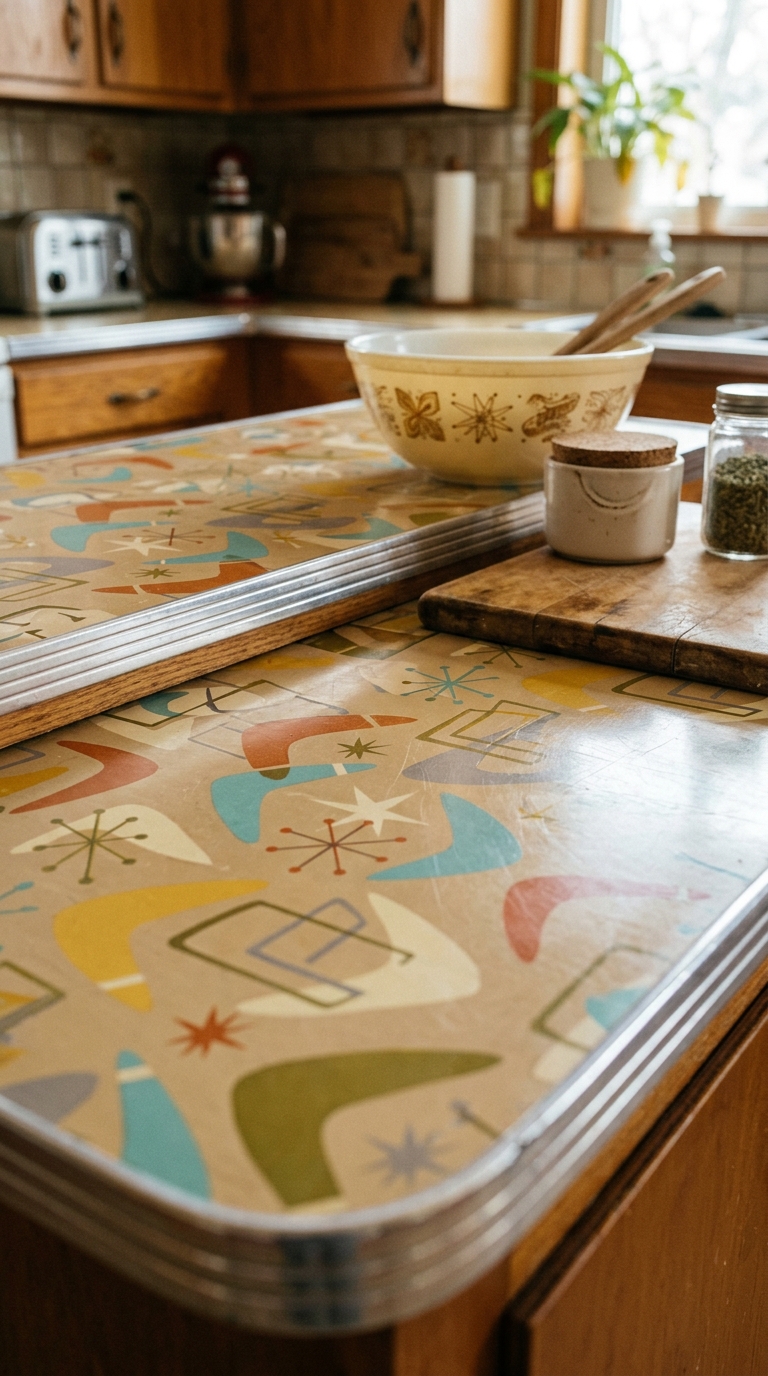
Not every vintage countertop has to be plain stone — patterned laminate, popular decades ago, is having a genuine resurgence for good reason. It’s affordable, durable, and available in patterns that instantly signal a specific era without needing anything else in the room to work as hard. Paired with honed natural stone in other zones, it creates a countertop story with real range.
19. A Spice Rack Worth Looking At
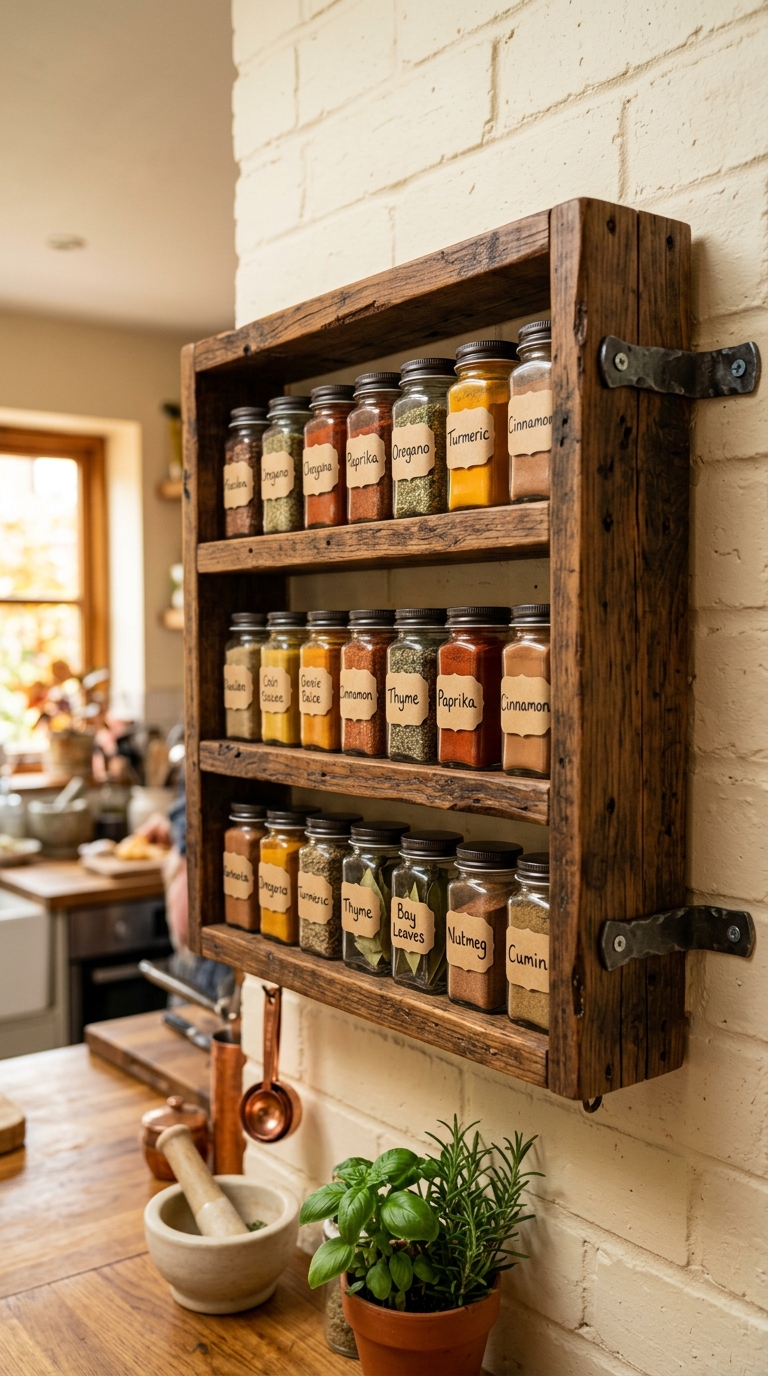
A well-built wooden spice rack does more than organize — it turns a row of jars into a small, colorful display. Reclaimed wood and simple metal brackets keep it feeling handmade rather than store-bought, and having everything visible actually tends to get used more than spices buried in a drawer. It’s a small addition with an outsized effect on both function and character.
20. A Collection Worth Passing Down
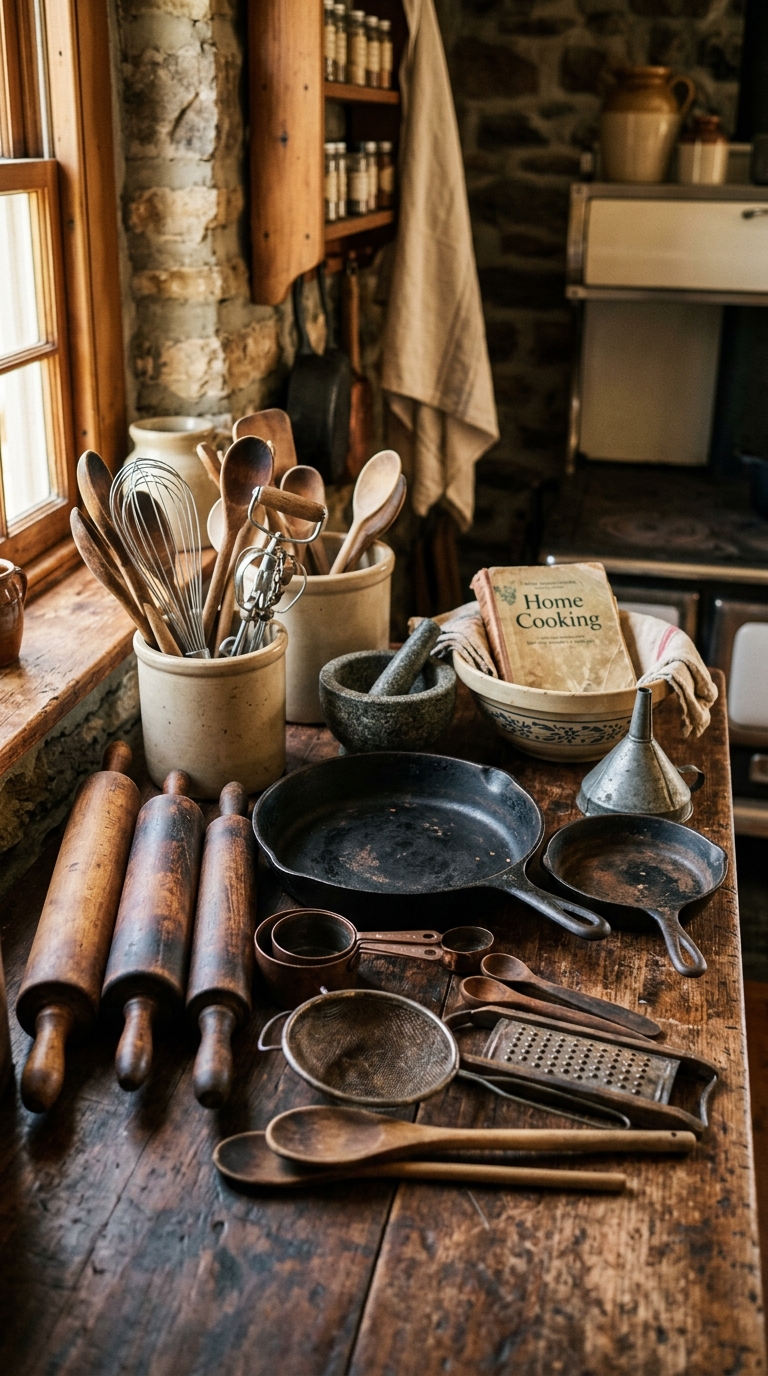
Well-worn rolling pins, cast iron skillets passed through generations, hand-turned wooden spoons — a curated collection of antique kitchen tools adds a layer of story that new decor simply can’t replicate. Displayed thoughtfully, these pieces become conversation starters as much as functional objects, connecting the kitchen to the people who used similar tools long before it existed.
21. Wallpaper That Sets the Mood
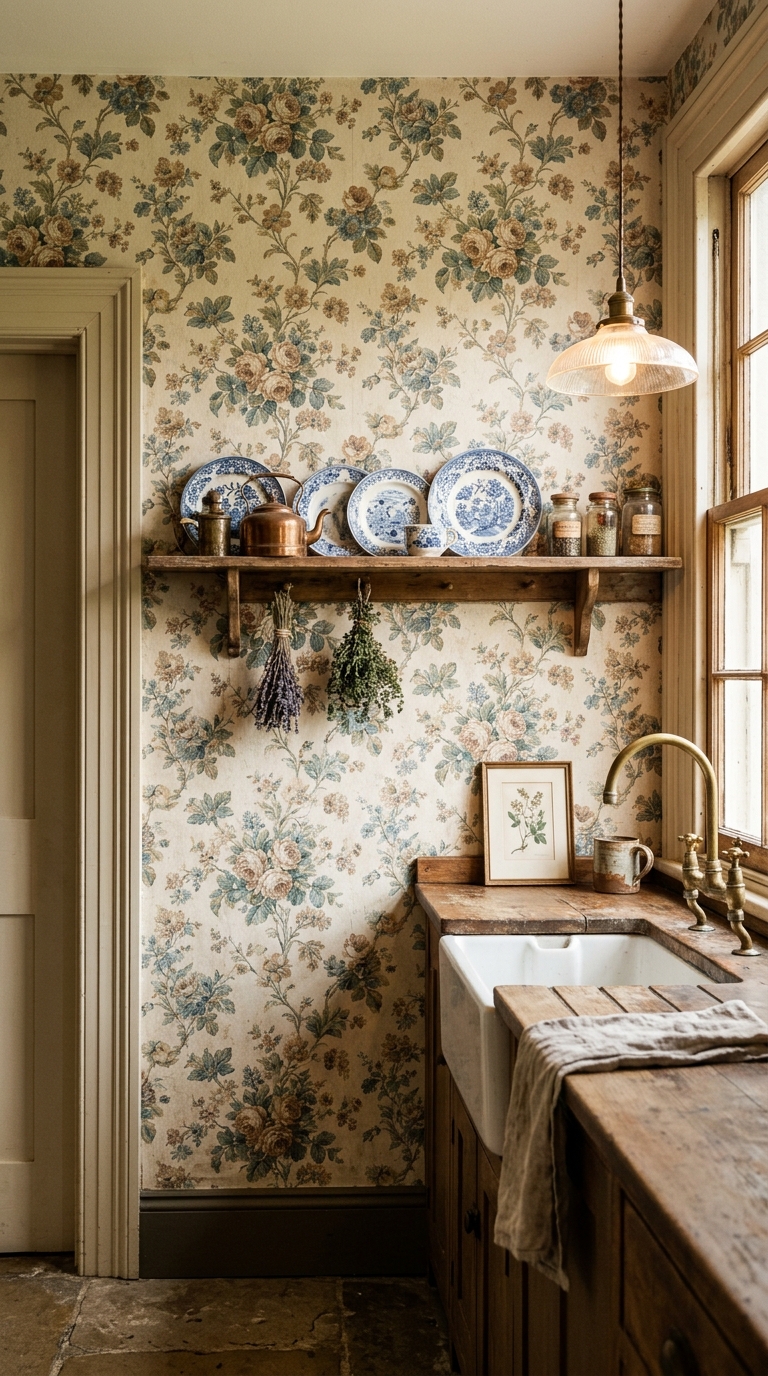
A well-chosen vintage wallpaper pattern can do more to establish a kitchen’s era and mood than almost any other single choice. Muted florals, delicate stripes, or period-accurate motifs give the walls depth that flat paint can’t match, and they pair naturally with the other vintage elements in the room without competing for attention. It’s a commitment, but one that pays off in atmosphere.
22. Farmhouse Accents That Tie It All Together
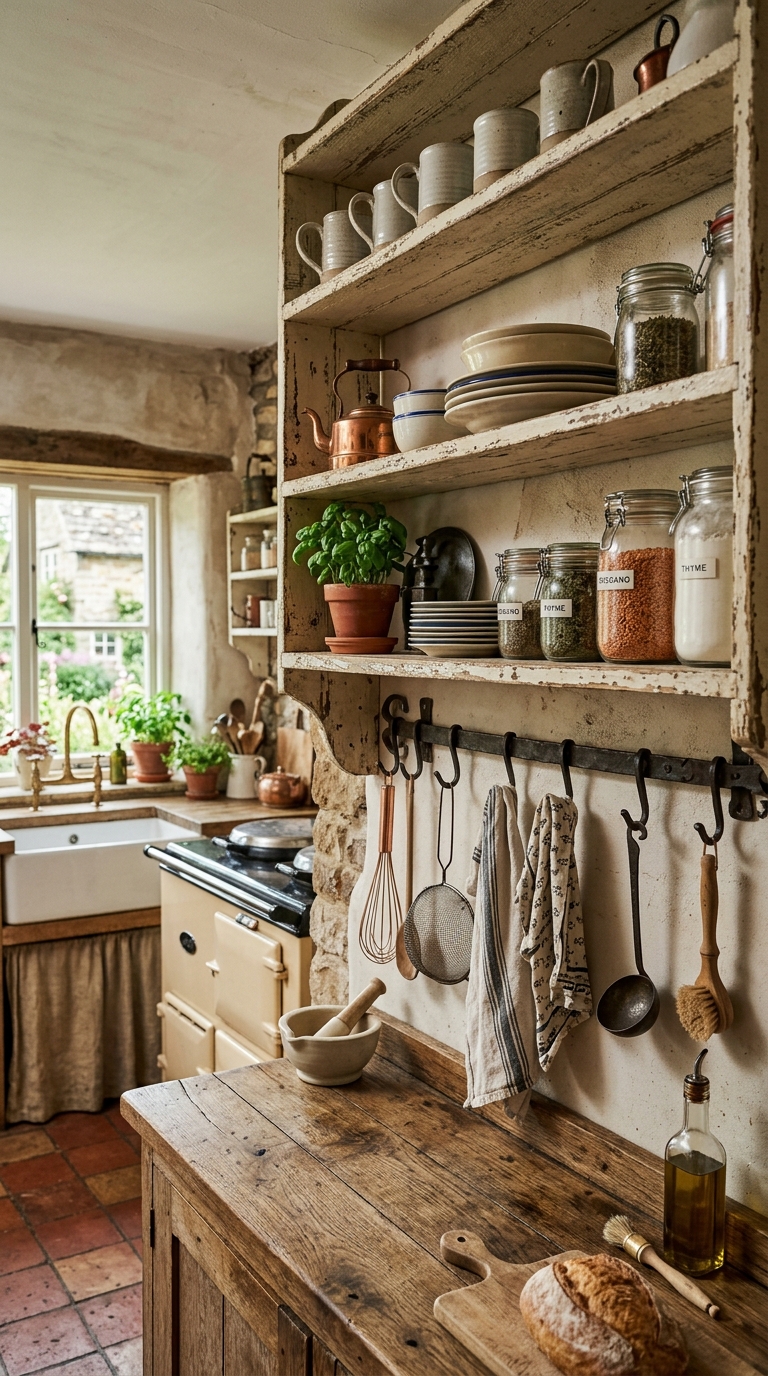
Distressed wood, repurposed metal, handcrafted hardware — small farmhouse accents scattered throughout a kitchen act as connective tissue between all the bigger design choices. They don’t need to be expensive or dramatic; often it’s the smallest, most weathered piece that ends up doing the most work to make a kitchen feel genuinely lived-in rather than staged.
Final Thoughts
Twenty-two ideas, and every single one of them proves the same point: vintage design isn’t about recreating a period piece for its own sake, it’s about choosing details that have already stood the test of decades and letting them do what they’ve always done — make a kitchen feel warm, useful, and genuinely lived-in. Mix a few of these elements with your own modern conveniences, and you end up with a kitchen that feels timeless instead of dated, no matter which era it’s borrowing from.


