
21+ Natural Kitchen Design Ideas for a Space That Breathes Easier.

A natural kitchen isn’t defined by any single material or color — it’s more a set of instincts. Reach for wood over laminate, stone over synthetic composite, a window over another light fixture. None of it requires a full renovation to start showing up in a space. These 22 ideas walk through how that instinct plays out across materials, light, greenery, and layout.
1. An Open Layout Anchored in Wood
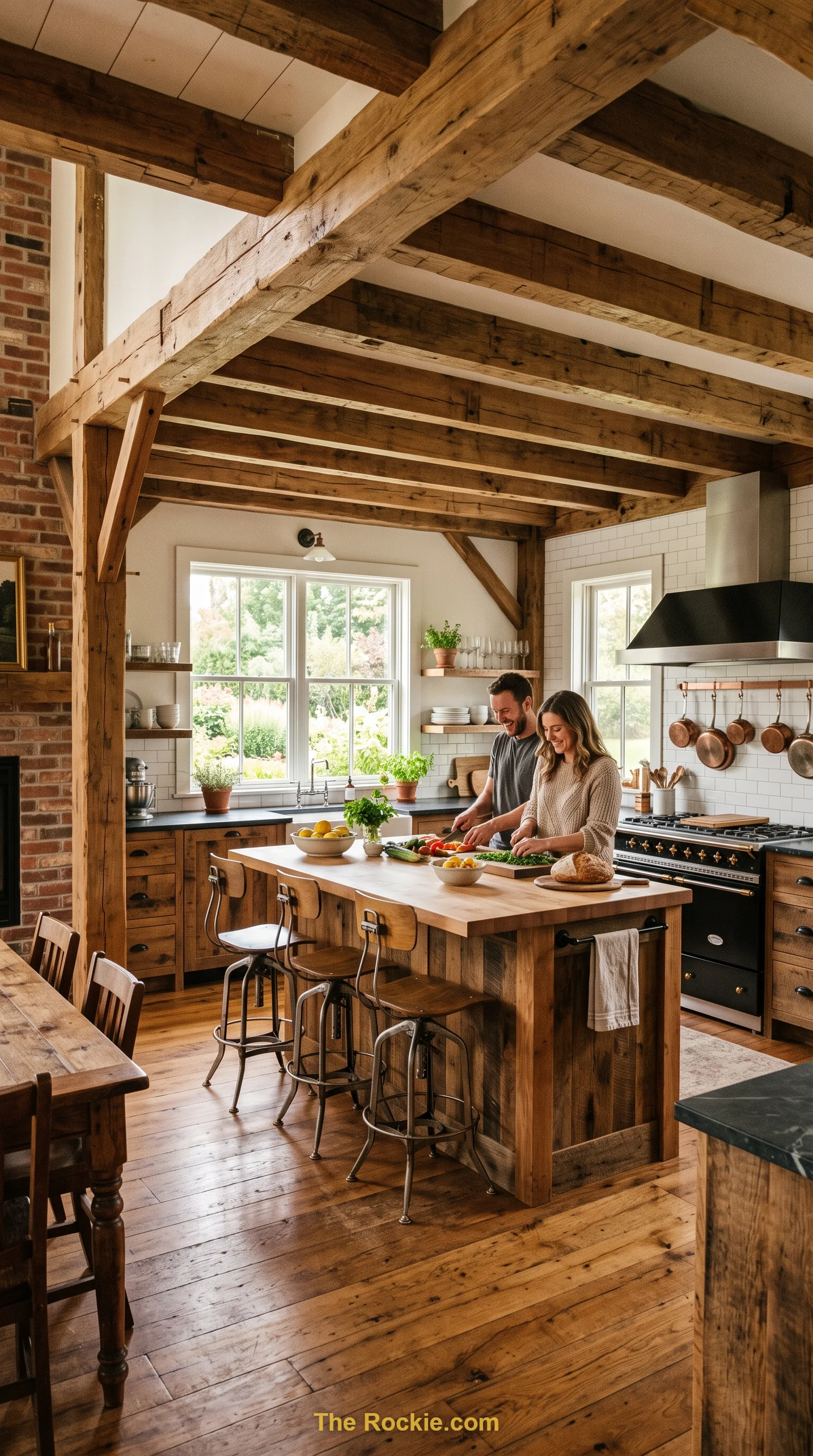
Exposed beams, reclaimed timber, and hardwood floors turn an open kitchen layout into something that feels grounded rather than cavernous. Wood does double duty here — it’s structurally warm and visually soft at the same time, and it tends to make an open floor plan feel intimate instead of just big.
2. Stone Countertops Built to Last
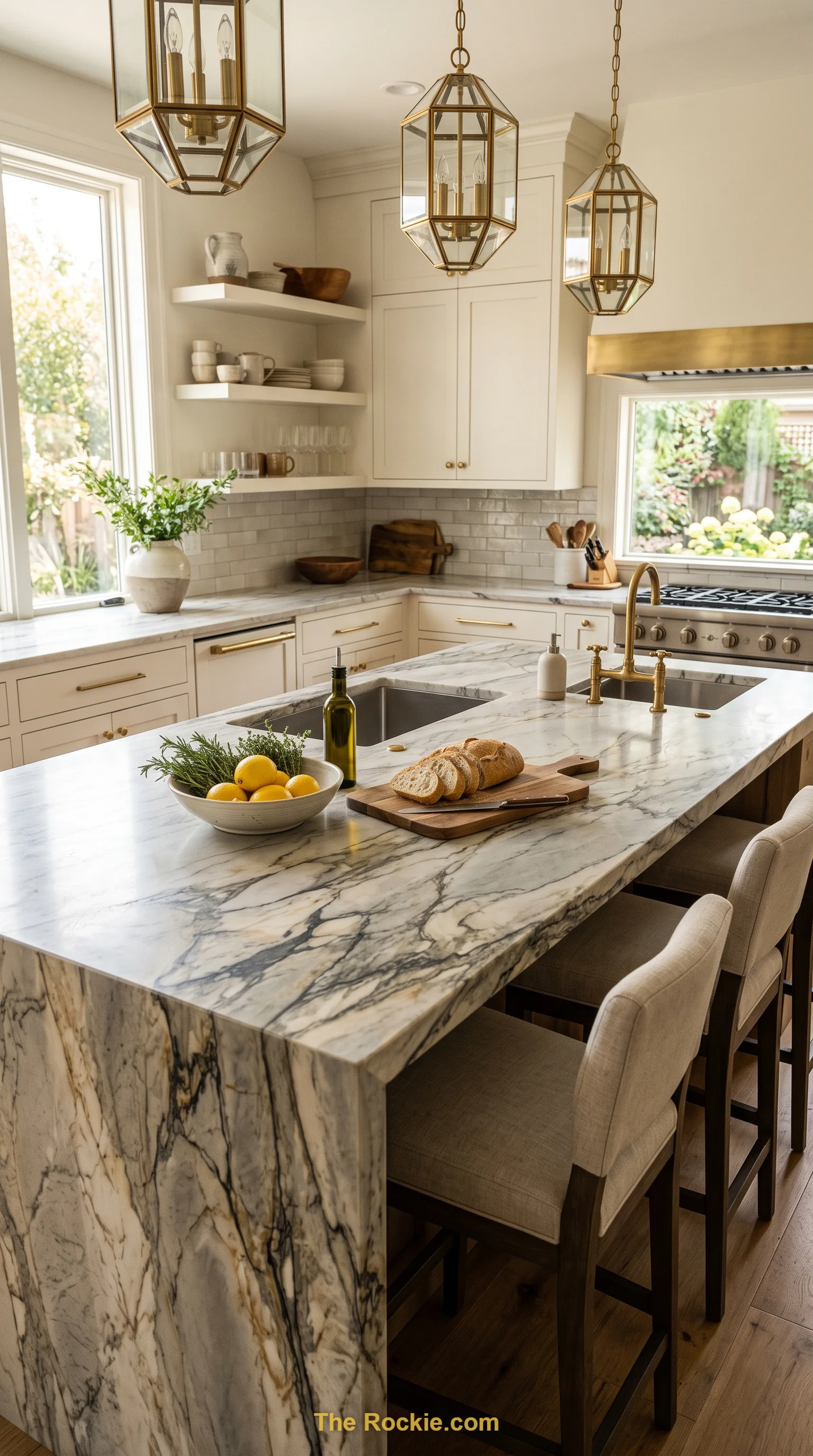
Granite, marble, and quartz all bring genuine durability along with their natural texture — none of them are just decorative choices. The variation in pattern from slab to slab means no two stone countertops look quite the same, which adds a bit of individuality that manufactured surfaces can’t replicate.
3. An Earthy Palette That Sets the Tone
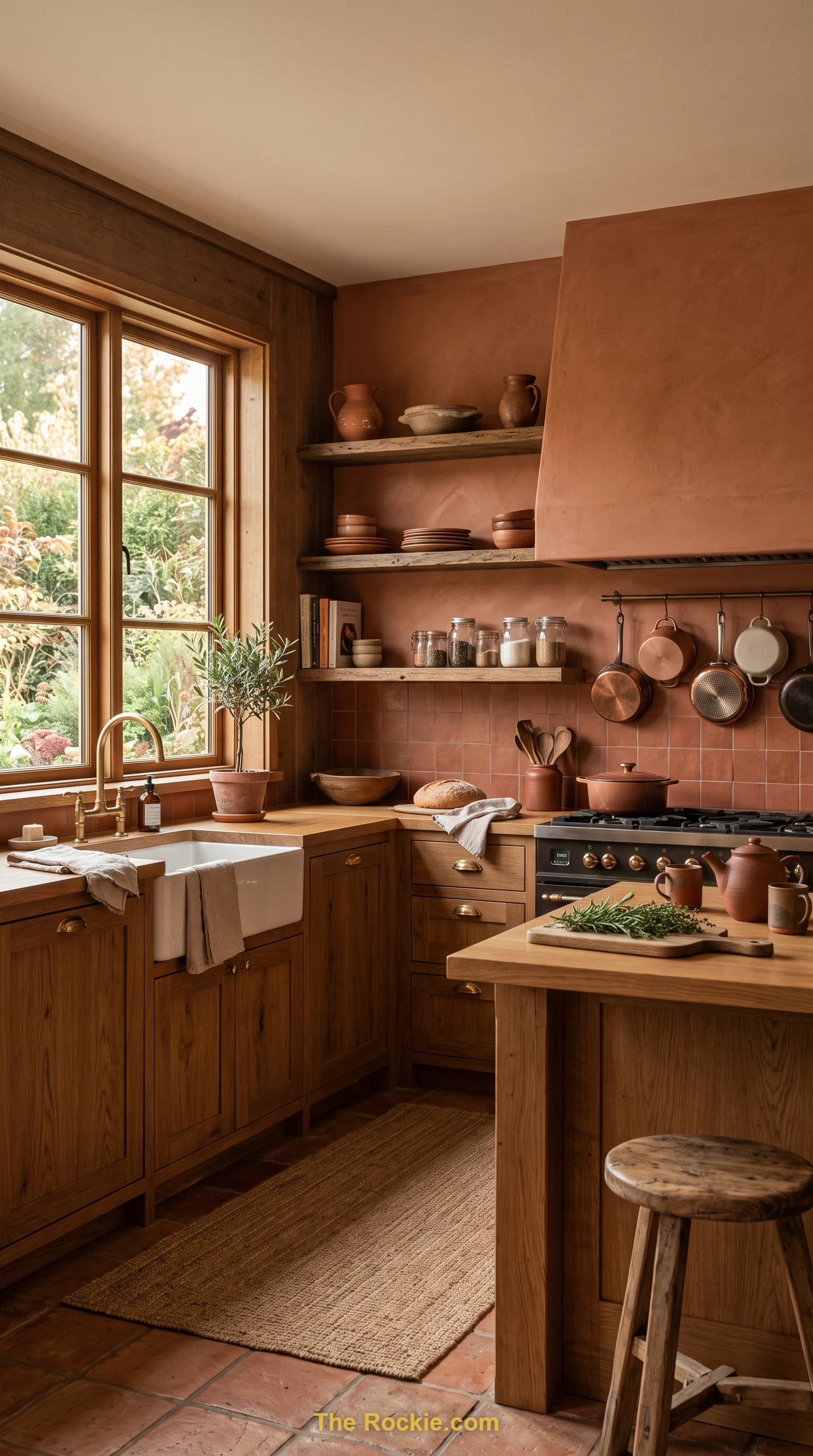
Muted greens, warm terracotta, soft browns, and sandy beige do a lot of quiet work in a kitchen — they read as calm without feeling flat, and they play well with natural light in a way that brighter, more saturated colors often don’t. It’s less a decorating choice than a mood-setting one.
4. Indoor-Outdoor Flow That Actually Connects
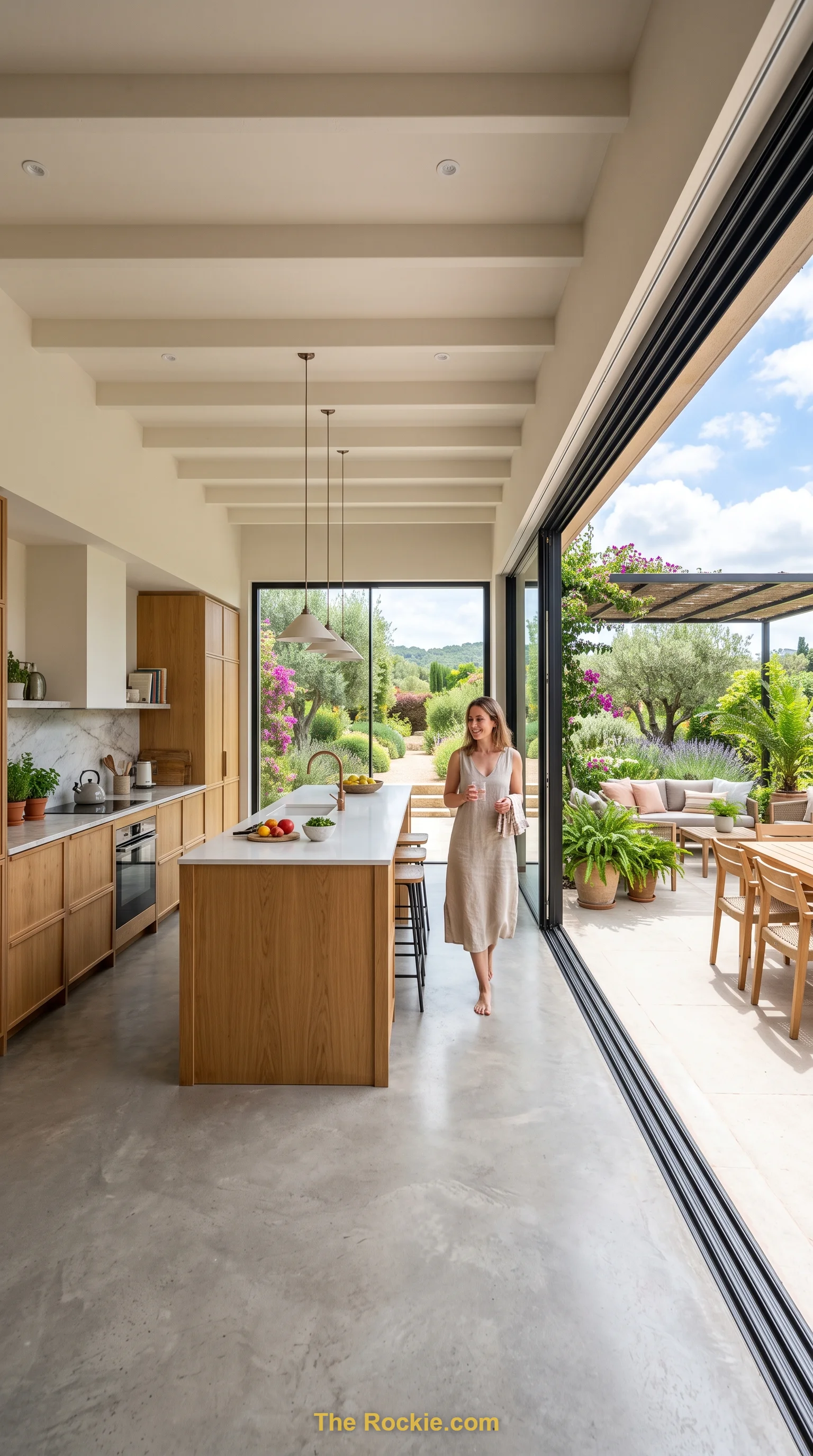
Large glass doors and expansive windows blur the line between the kitchen and whatever’s just outside it — a patio, a garden, even just a tree line. Beyond the view, it floods the room with light and air in a way that a fully enclosed kitchen simply can’t match.
5. Appliances That Don’t Undercut the Look
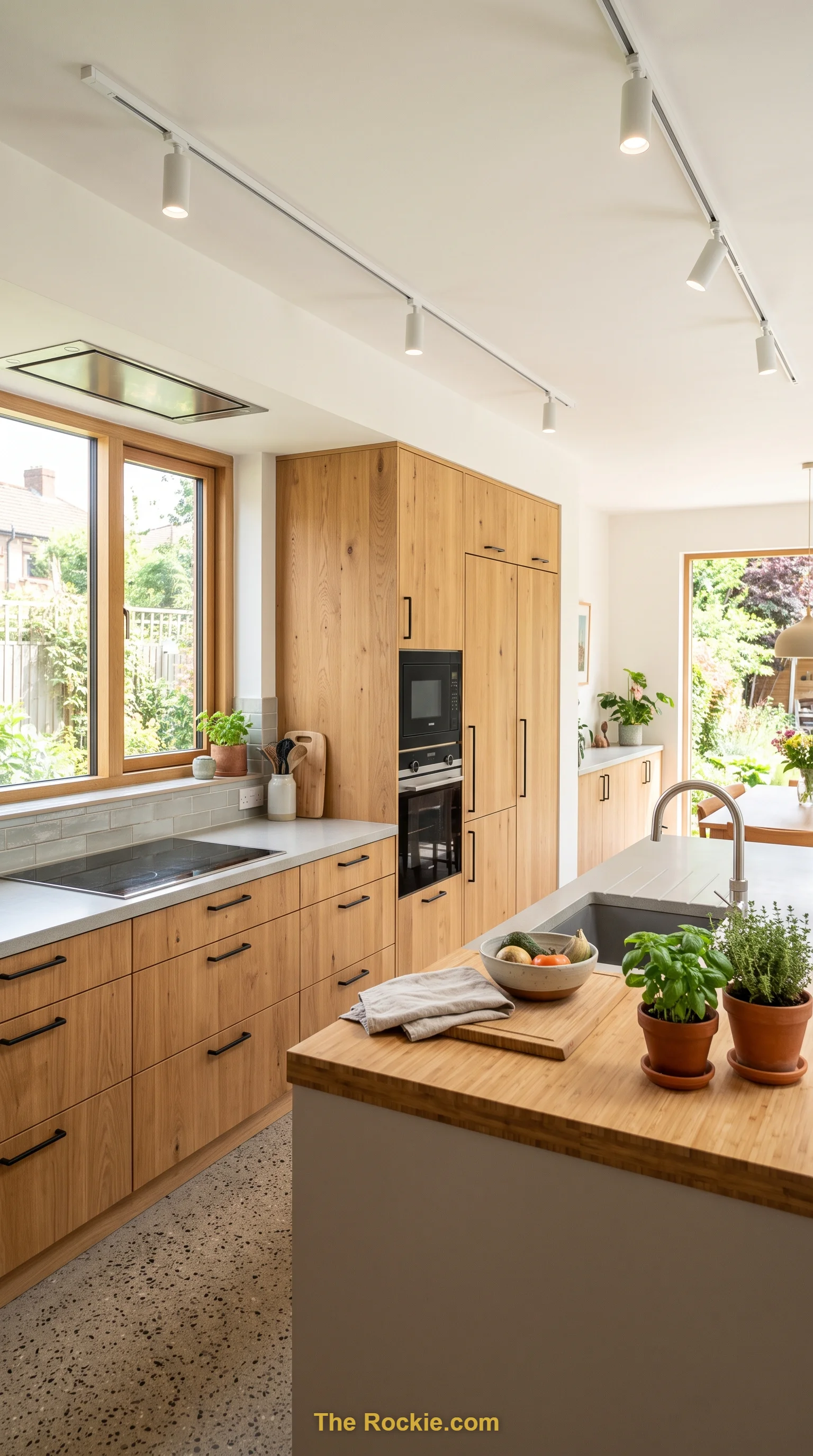
Energy-saving refrigerators, induction cooktops, and smart dishwashers can sit comfortably alongside natural materials without clashing, as long as the finishes stay understated. It’s proof that efficiency and an organic-feeling kitchen aren’t mutually exclusive.
6. Lighting That Lets the Sun Do Most of the Work
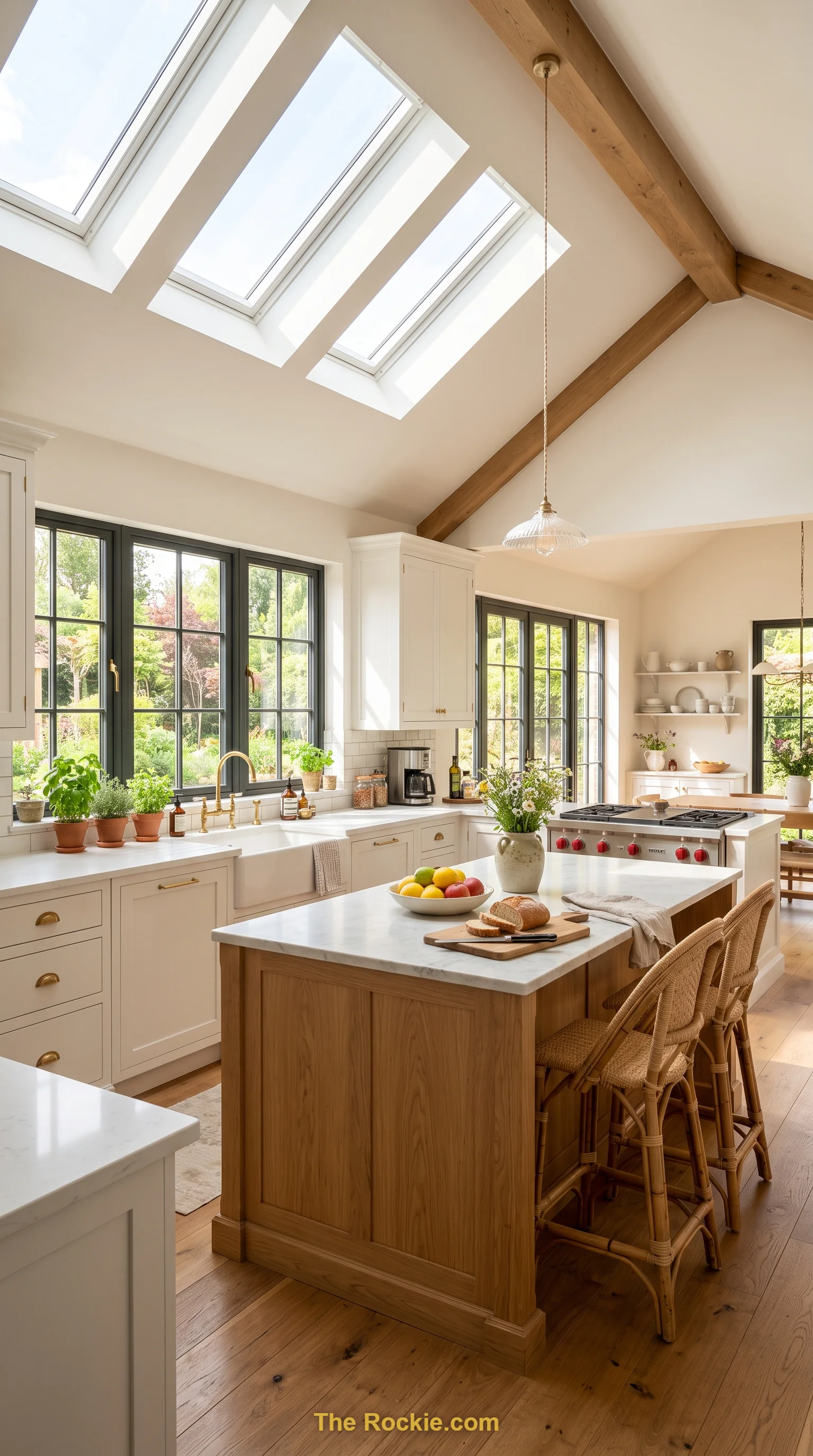
Skylights, oversized windows, and open ceilings bring in daylight that shifts throughout the day, which does more to bring out the warmth in wood and stone than any fixed light fixture. It also just cuts down on energy use, which is a nice bonus on top of how much better everything looks in it.
7. Flooring That Ages Instead of Wearing Out
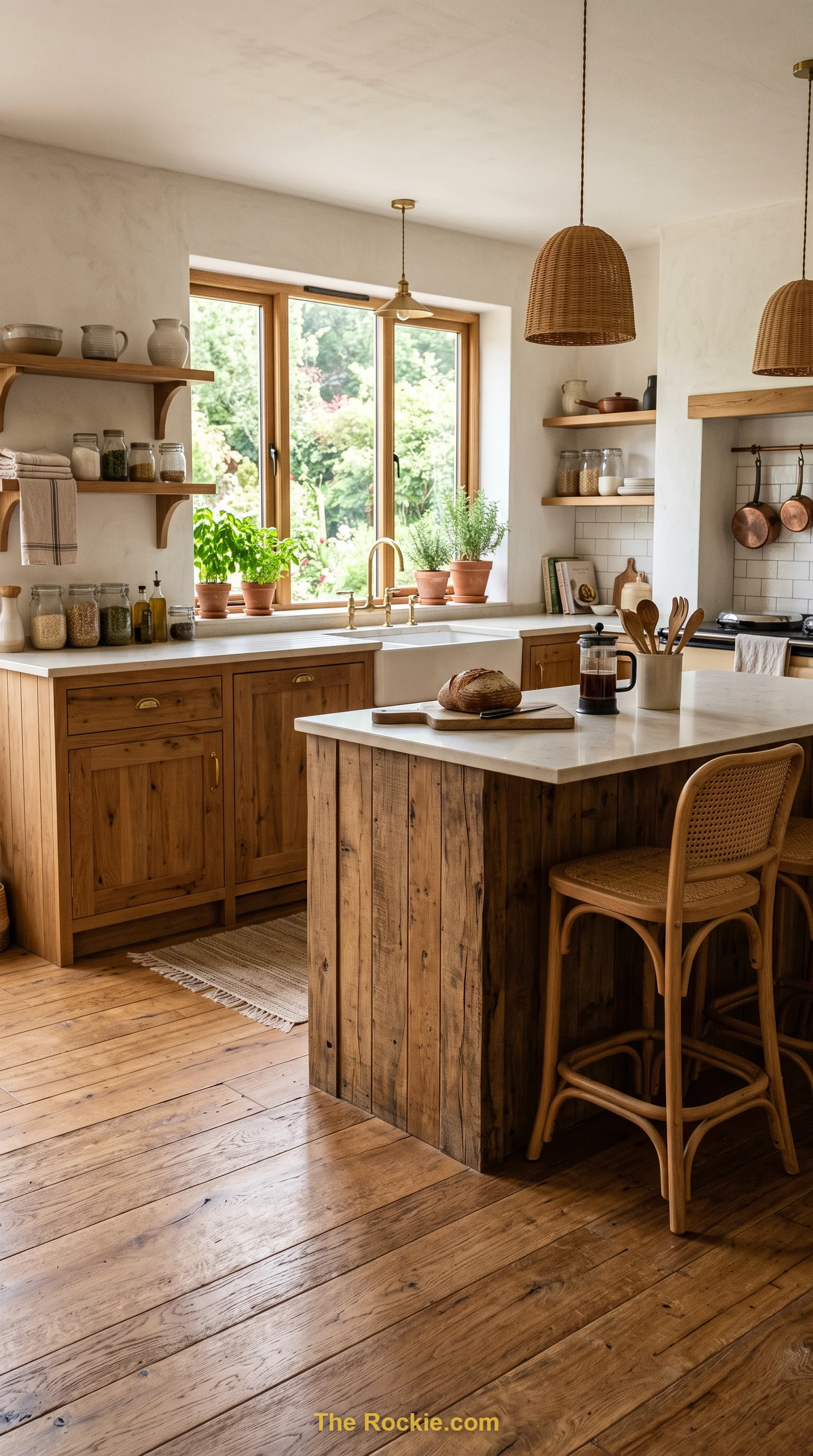
Bamboo, cork, and reclaimed hardwood all bring genuine durability along with a warmth underfoot that tile or vinyl doesn’t have. These materials tend to develop character over years of use rather than just looking worn, which matters if you’re planning to stay put for a while.
8. Layered Textures for a Room That Feels Alive
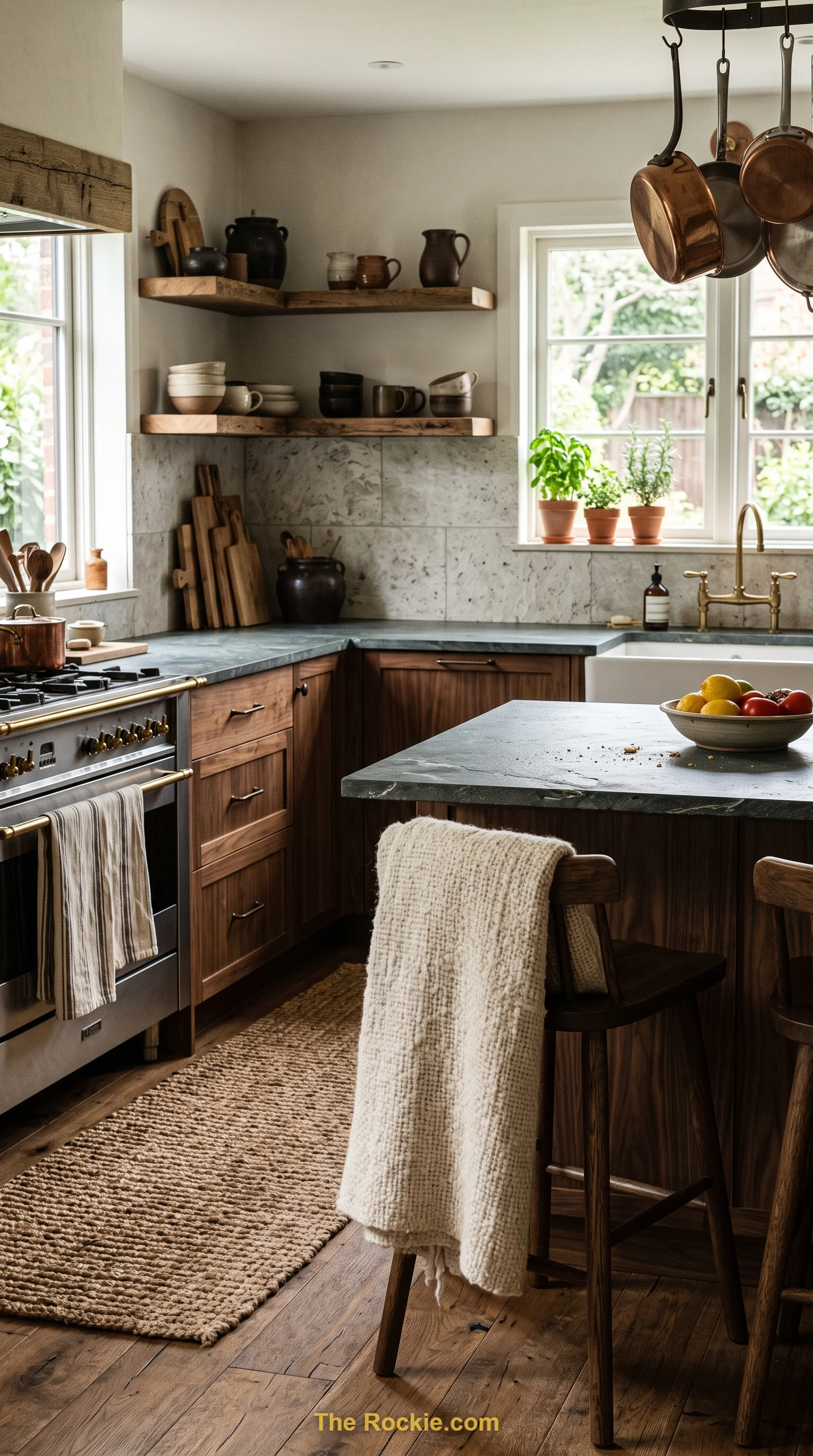
Stone, wood, and woven fiber together create the kind of tactile variety a single-material kitchen just can’t offer. The contrast between a smooth countertop and a rough-hewn beam gives the eye somewhere to travel, which is part of what makes a natural kitchen feel more dynamic than a purely modern one.
9. Vintage Pieces That Add History
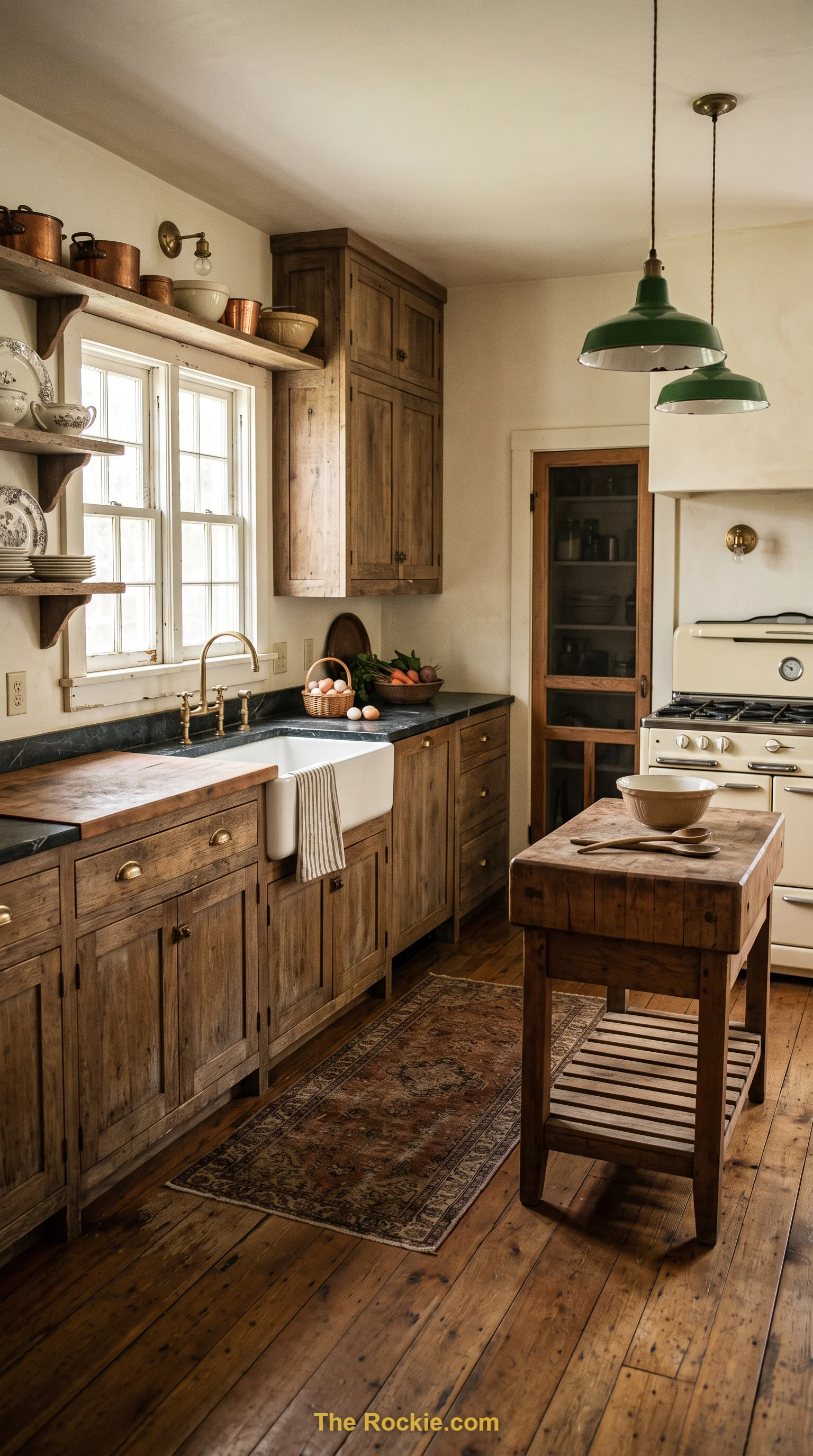
Antique furnishings and weathered cabinetry bring a sense of time passing that a brand-new kitchen simply can’t fake. Mixed with modern functionality, these pieces keep the room from feeling like a period recreation while still carrying real character.
10. Greenery That Does More Than Decorate
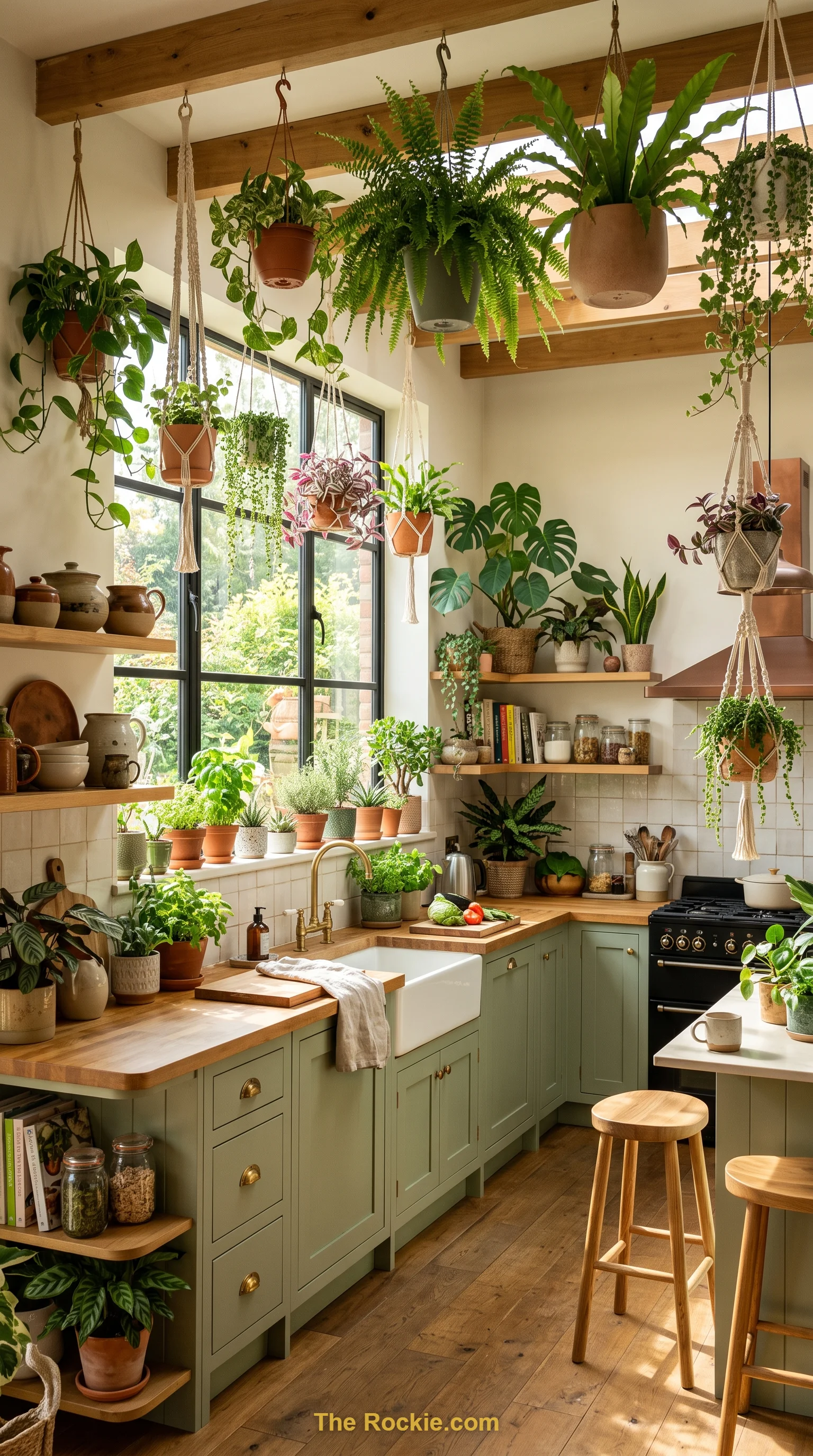
Potted herbs, hanging planters, and a few well-placed leafy plants genuinely improve air quality on top of how much life they bring to a room visually. It’s one of the lowest-effort, highest-impact additions on this entire list.
11. A Farmhouse Feel Rooted in Heritage
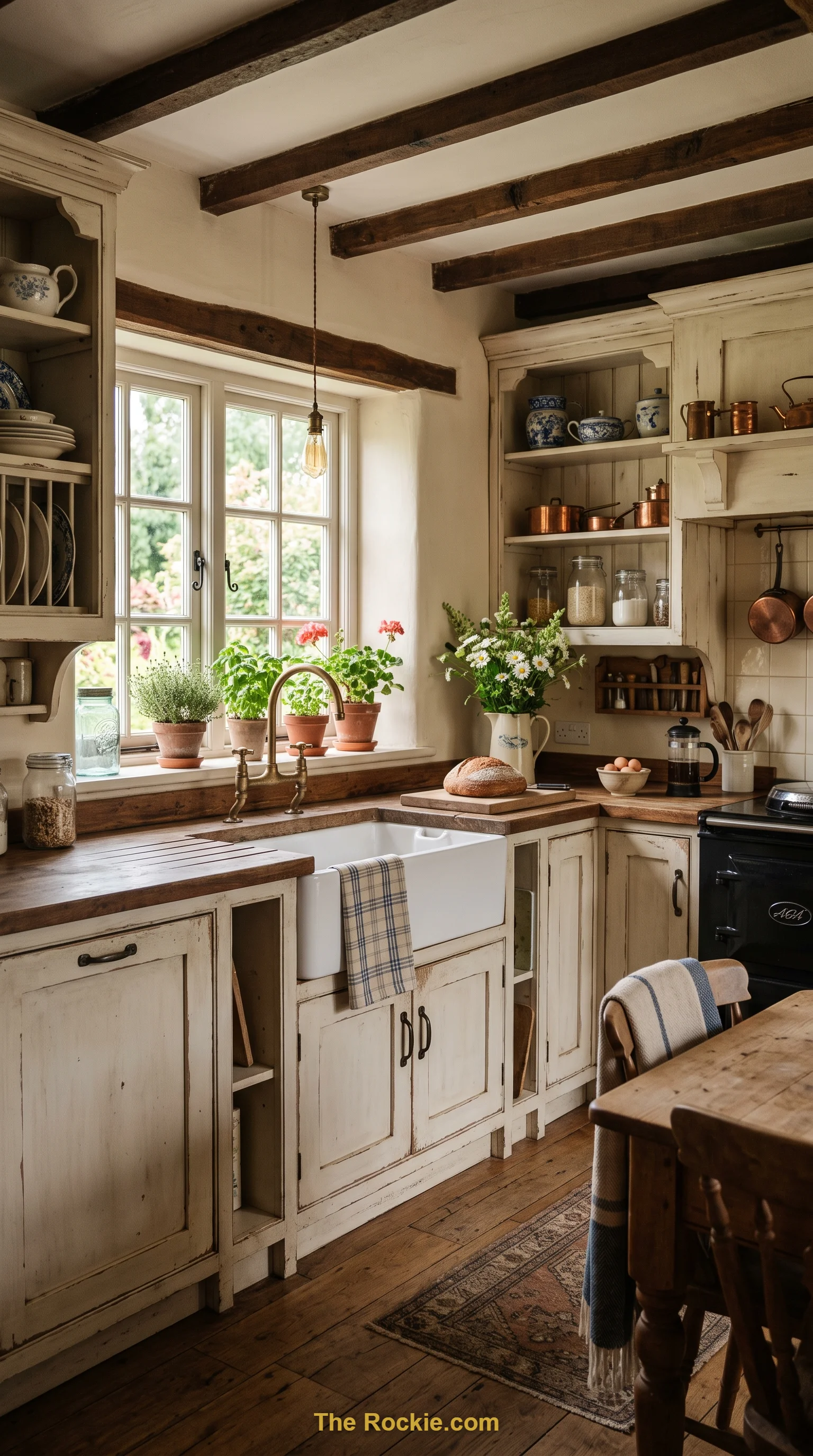
Apron sinks, distressed wood cabinets, and vintage light fixtures bring a sense of tradition that pairs naturally with an emphasis on organic materials. It’s a style that leans into practicality as much as looks — these are details that were originally functional first, decorative second.
12. Scandinavian Restraint With Natural Warmth
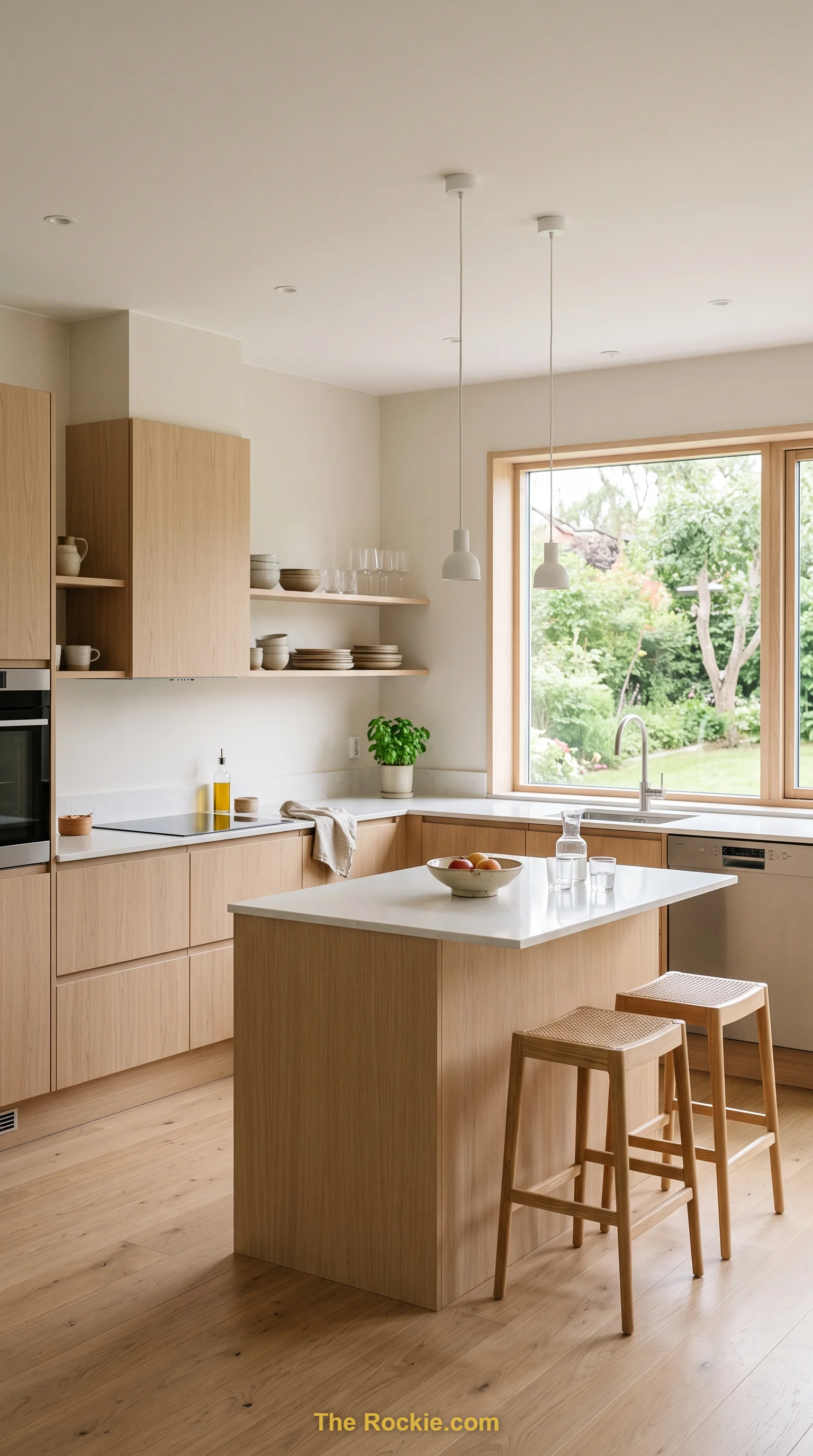
Light-toned wood and a limited, soft color palette give a kitchen clean, uncluttered lines without losing any warmth in the process. It’s minimalism that leans on natural materials to keep the room from feeling stark — function and simplicity without the coldness sometimes associated with modern design.
13. Water Features for a Bit of Calm
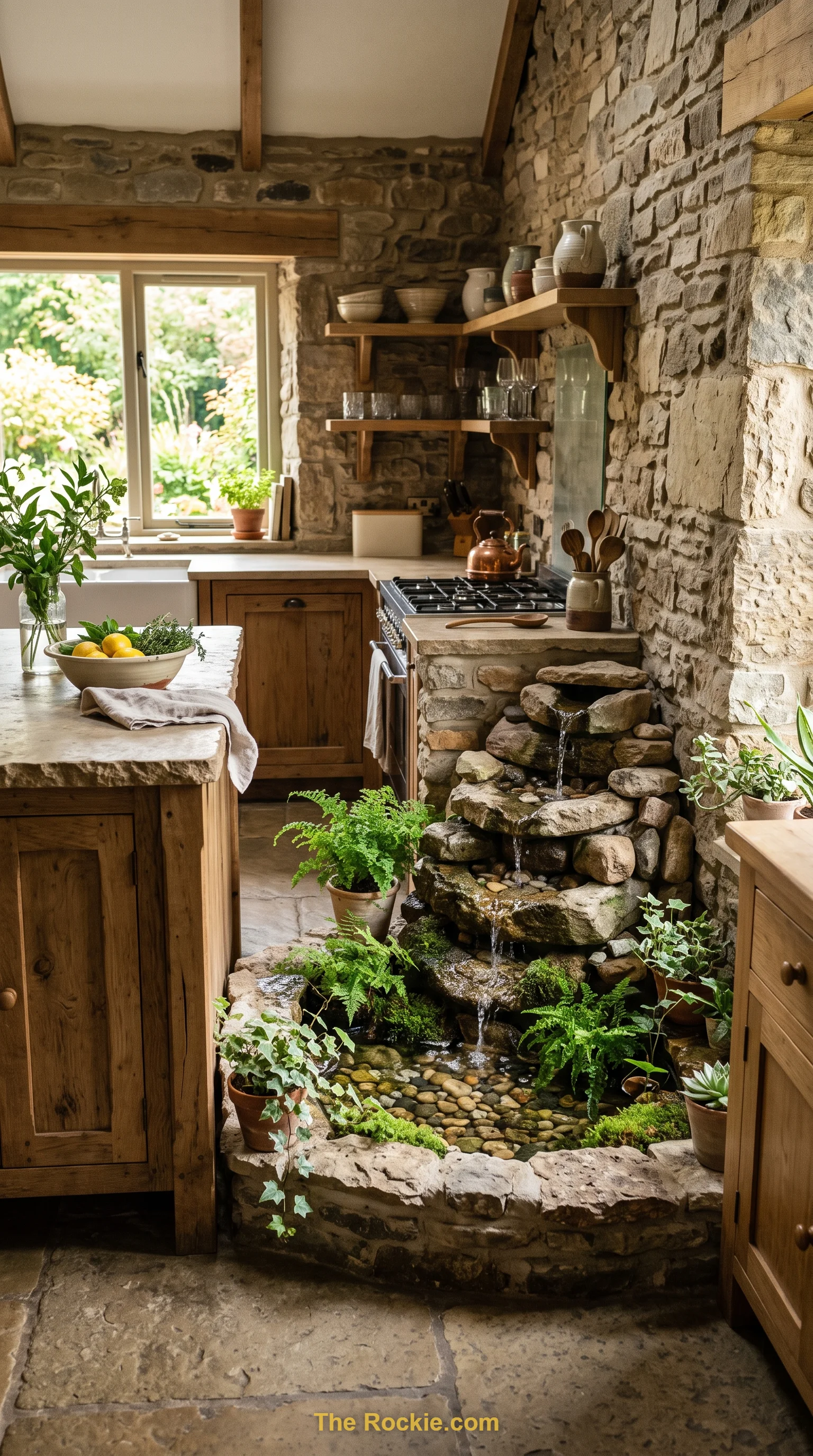
A small indoor fountain or gentle water feature adds both visual and auditory calm to a kitchen — it’s an unexpected addition, but one that fits naturally alongside stone and wood. It won’t work in every layout, but where there’s room, it adds a genuinely different sensory layer to the space.
14. Reclaimed Wood With a Story to Tell
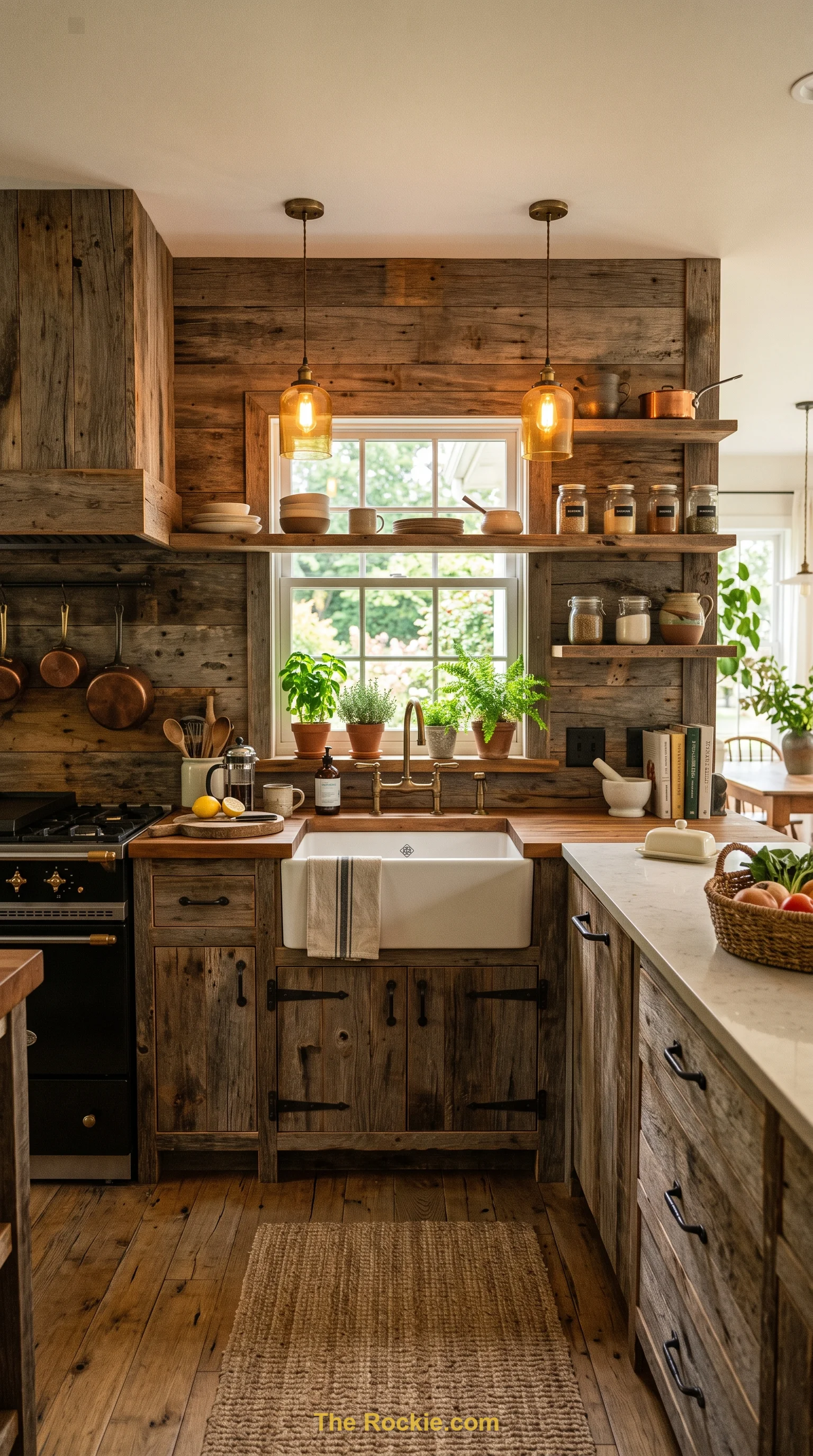
Salvaged wood repurposed for an accent wall, cabinetry, or open shelving carries visible history in its grain and texture that new material can’t replicate. It’s also one of the more genuinely sustainable choices here, since it’s reusing material rather than manufacturing more.
15. An Indoor Jungle That Actually Gets Used
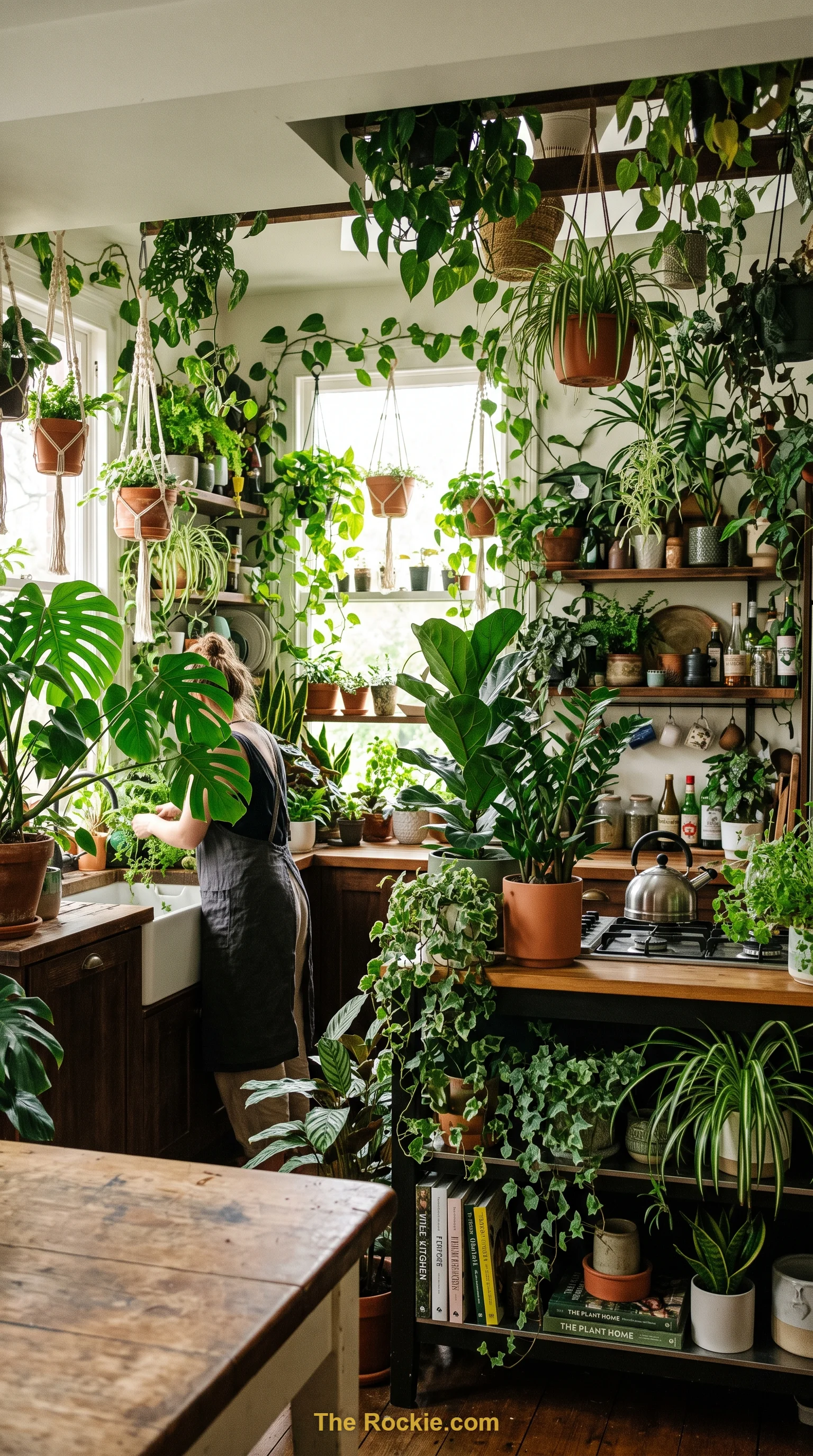
A denser layering of potted herbs, hanging planters, and leafy foliage goes further than a couple of accent plants — it turns the whole kitchen into a greener, livelier space. It takes a bit more upkeep, but the payoff in daily atmosphere is real.
16. Minimalism That Leans on Nature, Not Emptiness
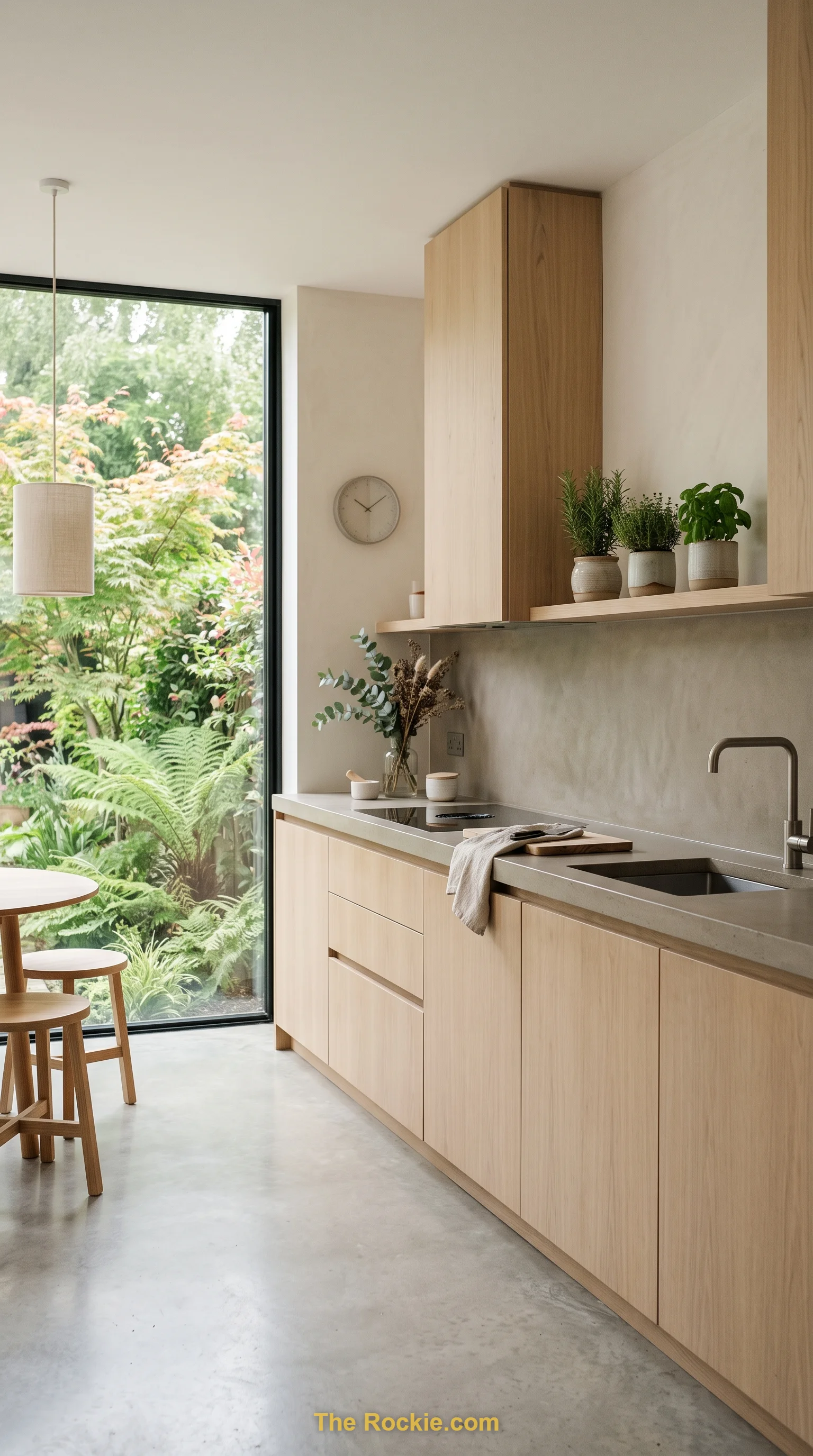
Uncluttered surfaces and clean lines paired with a few carefully chosen natural accents keep this style from ever feeling sparse. The goal is a room where nothing extra competes with the wood grain or stone texture already doing the visual work.
17. Patterns That Echo the Natural World
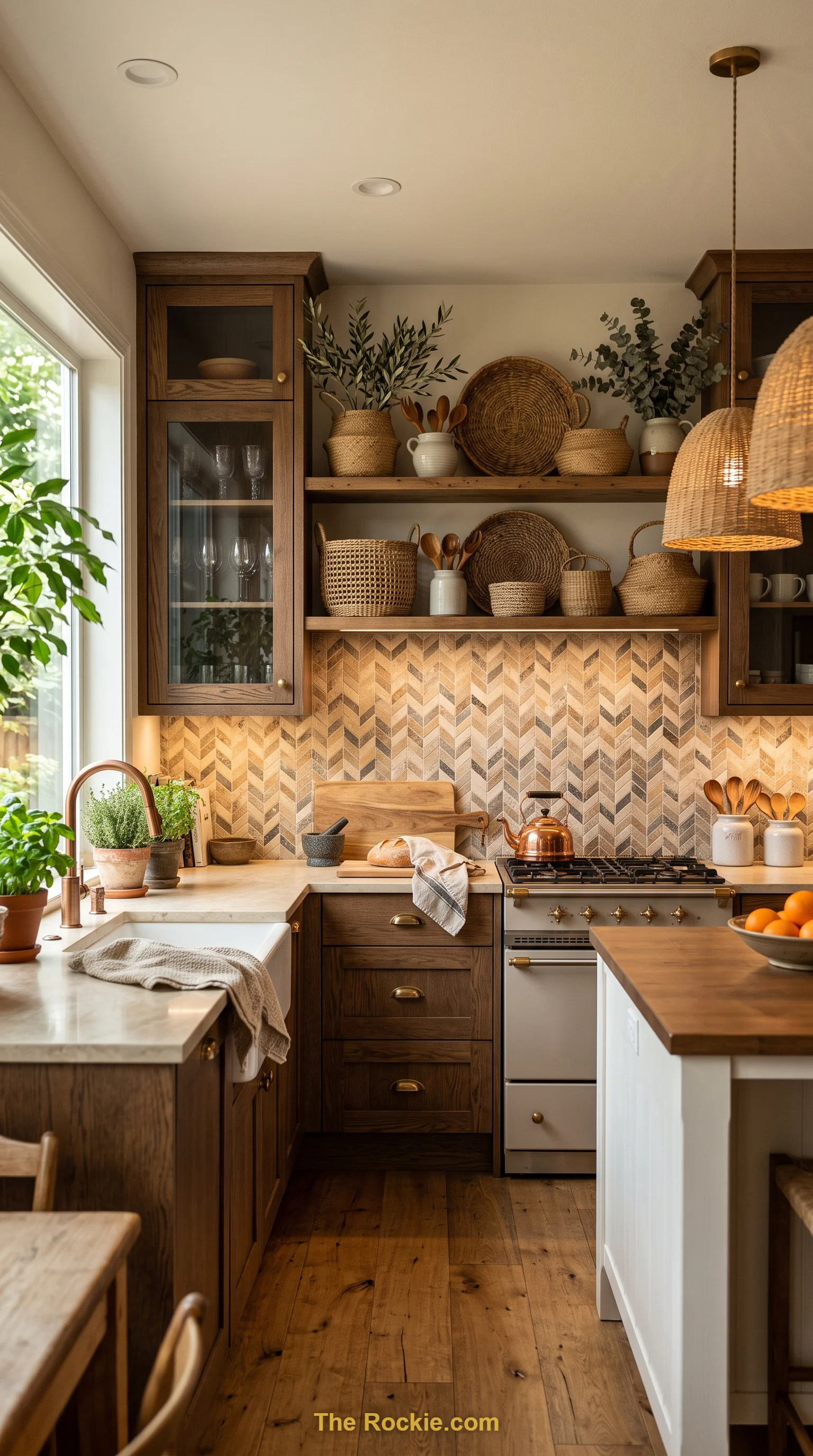
Woven baskets, patterned tile, or a textured stone backsplash bring visual interest without needing to introduce anything synthetic into the room. These details work because they still read as organic, even when they’re clearly decorative choices rather than purely functional ones.
18. Lighting Fixtures That Match the Material Story
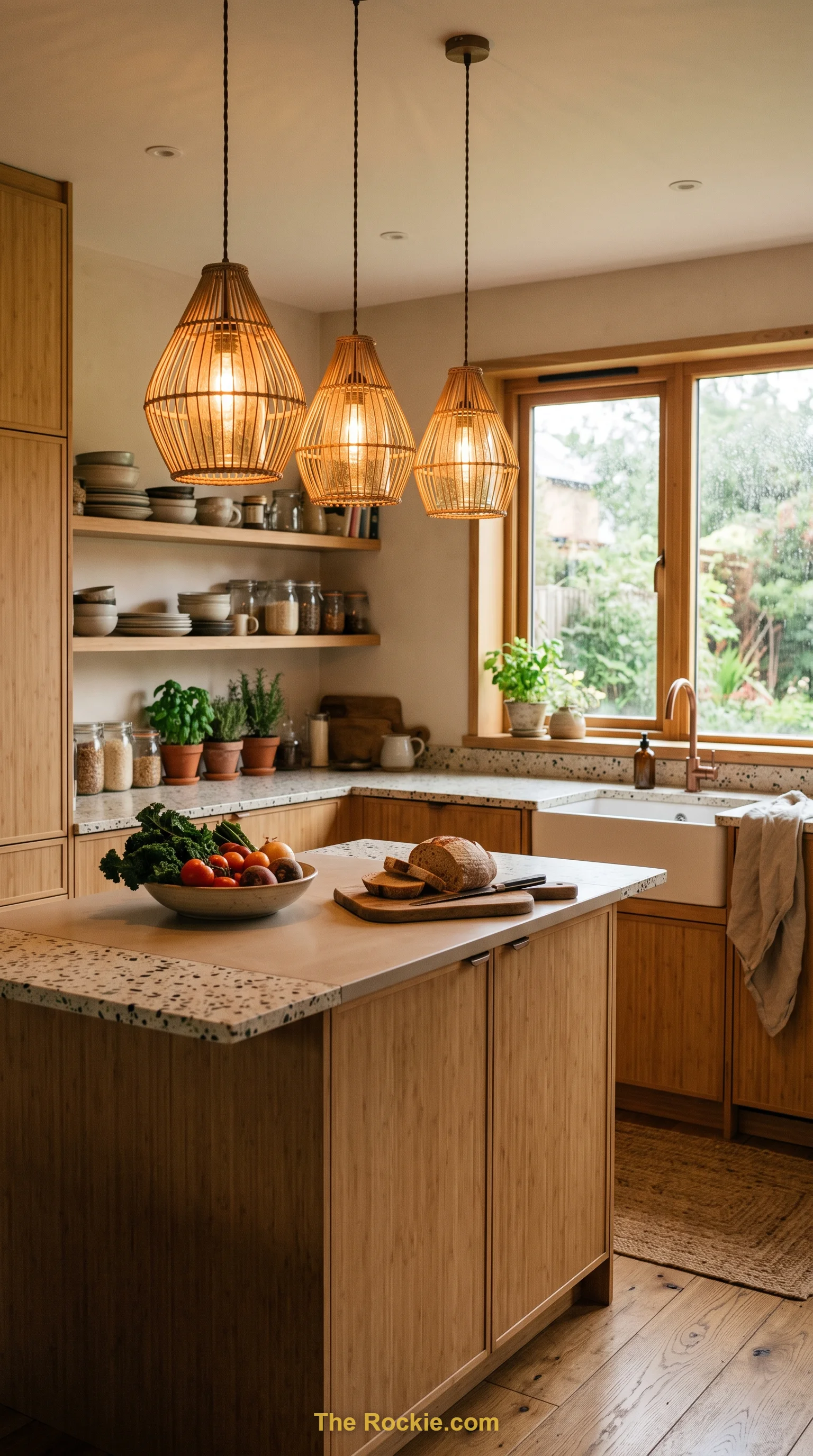
Pendant lights in bamboo or recycled glass, paired with energy-efficient LEDs, keep the lighting consistent with everything else in the room instead of introducing a jarring modern contrast. It’s a detail that ties the ceiling into the same material language as the counters and floor.
19. Handmade Ceramics With Real Character
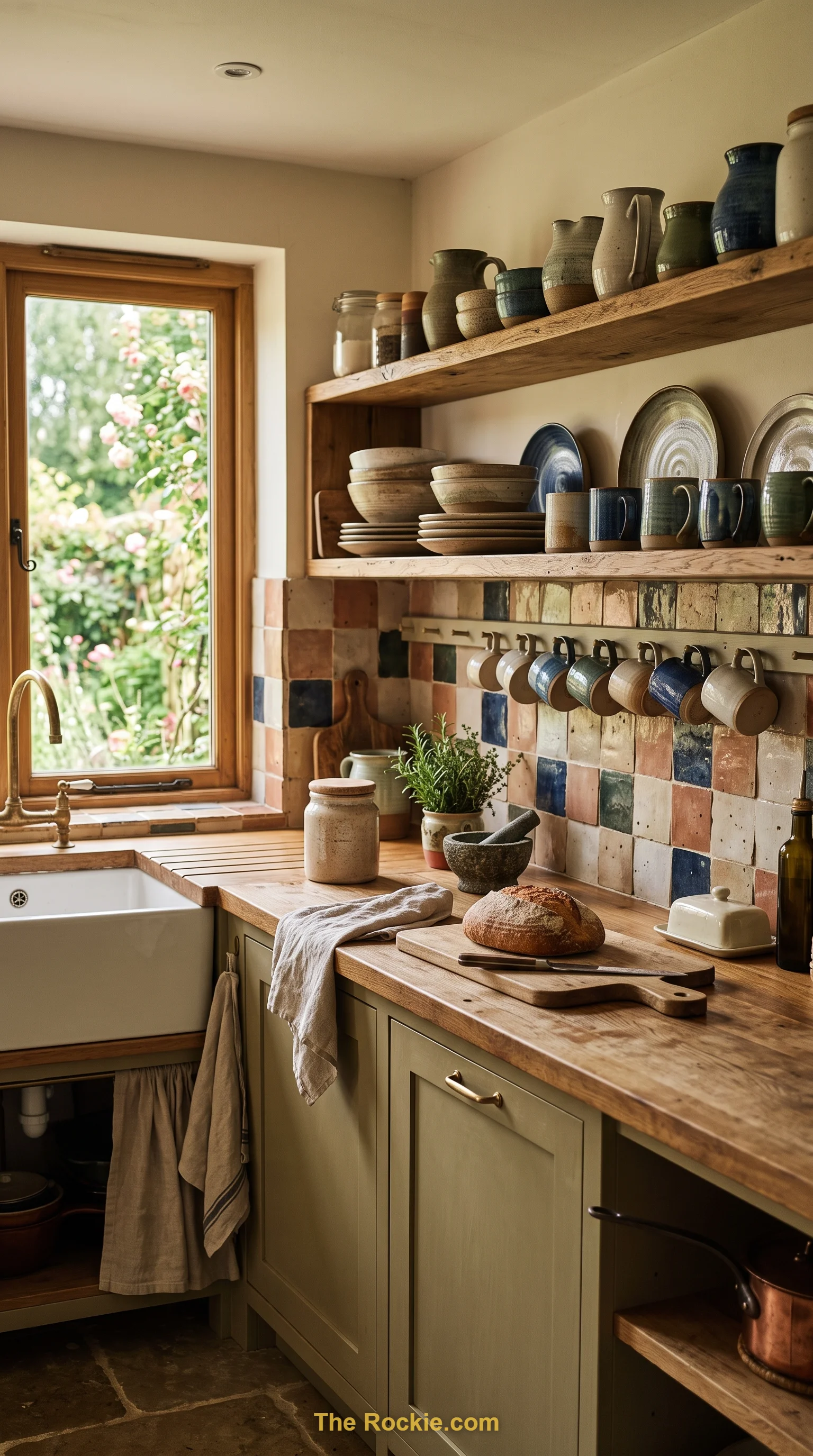
Hand-thrown tiles, vases, and dishware bring a level of individuality mass production can’t replicate — no two pieces are identical, and that variation is part of the appeal. It’s a good way to support small-scale craftsmanship while adding genuine texture to the kitchen.
20. Textiles That Soften Every Hard Surface
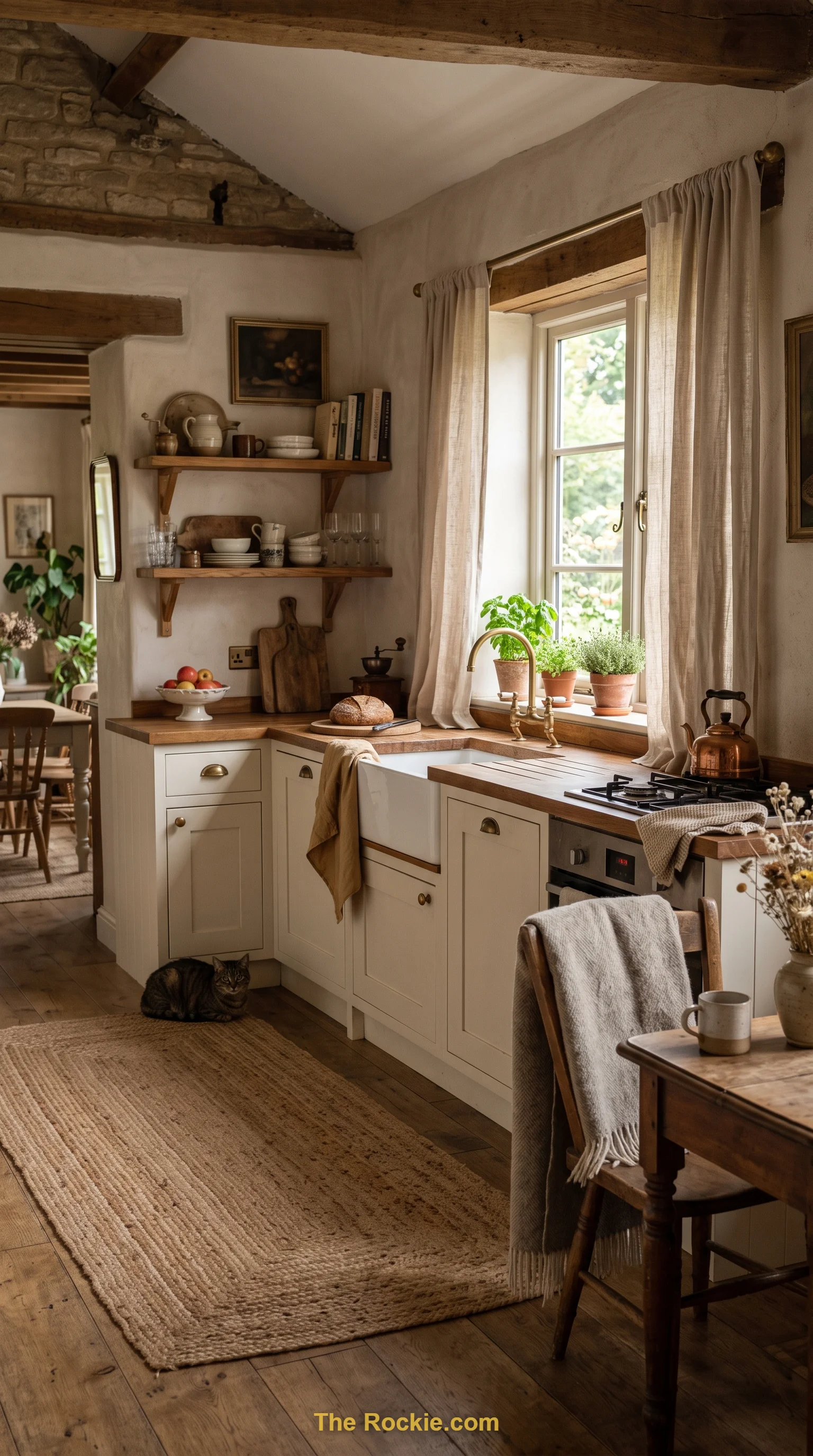
Linen curtains, cotton cushions, and jute rugs take the edge off a room otherwise dominated by countertops and cabinetry. It’s a simple way to bring in some softness and warmth without touching any of the bigger, harder-to-change elements of the kitchen.
21. A Living Wall as the Room’s Centerpiece
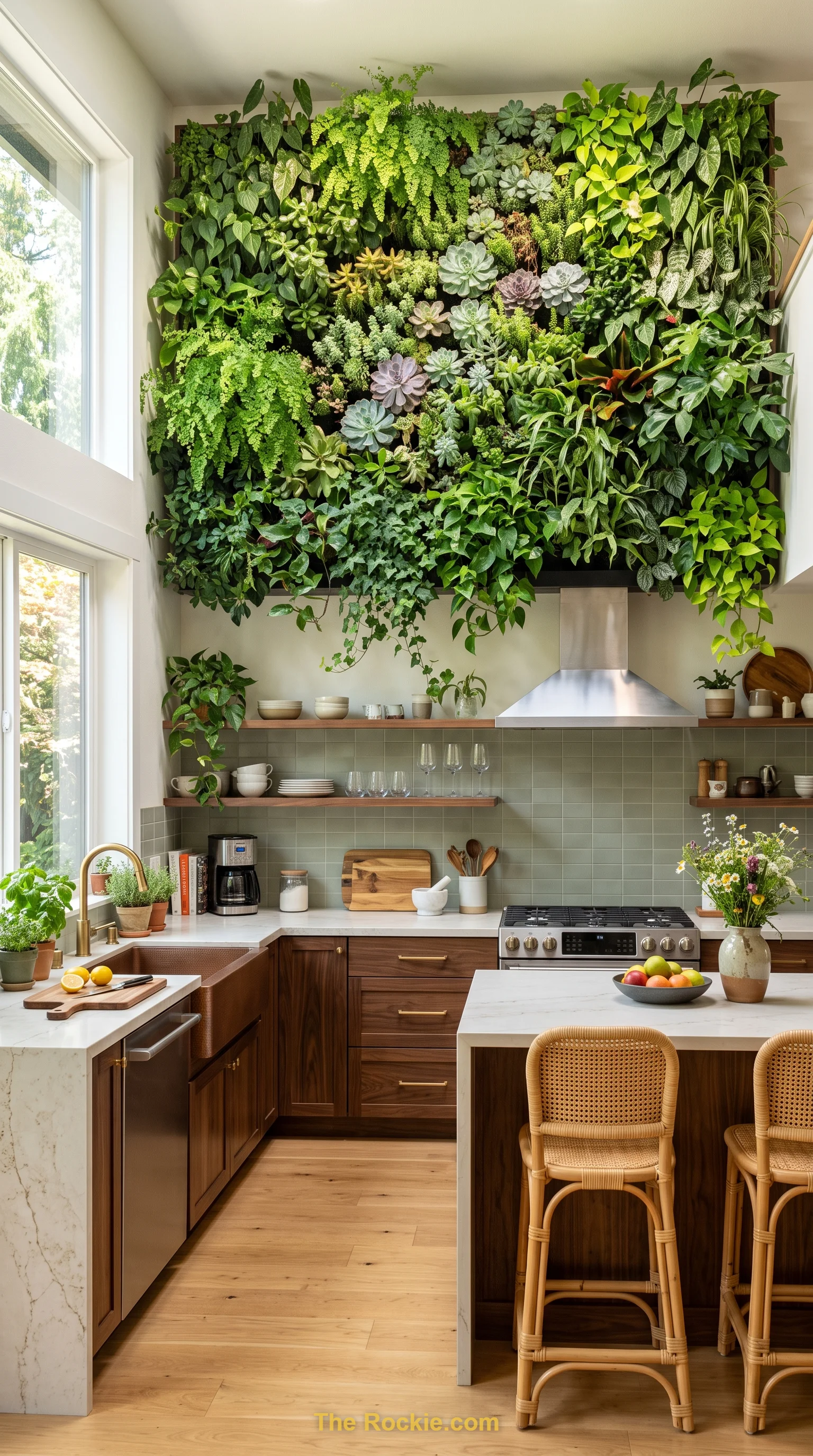
A vertical garden of succulents and foliage functions almost like art — it’s a striking visual anchor that also happens to purify the air and bring some real texture to an otherwise flat wall. It’s a bigger commitment than a few potted plants, but the impact is proportionally bigger too.
22. Ventilation That Works With the Room, Not Against It
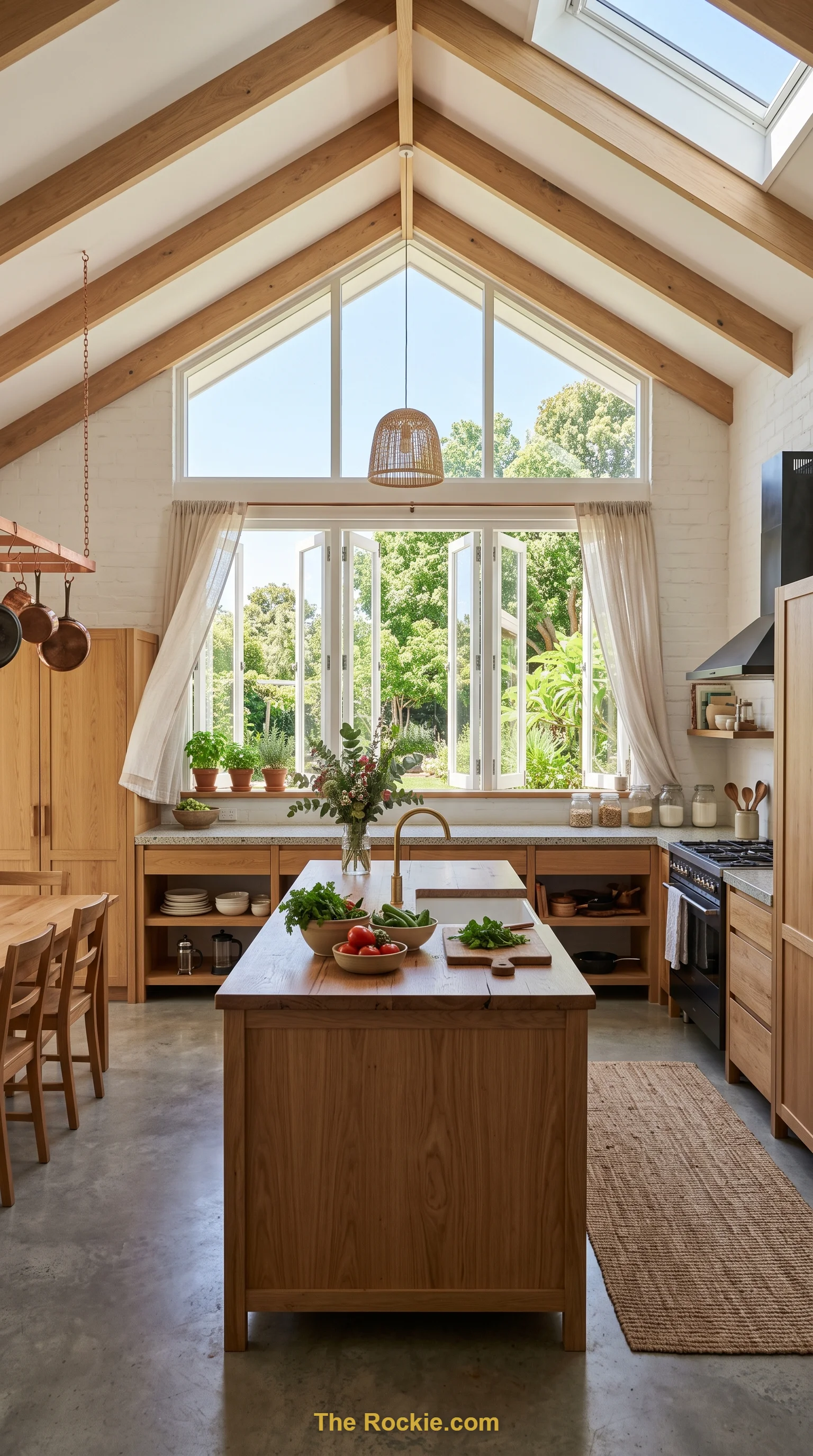
Open windows, well-placed vents, and higher ceilings keep air moving naturally, cutting down on how much the kitchen needs to lean on mechanical cooling. It’s a detail that supports the whole natural-materials approach — less reliance on machines, more reliance on the room’s own design.
Final Thoughts
None of these 22 ideas require picking a single “natural kitchen” style and committing fully — most of them work as individual additions to whatever kitchen you already have. A few well-placed plants, one reclaimed-wood accent, better use of the light already coming through your windows — small moves like these add up faster than people expect, and the room ends up feeling less like a manufactured space and more like one that’s actually connected to something outside it.


