22 Tudor Kitchen Ideas for Old-World Charm with Modern Comfort

Tudor style has a way of making a kitchen feel like it’s been standing for centuries, even in a brand-new build. Dark timber, stone, iron hardware, and deep earthy colors come together to create a space that feels grounded, warm, and a little bit storied — the opposite of the sleek, all-white kitchens that dominate so many renovation feeds. It’s a style built on craftsmanship and texture rather than trends, which is exactly why it holds up so well decade after decade.
Here are 22 ways to bring Tudor character into a kitchen, from architectural details down to the smallest decorative touches.
1. Exposed Timber Beams Charm
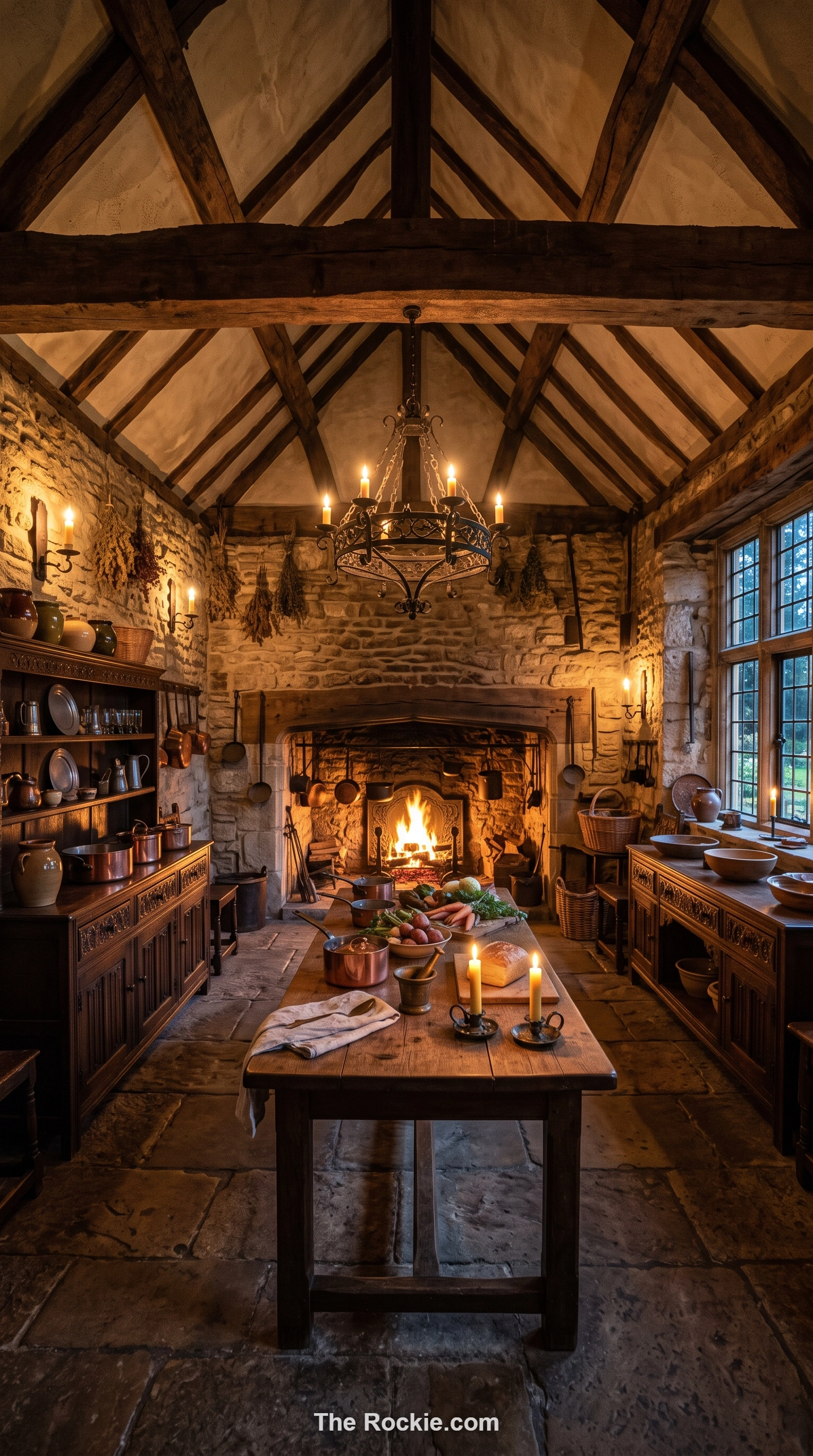
Nothing signals Tudor style faster than heavy timber beams running across the ceiling. Beyond the historical nod, these beams add real structural presence and warmth, anchoring the whole room in dark, textured wood. They work as a backdrop for modern appliances just as easily as they do for antique furniture, which makes them one of the most flexible starting points for a Tudor-inspired kitchen.
2. Stone and Brick Accents
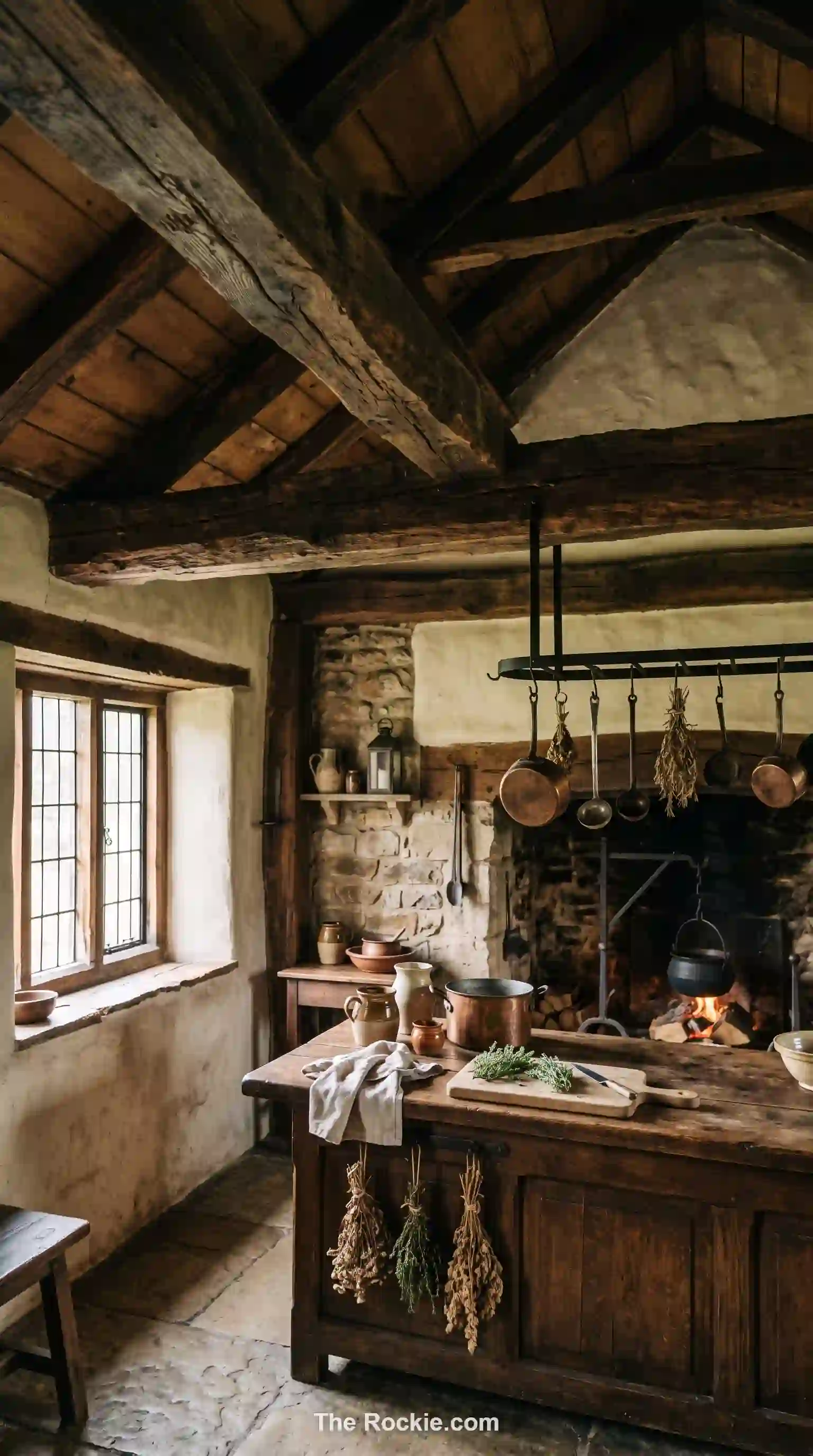
Natural stone and aged brick bring the same rugged authenticity to the walls that timber brings overhead. Whether it’s a full accent wall or a smaller section behind the range, these materials add texture and durability while staying neutral enough to let other design elements stand out. It’s a detail that instantly reads as old-world without requiring a full historical renovation.
3. Traditional Open Hearth Centerpiece
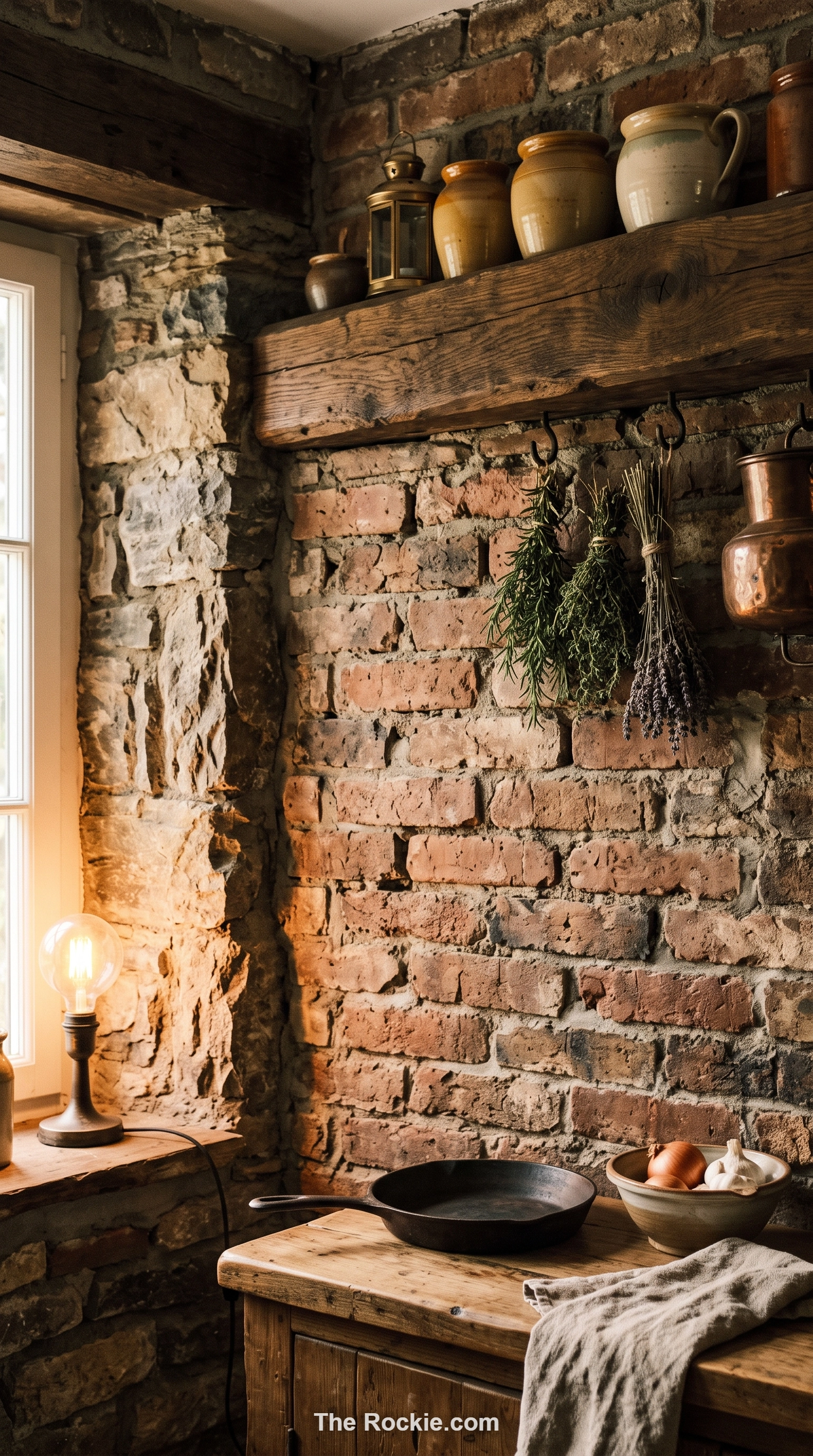
A large open hearth turns a kitchen into something closer to a gathering hall than a cooking station. The exposed brick and stonework around a wood-burning fireplace create a natural focal point, and the openness of the design lets the craftsmanship of the surrounding masonry take center stage. It’s a statement piece built for the kind of kitchen where people linger.
4. Artisan Pottery Displays
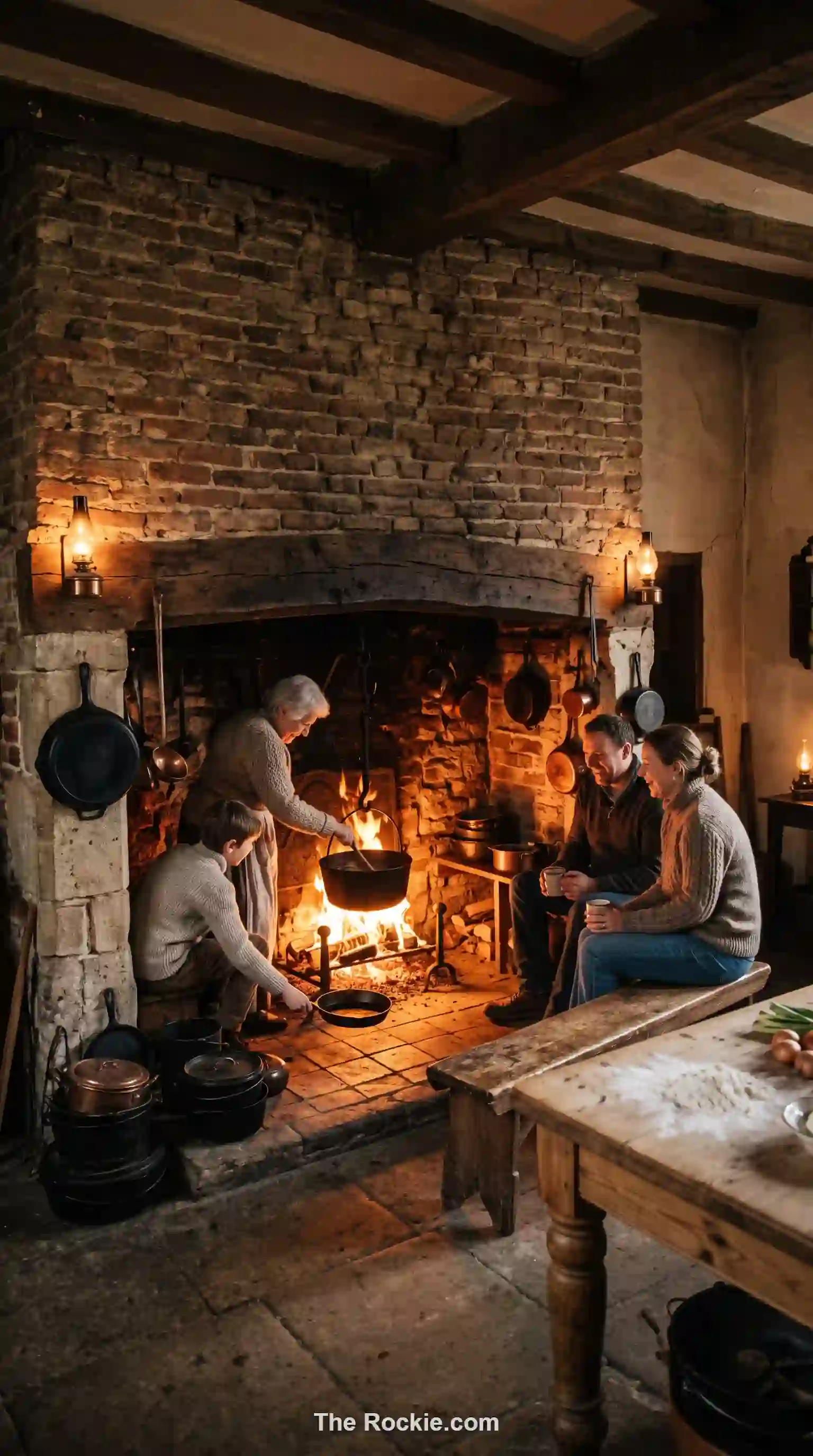
Hand-thrown pottery and earthenware give a Tudor kitchen a sense of being lived in rather than staged. Arranged along open shelves or a plate rack, these pieces double as storage and decoration, their uneven glazes and handmade imperfections adding real character. It’s a simple way to inject warmth into the room without touching a single wall or cabinet.
5. Rustic Wooden Furniture Elegance
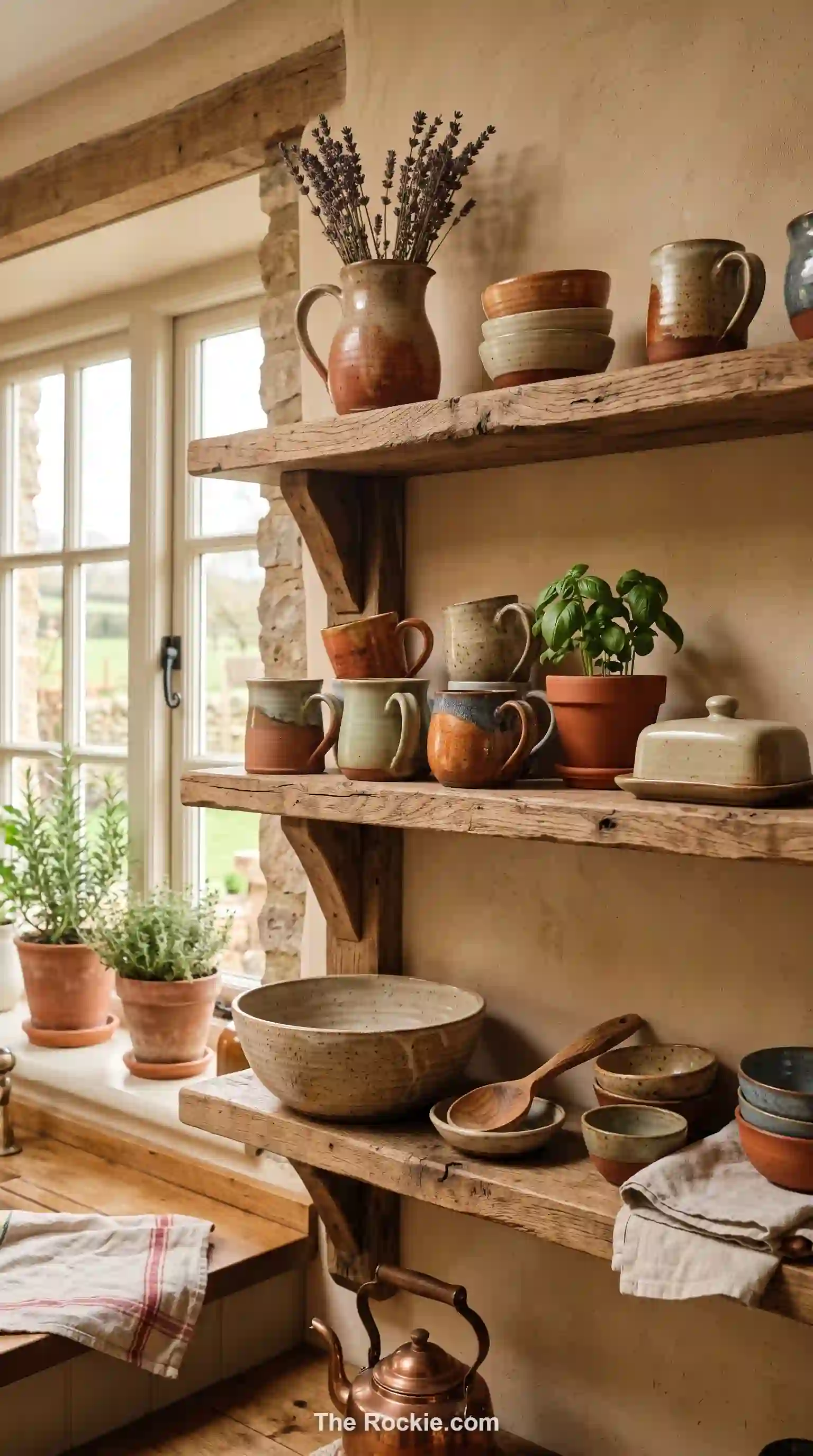
Hand-carved tables, chairs, and cabinetry built from seasoned wood give a Tudor kitchen its sturdy, heirloom quality. These pieces are chosen as much for how they’ll age as for how they look on day one, with deep grain and solid joinery meant to outlast trends. Furniture like this turns a kitchen into a working space that also feels like a family gathering place.
6. Vintage Cupboards and Iron Hardware
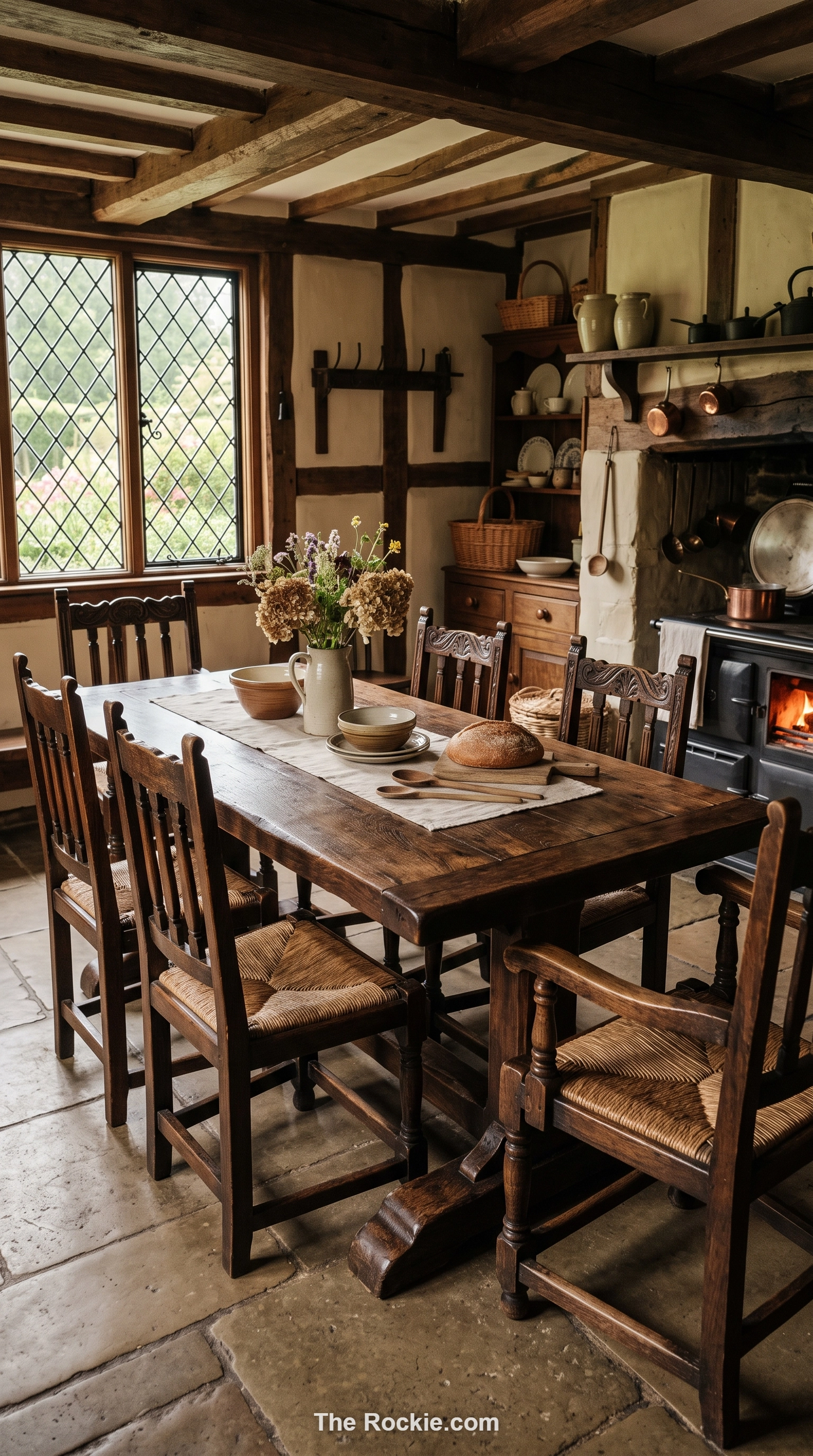
Dark wooden cupboards fitted with hand-forged iron hardware bring both function and heritage to a Tudor kitchen. The heavy hinges and pulls aren’t just decorative — they nod to a tradition of joinery built to last generations. Paired with deep wood tones, these cupboards make for kitchen storage that feels less like a fixture and more like a piece of history.
7. Arched Doorways and Window Frames
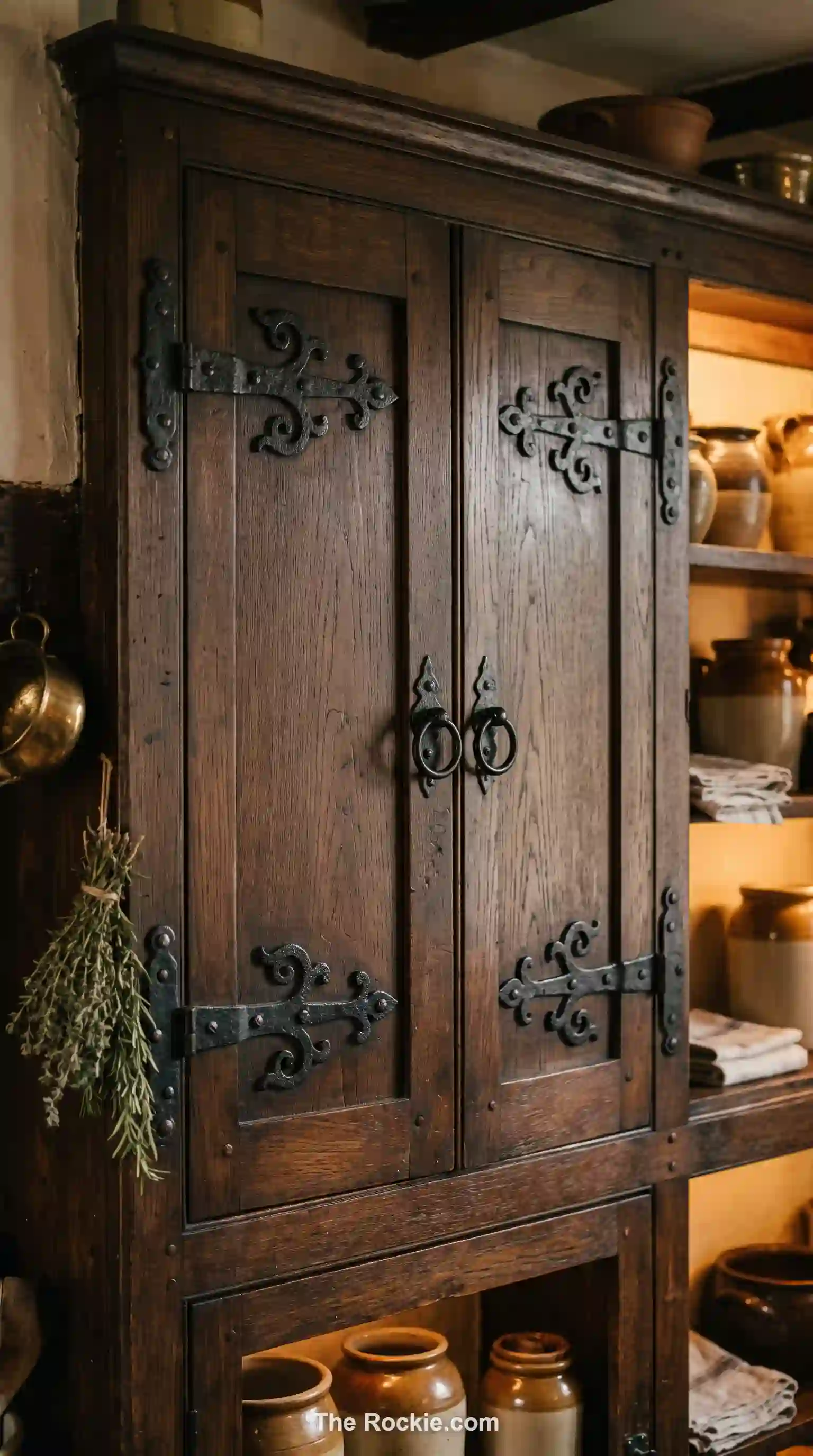
Curved architectural details soften the heavier, darker elements found elsewhere in Tudor kitchens. Arched doorways and window frames let in more light and air while echoing the medieval architecture the style is known for. They’re a subtle way to add romance and shape to a room that might otherwise lean too heavily on straight lines and dark wood.
8. Timeless Tudor Color Palette
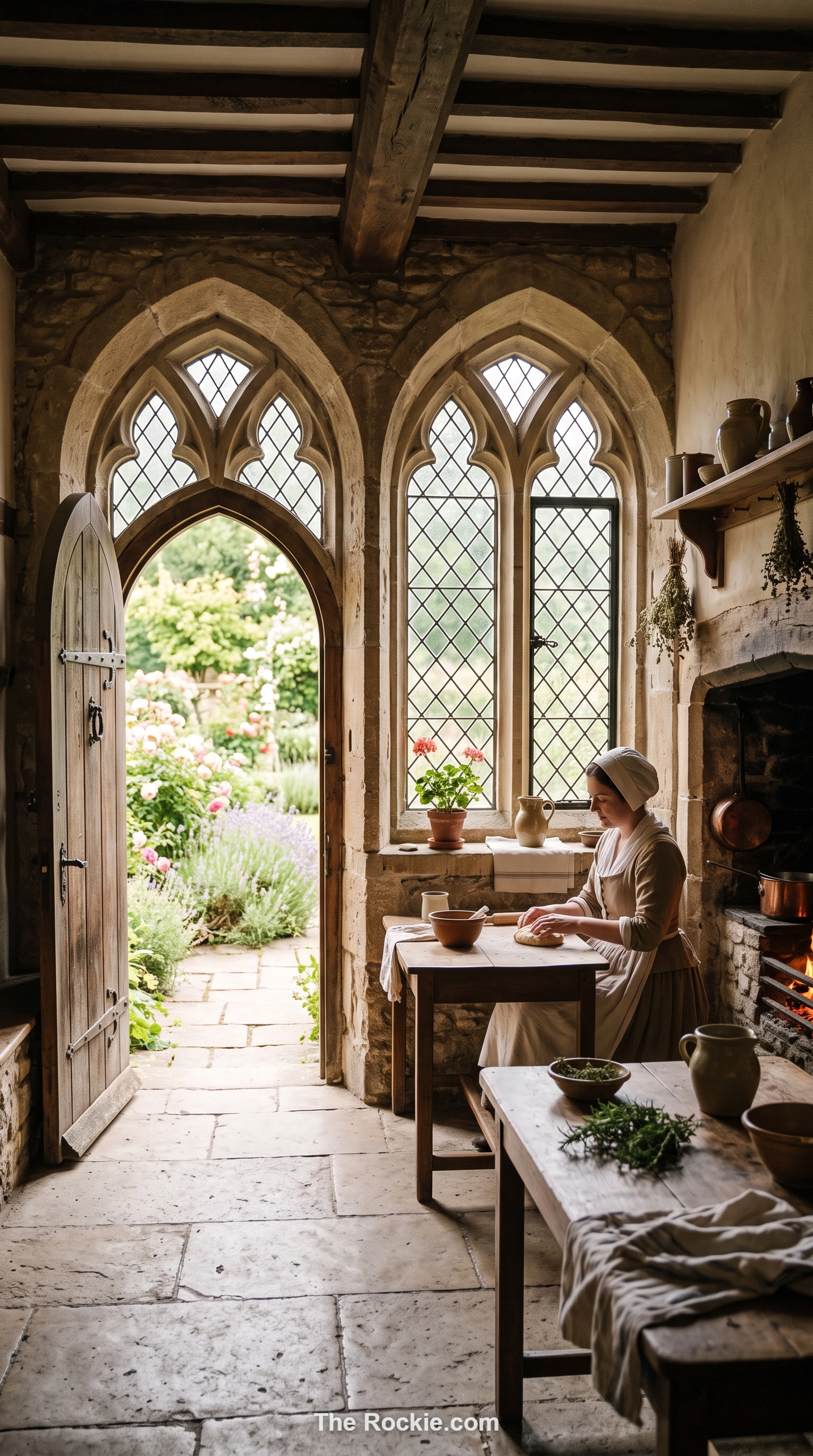
Deep burgundies, forest greens, and soft creams form the backbone of a classic Tudor color story. These earthy, muted tones give a kitchen warmth without feeling dark or heavy, and they act as a flexible base that welcomes both antique pieces and the occasional modern touch. Getting this palette right does more to set the Tudor mood than almost any single architectural feature.
9. Antique-Inspired Decorative Accents
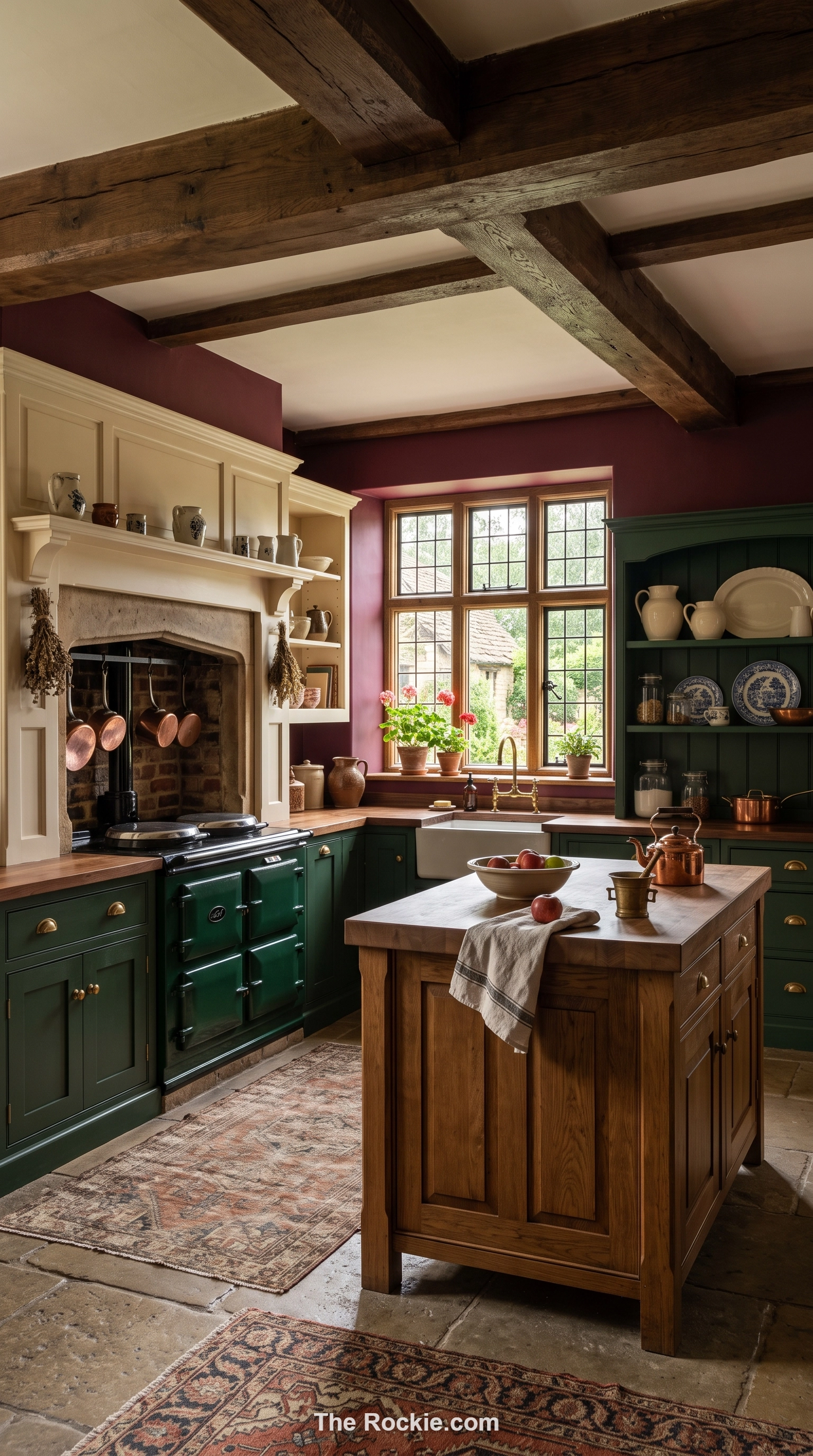
Antique clocks, aged mirrors, and heirloom-style objects give a Tudor kitchen small moments of storytelling throughout the room. These pieces don’t need to be genuinely old to work — reproduction and antique-style decor achieves the same weathered, collected-over-time feeling. Scattered thoughtfully, they turn a kitchen into something that feels curated rather than furnished.
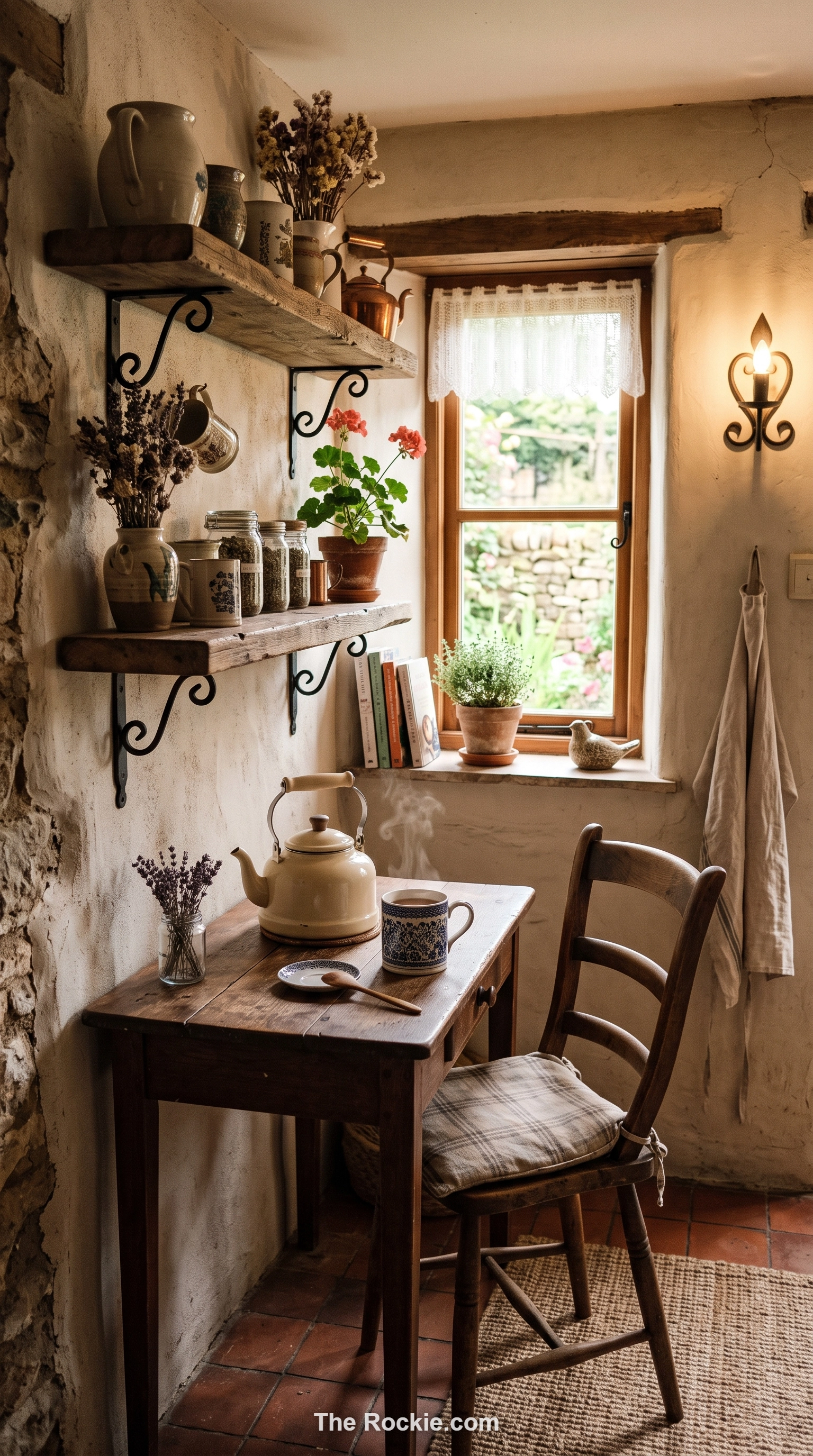
10. Cozy Buttery Nook Design
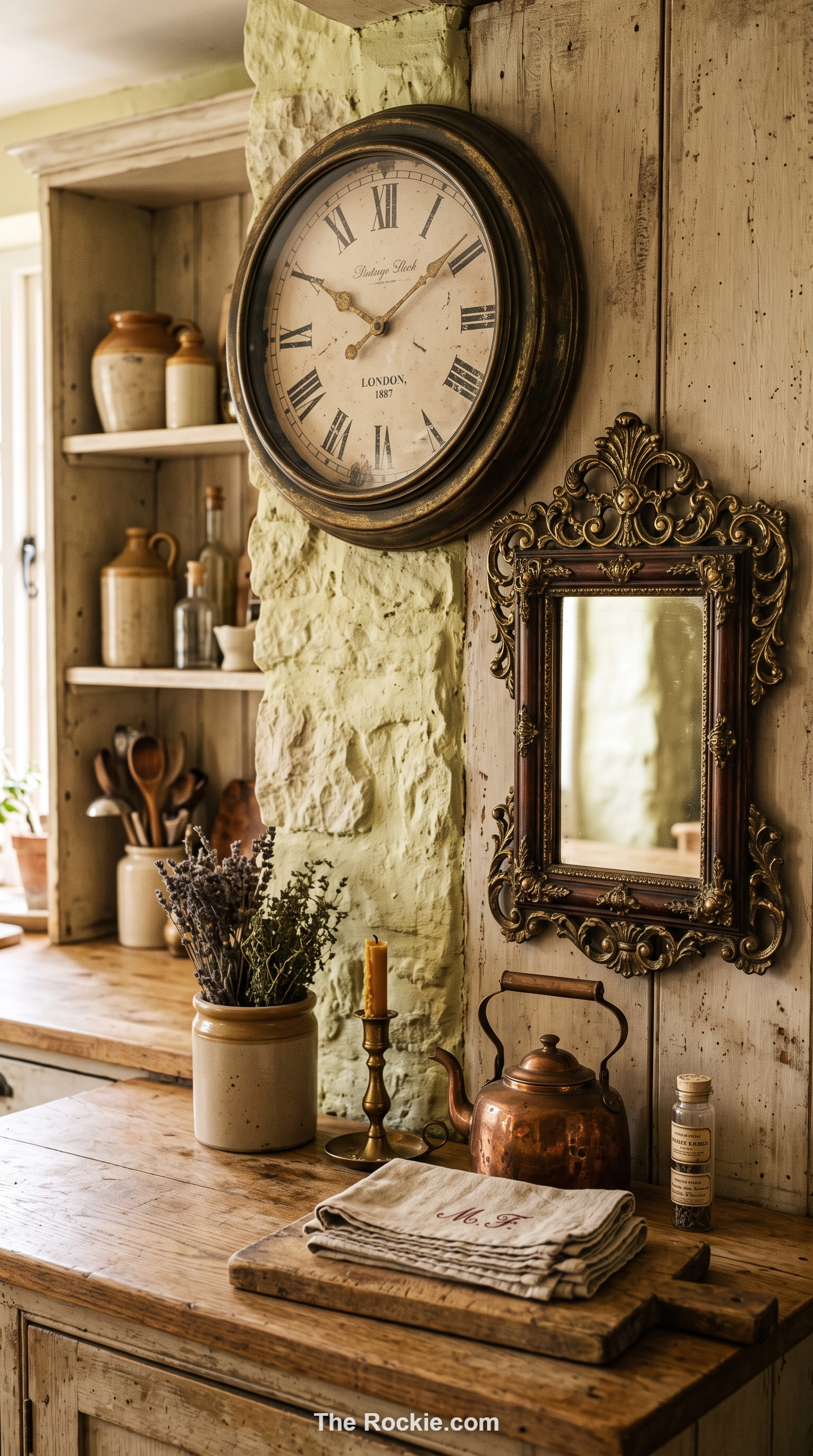
A small dedicated nook — historically a buttery, used for storing provisions — makes a charming, low-key addition to a Tudor kitchen. Fitted with rustic wooden shelving and a bit of iron detailing, it’s a compact spot for quick meals or a cup of tea rather than a full dining setup. The scale keeps it intimate, giving the kitchen a quieter corner amid all the heavier architectural features.
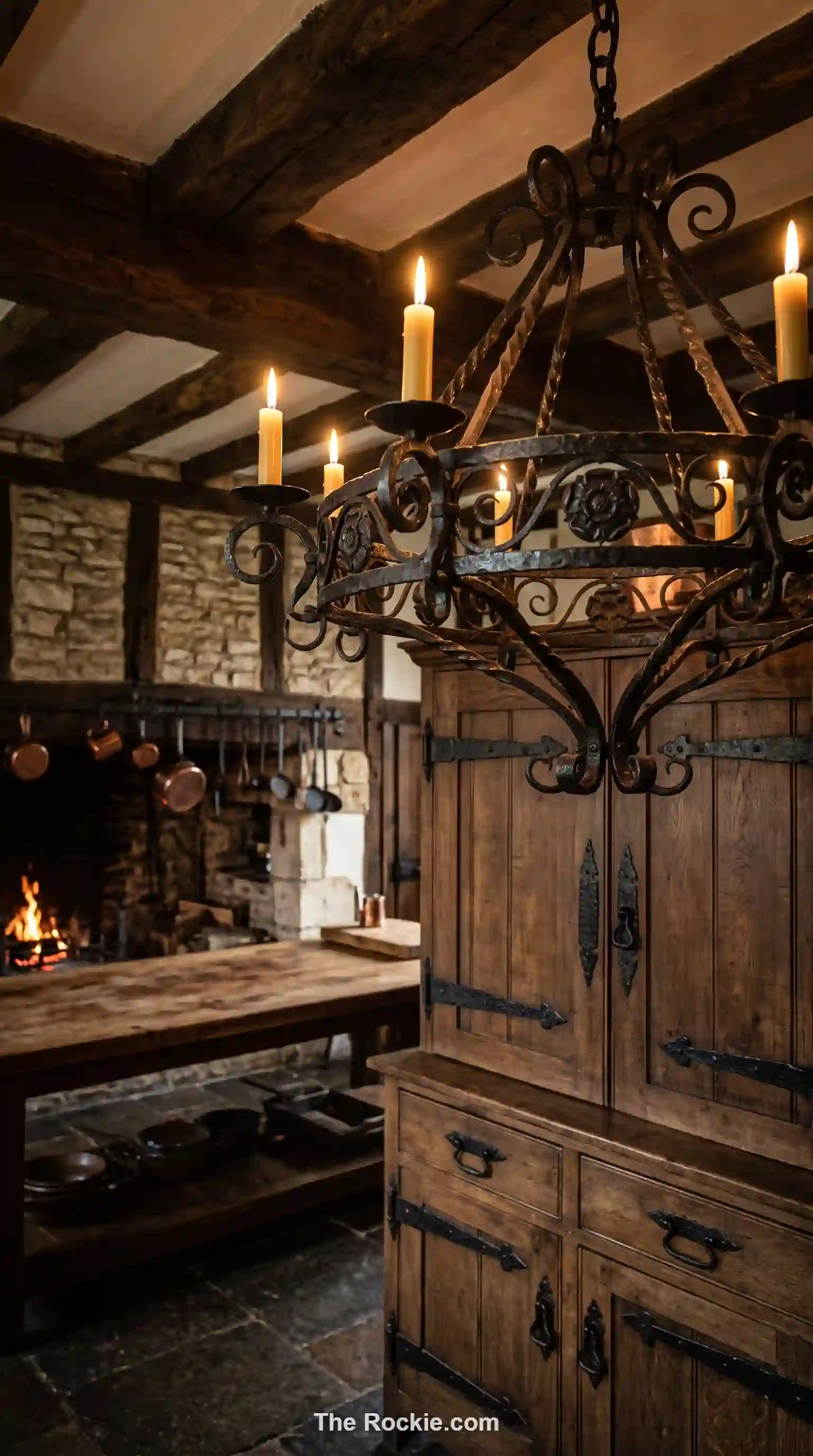
11. Ornate Iron Accents and Fixtures
Wrought iron shows up throughout Tudor kitchens, whether as a chandelier overhead, decorative cabinet hardware, or a grate near the hearth. It’s a material that reads as both decorative and durable, and its dark tones ground the lighter wood and stone around it. These details are often small individually but add up to a strong sense of craftsmanship across the whole room.
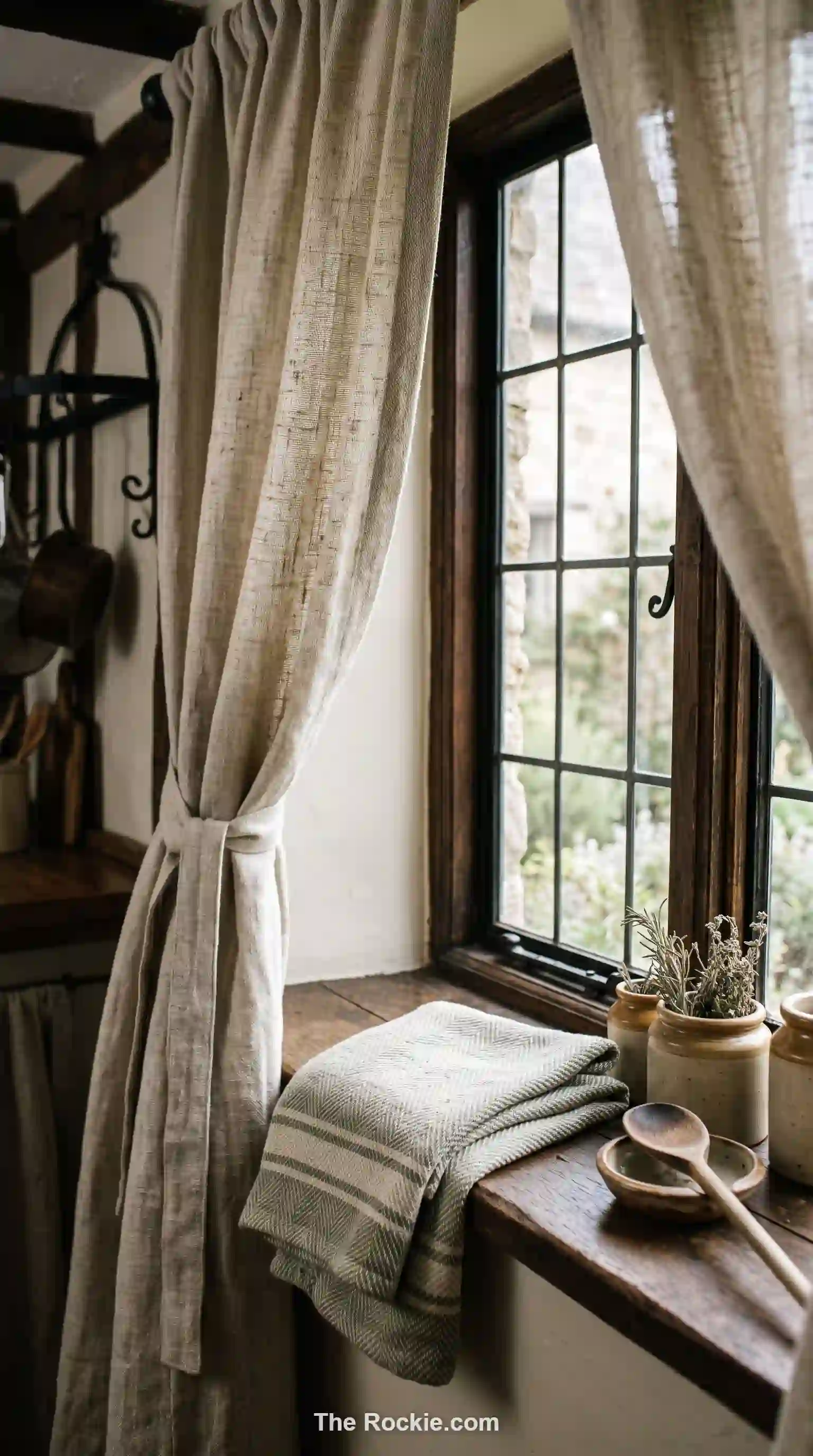
12. Woven Textiles and Linen Drapes
Handwoven textiles and linen drapes soften the stone and timber that dominate most Tudor kitchens. Natural fibers in earthy, muted tones bring a bit of give to a room otherwise built from hard materials, while also helping with acoustics in a space full of exposed surfaces. It’s an easy way to layer in comfort without straying from the period aesthetic.
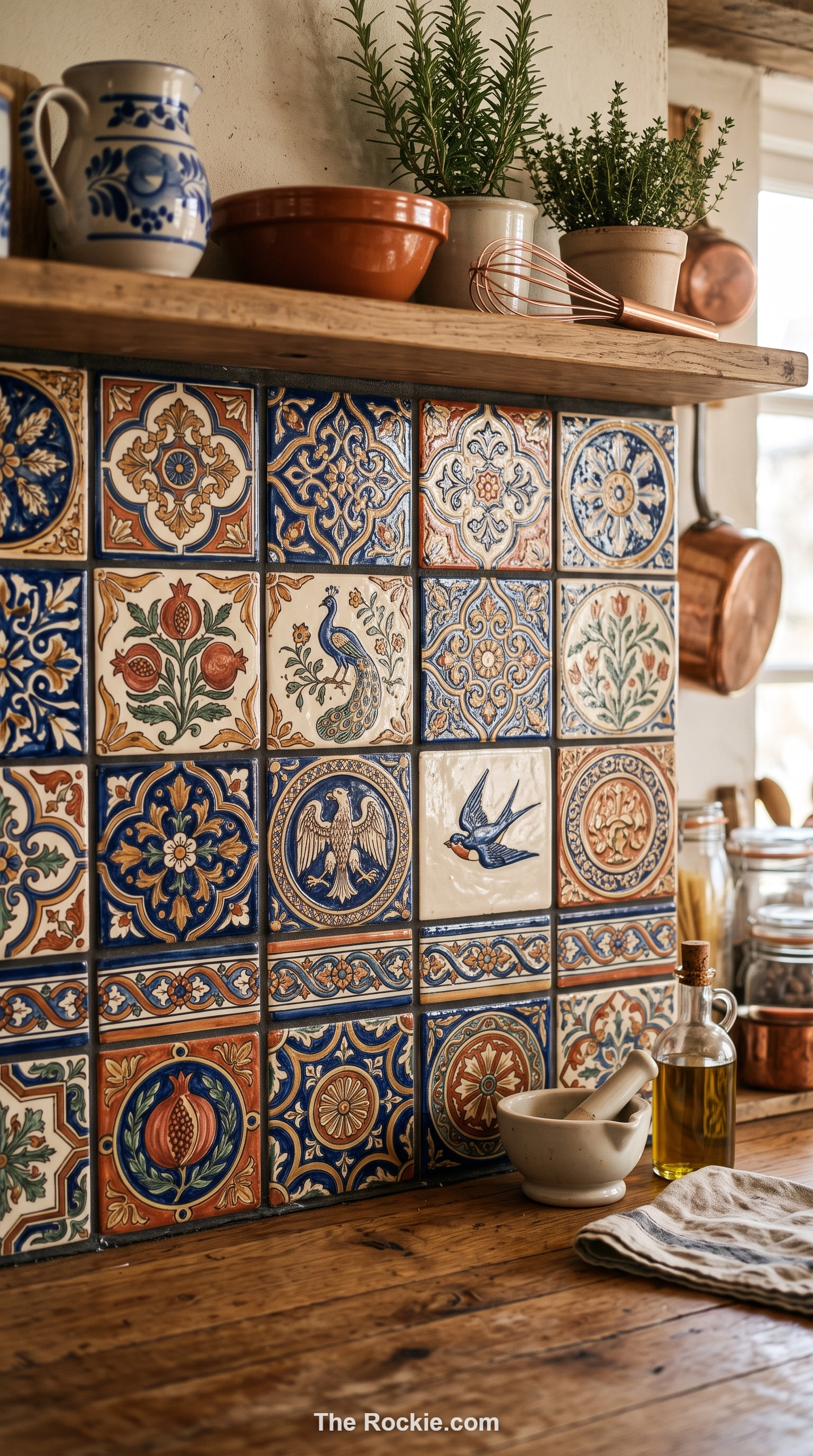
13. Hand-Painted Tiles and Murals
Hand-painted tiles bring color and storytelling into a Tudor kitchen without straying from its handcrafted spirit. Used as a backsplash or a small mural section, these tiles turn a plain surface into something with real personality, echoing the decorative traditions of the era. Every tile carries a bit of individuality that mass-produced surfaces simply can’t replicate.
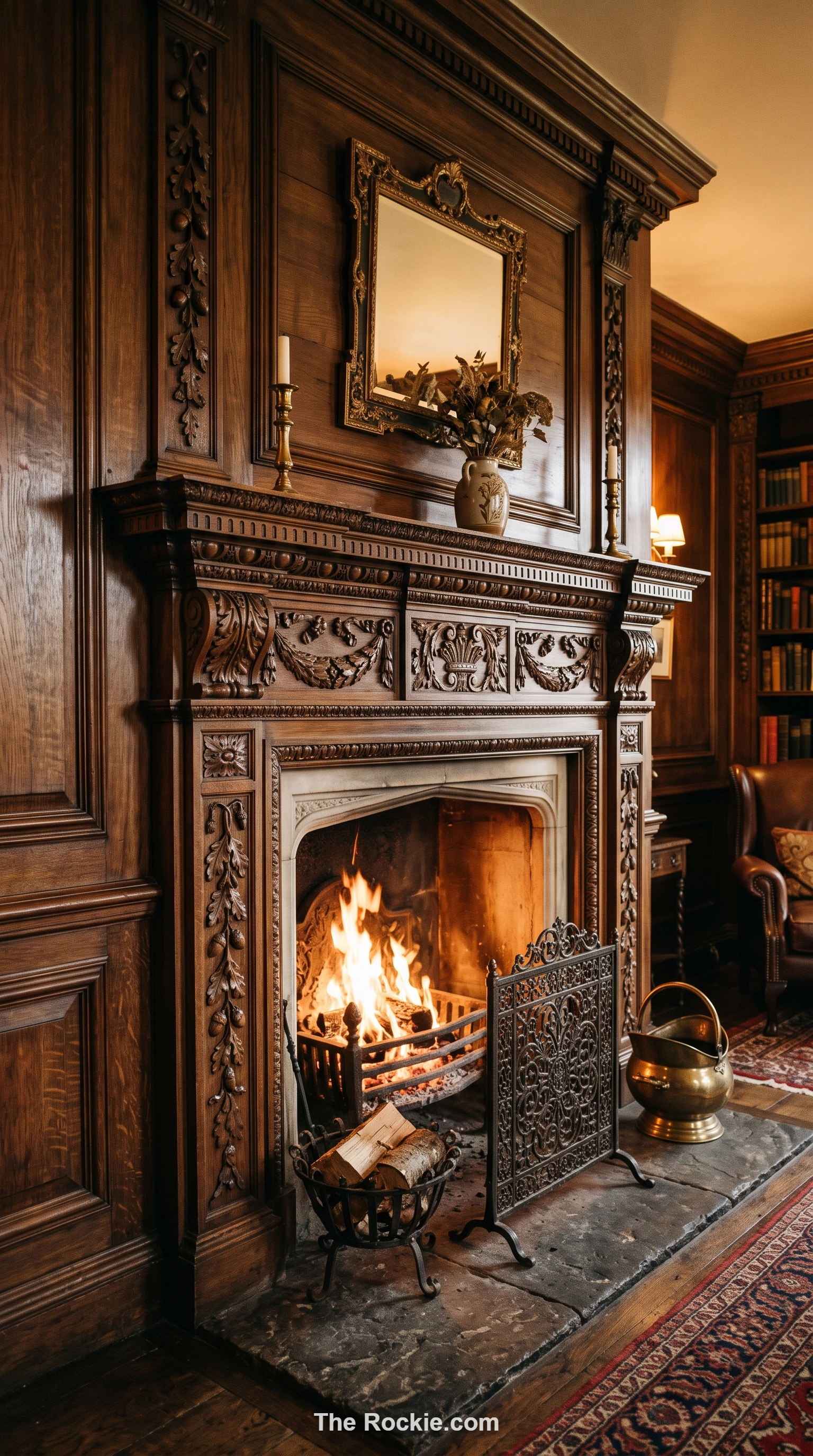
14. Carved Mantels and Wood Paneling
A carved wood mantel above the hearth, paired with detailed paneling elsewhere in the kitchen, adds a layer of formal elegance to the Tudor look. The intricate carving takes real skill to execute, and it shows — these details become a quiet showcase of craftsmanship that frames the room with a sense of permanence and history.
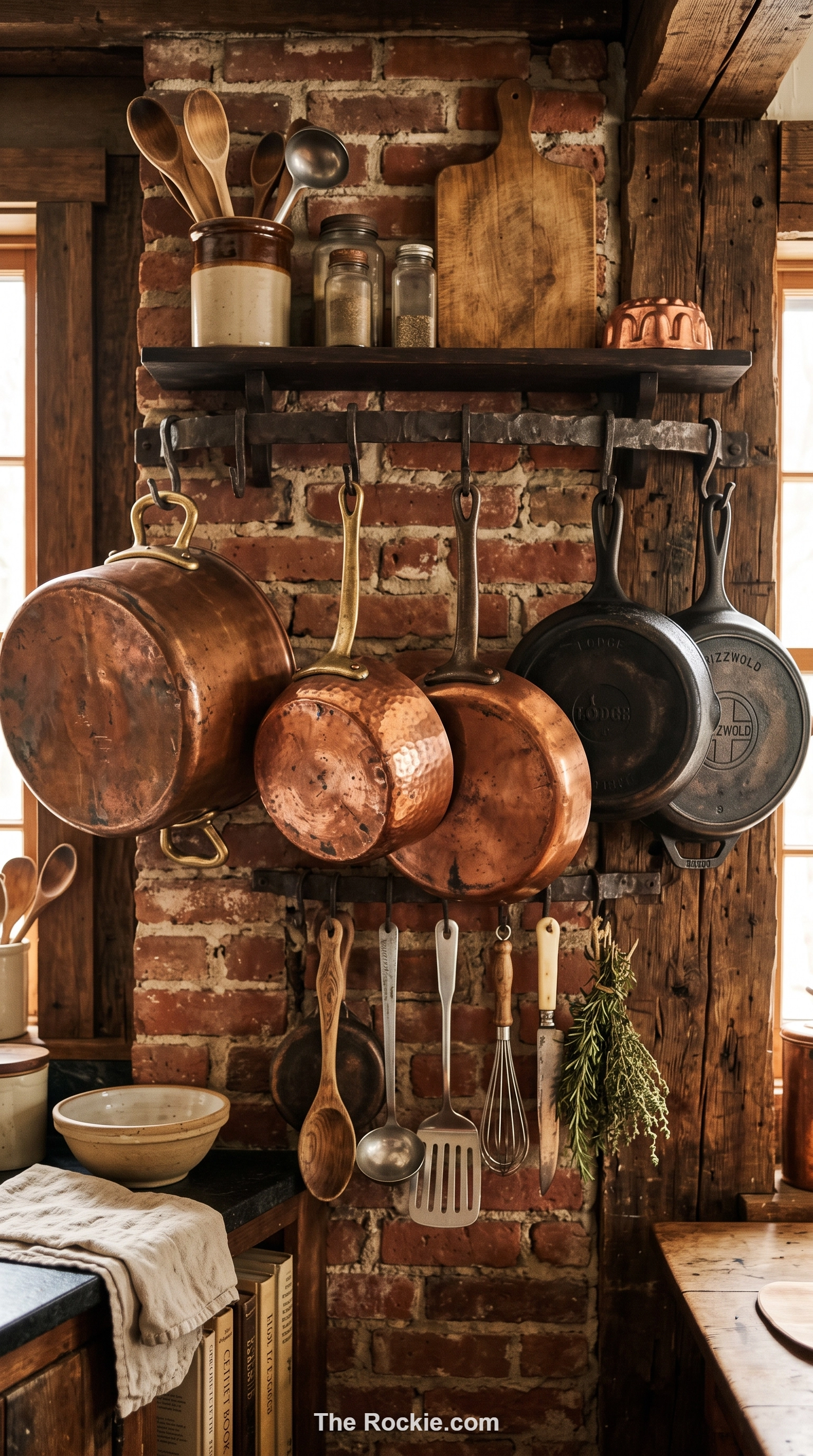
15. Vintage Kitchen Tools Display
An arrangement of antique utensils, copper pots, and cast iron skillets gives a Tudor kitchen a direct link to its culinary roots. Hung along a wall or displayed on open shelving, these tools do double duty as decor and as a quiet reminder of how cooking has evolved. It’s a detail that feels personal, especially when pieces are collected rather than bought as a matched set.
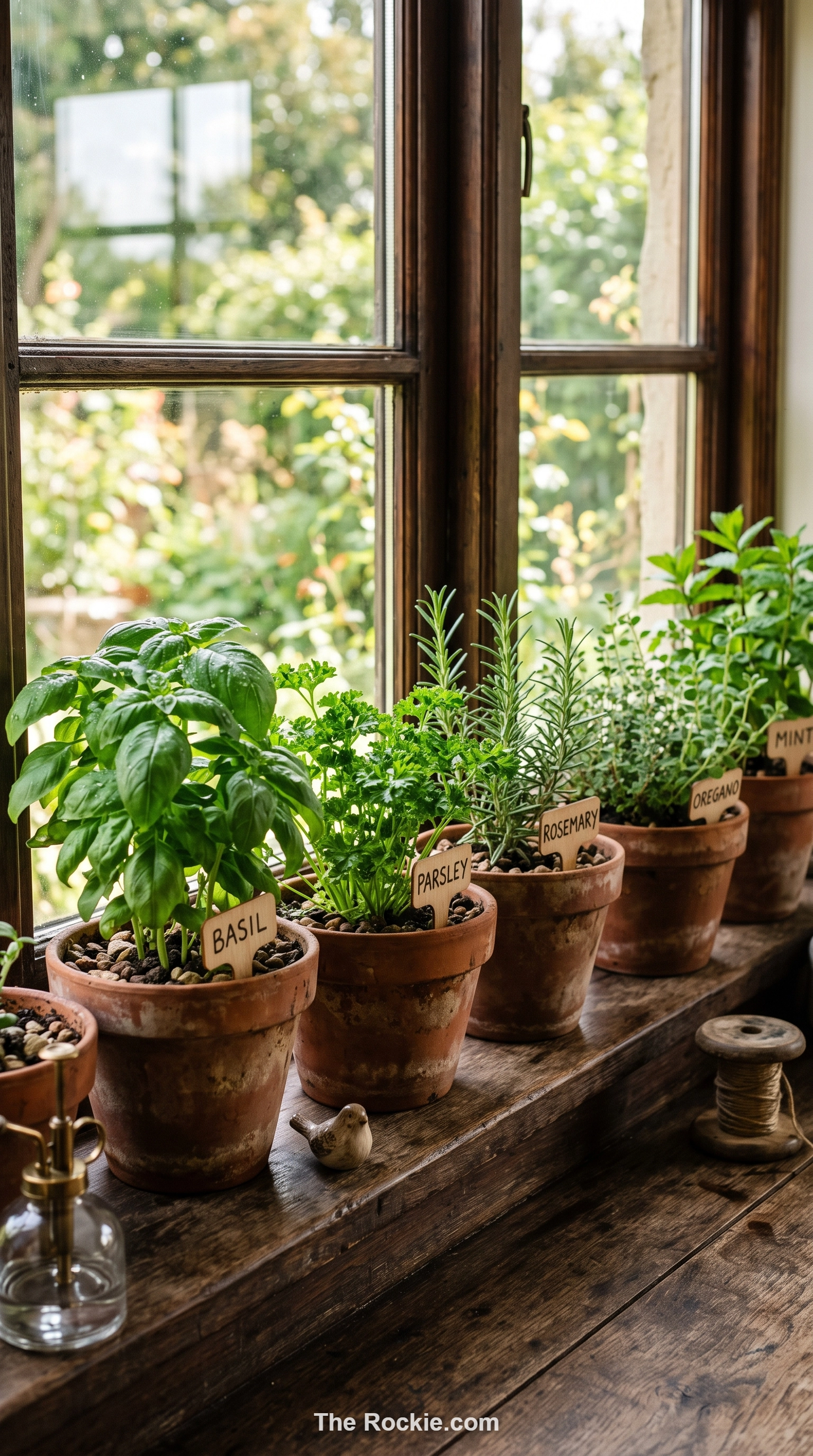
16. Indoor Herb Garden Integration
Fresh herbs growing in terracotta pots or vintage planters bring a welcome bit of life and color into an otherwise dark and heavy Tudor kitchen. Beyond the visual contrast, an indoor herb garden encourages actually cooking with what’s on hand, tying the space’s old-world character to genuinely useful, everyday function. It’s a small addition that makes the whole room feel more alive.
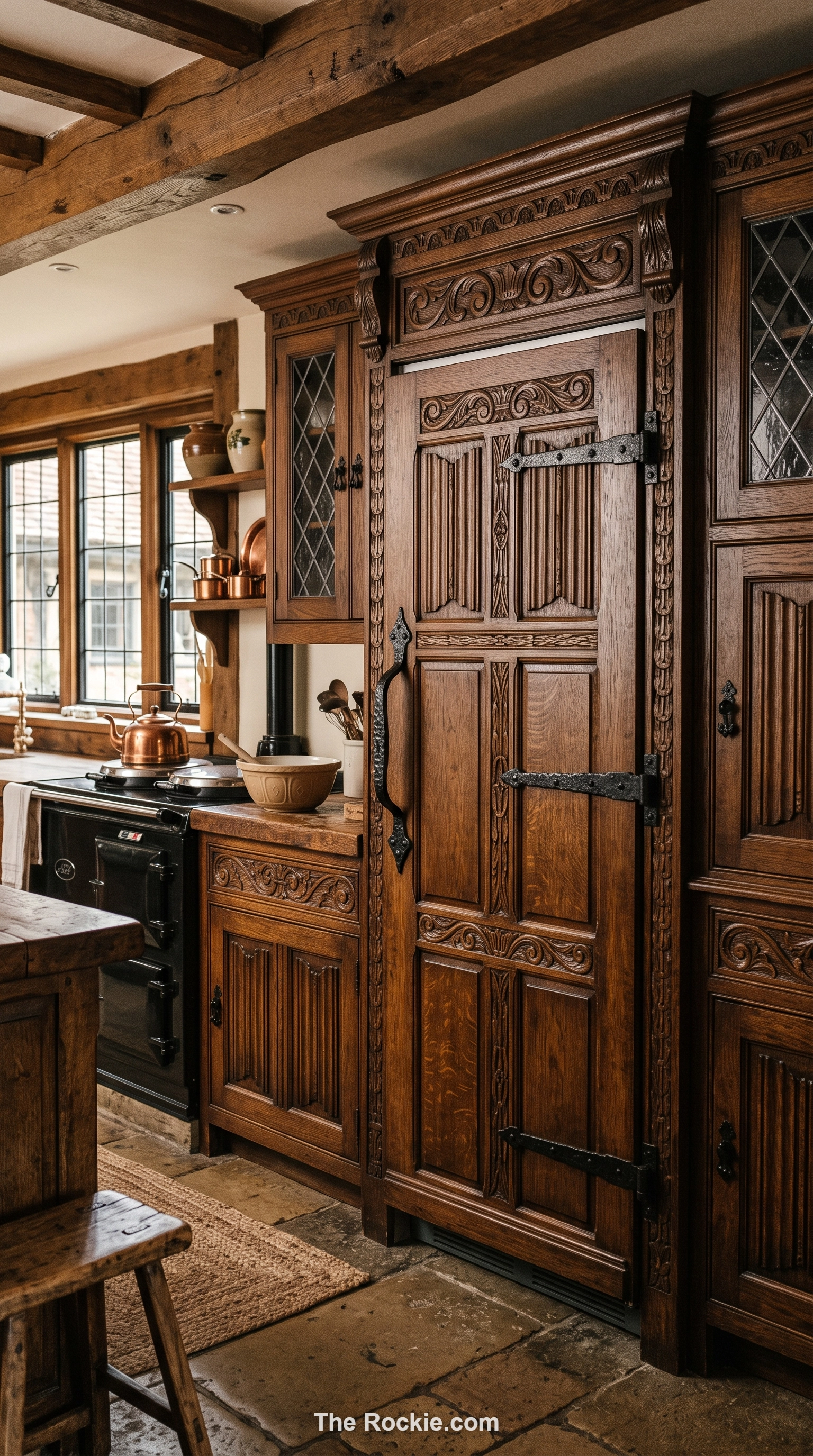
17. Modern Appliances in Tudor Frames
Fitting contemporary ovens and refrigerators inside custom wood paneling and iron-accented frames lets a Tudor kitchen have it both ways — real modern convenience without breaking the historical illusion. It takes a bit more custom work than leaving appliances exposed, but the payoff is a kitchen that functions like new while still looking centuries old.
18. Traditional Pantry and Storage Solutions
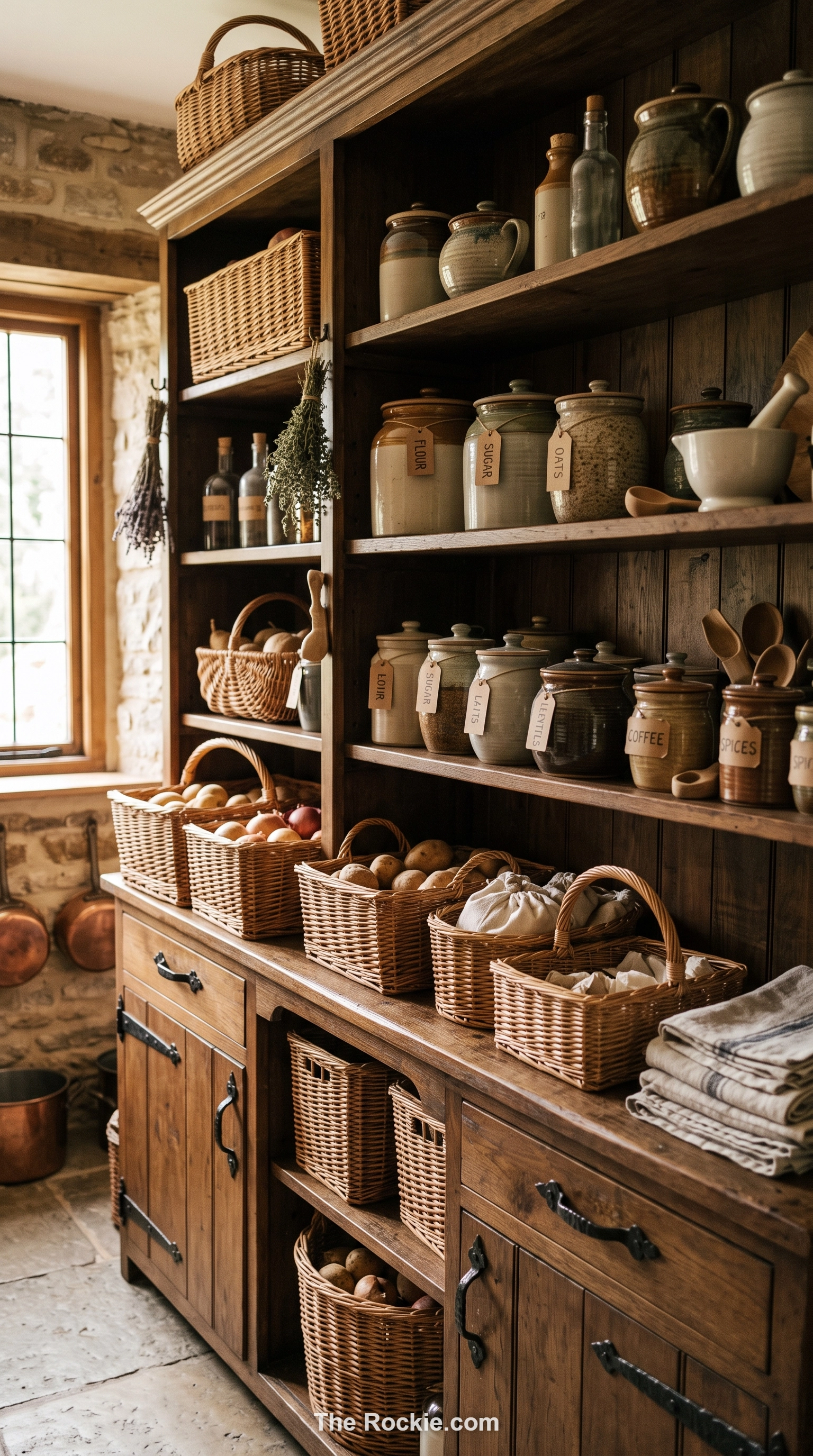
Open shelving, wooden cabinets, and woven baskets create a storage system that looks as good as it functions in a Tudor kitchen. Wrought iron handles and natural materials keep everything visually consistent with the rest of the room, proving that practical organization doesn’t have to sacrifice the period aesthetic to actually work well.
19. Exposed Wooden Trusses Detailing
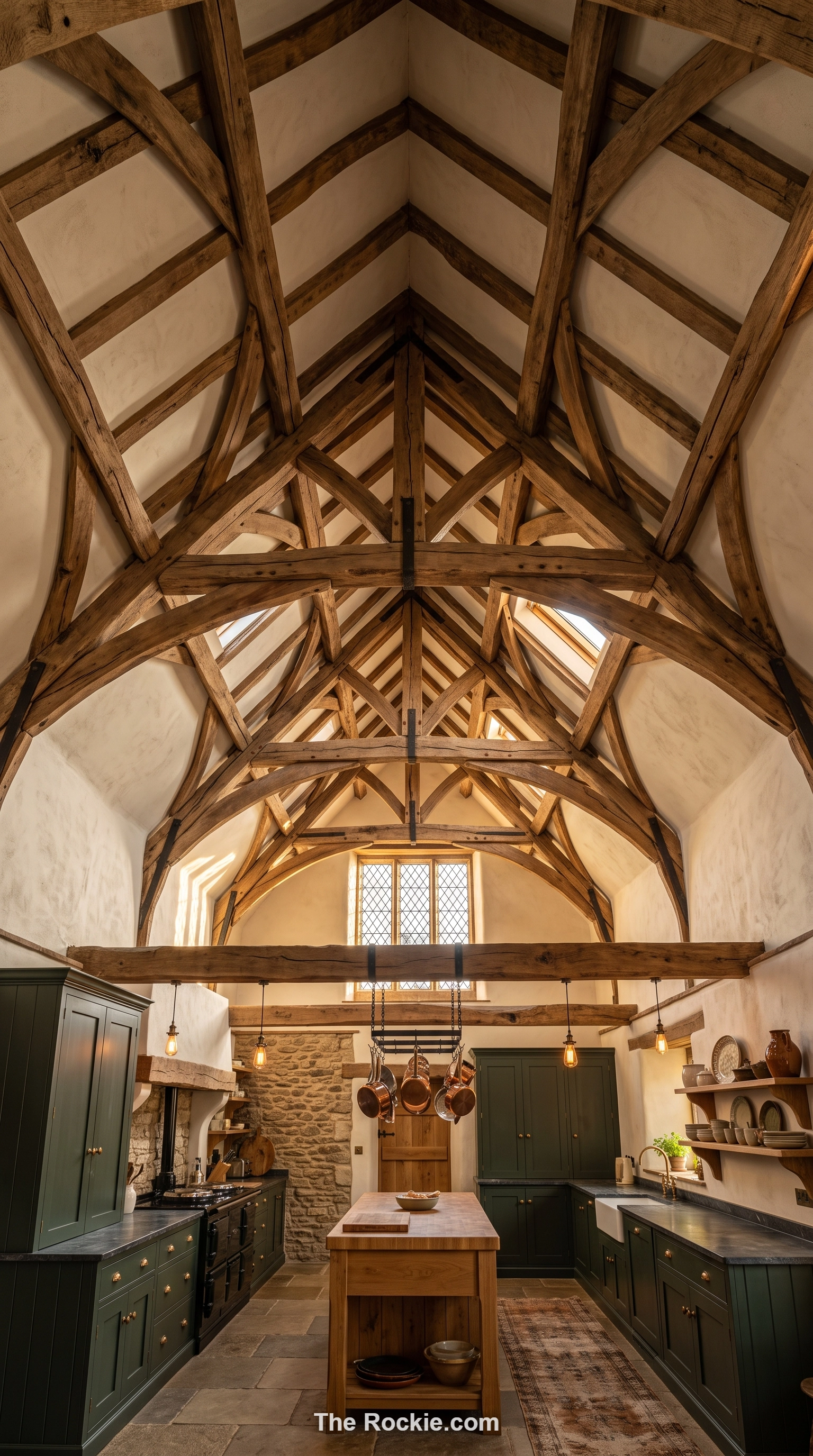
Beyond simple ceiling beams, fully exposed wooden trusses make a bigger architectural statement, showing off the structural framework the way medieval builders originally would have. The interplay of shadow and light across the angled wood adds real depth to the room, giving it a sense of height and craftsmanship that flat ceilings simply can’t match.
20. Period-Specific Lighting Fixtures
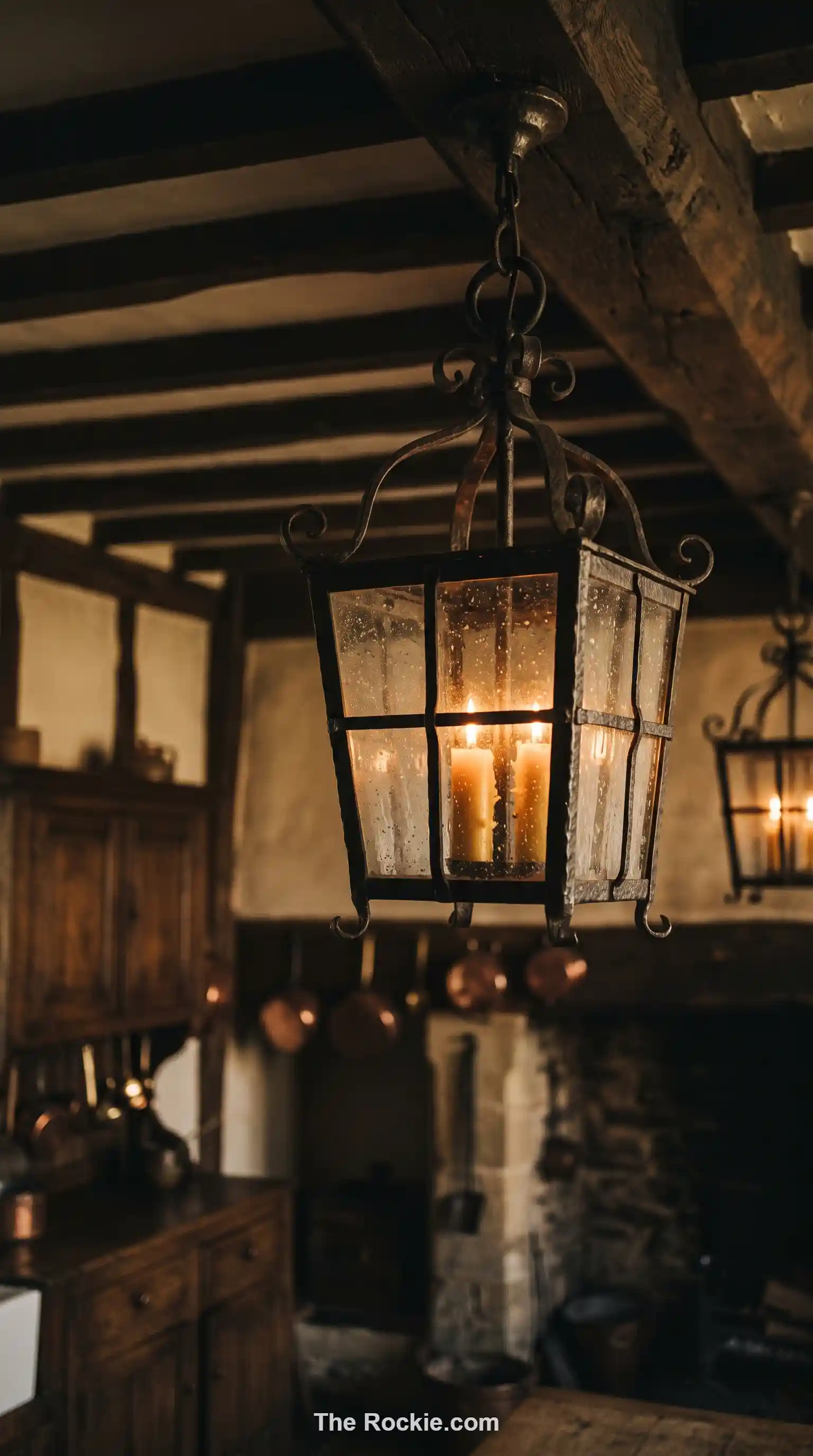
Lighting inspired by candlelight and old lantern designs keeps a Tudor kitchen glowing with the same warm, flickering ambiance the style is known for. Wrought iron frames and vintage-style glass shades deliver that old-world look while still running on modern bulbs, striking a balance between historical charm and everyday practicality.
21. Fireplace Mantel Artistry
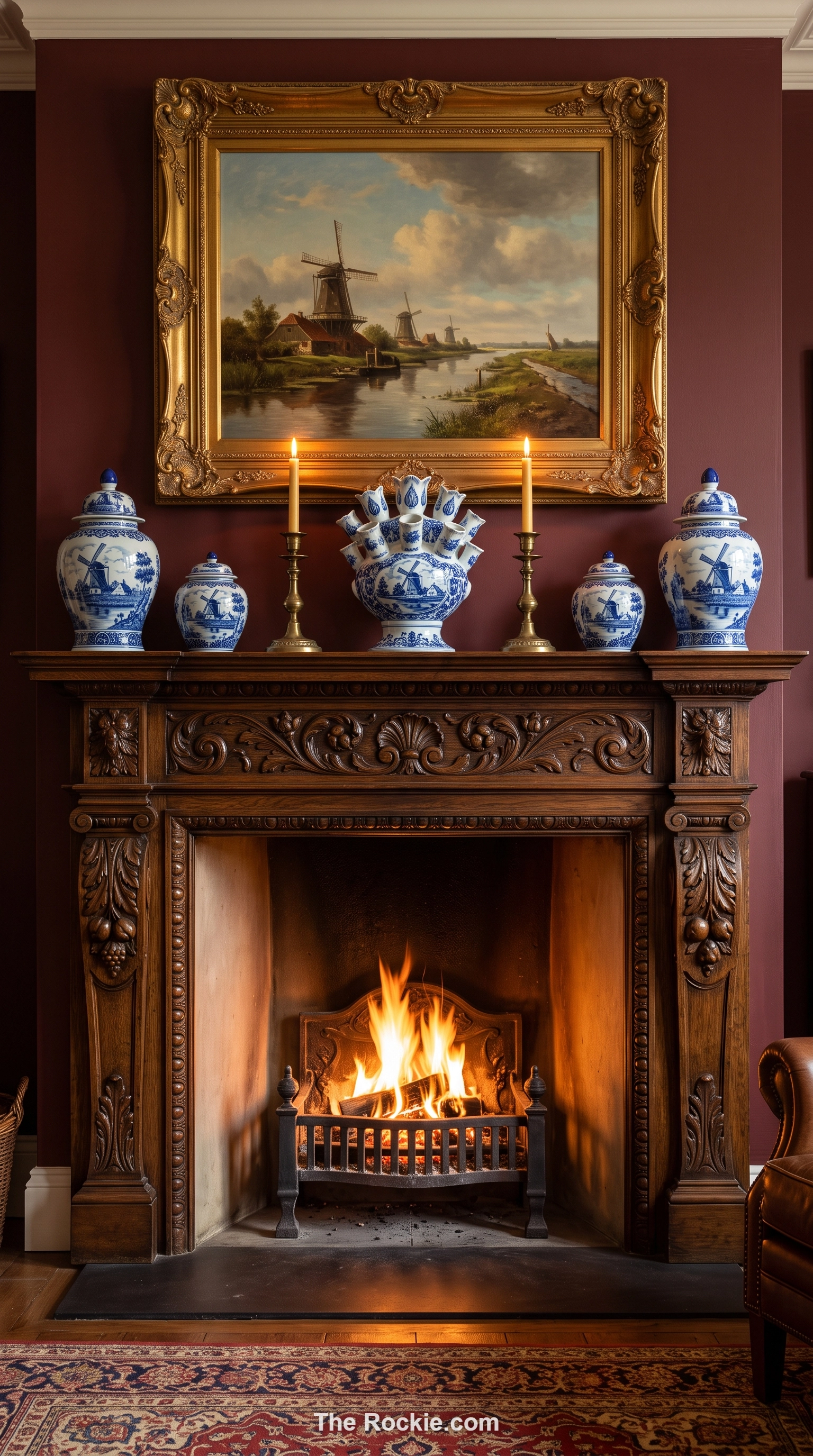
A richly decorated mantel turns the space above the hearth into its own showcase, with carved detailing and ornamental touches that draw the eye the moment you enter the room. It’s one of the most visible spots in a Tudor kitchen, which makes it worth the extra craftsmanship — a well-designed mantel can anchor the entire room’s aesthetic on its own.
22. Functional Tudor Dining Space
A dedicated dining area with sturdy wooden tables and period-appropriate seating brings the communal spirit of Tudor hospitality into everyday use. Rustic finishes and subtle iron accents keep the space visually tied to the rest of the kitchen, while the layout itself is built for the kind of long, unhurried meals the style was always meant to host.
Final Thoughts
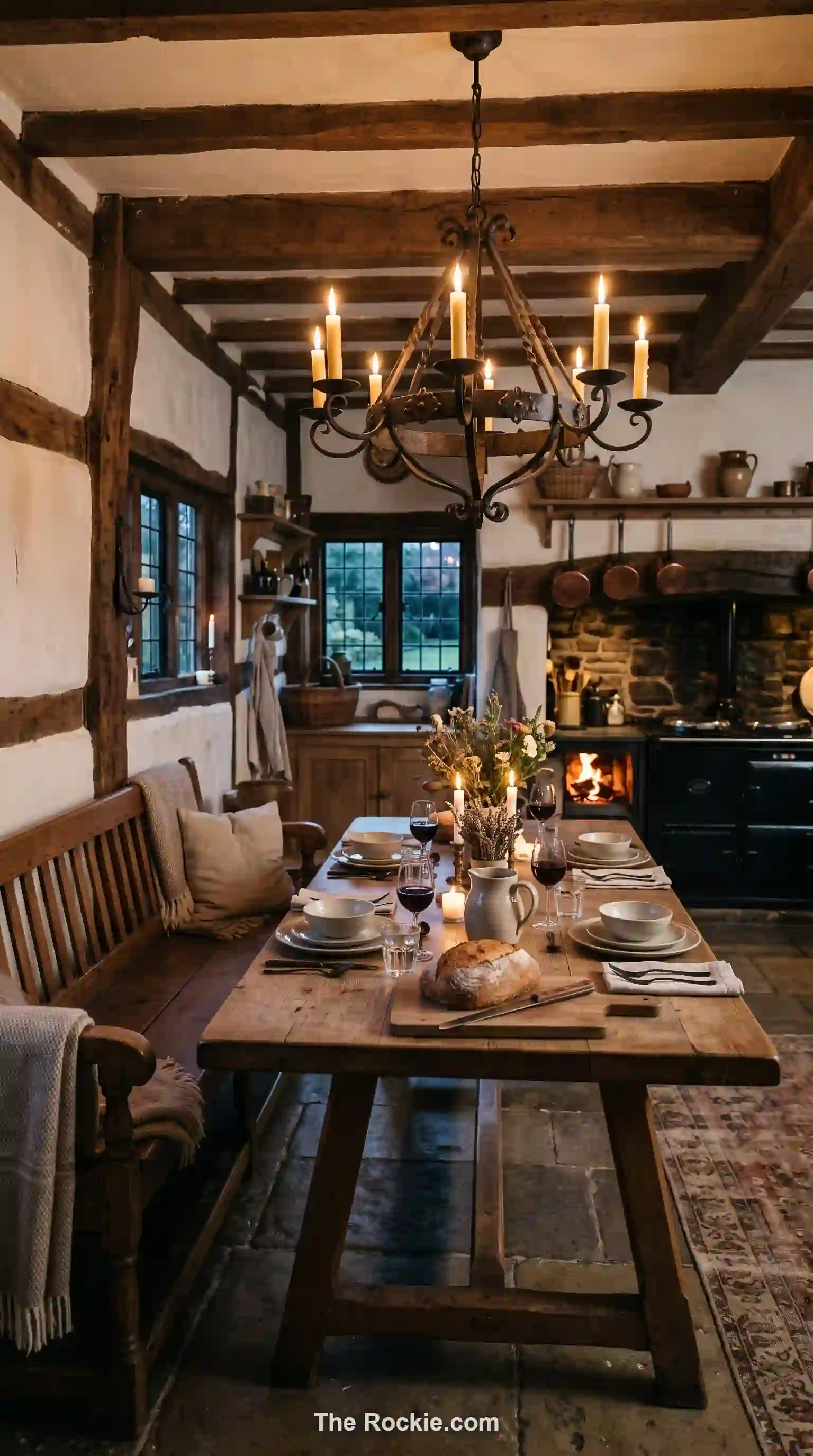
Tudor style rewards patience and detail — it’s less about a single dramatic gesture and more about layering timber, stone, iron, and warm color until the whole room feels like it has history behind it. Whether you go all in with exposed trusses and an open hearth or start smaller with vintage hardware and a curated pottery display, these 22 ideas offer plenty of ways to bring that old-world craftsmanship into a kitchen built for modern life. The result is a space that feels grounded, gathered-around, and genuinely timeless.