
22+ Pink Nursery Decor Ideas That Are Soft, Modern, and Anything But Babyish in 2026

I’ll be honest with you, for years the words “pink nursery” made me flinch a little, because I had walked into too many rooms that looked like a birthday cake exploded in them. Then I painted a client’s dim north-facing nursery in a muted dusty rose about six years ago, and the whole thing finally clicked for me. Pink behaves like a neutral if you choose the right one, and the right one still looks good when that baby turns four and starts having very loud opinions about her room.
Pink Nursery Decor Ideas
1. Color-Drench the Whole Room in Dusty Rose
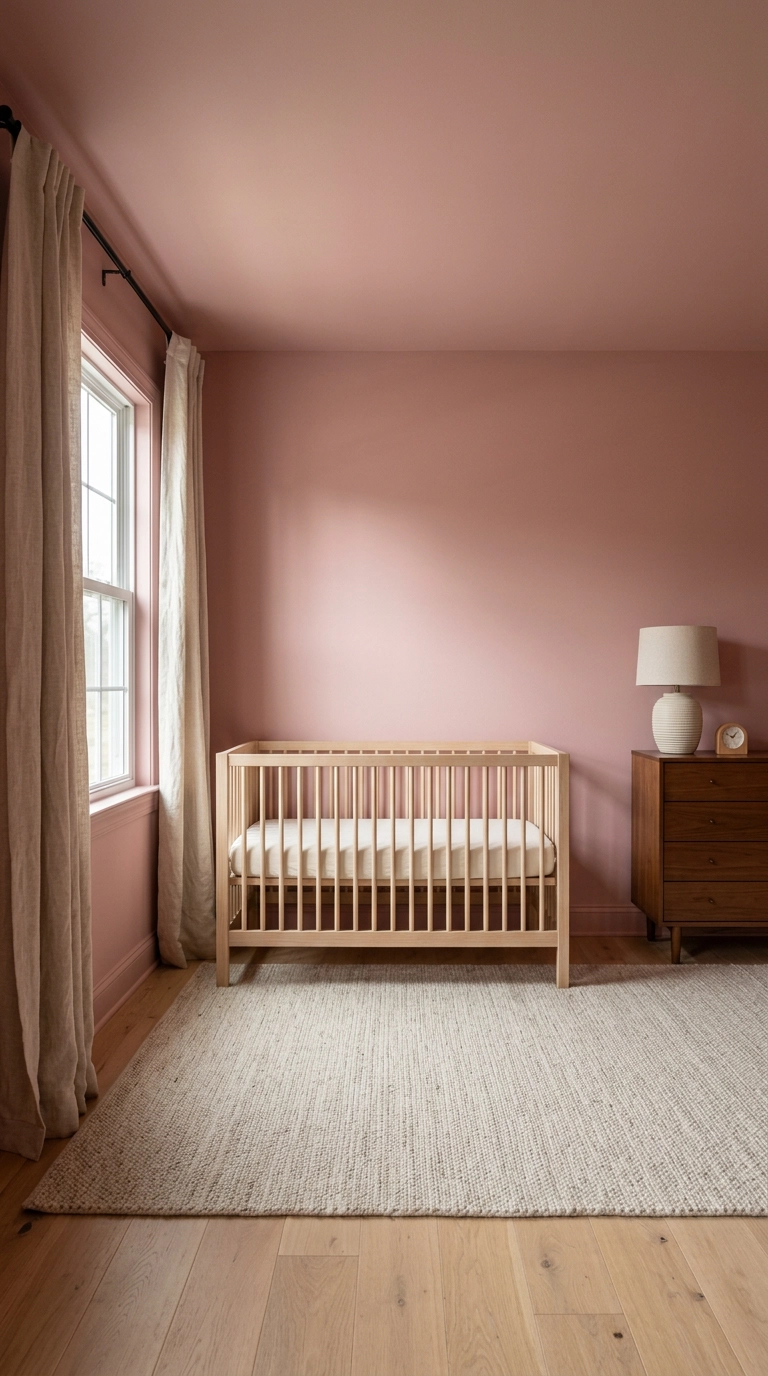
Color drenching just means walls, trim, ceiling, and closet door all wearing the same shade. It sounds like a lot until you stand in it, and then you notice the room got quieter instead of louder, because you erased every visual break that was chopping up a small space.
2. Ground Blush Pink With Natural White Oak
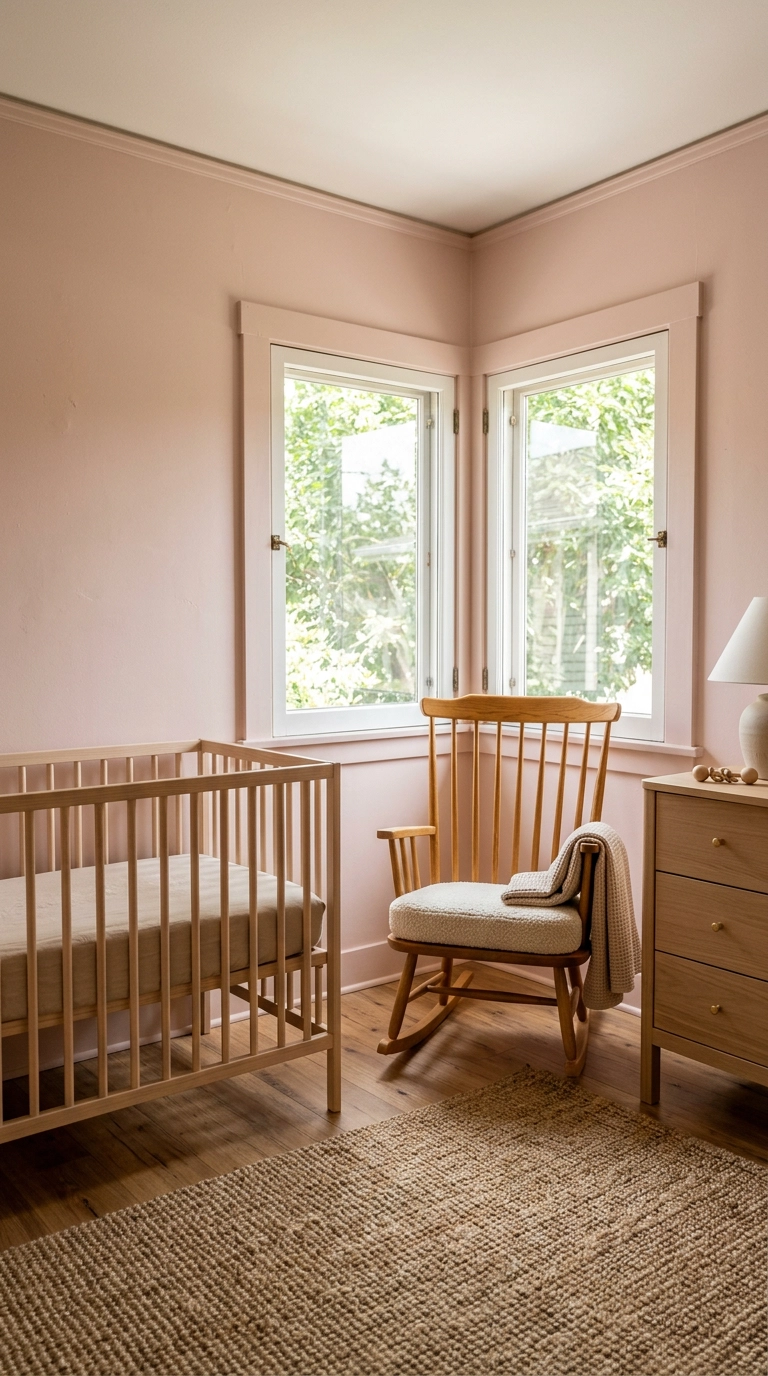
Blush turns sugary the second you pair it with white and more white. Warm wood is the antidote, because the yellow undertone in oak cancels out the cool edge of a pale pink and makes the whole room feel like a home instead of a shower display.
3. Paint a Soft Arch Behind the Crib Instead of Hanging Anything
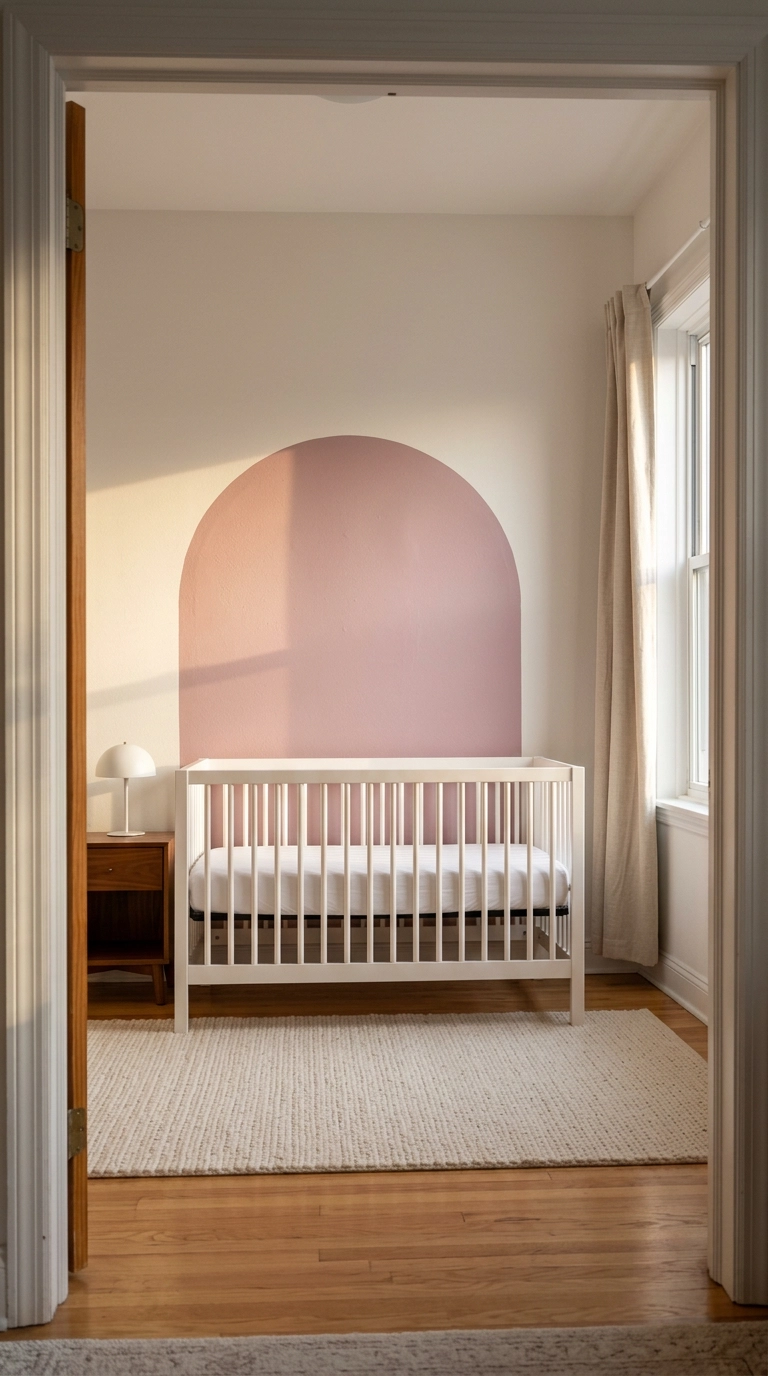
An arch gives you all the drama of a headboard wall without putting a single object over a sleeping baby, and nothing should ever hang directly above a crib. No shelves, no mirrors, no heavy frames, not even a cute mobile once she can pull up.
4. Try Terracotta-Pink Limewash on a Single Wall
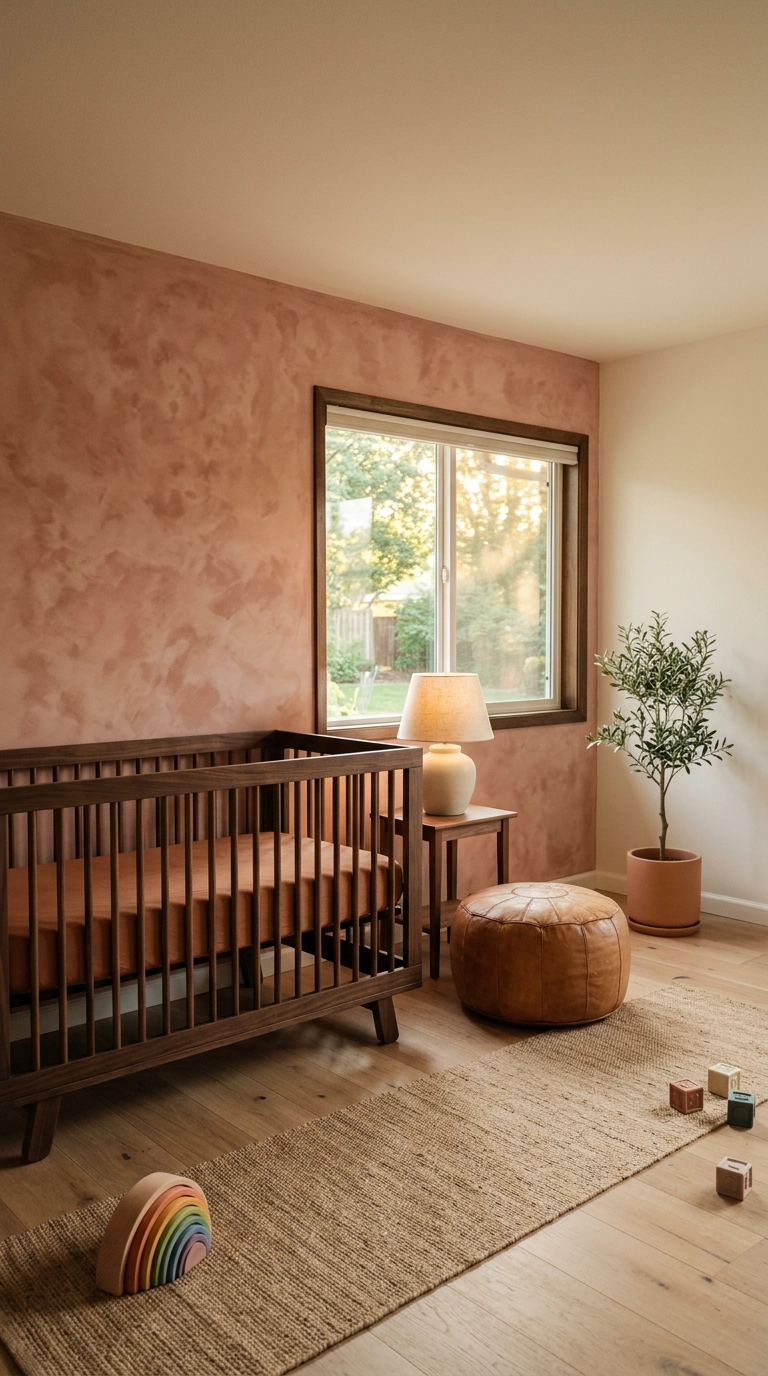
Limewash is a mineral paint that dries with a soft cloudy movement instead of a flat plane, so a wall reads like old plaster rather than drywall. Terracotta-pink is the version I reach for when a client wants warmth without anything that looks like a bow.
5. Use Peel-and-Stick Scallop Wallpaper on One Wall Only
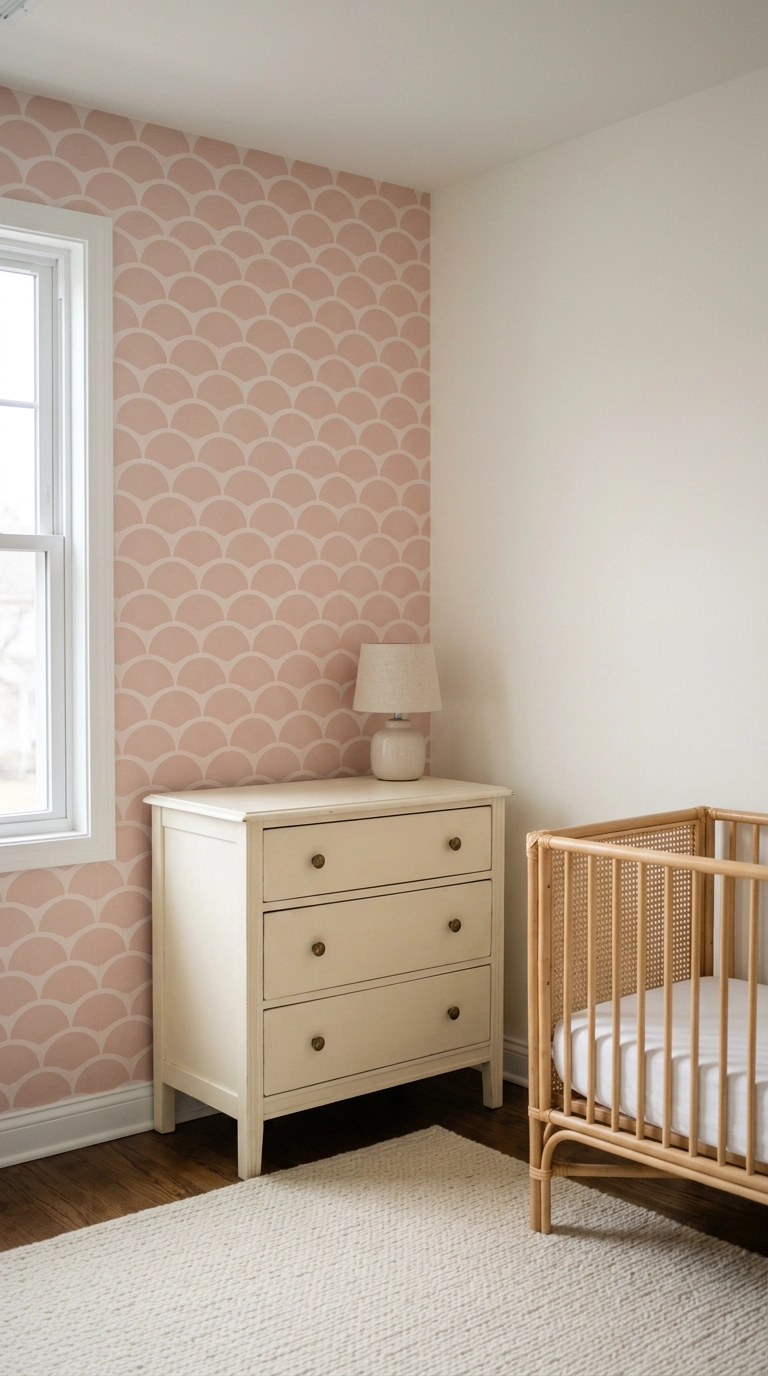
Peel-and-stick has gotten legitimately good, and a scallop or half-moon repeat in blush is the pattern I see hold up longest before anyone gets sick of it. One accent wall runs a couple hundred dollars and about three hours with a helper and a smoothing tool.
6. Pair Petal Pink With Matte Black for a Room That Grows Up
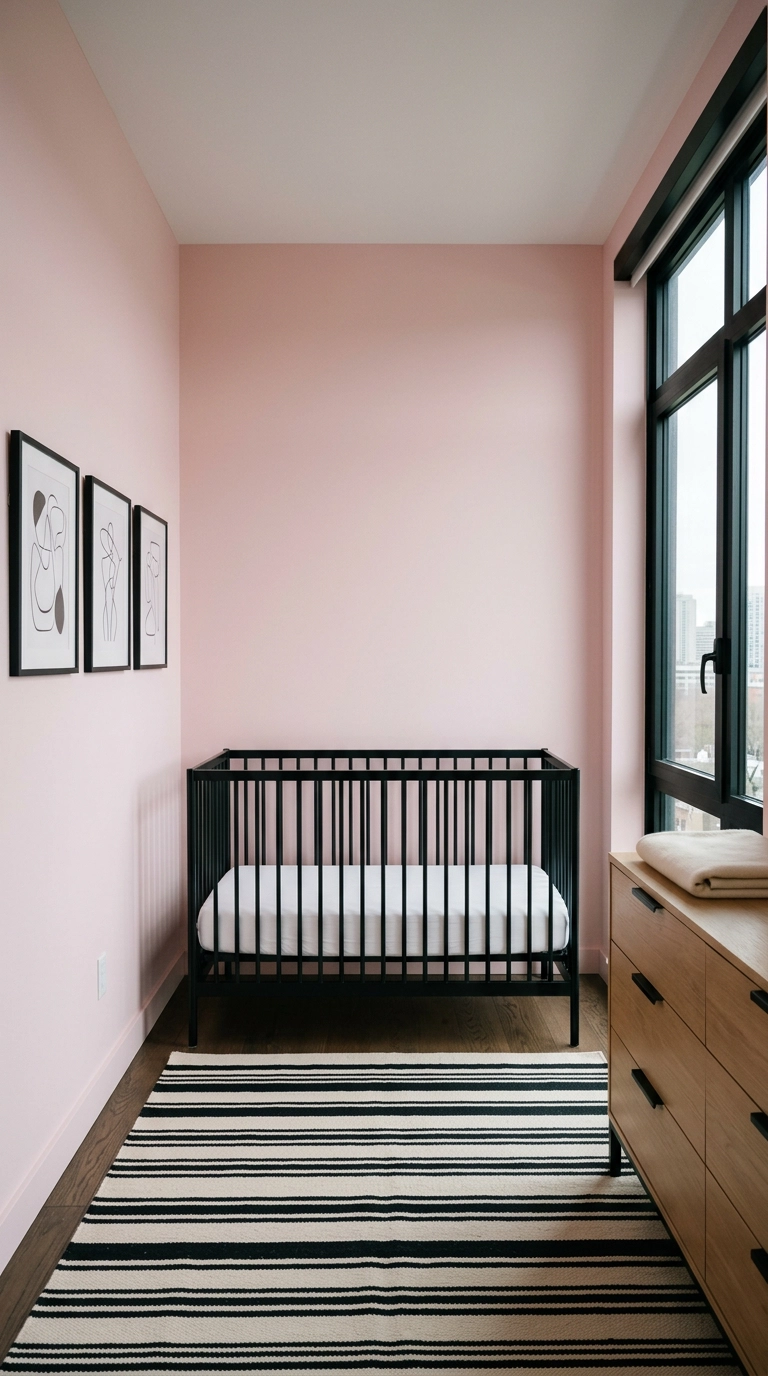
Black is the single best thing you can do to a pink room if you are worried about it aging out. It gives the eye an anchor point, and it means that in four years you swap the crib for a bed and the room instantly reads as a real bedroom, not a leftover nursery.
7. Build the Feeding Corner Around a Mauve Velvet Glider
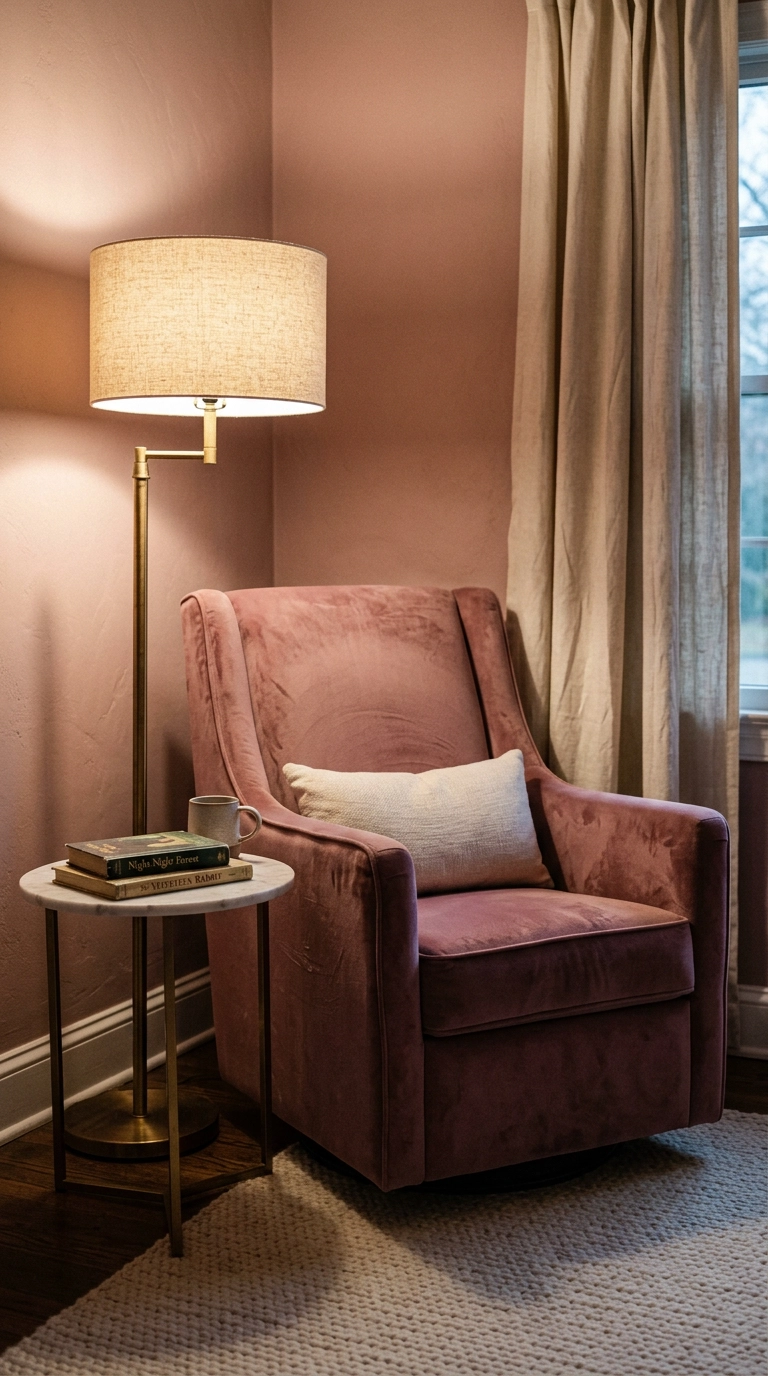
You will spend more hours in this chair than anywhere else in the house, so buy the chair before you buy anything decorative. Mauve is my pick because it is pink with grey in it, which means it never goes candy and it hides an astonishing amount.
8. Let Sage Green Cut the Sweetness
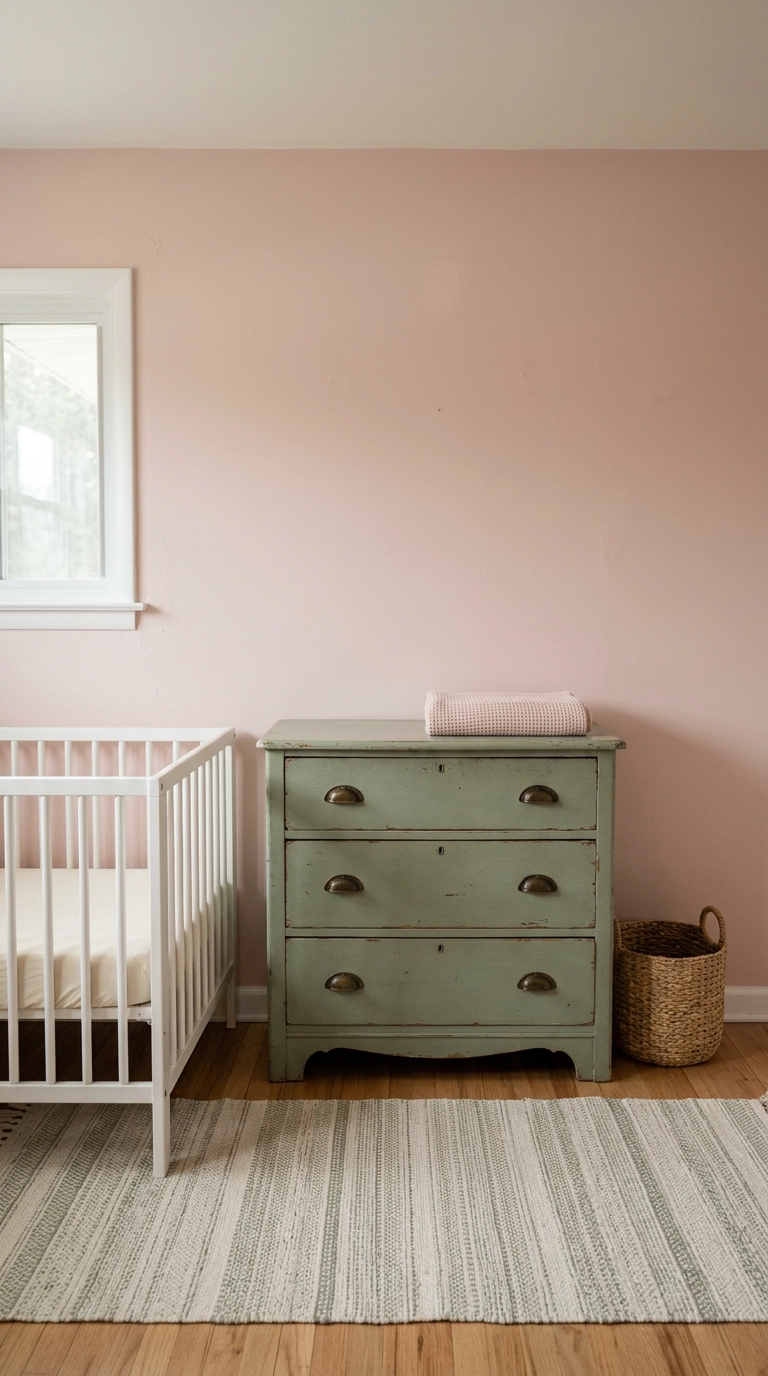
Pink and green sit opposite each other on the color wheel, which is exactly why a muted sage stops blush from tipping into cotton candy. It is the oldest trick in the book and it still works every single time.
9. Use Raspberry as a Ten Percent Accent, Not a Wall Color
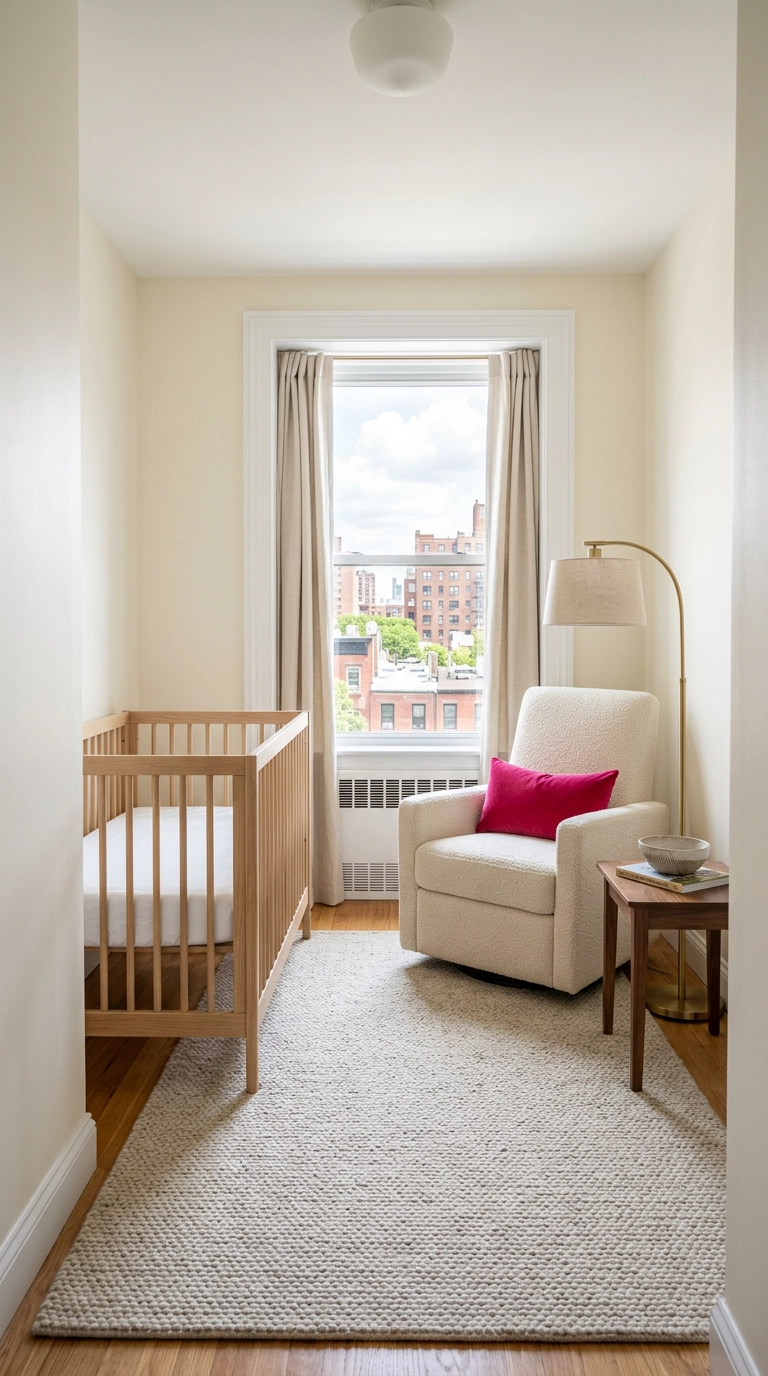
If you love a hot, saturated pink but you know you would hate it on all four walls, put it in the smallest, softest thing in the room. One raspberry pillow against a cream chair does more than a raspberry wall ever would, because contrast is what makes a color read as vivid.
10. Run Blush Board and Batten Across the Lower Third
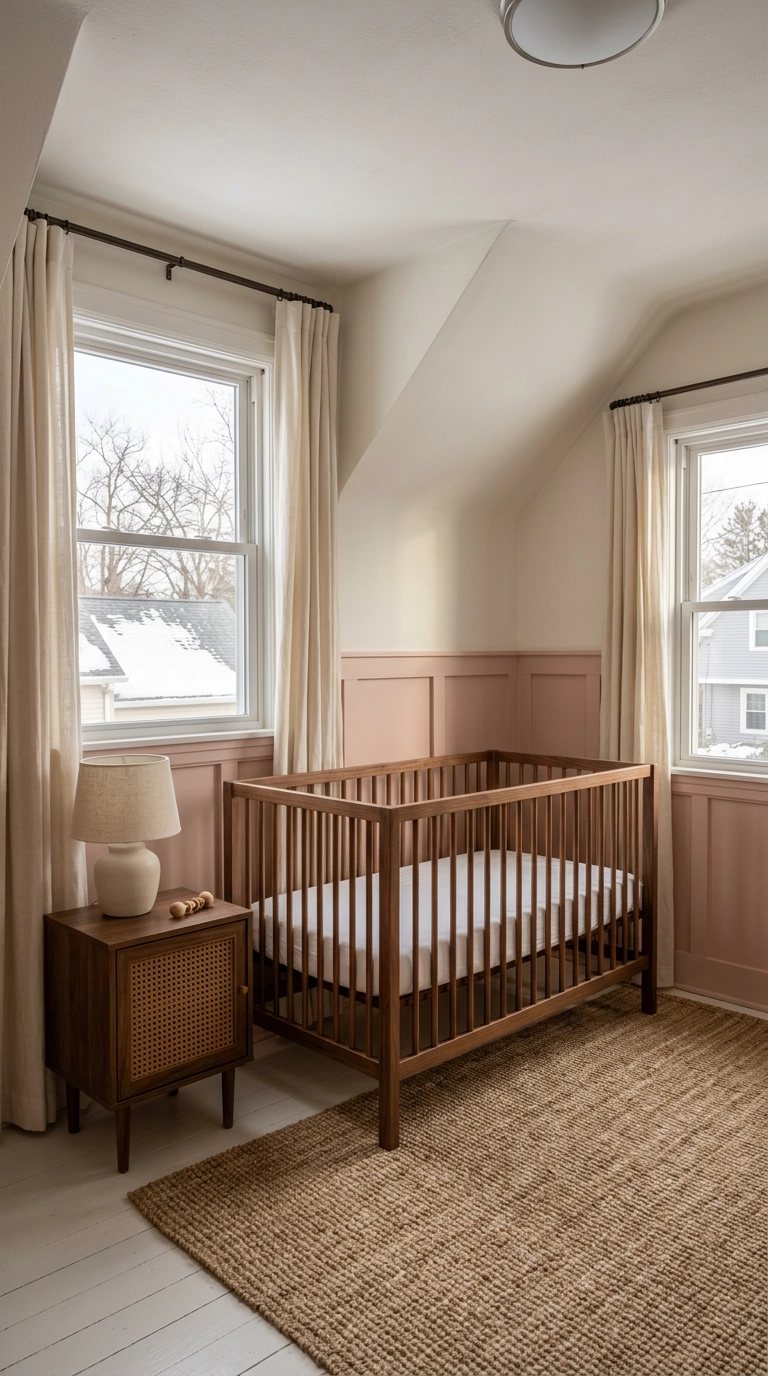
Board and batten is just flat vertical trim boards applied over the wall with a horizontal cap rail on top. Keeping the pink below the cap and white above lowers the visual weight of the color, so a small room does not feel like it is closing in.
11. Paint the Ceiling Pink and Leave the Walls Alone
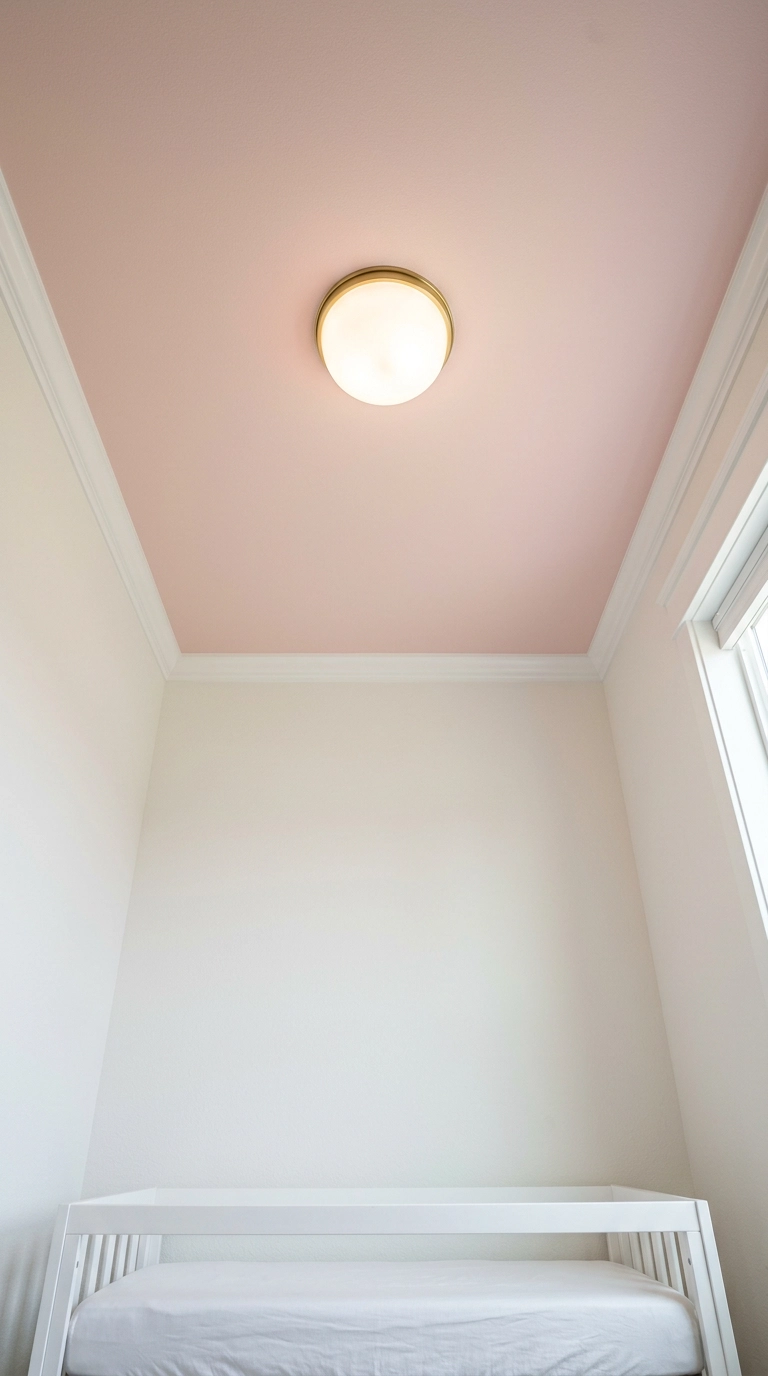
Babies spend an enormous amount of time on their backs looking straight up, which is the most practical argument for a painted ceiling I have ever made to a skeptical husband. It also keeps your walls flexible for whatever art comes later.
12. Do Pink and Cream in Texture Only
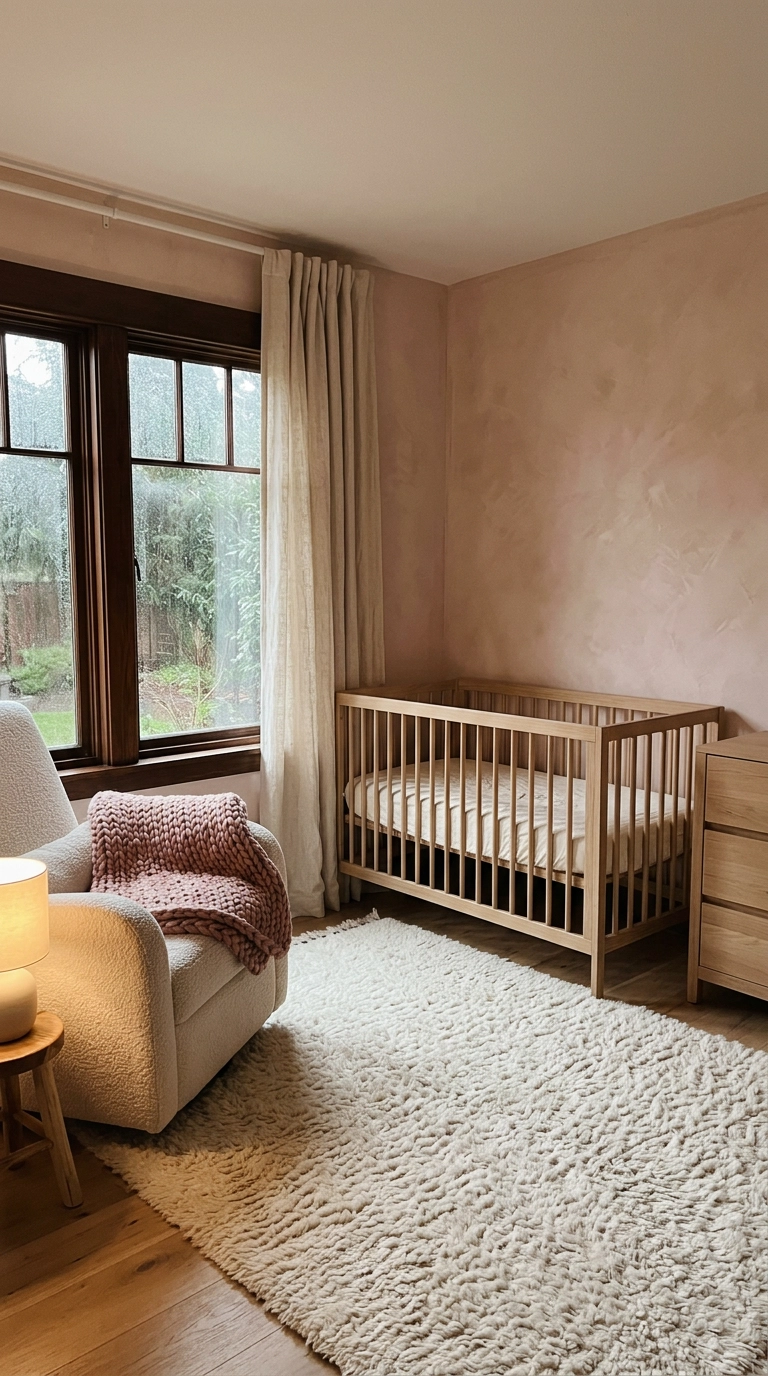
When a room has almost no pattern, texture has to carry the whole thing. Boucle, chunky knit, nubby linen, and a shaggy wool rug in one room means your eye keeps finding something new even though the palette is basically two colors.
13. Put Unlacquered Brass Against Dusty Rose
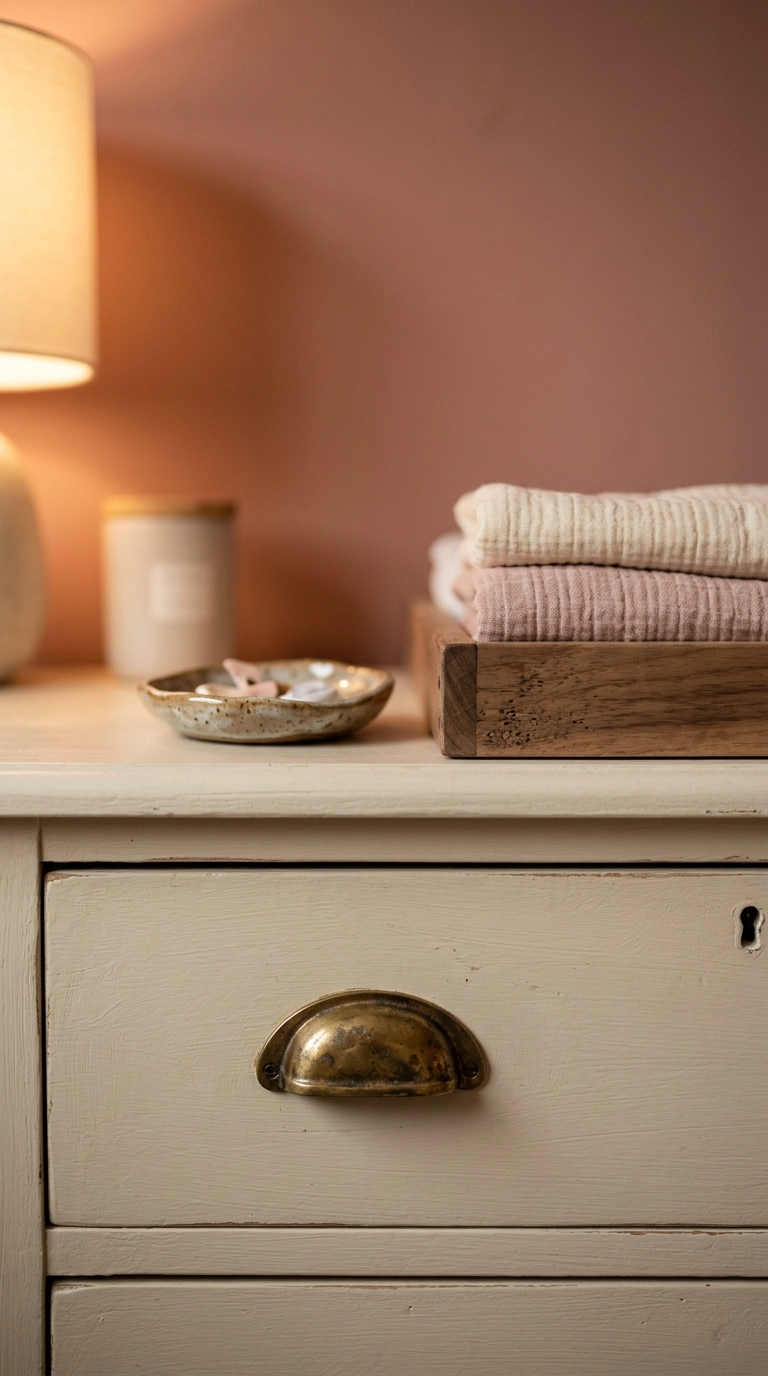
Unlacquered brass is raw brass with no protective coating, so it darkens and blotches over time instead of staying showroom shiny. Against dusty rose it looks like it has always been there, which is the entire point.
14. Turn a Low Dresser Into the Changing Station and Bolt It Down
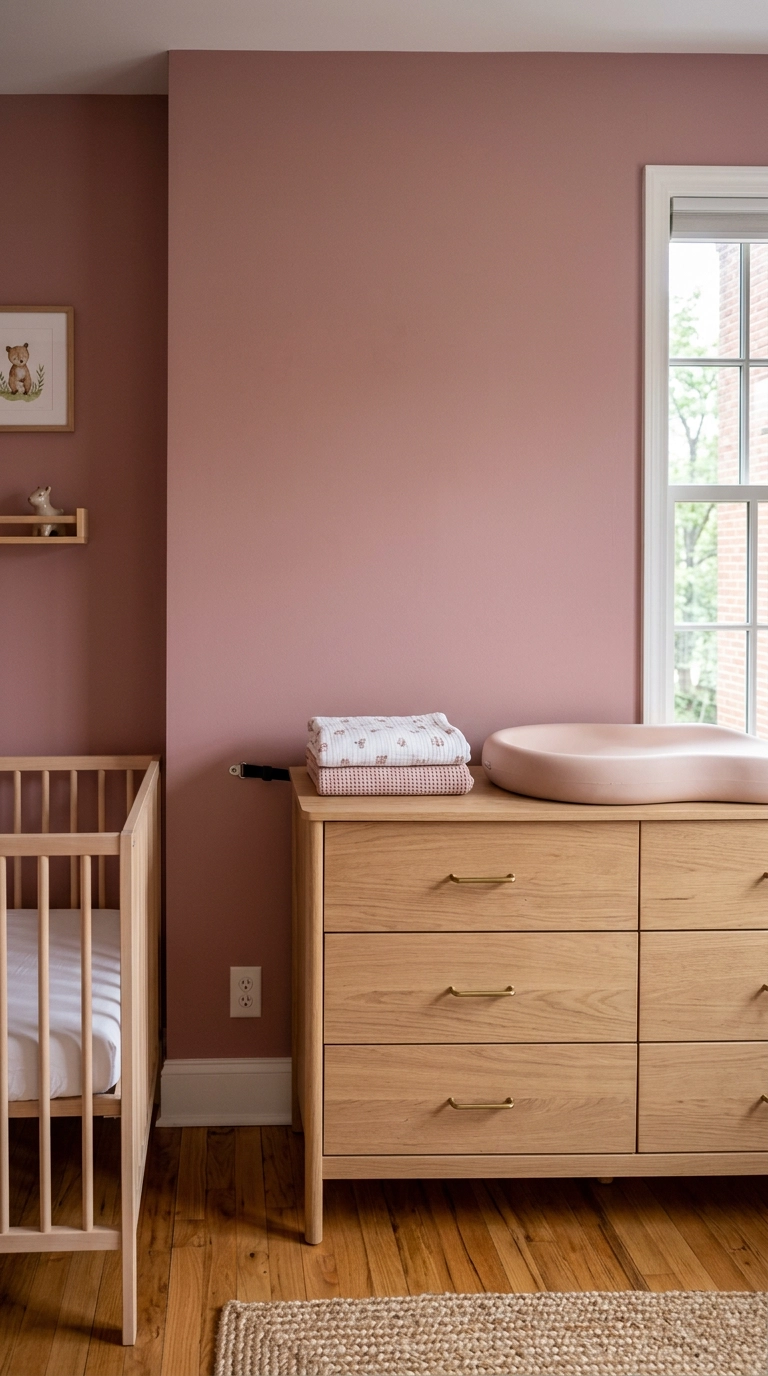
Skip the dedicated changing table. A dresser at roughly waist height with a contoured pad strapped to the top does the same job and stays useful for the next eighteen years, which is real money saved.
15. Hang Curtains High and Go Cordless on the Shades
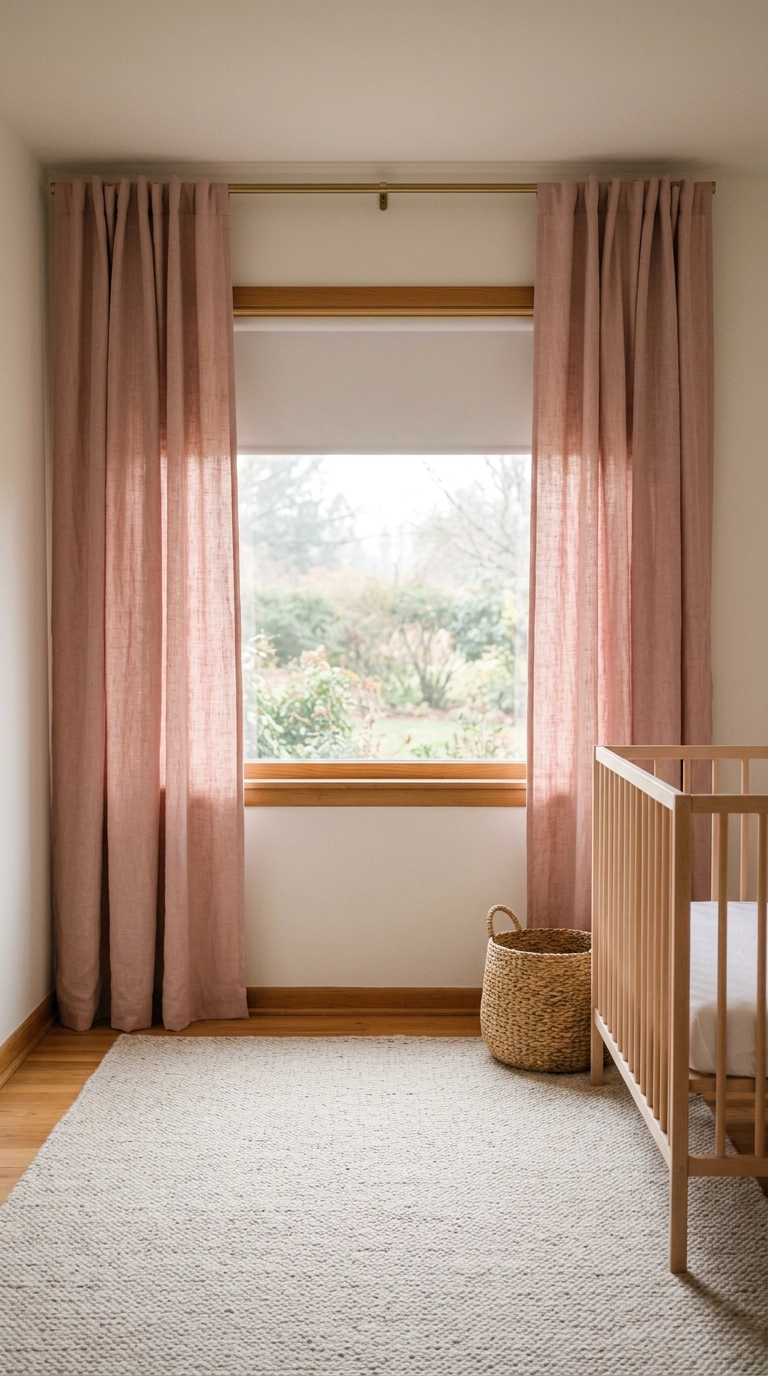
Mount the rod within a few inches of the ceiling and let the panels break at the floor. Your eye reads the full height of the fabric as the height of the window, so an ordinary builder window suddenly looks tall.
16. Size the Rug Up, Then Put a Pad Under It
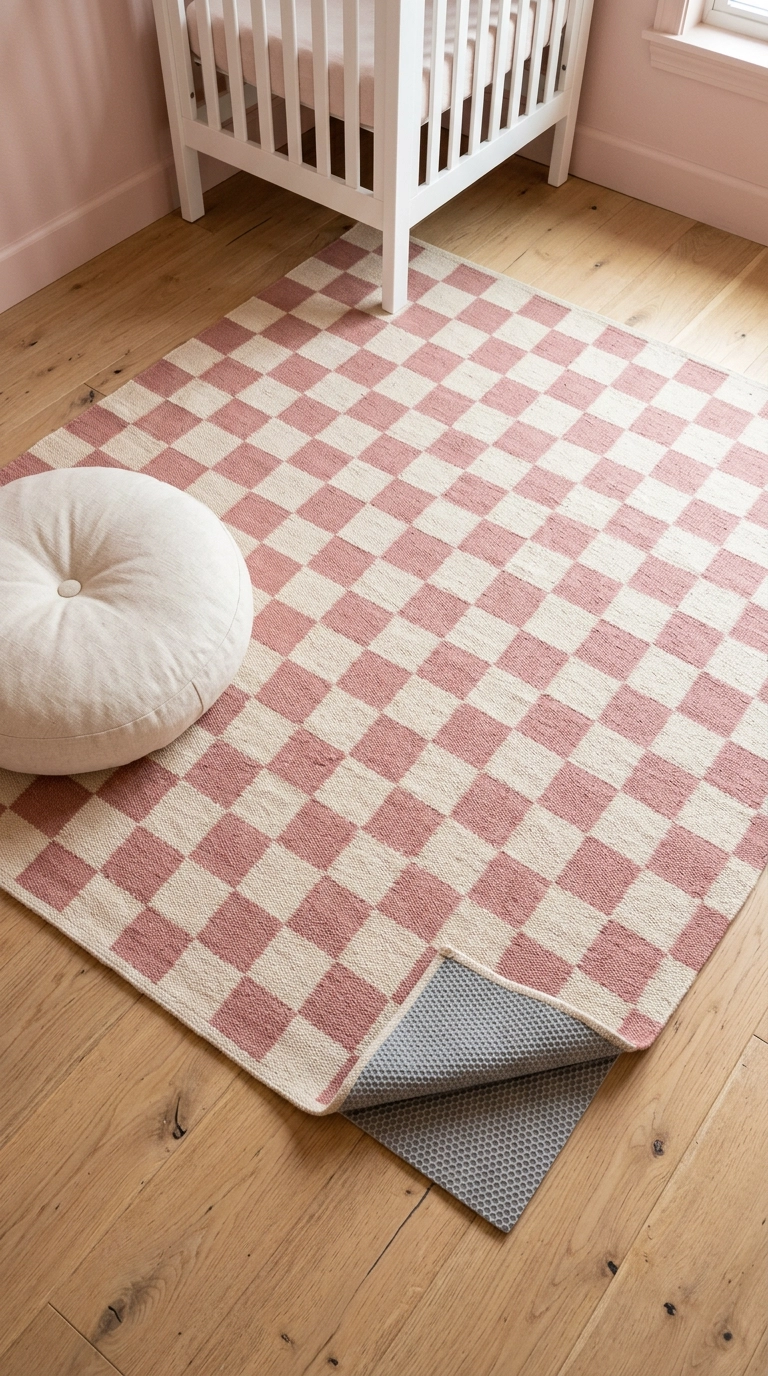
Buy one size bigger than feels right. In most nurseries that means an 8×10, with the rug running under the front of the dresser and out past the glider so the whole seating zone lands on it.
17. Hang the Art on the Side Wall, Never Over the Crib
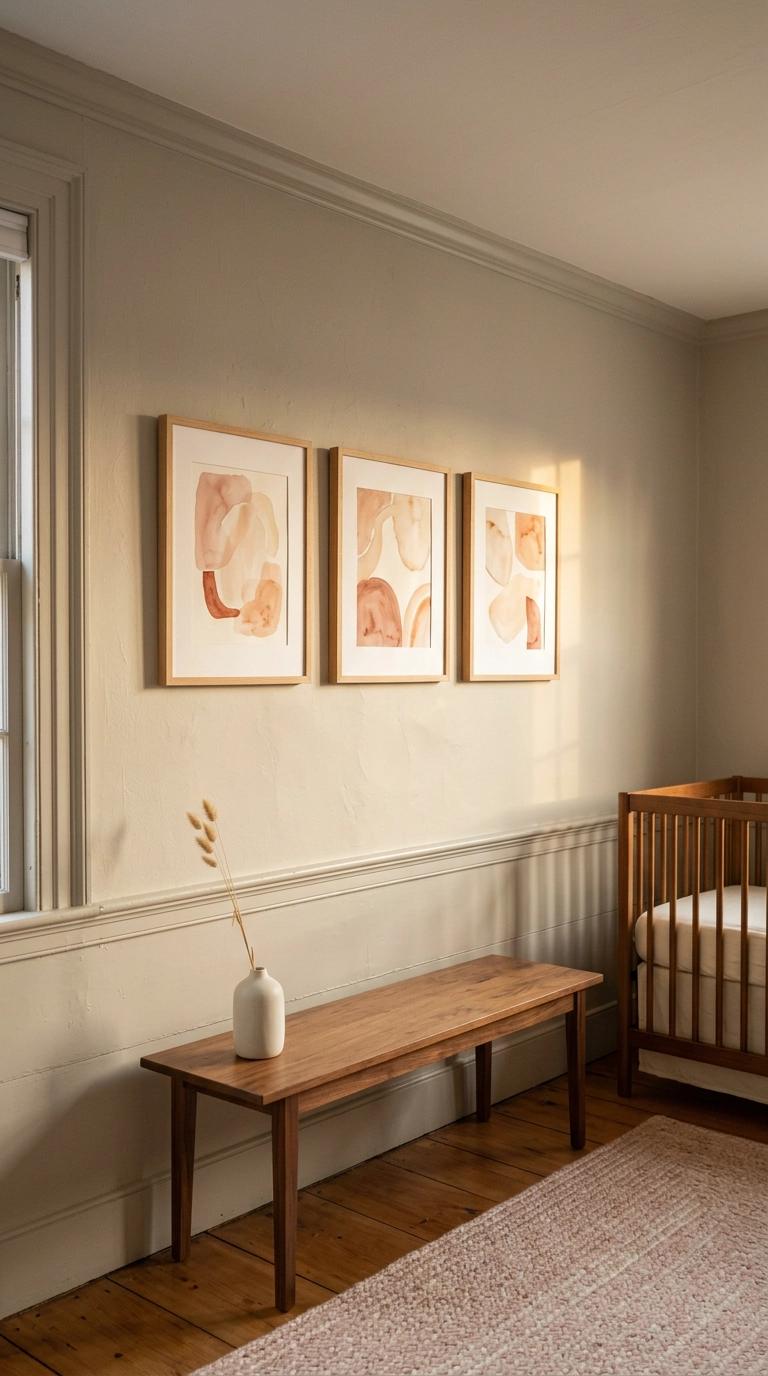
Everything decorative goes on a wall the crib does not touch. Once you accept that, the side wall becomes the actual design moment of the room, and the crib wall gets to be calm.
18. Add a Low Book Ledge She Can Actually Reach
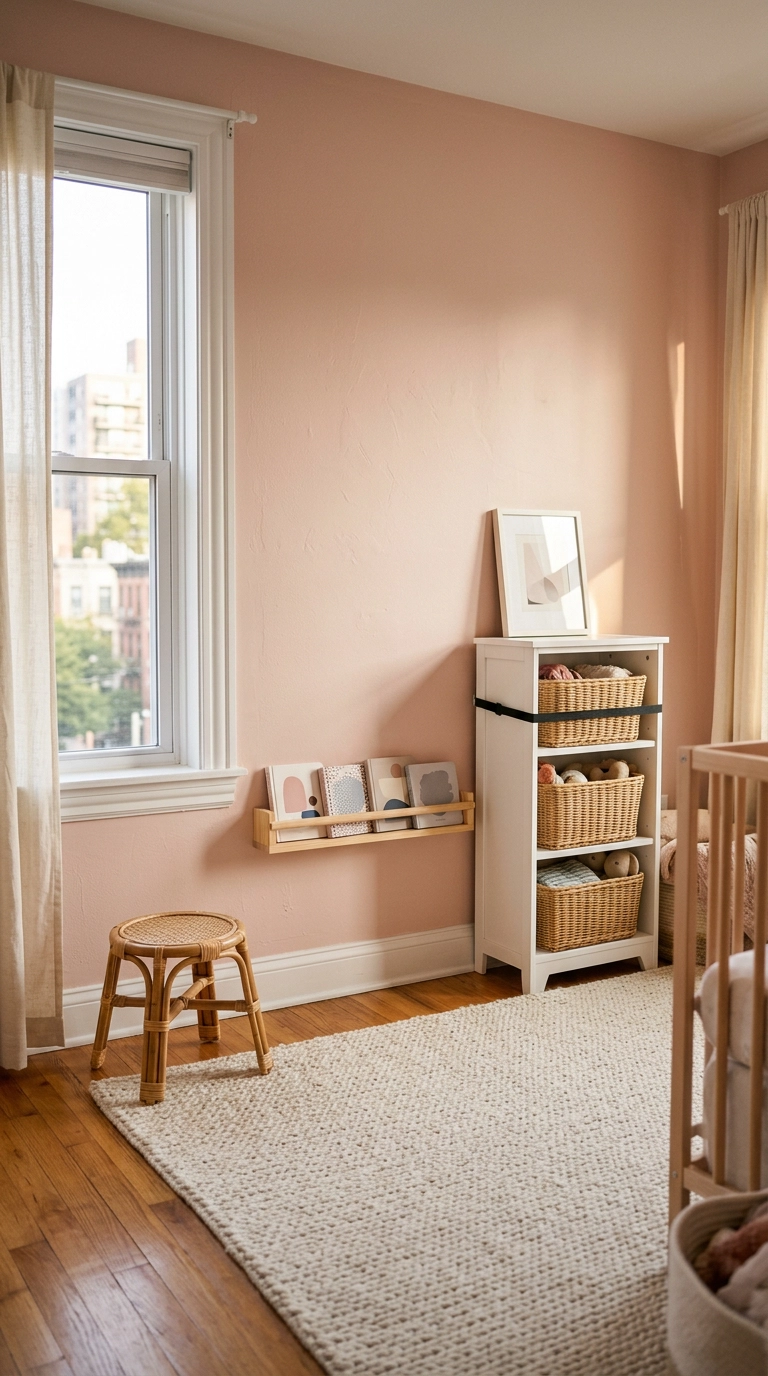
A front-facing ledge mounted around 24 to 30 inches off the floor is useless to a newborn and gold to an eighteen-month-old. Book covers are the cheapest art in the house, and they change constantly.
19. Let One Gingham Check Be the Only Pattern
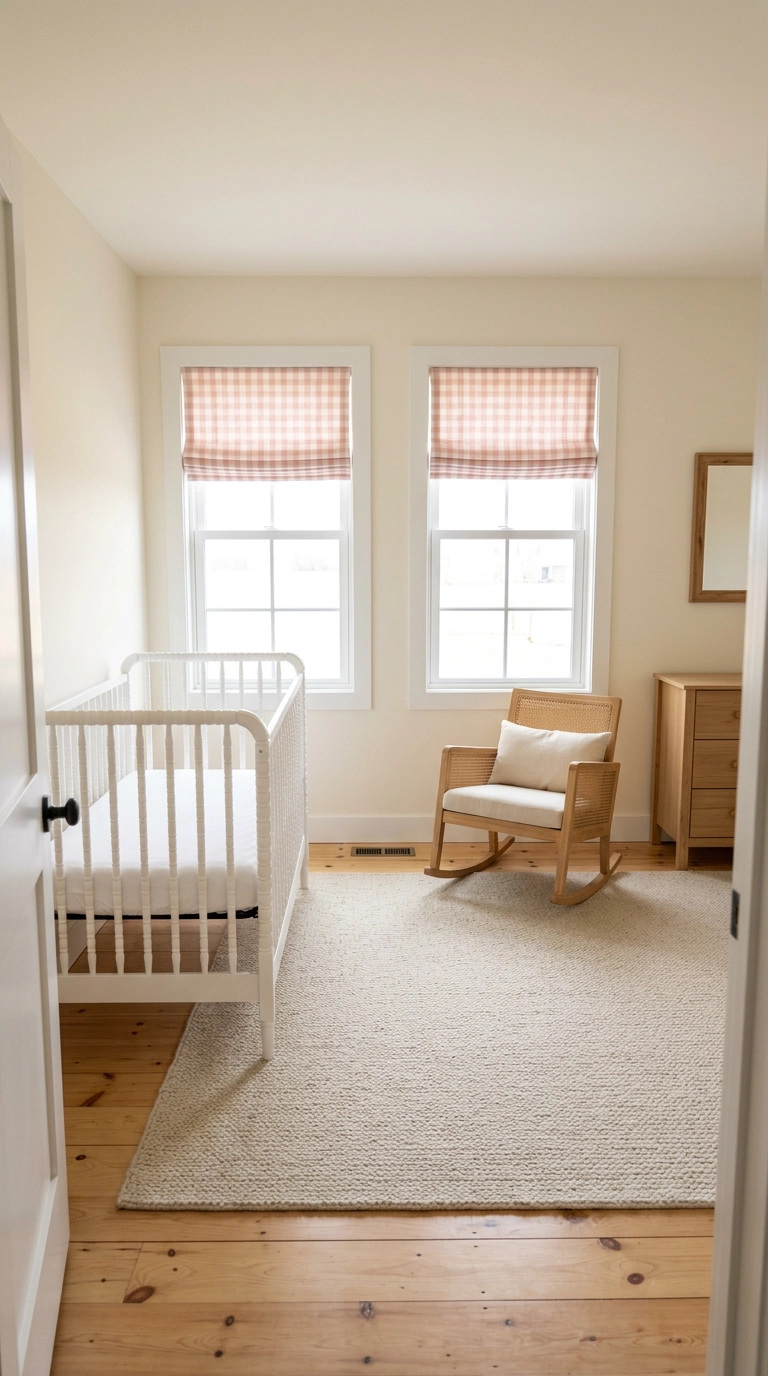
Gingham had a real resurgence going into 2026, and a small blush check on a roman shade is the least committal way to use it. Because a shade is a fixed size, you can swap it in a few years without touching anything else.
20. Steal the Closet for a Painted Reading Nook
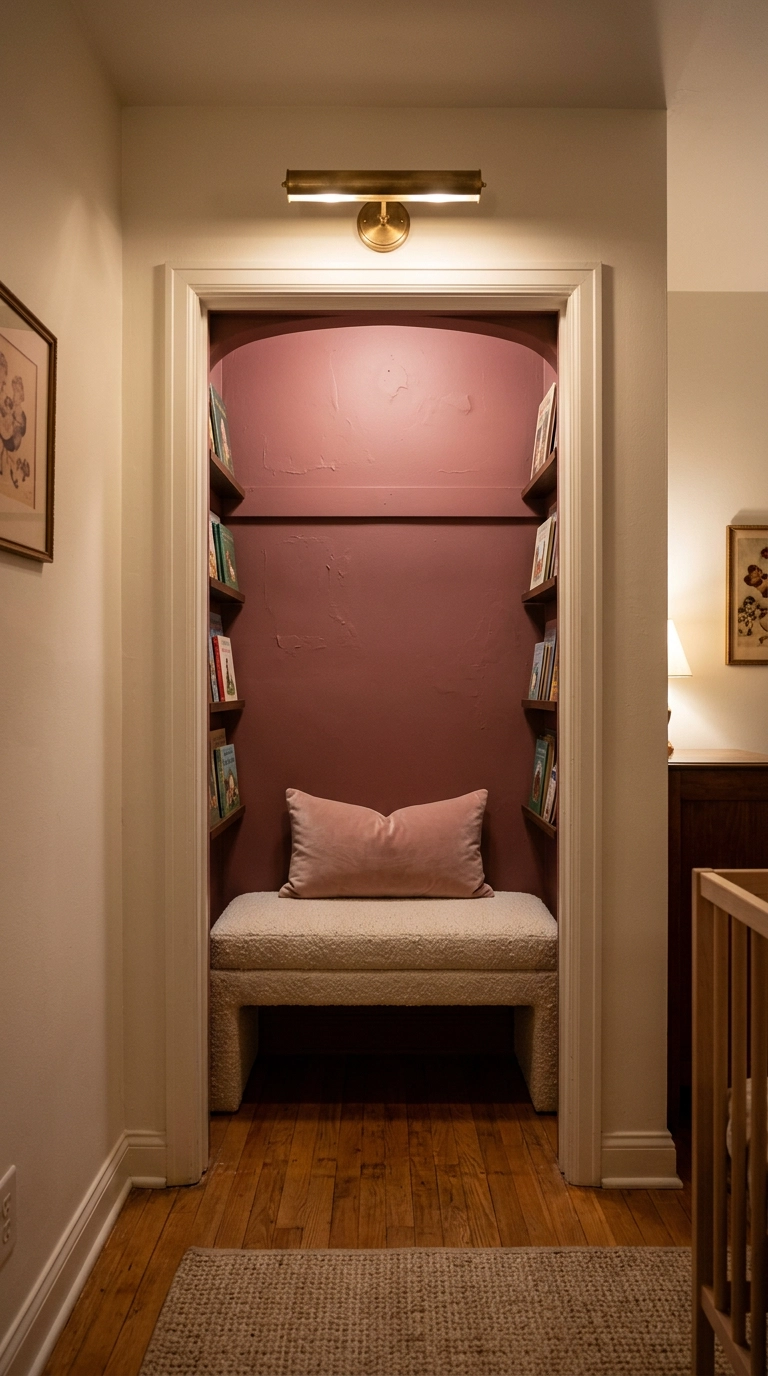
If the room has a second closet or you genuinely will not use the one you have for clothes, take the doors off and paint the inside a shade deeper than the room. The contrast makes the nook feel like a discovered little room rather than a hole in the wall.
21. Layer the Lighting in Three Levels, All on Dimmers
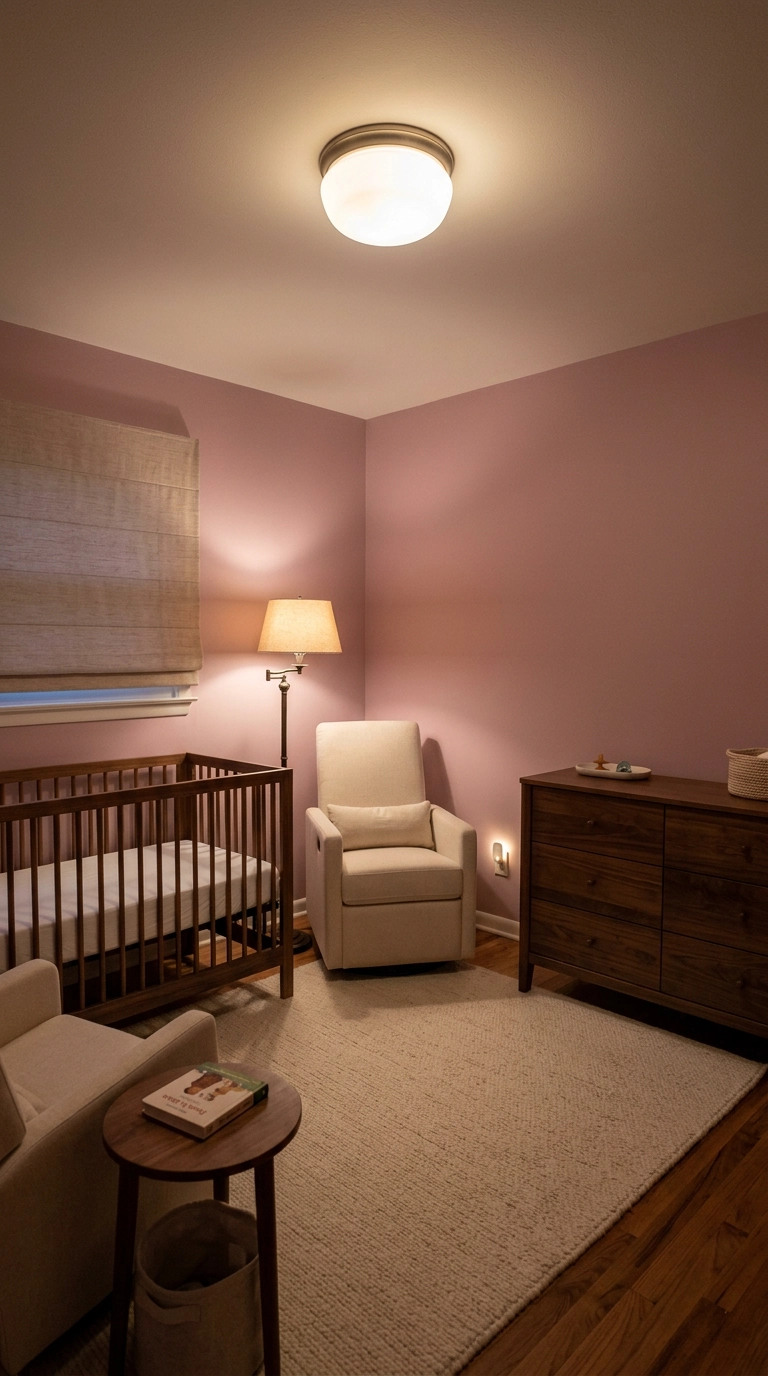
You need three levels: an overhead for diaper blowouts, a lamp for feeding, and something dim and warm near the floor for the middle of the night. Put the overhead on a dimmer, it is about a twenty-dollar switch and it changes the room.
22. Keep the Crib Bare and Plan the Room for Age Four
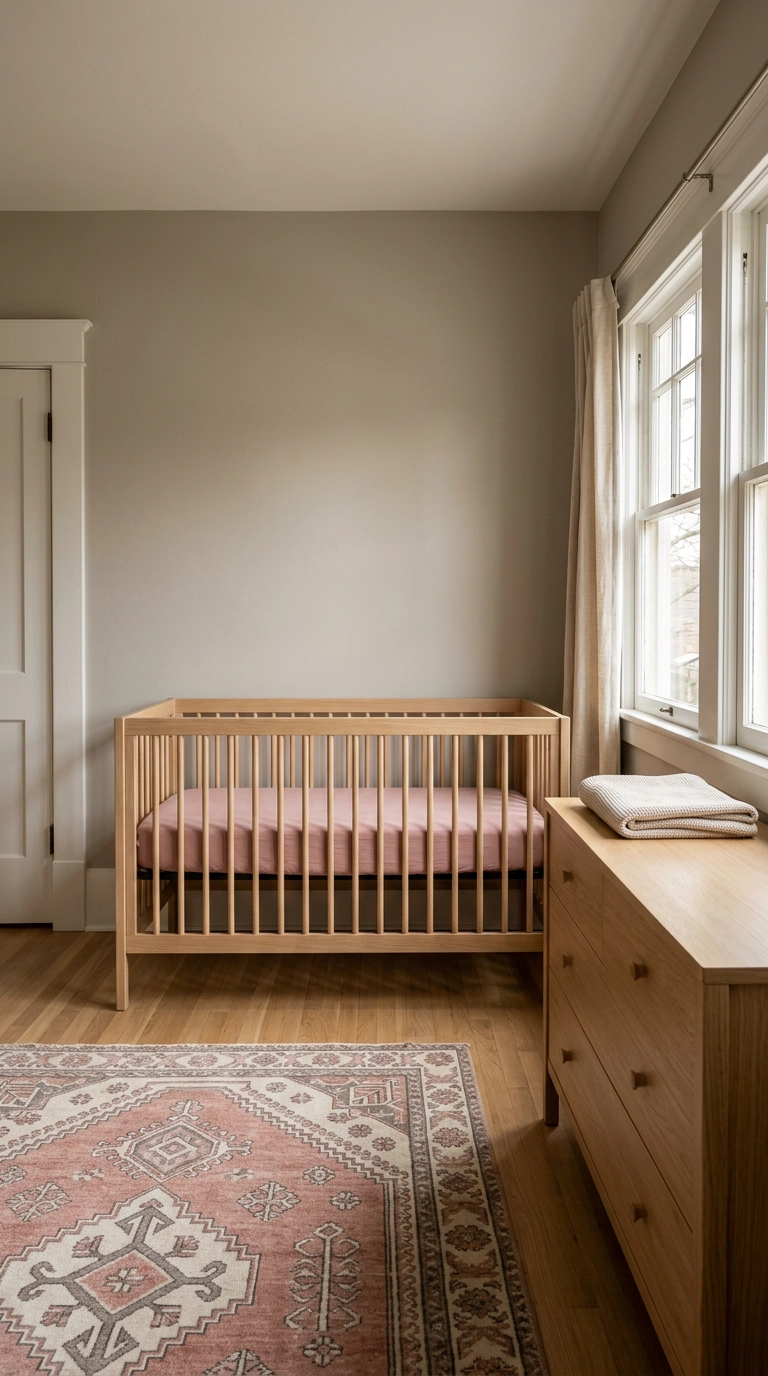
The most photographed crib in the world is the one with nothing in it. A firm mattress and a fitted sheet, no pillows, no bumpers, no heavy blankets, no stuffed animals, and honestly it looks better that way anyway.
One Last Look Around the Room
If you take one thing from this list, make it the dusty rose. Every time I use a muted, greyed-down pink instead of a clean bubblegum, the room stops looking like a theme and starts looking like a room someone thoughtfully designed. Farrow and Ball built half its reputation on shades like Setting Plaster for exactly that reason, and the warm plaster pinks have only gotten more popular heading through 2026.
The other shift I am seeing everywhere is pink used as a warm neutral inside an otherwise grown-up palette. Blush against natural white oak, mauve velvet with unlacquered brass, terracotta-pink limewash on one wall, that whole warm-and-quiet direction that firms like Studio McGee made mainstream. It photographs beautifully, it does not date fast, and it survives the day your daughter announces she is now into a completely different color.
Whatever you paint, keep the safety pieces non-negotiable: nothing hanging above the crib, every dresser and bookcase strapped to a stud, no cords anywhere near the crib, a bare mattress for the first year, and a pad under that pretty rug. Do that and you get a room that is genuinely lovely and genuinely safe, which is the only combination worth doing. If you want more of this in your inbox, sign up for my weekly newsletter, I send one email with room breakdowns, honest budgets, and the sources I actually use.


