22+ Genius Twin Nursery Decor Ideas that are Calm, Practical and Gorgeous in 2026

I’ve designed a lot of nurseries, but the first time a client handed me a floor plan and said “two cribs, one 11×12 room, and I need to reach both babies at 3am” — that’s when I learned twin nurseries are a completely different design problem. It isn’t a regular nursery with extra furniture crammed in. It’s a layout puzzle about clearance, storage, and giving two people their own corner of a room they’ll share for years, and honestly, solving it is the most fun I have at work.
Twin Nursery Decor Ideas
1. Two Cribs Side by Side with a Real Gap Between Them
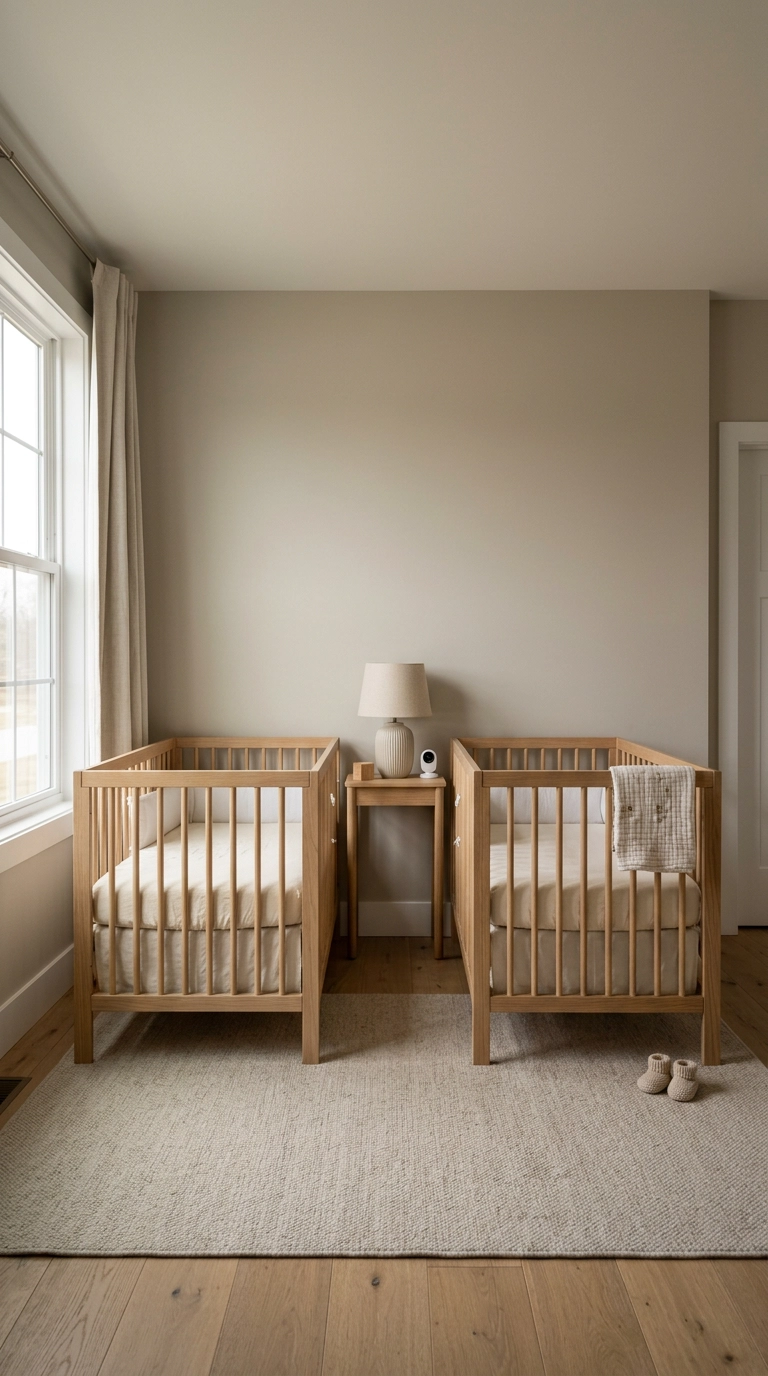
This is the layout most people default to, and it works — but only if you leave a real gap. I push for 24 to 30 inches between cribs so you can stand between them and lift one baby without banging the other’s rail, and once they’re pulling to stand that gap also keeps them from grabbing each other’s blanket at 5am.
2. Cribs on Opposite Walls, Facing Each Other
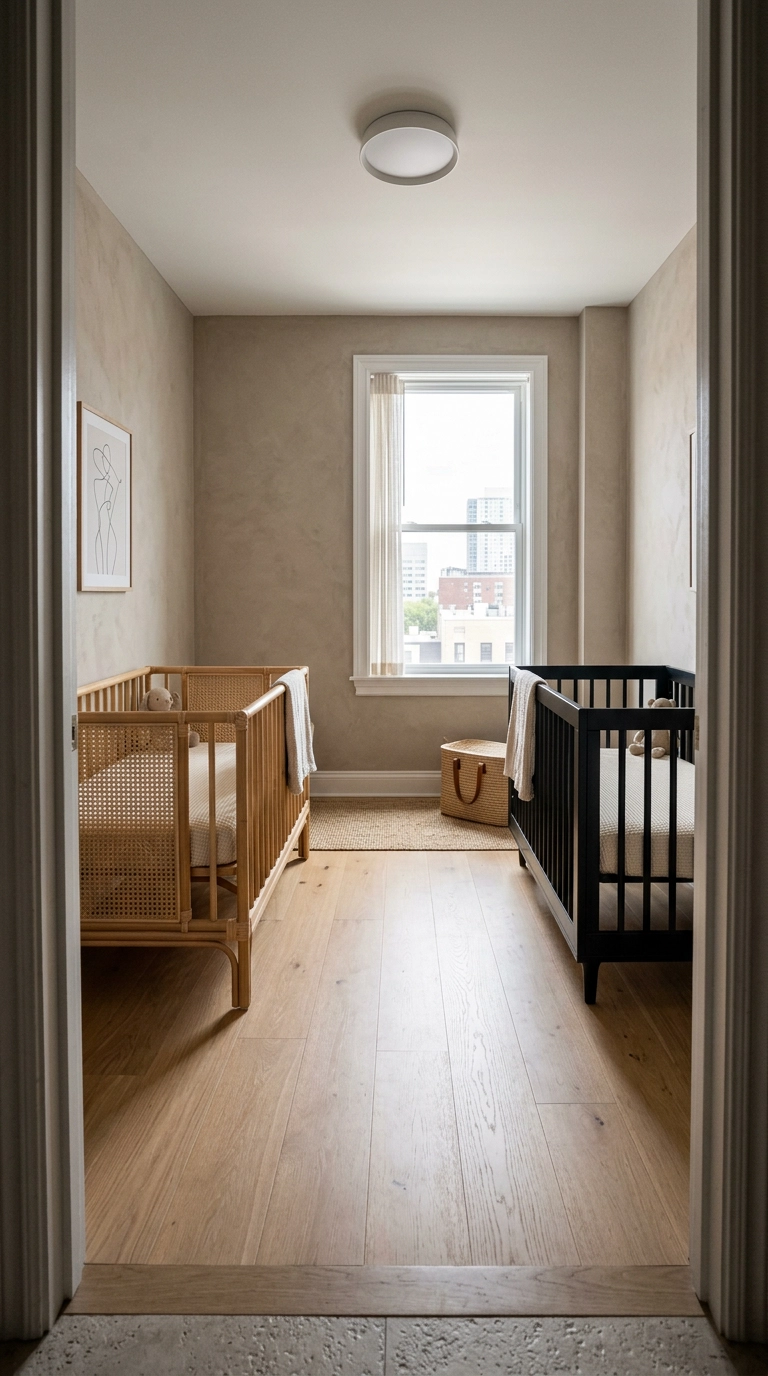
Facing cribs across an open center is my favorite layout for a square room, because it leaves a genuine walking lane down the middle instead of two pinch points. You can reach both babies from the same standing spot by pivoting, which sounds minor until you’ve done it forty nights in a row.
3. One Wide Dresser Instead of Two Narrow Ones
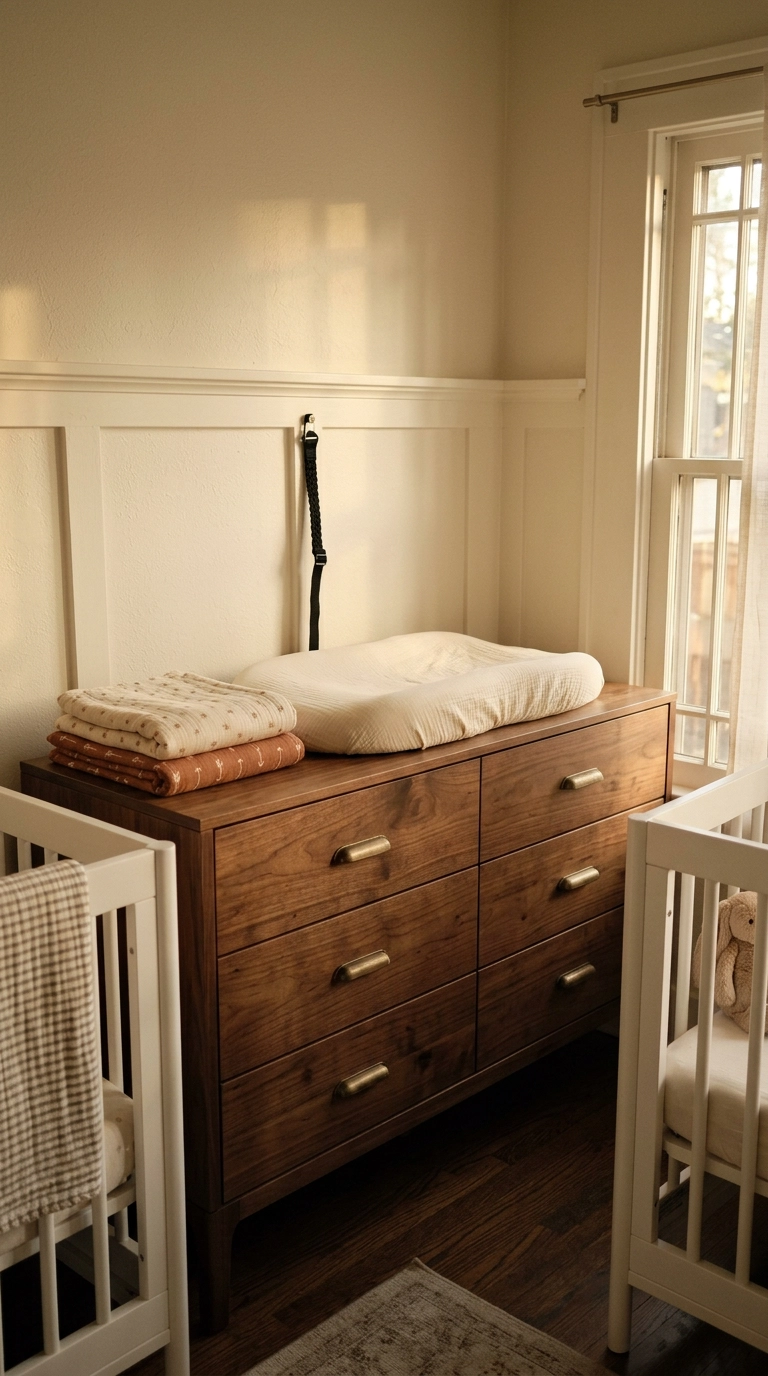
Take it from me: one 60-inch dresser beats two 30-inch dressers almost every time. You get deeper drawers, a full-width surface for the changing pad, and one piece of furniture to anchor to the wall instead of two — and anchor it you must, because a toddler using an open drawer as a ladder is a real thing.
4. Coordinate, Don’t Match
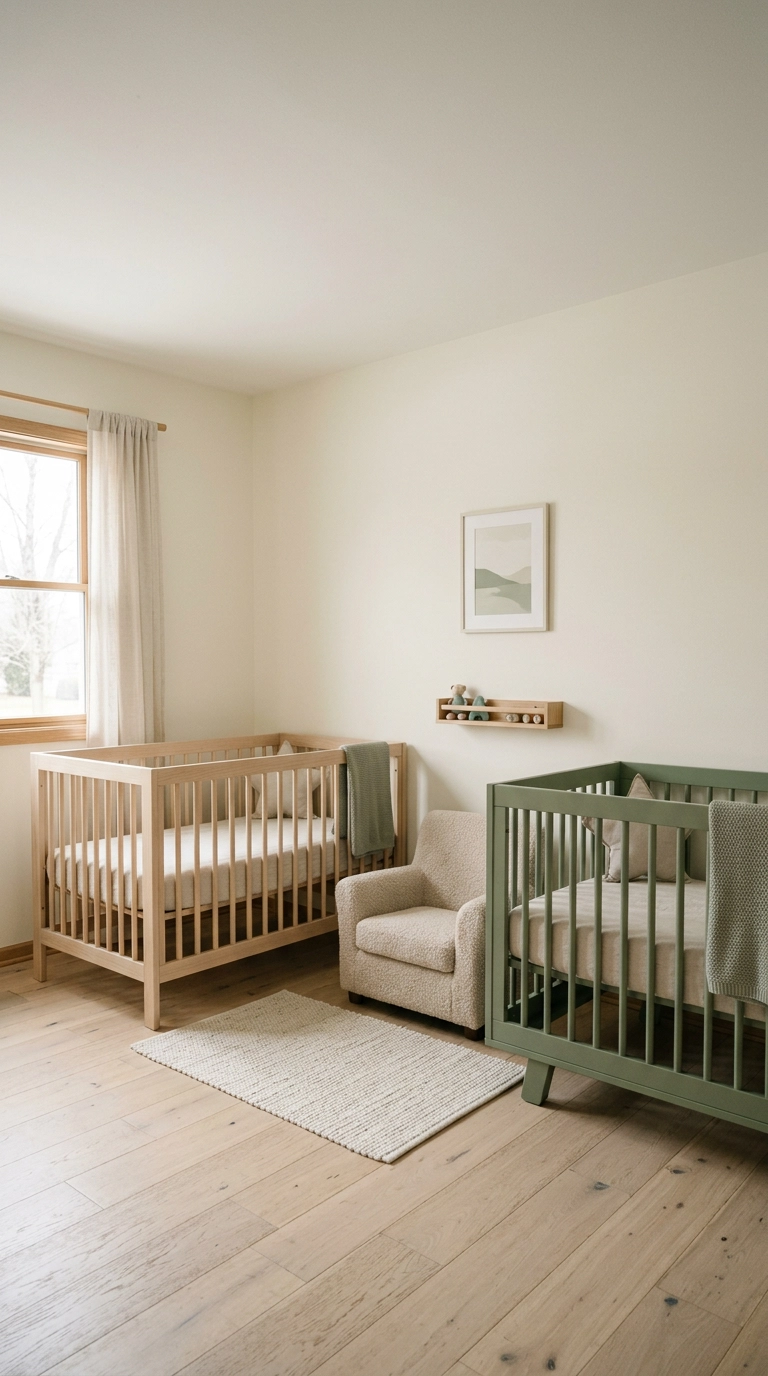
Identical everything can make a room feel like a showroom display rather than a home. My trick is to keep one thing constant and vary one thing: same crib shape, different finish, or same finish with different sheets in two shades of the same color.
5. Foot to Foot Along One Long Wall
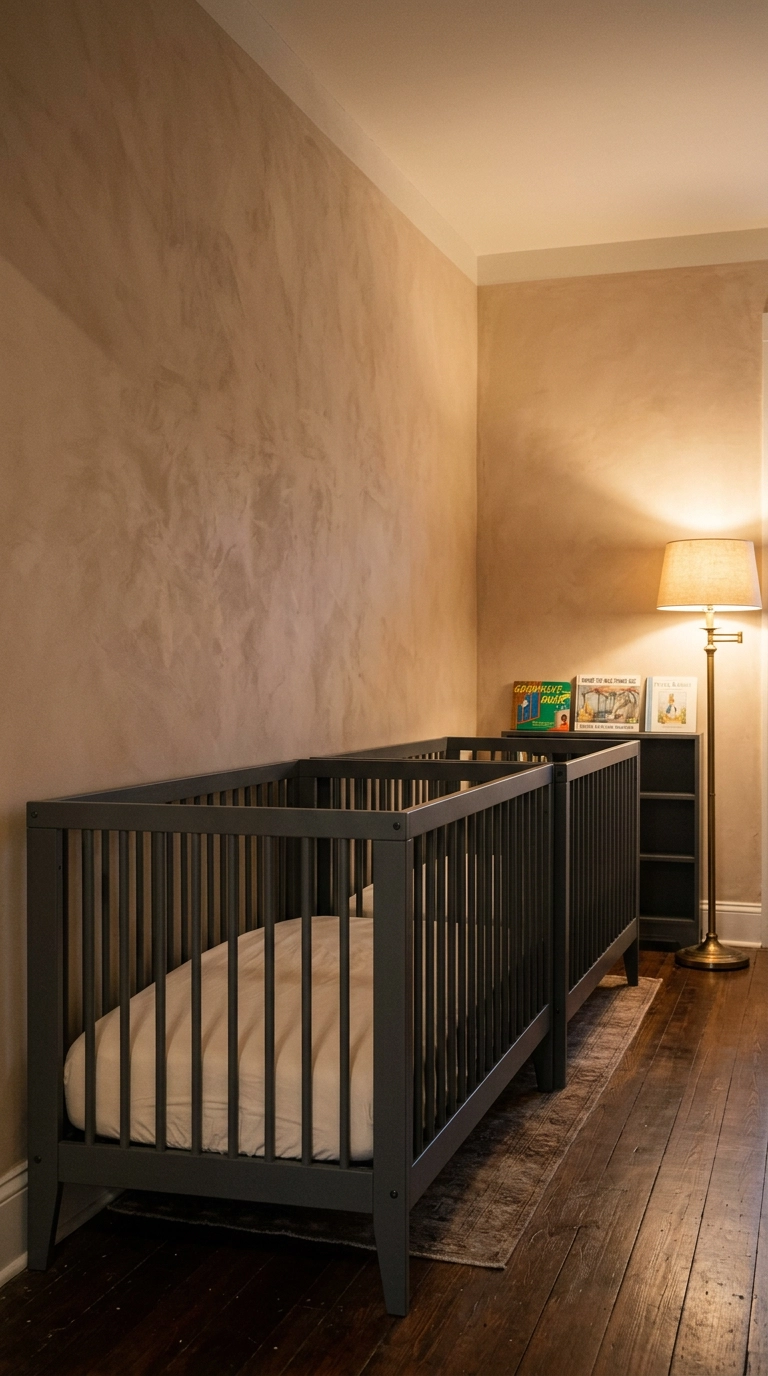
In a long skinny room, foot to foot along the wall is the layout that finally makes the floor plan work. You keep the entire opposite side of the room free for a dresser and a chair, and both cribs get long-side access, which is the side you actually lift from.
6. Two Cribs Flanking One Shared Window
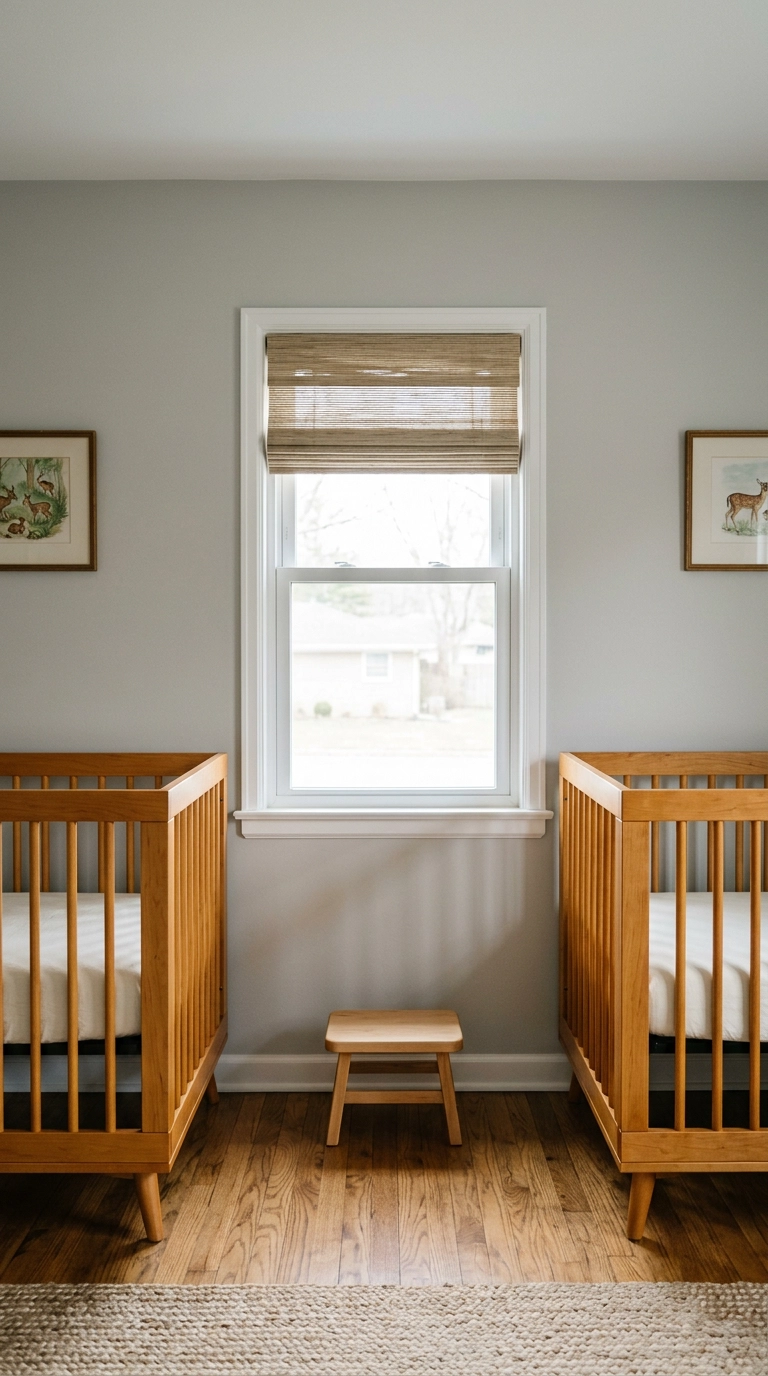
Flanking a window gives you effortless symmetry and it photographs beautifully, but the real reason I like it is that both babies get the same light, which helps when you’re trying to get two sleep schedules to agree.
7. The L-Shape Corner Layout for a Tiny Room
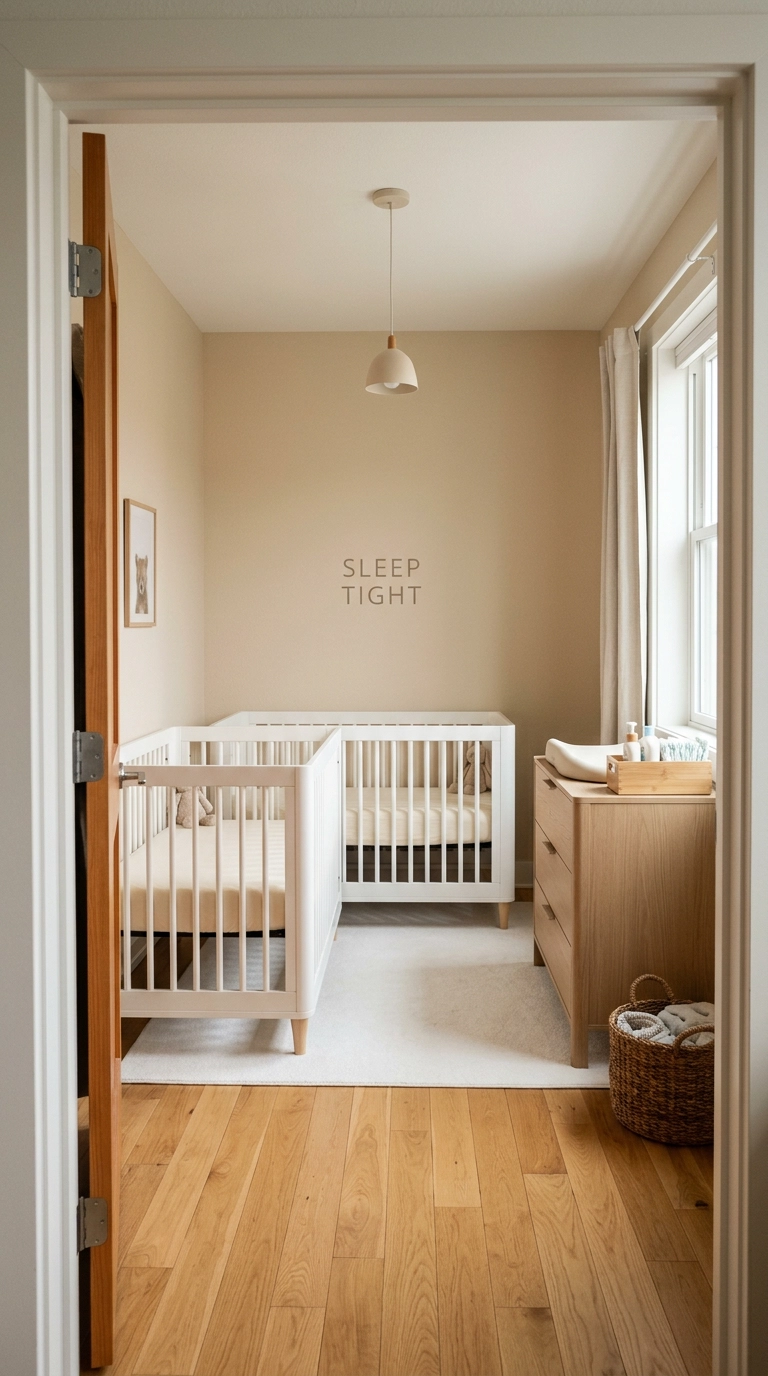
When the room is under about 110 square feet, the L-shape corner is usually the only arrangement that leaves usable floor. Tucking both cribs into one corner consolidates the furniture mass on two walls and frees the other two for a dresser and the door swing.
8. One Changing Station, Not Two
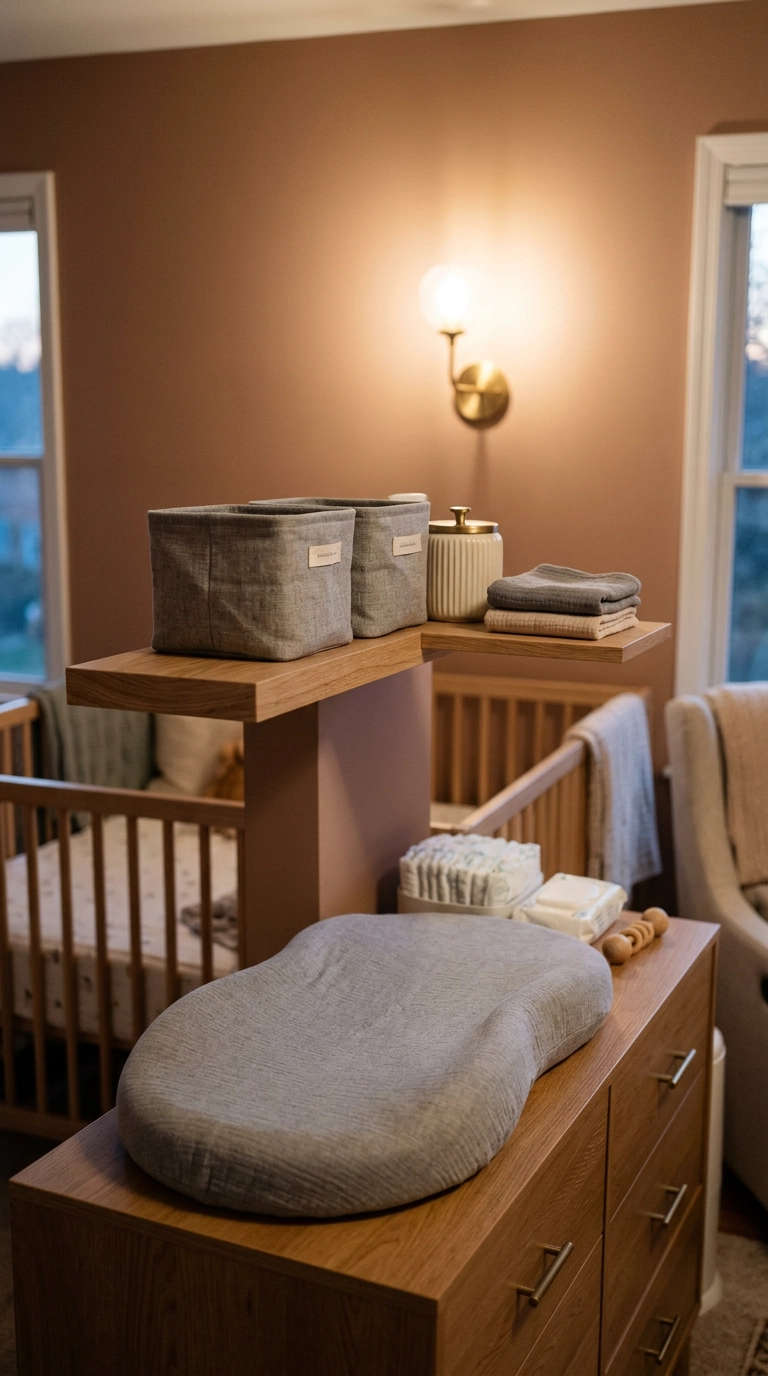
Everybody asks about two changing tables. You almost certainly need one. You are physically changing one baby at a time, and the second station becomes a laundry-folding surface within three weeks.
9. A Full Wall of Closed Storage Behind the Cribs
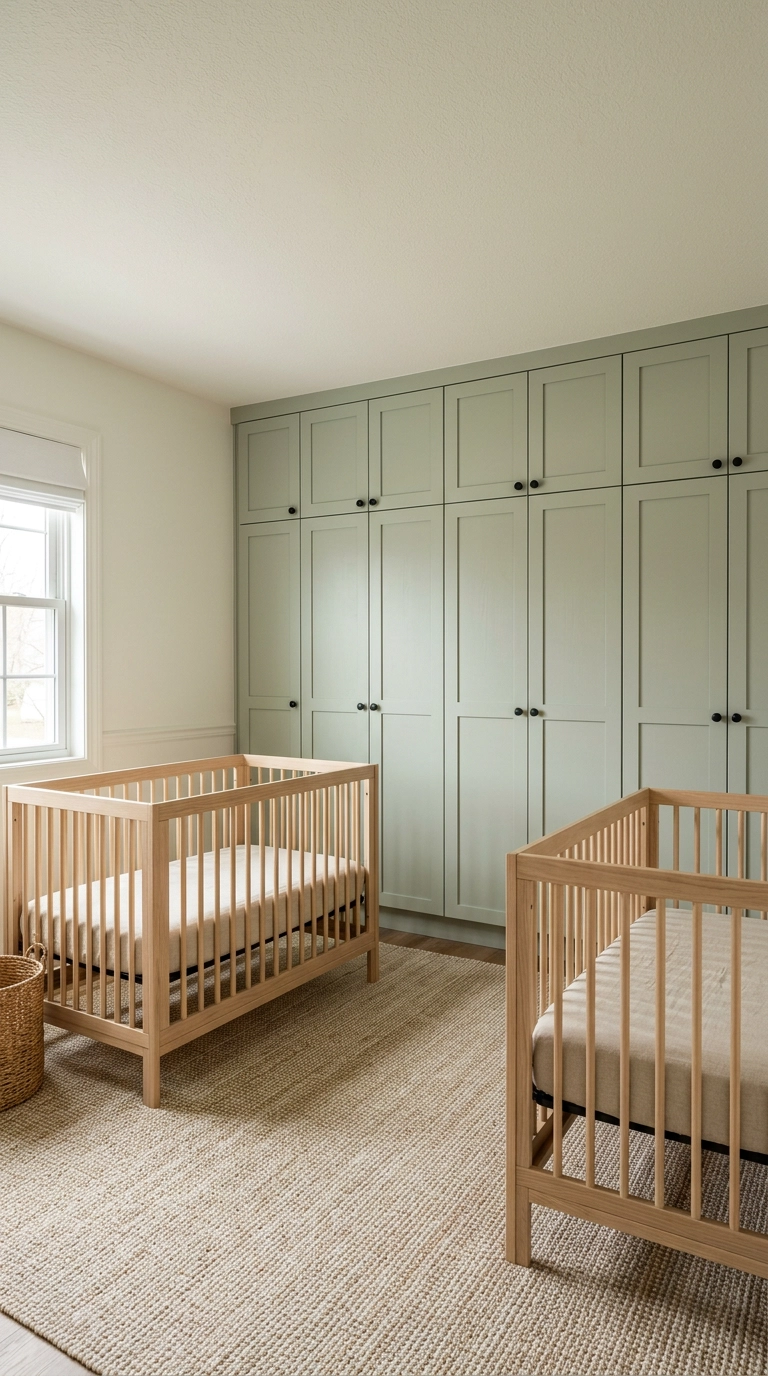
Here’s the honest math: twins generate roughly double the laundry, double the clothes in four sizes at once, and double the gear, but the room stays the same size. Closed storage is the only thing that keeps that volume from looking like chaos.
10. Deliberate Asymmetry with One Anchoring Element
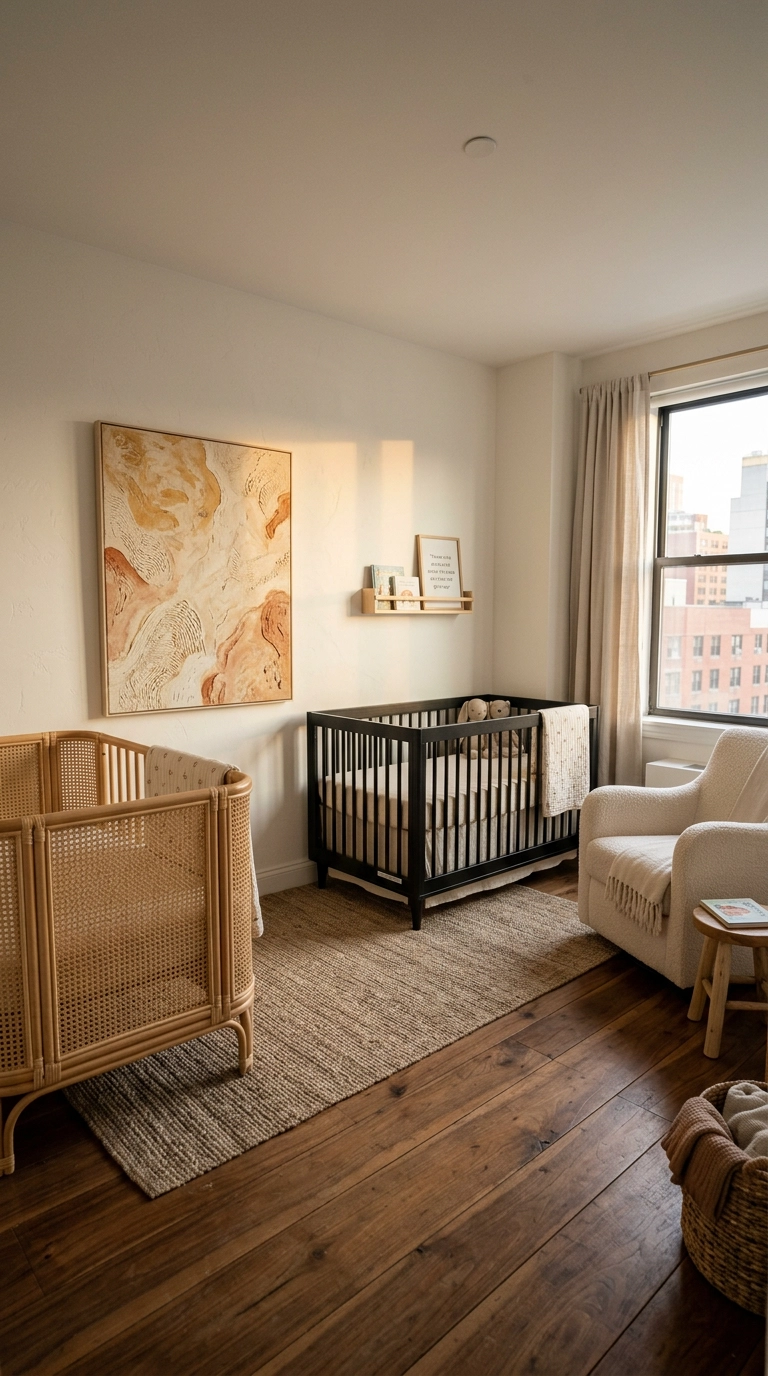
Perfect mirror symmetry is the easy answer, but it can make a nursery feel institutional. When I go asymmetric, I add one strong anchoring element — a big piece of textural art, a single oversized light fixture — so the eye has somewhere to land and the imbalance reads as a choice.
11. Two Wall Sconces Instead of One Ceiling Light
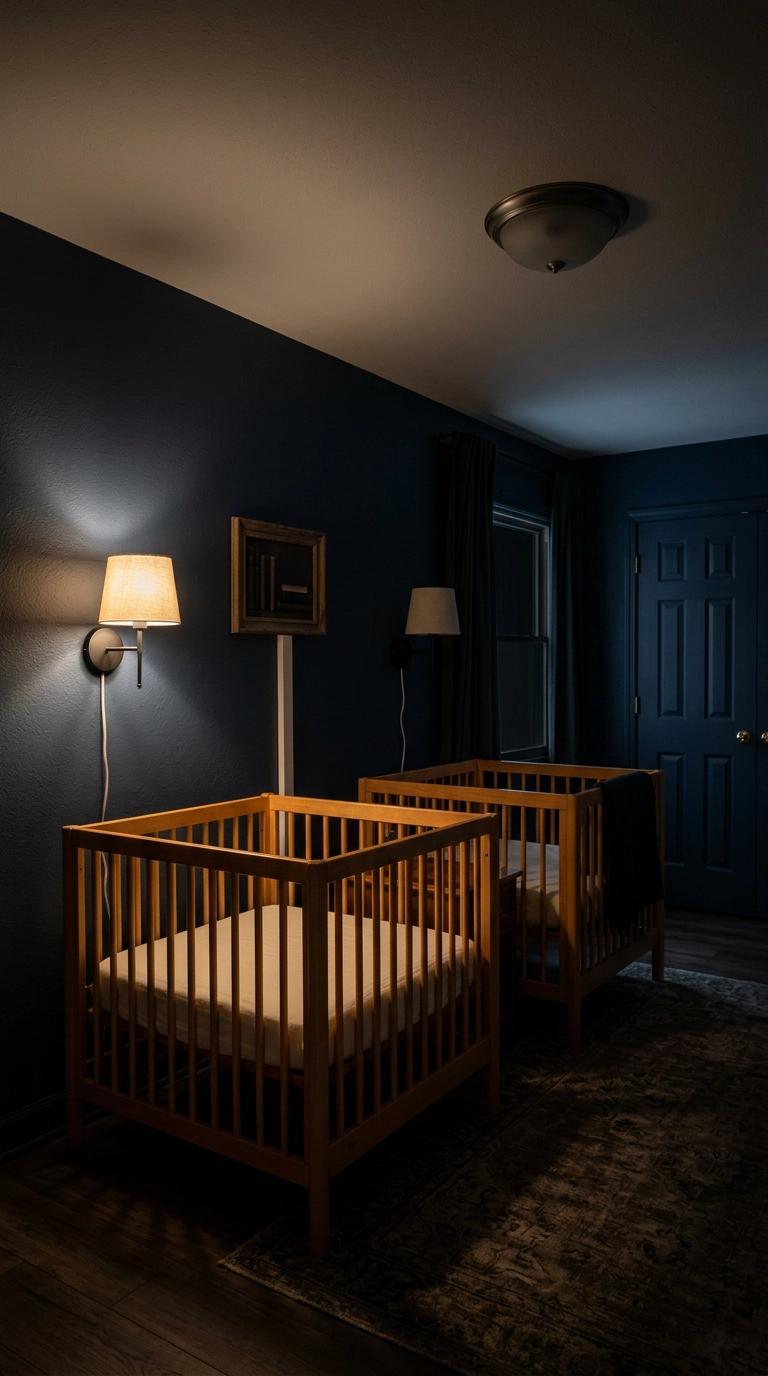
Overhead light is the enemy of a 2am diaper change. Two low-wattage sconces on a dimmer let you light one side of the room without waking the twin who’s still asleep, which is genuinely the difference between a 10-minute wake-up and a 90-minute one.
12. Paint-Free Pattern with Removable Wallpaper on One Wall
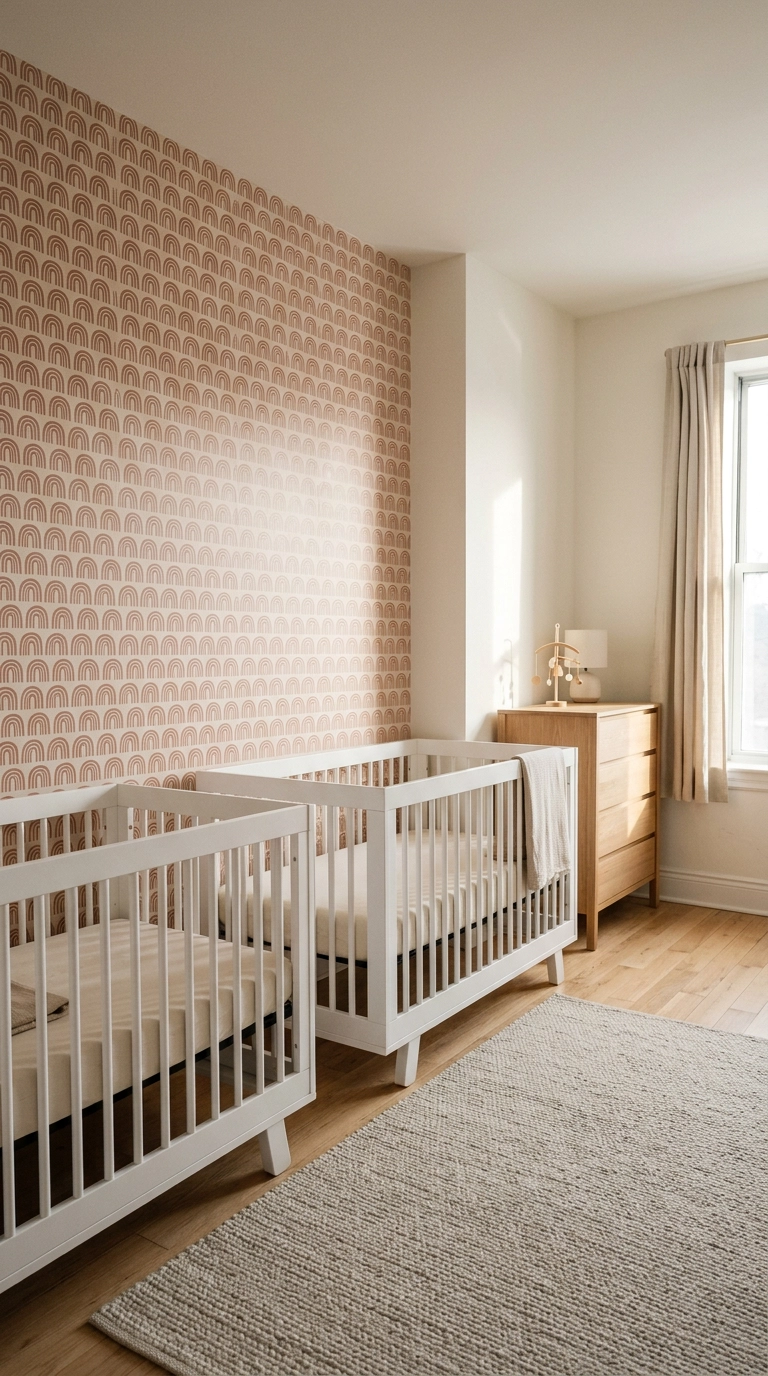
Renters, this one’s for you. A single wall of peel-and-stick paper behind both cribs unifies them visually, which is exactly what you want — it makes two separate cribs read as one intentional zone.
13. Give Each Baby a Color Instead of a Name Sign
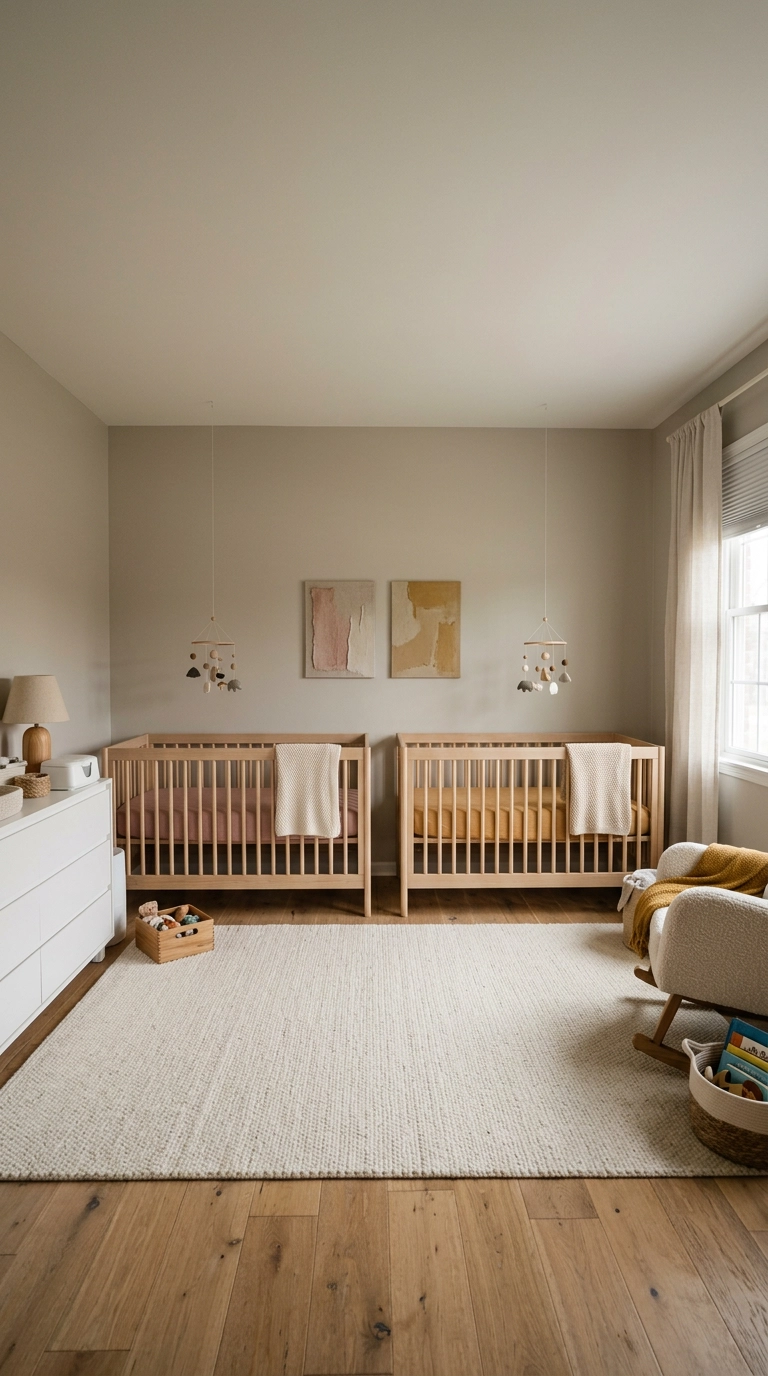
Monogramming everything is a trap. Custom name banners, embroidered sheets, initial pillows — it’s adorable until you swap crib positions, or one twin outgrows the crib first, or you move the room and nothing lines up anymore.
14. A Long Low Bench Under the Window for Doubled Bins
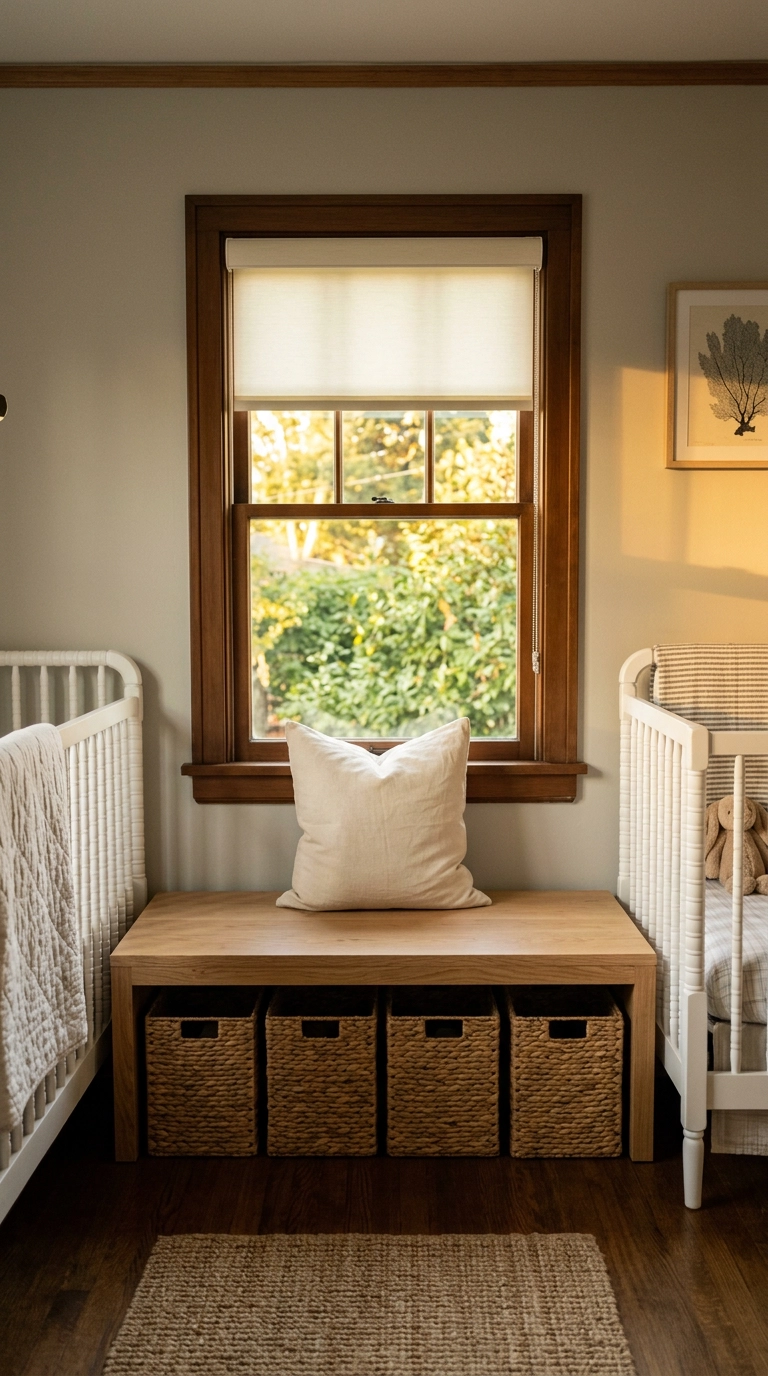
A 60-inch bench with four bins underneath gives you double the toy storage of a standard cube unit while taking up the same wall footprint, and it doubles as a spot to sit and put shoes on two wriggling toddlers later.
15. Color Drench the Whole Room to Hide the Furniture Bulk
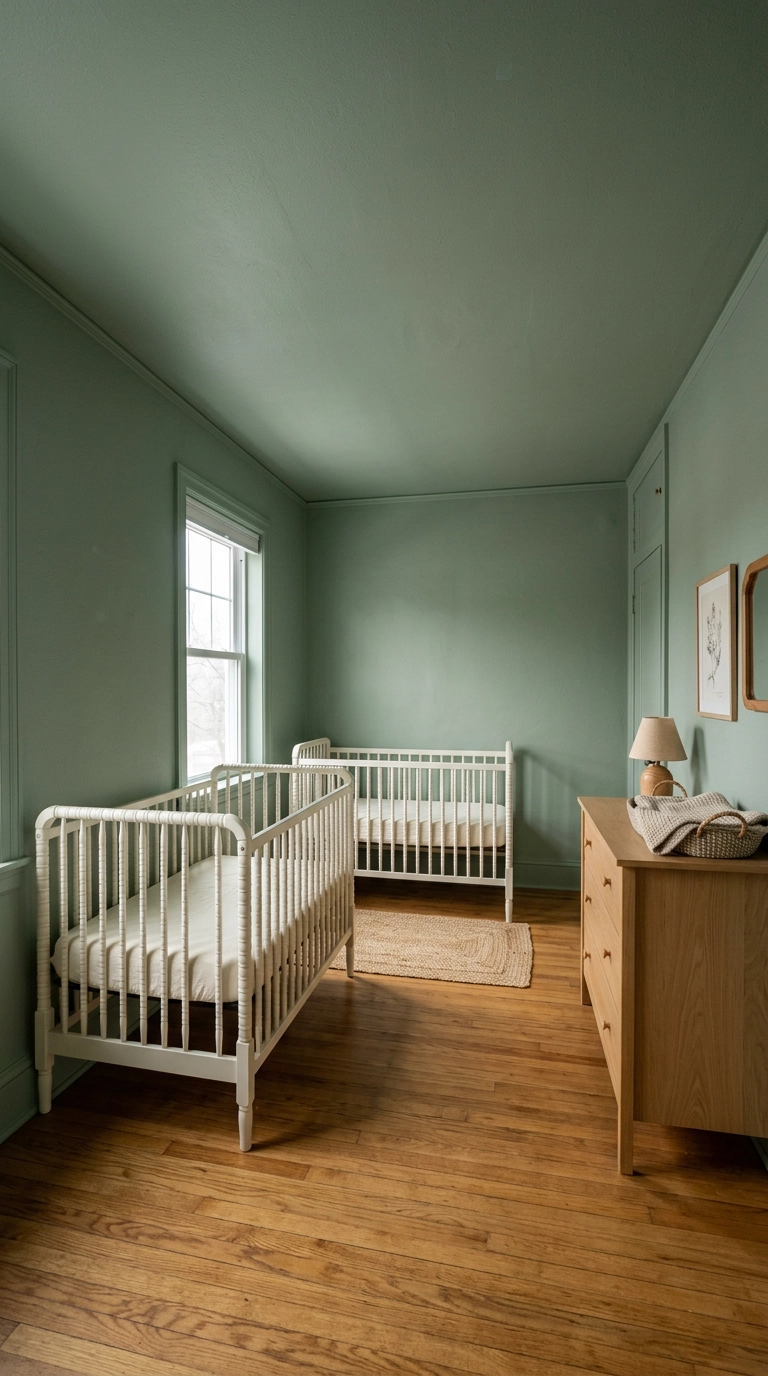
Color drenching means painting walls, trim, and ceiling all one shade, and it’s my secret weapon in twin rooms. When the trim disappears, your eye stops counting edges — and a room holding two cribs plus a dresser has a lot of edges.
16. Two Secondhand Cribs, One Coat of Paint
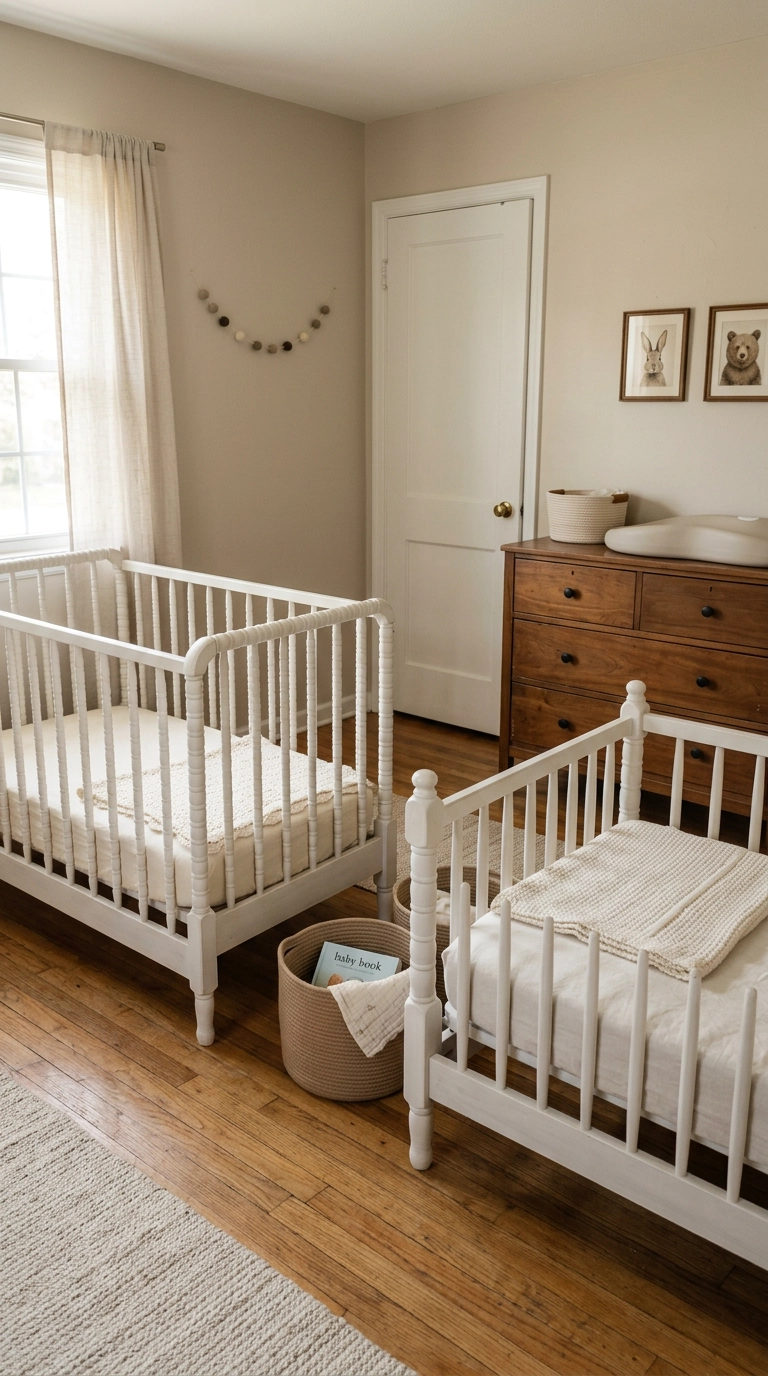
Let’s talk money honestly: twins double the furniture bill and nobody warns you. Two cribs, two mattresses, double the sheets, and a dresser big enough for both easily runs past what a single nursery costs.
17. One Glider Placed Where It Serves Both Cribs
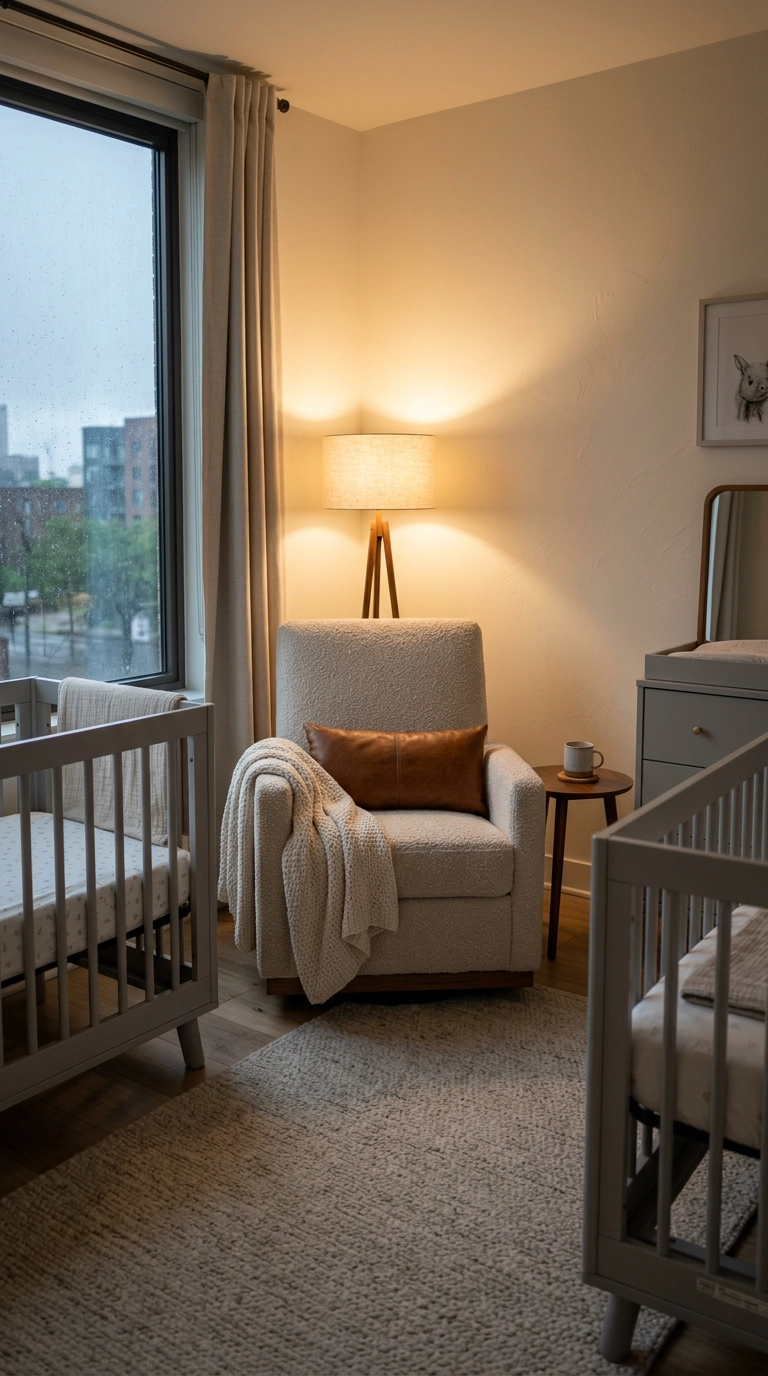
Buy one glider, but buy a wide one. You will at some point be holding two babies at once, and a standard-width chair makes that a wrestling match. Look for a seat around 24 inches or more between the arms.
18. Low Art at Baby Eye Level, Never Above the Cribs
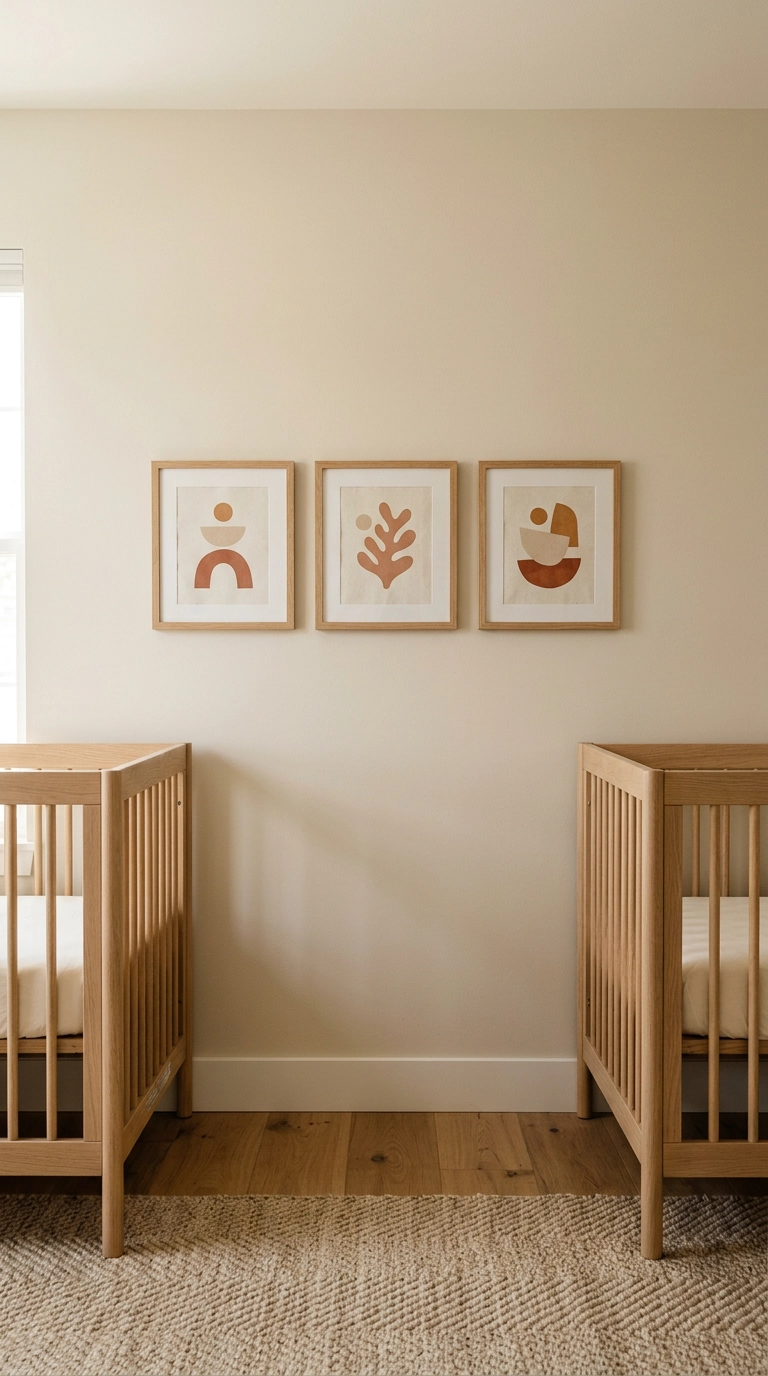
Hang art low — around 30 inches off the floor — on the wall segments between and beside the cribs. Babies spend their time on the floor and in the crib looking sideways, not up at a 60-inch gallery wall.
19. A Half-Height Screen Between the Cribs for Sleep Separation
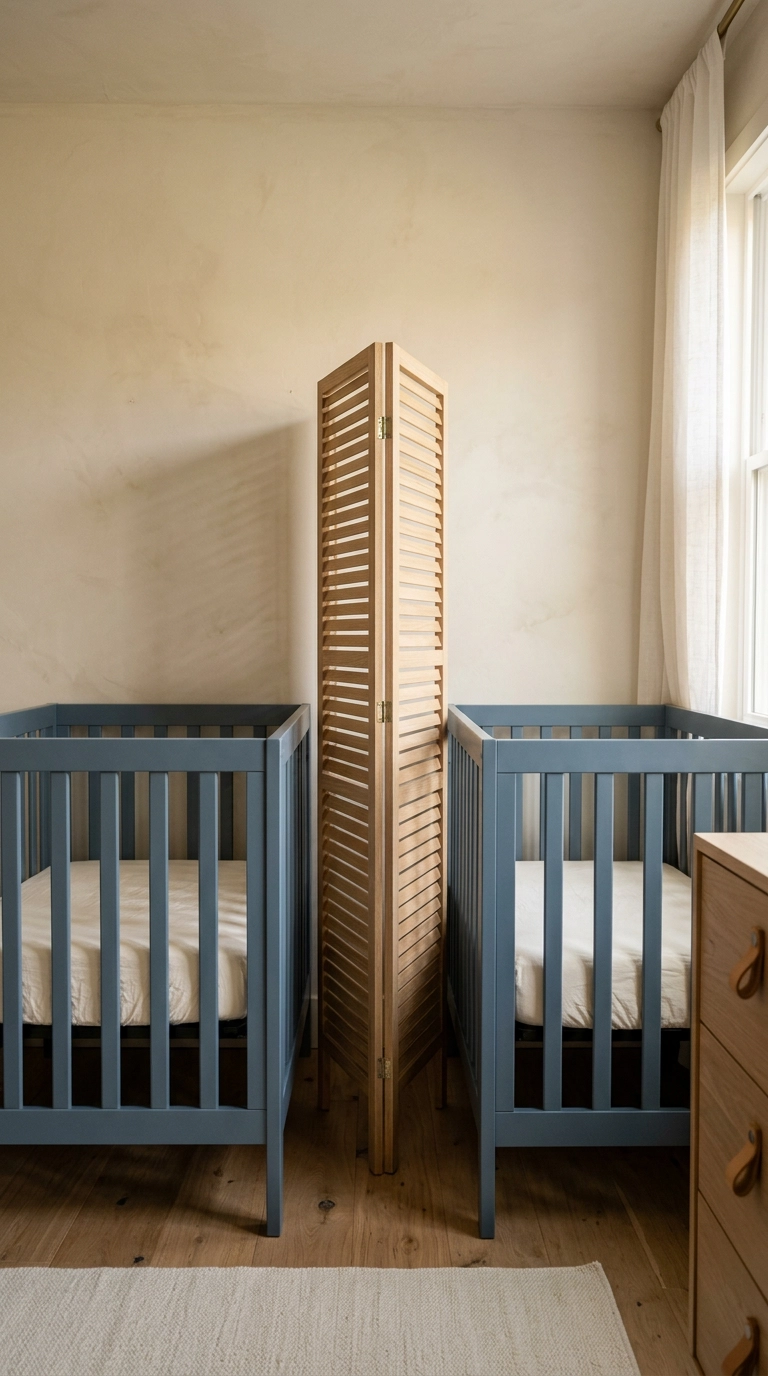
The twin-specific nightmare is one baby waking the other. A half-height slatted screen — around 40 inches tall on a wide freestanding base — breaks the direct line of sight between cribs without cutting airflow or chopping the room into two closets.
20. Blackout Curtains Hung Wall to Wall to Sync Two Nap Schedules
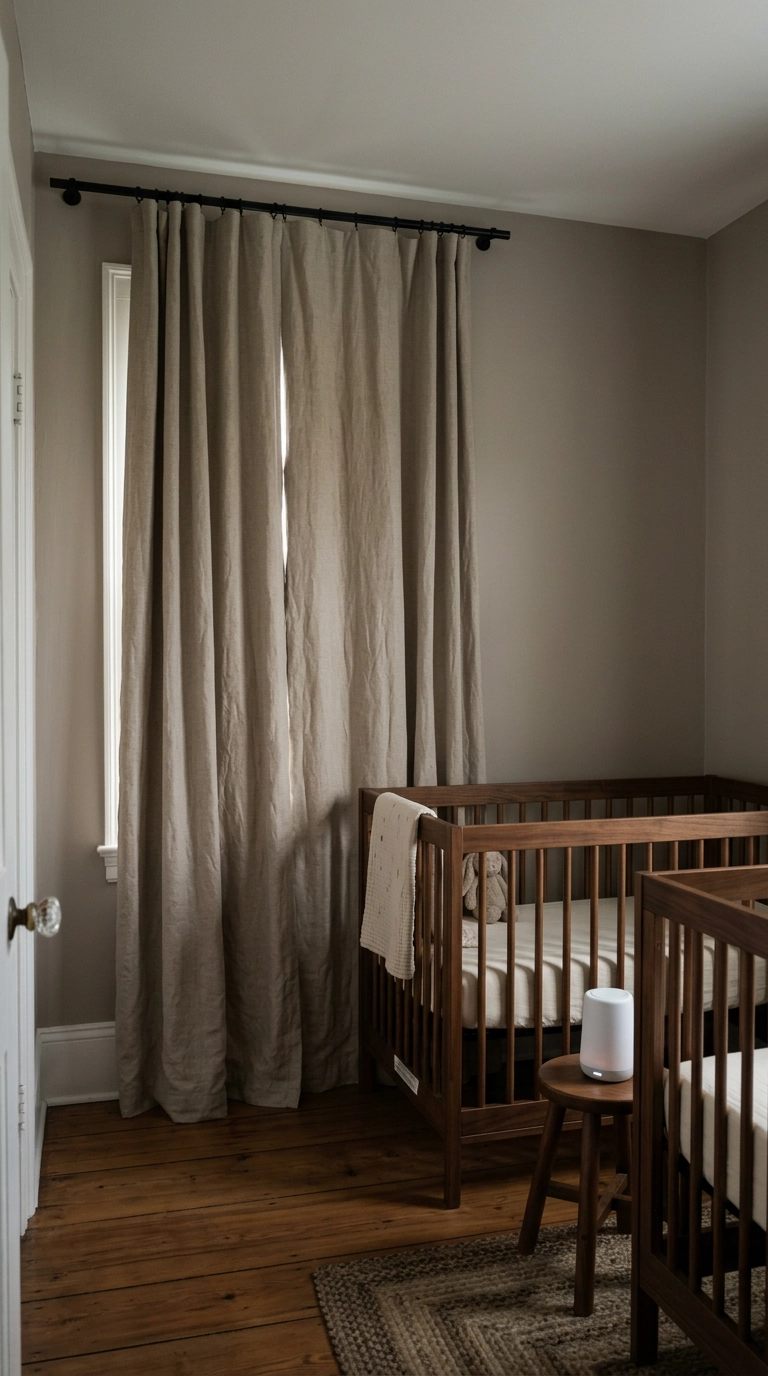
With twins you get one shared schedule or you get nobody sleeping, so blackout matters more here than in a single nursery. The fix is coverage, not expensive fabric: mount the rod three or four inches below the ceiling and run it eight to ten inches past the window on each side so light can’t rake around the edges.
21. Split the Closet Down the Middle and Color-Code the Hangers
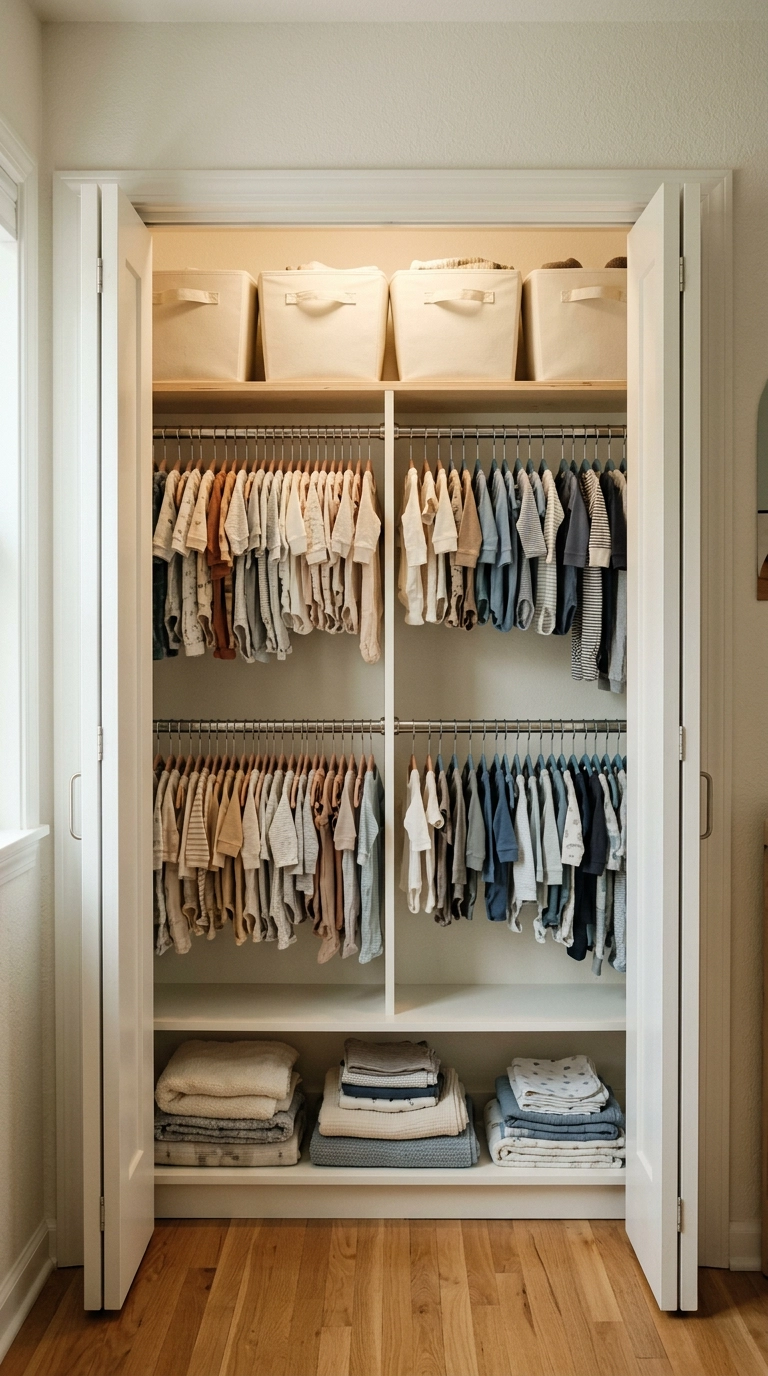
Twins wear four sizes at once and half of it is hand-me-downs from each other, so the closet is where twin nurseries actually fall apart. Split it vertically — one baby left, one baby right — and double-hang each side with a second rod so you use the full height instead of the top three feet.
22. Design for the Toddler Beds Before You Need Them
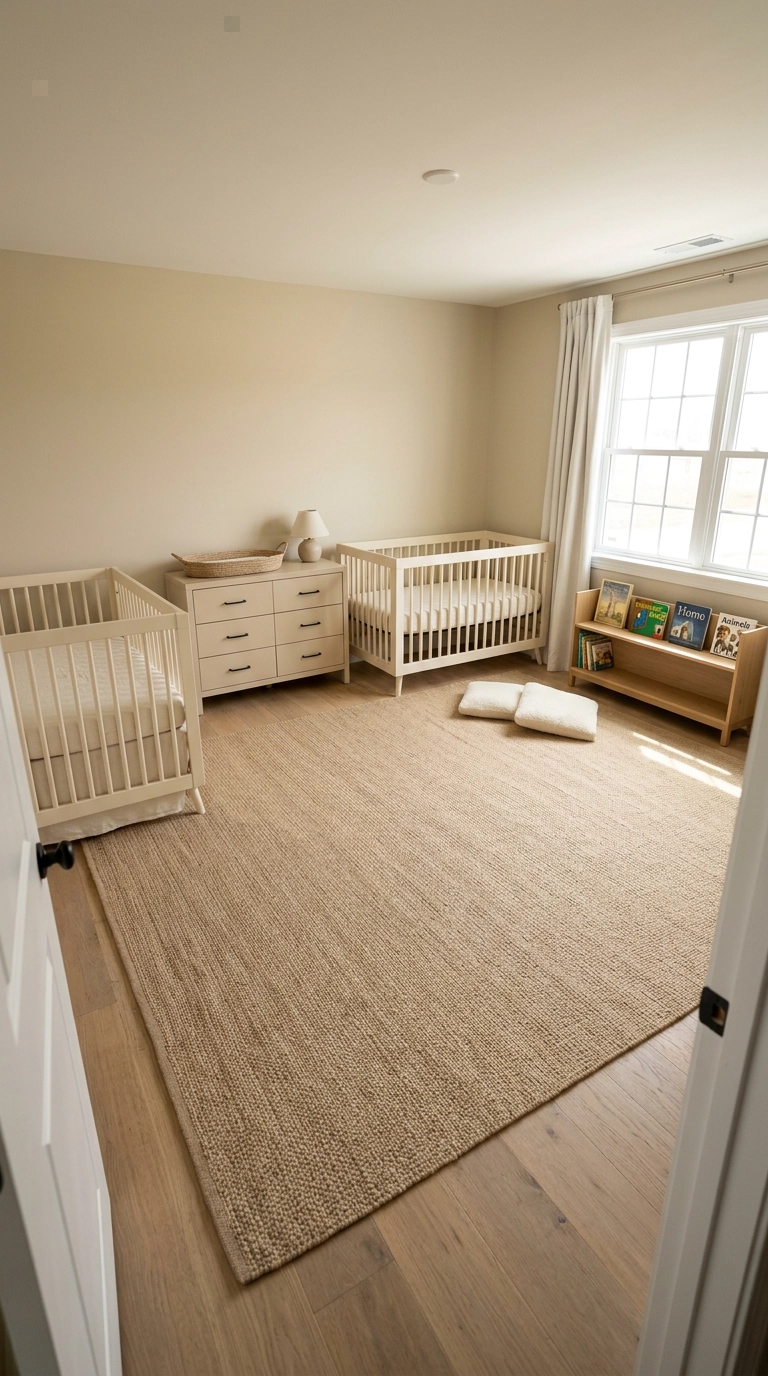
Here’s the thing nobody plans for: two twin beds eat far more floor than two cribs, and that transition usually lands around age two or three, both at once. Before you place the dresser, sketch where two 38-by-75-inch beds will sit and make sure the room still works.
Where I’d Actually Start
If you only do three things, do these: get the crib placement right, double the storage before the babies arrive, and give each twin one small piece of the room that is unmistakably theirs. Everything else on this list is refinement. Those three decisions are the ones you’ll be living with at 3am, and they’re much harder to change once the room is full.
The mistake I see most often in twin nurseries is perfect symmetry taken too far — two of everything, mirrored exactly, in a room that ends up feeling more like a display than a place two separate kids grow up in. Symmetry is a useful starting grid, not the goal. Break it deliberately in one or two spots and the room relaxes immediately. And be realistic about the budget: doubling every single item is how twin nurseries get expensive fast, when in practice you need two cribs, two sets of sheets, and two hampers, but one changing station, one glider, and one good lamp.
Mostly, give yourself permission to finish this room in stages. Newborn twins do not care about the gallery wall, and you will have far better instincts about what this room needs after three months of actually using it. Start with sleep and storage, live in it a while, then decorate. If you’d like more room-by-room breakdowns like this one, along with the shopping lists and paint colors I actually use, join my newsletter and I’ll send new ideas straight to your inbox.