
31+ Grey Nursery Decor Ideas that are Soft, Modern, and Impossible to Mess Up

I get asked about grey nurseries more than almost any other room I style, and I get why: it’s the one color that works whether you know the baby’s gender or not, and it never fights with whatever furniture you already own. The trick is that “grey nursery” can mean twenty different things depending on the undertone and what you pair it with, so I pulled together every version I’ve actually used in a real client’s home.
Grey Nursery Decor Ideas
1. Color-Drenched Charcoal Accent Wall Behind the Crib
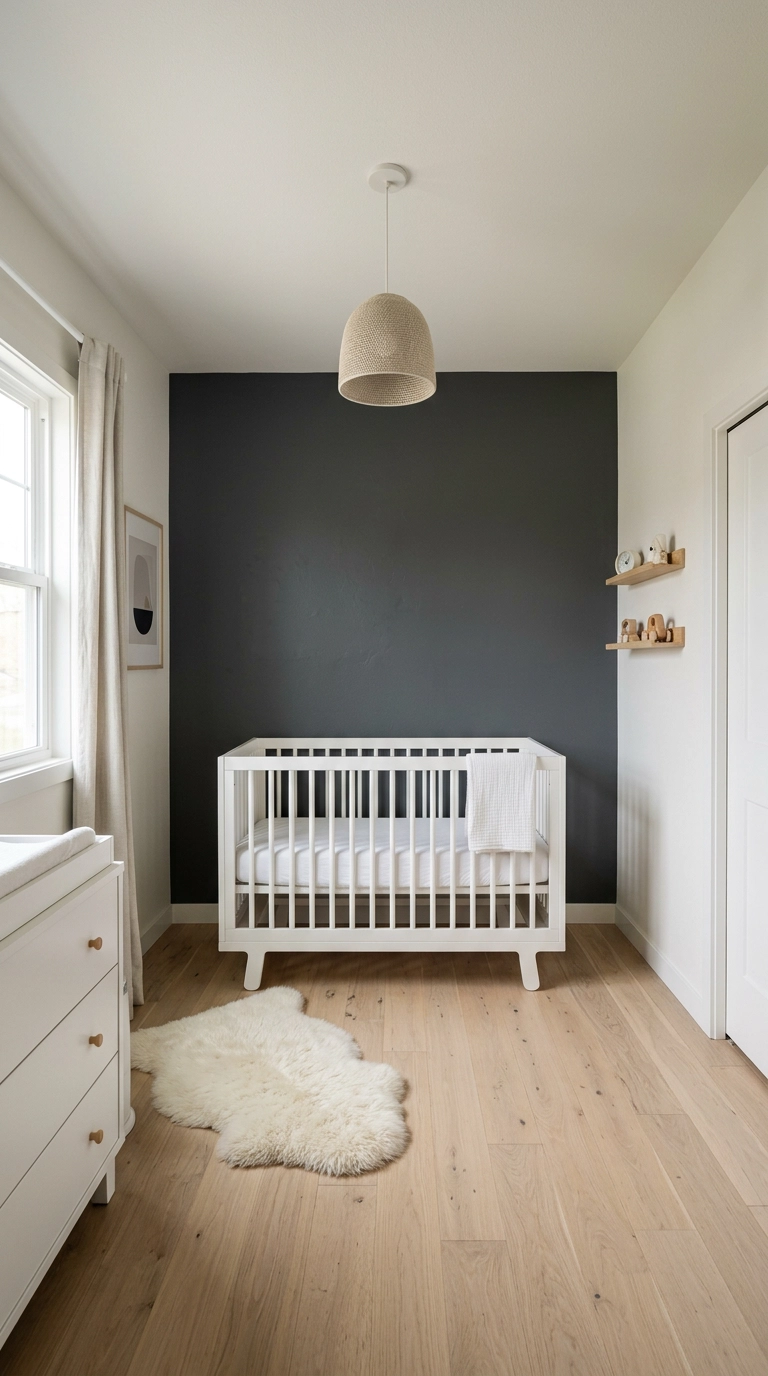
A single dark wall behind the crib does more visual work than painting the whole room, since it frames the crib like a piece of furniture worth noticing instead of just another object against white. Use a genuinely low-VOC paint here; you’ll want the room usable within a day or two of painting, not a week.
2. Peel-and-Stick Cloud Print Wallpaper for Renters
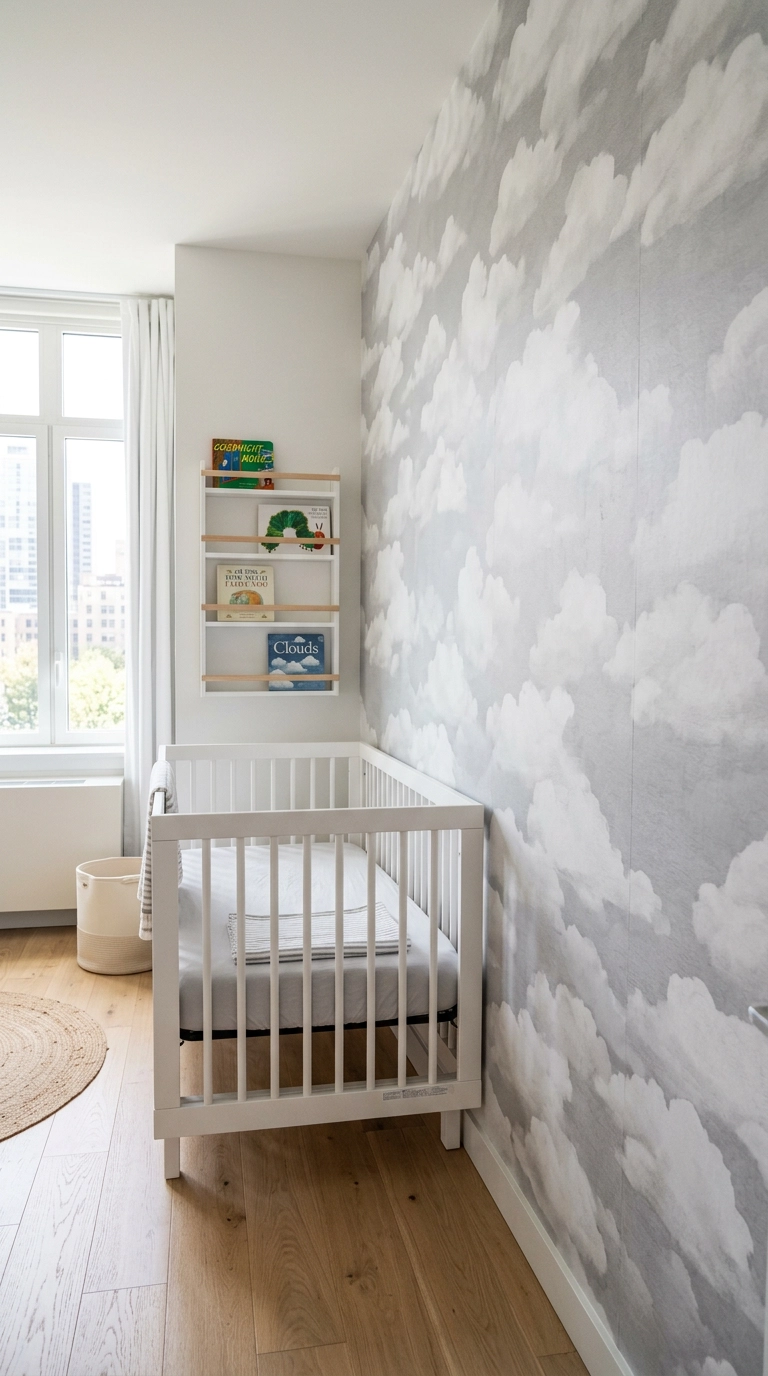
This is the move if you’re renting and can’t paint: peel-and-stick cloud print goes up in an afternoon and comes down clean at move-out with zero wall damage. It’s a genuinely low-cost swap, and the soft print reads as intentional rather than juvenile once the baby outgrows the nursery stage.
3. Grey Board and Batten Below a Chair Rail
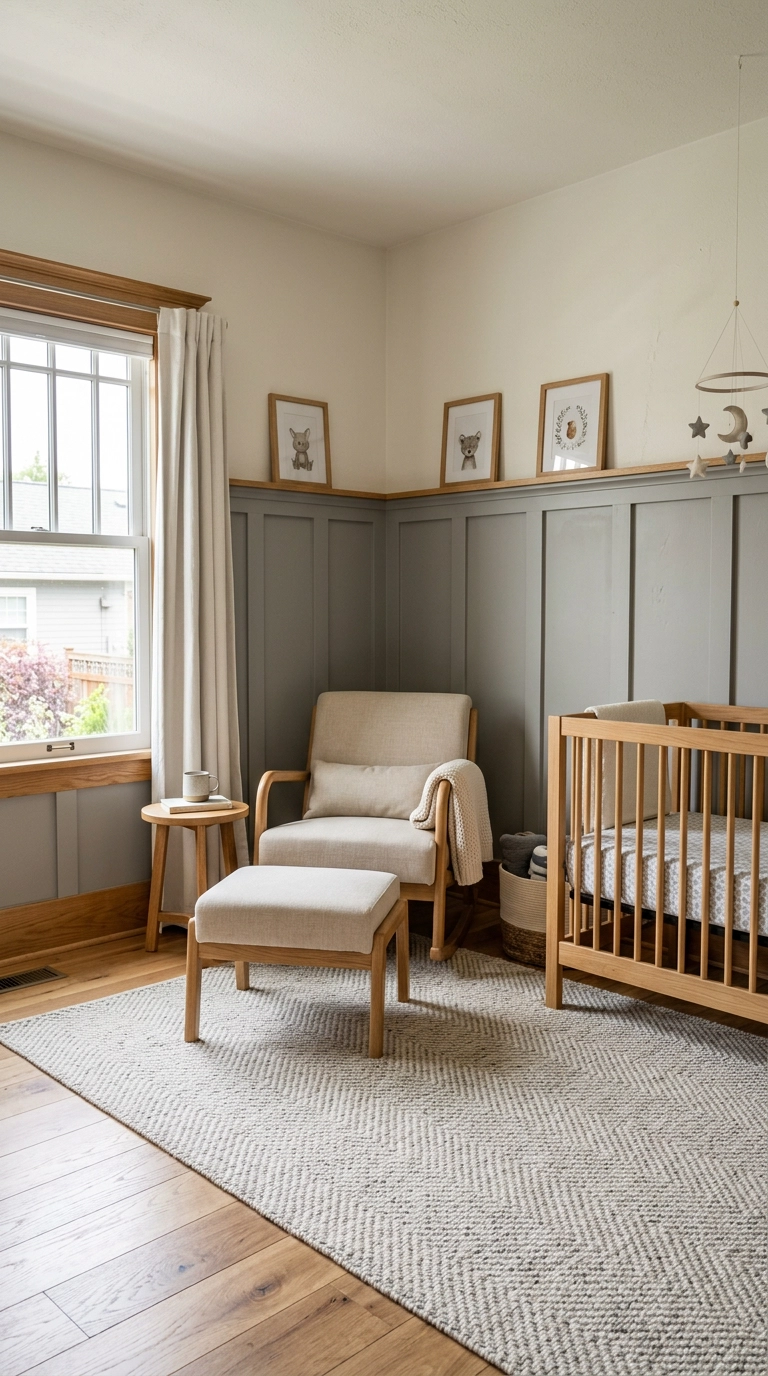
Board and batten in a mid-tone grey gives the room real architectural texture that lasts well past the nursery years, since it reads as a grown-up bedroom detail once you repaint the top half someday. Budget a full weekend for the millwork install before paint even goes on.
4. Warm Greige Walls with Crisp White Trim
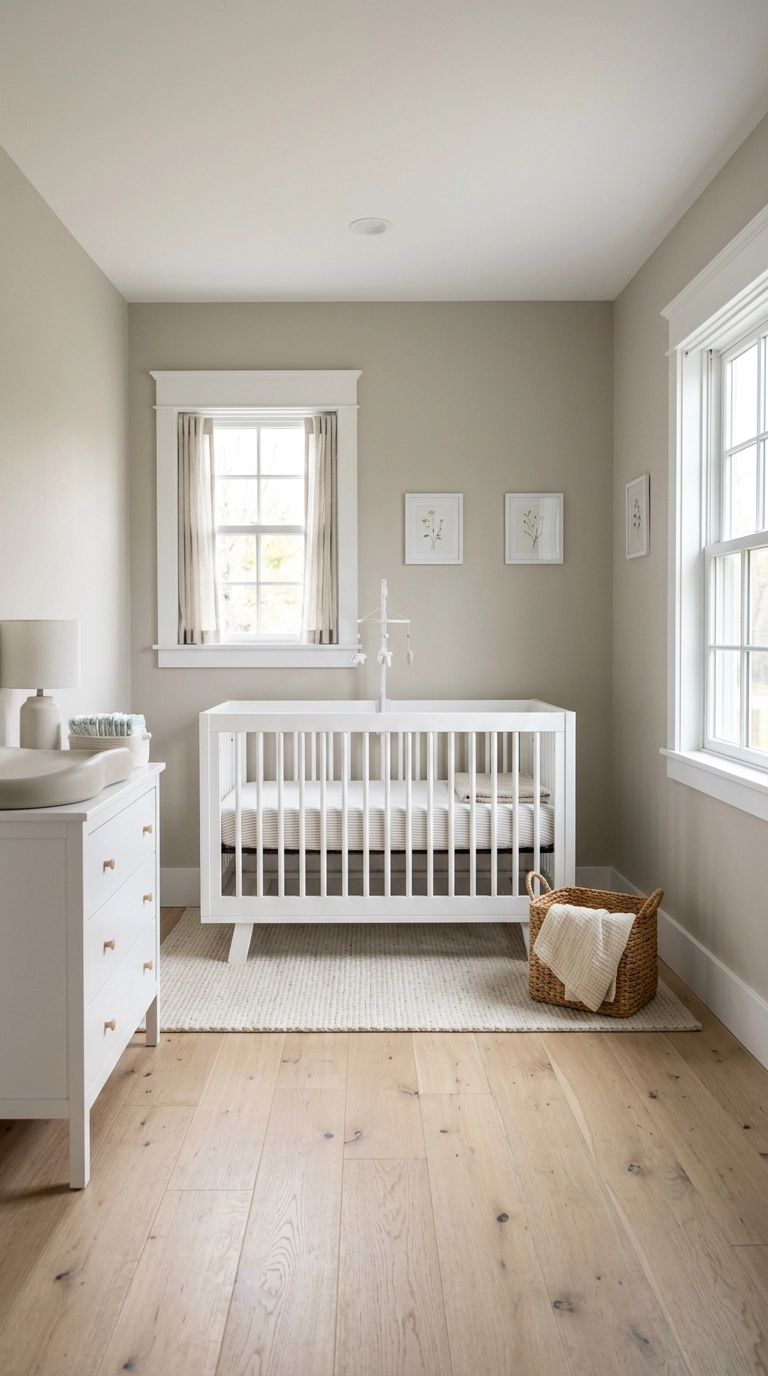
Greige is the safest grey for a north-facing room, since a true cool grey can turn flat and a little sad without direct sun, while greige keeps enough warmth to stay inviting. This is the lowest-effort idea on the list, just two coats of paint and trim that’s likely already white.
5. Grey Wainscoting with Blush Wallpaper Above
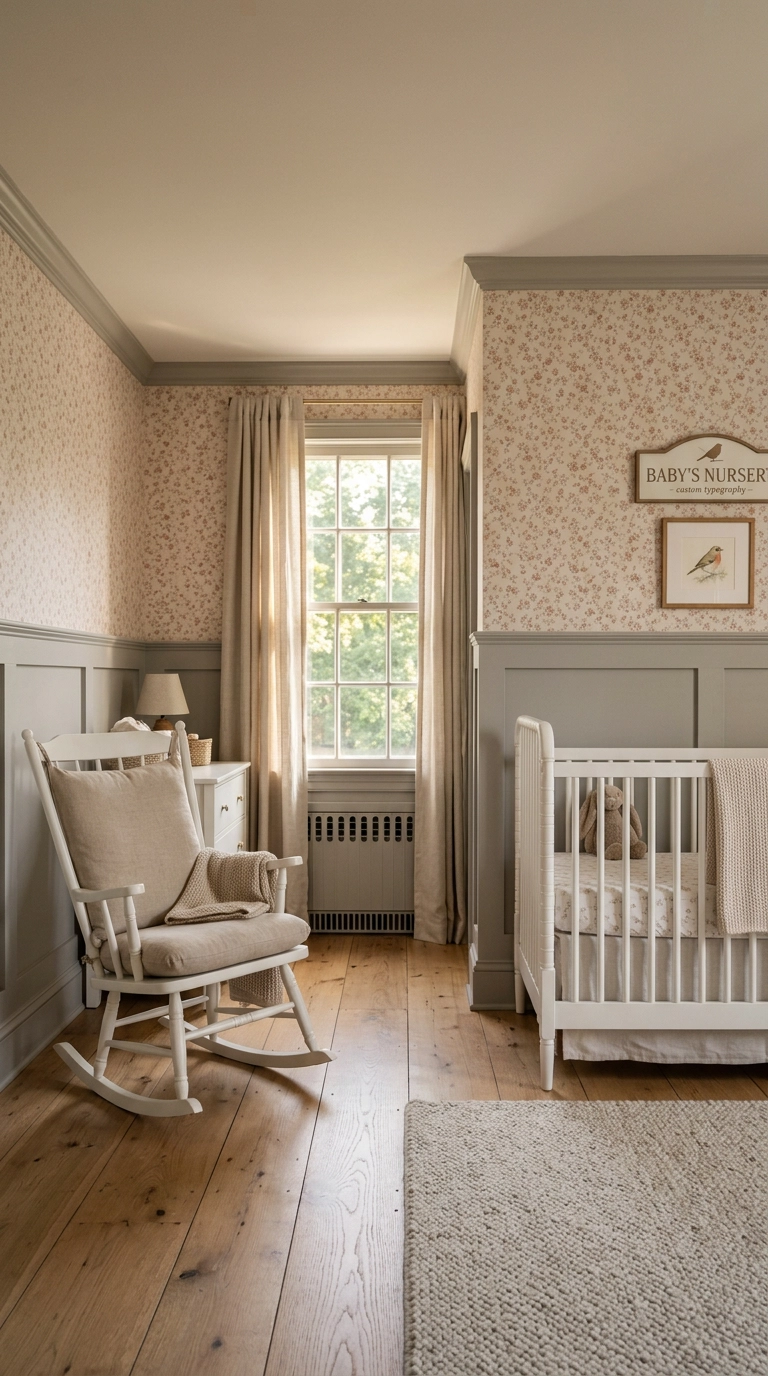
Grey doesn’t have to mean gender-neutral only; pairing it with a soft blush print above the rail keeps the room feeling considered rather than defaulting to pastel-everything. This is a bigger project since you’re adding real millwork, so plan on more than one weekend.
6. Grey and White Gingham Textile Layering
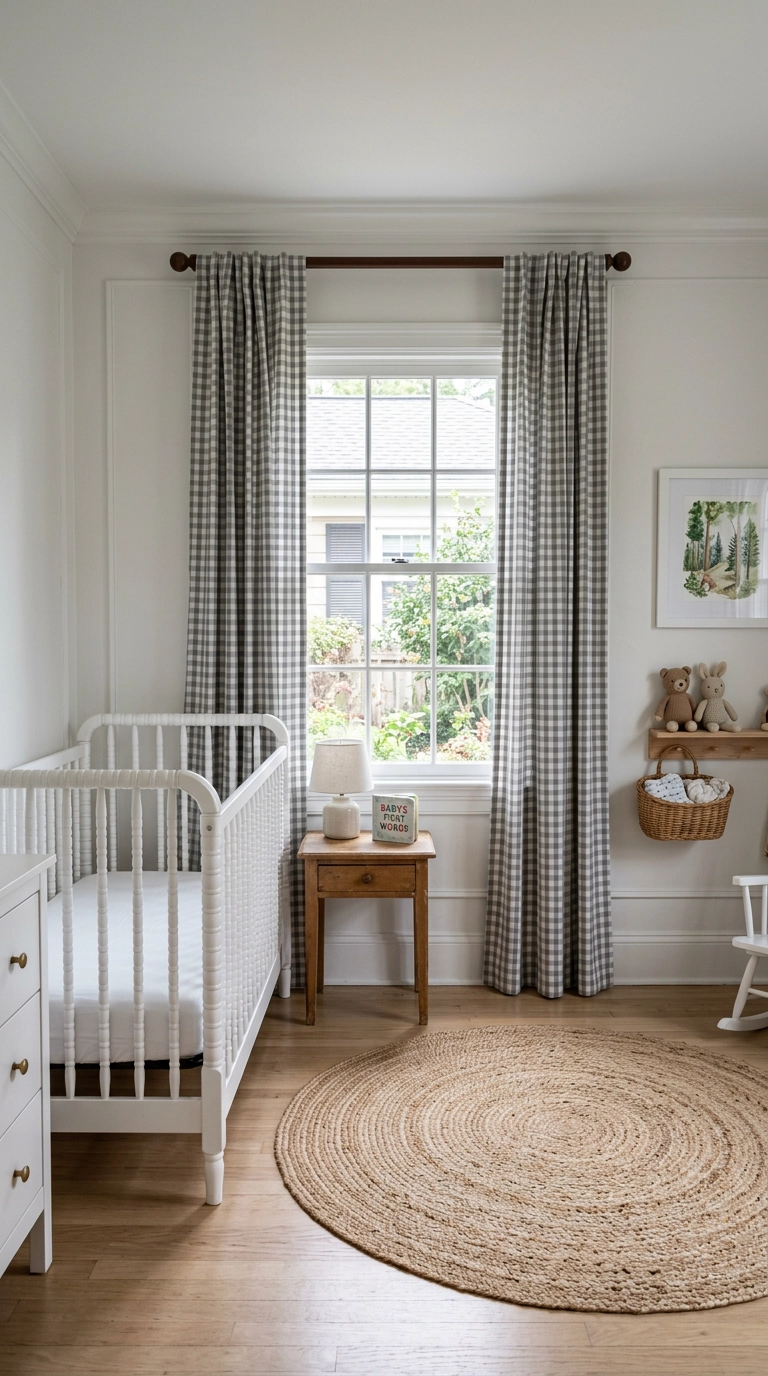
Hanging the curtain rod close to the ceiling rather than right above the window frame is the single easiest trick to make a standard 8-foot nursery feel taller, since the eye reads the full height of fabric, not the shorter window beneath it. Gingham keeps the pattern low-key enough to layer with other prints later.
7. Color-Drenched Grey Ceiling as the Fifth Wall
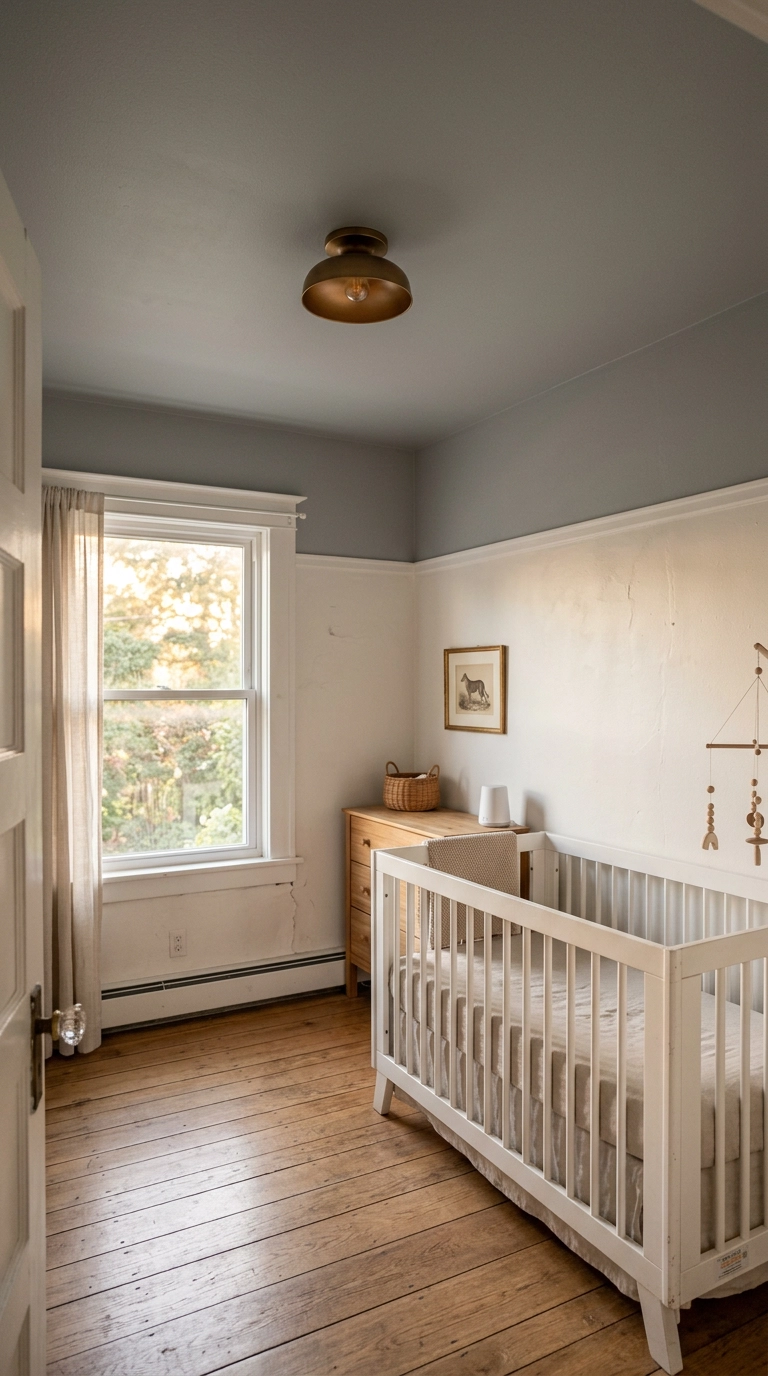
Painting the ceiling the same grey as the upper wall blurs the corner line and makes a small nursery feel taller and more enveloping, the same trick that works in any boxy room. It’s genuinely one extra can of paint and one extra day of taping beyond a standard wall job.
8. Grey Arch Mural Behind the Crib
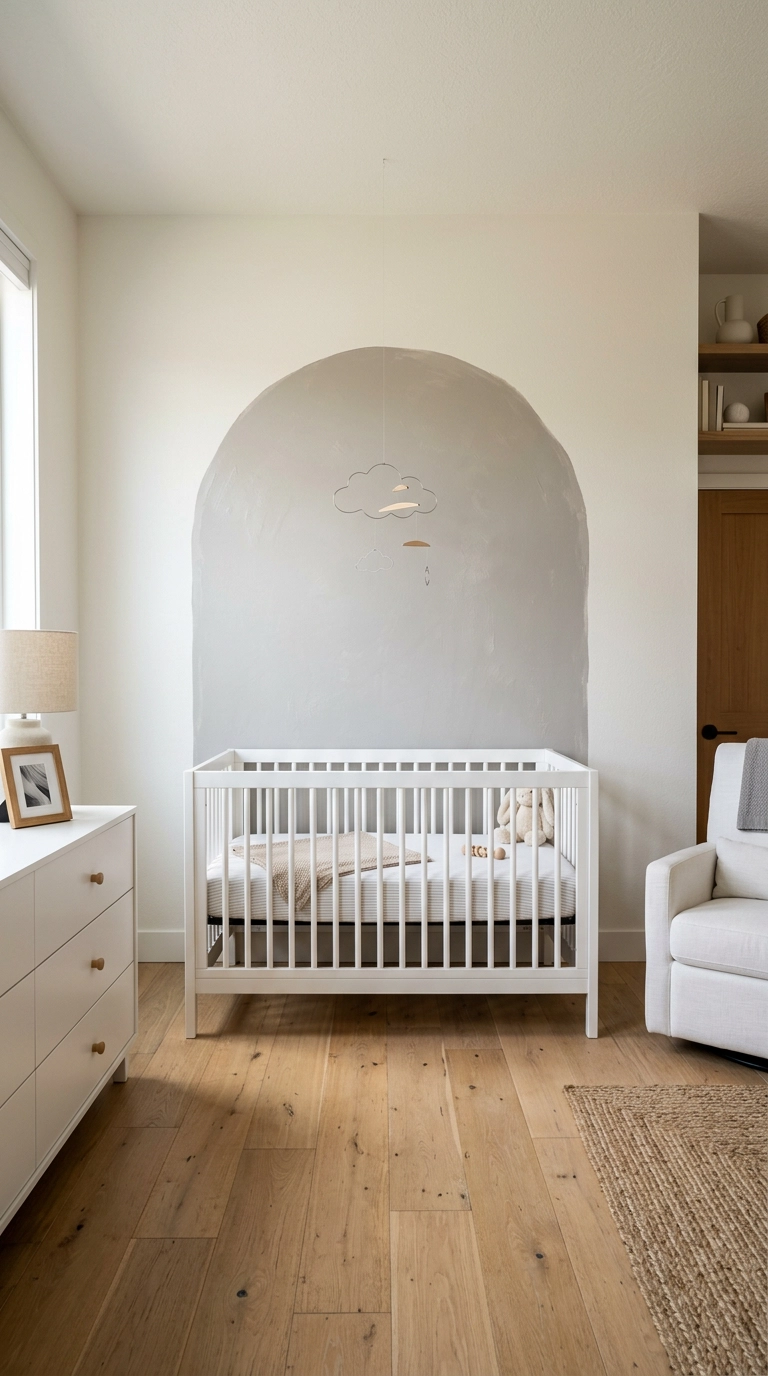
A painted arch is just painter’s tape, a pencil on a string for the curve, and one can of paint, which makes it one of the cheapest “wow” moments on this list. Center the crib under it and the arch does the framing job a headboard would do in a bedroom.
9. Cool Grey Vertical Stripe Wallpaper
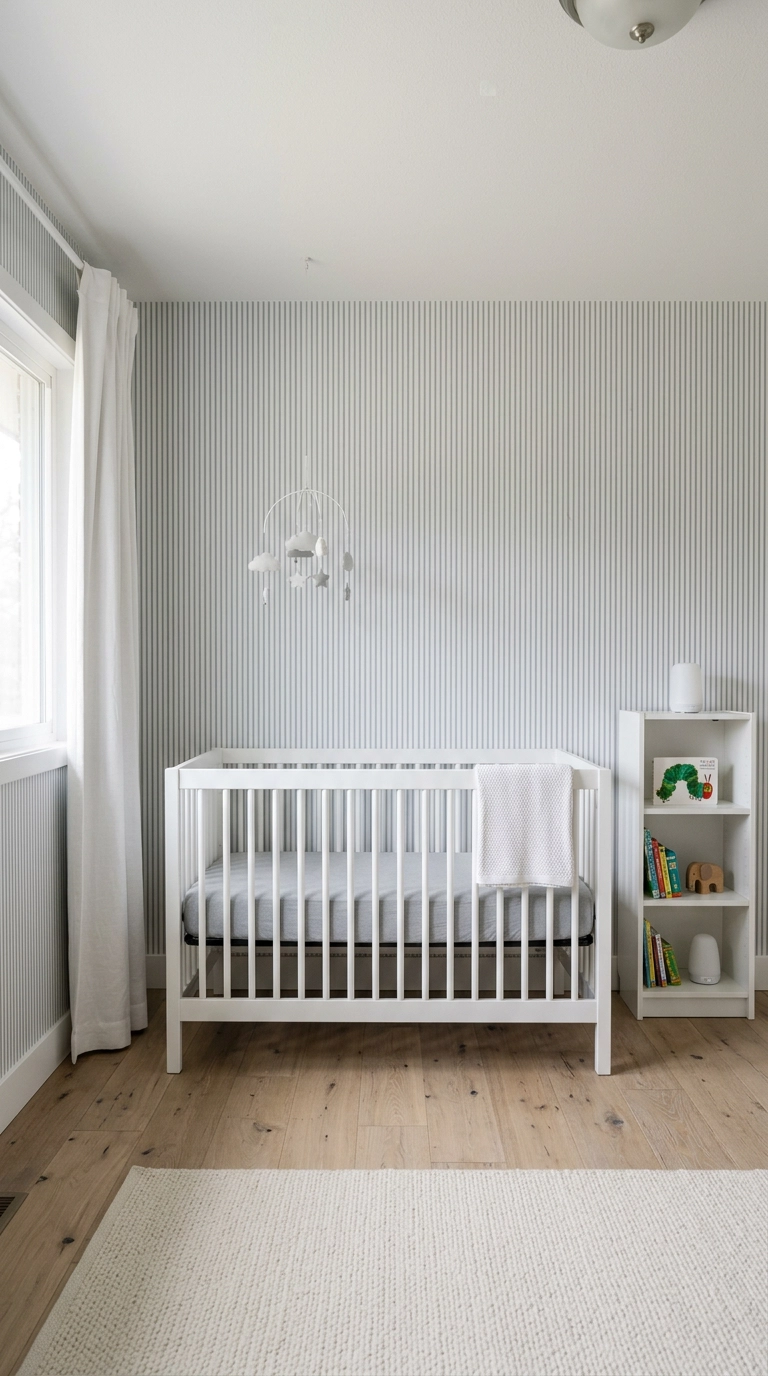
Same ceiling-height trick as any other room: thin vertical stripes pull the eye up, which matters more in a nursery than most rooms since a crib and changing table already eat up a lot of floor-level visual weight. Keep the stripe narrow so it reads as texture, not a barcode.
10. Faux Fur Rug Layered Over a Flatweave
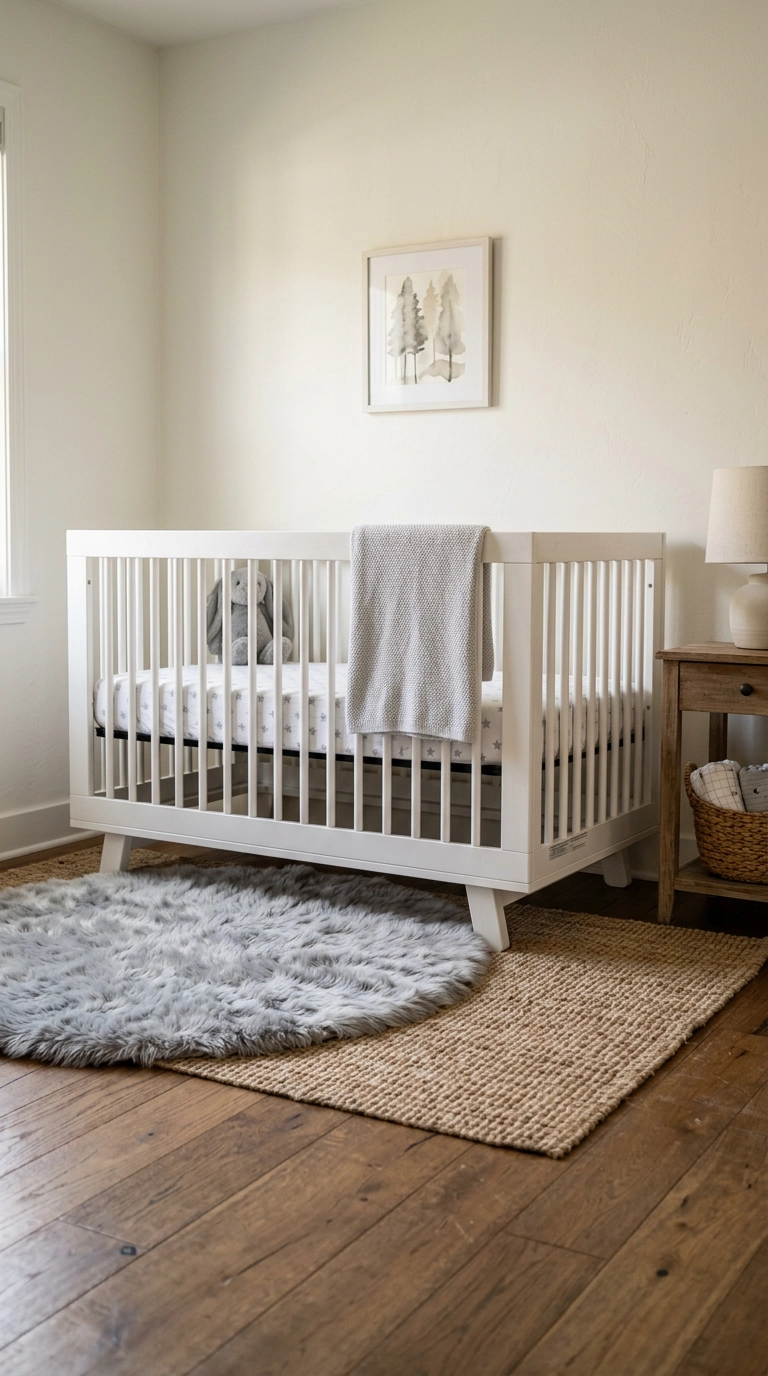
Layering a soft faux fur on top of a flatweave gives you a genuinely comfortable spot for barefoot 2 a.m. feedings without covering the whole floor in something hard to clean. It’s a twenty-minute swap and one of the cheapest texture upgrades on this list.
11. Grey Knit Pouf with Woven Storage Basket
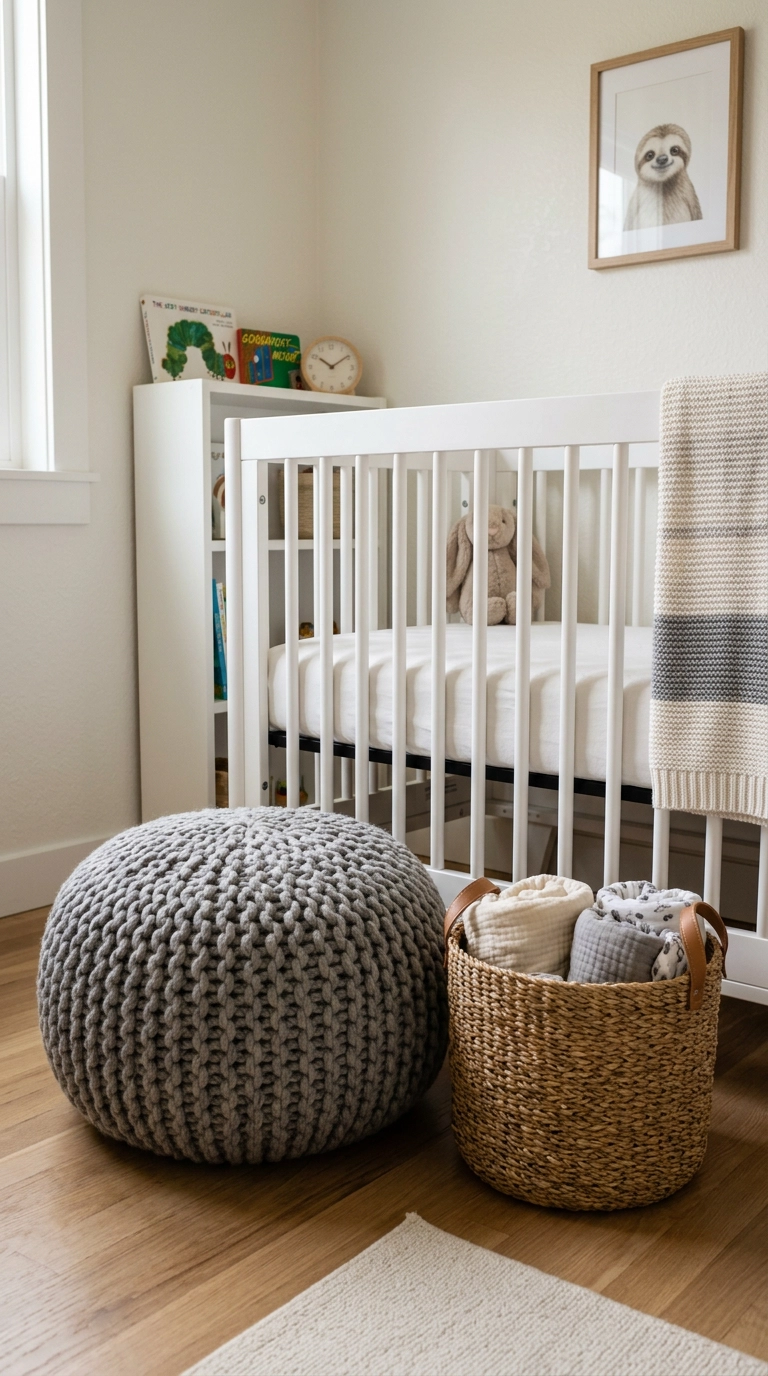
A knit pouf earns its keep as extra seating for a partner or grandparent during late-night rocking, which a decorative-only object never would. One basket is enough for blankets within reach of the glider; more than that starts to look like overflow storage instead of styling.
12. Grey-Matted Gallery Wall Above the Dresser
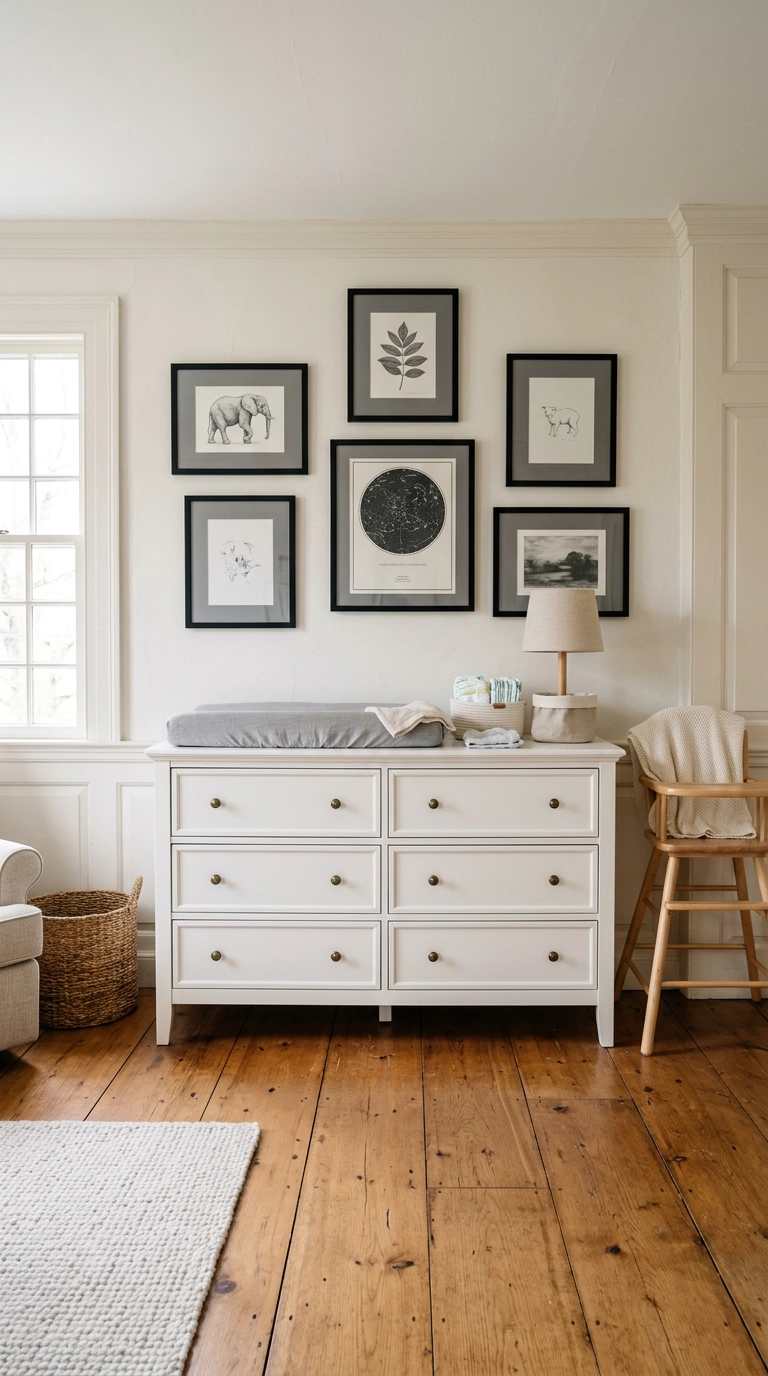
Grey mats instead of white ones keep a gallery wall from reading too crisp and gallery-like for a baby’s room, softening the whole arrangement without changing a single frame. Budget a full weekend once you count sourcing prints, frames, and the actual hanging and leveling.
13. Grey Blackout Curtains Hung High Near the Ceiling
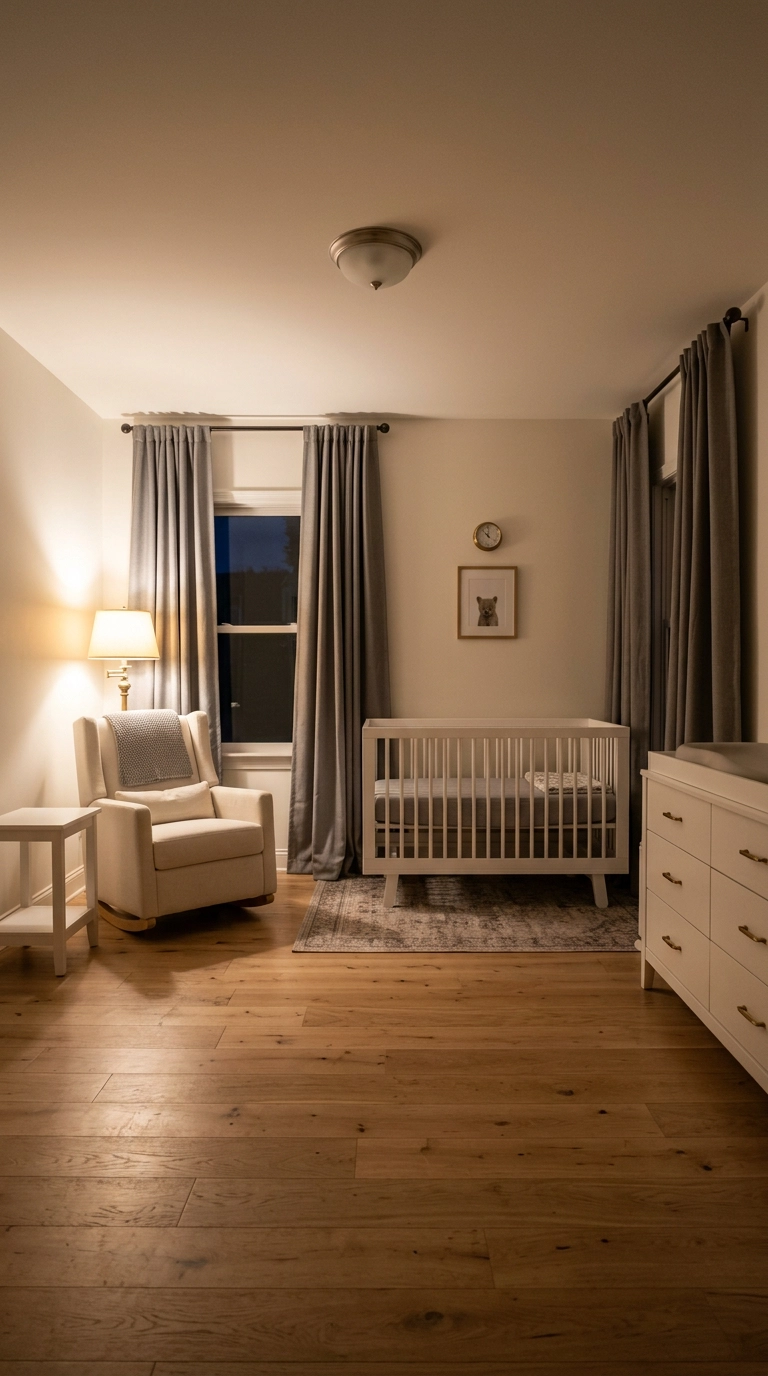
Blackout is non-negotiable for most nurseries, and grey is the one blackout color that doesn’t read as a dorm room the way plain white or navy panels sometimes do. Hang the rod high and wide of the window frame, the same ceiling-height trick, so the curtains do double duty as both function and decor.
14. High-Contrast Charcoal Crib Against White Walls
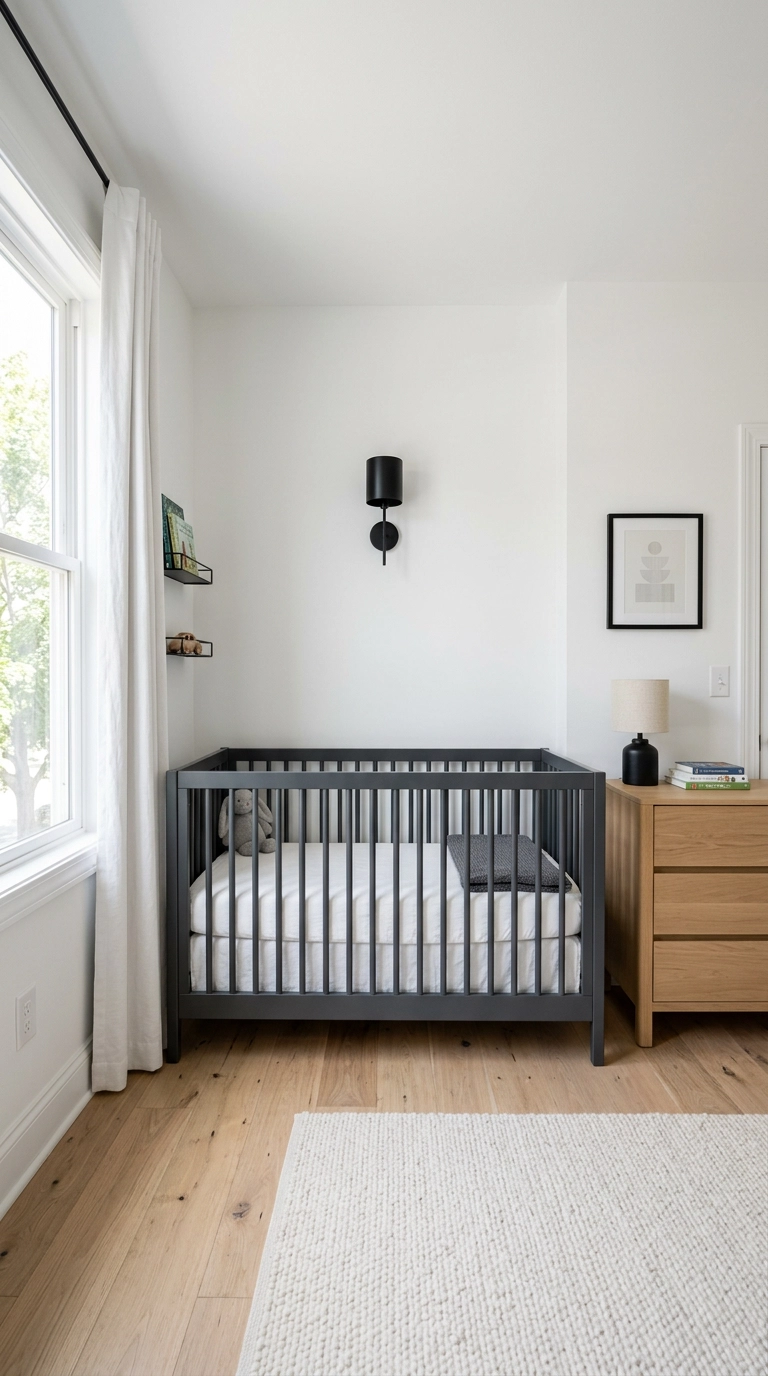
Flip the usual formula and let the furniture carry the grey instead of the walls; a dark crib against white reads modern and grounds a room that could otherwise feel like a blank box. This works especially well in a small nursery where a full dark wall might feel closed-in.
15. Grasscloth Wallpaper Accent Wall in Grey
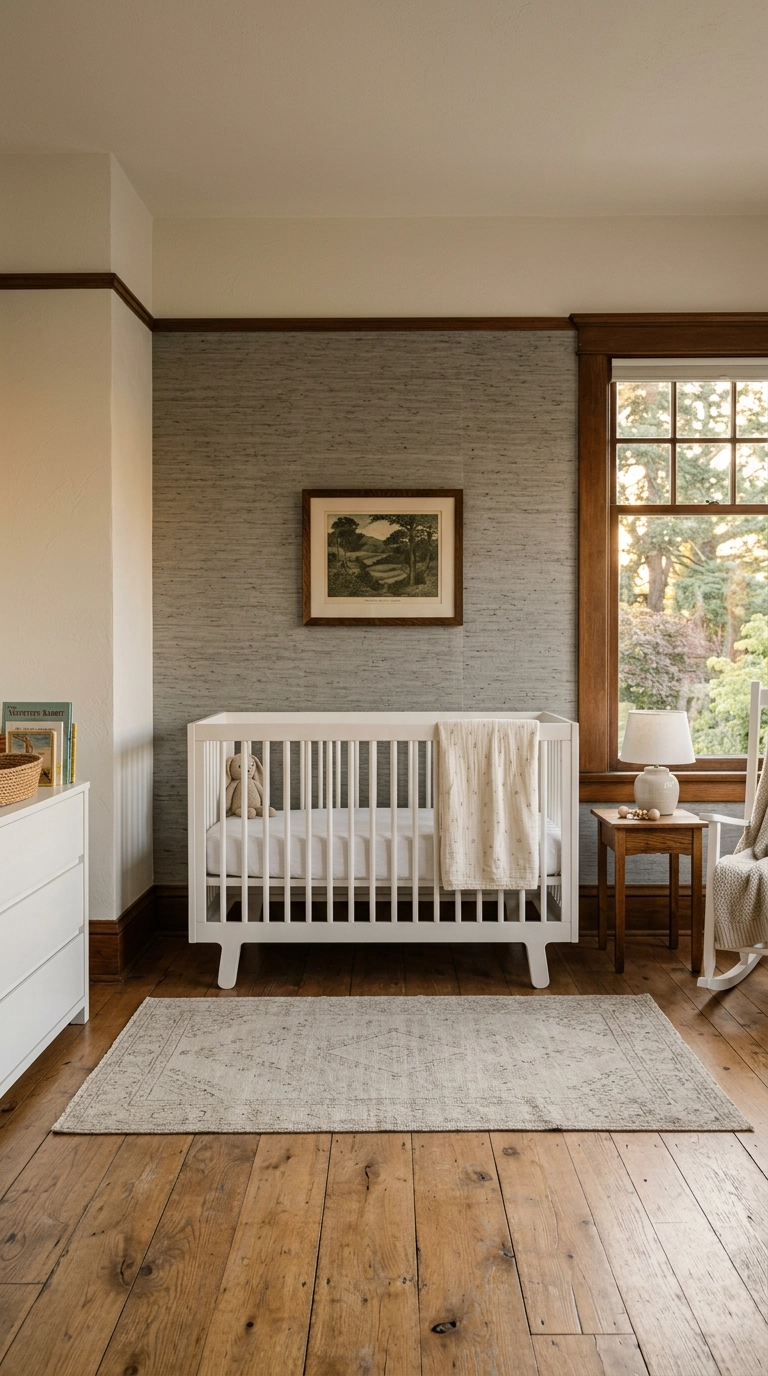
Grasscloth in grey brings genuine texture into a room that’s otherwise mostly soft fabric and flat paint, and the woven pattern hides minor wall imperfections better than a smooth finish would. It’s a splurge material that needs a professional hanger, so factor labor into the budget alongside the paper itself.
16. Ombre Grey Paint from Ceiling to Floor
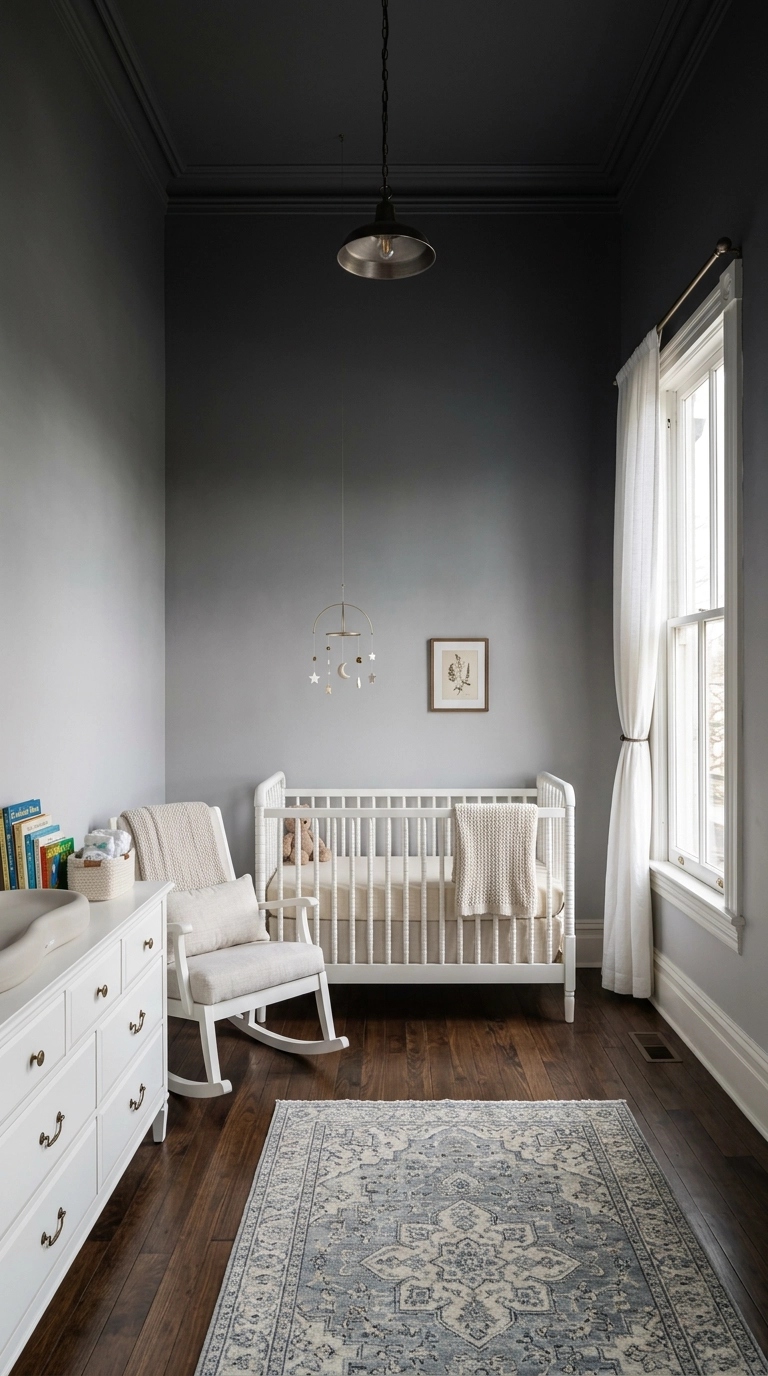
An ombre wall grounds a tall Victorian-height ceiling the same way a gradient wallpaper would, getting lighter as it nears eye level so the room feels anchored rather than towering over a crib. This needs a painter comfortable blending gradients freehand or with a sprayer; it’s not a beginner DIY.
17. Grey and Terracotta Modern Color Pairing
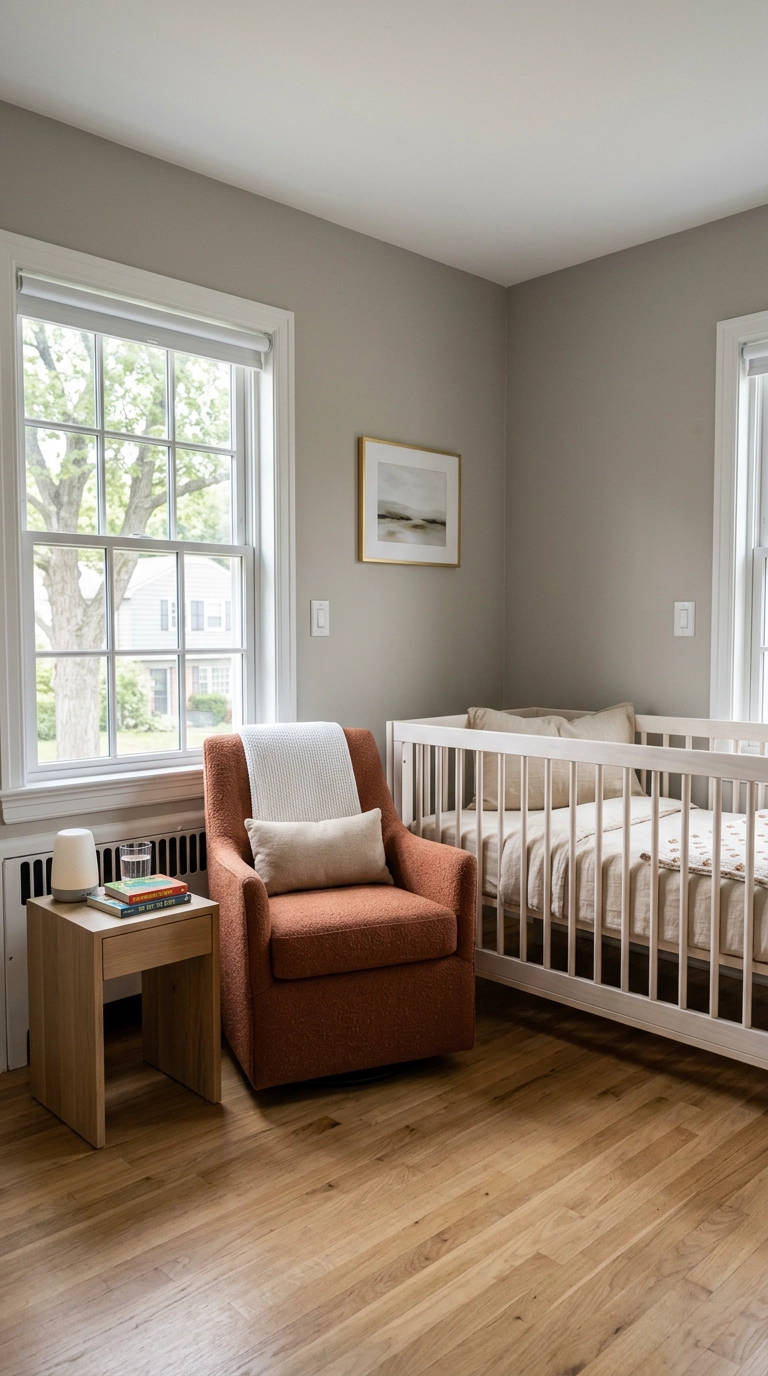
Grey plus terracotta reads current in a way plain grey-and-white doesn’t anymore, and it’s an easy way to add warmth to a north-facing room without repainting the whole wall. Start with a single terracotta chair or pillow rather than committing to a terracotta wall; it’s the cheaper way to test the pairing.
18. Grey Geometric Wallpaper Accent
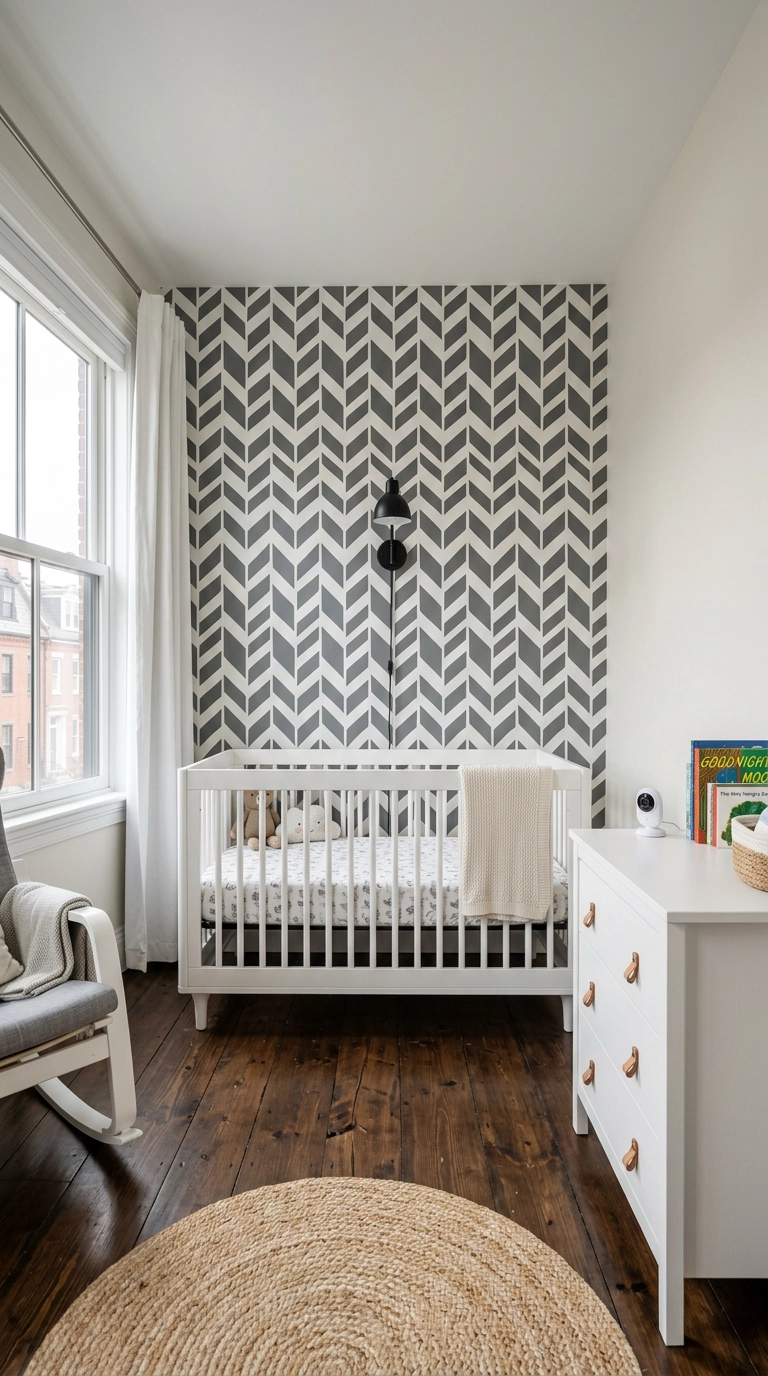
A confident geometric print is the pick for parents who don’t want a soft, sleepy nursery and would rather the room feel graphic and awake. Keep it to one wall behind the crib; geometric prints on all four walls of a small room read busy fast.
19. Grey Linen Drapery in a Light-Filled Nursery
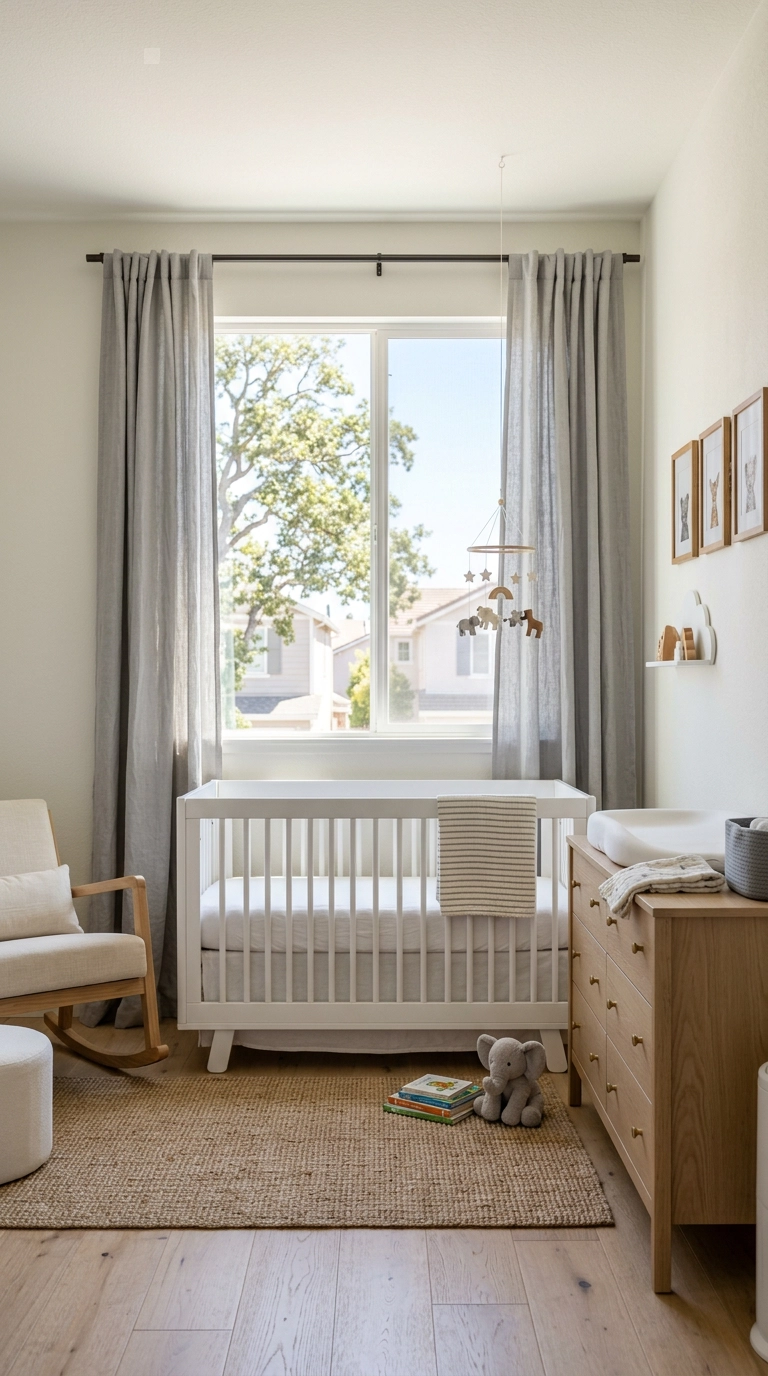
Linen in a soft grey lets a lot of light through even when closed, which matters in a south-facing nursery where full blackout during daytime naps isn’t always the goal. Save true blackout curtains for behind these as a second layer if the room does need to go fully dark.
20. Grey Painted Wall Arch Nook for the Crib
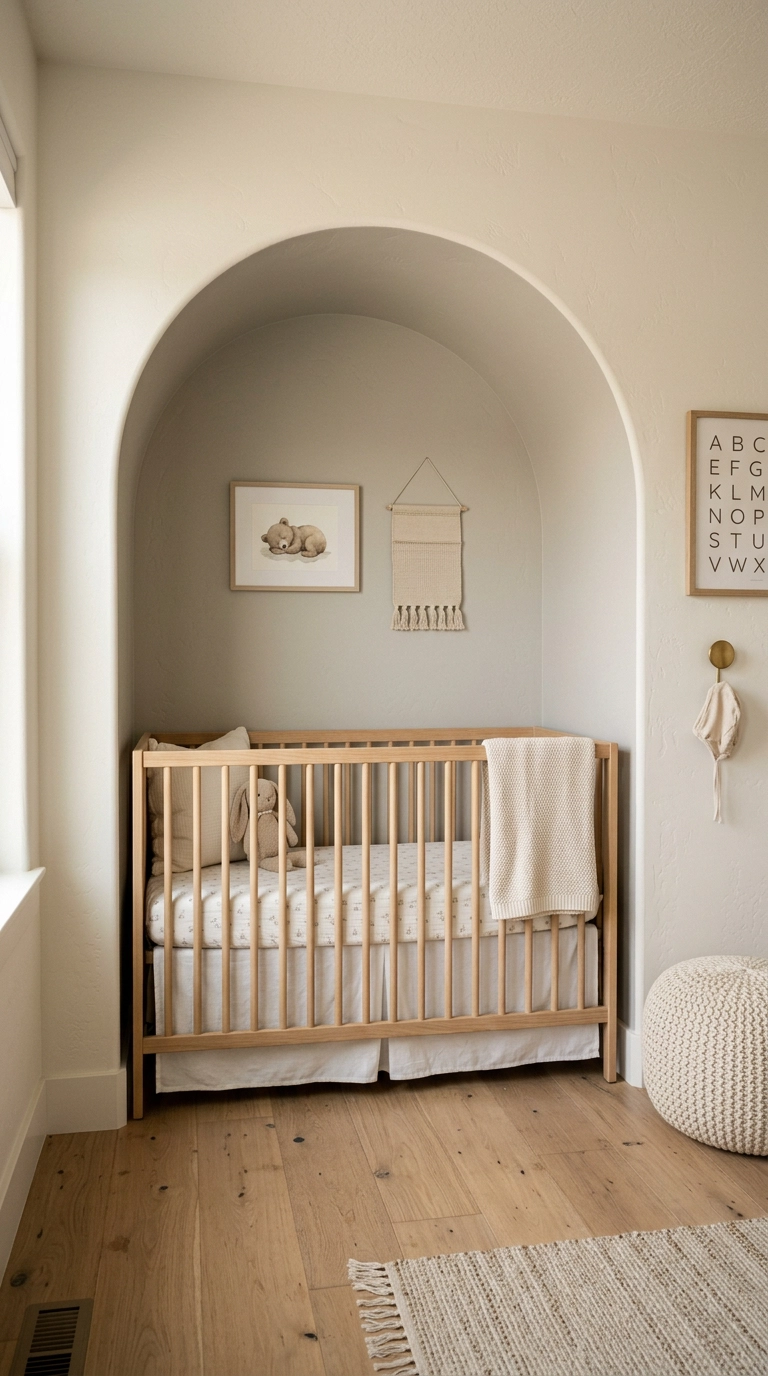
If your nursery already has a built-in niche or alcove, painting just that recess grey turns an architectural quirk into the room’s best feature instead of an awkward dead space. This is a real construction project if you’re building the niche from scratch, so it only makes sense if the nook already exists.
21. Reupholstered Boucle Glider in Warm Grey
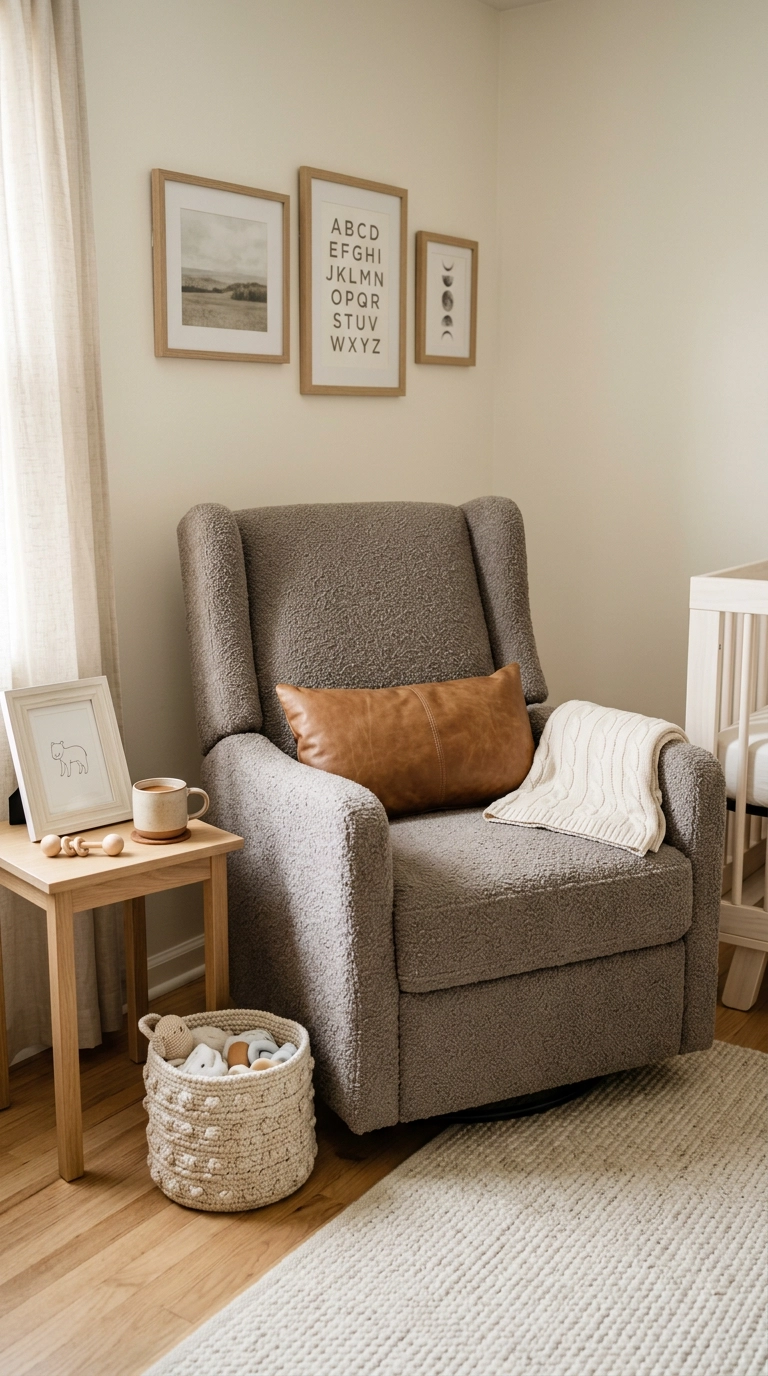
The glider is the piece of furniture you’ll actually touch every single day, so a nubby boucle in warm grey earns its higher price tag more than almost anything else in the room. One lumbar pillow is enough; the chair itself is already doing the styling work.
22. Grey Wall Decal Name Sign Above the Crib
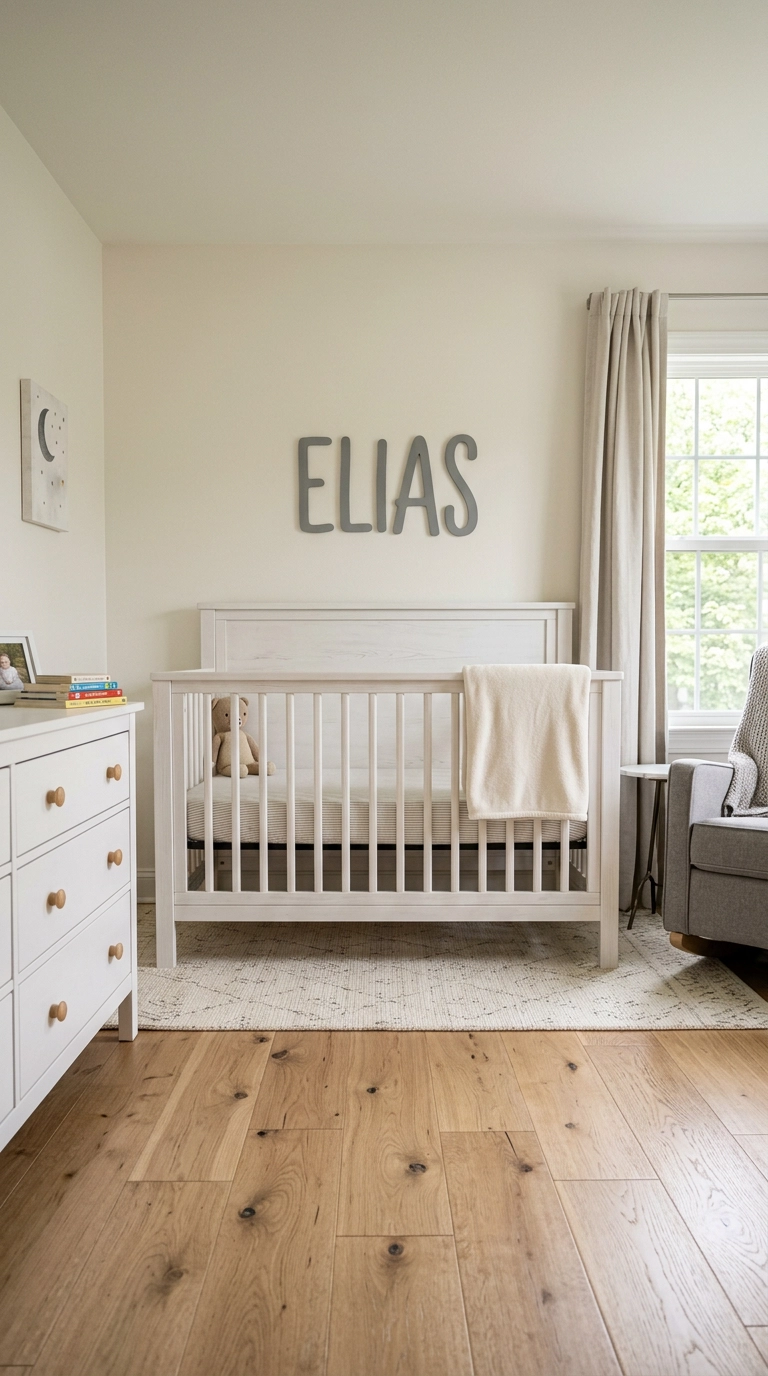
A grey-painted wood cutout sign reads more custom and less craft-store than a printed canvas version, and it’s genuinely a twenty-minute hang once it arrives. Center it on the crib, not the wall, since the crib is what actually anchors the composition.
23. Dimmable Sconces Flanking the Crib
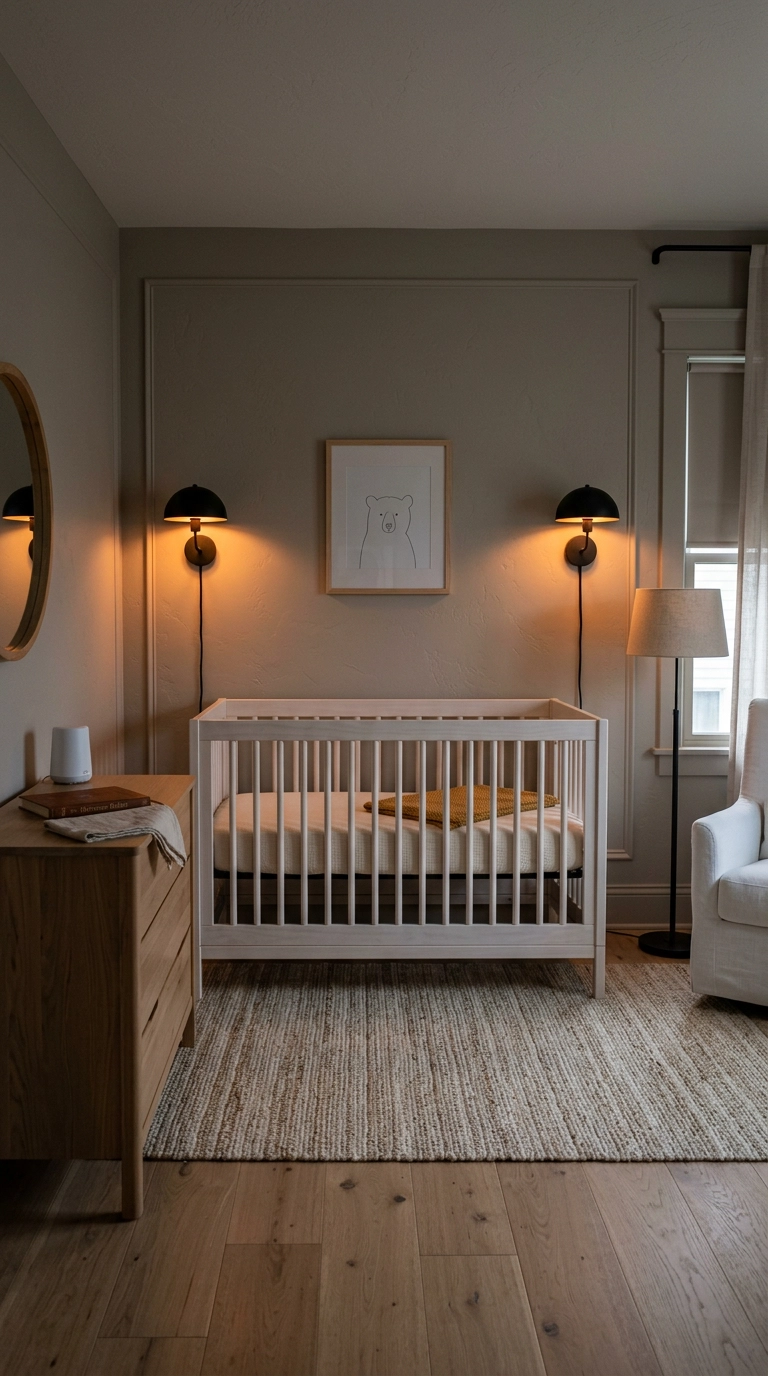
Dimmable sconces solve the actual problem of needing enough light to change a diaper at 3 a.m. without needing to blast the overhead fixture and wake everyone up fully. It’s an electrician job if you don’t already have wiring there, so plan for that cost alongside the fixtures themselves.
24. Closet Doors Painted to Match the Walls
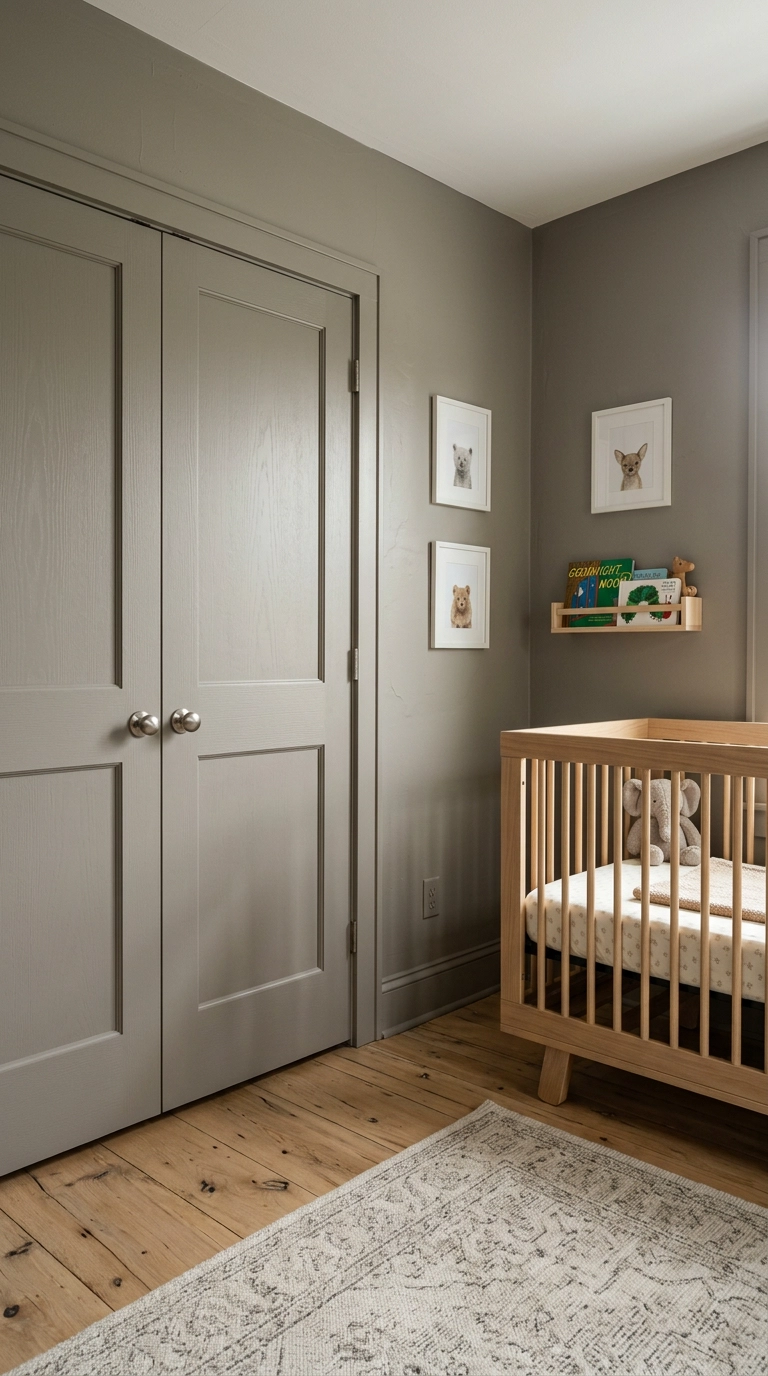
Painting closet doors to disappear into the wall color is the trick that makes a small nursery feel bigger, since a contrasting white door against a grey wall visually chops the room in two. It’s a genuinely cheap fix, just the same can of paint you’re already using on the walls.
25. Grey and Sage Green Botanical Pairing
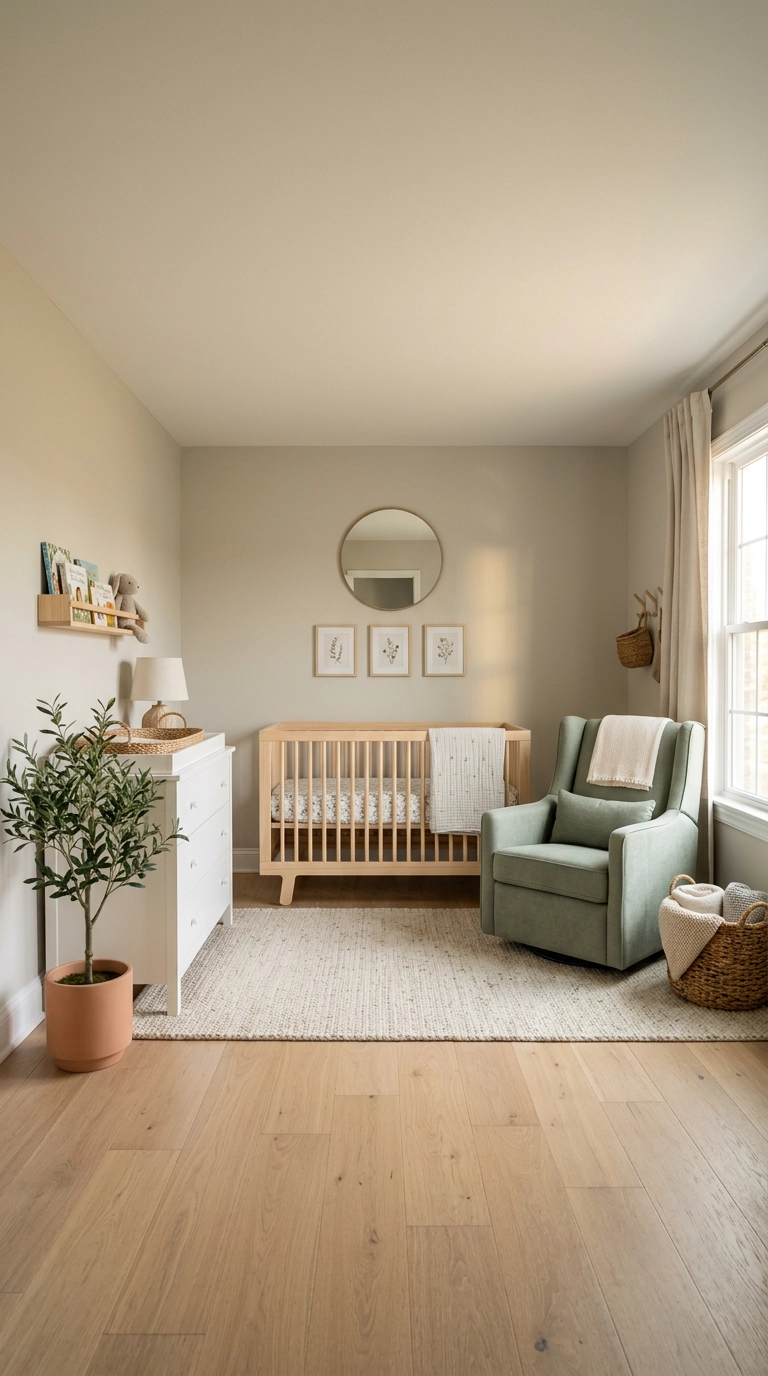
Grey and sage together feels less expected than grey and blush, and it holds up better as the child grows since neither color reads specifically as a baby color. One small plant in the corner is plenty; a nursery with a curious toddler eventually pulling leaves off doesn’t need more than that.
26. Limewash Textured Plaster Walls in Soft Grey
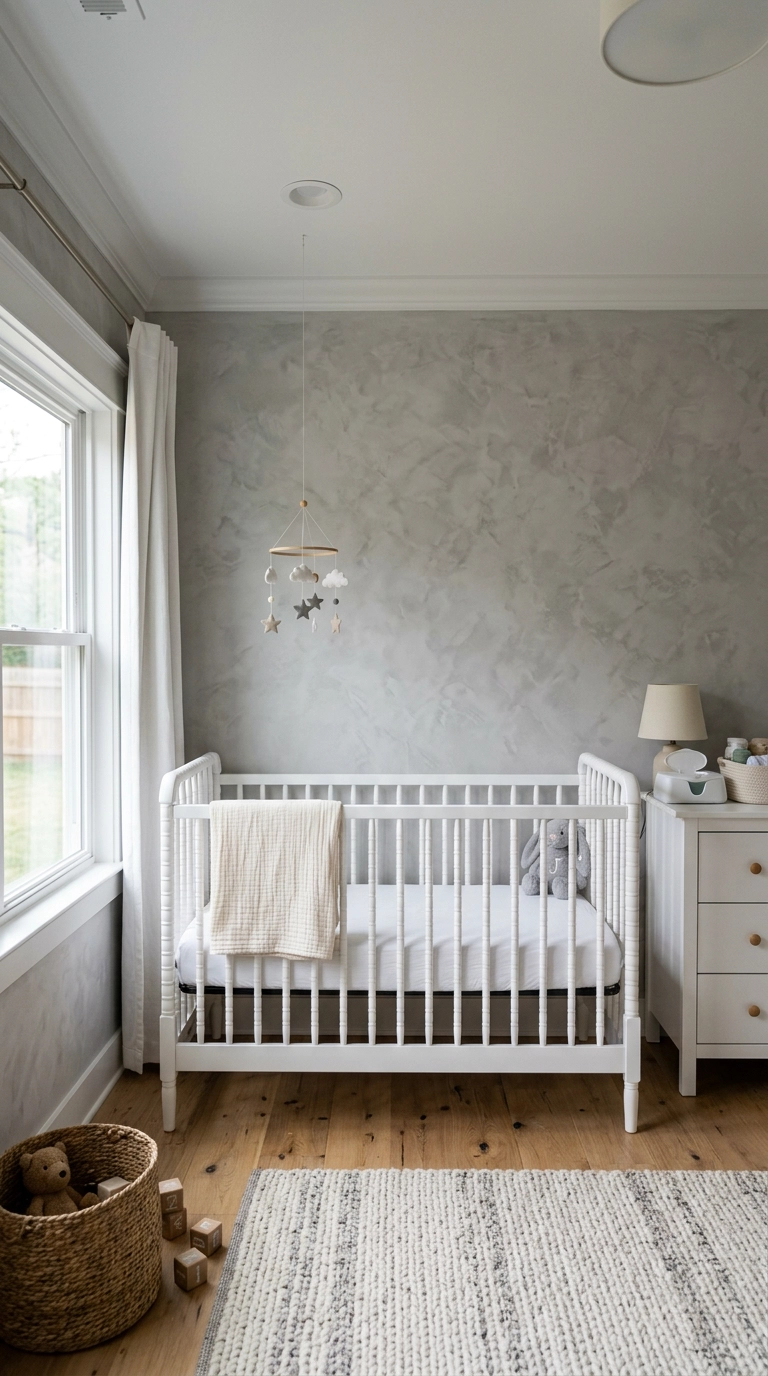
Limewash gives a nursery the same handmade, slightly imperfect depth it gives any other room, and the mottled finish is genuinely forgiving of walls that aren’t perfectly smooth. This is a specialty technique, so hire it out unless you’ve practiced the plaster brush technique somewhere lower-stakes first.
27. Soft Grey Star Print Ceiling Mural
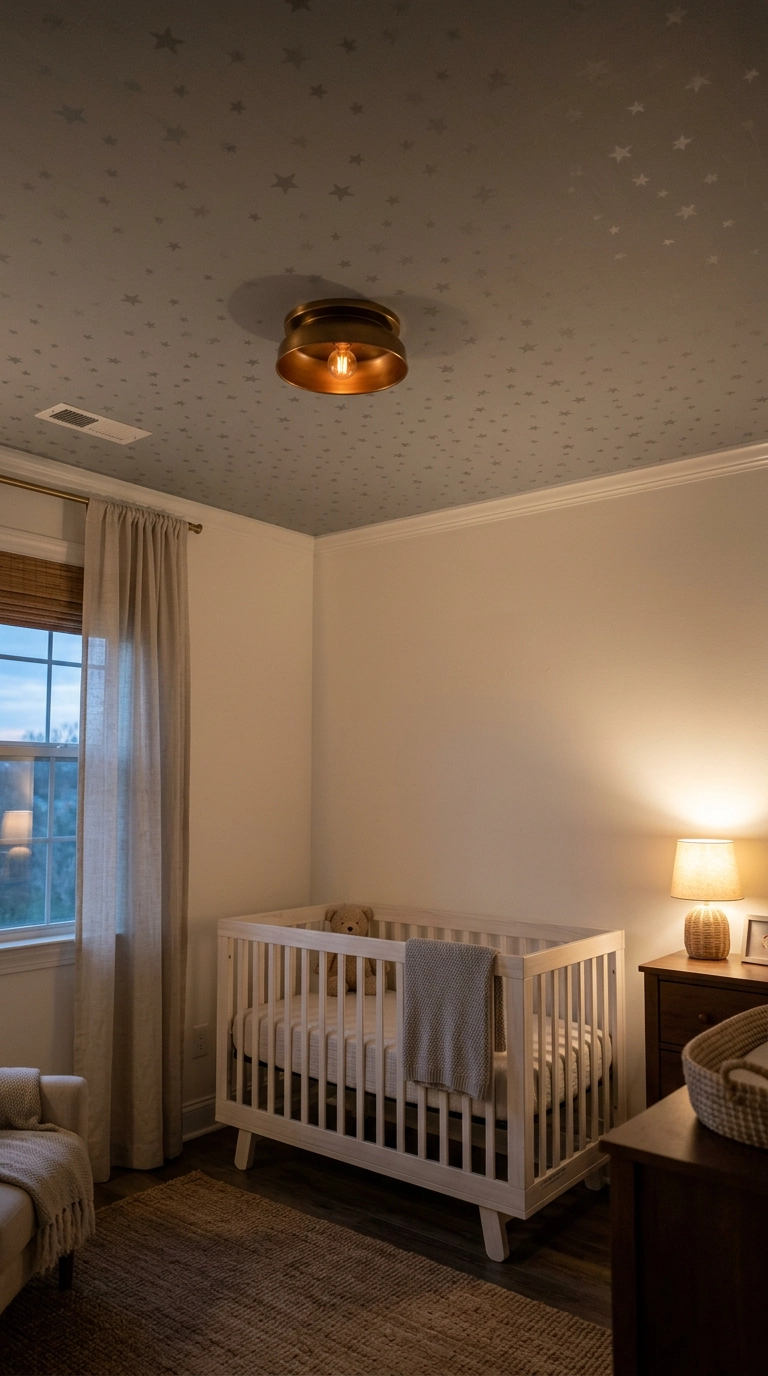
A subtle star print on the ceiling only is the thing a baby actually looks at from the crib, which makes it one of the more thoughtful uses of pattern on this whole list. Keep it tonal grey-on-grey rather than high contrast, since a busy print directly overhead can be genuinely overstimulating.
28. Grey Open Shelving Styled with Books and Toys
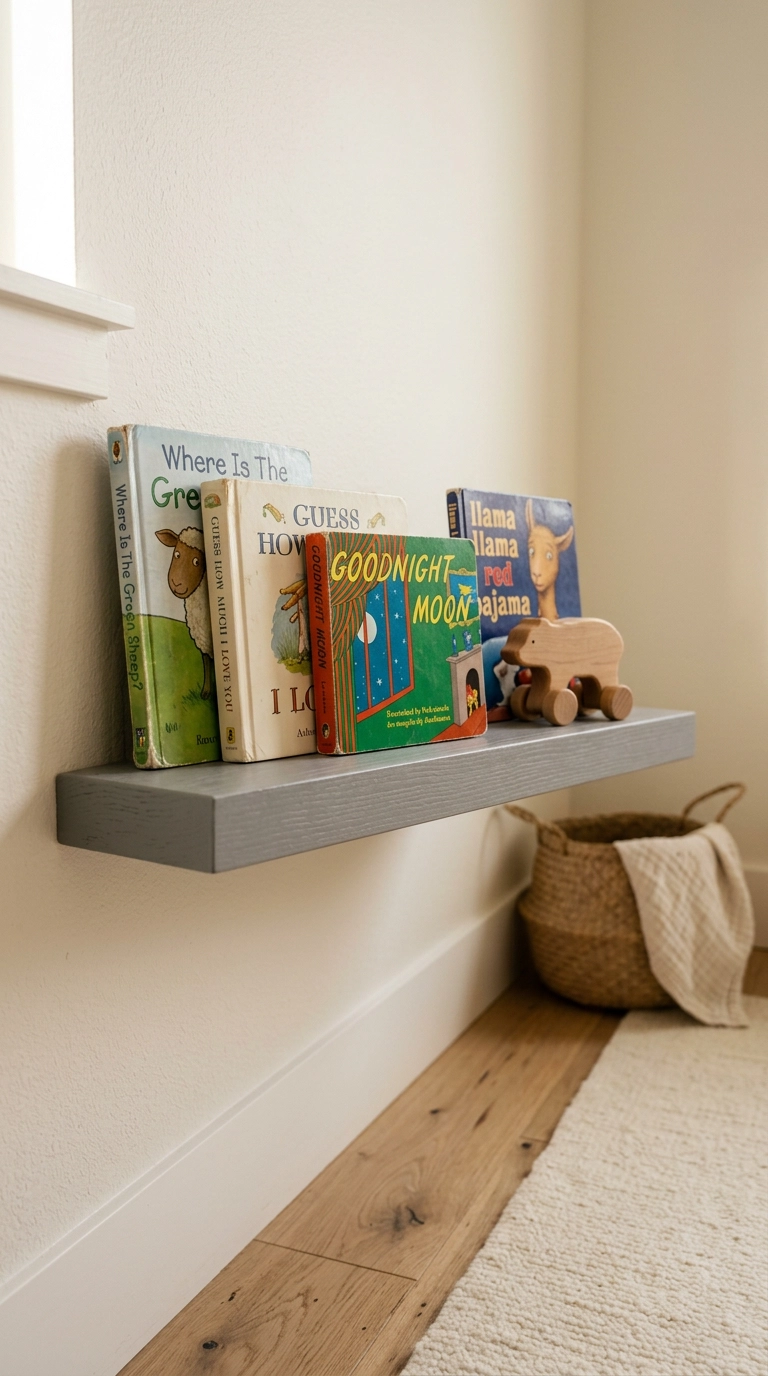
A single grey-painted shelf with a handful of larger objects and real gaps between them reads as styled instead of cluttered, and it keeps favorite books actually within reach for story time. Four or five larger pieces is the ceiling here; past that it starts looking like storage overflow.
29. Grey Woven Diaper Storage Basket by the Changing Table
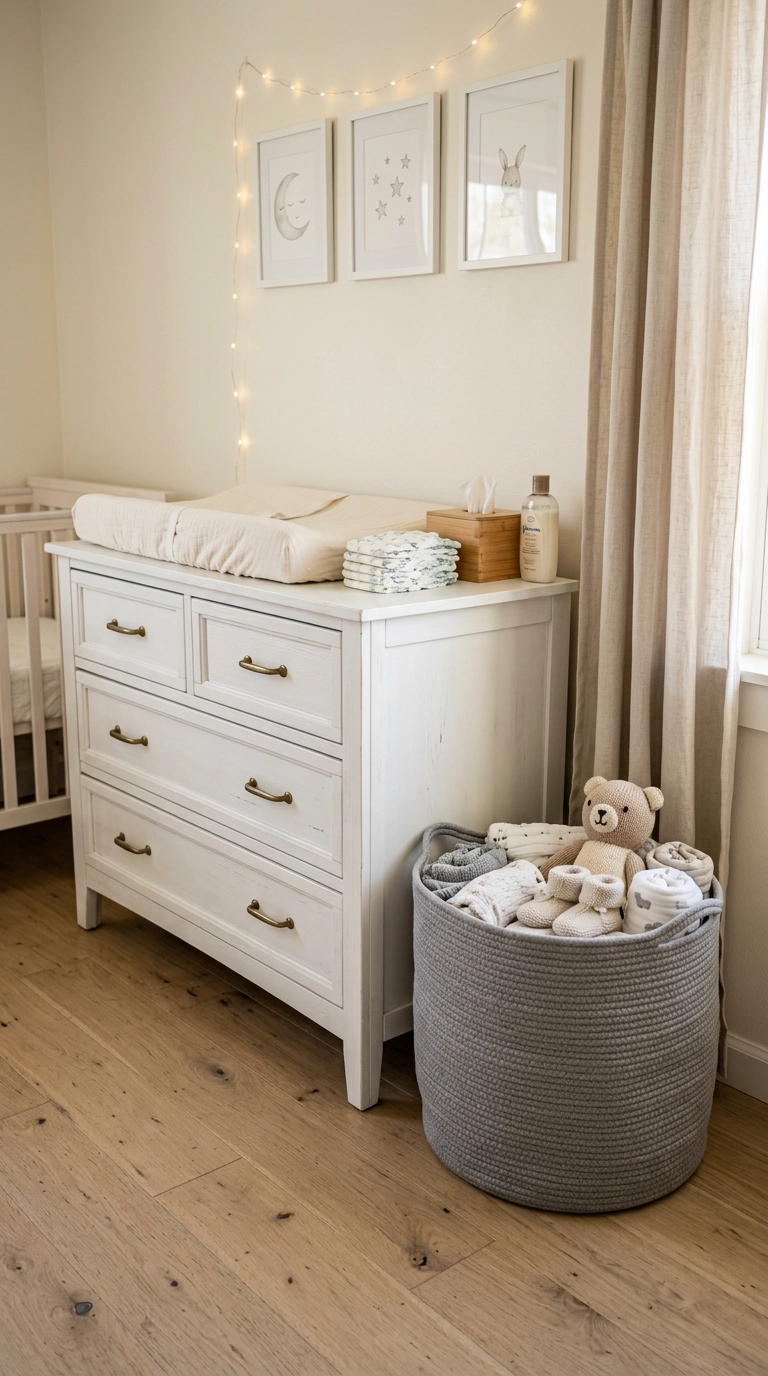
One good basket within arm’s reach of the changing table solves a real problem, somewhere for the extra swaddles and burp cloths that otherwise end up in a pile on top of the dresser. Grey weave hides lint and dust better than a pale natural fiber does, which matters more here than in any other room.
30. Grey and White Checkerboard Rug
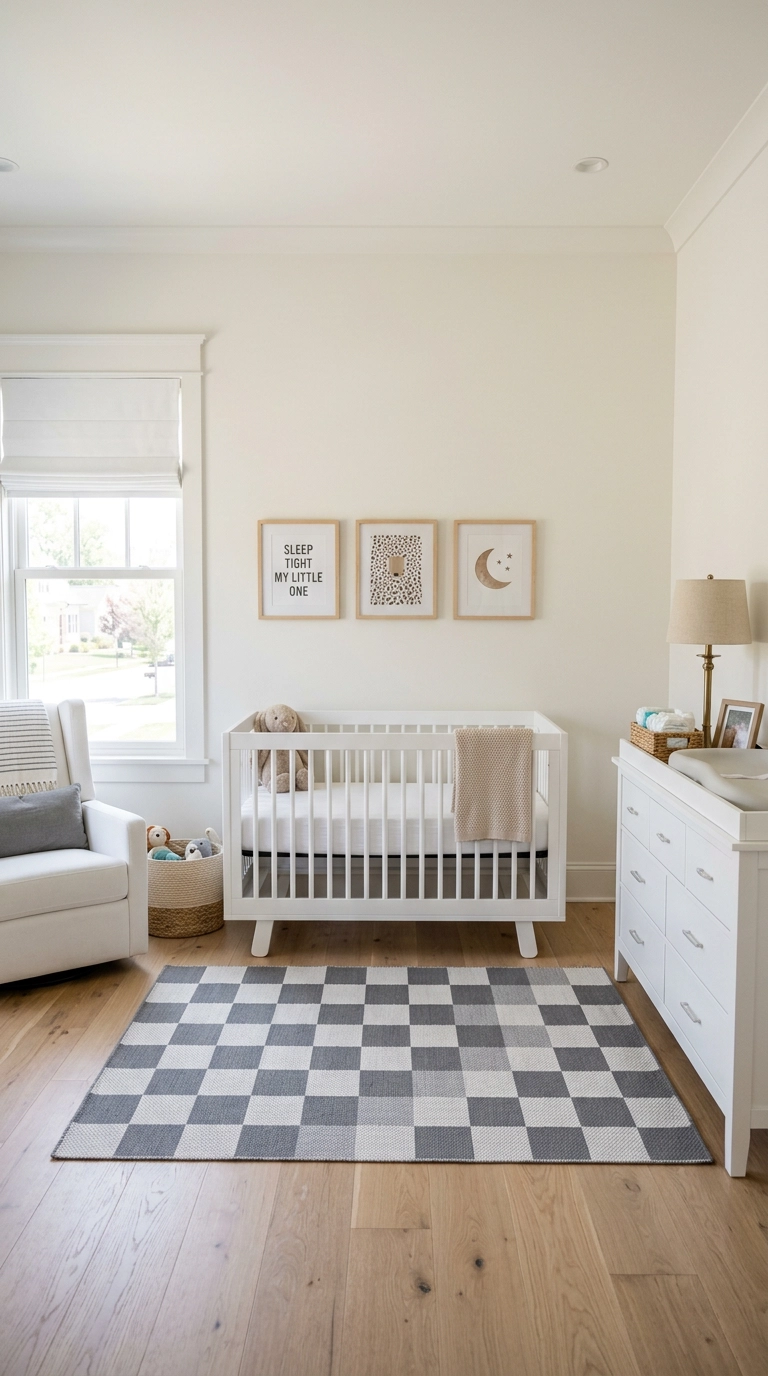
A checkerboard rug is graphic enough to anchor a mostly-neutral room without committing to a full pattern wall, and it’s the single easiest item on this list to swap out later without repainting anything. Go one size bigger than feels necessary; a rug too small under the crib reads like an afterthought.
31. Full Moody Charcoal Nursery for the Jewel-Tone Lover
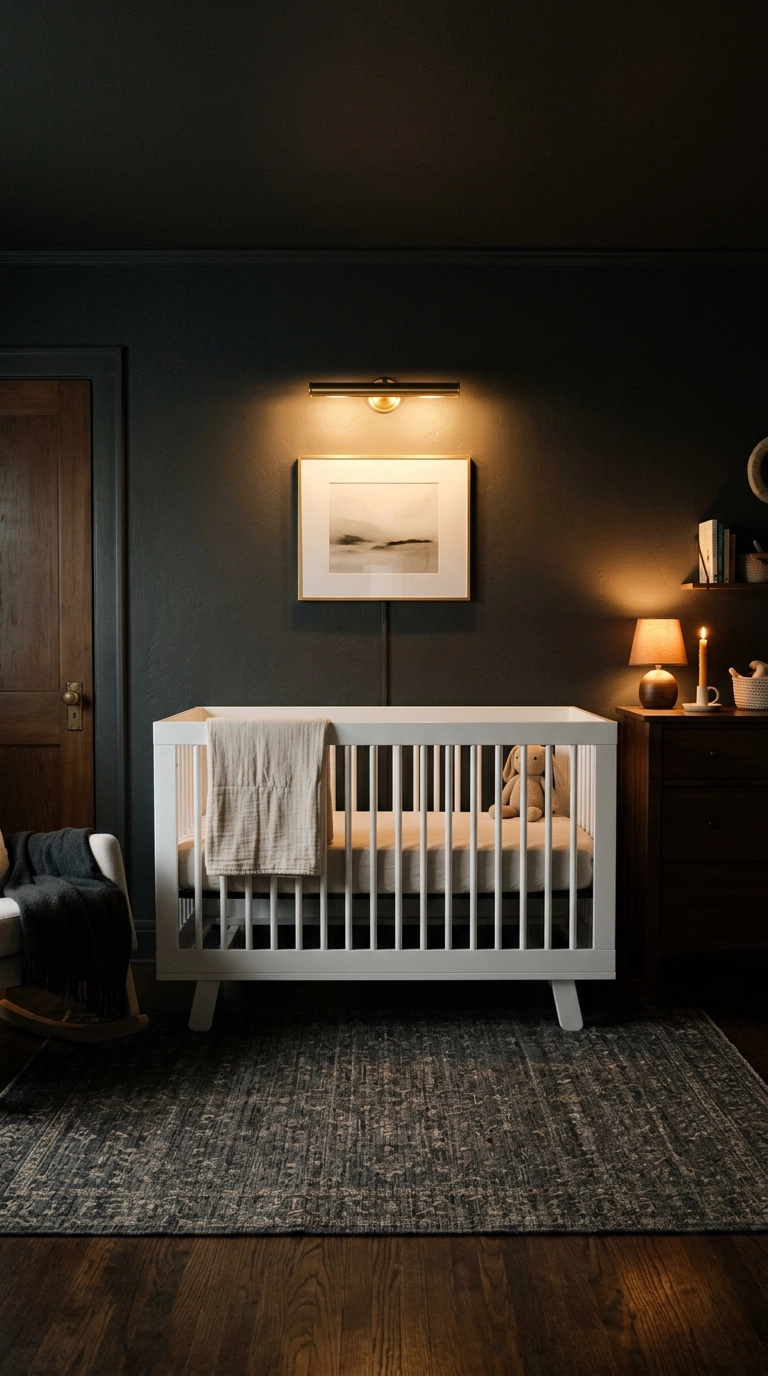
Saving the boldest version for last: a fully charcoal-drenched nursery isn’t for everyone, but a white crib against that much depth becomes the obvious focal point the second you walk in, and darker rooms genuinely help some babies sleep. This needs strong artificial light for daytime diaper changes and tummy time, so don’t skip the sconces or a floor lamp just because the walls are dark.
Where I’d Start If This Were My Nursery
If I had to pick a favorite trend right now, it’s color-drenched ceilings and limewash texture, both of which keep showing up in the nursery projects I’m proudest of. They solve the same real problem: a nursery is usually a small, boxy room, and both tricks make a small room feel intentional instead of cramped.
My honest advice is to start with the crib and the glider, since those are the two pieces you’ll actually look at every day, and build the wall treatment around them rather than the other way around. A lot of the grey textiles and knits on this list are the kind of thing you’ll find at retailers like Pottery Barn Kids or Serena & Lily, which is worth knowing if you want the exact texture without hunting through a dozen tabs.
Grey gets a reputation for being the safe, boring choice, but every idea above proves it’s really just a base that lets everything else in the room do the talking. If you want more of these before they go live on the site, sign up for my weekly newsletter and I’ll send new nursery ideas straight to your inbox.


