
22+ Charming Floral Nursery Decor Ideas that Feel Fresh and Sweet in 2026

I have styled a lot of nurseries, and florals are the one motif that clients circle back to every single time – then immediately worry it will look like a doily exploded. Here is the thing I have learned: florals only go wrong when you use six of them at once. Pick one floral to be the loudest thing in the room, keep everything else quiet, and you get a nursery that reads sweet and grown-up at the same time. Below are the 22 versions of that idea I actually use, from ten-dollar drawer knobs to a weekend of wallpaper paste.
Floral Nursery Decor Ideas
1. Oversized Chinoiserie Blooms on the Crib Wall
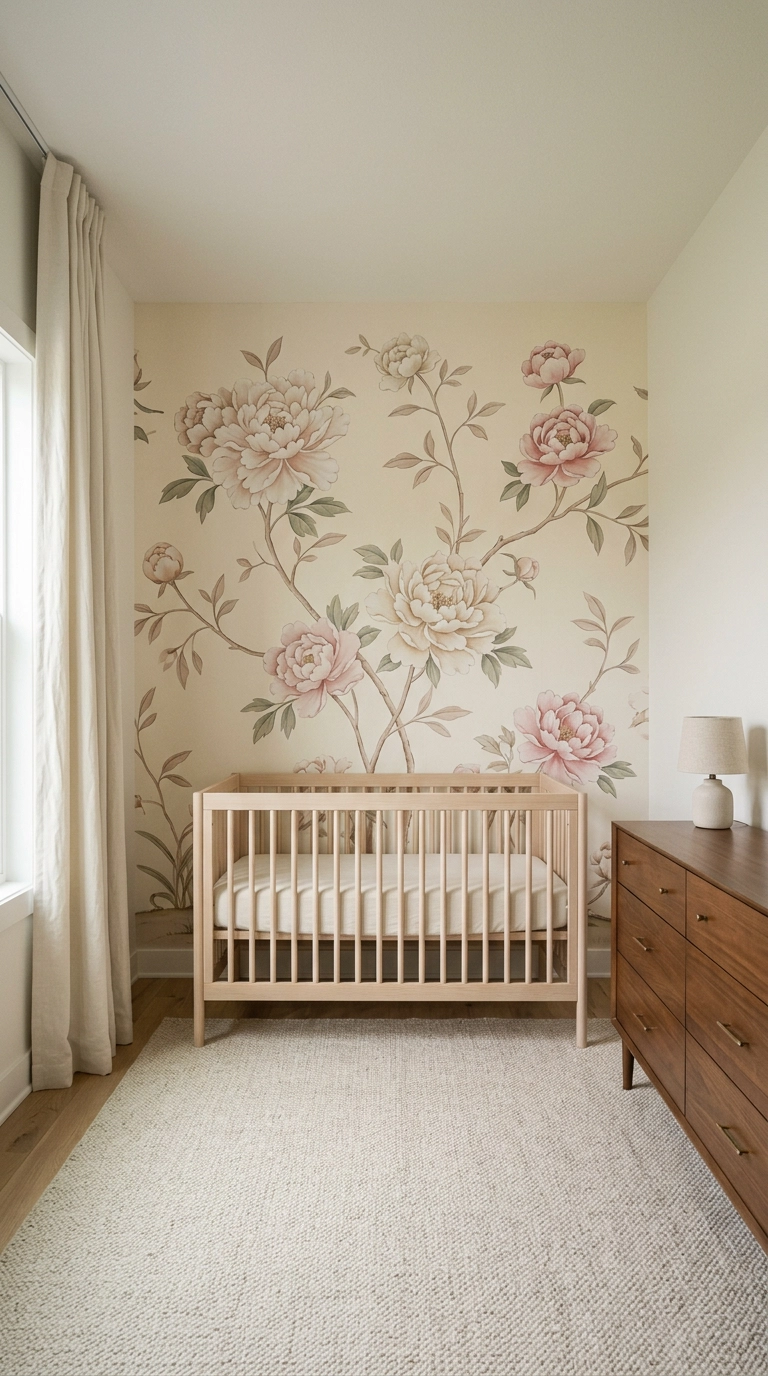
If you only do one thing from this list, make it this. A large-scale chinoiserie floral behind the crib gives you the drama of a mural without a single brushstroke, and because the blooms are big and spaced out, it reads calm instead of busy. Small nurseries handle giant florals better than tiny ones, which sounds backwards until you see it – fewer, larger motifs mean fewer visual breaks, so the wall stays quiet.
2. A Ditsy Liberty-Style Print on the Roman Shade
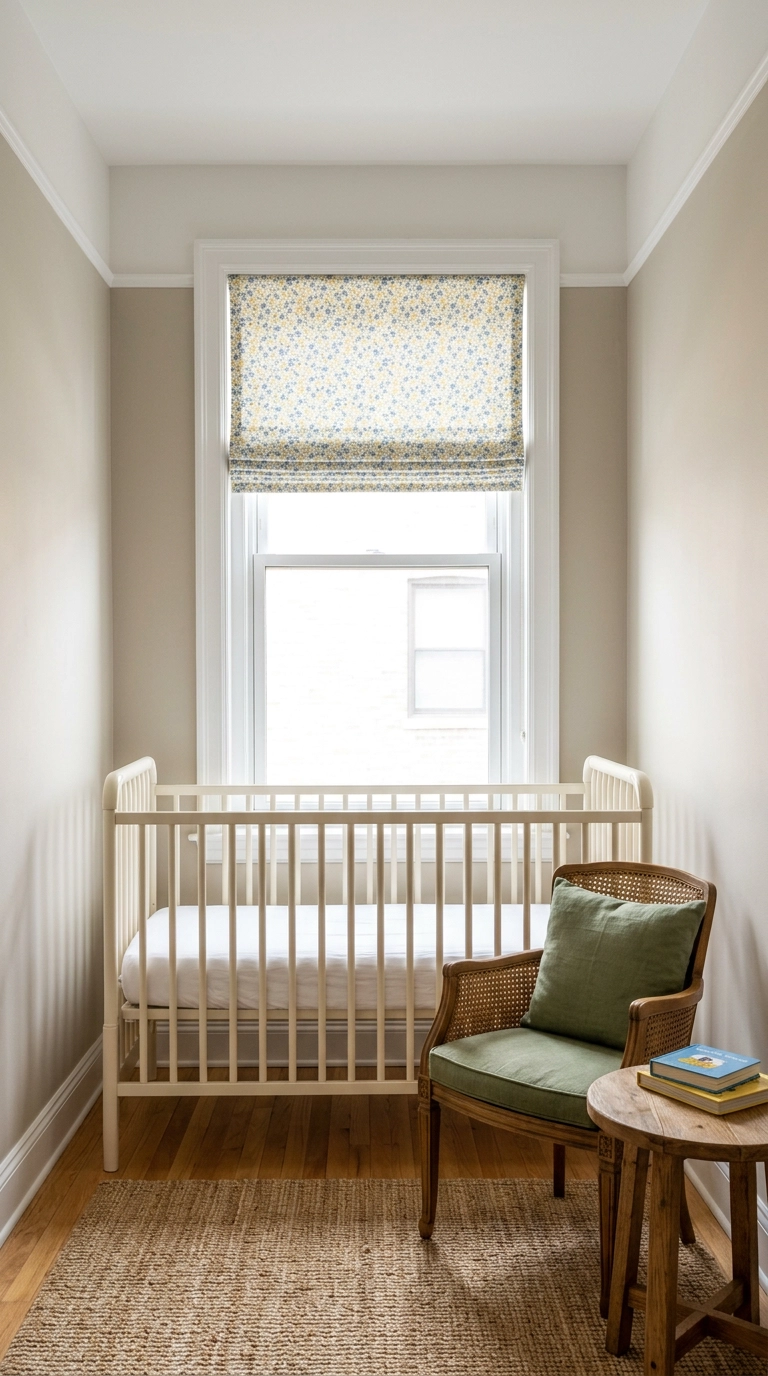
A ditsy print – tiny scattered flowers, the Liberty of London handkerchief look – is the safest floral in the book because from six feet away it reads as texture, not pattern. Putting it on a roman shade is smart on two counts: it is roughly two yards of fabric so the cost stays low, and the window is already the room’s focal point so the pattern lands where your eye goes anyway.
3. A Pressed Flower Frame Cluster Above the Changing Table
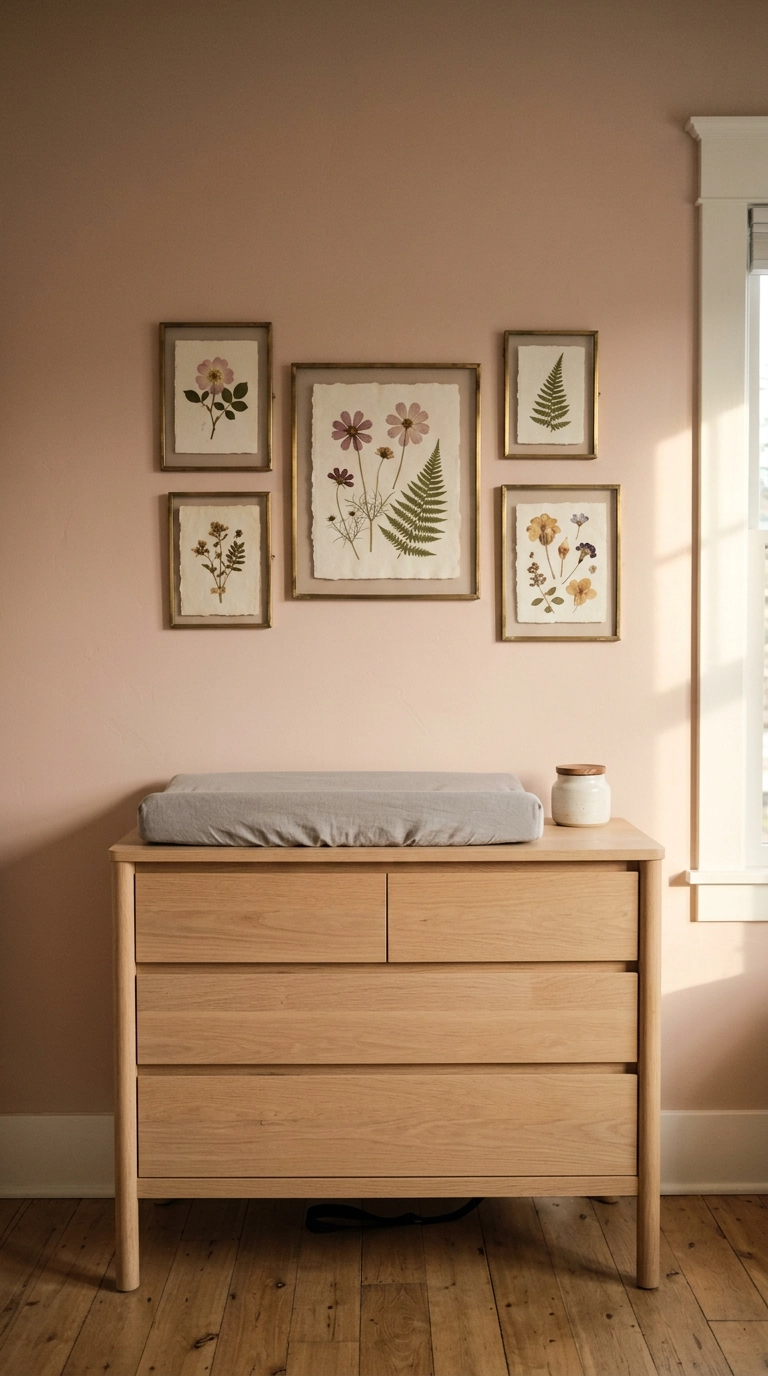
Pressed flowers are the cheapest real art you will ever hang. Flatten blooms from a grocery bouquet in a heavy book for two weeks, then float each one on cream mat board in a thin brass or black frame – the negative space around a single stem is what makes it look intentional rather than crafty.
4. Hand-Painted Floral Ceramic Drawer Knobs
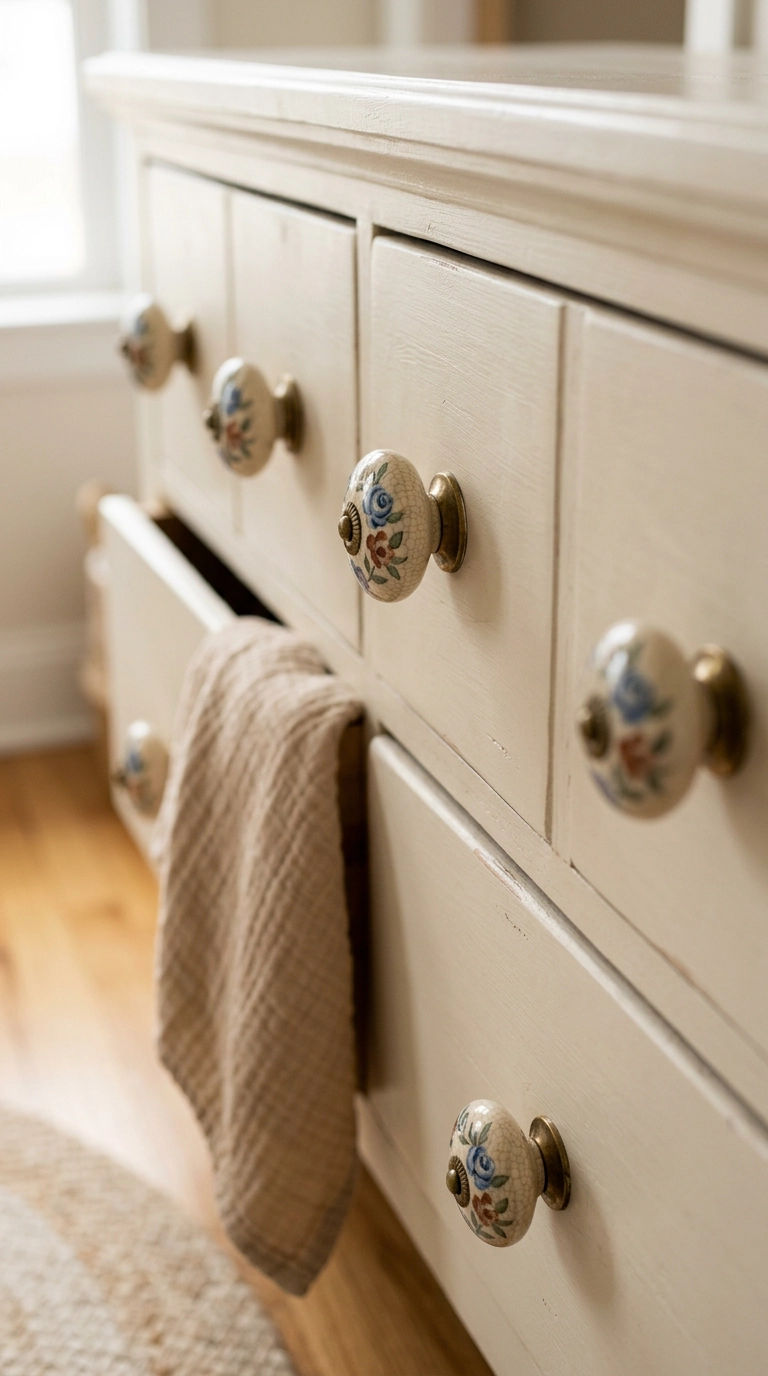
This is the twenty-minute, thirty-dollar version of a floral nursery. Swapping plain knobs for hand-painted ceramic ones puts the motif at eye level for you and hand level for a curious toddler, and it completely changes a flat-pack dresser without touching the finish.
5. A Trio of Loose Watercolor Botanicals
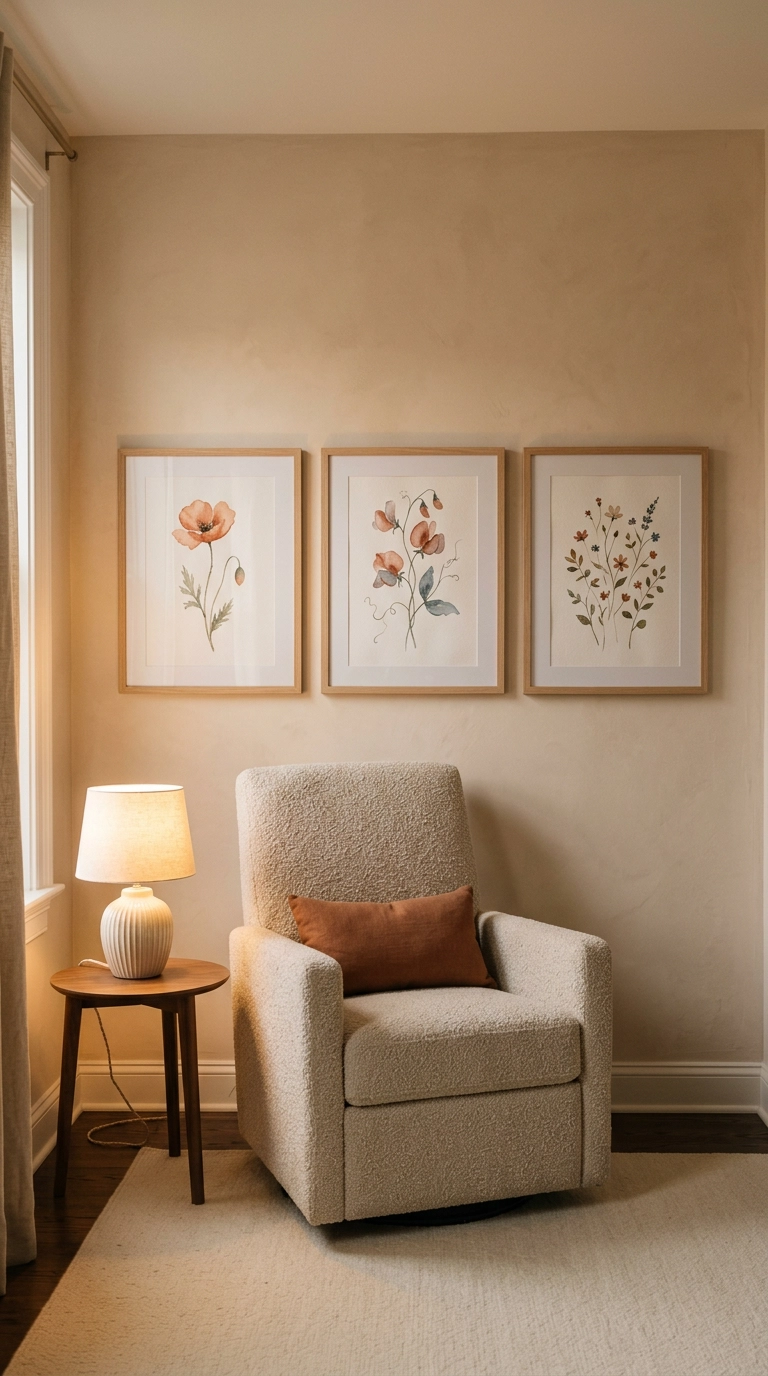
Watercolor botanicals are the gentlest floral you can hang because the edges bleed instead of snapping – there is no hard outline for the eye to catch on, which is exactly what you want in a room meant for sleeping. Loose, single-stem studies beat dense bouquets here; the white space around each flower does the calming.
6. A Vintage Cottage Rose Quilt Over the Glider
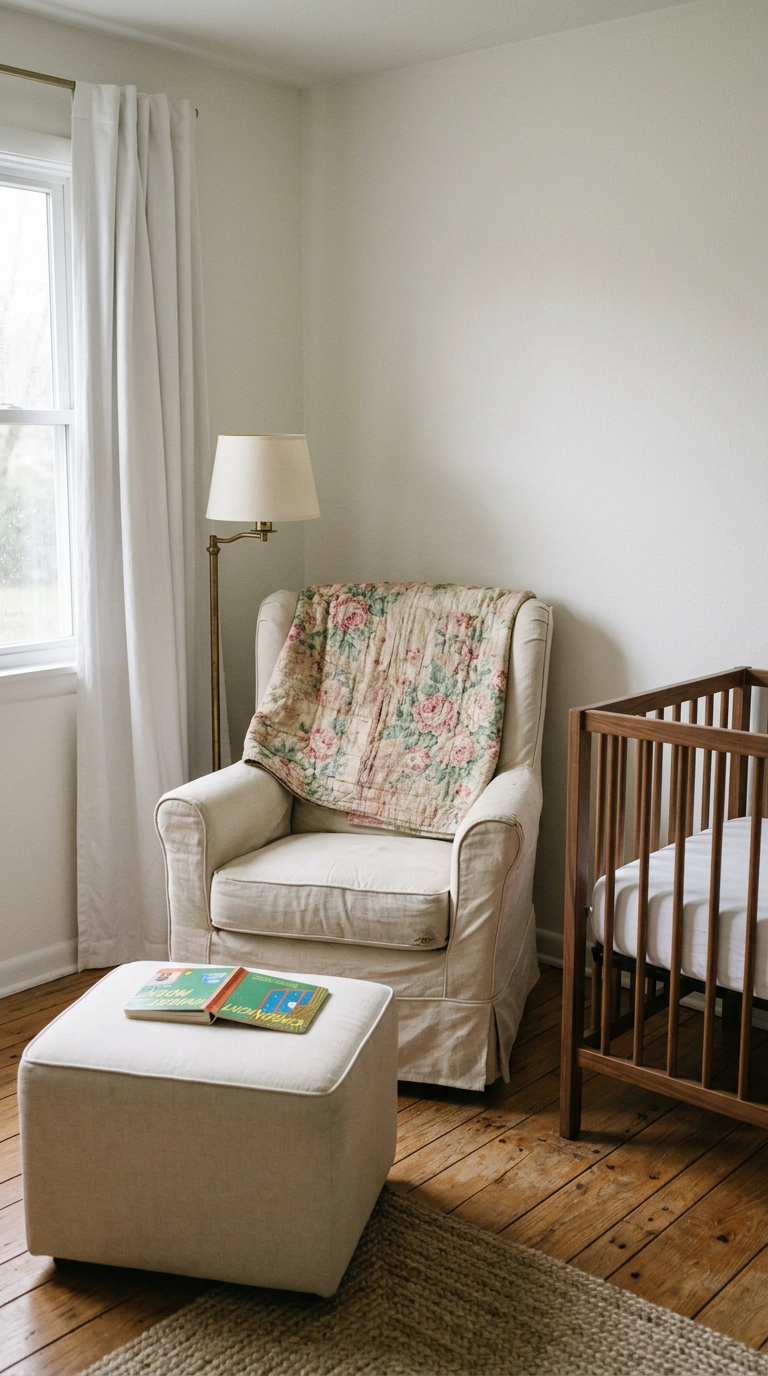
Nothing gives a new nursery instant age like a genuinely old floral quilt. Look for 1930s to 1950s cotton cabbage roses at estate sales – the dyes have softened into colors nobody manufactures anymore, and thirty to sixty dollars is a normal price for one with a few honest flaws.
7. Peel-and-Stick Ditsy Floral in a Reading Alcove
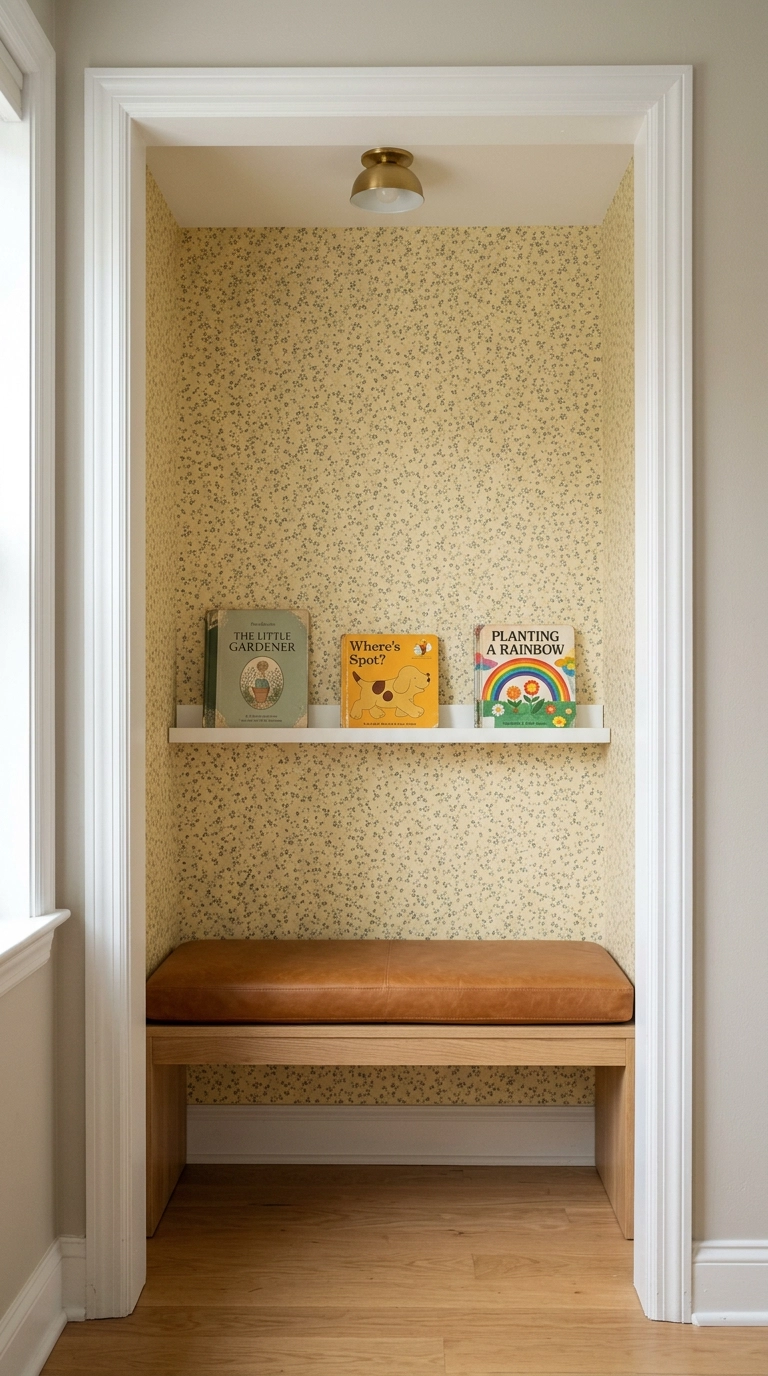
Papering the inside of an alcove or a closet-turned-nook is my favorite renter move, because you are covering maybe 25 square feet – one roll, one afternoon, no ladder gymnastics. The reason it works so well is containment: the pattern is framed by plain wall on all sides, so it reads like a piece of art rather than a wallpapered room.
8. A Scalloped Floral Lampshade on a Plain Base
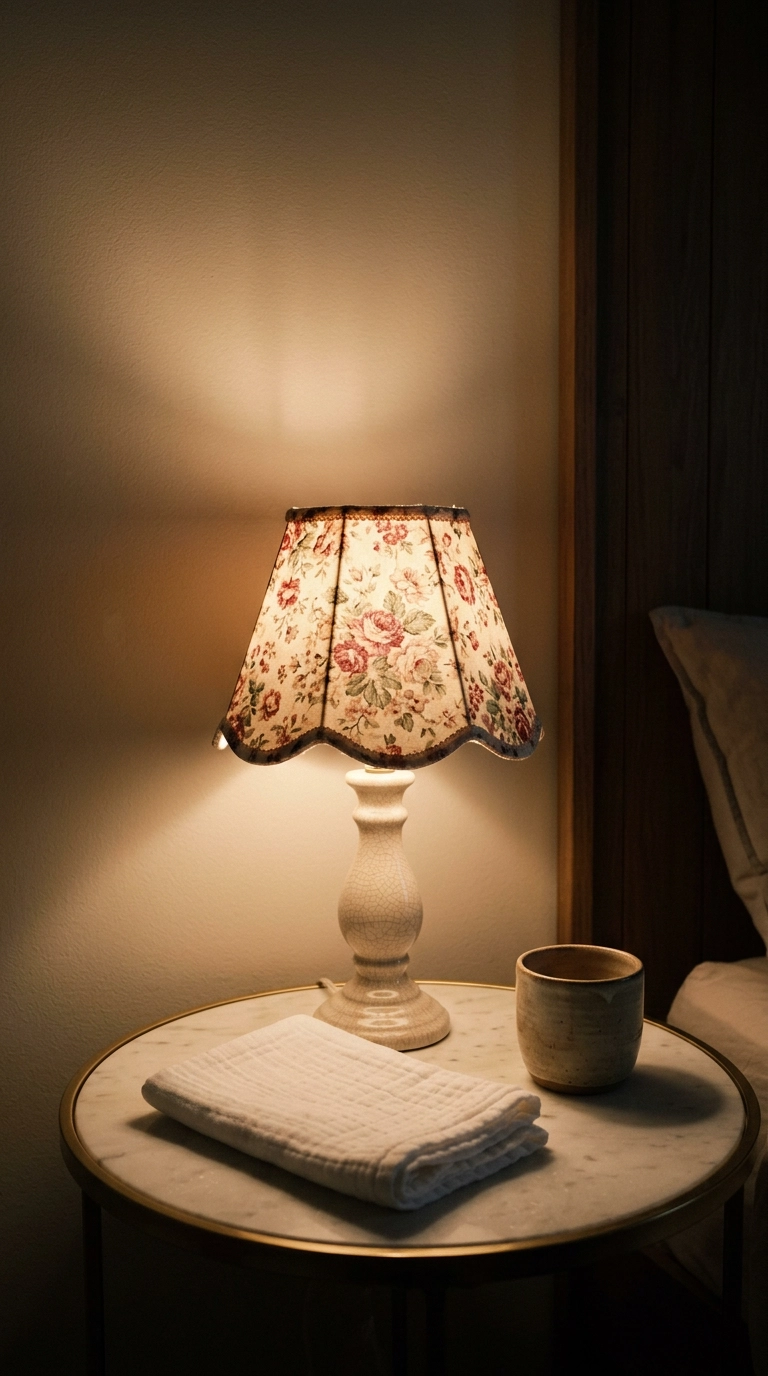
A patterned scalloped shade is one of those small pieces that does a shocking amount of work, especially at night, when the bulb pushes the floral pattern out onto the wall as a soft glow. Keep the base plain and matte – a patterned shade on a patterned base is where this tips into fussy.
9. A Felt Flower Mobile Over the Changing Table, Not the Crib
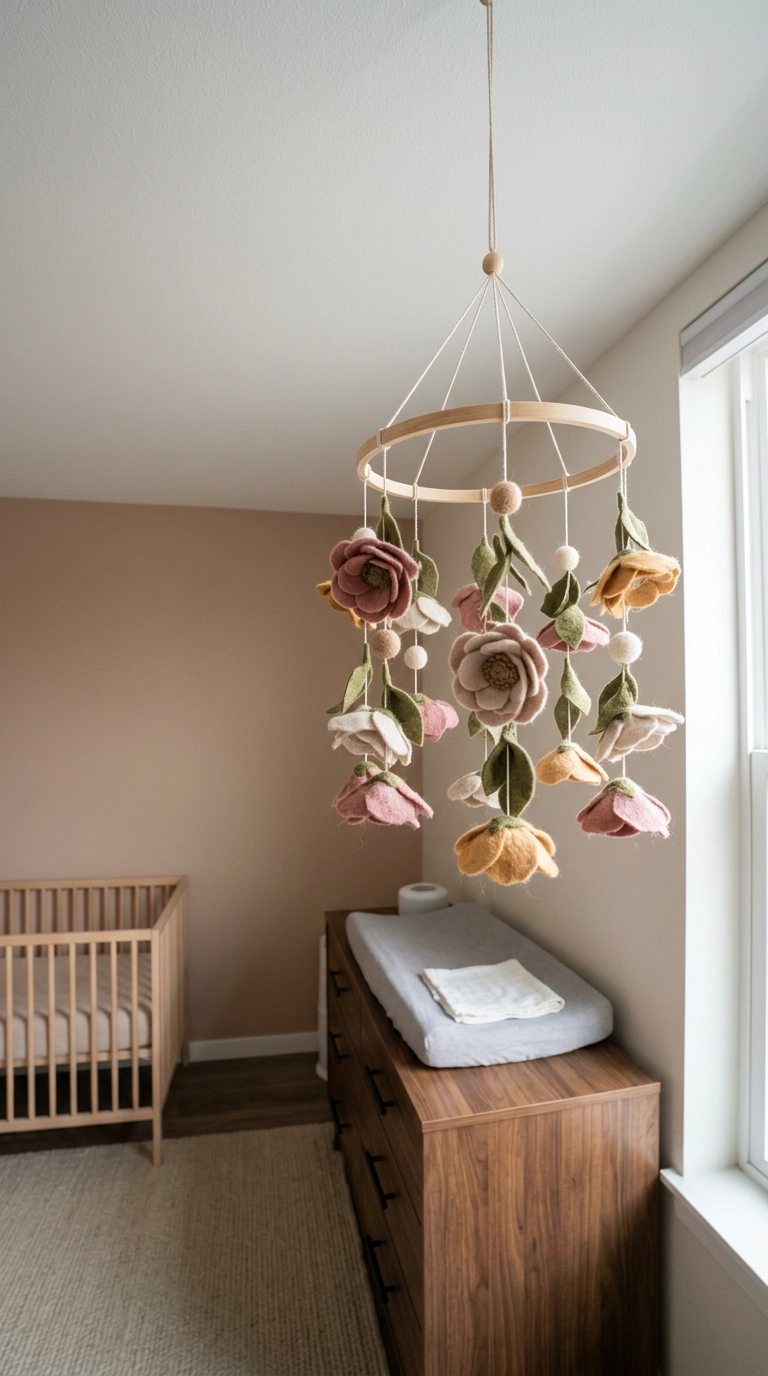
Felt flower mobiles are having a real moment, and they photograph beautifully because wool felt has a matte, slightly fuzzy edge that catches light like a petal. Nine blooms in three colors is the sweet spot – fewer looks sparse, more starts spinning into chaos.
10. A Modern Abstract Petal Rug
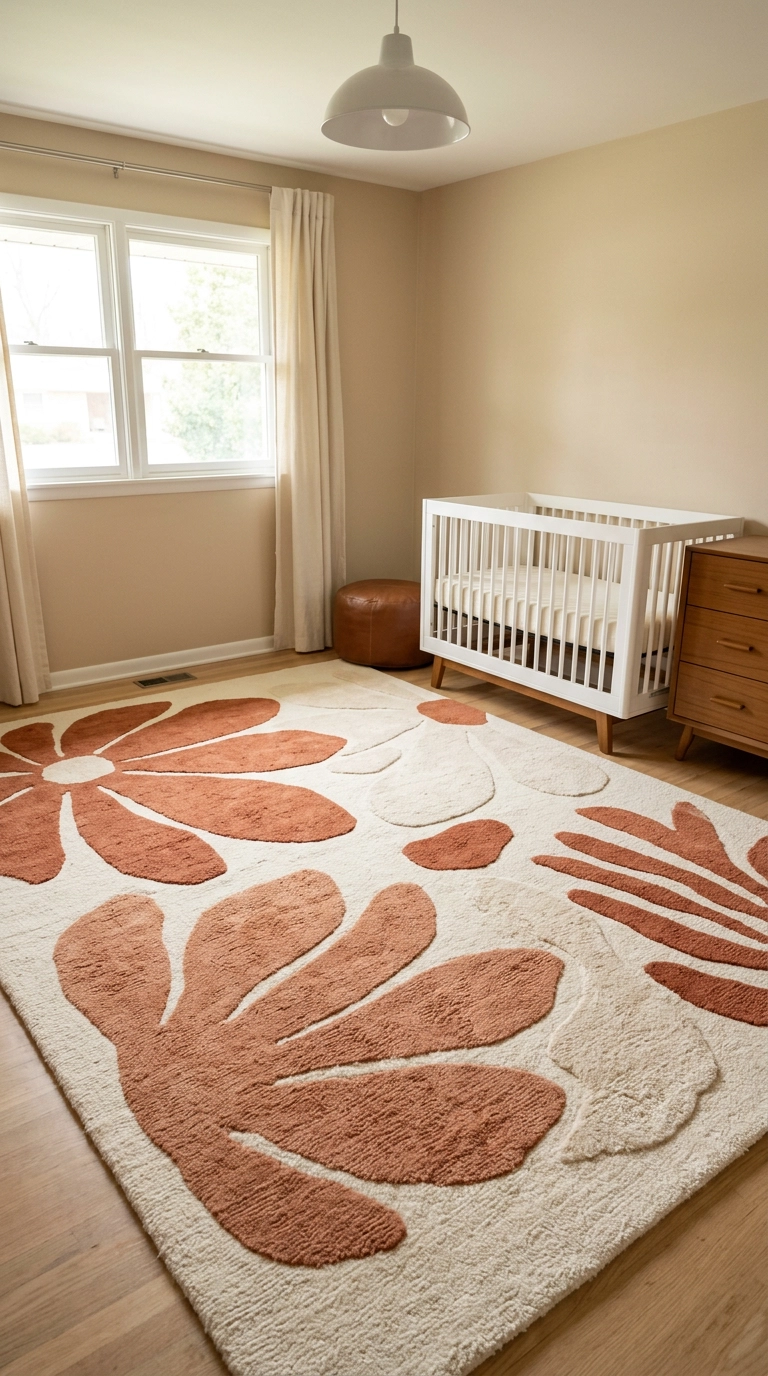
If wallpaper feels like too much commitment, put the floral on the floor instead. Modern abstract petals – simplified, edge-cropped shapes rather than realistic flowers – give you the motif with a graphic, mid-century feel that will not look babyish when the room becomes a big-kid bedroom.
11. Floral Paper on the Back of an Open Bookcase
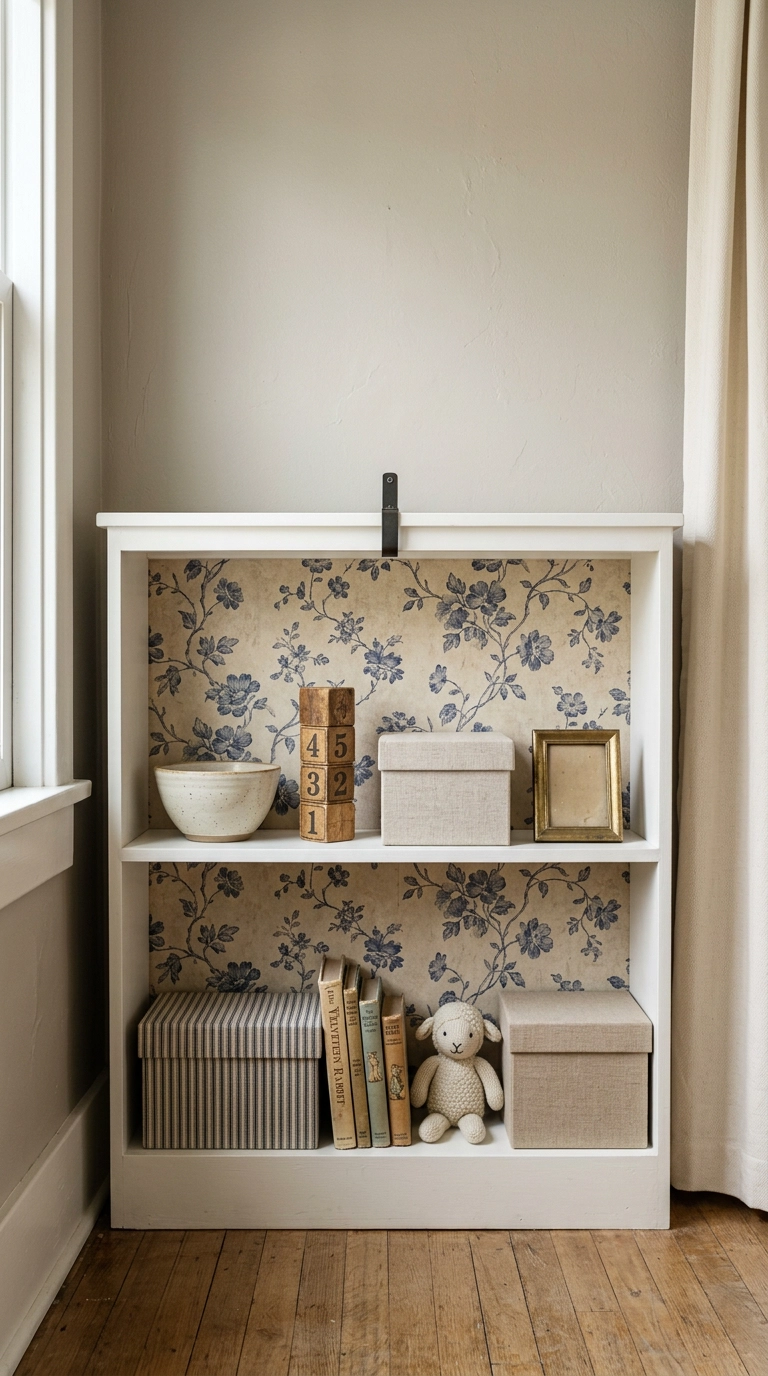
Here is the trick for people who want pattern but panic at a whole wall: paper only the inside back of a bookcase. You need about a yard of paper, it costs almost nothing, and the shelves themselves break the pattern into small framed windows so it never overwhelms.
12. Floral Blackout Curtains Hung Near the Ceiling
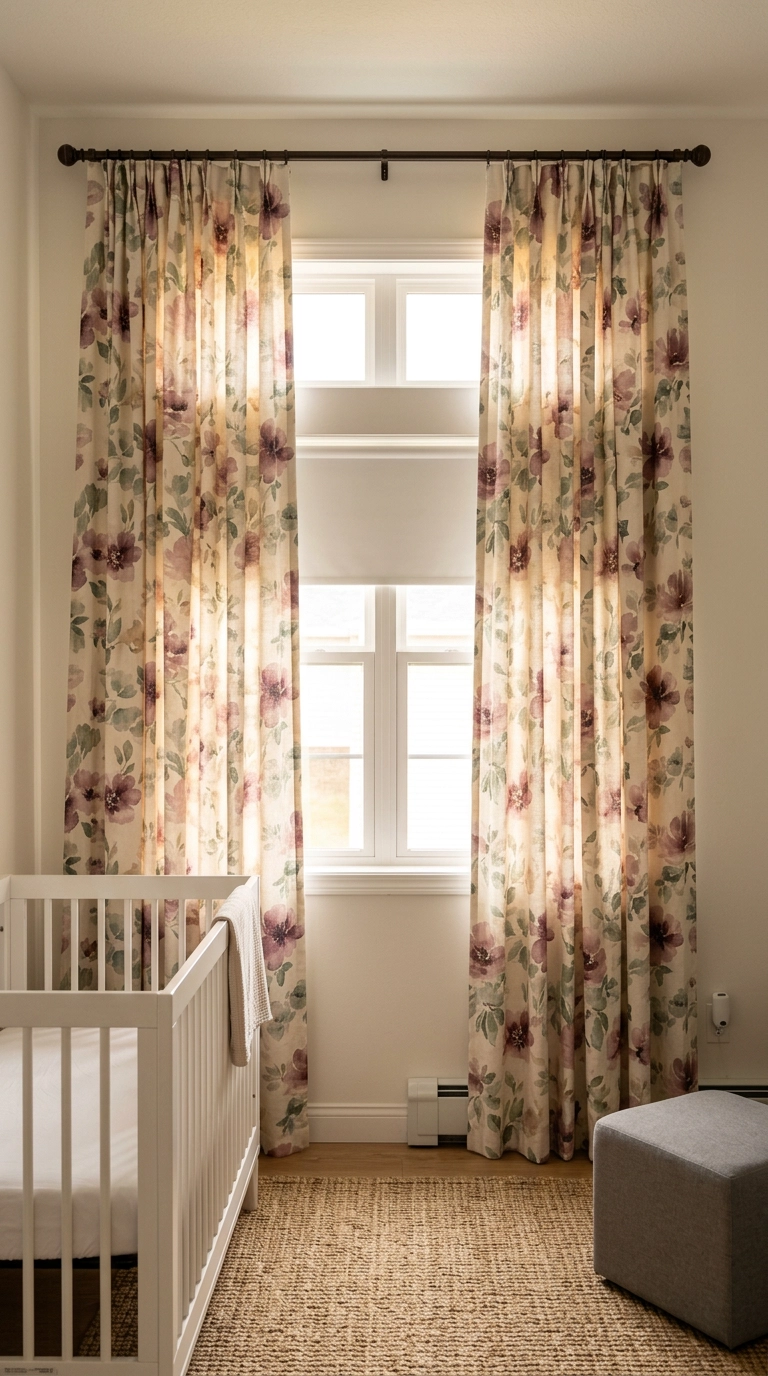
Curtains are the biggest single expanse of fabric in a nursery, which makes them the highest-leverage place to put a floral. Mount the rod two to four inches below the ceiling and extend it 8 to 10 inches past the window on each side – the eye reads the whole panel as window, so the room feels taller and the glass looks wider.
13. A Hand-Painted Trailing Vine in One Corner
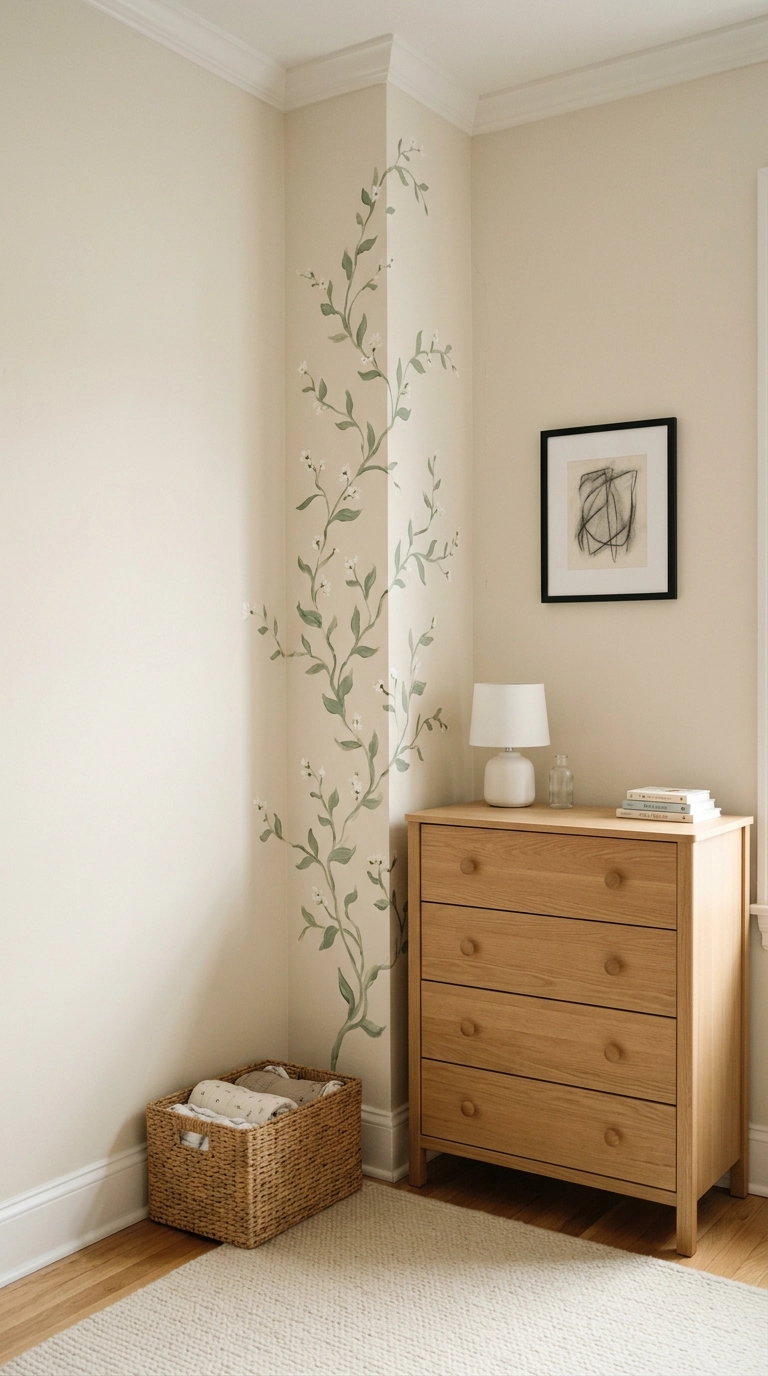
Painting flowers freehand terrifies most people, so start in a corner where the vine is mostly stem and leaf – nobody can tell if a leaf is “wrong.” Sketch the trailing line in pencil first, paint the stem, then add blooms only where the line changes direction. That is the whole technique.
14. A Ditsy Floral Crib Skirt with Everything Else Plain
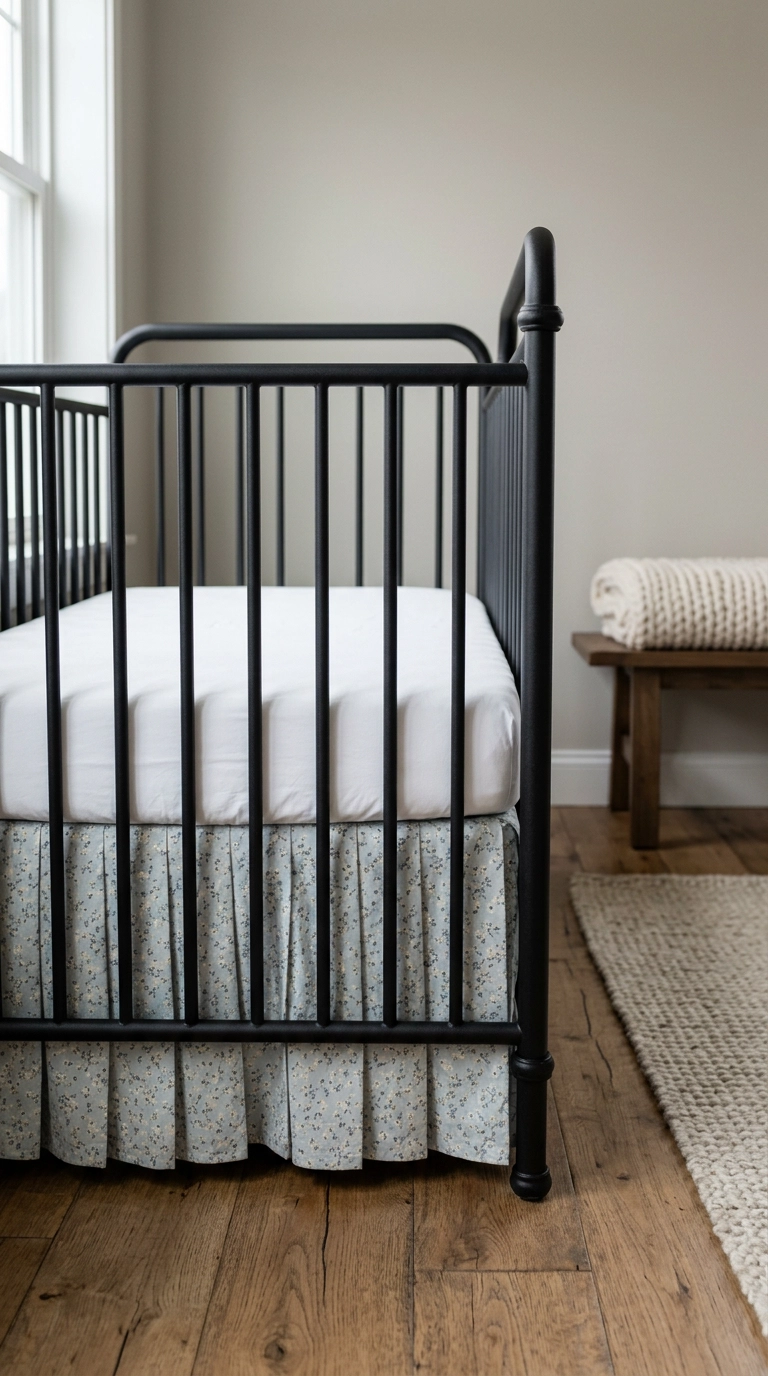
A crib skirt is the one floral you can add and remove in ninety seconds, and it hides the mountain of diaper boxes living under there. Because the crib is the room’s largest object, even a tiny print at that scale registers from the doorway.
15. A Herbarium-Style Grid of Botanical Specimens
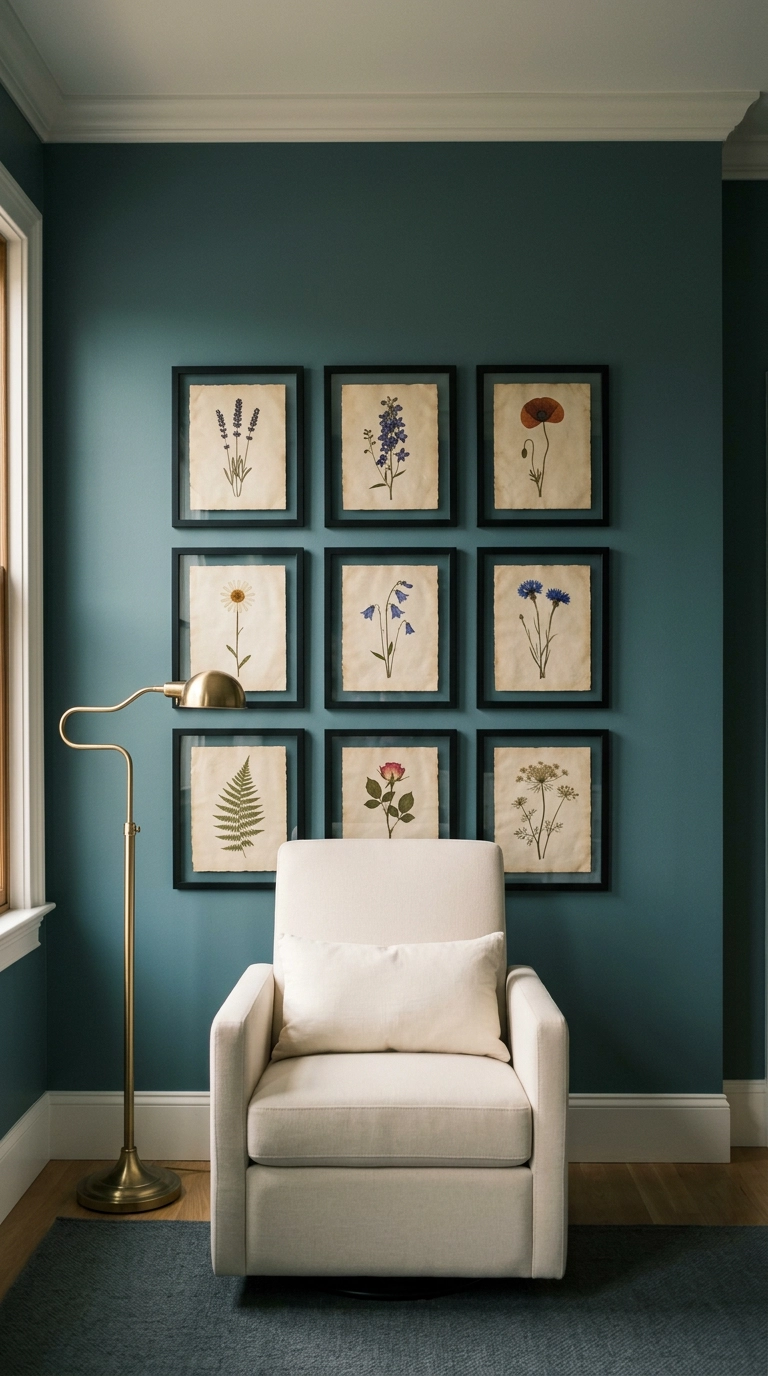
A rigid grid is the grown-up way to hang florals. The repetition turns nine delicate little stems into one strong rectangle, and that geometry is what keeps a botanical wall from drifting into grandma’s guest room.
16. Floral Wallpaper on the Ceiling
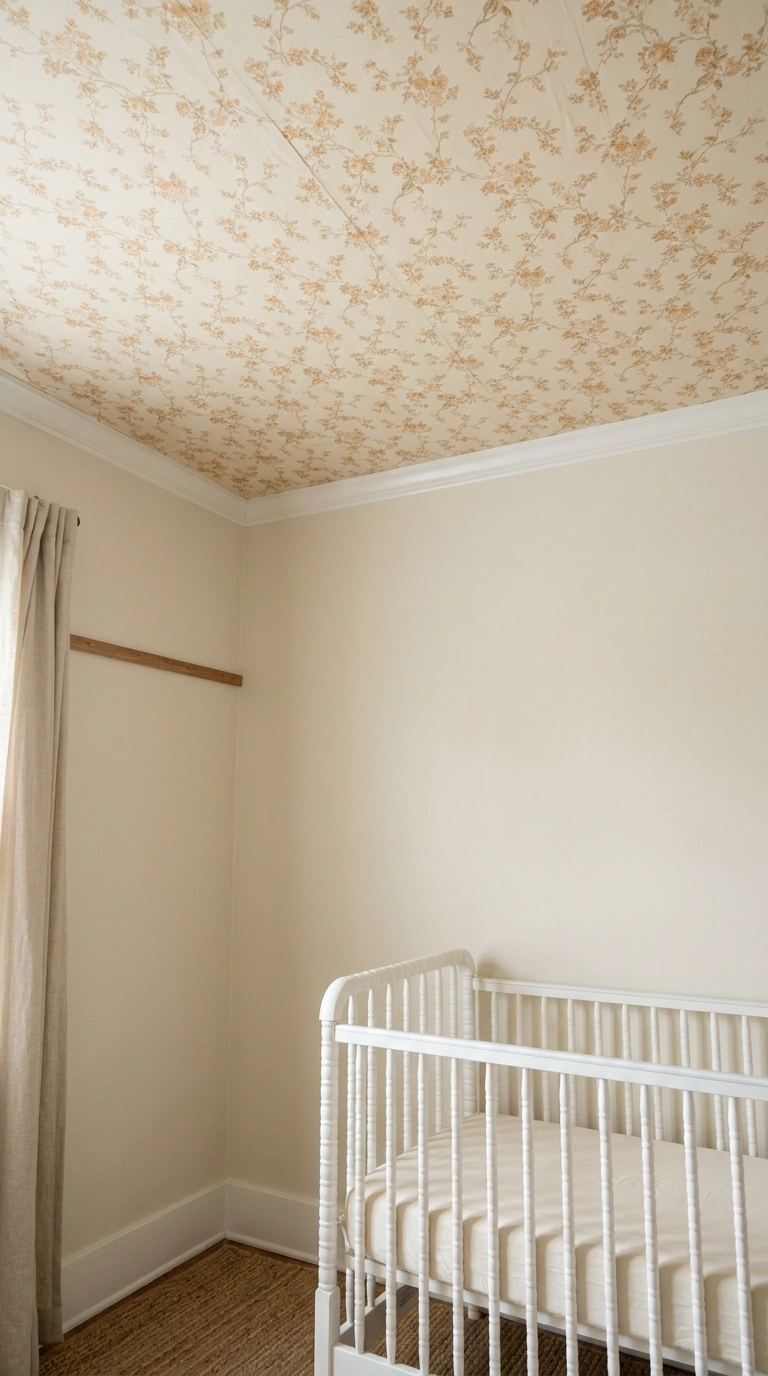
The ceiling is the one wall a baby actually spends hours looking at, and papering it is the most underrated move in this entire article. A small-scale trailing floral up there feels like lying under a canopy, and because the walls stay plain, the room does not close in.
17. A Single Oversized Bloom Canvas Above the Dresser
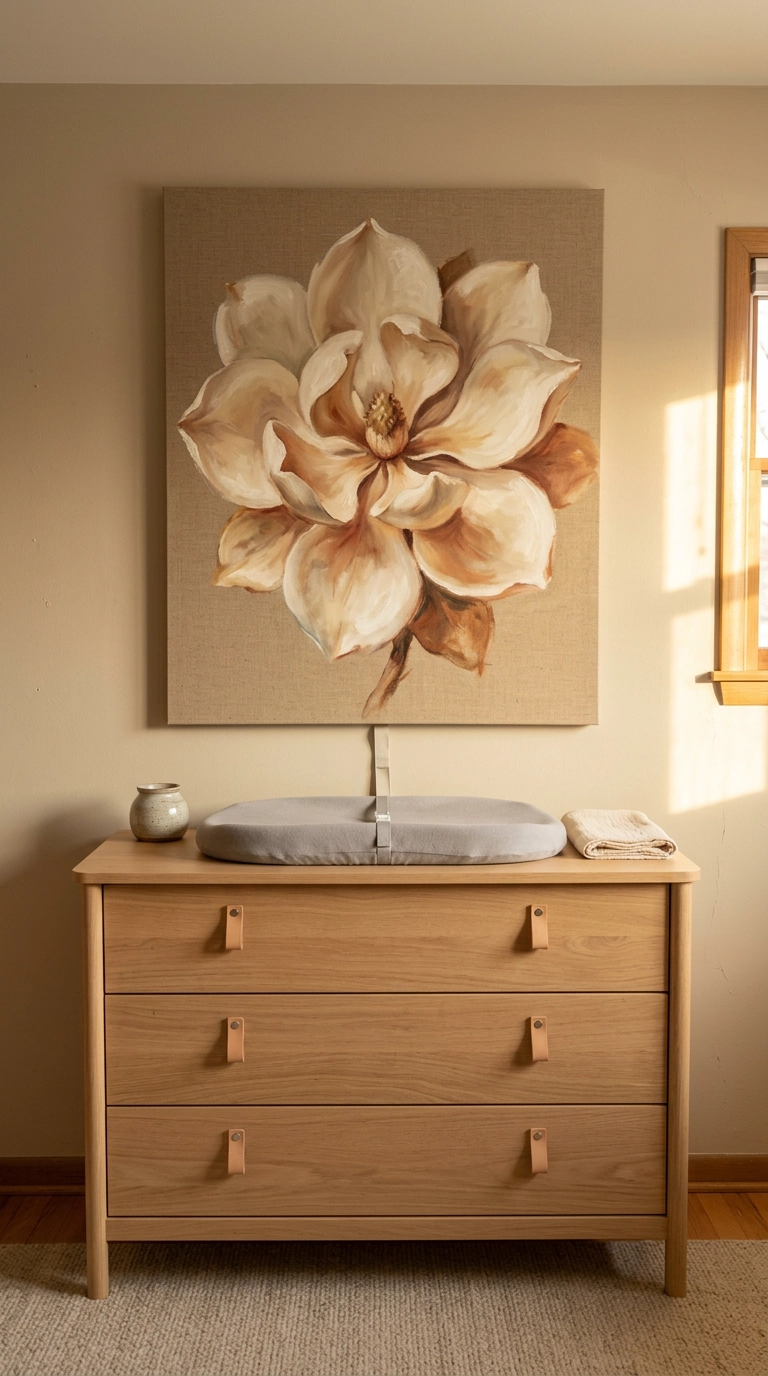
One big floral beats five small ones nearly every time. A single bloom blown up to three feet wide has real visual weight – meaning it holds its own against the dresser below instead of floating like a postage stamp – and it costs less than a gallery wall’s worth of framing.
18. A Painted Floral Arch Behind the Crib
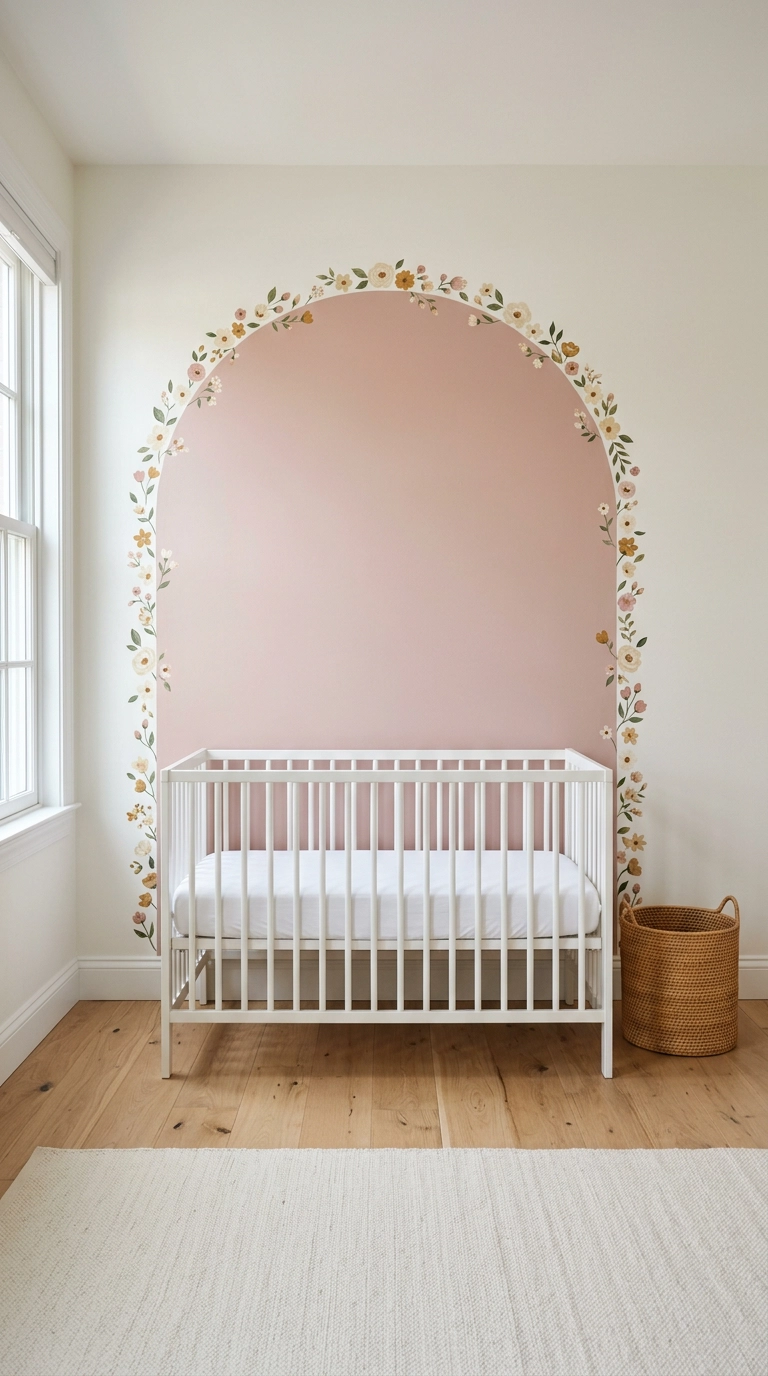
A painted arch behind the crib creates a headboard where furniture cannot go, and adding a thin floral border along the curve is what lifts it out of 2021 Instagram territory. The arch draws a soft frame around the crib, so the eye knows exactly where the focal point is.
19. A Vintage Floral Needlepoint in a Thrifted Frame
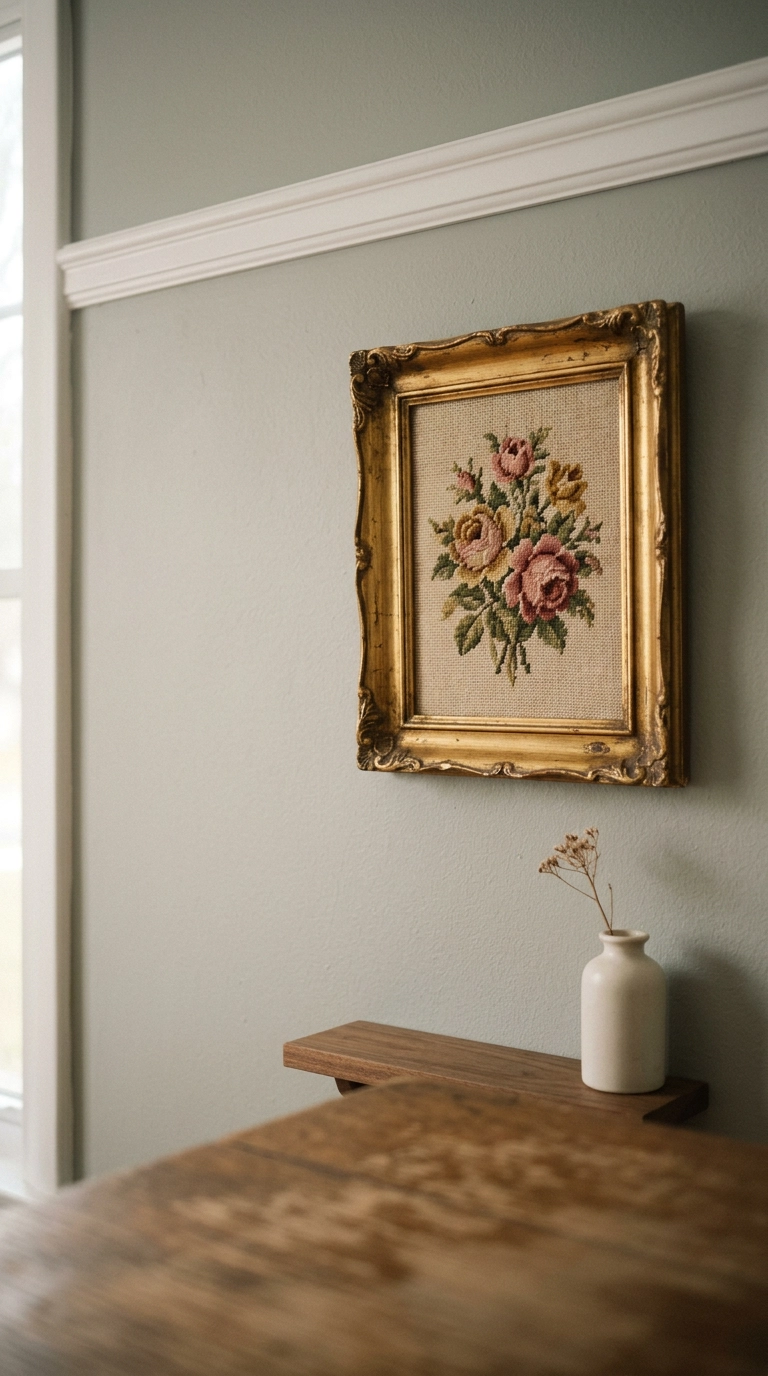
Thrift stores are absolutely full of floral needlepoints nobody wants, usually eight to fifteen dollars, frame included. The wool has gone soft and slightly muted with age, which is a color quality you cannot buy new, and the raised stitches give you texture that a print never will.
20. Stenciled Floral Sprigs on Plain Dresser Drawers
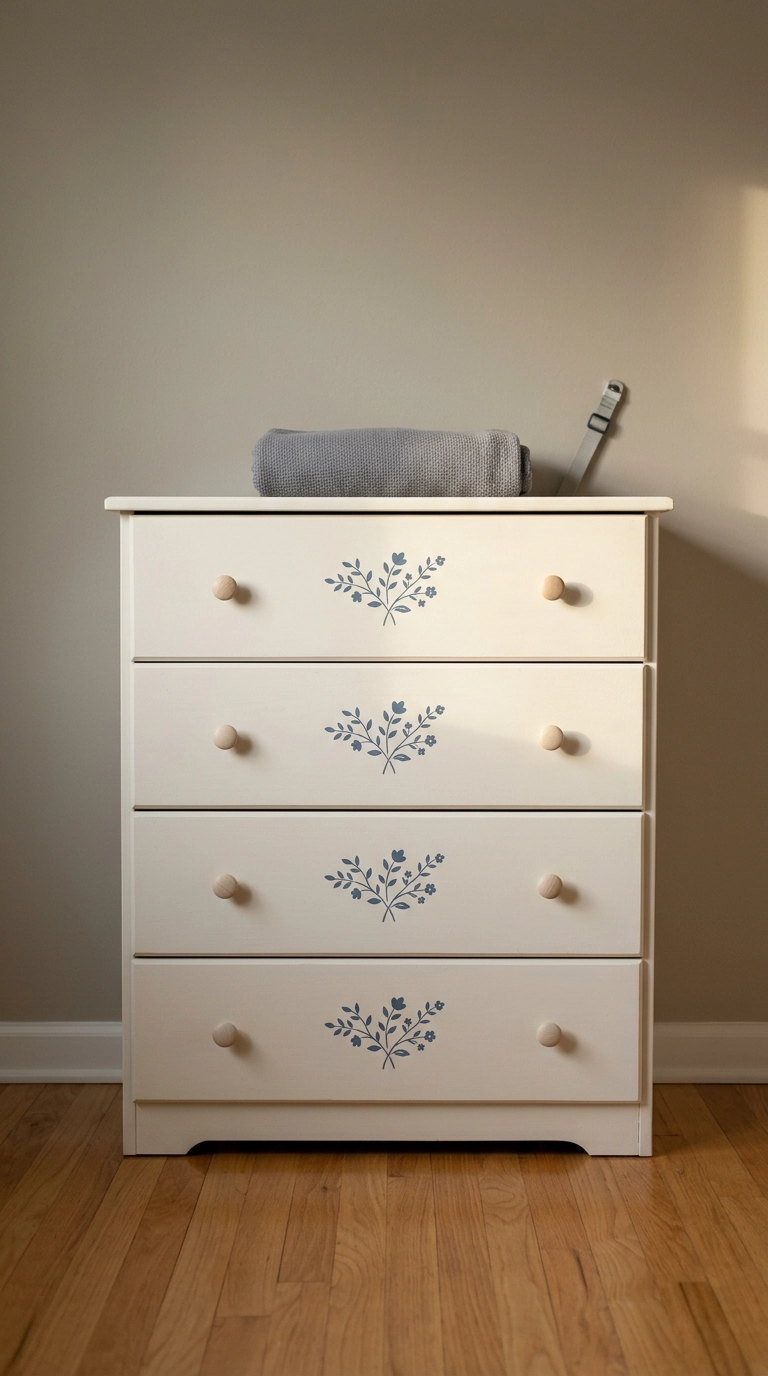
This is the best thing you can do to a sad hand-me-down dresser. Chalk paint it a soft ivory, then stencil one simple sprig dead center on each drawer – the repetition across the drawers is what makes it look designed instead of decorated.
21. A Toile de Jouy Pastoral in a Sloped-Ceiling Nook
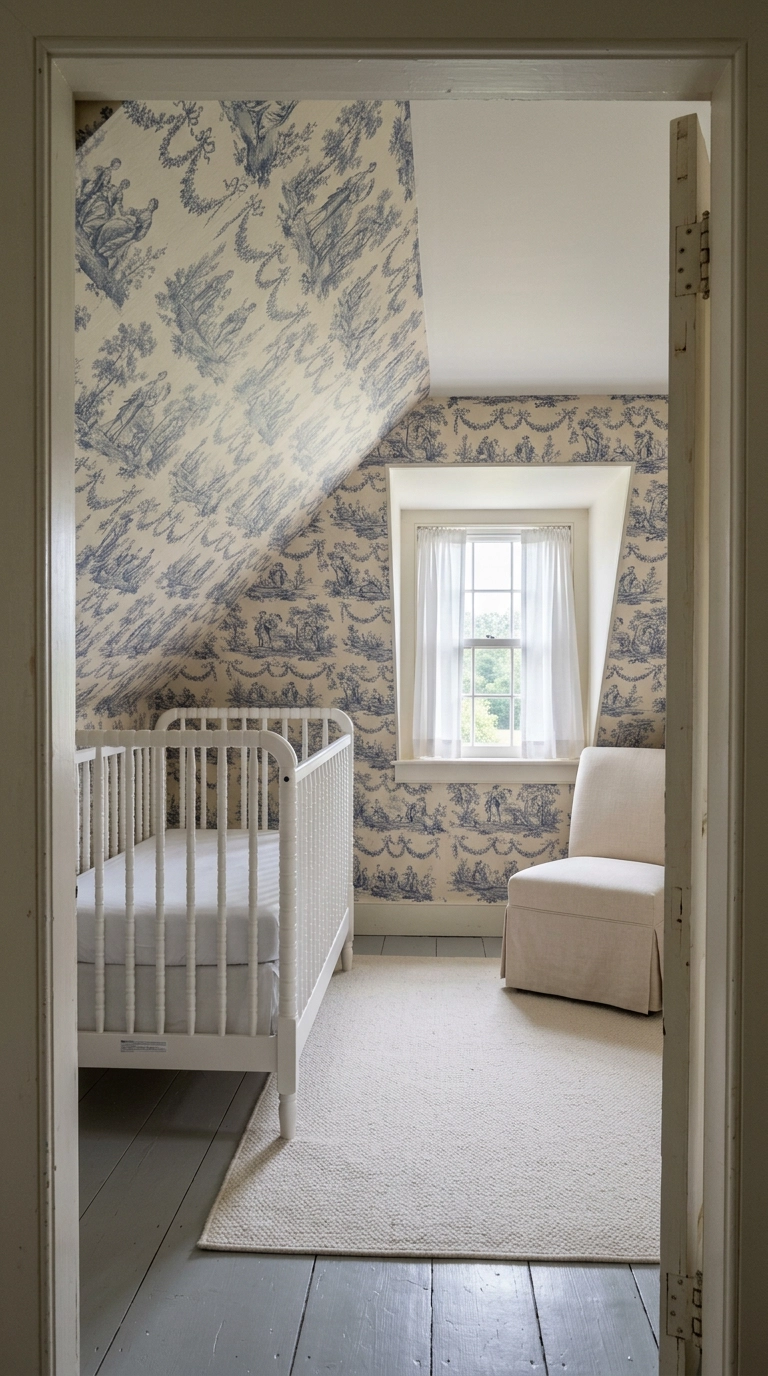
Toile is the most polarizing floral on this list and I stand by it in a nursery. The single-color line drawing means it reads almost like a sketch, and a sloped attic ceiling is the perfect place for it – papering the slope makes an awkward angle look deliberate.
22. A Hand-Painted Rose Blanket Chest
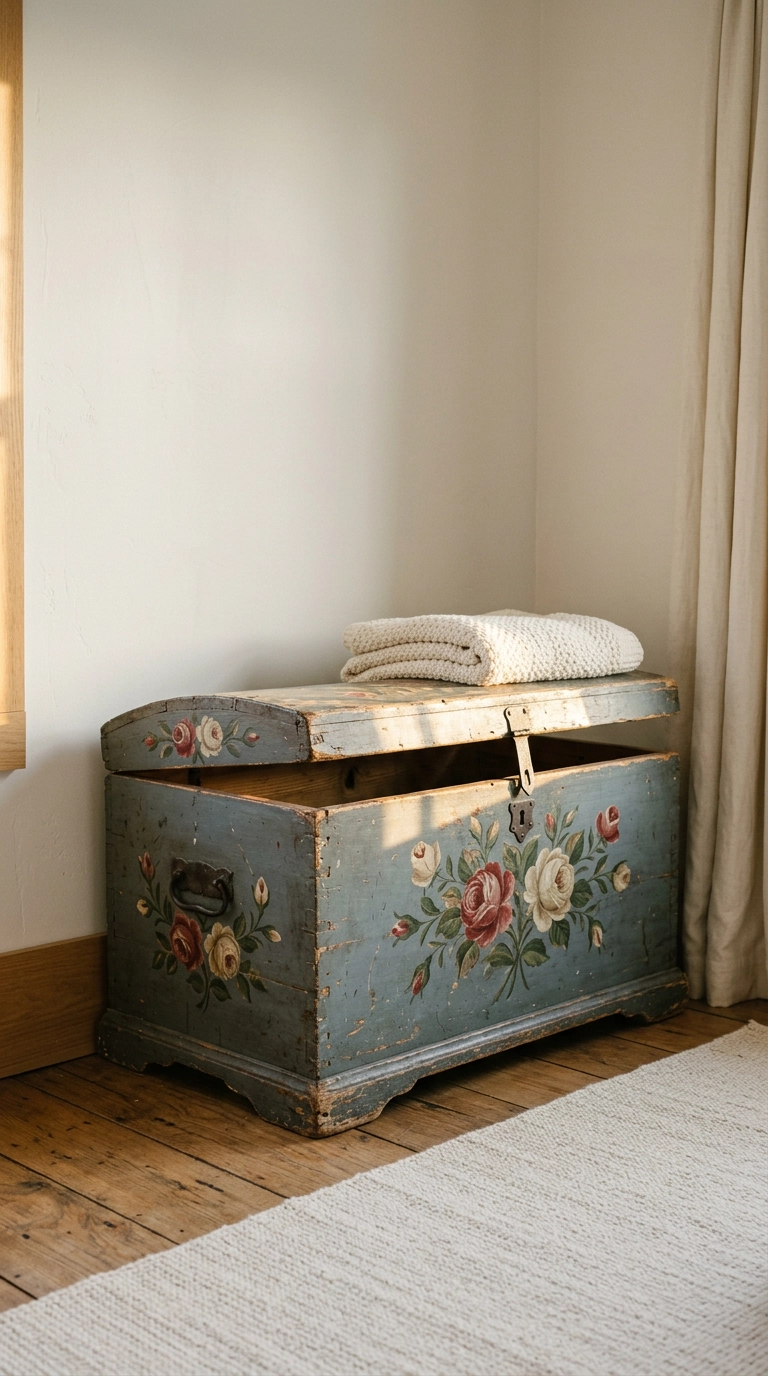
I wanted to end on a piece that outlives the nursery entirely. A painted blanket chest holds crib sheets and swaddles now, then moves to the foot of a big-kid bed, then to a hallway, and the folk roses work the whole way through.
Where I’d Actually Start
If you take one thing from this list, let it be that florals need somewhere to rest. Every room above works because the pattern is loud in exactly one place and quiet everywhere else – the toile lives on the ceiling slope and the walls stay flat white, the oversized magnolia canvas gets bare wall on both sides. That restraint is the difference between a nursery that feels collected and one that feels like a fabric sample book fell over.
What I’m seeing most right now is the move away from tiny scattered ditsy prints toward one large-scale bloom with real negative space around it, usually in muted, slightly dusty colorways rather than bright primaries. Chinoiserie-inspired papers are having a genuine moment too – de Gournay’s hand-painted panels are the fantasy version, and there are peel-and-stick papers that borrow the same loose branch-and-blossom layout for a rental at a tiny fraction of the price. Pair either with plain muslin, plain oak, and one warm wood tone and you cannot really go wrong.
Start with the cheapest reversible thing on this list, honestly. Stencil the dresser drawers, or hang a thrifted needlepoint, and live with it for a week before you commit to papering a whole wall – nursery decisions made at 3am in the third trimester deserve a cooling-off period. If you want more of this, sign up for my weekly newsletter and I’ll send you the room breakdowns, the paint names, and the sourcing notes I don’t publish anywhere else.


