20+ Olive Green Kitchen Ideas That Bring Warmth Without Trying Too Hard

Olive green sits in a good spot on the color wheel — warm enough to feel inviting, muted enough that it doesn’t scream for attention the way a brighter green would. It’s part of why it’s held up so well as a kitchen color choice; it pairs easily with wood, brass, stone, and just about any neutral you throw at it. These 22 ideas show the range of what olive can do, from quiet minimalism to full vintage character.
1. Timeless Olive Elegance
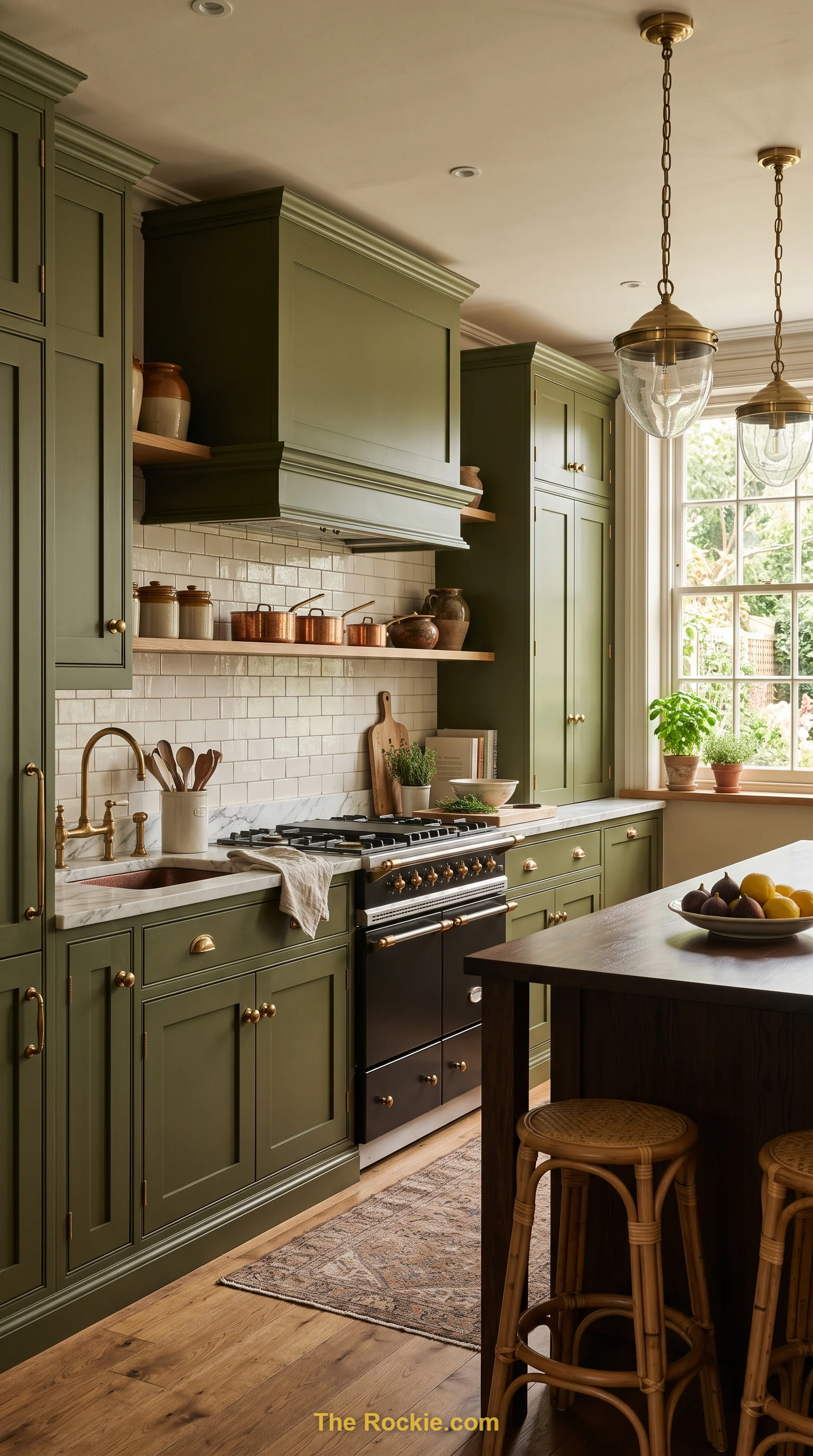
A well-executed olive green kitchen doesn’t chase trends — it leans on the color’s natural, grounded quality instead. Pairing deep olive cabinetry with vintage-style hardware and a few contemporary touches keeps the room feeling classic rather than dated, the kind of kitchen that photographs the same way in ten years as it does today.
2. Modern Olive Minimalism
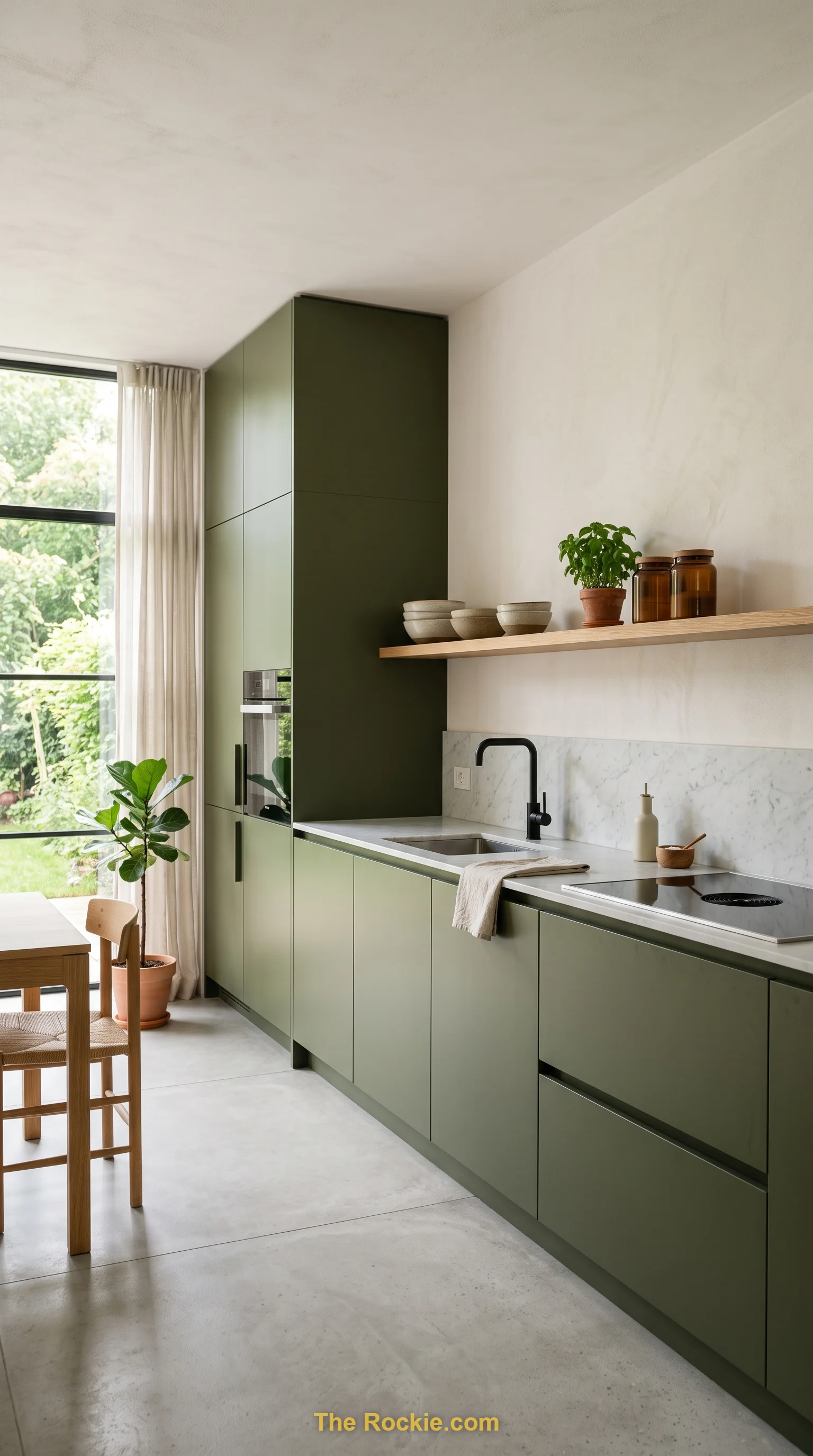
Olive green has a way of softening minimalist design that a stark white or gray kitchen sometimes can’t manage. Clean lines and integrated storage stay in place, but the color takes the edge off — the result feels calm rather than cold, without losing any of the efficiency minimalism is known for.
3. Warm Olive Accents
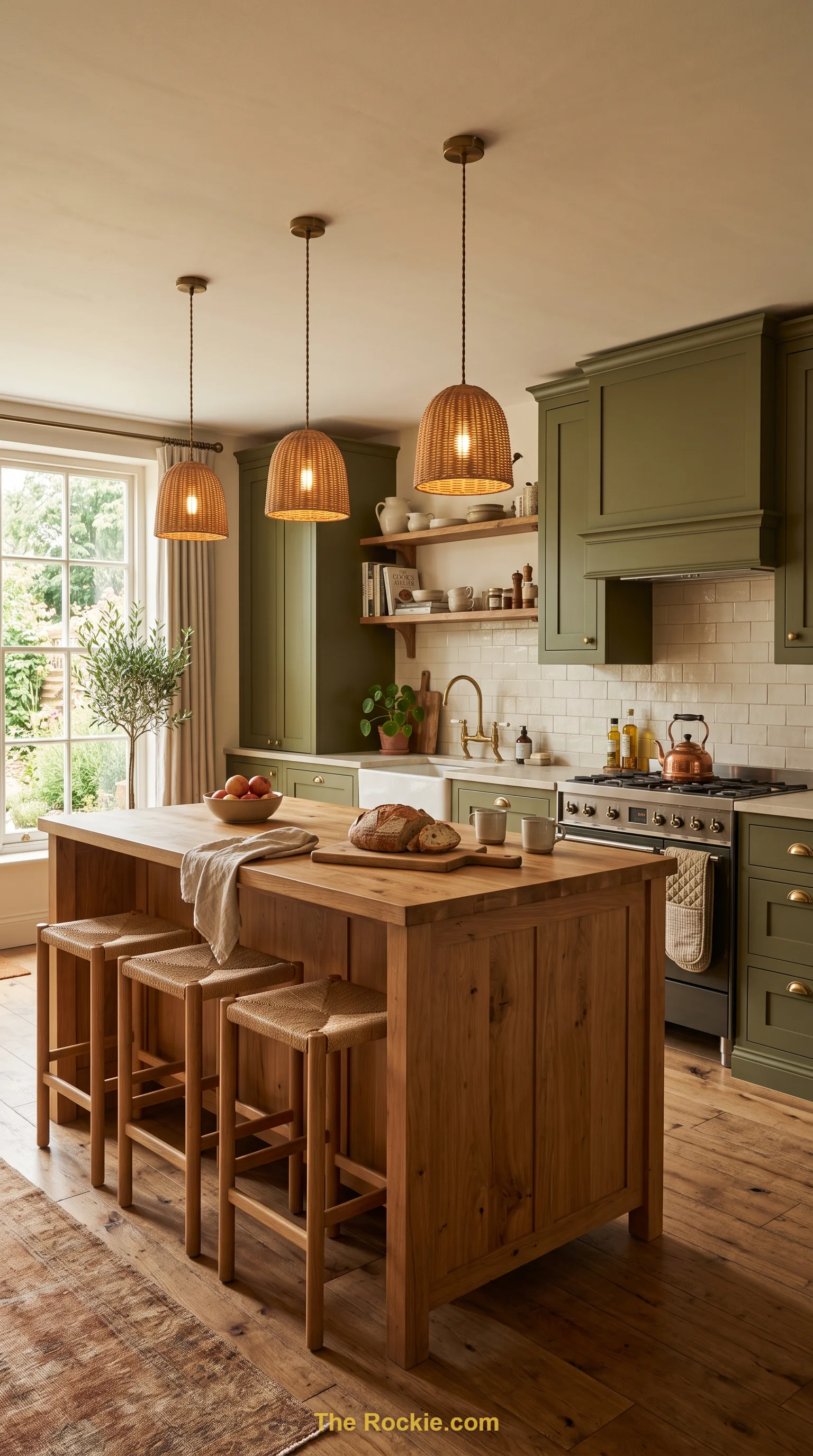
You don’t need to commit to full olive cabinetry to bring the tone into a kitchen — accent pieces paired with natural wood do plenty of work on their own. Olive-toned lower cabinets against lighter wood uppers, or just an olive range hood against neutral walls, brings warmth without overwhelming the room.
4. Eco-Friendly Olive Choices
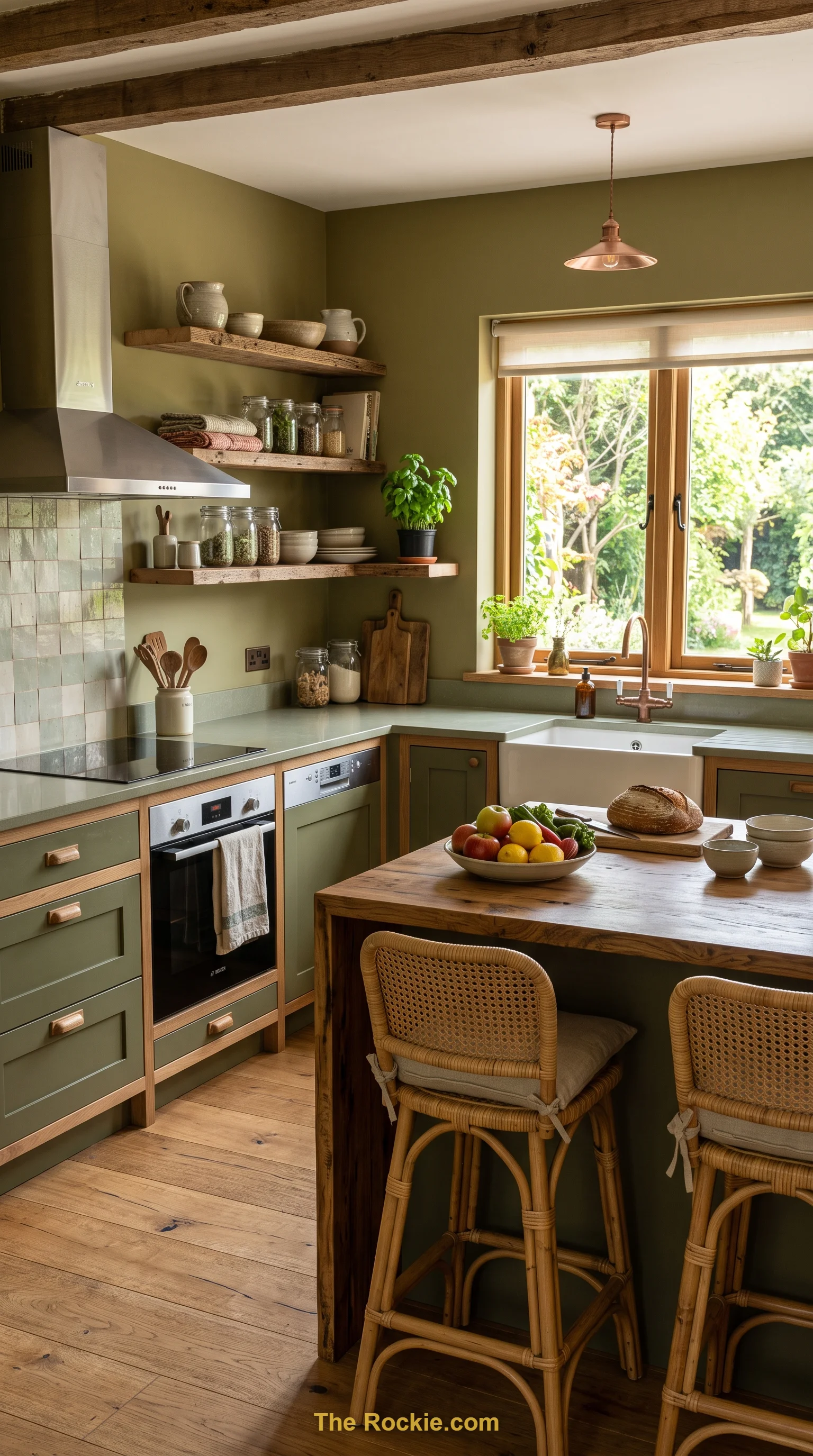
Reclaimed wood, energy-efficient appliances, and non-toxic finishes pair naturally with an olive palette, since the color already reads as earthy and grounded. It’s a good starting point for anyone wanting a kitchen that leans sustainable without needing to announce it through obvious eco-branding.
5. Rustic Olive Charm
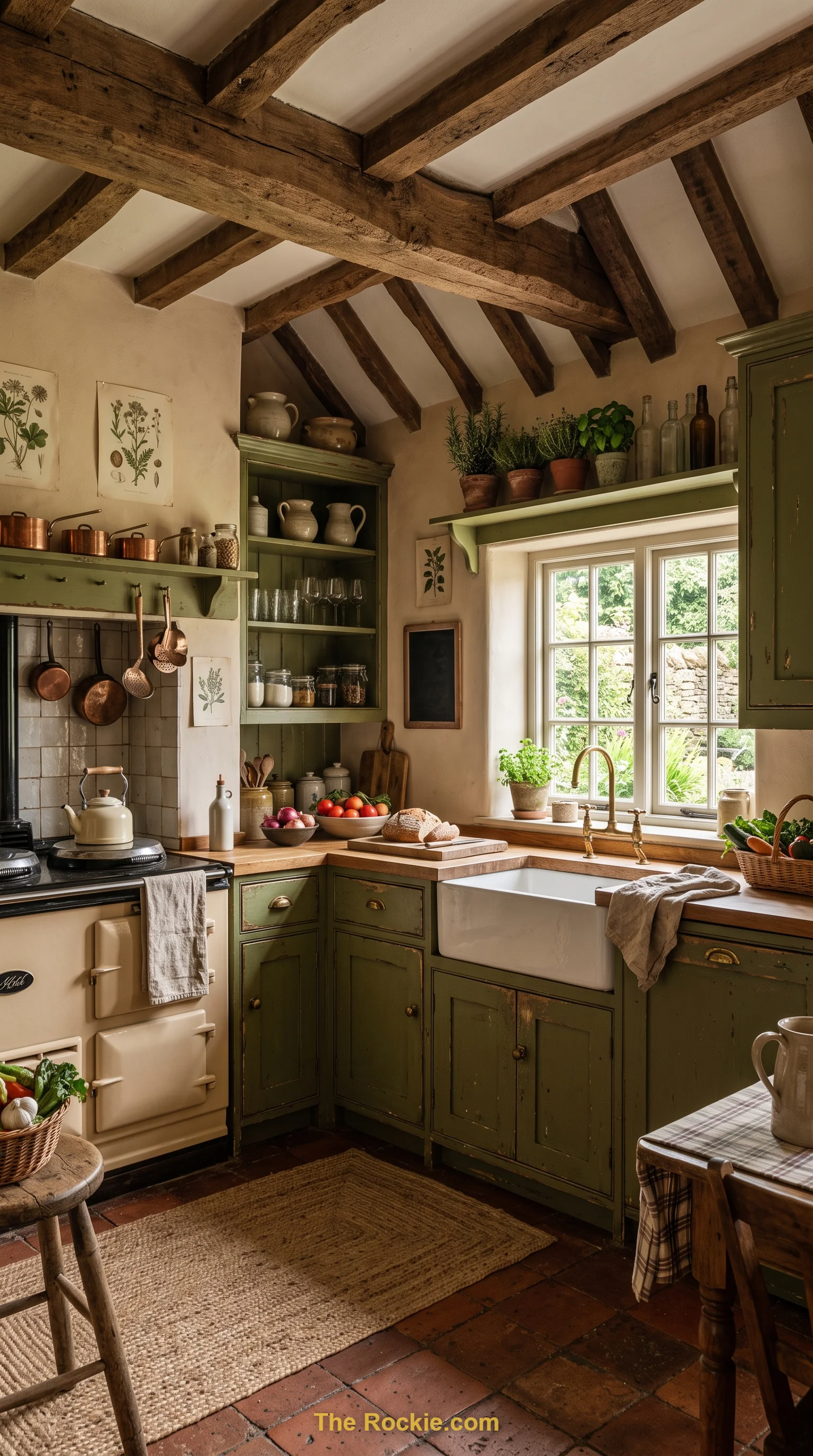
Exposed beams, distressed cabinetry, and a bit of industrial roughness meet olive’s earthy warmth for a kitchen that feels lived-in rather than showroom-perfect. The color softens what could otherwise read as too raw, striking a comfortable middle ground between rustic and refined.
6. Sophisticated Olive Finishes
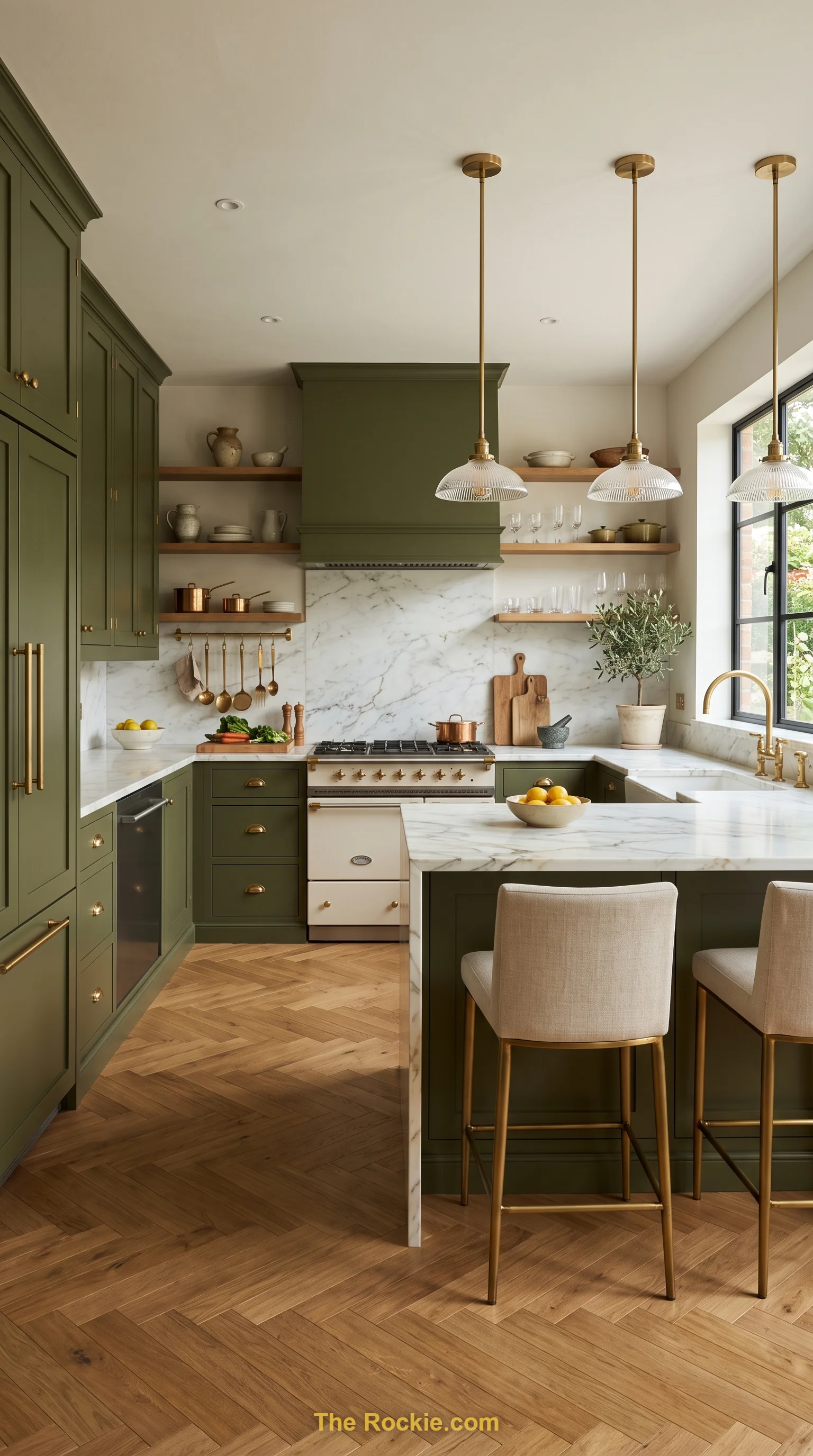
Brushed brass fixtures and custom cabinetry elevate olive green into genuinely upscale territory. The deep tone pairs particularly well with softer neutrals, letting the whole room feel considered and balanced rather than like a single bold color choice dominating the space.
7. Optimized Olive Layouts
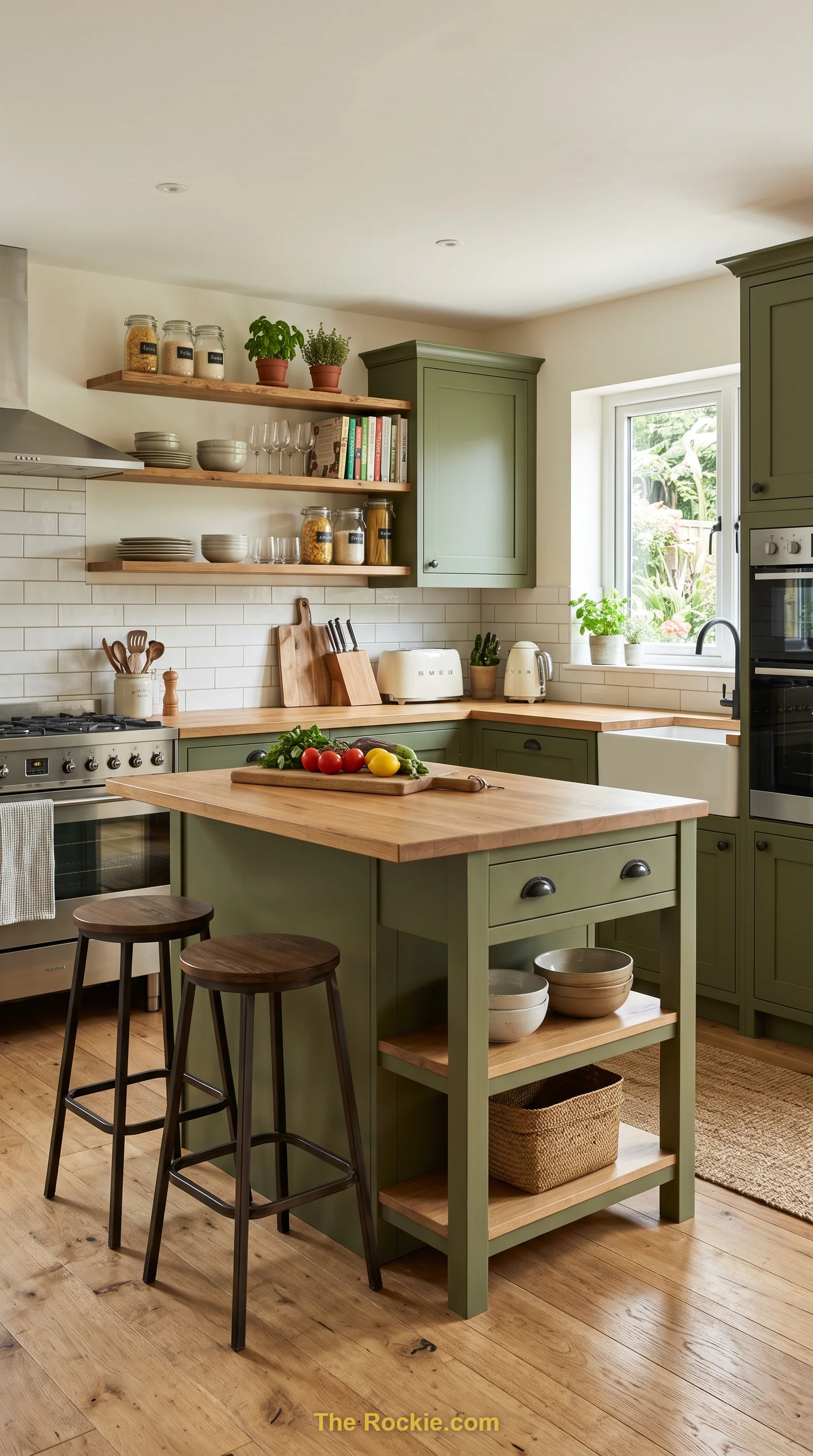
Efficiency doesn’t have to fight with style here — olive tones tie together countertops, islands, and shelving into one cohesive flow, while the layout itself prioritizes clear pathways and easy reach. It’s proof that a color choice can support functionality rather than just decorate around it.
8. Cozy Olive Dining Spaces
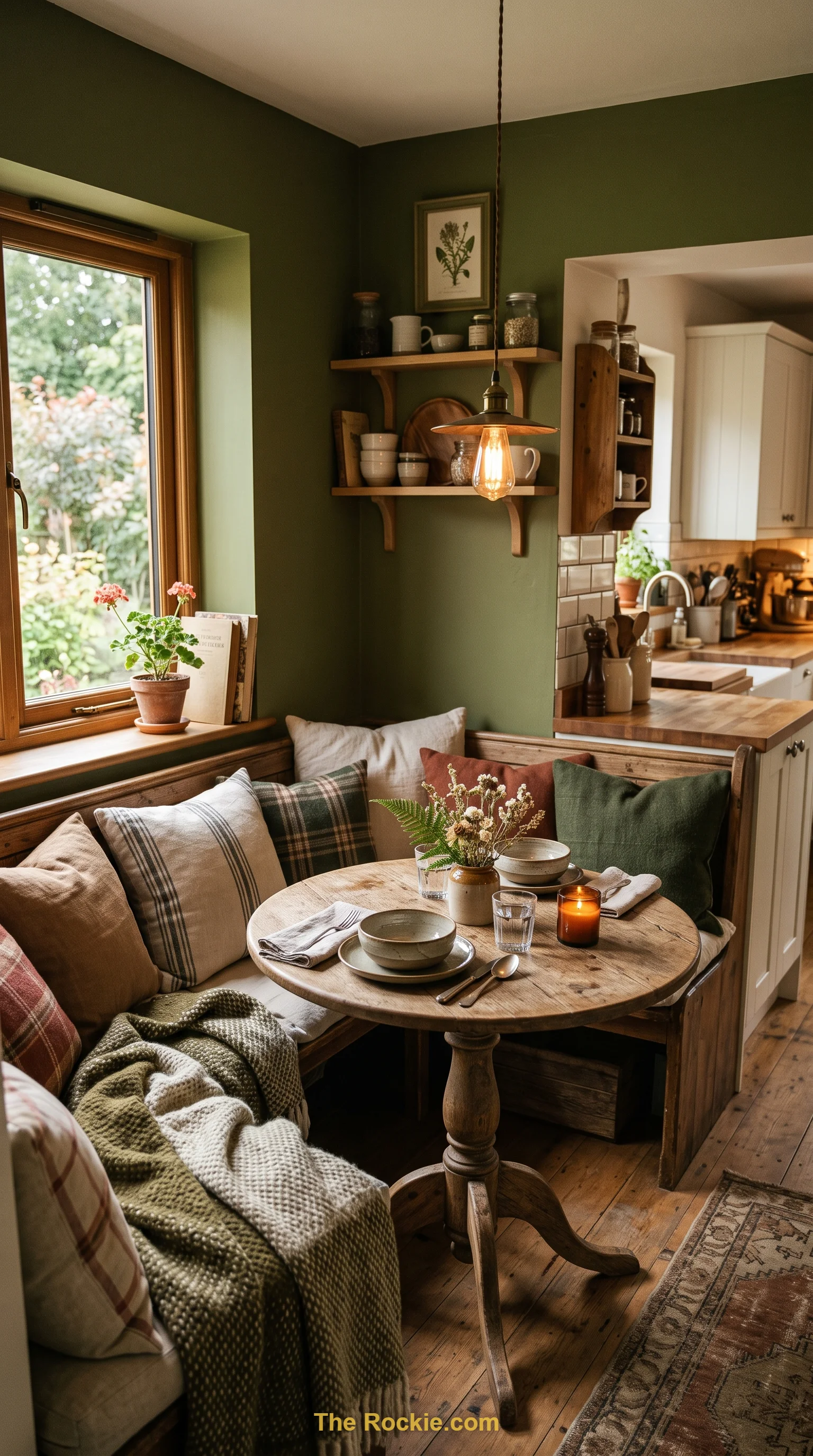
A small dining nook finished in olive, paired with warm lighting and soft textures, turns a functional corner into somewhere people actually want to sit. The tone naturally suits slower moments — coffee, conversation — more than it suits a purely utilitarian prep space.
9. Bold Olive Contrasts
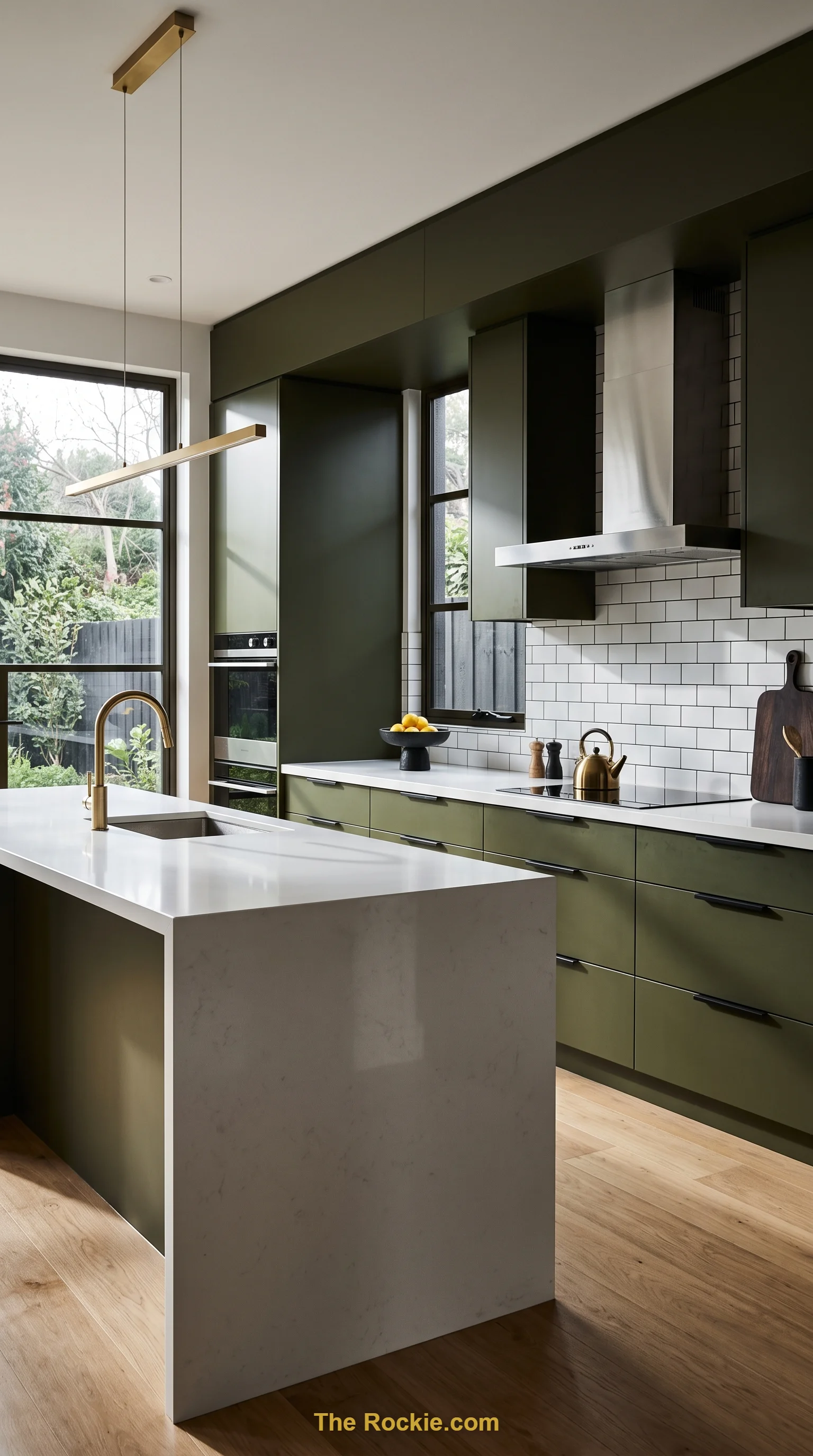
Pairing deep olive with crisp white countertops or statement metallic fixtures creates genuine visual tension instead of a single flat tone across the room. Contrasting backsplashes or patterned tile push it further, for anyone who wants olive to feel bold rather than just background warmth.
10. Harmonious Olive Combinations
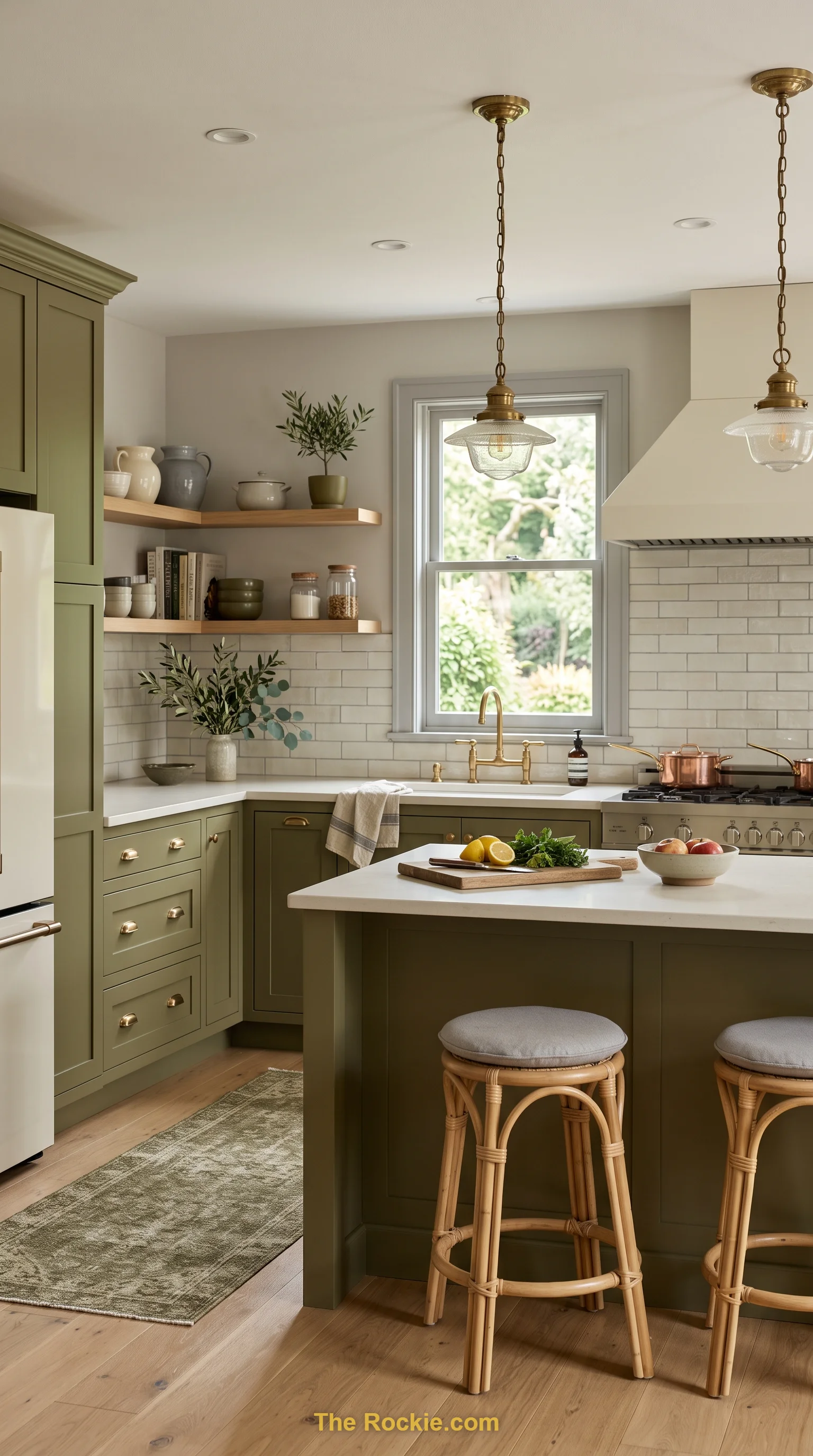
Olive pairs easily with creams, soft grays, and other earthy tones, which is part of why it works in so many different kitchen styles. Leaning into that harmony rather than fighting it creates a soothing, cohesive space that still leaves room for practical upgrades over time.
11. Vintage Olive Inspirations
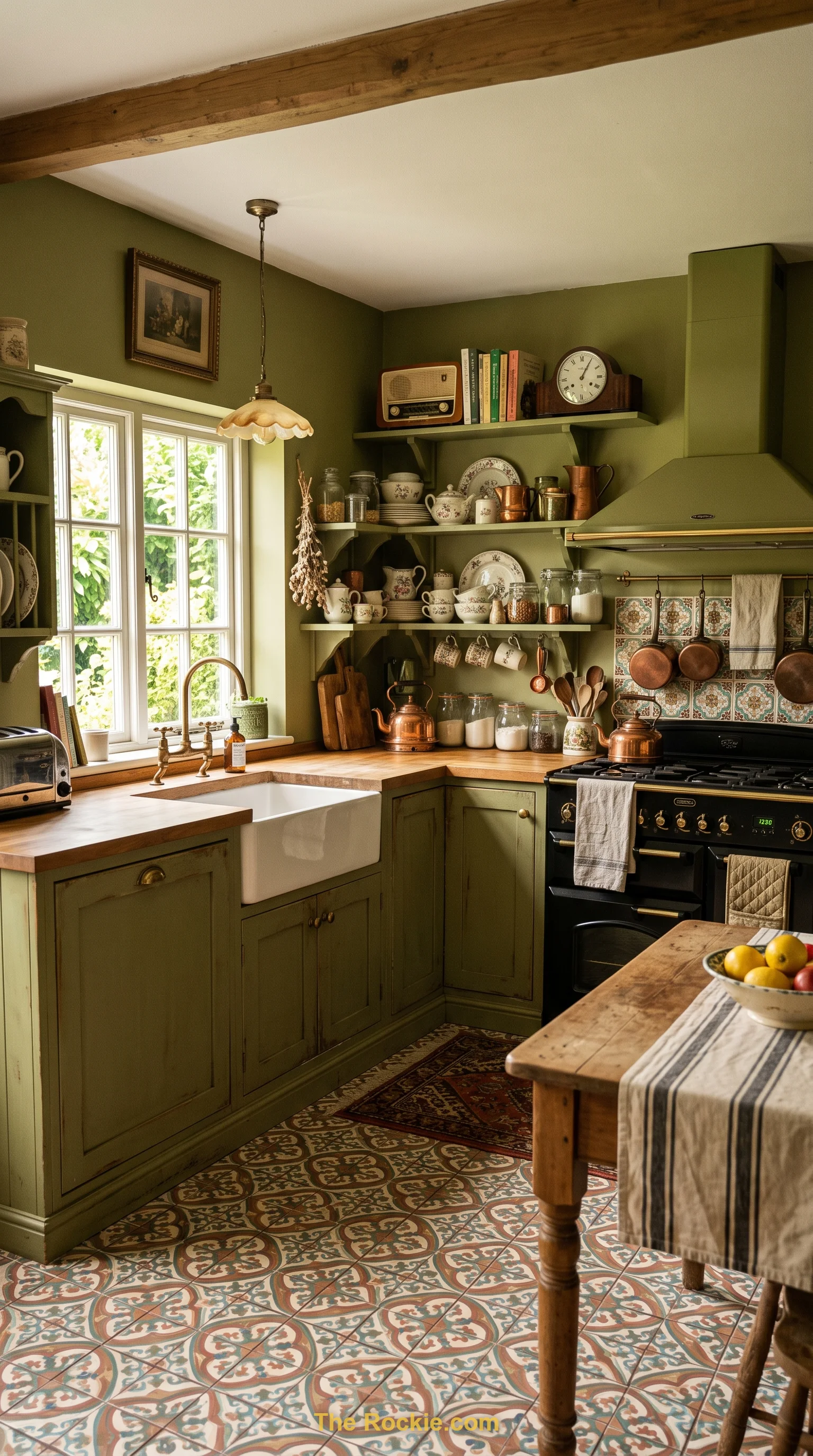
Olive green shows up constantly in retro design references, which makes it a natural fit for a kitchen leaning into vintage character — patterned tile, antique fixtures, cabinetry with a bit of distressed texture. The color does a lot to make the whole look feel intentional rather than costume-y.
12. Streamlined Olive Designs
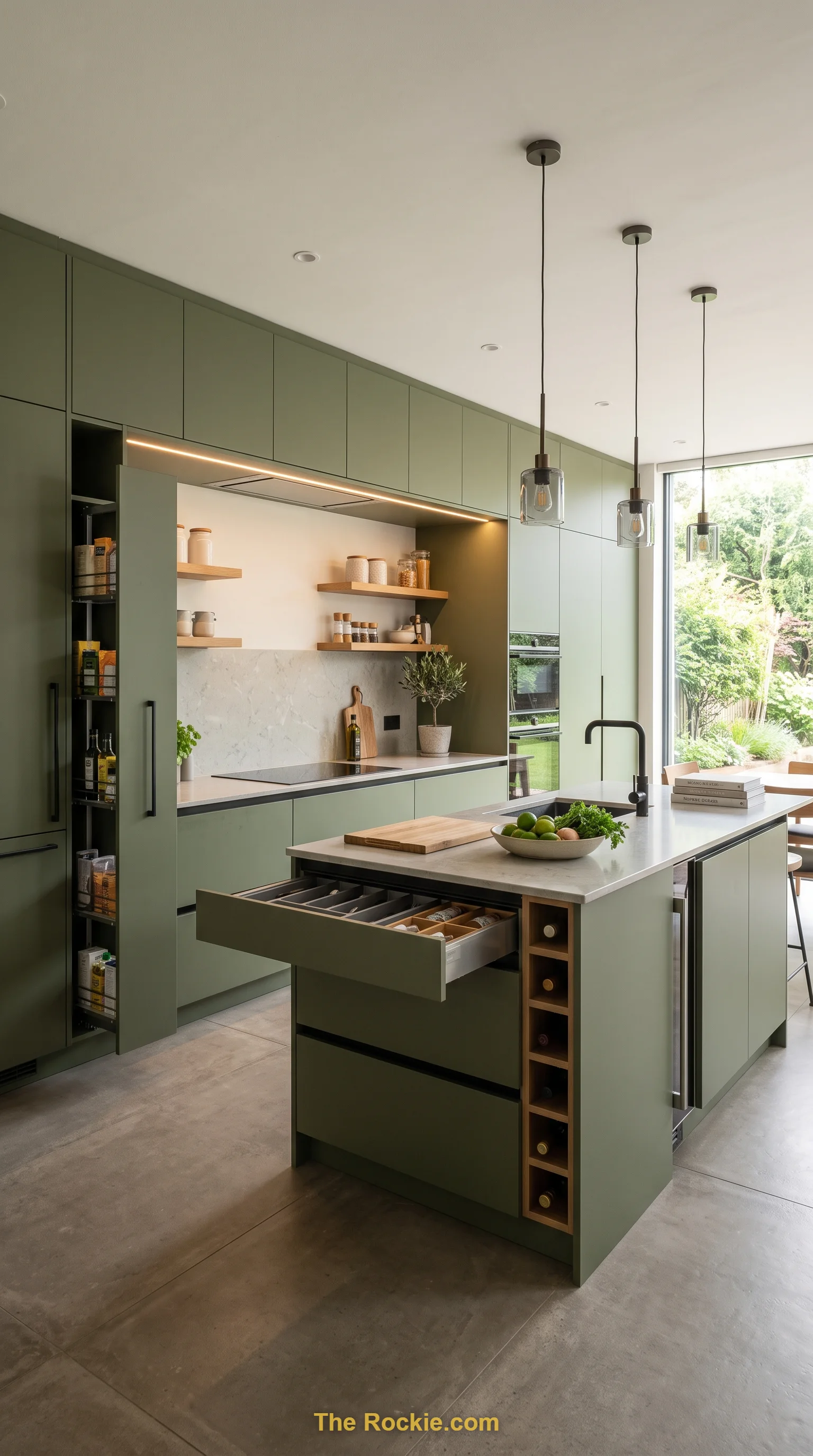
Matte finishes and gentle texture keep an olive kitchen feeling uncluttered even with a strong color anchoring the room. Smart storage and intuitive lighting round it out — the goal here is visual calm paired with genuine day-to-day practicality.
13. Open Concept Olive Kitchens
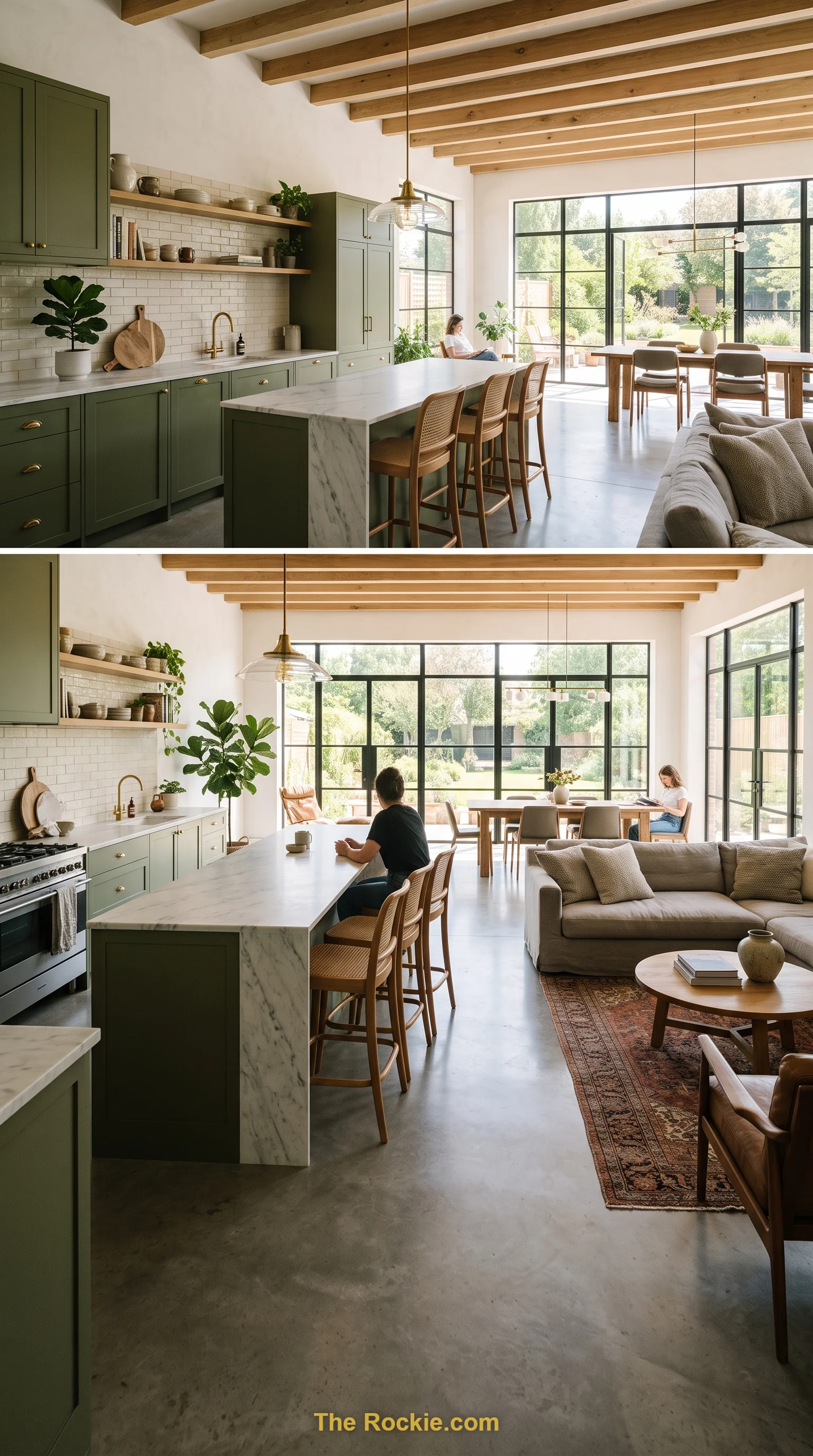
In an open floor plan, olive tones can carry through from kitchen to living space without feeling repetitive, since the color reads as neutral enough to work across different room functions. Large windows help — natural light brings out the warmth in the tone rather than letting it go flat.
14. Integrated Olive Appliances
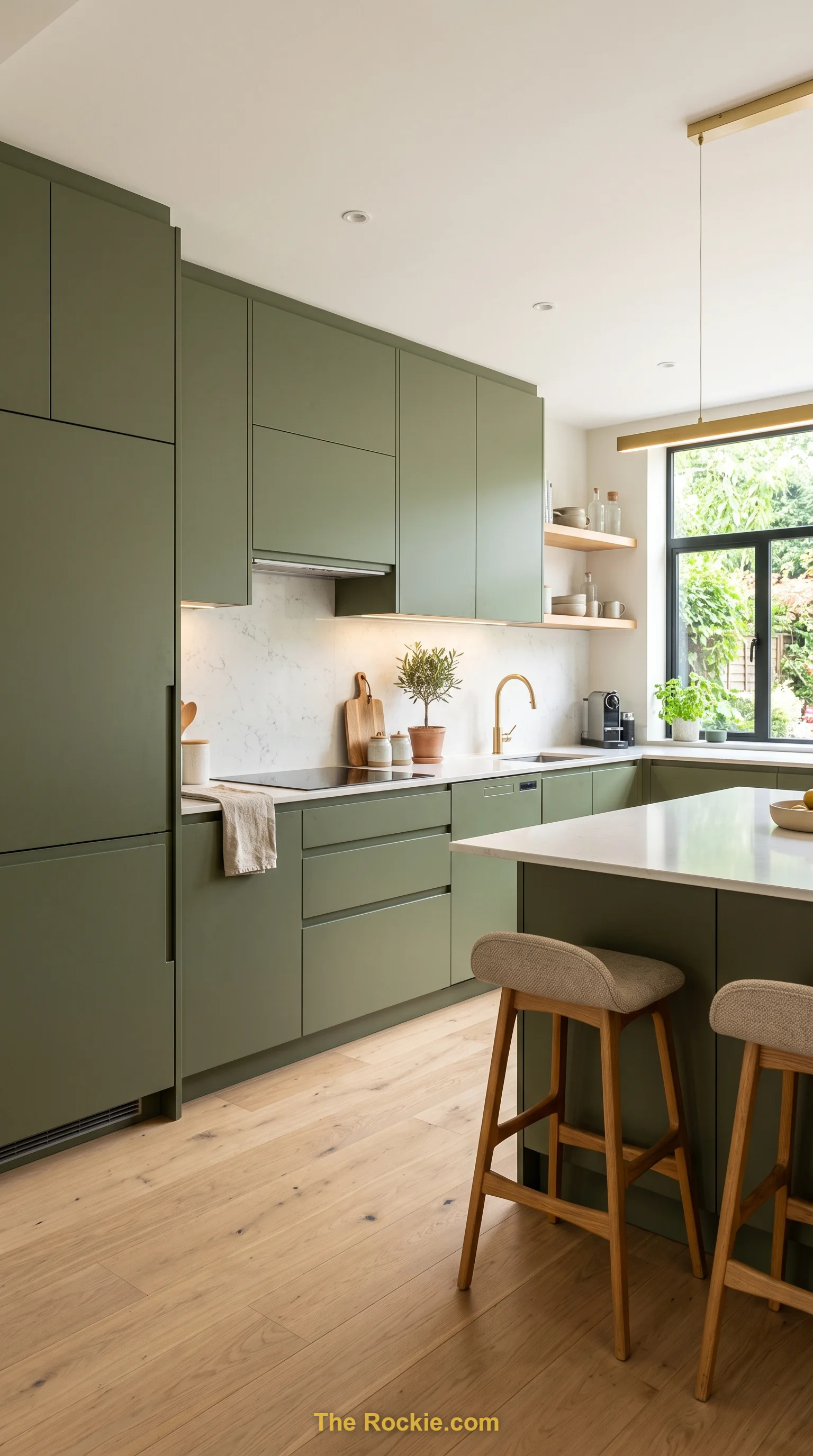
Appliances finished in olive or hidden behind matching panels keep the color story consistent instead of breaking it up with stainless steel or black accents that don’t quite fit. It’s a small detail that goes a long way toward making the kitchen feel fully considered.
15. Classic Olive Cabinetry
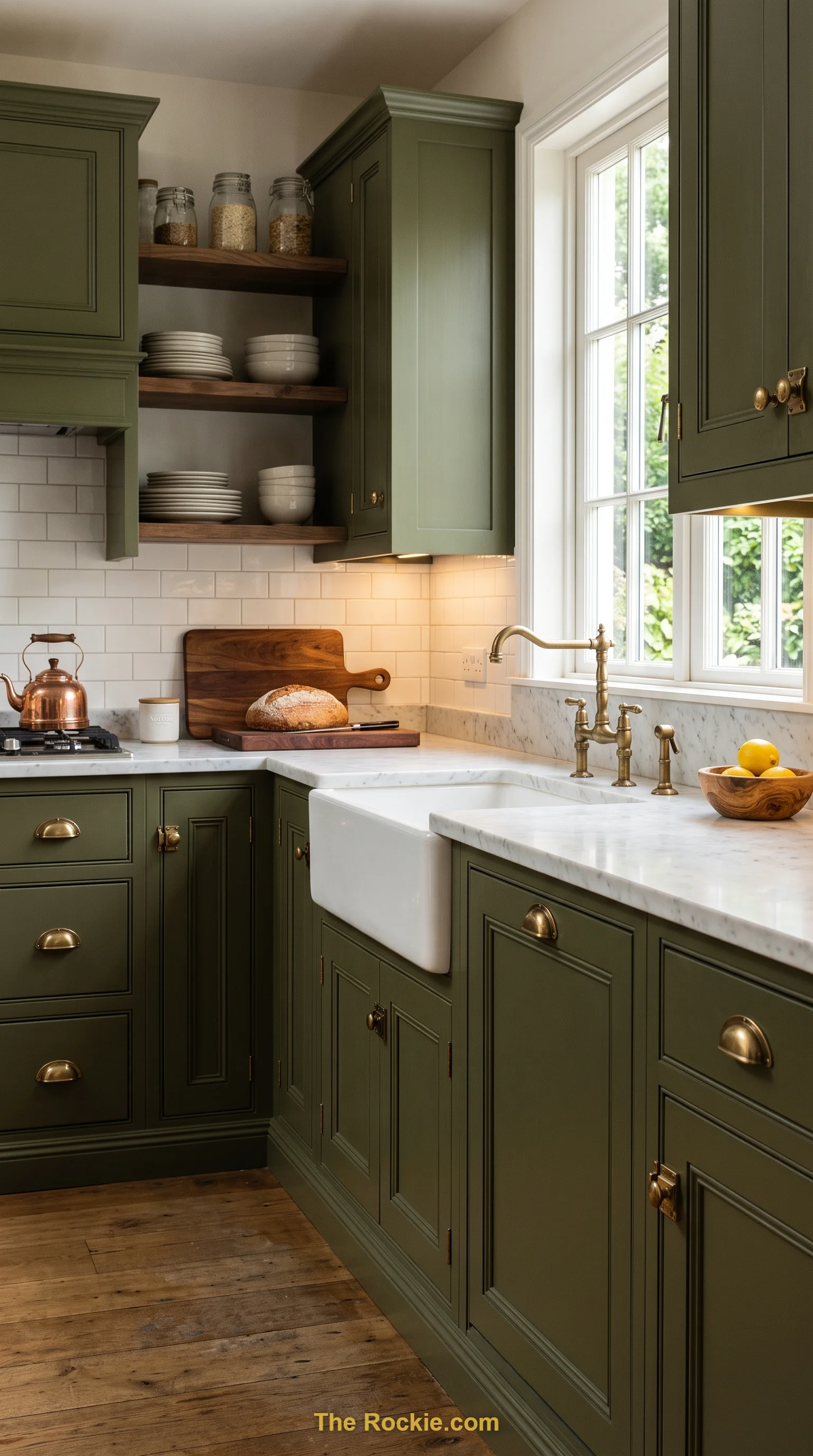
Deep olive paired with intricate paneling and quality hardware gives a kitchen real presence without tipping into anything trendy. It’s a look built to last — durable finishes, generous storage, and a tone that doesn’t wear out its welcome the way brighter colors sometimes do.
16. Eco-Smart Olive Lighting
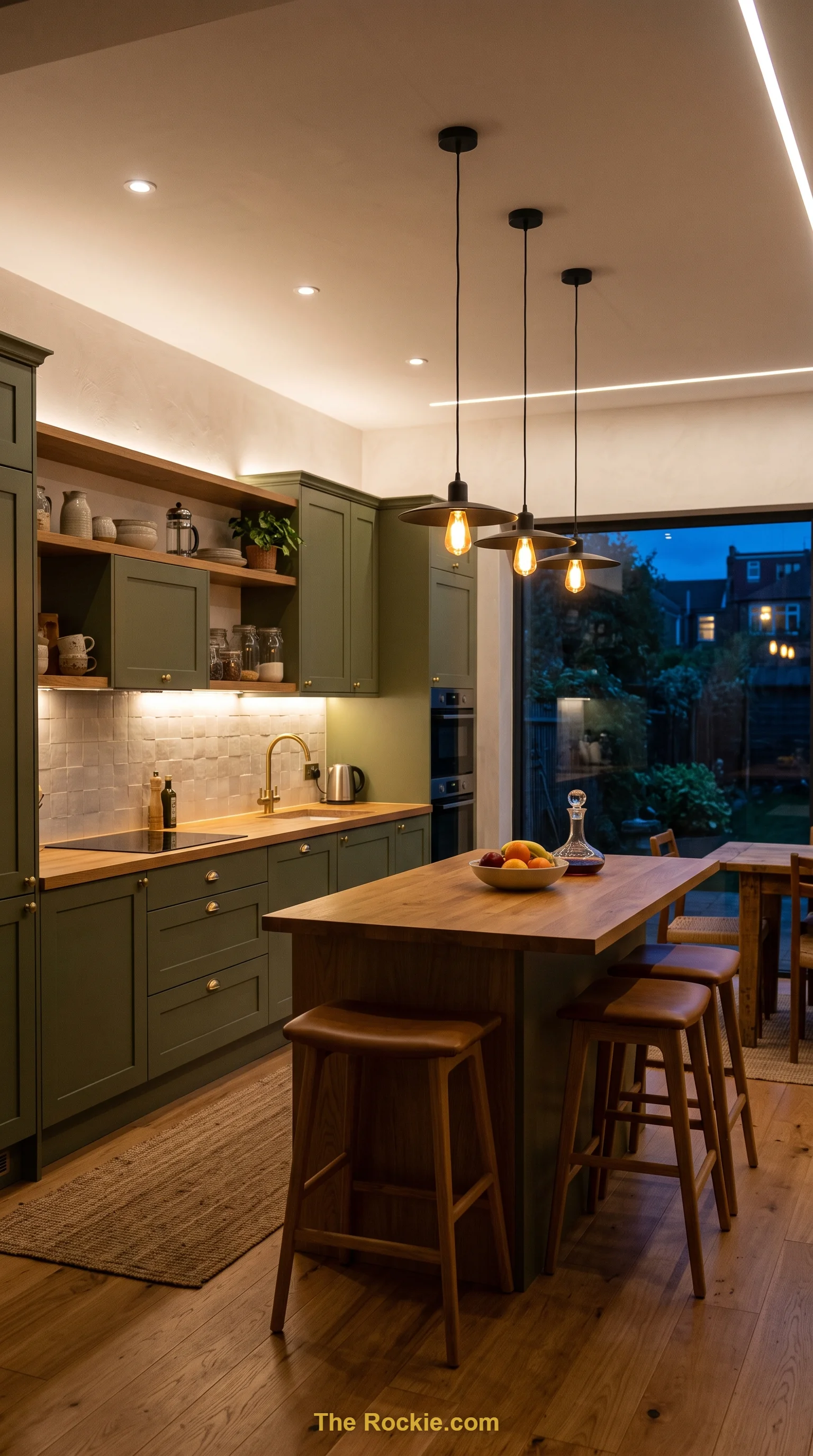
LED fixtures positioned to enhance olive’s natural warmth do double duty — energy efficiency plus a gentle, inviting glow across the cabinetry. Smart controls make it easy to shift from bright task lighting to something softer in the evening without changing the room’s overall feel.
17. Multi-Functional Olive Islands
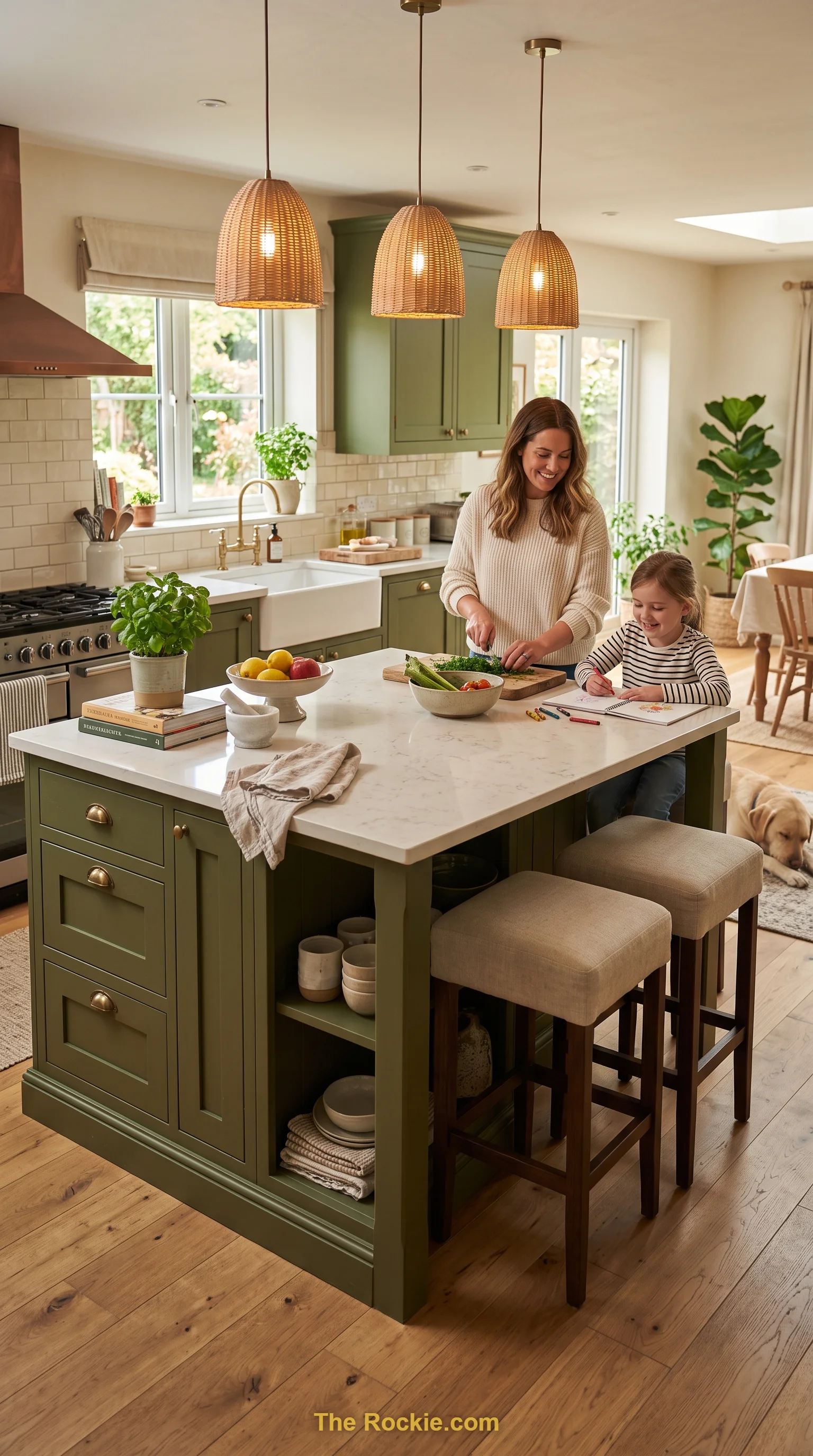
An olive-toned island naturally becomes the room’s anchor, especially with built-in seating or hidden storage worked into the design. It’s a good way to bring the color into the center of the kitchen without covering every wall in it.
18. Artistic Olive Backsplashes
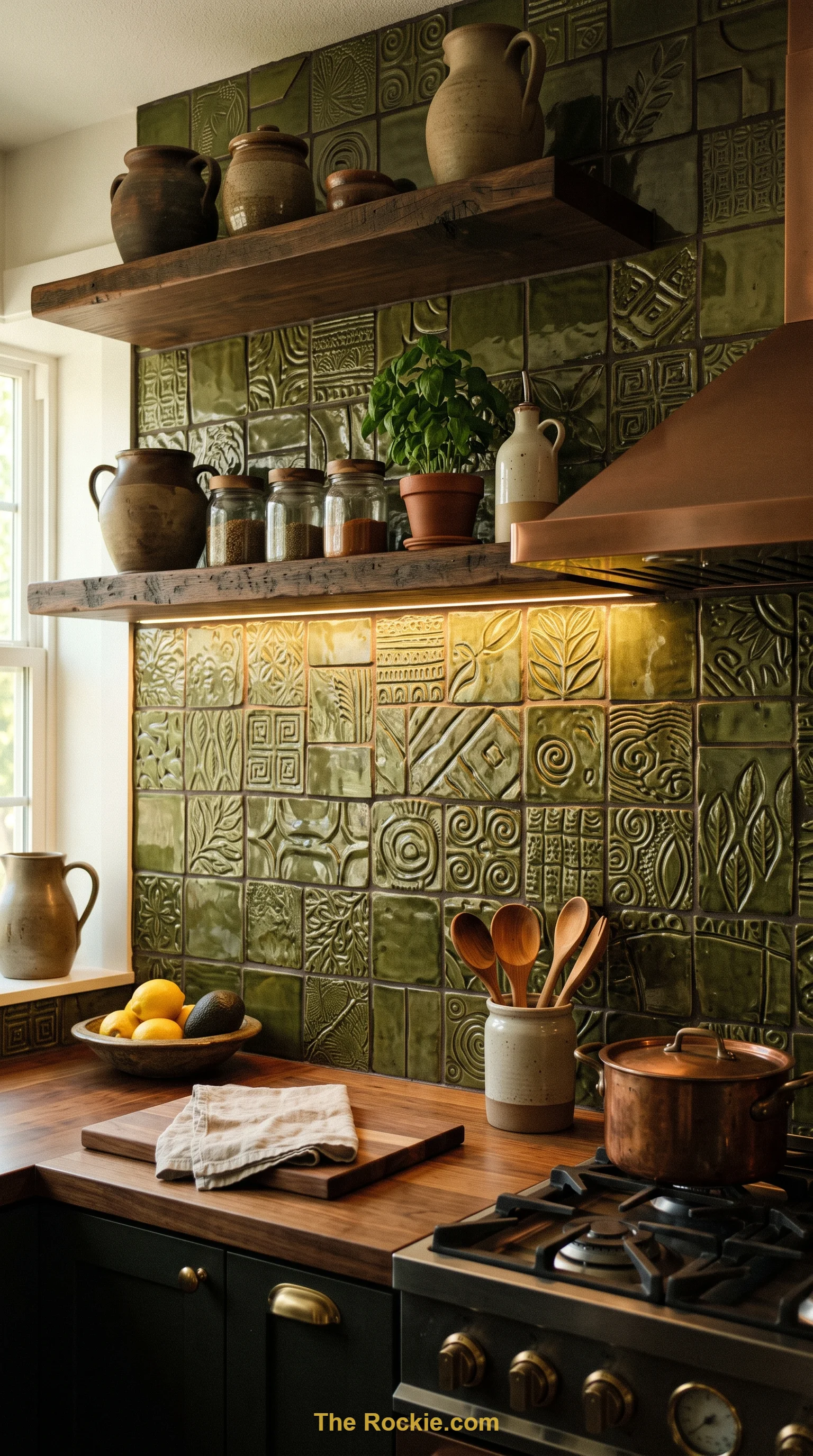
Textured tile in varying shades of olive turns a functional wall into something worth looking at twice. It’s a lower-commitment way to bring more of the color into the room if full cabinetry feels like too much at once.
19. Luxury Olive Details
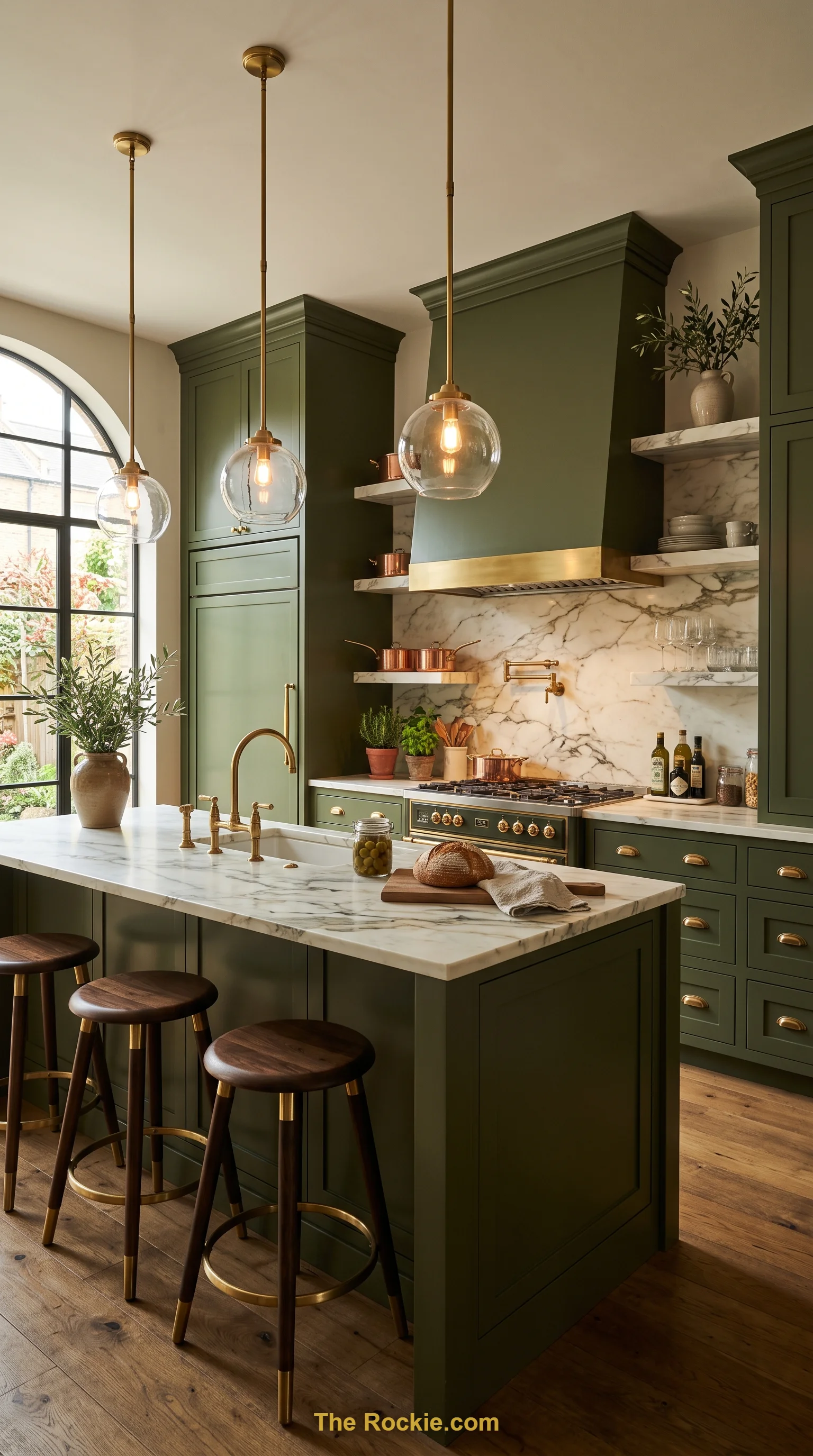
Velvety olive cabinetry paired with marble countertops and refined brass hardware pushes the palette into genuinely upscale territory. Every detail here is chosen deliberately — custom fixtures, considered moldings — for a kitchen that reads as quietly expensive rather than flashy.
20. Functional Olive Storage
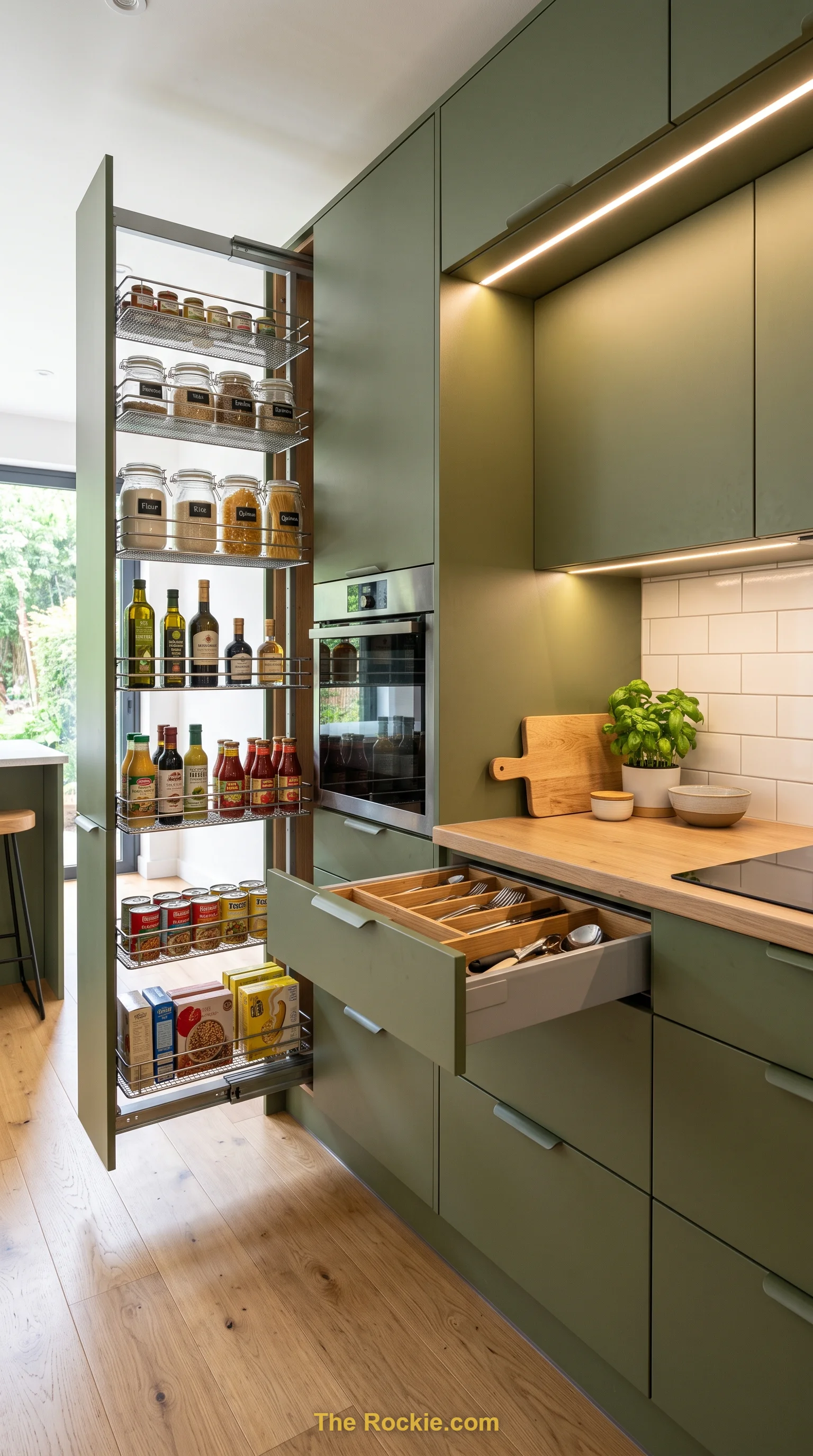
Pull-out pantries and hidden compartments finished in olive keep the kitchen organized without breaking the color continuity the rest of the room relies on. It’s proof that a strong color choice and serious storage capacity aren’t mutually exclusive.
21. Bright Olive Accents
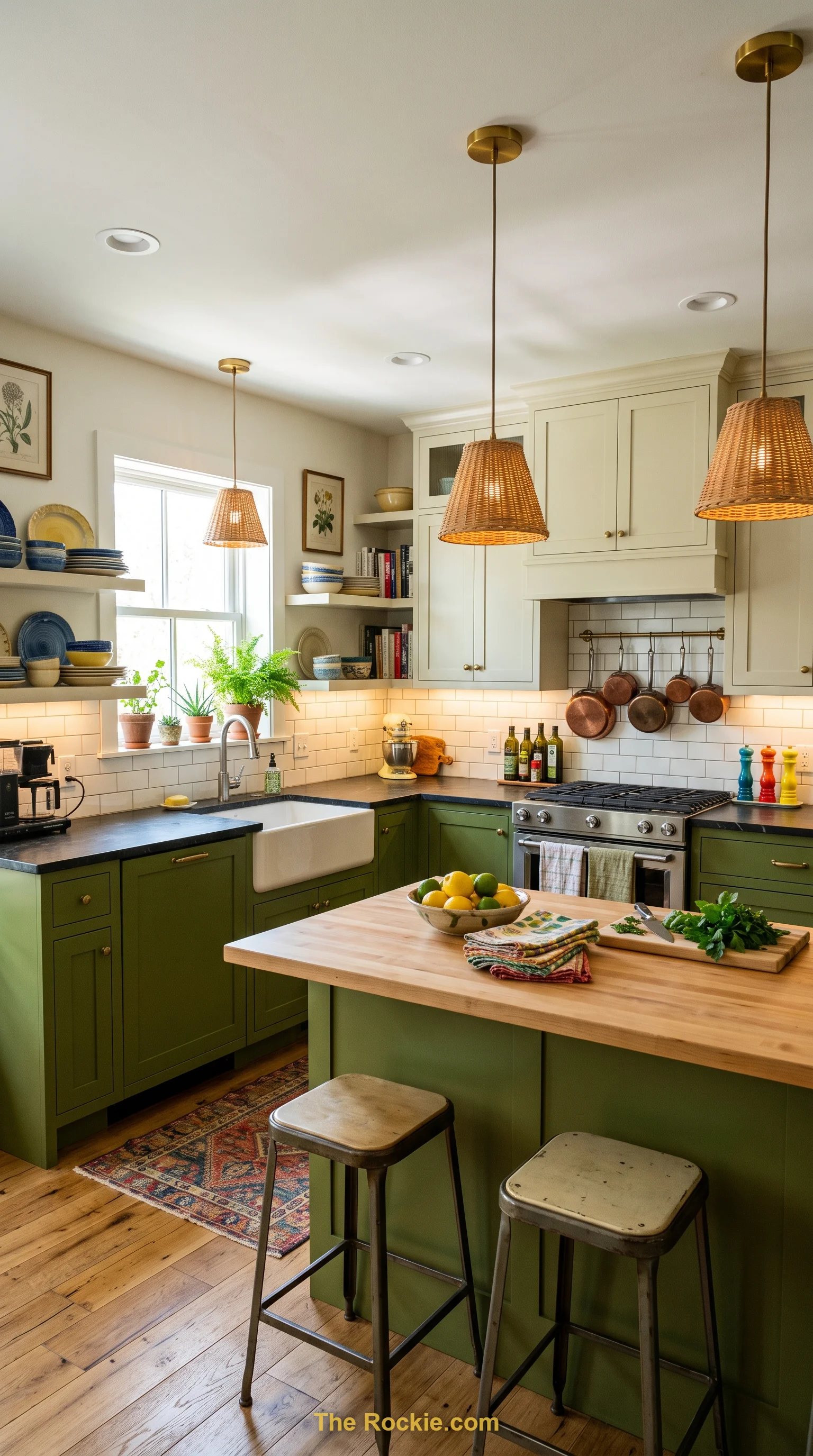
Lighter olive shades mixed with darker tones create depth without needing a second color in the mix at all. Open shelving, a few decorative pieces, an accent wall — small touches like these keep the palette feeling lively rather than heavy.
22. Tailored Olive Spaces
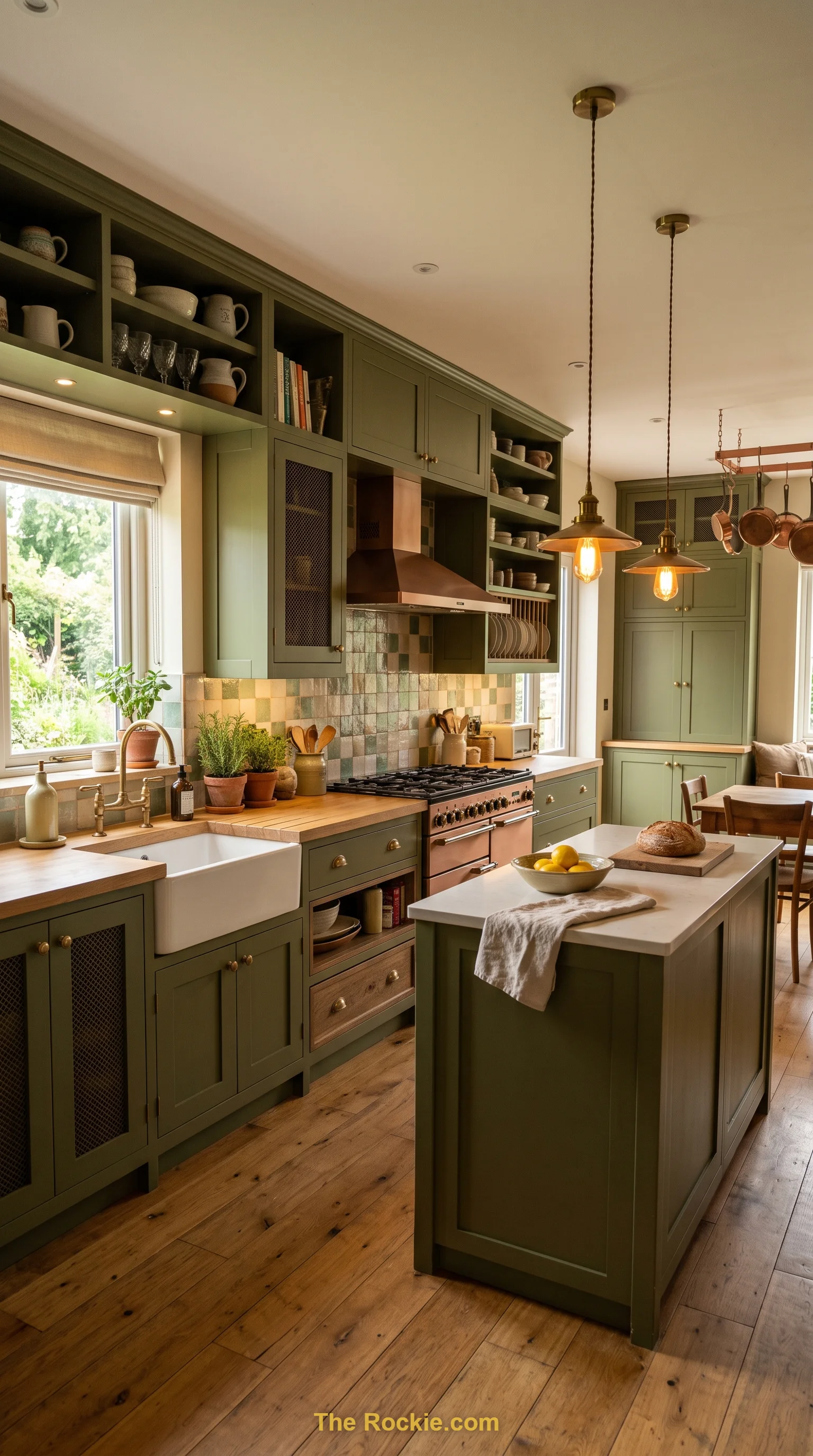
The most personal olive kitchens skip the formula entirely — custom cabinetry, bespoke finishes, artistic tile work chosen specifically for the space rather than pulled from a standard palette. Olive’s versatility means it adapts to whatever direction that personalization takes.
Final Thoughts
Olive green earns its staying power in kitchen design because it doesn’t demand much from the rest of the room — it works quietly with wood, brass, stone, and nearly any neutral, which is exactly why it shows up in styles as different as rustic farmhouse and sleek minimalism. Whether you go all-in on cabinetry or just bring it in through a backsplash or island, olive tends to make a kitchen feel more grounded, not more decorated.