21+ Travertine Floor Kitchen Ideas for Timeless Style

Travertine has a way of making a kitchen feel like it’s been there for decades, even if the renovation wrapped up last month. The natural variation in color and texture — no two tiles reading quite the same — gives a floor a kind of quiet depth that manufactured materials struggle to fake. It’s also just genuinely practical: durable enough for the daily grind of a working kitchen, and forgiving enough to hide the small scuffs that come with actually living in a space.
What makes travertine particularly versatile is how differently it reads depending on what’s paired with it. Set against reclaimed wood and wrought iron, it leans rustic and Mediterranean. Paired with sleek cabinetry and minimal hardware, it reads as understated modern luxury. Here are 22 ways to build a kitchen around travertine flooring, whatever direction you want to take it.
1. Rustic Warmth Built Around the Stone
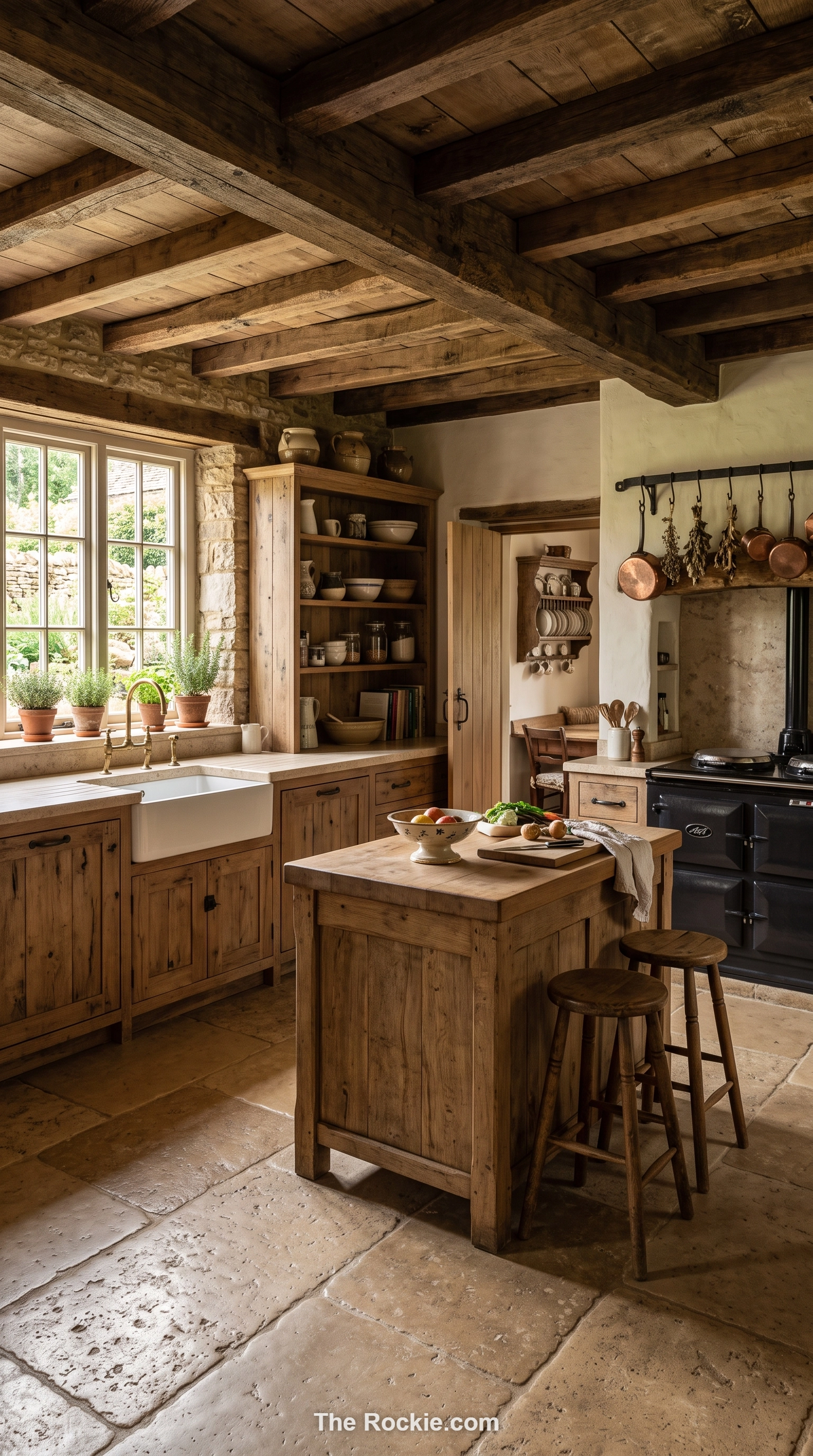
Travertine’s earthy, subtly varied tones set the stage for a cozy, farmhouse-leaning kitchen without much extra effort. The stone pairs naturally with reclaimed wood, exposed beams, and antique fixtures, creating a space that feels grounded and lived-in rather than newly installed. Beyond the visual appeal, it’s genuinely tough underfoot, holding up to years of daily traffic while only adding character over time.
2. Stripped-Back Modern Minimalism
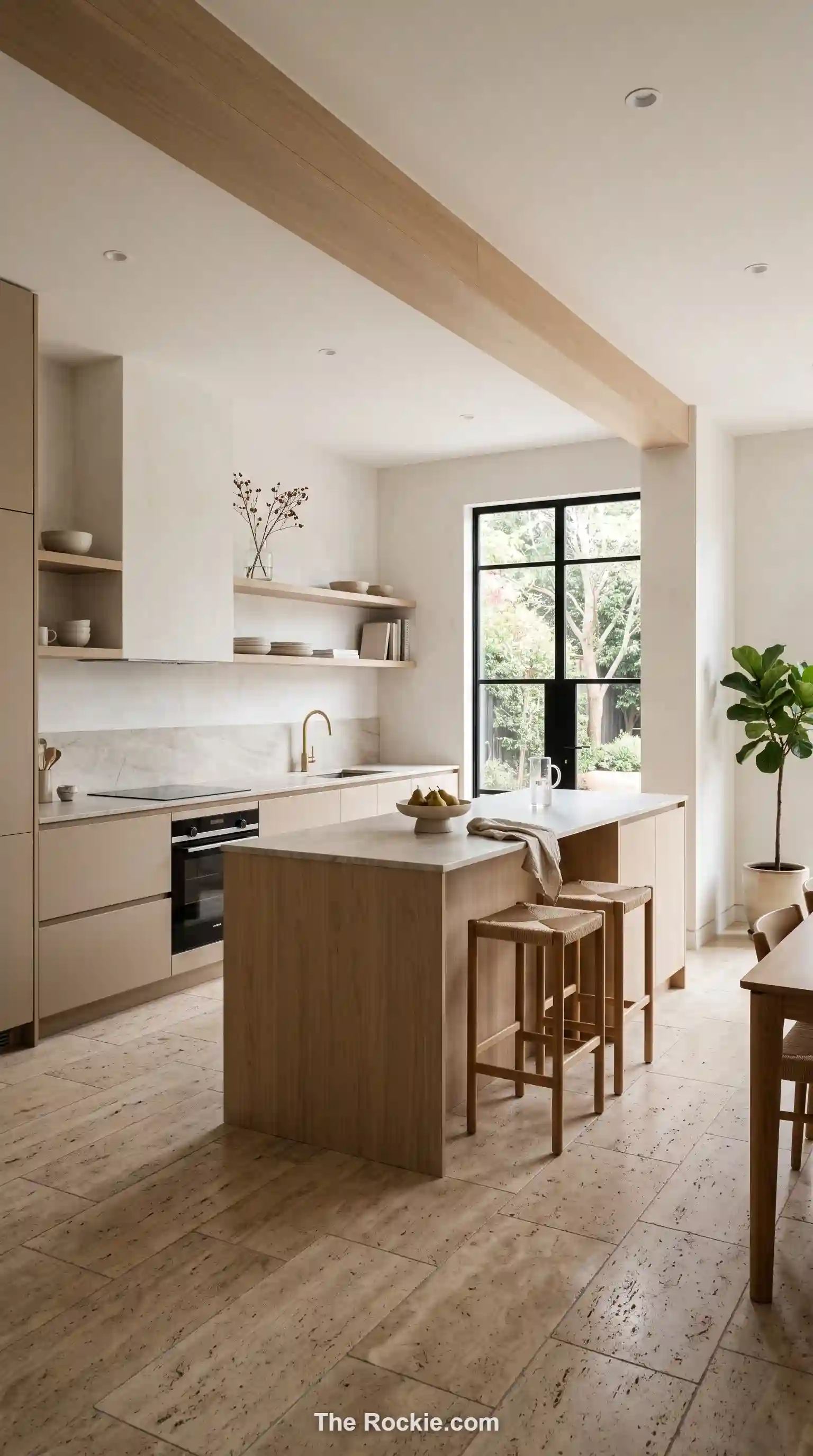
Travertine’s neutral tones and subtle veining work surprisingly well in a minimalist kitchen, adding a layer of organic texture without disrupting clean lines. Paired with sleek cabinetry and streamlined appliances, the stone reads as quiet luxury rather than rustic charm. It’s also durable enough for heavy daily use, which makes it a practical match for a design philosophy built on function first.
3. Mediterranean Villa Energy
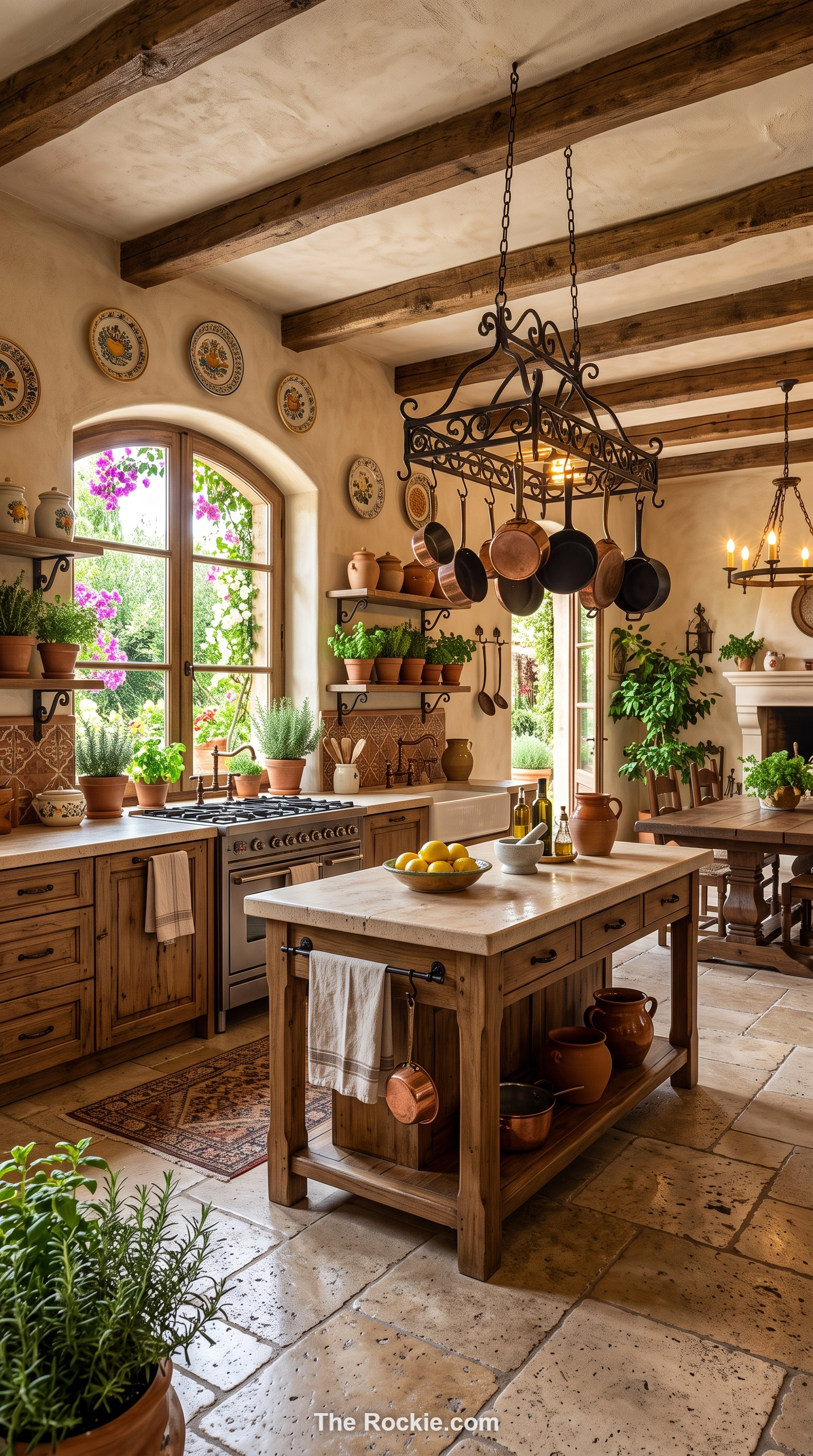
Travertine’s naturally warm, aged character makes it a natural anchor for a Mediterranean-inspired kitchen. Paired with wrought iron details, rustic terracotta accents, and a bit of greenery, the floor evokes sun-drenched courtyards without requiring an actual Italian villa to pull it off. It’s a lively, textured look that stays practical thanks to the stone’s durability and easy upkeep.
4. An Ambiance Built on Soft Light and Texture
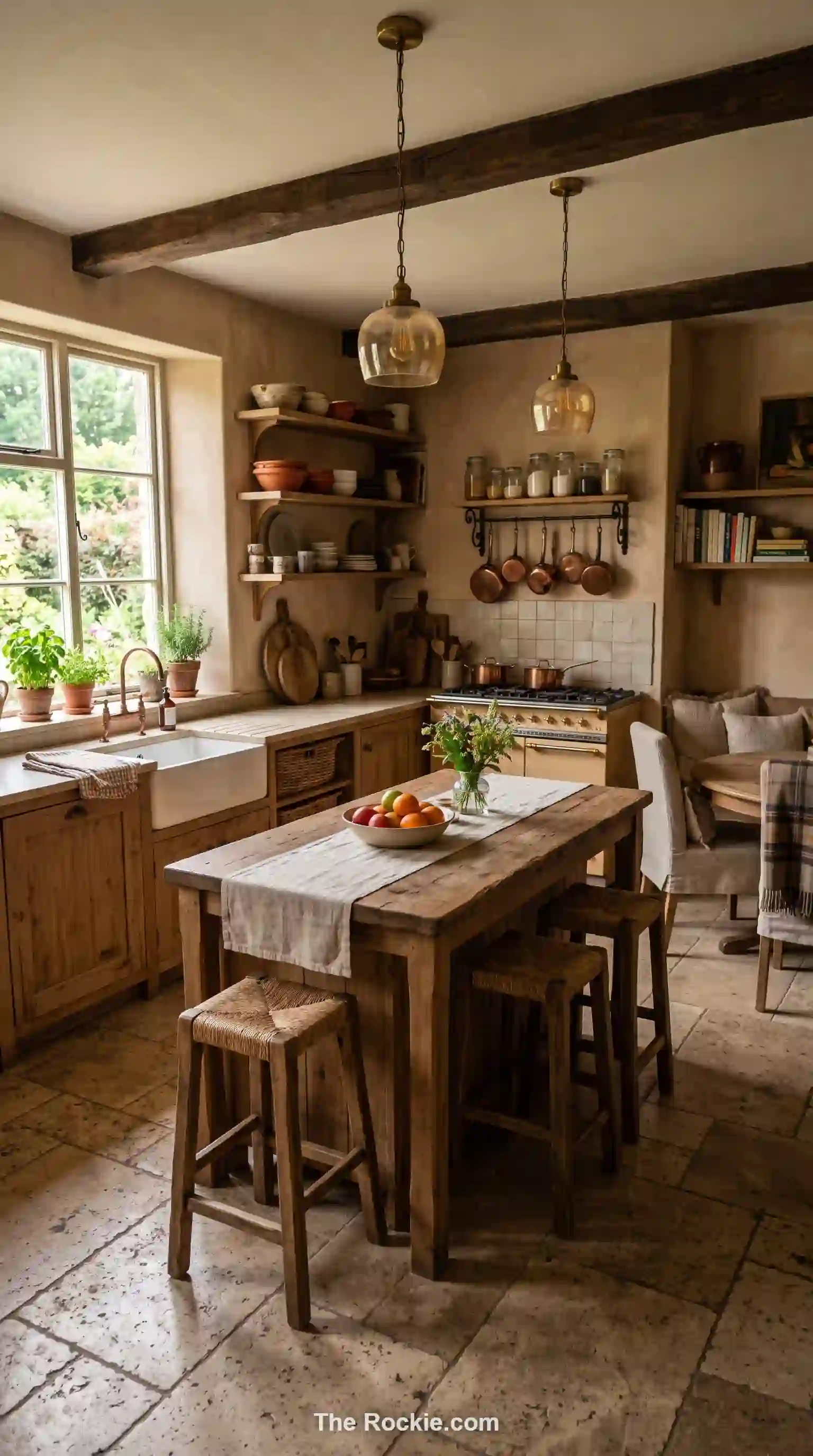
Travertine’s inherent warmth pairs beautifully with soft ambient lighting, creating a kitchen that feels genuinely relaxing rather than purely functional. The gentle interplay between the stone’s natural tones and a well-placed lighting scheme sets a mood suited to both everyday cooking and slower, more social evenings. Cozy seating and textured decor round out the effect, keeping the space equal parts workspace and gathering spot.
5. Vintage Details With Real Depth
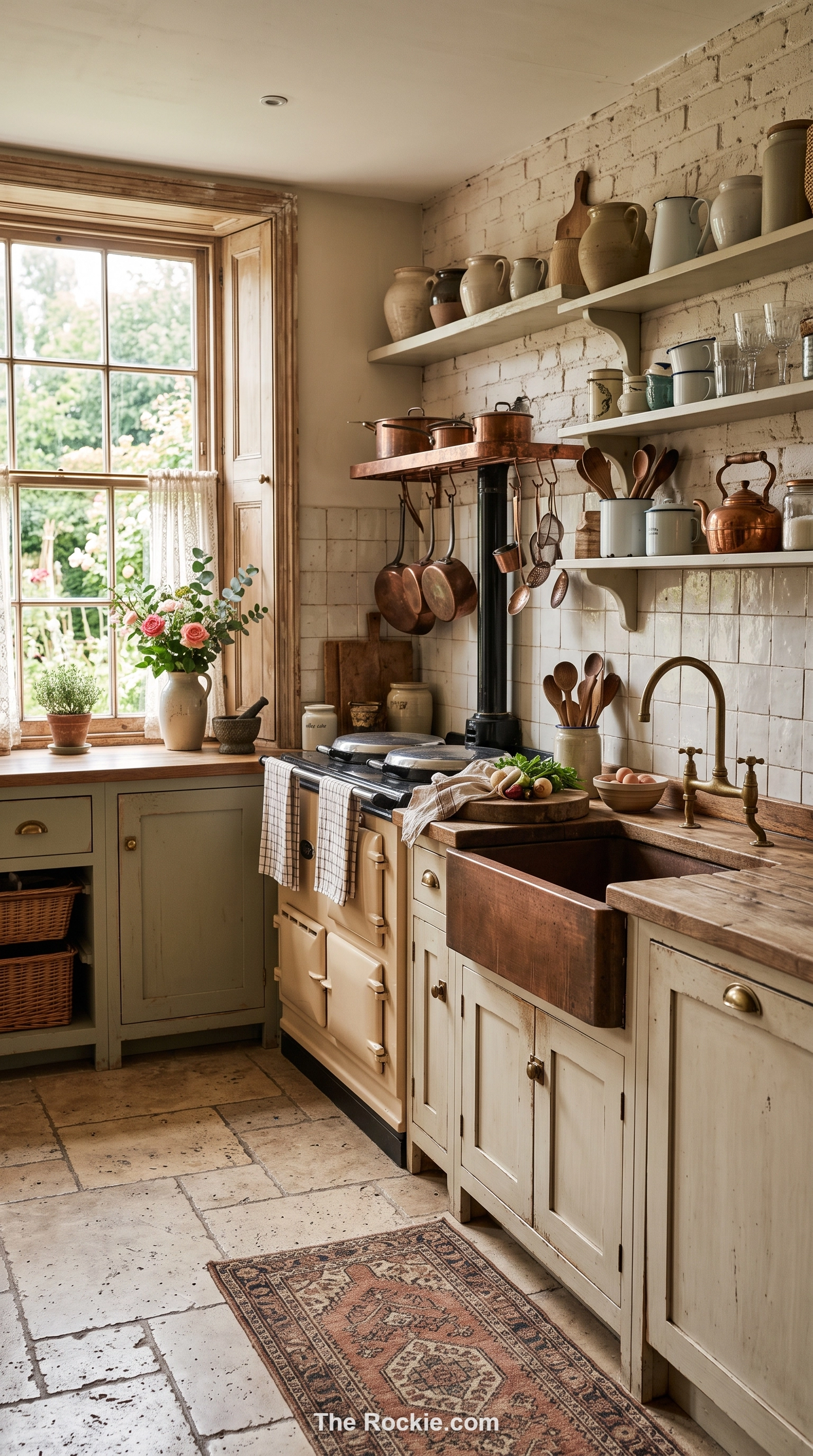
Softly distressed surfaces and ornate antique fixtures pair naturally with travertine’s own evolving, aged patterns, creating a kitchen that feels romantic without tipping into costume. The stone becomes part of the story rather than just a backdrop, complementing classic furnishings while still offering a genuinely durable, low-maintenance surface for daily life.
6. Letting the Stone’s Natural Beauty Lead
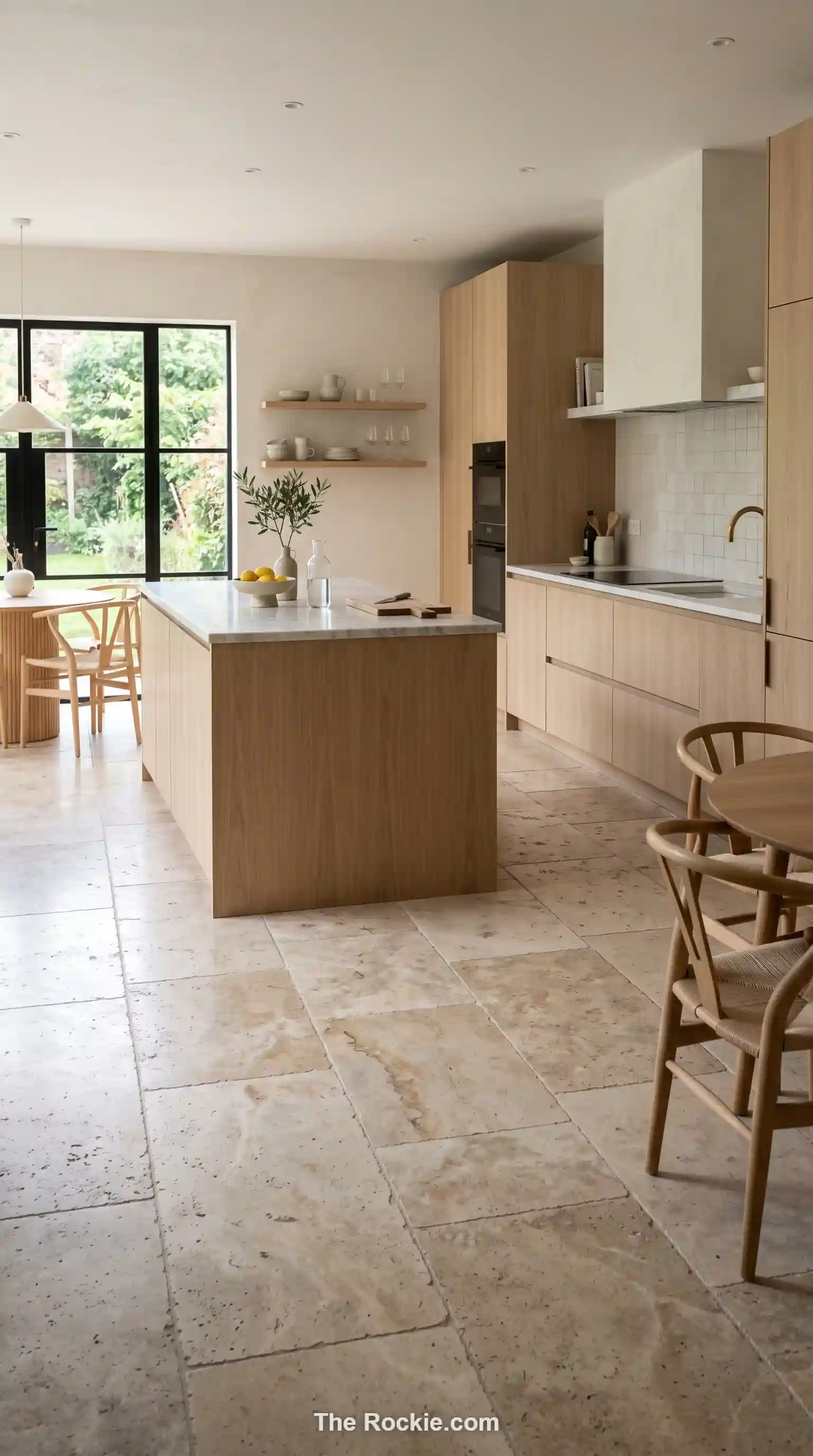
Sometimes the best design move is restraint — a fresh, simple palette that lets travertine’s organic variation in color and pattern do the visual work on its own. Paired with minimalist cabinetry and natural wood accents, this approach creates a serene canvas where light plays across the stone throughout the day, offering quiet sophistication without much additional decoration.
7. Bold Color Against a Neutral Floor
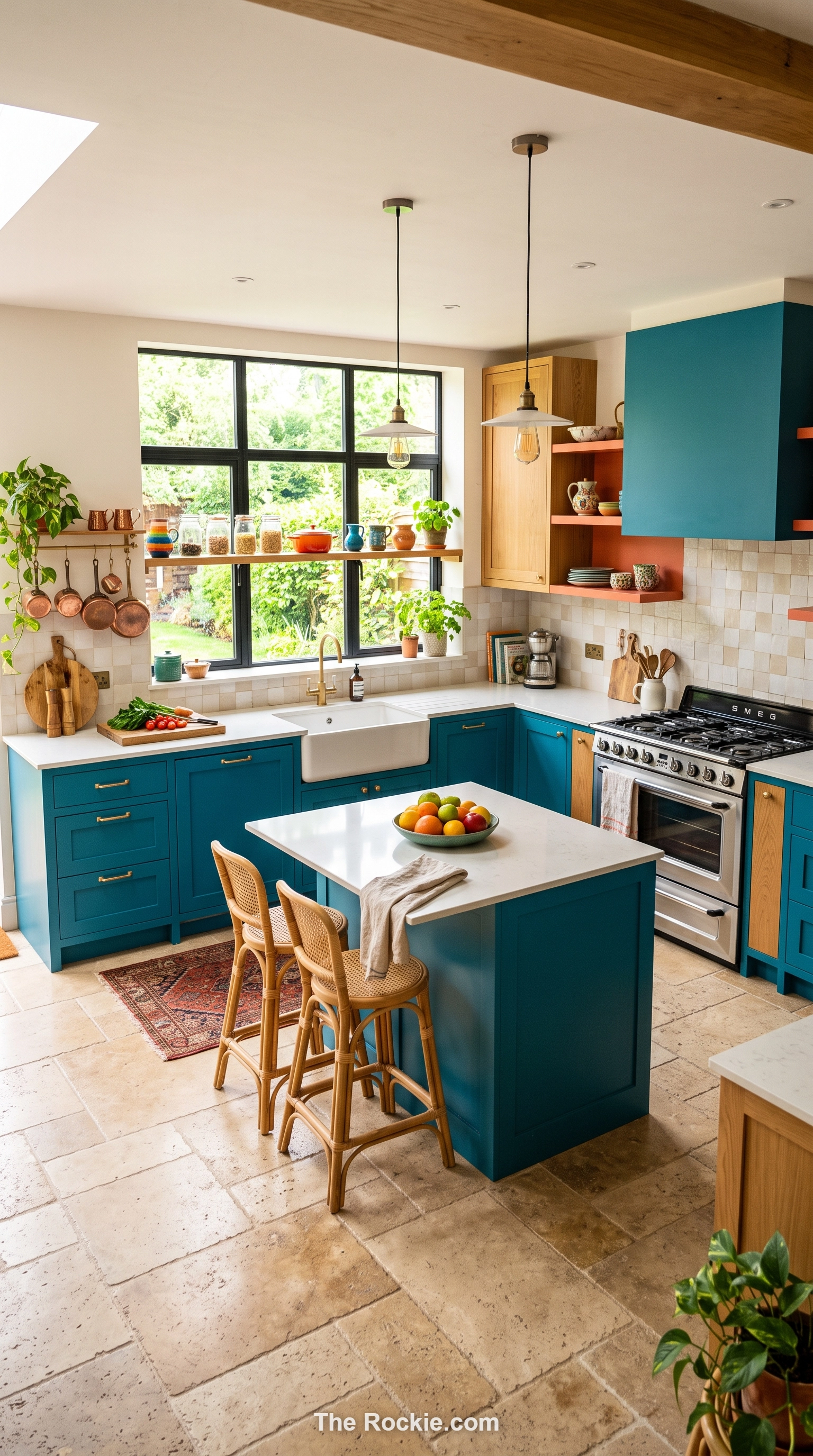
Travertine’s soft, neutral tones make an ideal backdrop for a kitchen that wants to play with bolder color elsewhere — vibrant cabinetry, bright accessories, a graphic backsplash. The contrast between the calm stone underfoot and the energy above creates a dynamic, personality-driven space, without ever feeling visually overwhelming, since the floor keeps everything grounded.
8. A Genuinely Sustainable Choice
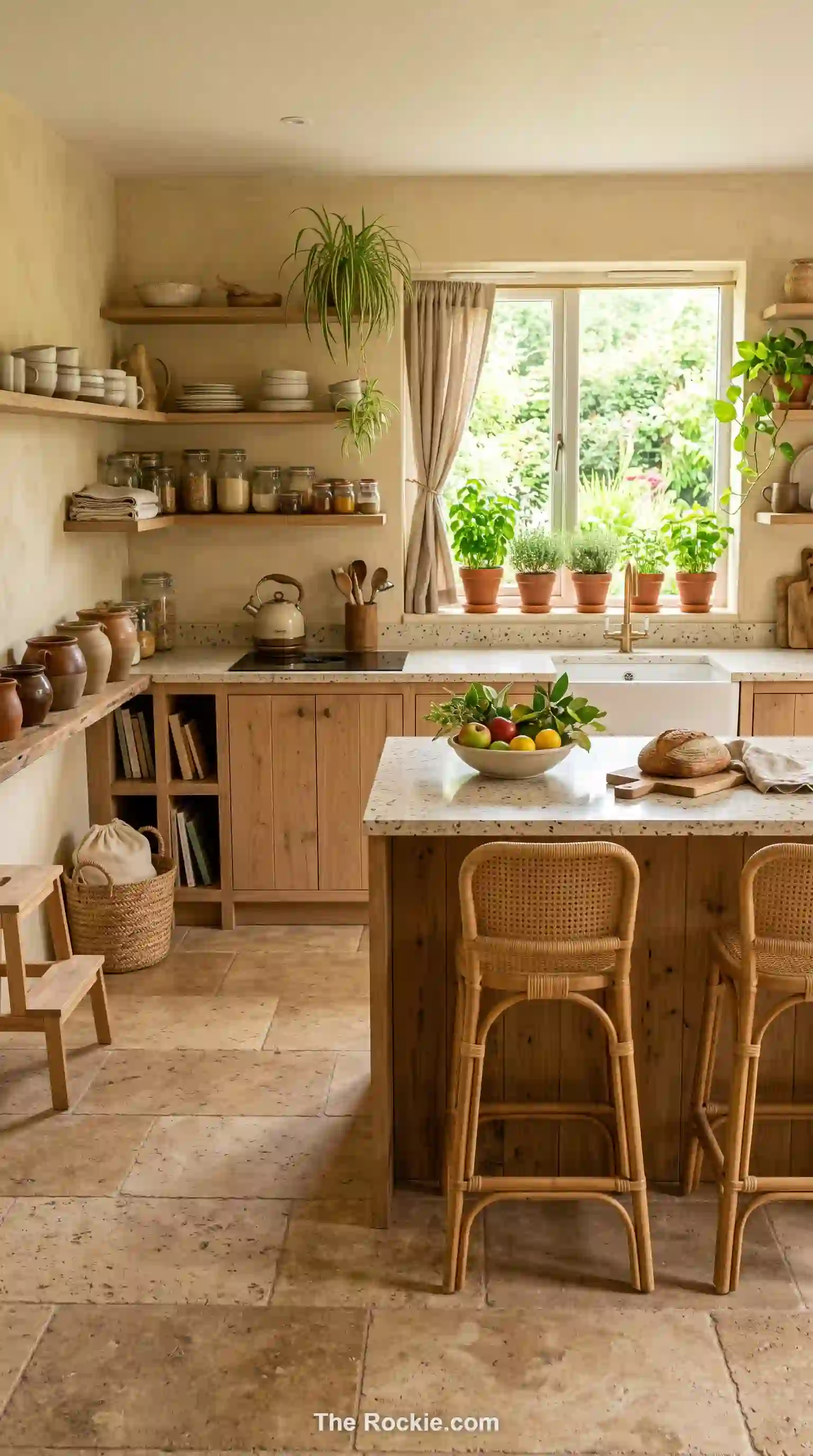
Travertine is a natural material formed over centuries, which makes it a long-lasting, low-maintenance option for anyone thinking about their renovation’s environmental footprint. Paired with other organic decor choices, it creates a warm, eco-conscious kitchen that still holds up beautifully to heavy daily foot traffic, proving sustainability and style aren’t mutually exclusive here.
9. Timeless Sophistication, Understated
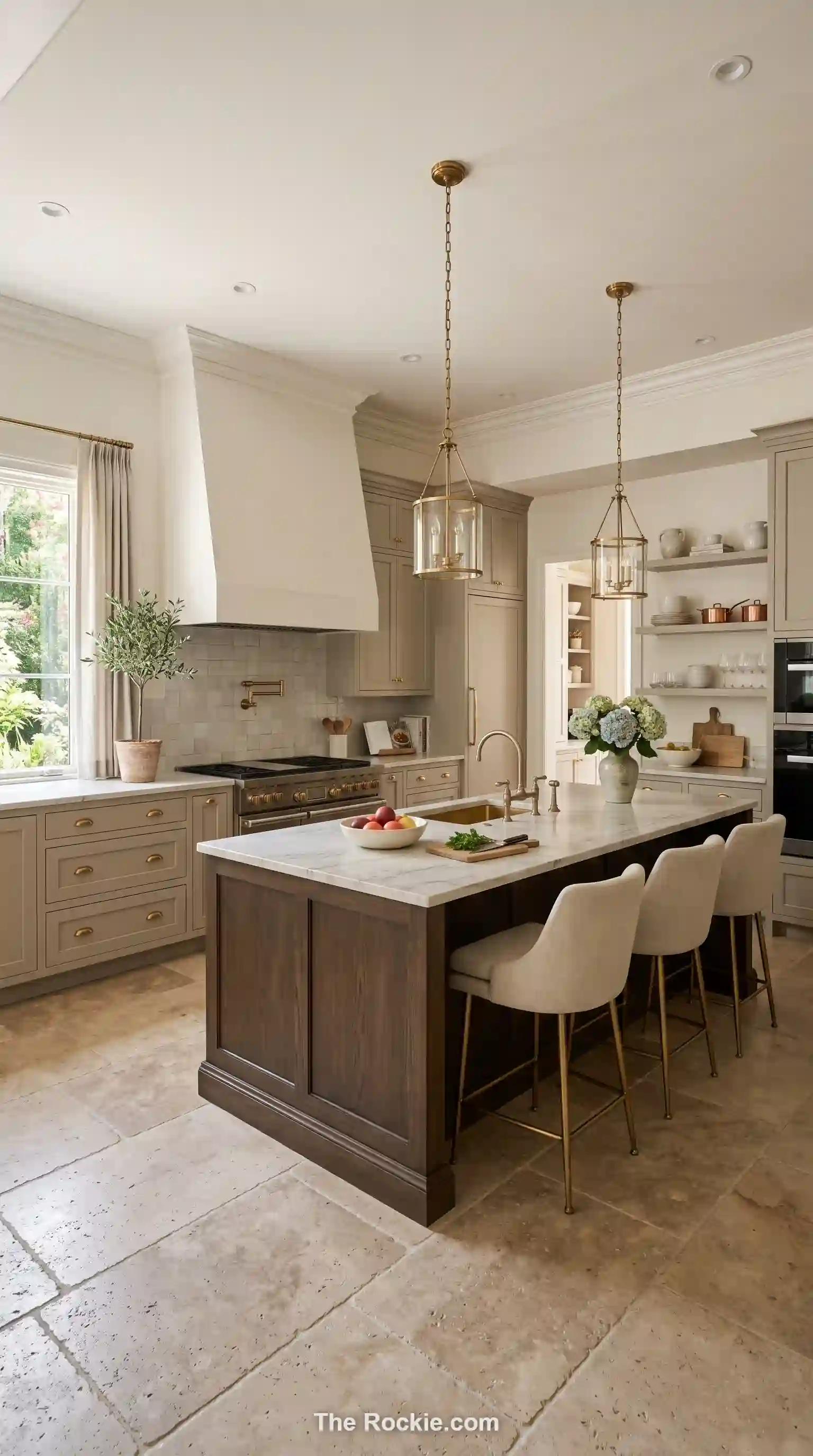
Rich texture and earthy hues that never really go out of style are travertine’s biggest selling point, and pairing the stone with neutral tones, high-end fixtures, and elegant lighting leans fully into that timelessness. It’s a look built for both everyday family use and more formal entertaining, striking a balance between refined and genuinely approachable.
10. Tying an Open-Concept Layout Together
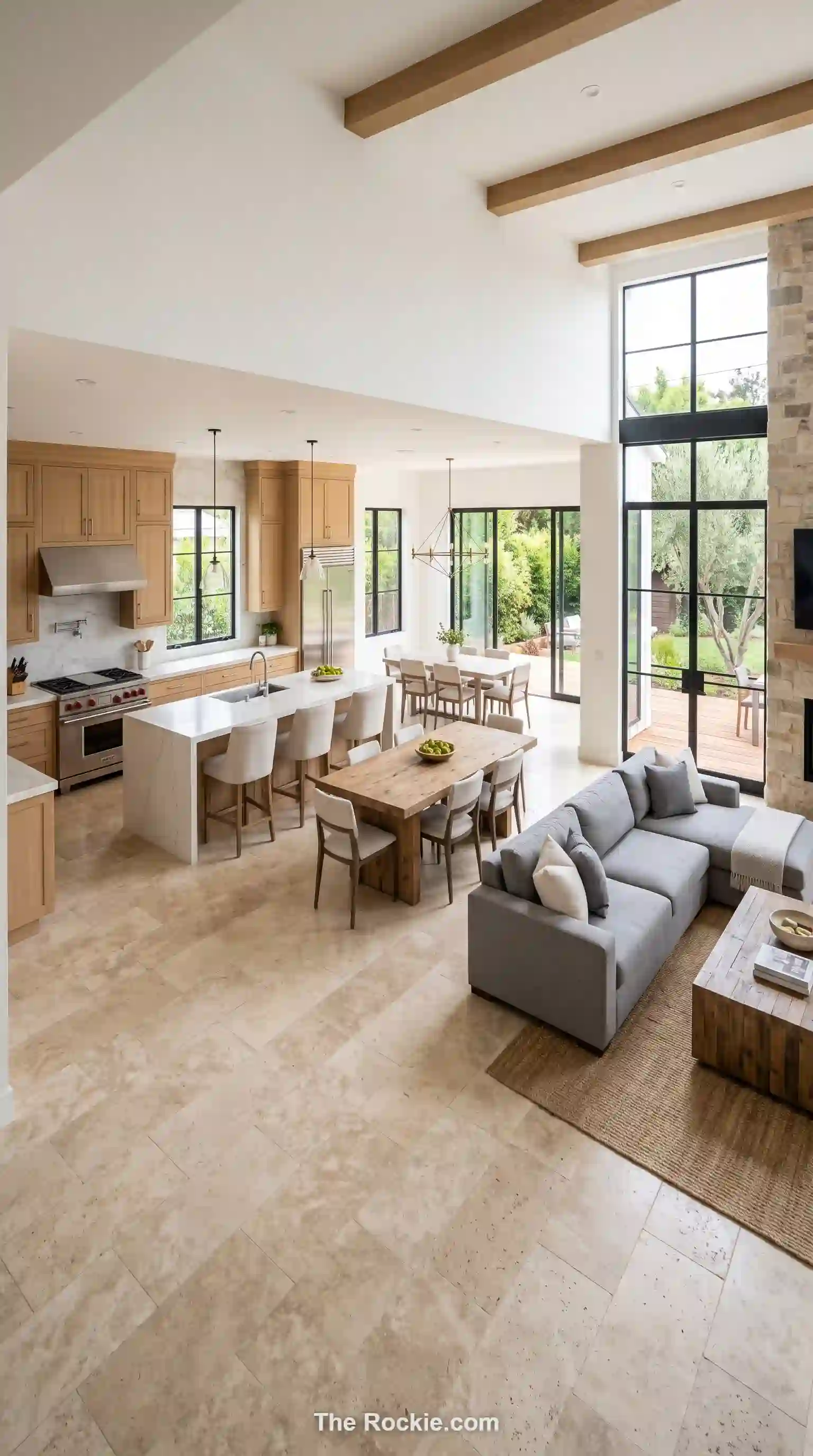
In an open floor plan, continuous travertine flooring running from the kitchen into dining and living spaces creates a genuine sense of visual flow and connection. The stone’s warm texture ties together islands, appliances, and lighting fixtures across different zones, making the whole layout feel cohesive rather than like separate rooms stitched together.
11. Texture as the Main Event
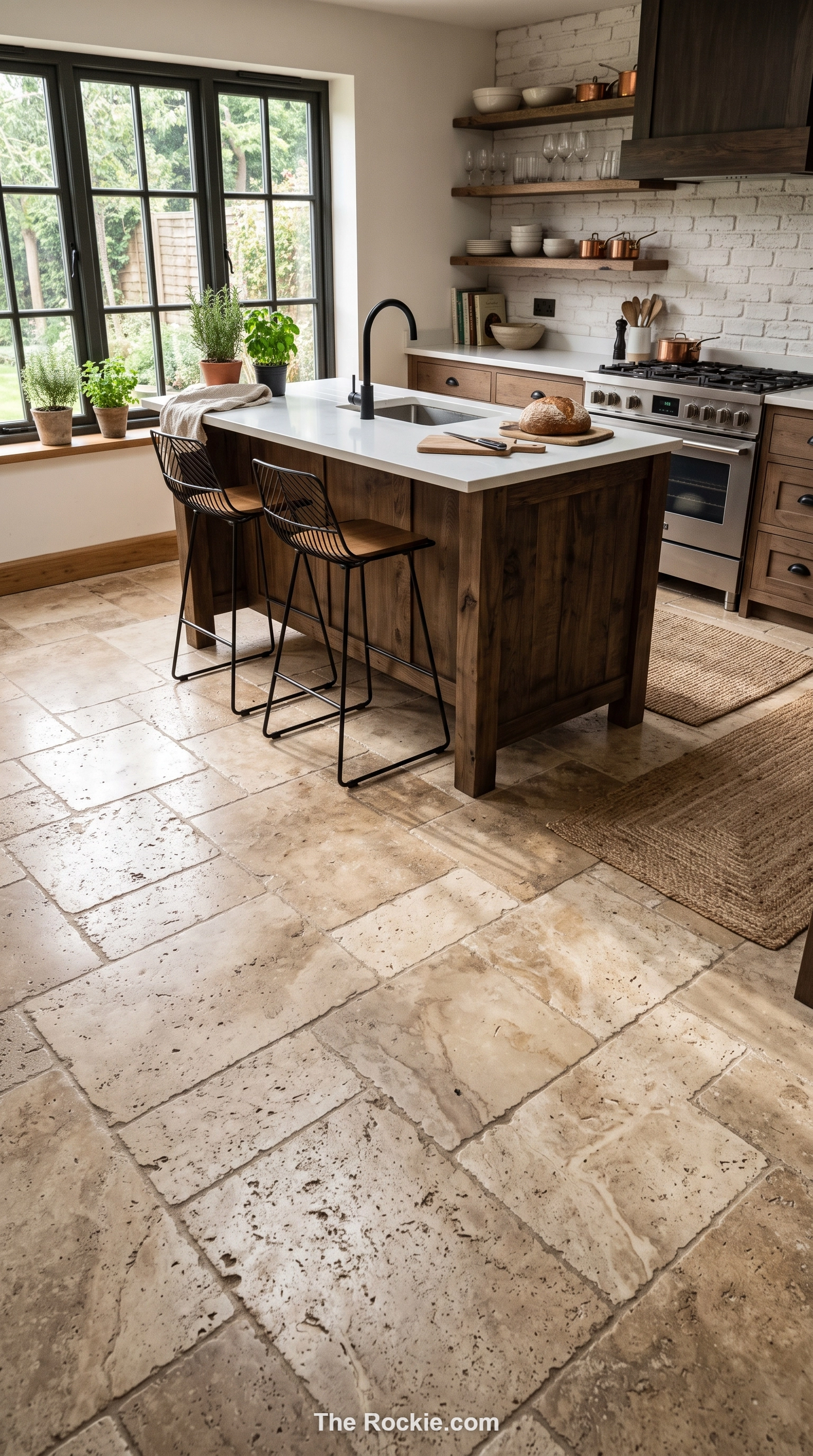
Travertine’s natural interplay of light and shadow reveals a genuinely varied tapestry of tones, and leaning into that — pairing it with either sleek modern fixtures or rustic cabinetry — creates a layered, textural contrast that’s engaging to look at from any angle. It’s a design choice that rewards attention, turning the floor into a quiet focal point rather than just a surface underfoot.
12. Old-World Texture Meets New-World Lines
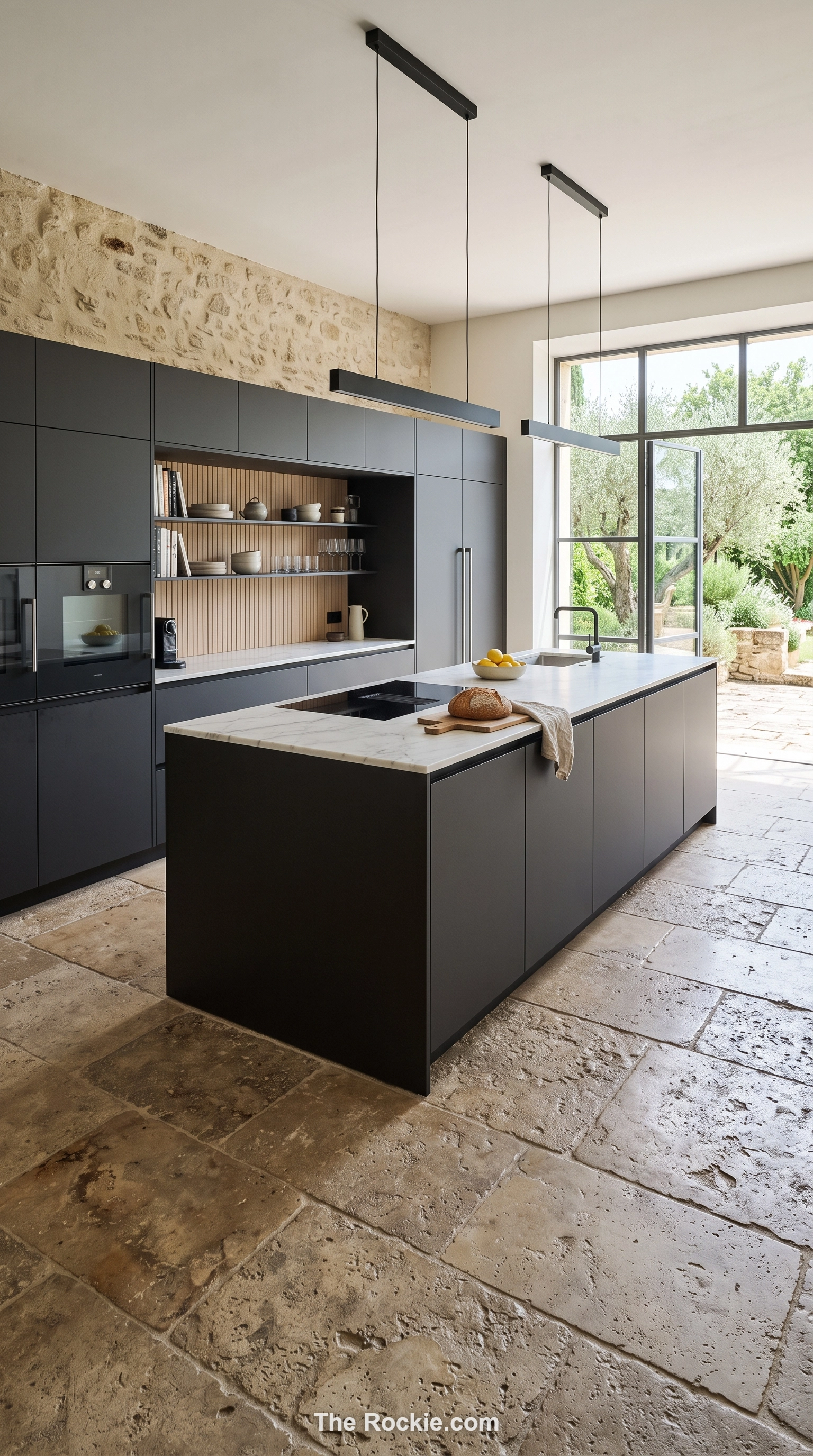
Travertine’s naturally aged surface pairs surprisingly well with sleek, minimalist cabinetry and crisp contemporary lines, creating a kitchen that blends historical texture with modern restraint. The stone’s subtle patterning stays unobtrusive against clean surfaces, letting a few standout details — a striking light fixture, a bold accent — do the visual heavy lifting.
13. A Genuinely Artisan Feel
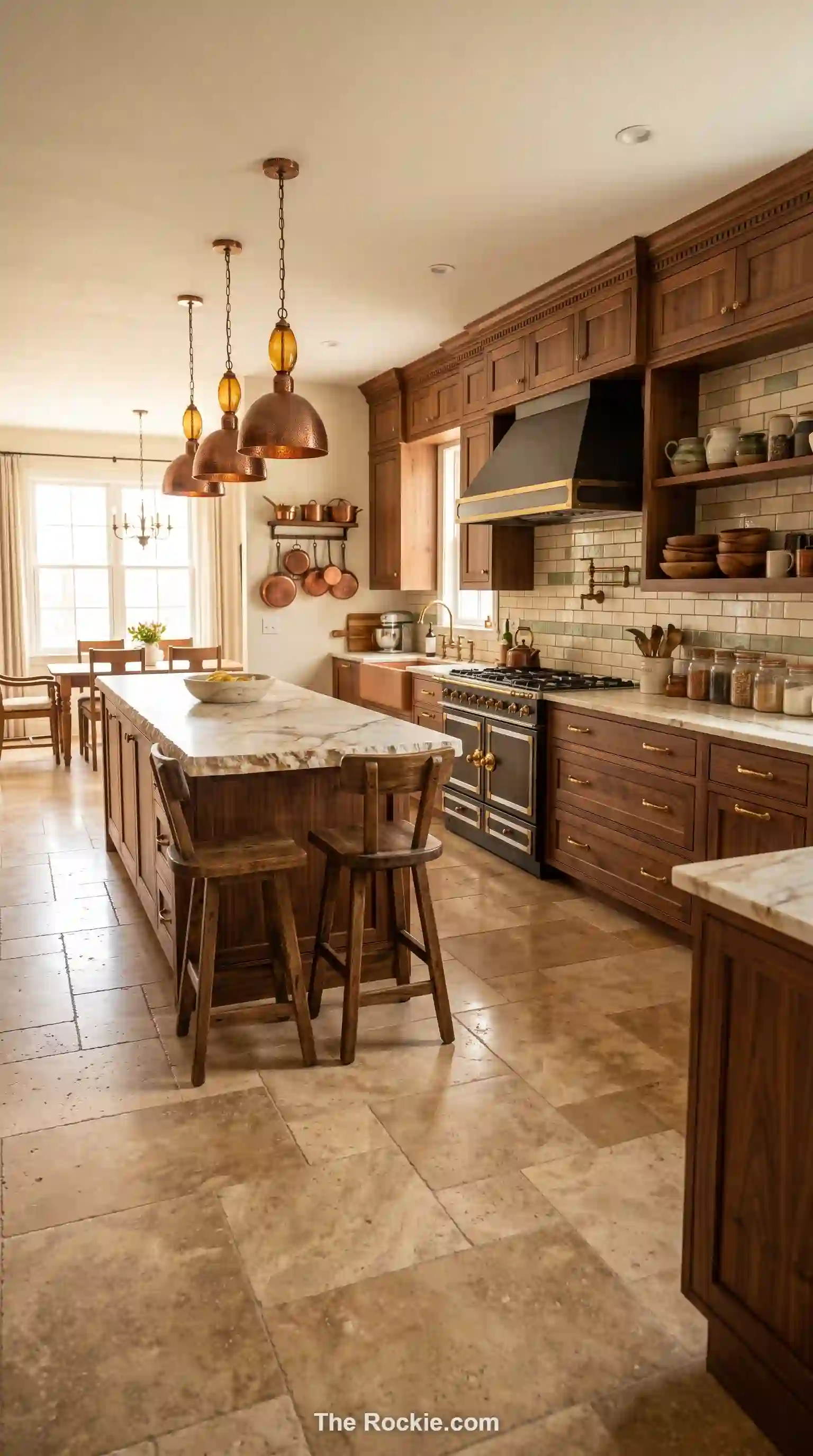
Travertine’s smooth surface and distinctive veining bring an artisanal quality that pairs naturally with handcrafted fixtures and bespoke cabinetry. The overall effect reads as understated luxury — a kitchen built with real craftsmanship rather than assembled from a catalog, where every material choice reinforces a sense of considered, personal design.
14. A Foundation for Neutral Balance
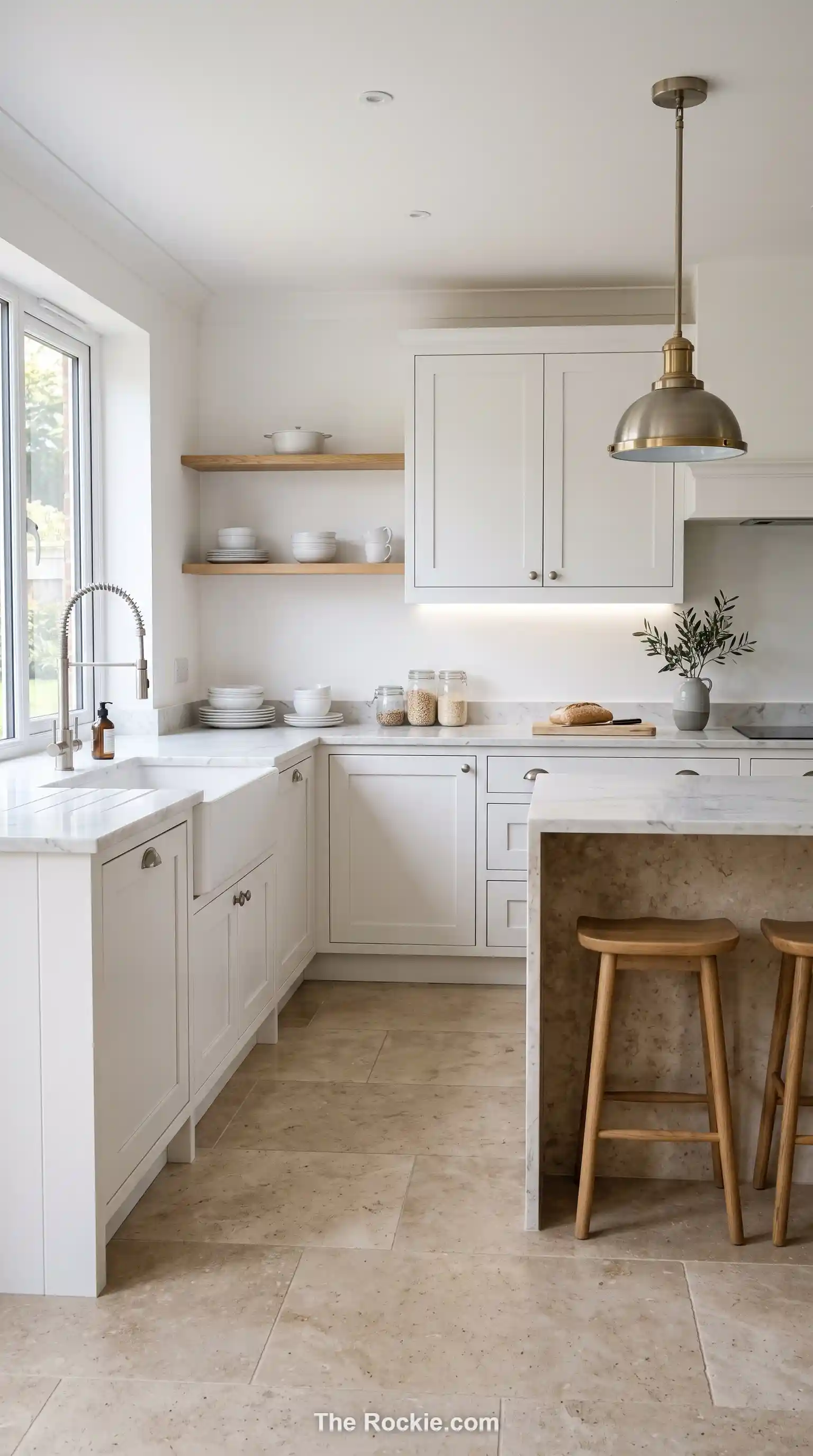
Travertine’s soft, natural palette pairs easily with a wide range of complementary colors, from crisp white walls to muted metallic accents, making it a genuinely adaptable foundation for almost any kitchen style. This flexibility lets other textures and materials shine without creating visual clutter, keeping the whole room feeling calm, organized, and easy to live in day to day.
15. Color as the Personal Touch
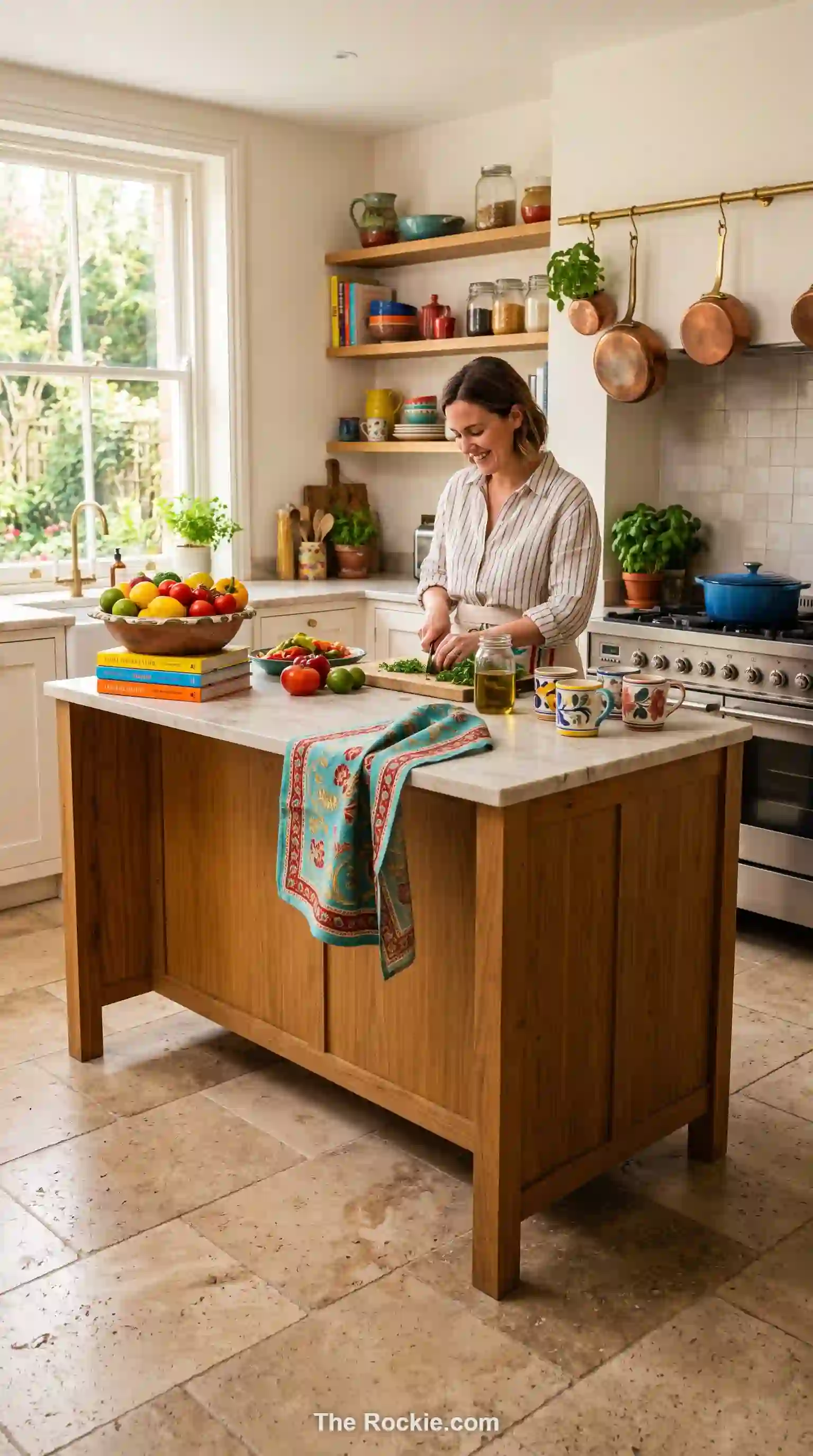
Against travertine’s earthy, neutral base, a few vibrant accents — statement decor, colorful fixtures — bring a burst of personality without disrupting the overall calm. The combination generates an ambiance that feels vivid but still grounded, since the stone keeps everything visually anchored no matter how bold the accent choices get.
16. Lighting That Reveals the Stone’s Full Character
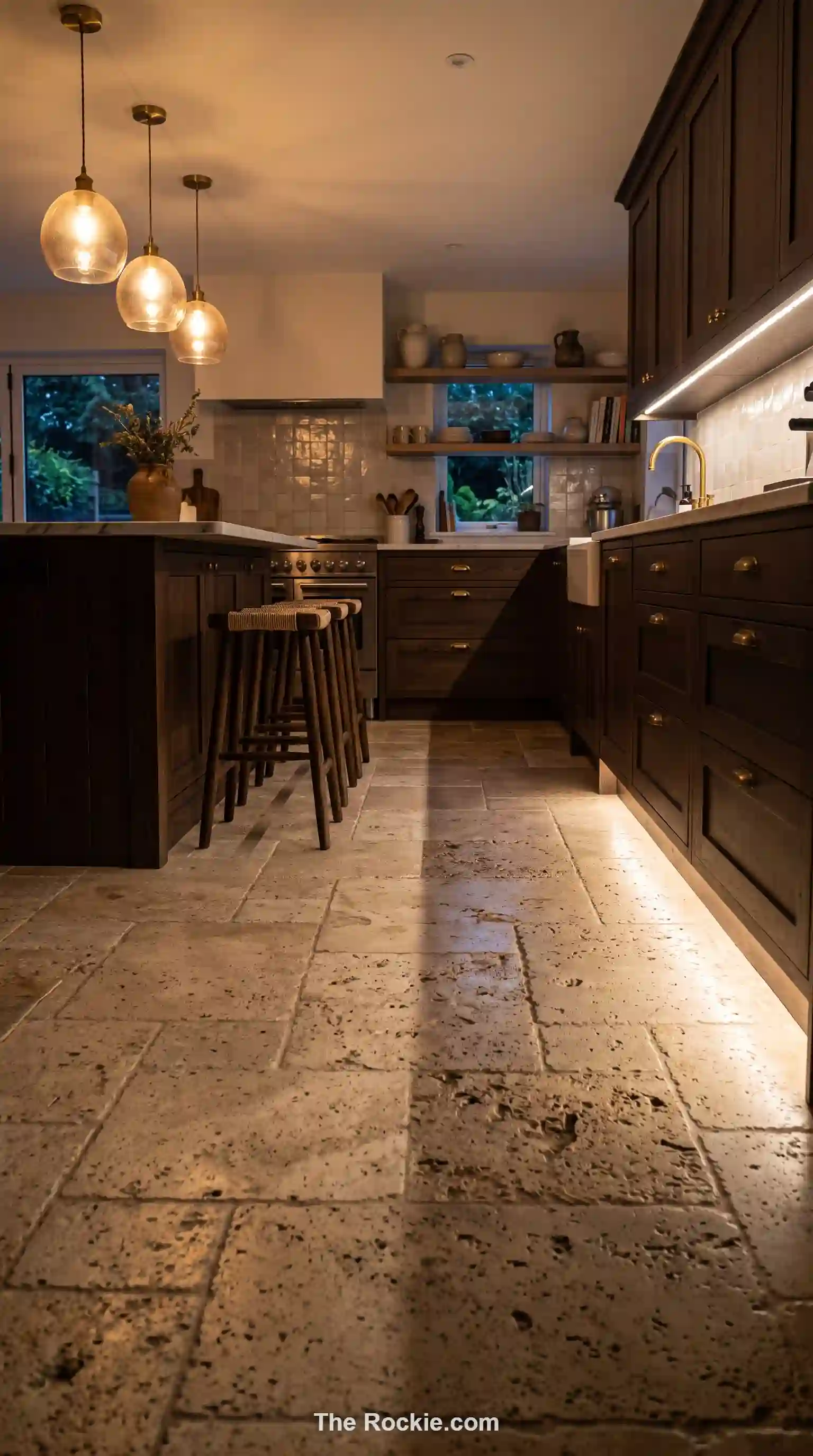
Layered lighting — ambient, task, and accent working together — showcases travertine’s natural patterns far better than a single overhead fixture ever could. The interplay of light and shadow across the stone shifts throughout the day, adding depth and visual interest at every hour while still keeping the kitchen fully functional for actual cooking.
17. Geometric Patterns for Visual Rhythm
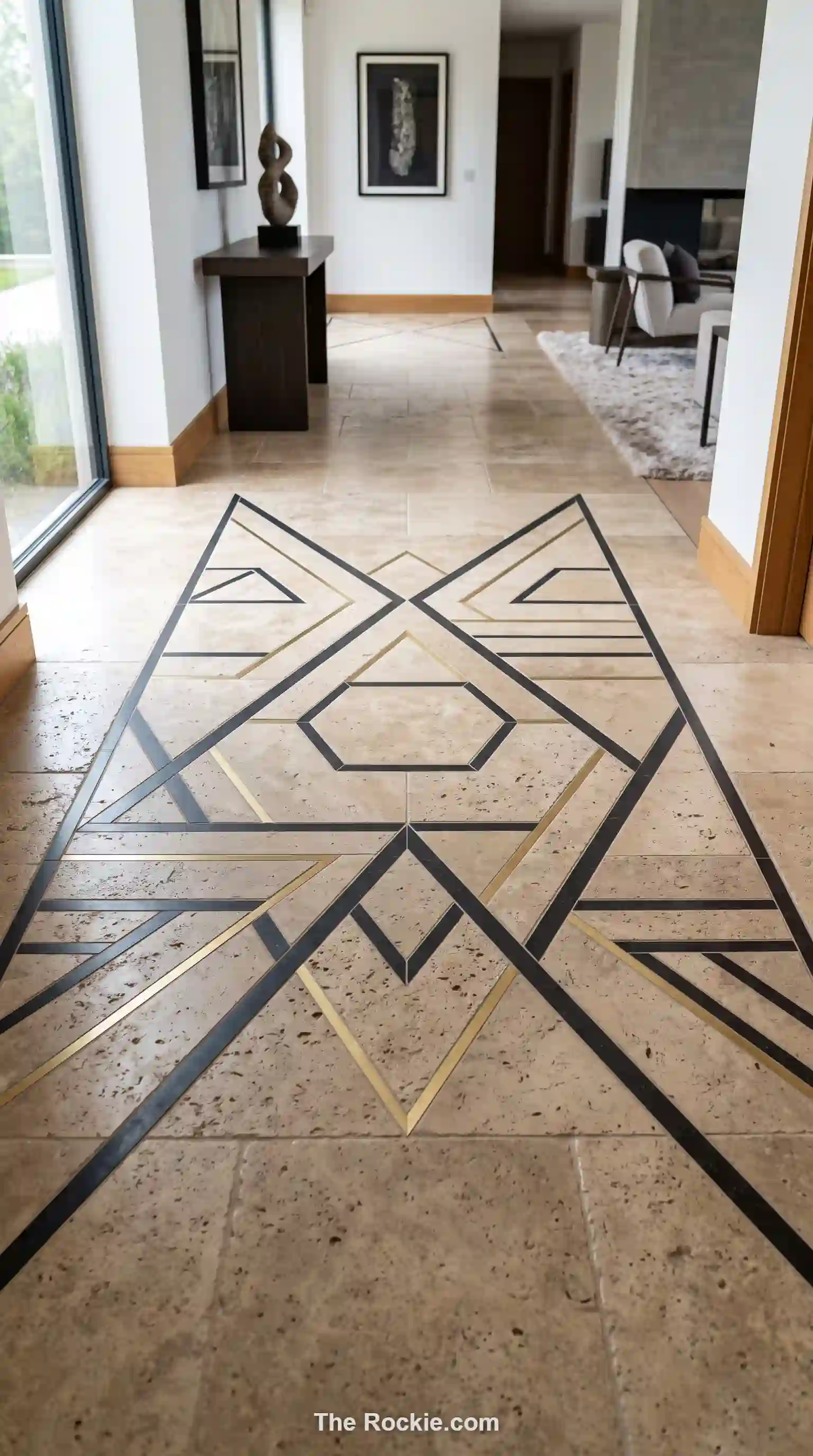
Pairing travertine’s organic movement with sharply defined geometric inlays or patterned rugs introduces an engaging visual rhythm underfoot. The contrast between natural stone variation and precise, modern pattern creates a floor that feels both distinctive and intentional, standing out as a genuine design feature rather than a purely functional surface.
18. Simplicity Done With Real Intention
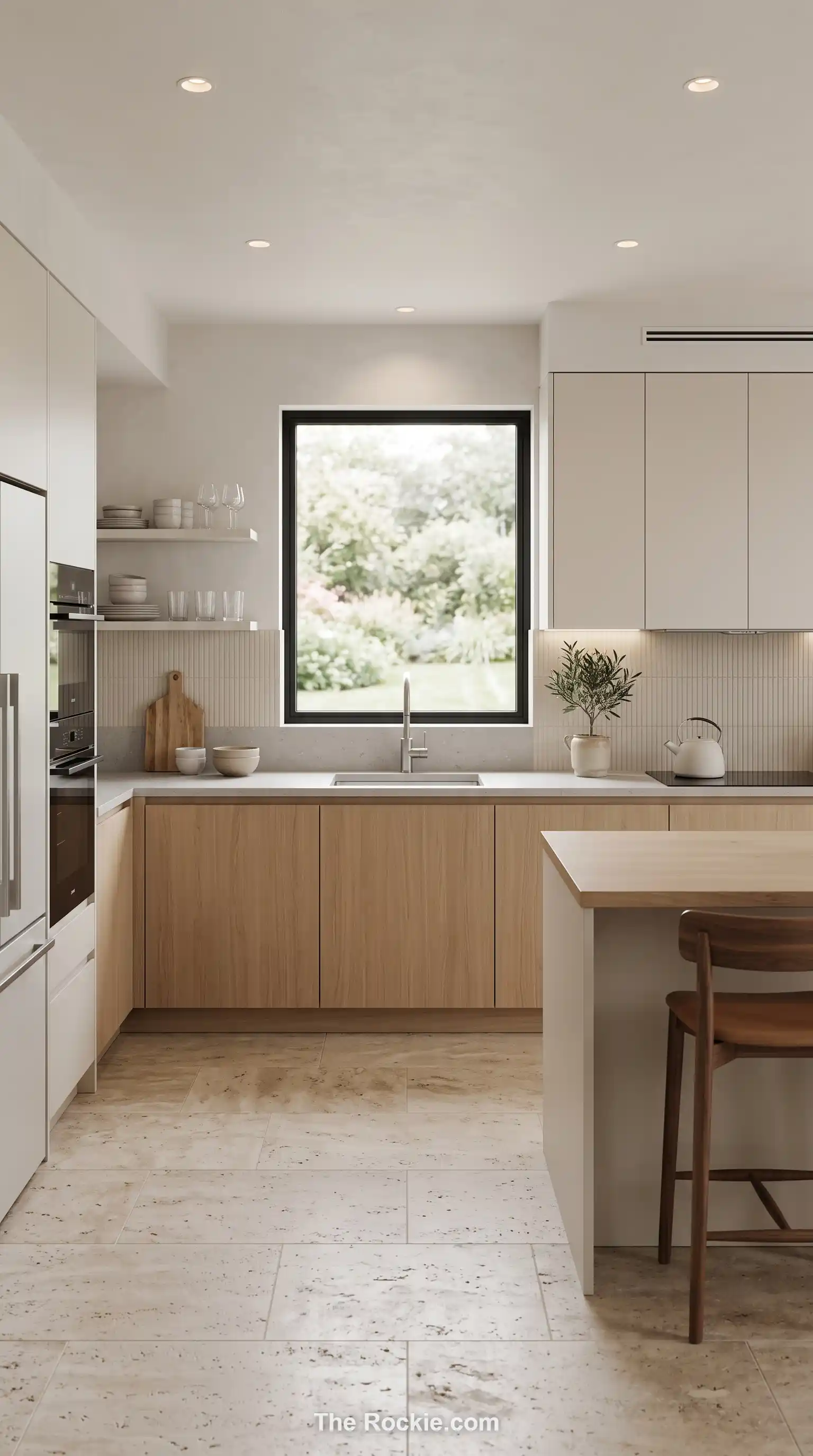
Travertine’s muted tones and subtle texture support a genuinely uncluttered kitchen, where quality materials and careful curation matter more than ornate detail. Paired with minimalist fixtures and soft lighting, this approach creates a calm, stress-free space to cook in — proof that simplicity, done well, can feel just as sophisticated as anything more elaborate.
19. A Bright, Polished Finish
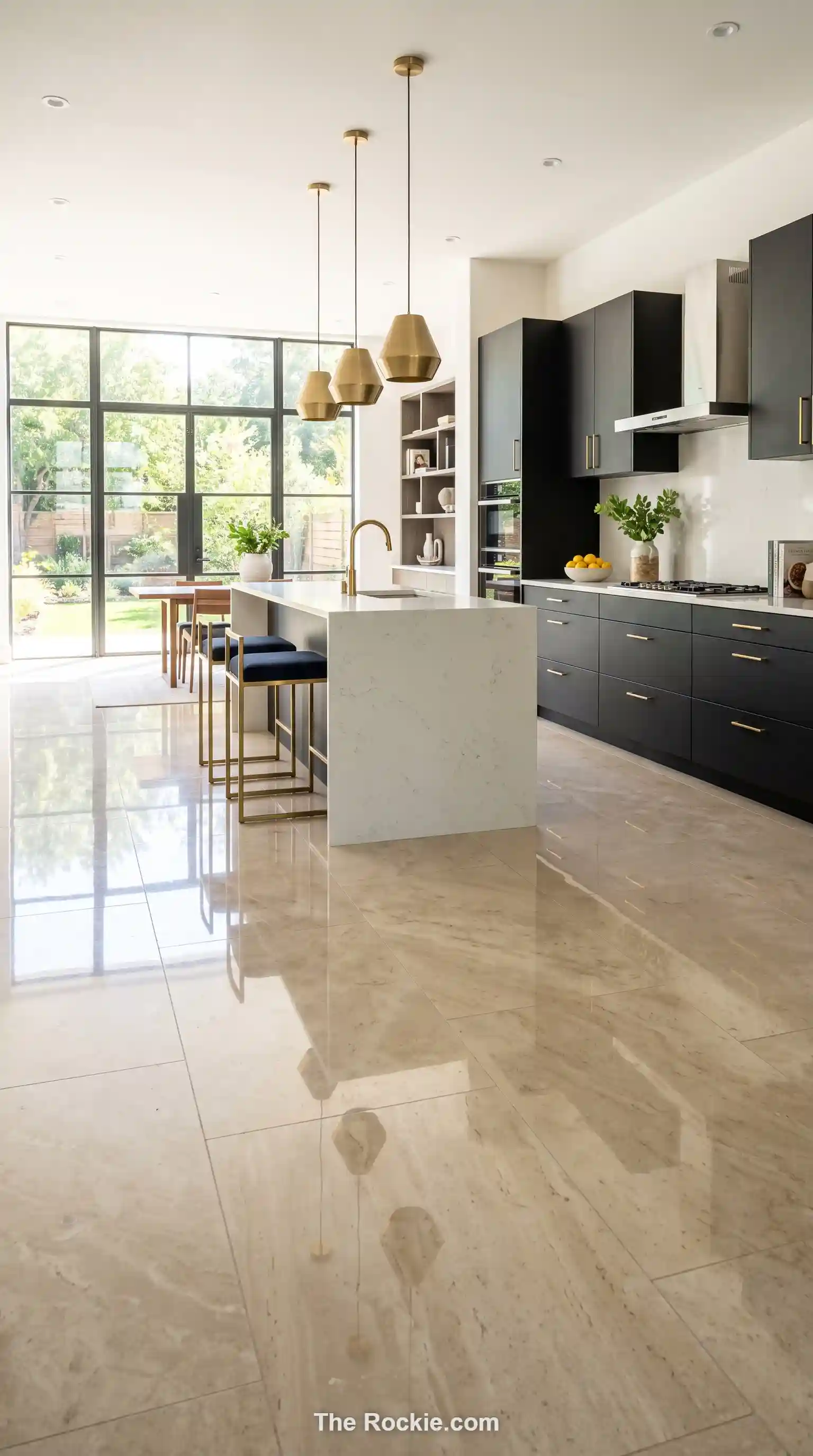
A well-maintained travertine floor can take on a genuine luster, reflecting light and contributing to an overall sense of brightness and order in the kitchen. Paired with crisp modern lines and a few reflective or metallic details, this finish makes even a modestly sized kitchen feel more expansive and pristine.
20. Heritage Craftsmanship Meets Contemporary Living
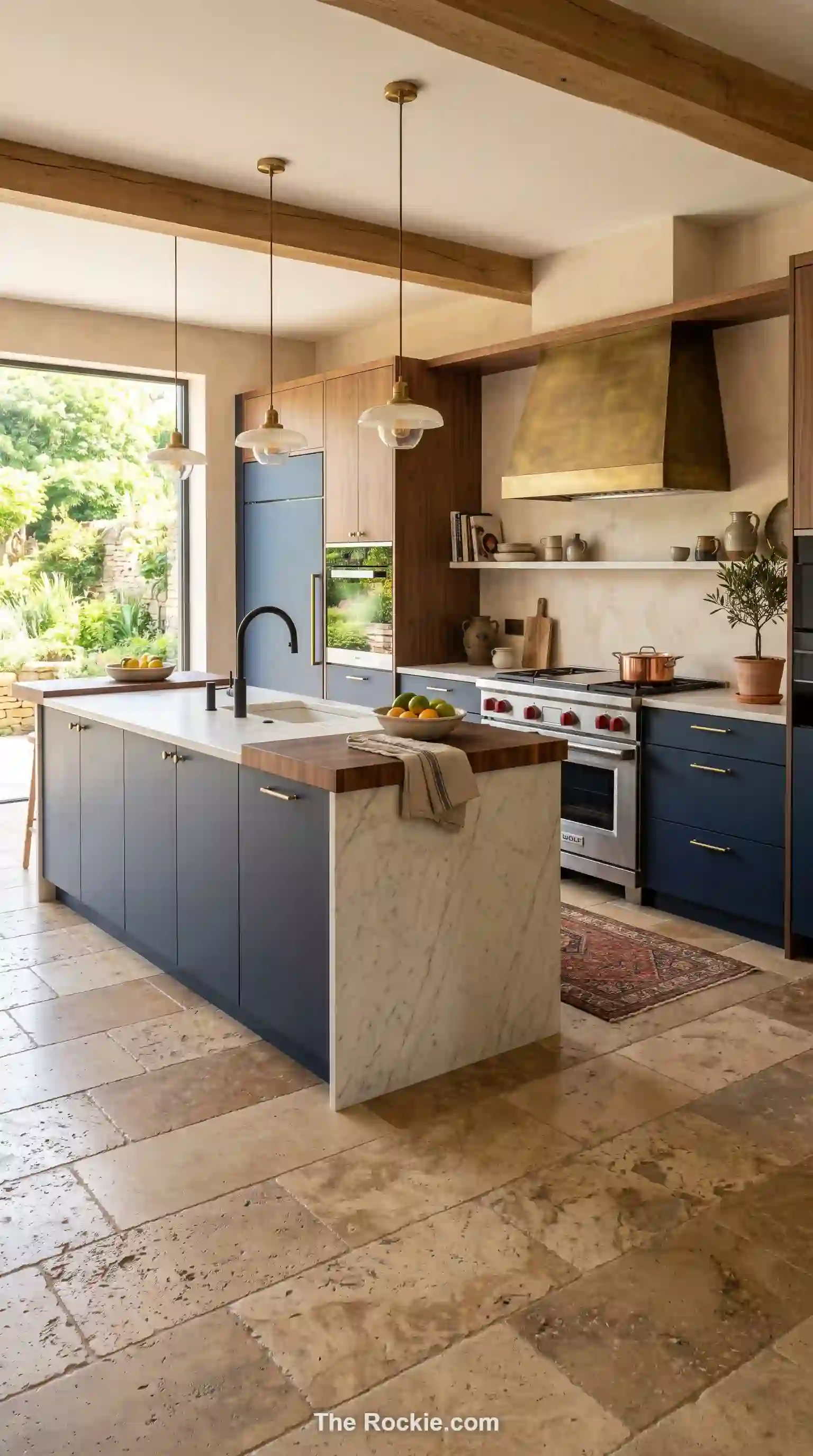
Travertine’s traditional stone character pairs naturally with sleek modern cabinetry and up-to-date appliances, creating a kitchen that honors old-world craftsmanship while still meeting today’s practical needs. It’s a thoughtful middle ground for homeowners who want history underfoot without sacrificing the convenience of a genuinely current kitchen layout.
21. Comfort Underfoot, Not Just Good Looks
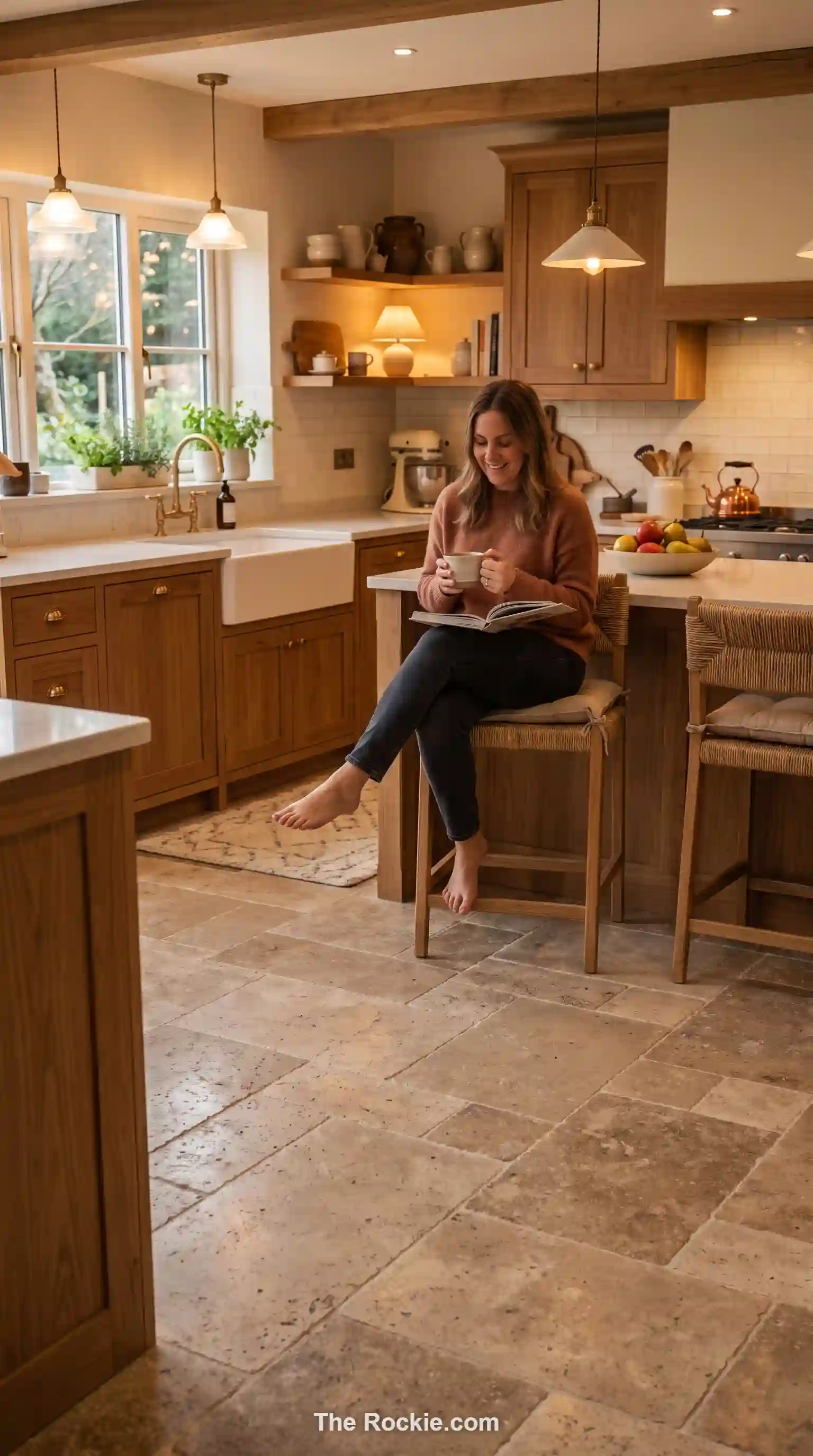
Travertine’s naturally smooth, subtly patterned surface offers a genuinely comfortable feel underfoot, especially paired with a few plush area rugs and warm ambient lighting. The result is a kitchen that holds up to heavy daily use while still feeling like a space worth lingering in, balancing resilience with real tactile comfort.
22. Custom Layouts That Feel Personal
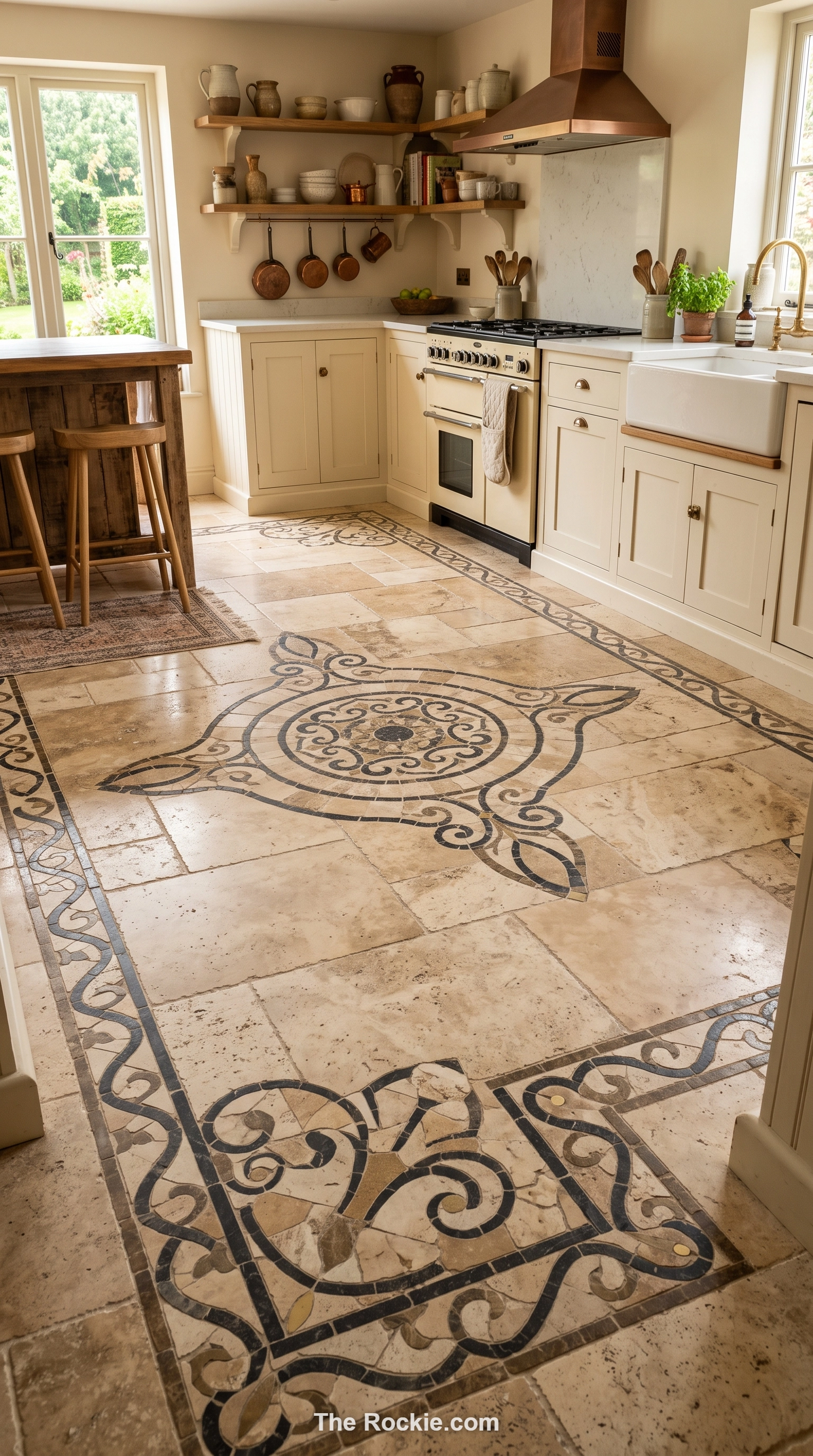
Custom inlays, bespoke patterns, and mixed finishes turn travertine into a genuine canvas for personal expression rather than a standard material choice. Combining the stone’s timeless character with an imaginative, tailored layout results in a kitchen that feels like a one-of-a-kind piece, reflecting individual taste while still holding up to everyday use.
Final Thoughts
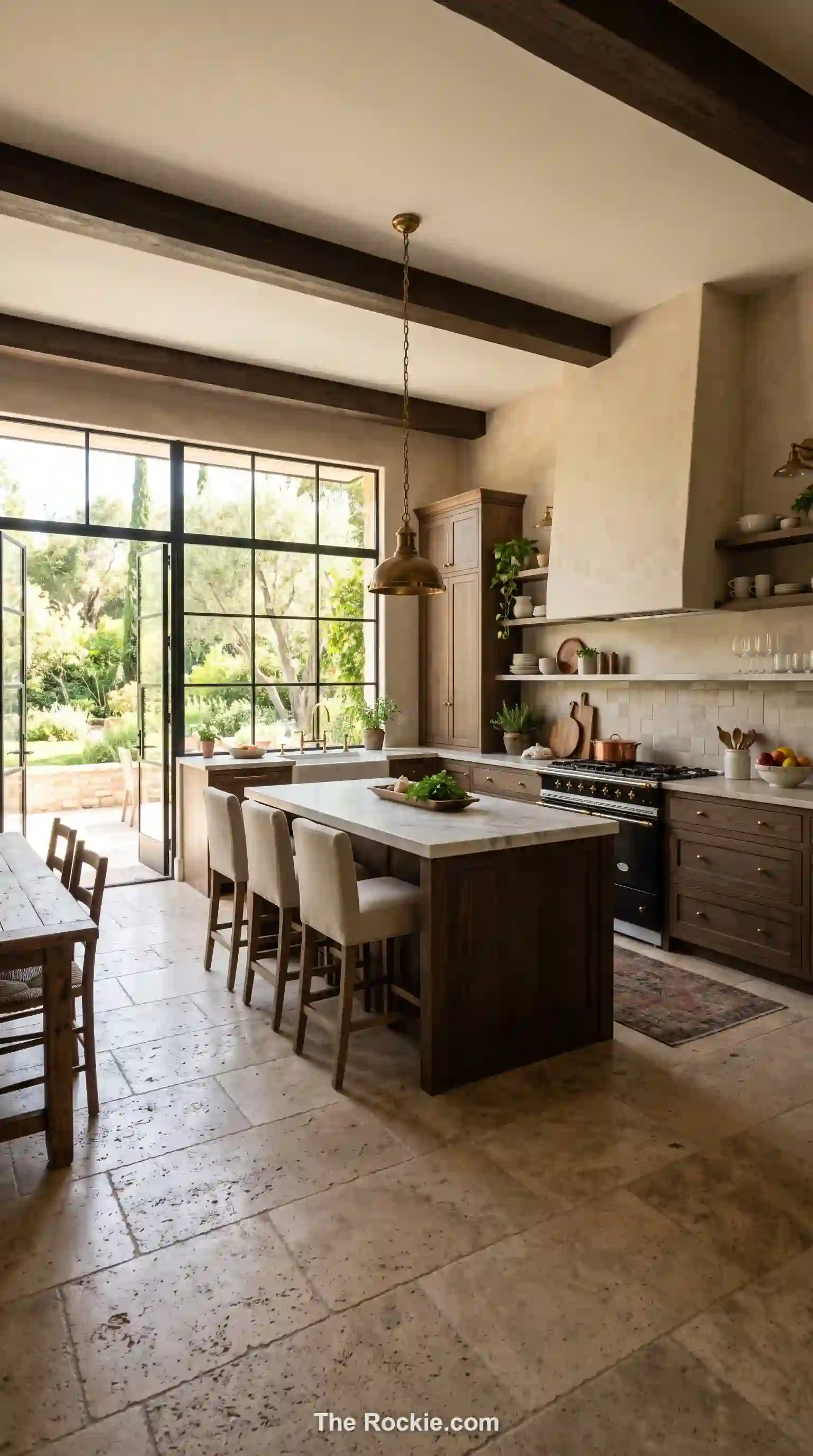
Twenty-two directions, and every single one comes back to the same core strength: travertine is genuinely versatile. It can anchor a rustic farmhouse kitchen just as convincingly as a sleek modern one, holding up to daily wear while only growing more characterful over time. Whichever style you’re drawn to, the stone itself does a lot of the work — all that’s left is deciding how to build the rest of the kitchen around it.