
22 Tuscan Kitchen Design Ideas for Rustic Italian Charm

There’s a reason Tuscan kitchens keep showing up on renovation wish lists decades after the style first crossed the Atlantic. It’s not really about copying an Italian farmhouse — it’s about borrowing the parts that make a kitchen feel lived-in the moment it’s finished: warm stone, worn wood, hand-laid tile, iron that’s meant to age rather than shine forever. None of it is trying to look brand new, and that’s exactly the point.
What makes the style endure is how naturally it accommodates real life. A Tuscan kitchen isn’t precious — it’s built to take a beating from daily cooking and still look better for it. Below are 22 ways to bring that sensibility into your own kitchen, from big structural choices like stone fireplaces and archways down to the smaller details that tie the whole look together.
1. Rustic Charm as the Foundation
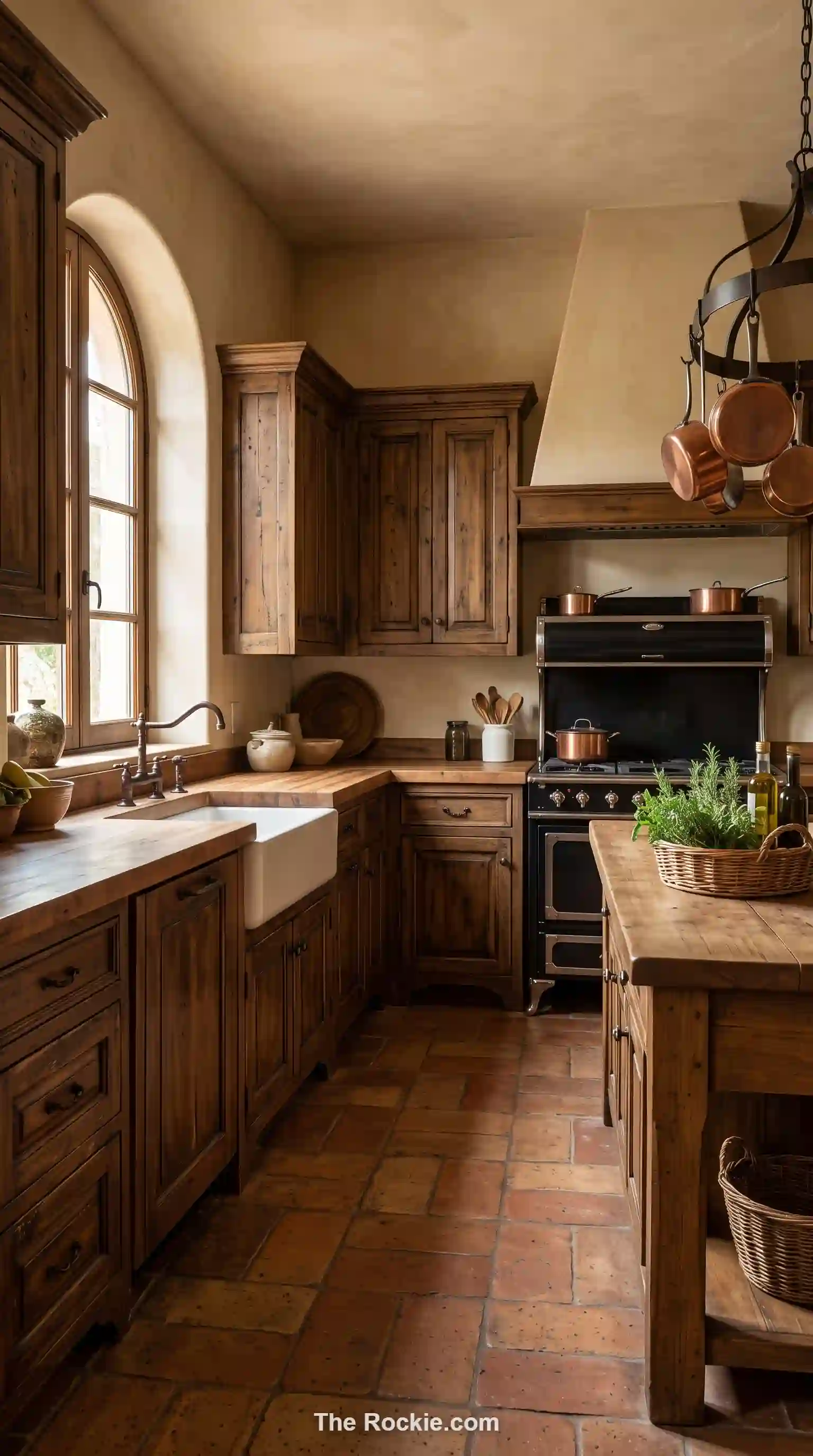
Everything else on this list works better once the bones of the kitchen already lean rustic. Time-worn wood, distressed cabinetry finishes, and a healthy mix of natural textures give the room a sense of history before you’ve added a single accessory. Handcrafted cabinetry and reclaimed materials bring a sustainable angle to the look as well, and earthy color choices throughout keep everything grounded. It’s the kind of foundation that makes a kitchen feel like it’s been gathering family dinners for years, even on day one.
2. Earth Tones and Natural Texture Throughout
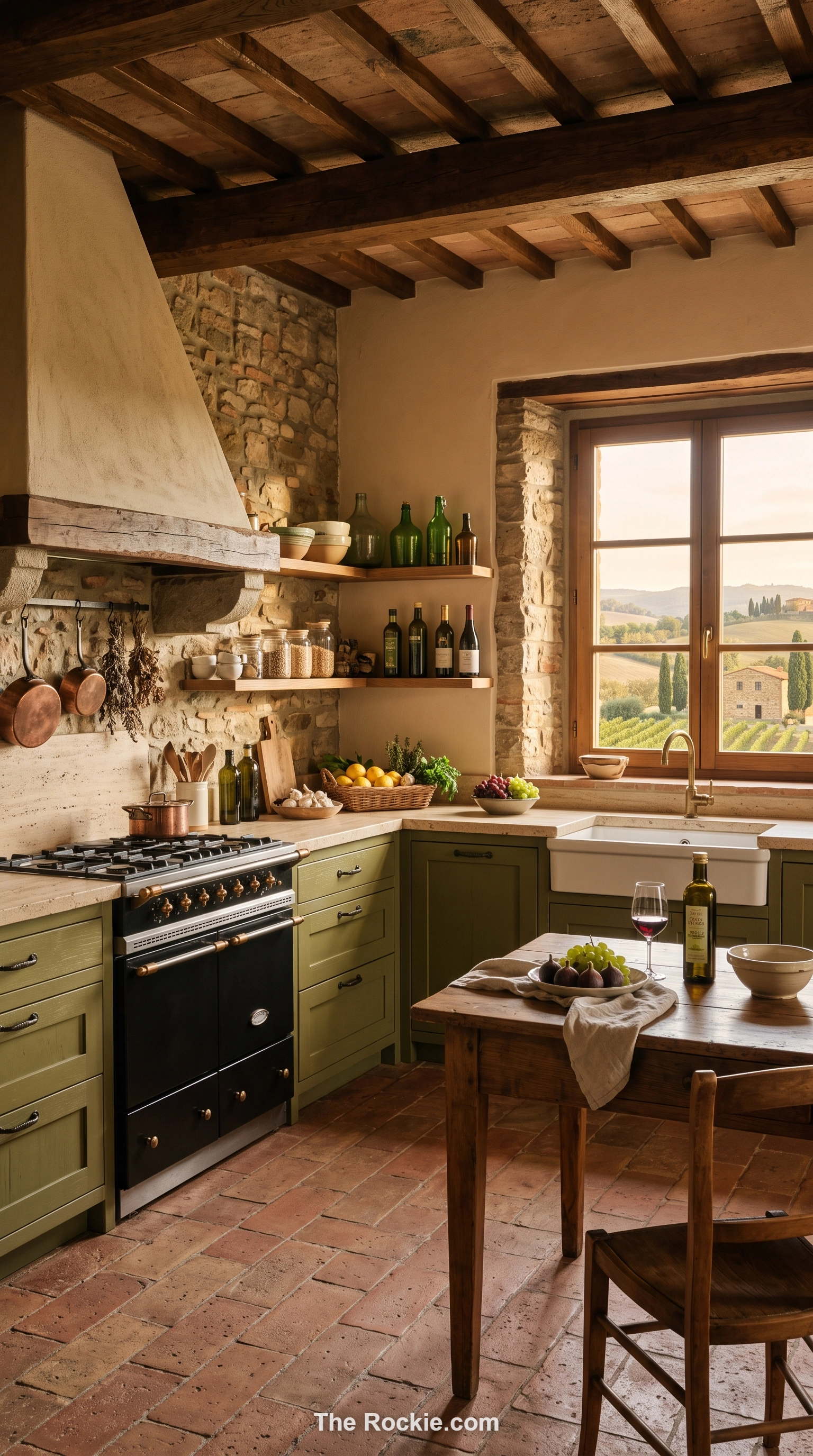
Terracotta, burnt sienna, and olive green form the backbone of a classic Tuscan color palette, and pairing them with stone and wood keeps the whole room feeling grounded rather than themed. Rough-hewn stone counters and hand-inscribed tile add real tactile interest — surfaces you actually notice when you run a hand across them. The combined effect echoes the Tuscan countryside without needing to spell it out, and it tends to make a kitchen feel calmer and more settled than a purely neutral palette would.
3. Exposed Beams for Real Character
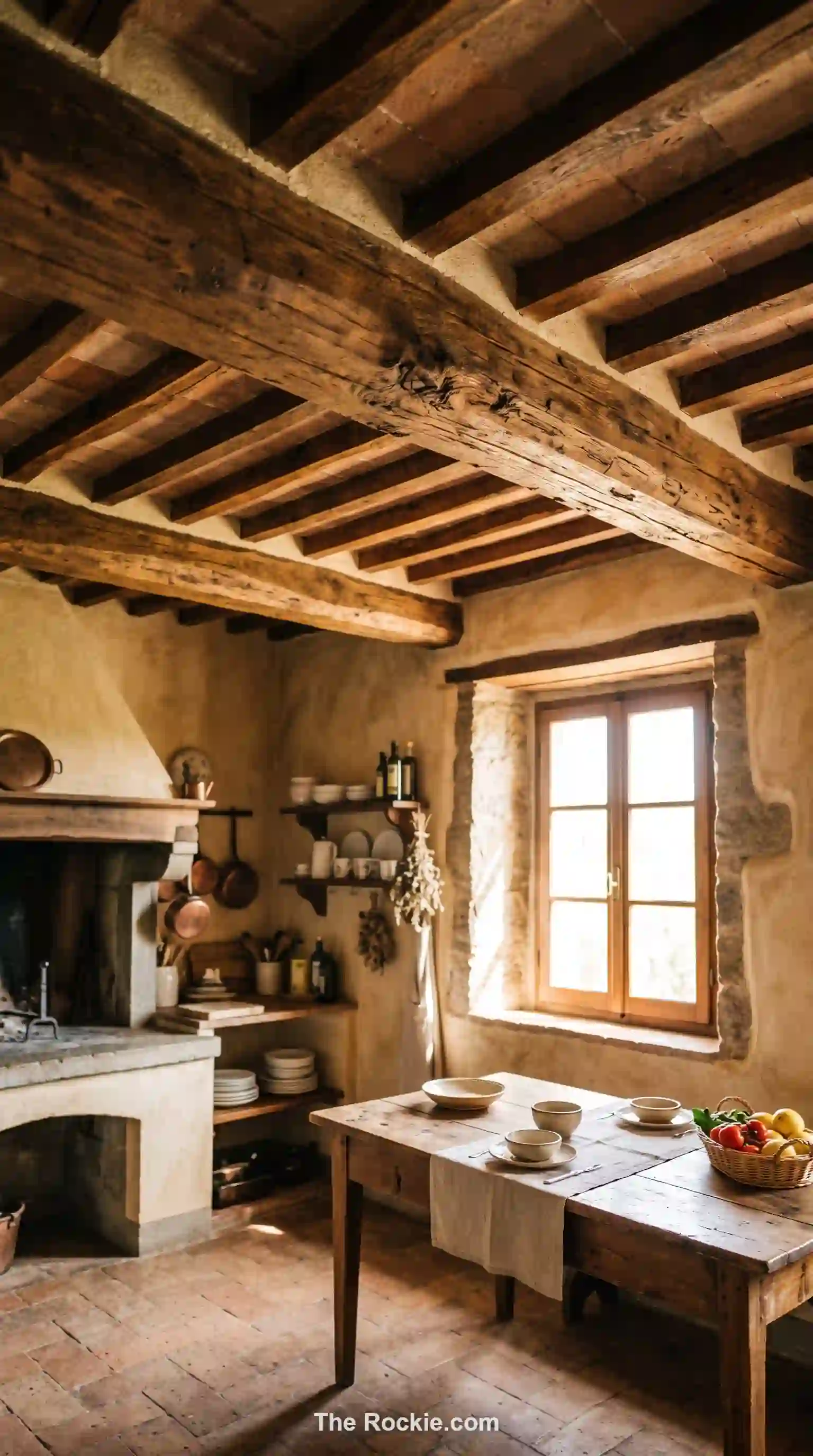
Few details signal old-world craftsmanship as clearly as a set of exposed wooden beams overhead. Whether they run across a vaulted ceiling or frame a partition wall, they bring a structural honesty that newer construction often lacks. Paired with natural light and a few stone or wrought iron accents, exposed beams turn a kitchen into a space that feels both durable and warm — proof that function and beauty don’t have to be separate design decisions.
4. Stone and Tile Working Together
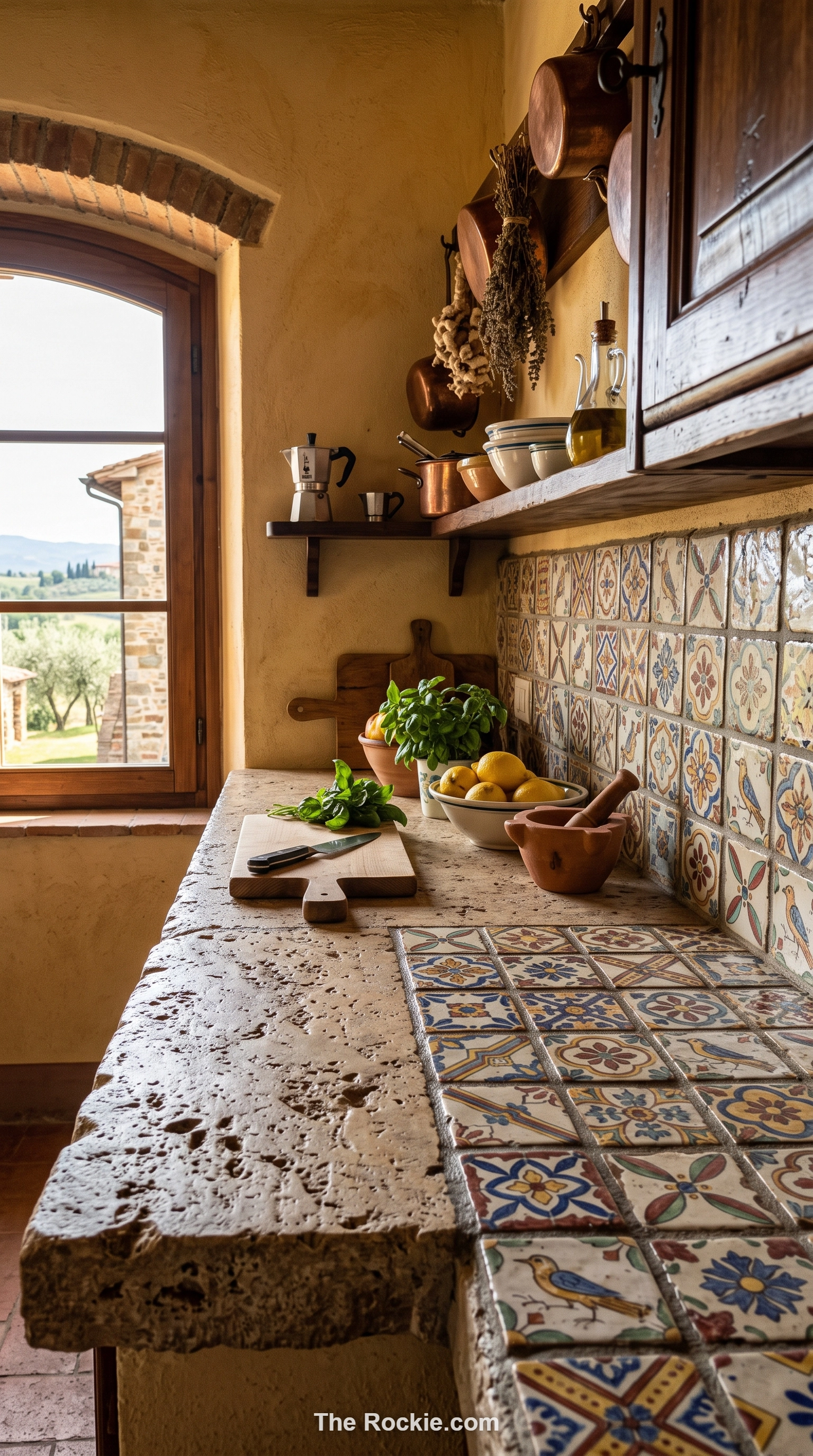
Large, rugged stone countertops paired with an intricately hand-laid tile backsplash create real visual layering — one surface reads as raw and elemental, the other as detailed and crafted. Because natural stone varies slab to slab, no two kitchens using this combination look quite the same. It’s a pairing that rewards a closer look, offering both durability and a genuine sense of artistry in equal measure.
5. Archways That Soften the Room
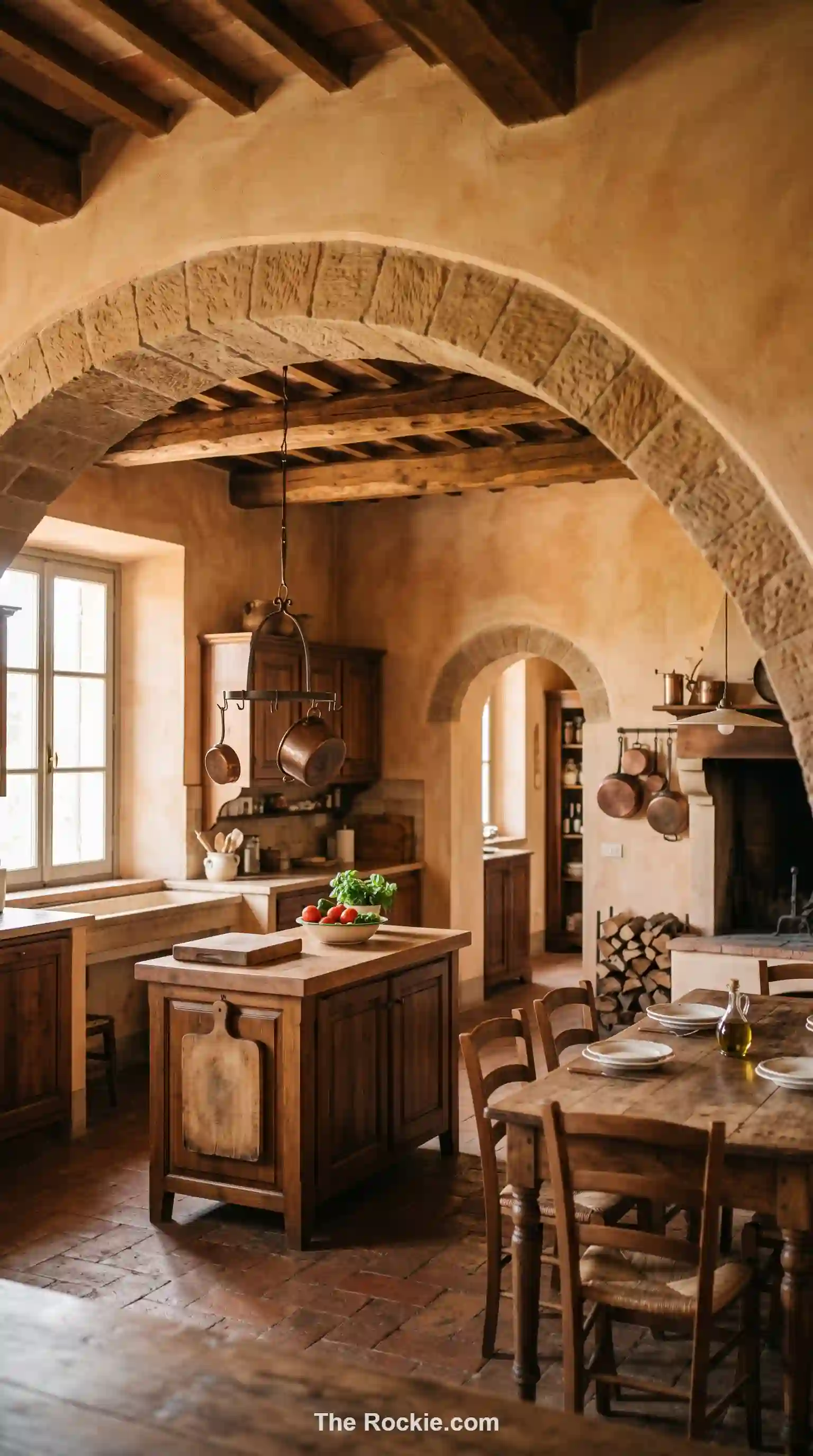
Nothing channels the spirit of Tuscany quite like a graceful archway. Curved doorways, arched windows, or even a rounded kitchen island introduce a sense of movement and romance that square corners simply can’t match. These softened shapes open up sightlines through the space while still feeling solid and permanent — a subtle nod to centuries of Italian architectural tradition without requiring a full historical renovation.
6. Antique Fixtures With Real Patina
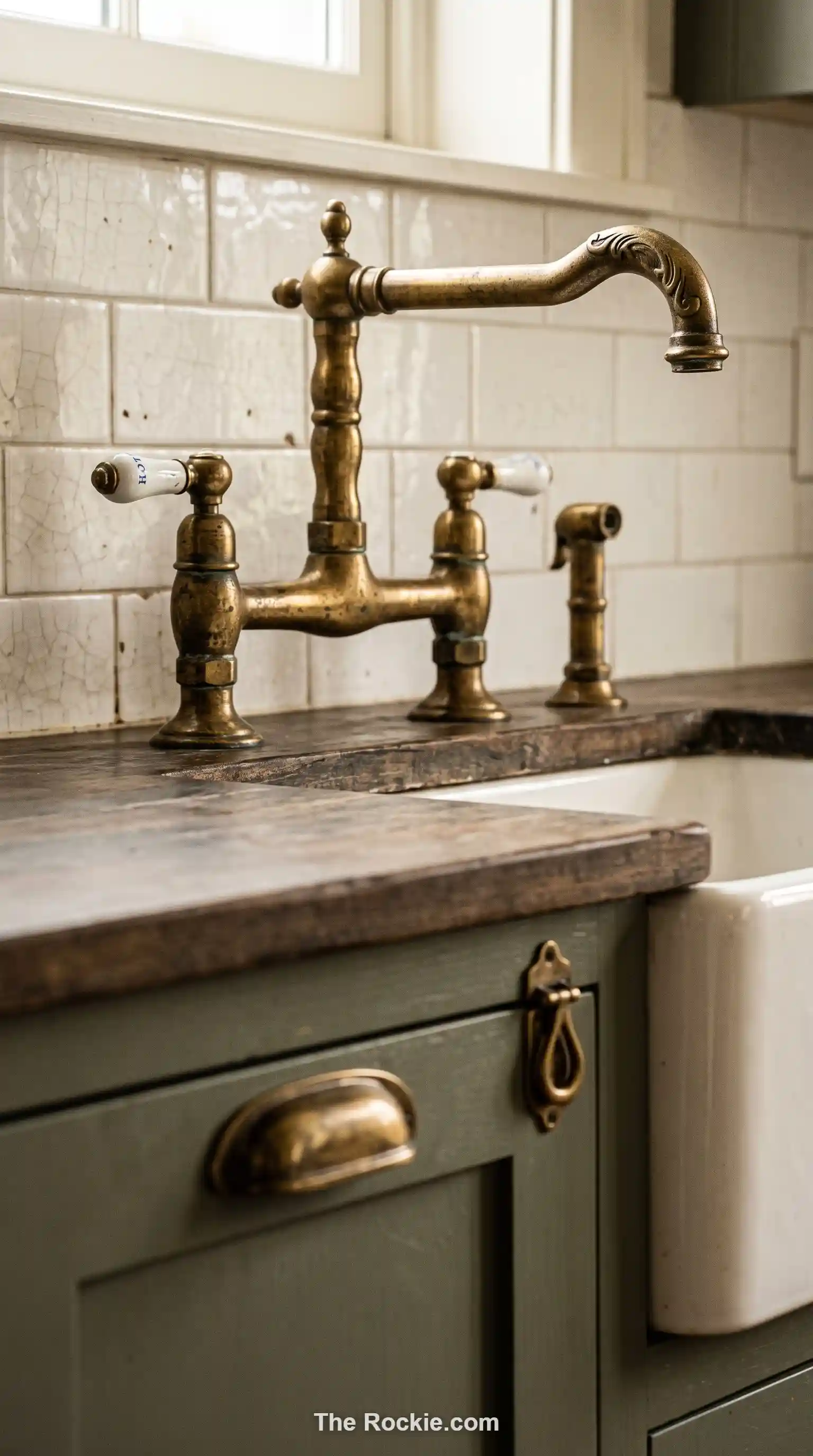
Ornate faucets, aged cabinet handles, and other well-preserved antique fixtures do more than function — they turn everyday tasks into small, elegant rituals. The subdued patina and detailed craftsmanship of these pieces evoke a sense of history that new hardware simply can’t replicate. It’s a detail-level choice, but one that adds genuine depth and character to a kitchen once you notice it.
7. Open Shelving as a Curated Gallery
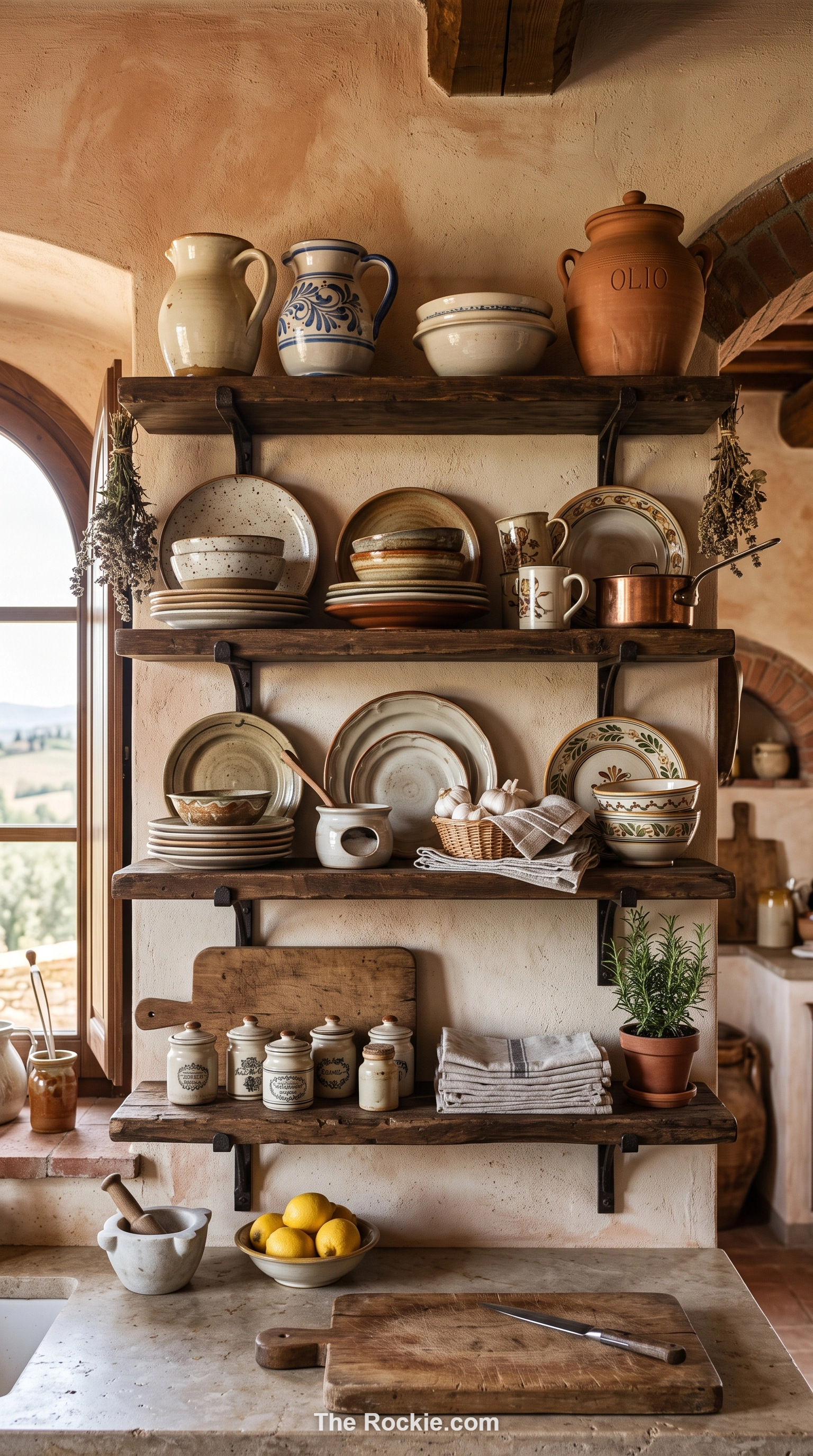
Displaying rustic ceramics, heirloom dishware, and artisan accents on open shelving turns practical storage into something worth looking at. It’s a design choice that celebrates a bit of imperfection — mismatched pieces and worn glazes read as character here rather than clutter. Beyond the visual appeal, open shelving keeps everyday items within easy reach, blending old-world charm with genuine daily convenience.
8. Mediterranean Lighting That Sets the Mood
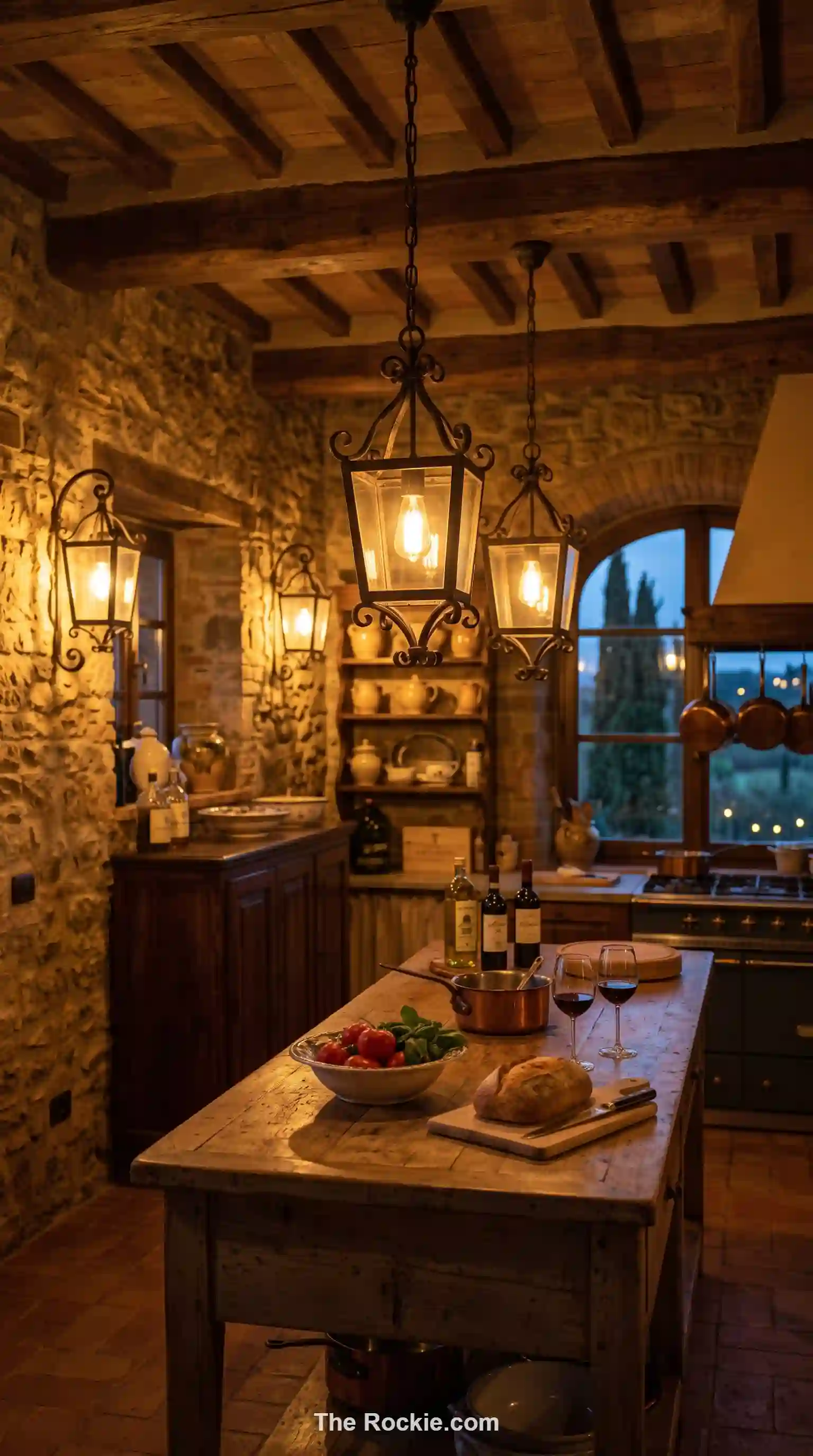
Wrought iron pendant lamps, lantern-style fixtures, and vintage chandeliers cast a softer, warmer glow than most modern lighting attempts. This kind of lighting emphasizes the handcrafted details throughout the room while keeping task areas well lit for actual cooking. The balance between ambient warmth and functional brightness is what gives a Tuscan kitchen its distinctive evening atmosphere — intimate without ever feeling dim.
9. Hand-Painted Floor Mosaics
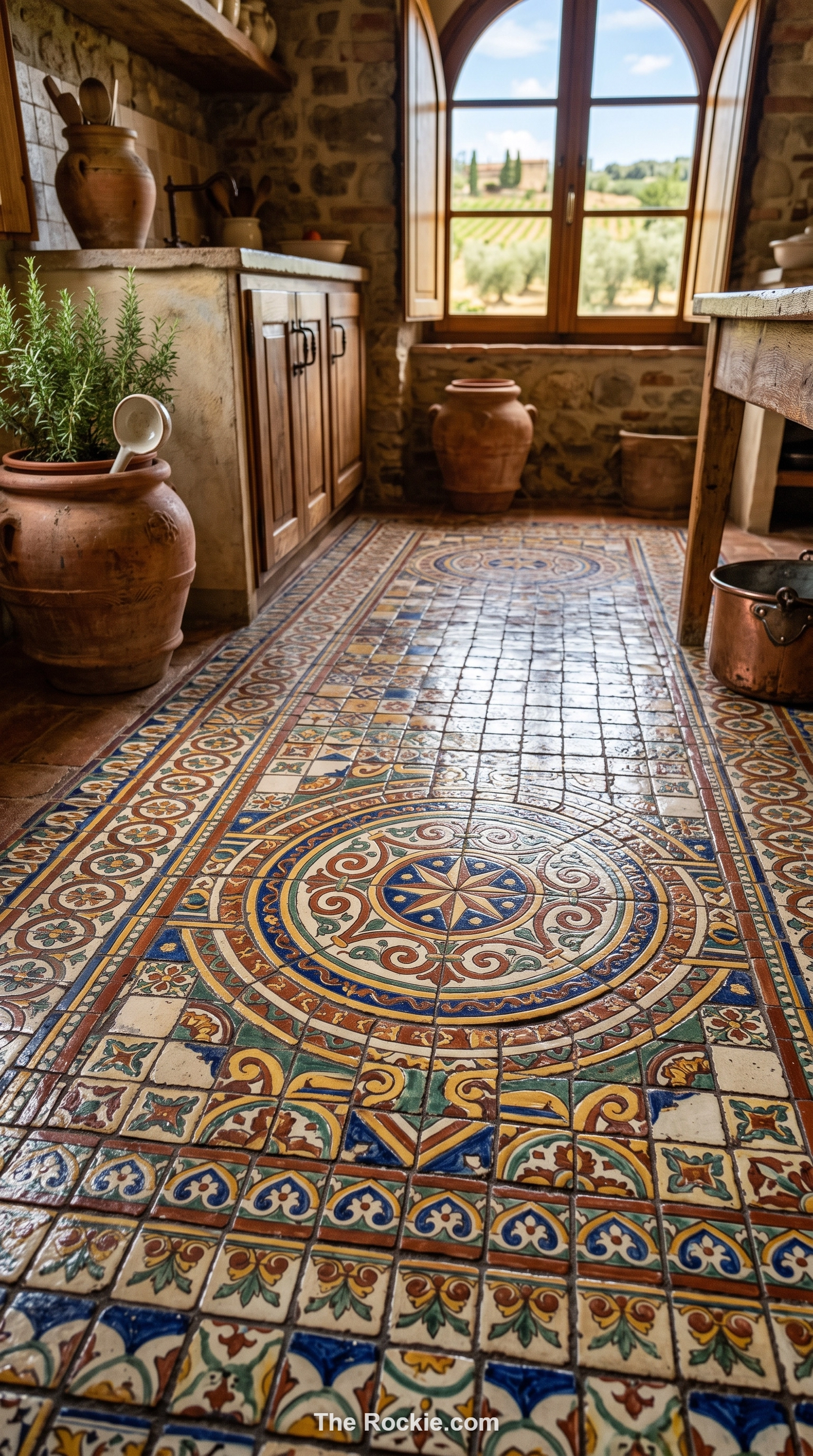
A floor finished in intricate, hand-painted mosaic tile turns a purely functional surface into a genuine work of art. Vibrant colors and classic Tuscan motifs give the room a natural focal point and a built-in conversation starter for guests. Beyond the visual impact, these floors are typically built to last, proving that decorative detail and everyday durability aren’t mutually exclusive in this style.
10. Terracotta Flooring, Classic and Warm
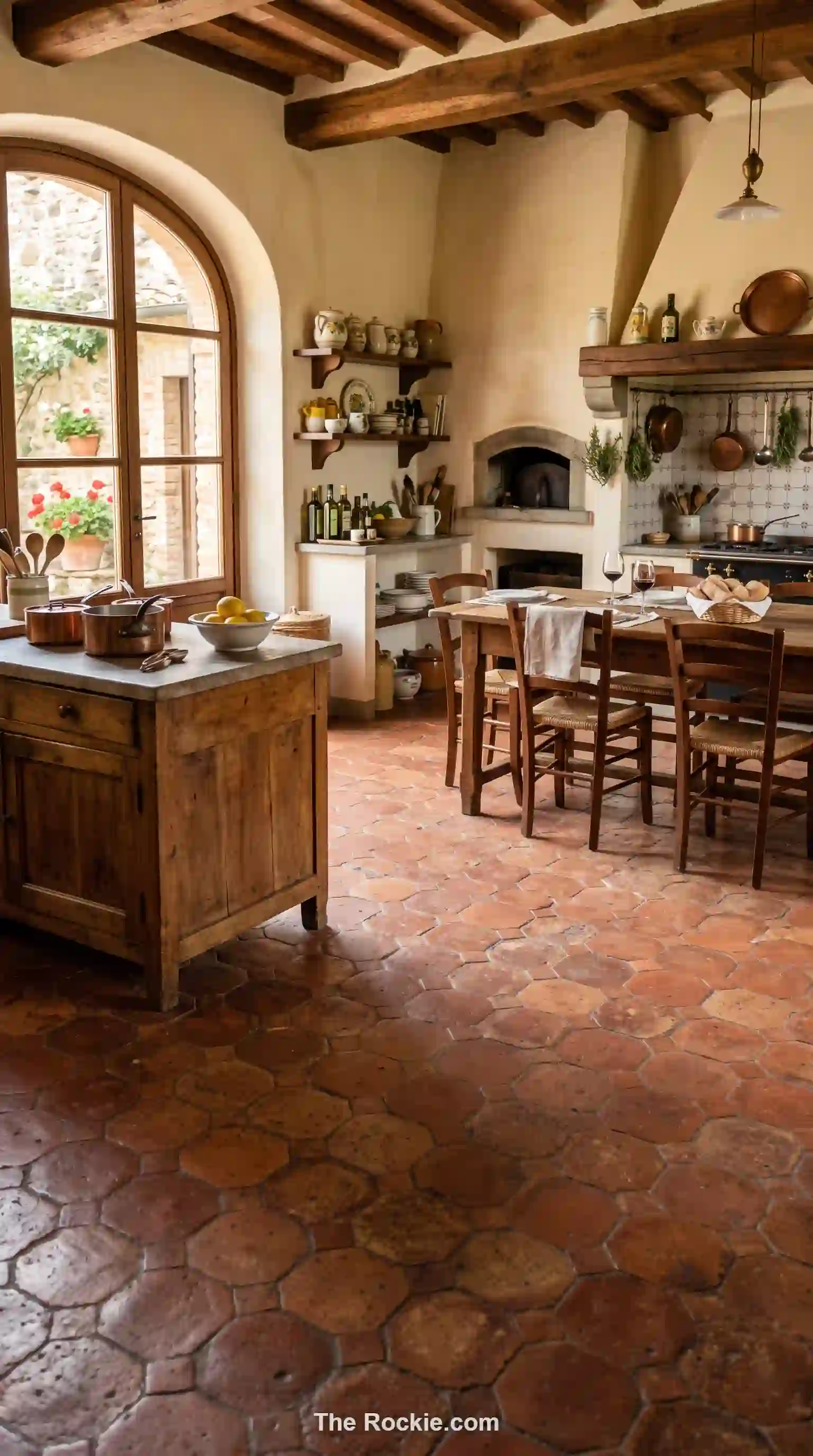
Terracotta remains one of the most recognizable materials in Tuscan design, and for good reason — it’s durable, easy to maintain, and brings a warm reddish tone that pairs naturally with almost every other element on this list. The subtle imperfections in each tile add depth rather than distraction, and the material’s tactile warmth underfoot makes lingering in the kitchen feel like less of a chore and more of an invitation.
11. A Farmhouse Sink for Everyday Elegance
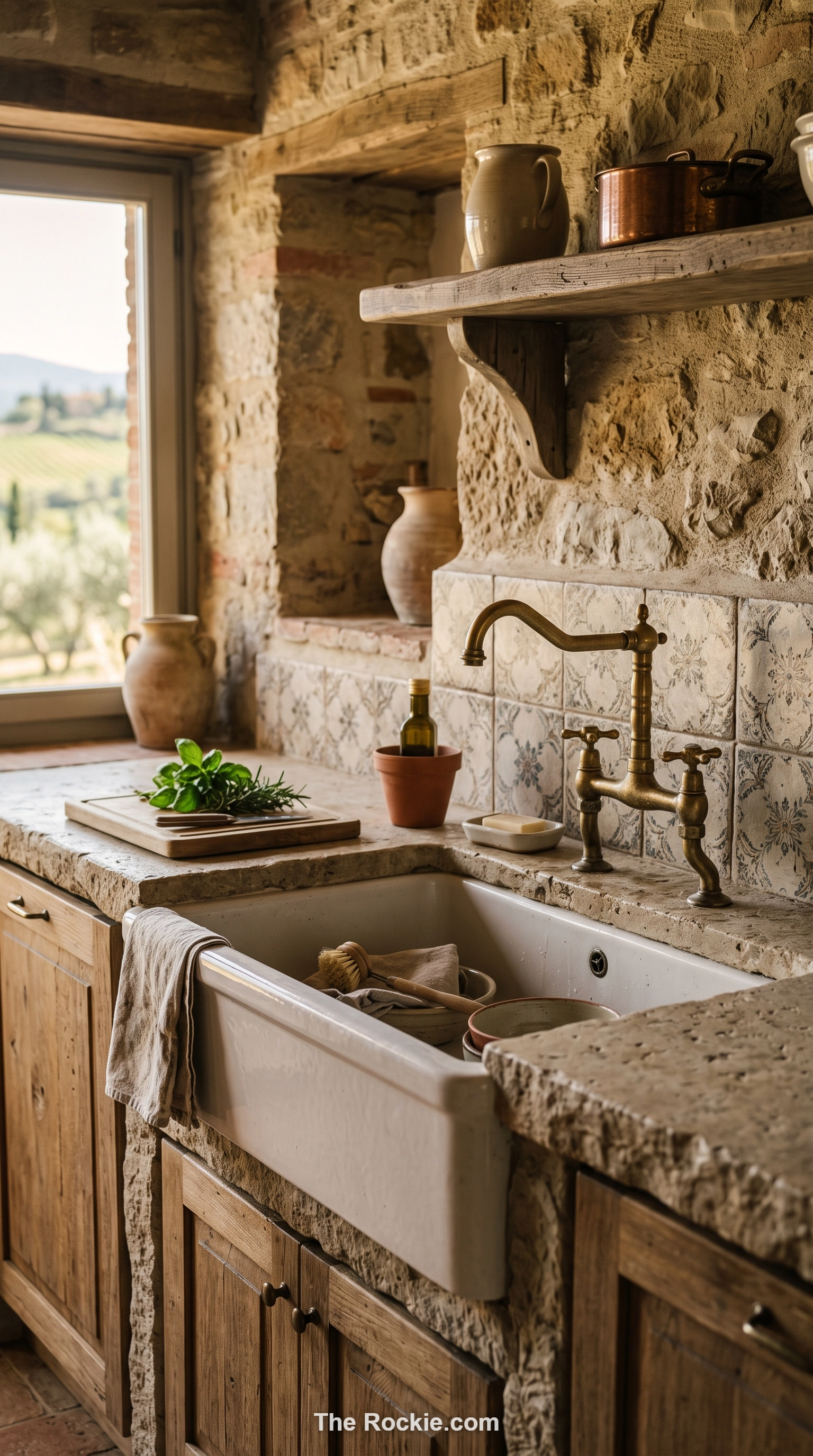
The deep basin and robust build of a classic farmhouse sink make it a natural fit for a Tuscan kitchen’s blend of function and old-world style. Paired with a vintage-style faucet, it becomes a quiet focal point rather than just a fixture — simple in form, but built to handle serious daily use without losing its character over time.
12. Cabinets Built by Hand
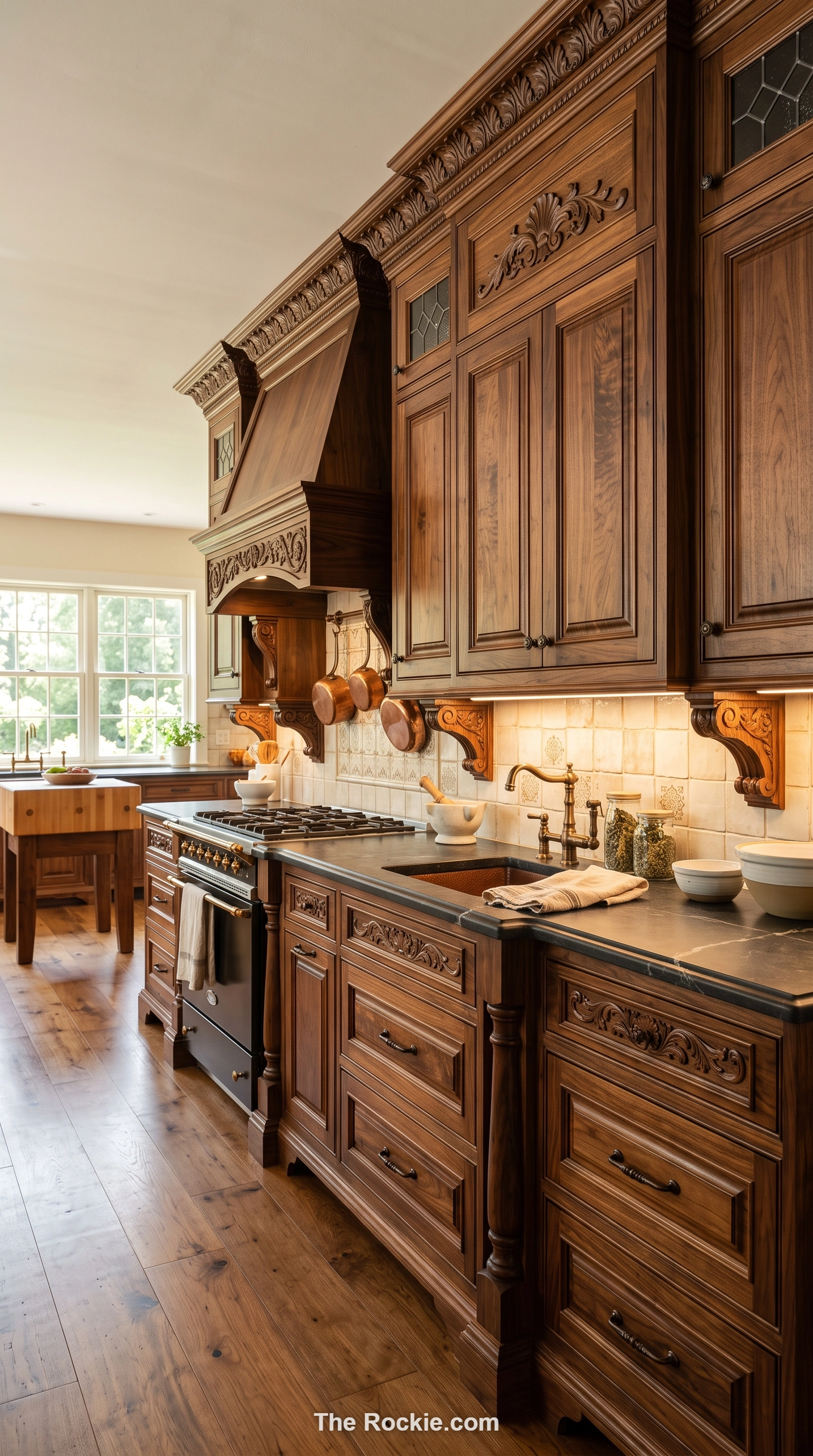
Custom, handcrafted cabinetry brings a level of authenticity mass-produced options simply can’t match. Intricate moldings and natural wood textures tie directly into the rest of the rustic environment, and the craftsmanship itself becomes part of the room’s story — a nod to techniques passed down rather than a factory finish. It’s a bigger investment, but one that pays off in both storage efficiency and lasting character.
13. Vintage Accessories With a Story
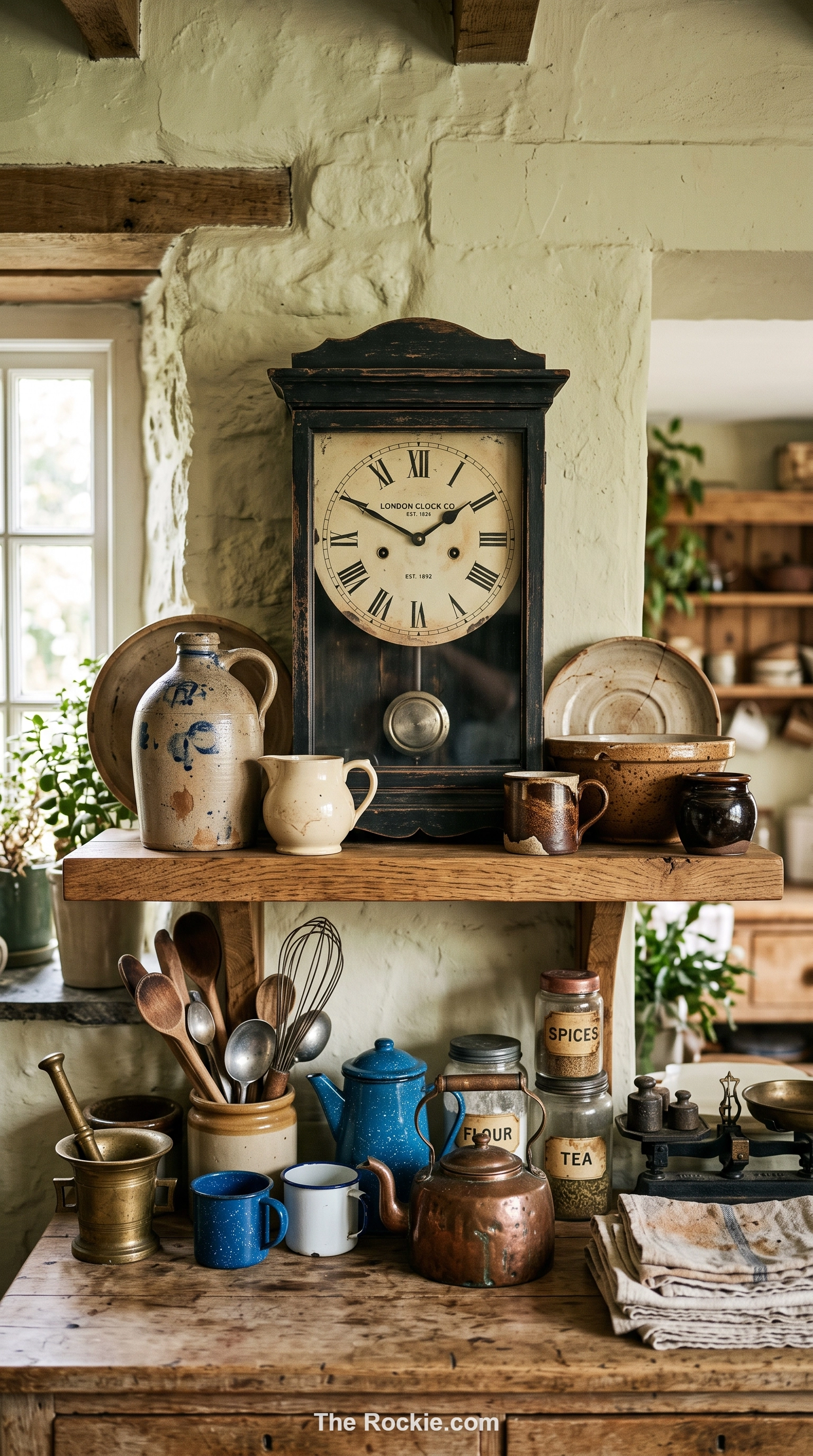
Weathered pottery, an antique clock, an old kitchen scale — small vintage accessories add layers of personality that new decor rarely achieves. Each piece carries its own history, and displayed thoughtfully together, they build a kind of visual narrative throughout the room. It’s an easy, low-cost way to make a Tuscan kitchen feel personal rather than staged.
14. Rich Wood, Used Generously
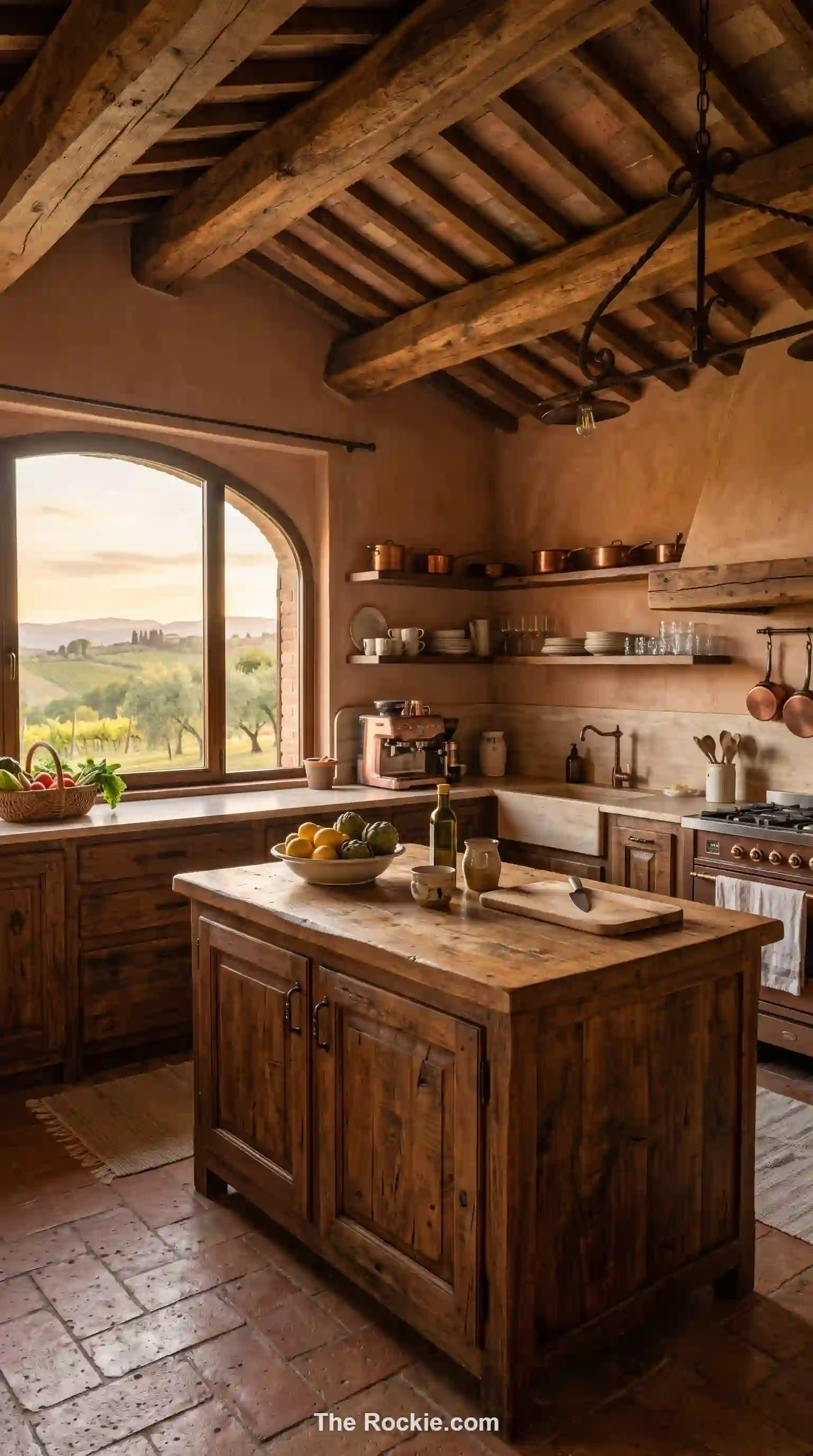
Reclaimed wood cabinetry, countertops, and even decorative wall panels bring an organic warmth that anchors the entire Tuscan aesthetic. The natural variation in grain and texture gives every surface a bit of individuality, and paired with soft lighting and stone accents, the wood elements tie the whole kitchen together without ever feeling matched or manufactured.
15. Wrought Iron for Structure and Style
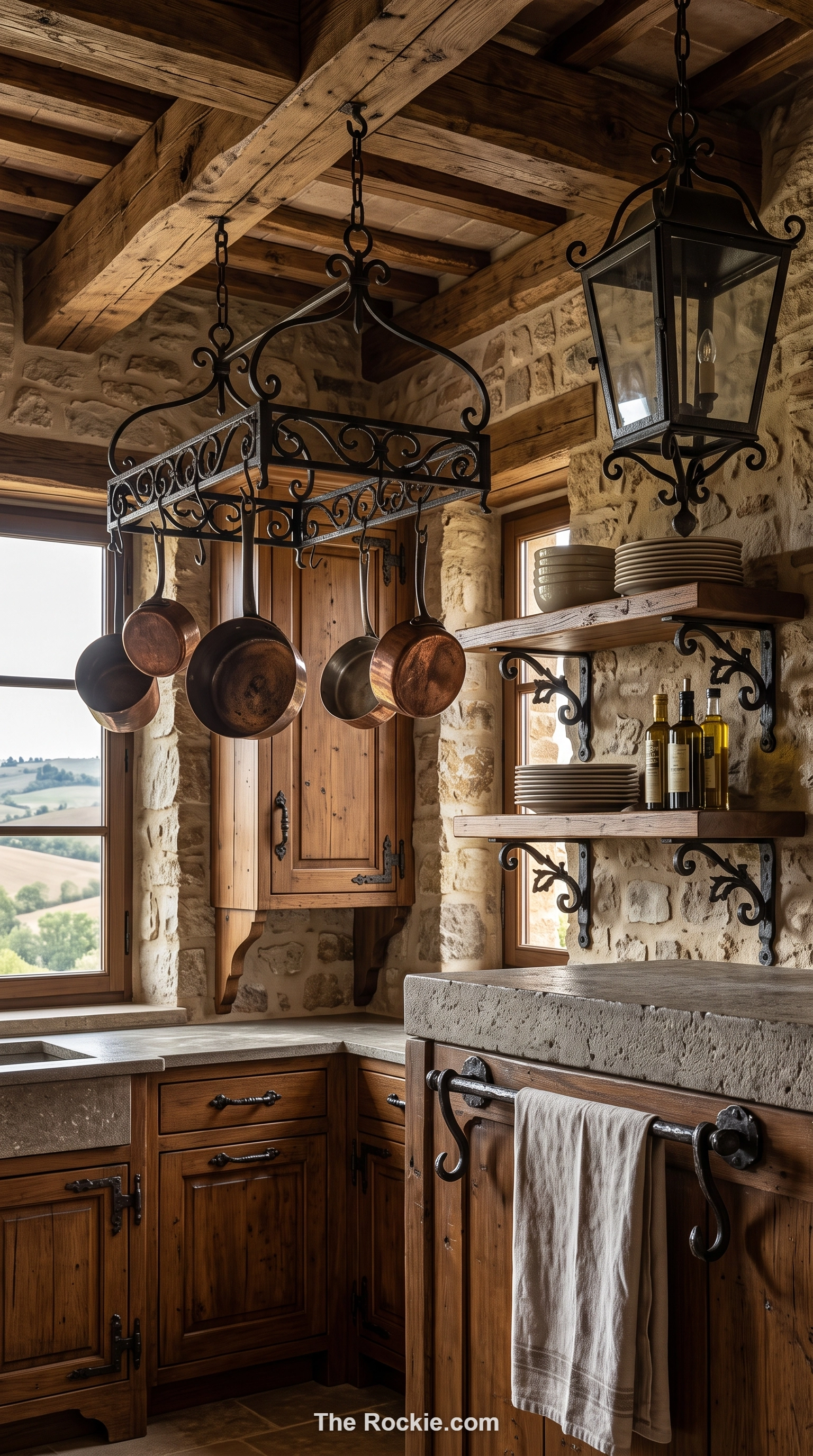
Iron fixtures — cabinet handles, light fixture frames, decorative railings — bring a structured, slightly industrial edge that contrasts nicely against softer wood and stone. The material’s dark, matte sheen echoes centuries of artisanal ironwork, and its durability means these details tend to outlast almost everything else in the kitchen. It’s a small material choice that punches well above its visual weight.
16. Ceilings Worth Looking Up At
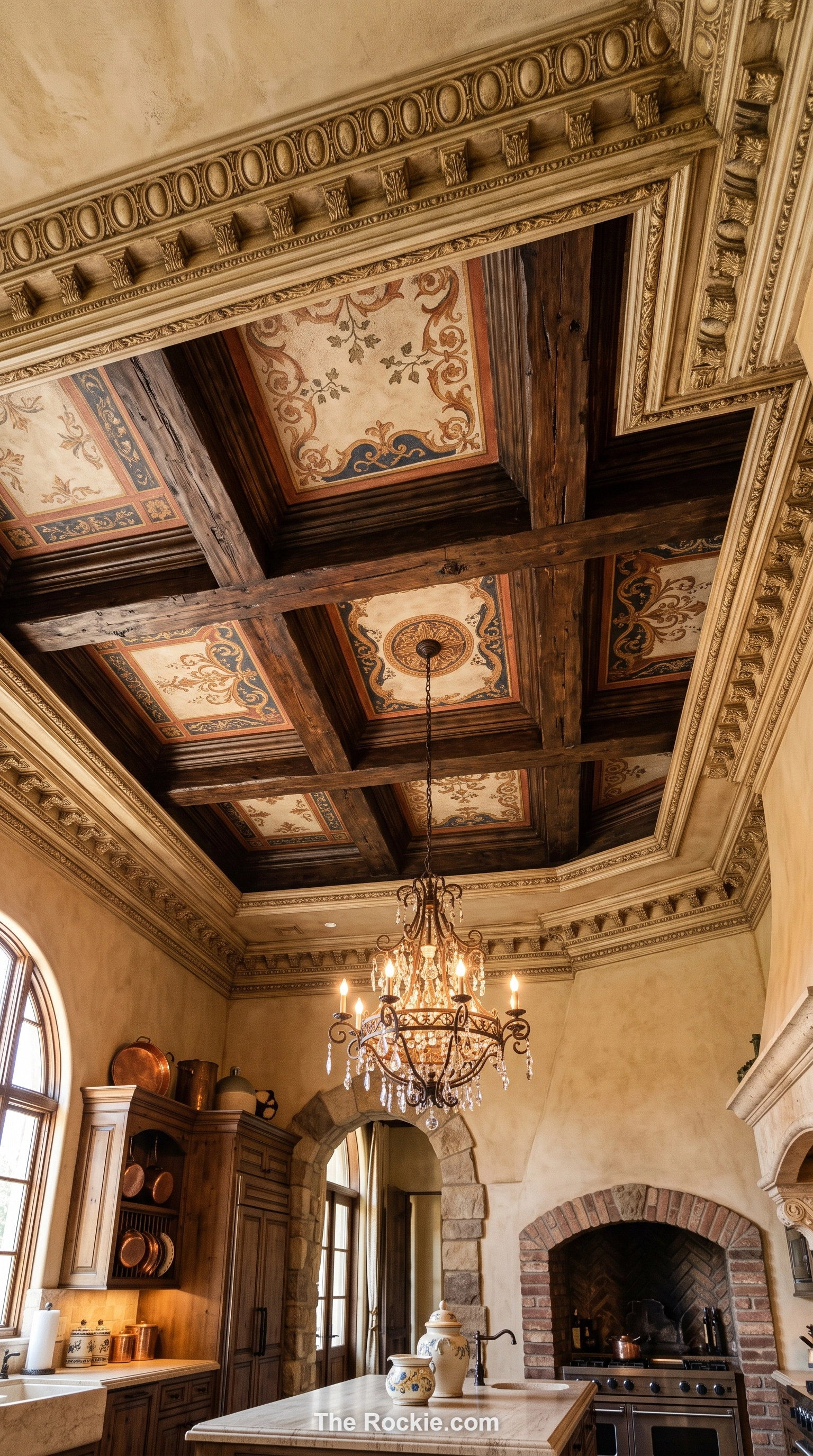
An ornate ceiling with hand-carved crown molding draws the eye upward and makes even a modest kitchen feel more expansive. Paired with soft ambient lighting, the detail in the molding catches shadow and light throughout the day, adding a layer of quiet luxury that most kitchens skip entirely. It’s a bigger architectural commitment, but one that changes the whole feel of the room.
17. Courtyard Access for Real Indoor-Outdoor Flow
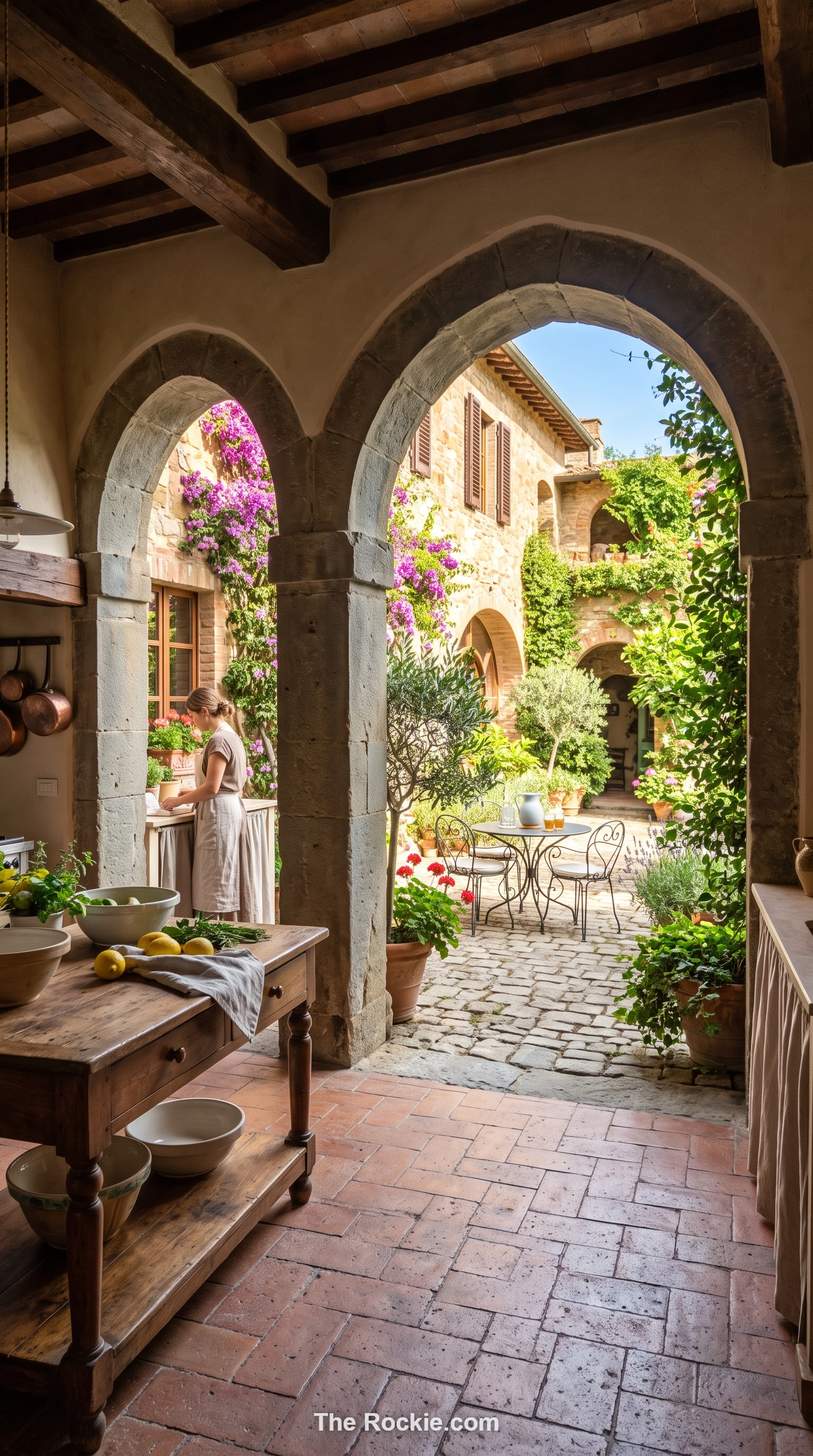
Large arched doorways opening directly onto a courtyard blur the line between kitchen and garden, letting in natural light and fresh air in equal measure. This kind of flow is central to how Tuscan homes are traditionally lived in — cooking and gathering spilling outward rather than staying contained. Beyond the lifestyle appeal, it also improves ventilation and gives the kitchen a lighter, airier feel overall.
18. A Rustic Bar Corner for Entertaining
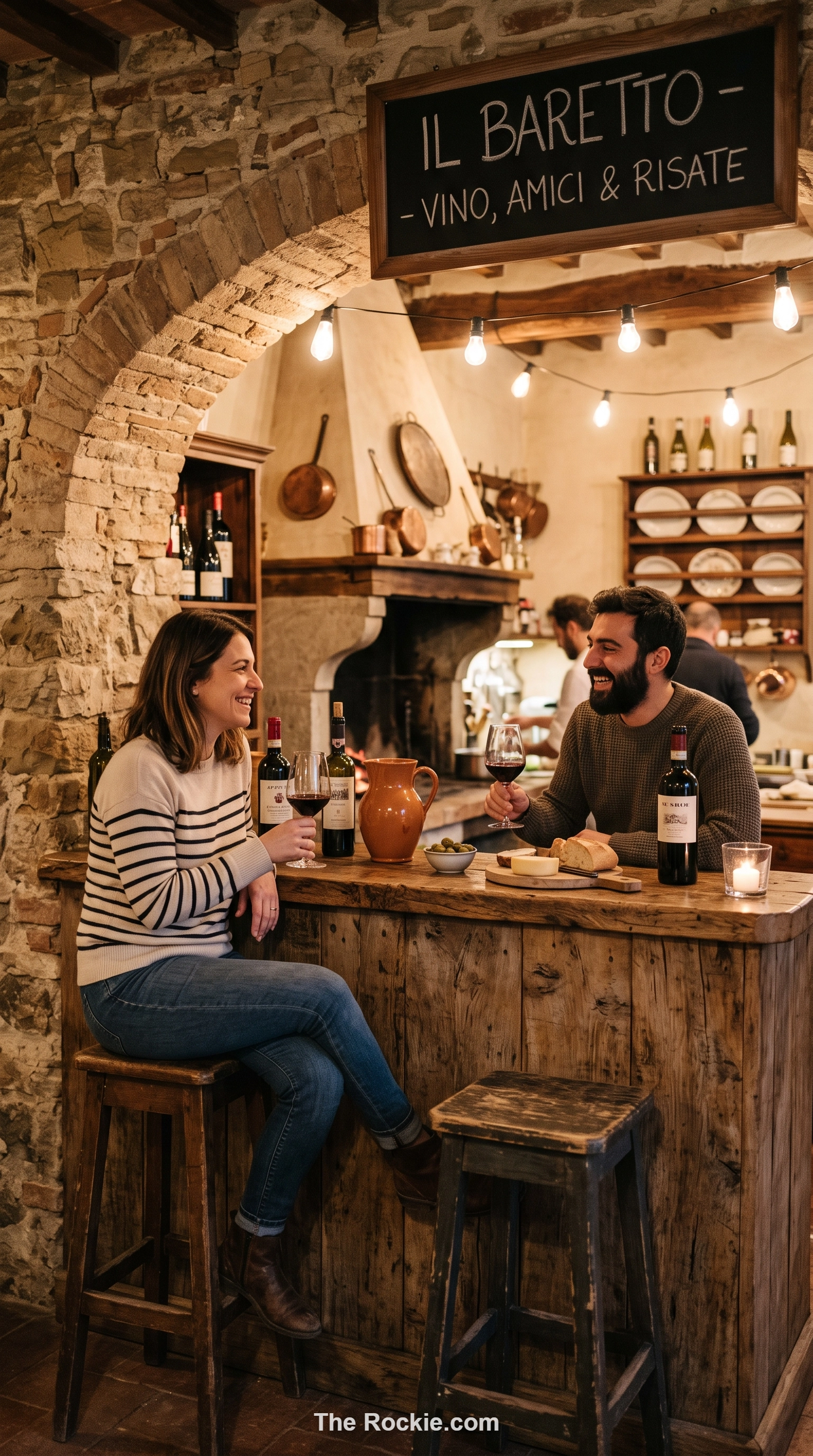
A dedicated bar area with reclaimed wood surfaces, vintage stools, and warm mood lighting turns a corner of the kitchen into a genuine gathering spot. Details like hand-forged iron railings and artisanal countertop finishes carry the same craftsmanship as the rest of the room, making the space feel cohesive rather than like an addition tacked on for entertaining.
19. Farmhouse Dining, Built for Long Meals
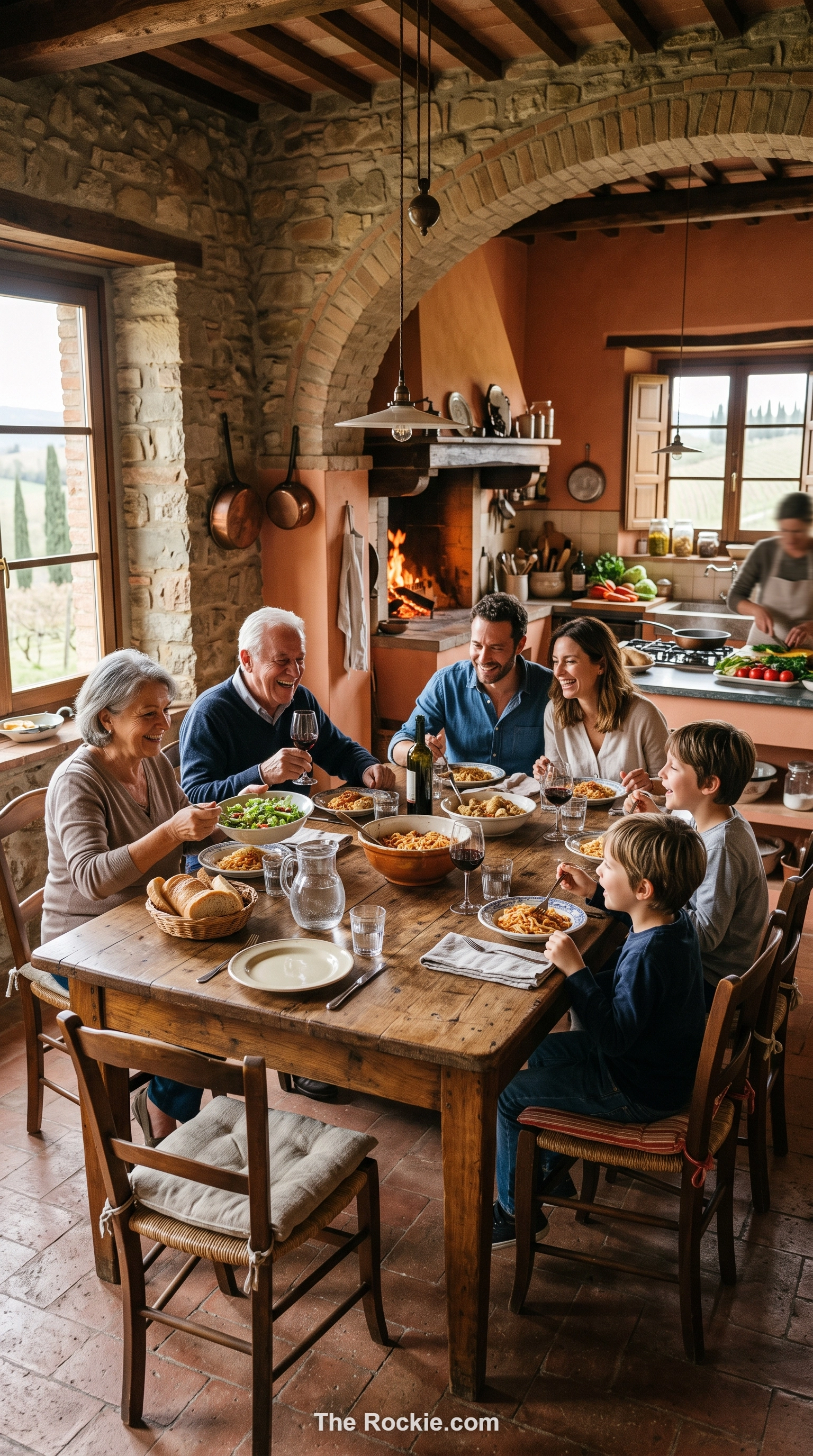
A generous wooden table paired with cozy, mismatched seating brings the traditional Italian family meal straight into the kitchen. Soft textiles and warm ambient light keep the space feeling intimate even when it’s hosting a crowd, and the open layout lets the dining area function as a natural extension of the cooking space rather than a separate room entirely.
20. A Stone Fireplace as the Anchor
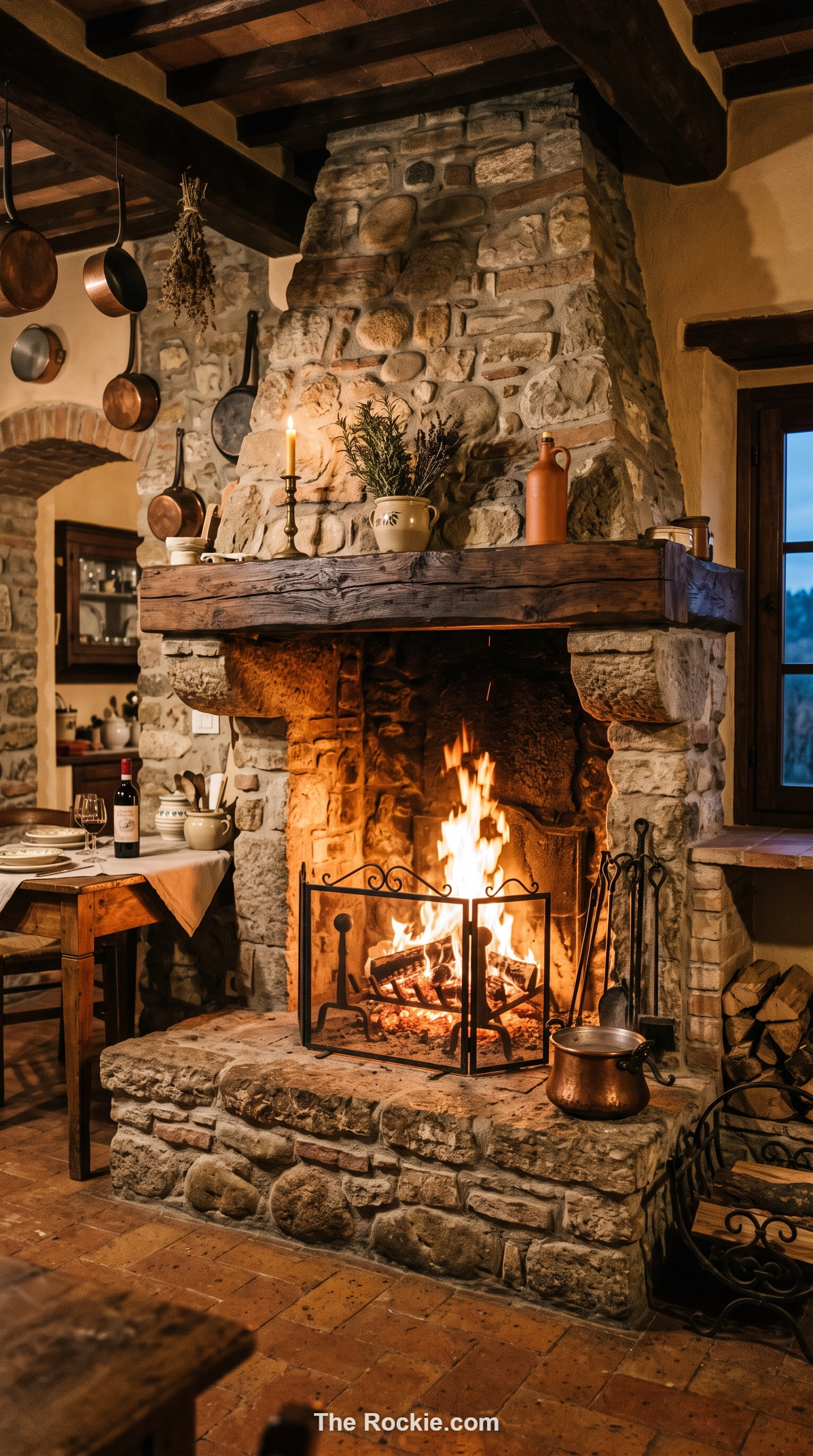
Few features command a room the way a stone fireplace does. Beyond the practical warmth it provides, the rugged texture of natural stone creates an immediate contrast against more refined details elsewhere in the kitchen, drawing the eye and grounding the whole design. It’s a substantial addition, but one that gives the space a genuine sense of history and permanence.
21. Windows That Flood the Room With Light
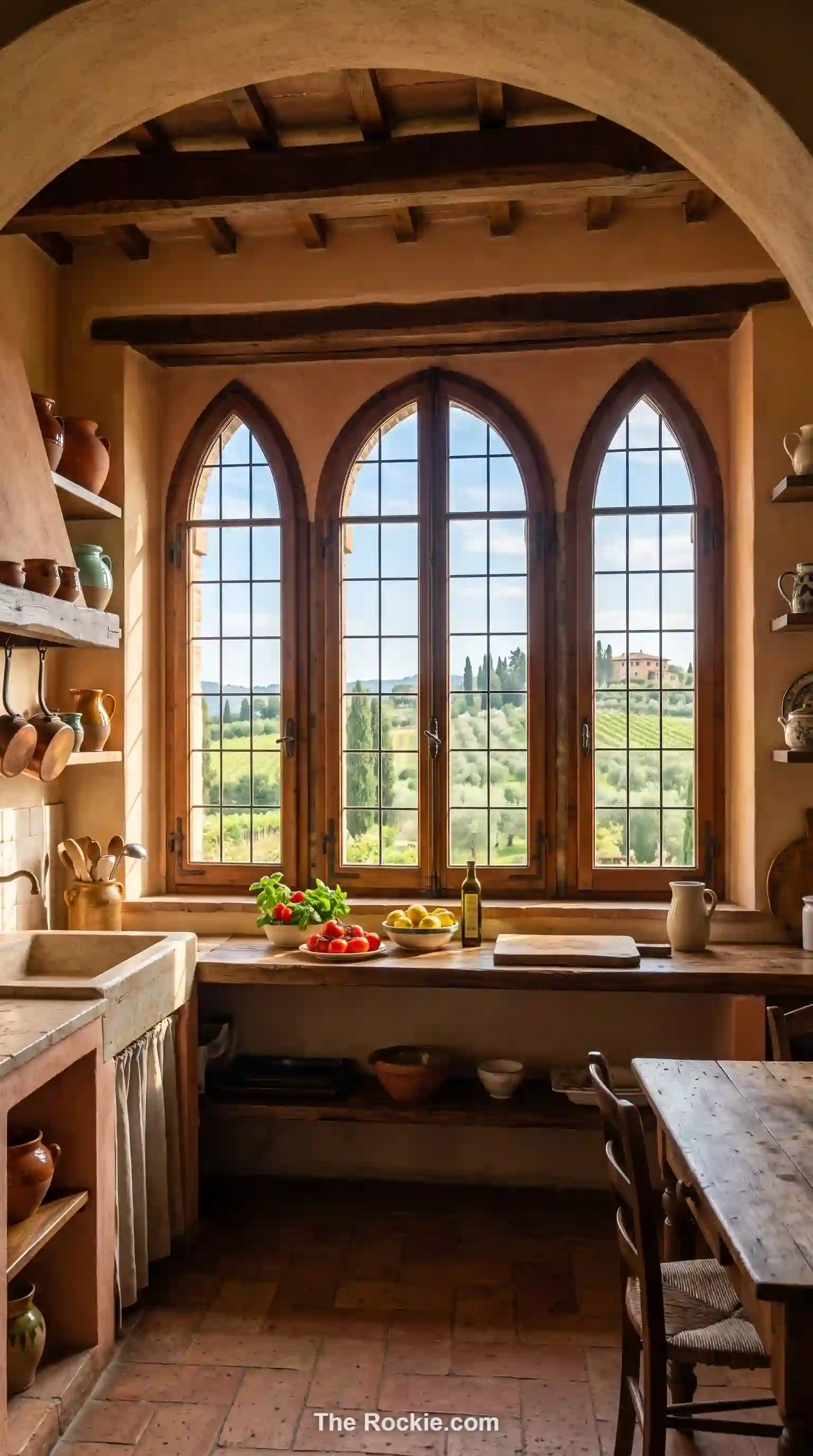
Traditional Tuscan windows, with their mullions and arched tops, do more than frame a view — they shape how light moves through the room throughout the day. The interplay of sunlight and shadow across textured surfaces gives the kitchen a dynamic, ever-changing quality that flat, uniform lighting never achieves. It’s a detail that rewards the kitchen with life at every hour.
22. Artisanal Details That Tie It All Together
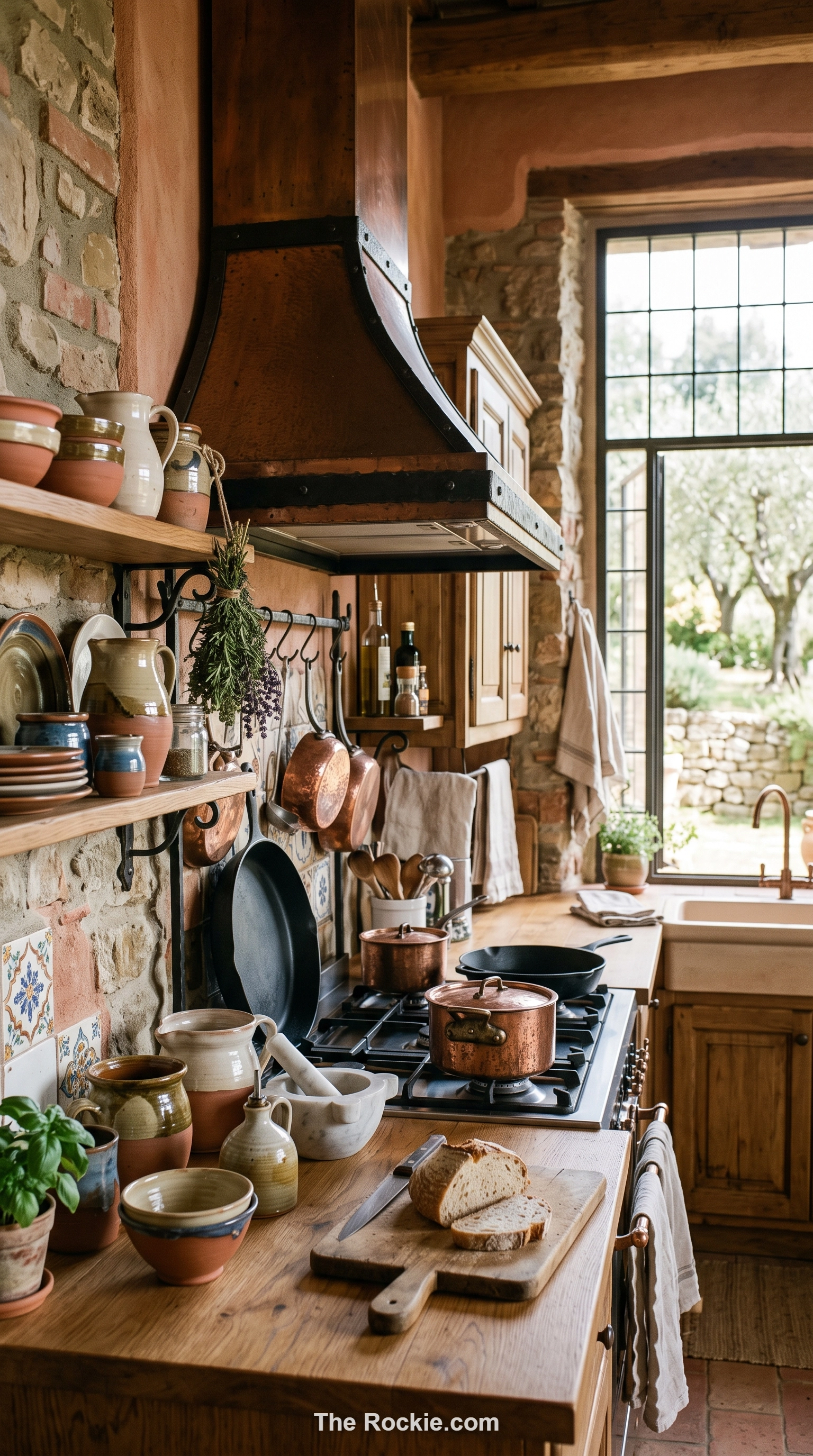
Handcrafted pottery, custom metalwork, and bespoke textiles are usually the last layer added to a Tuscan kitchen, and often the one that gets noticed most. Each piece is chosen for what it represents as much as how it looks, weaving a sense of heritage and craft through every surface. These finishing touches are what turn a well-built kitchen into one that feels genuinely, personally complete.
Final Thoughts
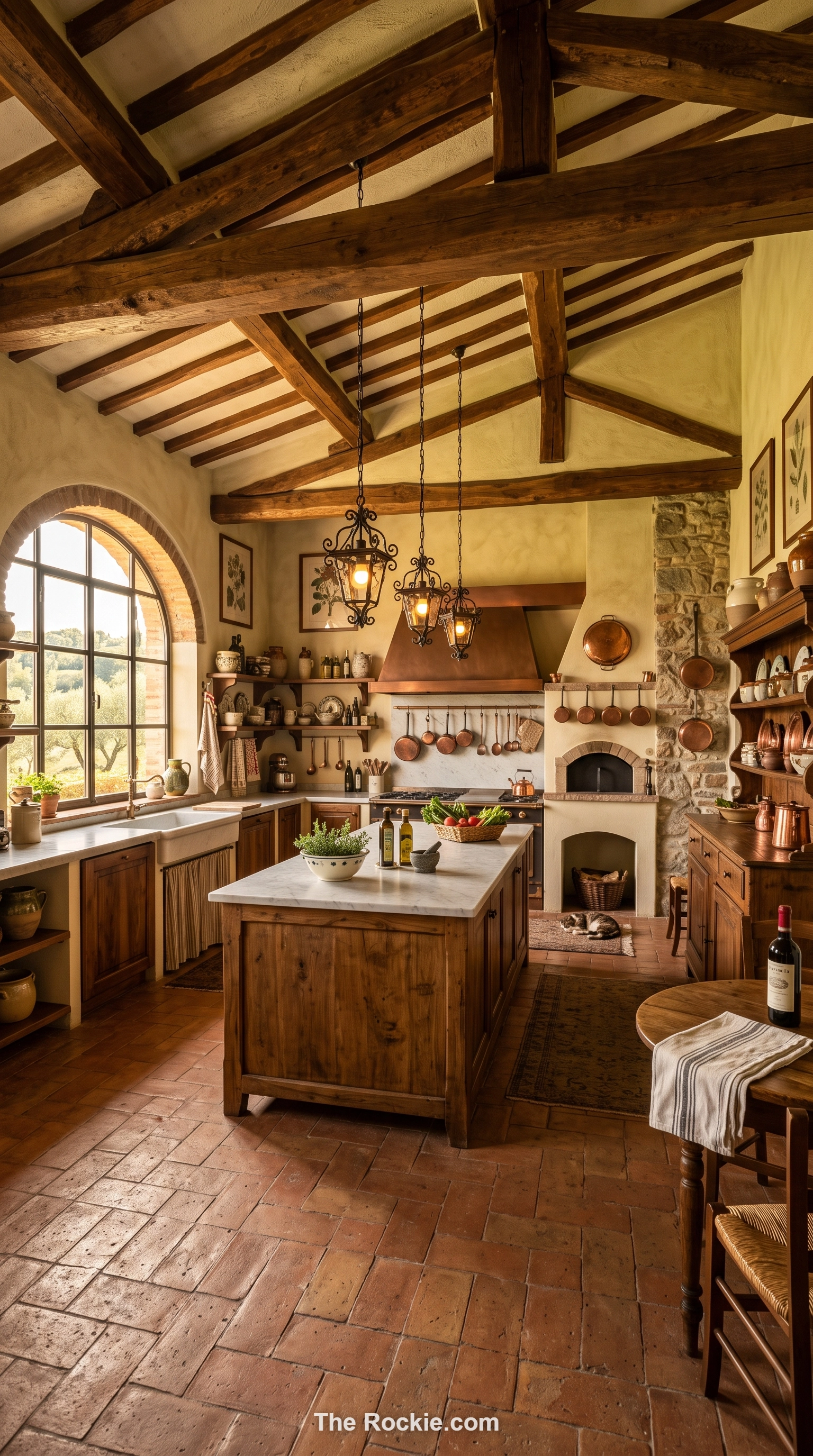
Twenty-two ideas, and the thread running through all of them is the same: a Tuscan kitchen isn’t built to look untouched — it’s built to be used, gathered around, and lived in for decades. Whether you lean into the warmth of exposed beams and terracotta floors or go further with a stone fireplace and hand-painted mosaic tile, the goal is a kitchen that feels like it has history the moment it’s finished, and only gets better with time.


