
23+ Cozy Medieval Home Decor Ideas that are Warm, Grand, and Actually Livable in 2026

I fell hard for this look after a trip through a stone farmhouse in the Cotswolds, and let me be clear about what I am not selling you: no theme restaurant, no Renaissance fair, no plastic goblets. Real medieval decor is a material story, plaster and timber and iron and heavy linen, and once you get the weight and texture right you can drop a modern sofa in the middle of it and nobody blinks. Here is how I build that mood in an ordinary American house without the costume.
Medieval Home Decor Ideas
1. Hand-Troweled Lime Plaster Walls in Warm Oatmeal
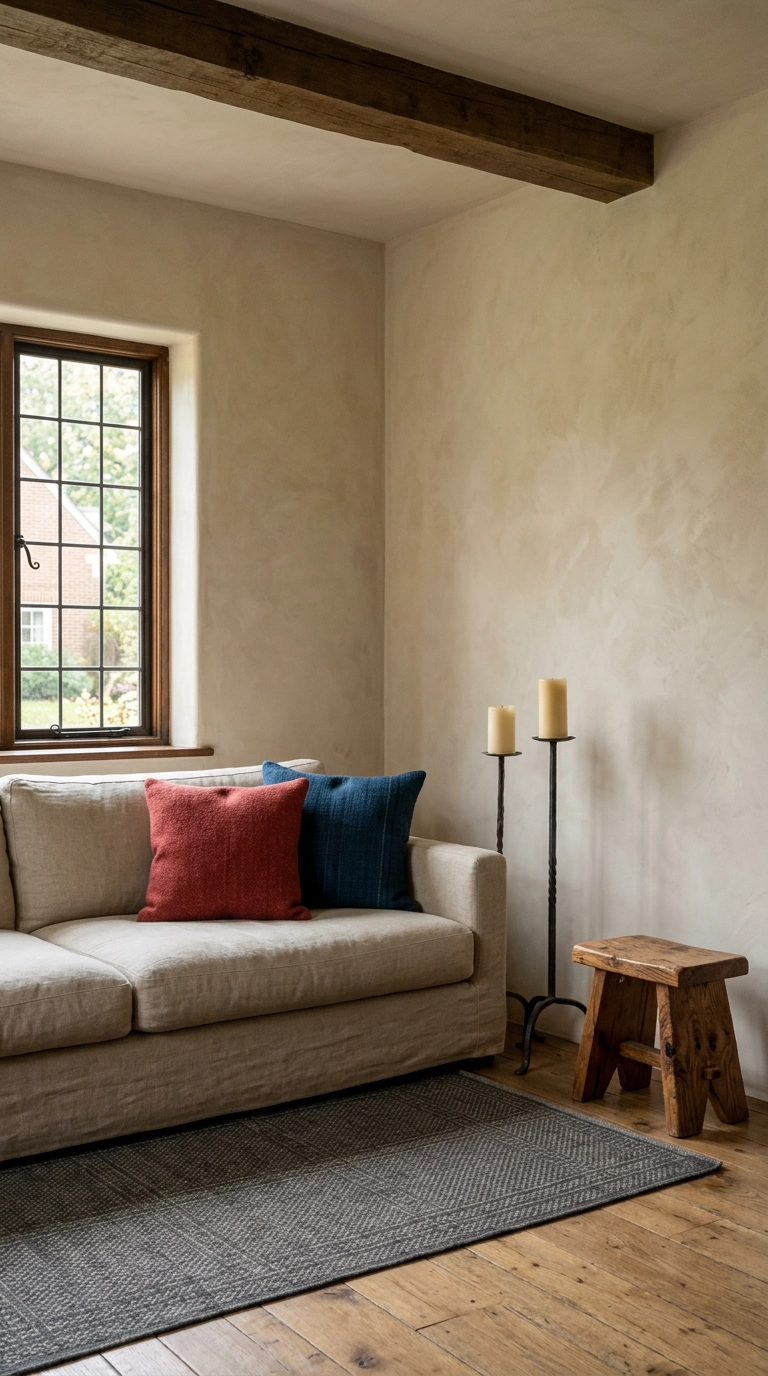
If you only do one thing on this list, do the walls. Flat drywall paint is the single biggest reason a medieval room reads as a set, because the period had no flat surfaces, and a troweled plaster or limewash finish gives you shadow and depth that changes all day as the light moves.
2. Exposed Timber Ceiling Beams (Yes, Faux Counts)
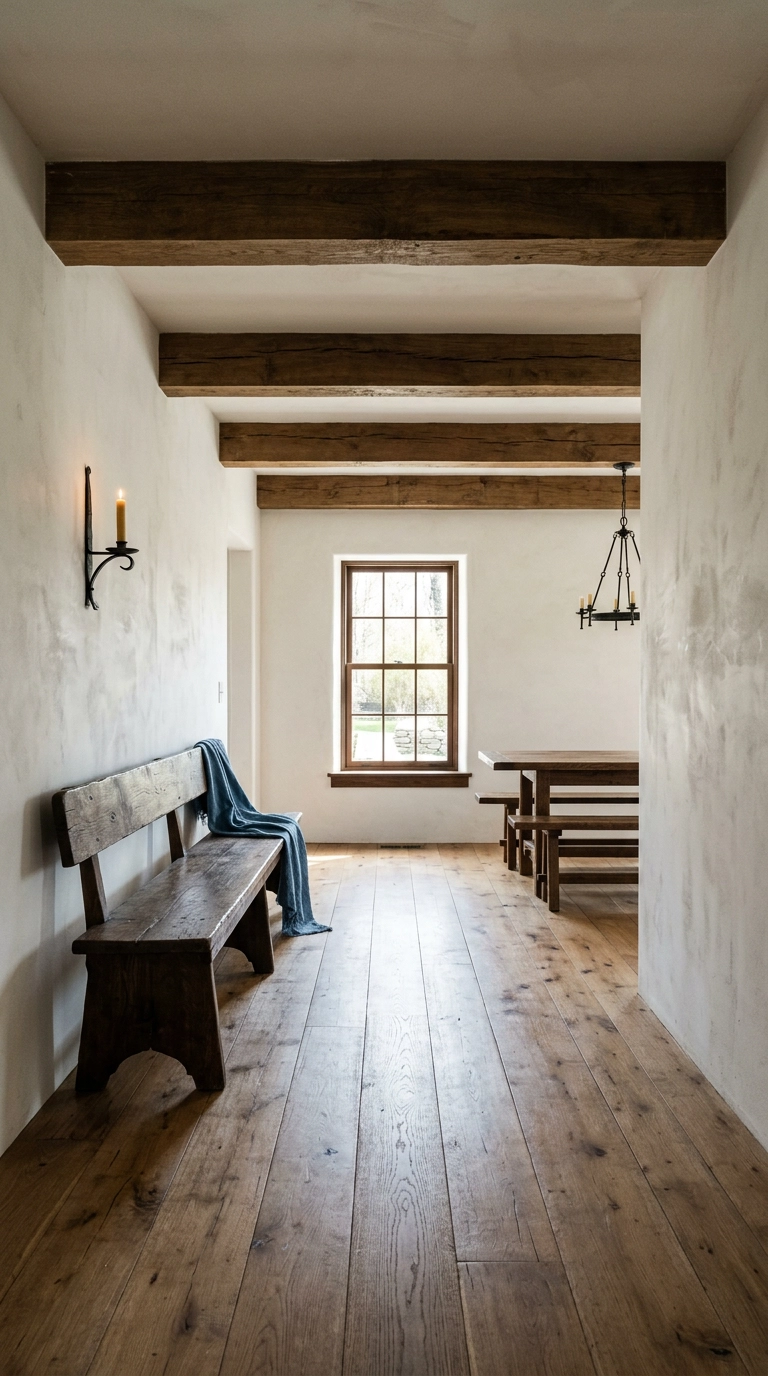
Beams do the heavy lifting because they break up a flat ceiling plane and give the eye a rhythm, which is why an 8-foot ceiling with beams feels older and more intentional rather than shorter. Hollow box beams made from three boards of rough-sawn pine, stained dark and glued around a cleat, are a real weekend project and cost a fraction of reclaimed timber.
3. A Real Trestle Table as the Anchor of the Dining Room
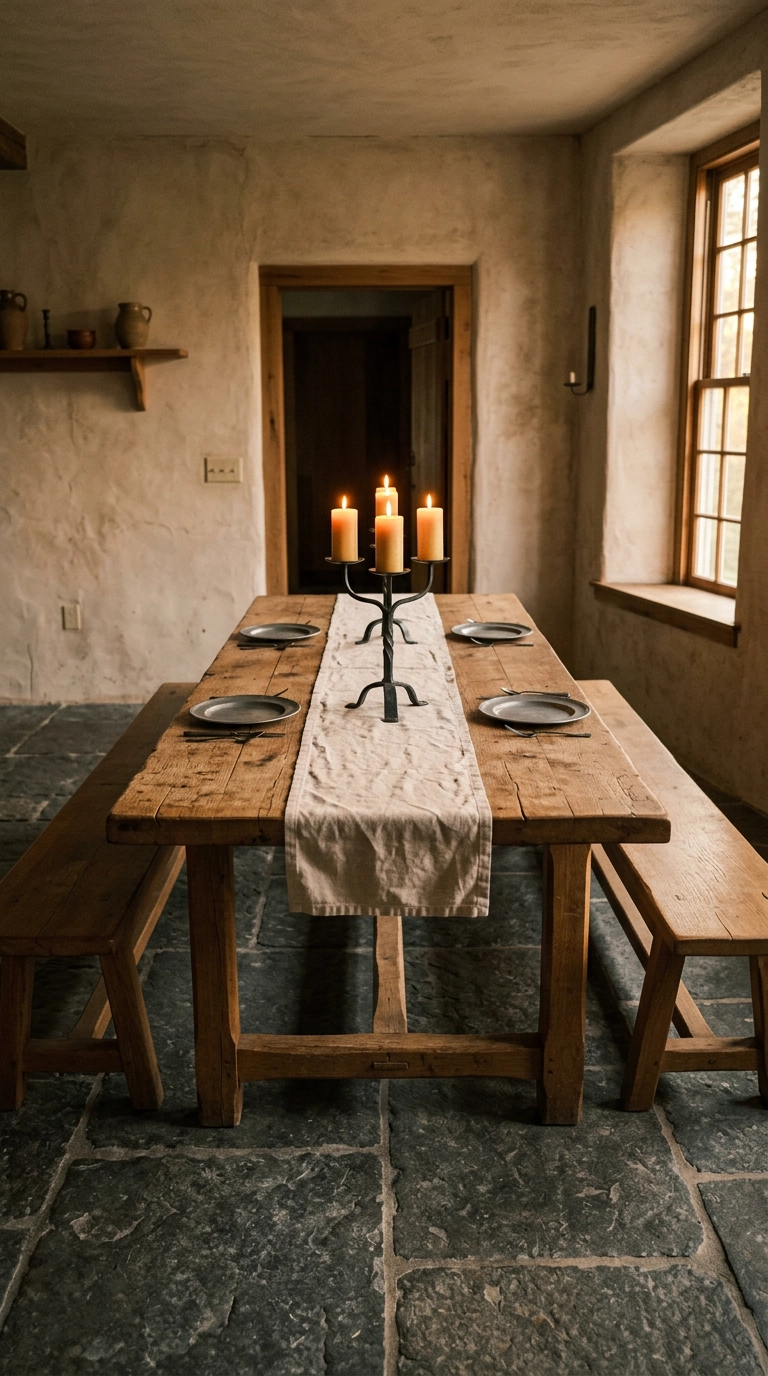
The trestle table is the piece the whole aesthetic hangs on. You want a thick planked top, at least 1.5 inches, visible joinery, and legs that sit inboard from the ends so people can actually get their knees under it.
4. One Large Woven Tapestry Instead of a Gallery Wall
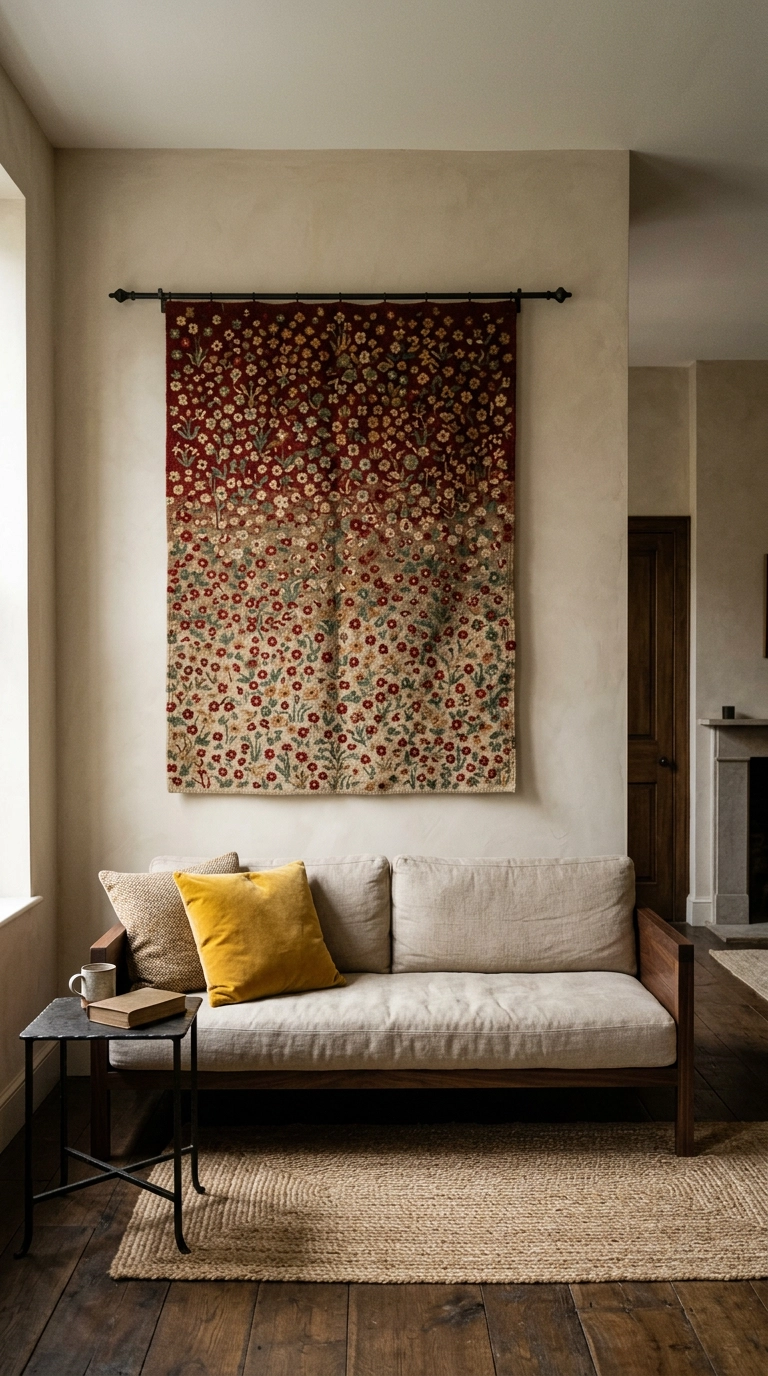
Tapestries were insulation before they were decor, and that is exactly why they still work: a big piece of wool on a wall eats echo and makes a hard-surfaced room sound soft. One large hanging beats a grid of small frames here, because the period read is a single generous field of texture, not a curated grid.
5. Wrought Iron Chandelier, Simple Ring, Not Twelve Spindly Arms
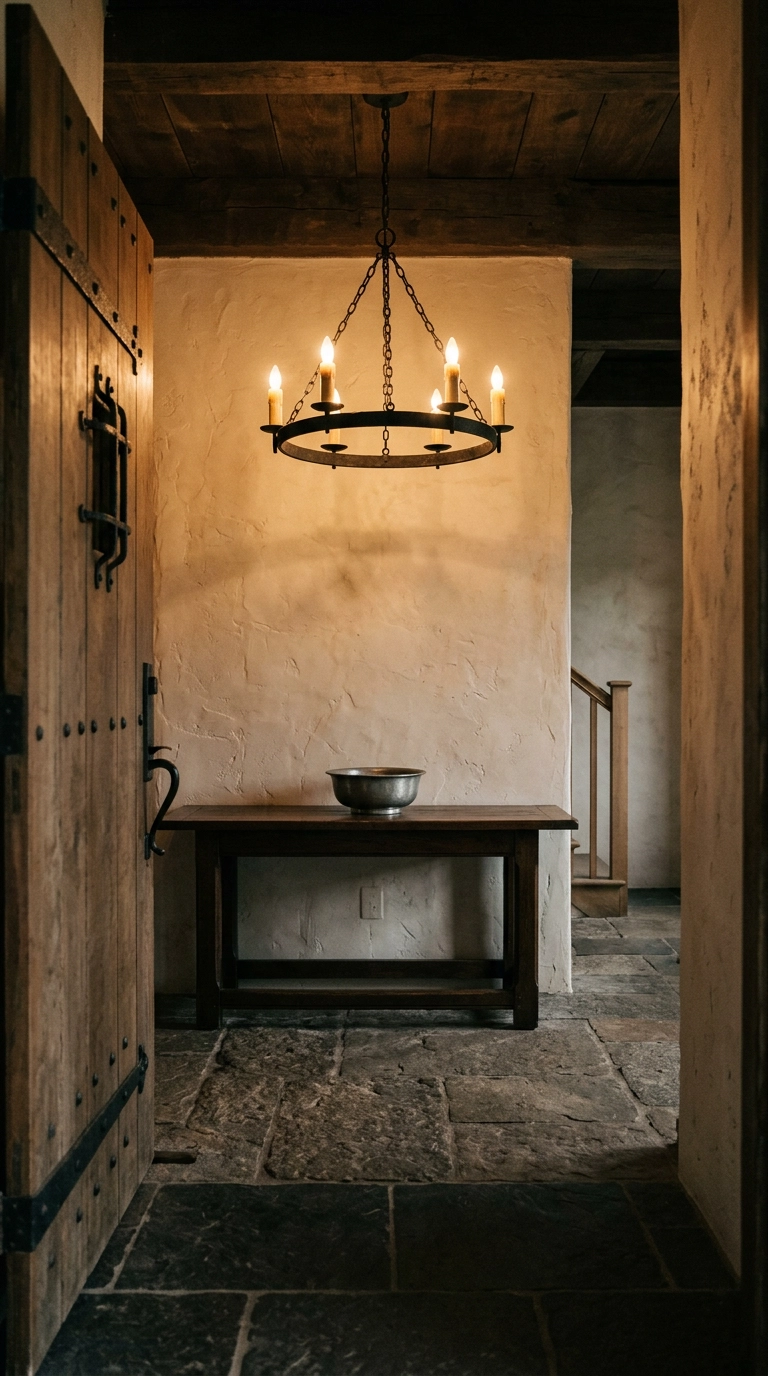
Swap brass for iron and half the work is done. A plain blackened iron ring or a simple two-tier wheel on a chain reads instantly medieval, where anything polished and many-armed drifts toward Victorian.
6. Linenfold Panelling on the Lower Wall
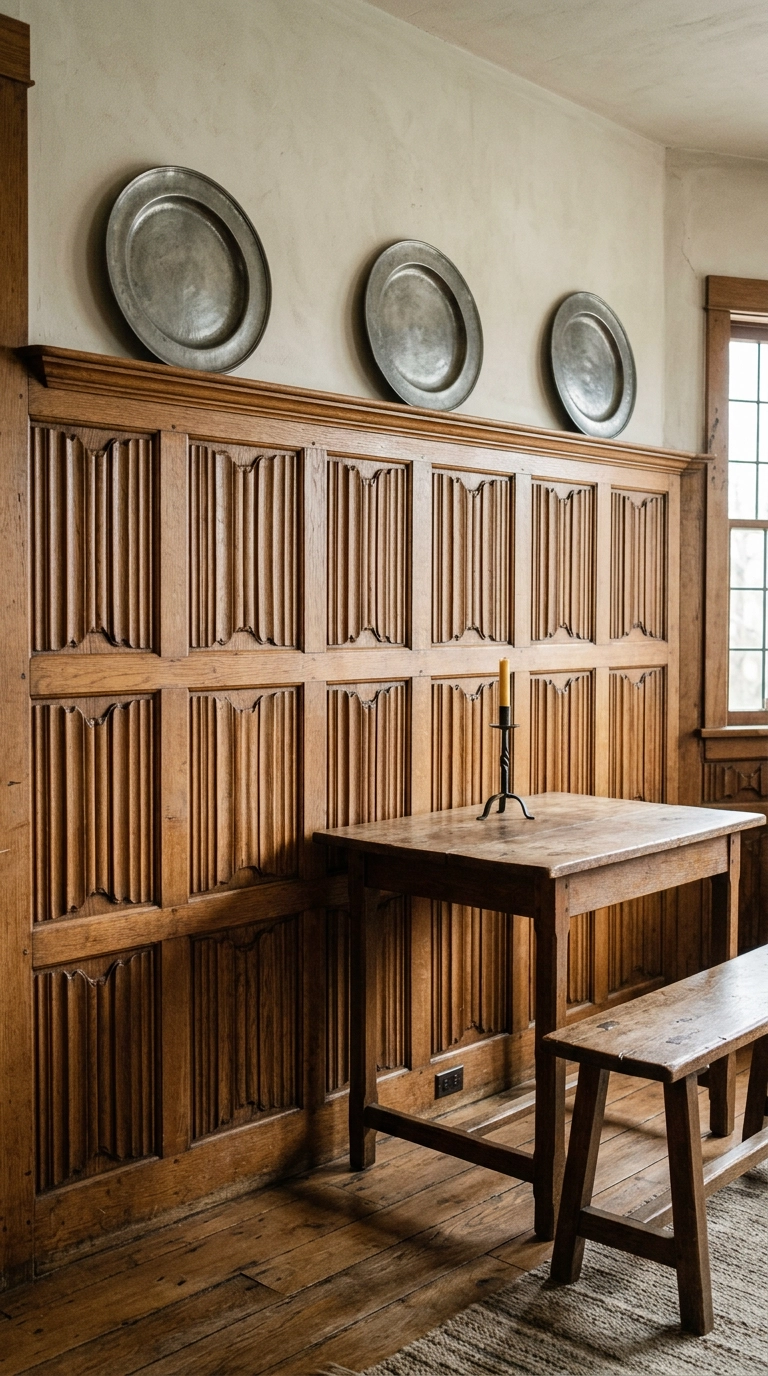
Linenfold is the carved wood panelling that looks like folded cloth, and it is the single most recognizable medieval interior detail that is not a weapon or a coat of arms. Real carved panels are a genuine splurge, but MDF linenfold panels sold by the sheet get you 80 percent there once they are painted or glazed dark.
7. Iron Strapwork and Studded Doors
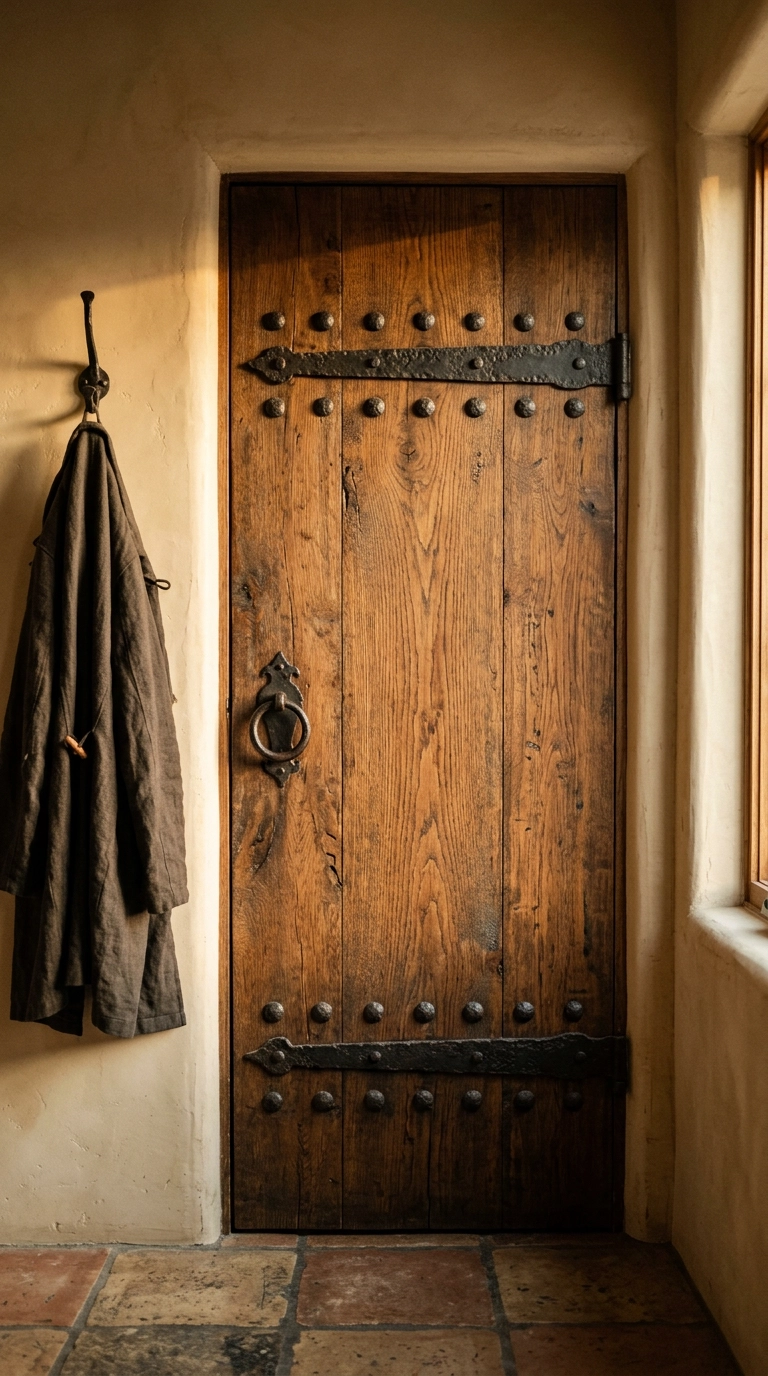
Hardware is the cheapest way into this look. A pair of decorative iron strap hinges and a ring pull screwed onto an existing flat door costs about the same as dinner out and takes 20 minutes with a drill.
8. A Stone Hearth That Looks Built, Not Bolted On
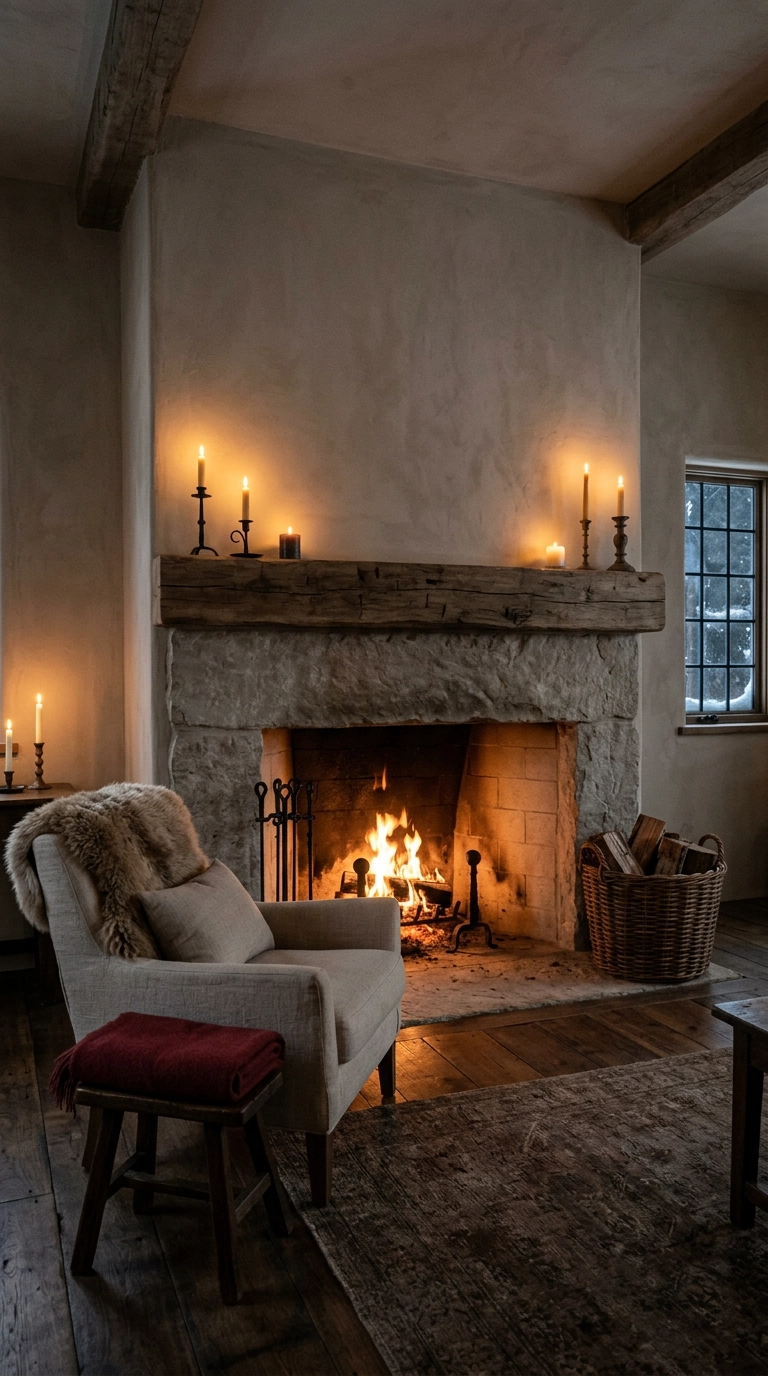
The hearth was the room in a medieval house, so if you have a fireplace, make it heavier. A rough limestone or cast-stone surround with a chunky timber mantel beam replaces a builder-grade tile-and-white-trim setup and instantly changes the room’s center of gravity.
9. Deep Jewel Dyes Pulled From Actual Period Pigments
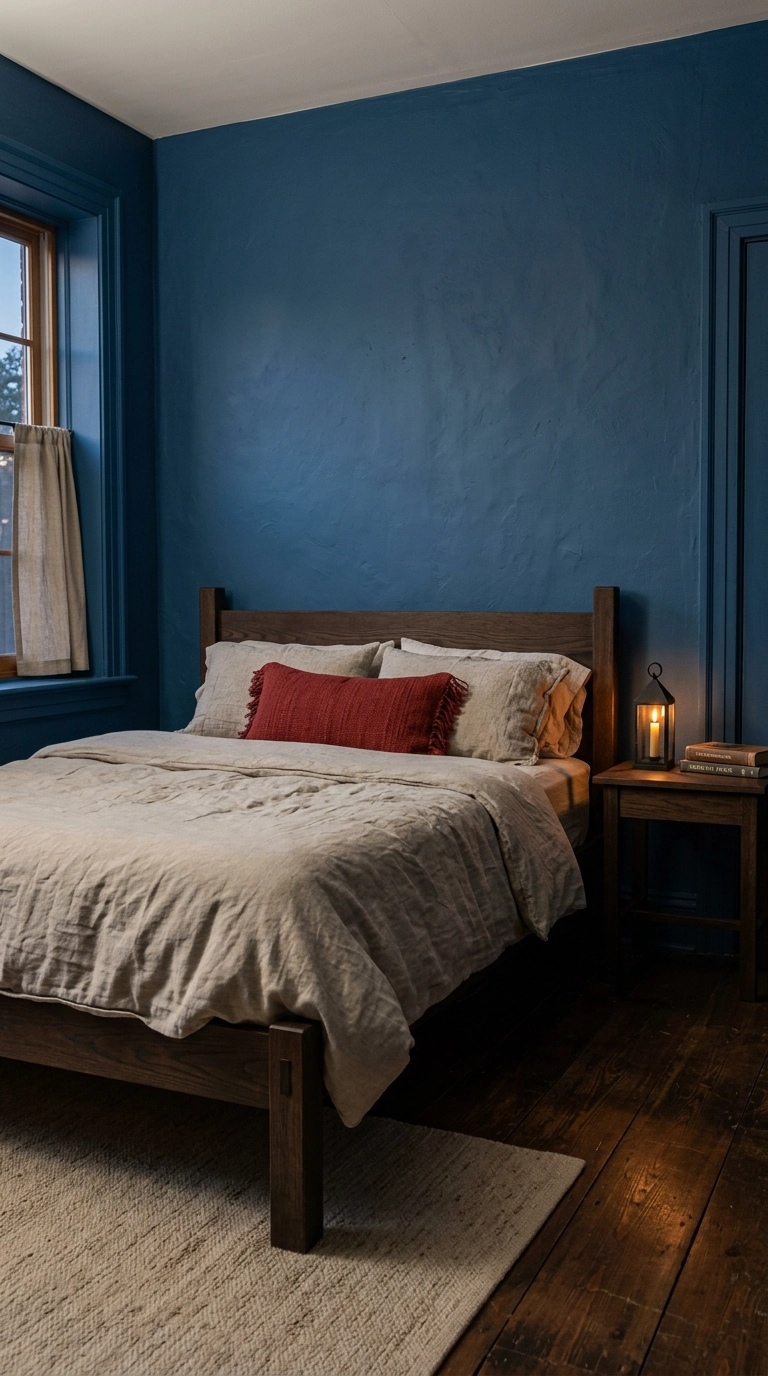
Medieval color was dye-driven, so it skews deep and slightly muddy rather than clean and bright: madder red, woad blue, weld yellow. Think Farrow & Ball Hague Blue or Preference Red rather than anything with the word “royal” in the name.
10. Rush Matting and Seagrass Squares Instead of a Pile Rug
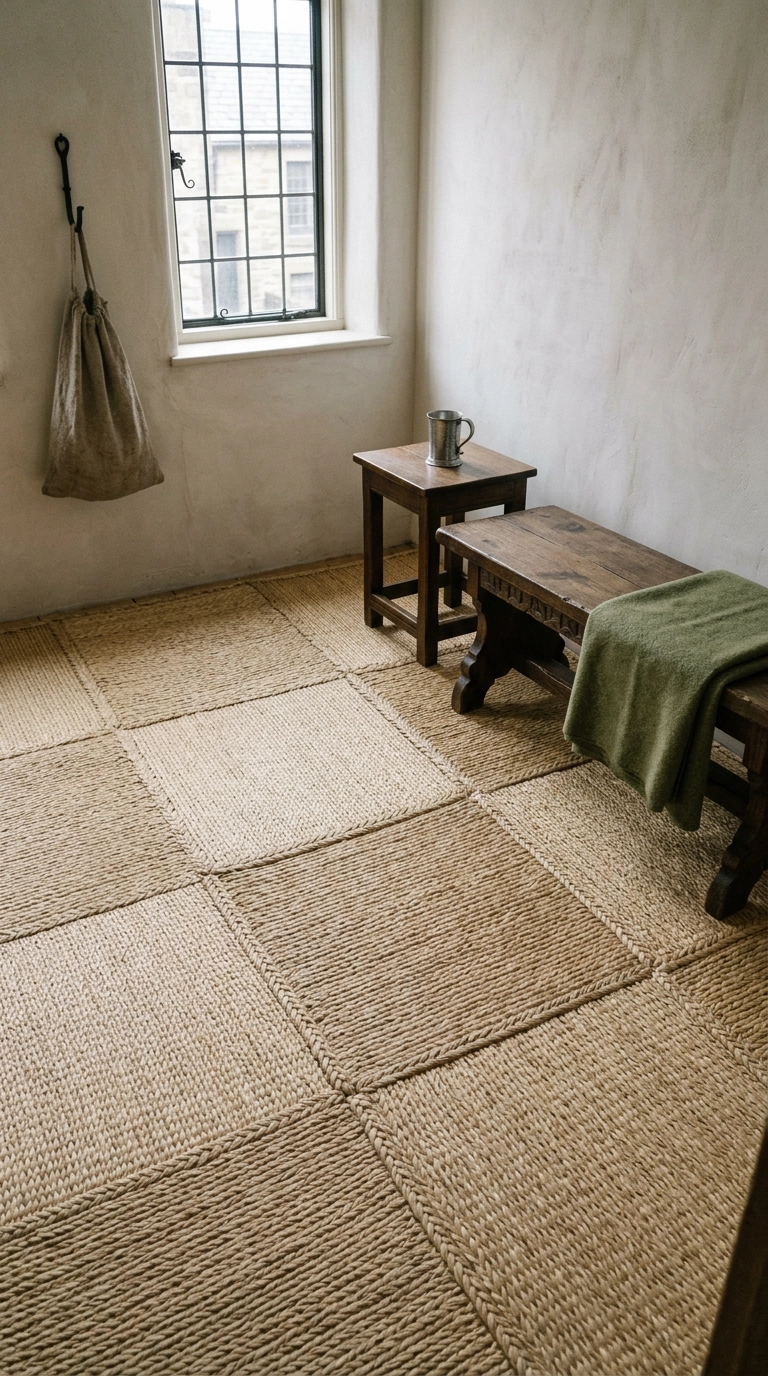
Medieval floors were strewn with rushes, and the modern descendant of that is woven rush or seagrass matting sold in squares you butt together across the floor. It costs a fraction of wool, and the pale wheat color bounces light in a way a dark rug never will.
11. Fat Church Candles on Iron Pricket Stands
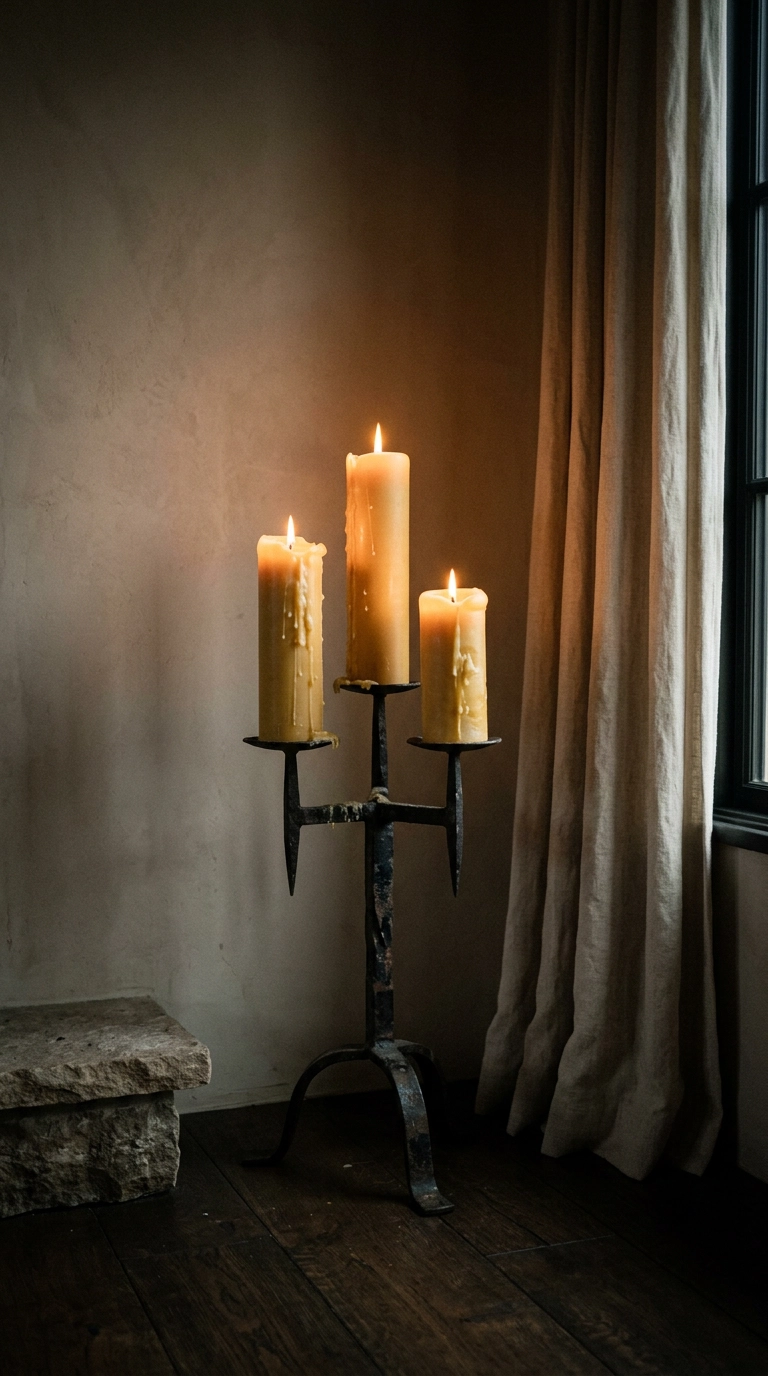
Nothing sells this look faster or cheaper than scale of candle. Skip the little jarred ones and buy 3-inch diameter unscented pillars, at least 9 inches tall, in unbleached ivory rather than bright white.
12. One Painted Heraldic Shield as the Whole Art Budget
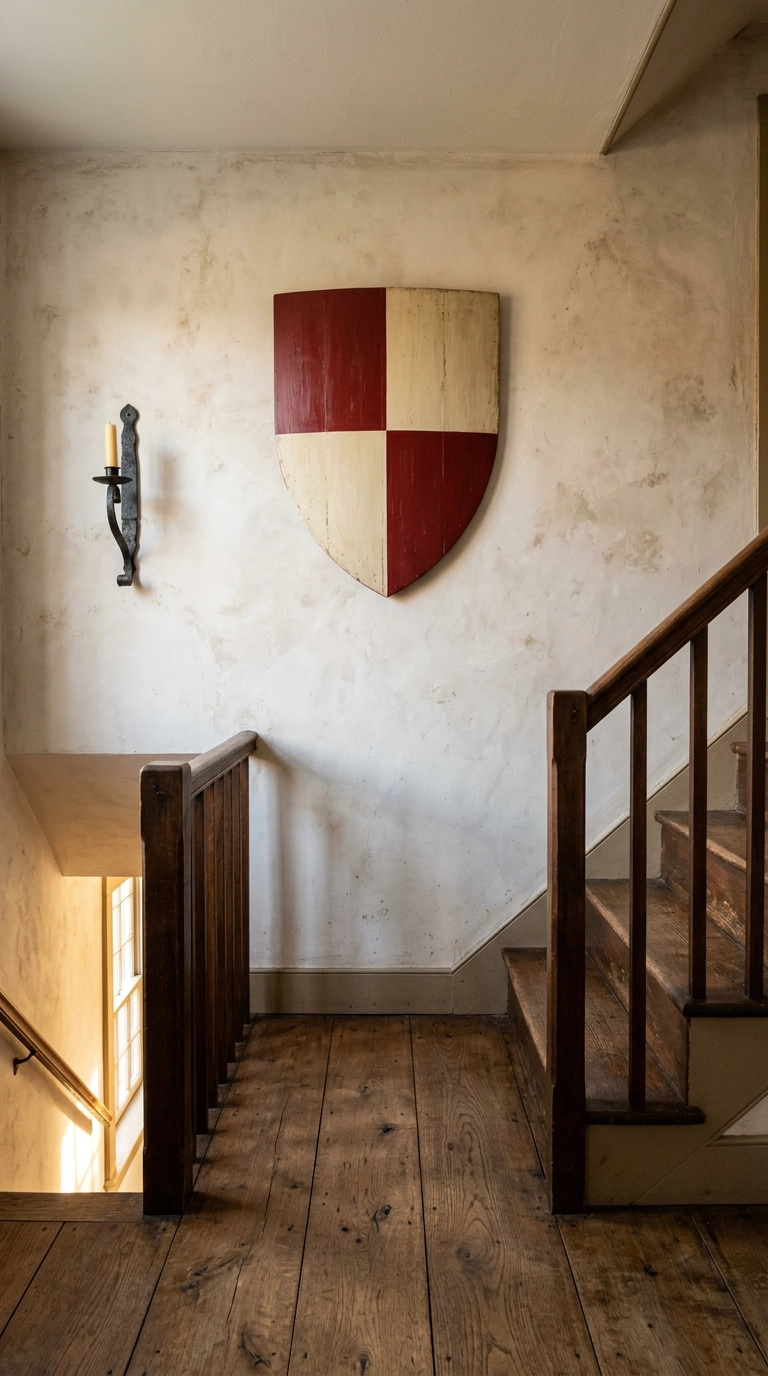
A single shield does what a gallery wall cannot: it gives you one bold graphic shape in a room built entirely from soft mottled texture. Keep the design simple and geometric, two colors and a clean division, because busy fake coats of arms with scrolls and mottoes are where this tips into theme park.
13. A Gothic Pointed Arch Cut Into a Doorway or Alcove
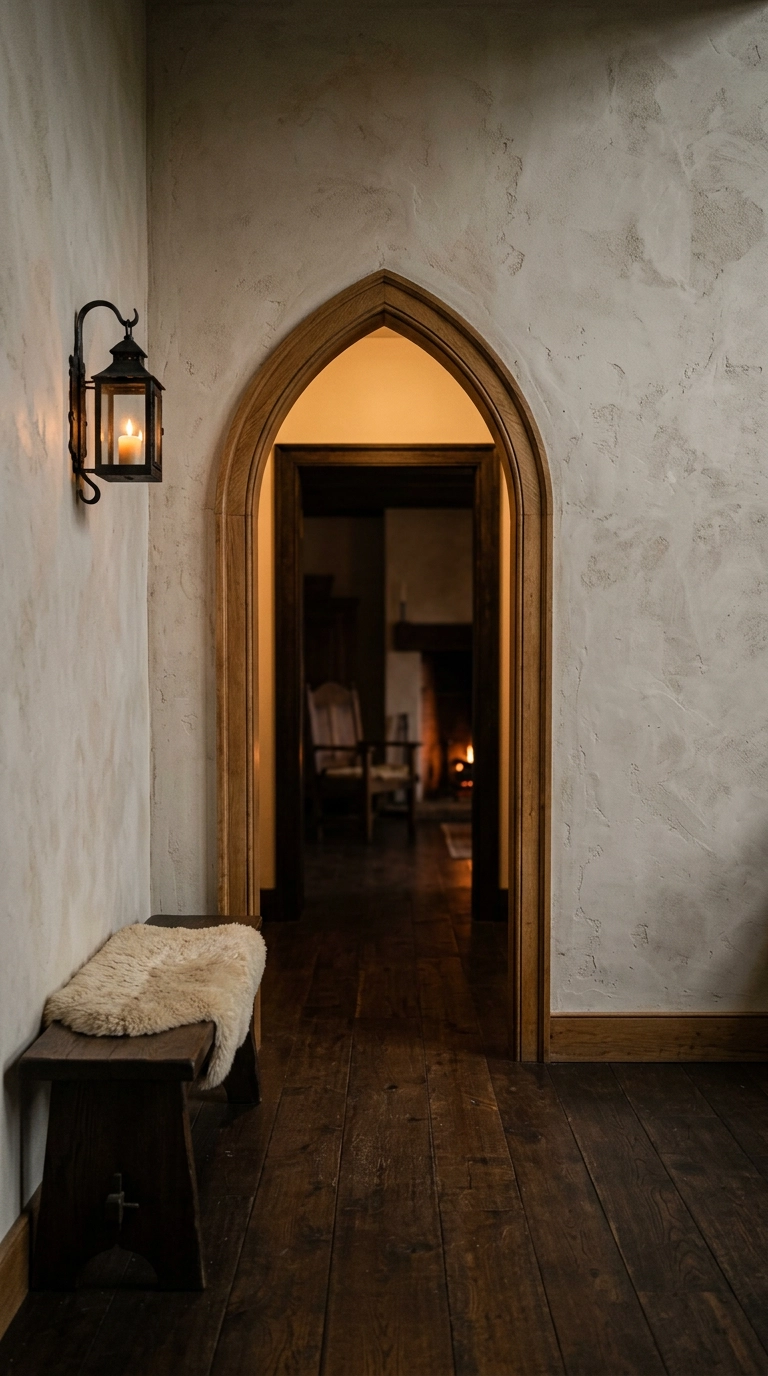
The pointed Gothic arch is the shape people actually recognize, and one is enough. Know the difference before you commit: Romanesque arches are round and squat and read heavy and early, Gothic arches are pointed and tall and pull the eye up, which is the better choice in a room with a low ceiling.
14. Leaded Glass Film on an Ordinary Double-Hung Window
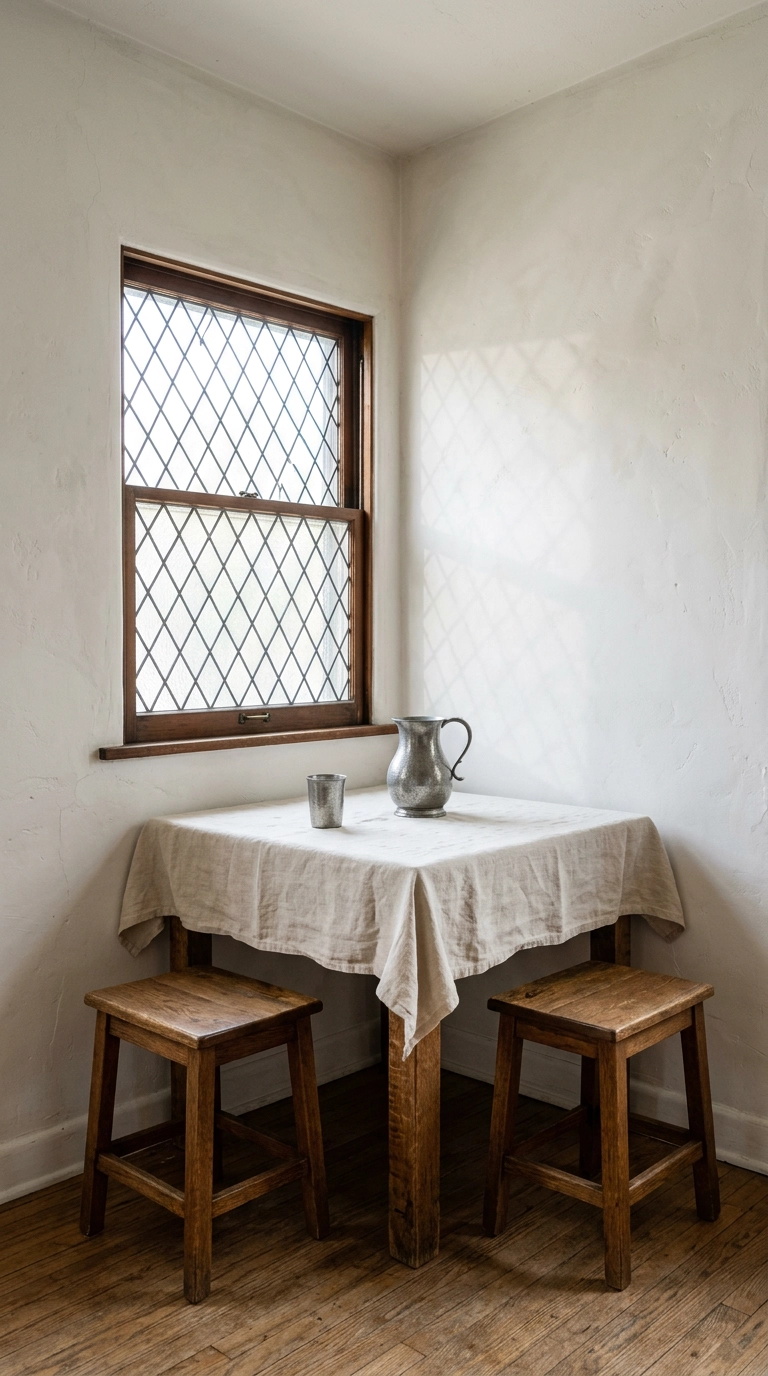
Diamond quarry glazing is one of those details that costs almost nothing and reads instantly period. Static-cling or adhesive leaded glass film in a small diamond lattice goes on a standard double-hung window in under an hour with a spray bottle and a squeegee.
15. An Oak Chest at the Foot of the Bed
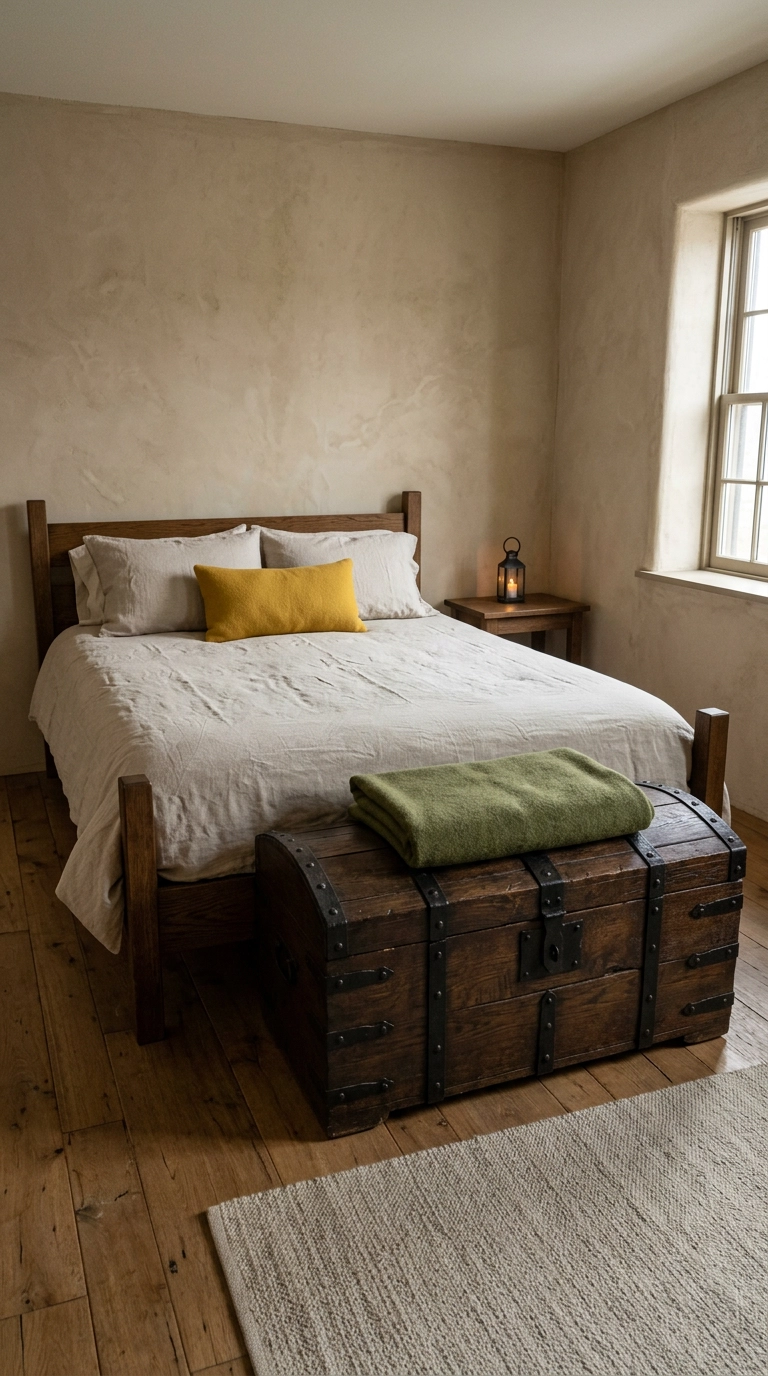
The chest was the medieval multi-tool: seat, table, luggage, and the only lockable storage in the house. At the foot of a bed it does the same three jobs today, and it fixes the specific problem of a bed that floats awkwardly in a room by giving the composition a hard bottom edge.
16. Hanging Banners and Pennants Down a Tall Wall
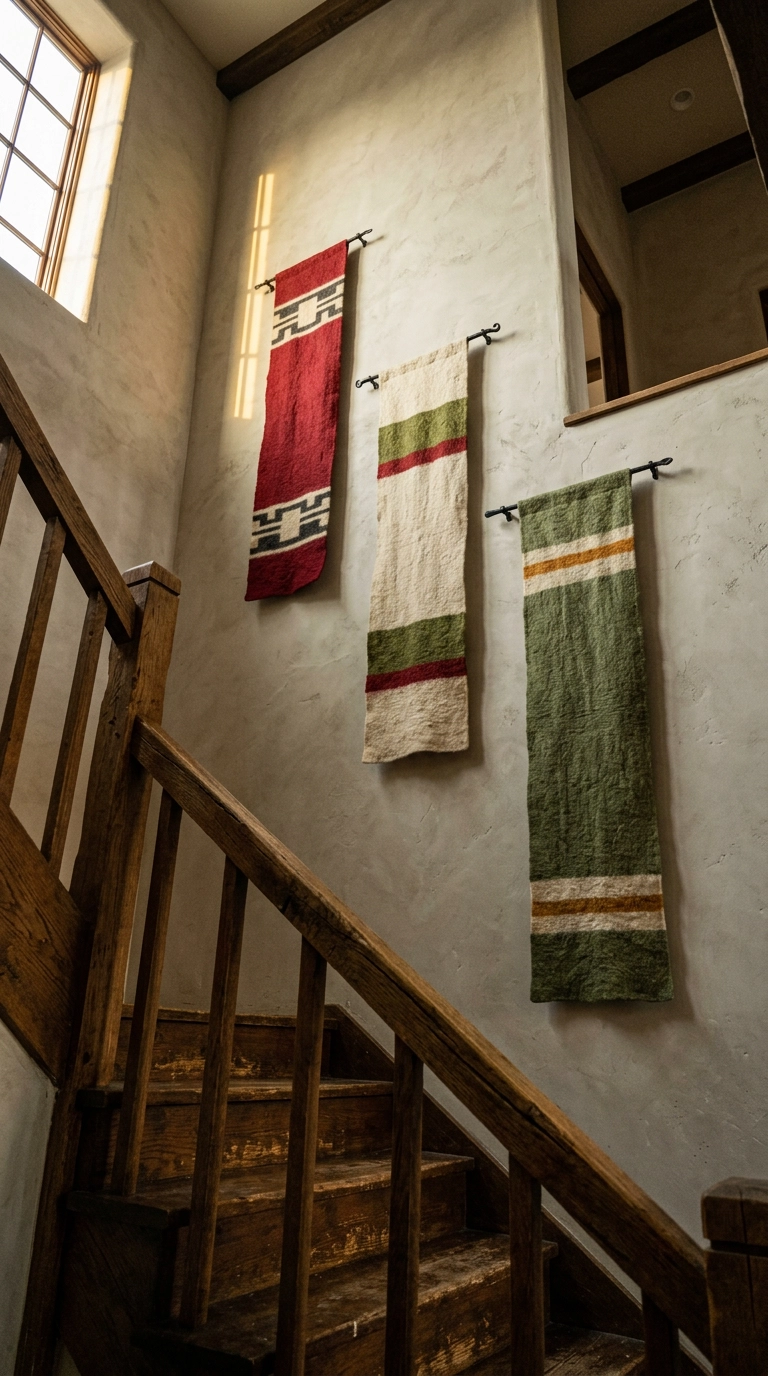
Two-story entries and stairwells defeat most decor because everything sold at retail is sized for an 8-foot wall. Long vertical banners are the fix, and they happen to be exactly right for this look.
17. Quatrefoil and Trefoil Motifs Used Sparingly
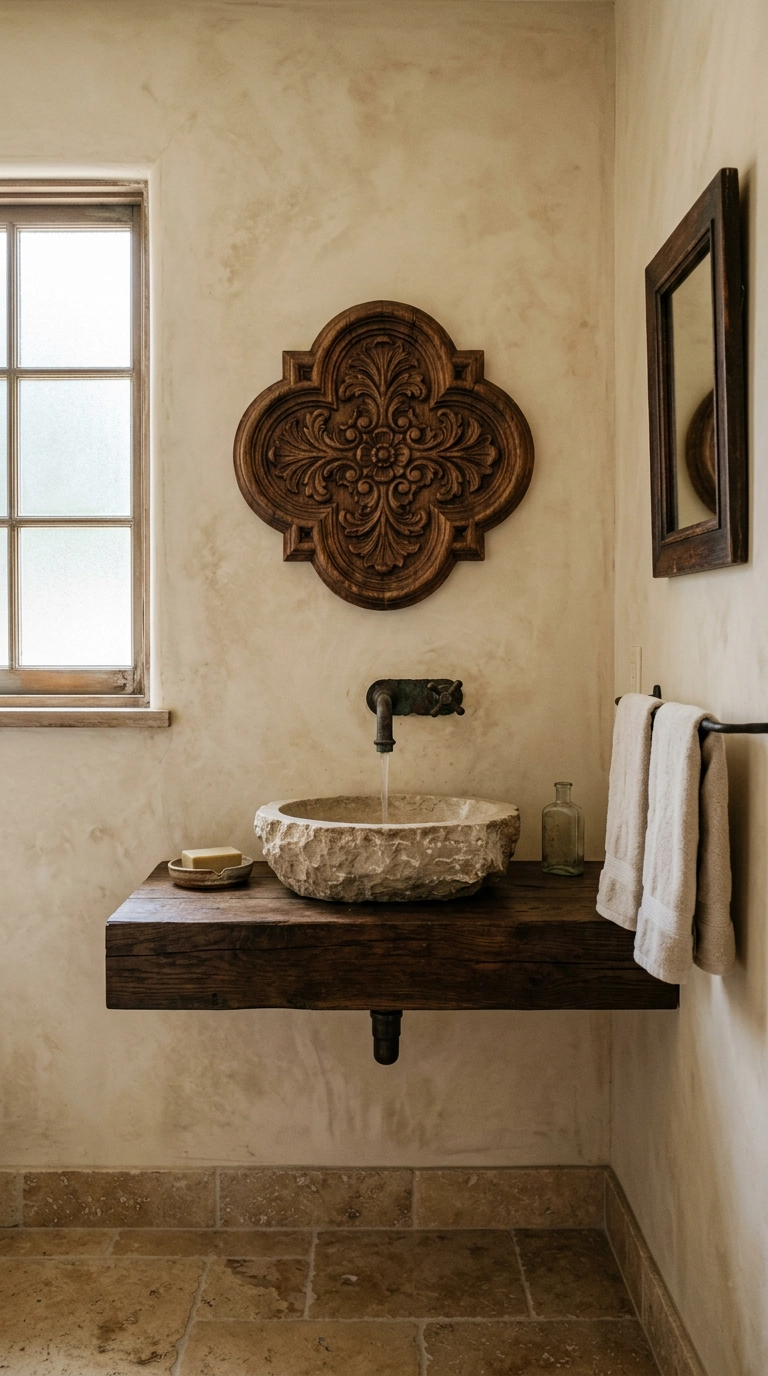
The quatrefoil is the four-lobed clover shape from Gothic tracery, and the trefoil is its three-lobed sibling. They are the correct period motif, which means people overdo them the second they learn the word.
18. Sheepskins and Heavy Wool Over Hard Seating
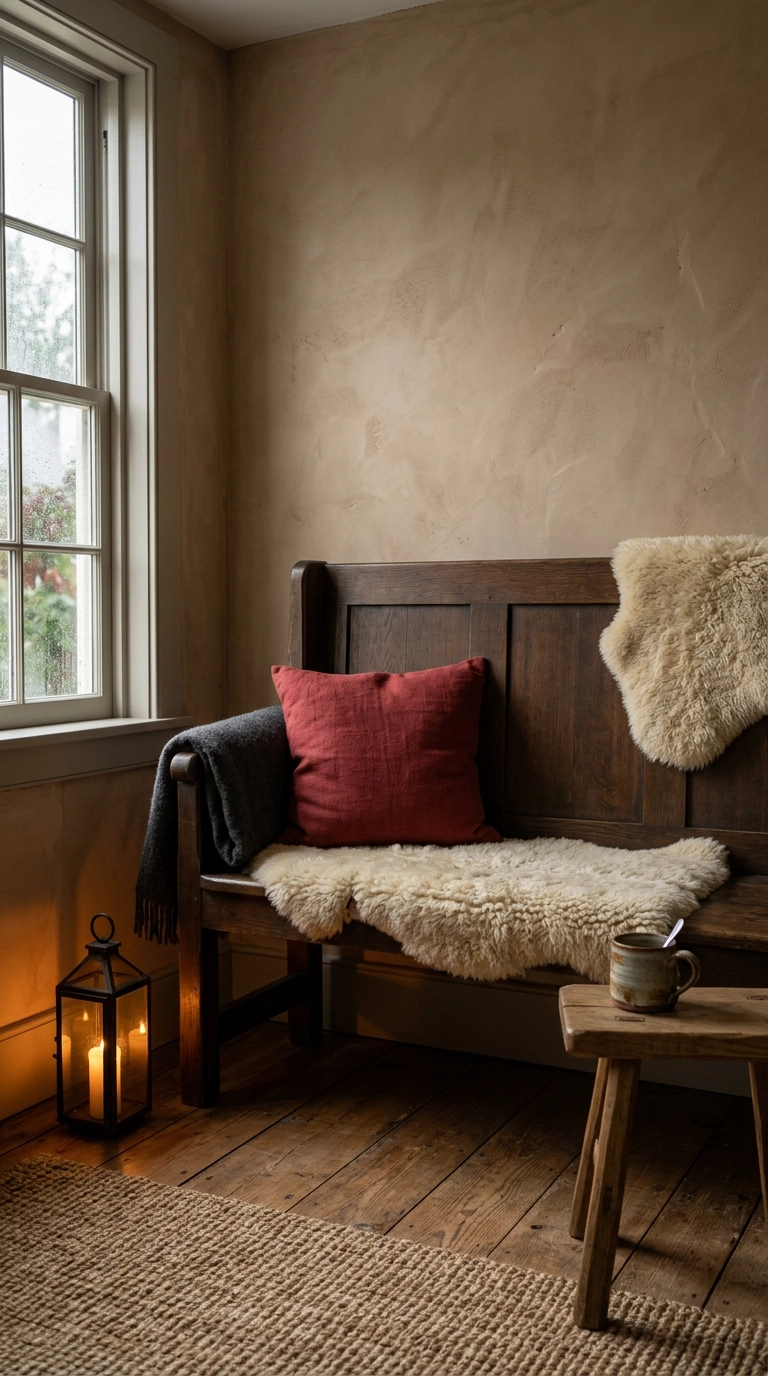
Here is the honest problem with medieval furniture: it is all wood and it is all hard. Every bench, settle, and stool in the period got soft with pelts and folded wool, and skipping that step is why some of these rooms look like a museum rope should be across the doorway.
19. Pewter and Brass Vessels on an Open Plate Rail
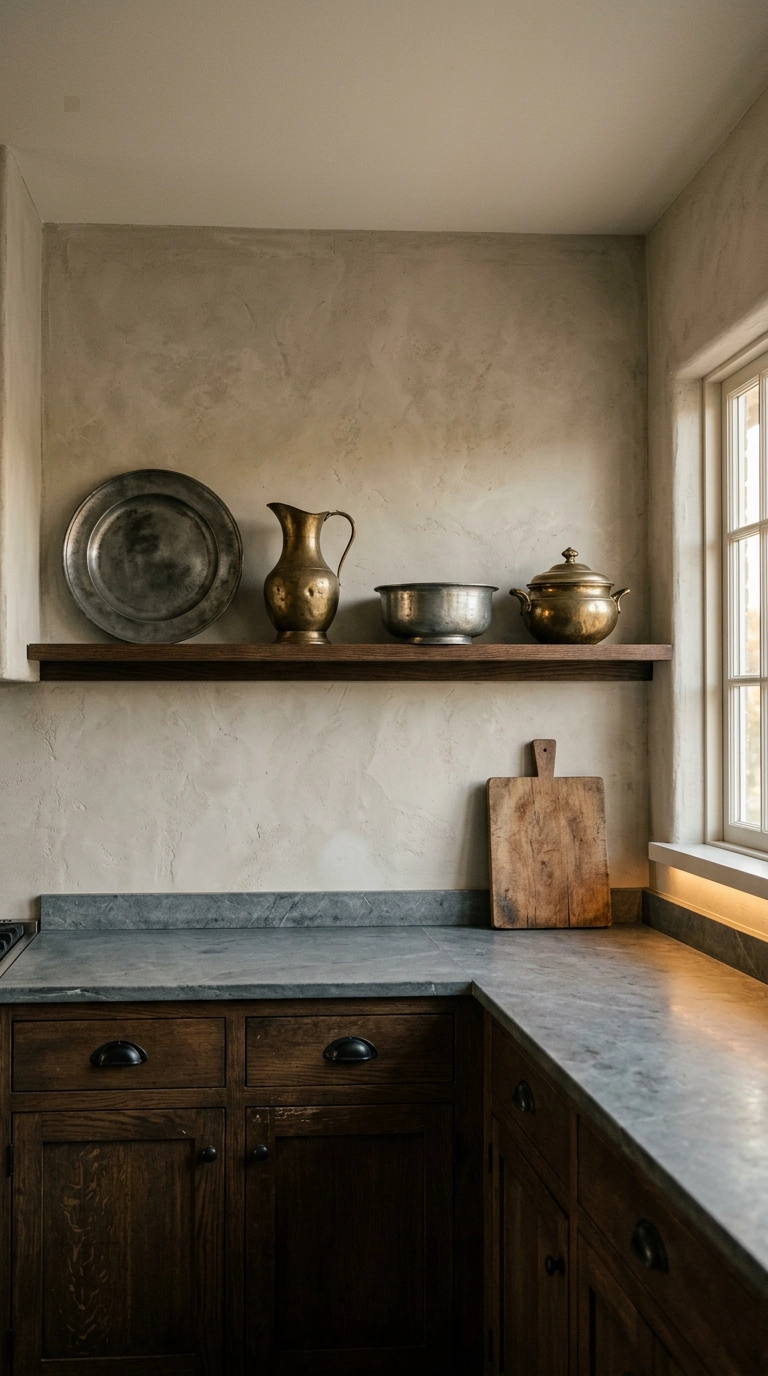
Dull metal is the correct metal here. Pewter, unlacquered brass, and hammered copper all go soft and grey-gold with age, and that low sheen is what separates a medieval kitchen from a farmhouse one full of shiny stainless.
20. Curtain the Bed Instead of Curtaining the Window
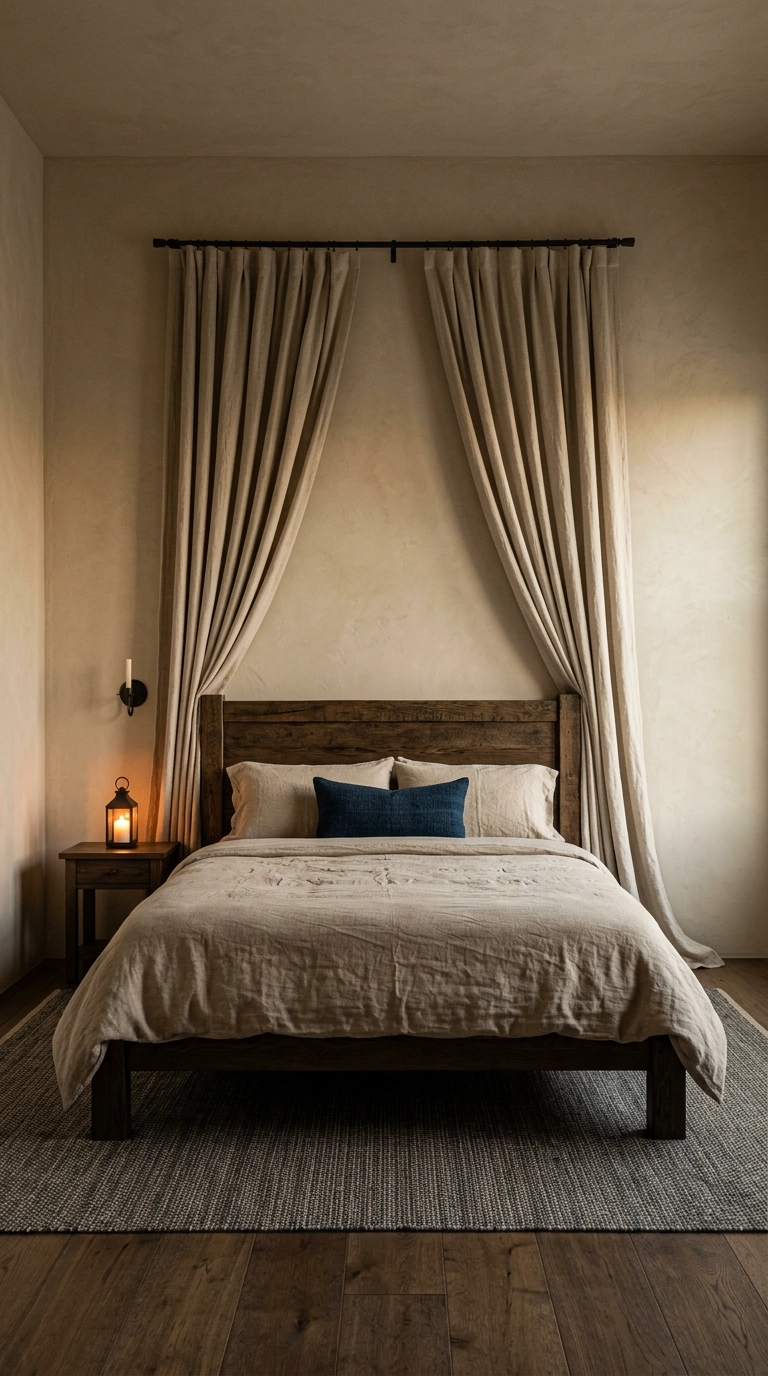
Curtained beds were about heat and privacy in a house where several people slept in one room, and the reason to do it now is that fabric overhead makes a large bedroom feel like a room within a room. This is the most atmospheric idea on the list and easier than a four-poster.
21. Stone-Look Flooring Where the House Gets Wet
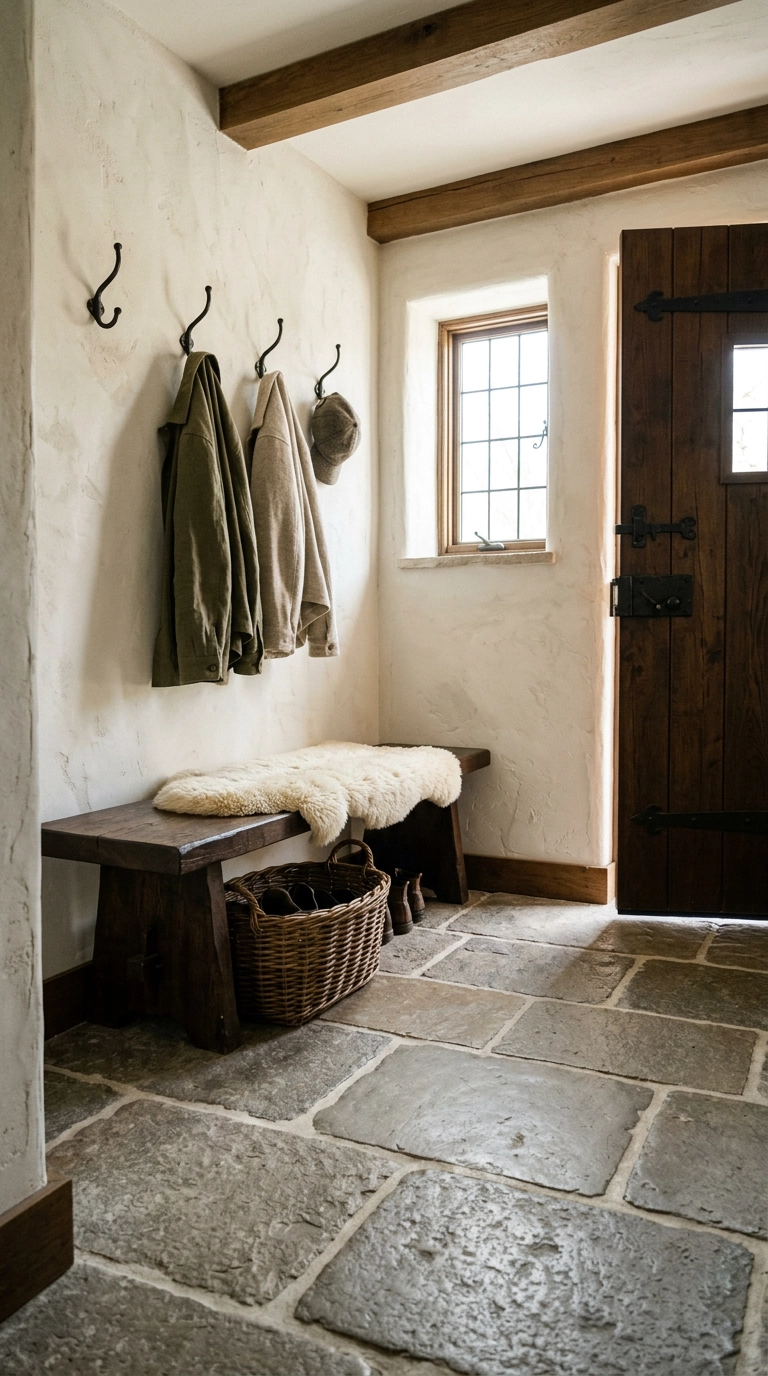
Stone underfoot is doing more work than you think, because it is the material that tells your eye the building is old and heavy. You do not need real flagstone. Large-format porcelain and modern luxury vinyl in an irregular slate or limestone pattern have gotten genuinely convincing.
22. A Pair of Iron Candle Sconces Flanking Something
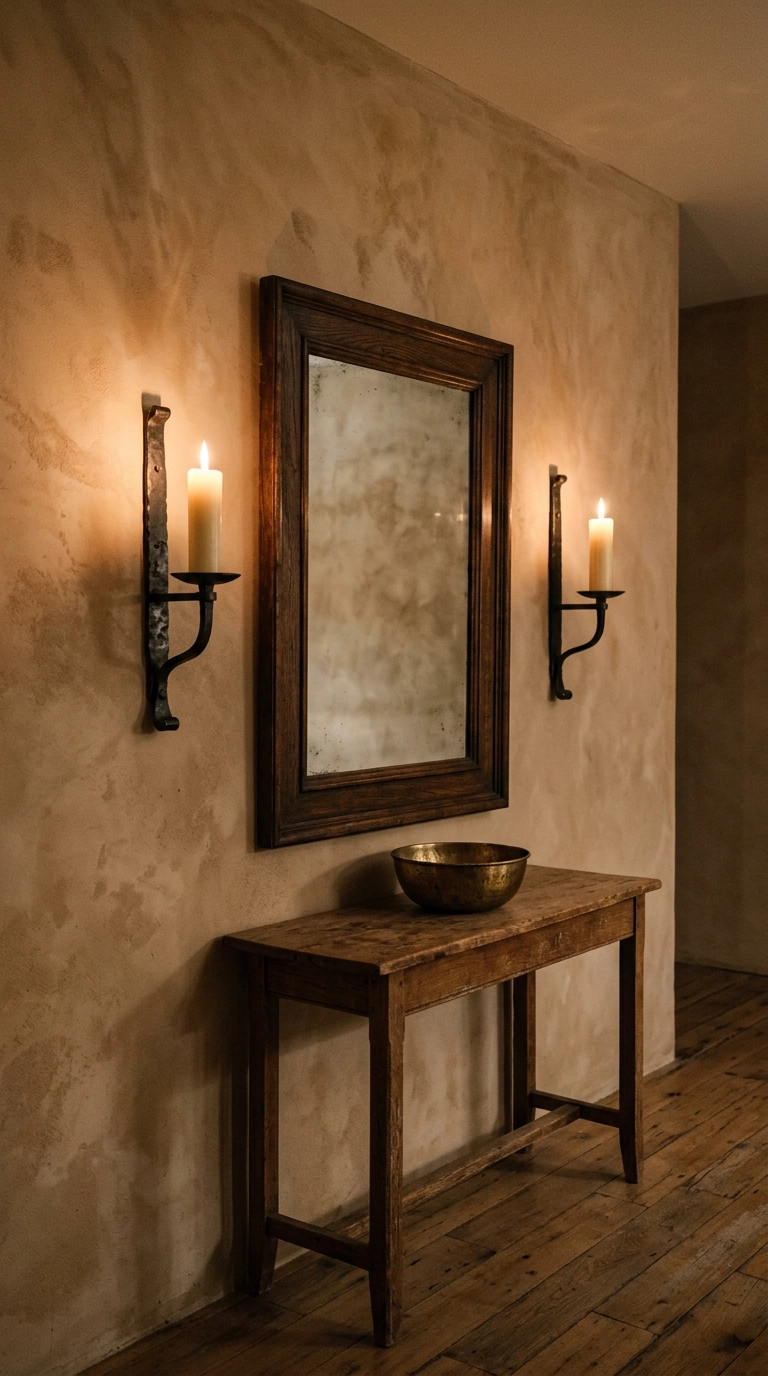
Symmetry was the medieval move for anything important, so a matched pair of iron sconces on either side of a mirror, a doorway, or the head of a bed instantly makes that thing read as the focal point. It is a formal trick, and it works precisely because everything else in this style is rough and irregular.
23. A Scriptorium Corner: Window Seat, Slanted Oak Desk, One Lamp
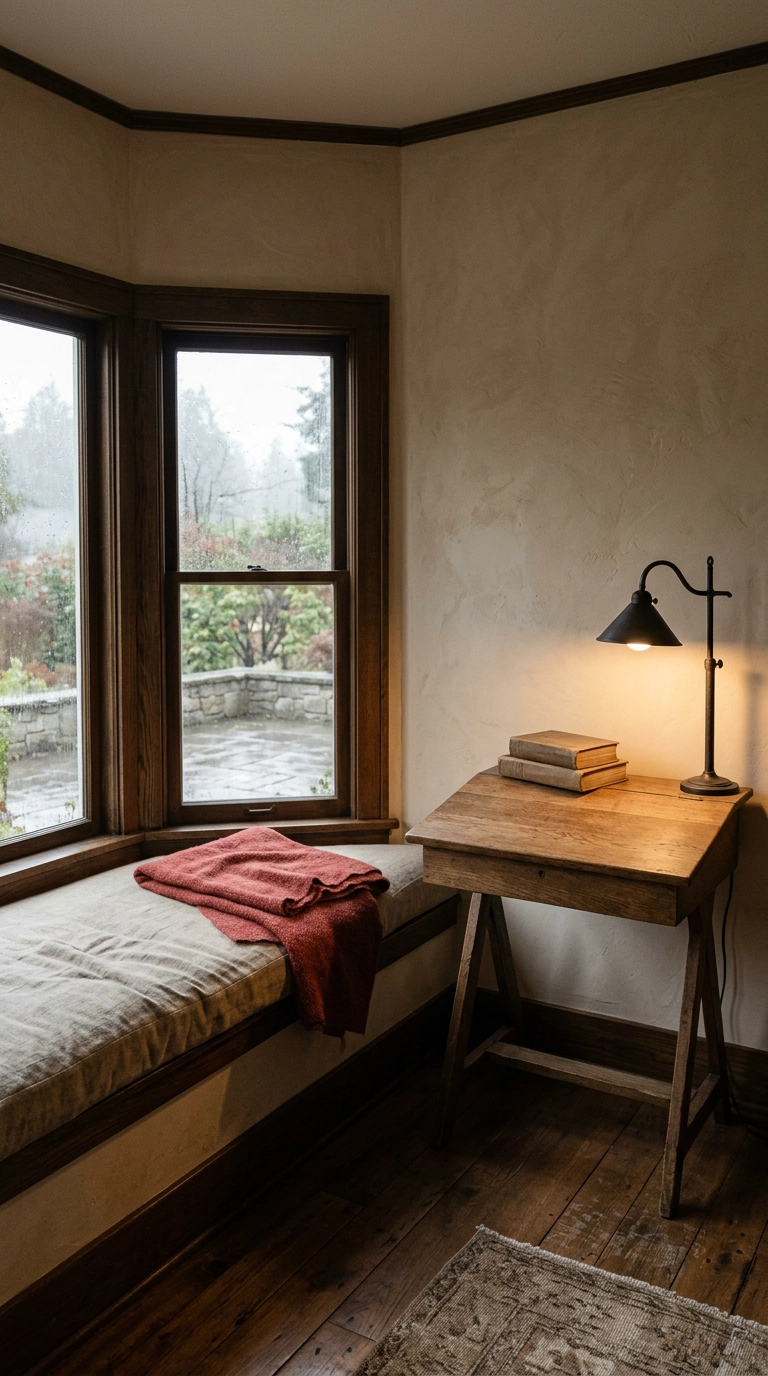
I saved my favorite for last. A monastery scriptorium was one seat, one slanted writing surface, one light source, and cold stone everywhere else, and stripped of the cold stone that is a genuinely beautiful way to use the dead corner or bay window most American living rooms have.
Bringing the Old World Home
What I love about medieval decor is how forgiving it is. Every one of these rooms was originally built by hand out of whatever was local, which means uneven plaster, mismatched oak, and a slightly crooked iron hinge are not mistakes to hide, they are the entire aesthetic. I have never worked in another style where “I did that myself and it is a bit wonky” is a compliment.
If you are starting today, start with the three cheap ones: limewash one wall, swap your bulbs to 2200K, and put a real sheepskin on the hardest chair in the house. Those three cost less than a weekend of takeout and they will tell you fast whether you want to go further into linenfold panelling and a trestle table. The bigger cultural moment is helping too. Dark academia refused to die, the medievalcore corner of Pinterest keeps growing, and Farrow & Ball shades like Hague Blue and Preference Red have made deep dye-toned walls feel current rather than costume. Even the fashion houses have been mining this, and you can trace a straight line from millefleurs tapestry motifs to half the moody wallpaper being printed right now.
Mostly I want you to ignore the theme-park version of this. Skip the fake portcullis and the plastic goblets, buy one honest oak chest and one honest iron sconce, and let the rest of your normal life happen around them. That is how a house gets a soul instead of a set dressing. If you want more looks like these, along with the sources I actually buy from, come sign up for my weekly newsletter and I will send my favorite finds straight to your inbox every Friday.


