22+ Clever TV Over Fireplace Decor Ideas that Look Designed, Not Awkward in 2026

I’ll be honest with you – for years I fought clients on this one, because a TV over a fireplace is usually mounted too high and the room ends up looking like a sports bar with a chimney. But after redoing my own living room three times (yes, three), I finally cracked it: the trick isn’t hiding the television, it’s giving the fireplace and the screen one shared frame so your eye reads them as a single built feature instead of two things stacked in a fight.
TV Over Fireplace Decor Ideas
1. Recess the TV Into a Drywall Niche So It Sits Flush
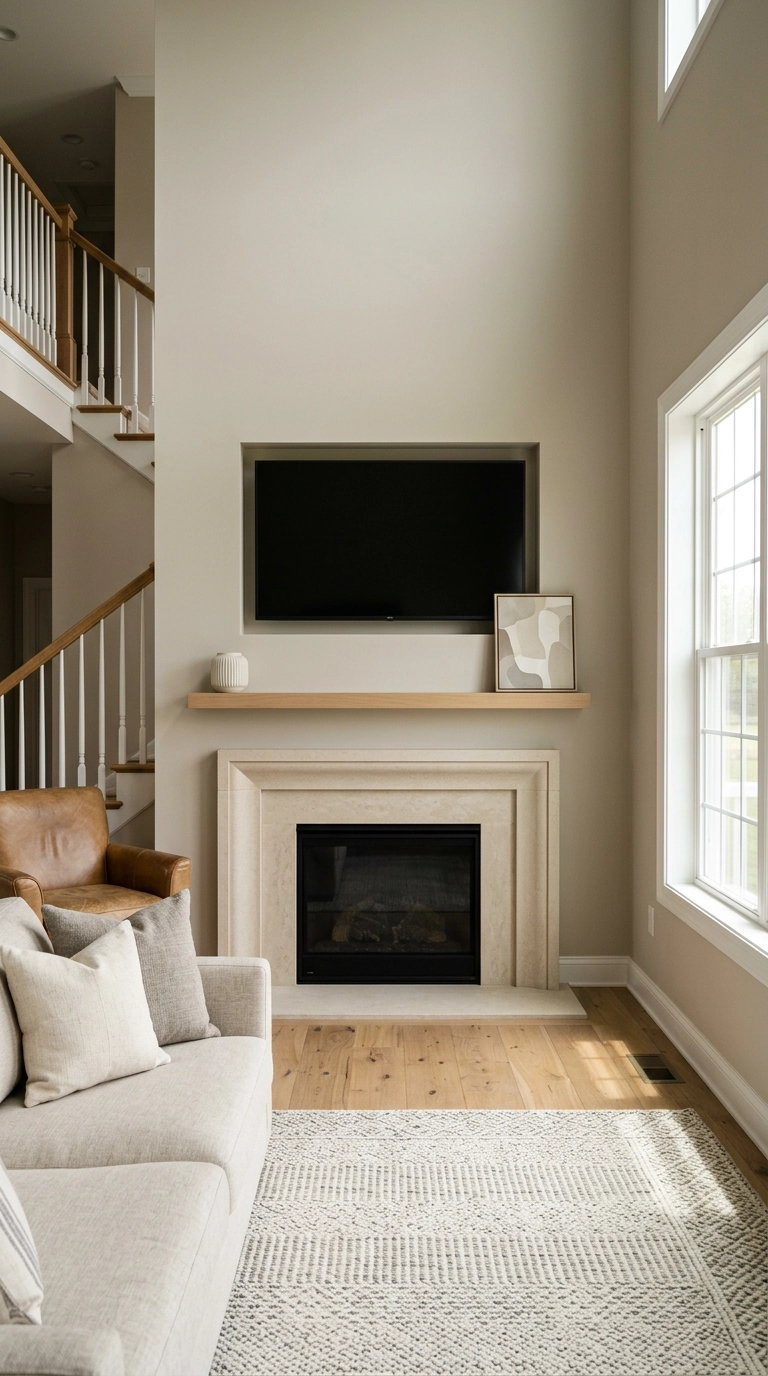
This is the single fix that makes everything else look intentional. Framing out a 3 to 4 inch deep niche in the drywall above the firebox lets the screen sit flush instead of hovering off the wall like a bulletin board.
2. Choose an Art-Mode Frame TV and Let It Read as a Painting
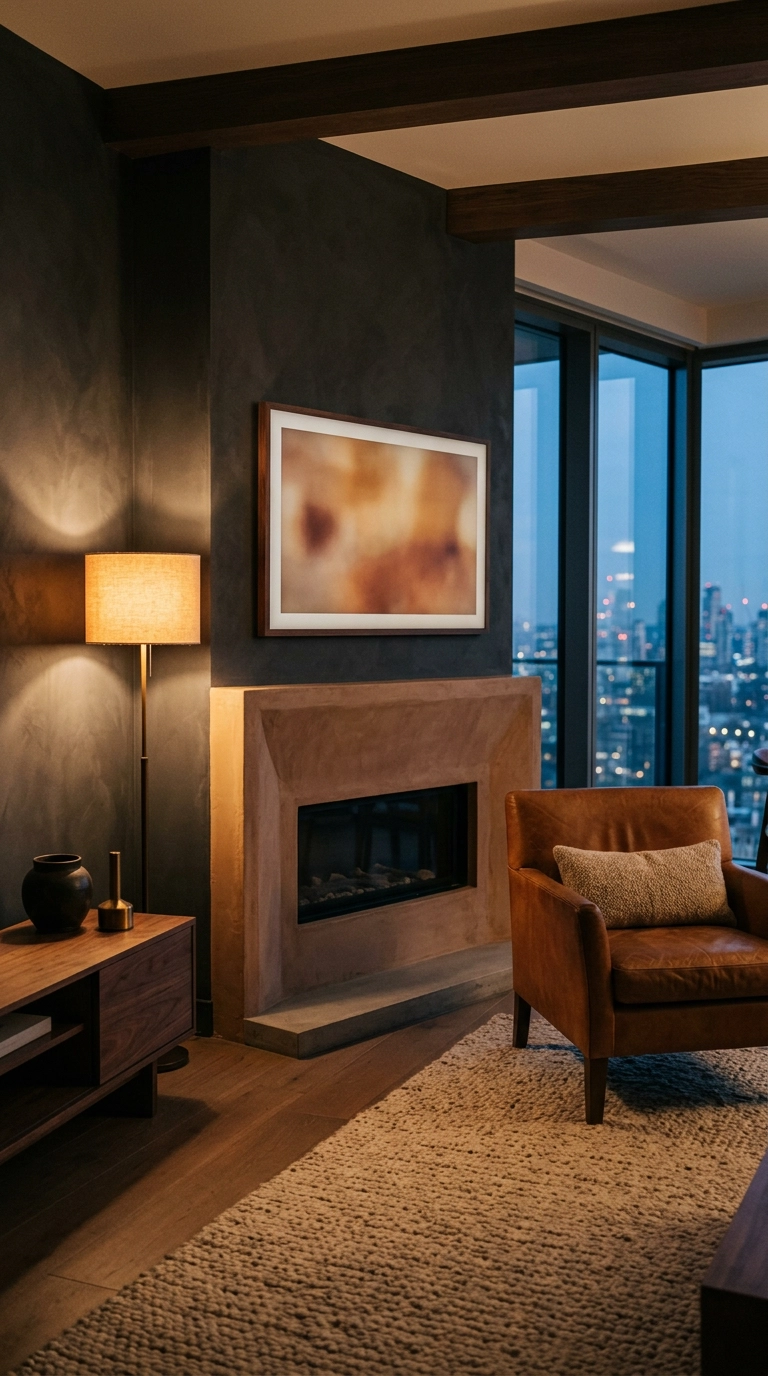
An art-mode television with a real wood bezel is the laziest high-impact move in this entire article, because you’re buying your way out of the problem. Set it to a single large-scale abstract in colors already in your room rather than cycling a gallery.
3. Lower the Firebox Instead of Raising the TV
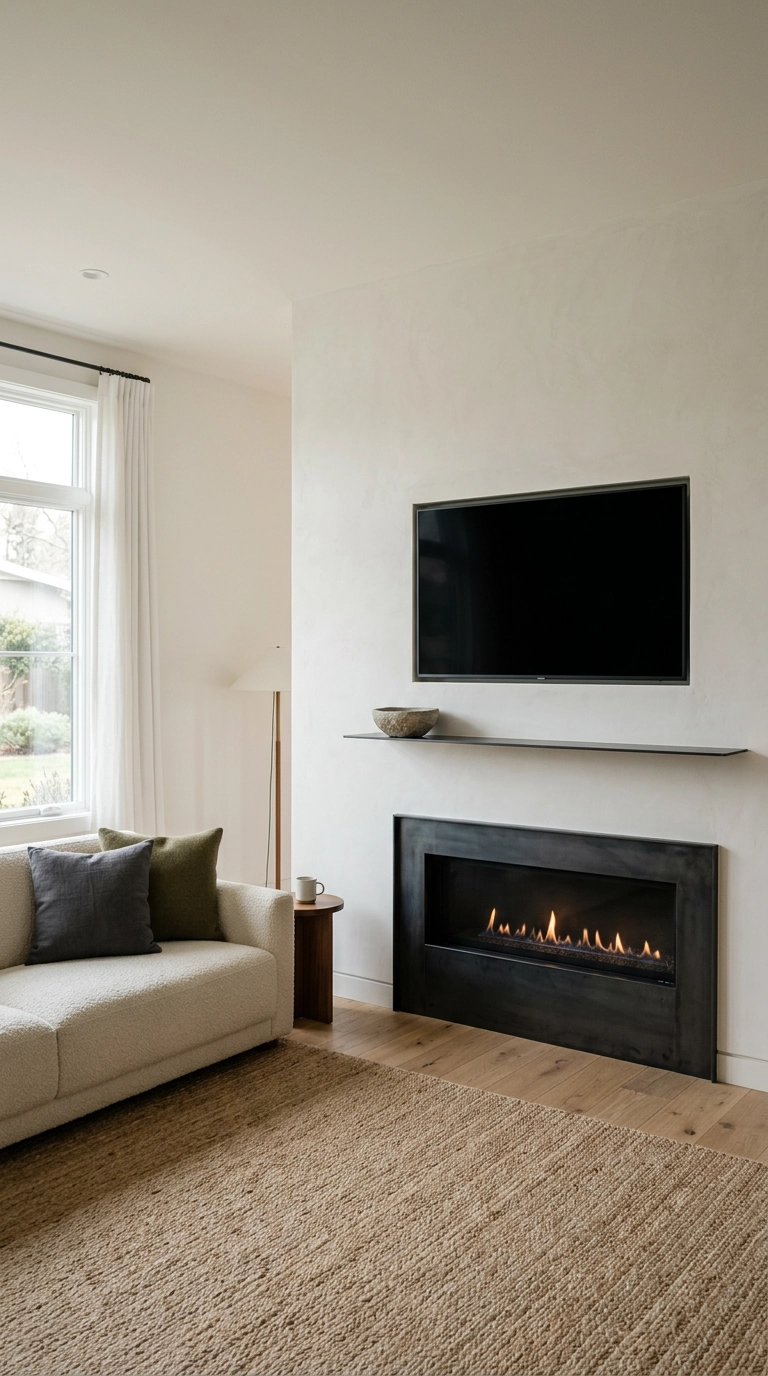
Here’s the honesty part nobody puts in these roundups: most TVs over fireplaces are mounted 6 to 12 inches too high, and your neck pays for it every night. The center of the screen wants to land roughly 42 to 48 inches off the floor for a seated viewer.
4. Run Floor-to-Ceiling Stacked Stone Behind Both
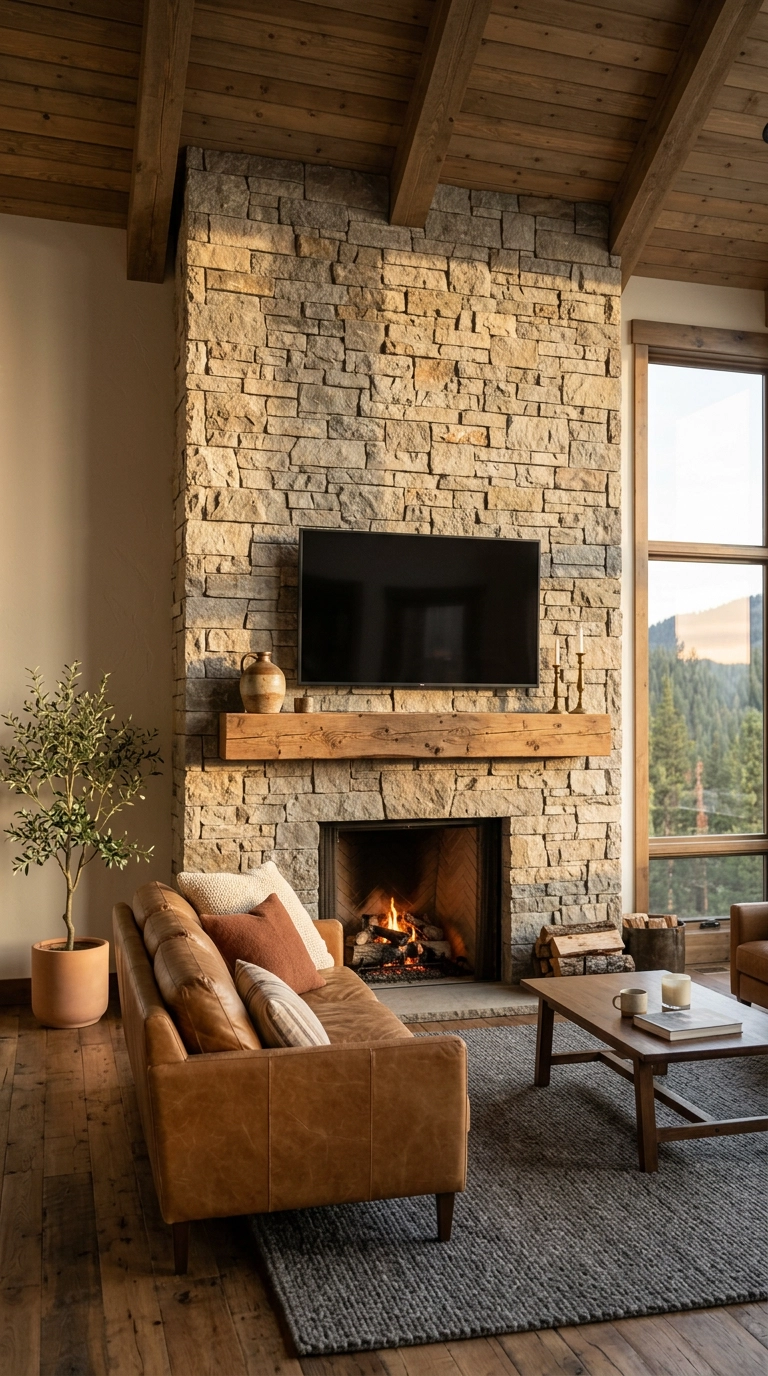
When the whole chimney breast is one continuous material, the television stops reading as an add-on and starts reading as inset hardware. Stone does this better than anything because the texture visually swallows the black rectangle.
5. Limewash the Brick to Soften a Loud Red Surround
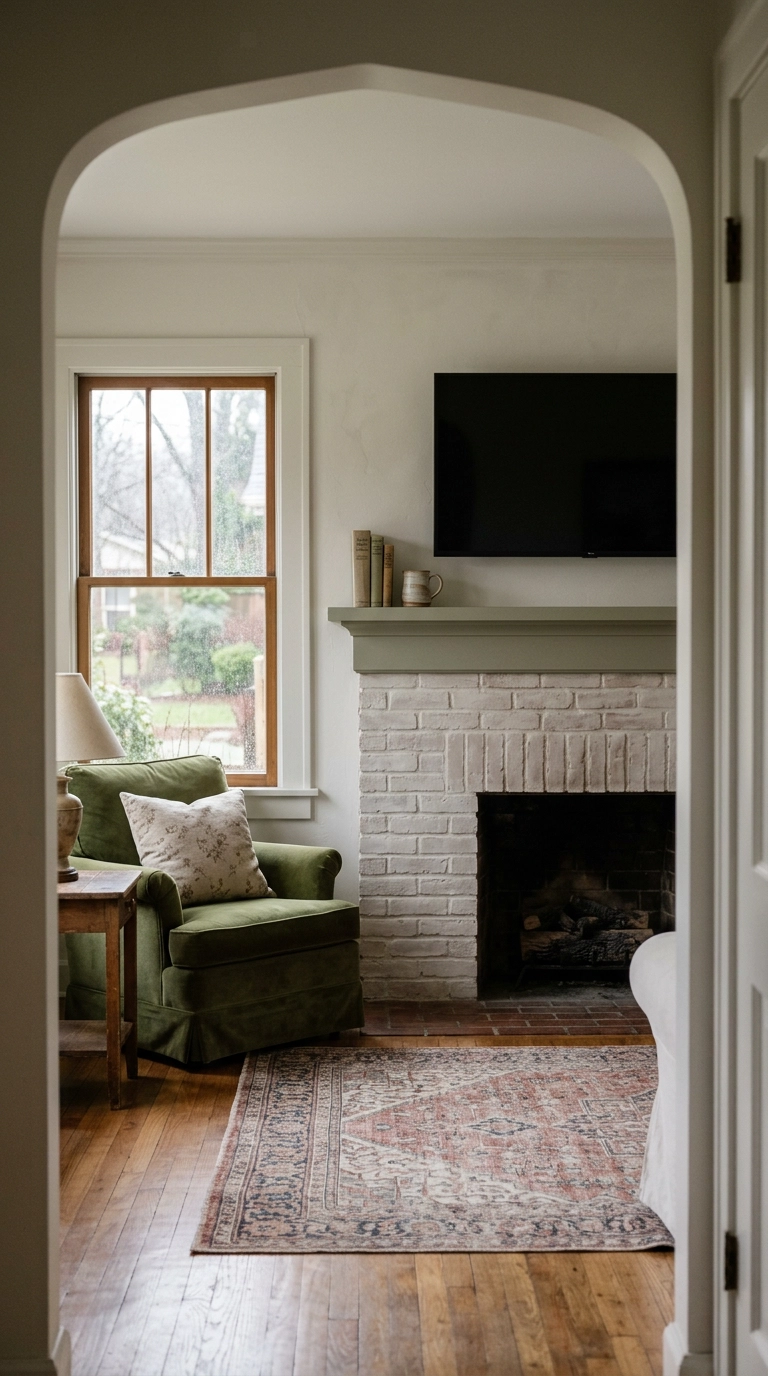
An orange-red 1970s brick fireplace fights a black screen for attention and always loses gracelessly. A limewash slurry calms the color down to a soft putty while leaving all the texture, which is exactly what you want behind a TV.
6. Flank It With Asymmetric Storage Instead of Matching Cabinets
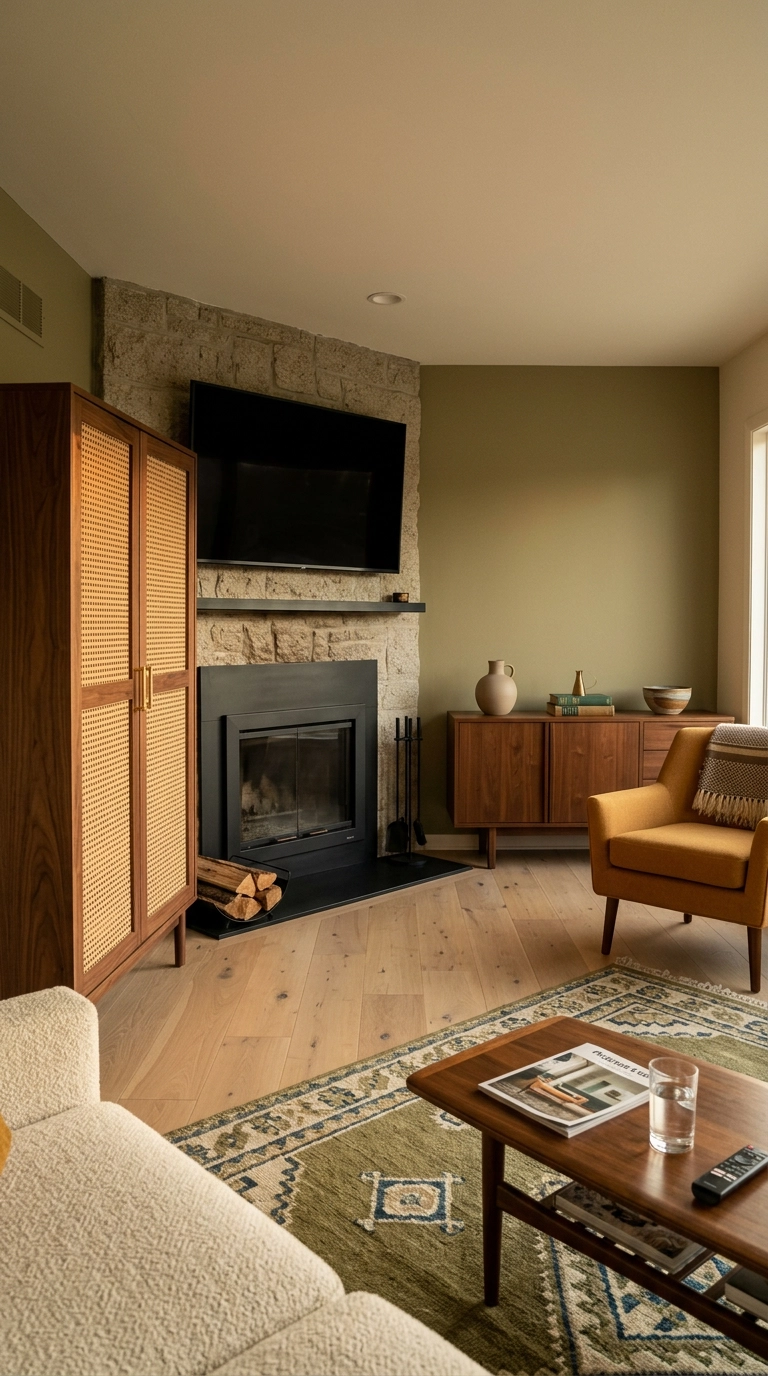
Perfectly symmetrical built-ins around a TV wall can look like a hotel lobby. Going tall on one side and low on the other creates a diagonal sightline, meaning your eye travels across the wall instead of ricocheting between two twins.
7. Color Drench the Chimney Breast So the Screen Disappears
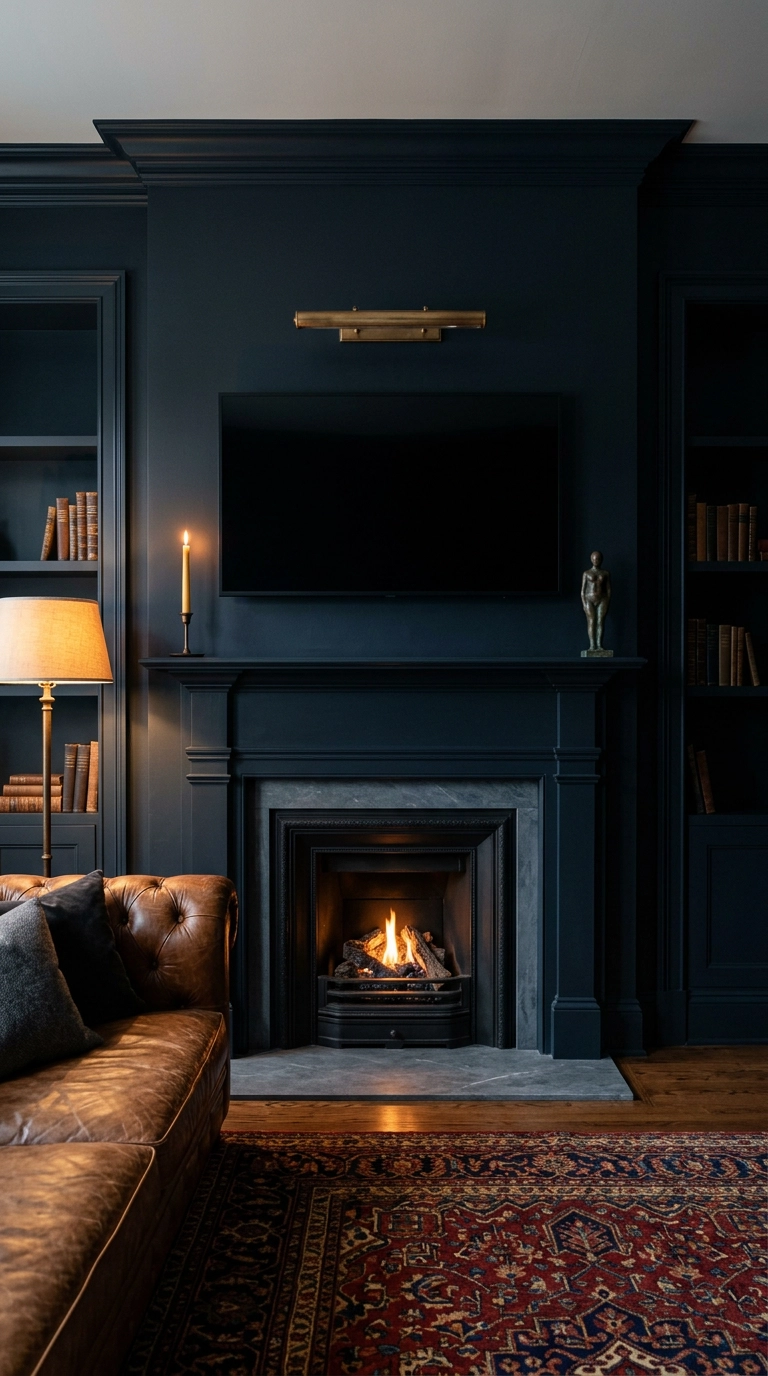
This is my favorite trick and the cheapest one on the list. Paint the entire chimney breast, mantel and trim included, in one deep matte shade like Farrow & Ball Railings or Benjamin Moore Soot, and the black screen simply stops registering.
8. Add a Chunky Floating White Oak Mantel as a Visual Break
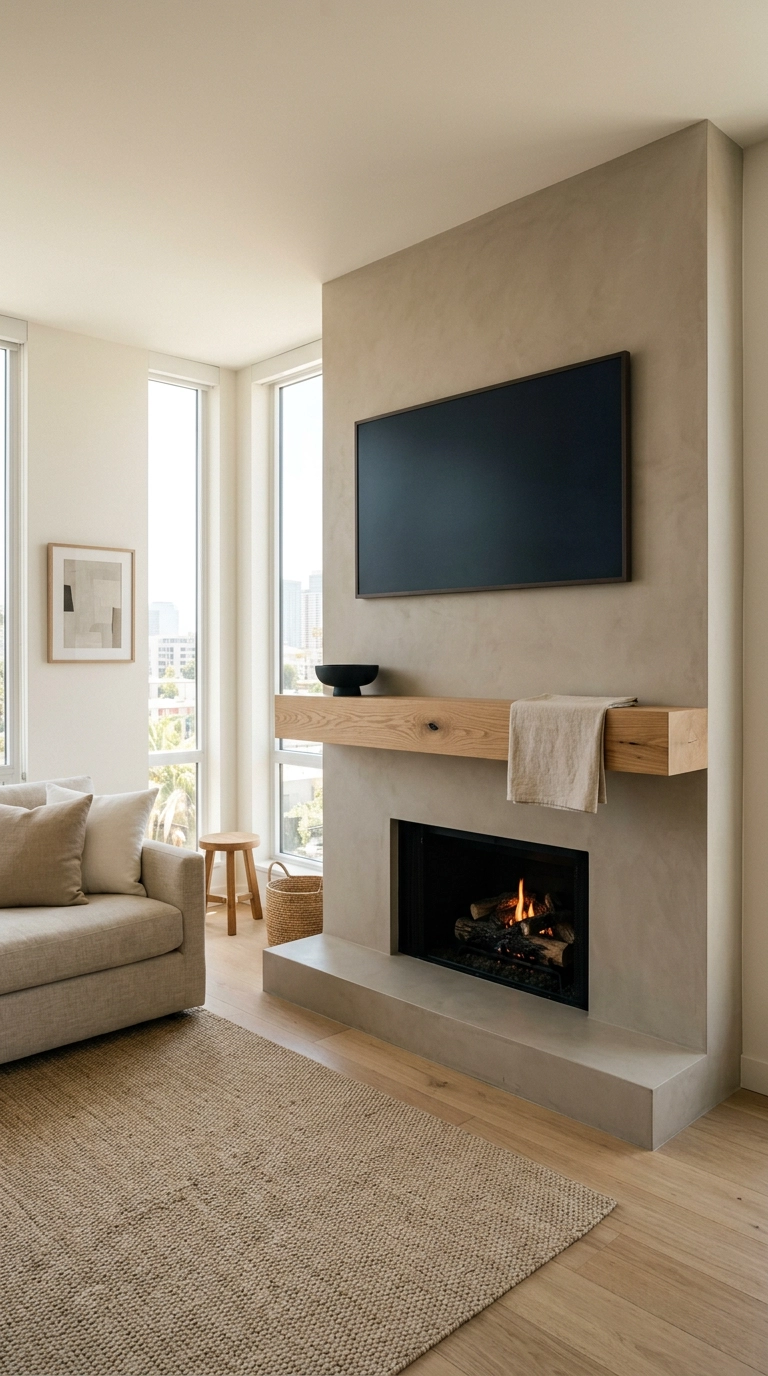
A substantial floating mantel gives the eye a horizontal ledge to land on, which breaks the awkward vertical stack of firebox plus screen. Go thicker than feels natural, 3 to 4 inches minimum, or it reads flimsy under a 65 inch TV.
9. Hide Every Cable Inside the Wall With an In-Wall Kit
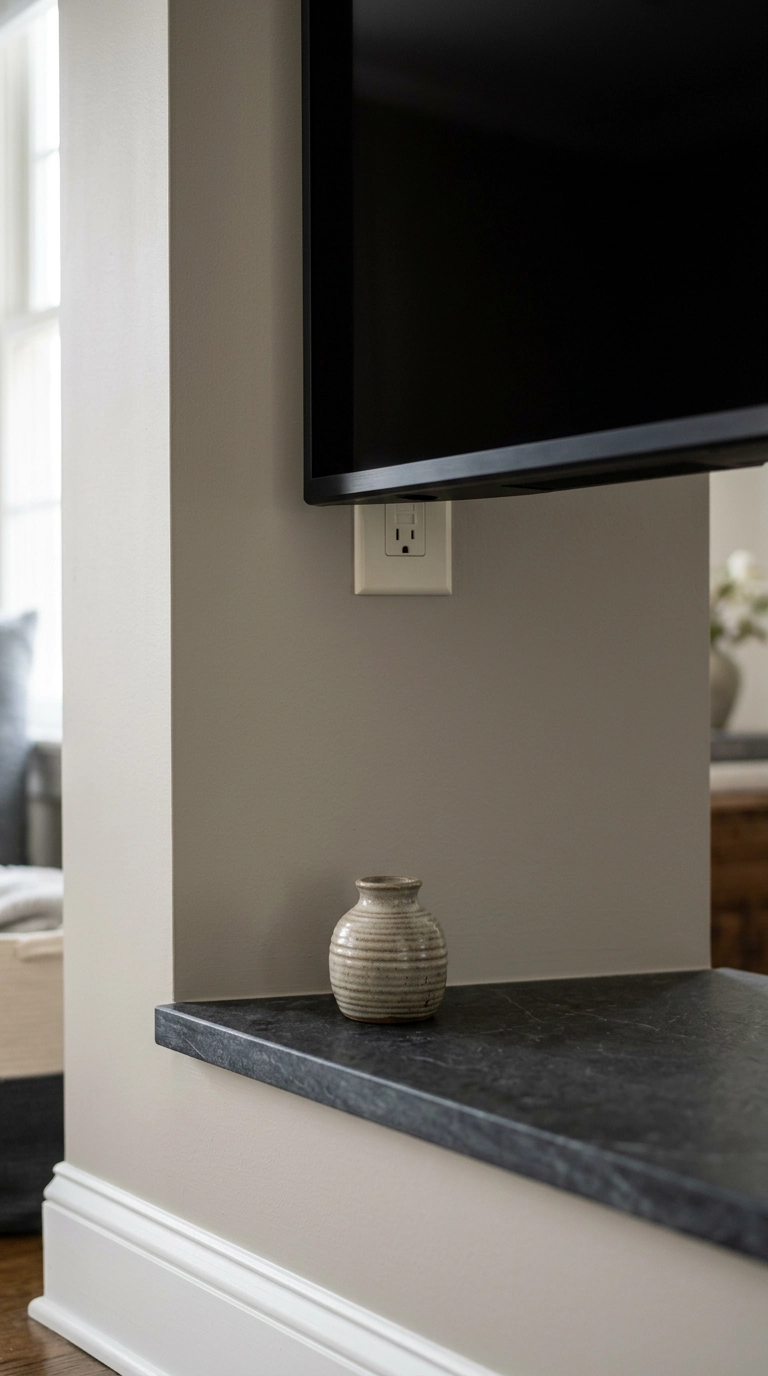
Nothing undoes good styling faster than a black HDMI cable dangling down a mantel. A recessed in-wall power kit plus a low-voltage brush plate runs the cords behind the drywall for well under a hundred dollars in parts.
10. Build Shiplap Up the Full Chimney Wall in a Soft Greige
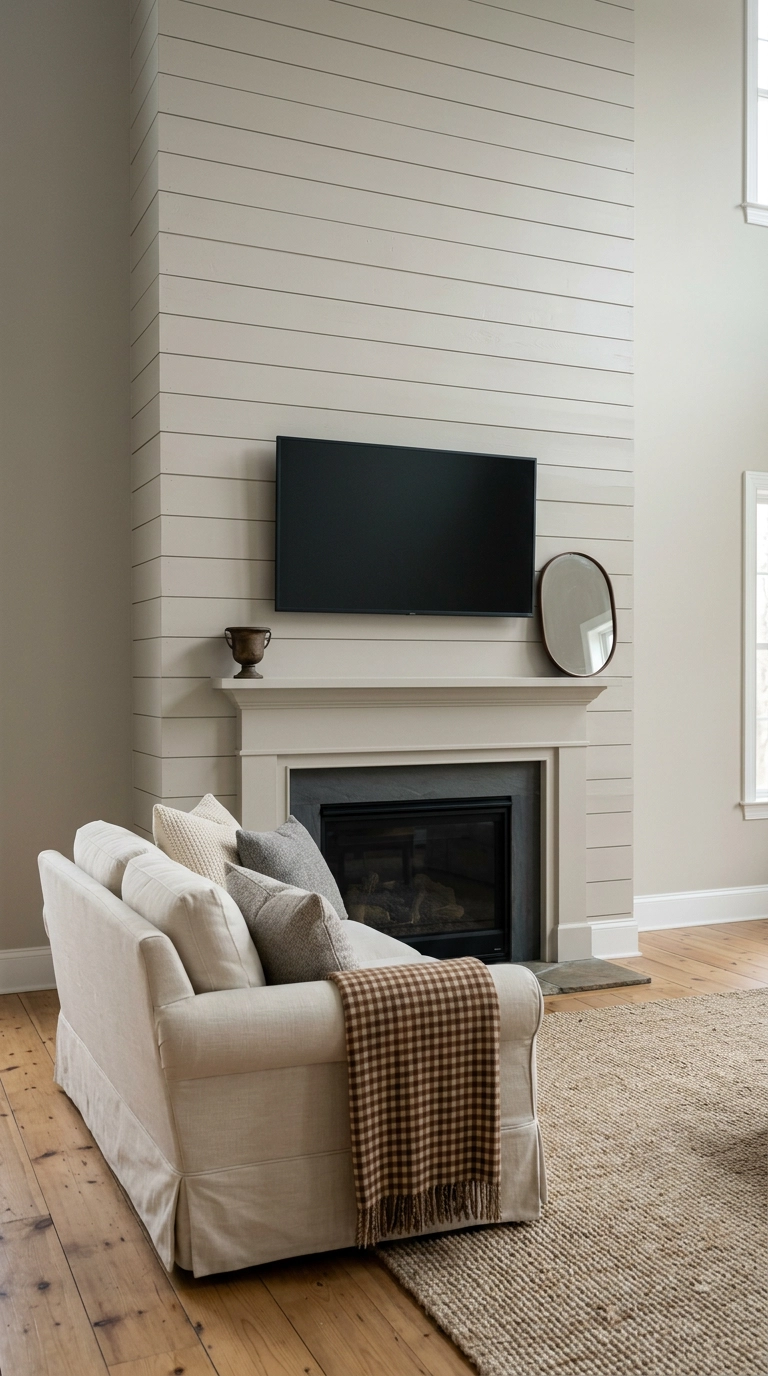
Horizontal planking pulls your eye sideways, which quietly counteracts how tall a stacked fireplace and TV arrangement feels. Painting the shiplap the same shade as the mantel keeps it from turning into a farmhouse cliche.
11. Frame the Screen With Vertical White Oak Slats
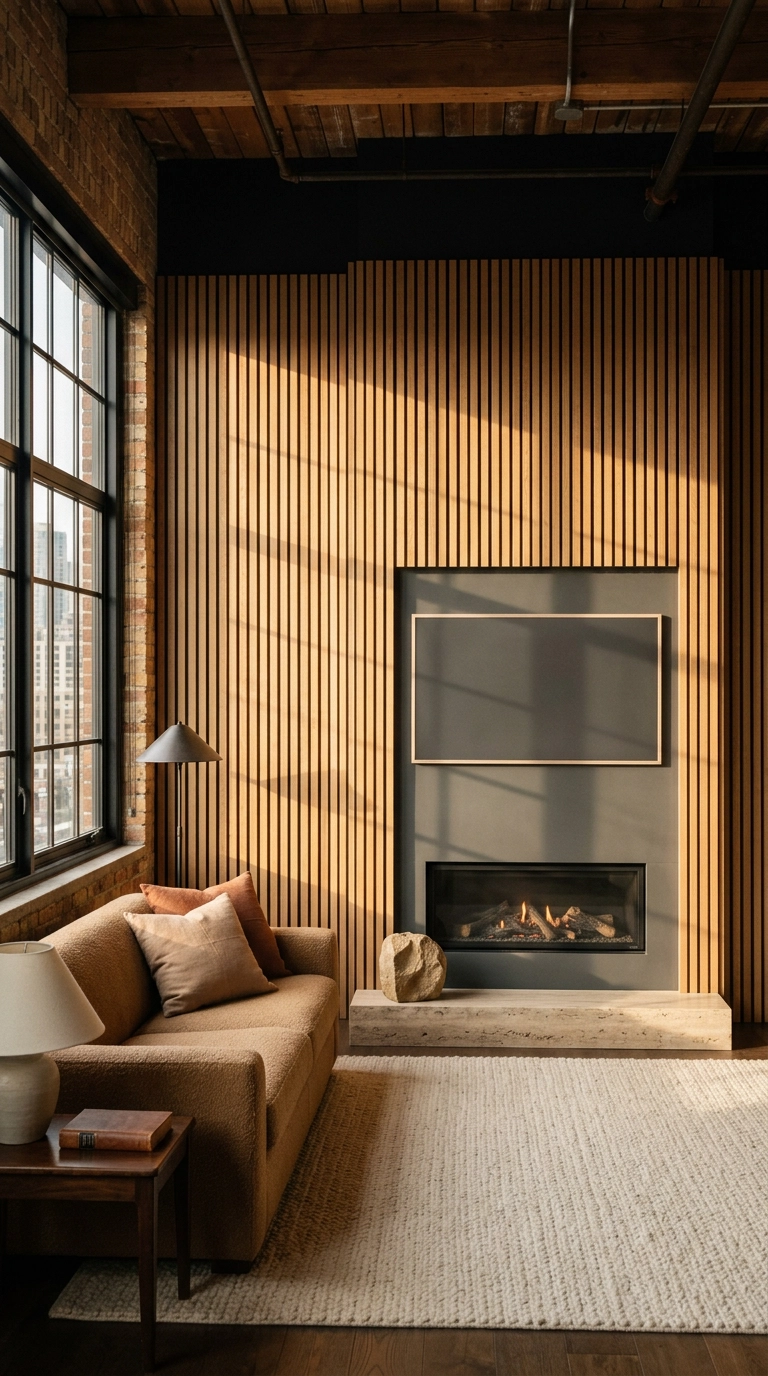
Vertical slats do something sneaky: the repeating shadow lines give the eye so much rhythm that a black rectangle stops being the loudest thing on the wall. It also makes an 8 foot ceiling feel taller.
12. Use a Tilting or Pull-Down Mount If the TV Must Sit High
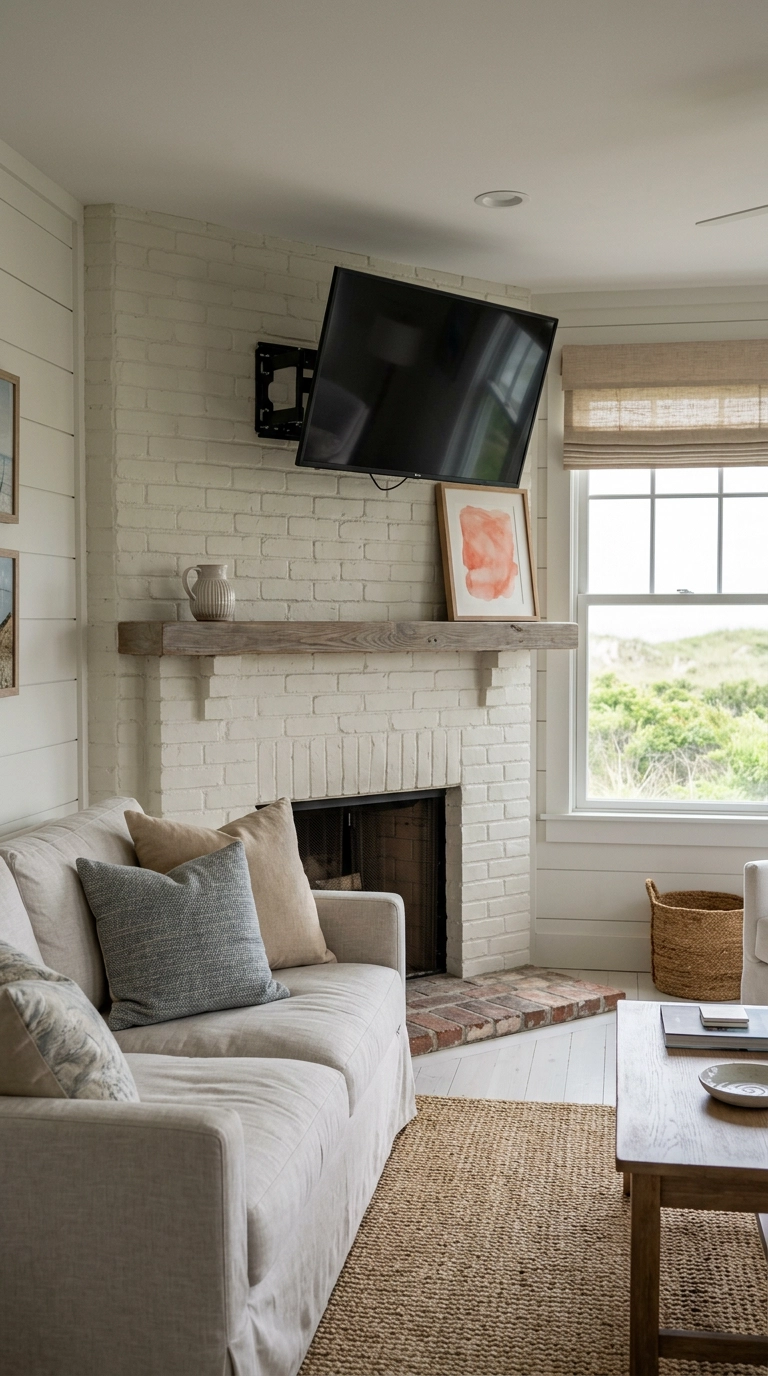
Sometimes the mantel height simply isn’t negotiable, and I’d rather you solve it with hardware than pretend it’s fine. A pull-down mantel mount drops the screen 10 to 20 inches and tilts it toward the sofa when you’re watching.
13. Wrap the Whole Thing in Fluted Plaster for a Soft Focal Wall
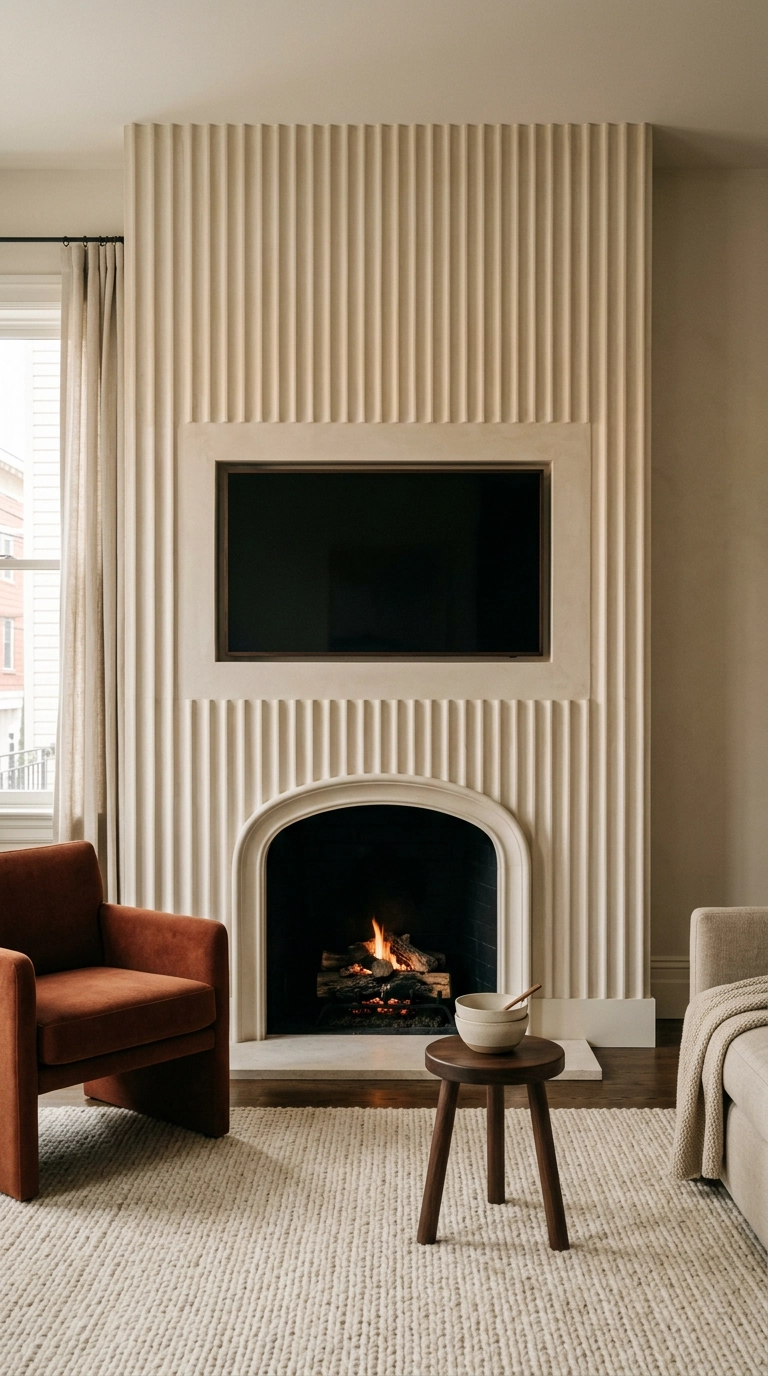
Fluted plaster is the trend I expect to keep running through 2026, and it’s shockingly good behind a television. The soft vertical channels catch raking light so the wall has its own quiet drama when the screen is off.
14. Balance the Screen With One Oversized Object on the Mantel
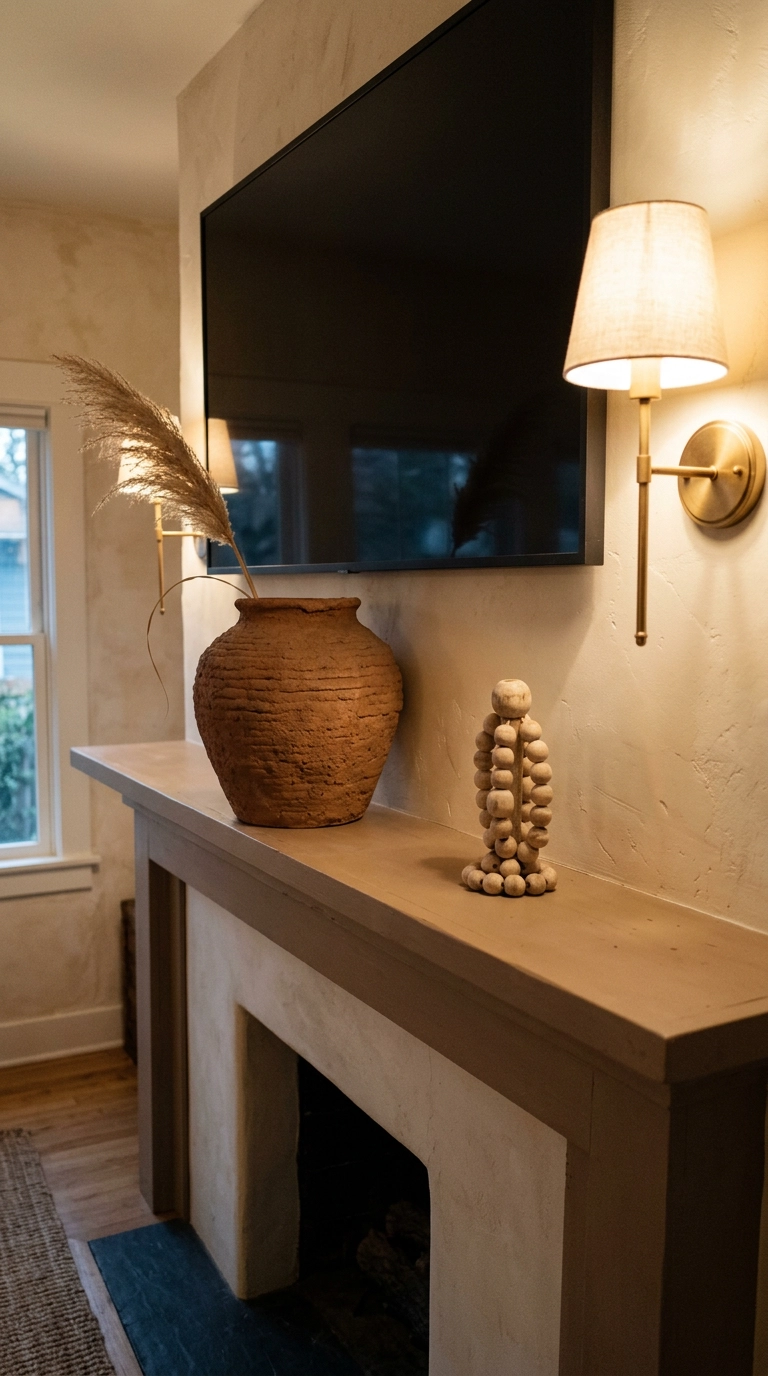
Ten little trinkets under a giant screen looks like confetti. One large object, roughly 40 to 50 percent of the screen’s height, gives the composition enough visual weight to hold its own, meaning it can compete with the TV instead of cowering.
15. Go Full Tile: Zellige or Vertical Stack Behind the Screen
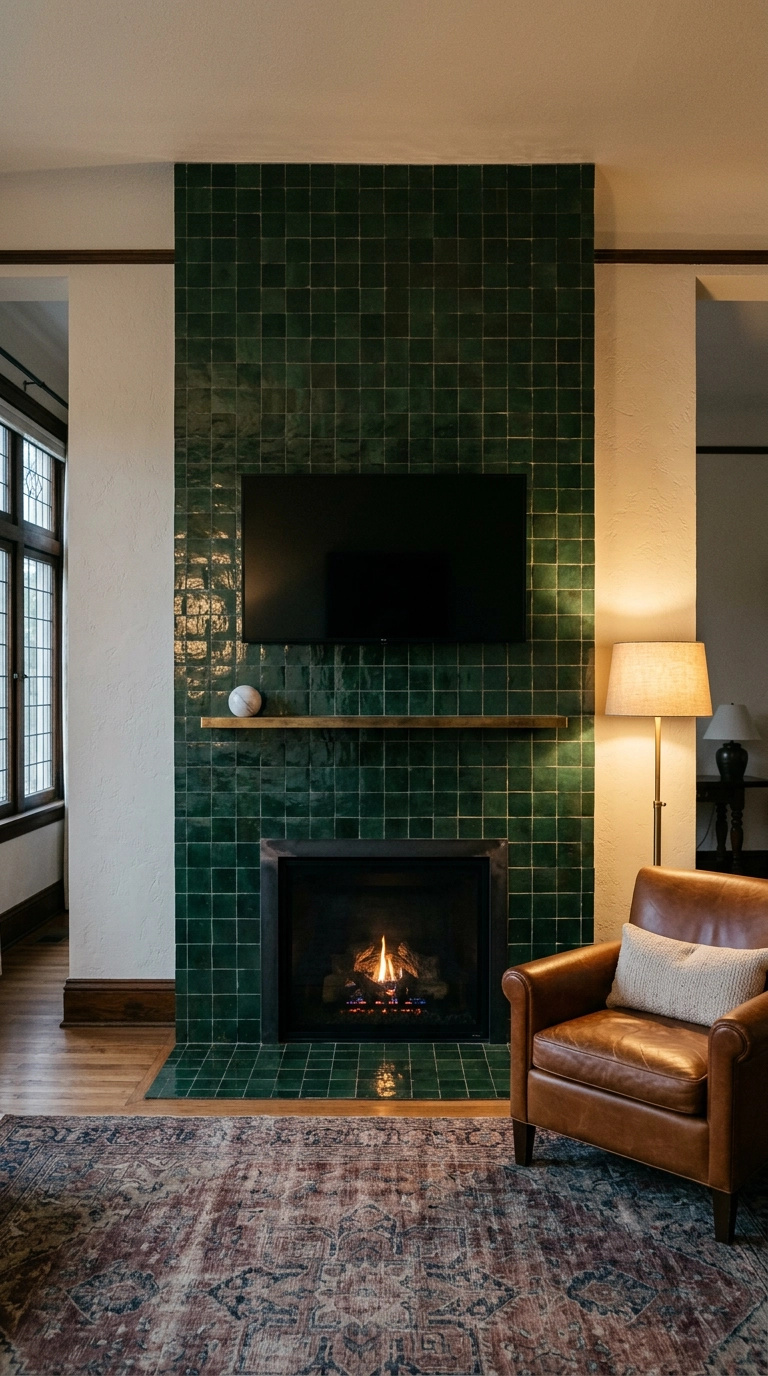
Tile behind a television is underrated because the subtle glaze variation gives the wall movement without pattern. Zellige in a saturated green or a vertical stacked ceramic in warm clay both work, and both read custom.
16. Break Symmetry With a Single Tall Shelf on One Side
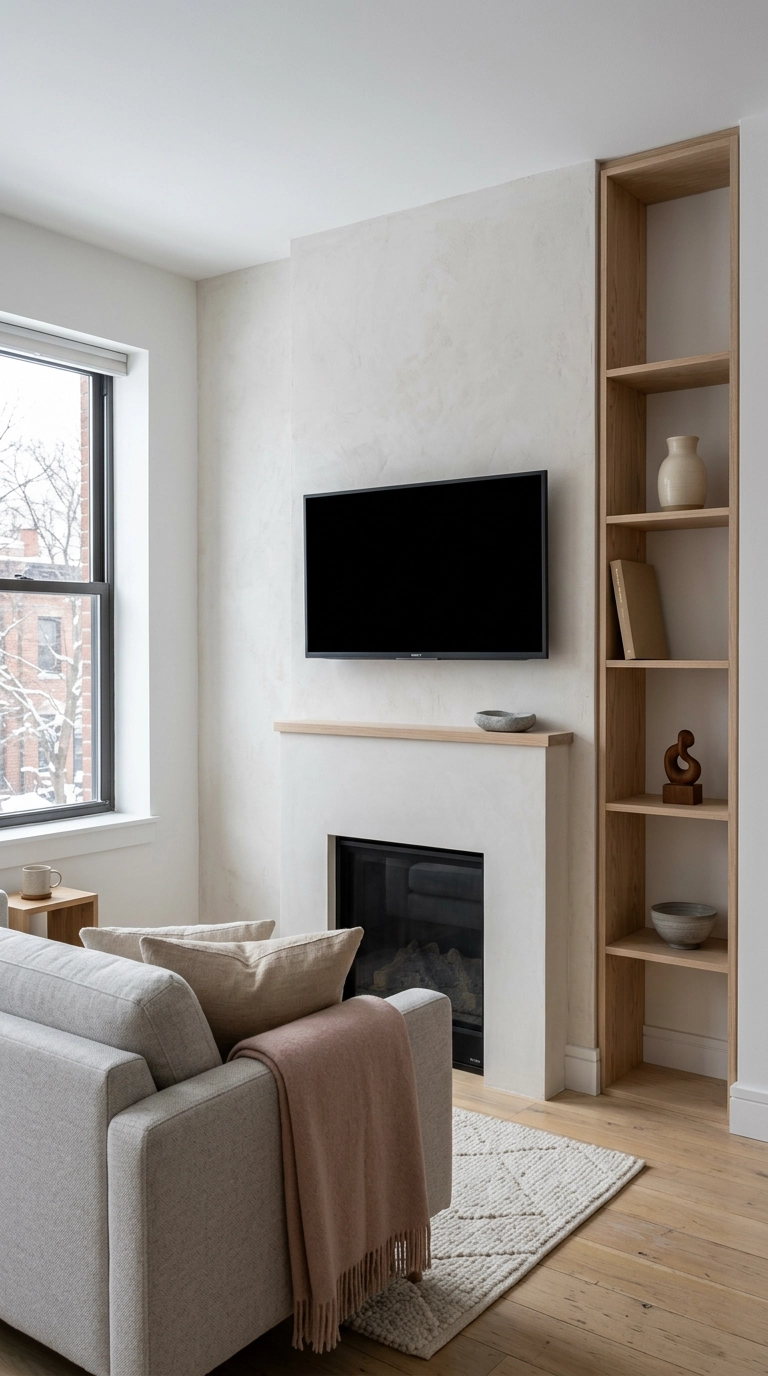
Odd numbers read better than even ones because your brain can’t split them into a tidy pair, so it keeps looking. One tall shelf on the right and an intentionally bare wall on the left is more interesting than a matched set.
17. Add Picture Frame Molding Around the Screen and Firebox
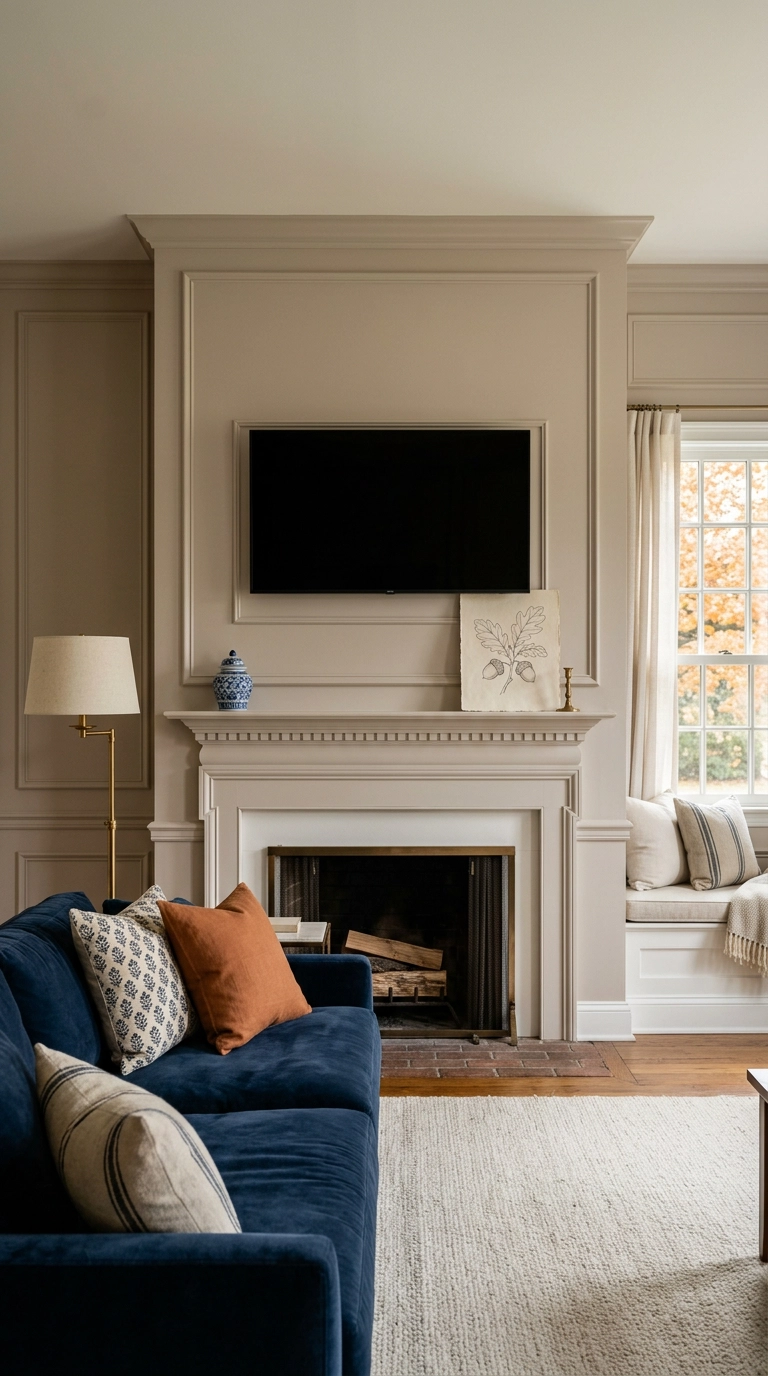
Applied molding turns a flat builder wall into architecture, and centering the TV inside one panel makes the screen look deliberately framed rather than parked. It’s the traditional-home version of the recessed niche.
18. Slide a Panel or Barn Door Across to Hide It Completely
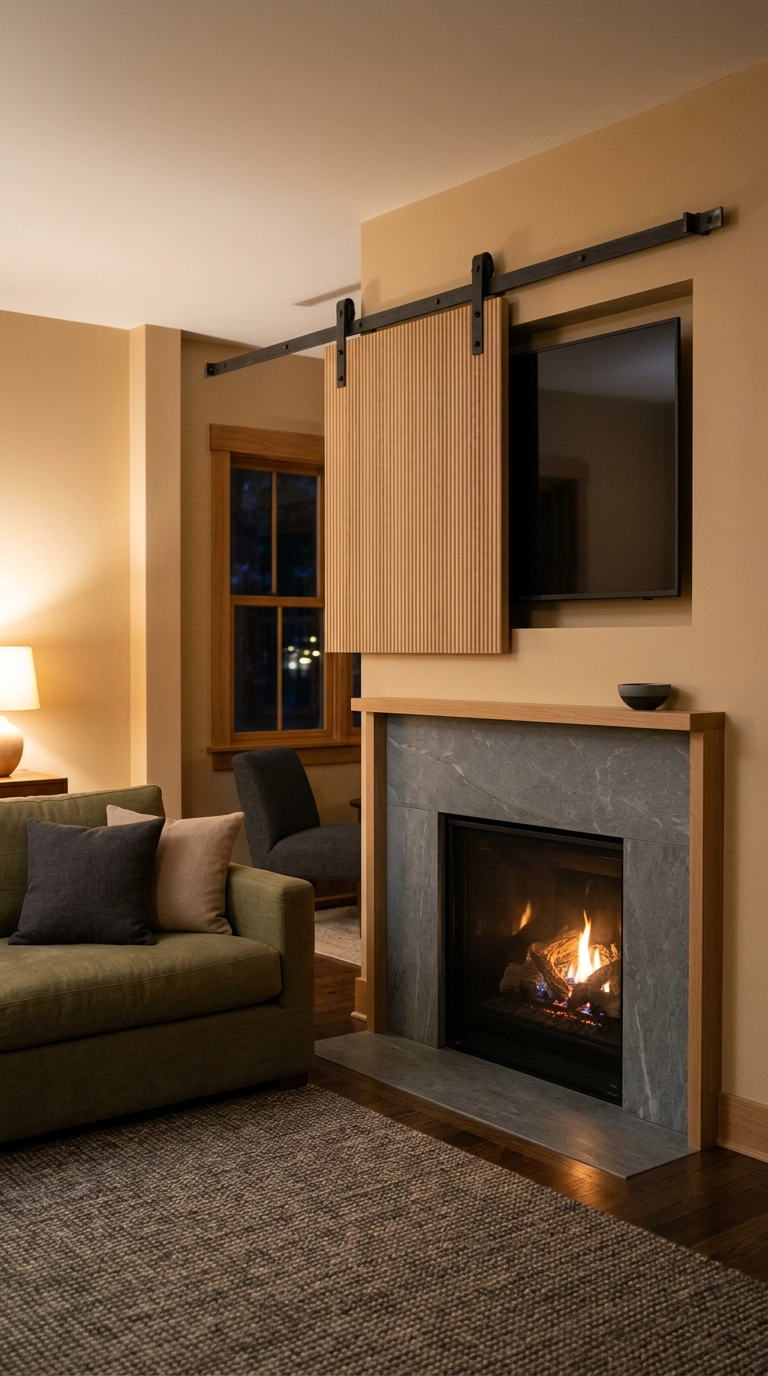
If you genuinely resent looking at a screen, a sliding panel on a top-mounted track is the elegant answer. Reeded oak or a fabric-wrapped panel slides sideways over the TV and parks against the flanking wall.
19. Tuck the Soundbar Onto Its Own Recessed Ledge
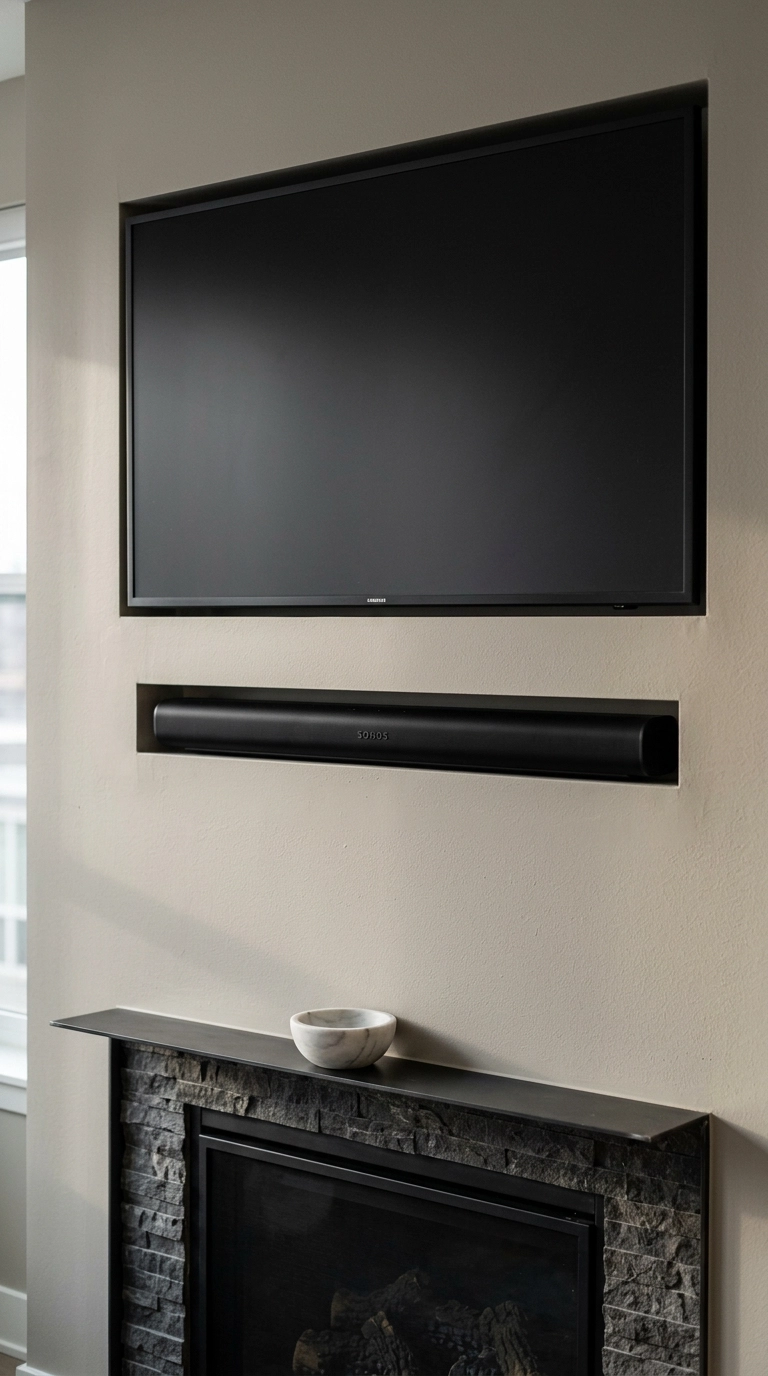
The soundbar is the detail everyone forgets and then resents. A shallow 4 inch recessed ledge below the screen holds it flush so it stops looking like a black brick glued to your mantel.
20. Flank the Screen With Sconces at Mid-Screen Height
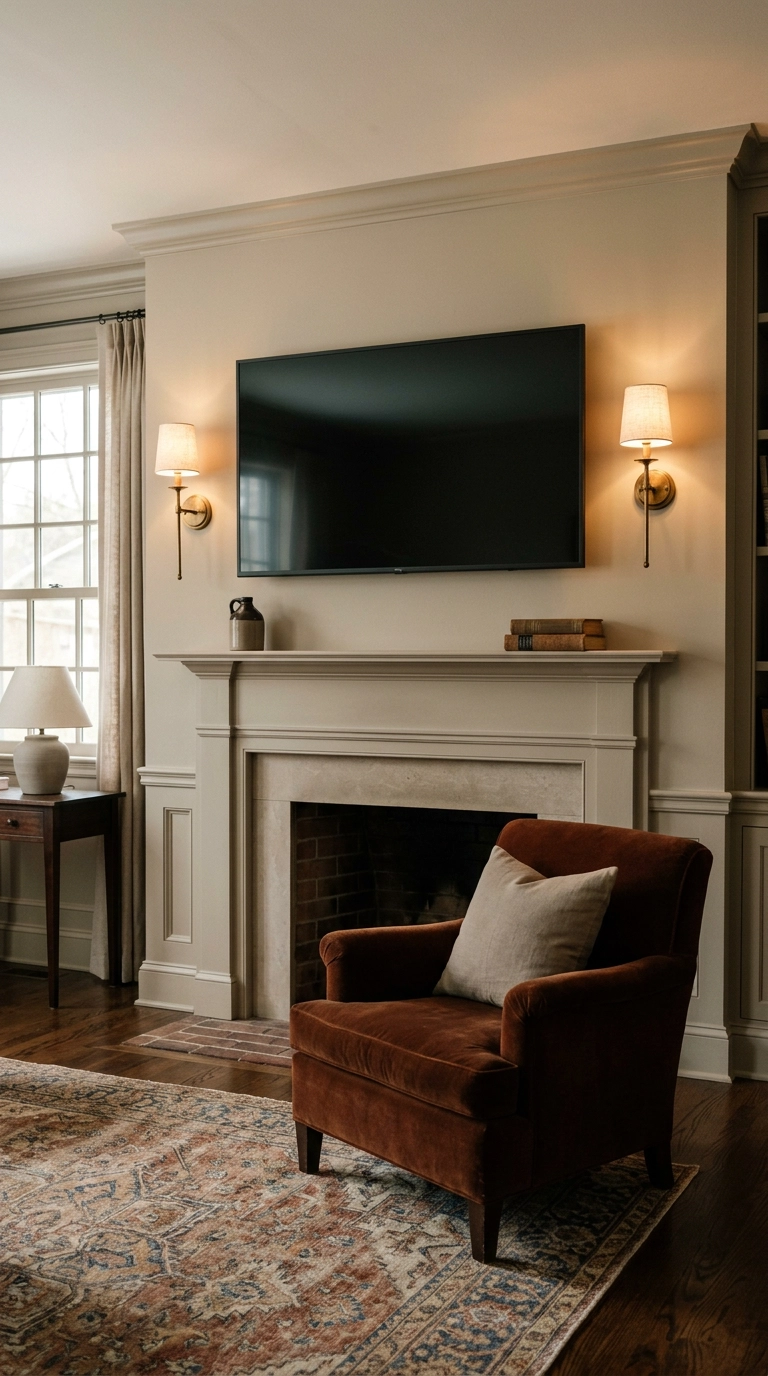
Sconces at mid-screen height do something clever: they pull your eye out horizontally so the wall reads as a wide composition rather than a tall stack. They also give you soft light for the times the TV is off.
21. Match the Mount Wall to the Screen With Deep Charcoal Paint Only
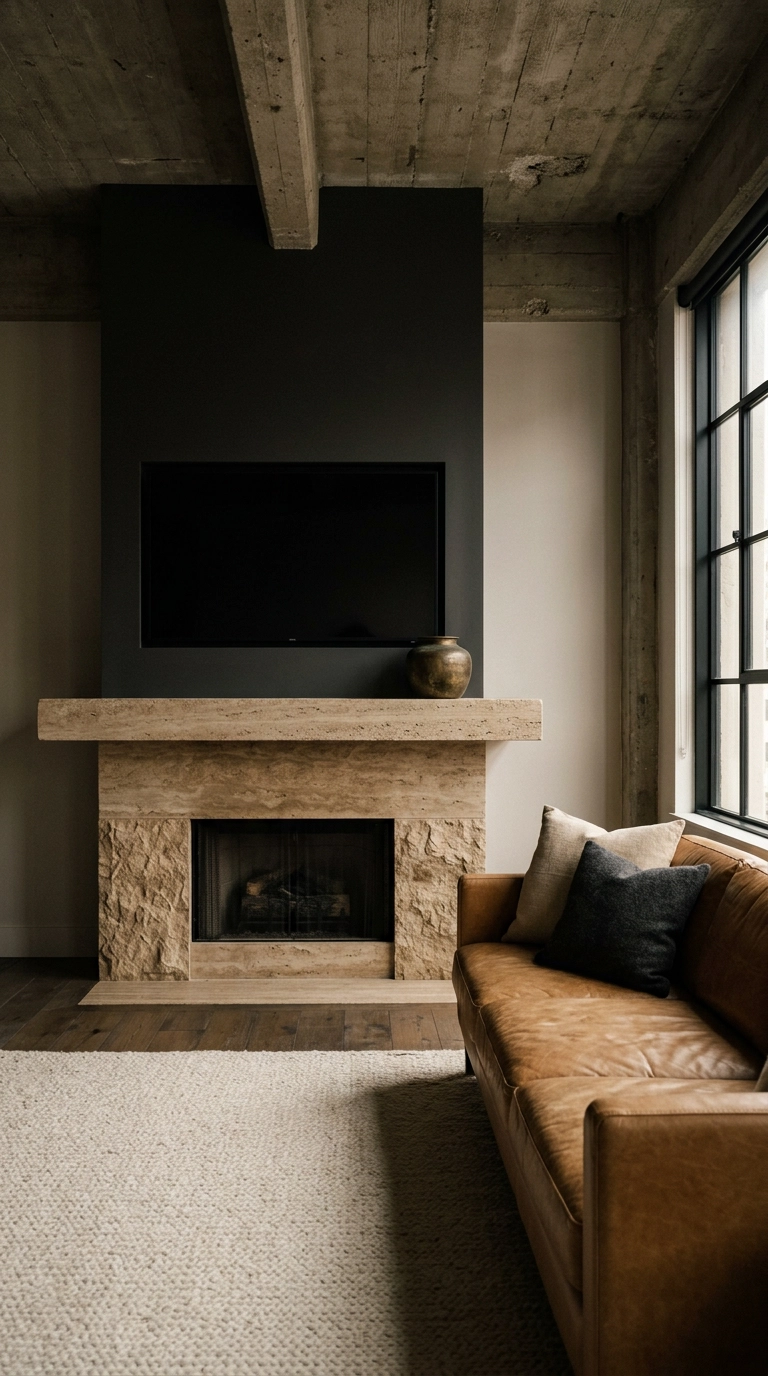
You don’t always have to drench the whole wall. Painting only the upper zone above the mantel in a deep charcoal gives you the camouflage effect while keeping the stone or brick surround visible below.
22. Reclaim a Real Beam Mantel to Warm Up All That Screen
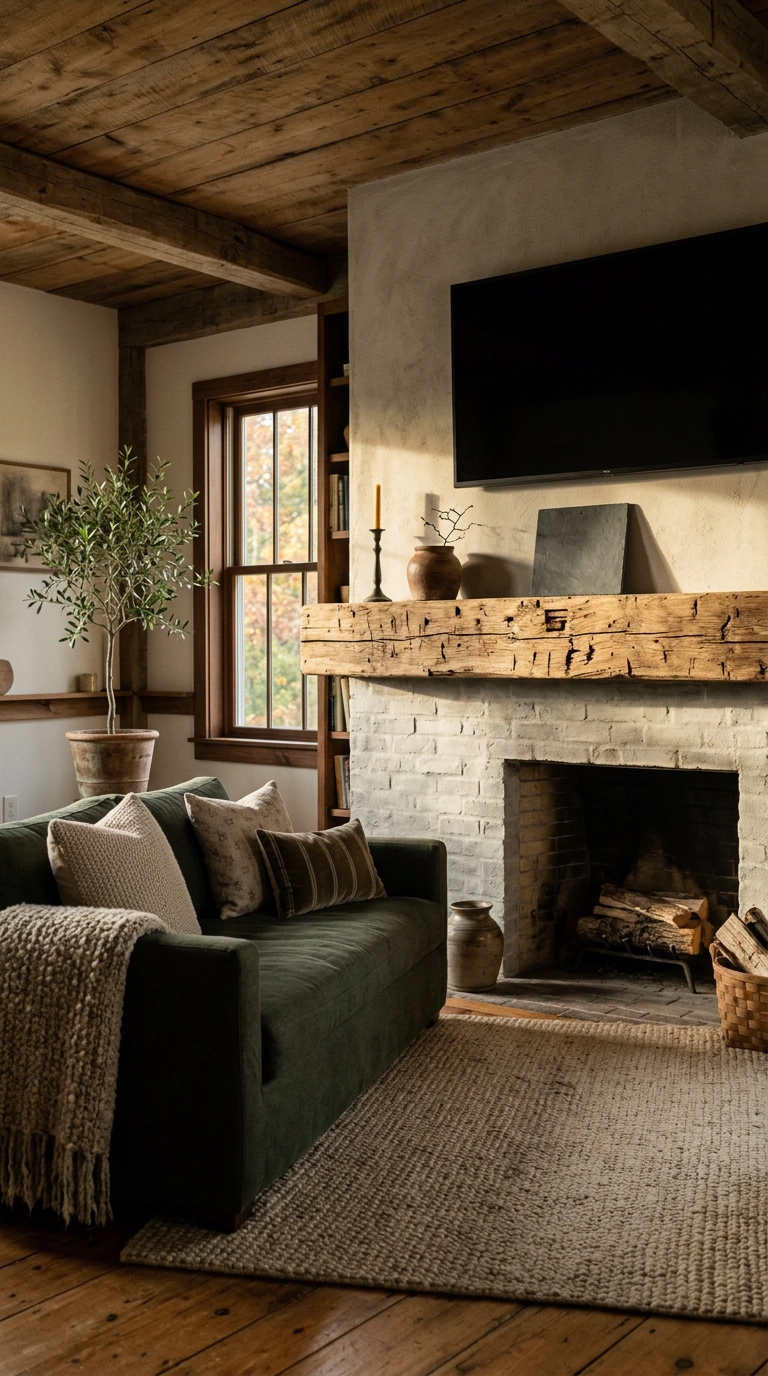
A screen is the coldest, flattest object in any room, so I like to answer it with the most textural material I can find. A genuinely old beam with saw marks and nail holes does more warming than any amount of styling.
Before You Pick Up the Drill
If you take one thing from this whole list, let it be the height conversation. I’ve walked into so many gorgeous rooms where the sofa was perfect, the rug was perfect, and everyone was watching television at a 30 degree upward angle like they were at the planetarium. Drop the firebox, use a pull-down mount, or accept a slight tilt, but please don’t let a mantel decide your neck’s fate for the next ten years.
What I’m seeing everywhere going into 2026 is the disappearing act: recessed niches, fluted and hand-troweled plaster surrounds, and full-height slat or stone chimney breasts that treat the screen as one line in a larger composition. The art-mode frame TV has quietly gone mainstream too, and I’ll admit I rolled my eyes at it for years before caving. Designers like Amber Lewis have made the reclaimed beam over a mortar-washed brick surround feel like the default warm-modern move, and honestly, that combination with a dark charcoal upper wall is the version I recommend most often because it’s achievable in a normal suburban living room with a normal budget.
My real advice: start with paint and a mantel swap before you start opening walls. A quart of Farrow & Ball Railings on the upper chimney breast and one oversized vessel on the shelf will change more than you expect for under a hundred dollars, and it tells you whether you actually want the built-ins later. If you’d like more of this kind of thing, the honest cost notes, the measurements, and the shortcuts, come sign up for my weekly newsletter. I send one room, one problem, and one fix every Friday, and I’d love to have you reading along.