23+ Stunning Black Accent Wall Decor Ideas that Look Expensive and Cozy in 2026

I’ll be straight with you, black is the single most misunderstood paint color in American homes, and I say that as someone who once talked a client out of it and regretted it for a year. Done right, a black wall does not shrink a room, it gives your eye somewhere to land and makes everything in front of it look better lit and more expensive. The trick is choosing the correct wall, getting the sheen right, and adding back the light that black quietly eats. I’ve done these in 400-square-foot rentals and in giant open-plan living rooms, and the rules below are the ones that actually held up.
Black Accent Wall Decor Ideas
1. Matte Black Behind the Sofa, Because Flat Paint Hides Every Drywall Sin
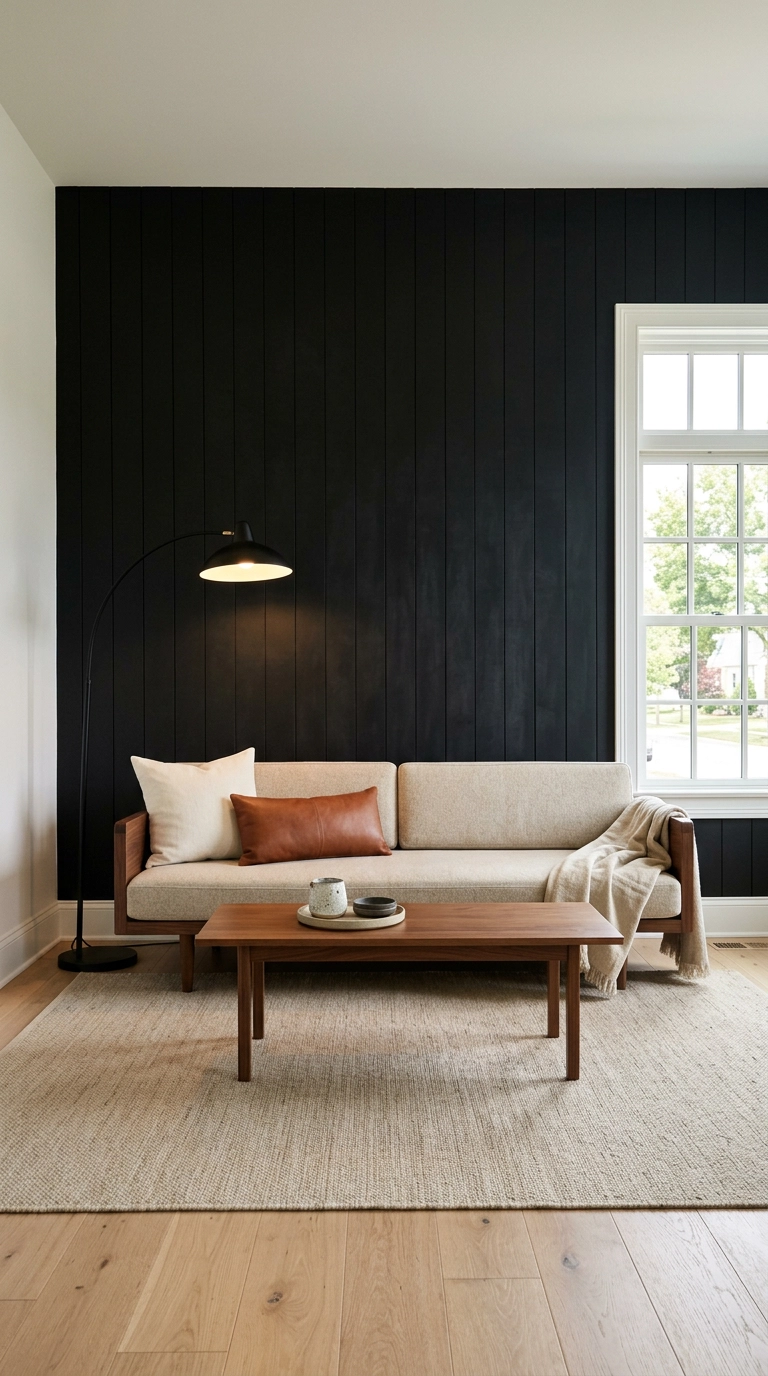
Start here if you only do one thing: a true matte or flat black on the wall behind your sofa. Sheen matters more than the color you pick, and matte absorbs light instead of bouncing it, which means every roller mark, patched nail hole, and wavy bit of drywall disappears. Sherwin-Williams Tricorn Black and Farrow and Ball Off-Black are the two I reach for most.
2. The 20-Minute Version: A Wall of Black Linen Curtains
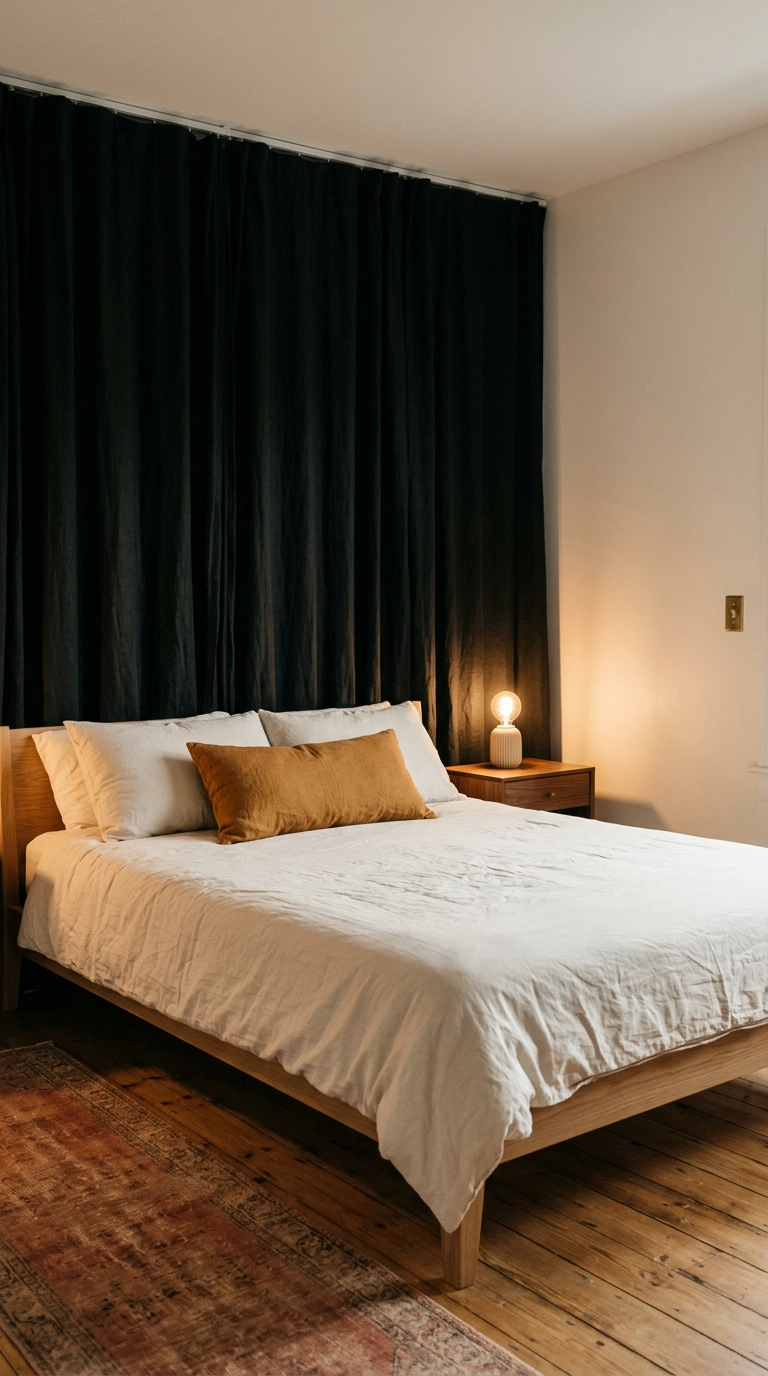
Renters, this one is for you. Hang a ceiling-mounted or tension rod wall to wall and run black linen or cotton-blend panels across the entire wall behind your bed, not just the window. It reads as one soft, deep, textural plane, and the fabric folds do something paint can’t, they catch light in vertical stripes so the wall has movement.
3. Pick the Wall You Face, Not the One Behind Your Head
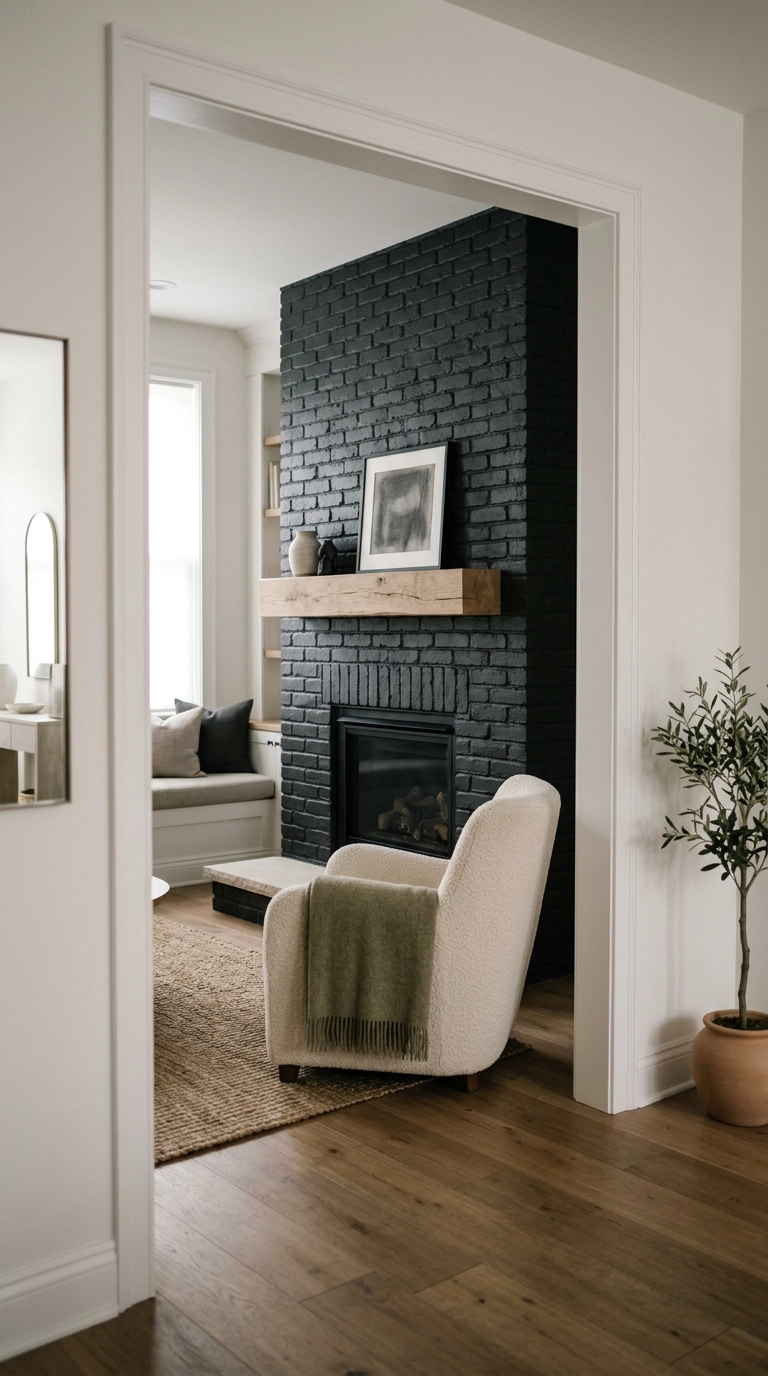
Here is the mistake I see constantly. People paint the wall behind the sofa or behind the headboard, then never see it because they’re sitting in front of it. Walk into the room, stop in the doorway, and notice where your eye goes first. That is your sightline, the natural path your gaze travels, and that is the wall that should be black.
4. Warm Black vs True Black: Match It to Your Wood Tones
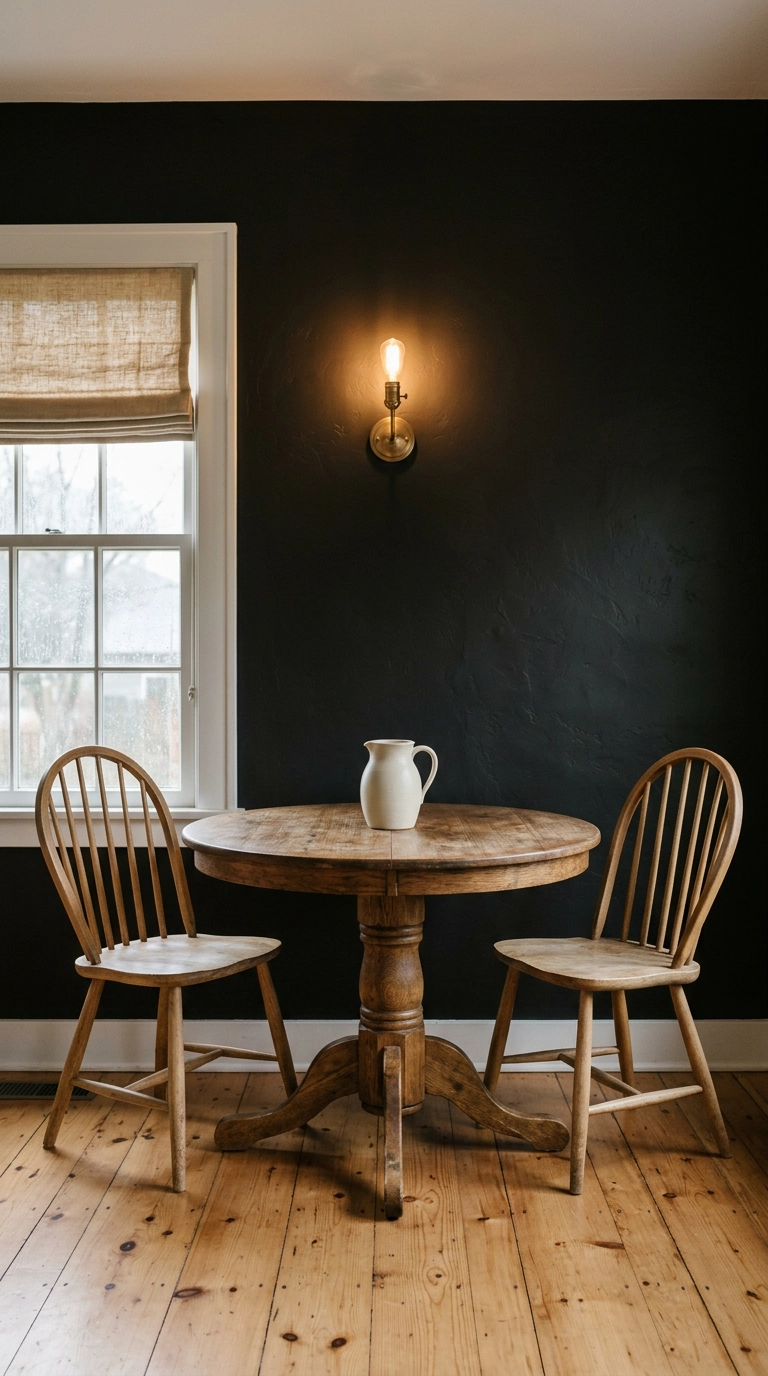
Not all blacks are the same temperature, and this is where most people go wrong. A warm black like Benjamin Moore Soot has brown and green in it, so it sits beautifully next to oak, pine, walnut, and anything with an orange cast. A true black like Tricorn Black is neutral and cold, which is what you want alongside chrome, glass, and gray-toned floors.
5. Black Board and Batten for Texture That Survives Bad Lighting
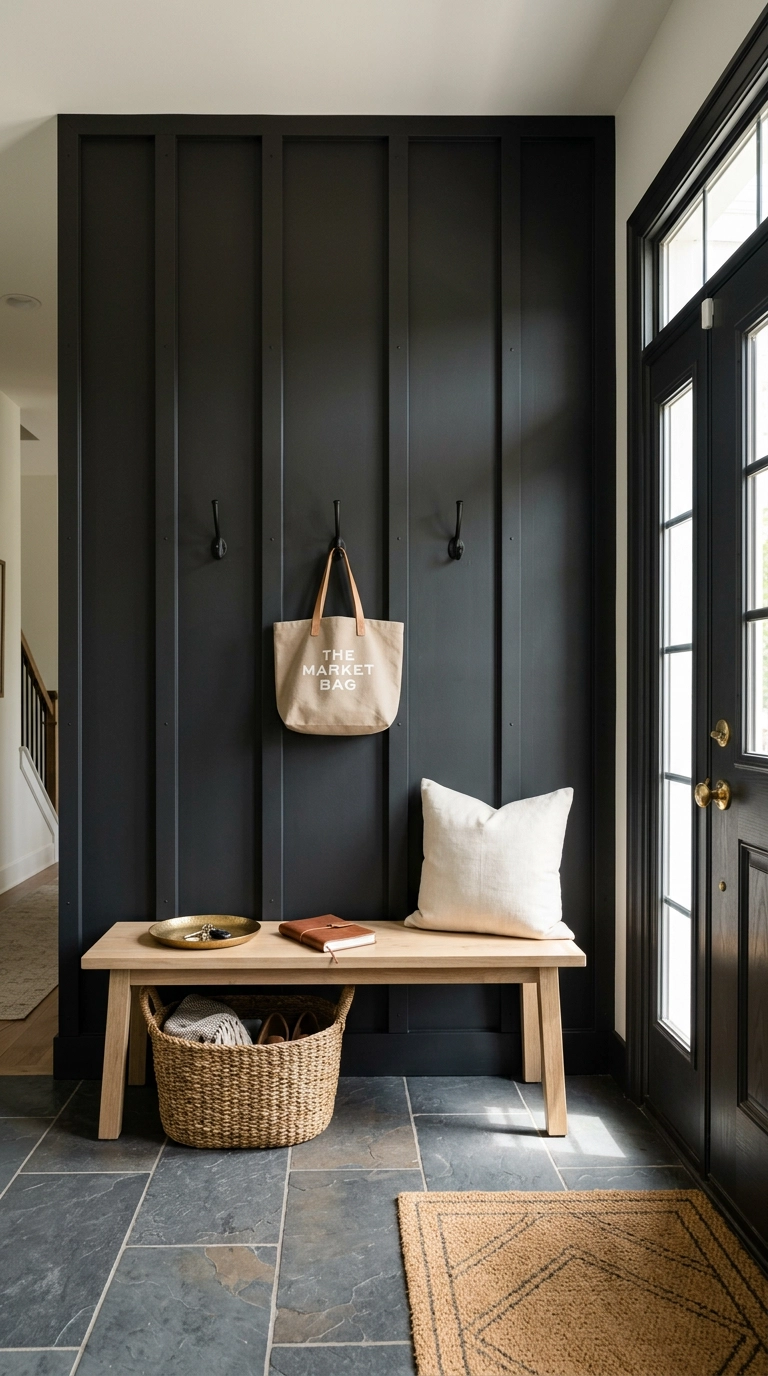
A flat black wall in a dim room can read as a void, a flat nothing. Board and batten fixes that, because those vertical wood strips cast tiny shadow lines all the way across the wall, so even in weak light you read texture instead of a black hole.
6. Black Limewash for a Wall That Looks 200 Years Old
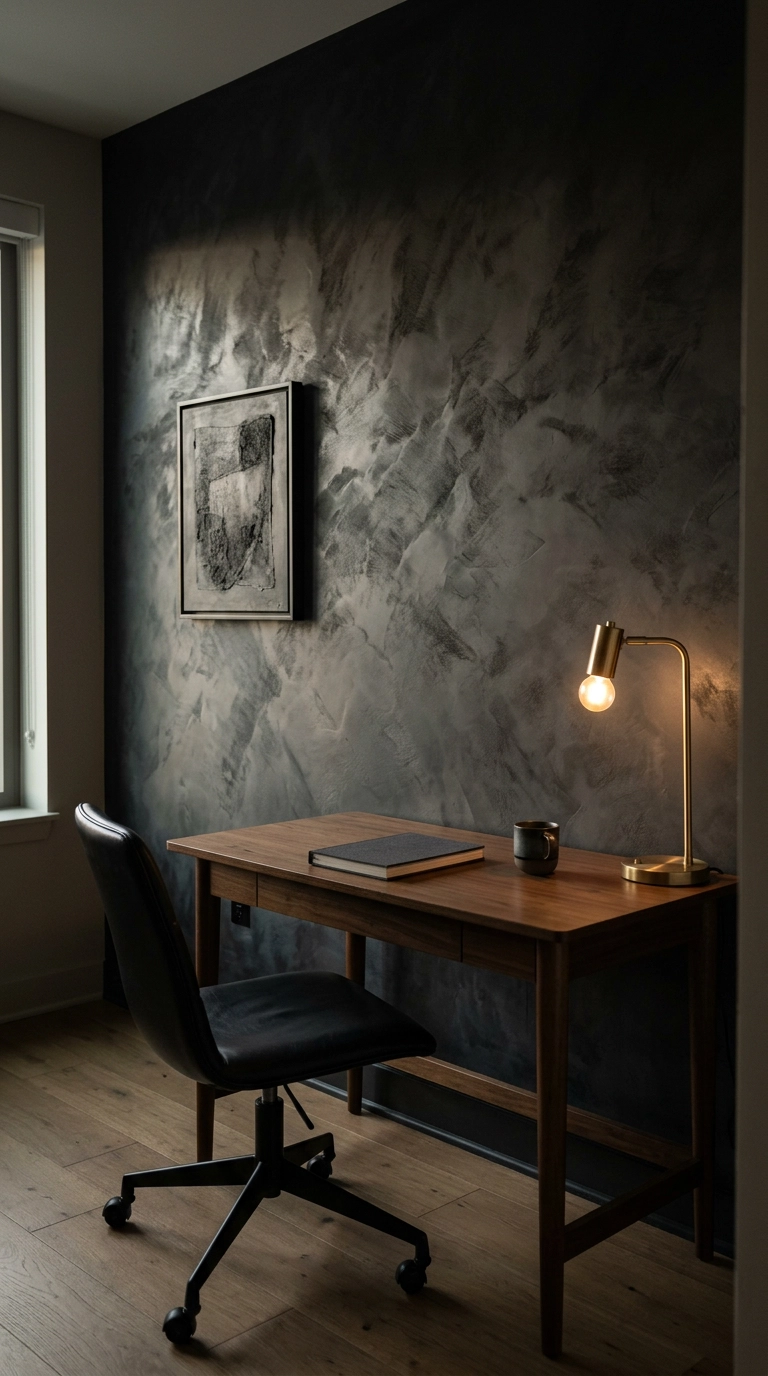
Limewash is my favorite black treatment and the most forgiving, because you’re literally supposed to apply it unevenly. It’s a mineral paint you brush on in loose crosshatch strokes, and it dries to a chalky, cloudy finish with light and dark variation, so the wall shifts all day as the light moves.
7. Vertical White Oak Slats Over Black for Shadow and Rhythm
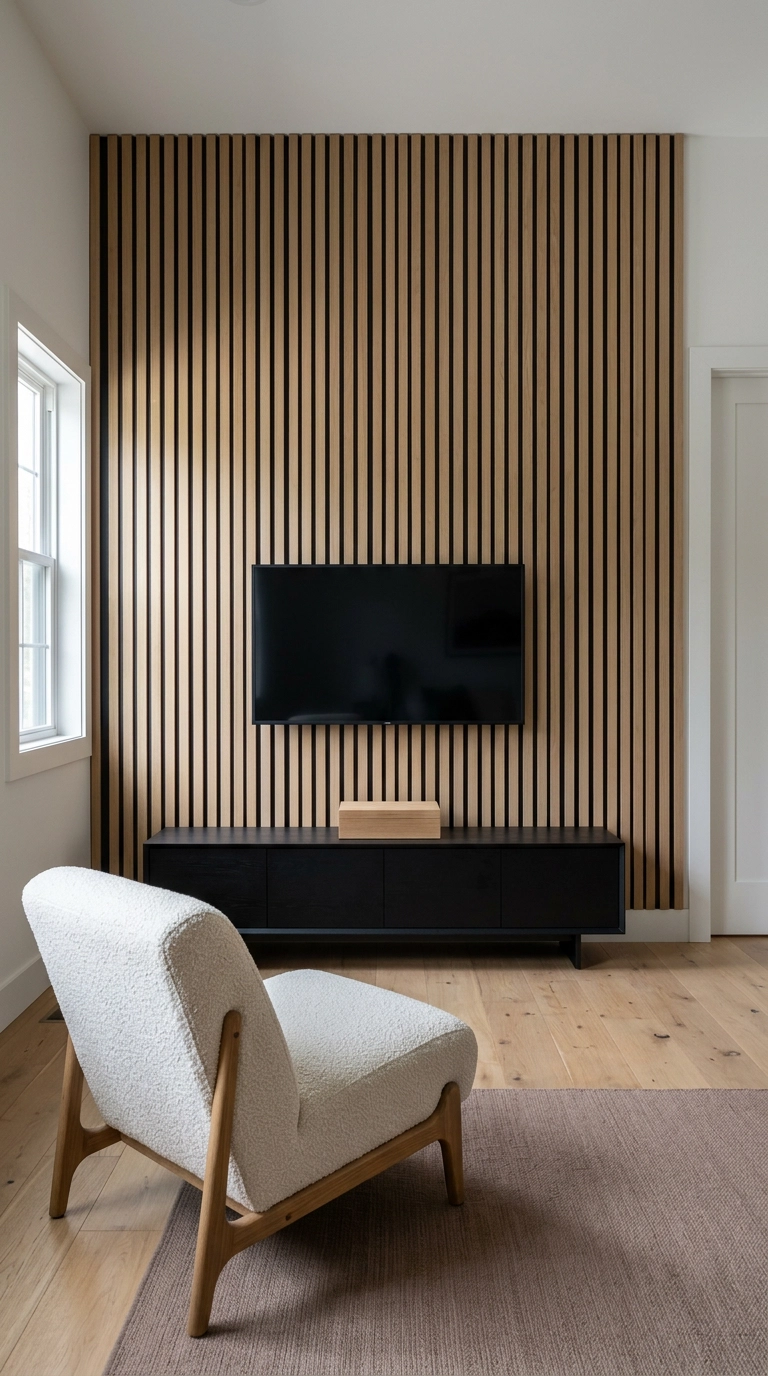
This is the look everyone screenshots, and the reason it works is the gap, not the wood. You paint the wall black first, then mount oak slats over it with a consistent space between each one, so the black recedes and the slats appear to float in front of a shadow.
8. Add Back the Light: Two Plug-In Sconces on the Black Wall Itself
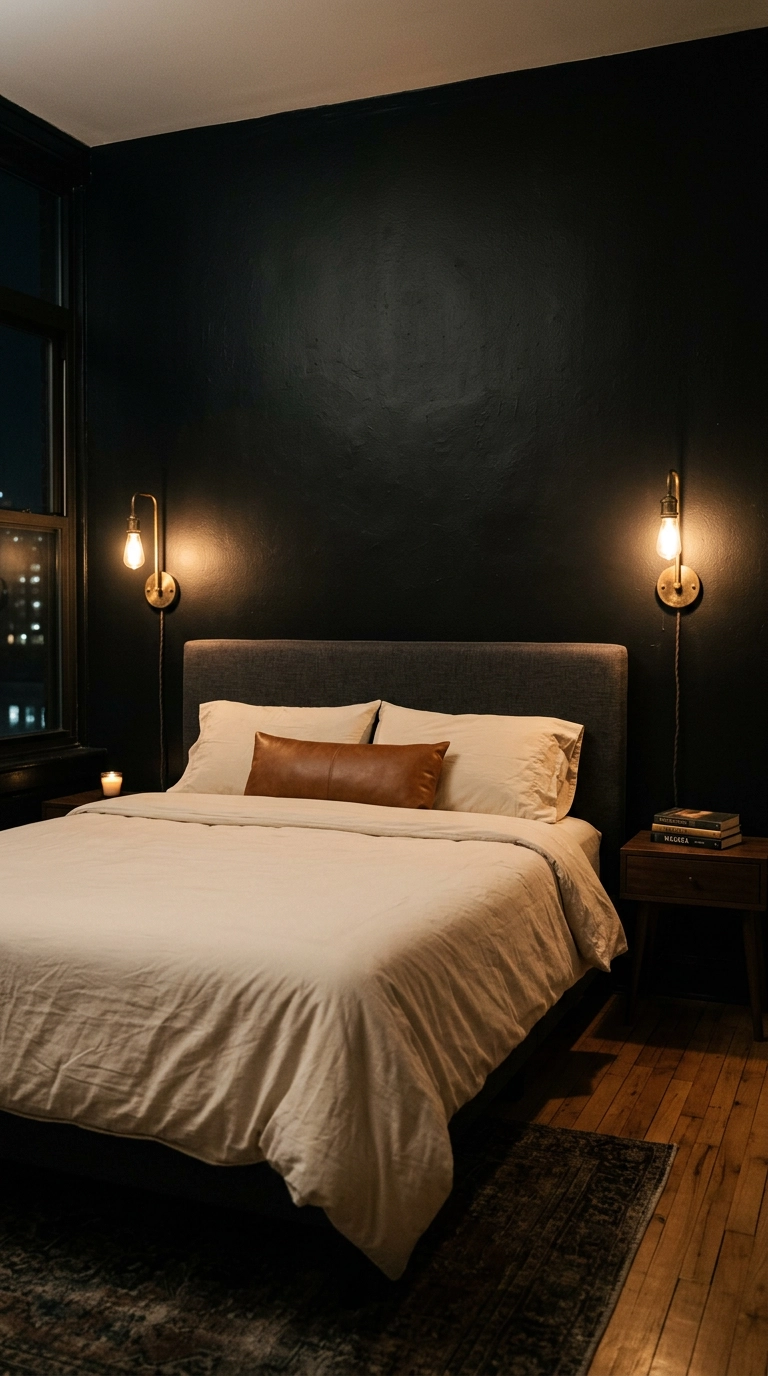
Black paint absorbs roughly the light a white wall bounces back, so a black wall does not just look dark, it steals the ambient light your room used to get for free. The fix is putting light sources on the black wall itself rather than trying to flood the room from the ceiling.
9. The Free Test: Tape a Black Sheet Up for a Week Before You Buy Paint
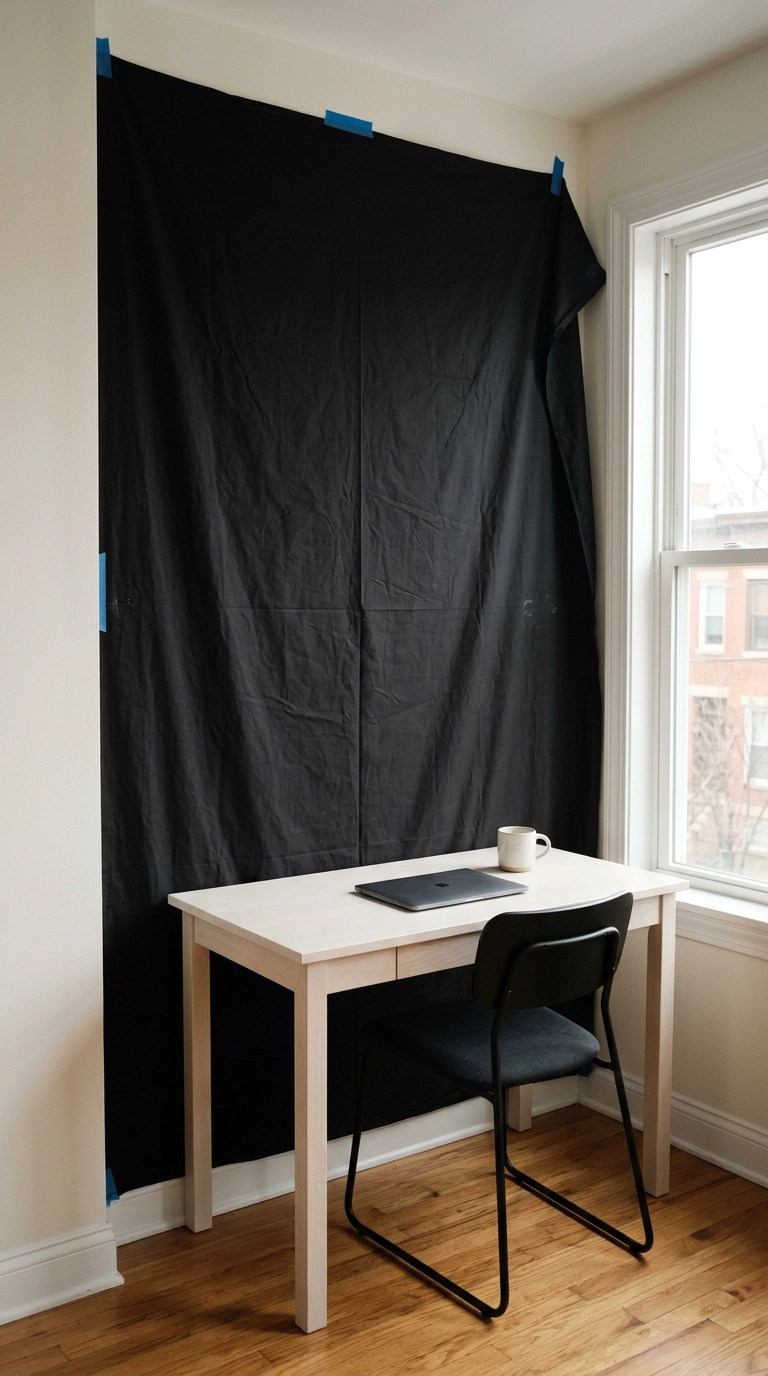
Costs nothing and saves people from the regret I hear about most. Tape a black flat sheet, a blackout curtain, or a few yards of cheap black fabric across the wall you’re considering and live with it for a full week.
10. Peel-and-Stick Black Grasscloth for a Wall You Can Undo
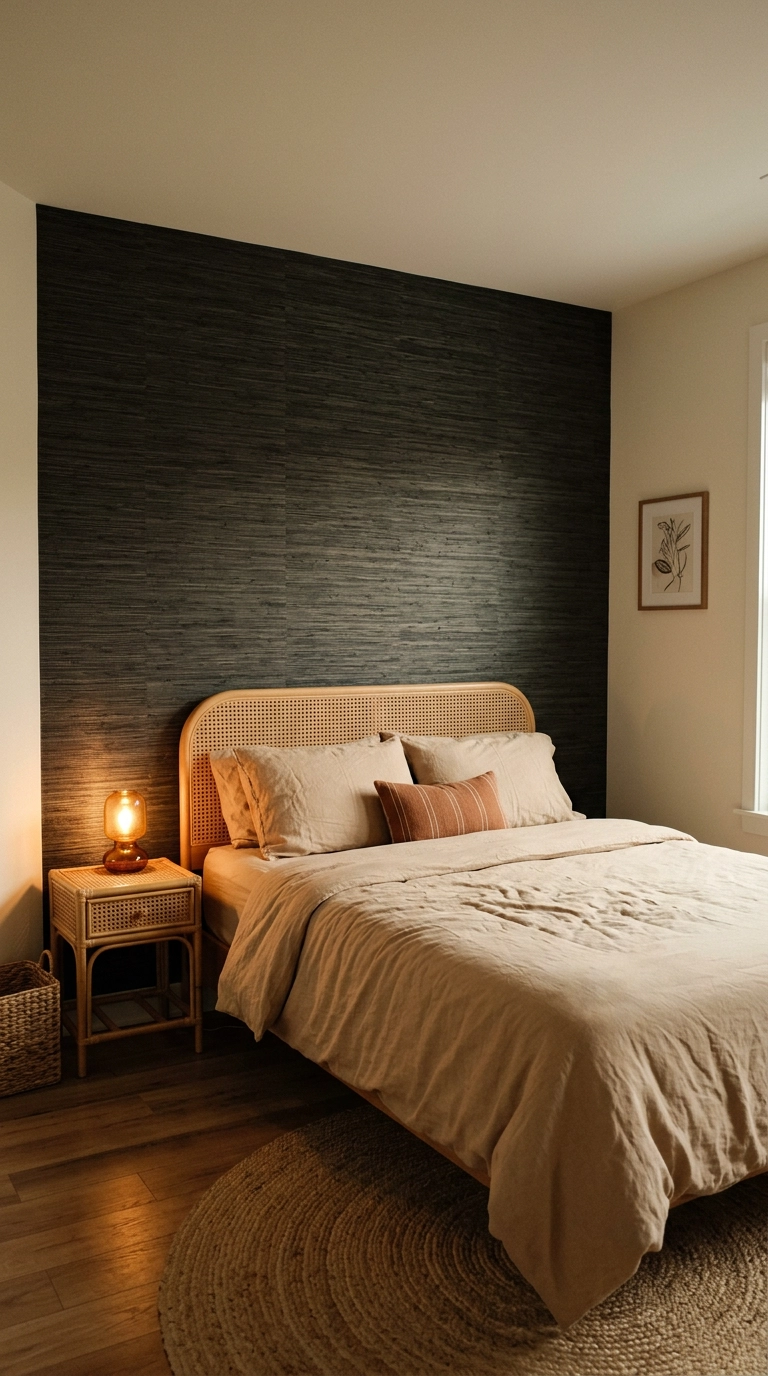
Peel-and-stick has gotten genuinely good, and black textured versions solve the flat-void problem paint has. Grasscloth and linen-weave patterns read as woven fiber up close, so the wall has depth without you touching a paintbrush.
11. What Art Actually Reads on Black: Go Pale, Go Big, Add a Wide Mat
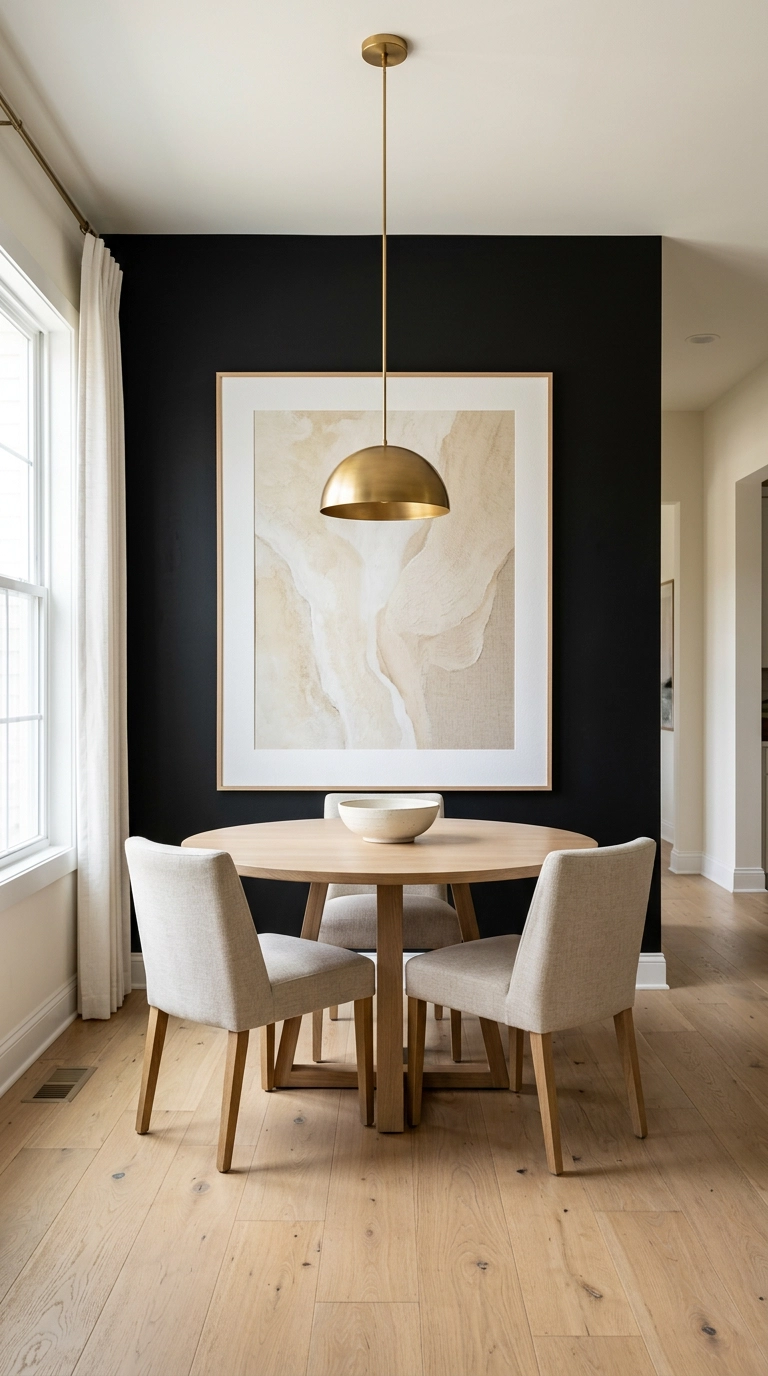
Dark art disappears on a black wall. Everything I hang on black is pale, high-contrast, or matted in white, because contrast is what makes the piece read as art instead of a smudge in the dark.
12. Frame Finishes That Show Up: Raw Oak, Aged Brass, and Bright White
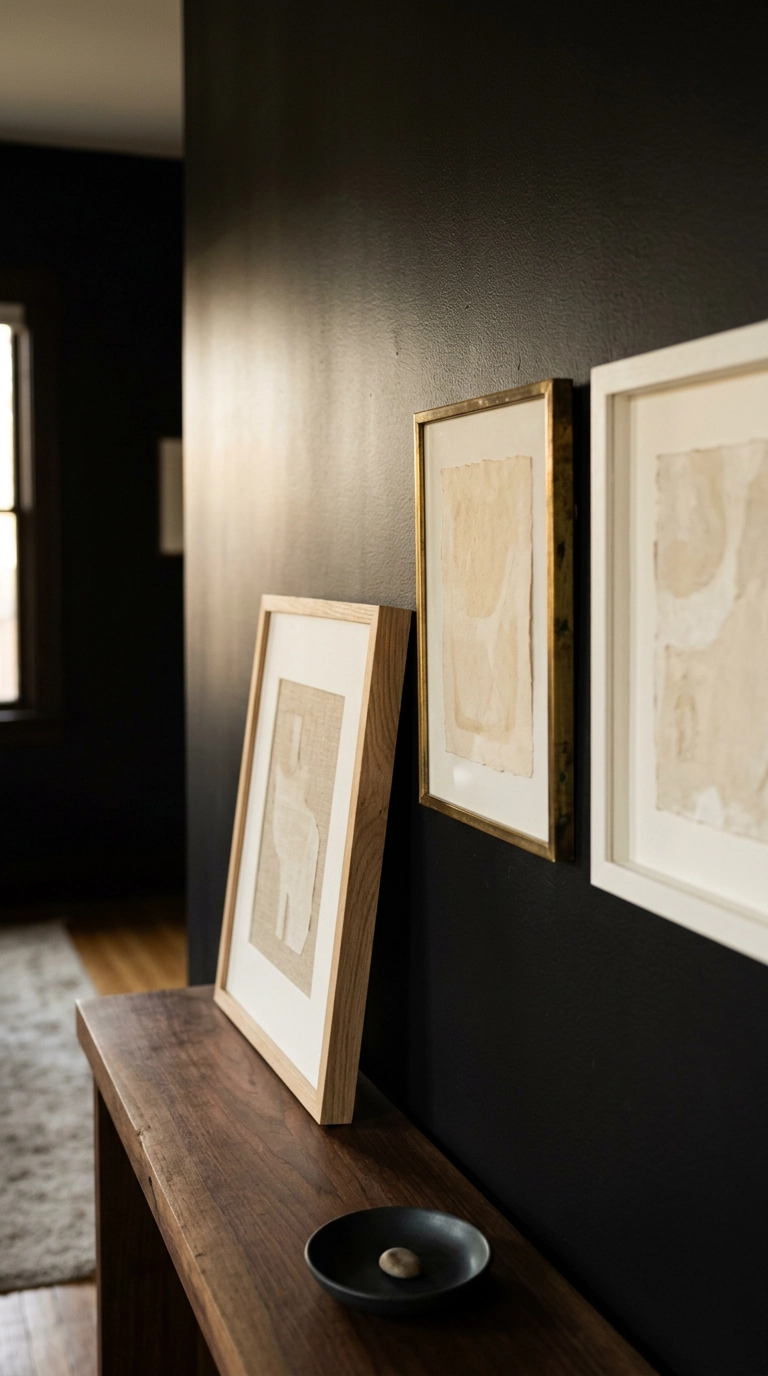
Black frames on a black wall vanish, which sounds obvious but I see it constantly. The finishes that hold their edge are light natural wood, unlacquered or aged brass, and plain white, all of which draw a visible line around the piece.
13. A Battery Picture Light Over the Art, Installed in 20 Minutes
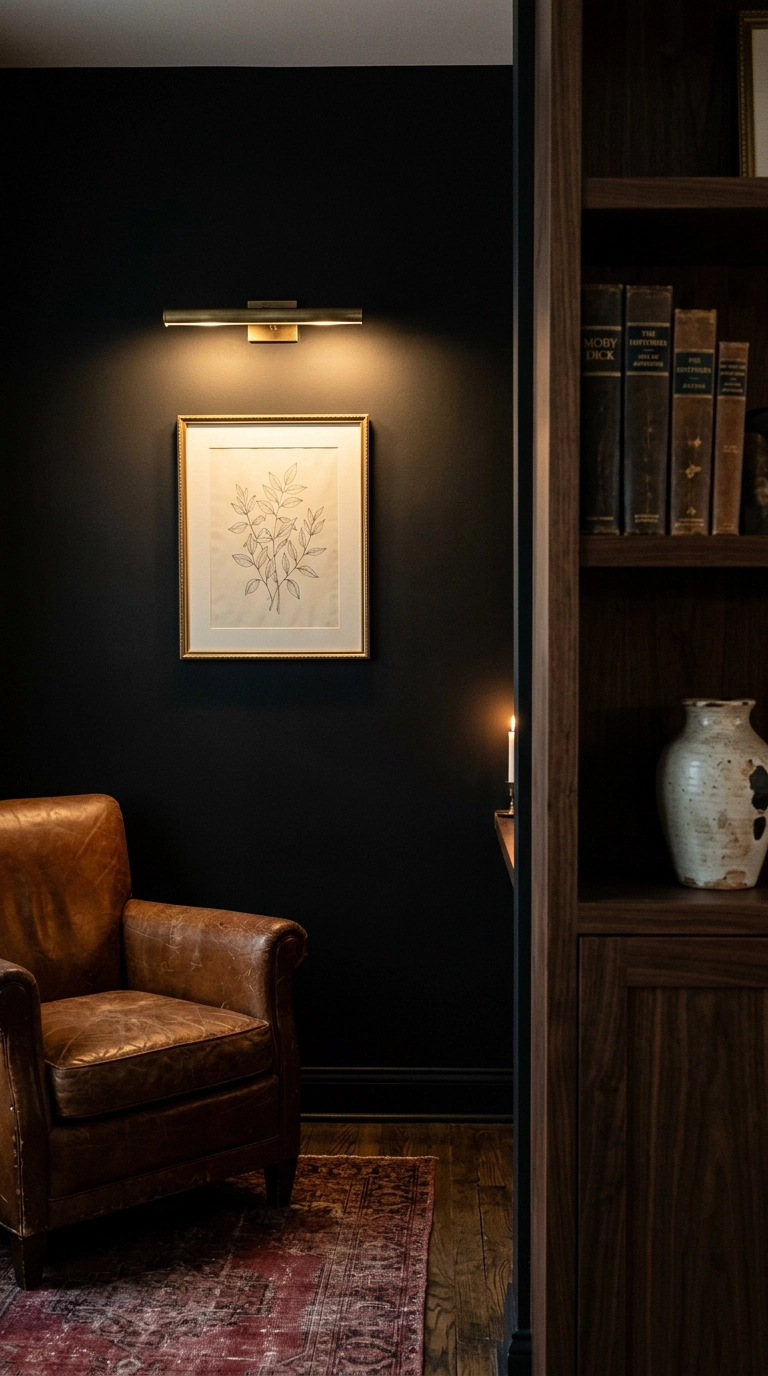
This is the highest-return 20-minute upgrade on this whole list. A battery or rechargeable picture light mounted above your art throws a warm arc of light down the black wall, and that gradient from lit to unlit is what makes the wall look expensive.
14. Black Limewash Over Real Brick, Where the Mortar Still Shows Through
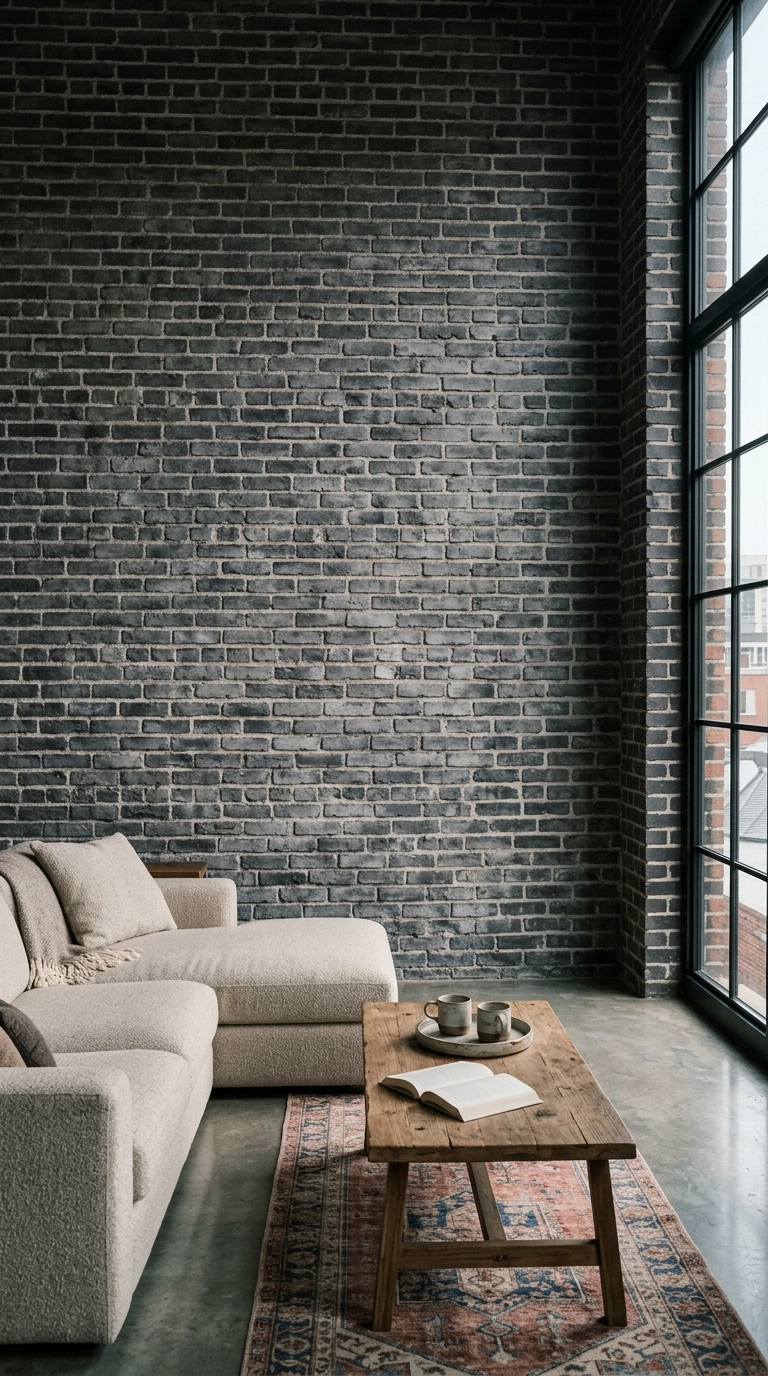
If you already have brick, you have the best black accent wall in the house and probably don’t know it. Brushing a thin black limewash over brick lets the mortar grid and every chipped edge read through, so you get all the drama of black with none of the flat-void problem, and the mineral wash lets the masonry breathe instead of sealing it under latex.
15. Picture-Frame Molding in the Dining Room, Painted Wall and Trim the Same Black
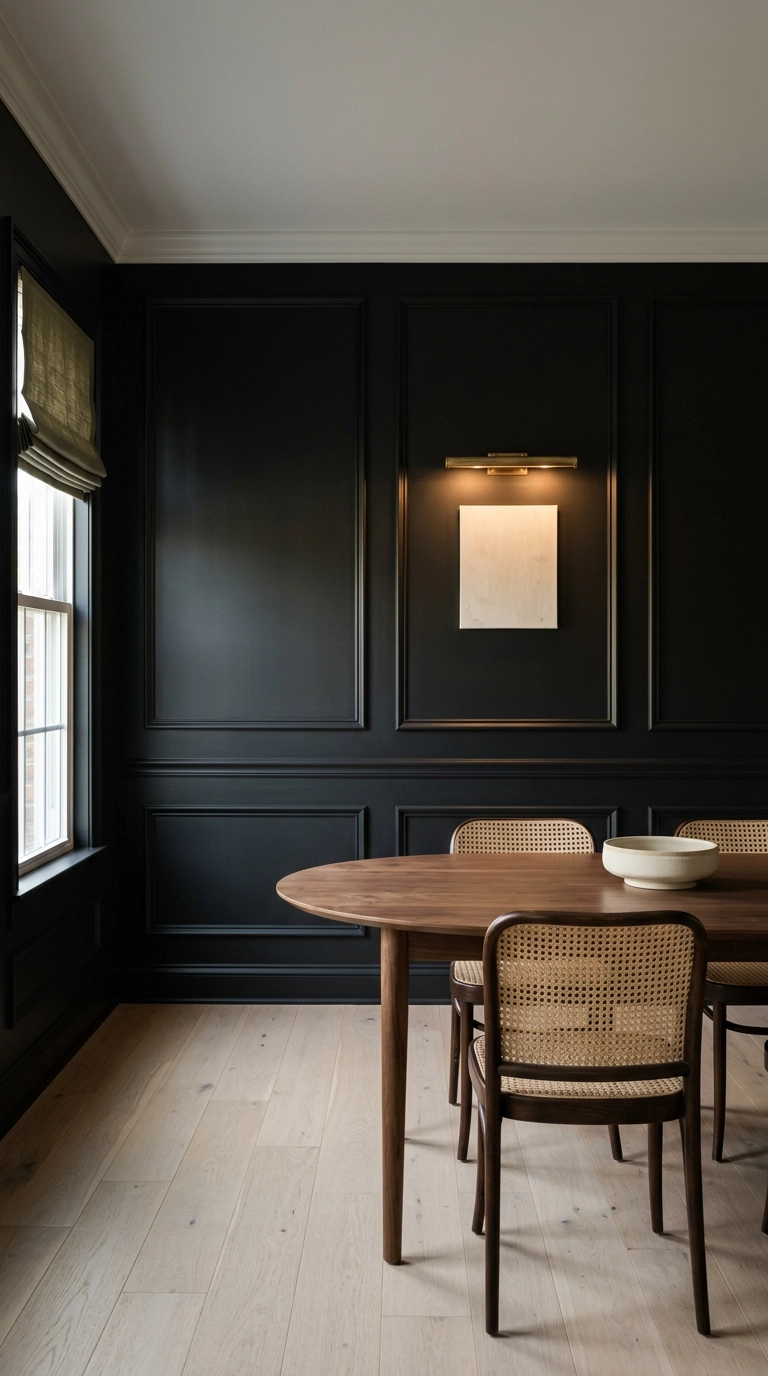
Dining rooms are the easiest place to go black because you mostly use them at night, under warm light, which is exactly when black paint looks its best. Applied moldings, meaning thin rectangles of trim glued and nailed onto flat drywall, give the wall a formal architectural profile for well under two hundred dollars in materials.
16. The Splurge: Fluted Black Wood Paneling in a Media Room
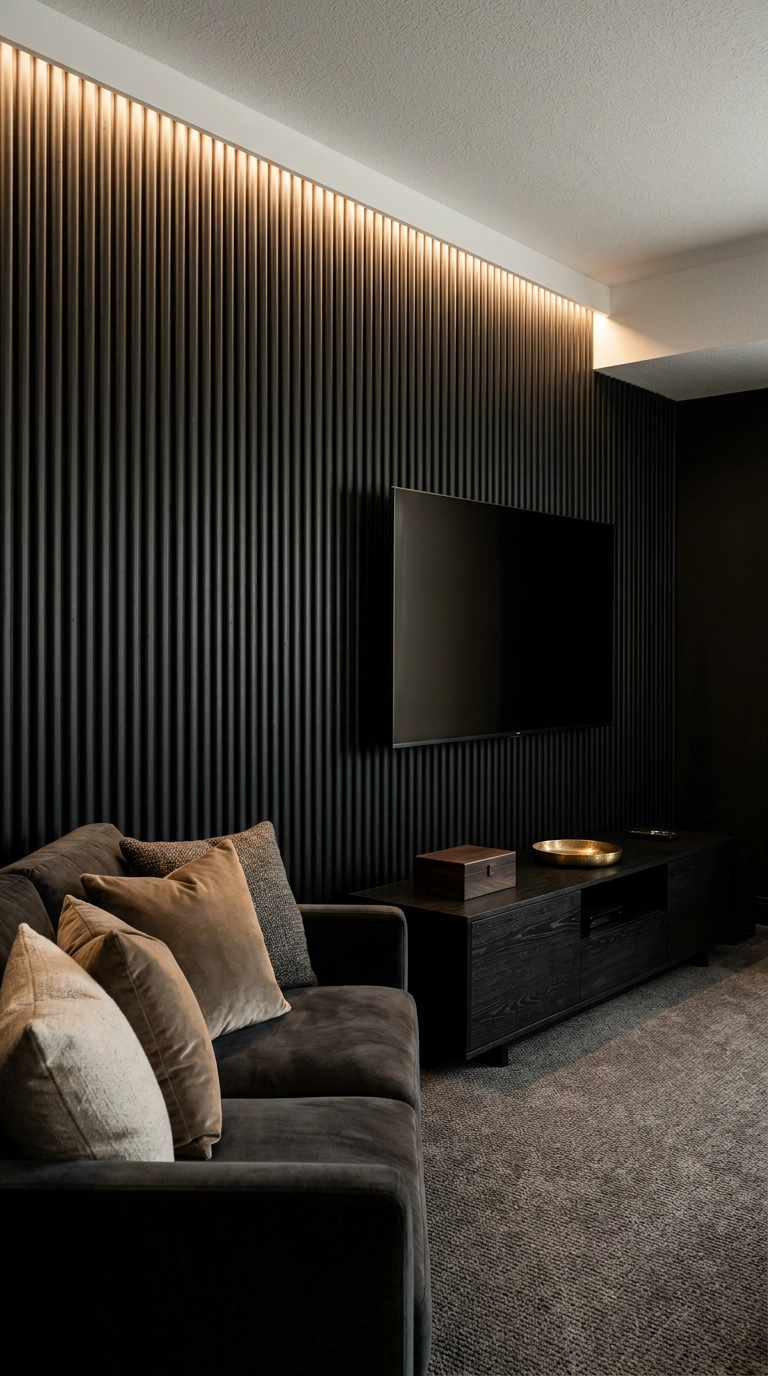
This is a genuine splurge and I will not pretend otherwise. Fluted panels, the ones with narrow rounded ribs running floor to ceiling, run several times the price of board and batten once you factor in the panels and the trim, but nothing else makes a black wall look this custom.
17. Drench a Powder Room in Gloss Black, Ceiling Included
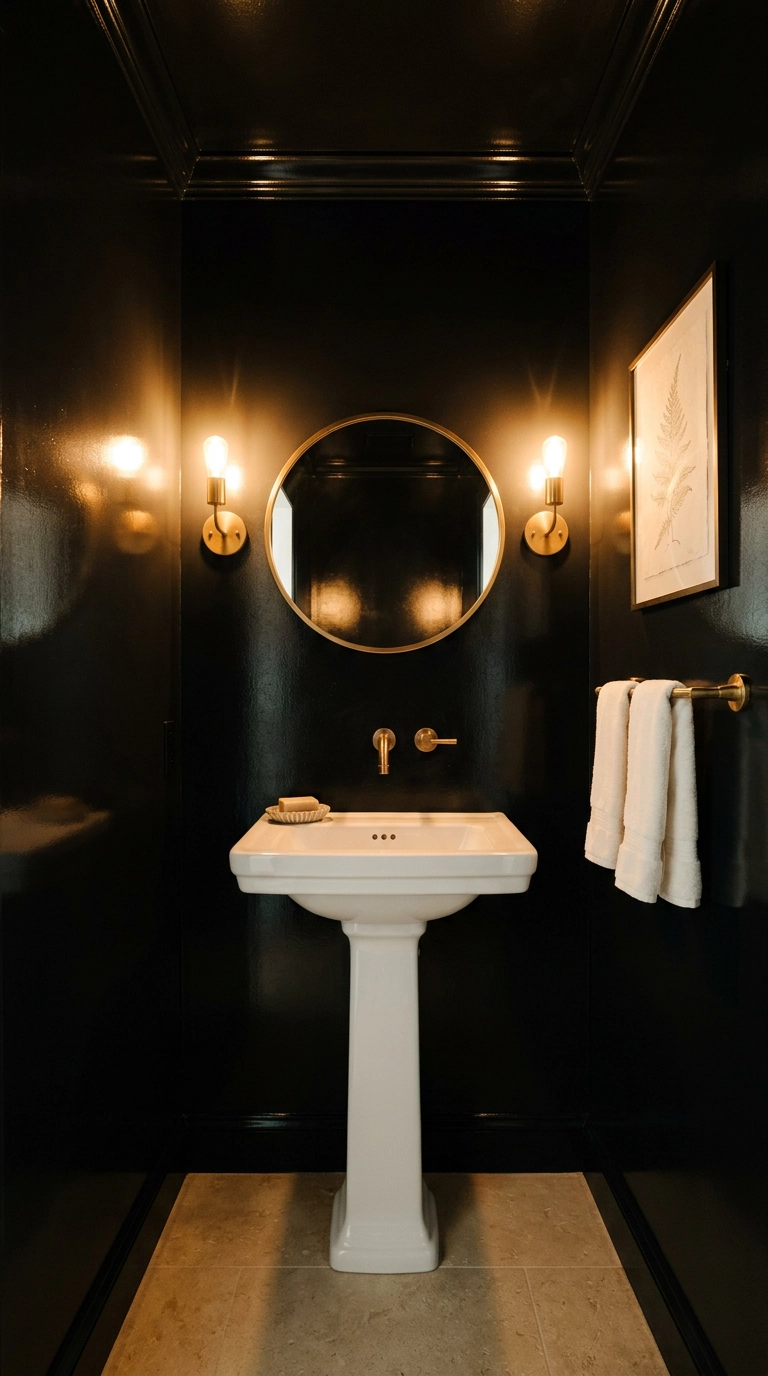
Powder rooms are the lowest-stakes room in the house, which is why I send nervous clients here first. Paint every surface including the ceiling in a high-gloss black and the tiny room stops reading as small, it reads as a deliberate jewel box, because gloss reflects light and the corners visually dissolve.
18. The Home Office Video-Call Wall, Where Black Actually Does You a Favor
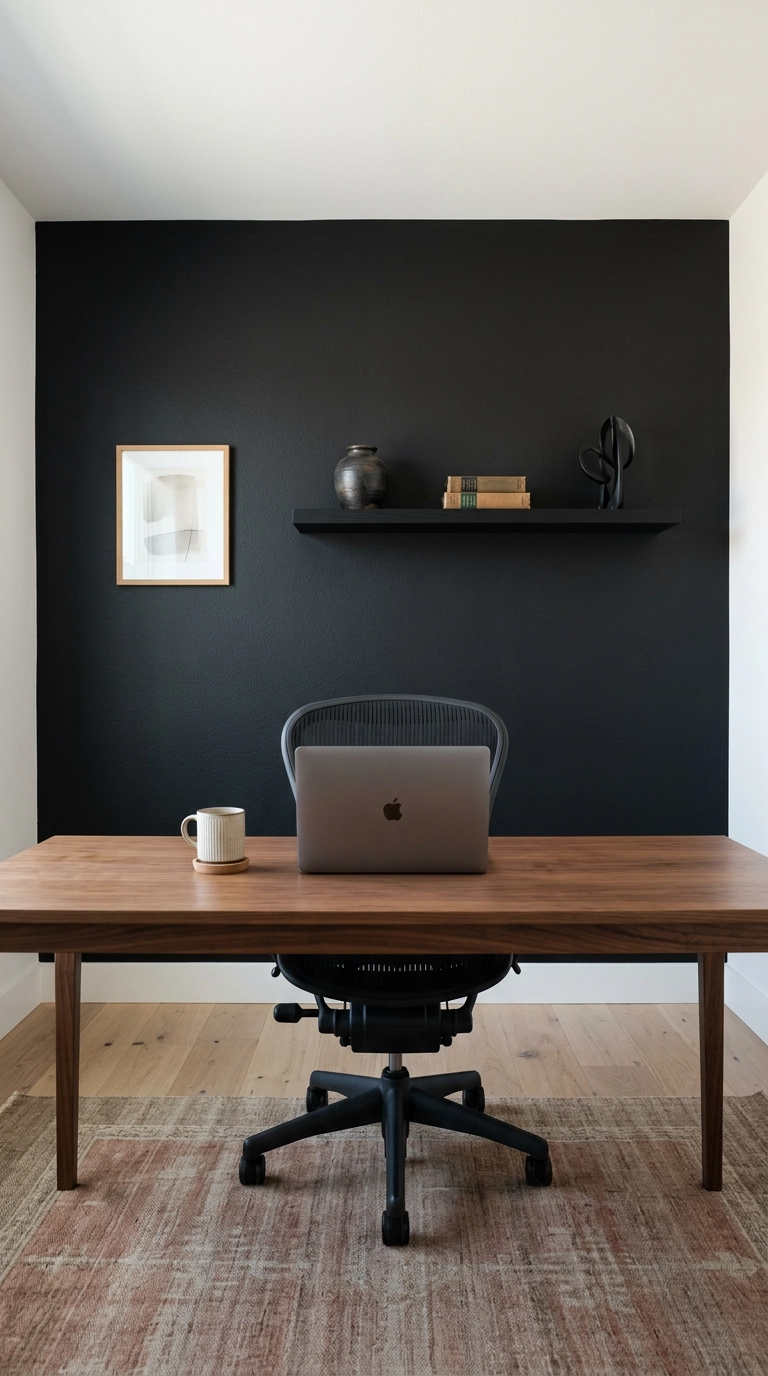
Here is a practical argument for black that nobody makes: it is the best video-call background you can build. A black wall behind you means the camera exposes for your face instead of a bright window, and the shelf behind your shoulder reads as depth rather than clutter.
19. Renter Move: Black Wool Felt Panels That Come Off With the Security Deposit Intact
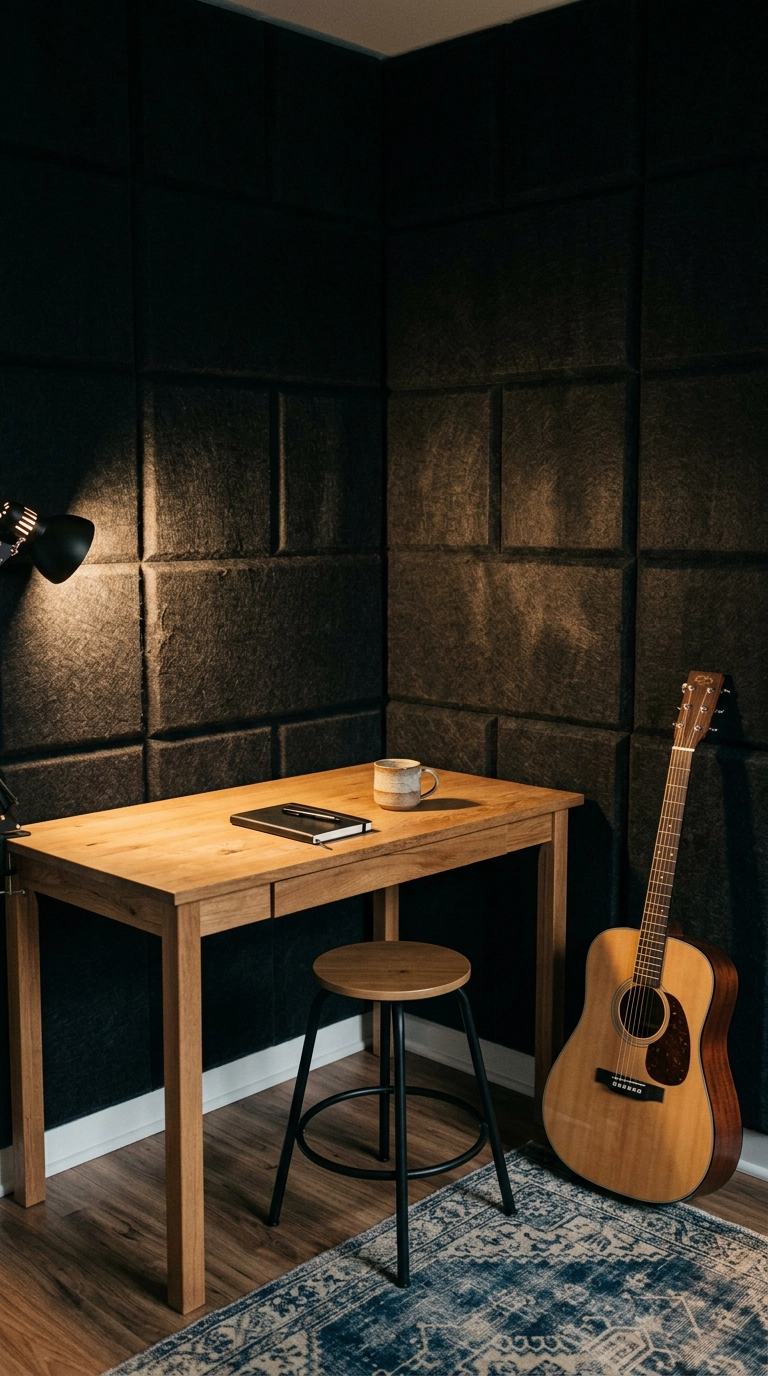
Black felt is the sleeper renter option and I wish more people knew about it. Dense wool or PET felt panels mount with heavy-duty velcro strips or a few command strips, the nap gives you the softest black texture of anything on this list, and they kill echo in a hard-surfaced apartment at the same time.
20. Black the Stairwell and Hang White Frames Up the Rake
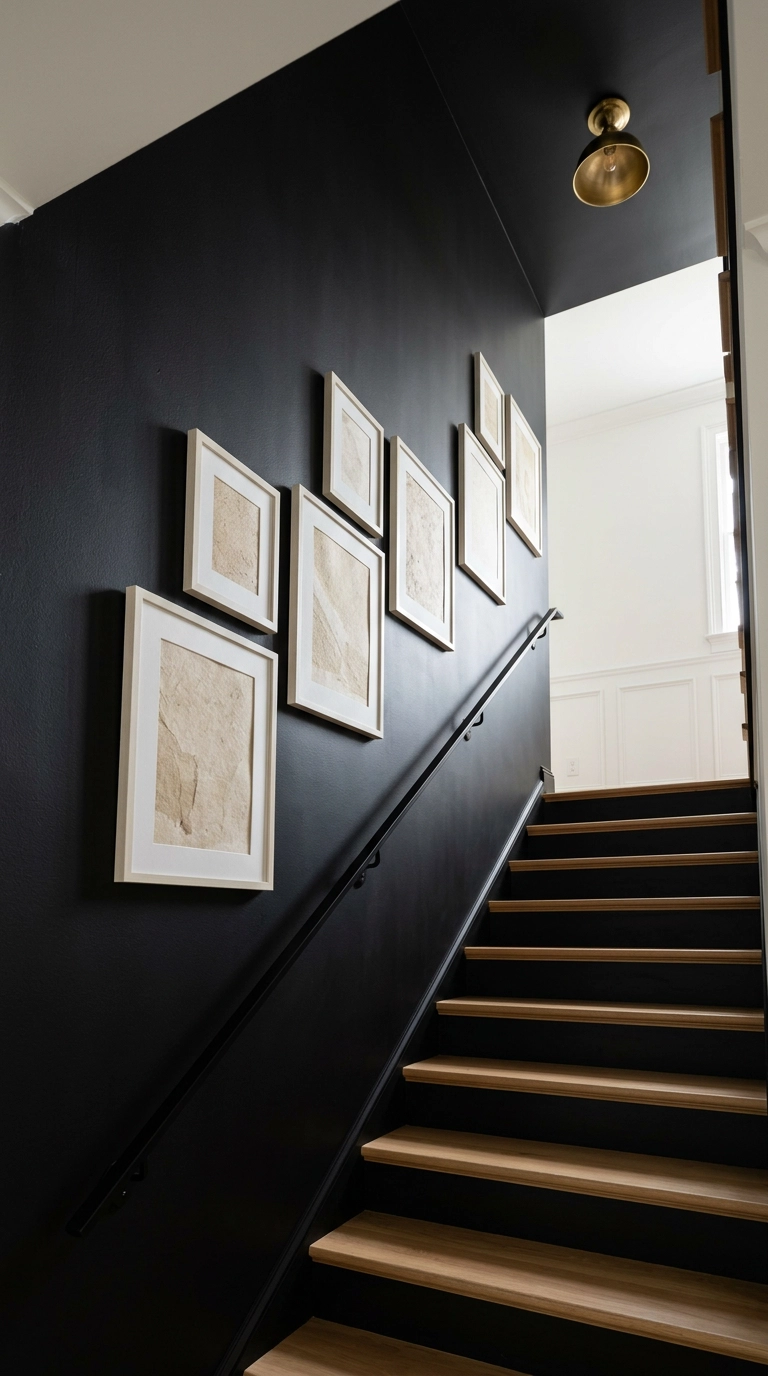
Stairwells are the most wasted wall in an American house, and they are ideal for black because you pass through rather than sit in them, so the drama never gets tiring. With no furniture competing, the wall becomes the entire event.
21. Splurge Number Two: Glossy Black Zellige Tile Behind the Tub
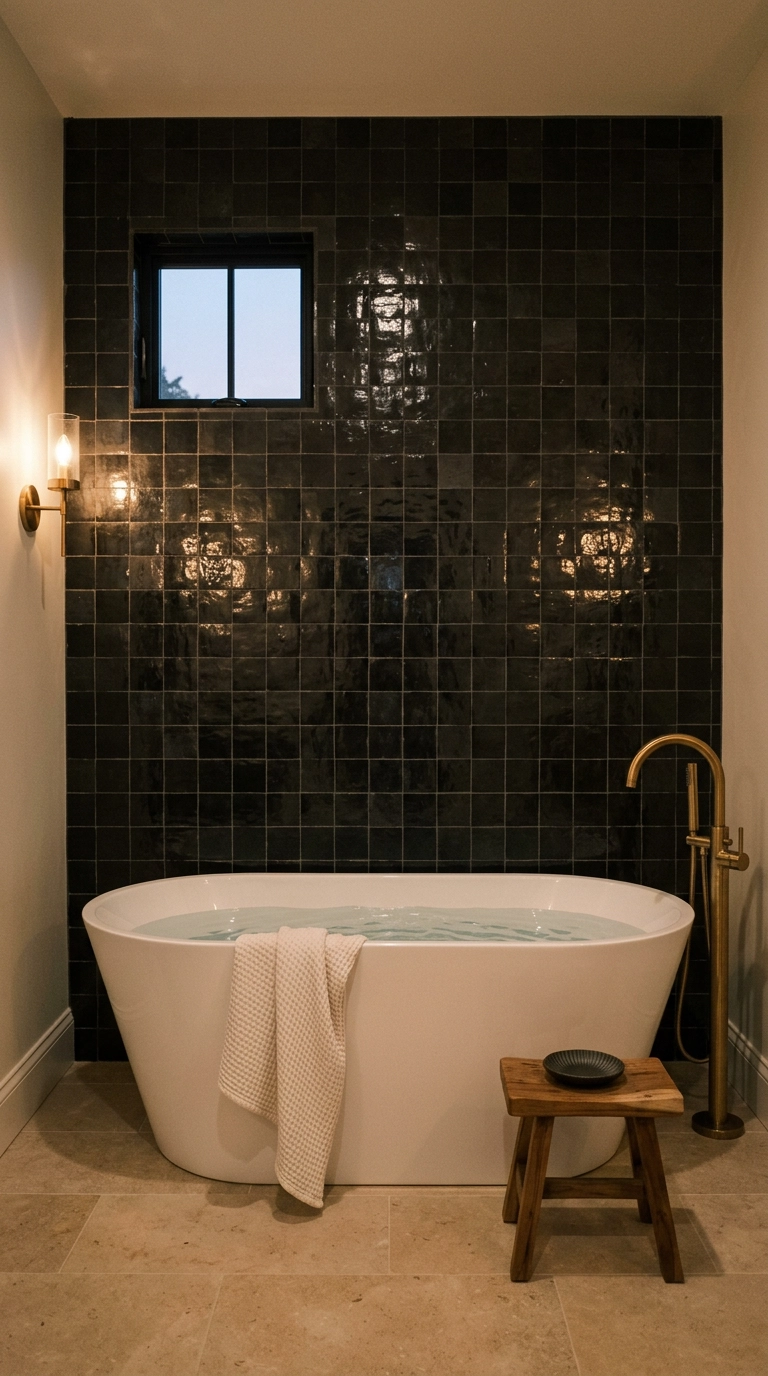
Zellige is handmade tile with an uneven glaze, and in black it is the one material that solves black’s light problem outright. Every slightly warped tile face bounces light at a different angle, so instead of absorbing the room’s light the wall sparkles with dozens of small highlights.
22. The Chalkboard Wall, Grown Up and Kept in the Breakfast Nook
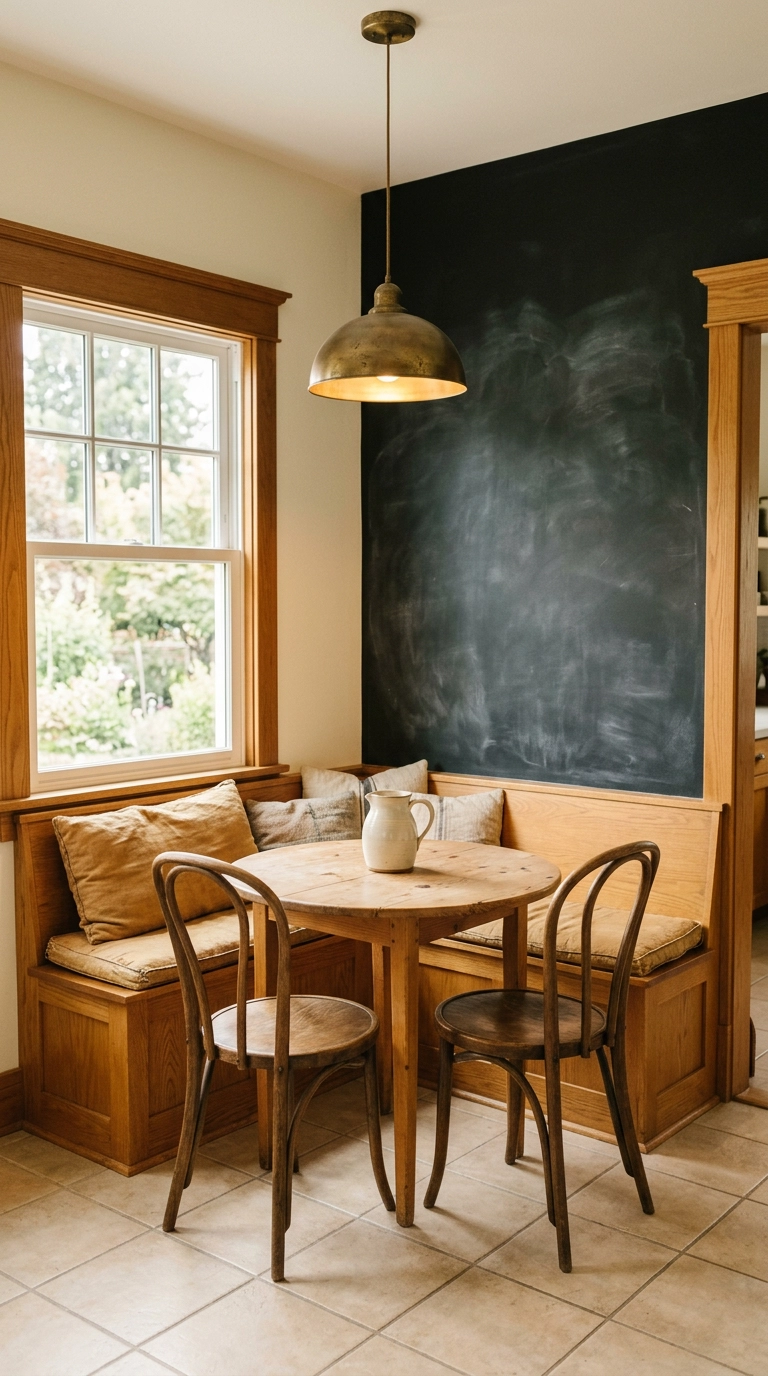
Chalkboard paint got a bad reputation from a decade of coffee-shop lettering, but stripped of the cutesy script it is just a very durable dead-matte black, and it happens to be the cheapest wall on this list at roughly forty dollars a quart.
23. The One-Hour Version Nobody Expects: Paint the Backs of Your Bookshelves Black
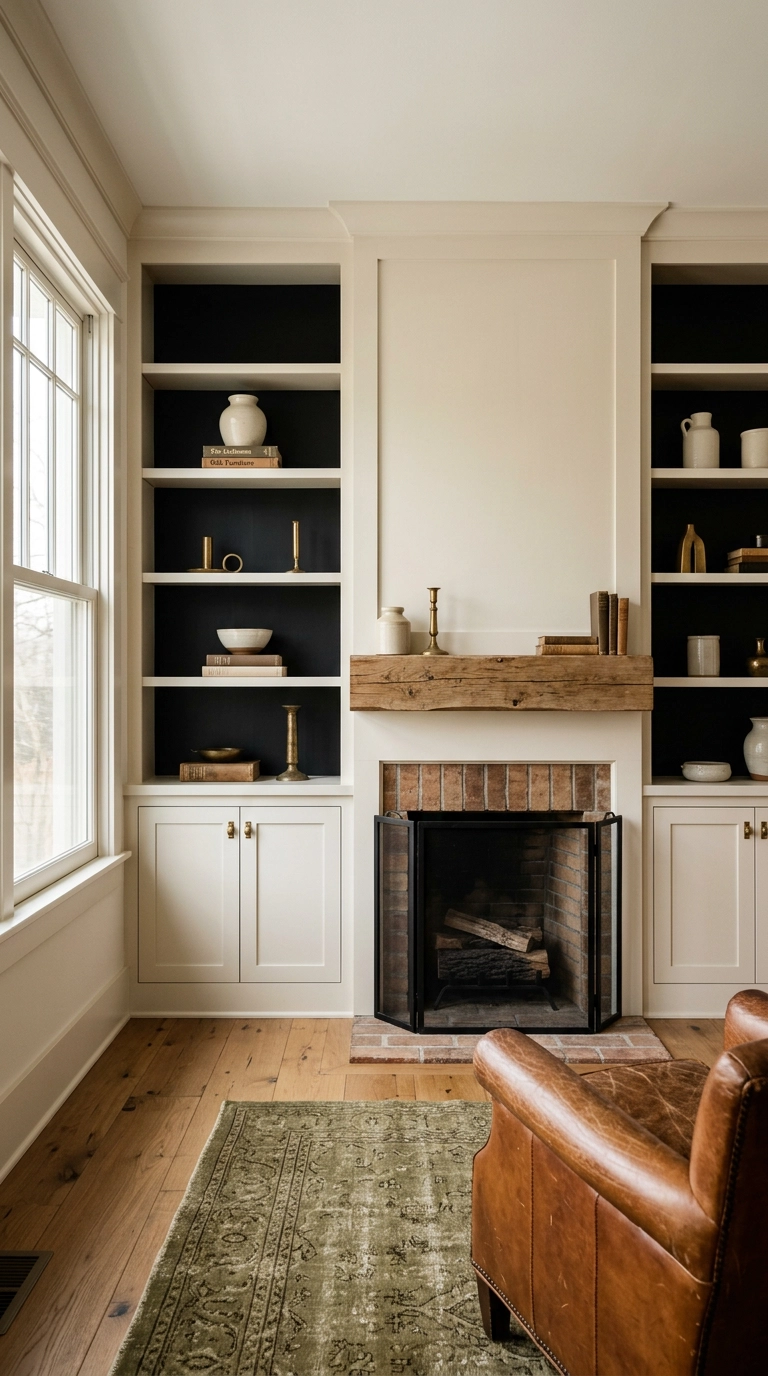
I am ending on my favorite trick because it costs a quart of paint and about an hour. Paint only the recessed back panels of your bookcase or built-ins black and leave the frame and shelves their existing color, and suddenly every pale object on those shelves reads as a crisp silhouette instead of blending into beige.
Where I’d Actually Start
If you take one thing from all of this, let it be the sheen and the light. A matte black behind the sofa with two plug-in sconces and a battery picture light will get you further than any expensive material, and it is the combination I have repeated in more homes than I can count. Everything else on this list is a variation on that same idea: give the black some texture, then hand back the light it swallowed.
Black is having a genuinely good run right now, and not in the cold industrial way it did a decade ago. The version people are actually living with in 2026 is warmer and softer, black limewash and fluted panels and drenched trim, the Farrow and Ball Off-Black and Railings end of the spectrum rather than a flat charcoal box. Nate Berkus has been putting dark walls behind pale art for years and it still looks current, which tells you something about how well this ages when the finish and the lighting are right.
So pick your wall, tape a black sheet up for a week, and see how you feel on day seven. If you want more of this, the weekend paint tests, the light fixtures that actually work on dark walls, and the projects I only half recommend, sign up for my weekly newsletter and I will send it straight to you.