
24+ Stunning Mid Century Modern Living Room Decor Ideas That Still Look Fresh in 2026

I have styled enough of these rooms to know the trap: people buy four pieces with tapered legs, line them up against the walls, and wonder why it looks like a furniture showroom instead of a home. Real mid century modern living rooms were designed around low horizontal lines, warm wood grain, and one or two genuinely sculptural moments — not a checklist of walnut rectangles. I am going to walk you through what actually makes the look land, including the unglamorous stuff nobody mentions, like seat heights, leg splay angles, and how to tell a solid teak drawer front from a photograph of one glued to particleboard.
Mid Century Modern Living Room Decor Ideas
1. Start With a Genuinely Low Sofa — 16 to 17 Inches, Not 20
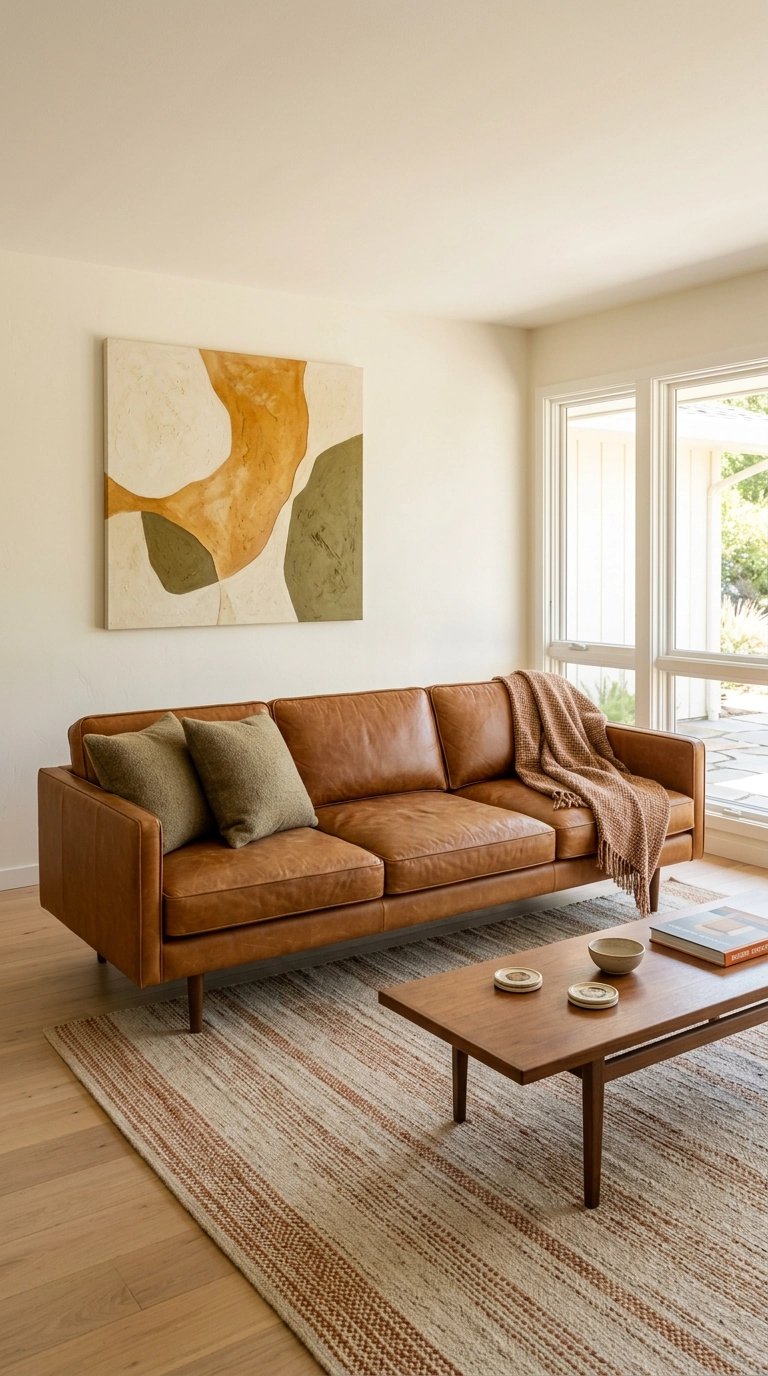
This is the single biggest tell between a real mid century room and a “mid century inspired” one. Period sofas sat around 16 to 17 inches off the floor with a shallow 21 to 22 inch seat depth, while most mass-market versions today creep up to 19 or 20 inches and add three inches of depth so they feel more like a recliner.
2. Float a Credenza Off the Wall Instead of Parking a Console Against It
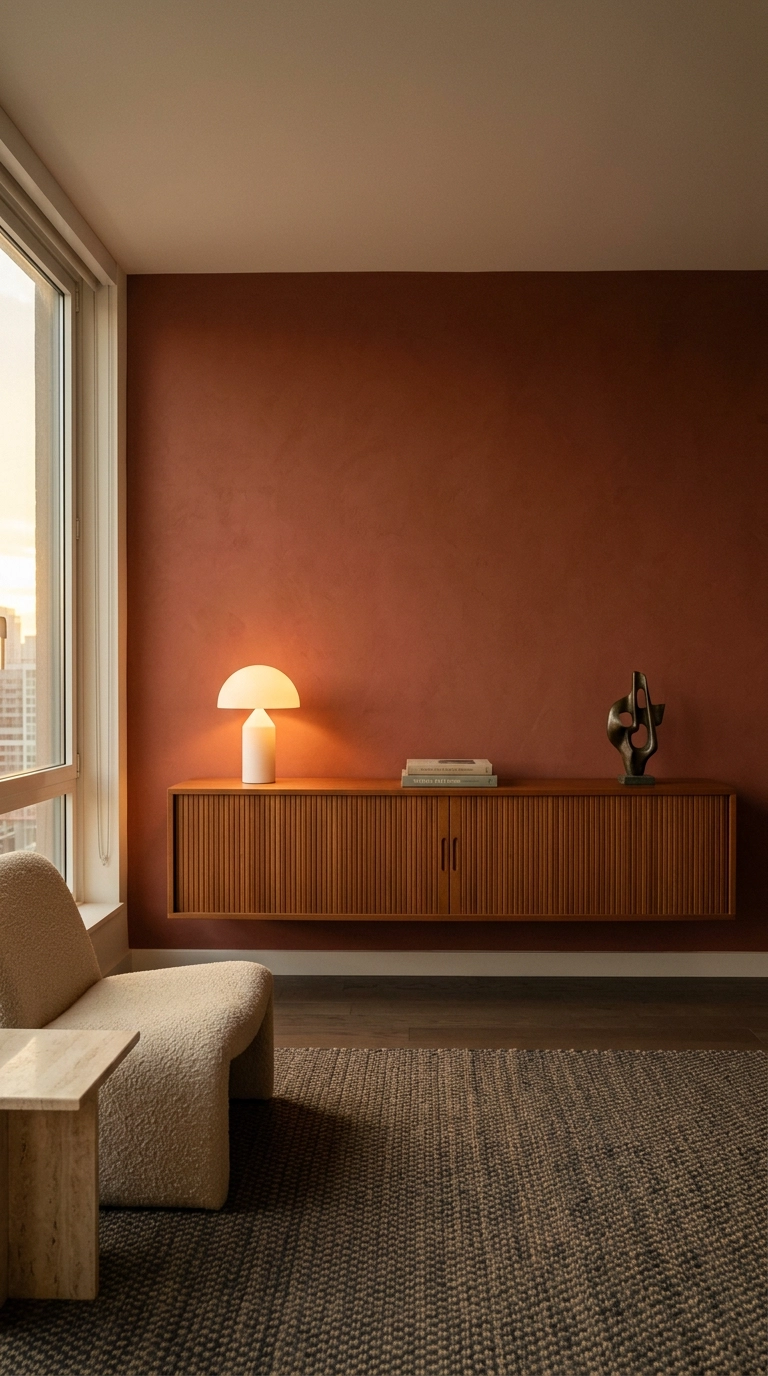
A wall-mounted credenza with 12 to 16 inches of clear floor beneath it is the cheapest visual square footage you will ever buy. You can see the floor run underneath, so the room reads longer, and vacuuming stops being a wrestling match.
3. Paint One Wall a Period Color Instead of Buying More Brown Furniture
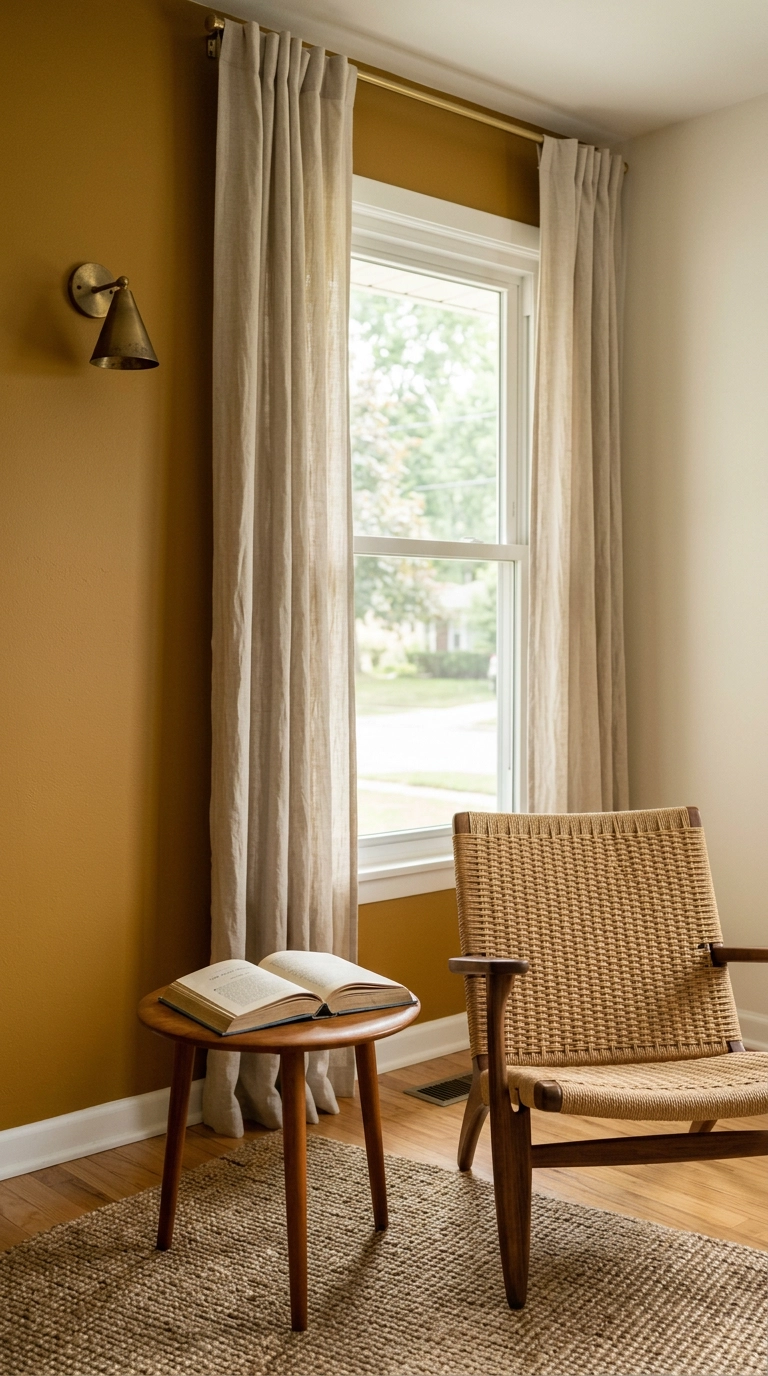
Mid century palettes were warmer and dirtier than the internet suggests: mustard ochre, olive drab, burnt sienna, teal, and a lot of soft plaster white. A gallon of paint and a Saturday will shift a room further than a $1,200 chair will.
4. Hang a Real Globe or Spun-Metal Pendant Where the Builder Boob Light Was
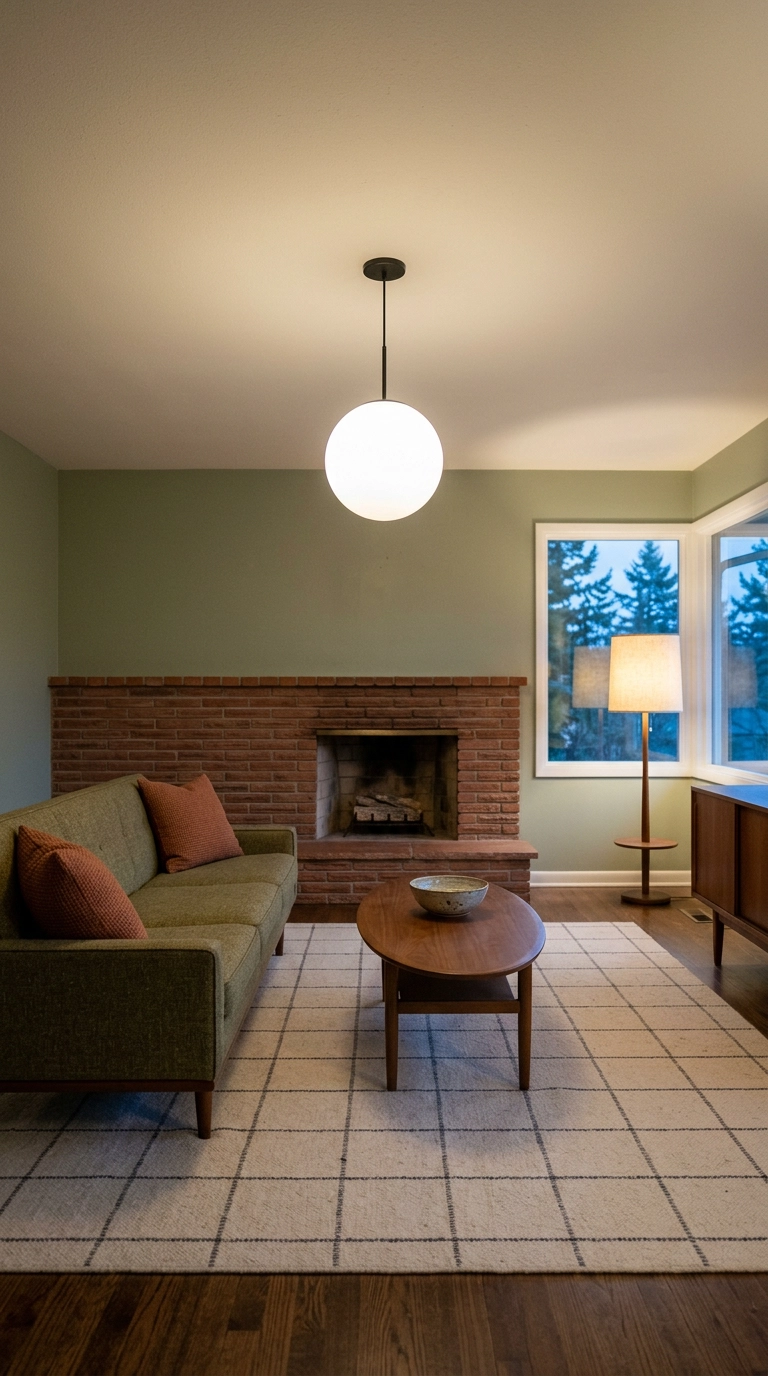
Nothing kills the look faster than a frosted dome flush mount from 2004. A single opal glass globe, a spun aluminum cone, or a three-arm sputnik in a restrained size resets the whole ceiling for well under two hundred dollars.
5. Learn the Leg Vocabulary — Tapered, Splayed, and Hairpin Are Not the Same Thing
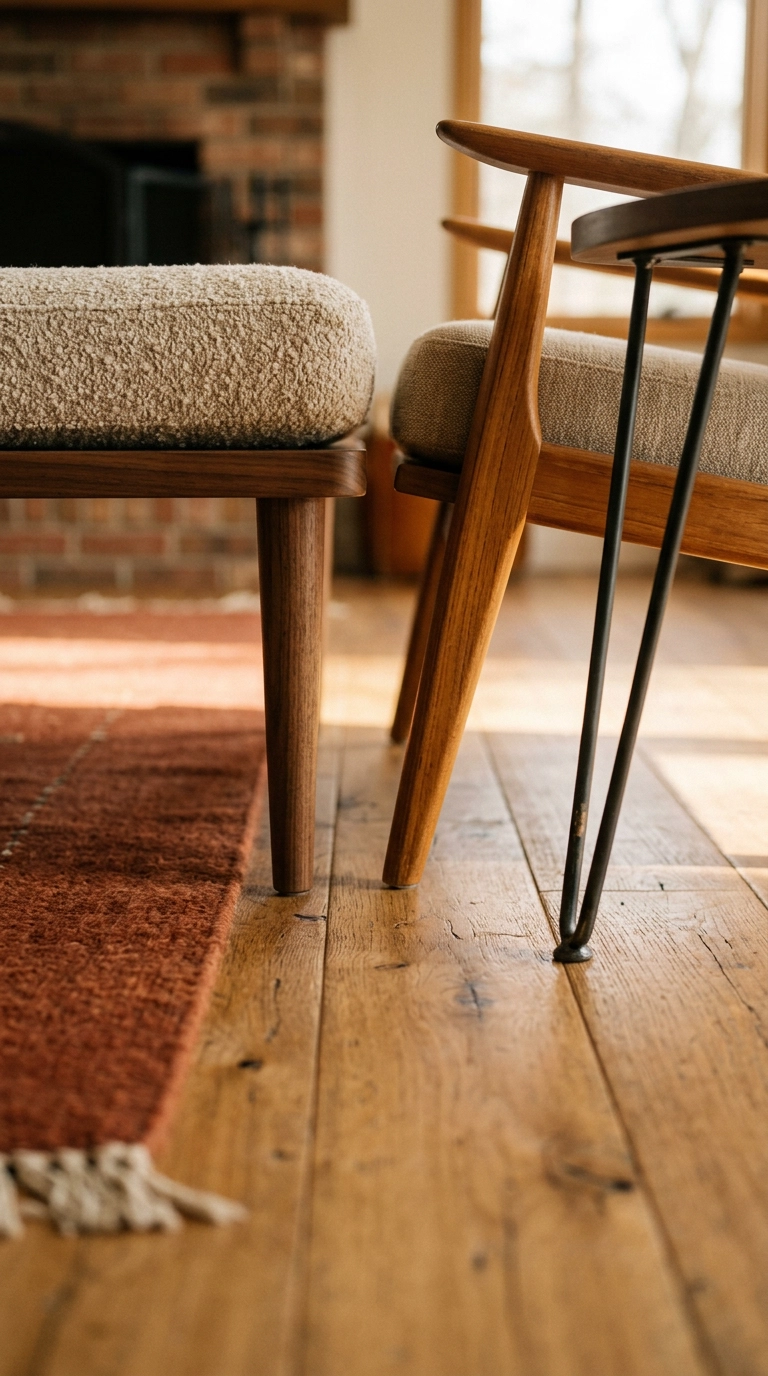
Tapered legs go straight down and get narrower — calm, Danish, easy to mix. Splayed legs angle outward from the frame, usually 8 to 15 degrees, and they make a piece look like it is bracing itself, which is where the energy in these rooms comes from.
6. Bring in Cane Webbing for Warmth Without Weight
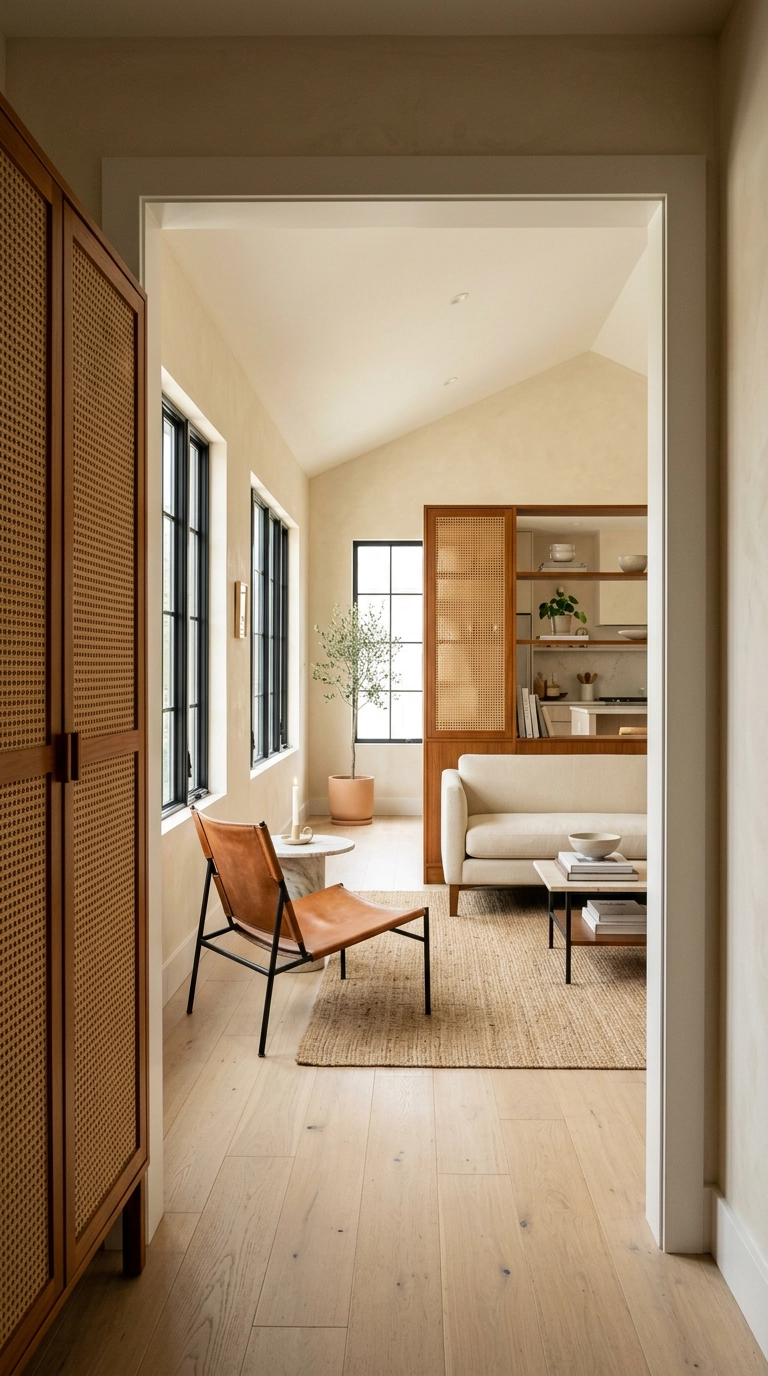
Cane webbing — that hexagonal woven rattan mesh — lets light and air pass through, so a big storage piece stops reading as a solid block. In a small dark living room, that difference is the whole ballgame.
7. Anchor the Room With a Kilim, Not Another Beige Shag
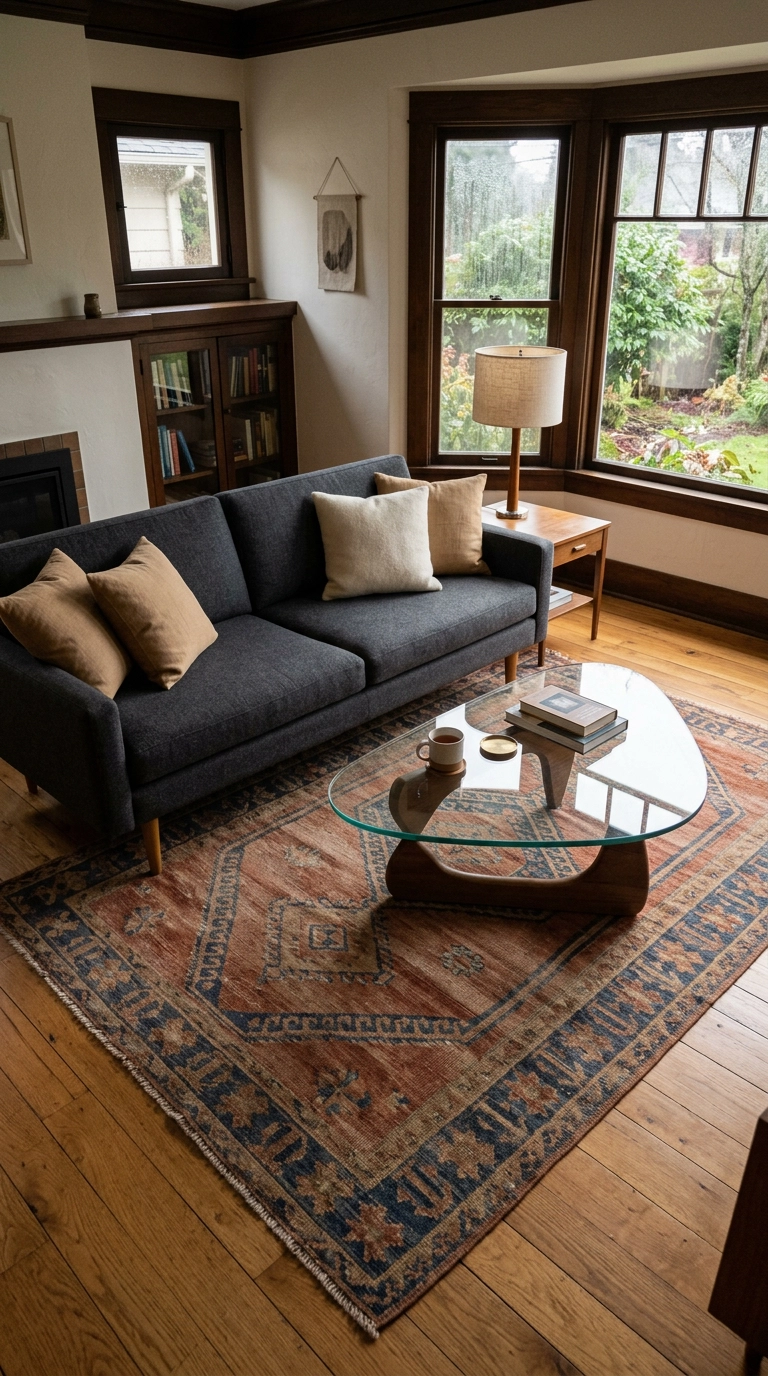
Kilims were everywhere in mid century interiors because a flat weave sits low, plays nicely with wooden legs, and brings pattern in without adding visual bulk. Go one size bigger than feels right — the front legs of every seat should land on the rug, or the whole arrangement drifts apart.
8. Add One Sculptural Lounge Chair With a Bent-Wood Shell
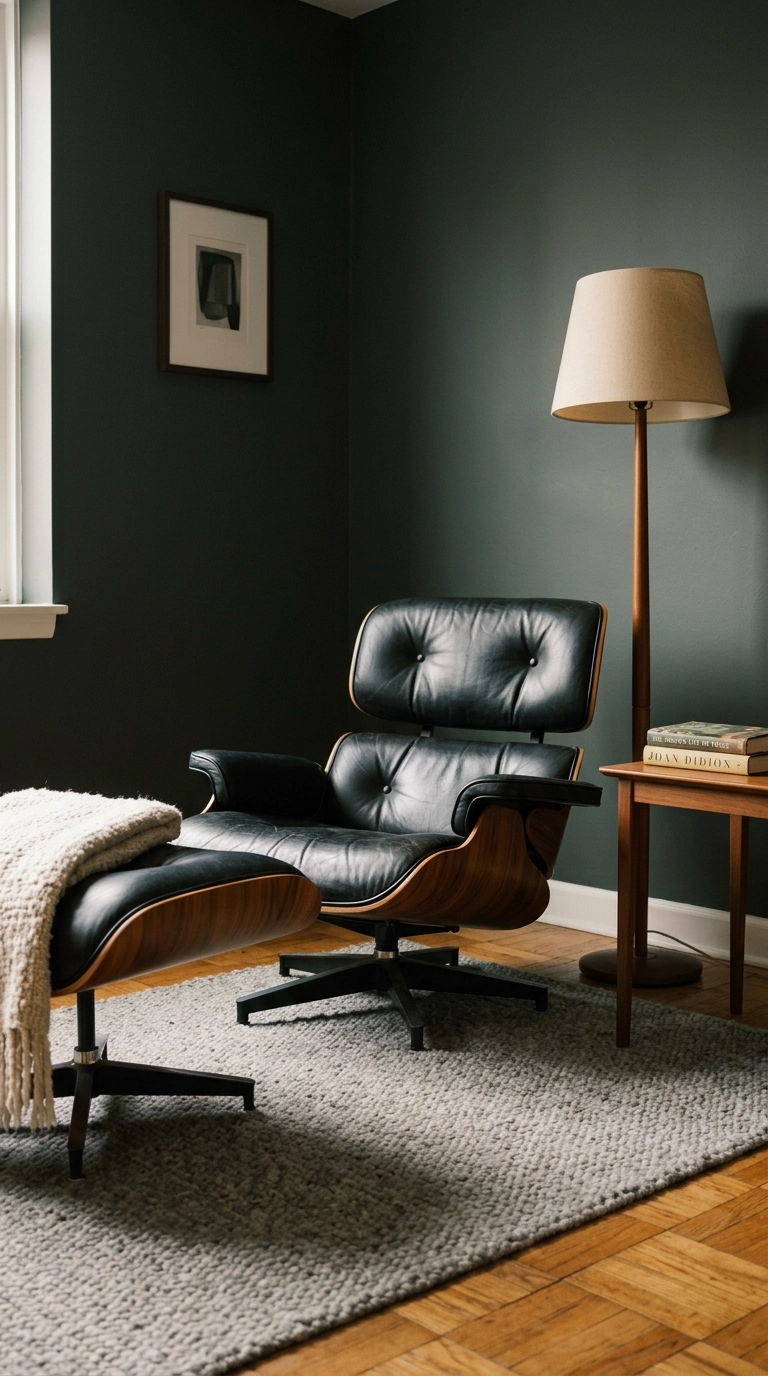
Every mid century room needs one piece that is clearly a sculpture you are allowed to sit in. A curved plywood shell chair does that job with a footprint smaller than an armchair, which is why it works even in a 12×14 room.
9. Mix Walnut, Teak, and Rosewood on Purpose — Match Undertone, Not Color
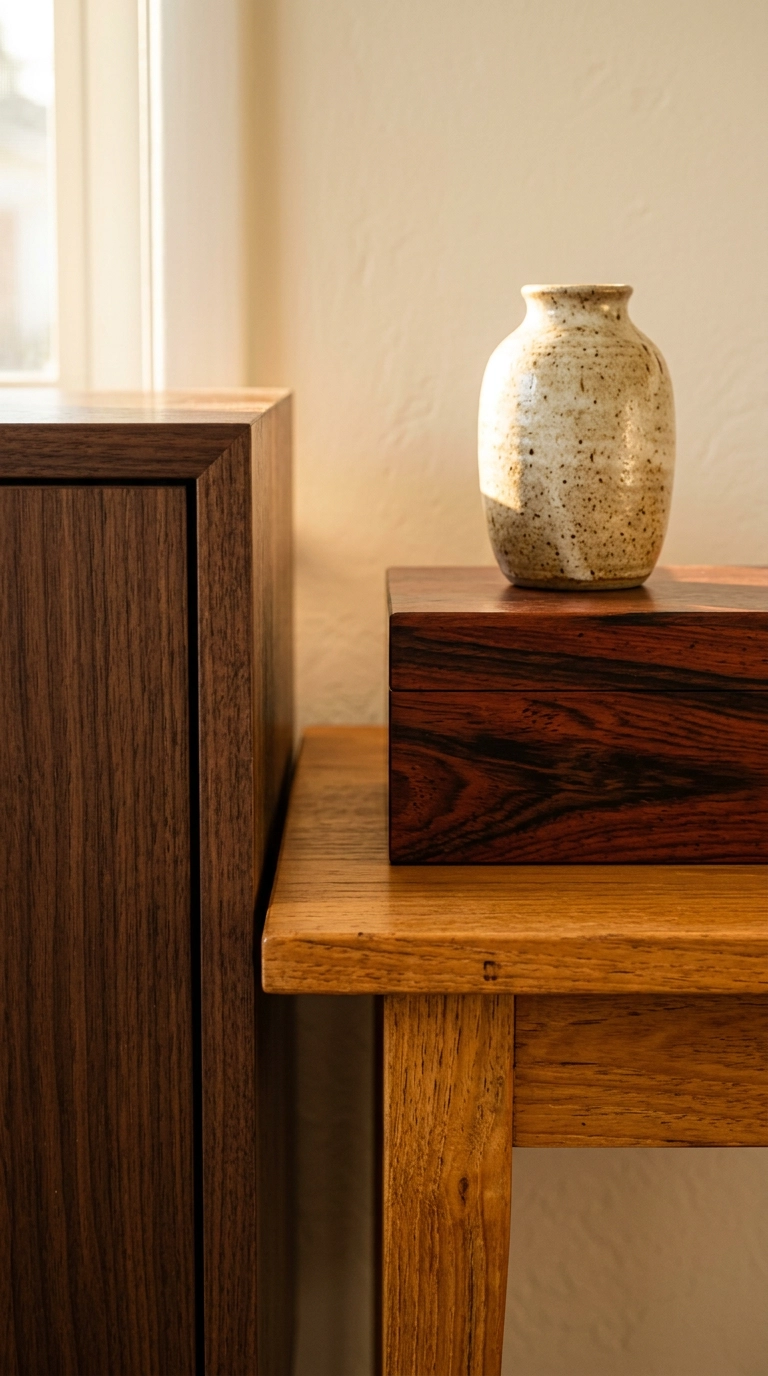
Walnut is chocolate brown with a straight, tight, almost velvety grain. Teak is golden and slightly oily with wider open pores that darken with age, and rosewood is the dramatic one, reddish-brown with black streaking that behaves like marble.
10. Hang a Sunburst Clock, But Get the Height and the Wall Right
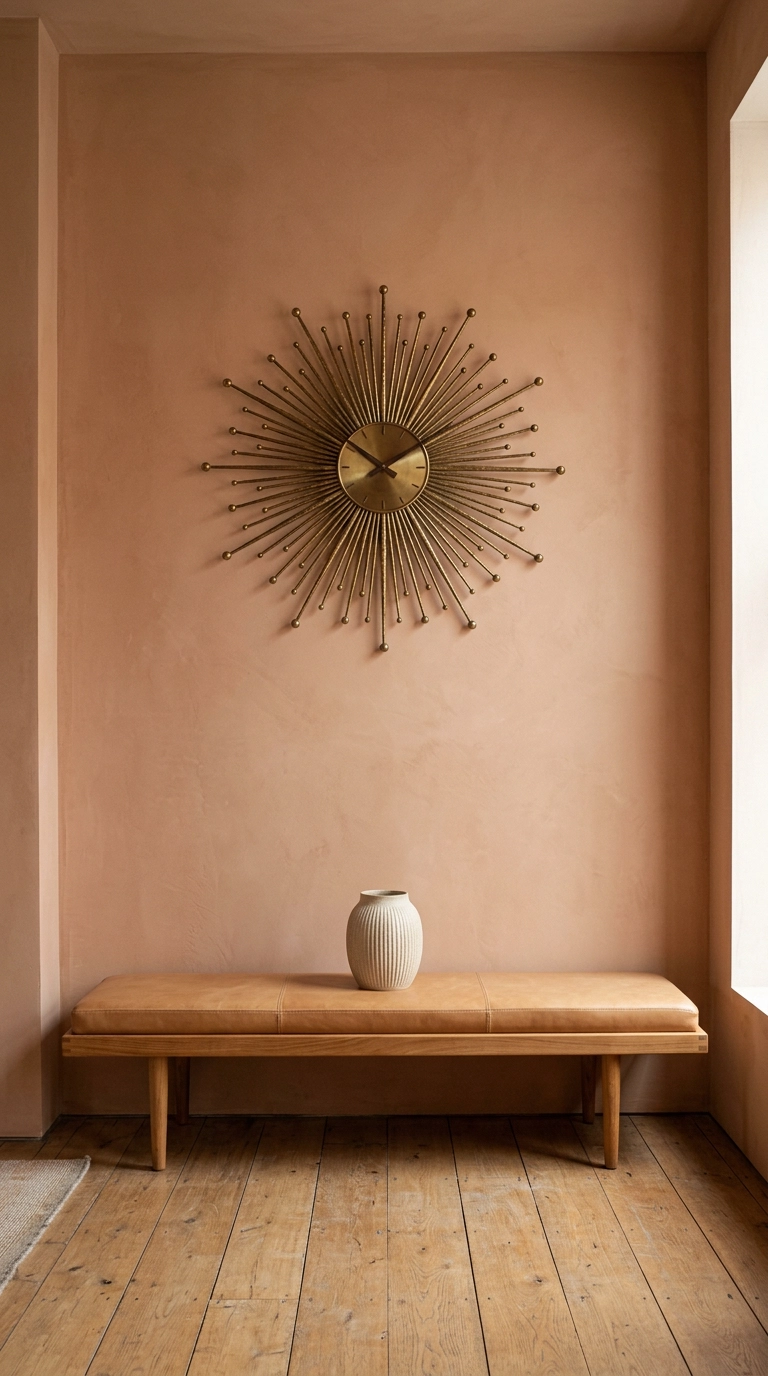
A starburst or sunburst clock only works with air around it, so give it a wall with nothing else competing and center it about 60 inches from the floor, which is standard eye level. Crammed above a full gallery wall it just looks like a spider.
11. Build a Slat Room Divider to Split an Open-Plan Space
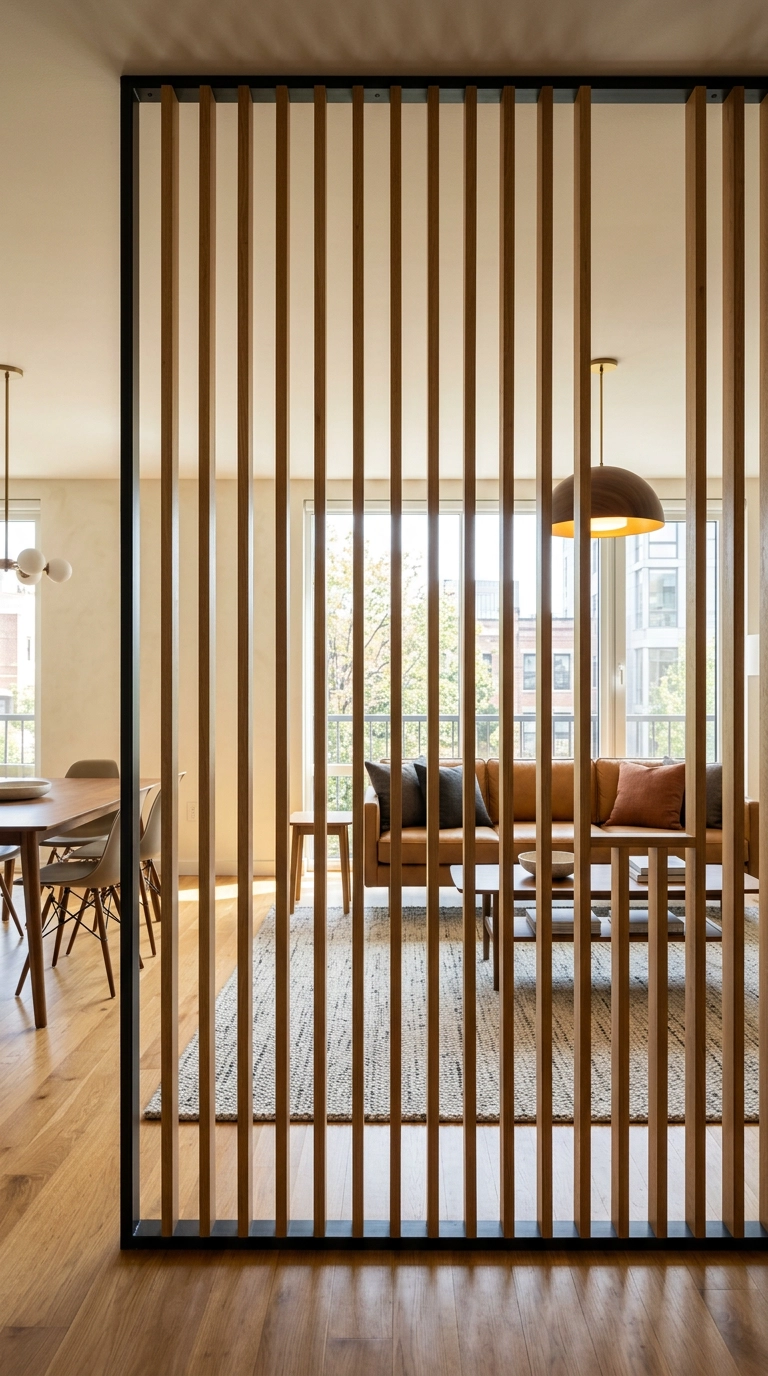
Open-plan rooms were the whole point of mid century houses, and the period solution to “where does one room end” was never a wall — it was a slatted screen you could see through. Two-inch slats with two-inch gaps at floor-to-ceiling height cost maybe a couple hundred dollars in poplar or oak and one determined weekend.
12. Fake a Conversation Pit With Rug, Scale, and a Tight Square
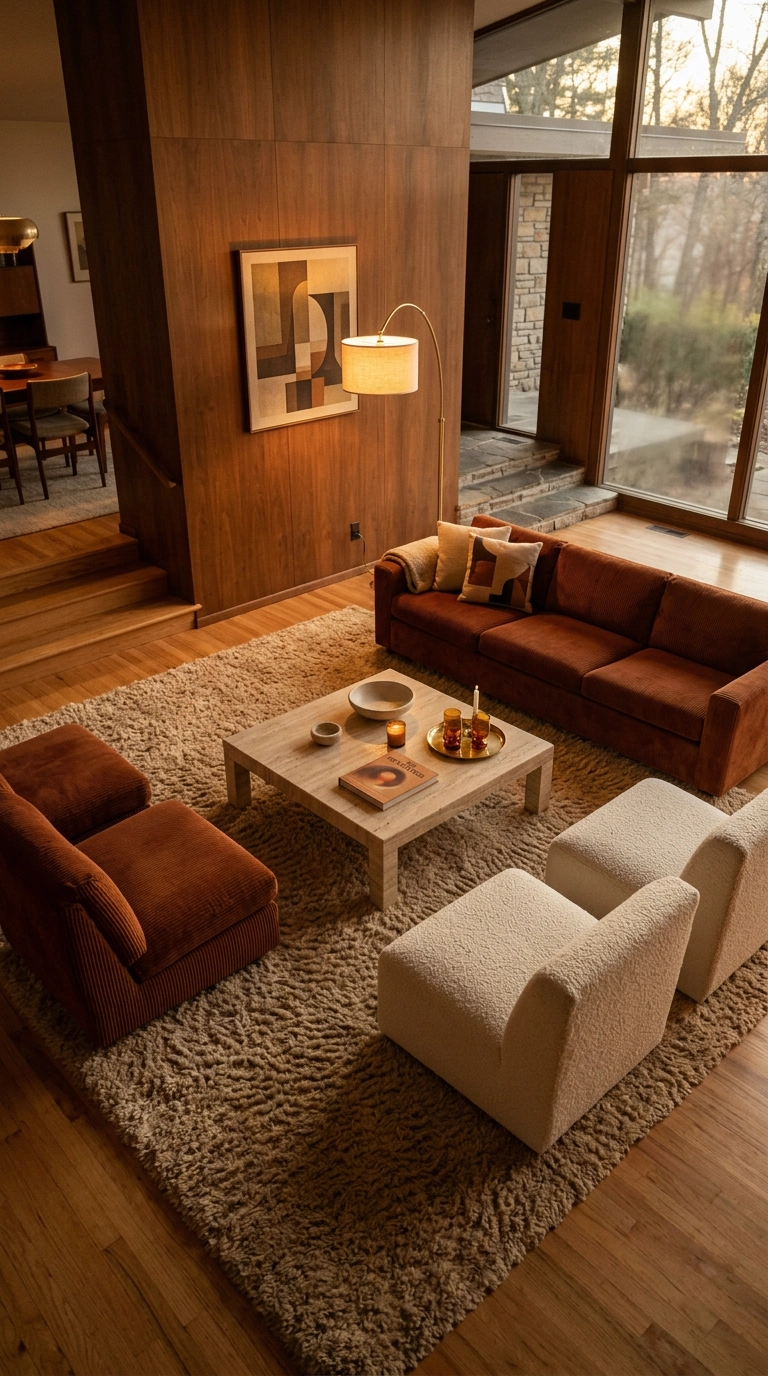
Nobody is excavating their floor, but the feeling of a conversation pit comes from three things you can copy: seats under 16 inches, all of them facing each other rather than the TV, and one enormous rug that swallows the entire group.
13. Restore a Thrifted Teak Piece Instead of Buying New
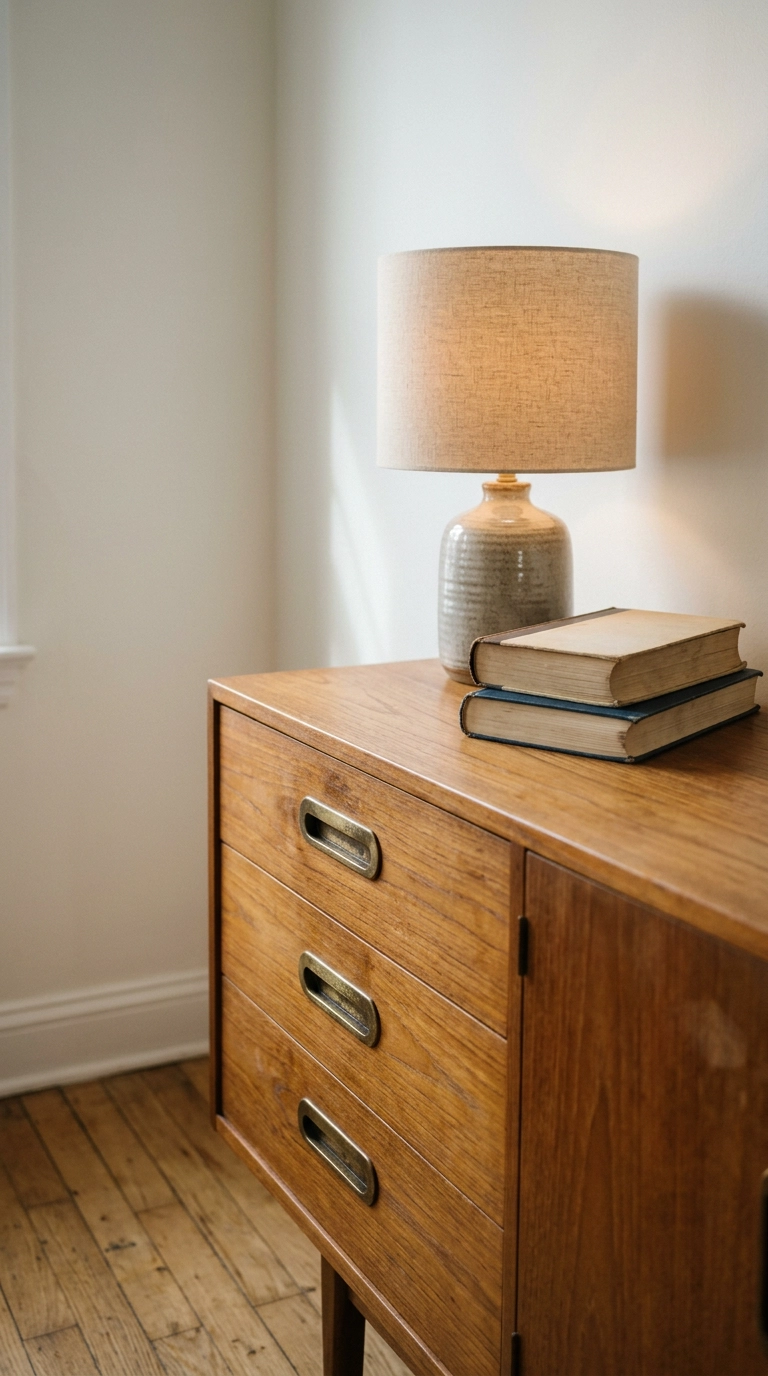
Estate sales and marketplace listings still turn up solid teak and walnut for less than a new veneer version costs, because the pieces look tired. Ninety percent of “tired” is a dry finish, and a bottle of Danish oil plus a rag fixes it in an hour.
14. Give a Dark Rental Living Room Warm Ochre and Brass Instead of More White
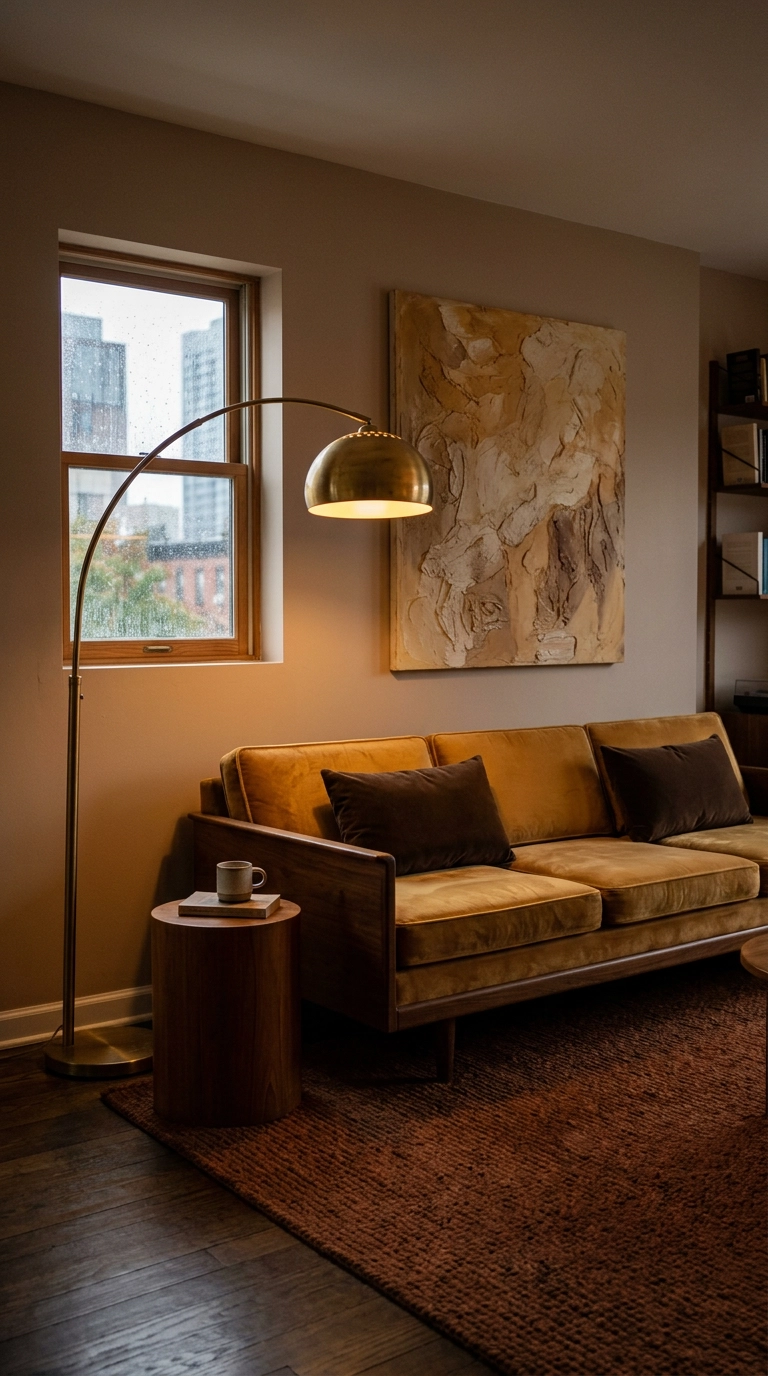
The instinct in a dark room is to paint everything white, and it always backfires — white with no light to reflect just goes grey and sad. Lean into it with warm clay and ochre, then add unlacquered brass, which bounces the small amount of light you do have with a golden cast.
15. Use Terrazzo or Travertine for a Cool Counterpoint to All That Wood
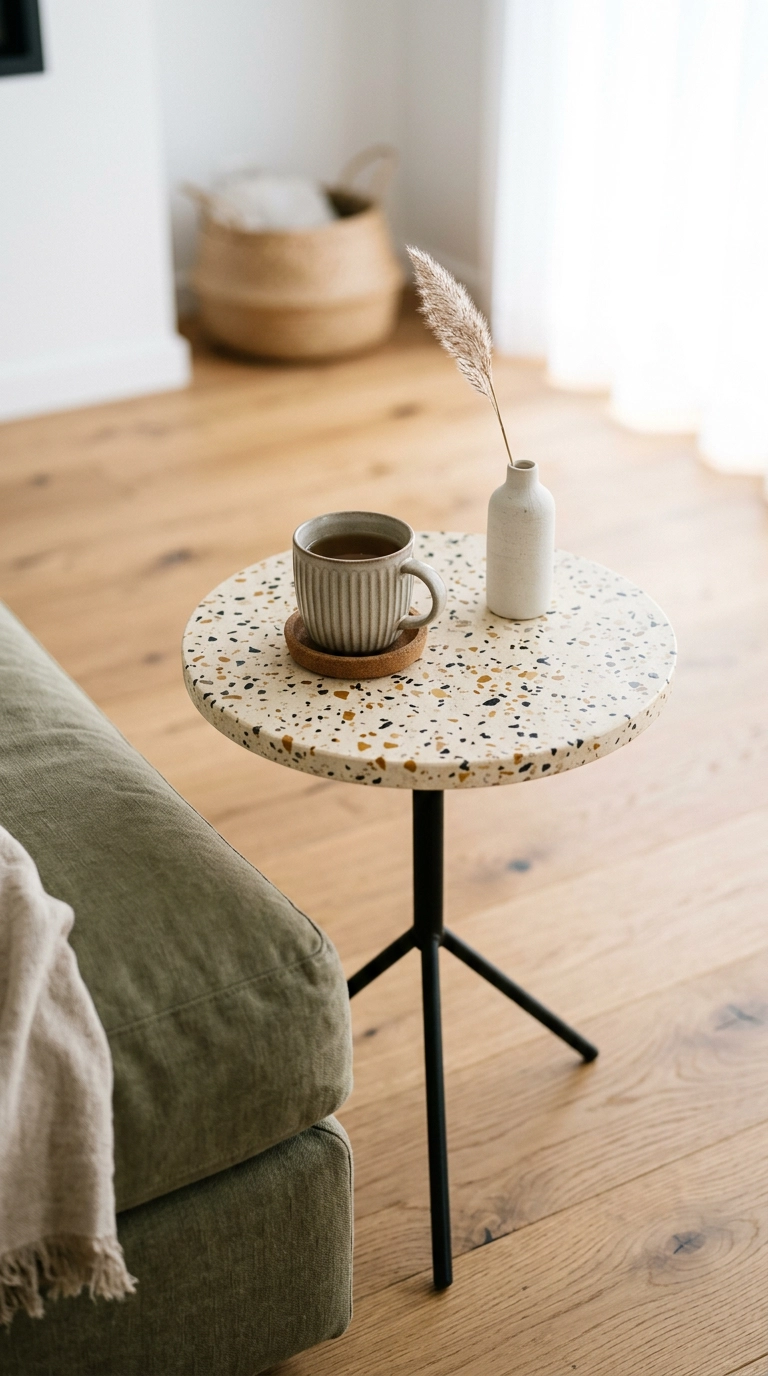
An all-wood room starts to feel like a sauna around the fourth walnut surface. One cool stone piece — terrazzo, travertine, or honed marble — breaks the temperature and makes the wood look richer by contrast.
16. Treat a Brick Fireplace as the Star, Not the Problem
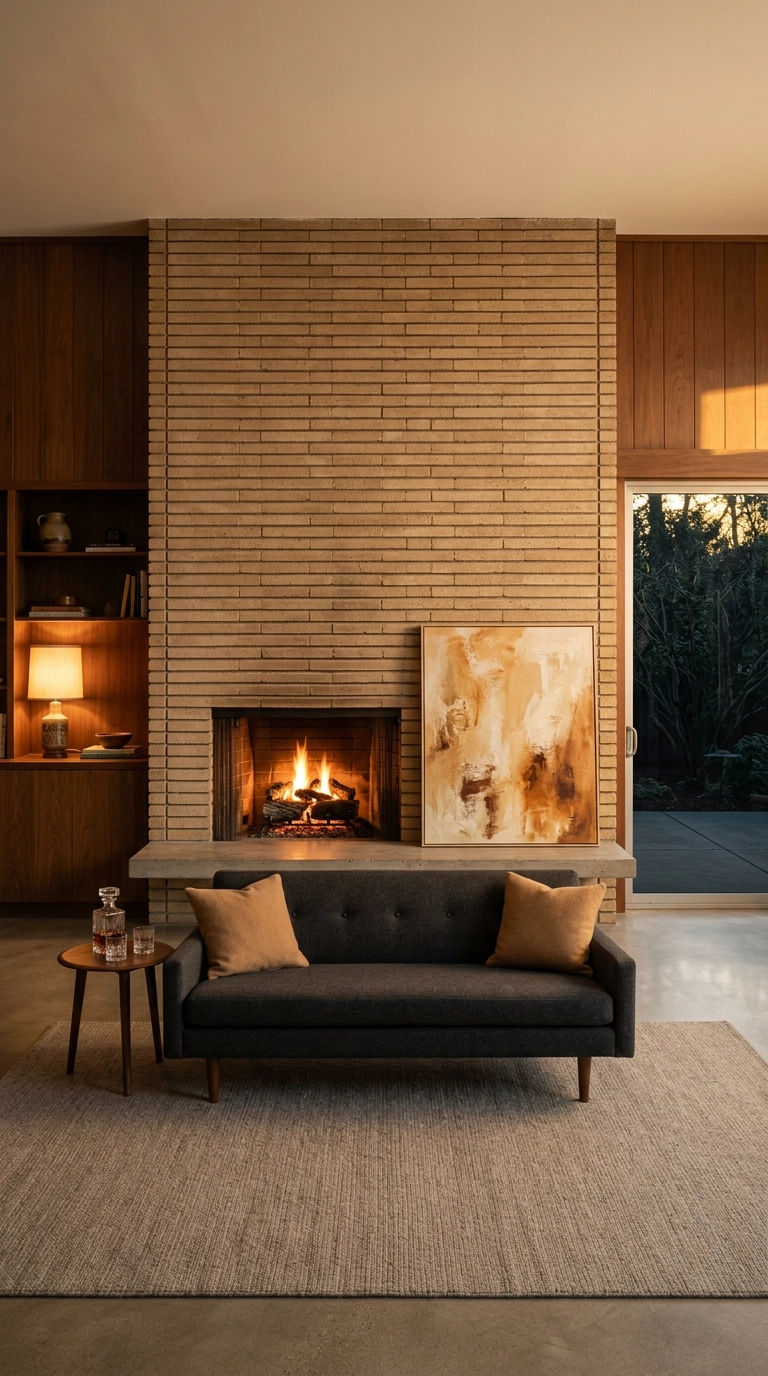
If your ranch came with long thin Roman brick and a floating hearth ledge, please do not paint it white. That horizontal brick coursing is one of the most valuable mid century details a house can have, and a mortar wash or a good scrub gets you a lighter tone without erasing it.
17. Swap the Hollow Six-Panel Door for a Flat Slab With a Long Tubular Pull
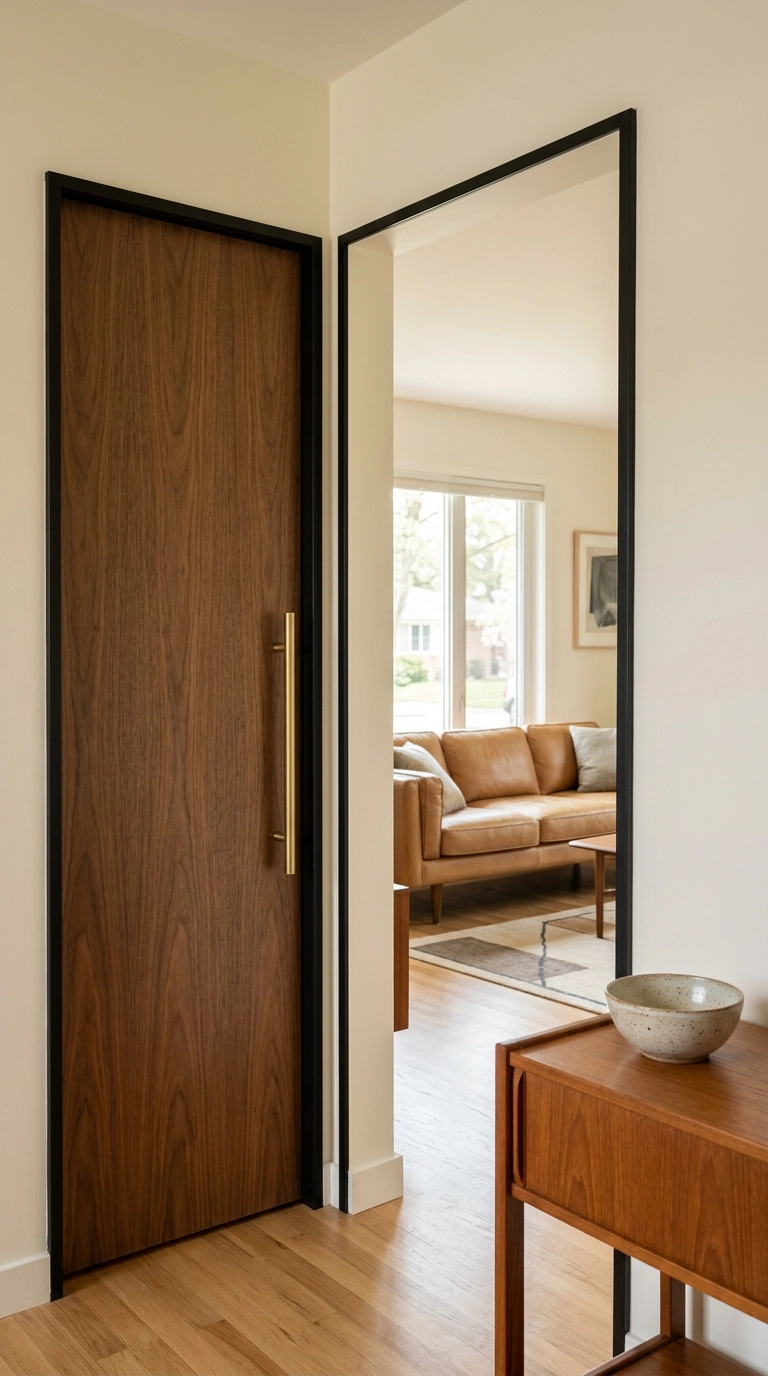
Colonial six-panel doors fight everything else in a mid century room, and they are the detail people never think to change. A flush slab door in walnut or paint-grade birch, plus a long vertical pull instead of a knob, quietly fixes the whole doorway.
18. Hang Curtains High, Wide, and in a Nubby Weave
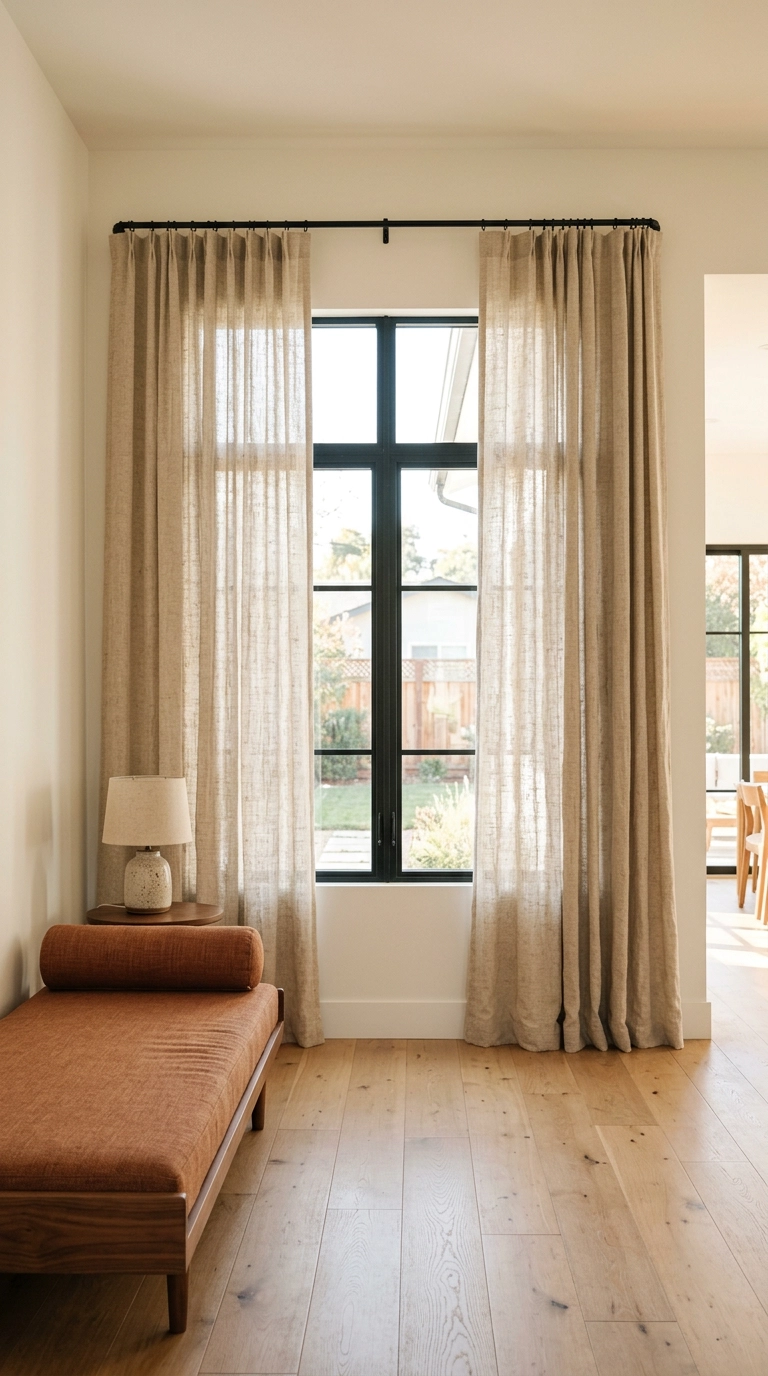
Mount the rod within a few inches of the ceiling and let it run 8 to 12 inches past the window frame on each side. Your eye reads the whole height as window, the ceiling lifts, and when the panels stack off the glass you get more actual daylight.
19. Repurpose a Hi-Fi Cabinet as the Bar or the Media Console
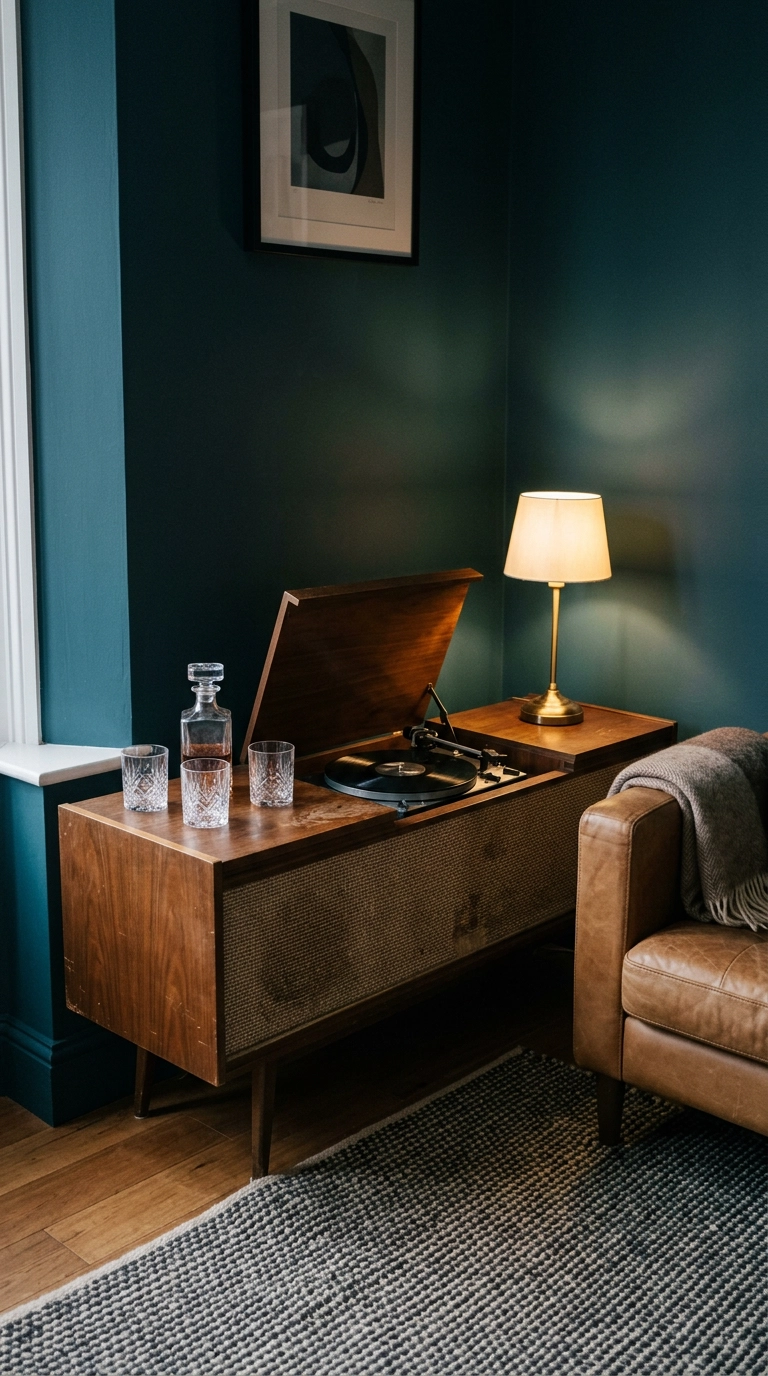
Old console stereos are the great bargain of the vintage market because the electronics are usually dead and sellers price them like junk. Gut the guts, keep the cabinet, and you have a 5-foot walnut credenza with a fabric grille panel for a couple hundred dollars.
20. Put an Atomic or Organic Motif in Exactly One Place
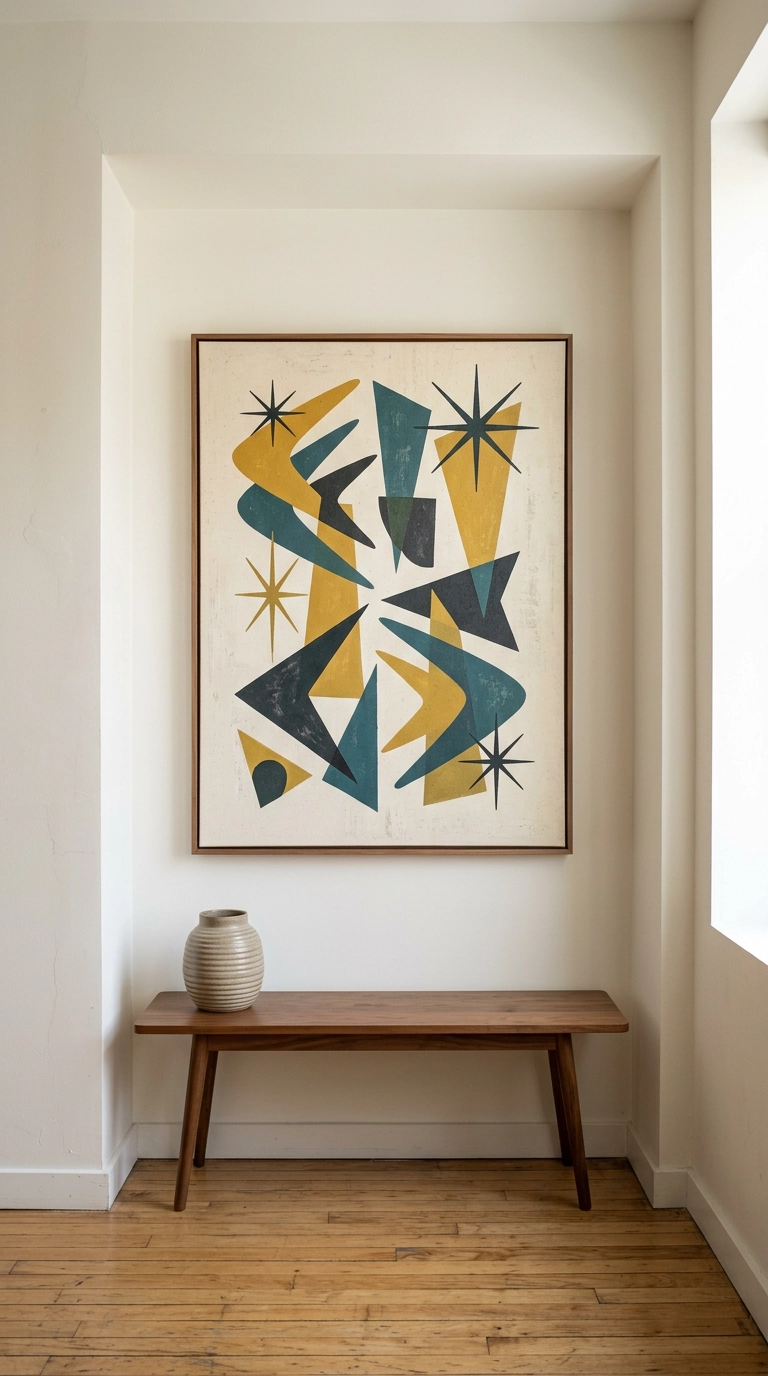
Atomic motifs — boomerangs, starbursts, amoeba shapes — are delicious in small doses and unbearable in large ones. One artwork, one throw pillow, or one lampshade. That is the entire allowance.
21. Layer Bouclé Against Leather So the Room Has Two Temperatures
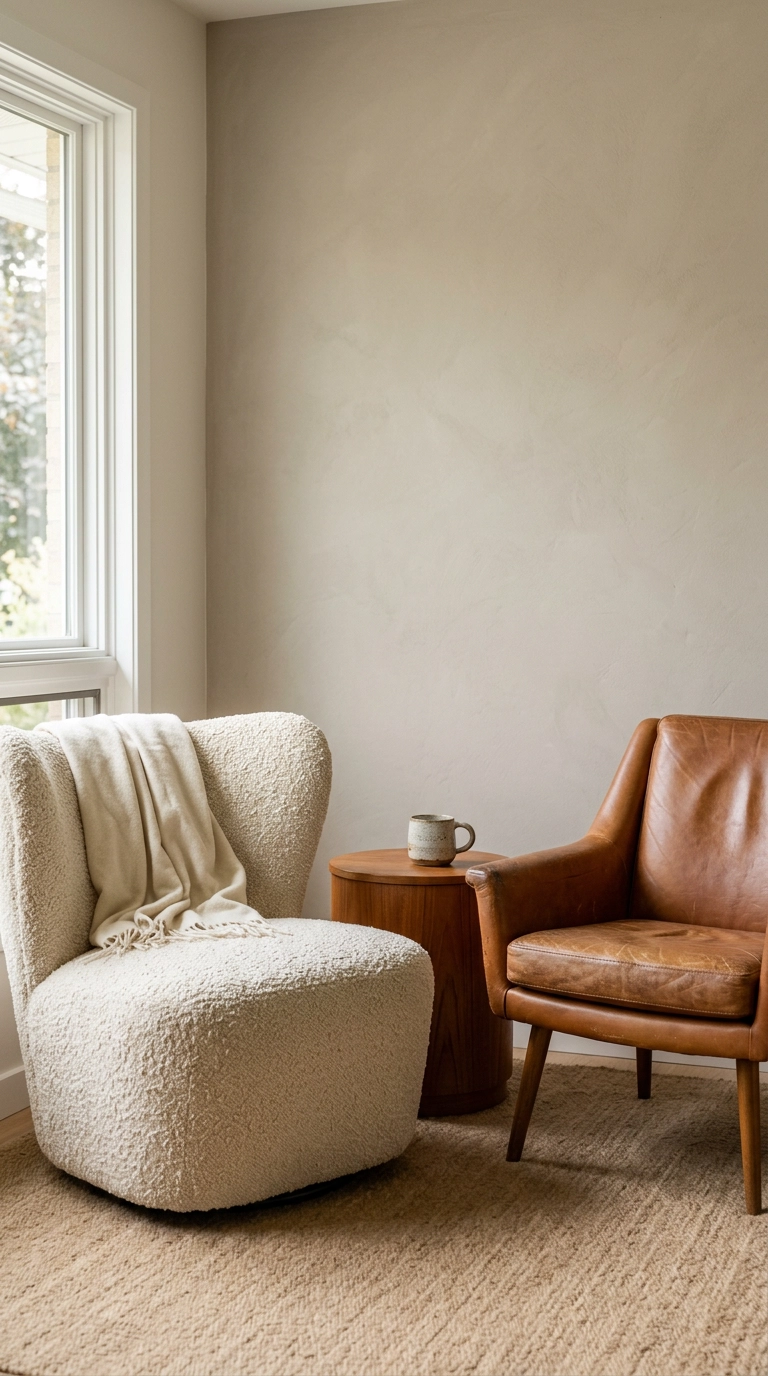
Bouclé reads cool, soft, and matte; aged leather reads warm, hard, and glossy. Putting them next to each other gives your eye somewhere to travel, which is why a room with one upholstery fabric always feels a little flat.
22. Add a Danish Cord Seat Piece for Handmade Texture at Low Cost
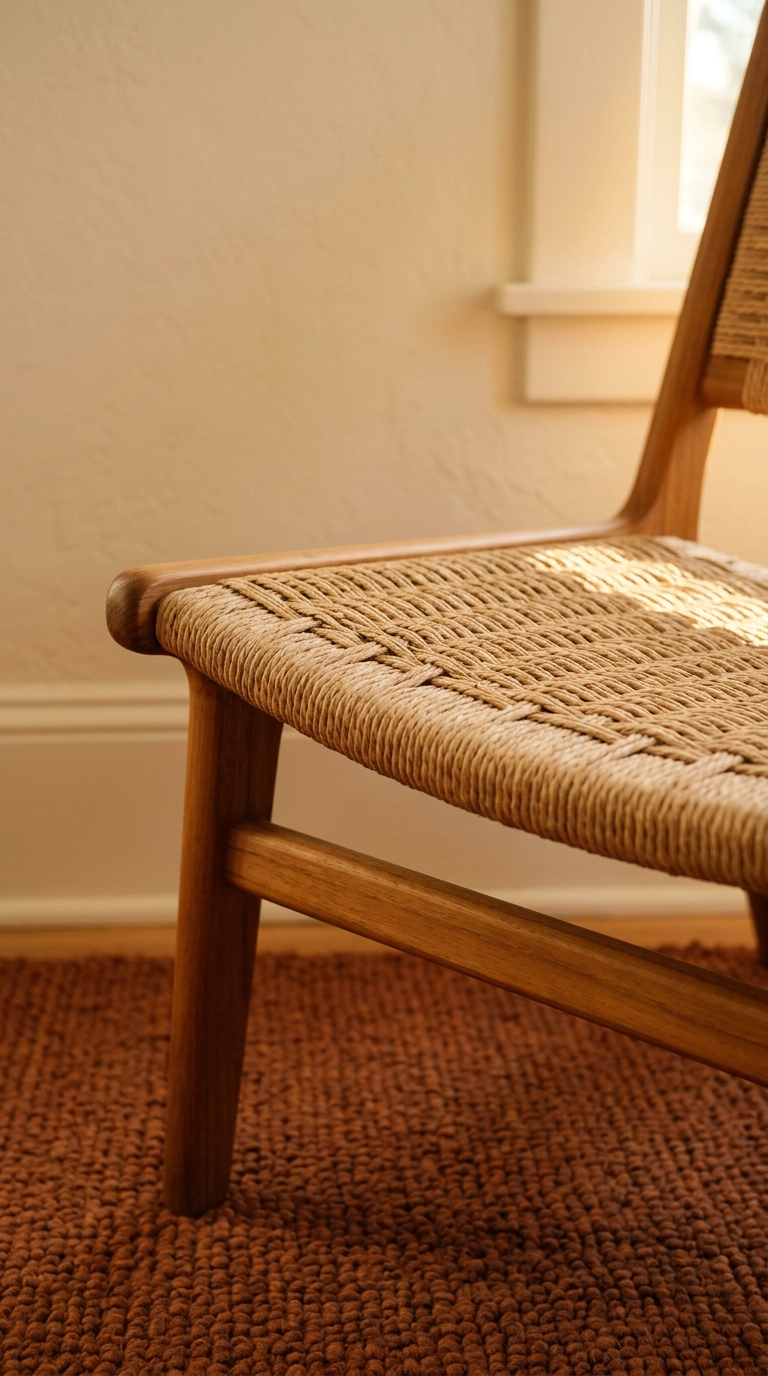
Danish cord is that tightly wound paper cord woven in an envelope pattern across a seat frame, and it brings handmade texture that no upholstery can fake. A single cord-seat chair in a corner is often enough.
23. Run a Wall-Mounted Shelving System Up the Wall and Keep the Floor Clear
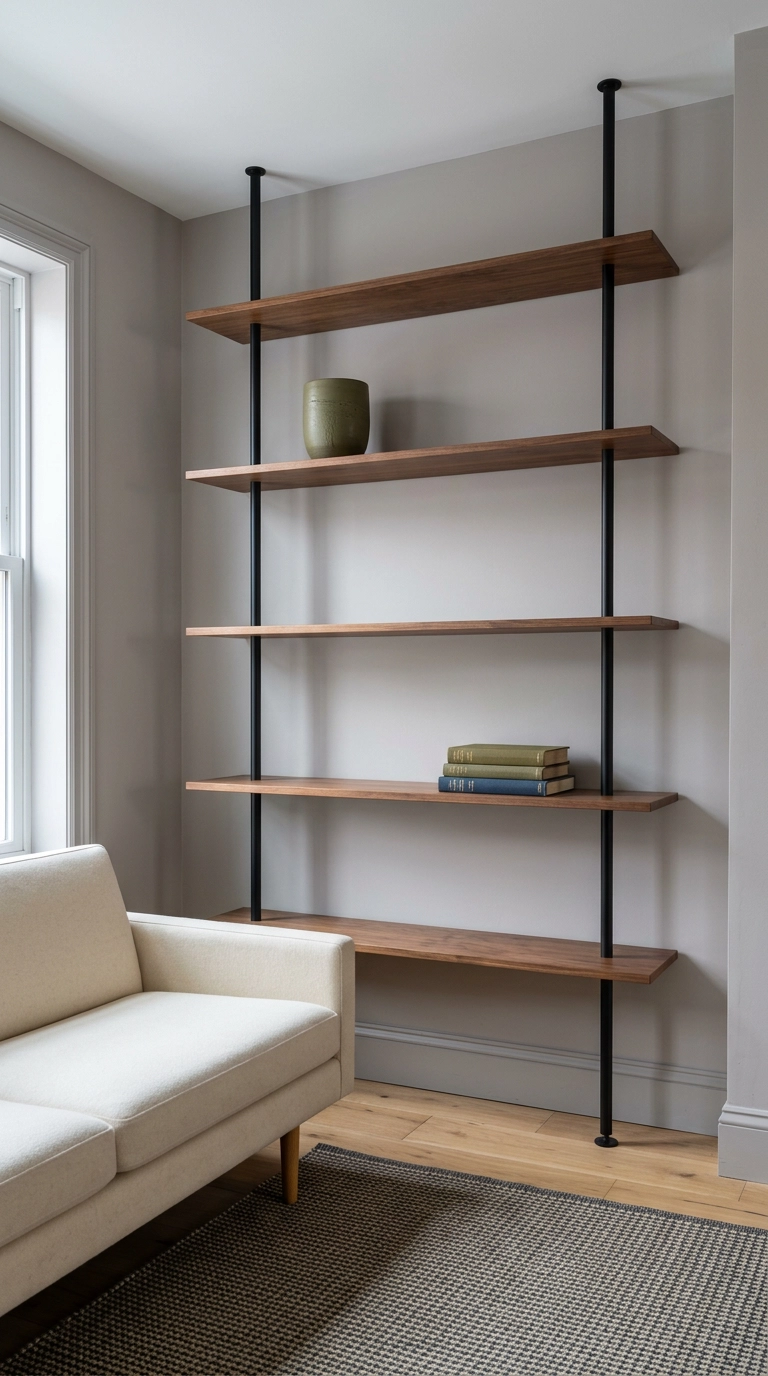
Mid century storage went up the wall, not across the floor. A pair of vertical uprights with cantilevered shelves gives you six feet of storage while the floor keeps running underneath, and in a narrow room that visible floor is what stops everything feeling boxed in.
24. Trade the Single Coffee Table for a Pair of Low Nesting Tables
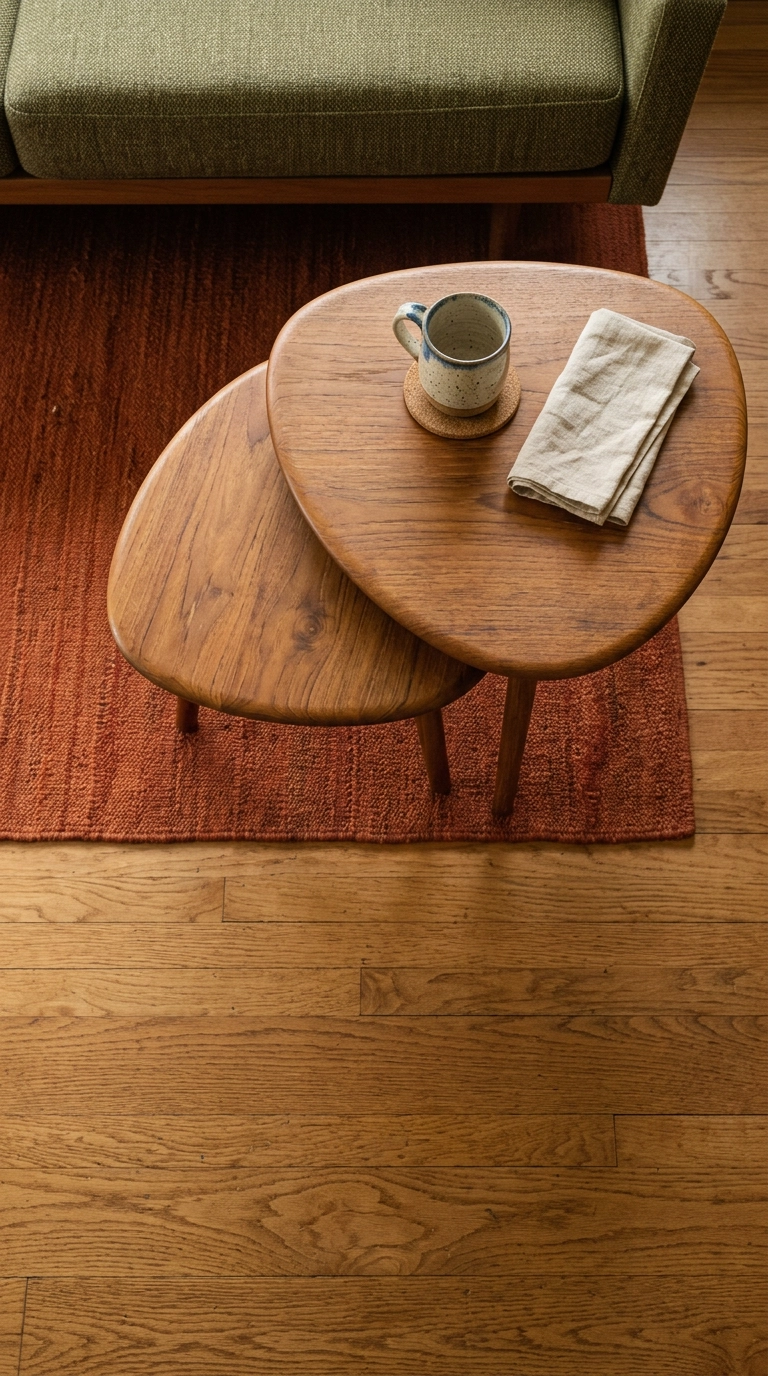
One big rectangular coffee table anchors a room but blocks it. Two smaller nesting tables at slightly different heights do the same job, slide apart when people come over, and let you keep a walkway of about 30 inches around the seating group.
25. End on a Hand-Woven Wool Wall Hanging Instead of Another Framed Print
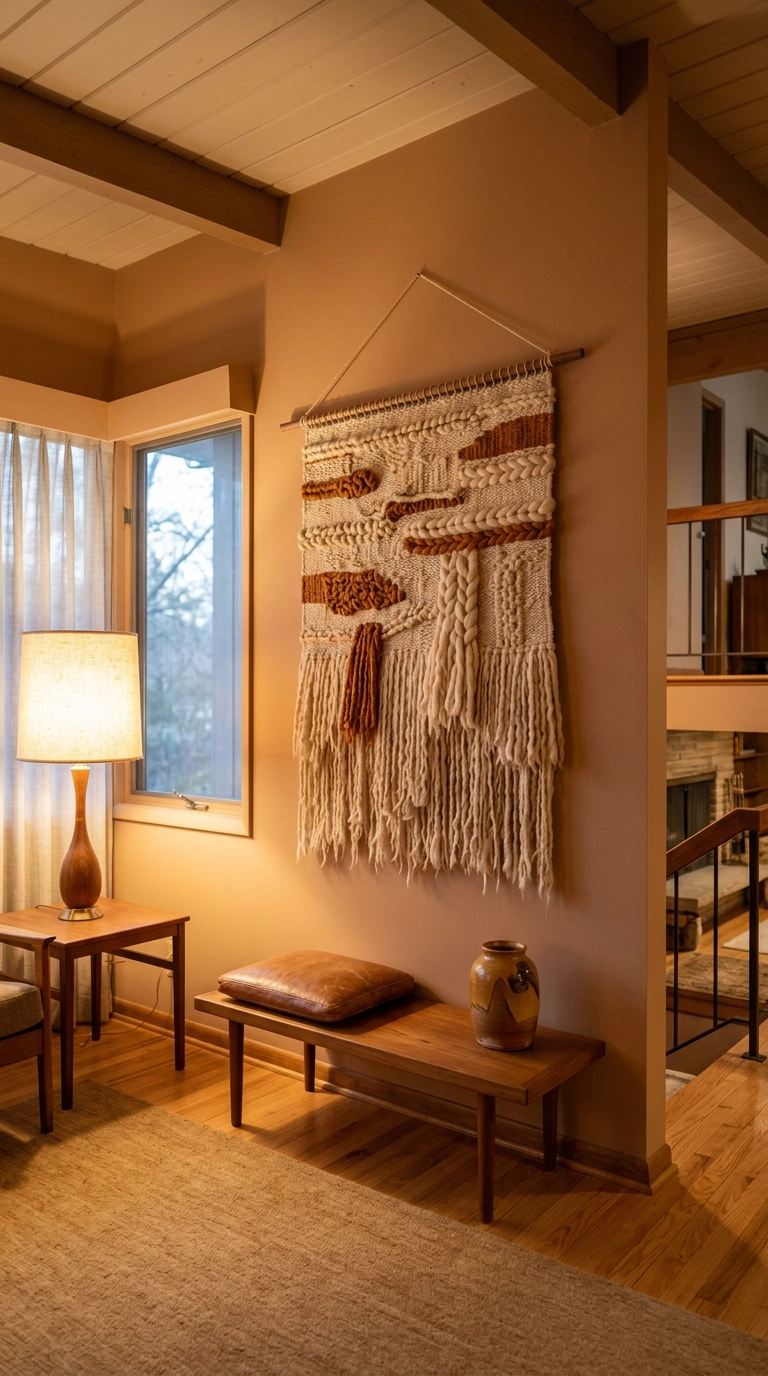
The mid century weaving revival is the part of the era everyone forgets, and it is the reason so many of those rooms photograph warm instead of hard. A woven wool piece absorbs sound, softens a big blank wall, and adds texture at a scale a framed print simply cannot reach.
Bringing the Whole Room Together
If you take one thing from all of this, make it the seat height. I have watched rooms go from stiff to genuinely inviting just by swapping a 20-inch sofa for a low one, and everything else — the floating credenza, the globe pendant, the kilim that finally fits — starts making sense once the horizontal line drops. The rest is patience: mixing walnut against teak by undertone, letting one wall carry a mustard ochre instead of buying a fifth brown thing, and giving a sunburst clock the empty wall it needs.
What I am seeing pull ahead in 2026 is the warmer, more handmade end of the era rather than the glossy showroom version. Danish cord seats, hand-woven wool wall hangings, cane webbing, terrazzo instead of marble — texture is doing the work that shine used to. The saturated period colors are back too, and honestly it is a relief; Farrow & Ball’s deeper ochres and clays sit beautifully against teak in a north-facing room. Even the maximal moves feel calmer now, because people are pairing them with real negative space instead of filling every surface.
My honest advice: buy fewer, better, older pieces. One properly restored teak sideboard from an estate sale will outclass a whole room of new reproductions, and it costs less — the thrifting rule in idea 13 has saved my clients more money than any other tip I give. Start with the sofa and the light fixture, live with it for a month, then add the sculptural chair. If you want more of this, sign up for my weekly newsletter — I send one room breakdown every Sunday, including the sourcing links and the mistakes I made getting there.


