
23+ Stunning Marble Fireplace Decor Ideas that Look Expensive in 2026

I’ll be straight with you – a marble fireplace is the one place in a house where I’ll happily tell a client to spend the money, and also the one place I see people ruin with a mantel full of tiny junk. I’ve specified more slabs than I can count, cried over one etched Carrara hearth (lemon water, don’t ask), and learned that the styling matters just as much as the stone. So here’s everything I know about picking the marble and then actually making the mantel above it look like someone with taste lives there.
Marble Fireplace Decor Ideas
1. Full-Height Calacatta Slab Running Straight to the Ceiling
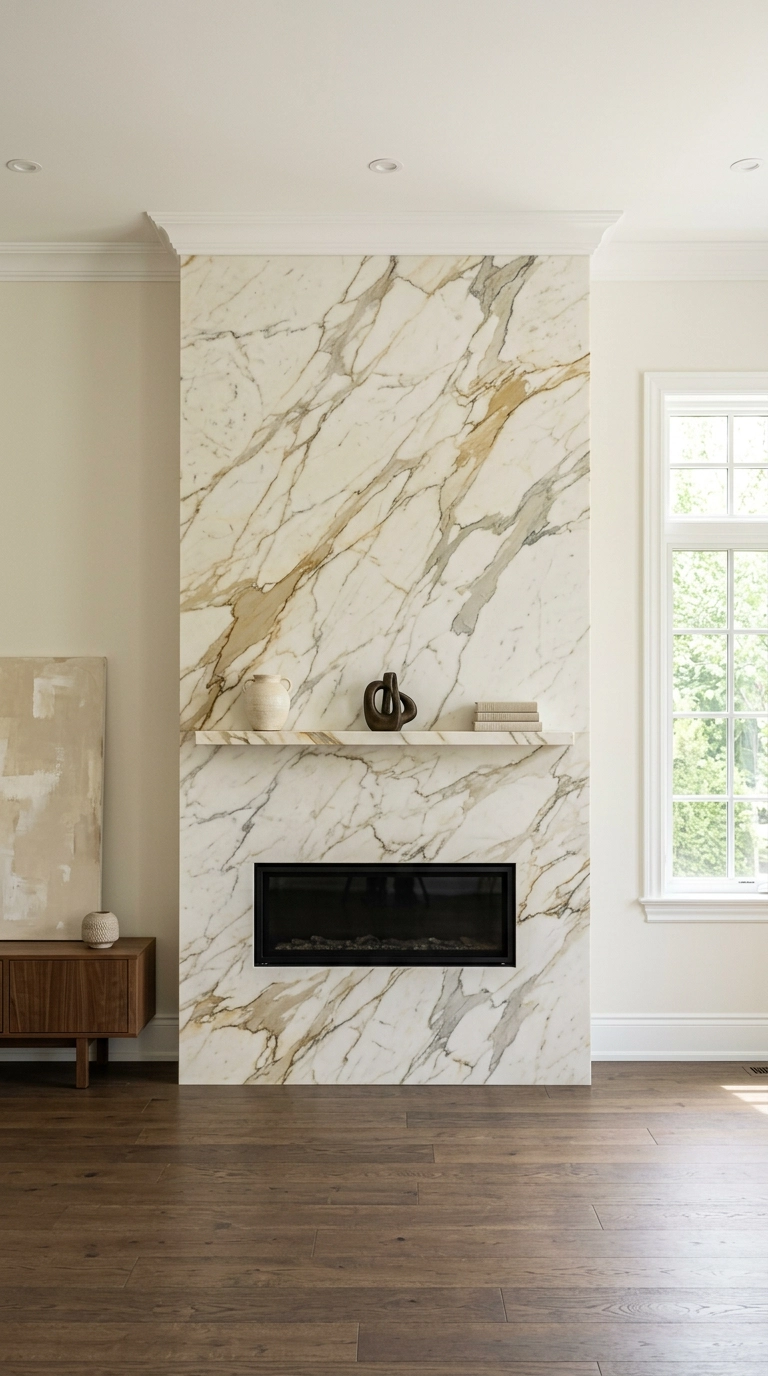
If you only do one thing, do this one. Running the slab all the way to the ceiling instead of stopping at some arbitrary 60-inch line makes the whole wall read as architecture rather than a feature, and it visually stretches the room upward the same way high-hung curtains do.
2. Style the Mantel by the Rule of Thirds, Not the Center
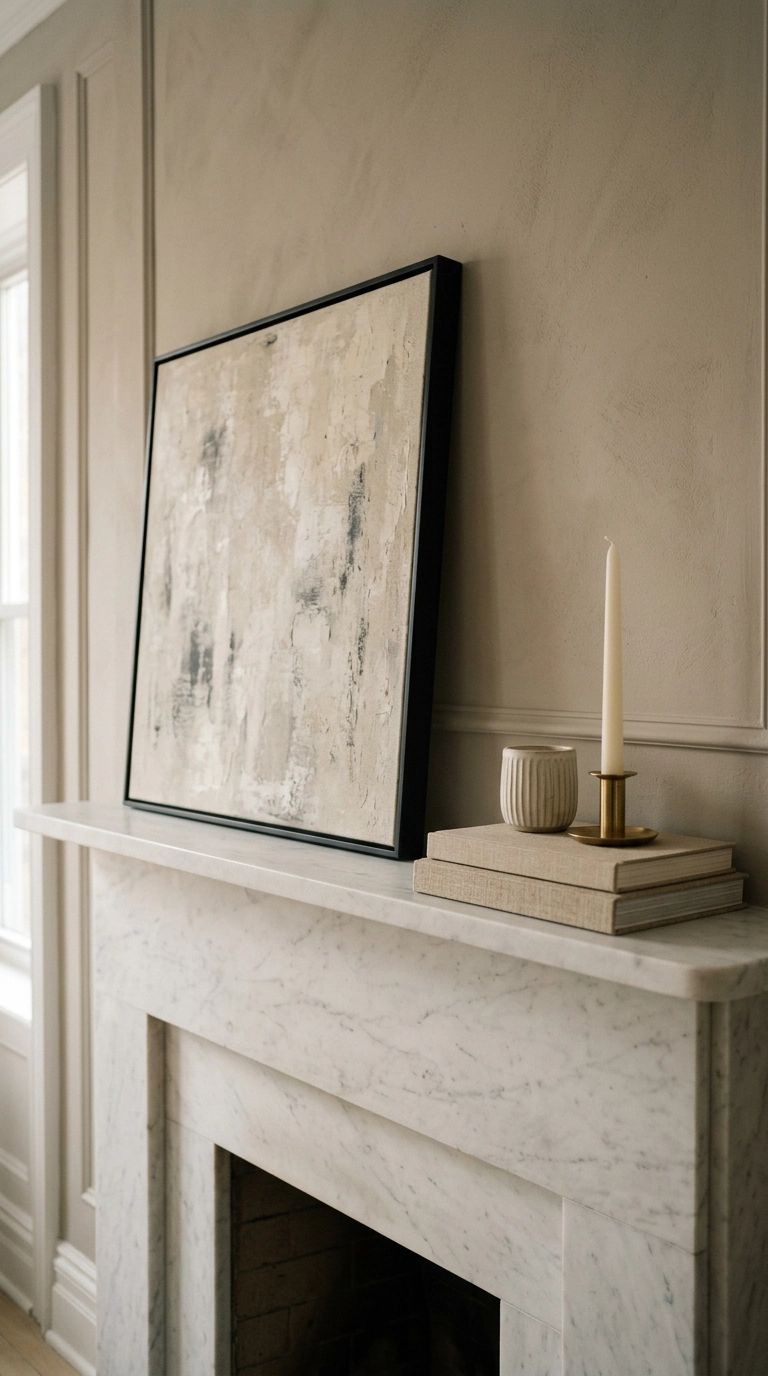
Here’s the mechanic nobody teaches you: mentally split the mantel into three equal sections and load two of them, leaving the third genuinely empty. Perfectly symmetrical mantels can work, but they need matched pairs and real discipline, whereas the two-thirds approach forgives everything.
3. Honed Carrara Slab Surround for a Softer, Matte Look
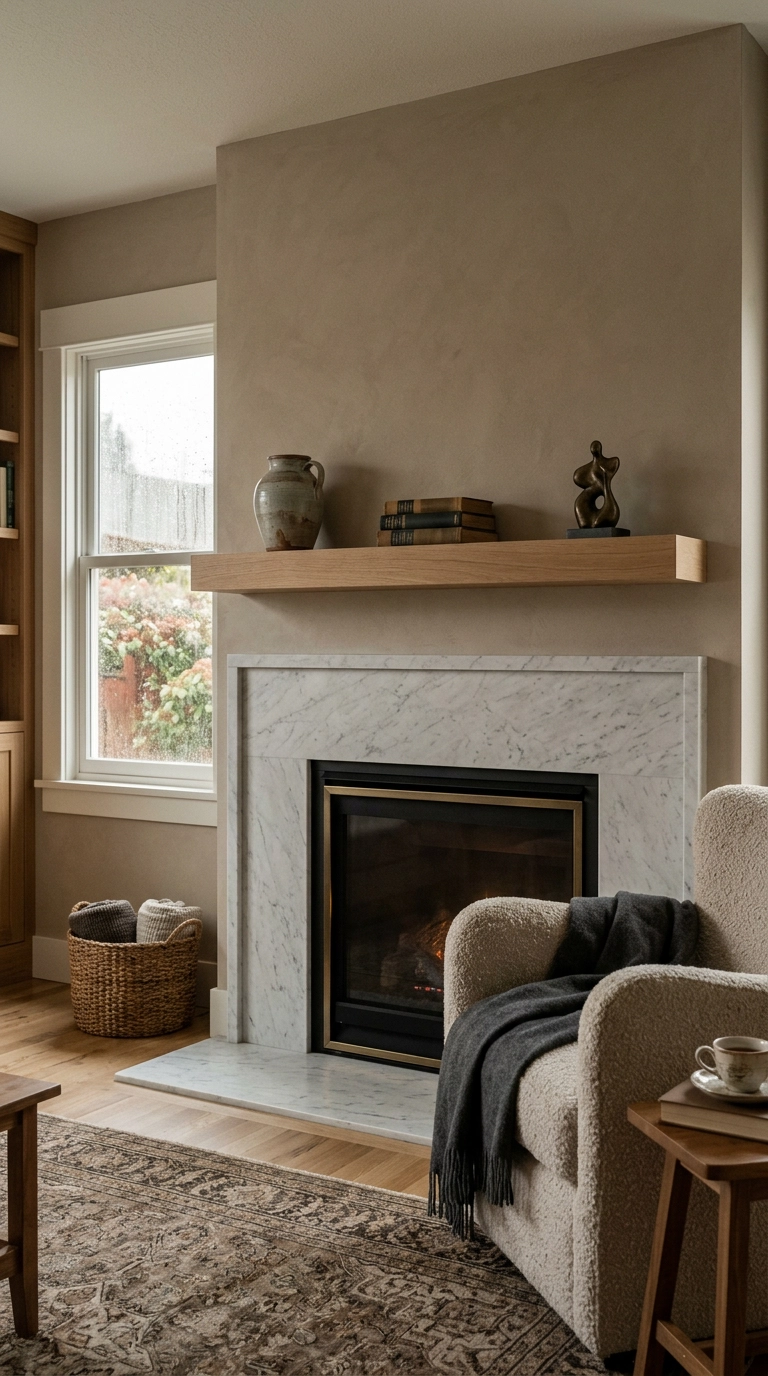
Polished marble is glossy and reflective, which looks incredible in a dark room but shows every water spot and etch mark like a spotlight. Honed marble is sanded to a flat matte finish, so it hides small etching, feels chalky and soft to the touch, and photographs without glare.
4. Nero Marquina Black Marble for a Moody, Graphic Firebox
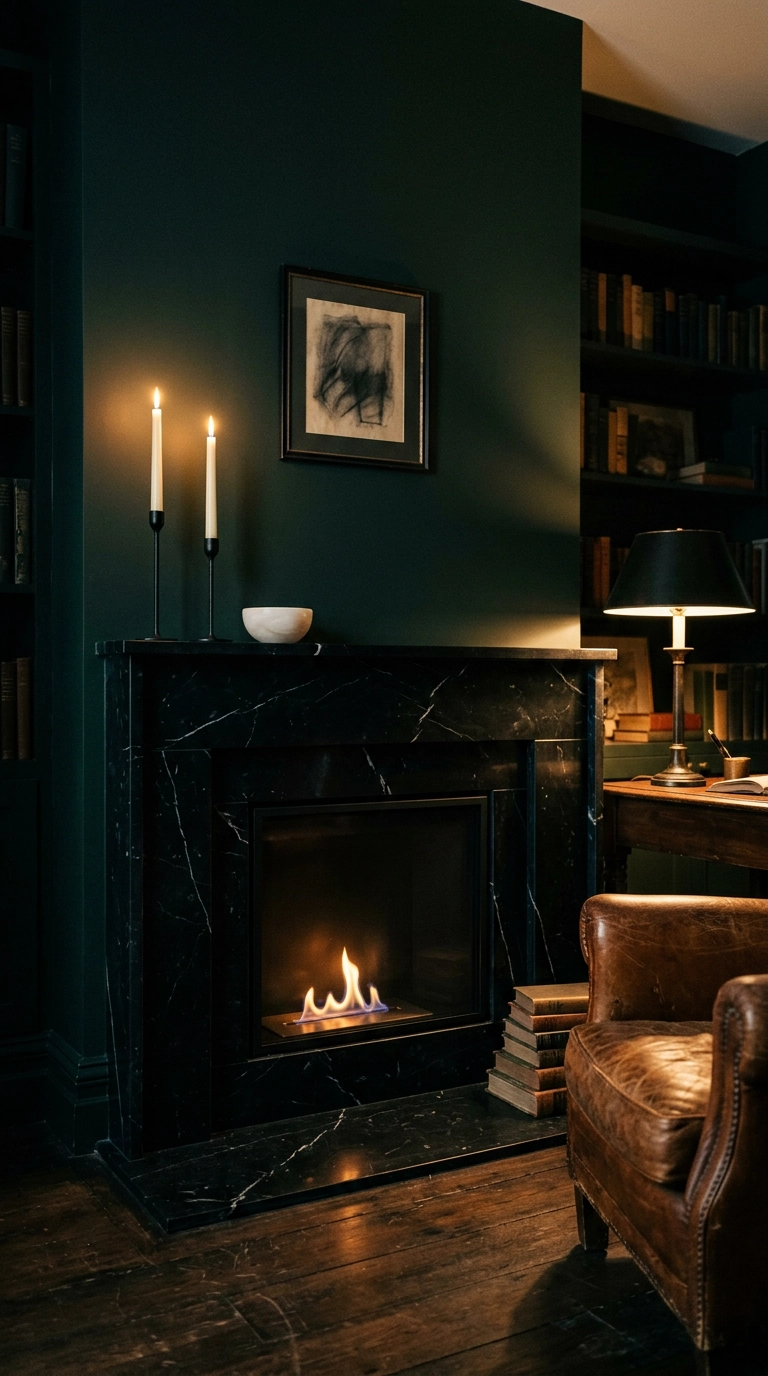
Black marble is my cheat code for rooms with bad light. A north-facing study is never going to be sunny, so stop fighting it – lean dark, and the Nero Marquina turns the fireplace into a graphic anchor instead of a grey smudge.
5. One Oversized Mirror Sized to Two-Thirds of the Mantel Width
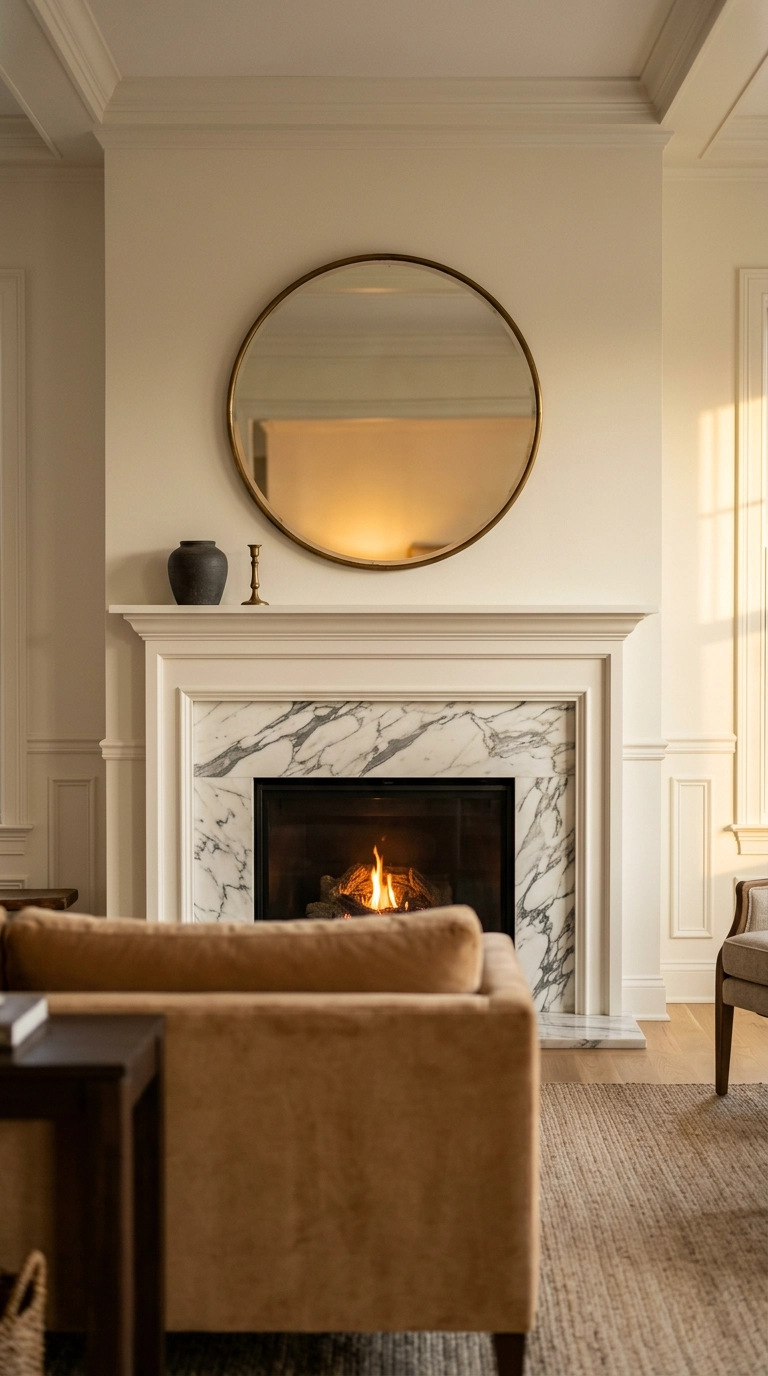
The single most common mantel mistake I see is a mirror that’s too small, floating up there like a postage stamp. Your mirror or main art piece should span roughly two-thirds to three-quarters of the mantel width – so a 60-inch mantel wants something in the 40 to 48-inch range.
6. Marble-Look Porcelain Slab When the Real Thing Isn’t in the Budget
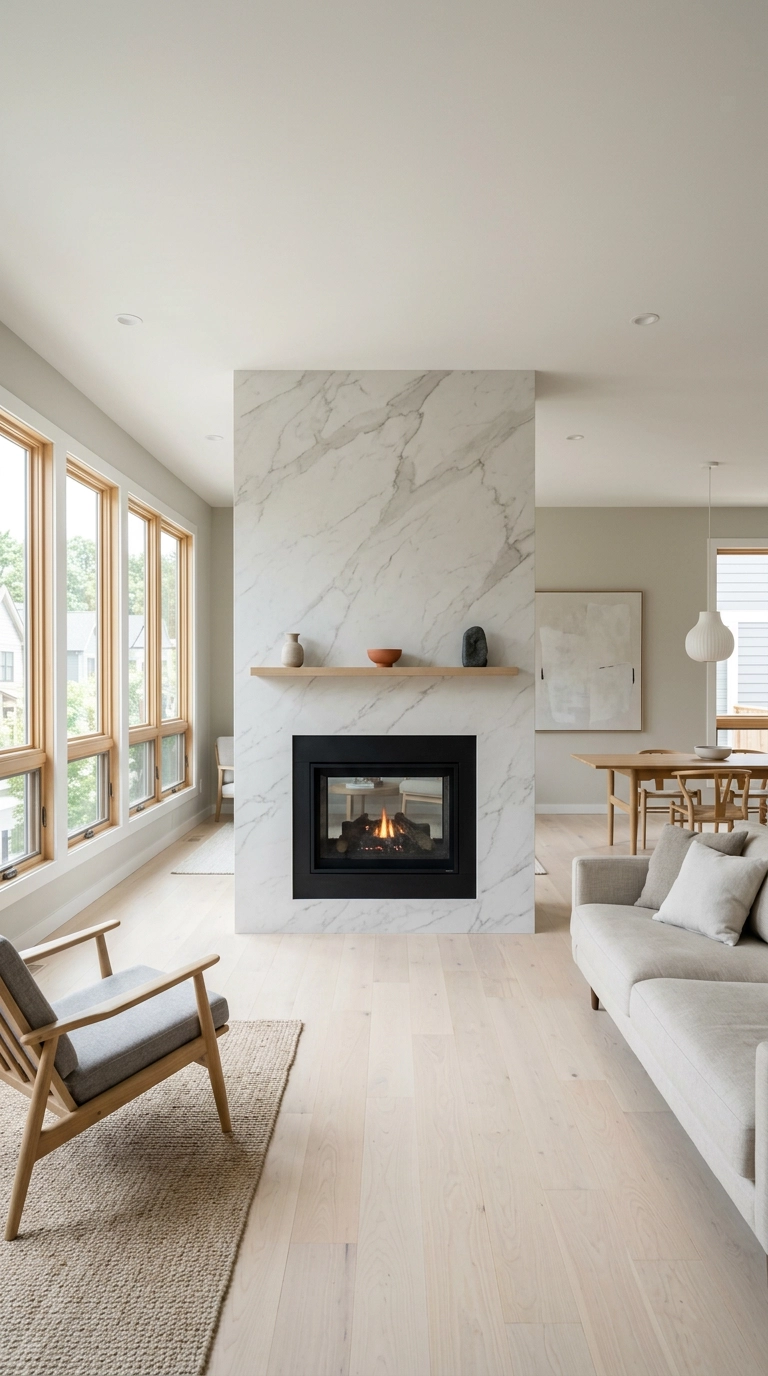
Large-format marble-look porcelain has gotten genuinely good, and at fireplace scale you’d have to touch it to know. It costs a fraction of stone per square foot, never etches, never stains, and never needs sealing – which around a firebox is a real argument, not just a budget one.
7. Deep Green Verde Marble for a Room That Needs Warmth
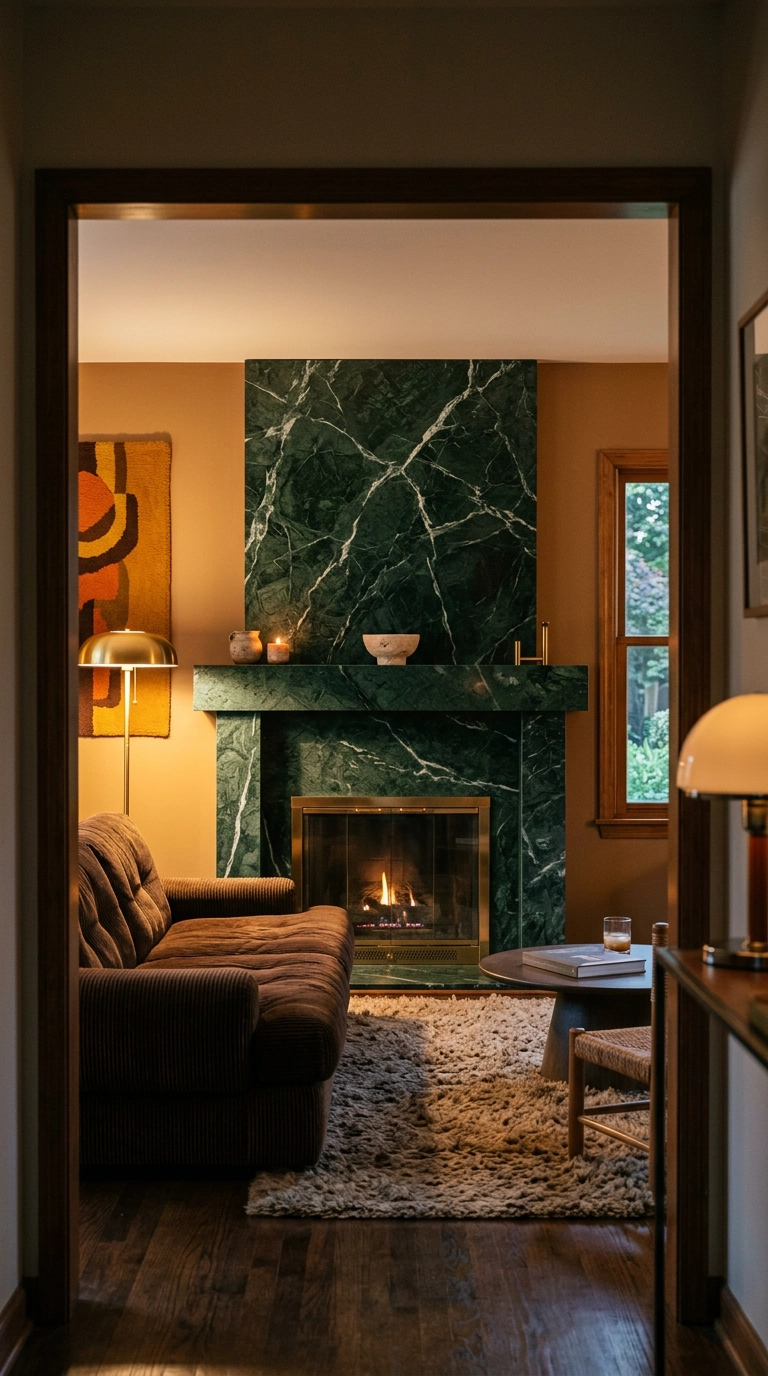
Green marble is the story of 2026 and I am fully on board. Verde Alpi and Verde Guatemala both read almost black from across the room, then reveal that electric white veining up close, and they do something white marble can’t – they make warm wood tones and brass look intentional instead of accidental.
8. Three Objects, Three Different Heights
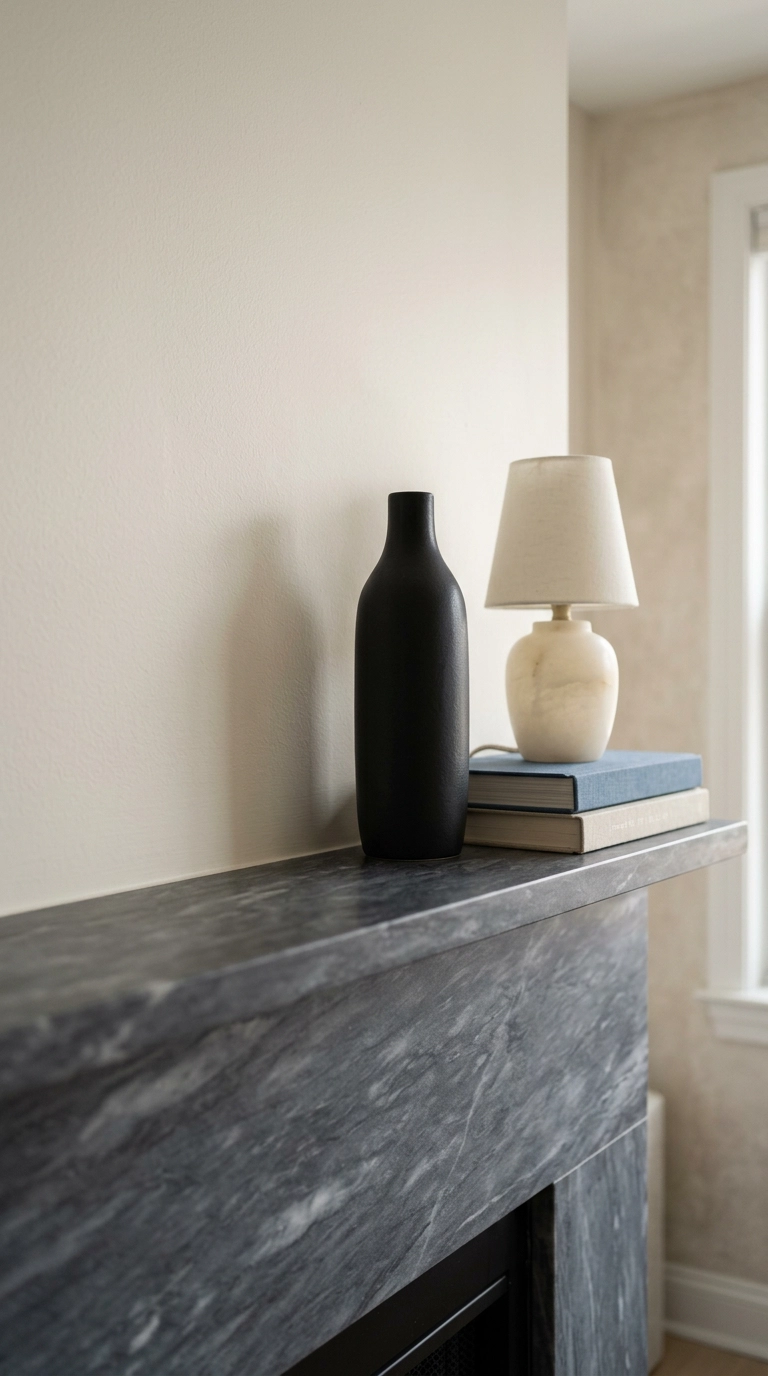
Same-height objects in a row read as a fence. Give yourself one tall piece, one medium, and one low – roughly a 24-inch vase, a 12-inch vessel, and a 3-inch stack of books – and your eye travels in a triangle instead of a straight line.
9. A Waterfall Marble Surround That Wraps the Hearth
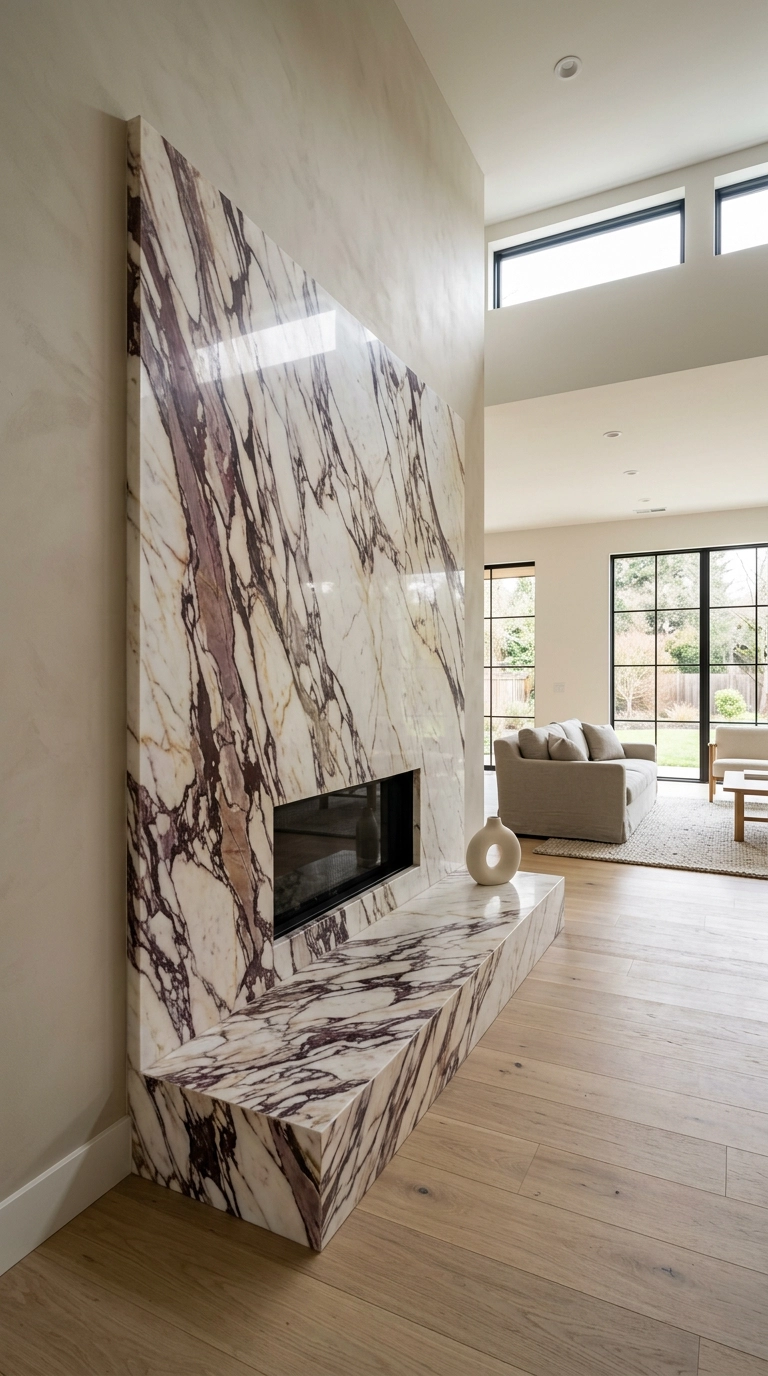
A waterfall detail means the veining runs off the vertical face and continues without interruption across the horizontal hearth, and when it’s done right the two pieces look carved from one block. That’s because they usually were – the fabricator miters the corner and bookmatches the grain.
10. Flush Modern Surround with No Mantel at All
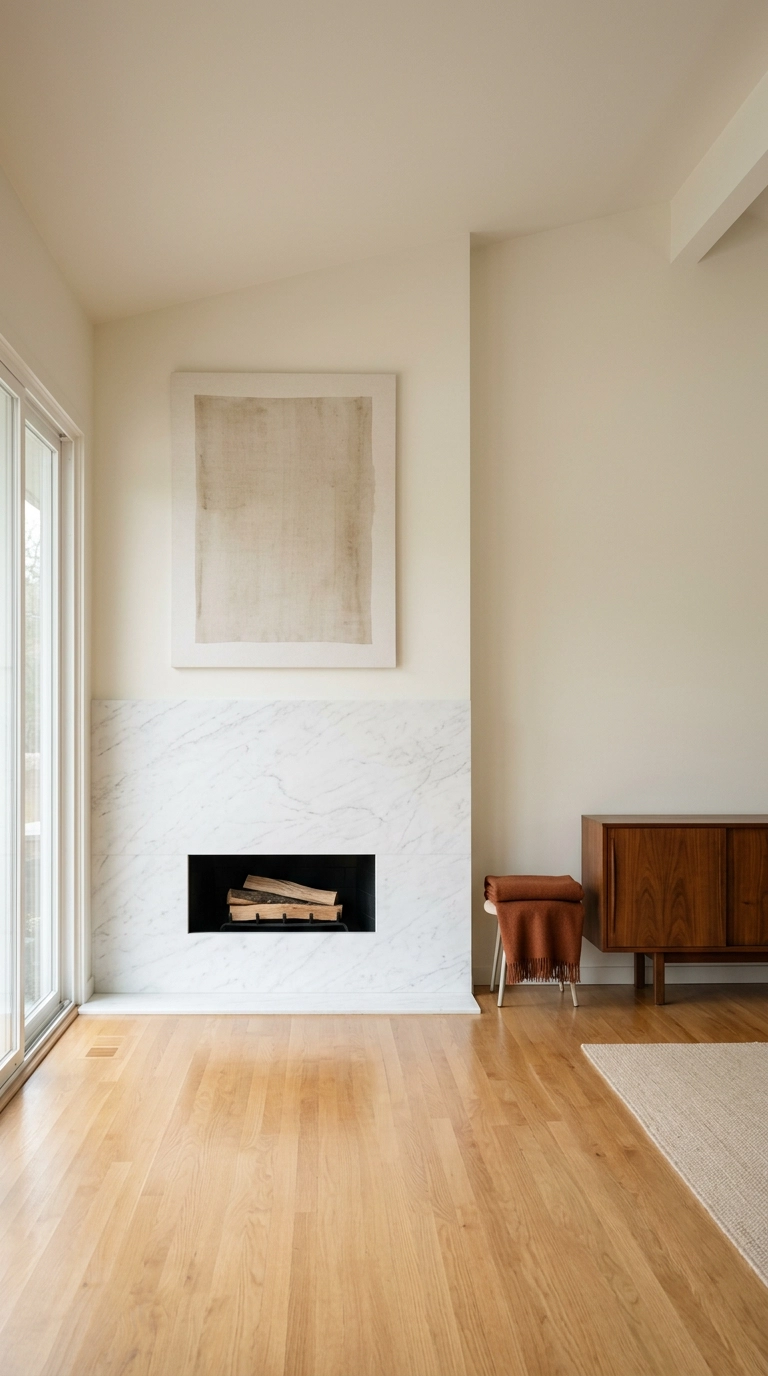
Removing the mantel entirely is a bold, very modern move, and it’s the right call in a low-ceilinged room where a chunky shelf would chop the wall in half. Set flush to the drywall, the marble reads as a panel of stone rather than a piece of furniture stuck to the wall.
11. A Traditional Carved Marble Mantel with Real Corbels
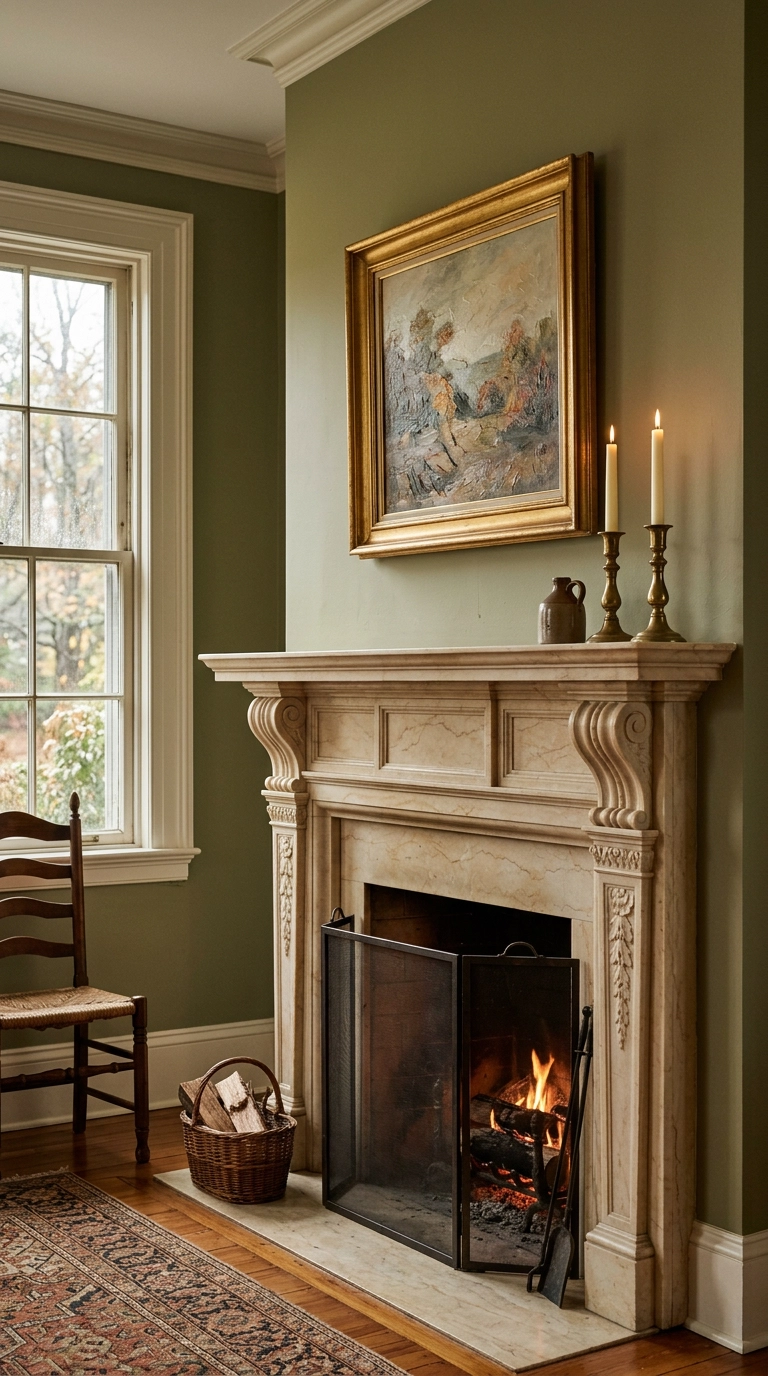
A carved mantel is having a genuine comeback after fifteen years of everyone ripping them out. The move is not to modernize it but to let it be ornate and then keep everything around it quiet – flat matte wall paint, one piece of art, almost nothing on the shelf.
12. Layer Leaning Art in Front of the Mirror
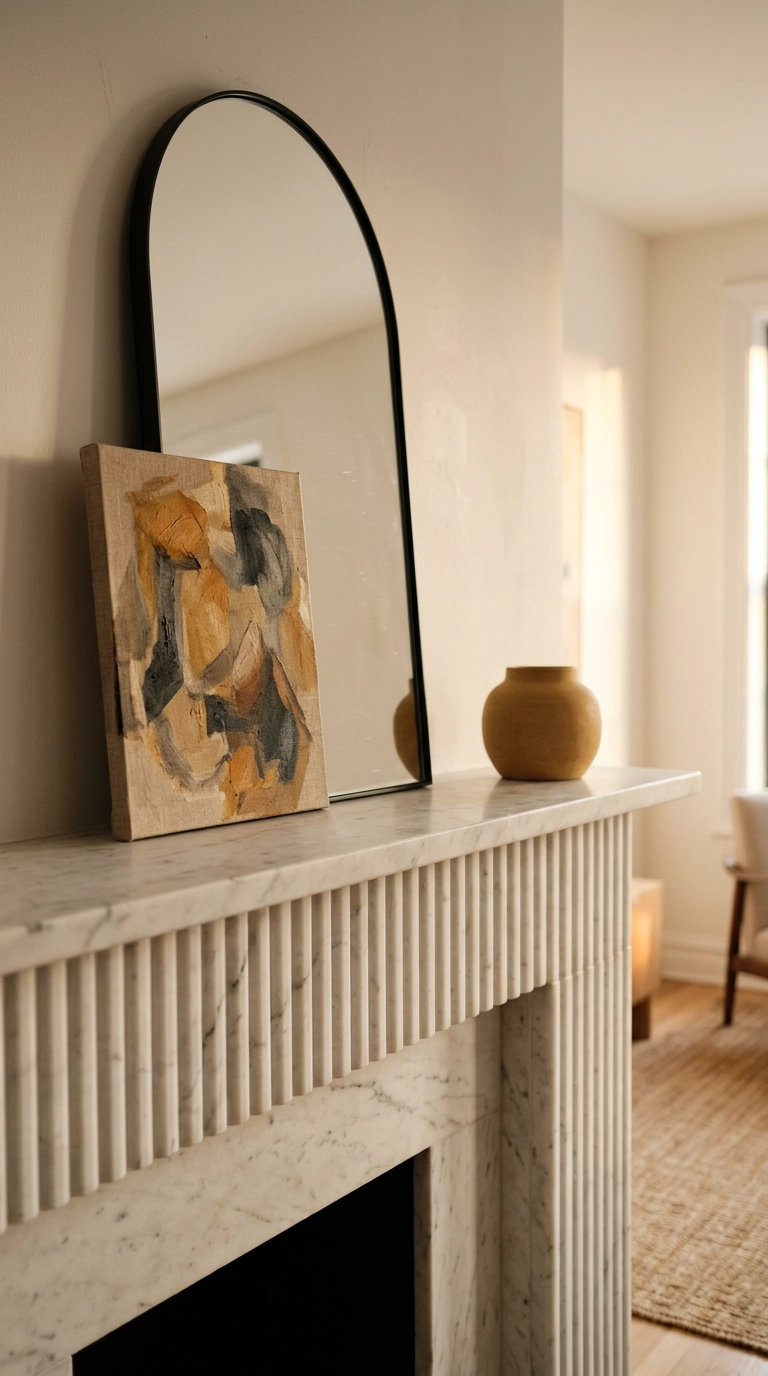
Leaning beats hanging on a mantel, full stop. Overlap a smaller canvas about a third of the way across a larger mirror and you get depth, a diagonal sightline, and permission to change your mind next month without patching drywall.
13. A Raised Marble Hearth That Doubles as a Bench
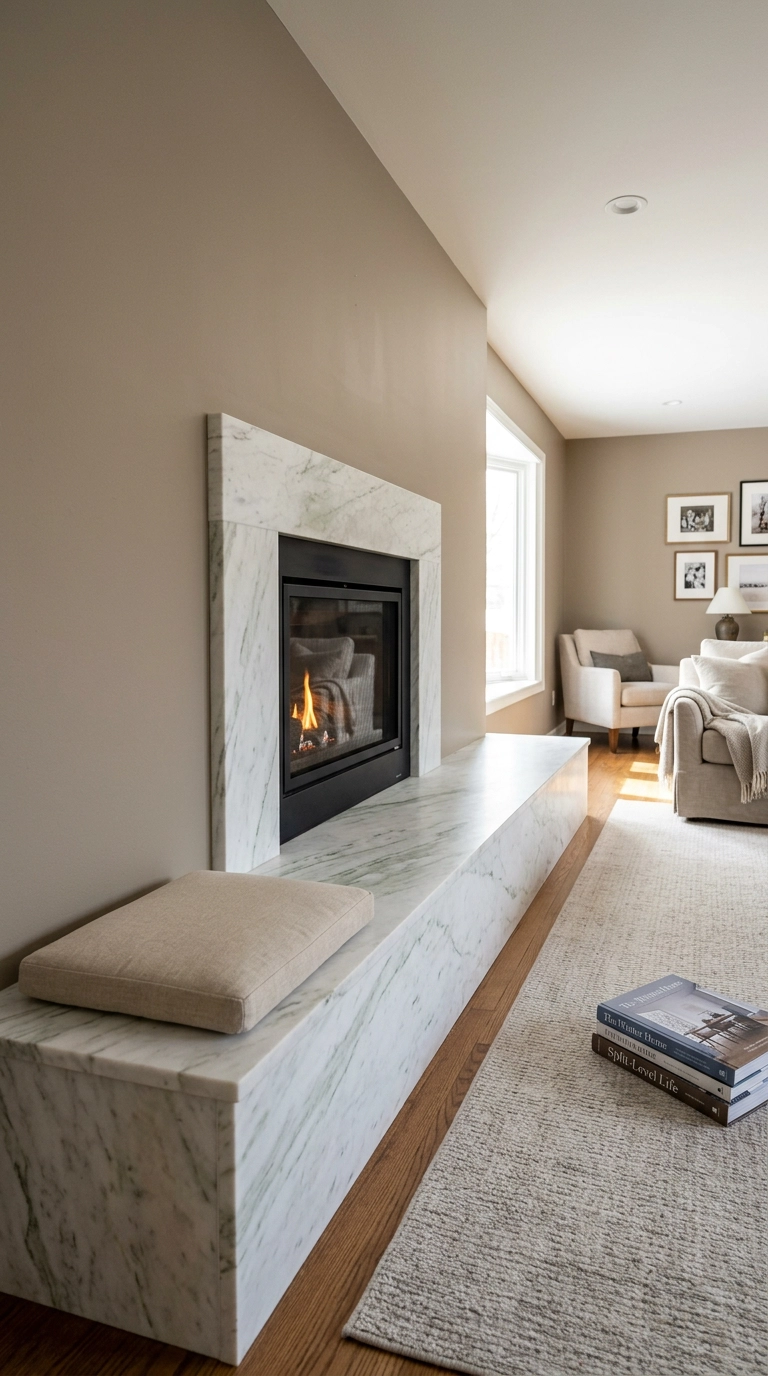
A raised hearth at roughly 16 to 18 inches is exactly seat height, which means it quietly adds three extra spots in a room without adding a single piece of furniture. I use this constantly in family rooms that host more people than the sofa holds.
14. Keep Everything at Least Six Inches Off the Firebox
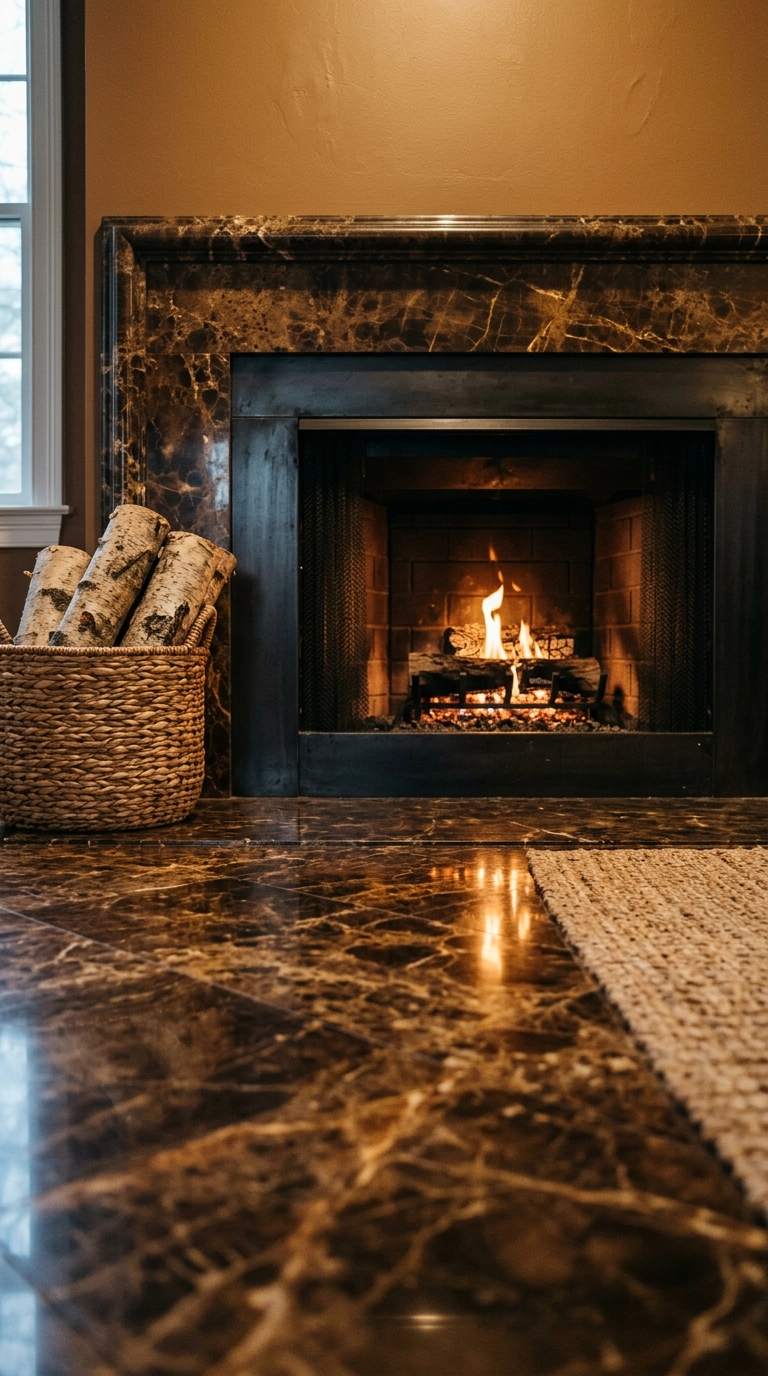
Let’s talk about the unglamorous part. Anything flammable – dried stems, paper-backed art, throws, that basket of kindling – needs at least six inches of clearance from the firebox opening, and a good foot if you actually burn wood rather than gas.
15. A Chunky White Oak Floating Shelf Above a Marble Surround
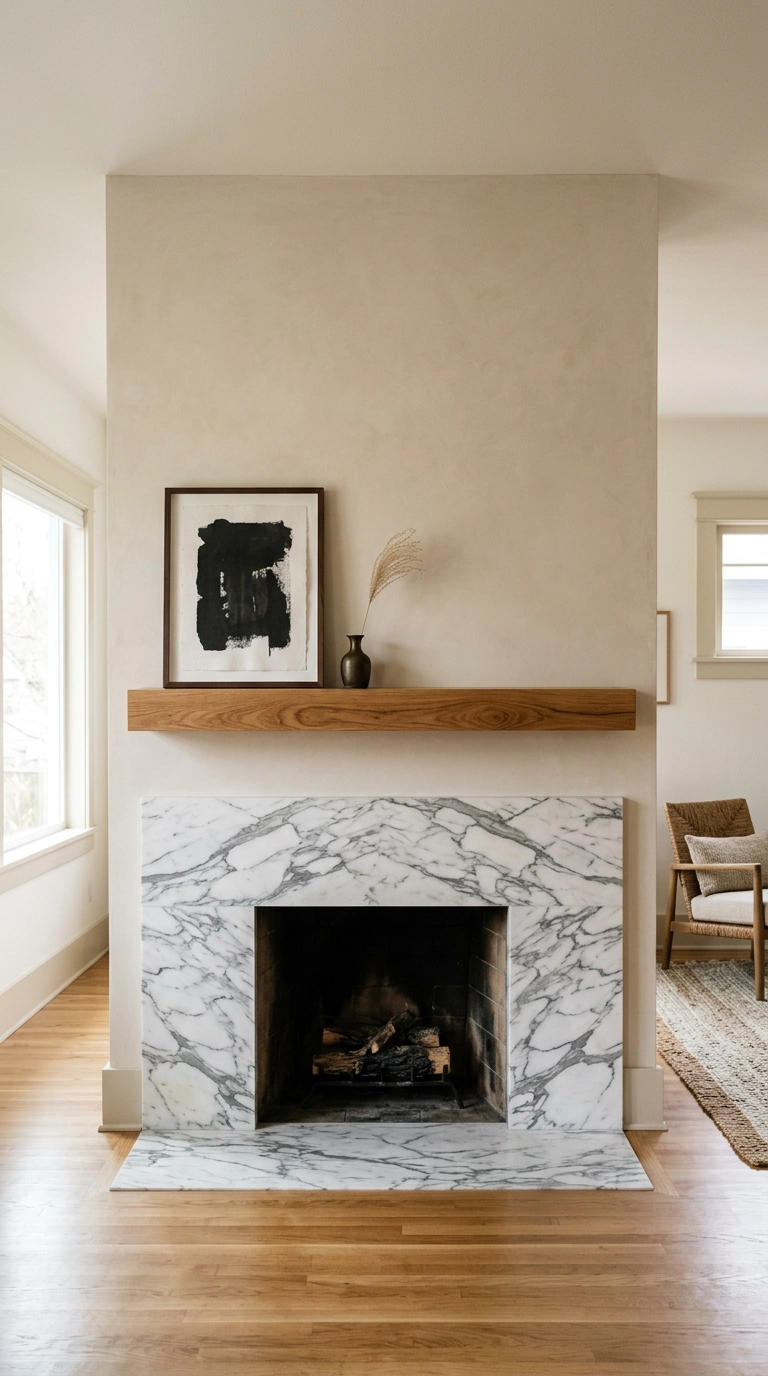
A floating oak shelf is the cheapest way to make a plain marble surround feel designed, and the contrast is the whole point – cold stone below, warm wood above, so neither one feels clinical. Go thicker than instinct tells you, around 3 to 4 inches, or it reads flimsy.
16. Bookmatched Slabs for a Mirrored Veining Effect
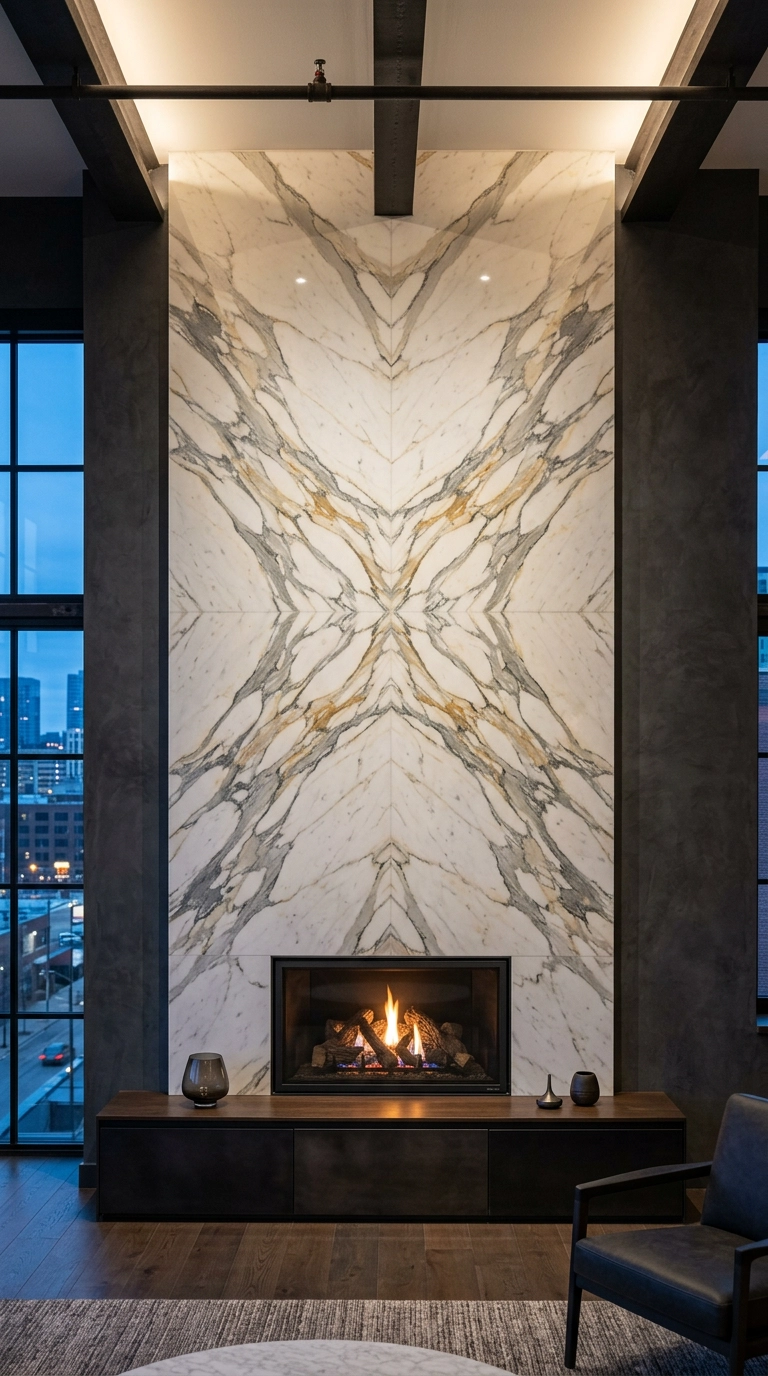
Bookmatching means two consecutive slabs cut from the same block are flipped and installed side by side, so the veining mirrors like an inkblot. On a chimney breast it’s the closest thing to free art in stone form.
17. Odd Numbers Always Win on a Mantel
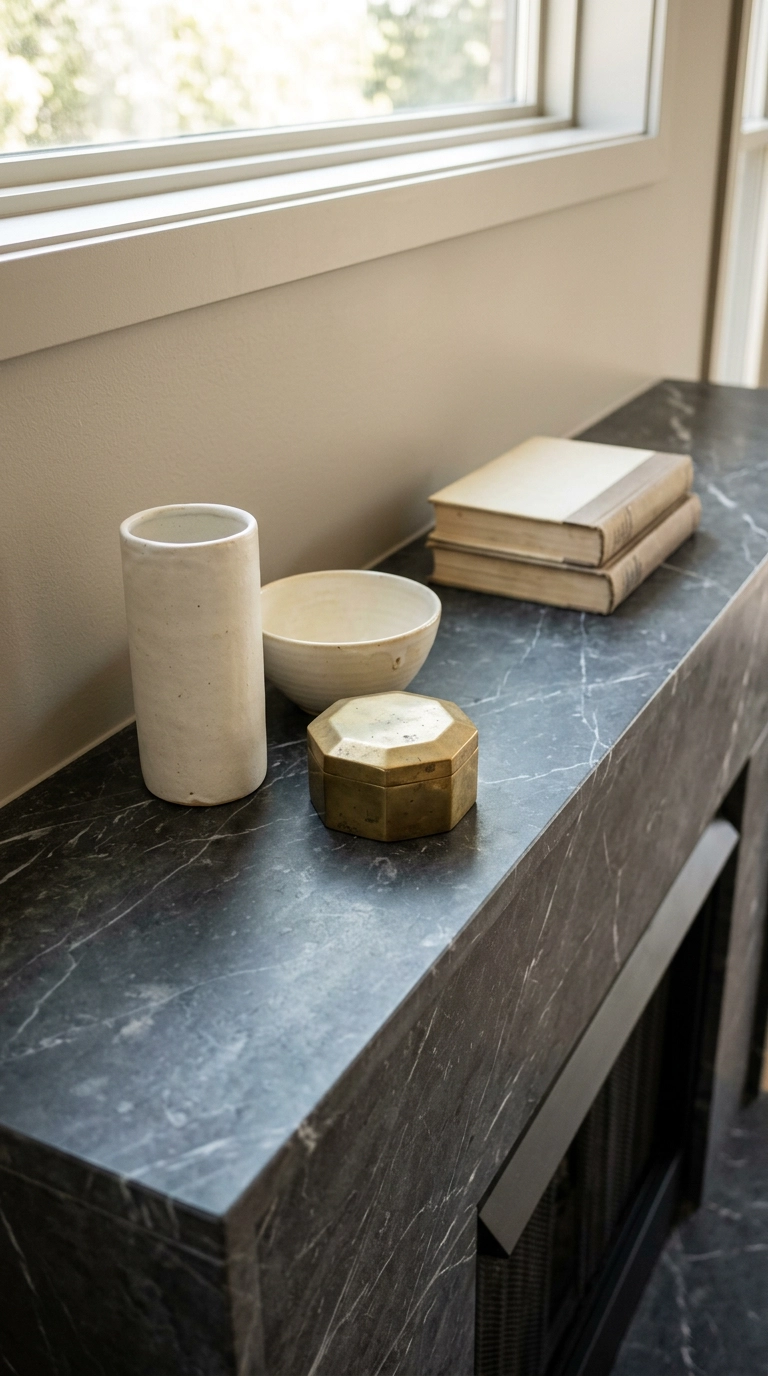
Three or five objects, never four. Odd numbers force your eye to move because it can’t split the arrangement into tidy pairs, and that little bit of unresolved tension is what reads as “styled” rather than “arranged by a hotel.”
18. A Marble Slip Surround Framed in Painted Millwork
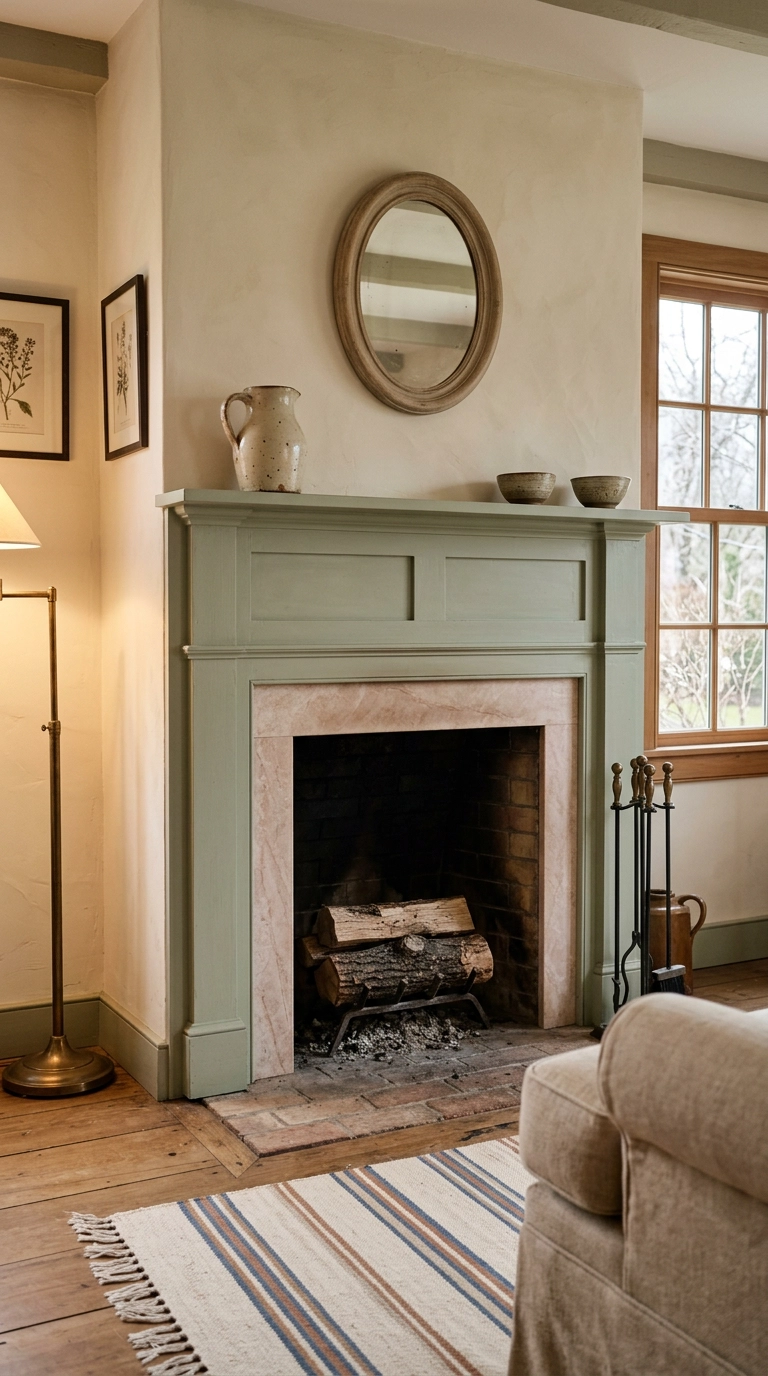
A marble slip is just a narrow band of stone – often only 4 to 6 inches wide – framing the firebox opening, with painted millwork doing the rest. It’s how most historic American fireplaces were actually built, and it needs a fraction of the stone.
19. Flank the Marble with a Pair of Wall Sconces
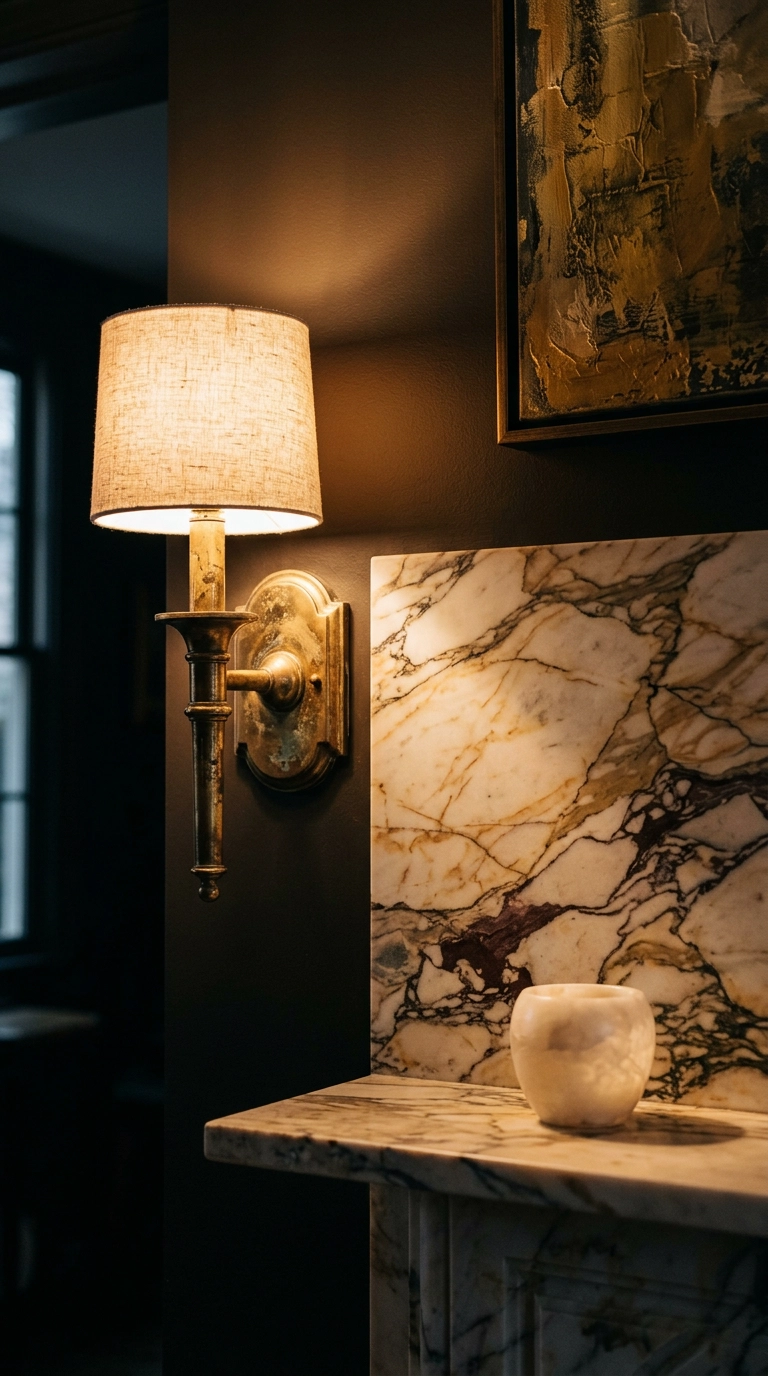
Light is what makes marble look expensive. Veining is three-dimensional, and a sconce washing across it from the side pulls out depth that overhead recessed cans flatten completely.
20. Herringbone Marble Mosaic Tile Instead of a Solid Slab
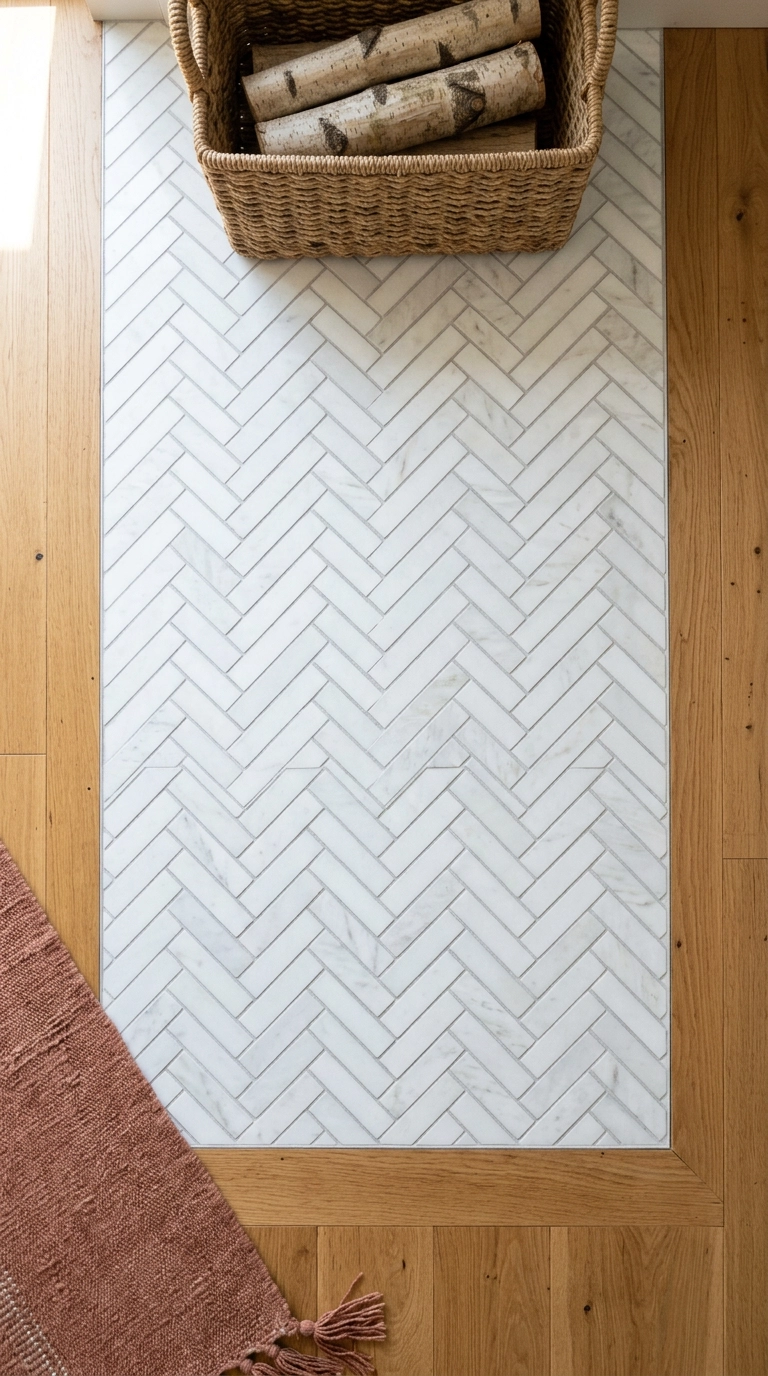
Real marble in mosaic sheet form runs a fraction of slab cost because you’re buying offcuts, and a herringbone hearth gives you genuine stone underfoot for roughly the price of a weekend and a wet saw rental. This is the most DIY-able idea here.
21. Recess the TV Above the Marble So It Sits Flush
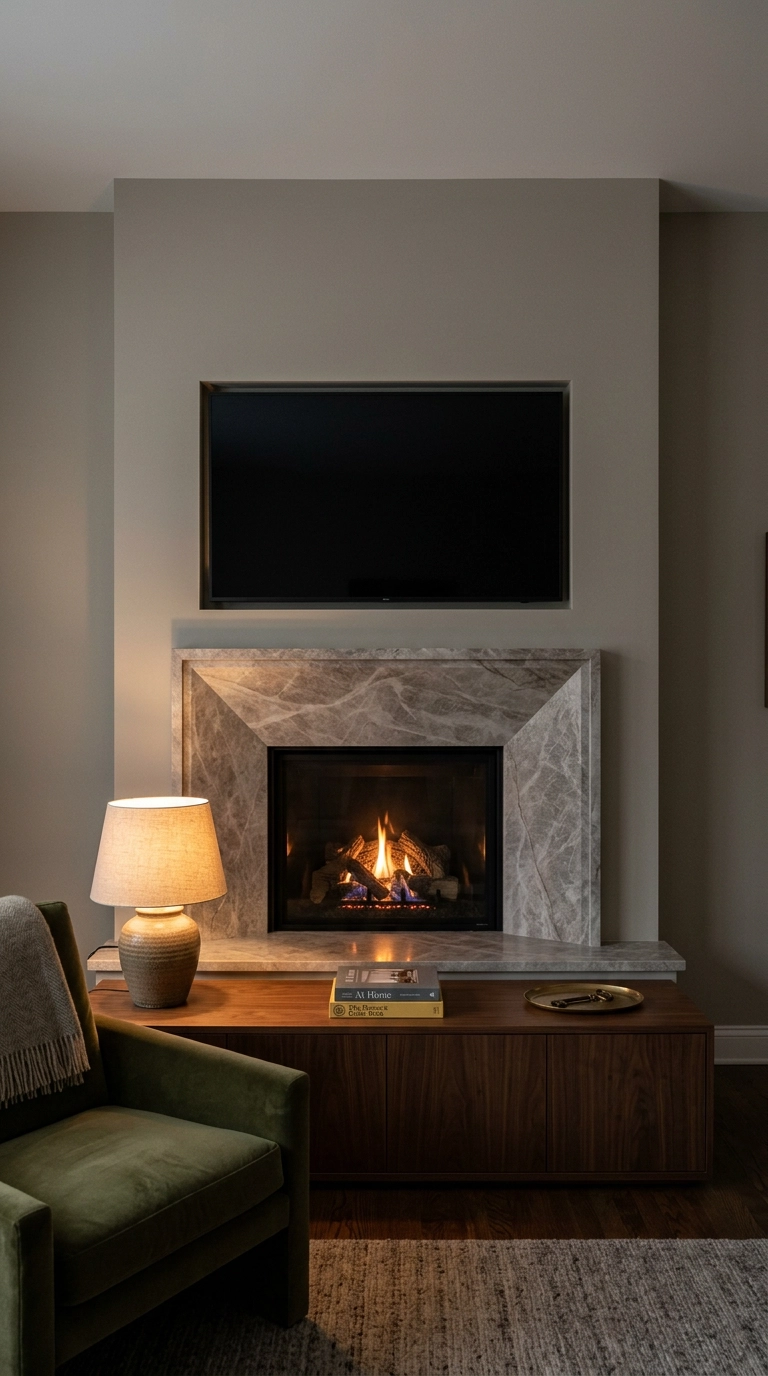
If the TV has to go above the fireplace, framing a recessed niche about 3 inches deep during construction is what separates “designed” from “screen bolted to stone.” Flush with the plaster, the black rectangle stops casting a shadow and stops announcing itself.
22. Color-Drench the Chimney Breast and Let the Marble Glow
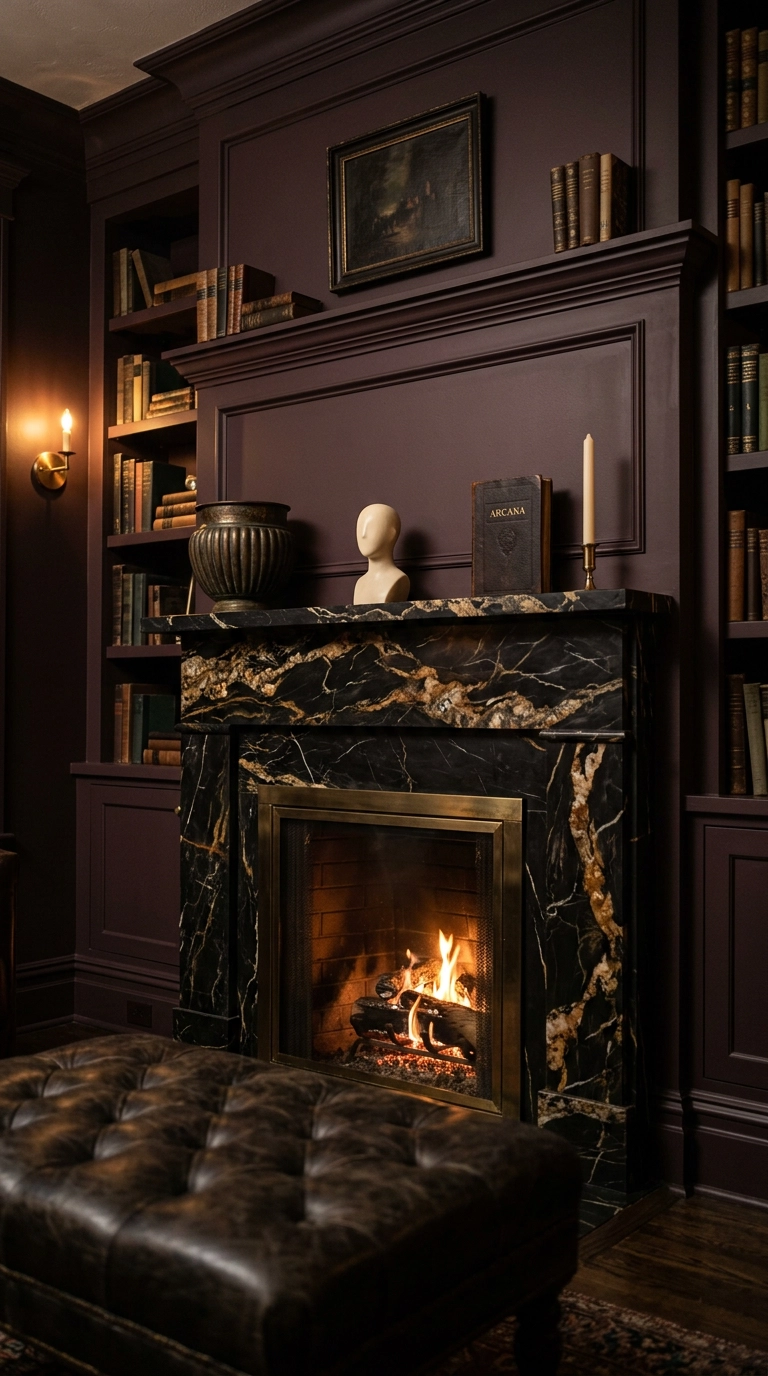
Color drenching means painting walls, trim, and built-ins all in one shade so the visual breaks disappear – and against a dark saturated field, gold-veined marble stops looking like a slab and starts looking lit from within. Try something in the Farrow & Ball Brinjal or Benjamin Moore Deep Mulberry range.
Before You Light the First Fire
If you take nothing else from this, take the two ends of the spectrum. A full-height Calacatta slab or a bookmatched chimney breast is a real project with a slab yard visit, a fabricator, and a number that will make you sit down – but restyling the mantel by the rule of thirds with three objects at three different heights is twenty minutes and free. Most of us need the second one far more often than the first.
What I’m seeing take over in 2026 is color and honesty about maintenance. Green Verde and blush Rosa Aurora are pushing past the all-white Carrara era, Nero Portoro against a color-drenched wall is everywhere in the design magazines, and people have finally accepted that honed marble etches, stains, and needs sealing – and decided the patina is part of the charm. Kelly Wearstler has been making the case for dramatic, unapologetic stone for years now, and the rest of us are catching up. My own hearth has a faint ring from a lemon water incident, and I’ve made peace with it.
Start with the marble you actually love rather than the one that photographs safest, then let the styling stay quiet – odd numbers, real gaps, one oversized mirror sized to two-thirds the mantel, and nothing flammable within six inches of the firebox. If you want more of this kind of thing, sign up for my weekly newsletter, where I send one room breakdown and a few honest cost notes every Friday. I’d love to have you.


