
23+ Stunning Curved Staircase Decor Ideas that Make an Entryway Unforgettable in 2026

I’ll be honest, a curved staircase is the easiest thing in a house to under-decorate. Most people hang one sad photo, call it done, and waste the single most sculptural feature they own. I’ve styled dozens of these, from tight townhouse curves to two-story sweepers, and the trick is always the same: follow the curve instead of fighting it.
Curved Staircase Decor Ideas
1. A Gallery Wall That Follows the Curve of the Stairs
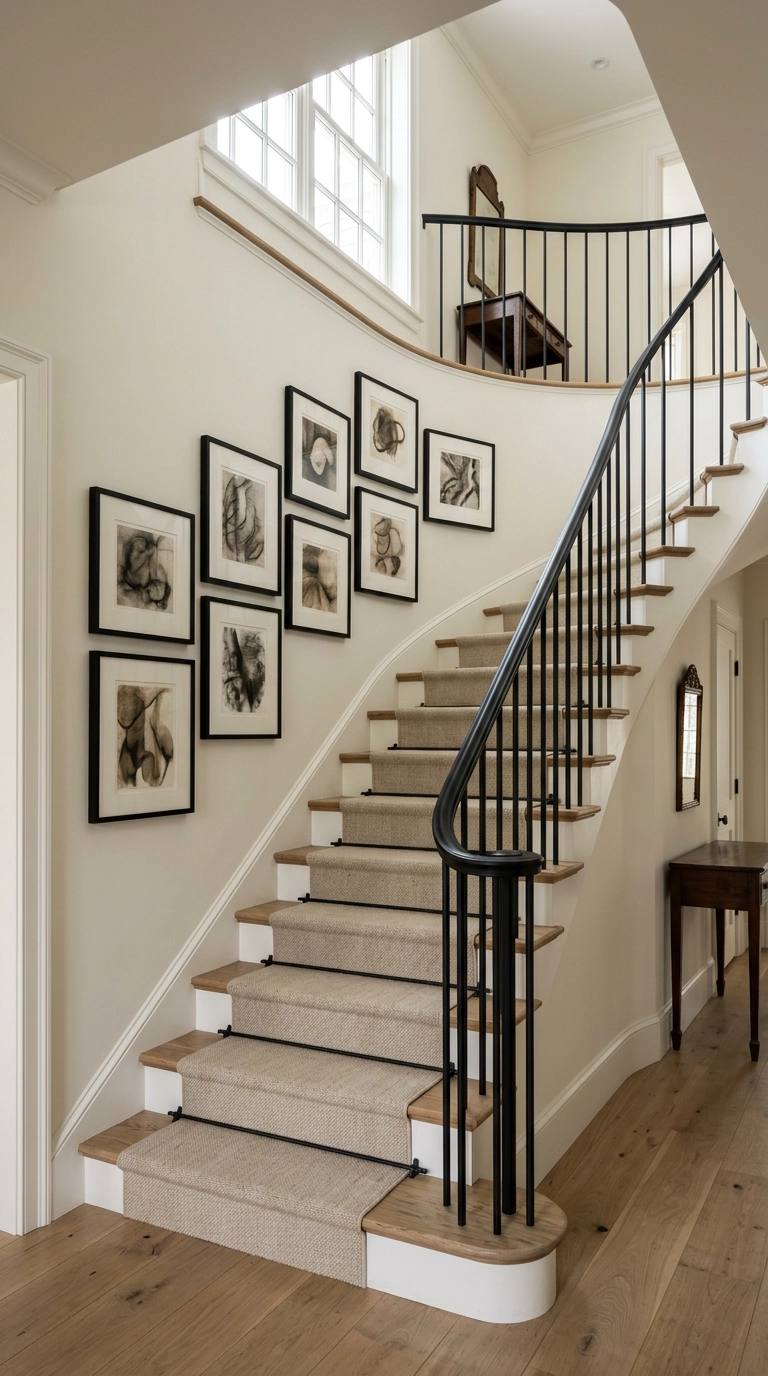
The rule that saves this from looking crooked: pick the bottom edge of your lowest frame, measure 60 inches up from that tread’s nose, and keep every frame the same 60 inches above its own tread. The whole arrangement then climbs at exactly the stair’s angle, which is what makes it read intentional rather than accidental.
2. Color Drench the Entire Stairwell in One Deep Shade
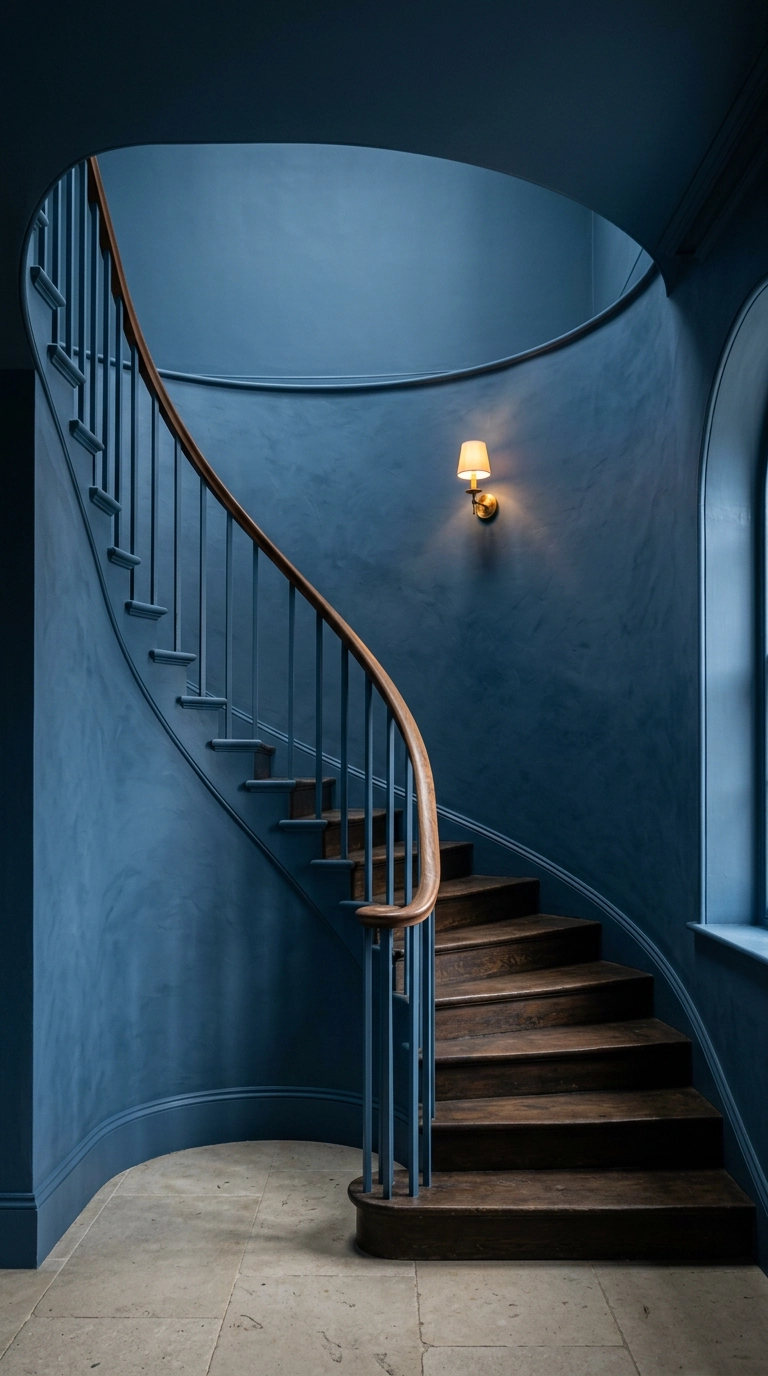
Color drenching just means walls, trim, and ceiling in one shade so there are no visual breaks to chop up the space. On a curve it’s magic, because the missing contrast lines let your eye read the whole sweep as a single sculptural form. Farrow & Ball Hague Blue and Benjamin Moore Deep Space are both safe bets.
3. One Oversized Statement Mirror at the Base of the Curve
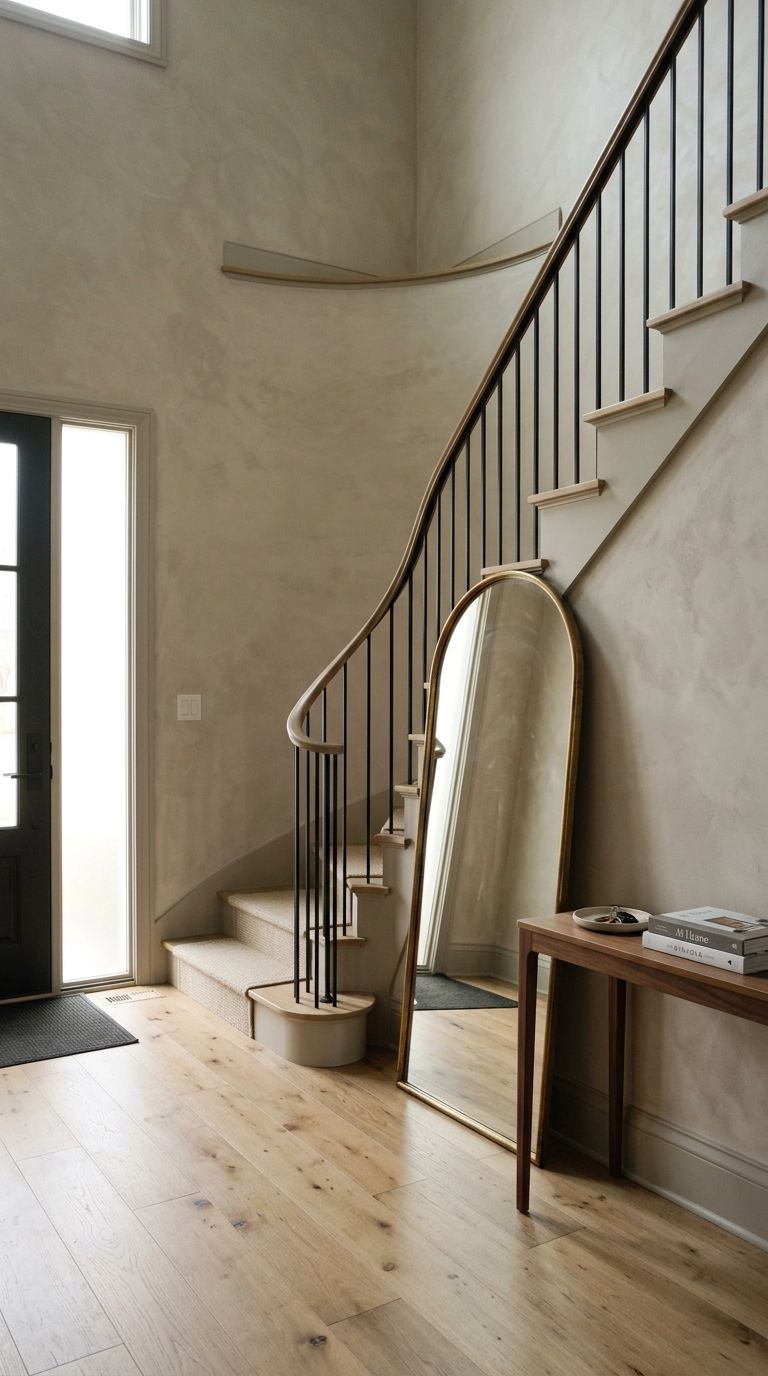
Go bigger than feels reasonable, at least 30 by 70 inches, so the mirror can hold its own against the visual weight of the curve. Anything smaller looks like a bathroom mirror wandered into the foyer.
4. A Sculptural Pendant Dropped into the Curve’s Void
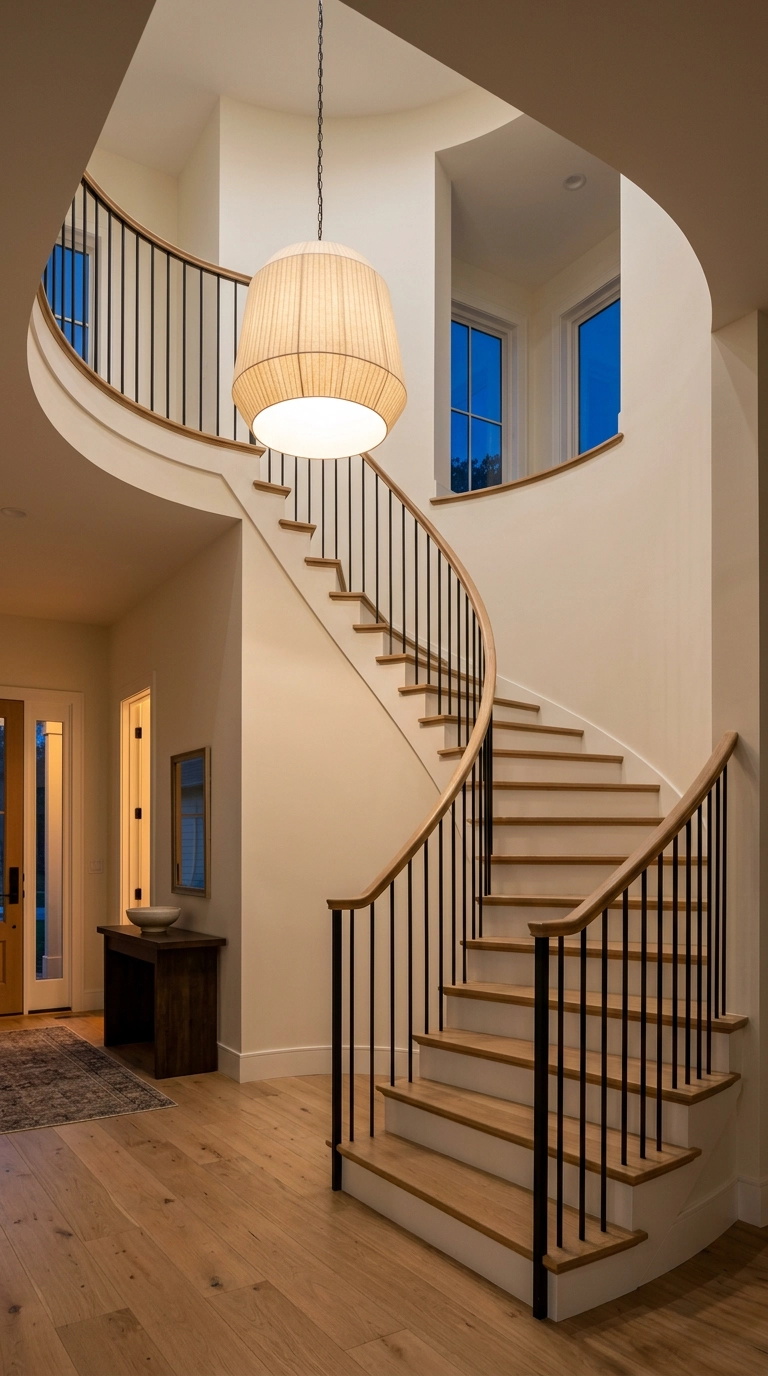
The height rule people always get wrong: the bottom of the fixture should sit about seven feet above the highest tread it hangs over, never centered in the room. Aim for a fixture at least 20 inches wide on a two-story void or it’ll look like a lost lightbulb.
5. A Flexible Wool Runner Bent Around the Curve
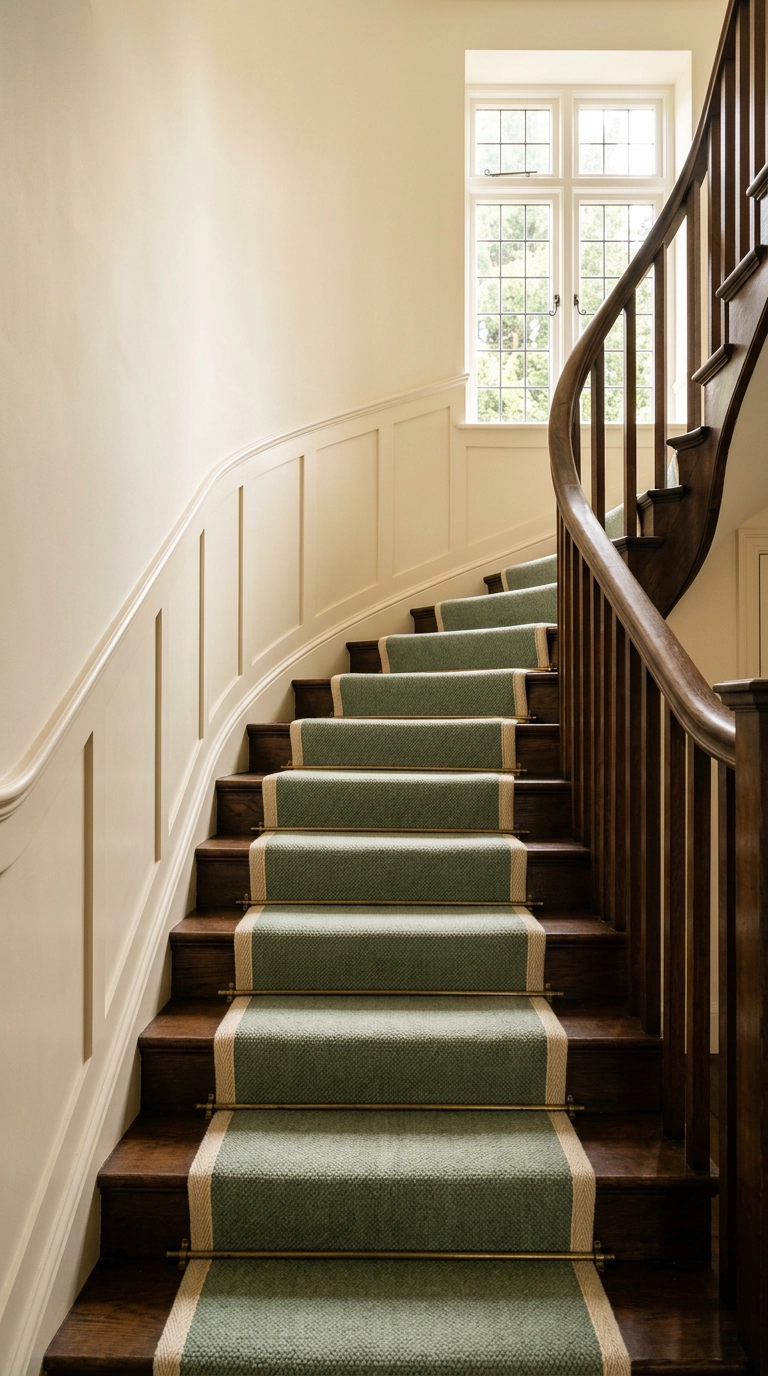
Curves need a runner that can flex, so look for a thin, low-pile wool or sisal-look flatweave rather than a stiff woven-back rug. On a real curve the installer cuts and pieces the winder treads, which is why this is a splurge, usually the runner plus a few hundred in labor.
6. Wall Sconces Stepped Along the Rise
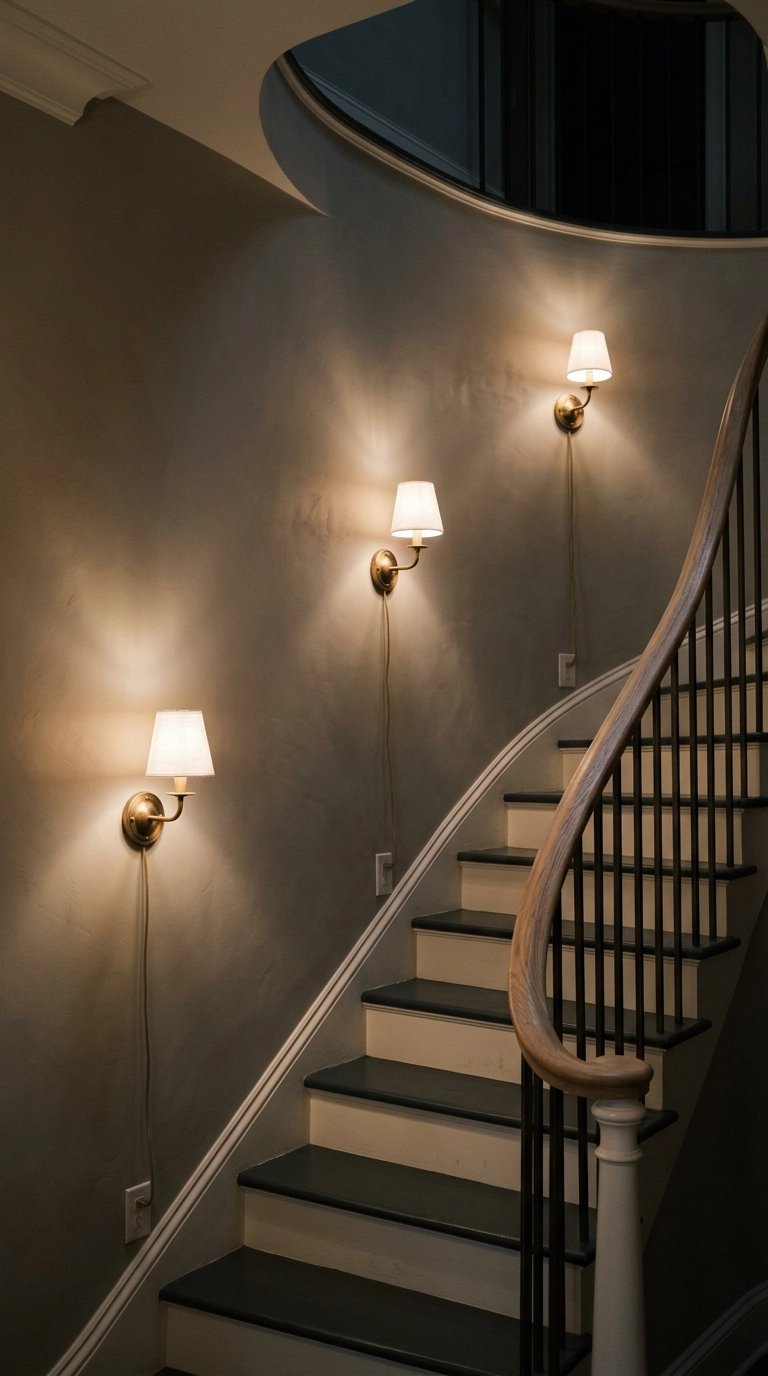
Mount them 66 to 70 inches above the tread directly below each one, spaced every four or five steps. Consistent height off the tread, not off the floor, is the whole game here.
7. Curved Picture Frame Molding on the Stair Wall
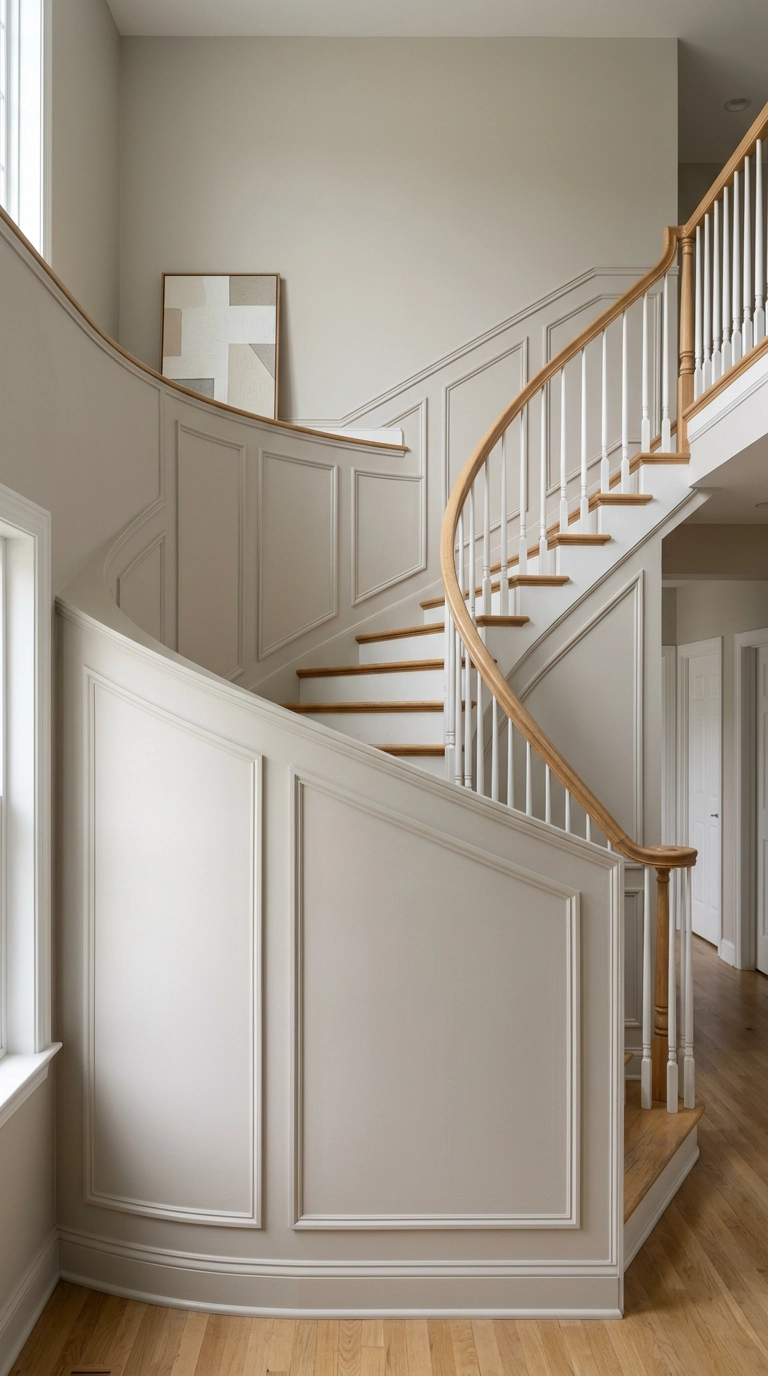
Paint the molding the exact same color and sheen as the wall so it reads as texture and shadow rather than as trim. That’s what keeps a busy architectural detail from competing with the curve.
8. A Warm Wood Handrail Against Painted Balusters
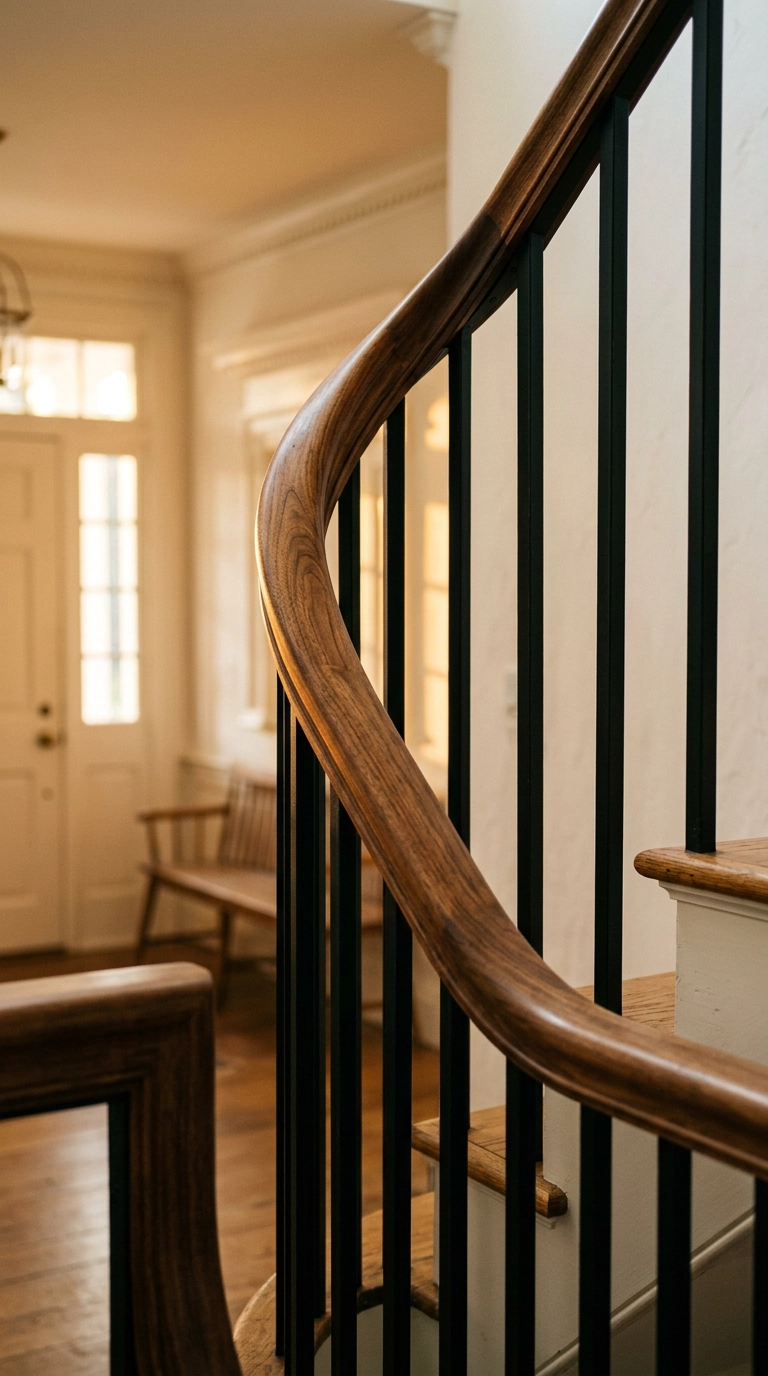
A continuous wood handrail is the single best thing about a curved stair, because the eye follows an unbroken line and reads the whole thing as one gesture. Refinishing an existing rail from orange oak to a walnut or espresso tone costs almost nothing but sandpaper and a weekend.
9. A Reading Nook Tucked Under the Curve
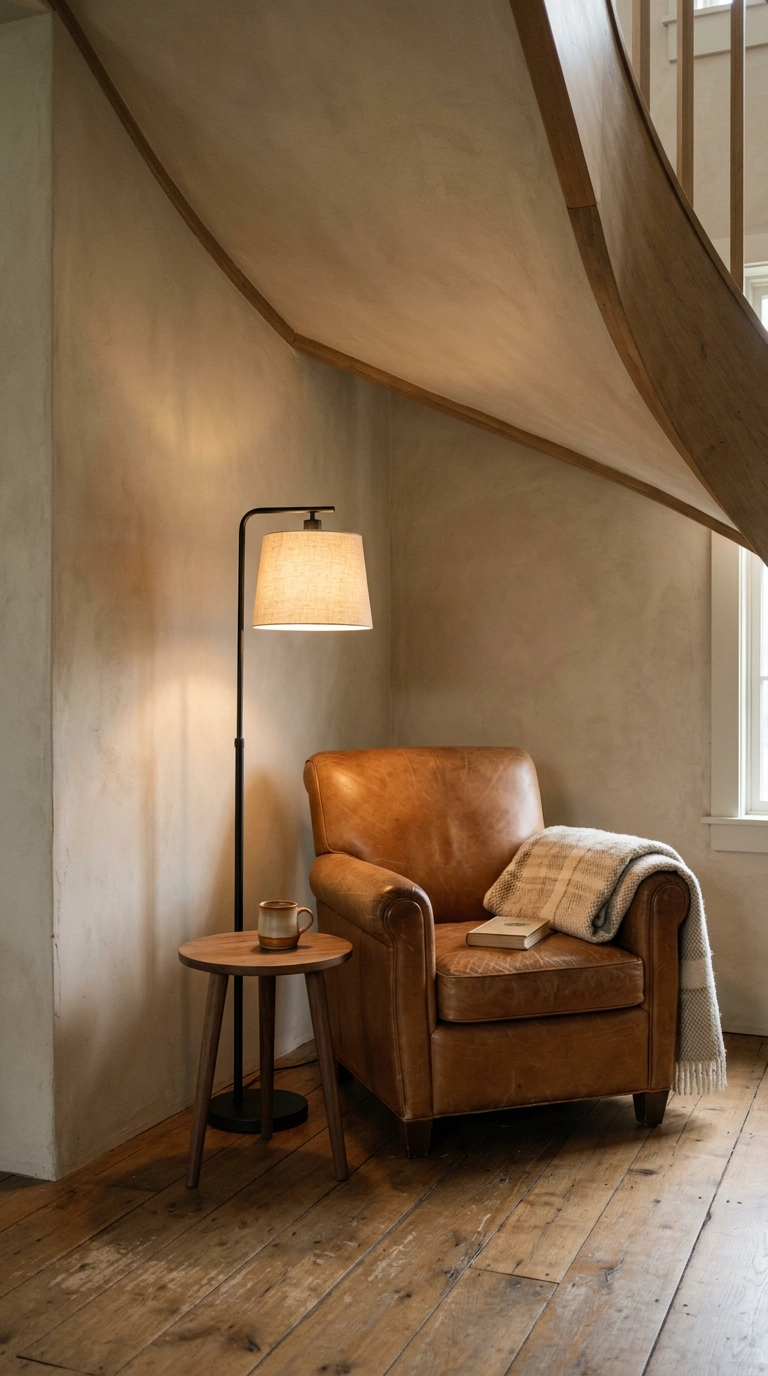
The awkward wedge under a curve is prime real estate, and the reason a nook works there is that the low ceiling makes the spot feel deliberately sheltered instead of leftover. Measure your headroom at the seat, you want at least 50 inches above where a person’s head lands.
10. Limewash Plaster on the Full Stairwell Wall
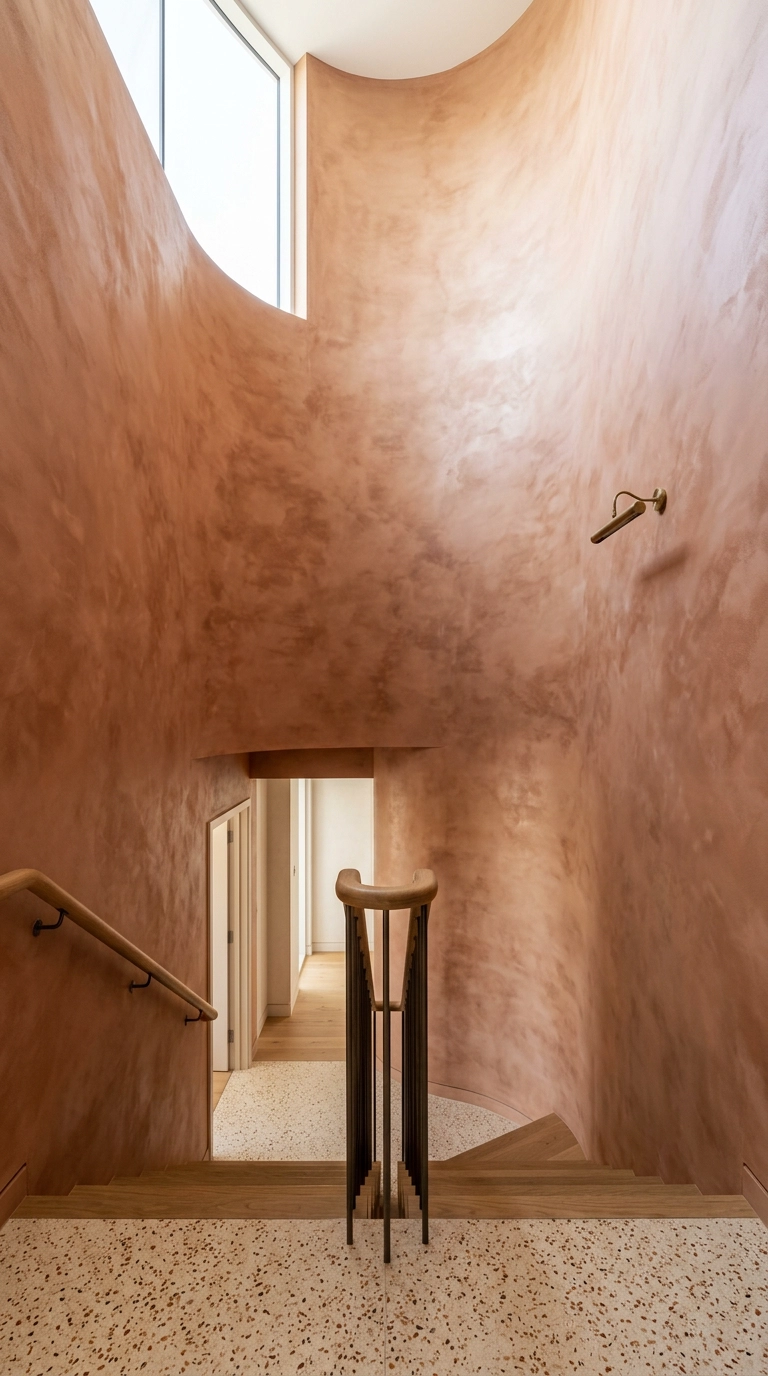
Limewash is a mineral paint that dries with a soft cloudy variation, so it reads as depth rather than flat color. On a curved wall it’s the best money you can spend, because the mottling shifts as the surface turns and gives the curve visible dimension.
11. One Tall Branch Arrangement at the Newel Post
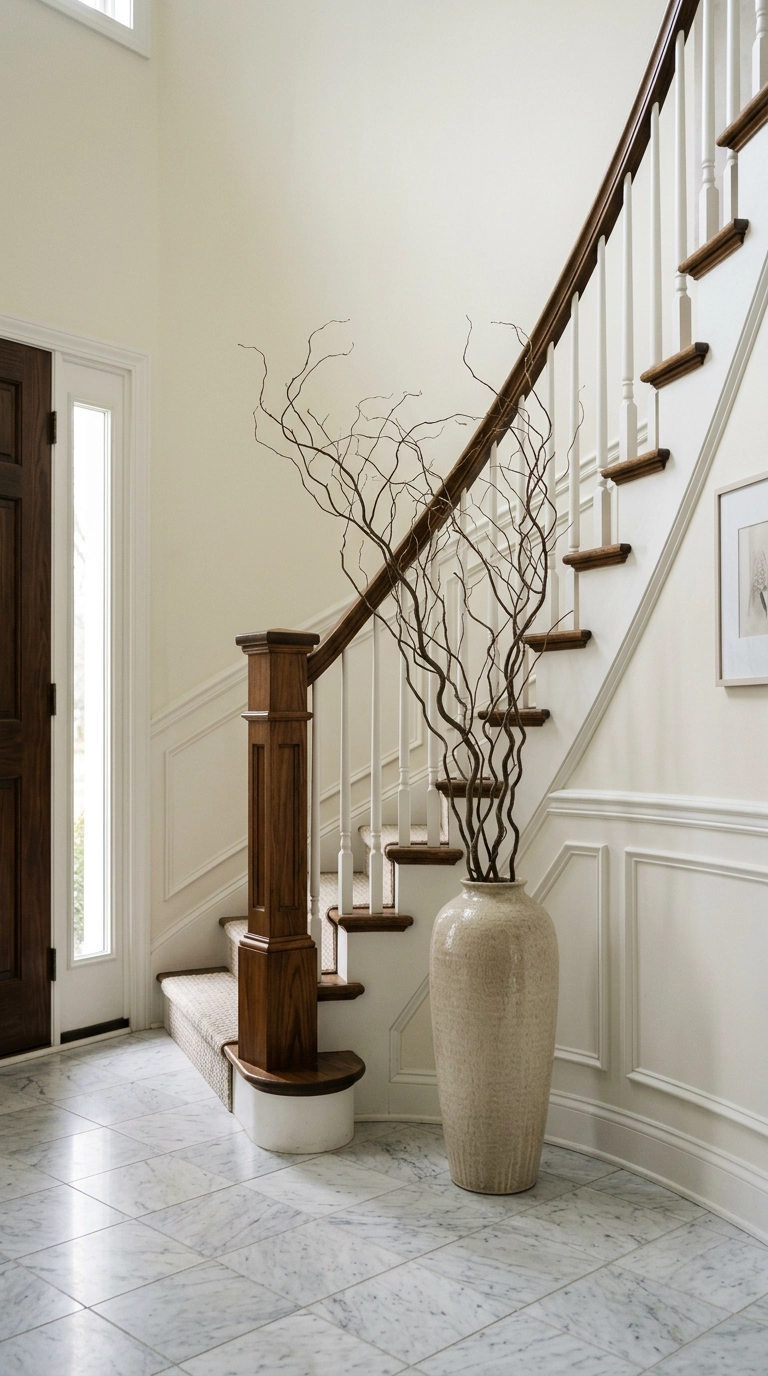
Height is the point. Go for branches that reach four to five feet above the vase lip so the arrangement climbs alongside the first few treads and echoes the rise.
12. Paint the Risers, Leave the Treads Natural
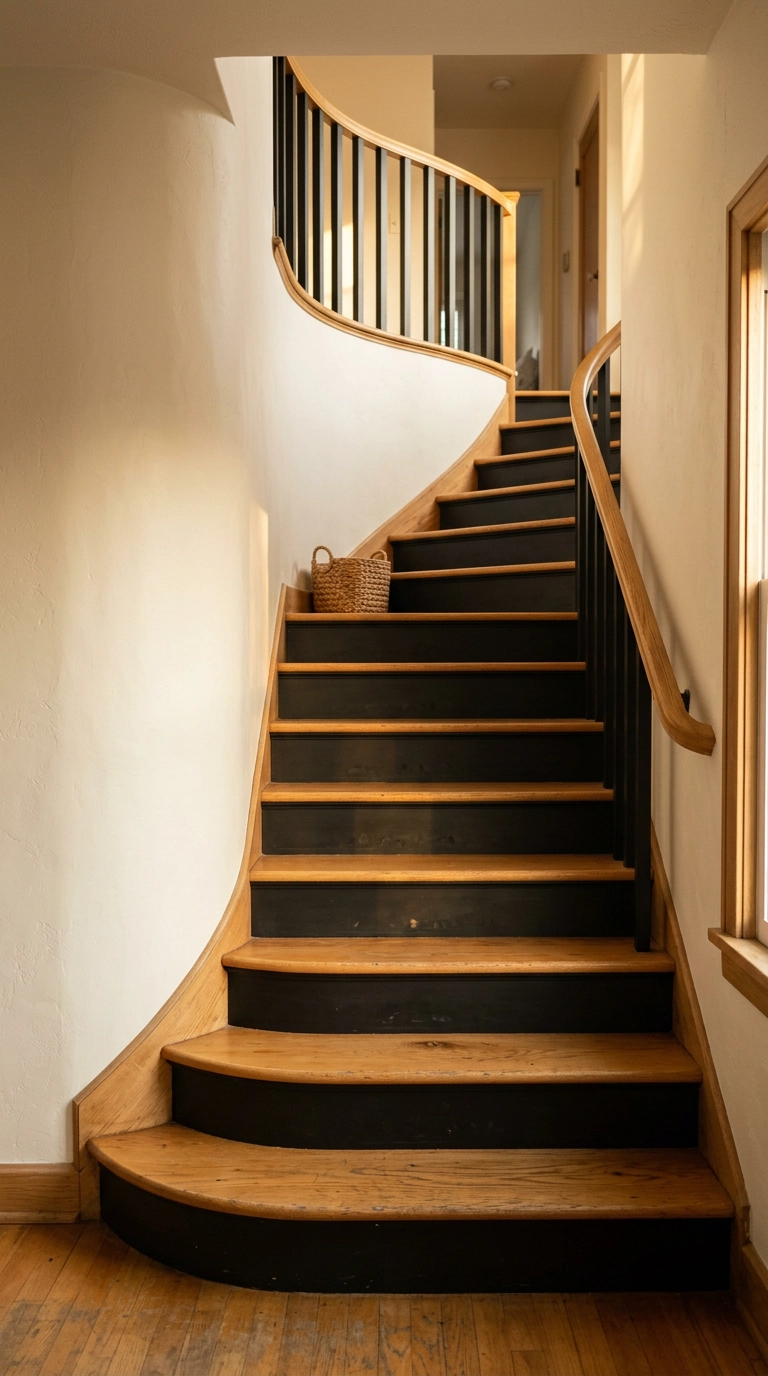
Dark risers with light treads is the highest-impact 60-dollar change you can make to a stair, because the contrast draws a stack of horizontal lines that curve with the flight. On a sweeping stair those lines fan out slightly, which is what makes it look expensive.
13. Removable Wallpaper in a Small Repeating Pattern
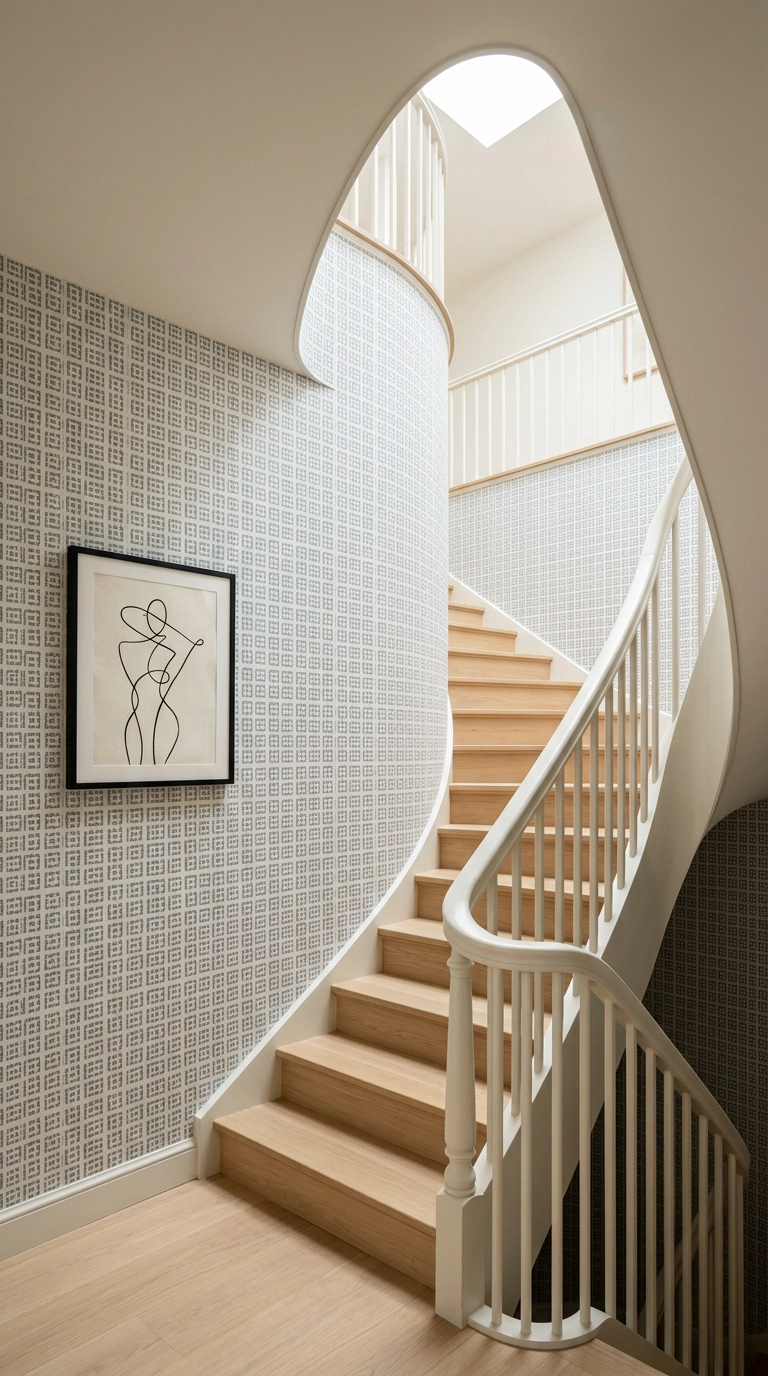
Small repeating patterns are the only ones I’d risk on a curve, since a large motif distorts visibly as the wall bends and every seam becomes obvious. Keep the repeat under four inches and the pattern non-directional.
14. A Single Oversized Canvas on the Two-Story Wall
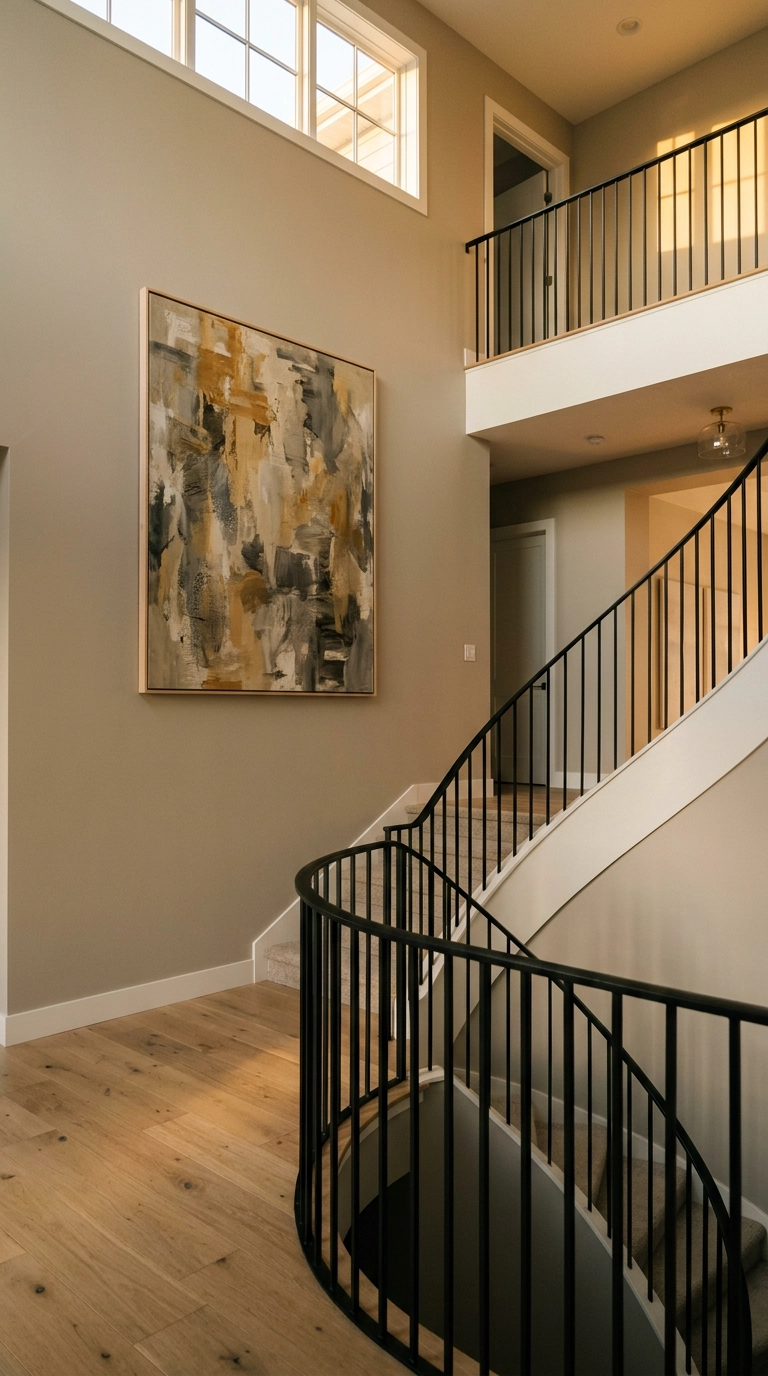
Two-story walls swallow small art whole. My floor is 48 inches tall, ideally 60, and center it on the midpoint of the stair run rather than the midpoint of the wall so it lands where people actually look from.
15. Vertical White Oak Slat Paneling Along the Stair Wall
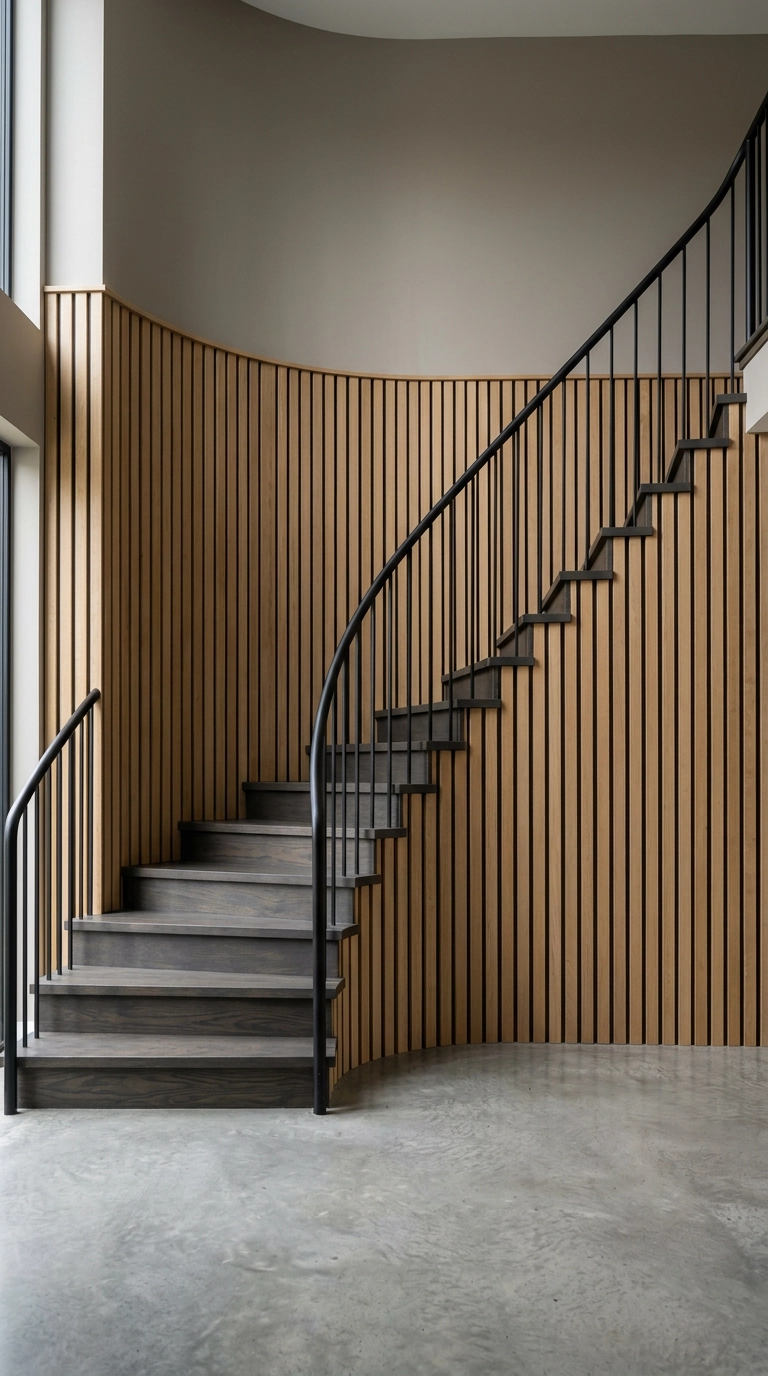
Vertical slats do something specific here: the strict up-and-down lines contrast against the curve, so each one reads as a stronger shape than it would alone. Keep slats around 1.5 inches wide with a half-inch gap and the shadow lines do most of the work.
16. A Low Console Hugging the Curve at the Base
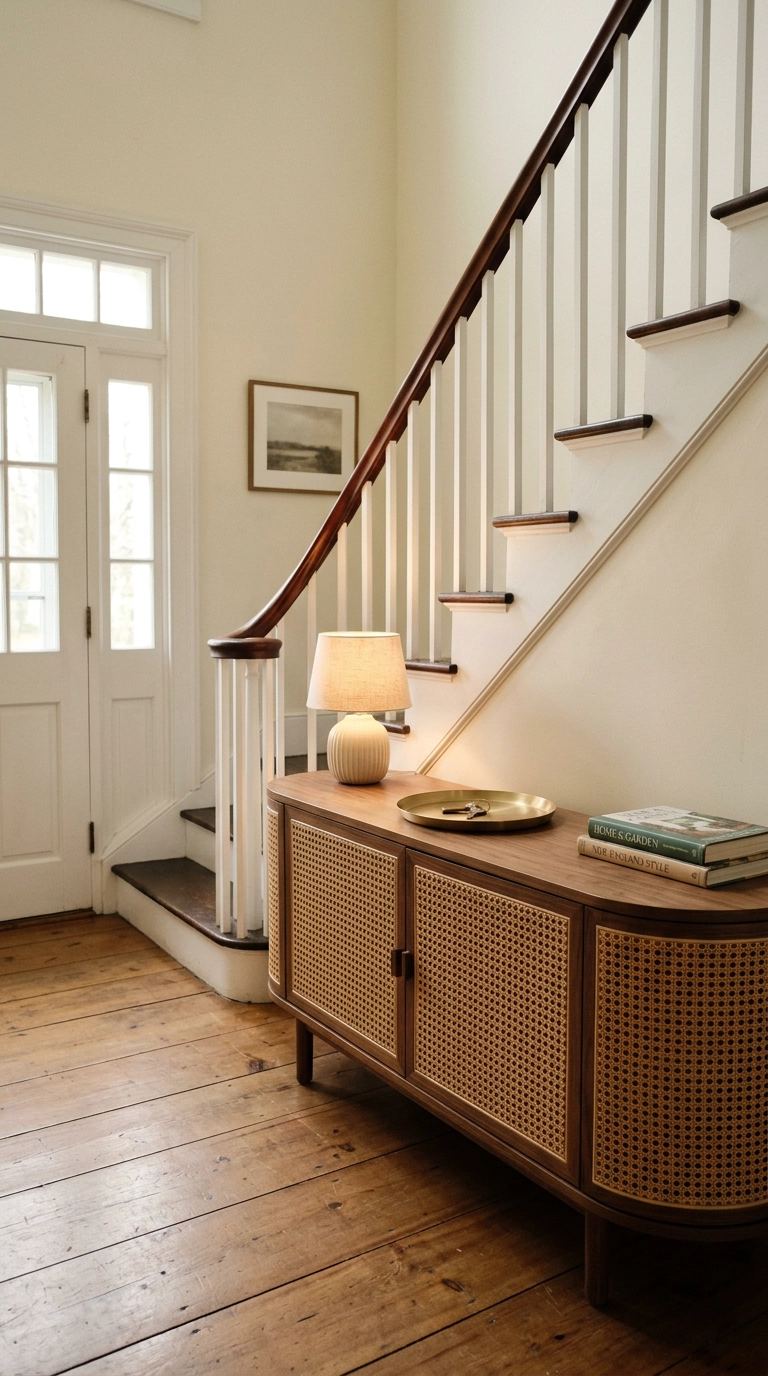
Look for a demilune or curved-front console rather than a rectangular one, because a straight edge parked against a curve creates a wedge of dead space that reads as a mistake. Keep it under 30 inches tall so it doesn’t crowd the newel post.
17. Recessed LED Strip Lighting Under the Handrail
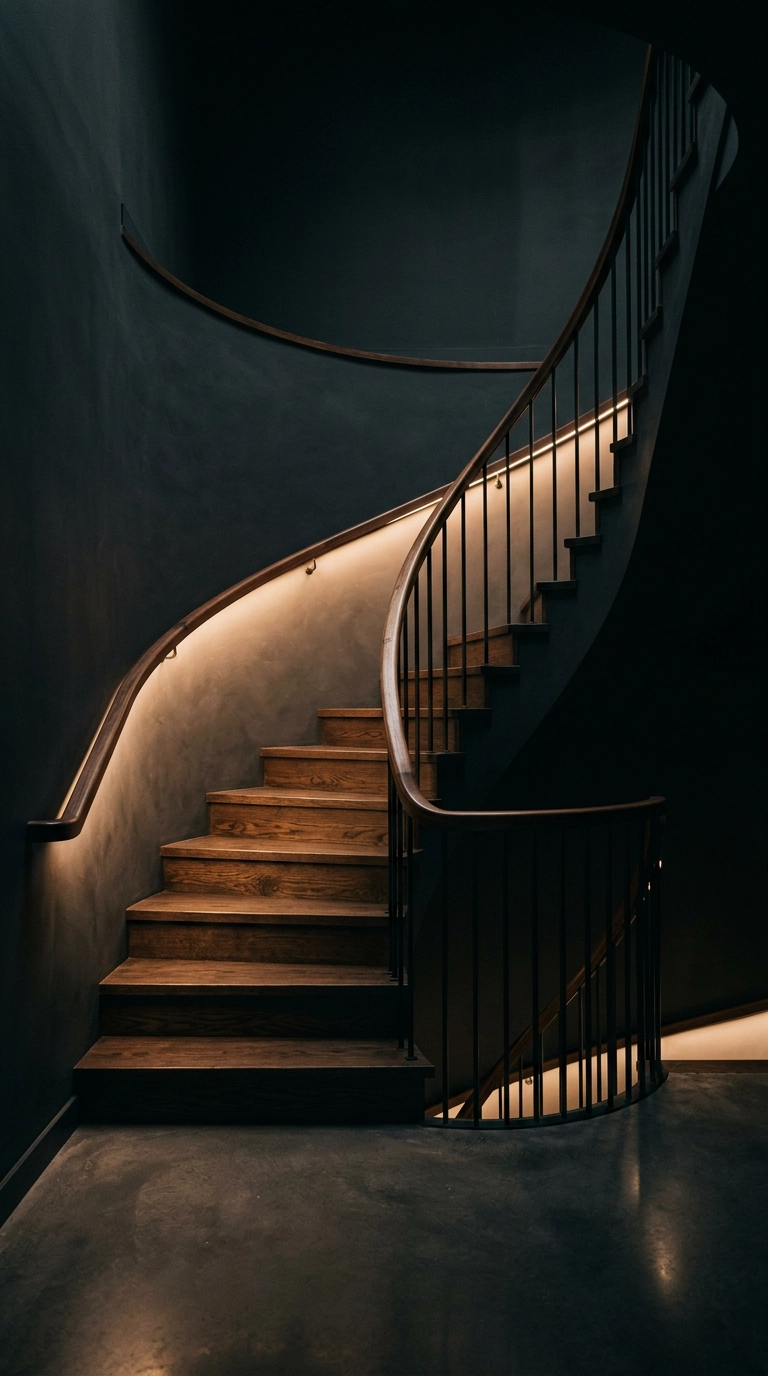
Choose a 2700K to 3000K strip, never the cool blue-white kind, and mount it in an aluminum channel so you see the glow instead of individual dots. On a curve, flexible strip beats any fixture because it traces the exact geometry.
18. Layered Vintage Rugs at the Foot of the Stairs
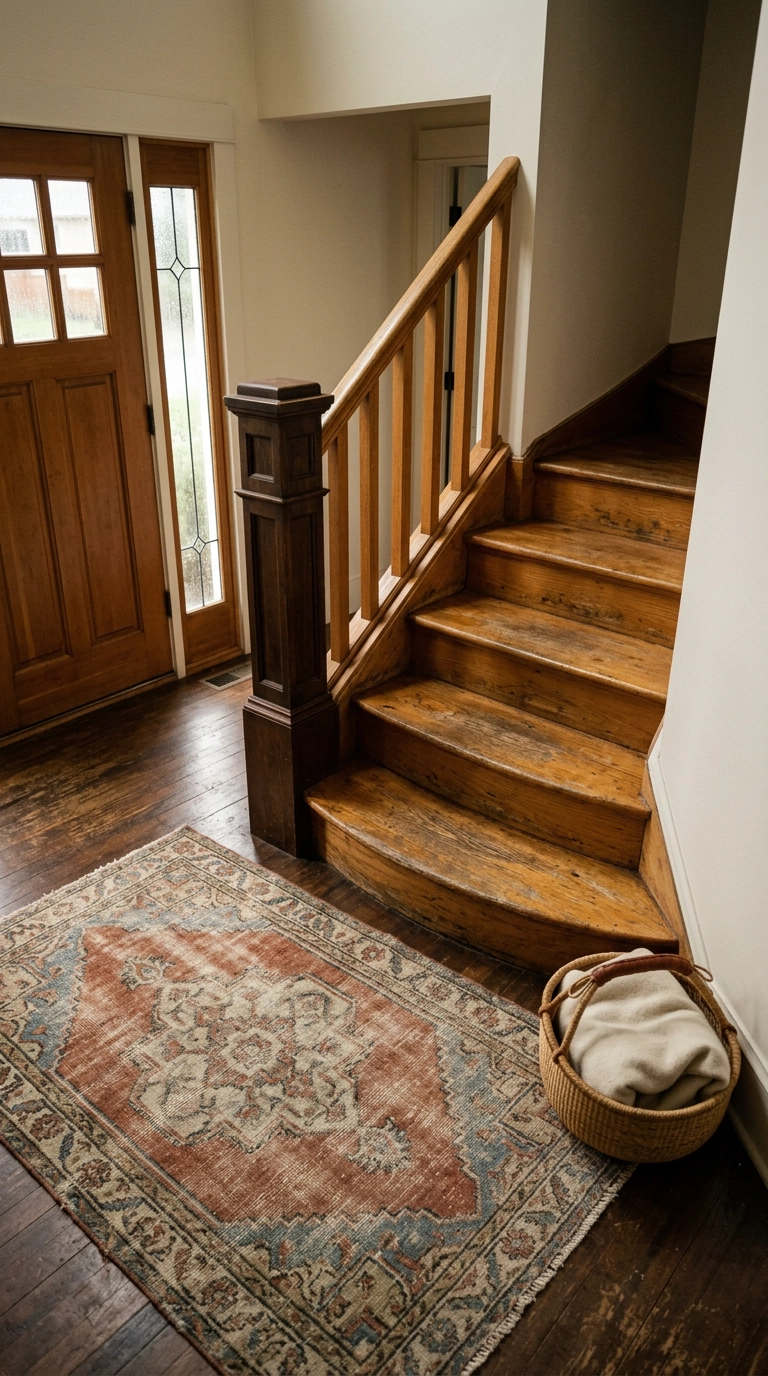
A worn vintage rug at the base of a stair solves two problems: it catches grit and it warms up all that hard wood and stone. Let the rug be your only pattern in the entry, so keep runners, pillows, and wallpaper solid.
19. A Single Picture Ledge Following the Landing
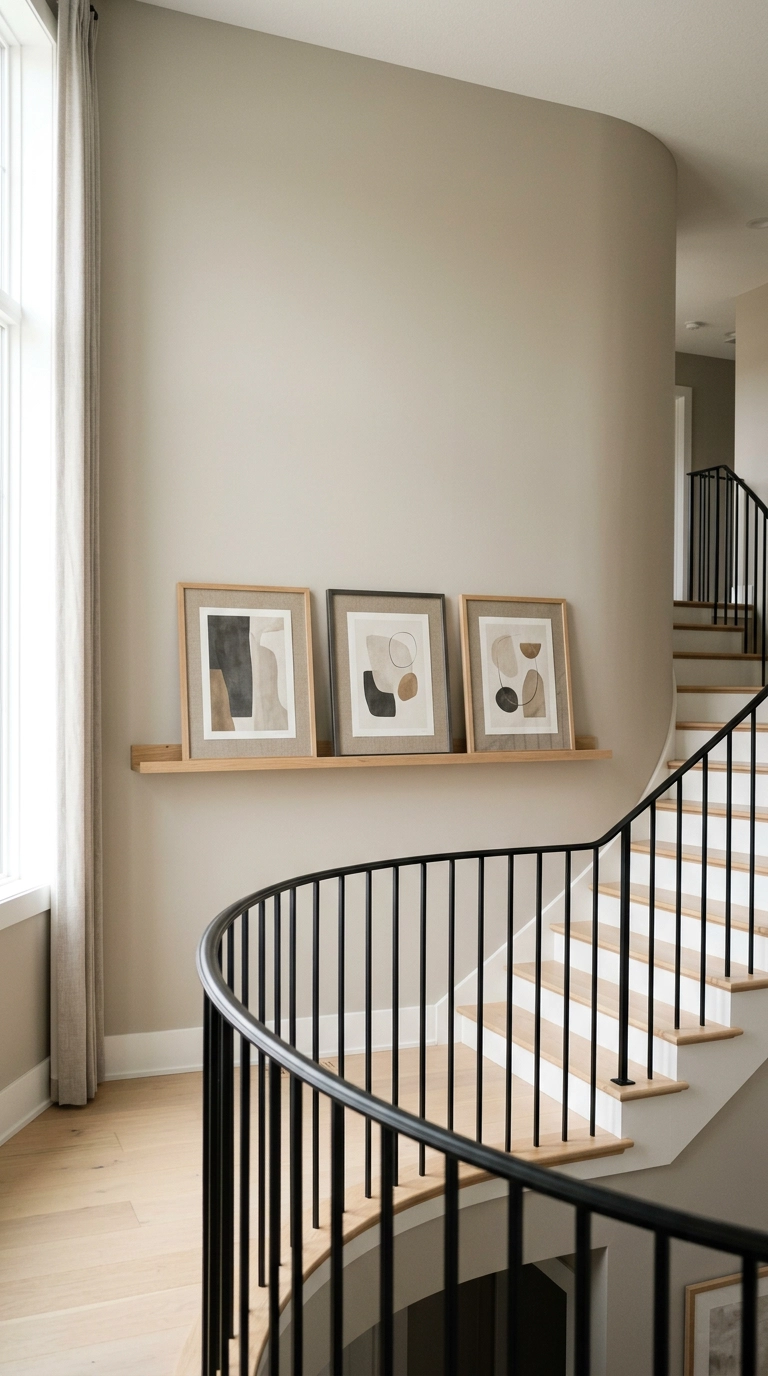
A ledge is the low-commitment version of a gallery wall: two screws instead of nine nail holes, and you can swap the art whenever you get bored. Mount it at about 60 inches on the landing wall where you have a flat straight run.
20. Wainscot Paneling That Steps With the Stair
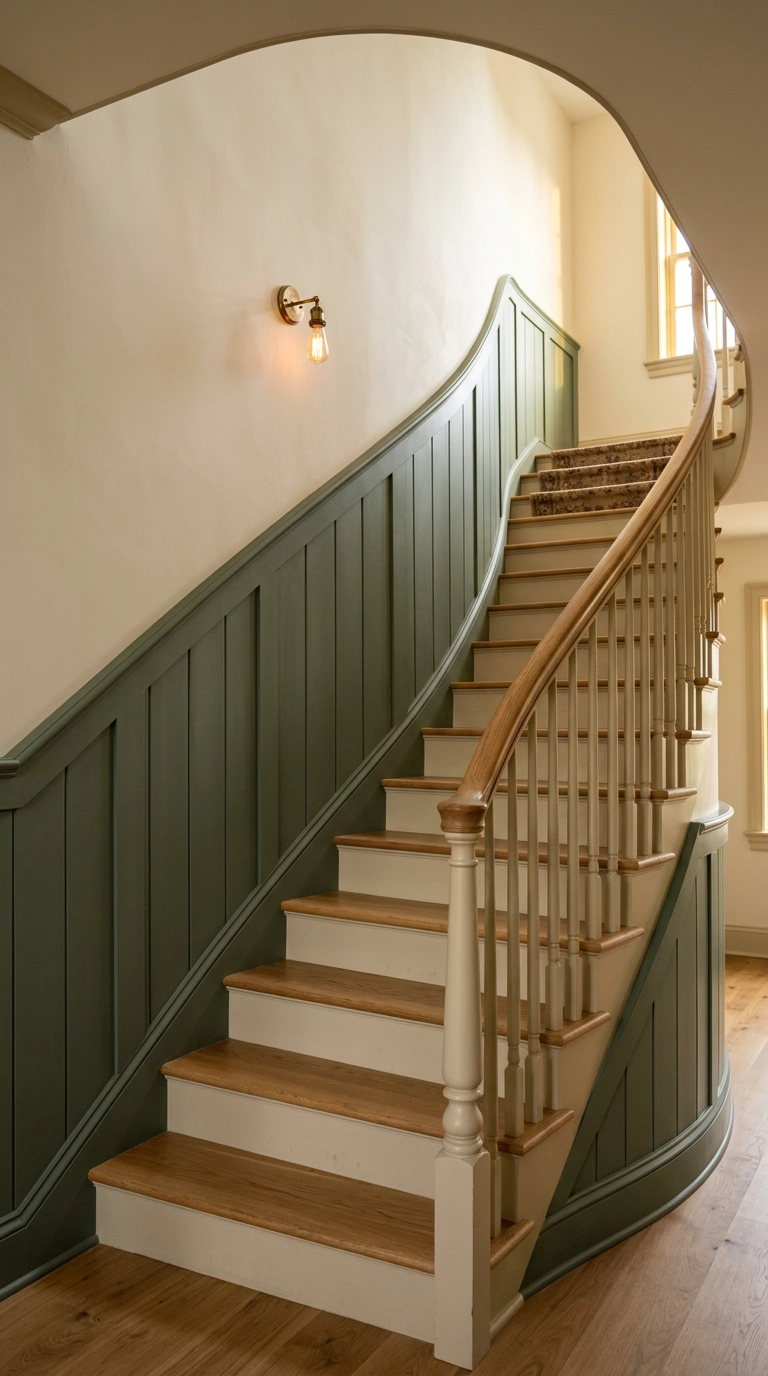
Wainscot’s job on a curve is to break a tall blank wall into two digestible pieces. Run the cap rail at about 36 to 40 inches above each tread, parallel to the stair’s angle, so the top line climbs at the same rate the stairs do.
21. A Dramatic Level Paint Split Across the Curve
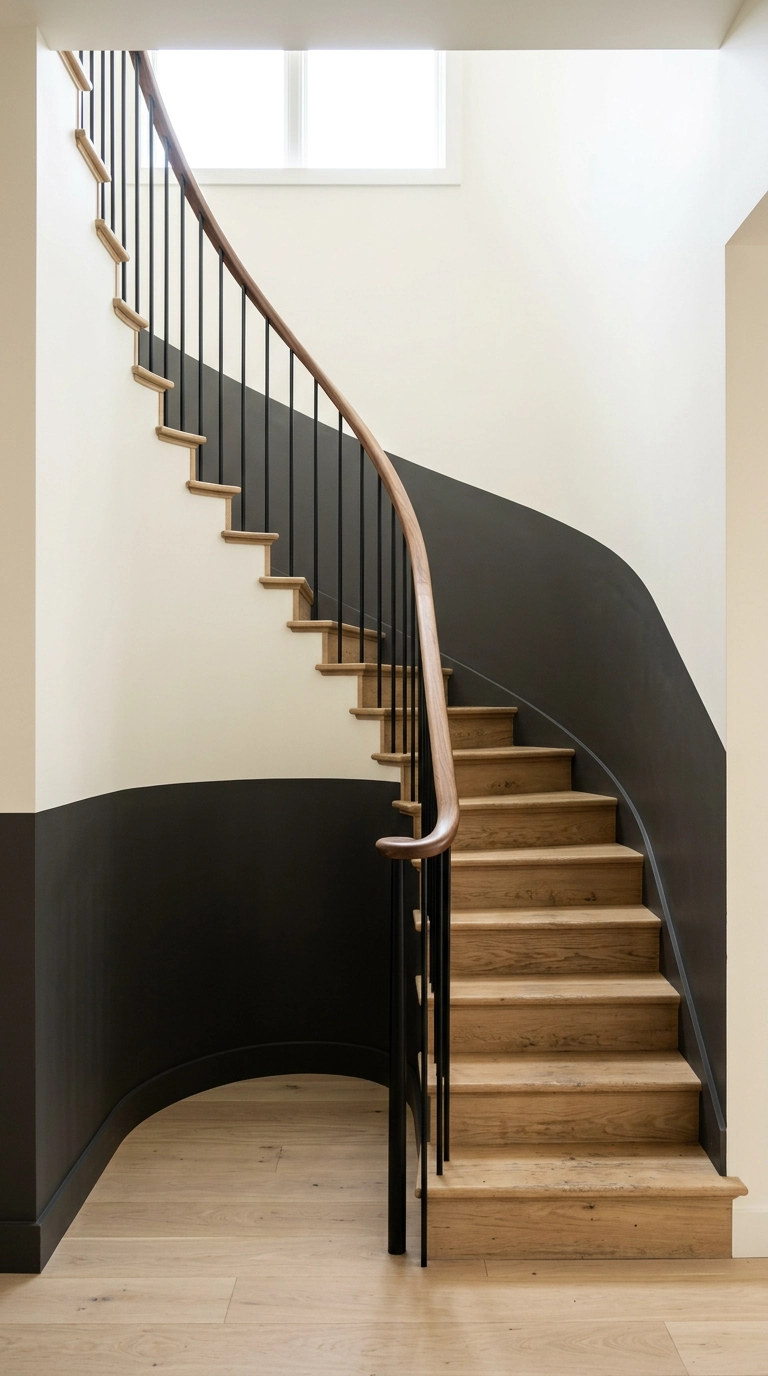
Run the line dead level at about five feet, not angled with the stair. The tension between a true horizontal and the climbing curve is what makes both look deliberate, and the dark lower band visually shortens a tall stairwell.
22. A Woven Pendant Cluster at Staggered Heights
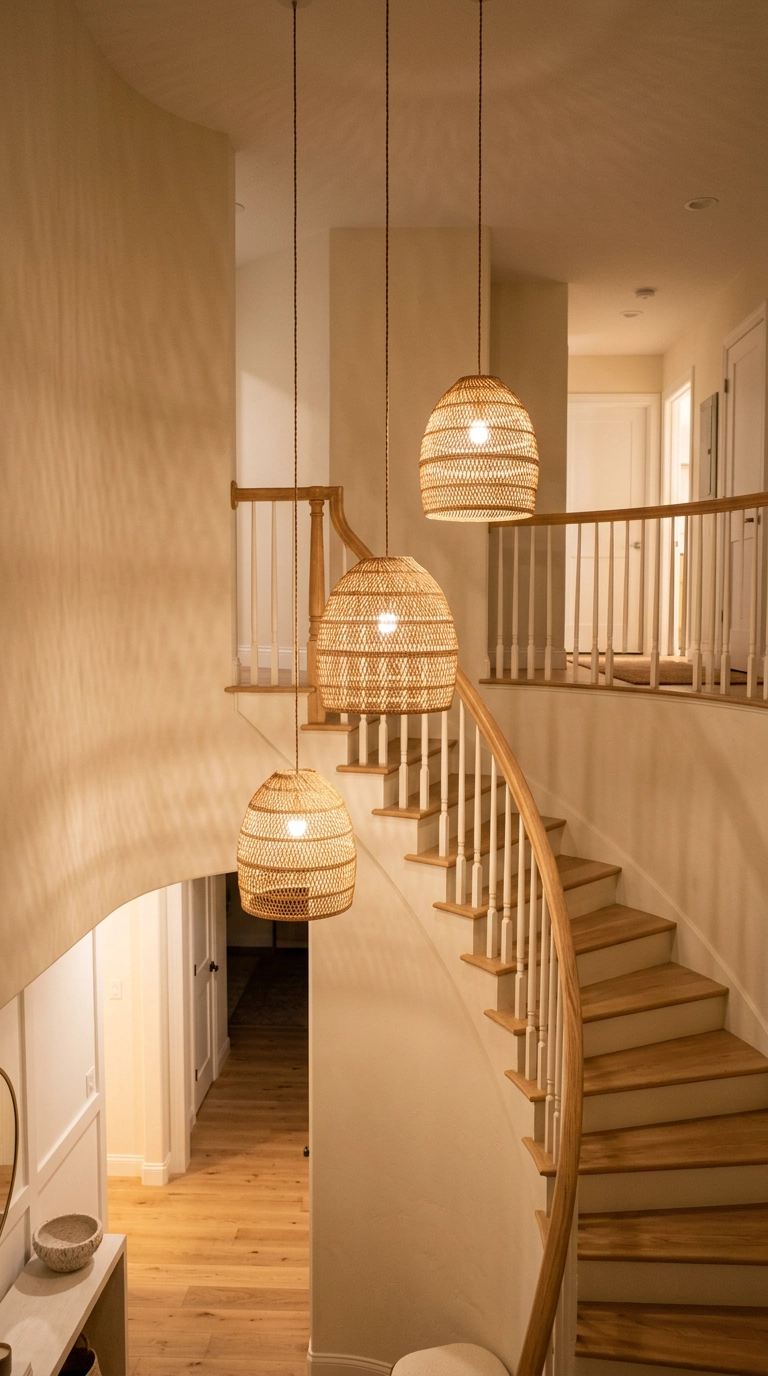
Stagger them by at least 12 inches vertically and keep them in a loose triangle rather than a straight row, so the cluster reads as one sculptural mass. Three is plenty, five starts looking like a restaurant.
23. A Sculptural Newel Post Finial as the Full Stop
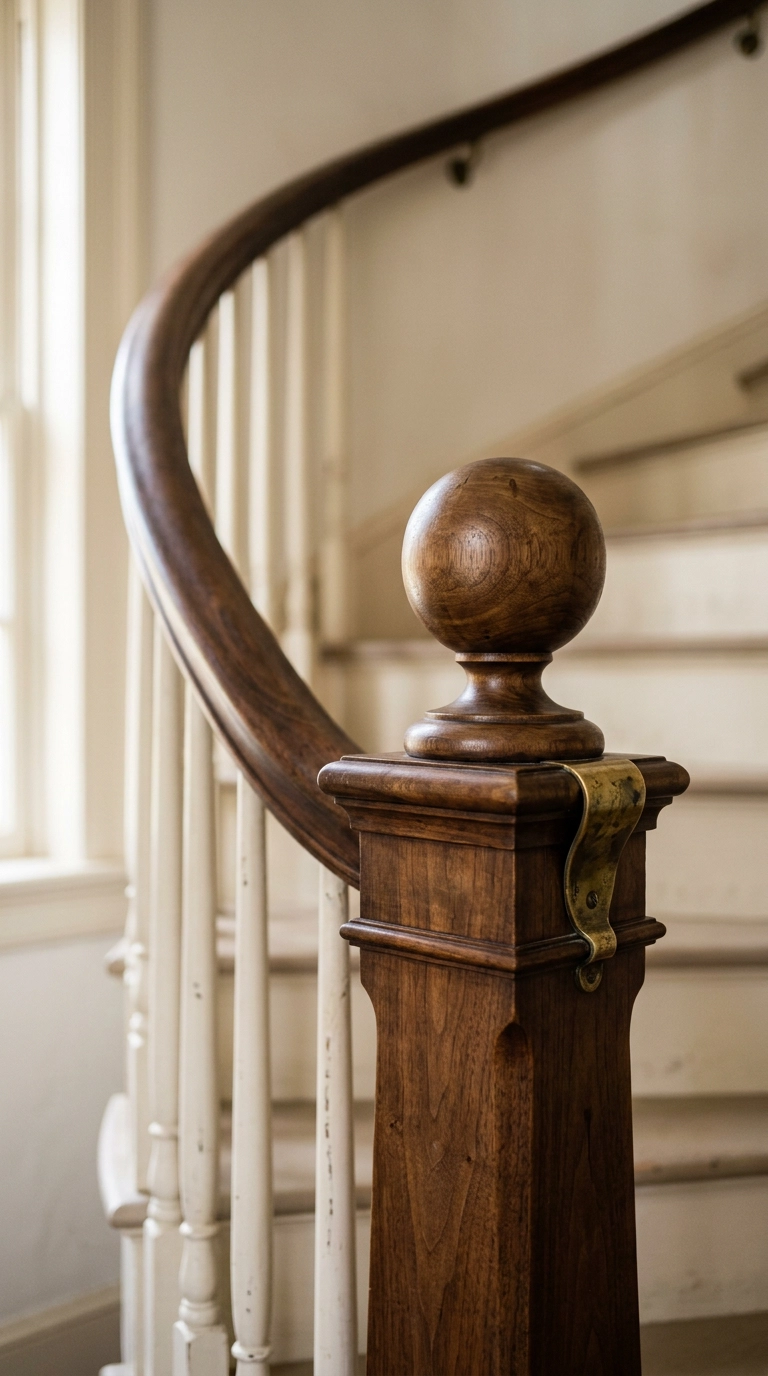
The newel post is where the curve begins, so it should read as a deliberate punctuation mark rather than a leftover 2×4 with a cap. A chunky turned or ball finial gives the eye a place to start before it travels up the sweep.
24. Leave the Curve Almost Bare and Let It Be the Art
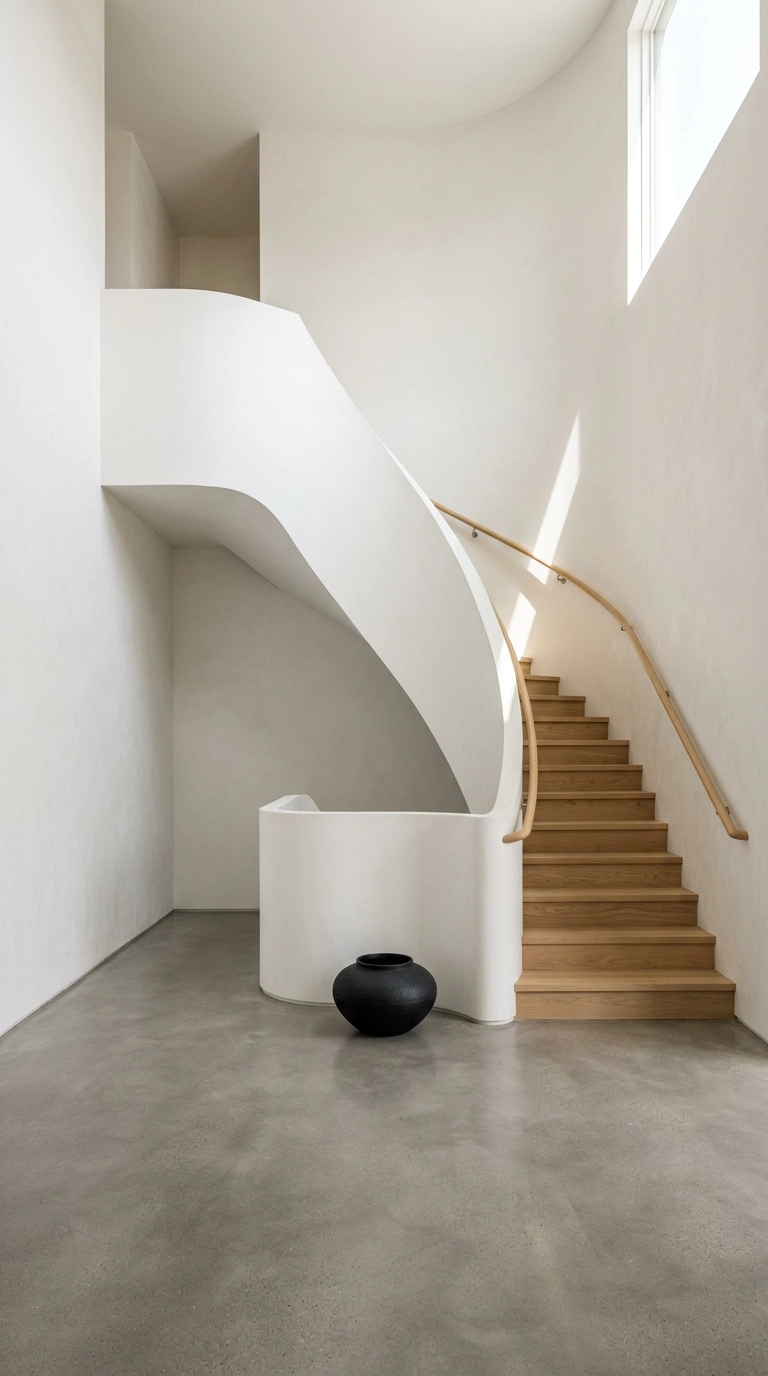
Sometimes the most confident thing you can do is nothing. If your stair has a beautiful continuous stringer, the smooth band that runs under the treads, then art on that wall is just noise competing with the best line in your house.
25. A Runner in a Bold Stripe for Rental-Safe Impact
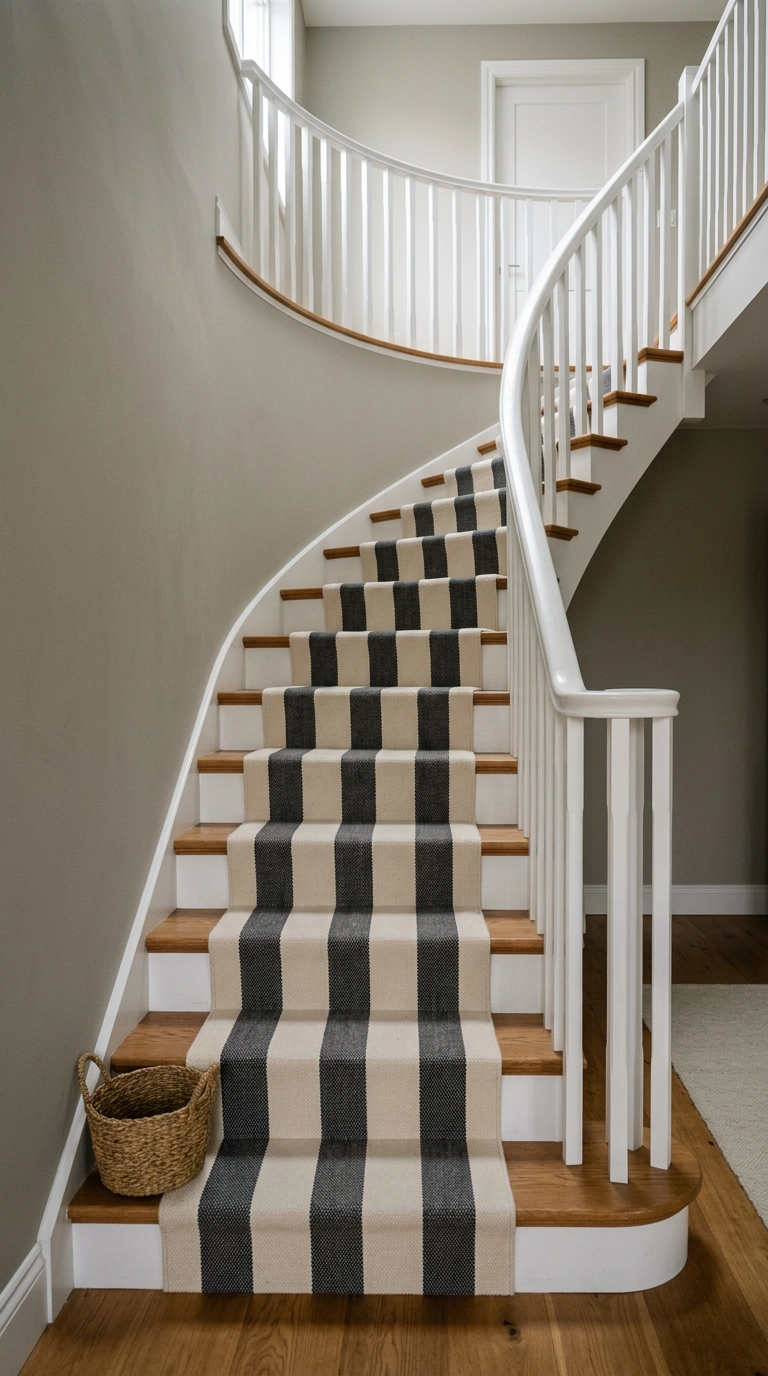
If you can’t drill rods or glue anything down, individual carpet stair treads or a loose flatweave with heavy-duty non-slip pads under each tread give you 80 percent of the look for under 150 dollars. Wide stripes running across the treads exaggerate the fan of a curve.
Where I’d Start If This Were My Staircase
If you take one thing from this list, let it be that a curved staircase doesn’t need much, it needs the right thing in the right place. The stepped gallery wall and the color-drenched stairwell are the two ideas I’ve repeated in the most homes, and they sit at opposite ends of the effort scale, which tells you something about how forgiving this feature is. Do the cheap wins first, dark risers, a swapped finial, a big leaning mirror, and see how much further you actually want to go.
What I’m seeing everywhere right now is the move away from busy stair walls toward texture doing the work, limewash plaster, slat paneling, and those quiet bare curves lit with a concealed strip under the handrail. Kelly Wearstler has been treating stairs as pure sculpture for years, and Nate Berkus keeps proving that one oversized piece of art beats a wall of small frames every time. Farrow & Ball shades like Hague Blue and Railings are still doing the heavy lifting in the drenched stairwells I keep saving to my own boards.
My honest advice: stand at your front door, look at your stair the way a guest does, and notice where your eye stops. That’s the spot that needs something, and everywhere else probably needs less than you think. If you want more of this in your inbox, sign up for my weekly newsletter, I send one real project breakdown every Sunday, no fluff and no ten-page scroll to get to the point.


