
21+ Elegant Parlor Room Decor Ideas that Feel Timeless and Fresh in 2026

I have a soft spot for the parlor, which is a strange thing to admit about a room most people quietly hate. If you live in a Victorian, a Colonial, a Craftsman bungalow, or a brownstone, you probably have one: that formal front room off the entry that came with the house and currently holds a treadmill and a stack of Amazon boxes. I’ve spent years helping people figure out what to do with theirs, and the honest answer is that the parlor doesn’t need to be a museum or a mistake, it just needs one clear job.
Parlor Room Decor Ideas
1. Color-Drench the Entire Room in One Deep Shade
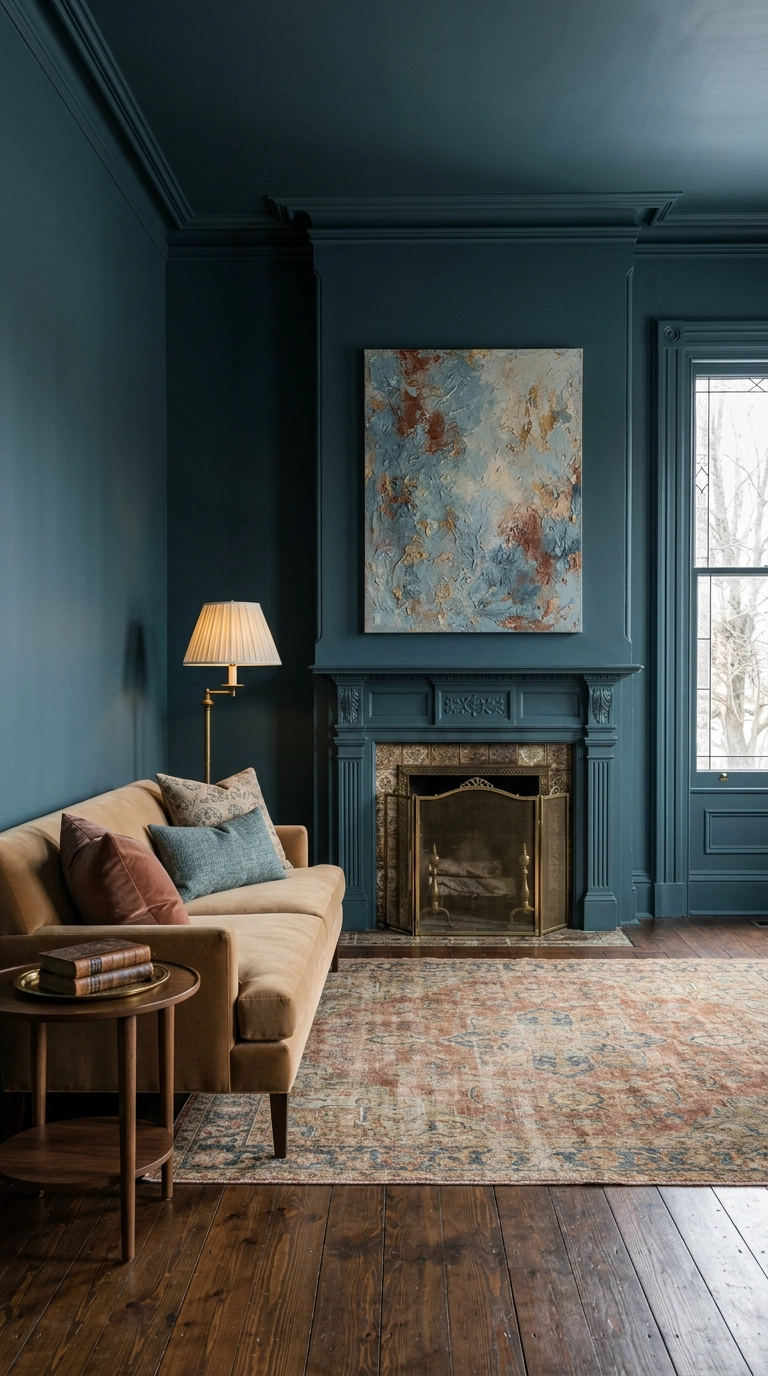
Color drenching means painting the walls, trim, ceiling, and even the window casings the same shade, and it is the single best thing you can do to an old parlor. These rooms are usually crawling with millwork, and when you paint every piece a different color, your eye has to stop at every edge, which makes the room feel choppy and smaller than it is. One shade erases all those breaks and the architecture reads as sculpture instead of clutter.
2. Buy the Rug Two Sizes Bigger Than You Think You Need
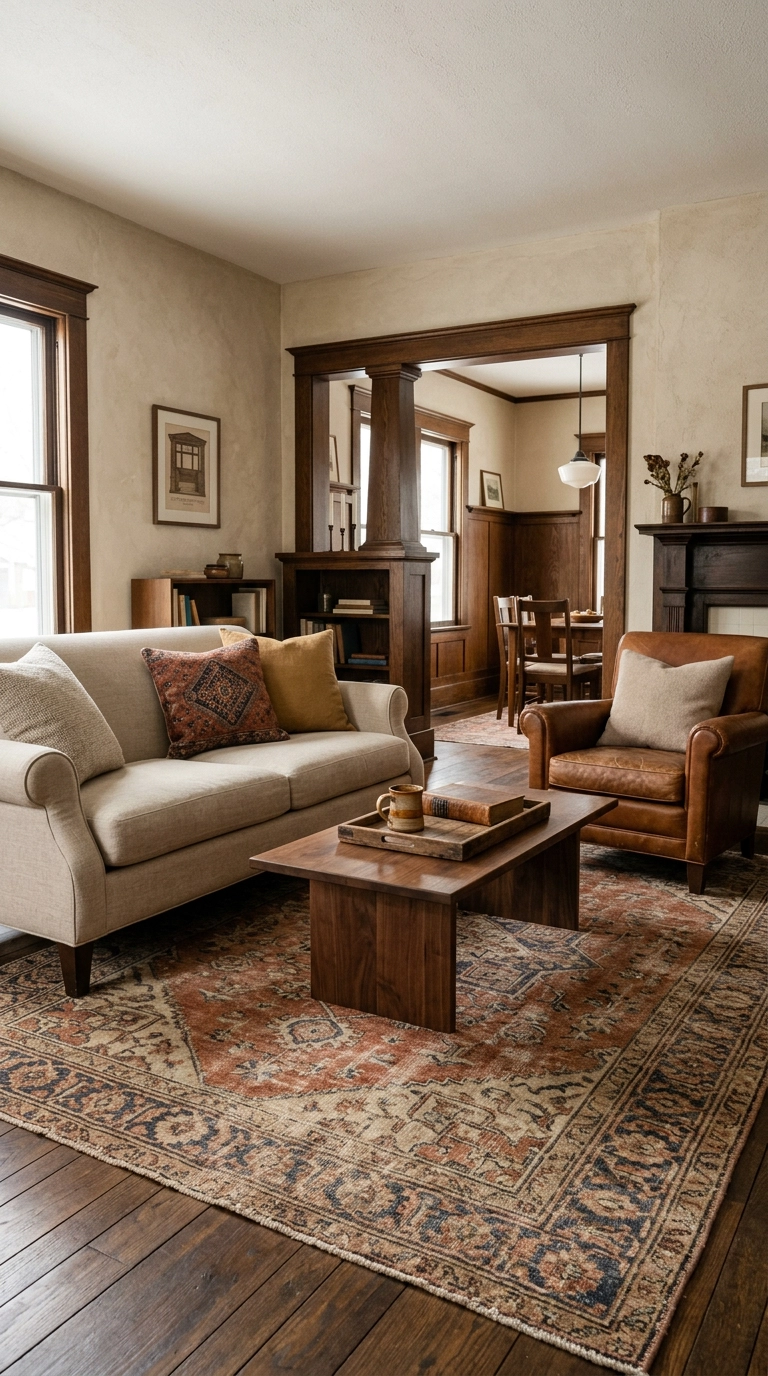
Nine times out of ten, the reason a parlor feels awkward is a rug that’s too small floating in the middle like a bath mat. The rule I use: every seat in the room should have at least its front two legs on the rug, and there should be no more than about eight to eighteen inches of bare floor between the rug edge and the baseboard. In most parlors that means 9×12, not 5×8.
3. Set Two Sofas Facing Each Other, the Way Parlors Were Meant to Work
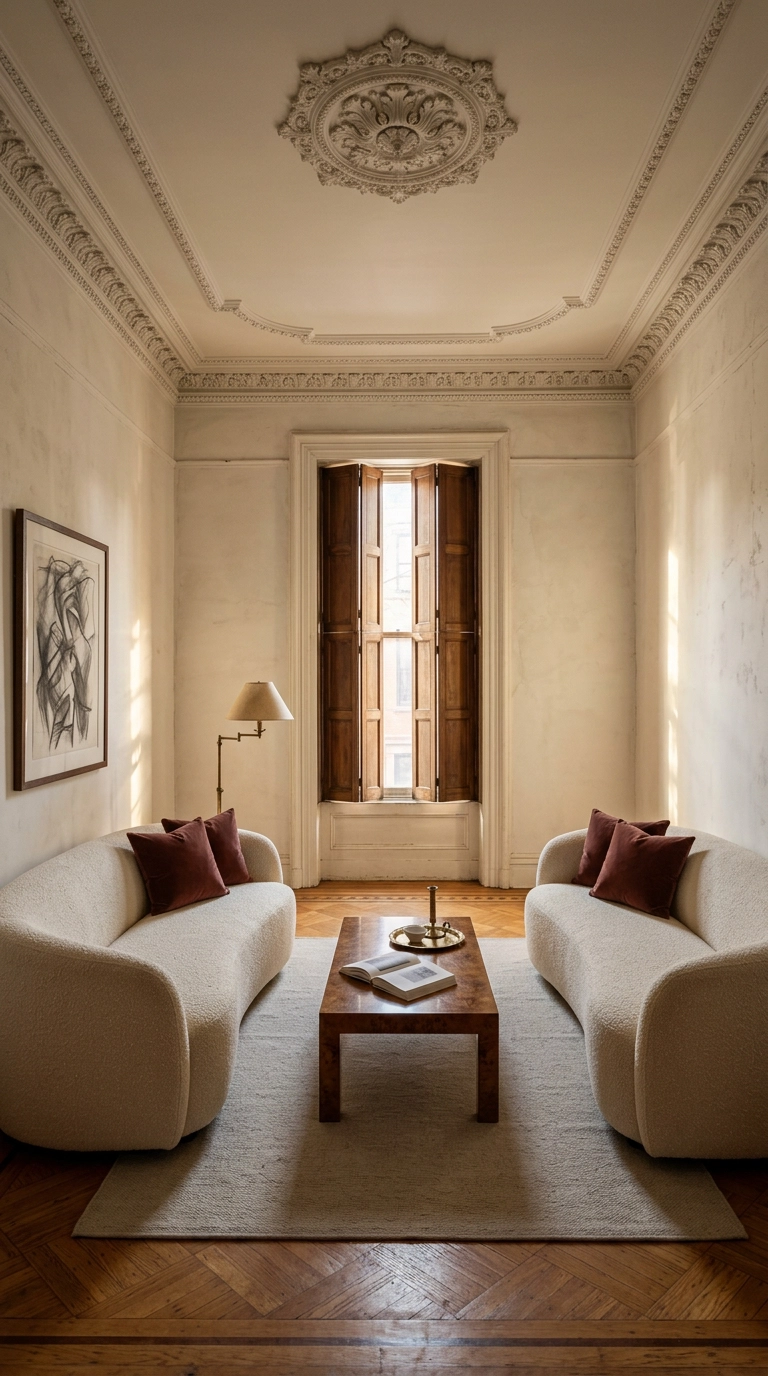
The whole point of a parlor was conversation, and nothing does that better than two sofas squared up to each other with about six feet between them. It costs nothing if you already own two sofas and it instantly makes the room feel intentional rather than leftover. Two facing pieces also solve the classic parlor problem of a room with no obvious TV wall, because there isn’t one.
4. Let the Fireplace Be the Only Thing You Look At
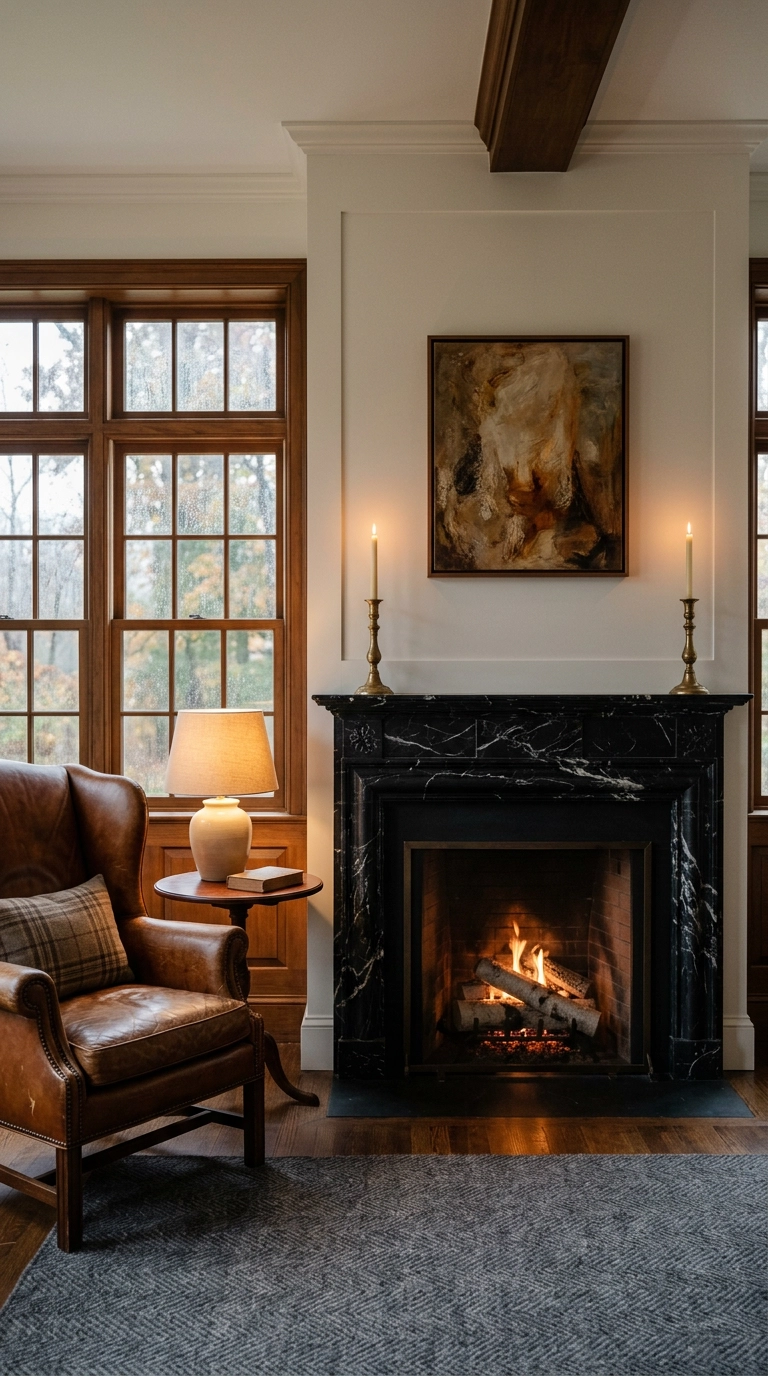
Most parlors were built around a fireplace, and most people have since buried it behind a console table. Clear everything off the mantel except two or three objects with real height difference, then hang one piece of art large enough to span at least two-thirds of the mantel width. An undersized frame floating up there is the most common mistake I see.
5. Skip the Overhead Light Entirely and Layer Lamps Instead
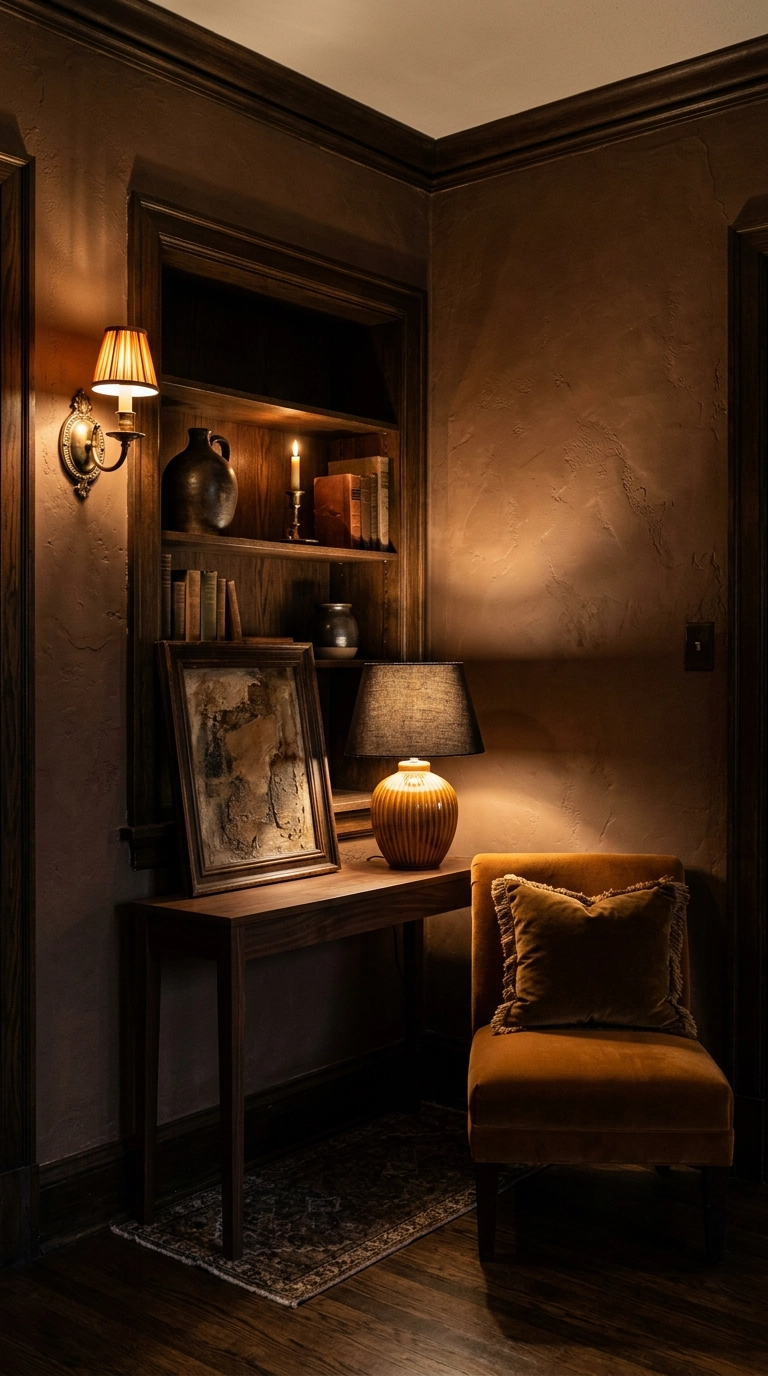
Old parlors rarely had ceiling fixtures, and honestly they’re better off without one. Three light sources at different heights, a table lamp around 28 inches, a sconce around 60 inches, and a floor lamp, give the room shadow and depth, while one overhead light flattens everything into a waiting room.
6. Reupholster the Antique Settee in Something Nobody Expects
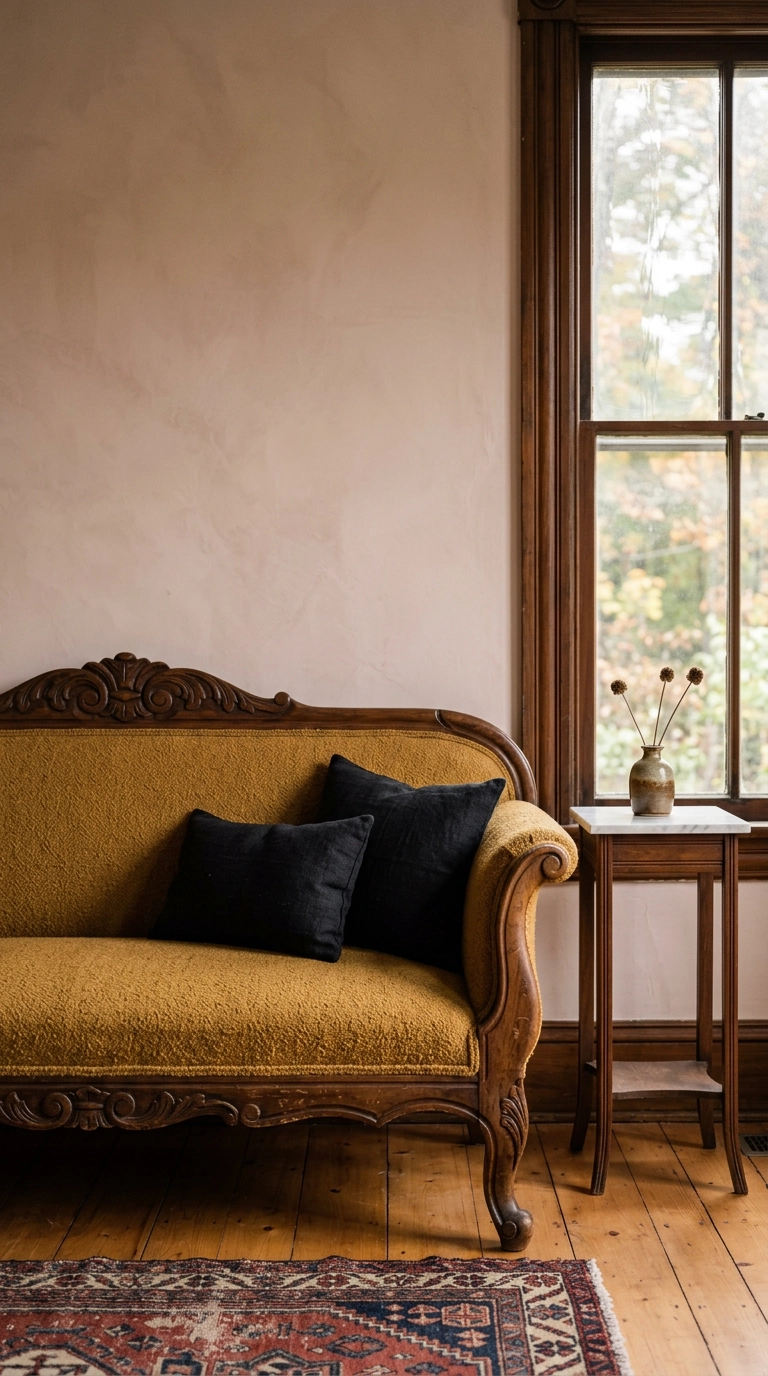
The fastest way to make an inherited parlor piece feel like 2026 instead of 1896 is to strip the tired brocade and put something plain and modern on it. A flat mustard wool, a black cotton canvas, or a nubby oatmeal bouclé lets the carved frame do the talking. The contrast is the whole idea.
7. Hang a Salon-Style Gallery Wall That Goes Almost to the Ceiling
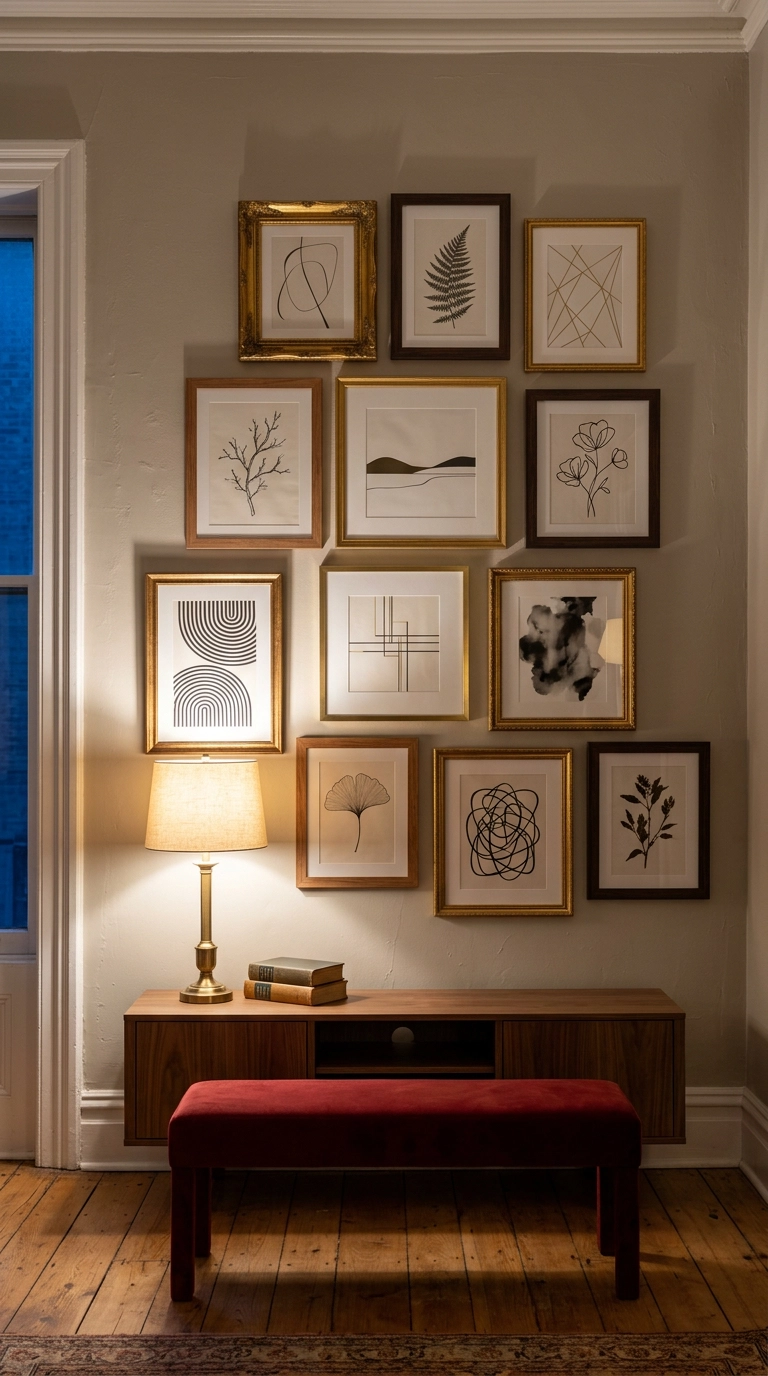
A salon hang is the historically correct way to fill a parlor wall, and it’s forgiving in a way a grid never is. Lay everything on the floor first, keep two to three inches between frames, and let the outer edge form a rough rectangle so the whole cluster reads as one shape. Odd numbers of frames look better because your eye can’t split them evenly and keeps moving.
8. Mount the Curtain Rod Just Under the Crown Molding
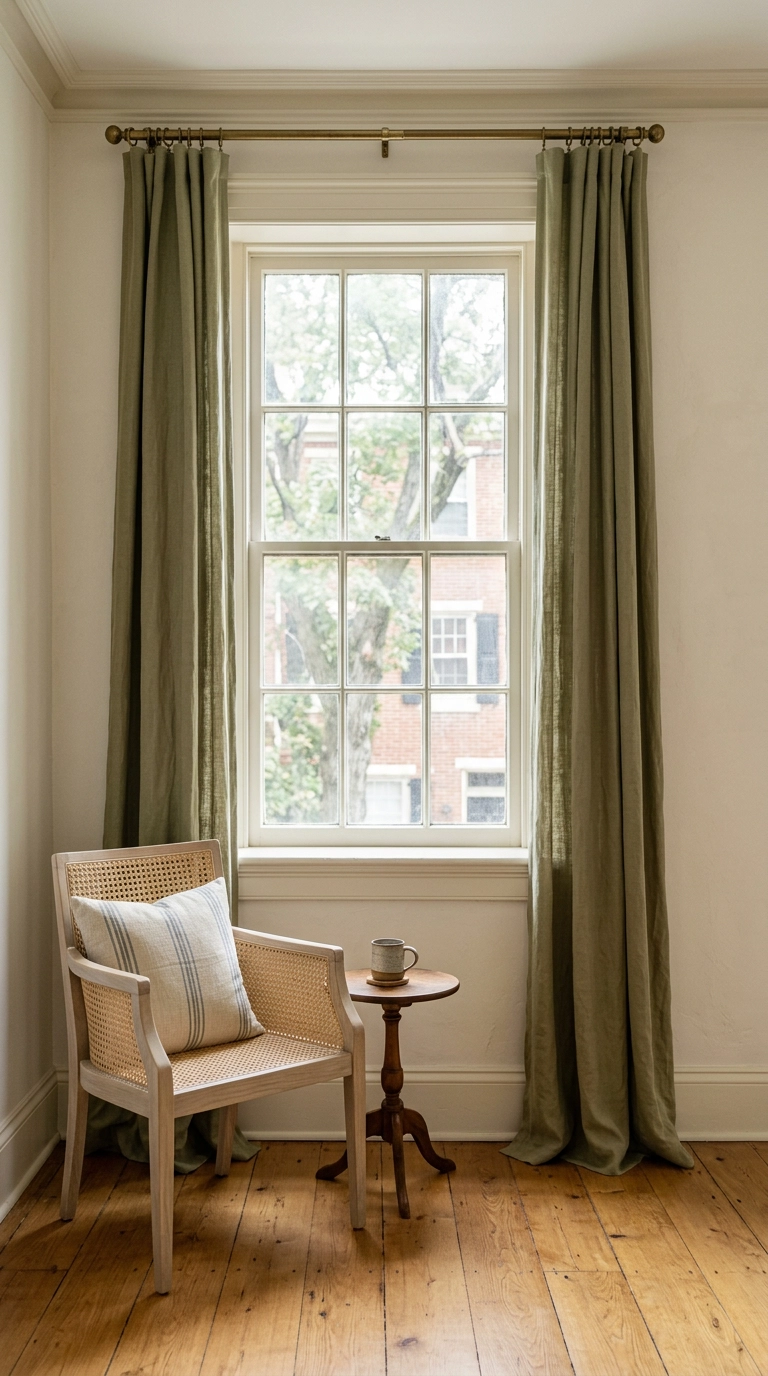
Hang the rod within a few inches of the ceiling or crown molding and let the panels extend eight to twelve inches past the window on each side. It works because your eye reads the whole vertical run of fabric as the window, so the ceiling feels taller and the window feels wider. It’s a twenty-minute change with an outsized payoff.
9. Put One Real Antique in a Room of Modern Things
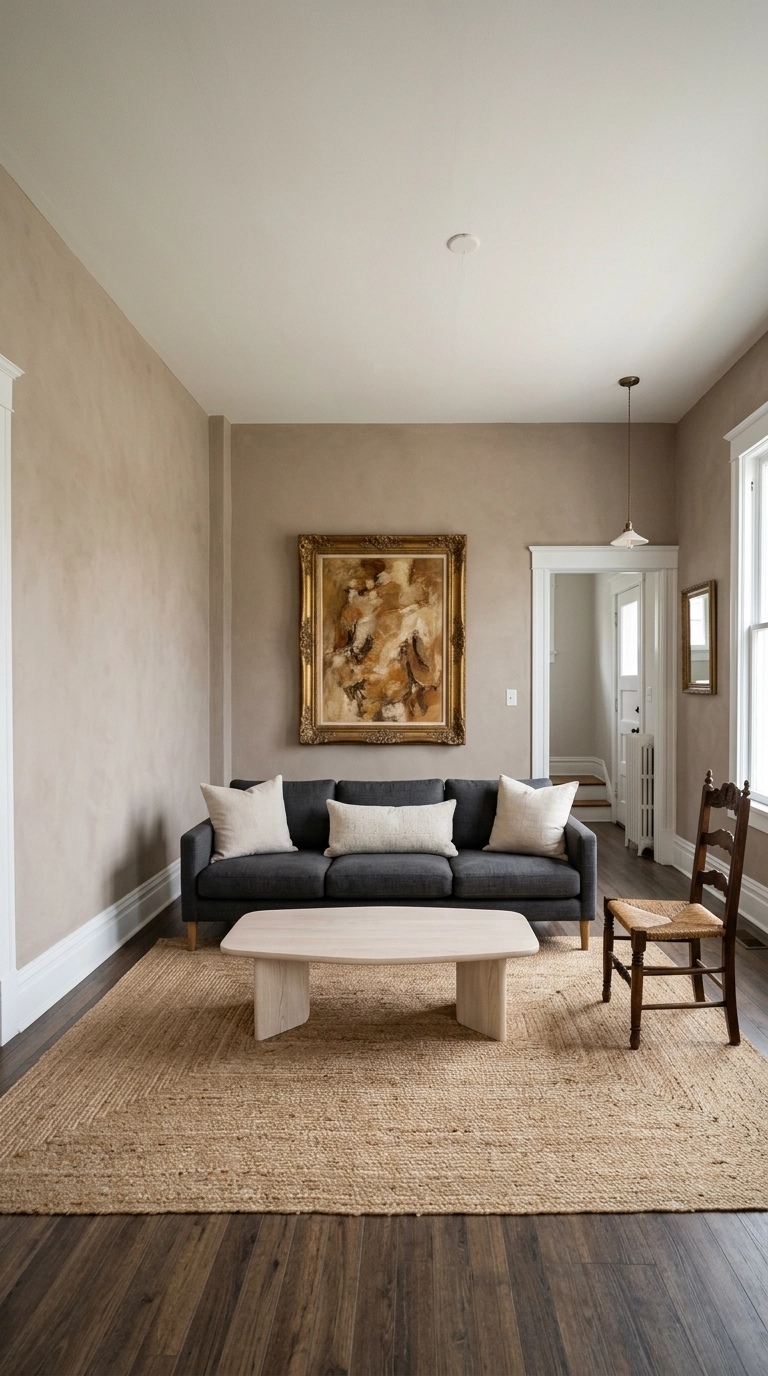
You don’t need a house full of period furniture to respect a parlor. One genuine old piece with real patina, a carved side chair, a gilt frame, a marble-top table, gives an otherwise modern room a sense of age that new furniture can’t fake. Everything else can be clean-lined and comfortable.
10. Add Picture Frame Wall Molding Below a Chair Rail
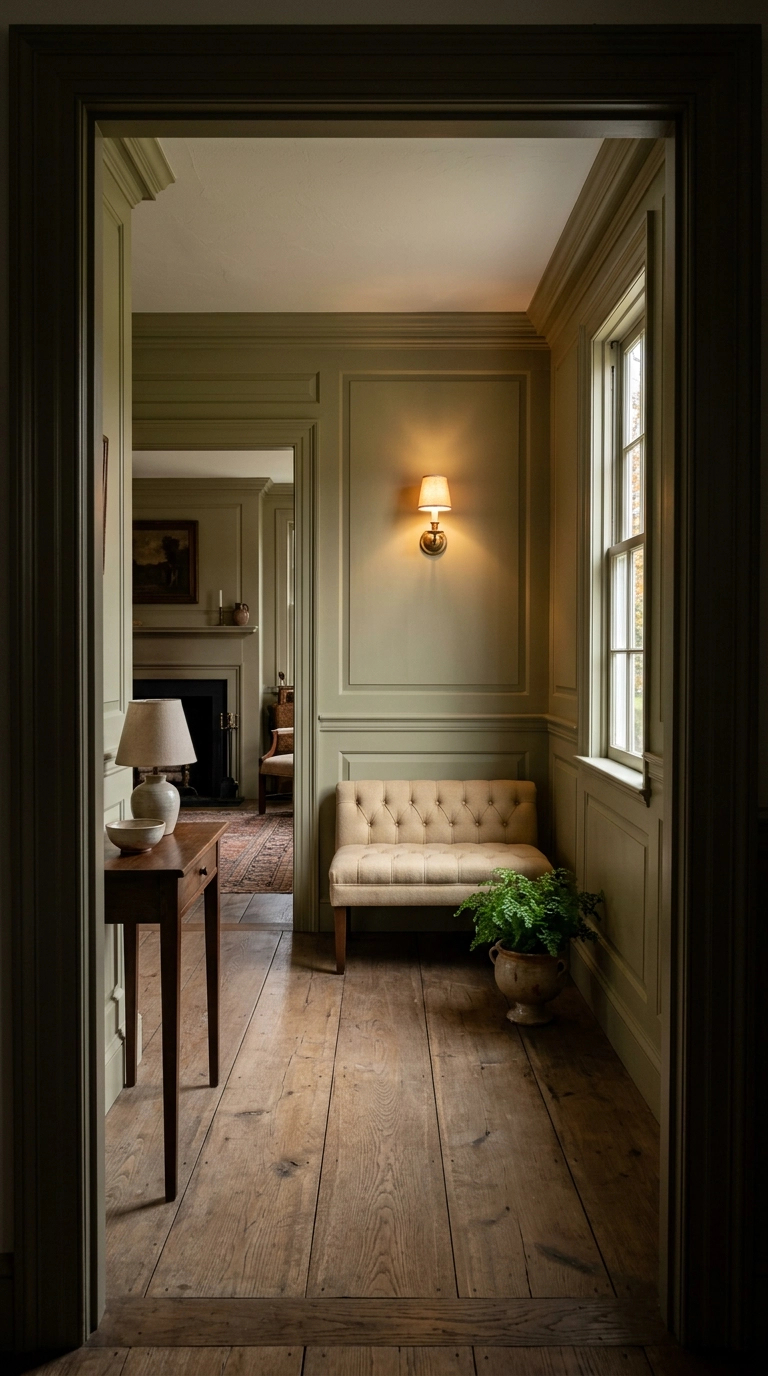
Rectangular molding panels on the lower wall are the classic parlor treatment, and they’re achievable with primed pine lattice strips, a miter box, and construction adhesive. Space the panels evenly with about three to four inches between them and the same reveal from the baseboard and chair rail, then caulk every seam before painting.
11. Paint the Ceiling and Reinstate a Plaster Ceiling Medallion
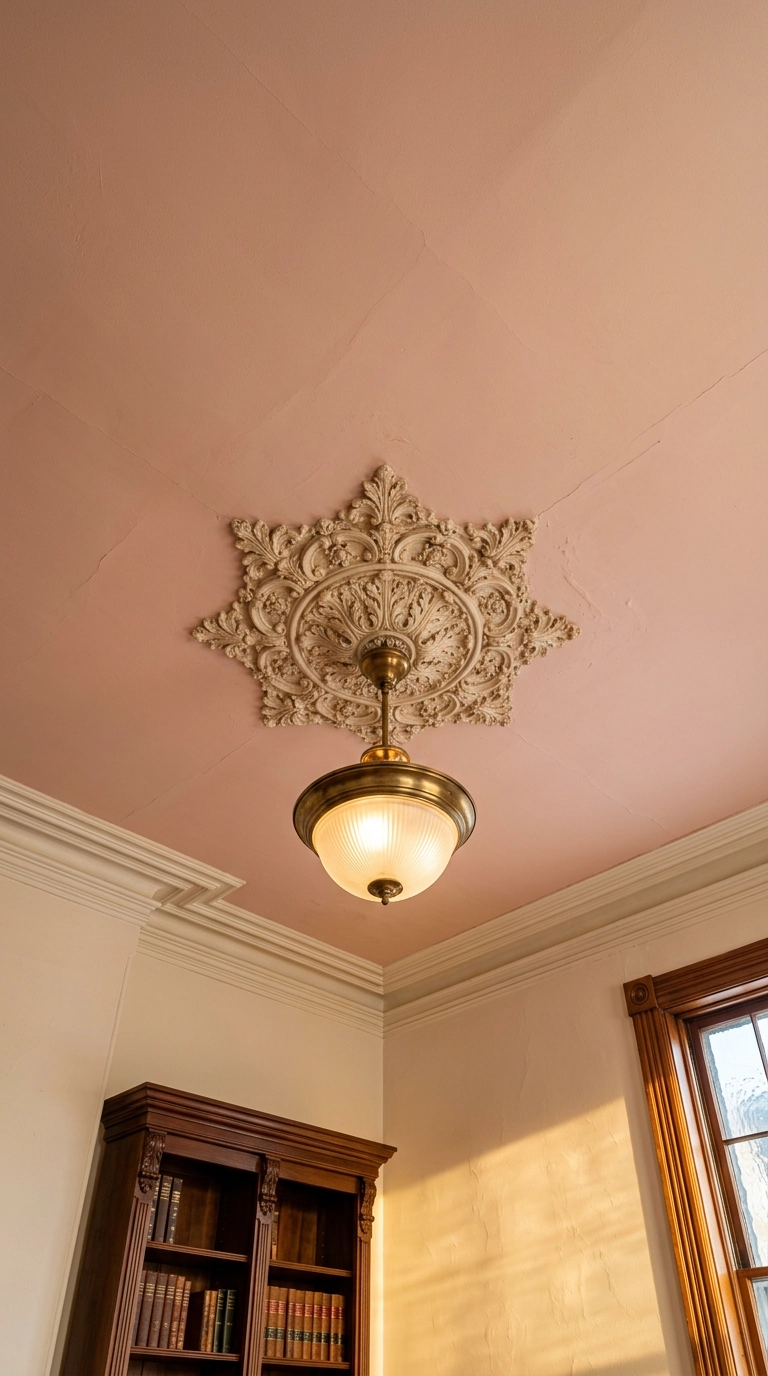
The ceiling is the largest uninterrupted surface in a parlor and almost everyone ignores it. A soft blush, a pale putty, or a whisper of the wall color at half strength adds warmth without anybody being able to name why the room feels good. Skip stark white unless your walls are already saturated.
12. Build a Window Seat Into the Bay
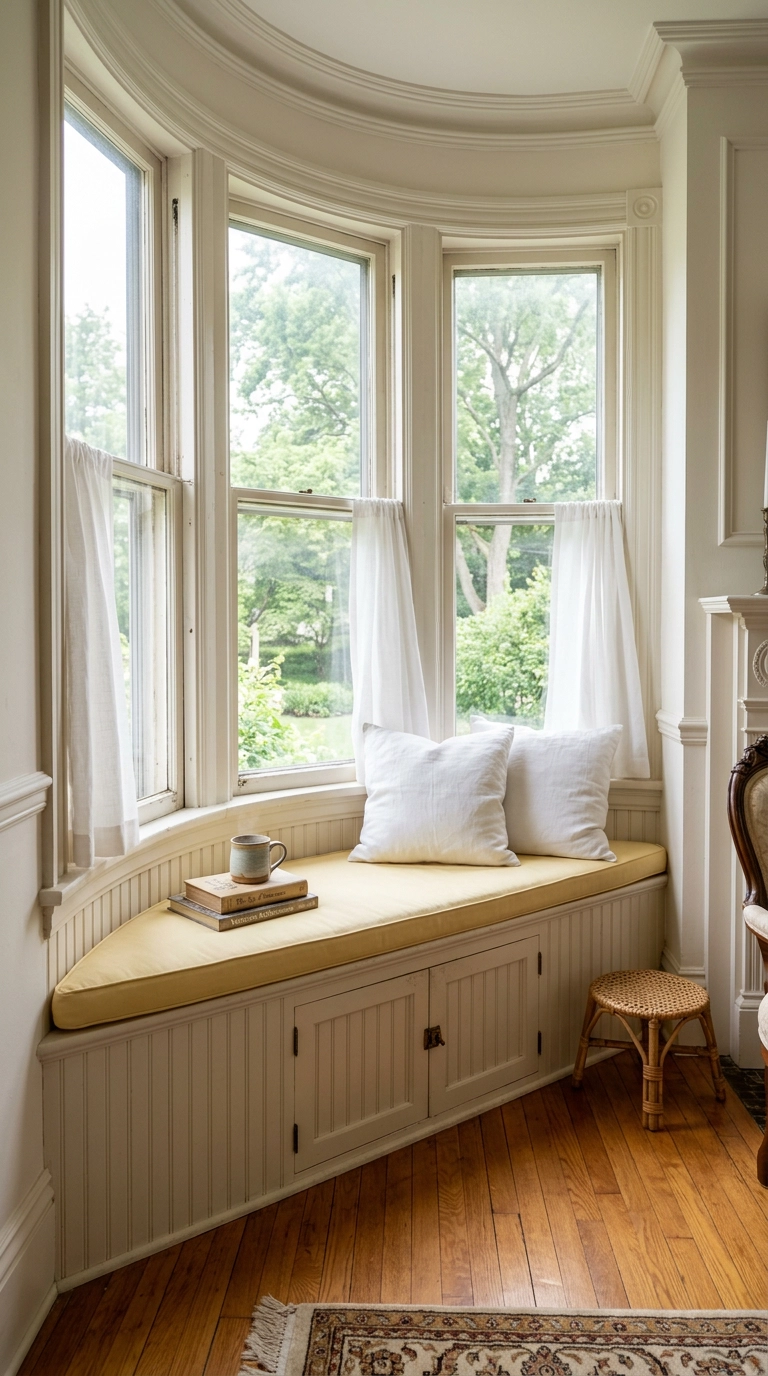
If your parlor has a bay, that alcove is the best real estate in the house and it’s usually holding a dying ficus. A built-in seat with storage beneath turns dead square footage into the spot everyone fights over. Aim for 18 inches deep and 17 to 19 inches high including the cushion so it sits like a real chair.
13. Paper One Wall in a Dark Botanical Print
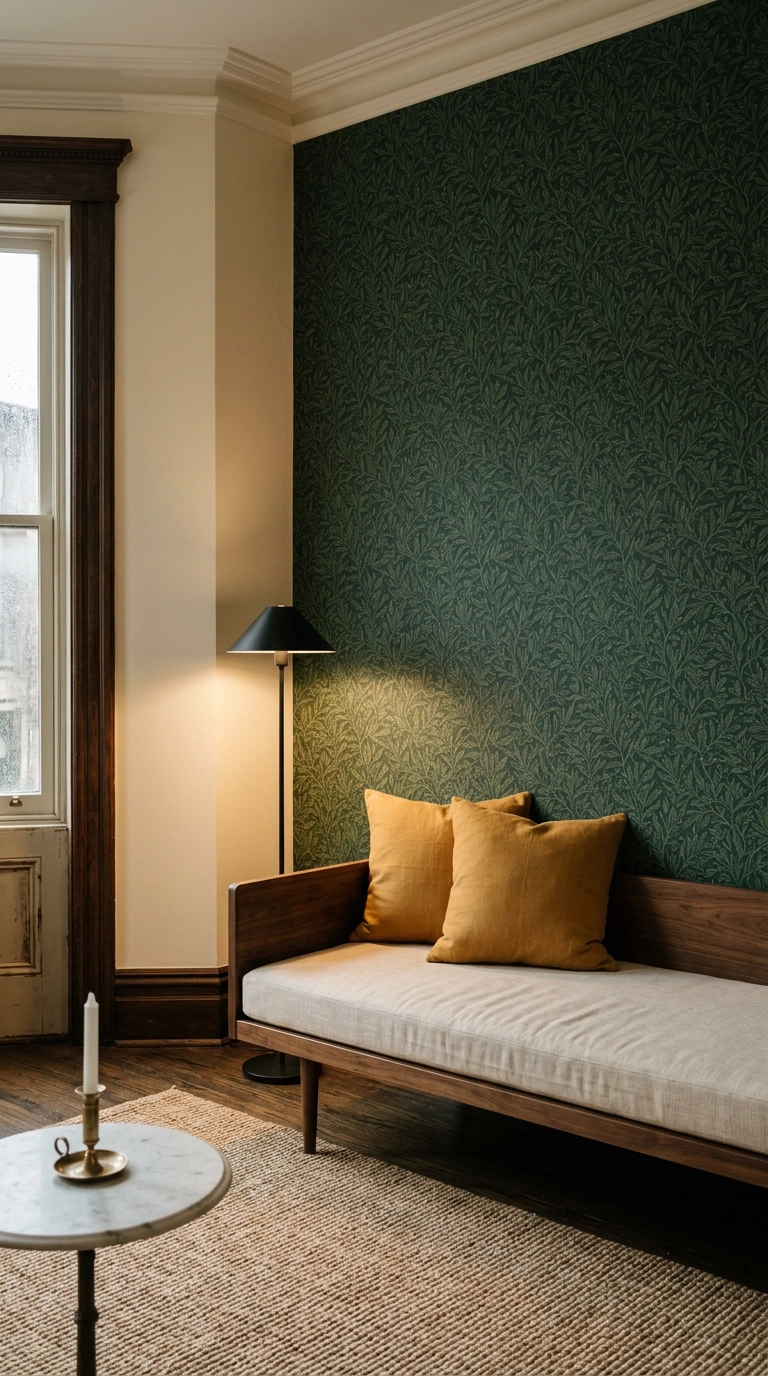
Wallpaper belongs in a parlor more than almost anywhere else, but one wall is plenty if you’re nervous or if the room is small. The rule that keeps it from turning chaotic: one pattern in the room, full stop. If the paper is busy, the rug, the upholstery, and the pillows all go solid.
14. Turn It Into the Library You Keep Saying You Want
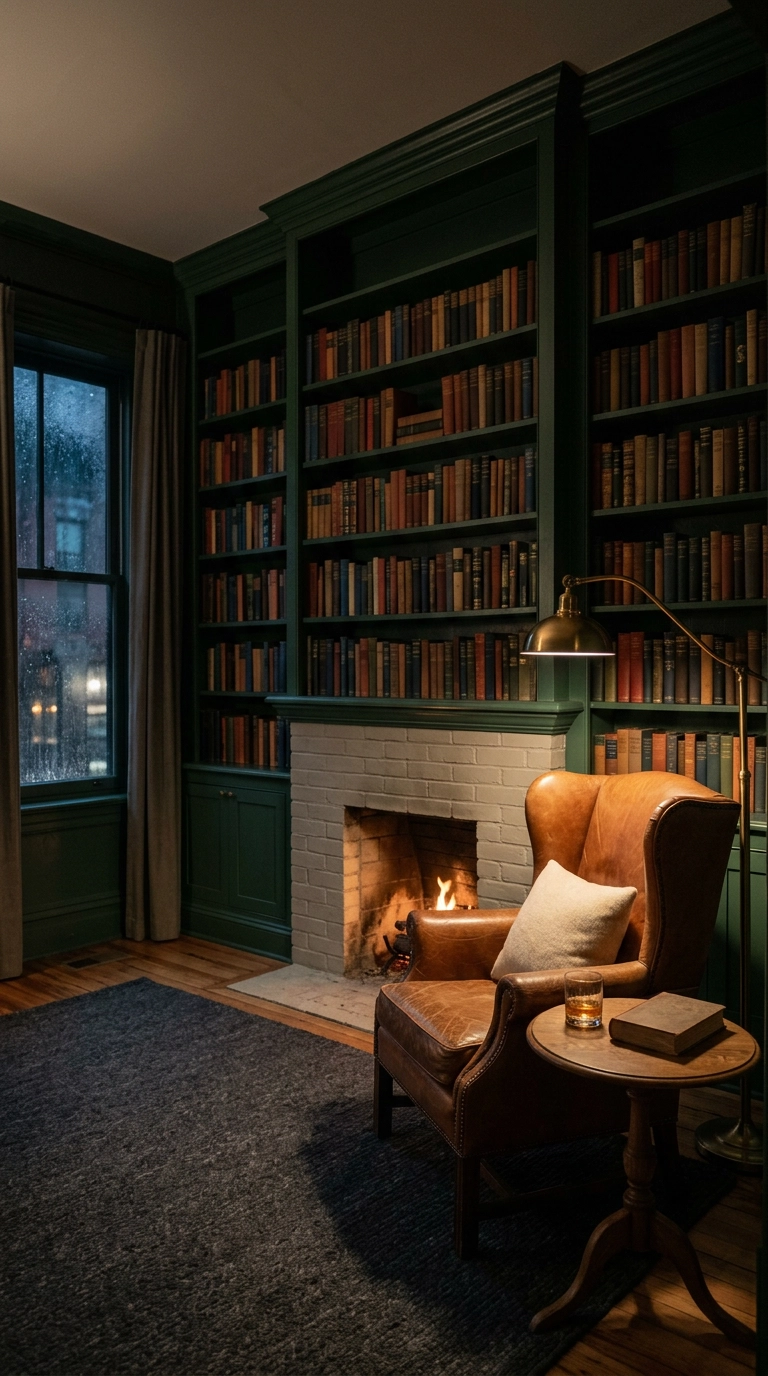
A parlor with no TV is already halfway to being a library, and this is the conversion I recommend most often. Painting the bookcases the same color as the wall behind them makes the whole wall read as one deep, quiet plane instead of a hardware store display.
15. Hang a Curtain in the Doorway Instead of Adding a Door
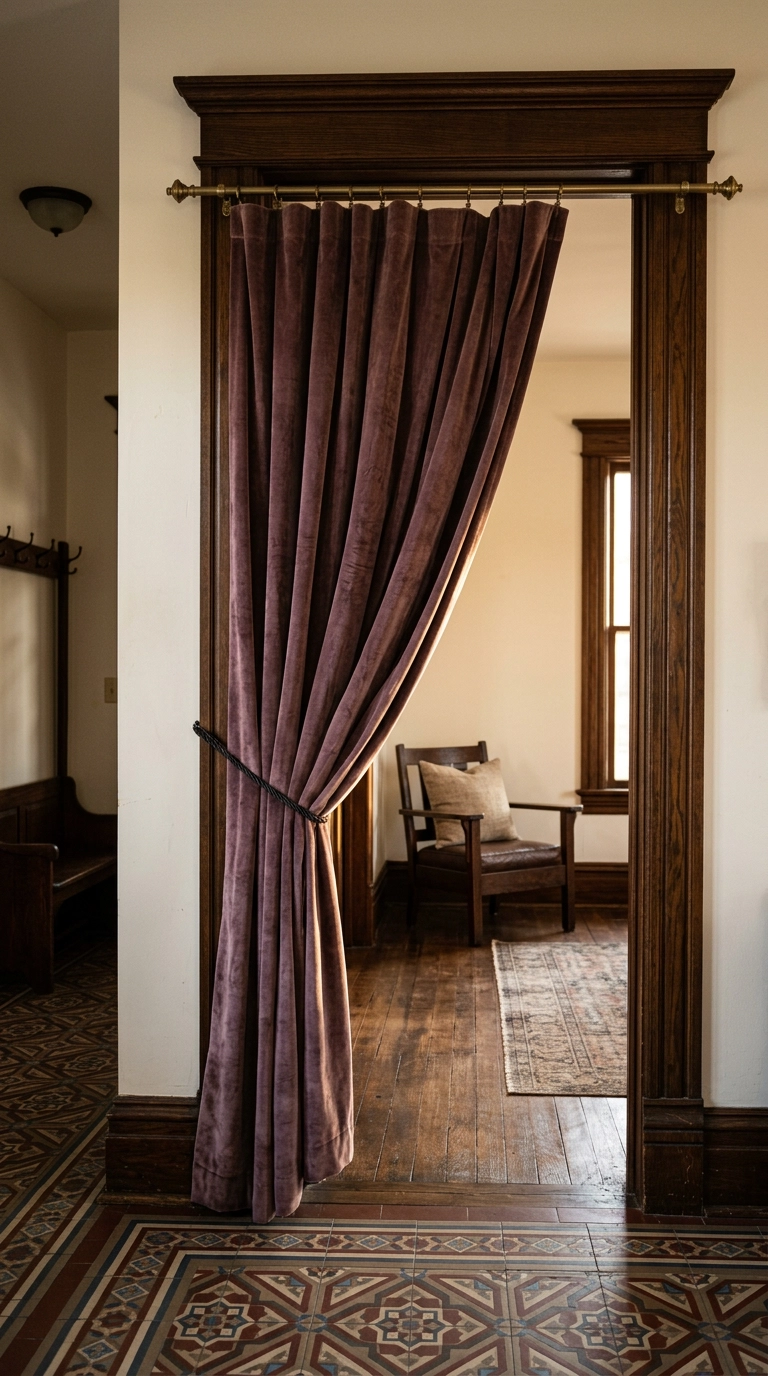
Victorians hung curtains in doorways, called portières, and it solved exactly the problem modern open-plan homes have: separation without a door. A velvet or heavy linen panel on a brass rod absorbs sound, blocks drafts, and gives the parlor a sense of ceremony when you draw it closed.
16. Give the Room a Proper Drinks Cabinet
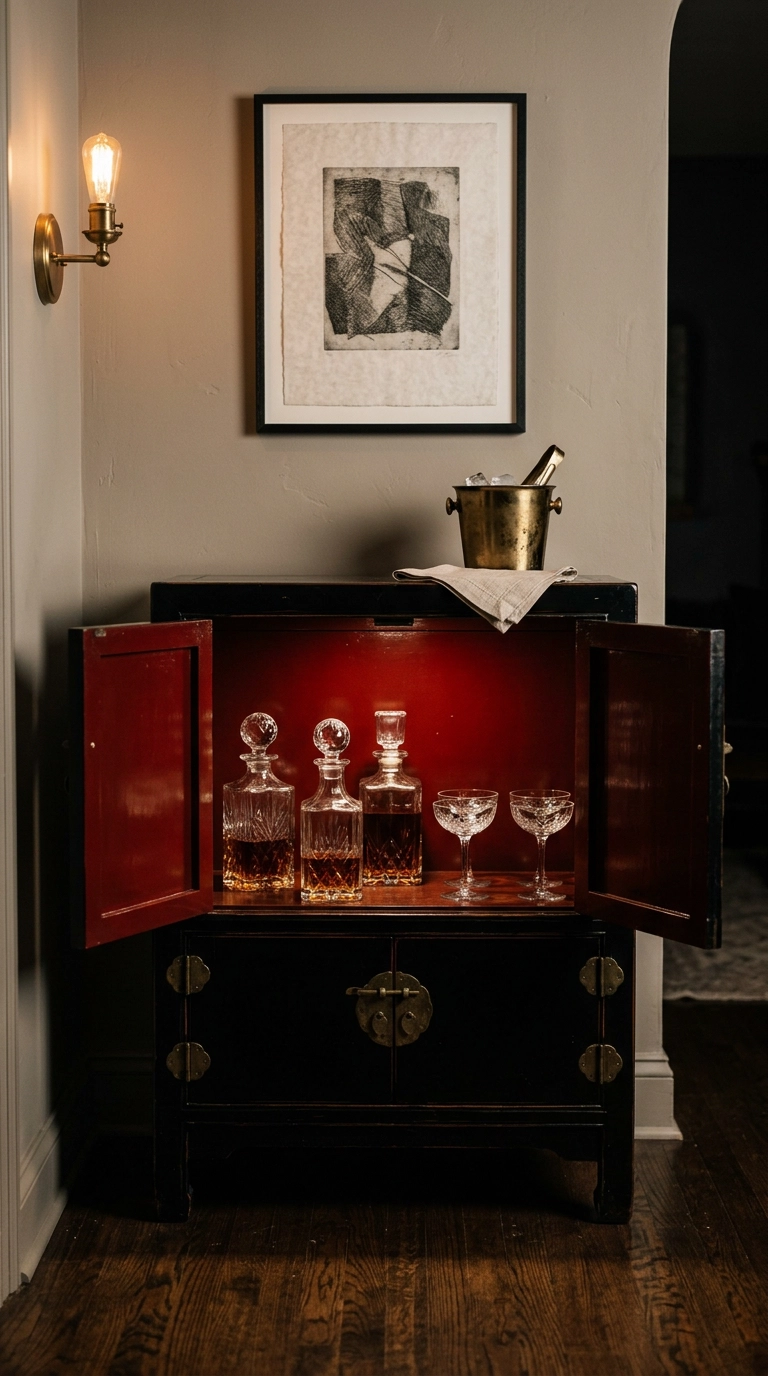
The parlor was where people were received, so a small bar setup is period-appropriate and genuinely useful. A closed cabinet beats an open bar cart because bottles multiply and the cart always ends up looking like a dorm room. Painting the inside of a thrifted cabinet a glossy contrasting color takes one small can and an evening.
17. Make It a Home Office That Doesn’t Look Like One
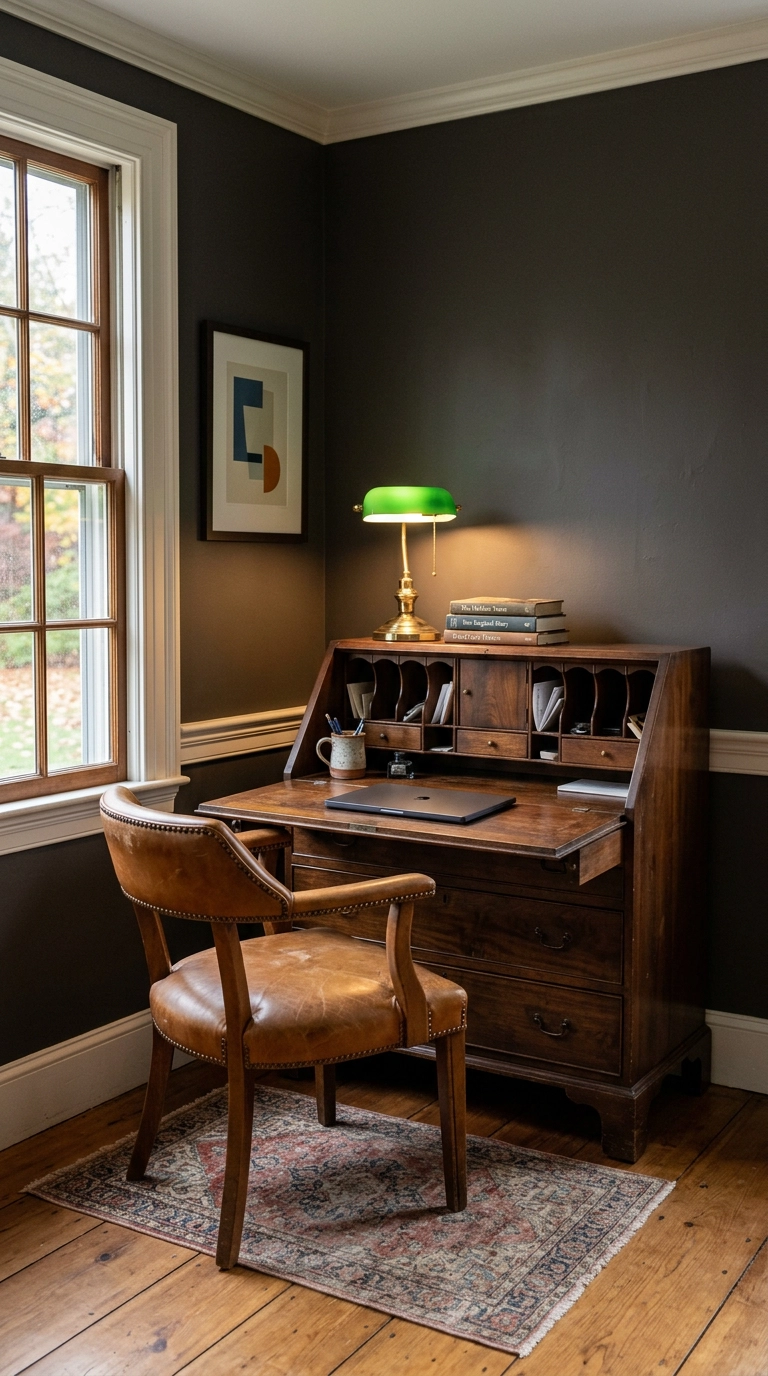
A secretary desk is the answer for anyone who needs the front room to be an office but doesn’t want to see a monitor from the entry. The drop front closes at 5pm and the whole mess disappears, which does more for your evenings than any productivity app.
18. Set a Small Table in the Corner for Games
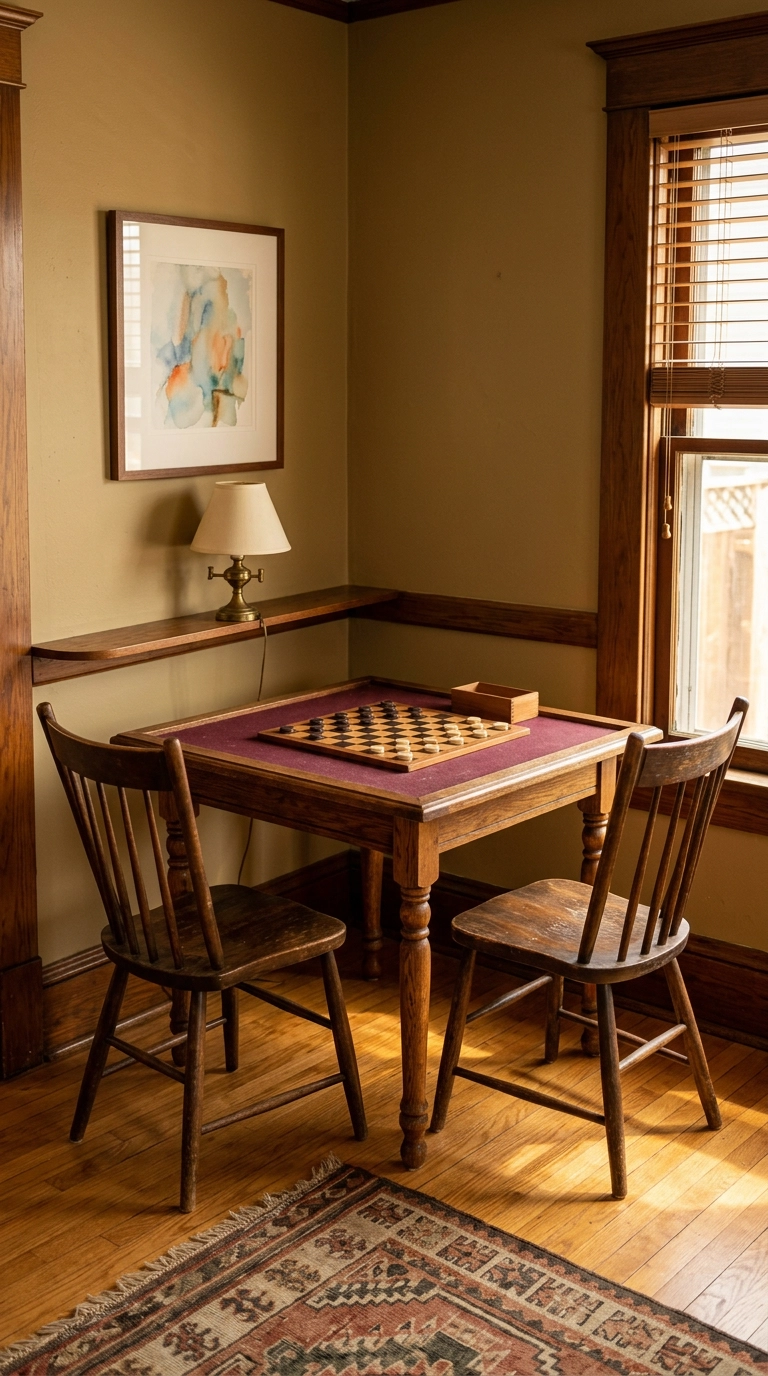
A 30 to 36 inch square table with two chairs fits in a corner most people write off as unusable, and it gives the room a reason to exist on a Tuesday. Games, puzzles, wrapping presents, a laptop when the kitchen table is full. It’s the most-used piece in several houses I’ve worked on.
19. Strip It Back to a Few Sculptural Pieces
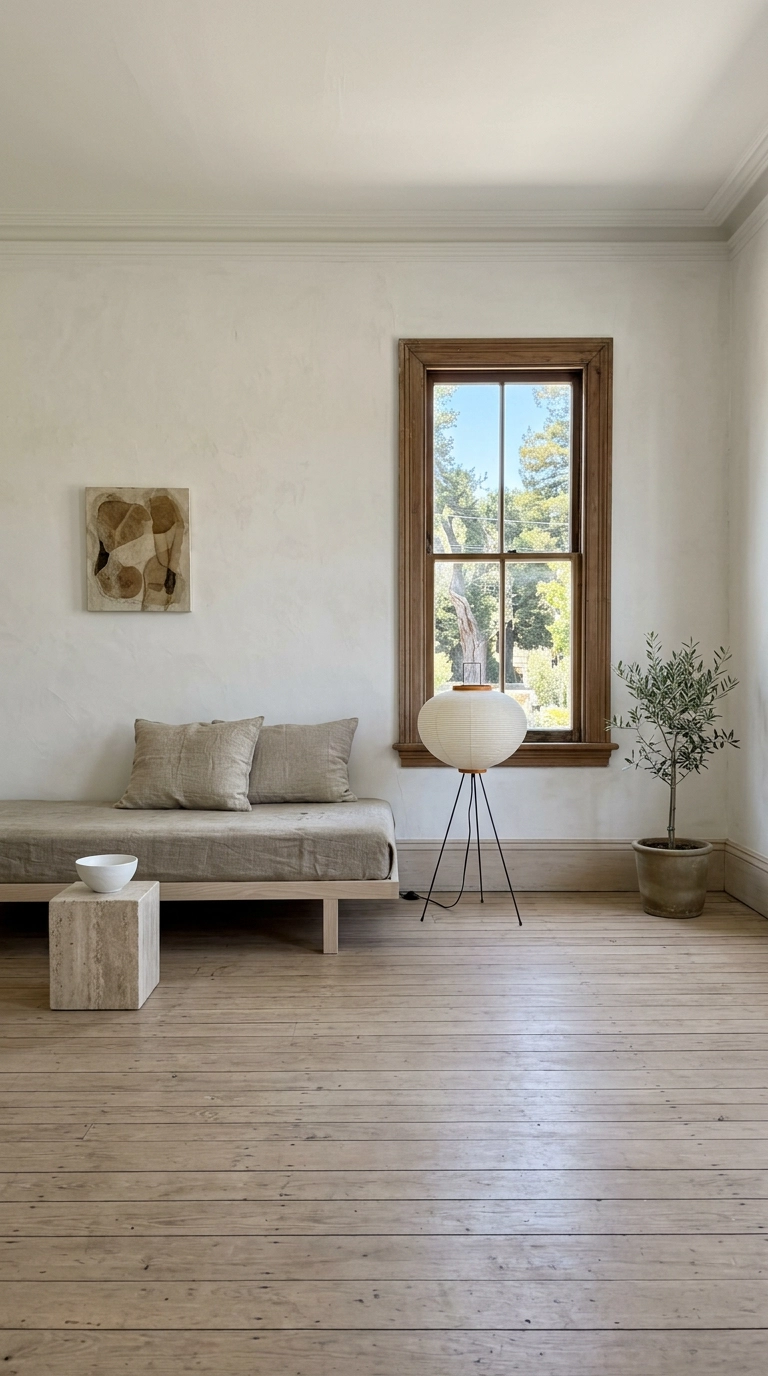
Here’s the modern reinterpretation for people who don’t want a period room at all. Leave the floor mostly bare, use three or four pieces total, and let the old millwork be the only ornament. In a room with beautiful bones, emptiness reads as confidence rather than as an unfinished project.
20. The Renter’s Parlor: Leaning Art and Zero Holes
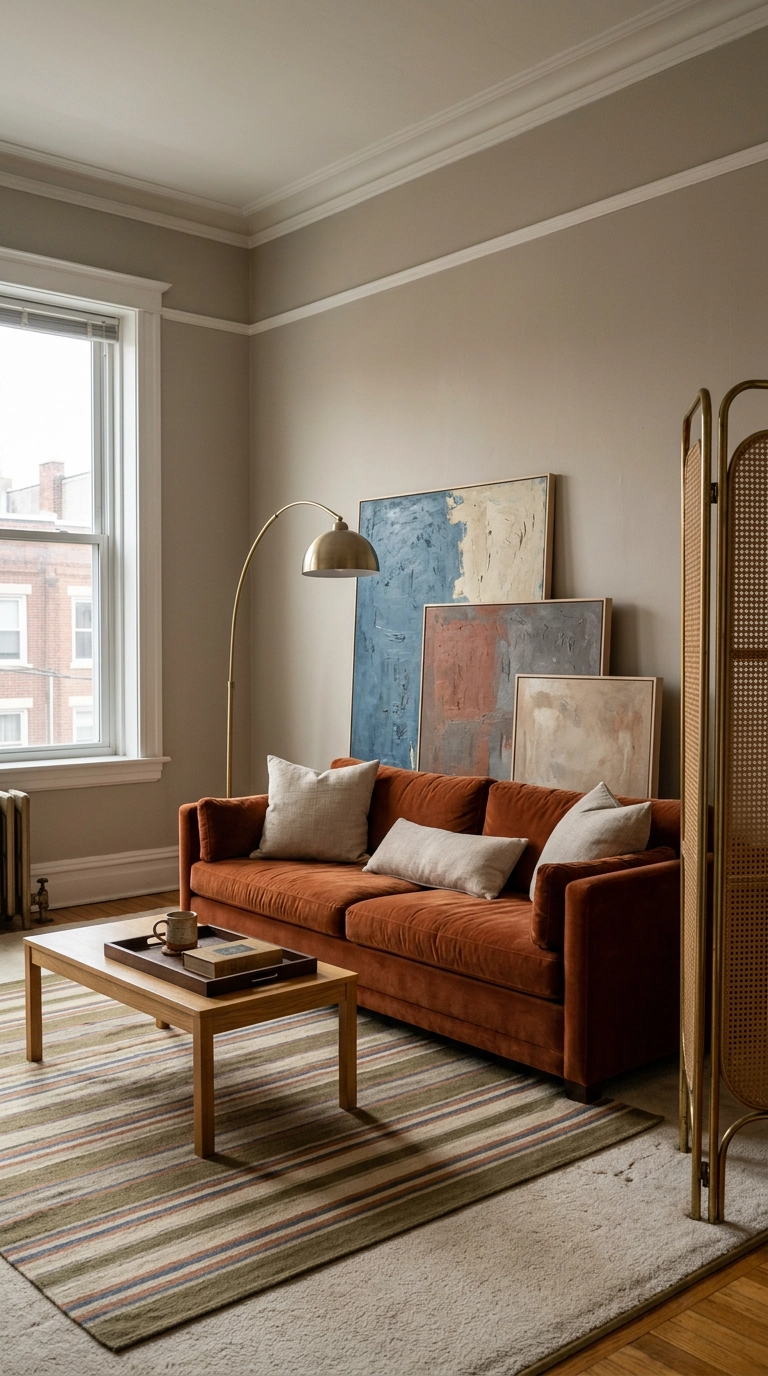
If you’re renting an old place with a formal front room, you can still get most of this without touching the walls. Lean oversized art on the floor in overlapping layers, lay a large flatweave rug right over the beige carpet, and use a freestanding screen to define the space instead of building anything.
21. Go Pale and Warm if the Room Faces North
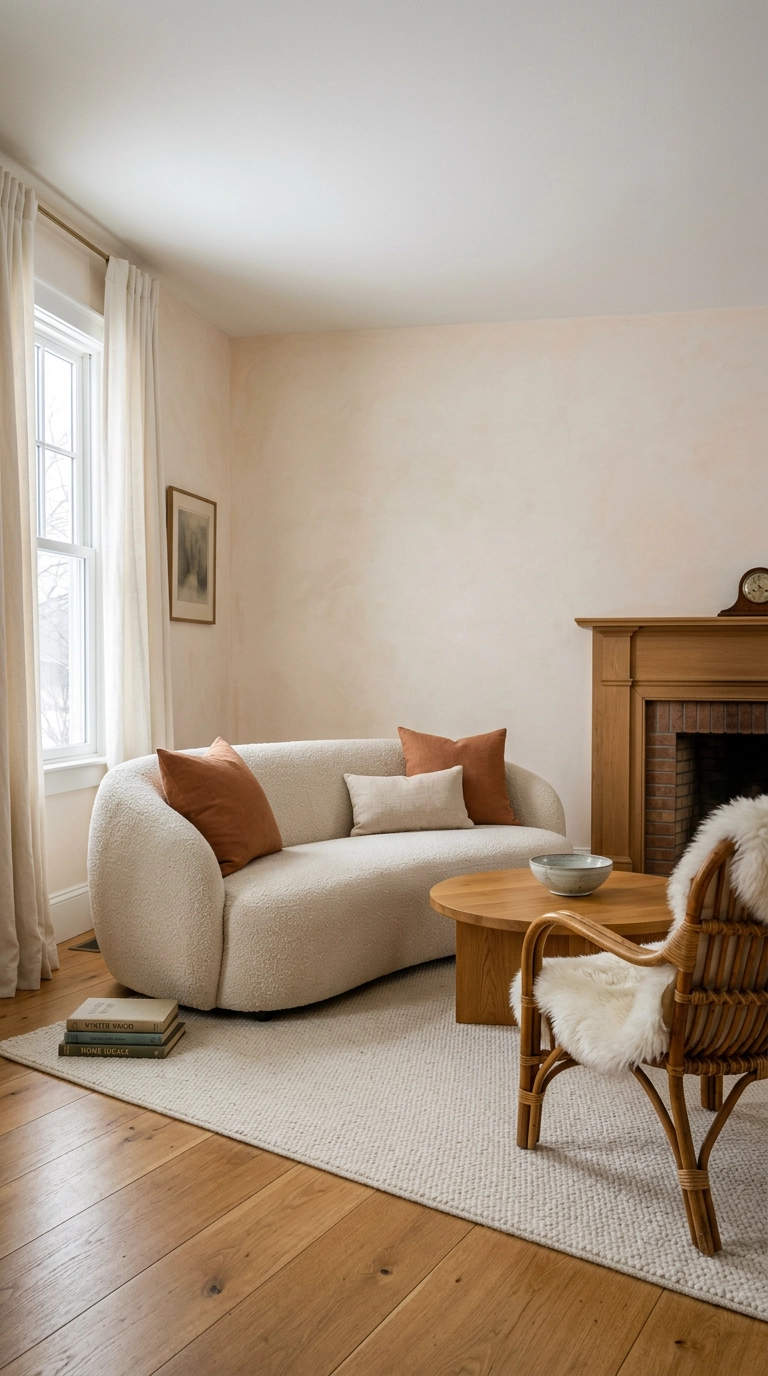
North light is cool and blue-leaning all day, which is why crisp whites go gray and grays go clinical in these rooms. Pick a white with a yellow or peach undertone rather than a blue one, and load the room with honey wood, rattan, and warm textiles to compensate. Benjamin Moore White Dove is the reliable one here.
22. Style the Sightline You See From the Front Door
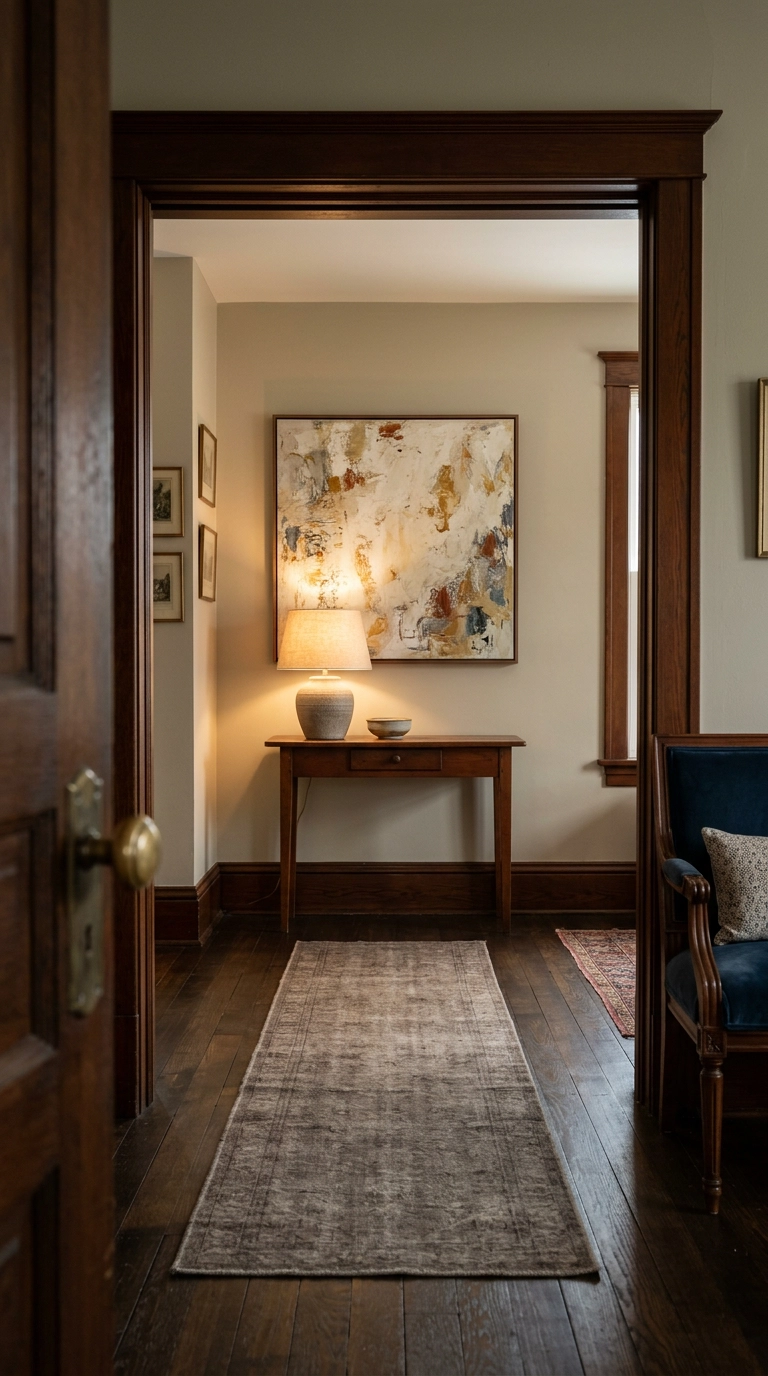
Stand in your front doorway and look straight ahead. Whatever lands in that sightline, the direct visual path from where you stand to the far wall, is the first thing every guest sees, and in most houses it’s the back of a chair. Put your best object there: a console with a lamp, one large piece of art, a single beautiful chair.
Before You Close the Parlor Door
If I had to bet on where you’ll start, it’s the sightline from the front door, because it costs nothing, and then the rug, because once you see a properly sized one under everything you can’t unsee the little one. The bigger swings, the color-drenched walls, the picture frame wall molding, the built-in window seat in the bay, are the ones people email me about a year later saying they finally did it and should have done it sooner. And the drinks cabinet is the idea that always gets the most saves, which tells you something about all of us.
What I’m seeing everywhere going into 2026 is the return of the closed, separate room. After fifteen years of knocking down walls, people want a space with a door, or at least a velvet curtain, where the TV isn’t. Dark saturated paint is still doing the heavy lifting, and shades like Farrow & Ball Hague Blue and Benjamin Moore Black Forest Green keep showing up on projects that have nothing else in common. Ken Fulk has been decorating rooms like this for years, all velvet and lamplight and no overhead fixture, and the rest of us are finally catching up.
Mostly I’d say this: your parlor doesn’t owe anyone formality. Give it one honest job, a library, a bar, a game corner, a place to actually talk to people, and it’ll stop feeling like a room you apologize for. If you want more of this in your inbox, sign up for my weekly newsletter. It’s one email, real projects, no filler, and I’ll send you my paint-testing cheat sheet when you join.


