
23+ Bold Black Hallway Decor Ideas that Look Stunning and Feel Bigger in 2026

I’ll say the scary part out loud first: yes, black paint can absolutely turn a narrow hallway into a tunnel. I’ve done it wrong once, in a 3-foot windowless hall with a single sad flush mount, and it felt like walking into a closed laptop. But I’ve also done it right maybe two dozen times since, and a black hallway done right is the single most confident thing you can do to the most ignored space in an American house, so let me show you exactly where the line is.
Black Hallway Decor Ideas
1. Matte Black Walls with a Bright White Ceiling
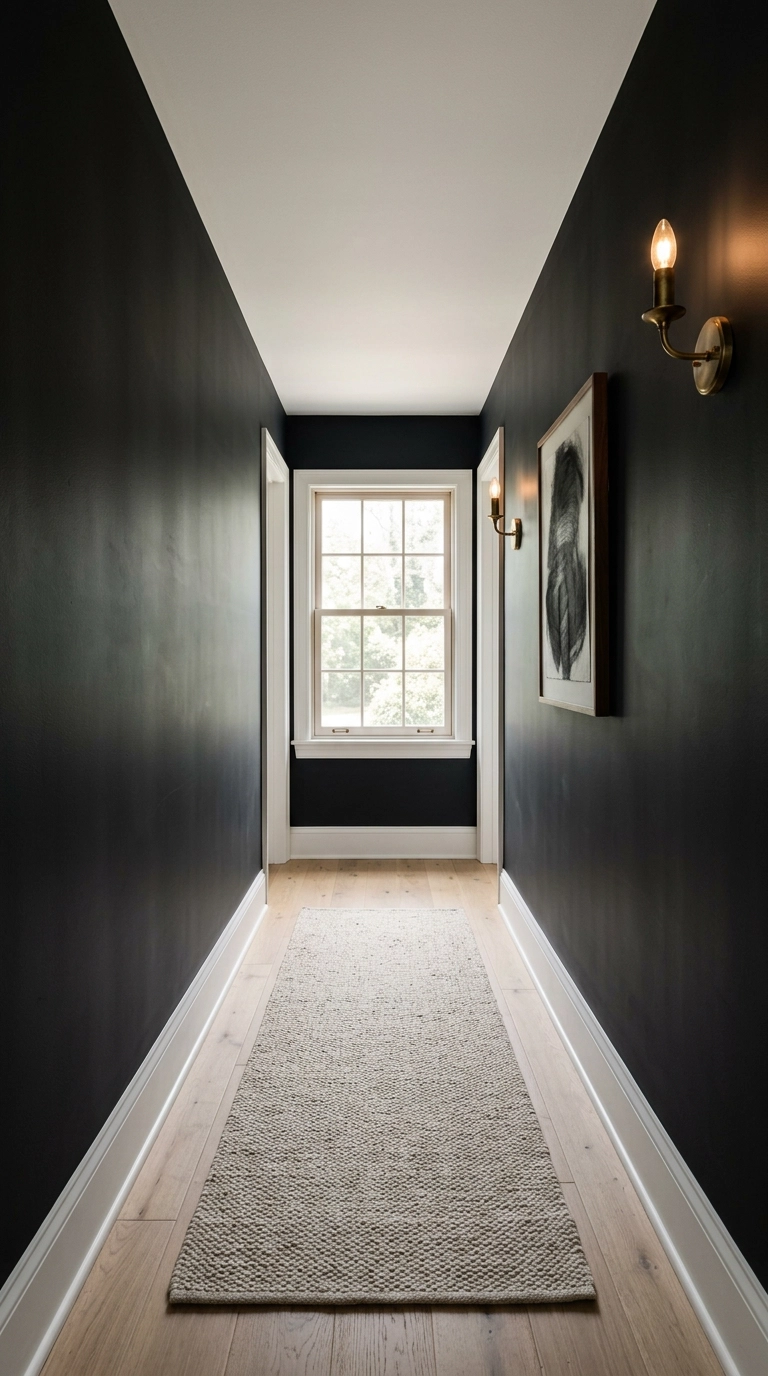
This is the version I recommend to nine out of ten people, because leaving the ceiling in a warm white gives your eye an escape hatch upward. The walls recede, the ceiling reads as the tallest surface in the room, and the hall feels longer rather than shorter. Two coats over a tinted grey primer, one weekend, under $100 in paint for a typical hall.
2. Black Doors and Trim Only, Walls Left Pale
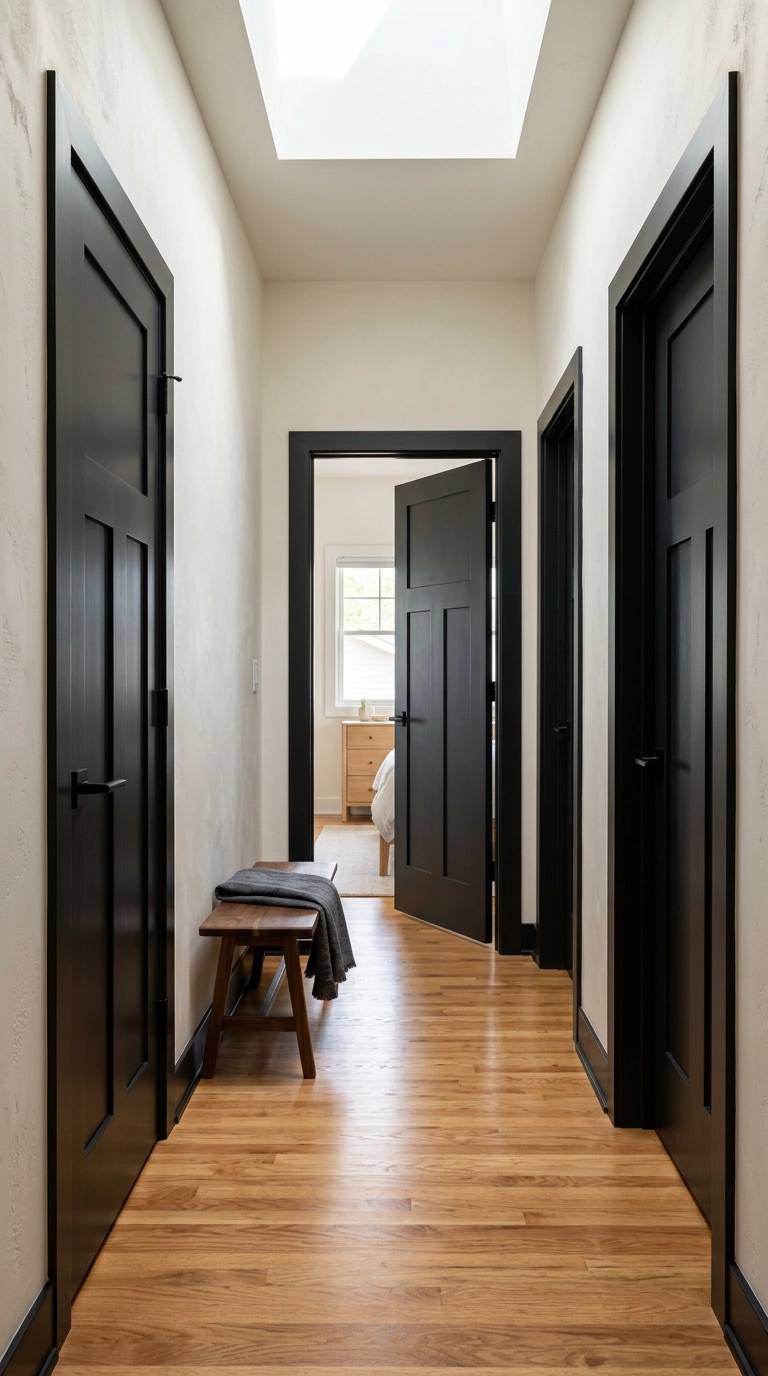
If your hall is genuinely tiny and windowless, start here instead. Black on the doors and casings draws crisp graphic lines without absorbing the light off your walls, and it reads as intentional the second you walk in. This is the lowest-risk entry point to a black hallway, roughly a Saturday of taping and two quarts of paint.
3. Black Wainscot Below, Soft Greige Above
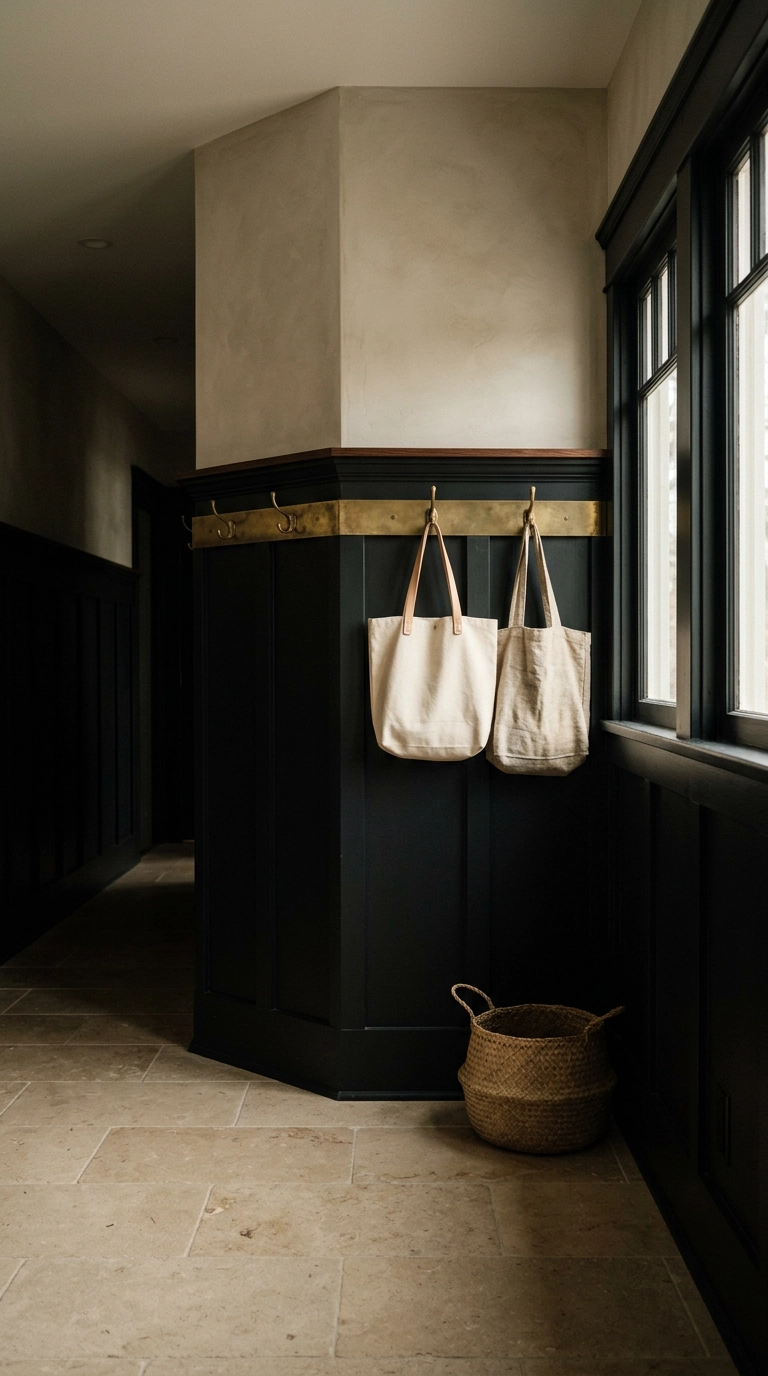
Splitting the wall is the oldest trick in the book and it still works: black below, light above, cap rail at about 36 to 40 inches. The dark band grounds the hall and hides every scuff from backpacks and dog leashes, while the pale upper two-thirds keeps the light bouncing where your eye actually travels. Budget a weekend and about $150 in primed pine battens.
4. Removable Black Wallpaper for Renters
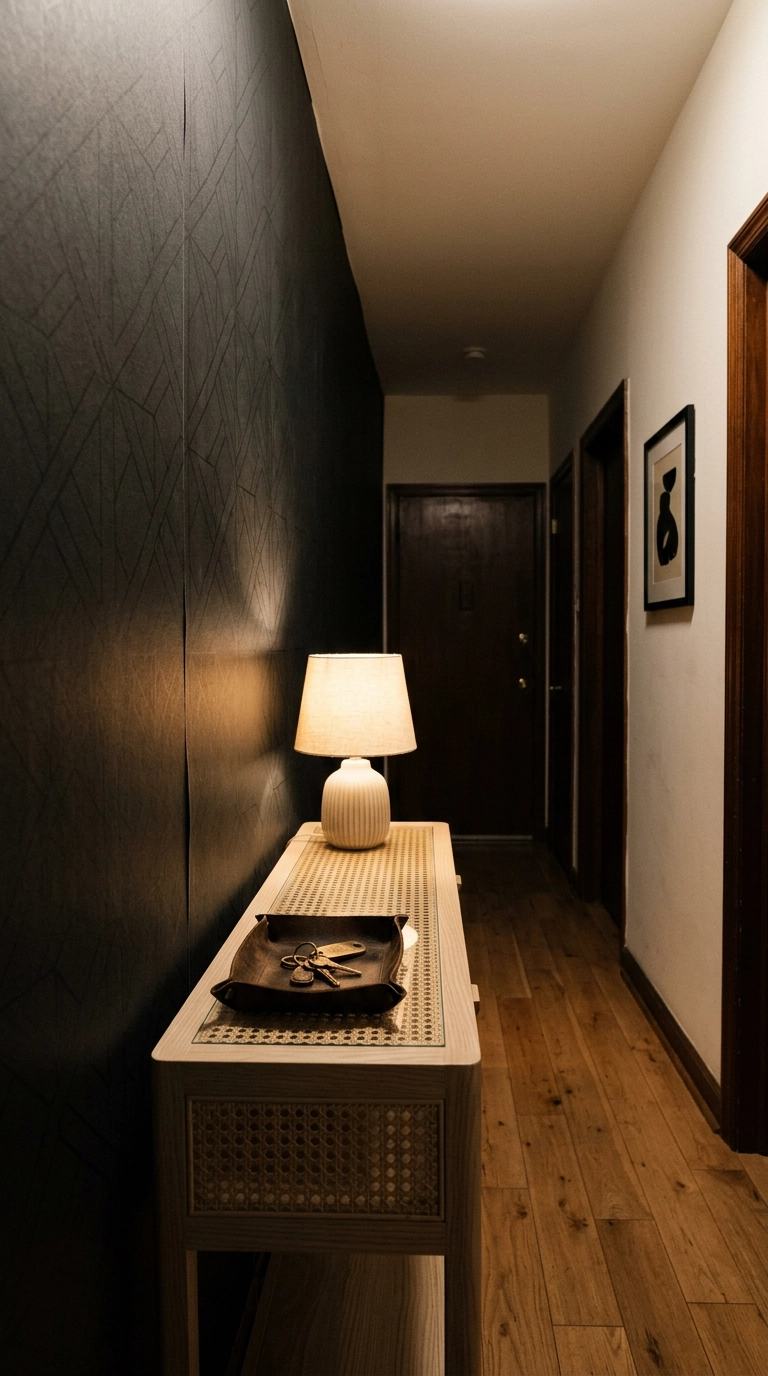
Peel-and-stick has gotten genuinely good, and a tone-on-tone black print gives you texture that flat paint can’t. Do one wall only, not both, so the hall still has a light side to bounce off. Order one extra roll for pattern match, and plan for it to take twice as long as the box claims.
5. Picture Lights Over Small Framed Art
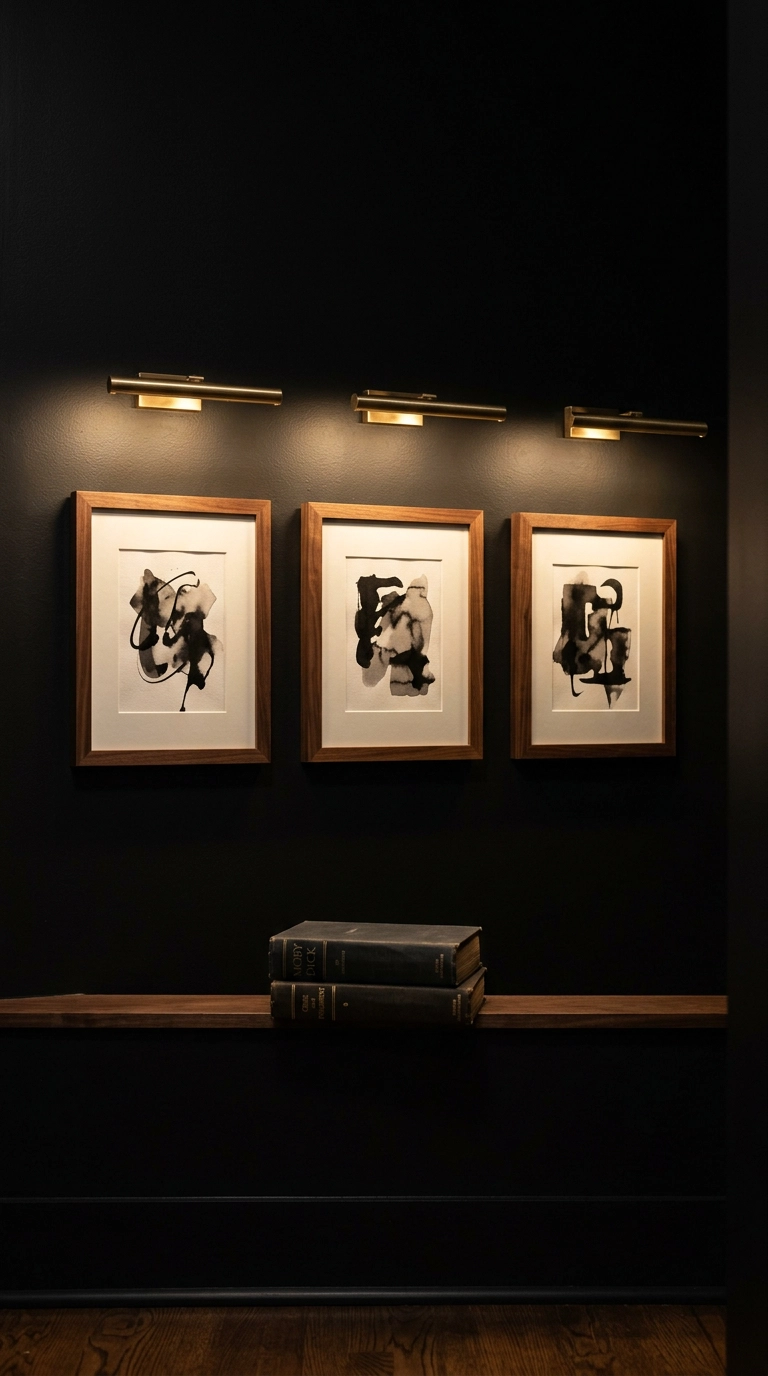
Here’s the honest math nobody tells you: a black hall needs roughly twice the light output of a white one, and you want it coming from several heights rather than one ceiling fixture. Hardwired picture lights are lovely, but the plug-in and battery-operated versions have gotten good enough that I now spec them without apology. They also do the sneaky work of turning your wall into the light source, which is exactly what stops a dark hall from feeling like a cave.
6. Black and White Checkerboard Marble Floor
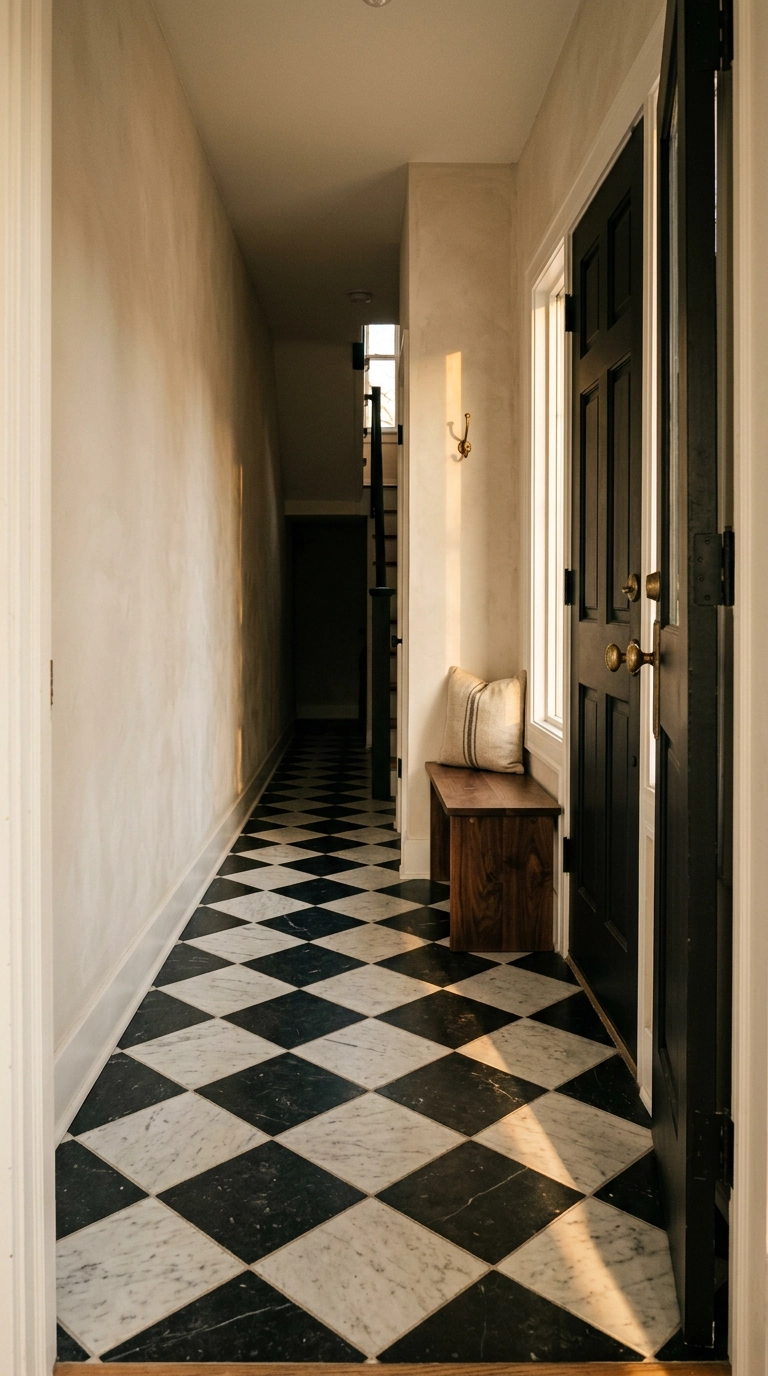
When the walls have to stay light, put the black on the floor. A checkerboard on the diagonal makes a narrow hall read wider because the lines run toward the walls instead of straight at you. Real honed marble is a splurge, but a good porcelain look-alike or a heavy vinyl tile gets you most of the way for a fraction, and both handle wet boots better than natural stone.
7. Satin Sheen Instead of Matte in a Windowless Hall
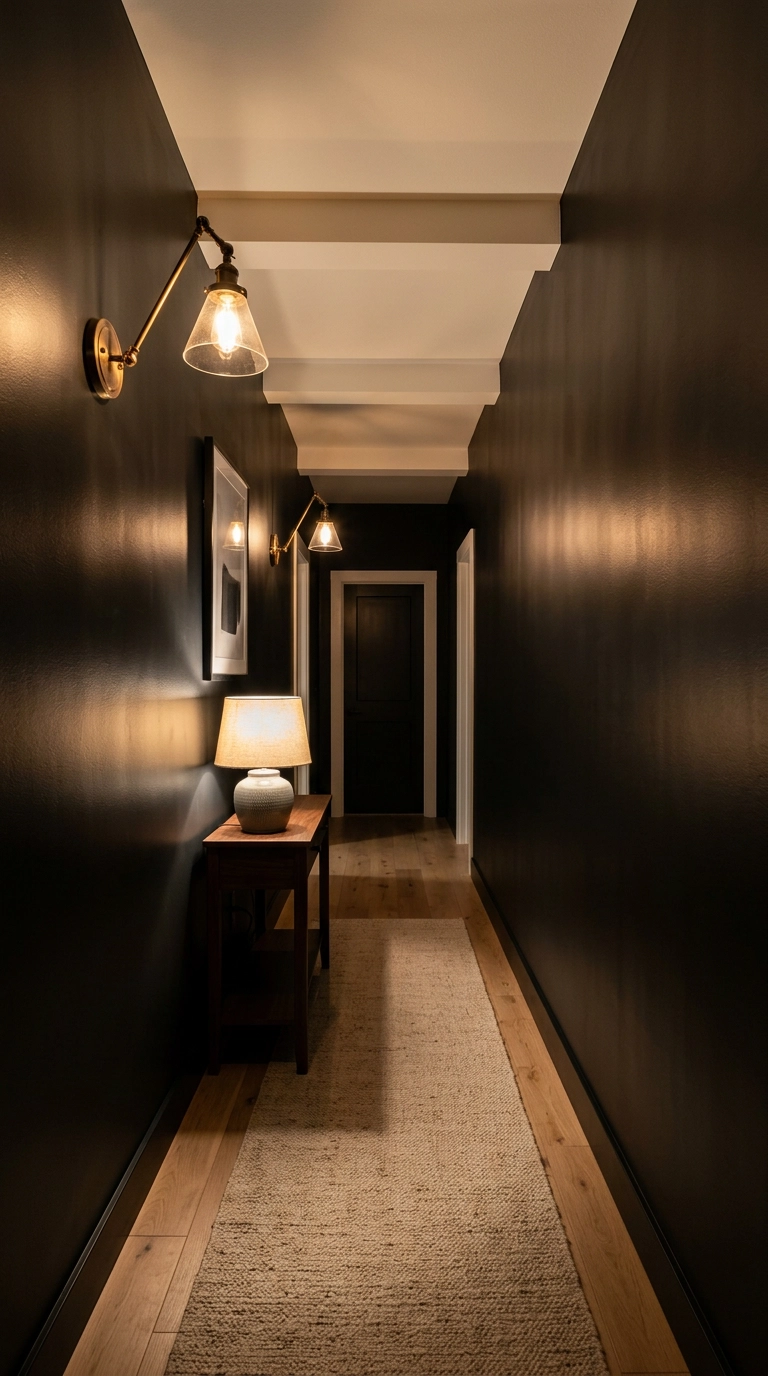
Sheen is the whole ballgame in a hall with no window. Matte swallows light and looks incredible in a hall that already has a window at the end, but in a dark interior hall it goes dead. Step up to eggshell or satin and the walls start bouncing light back at you, which is the difference between moody and grim.
8. Salon-Style Gallery Wall on Black
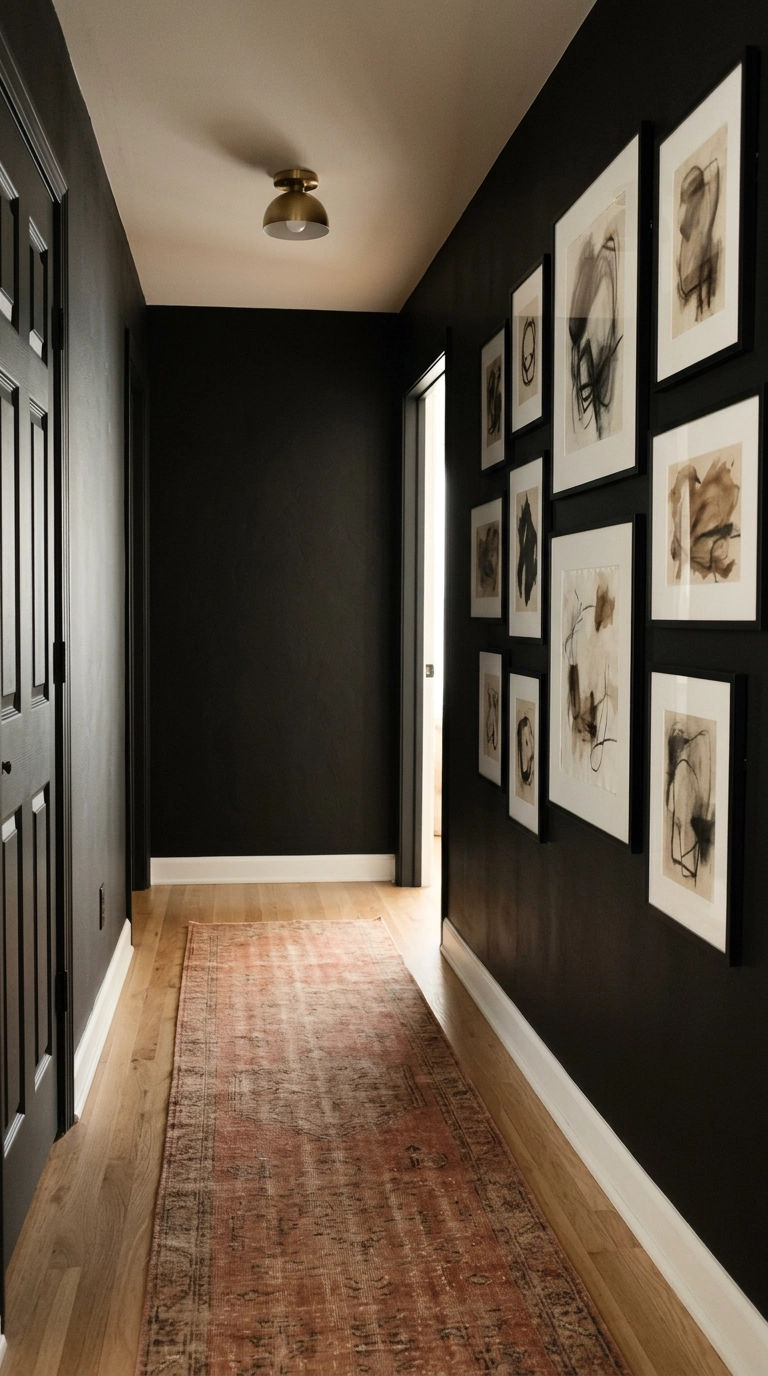
Black walls are the best gallery backdrop there is, because the frames stop competing with the wall and the art just floats. Lay everything on the floor first and keep 2 to 3 inches between frames, treating the whole cluster as one rectangle centered at 57 inches. Thrifted frames spray-painted a single color read as a collection instead of a jumble.
9. A Long Runner to Stretch the Sightline
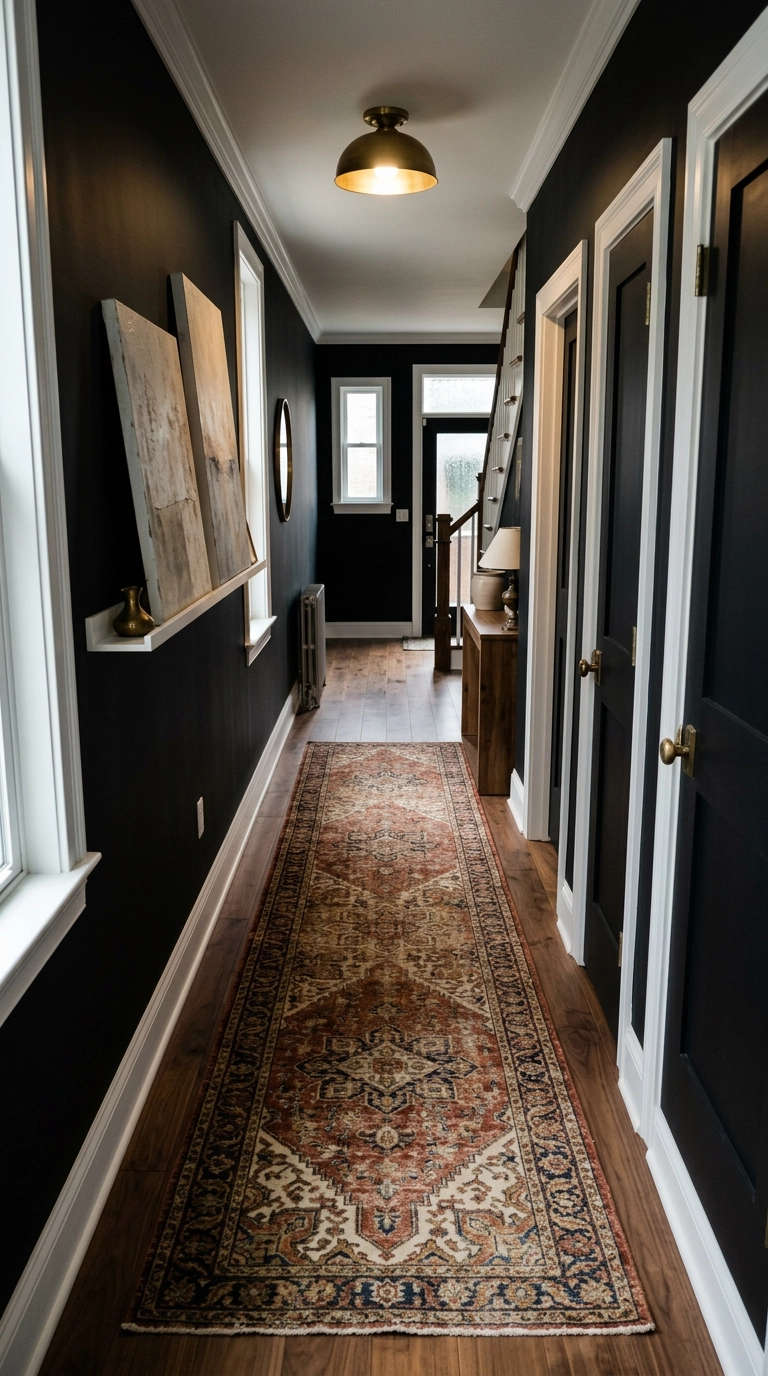
Get the longest runner you can and leave 4 to 6 inches of floor showing on each side, because an unbroken line running away from you is what tells your brain the hall is long, not narrow. A faded rust or cream pattern also breaks up the black better than a solid, and it hides everything a family tracks in. Vintage-look machine-woven runners are one of the genuinely good deals in decor right now.
10. Black Picture Frame Wall Molding for Shadow Lines
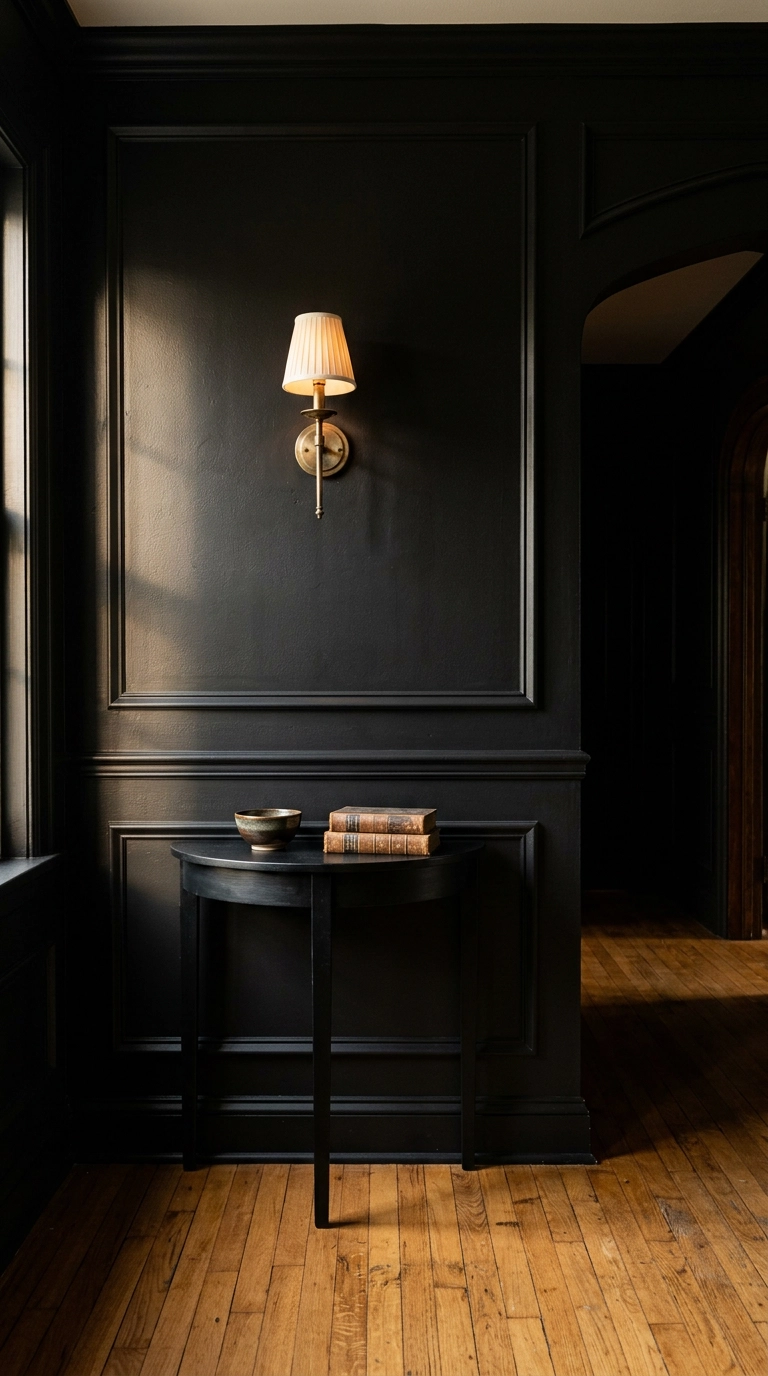
This is my favorite fix for the tunnel problem, because the molding gives the black wall something to do. Raking light across the relief creates shadow lines that read as depth, so the surface stops being a flat void and starts being architecture. Primed pine or MDF strips, a miter box, and adhesive plus brad nails will get you there for around $200 in a typical hall.
11. Vertical Board and Batten to Lift the Ceiling
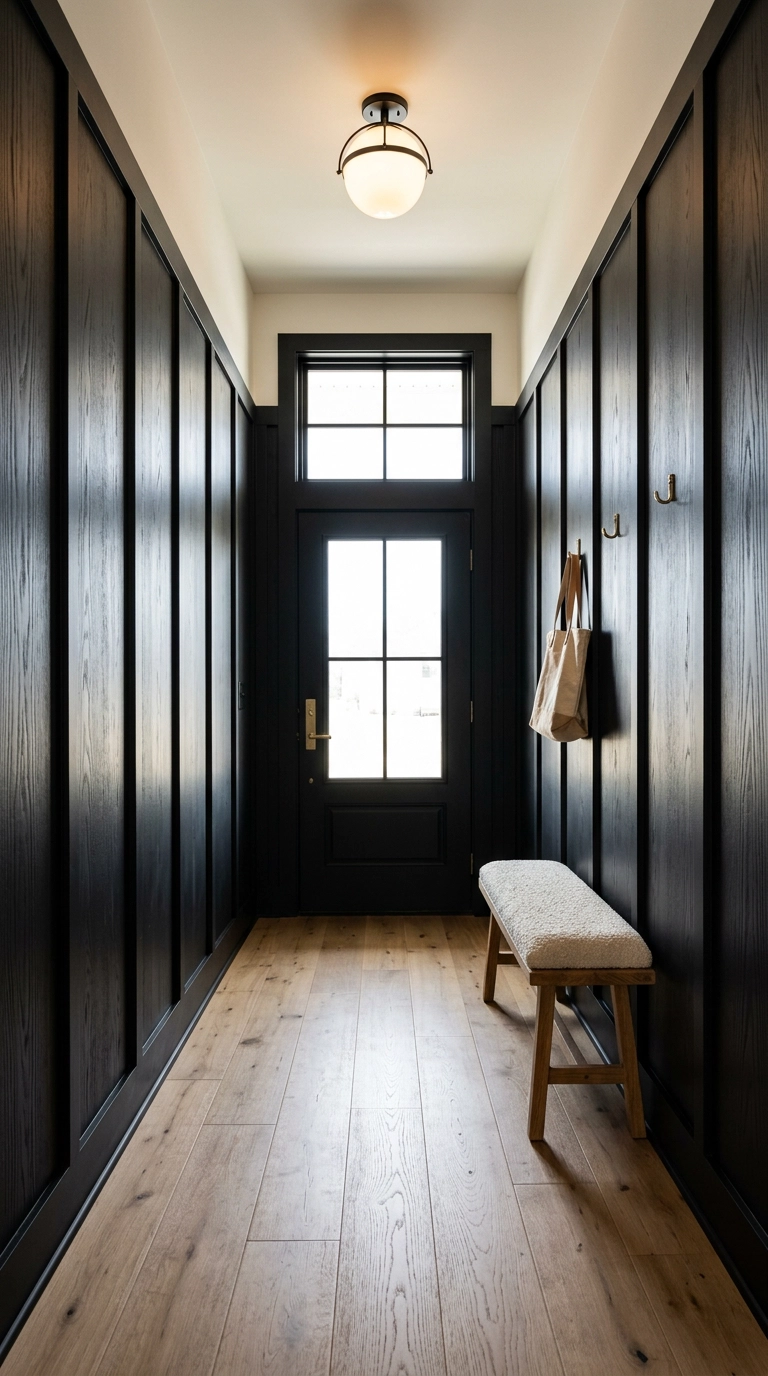
Run the battens vertically and space them 12 to 16 inches apart, and the eye travels up instead of down the tunnel. It’s the same reason pinstripes work on a suit. In a hall with an 8-foot ceiling this is worth more than almost anything else you can do, and it survives a black paint job better than flat drywall does.
12. Color Drenched Black, Ceiling Included
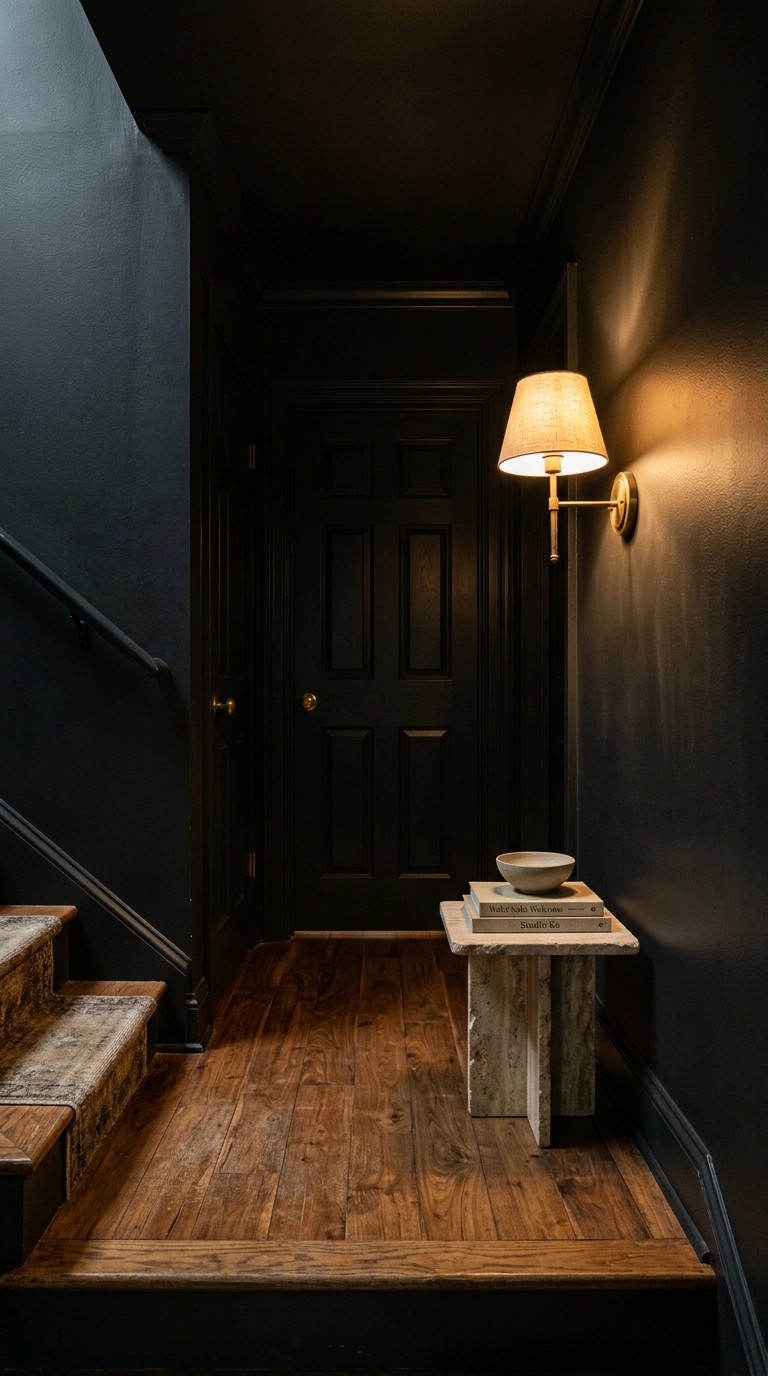
Color drenching just means walls, trim, and ceiling in one shade, and it works because it deletes the lines that chop a small space into pieces. Here is the honest rule I use: drench only if the hall is short, or if it has a window, or if you are ready to add three light sources. In a long windowless hall, keep the ceiling light and don’t argue with me about it.
13. An Oversized Leaning Mirror to Bounce Light Back
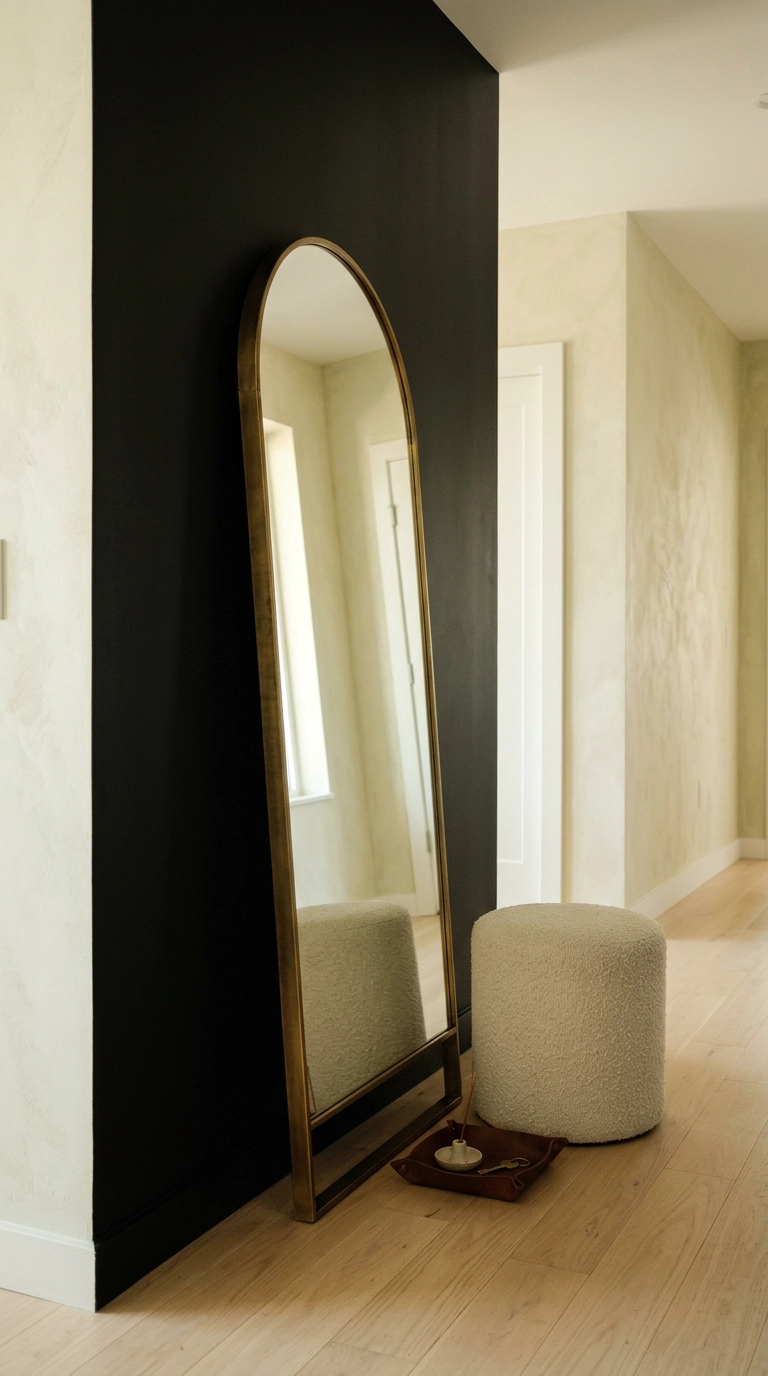
A big mirror in a black hall is a light source, not decor. Put it opposite or perpendicular to whatever daylight you have, and it doubles that light instead of eating it. Leaning a floor mirror means no drilling, which makes this the single best renter move on this list, though anchor it to the wall with a strap if you have kids or a large dog.
14. Black Limewash Plaster for Movement
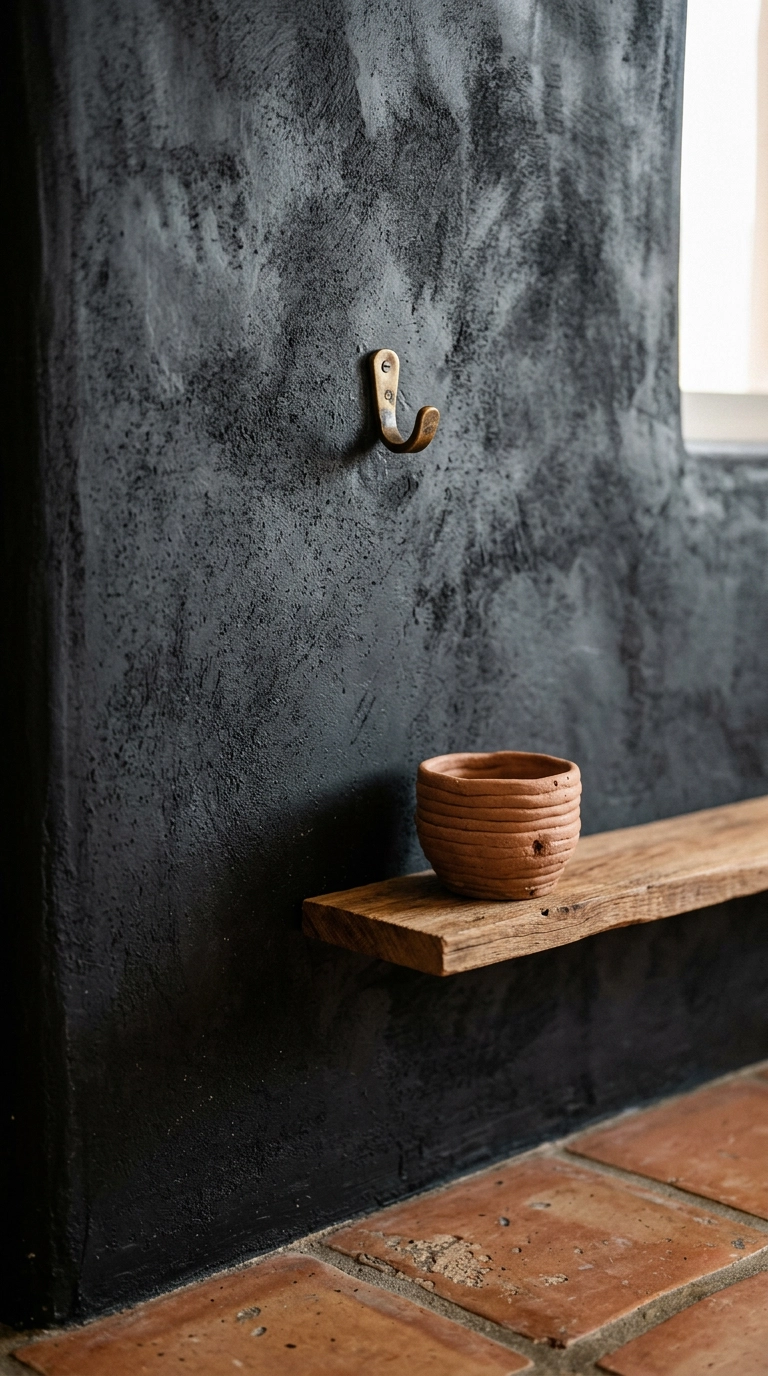
Flat black paint is the fastest way to get the void effect. A limewash or mineral-paint finish moves between charcoal and near-black as the light shifts, so the wall never looks like a hole. It’s a two-coat job with a big block brush, more forgiving than it looks, and it forgives an imperfect drywall repair while you’re at it.
15. White Oak Slats Over a Black Backing
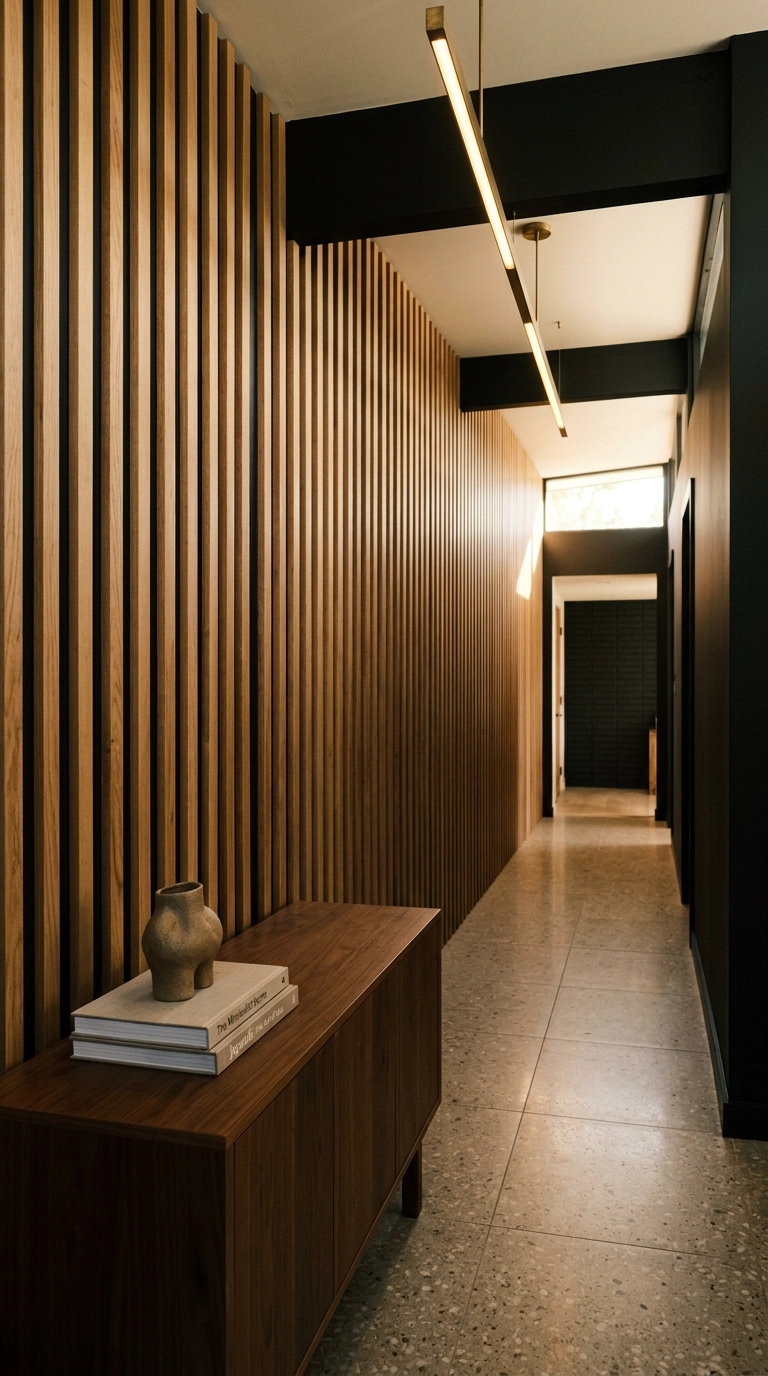
The black lives in the gaps here, which gives you all the drama and none of the light loss. Warm oak in front, black behind, and the wall reads as depth rather than darkness. Prefab slat panels have made this a genuine weekend project instead of a millwork bill, and they cut with a standard circular saw.
16. Black Ceiling, Light Walls, Inverted
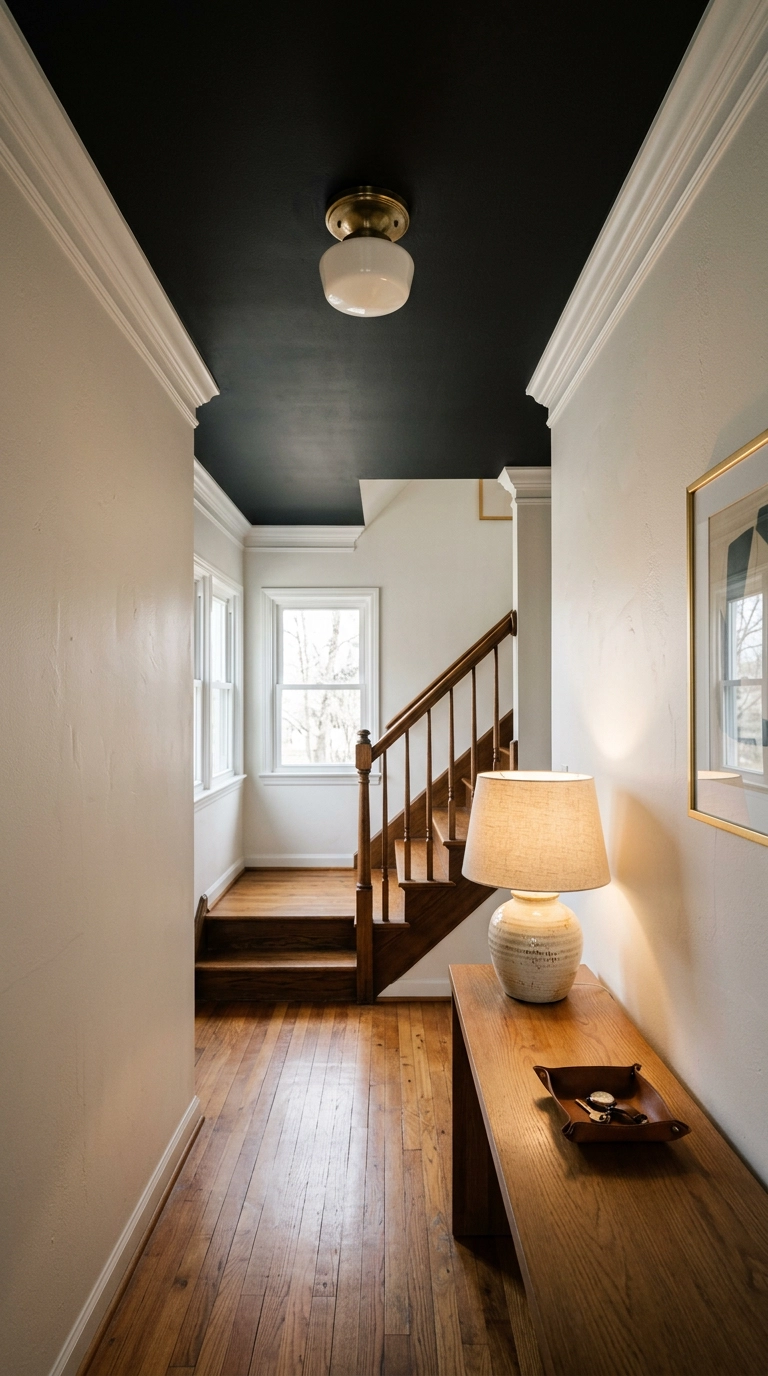
Flip it. A black ceiling over pale walls makes a hall feel intimate and finished without touching the surfaces your light needs to bounce off. It works best where the ceiling is 9 feet or higher, or where a stairwell already gives the space some volume. One gallon, one afternoon, and a very sore neck.
17. High-Gloss Black in a Tiny Windowless Hall
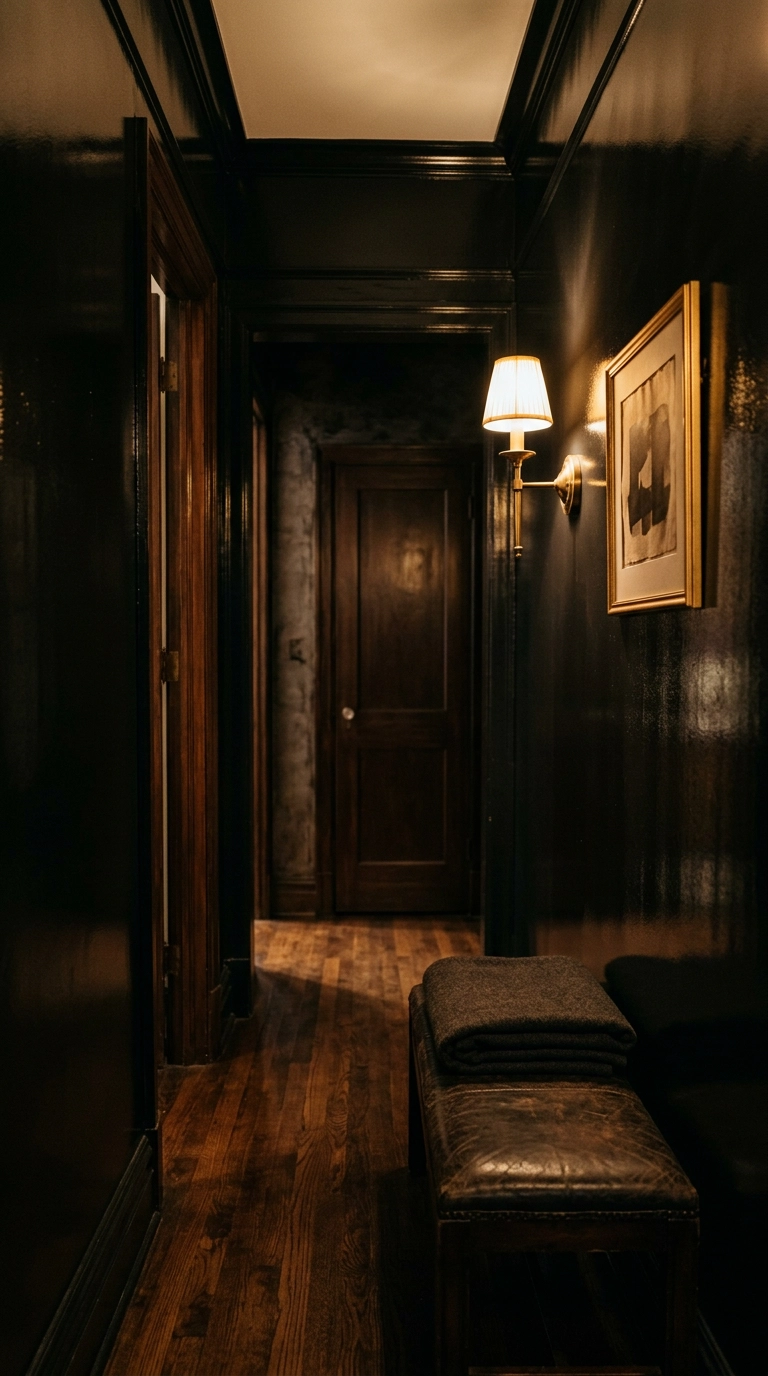
If the hall is truly hopeless, stop fighting it and make it a jewel box. High-gloss black turns the walls into soft reflectors, so the small amount of light you add multiplies instead of disappearing. Gloss shows every drywall flaw, so this is the one idea here where I’d tell you to skim and sand properly first, or hire it out.
18. Black Grasscloth for Texture Without Pattern
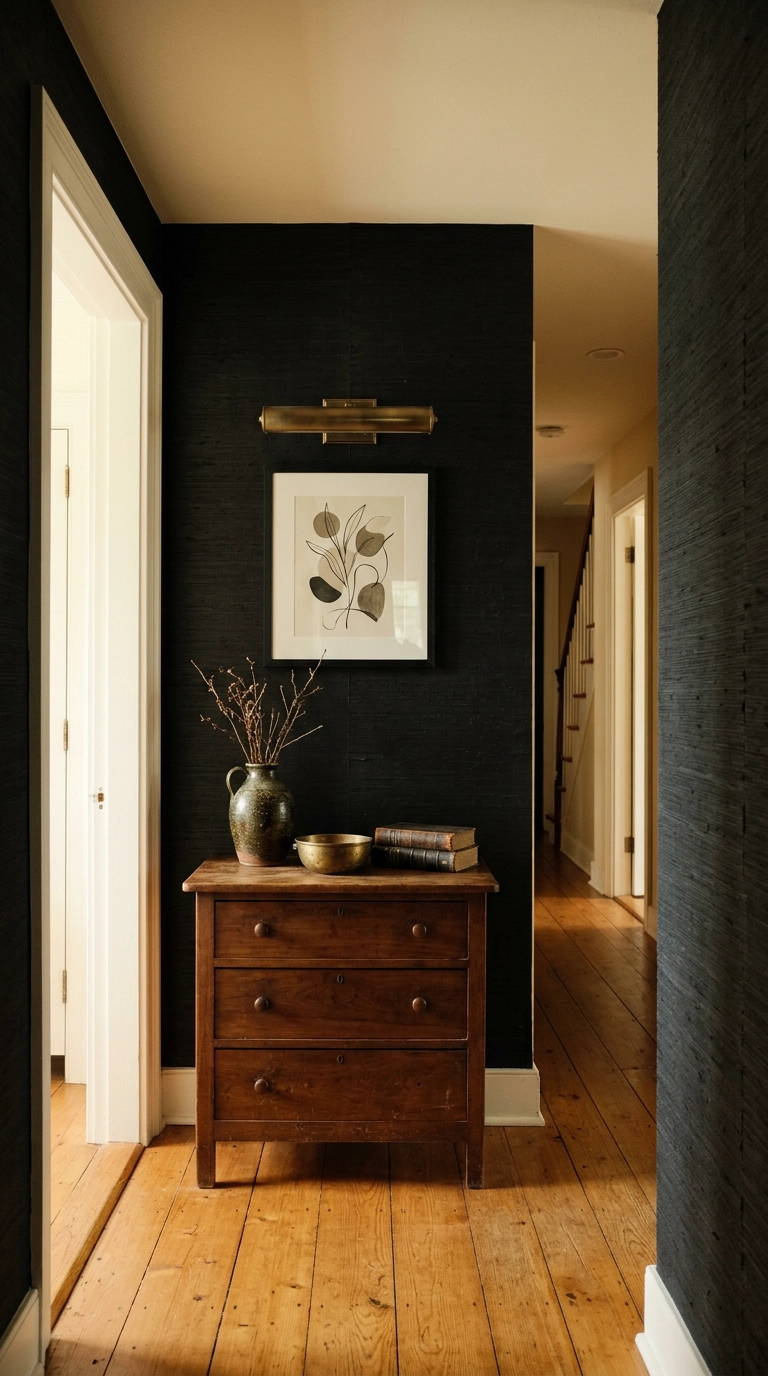
Grasscloth is where black stops looking like paint and starts looking expensive. The natural fiber catches light in horizontal bands, so the wall has variation built in. Fair warning that seams are visible by design and it stains if you touch it with wet hands, so I keep it above a chair rail in busy family halls.
19. Matte Black Hardware as a 20-Minute Swap
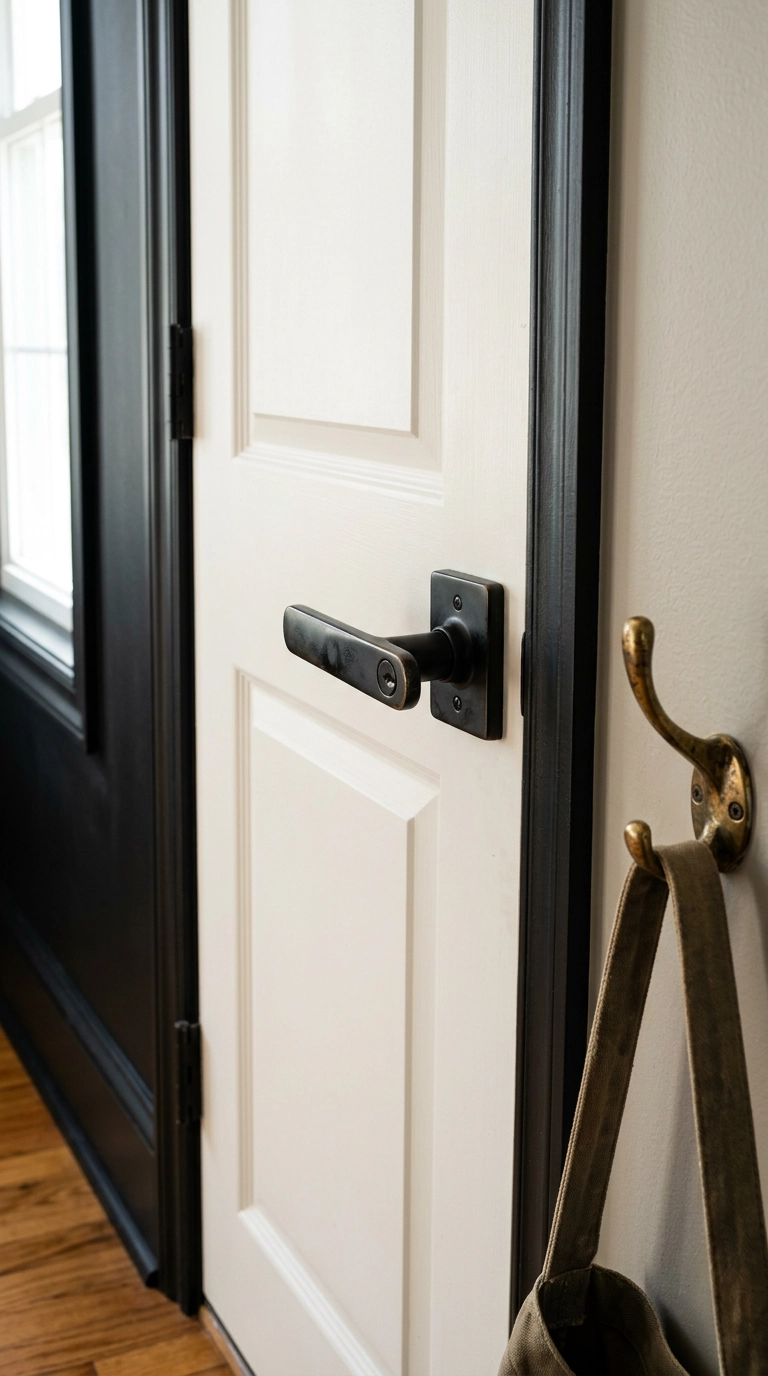
Swapping brass builder knobs for matte black levers takes about ten minutes a door and costs less than dinner out. Do the hinges too, or the whole thing looks half finished. Mix in one warm metal somewhere nearby, a brass hook or a bronze sconce, so the black hardware reads as a choice instead of a default.
20. A Black Stair Runner to Carry the Hall Upstairs
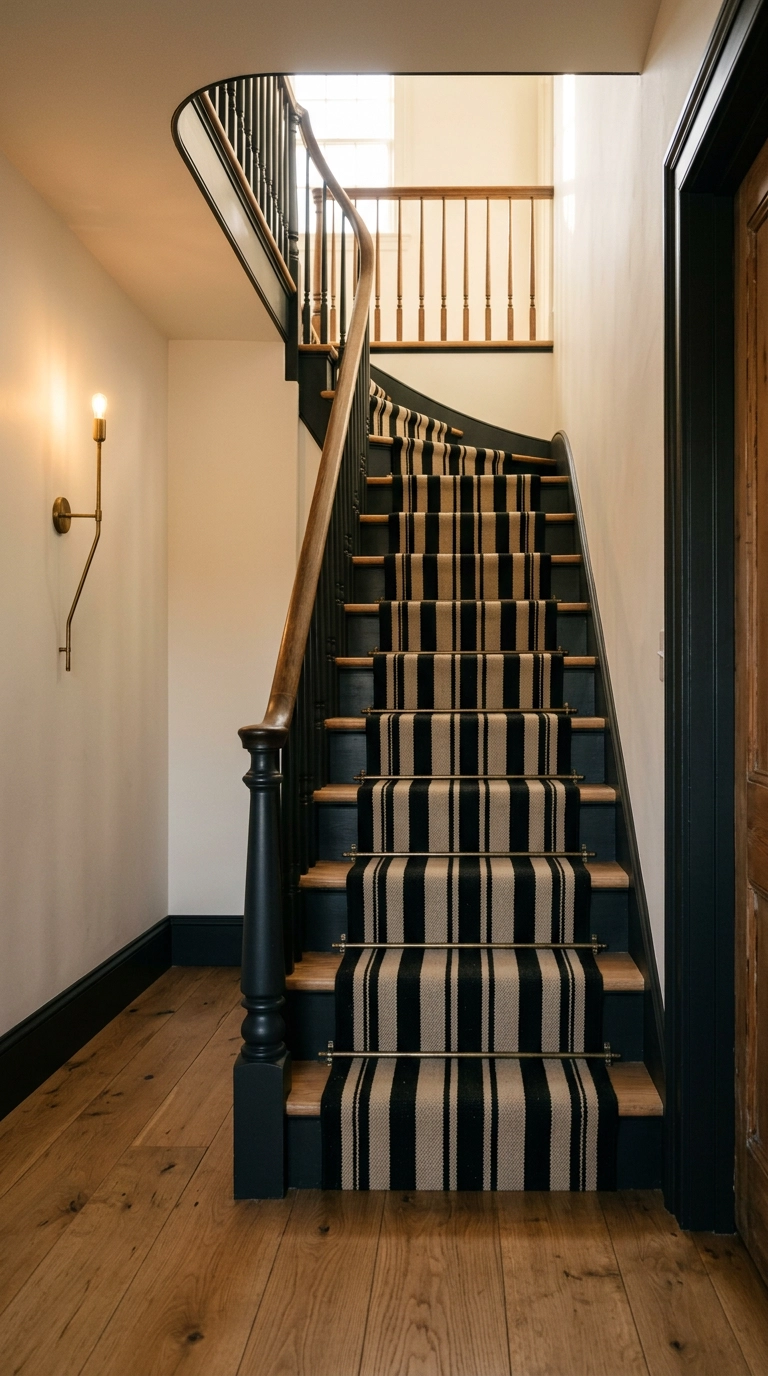
Halls and stairs are one continuous space, and treating them separately is the mistake I see most. A black striped runner with brass rods ties them together and quiets the noise of a busy staircase at the same time. Runner plus rods installed is a real cost, usually the priciest item on this list, but it’s also the one guests notice first.
21. A Painted Arch Alcove to Break the Straight Line
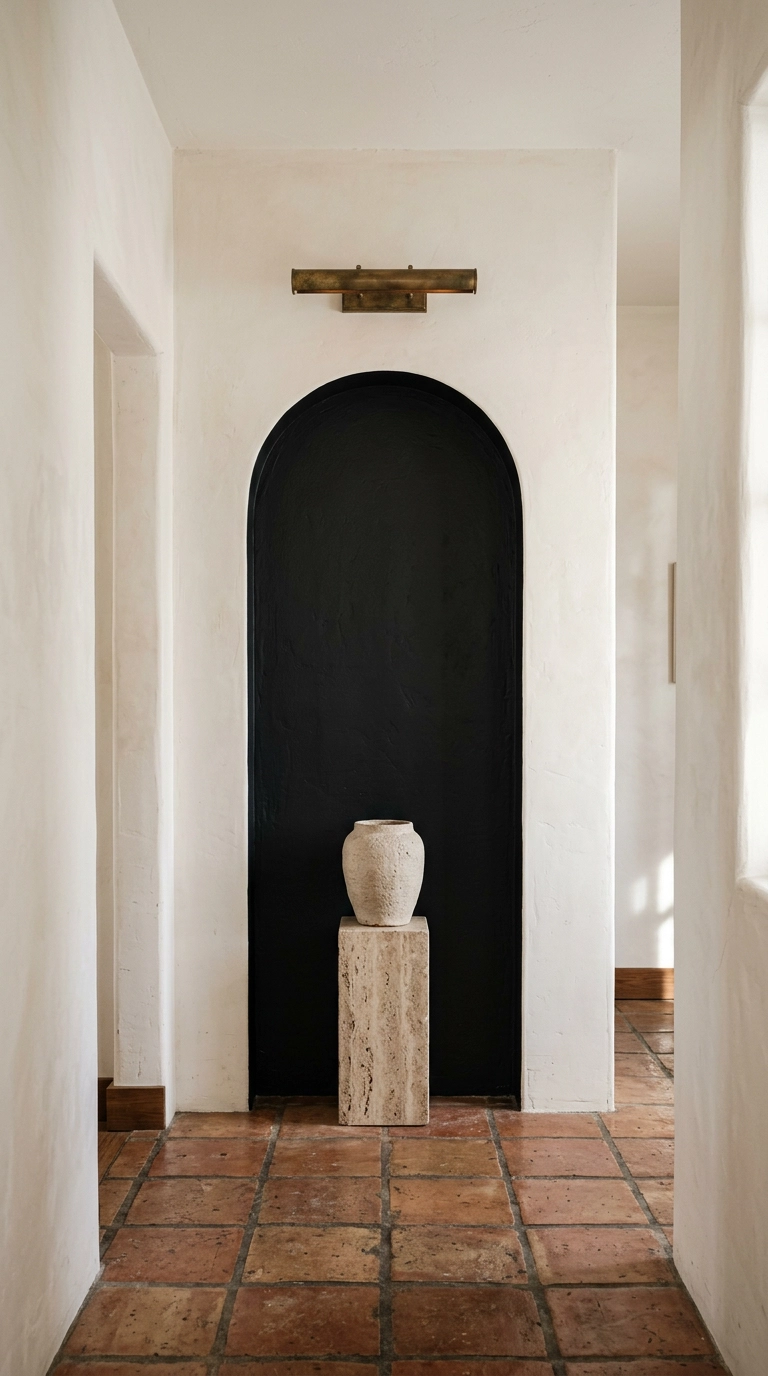
A painted arch costs a length of string, a pencil, and a quart of paint, and it breaks the relentless straight line of a hallway better than any object you could put there. Center it on the wall, keep the top about a foot below the ceiling, and let the floor stay clear. Fully renter-friendly if you patch on the way out.
22. One Console, Three Objects, Nothing More
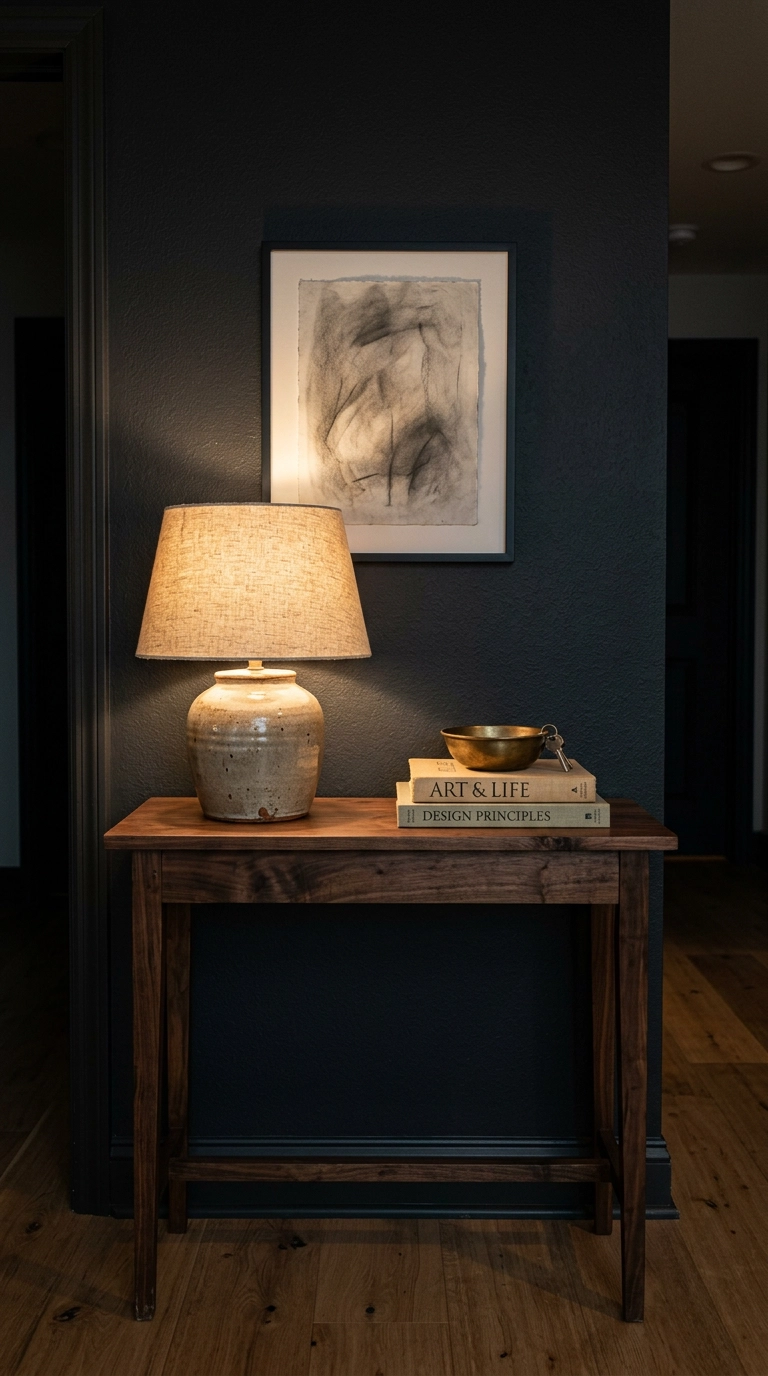
On a dark wall, clutter reads twice as loud, so I hold hall consoles to a lamp plus two things. Odd numbers work because your eye doesn’t finish counting them, so it keeps moving across the vignette. Pick a console no deeper than 12 inches so two people can still pass without turning sideways.
23. Black Walls Framing a Window at the End of the Hall
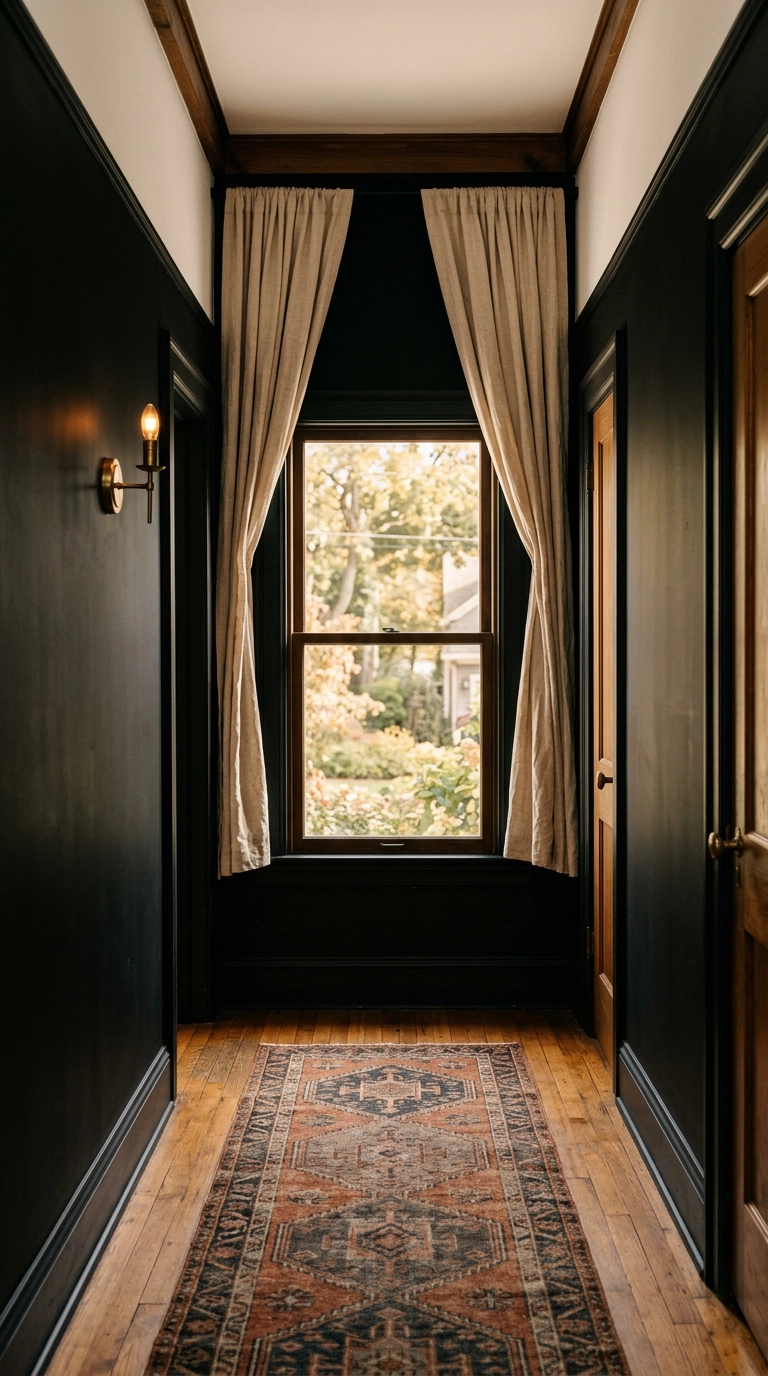
This is the hall that black was invented for. When there’s a window at the end, dark walls act like a lens hood, so the view and the light become the brightest thing you see and the whole corridor pulls you toward it. If your hall has a window, you are the ten percent who can go all in, ceiling included.
Turning Off the Lights on This One
If you take one thing from all of this, let it be that black in a hallway is a lighting project wearing a paint project’s clothes. The matte walls with a white ceiling and the picture-light gallery are the two I’ve repeated most in client homes, and the satin-sheen trick is what saves the windowless ones. The tunnel fear is real, but it comes from under-lighting a flat surface, not from the color itself.
What I’m seeing everywhere in 2026 is texture doing the heavy lifting, so black grasscloth, limewash, and slats over black are pulling ahead of plain flat paint. Farrow & Ball Railings and Benjamin Moore Soot keep showing up on my specs because both read soft rather than harsh, and Sherwin-Williams Tricorn Black is still the one I reach for when I want a true, flat black on doors. Nate Berkus has been making the case for dark, moody transition spaces for years, and every time a designer color-drenches a hall on a home tour, my inbox fills up the next morning.
Start with the doors and trim if you’re nervous, get a sample pot before you commit a gallon, and live with it on the wall for three days in both morning and evening light. If you want more of this kind of thing, sign up for my weekly newsletter, where I send one real project breakdown, the paint shades I actually used, and the mistakes I made getting there.


