23+ Cozy Fire Pit Decor Ideas that are Easy and Gorgeous in 2026

I’ll be honest with you, my first fire pit was a $40 steel bowl I dragged into the middle of a patchy lawn, and it looked exactly as sad as it sounds. What I learned over the next decade of designing backyards is that the pit itself is maybe 20 percent of the magic, the other 80 percent is the surround, the seating distance, and whether the whole setup still looks intentional at 2pm when there’s no fire going. That last part is the one everybody forgets, so we’re fixing it today.
Fire Pit Decor Ideas
1. Ring the Pit in Pea Gravel with a Steel Edge
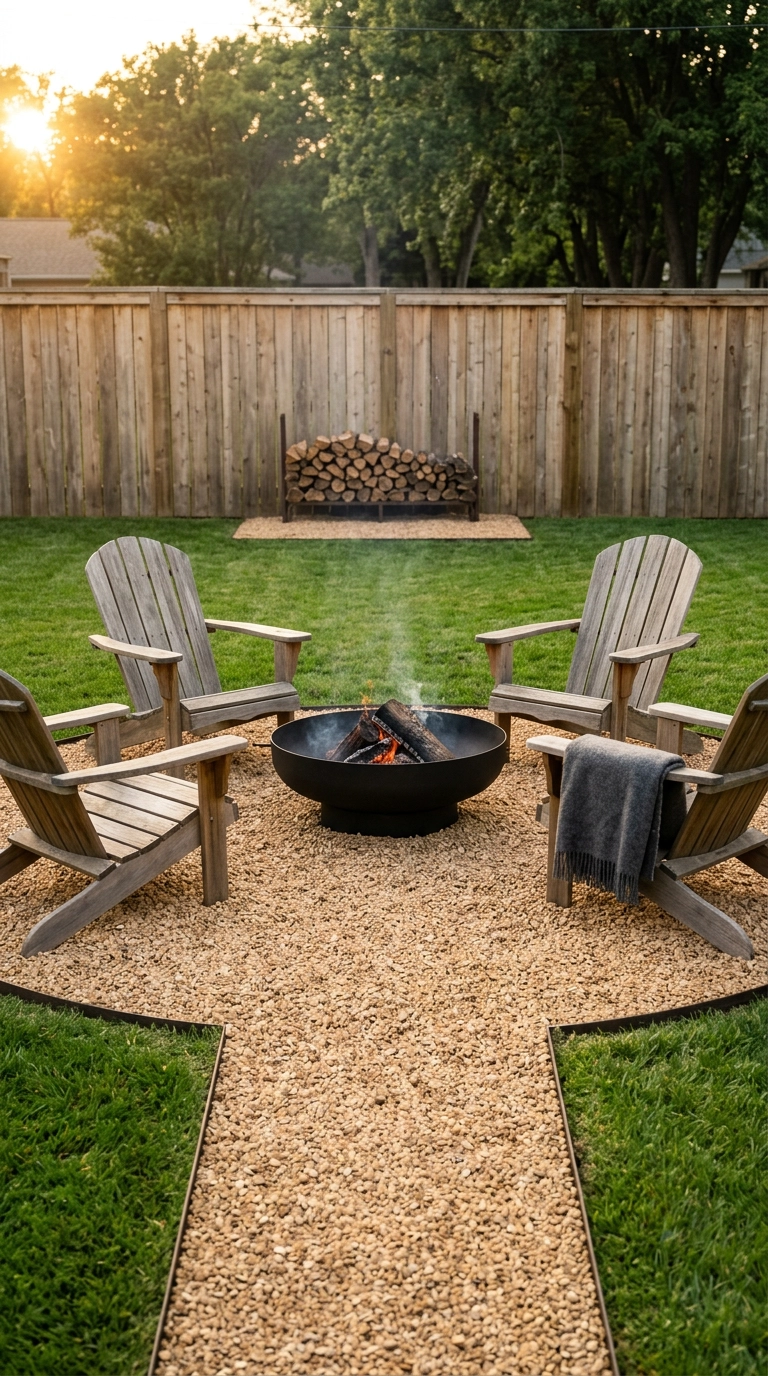
A gravel circle is the single best thing you can do for a fire pit, and it costs about the same as a nice dinner out. Ten to twelve feet across, three inches deep, with a cheap steel or aluminum edging strip so the gravel doesn’t migrate into your grass by August.
2. Set Your Chairs at the Actual Right Distance
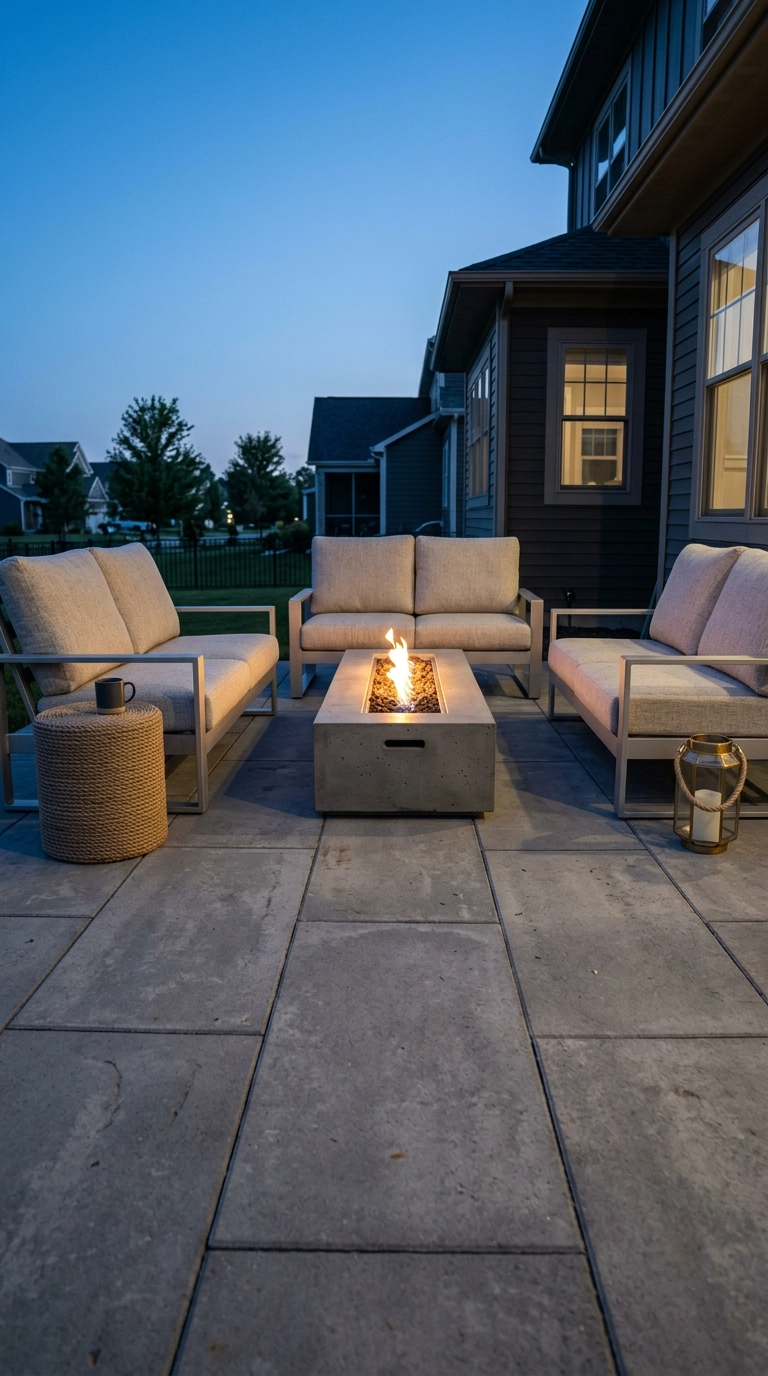
Here’s the rule I give every client: seat fronts land about three feet back from the edge of the pit, and never more than five. Closer than three and your shins cook, farther than five and you lose the heat plus the whole conversational huddle that makes a fire pit worth having.
3. Go Portable with a Hammered Copper Bowl
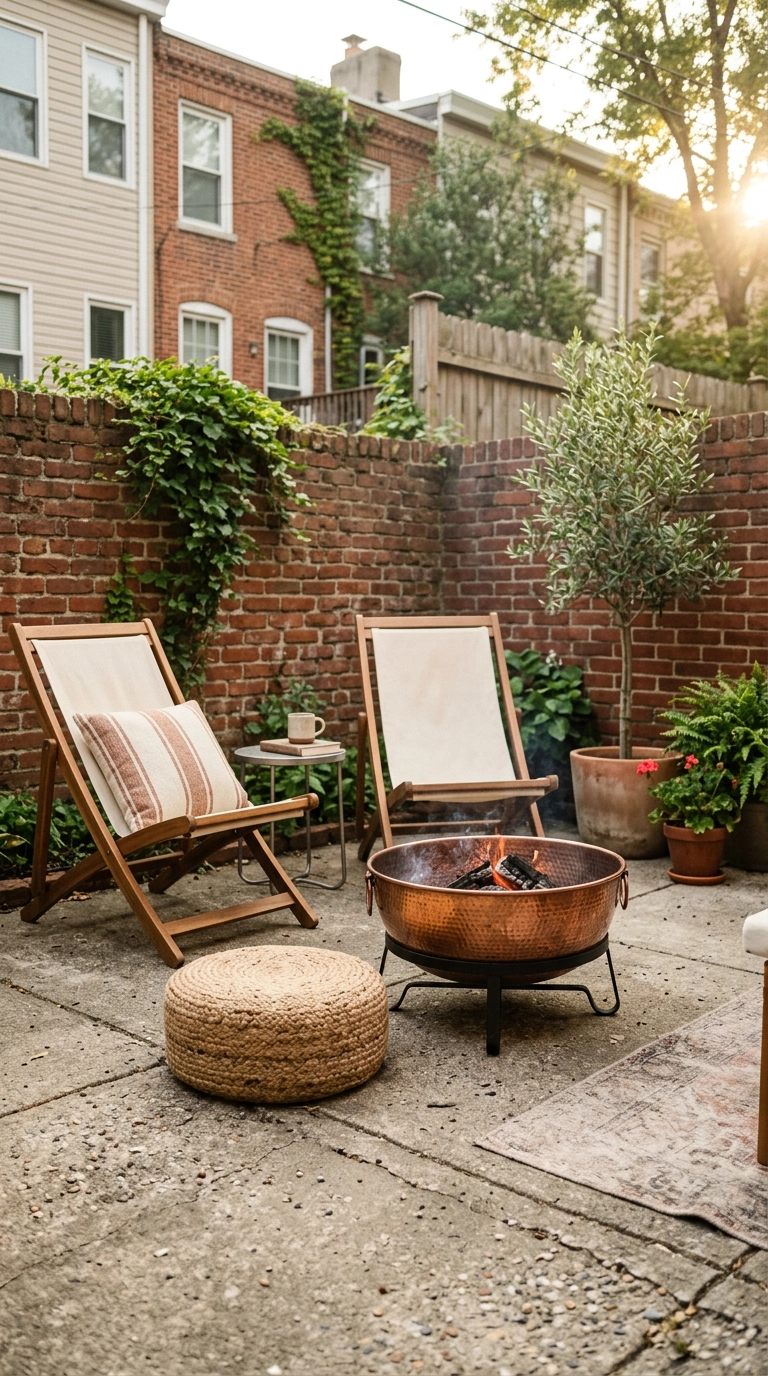
If you rent, buy a bowl, not a build. A hammered copper or cast iron bowl on legs sits on any concrete slab, moves when you move, and needs zero permission from a landlord.
4. Rearrange What You Already Own Into a Real Circle
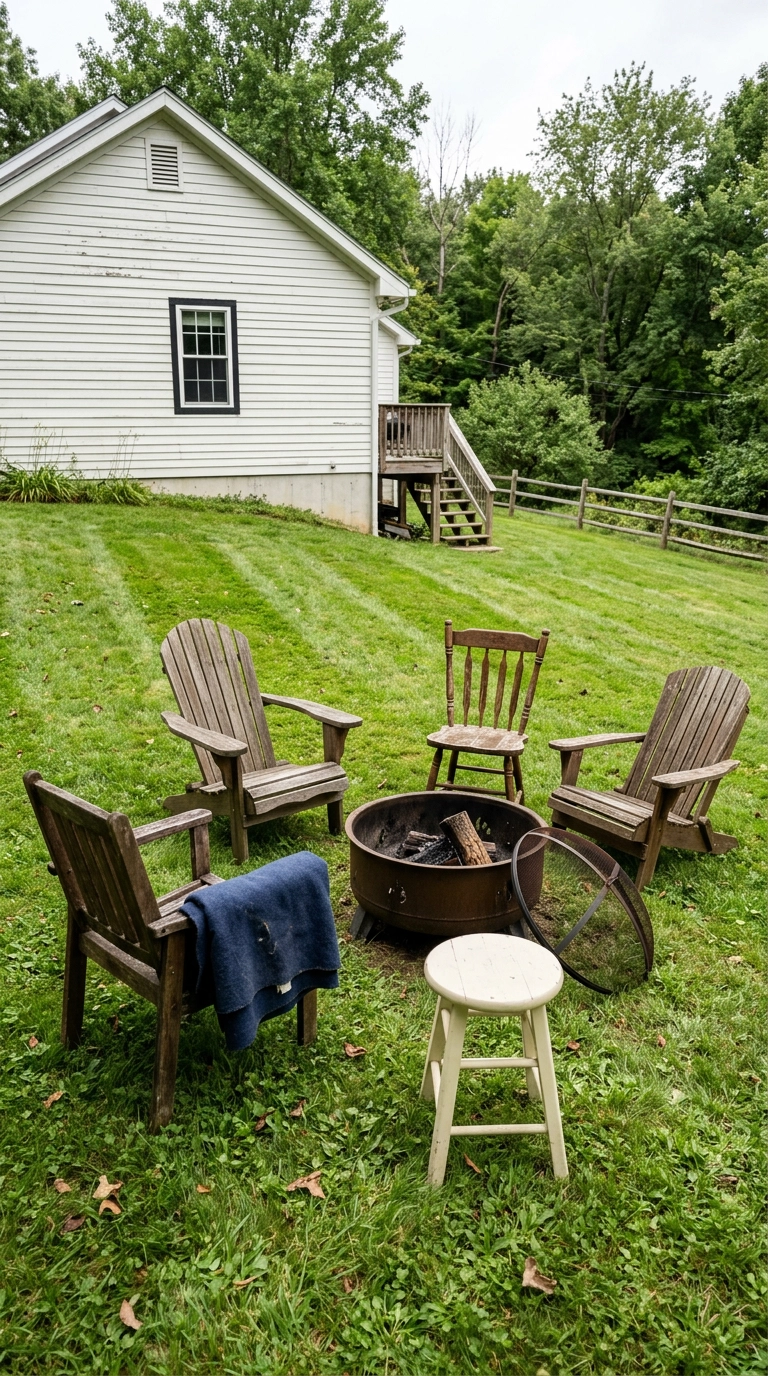
The free version, and the one I make people try before they spend a dollar: pull every chair you own into a true circle with equal gaps. Most backyards have chairs scattered in a loose arc facing the house instead of the fire.
5. Build a Flagstone Surround for a Weekend Upgrade
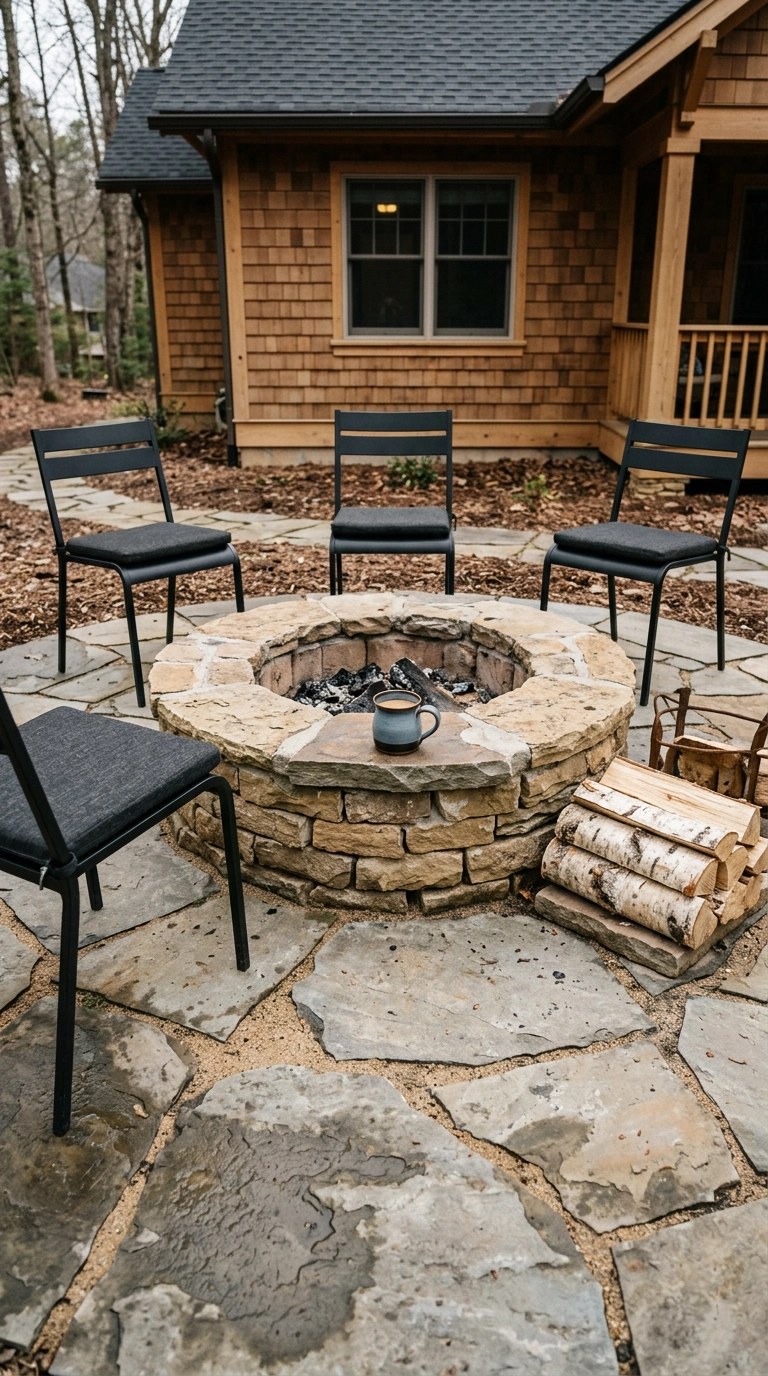
Flagstone is the splurge that never dates, running roughly four to eight dollars a square foot for the stone before labor. Set it on a compacted gravel and sand base, not directly on soil, or you’ll be re-leveling wobbly pieces every spring.
6. Choose a Gas Fire Table That Works as a Coffee Table
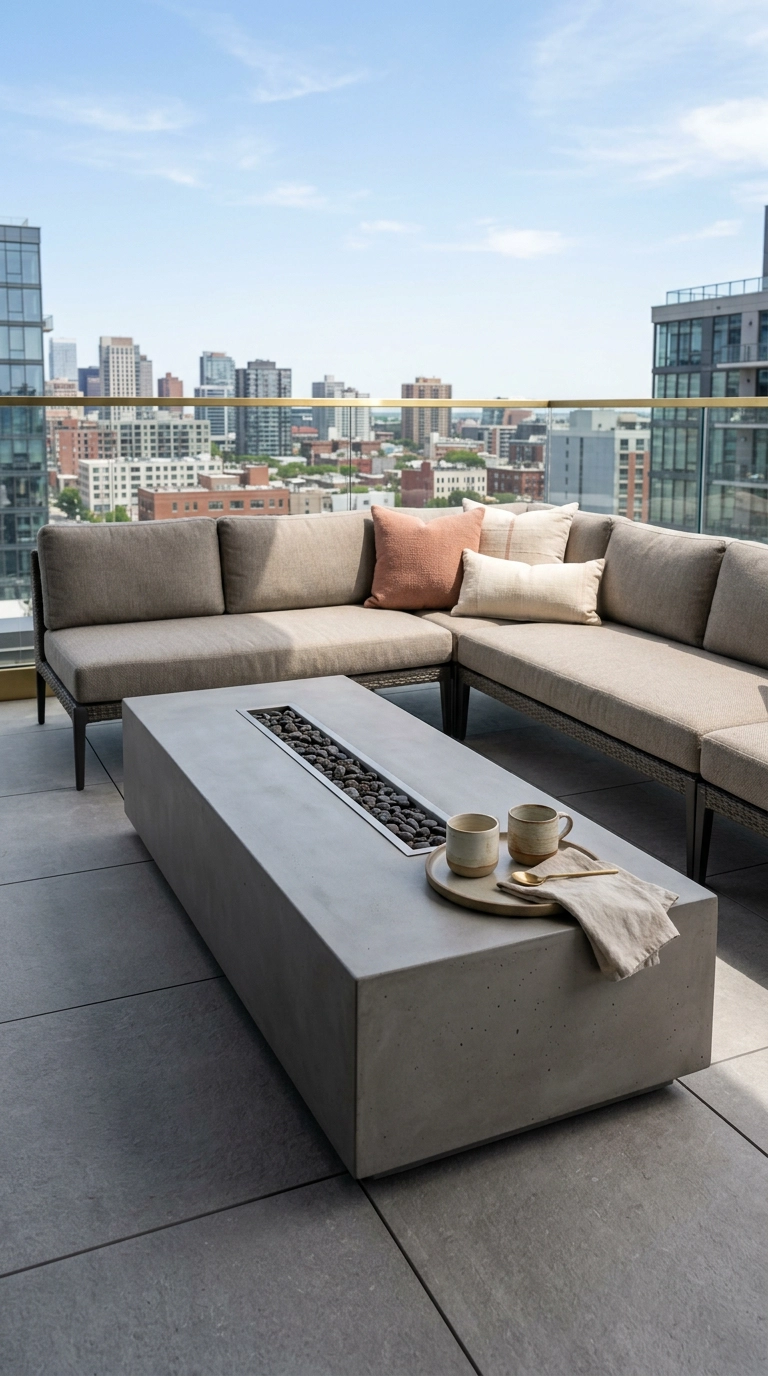
Gas changes the whole design brief. No log storage, no ash cleanup, no smoke chasing you around the circle, and it’s the only real option on most balconies and HOA-restricted patios.
7. Warm It Up with Wood Tones Around the Pit
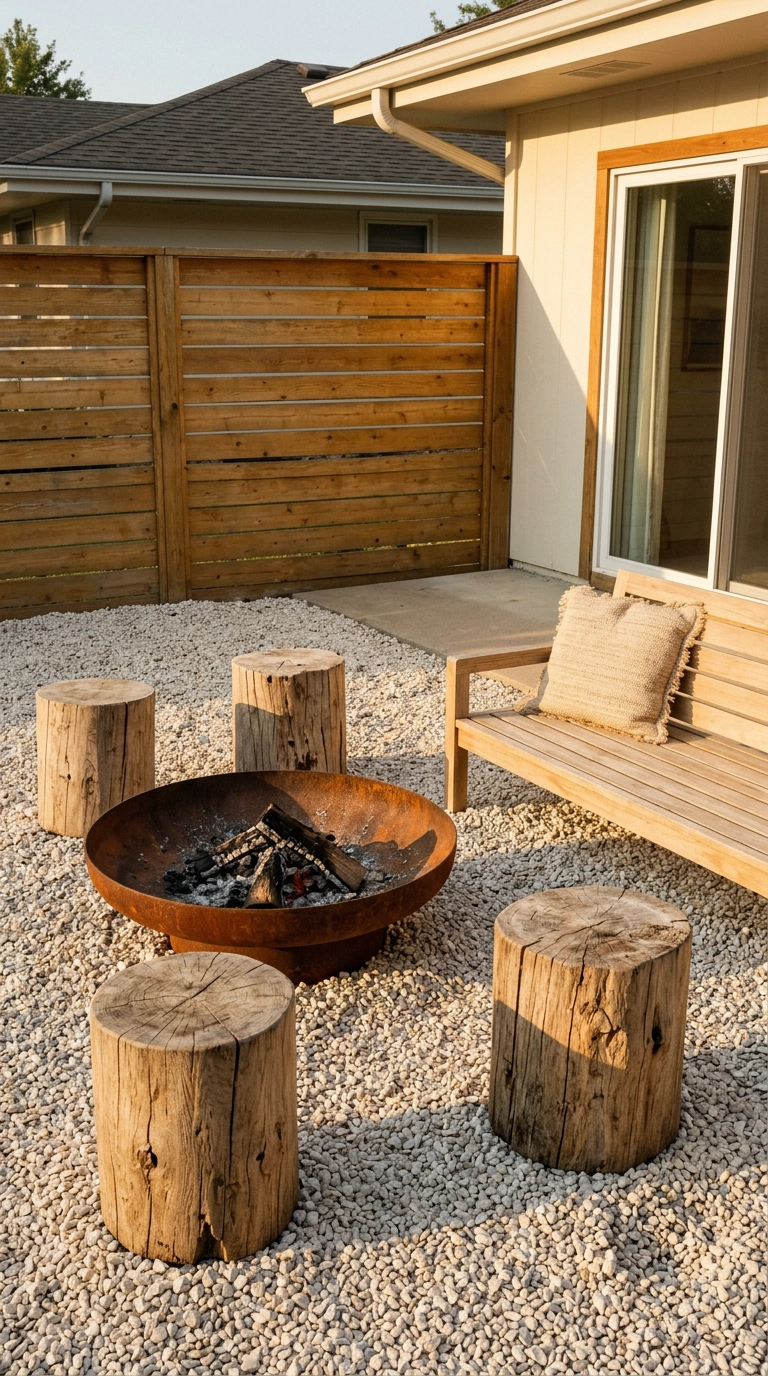
Steel pits and gray stone can read cold, especially during daylight. The fix is wood tones in the seating and the surround, warm walnut or white oak, even just a couple of stump side tables, and it instantly softens the scene.
8. Cluster Lanterns in Three Different Heights
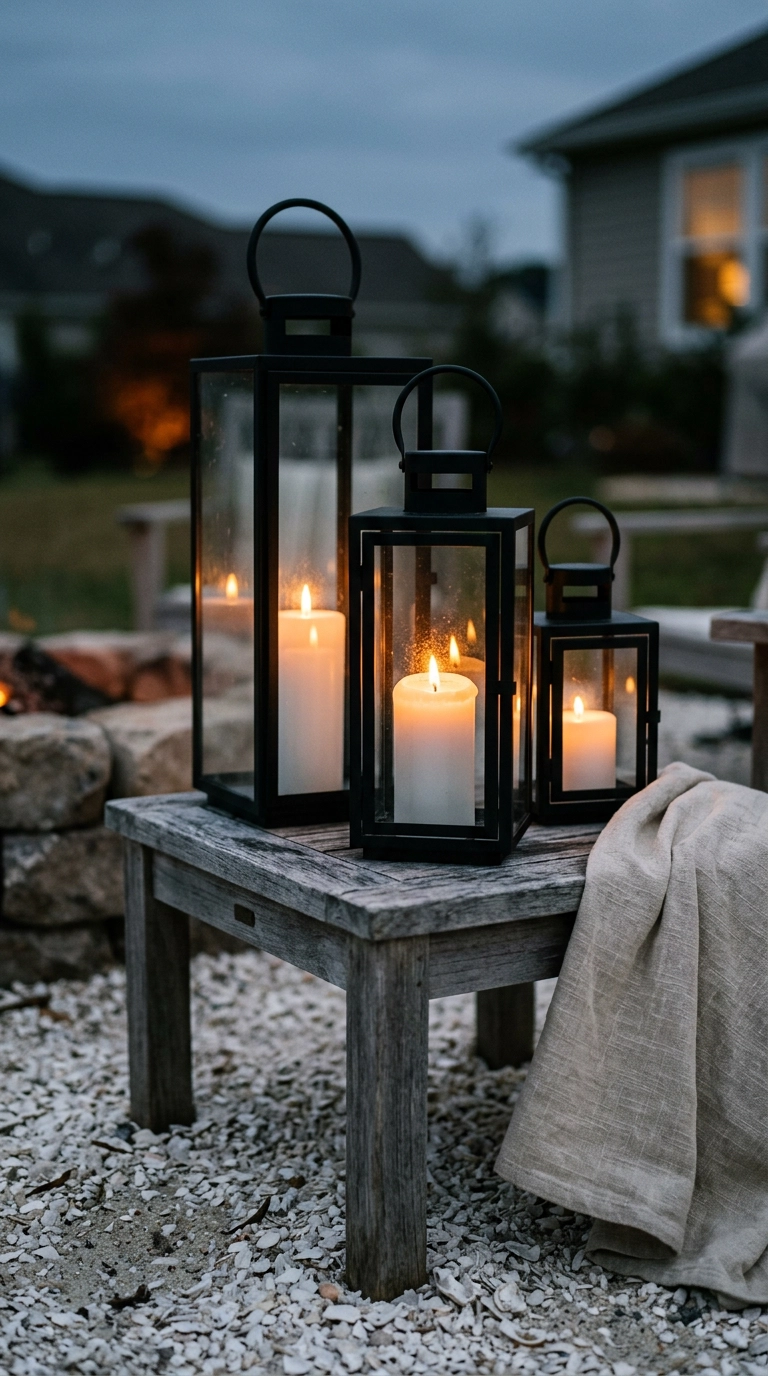
Fire is a single low light source, which means everything above knee height disappears after dark. Three lanterns in graduated heights, say roughly 8, 12, and 18 inches, fix that by pulling light up into the vertical space.
9. String Lights Overhead on Cedar Posts
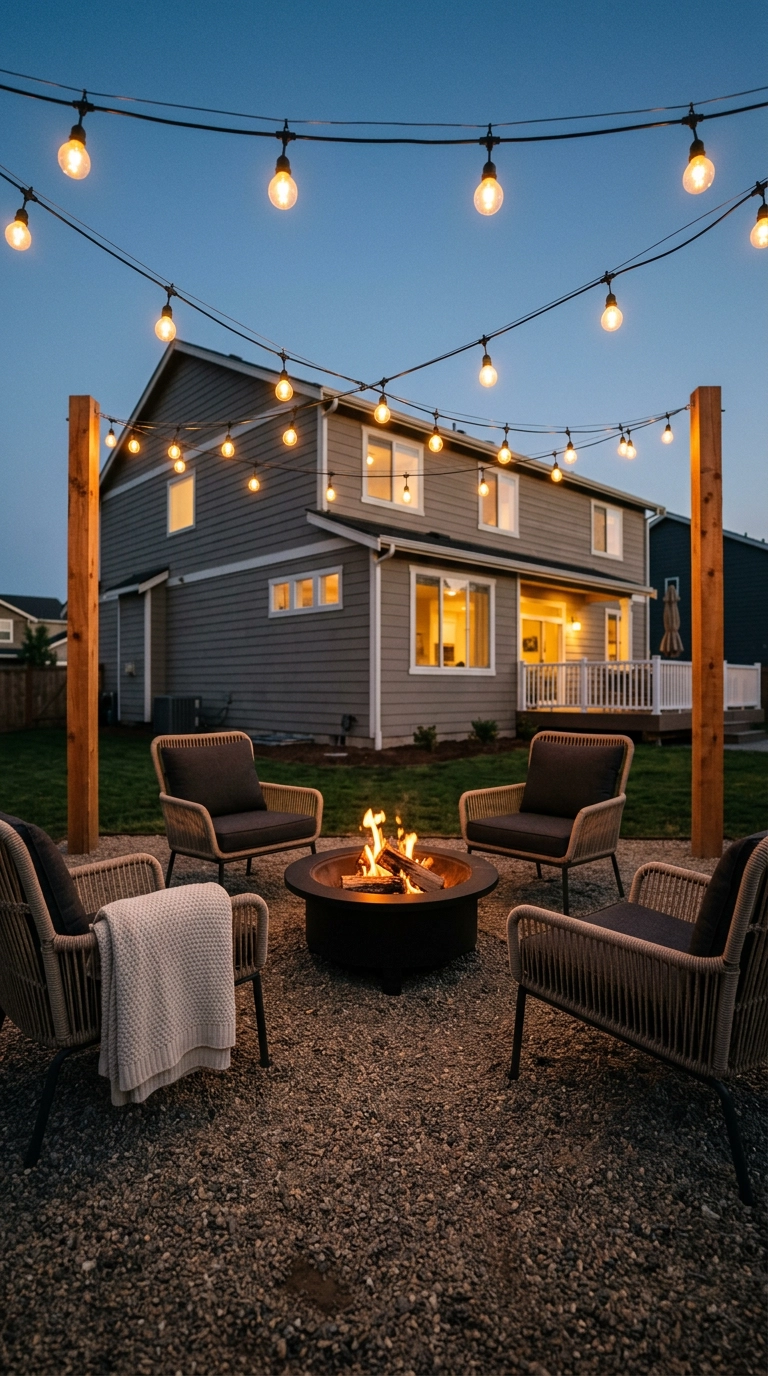
String lights are the highest-return purchase in any backyard, but the mistake is stapling them to whatever’s nearby and ending up with a droopy diagonal. Set four cedar four-by-fours in the corners of your seating area, then run two parallel lines to make a real ceiling.
10. Know the Clearances, Then Decorate Around Them
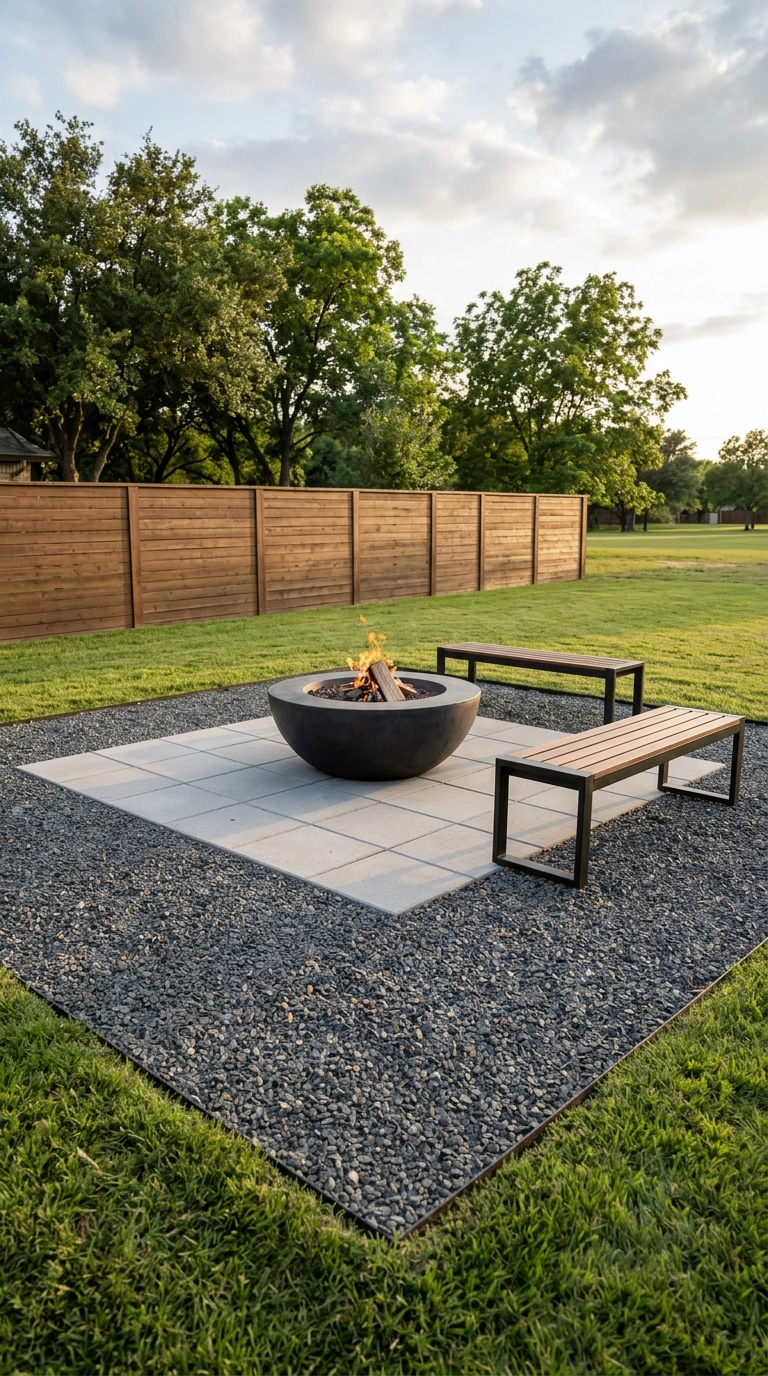
The boring part that saves your house: keep any pit at least 10 to 15 feet from structures, fences, and low tree branches, and check your city’s rules because many require more. Nothing flammable inside a three-foot ring, which means no rugs, no throw pillows on the ground, no dry pine needles.
11. Add a Curved Built-In Bench in Board-Formed Concrete
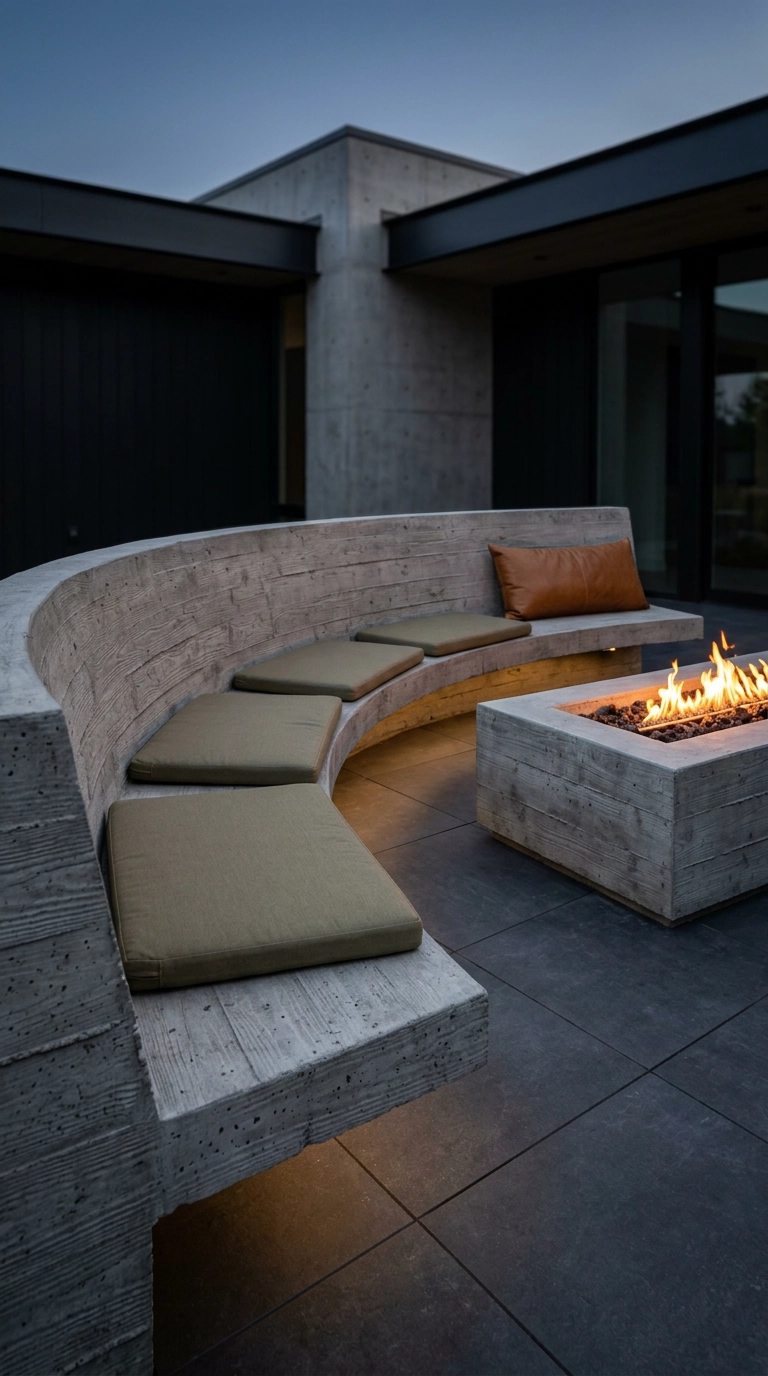
This is the genuine splurge on the list, easily a five-figure job with a mason, but nothing else looks like it. A curved bench hugging one arc of the pit gives you built-in seating that reads as architecture instead of furniture.
12. Fill a Gas Pit with Fire Glass Instead of Fake Logs
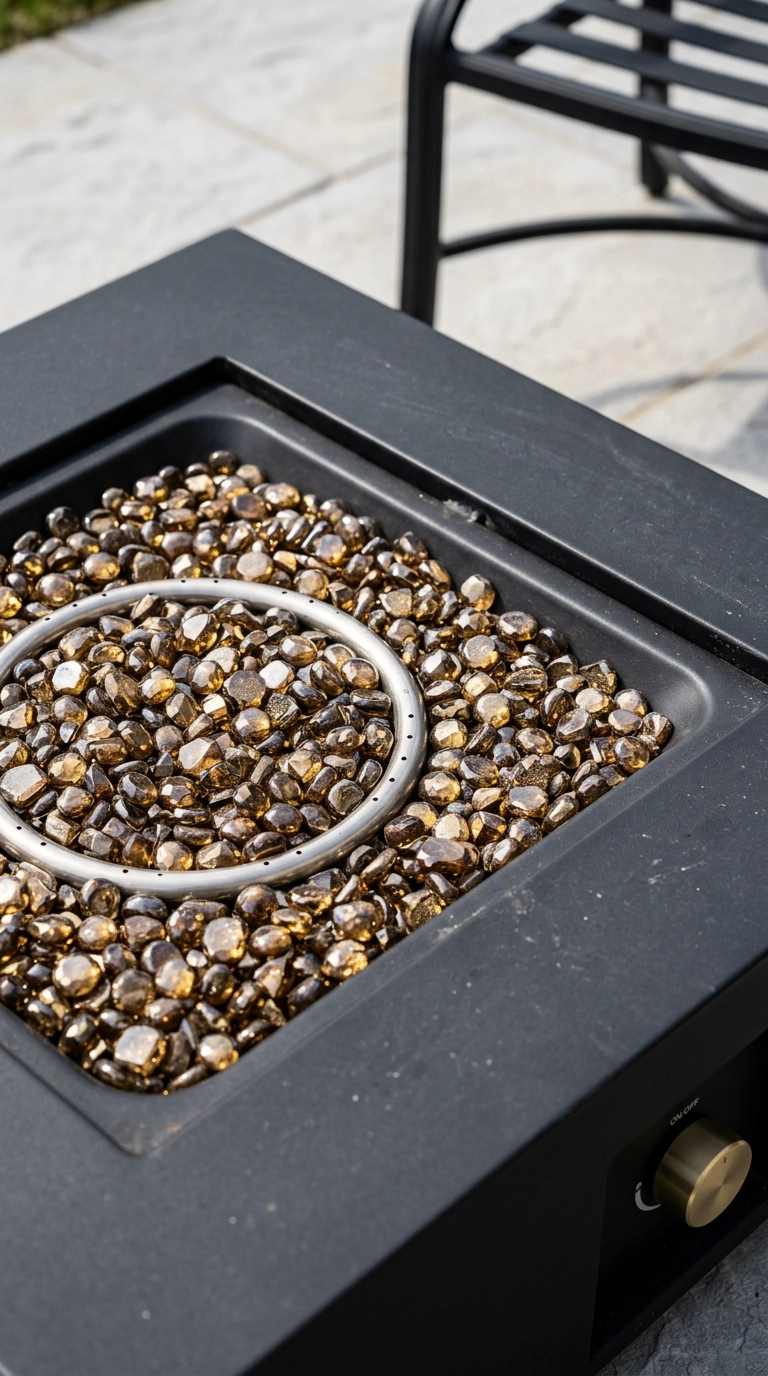
Fake ceramic logs look convincing for about eight seconds. Fire glass, roughly a quarter to half inch tumbled pieces, solves the daylight problem because the surface reads as a shimmering texture instead of a bin of gray props.
13. Stack Firewood as a Sculptural Wall
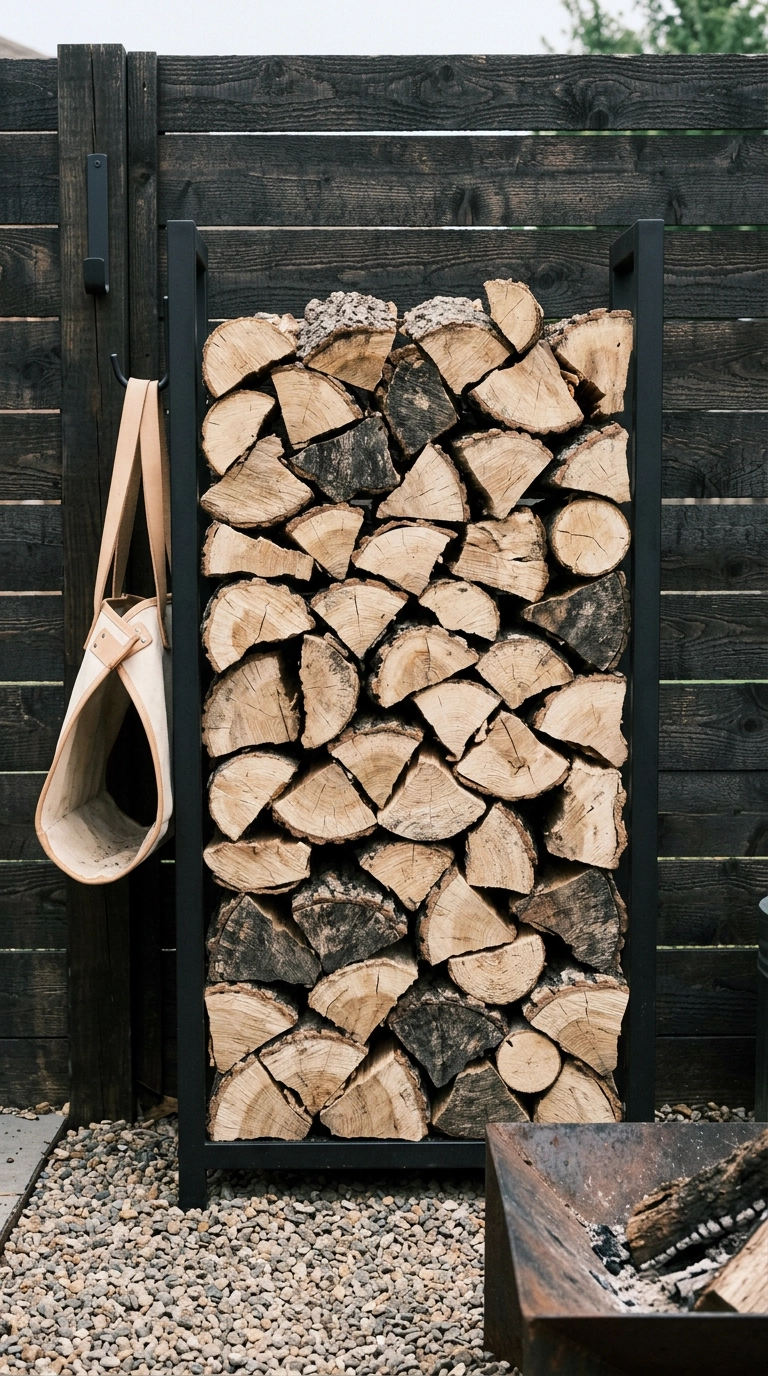
Wood-burning means you have firewood somewhere, so make it part of the design instead of hiding it behind the shed. A slim black steel rack against a dark fence, logs stacked cut-end-out, turns storage into a textured wall that looks great year-round.
14. Use an Outdoor Rug, But Push It Out of the Spark Zone
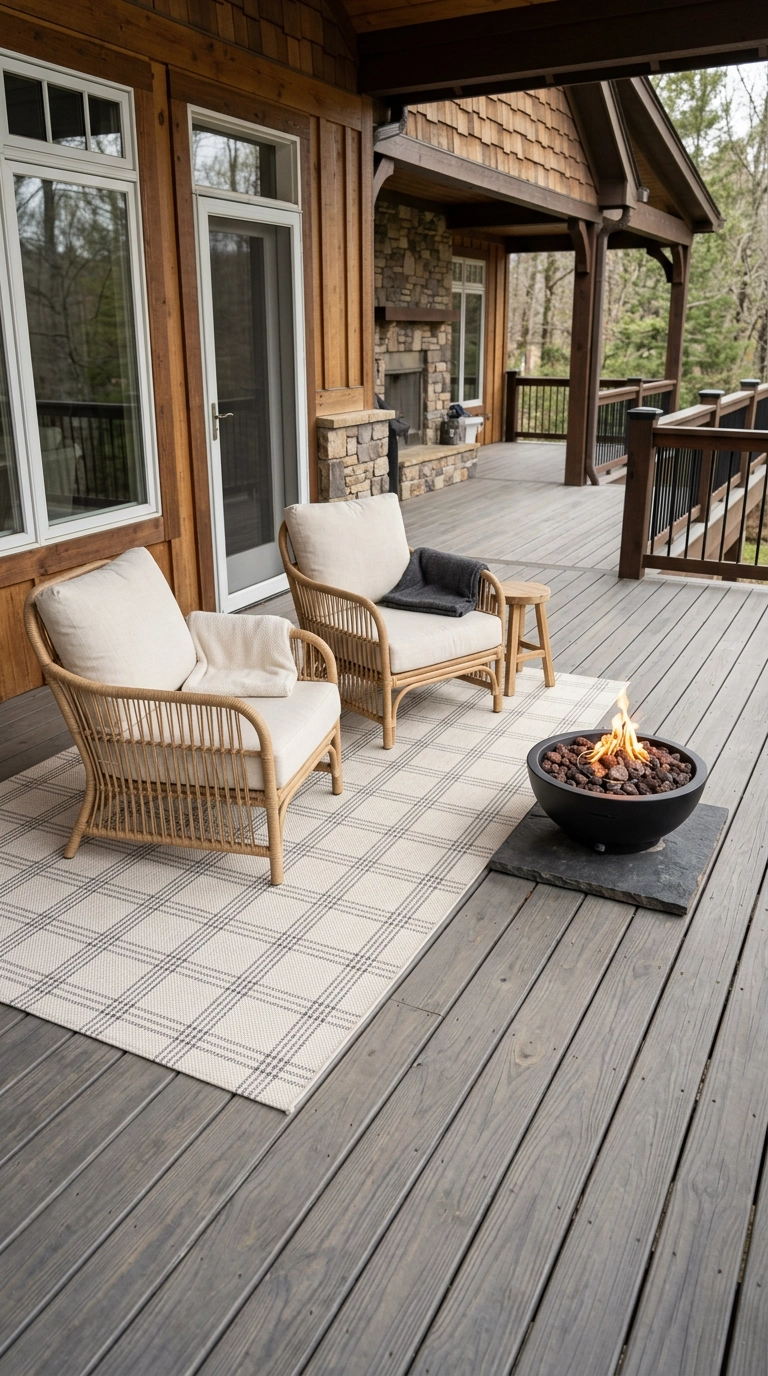
A rug is what makes a hard patio feel like a living room, and it’s a great renter move since it needs nothing but unrolling. Go one size bigger than instinct, at least the front legs of every chair should land on it.
15. Park a Blanket Basket Just Outside the Circle
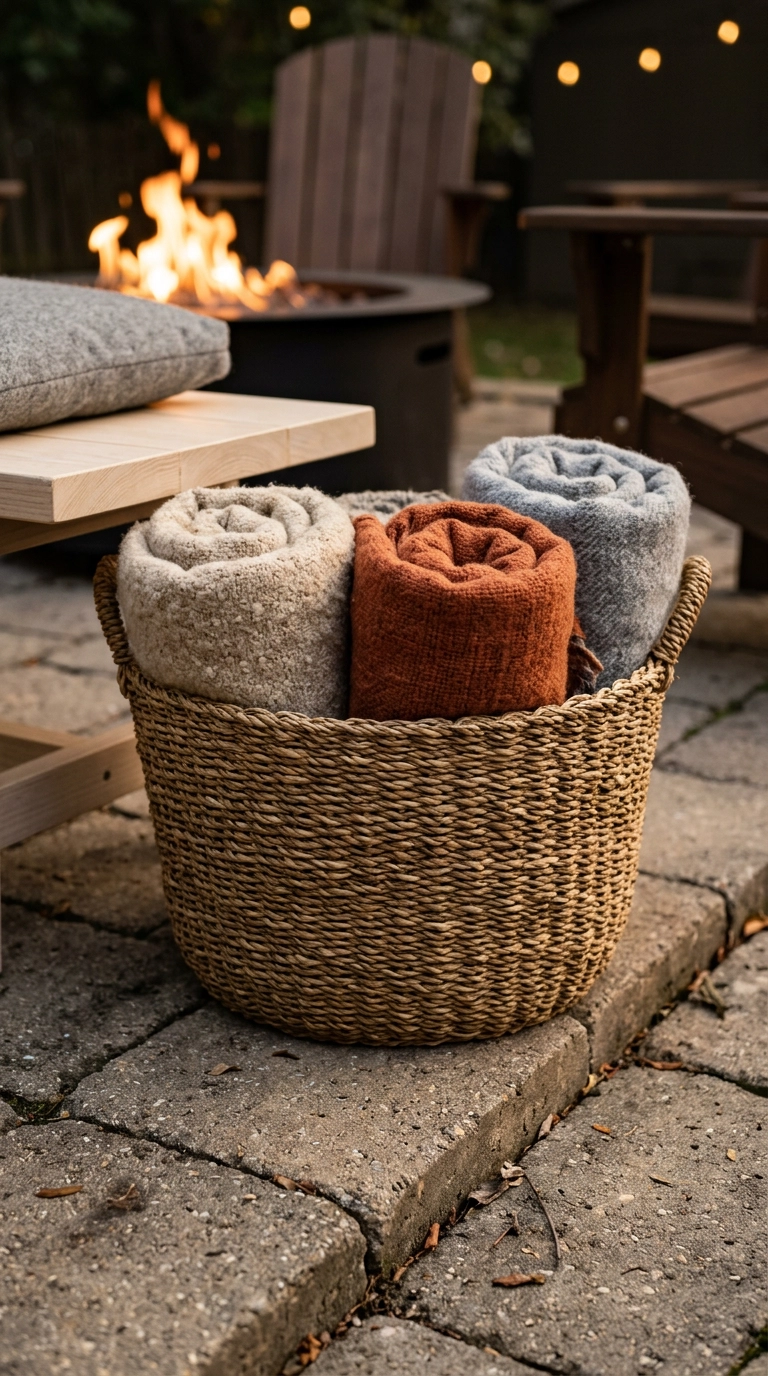
Nobody’s first thought at 9pm in October is “let me walk inside and find blankets.” One big seagrass or rattan basket with three rolled wool throws means people stay outside an extra hour.
16. Sink the Pit Below Grade for a Conversation Pit Effect
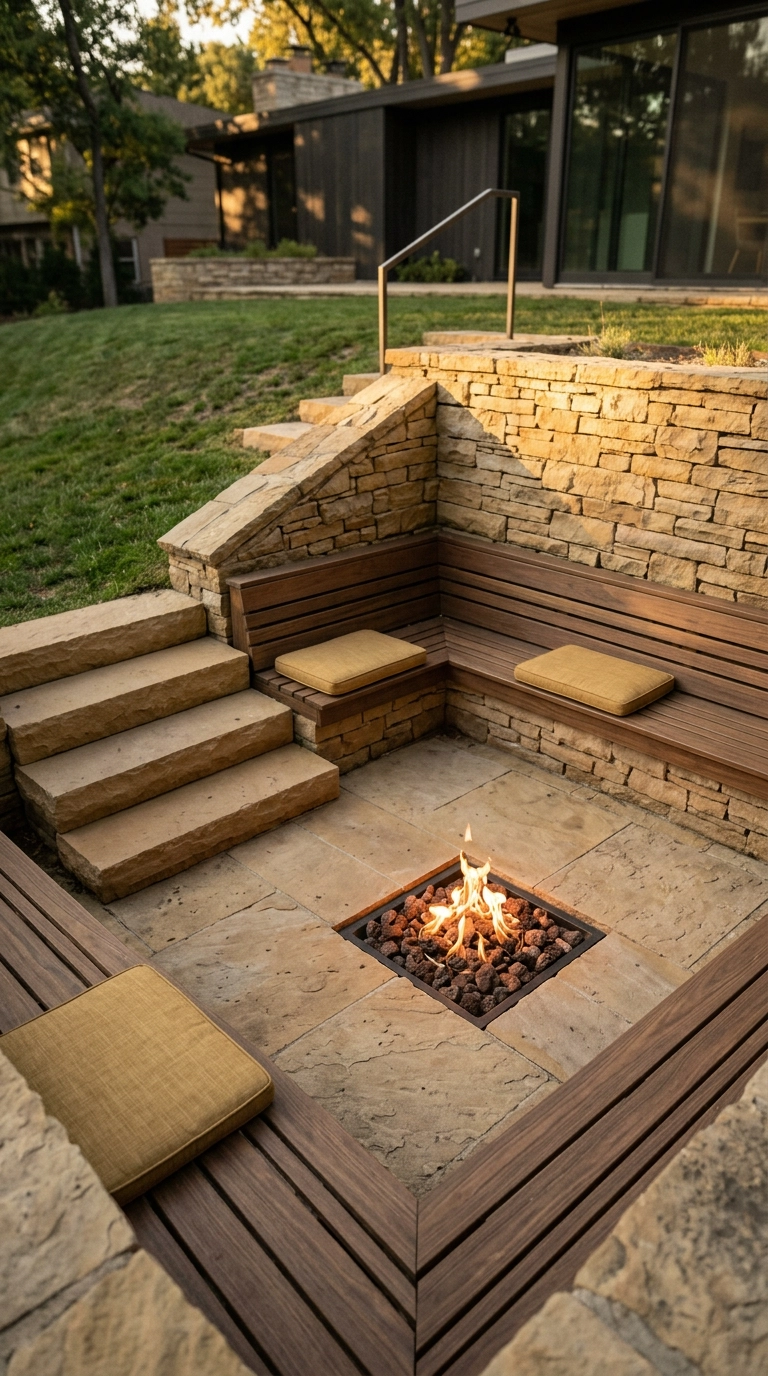
Dropping the fire area 18 to 24 inches below the surrounding grade creates the coziest outdoor space I know how to build. You’re shielded from wind, the sightline to the rest of the yard changes, and the space feels genuinely separate.
17. Use Boulders as Free Sculptural Seating
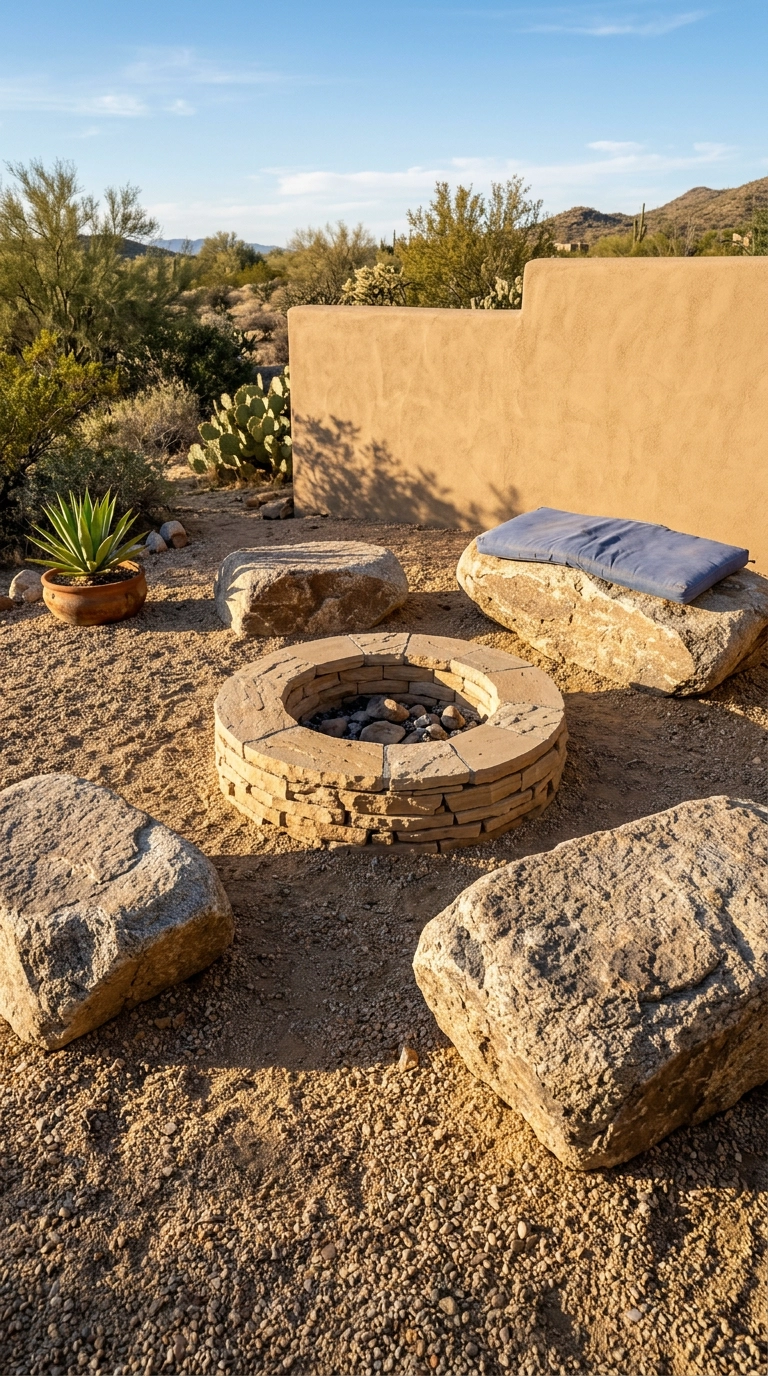
Two or three flat-topped boulders around a pit look like the yard grew that way, and in a lot of regions you can get them free or nearly free from a local quarry or a neighbor’s excavation. You’ll need a hand truck and a friend who owes you.
18. Try a Smokeless Steel Pit for Tight Yards
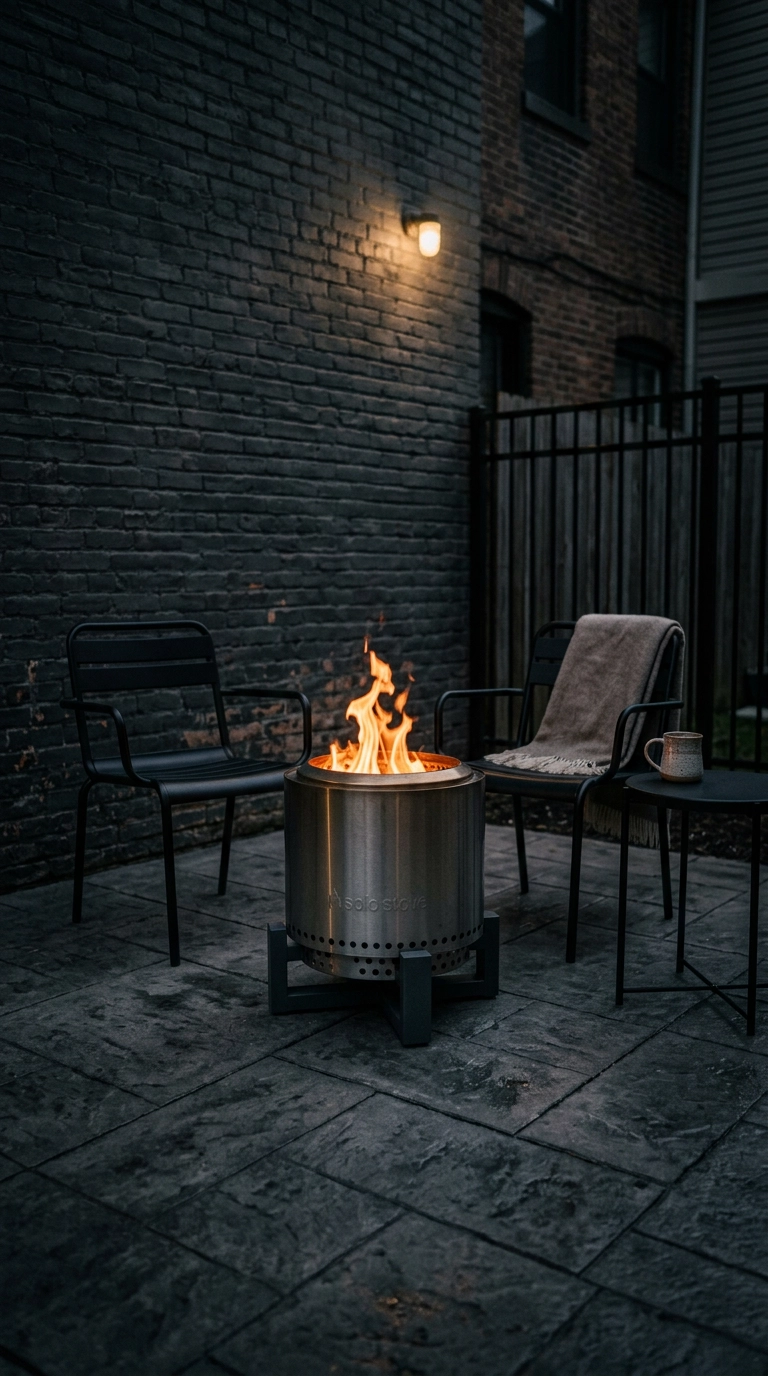
If your yard is small enough that your neighbor can hear your conversation, smokeless is worth every dollar. The double-wall design preheats air and burns off most of the smoke, which is the actual reason people abandon wood-burning pits in close quarters.
19. Lay a Paver Circle Kit in a Single Saturday
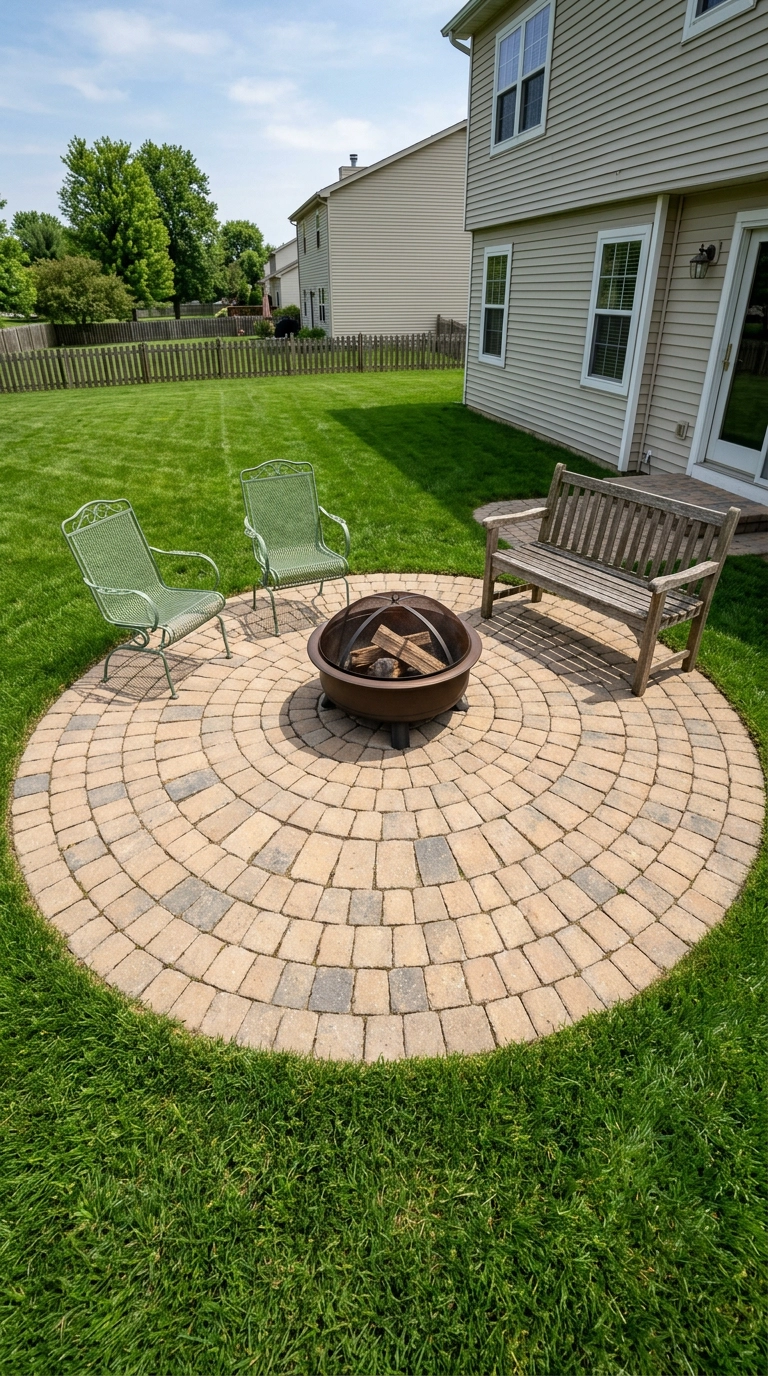
Big-box stores sell circular paver kits with the wedge shapes pre-cut, which removes the one skill most DIYers don’t have. Excavate about six inches, compact four inches of gravel base, add an inch of sand, then set the pavers and sweep polymeric sand into the joints.
20. Make It Look Good Cold with a Sculptural Lid
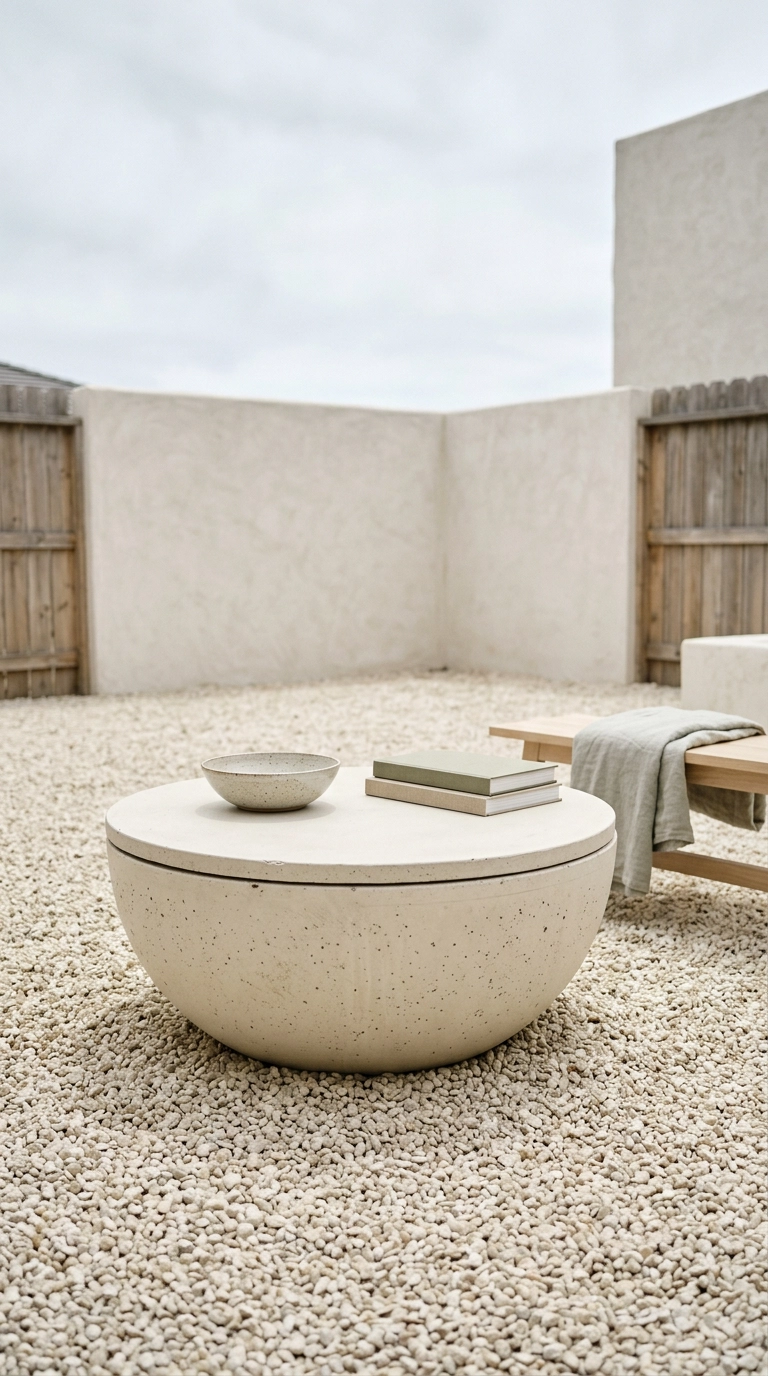
Here’s the thing almost every fire pit article ignores. You look at this thing in daylight roughly 100 times more often than you sit around it at night, and an open bowl of wet ash is an eyesore from every window in the back of your house.
21. Curve a Gravel Path Toward the Pit
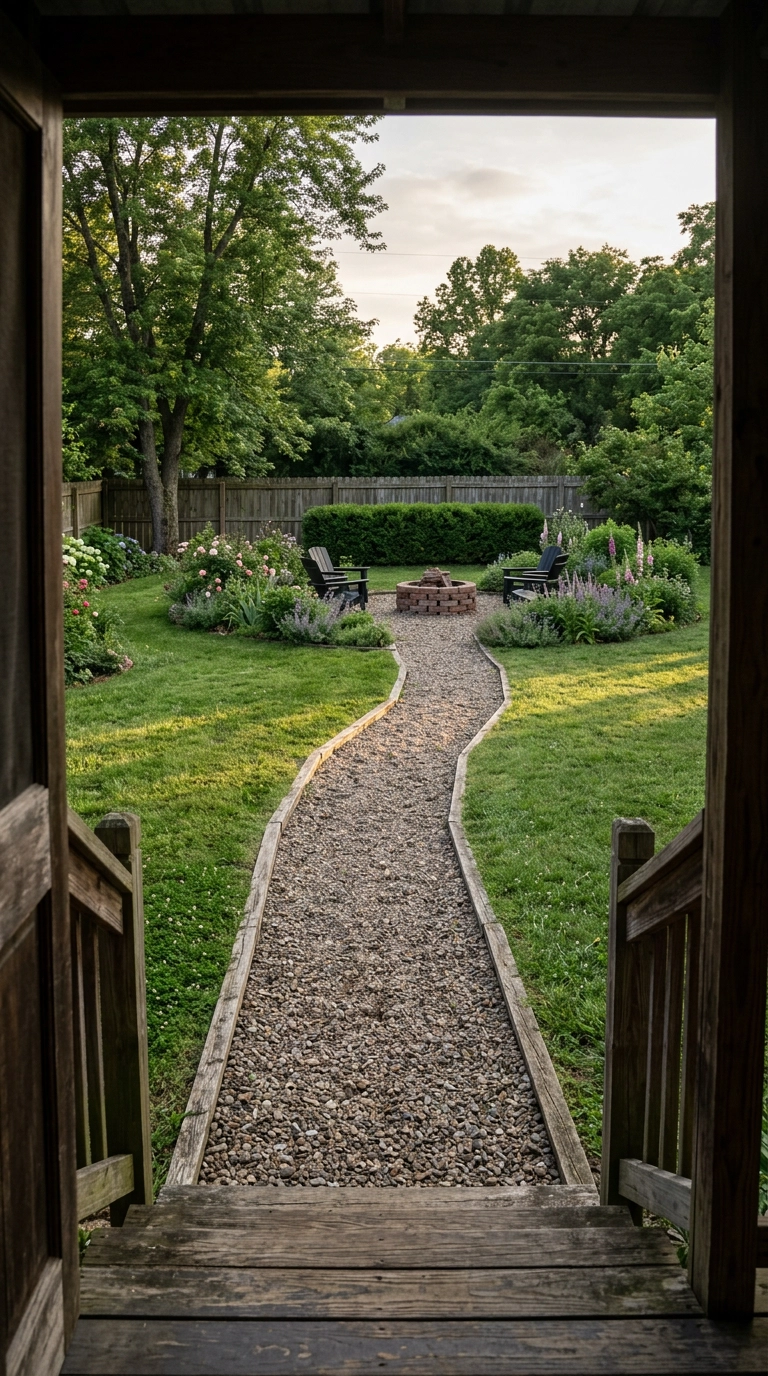
A pit floating in the middle of a lawn with no path to it always feels slightly random. Run a curved crushed-stone path from your back door or patio out to the fire area and the whole yard suddenly has a plan.
22. Screen the Wind with a Slatted Cedar Panel
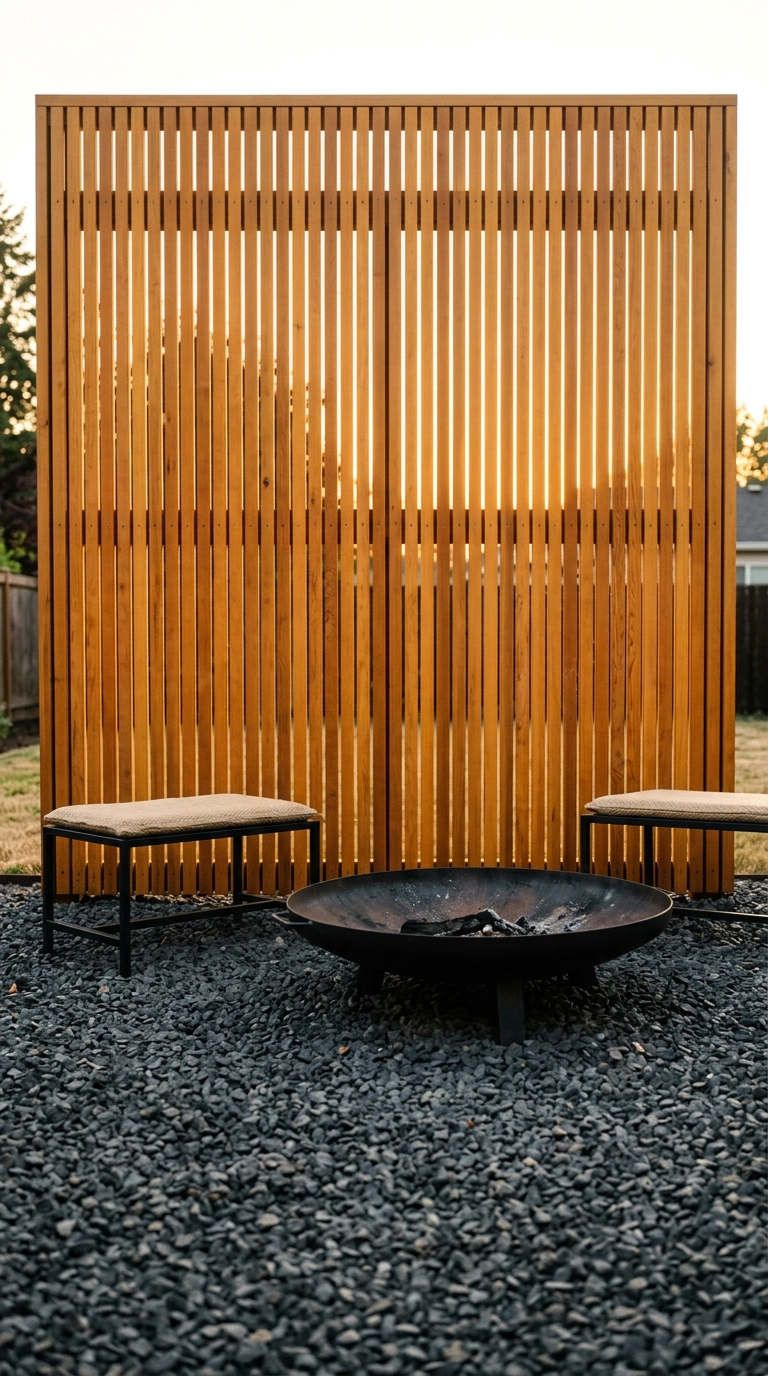
Wind ruins more fire pit evenings than rain does, and a six-foot slatted cedar screen on the prevailing-wind side fixes it without walling you in. Leave roughly half-inch gaps between slats so air bleeds through instead of swirling smoke back at your face.
23. Build the Full Outdoor Living Room Around It
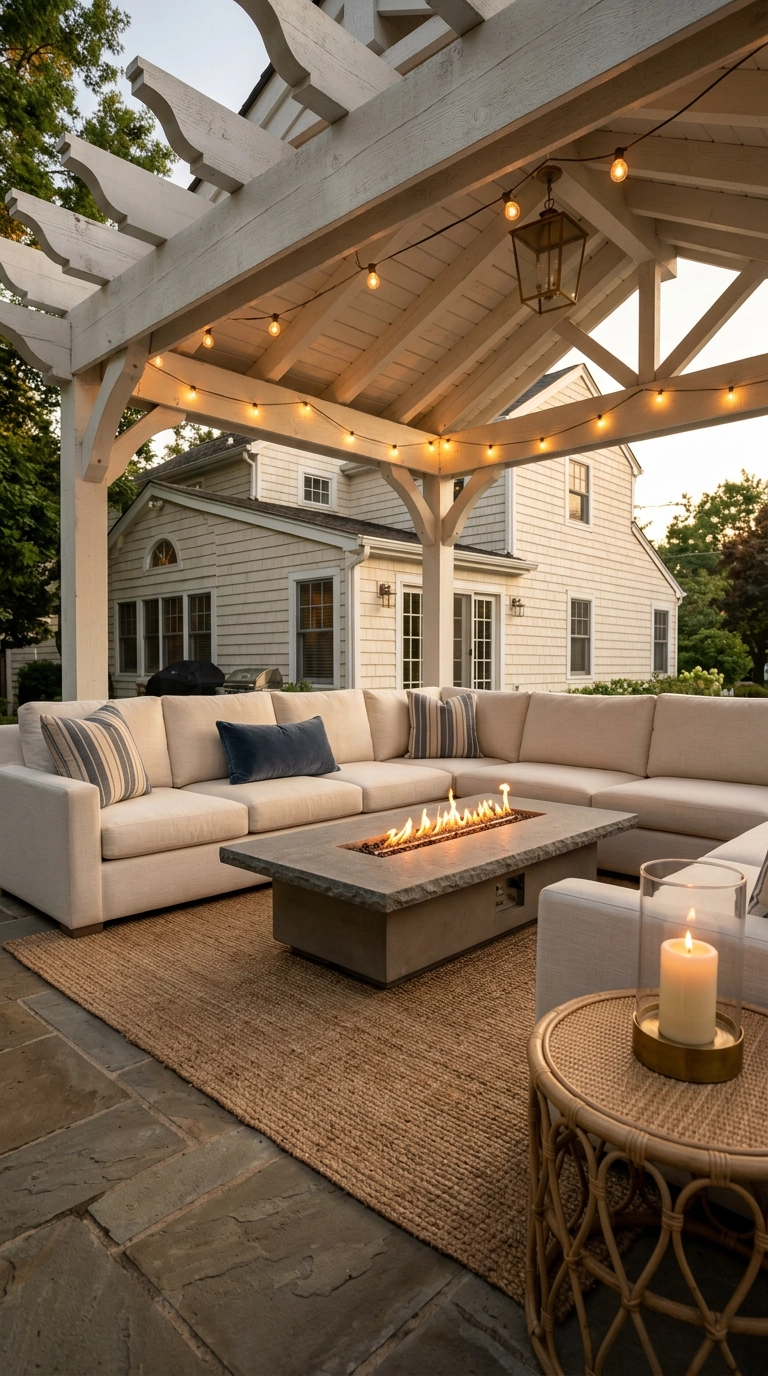
If you’re going all in, treat the fire pit as the coffee table in an actual living room. A deep sectional on two sides, a fire table in the middle, a rug pushed back from the flame, a pergola overhead, and you have a room you’ll use from April through November.
Now Go Light Something
If you only take one thing from this list, make it the gravel circle. I’ve watched a $40 steel bowl go from eyesore to focal point in an afternoon just because someone gave it a floor and pulled the chairs into a real circle three feet back. Everything after that, the lanterns in three heights, the cedar slat screen, the sculptural lid so the thing looks intentional at noon, is refinement on top of a decision you can make this weekend.
What I’m seeing everywhere in 2026 is the fire pit graduating from accessory to architecture. Board-formed concrete benches, corten steel bowls left to rust on purpose, and sunken conversation pits are all having a moment, which is really just mid-century design coming back around the way it always does. Solo Stove made smokeless steel the default for small city yards, and Restoration Hardware has spent years selling the low concrete bowl look that showed up in half the celebrity backyard tours I’ve scrolled through. Even Nate Berkus, who I’d never call a fire pit guy, leans on that same principle of one grounding warm material against something hard and gray.
My honest advice: start cheap, sit in it for a season, and let the way you actually use the space tell you where the seating and the path should go. Then build the permanent version. If you want more of this, ideas that account for real budgets and real backyards, sign up for my weekly newsletter and I’ll send you one project at a time, no fluff.