
23+ Luxury Dining Room Decor Ideas that Are Stunning and Easy in 2026

I’ll let you in on a secret most people miss: the dining room is the one space where luxury is actually expected, and it’s also the one we ignore the most. We pour our budgets into kitchens and living rooms, then eat takeout under a bare builder bulb. In over a decade of styling homes, I’ve learned that a few deliberate moves — the right light, the right rug, the right height on everything — can make a dining room read like a five-star restaurant without a five-star budget. These are the 23 luxury dining room decor ideas I actually use in my own projects, from free fixes to a splurge or two.
Luxury Dining Room Decor Ideas
1. A Statement Chandelier Is the Crown Jewel
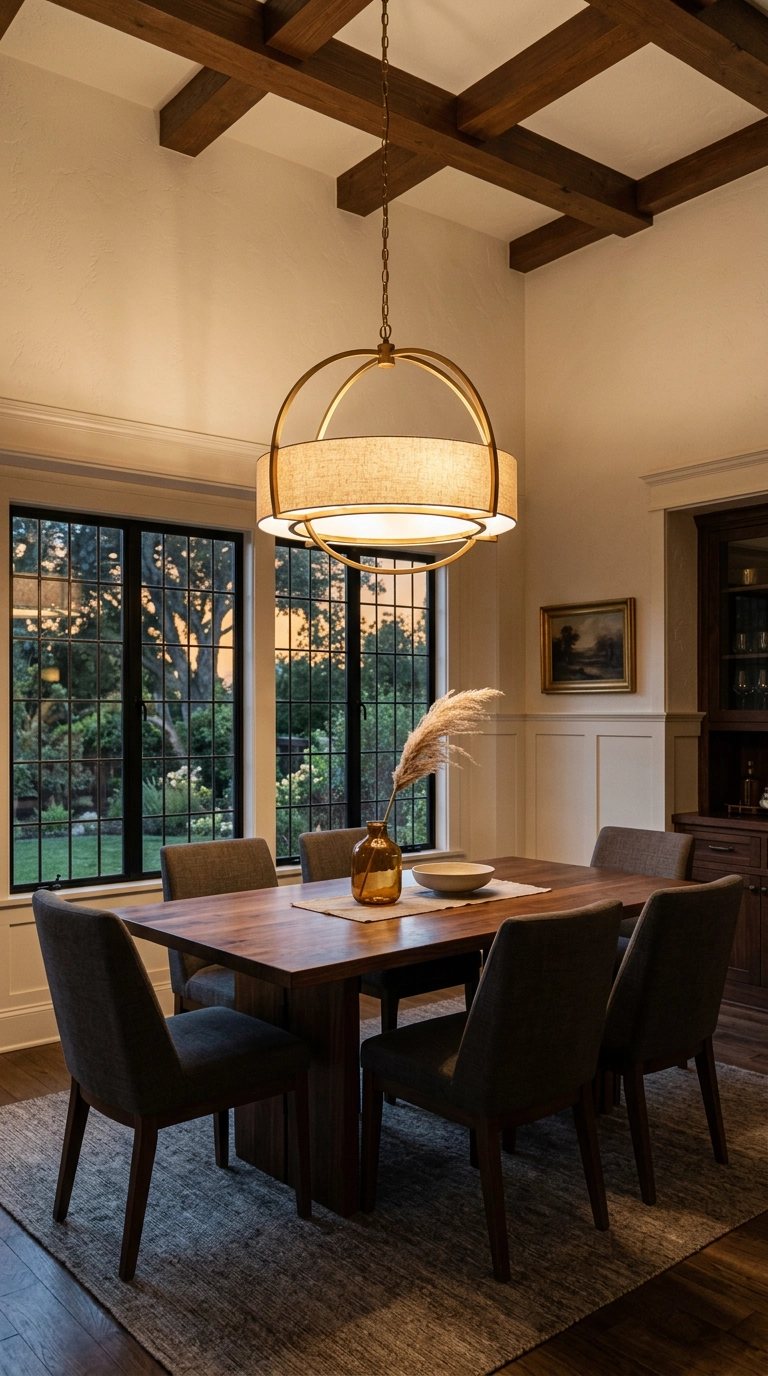
Before you touch paint or furniture, decide on the light. In every luxury dining room I’ve styled, the chandelier is the anchor — it sets the mood, draws the eye up, and tells guests this is a room worth lingering in. Look for something sculptural with a simple silhouette: a brass ring with a linen shade, a frosted glass dome, a modern drum.
2. Hang It at the Right Height: The 30–34 Inch Rule
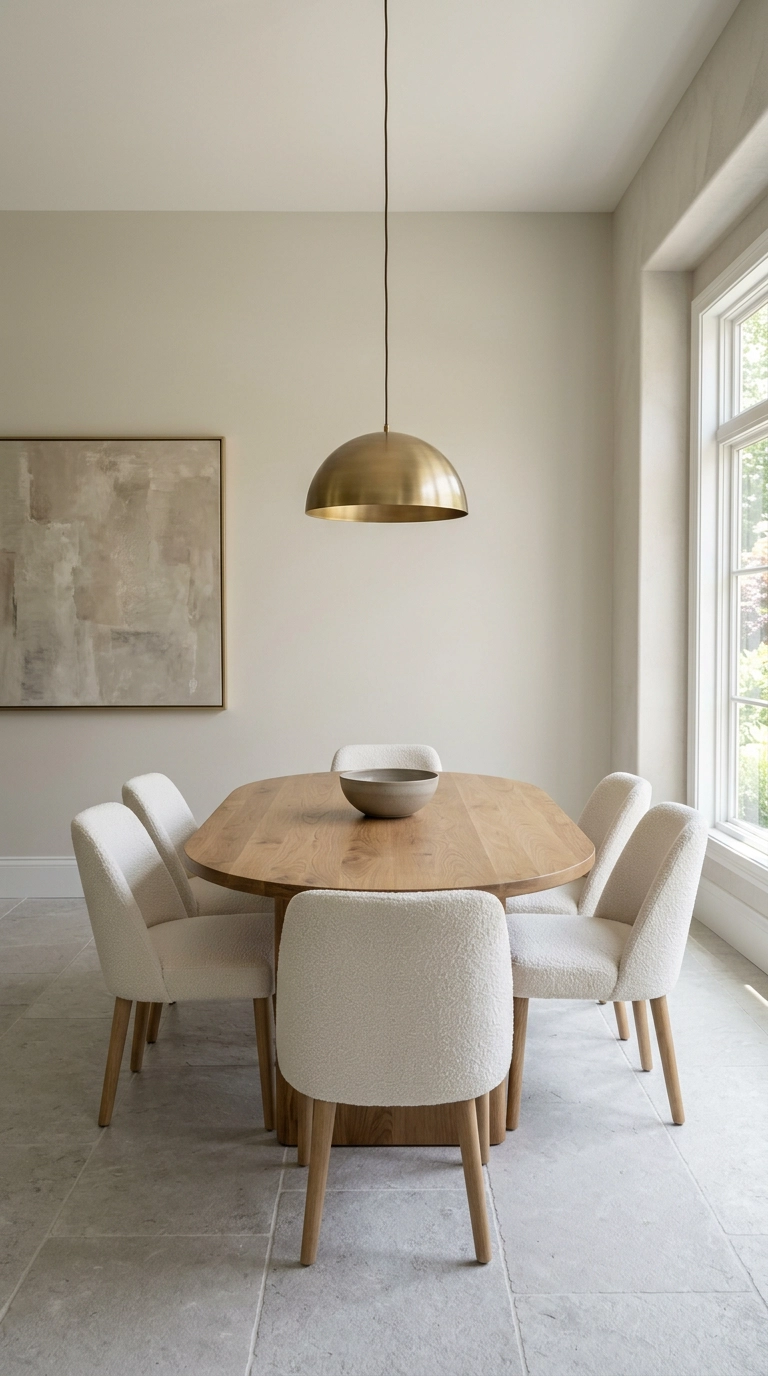
Here’s the free fix that instantly upgrades a room: hang the chandelier so the bottom sits 30 to 34 inches above the tabletop. Too high and it floats like a spaceship; too low and guests are playing limbo with their wine glasses. For an 8-foot ceiling that usually means a rod or chain around 30 inches long, and it’s a 20-minute fix you can measure and adjust yourself.
3. Fully Upholstered Dining Chairs Change Everything
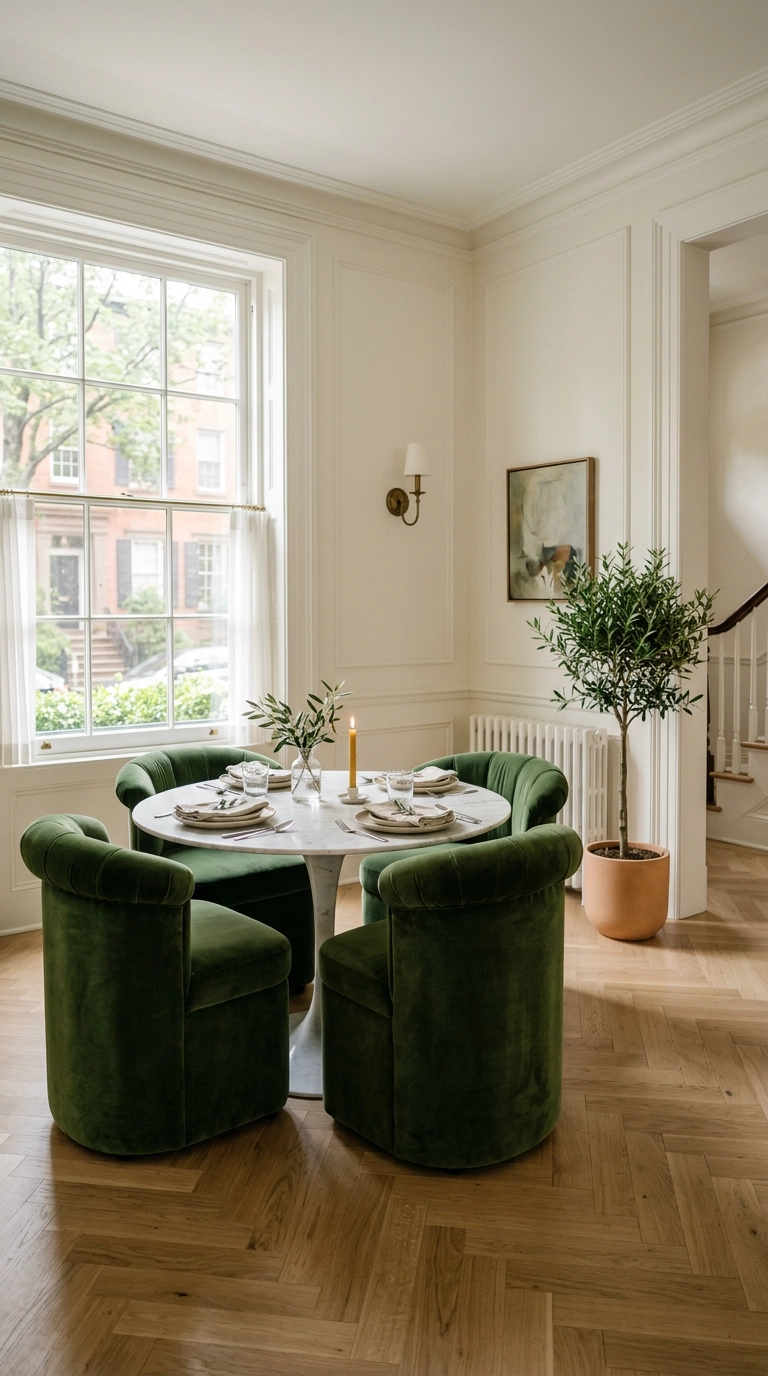
Nothing says luxury faster than a chair nobody wants to get up from. Fully upholstered dining chairs — velvet, boucle, or performance linen with a wrapped back — are what separate a dining room from a cafeteria, and dinner goes from a quick meal to a three-hour conversation when the seating is actually comfortable.
4. Mixing Host Chairs with Side Chairs Is Instant Elegance
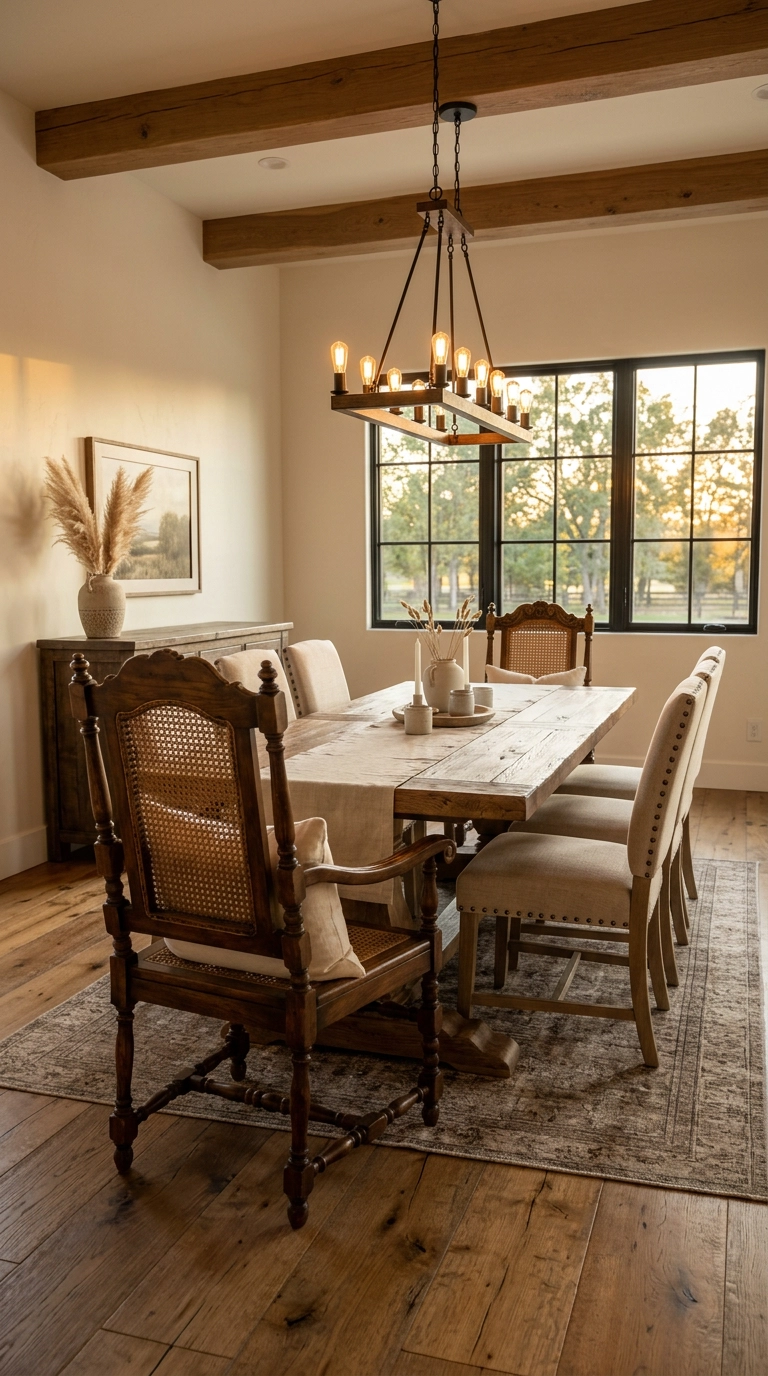
The designer trick nobody tells you: the chairs at the head of the table should look different from the chairs along the sides. Two host chairs in a bolder finish or taller silhouette — with arms, a cane back, a different fabric — bookend the table and give the room a sense of ceremony, like a head table at a wedding.
5. A Honed Marble or Stone Table Is the Real Splurge
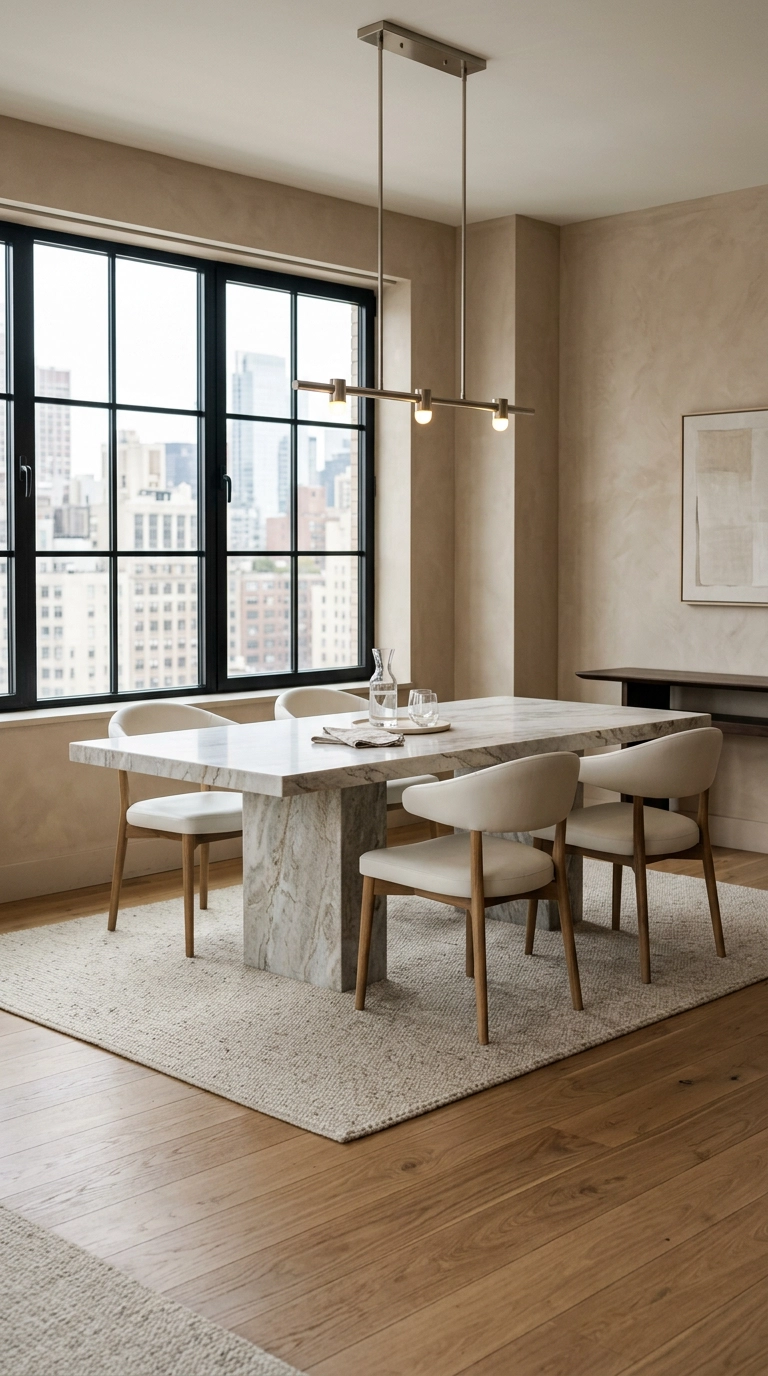
If you’re going to spend real money on one piece of furniture, spend it on the table. A honed marble or soapstone top has weight and depth that no laminate imitates, and it’s the surface guests actually touch. Honed beats polished for daily life — the matte finish hides etching from lemon juice and wine much better.
6. A Live-Edge Wood Slab Table for Warm Luxury
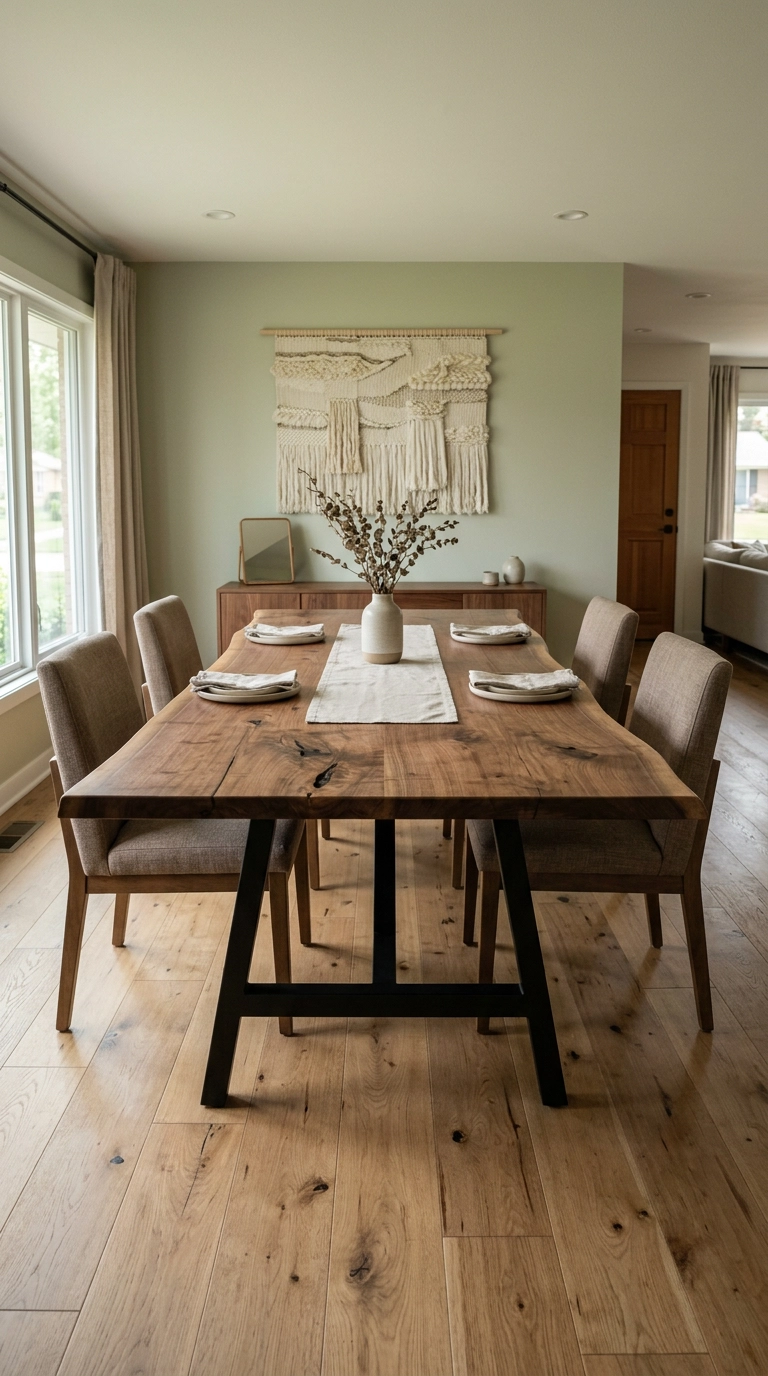
Stone is cool and formal; a thick wood slab is the warmer version of the same flex. A single walnut or white oak slab with the natural edge left intact brings organic movement into a room full of straight lines, and the grain does all the decorating for you.
7. Size the Rug Right: The Mistake Almost Everyone Makes
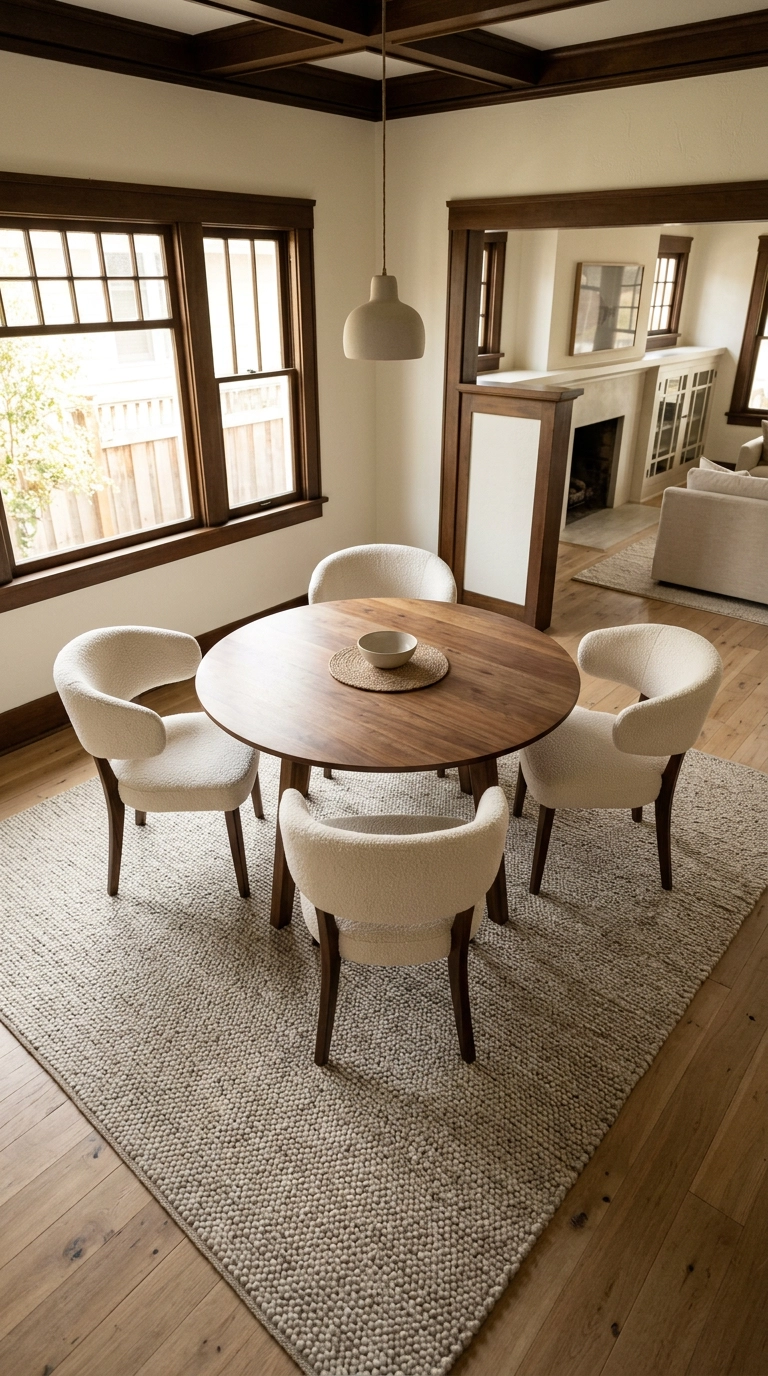
Here it is, the mistake I see in almost every dining room: the rug is too small. The chair legs catch on the edge every time someone stands up, and the whole arrangement looks like it’s floating on a postage stamp.
8. Wall Paneling and Wainscoting for Old-Money Depth
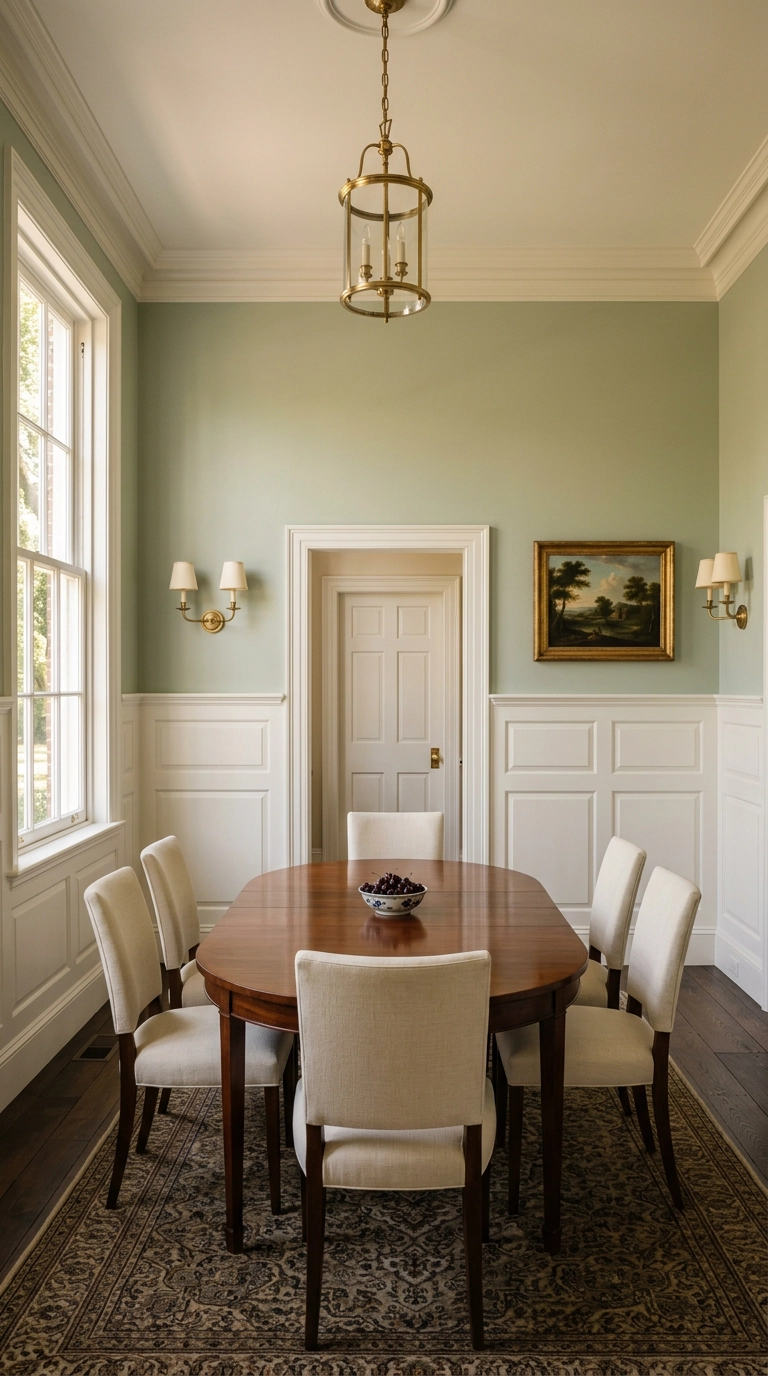
Paneling does in a dining room what a tailored jacket does for a t-shirt: it instantly elevates the whole room. Wainscoting on the lower third of the wall, board and batten, or full picture-frame molding adds architectural history that paint alone can’t fake, and it visually grounds your table and chairs.
9. Color-Drenched Dining Rooms Are 2026’s Power Move
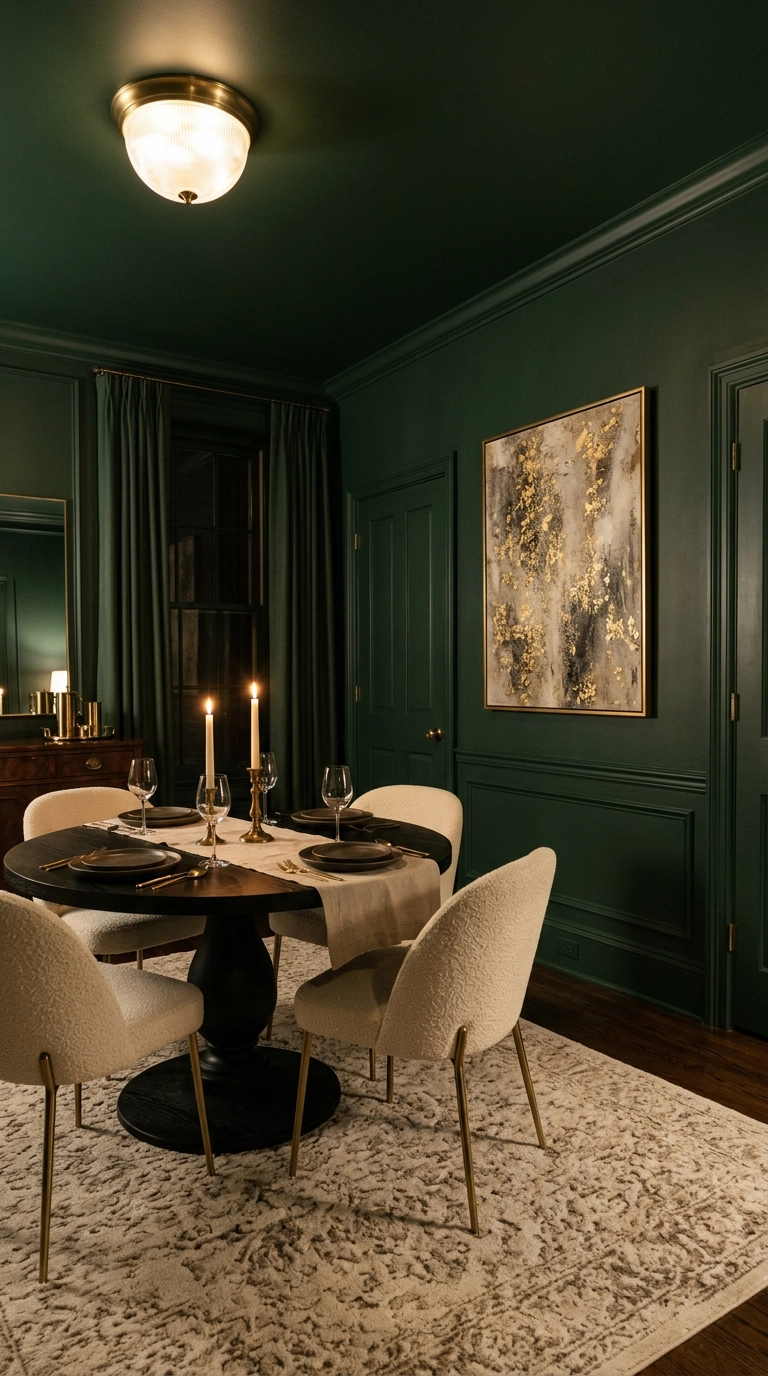
If you want to see why a dining room reads as high-end, try the color drenching trick: paint the walls, trim, and ceiling the same shade, then let the furniture do the talking. By erasing the visual break at the crown molding, the room feels taller, more enveloping, and far more expensive than it is.
10. An Oversized Mirror to Double the Light
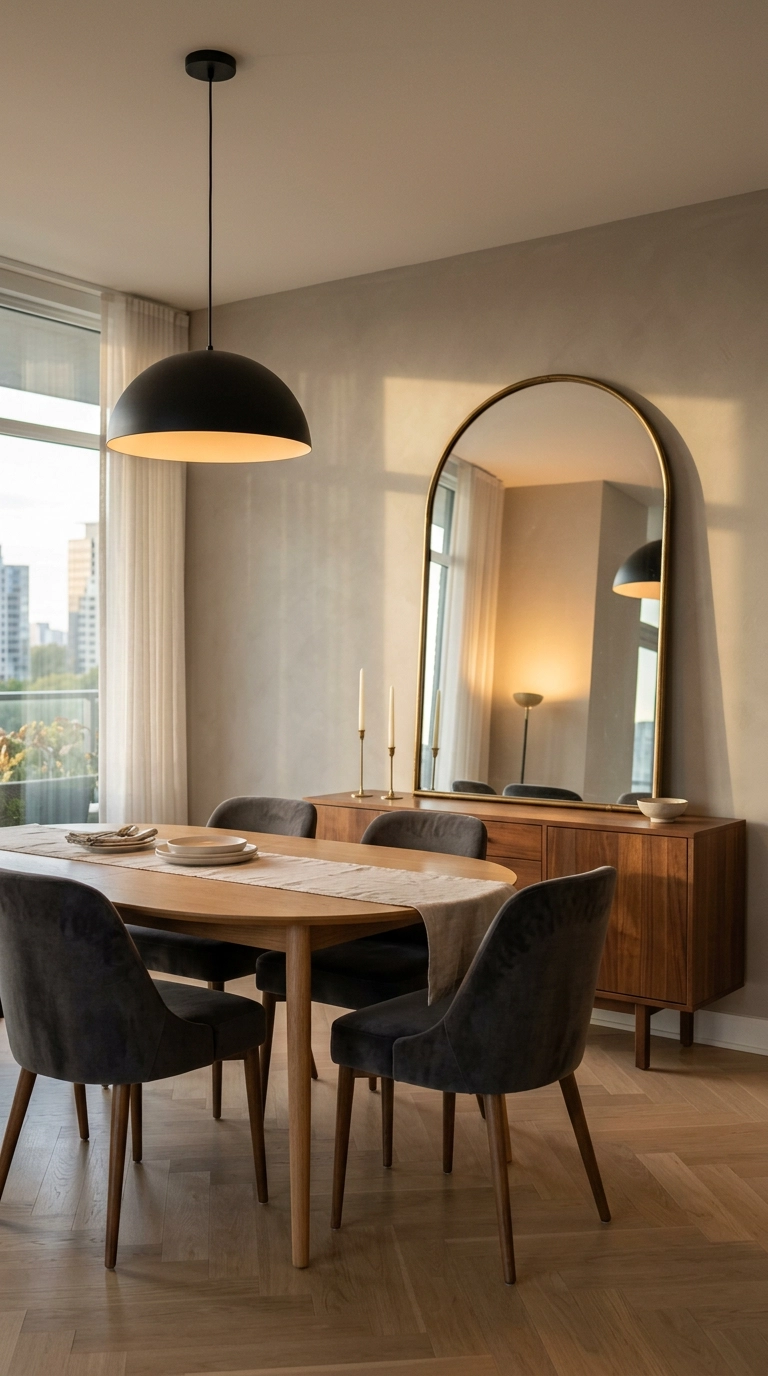
Mirrors are the oldest luxury trick in the book because they work: one large mirror on the wall opposite or adjacent to your window doubles the natural light and makes the room feel twice as deep. In a dining room it also multiplies your candlelight at night, which is the whole point.
11. The Sideboard Is the Dining Room’s Second Character
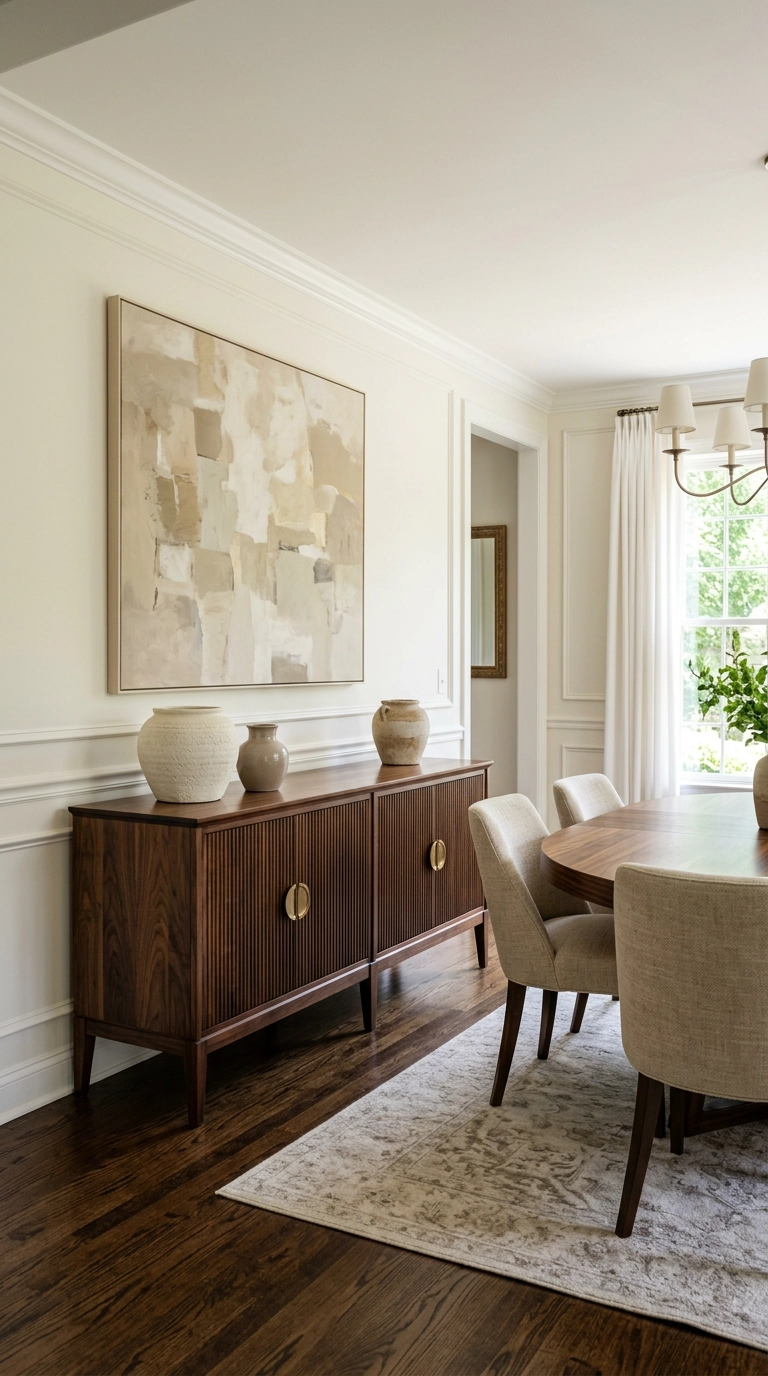
A dining room without a sideboard is like a stage with no wings — you have no place to store the extra plates, the good wine, the linens, and you’re missing an entire vertical layer of styling. The sideboard (or buffet) anchors the far wall and gives your eye a second resting point beyond the table.
12. A Bar Cart or Built-In Bar for Cocktail Hour
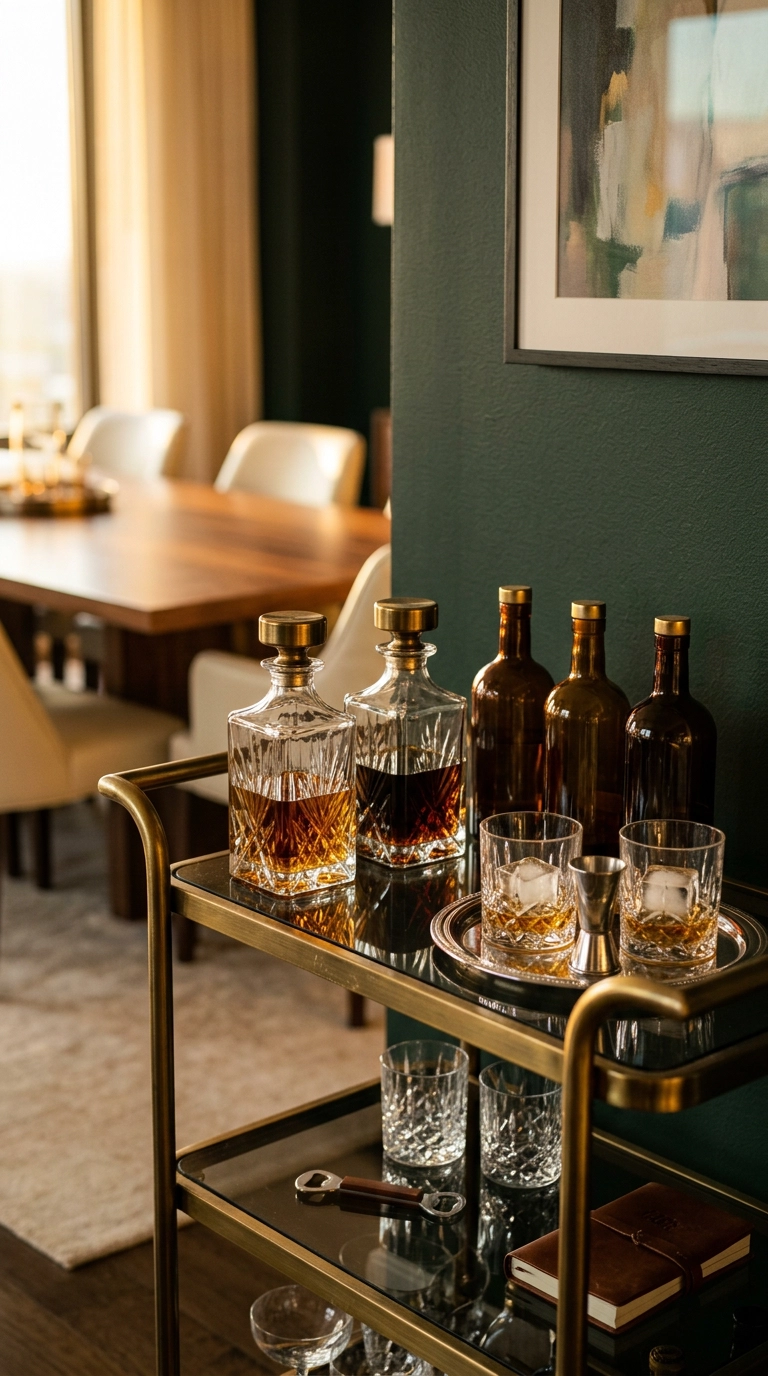
There is no faster route to “this is a grown-up house” than a bar. A brass bar cart with three decanters, or a built-in bar niche in an old pantry or alcove, signals that entertaining is part of the house’s personality, and it makes cocktail hour feel like an event instead of an afterthought.
13. Art Scale: Go Bigger Than You Think You Dare
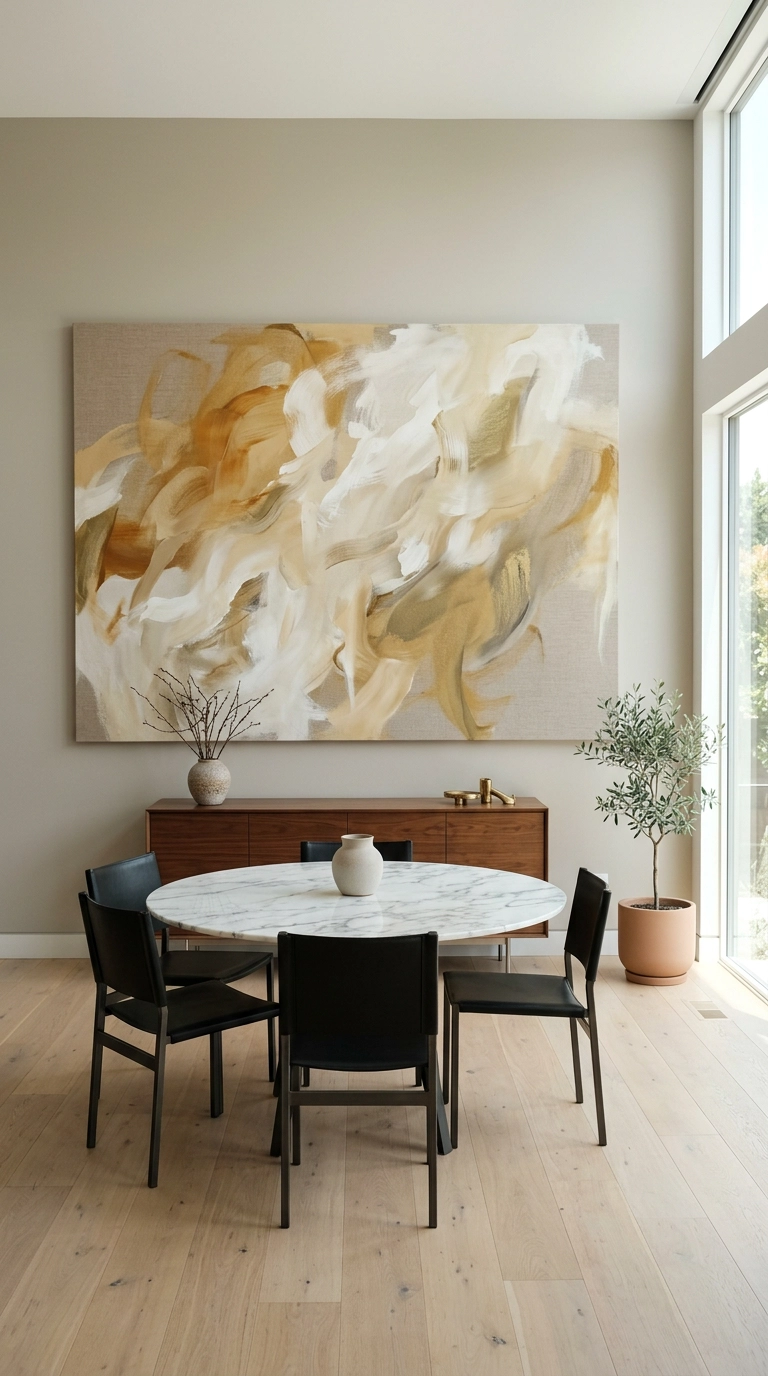
I’ll say it plainly: most dining room art is too small. A tiny 16×20 floating in the middle of a large wall makes the whole room feel cautious, while one oversized piece reads instantly as curated. The general rule I use is art should span roughly two-thirds to three-quarters of the wall width behind your furniture, and the center should hang at eye level — about 57 to 60 inches from the floor.
14. Layered Lighting Beyond the Chandelier
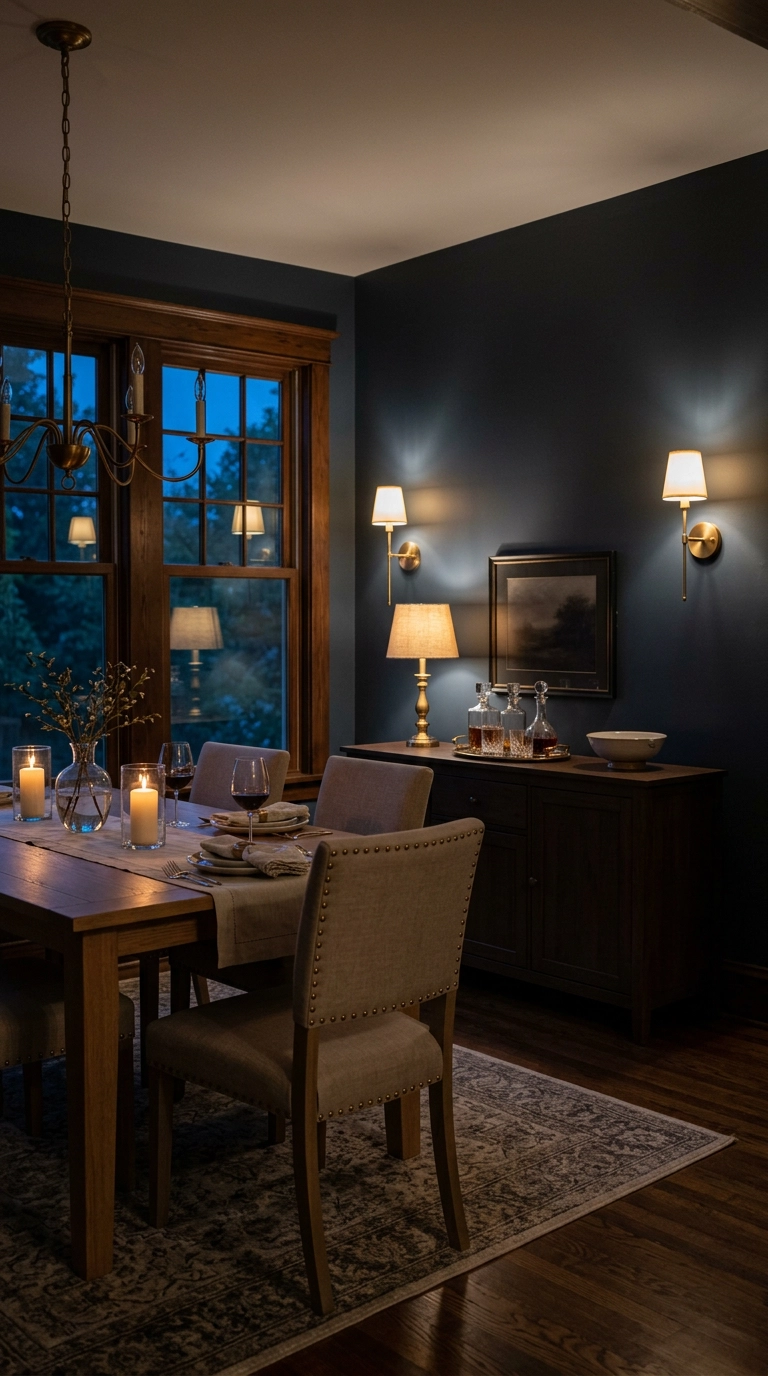
One overhead light is a cafeteria. Three light sources at three different heights is a restaurant. Add a pair of sconces flanking your sideboard or artwork, and put a small table lamp on the buffet — yes, a lamp in a dining room, it’s the move that separates designers from everyone else.
15. Floor-Length Drapery Hung High and Wide
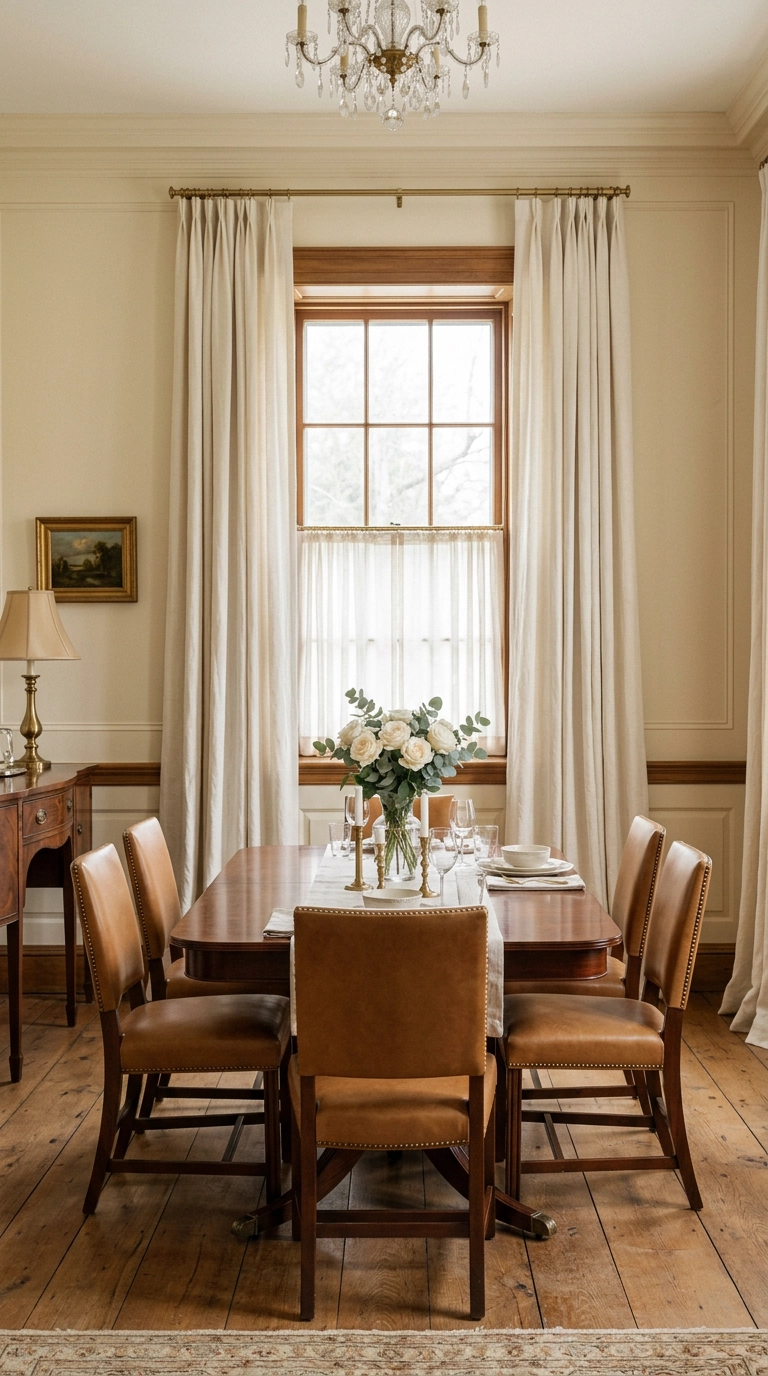
Short curtains in a dining room are the visual equivalent of pants that don’t reach your ankles. Hang the rod within 3 to 6 inches of the ceiling and extend it 8 to 12 inches past each side of the window frame, then let the panels just kiss the floor or break by half an inch.
16. Treat the Ceiling as the Fifth Wall
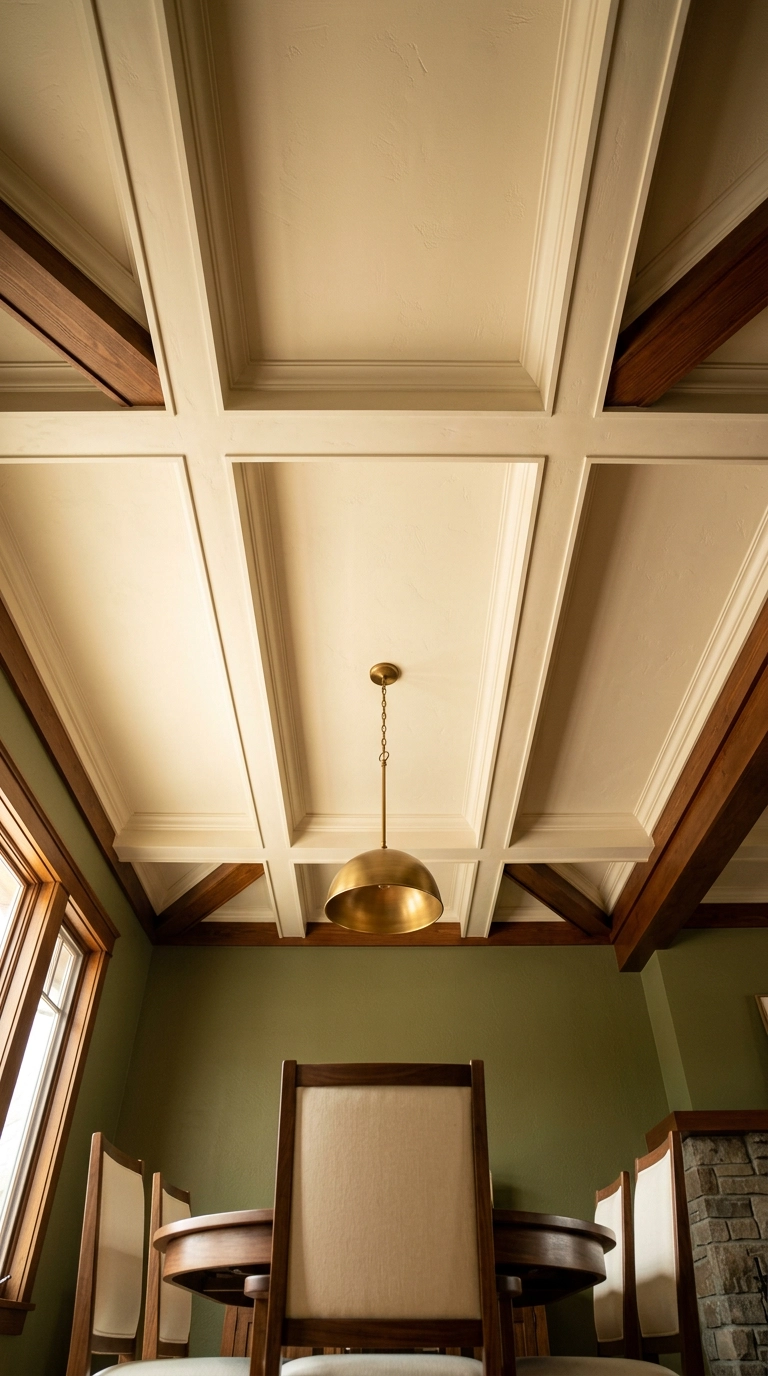
Everyone looks up in a dining room — you’re sitting still, facing each other, and the chandelier is already pulling your eye toward the ceiling. Which is exactly why a plain flat white ceiling is a wasted opportunity in this specific room.
17. A Centerpiece That Survives Actual Daily Life
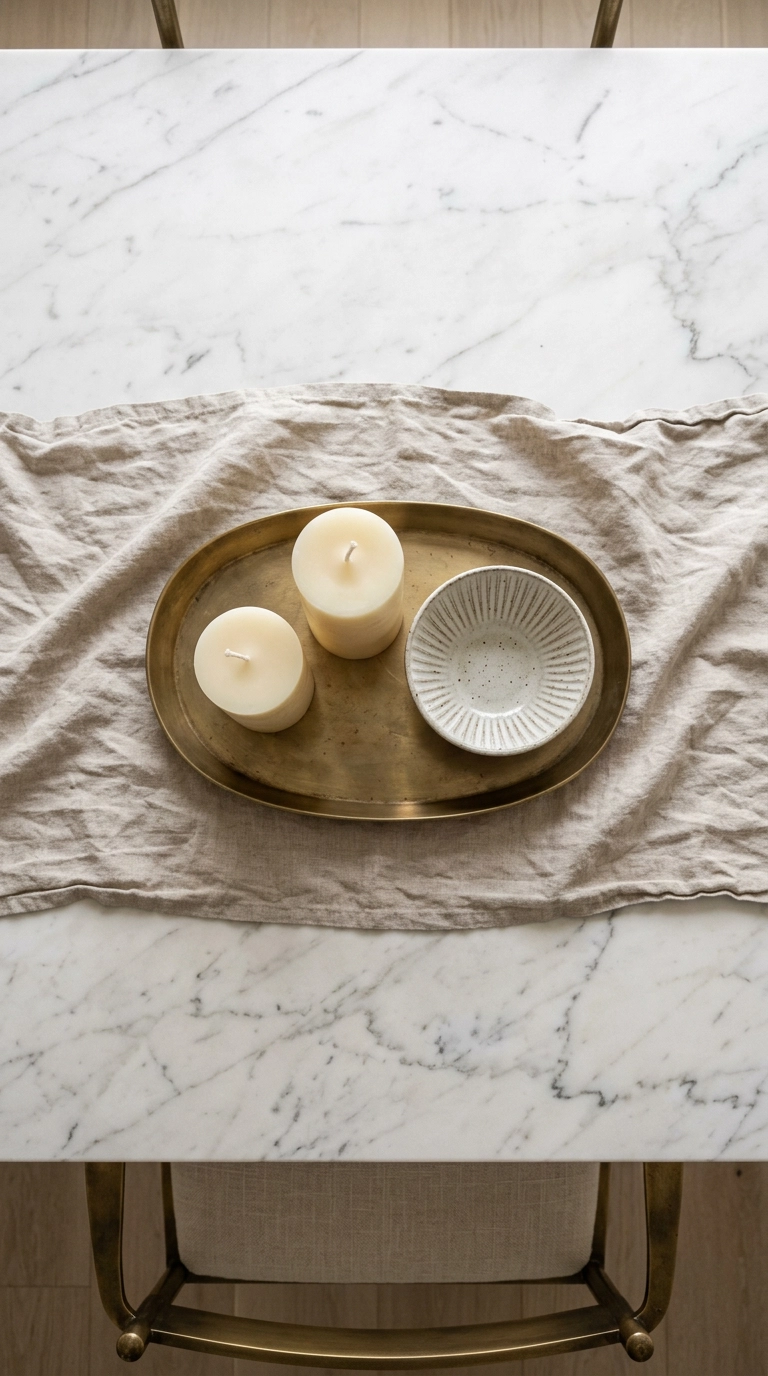
Most centerpieces fail because they’re too tall and too precious, so they get moved to the counter the moment someone serves dinner. Keep it under 12 inches so people can see each other across the table, and build it on a tray so the whole thing lifts off in one motion.
18. Layered Place Settings You’d See in a Restaurant
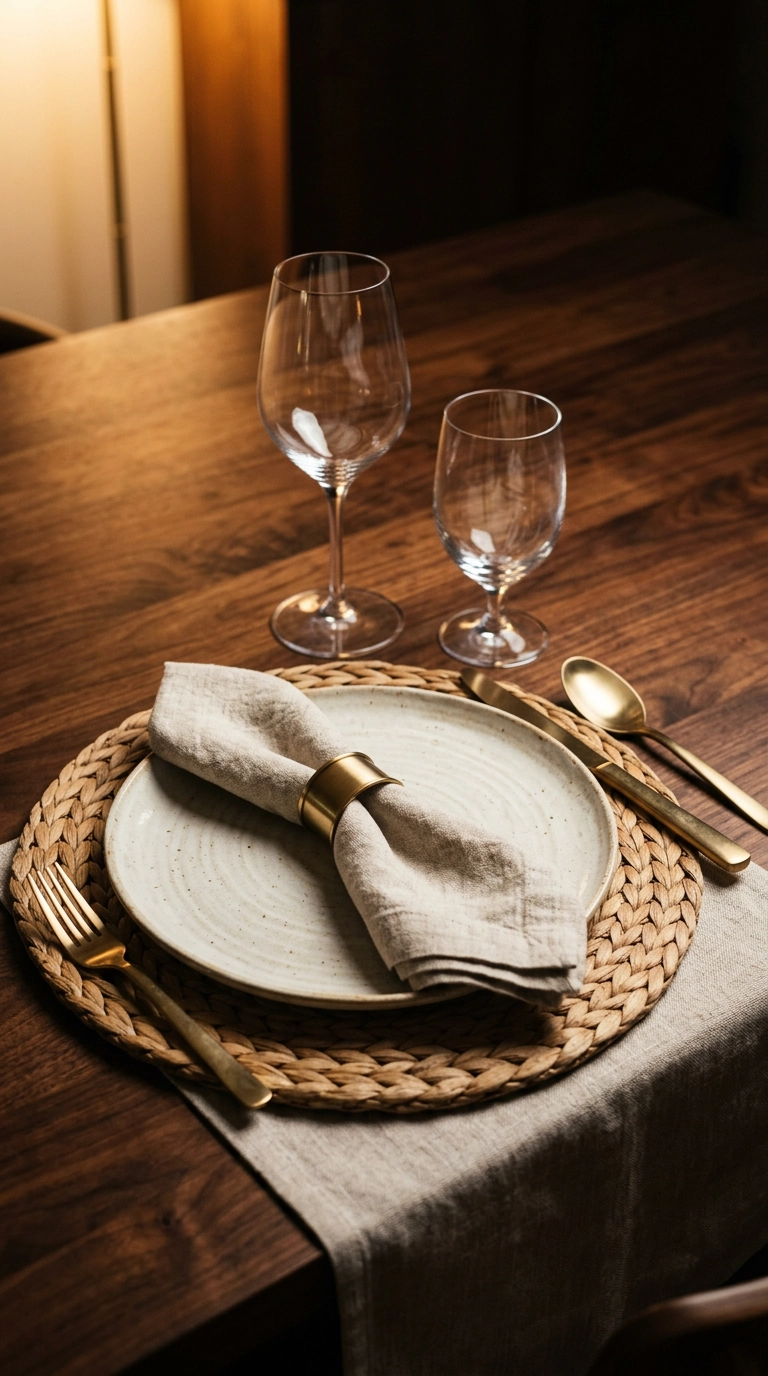
Layering is what makes a table look like a restaurant instead of a kitchen counter. Build it in three levels: a charger or woven placemat, the dinner plate, then a folded linen napkin on top with a ring or a sprig tucked under it.
19. A Banquette for Custom-Fit Luxe Comfort
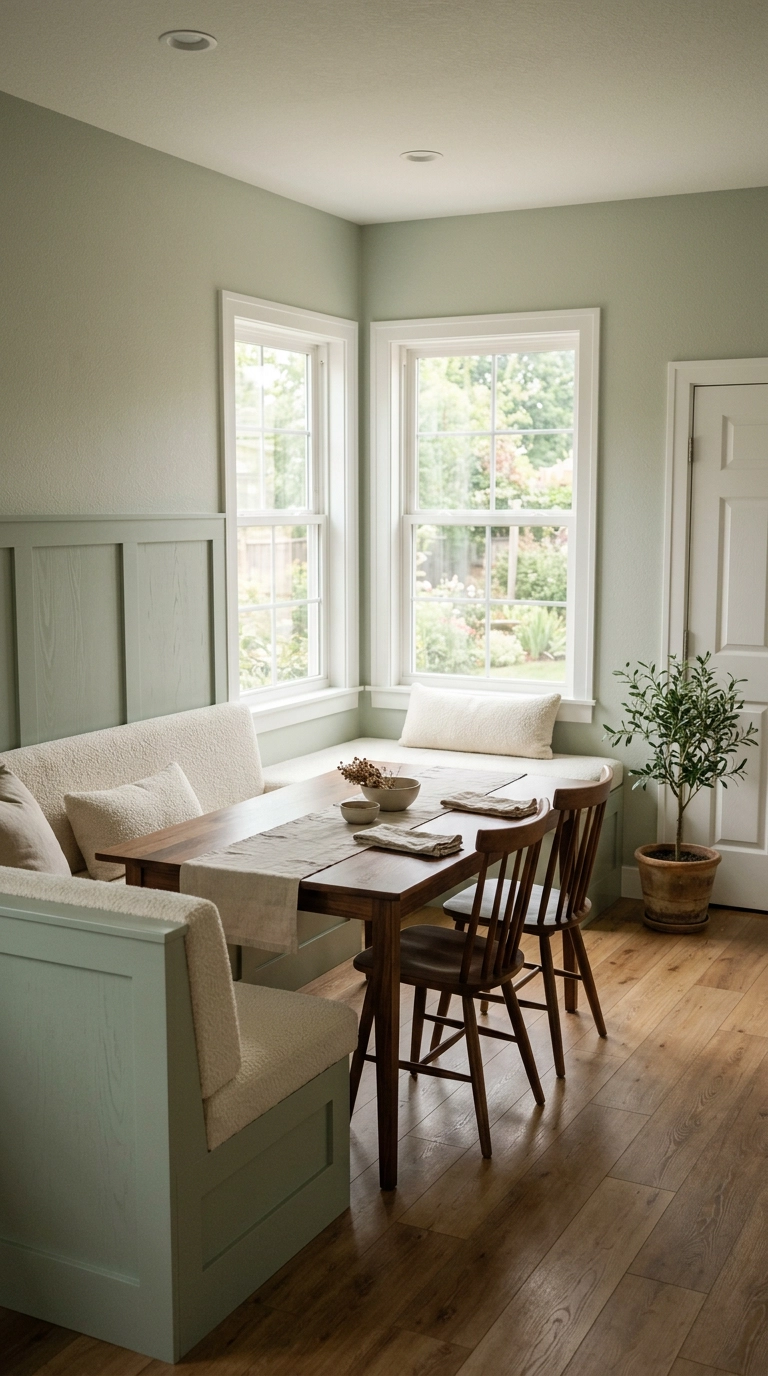
A banquette is the fastest way to make a dining space feel custom, because it literally is: built to your wall dimensions, it fills the awkward corner that a standard table and chairs never quite occupy. Bonus — you can squeeze in 20 to 30 percent more seating in the same footprint, which is a lifesaver in a narrow room.
20. Warm Metals: One Finish, Repeated Everywhere
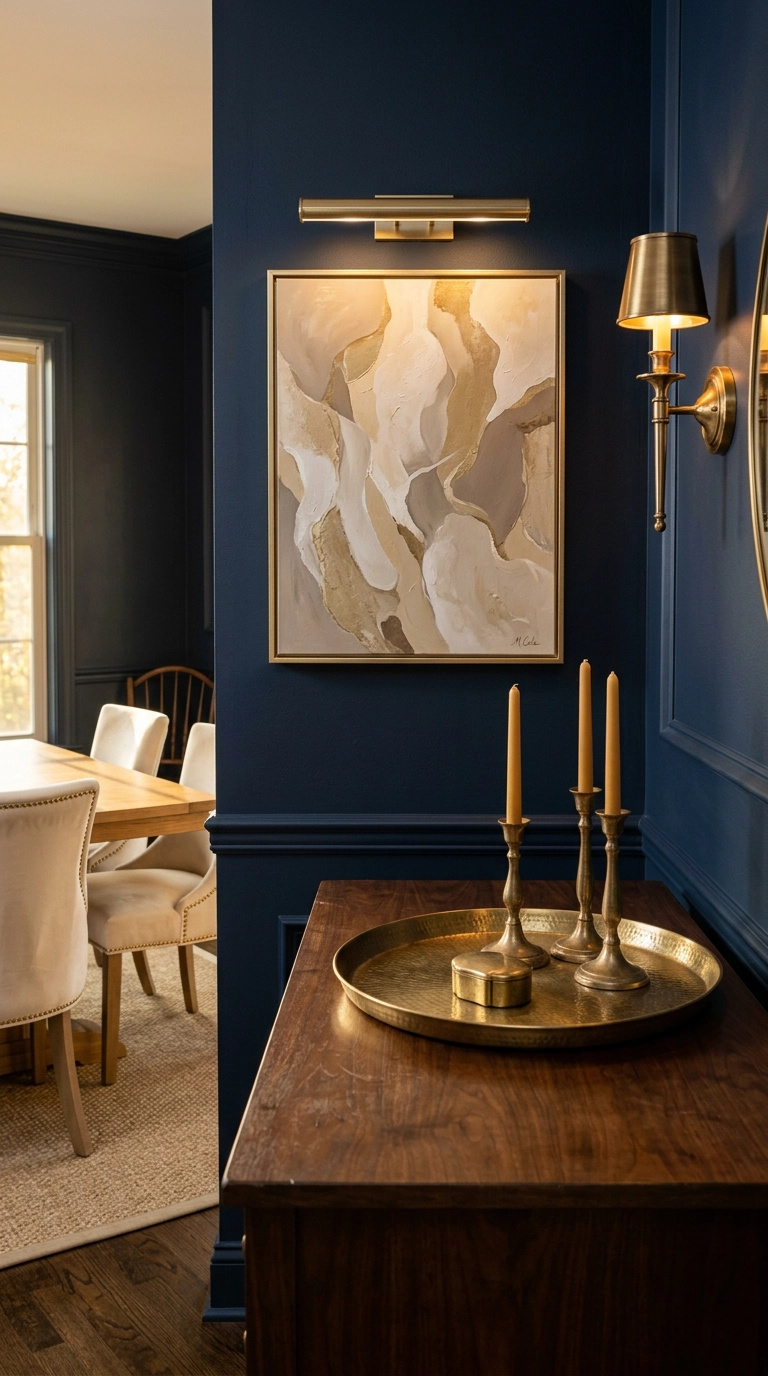
The mistake I see constantly: every metal in the room is different — gold here, silver there, black nickel over there — and it reads as accidental. Pick one warm metal and repeat it in the light fixtures, cabinet hardware, frames, and tabletop objects, and the room suddenly feels like it was designed as a whole.
21. The Texture Trio: Velvet, Stone, and Raw Wood
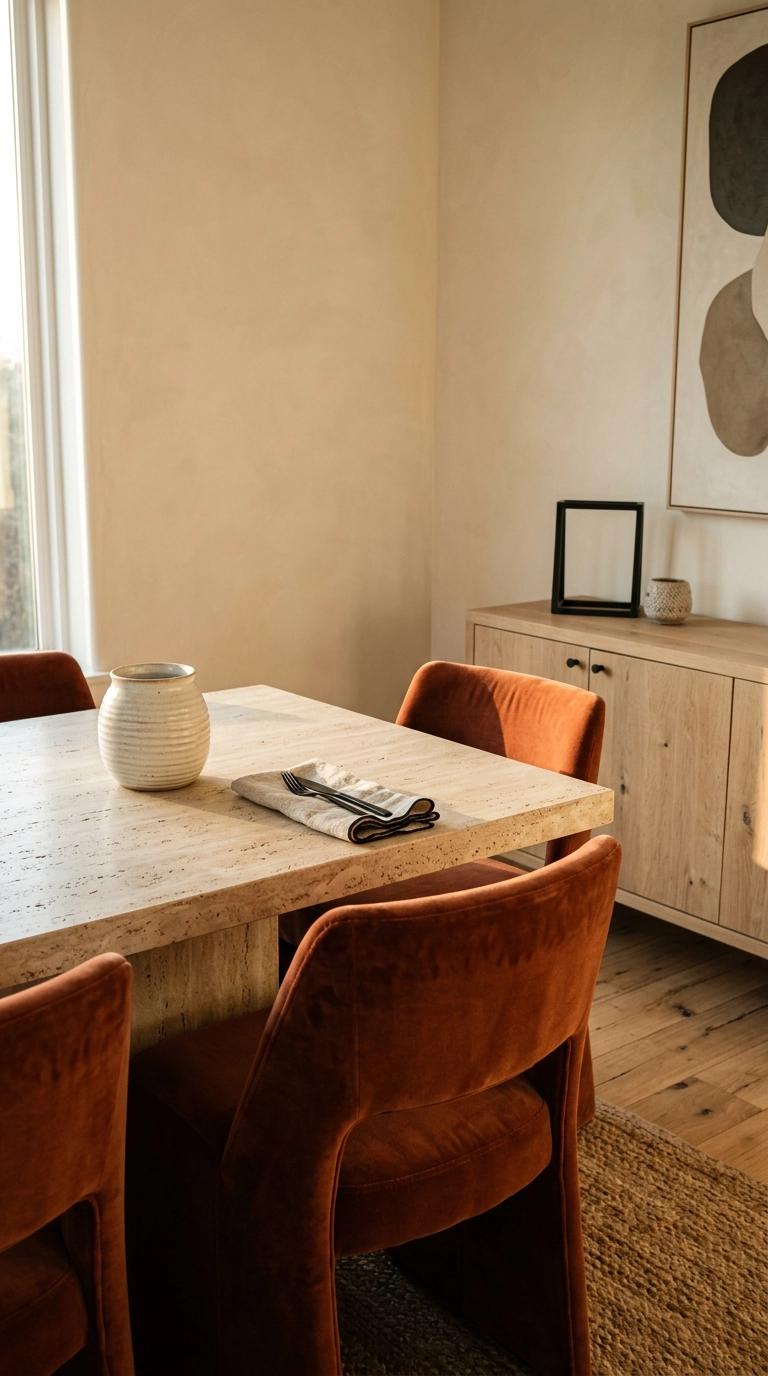
Luxury is a texture story more than a color story. When a room reads flat, it’s almost never the palette — it’s that every surface has the same finish. Put something soft (velvet or boucle), something hard and cool (marble, travertine, glass), and something raw and warm (unfinished oak, rattan, linen) in the same room and the whole thing comes alive.
22. Five Moves That Fake a Big Budget
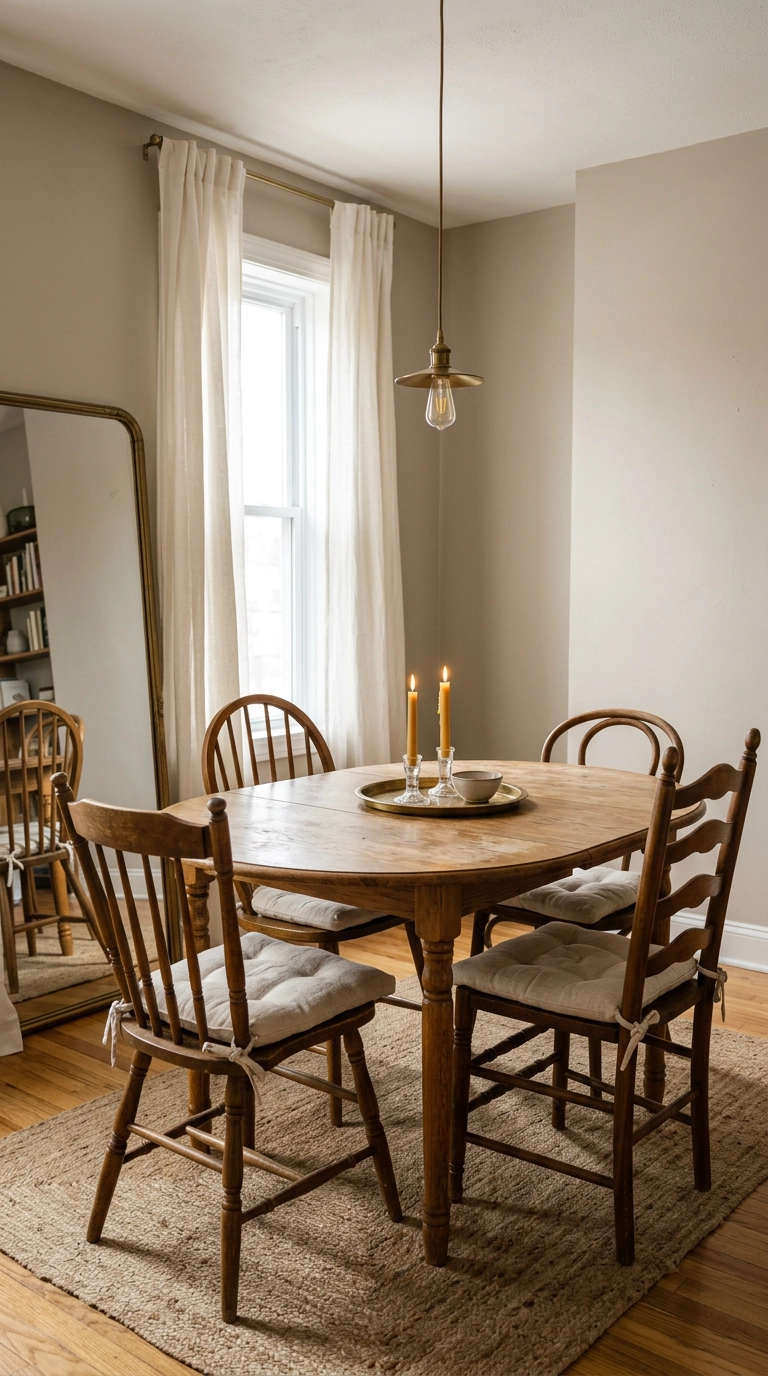
Here’s my honest cheat sheet for a luxury read on a normal budget. One: hang curtains high and let them touch the floor. Two: buy the rug one size bigger. Three: swap the builder light fixture for something sculptural. Four: paint the room a saturated color. Five: unify mismatched chairs with identical cushions or a single coat of paint.
23. Make the Dining Room a Room You Walk Through Daily
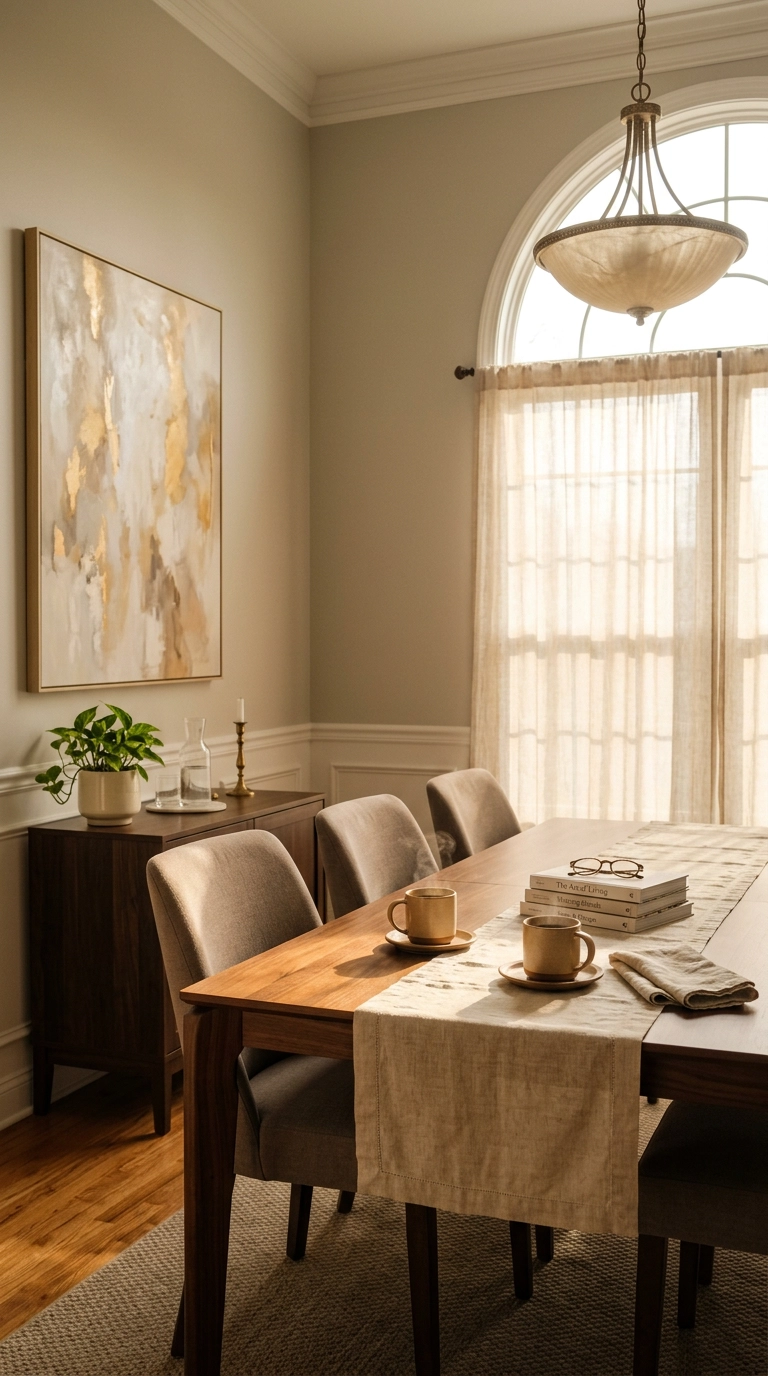
The truly luxurious dining rooms I’ve been in aren’t the ones roped off for holidays — they’re the ones that get used every single day. If you only ever see your dining room as a place for guests, you’ll never style it for yourself, and it will always feel like a museum with a coat of dust.
Pull Up a Chair: My Final Thoughts
If you only take three things from this list, make them the chandelier hung at 30 to 34 inches, the rug that’s one size bigger than you thought, and floor-length curtains mounted high. Those three moves have rescued more dining rooms for me than any expensive furniture ever has, and none of them require a contractor.
What I’m seeing everywhere right now is the color-drenched dining room — walls, trim, and ceiling in one deep green or ink blue — paired with a honed stone table and boucle seating. It’s the same enveloping, layered look that made Kelly Wearstler’s dining spaces so recognizable, and the same restraint you’ll notice in almost every Architectural Digest dining room spread: fewer objects, better textures, warmer light. Even Farrow & Ball’s darker greens have become the shorthand for a room that takes itself just seriously enough.
My honest advice is to start with one idea this weekend rather than planning a whole renovation you never begin. Swap the light, or size up the rug, and let the room tell you what it needs next. If you’d like more ideas like these, sign up for my weekly newsletter — I send one real project, one styling fix, and zero fluff every Friday.


