
24+ Stunning Vintage Dining Room Decor Ideas That Feel Collected, Not Costumey in 2026

Here’s the thing about vintage dining rooms — too much “vintage” and your space starts looking like a period film set where nobody actually eats. Too little, and you miss the warmth and soul that only old things bring. I’ve spent years helping clients strike that exact balance, and the secret is treating vintage like seasoning, not the whole recipe. A 1920s oak pedestal table paired with very current chairs, or a 1950s Murano glass chandelier hanging over a clean-lined modern table — those are the combinations that make a room feel collected across time rather than decorated in one weekend.
Stunning Vintage Dining Room Decor Ideas
1. An Antique Oak Pedestal Table as the Room’s Anchor
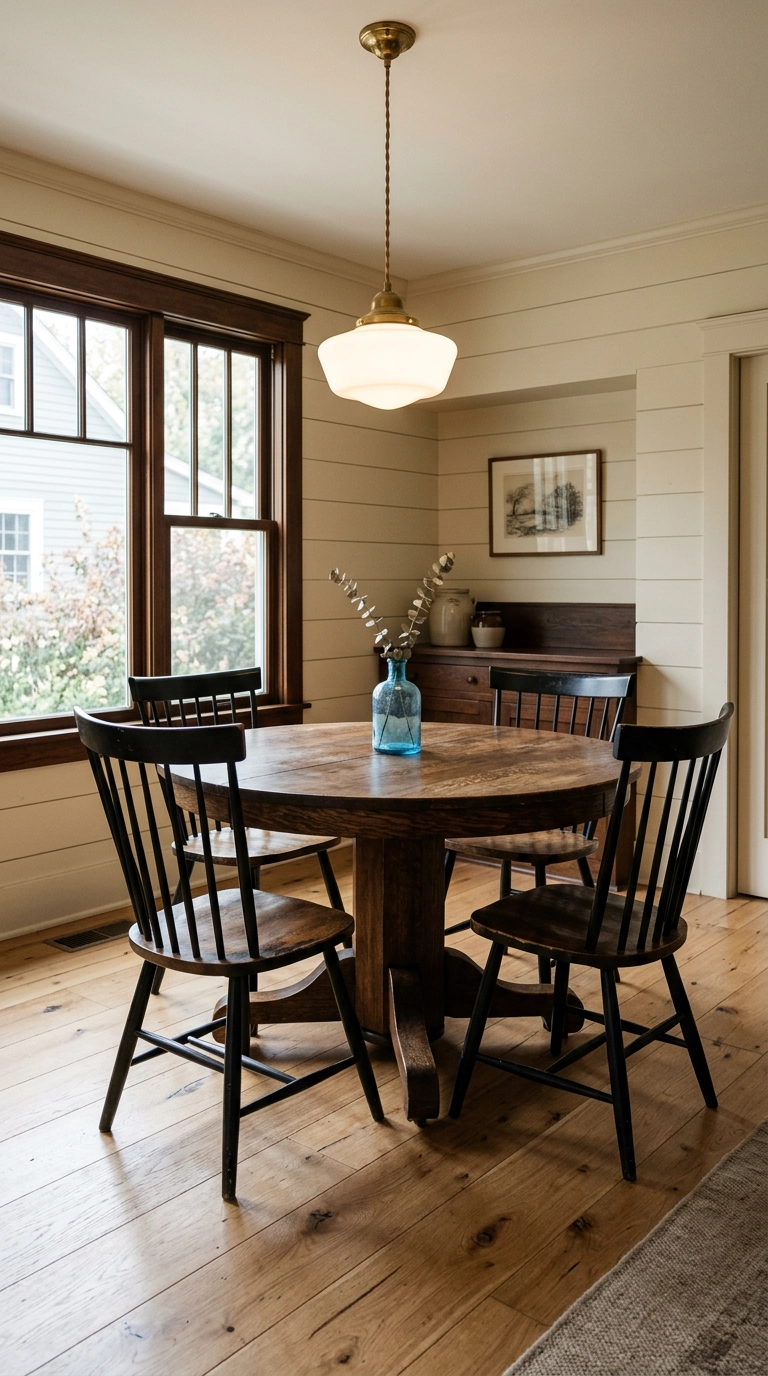
Every vintage dining room needs one piece that anchors the whole design, and a round oak pedestal table from the 1920s or 1930s does it better than anything else. The pedestal base means no four legs fighting for knee space — guests can squeeze in an extra seat without straddling table legs. Look for one with its original dark finish intact; the wear patterns tell a story no factory finish can fake.
2. A Salvaged Crystal Chandelier Over a Modern Table
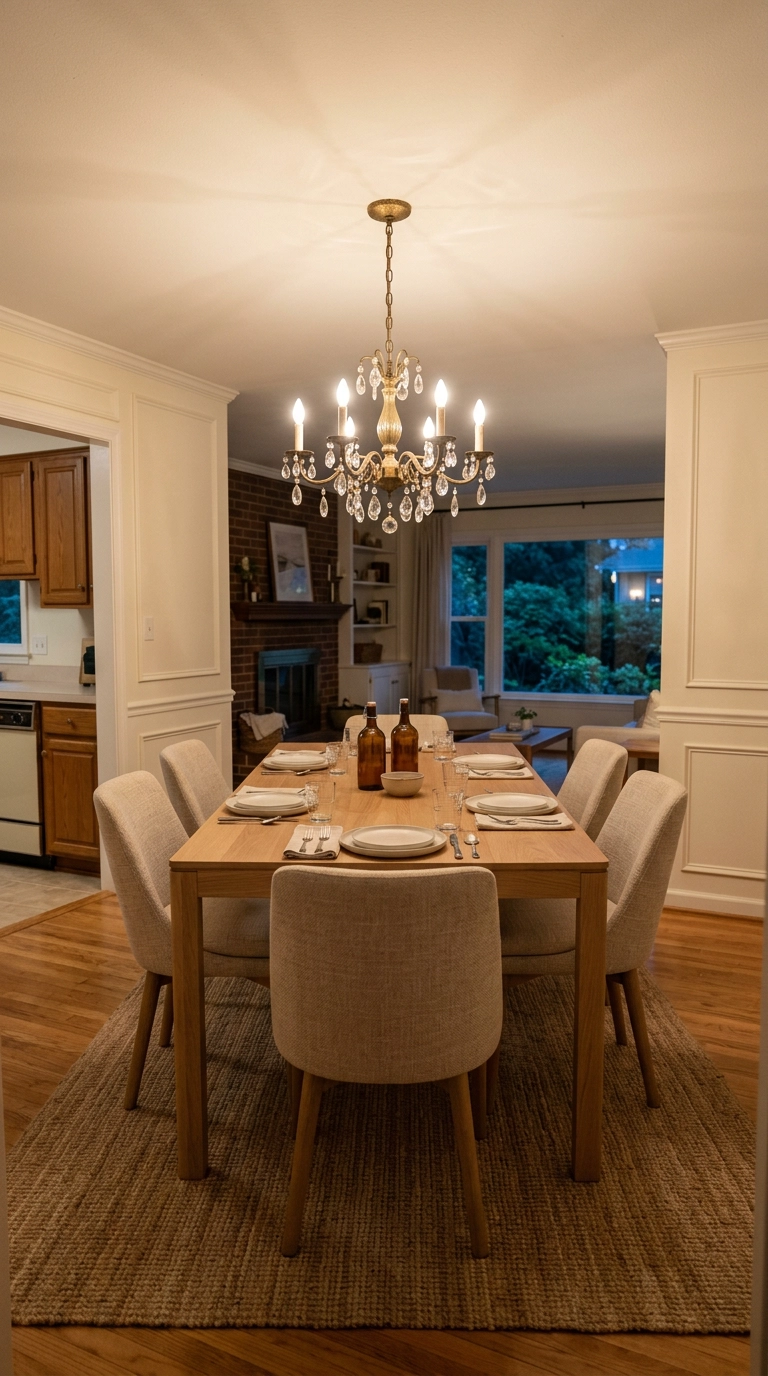
This is the tension trick I use in nearly every vintage room: pair something ornate and old with something restrained and new. A salvaged mid-century crystal chandelier — think 1950s or 1960s, when the arms got sleeker and the crystals less frilly — suspended over a modern slab-top table creates exactly that friction. Electrical rewiring should run you about $150 to $250 through a licensed electrician, and the fixture itself at architectural salvage yards typically lands between $200 and $500 depending on the number of arms and crystal condition.
3. A Wall of Mismatched Vintage Plates as Art
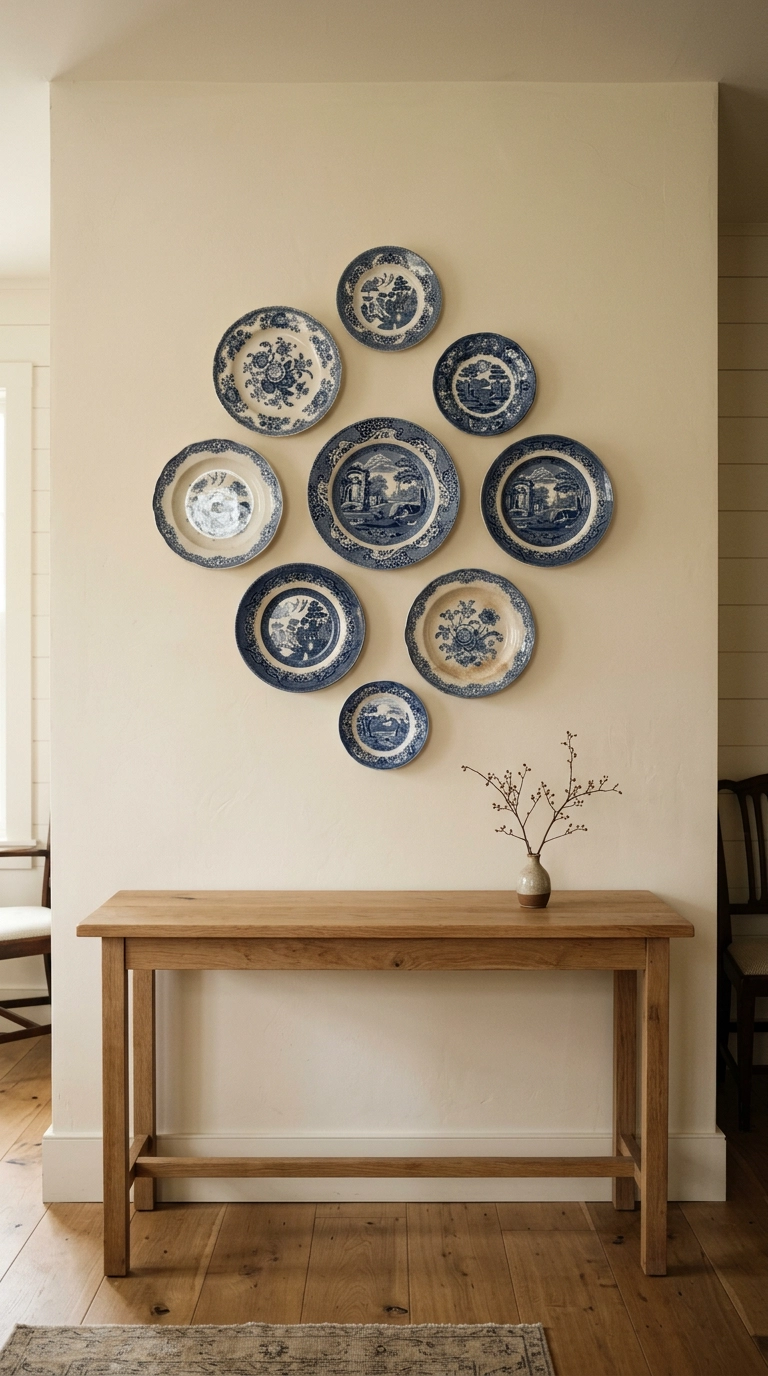
Vintage transferware plates — the blue-and-white kind with pastoral or chinoiserie scenes — cost about $5 to $20 each at thrift stores and antique malls, which makes a full wall arrangement one of the highest-impact, lowest-cost projects in this article. The key to making it read “curated” rather than “grandma’s kitchen” is sticking to one color family across all the plates but varying the sizes, edge patterns, and scene styles wildly. Lay them out on the floor first, tracing each plate on kraft paper, then tape the paper templates to the wall to nail the arrangement before committing to plate hangers.
4. Thrifted Cane-Back Dining Chairs in a Mixed Set
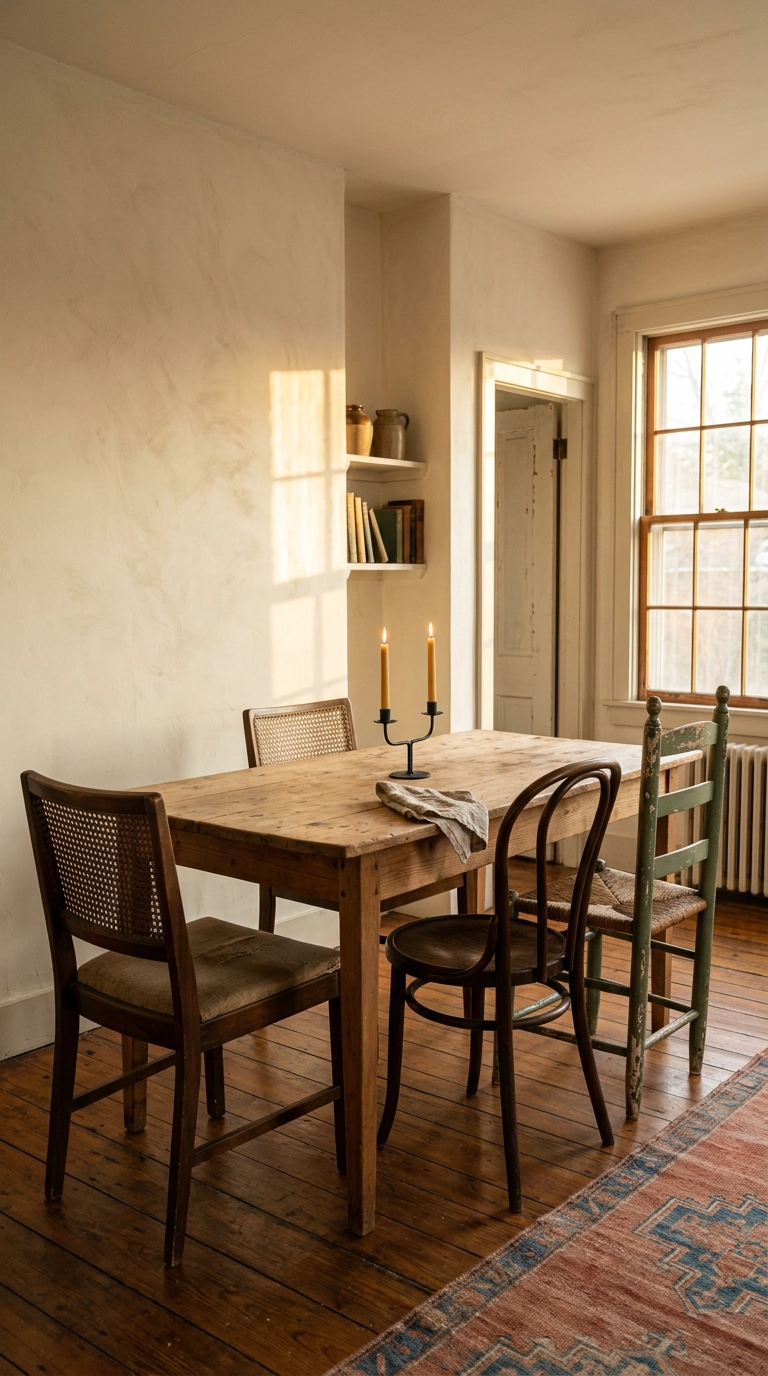
A matched dining set is what you buy when you walk into a big-box furniture store and want to be done in an hour. A mixed set is what you build when you want a room with a story. I collect vintage chairs from Facebook Marketplace, estate sales, and the occasional curb find — cane-back mid-century chairs are my favorite because the woven seat adds texture without bulk, and they show up listed for $30 to $80 each in most markets.
5. A Rearranged Room That Puts the Buffet on the Sightline
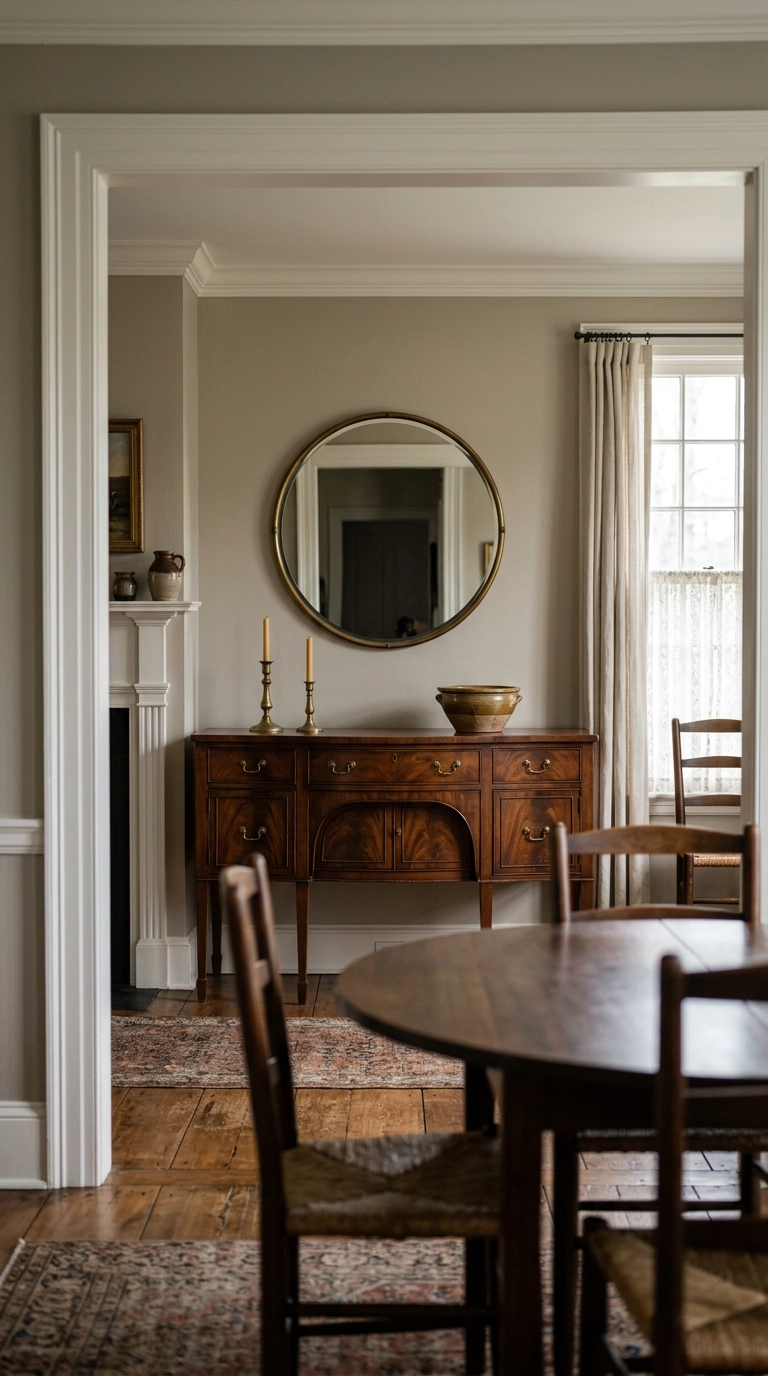
This one costs nothing but an afternoon and a friend with a strong back. Walk to your dining room doorway and notice what you see first — in most homes it’s the back of a chair or a blank wall. Your best vintage piece should be sitting there instead, because the sightline (the first thing your eye lands on when you enter) does more for a room than any amount of styling.
6. One Deliberate Anchor Era, Everything Else Borrowed
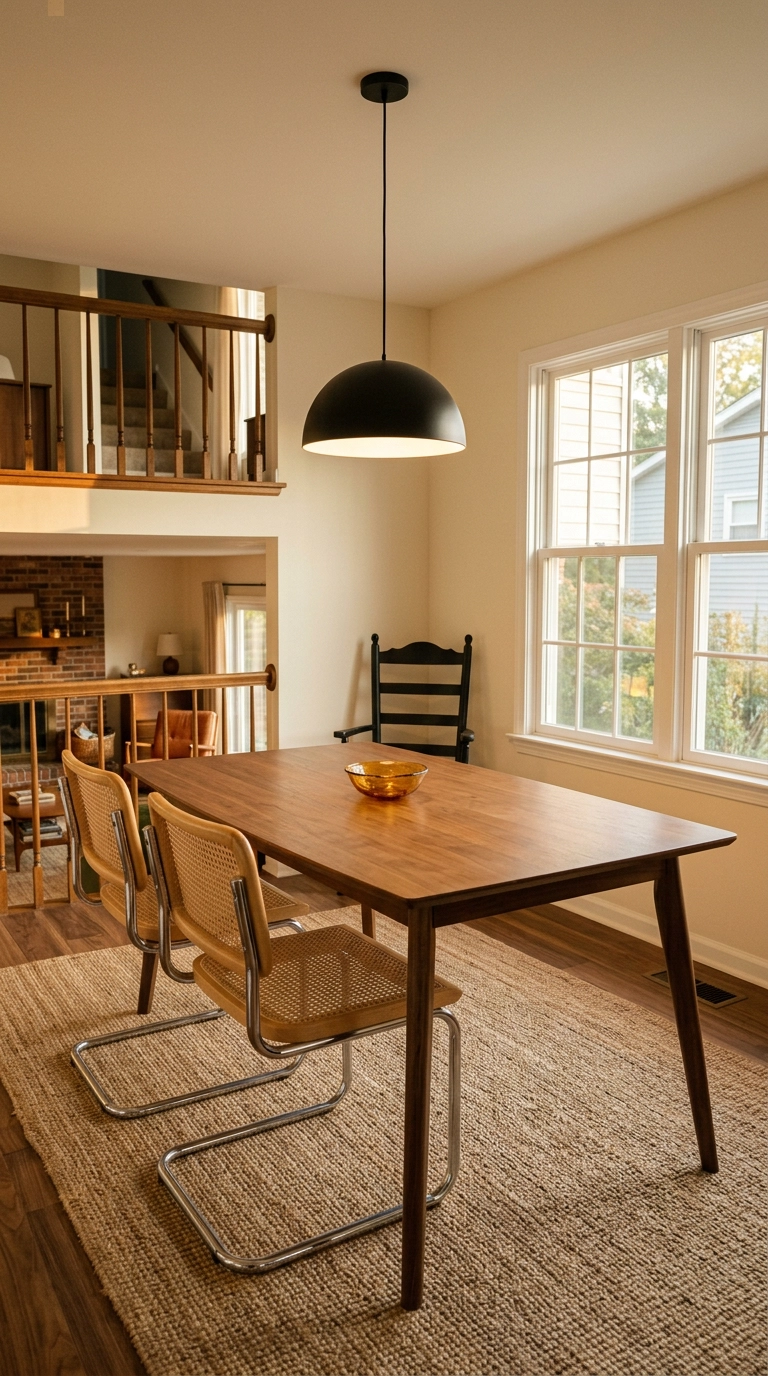
Here is the actual answer to “how do I mix eras without it looking like a thrift store.” Pick one era to be the anchor — say 1950s and 1960s walnut — and let it own roughly 60 percent of the wood and shape language in the room. Everything else becomes a guest from another decade, present in ones and twos only.
7. A 20-Minute Table Swap Using Vintage Linens
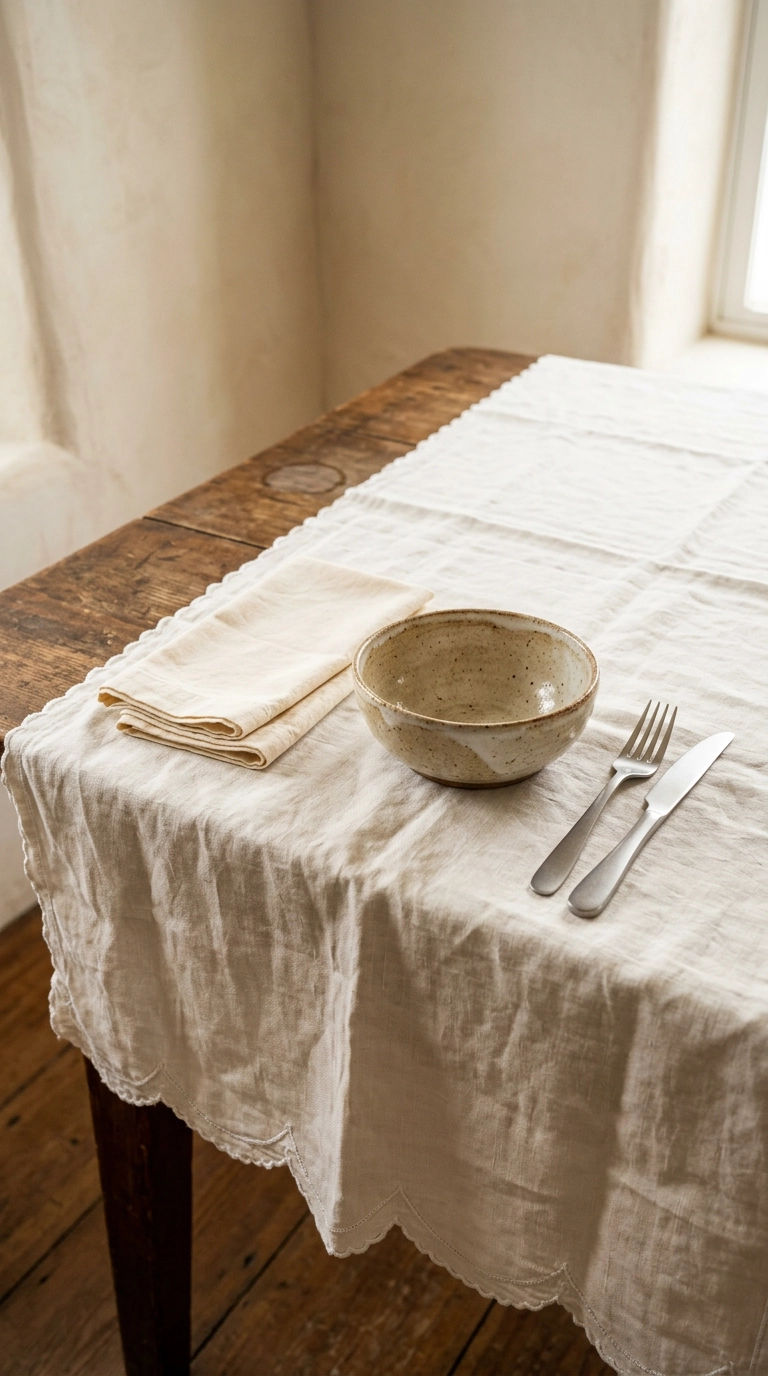
Vintage table linens are the cheapest entry point into this whole look — $8 to $25 for hand-embroidered damask or a 1950s cotton cloth at any decent thrift store, and they wash beautifully if you soak the yellowed ones overnight in oxygen bleach. Old linen has a weight and drape that new polyester blends simply cannot fake.
8. A Genuine Antique Hutch Paired With Modern Dinnerware
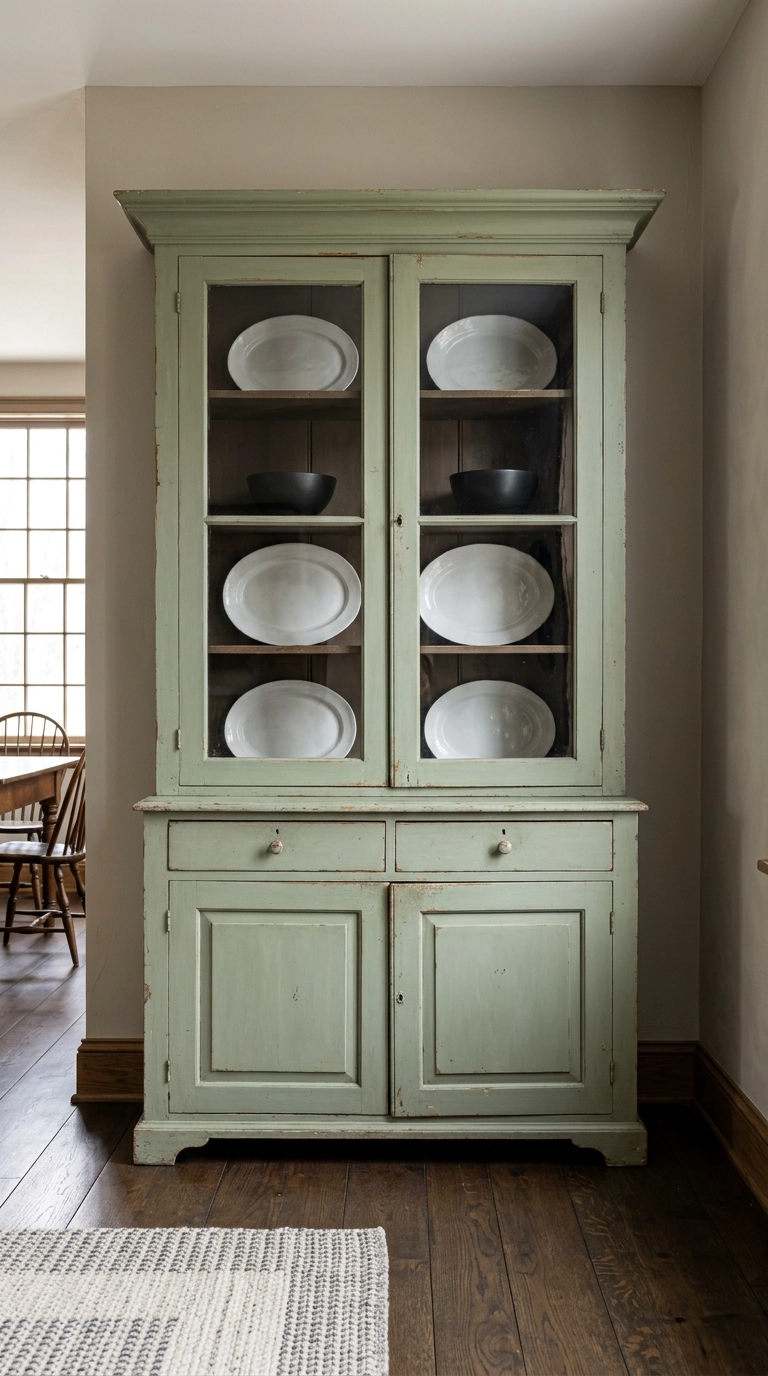
The fastest way to make an antique hutch feel current is to refuse to fill it with antiques. Style it with the plain modern dishes you already own — white stoneware, matte black bowls, clear glassware — and let the piece itself carry all the history. Three to five larger objects per shelf with real gaps between them, never a dense wall of china.
9. Removable Wallpaper in a Small-Scale Historic Print
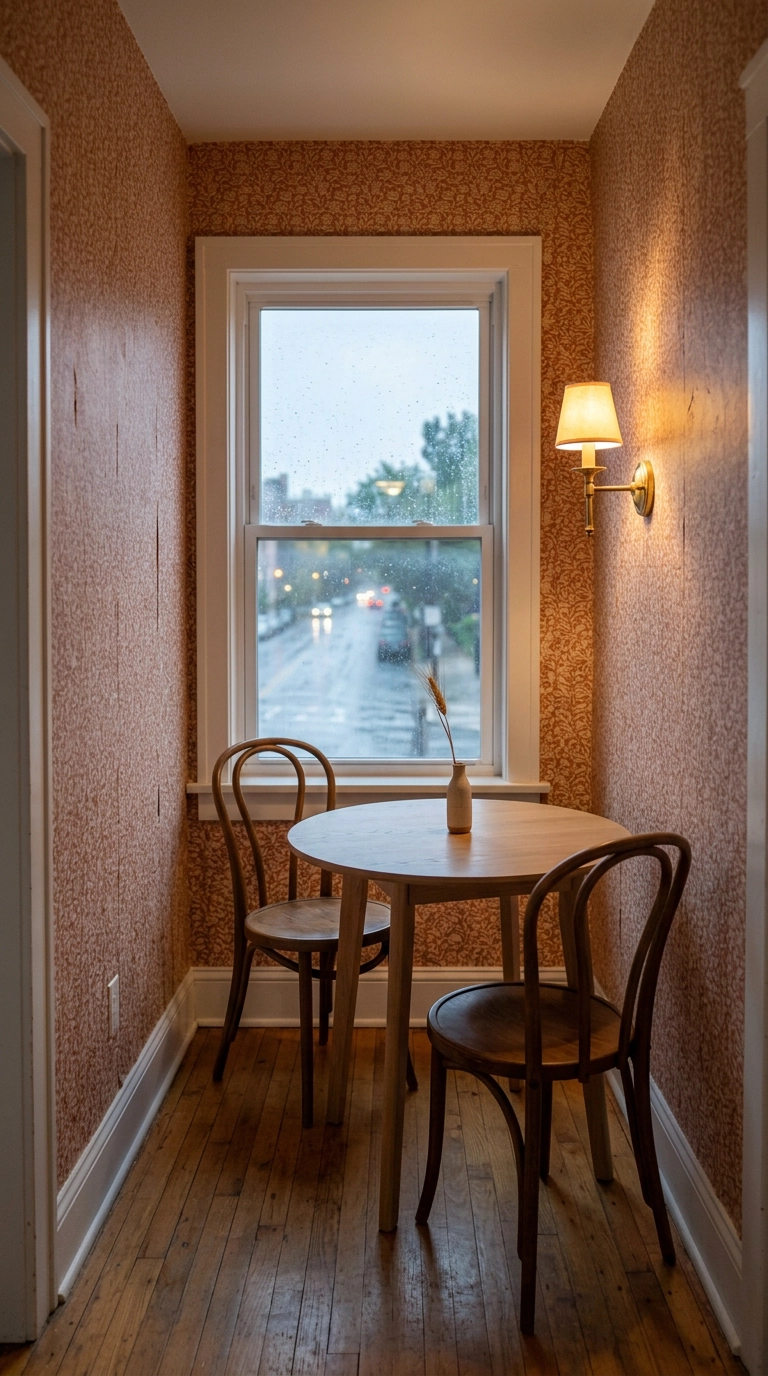
Renters, this is your biggest-impact move. Peel-and-stick wallpaper in a small-scale historic print — think 1890s block-print botanicals or a faded documentary stripe — runs about $40 to $60 per roll and a small dining nook takes three or four rolls. Small-scale patterns are the safer bet in tight rooms because a large repeat needs distance to resolve visually.
10. Cut Crystal and Depression Glass Instead of a Centerpiece
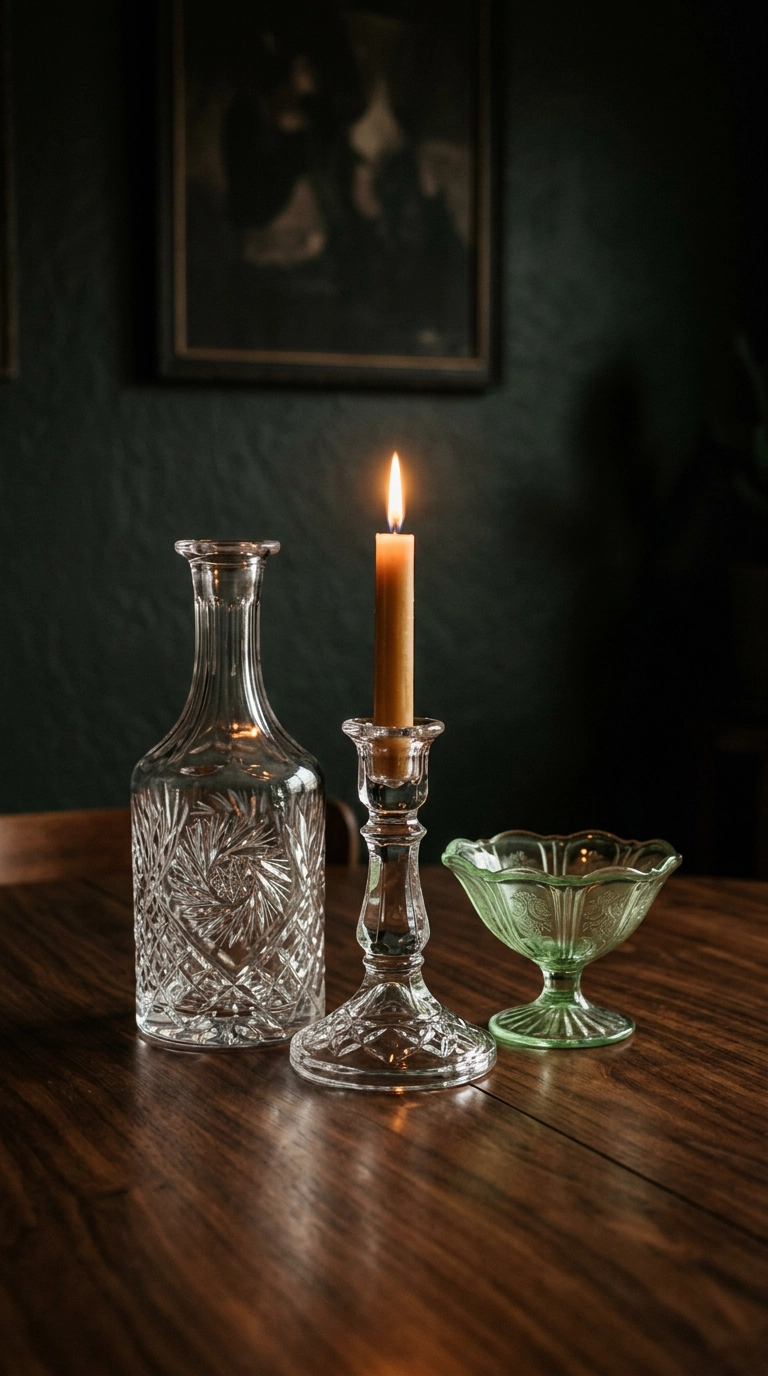
An odd-numbered group of vintage glass beats a floral arrangement every night of the week, and it doesn’t wilt. Three pieces at clearly different heights — a tall decanter, a mid-height vase, a low compote — because odd numbers read as intentional while pairs read as symmetrical and static. Cut crystal picks up candlelight in a way nothing else does.
11. A Worn Persian or Turkish Rug Under the Table
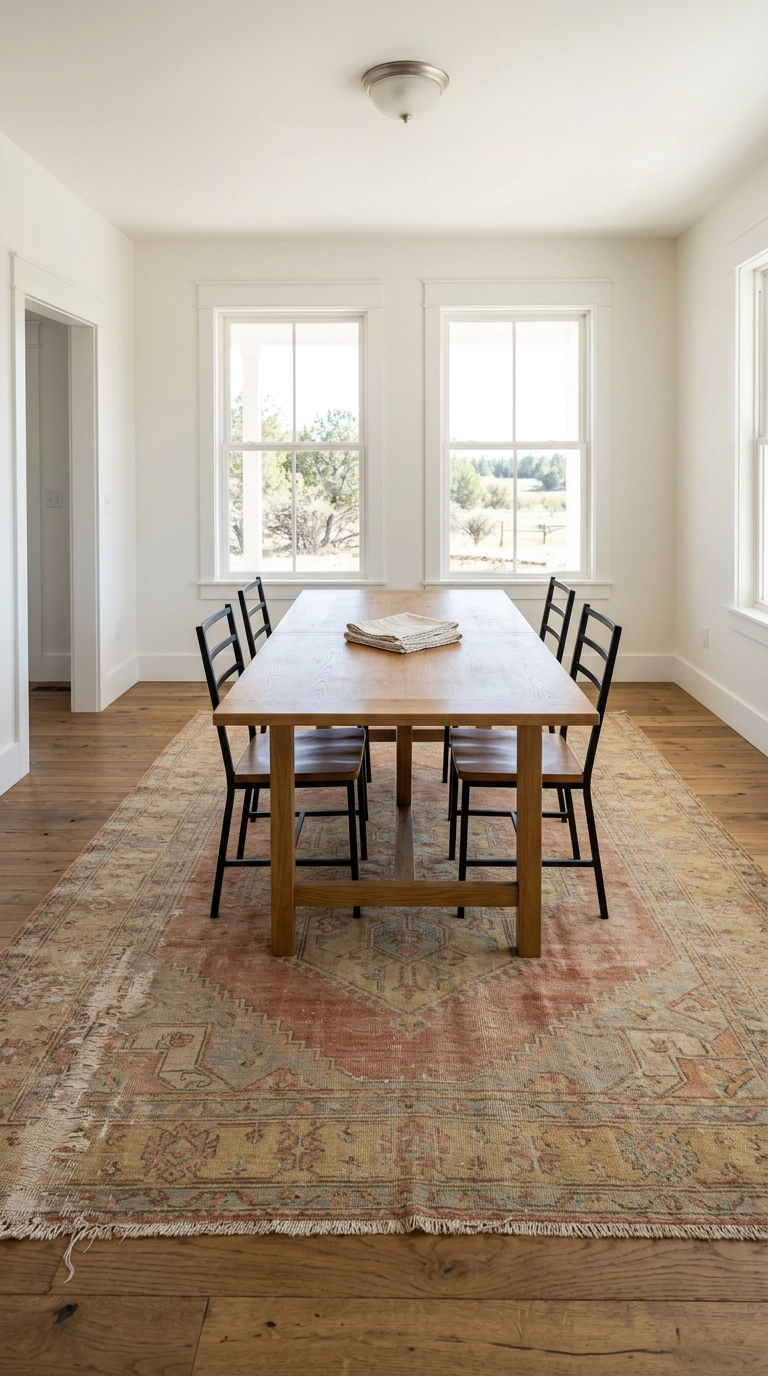
Size is the only place people go wrong here. Measure your table and add 24 inches on every side, minimum, so a chair pulled out to seat someone still has all four legs on the rug — a chair leg that drops off the edge mid-dinner is the reason most people give up on dining rugs entirely.
12. Two Brass Candlesticks From Different Decades
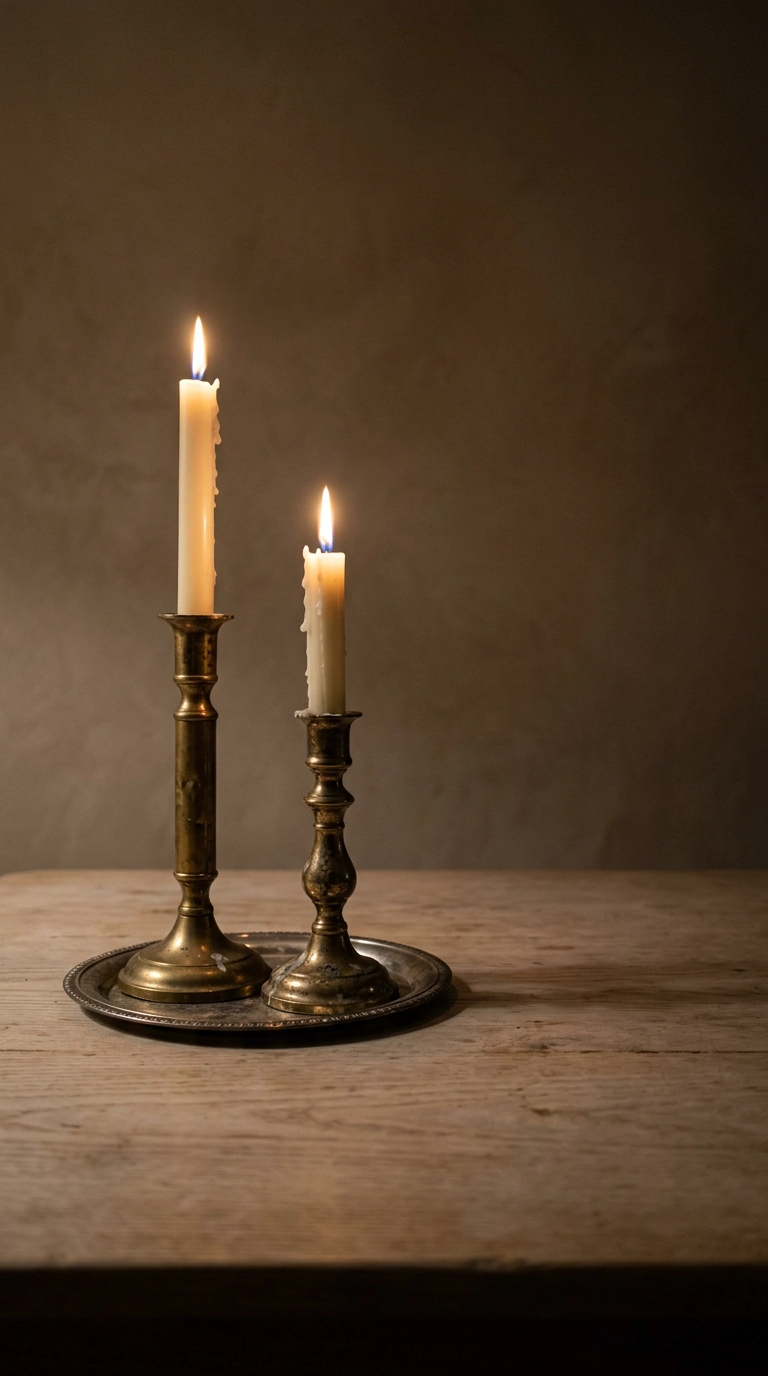
Brass candlesticks are everywhere at thrift stores for $4 to $12 apiece, and the trick is buying two that don’t match. A matched pair reads as a wedding gift, while two different profiles at different heights read as things collected over years — same principle as the mismatched chairs, just in miniature.
13. Picture-Frame Wall Molding Painted in a Deep Historic Shade
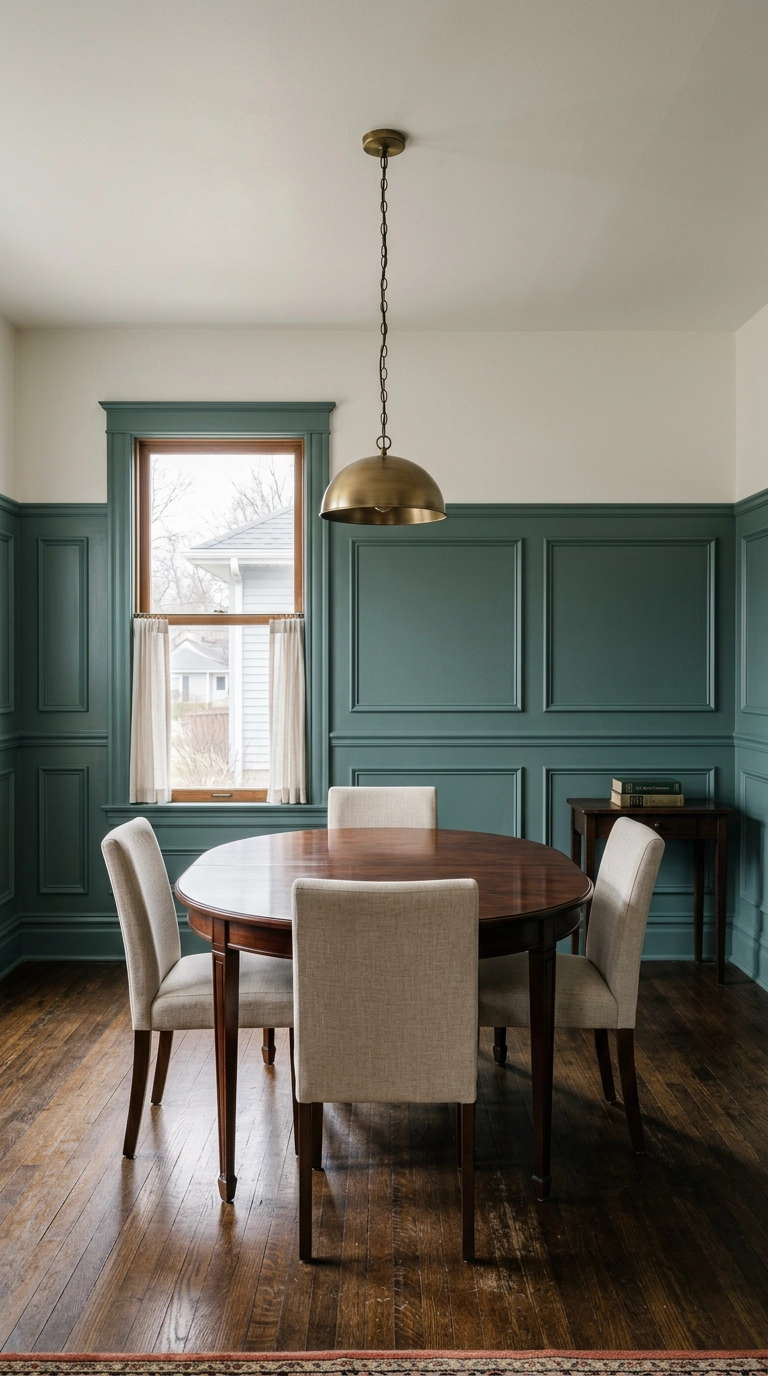
This is the weekend project of the bunch — roughly $120 in primed pine lattice strips, a miter box, construction adhesive and a brad nailer, plus a full Saturday of measuring. Picture-frame molding means applying thin rectangular frames directly to the drywall, which fakes the paneled look of a much older house convincingly.
14. A Vintage Oil Painting Leaned, Not Hung
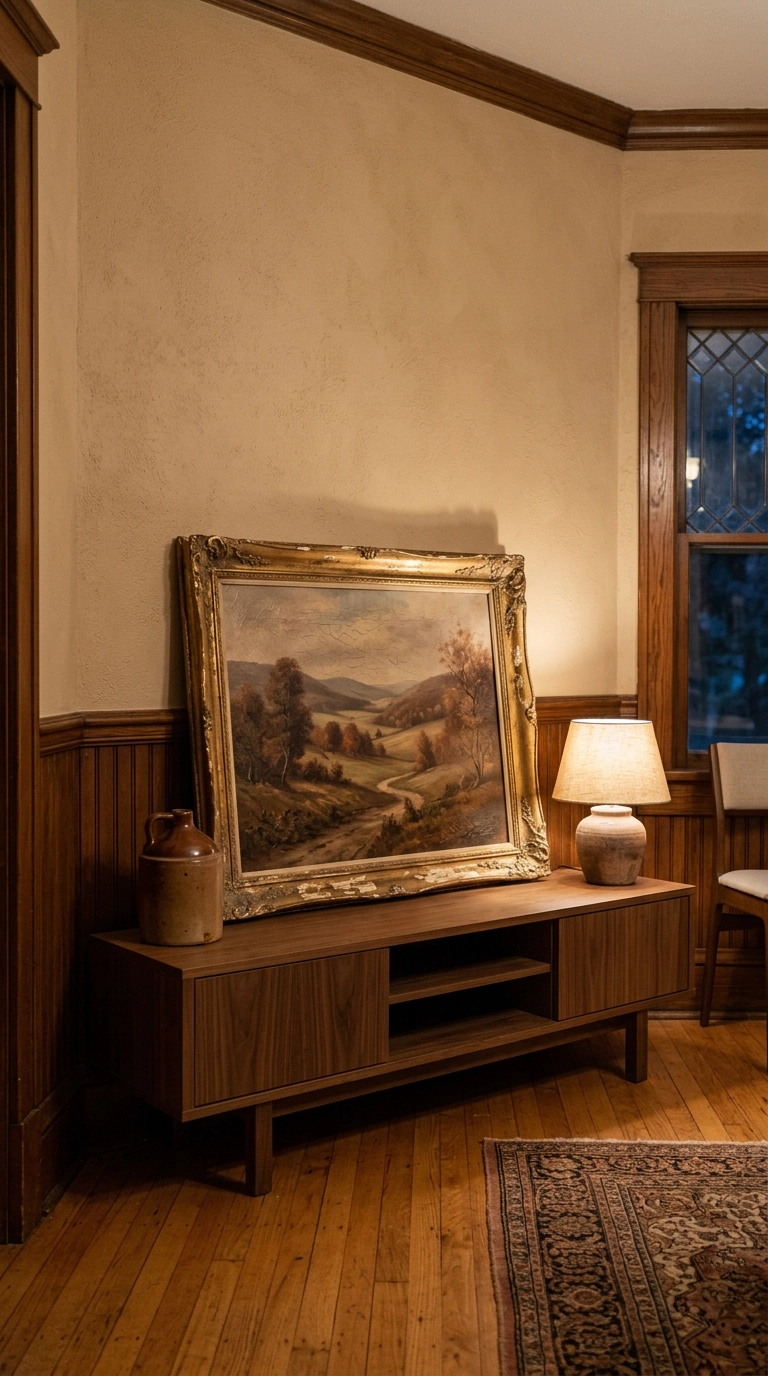
Leaning a painting instead of hanging it does two things: it costs you zero holes, which matters if you rent, and it makes an old formal painting feel casual rather than museum-stiff. A moody landscape or still life in a chipped gilt frame is the single most reliable vintage purchase I make, usually $40 to $150 at estate sales.
15. Reupholstered Vintage Chair Seats in One Unifying Fabric
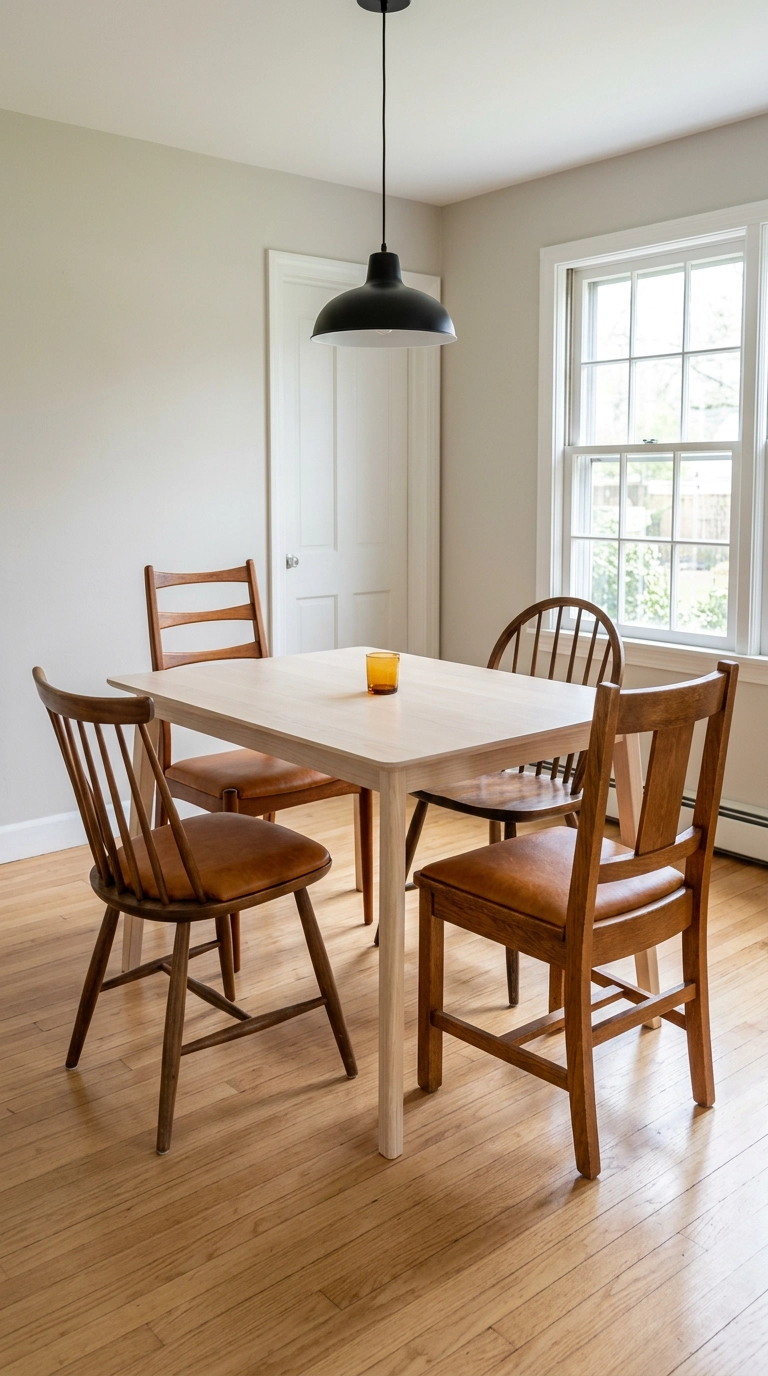
If your mismatched chairs are fighting rather than harmonizing, this is the fix. Recovering all the seats in one identical fabric gives the eye a repeated element to latch onto, and suddenly four unrelated frames read as a deliberate set. It’s the cheapest way to buy visual cohesion.
16. An Ironstone Pitcher Collection Displayed in Threes
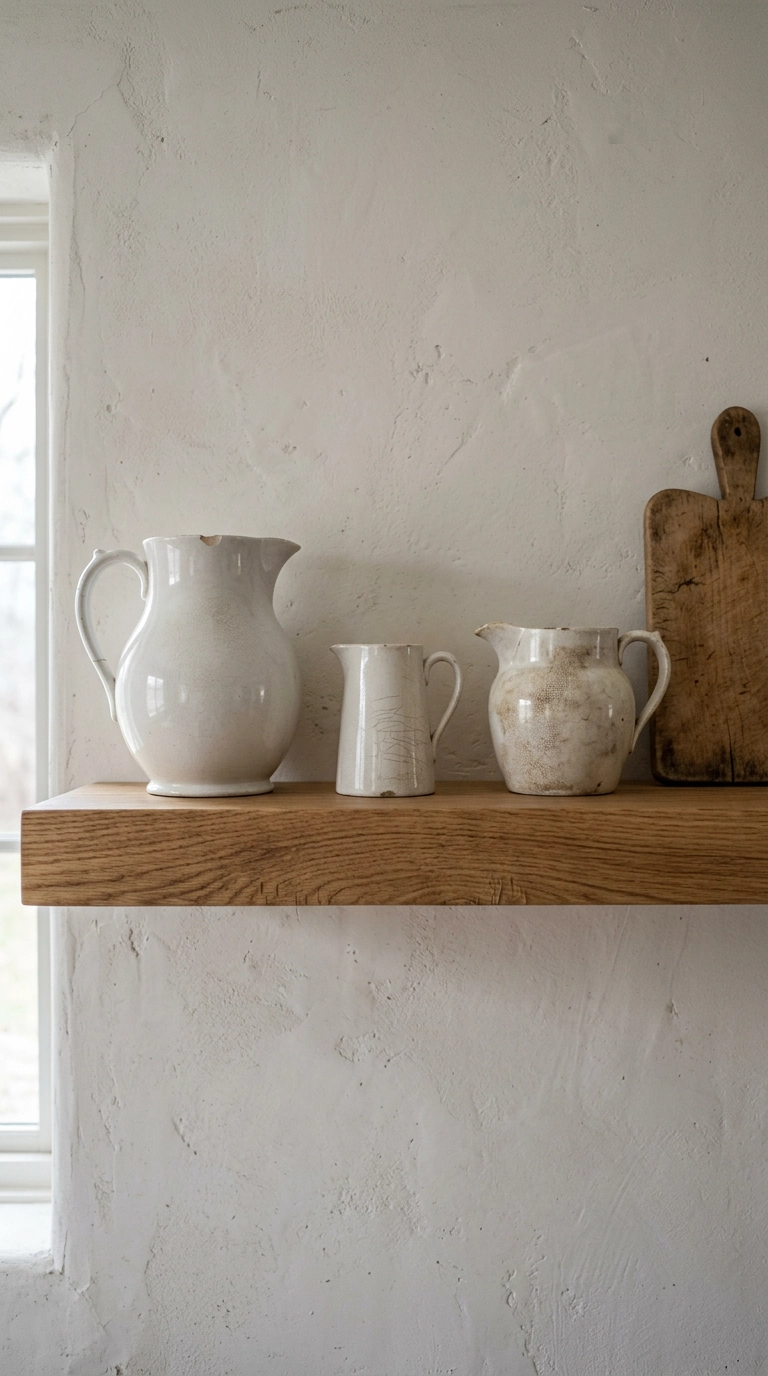
White ironstone is the collection I recommend to anyone nervous about vintage, because it’s all-white and therefore impossible to clash with anything. Pitchers, tureens, and platters from the late 1800s show up at $15 to $60, and the faint brown crazing in the glaze is age, not damage.
17. A Slab-Built Farmhouse Table for Generational Warmth
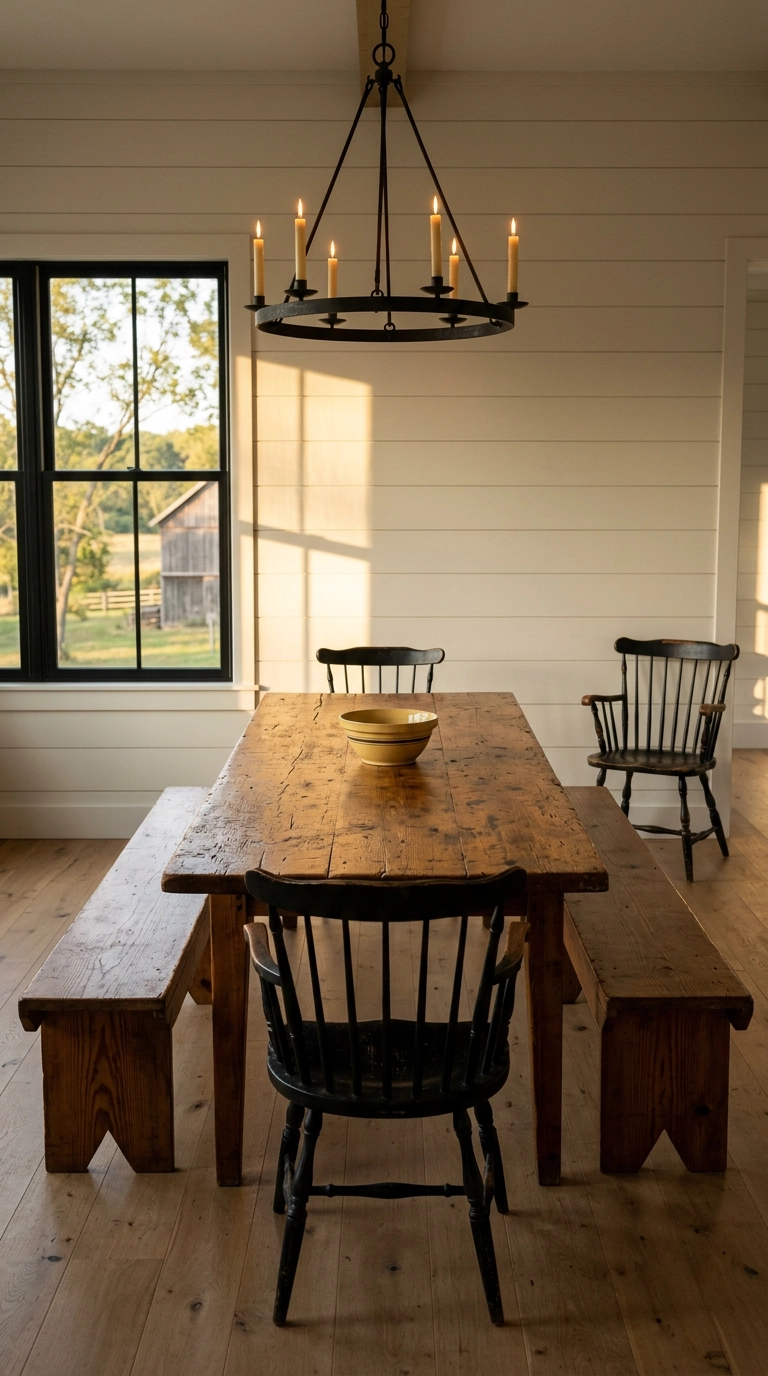
An 1800s pine farm table with a thick slab top and honest saw marks is one of the few vintage buys where the wear genuinely adds value rather than subtracting it. You will pay $1,500 to $3,500 for a good one, which puts it firmly in splurge territory, but it will outlast every trendy table you can buy new for the same price.
18. A Bare Bulb Fixture Swapped for a Vintage Milk Glass Schoolhouse Light
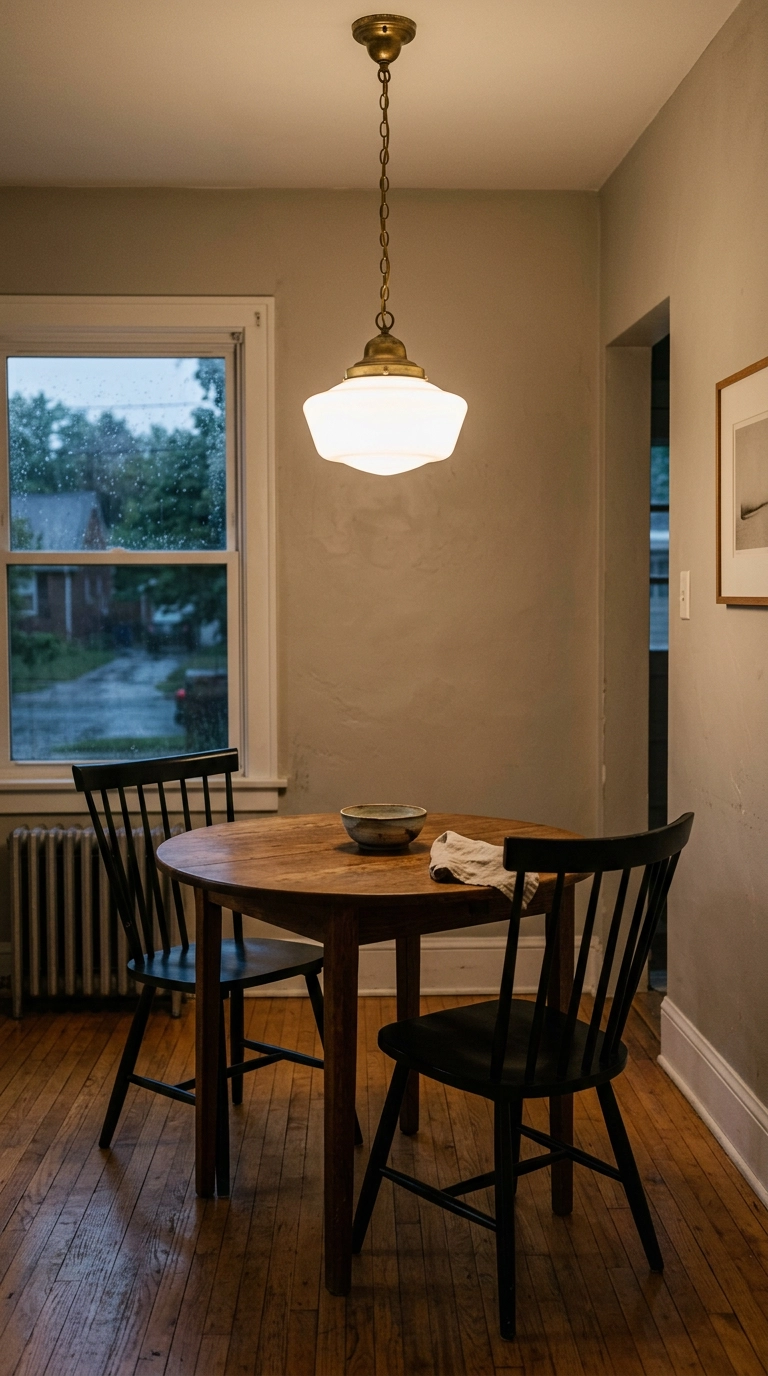
Builder-grade dining fixtures are the single most dated thing in most American homes, and a vintage milk glass schoolhouse dome fixes it for $60 to $180 plus an hour of work. Milk glass diffuses light softly in every direction, which matters at a dining table where a bare Edison bulb puts unflattering shadows under everyone’s eyes.
19. A Modern Bench on One Side to Break the Formality
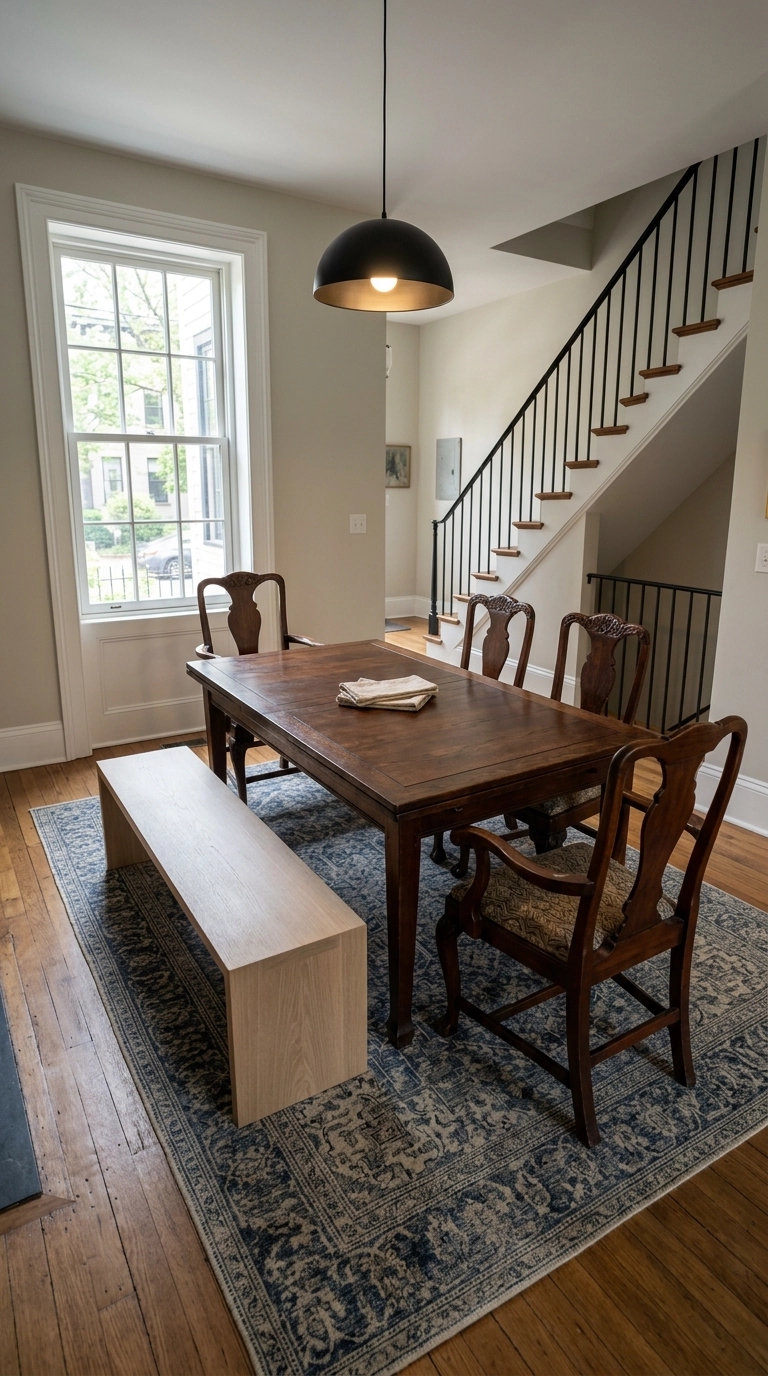
A dark carved antique table can tip into stuffy fast, and one contemporary bench pulled up to the long side breaks that spell immediately. The bench’s plain silhouette gives your eye a place to rest, which makes the table’s carving read as a feature rather than as heaviness.
20. Vintage Mirrors Hung to Bounce Light Into a Dark Room
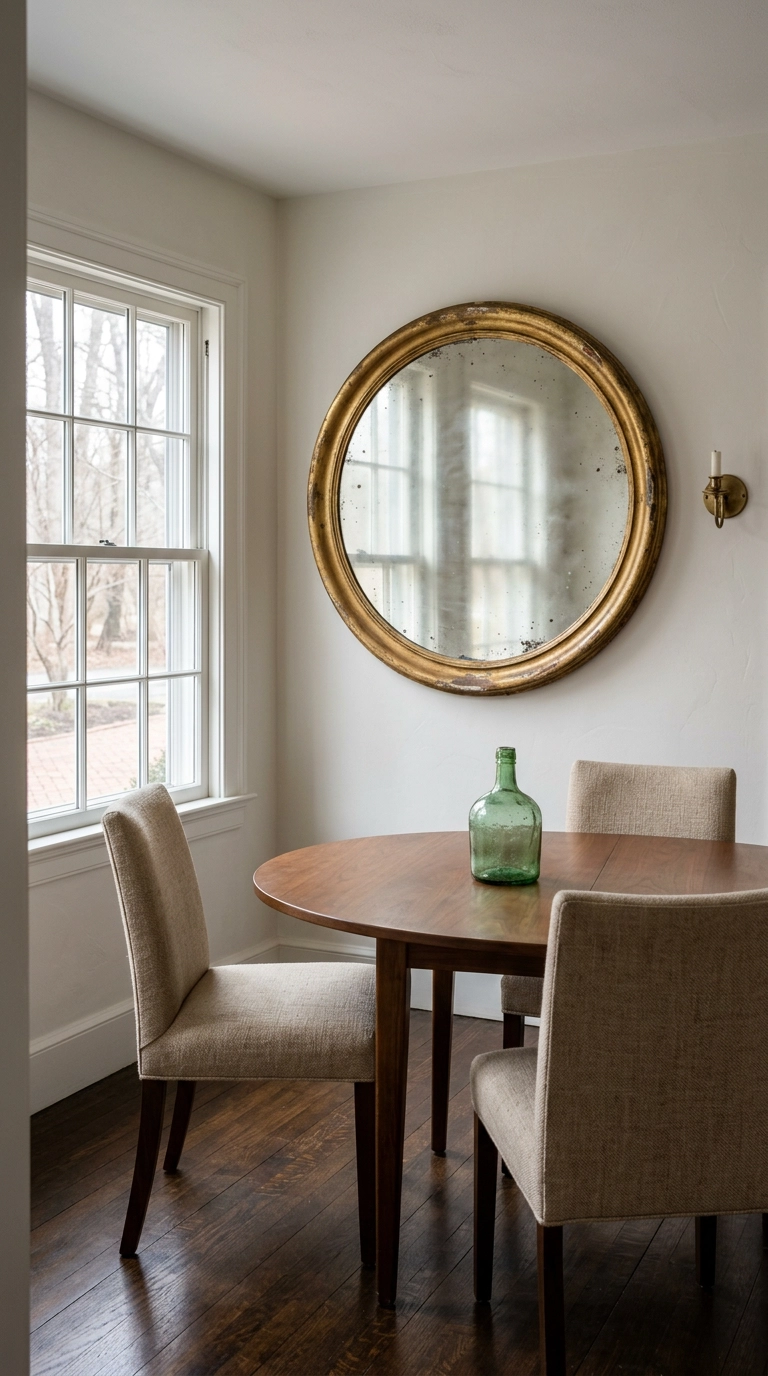
If your dining room is north-facing and permanently gloomy, hang a large vintage mirror on the wall directly across from your biggest window. It nearly doubles the usable daylight by bouncing it back into the room, and old mirrors with foxed, slightly spotted glass scatter that light more softly than a hard new mirror does.
21. Silver Plate Used Every Day, Not Saved for Holidays
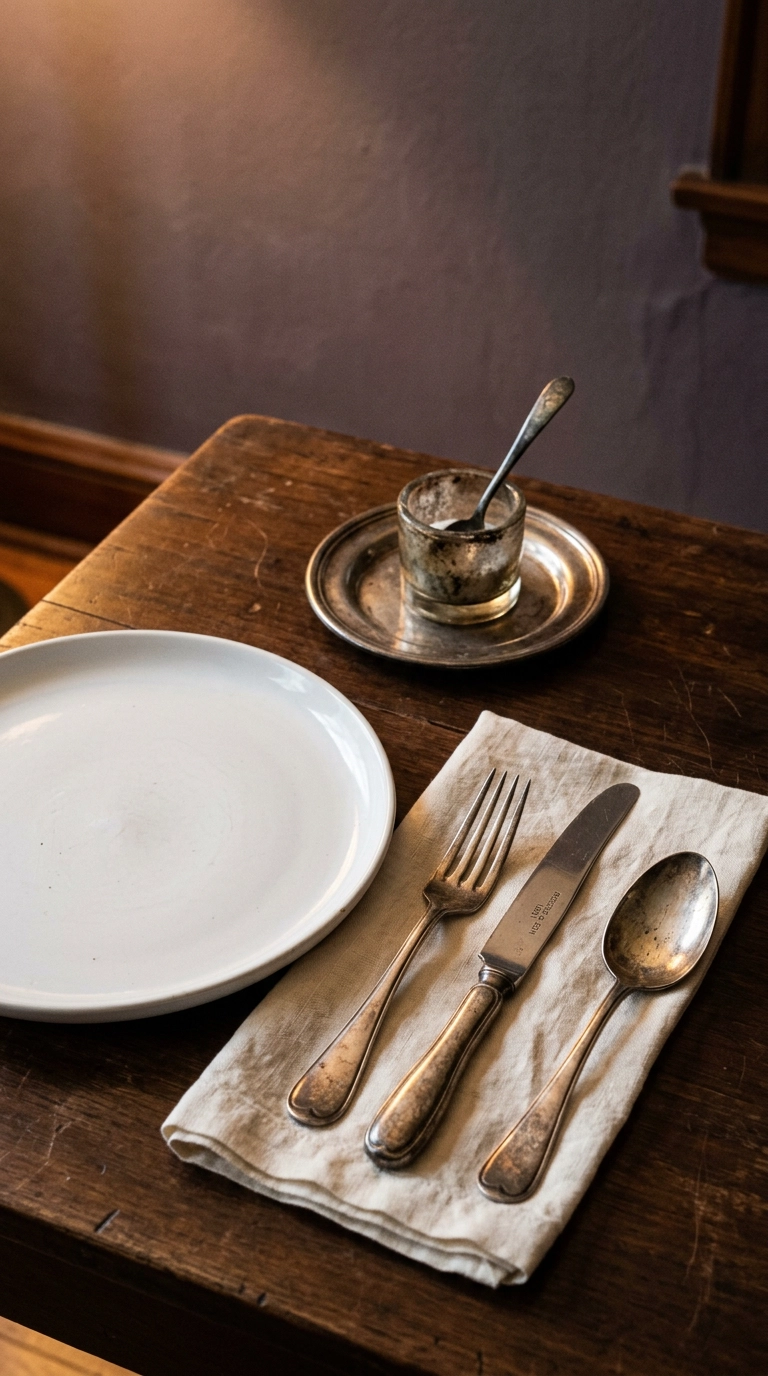
Silver plate is one of the great bargains left in the vintage market — real sterling holds value, but plated flatware sells for almost nothing, often $1 to $3 per piece in thrift-store bins, because nobody wants to polish it. Buy mixed patterns deliberately and you get a place setting with more character than any new flatware set at ten times the price.
22. A Color-Drenched Dining Room in a Muted Historic Shade
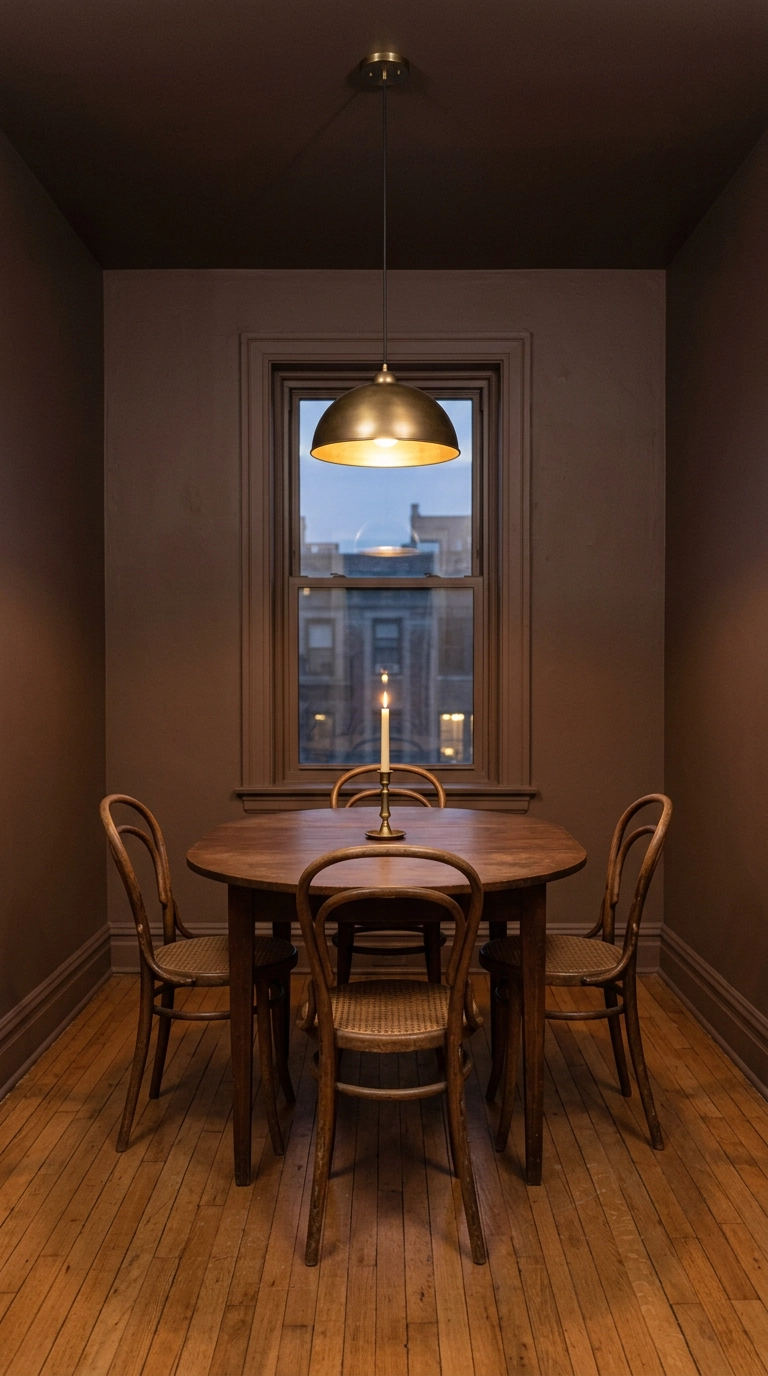
Color drenching means painting the walls, trim, and ceiling all one shade so the room reads as a single enveloping volume. It works beautifully in vintage dining rooms because it erases the visual breaks that make a small formal room feel choppy, and it makes old wood furniture pop against the field of color.
23. One Genuinely Weird Old Object to Break the Pattern

Every room I love has one object nobody can immediately identify. An old wooden shoe form, a brass surveying instrument, a hand-carved butter mold, a single industrial gear on a base — these cost $20 to $70 and they’re the thing guests actually pick up and ask about.
24. A Vintage Bar Cart Parked at the End of the Sightline
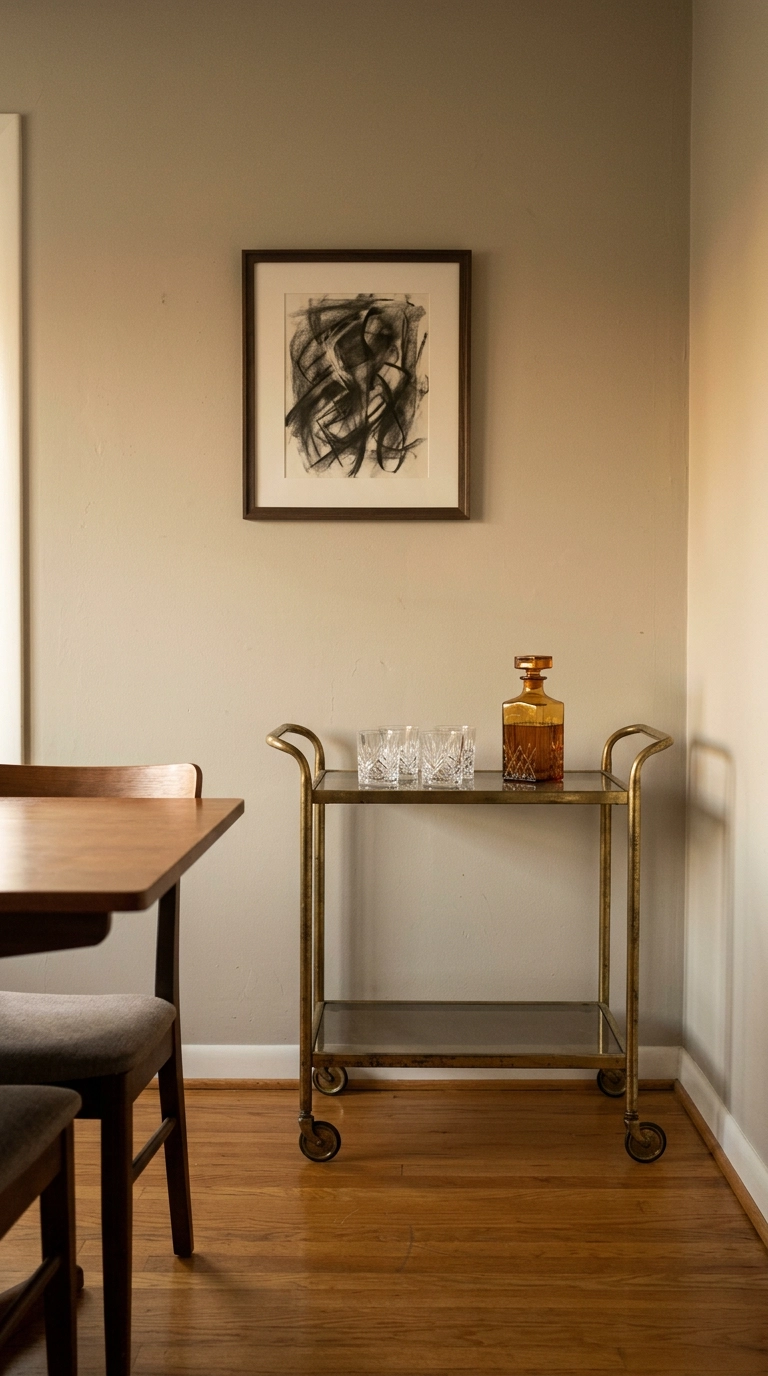
A bar cart is the piece that tells people this dining room gets used after dinner, not just during it. Mid-century brass and glass carts run $150 to $400 and roll anywhere, which makes them the most flexible vintage buy on this list — mine has served as a bar, a dessert station, and a plant stand for exactly one plant.
Where I’d Start If This Were My Dining Room
If I could only give you three things from this list, they’d be the oak pedestal table, the mismatched chairs unified by one fabric, and the salvaged chandelier over something plain. That combination gets you 80 percent of the way to a room that feels collected across decades instead of ordered from one catalog, and none of it requires you to like antiques in general — just to like a few specific old things.
What I’m seeing gain real traction going into 2026 is the restraint side of this look: fewer pieces, more negative space, one anchor era with a couple of deliberate outliers. Beata Heuman has been doing the mix-old-with-genuinely-modern move for years and it still reads fresher than any full-period room, and the wider move toward muted historic paint colors from the Farrow & Ball end of the spectrum has made deep clay browns and smoky greens feel current rather than dated. The thrift-store trap was never about buying old things, it was about buying too many at once.
Start with the free ideas — walk to your doorway, look at your sightline, and move your best piece into it this afternoon. Then let the collection build slowly, because the rooms that look effortless are almost always the ones that took two years. If you want more of this, sign up for my weekly newsletter and I’ll send you the finds, the sources, and the mistakes I made that week so you don’t have to repeat them.


