
21+ Warm Boho Dining Room Decor Ideas that Feel Collected, Not Cluttered in 2026

I’ll be straight with you – most boho dining rooms fail for one reason, and it’s not the rattan. It’s that people buy nine textures and zero structure, and the room ends up looking like a very earnest thrift haul. Good boho is disciplined: one strong material, a repeating color, and enough empty space that your eye can rest. I’ve styled dozens of these rooms, and the ones that photograph well are always the ones where I removed something.
Boho Dining Room Decor Ideas
1. A Woven Pendant Sized to Your Table, Not Your Ego
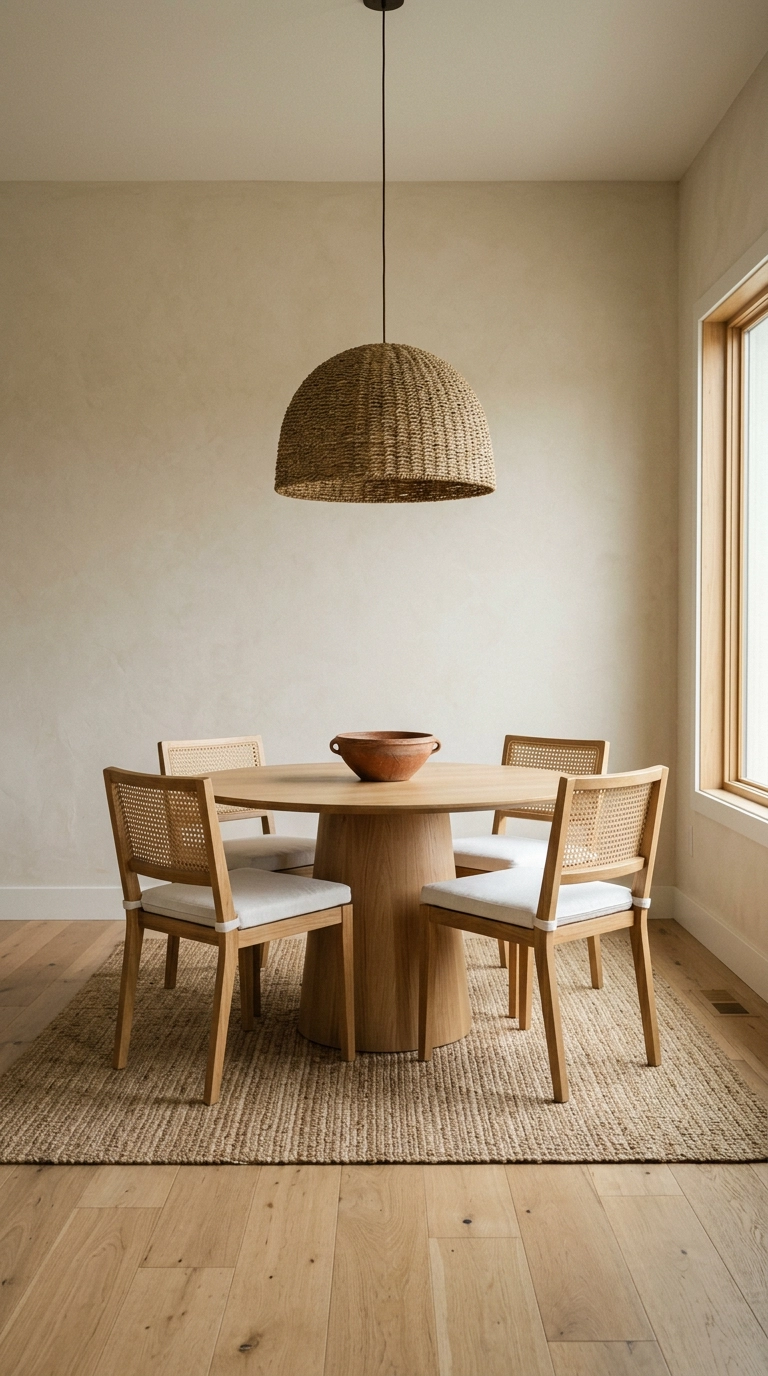
Your pendant should be roughly one-half to two-thirds the width of the table, and the bottom of the shade wants to sit 30 to 34 inches above the tabletop. Go higher and it floats like an afterthought, go lower and everyone plays peek-a-boo through dinner.
2. Mismatched Chairs with One Unifying Thread
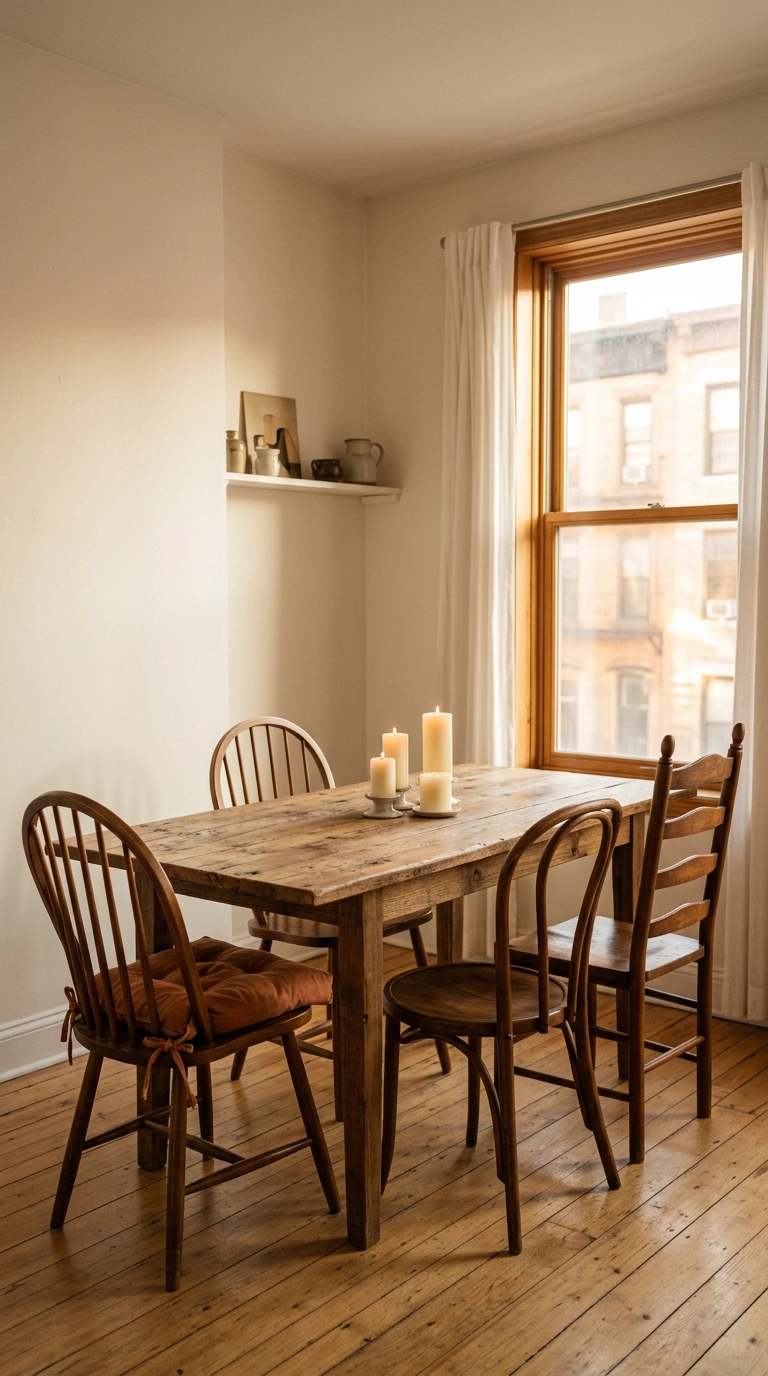
Mismatched seating is the whole boho promise, but it only works if the chairs agree on exactly one thing – wood tone, seat height, or frame color. Pick your unifier and be ruthless about it, because that single repetition is what reads as intentional instead of accidental.
3. Layer a Vintage Rug Over Jute for Instant Depth
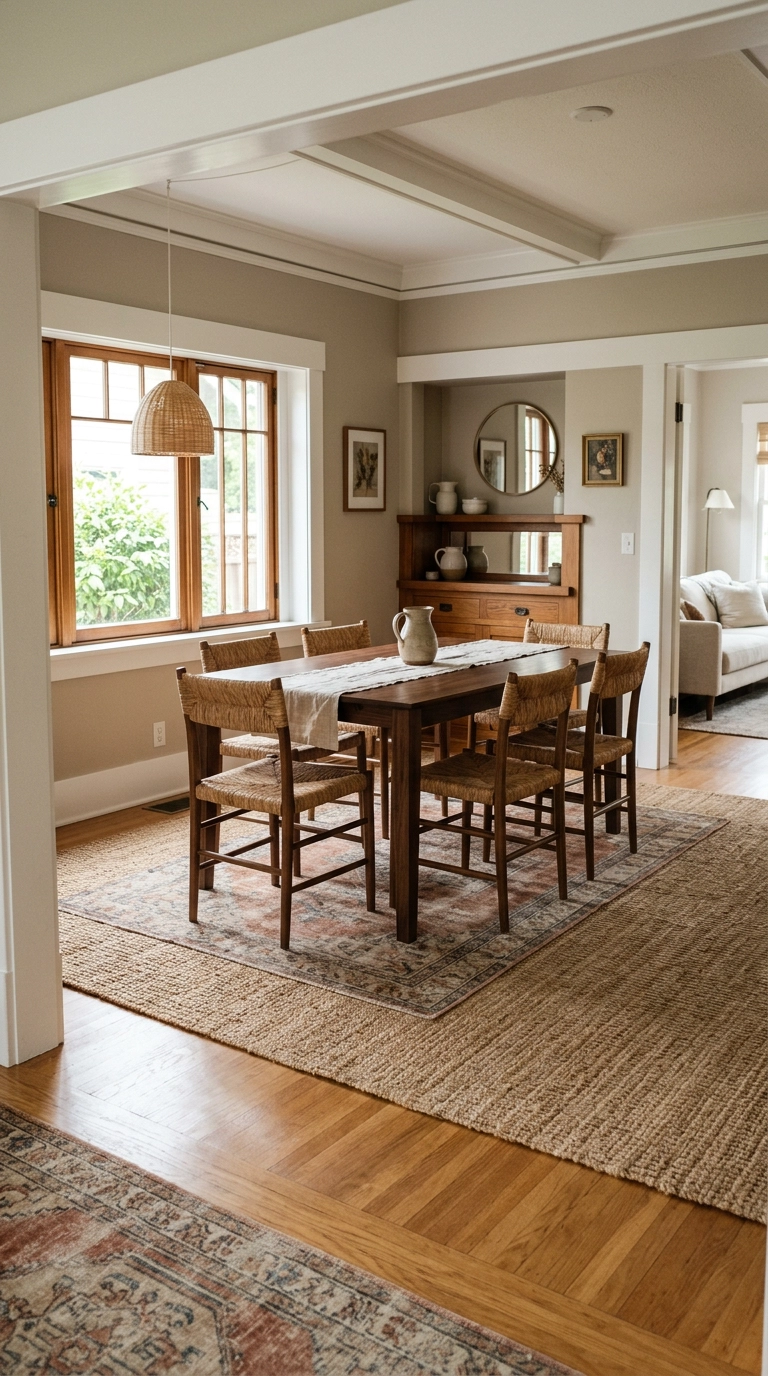
Here’s the sizing rule people skip: the rug must extend at least 24 to 30 inches past every edge of the table so chairs stay on the rug when pulled out. For a standard 6-foot table, that means an 8×10 at minimum, and a 9×12 if you have the floor.
4. Terracotta and Oatmeal with One Saturated Accent
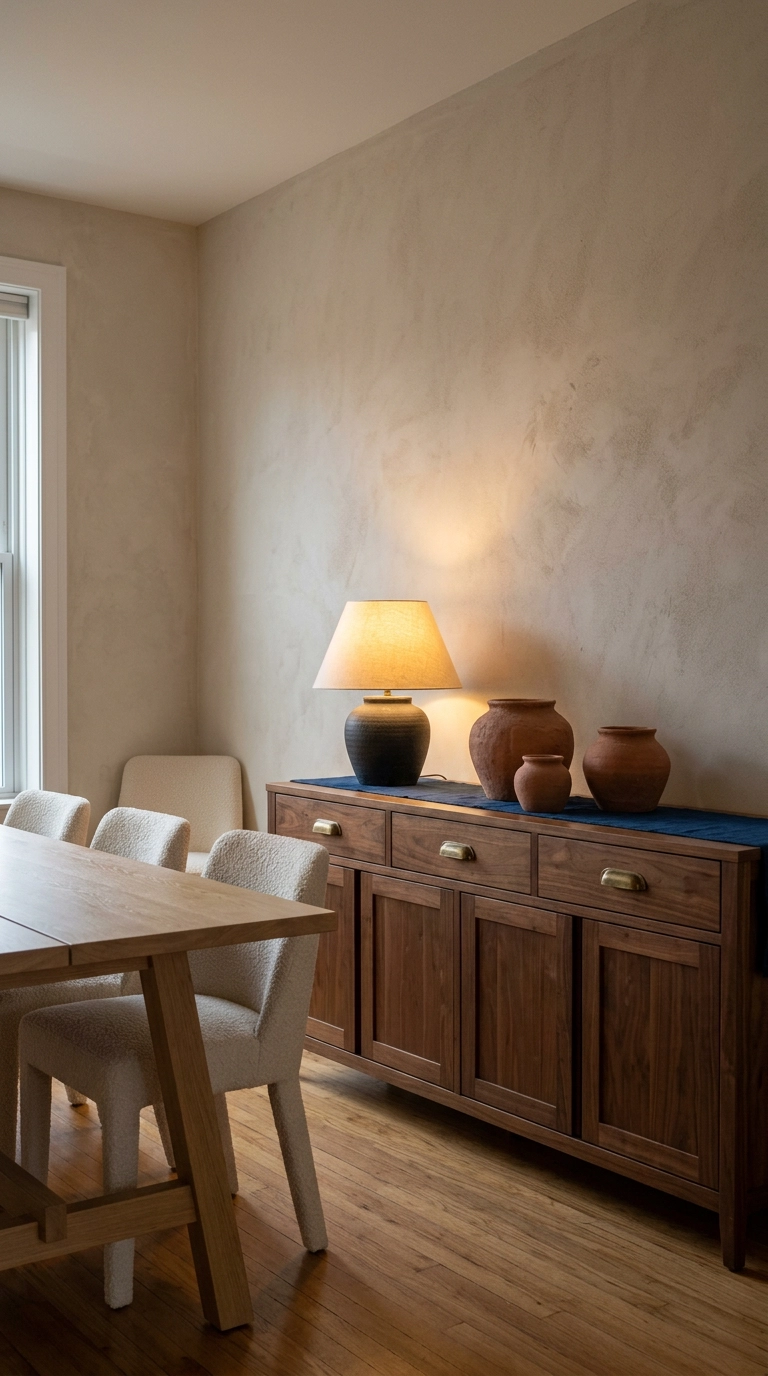
Boho goes muddy fast when every color sits at the same low saturation. Build the room on warm neutrals – terracotta, oatmeal, clay, unbleached cotton – then drop in exactly one high-chroma note like indigo, ochre, or deep coral.
5. A Macrame Wall Hanging Where You’d Normally Put Art
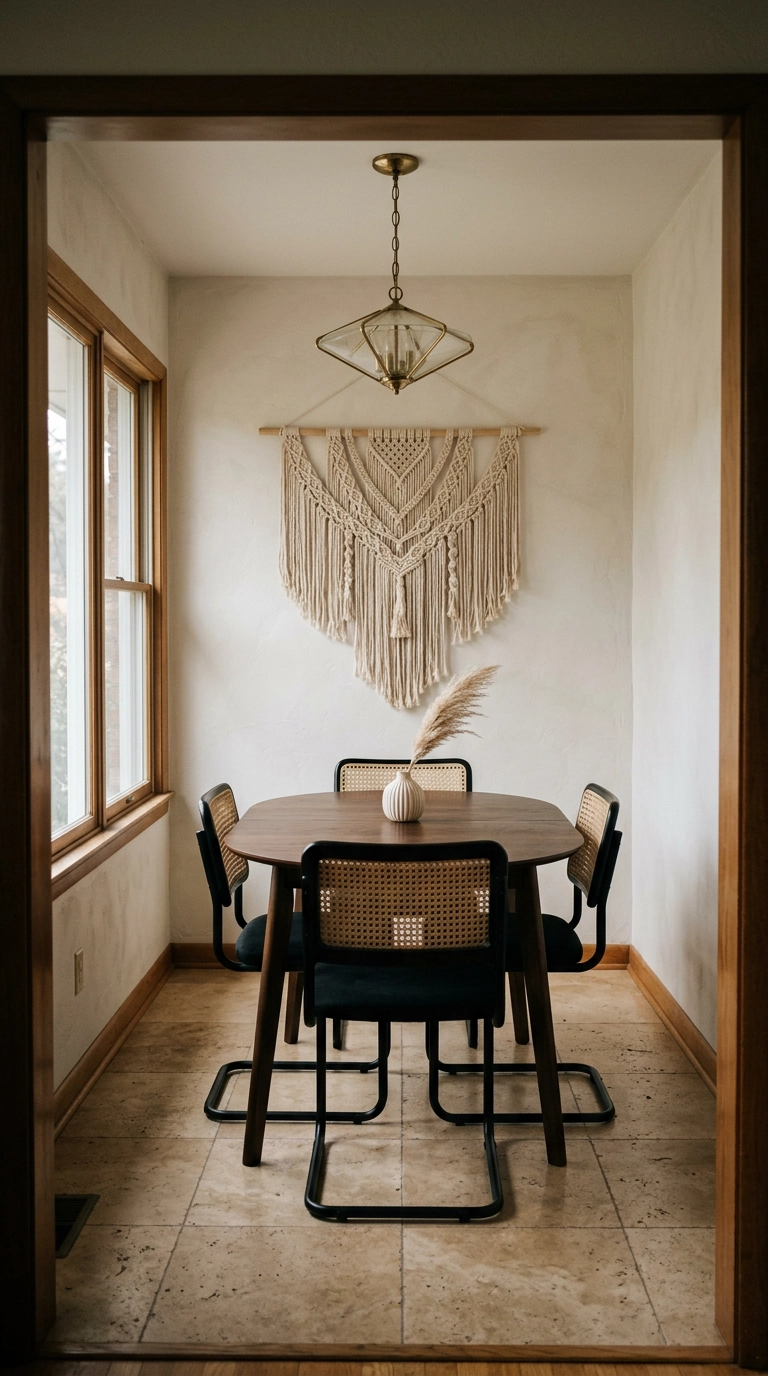
Hang the top dowel so the whole piece occupies the middle third of the wall height, and keep it to about two-thirds the width of whatever sits below it. Textile art absorbs sound too, which matters in a dining room full of hard surfaces.
6. Candle Grouping in Odd Numbers Down the Center
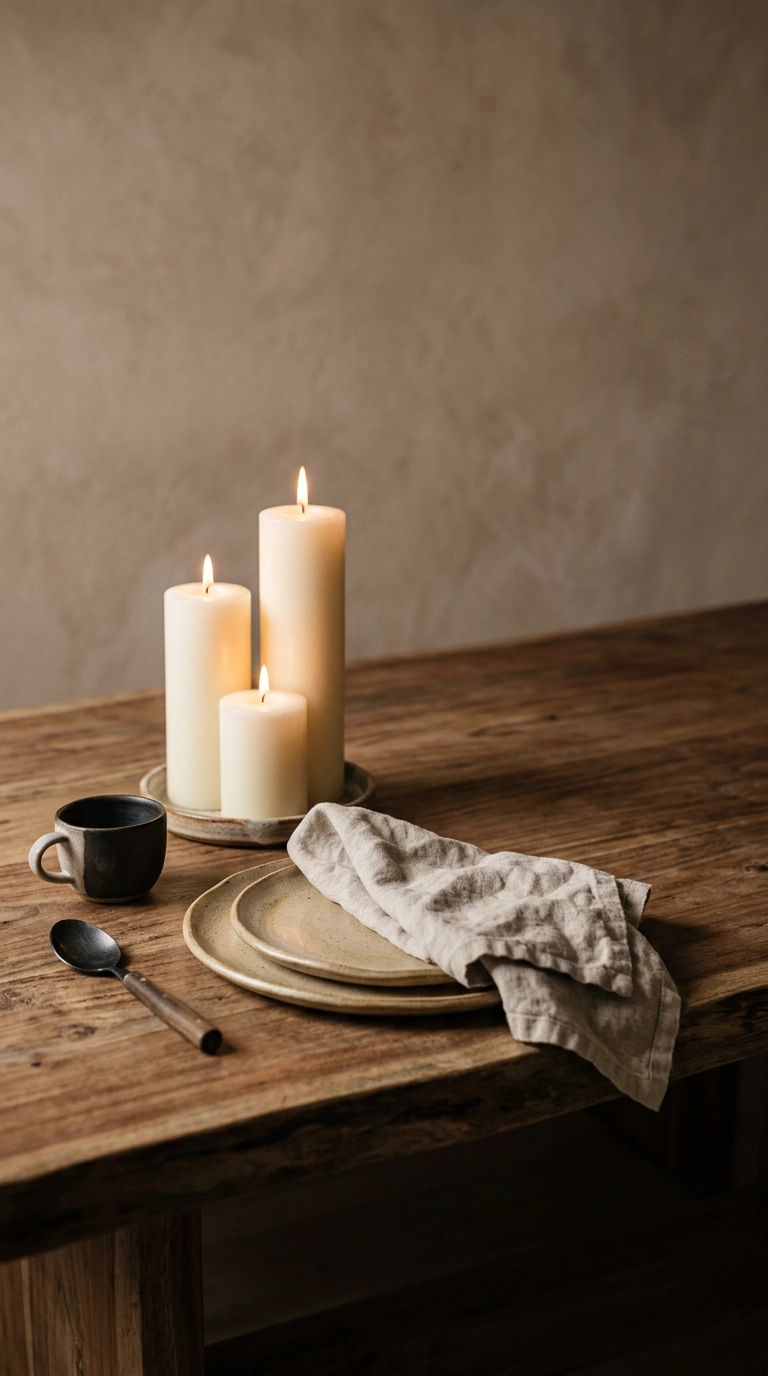
Three candles beat four every single time. Odd numbers refuse to split into tidy pairs, so your eye keeps moving through the group instead of stopping – that’s the whole trick behind the rule of thirds applied to a tabletop.
7. Cane Webbing Sideboard as the Room’s Hero Piece
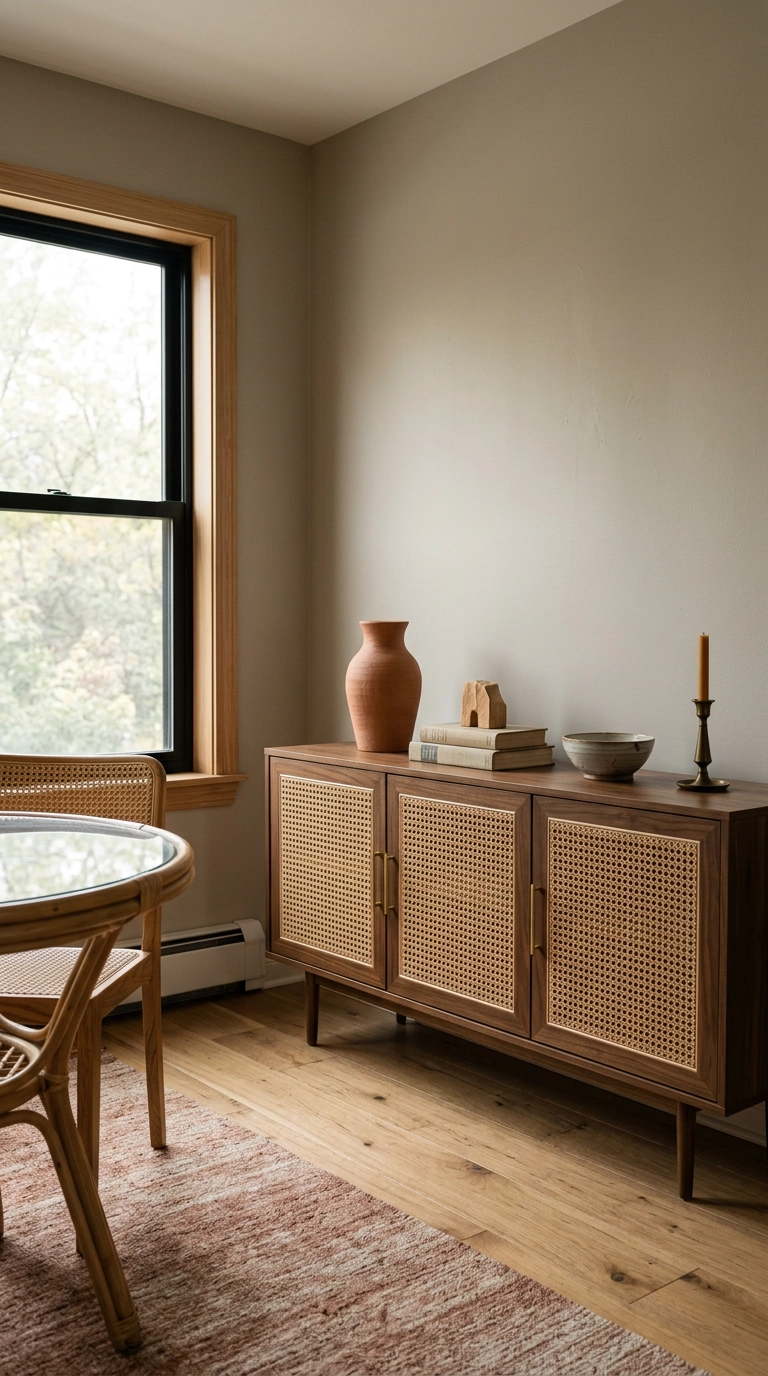
A cane webbing sideboard gives you the woven texture boho needs without adding a single item to the floor. Style the top with three to five larger objects and leave real gaps – crowded surfaces are what make a room look busy rather than collected.
8. Rattan Dining Chairs Around a Solid Wood Table
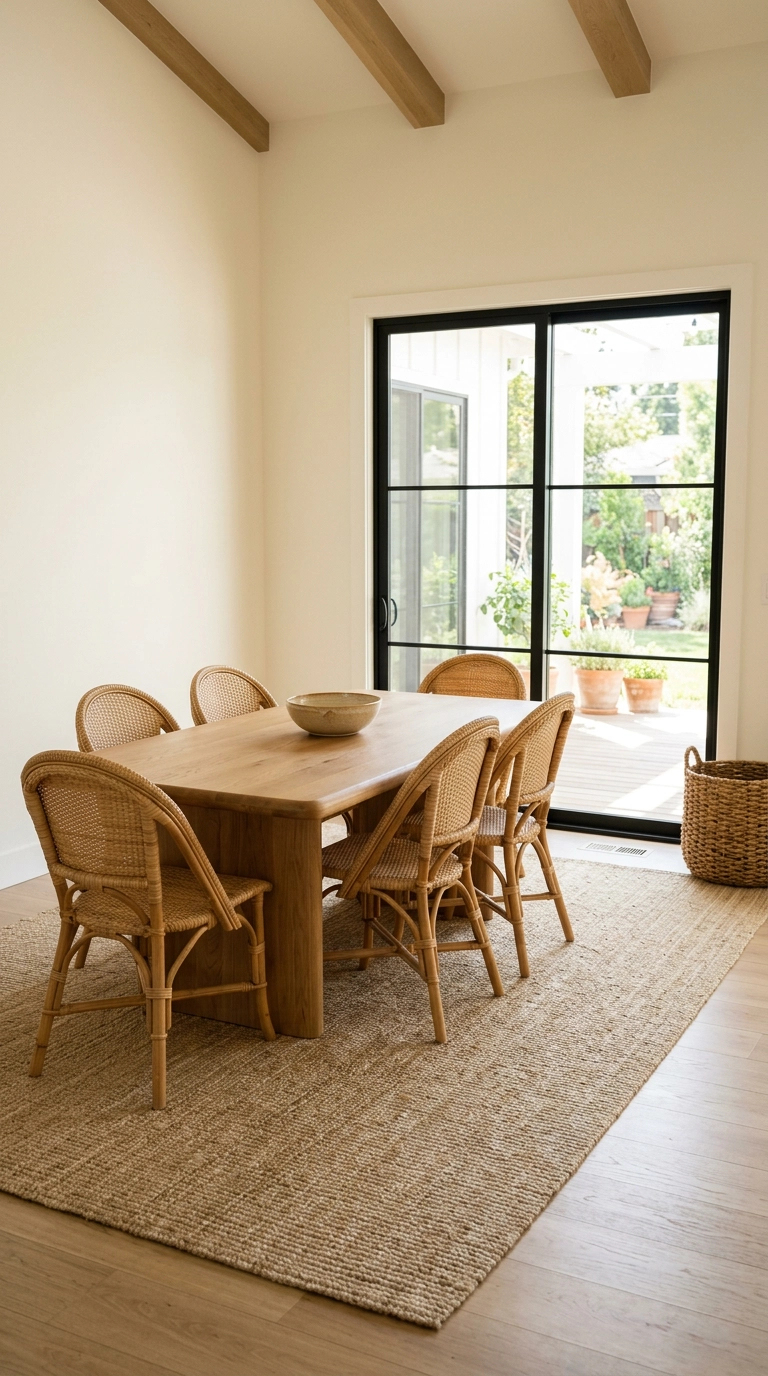
Rattan seating is the fastest way to warm up a dining room, but check the seat depth before you buy – anything under 16 inches gets uncomfortable by dessert. Leave 36 inches of clearance behind each chair so people can actually get up without a negotiation.
9. A Bench on One Side to Break Up the Chair Wall
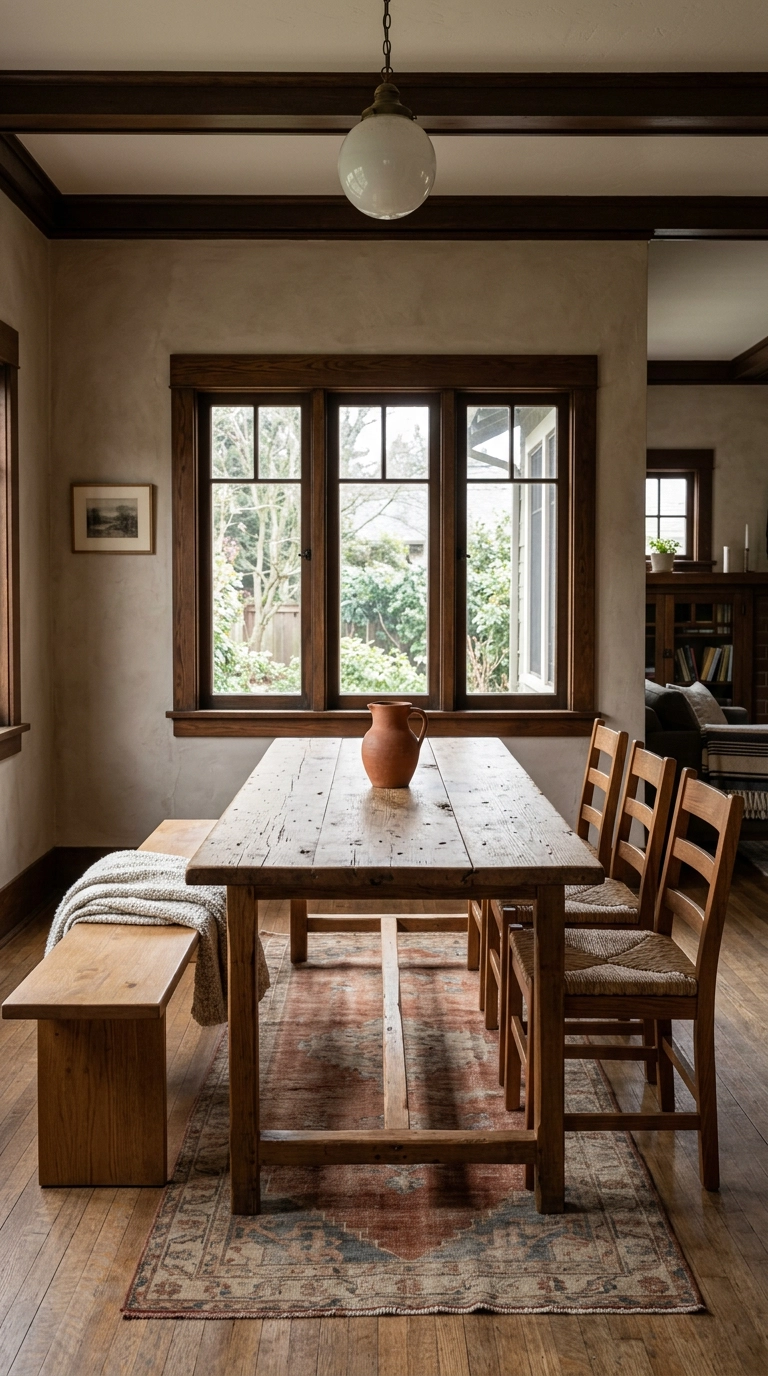
A bench on the window side does two things at once – it drops the visual weight so you can actually see out, and it lets you seat three kids where two chairs would fit. Size it about 12 inches shorter than the table so it tucks fully underneath.
10. Open Shelving with Three Big Pieces and Real Gaps
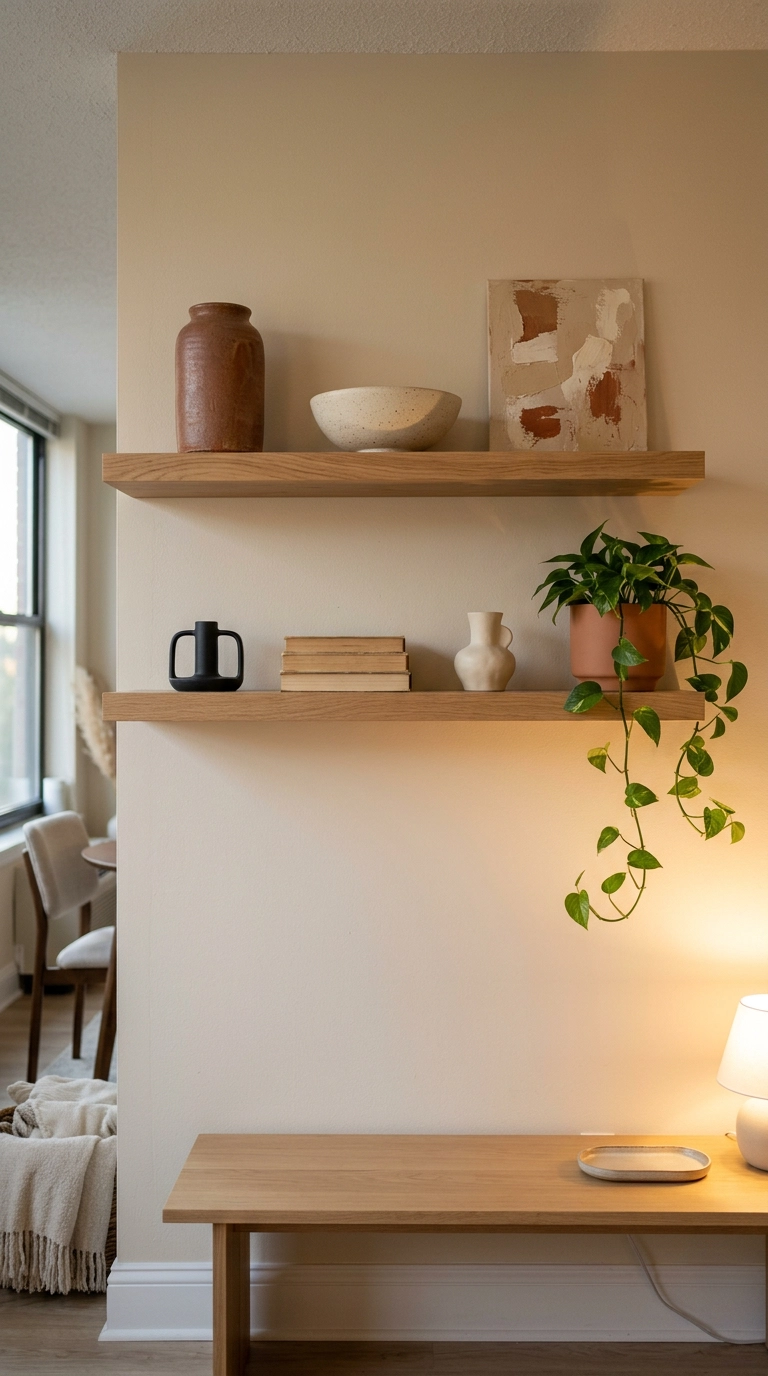
The single biggest styling mistake I see is twelve tiny objects fighting on one shelf. Use three to five pieces per shelf, make at least one of them tall enough to break the horizontal line, and leave a third of the shelf empty on purpose.
11. Floor-Length Raw Linen Curtains Hung Near the Ceiling
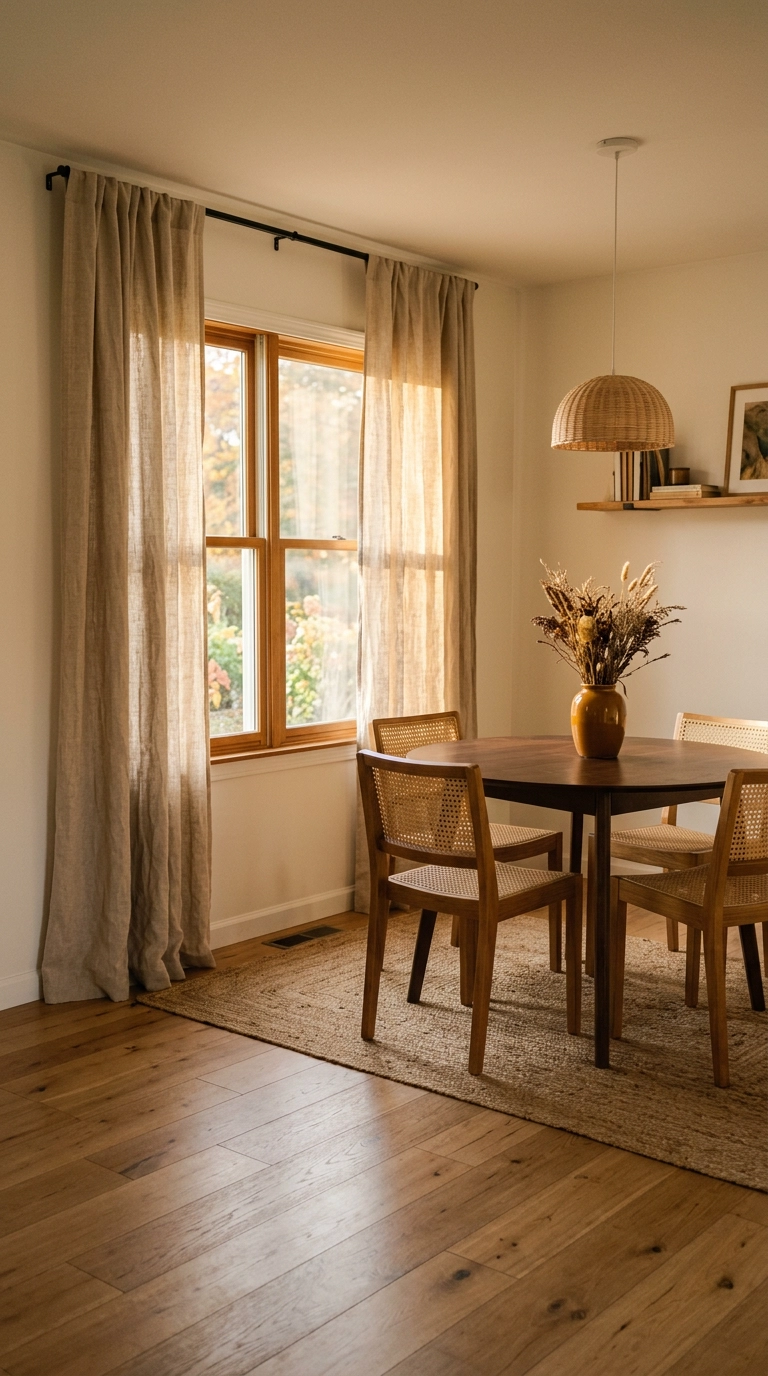
Mount the rod 4 to 6 inches below the ceiling and extend it 8 to 10 inches past each side of the window frame. Your eye follows the fabric all the way up, so the ceiling reads taller and the window reads wider – it costs nothing but a different drill hole.
12. A Gallery Wall of Unframed Textiles and Baskets
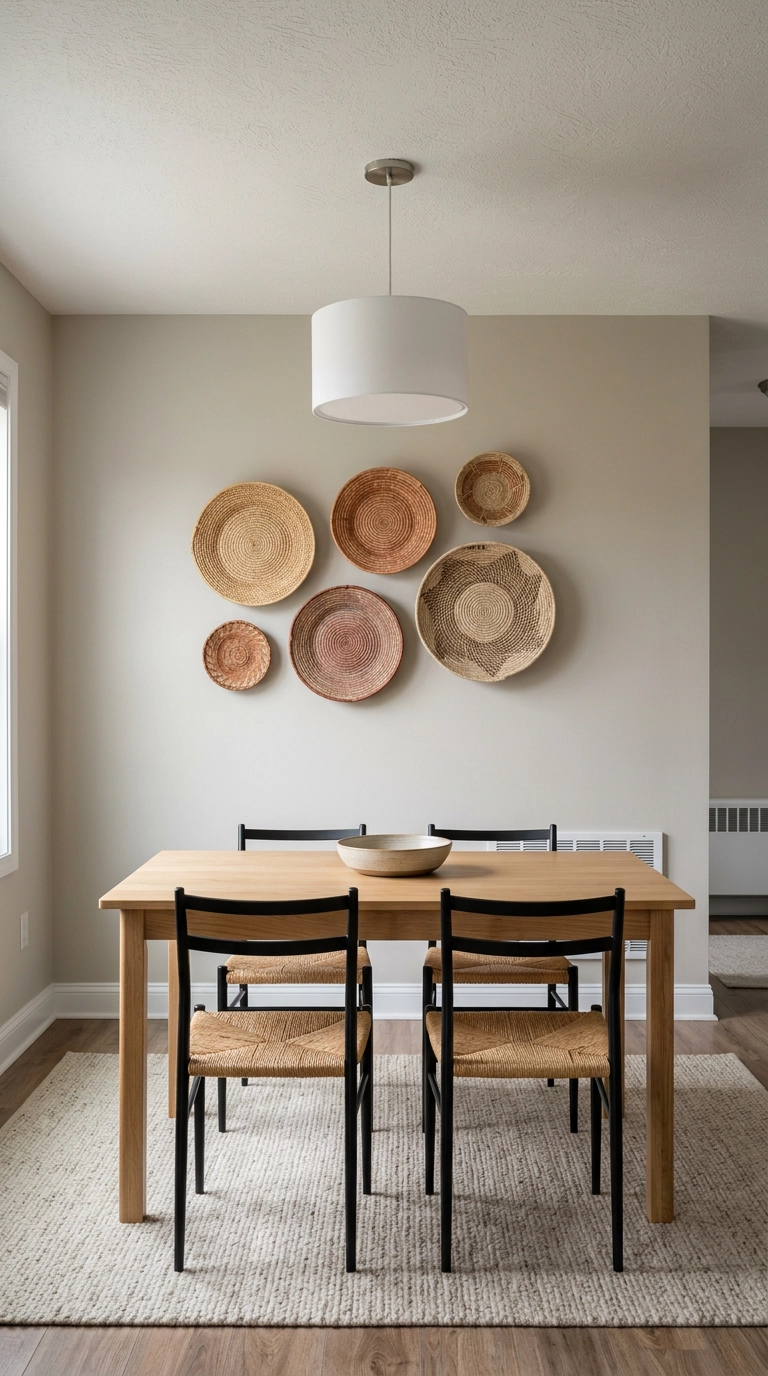
Flat woven baskets are the cheapest gallery wall in the business, and they read as texture instead of art. Use an odd count, vary the diameters by at least 3 inches, and keep the whole cluster inside an imaginary rectangle so it has an edge to hold onto.
13. Color Drench the Room in Warm Clay
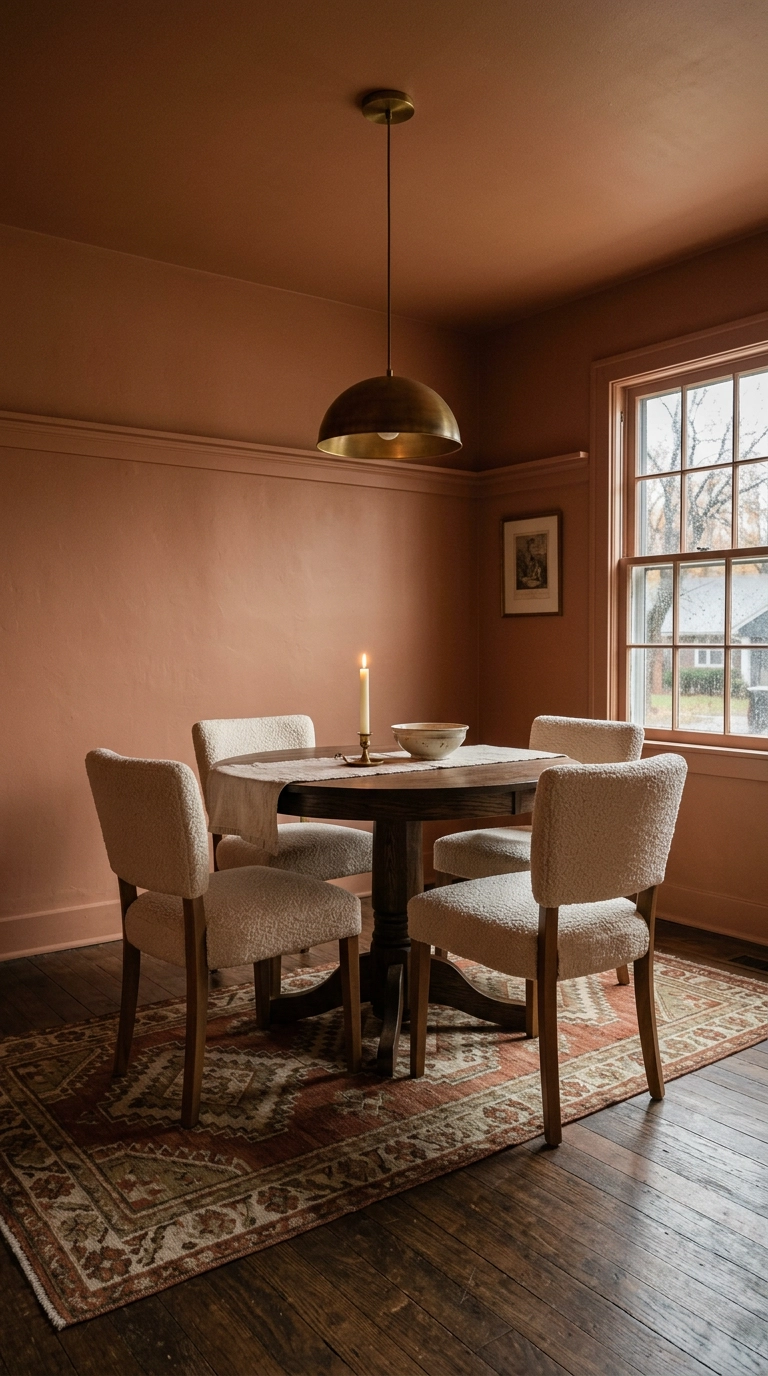
Color drenching means walls, trim, and ceiling in one shade, and it’s my go-to fix for a small dining room that feels chopped up. Erasing the white trim line removes the visual breaks your eye reads as edges, so the box quietly expands.
14. Hand-Thrown Stoneware Instead of Matching Dinnerware
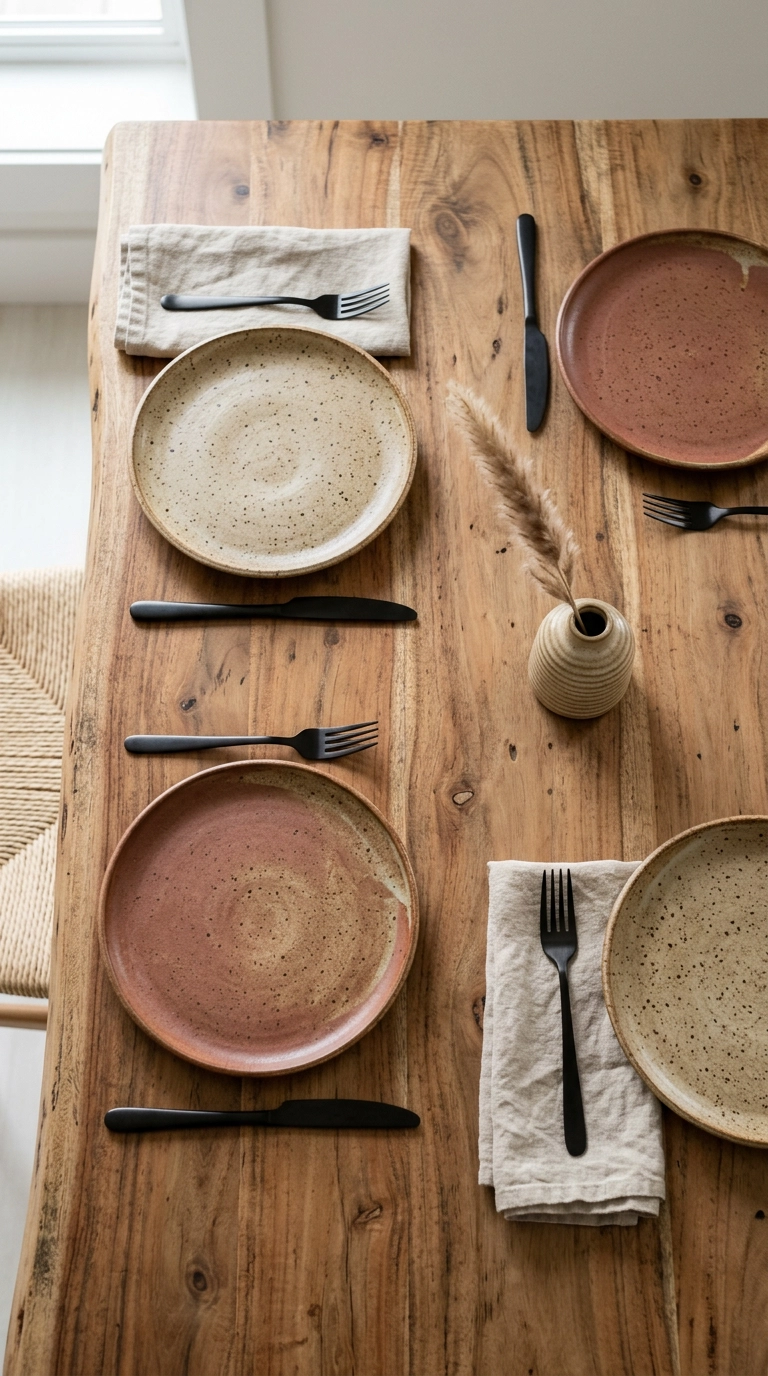
Skip the boxed 16-piece set. Buy stoneware in ones and twos from local potters or the small-batch section at your usual retailer, and let the glazes vary within one color family – speckled sand, warm clay, bone.
15. A Big Arched Mirror to Bounce Light Into a Dark Room
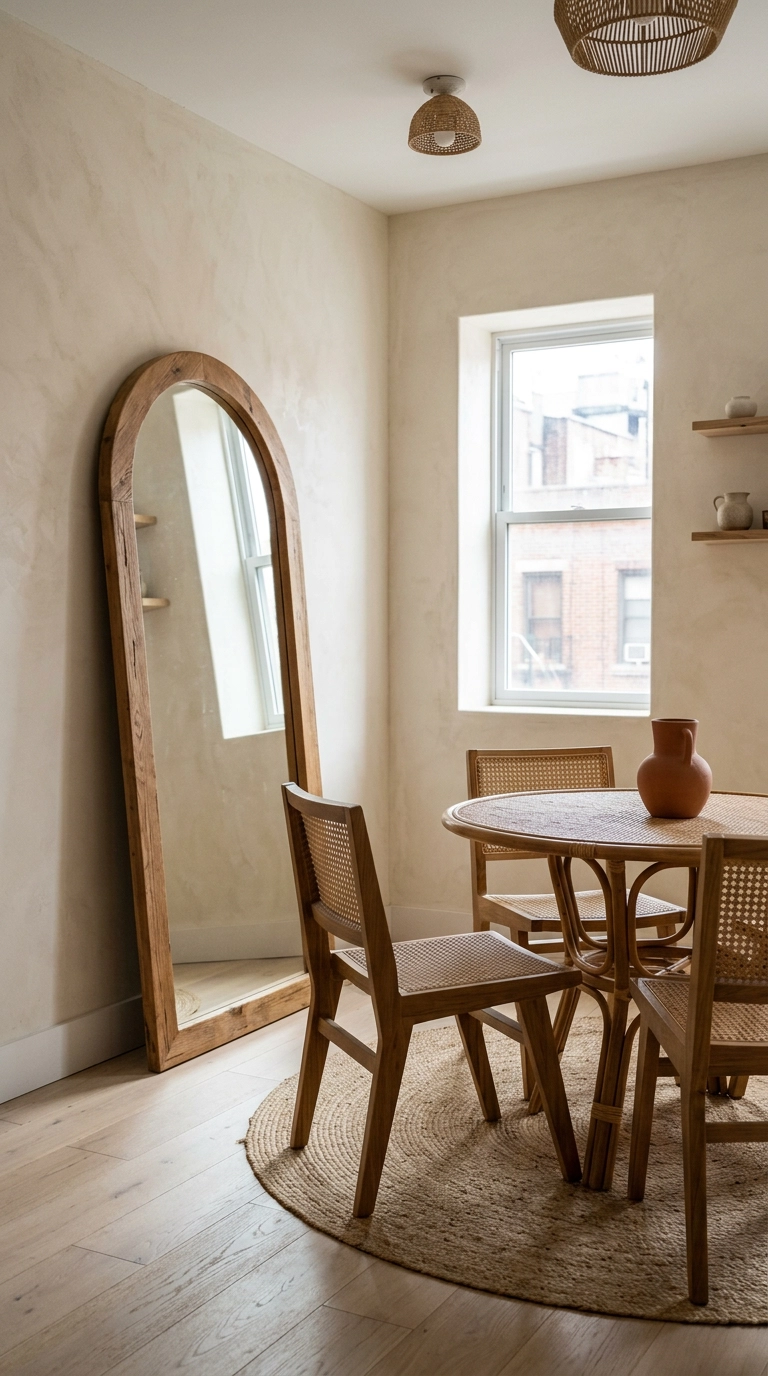
In a north-facing dining room that never gets direct sun, put a large mirror on the wall opposite or perpendicular to your window. It doubles the daylight you already have, and the arch shape softens all the straight lines a dining room comes with.
16. Grasscloth Wallpaper on One Wall for Quiet Texture
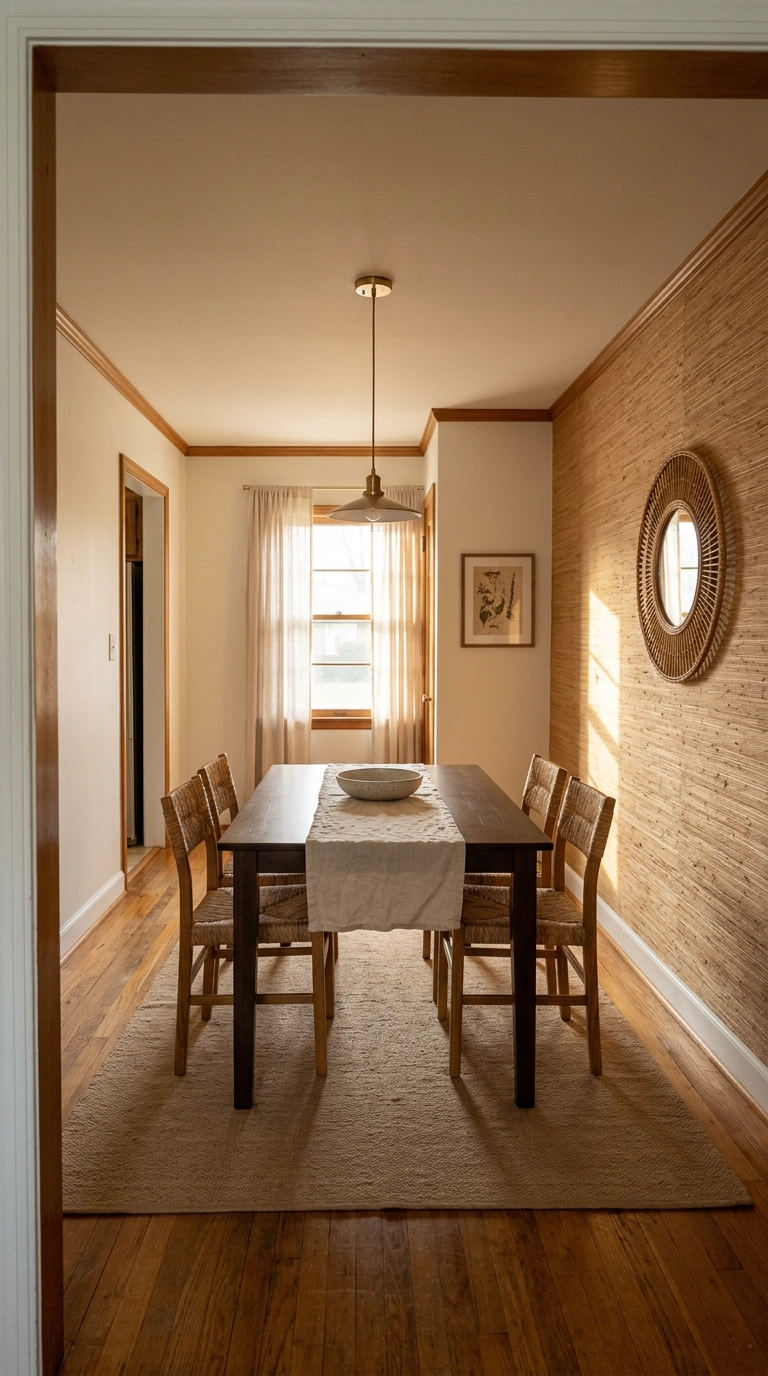
Grasscloth is the texture move for people who do not want another basket or a fourth throw. It is woven plant fiber on a paper backing, so it catches raking light and shows every strand, which is why you always put it on the wall that light crosses sideways rather than the one it hits head-on.
17. Plug-In Brass Sconces Instead of Hardwiring
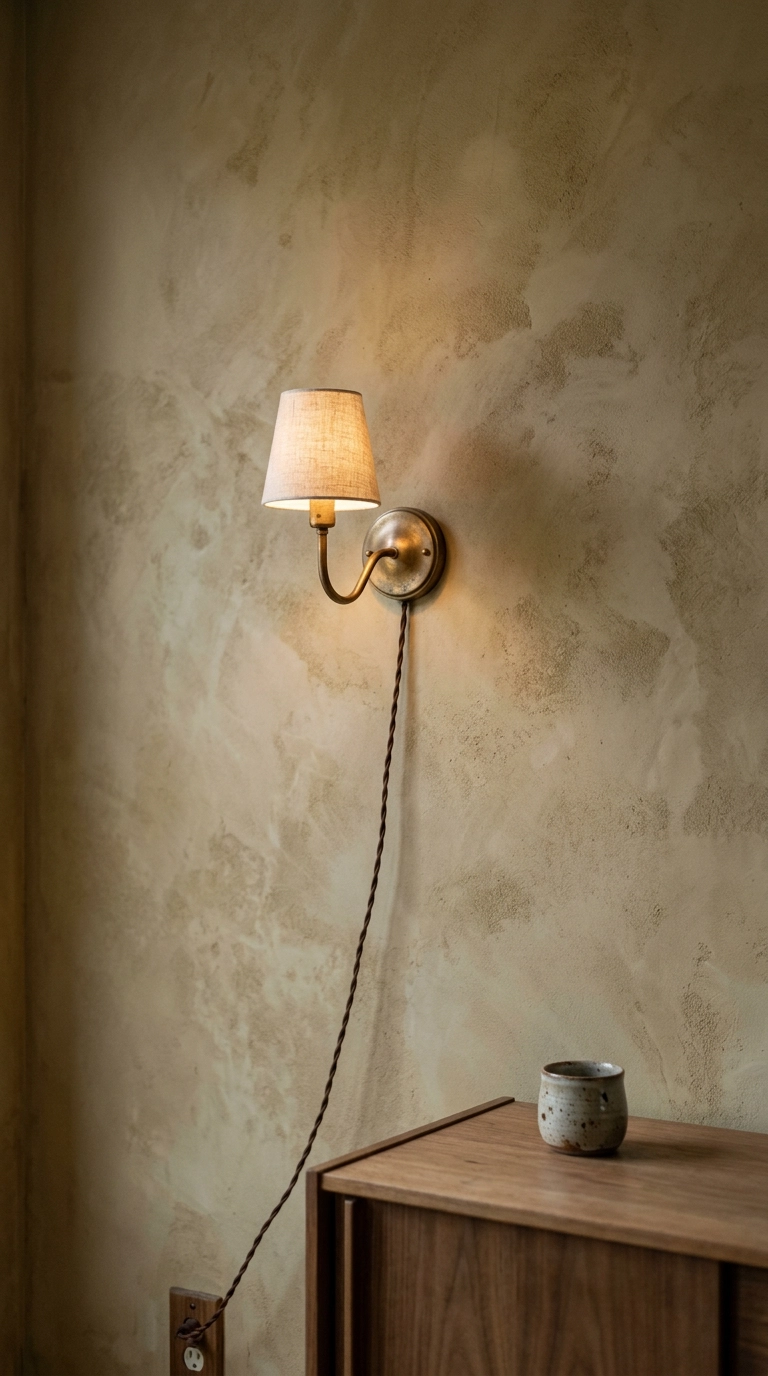
Dining rooms almost always have exactly one ceiling box and no way to add more, which is why plug-in sconces are the best lighting hack going. Mount a pair at about 60 to 66 inches off the floor, roughly 6 feet apart, flanking a sideboard or the widest wall.
18. A Banquette Built Into the Awkward Corner
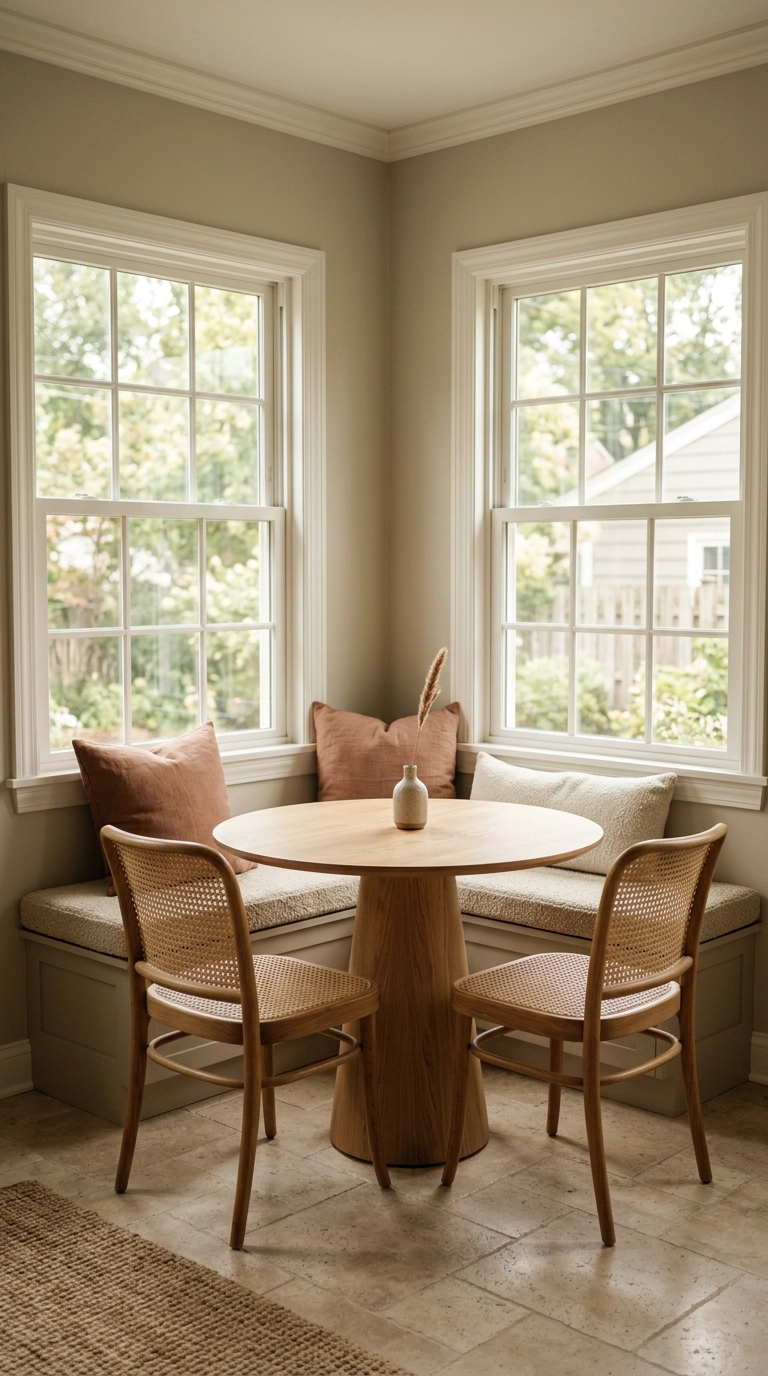
A banquette buys you seating in square footage that was doing nothing, and it works best in small rooms where a fourth chair would block a walkway. Build the seat 17 to 18 inches deep and 18 inches high, then pair it with a round table so nobody has to slide past a corner.
19. Dried Pampas and Branches Instead of Fresh Flowers
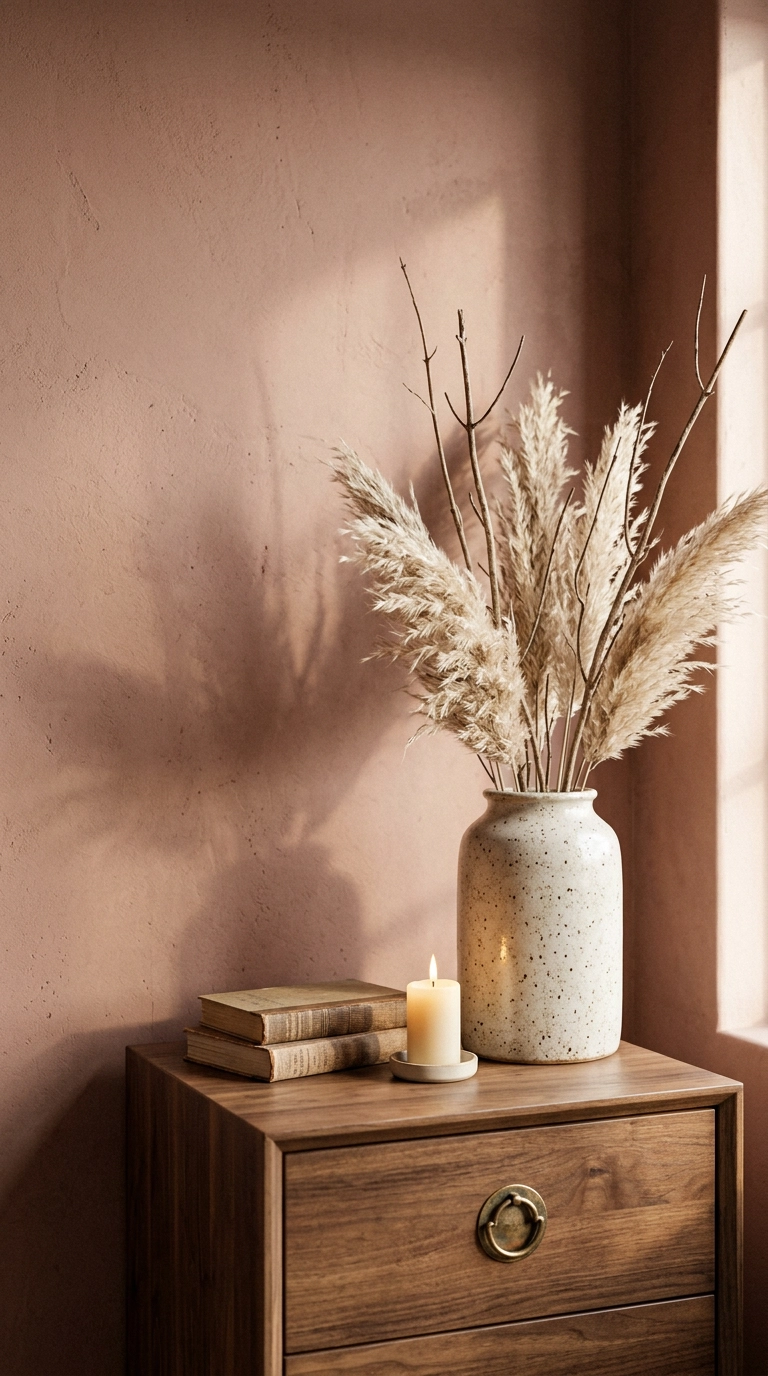
Dried stems last years, cost less than two grocery bouquets, and give you the height a dining room usually lacks. Cut them so the tallest stem is roughly one and a half times the height of the vessel, and use one variety plus one woody branch rather than a mixed bunch.
20. A Rattan Bar Cart to Steal Back the Dead Corner
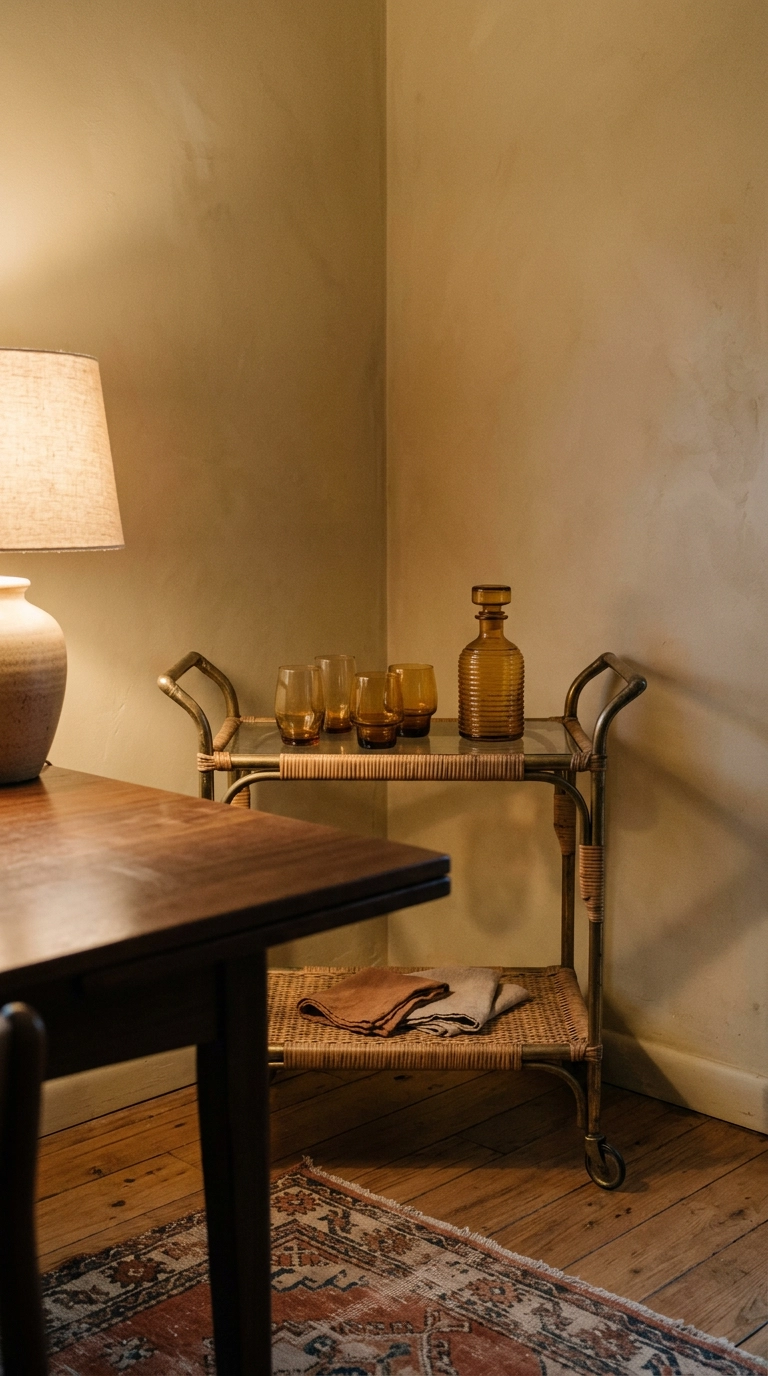
Almost every dining room has one corner doing absolutely nothing, and a bar cart is the smallest piece of furniture that can fix it. Look for one around 30 to 34 inches tall so it reads as a companion to your table rather than a competing surface.
21. One Real Olive Tree in a Woven Basket
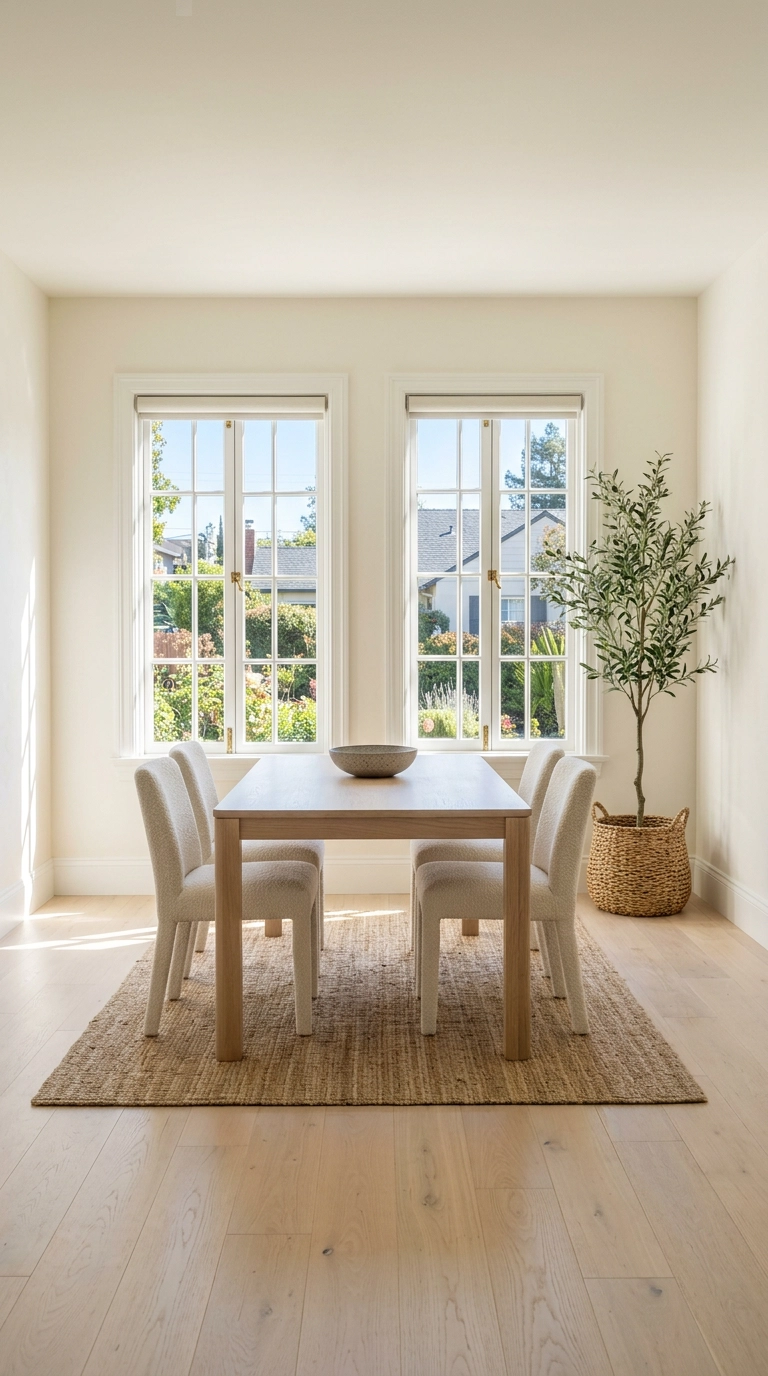
One tall plant beats six small ones, and in a dining room it has to go in a corner where nobody’s elbow will find it. Olive trees want at least six hours of direct sun, so this is a south or west-facing room idea – in a dark room, buy a good faux one and no one will ever know.
22. Swap the Overhead for Two Pendants Over a Long Table
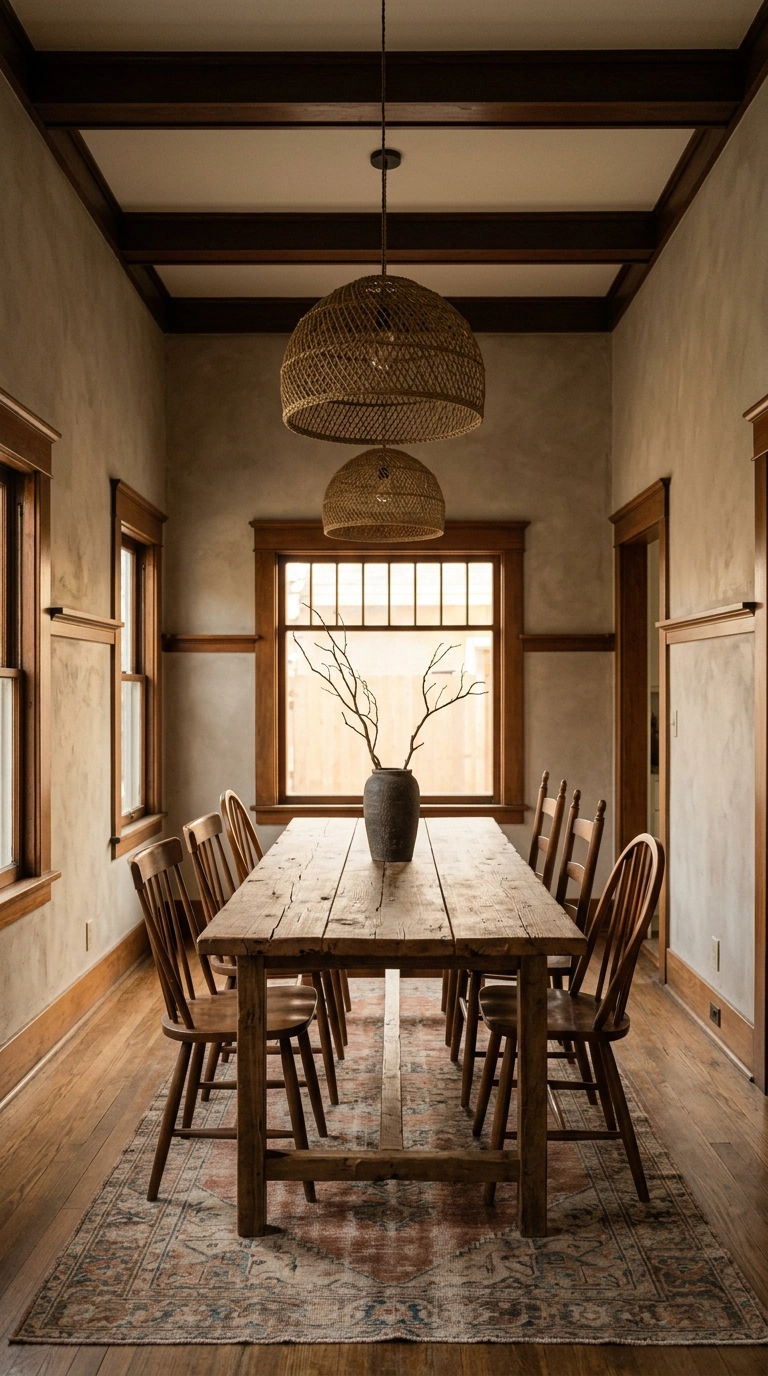
A single pendant over an 8-foot table leaves both ends in shadow, and one giant fixture usually looks like it wandered in from a hotel lobby. Two smaller pendants, each centered about a quarter of the way in from either end, light the whole surface evenly.
Where I’d Start if This Were My Dining Room
If you take one thing from this list, make it the editing. Every boho dining room I’ve loved had fewer objects than the owner originally wanted – three candles instead of six, one olive tree instead of a corner nursery, a shelf with real gaps in it. The texture does the talking, so the woven pendant, the cane sideboard, and the layered vintage rug over jute earn their place while the tenth ceramic trinket does not.
What I’m seeing take over in 2026 is warmth with structure: clay and terracotta drenched wall to ceiling, dark chocolate wood coming back hard against all that pale oak, and grasscloth showing up on one wall in rooms that would have gotten a gallery wall two years ago. Justina Blakeney built a whole language around plant-forward maximalism and it’s still gorgeous, but the current mood borrows her fearlessness about color while keeping surfaces clear. Even Farrow & Ball’s earthier reds and ochres are getting used in dining rooms now, which tells you where the palette is heading.
My honest advice is to start with the cheapest high-impact swap you can do this weekend – raise your curtain rod, size up your rug, group three candles – and live with it before you buy anything else. Rooms tell you what they need once you stop shouting at them. If you want more of this in your inbox, sign up for my weekly newsletter and I’ll send you the styling breakdowns, sourcing finds, and the occasional honest confession about a project that went sideways.


