
23+ Smart Laundry Room Shelving Decor Ideas That Are Pretty and Actually Practical in 2026

I have designed a lot of laundry rooms, and I will tell you the honest truth: this is the one room where a gorgeous shelf can fail you in about four days. Detergent is heavy, dryers throw heat and moisture, top-loader lids swing higher than anyone expects, and a spin cycle will happily walk a glass jar right off a shelf edge. So these are the ideas I actually use with clients, measurements and ugly practical bits left in, because a laundry shelf that looks good and holds up is the entire point.
Laundry Room Shelving Decor Ideas
1. Two Floating White Oak Shelves Above a Front-Load Pair
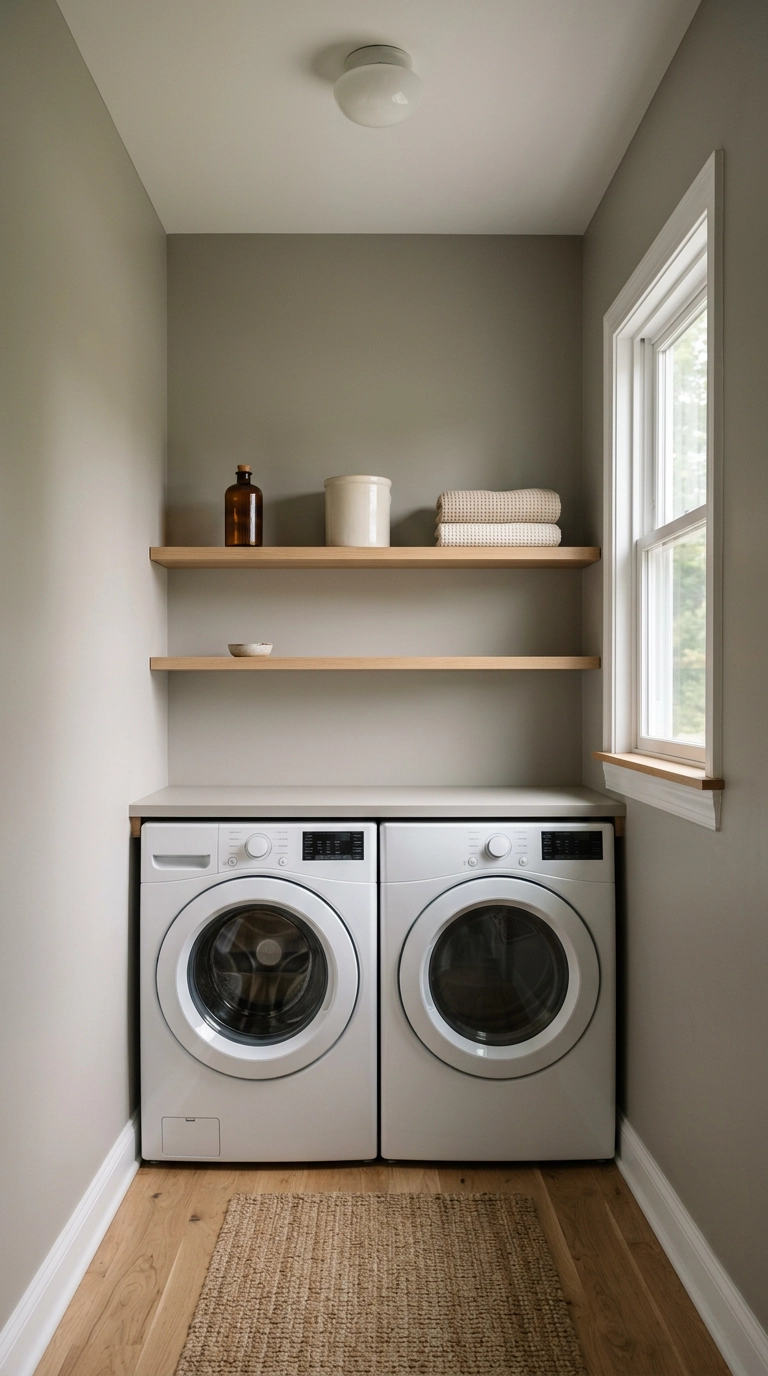
This is the look everyone saves, and it works because the shelves repeat the horizontal line of the machines instead of fighting it. Mount the lower shelf 18 to 20 inches above the machine tops so you can still reach behind the pair, and space the two shelves about 12 inches apart.
2. A Butcher Block Counter Across Both Front-Loaders
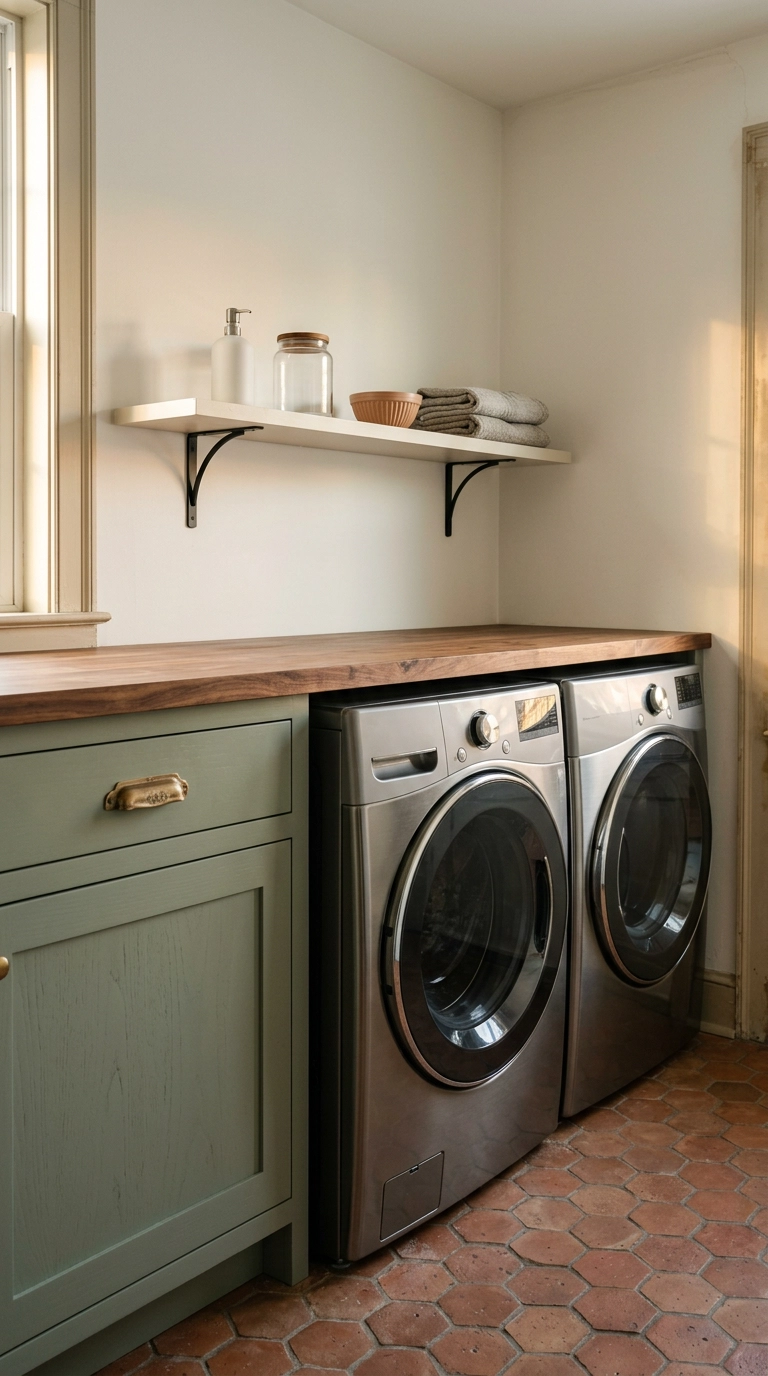
If your machines are front-loading, a counter across the top is the best single upgrade in the room, and it is the reason your shelving finally gets used. Build it level with the machine tops, around 36 to 38 inches, and carry the weight on a wall ledger plus one side cabinet so nothing rests on the appliances themselves.
3. Wood Planks on Black Metal Brackets, Bolted Into Studs
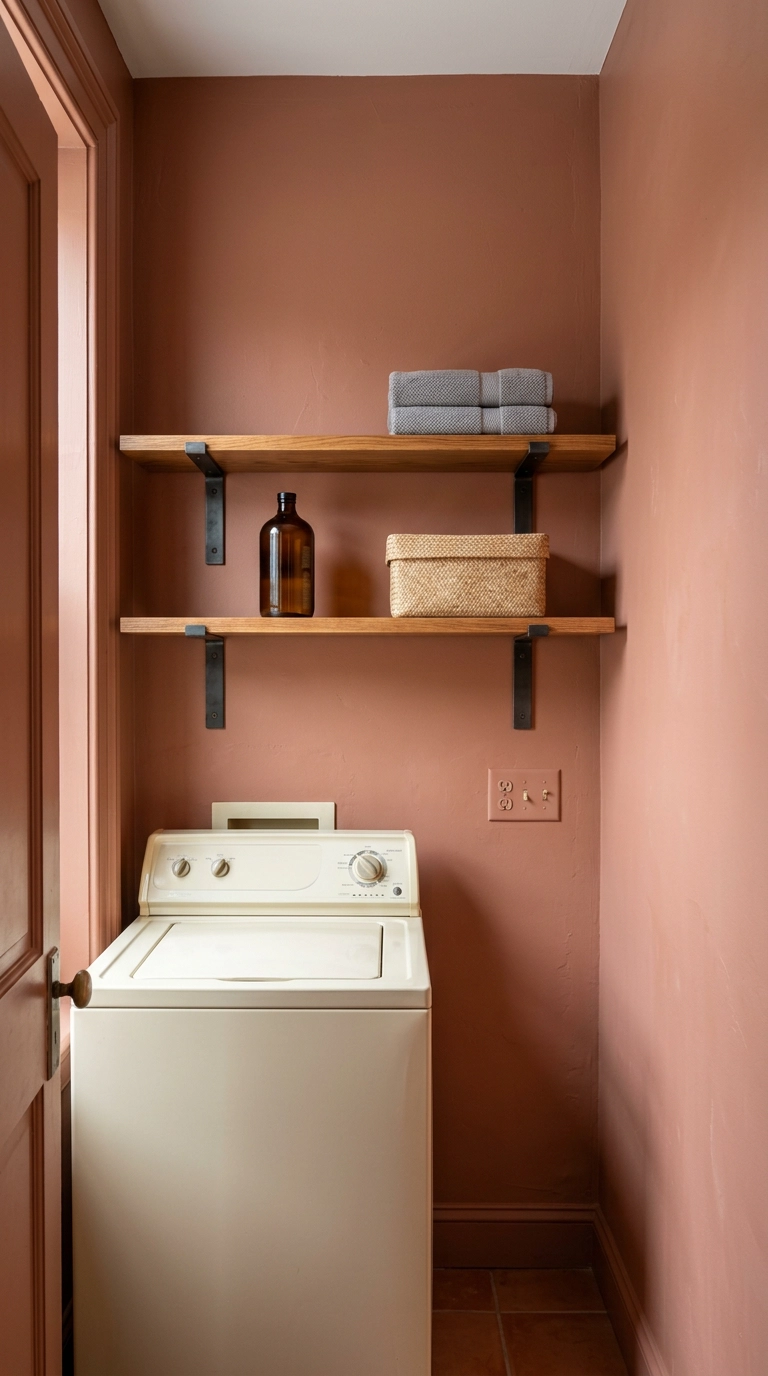
Visible brackets are not a compromise, they are the honest structural answer, and in a utility room they read intentional rather than cheap. Find your studs, which sit 16 inches on center in most American homes, and put a bracket into every stud the board crosses.
4. One High Single Shelf Above a Top-Loader, Set by the Lid
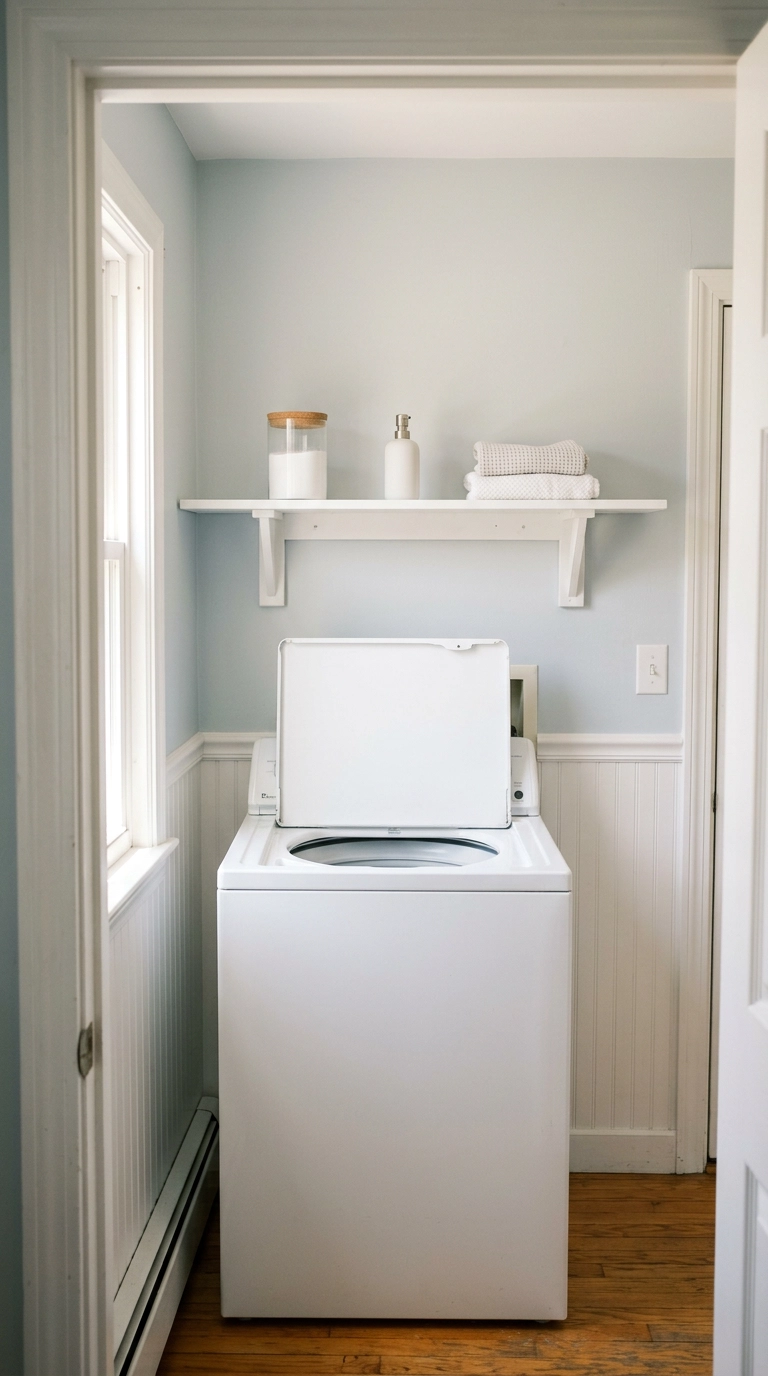
Top-loader owners, this is the one measurement that saves you a rebuild. Open the lid all the way, measure from the machine top to the highest point of the raised lid, and add two inches of knuckle room before you mark the bottom of your shelf.
5. A Slim Gallery Lip on the Shelf Edge So Nothing Walks Off
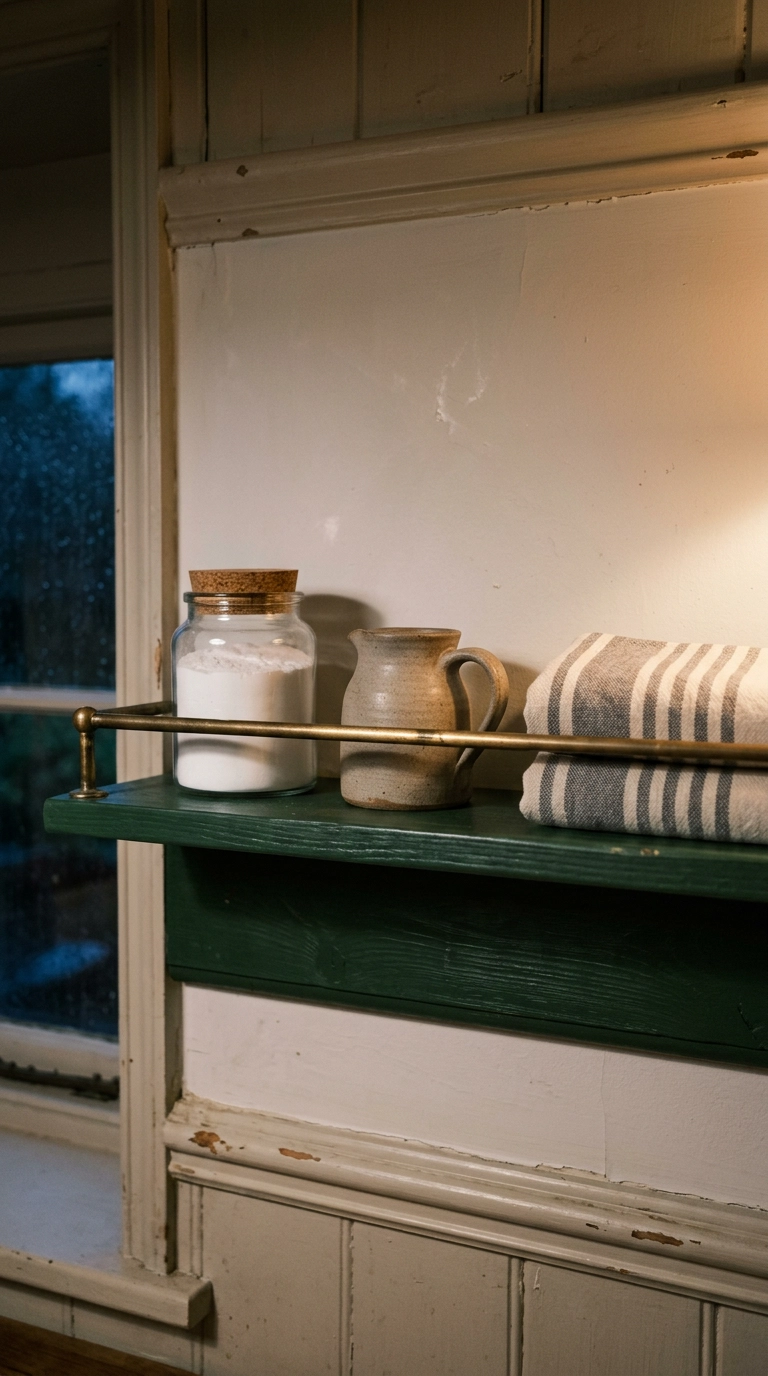
A front-loader on a high spin can hit 1,200 rpm, and that vibration travels straight up the wall into your pretty shelf. A quarter-inch brass rail, a thin wood lip, or even a strip of leather cord across the front stops the slow creep before a glass jar meets the tile.
6. Decant Into Unlabeled Glass and Suddenly the Shelf Is Decor
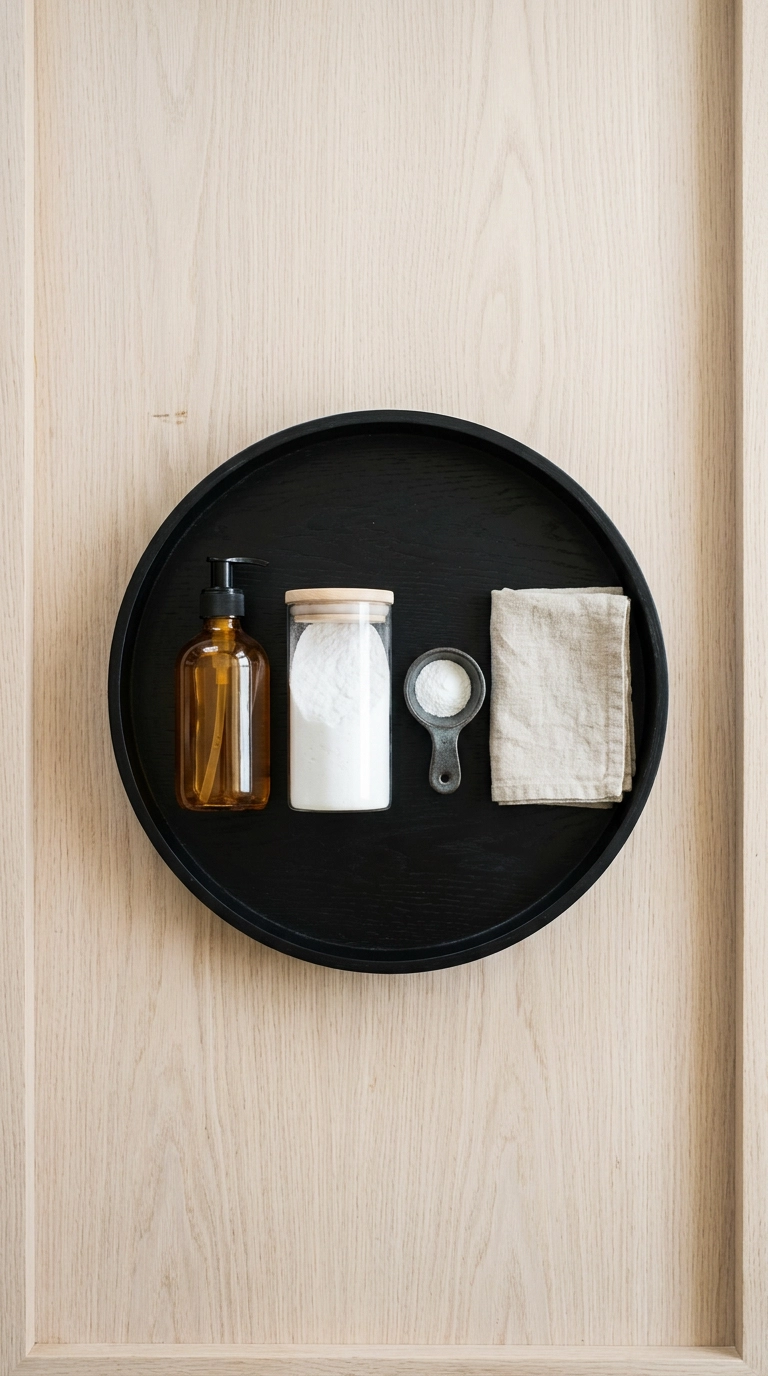
Ninety percent of what makes a laundry shelf look chaotic is packaging. Move powder into plain glass jars and liquid into amber pump bottles and the shelf goes quiet instantly, because your eye stops reading six competing logos.
7. A Slim Rolling Cart in the Dead Gap Between the Machines
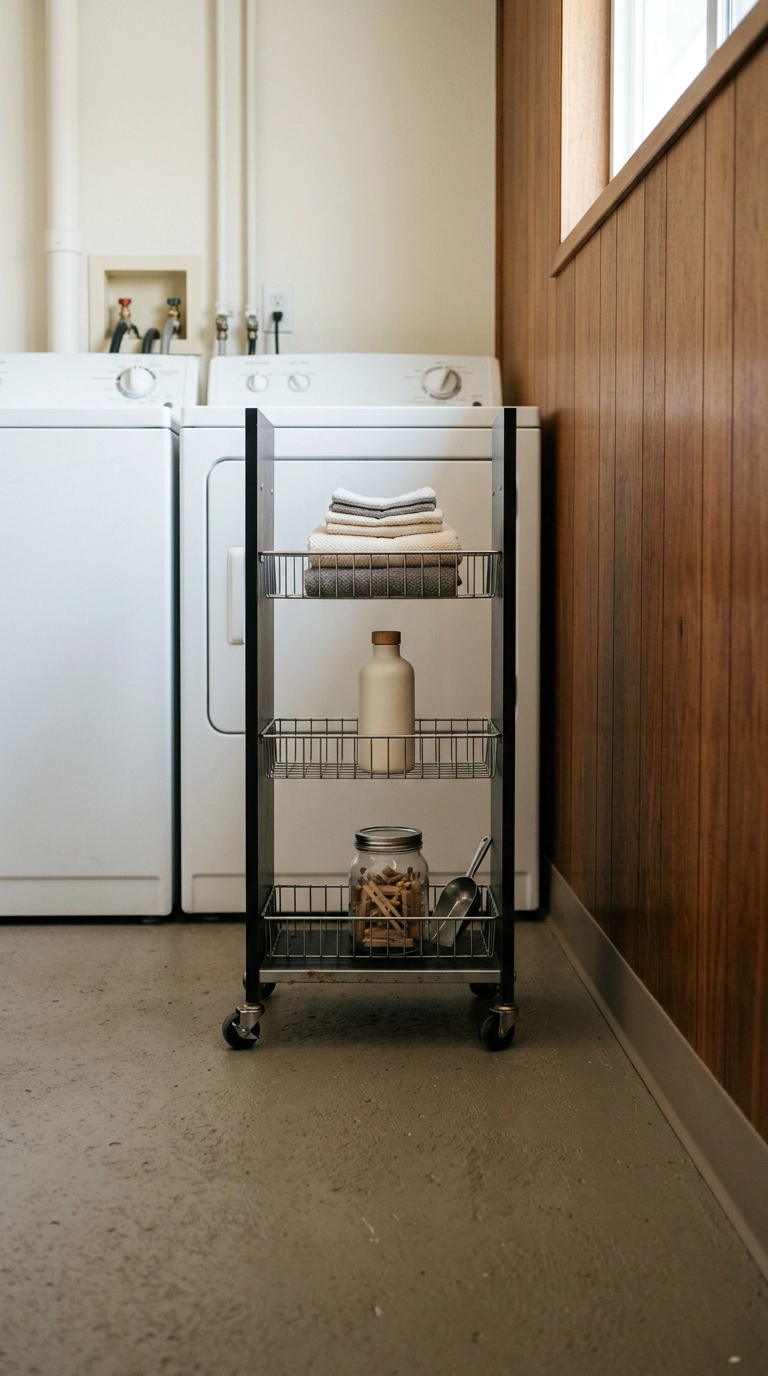
That three to nine inch canyon between machines is the most wasted real estate in any laundry setup. A slim caster cart slides in, rolls out when you need it, and holds the stain sticks and dryer sheets you were leaving on top of the dryer.
8. An Over-the-Door Rack for a Laundry Closet You Cannot Drill
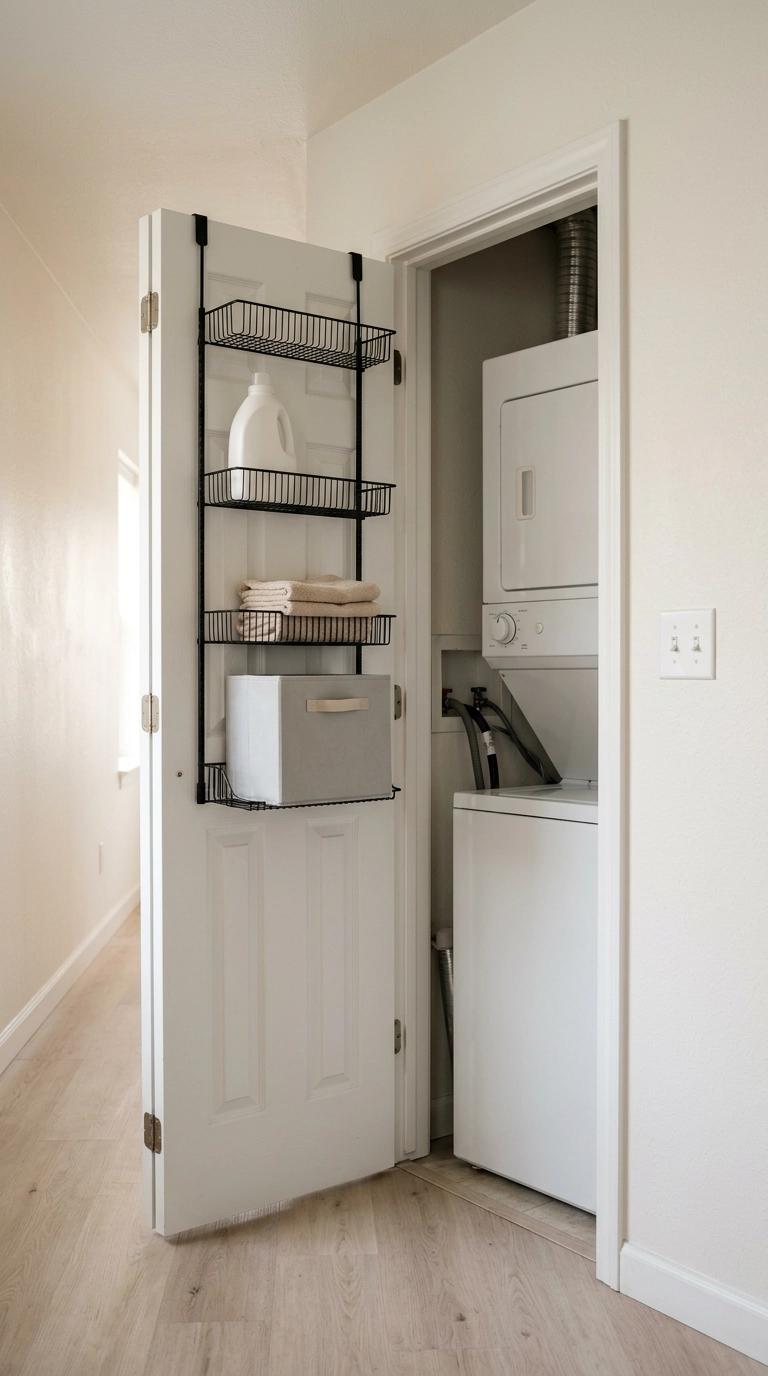
Renters, this is the one I recommend most often. An over-the-door rack turns the inside of a bifold or hollow-core door into real storage, and when you move out you unhook it and there is nothing to patch.
9. A Freestanding Shelf Tower That Straddles the Machines
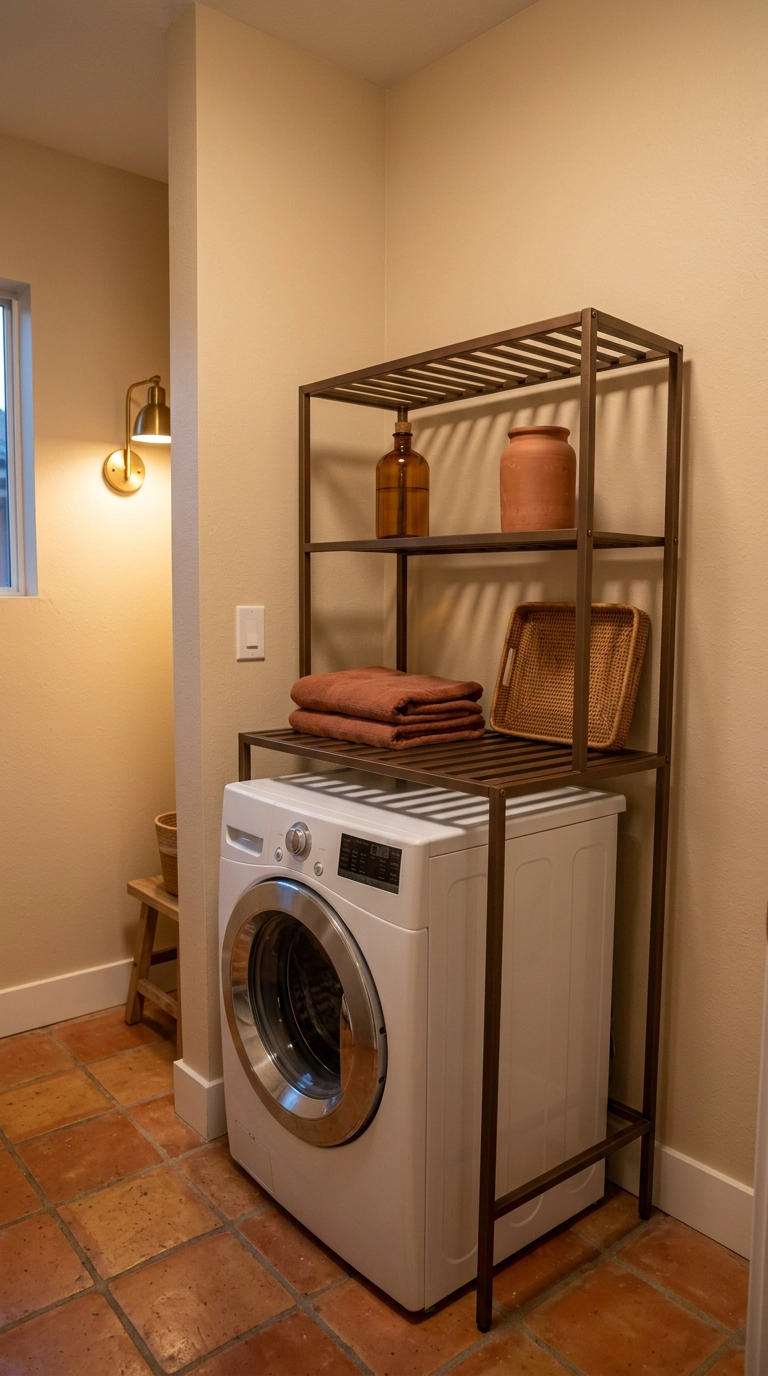
These over-the-washer towers get overlooked because they look flimsy in listings, but the good ones carry their load down through the floor instead of into your landlord’s drywall. No holes, no anchors, no security deposit anxiety.
10. Cover Builder-Grade Wire Shelving With a Cut-to-Fit Board
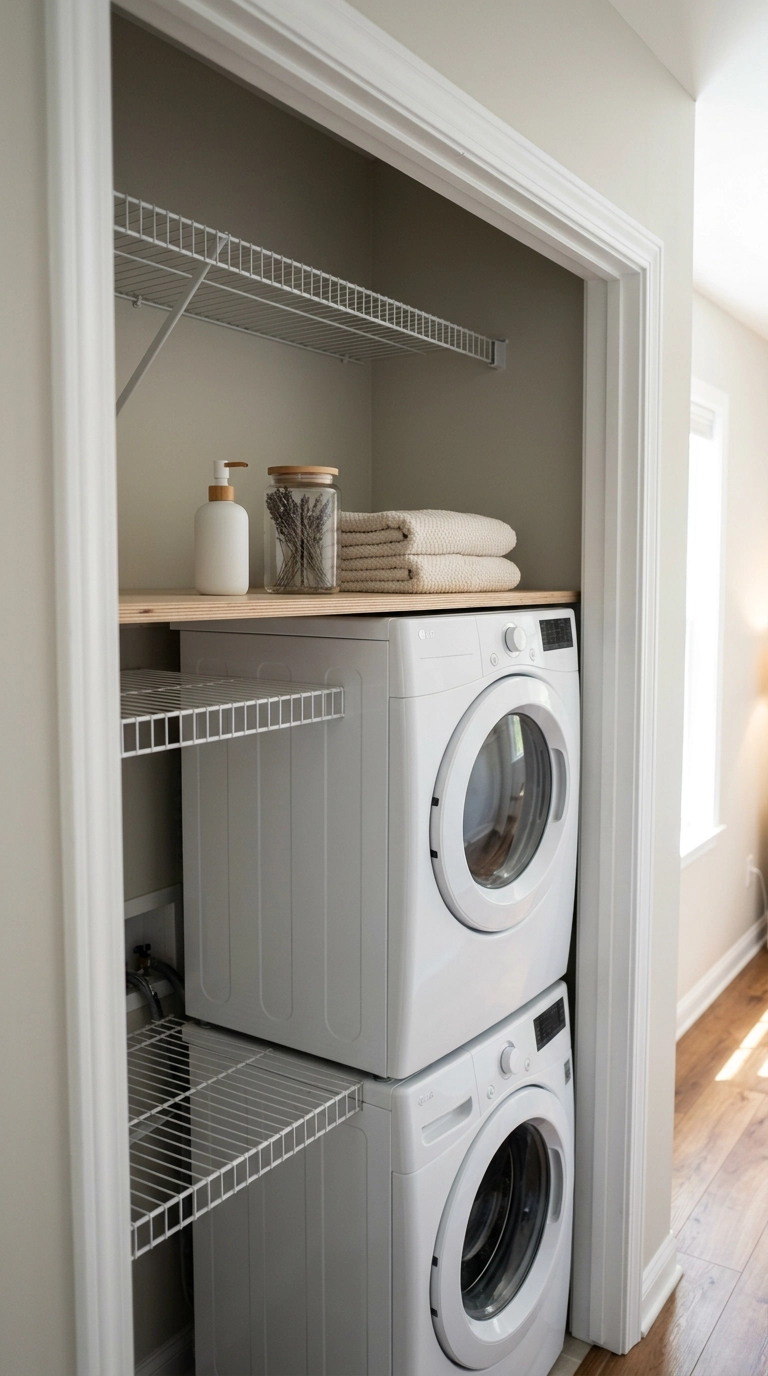
Almost every American laundry closet came with one sad wire shelf, and almost nobody realizes you can fix it in an hour without removing it. A piece of sanded plywood or a bamboo cutting board cut to the shelf footprint gives you a flat surface where small bottles stop tipping through the gaps.
11. Two Stacked Shelves Behind Bifold Doors, Sized to the Doors
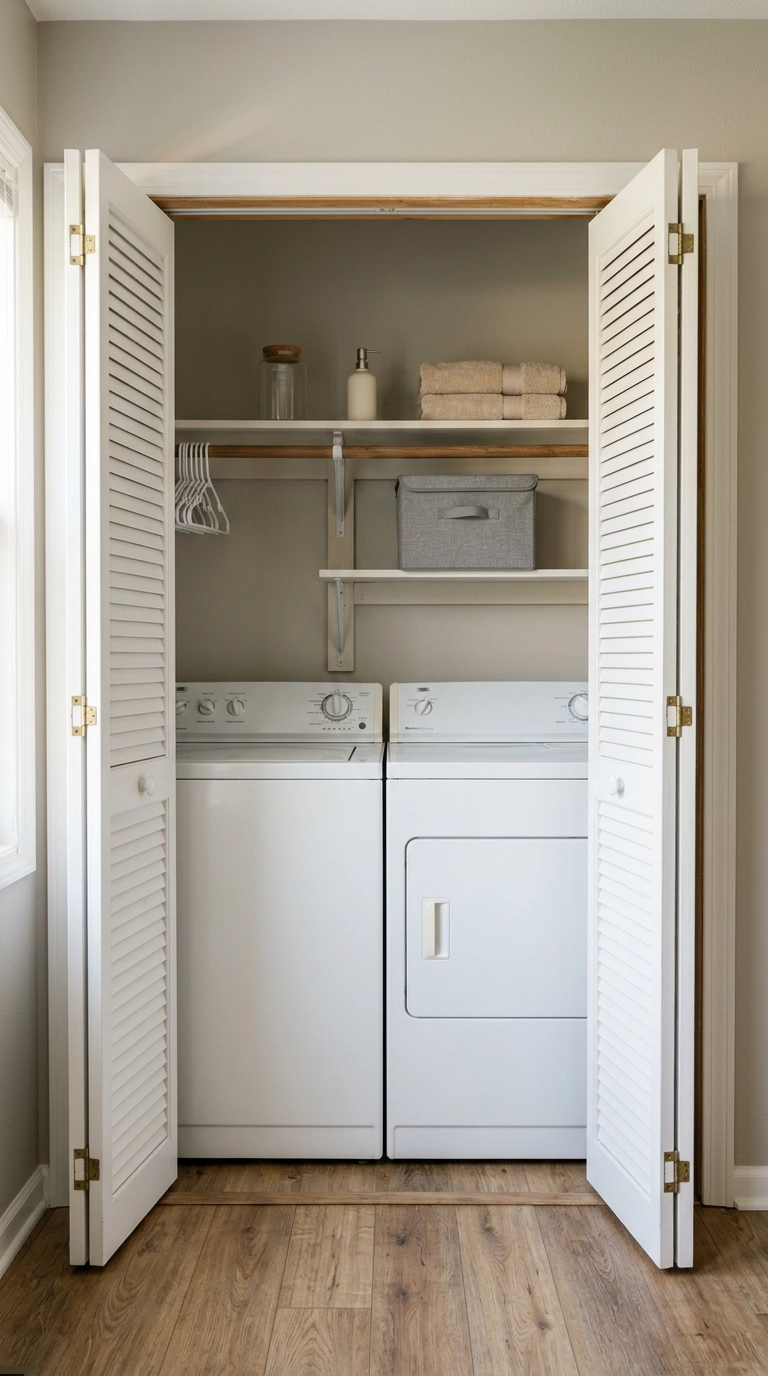
Closet laundry has one rule the internet forgets: your shelves must stop short of the door track or you will never close the doors again. Hold the front edge back about an inch and a half from the door plane and check with the doors folded before you screw anything down.
12. A Hanging Rod Under the Lowest Shelf for Drip-Dry Pieces
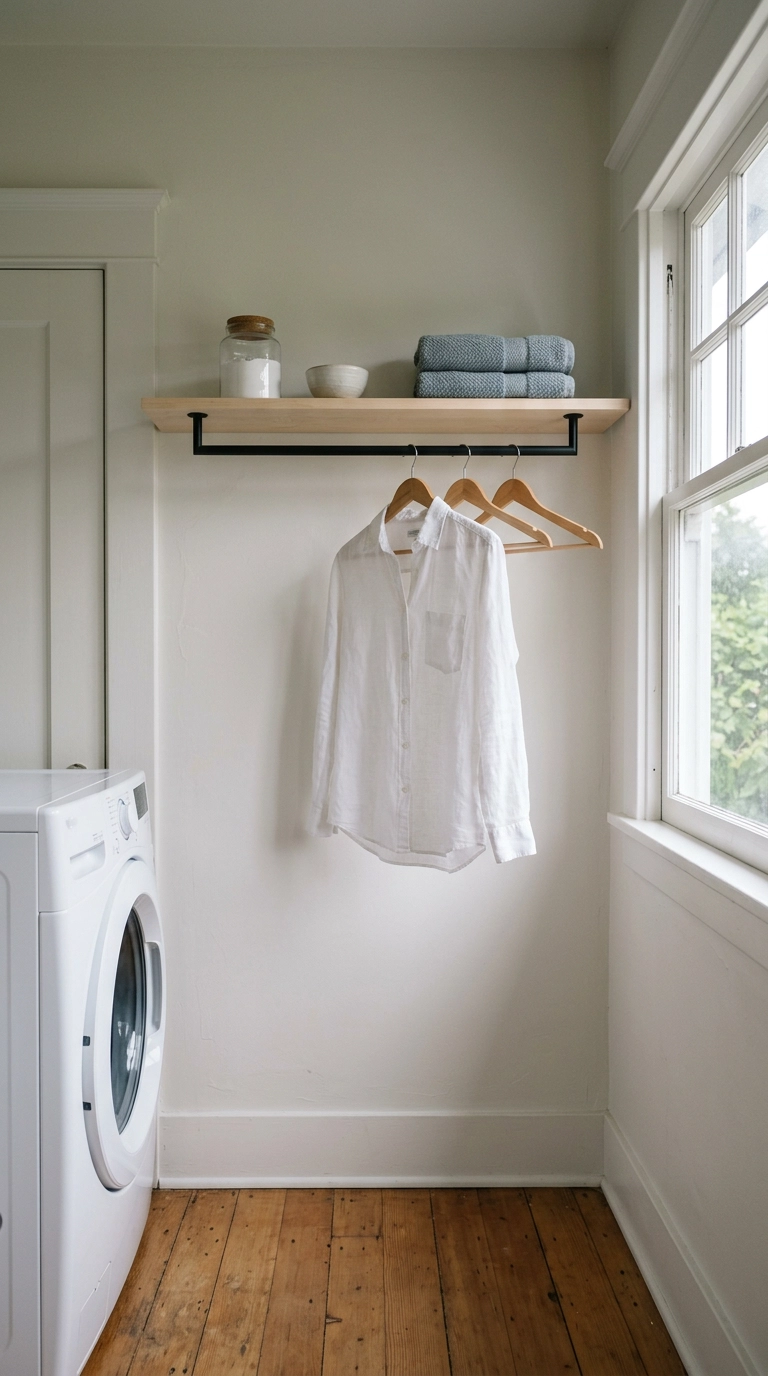
A rod under a shelf is the highest-value six inches in the whole room, because it gives delicates somewhere to go the moment they come out of the machine instead of on a doorknob. Mount it so the rod’s center sits about two inches back from the shelf front, and leave at least 40 inches of clear air beneath for long pieces.
13. A Folding Wall Rack That Disappears Under the Shelf
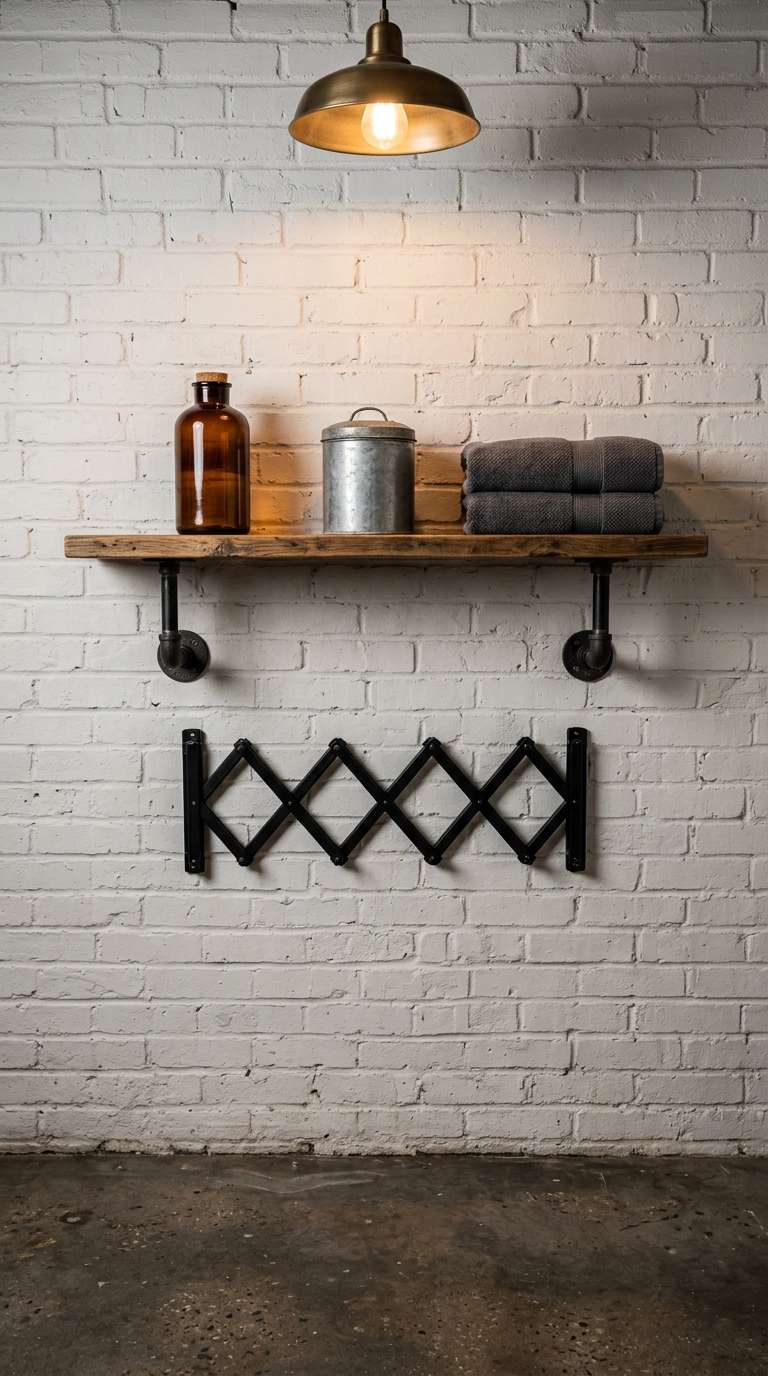
Air-drying is the fastest way to make clothes last longer, and a folding accordion rack under your shelf gives you the function without a permanent eyesore. Closed it sits about three inches off the wall; opened it holds most of a small load.
14. One Big Basket on the Bottom Shelf, Not Six Small Ones
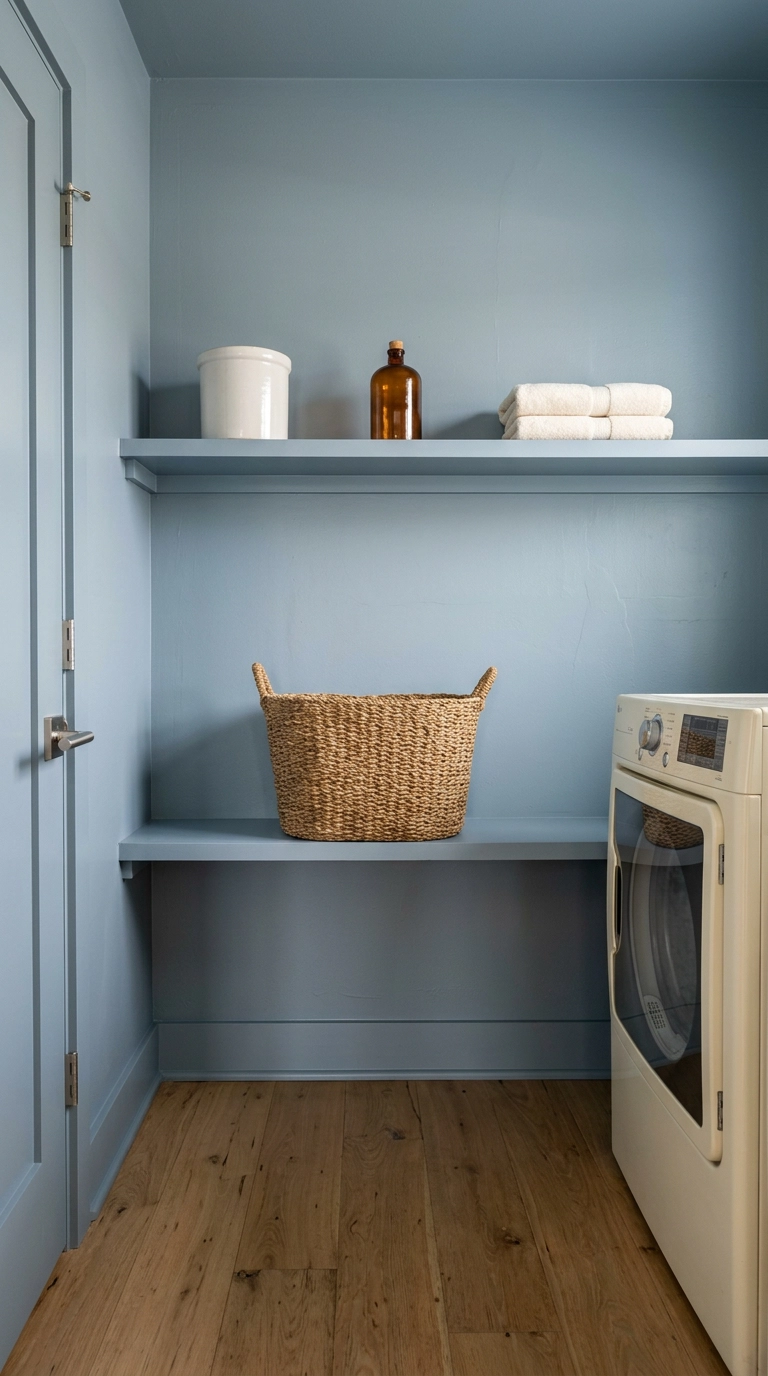
Everyone reaches for a row of matching baskets, and then every basket becomes a place where objects go to be forgotten. One generous basket on the lower shelf, sized for a full load, gives the shelf visual weight at the bottom where your eye wants it.
15. A Picture Light or Sconce Aimed Right at the Shelf
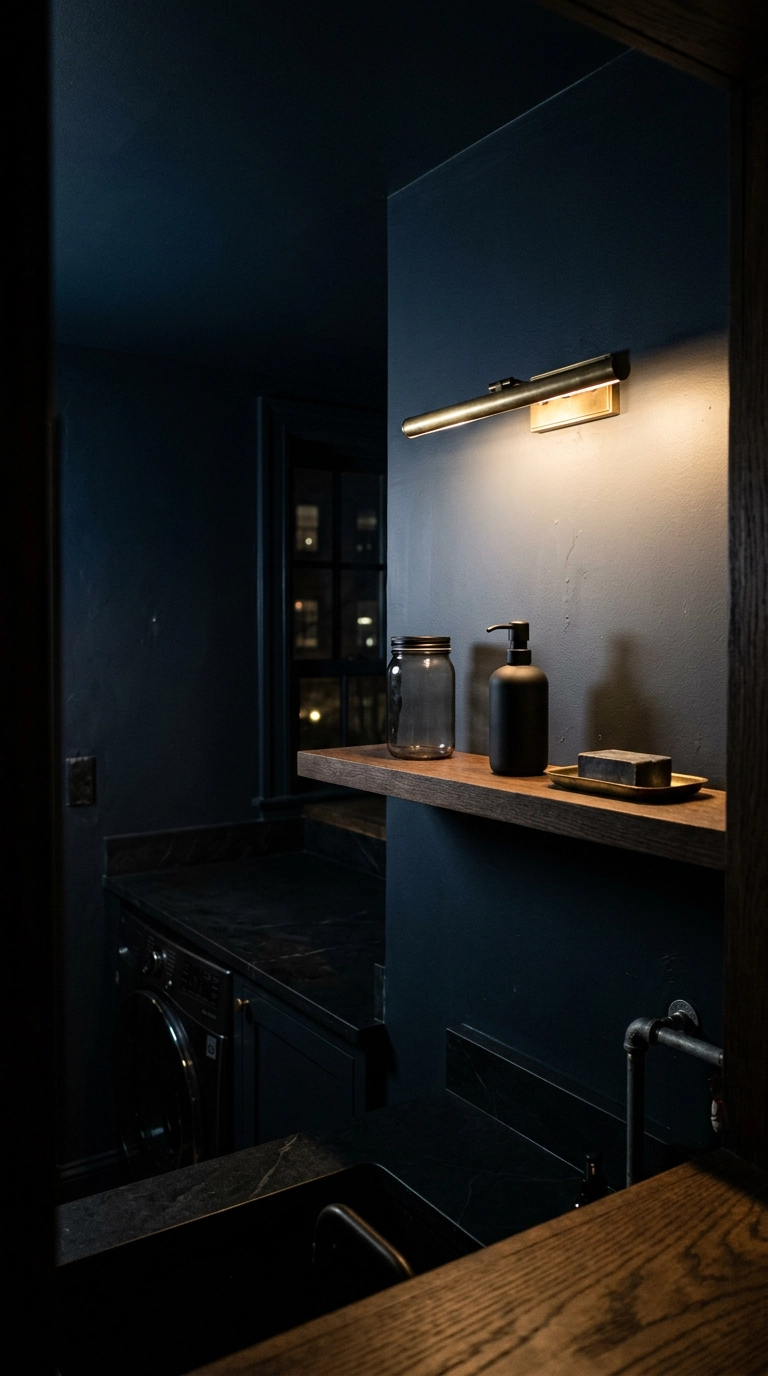
Laundry rooms almost always have one flat ceiling fixture that flattens everything and makes the room feel like a utility closet, because it is one. Adding a small light aimed at the shelf gives the space a second layer and instantly makes it read as a designed room.
16. Shelving Slipped Between Exposed Basement Joists
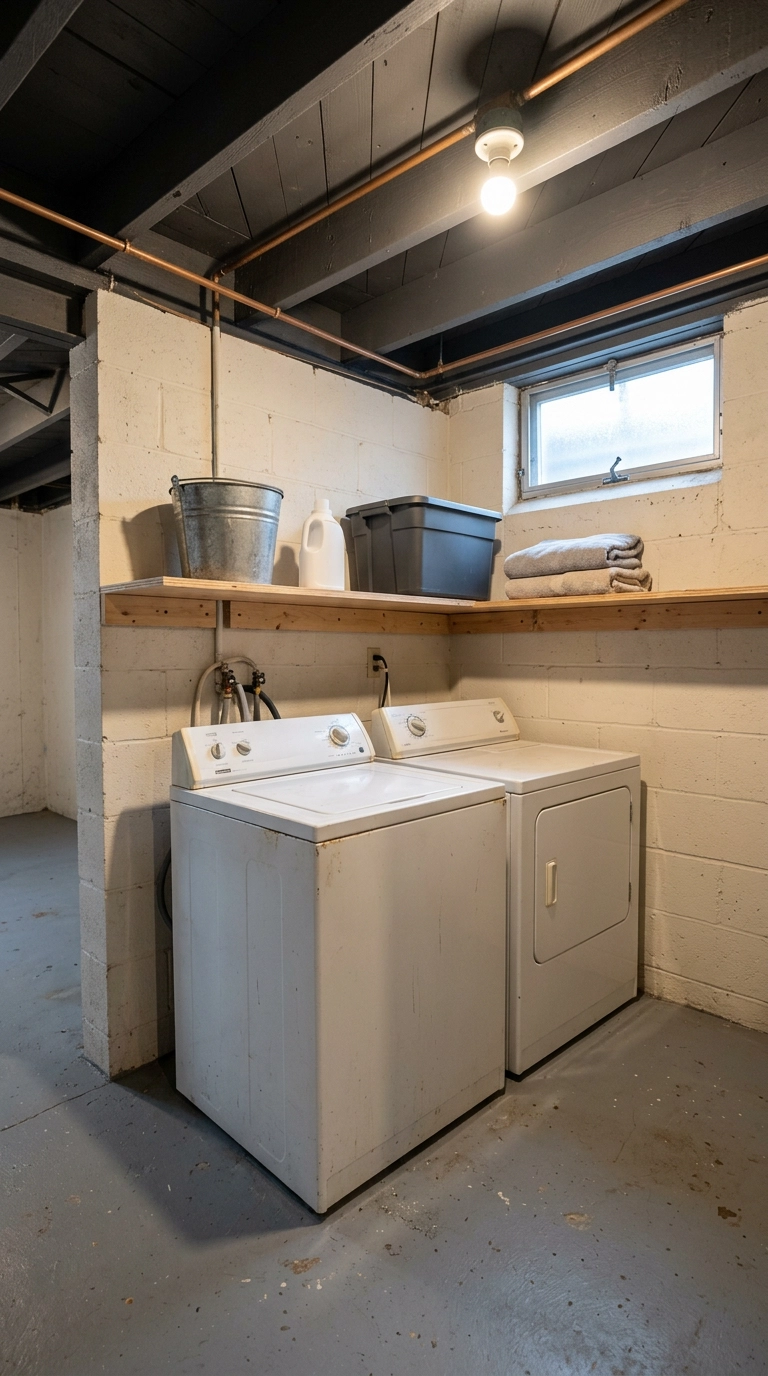
Basement laundry gets treated as a lost cause, and it is the easiest place to build real shelving because the structure is already exposed. A ledger board lagged into the block wall plus plywood tops gives you deep storage for a fraction of what cabinets cost.
17. A Hallway Alcove Shelf With a Curtain Instead of Doors
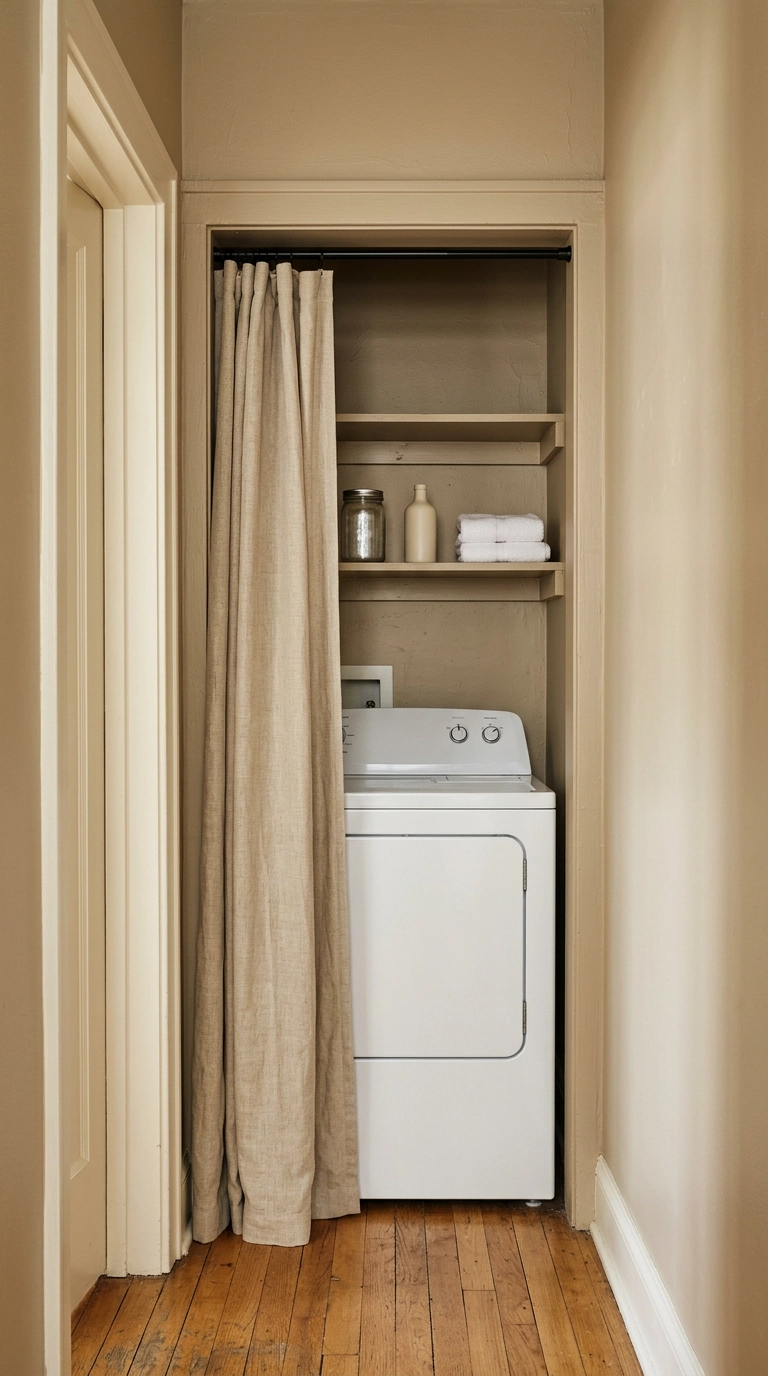
An alcove with no doors is a gift, because a curtain costs a fraction of bifolds and lets you use every inch of the opening. Mount the rod at the alcove header so the curtain hangs floor to ceiling, which makes the whole nook feel taller.
18. Sealed Plywood Shelving for the Garage Laundry Corner
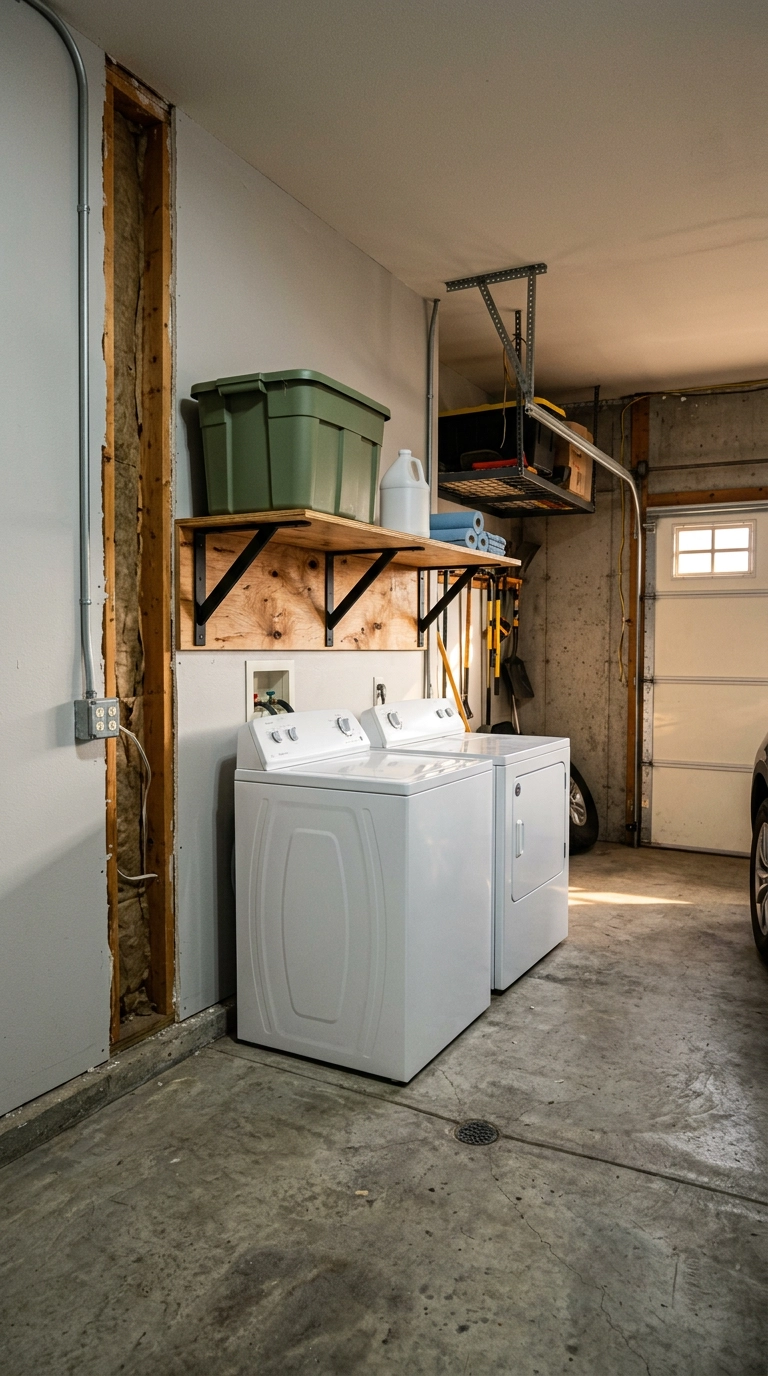
A garage laundry corner has two enemies: temperature swings and dust. Sealed plywood handles the humidity far better than particle board, which swells at the edges and sags the first time it gets damp, and lidded bins keep garage dust off anything fabric.
19. A Narrow Tower Shelf Beside a Stacked Apartment Unit
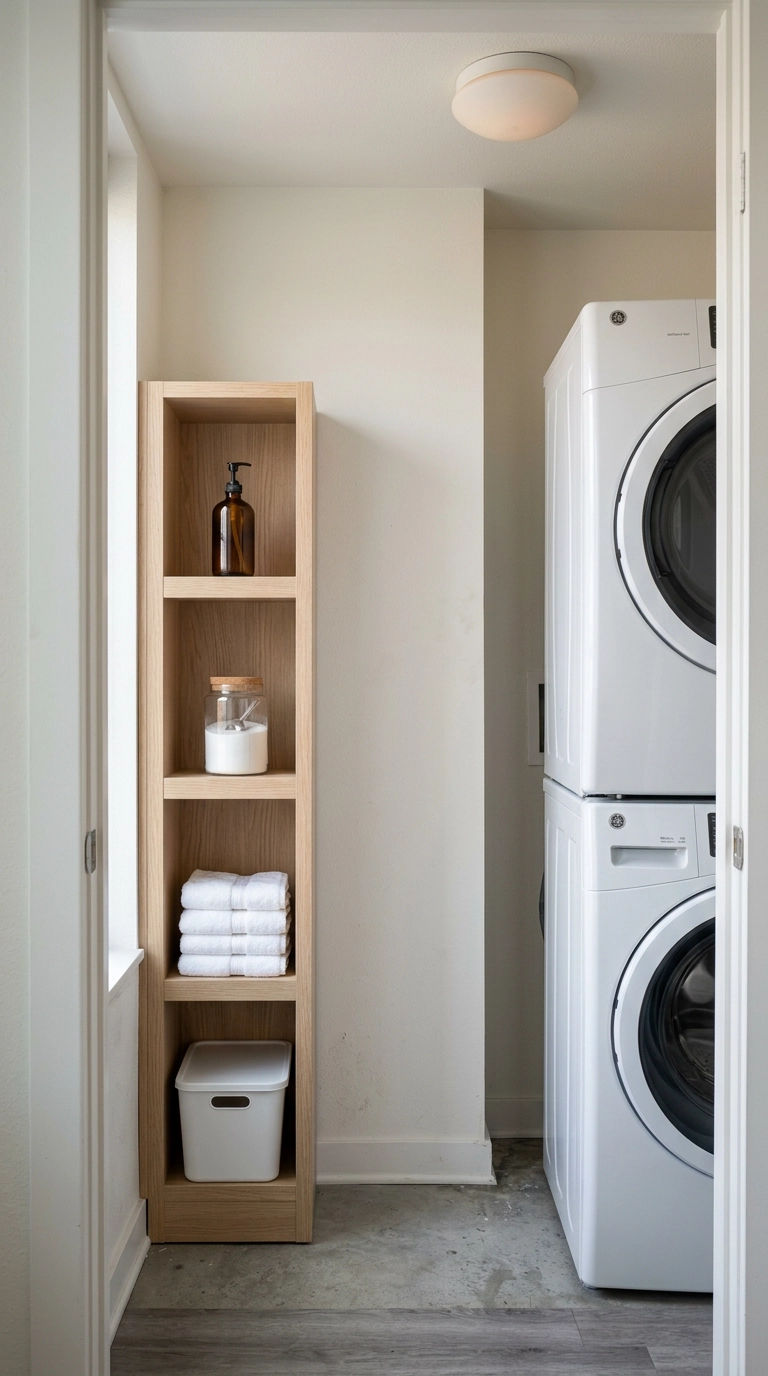
Stacked units almost always leave a skinny strip of wall next to them that nobody uses. A tower even ten or twelve inches wide turns that dead strip into four tiers, and it goes straight into the corner where nothing else fits.
20. A Shallow Ledge Behind the Machines to Catch the Fall-Off
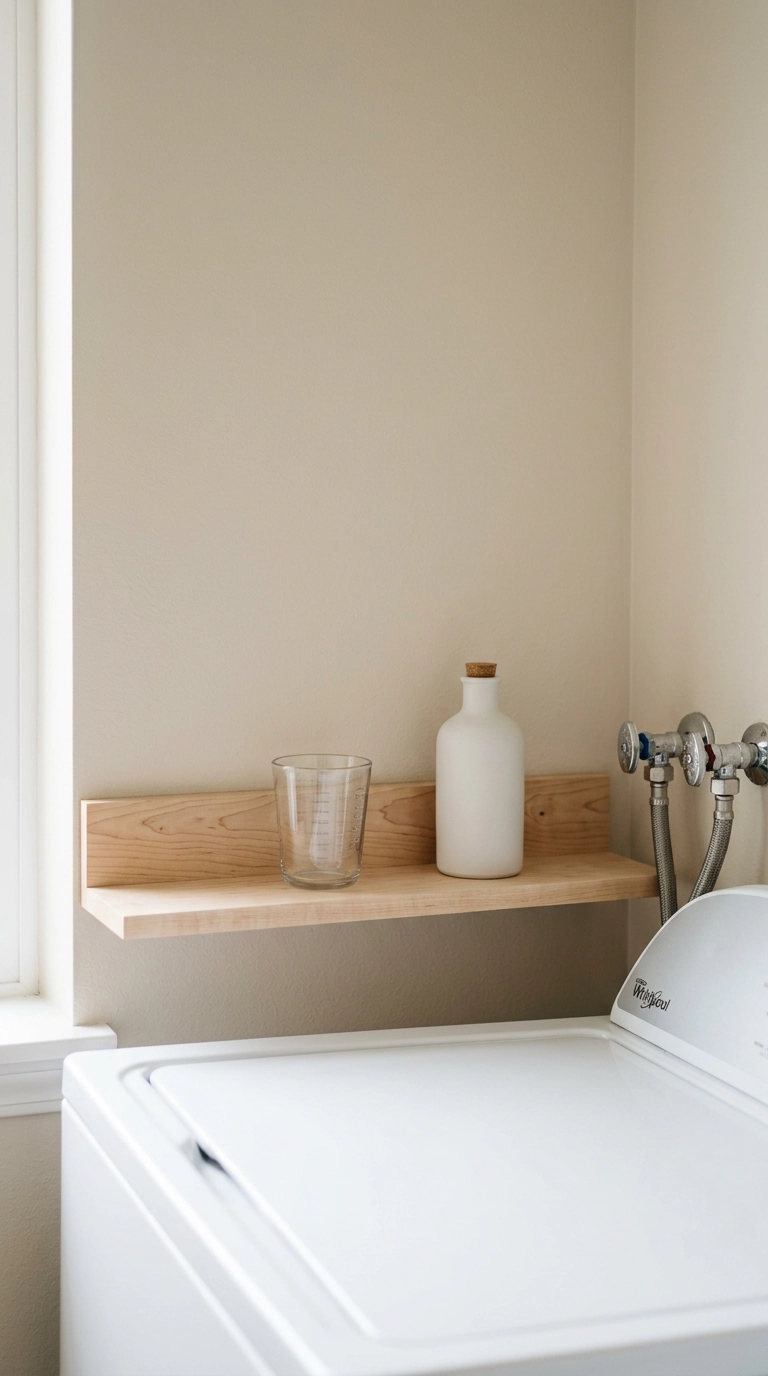
Everyone loses socks, coins, and dryer sheets down the back of the machines, and a shallow ledge is the fix nobody thinks of. Four to six inches deep with a small front lip is enough, mounted just above the machine top so it also stops things sliding into the gap.
21. Closed Cabinets Up High, One Open Shelf Below
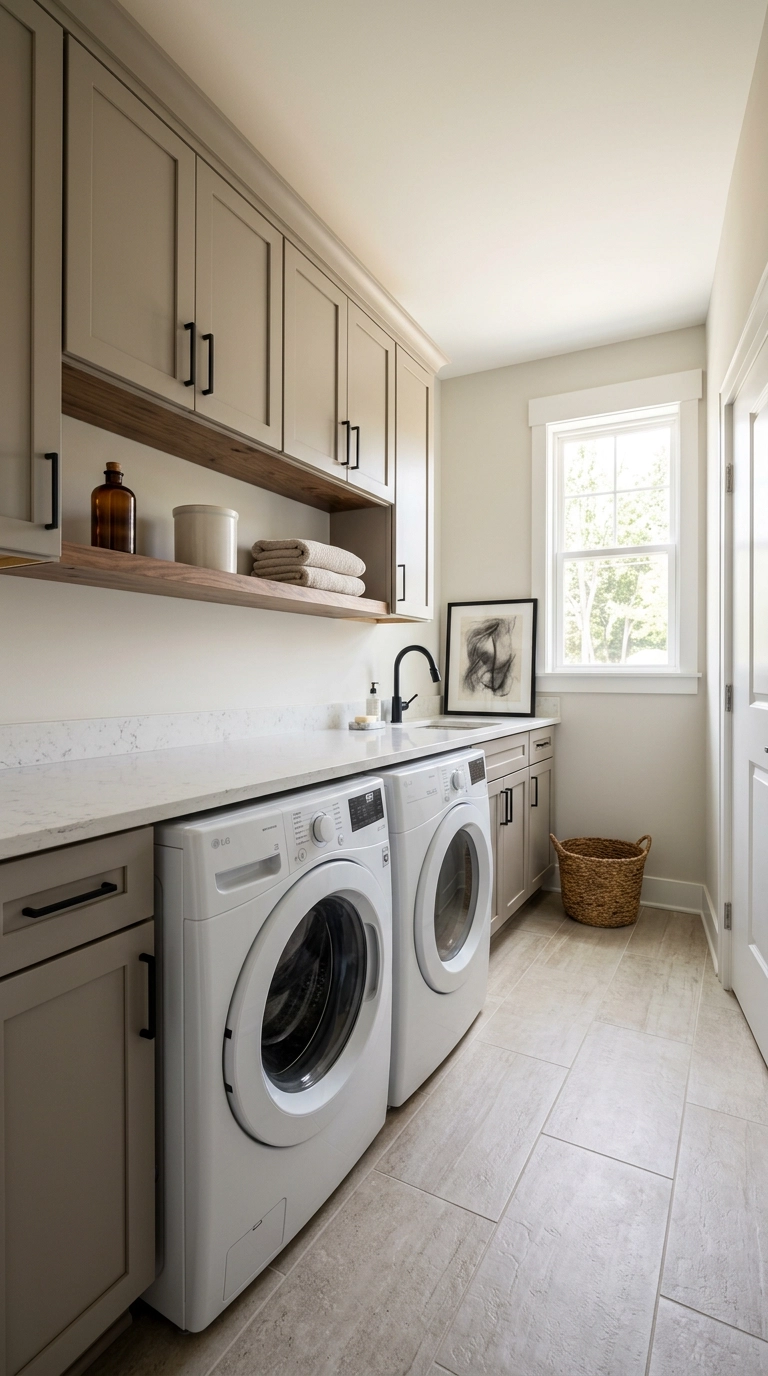
Open shelving is beautiful and it collects lint, full stop. The compromise I use in almost every full laundry room is cabinets up high for the bulk stock and ugly bottles, plus one open shelf at eye level for the things you actually want to look at.
22. Color-Drench the Shelves, Brackets, and Wall in One Shade
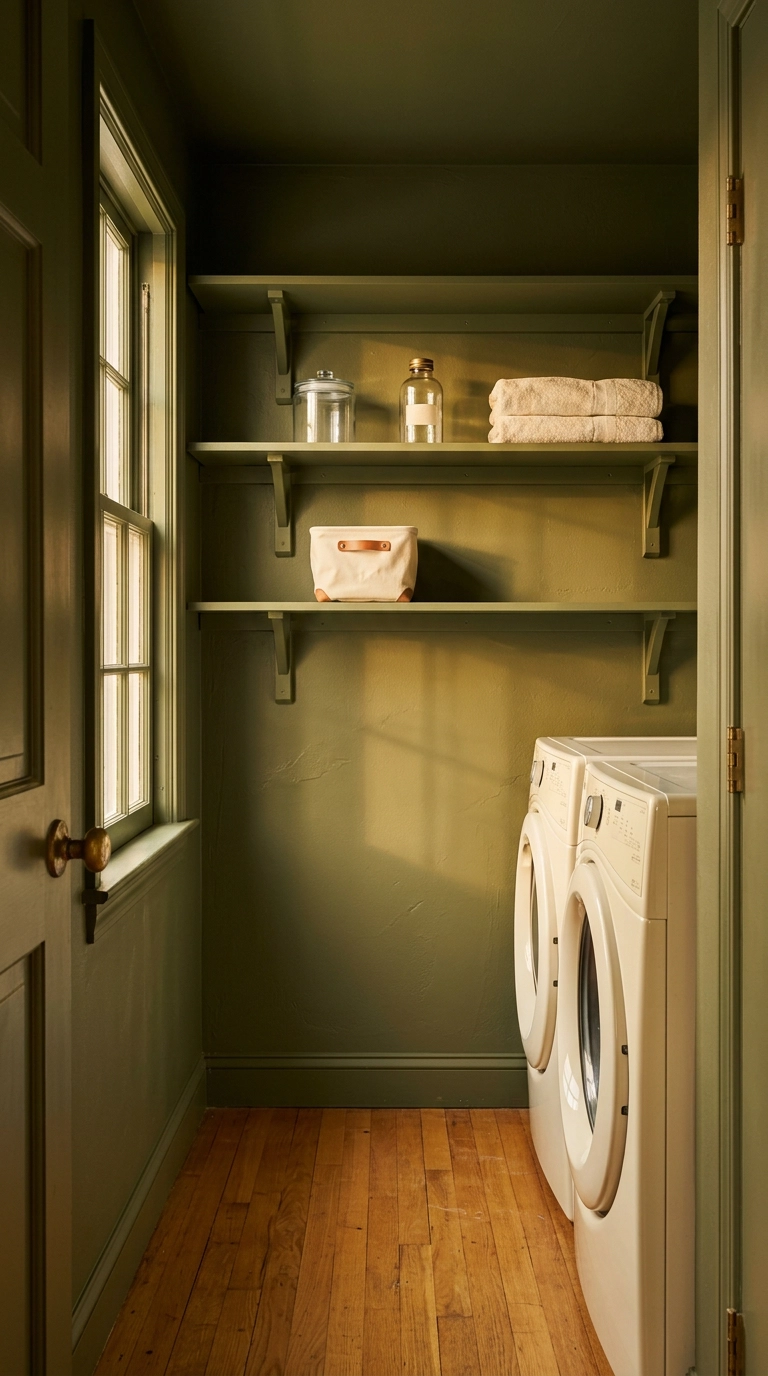
Color drenching just means painting the walls, trim, shelves, and brackets the same shade so your eye finds no hard stops, and it makes a tiny laundry room feel like one deliberate volume instead of a box with stuff on the walls. Something like Farrow & Ball Green Smoke or a deep olive works beautifully here because a laundry room has no real furniture to fight with.
23. Reclaimed Wood on Vintage Cast-Iron Brackets
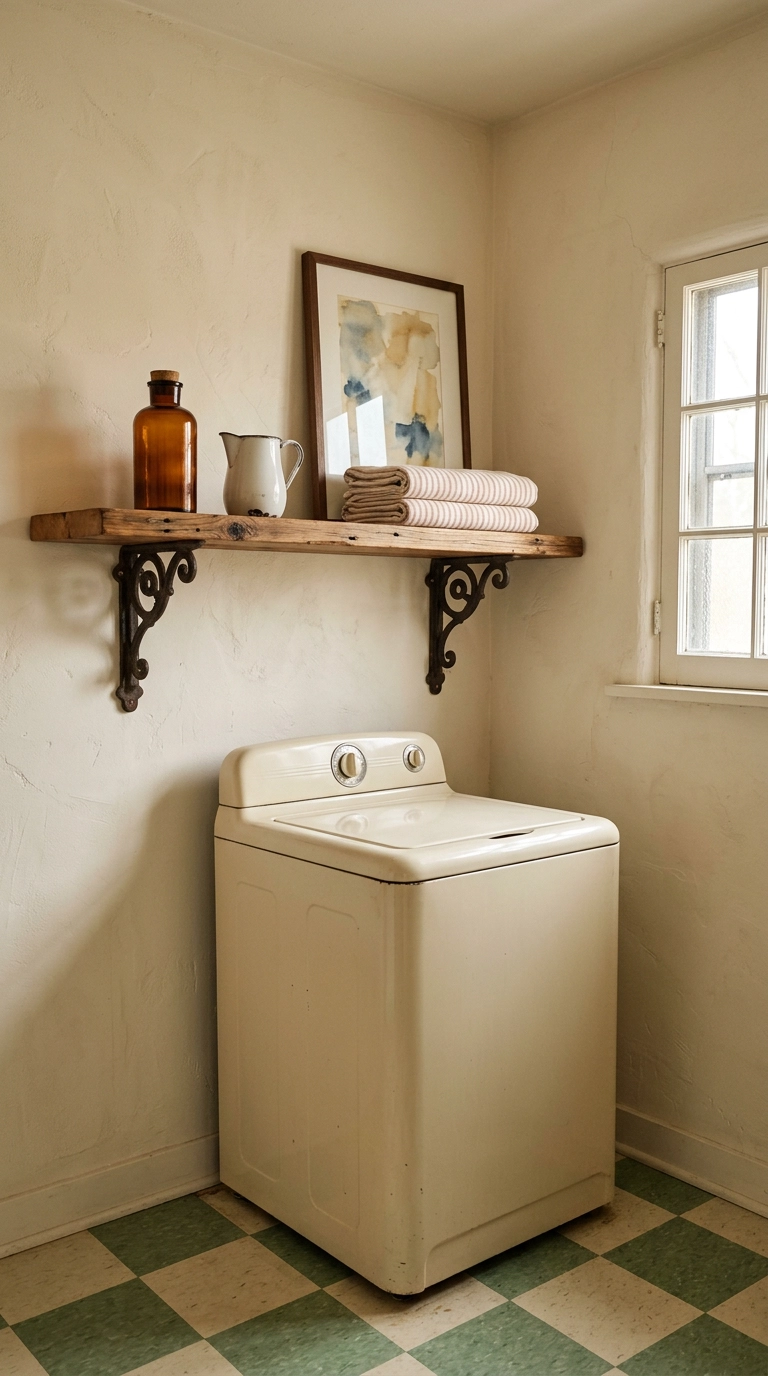
I love ending a room on something with history, and a salvaged plank on antique iron brackets gives a laundry room the one thing it usually lacks: character. Flea markets and architectural salvage yards are full of these brackets for very little money.
Fold, Stack, Repeat
If you take one thing from all of this, make it the boring part: measure your lid swing, find your studs, and seal your wood. I have watched too many beautiful oak shelves warp over a dryer or sag under a detergent jug, and there is nothing sadder than a laundry room that photographed well for a week. The shelves that survive are the ones built for the vibration, the steam, and the lint that come with the job.
The trend I keep seeing this year is laundry rooms getting treated like real rooms, with color-drenched walls, a picture light over the shelf, and a counter that finally gives you somewhere to fold. Nate Berkus has been preaching for years that the utility spaces deserve the same attention as the living room, and honestly, this is where that pays off fastest, because you stand in here every week whether you like it or not. My favorites from the list above are the butcher block counter over front-loaders and the humble rod mounted under a shelf, which costs almost nothing and changes how you do laundry.
Start with one shelf and one good bracket set, live with it for a month, and then add the second. That is genuinely how I work in my own house, and it saves you from committing to a layout you have not tested yet. If you want more of this kind of thing, the practical measurements and the pretty pictures together, sign up for my weekly newsletter and I will send the next room straight to your inbox.


