
23+ Charming Covered Porch Decor Ideas that Feel Easy and Gorgeous in 2026

I have a soft spot for the covered porch, because it is the one part of an American house that has to be pretty and useful at the same time — a roof over your head, open sides, and weather blowing in at the edges whether you planned for it or not. Most of the ones I get called to fix are not ugly, they are just unused, which is a much sadder problem. So I want to walk you through how I actually decorate a roofed, open-sided front porch: what survives rain, what a renter can do without a drill, and the two things I think are genuinely worth spending real money on.
Covered Porch Decor Ideas
1. Hang a Porch Swing Off the Structural Beam, Not the Ceiling Boards
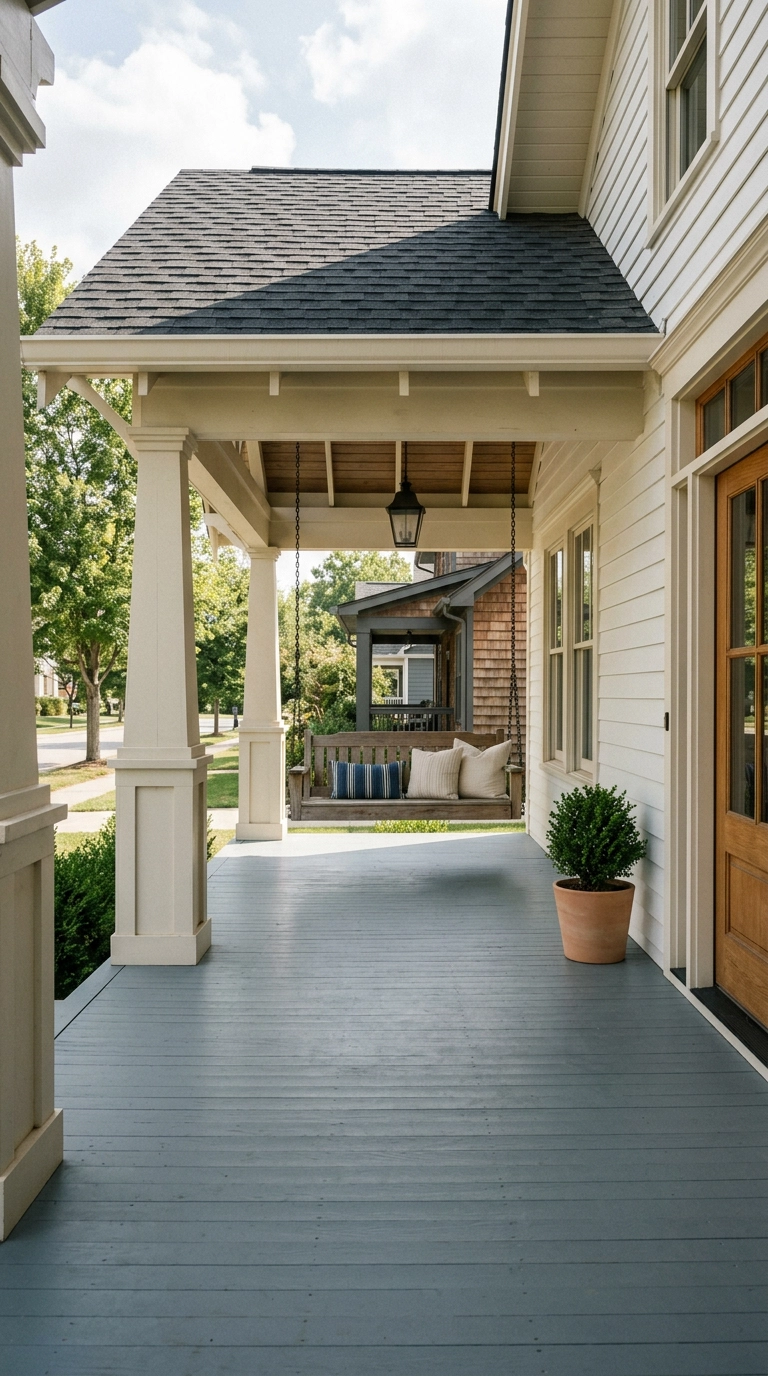
A swing is the single most pinnable thing you can put on a covered porch, and it is also the thing people most often hang wrong. The hardware has to go into a joist or a beam that runs perpendicular to the swing, not into decorative ceiling boards, and you want roughly 4 feet of clear swing arc in front and 16 to 18 inches behind it.
2. Paint the Porch Ceiling Haint Blue and Watch the Whole Porch Warm Up
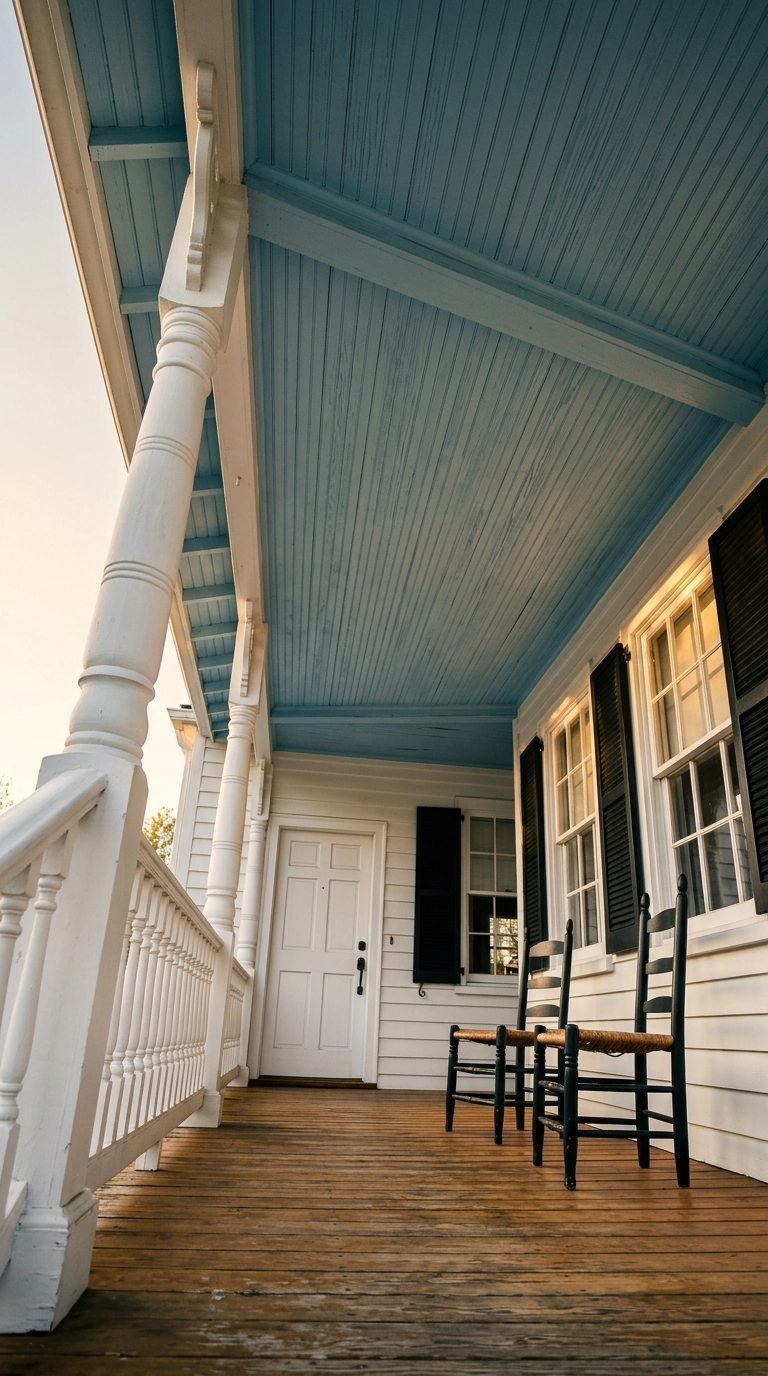
The blue porch ceiling is a Gullah Geechee tradition from the Carolina Lowcountry — “haint blue” was meant to confuse restless spirits, who supposedly could not cross water. Whether or not you buy the folklore, it works optically: a pale sky-toned ceiling bounces cooler light down onto everything and stops a roofed porch from feeling like a dark cave.
3. Anchor the Seating with a Rug That’s Actually Built for Weather
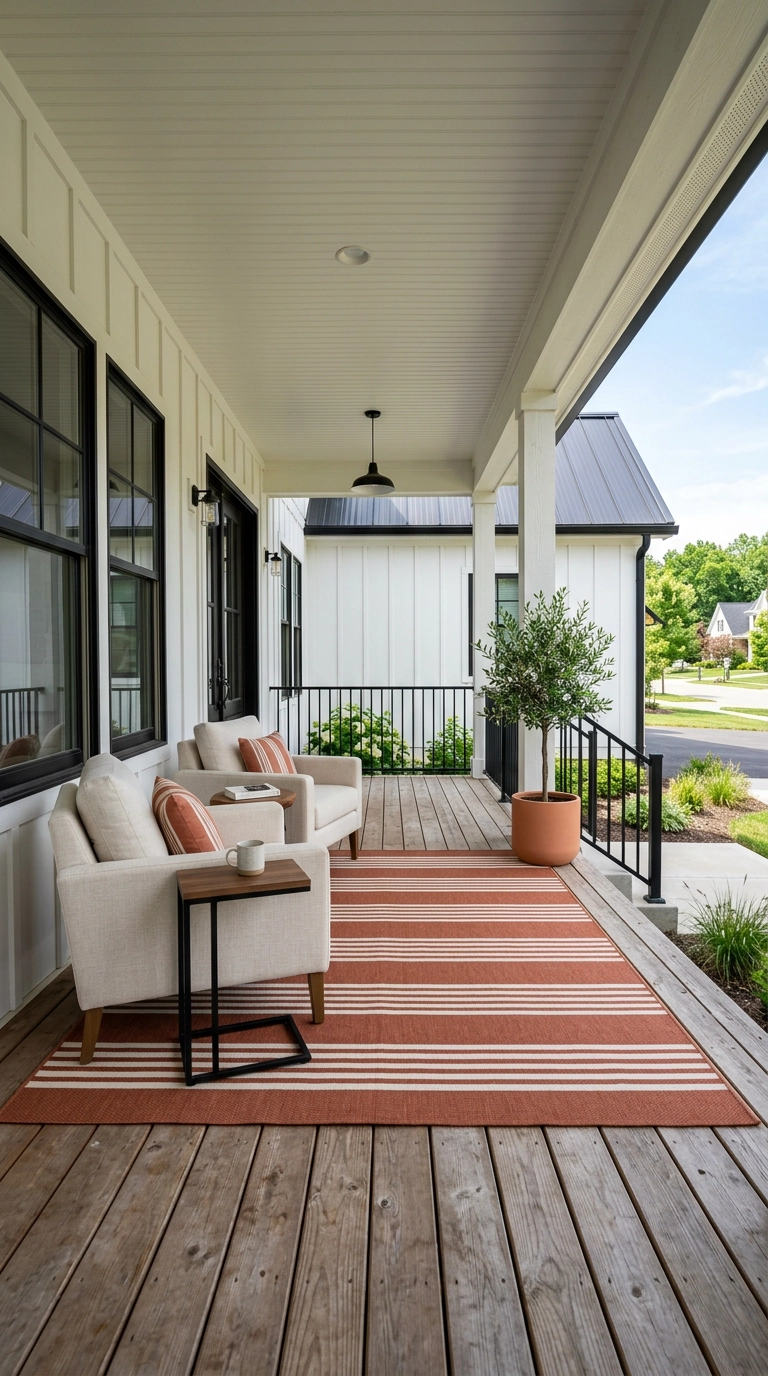
An outdoor rug is the fastest way to make a covered porch read as a room, but only if you buy the right one. Flatweave polypropylene or solution-dyed acrylic sheds rain, drains quickly, and holds its color in UV light — jute and cotton will rot the first season they get damp.
4. Set Up a Pair of Rockers Facing Out, Not Facing Each Other
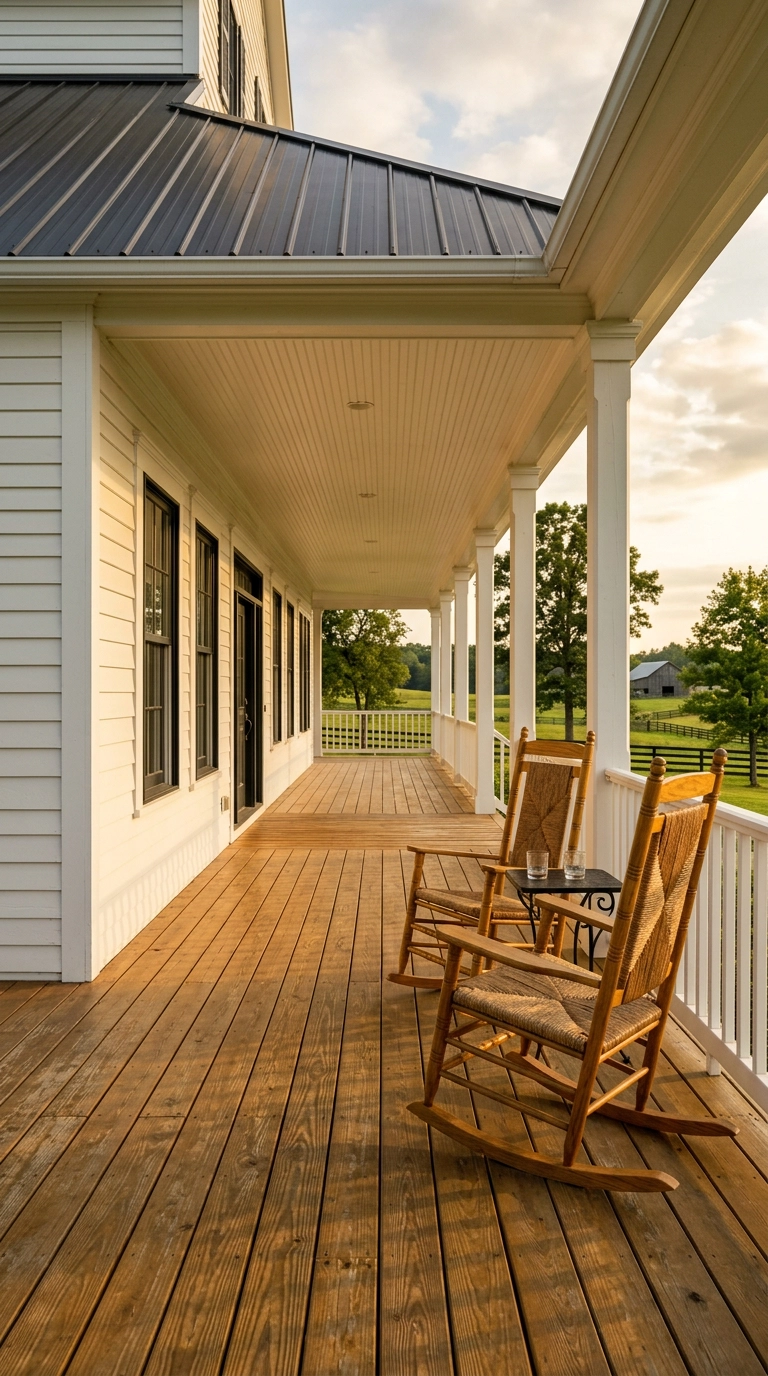
Rockers are the workhorse of a covered porch, and the mistake I see constantly is turning them inward like a living room conversation set. Angle them out toward the street or yard instead — the whole point of a front porch is watching something happen, and facing chairs at each other forces conversation nobody asked for.
5. Arrange a Long Narrow Porch as One Long Conversation Line
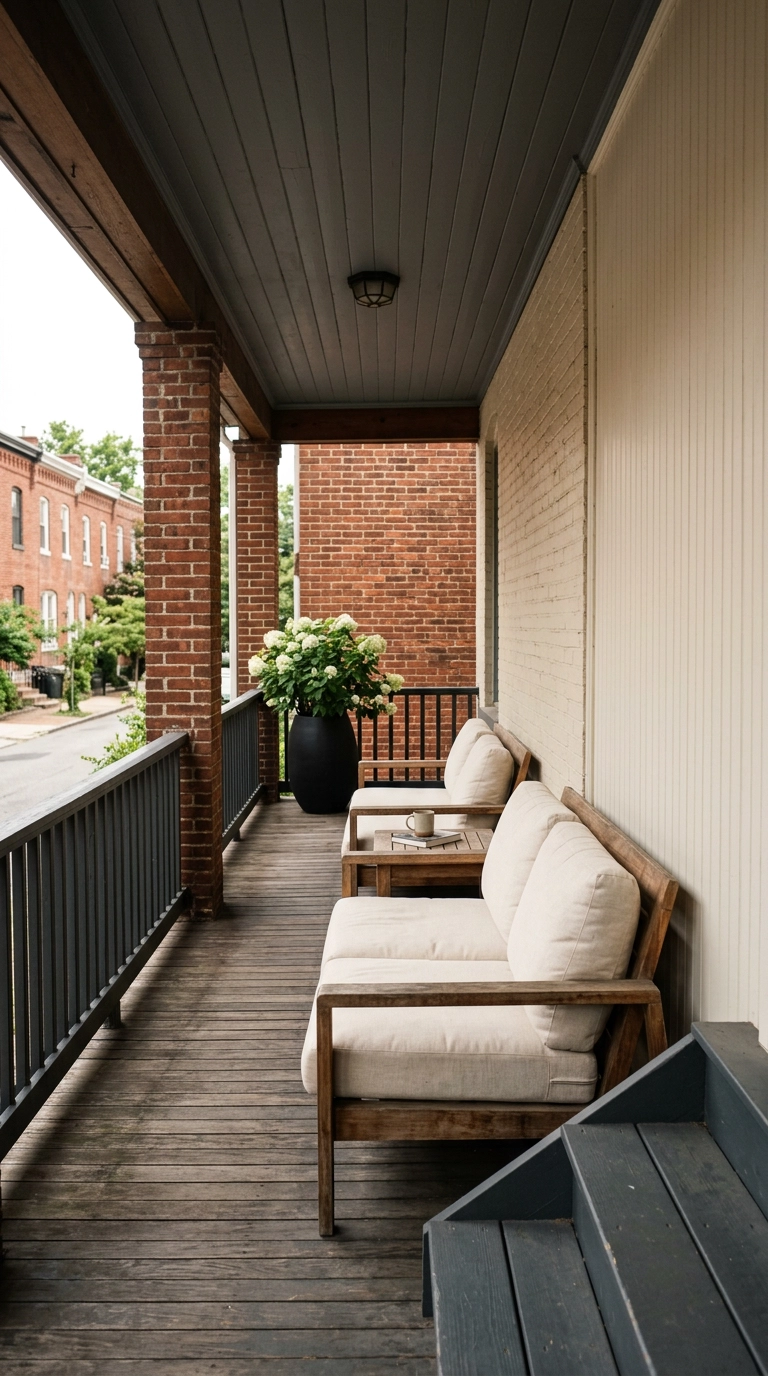
A narrow porch does not fight its shape — it leans into it. Instead of a round table that blocks traffic, run a single line of furniture down the wall, with seats every 3 to 4 feet so people can lean out and talk to each other without twisting sideways.
6. Give a Square Porch a Real Conversation Circle
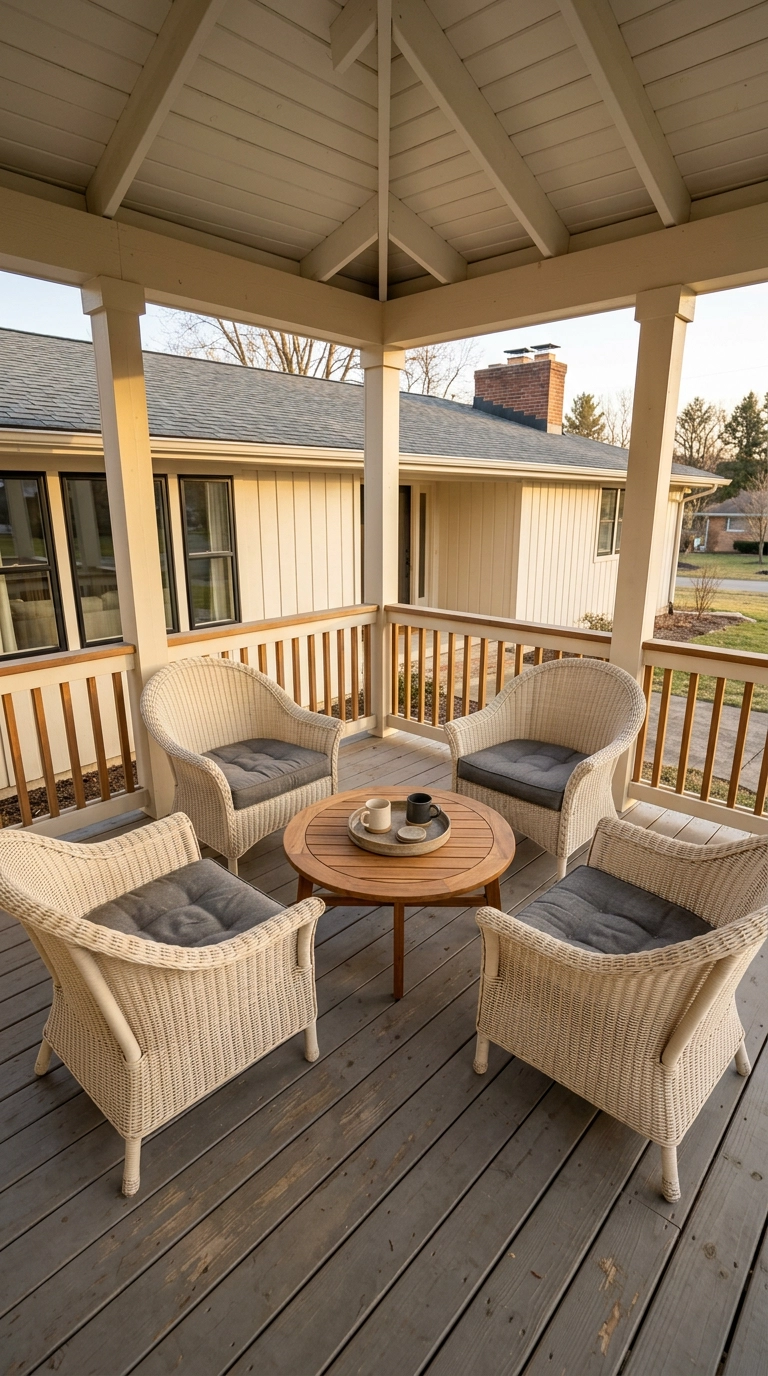
A square porch wants a circle in it, not a straight line pushed against the house. Four chairs facing a low center table means everyone can see everyone, and that geometry is exactly why square porches get used for hours while narrow ones get used for ten minutes.
7. Install a Wet-Rated Ceiling Fan and Double Your Porch Season
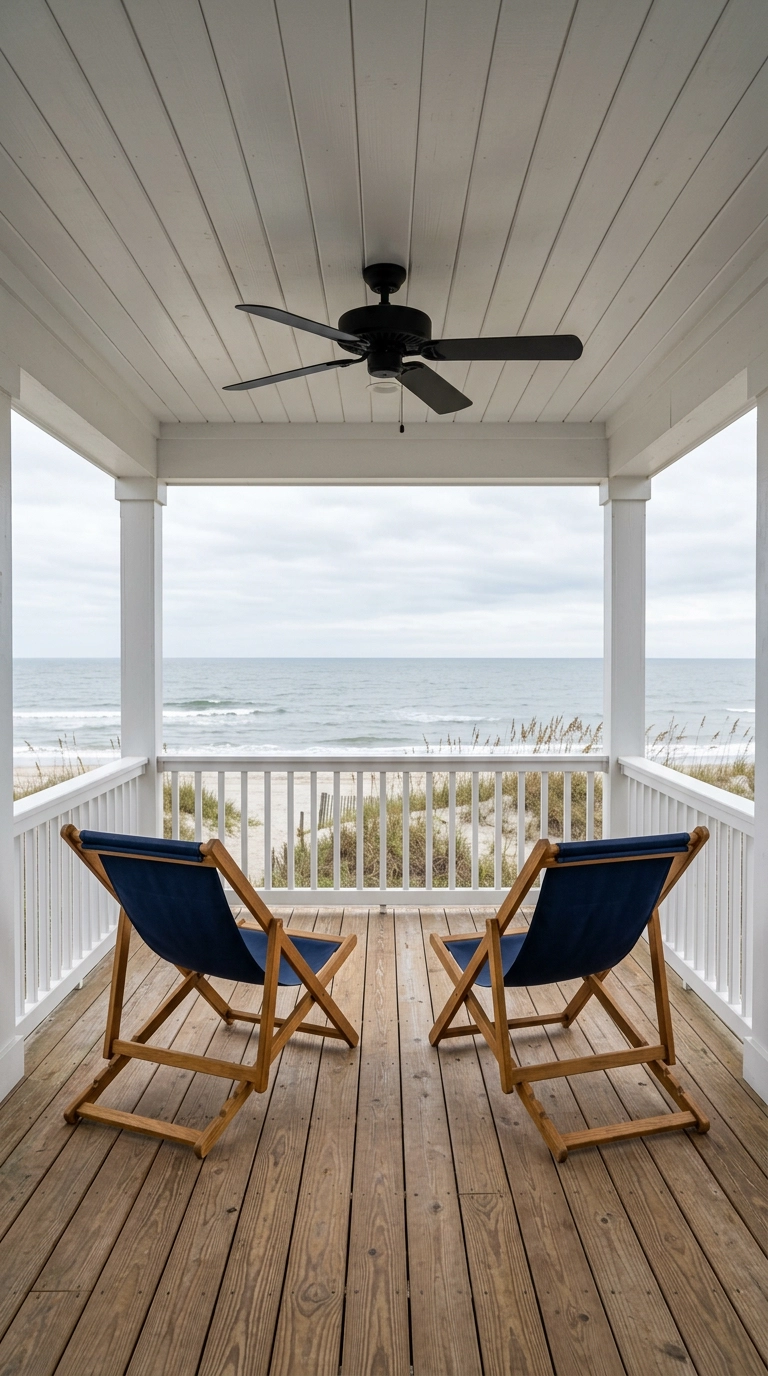
Air movement is the difference between a porch you love in June and a porch you avoid from July onward. A fan moving air across your skin makes 88 degrees feel closer to 82, which is the entire reason southern porches have had them for a century.
8. Layer Three Heights of Light: String Lights, Sconces, and One Lantern
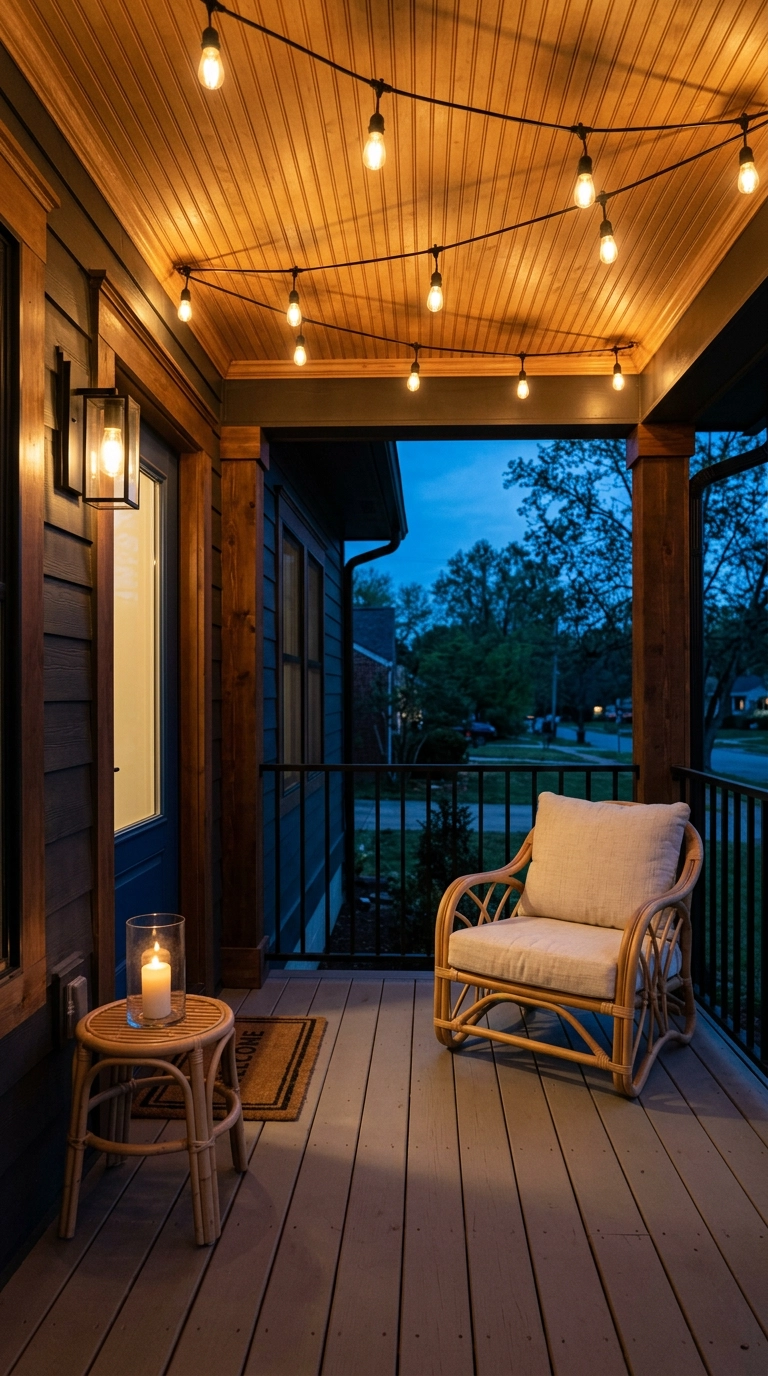
One bright overhead bulb makes a porch look like a parking lot. I light every covered porch at three heights — string lights overhead, a sconce or two at eye level, and one lantern down at table height — because layered light is what makes an outdoor space feel like an inside room after dark.
9. Hang Outdoor Curtains at the Columns for Privacy and Late Sun
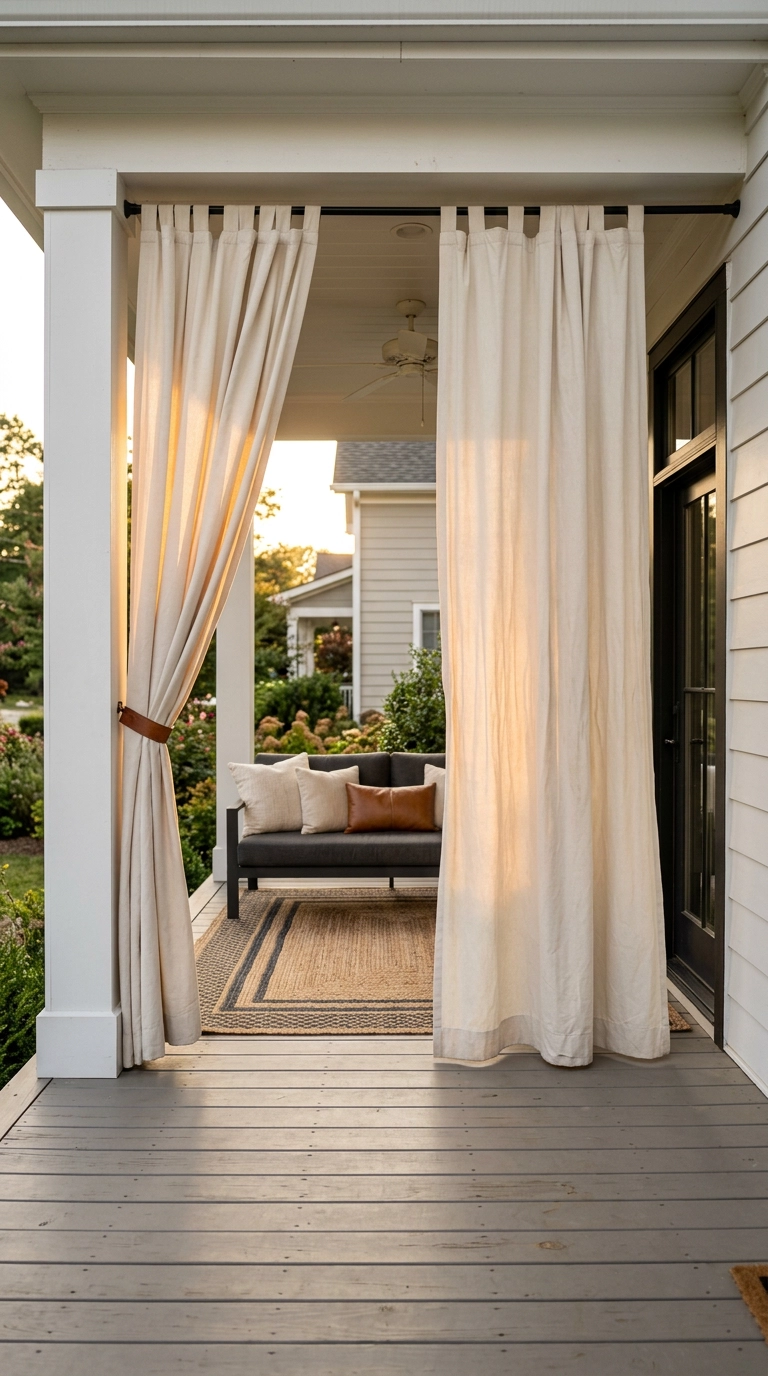
Curtains are the thing that turns a covered porch from a platform into a room, and on a west-facing porch they are functional — they cut the 5 p.m. glare that otherwise makes the space unusable in summer. They also solve the sidewalk problem when your porch sits close to the street.
10. Build a Planter Grouping at the Steps, Not Against the Wall
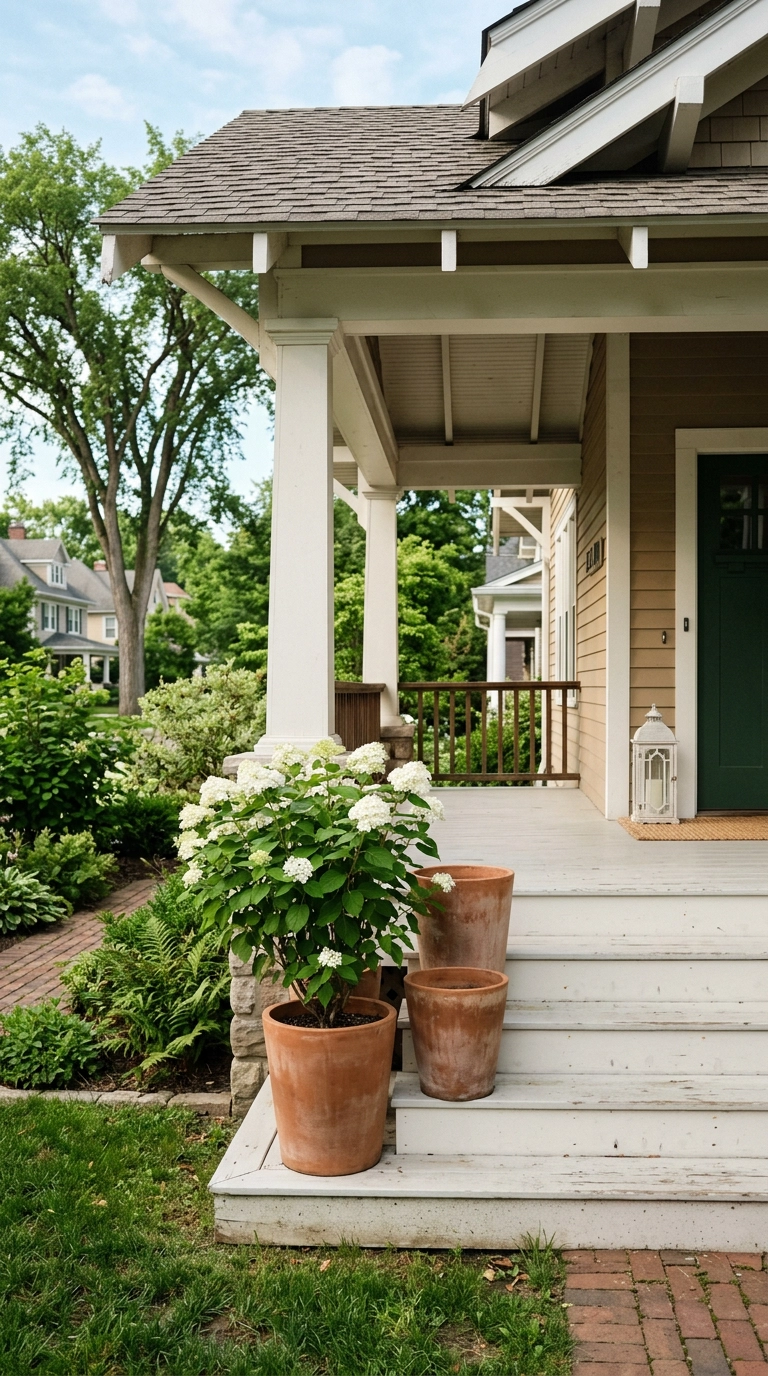
People place planters against the house wall and wonder why the porch still feels flat. Put the grouping at the front edge of the porch, framing the steps instead — the plants belong at the threshold where your eye arrives, and three pots at staggered heights reads far better than two identical ones side by side.
11. Style the Railing as a Stage, Not a Parking Lot
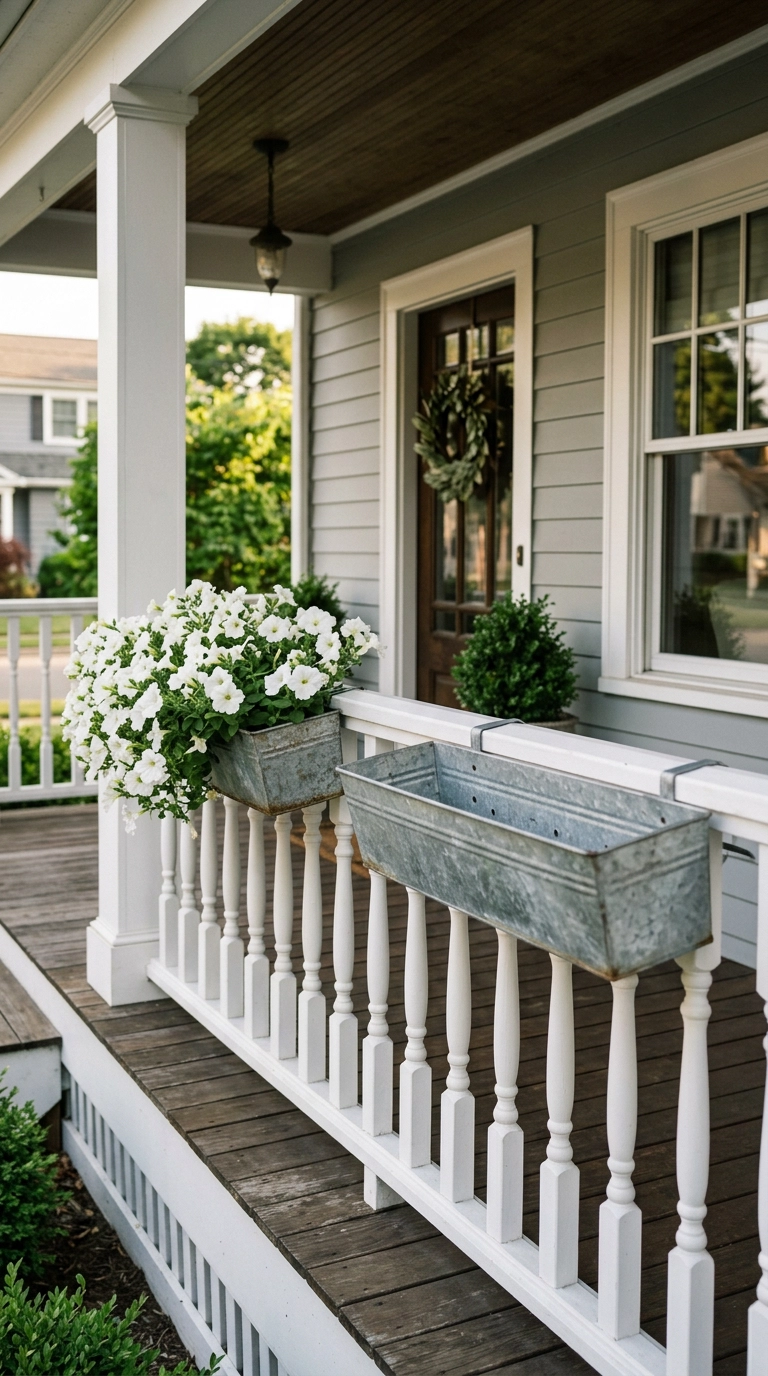
A railing is the natural shelf of a porch, and it works best when you use restraint. Two or three window boxes at waist height, repeating the planter shape, frame the view better than twelve pots crowded shoulder to shoulder, because the open gaps in between give the eye somewhere to rest.
12. Paint the Porch Floor in a Deep Grounding Color
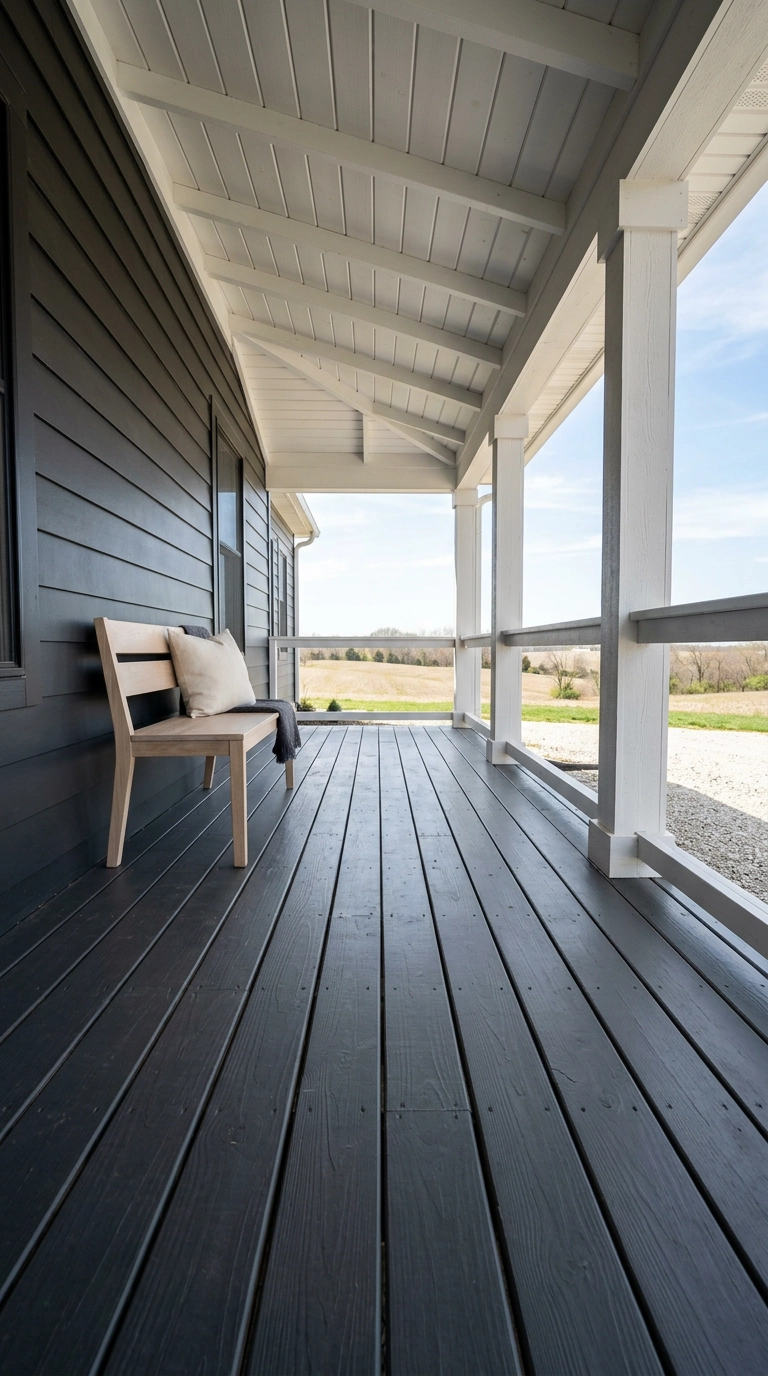
A dark painted floor is the cheapest way to make a covered porch look intentional, because it grounds everything above it — visual weight at the bottom of a space makes the whole thing feel settled rather than floaty. Charcoal, deep slate, and a proper porch grey all photograph beautifully against white trim.
13. Lay Outdoor Tile for a Porch Floor That Never Needs Repainting
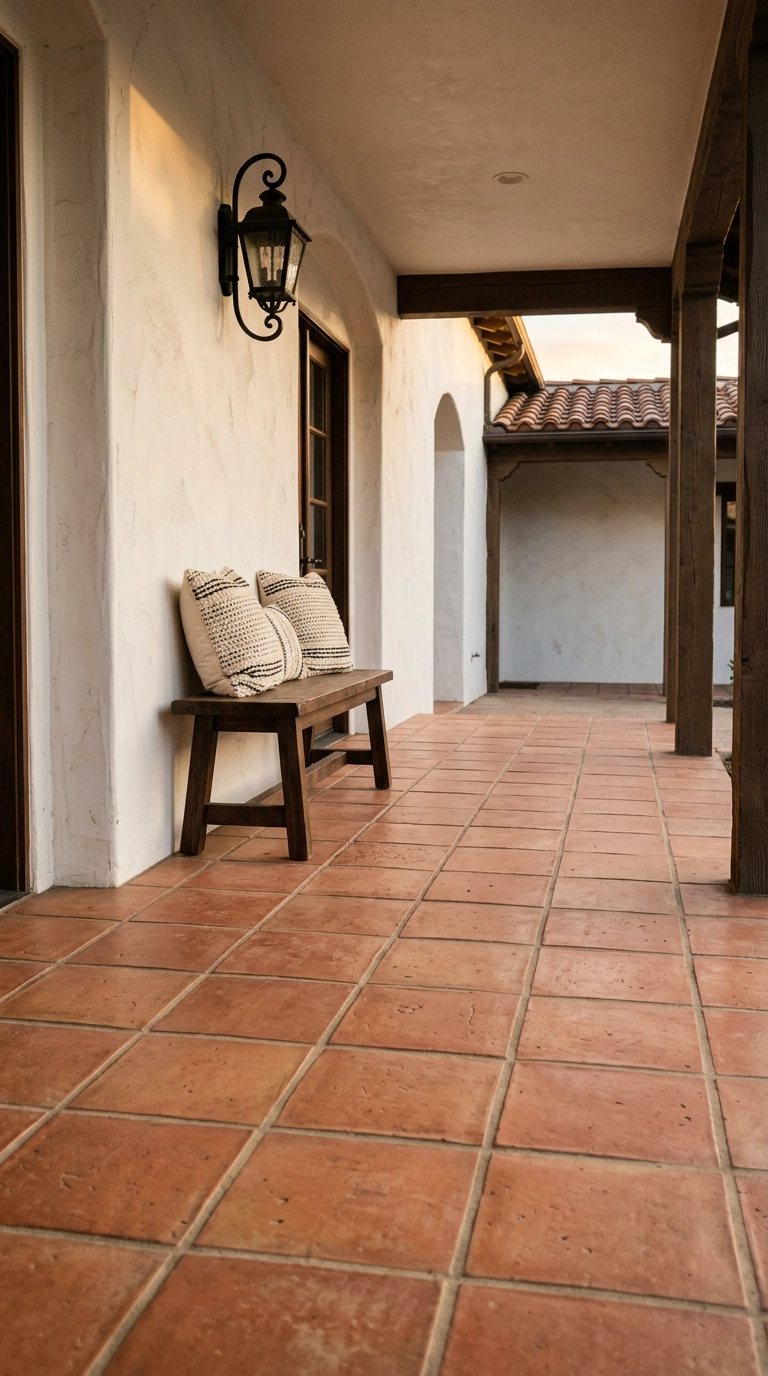
Tile is the permanent answer to the paint-every-three-years cycle. Porcelain rated for exterior use handles freeze-thaw, rain blowing under the roofline, and a decade of foot traffic without fading, and it gives a covered porch a finished floor that reads much more expensive than it costs.
14. Keep a Drink Side Table Next to Every Seat
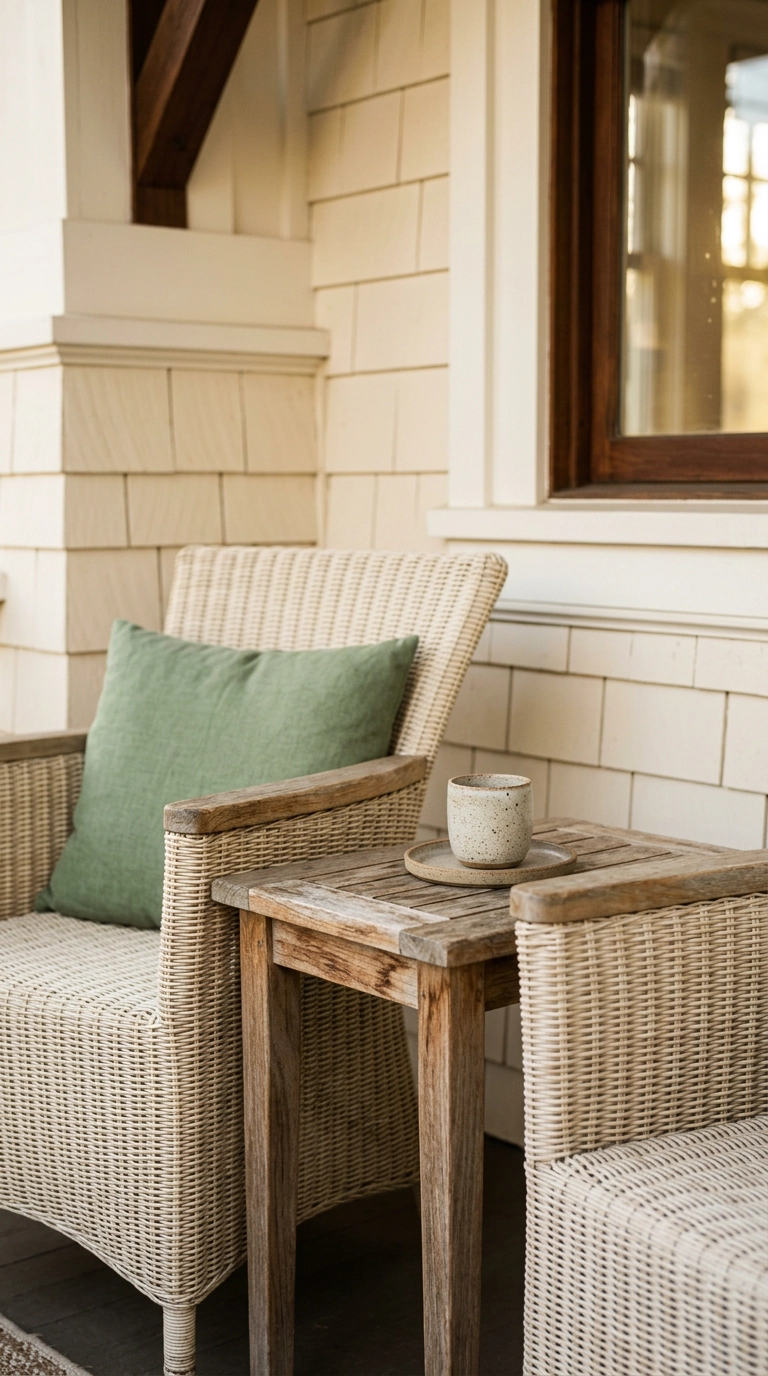
Nobody stays seated on a porch with nowhere to set a glass down. My rule is one landing surface within arm’s reach of every seat, which usually means a small table between two chairs and a stool or drink table beside anything standing alone.
15. Hide the Cushion Chaos in a Weatherproof Storage Bench
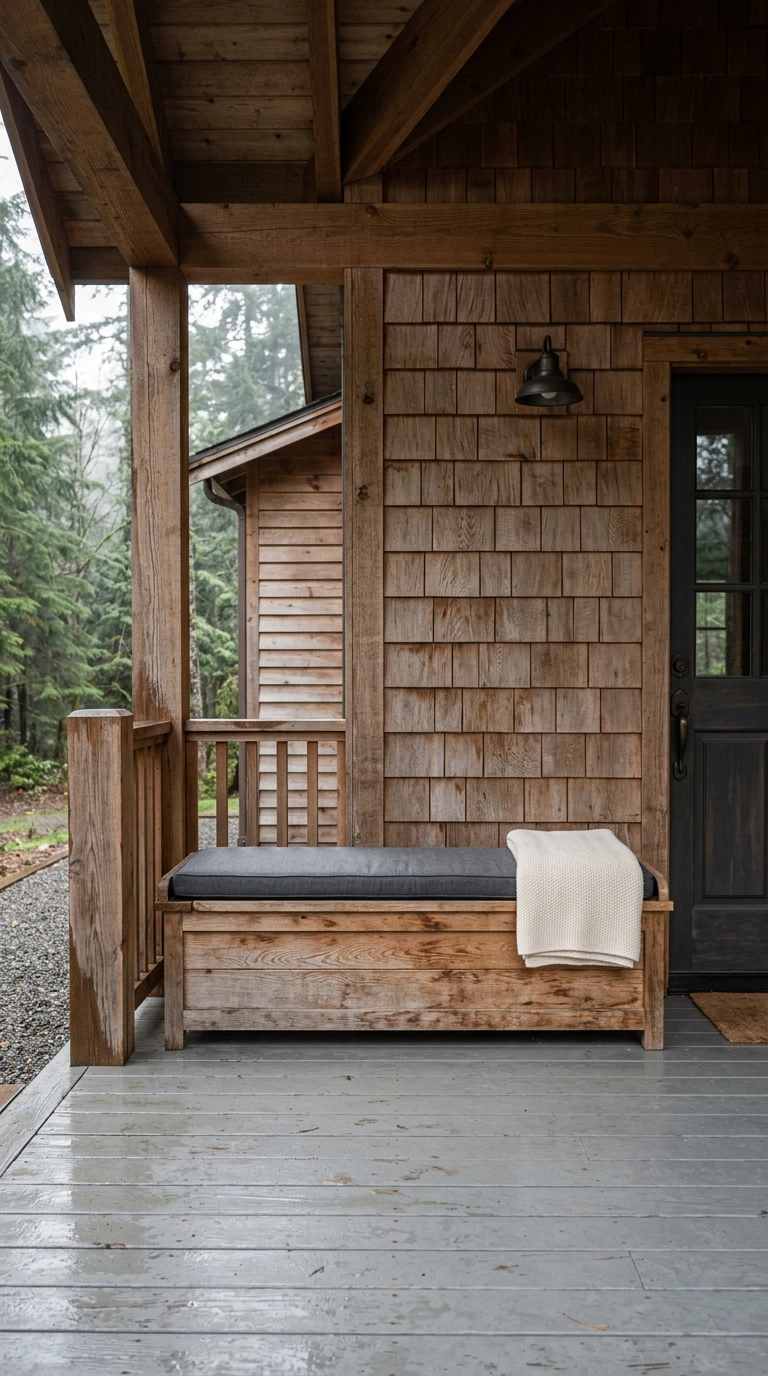
On a covered porch, the roof protects the middle and the weather still finds the edges. A storage bench solves the real problem — a dry place for cushions, throws, and the citronella candle — so you stop hauling everything indoors every time the sky turns.
16. Rotate Seasonal Layers So the Porch Never Goes Stale
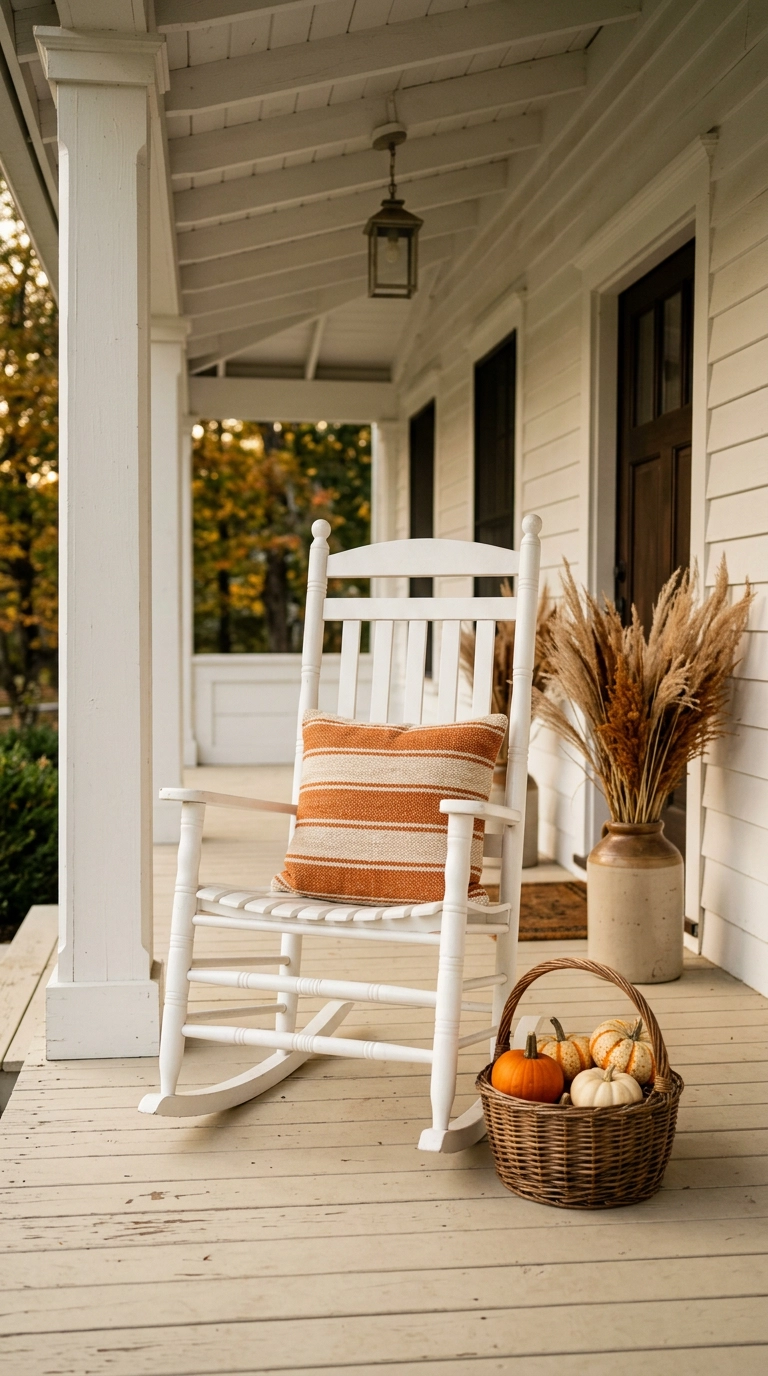
The porch is the one room your neighbors see year-round, so it is worth building a small seasonal kit rather than redecorating from scratch. I keep two cushion covers, two throws, and one doormat per season in the storage bench, and swapping them takes about twenty minutes.
17. Paint the Front Door a Color That Reads From the Curb
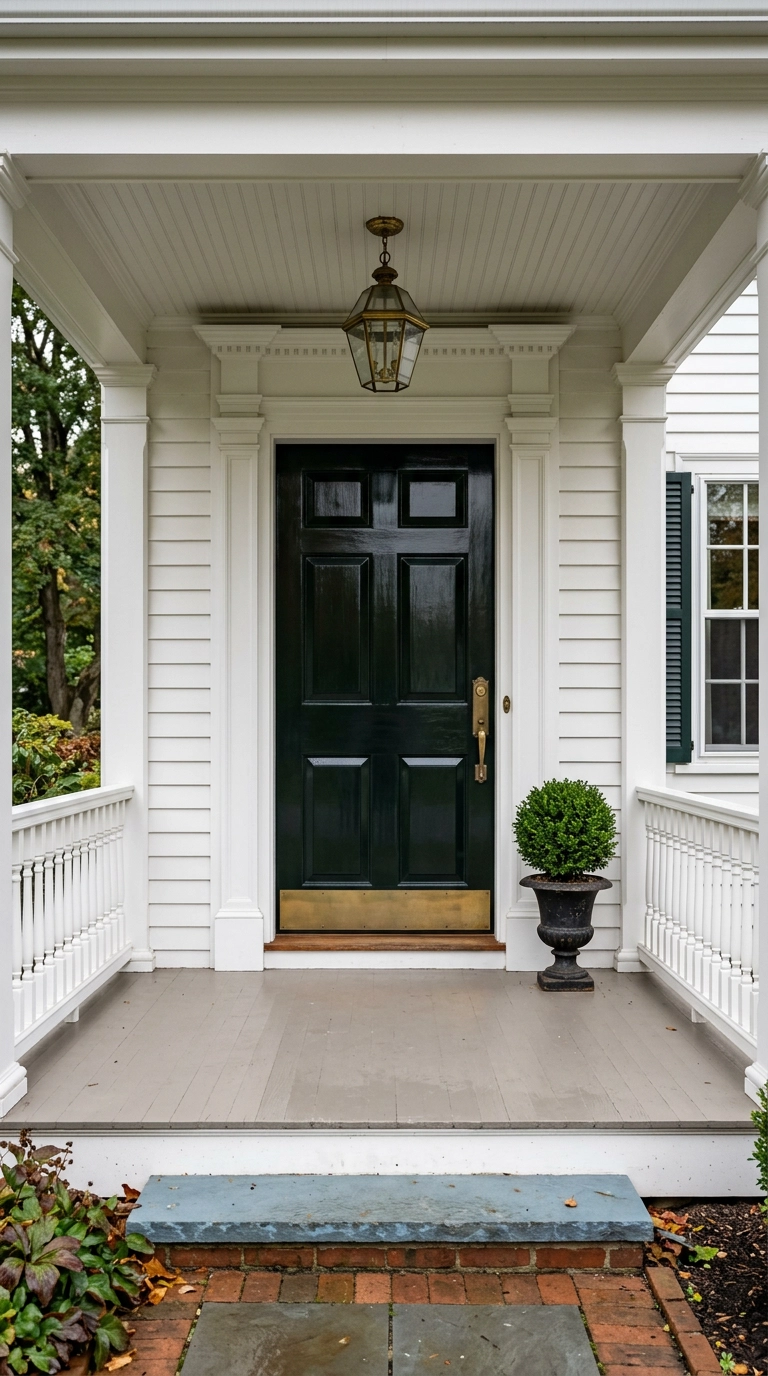
Under a porch roof, your front door sits in permanent shade, which drains color of about half its punch. That is why the tasteful mid-tone you picked from a chip in the store looks like nothing once it is hung — go one or two steps deeper and glossier than feels comfortable.
18. Upgrade House Numbers and the Mailbox as a Matched Set
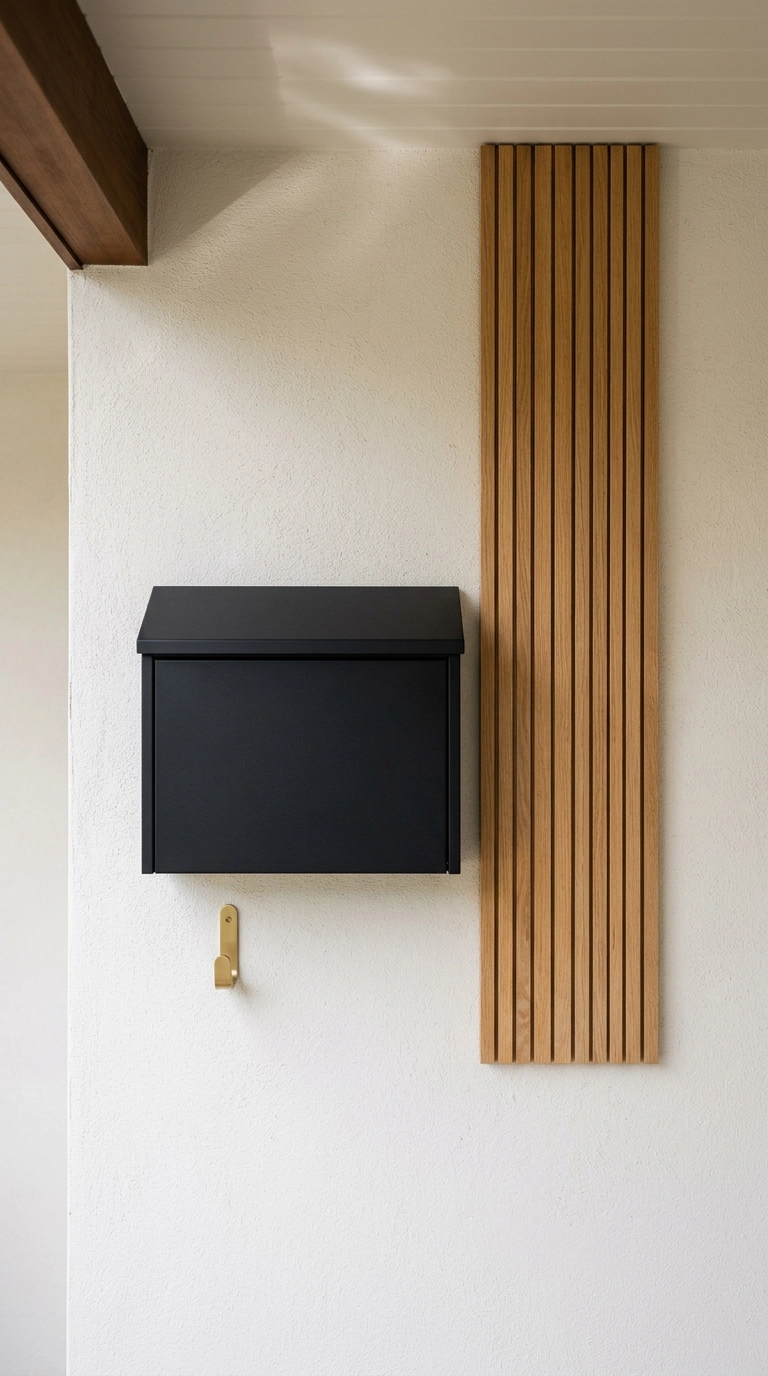
Builder-grade brass numbers and a dented mailbox undo a lot of good decorating. Swapping both for one coherent finish — matte black, brushed brass, or oil-rubbed bronze, but pick one and commit — is a 20-minute job with a drill and it instantly makes the entry look designed.
19. Layer Two Doormats for the Entry Everyone Photographs
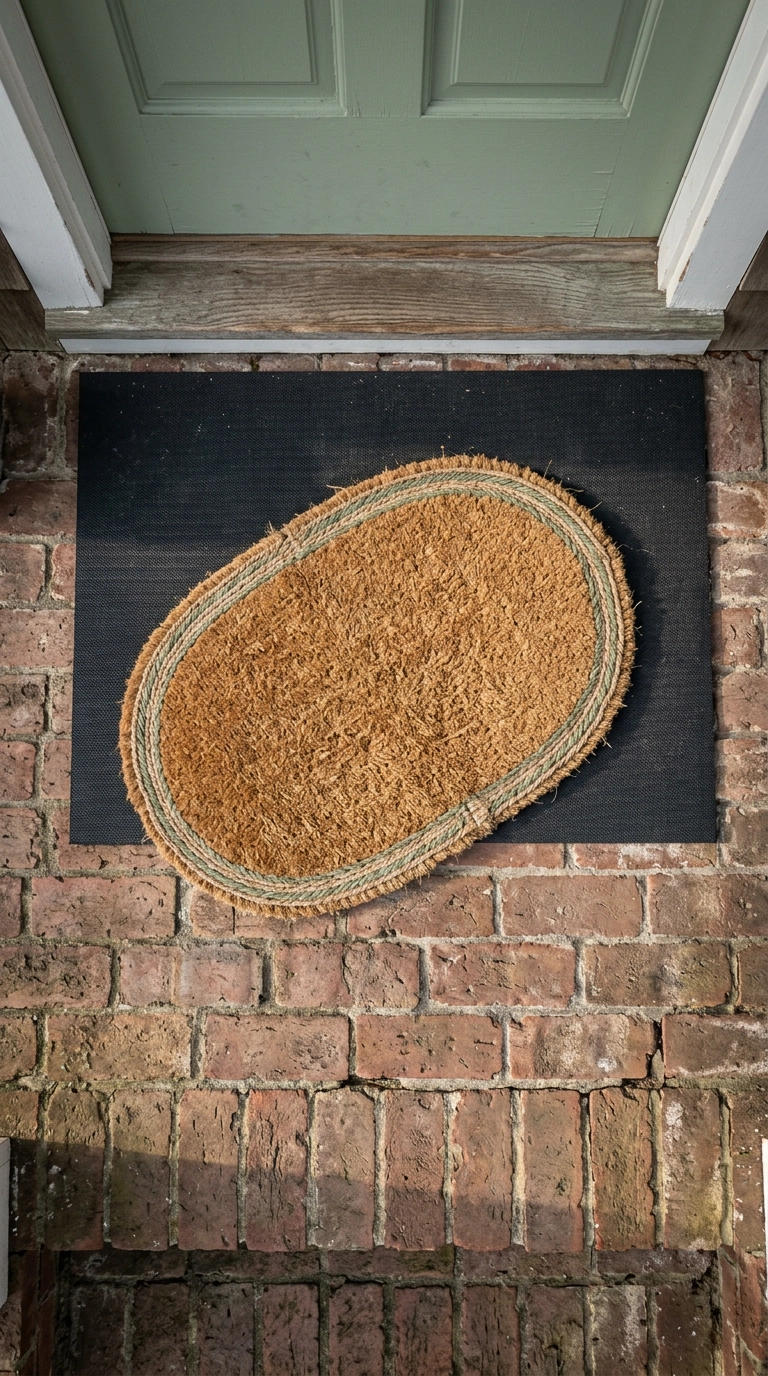
Layering a smaller coir mat over a larger rubber-backed one is a trick borrowed from rug styling, and it works for the same reason: the bigger base gives the smaller piece a frame. It also catches roughly twice the grit before it walks into your house.
20. Hang One Basket High and Let It Do the Work Alone
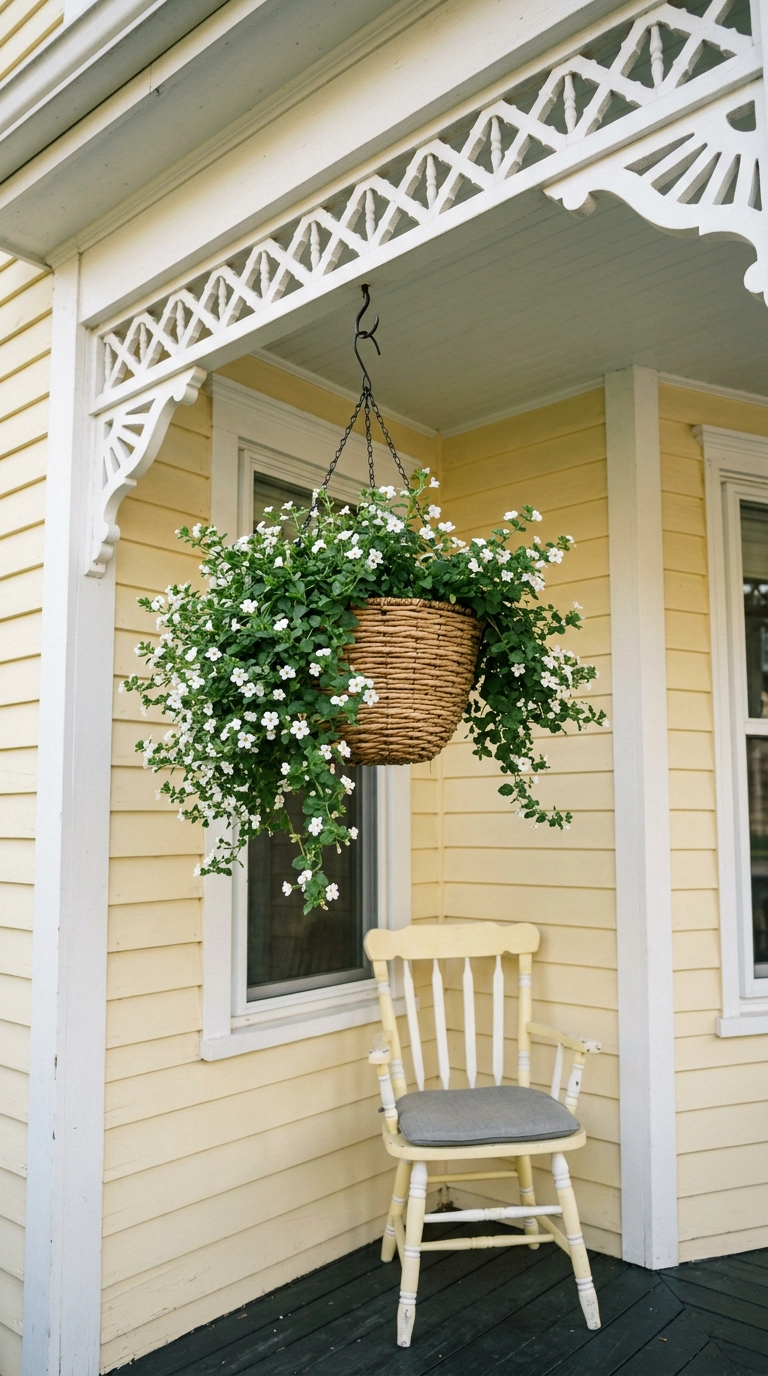
The instinct is to hang a basket at every column, and that turns a porch into a garden center. One basket, placed at the corner where you want the eye to travel, does more — a single object gets read as a focal point while a row of six gets read as wallpaper.
21. Give the Porch One Real Reason to Be Used
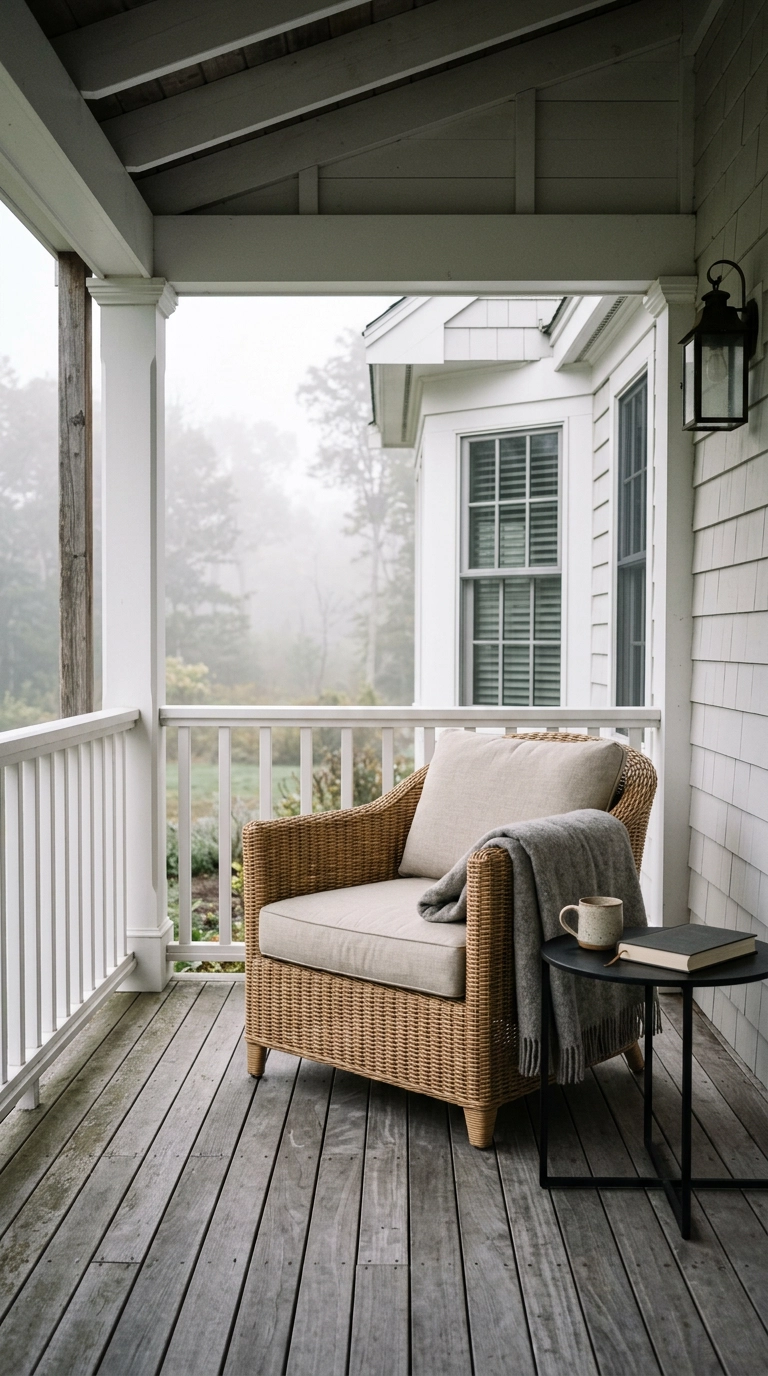
Most unused porches fail for one reason: there is no activity assigned to them. Furniture alone does not create a habit, so pick a single specific use — morning coffee, evening phone calls, Sunday reading — and build one small station that makes that thing effortless.
22. Add a Weatherproof Outdoor Rug Runner Down a Long Porch
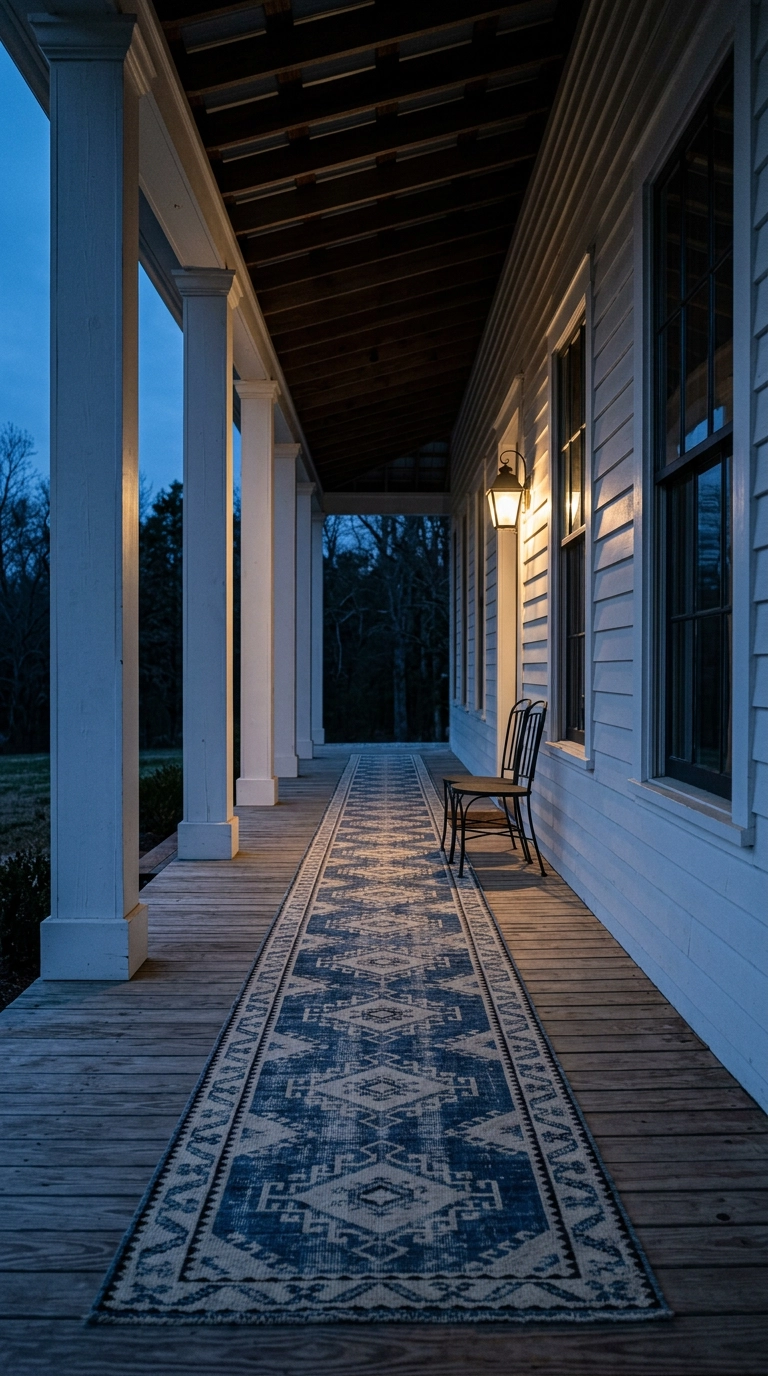
On a porch longer than about 16 feet, a single area rug looks stranded. A runner solves it by following the path people already walk, and the repeating pattern down its length exaggerates the perspective, which makes a long porch feel even more architectural.
23. Put the Porch Lights on a Dusk Timer So It Turns Itself On
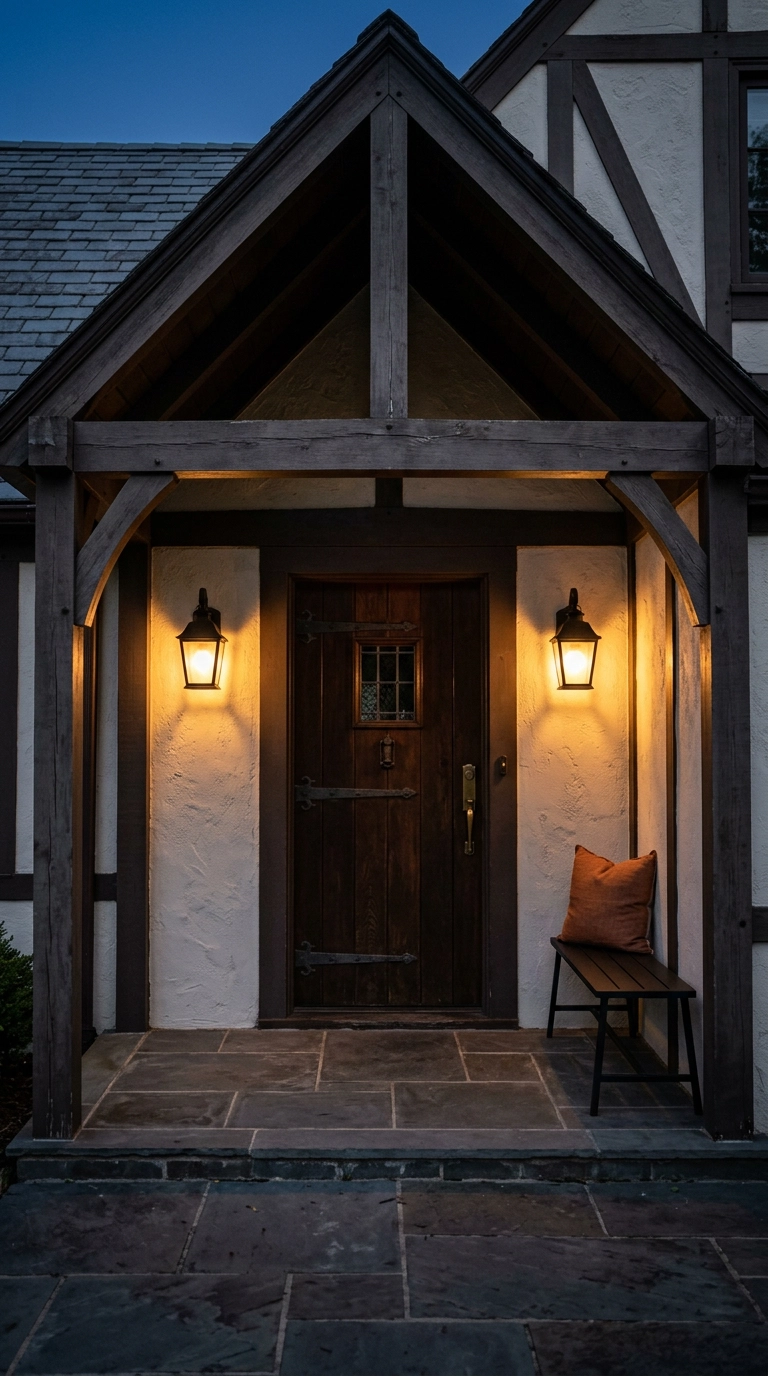
Here is the thing nobody tells you: a beautifully decorated porch that is dark at 7 p.m. is a porch nobody sits on. Putting the lights on a dusk-to-dawn sensor or a smart plug means the space invites you out every single evening without anyone remembering to flip a switch.
Time to Actually Sit Down and Stay a While
Here is what I hope you take away from all this: a covered porch does not need a bigger budget, it needs a point of view. Some of the highest-impact moves on this list cost under $50 — the haint blue ceiling, the layered mats, the matched black numbers, the dusk timer that turns the lights on before you even think to ask. Pick two of those and do them this weekend, because nothing sells a porch like a porch that looks tended to.
The bigger projects are where the personality lives. A wet-rated ceiling fan and weatherproof curtains turn a roofed platform into a three-season room, and the trend I keep seeing in 2026 is exactly that: treating the covered porch as an outside room with an inside attitude — layered lighting, one grounded rug, a dark painted floor, and storage that keeps the cushions dry. Serena & Lily’s whole catalog has been preaching porch-as-room for years, and the styling principle travels no matter what you spend.
My final bit of designer honesty: no layout survives contact with real life unless someone actually sits in it. Assign the porch one job — coffee, reading, evening calls — and make that one corner effortless. Then go test it with a mug in hand. And if you want the full breakdown of every idea I covered here plus the ones that did not make the cut, sign up for my weekly newsletter — I send one practical room fix every Friday, and this spring we are doing a whole porch series.


