23+ Smart Mud Room Decor Ideas that Actually Survive Winter in 2026

I’ll be straight with you – the mudroom is the only room in the house that has to be pretty and take a beating from wet boots, backpacks, dog leashes, and whatever your family drags in from the driveway. I’ve designed dozens of them, and the ones that still look good in year three are never the ones that photographed best on day one. So this list is my honest working playbook: what holds up, what’s worth the money, what you can fix in twenty minutes, and what to do if your “mudroom” is really just four feet of hallway by the side door.
Mud Room Decor Ideas
1. Build a Full Wall of Built-In Lockers
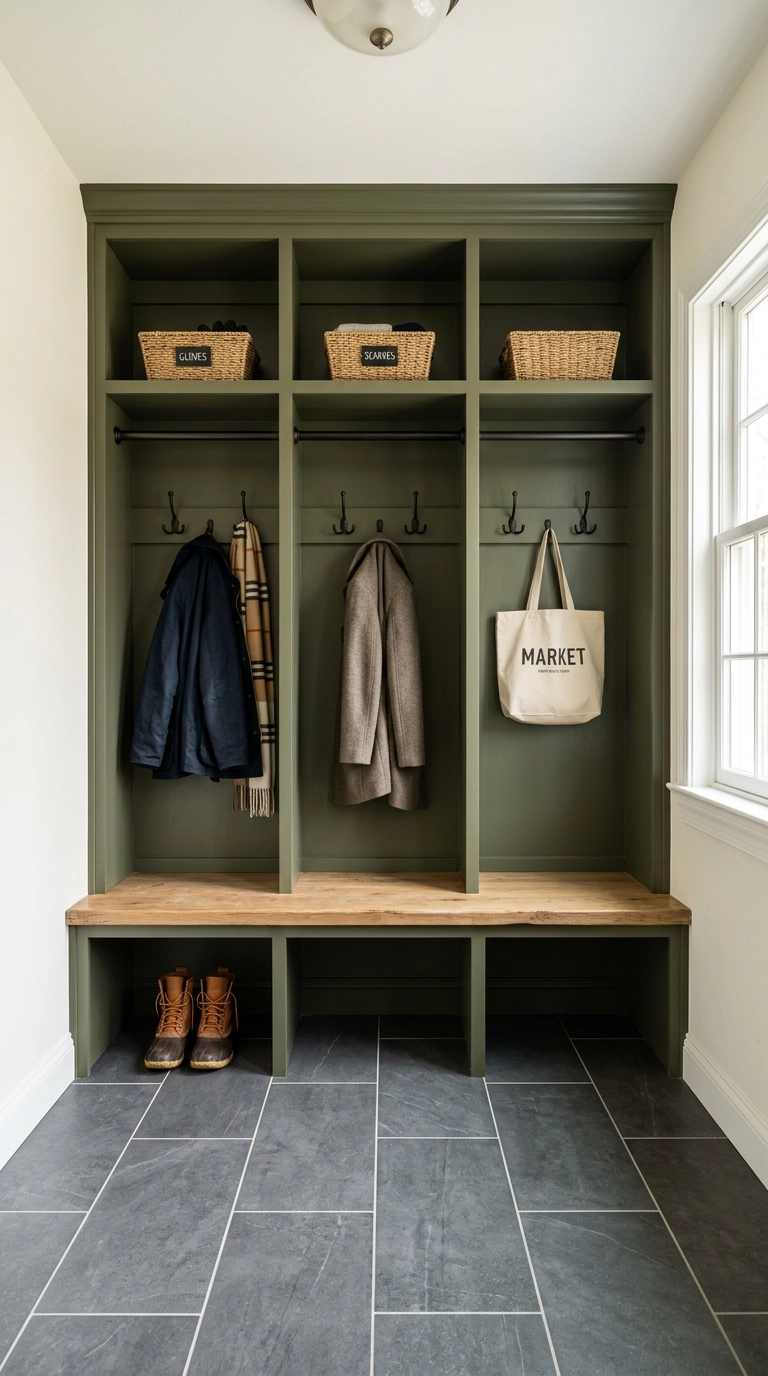
This is the splurge, so let me justify it. A run of built-in lockers gives every person a vertical column they own – rod, hooks, shelf, cubby – and the reason it works is visual containment: the mess exists, it just lives inside a defined box instead of spreading across the room. Budget roughly 16 to 20 inches of width per person and 22 to 24 inches of depth if you want winter coats to hang without squishing.
2. Put a Bench with Real Storage Underneath
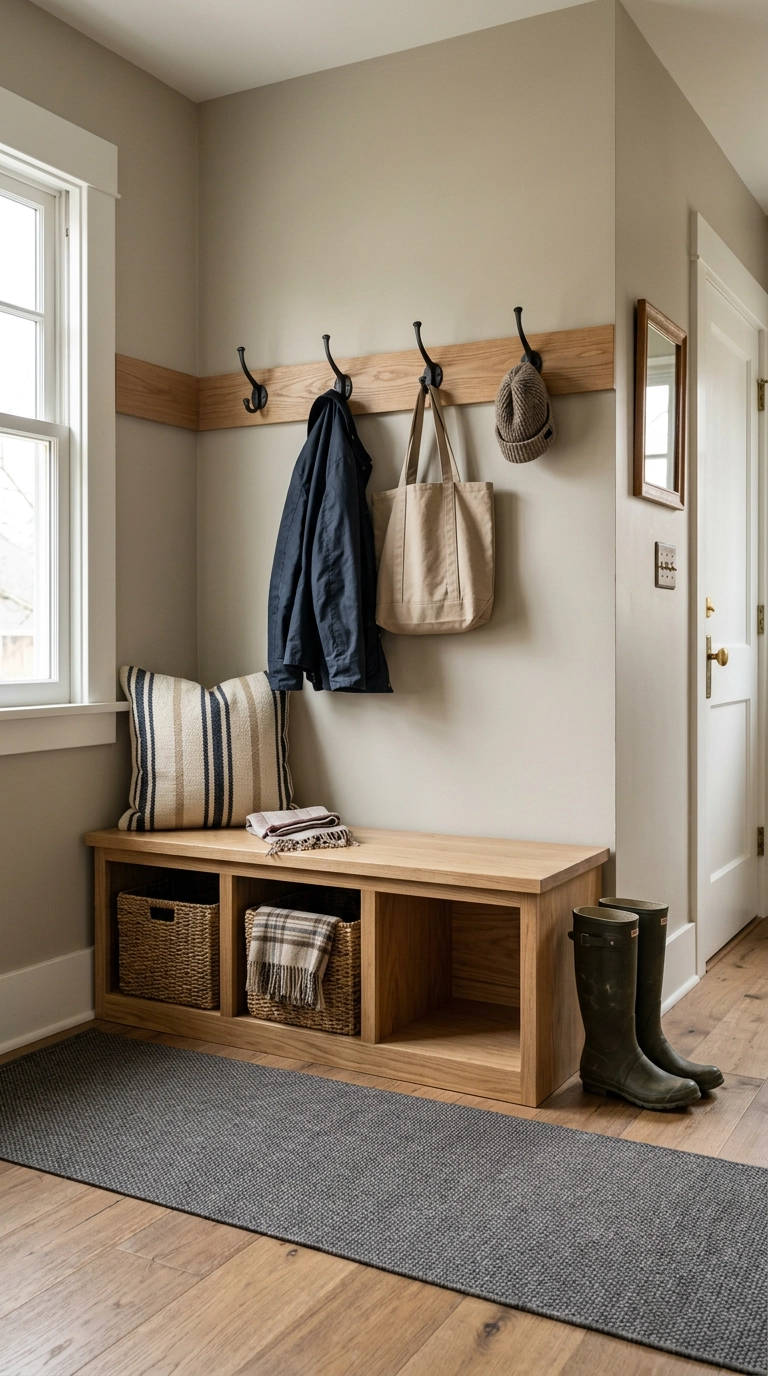
A bench is where the whole room earns its keep, because nobody takes off wet boots standing on one leg. Seat height matters more than style – 17 to 18 inches off the floor is the sweet spot for adults, and kids will happily use it too. Anything lower feels like a toddler chair and anything higher leaves feet dangling.
3. Skip the Cabinets and Go with a Wall of Open Hooks
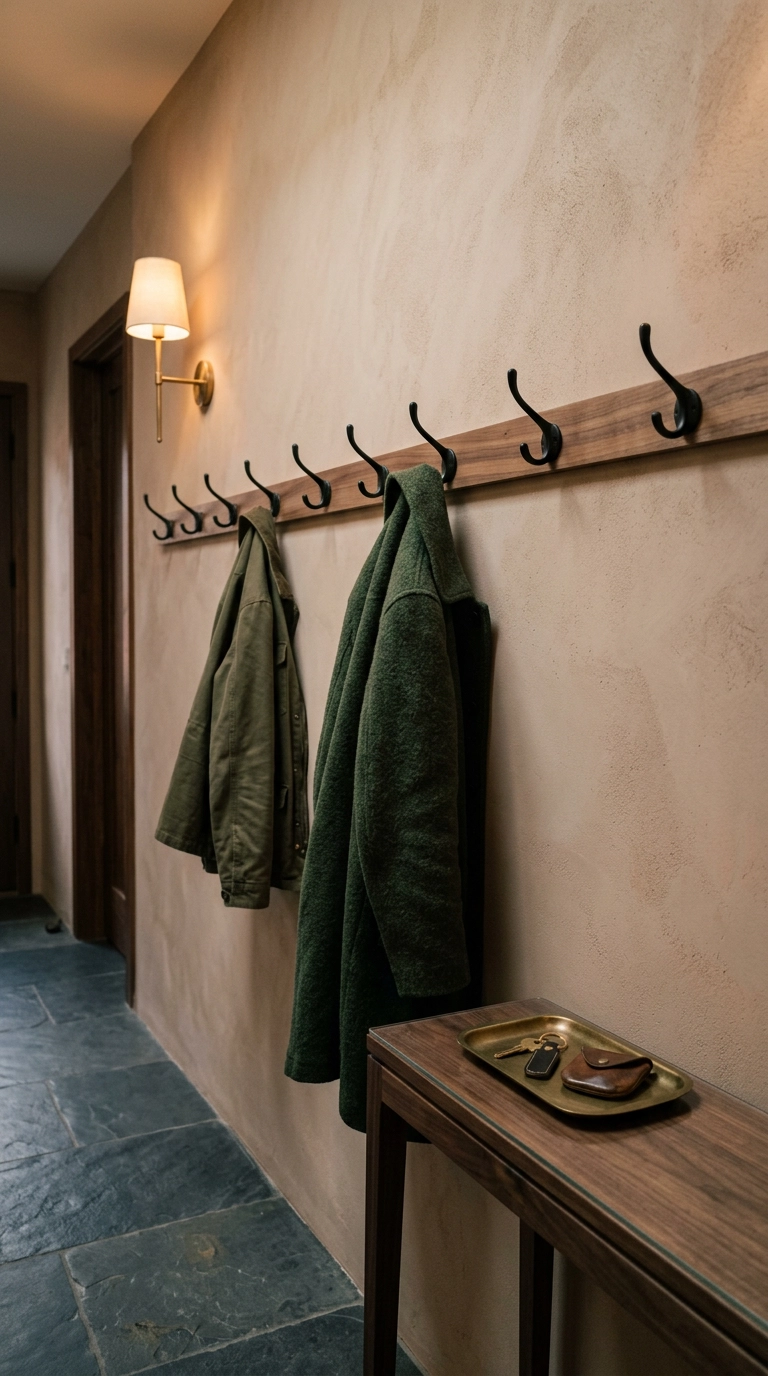
Open hooks beat closed lockers for one unglamorous reason: wet coats need air. A closed cabinet traps damp wool and you’ll smell it by March. Hooks also cost about a tenth as much and take an afternoon with a stud finder.
4. Give Every Family Member Their Own Cubby
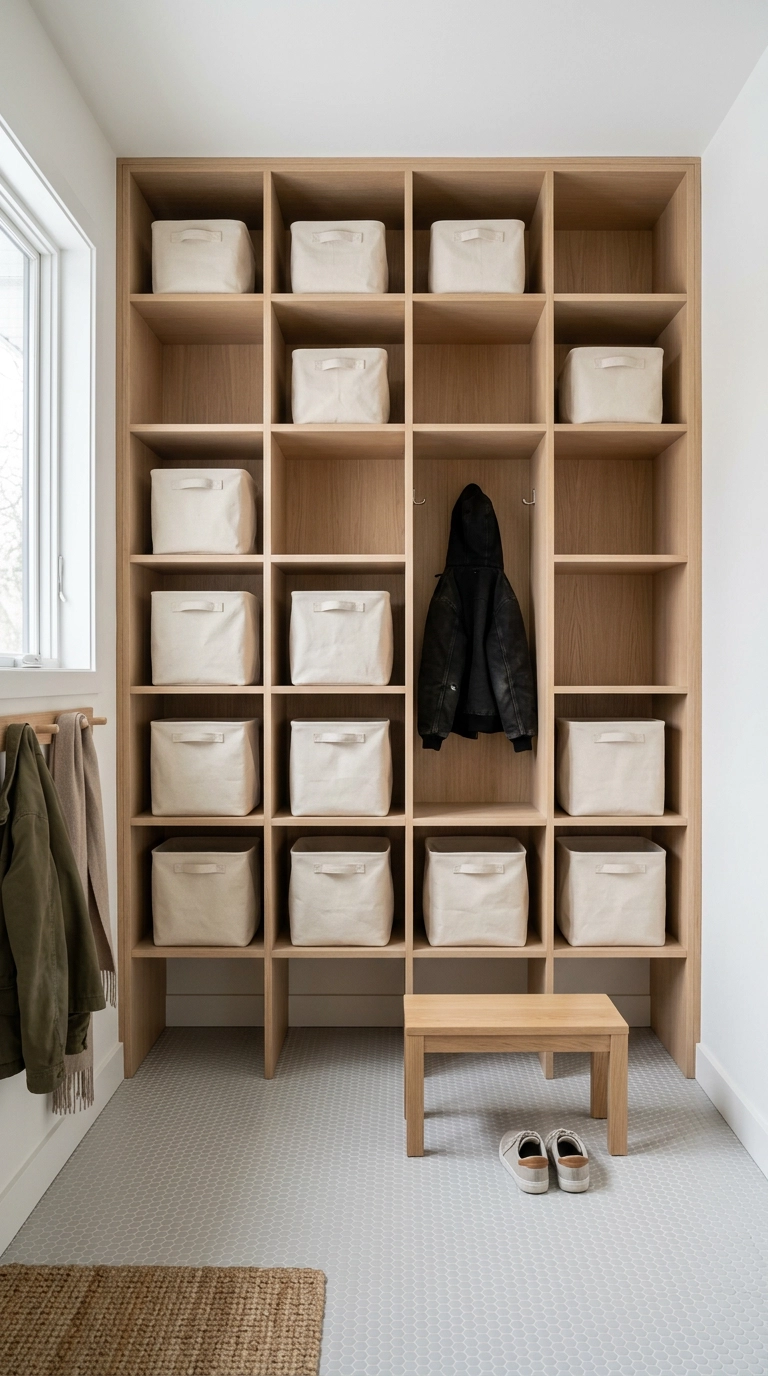
A cubby-per-person system is the only mudroom solution I’ve seen kids actually follow, because it turns ownership into a boundary. Each cubby gets a hook, a shelf, and a bin – coats and hats above, shoes and stuff below. When your kid knows the middle cubby is theirs, “whose boots are these” disappears as a household argument.
5. Get a Real Boot Tray with a Raised Grate
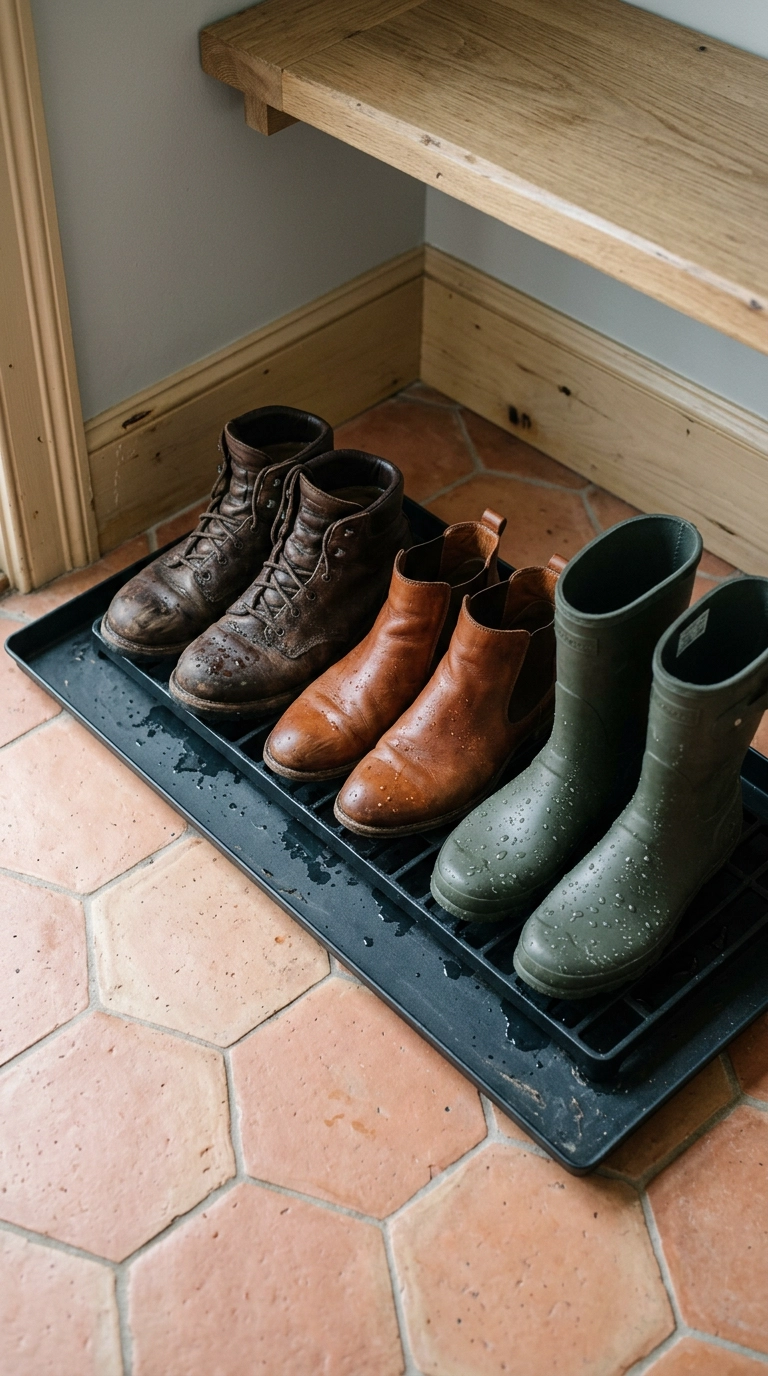
Most boot trays are just shallow pans, which means your boots sit in the puddle they made. A tray with a raised grate lets the water drop underneath and the soles dry from below – that’s the whole product, and it’s the single highest-value 30-dollar thing in a mudroom.
6. Tile the Floor and Stop Worrying About It
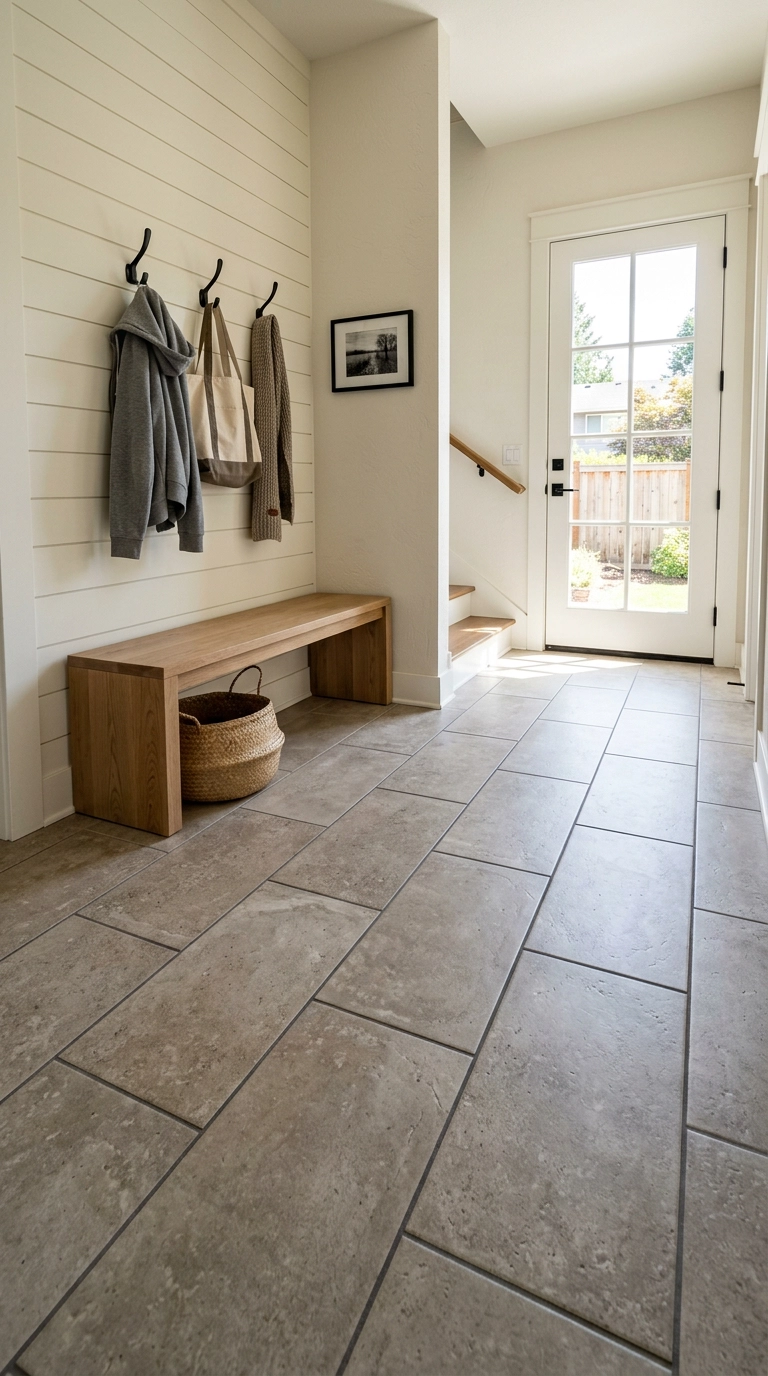
Porcelain tile is the correct answer for a mudroom floor and I will die on this hill. It doesn’t care about road salt, it doesn’t swell when water sits on it, and a matte finish with texture won’t turn into a skating rink under wet socks. Look for a PEI rating of 4 or 5 and a DCOF above 0.42 for slip resistance.
7. Choose Luxury Vinyl Plank When Tile Isn’t in the Budget
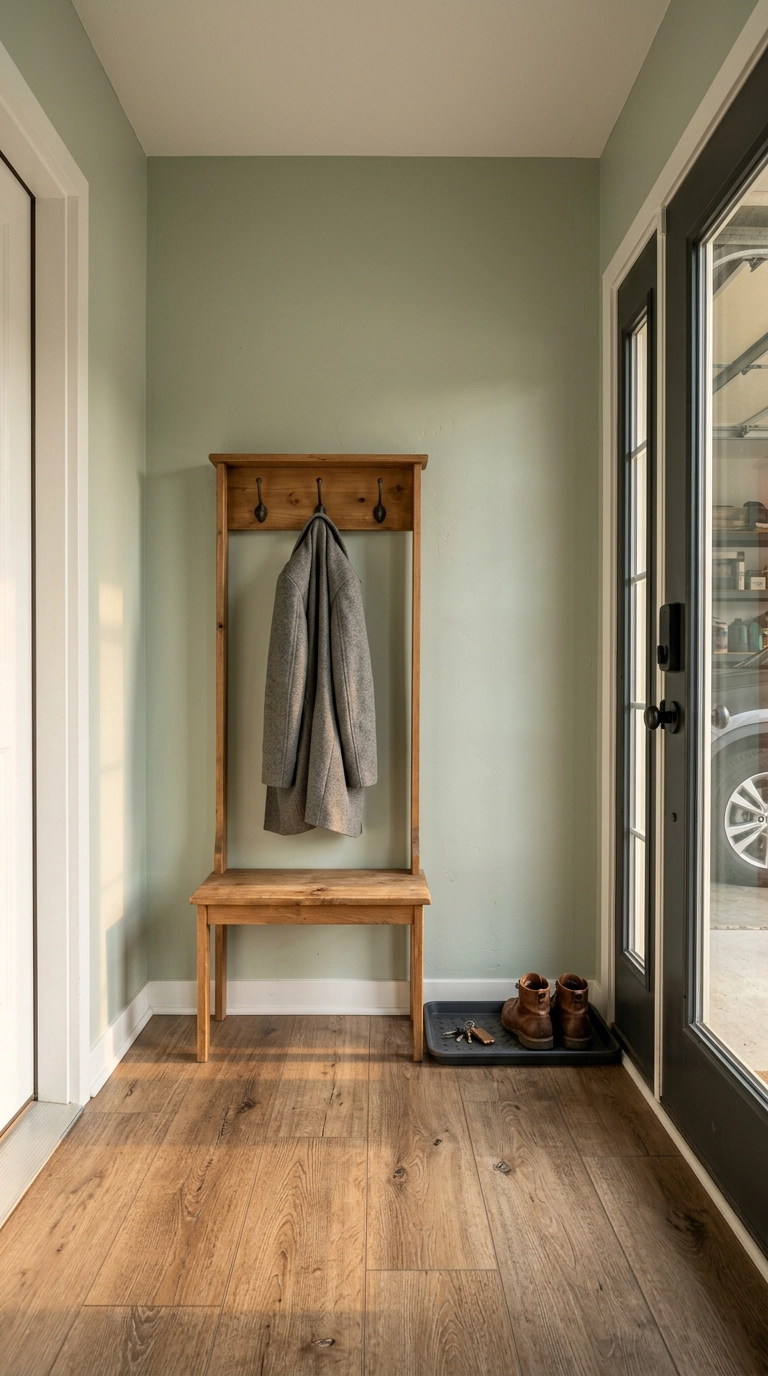
Good LVP is genuinely waterproof, it’s warmer underfoot than tile, and a click-lock floating floor is a real weekend DIY if you can use a utility knife and a tapping block. This is the mid-budget pick and it looks like wood without any of wood’s mudroom problems.
8. Make Patterned Cement Tile Your One Fun Move
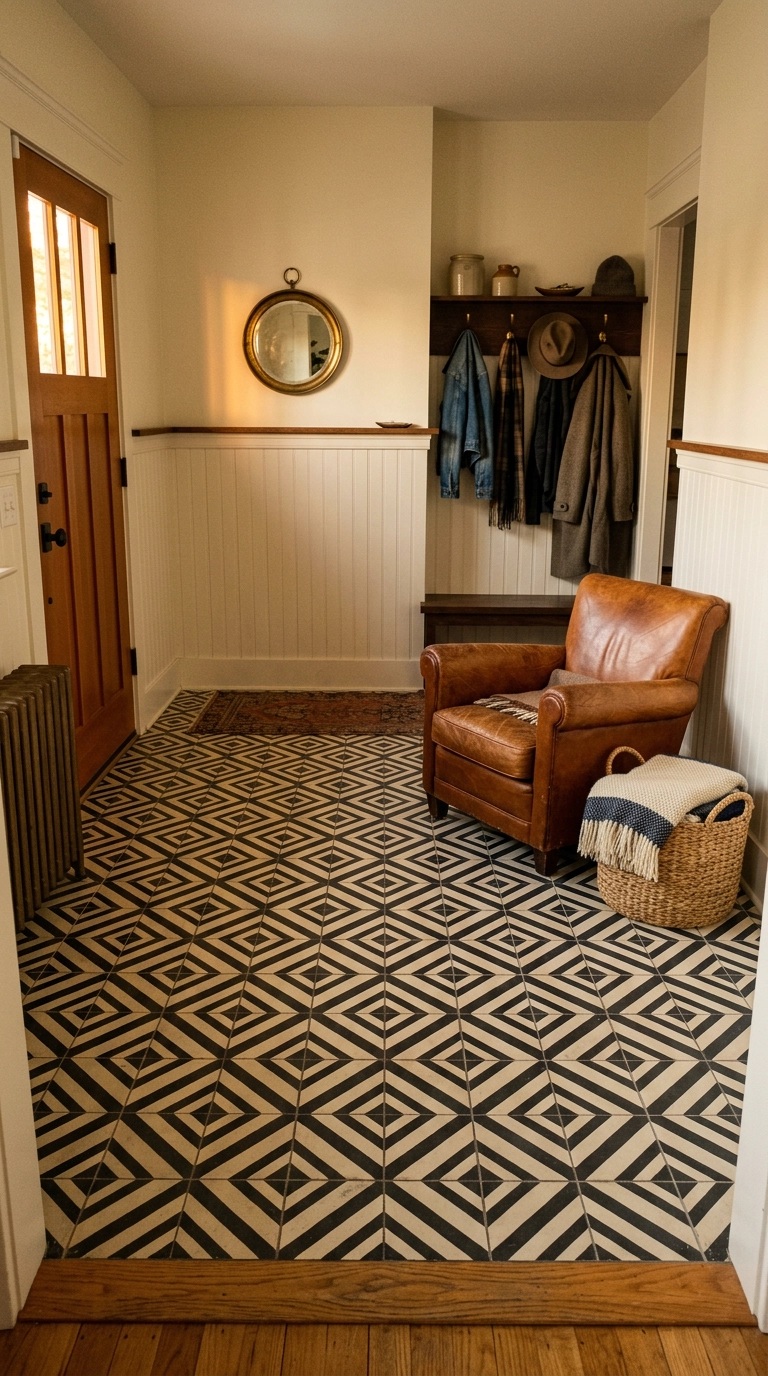
If you want one wild card in this room, spend it on the floor. A patterned cement tile reads as expensive even in a tiny mudroom, it hides dirt better than any solid color, and it gives the whole house its first impression of personality. Keep everything else quiet – plain walls, one solid bench – and let the floor talk.
9. Washable Walls Beat Pretty Walls Here
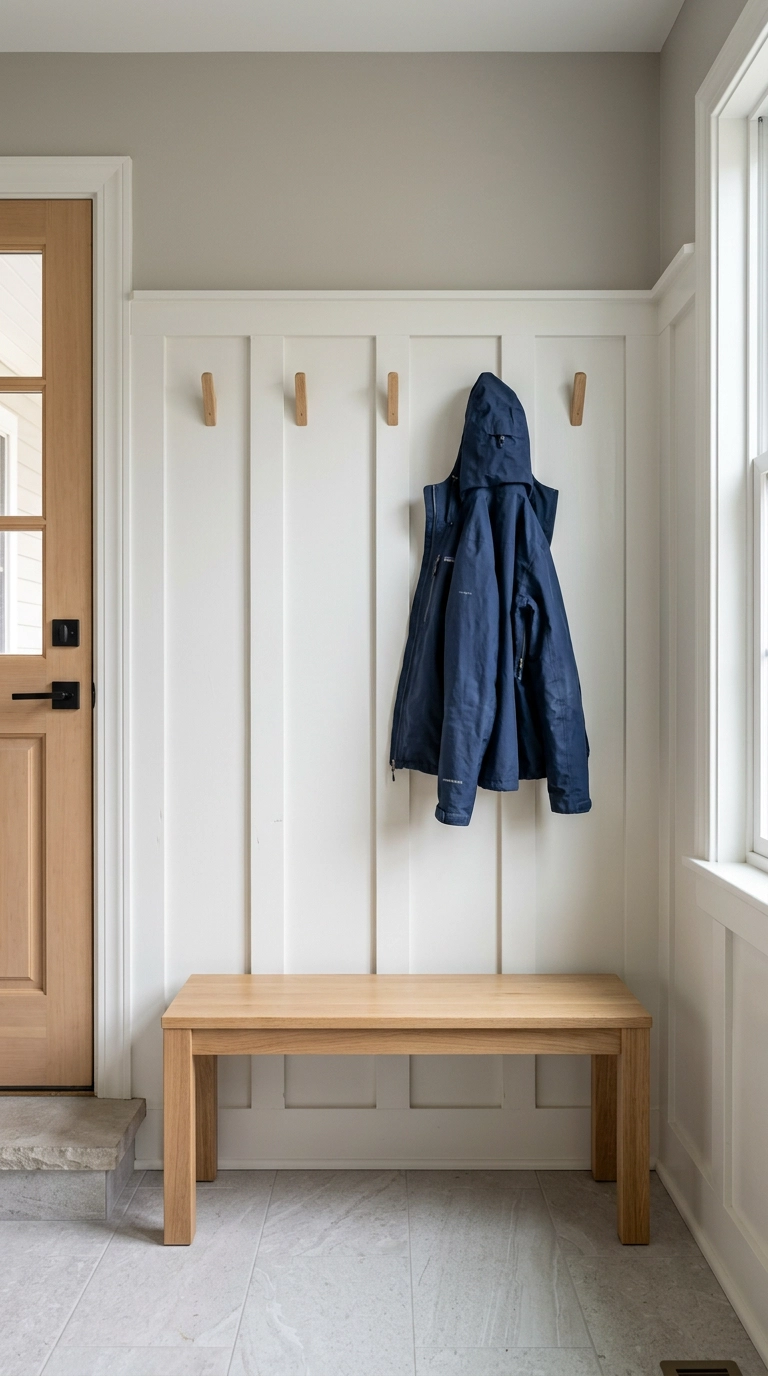
The dirt that hits a mudroom wall isn’t airborne dust – it’s backpack smudges, wet sleeve streaks, and the occasional boot-toe kick. So the rule is: anything below waist height should be a surface you can wipe down. Semi-gloss paint is the minimum; a true washable finish is better.
10. Hang the Kid Hooks Low Enough That They’re Actually Used
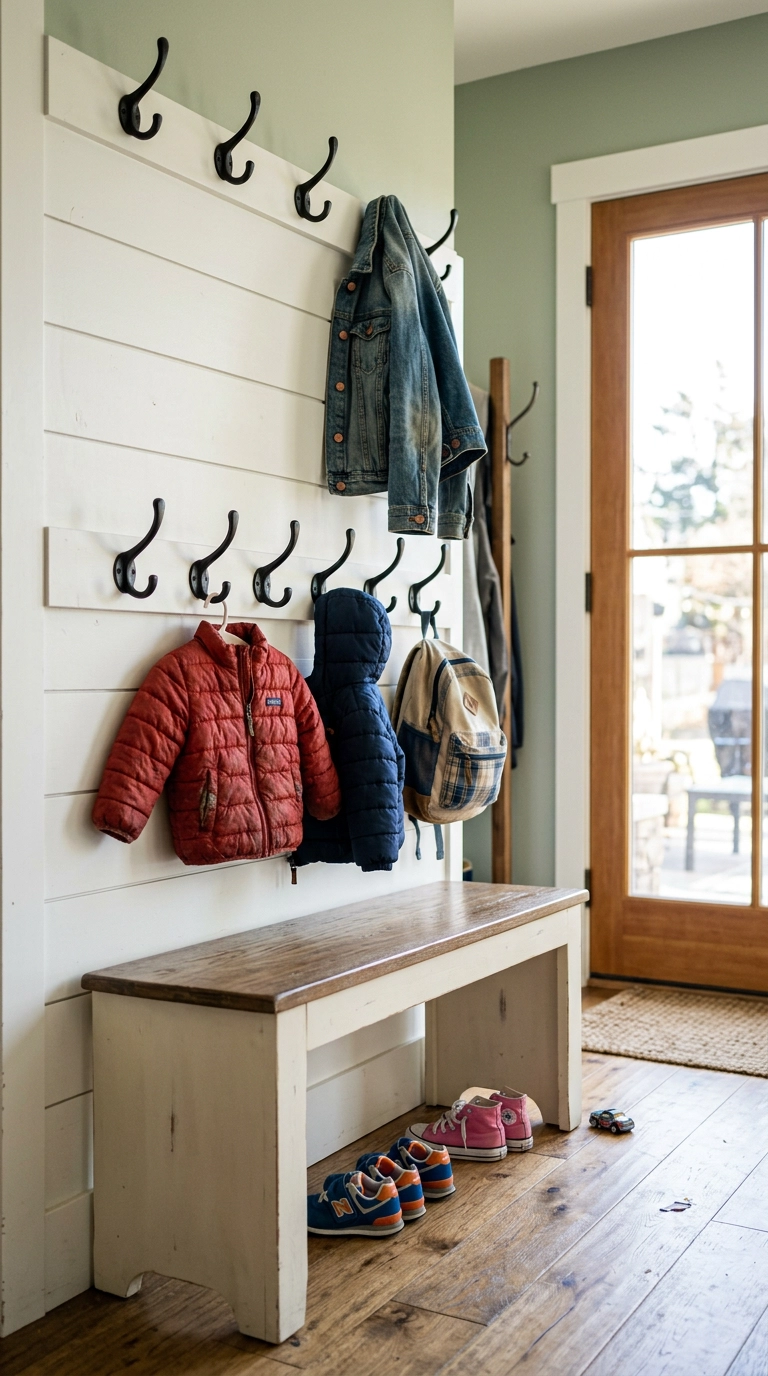
A hook that a five-year-old can’t reach is not a kid hook, it’s a pile of jackets on the floor with extra steps. Mount a second row at the height your actual children can reach – about 36 to 42 inches for most elementary-age kids – and watch the drop-by-the-door problem mostly solve itself.
11. Sort Everything Into Baskets and Bins
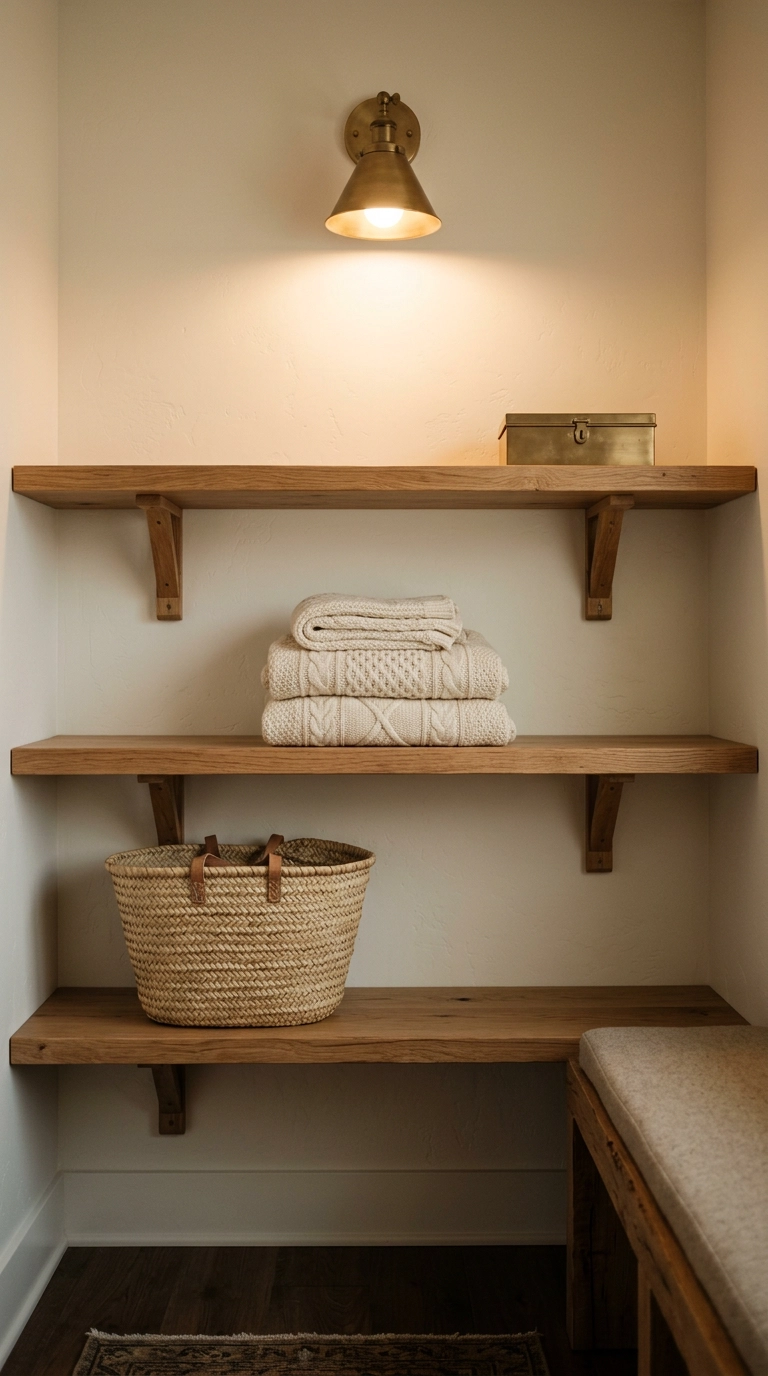
Baskets are the cheapest organizing system that still looks like decor, because a bin full of mittens reads as texture and a bin full of loose mittens reads as a pile. The rule of thumb is one basket per category – hats, gloves, dog stuff, chargers – so “where’s my left glove” has one place to live.
12. Build a Small Drop Zone for Keys and Mail
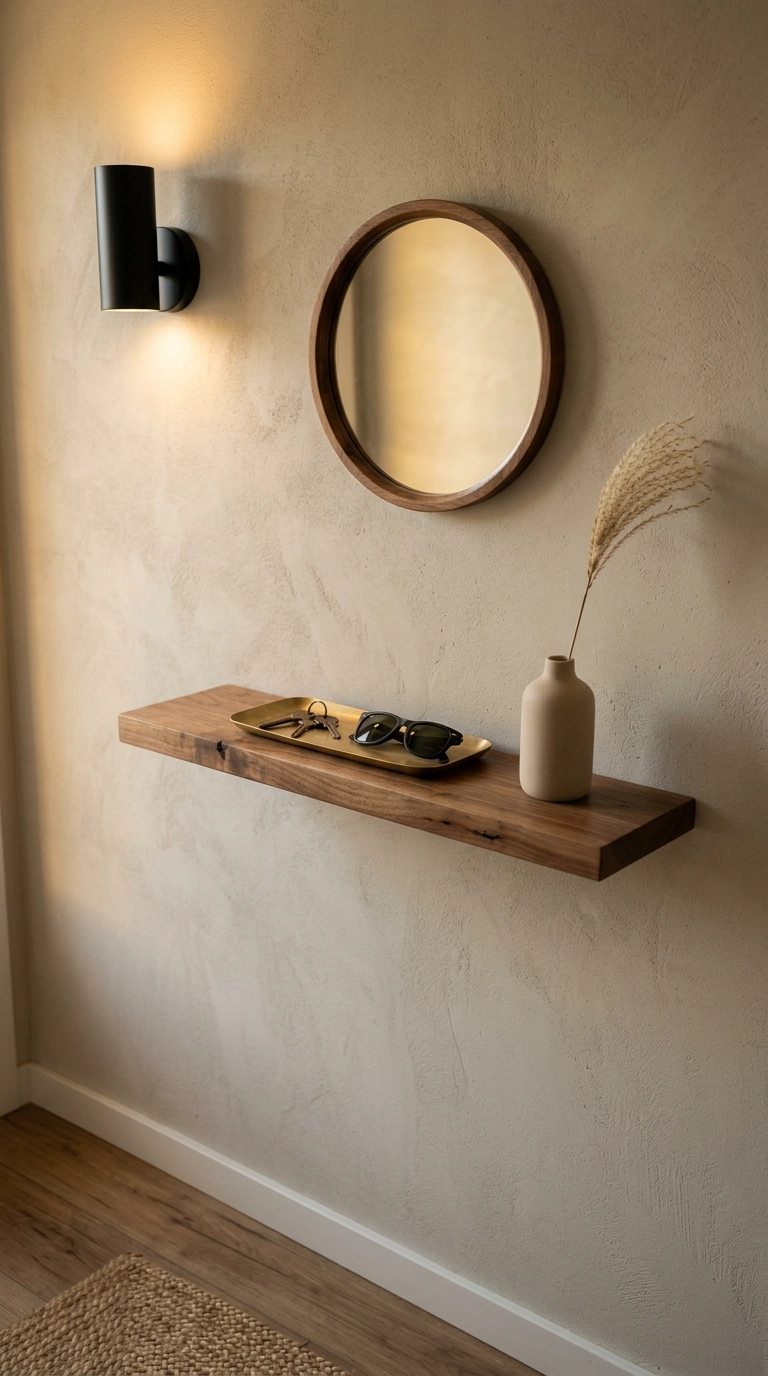
Keys, mail, sunglasses, and whatever came out of your pocket at the door – if there’s no designated landing spot, there’s a designated table somewhere else in the house getting buried. A slim shelf with a catch-all tray is the lowest-effort fix in the whole room: one surface, one tray, done.
13. Rotate Coats by Season So Winter Has Room to Breathe
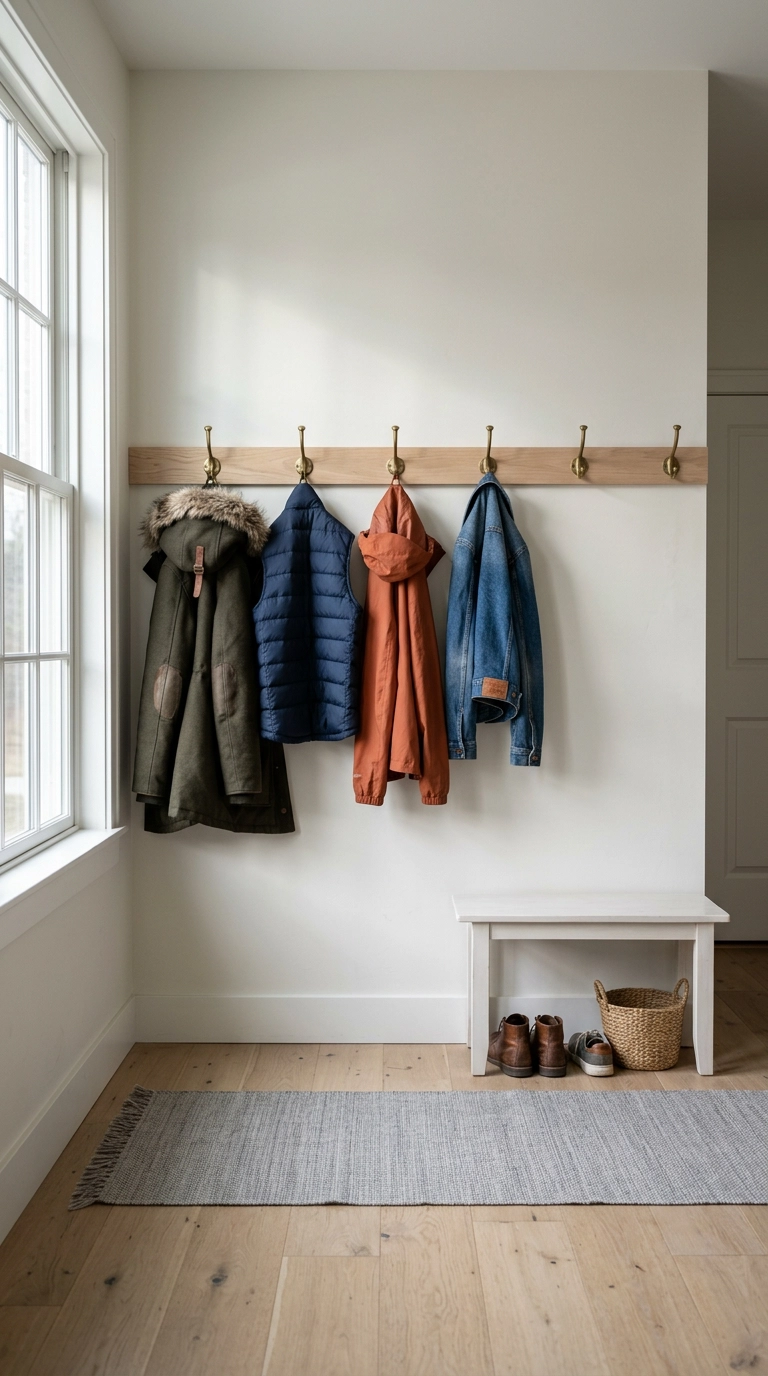
The fastest fix in this entire article is free and takes twenty minutes twice a year: swap the seasonal stuff. Winter’s heavy coats and snow pants need every hook and all the air space; spring’s lighter layers don’t. When summer jackets hang over winter parkas, nothing dries and nothing fits.
14. Turn a Skinny Hallway Into a Working Mudroom
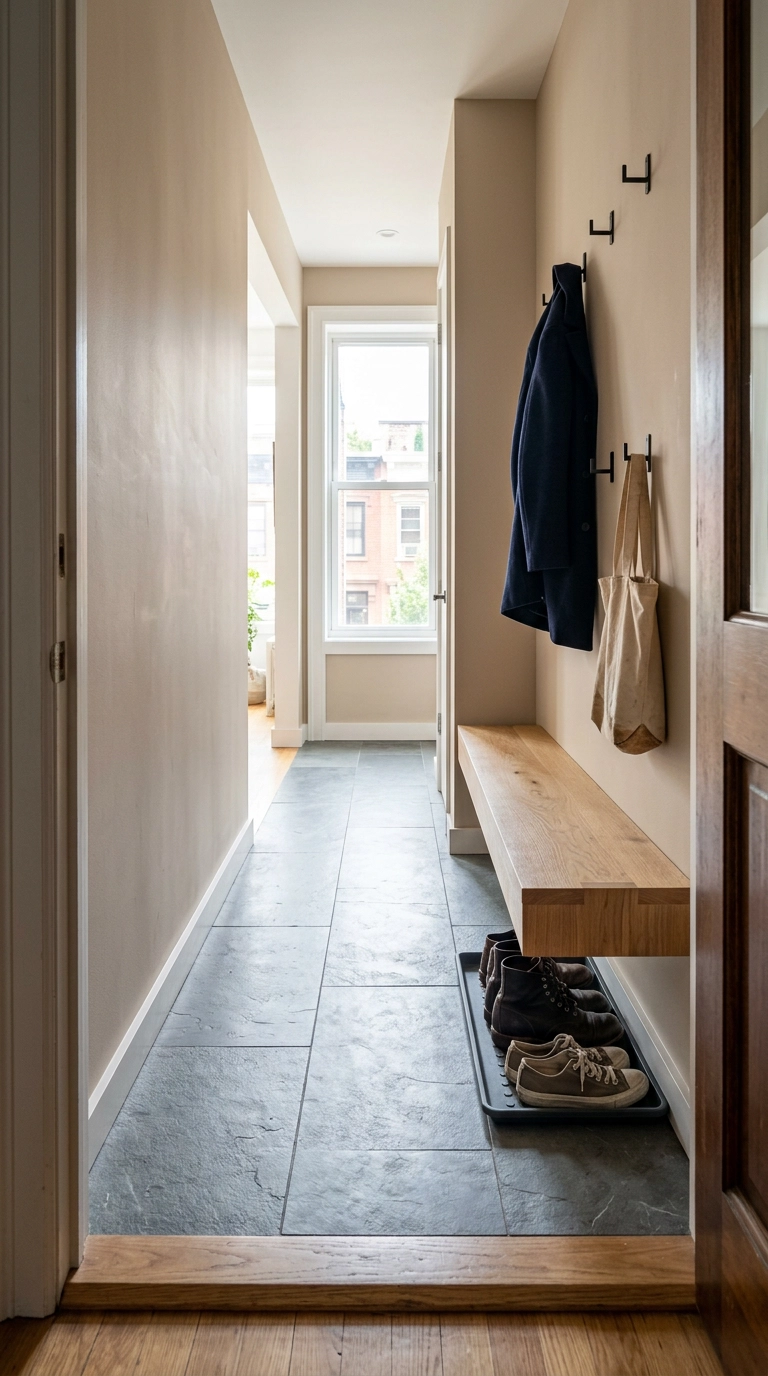
Most American homes don’t have a dedicated mudroom, they have a hallway with ambitions. The trick in a corridor under 42 inches wide is to go shallow – a bench 8 to 12 inches deep still catches a seated person and still lets two people pass, where a standard 18-inch bench turns the hall into a squeeze.
15. Let the Laundry and the Mudroom Share One Room
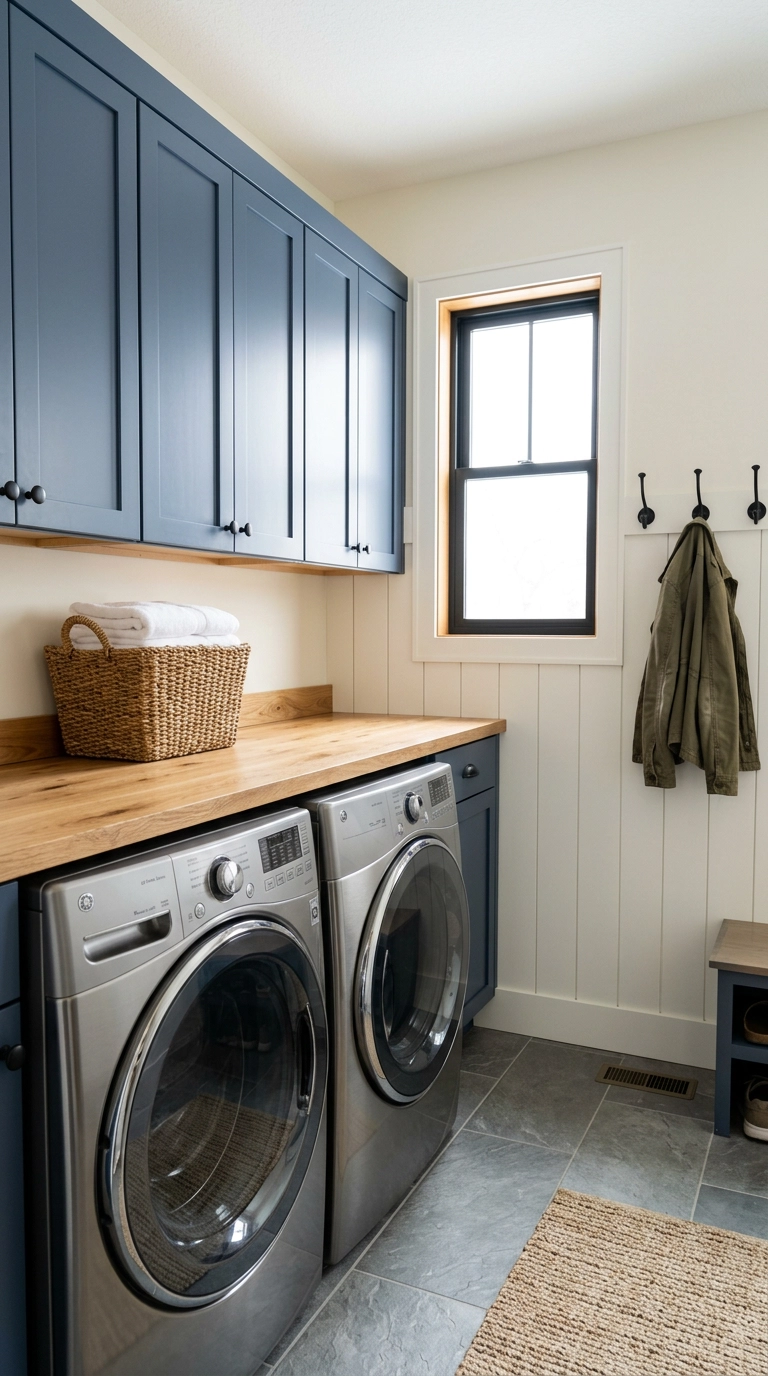
If your laundry sits by the back door, stop treating them as two rooms fighting for the same square footage. The overlap is genuinely useful: muddy clothes come off at the door and go straight into the machine instead of tracking through the house.
16. Give the Dog a Station of Their Own
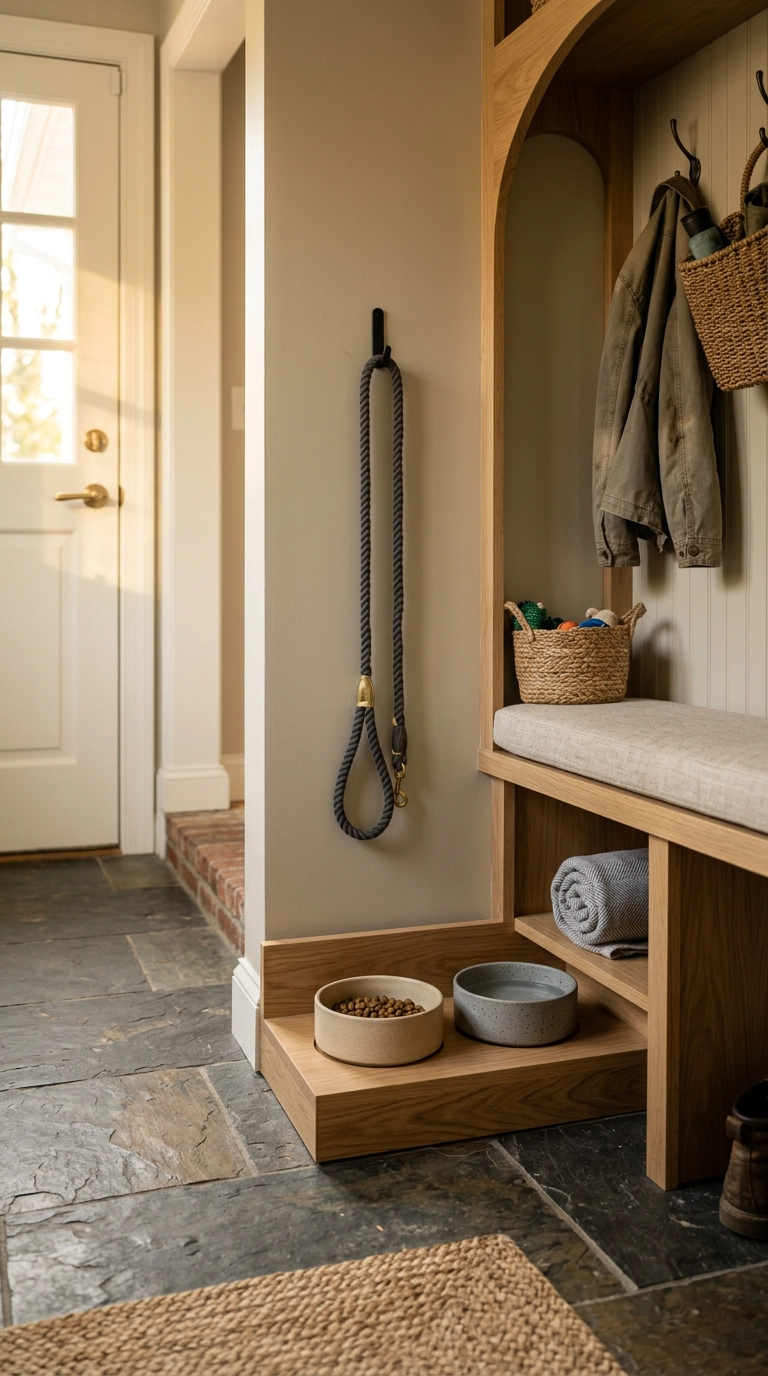
Dog gear is mudroom gear, so plan for it instead of letting it colonize the floor. A pet station needs four things: a low hook for the leash, a spot for food and water bowls, a bin for kibble, and a designated towel for wet paws. Put the leash hook at 30 to 36 inches so you can grab it without bending.
17. Layer the Lighting So It Isn’t One Sad Ceiling Bulb
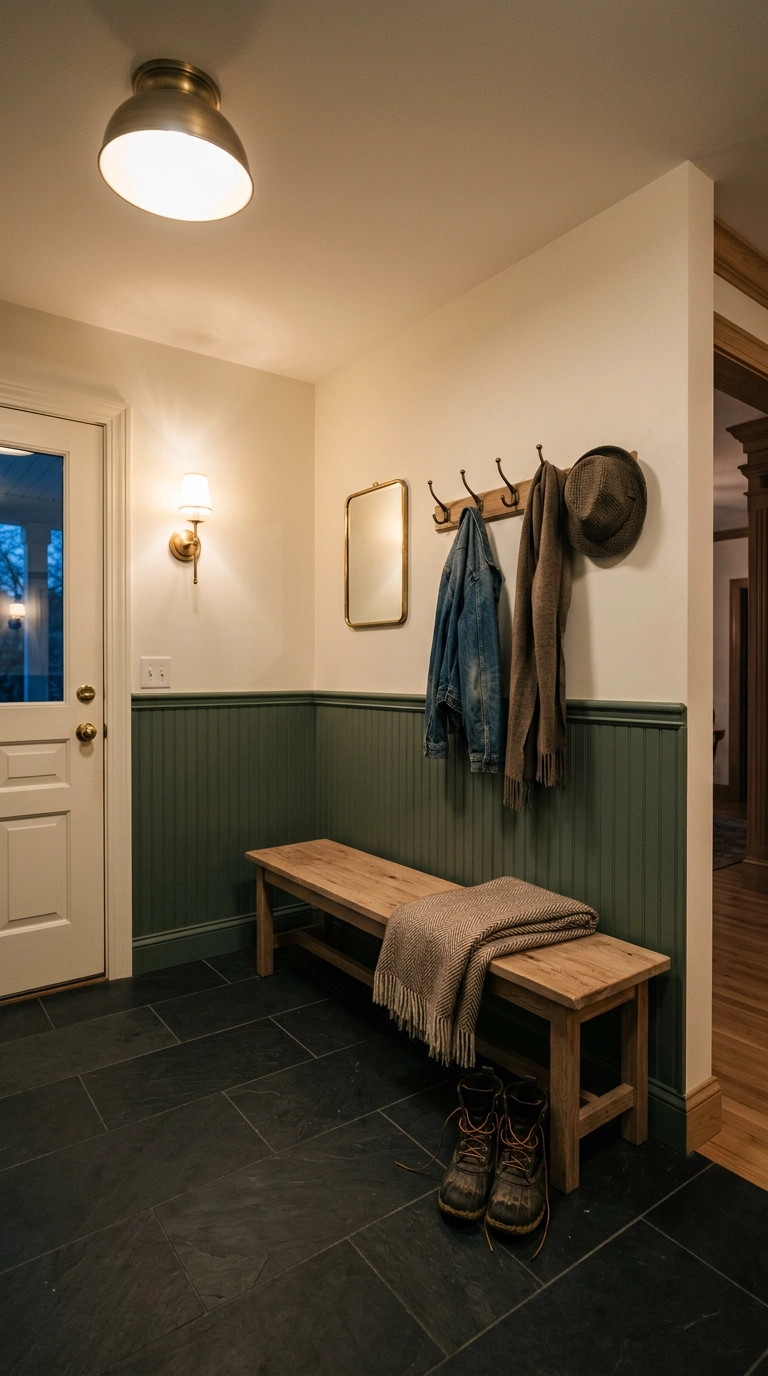
Mudrooms get the worst lighting in the house – usually one cold overhead fixture that makes everyone look like they’re being processed. Fix it with two layers: a decent flush-mount for general light, plus something warm at eye level like a sconce or a small lamp on the drop-zone shelf.
18. Pick Colors That Are on Dirt’s Side
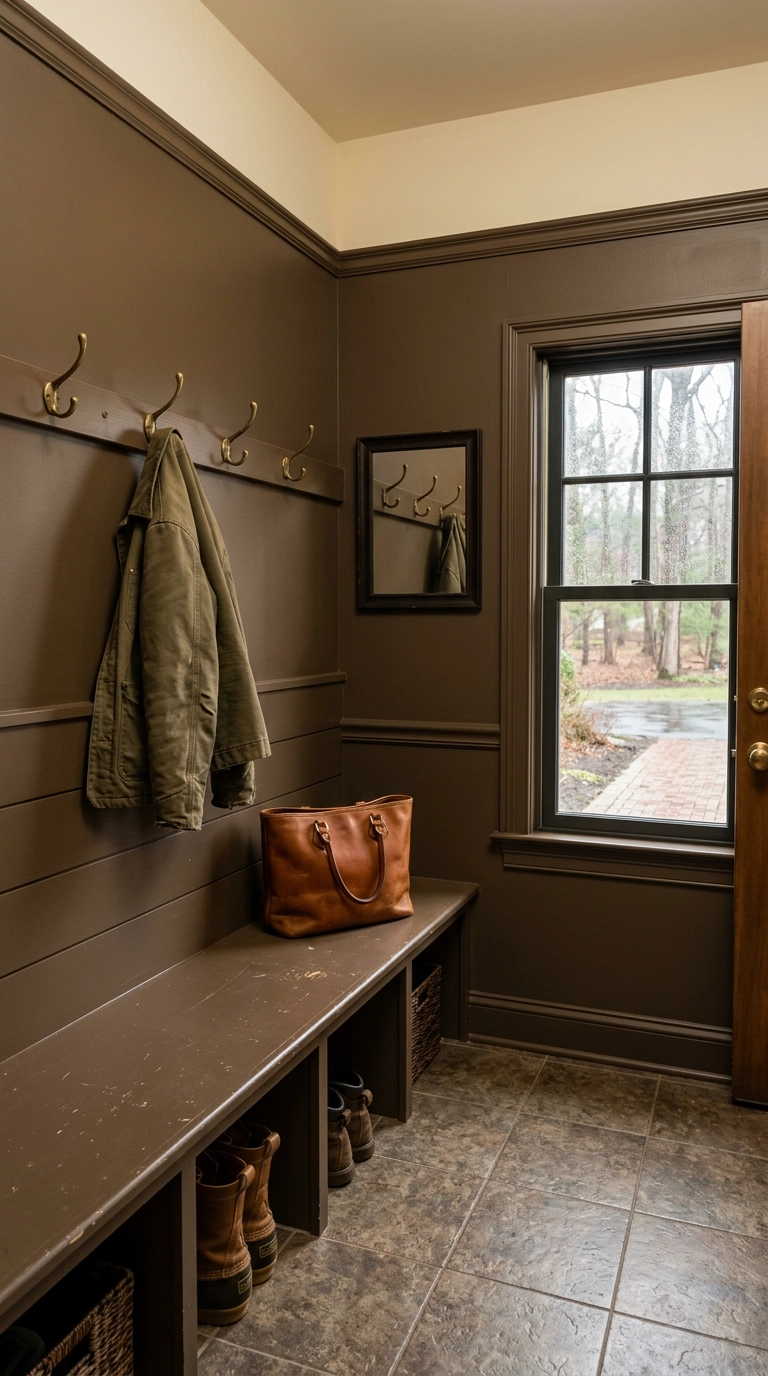
Crisp white is a beautiful choice for a mudroom if you enjoy touching up paint. I’d rather work with the dirt than against it, which means mid-tone earthy colors – bronze-brown, muddy olive, warm putty, deep taupe – that read intentional rather than grubby when real life happens.
19. Let the Ceiling Be the Pretty Part
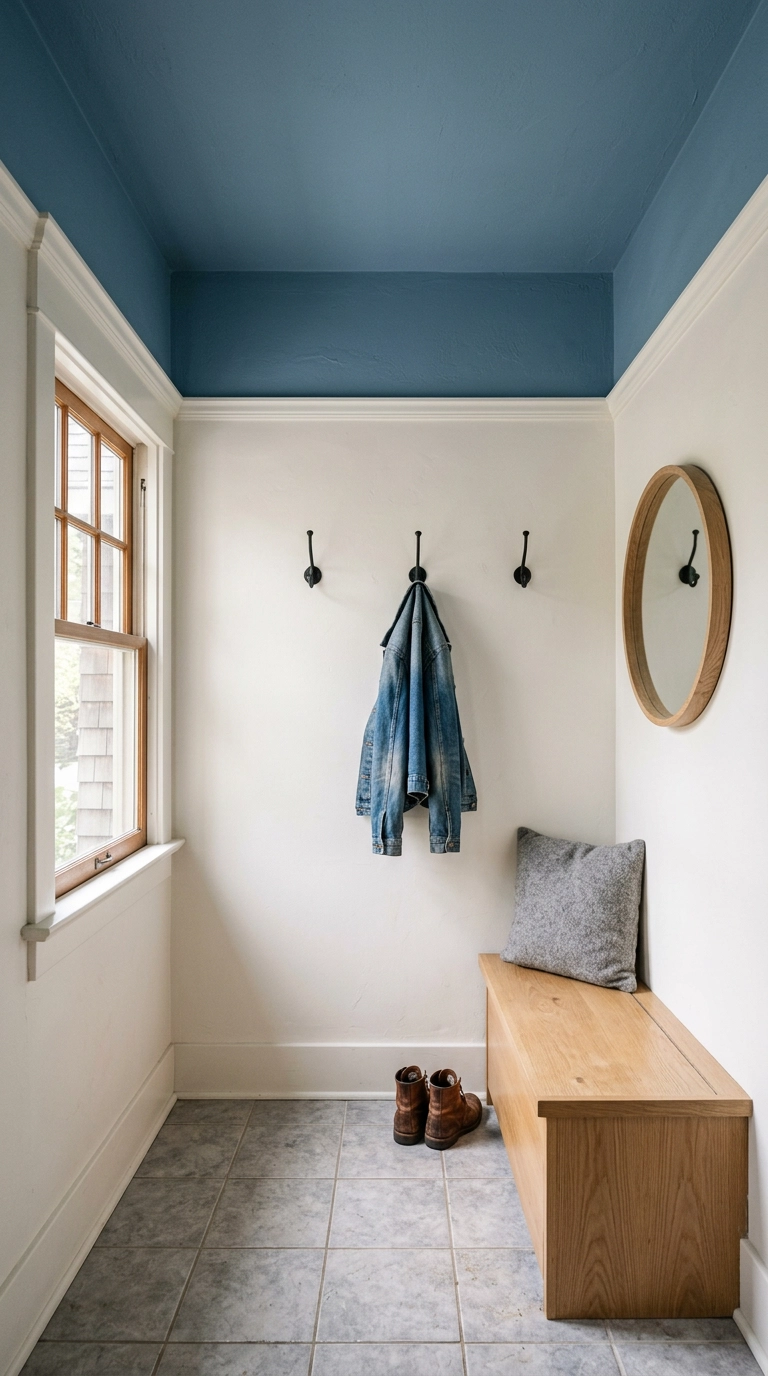
Here’s the cheapest paint project in the house that everyone comments on: paint the ceiling. In a mudroom where walls take a beating, an unexpected ceiling color gives the room personality without putting a single painted surface at kick height.
20. Renters, Build the Whole Thing Without a Single Drill Hole
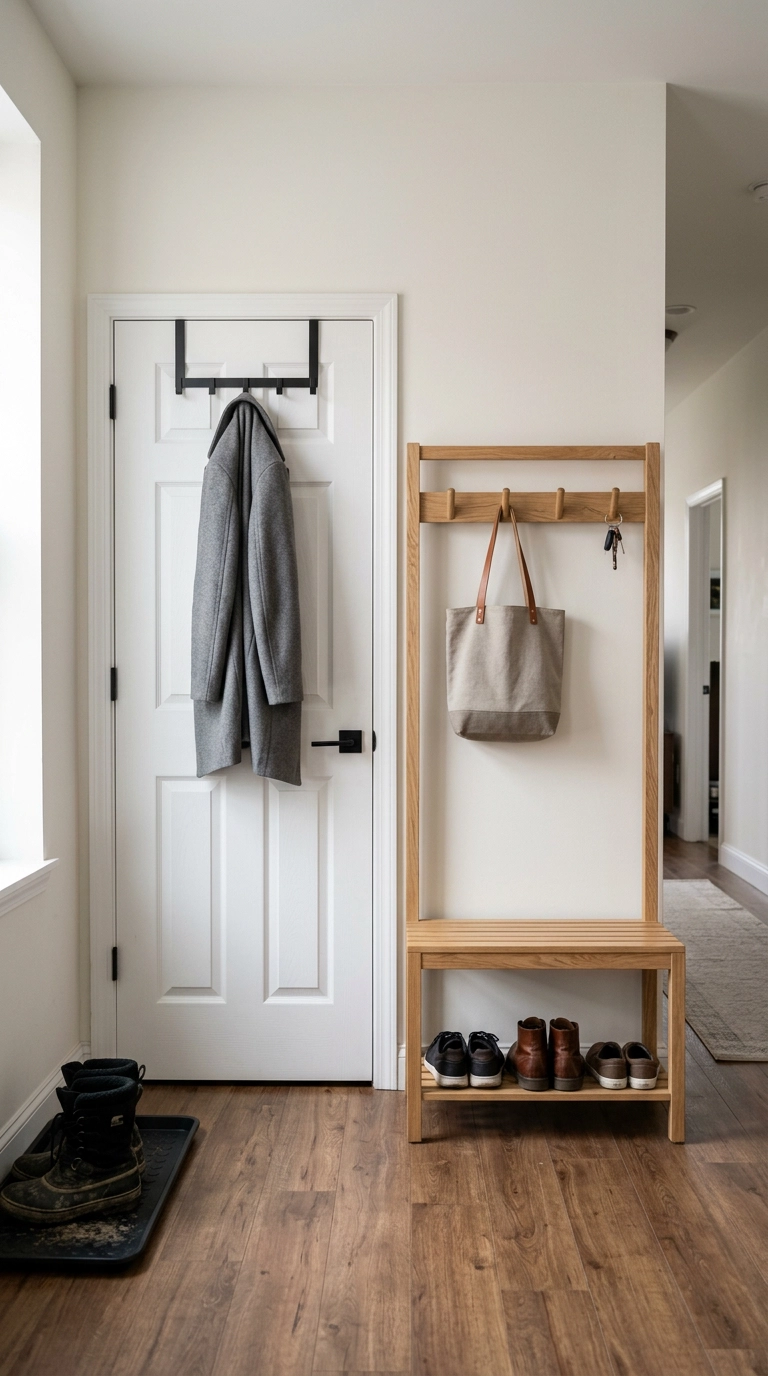
Every good mudroom idea in this article has a no-drill version, and I promise the result doesn’t have to look like a dorm room. A freestanding hall tree gives you hooks, a bench, and shoe storage in one piece of furniture that leaves with you. Over-the-door hook racks add four to six hooks on the back of the entry or closet door for about 20 dollars.
21. Add a Wall-Mounted Drying Rack for Soaked Gear
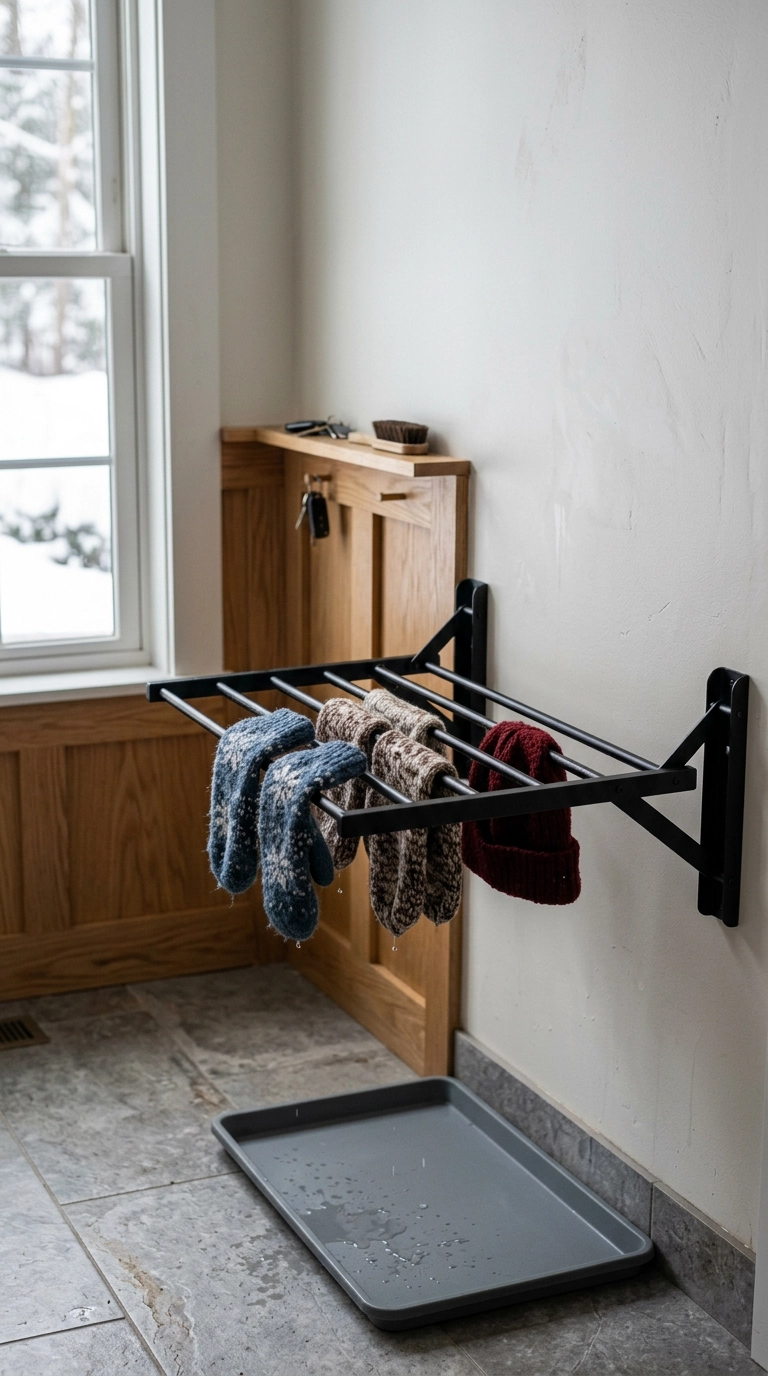
Snow pants, mittens, and hats have to dry somewhere, and if you don’t give them a spot they will live on your radiator or the back of a dining chair until April. A folding wall-mounted rack costs about 30 dollars, sits flat against the wall when closed, and holds a shocking amount of wet wool.
22. Solve the Shoe Mountain Before It Forms
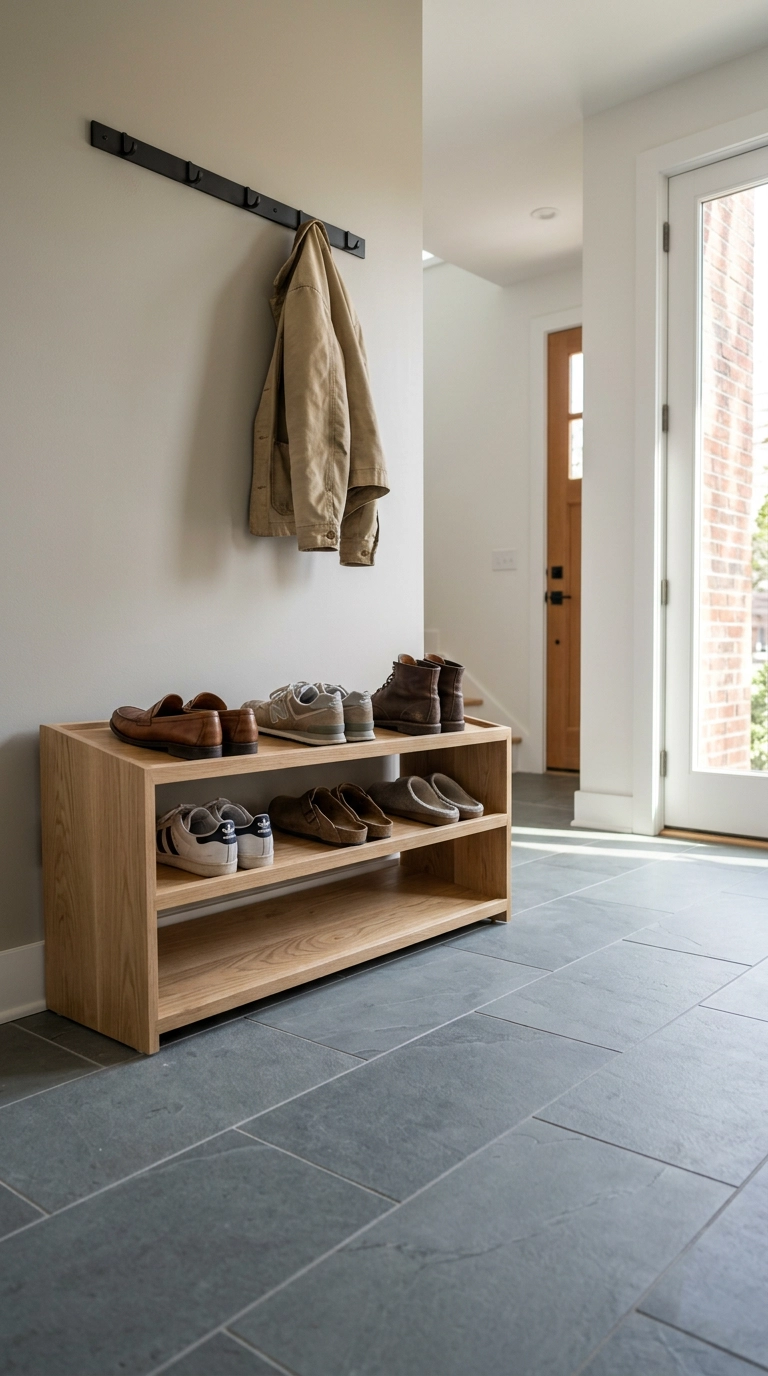
Shoes are the thing that actually ruins mudrooms, because they arrive faster than any storage system you build. The honest math is four pairs per person minimum in the shoulder seasons, so count real pairs and then add a tier.
23. Design for February, Not for the Photo
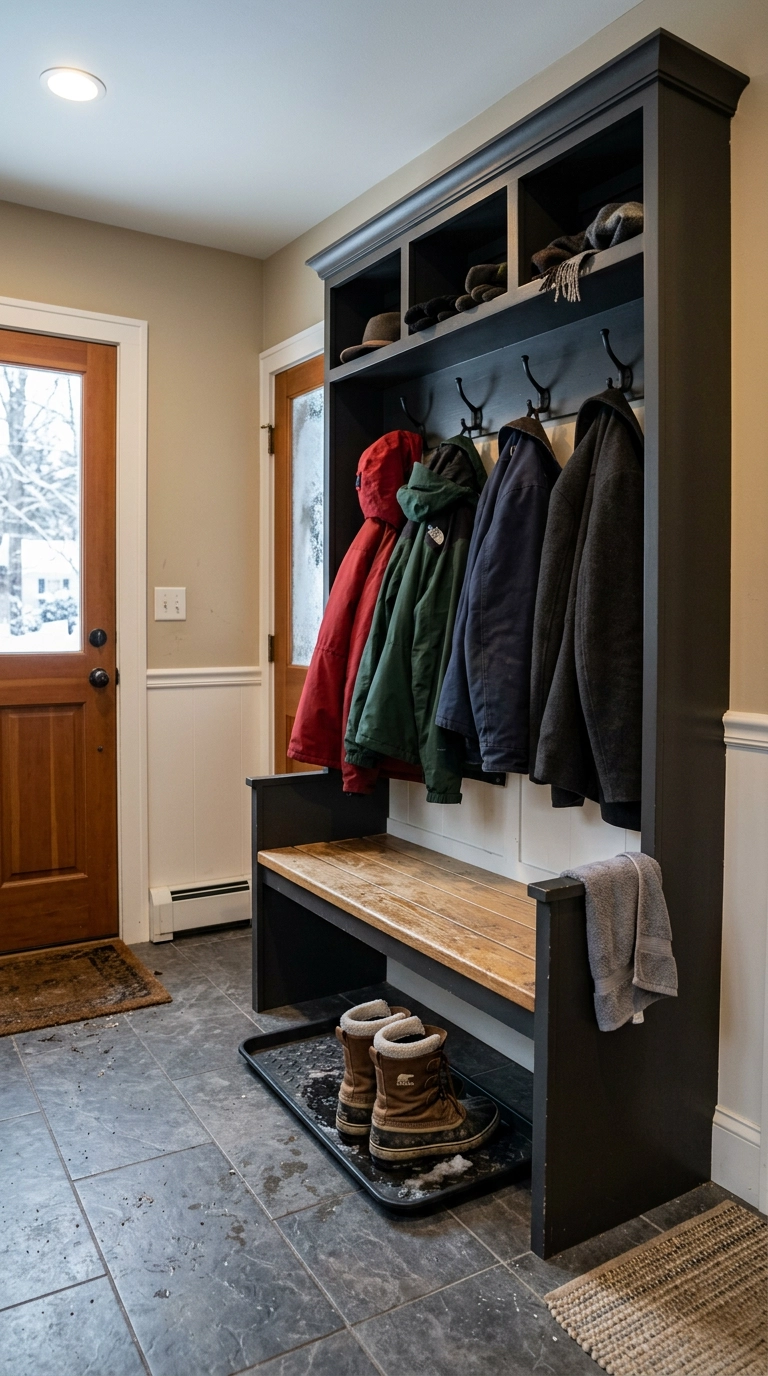
Here’s the thing nobody says in mudroom articles: the version that photographs beautifully and the version that survives winter are often two different rooms. A styled shot has three coats hanging with perfect spacing. February has eleven coats, two wet dogs, a sled, and a bag of ice melt.
Build the Mudroom for the Mess You Actually Have
If you take one thing from this list, let it be this: the best mudroom ideas are the ones that survive the second week of February. I’ve watched clients fall in love with a styled hook wall and then quietly hate it by March, and I’ve watched a 40-dollar boot tray with a grate become the most-used object in the house. Give yourself the bench with storage beneath, the cubby-per-person wall, the kid-height hooks, and floors you can wipe without ceremony.
Right now, in 2026, I’m seeing mudrooms get braver and more practical at the same time. Color-drenched walls in bronze-brown and muddy olive are replacing builder beige, warm oak is back against matte black and aged brass hardware, and everyone is asking for washable finishes instead of pretty ones. The bold patterned tile floor is the one move clients keep telling me they’d do all over again, because it hides the grit and gives the house a first impression with actual personality.
The Fixer Upper crews made the modern mudroom a fixture of American homes for a reason – the open bench, the hooks, the sense that every object has a spot – and a decade later the formula still holds. Start with the twenty-minute fixes this week: lower half your hooks for the kids, add one catch-all tray by the door, and put a grate under the boots. Then let the weekend projects follow. If you want a floor plan for your own mudroom or more working spaces like this, sign up for my weekly newsletter – every Friday I send one real room, styled and honest, straight to your inbox.