
23+ Gorgeous Vegetable Garden Decor Ideas that Make a Kitchen Garden Look Designed in 2026

Here’s my honest opinion after years of designing outdoor spaces – most vegetable gardens are laid out, not designed, and you can tell from thirty feet away. The potager tradition figured this out centuries ago: give the plot real structure, repeat a few shapes, tuck flowers among the food, and a working garden becomes the best-looking part of the property. I’ve built these on quarter-acre suburban lots and on rented patios with nothing but grow bags, and the difference always comes down to geometry and a handful of vertical elements. Here are 23 ideas, starting with the ones that cost almost nothing.
Vegetable Garden Decor Ideas
1. Chalk the Whole Layout on the Ground Before You Buy a Single Board
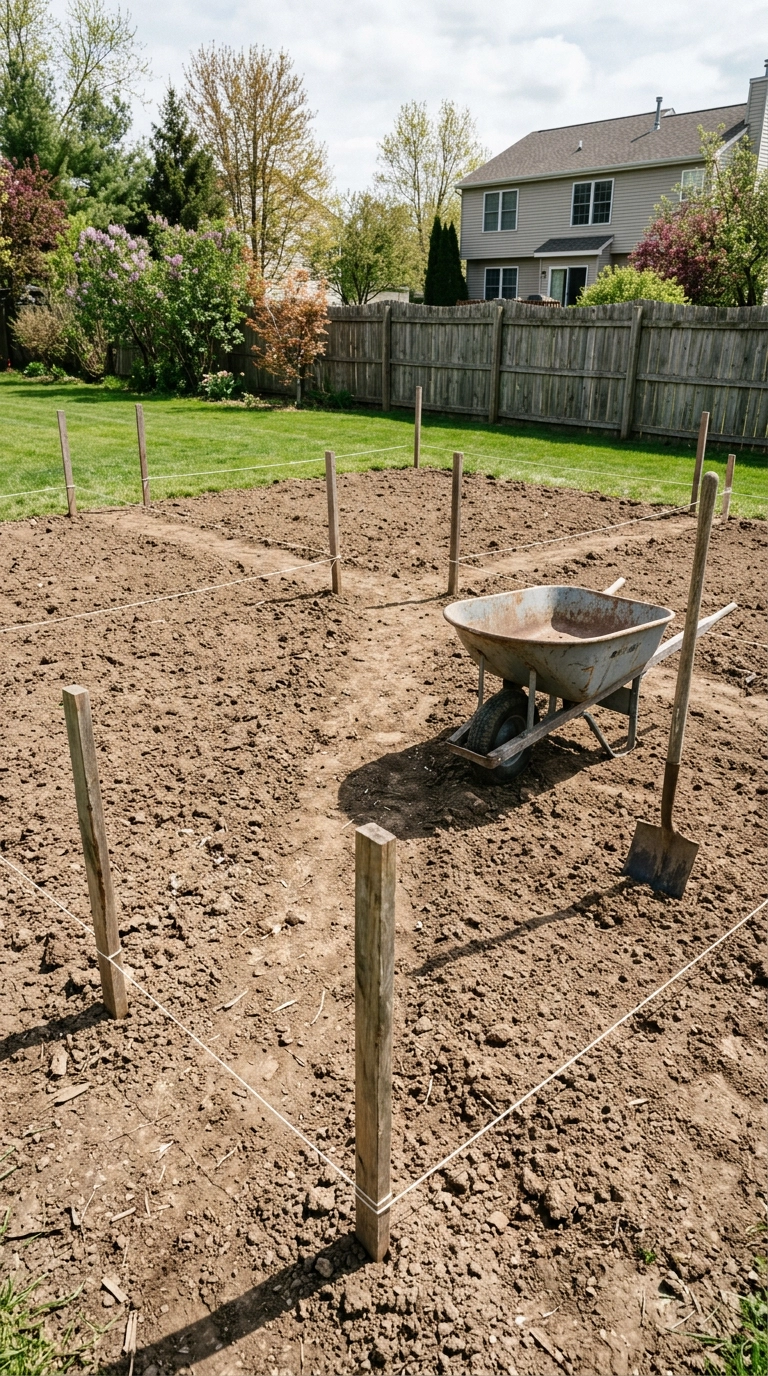
This is free, takes an afternoon, and it is the single step that separates a designed kitchen garden from four beds that ended up where the grass was already dead. Mark it with mason line and stakes, then leave it for two days and walk the paths in real shoes.
2. Make the Main Path Four Feet Wide, Everything Else Eighteen Inches
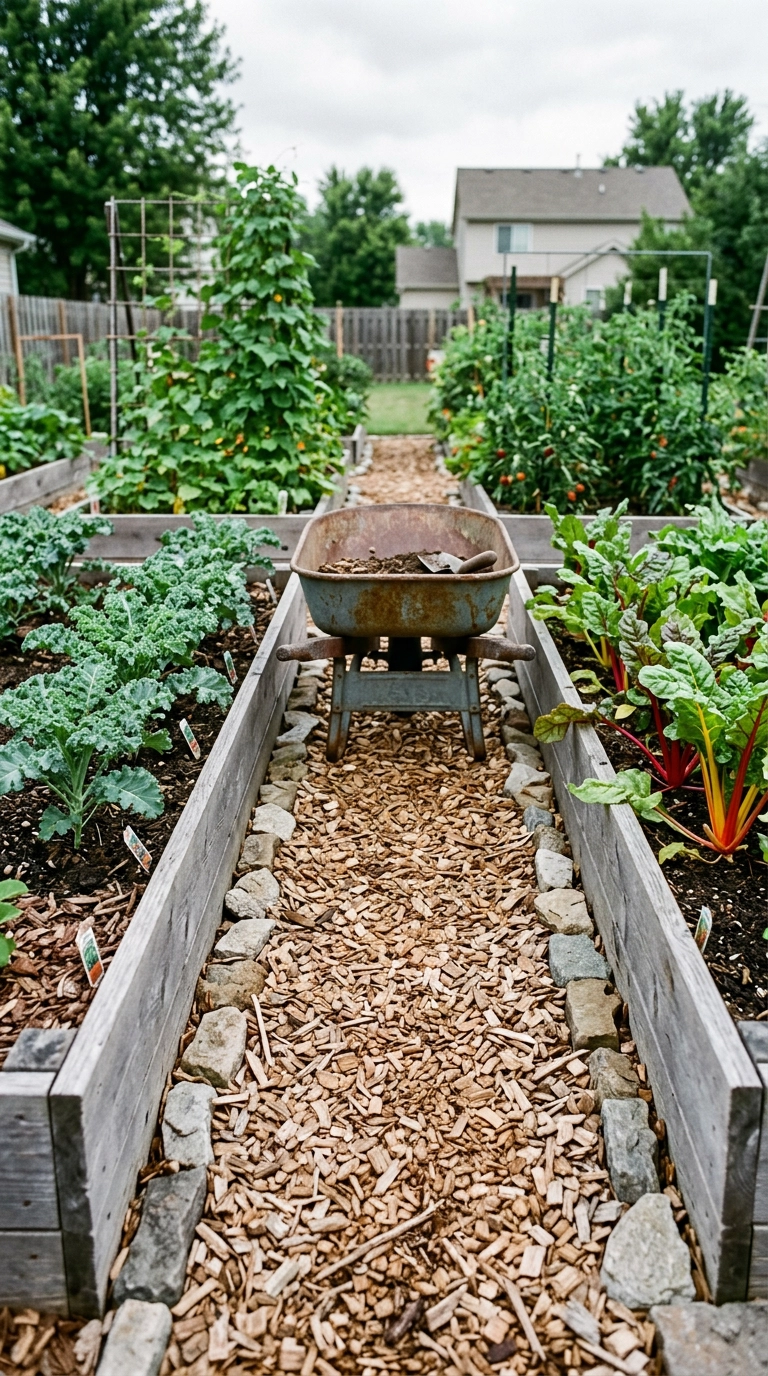
Nearly every homemade vegetable garden fails on path width. A loaded wheelbarrow needs about 30 inches to move without scraping your knuckles, and you need room to kneel beside it, so the main spine wants a genuine 4 feet.
3. Renters: Build the Potager in Pots and Take It With You
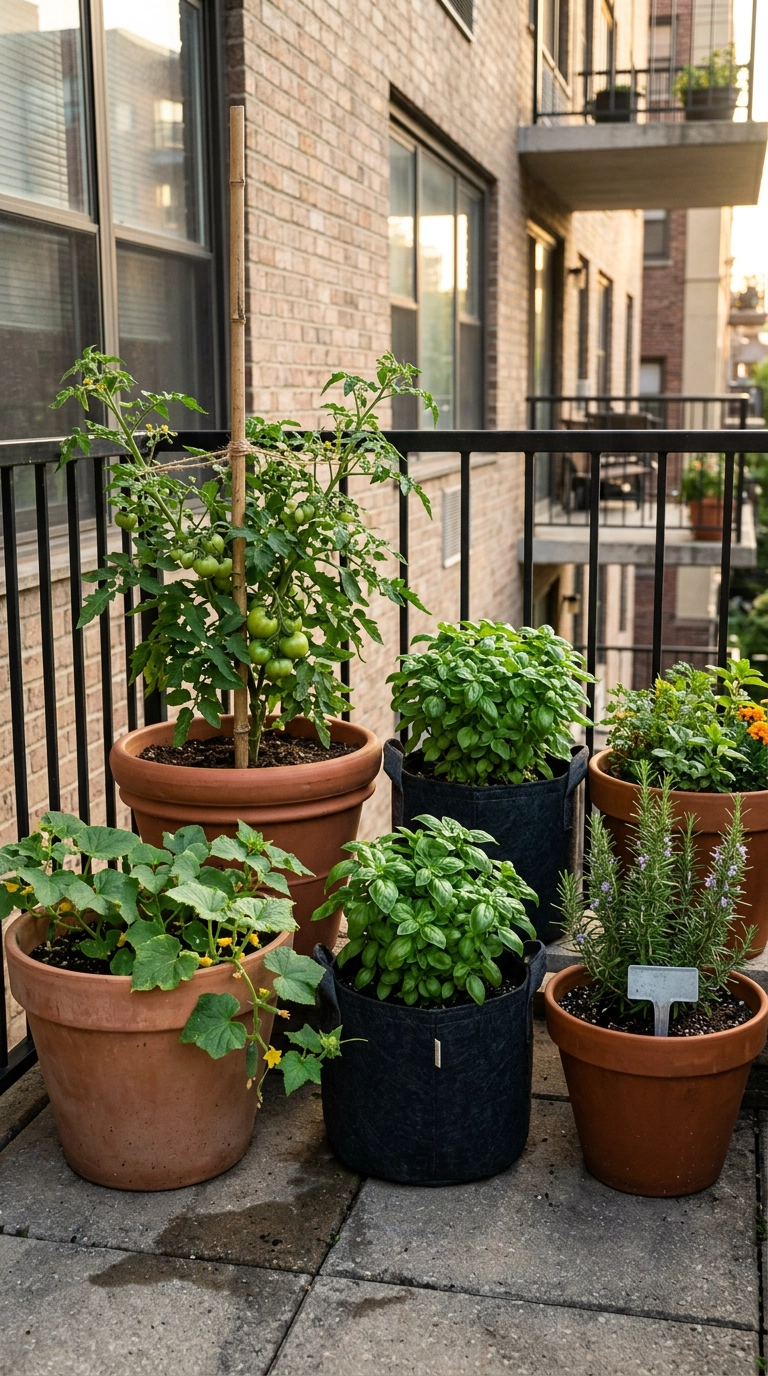
You do not need ground to have a potager, you need containers big enough to hold water for more than a day. A 15-gallon fabric grow bag runs $8 to $15 and grows a full-size tomato or a squash plant, and it folds flat in the moving box.
4. Set Two Bamboo Cane Tripods for Instant Height on a Budget
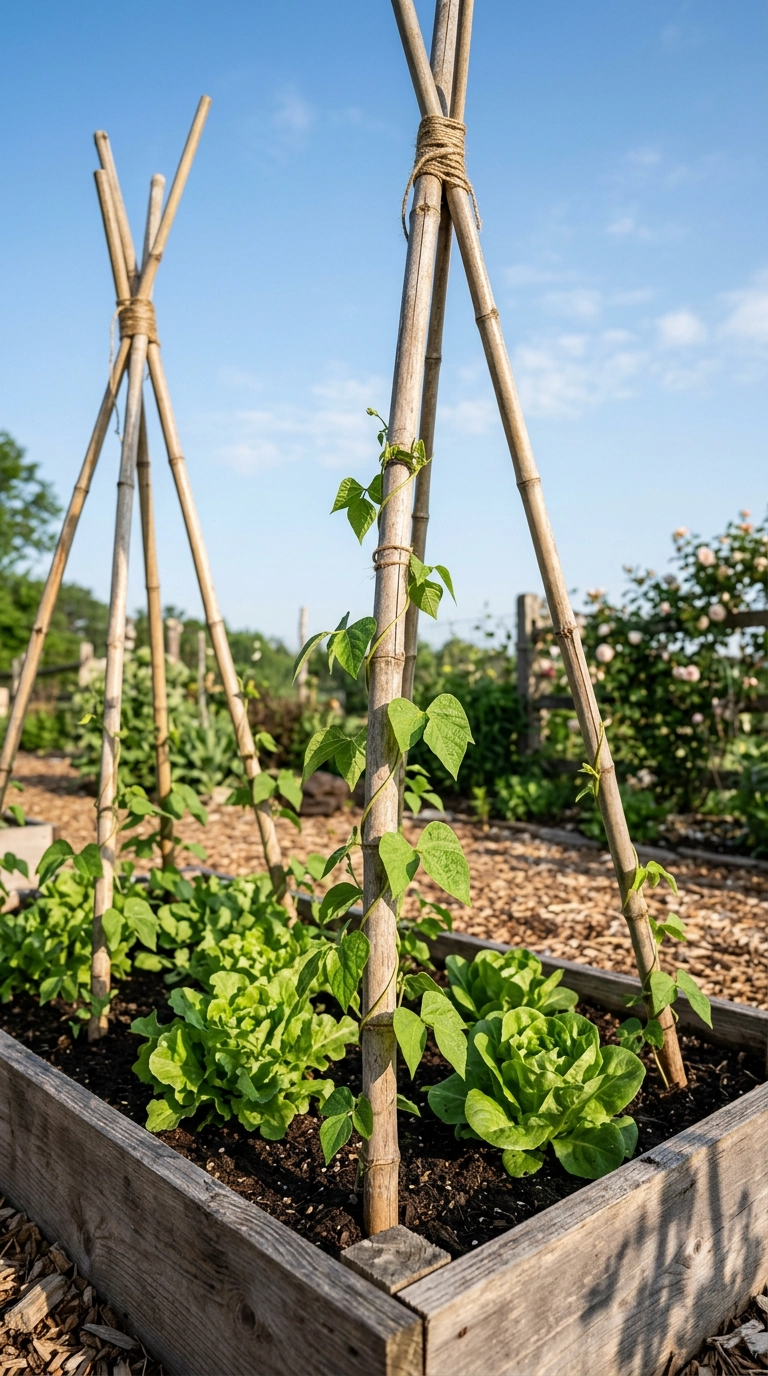
The reason most vegetable gardens read flat is that everything is knee-high. Vertical structure is what makes a plot look composed, and the cheapest version is three 8-foot bamboo canes lashed with jute twine – roughly $6 a tripod.
5. Sow One Row of Cut Flowers on Purpose
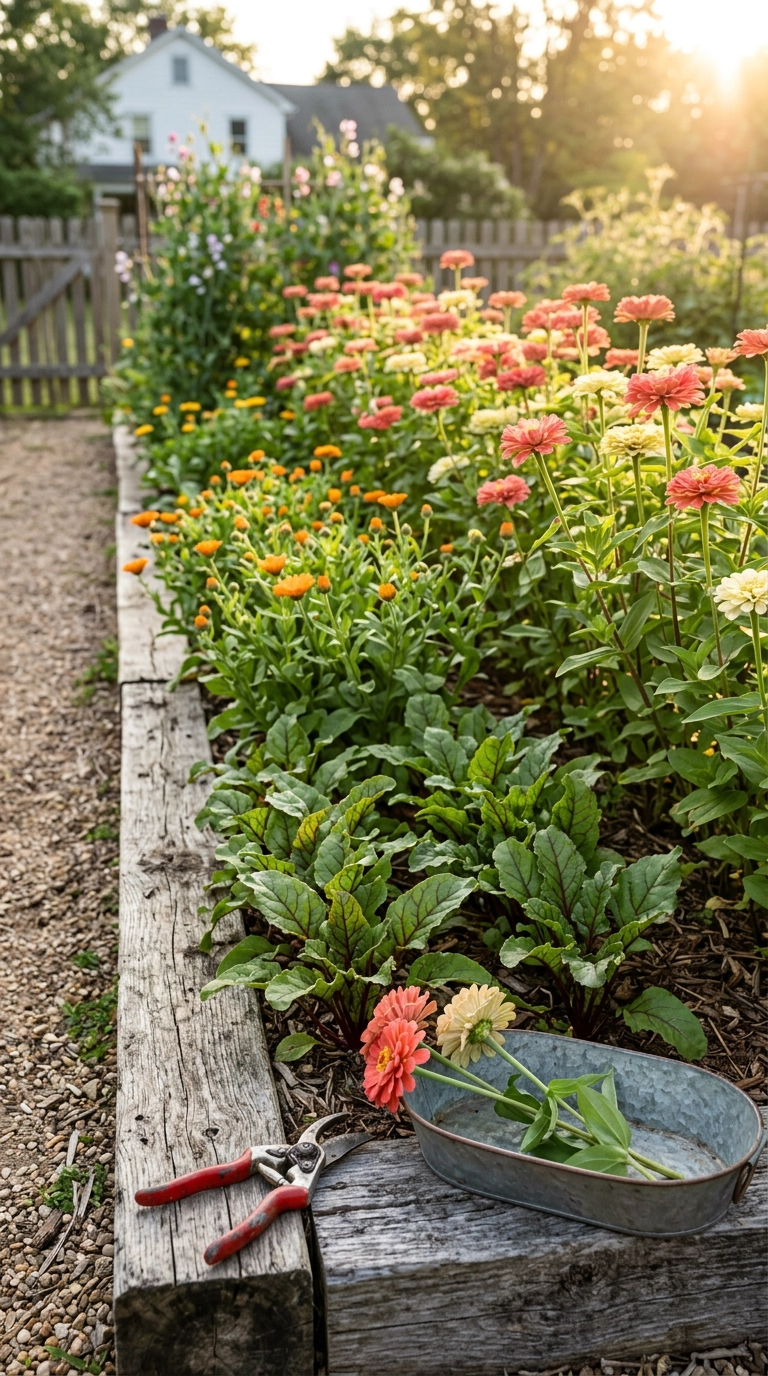
A dedicated cutting row is the idea that converts people. Give one row of one bed to zinnias, cosmos, and calendula, and treat it as a crop you harvest rather than decoration you protect.
6. Edge Every Bed With Something, Even If It’s Free Stone
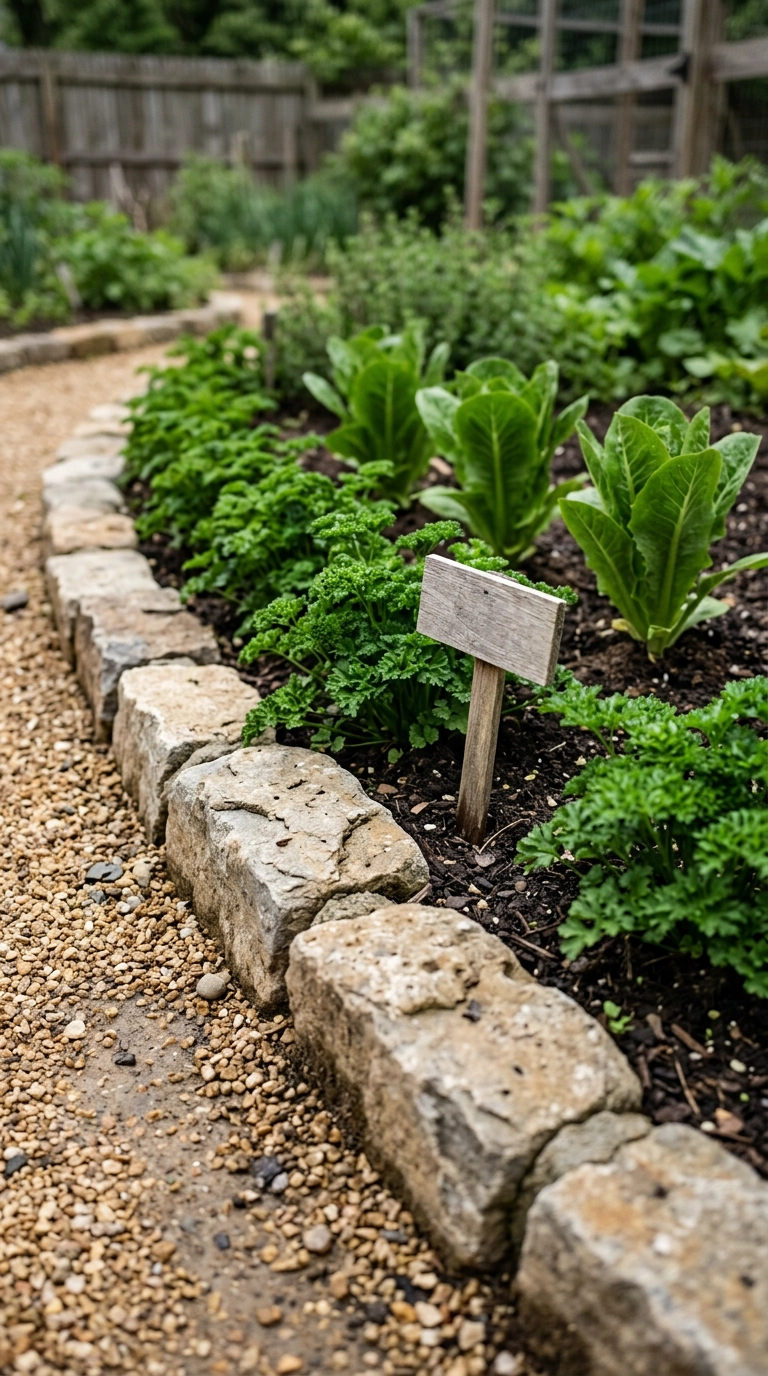
Edging is what tells your eye where the garden ends and the mess begins. Without it, soil creeps into the path, path creeps into the soil, and by August the whole thing looks like it’s dissolving.
7. Use Blank Wooden Labels Instead of Plastic Tags
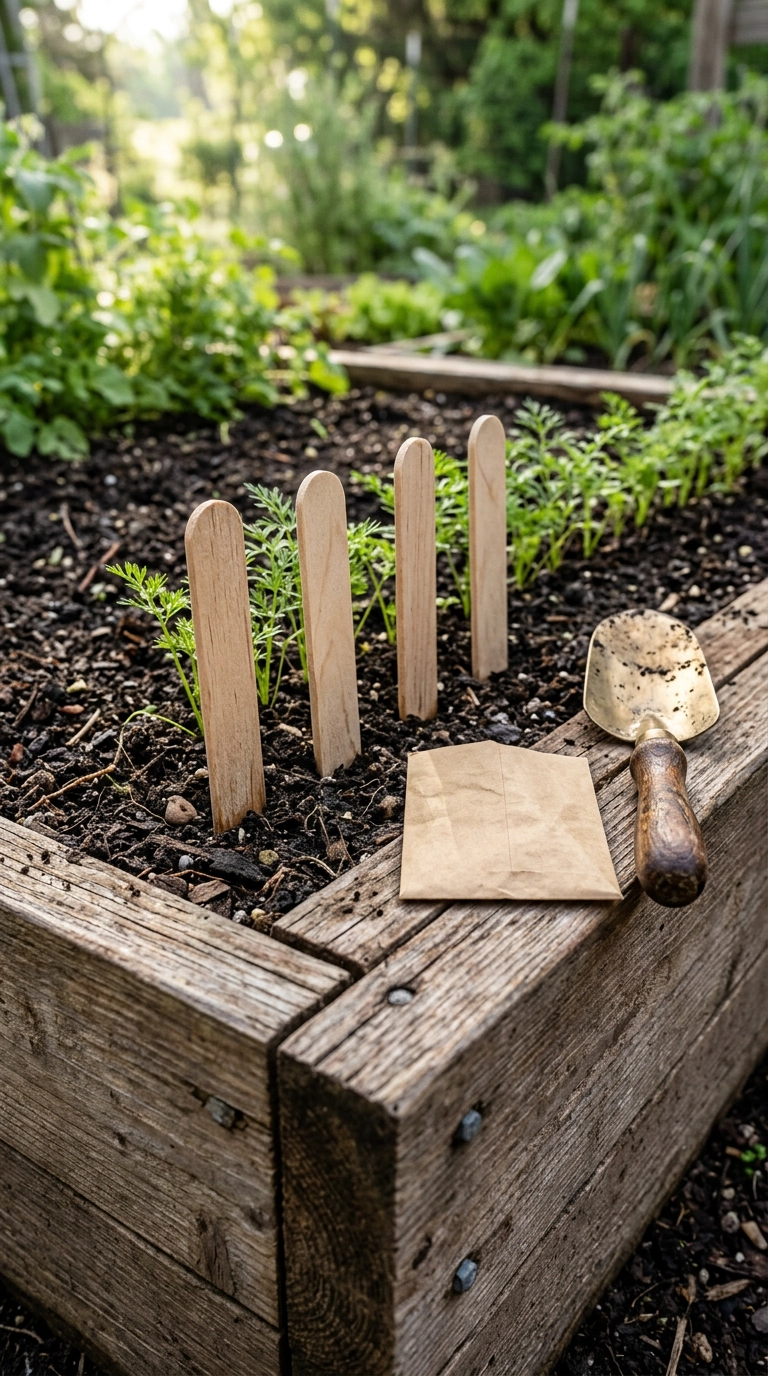
White plastic tags go brittle and yellow in one season, and there is no arrangement of them that looks good. Untreated wooden labels weather to soft grey and disappear into the garden, which is exactly what you want a label to do.
8. Repeat One Pot Shape Three Times Along a Path
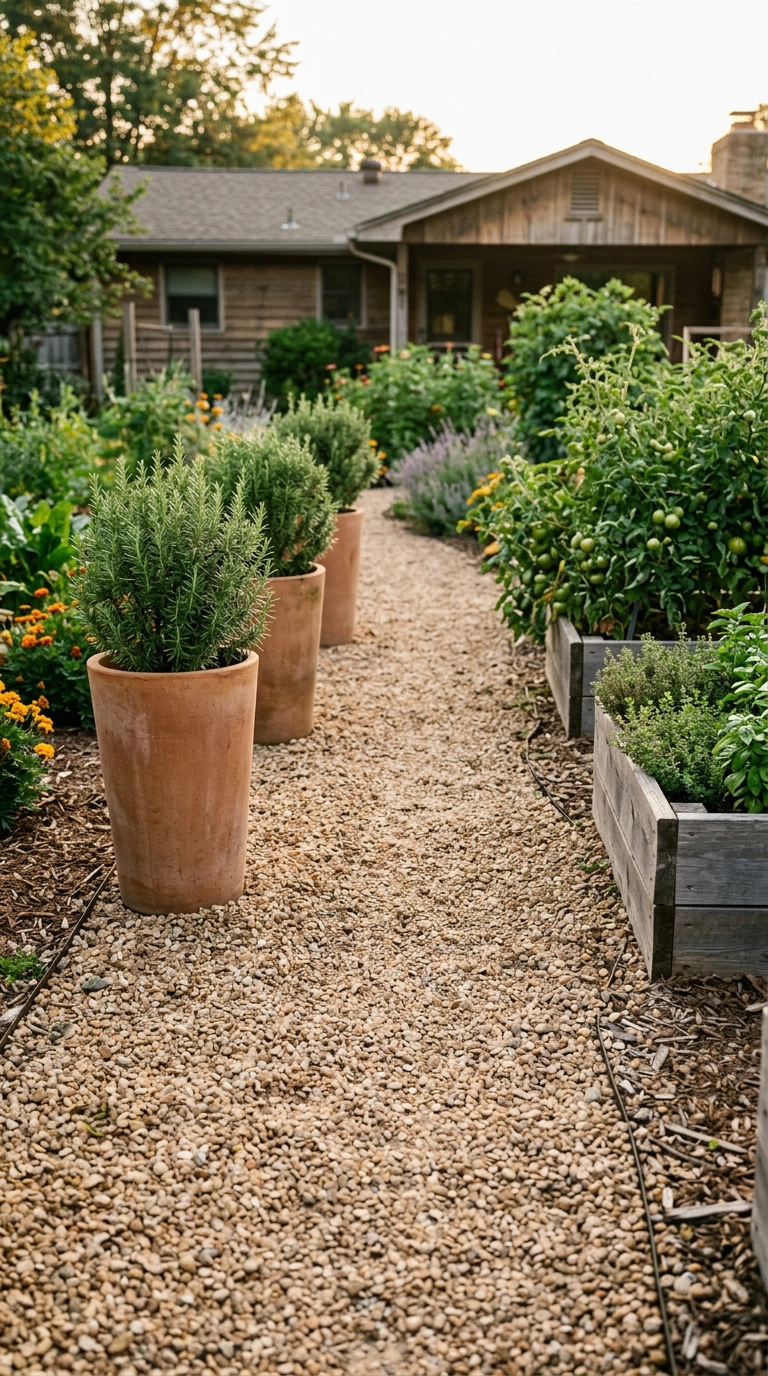
One pot is an object, three identical pots in a line are architecture. Rhythm is doing the work here – your eye reads a repeated element as a designed decision and stops noticing the imperfect stuff around it.
9. Plant Marigolds and Nasturtiums at the Bed Corners
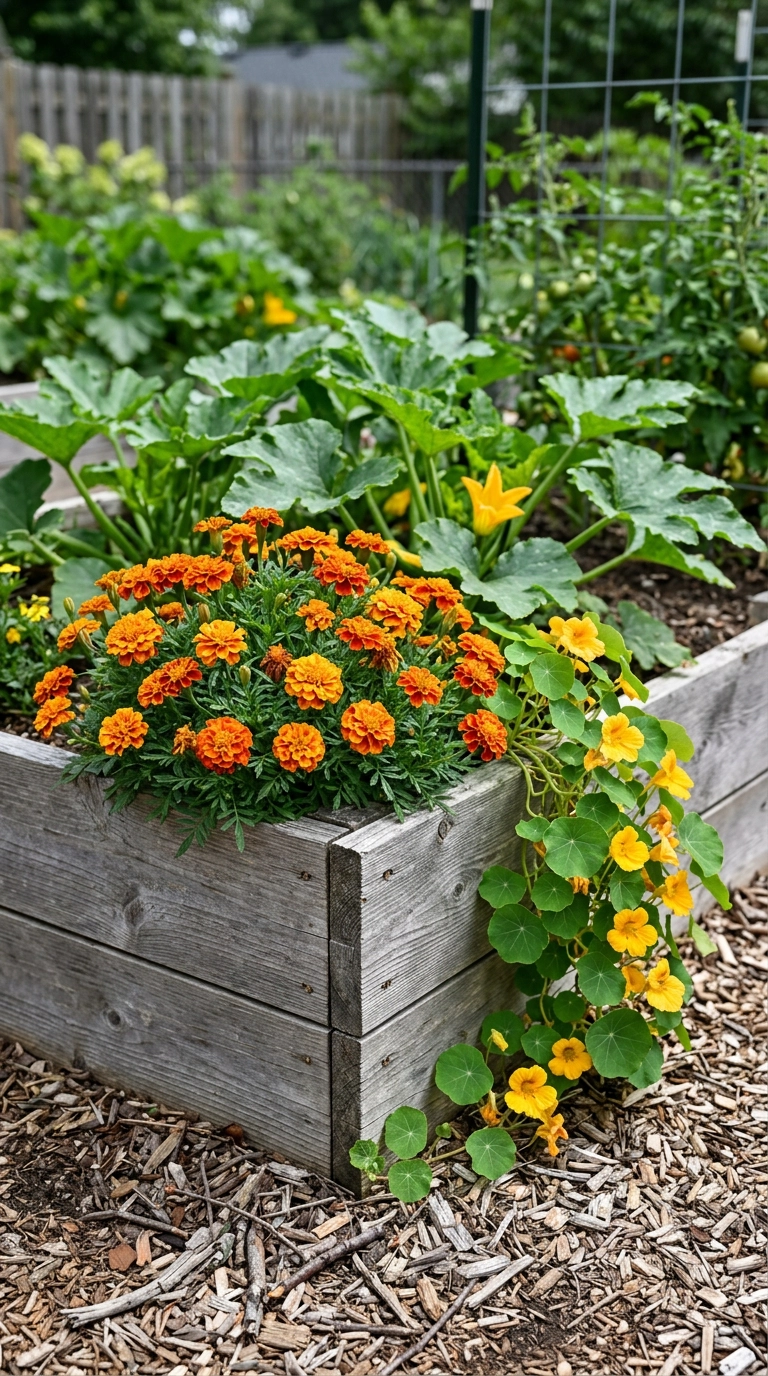
Corner planting is the fastest way to soften a boxy raised bed, and these two earn their space twice over. French marigolds suppress root-knot nematodes in the soil, and nasturtium acts as a sacrificial trap crop that aphids hit before they find your squash.
10. Build Beds 12 Inches Tall and No Wider Than Four Feet
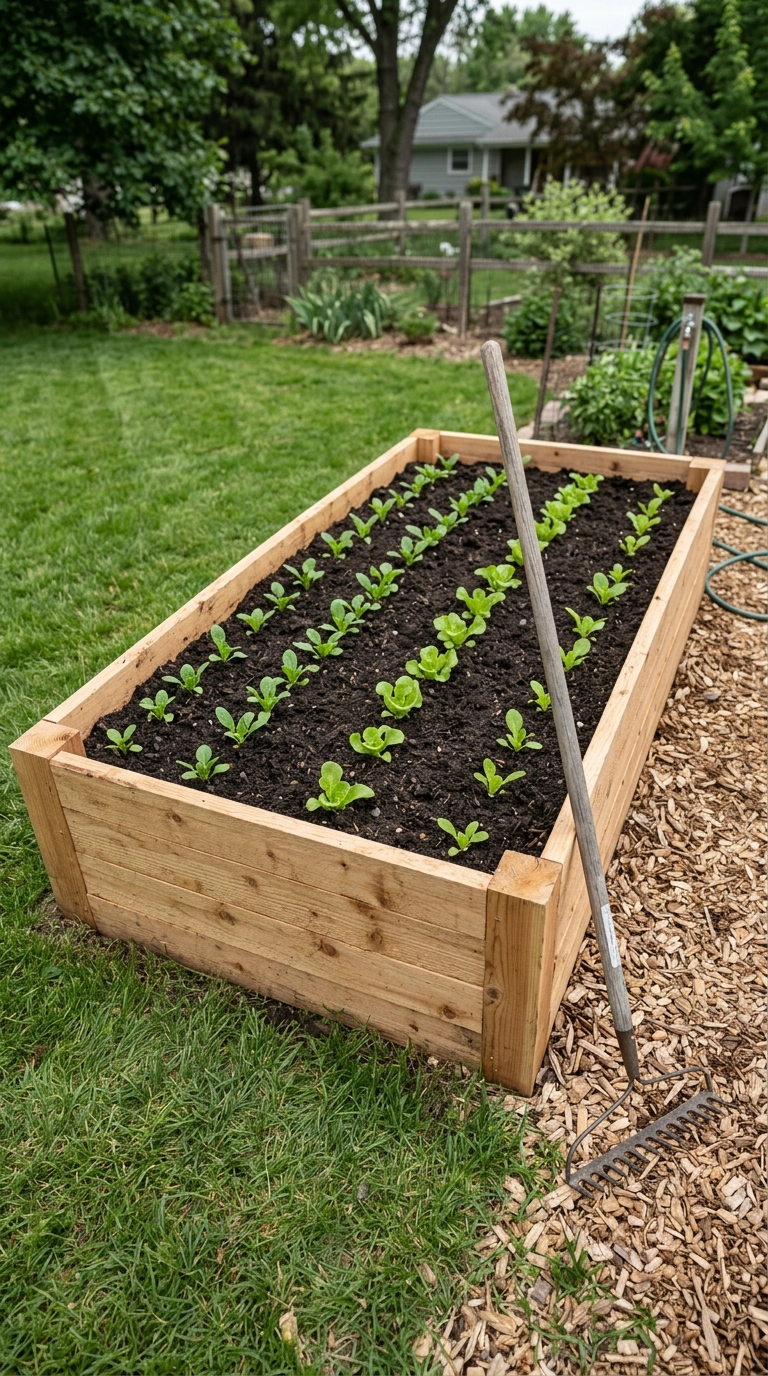
Four feet is the magic width because most adults can reach 24 inches comfortably, so a 4-foot bed is reachable from both sides and you never step on the soil. Go 5 feet wide and there is a dead zone in the middle you’ll be crawling into by July.
11. Add One Metal Obelisk as a Focal Point
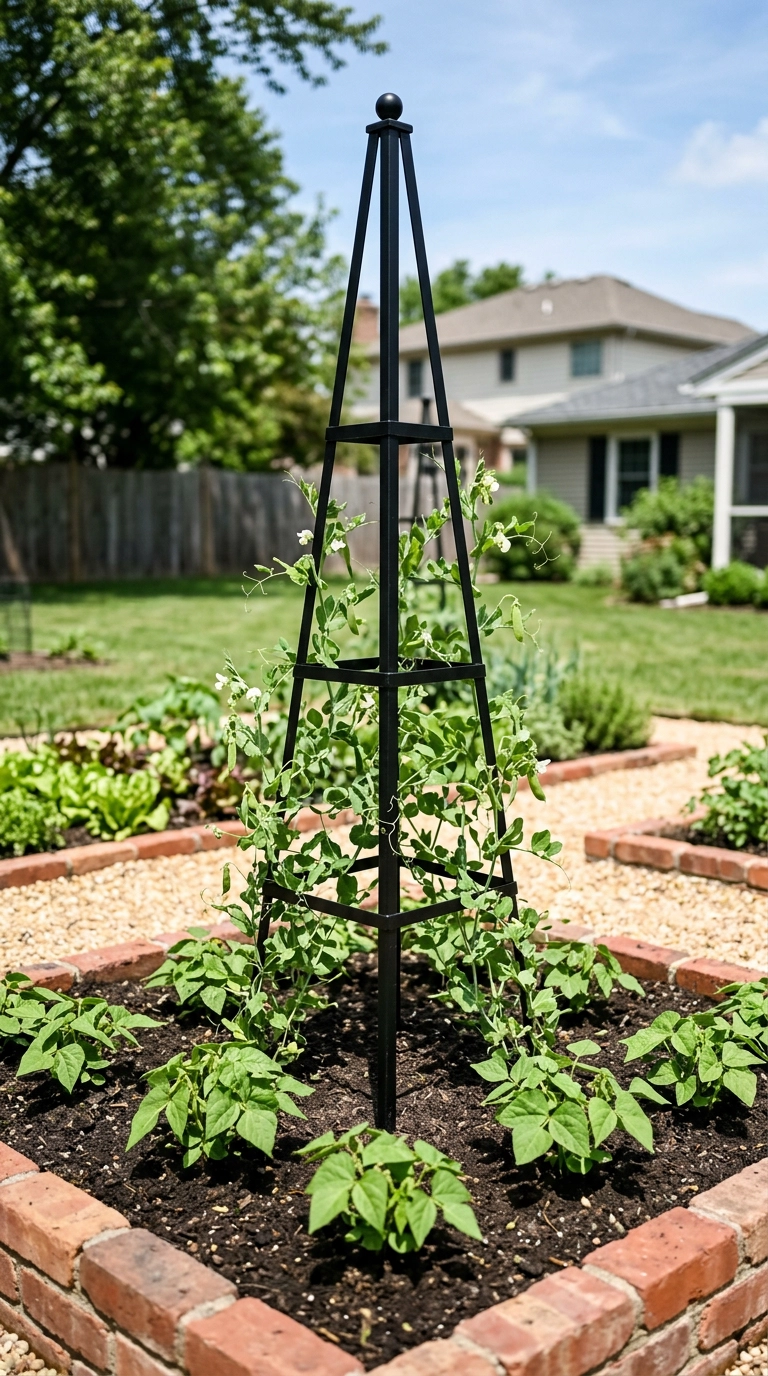
A potager needs one thing your eye goes to first, and an obelisk in the middle of a bed does it better than anything else because it works in every season – including the bare-soil months when the garden has nothing else to offer.
12. Hang a Simple Tool Rail on the Fence Instead of Hiding Tools
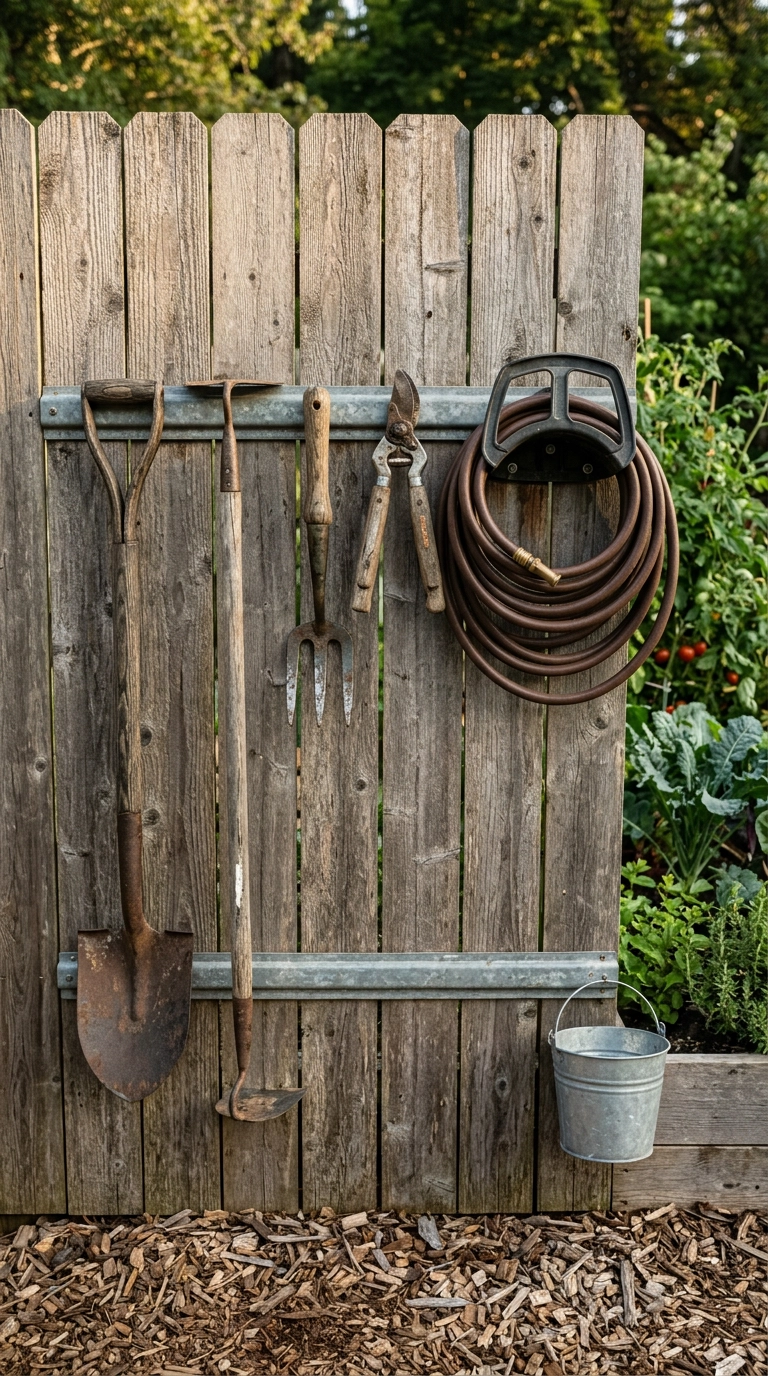
Good tools are genuinely handsome objects and stuffing them in a plastic bin behind the shed is a waste of that. Hung on a rail with even spacing, they read as a still life and you actually put them back.
13. Mulch Everything the Same Way for Instant Visual Quiet
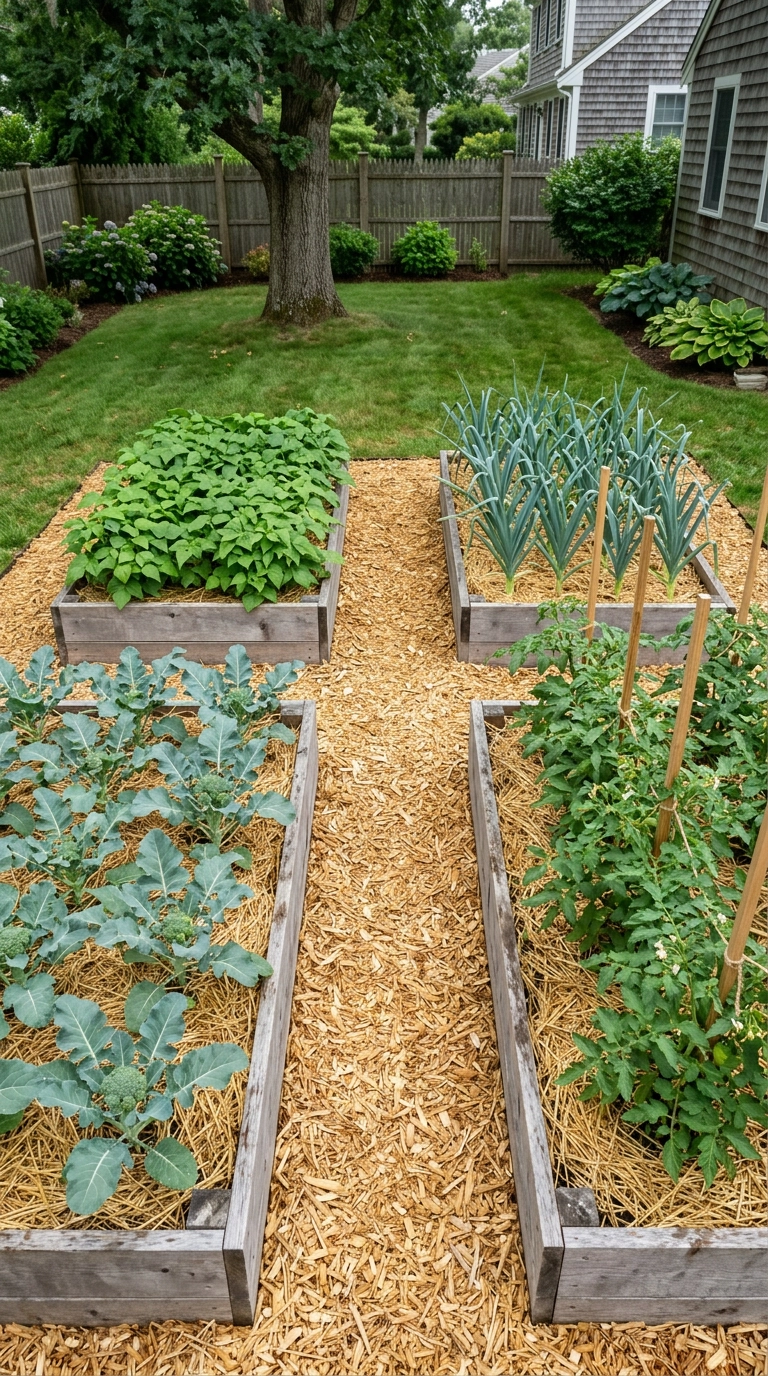
This is the closest thing to a magic trick in garden design. Nothing unifies a vegetable garden faster than covering every square foot of exposed soil in the same material – suddenly the plants read as objects on a background instead of chaos.
14. Grow an Arch Over the Main Path
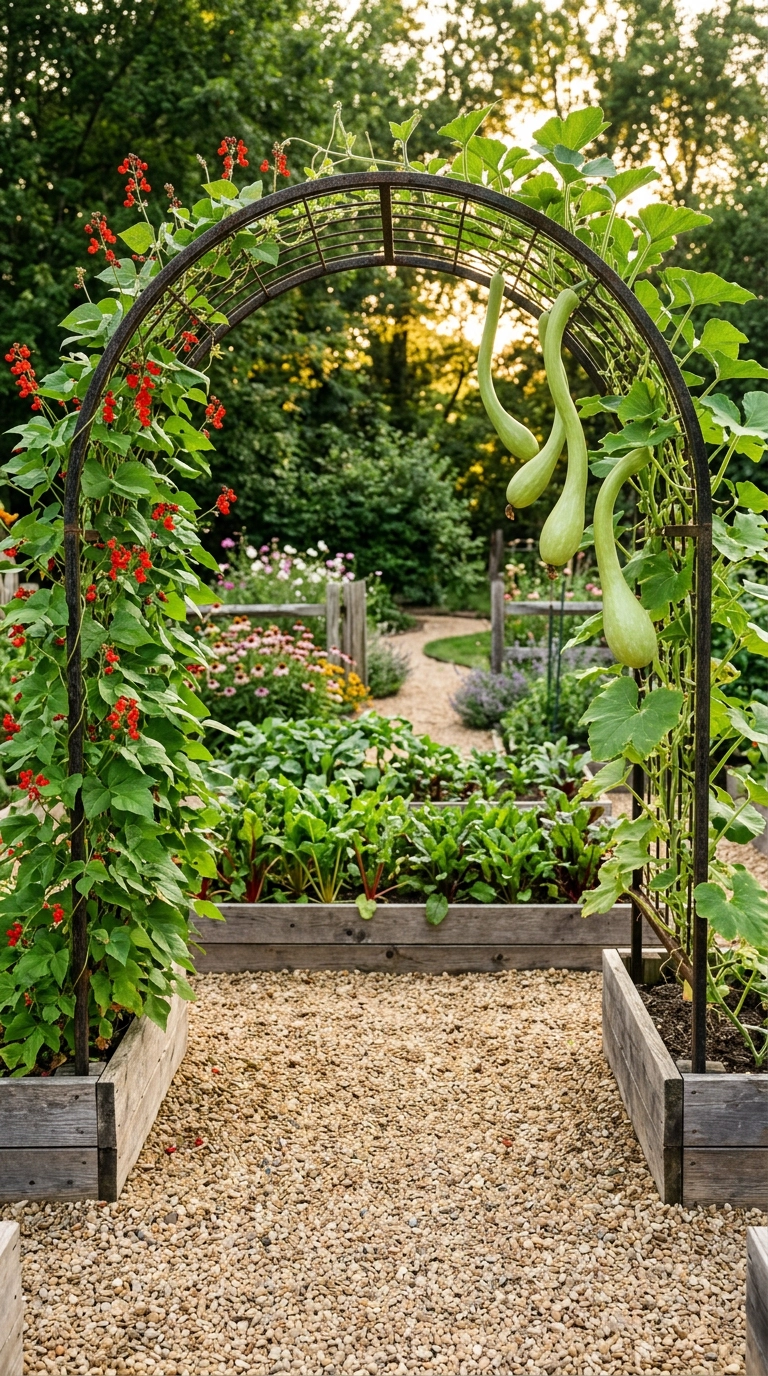
An arch is the highest-drama, lowest-footprint thing you can put in a vegetable garden, because it uses air. Walking under something makes a plot feel like a place rather than a work area, and the framing effect turns whatever sits at the end of the path into a destination.
15. Espalier Fruit Flat Against a Sunny Fence
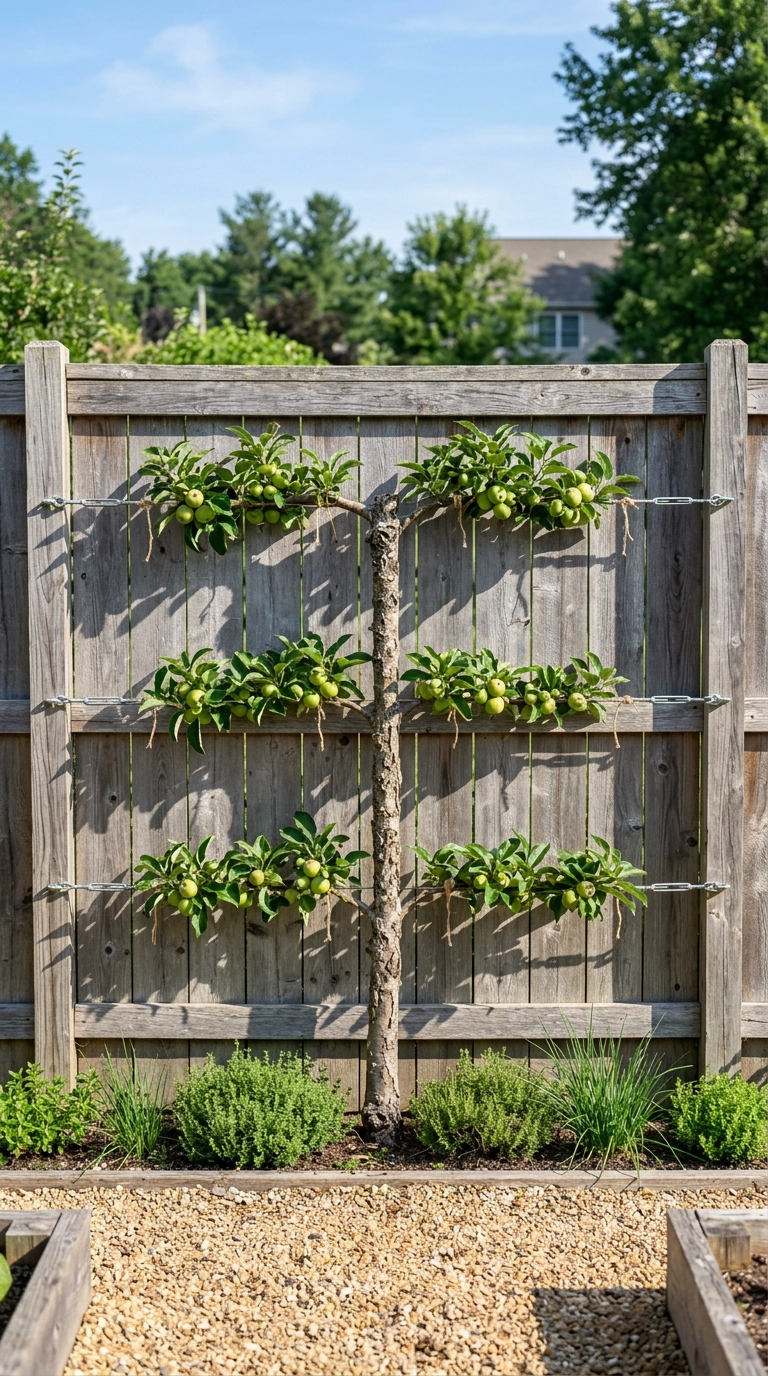
Espalier is just fruit trained flat, and it is the single most impressive-looking thing an amateur can pull off in a small garden. A three-tier horizontal cordon takes up 8 inches of depth and gives you real apples off a fence that was doing nothing.
16. Put a Real Seat in the Garden, Facing the Beds
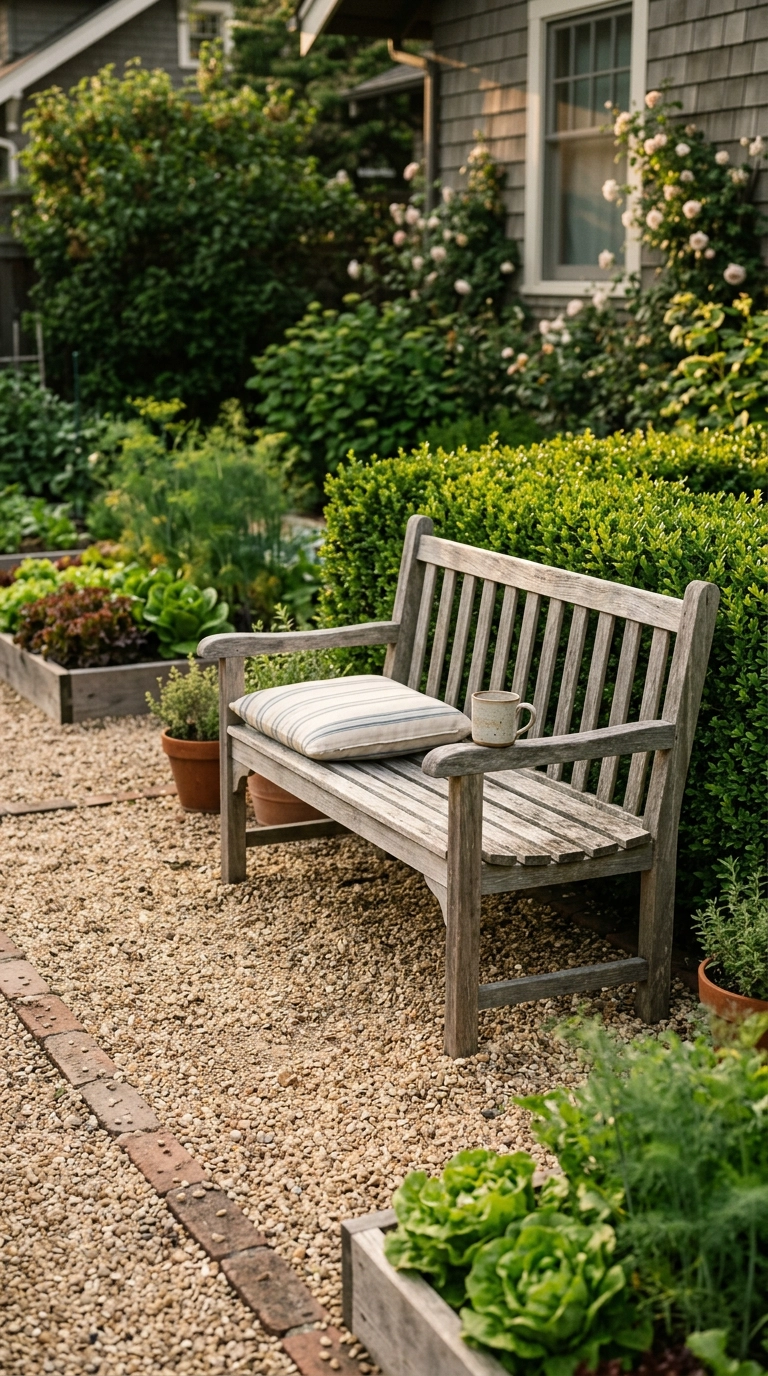
A vegetable garden with nowhere to sit is a job site. Put a bench where you’d naturally end up standing with a coffee, face it toward the beds rather than away, and the whole space quietly reclassifies itself as somewhere you spend time.
17. Frame the Beds With a Low Clipped Hedge
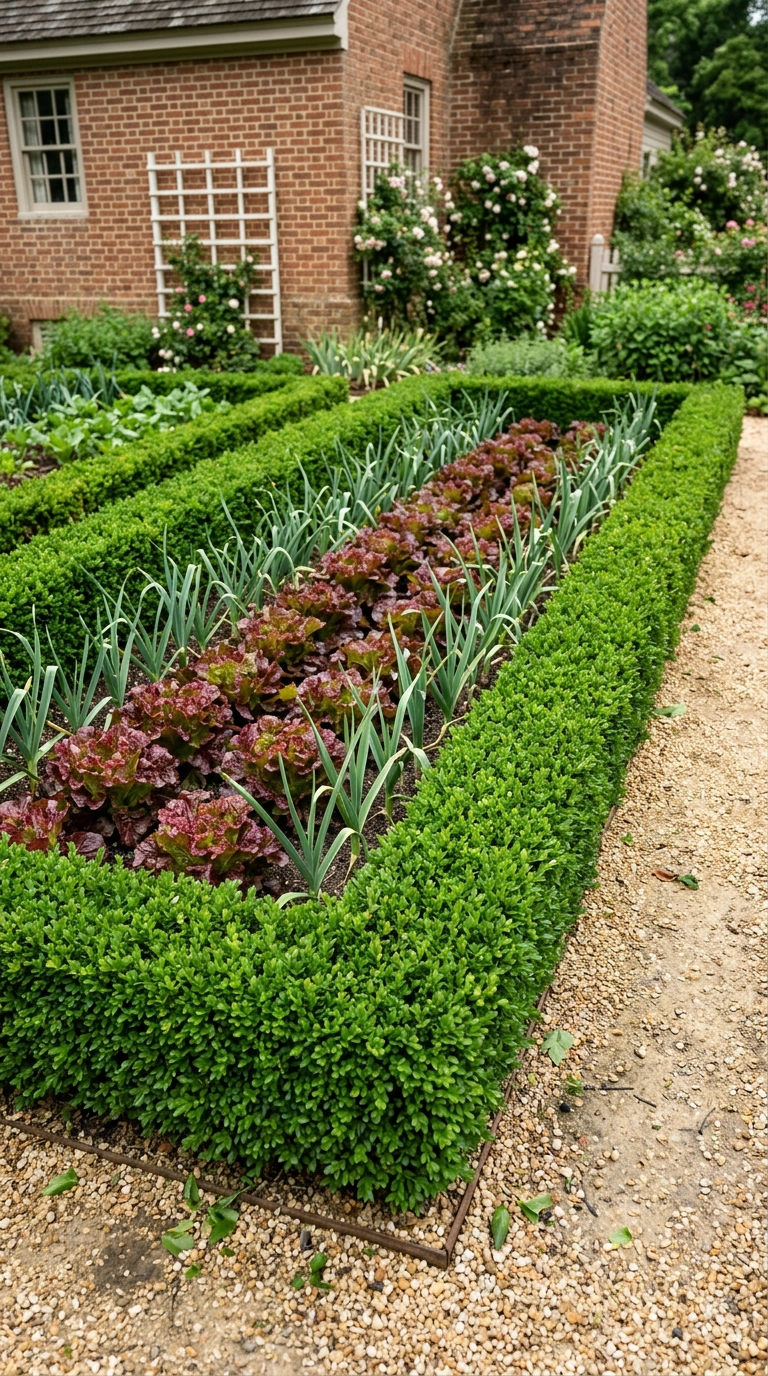
This is the move that makes a vegetable garden look centuries old, and it works because the hedge holds the composition together while the crops inside change every eight weeks. Structure stays, contents rotate.
18. Design the Compost Bins to Be Seen
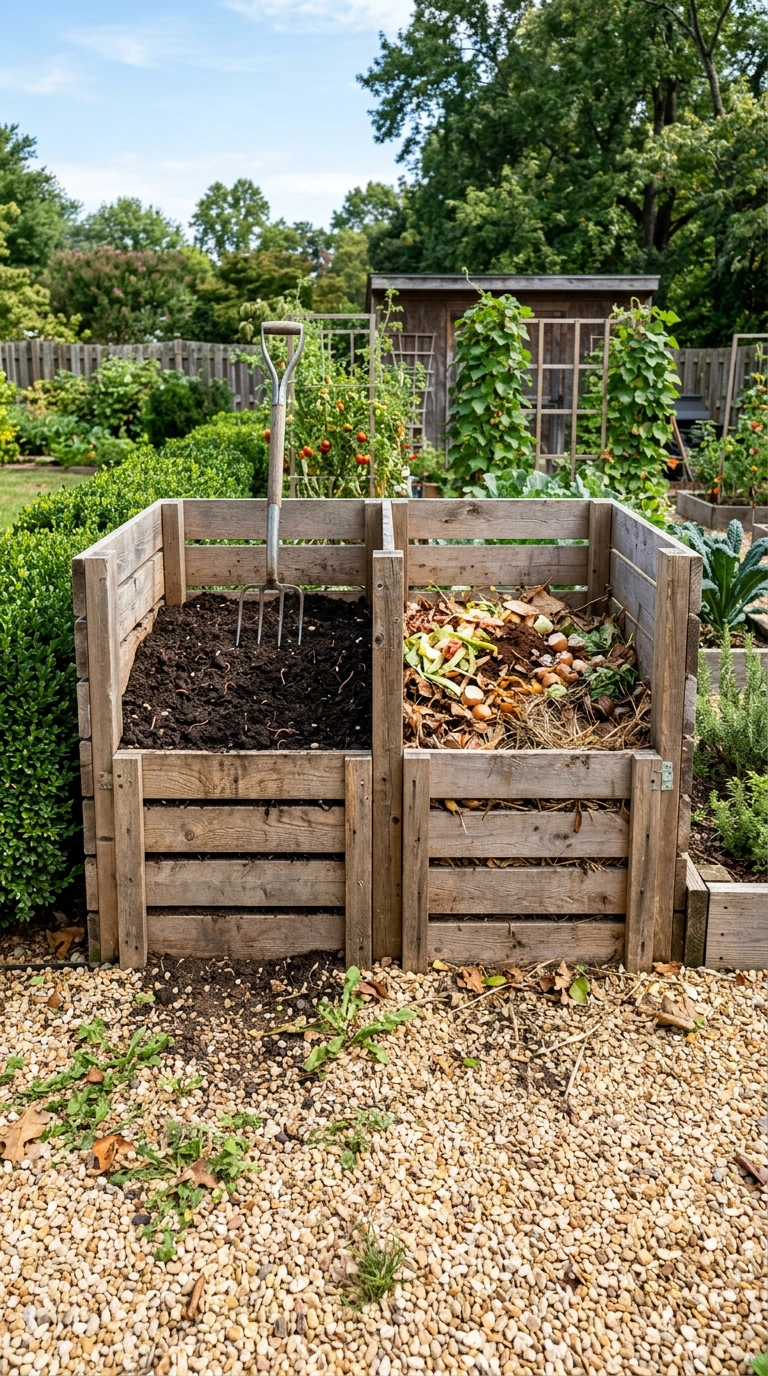
Everybody tries to hide the compost behind the shed, then stops walking there in November and stops composting entirely. Build it into the garden where the path already goes and make the bins match the beds.
19. Make Water a Feature, Not a Coiled Green Snake
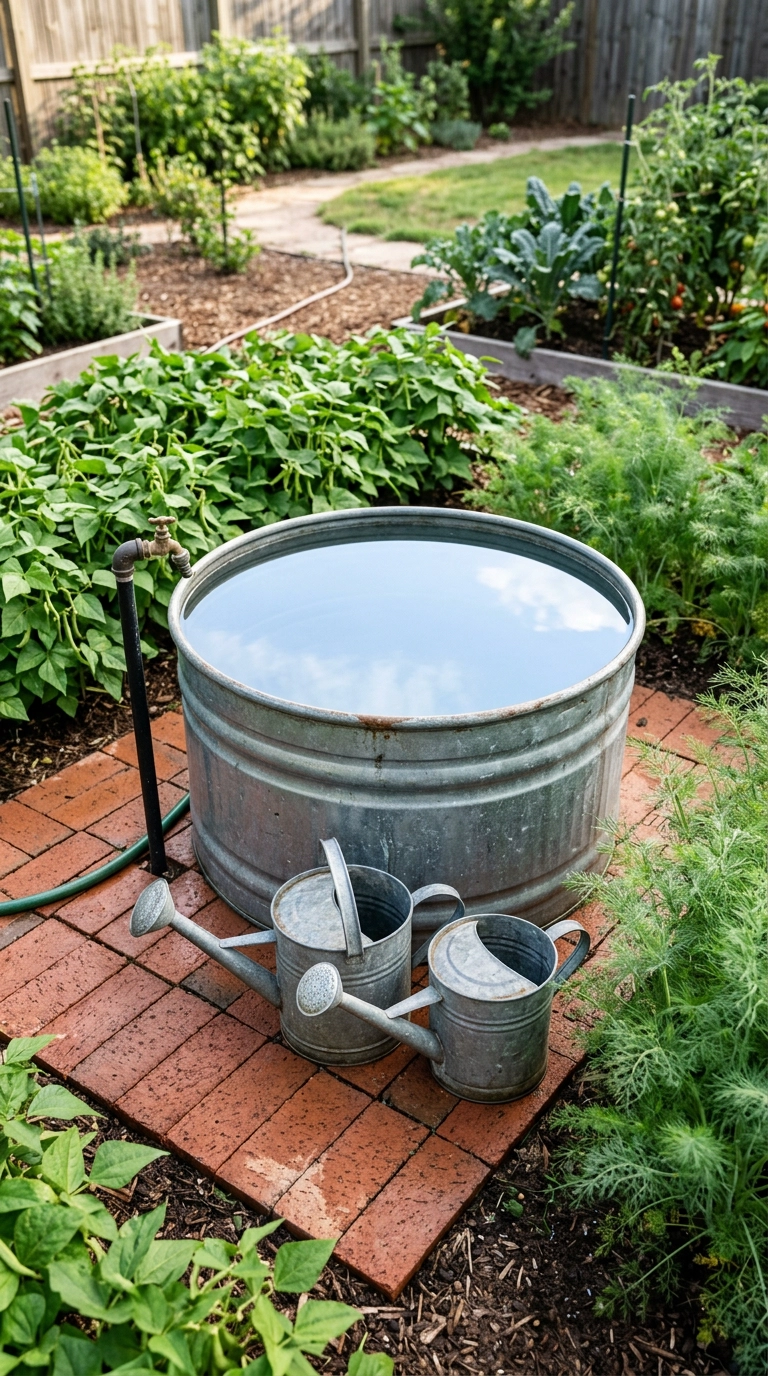
The hose is the ugliest object in most vegetable gardens, and the fix is to build a proper water point instead of dragging 75 feet of it across the beds. A galvanized dipping tank at the center of the garden gives you sun-warmed water, a reflective surface that doubles the sky, and a place to set the cans down.
20. Time a Succession So the Garden Is Never Empty
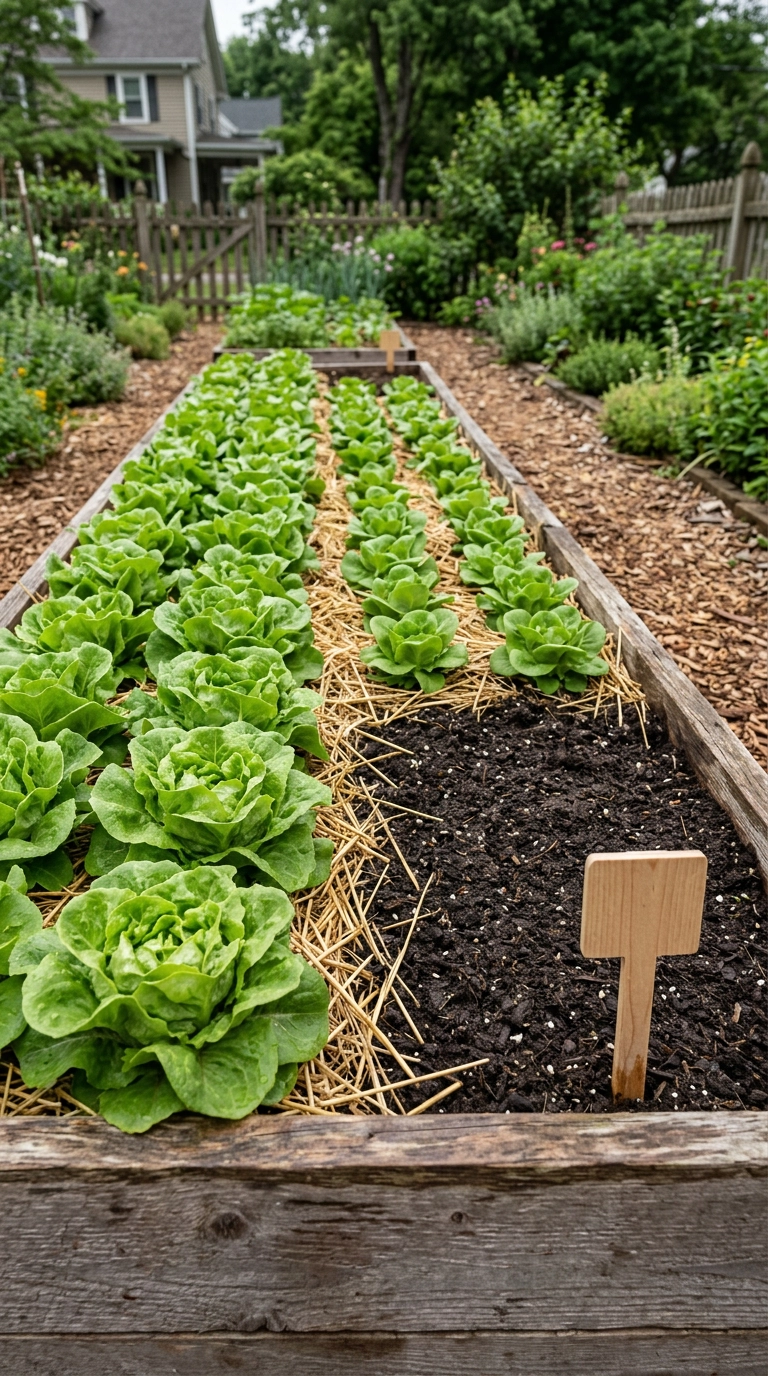
The reason a potager looks good in September and most vegetable gardens don’t is succession sowing. Split a bed in thirds and sow the same crop two to three weeks apart, so something is always mature, something is coming, and something was just seeded.
21. Add Two Cold Frames Along the South Edge
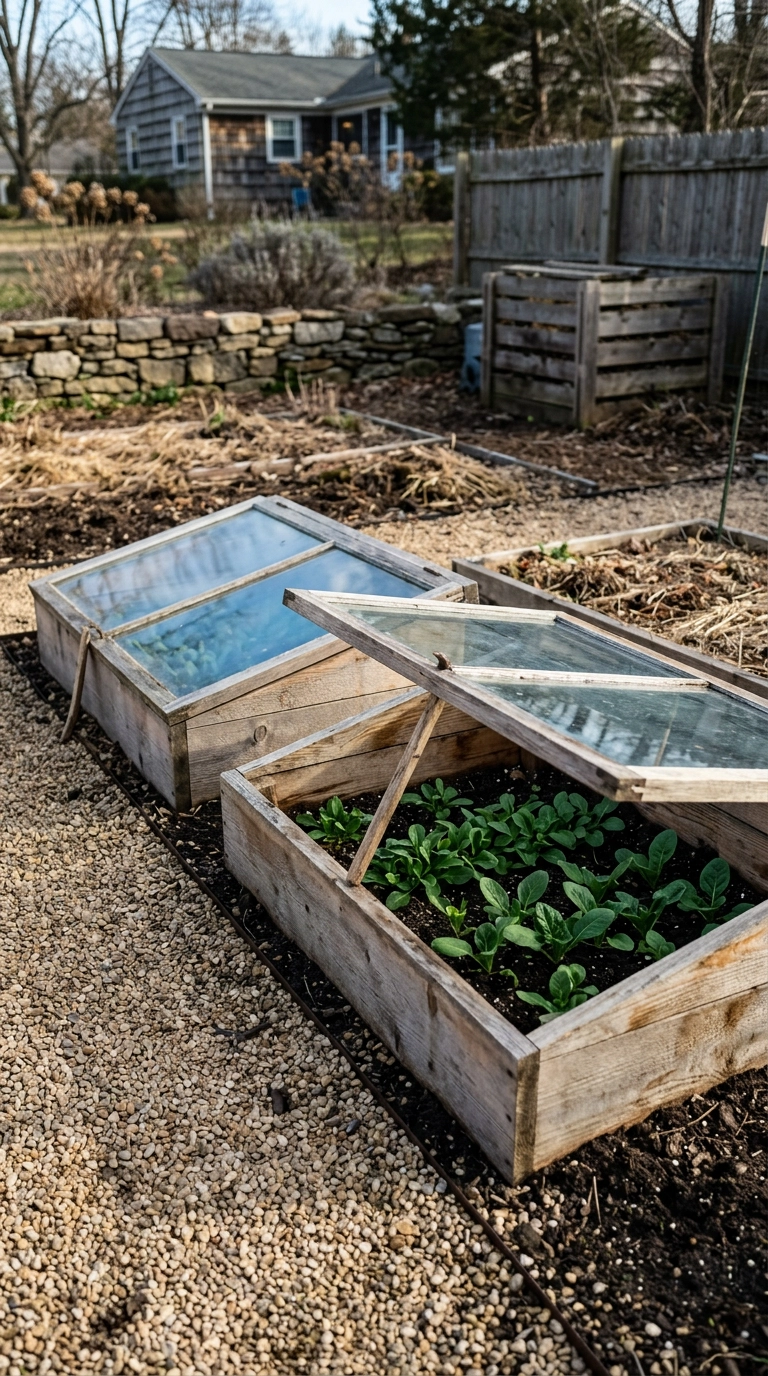
Cold frames are the most underrated structure in the kitchen garden – they’re low, they catch winter light, and two of them side by side along the south edge read as intentional architecture rather than a project.
22. Lay a Real Brick or Flagstone Path Down the Spine
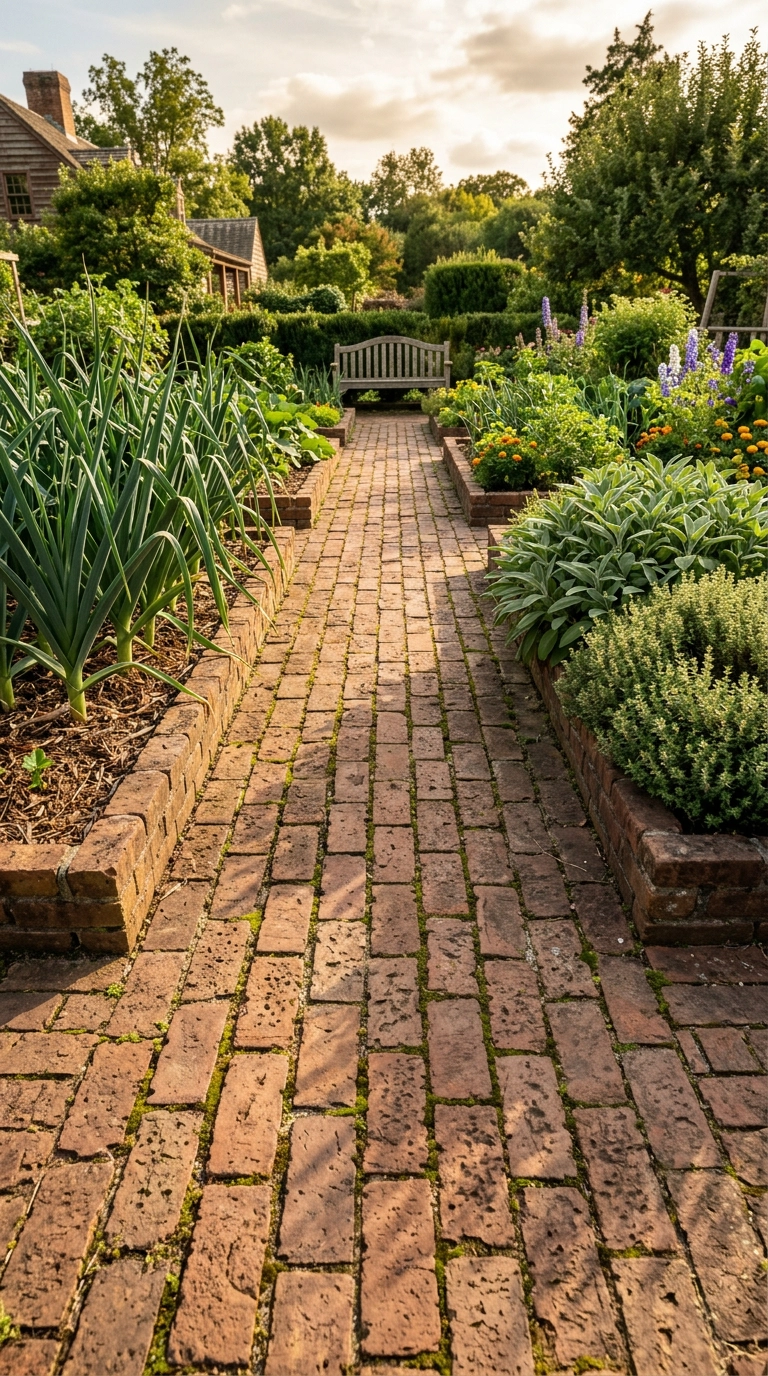
At some point the wood chips need topping up for the fifth year running and you start doing math. A hard path is the biggest single upgrade a kitchen garden can get, because it’s the one element that improves every year instead of decomposing.
23. Put a Small Greenhouse at the End of the Axis
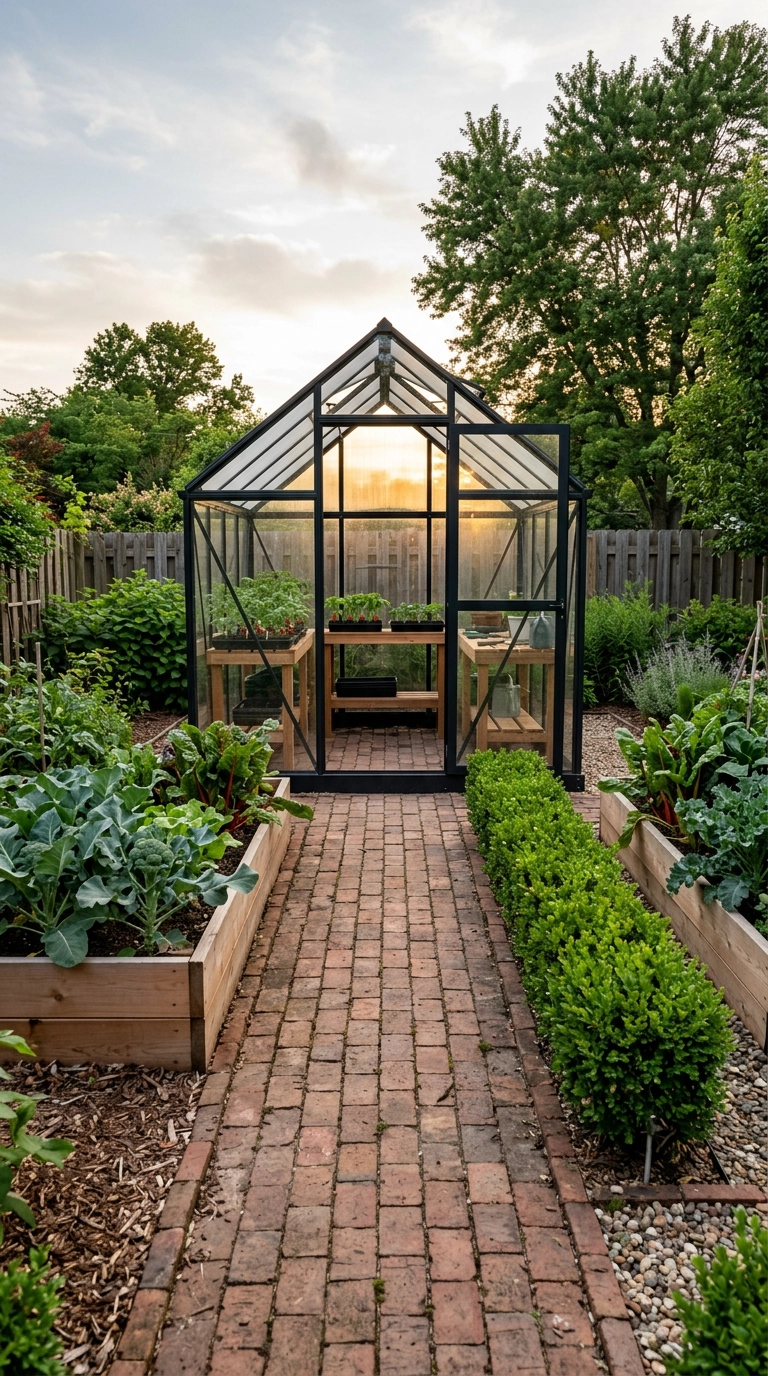
This is the biggest commitment on the list and the one that changes how you garden rather than just how it looks. Placed at the end of the main path, a greenhouse becomes the terminus – the thing your eye travels toward – which is exactly the job a garden building should do in a potager.
Where I’d Actually Start
If this list feels like a lot, the honest shortcut is three moves that cost almost nothing: chalk the layout before you build anything, hold a real 4-foot main path, and mulch every bed with the same material. Those three account for nearly every good-looking kitchen garden I’ve stood in, and none of them involve buying a structure. The crops matter far less than most people assume – it’s the geometry and the repetition that make a working vegetable plot look designed.
What’s shifted lately is that the hidden-away vegetable patch is finally over. People are pulling the food garden into the front yard and treating it like a real designed space, with clipped edging, cut-flower rows tucked between the beans, and matte black obelisks doing the work a sculpture would. Monty Don has been quietly making the case for this for decades with the jewel garden approach – flowers and vegetables in the same beds, structure held by hedging and paths – and the reason it works is that structure carries the composition while the crops come and go. Charles Dowding’s no-dig beds are the other half of why this look is spreading: they stay tidy because compost mulch never lets bare soil show.
Pick the version that matches your situation – six matching grow bags and two bamboo tripods if you’re renting a patio, cedar beds with a straw mulch and a cut-flower row if you have a yard, and the brick path or the greenhouse when you know you’re staying. If this helped, sign up for my weekly newsletter and I’ll keep sending the bed plans, seed sources, and honest build costs I’m using in real client gardens.


