
24+ Serene Japandi Bathroom Decor Ideas that are Calm and Gorgeous in 2026

I’ll be straight with you: most rooms sold to me as “japandi” are just beige rooms with nothing in them. Real japandi is Japanese restraint plus Scandinavian warmth, and that second half is the part everyone skips, which is why so many of these bathrooms end up feeling like a cold waiting room instead of a calm one. I’ve spent the last few years figuring out exactly where that line sits, and it usually comes down to wood tone, one honest handmade object, and knowing when to stop.
Japandi Bathroom Decor Ideas
1. A Wall-Hung White Oak Vanity with the Floor Left Visible
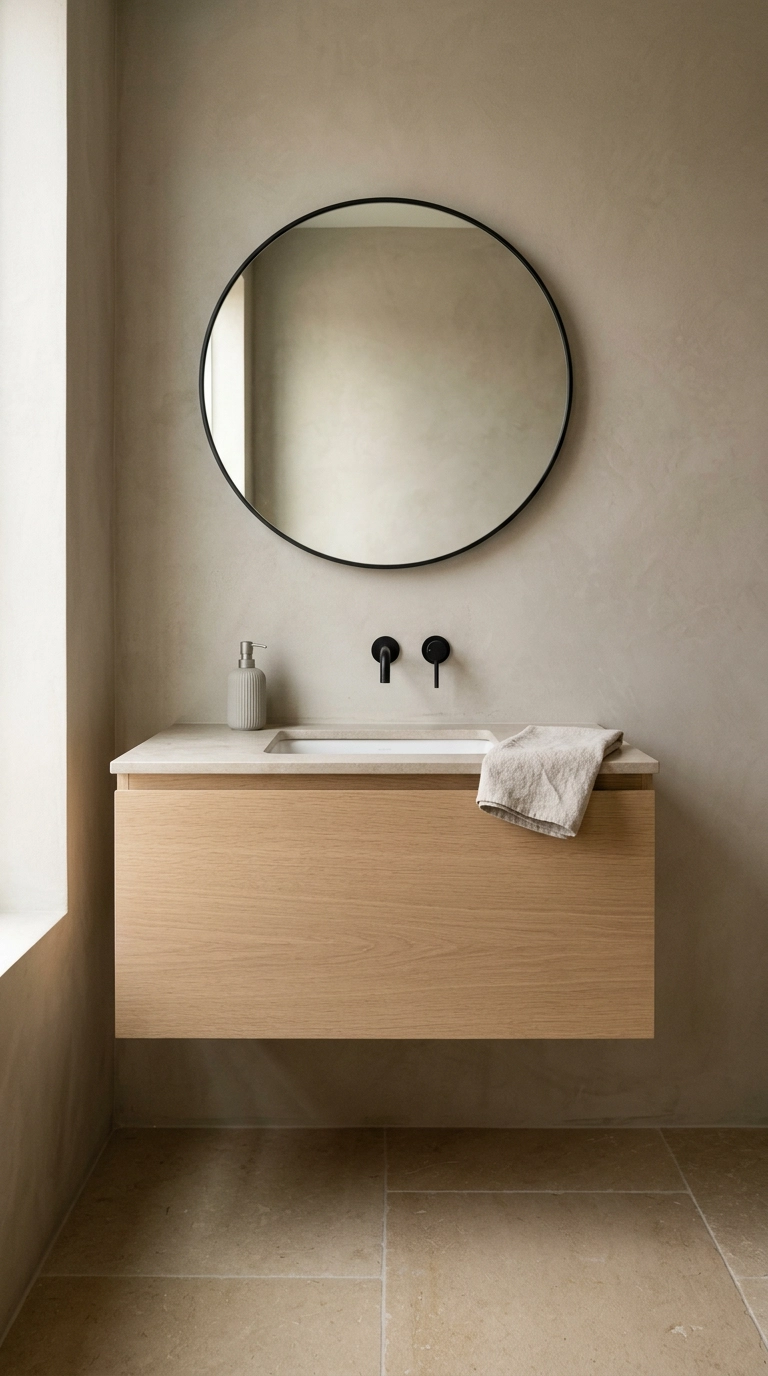
If you do one structural thing, make it this. A vanity that hangs on the wall with 8 to 12 inches of open floor underneath lets the eye travel all the way to the baseboard, and an unbroken floor plane is the single cheapest way to make a small bathroom read larger.
2. Commit to Three Colors and Refuse the Fourth
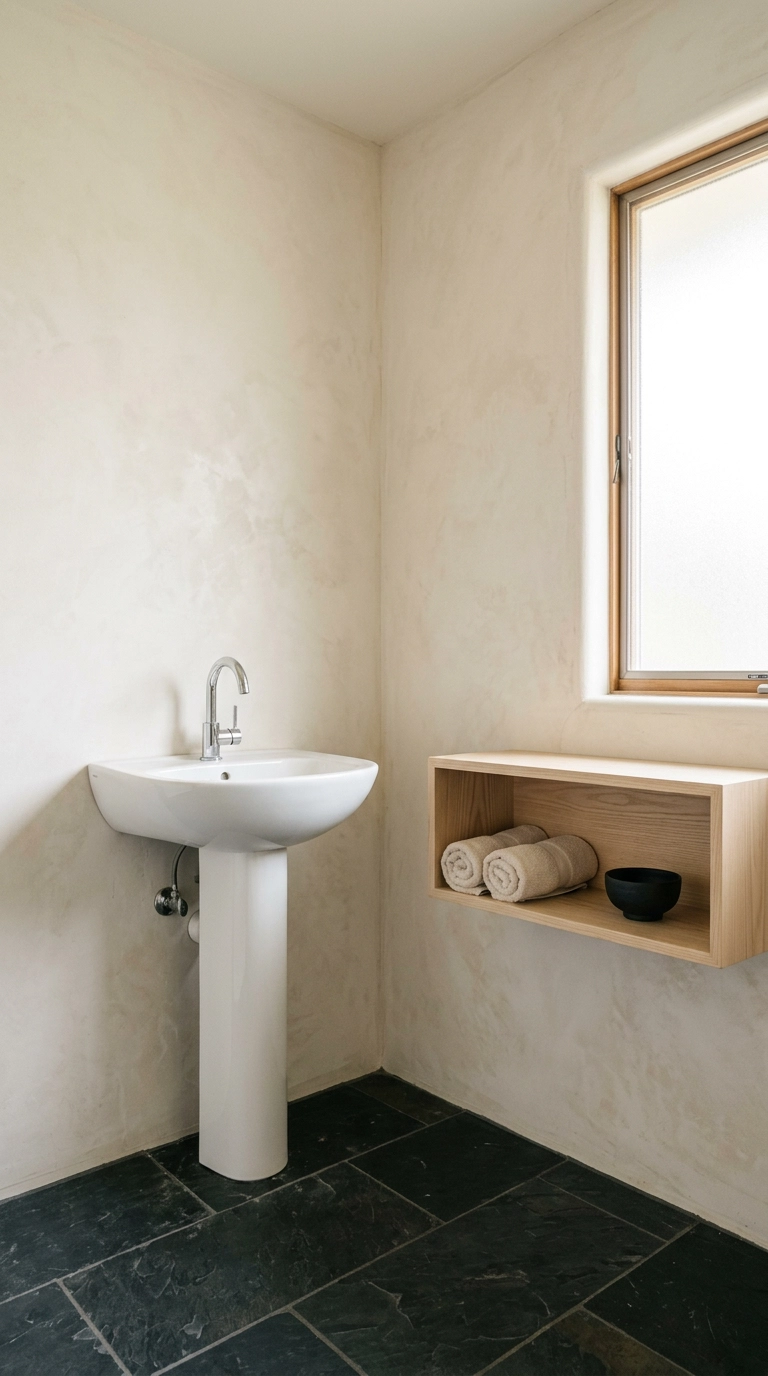
Pick a warm off-white, one wood tone, and one grounding dark, then stop. The reason japandi photographs so calm is that nothing in the frame is competing for attention, and every extra color you add is another thing your eye has to file.
3. Clear the Counter Down to Three Objects
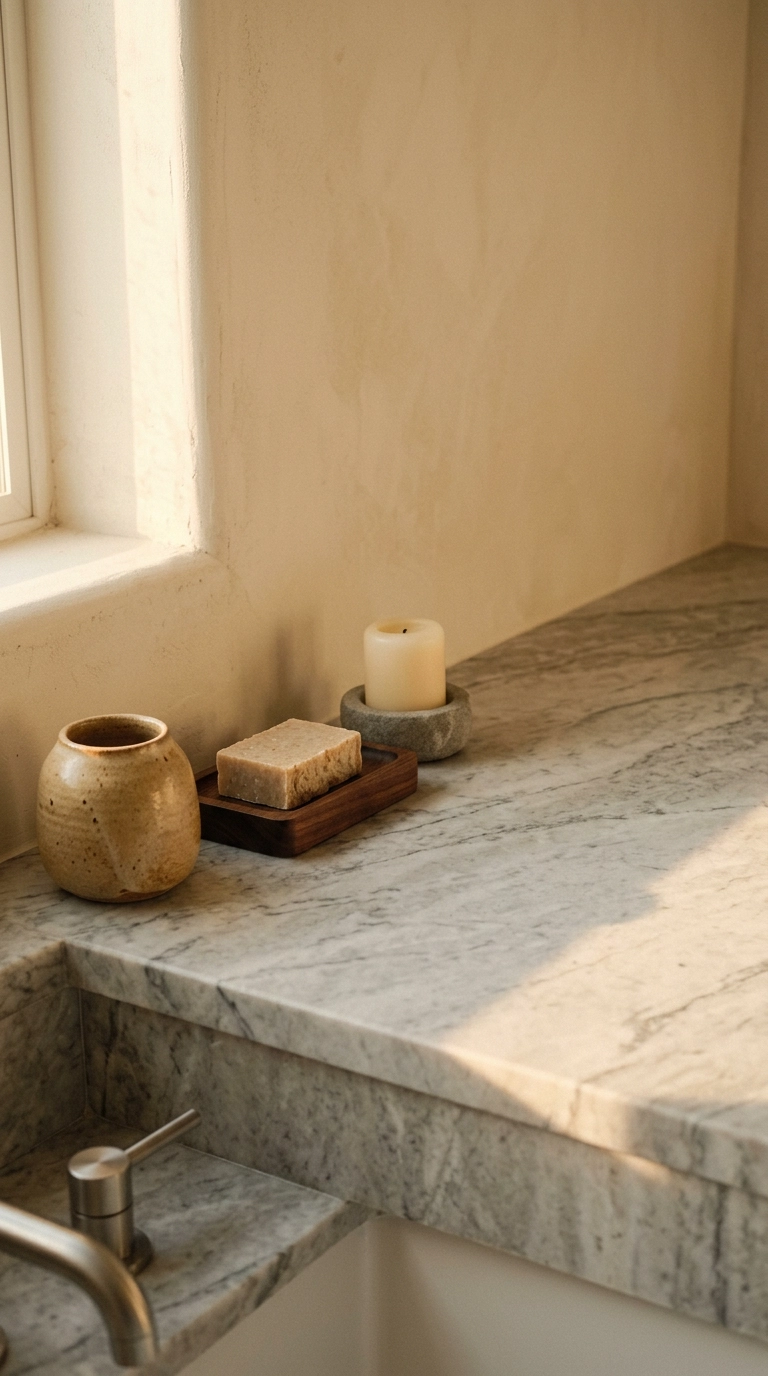
Three objects on a counter, maximum. Odd numbers read as intentional composition while even numbers read as a pair that got separated, and in a room this small the difference is obvious.
4. Decant Into Glass and Kill the Plastic Rainbow
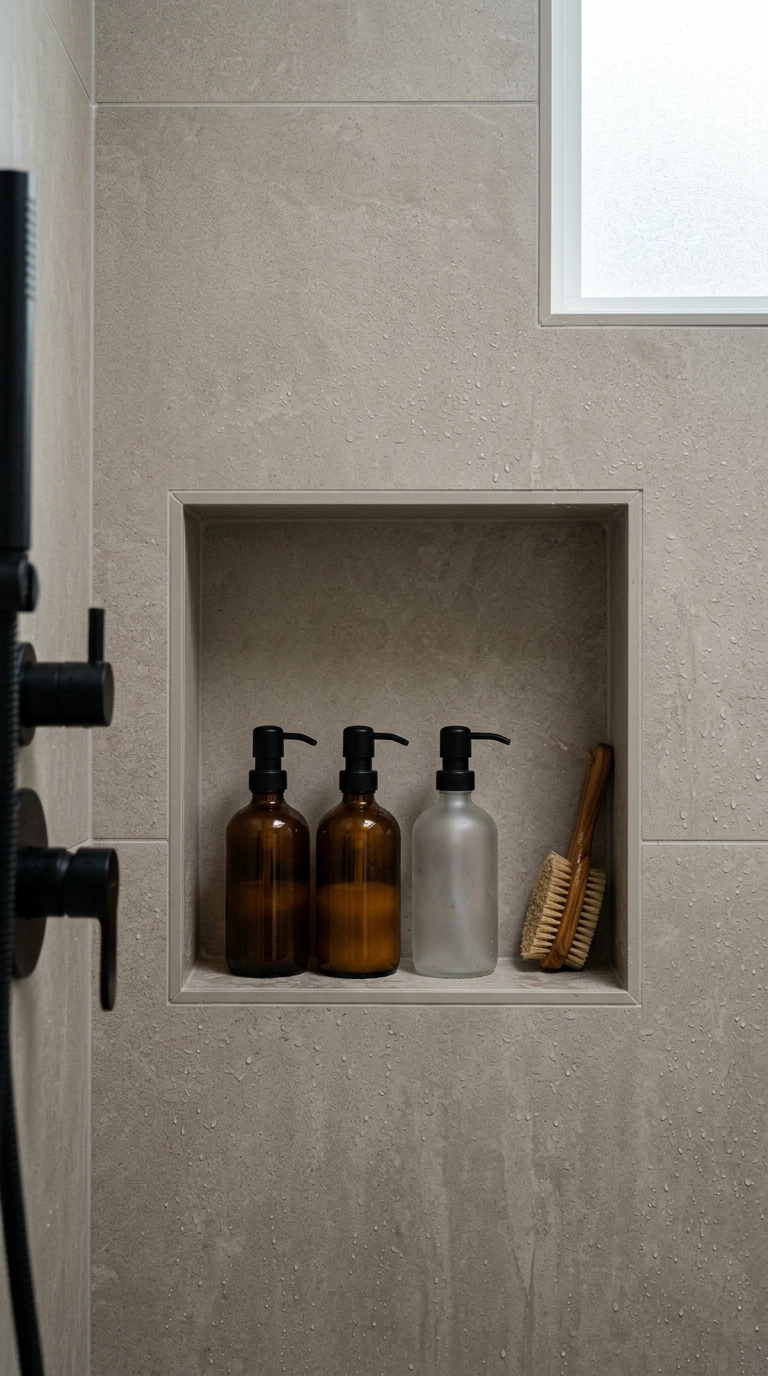
Your shampoo bottles are the loudest objects in your bathroom and you’ve stopped seeing them. Move everything into plain amber or frosted glass and the visual noise drops instantly, no renovation required.
5. A Hinoki Bath Stool You Actually Use
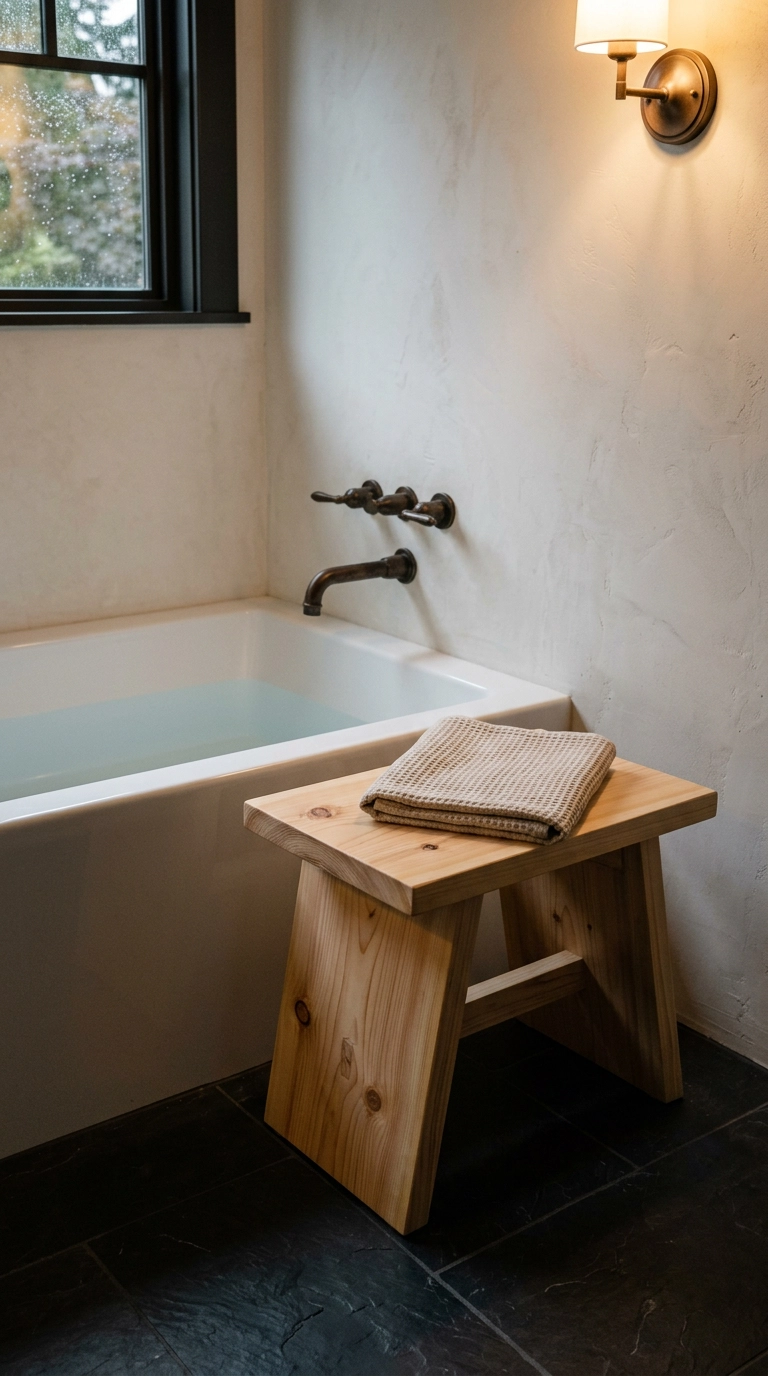
Hinoki is Japanese cypress, and it’s the material that makes this style smell like something rather than just look like something. It’s naturally water-resistant, so a small stool can live permanently next to the tub holding a towel and a book.
6. One Imperfect Handmade Object, Not Five Perfect Ones
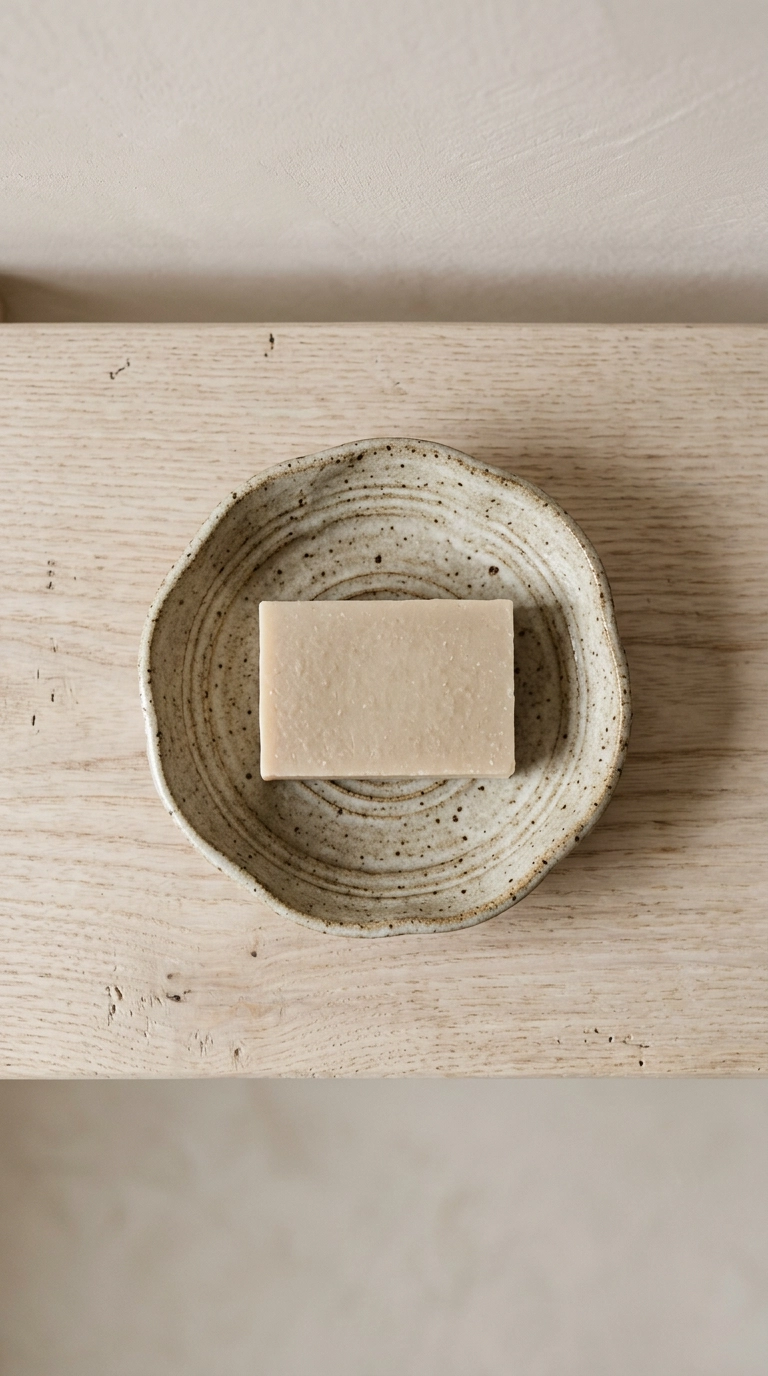
This is the whole philosophy in one purchase. A single hand-thrown soap dish with a wobbly rim and a thumbprint in the glaze carries more warmth than a matched set of five flawless accessories, because the eye reads evidence of a human hand as generosity and reads perfect symmetry as retail.
7. Make Storage the Decor with an Open Lower Shelf
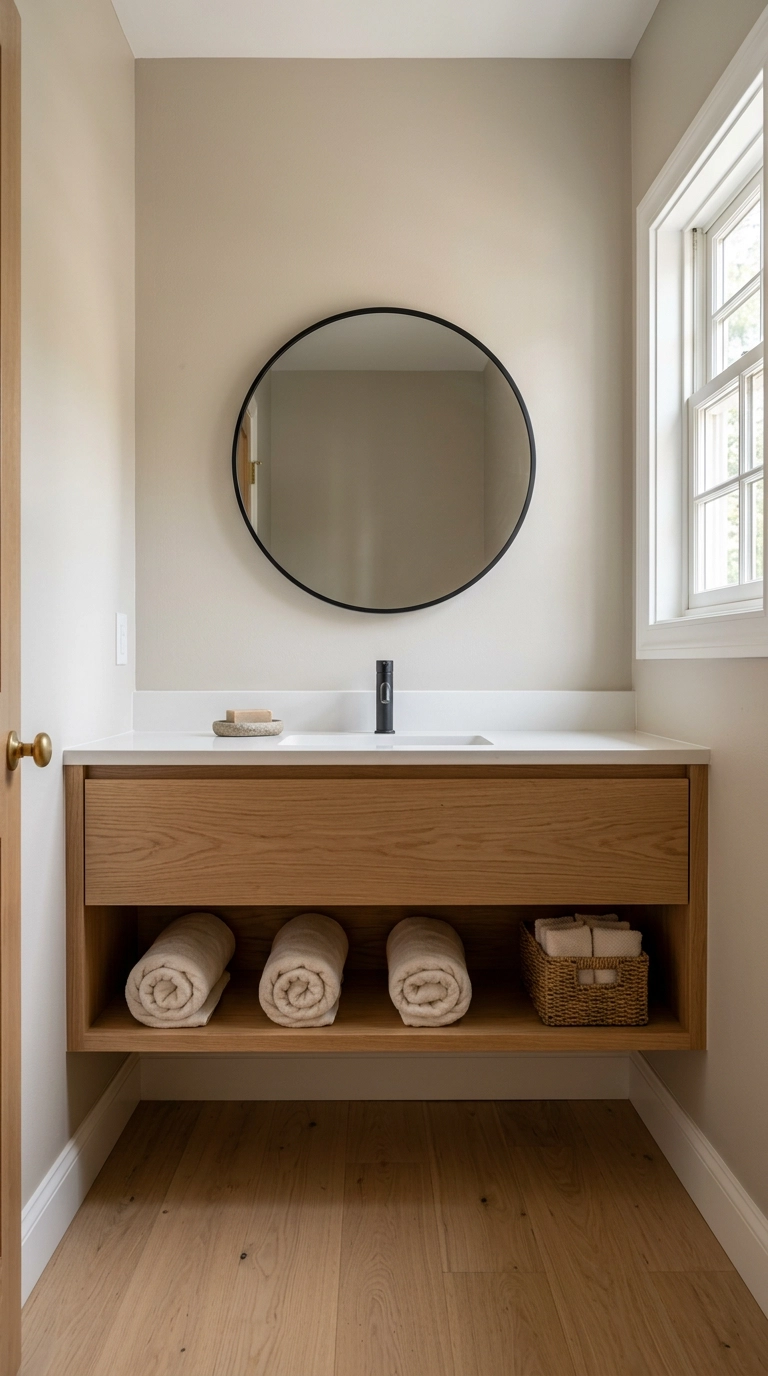
Japandi bathrooms hide the ugly and display the beautiful, which means your storage has to earn its visibility. Rolled towels, one seagrass basket, and nothing in plastic.
8. Swap the Vinyl Liner for a Full-Length Linen Curtain
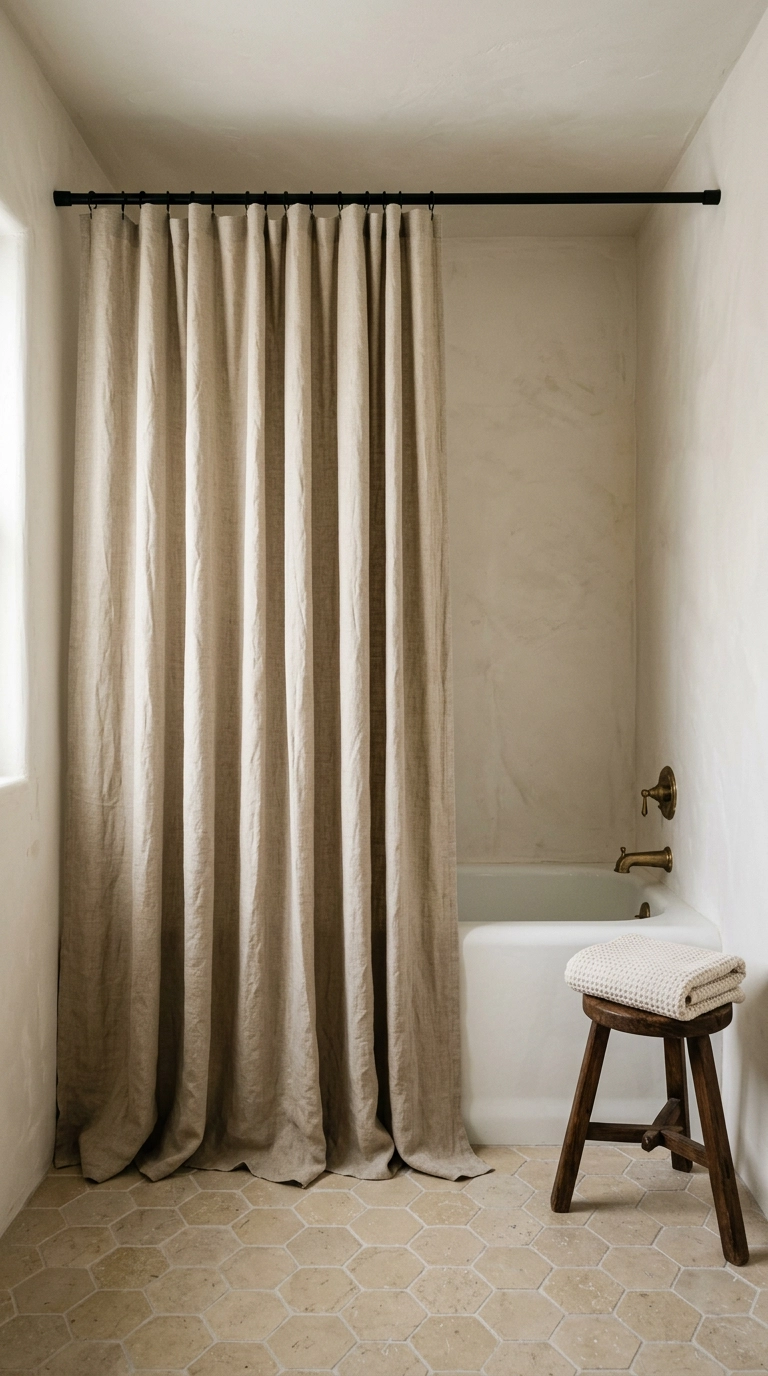
Mount the rod 3 to 4 inches below the ceiling instead of just above the tub, then hang a floor-length linen curtain. Same trick as living room drapery: the eye follows the vertical line to its end, so a taller curtain makes an 8-foot bathroom ceiling feel like 9.
9. Change Every Bulb to 2700K and Put It on a Dimmer
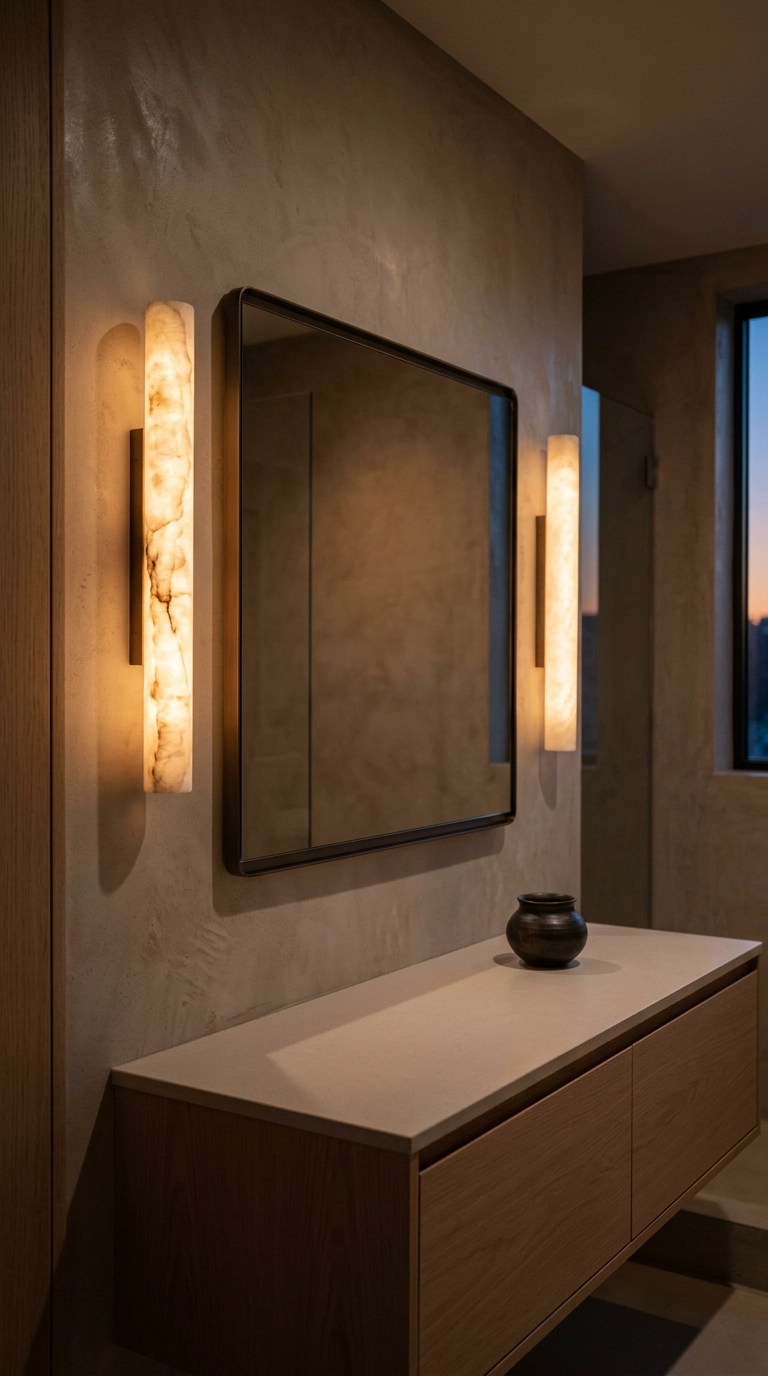
Cold 4000K light is what makes a minimalist bathroom feel clinical, and no amount of oak will fix a bad bulb. Go 2700K everywhere, and add a dimmer if you have a single switch to work with.
10. One Bare Branch in a Narrow Bud Vase
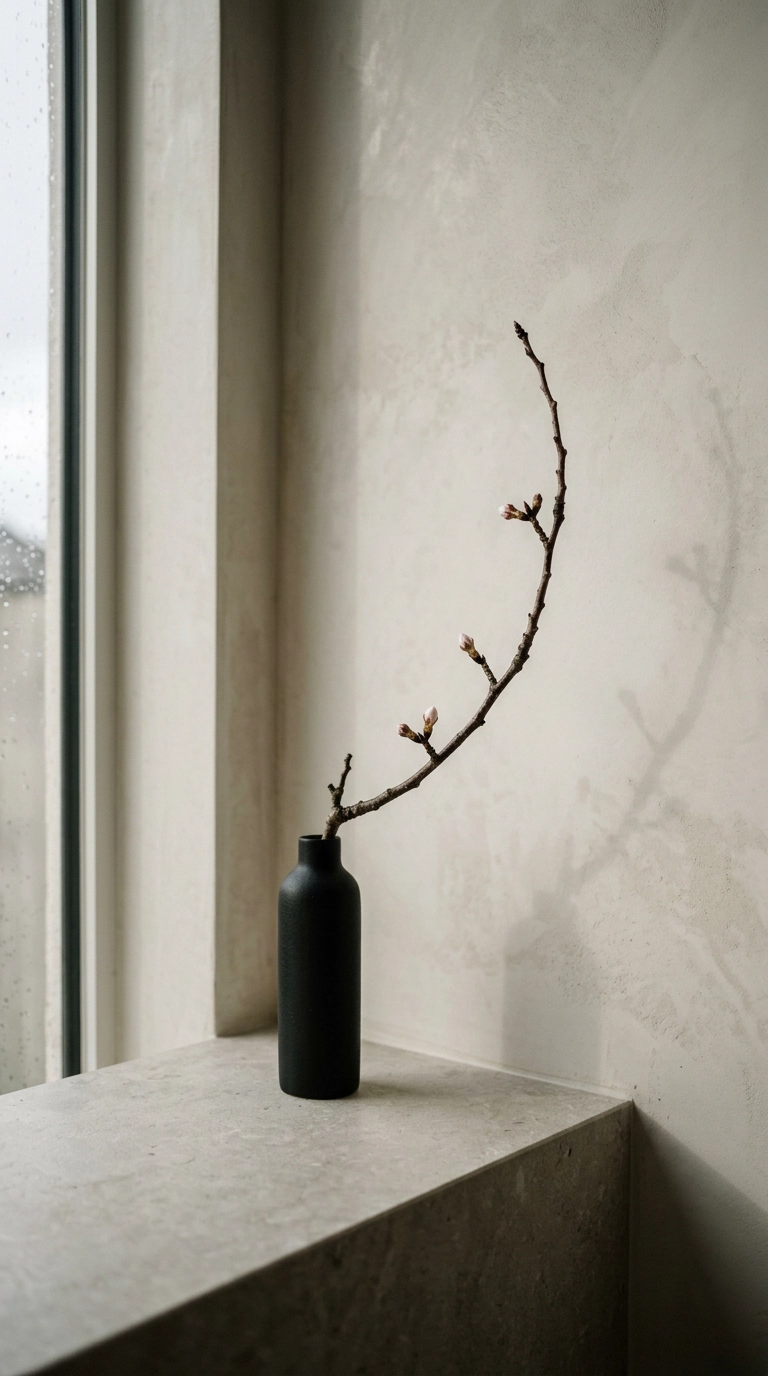
This is the one plant moment in the entire room, and it should be a branch rather than a leafy houseplant. A single asymmetric stem gives you the line and shadow you want without the busy silhouette that makes a small bathroom feel crowded.
11. Retire the Bath Mat for a Flatweave Runner
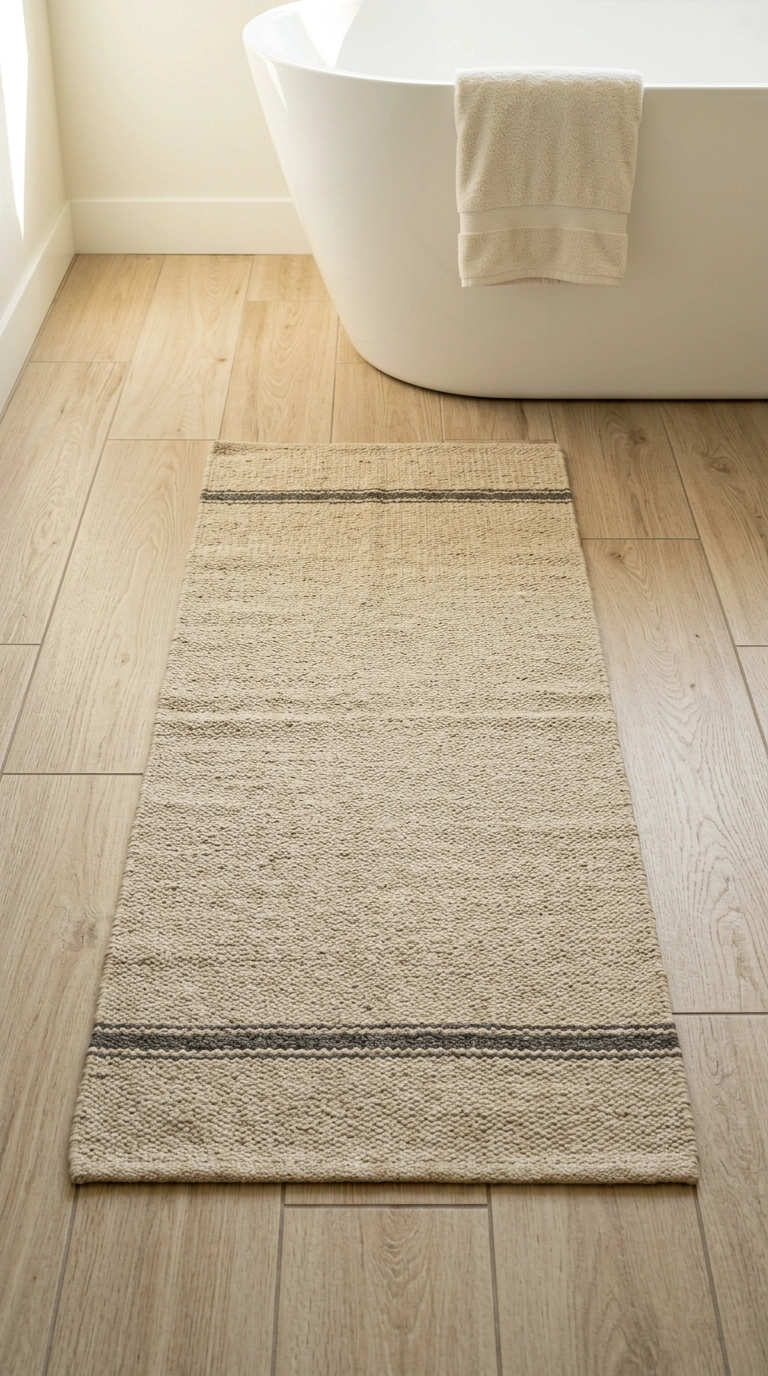
The plush memory-foam mat is doing your bathroom no favors. A flatweave wool or cotton runner in an undyed neutral gives you texture without the visual weight of a fluffy rectangle sitting in the middle of the floor.
12. Matte Black Fixtures, Used With a Very Light Hand
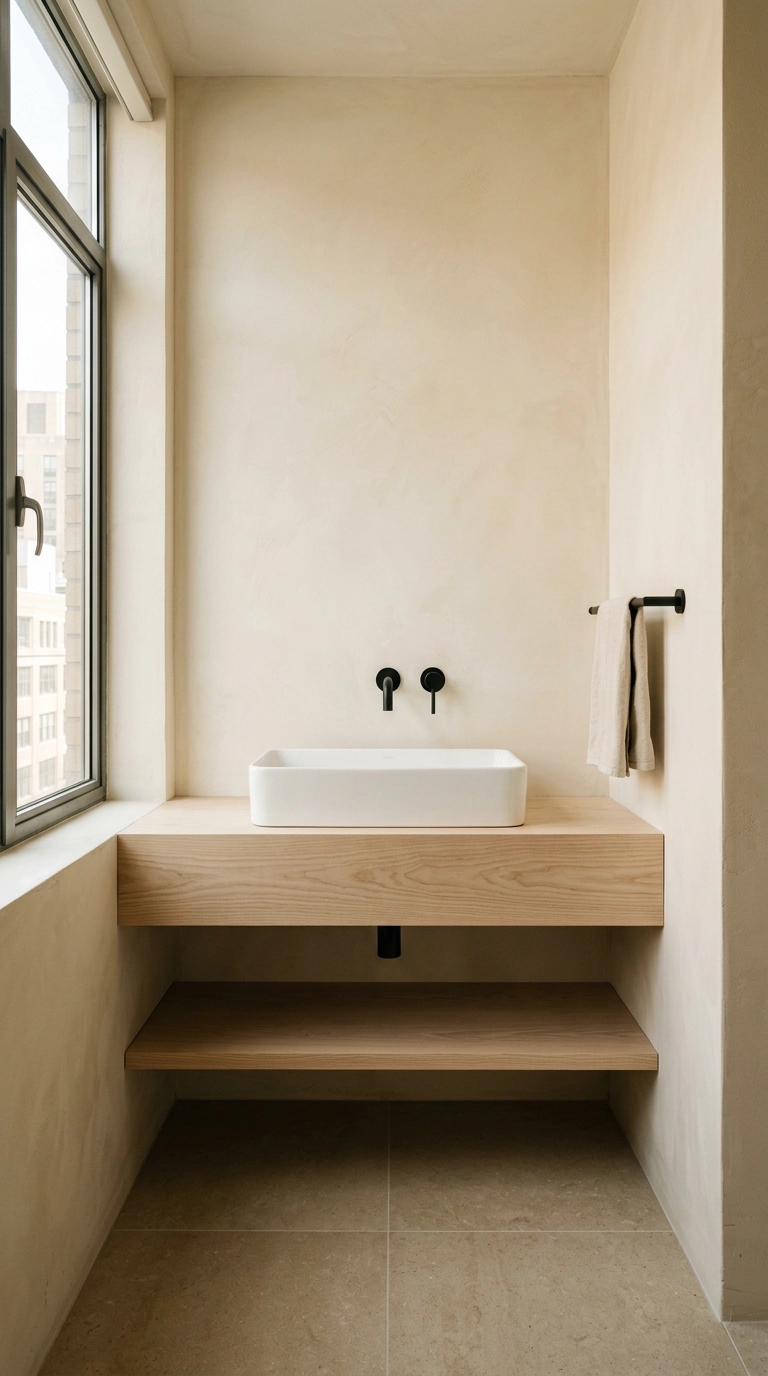
Matte black is the correct japandi metal, but two or three pieces is the whole budget. Black reads as high visual weight, meaning your eye lands on it first, so scattering it across faucet, shower, mirror frame, sconces, hooks, and hardware turns a quiet room into a game of connect the dots.
13. Or Go Aged Bronze for a Warmer Read
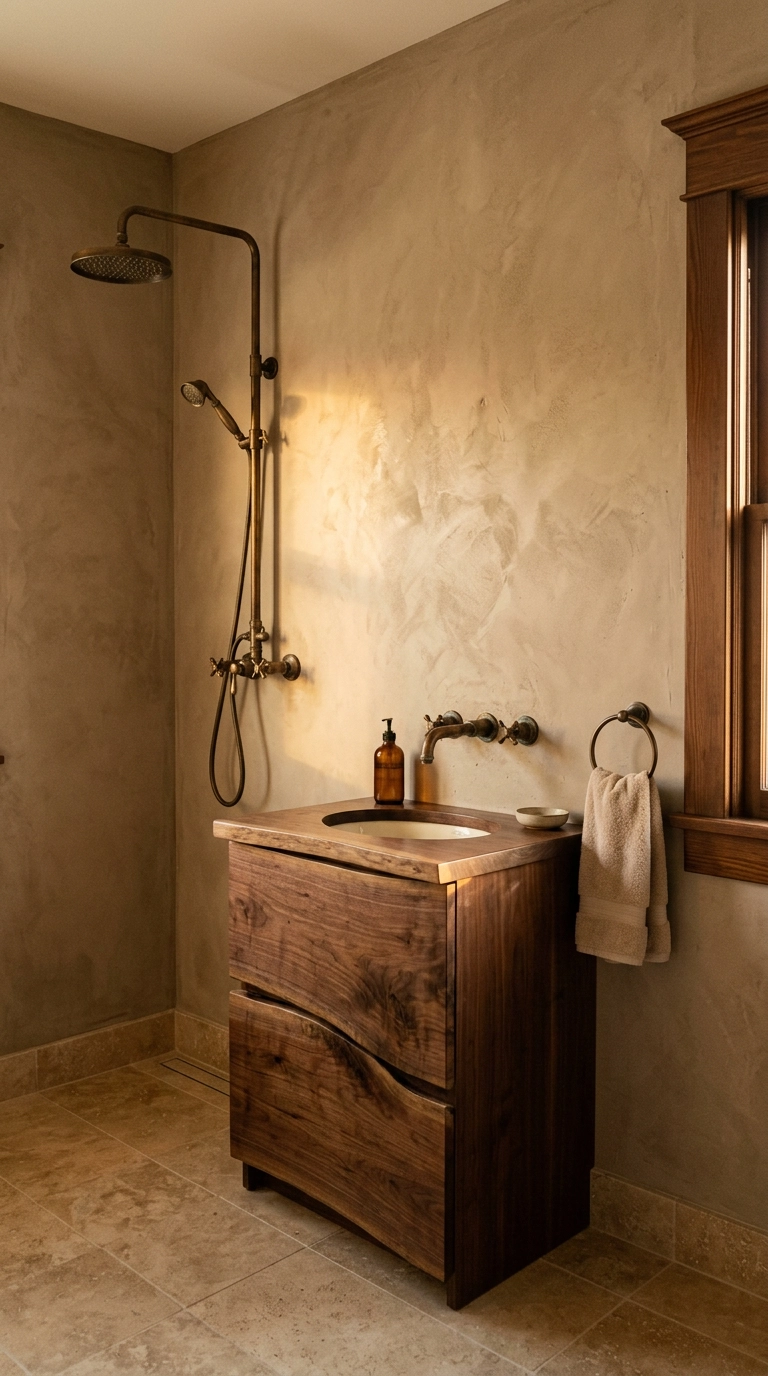
If your bathroom faces north or gets very little natural light, black hardware can tip the room toward cold. Aged bronze or unlacquered brass does the same grounding job while adding warmth, and it develops a patina instead of showing every water spot.
14. Know the Difference Between Beige Minimalism and Actual Japandi
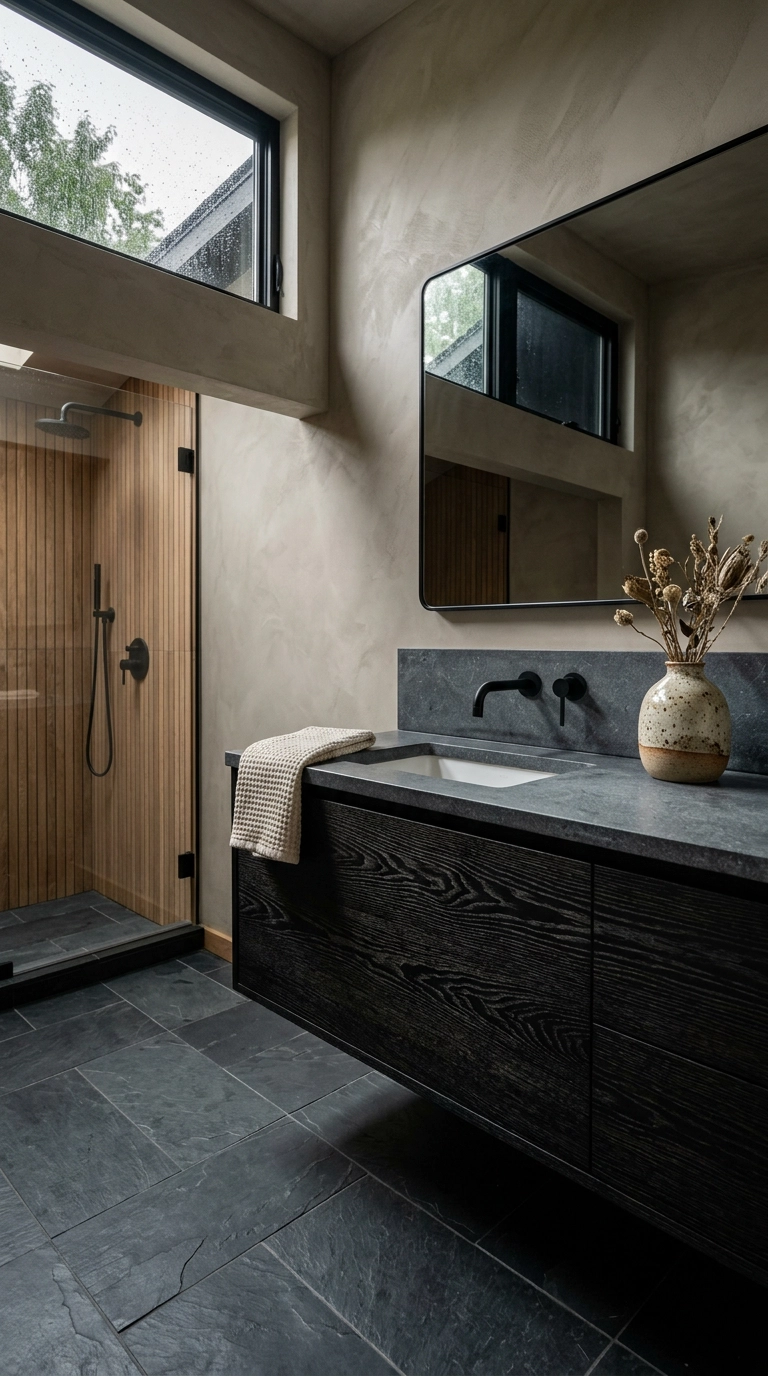
Here’s the distinction nobody makes. Beige minimalism removes color and stops there, which is why it reads as unfinished. Japandi removes color and then replaces the missing interest with texture and contrast, so you get rough plaster against smooth porcelain, cleft stone against oiled wood, matte against honed.
15. Renter Fix: Peel-and-Stick Wood Slat Panels Behind the Vanity
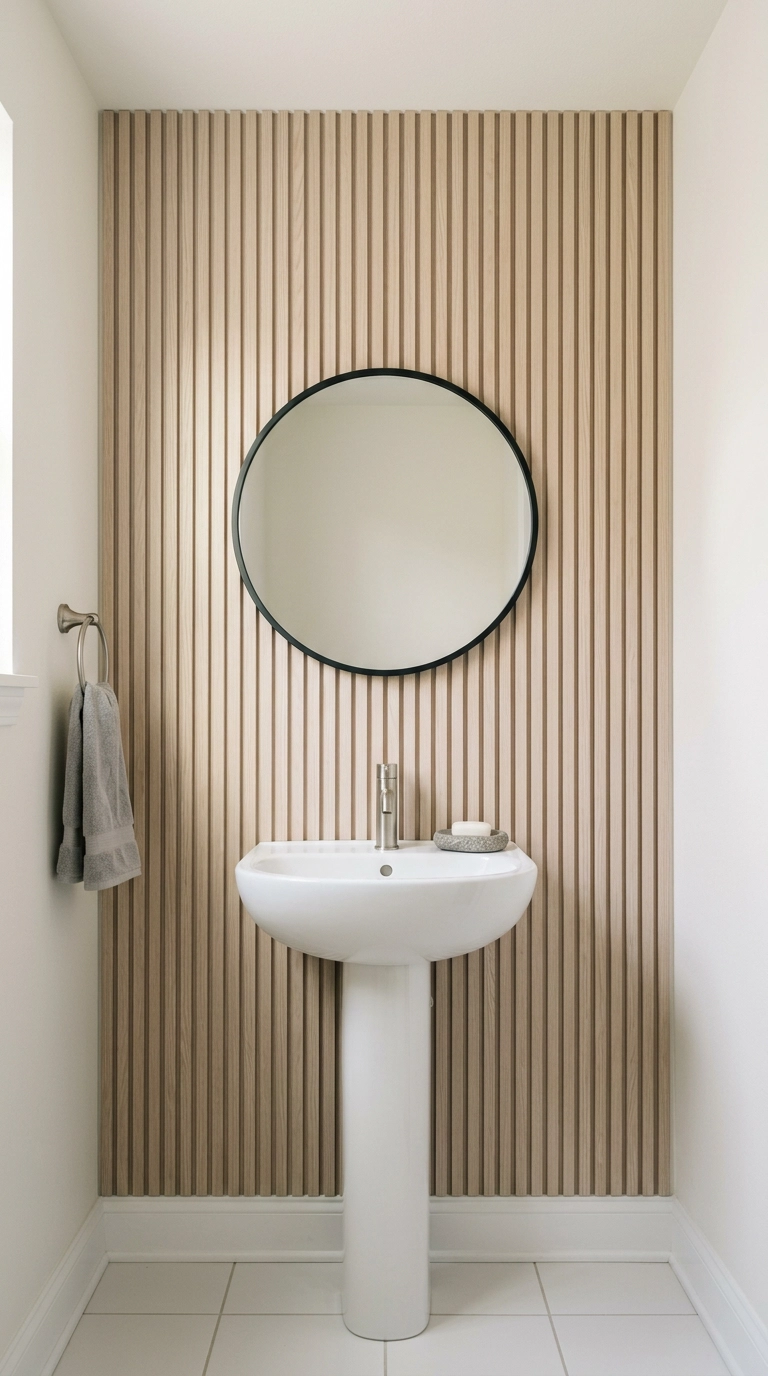
Wood slat walls are the signature japandi move, and you don’t need to own your place to get one. Peel-and-stick slat panels or a slat panel screwed to a French-cleat you can patch later both work, and one wall is plenty.
16. A Low, Wide Mirror with Air Around It
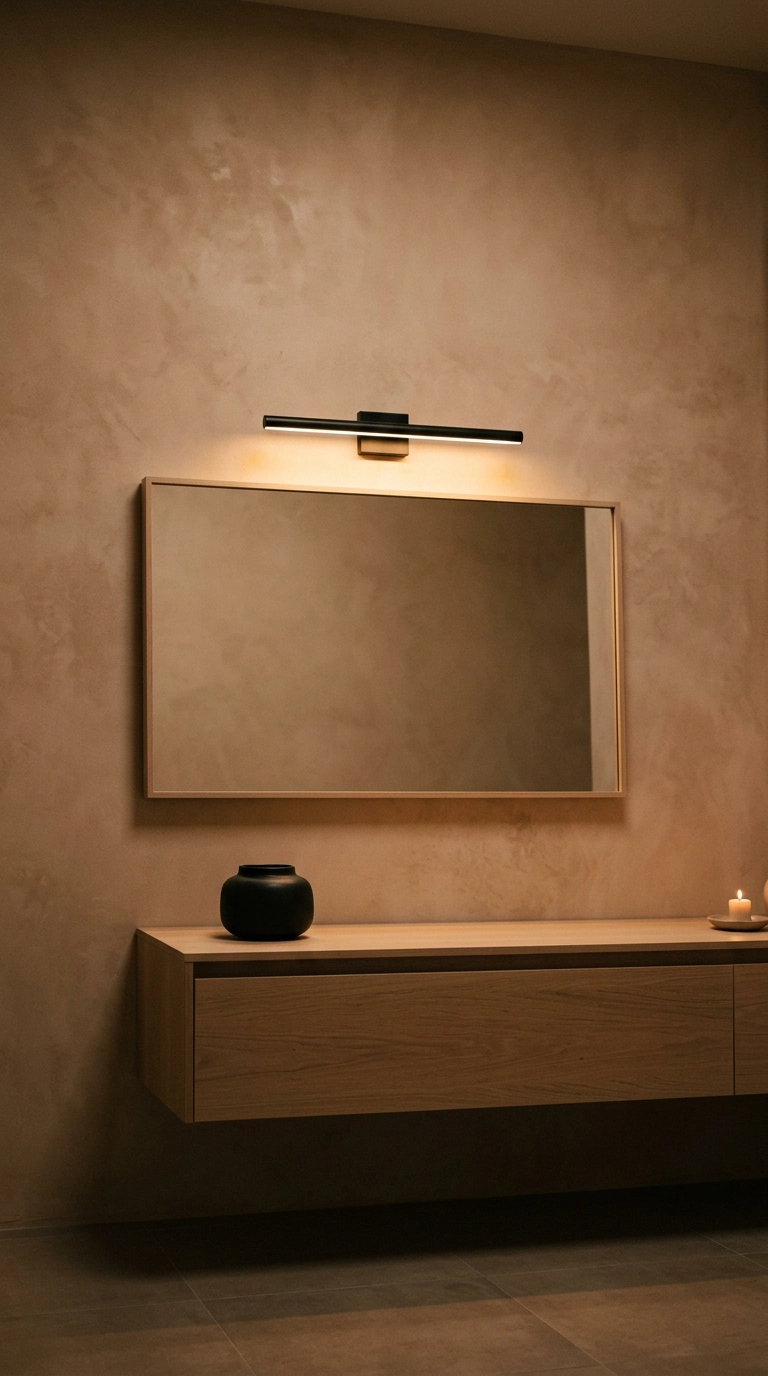
Skip the mirror that fills the wall edge to edge. A wide, low mirror with 10 to 14 inches of empty wall above it gives you negative space, which just means intentional emptiness, and that breathing room is what separates calm from bare.
17. Cedar Duckboard on the Shower Floor
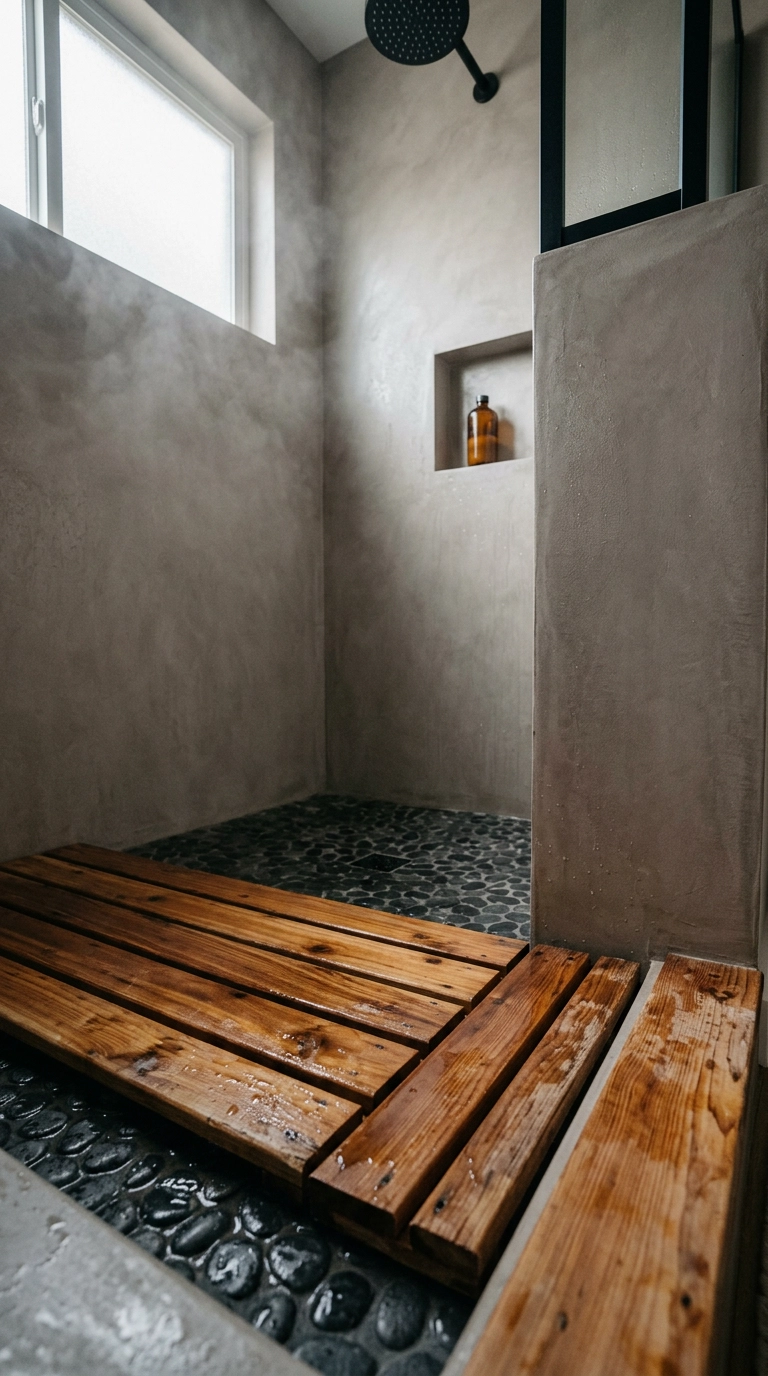
Cedar and hinoki both handle constant water, and a slatted duckboard on the shower floor is the detail that makes a plain tiled shower feel like a bathhouse. Underfoot it’s warm instead of cold, which matters more than it sounds like it should.
18. Microcement Walls to Erase Every Grout Line
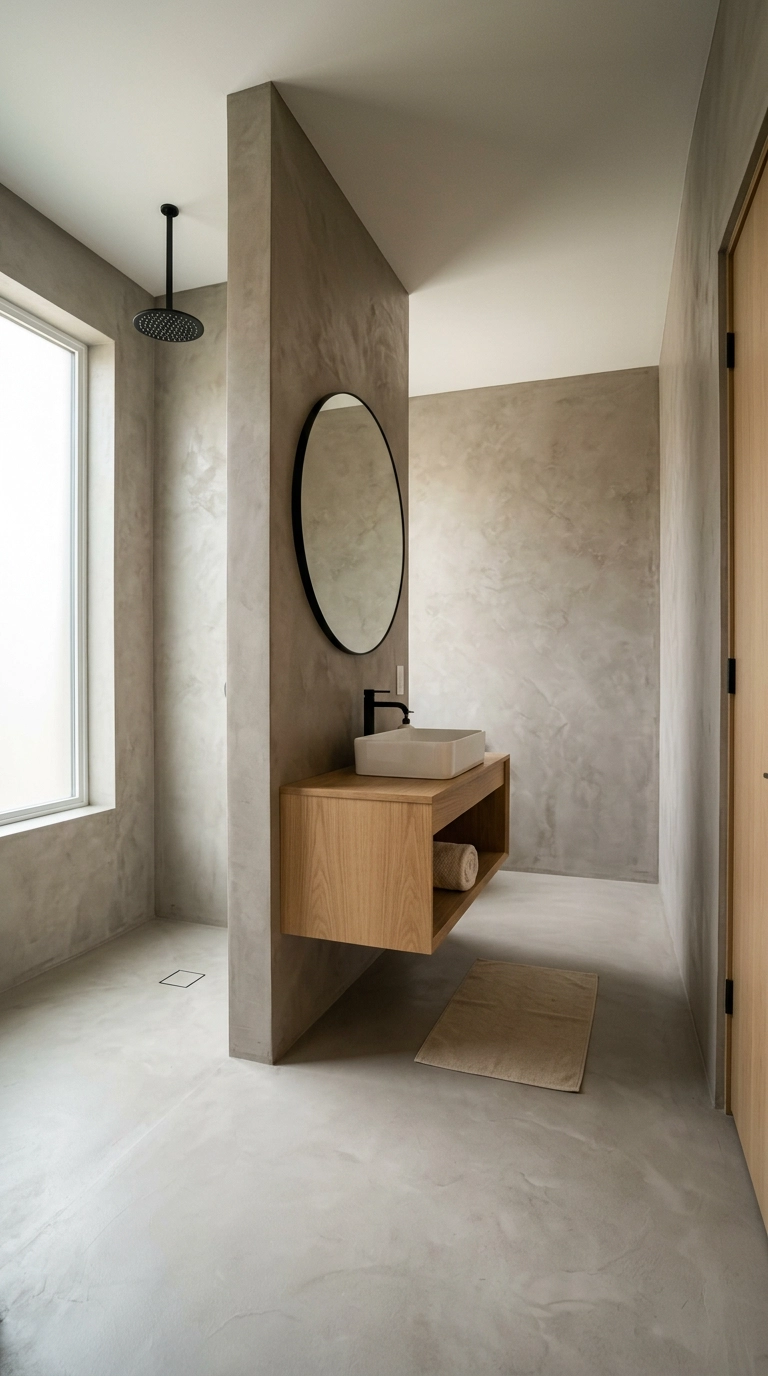
Grout lines are a grid, and a grid is visual noise. Microcement is a thin troweled cement coating that goes over existing tile and gives you one continuous surface, which is why these rooms photograph so quiet.
19. Tadelakt in the Wet Zone for a Soft Polished Glow
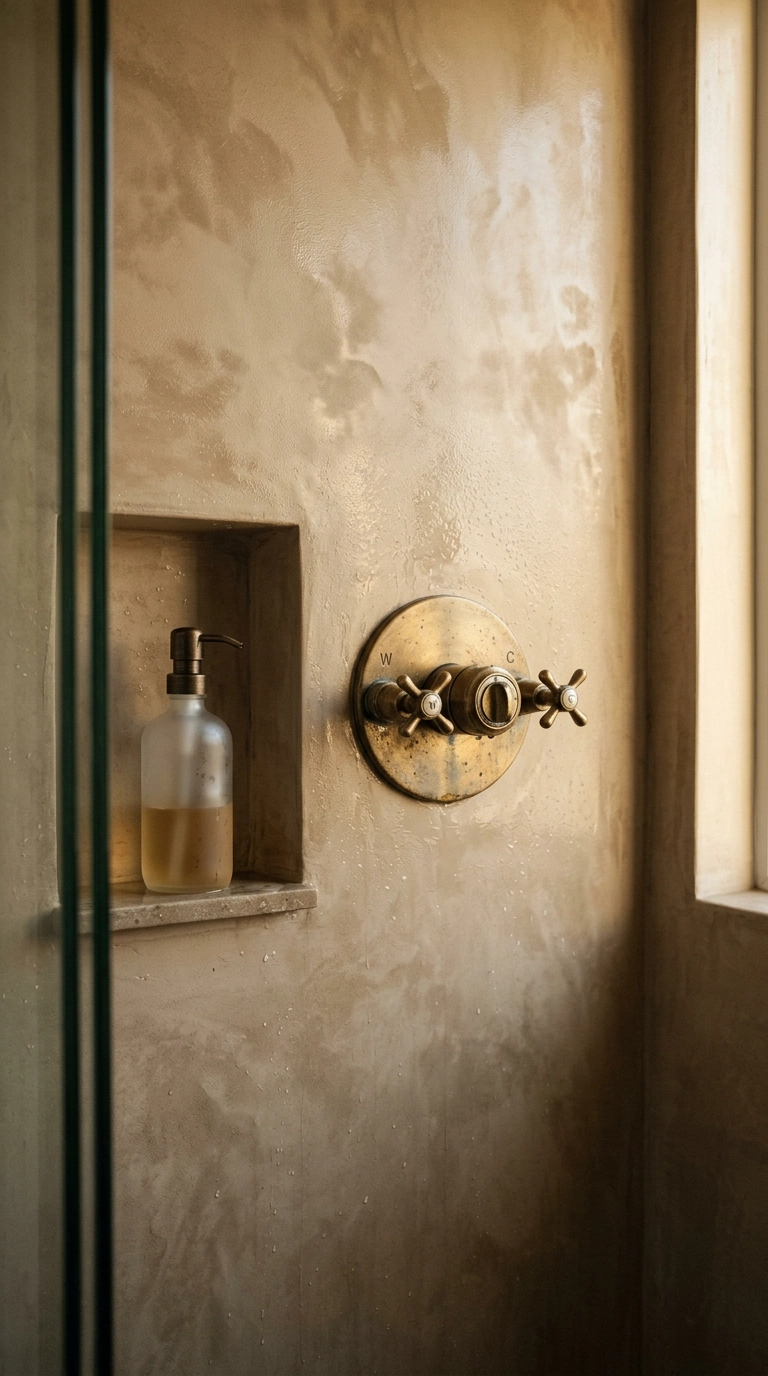
Tadelakt is Moroccan lime plaster burnished with stone and sealed with olive oil soap, which makes it naturally waterproof and gives it a soft, slightly cloudy sheen that no tile can imitate. In a japandi bathroom it delivers the wabi-sabi thing honestly, since the surface is never perfectly uniform.
20. Pick a Warm Off-White That Isn’t Builder Beige
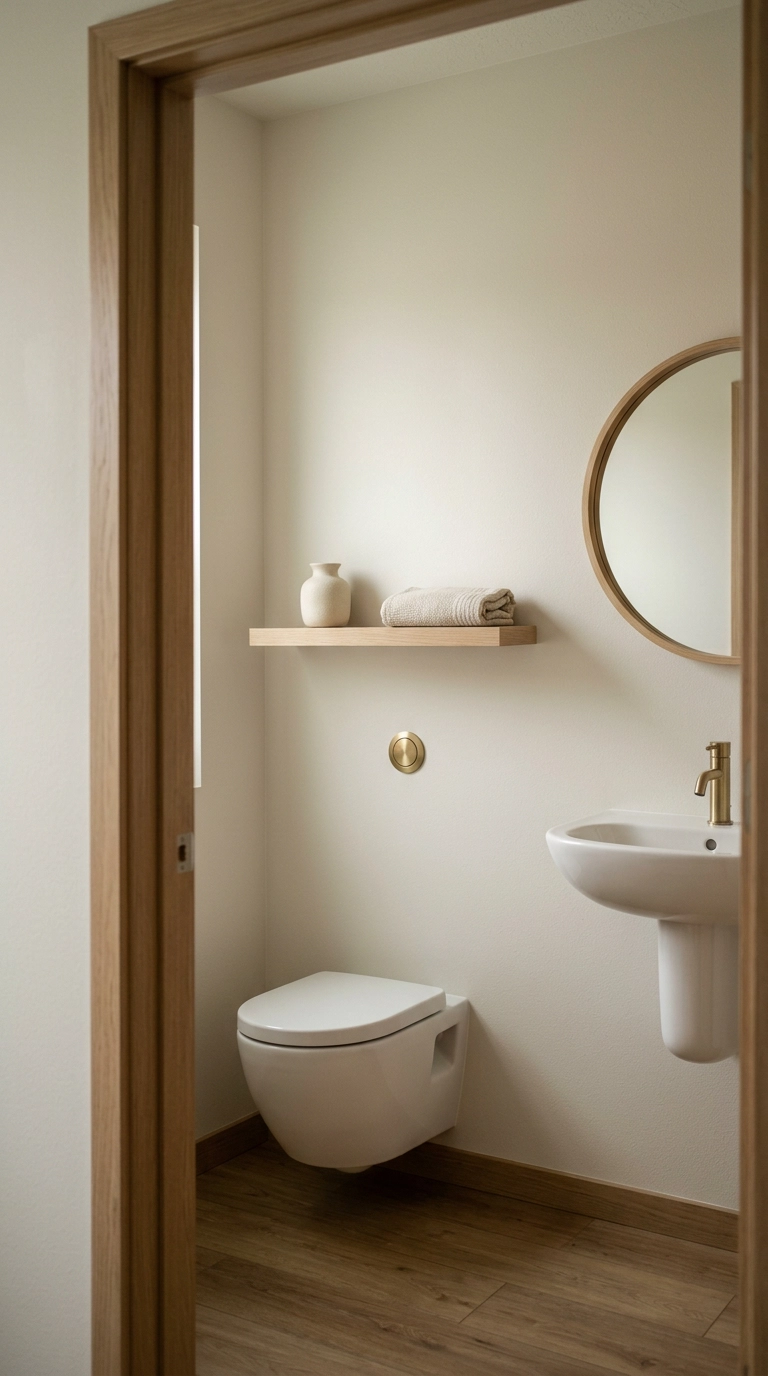
The wrong white is why so many attempts at this style land on sad. You want a warm off-white with a touch of grey rather than yellow, and Benjamin Moore White Dove is the reliable one designers keep reaching for because it stays soft without going creamy.
21. A Rice Paper Style Pendant Instead of the Builder Dome
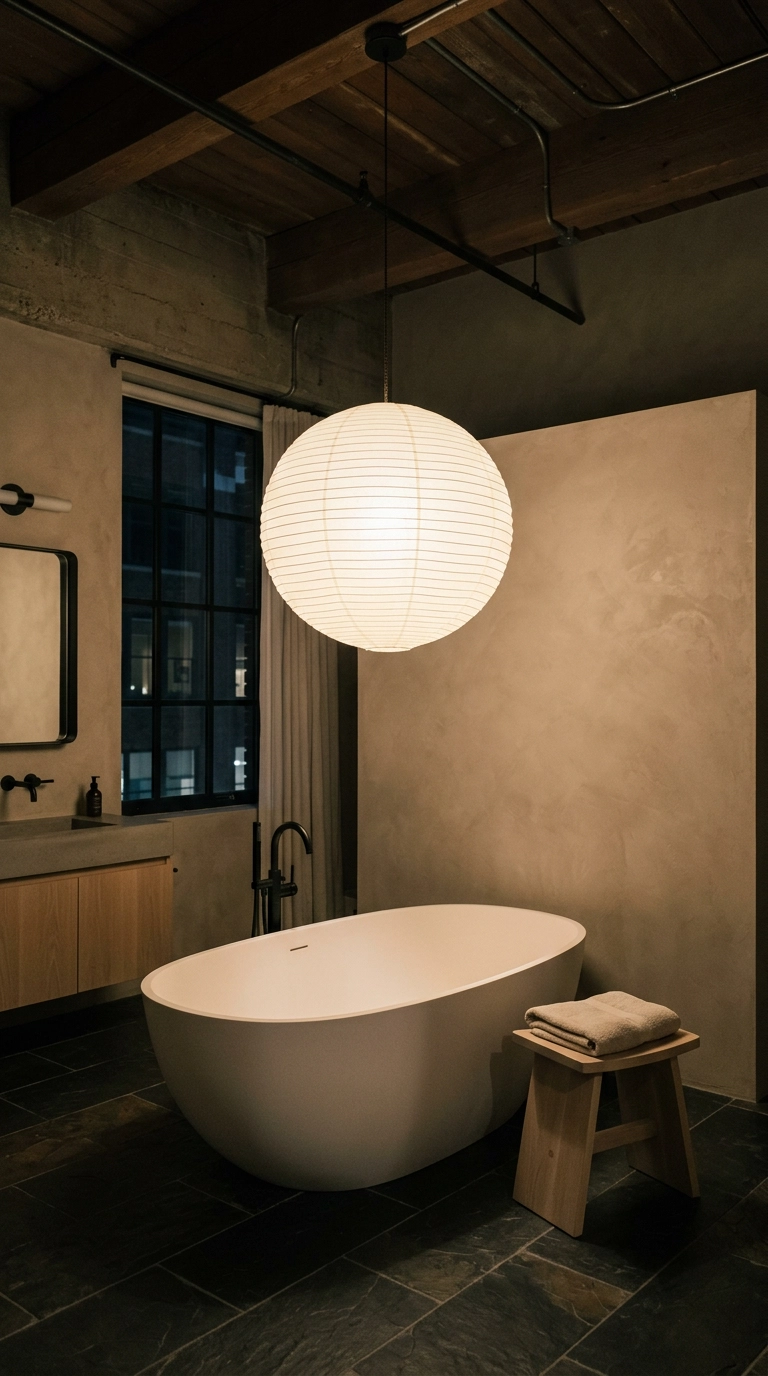
Nothing screams builder-grade louder than the flush plastic dome light. A paper or fabric globe shade diffuses light in every direction, which is exactly the soft ambient quality this style depends on.
22. Waffle Weave Towels in a Single Undyed Shade
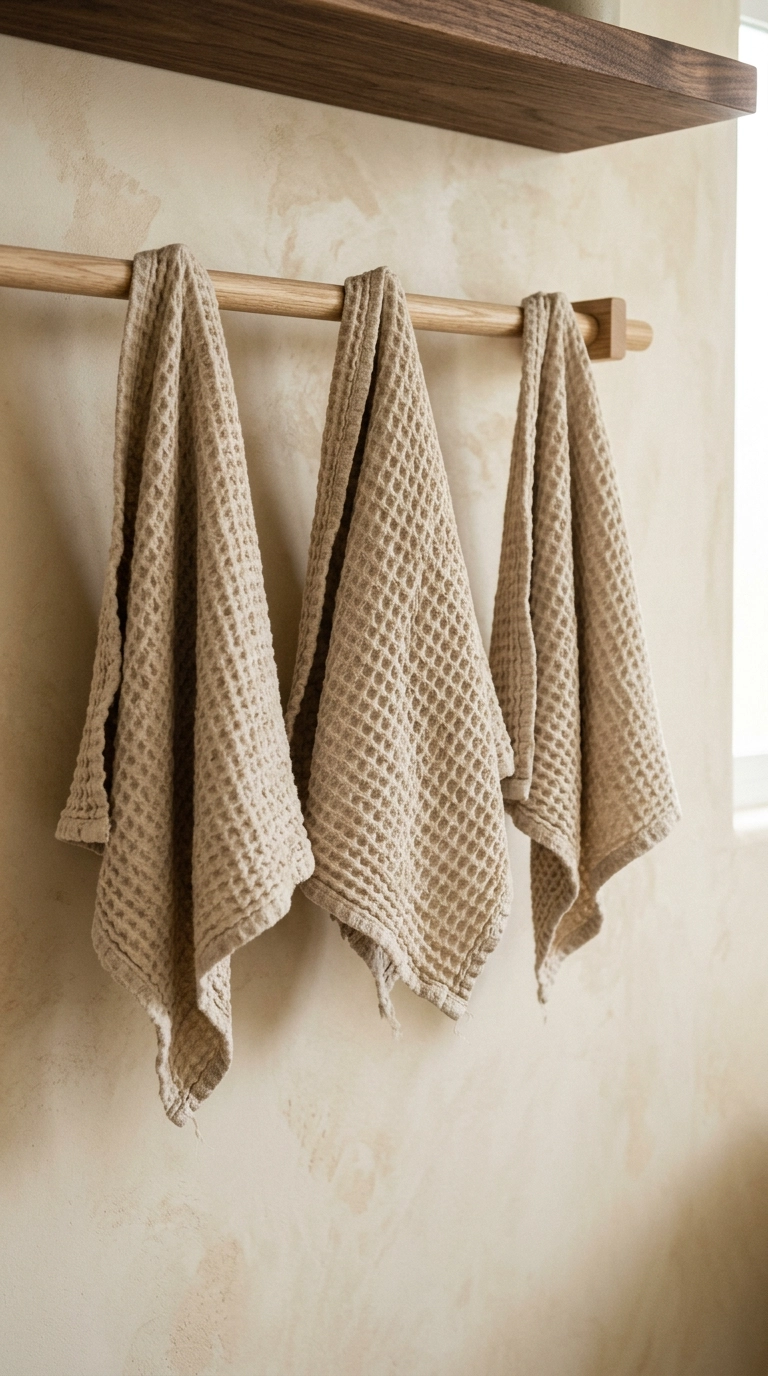
Buy every towel in the room in one undyed shade, and choose waffle or a nubby linen blend over plush terry. The texture reads as considered while the matching shade removes the mismatched-towel chaos most bathrooms have going on.
23. A Full Wall of Wood Slats Behind the Tub
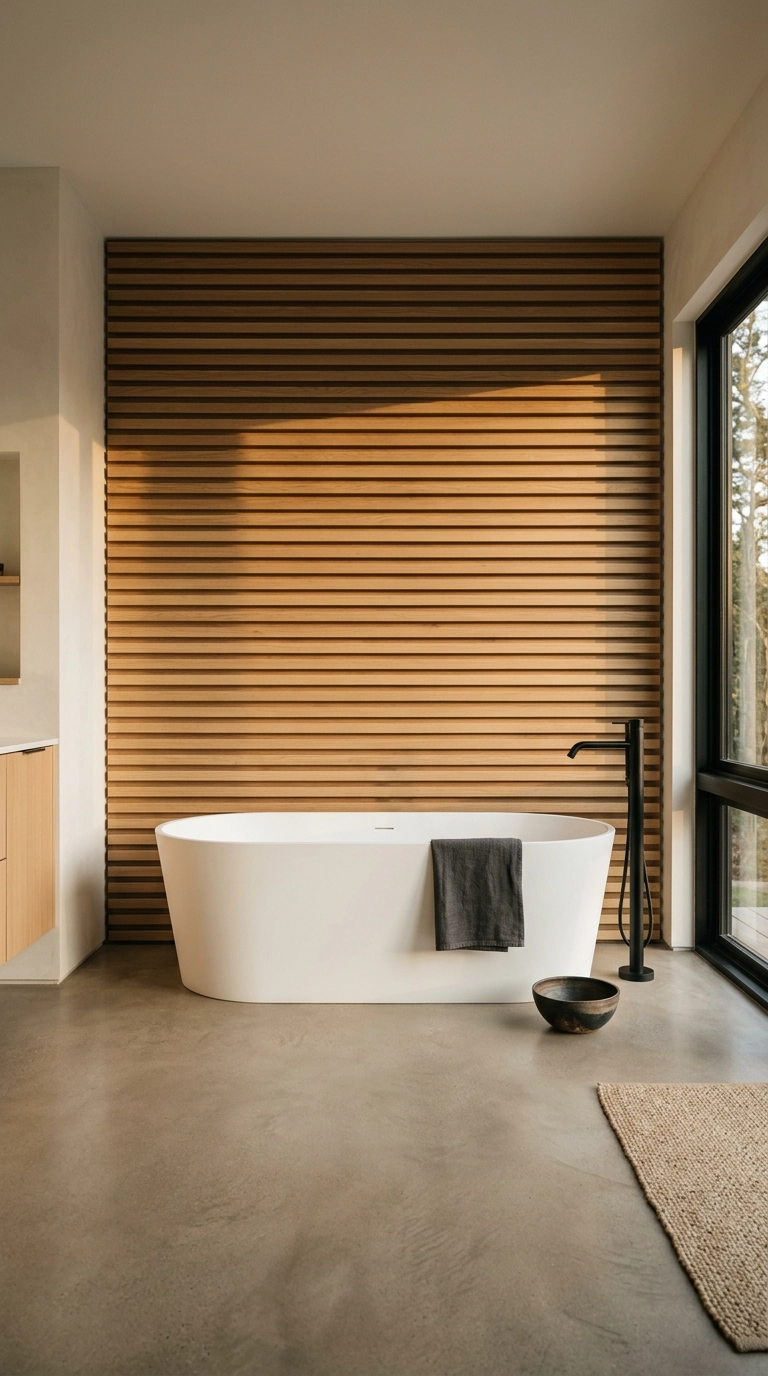
This is the one splurge that changes the whole room. A full slat wall behind the tub gives you rhythm and shadow, and shadow is what a stripped-back room is usually missing, since the gaps between slats create depth that flat paint never will.
24. End on a Deep Soaking Tub with Nothing Around It
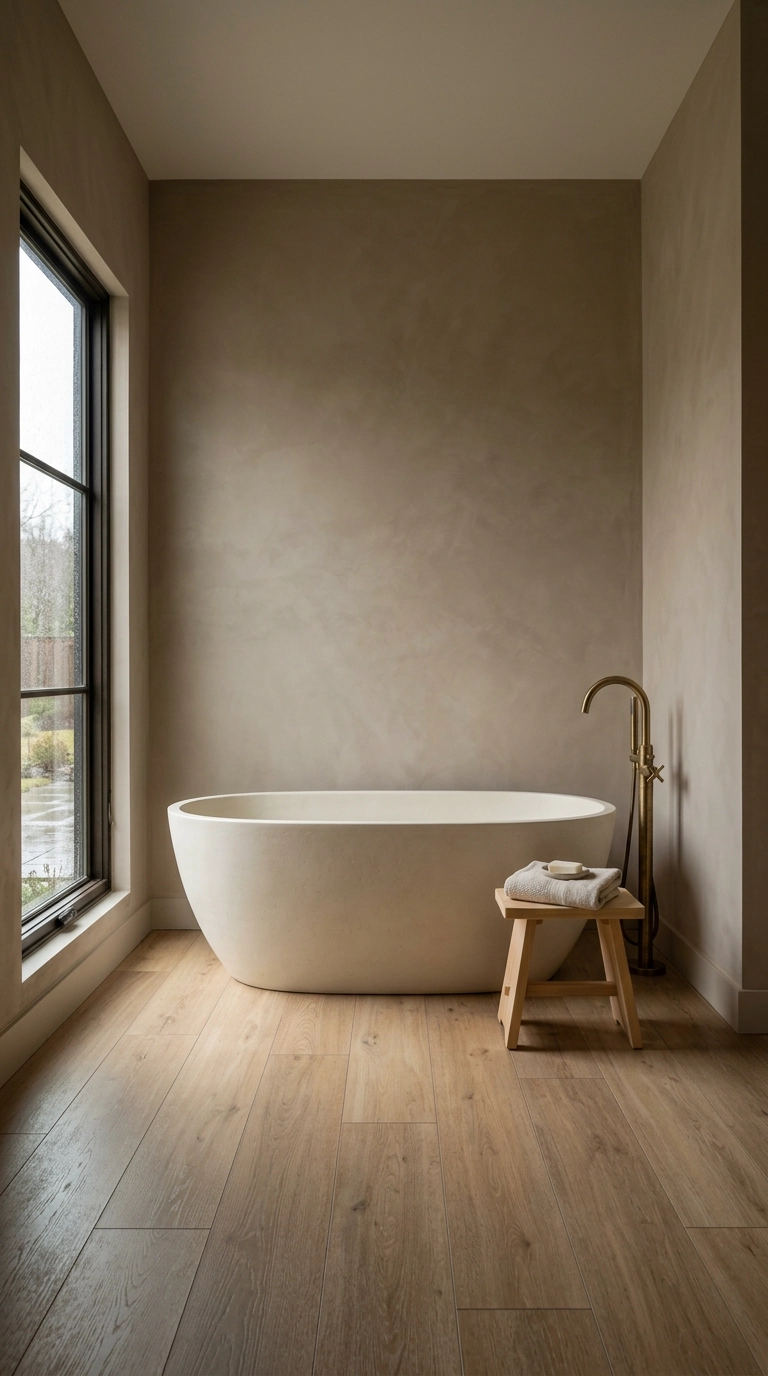
The Japanese ofuro is a deep tub built for sitting upright and soaking rather than lying down, and the modern versions have a smaller footprint than a standard American tub while holding more water. If you’re gutting the room anyway, this is the piece worth the money.
Before You Start Buying Things
If you take one thing from all of this, let it be that japandi is not a shopping list. Half the ideas above cost nothing at all, and the free ones do the heavy lifting: clearing the counter to three objects, decanting your bottles, counting your colors and cutting one. I’ve watched a client’s bathroom go from cluttered to quiet in a Saturday morning with no purchases, just a box of things that went to a drawer.
The looks I keep coming back to in 2026 are the wall-hung oak vanity with the floor running underneath it, cedar and hinoki showing up as real functional objects rather than spa props, and microcement quietly replacing tile in small bathrooms. Norm Architects and the whole Kinfolk-adjacent Copenhagen crowd have been doing this warm-restraint thing for years, and what they nail every time is texture over stuff. Rough plaster, honed stone, oiled wood, and then a full stop.
So please, buy the one wobbly handmade soap dish instead of the matched set of five. That single imperfect thing is what tells anyone walking in that a person lives here and made choices, which is the entire difference between a calm room and an empty one. If you’d like more of this kind of thing, room breakdowns and honest cost notes and the occasional confession about a project that went sideways, sign up for my weekly newsletter and I’ll send it straight to you.


