
23+ Sage Bedroom Decor Ideas that are Soft, Easy, and Gorgeous in 2026

Confession: I’ve styled a lot of green rooms over the years, but sage is the one I keep circling back to. It’s that soft, grey-leaning green — nothing like the punchy emerald or the warm, golden khaki of olive — that reads calm and quietly expensive in almost any light. Whether you’re ready to commit to painted walls or just want to dip a toe in with bedding and brass, I’ve got 23 sage bedroom decor ideas below covering every budget, every rental clause, and every light situation I’ve run into with my own clients.
Sage Bedroom Decor Ideas
1. Color-Drench the Entire Room in Sage
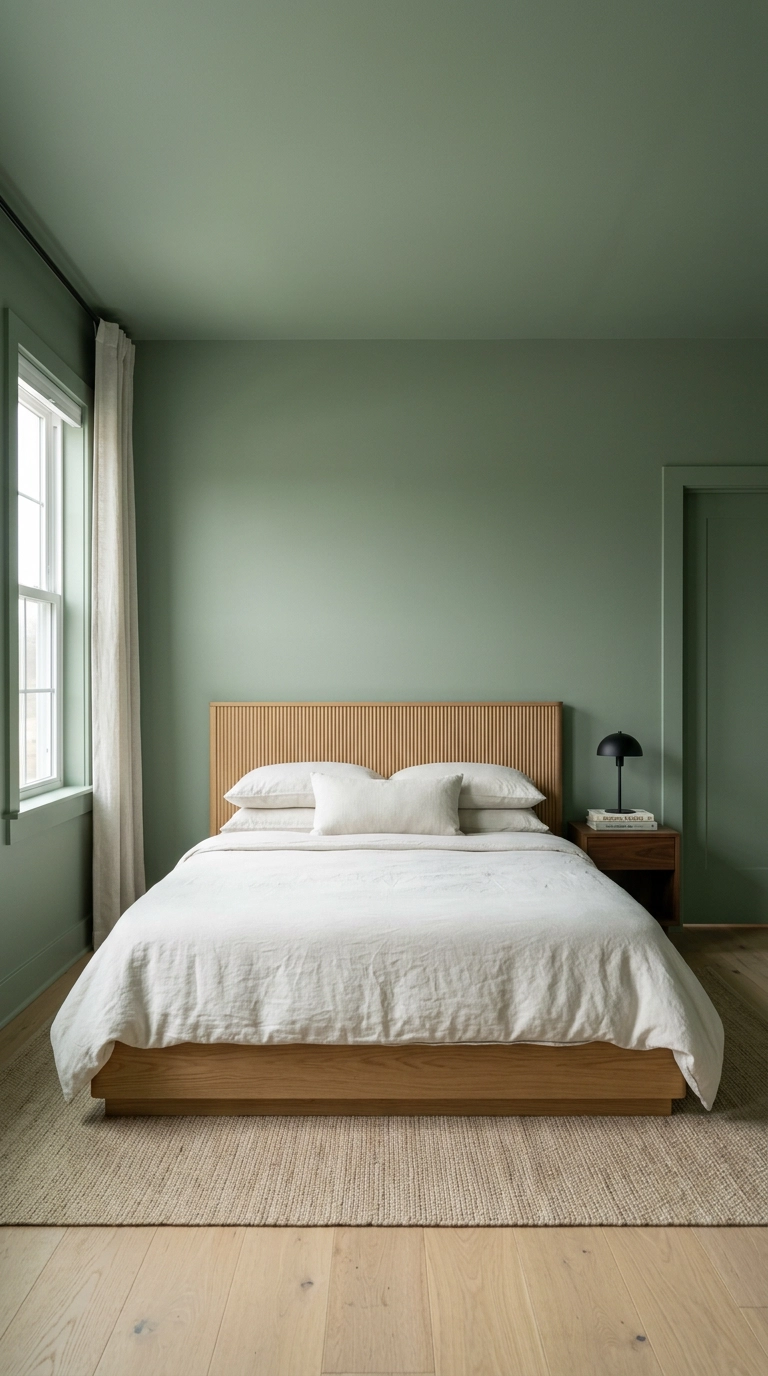
If I had to pick the single most show-stopping way to use sage, it’s this: paint the walls, baseboards, window trim, and door all in the same matte sage. The one-color trick, called color drenching, erases the visual seams between surfaces, so a small or awkwardly shaped room reads as one calm, continuous envelope instead of a bunch of chopped-up planes.
2. Contrast Sage Walls with Warm White Trim
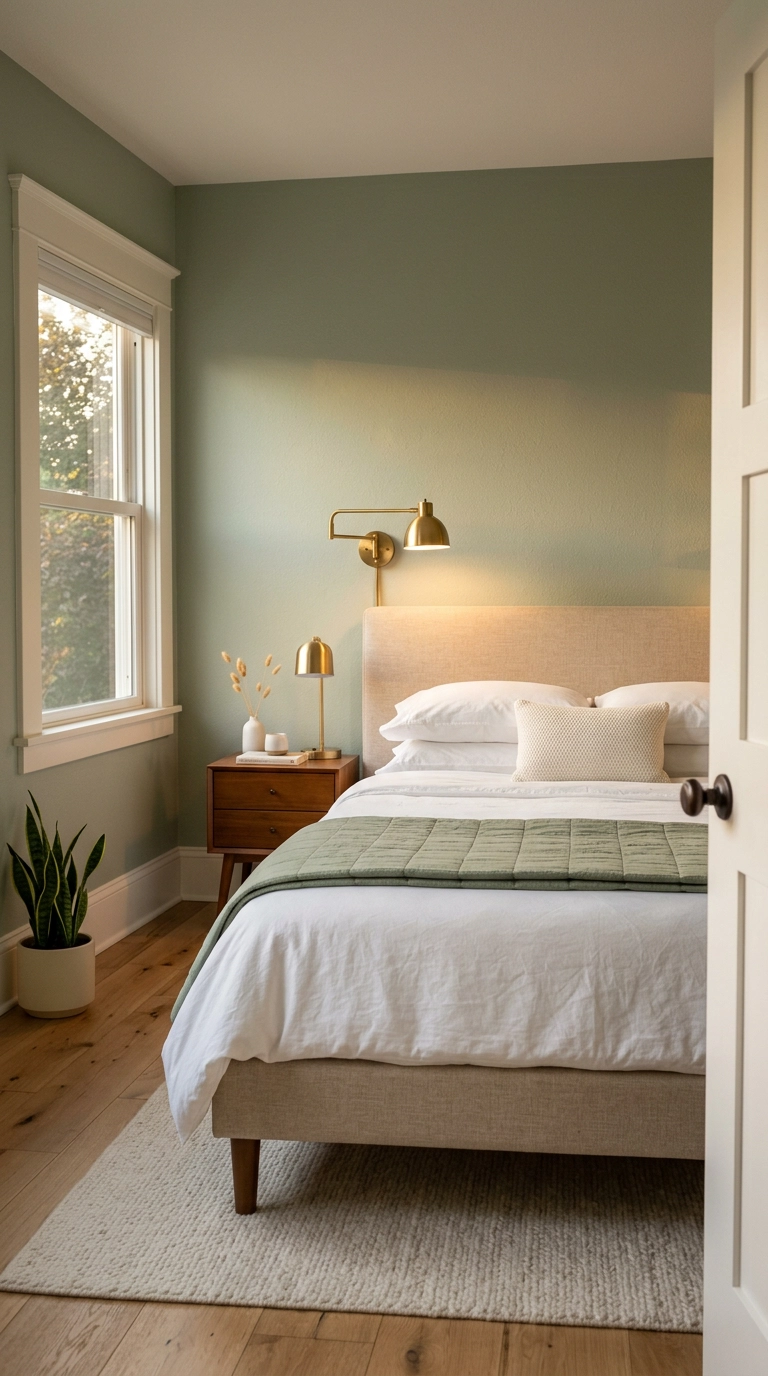
Not ready to drench? Keep the walls sage and paint the trim, doors, and window frames in a warm white instead. The crisp white lines give the eye a path to follow around the room, which actually makes the sage read greener and more intentional rather than grey and muddy.
3. Swap Your Bedding to Sage — No Paint Required
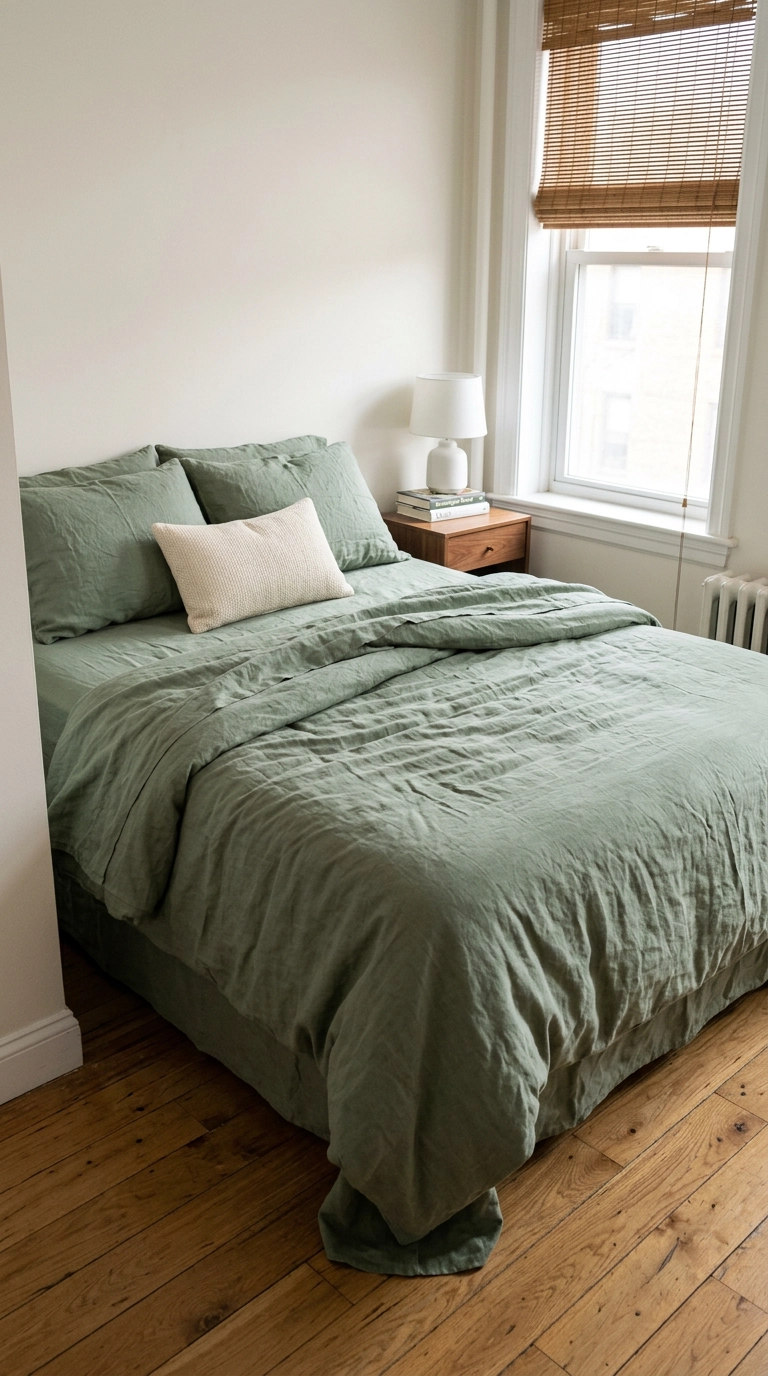
Bedding is the fastest, most reversible way to test-drive sage before you commit a single wall to it. Swap in a sage linen duvet cover and pillowcases and suddenly the whole bed becomes a soft green focal point — even in a rental with walls you can’t touch. It’s a 20-minute change that costs far less than paint, and it packs up and moves with you.
4. Use Sage as the Accent Only
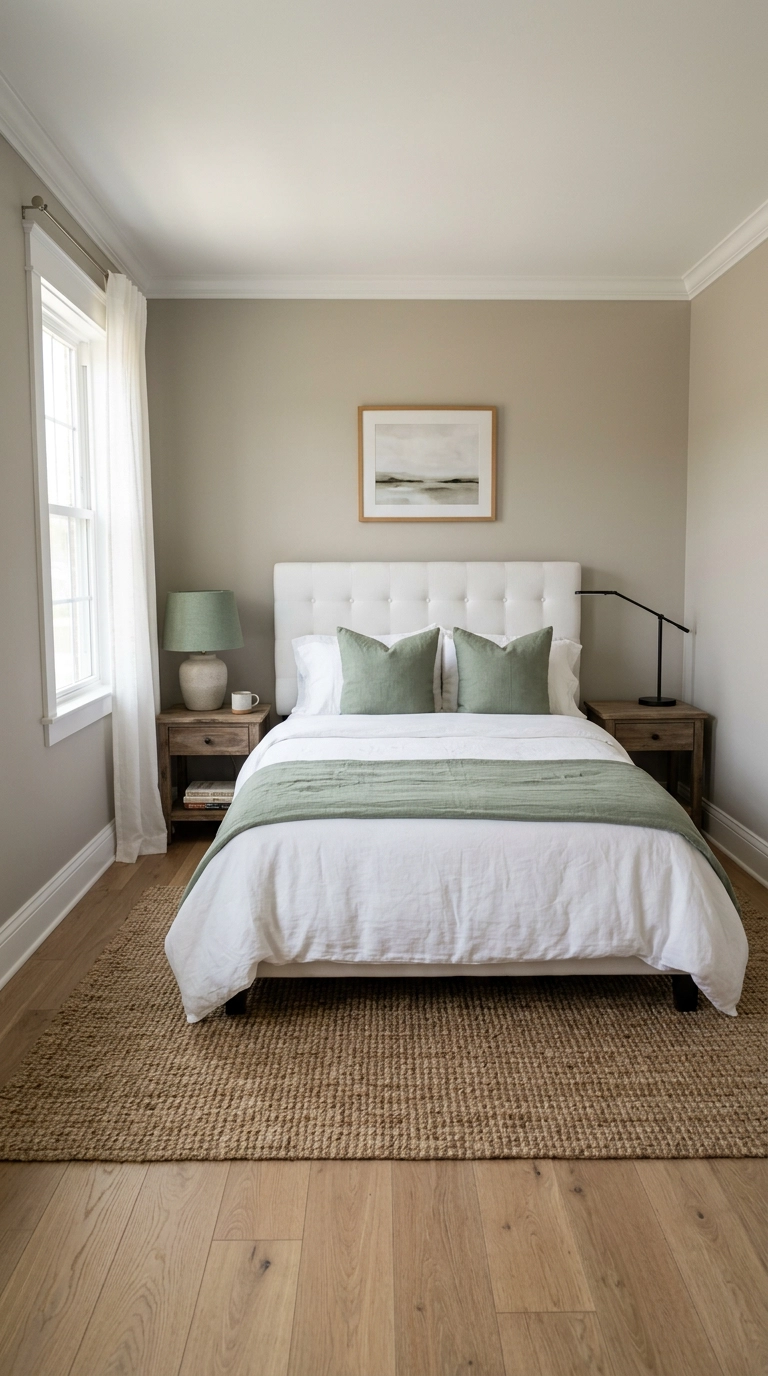
If a fully sage room makes you nervous, start here: two sage pillowcases, a throw folded at the foot of the bed, and one sage linen lampshade. That’s a genuine 20-minute swap — no paint, no tools, no landlord permission — and it tells you instantly whether sage suits your light before you spend a weekend painting.
5. Pair Sage with Oak and Warm White
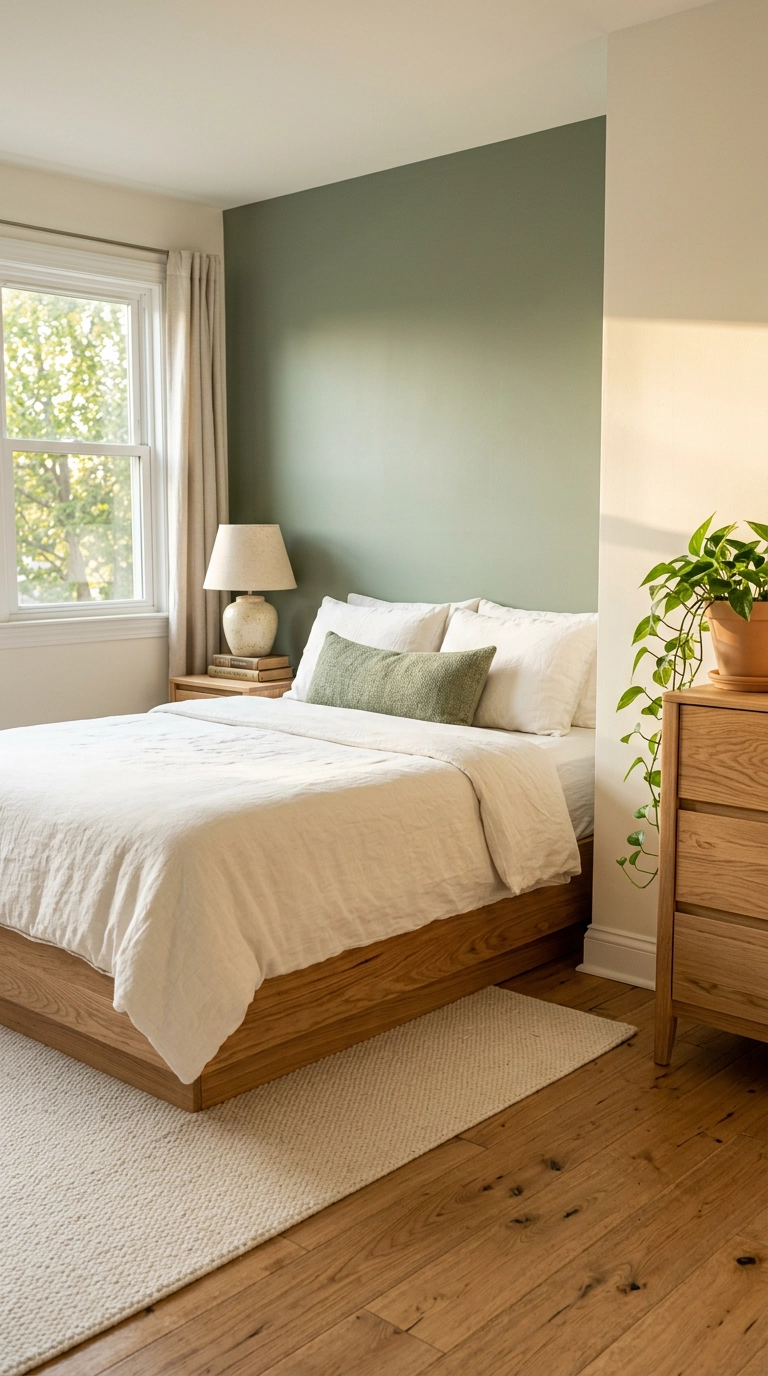
This is the pairing I recommend to nearly every first-time sage client: sage walls with white oak furniture and warm white on the other walls. Oak’s honey tones do something specific — they warm the grey undertone in sage so the room reads cozy rather than clinical.
6. Layer Sage with Cream and Unlacquered Brass
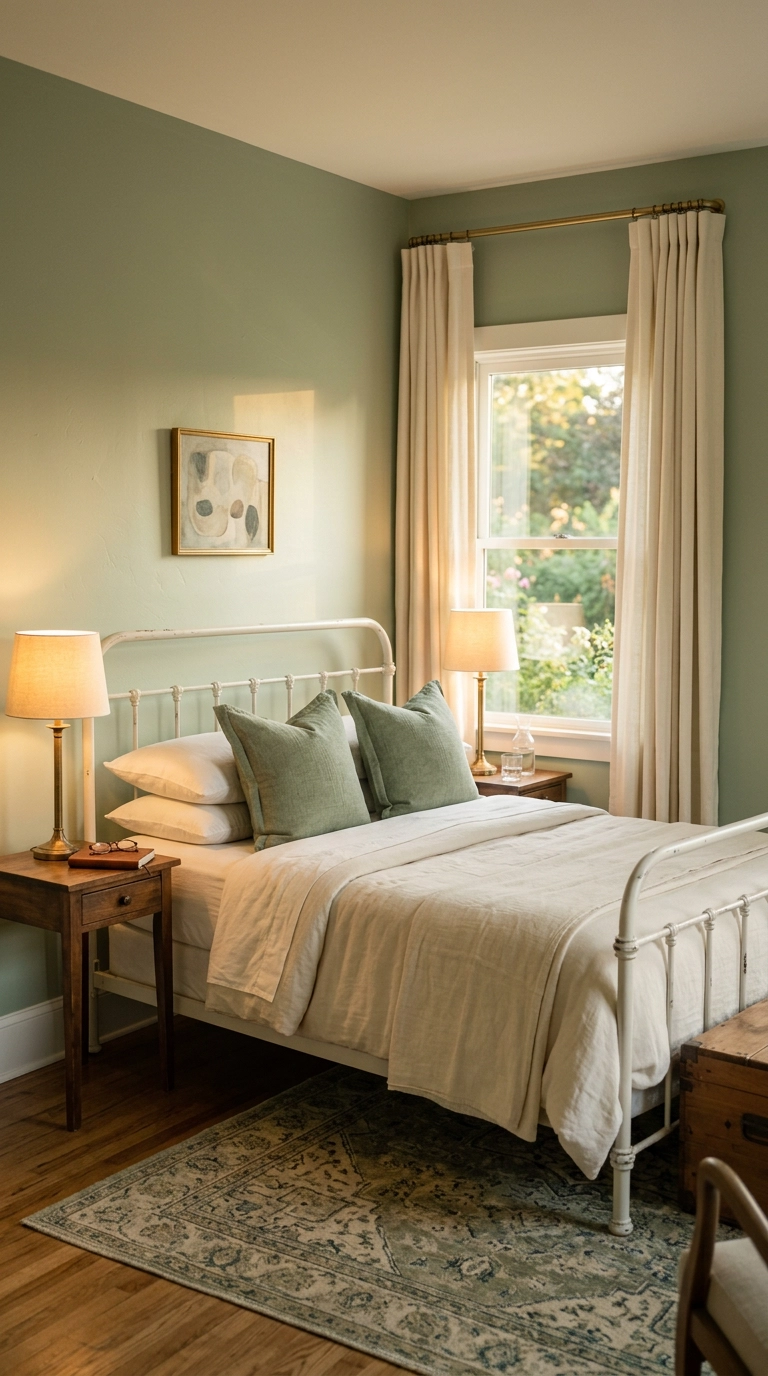
Sage, cream, and brass may be the most reliably expensive-looking combination in this article, and almost none of it costs much. Cream softens sage’s coolness, and brass throws warm glints back into the room so the green feels sun-warmed even after dark.
7. Ground Sage with Black Hardware
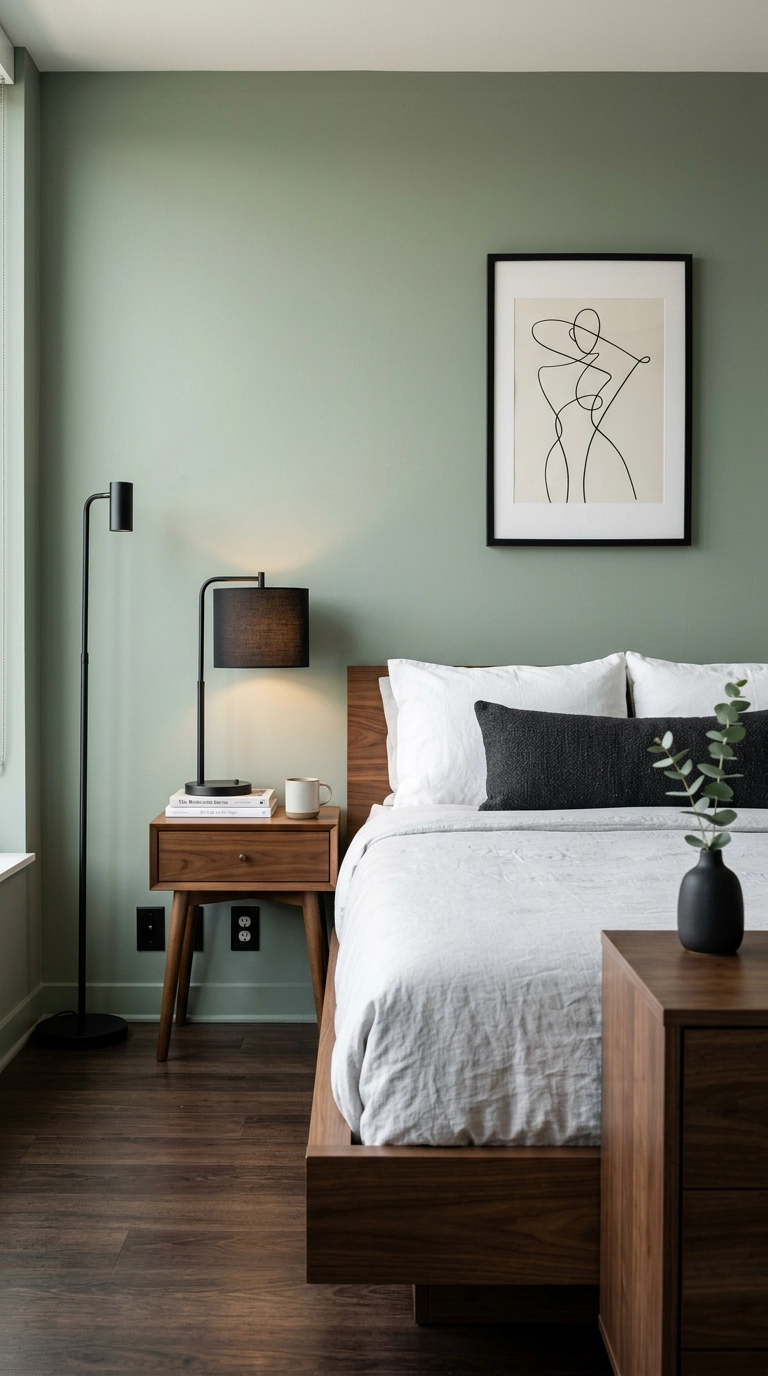
Where brass warms sage up, black sharpens it. A matte black lamp, a black-framed print, or black sconces give this soft grey-green a crisp, architectural edge — it’s the same trick that makes a sage entryway in a modern condo feel deliberate instead of pastel.
8. Warm Sage Up with Terracotta
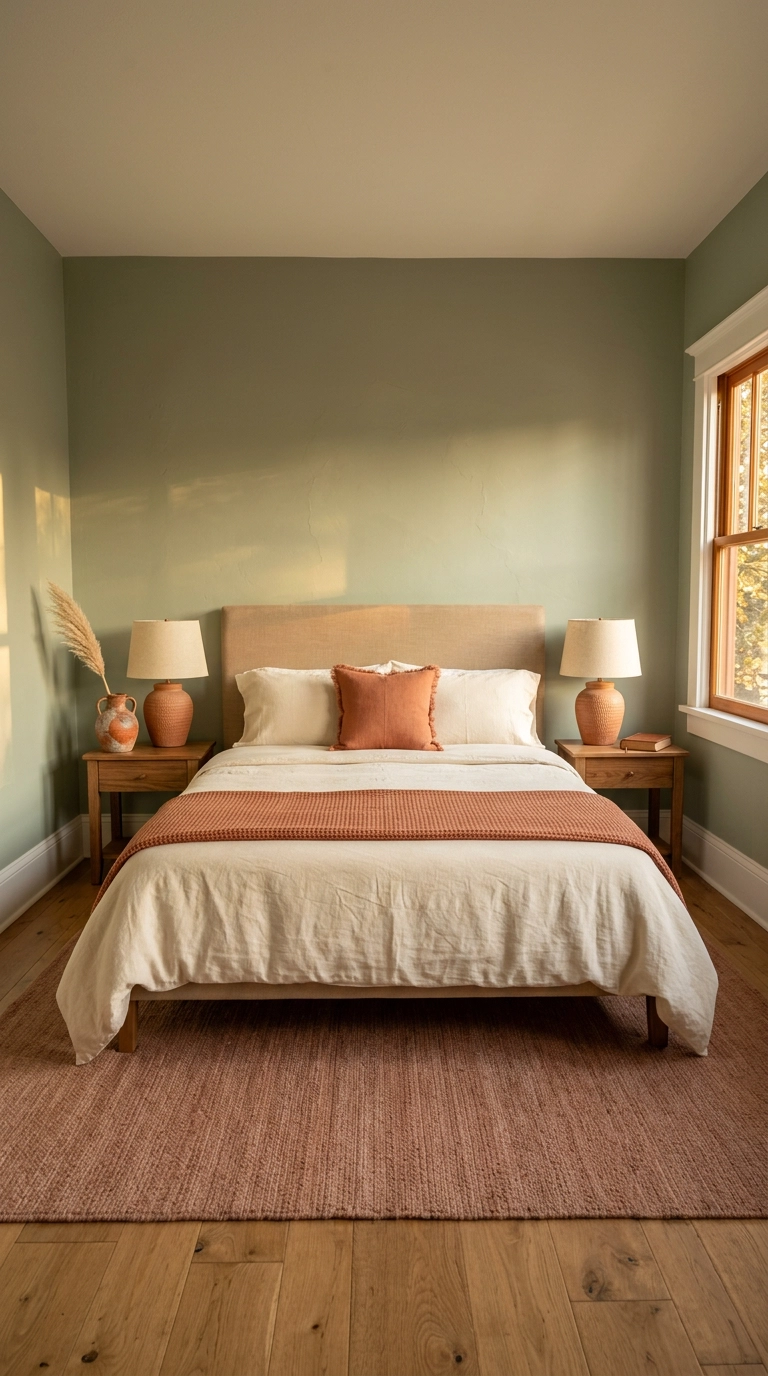
Sage’s cool grey undertone makes it the perfect stage for terracotta’s burnt-orange warmth — the two sit opposite each other on the color wheel, so each makes the other look richer. One terracotta throw, a lamp base, or a couple of pots is all it takes.
9. Paint Just the Trim and Doors Sage
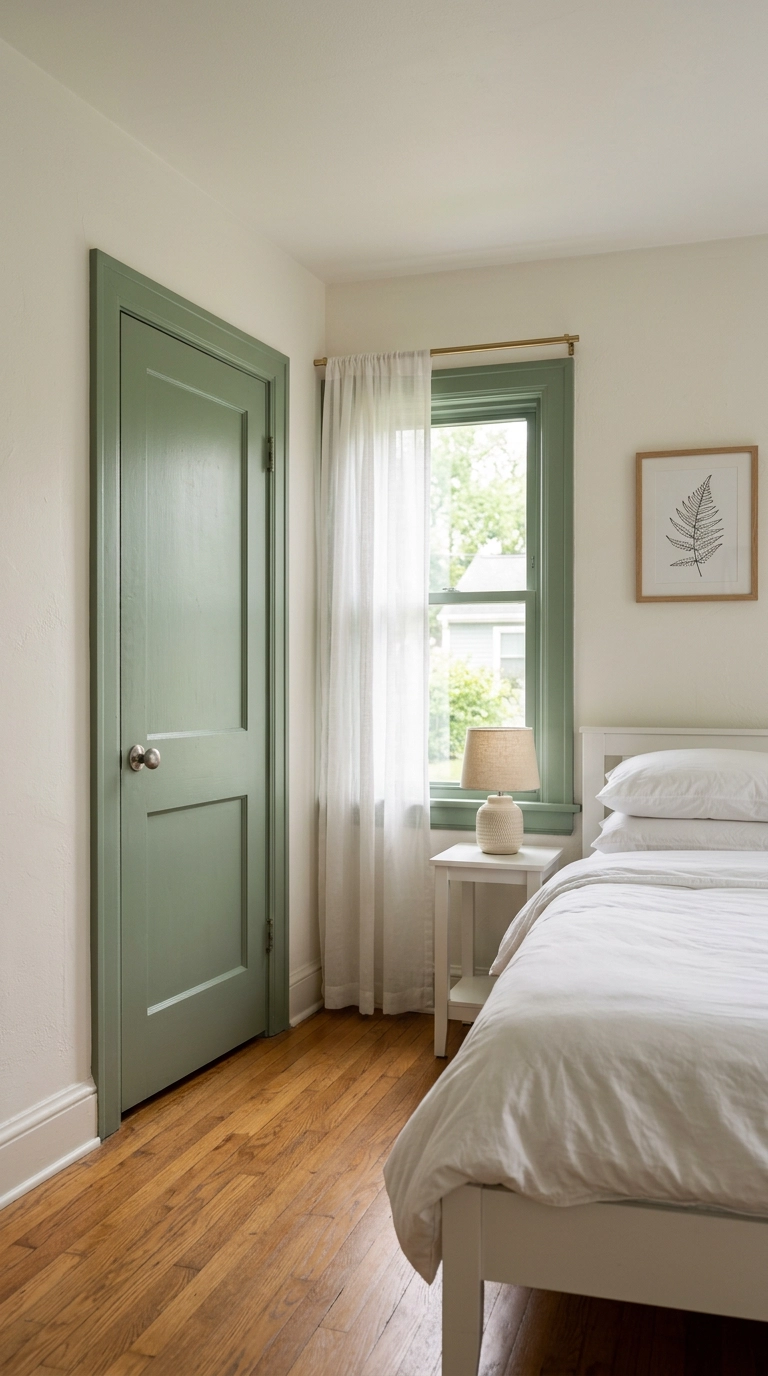
Here’s a twist for the renter or the paint-hesitant: skip the walls and paint the door, door frame, and window trim sage while keeping the walls warm white. The architecture becomes the accent, and it reads far more designed than the effort suggests.
10. Splurge on an Upholstered Sage Headboard
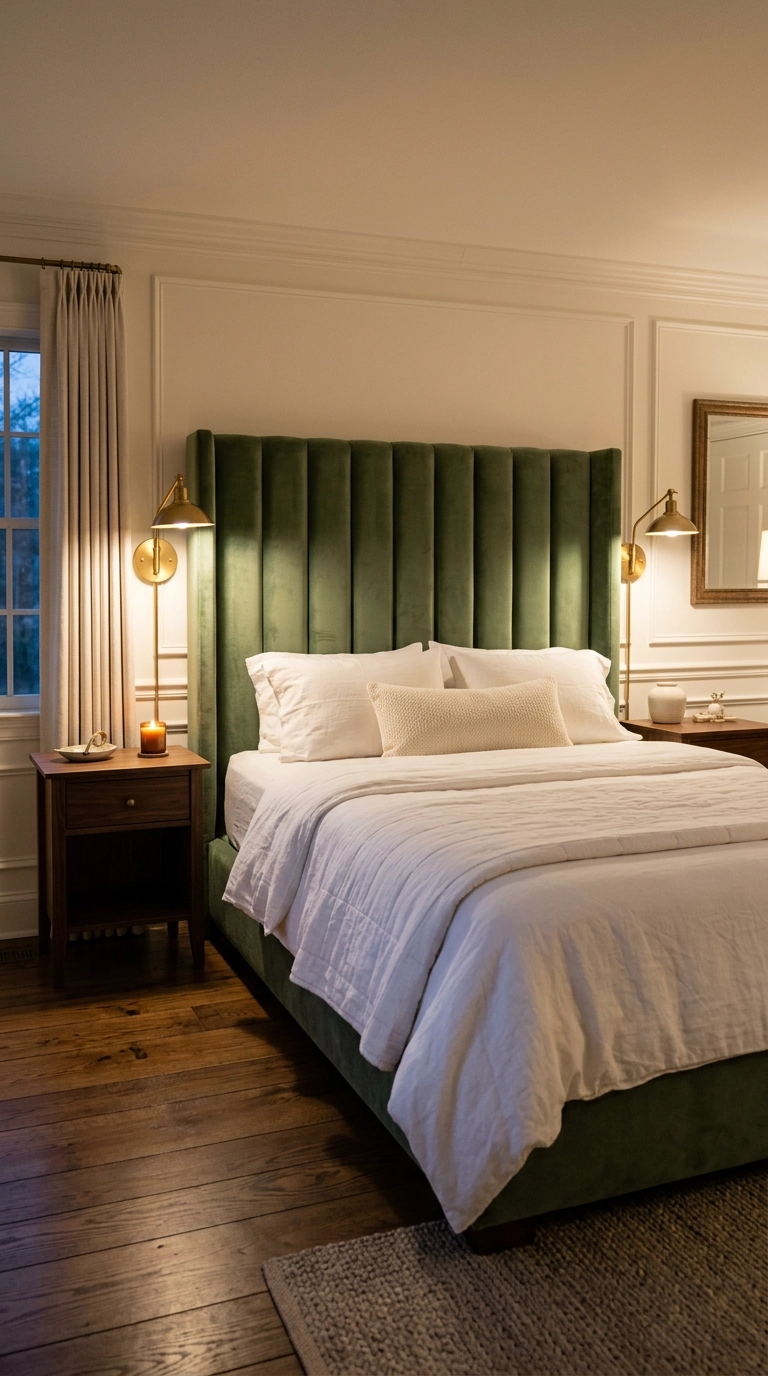
This is splurge number one, and I stand behind it. A tall upholstered headboard in sage velvet or linen gives you a large, soft field of color at exactly eye level when you walk in — it does the work of an accent wall while adding texture paint never can.
11. Hang Sage Curtains High and Wide
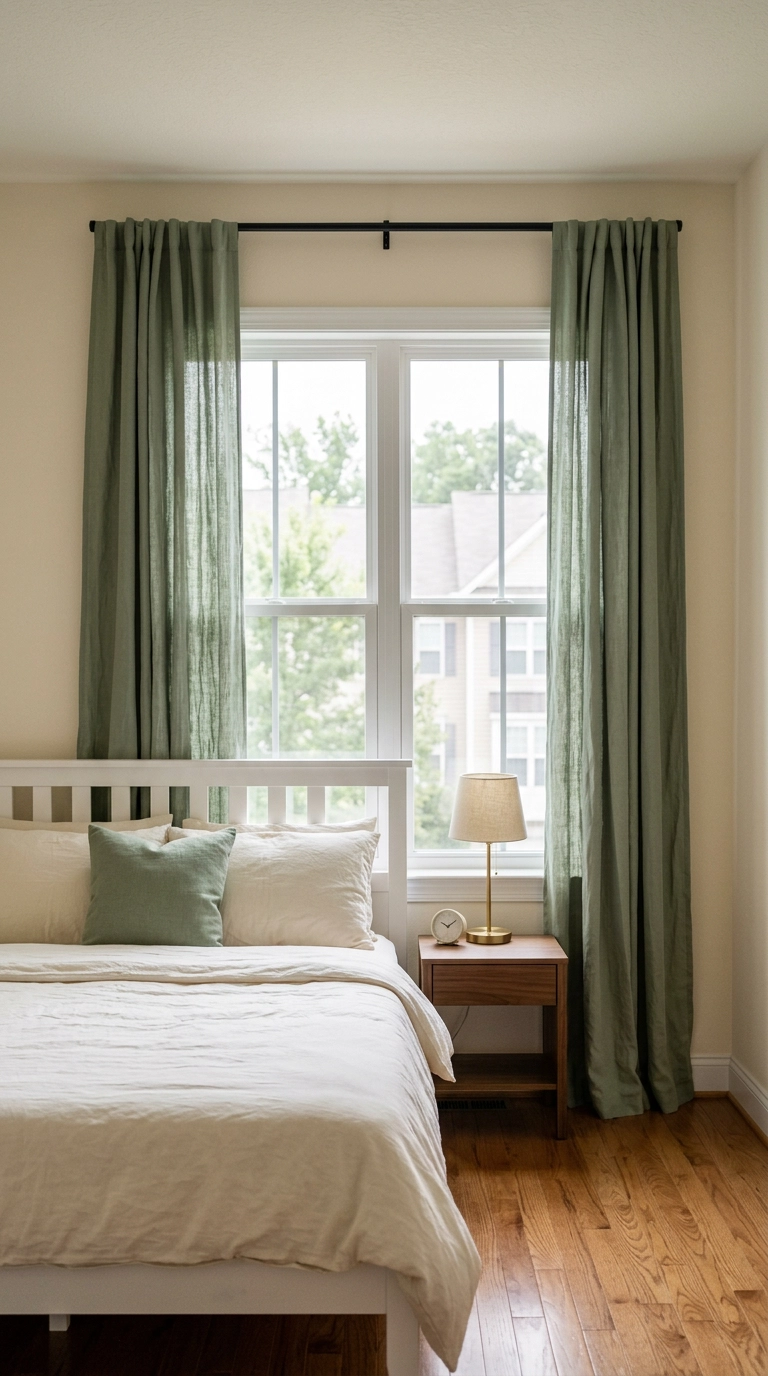
Sage curtains are my favorite renter move, because they deliver a wall-sized dose of color without a drop of paint. The rule that matters: mount the rod 4 to 6 inches below the ceiling and extend it 8 to 10 inches past the window on each side. Hanging high tricks the eye into reading the whole wall as window, so ceilings feel taller and the room feels bigger.
12. Build a Layered Textured Sage Bed
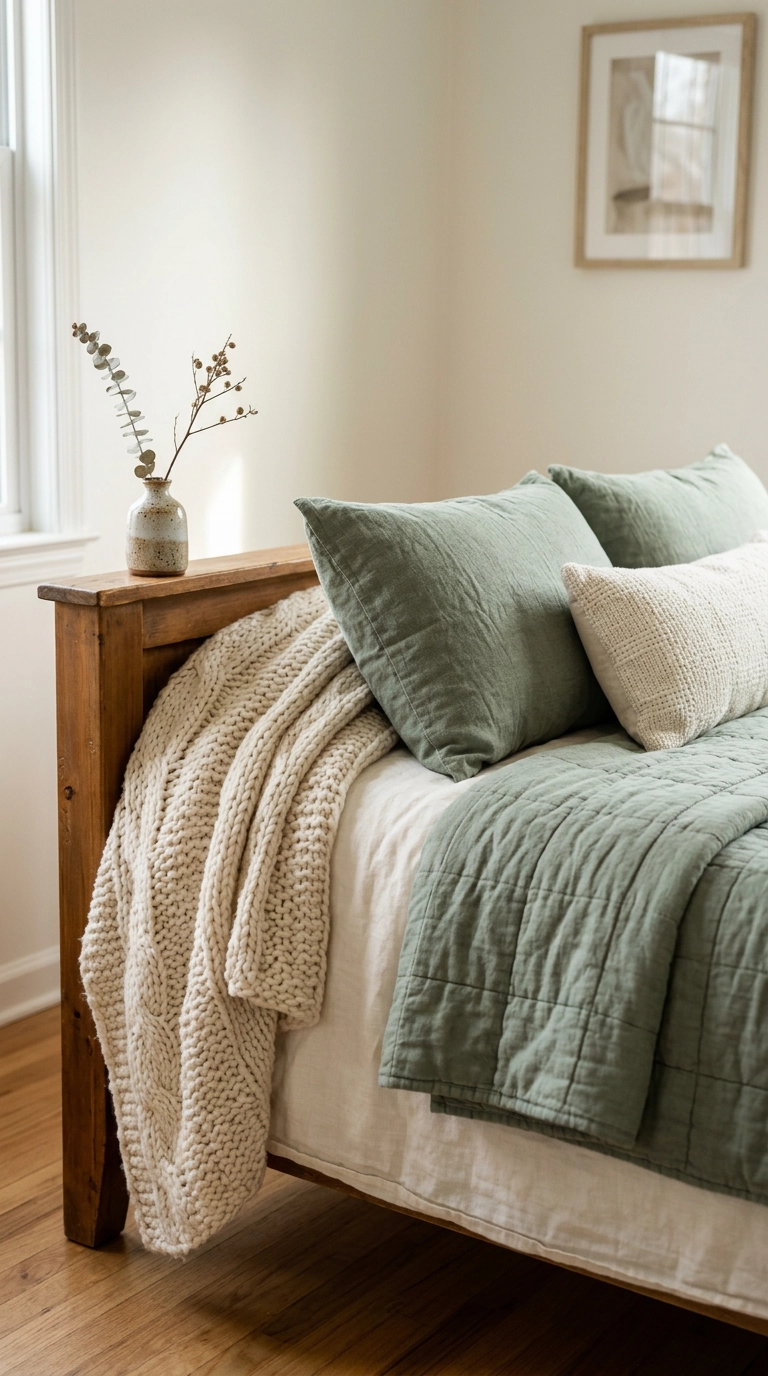
All sage, no texture, is how you end up with a bed that looks like a flat green rectangle. Layer it instead: a quilted duvet, a chunky knit throw, linen pillowcases, and a smooth lumbar pillow — four different weaves in the same two-color family.
13. Try a Limewash Sage Finish for Texture
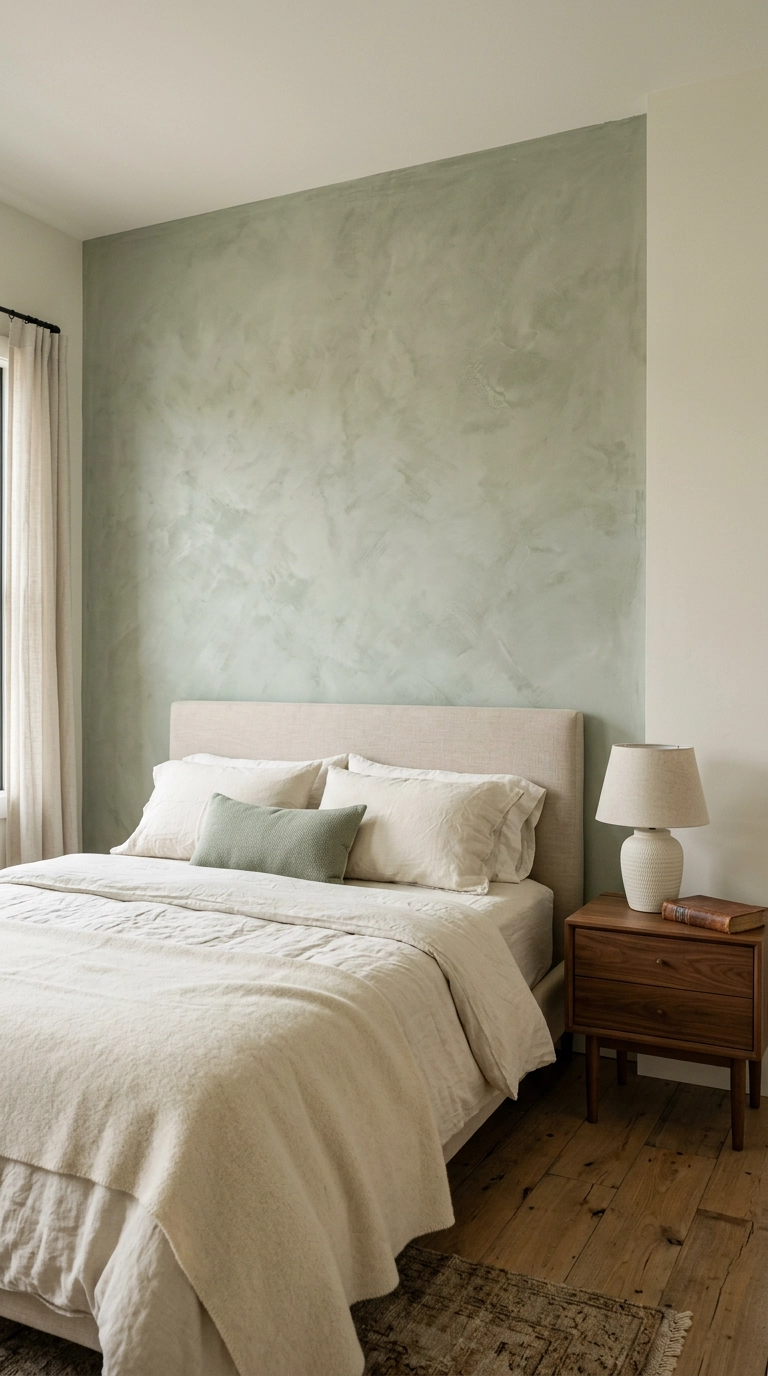
If plain matte sage feels a little flat, limewash is your upgrade. This specialty paint dries with a soft, mottled, mineral texture — the light catches it differently from every angle, and it gives the room the look of aged European plaster rather than new drywall.
14. Paint an Old Dresser Sage
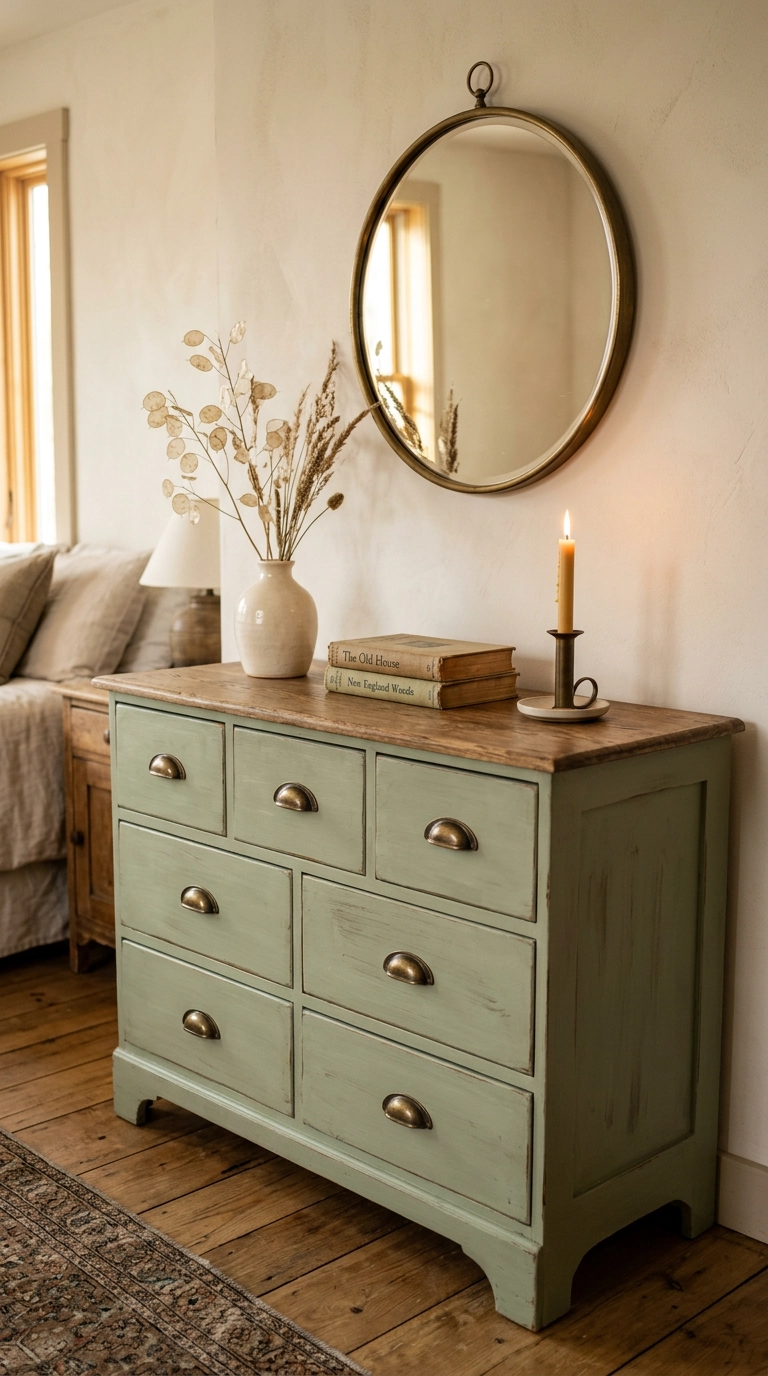
The cheapest sage in this whole article: a thrift-store dresser and a quart of paint. Sage is unusually forgiving on old furniture because its muted grey-green softens dated shapes rather than shouting about them.
15. Anchor the Bed with a Sage Rug
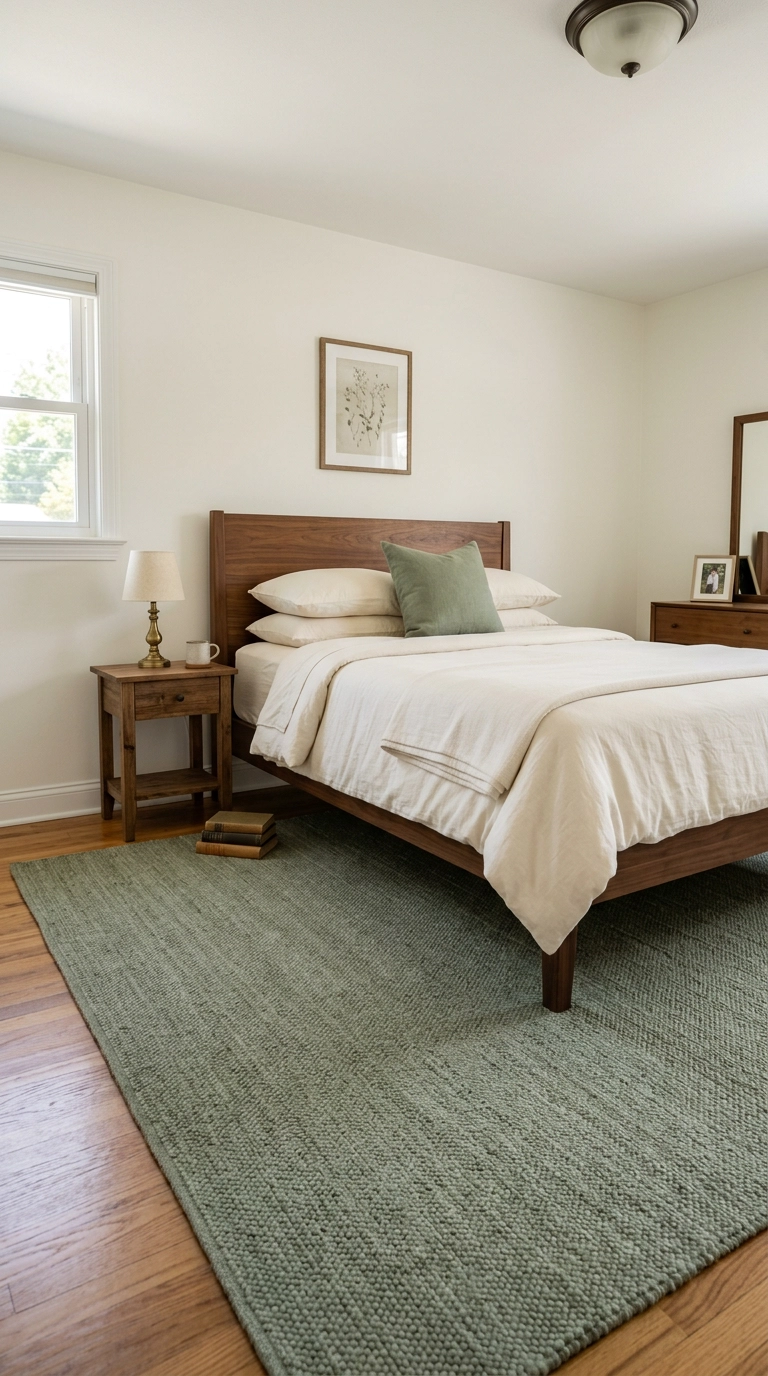
Rugs are the color fix for rooms where you’re not allowed to paint — and sage is a dream rug color because it grounds a bed without competing with bedding or walls. The sizing rule I repeat to every client: go one size bigger than you think. In a standard bedroom, the rug should extend past the front edge of the bed so your feet land on it in the morning.
16. Take Sage Up to the Ceiling
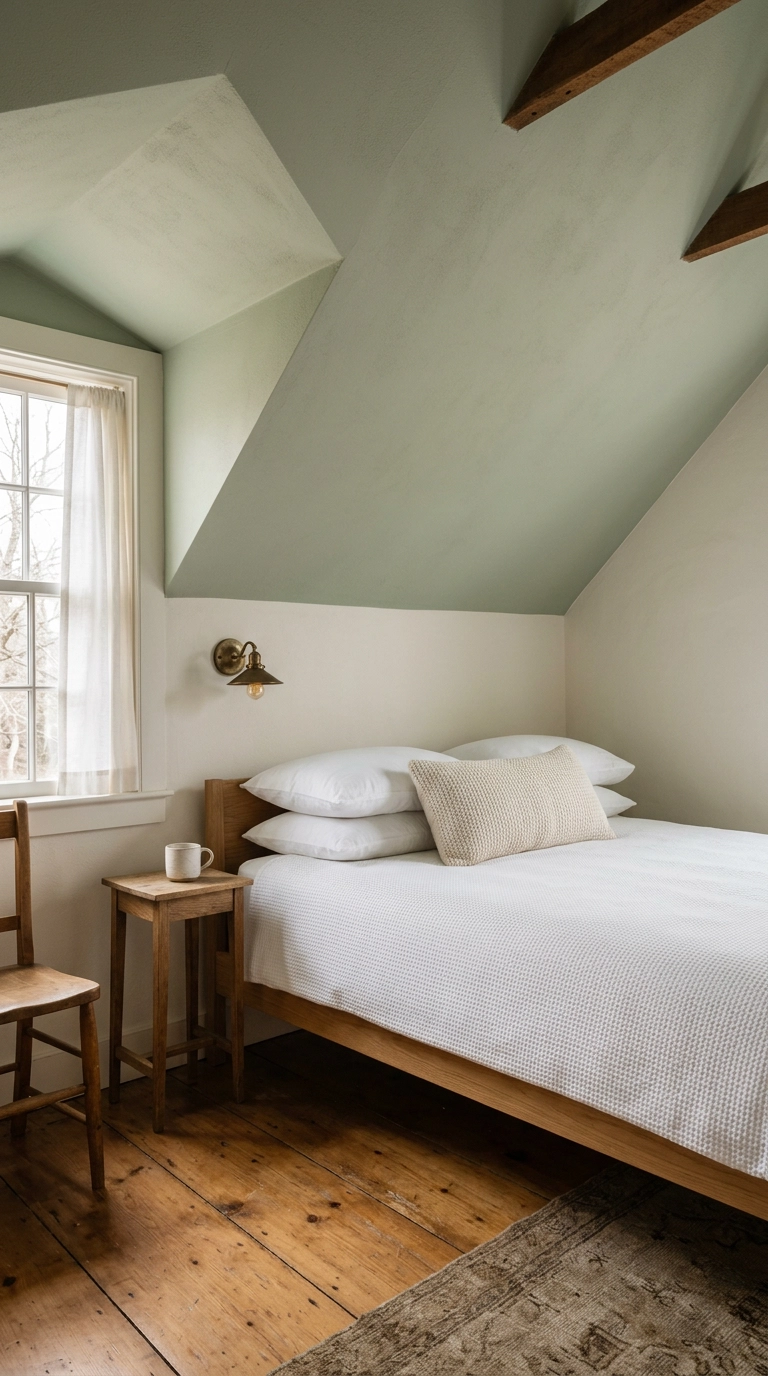
The ceiling is the one surface almost nobody paints, which is exactly why a sage ceiling feels like a designer did it. Lying in bed, it’s the surface you actually look at most — and a soft grey-green overhead is far kinder to wake up under than flat builder white.
17. Get the Sage Look in a Rental with Peel-and-Stick
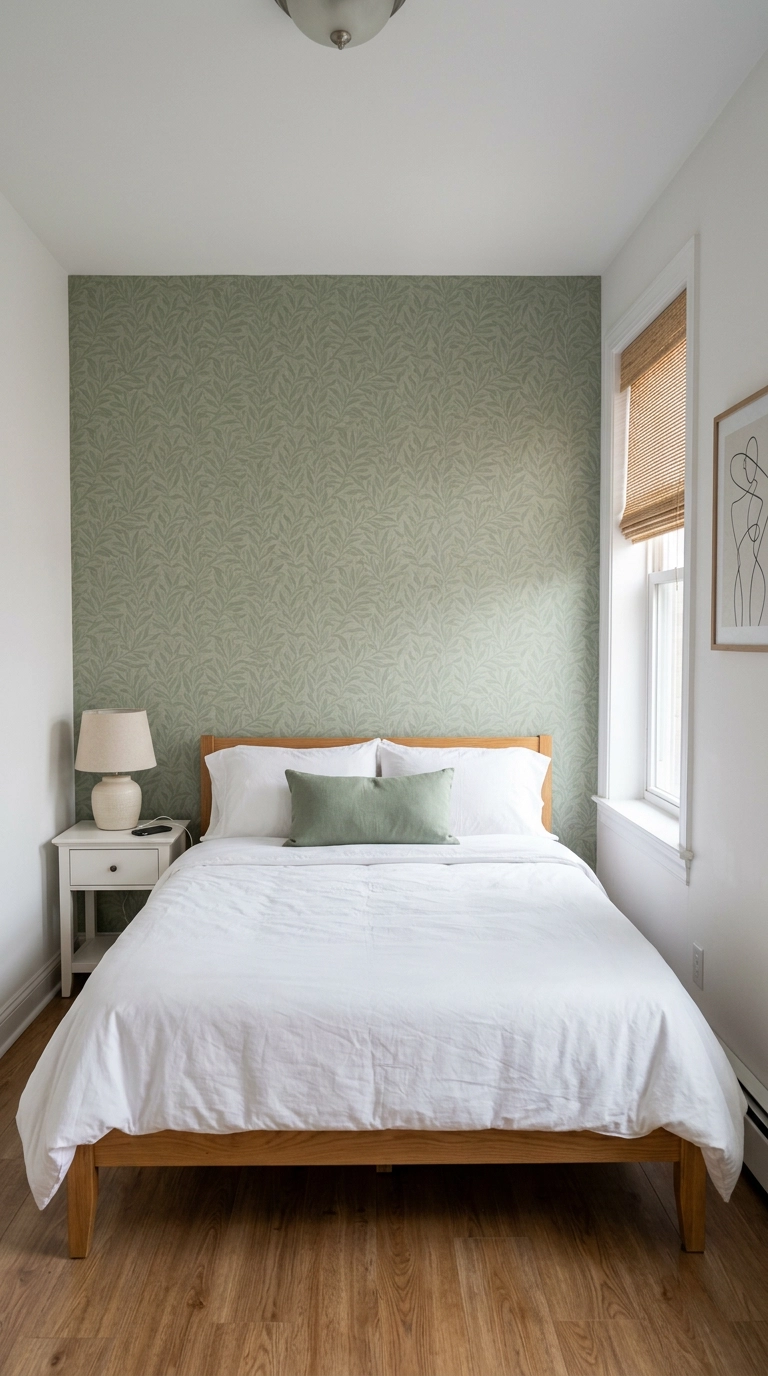
Renters, this is your sage moment. Removable peel-and-stick wallpaper comes in more muted sage tones than you’d expect — tone-on-tone leaves, a soft geometric, or a plain woven texture — and it peels off cleanly at move-out if you follow the instructions.
18. Paint Built-Ins and Closet Doors Sage
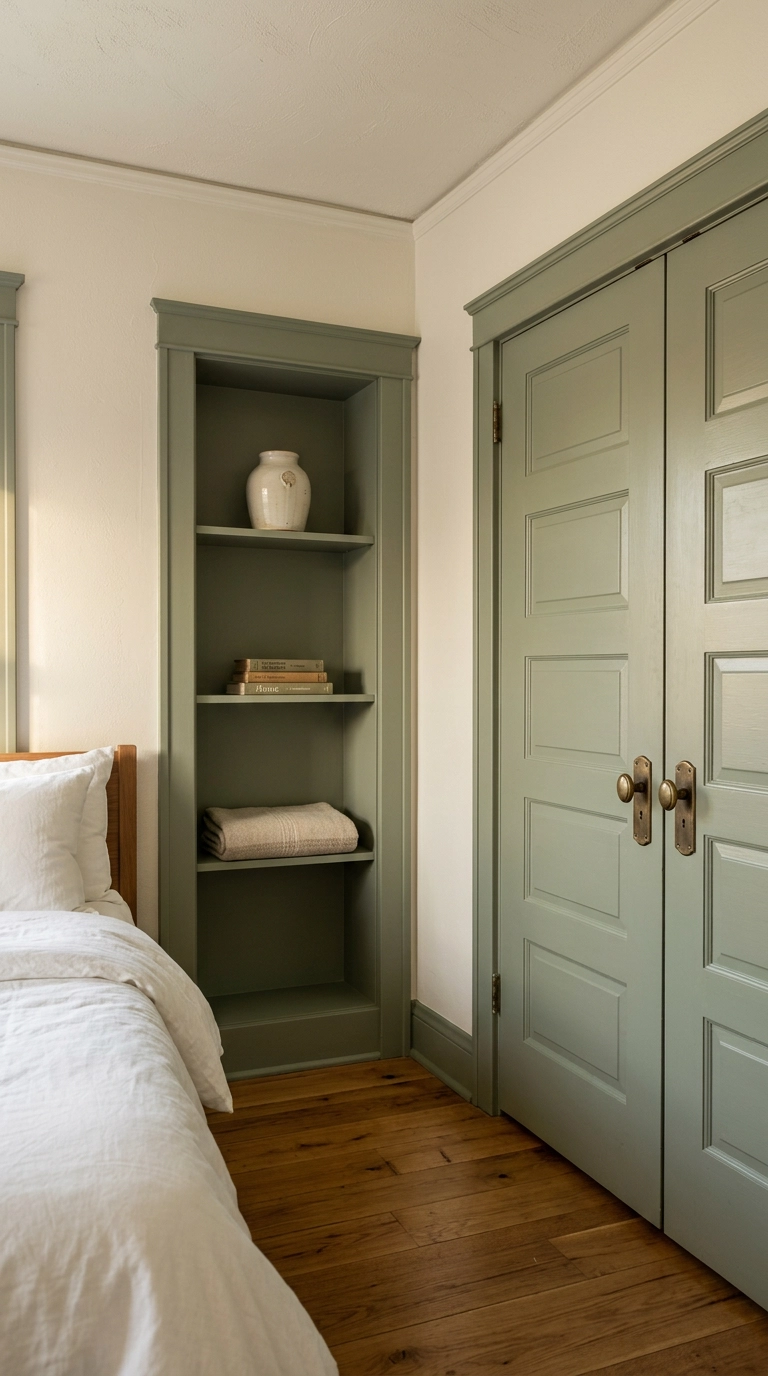
Painting built-ins or closet doors sage is the move that makes a room look like it was designed, not decorated. Millwork holds color beautifully, and because the sage sits on architecture rather than a big flat wall, it reads as a deliberate detail instead of a color commitment.
19. Style the Nightstand in Sage Tones
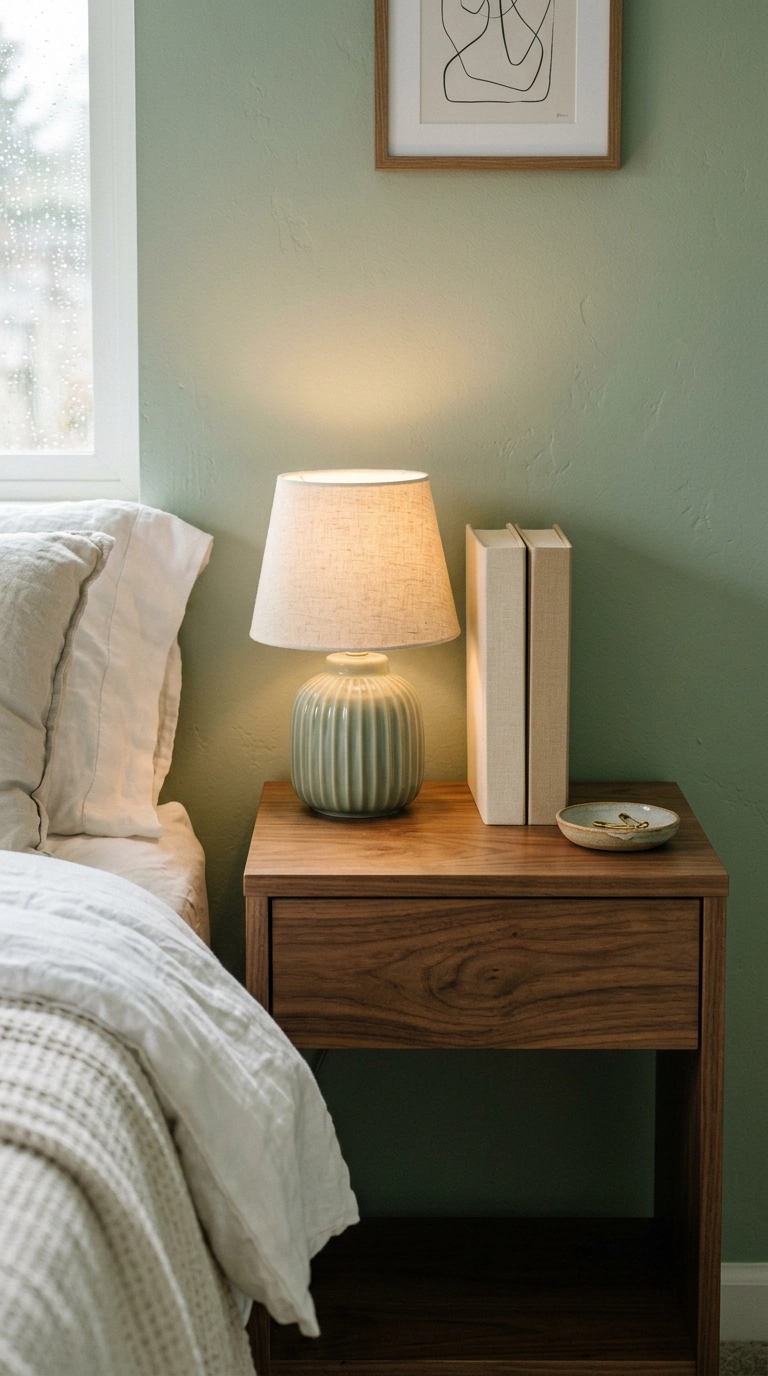
The nightstand is where sage gets to be a detail instead of a statement, and it’s the cheapest test of the color you’ll ever run. A sage ceramic lamp base, a small glazed dish, and two books is the whole formula — lamp plus one or two objects, nothing more.
20. Hang Art That Carries the Sage Through
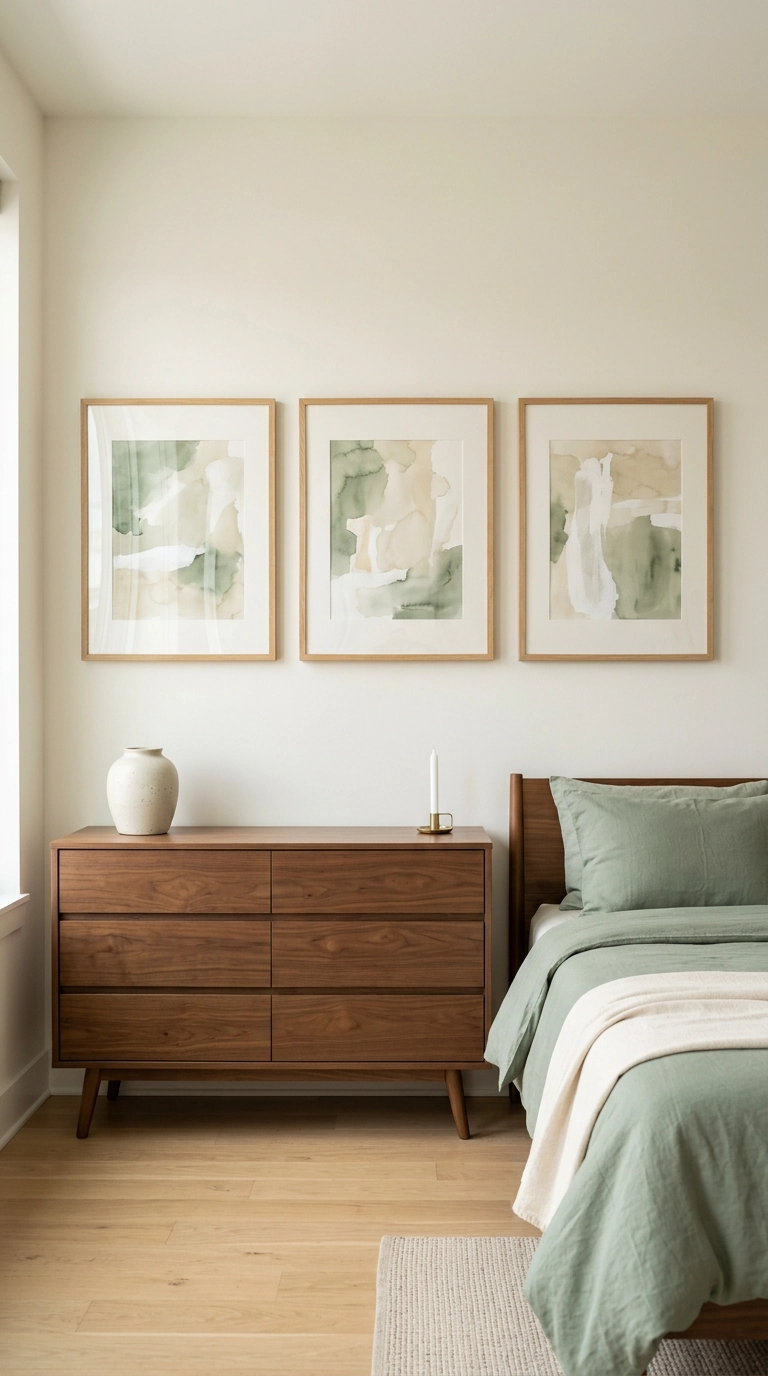
Art is how you get sage onto a wall without a paintbrush. Look for abstract washes, soft landscapes, or botanical studies where grey-green does the heavy lifting, and hang three in a row rather than one lonely piece — odd numbers and repetition read as intentional.
21. Fix Your Light Before You Fix Your Walls
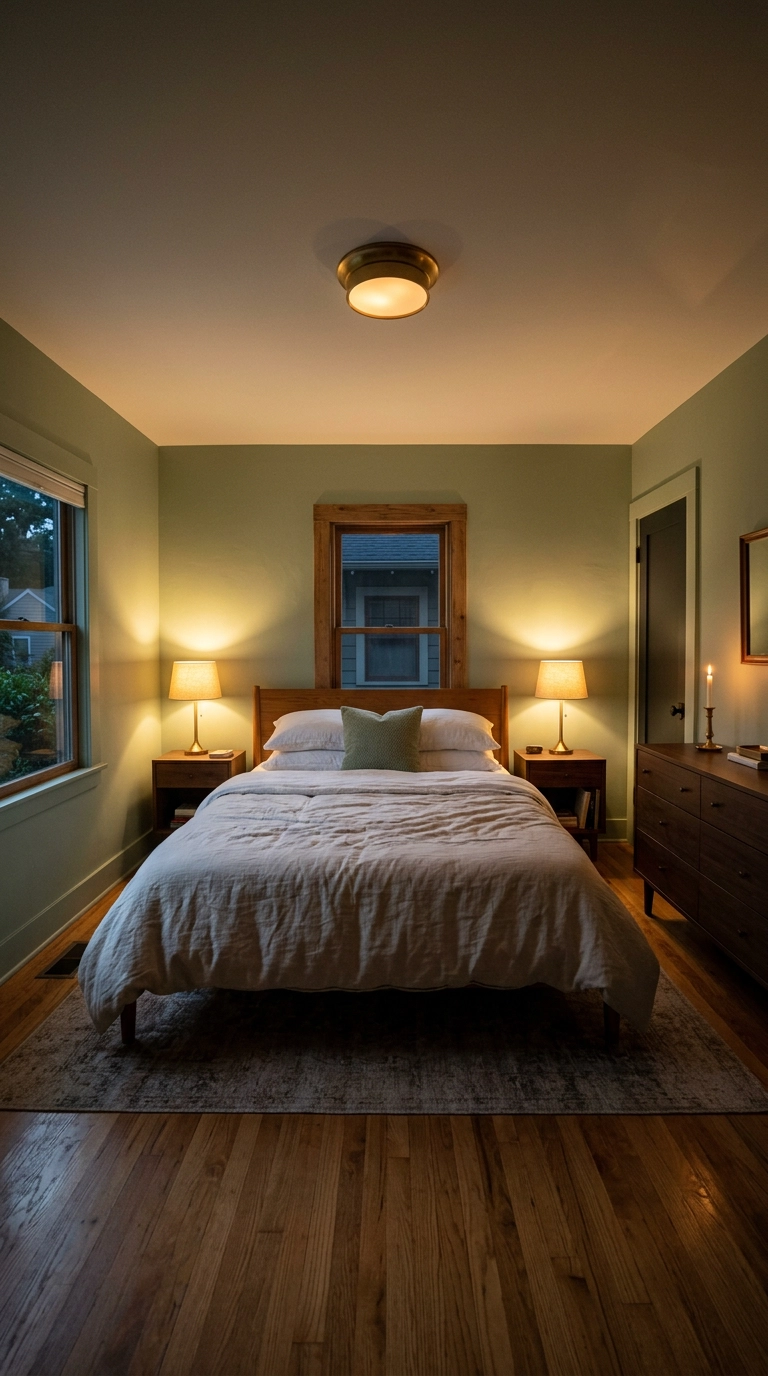
Before you repaint anything, check your bulbs. Sage turns grey and cold under bright white or blue-toned light, and it goes sickly mint under the wrong daylight bulb. Warm 2700K to 3000K bulbs keep a cool-leaning grey-green warm and dimensional at night.
22. Splurge on Custom Sage Millwork Behind the Bed
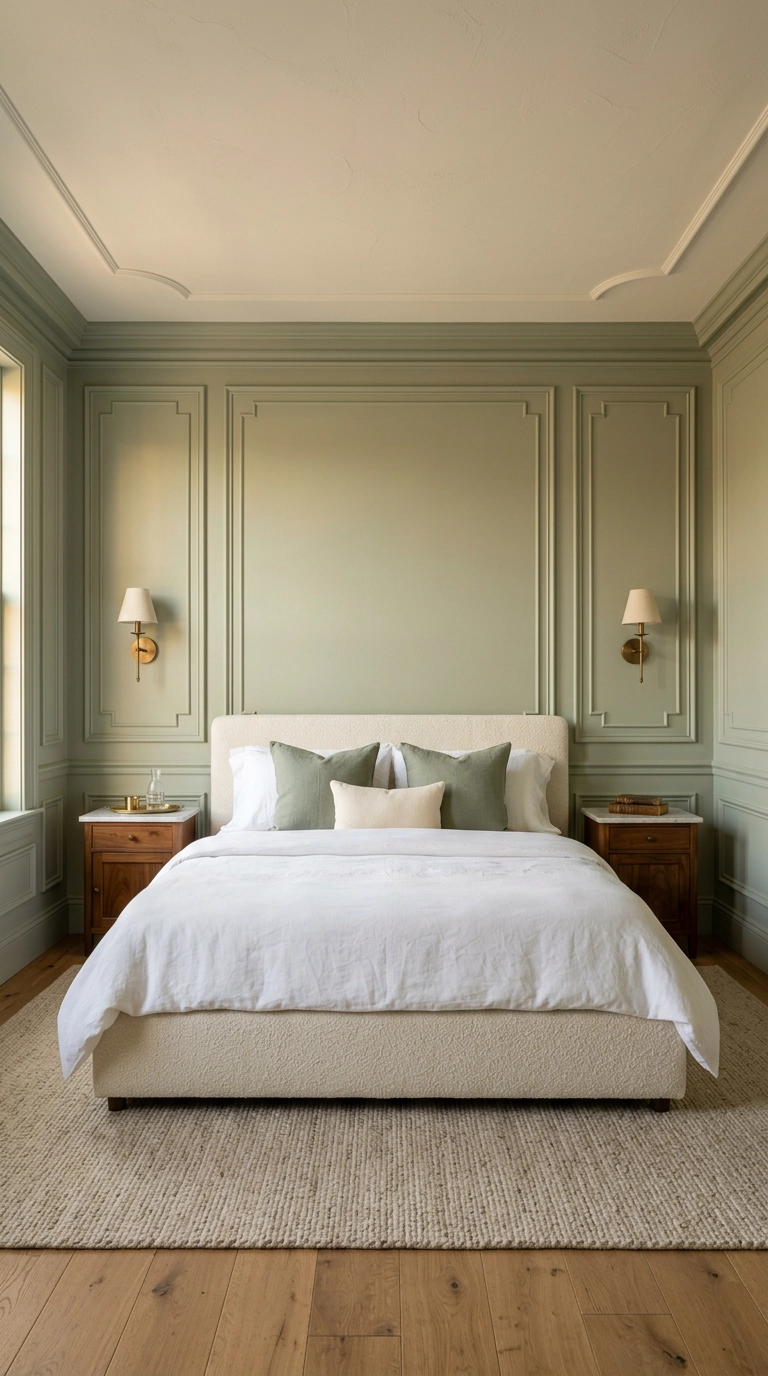
Splurge number two, and the one that changes a bedroom permanently: custom picture-frame molding on the bed wall, painted sage along with the trim. Applied molding gives a flat drywall box the shadow lines and proportion of an older, better-built house, and sage keeps it from reading stuffy.
23. Keep Sage Calm with a Mix-and-Match Bedroom
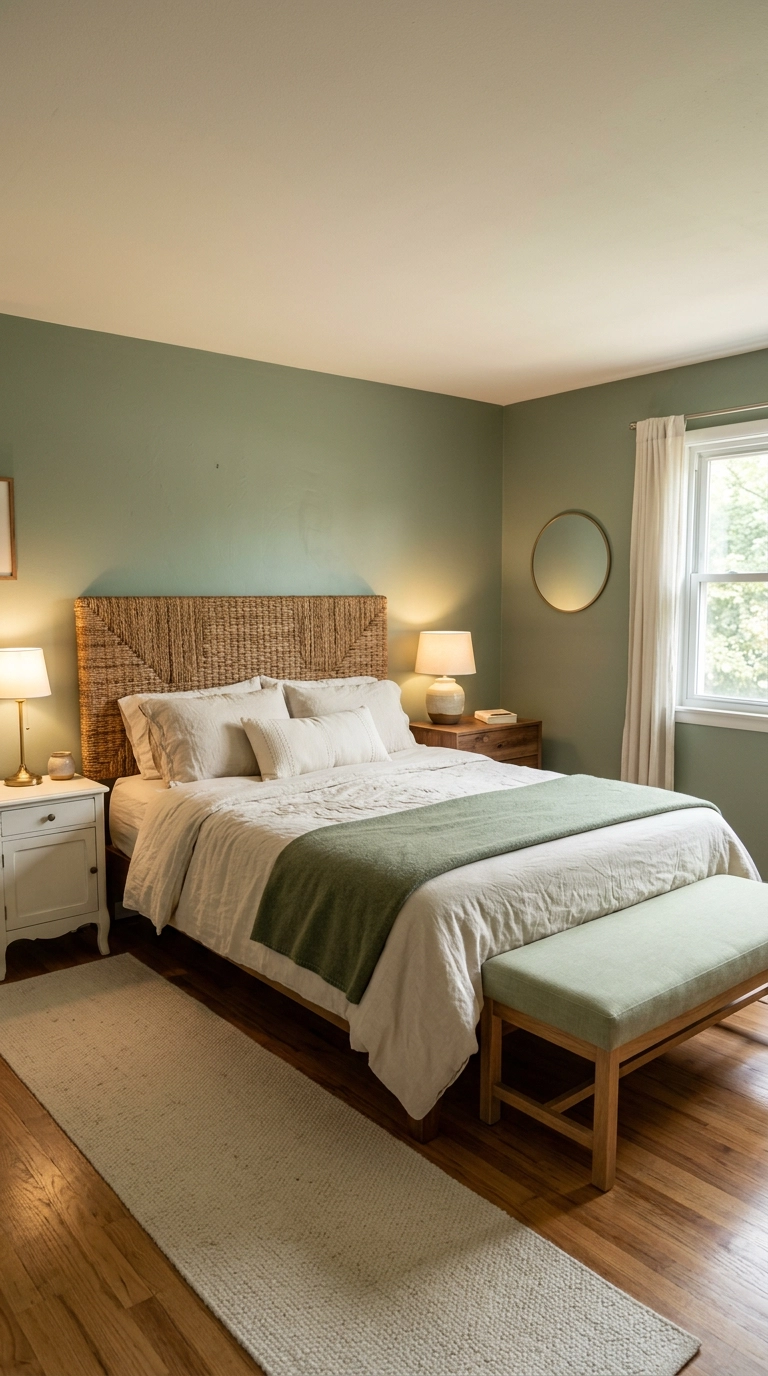
Sage is a busy-killer, and that’s its superpower: it lets the rest of the room be a little imperfect. Mismatched nightstands, a rattan headboard, a bench that isn’t quite the same green — all of it reads as charming instead of chaotic because the sage quietly holds everything together.
Wrapping Up Our Sage Bedroom Ideas
By now you know my favorite thing about sage: it’s the rare color that’s equally at home on a full color-drenched wall, a single throw pillow, or a thrifted dresser from the 1970s. Whether you start with a warm bulb swap or go straight for the limewash accent wall, every version of this soft grey-green rewards you with a bedroom that finally exhales. My honest advice is to start small — a lamp, a bedding set, one wall — and let the color tell you how far it wants to go.
What I’m seeing trending in 2026 is sage moving beyond the accent wall entirely: full color drenching, sage millwork, and sage ceilings on rooms with character, always balanced with warm oak and cream so it never slides into the grey or minty territory that gives green a bad name. The pairing that keeps coming back in every staging I do is sage with unlacquered brass and terracotta accents — it’s how you keep a cool-leaning green feeling sun-warmed and lived-in. It’s the same quiet confidence you see in the restrained, nature-rooted rooms championed by designers who build around calm rather than noise.
Twenty-three ideas is a lot to hold in your head, but the through-line is simple: sage asks for warm light, honest texture, and a little restraint on the accessories. If you’re not sure where to begin, scroll back up and pick the idea that made you pause — that’s the one your room wants. I’d love to send you more rooms like these every week, so sign up for our newsletter and I’ll see you in your inbox.


