
23+ Serene Japandi Bedroom Decor Ideas that are Calm and Gorgeous in 2026

I’ll admit something: for years I thought japandi was just minimalism with a nicer wood budget, and I styled a few very expensive, very cold bedrooms before I understood the difference. Minimalism removes things and stops there. Japandi removes things and then puts warmth back in through texture, low furniture, and one honest handmade object with a thumbprint in it, which is exactly why a japandi bedroom feels like sleep and a minimalist bedroom feels like a lobby.
Japandi Bedroom Decor Ideas
1. Drop the Bed Low with a Solid Oak Platform Frame
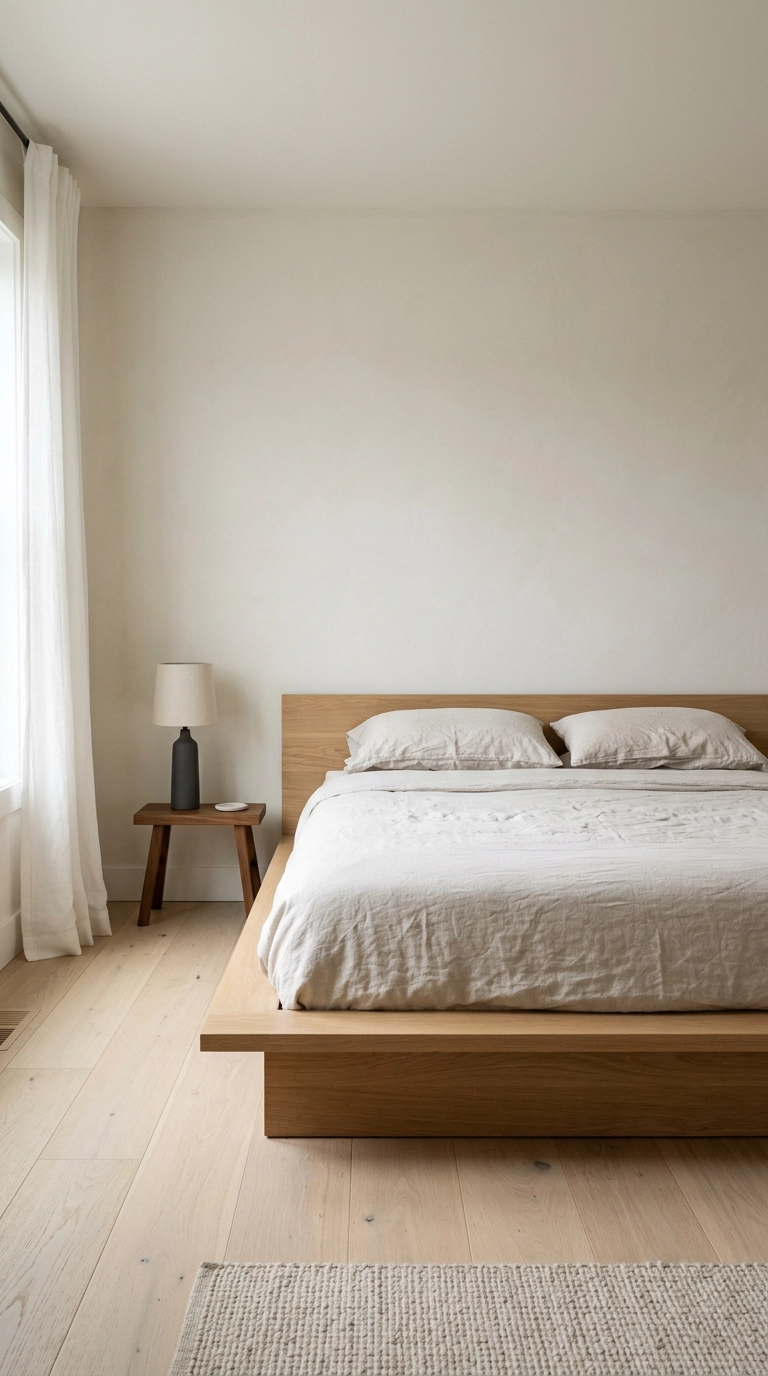
Everything in this style starts with lowering the bed. A mattress topping out around 18 to 20 inches off the floor instead of the usual 25 to 30 drops your entire sightline, and the wall above the bed suddenly reads as calm open space instead of a gap you need to fill.
2. Take Things Out Before You Buy a Single Thing
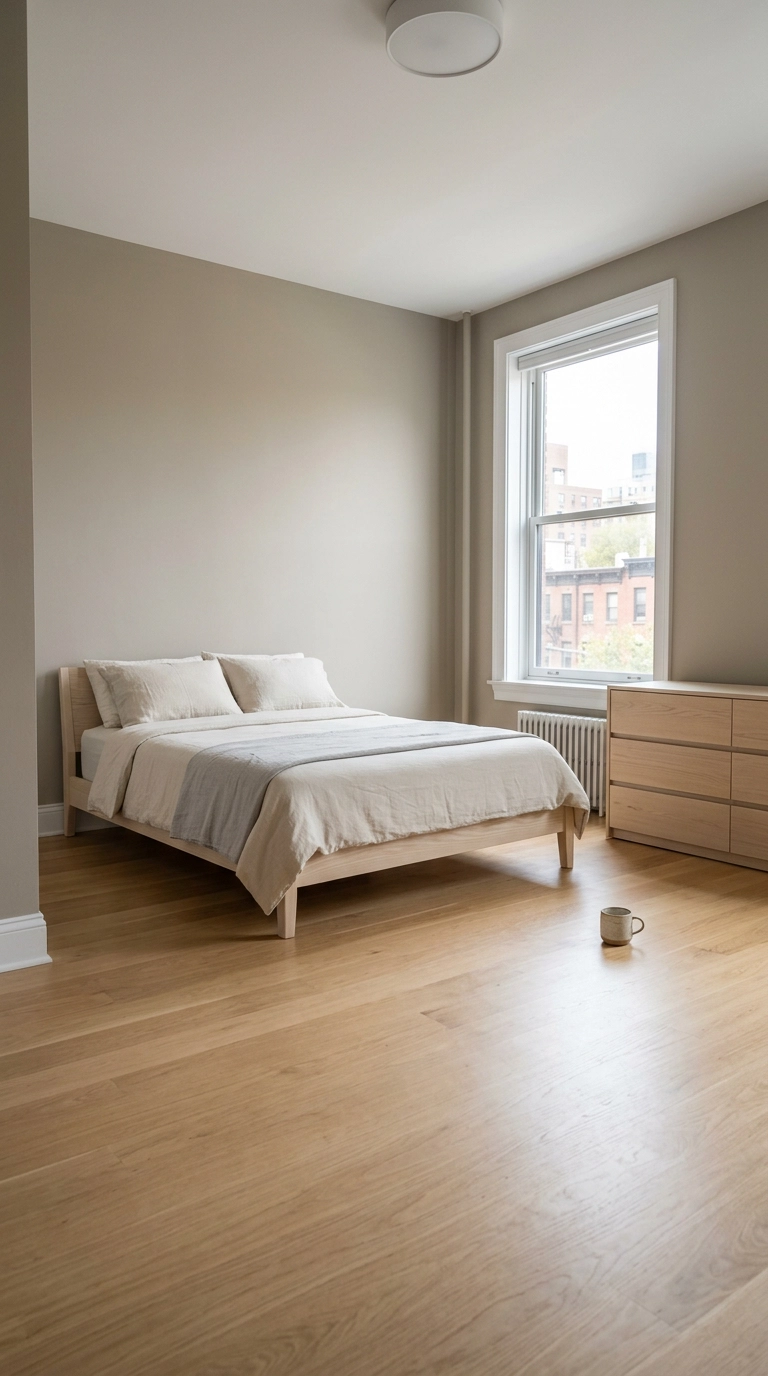
This is free, it takes an afternoon, and it is genuinely the japandi move. Pull everything off your nightstands, dresser top, and floor, put it in the hallway, then bring back only what you use in the dark or actually love looking at.
3. Wash Everything in Warm White, Oatmeal, and Pale Oak
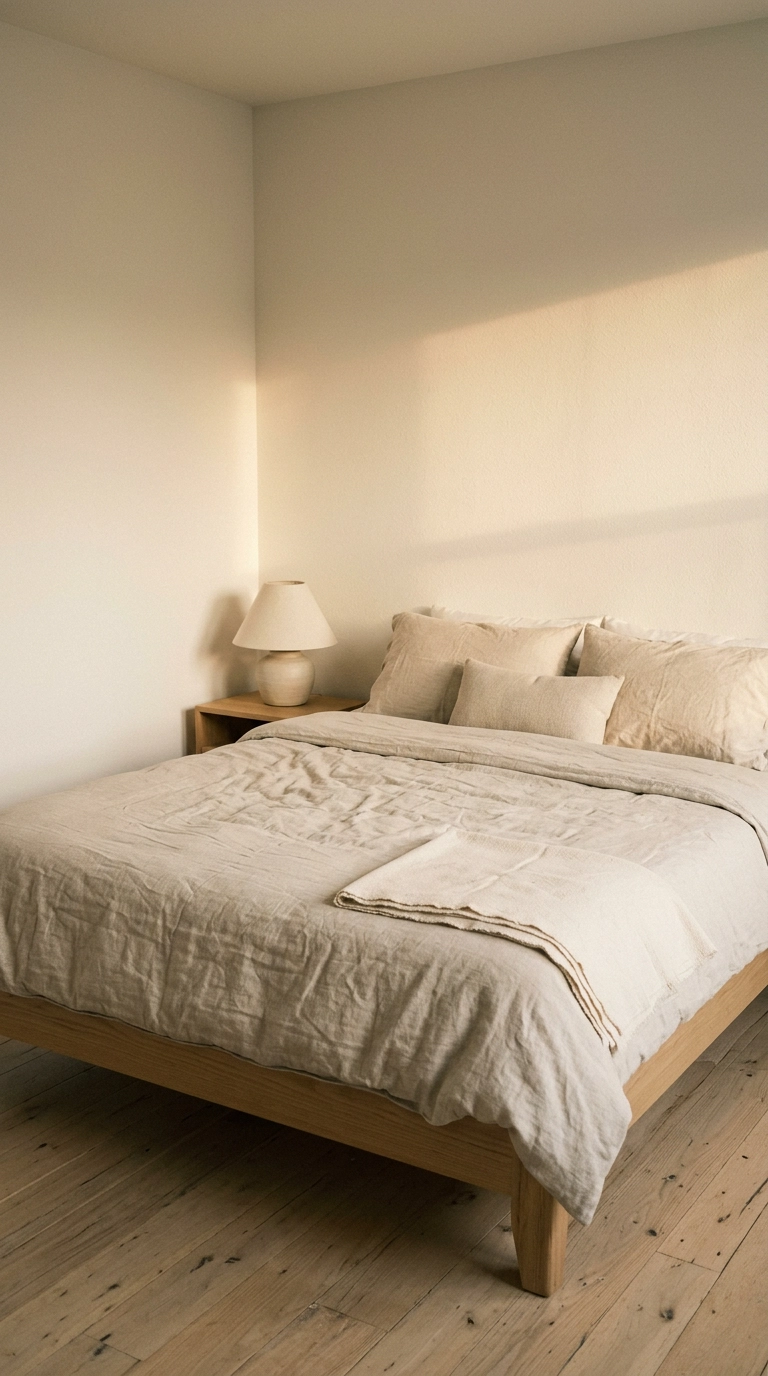
Pick a warm white, an oatmeal, and one pale wood, then refuse the fourth color. Benjamin Moore White Dove is my safe default because it has enough yellow in it to stay warm in a north-facing room without ever reading cream.
4. Switch to Washed Linen Bedding and Never Iron It
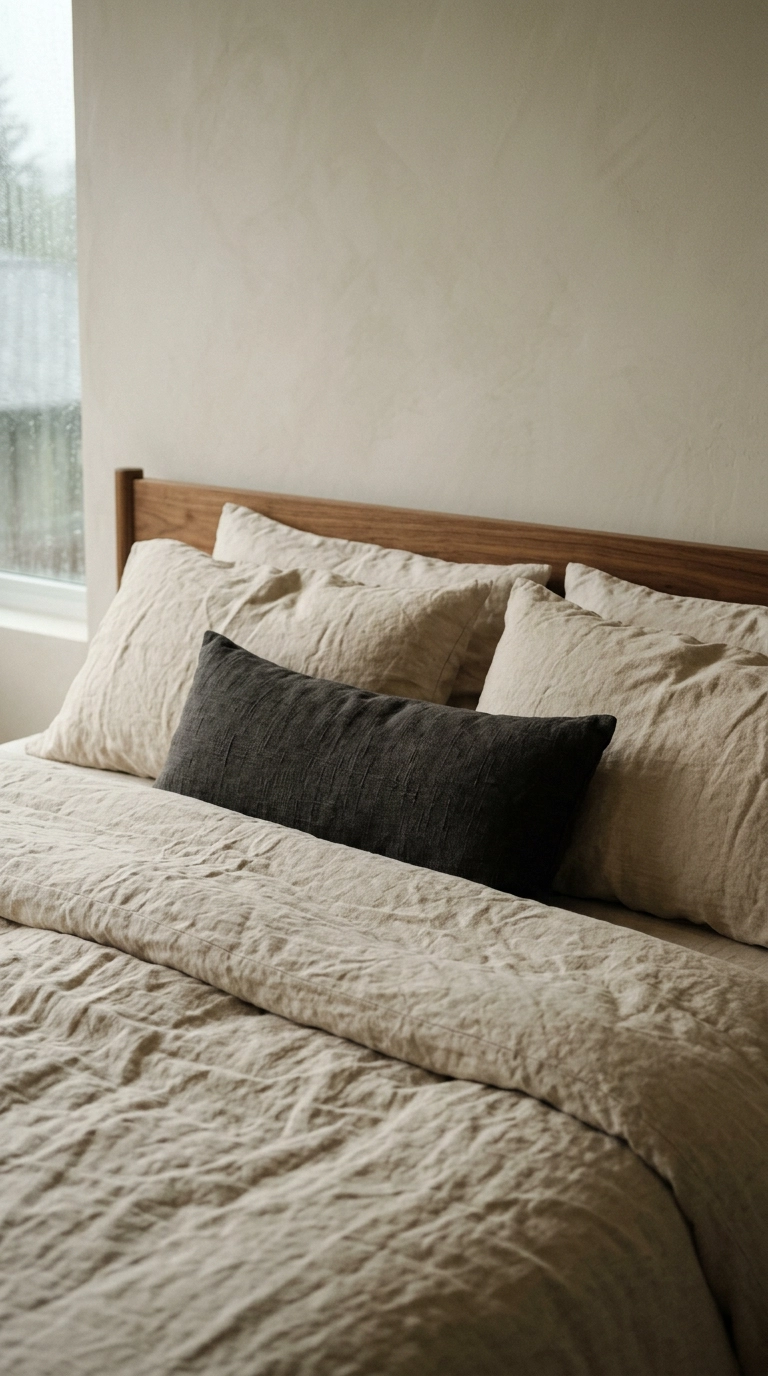
Linen is the workhorse of this entire style because it delivers texture while staying completely colorless. Look for stonewashed European flax around 165 gsm, which softens after about three washes and stops feeling like a stiff hotel sheet.
5. Anchor the Room with One Dark Wood Accent
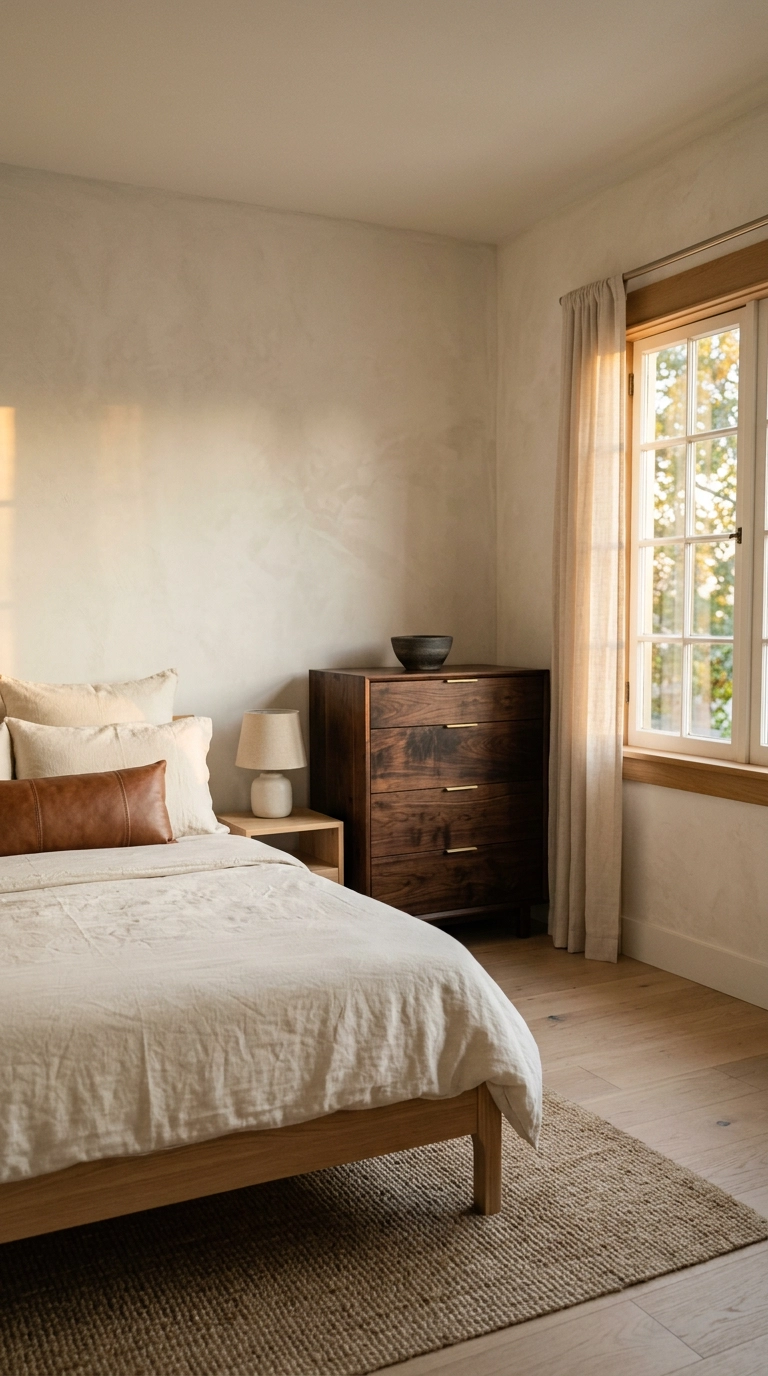
All-light-wood rooms can drift into sterile, so the fix is one grounding dark piece, usually a single dresser or low bench in smoked walnut or ebony-tinted oak. The dark wood gives the pale room an anchor the same way dark text gives a page a focal point.
6. Swap the Nightstand for a Low Wooden Stool
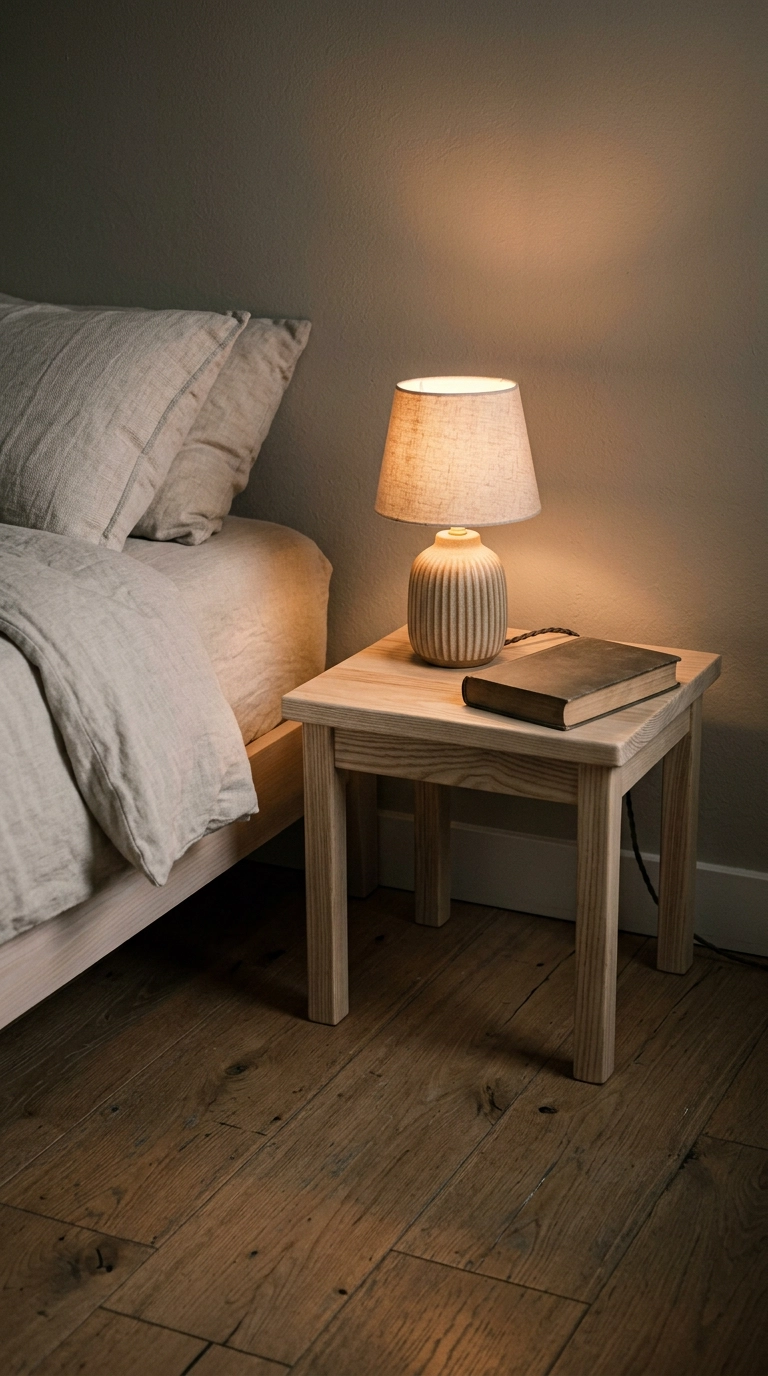
Standard nightstands sit around 24 to 26 inches, which towers over a low platform bed and ruins the horizontal line. Aim for a bedside surface roughly level with the top of your mattress, which usually means a 16 to 18 inch stool.
7. Install Shoji-Inspired Doors on a Reach-In Closet
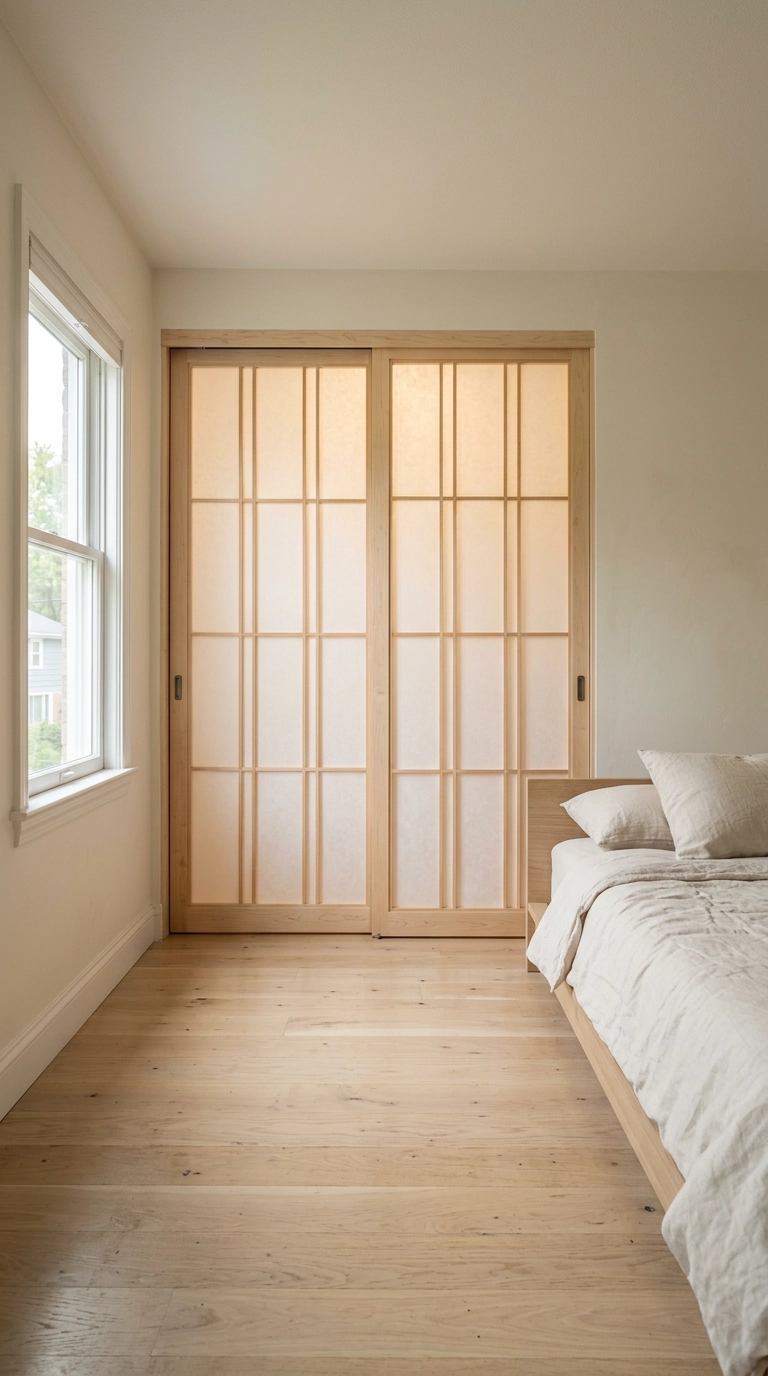
This is my favorite door trick in the whole style. Shoji screens are Japanese room dividers with translucent paper panels, and adapting them as sliding closet doors hides the chaos while turning the paper itself into the light fixture, since it glows warm when the room light is on.
8. Hang a Single Paper Lantern Above the Bed
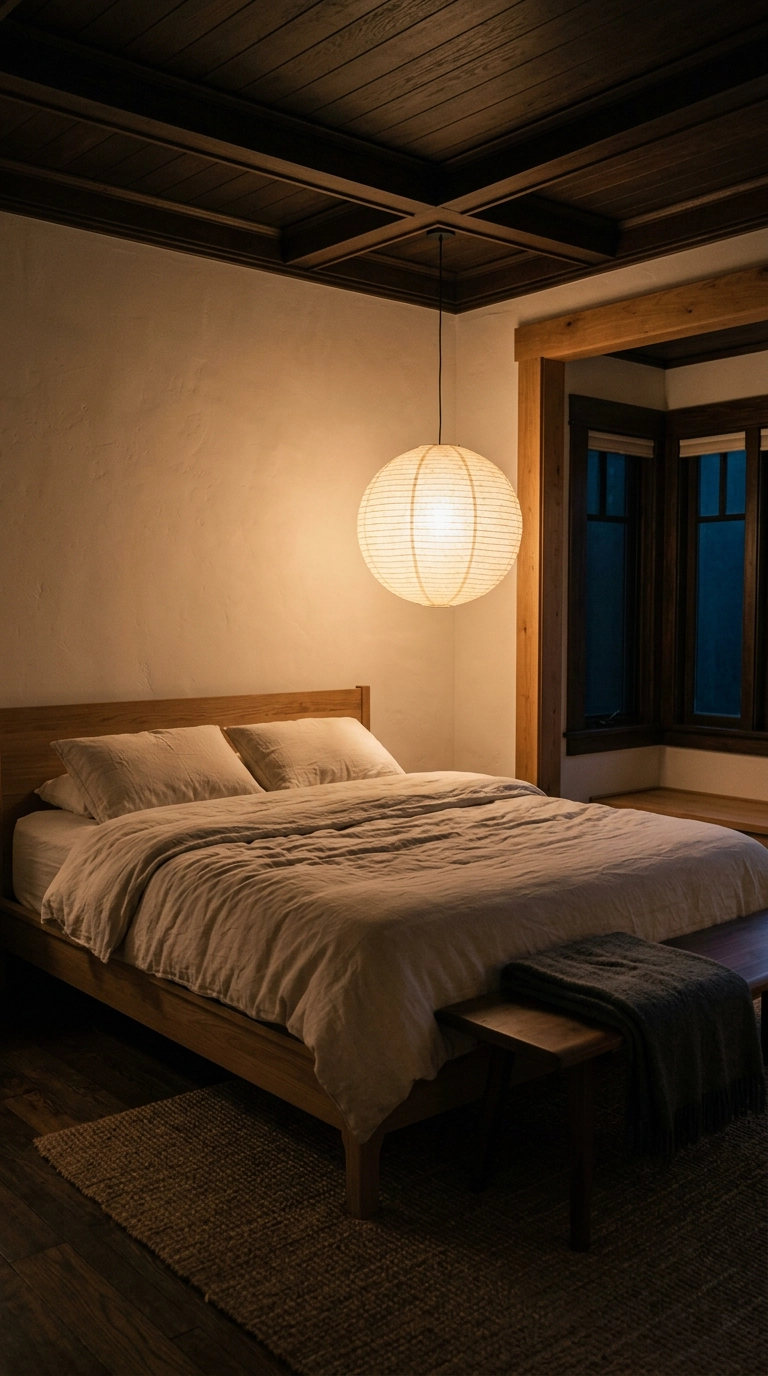
Hang a single round washi paper pendant low over the bedside or the foot of the bed, and it becomes the warmest object in the room, which is exactly what you want at 11pm. I like it slightly off-center over the corner, since dead-center over a bed reads a bit shrine-like.
9. Build a Floor-Level Reading Corner Instead of an Armchair
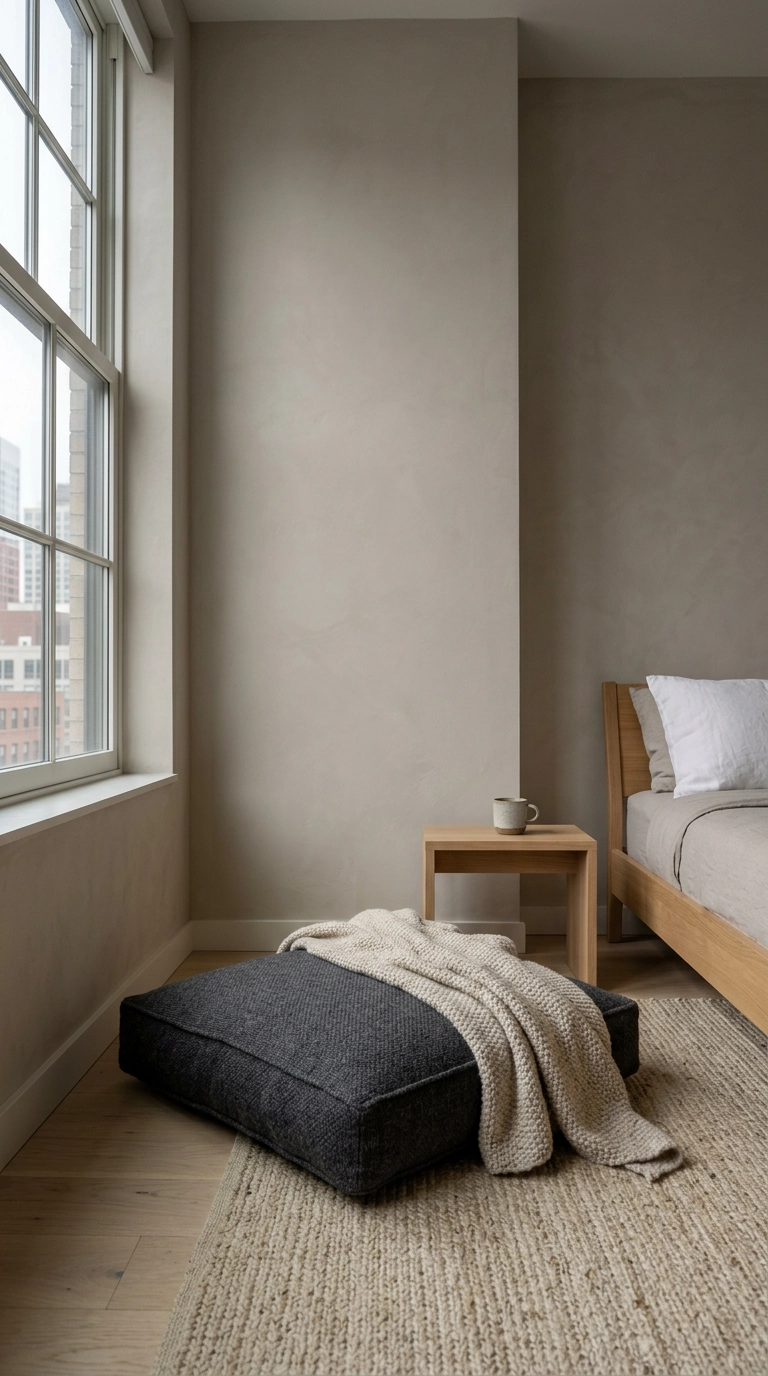
Floor living is the part of Japanese design most Americans skip, and in a bedroom it works better than an armchair nobody sits in. A firm floor cushion plus a 14-inch table takes up almost no visual volume, so a small bedroom keeps its open floor.
10. Free the Window with Bare-Frame Curtains in Linen
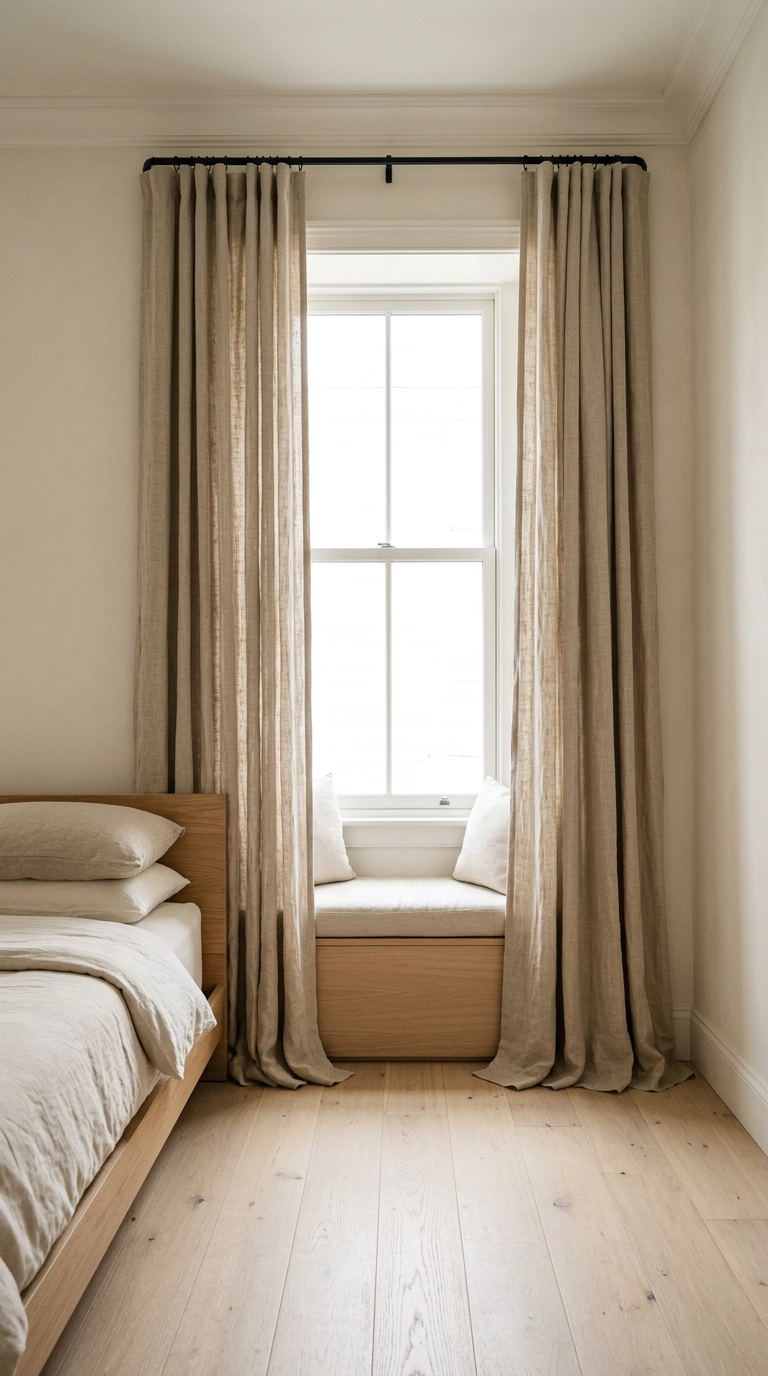
Mount the rod 3 to 4 inches below the ceiling and let the linen hang to the floor, even in a small bedroom. The eye follows the continuous vertical line, so an 8-foot ceiling reads a full foot taller, and that extra height does more for japandi calm than any wall decor.
11. Choose One Piece of Art, Not a Gallery Wall
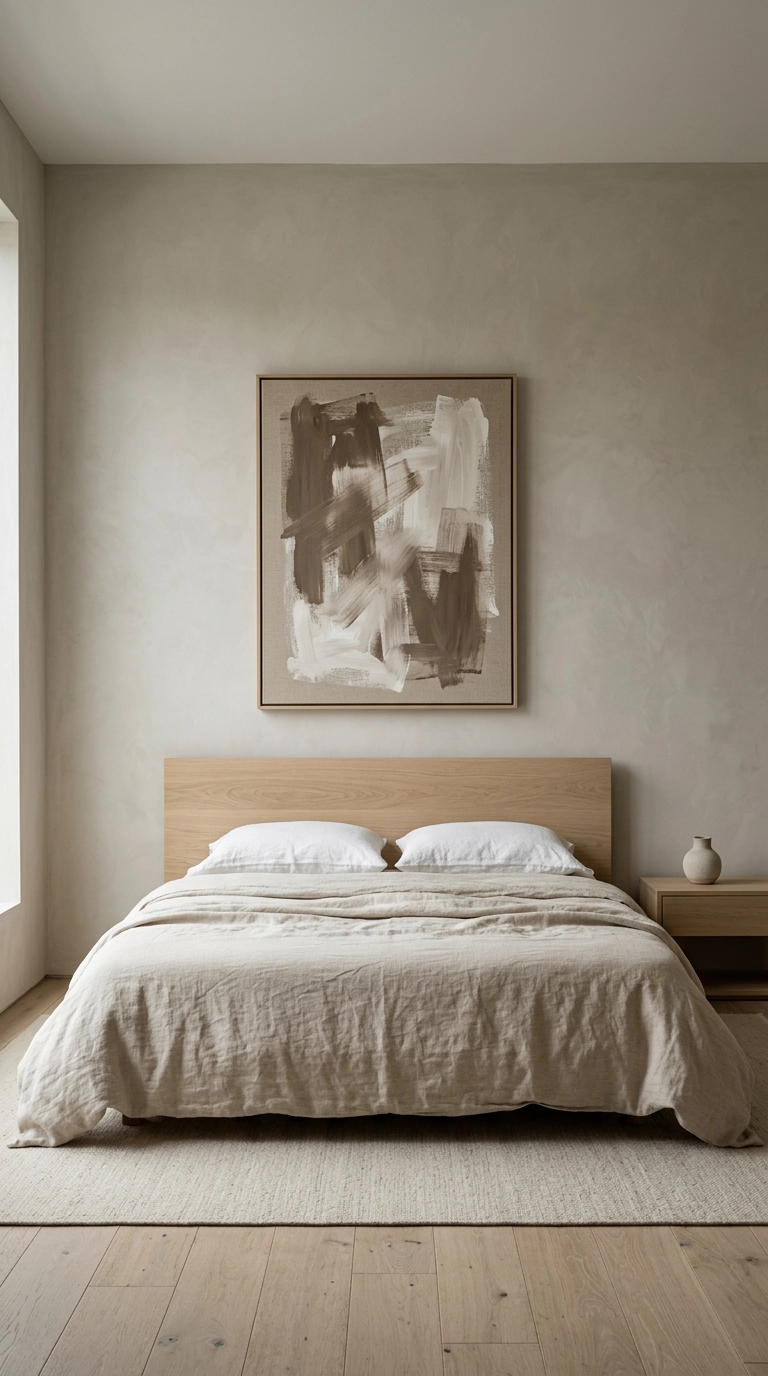
This is where japandi and plain minimalism split in opposite directions. Minimalism leaves the wall blank, while japandi believes in wabi-sabi, which means one imperfect, meaningful thing beats a curated wall of many, and the empty space around it is what makes the one thing matter.
12. Let One Handmade Ceramic Carry the Whole Dresser
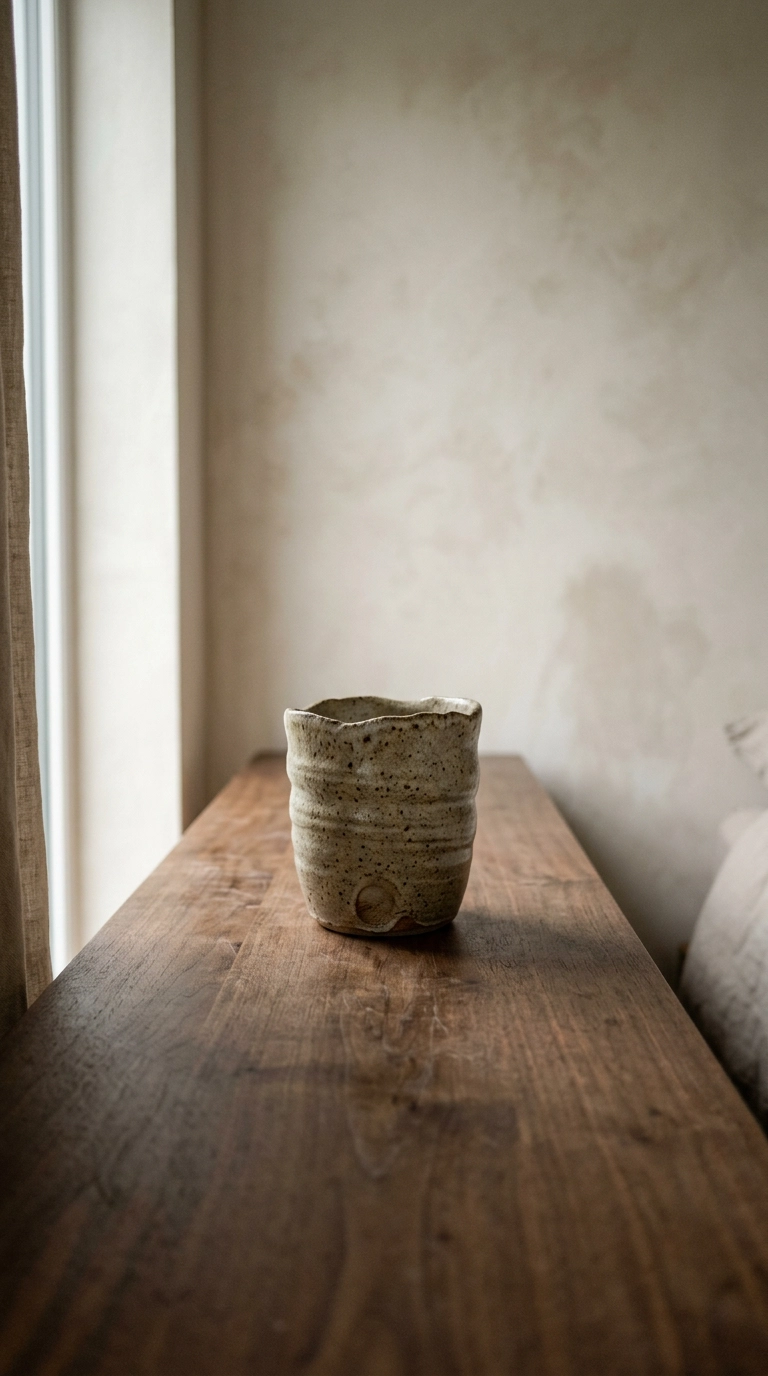
Wabi-sabi is the acceptance of imperfection, and it is the warmth engine of this style. One hand-thrown vessel with an off-kilter rim and visible finger marks reads as evidence of a person, while a matched set of flawless accessories reads as a store display.
13. Replace Color with Texture You Can Feel
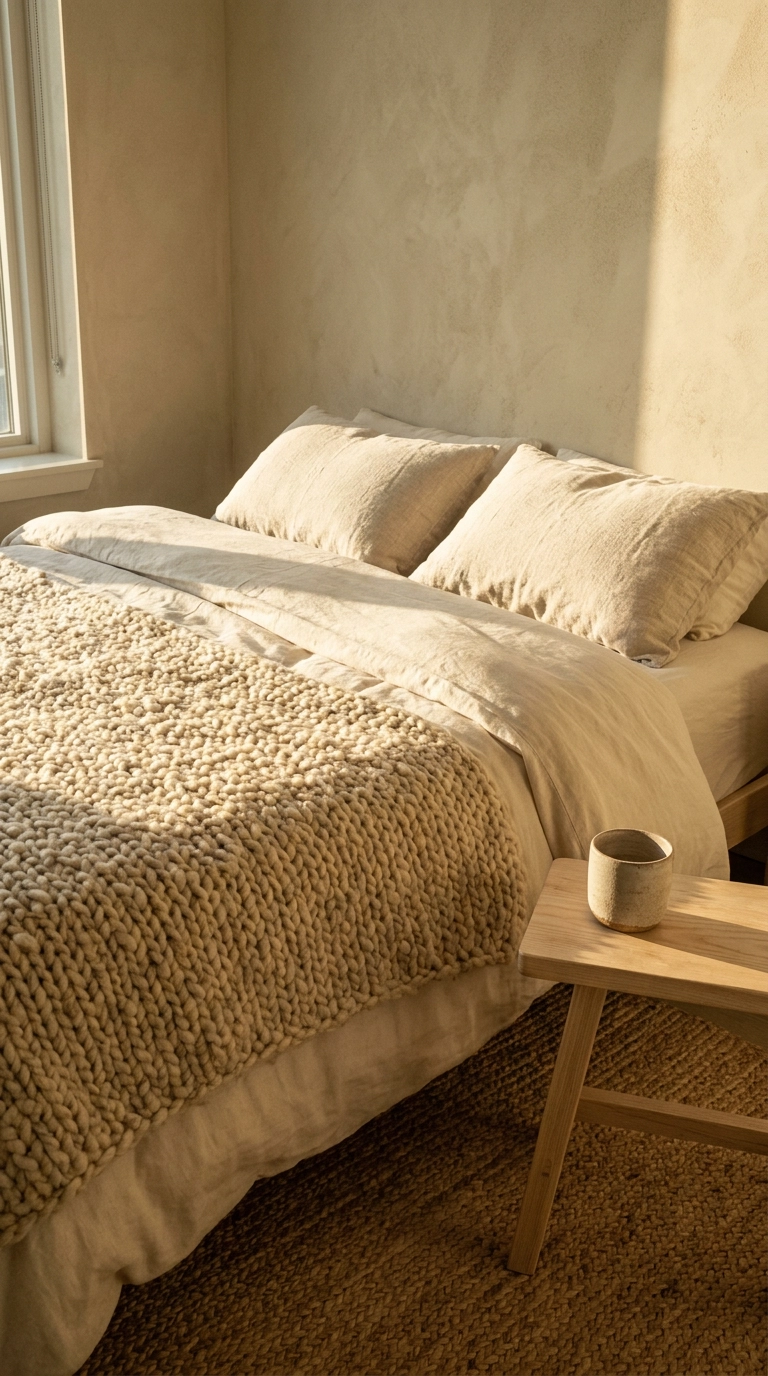
When you remove color, texture has to do all the work, and this is precisely where most japandi attempts fail. In one ecru palette you want at least four different hands: nubby wool, smooth linen, rough jute, and matte ceramic or plaster.
14. Hide the Storage Behind Flat Handle-Free Fronts
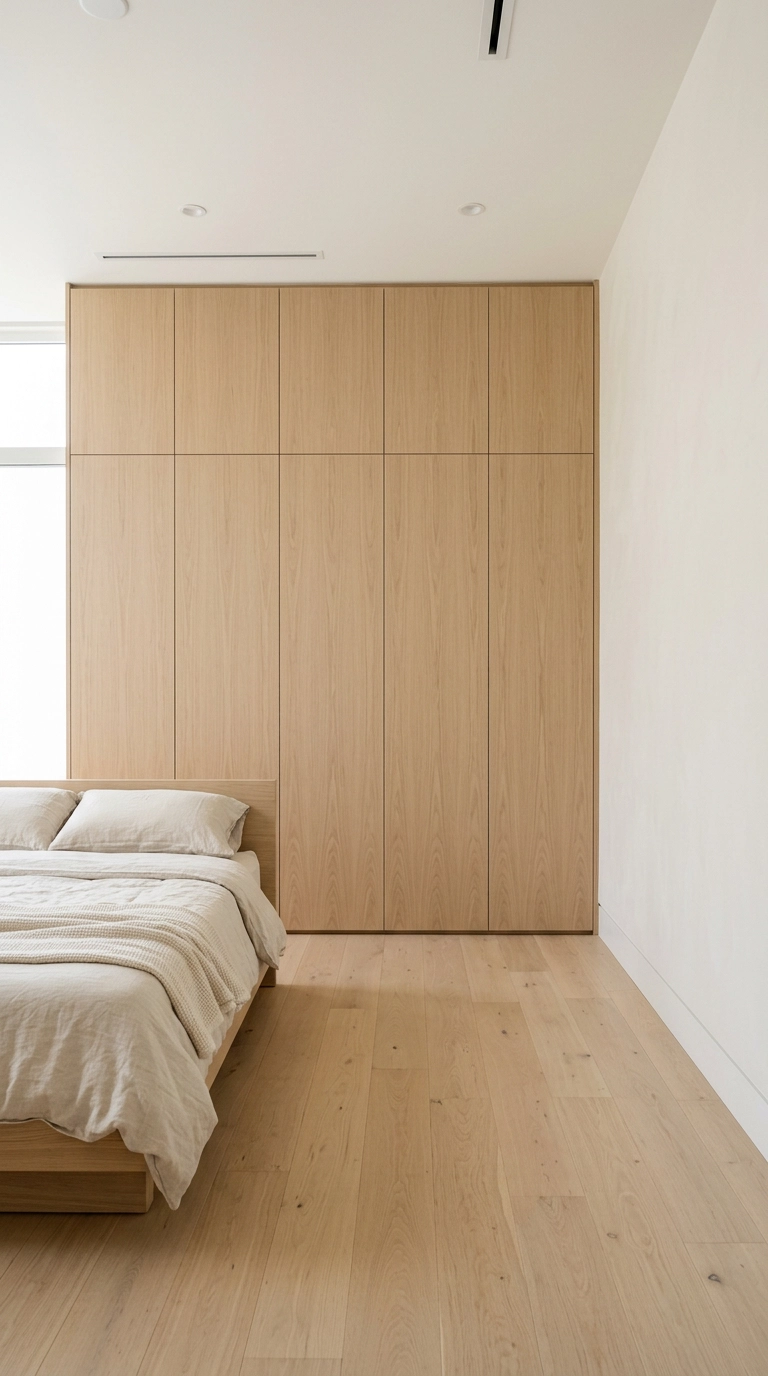
Japandi does not tolerate visible clutter, so the storage has to actually absorb your life. Flat slab doors with push-latch openers and no hardware turn a whole wall into a quiet plane instead of a grid of knobs.
15. Under-Bed Storage That Does Not Look Like Storage
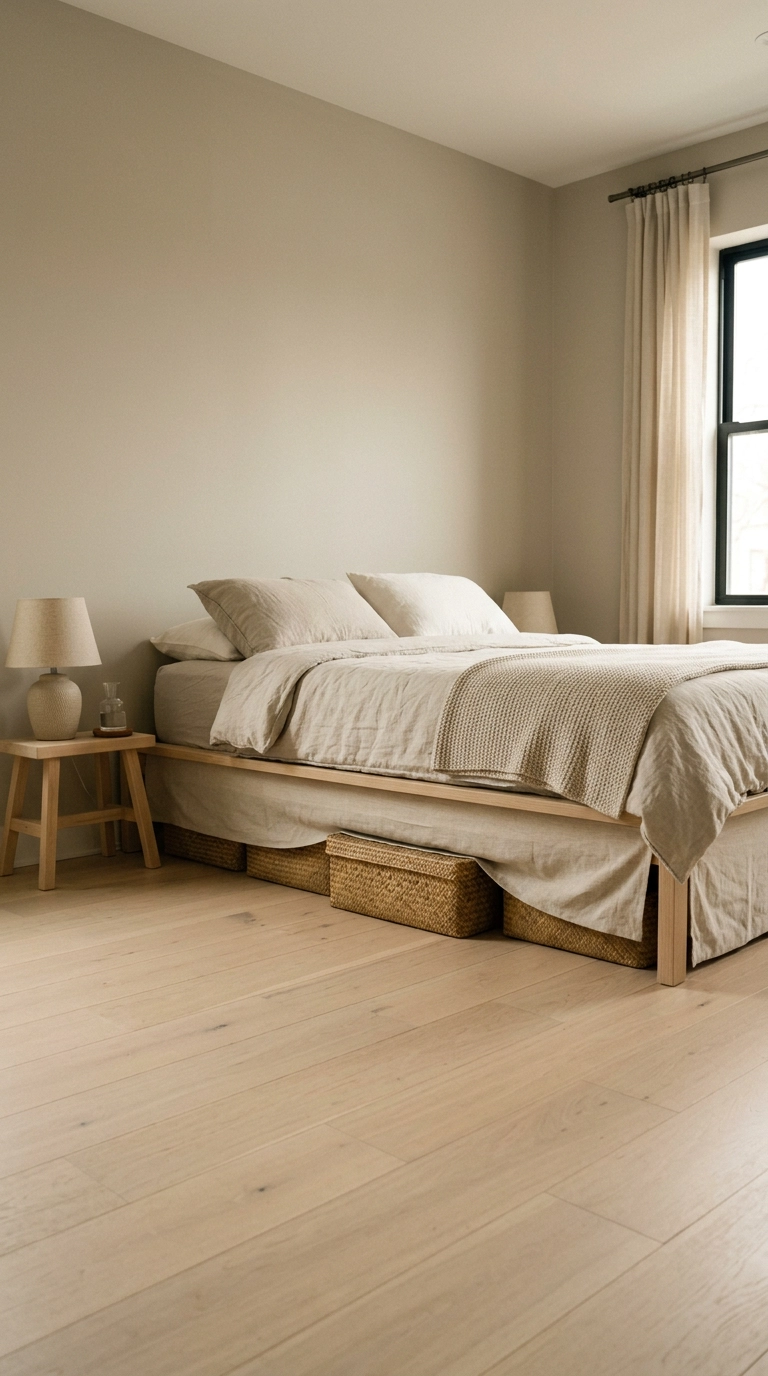
Lift your bed 14 to 16 inches off the floor and the space underneath becomes the largest storage real estate in the room. Flat woven seagrass or oak boxes slide under quietly and read as furniture, not as boxes of winter sweaters.
16. Ground the Bed on a Tatami-Inspired Woven Mat
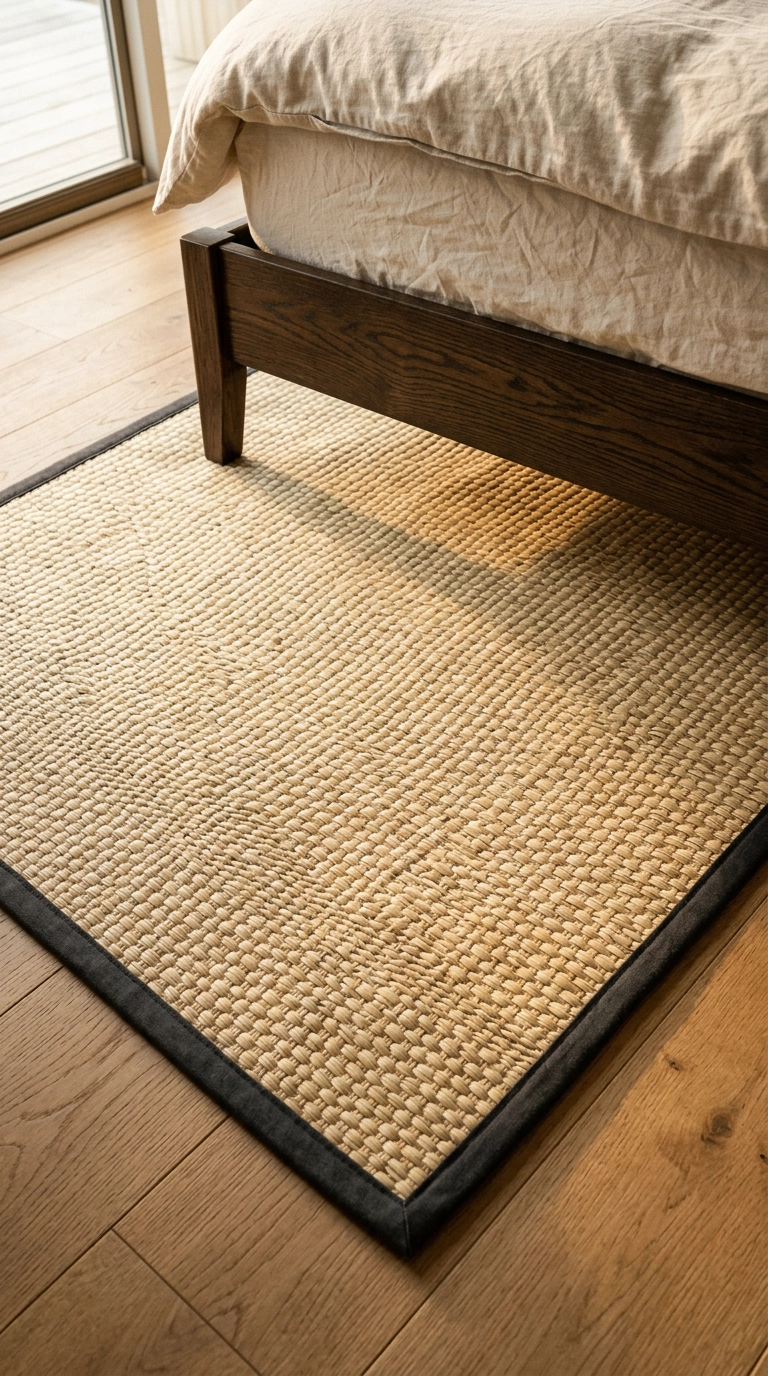
Tatami are traditional Japanese woven rush floor mats, and a modern version under the bed gives you the horizontal floor plane this style is built on. The tight weave adds texture at ground level, which is exactly where a low bedroom needs it.
17. Keep One Wall Completely, Deliberately Empty
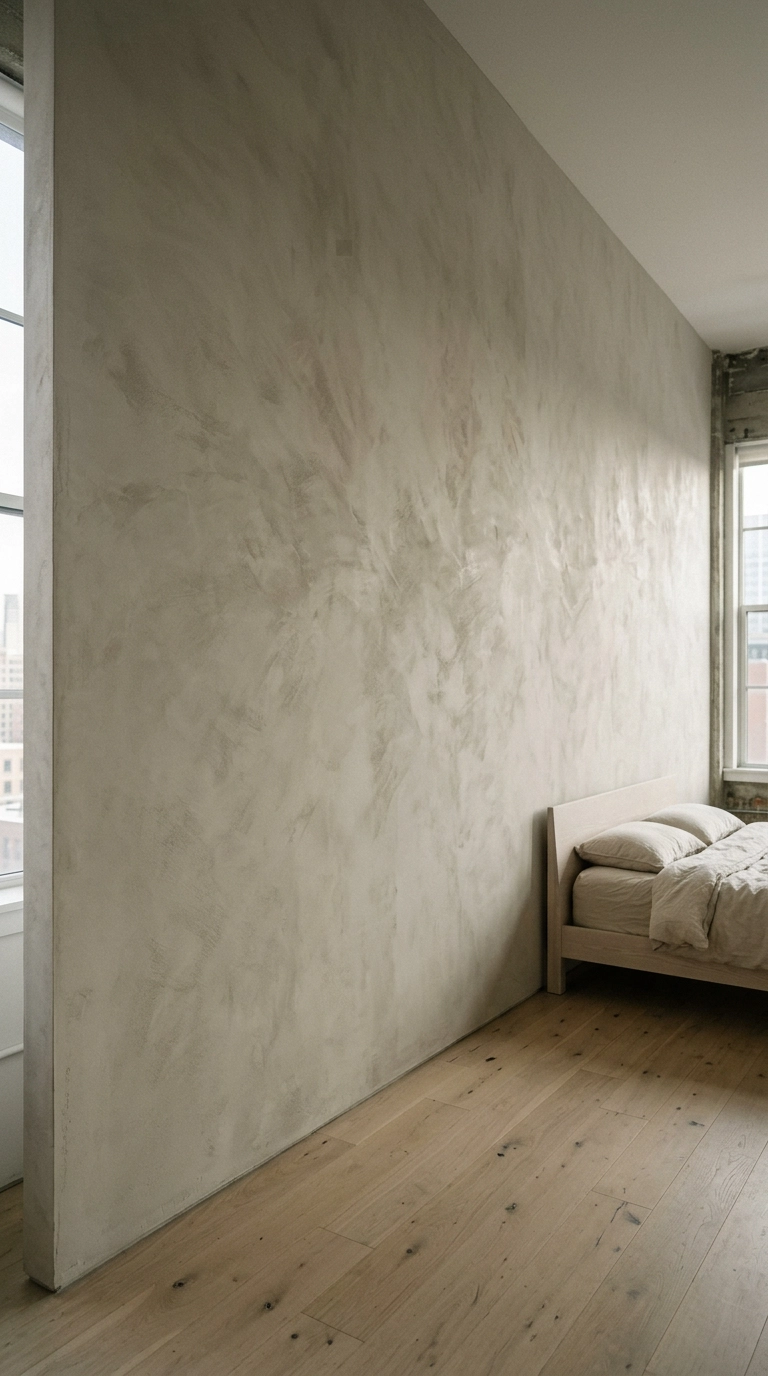
Negative space is an active design choice, not leftover budget. One wall with nothing on it gives your eye a place to rest, and in a bedroom that visual rest is the whole reason you sleep better in an uncluttered room.
18. Park a Slim Low Bench at the Foot of the Bed
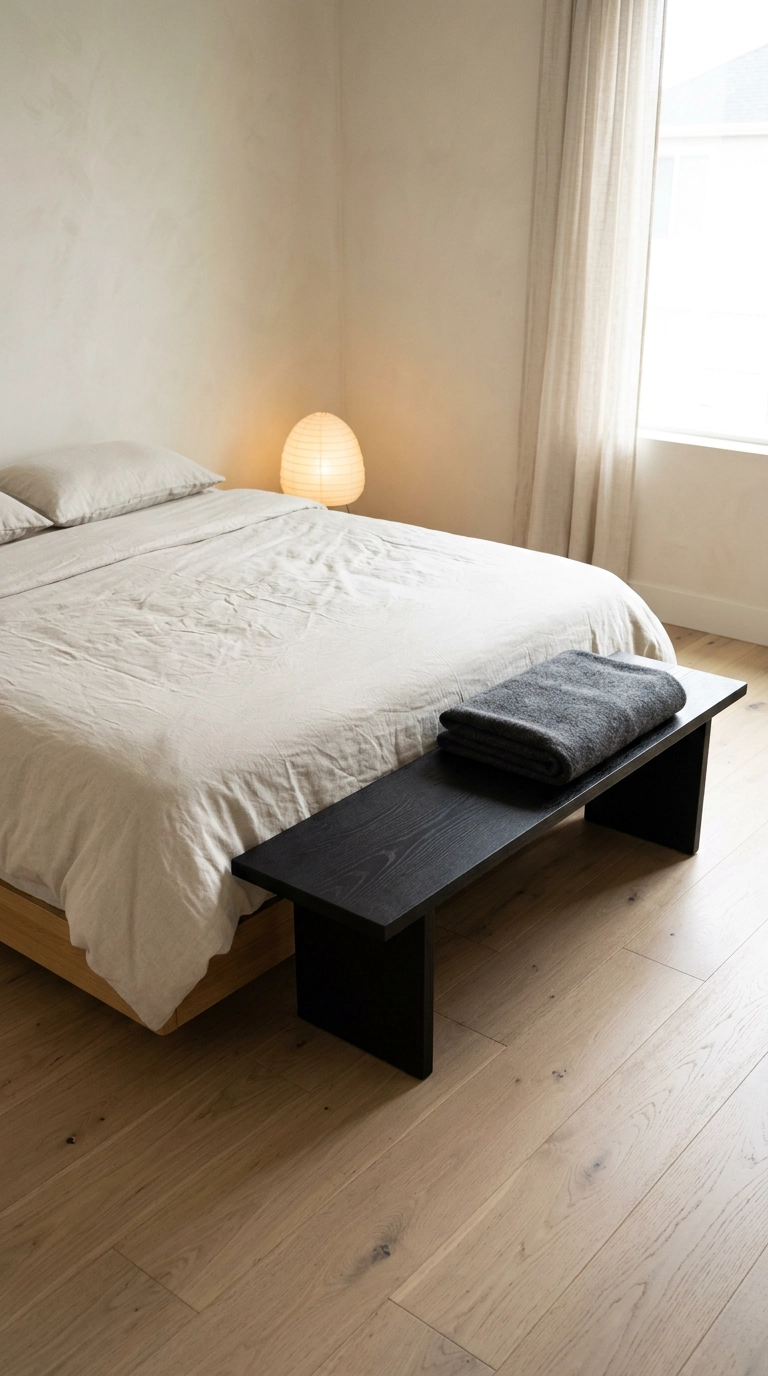
In the Japanese bedroom a bench at the foot of the bed holds the blanket you fold back at night, and it works the same way here. The low horizontal line mirrors the platform bed and gives the room a visual landing point that a taller chest would break.
19. Warm the Room with a Single Ash-Glazed Bedside Lamp
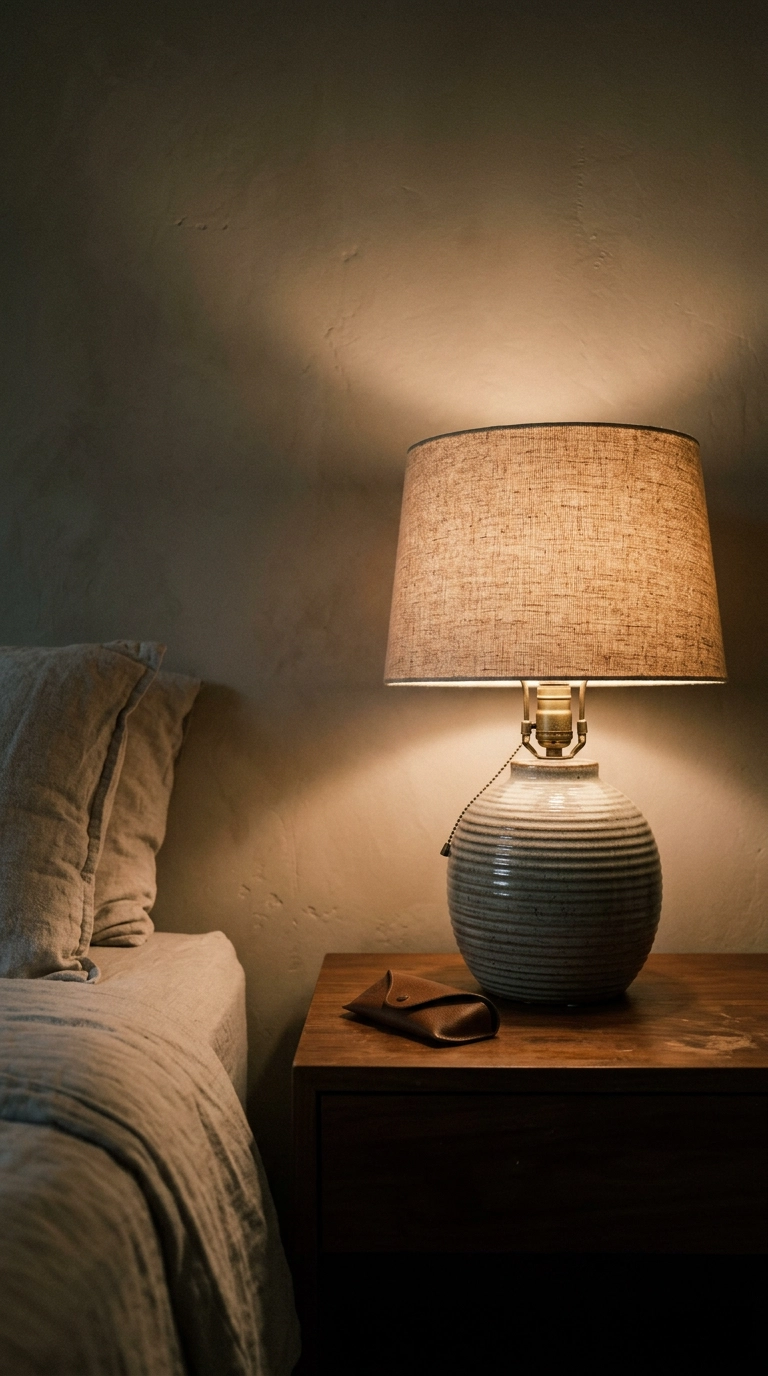
Swap every bulb in the bedroom to 2700K and put the overhead on a dimmer, because cold 4000K light is what makes a neutral room feel like a dentist’s waiting area. No amount of oak survives a bad bulb.
20. Insist on Natural Materials, All the Way Down
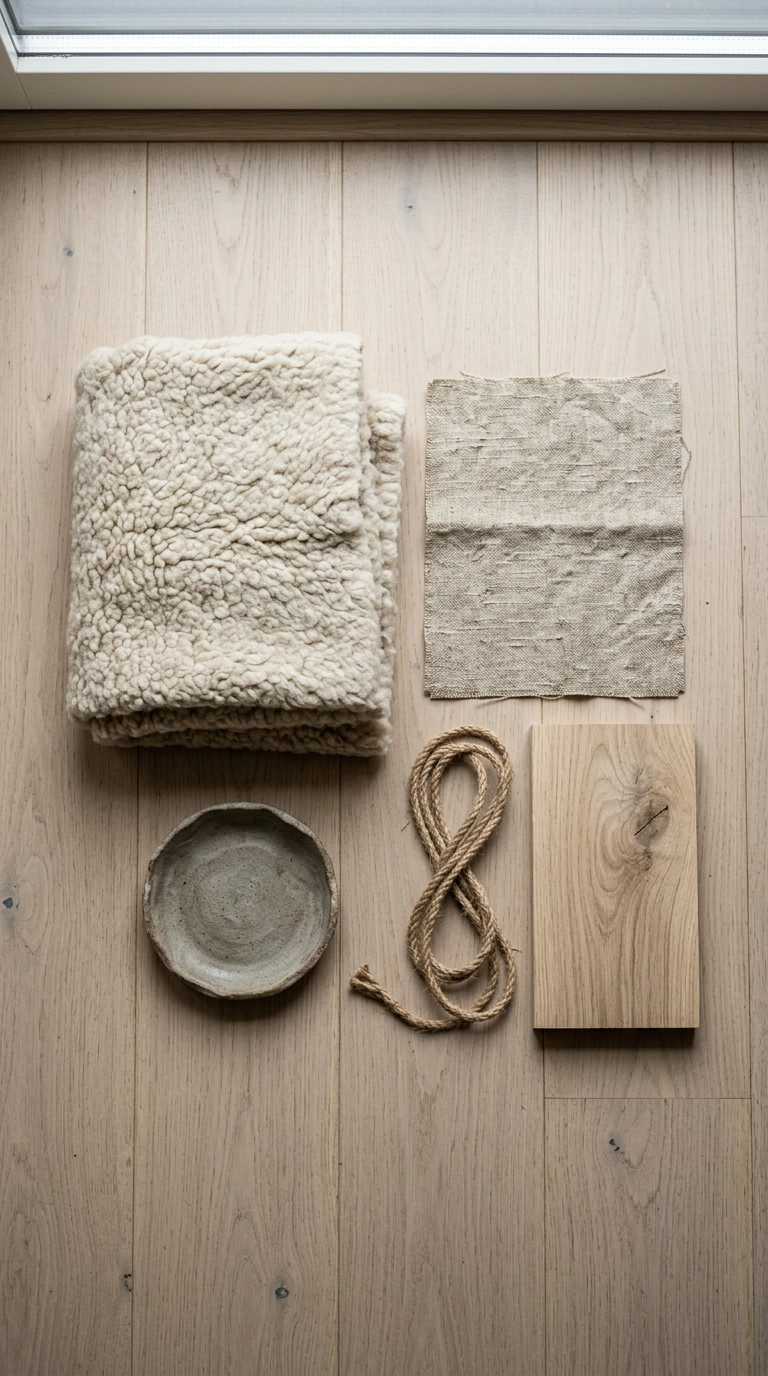
My hard filter for this room: if a material cannot age visibly, it does not belong. Wool, linen, cotton, paper, rush, clay, stone, and solid wood all develop patina, while polyester, laminate, and acrylic just slowly look worse.
21. Split the Room with a Shoji-Style Folding Screen
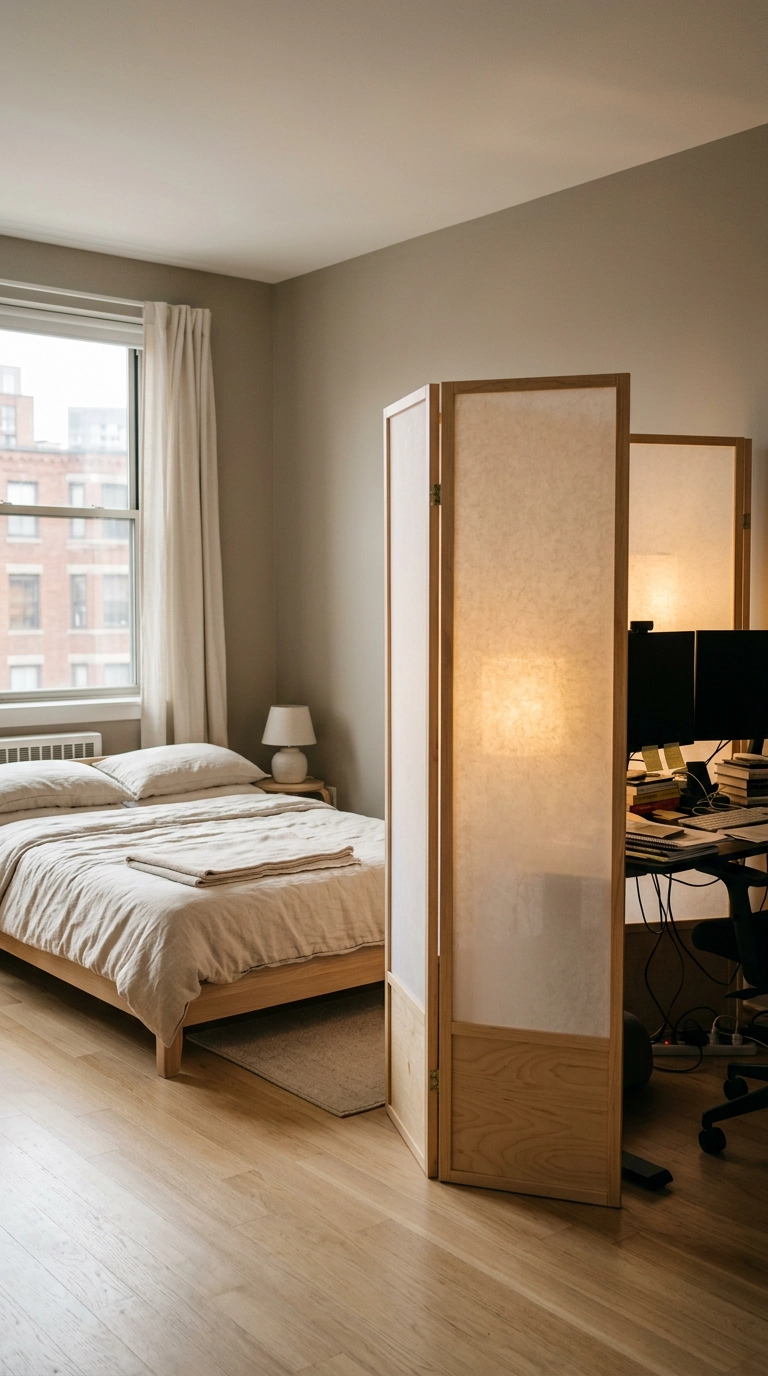
A three- or four-panel shoji-style folding screen does what no wall can: it hides a work corner or a roommate’s side of the room while letting light through, so the room keeps its airiness. The warm glow through rice paper at night is genuinely one of my favorite bedroom effects.
22. Elevate the Ceiling with a Single Dark Painted Wall
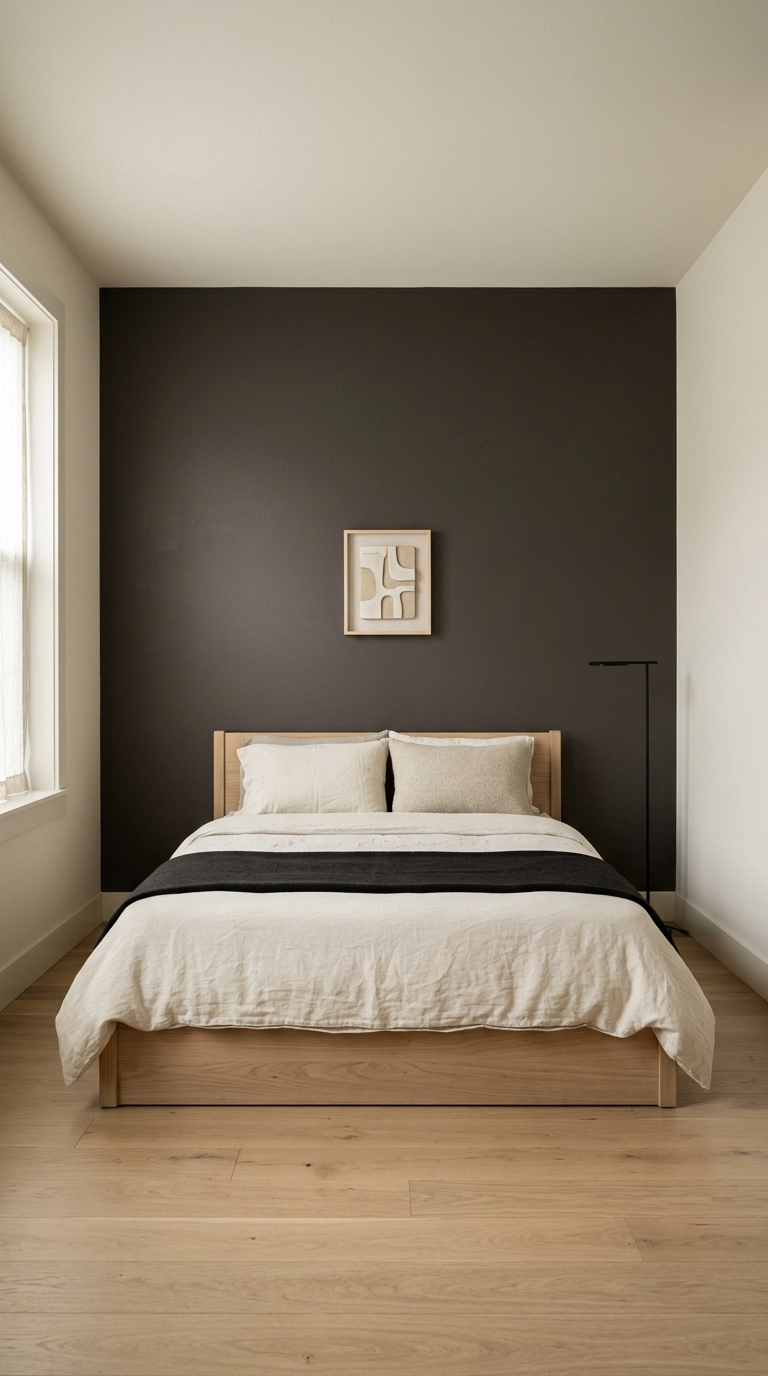
One dark wall in a deep charcoal taupe does what a frame does for a picture: it gives the pale room edges, which paradoxically makes the whole space feel calmer and more intentional. In a bedroom, the wall behind the bed is the natural candidate.
23. Scent the Room the Way You Would Decorate It
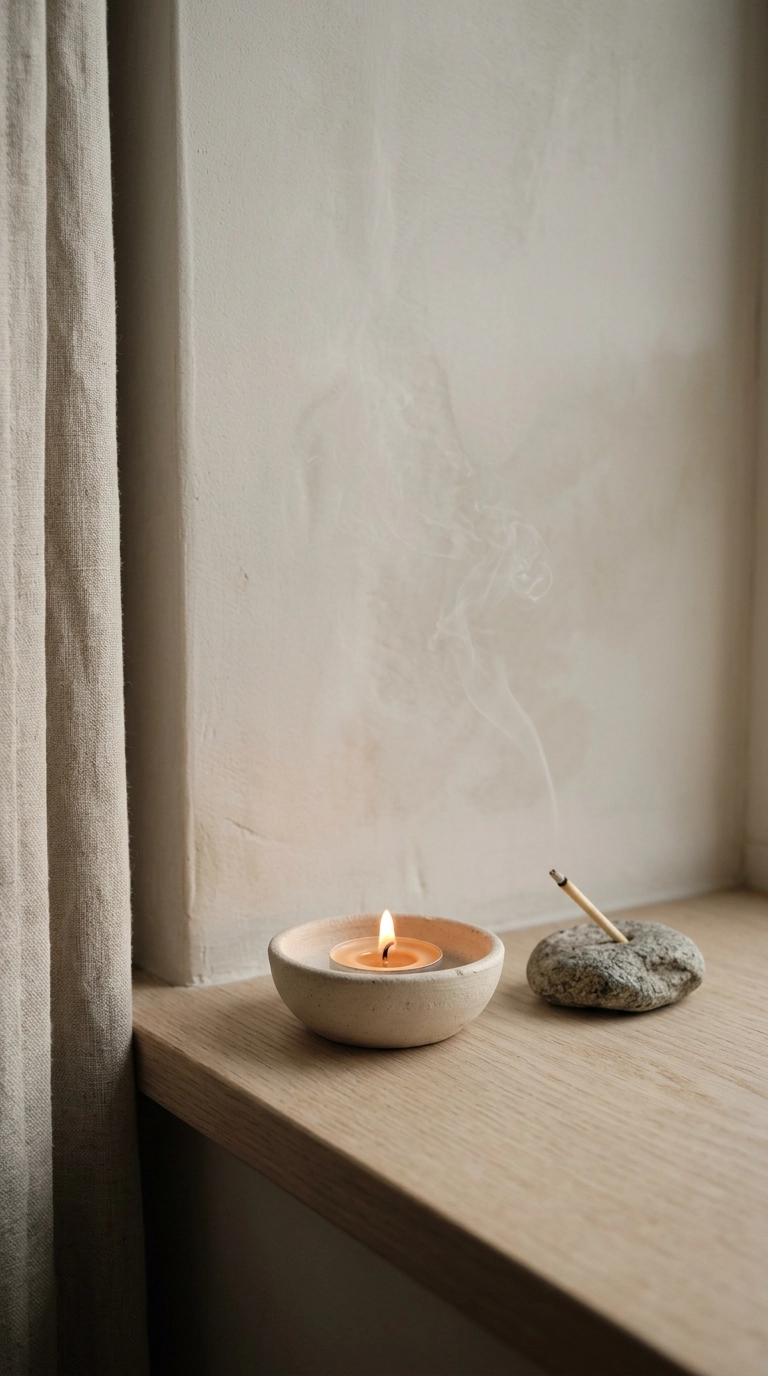
Japandi is a sensory style, and scent is the cheapest way to make the room actually feel like sleep. Hinoki cypress, cedar, and light sandalwood are the classic Japanese wood notes, all of them warm and dry rather than sweet or floral.
Where I’d Actually Start in Your Bedroom
If you read all twenty-three of these and felt slightly overwhelmed, here is the honest truth: start by taking things out. The empty-the-room afternoon costs nothing, and I have watched it do more for a bedroom than any purchase on this list. Then lower your sightline, swap the towering nightstand for a low stool, and change every bulb to 2700K. That is a single Saturday and it will already read as japandi.
After that, spend on the two things you touch: the bed frame and the linen bedding. Everything else can arrive slowly, which is very much the spirit of the style. Norm Architects and the Danish studio behind so much of the current japandi wave built their whole reputation on this exact combination of pale oak, restraint, and one honest handmade object, and you can see the same restraint running through the Kinfolk aesthetic that refuses to die because it genuinely photographs well. What is trending into 2026 is the warmer end of it: less grey, more oatmeal and umber, more visible texture, and a growing appetite for one dark grounding wood instead of the all-blonde look we saw a few years ago.
The idea I hope you steal is the empty wall. It takes more nerve than hanging something, and it is the single clearest signal that you understand the difference between japandi and plain minimalism, which is that one removes and stops while the other removes and then warms. If you want more rooms like this, sign up for my weekly newsletter, where I send one real project breakdown every Sunday, honest costs included.


