23+ Green Hallway Decor Ideas that are Moody, Fresh, and Surprisingly Easy in 2026

I have painted more hallways green than I can count, and I’ll tell you why I keep coming back to it: a hallway is the one room in the house nobody sits in, which makes it the safest place to take a real risk. Green is forgiving in a way blue and grey never are, because it borrows from wood tones and warm bulbs instead of fighting them. The catch is that a hallway usually has zero natural light, so the green you fall for on a paint chip in the kitchen can turn grey, khaki, or flat black by the time it’s on the wall — and that’s exactly what I want to help you get right.
Green Hallway Decor Ideas
1. Color-Drench the Whole Hall in Deep Forest Green
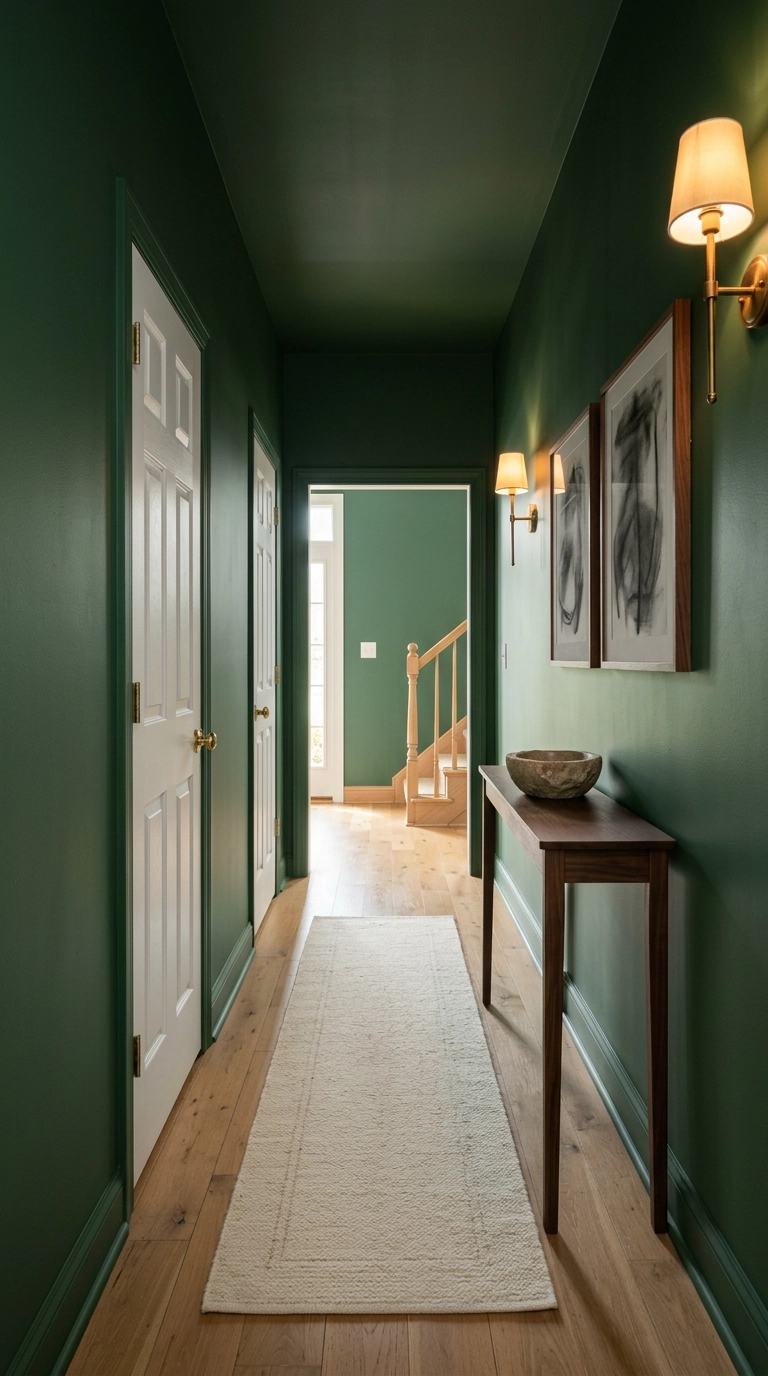
Color drenching just means the walls, trim, baseboards, and ceiling all wear the same color, and in a hallway it’s a cheat code. All those white trim lines are visual breaks, and in a corridor that’s already narrow, erasing them makes the space read as one continuous volume instead of a chopped-up tunnel.
2. Test a Big Sample on the Actual Wall, Then Look at It at Night
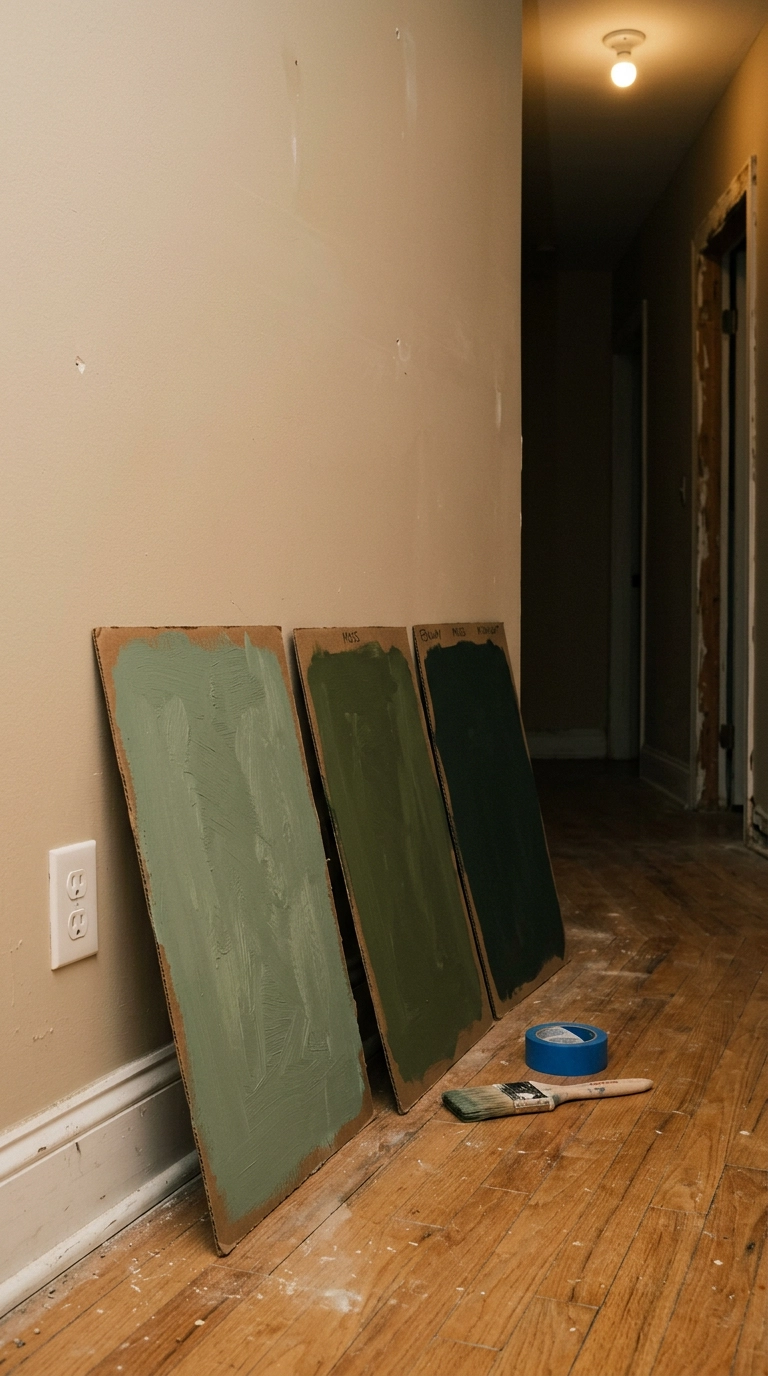
A windowless hallway is the single worst place on earth to trust a two-inch paint chip. Buy sample pots, paint two coats onto poster board at least 18 by 24 inches, and tape them up on the actual hall walls — not the living room, where the light is a total liar.
3. Paint Only the Doors and Trim Green, Leave the Walls Alone
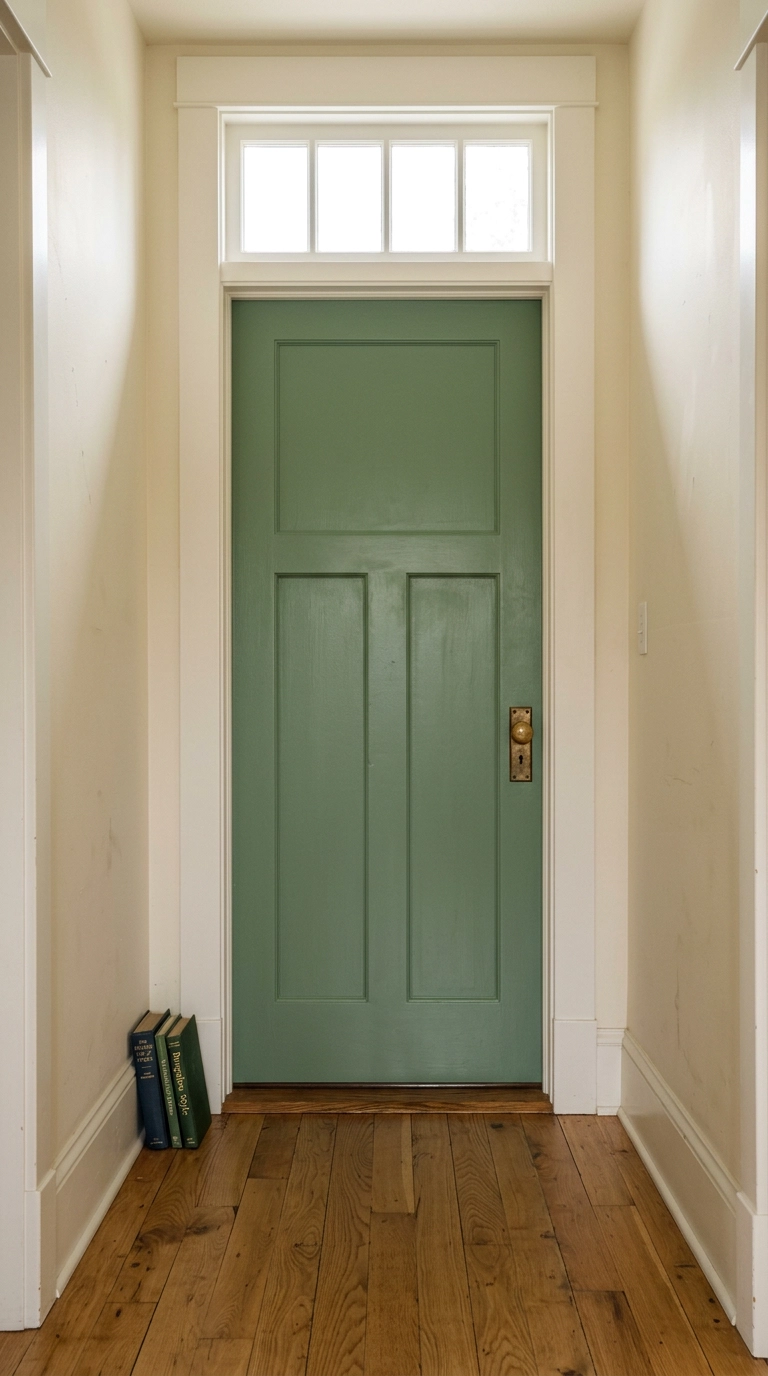
If the idea of a fully green hall makes you sweat, paint the doors and their casings and stop there. It’s a Saturday project, it costs about a quart per door, and it delivers maybe 70 percent of the impact with 20 percent of the commitment.
4. Sage Wainscot Below, Soft Cream Above
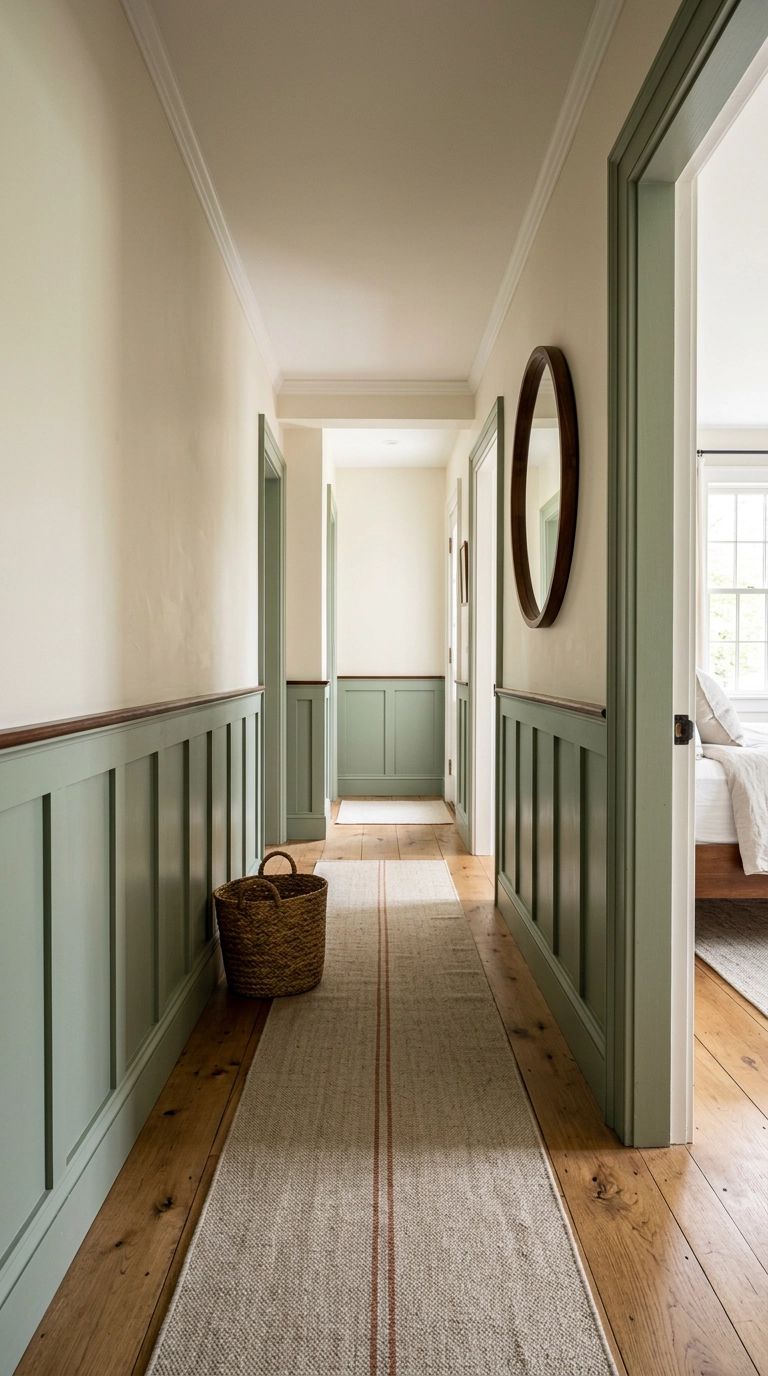
Two-tone is the move when your hall is dark but you’re not ready to go full moody. Sage on the bottom third takes the scuffs and the vacuum dings, and the pale upper wall keeps bouncing what little light you have.
5. Full-Height Olive Board and Batten for Architecture Where There Is None
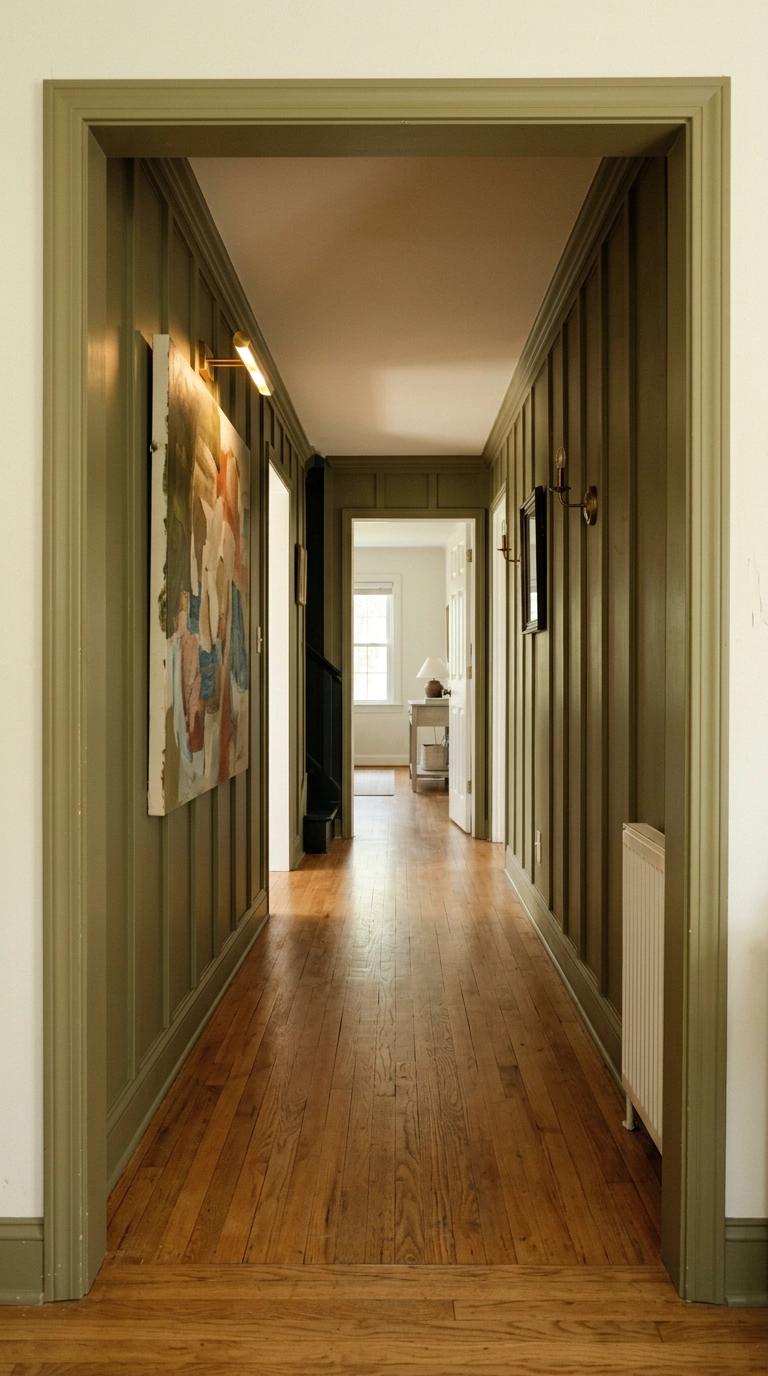
Builder hallways have no architecture at all, and paint alone can’t invent it. Vertical battens in primed MDF, spaced 14 to 18 inches apart, give the eye rhythm and make an eight-foot ceiling feel taller because your gaze travels up.
6. High-Gloss Lacquered Green for a Hall With No Window
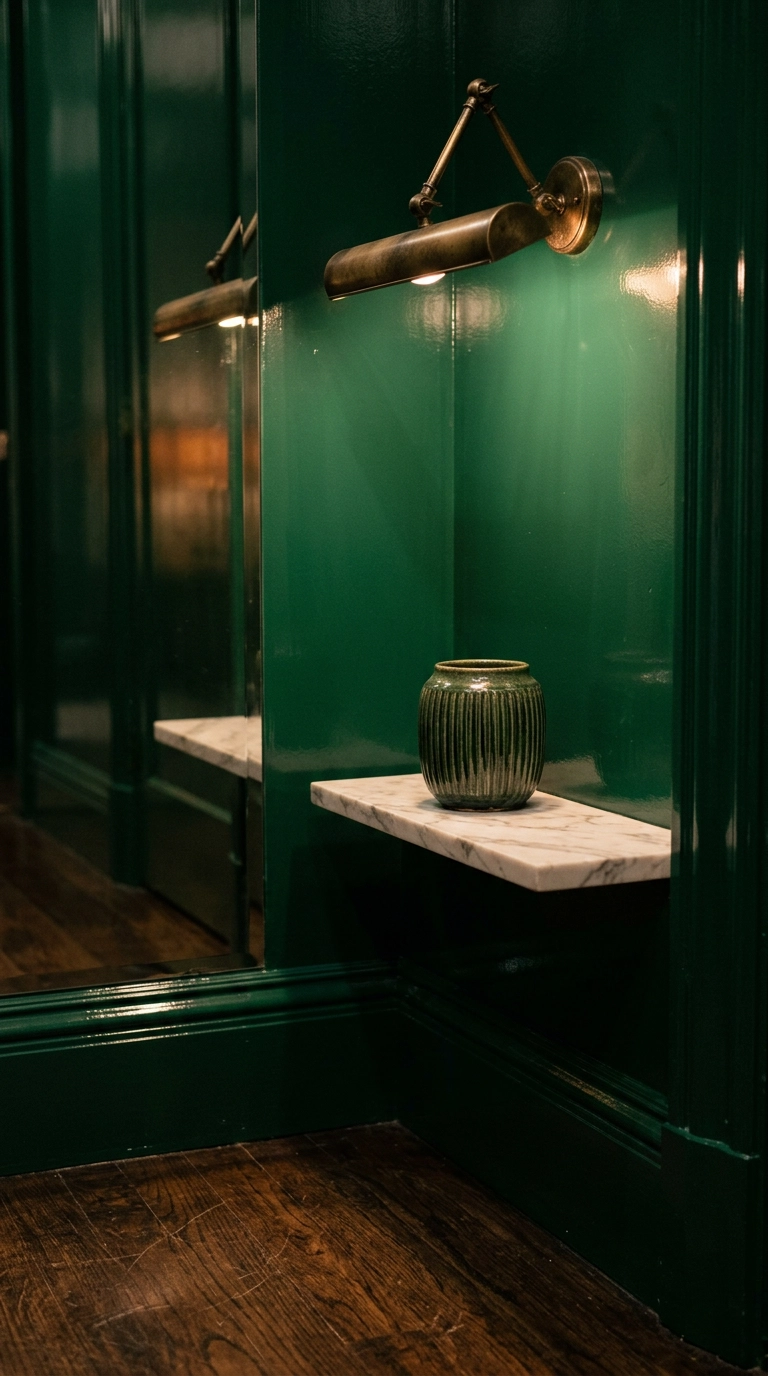
Gloss is the trick for a hall with no window, because a lacquered wall behaves like a very dark mirror and multiplies whatever light you do have. It’s the most glamorous thing you can do to a corridor and the least forgiving.
7. Moody Teal-Leaning Green with Nothing but Brass
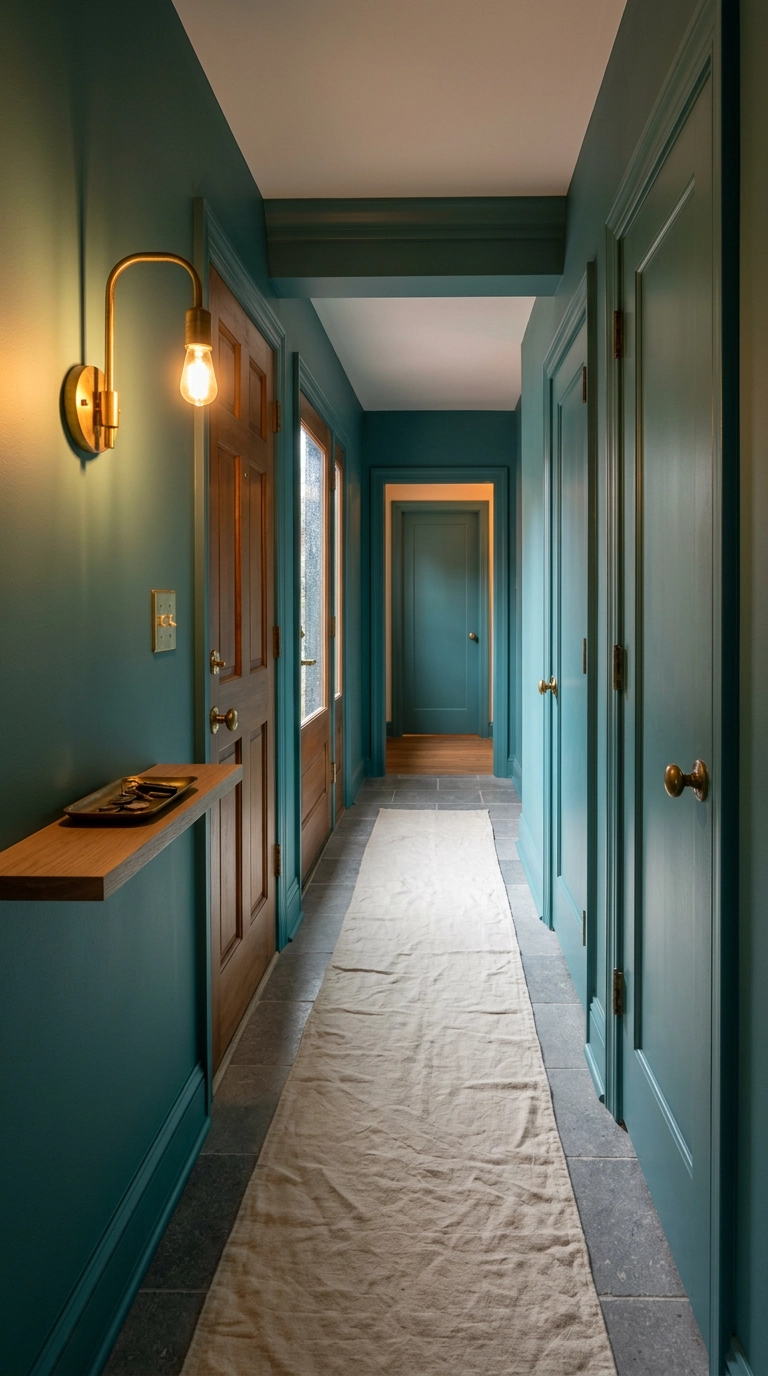
The teal-leaning greens are the sophisticated end of the family, and Farrow & Ball Green Smoke is the one I’ve specified most in hallways. It shifts blue in daylight and green under a warm bulb, which keeps it interesting all day instead of going flat.
8. Small-Scale Patterned Green Wallpaper
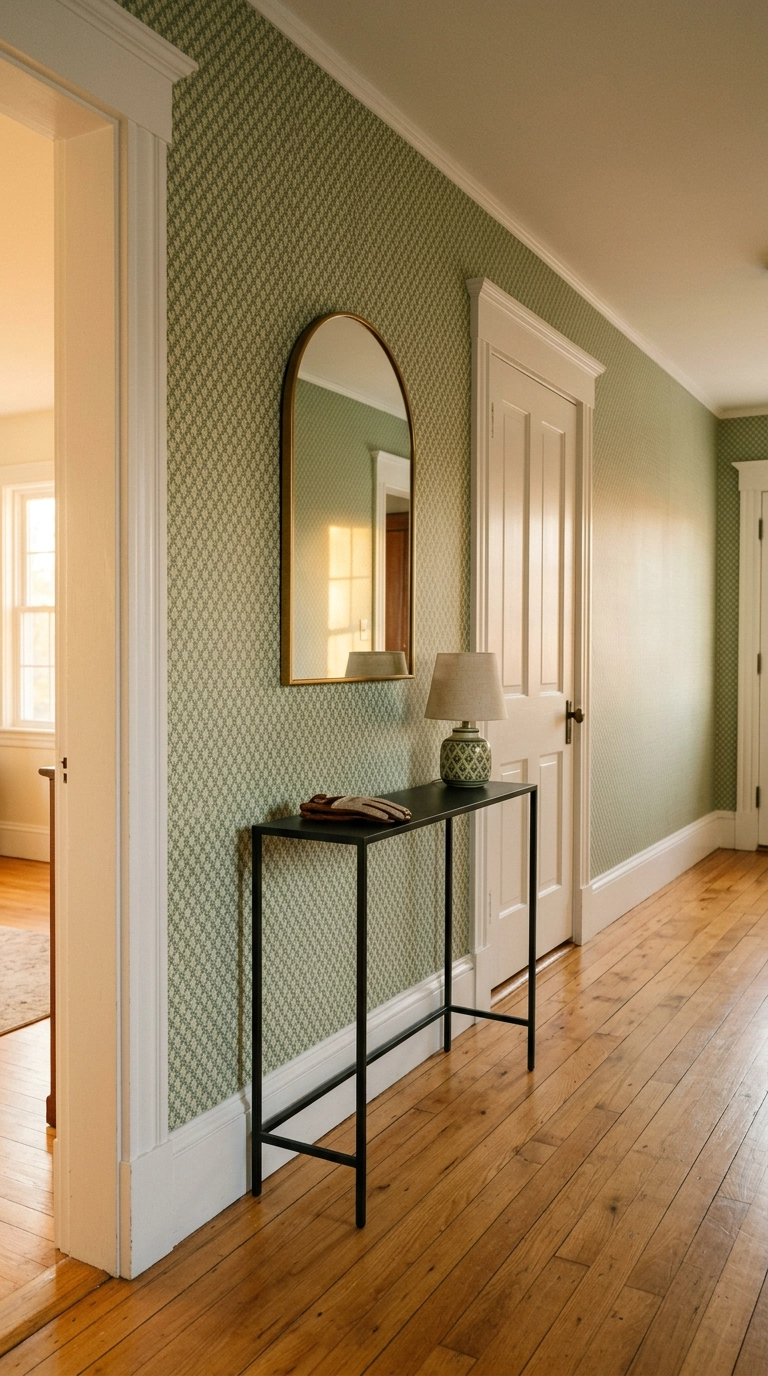
Wallpaper earns its keep in a hallway because the wall area is small, so a roll or two does the whole job. Keep the pattern small in scale — a big bold repeat in a 40-inch-wide space gets cut off by every door and reads as chaos.
9. Removable Green Wallpaper for Renters
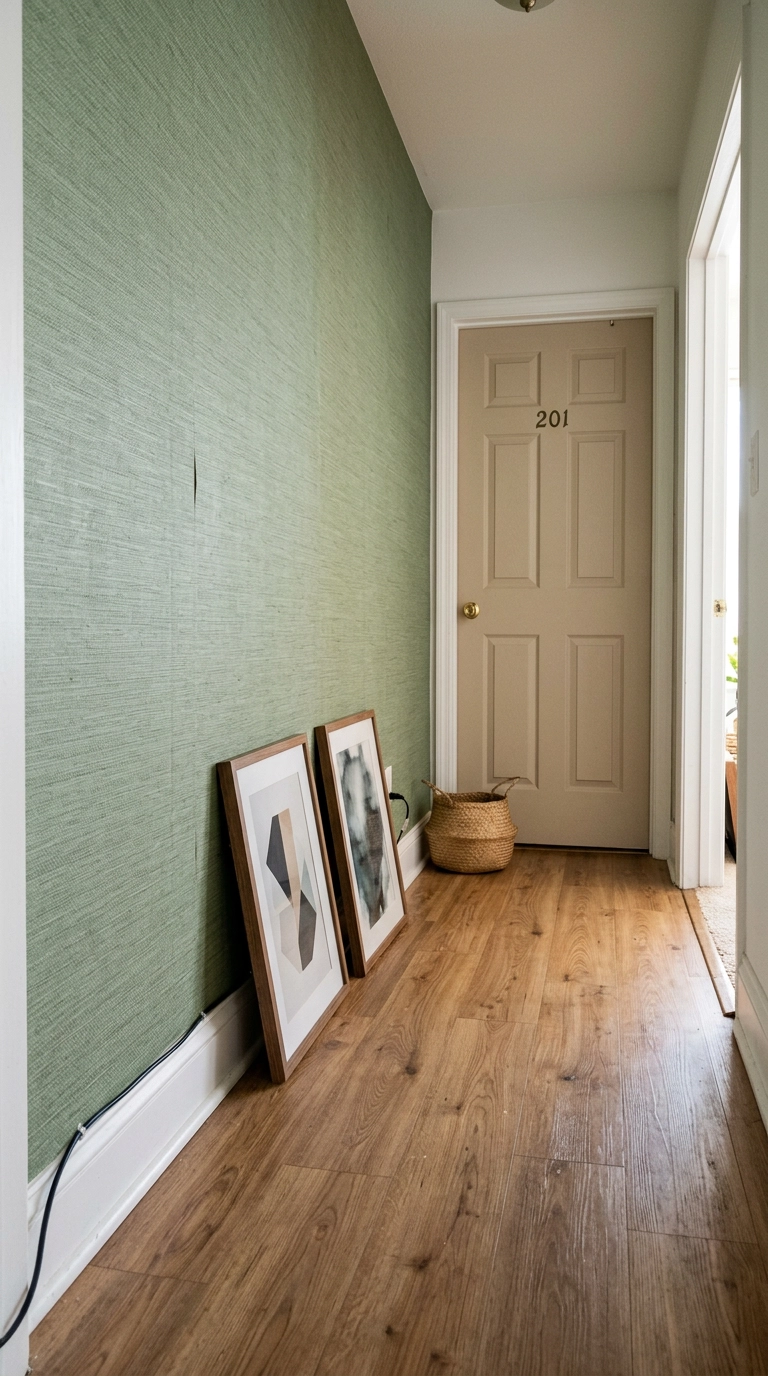
Renters, this is your version. Peel-and-stick in a grasscloth-look green gives you texture and depth on a wall you’re contractually obligated to hand back beige.
10. Green-and-White Floor Tile as the Whole Statement
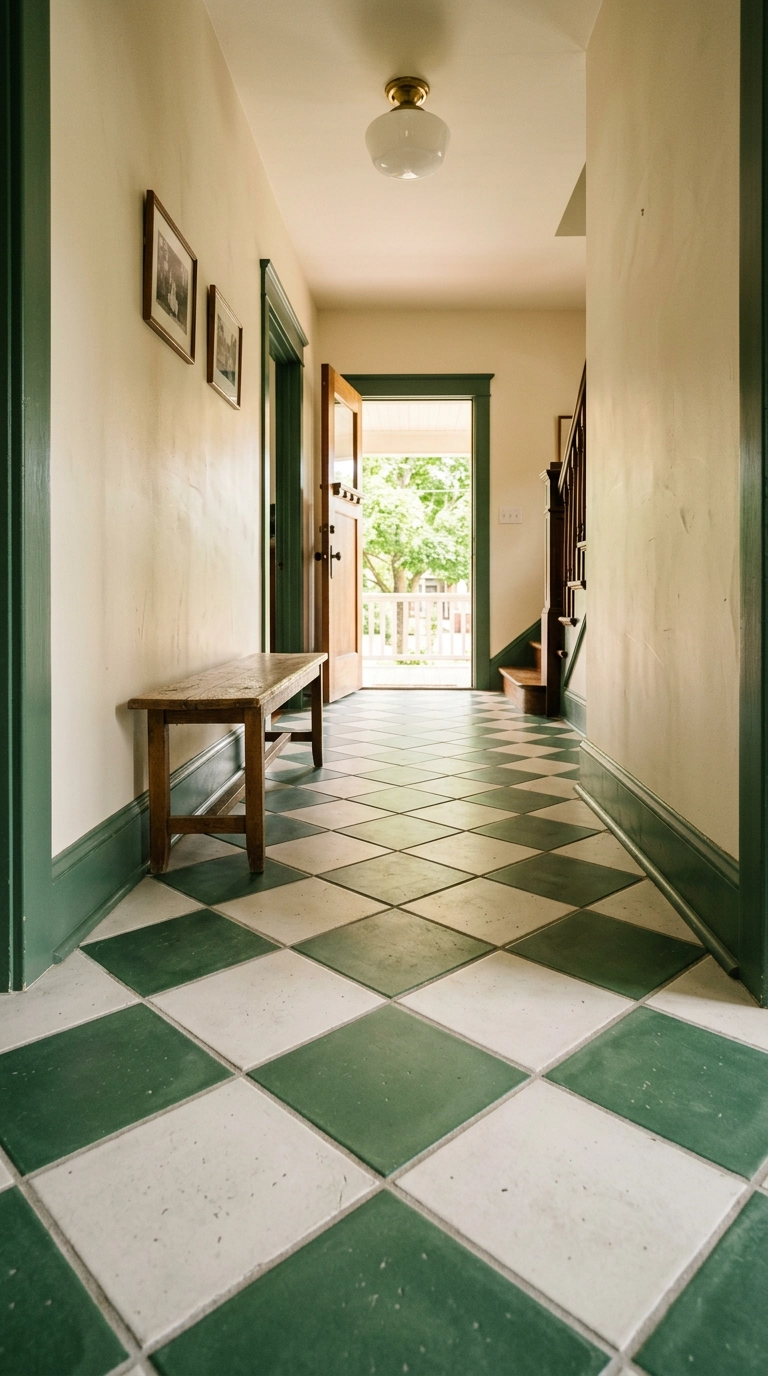
Sometimes the green belongs underfoot. A green-and-white checker or encaustic-look cement tile turns the floor into the feature and lets you keep the walls pale, which is smart if your hall is genuinely gloomy.
11. Gallery Wall Against Deep Green (Mind the Switch Plates)
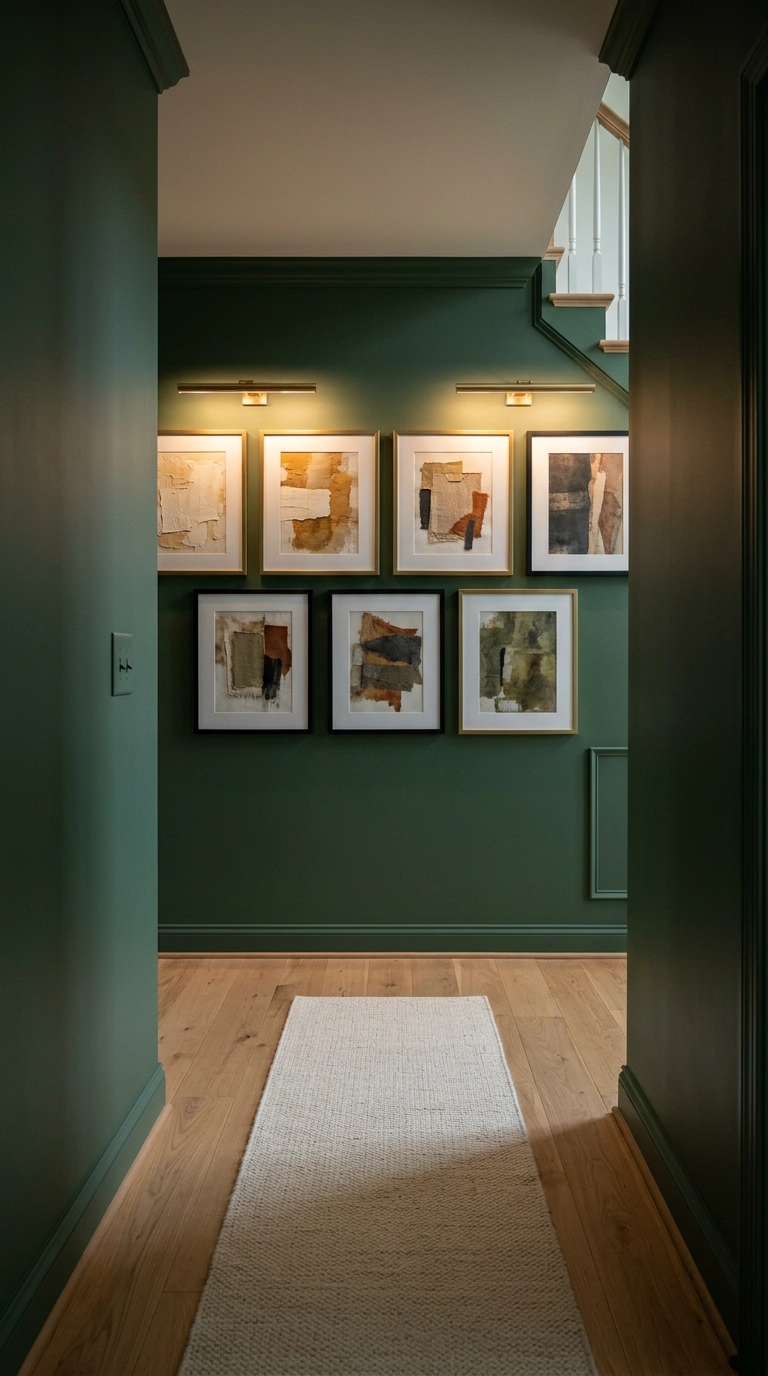
Art against dark green looks like it cost three times what it did, because the saturated background gives every frame instant contrast. Keep gaps consistent at two to three inches and treat the whole arrangement as one rectangle rather than a scatter.
12. Picture Frame Wall Molding in Muted Green
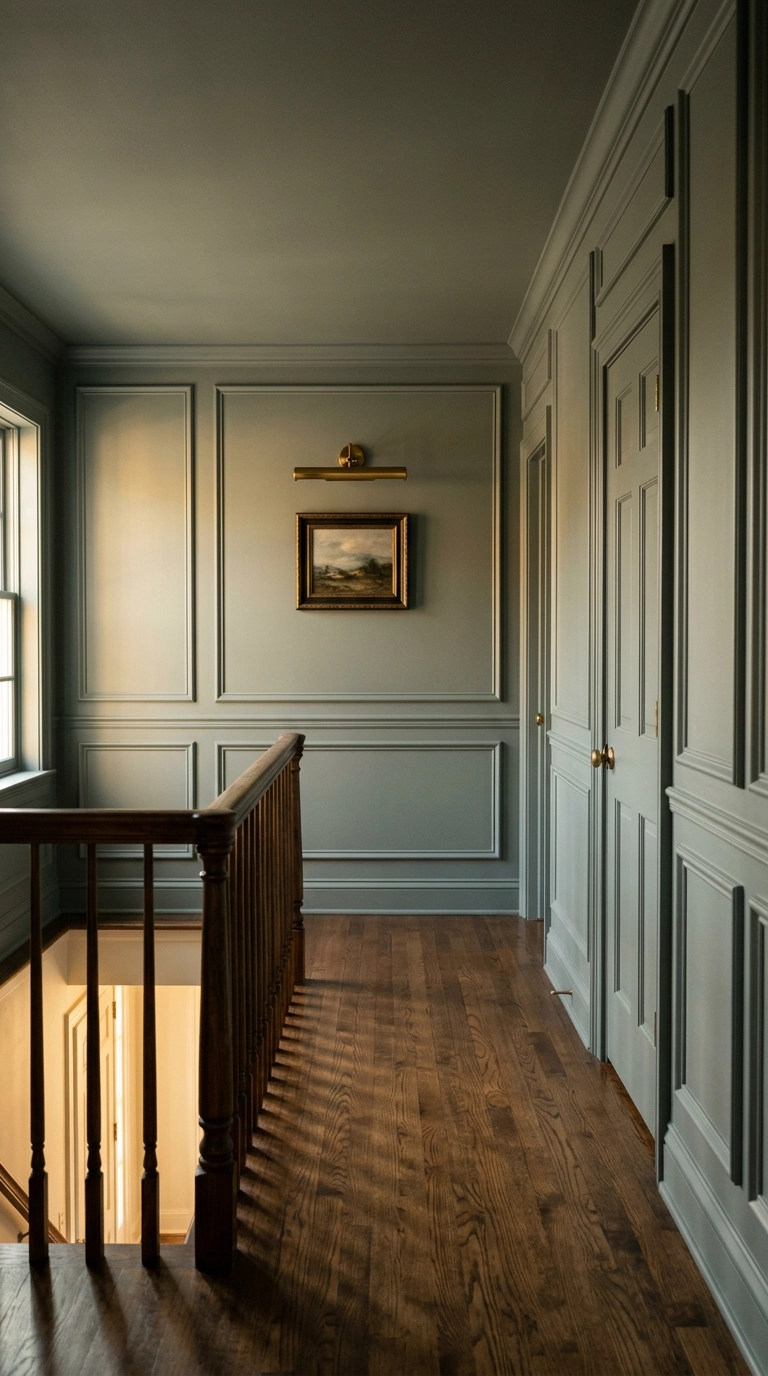
Applied picture frame wall molding — thin rectangular frames glued and nailed to flat drywall — is the cheapest way to make a hall look like it has always been there. Sherwin-Williams Pewter Green is my pick because the grey in it keeps the panels from looking like a novelty.
13. Serious Sconces at 64 Inches
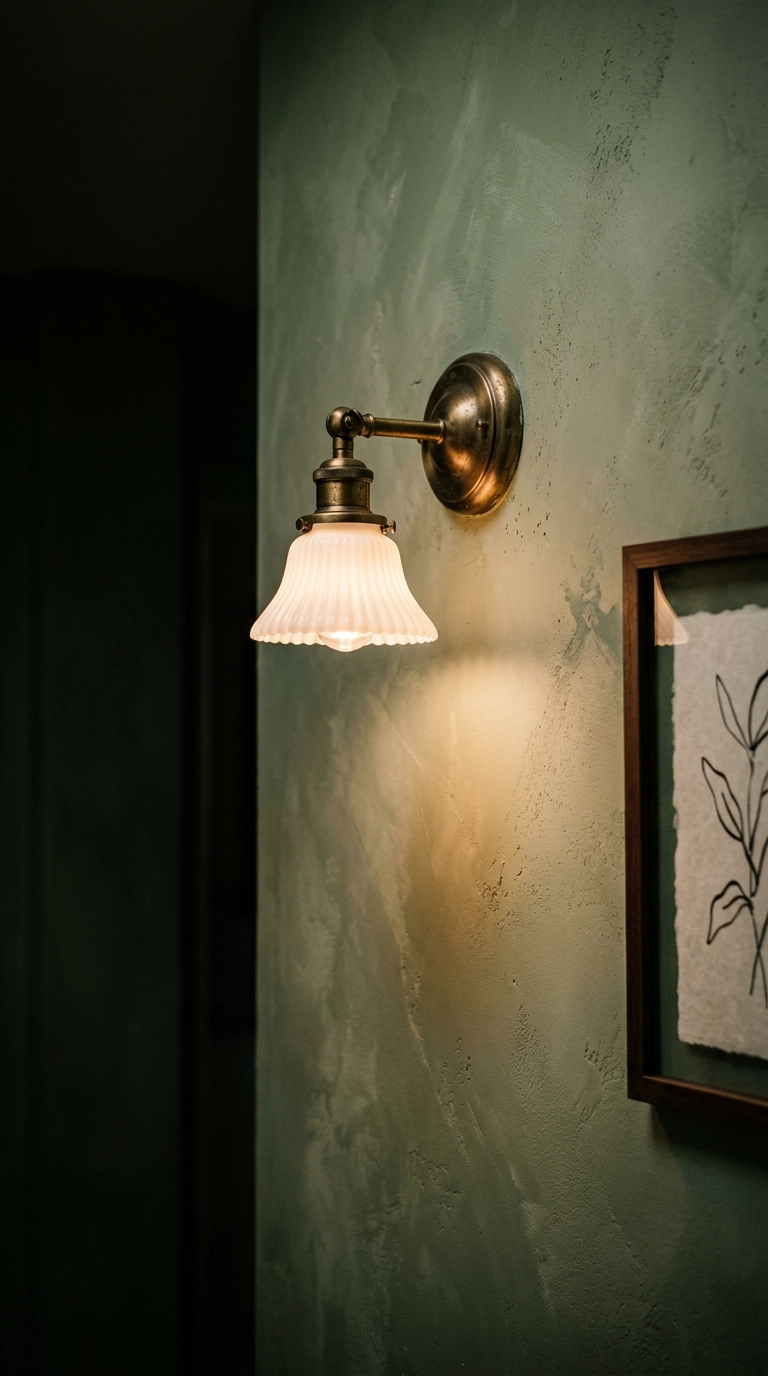
Green needs light or it dies. A single overhead can light is the enemy of a green hallway — it flattens the color and throws ugly shadows straight down the wall.
14. No-Drill Plug-In and Battery Lighting
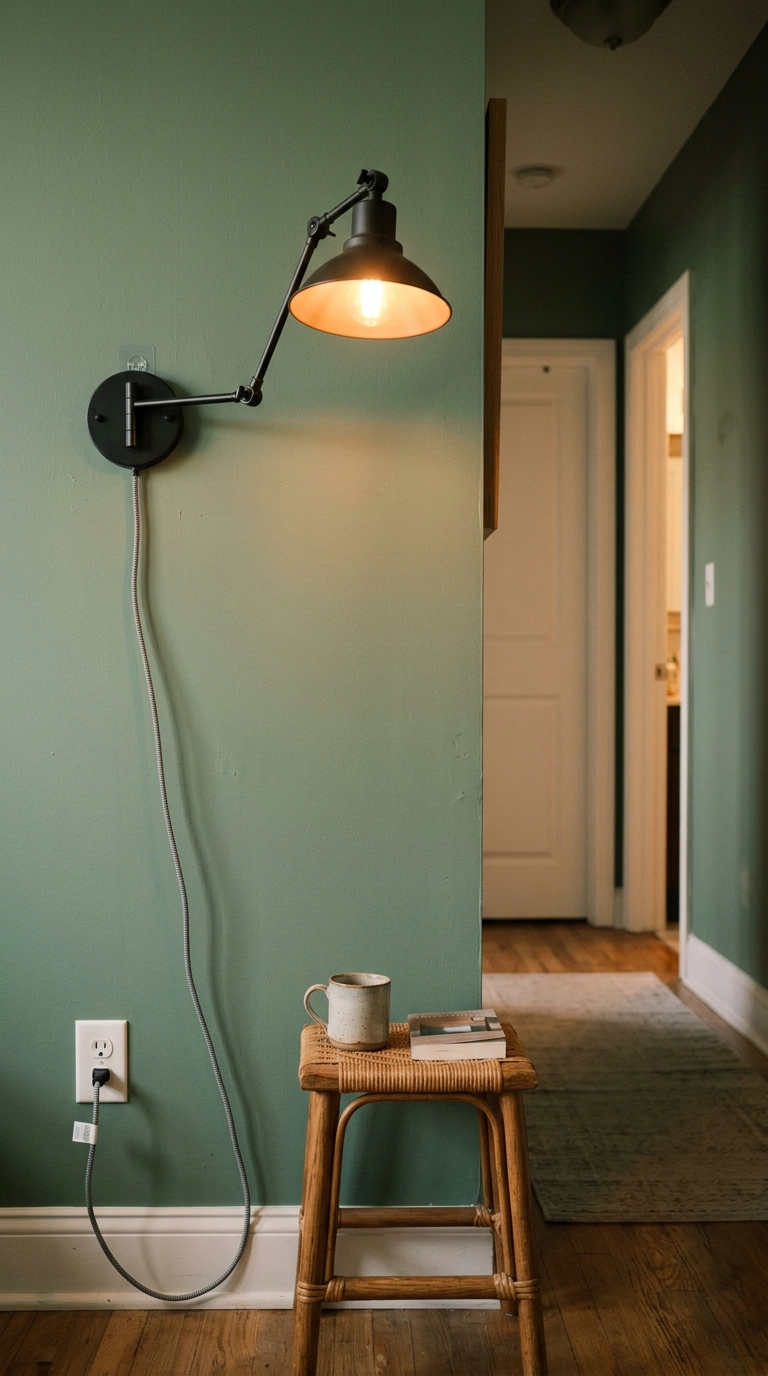
If you can’t cut into a wall, a plug-in sconce on a heavy-duty adhesive hook does the job, and rechargeable puck lights inside a picture light housing have gotten genuinely good. A cloth-covered cord looks intentional instead of apologetic.
15. A Console Table No Deeper Than 12 Inches
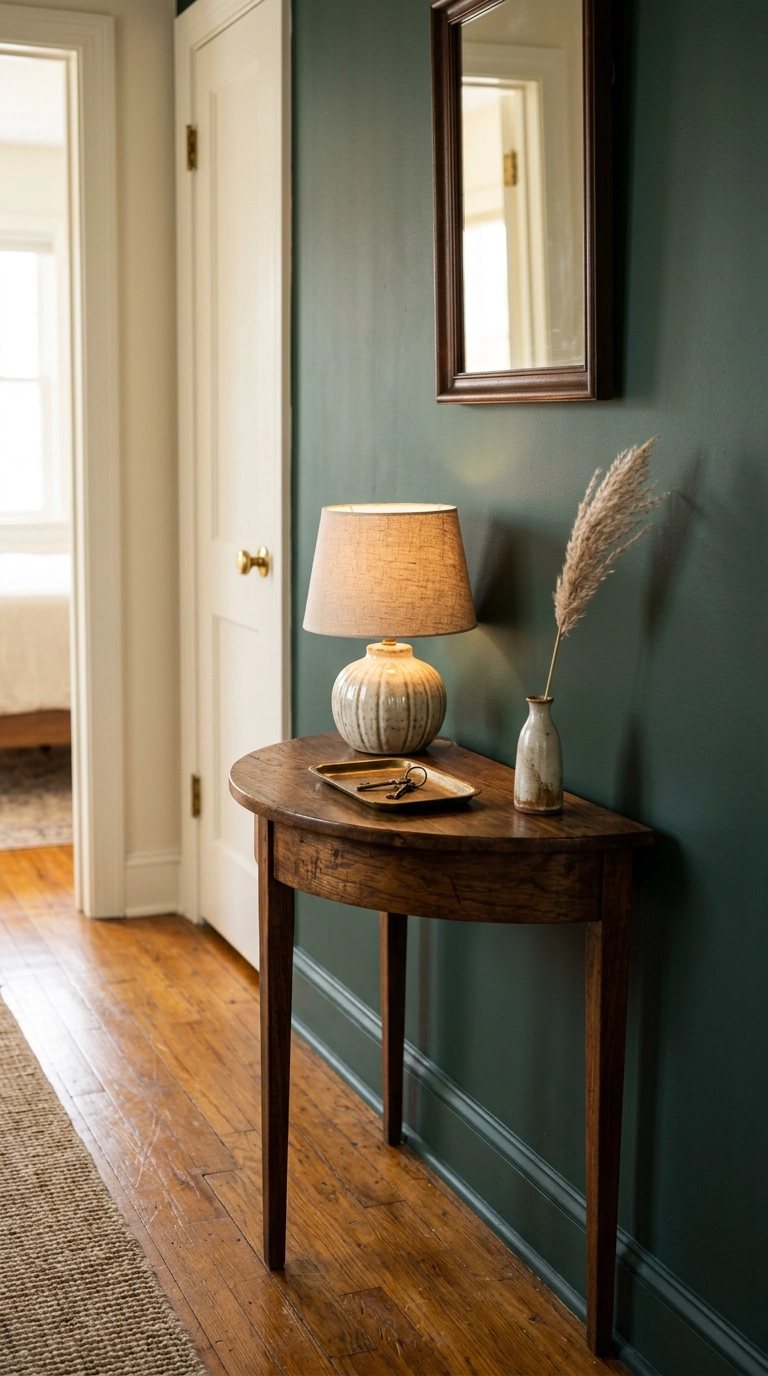
A hallway is circulation space first, furniture second. Anything deeper than about 12 inches and someone is catching a hip on the corner every single day — I aim for 10 to 12 and keep 30 to 36 inches of clear walking width.
16. A Green Runner with a Terracotta Note (and a Pad Underneath)
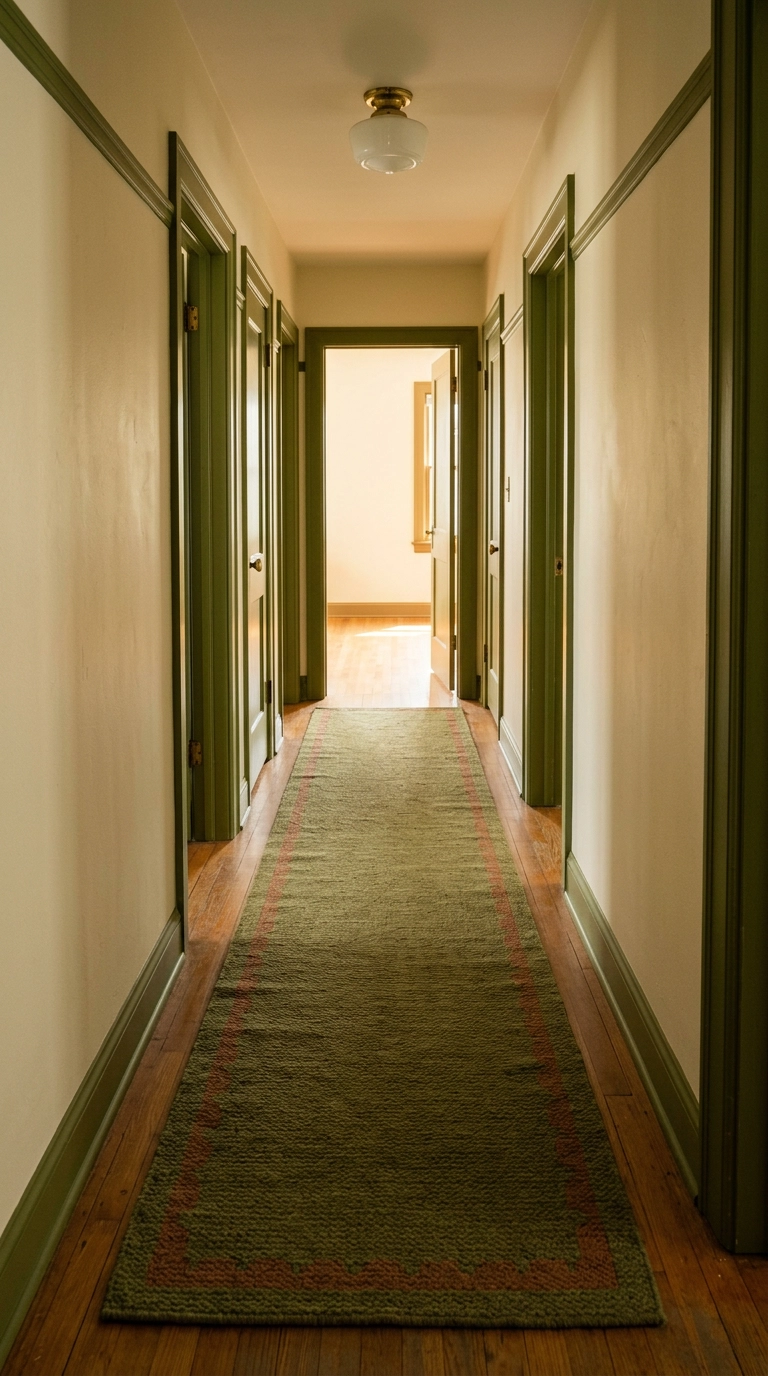
Green and terracotta is one of those pairings that shouldn’t be as good as it is — the rust warms the green up instantly and keeps a dark hall from feeling like a cave. Leave 4 to 6 inches of bare floor on each side so the runner reads as deliberate rather than wall-to-wall carpet.
17. Near-Black Green for a Truly Windowless Hall
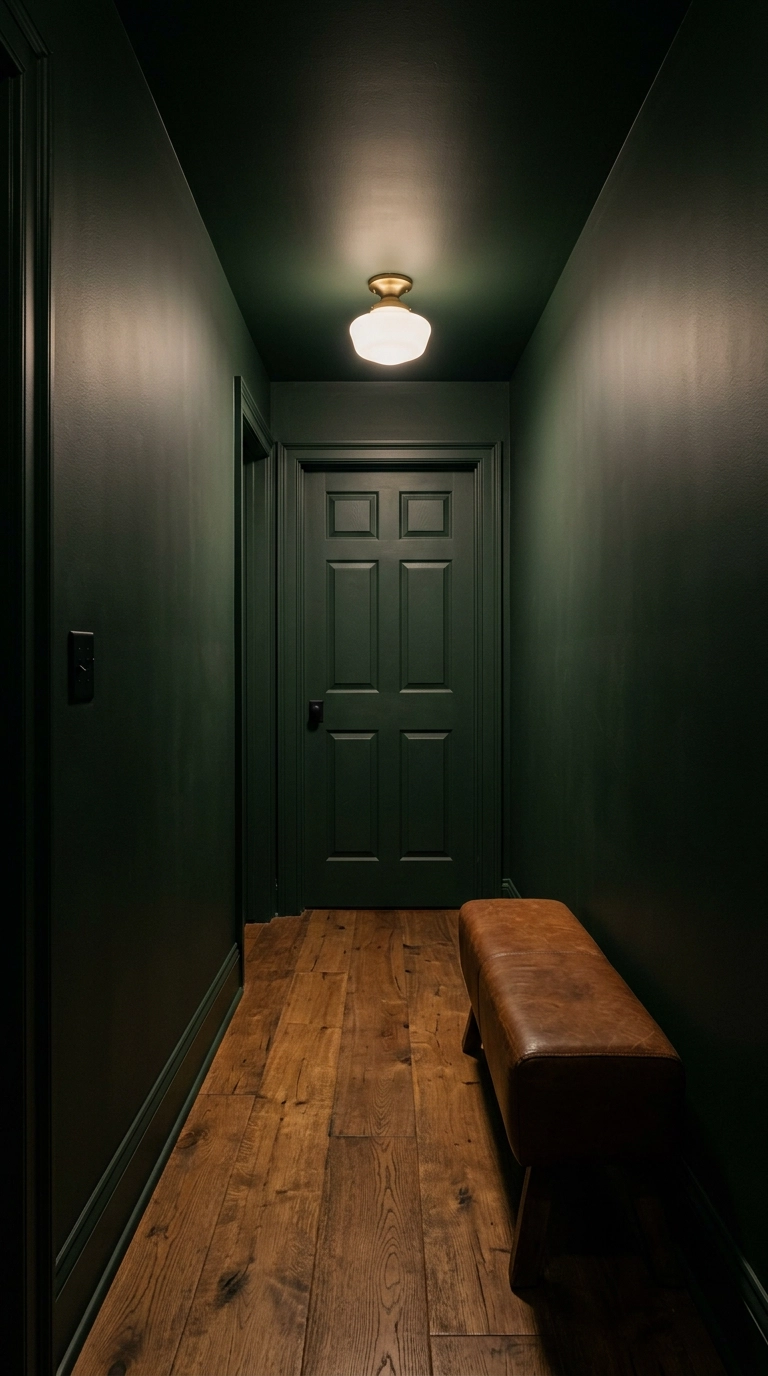
Here’s the counterintuitive one: if your hallway has no window at all, stop fighting it. A pale green in a lightless corridor just looks like dirty grey, while a near-black green like Benjamin Moore Salamander or Farrow & Ball Studio Green looks intentional and expensive.
18. Pale Celadon for a Hall That Borrows Daylight
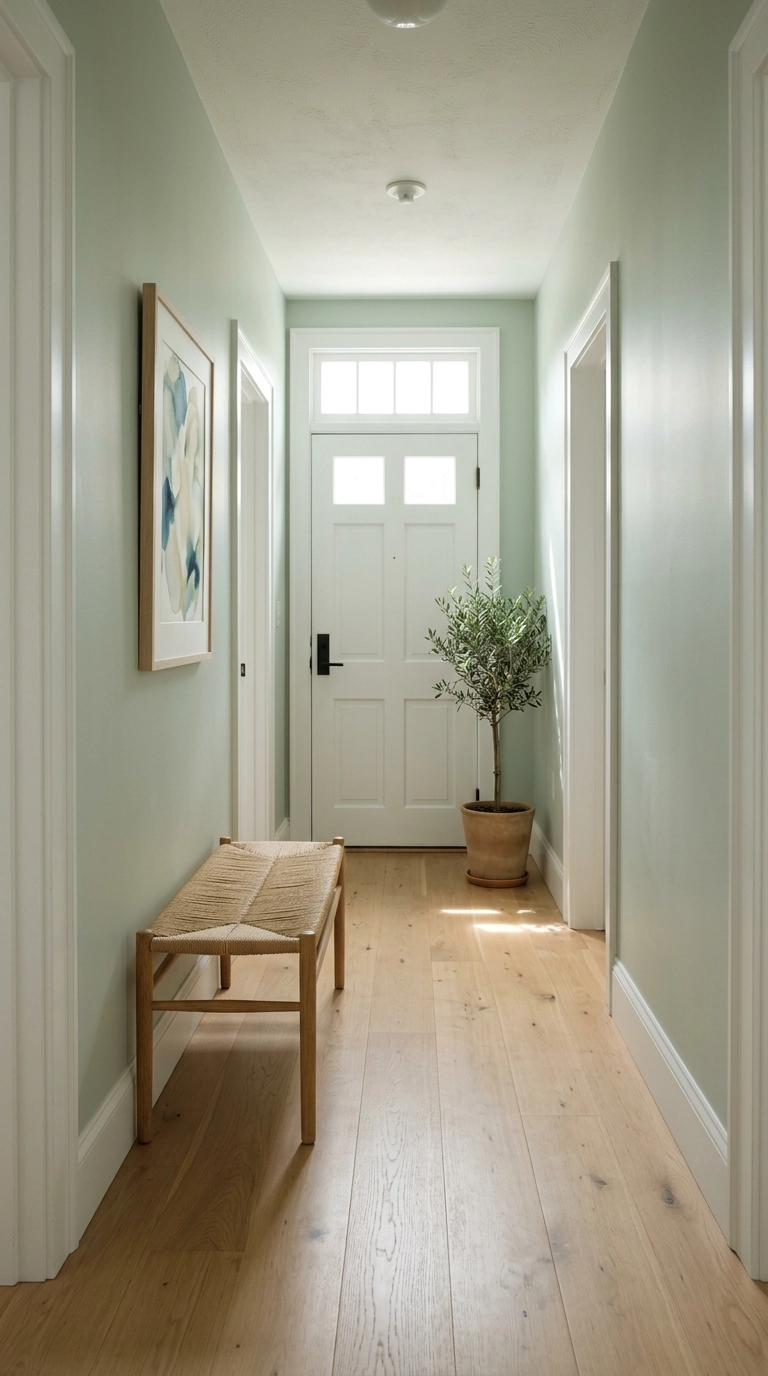
Celadon is the one pale green I trust in a hallway, and only if you’re borrowing real daylight from a transom, a skylight, or open doorways. It has enough yellow in it to stay green when the light gets thin, where a cooler mint goes straight to grey.
19. Green on the Ceiling Only
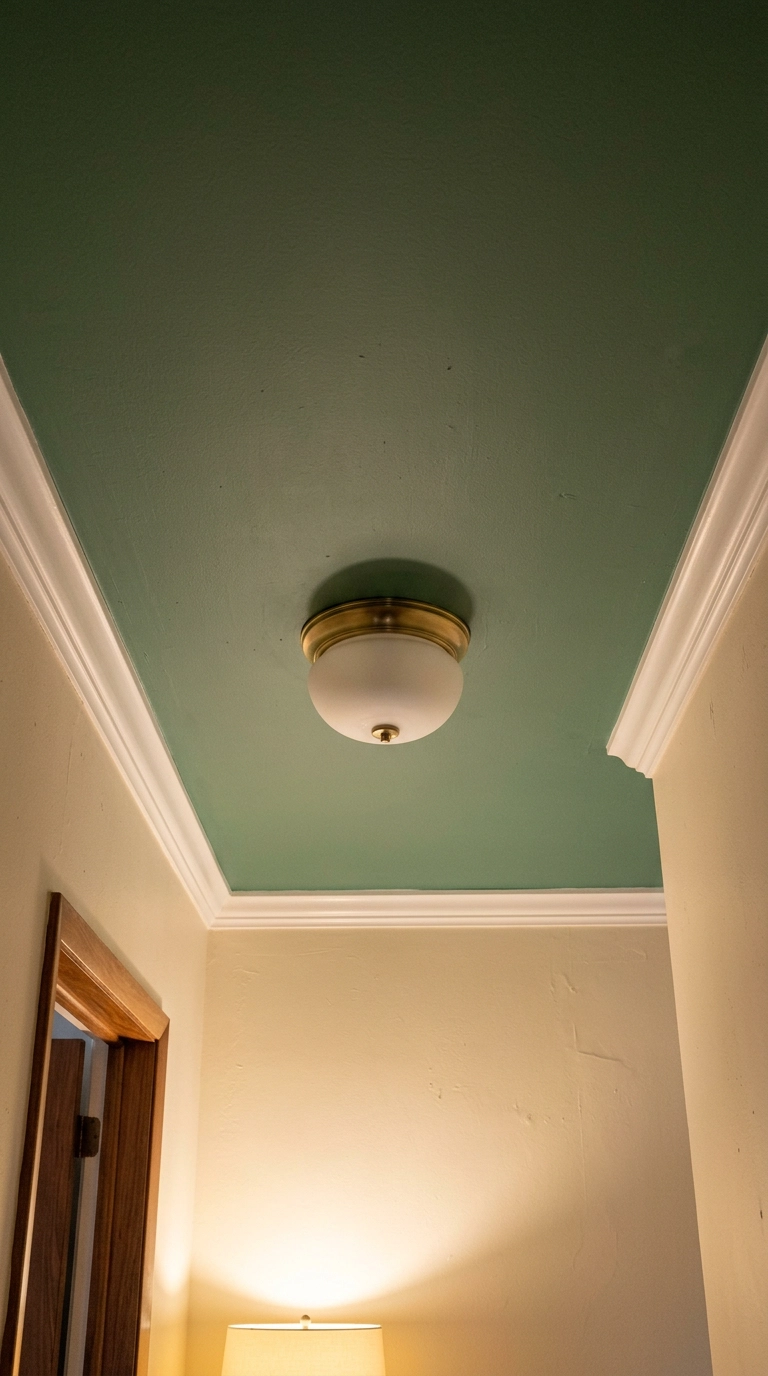
The fifth wall is free real estate and almost nobody uses it. A soft eucalyptus or sage green overhead with cream walls gives a hall real personality while keeping the vertical surfaces light — perfect if your ceiling is nine feet or higher.
20. Green Limewash for Depth Without Pattern
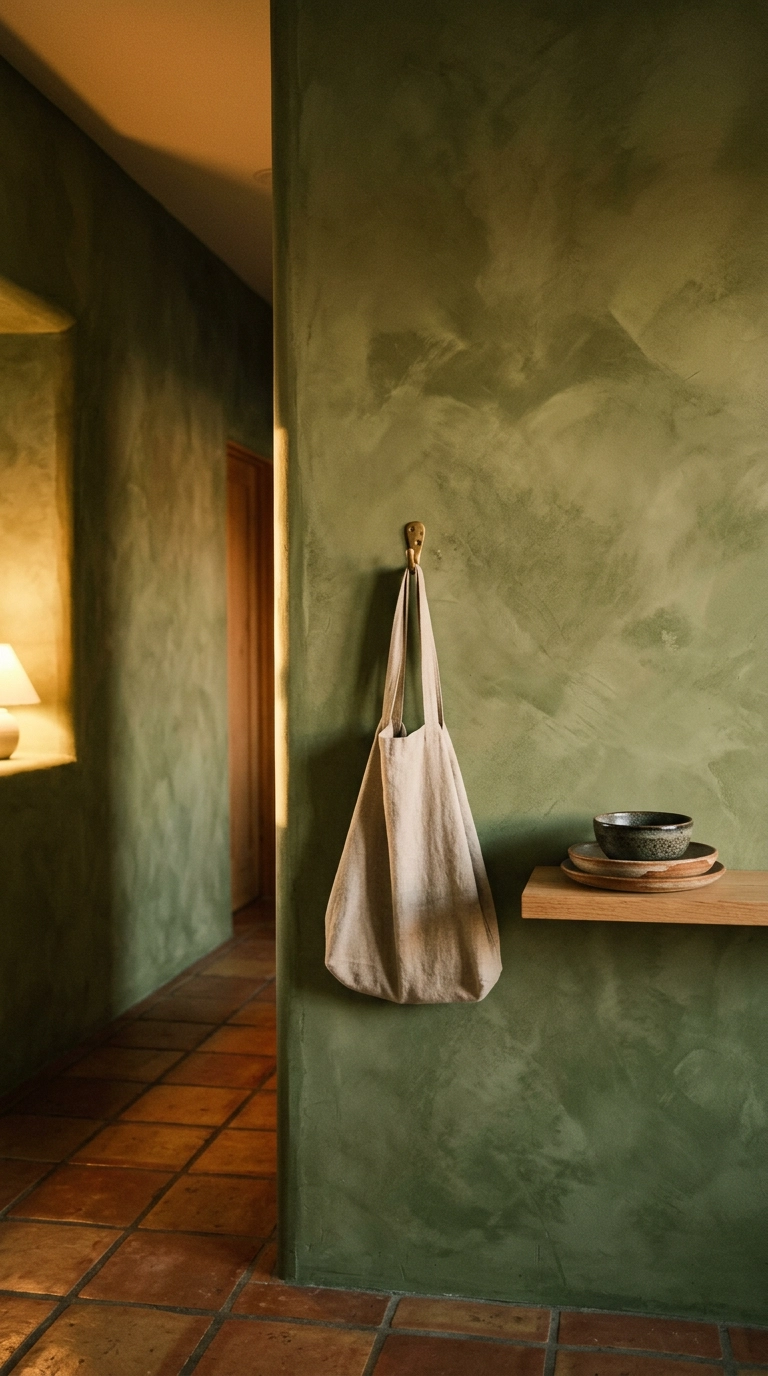
Flat paint in a dark hall can go dead. A green plaster limewash gives you cloudy tonal variation that catches whatever light you have, so the wall reads as depth instead of a void.
21. Green Stair Risers with an Oak Tread
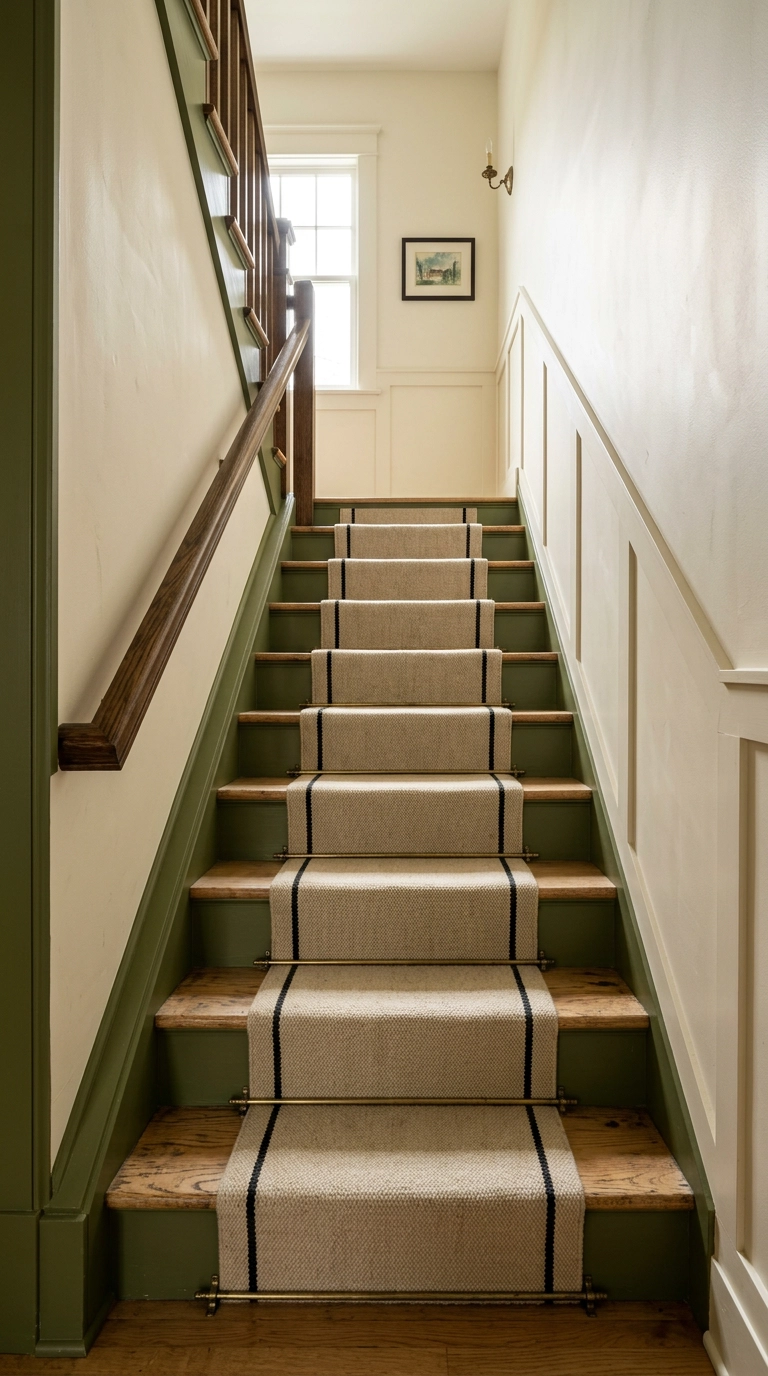
If your hall includes stairs, painting just the risers green and leaving the treads as natural wood is one of the highest-impact weekend jobs there is. The horizontal wood keeps it warm, the green verticals give you rhythm all the way up.
22. Bright Grass Green Inside a Closet Door
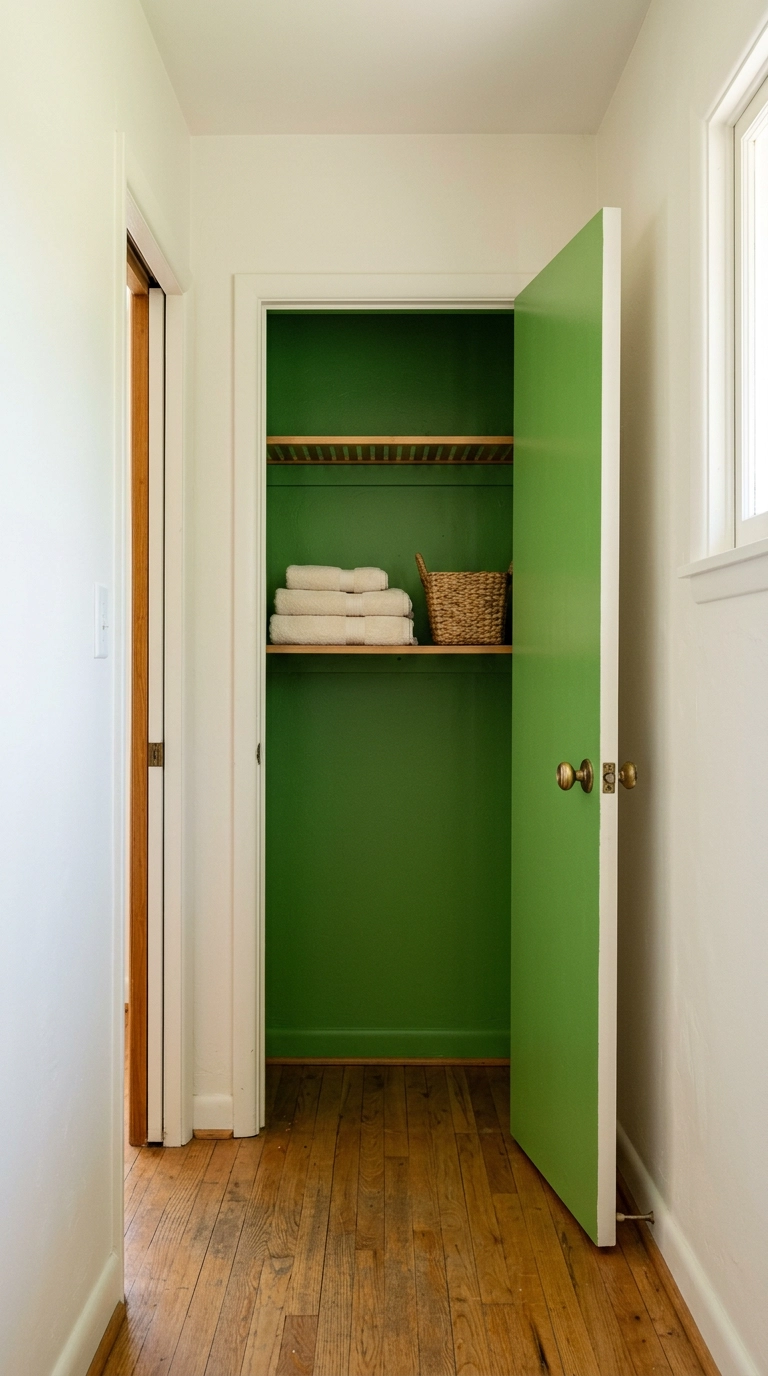
Bright grass green is too much for a whole hallway, but it’s perfect as a surprise. Paint the inside of the linen closet, and every time the door opens you get a hit of color nobody expected.
23. Olive Green with Dusty Pink as the Bold Accent
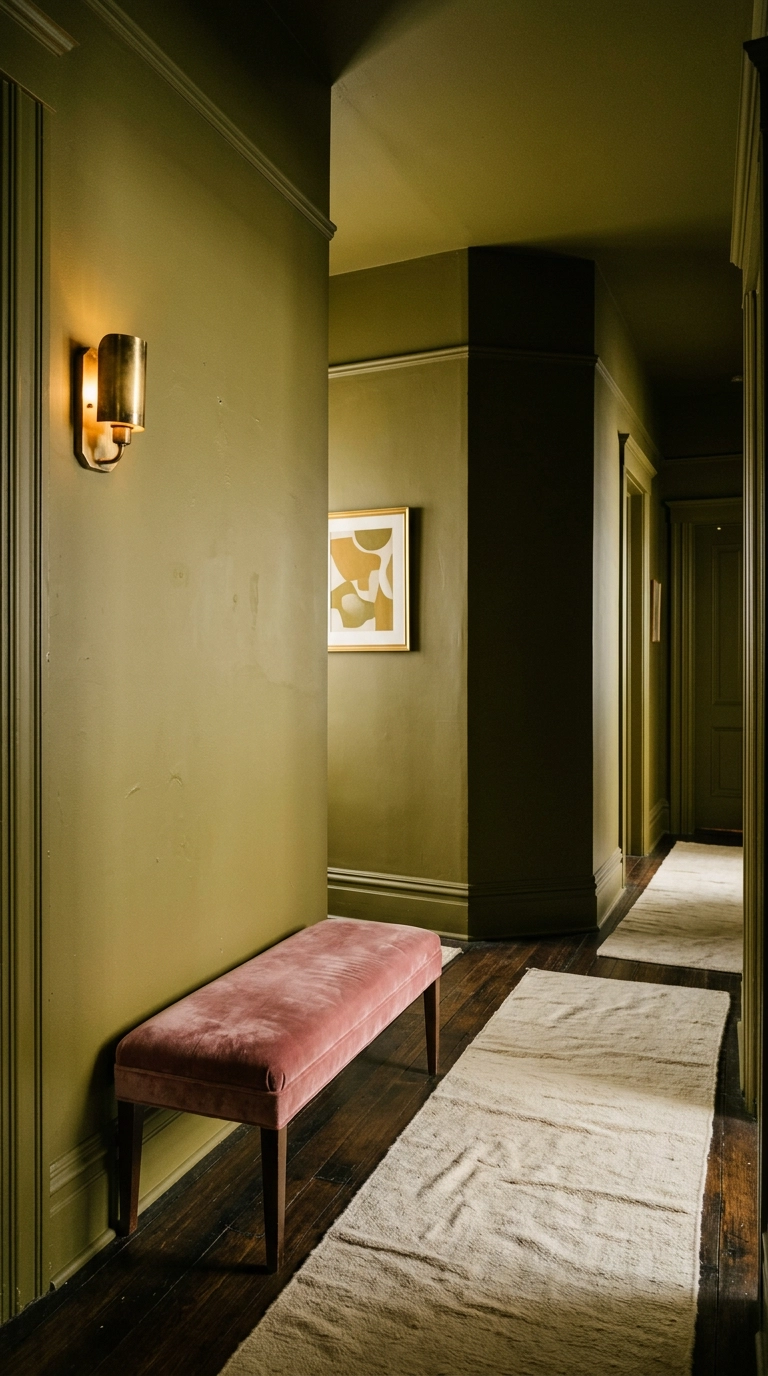
Green and pink is the pairing I have to talk clients into every time, and it’s never once let me down. Olive and dusty rose sit opposite each other enough to feel alive, but both are muted, so it lands sophisticated rather than nursery.
One Last Walk Down the Hall
If you take one thing from all of this, let it be the sample boards. I have watched people fall in love with a sage in a sunlit showroom and then stand in their own windowless hallway at 8 p.m. wondering why the wall looks like wet cement. Paint two coats on a big board, tape it up, and judge it at night under your own bulbs — everything else in this article gets easier once you’ve done that.
Green has been having a long moment and I don’t think it’s ending. Benjamin Moore made the sage October Mist a Color of the Year, Sherwin-Williams did the same with Evergreen Fog, and the deep Farrow & Ball greens like Green Smoke and Studio Green have been quietly running English hallways for decades — which tells you this isn’t a trend so much as a correction after fifteen years of grey. What feels genuinely new in 2026 is the appetite for texture over pattern: limewash instead of wallpaper, lacquered gloss instead of matte, color drenched trim instead of crisp white lines.
My honest shortlist if you’re starting this weekend: paint the doors in Card Room Green, add two real sconces at 64 inches, and put down a runner with a proper felt pad. That’s three moves, one of them takes an afternoon, and it will change how the whole floor of your house feels. If you want more of this in your inbox, sign up for my weekly newsletter — I send one email, real projects and real costs, no fluff, and I’d love to have you along.