
28+ Stunning Victorian Hallway Decor Ideas that Feel Rich and Real in 2026

I have stood in a lot of Victorian entry halls, and I am going to tell you the thing most articles skip: they are narrow, they are dark, and they were never designed for a stroller and four coats. An 1890s row house hall is usually four to five feet wide, has one transom over the front door for light, and ends in a long dim run past the stairs. But that same hall has a turned newel post, nine or ten foot ceilings, baseboards taller than your dog, and plaster you could not buy today, so instead of fighting the darkness I have learned to lean all the way into it. These 28 ideas are the real repertoire, from a Saturday afternoon fix to the tile job you save up for.
Victorian Hallway Decor Ideas
1. Encaustic Geometric Cement Floor Tile from Threshold to Stairs
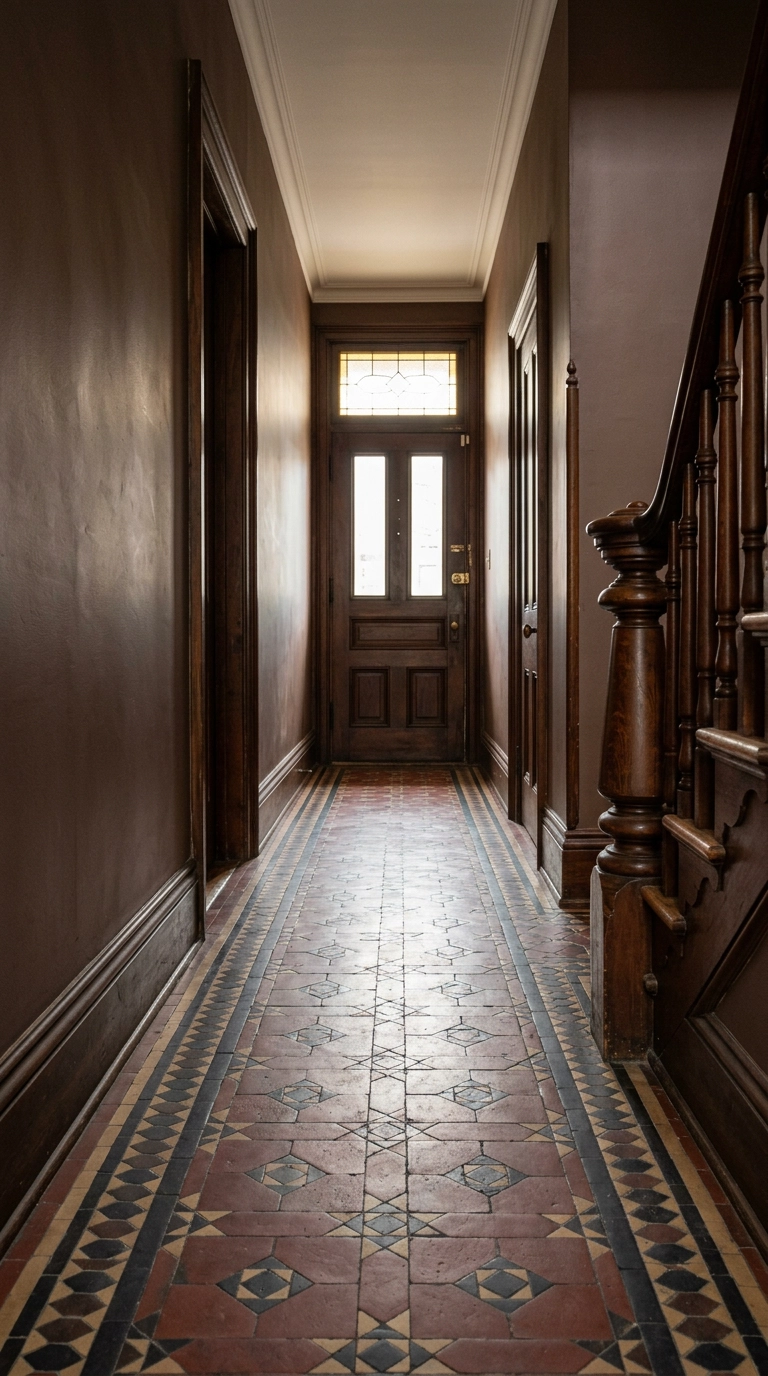
If you only do one big thing to a Victorian hall, do the floor. A patterned encaustic or cement tile run reads as original to the house, and because the pattern repeats it makes a narrow corridor feel intentional rather than cramped.
2. Black-and-White Checkerboard Laid on the Diagonal
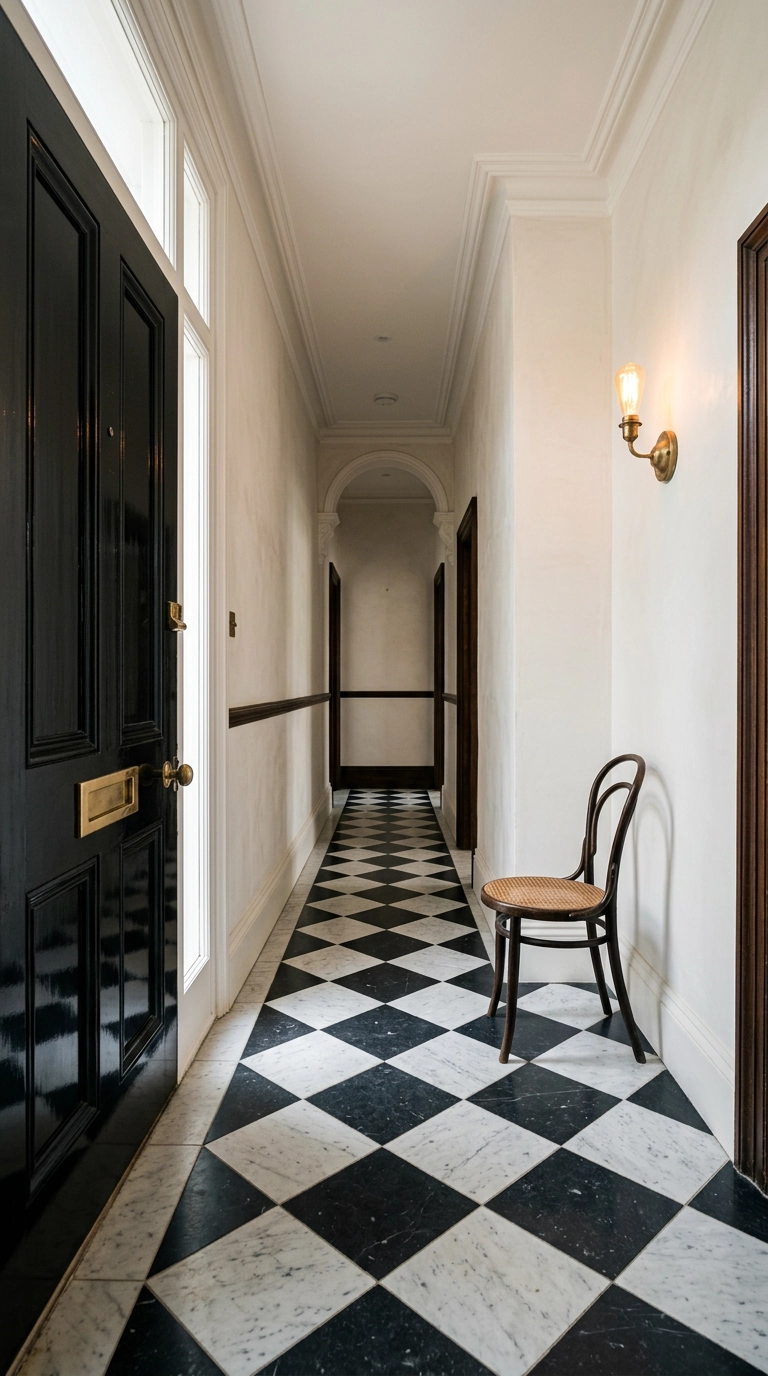
Checkerboard is the safest bold move in the Victorian playbook. Running it on the diagonal instead of square to the walls widens the sightline, meaning your eye travels corner to corner rather than straight down a tunnel.
3. Stair Runner Held Down with Brass Rods
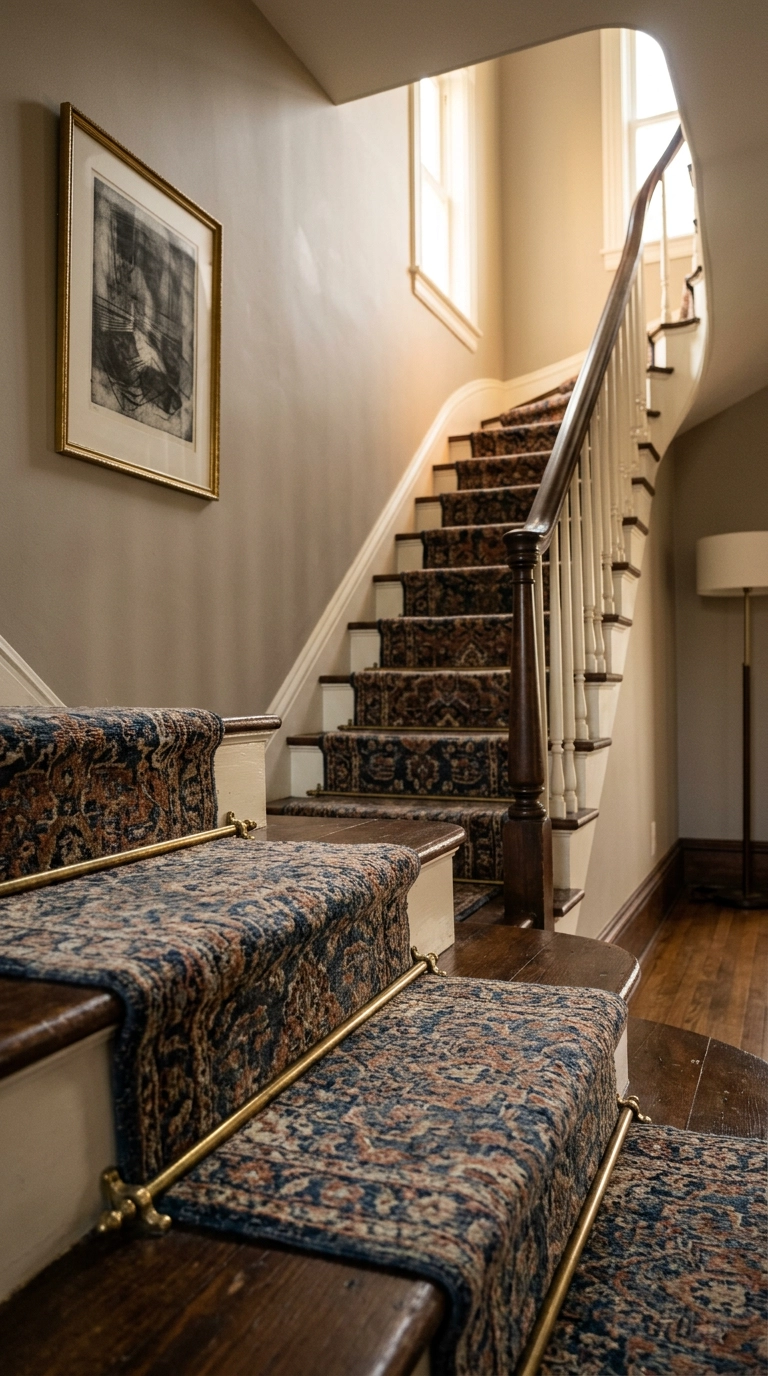
The brass rods are the whole point. They are period-correct, they let you pull the runner for cleaning, and that row of little glints climbing the stairs does more for a dark stairwell than any amount of paint.
4. Dado Rail with Anaglypta Paneling Below
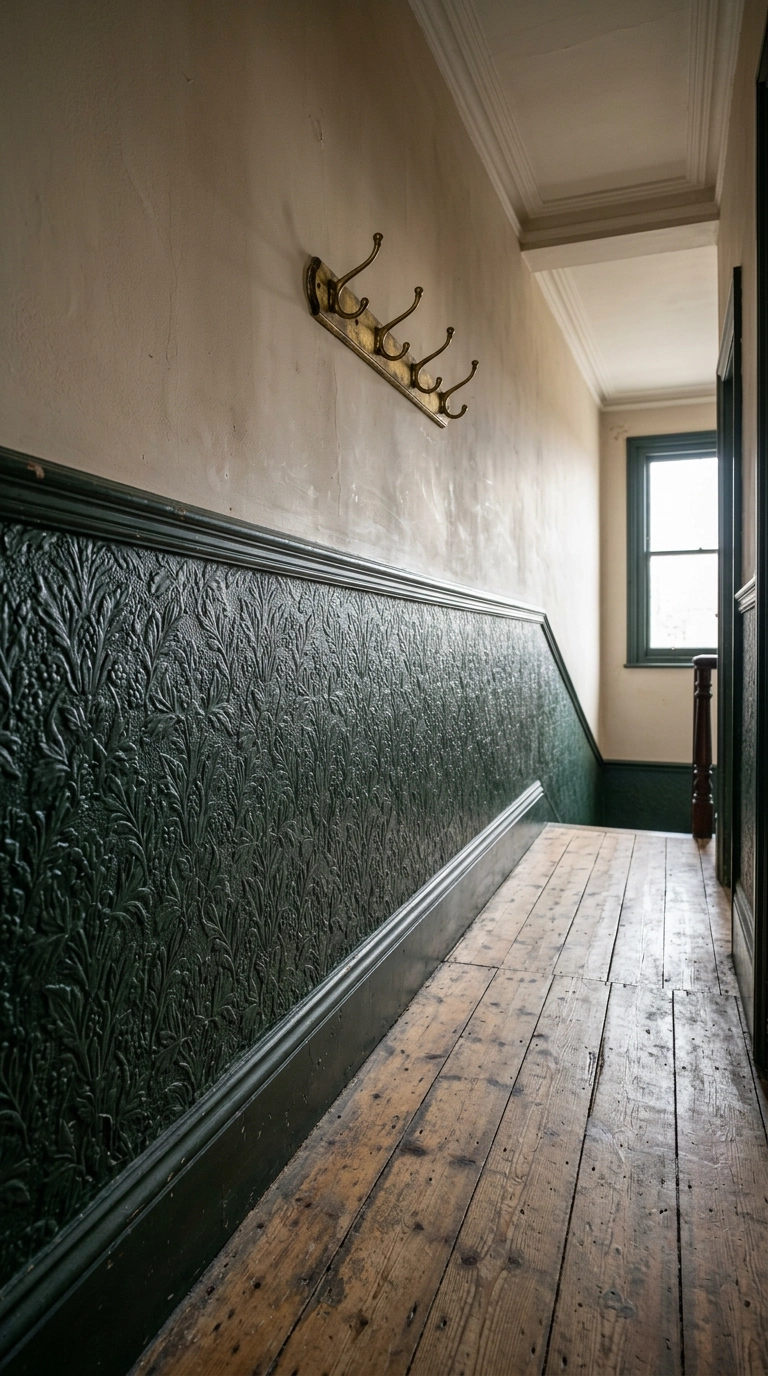
Anaglypta below the dado is the original solution to a hall that gets scuffed by bags, bikes, and children, and it is still the right one. The heavy relief hides a century of wall damage, and once it is painted in an eggshell you can wipe it down.
5. Picture Rail Hung Art on Brass Chains
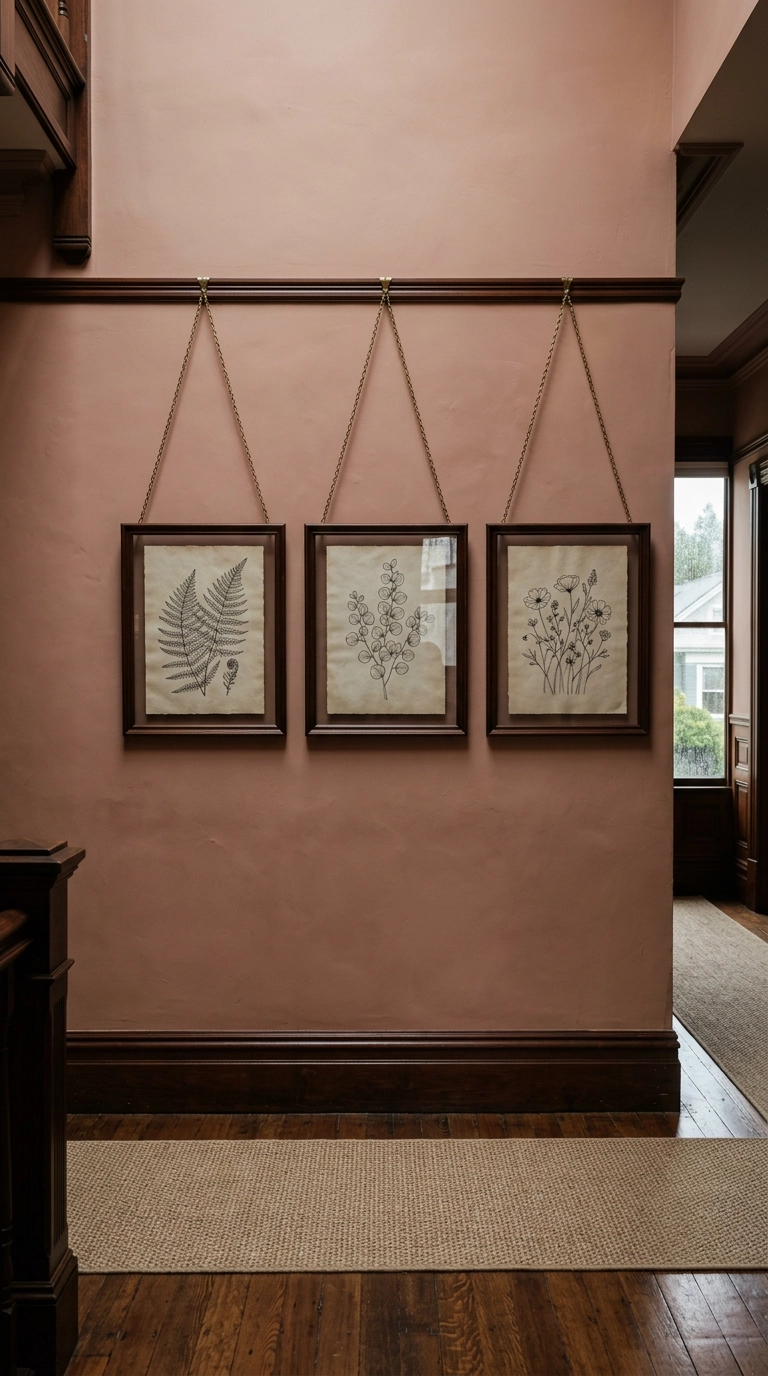
Victorians hung art from the rail on chains so they never put a hole in the plaster, and I love it because you can slide and re-space the whole arrangement in ten minutes. It also draws the eye up, which is exactly what you want in a hall with a ten-foot ceiling.
6. Deep Saturated Color Above the Picture Rail
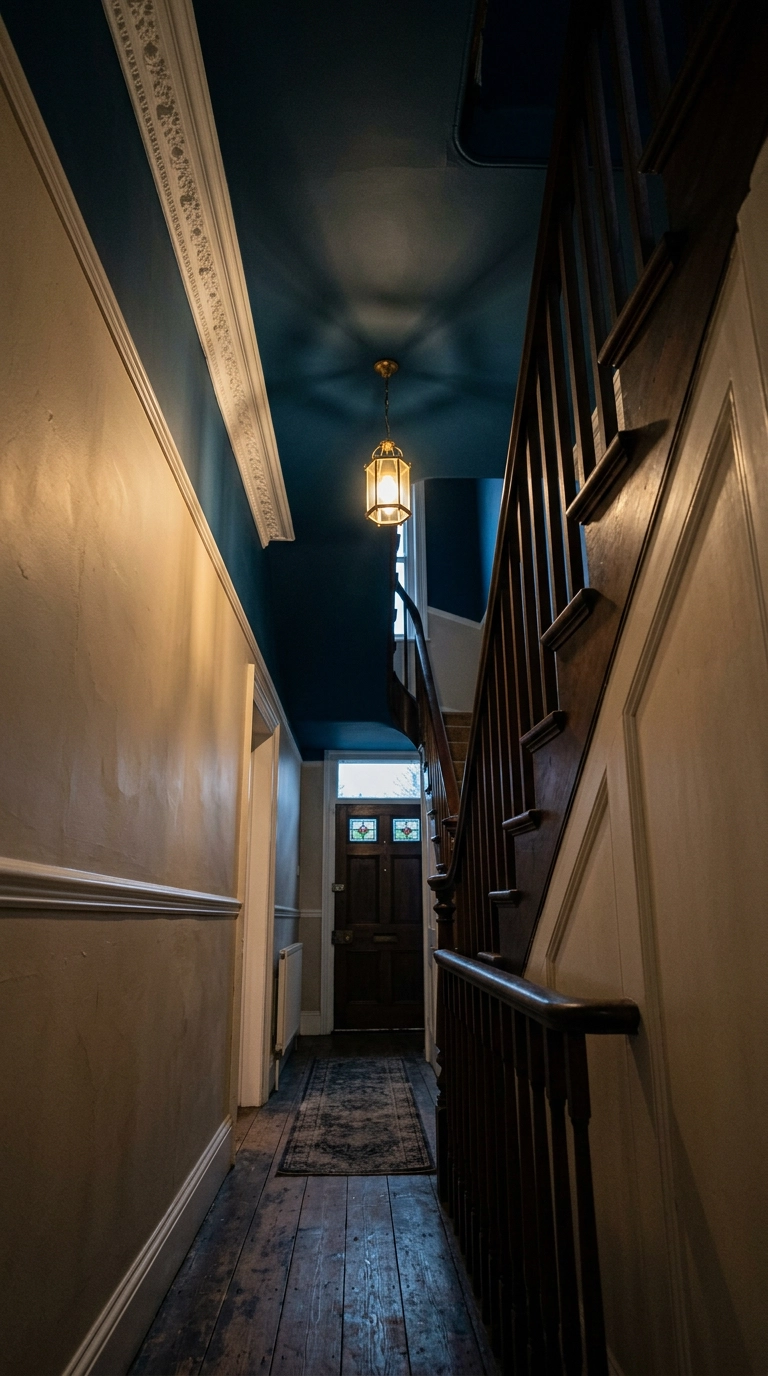
Painting above the rail dark and the ceiling with it is the trick that makes an absurdly tall hall feel held instead of hollow. The dark band visually lowers the ceiling, so the space reads intimate rather than like a shaft.
7. Restored Ceiling Medallion and Plaster Rose
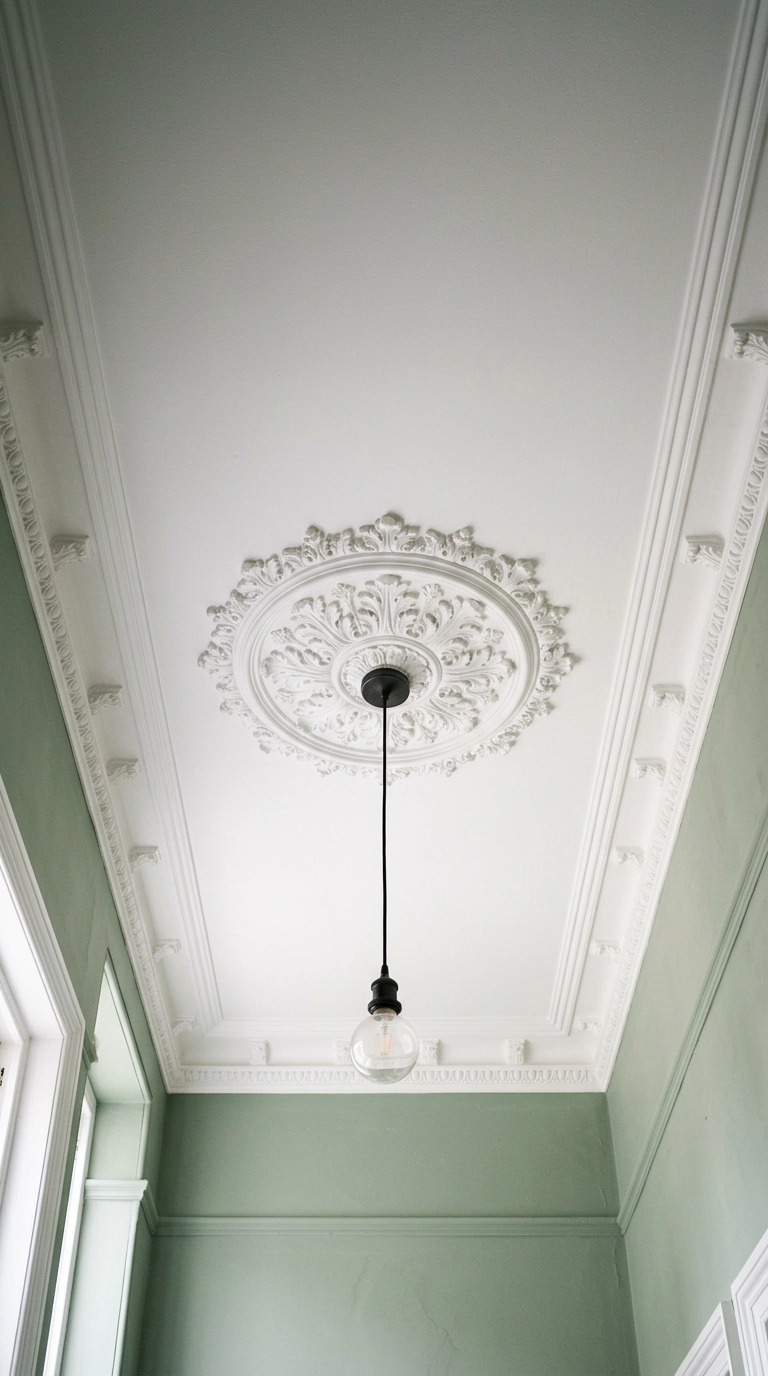
A hundred years of paint turns a crisp plaster rose into a marshmallow. Having it stripped and recast is one of those jobs that costs real money and no guest will consciously notice, but the shadow lines come back and the whole hall looks correct again.
8. Morris-Style Patterned Wallpaper, Wall to Wall
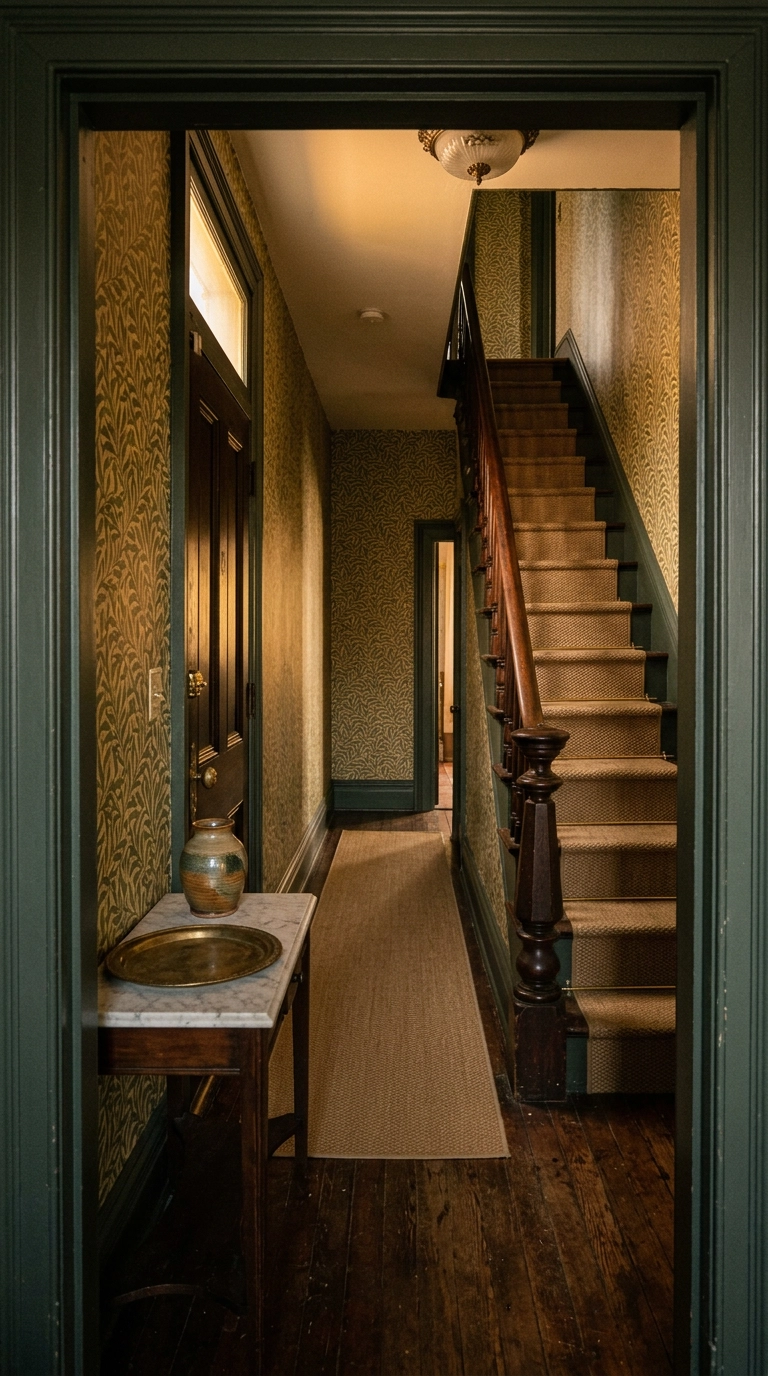
A dense small-scale Morris-type pattern is the most forgiving surface a battered old hall can wear, because the repeat swallows every lump and wave in a hundred-year-old wall. Keep everything else in the hall solid, since a patterned floor plus patterned paper turns a narrow corridor into noise.
9. One Bold Mural Paper at the End of the Hall
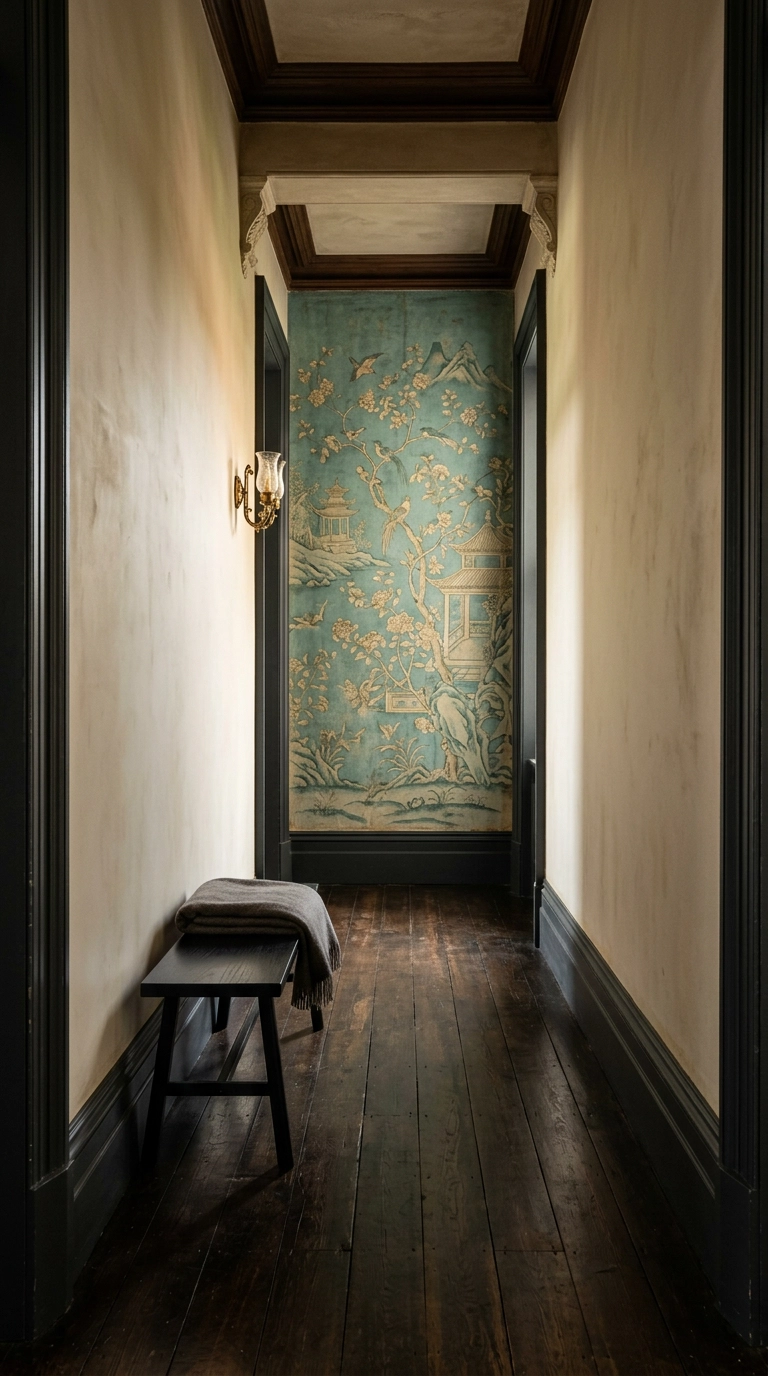
Long Victorian halls almost always dead-end in a blank wall, and that wall is a gift. A single mural panel gives your eye a destination, which stops the corridor from feeling like a hallway to nowhere.
10. Stained Glass in the Transom and Side Lights
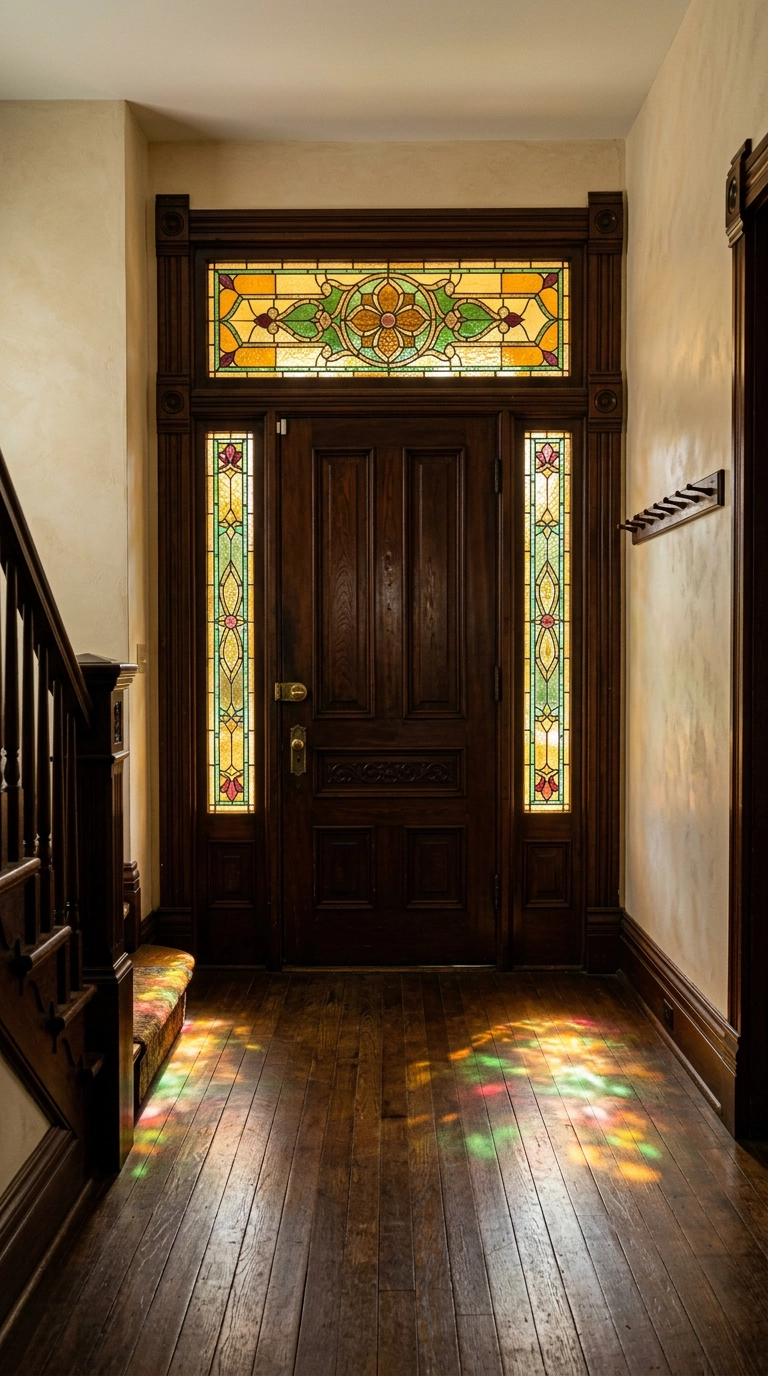
Stained glass is the one thing that makes a dark Victorian hall an asset instead of a problem, because it turns weak light into colored light on the floor. Amber and gold glass in particular warms a north-facing entry all day.
11. An Antique Hall Tree Doing Its Original Job
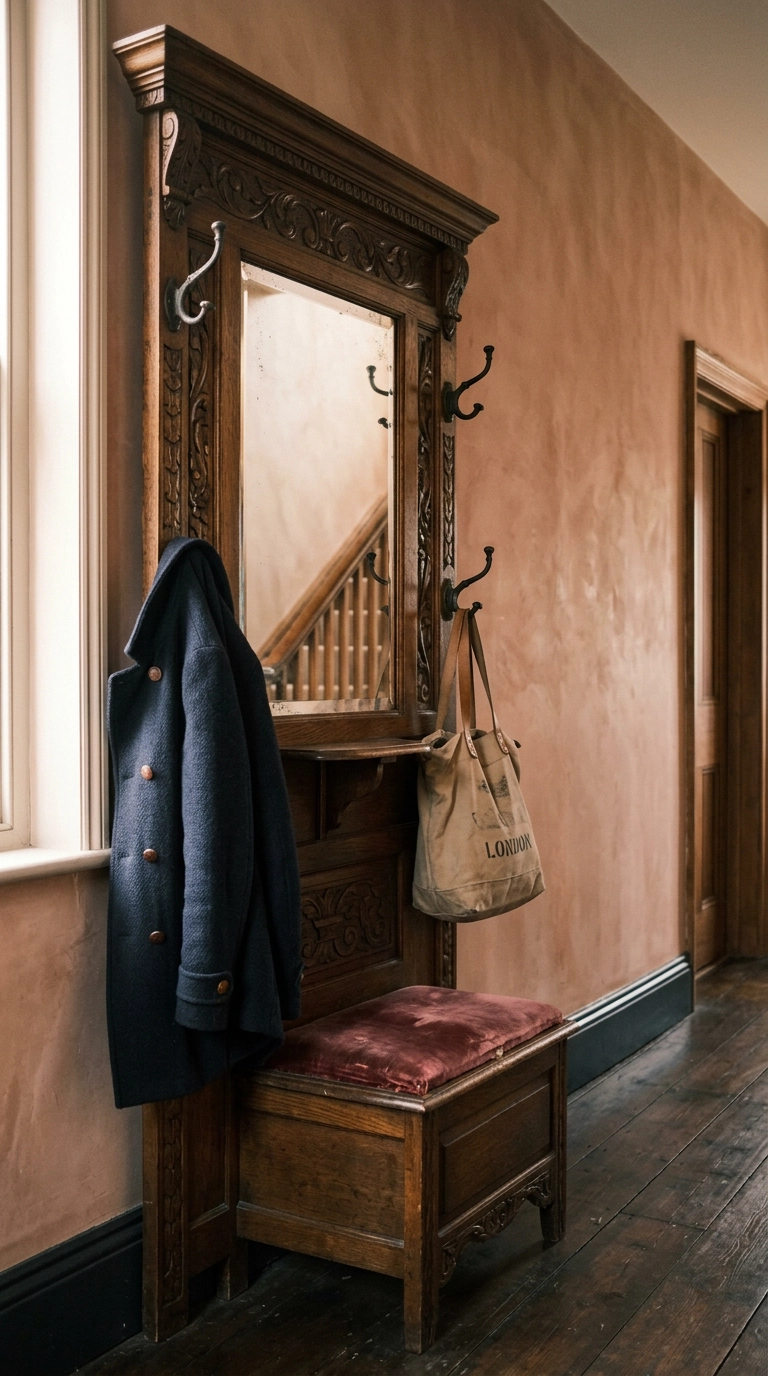
The hall stand was invented for exactly this room, and nothing modern beats it: mirror, hooks, seat, and umbrella slot in about 30 inches of wall. In a hall under five feet wide, one piece doing four jobs is the whole strategy.
12. Marble-Top Console with a Mirror Above
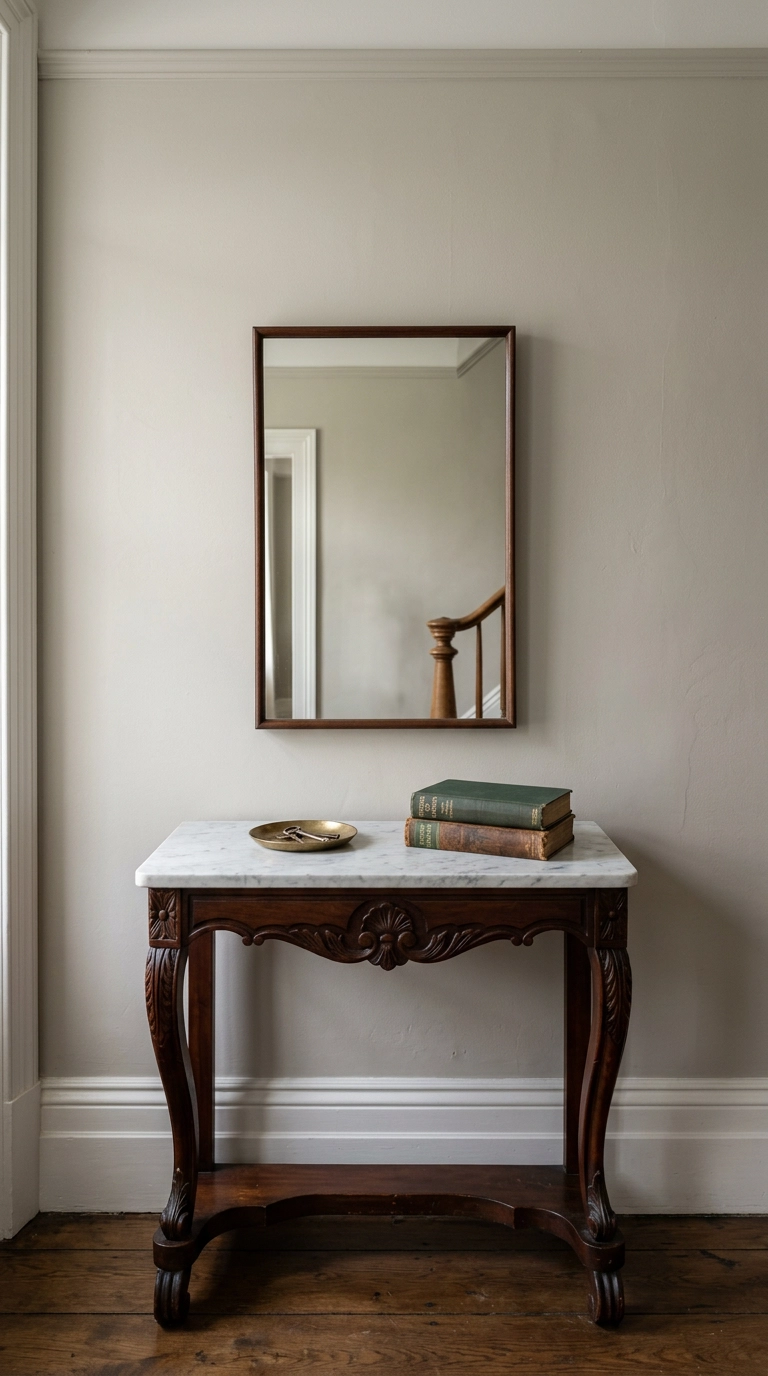
This is the classic Victorian hall pairing and it still works because a mirror on a long wall doubles the apparent width of the corridor. Look for a console under 14 inches deep, or you will be turning sideways to get past it forever.
13. A Gilt Overmantel Mirror Leaned or Hung
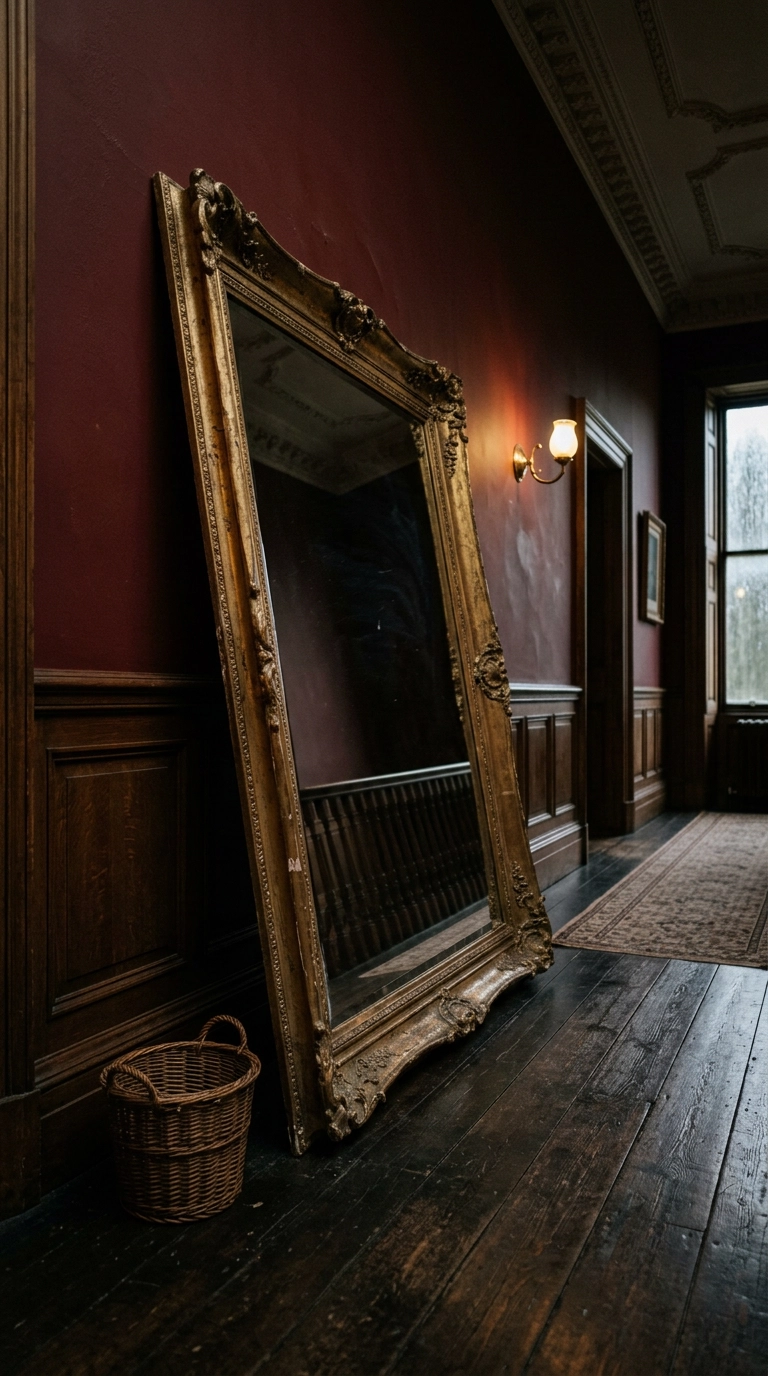
An oversized gilt mirror is the fastest way to get period grandeur without touching the architecture, and the tarnished gold reads warm against dark paint in a way polished chrome never will. Leaning it is not laziness, it tilts the glass to catch ceiling light and throw it down the hall.
14. Brass Wall Sconces Where the Gas Lines Were
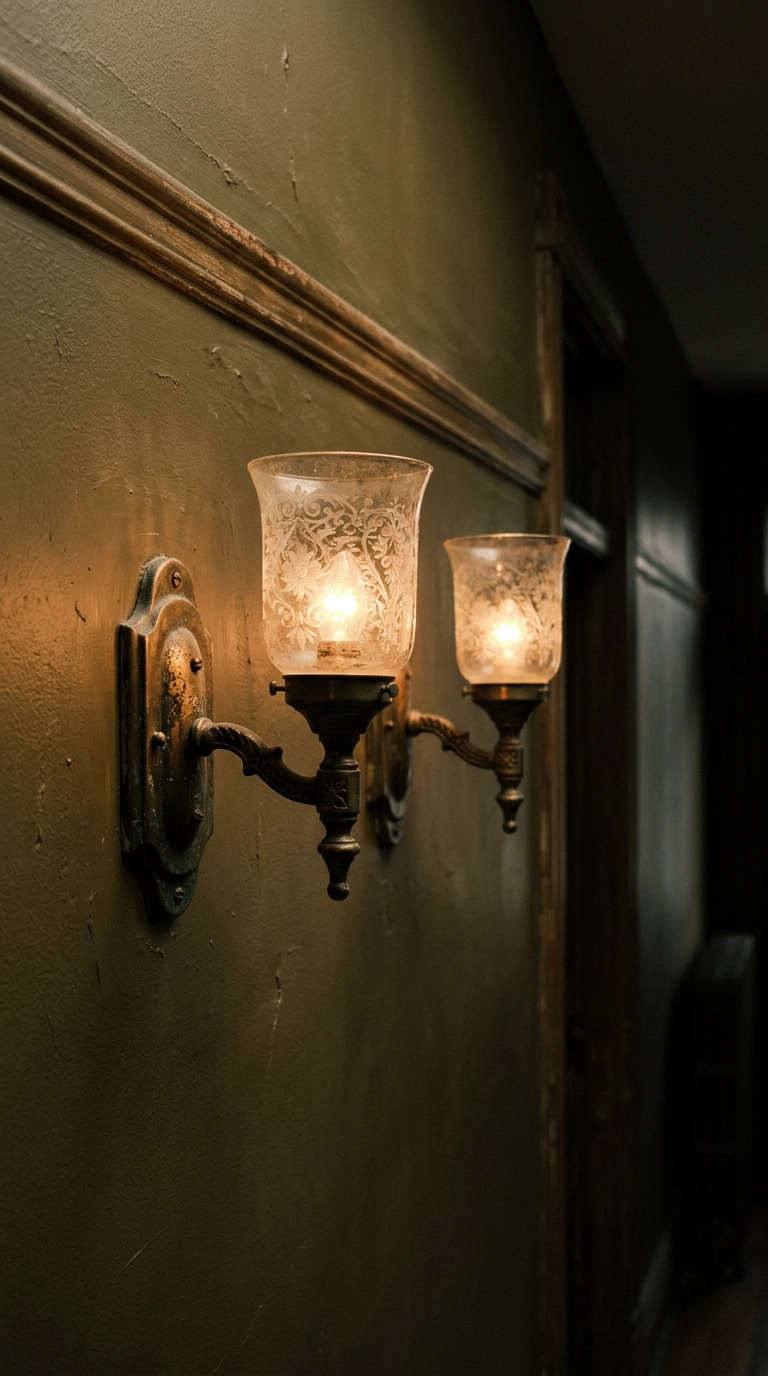
Most Victorian halls were lit by gas sconces at about 66 inches, and putting light back at that height is transformative. Low side light washes the walls instead of the floor, which makes a dark narrow hall feel deep rather than dim.
15. A Pendant Lantern Hung in the Stairwell
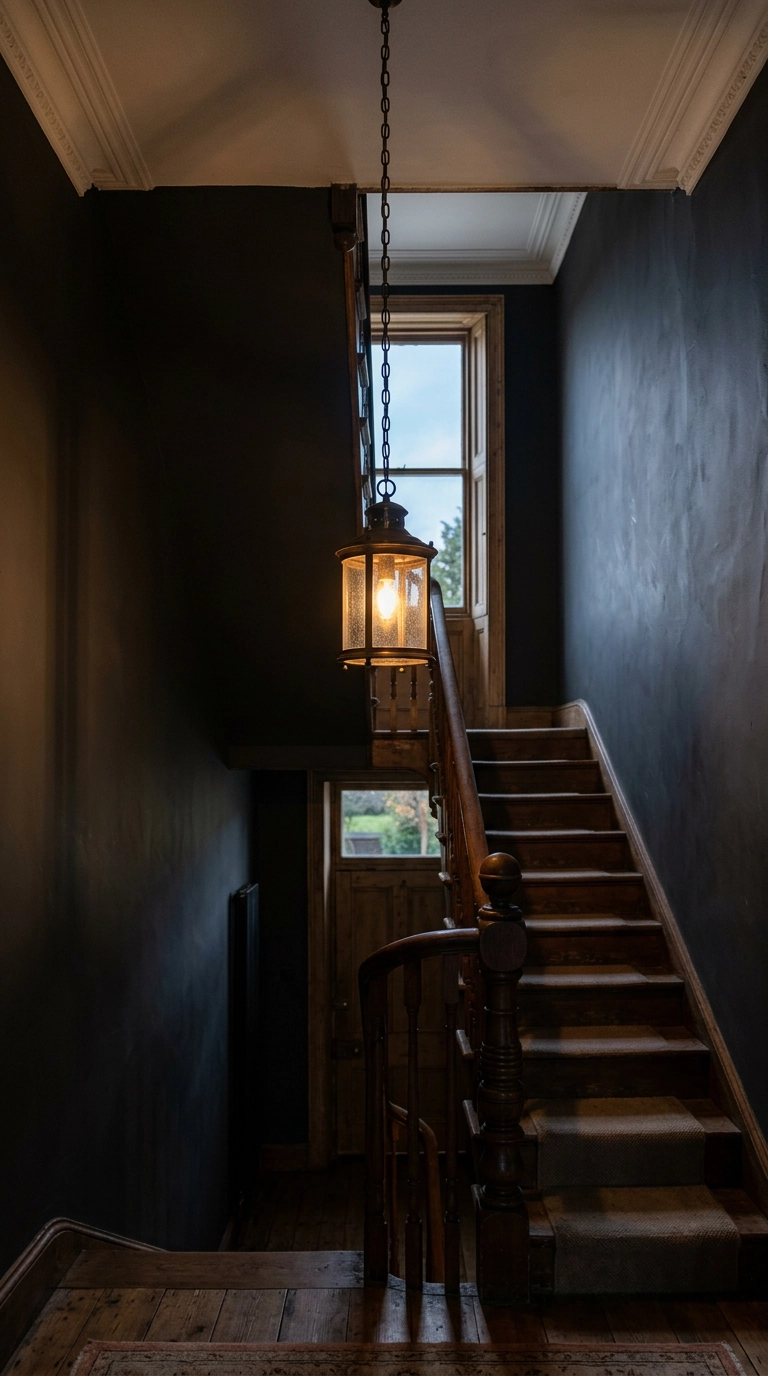
The stairwell void is the tallest air in the house and almost every Victorian wastes it. One lantern on a long chain, hung so the bottom sits just above head height on the landing, fills that column and gives the stair a center.
16. A Small Lamp on the Newel Post
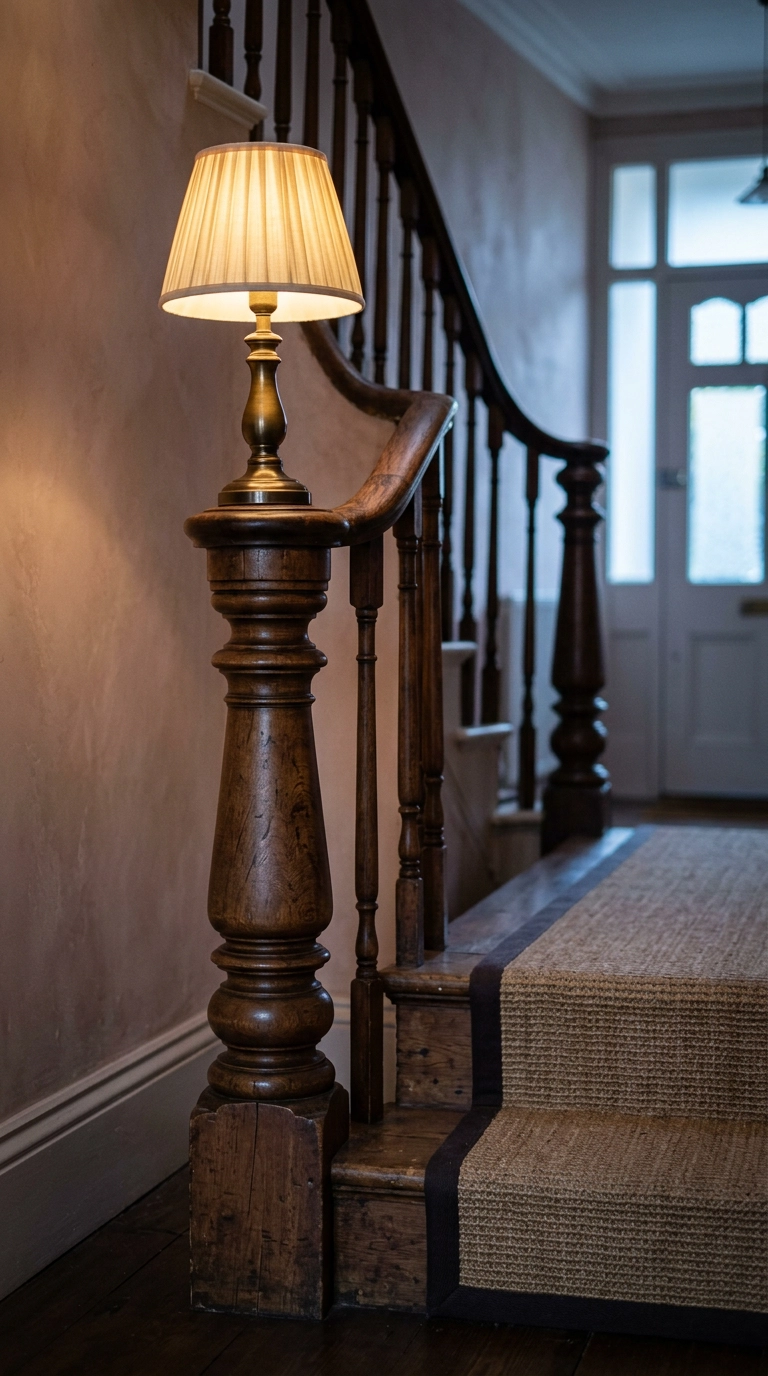
Original hall stands and newel posts often had a lamp or a figural light right at the bottom of the stairs, and reviving that is my favorite five-minute Victorian move. A pool of warm light at knee-to-waist height tells you where the stairs begin, which in a dark hall is safety as much as style.
17. Painted Risers with Bare Treads and No Runner
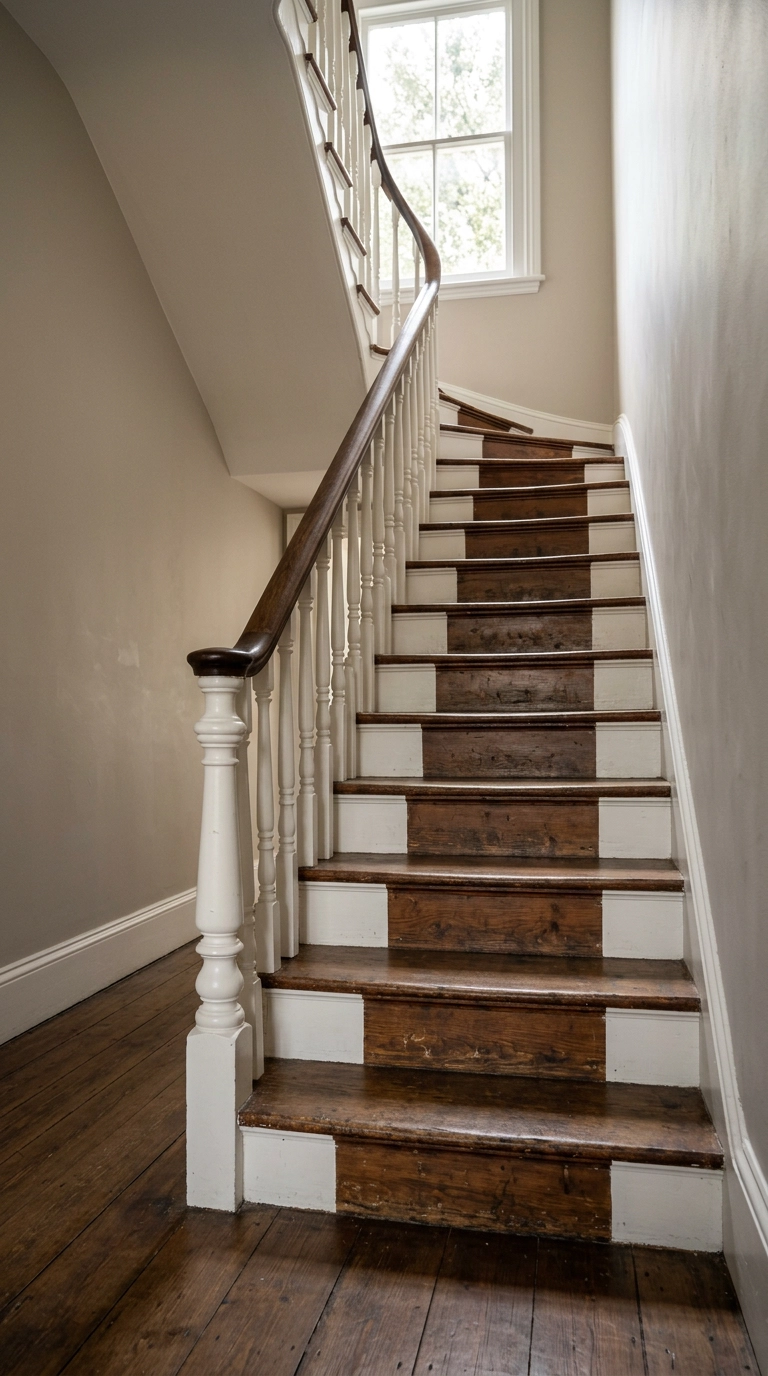
Not every Victorian stair wants carpet. Stripping the treads back to wood and painting only the risers a clean off-white gives you a graphic stripe climbing the wall, and it brightens a dark stairwell more than a pale runner would.
18. Woodwork in Dark Green or Oxblood Instead of White
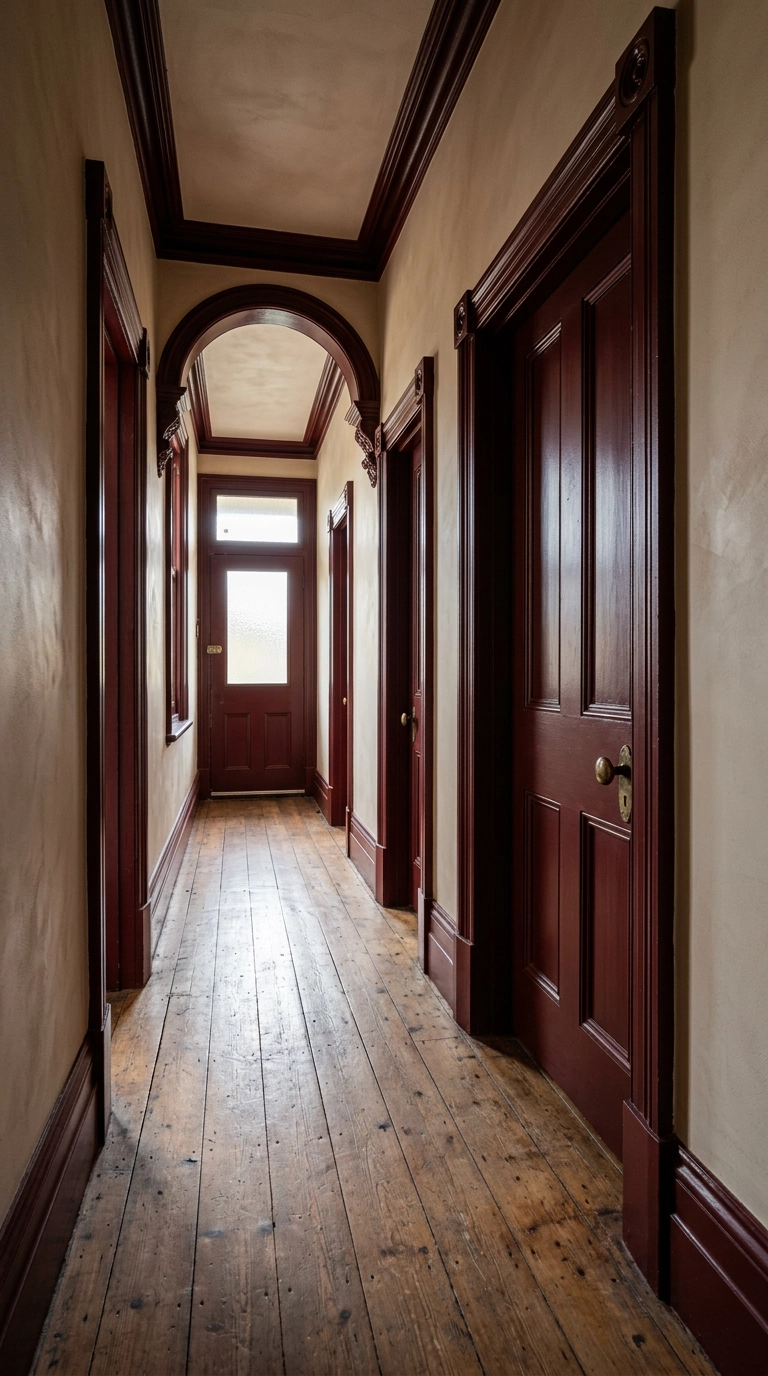
White trim is a twentieth-century habit. Victorians grained and darkened their woodwork, and painting the baseboards, casings, and doors one deep shade makes all that carved millwork read as one confident frame rather than a lot of fussy white lines.
19. Coat Hooks on a Painted Board
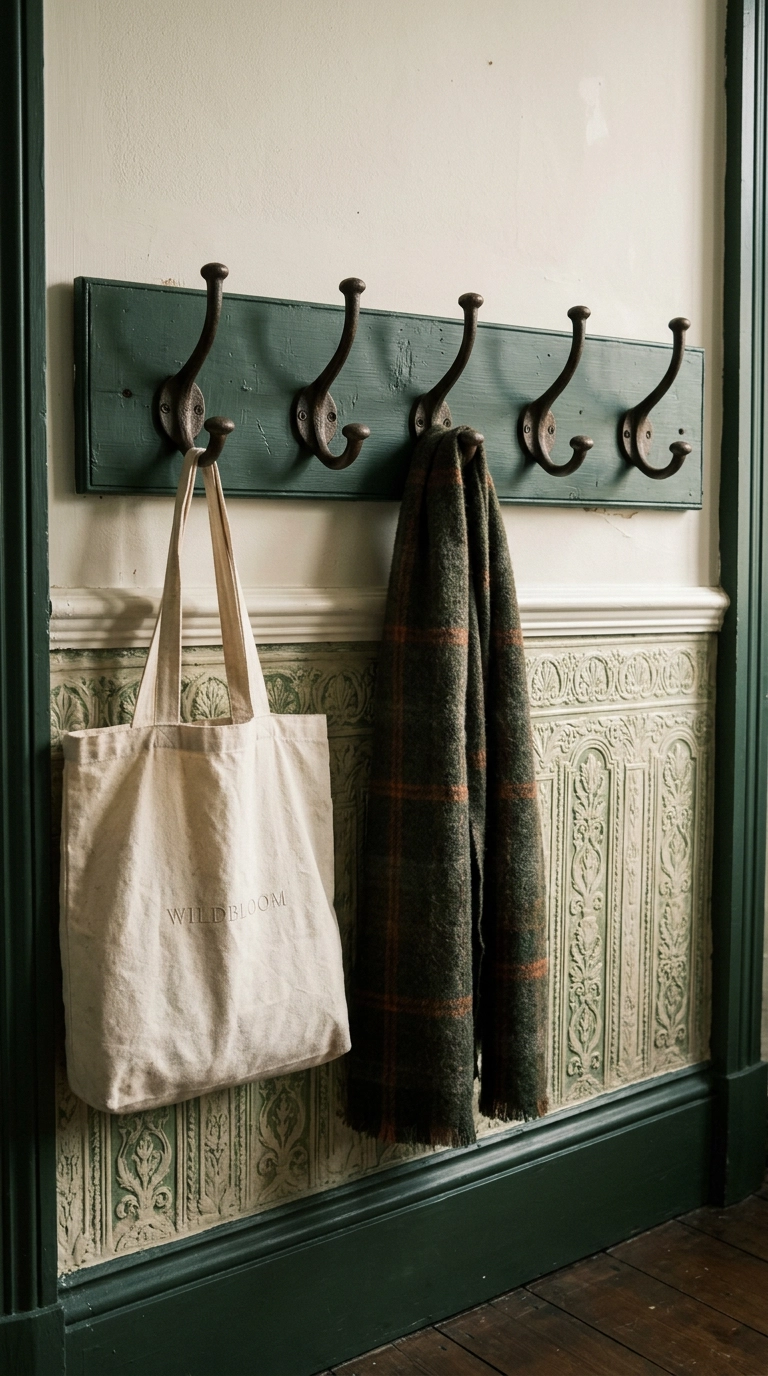
Hooks screwed straight into hundred-year-old plaster will pull out, every time. Mount them on a single board that spans two studs, paint it the same color as your trim so it disappears, and it will hold a winter’s worth of wet coats.
20. Umbrella Stand and Boot Tray, Done Properly
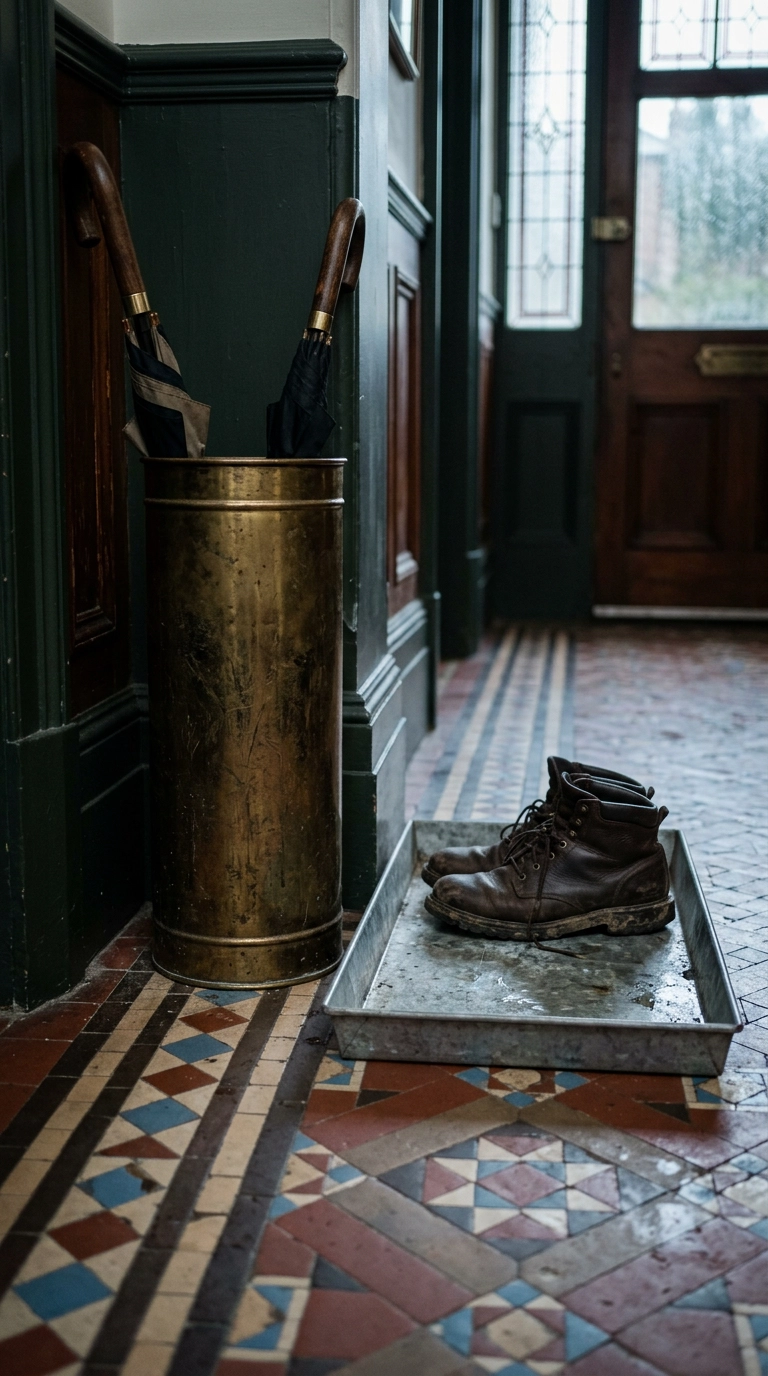
The Victorian entry hall had a job, and that job was catching weather at the door. A proper deep umbrella stand and a lipped metal boot tray keep the mess in a defined 18-inch zone instead of spreading down the corridor.
21. Framed Etchings Hung Salon-Style
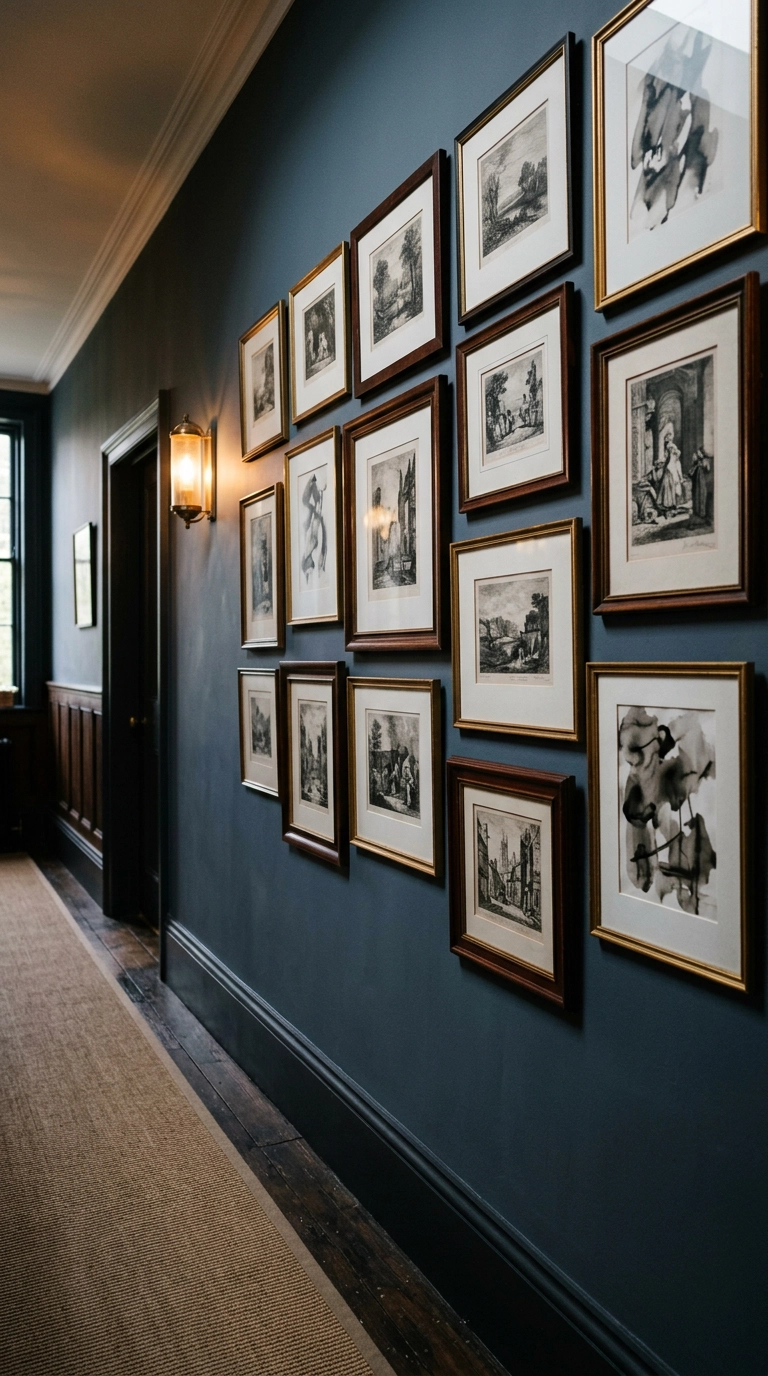
Salon-style means hung edge to edge, floor of the arrangement to ceiling of it, treating the whole cluster as one big rectangle. It suits a Victorian hall because you view the wall from three feet away and small works actually get looked at.
22. A Single Portrait Under a Picture Light
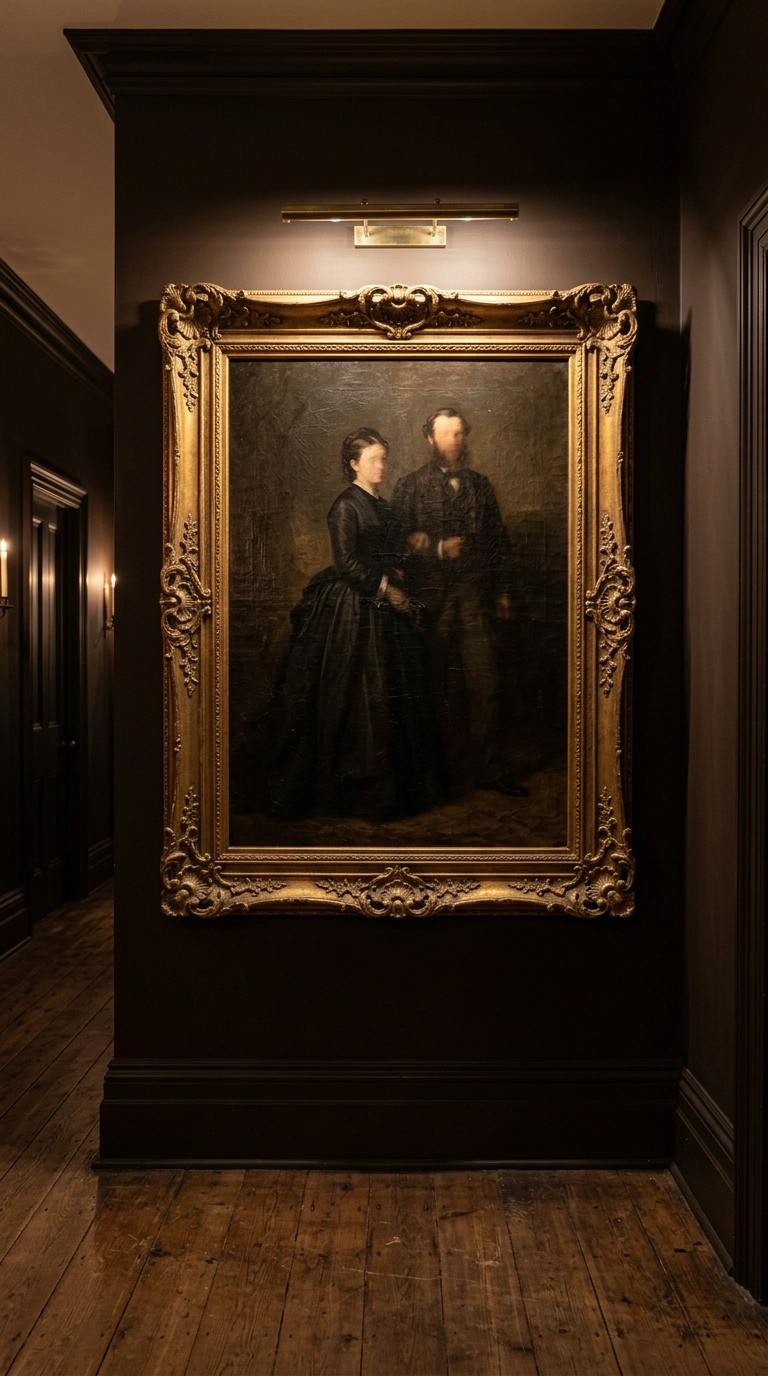
One big piece with a light on it beats twenty small ones on a dark wall, because the picture light gives the hall a bright spot at eye level and everything else can stay moody. This is the single most theatrical thing you can hang in a Victorian corridor.
23. Radiator Cover Doubling as a Shelf
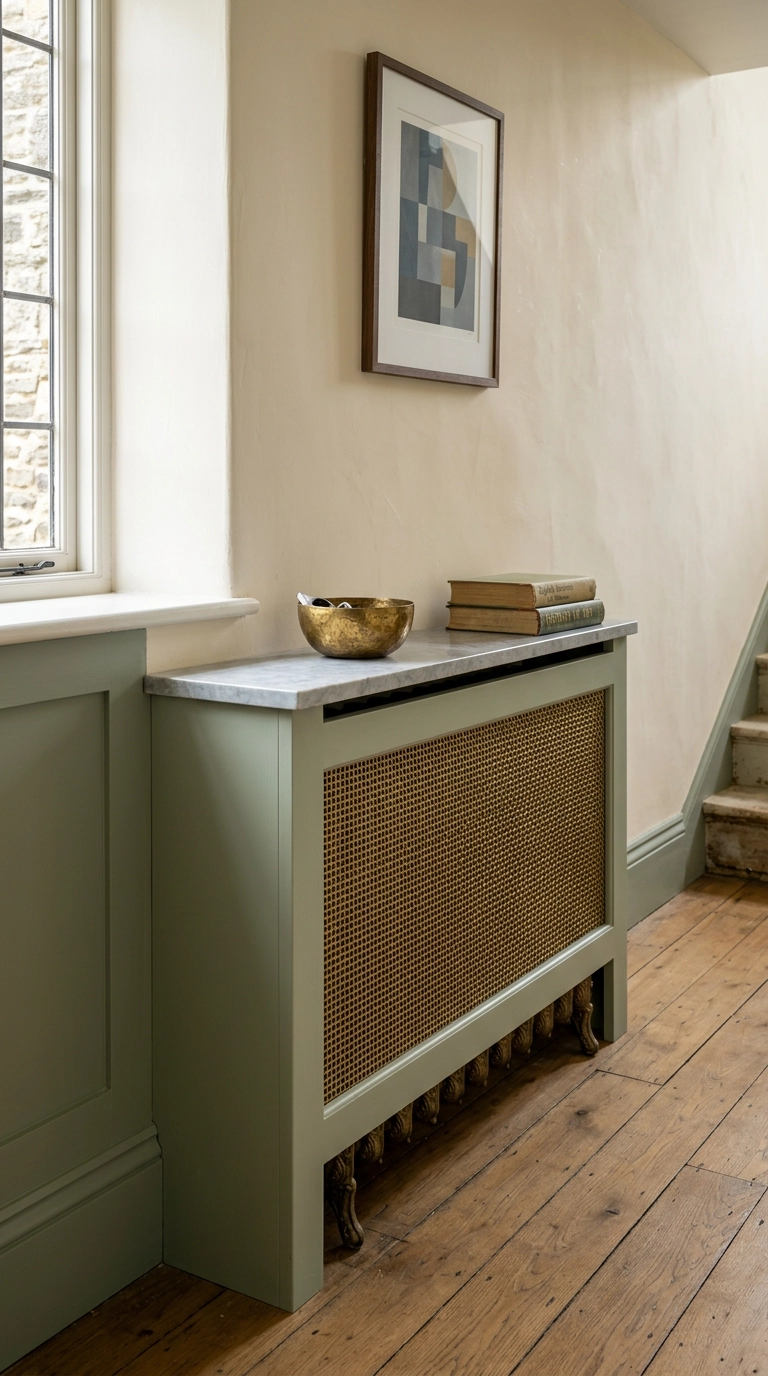
Old cast iron radiators eat the little floor space a narrow hall has, so cover it and get a surface back. A brass mesh front is the period-correct grille pattern and it lets heat through far better than a solid panel would.
24. A Long Narrow Bench Against the Wall
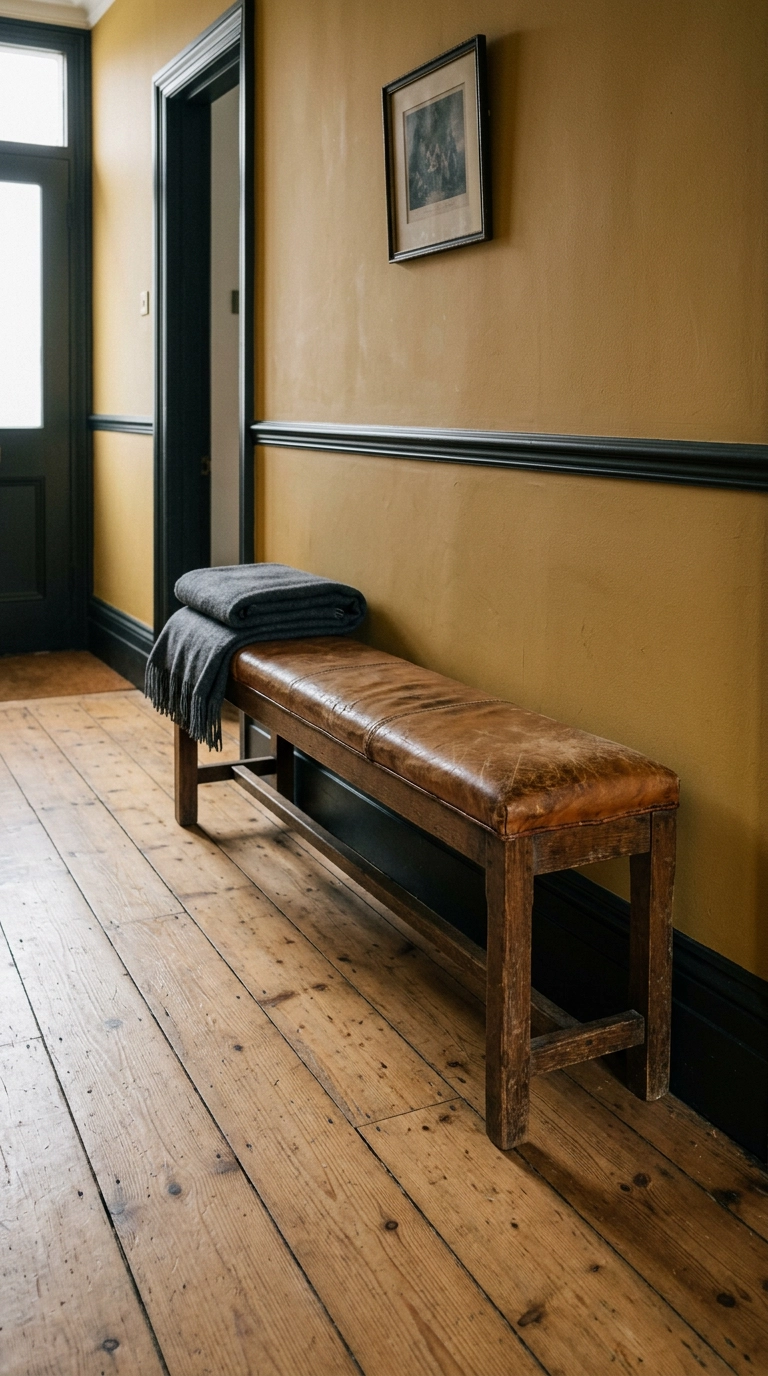
Somewhere to sit and pull boots off is the most-used thing in any entry, but in a four-foot hall depth is everything. Look for 12 inches deep or less, and measure your clear passage width before you buy, you want 30 inches left over.
25. Patterned Runner Rug Over the Original Boards
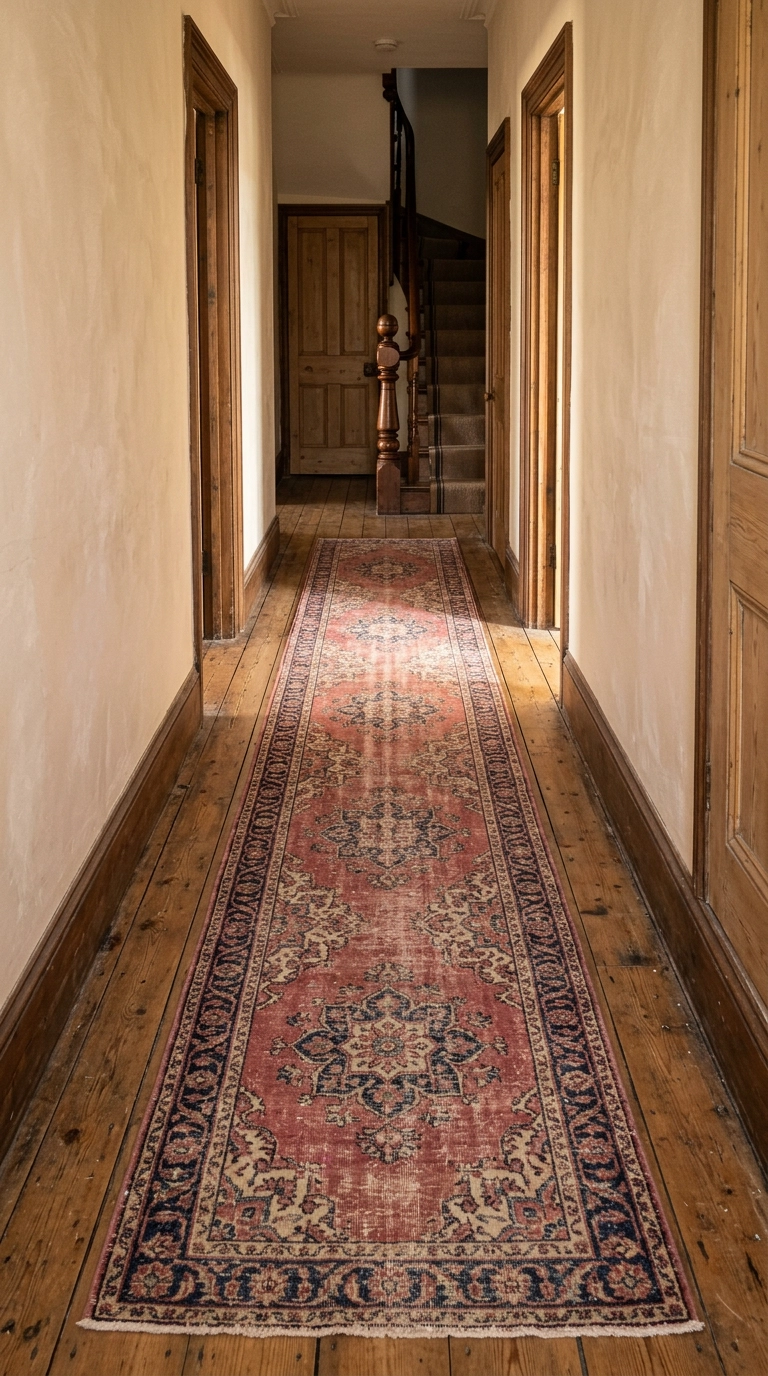
If the original boards are decent but tired, a worn Persian runner is the cheapest way to make a hall look like it has always been that way. A faded antique reads softer against old woodwork than anything new, and honestly it hides the traffic path better too.
26. One Plant Stand, Used with Restraint
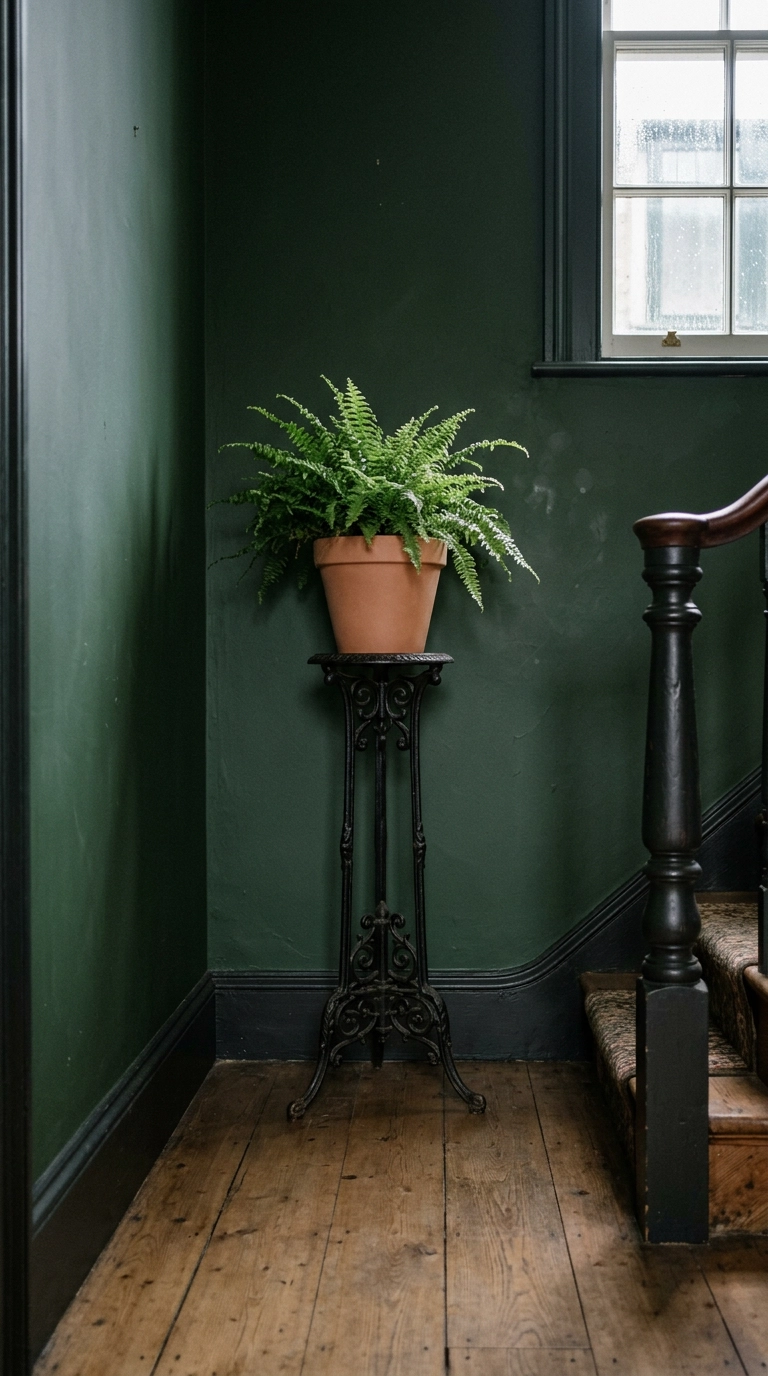
Victorians loved a fern on a stand, and exactly one is the correct number for a hall. The vertical stand fills a dead corner without taking floor width, and the fern is one of the few things that genuinely thrives in a dim north-facing corridor.
27. An Antique Barometer or Tall Case Clock
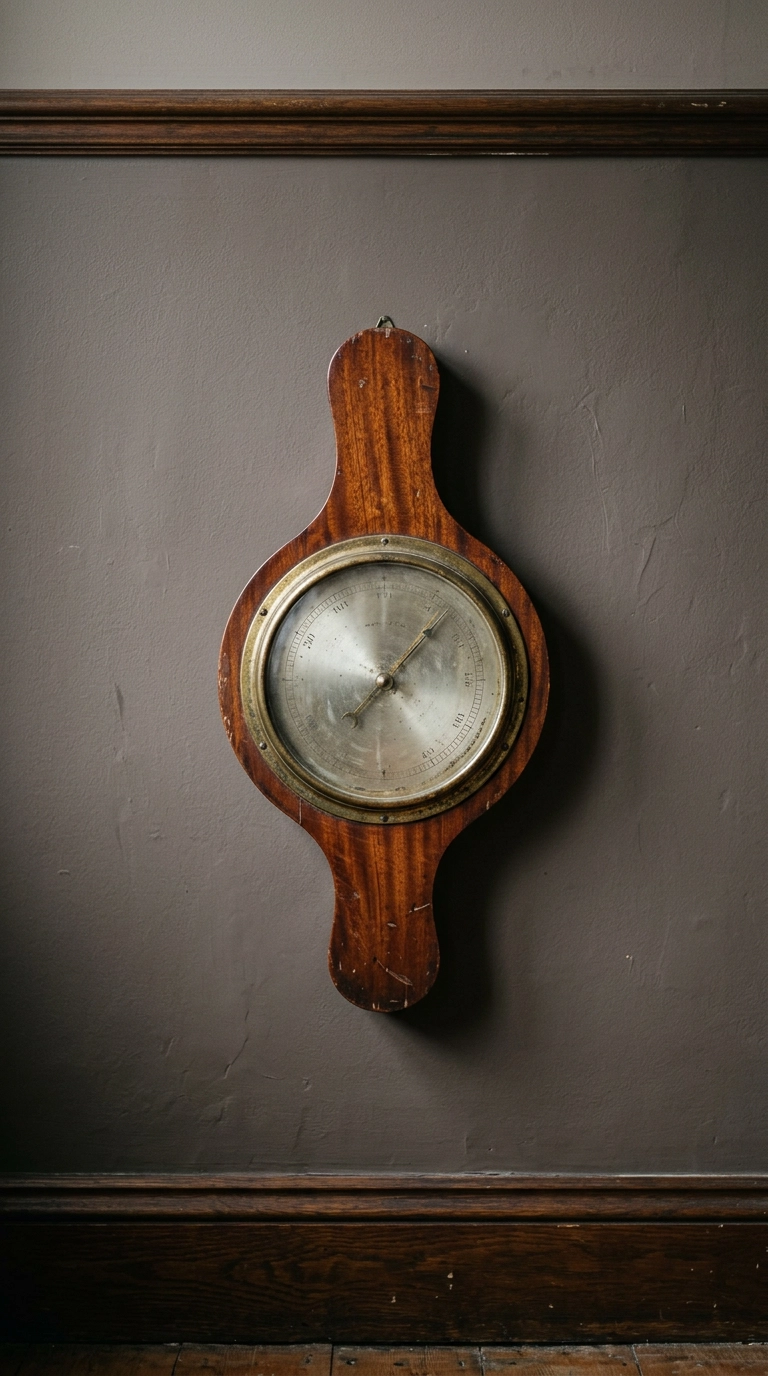
The hall was where a Victorian family checked the weather and the time on the way out the door, so a barometer or a tall case clock here is not decoration, it is the room working as designed. A vertical object also breaks up the endless horizontal run of a corridor.
28. Layer the Whole Hall in One Deep Color Story
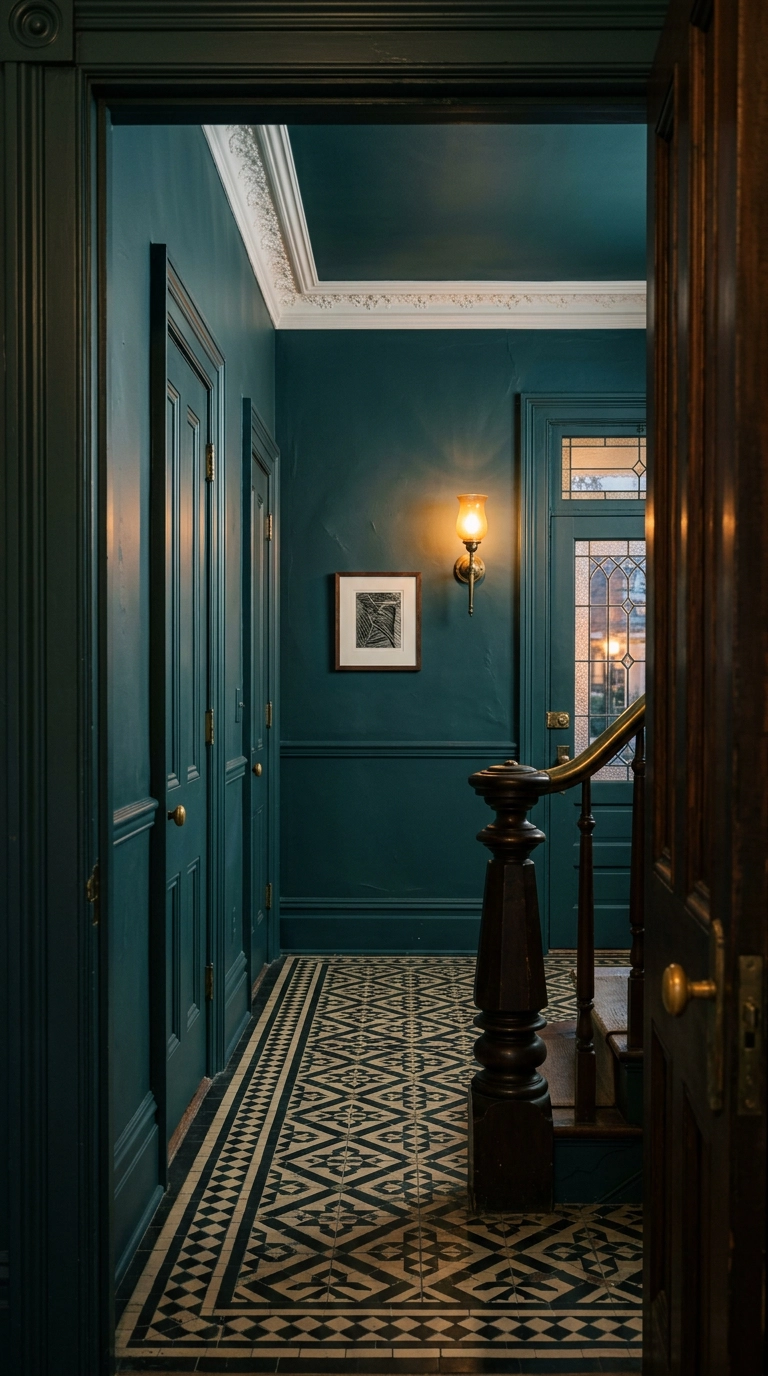
Color drenching, which just means walls, trim, and ceiling in one shade, is the boldest ending I can give you and it is made for this room. Because every surface matches, your eye stops registering the edges, and a cramped dark corridor suddenly reads as one deliberate, enveloping space rather than a narrow one.
Bringing It All Home
Here is what I keep telling clients who just bought a Victorian and are panicking about the dark hall: stop trying to make it bright. That corridor was built to be a shadowy, formal little pause between the street and the parlor, and the moment you accept that, the encaustic tile, the oxblood woodwork, and the deep color above the picture rail all start making sense together.
The direction right now is firmly toward this kind of honest, saturated period color rather than the gray-and-white flip we all sat through for a decade. Farrow and Ball built half its reputation on shades that were designed for exactly these rooms, and designers like Kelly Wearstler and the whole current wave of maximalist restorations have made dark trim and salon-hung art feel current instead of historical. Meanwhile the easy wins have not changed, a hook board, a newel post lamp, and a good long runner will change your daily life more than any of the big projects.
My own favorites from this list are the brass stair rods and the single portrait under a picture light, because both give you an enormous amount of character for very little money and neither one asks you to touch the original plaster. If you try even three of these, start with paint, lighting, and the floor covering, in that order. And if you want more old-house ideas like these landing in your inbox, sign up for my weekly newsletter, it is where I share the projects and the finds before they make it onto the site.


