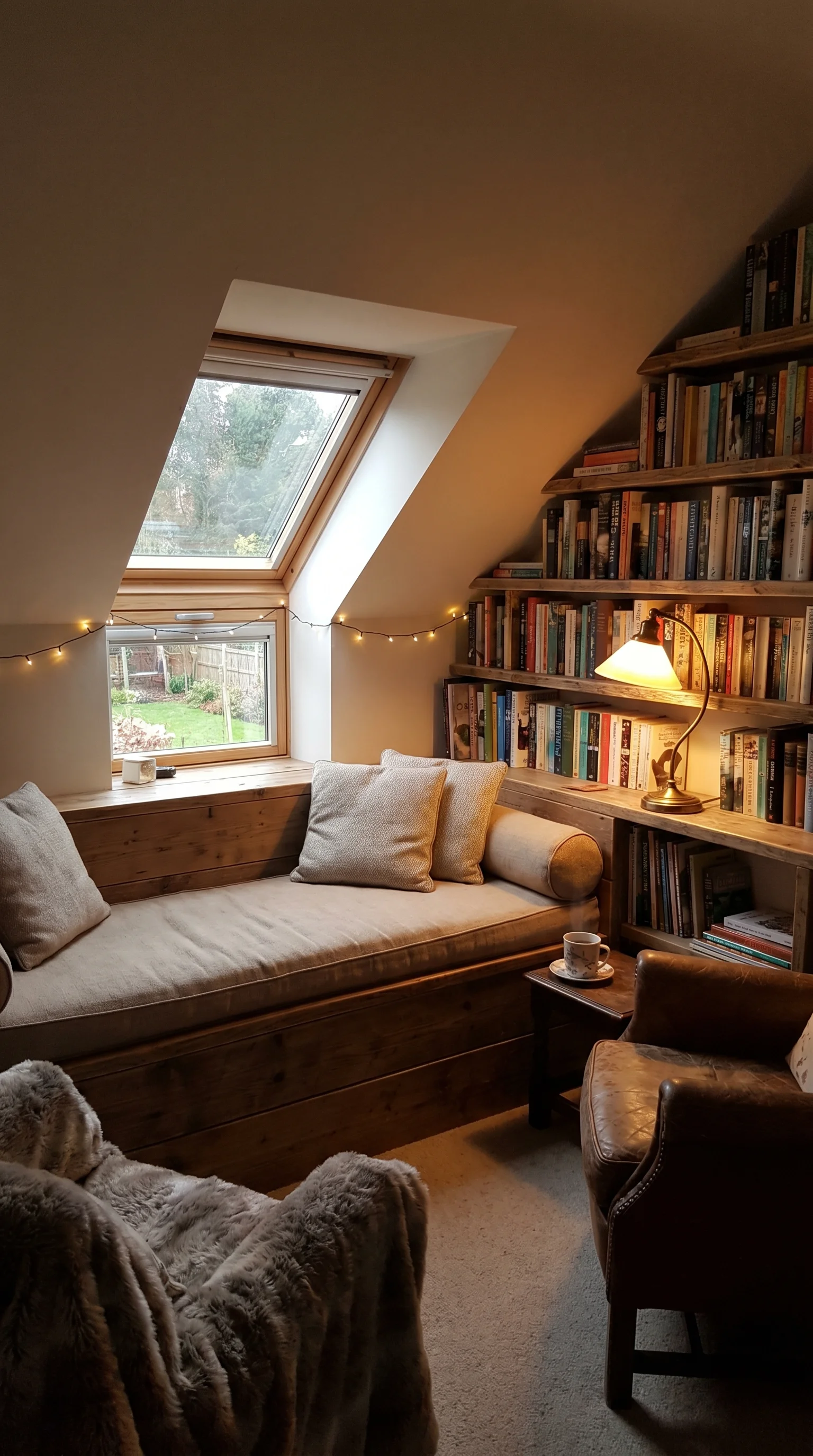
22+ Built In Bookshelf Decor Ideas that are Easy and Gorgeous in 2026

I’ll be honest with you – built-ins are the one thing clients beg me for and then completely panic about once the carpenter drives away. You’re staring at forty feet of empty shelving wondering why it looks like a library that got evicted, and the answer is almost always that you filled it instead of styling it. I’ve spent years fixing over-stuffed built-ins, and the fixes are shockingly simple once you know the rules, so let’s get into them.
Built In Bookshelf Decor Ideas
1. Follow the Two-Thirds Fill Rule Before You Buy a Single Thing
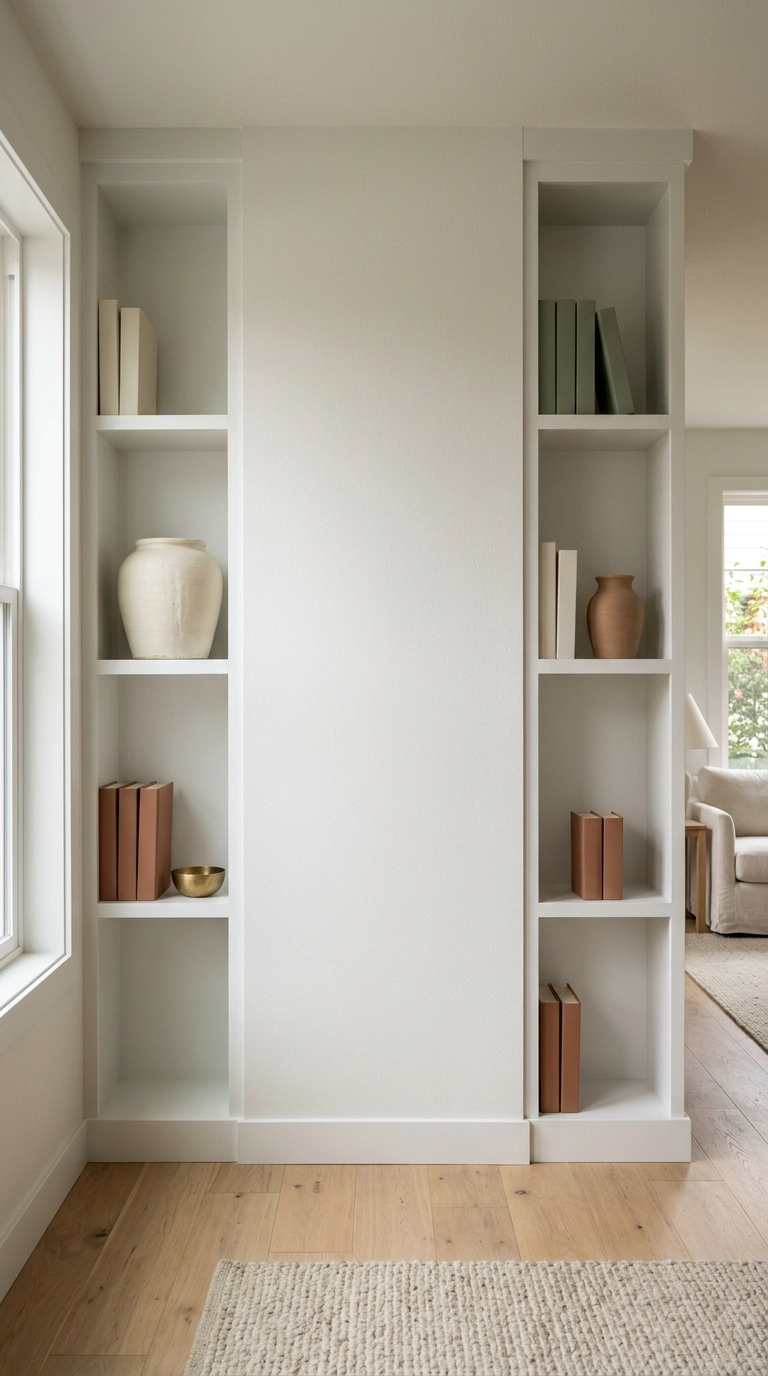
Here’s the number I give every client: fill about two-thirds of each shelf and leave the rest empty. That last third is what makes the whole wall read as designed instead of desperate, because your eye needs somewhere to rest between objects.
2. Use Horizontal Book Stacks as Risers Under Your Objects
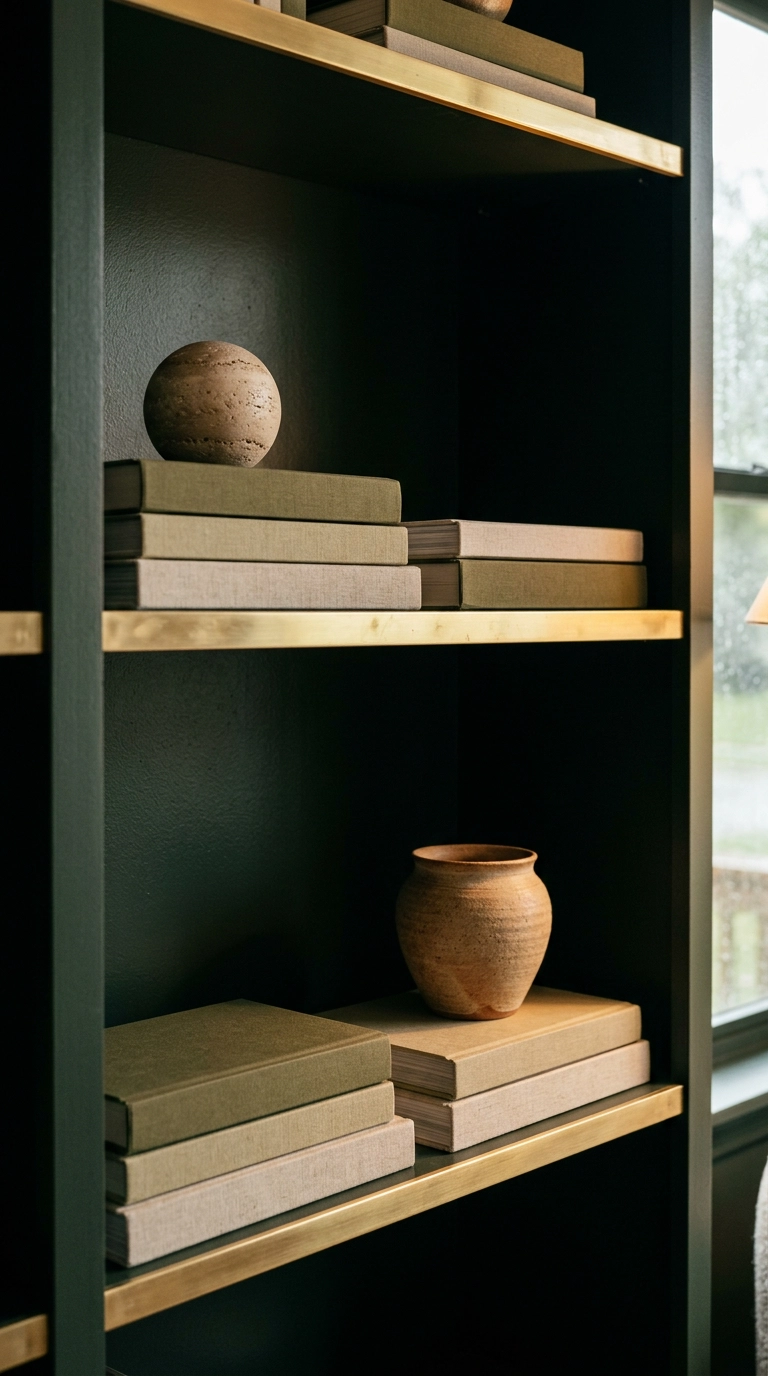
Stacking four or five books flat and putting an object on top is the single highest-return trick in shelf styling. It lifts small pieces to eye level and breaks up the endless vertical rhythm of upright spines, which is what makes most built-ins feel like a wall of static.
3. Paint the Back Panel a Shade Darker Than the Shelves
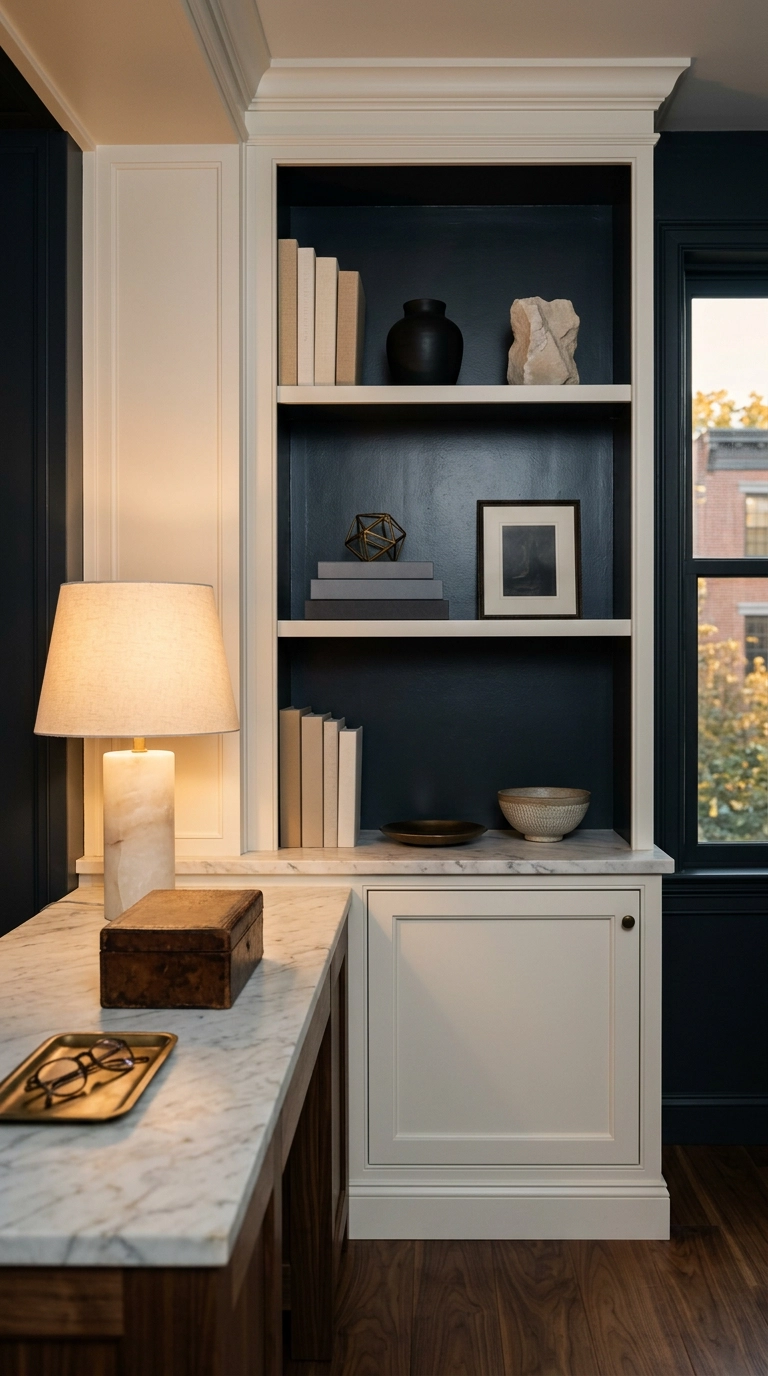
Painting the back of a built-in in a darker shade instantly gives the shelves depth, because objects read as silhouettes against a receding background instead of disappearing into white-on-white. Farrow & Ball Hague Blue and Benjamin Moore Kendall Charcoal both do this beautifully.
4. Flank the Fireplace with Symmetrical Built-Ins and One Asymmetrical Move
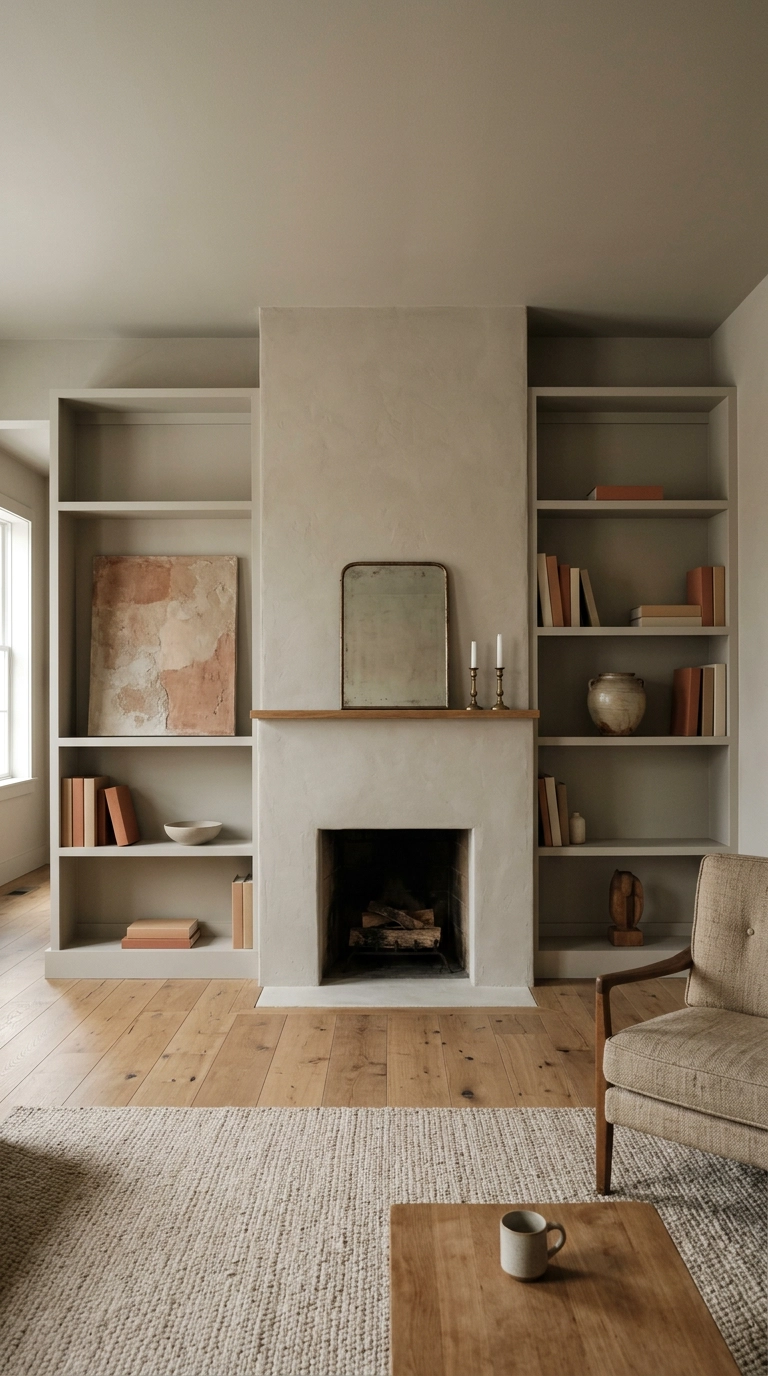
Fireplace flanks are the most common built-in in American homes, and the mistake is mirroring them perfectly, object for object. Match the big structural things – shelf heights, the two largest vessels, the color story – then break symmetry with one deliberate difference like leaning art on one side only.
5. Wire in LED Strip Lighting Under Each Shelf Front
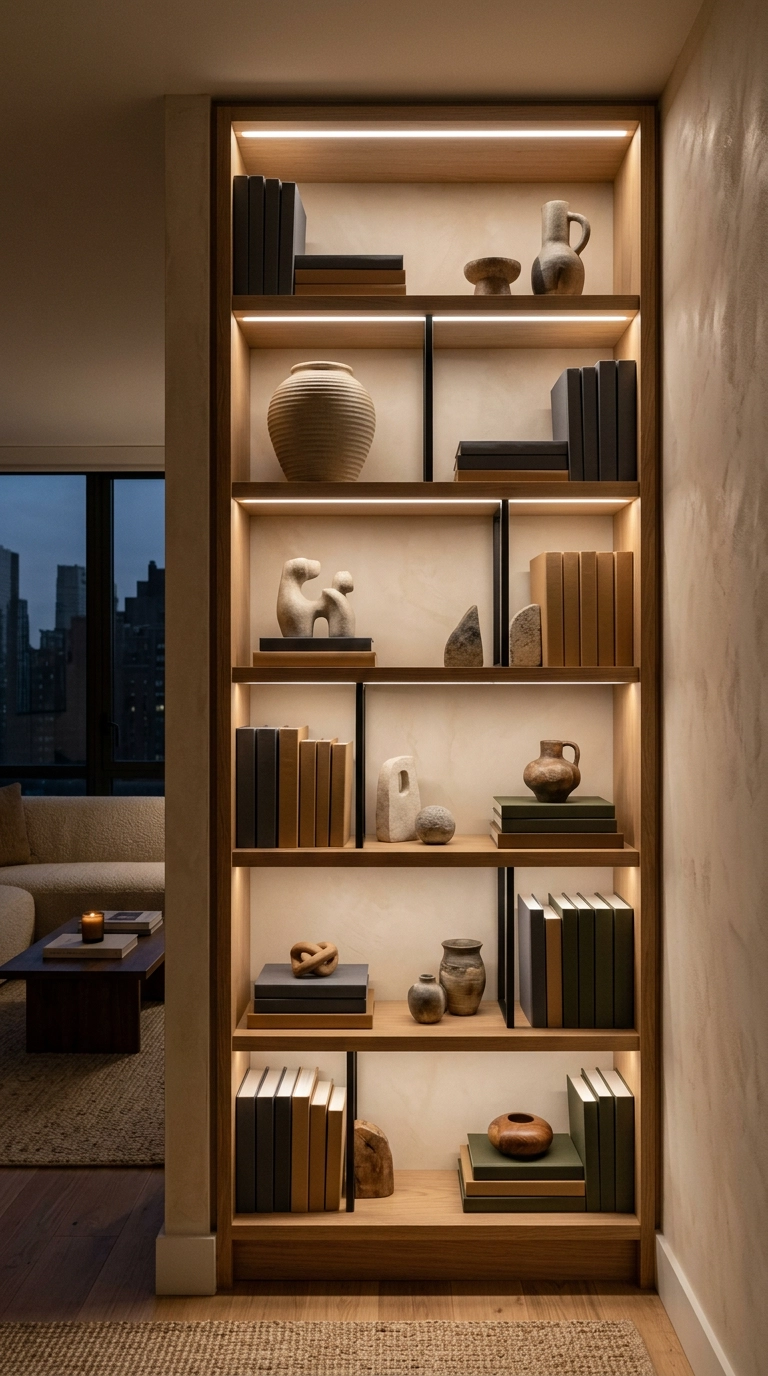
Nothing makes built-ins look custom faster than light coming from inside them. Warm-white LED tape at 2700K to 3000K, tucked behind the front edge of each shelf so you see the glow and not the diodes, is the move – anything cooler than 3000K makes your books look like a dentist’s waiting room.
6. Arrange by Color Blocks, But Only If You Own Enough Books
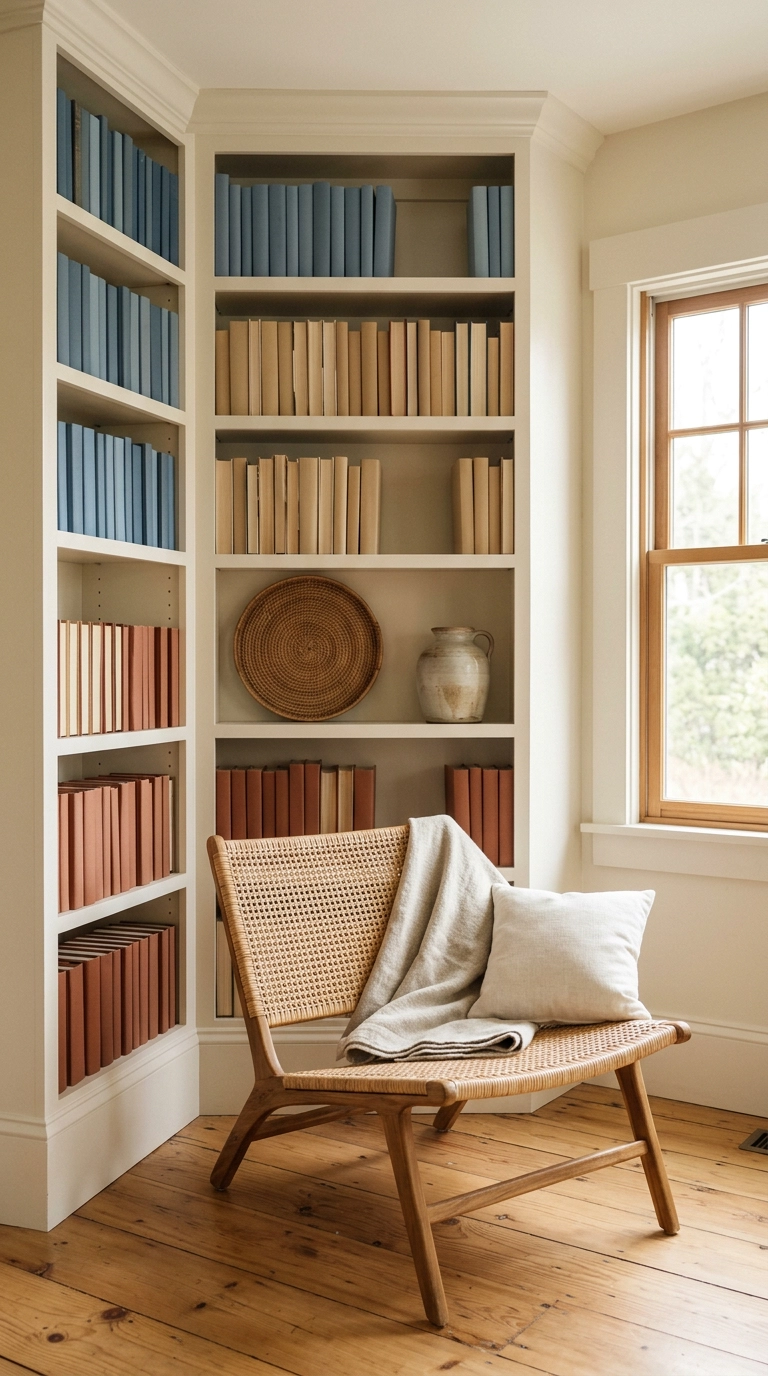
Color-blocking books photographs beautifully, but it only works if you have enough volumes to make blocks of at least eight to twelve per color. Fewer than that and you get a confetti effect that looks accidental rather than intentional.
7. Group by Subject Instead, and Let Spine Colors Fall Where They May
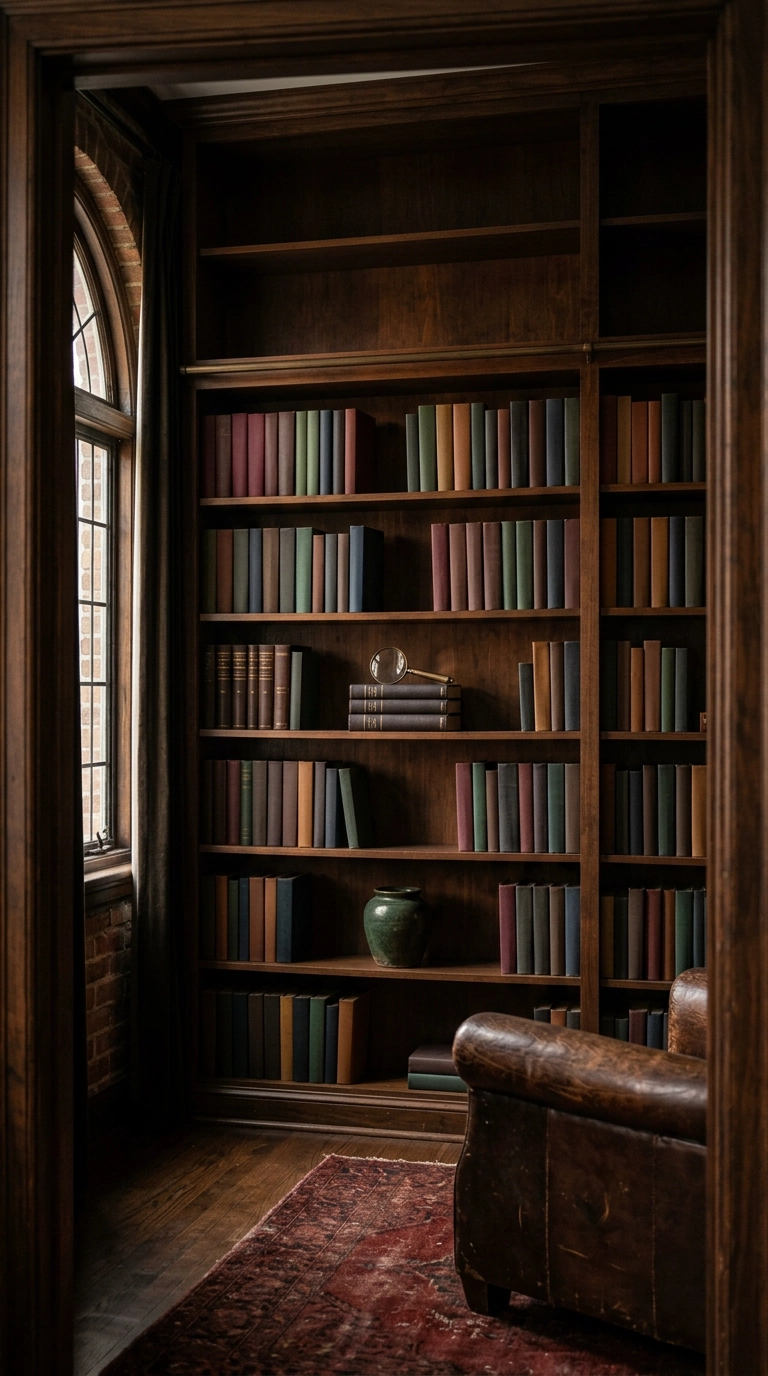
Subject grouping is what actual readers do, and it gives a shelf a personality that rainbow order flattens out. Keep clusters to one shelf section each so there’s a visible break, and let a few taller volumes stand slightly proud of the rest.
8. Never Turn Your Spines Inward (Yes, I’m Taking a Side)
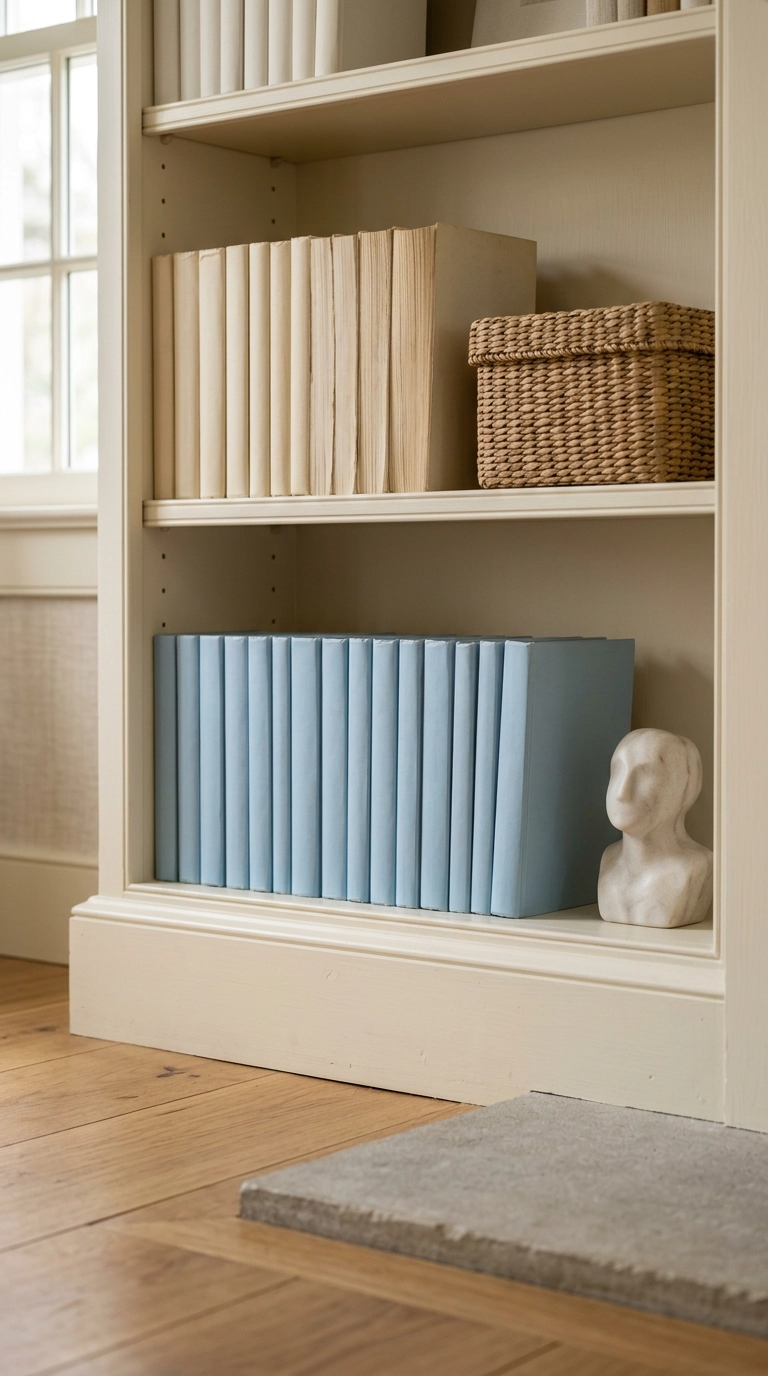
I’ll say it plainly – flipping books backward so you see the page edges is a mistake. It prioritizes a beige photo over a functional shelf, and every guest silently clocks that you can’t find anything you own.
9. Center the TV Inside the Built-In and Frame It with Dark Paint
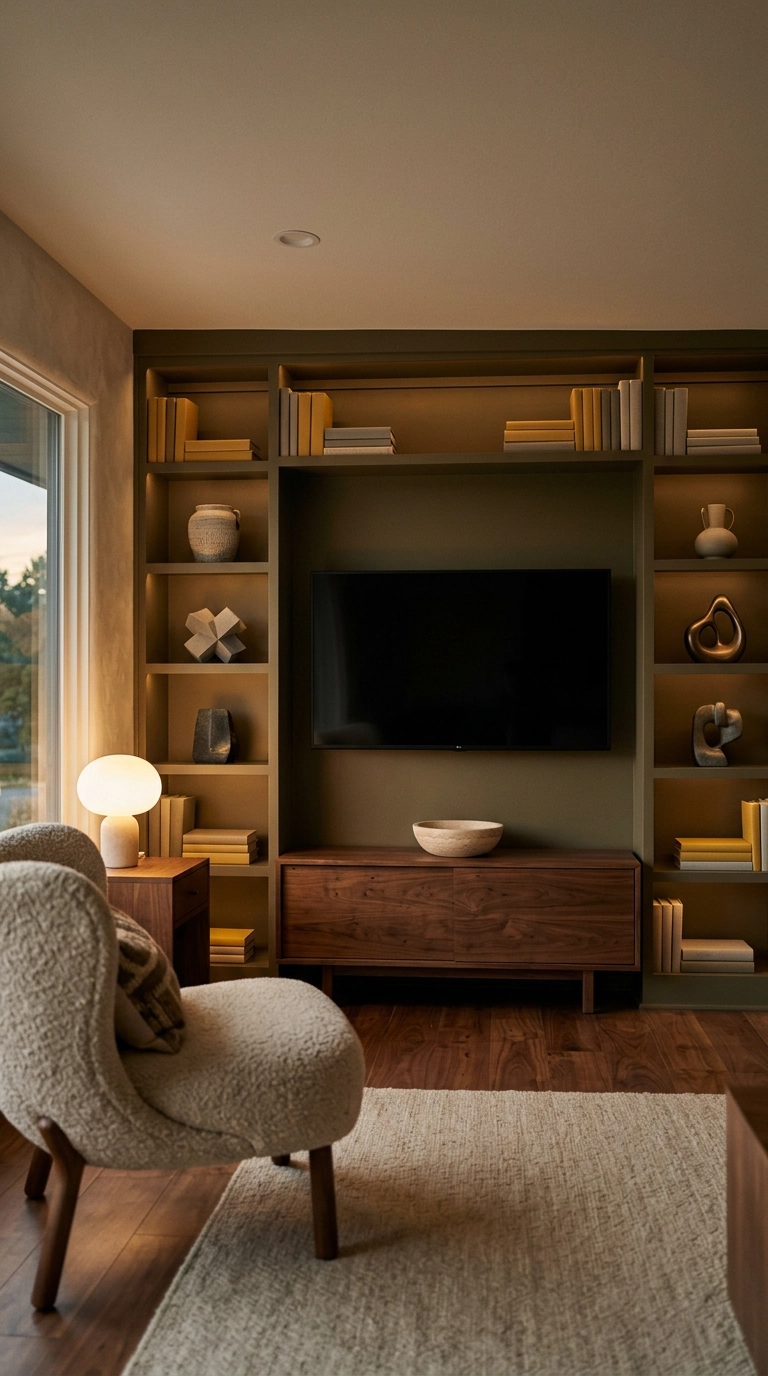
The TV belongs inside the built-in, centered, with the screen’s center landing roughly 42 inches off the floor for a standard sofa. Trying to hide it off to one side just makes the whole wall lopsided and gives you a bad viewing angle.
10. Hack IKEA Billy Bookcases Into Real Built-Ins for a Fraction of the Cost
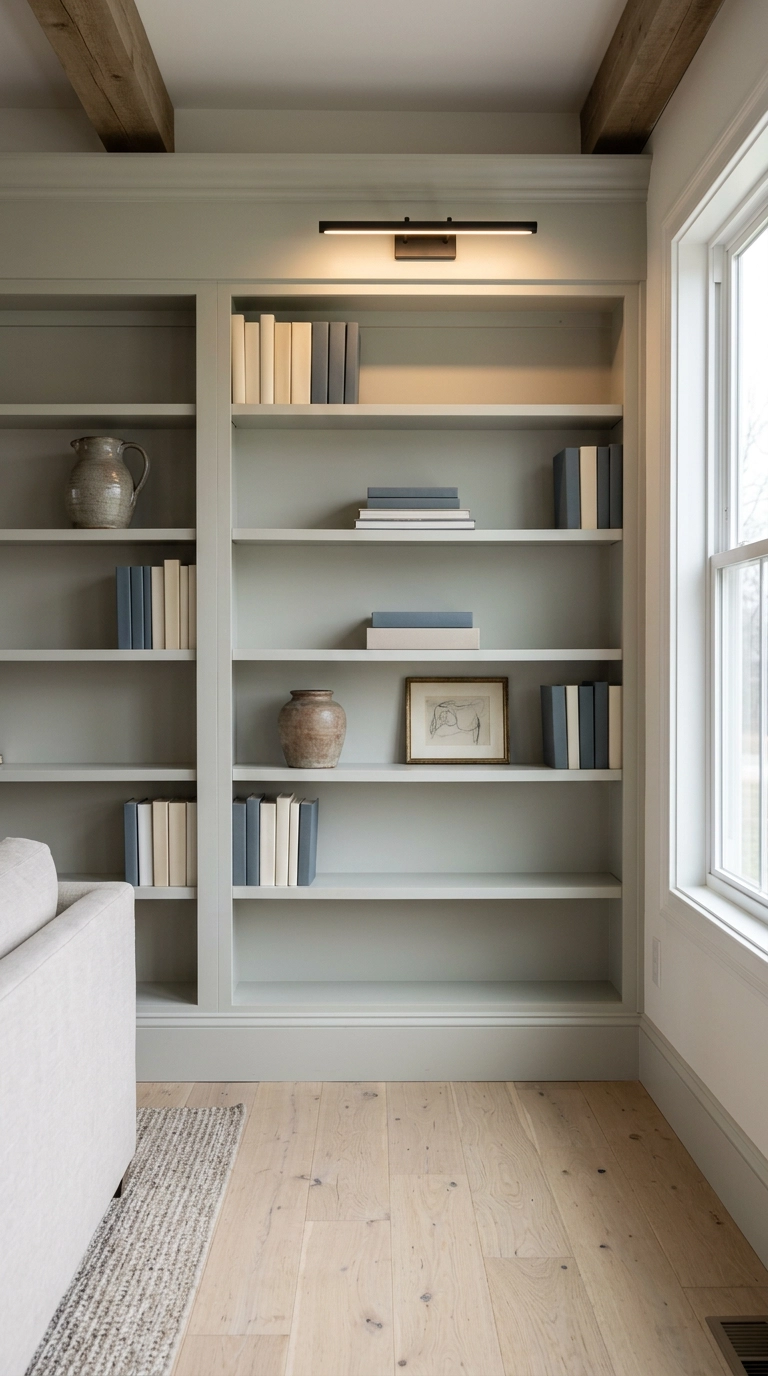
This is the budget path, and it genuinely works. Line up bookcases wall to wall, shim them level, screw them to studs, then add baseboard along the bottom, crown along the top, and a strip of trim in the seams before painting everything one color.
11. Add Brass Picture Lights Above the Top Shelf
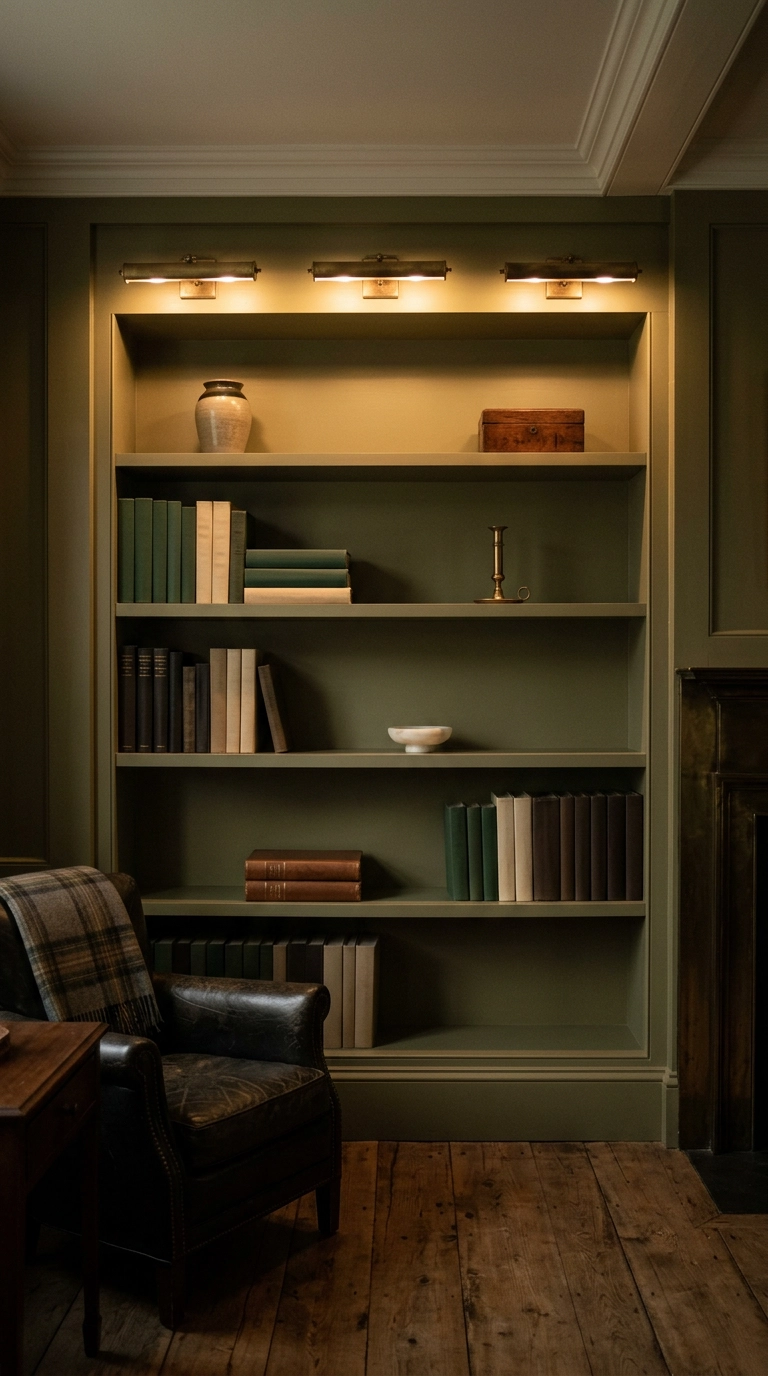
If you can’t run LED tape inside the shelves, picture lights above them are the plug-in alternative and honestly more charming. Mount them roughly 6 to 8 inches above the top shelf and space them evenly across the run, one per bay.
12. Build a Window Seat Surround with Shelves on Both Sides
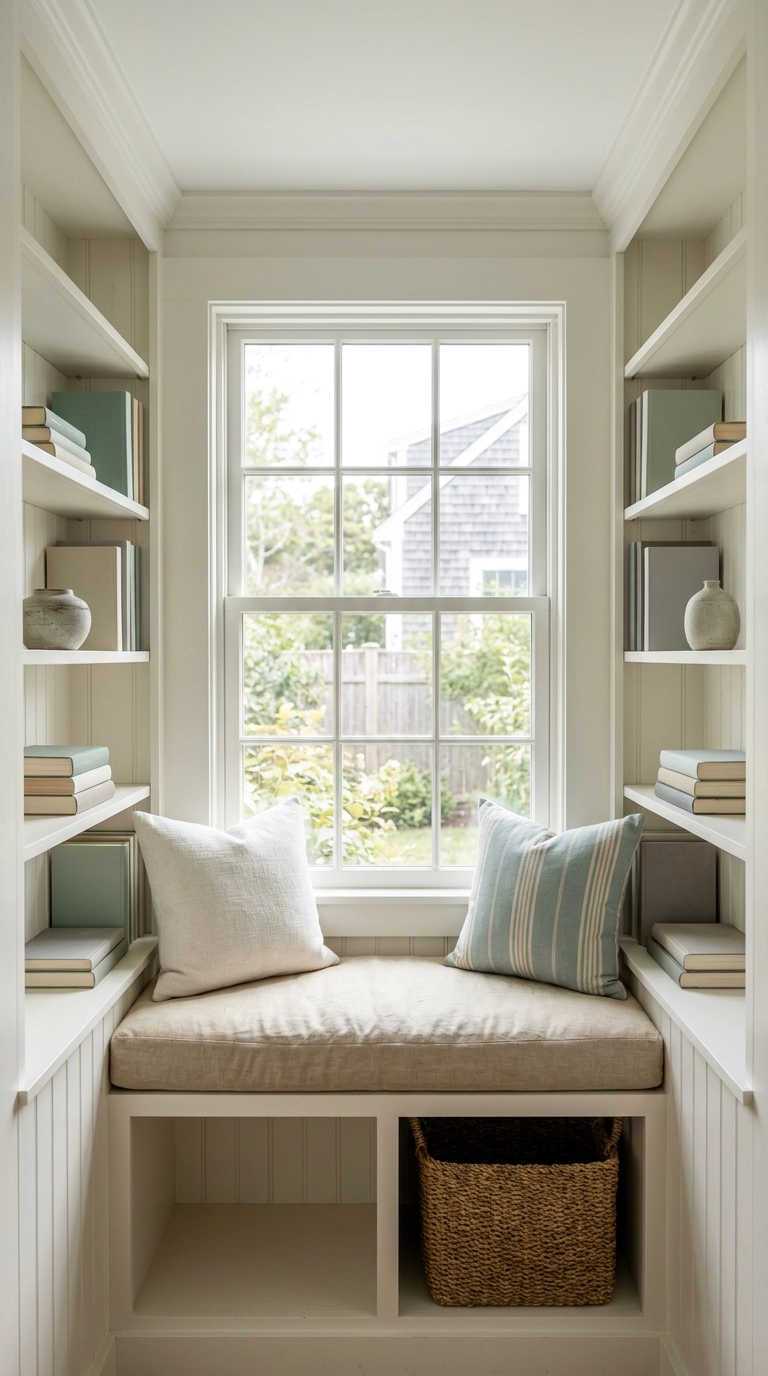
A window seat with shelf towers on either side is my favorite way to make an awkward bump-out earn its keep. Keep the seat depth around 20 inches and the cushion around 4 inches thick, or it turns into a decorative ledge nobody sits on.
13. Treat Negative Space as an Object You Deliberately Placed
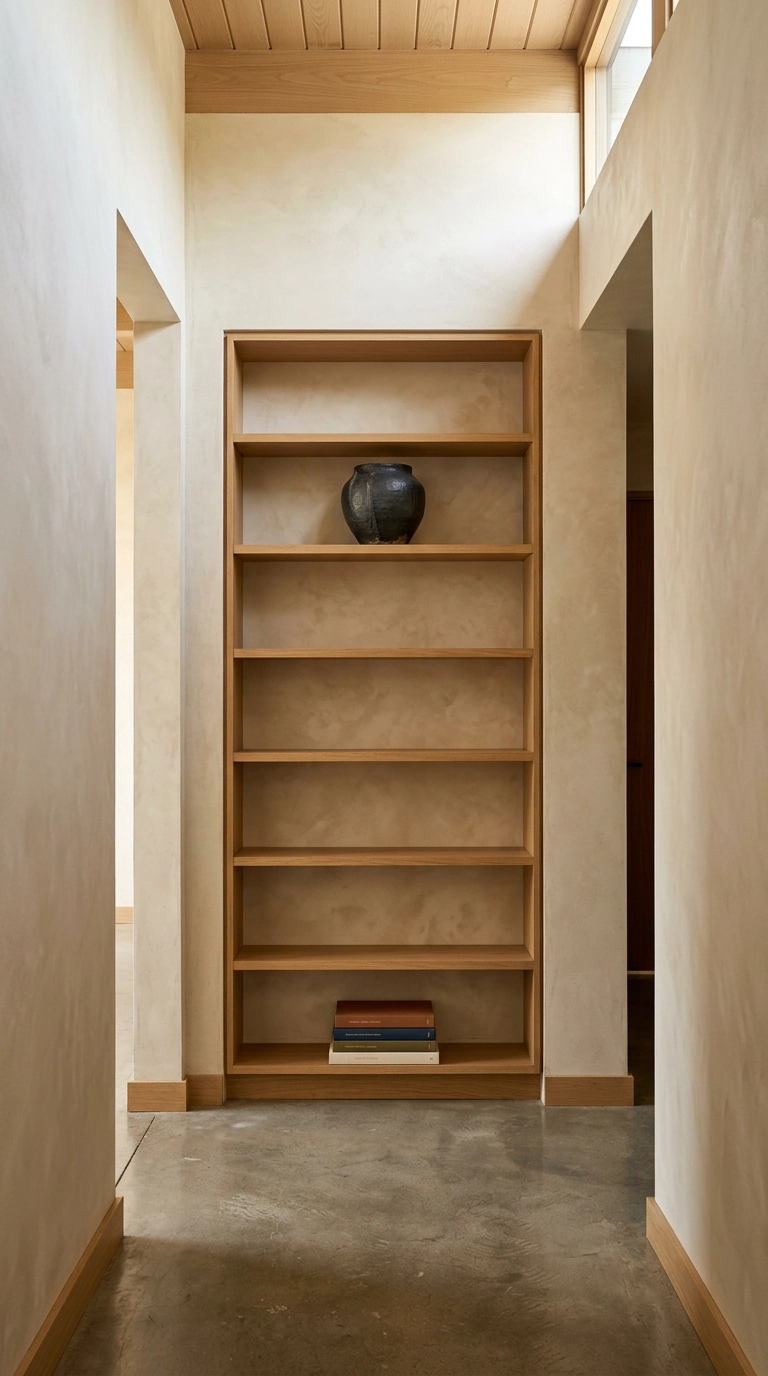
Negative space just means empty area, and the hardest instruction I give clients is to leave an entire shelf bare on purpose. It reads as confidence, and it gives every object nearby more visual weight because nothing is competing with it.
14. Turn a Hallway Niche Into a Shallow Built-In Library
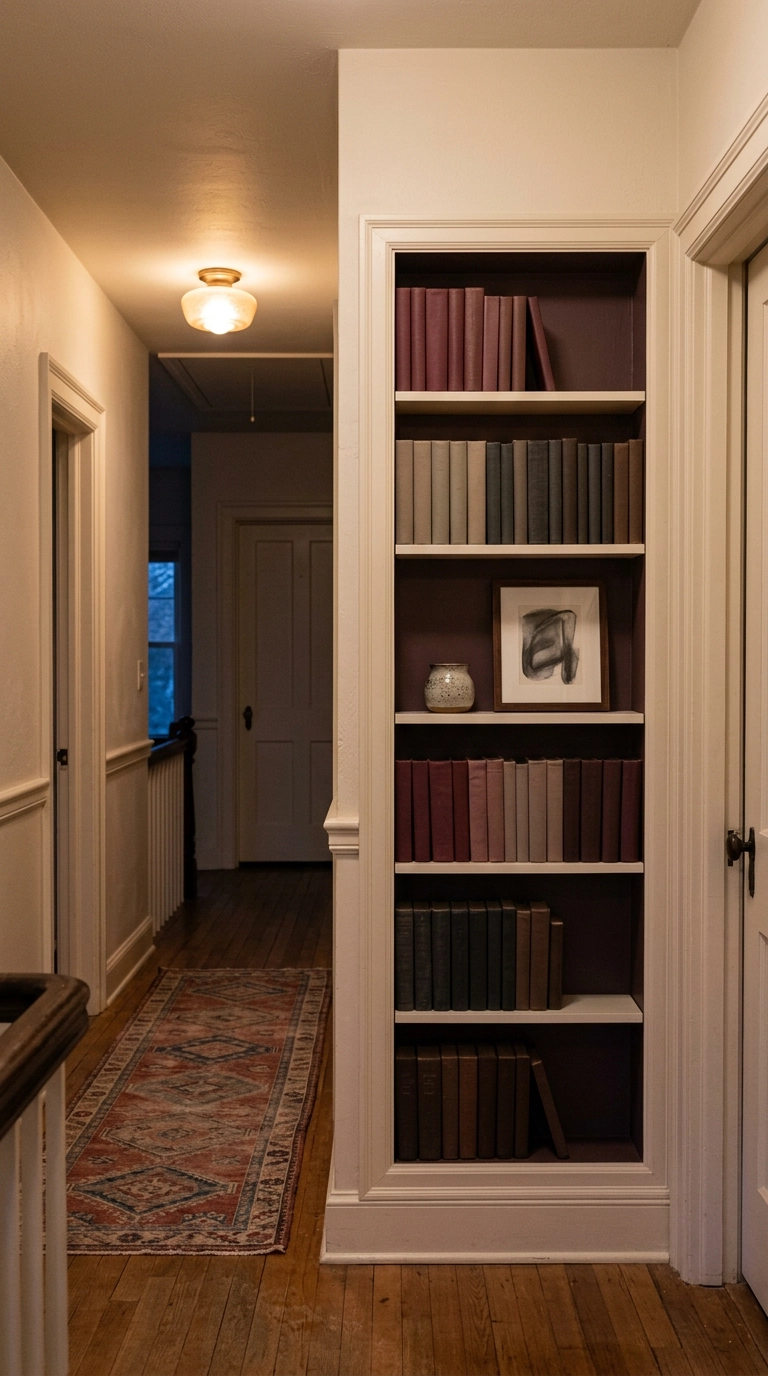
Hallways are dead square footage and a standard 2×4 wall cavity gives you about 3.5 inches of free depth – enough for paperbacks without stealing an inch of walking room. Between studs you can go wider by framing a proper 8 to 10 inch niche if the wall isn’t load-bearing.
15. Lean Art Inside the Shelves Instead of Hanging It
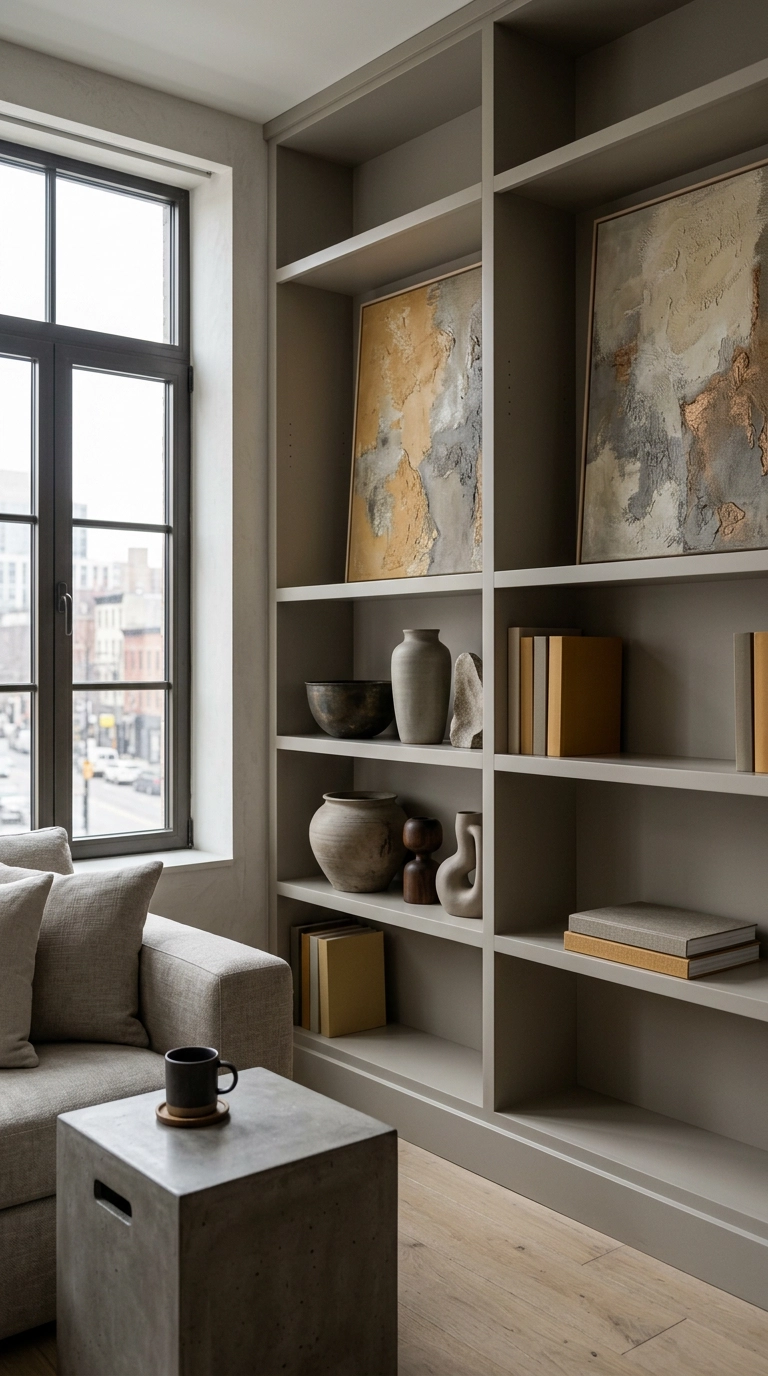
Leaning a canvas against the back of a shelf adds a big flat plane that instantly quiets a busy wall, and it gives objects in front of it something to sit against. Size it to roughly two-thirds the height of the bay so it doesn’t look wedged in.
16. Close the Bottom Two Feet with Cabinet Doors
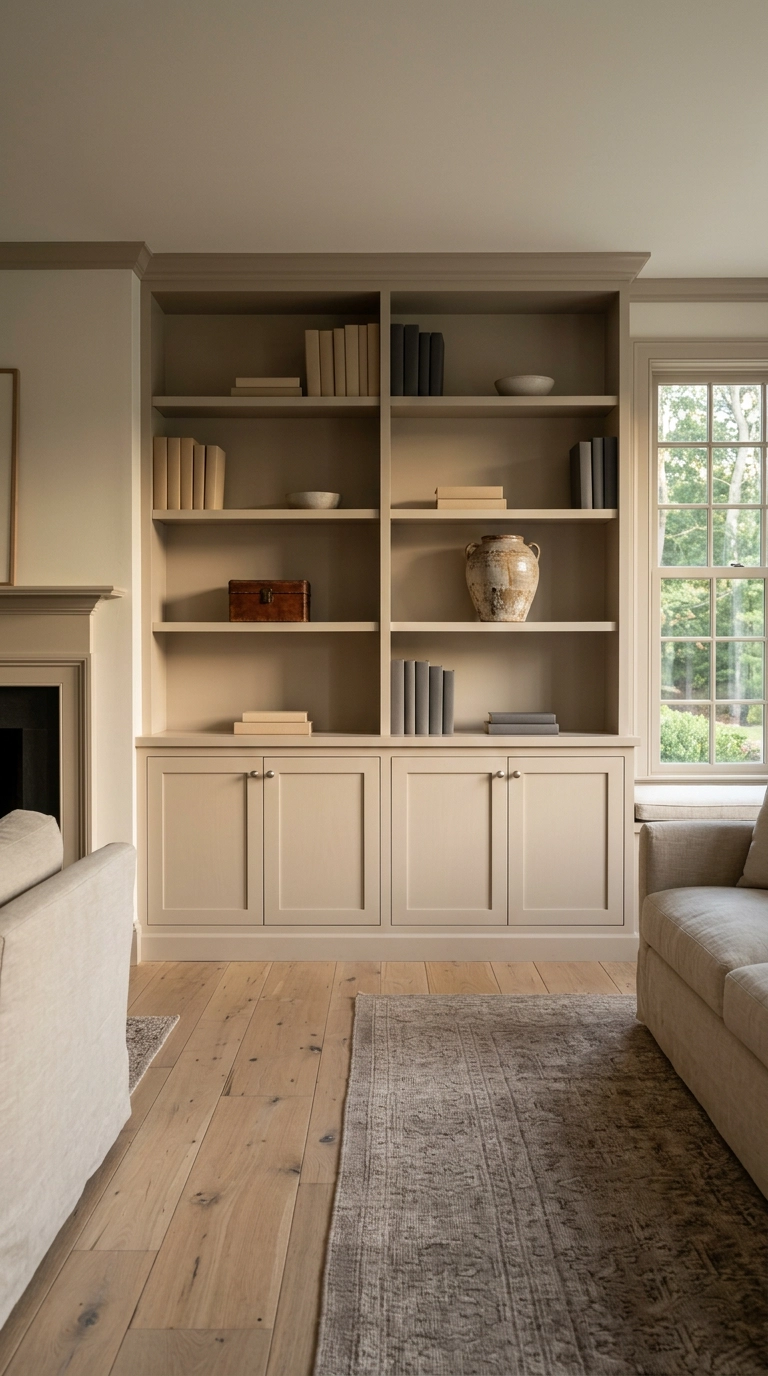
Closed storage in the bottom 24 to 30 inches is what keeps a built-in from becoming a junk display. Board games, chargers, the router, the extra throw – all of it goes behind doors and none of it has to be styled.
17. Color-Drench the Whole Built-In Wall, Trim and All
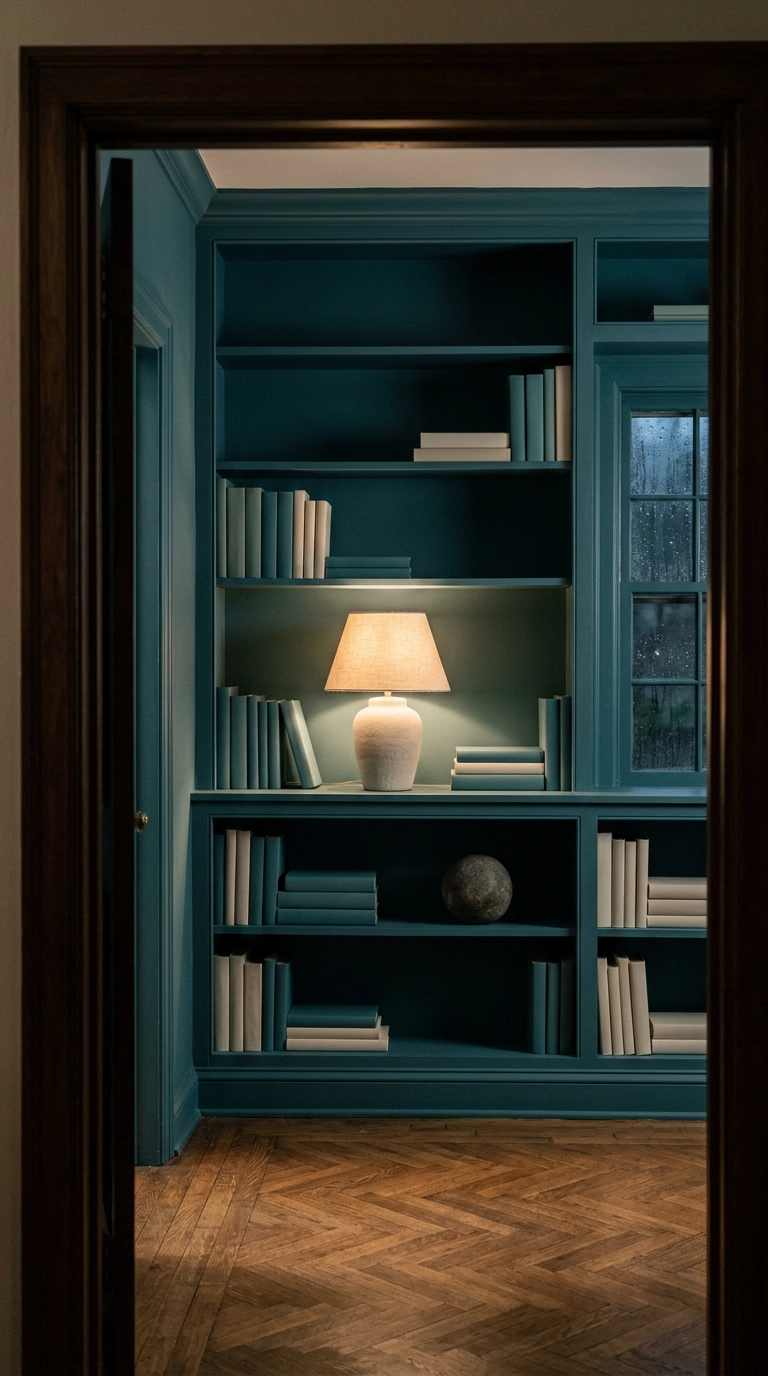
Color drenching means painting the shelves, face frames, surrounding trim, and wall in the same shade so all the visual breaks vanish. On built-ins it’s transformative because the millwork stops looking like furniture stuck to a wall and starts reading as architecture.
18. Vary Object Heights in Groups of Three
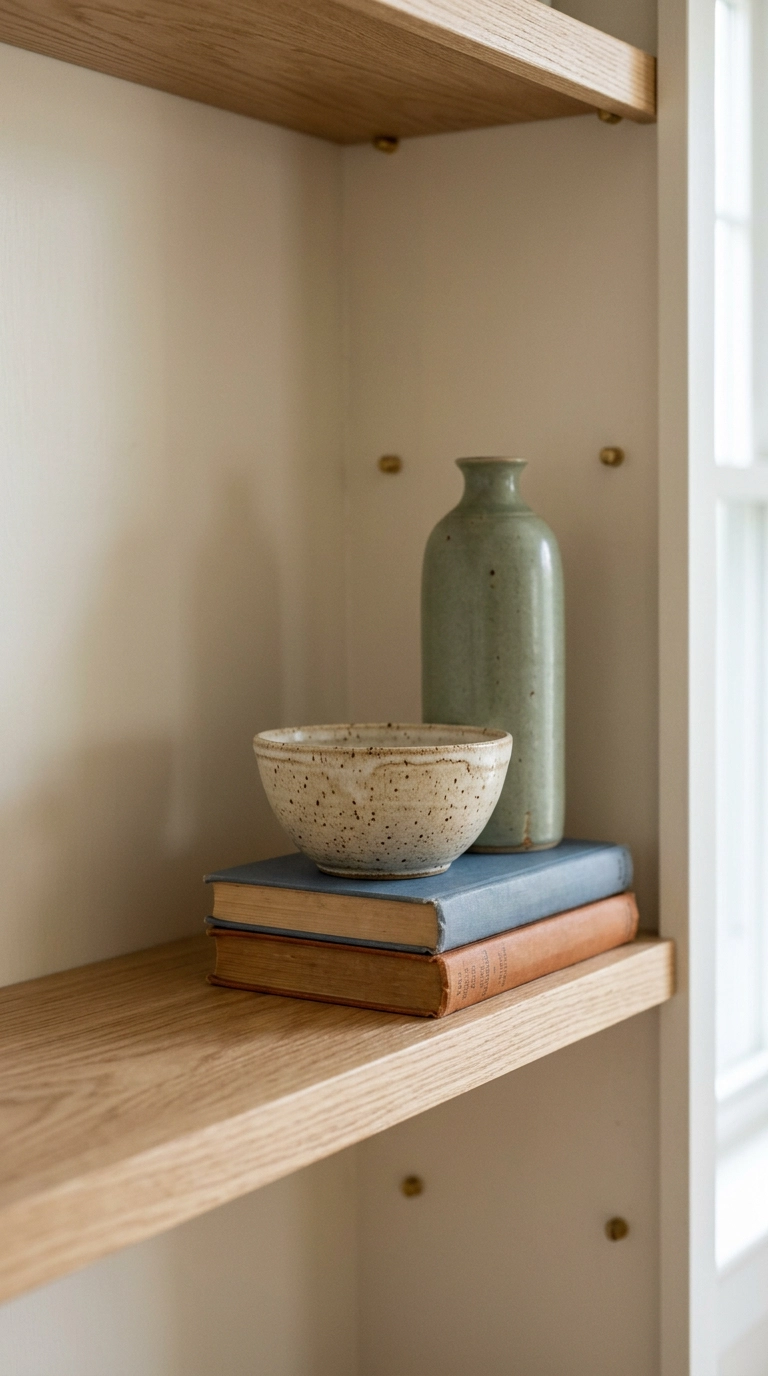
Odd numbers work because your eye can’t split three objects into matching pairs, so it keeps moving and reads the group as one composition. Aim for a tall, a medium, and a low piece with a real height difference of a few inches between each.
19. Wrap Built-Ins Around a Doorway to Frame the Sightline
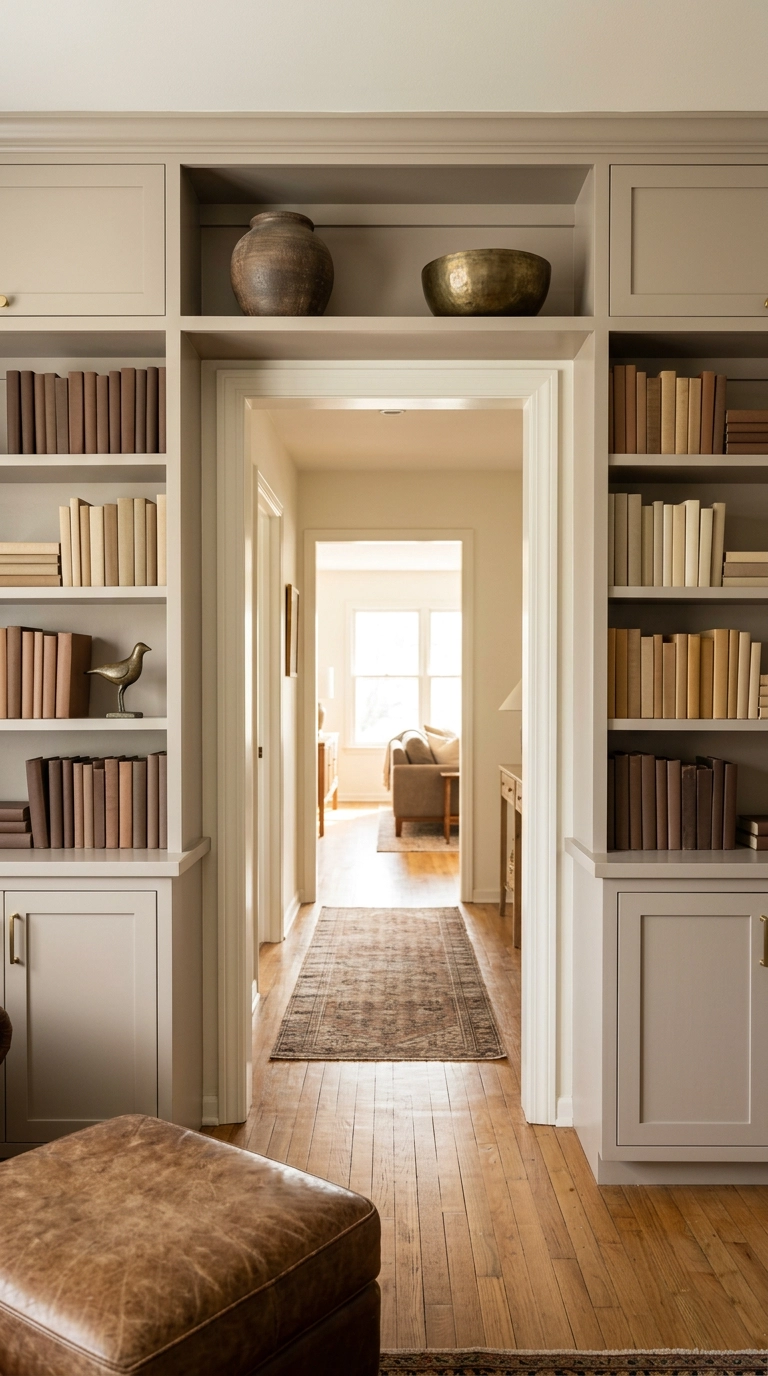
Bridging shelves over a doorway turns a plain opening into a framed sightline – the view from one room into the next gets an architectural border instead of just stopping. Keep at least 12 inches of shelf depth on the sides and shrink the bridge shelf above the door to 8 or 9 inches so it doesn’t loom.
20. Mix in Two or Three Woven or Fabric Bins Per Wall
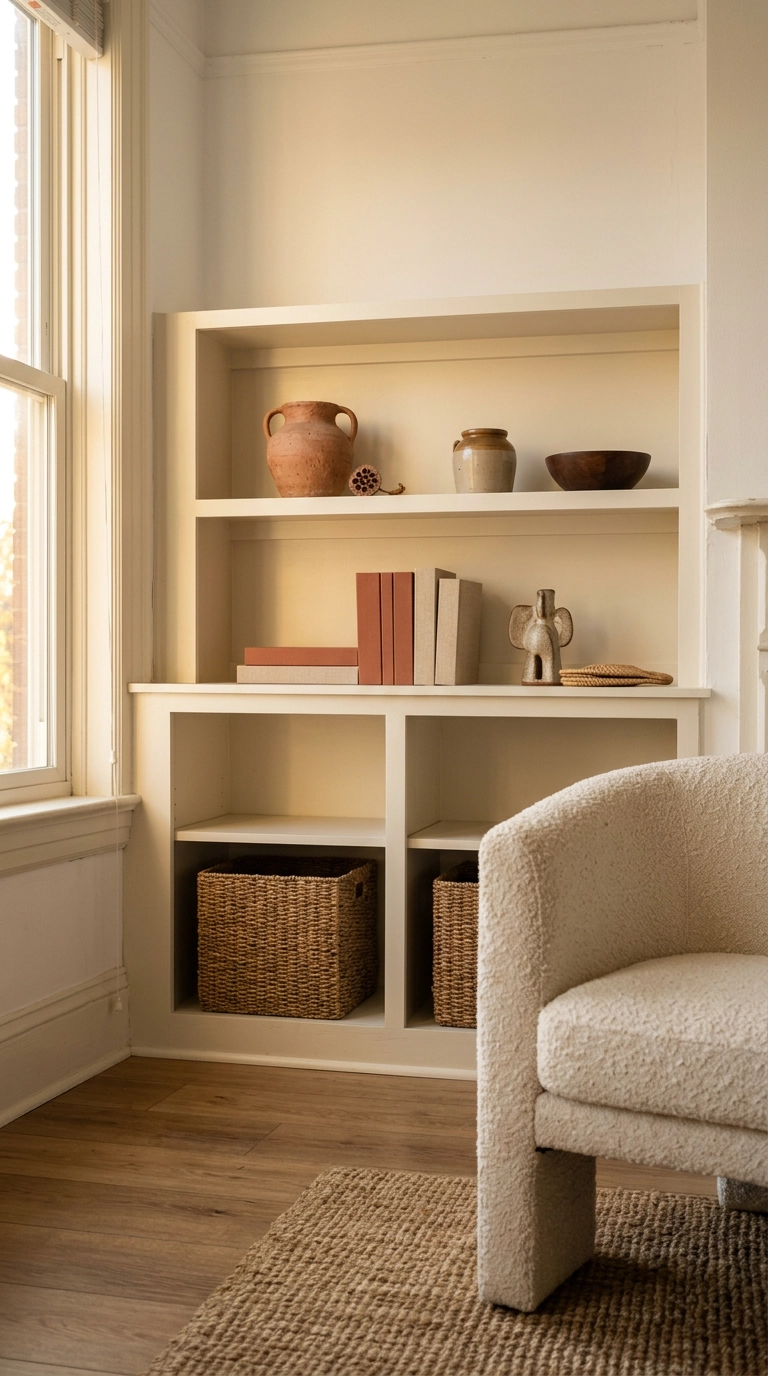
Two or three woven bins per wall give you hidden storage without cabinet doors, and the texture breaks up all those hard rectangles. Measure your shelf opening and buy bins about an inch shorter in each direction, or you’ll be wedging them in forever.
21. Line the Back Panel with Grasscloth or Removable Wallpaper
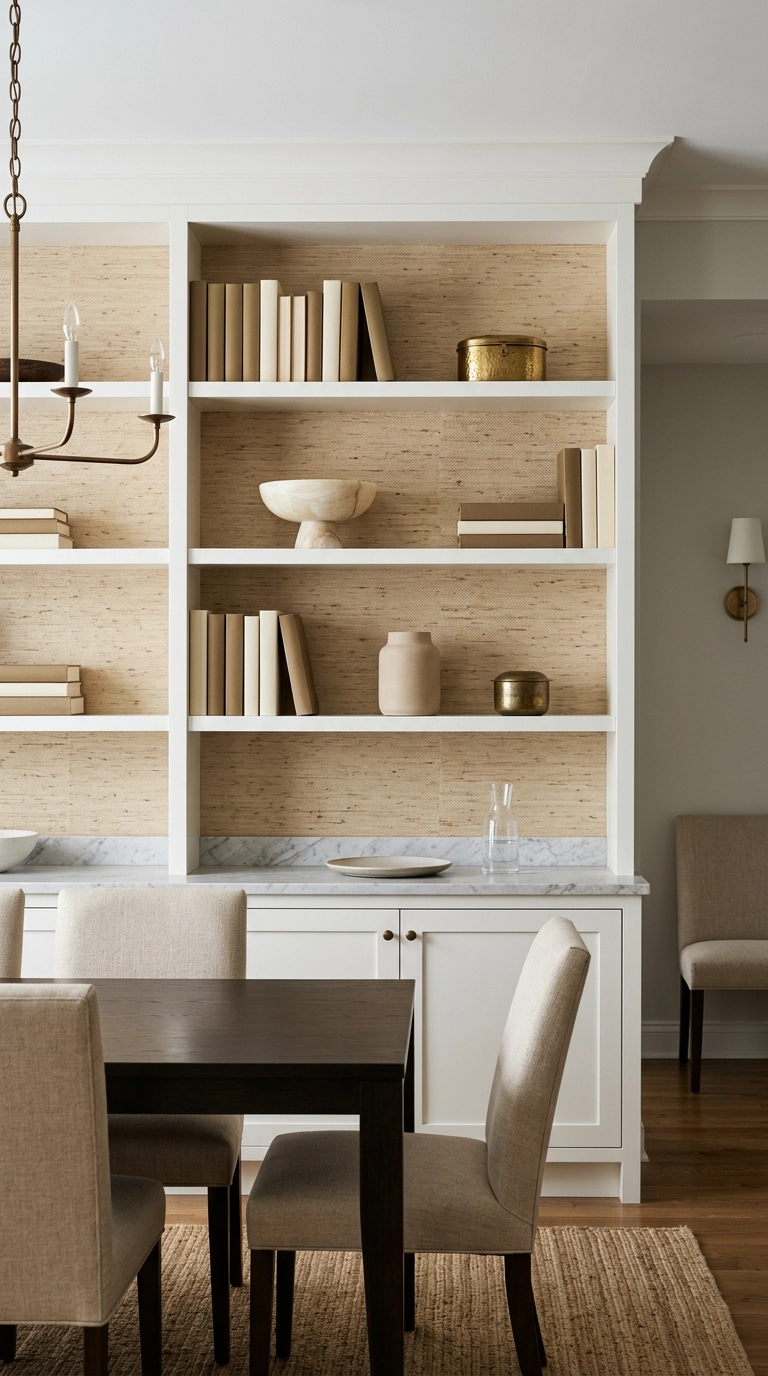
Papering just the back panels is the cheapest high-impact upgrade to existing built-ins, because you’re covering maybe fifteen square feet instead of a whole room. Grasscloth adds texture without pattern noise, which keeps your books from competing with a print.
22. Stagger Depth by Pulling One Object Forward in Each Bay
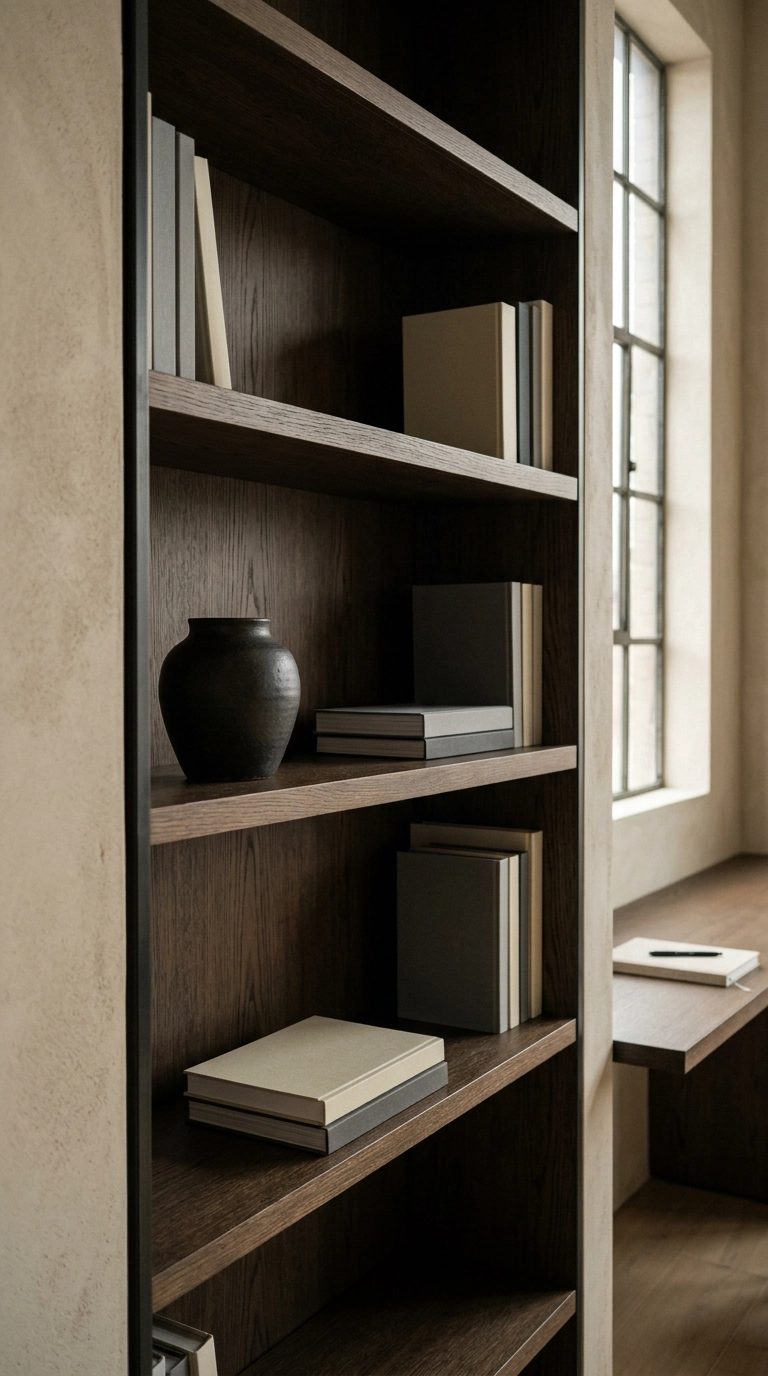
Everything sitting flush against the back panel is what makes a built-in look flat in photos and in person. Pull one object per bay right up to the front edge – even two or three inches of stagger creates shadow, and shadow is what gives a shelf dimension.
Your Shelves, Finally Figured Out
If you take one thing from this whole list, make it the two-thirds rule. Nearly every built-in I’ve been called in to rescue was suffering from the same thing – too much stuff, evenly distributed, with nowhere for the eye to land. Pull half of it off, stack a third of your books flat as risers, and stagger the depth, and you’ll wonder why you thought you needed a carpenter.
What I’m seeing everywhere right now is the painted back panel and the color-drenched built-in, which makes sense given how long we all lived with white-on-white shelving. Nate Berkus has been leaning on that trick for years, and Farrow & Ball shades like Hague Blue keep showing up in exactly this application because a saturated backdrop makes ordinary objects look collected. The other big shift is lighting – integrated LED strips and brass picture lights have gone from custom-build luxury to something you can genuinely do yourself in an afternoon.
And if you’re staring at a blank wall and a tight budget, please don’t dismiss the basic-bookcase-plus-trim route. I’ve styled those side by side with five-figure millwork and photographed both, and once the caulk and paint are on, nobody can tell. If you want more shelf-styling breakdowns, paint pairings, and the projects I’m testing in my own house, sign up for my weekly newsletter – I send one email, no clutter, which feels appropriate for a post about editing your shelves.