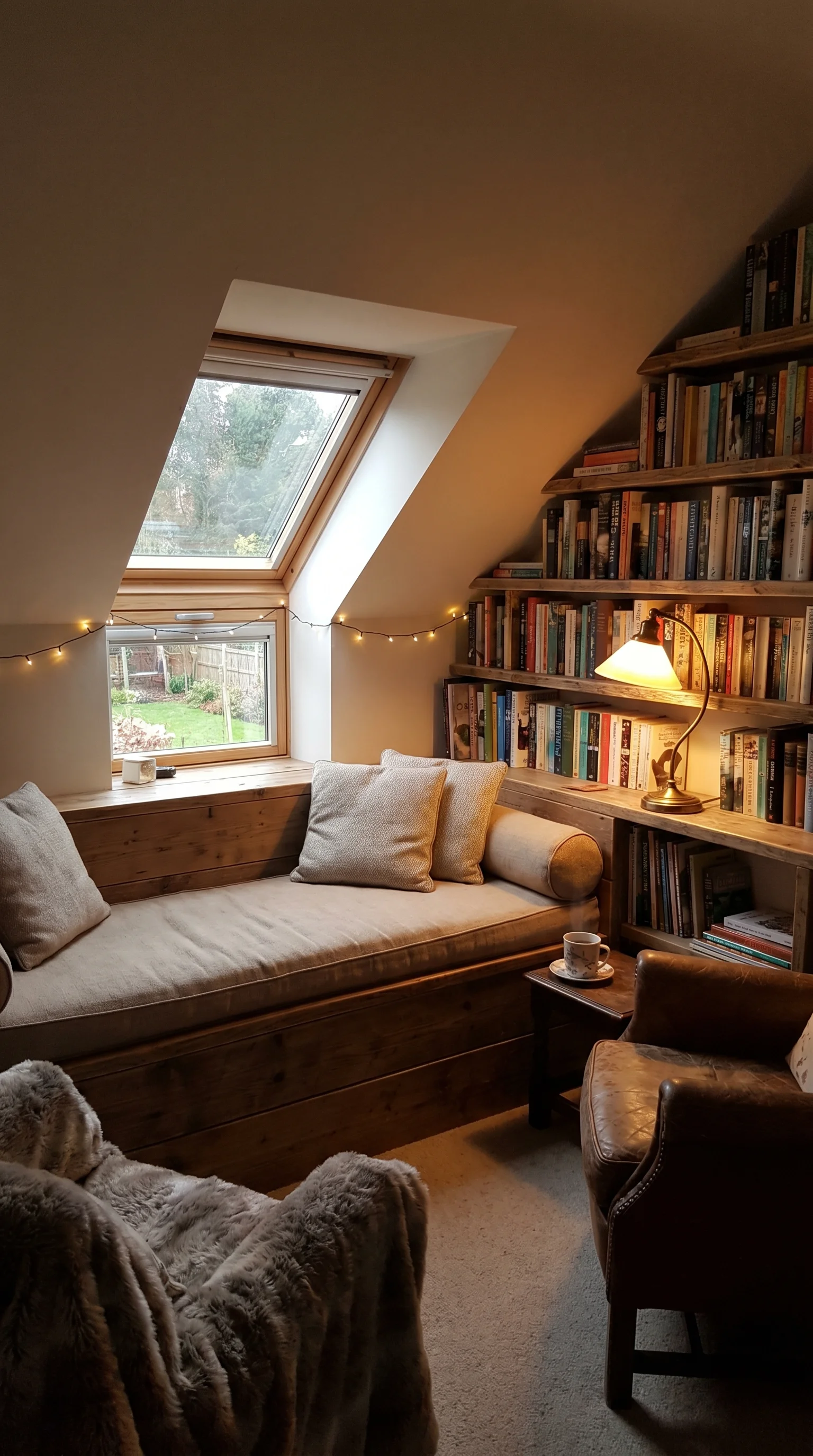
15+ Meditation Room Décor Ideas for a Space Your Practice Deserves
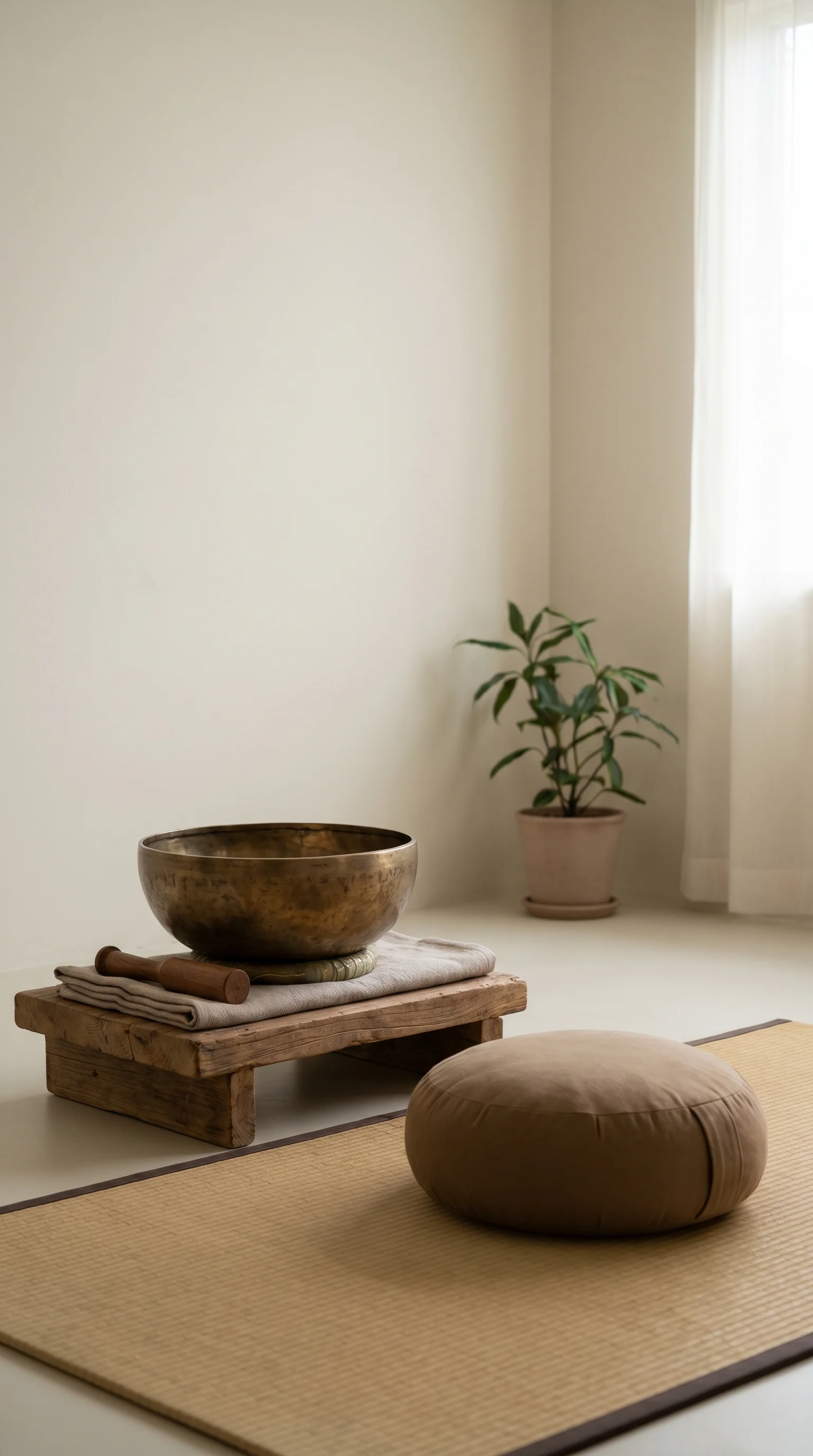
Most meditation spaces fail for the same reason most meditation practices fail: insufficient commitment. A dedicated, beautiful space communicates that this is a legitimate part of the day, deserving its own environment.
You don’t need a full room. You need a corner, properly treated.
Here are 15+ meditation room decor ideas organized from minimal to elaborate.
1. Single Cushion, Bamboo Flute, Plants

The most minimal viable meditation space: one quality cushion, one plant, and the deliberate absence of anything that doesn’t support practice.
2. Wooden Door Entrance, Plant Bodyguards
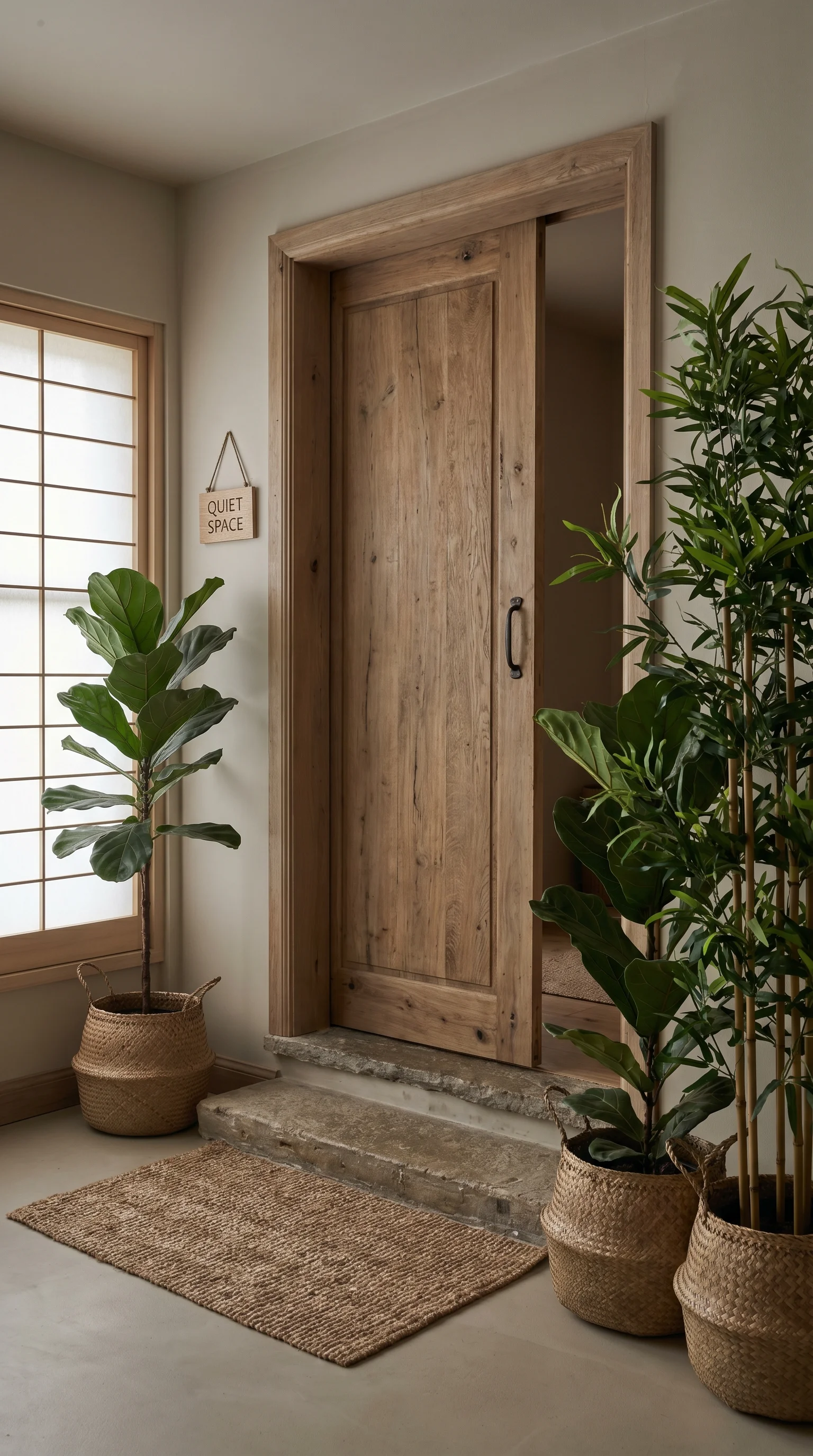
Marking the entrance to a meditation space creates a physical transition ritual. The act of stepping through the threshold signals to the nervous system that the mode is changing.
3. Minimalist Wooden Shelf, Books, Lamp, Plant
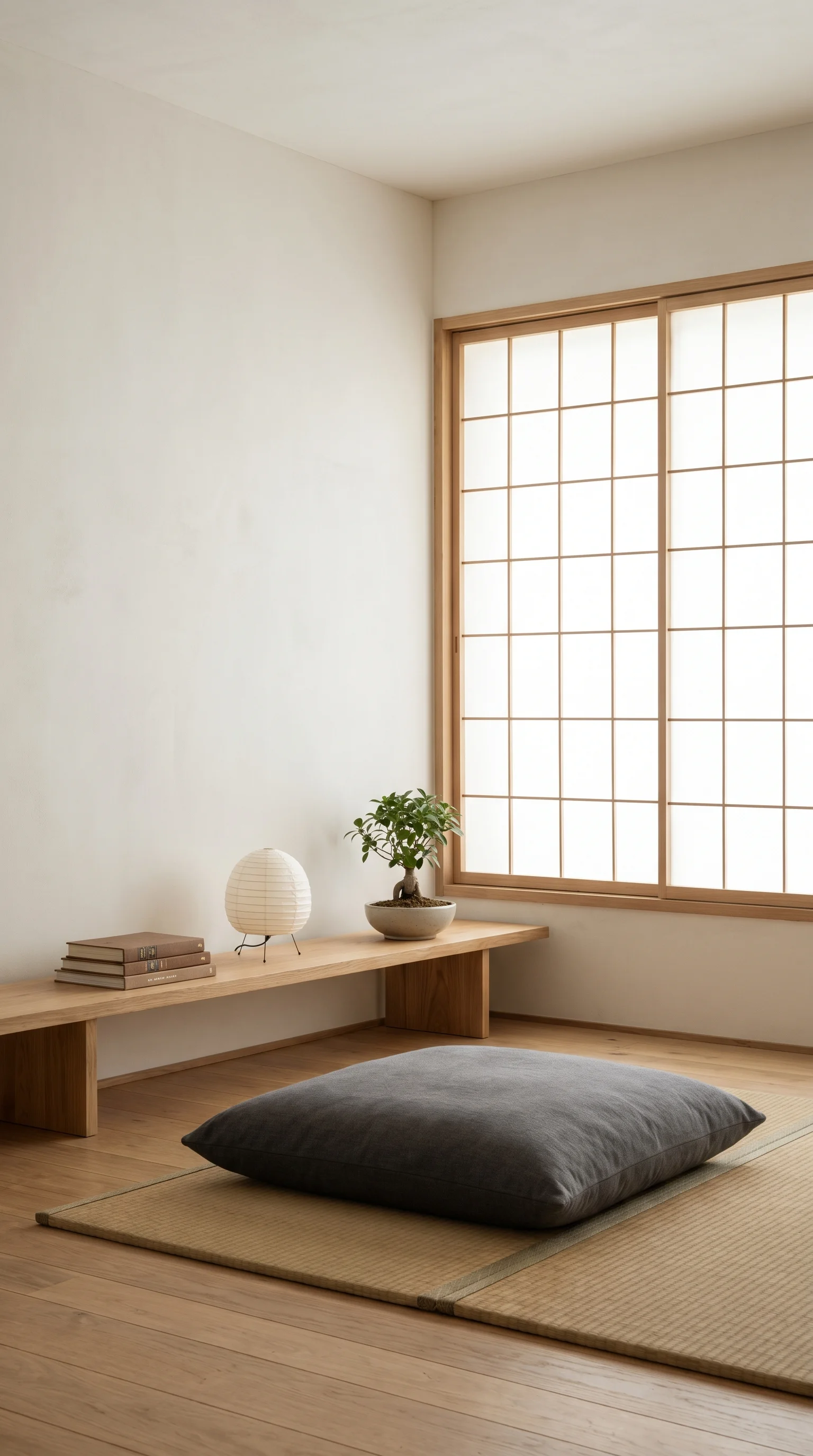
A low wooden shelf beside the meditation cushion holds the practical elements of practice: books, a small lamp for evening sessions, a plant. Everything is functional; the restraint is itself the statement.
4. Stone Grouping, Dried Branches, Cushions

Smooth river stones and dried branches reference the Japanese aesthetic tradition of wabi-sabi: the beauty of natural imperfection. They require no cultivation, no maintenance, no replacement.
5. Jute Circular Rug, Floor Cushion, Round Wooden Table
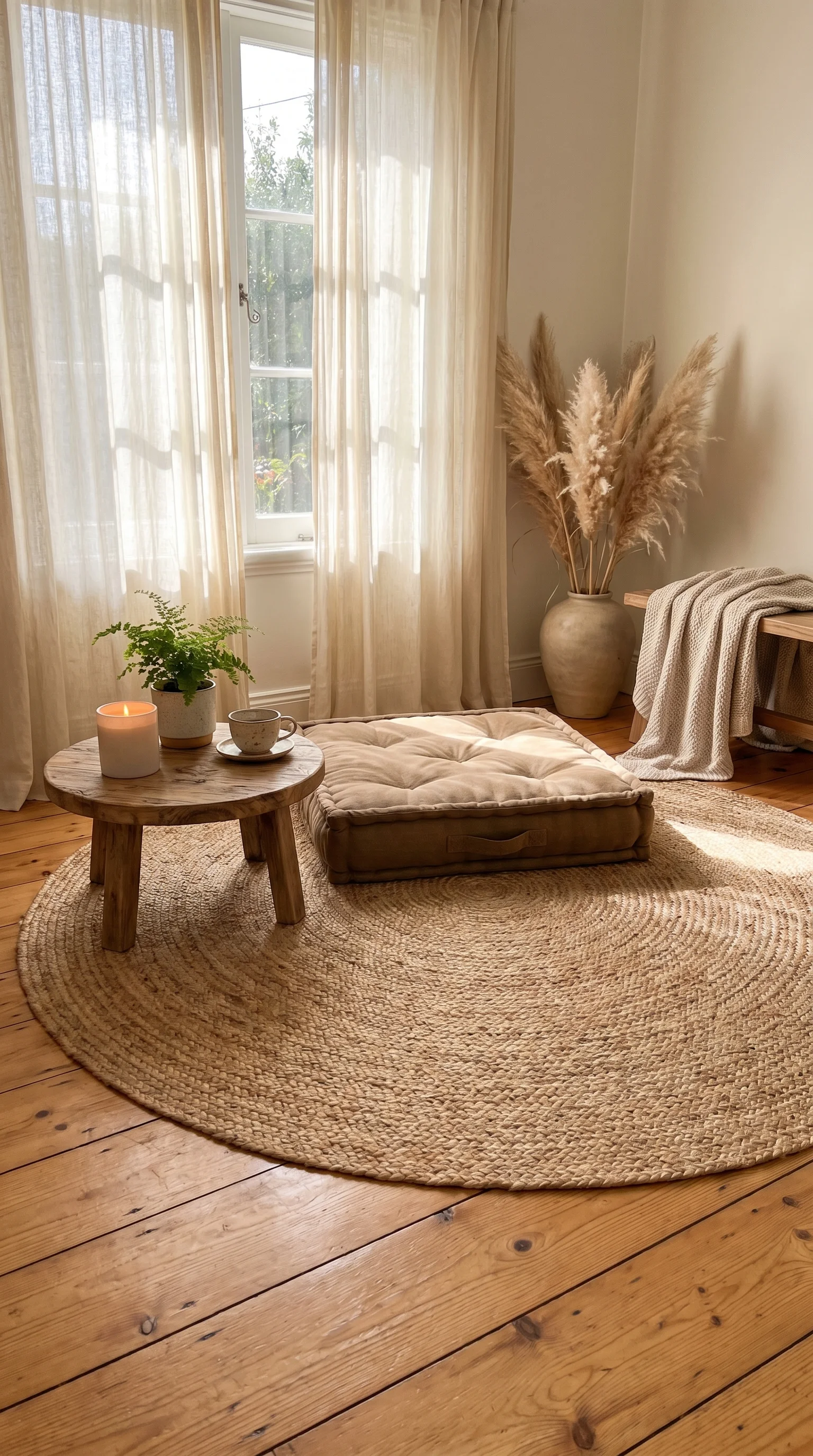
The circular rug beneath the meditation cushion defines the practice zone physically. The circle — with no directional hierarchy — is the most appropriate shape for a meditation space.
6. Cushion on Wooden Platform, Surrounding Plants
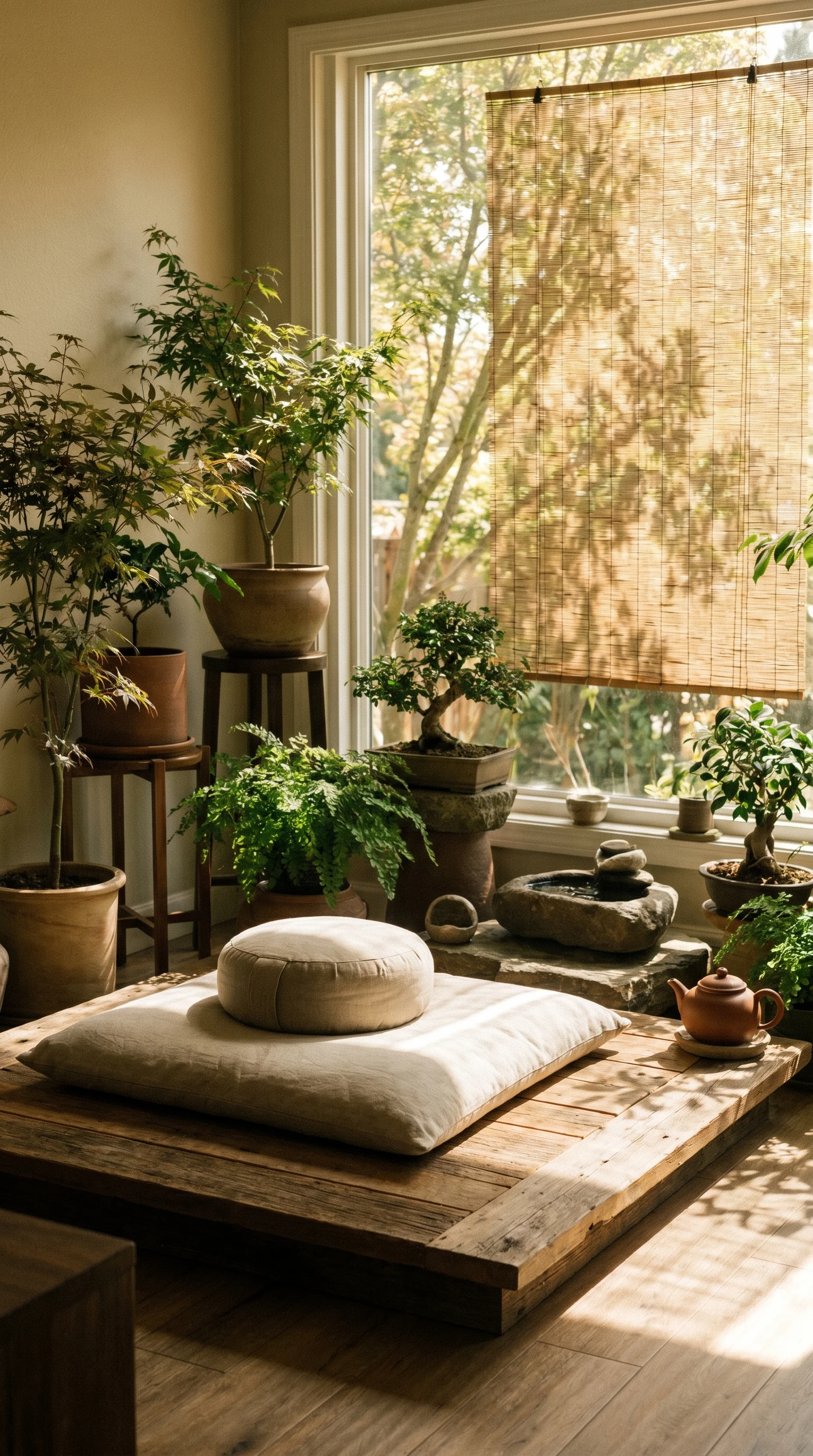
A low wooden platform creates a subtle elevation of the practice space from the general floor level. This distinction communicates that the space on the platform is different from the space off it.
7. Round Rug, Corner Cushion, Shelves with Plants

Positioning the meditation cushion in a corner creates the most enclosed, most sheltered quality — walls on two sides create a sense of containment that helps mental focus.
8. Wooden Wall Panels, Round Floor Rug
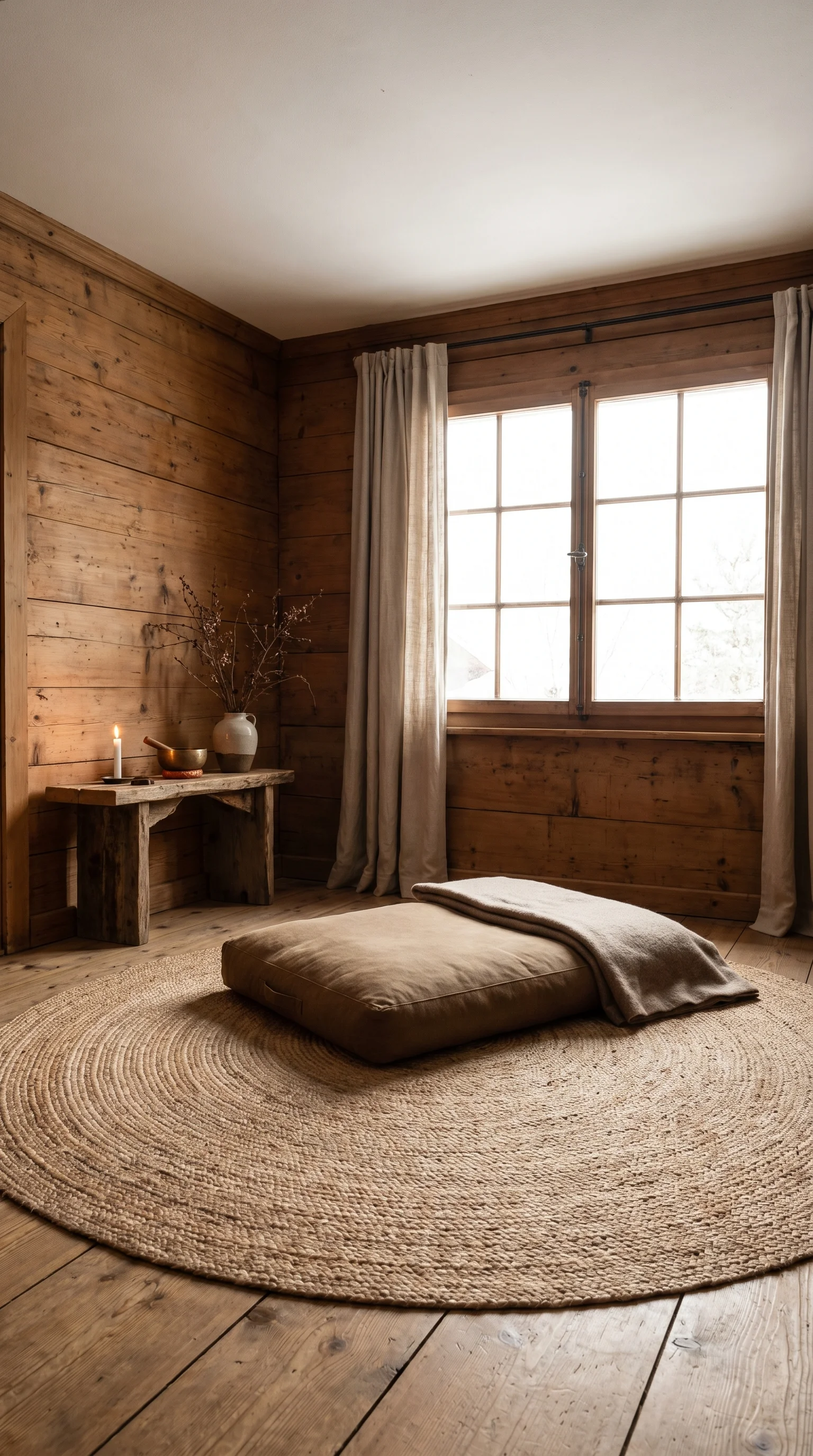
Wooden wall panels create a warm, cabin-quality enclosure. The wood absorbs sound slightly, creating a quieter environment, and the warmth of the natural material is consistently associated with calm.
9. Woven Floor Basket, Books, Plants

A woven basket beside the cushion holds the portable elements of a meditation practice — a journal, a mala, incense, a small altar card — keeping them organized and accessible without creating clutter.
10. Circular Window Creating Morning Light
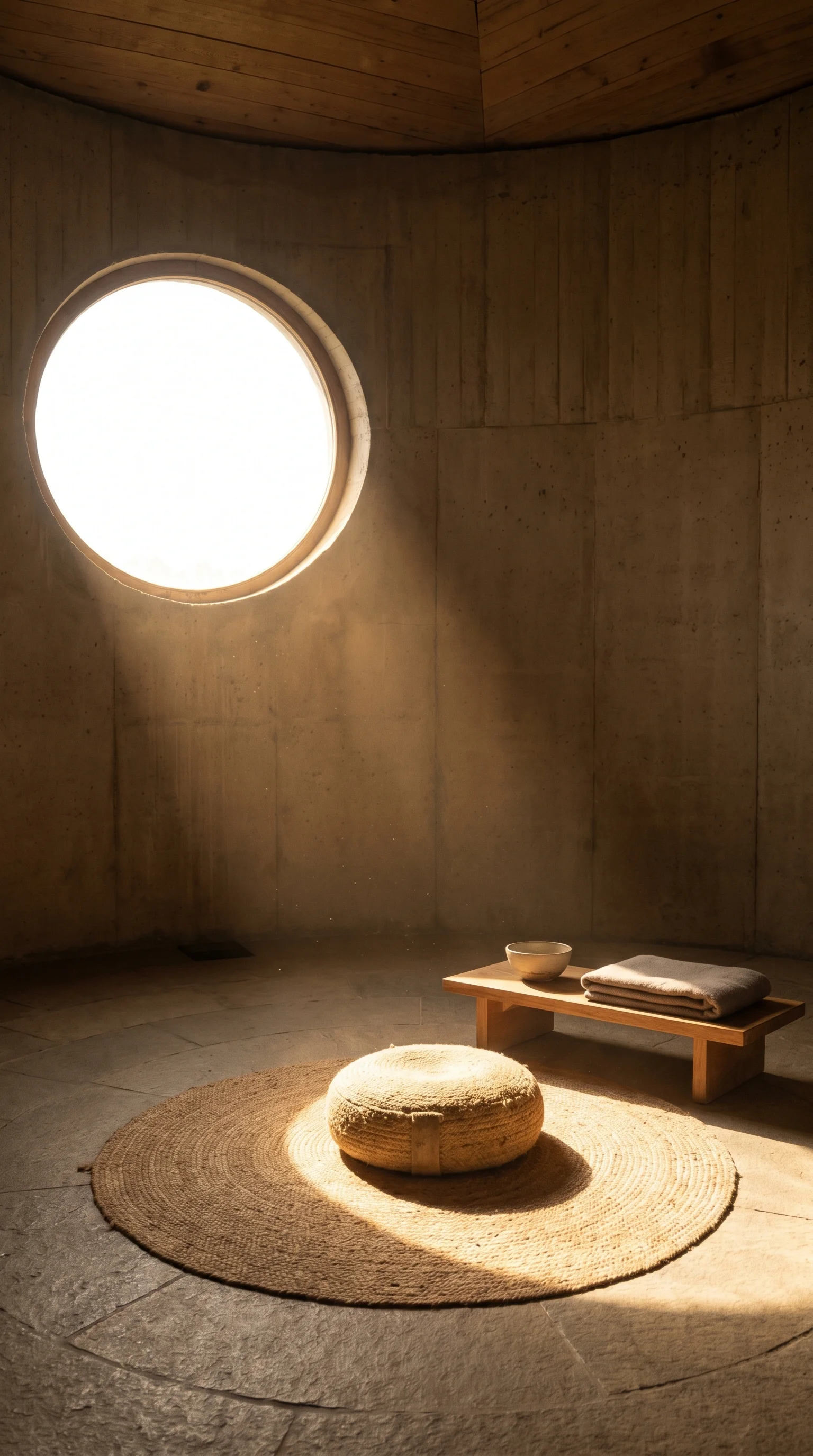
A circular window in a meditation room transforms the relationship between the practice space and the external world. The morning light entering through a circular aperture creates a quality of illumination that no lamp replicates.
11. Japanese Platform Bed-Style Space
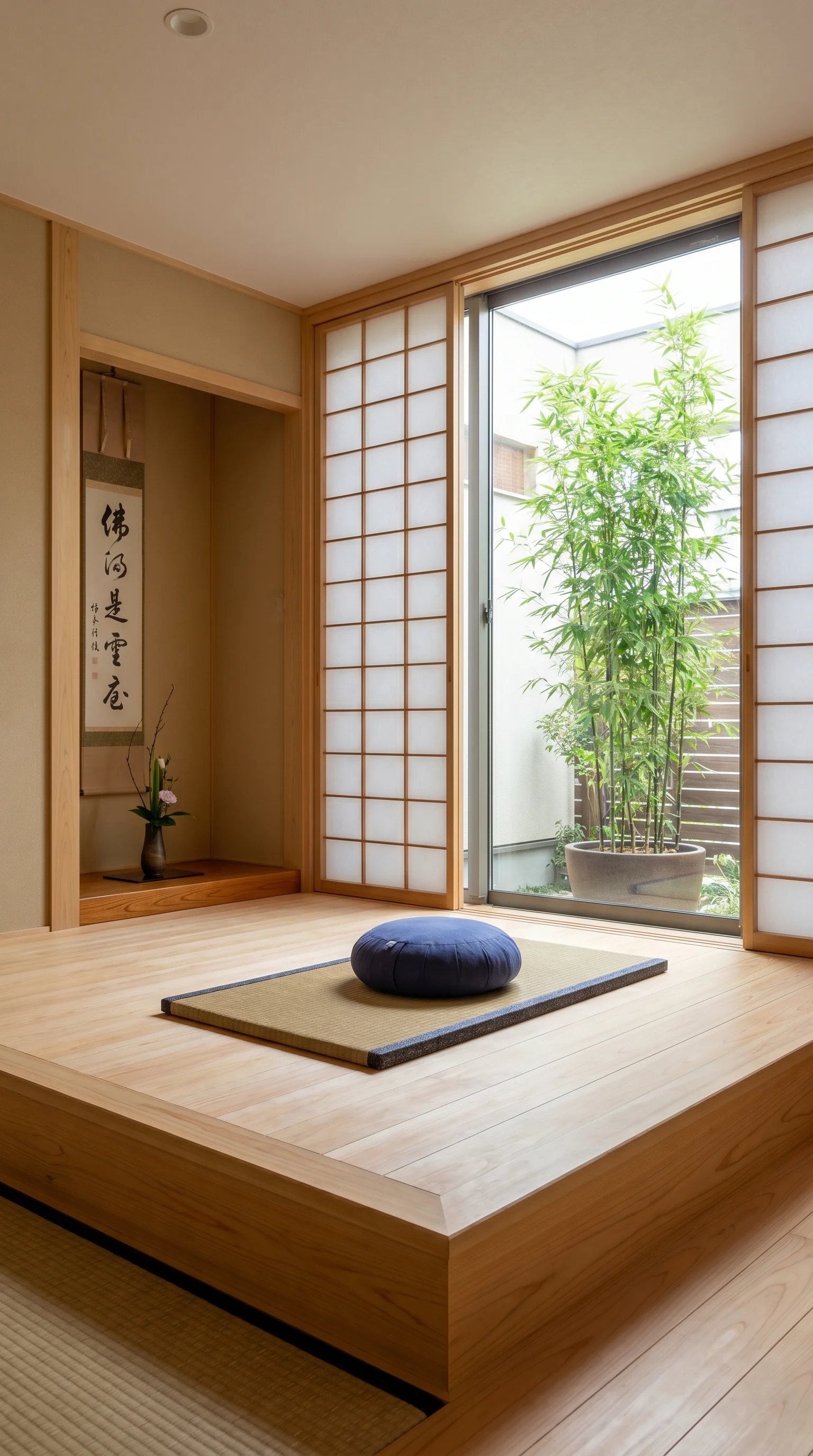
A Japanese-influenced meditation room references the most developed meditation space design tradition in the world. The Japanese aesthetic has worked out, over centuries, exactly how much is enough.
12. LED Ambient Strips, Cushioned Bench
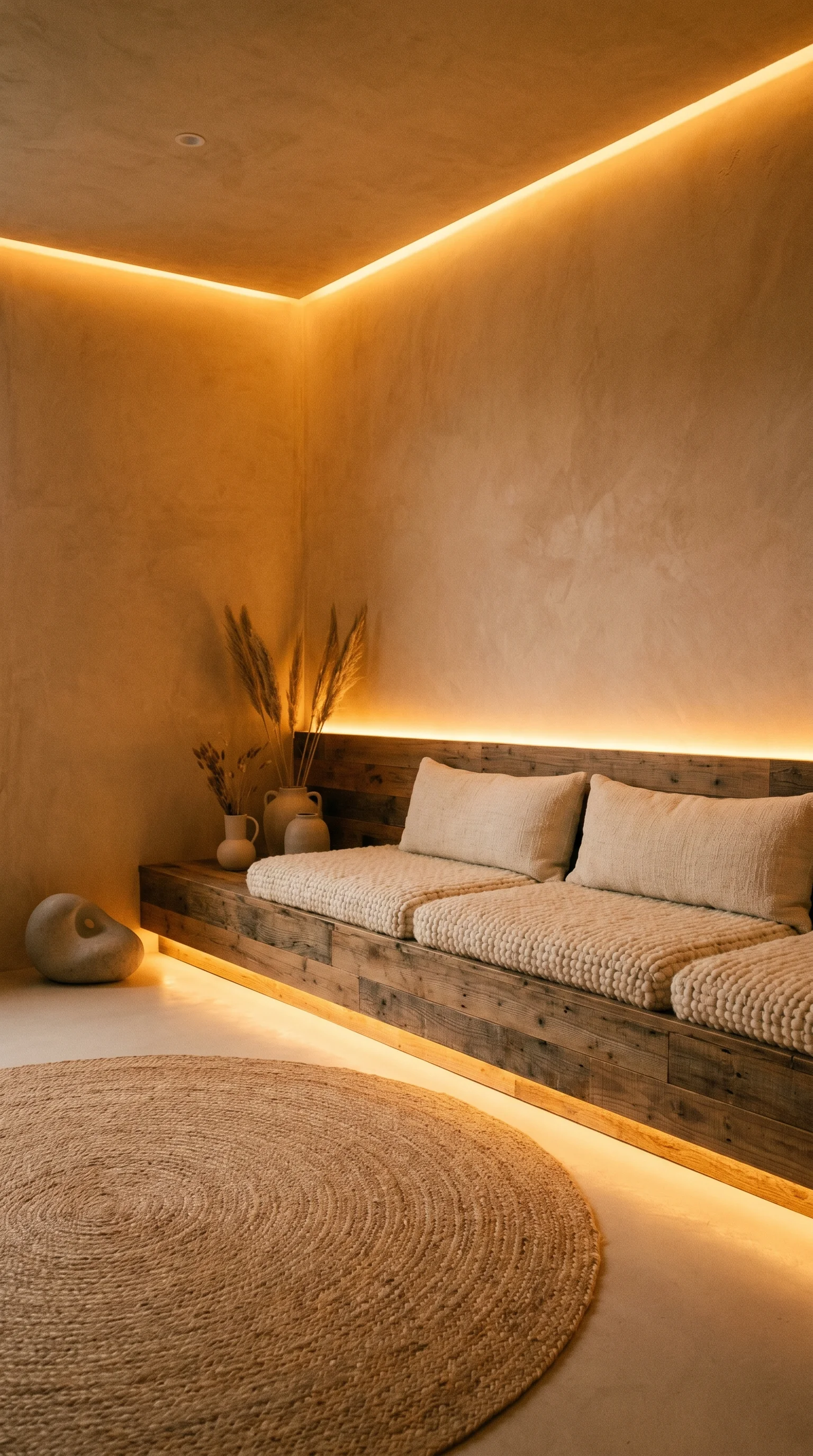
LED strip lighting at low level creates the softest possible ambient light for evening meditation sessions. The warm amber quality reduces cortisol and signals the nervous system toward parasympathetic dominance.
13. Full Plant Surround — Green Sanctuary
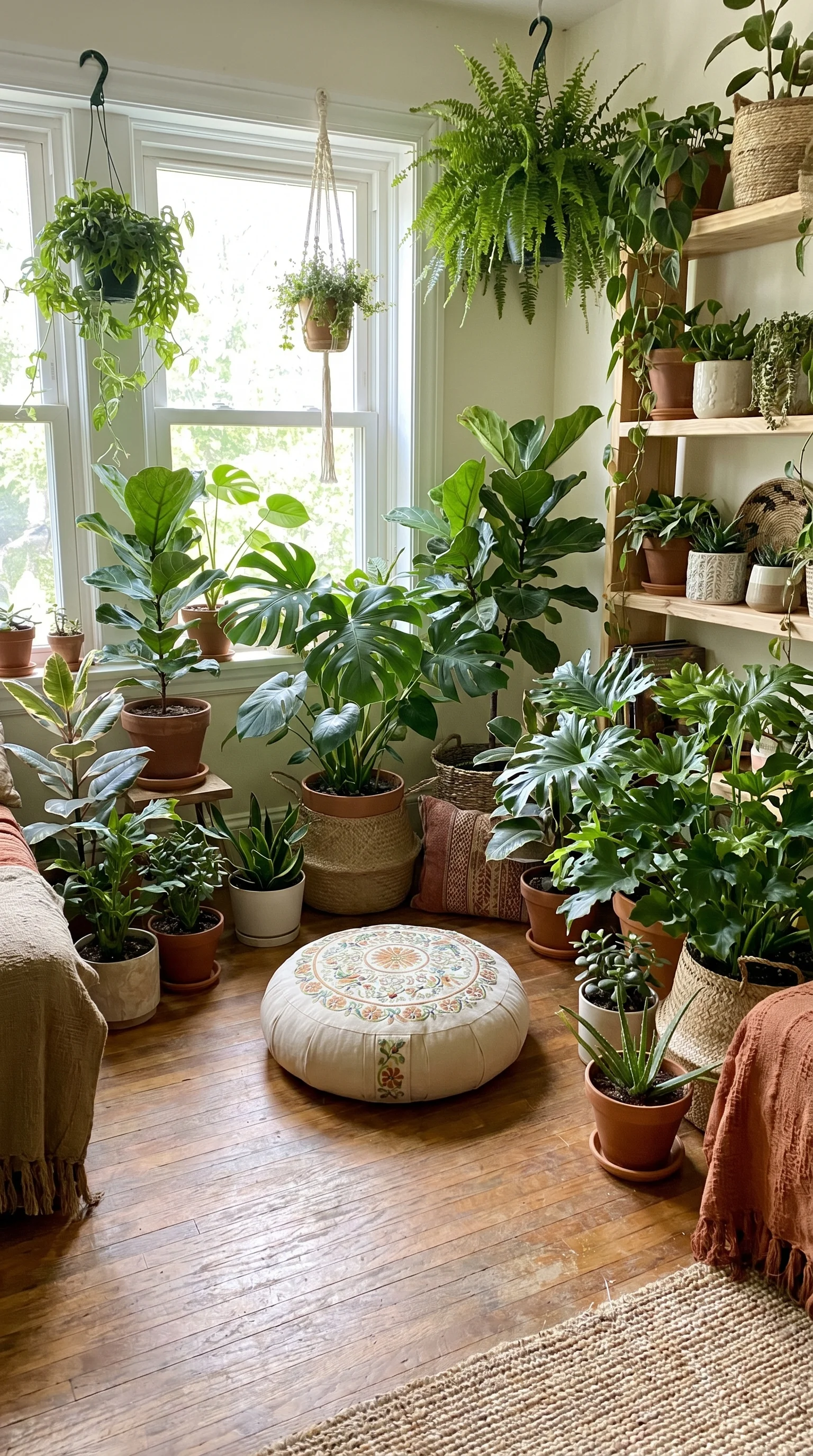
A meditation space where plants are on all sides creates the highest-impact biophilic meditation environment. The dense plant life reduces air carbon dioxide and creates the immediate sensory impression of being in nature.
14. Candle, Crystal, Incense Holder Arrangement
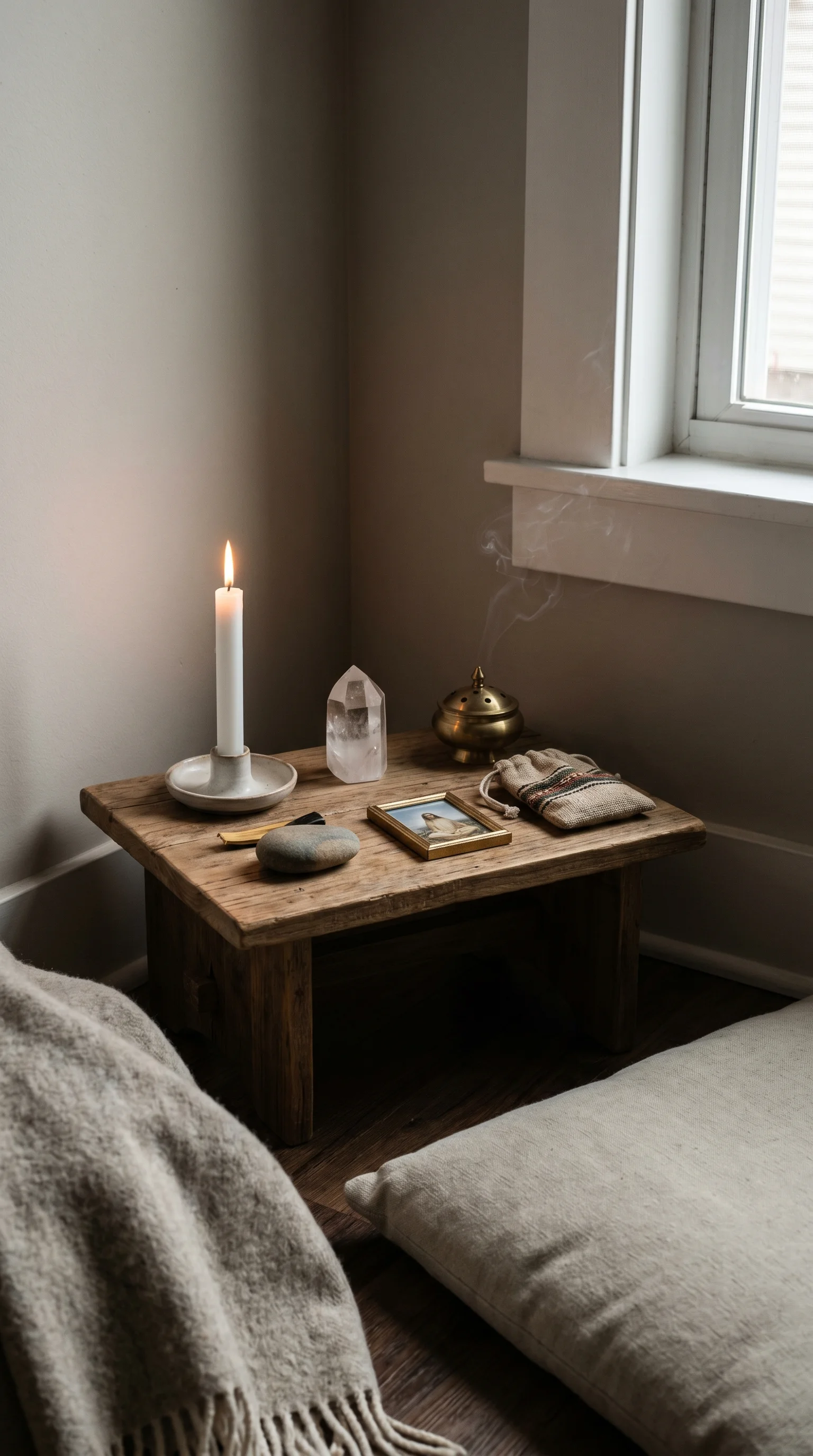
A personal altar — even a small low table with a candle, a crystal, and an incense holder — creates the ritual dimension of a meditation practice.
15. Singing Bowl Display
A singing bowl is both a functional practice tool and a beautiful object. The patina of hammered bronze, the quality of the rim, and the resonance of the note it produces all support sustained meditation practice.
The Single Most Important Element
If you can only do one thing to create a meditation space, create a threshold. Whether it’s a door, a curtain, two plants flanking an entryway, or simply a round rug that defines the zone — the physical act of arriving at a distinct space is what turns an abstract intention into a concrete practice. Everything else follows from that.