
23+ English Garden Decor Ideas that are Charming and Surprisingly Doable in 2026

I’ll be honest with you – I fell for the English garden the way most Americans do, from one photograph of a June border at Sissinghurst, and then I tried to rebuild it in a client’s Atlanta backyard and watched the delphiniums melt clean away by the Fourth of July. That failure taught me the actual lesson: an English garden is not a plant list, it’s a formula of tight structure wrapped around loose abundance, and the formula travels beautifully even when the plants don’t. So below are the ideas I really use, the honest upkeep nobody mentions, and the regional swaps that make this look survive an American summer.
English Garden Decor Ideas
1. A Deep Mixed Herbaceous Border Along the Back Fence
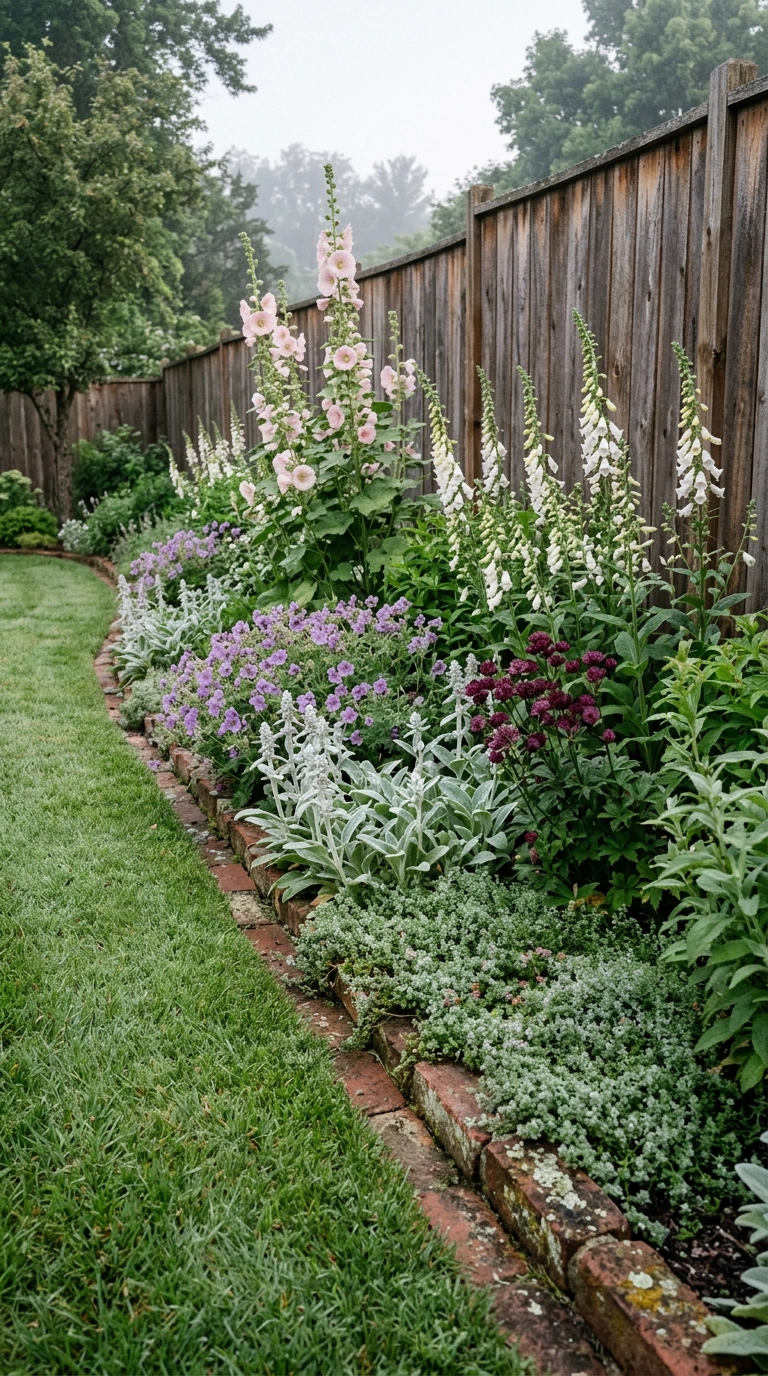
This is the backbone of the whole style, and the number that matters most is depth. A border needs 3 feet minimum to layer anything, 5 to 6 feet is where it starts looking like the photographs, and anything under 2 feet is a stripe, not a border.
2. Repeat Three Plants Instead of Buying One of Everything
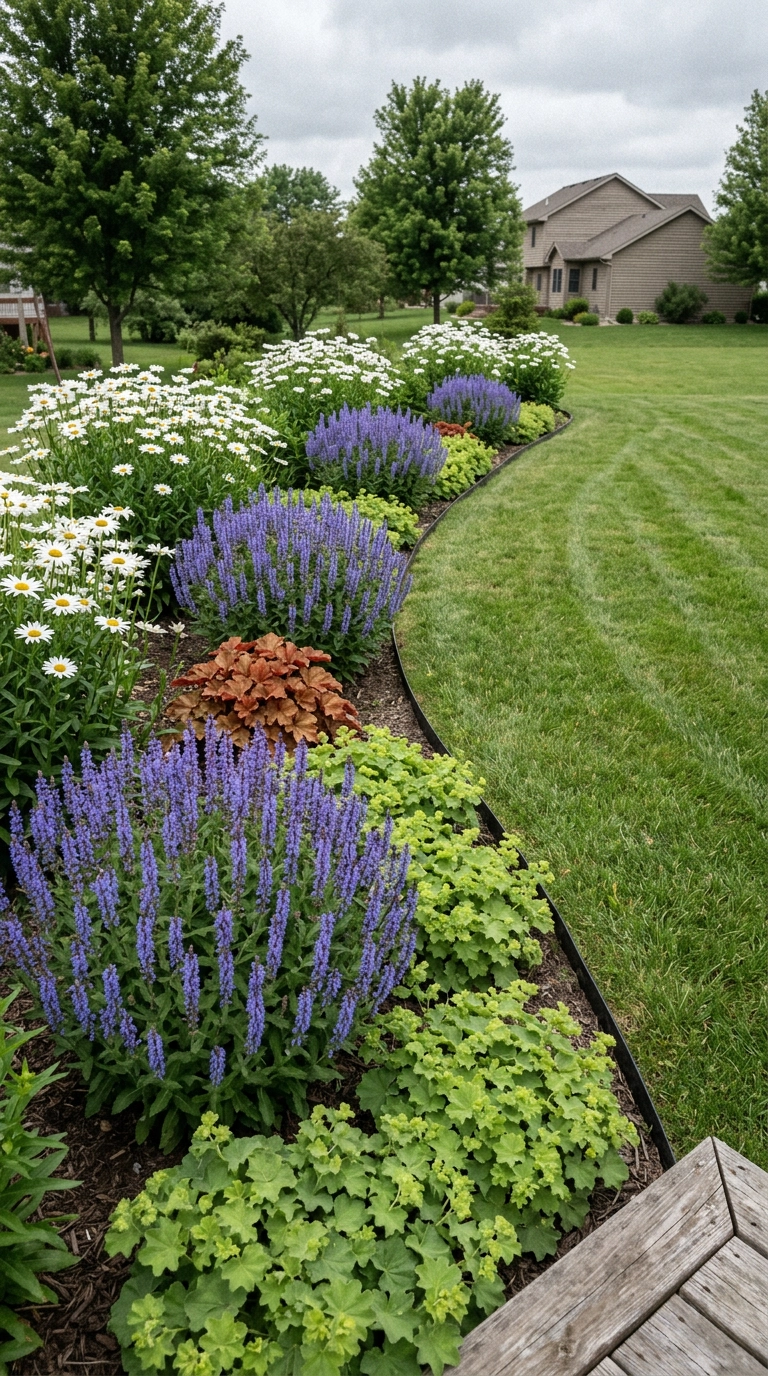
The single most common mistake I see is one of everything. English borders look abundant but they are actually repetitive – Gertrude Jekyll built her famous drifts by echoing a handful of plants in groups of three, five, or seven down the length of a bed.
3. A Cluster of Aged Terracotta Pots on the Back Steps
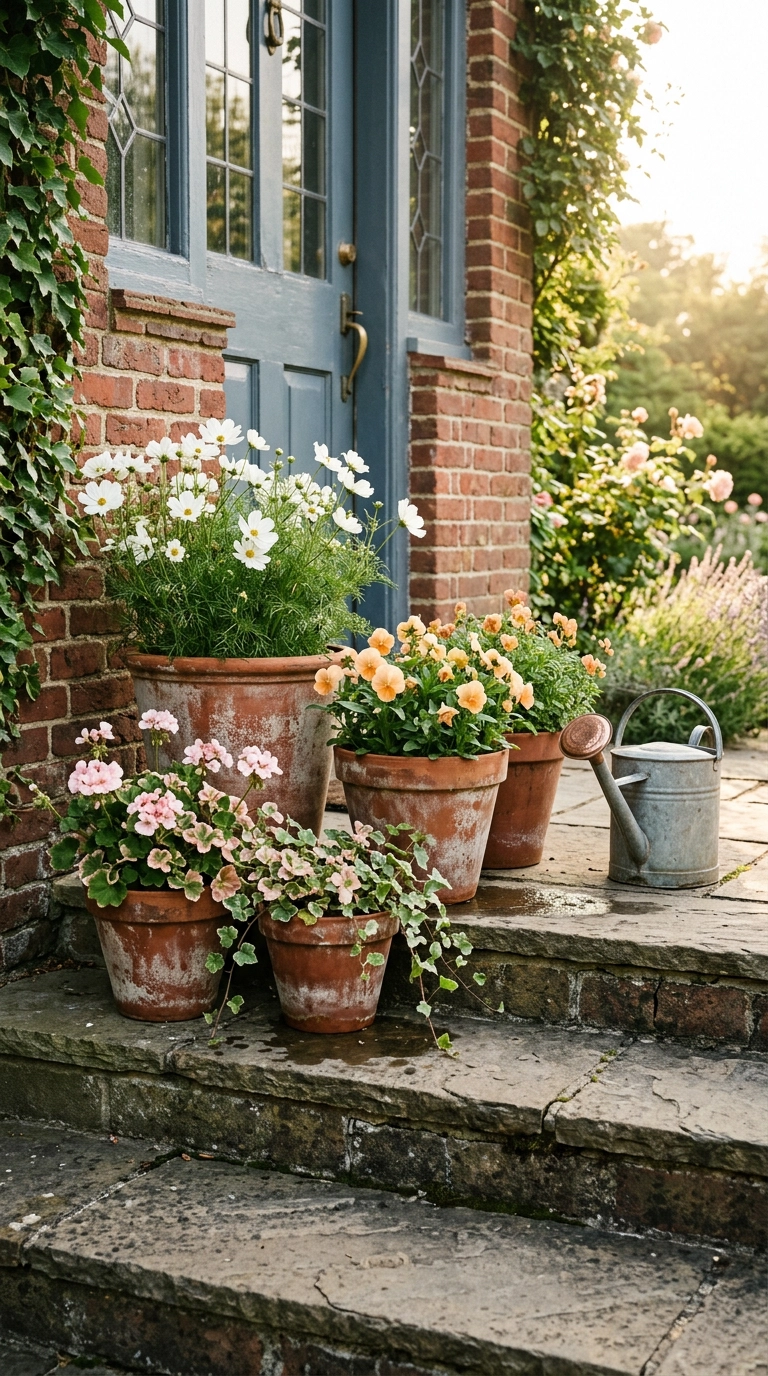
Aged terracotta is the cheapest shortcut to English-garden atmosphere there is. Group three or five pots in odd sizes on a stoop, tallest at the back, because odd numbers read as arranged and even numbers read as a matching set.
4. Rusted Steel Obelisks for Height That Lasts All Winter
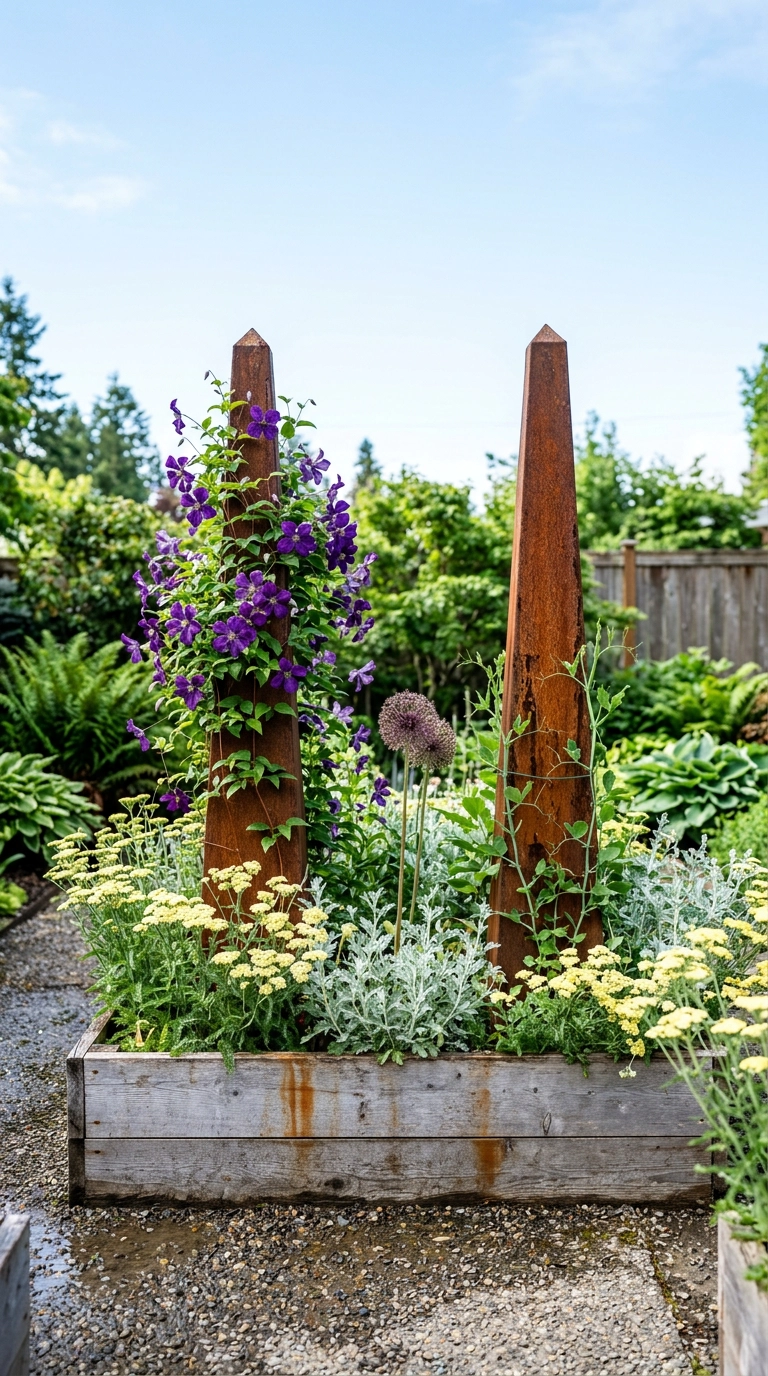
An obelisk earns its keep twice: it holds up a clematis or sweet pea in summer, then gives a flat, dormant bed a vertical exclamation point in February when nothing else is standing.
5. A Cast Iron Bistro Set on a Small Gravel Terrace
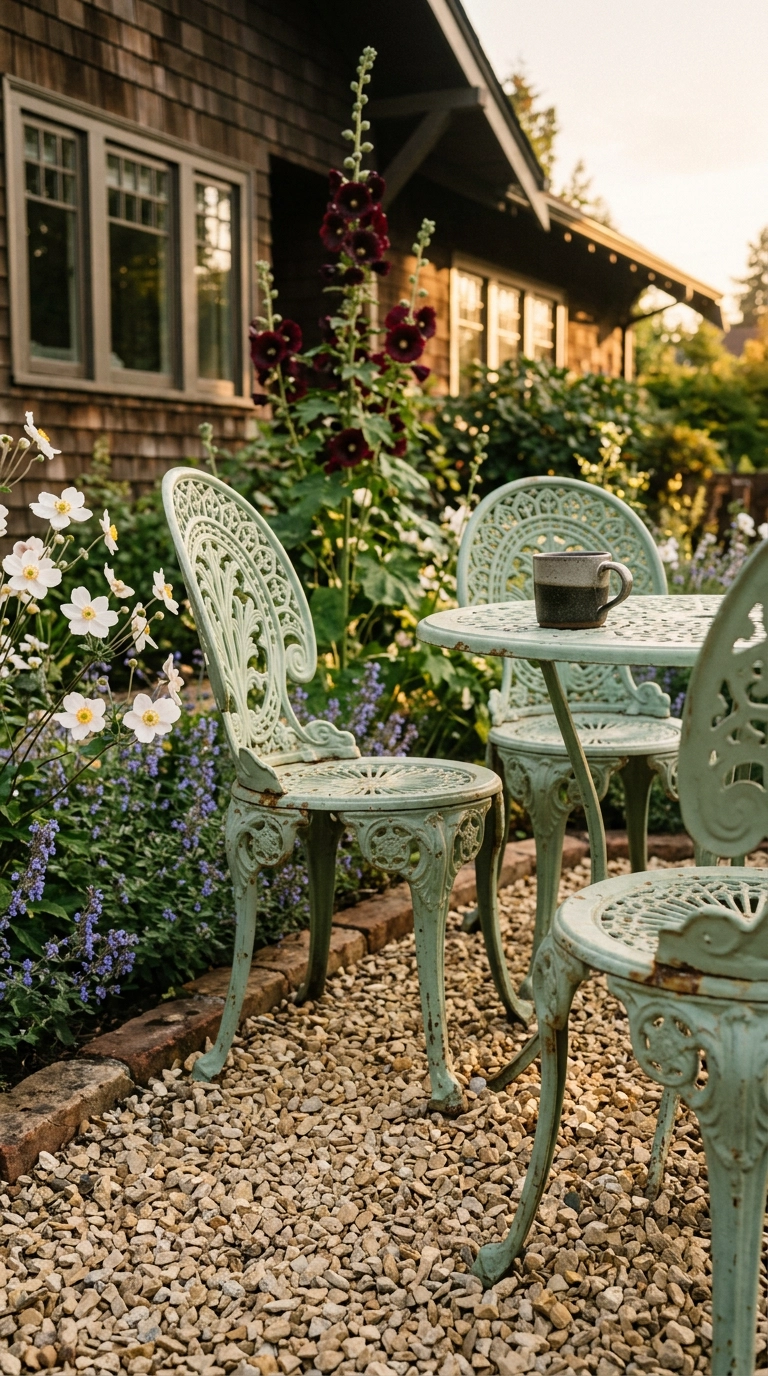
Two chairs and a small round table do more for English-garden feeling than a big sectional ever will, because this style is about pausing in the garden, not sprawling in it. Matte black or that soft muted green is the look.
6. A Weathered Teak Bench Placed at the End of a Sightline
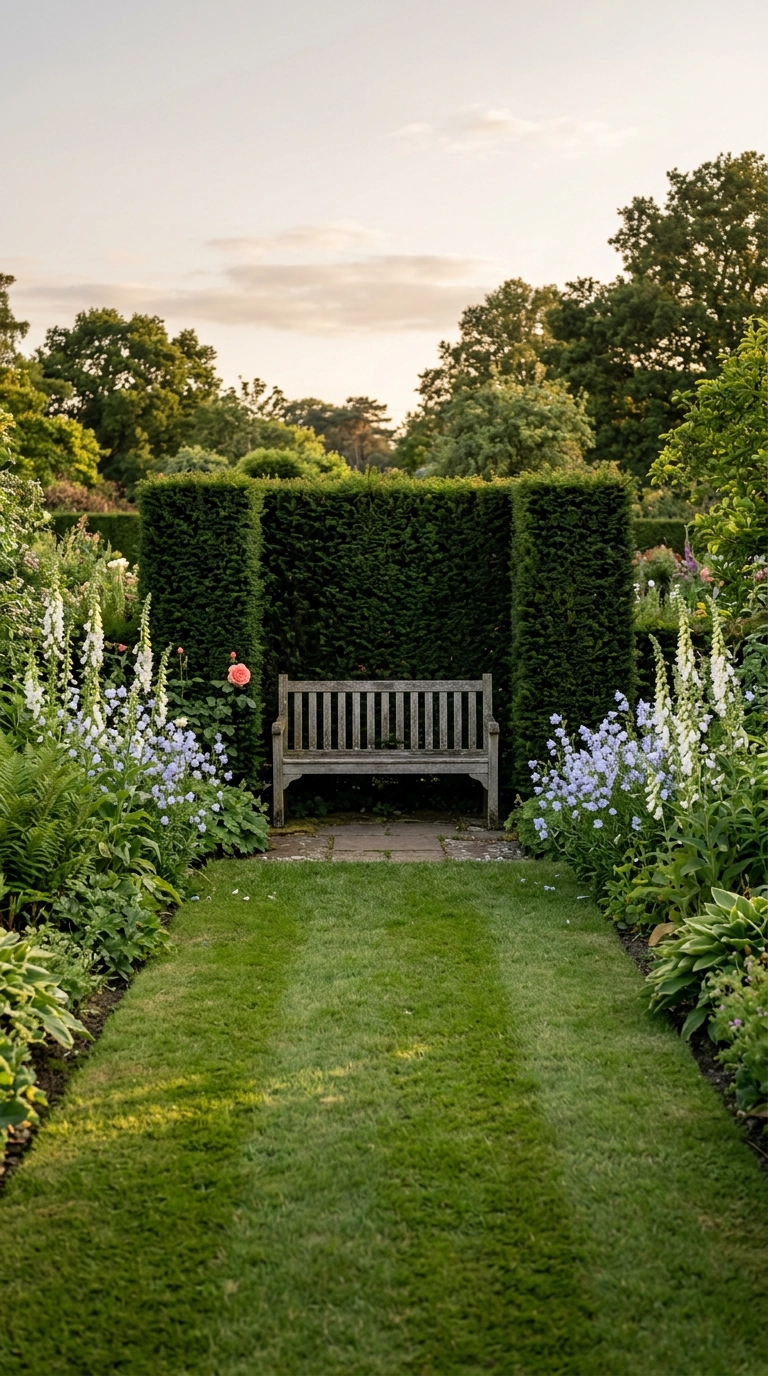
A bench in an English garden is a destination first and a seat second. Put it where the sightline from your kitchen window or back door already lands, and the whole yard suddenly has a direction.
7. A Simple Stone Birdbath Where Two Paths Cross
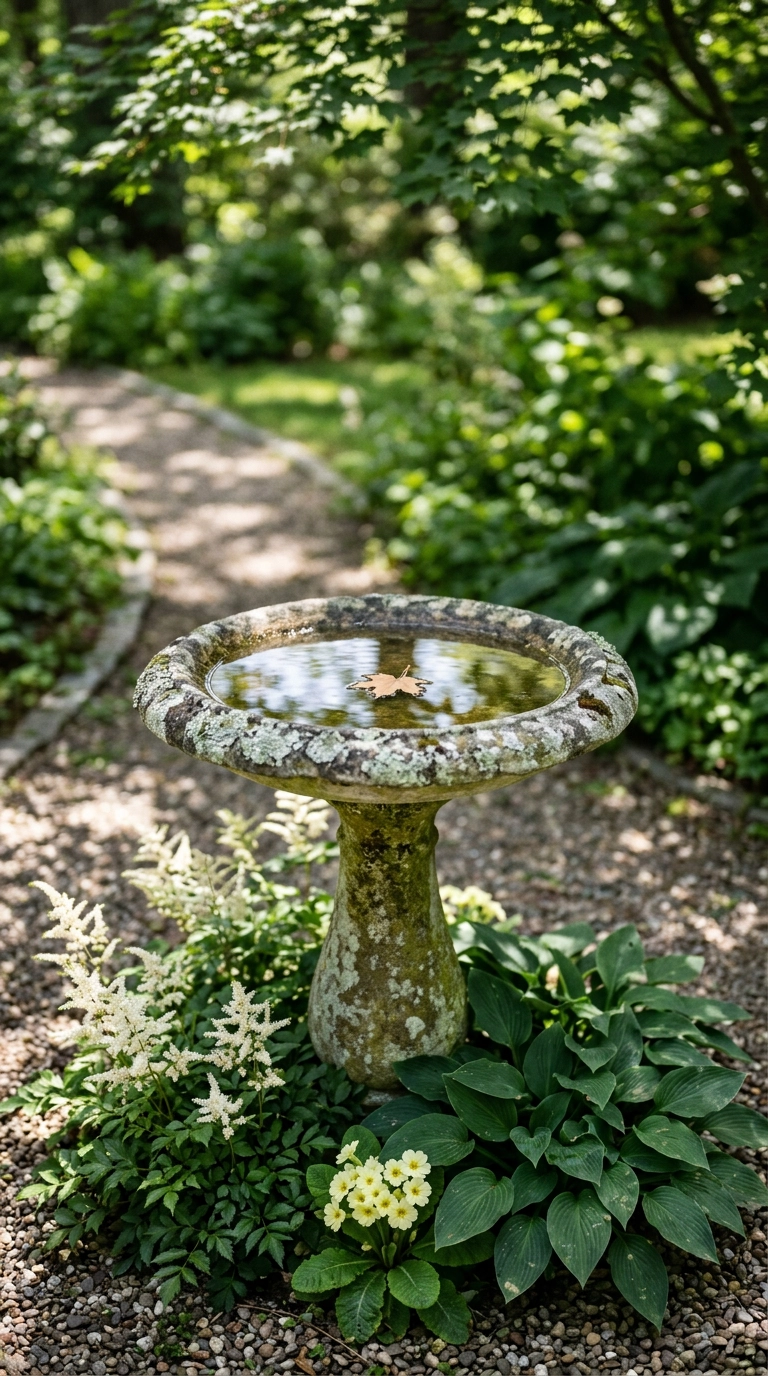
Water is half the reason an English garden feels calm, and a birdbath is the cheapest possible version of it. Place it at a path intersection or a bed corner where two sightlines meet, so it anchors the spot.
8. Gravel Paths with Brick Edging, Not Concrete
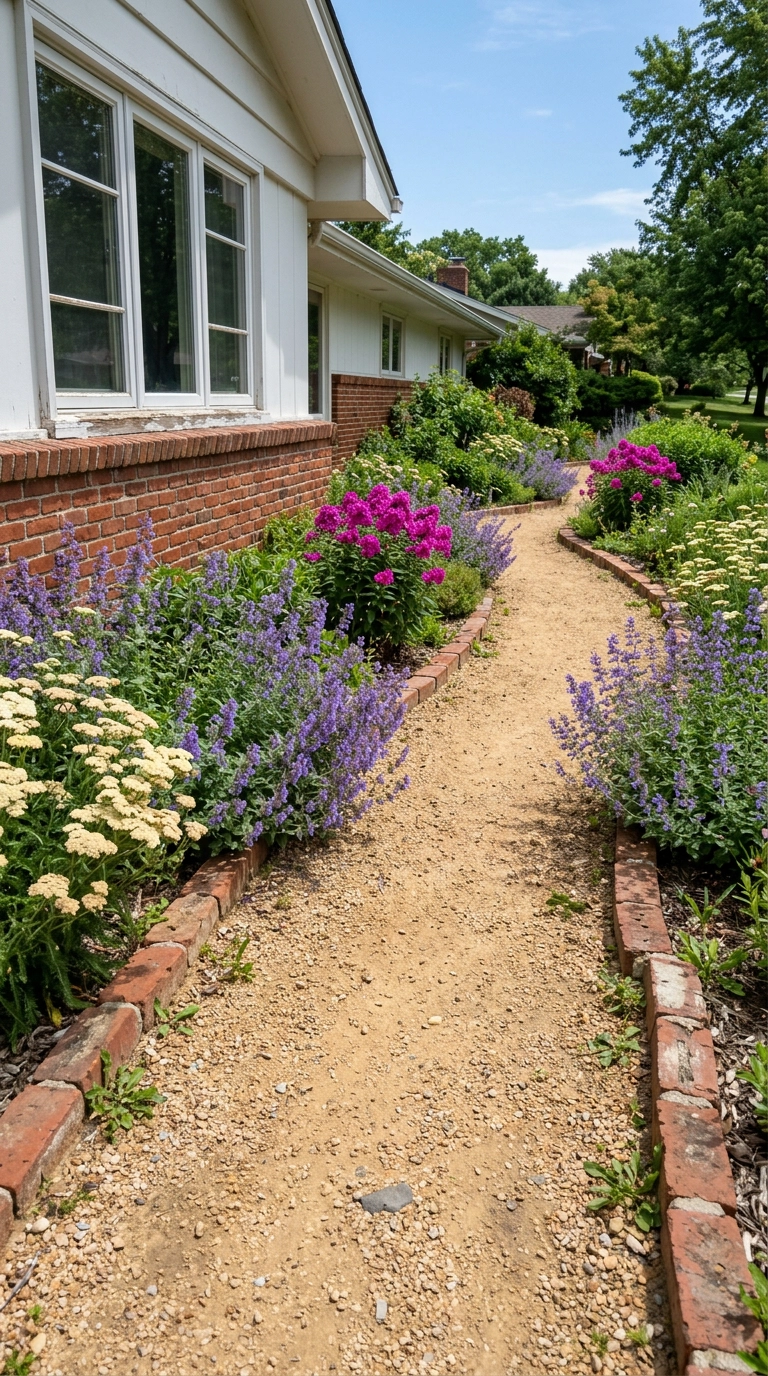
The crunch underfoot is a real part of this style. Use angular 3/8-inch gravel or self-binding decomposed granite, never smooth pea gravel, which rolls under your shoes and migrates into the lawn forever.
9. Boxwood and Yew Structure to Hold the Chaos Together
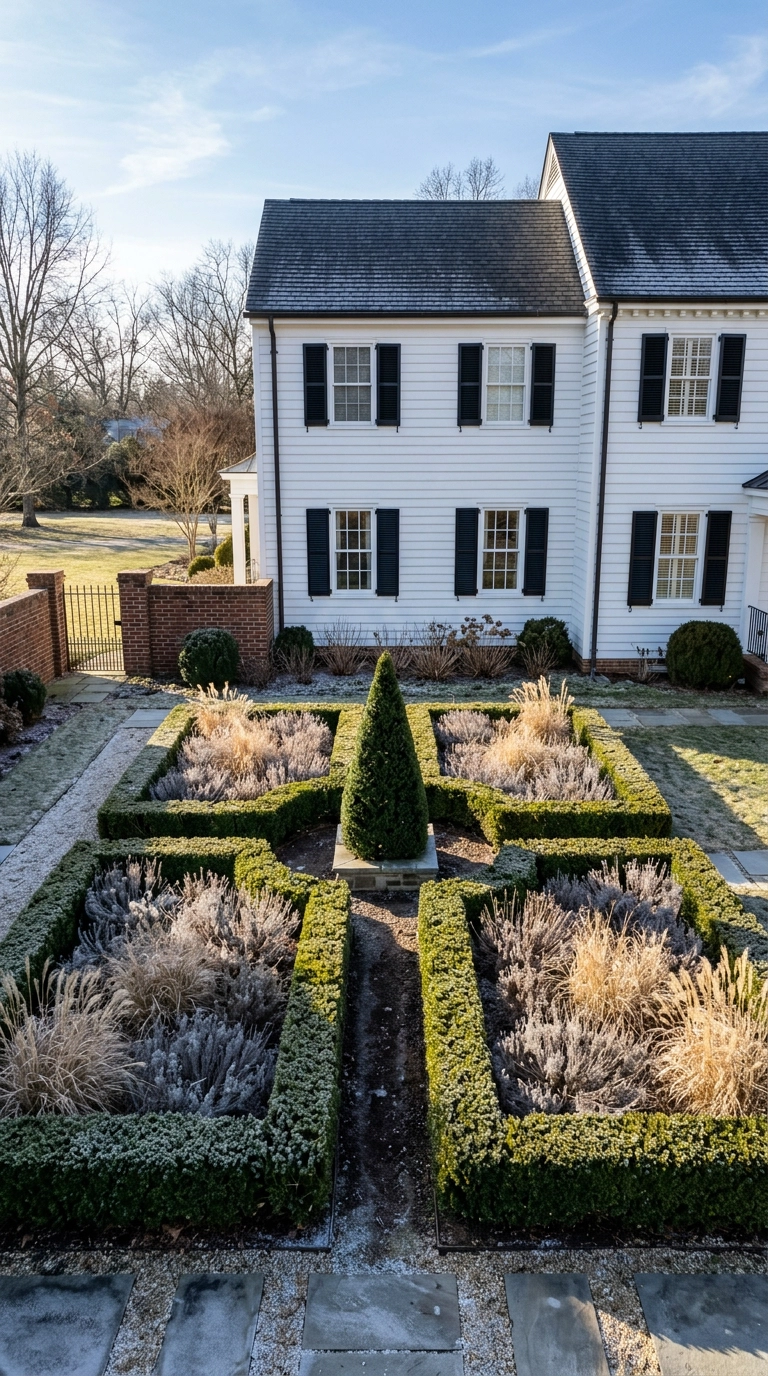
Here is the secret nobody says out loud: the reason an overflowing English border looks romantic instead of neglected is that something rigid is holding it. Clipped boxwood, yew, or hornbeam is the frame around the loose picture.
10. A Rose Arch Over the Path to the Back Gate
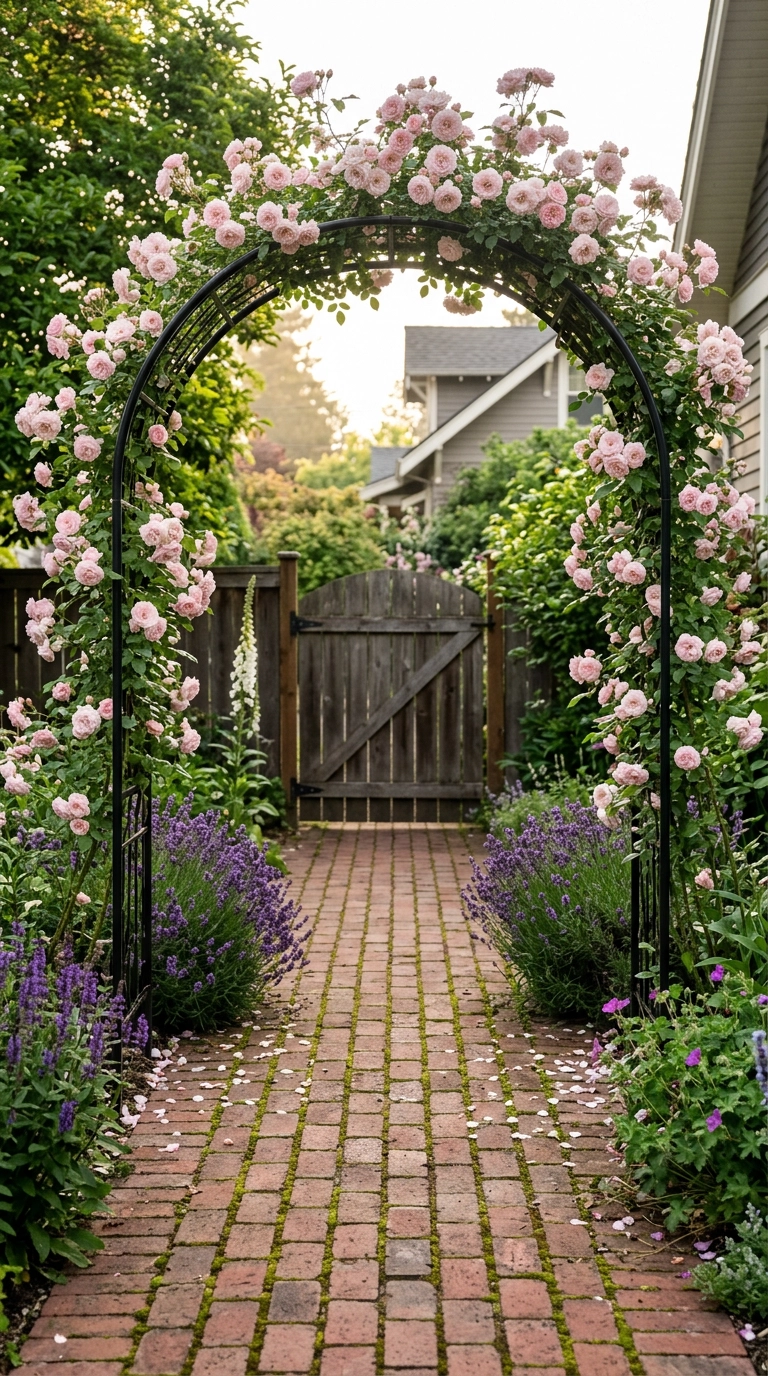
An arch does something no plant can do alone: it makes you walk through a doorway in your own yard, and suddenly the garden has rooms. Put it where a real transition already exists, between lawn and beds, or at the gate.
11. A Stone Trough Planted as a Miniature Border
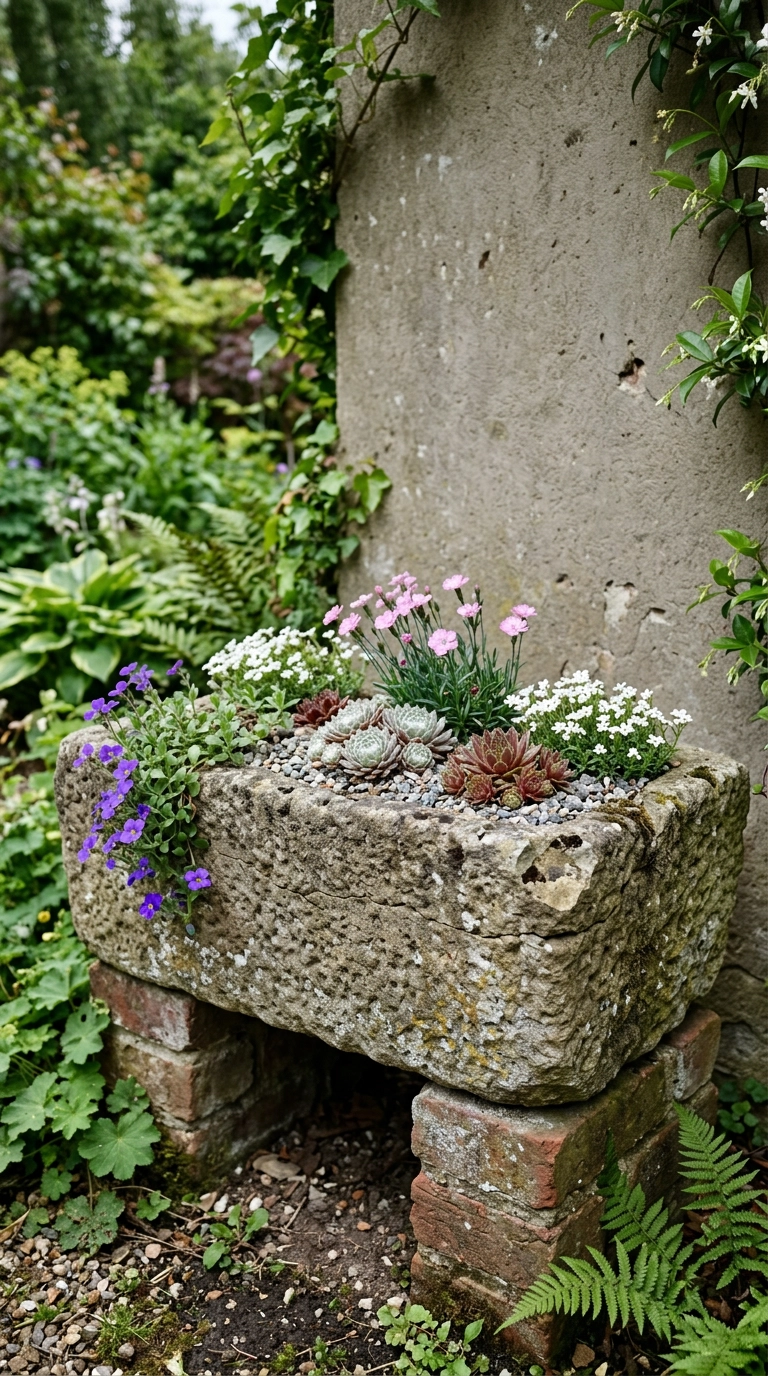
A trough is an English garden compressed into three square feet, which makes it perfect for a patio or a spot where you cannot dig. Plant it like a real border – one taller element, a couple of mounders, one thing spilling over the edge.
12. A Potting Bench That Actually Gets Used
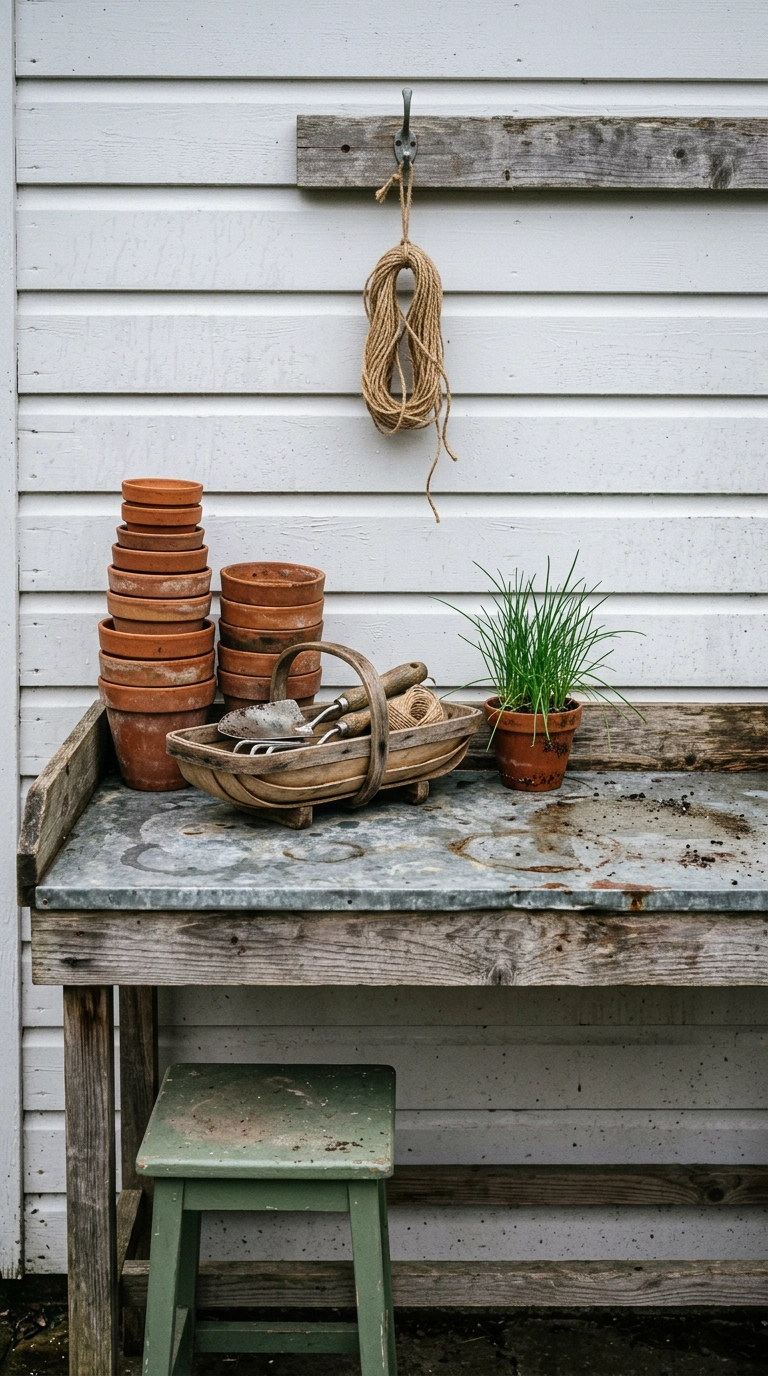
The potting bench is where the English garden admits it is a workplace. A zinc or galvanized top is the detail that sells it, and it dents and dulls into character rather than looking damaged.
13. A Front-Yard Cottage Strip Along the Walk
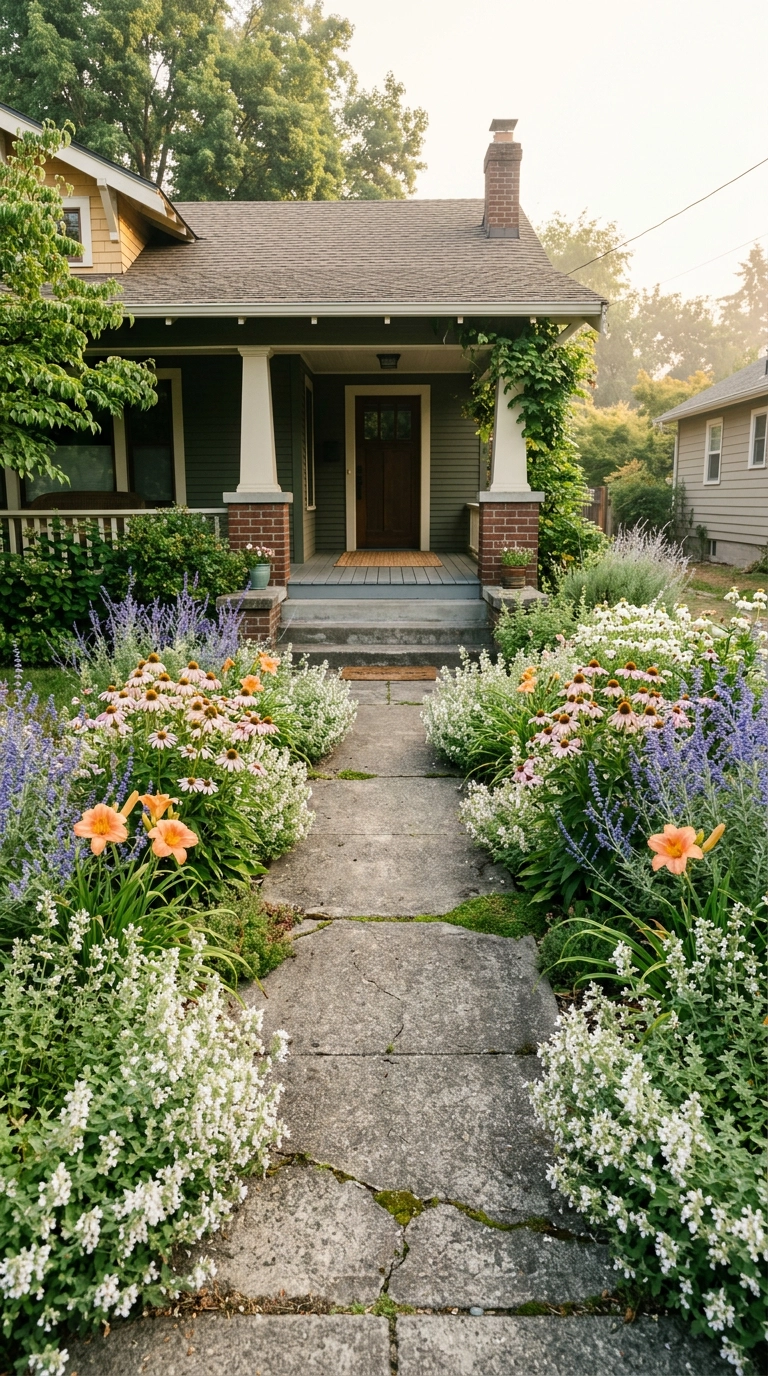
The front-yard strip is the highest-impact, lowest-square-footage version of this look, and it’s the one your neighbors will comment on. Three feet of bed on each side of the walk is plenty.
14. A Brick Townhouse Courtyard Done Entirely in Pots
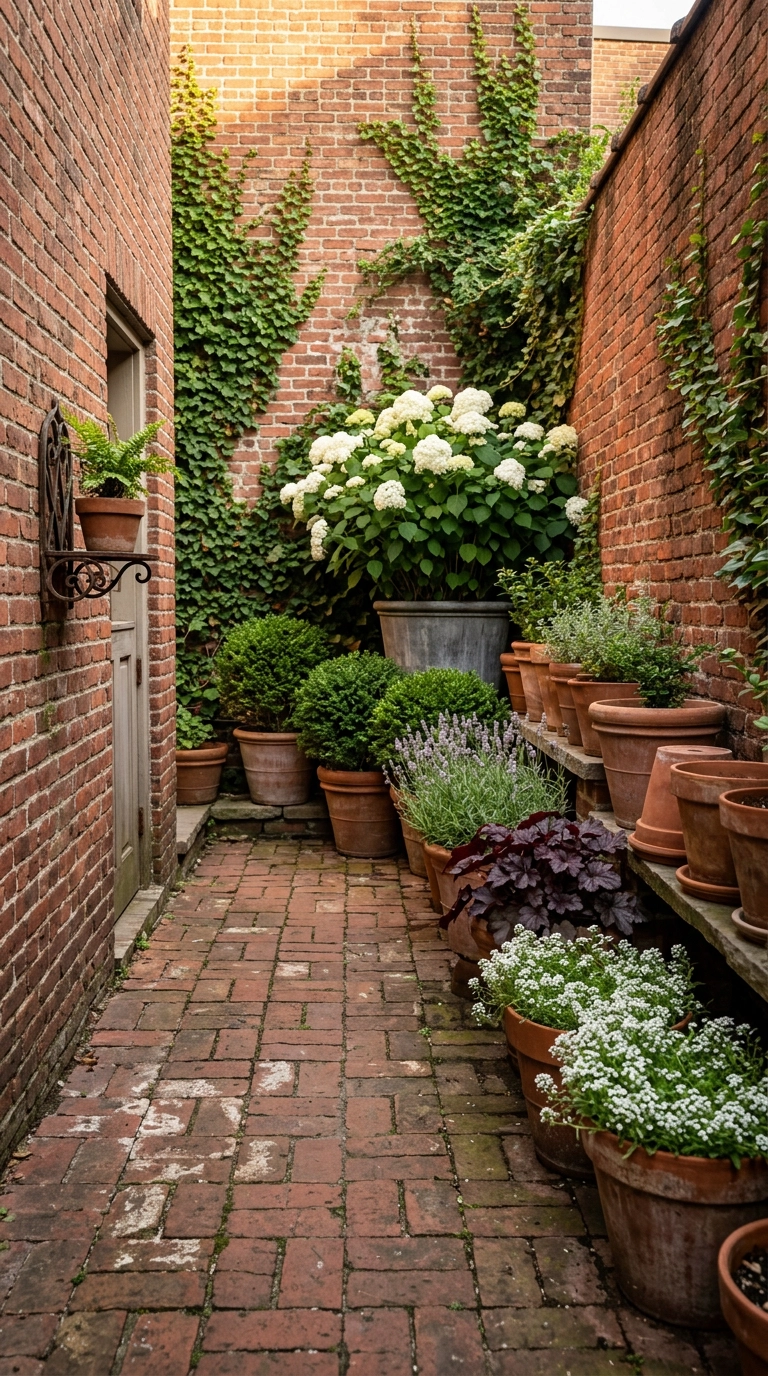
A city courtyard has no soil, usually one usable wall, and light for maybe four hours a day. Pots solve all three. Tier them against the wall – tall at the back on plinths, mid, then low – so twelve pots read as one border instead of a scatter.
15. Espaliered Fruit Trained Flat Against a Sunny Wall
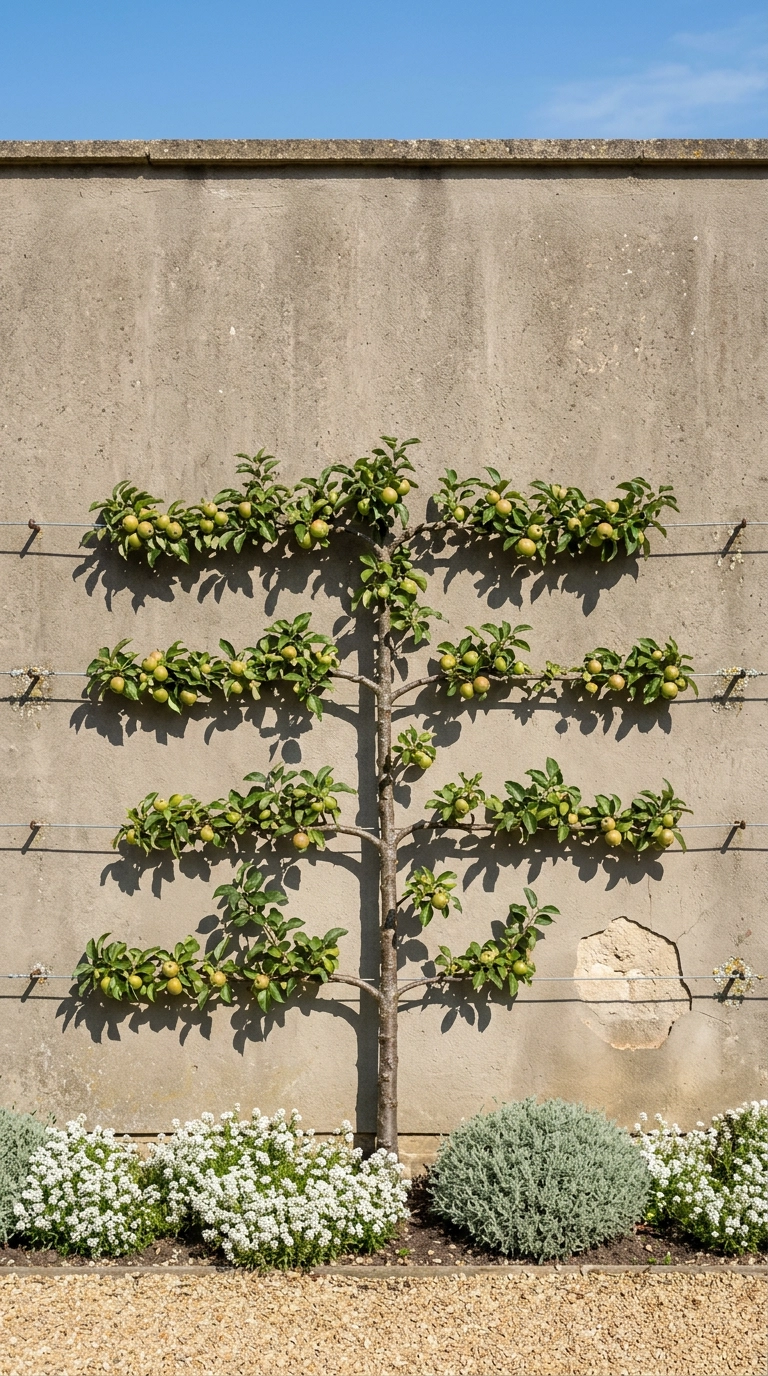
Espalier is the most quietly impressive thing you can do to a blank garage or fence wall, and it’s pure English kitchen-garden vocabulary. Apples and pears on dwarf rootstock are the classic choice; figs and pomegranate work in warm zones.
16. Swap the Delphiniums If You Garden in the Humid South
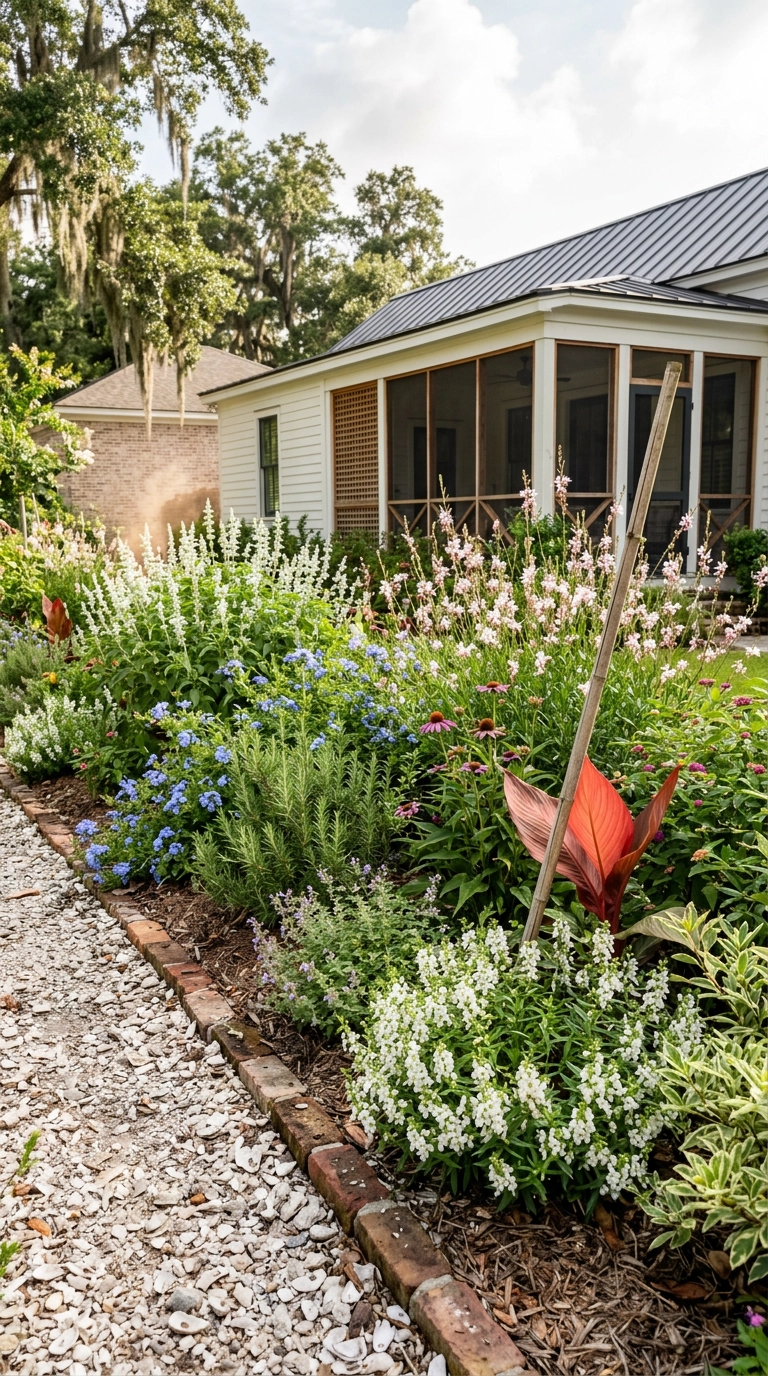
This is the honest part. Delphiniums, foxgloves, and most classic English border roses want cool nights and low humidity, and a Zone 8 Georgia July gives them neither – they mildew, flop, and quit by mid-June.
17. The Dry-Climate Version: Mediterranean Plants, English Bones
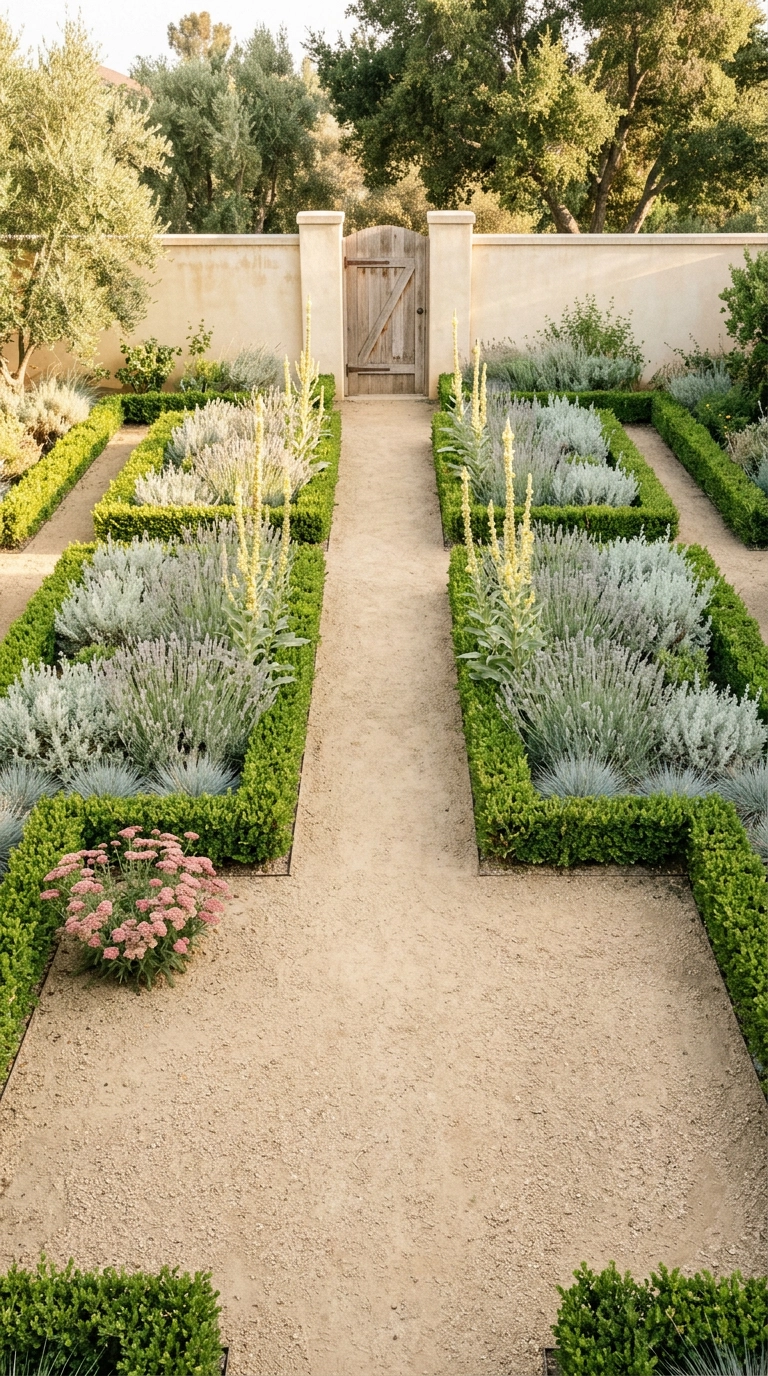
In California, Arizona, or the Front Range, the English formula still works because the structure is what carries it – clipped hedge, gravel path, repeated drifts. You just change the cast.
18. A Cold-Climate Border Built on Peonies and Baptisia
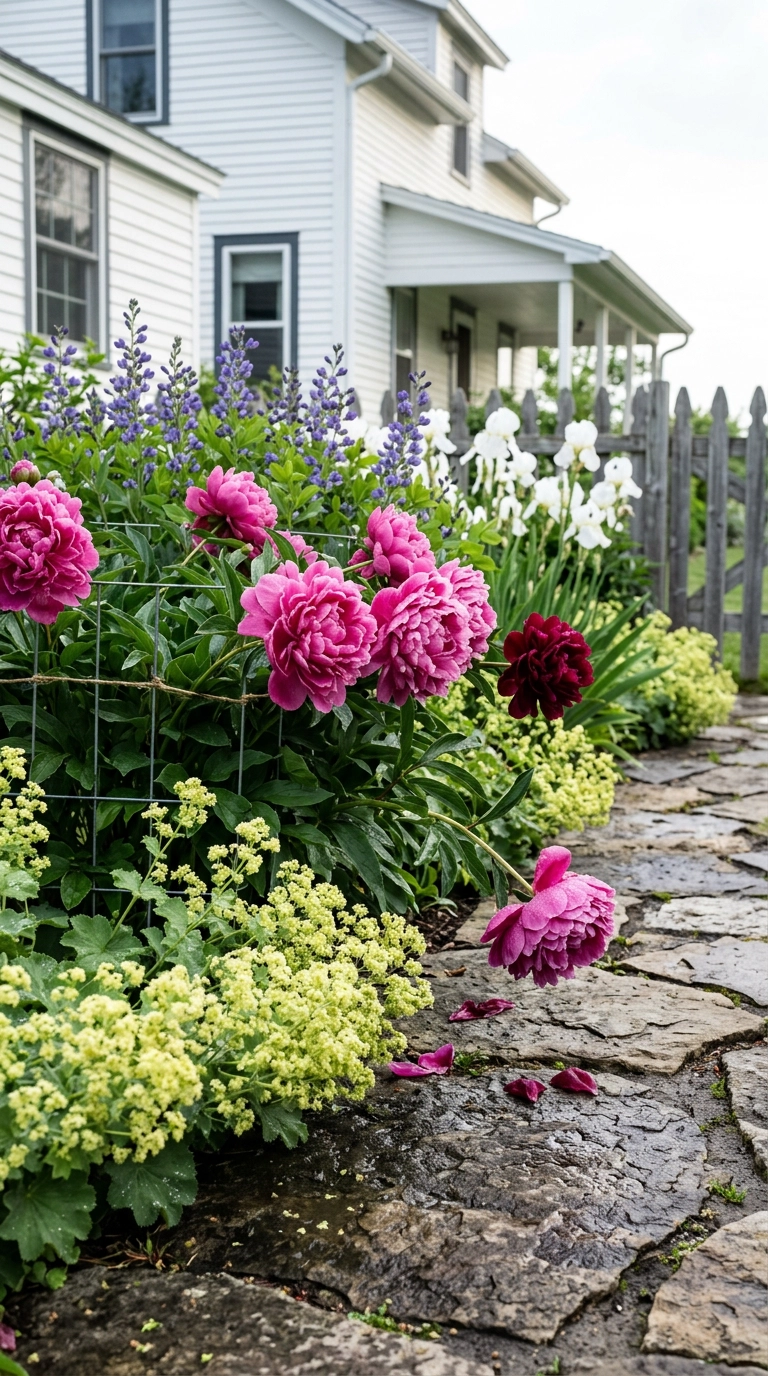
Cold-winter gardeners have it easier than they think. Peonies, baptisia, Siberian iris, and Nepeta are all long-lived, cold-hardy, and give you exactly the billowing June abundance the English borders are famous for.
19. Self-Seeders That Do the Romantic Overgrown Part for You
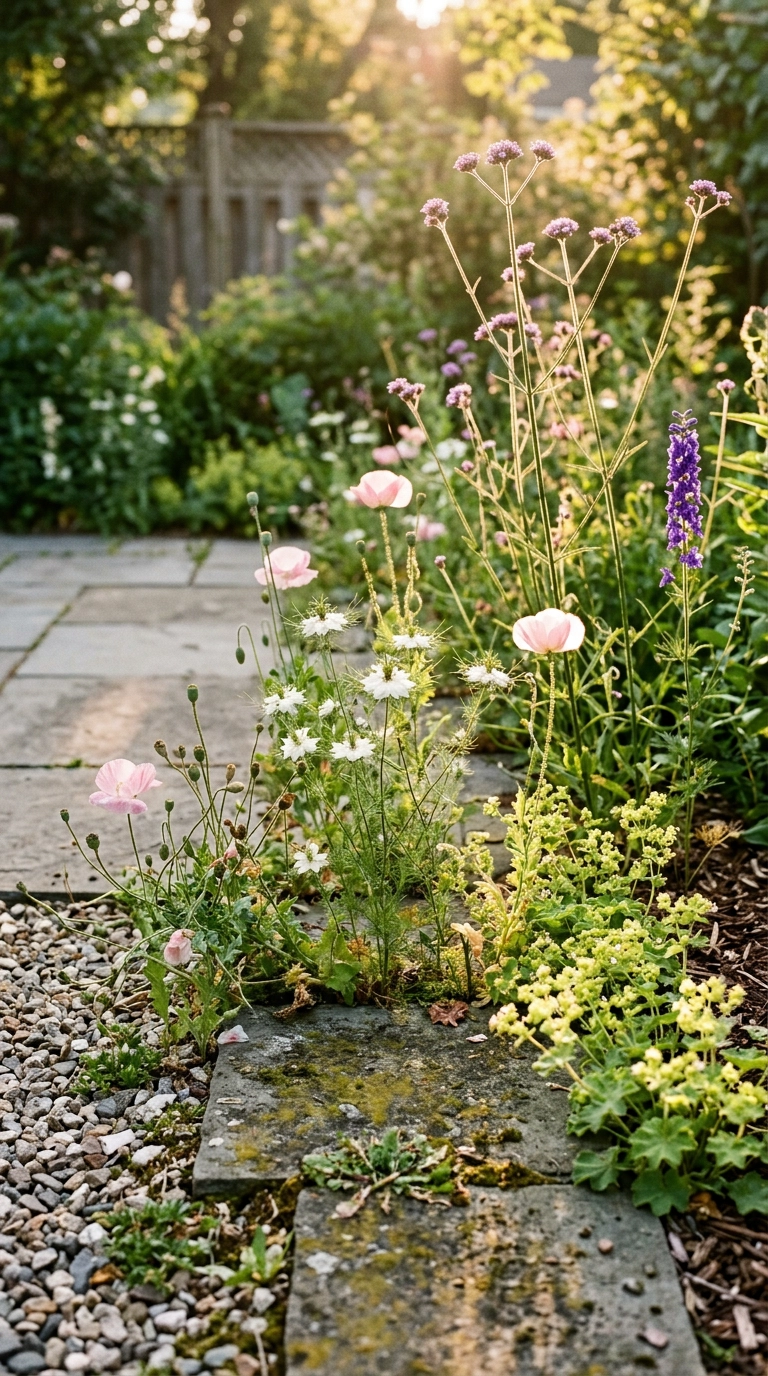
The “slightly overgrown” romance everyone wants is mostly self-seeders doing whatever they like. Nigella, poppies, larkspur, foxglove, and Verbena bonariensis will scatter themselves through gravel and paving cracks for free.
20. A Rented Patio Garden That Moves Out With You
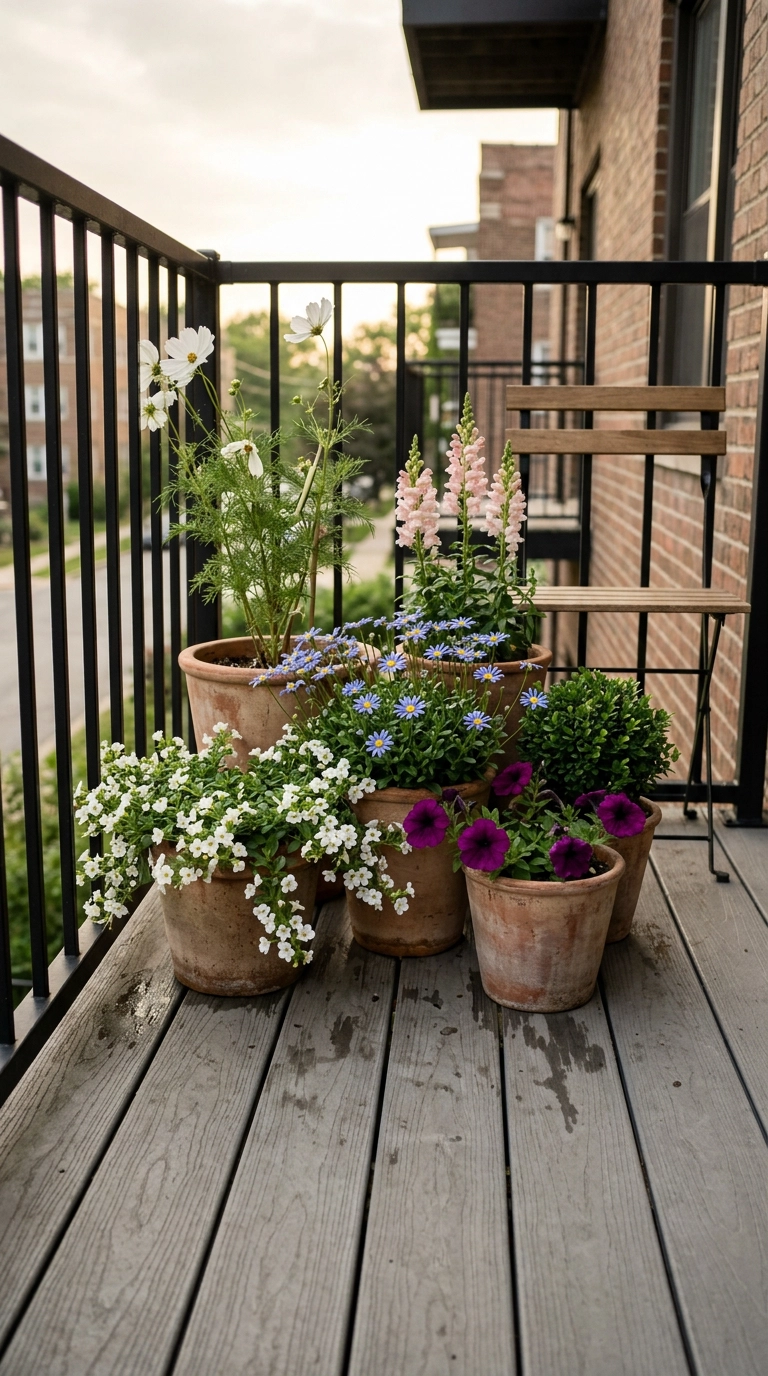
Renters can absolutely do this, and the trick is one clipped evergreen ball among the flowers – that single piece of structure is what makes six pots read as an English garden instead of a balcony with plants on it.
21. One Well-Composed Corner Instead of a Whole Garden
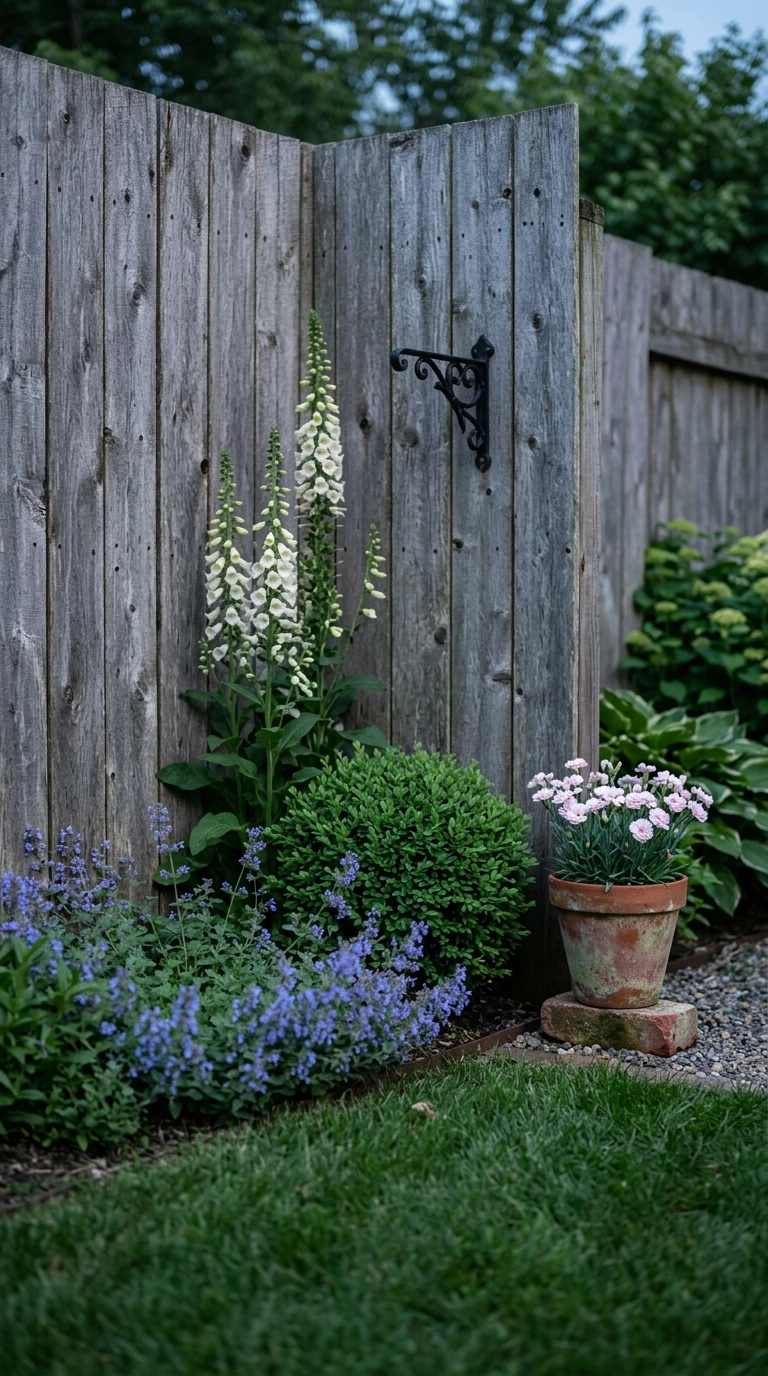
If the whole yard feels impossible, do one corner properly and stop there. A single clipped ball, one vertical flower, one soft mound, and one pot is a complete composition in about 20 square feet.
22. Discreet Plant Supports Installed Before Anything Flops
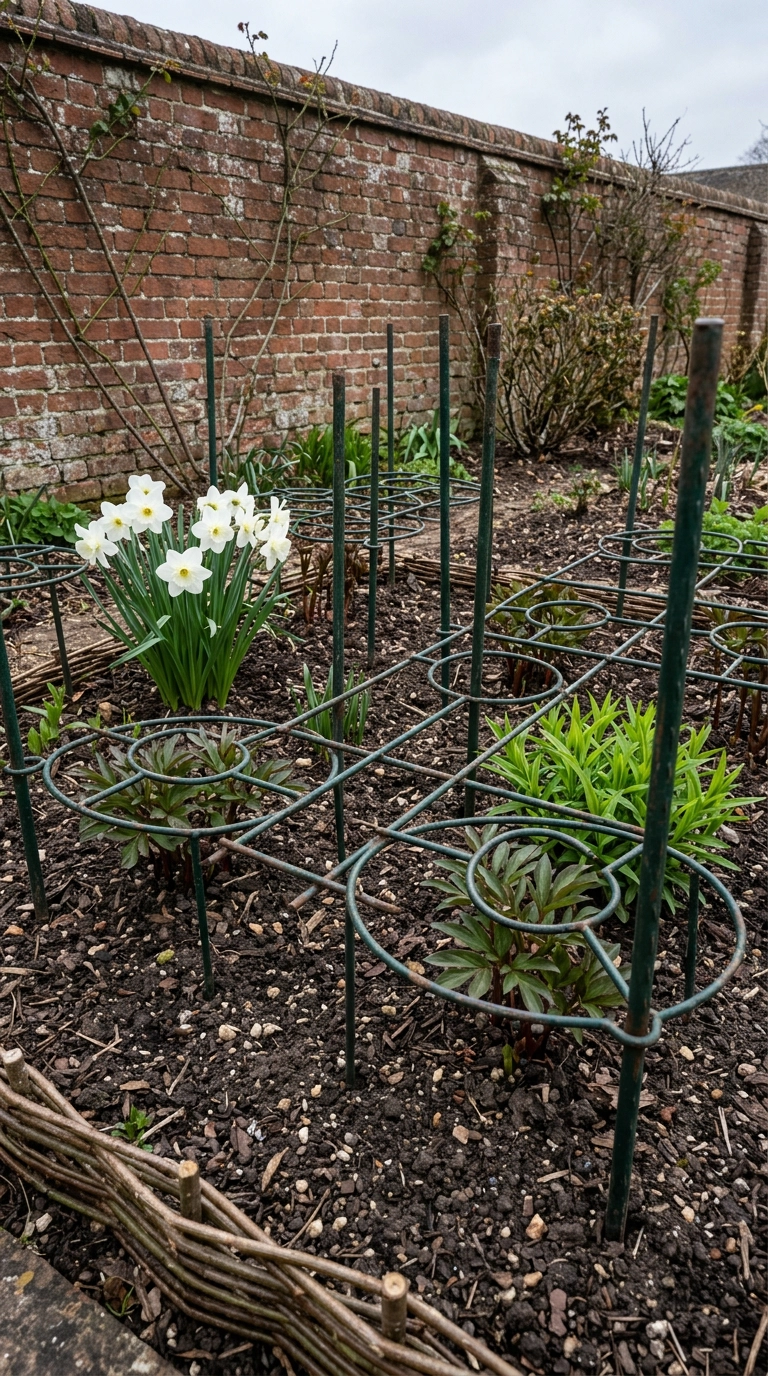
Nobody puts this on a Pinterest board, but staking is the difference between a border and a collapse. Tall perennials go over in the first summer thunderstorm, and once a peony is face-down in the mud you cannot fix it.
23. Cut-Flower Rows Tucked Into a Gravel Side Yard
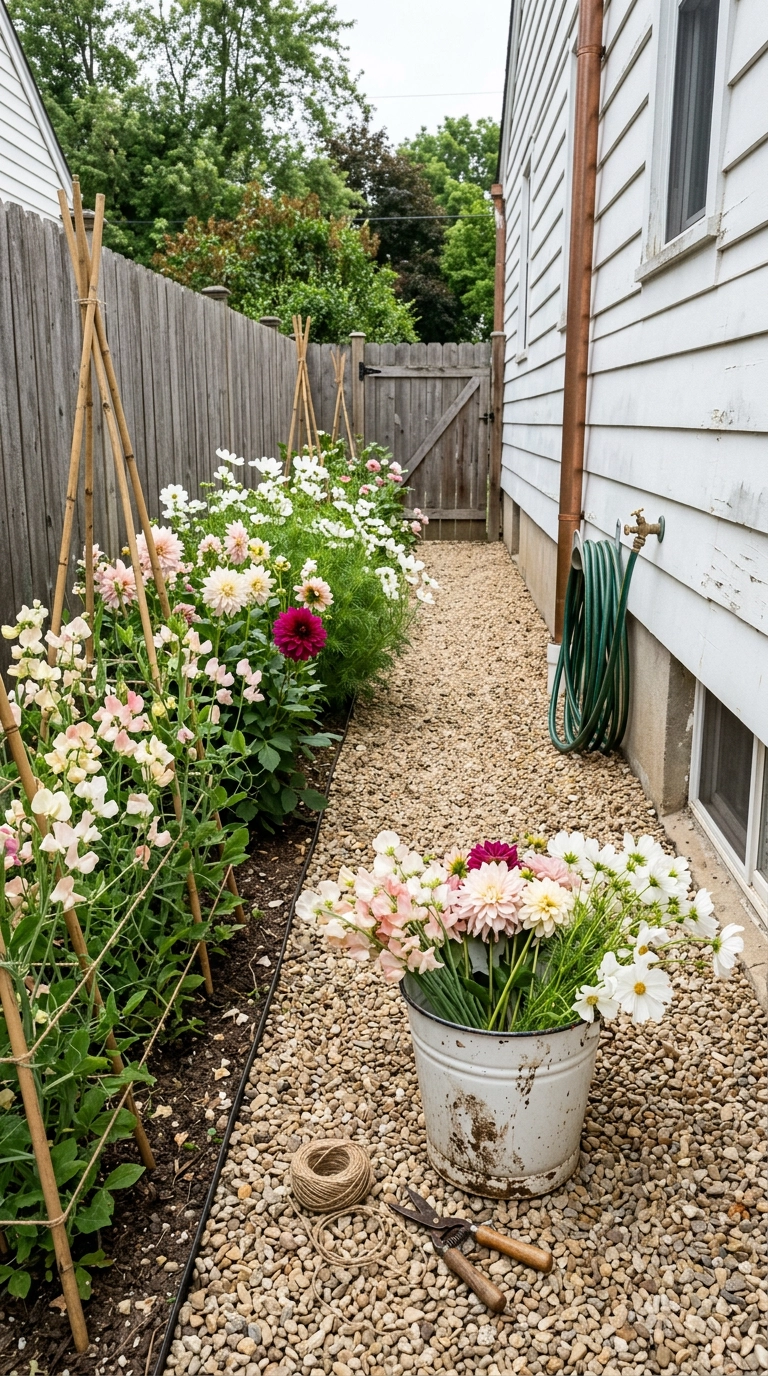
Side yards are wasted space in most American houses, and they’re exactly where the English put the working garden. Rows of sweet peas, dahlias, and cosmos on a gravel strip give you flowers to cut without wrecking your ornamental border.
24. The 80-Percent Version for People Who Do Not Want to Deadhead
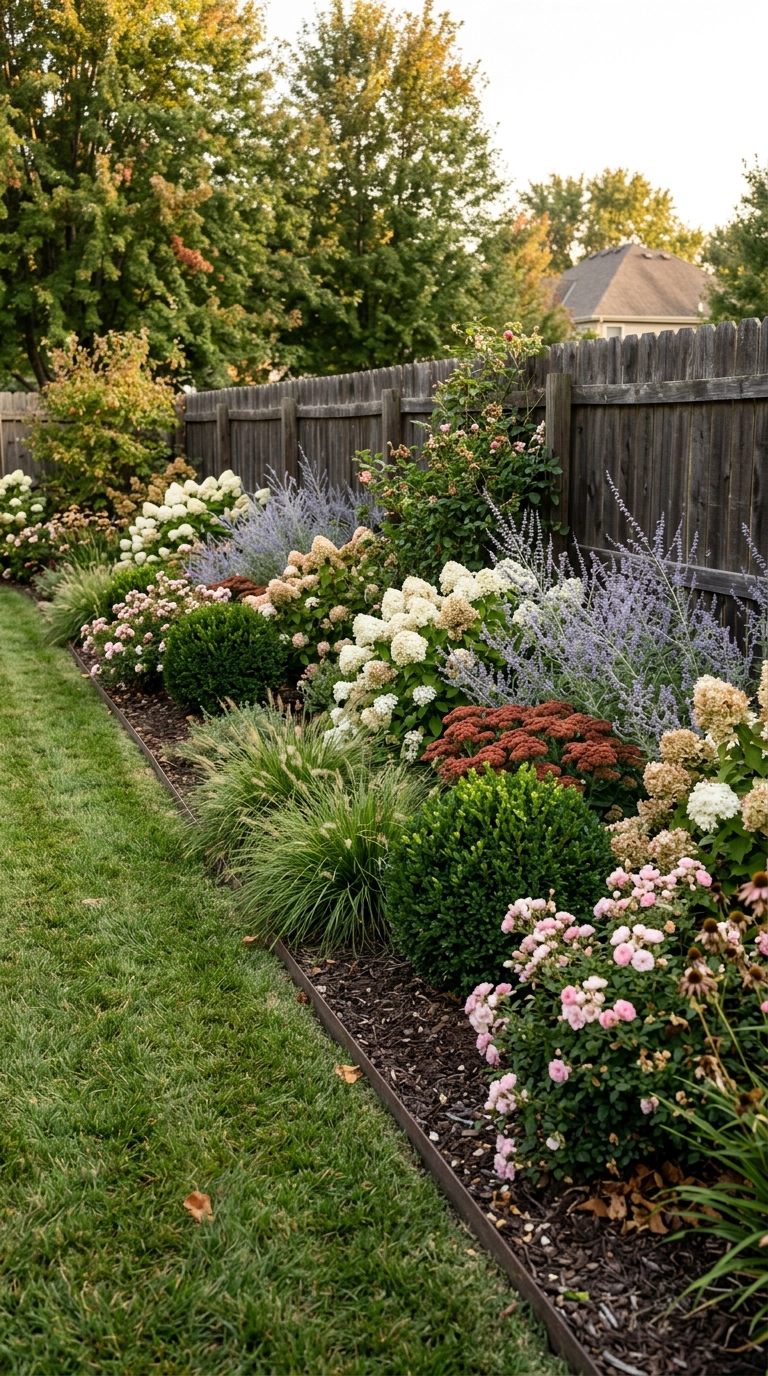
Let me be blunt: a true herbaceous border is the highest-maintenance garden style that exists. Deadheading weekly, staking in spring, dividing every three or four years, cutting everything back in fall – call it a few hours a week in season.
25. Let It Stand Through Winter Instead of Cutting It All Down
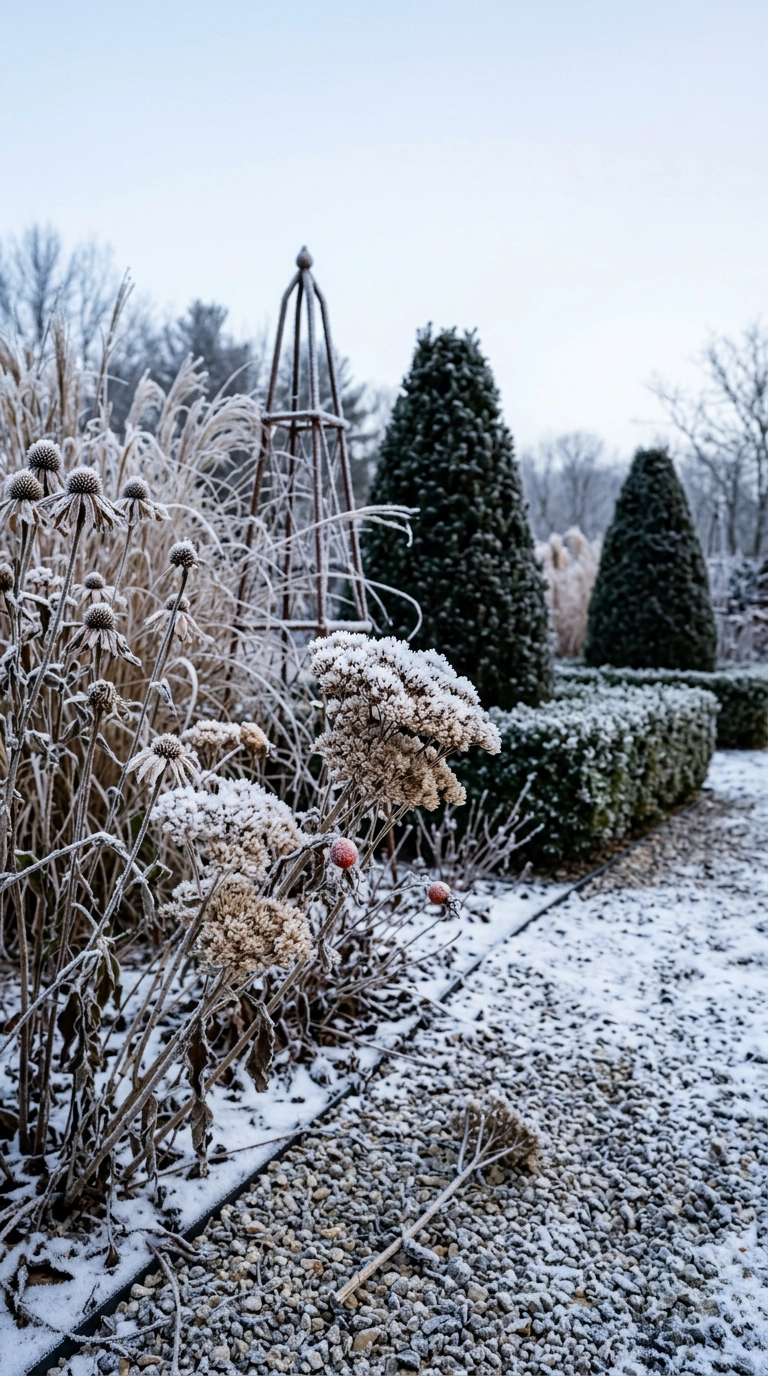
The last thing I’ll leave you with is the habit that changed my own garden most: stop the big autumn cleanup. Leave the seedheads, the grasses, the rosehips standing until late February.
Now Go Make Something Slightly Overgrown
If you take one thing from all of this, make it the structure. Every idea above that actually works – the boxwood parterre, the yew-backed teak bench, the brick-edged gravel path, the rusted obelisks standing up in February – is a rigid element holding a loose one. The flowers are the easy part and the frame is what makes them look intentional instead of unkempt.
What I’m seeing most in 2026 is the honest, climate-adapted version of this style finally winning out over the postcard imitation, with silver Mediterranean foliage in the West, salvia and gaura standing in for delphinium in the South, and gardeners everywhere leaving seedheads up through winter. Monty Don has spent years telling people to garden with their own conditions rather than against them, and Piet Oudolf’s influence is exactly why a frosted echinacea head now reads as beautiful instead of as neglect. Even the Chelsea Flower Show has swung hard toward drought tolerance and looser planting, which tells you where this is all heading.
Start small – the single corner in idea 21, or the front-walk strip – and let it teach you what your soil and your sun actually want. I’d genuinely love to know which one you try, and if you want more of this, sign up for my weekly newsletter where I send one honest project and the real cost and effort behind it every Thursday. No fluff, just the stuff that works.


