
23+ Gothic Garden Decor Ideas that are Dark, Romantic, and Stunning in 2026

I fell for gothic gardens the year I inherited a north-facing side yard that refused to grow anything cheerful, and instead of fighting it I leaned all the way into pointed arches, wrought iron, and foliage so dark it looks wet. This is not a Halloween aesthetic, it is Gothic Revival architecture crossed with the Victorian love of near-black flowers, and it stays gorgeous in February when every pastel garden looks embarrassed. Here is everything I have actually planted, painted, and hauled into place to get that look.
Gothic Garden Decor Ideas
1. A Pointed-Arch Iron Gate as the Opening Line
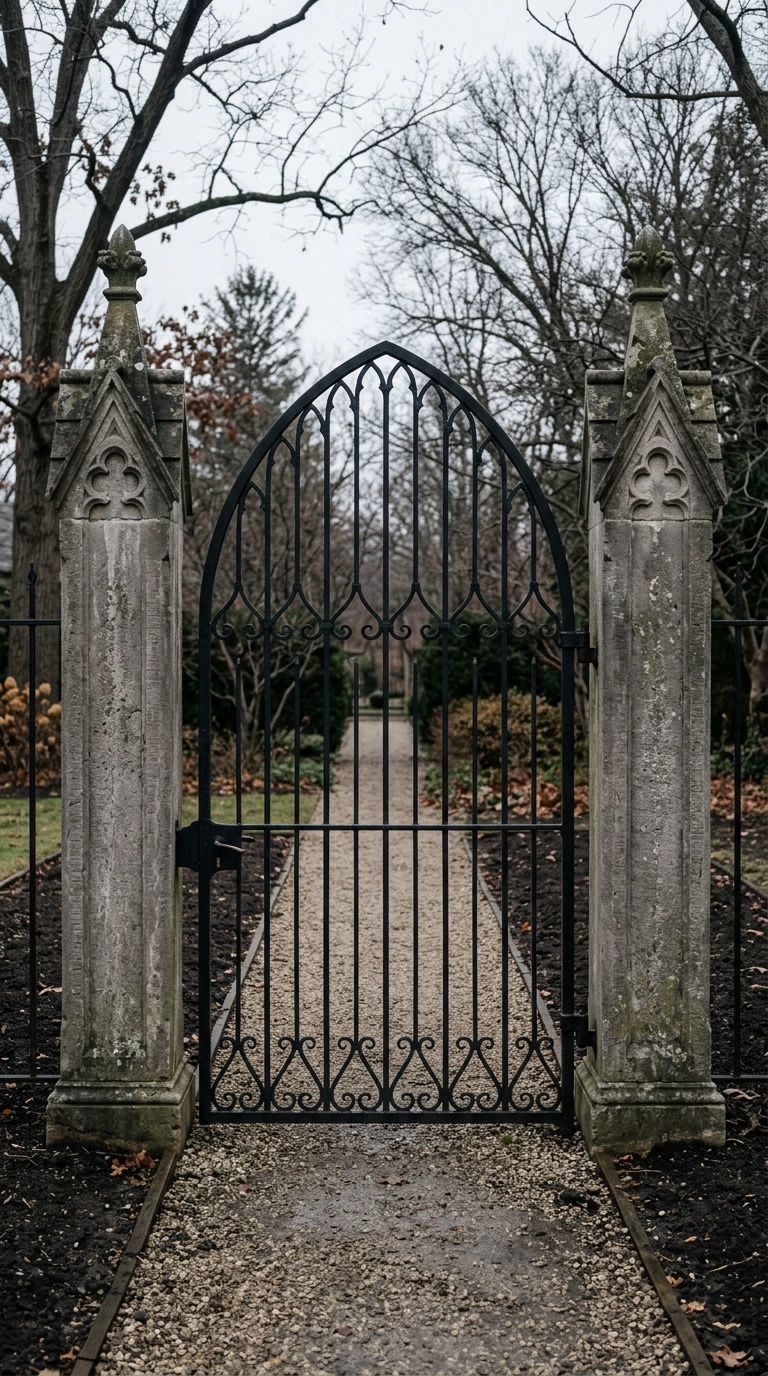
The pointed arch is the whole language of Gothic in one shape, and it works because the eye follows that vertical pull upward before it registers anything else. A stock iron arch gate runs a couple hundred dollars, custom fabrication climbs into four figures fast, so I put the money here first and economize elsewhere. Renting? Buy a freestanding iron arch instead, stake it into the ground at both feet, and take it with you when the lease ends.
2. A Near-Black Rose Border Along a Warm Brick Wall
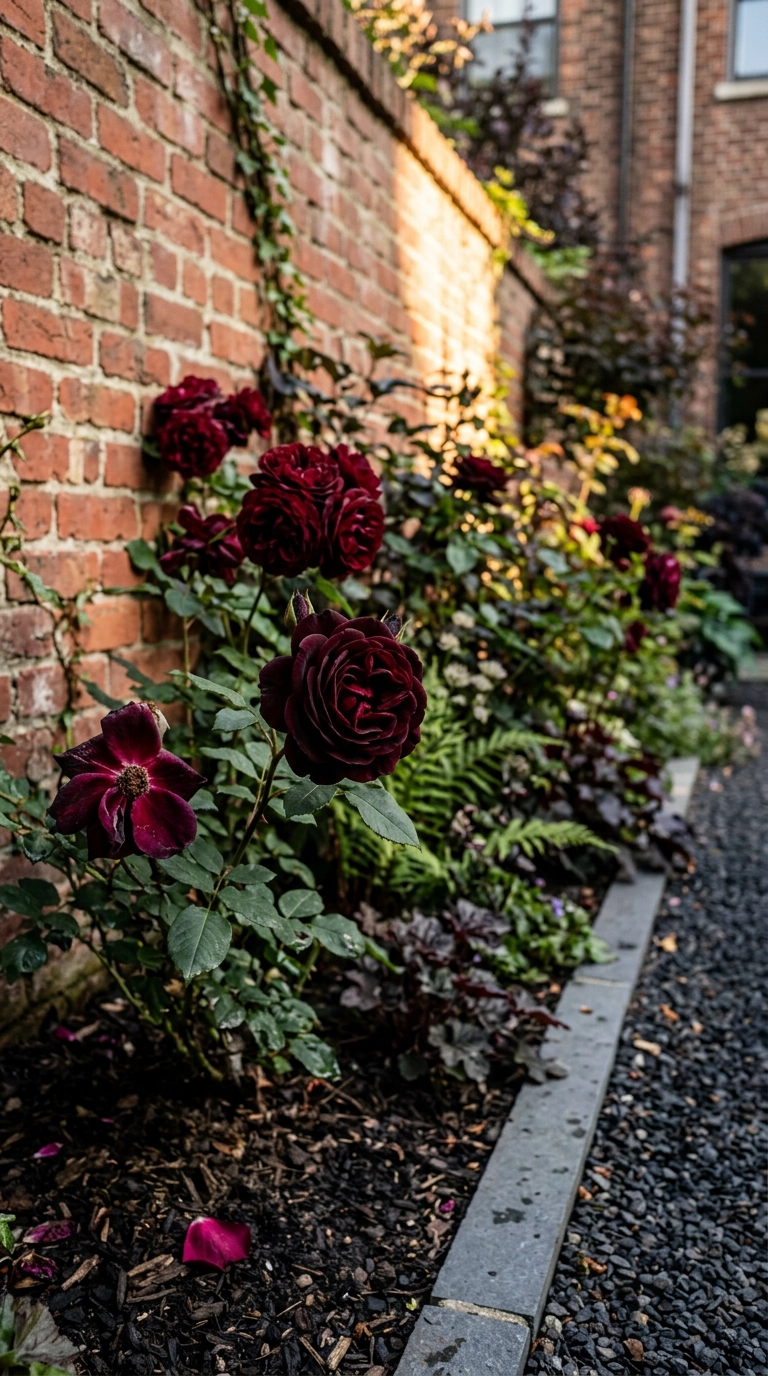
David Austin’s ‘Munstead Wood’ is the closest thing to a black rose that will actually survive an American summer, and its velvety crimson reads almost purple in low light. Give it six hours of sun, space plants about 30 inches apart, and back them with warm brick or dark-stained wood so the color does not disappear. It is a splurge at roughly the price of a decent dinner out per plant, but three of them make a border people stop walking to look at.
3. A Drift of ‘Queen of Night’ Tulips in Grey Gravel
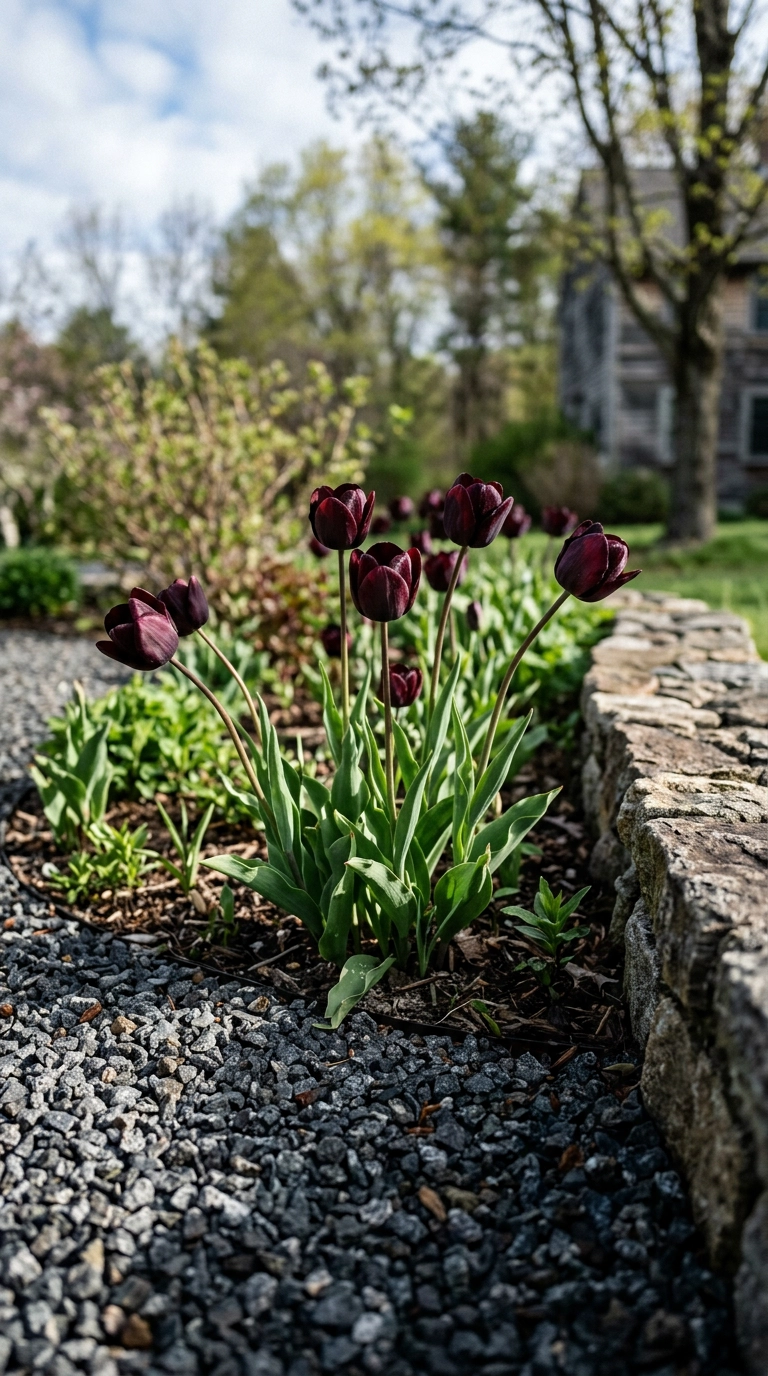
‘Queen of Night’ is the classic almost-black tulip and the cheapest entry point into this whole look, roughly a dollar a bulb in fall. Plant them in clusters of at least 15 at six inches deep, because a single dark tulip disappears while a mass of them reads as a shadow you planted on purpose. Set them against pale gravel or silver foliage, otherwise dark on dark just turns into mud from ten feet away.
4. Black Mondo Grass Edging a Bluestone Path
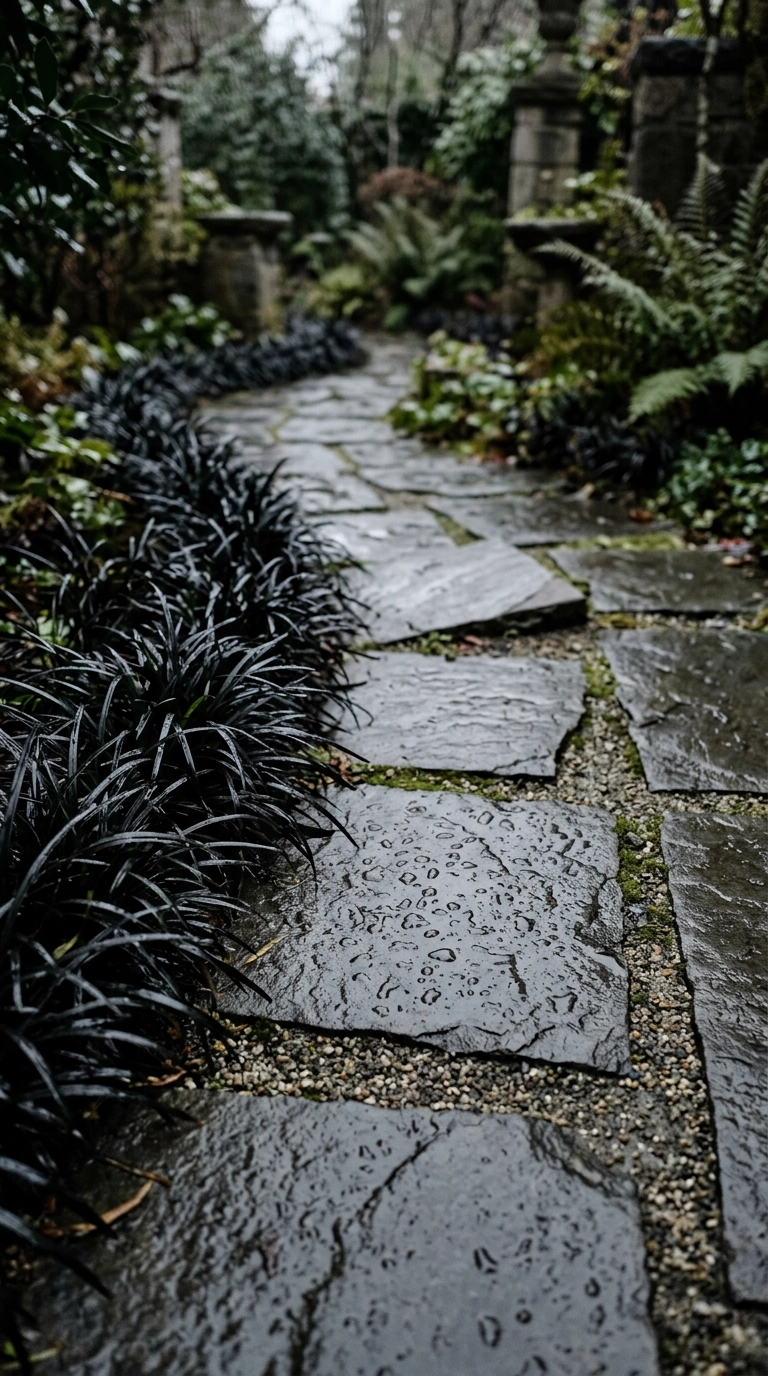
Ophiopogon planiscapus ‘Nigrescens’ is the only truly black-leaved groundcover I trust, and it holds that color all season instead of fading to bronze. Plant it eight inches on center along a path edge in zones 6 through 10, in part shade with decent drainage, and it will knit into a solid line in about two seasons. Twenty plants is a Saturday afternoon and under a hundred dollars at a decent nursery, and it is the detail that makes the whole garden look designed rather than decorated.
5. A Purple Smoke Bush as the Anchor Shrub
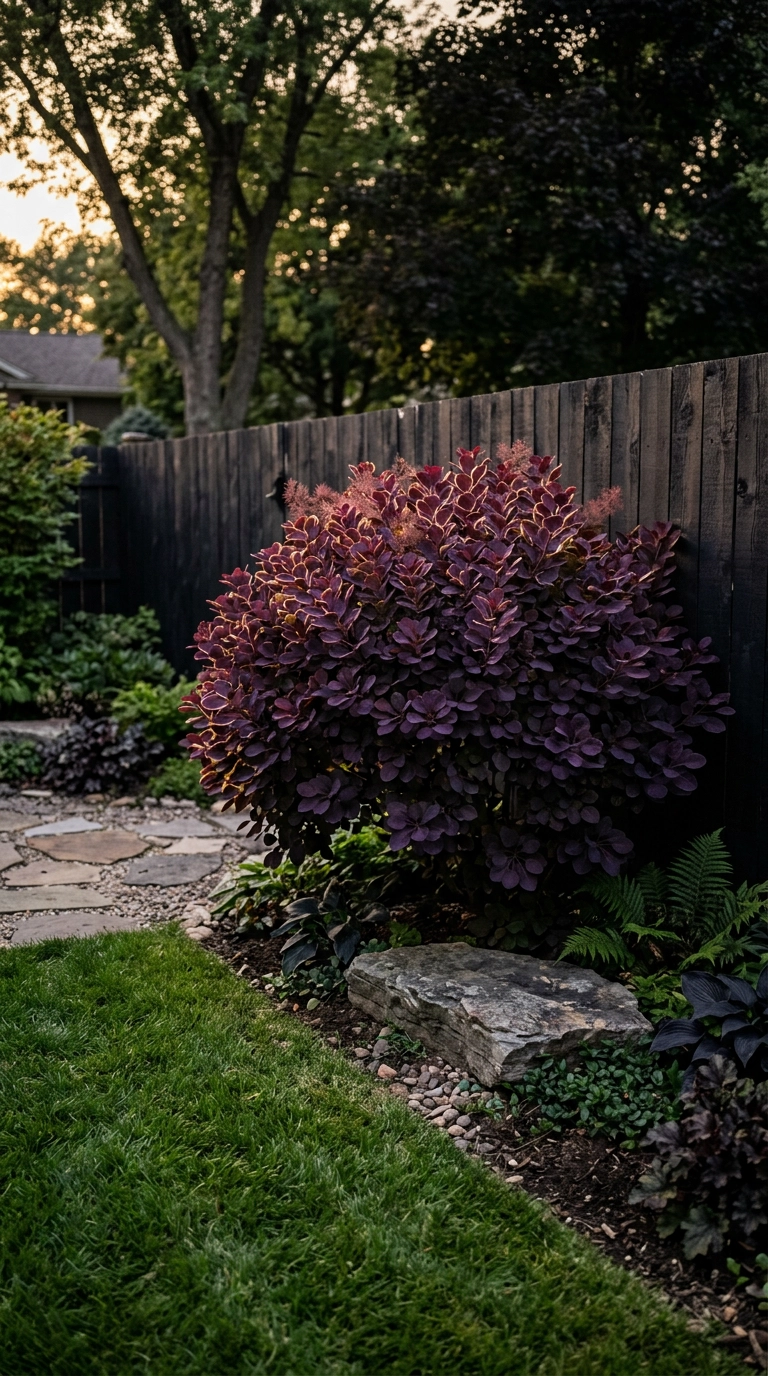
Cotinus coggygria ‘Royal Purple’ is the workhorse of the dark garden, hitting eight to ten feet of solid burgundy foliage with almost no fuss. Full sun keeps the color deep, shade turns it muddy green, and a hard cut back to 18 inches in early spring gives you bigger leaves at the cost of the smoky flower plumes. Back it with a dark-stained fence rather than a pale one, because dark on dark here reads as depth instead of a silhouette.
6. A Weathered Stone Urn at the End of a Sightline
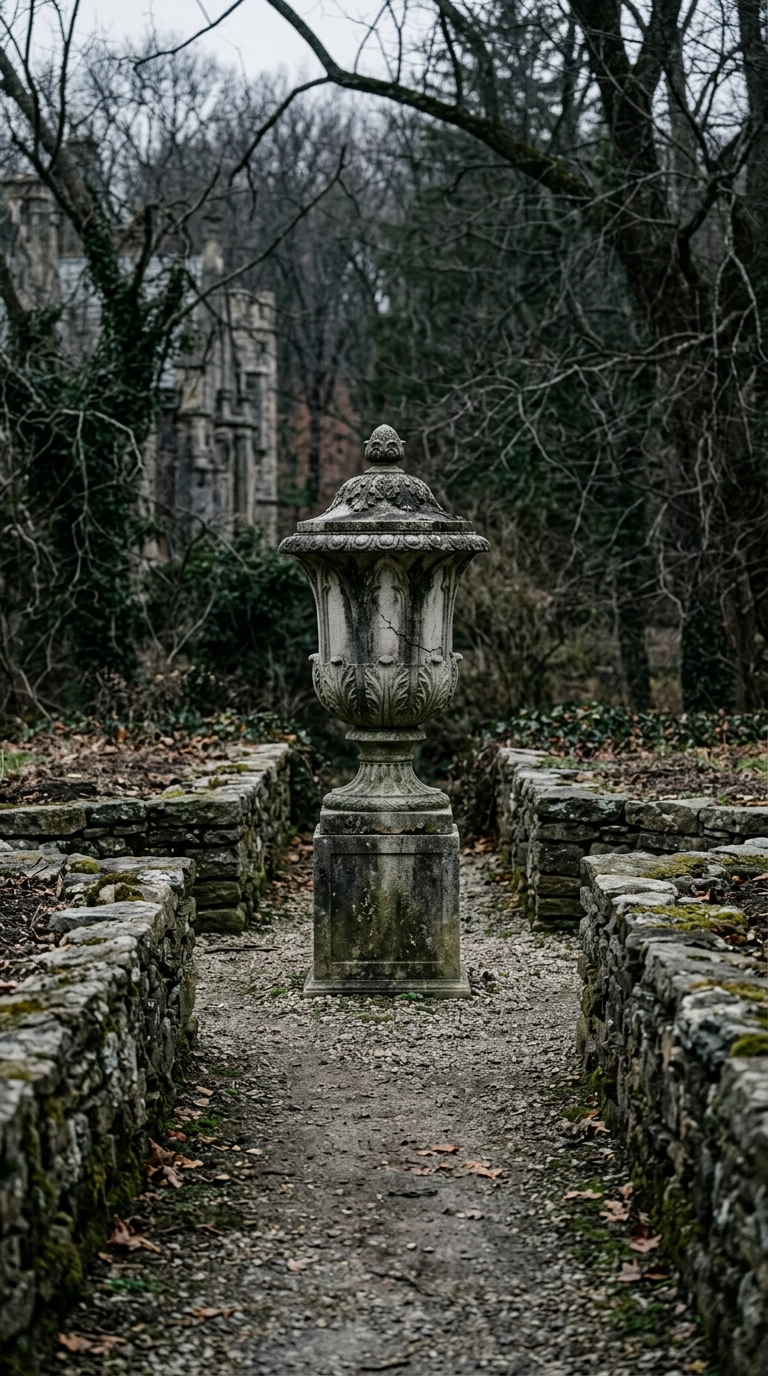
A sightline is just the invisible line your eye travels down a path, and Gothic gardens live on giving that line something worth arriving at. Leave the urn empty, which sounds wrong until you see it, because an unplanted urn reads as sculpture while a planted one reads as a container. Cast stone versions age convincingly in two winters and cost a fraction of real carved limestone, so buy cast, skip the sealant, and let the weather do the work.
7. A Salvaged Gothic Window Frame on a Stone Wall
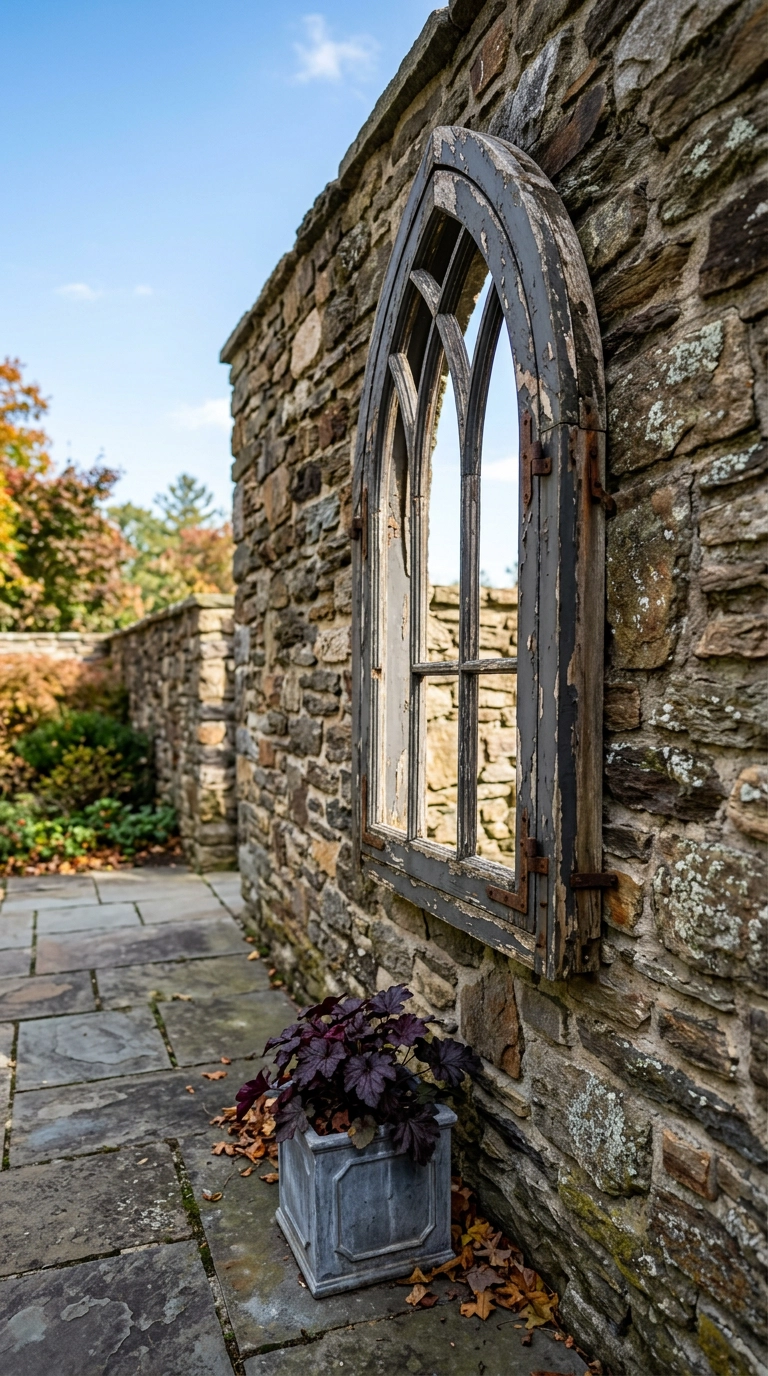
An architectural salvage yard will sell you a Gothic arched sash for less than a decent planter, and hung on a fence or masonry wall it does what a mirror does indoors without the glare problem. Mount it with masonry anchors on stone, or on a fence lean it against the boards inside a simple cleat if you cannot drill. Leave the glass out so you see sky through it, which keeps it feeling like a ruin rather than a yard sale find.
8. A Wrought Iron Obelisk Wearing a Dark Clematis
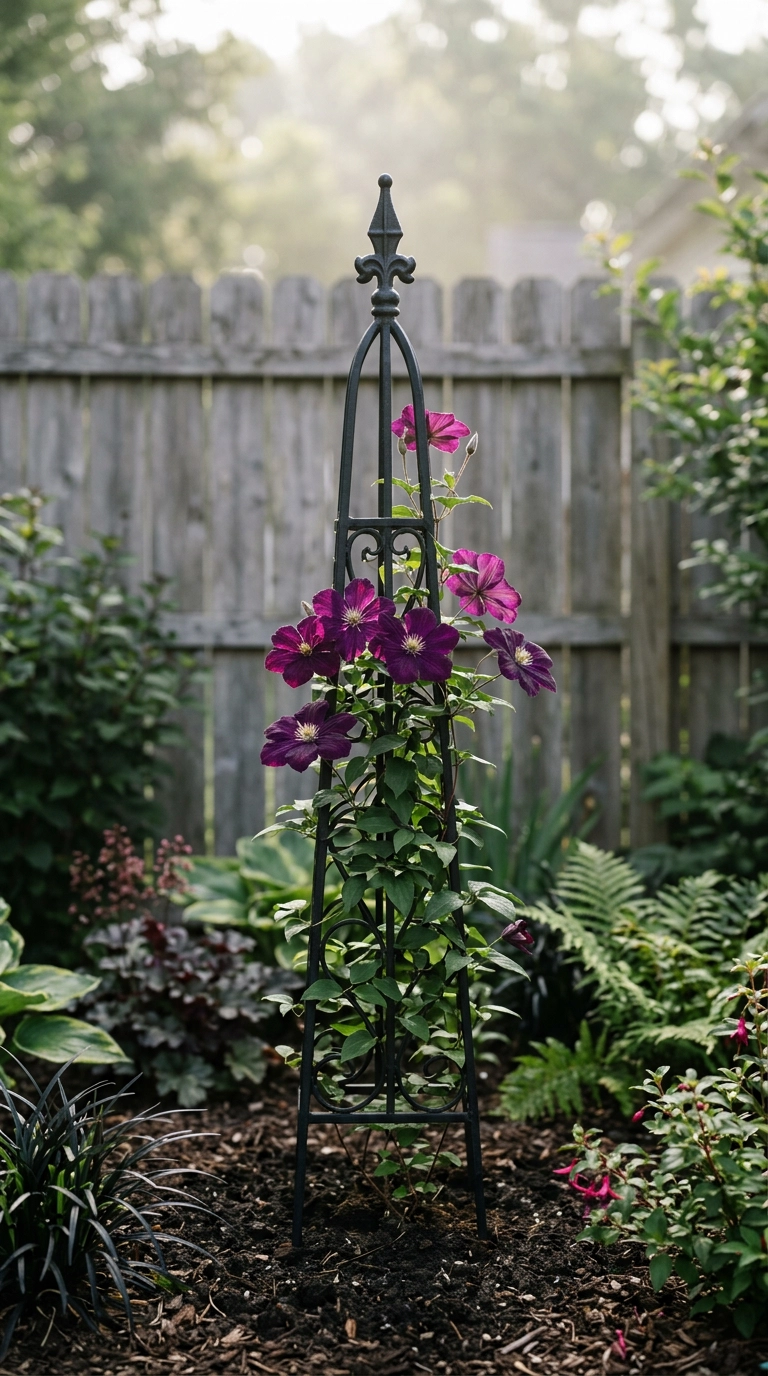
Vertical structure is what separates a gothic garden from a dark flower bed, and an obelisk gives you height in a footprint the size of a dinner plate. ‘Romantika’ is a group 3 clematis, meaning you cut the whole thing to 12 inches every spring and it comes back harder, which is the easiest pruning job in gardening. Sink the legs at least eight inches or your first summer thunderstorm will lay the whole thing flat.
9. A Cast Iron Bench Tucked Into a Shade Alcove
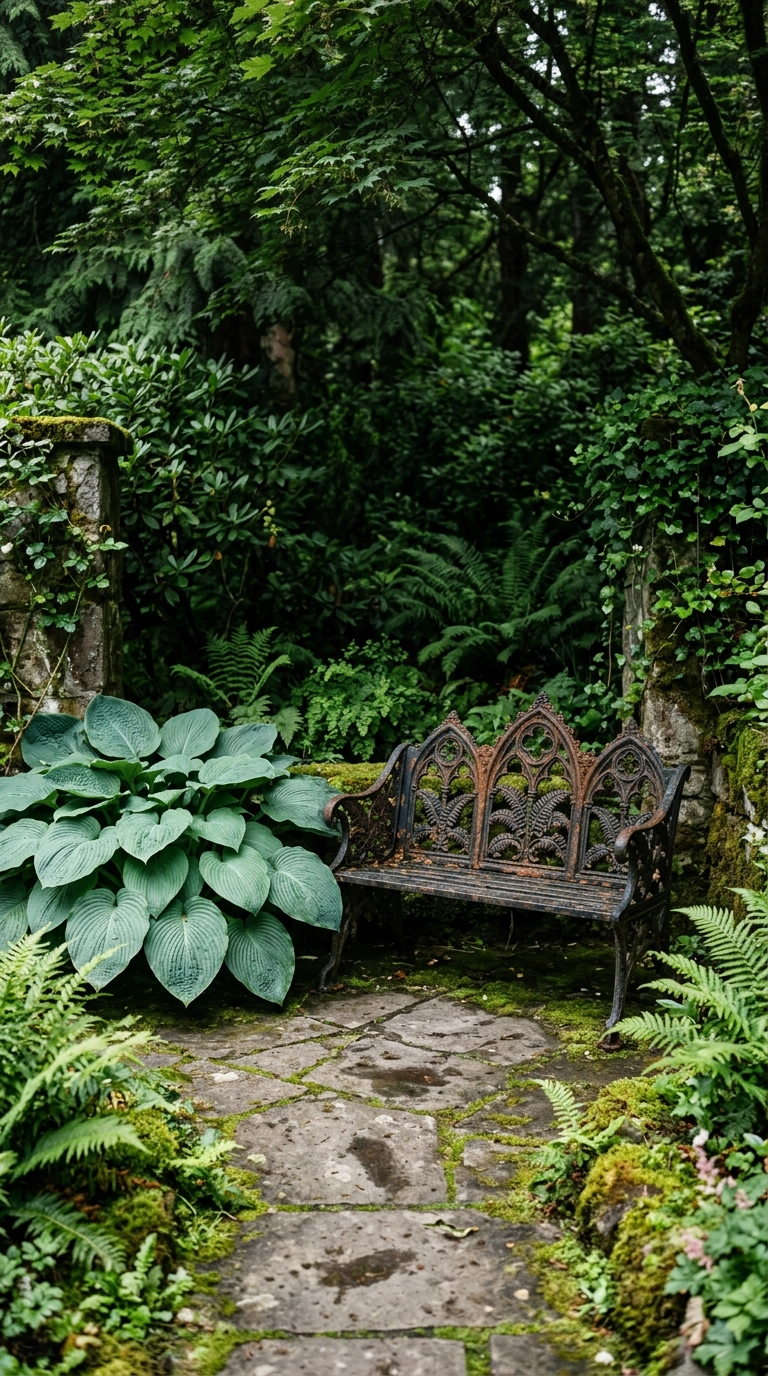
Real Victorian cast iron benches are heavy, uncomfortable, and completely worth it, though a good reproduction in cast aluminum weighs a third as much and rusts the same way if you let it. Put it in the darkest corner you have, not the sunny one, because the whole point is arriving at a cool shadowed room at the end of the garden. Skip the cushion, add a folded wool throw over one arm, and the bench looks used instead of staged.
10. Black Hollyhocks Standing Against Pale Clapboard
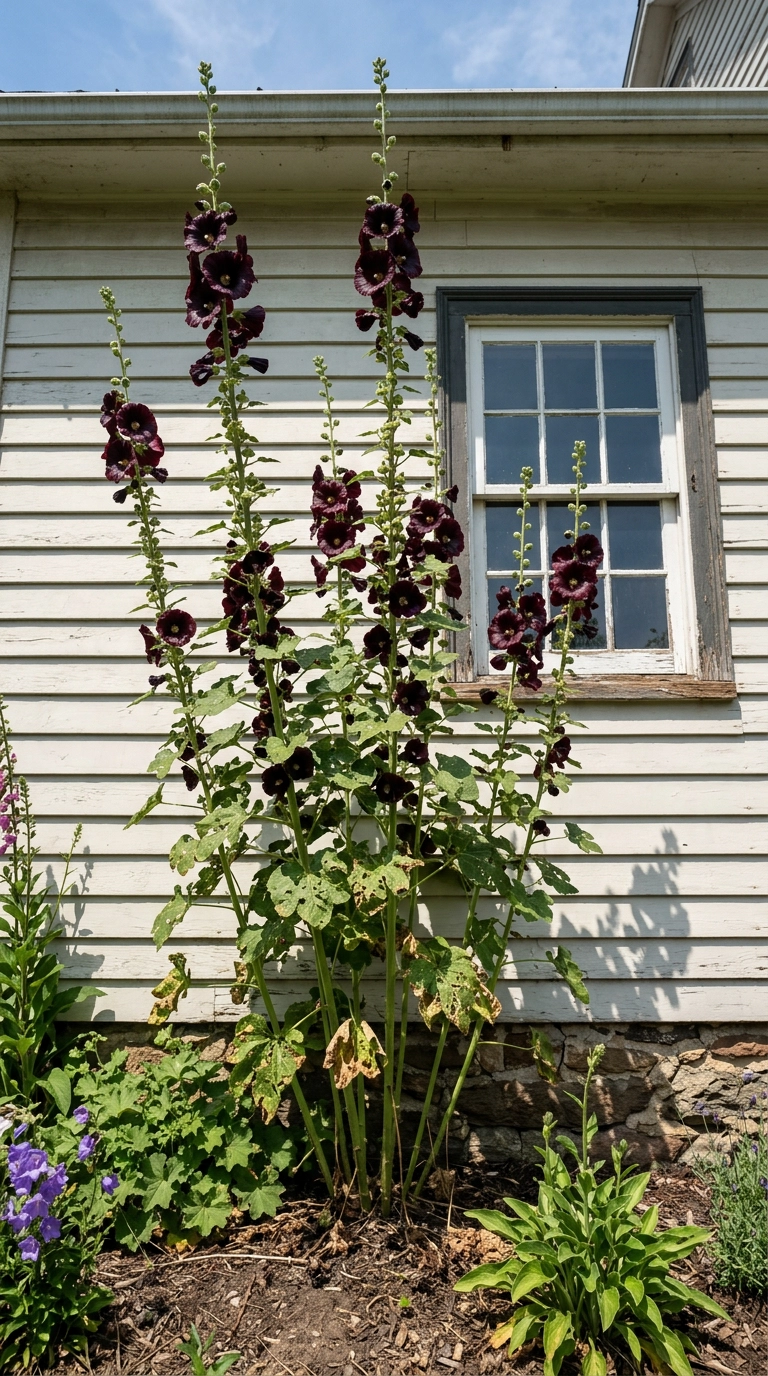
Alcea rosea ‘Nigra’ has been grown in American gardens since Jefferson’s era and it is still the most dramatic near-black flower you can raise from a seed packet. It is a biennial, so year one is leaves and year two is the show, and after that it self-sows and handles the schedule for you. Give it full sun, a wall at its back for wind support, and accept the rust spots on the lower leaves as the cost of doing business.
11. Dark Hellebores for the North-Facing Bed Nothing Else Wants
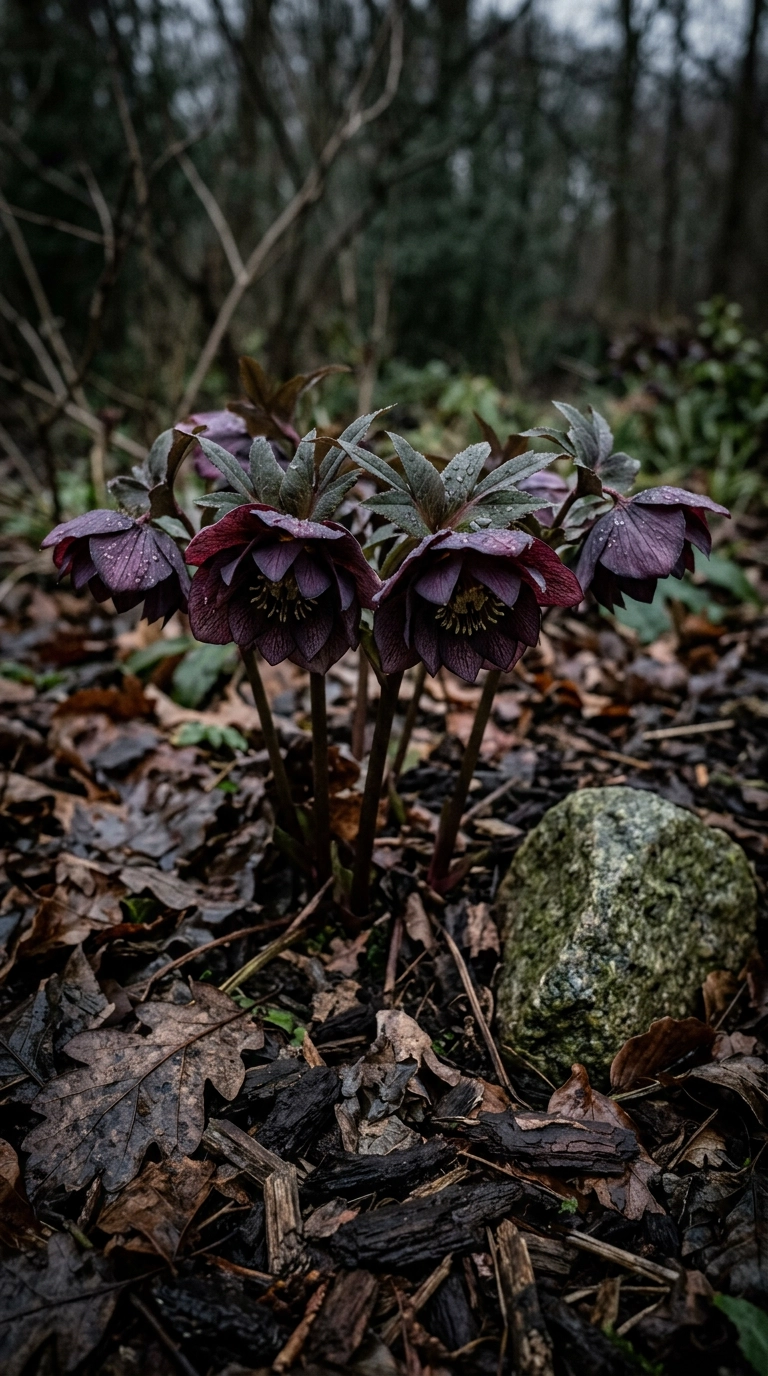
Helleborus ‘Onyx Odyssey’ blooms in February when the rest of the garden is a brown apology, and it does it in full shade under trees where nothing else will perform. Cut last year’s leathery leaves to the ground in January so the flowers are actually visible, which is the single tip most people miss. They are slow to establish and priced accordingly, so buy three good-sized plants rather than nine tiny ones.
12. A Victorian Stumpery of Upturned Roots and Ferns
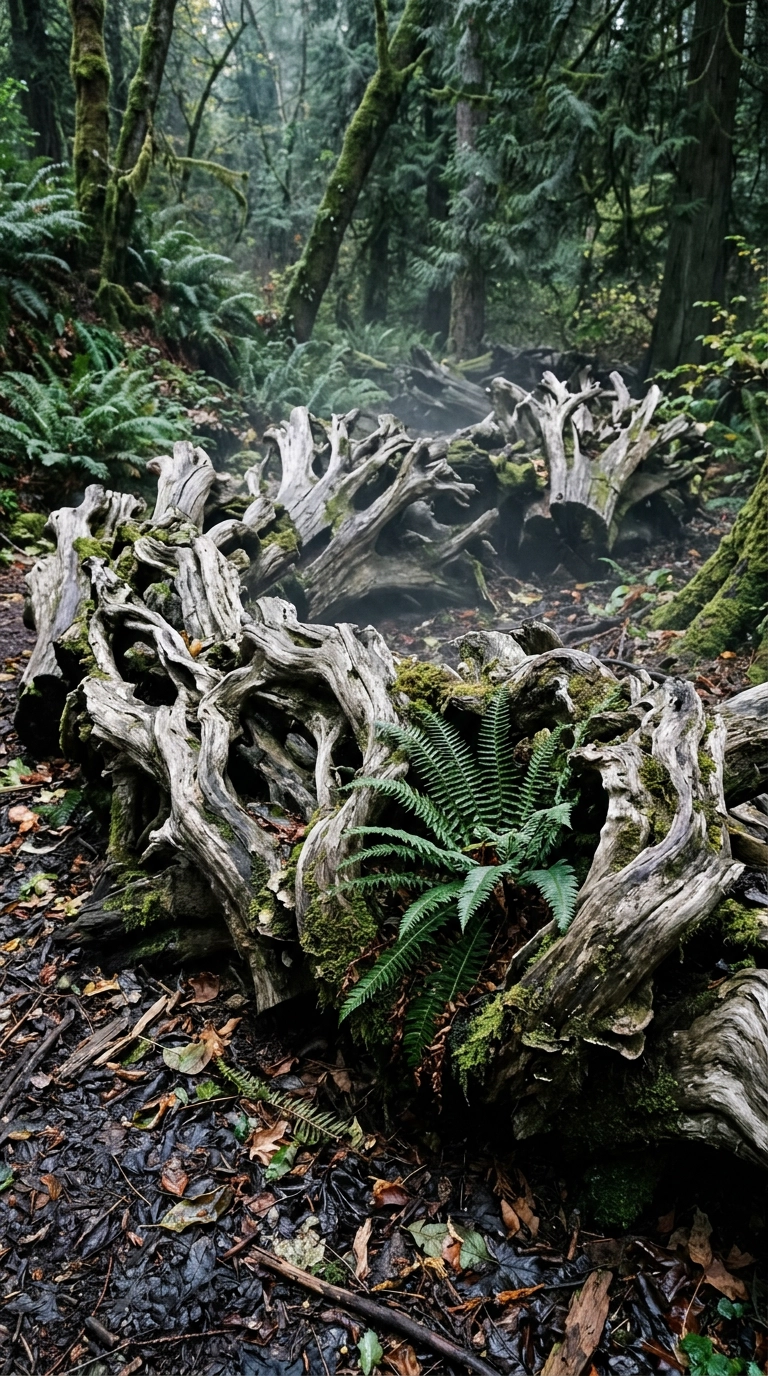
The stumpery is a genuinely Victorian invention, popularized in the 1850s and revived famously at Highgrove, and it is the most gothic thing you can build out of yard waste. Ask a tree crew for stumps after a removal, upend them so the roots claw at the air, and pack the hollows with leaf mold and ferns. It is a full weekend of heavy lifting and almost no money, and it looks a hundred years old by the second spring.
13. Yew Buttresses Clipped Along a Gravel Walk
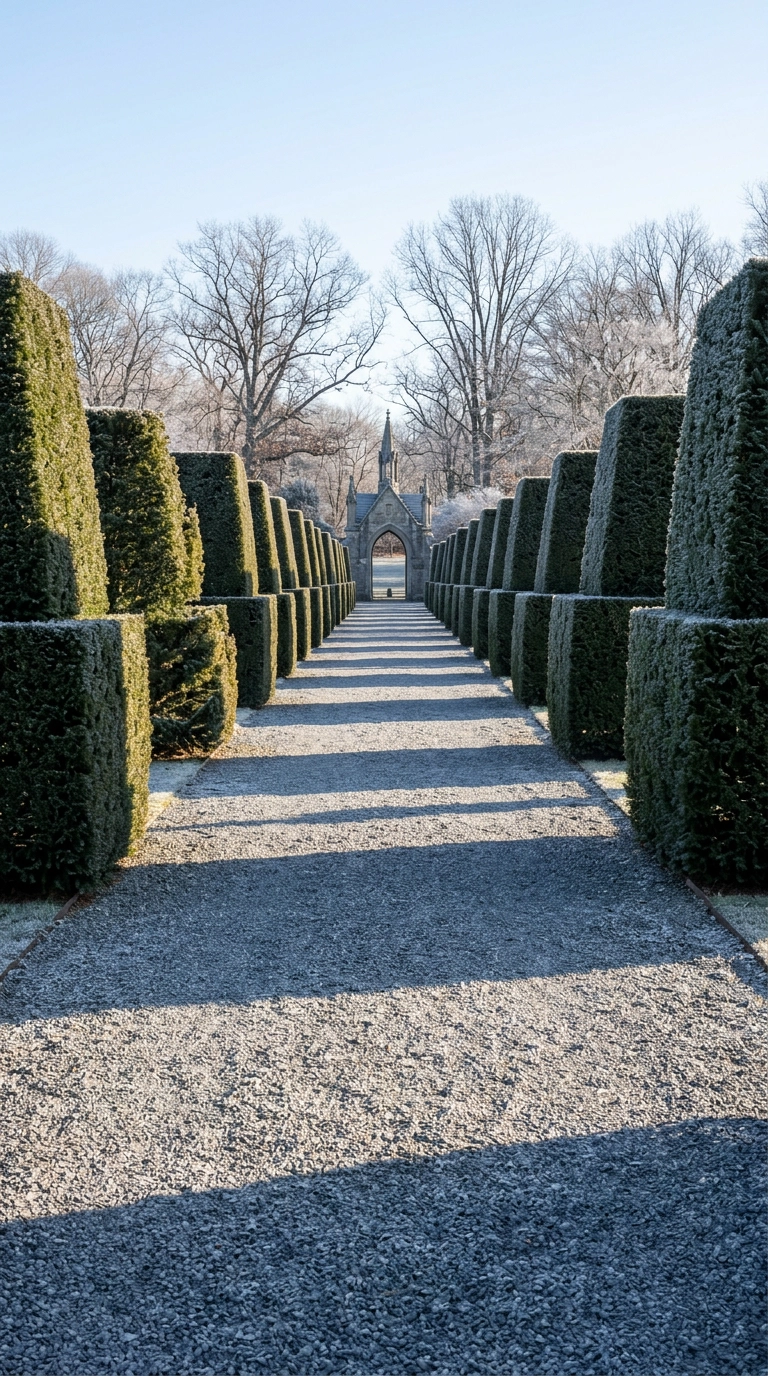
Clipping yew into stepped buttress forms borrows straight from cathedral architecture and gives the garden bones that read all winter. Taxus baccata is slow, so buy the biggest plants you can afford and expect five years before the shapes really arrive. It is genuinely the long game of this list, but it is also the one element that makes a February garden look intentional rather than dormant.
14. A Slate-Gravel Parterre in a Small City Courtyard
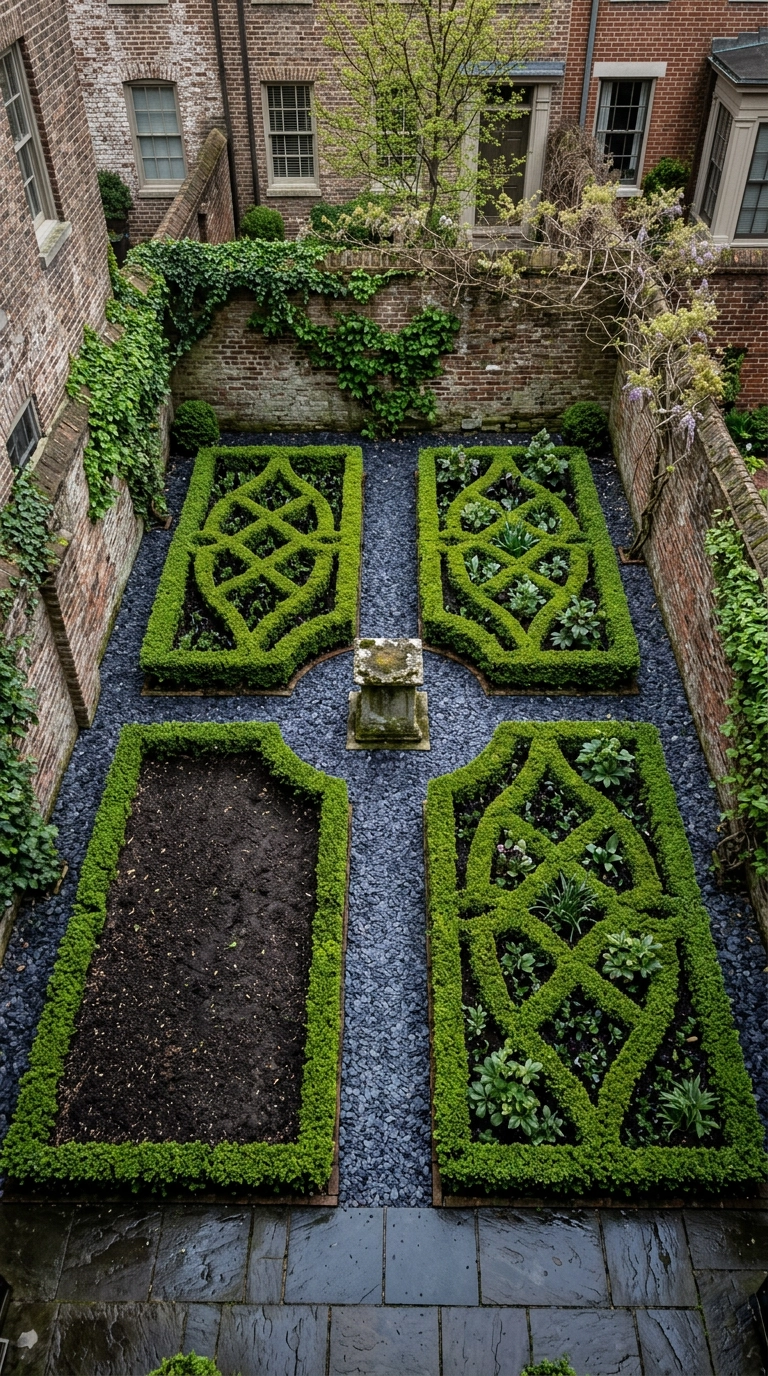
Dark crushed slate instead of tan pea gravel is a twenty-minute decision that changes everything, because the near-black ground plane makes every leaf above it look richer. A parterre only needs geometry, not size, and a 12 by 15 foot courtyard holds four beds comfortably. Budget for about two inches of depth over landscape fabric, which for a small yard is a few hundred dollars of stone and one very tired afternoon with a wheelbarrow.
15. A Black Reflecting Bowl Catching the Sky
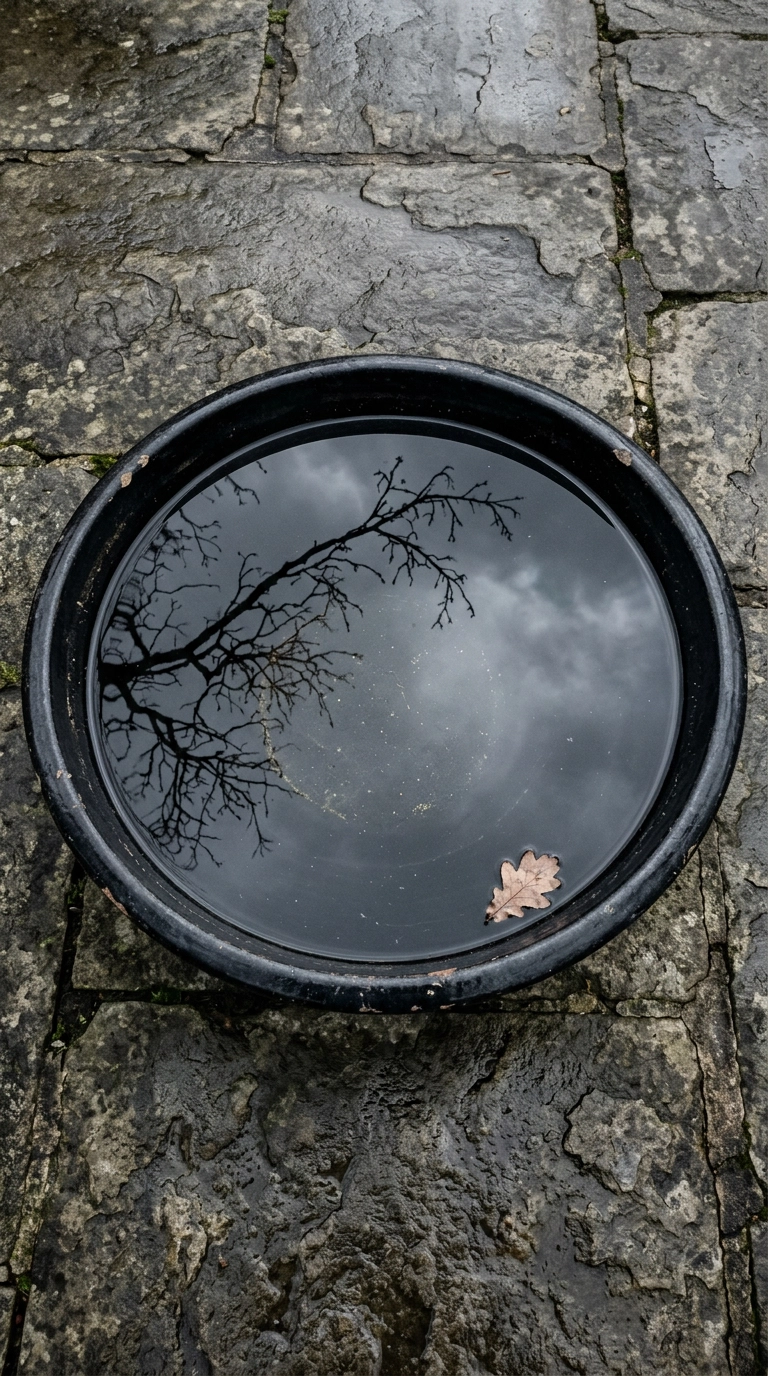
Still dark water is the cheapest drama in the entire gothic playbook, and a wide low bowl doubles the sky in a garden that has no room for a pond. Paint the inside of any pale bowl with black pond liner paint if you cannot find a dark-glazed one, and keep it filled to the absolute rim so the edge disappears. Add a mosquito dunk every few weeks in summer and dump it before a hard freeze so the ceramic does not crack.
16. Iron Lanterns Hung Low Along a Path
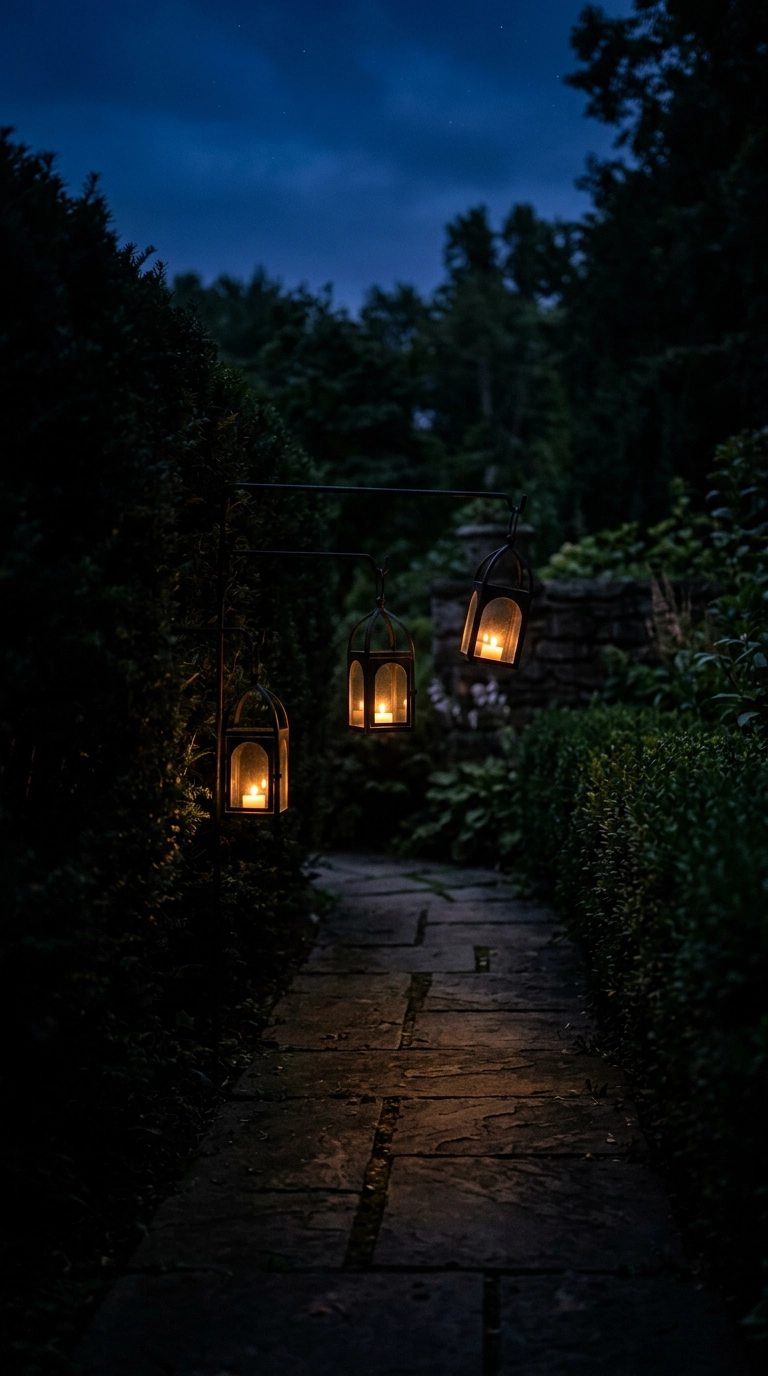
Gothic gardens are best after sunset, and low warm candlelight at knee to shoulder height is far more atmospheric than the floodlight your builder installed. Hang lanterns at staggered heights rather than a neat even row, because the irregularity reads as old and the even spacing reads as retail. Real flame is worth the hassle, but if you have wind, the better battery candles with a warm flicker pass at three feet.
17. A Moss-Covered Stone Trough as a Planter
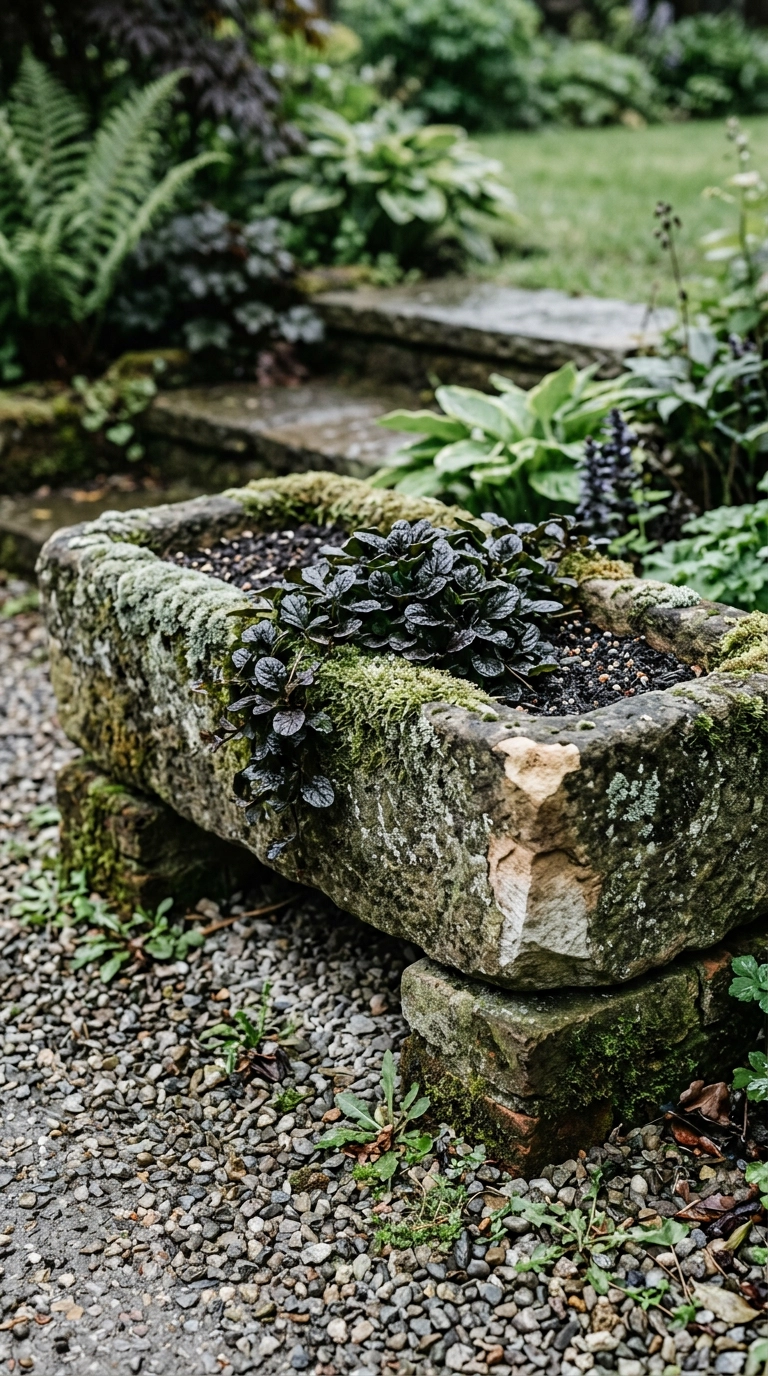
Antique stone troughs cost real money, but hypertufa ones you cast yourself from peat, perlite, and cement look nearly identical after one winter of weathering. Raise it on brick feet so it drains and so the moss on the sides is at eye level rather than in the dirt. Buttermilk brushed on the outside speeds up the moss by a season, which sounds like folklore but genuinely works in a damp shaded spot.
18. A Dark Chocolate ‘Black Barlow’ Columbine Drift
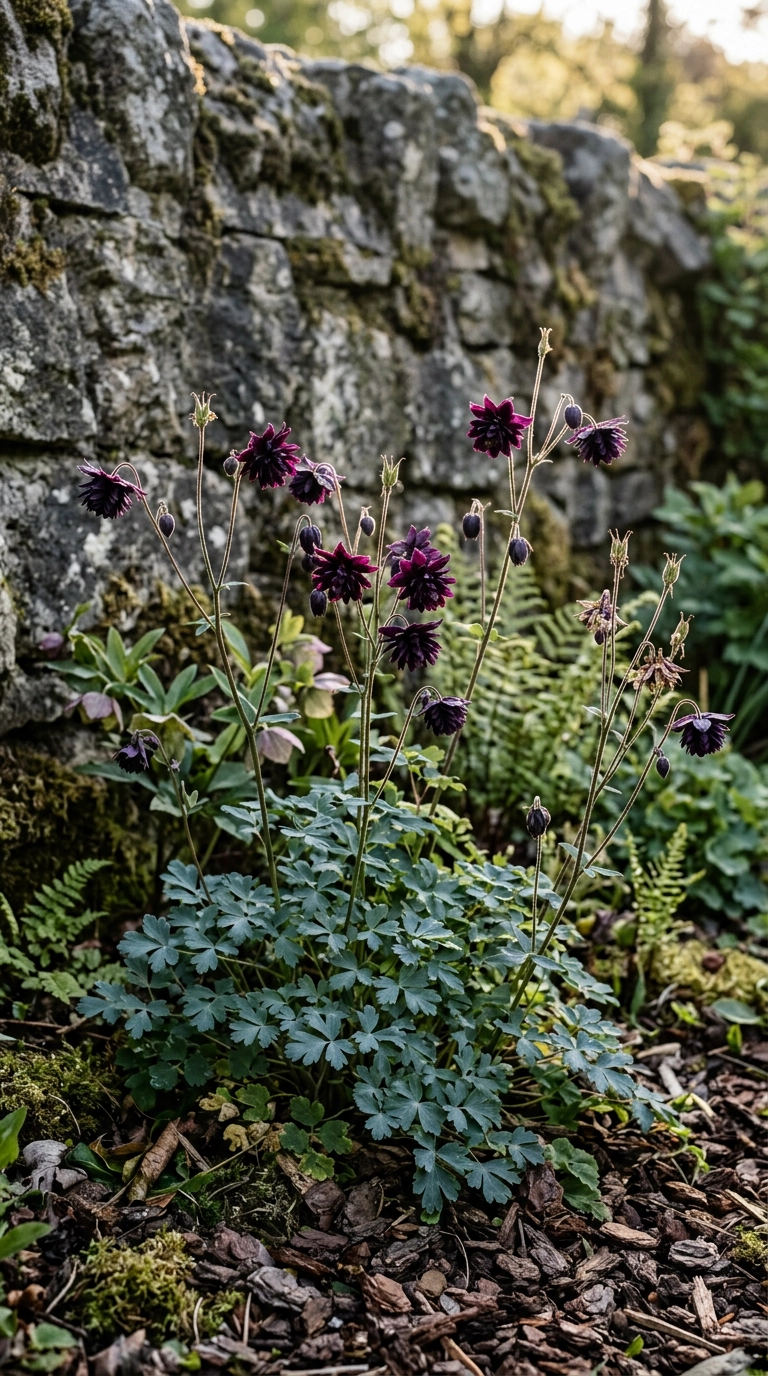
Aquilegia ‘Black Barlow’ is the filler that makes a gothic border look grown rather than installed, throwing spurless double flowers so dark they read as ink at dusk. It happily self-sows into wall cracks and path edges, which is exactly the slightly unruly Victorian effect you want. It is short-lived, maybe three or four years per plant, so let the seedheads ripen and it replaces itself for free.
19. A Ruined Arch Folly Built From Salvaged Brick
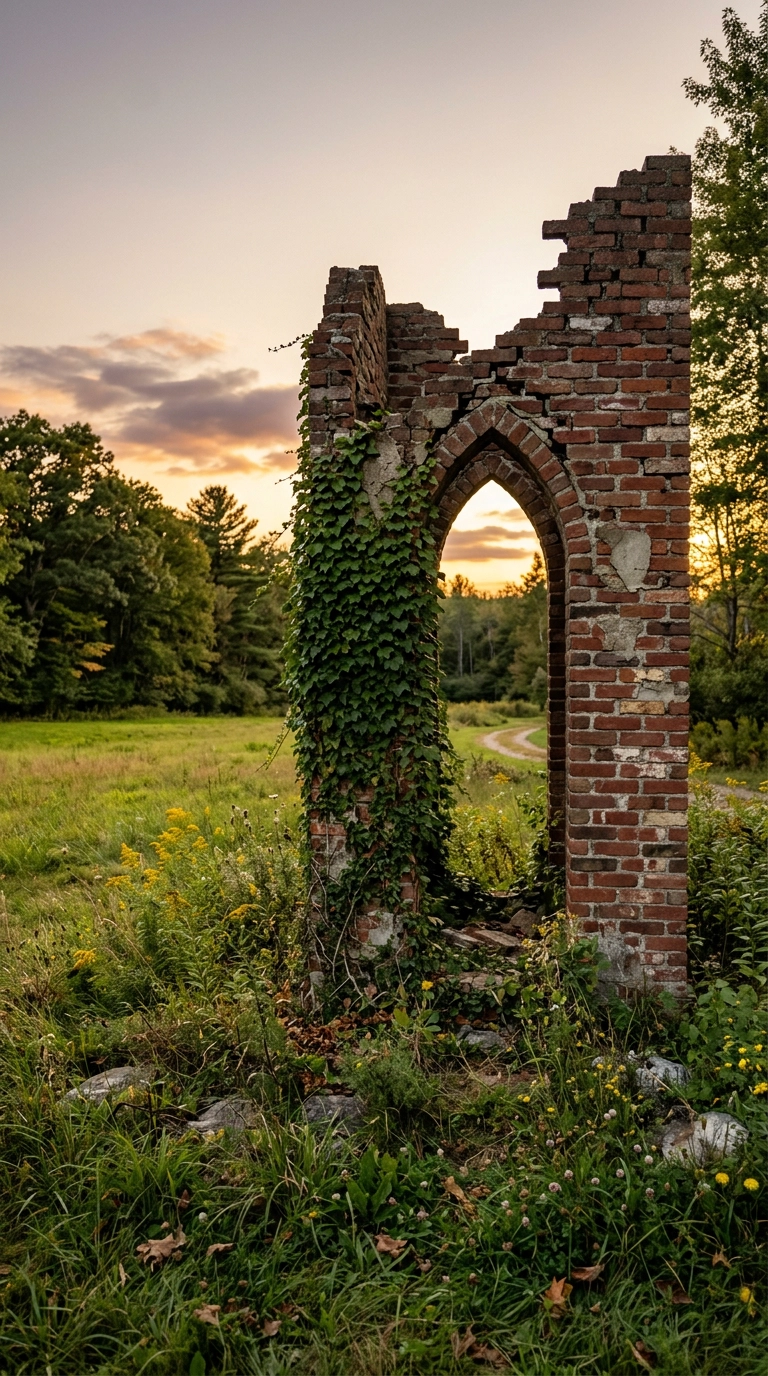
A folly is a structure built purely for the view, and the Victorians built fake ruins on purpose without a shred of embarrassment. Salvaged brick and a mason for two days will get you a freestanding arch, and the trick is making the top edge broken and uneven rather than neatly finished. This is the biggest project on the list by a wide margin, but it is also the one that turns a yard into a landscape.
20. Deep Burgundy Heuchera Massed Under a Dark Fence
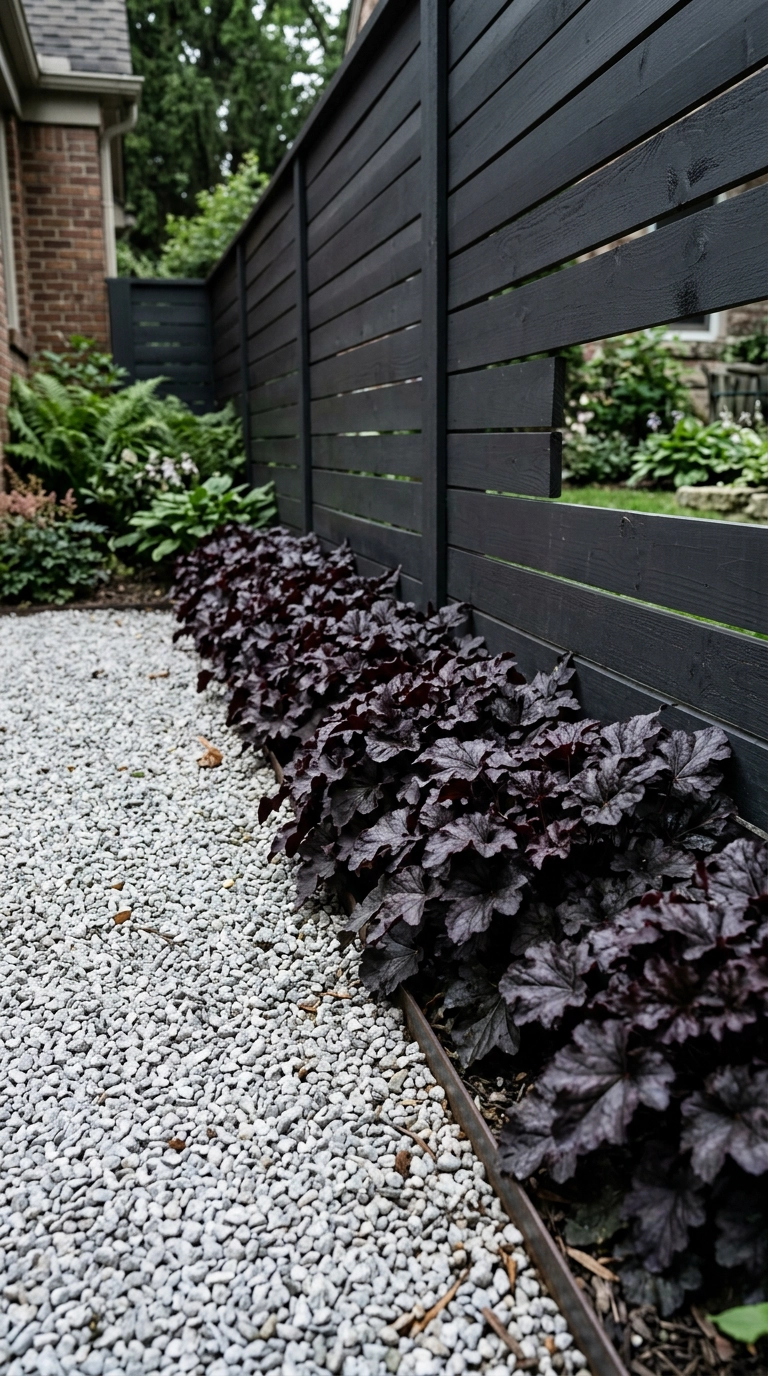
Massing one dark foliage plant beats mixing five, because visual weight, meaning how heavy an element feels to the eye, needs repetition to register from a distance. ‘Obsidian’ holds near-black in part shade and scorches in hot afternoon sun, so a north or east side yard is its happy place. Plant 15 inches apart in a band at least two plants deep, otherwise it looks like a dotted line instead of a shadow.
21. An Iron Arbor Draped in Dark ‘Nigra’ Hollyhock Company
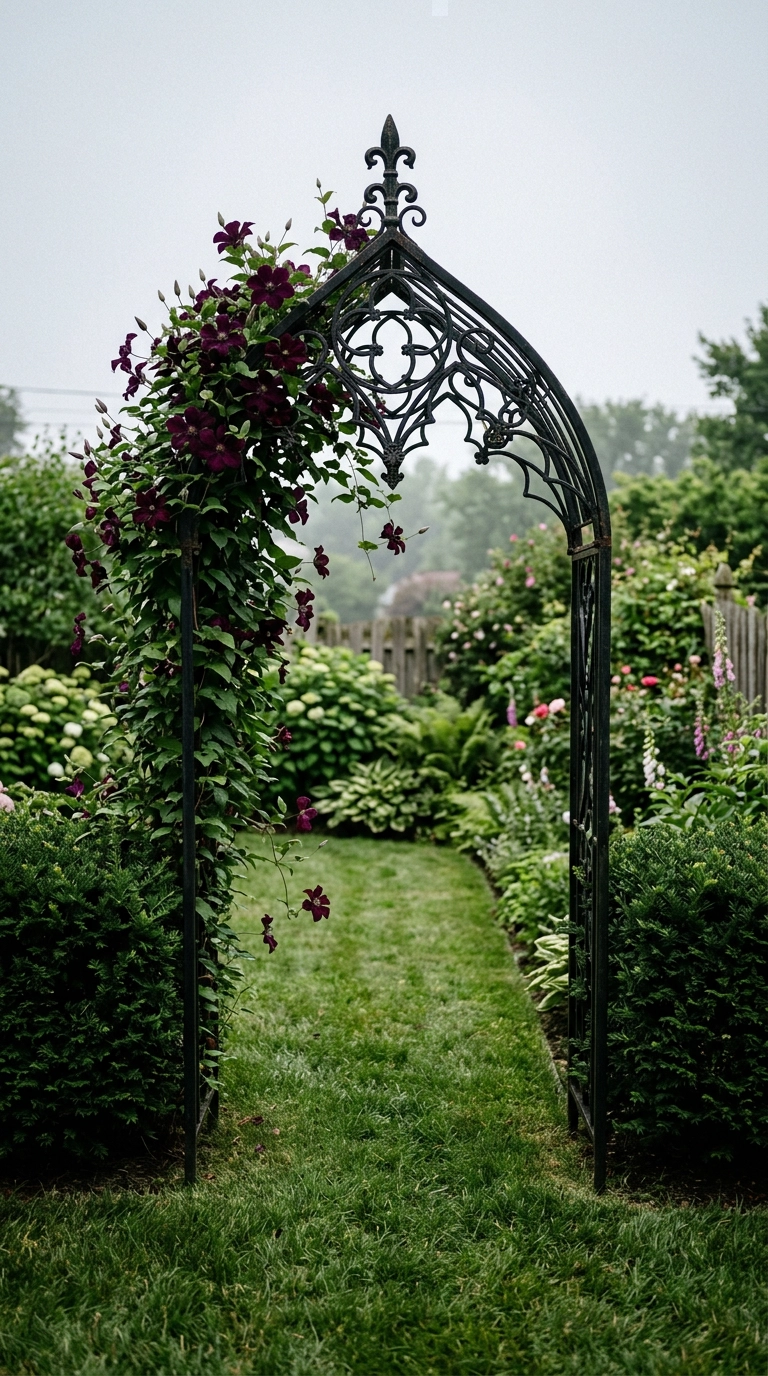
An arbor over a path forces a moment of compression before the garden opens up again, which is the oldest trick in landscape design and still the most effective. Let a few stems hang loose off the crown instead of tying everything tight, because the slight disorder is what makes it romantic rather than municipal. Iron arbors ship flat and go up in an afternoon with two people and a post-hole digger.
22. A Gravel Sitting Circle Ringed in Dark Foliage
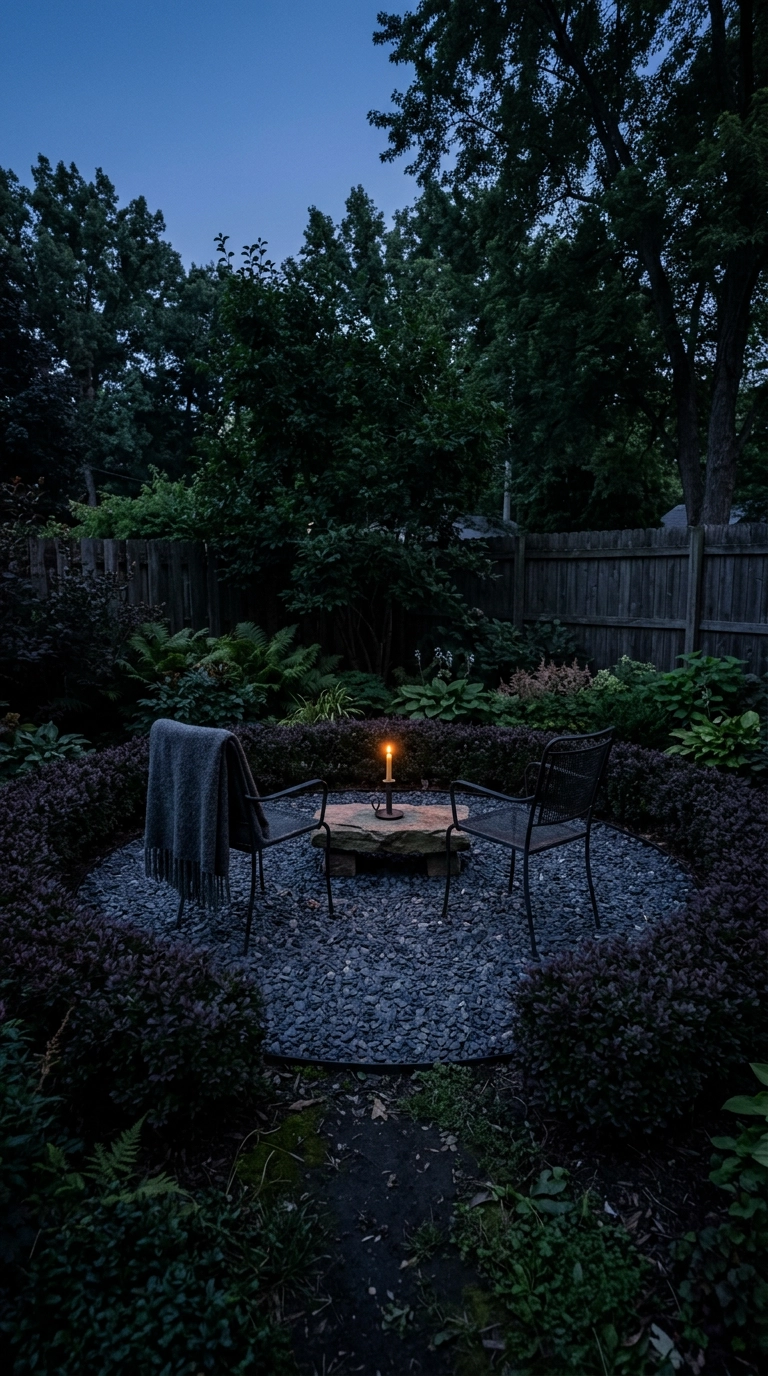
A circle of dark gravel is the cheapest hardscape there is, and ringing it with purple-leaved Physocarpus ‘Diabolo’ gives you an outdoor room with walls in two seasons. Keep the furniture to two chairs and one low surface, because a crowded seating group kills the sense of enclosure that makes the space work. Dig four inches, lay fabric, edge it with steel, and one weekend gets you a spot you will actually sit in.
23. A Single Weeping Beech as the Garden’s Full Stop
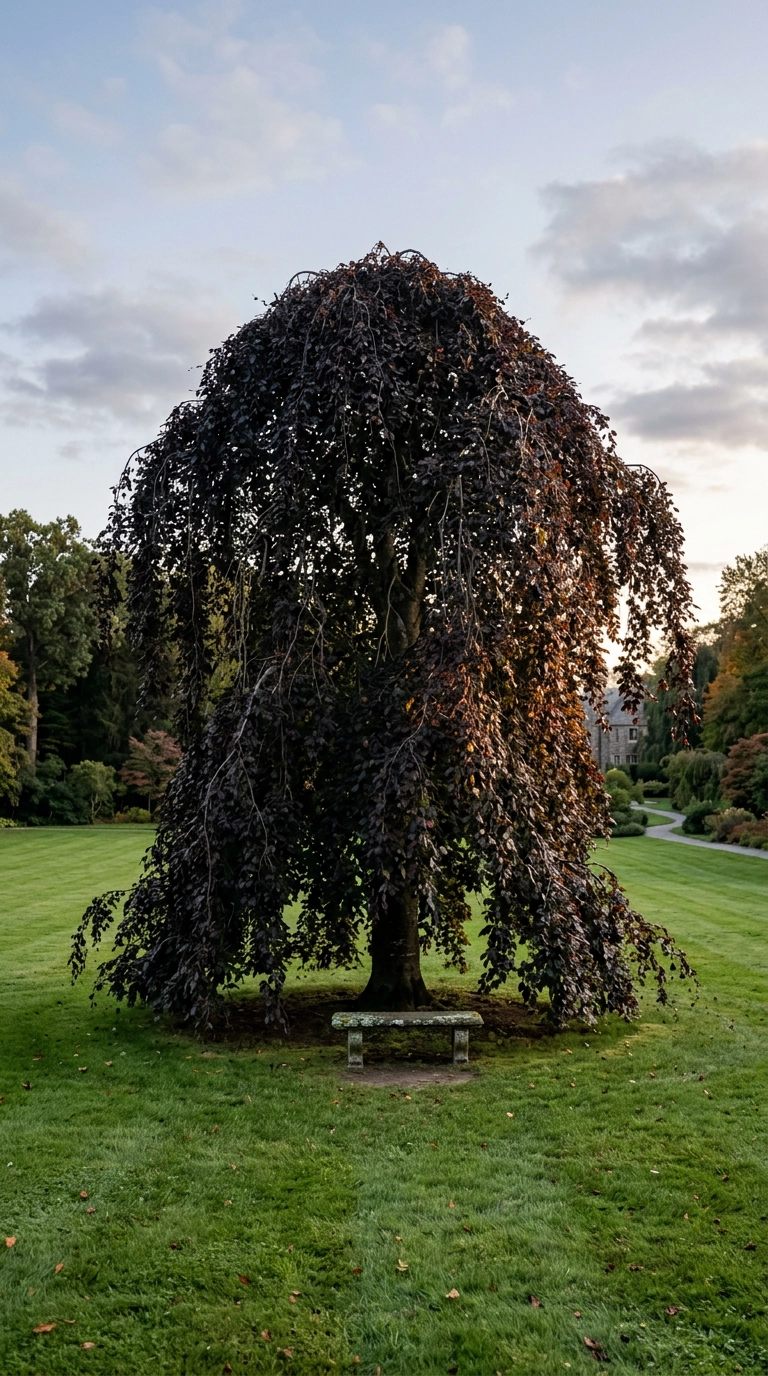
Fagus sylvatica ‘Purpurea Pendula’ is the last word in a gothic garden, a living dark cathedral you can walk inside of when the branches reach the ground. It needs real room and real patience, and it is the one plant here I would call a legacy purchase rather than a project. Put a bench under the canopy, and you have built the single best place in the whole garden to sit out a rainstorm.
Letting the Dark Side of the Garden Have Its Say
Somewhere between the first black tulip and the day the yew buttresses finally read as architecture, I stopped apologizing for a garden that looks its best under a grey sky. The near-black plants do the heavy lifting, ‘Munstead Wood’ roses and ‘Queen of Night’ tulips and that ribbon of black mondo grass along the path, but it is the iron and the weathered stone that keep the whole thing from reading as merely moody. Pointed arches, an empty urn at the end of a walk, a bowl of still water doubling the clouds.
What I am seeing everywhere right now is the stumpery coming back, largely because Highgrove made upturned tree roots respectable again, and because it costs nothing but a phone call to a tree crew and a sore back. Dark foliage massing is the other real shift, less scattered burgundy accents and more solid bands of ‘Obsidian’ heuchera or ‘Diabolo’ ninebark doing the work a hedge used to do. Piet Oudolf built a career on the idea that a plant’s structure matters more than its flower, and a gothic garden is that principle wearing black.
My honest advice is to start with the tulips and the black mondo grass this season, because they are cheap, fast, and they will tell you within one spring whether you actually love this look or just liked the photographs. Then spend the real money on one pointed-arch gate or one weeping beech and let the garden grow into it. If you want more planting plans, cultivar lists, and the occasional confession about what died on me, sign up for my weekly newsletter and I will send it straight to your inbox.


