
21+ Corner Garden Decor Ideas that Turn a Dead Fence Corner into the Best Spot in Your Yard in 2026

Let me be honest about something – the corner where two fences meet is the most ignored square footage on any American property, and I’ve walked past hundreds of them holding a dead hose reel and a bag of forgotten mulch. But that corner has something no other part of your yard has: two built-in walls, which is basically a room waiting to happen. I’ve spent the last few seasons turning these awkward triangles into raised beds, tiny seating nooks, and one very memorable little water feature, and I’m going to walk you through every idea I actually use.
Corner Garden Decor Ideas
1. A Triangular Corner Raised Bed Built Right into the Fence Line
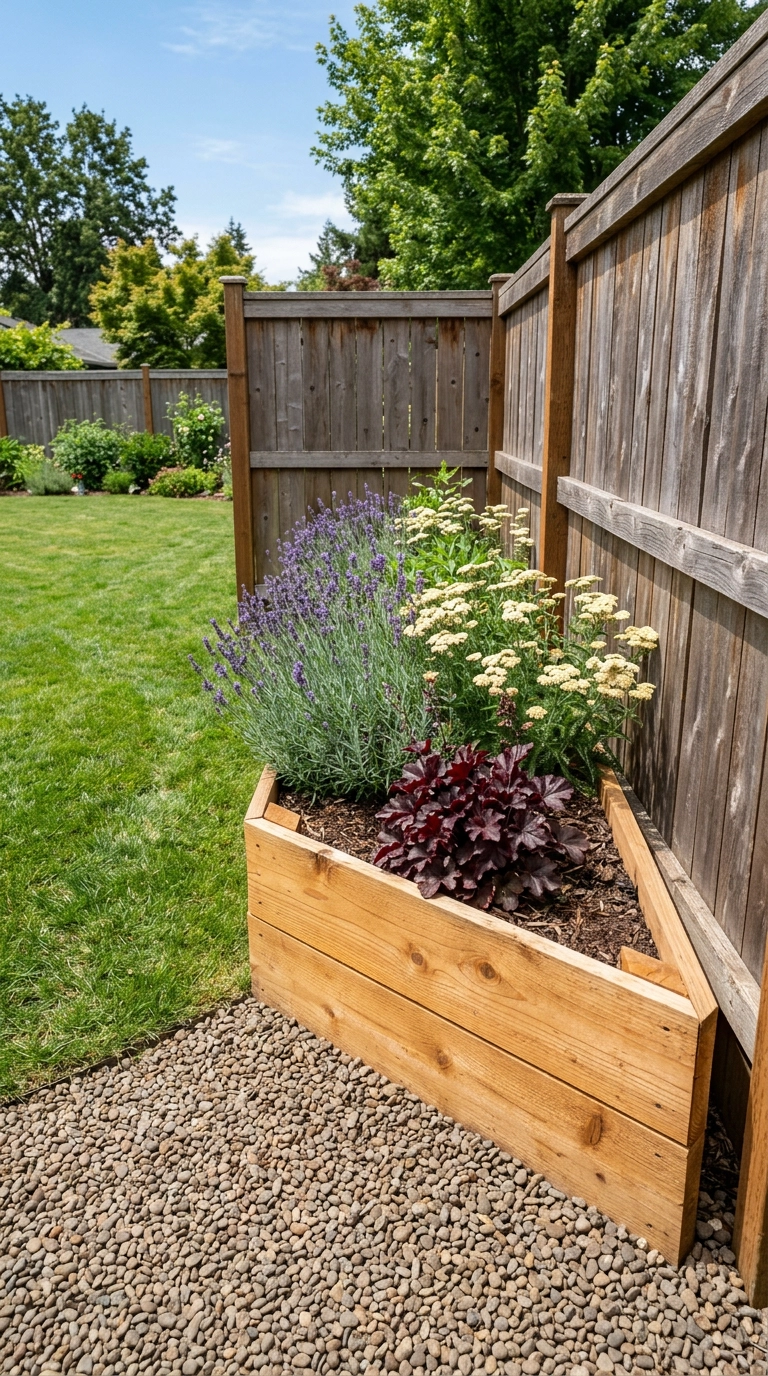
A triangle is the only shape that actually fits a fence corner, and cutting your boards at 45 degrees takes about ten extra minutes. I build these 18 to 24 inches tall because that’s the height where you can sit on the edge and weed without kneeling, which your back will thank you for by year two.
2. Stacked Tiered Planters for Instant Vertical Interest
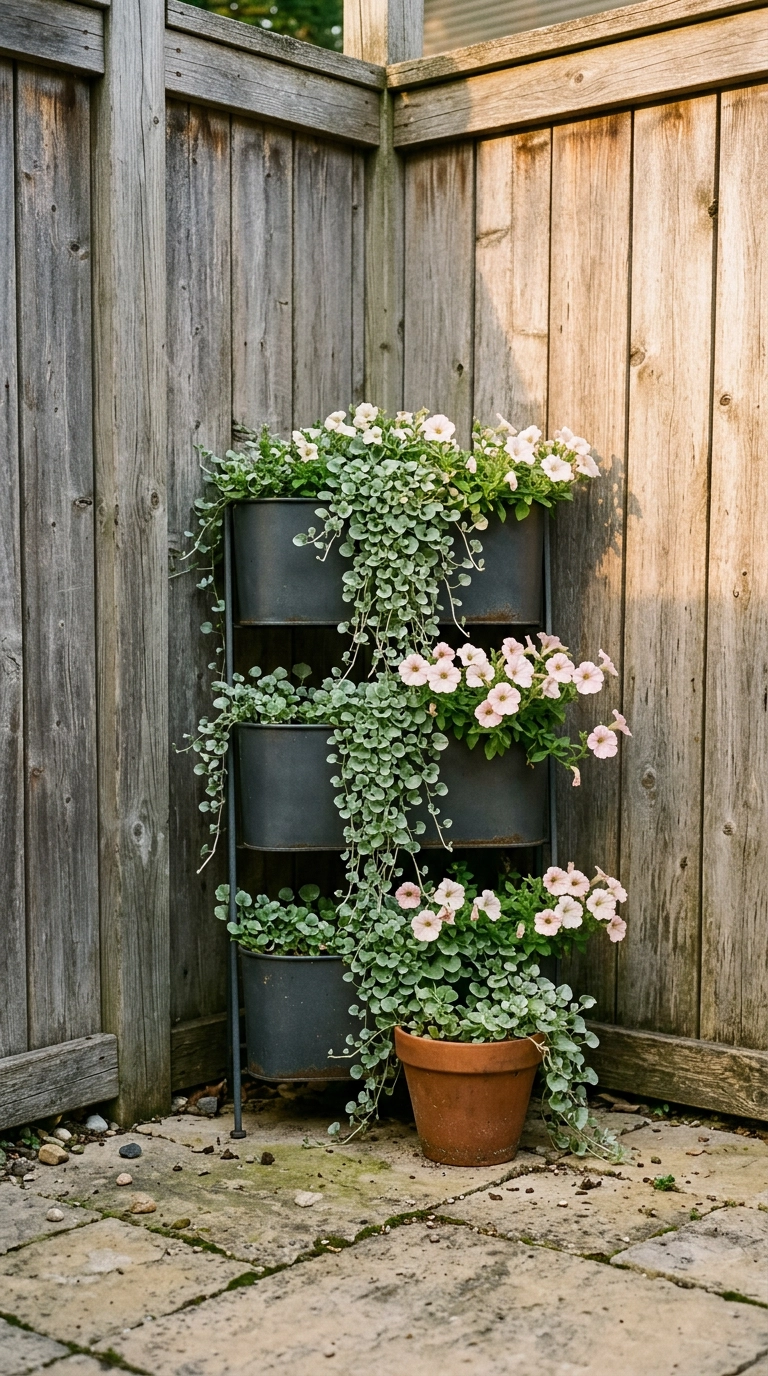
Tiering is the fastest way to fake depth in a corner, because your eye reads three heights as a layered garden instead of a pile of pots. I stagger them so the tallest sits in the actual corner point and the shortest steps forward – that diagonal line pulls you in.
3. A Two-Seat Corner Nook with a Built-In Bench
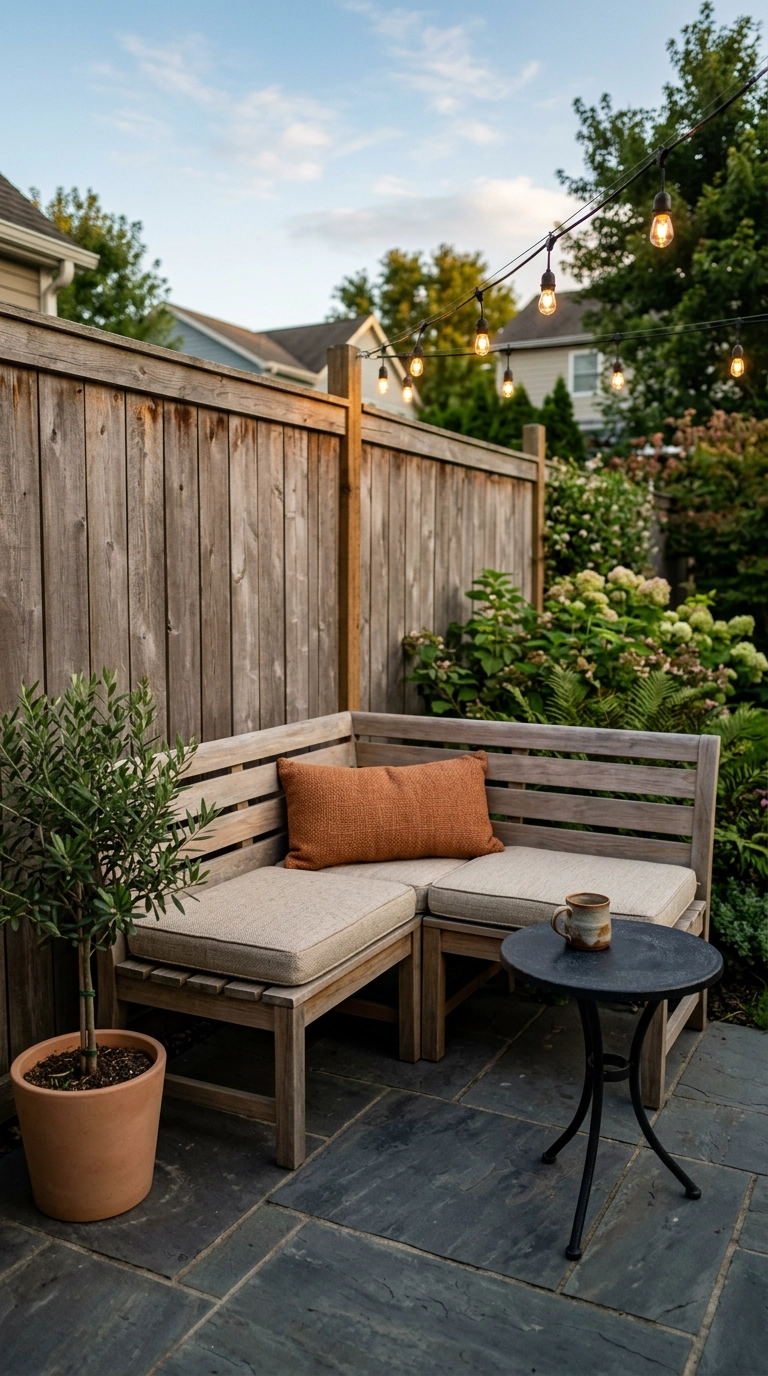
An L-shaped bench in a fence corner gives you two seats out of one build, and because the fence acts as the backrest you only need a seat platform about 17 inches high and 18 inches deep. That’s the same geometry as a dining chair, which is why it feels right instead of like a park bench.
4. A Corner Arbor That Frames the Whole Yard
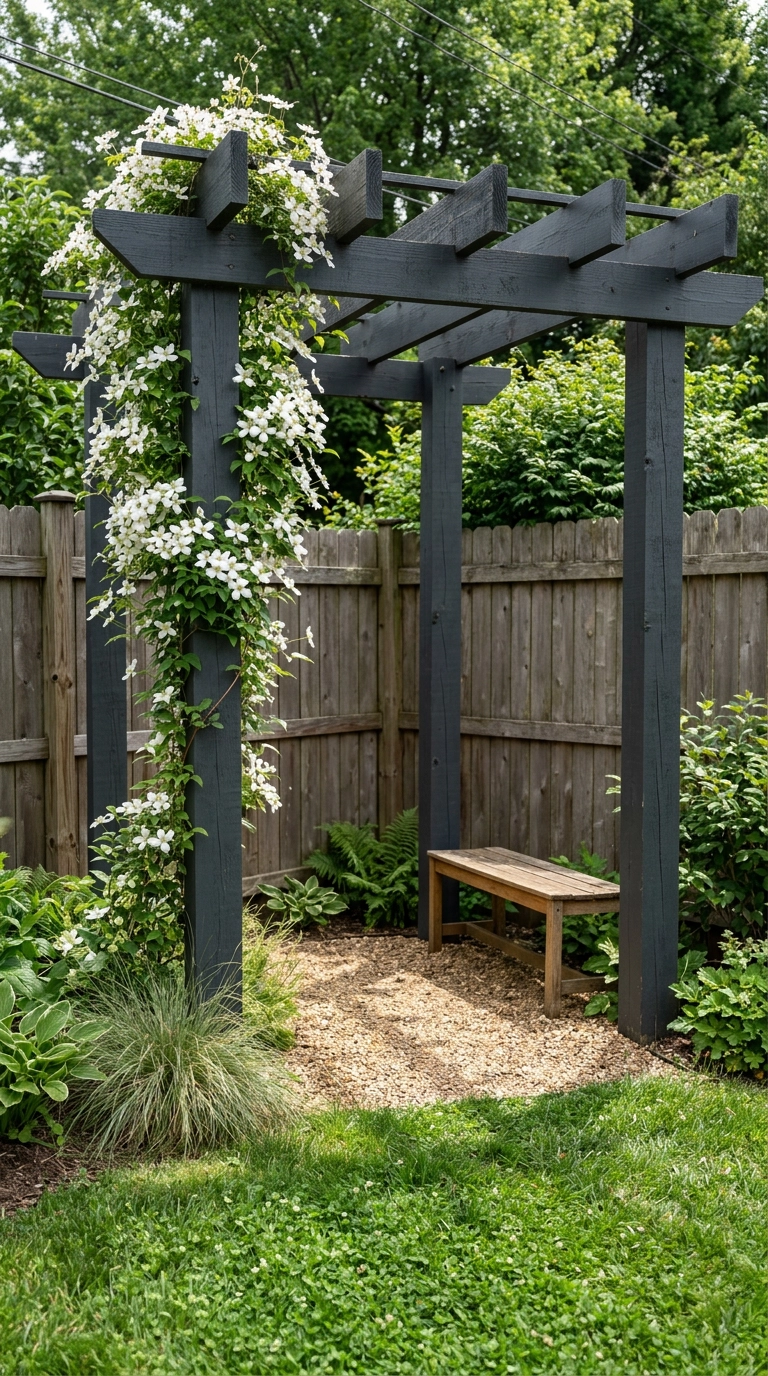
Setting the arbor diagonally across the corner point instead of parallel to one fence is the whole trick – it creates a doorway and suddenly that triangle behind it feels like a separate little room. Design term for it is framing the sightline, which just means your eye stops at the arbor and treats everything past it as a destination.
5. A Dry Rock Corner That Never Needs Watering
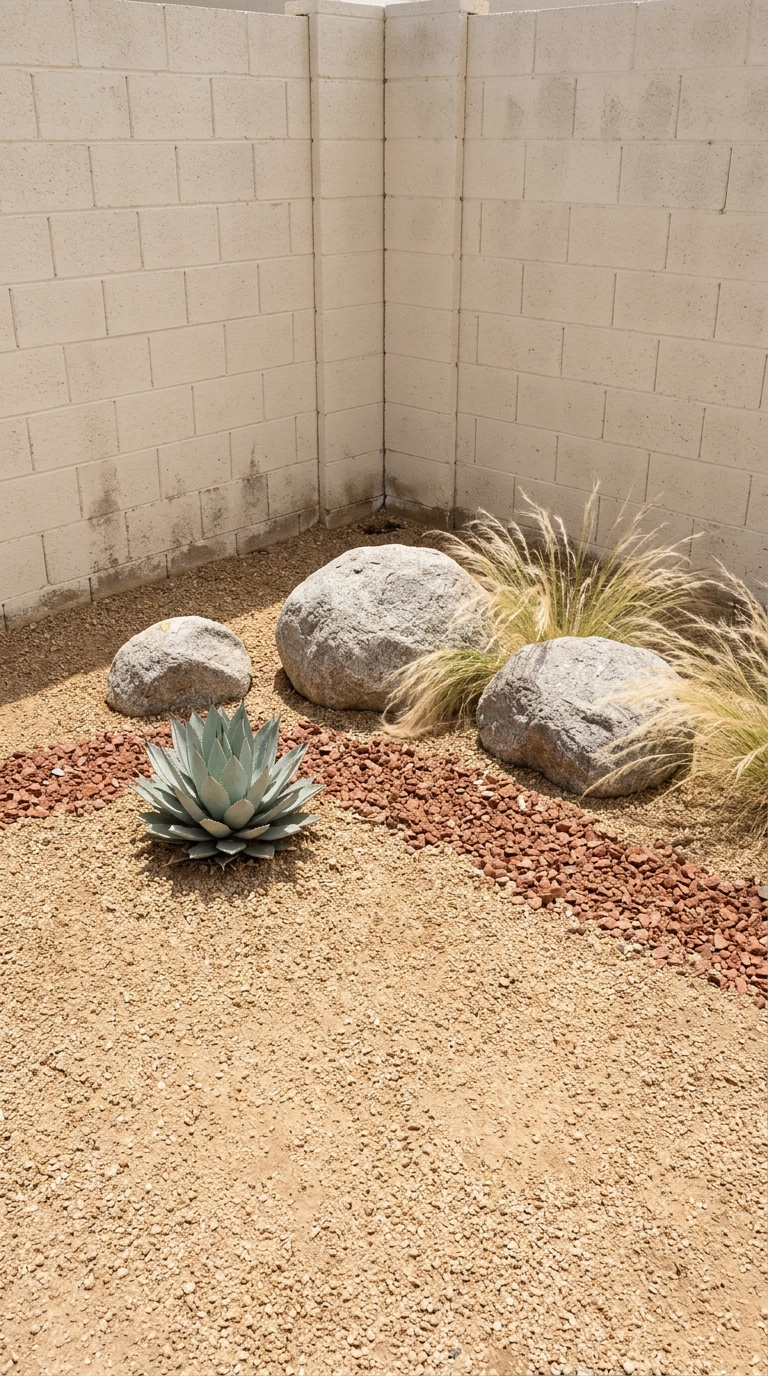
Three boulders beat five every time, because odd-numbered groupings read as natural and even ones read as arranged. Sink each rock at least a third of its height into the ground – a boulder sitting on top of gravel looks like it was delivered that morning, and that’s the single most common mistake I see.
6. A Bubbling Urn Fountain Tucked into the Corner Point
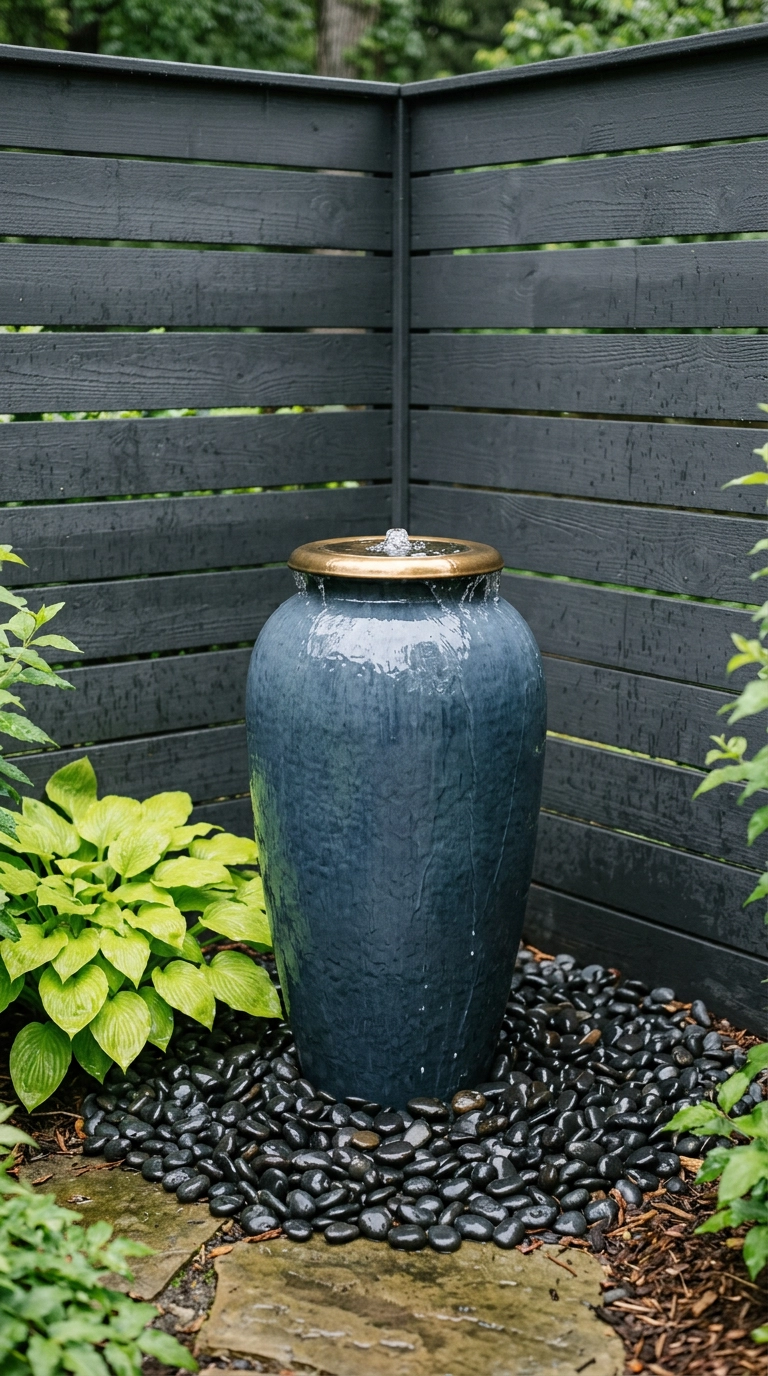
A corner is acoustically the best place in a yard for a fountain, because the two fence panels bounce the water sound back at you instead of letting it drift off over the neighbors. I always go with a self-contained urn kit – the pump and reservoir sit buried in the pebble basin, so there’s no standing pond to maintain or mosquito-proof.
7. Corner Trellis Panels for a Living Green Wall
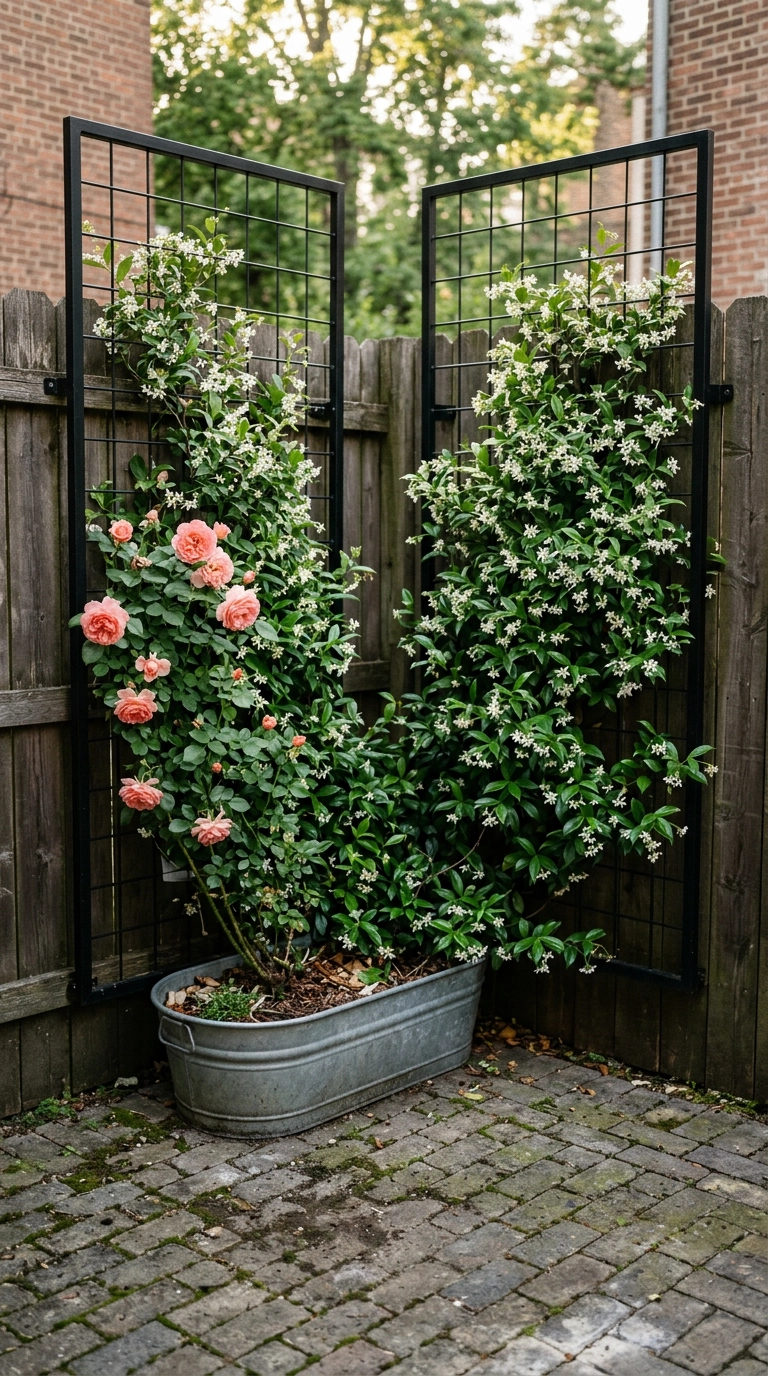
Two trellis panels meeting in a corner give you close to 60 square feet of growing surface out of zero floor space, which is why this is my first move in any small garden. Mount them on 1-inch spacers so air circulates behind the vines and your fence boards can actually dry out.
8. A Gravel Corner Firepit Nook for Cool Evenings
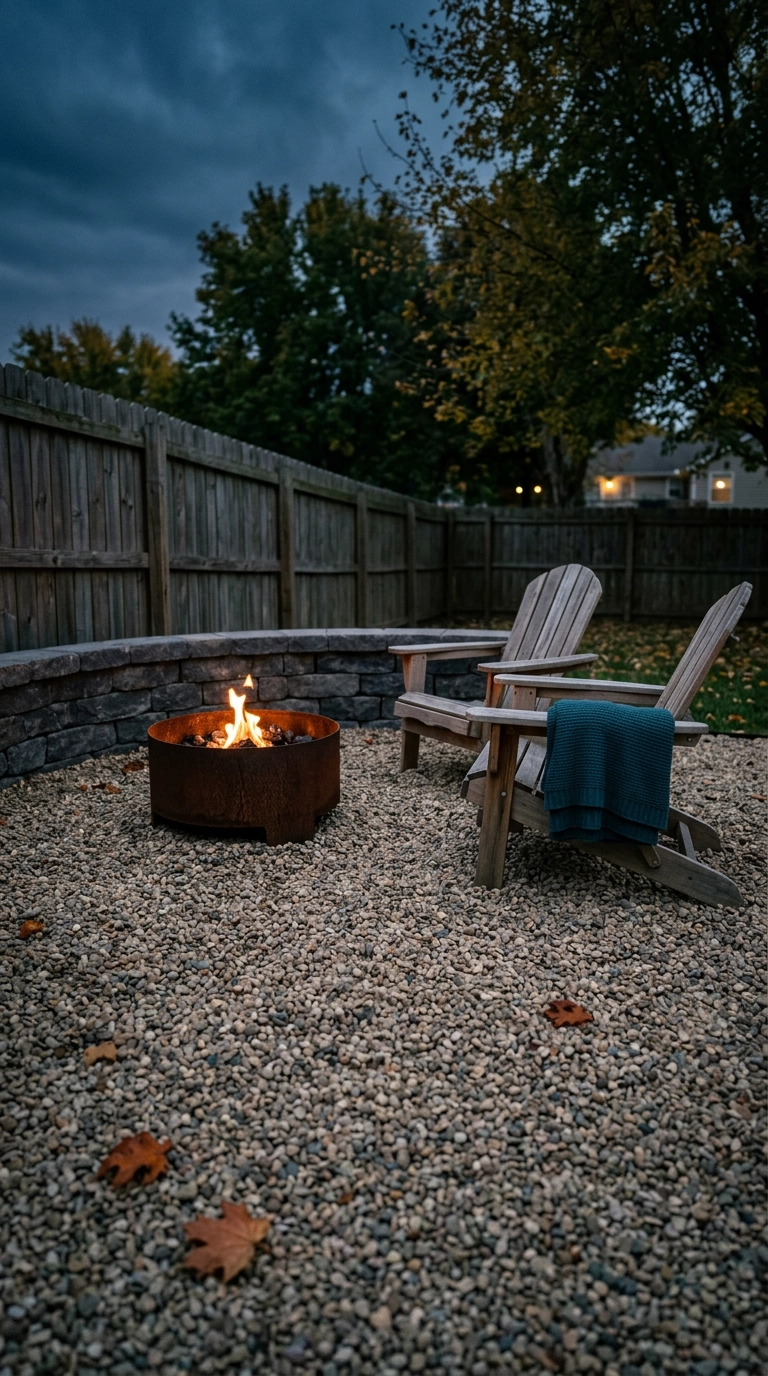
Check your local setback rules first, because most municipalities want a firepit at least 10 feet from a fence or structure – so in a tight corner this often means a propane bowl rather than wood. I curve a low stone ring behind the pit to reflect heat back toward the chairs, which genuinely extends your season by a few weeks.
9. Layered Low-Voltage Lighting That Makes the Corner Glow After Dark
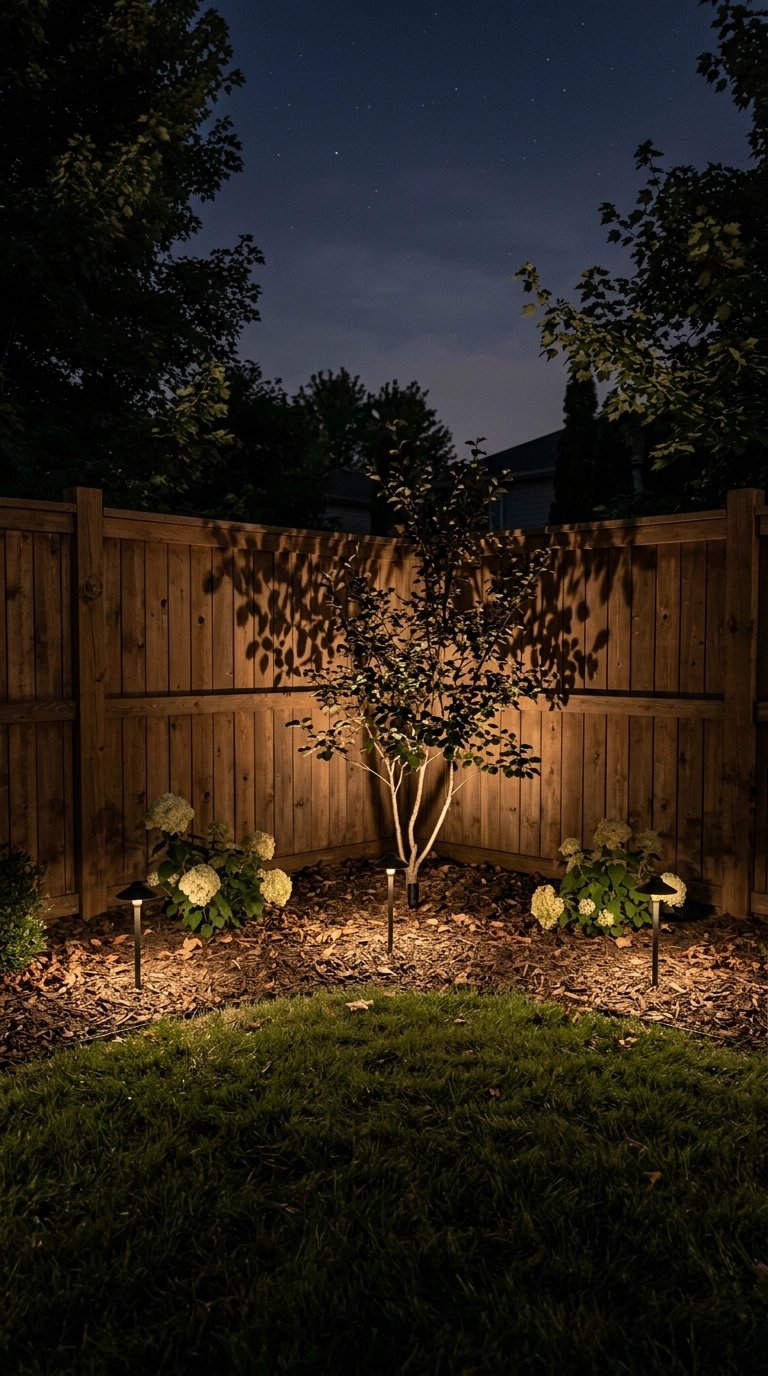
Most people light a corner with one bright flood and wonder why it looks like a parking lot. The fix is three small fixtures at different heights – a path light low, an uplight into a shrub or small tree, and something warm at seated level – so the light layers instead of flattening everything.
10. A Corner Potting Bench That’s Actually Pretty Enough to Leave Out
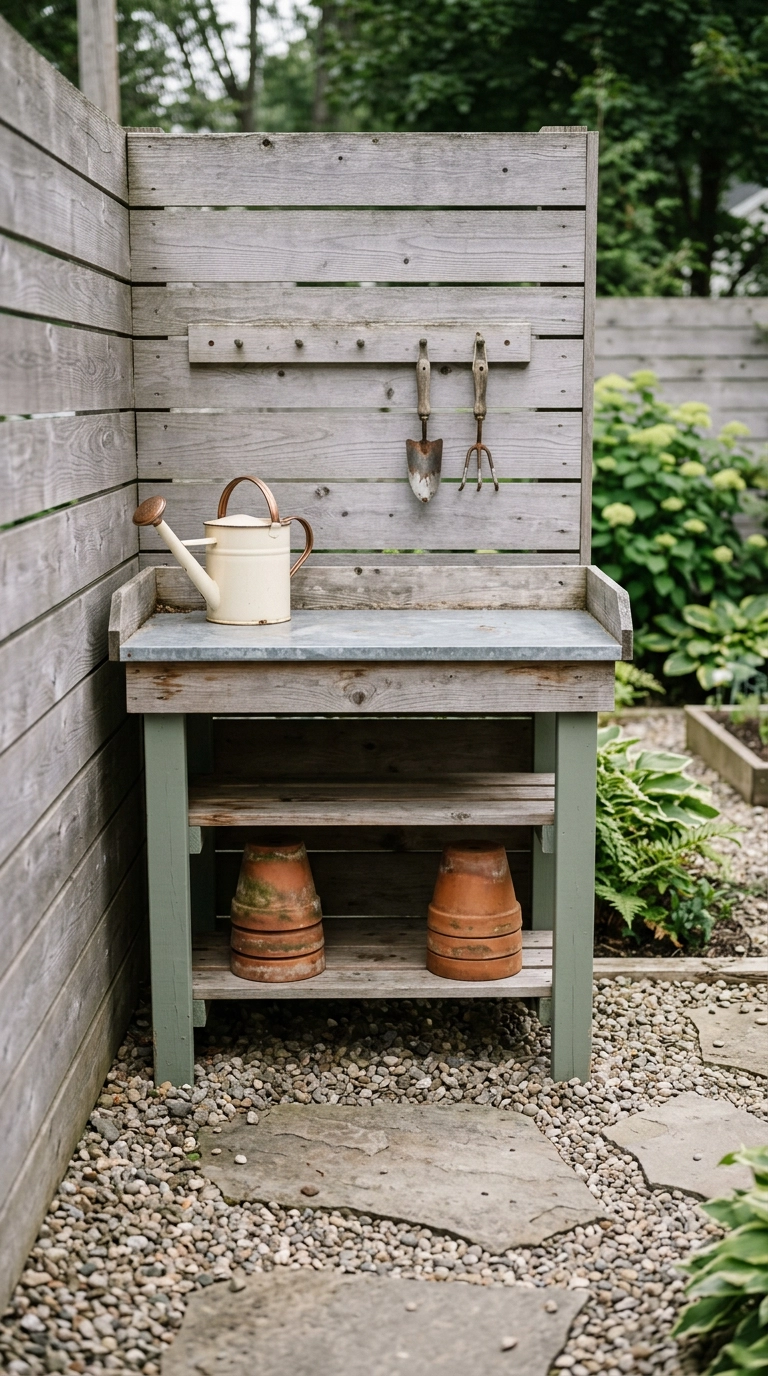
A potting bench belongs in a corner because it needs a back and a side to lean against, and the fence gives you both for free. Go 36 inches tall to match standard kitchen counter height – that’s the difference between a pleasant hour of repotting and a sore lower back.
11. A Cottage-Style Corner Border Packed Wall to Wall with Blooms
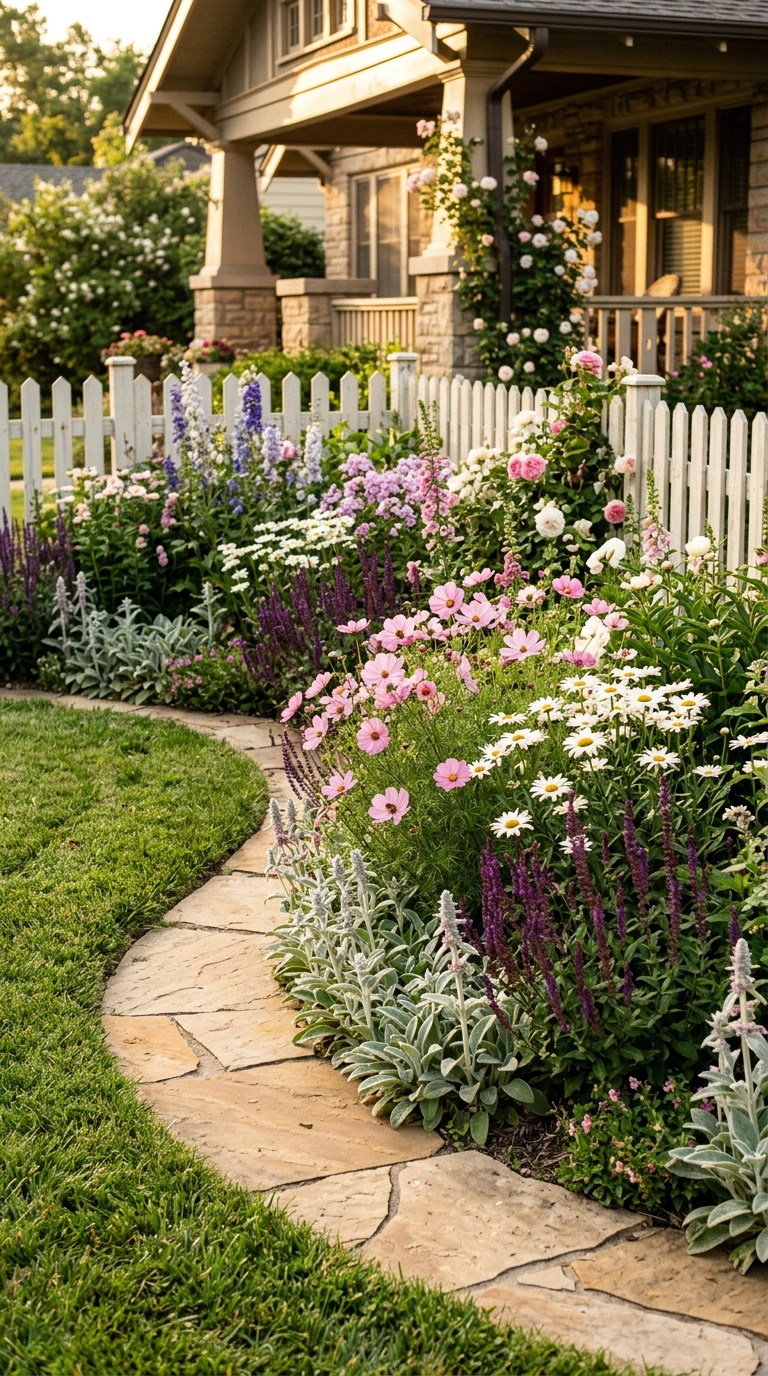
Cottage borders look effortless and are actually the most rule-bound thing in this article: tallest at the back against the fence, mid-height in the middle, low and spilling at the front edge. Skip that stepping and you get a wall of stems with the good stuff hidden behind it.
12. A Japanese-Inspired Quiet Corner with Moss, Stone and a Single Maple
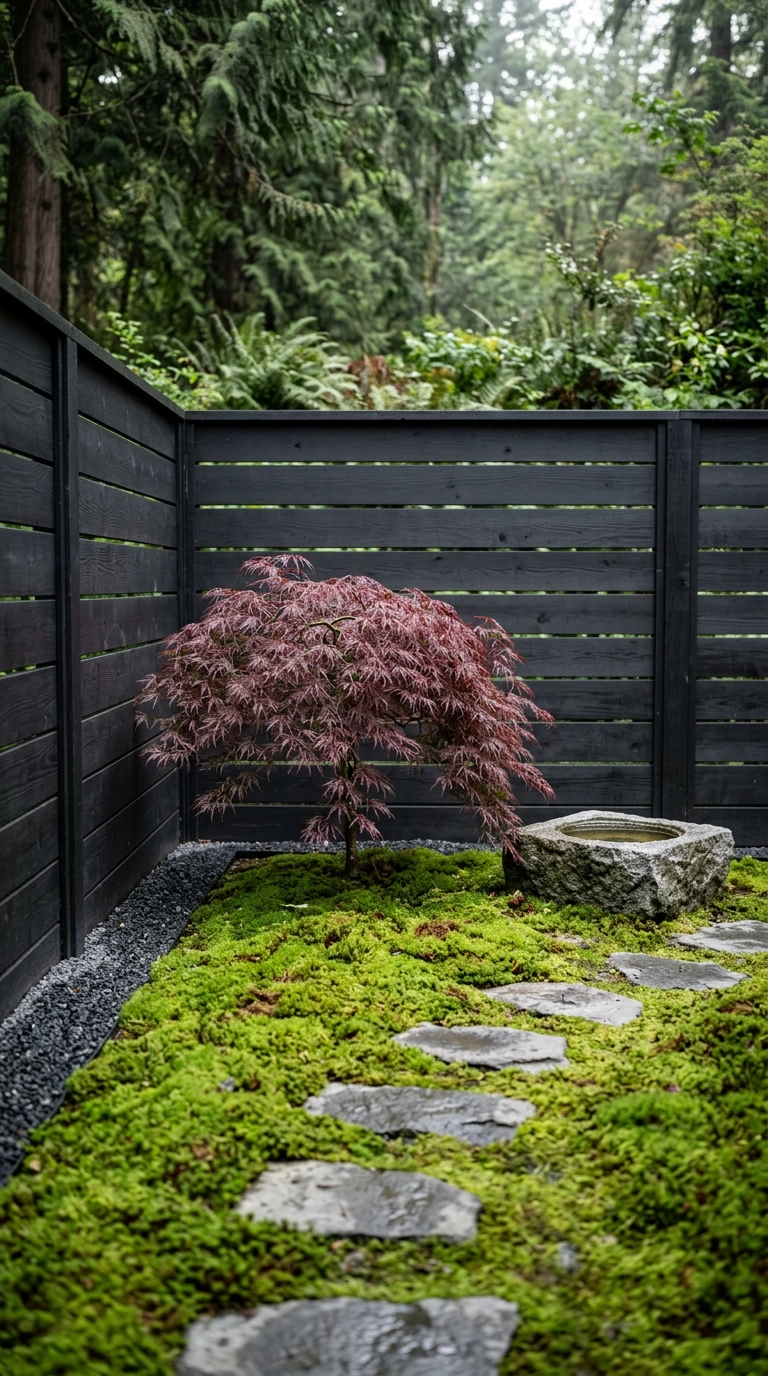
This is the corner for a shady, damp, north-facing spot where nothing flowers well anyway – and restraint is the entire design. One tree, one stone basin, one ground texture, and a lot of deliberate emptiness so each element has room to be looked at.
13. A Hanging Swing Chair Suspended from a Corner Beam
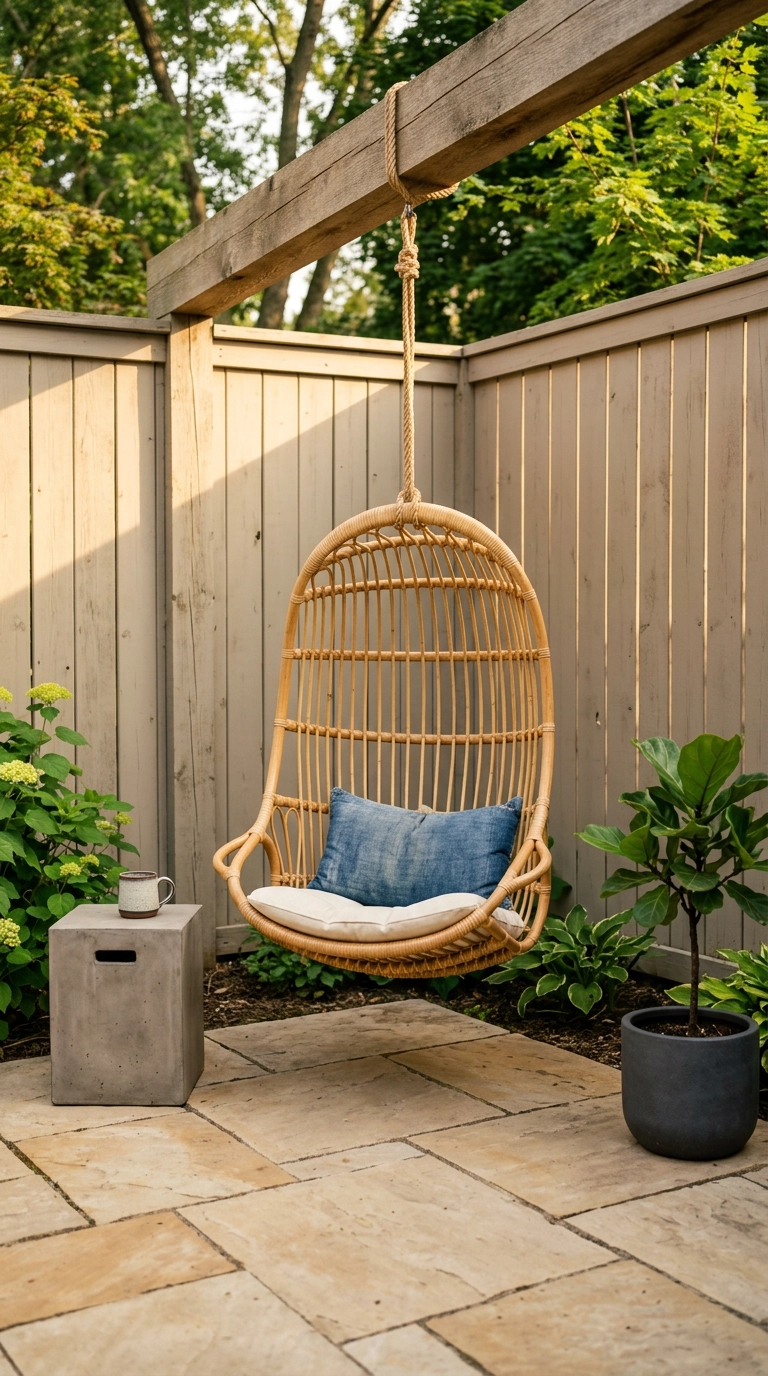
A hanging chair needs a single strong point overhead, and a 4×6 beam bolted diagonally across two fence posts gives you that without building a whole pergola. Hang the seat so it sits 16 to 18 inches off the ground, and leave at least 2 feet of clear swing space behind it or you’ll be knuckling the fence all afternoon.
14. An Edible Corner with Herbs, Greens and a Trained Fruit Vine
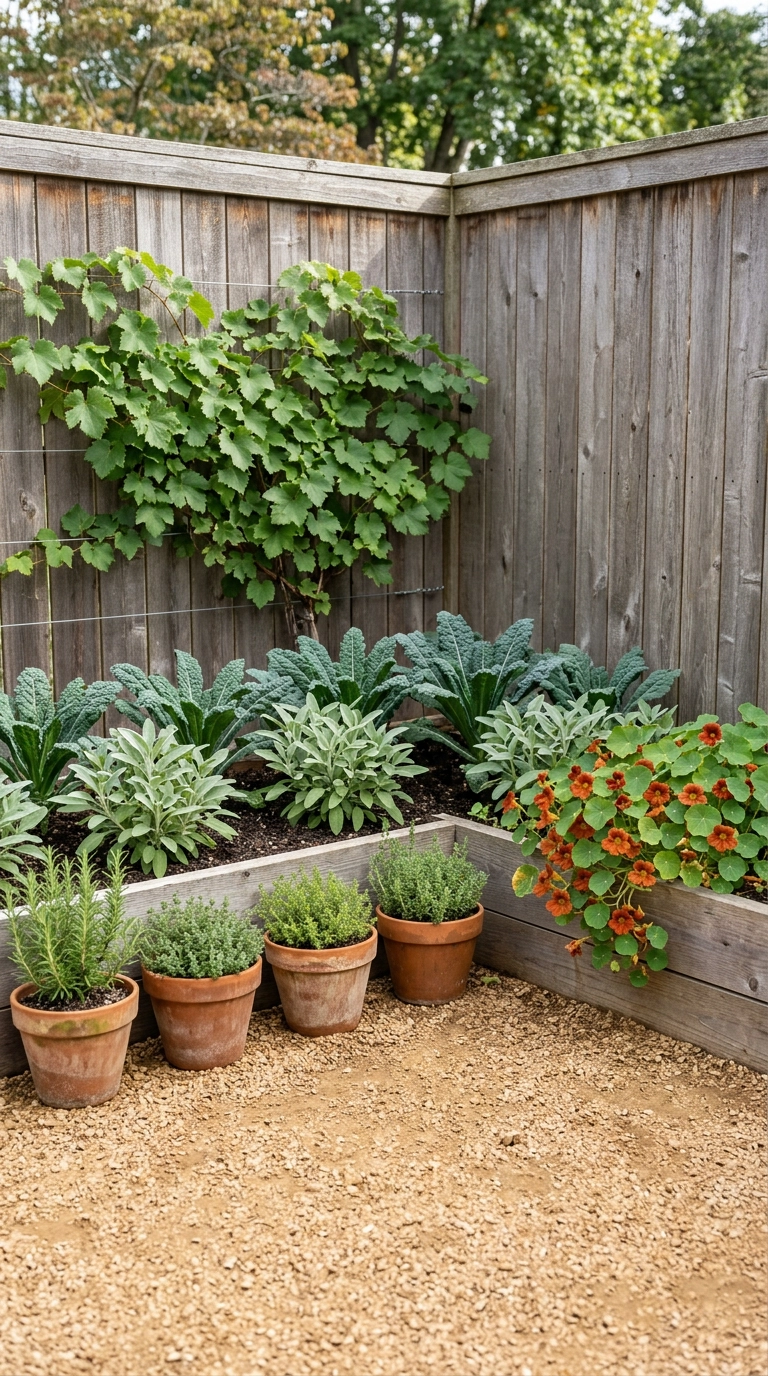
The fence corner is quietly the best vegetable spot on most properties, because the two panels block wind and hold afternoon heat – tomatoes and peppers notice. Just be honest about sun first: you need 6 hours minimum, so watch the corner for a day before you commit.
15. A Mirrored Corner Panel That Doubles the Garden
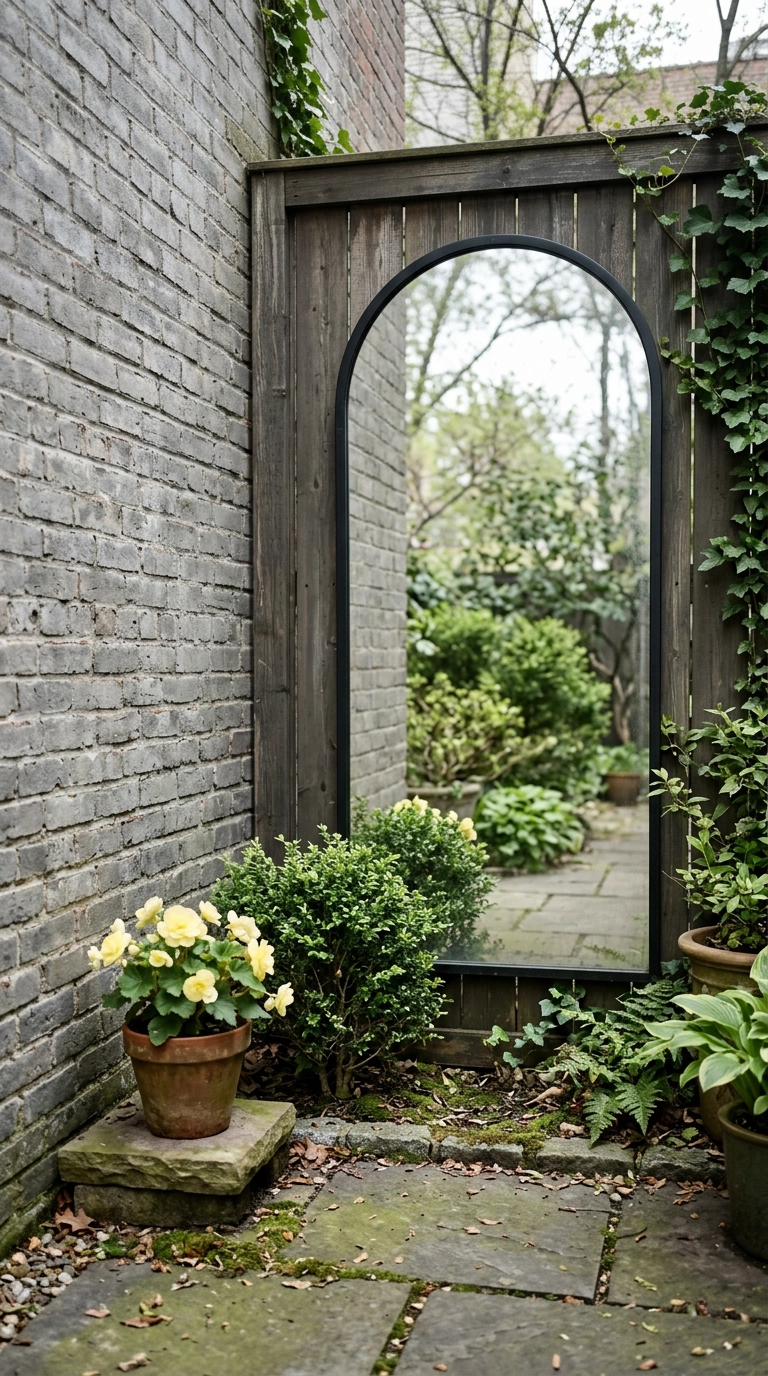
An outdoor mirror in a corner is the oldest trick in small-garden design and it still works, because the reflection reads as a gap in the boundary and your brain assumes the garden continues. Angle it slightly downward and off-axis so it catches foliage and paving, never the sky directly or your own reflection walking toward it.
16. A Corner Rain Chain and Barrel That Earns Its Keep
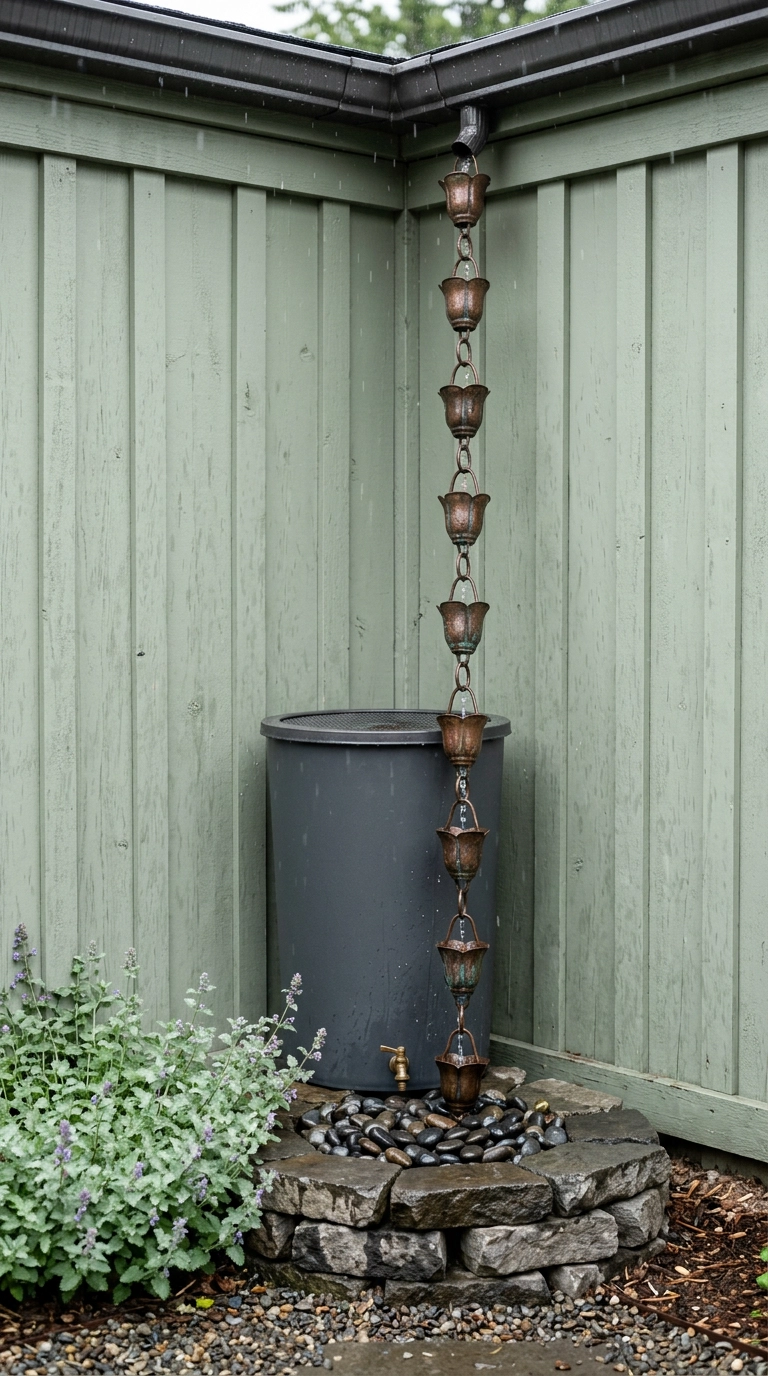
Downspouts almost always land in a corner, which is why that corner is usually a muddy dead zone – so replace the spout with a copper rain chain and let the ugly problem become the focal point. Cup-style chains handle heavy rain far better than plain rings, which just fling water sideways in a real storm.
17. A Tropical Corner Built on Big Bold Leaves
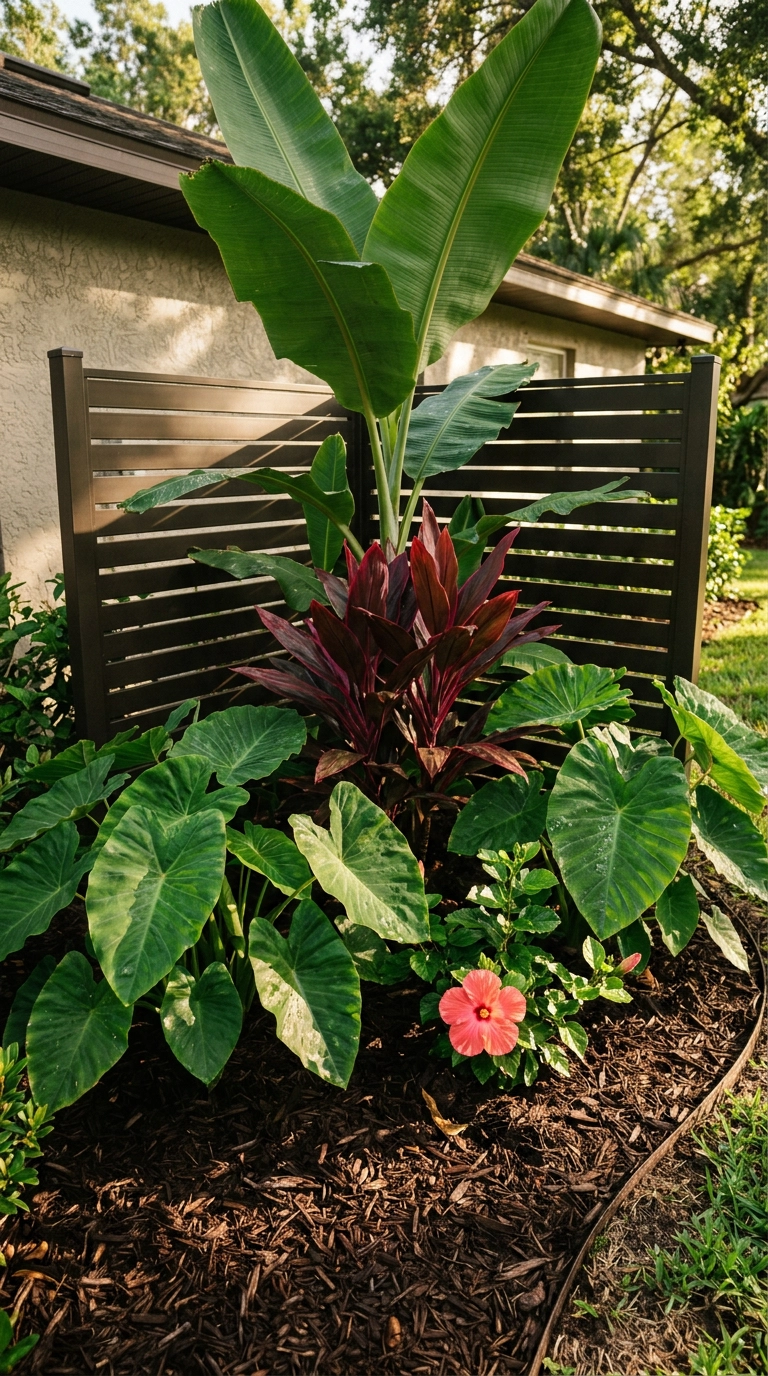
Tropical corners live and die on leaf size, not flowers – one banana or elephant ear does more visual work than a dozen blooms, and the design term is visual weight, meaning big simple shapes hold your eye longer than small busy ones. Plant the tallest thing dead in the corner point and let it lean out over everything else.
18. A Corner Bar Ledge Mounted Straight onto the Fence
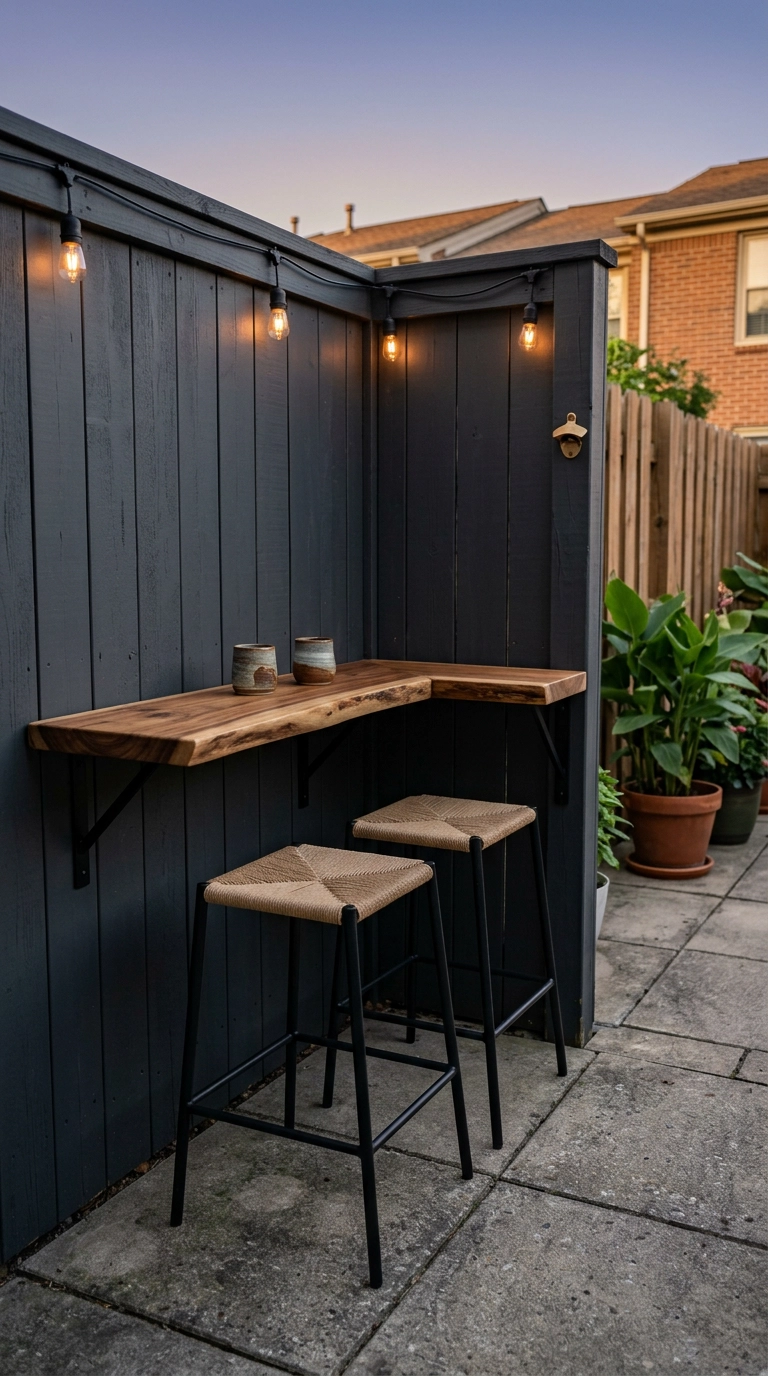
This is my favorite square-footage cheat in the entire article: a 10-inch-deep ledge wrapping both fence panels seats four people and takes up almost no floor. Mount the counter at 42 inches with heavy-duty brackets every 24 inches, and use an exterior wood like acacia, teak, or cedar rather than a sealed indoor butcher block that will delaminate by fall.
19. A Shade Corner Built Around Ferns and Textured Foliage
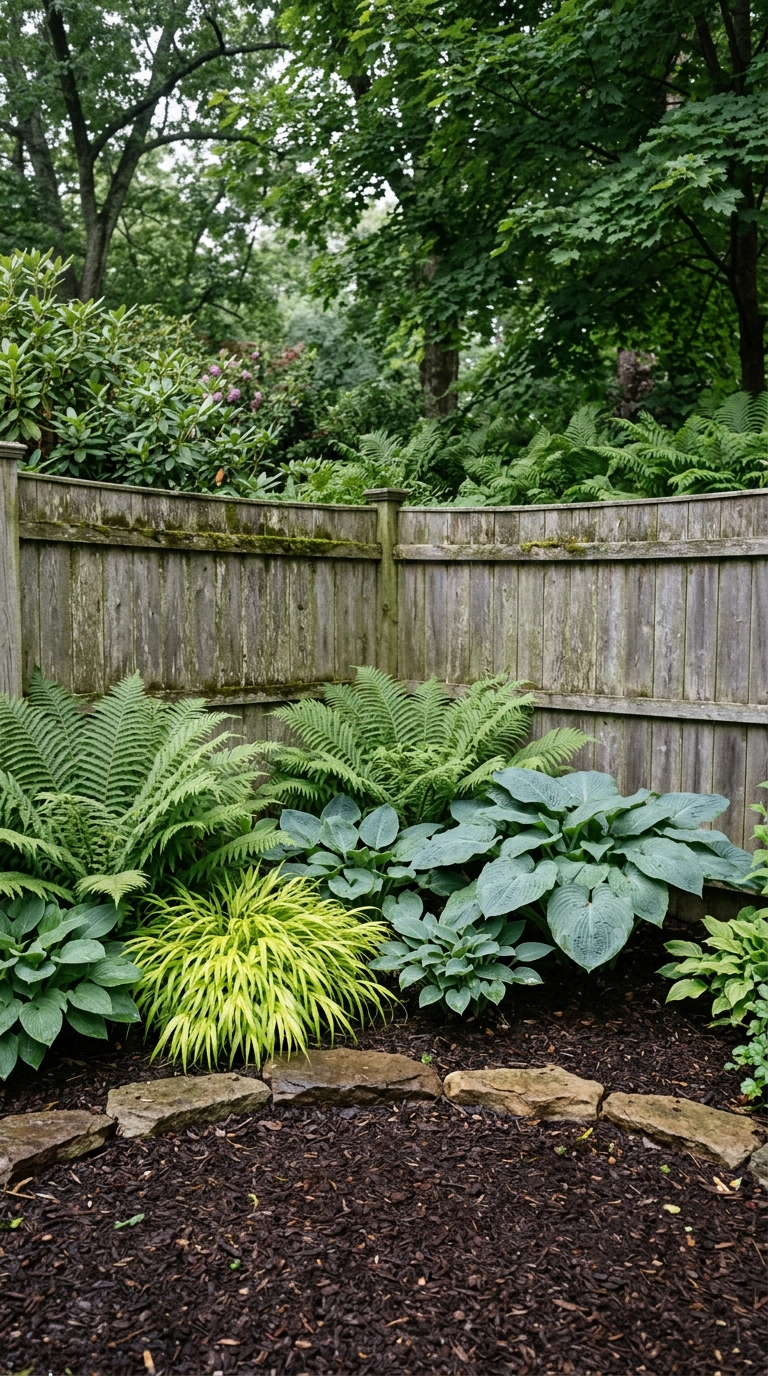
Everyone fights their shady corner by trying to force flowers into it, and everyone loses. Switch to foliage contrast instead – pair a fine fern frond against a broad hosta leaf against a strappy grass, and the corner reads rich without a single bloom.
20. A Sculptural Corner Anchored by One Big Statement Pot
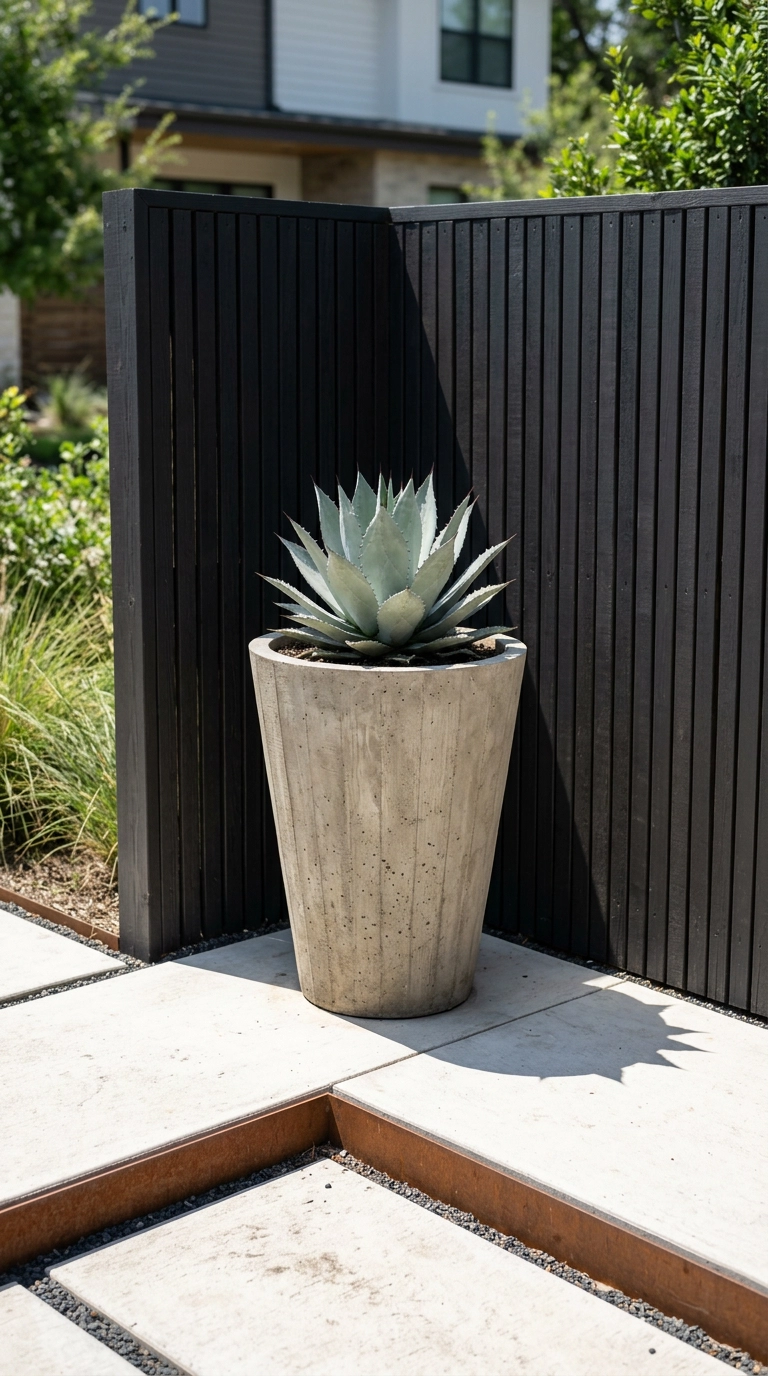
One enormous pot beats five medium ones, and it’s the single fastest way to make a corner look designed rather than accumulated. Go at least 30 inches tall so it holds its own against a 6-foot fence – anything shorter gets swallowed and looks like a mistake.
21. A Corner Meadow Patch That Feeds the Pollinators
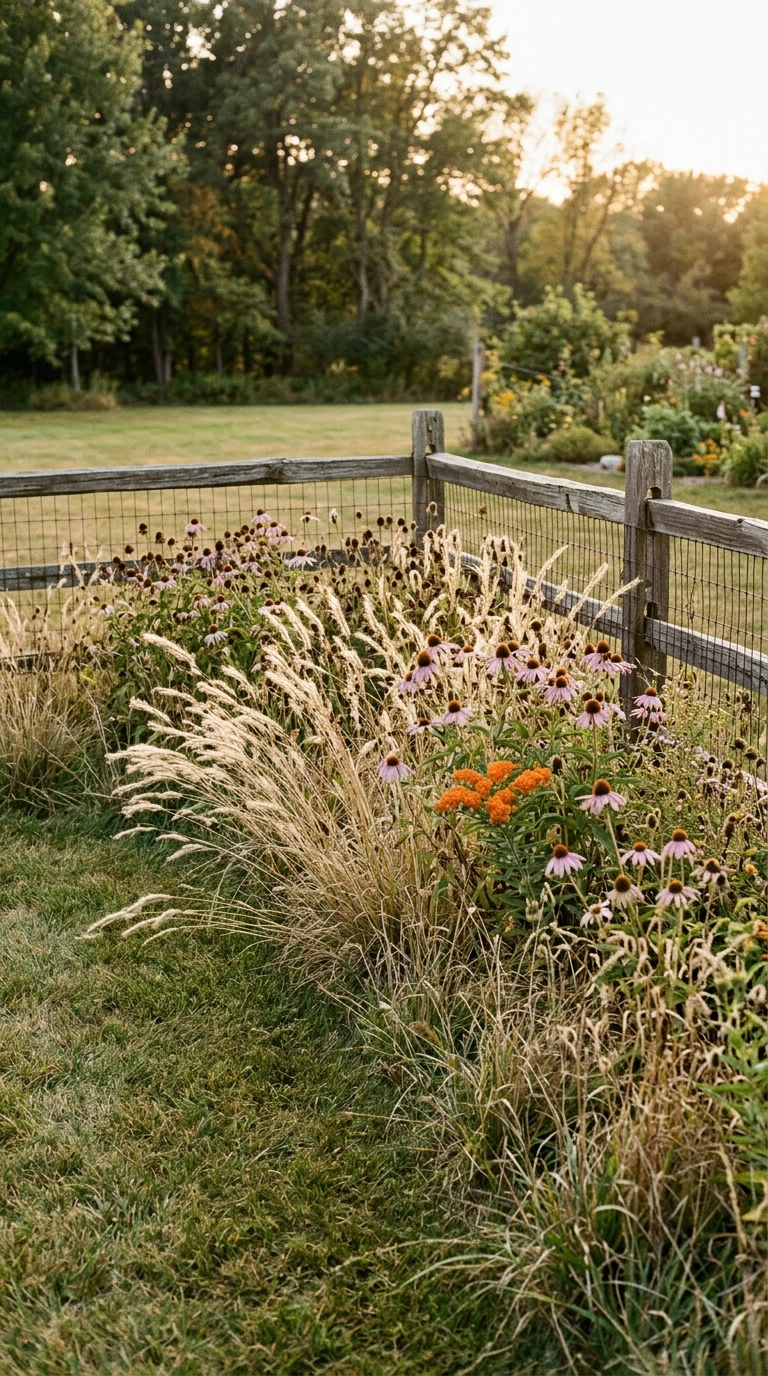
A meadow corner only works if it looks intentional, and the trick is a crisp mown strip or a low edging along the front – that clean line tells everyone the wildness is a choice, not neglect. Without it your neighbors just see a weed patch, and I’ve had that conversation more than once.
22. A Corner Gravel Courtyard with a Small Bistro Table
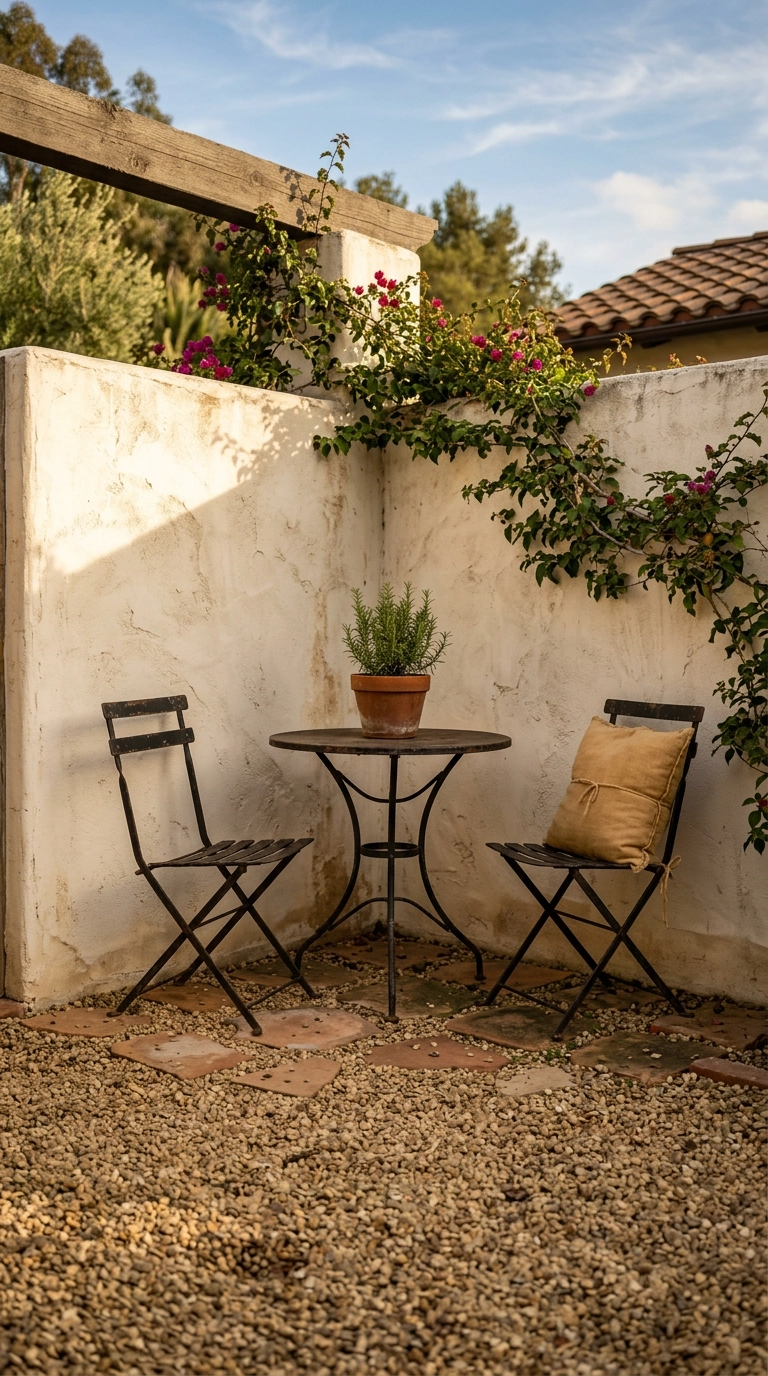
You need shockingly little room for a two-person table – a 30-inch round with two chairs fits in about a 7-foot square, which most fence corners already have. Set the table slightly off the exact corner point rather than centered in it, because a small asymmetry reads as relaxed while dead-center reads as staged.
Go Claim That Forgotten Corner
Here’s what I hope stuck with you: a fence corner is not a leftover, it’s the only spot in your yard that comes with two walls already built. Whether you go structural with the triangular cedar raised bed, quiet with the moss and single Japanese maple, or purely social with the gravel bistro nook, the corner does half the design work for you before you buy a single plant.
What I’m seeing take over this year is the shift away from tidy little annual beds toward looser, grass-heavy naturalistic planting – the Piet Oudolf influence has fully trickled down from public gardens like the High Line into ordinary suburban backyards, which is why that pollinator meadow patch and the seed heads left standing through winter feel current instead of messy. Alongside it, the two ideas people ask me about most are low-voltage uplighting and the mirrored fence panel, because both cost relatively little and change the corner completely after dark or in a tight lot. If you only pick one thing from this list, pick lighting; it’s the highest return per dollar in any garden.
Start with the corner you avoid looking at, do one weekend project, and let it grow in before you add the next layer – gardens punish impatience and reward the person who waits a season. If you want more of this, ideas I’m testing in real yards, plant combinations that actually survive an American summer, and the occasional honest confession about what died, sign up for my weekly newsletter and I’ll send it straight to you.


