
23+ Serene Japanese Garden Decor Ideas that Feel Calm and Look Expensive

I fell hard for Japanese gardens the summer I spent three weeks measuring a client’s awkward 12-foot side yard in Portland, trying to make it feel like something other than a dead zone between two houses. We ended up with raked gravel, one granite lantern, and a single Japanese maple, and to this day it’s the space people ask me about most. The thing nobody tells you is that this style is mostly about subtraction, so it’s genuinely one of the cheaper garden looks to pull off if you can resist the urge to fill every inch.
Japanese Garden Decor Ideas
1. A Raked Gravel Dry Garden with Three Anchor Stones
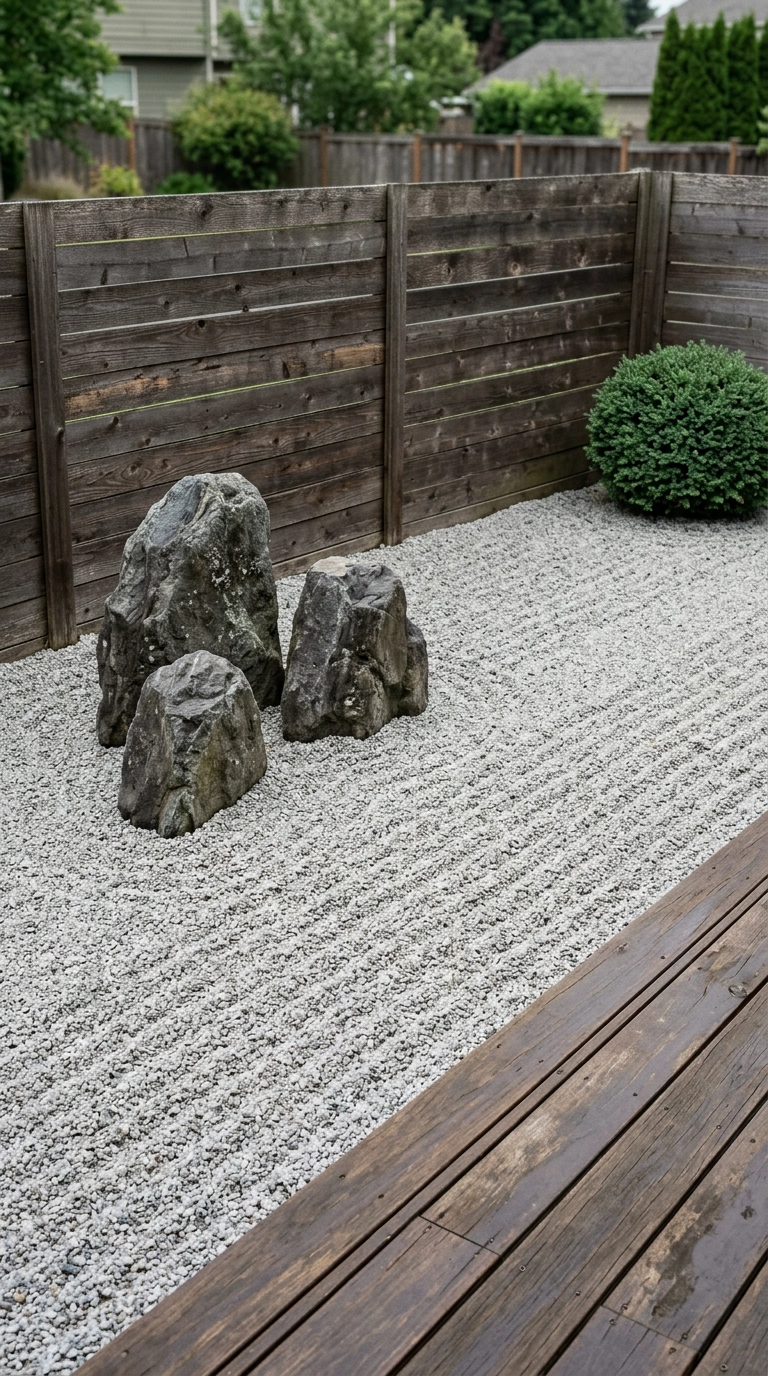
This is the one that makes people stop scrolling, and it’s shockingly doable. You need about 3 inches of crushed granite or decomposed granite over landscape fabric, and a wooden rake with the tines spaced wide, not a leaf rake.
2. A Granite Lantern Tucked at a Bend in the Path
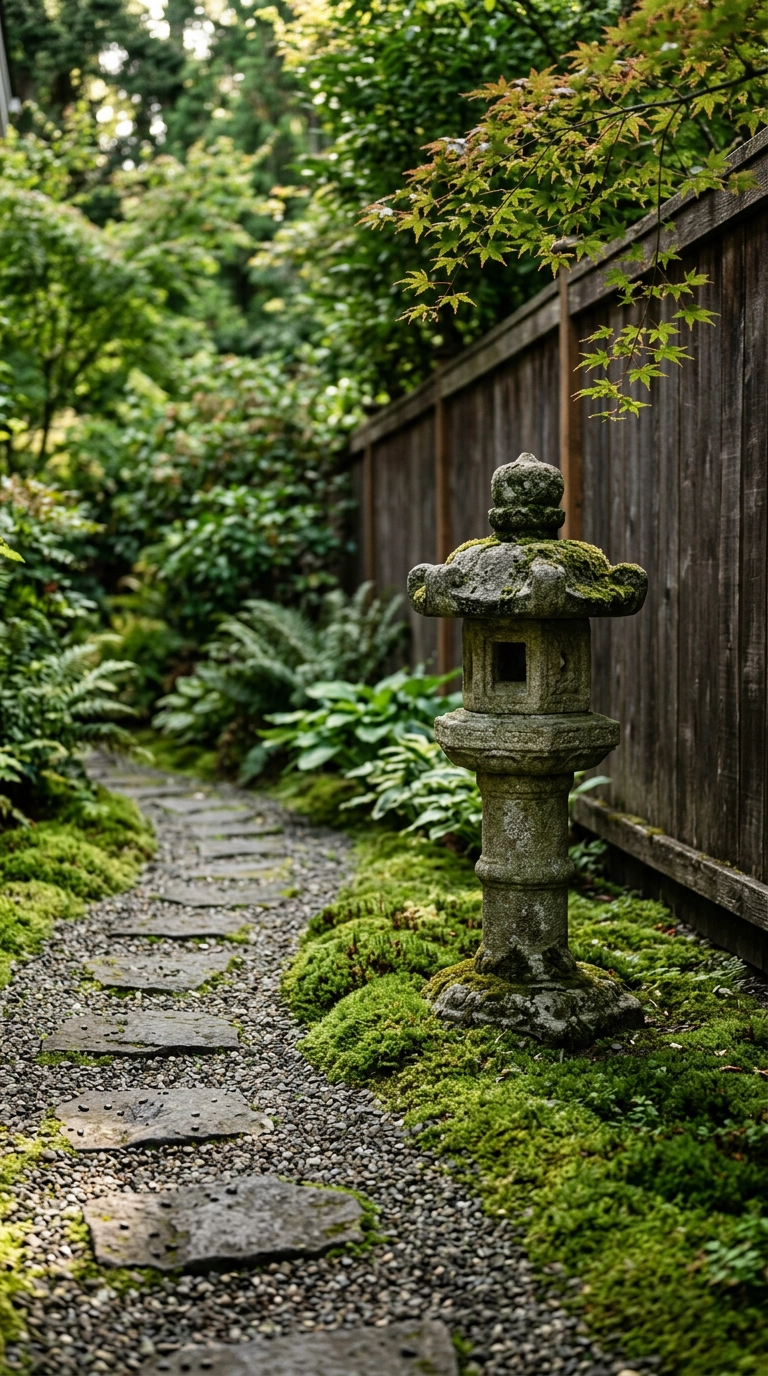
Placement is everything here, and almost everyone gets it wrong by centering the lantern like a statue. Traditionally it marks a transition, so put it where the path turns, beside a water basin, or at the edge of a planting bed, slightly off the walking line.
3. A Bamboo Water Basin with a Trickling Spout
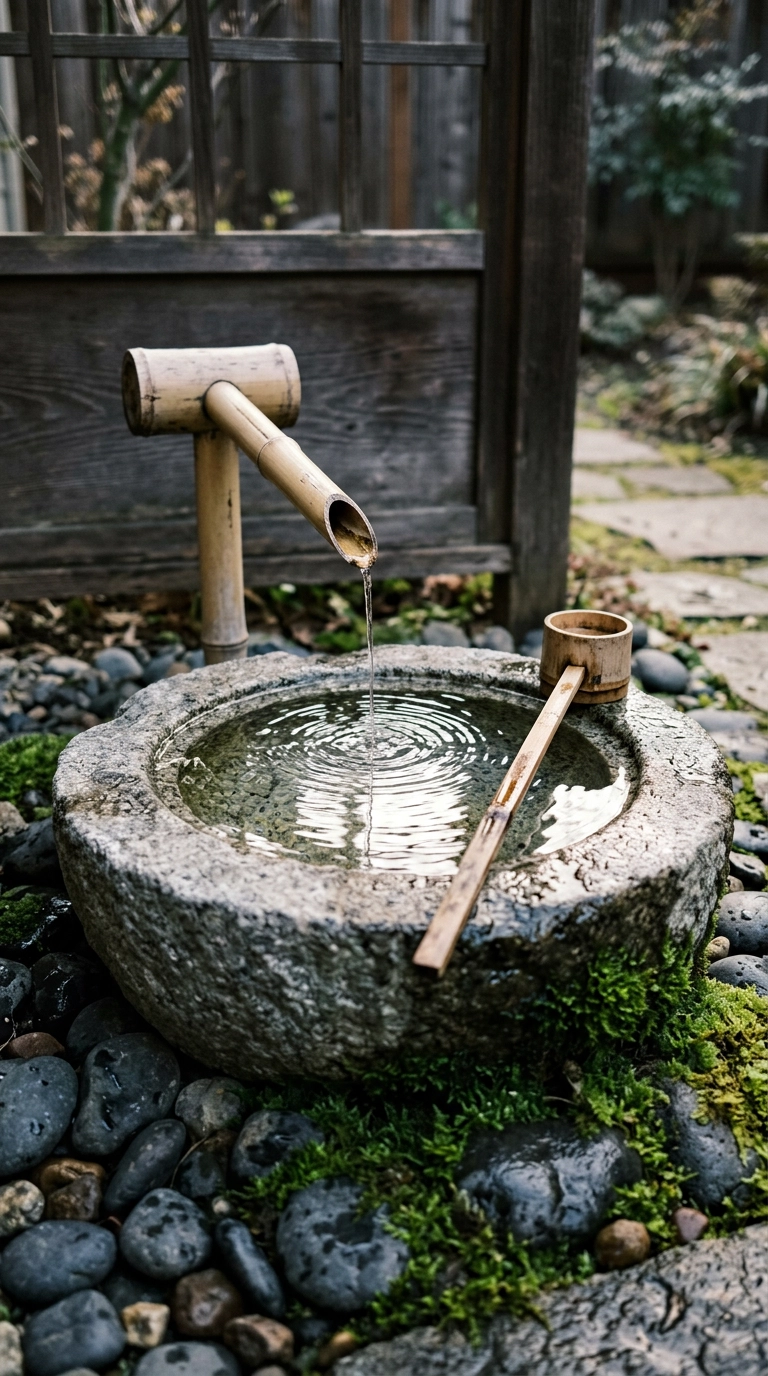
The sound is the actual decor here. A tsukubai basin gives you moving water without a pond, which means no liner, no fish, and no algae war every July.
4. One Japanese Maple as the Whole Focal Point
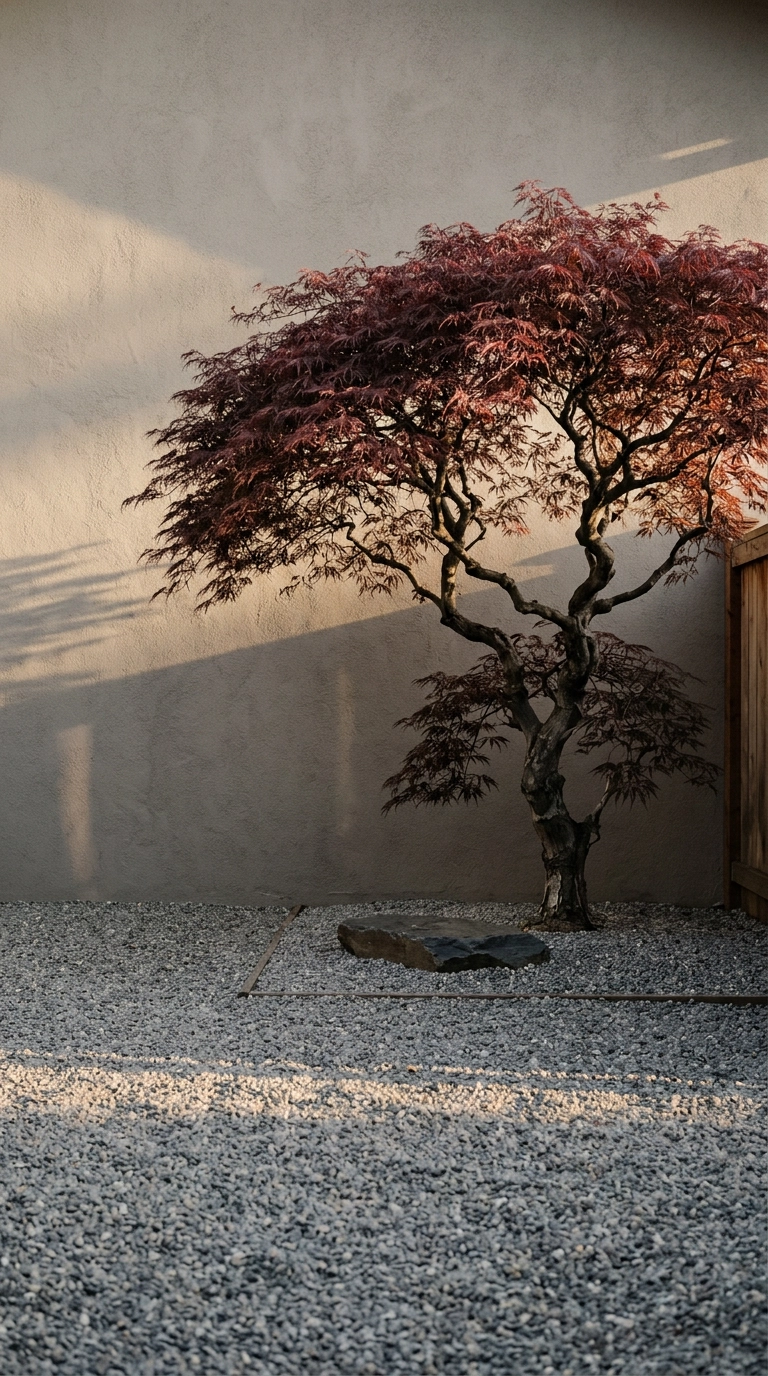
If you only do one thing from this list, do this. A single acer palmatum against a plain wall does more than a whole bed of mixed perennials, because the eye needs somewhere to rest.
5. Irregular Stepping Stones Set in Moss
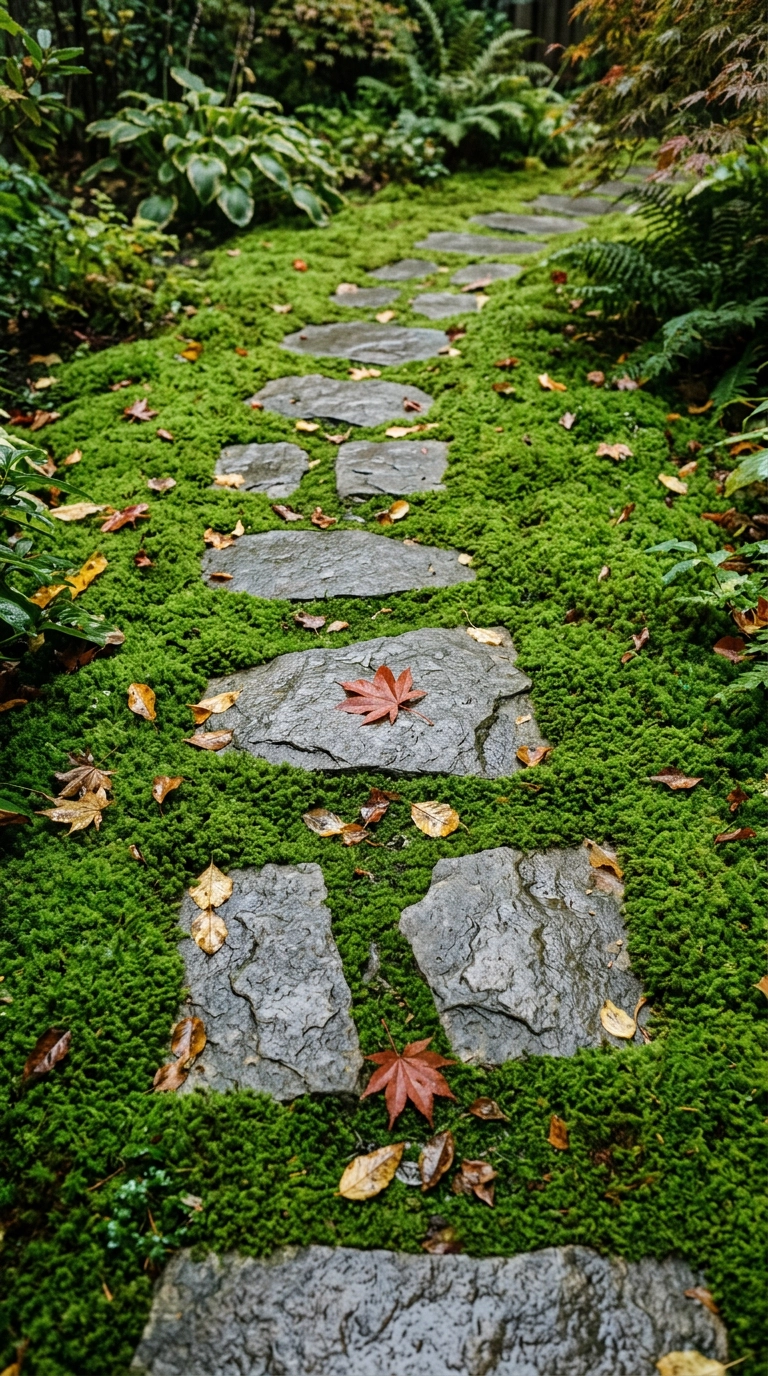
Skip the uniform pavers from the big-box aisle. Japanese paths use stones of different sizes and shapes precisely because the irregularity slows you down, which is the entire point of a stroll garden.
6. A Black Bamboo Screen to Hide the Ugly Stuff
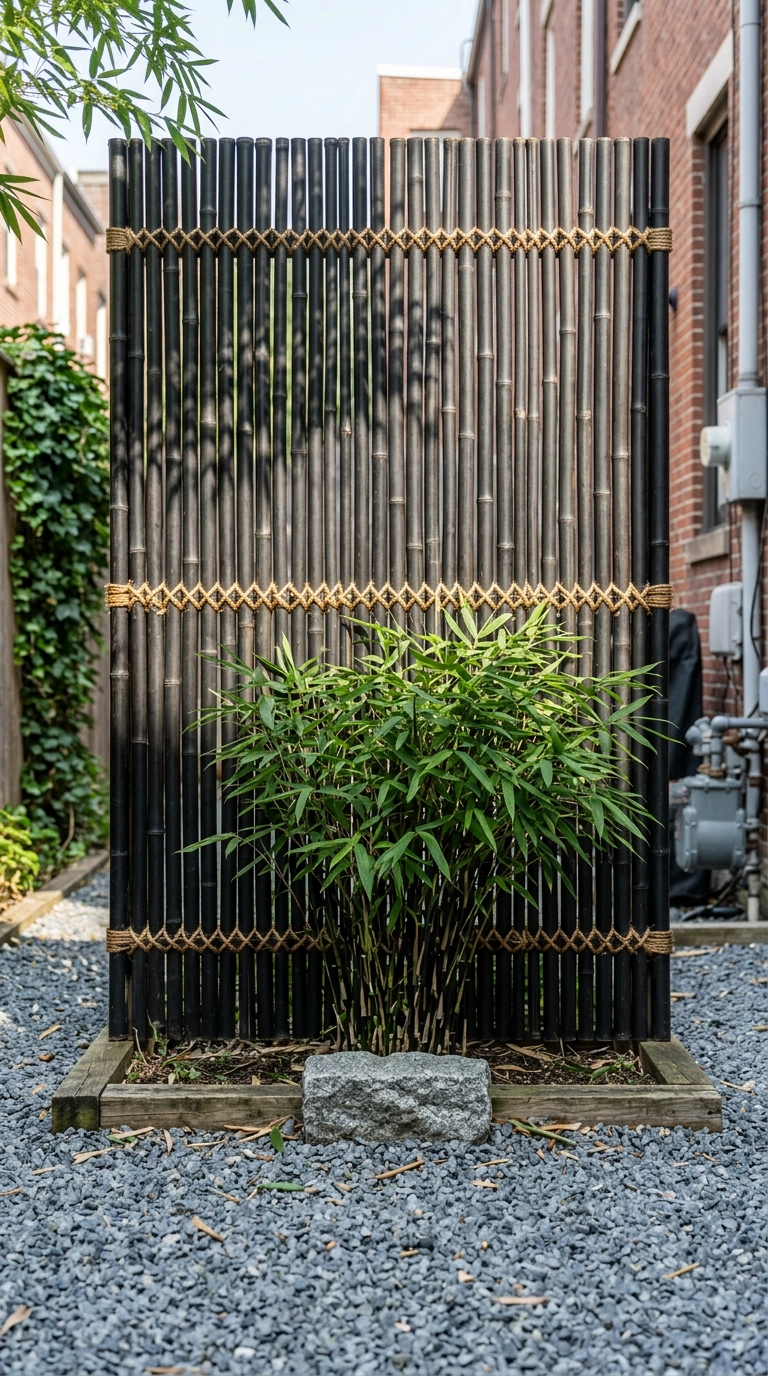
Every yard has an eyesore, whether it’s the AC condenser, the trash cans, or the neighbor’s boat. A bamboo screen panel handles it for well under a hundred dollars and instantly sets the style.
7. Cloud-Pruned Shrubs Instead of Boxwood Balls
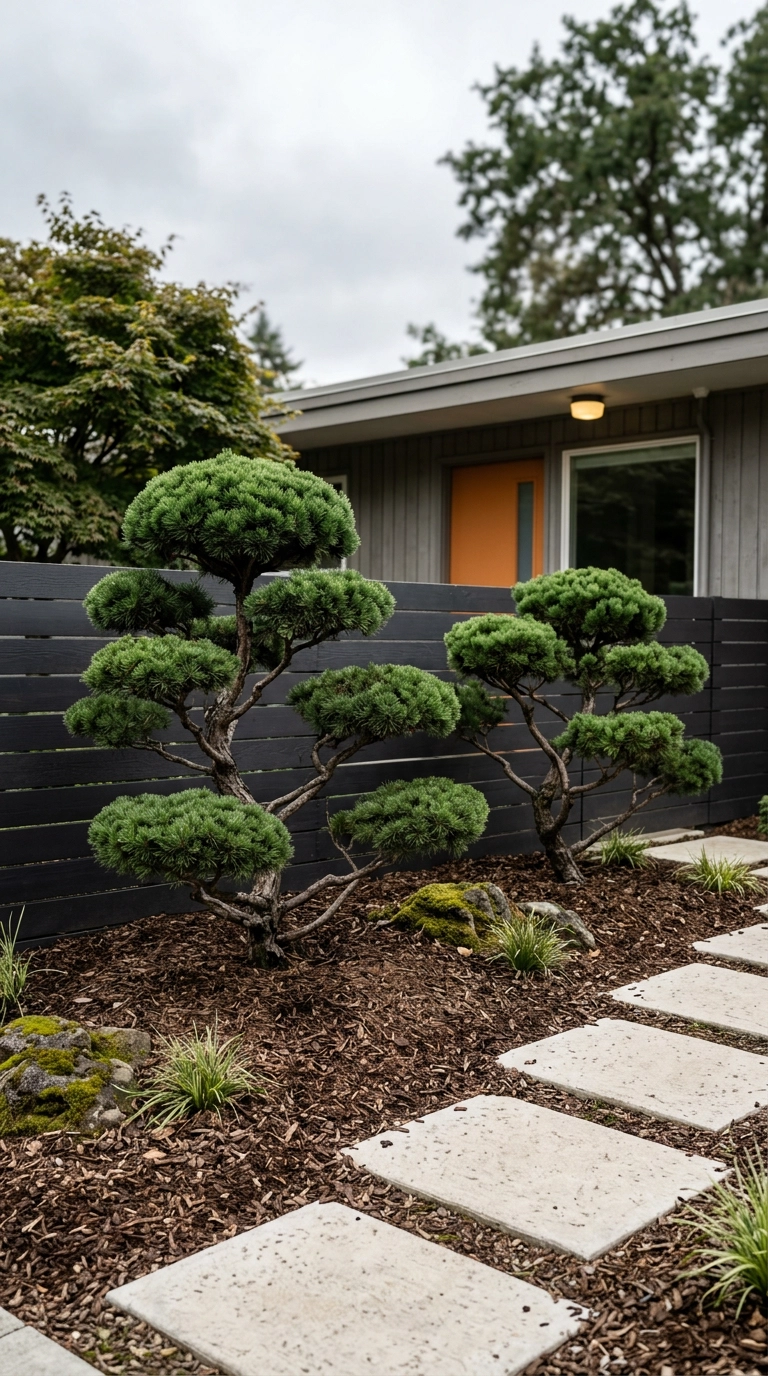
Niwaki, or cloud pruning, is the technique of thinning a shrub into distinct rounded layers so you can see the branch structure underneath. It turns an ordinary plant into sculpture, and it’s free if you own hand pruners.
8. A Simple Wooden Moon Gate or Torii-Inspired Frame
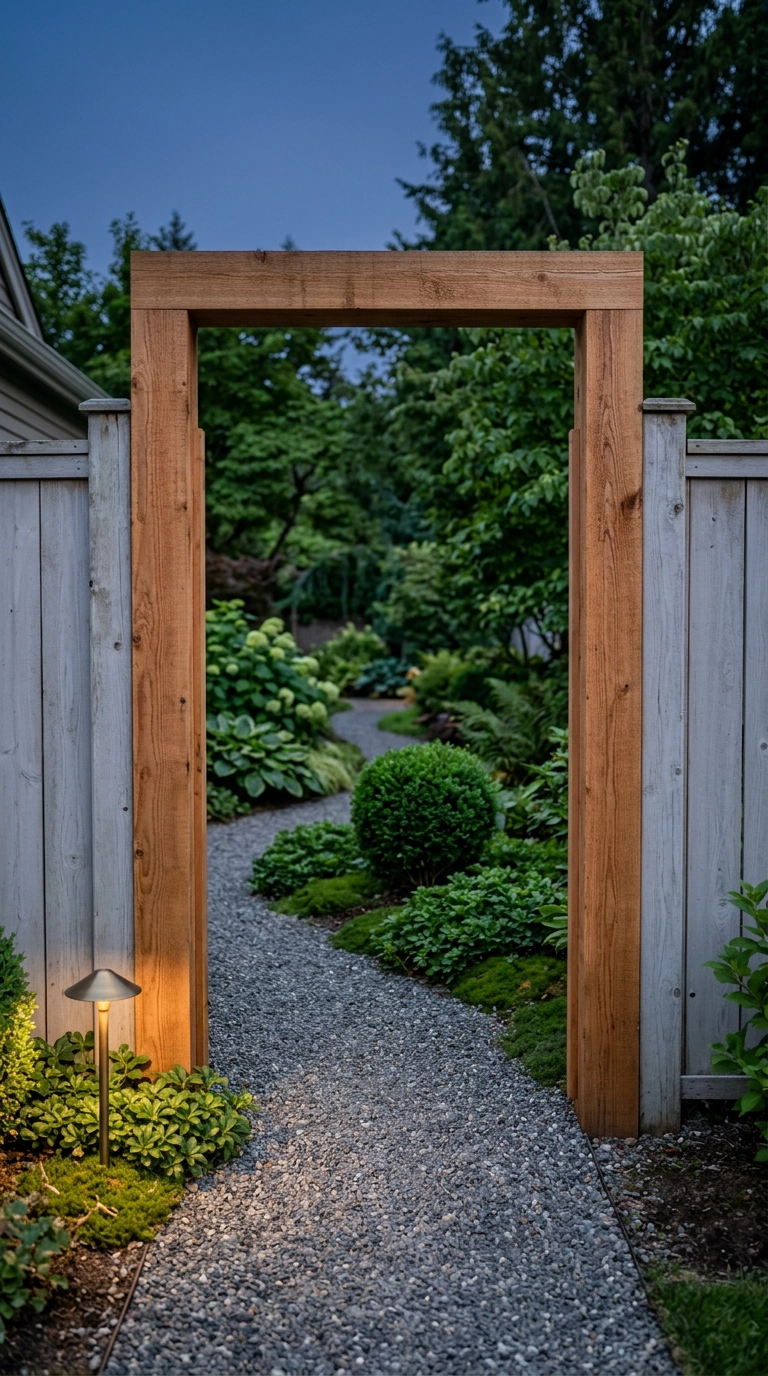
A gateway frame does something a fence can’t. It creates a threshold, so walking through it tells your brain you’ve entered a different zone, even if the garden beyond is only 15 feet deep.
9. A Moss Garden Under a Shady Tree
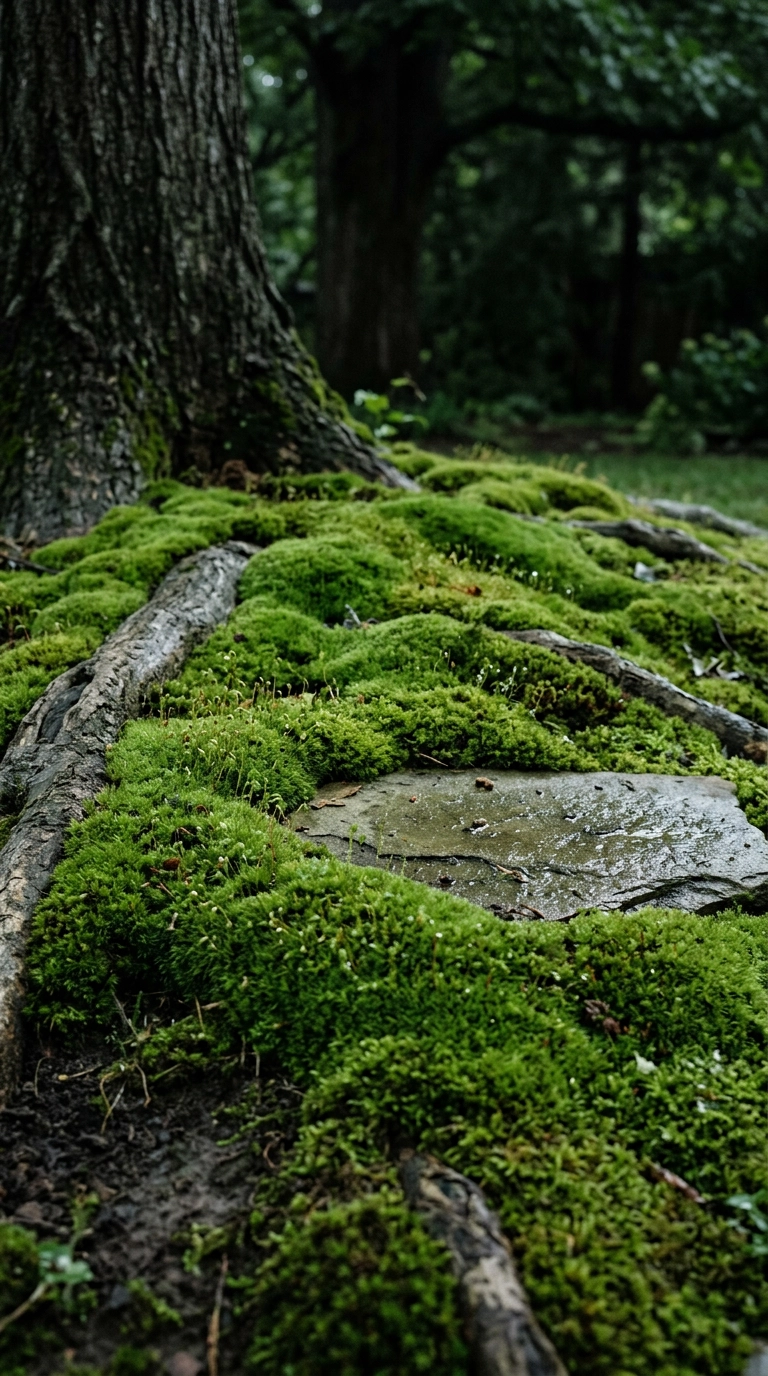
That patch under your tree where grass refuses to grow is not a problem, it’s an opportunity. Moss thrives exactly where turf fails, in acidic soil, deep shade, and consistent moisture.
10. A Low Wooden Engawa Deck Along the House
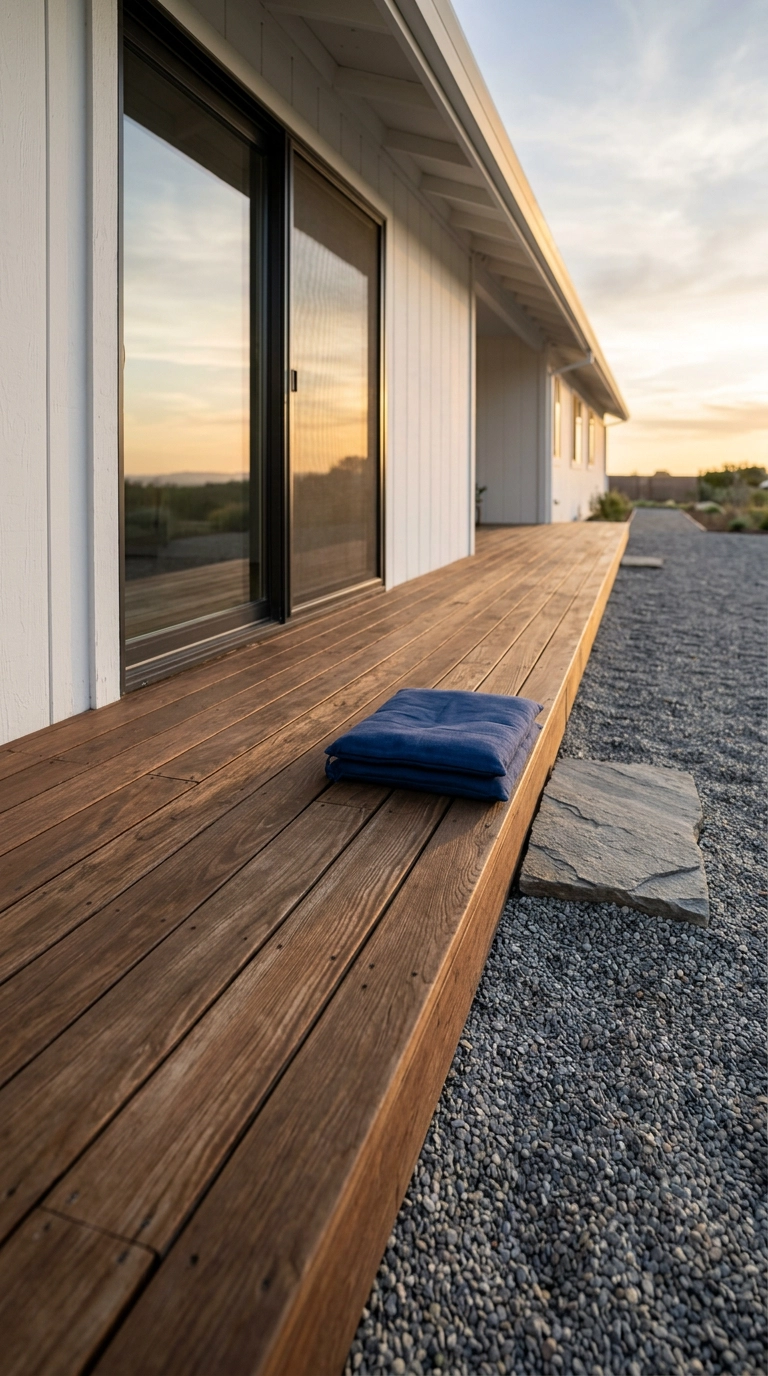
An engawa is the shallow wooden platform that blurs the line between inside and outside, and it’s my favorite structural move on this list. Even a 3-foot-deep strip of decking along a sliding door changes how you use the yard, because now there’s a place to sit at the edge without committing to a full patio set.
11. Shakkei, or Borrowing the View Beyond Your Fence
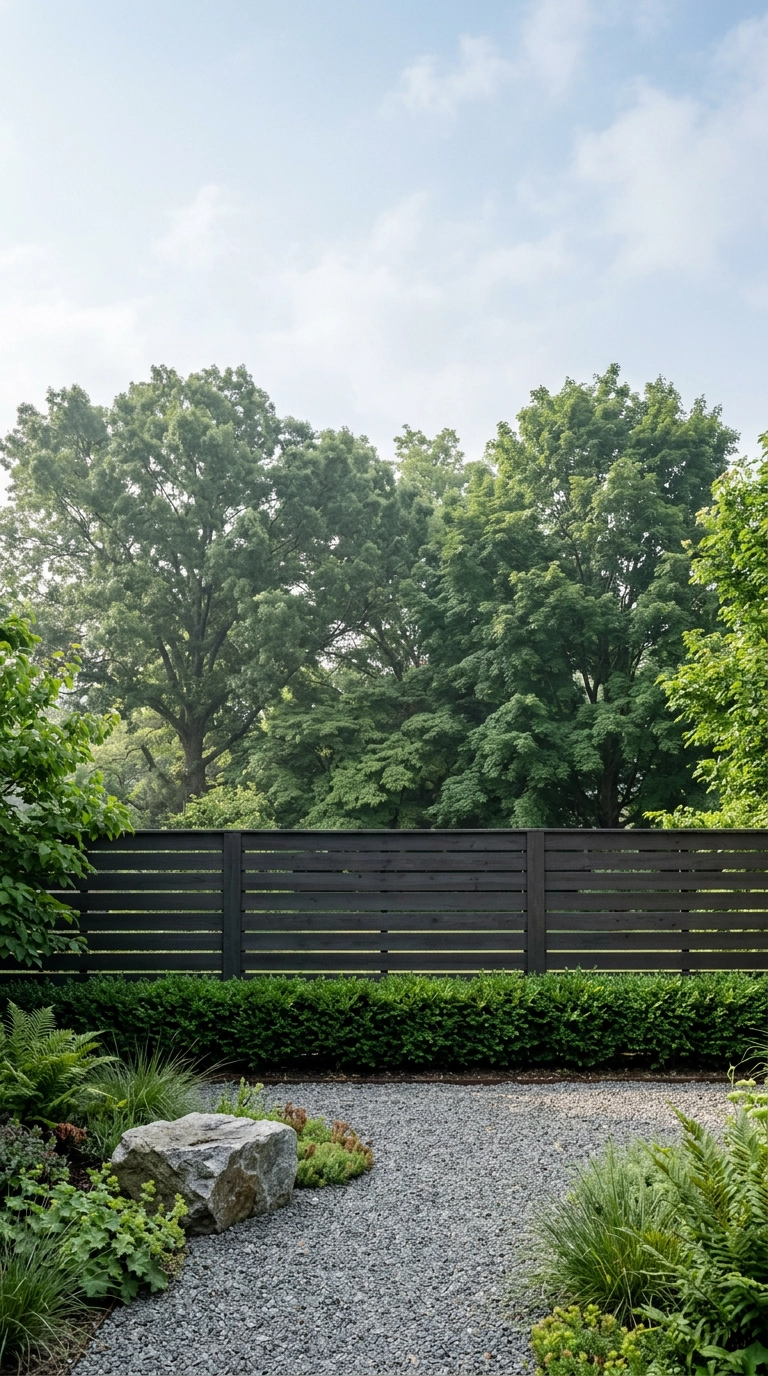
Shakkei means borrowed scenery, and it’s the single smartest trick in Japanese garden design. Instead of walling off your small yard, you frame something outside it, a neighbor’s oak, a distant roofline, a hill, so the garden reads as much deeper than its property lines.
12. A Small Koi or Reflecting Pond with Dark Water
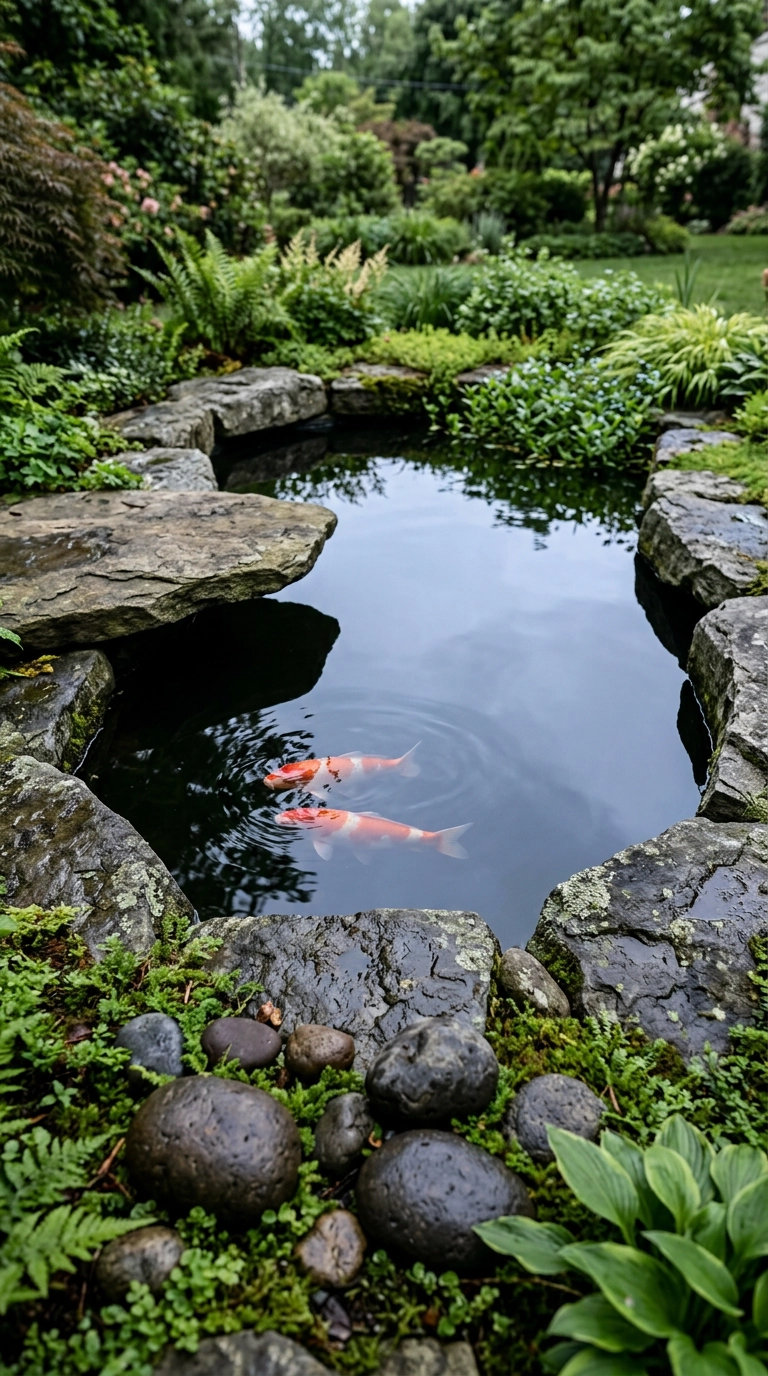
The mistake I see constantly is a bright blue liner and a tall spraying fountain. Japanese ponds use dark liners because still dark water acts like a mirror, doubling your maple and your sky.
13. A Deer Scarer Bamboo Fountain that Actually Clicks
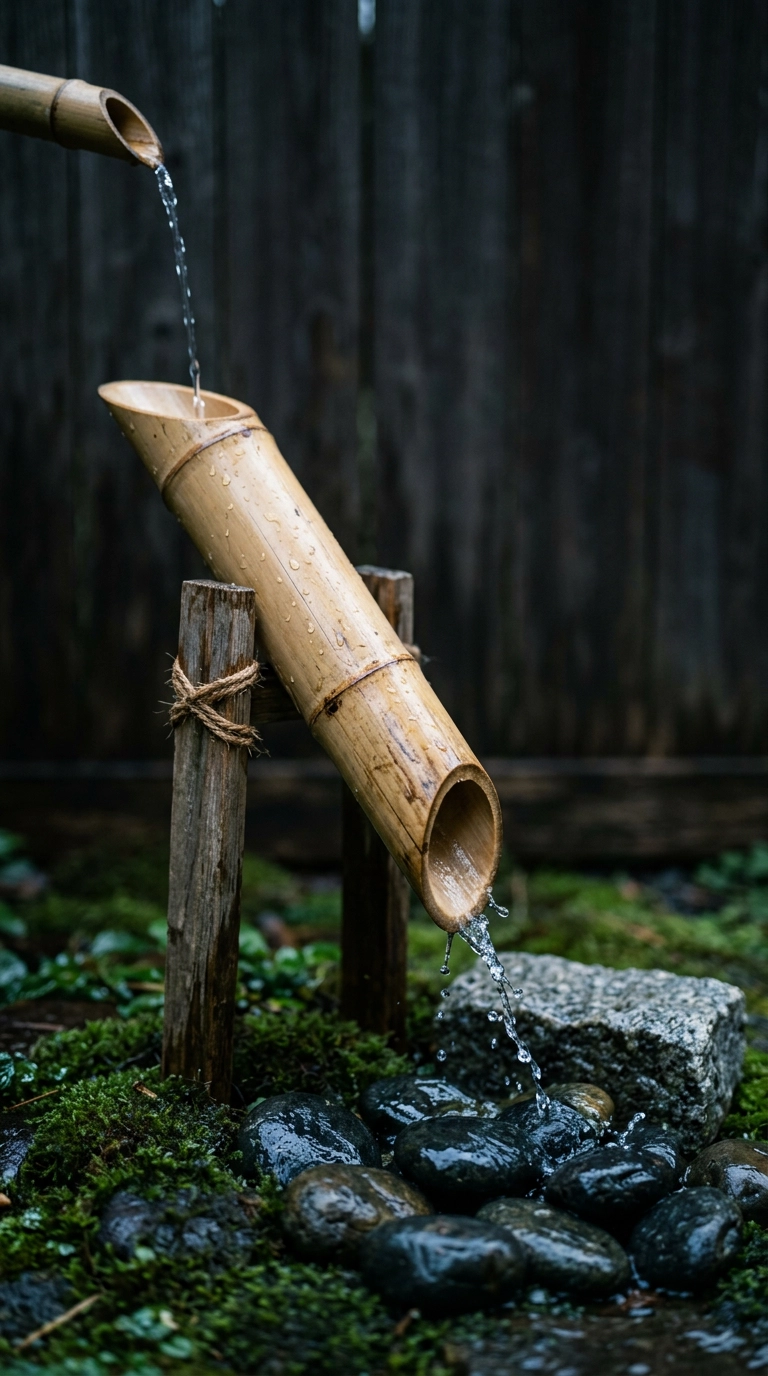
A shishi-odoshi is the bamboo tube that slowly fills with water, tips over, empties, and knocks back against its stand with a hollow clack. It was originally built to startle deer, and it is the most satisfying sound in any garden I’ve ever installed.
14. Black Pine or Juniper Trained Over a Stone
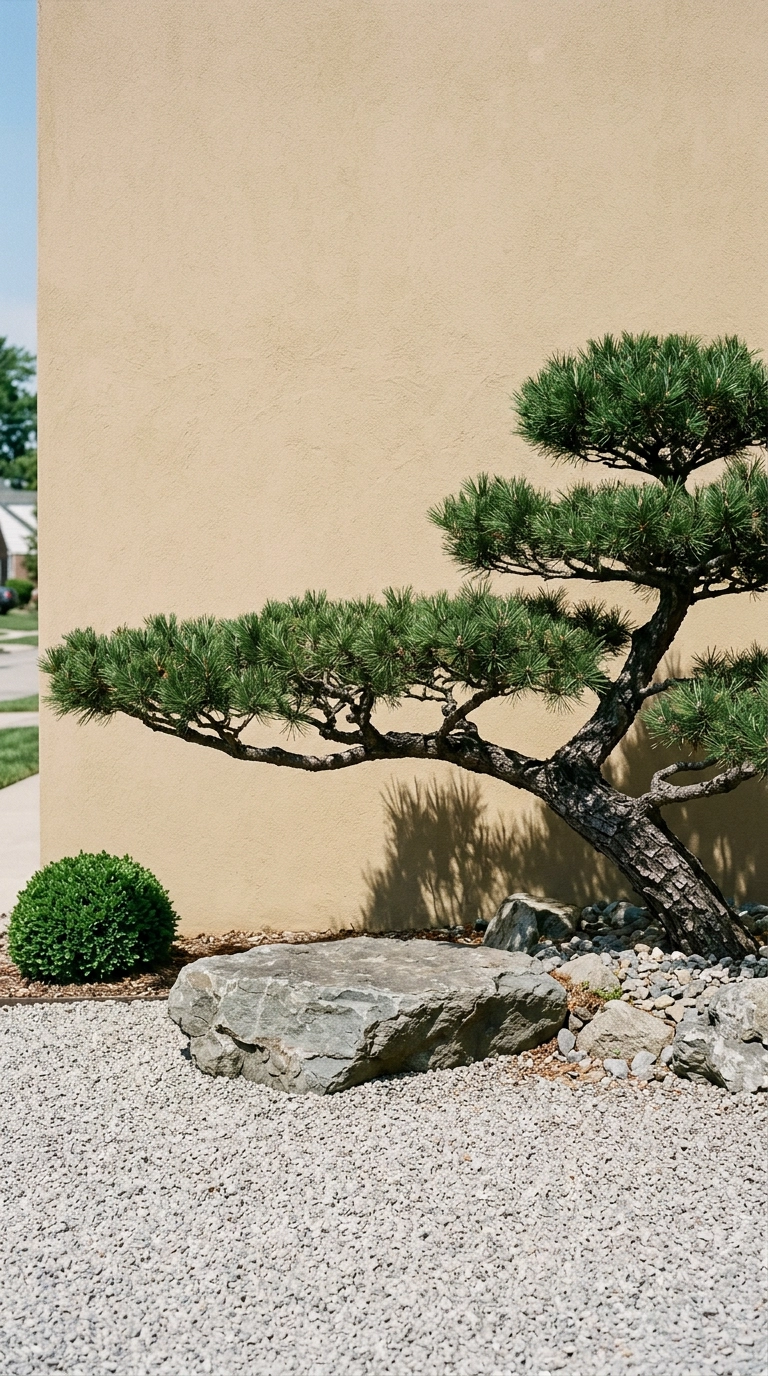
The relationship between plant and stone is the whole idea. When a low branch reaches out over a boulder, the two objects stop being separate items and start reading as one composition.
15. Low Warm Path Lighting Hidden at Ankle Height
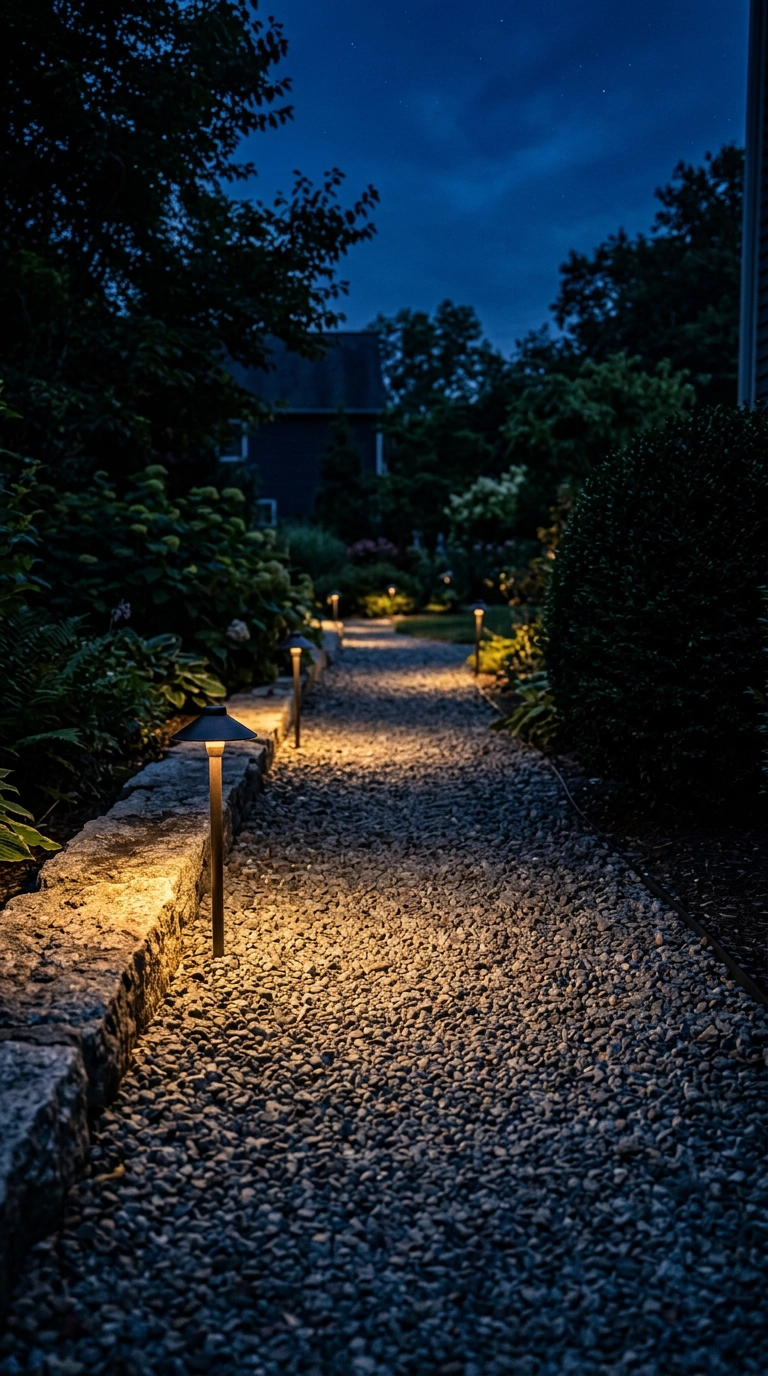
Nothing ruins a serene garden faster than a floodlight. The rule is to light surfaces, not eyes, so mount fixtures low and aim them down so you see the pool of light and never the bulb.
16. A Balcony Zen Garden in a Shallow Tray
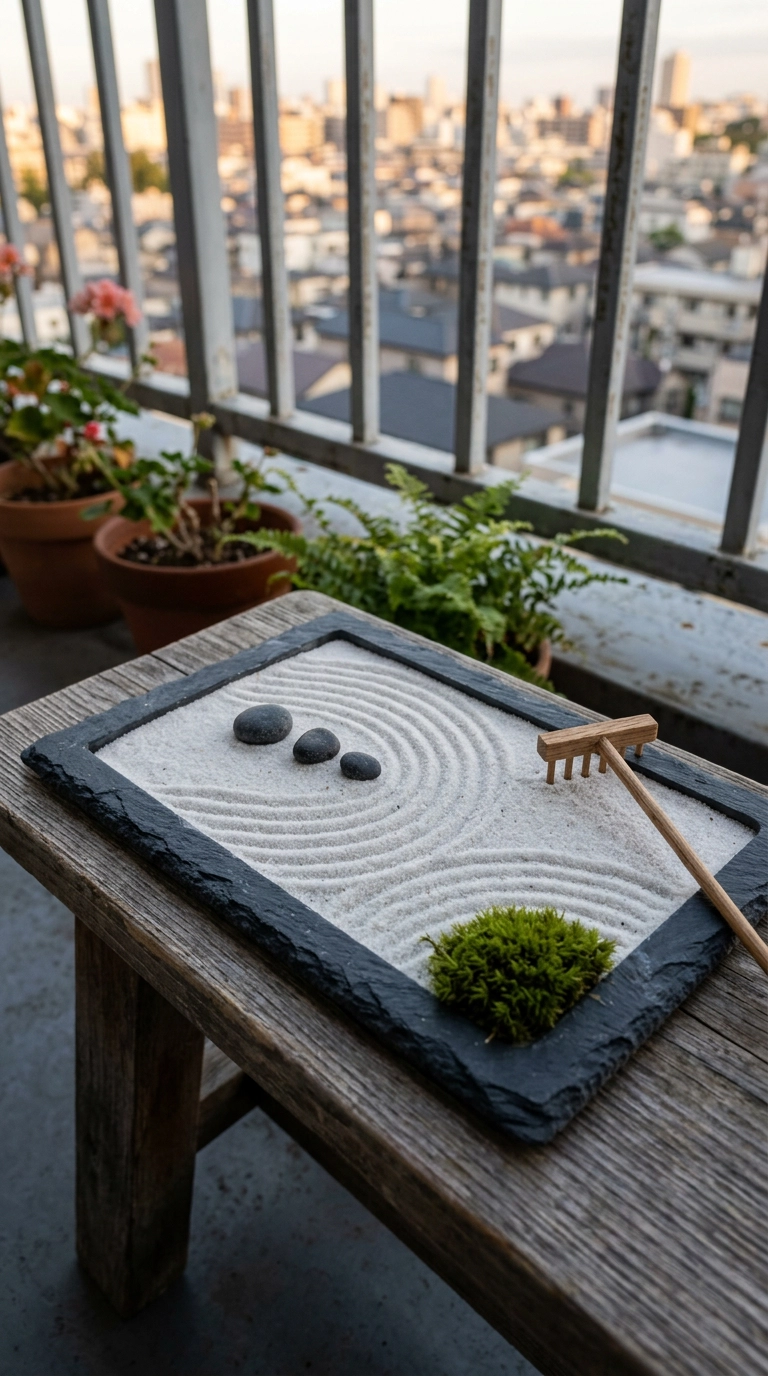
No yard at all? This is the version I recommend to every apartment dweller who messages me. A shallow tray, fine white sand, three pebbles, and a small rake gives you the actual meditative part of the practice on a 4-foot balcony.
17. A Bamboo Fence Panel with Visible Black Cord Knots
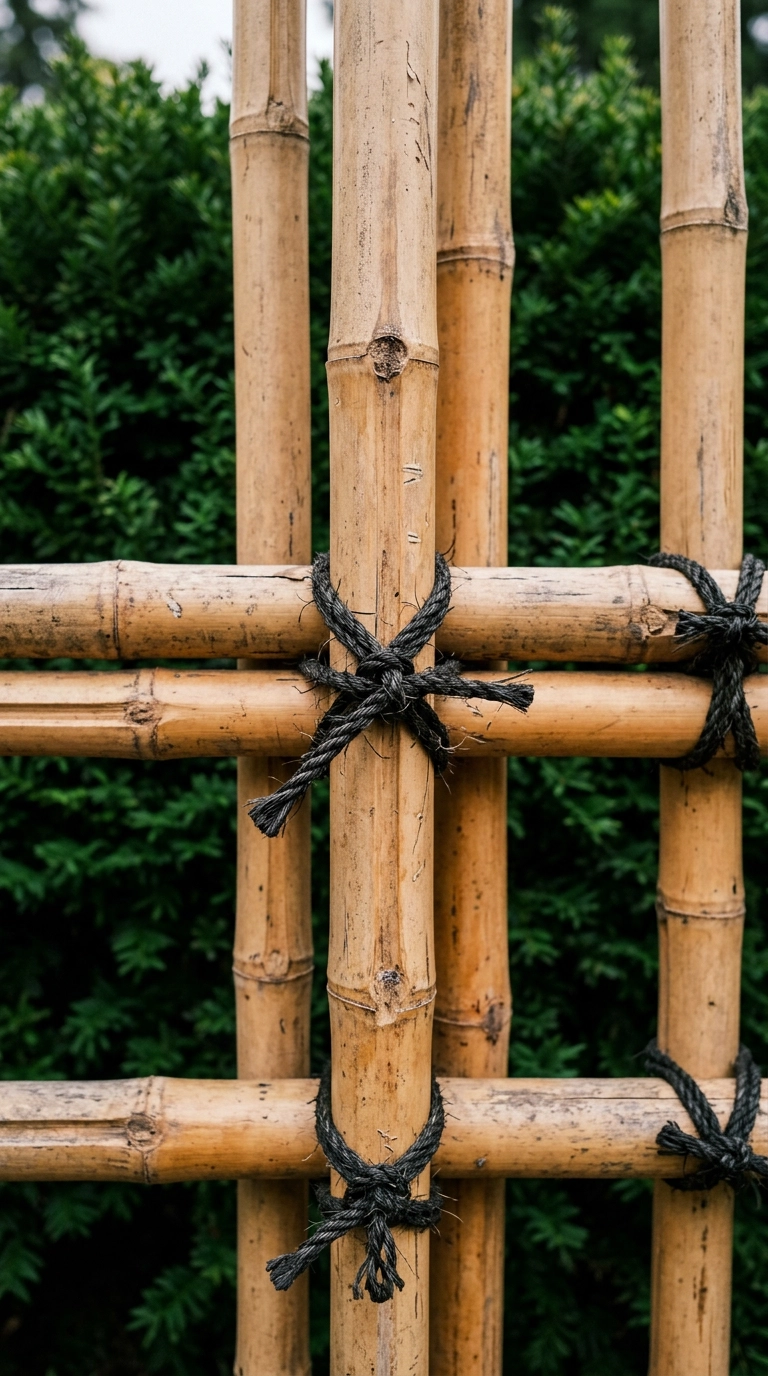
The knots are the decor. In traditional bamboo fencing the black cord lashings, called ibo-musubi, are tied deliberately so the joinery becomes ornament instead of hardware you hide.
18. Nandina and Japanese Forest Grass for Soft Movement
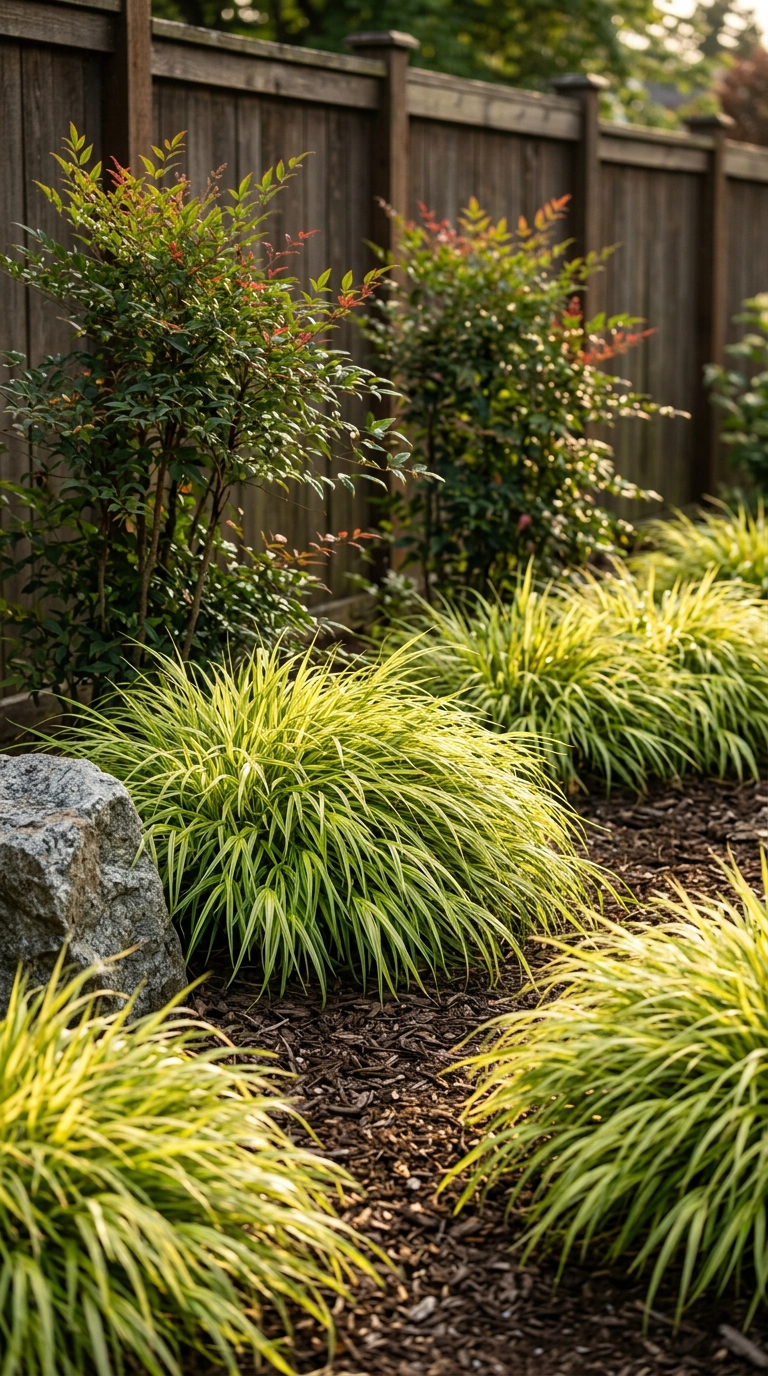
Japanese gardens are mostly green on green, so texture and movement do the work that flowers do elsewhere. Hakonechloa, or Japanese forest grass, cascades in soft horizontal waves and glows when backlit, which is why I plant it on the west side of a bed almost every time.
19. A Weathered Stone Pagoda in Small Scale
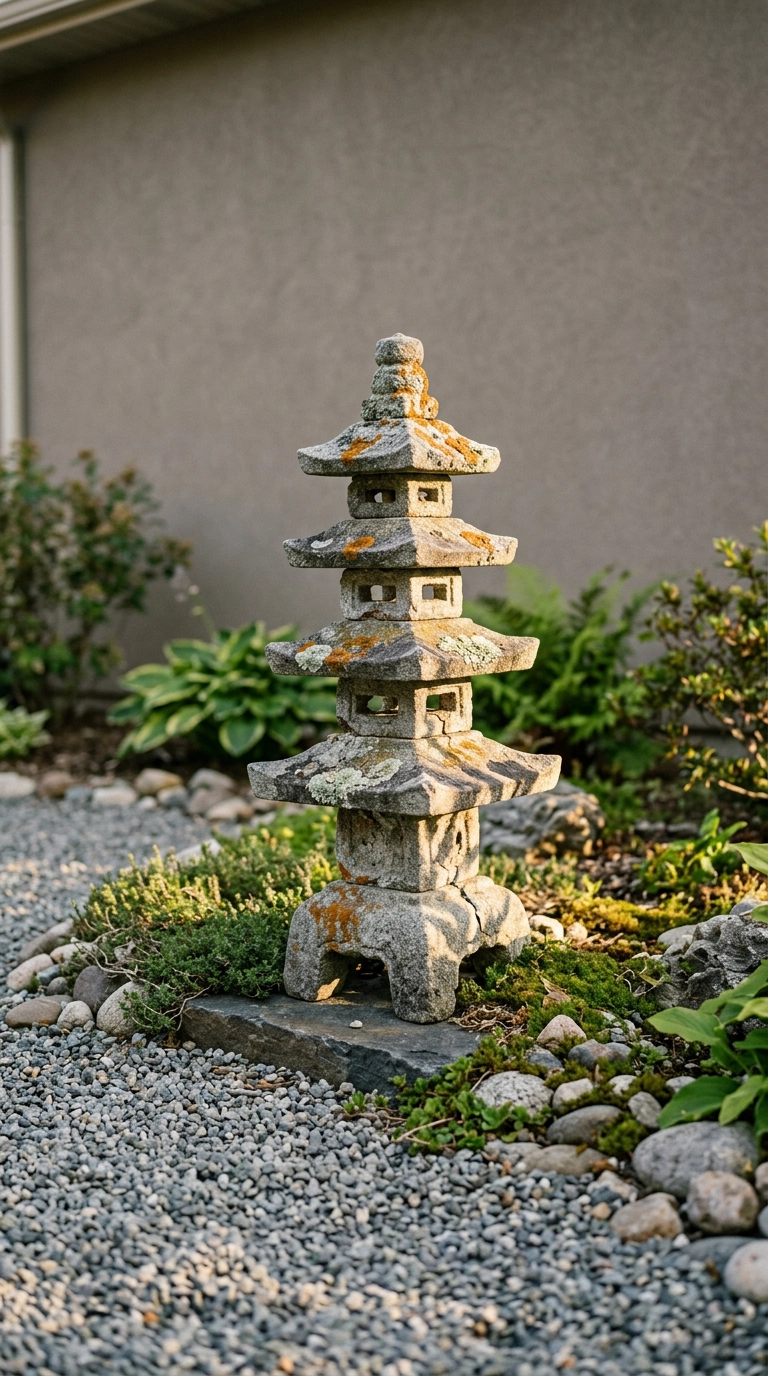
Pagoda ornaments get a bad reputation because people buy them too big and too new. Keep it under about 2 feet tall in a typical suburban yard and let it patina, and it stops looking like a souvenir.
20. A Dry Creek Bed of River Stones Winding Through
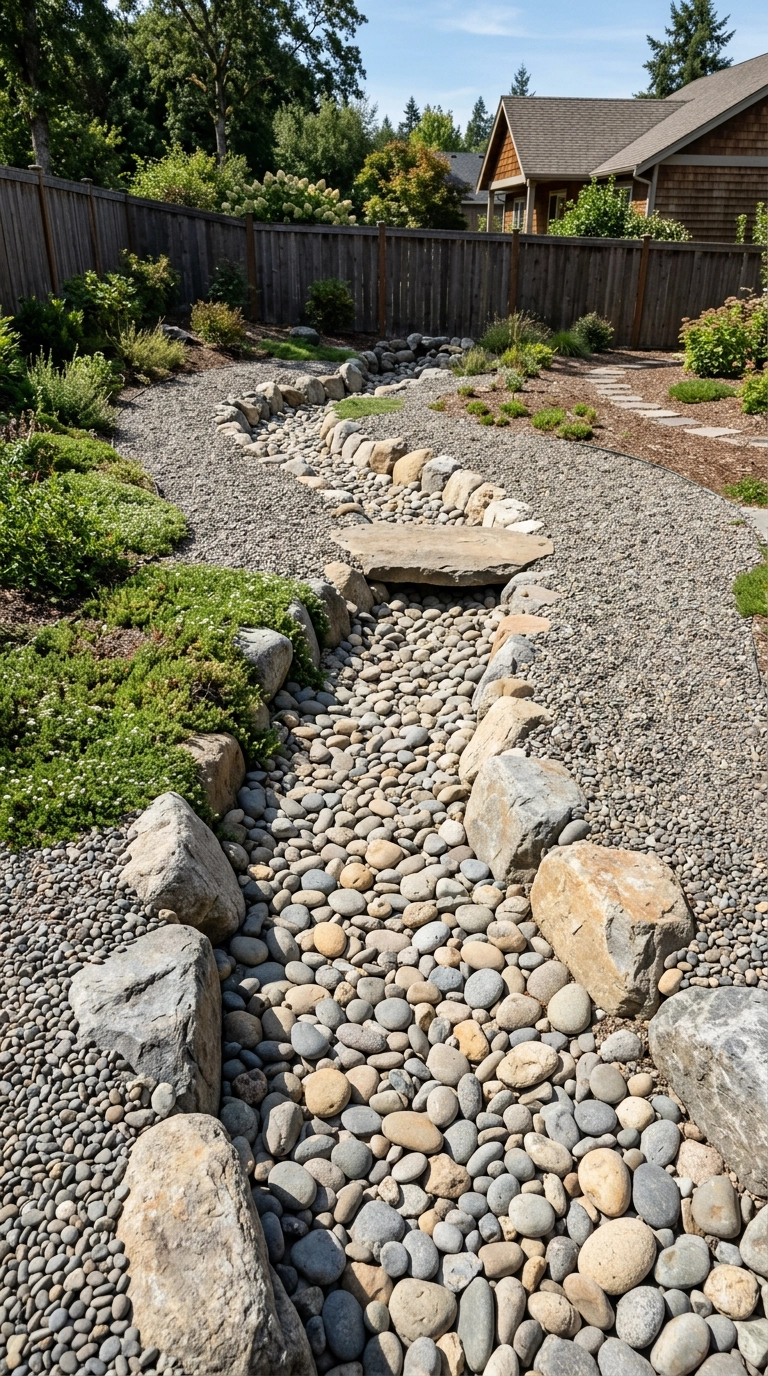
A dry creek bed, or karesansui stream, suggests water without a drop of it, and it solves a real drainage problem while it’s at it. If you have a slope where runoff already travels, build the channel there and it becomes functional as well as beautiful.
21. Shoji-Inspired Panels on a Covered Patio
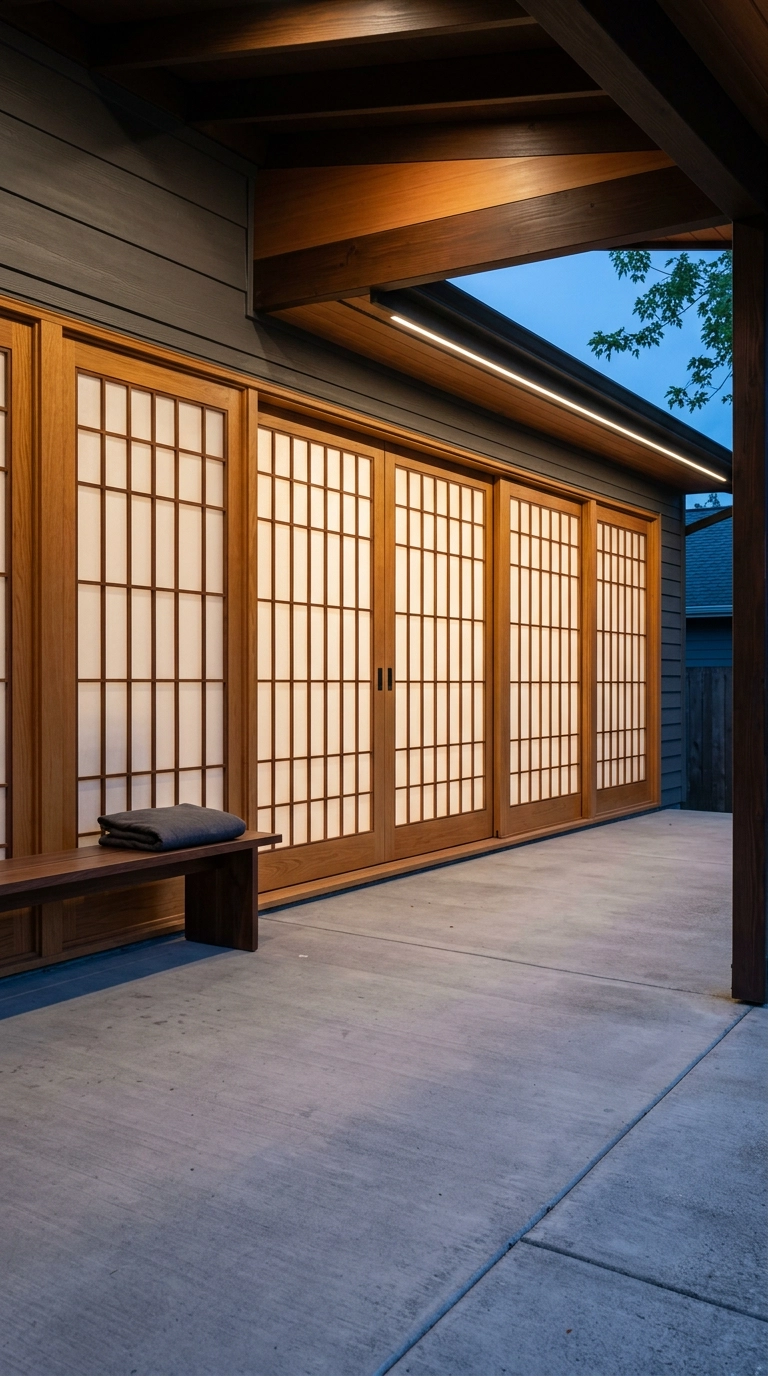
Shoji screens diffuse light instead of blocking it, which is why a backlit panel wall feels warm rather than closed off. For outdoor use, skip real rice paper and go with frosted acrylic or polycarbonate in a wood frame so weather doesn’t destroy it in one season.
22. Wabi-Sabi Pottery Left to Weather
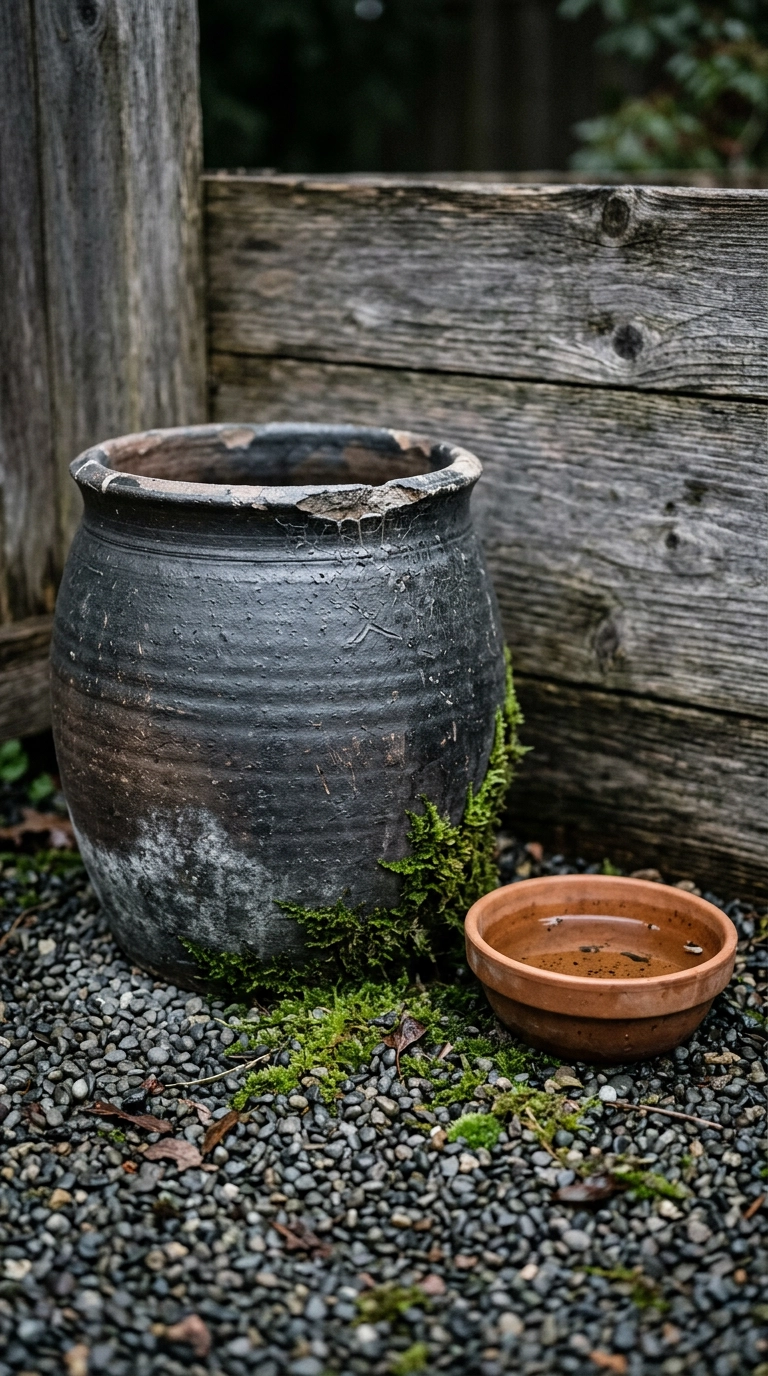
Wabi-sabi is the appreciation of imperfection and age, and it’s the philosophical heart of this whole aesthetic. A chipped, unevenly glazed, slightly mossy pot has more presence than a flawless matched set, and empty pots are completely legitimate as sculpture.
23. A Single Bench Placed for One Specific View
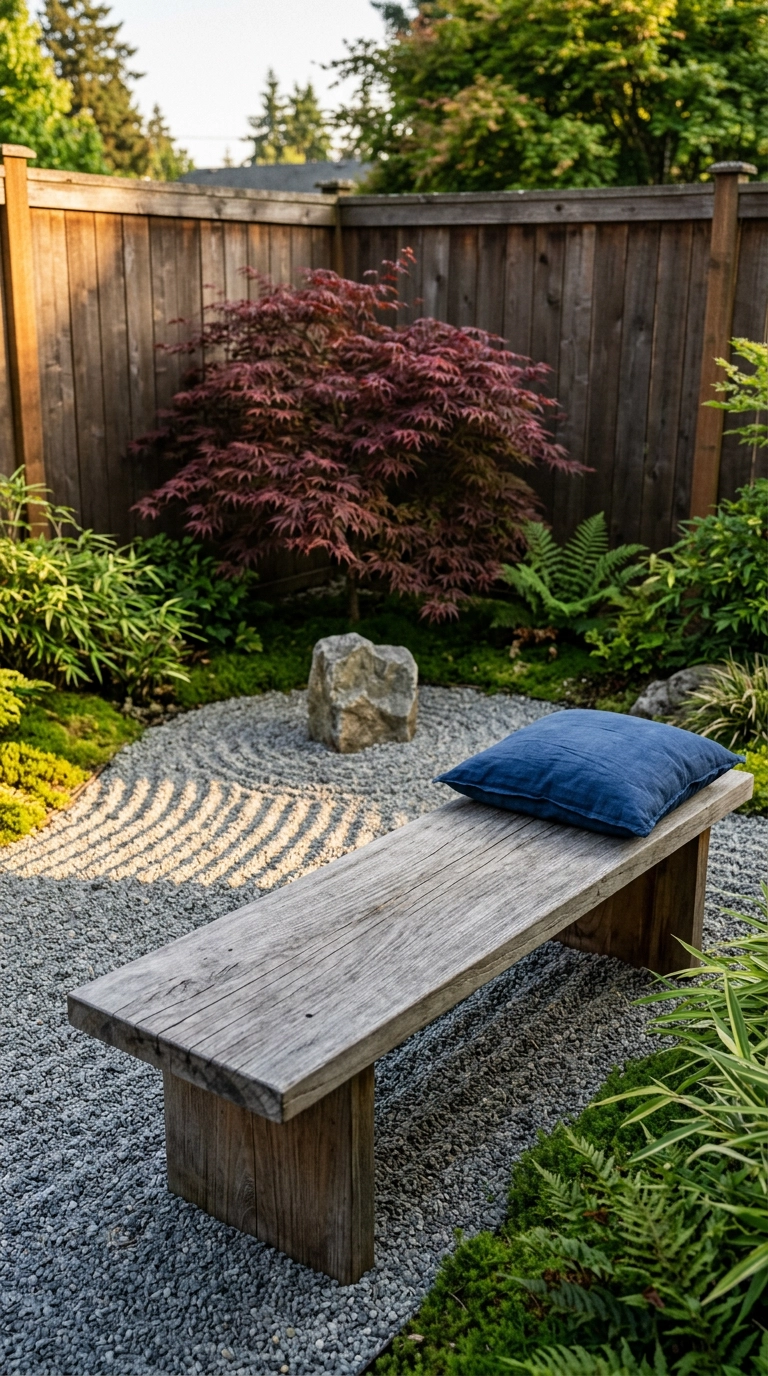
Here’s the idea I’d leave you with. In Japanese garden design, seating isn’t scattered for capacity, it’s placed at one deliberate spot to frame one deliberate view, and everything else in the garden is composed for that sightline.
Where I’d Start if This Were My Yard
If you take nothing else from this list, take the subtraction principle. Every time I’ve walked into a Japanese-inspired garden that didn’t work, the problem was never a missing element, it was four too many. The raked gravel dry garden, one good Japanese maple, and a single granite lantern placed at a bend will get you further than a truckload of ornaments, and it’ll cost you less.
What I’m seeing everywhere right now is the Japandi crossover pushing outdoors, so the low engawa deck and shoji-inspired patio panels are having a real moment, and moss lawns are quietly replacing turf in the Pacific Northwest for people tired of mowing. Kengo Kuma’s work with layered timber screens has a lot to do with why those slatted wood panels feel current, and the Portland Japanese Garden remains the best free education you can get if you’re anywhere nearby. Even Bunny Williams, who is about as far from minimalism as a designer gets, keeps a Japanese-inspired water feature at her Connecticut place, which tells you this style plays well with almost anything.
Start with one thing this weekend, honestly. Rake a small gravel bed, or set three stones under a tree, or fill a shallow tray with sand on your balcony, and notice how differently you use that corner afterward. If you want more ideas like these landing in your inbox, along with the projects I’m testing in my own yard before I recommend them, sign up for my weekly newsletter and I’ll see you there.


