23+ Clever Chalkboard Wall Decor Ideas that Actually Earn Their Keep in 2026

I’ll be straight with you – I’ve installed a lot of chalkboard walls, and about a third of them were a mistake. Not because they looked bad, but because nobody in the house had an actual reason to write on them, so they turned into a big black rectangle everyone felt vaguely guilty about. The ones that worked? They earned their spot by doing a real job every single day, and they gave the room a huge field of matte dark color that grounded everything around it. So this is the honest version: where a chalkboard wall genuinely sings, where it flops, and every unglamorous detail about priming, curing, ghosting, and chalk dust that nobody warns you about until you’re already three coats in.
Chalkboard Wall Decor Ideas
1. A Full-Height Chalkboard Wall in the Breakfast Nook for Meal Planning
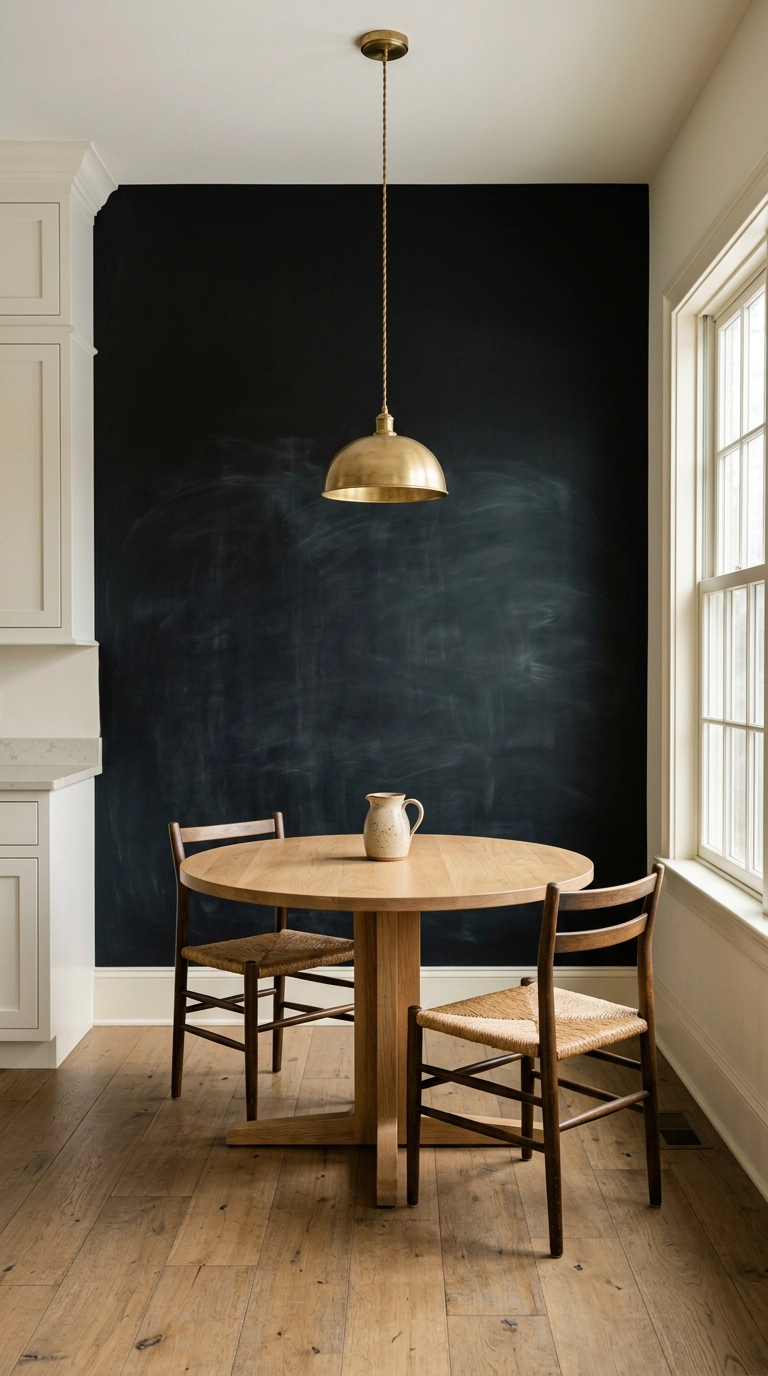
This is the one placement I’ve never regretted, because meal planning is a daily job and the wall is right where the decision gets made. Paint the whole nook wall, not a polite little square – a chalkboard reads as intentional architecture when it goes floor to ceiling, and as a craft project when it doesn’t.
2. An Oversized Leaning Framed Chalkboard Panel (Zero Paint, Zero Holes)
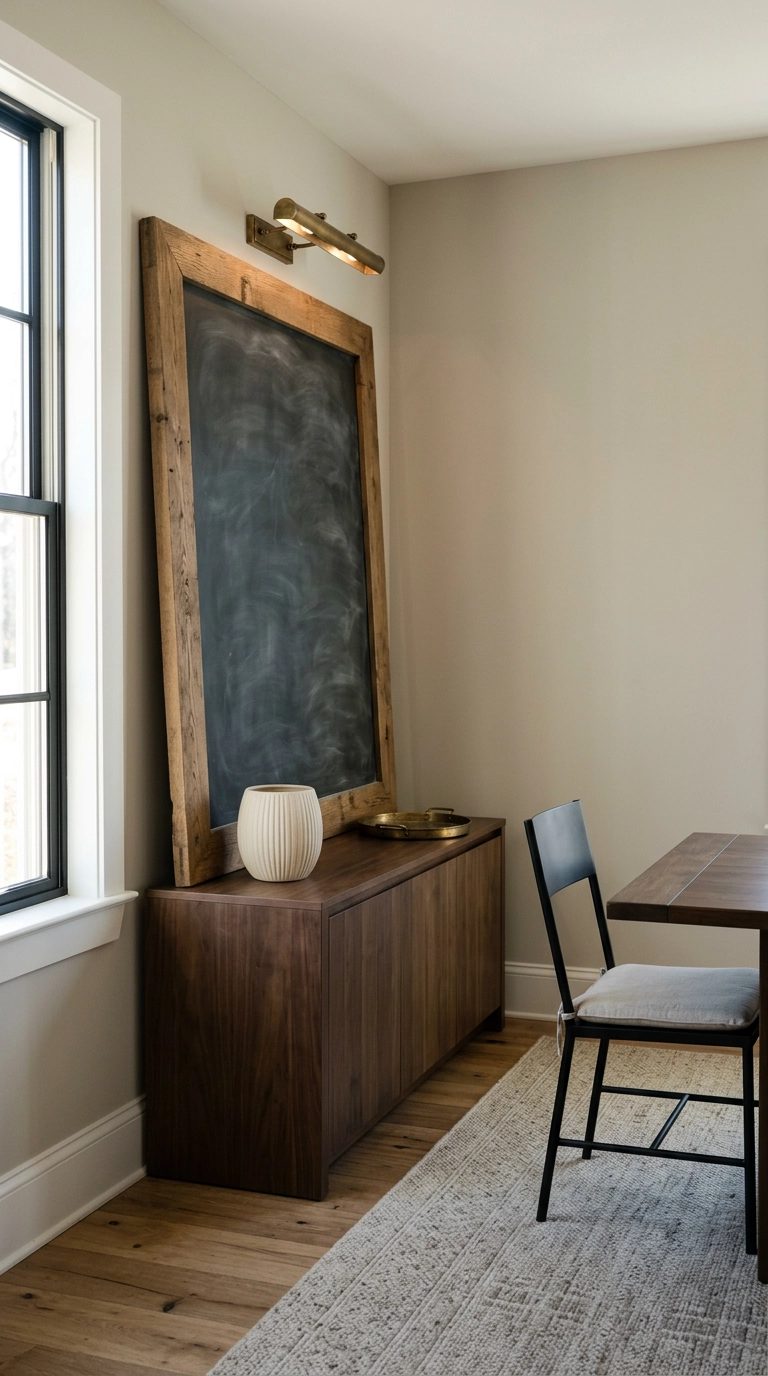
If you rent, start here. A four-by-three-foot framed panel leaned against the wall behind a sideboard gives you the same dark visual anchor as a painted wall, with none of the security-deposit anxiety.
3. Peel-and-Stick Chalkboard Vinyl for a Rental You Can’t Touch
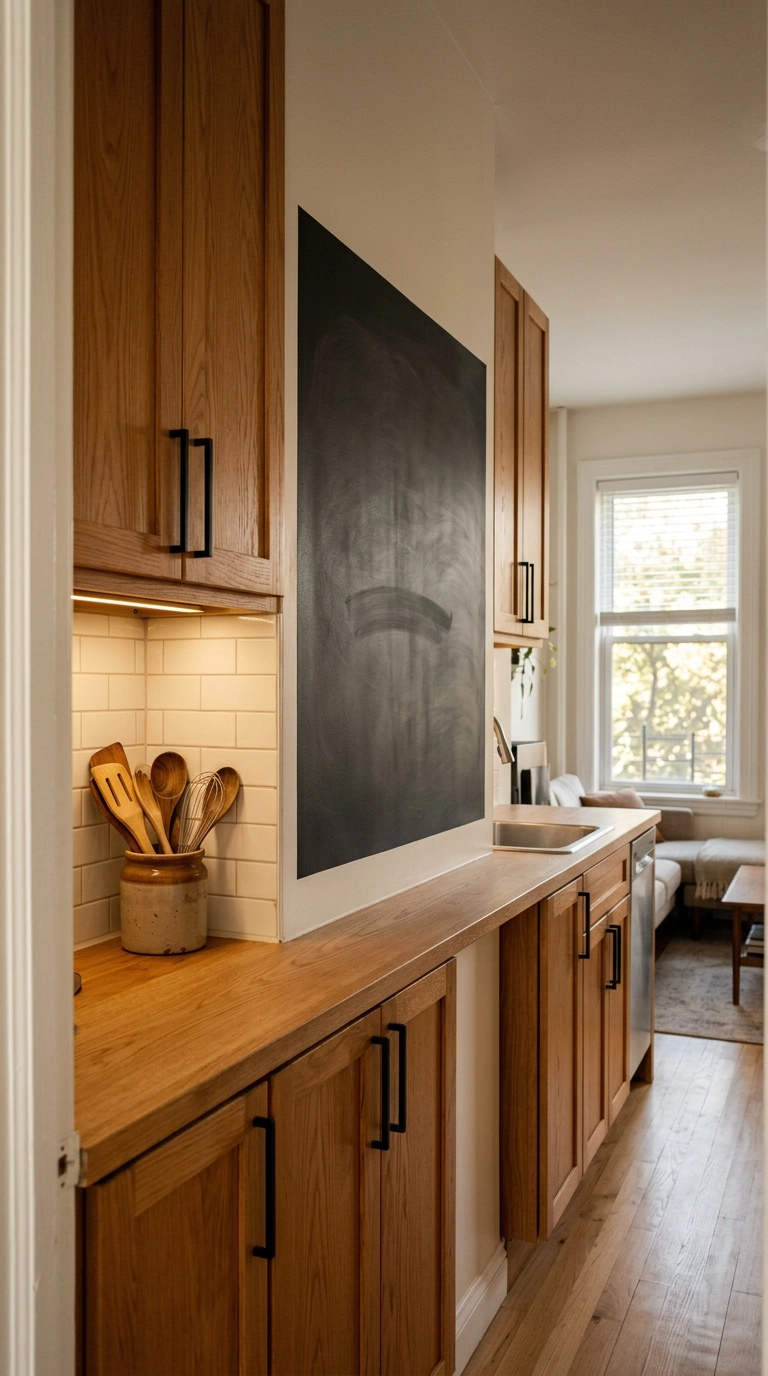
Chalkboard vinyl comes in rolls, cuts with scissors, and peels off years later without pulling paint – as long as your walls are in an eggshell or satin finish. On flat paint it can take a layer of the wall with it, so test a small corner behind a cabinet first.
4. Chalkboard Contact Paper on a Single Cabinet Door
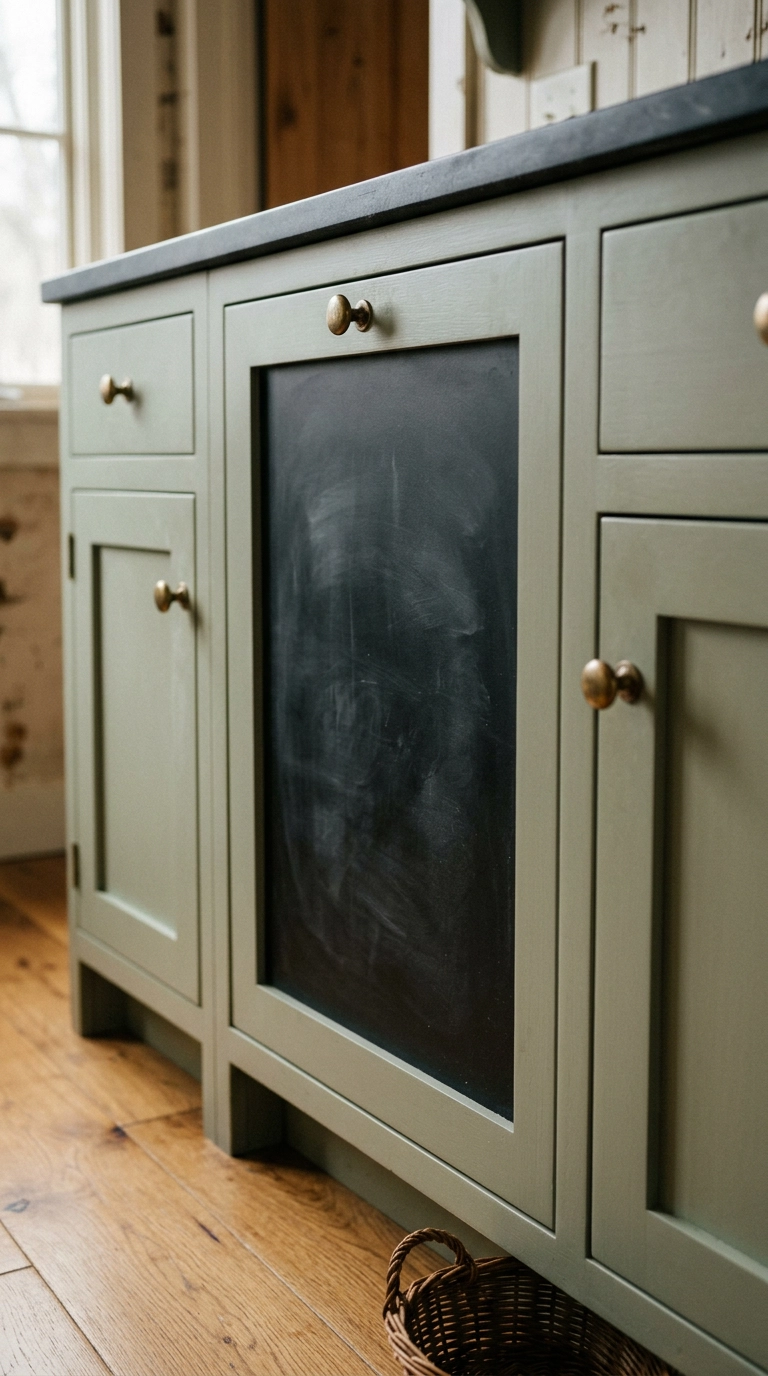
The smallest possible commitment, and genuinely useful. One cabinet door becomes the running grocery list, and if you hate it in three months you peel it off in about ninety seconds.
5. The Pantry Door as a Running Inventory Board
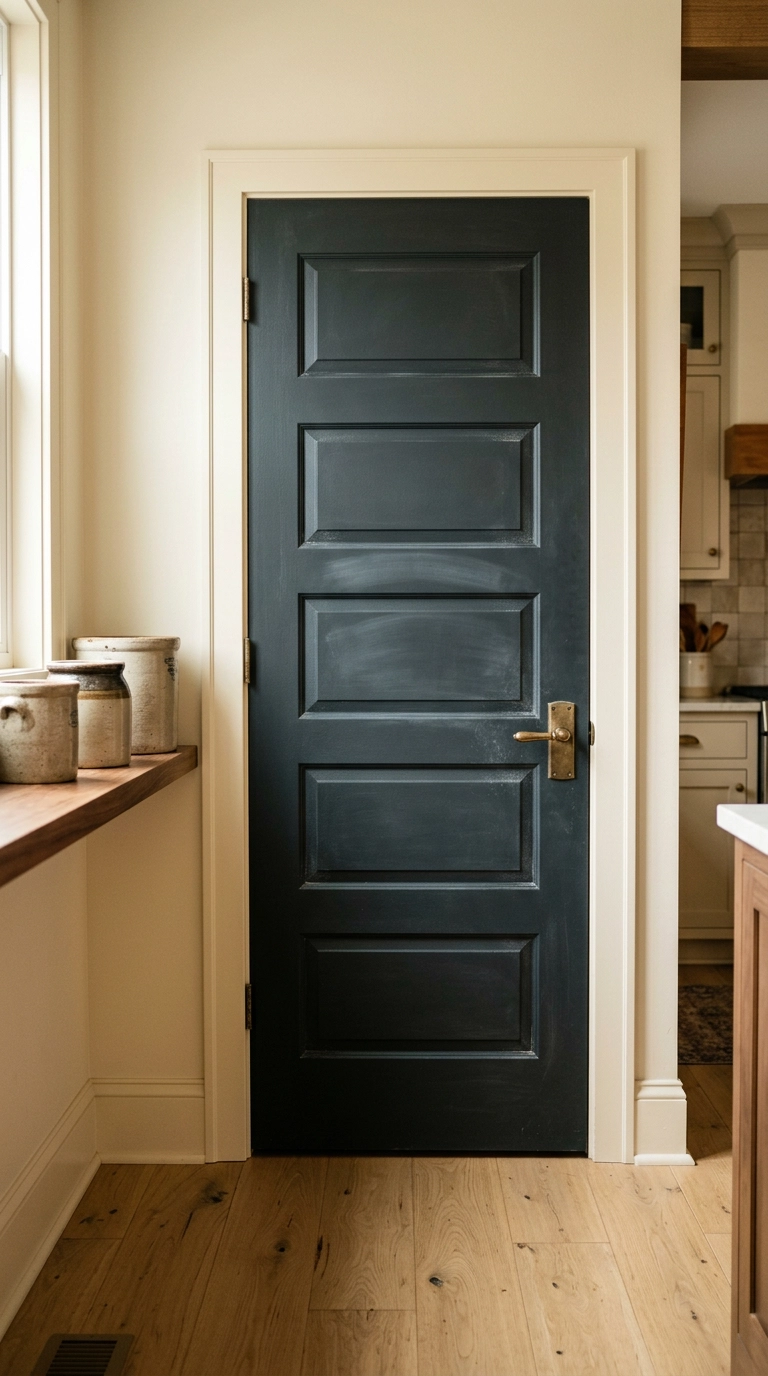
A door is my favorite low-risk entry point, because it’s already a defined rectangle and the casing frames it for you. Painting the panels of a five-panel door takes a brush and patience, and the little recessed edges will collect chalk dust forever.
6. Chalkboard-Painted Furniture: A Console or Dresser Drawer Front
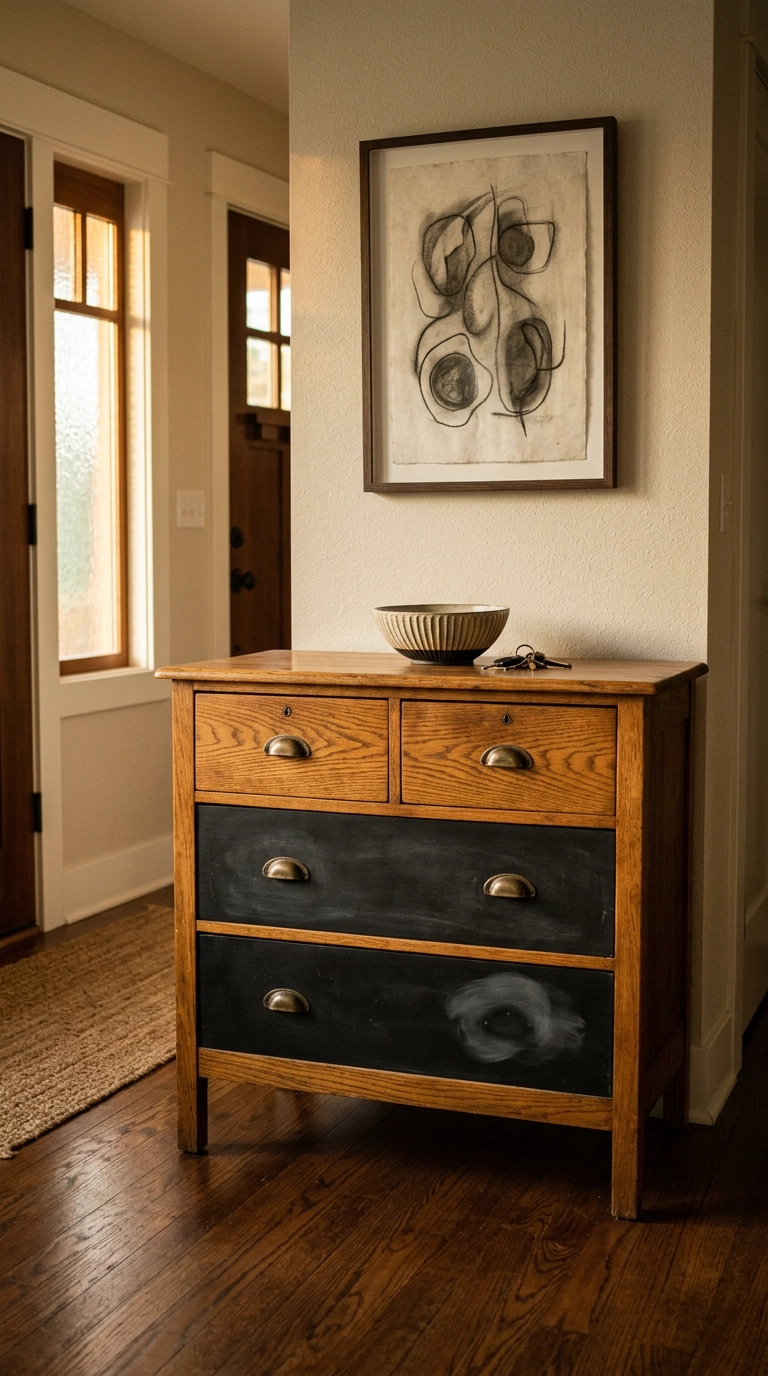
Chalkboard paint on furniture is more forgiving than on drywall, because the surface is already smooth and small enough to sand properly. Two drawer fronts out of four gives you contrast without the whole piece looking like a schoolhouse relic.
7. A Trio of Small Framed Chalkboards Hung as a Gallery Cluster
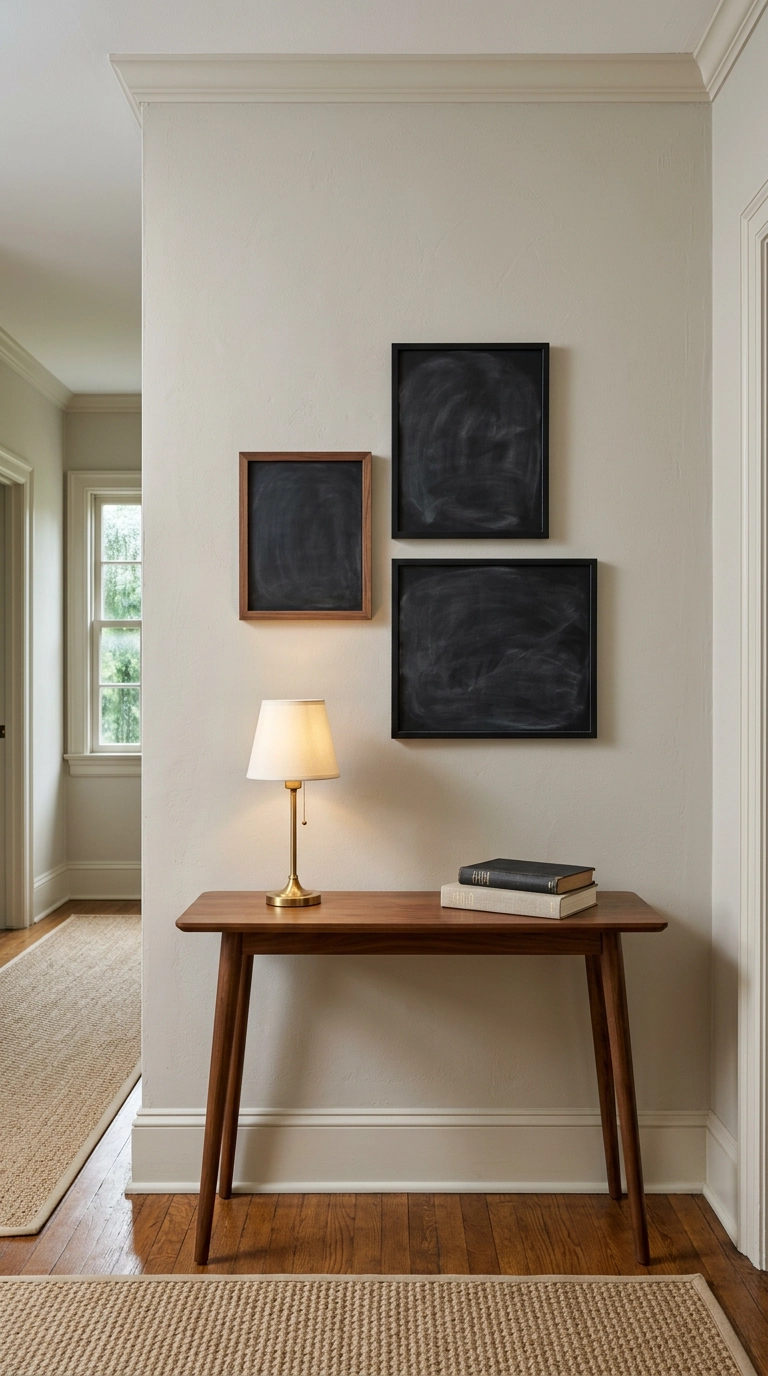
Odd numbers read as composed and even numbers read as a grid, which is why three panels at slightly different sizes look styled while four identical ones look like an office supply catalog. Hang them so the visual centers land around 57 to 60 inches, the standard gallery eye line.
8. A Narrow Chalkboard Note Panel Beside the Front Door
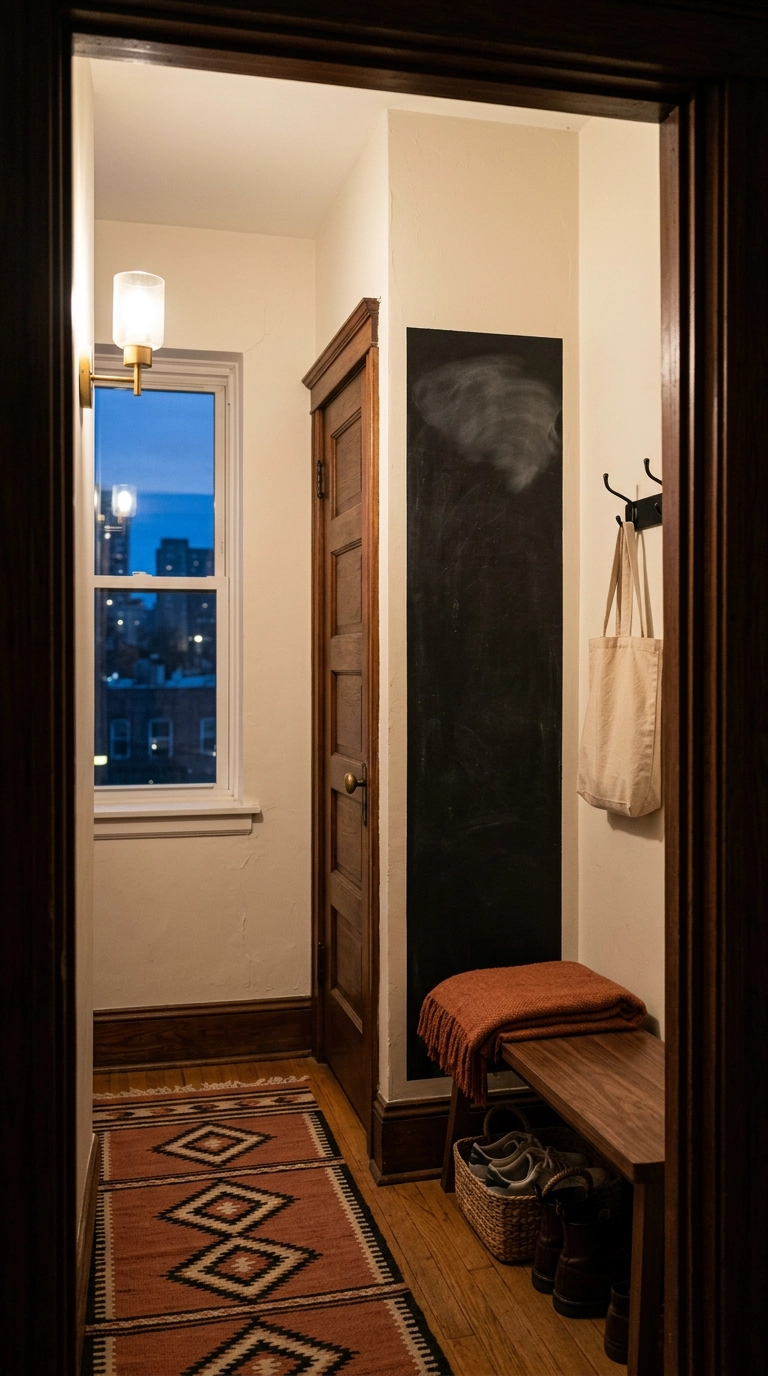
An entry chalkboard only works if it’s within arm’s reach of the door – past about four feet, nobody stops to write anything. Keep it narrow, roughly the width of the door casing, so it reads as a deliberate architectural stripe rather than a leftover patch of wall.
9. A Cafe-Style Chalkboard Menu Wall Above the Coffee Bar
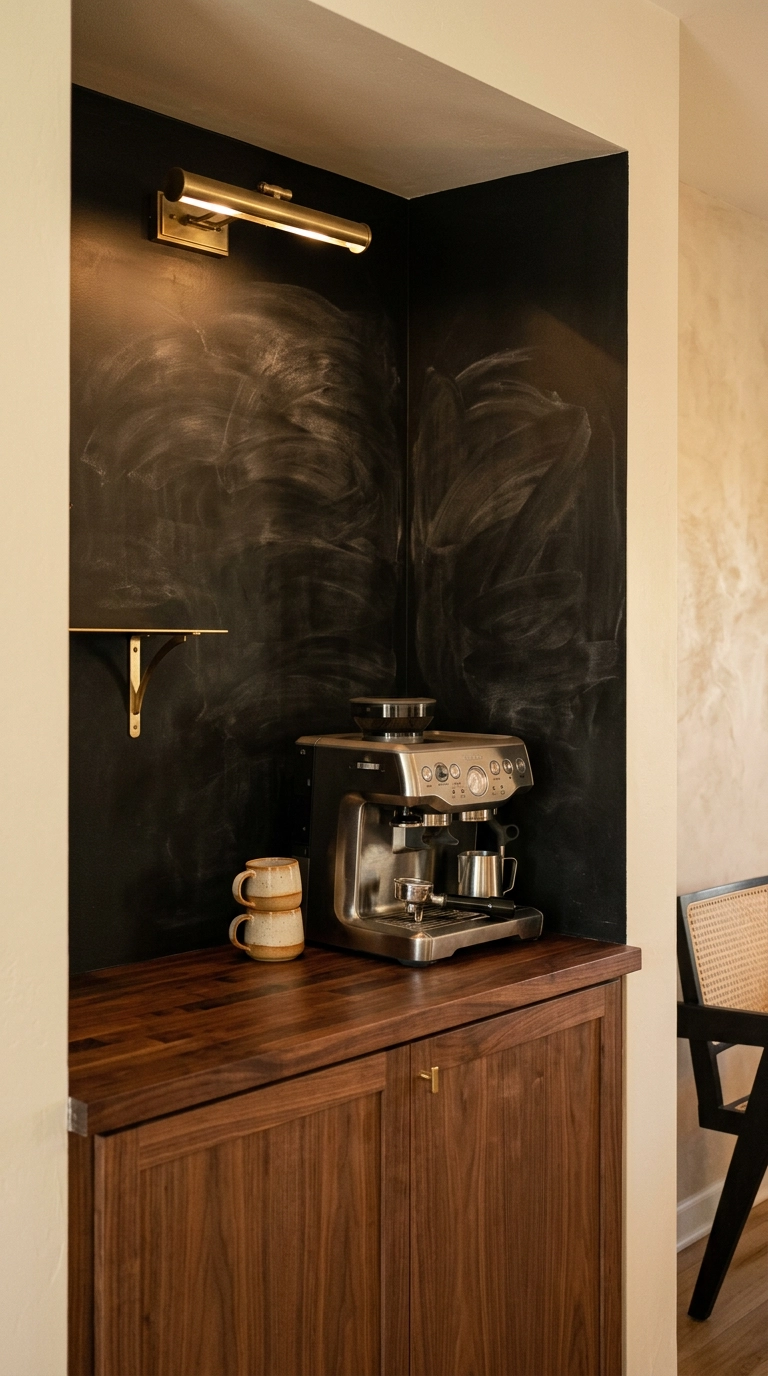
The cafe-menu wall is the most Pinned version of this idea and also the one with the highest bar to clear, because bad handwriting on a big black wall is very hard to unsee. If your lettering isn’t confident, do a loose botanical sketch or a simple line drawing instead and skip the text entirely – it looks intentional either way.
10. A Small Chalkboard Above the Bar Cart Nook
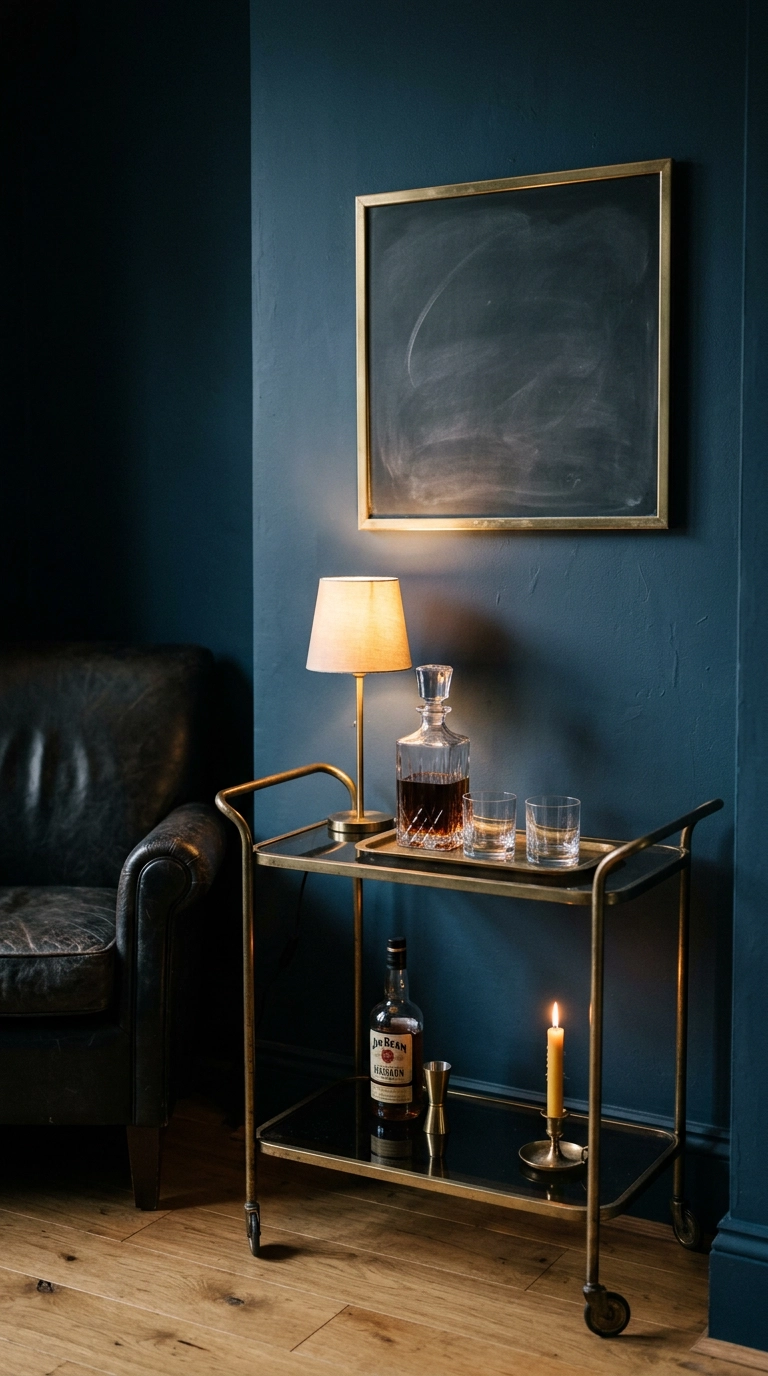
A tiny board here is pure theater and I fully endorse it. Twelve by twelve inches is enough for one drink name, and the smaller scale means you can rewrite it before people come over without it feeling like a chore.
11. A Kid-Height Chalkboard Strip Running Down a Hallway
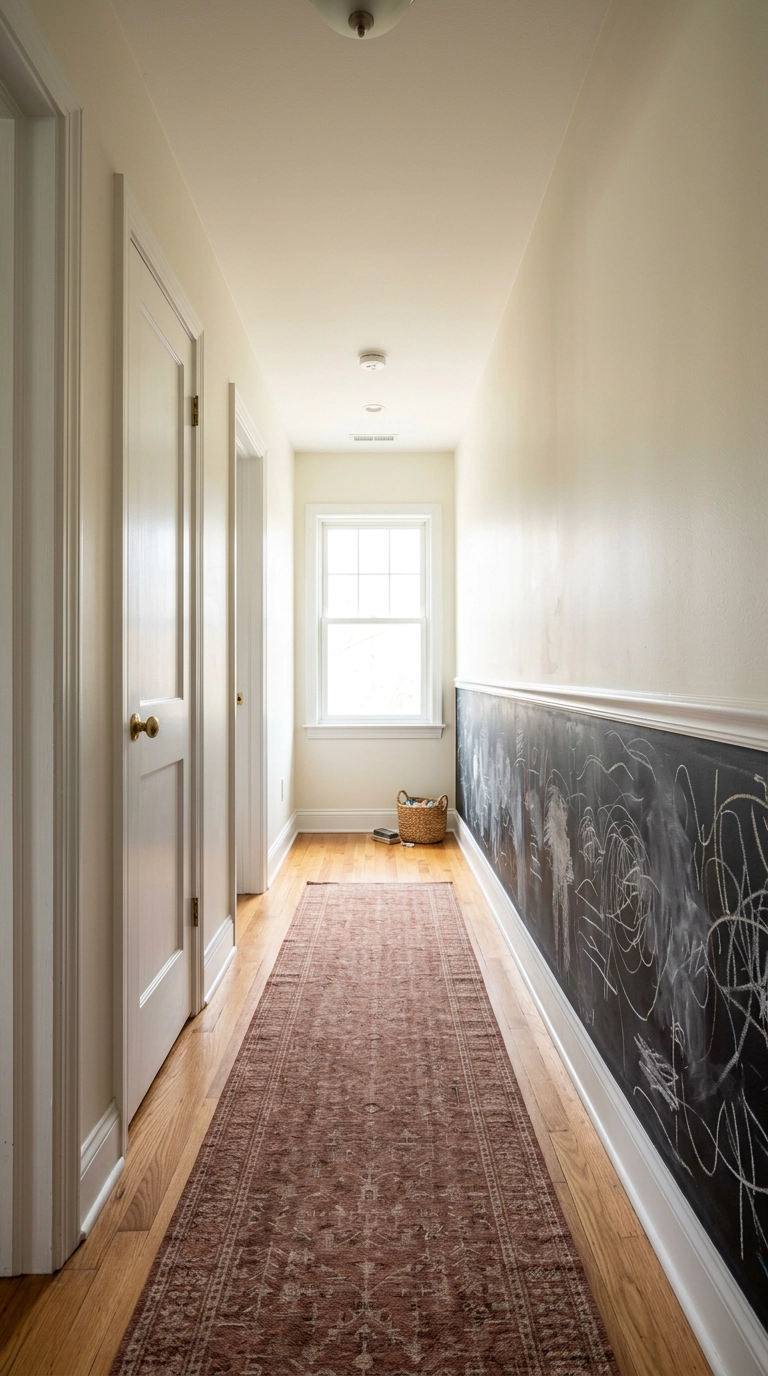
Kids draw at the height their arm reaches, which is roughly 24 to 36 inches off the floor, so painting the full wall is wasted effort and wasted paint. Cap the strip with a simple chair rail and the whole thing suddenly looks like a design decision instead of damage control.
12. The Back of a Kid’s Bedroom Door, Painted Top to Bottom
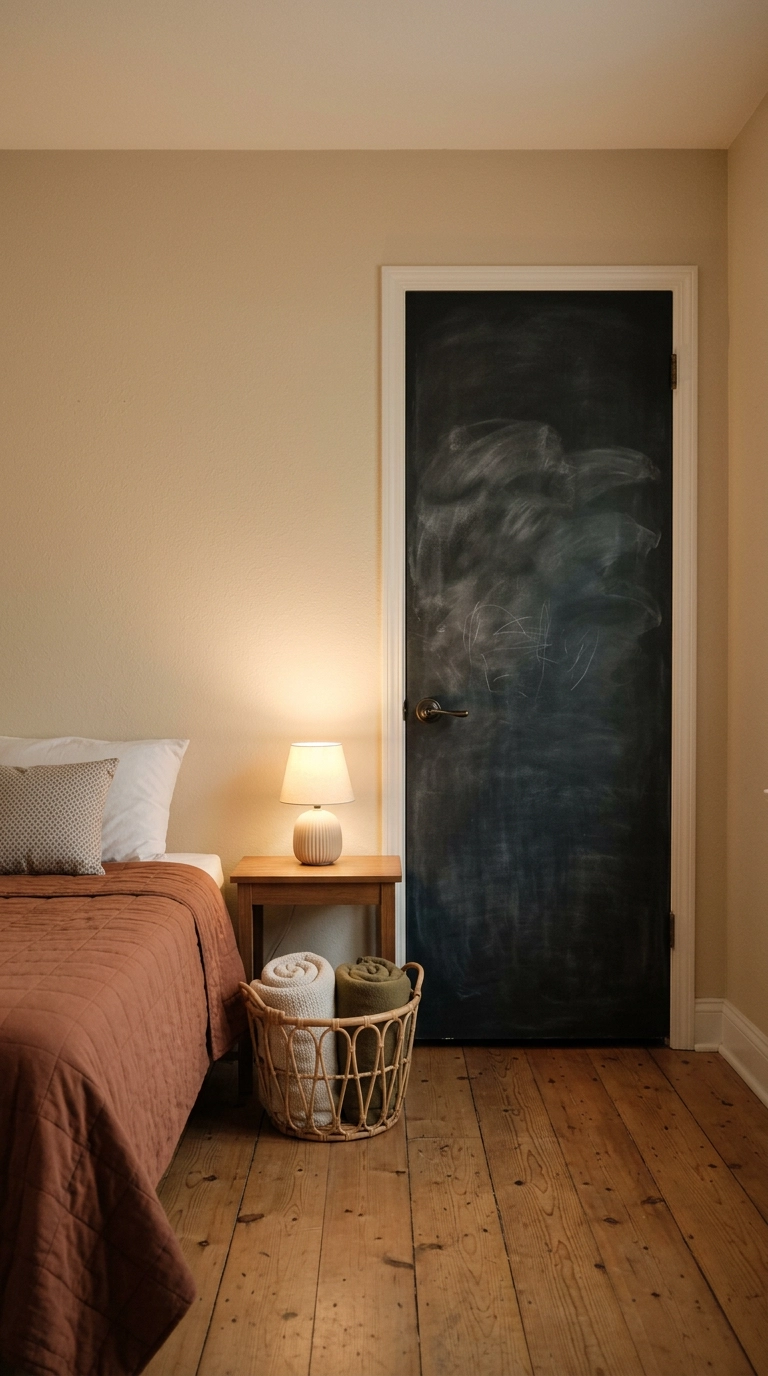
Doors get shut, which means the mess is hidden whenever you want it to be – a feature no wall can offer. It also keeps the drawing surface off your actual walls, which matters more than you’d think when the chalk migrates.
13. A Vertical Chalkboard Growth Chart Column in the Nursery
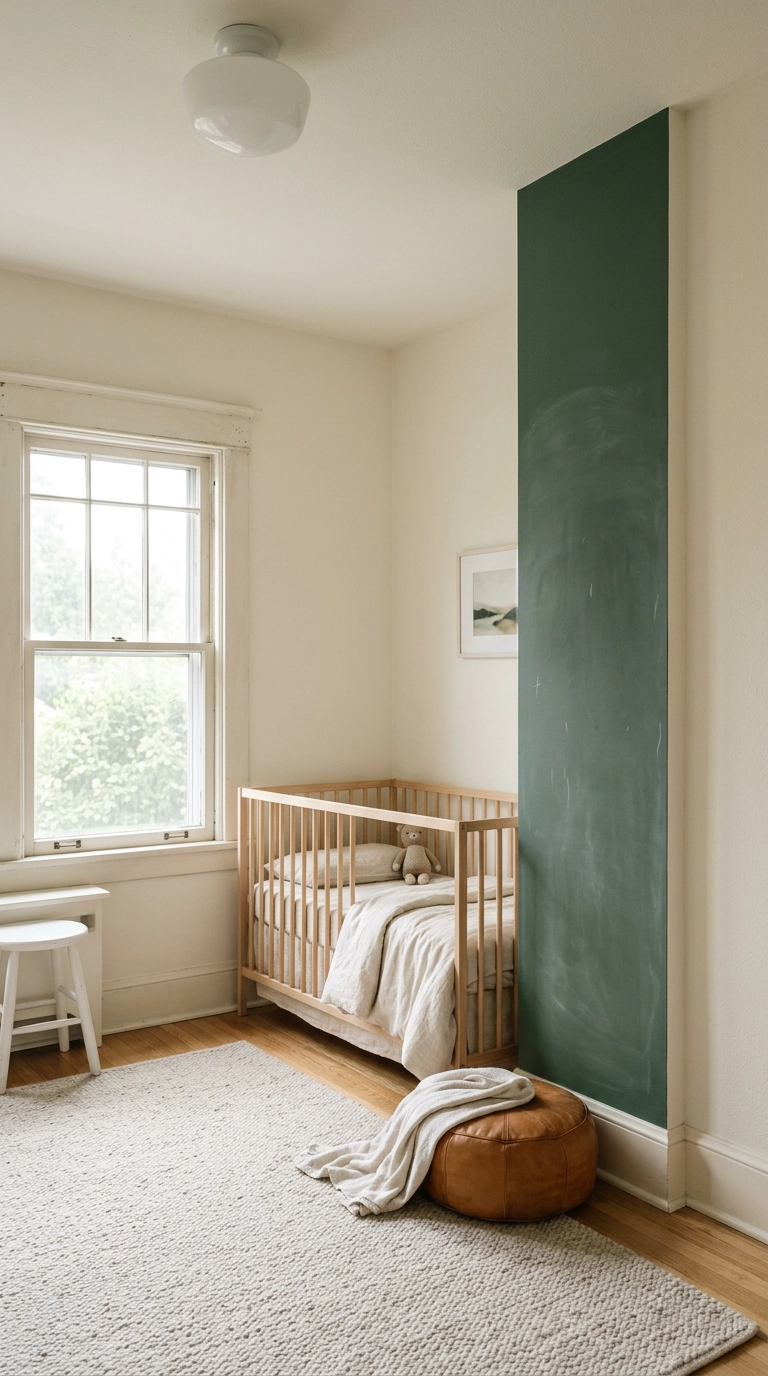
A growth chart is the rare chalkboard use case that improves with time instead of getting stale. A twelve-inch column beside the door costs almost nothing in paint and turns into the thing you photograph every birthday.
14. A Homework Station Chalkboard Above a Built-In Desk
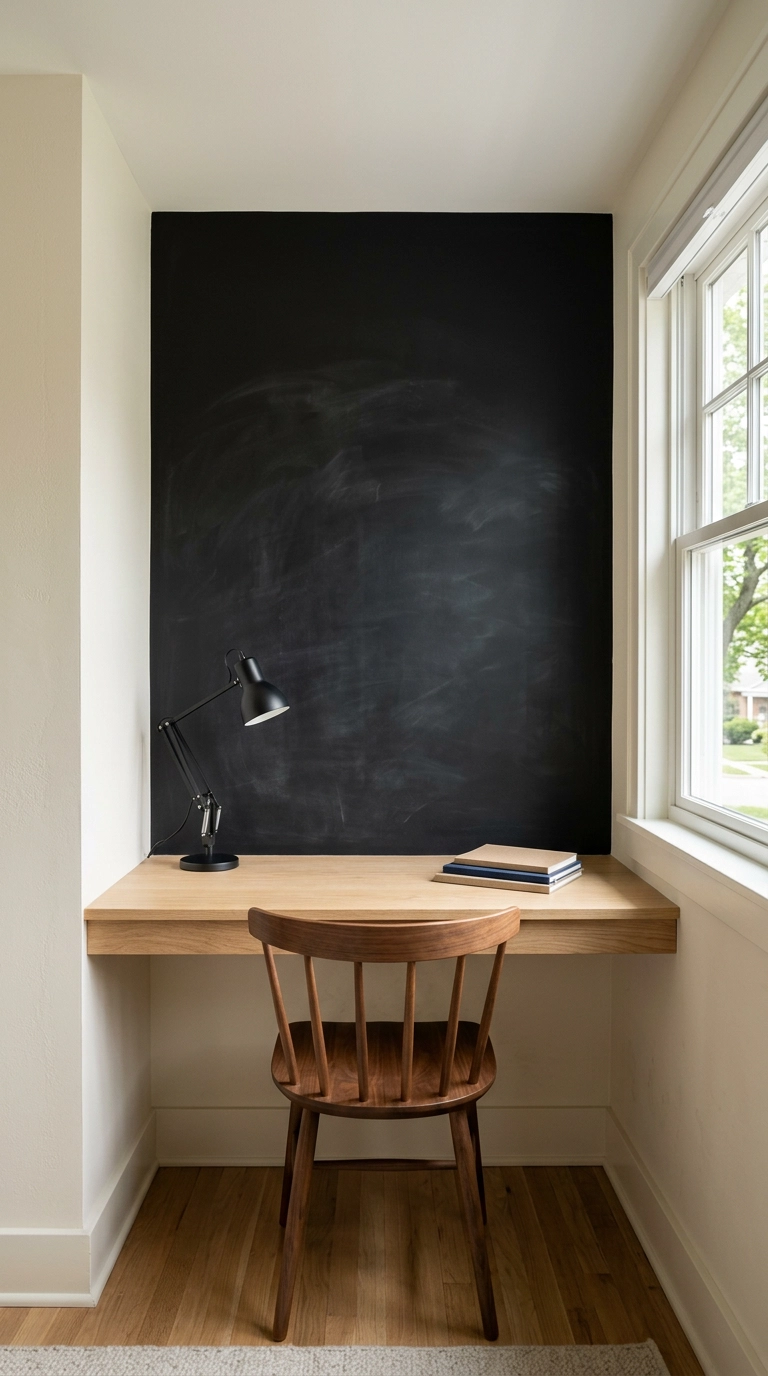
Vertical thinking space above a desk is genuinely useful for anyone working through math or mapping out a project, because you can step back from a wall in a way you can’t from a notebook. Keep the board within arm’s reach when seated, so the bottom edge lands about six inches above the desktop.
15. The Mudroom Family Command Center
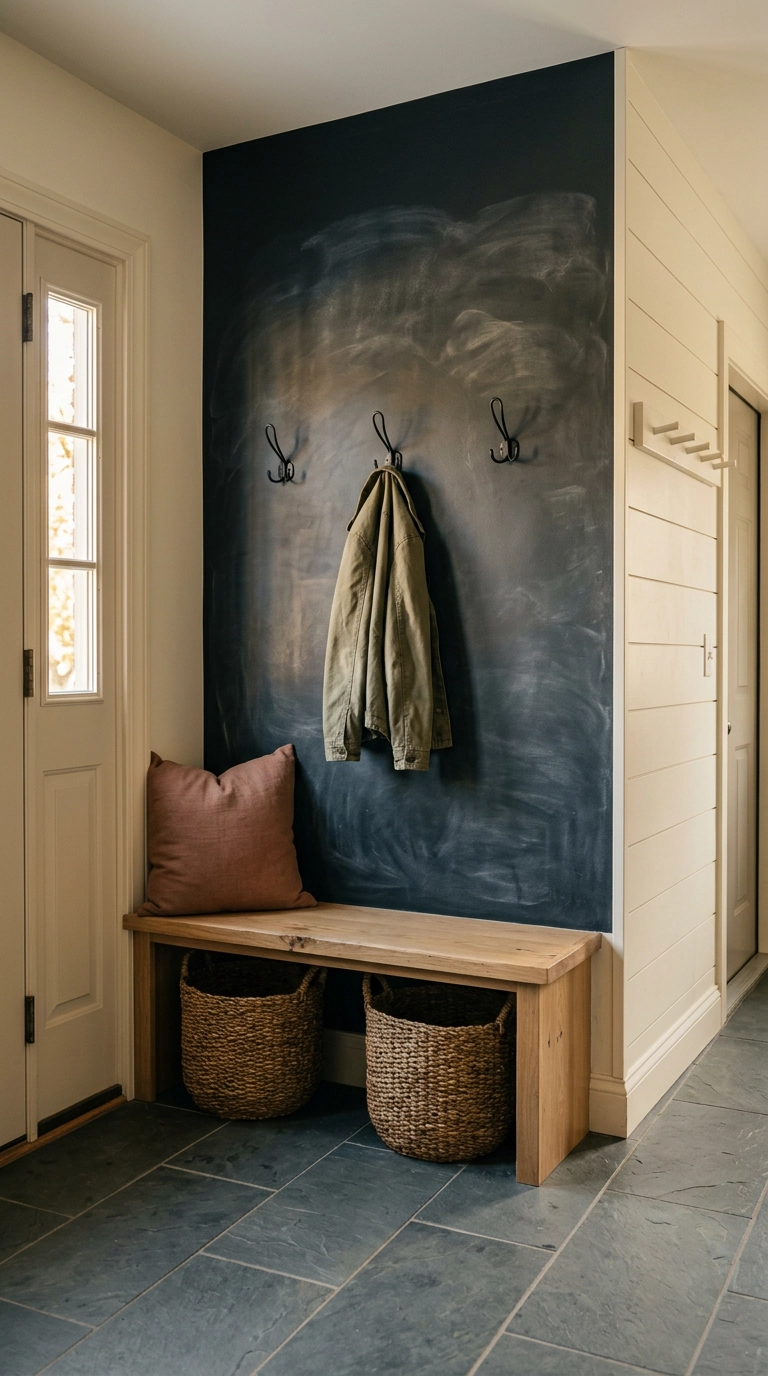
If I could only keep one chalkboard wall in a whole house, it would be this one. The mudroom is a chokepoint everyone passes through twice a day, and a board there gets read whether people mean to or not.
16. A Split Magnetic and Chalkboard Combination Wall
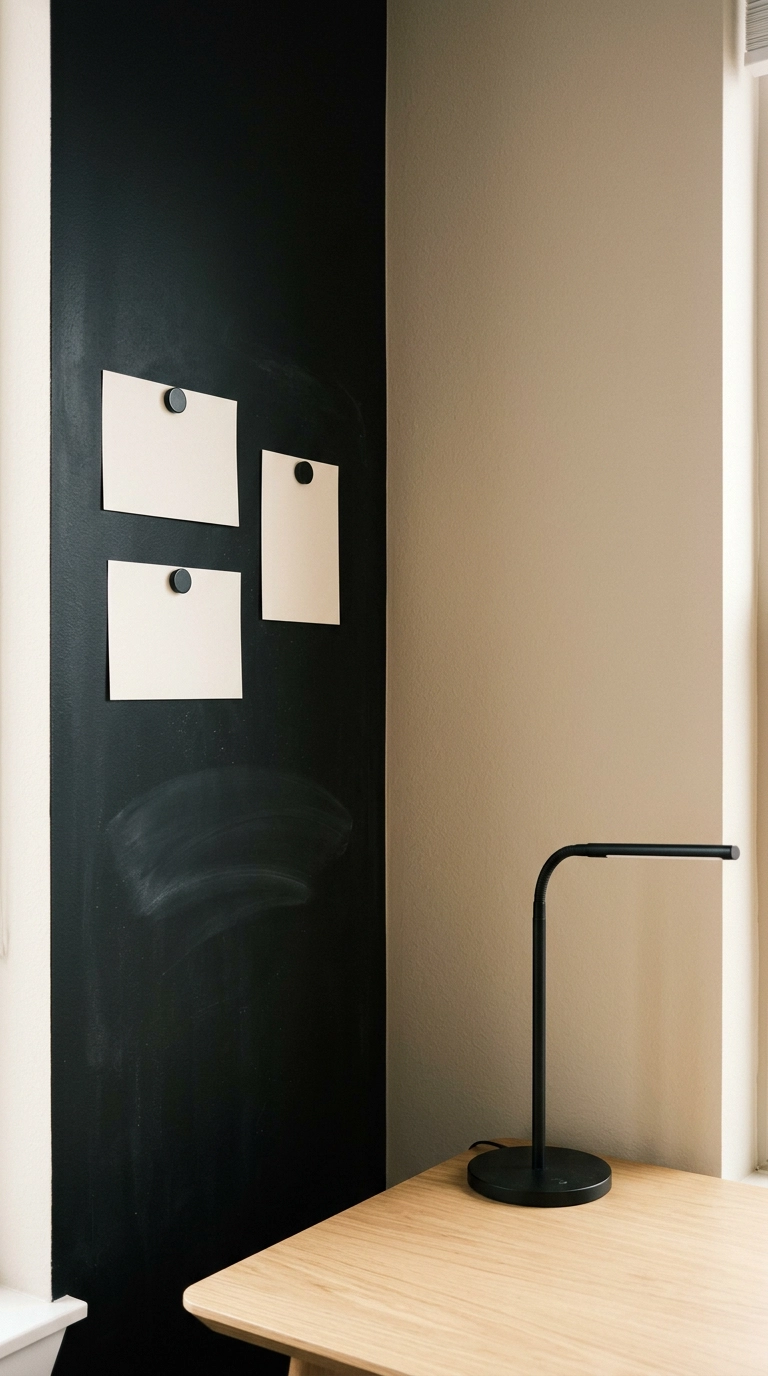
Magnetic primer under chalkboard paint gives you a wall that holds paper and takes chalk, which covers about ninety percent of real household mess. The catch nobody mentions is that magnetic primer needs three or four coats to hold anything heavier than a business card, and each one is thick and gritty.
17. A Full Ideation Wall in the Home Office
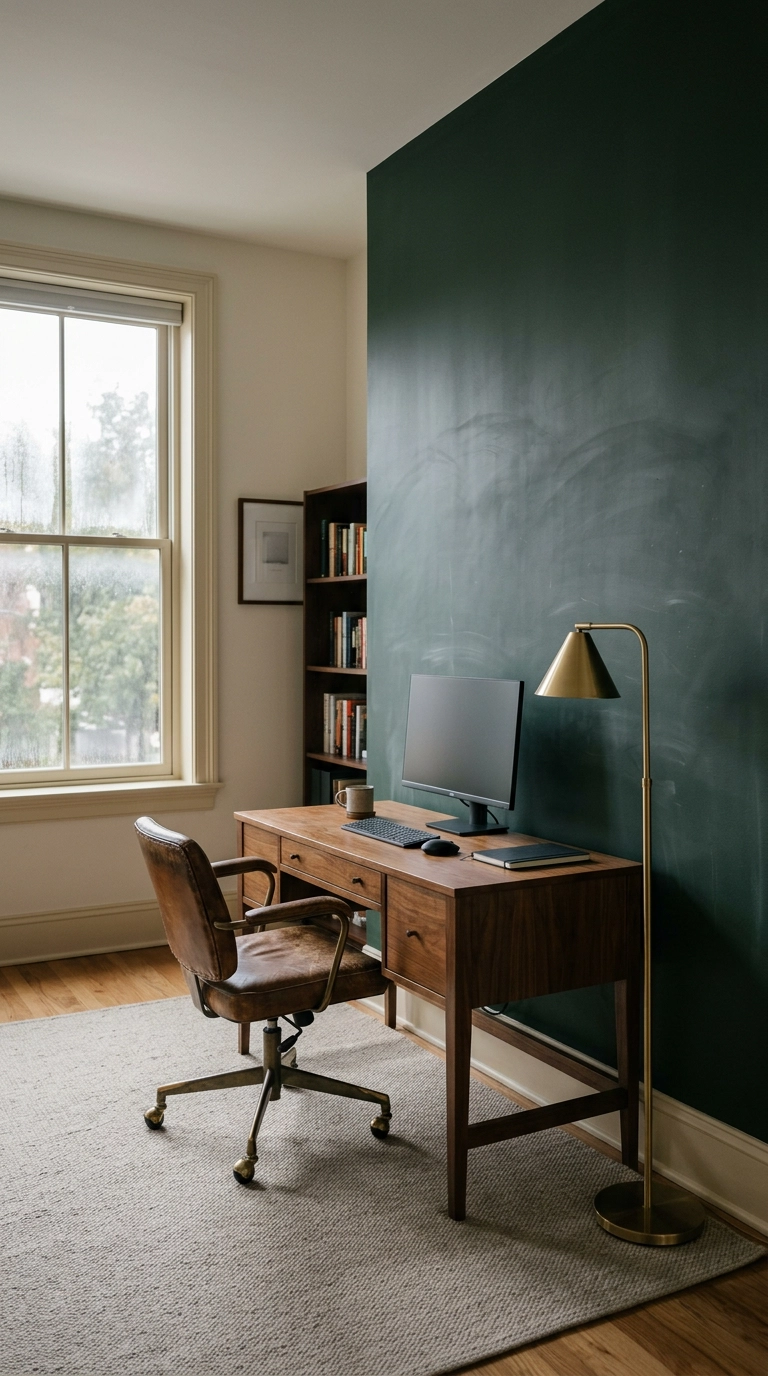
Here’s the design reasoning I give clients: a full chalkboard wall works because it delivers something almost nothing else does, a large uninterrupted field of matte dark color that swallows light and gives every warm material in the room something to push against. That’s why the wood, brass, and leather in a room like this suddenly look richer.
18. A Chalkboard Inset Framed by Picture-Frame Molding
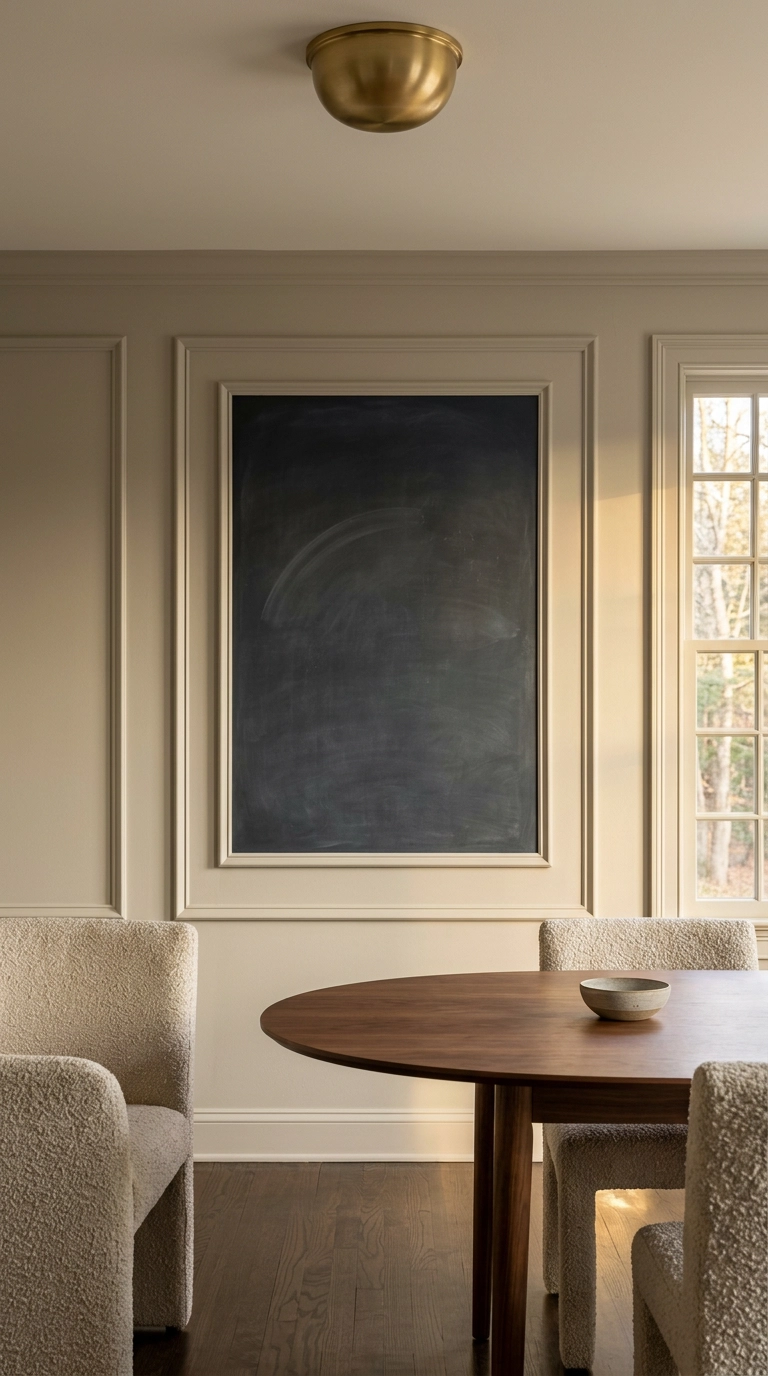
This is my favorite way to make a chalkboard look architectural instead of casual. Apply a rectangle of picture-frame molding – thin decorative trim glued and nailed to the wall in a rectangle – then paint the field inside it as your chalkboard.
19. Deep Forest Green Chalkboard Paint Instead of Black
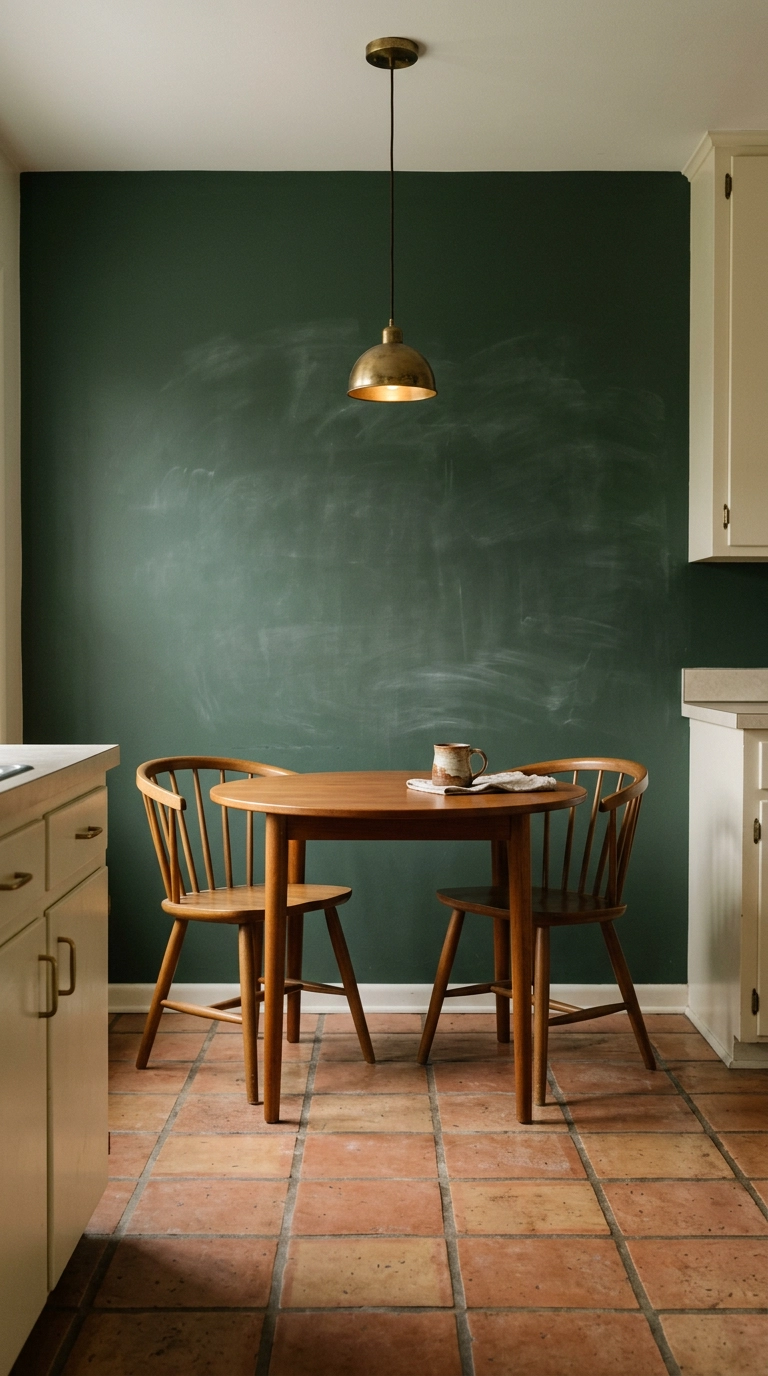
Black chalkboard reads as school, cafe, or industrial depending on what’s around it, but a deep green or a soft charcoal reads as a color choice and lets the room stay warm. Most paint counters can tint a chalkboard base to deep shades, and the writing contrast is barely different.
20. Chalkboard-Painted Cabinet Fronts on an Island Back
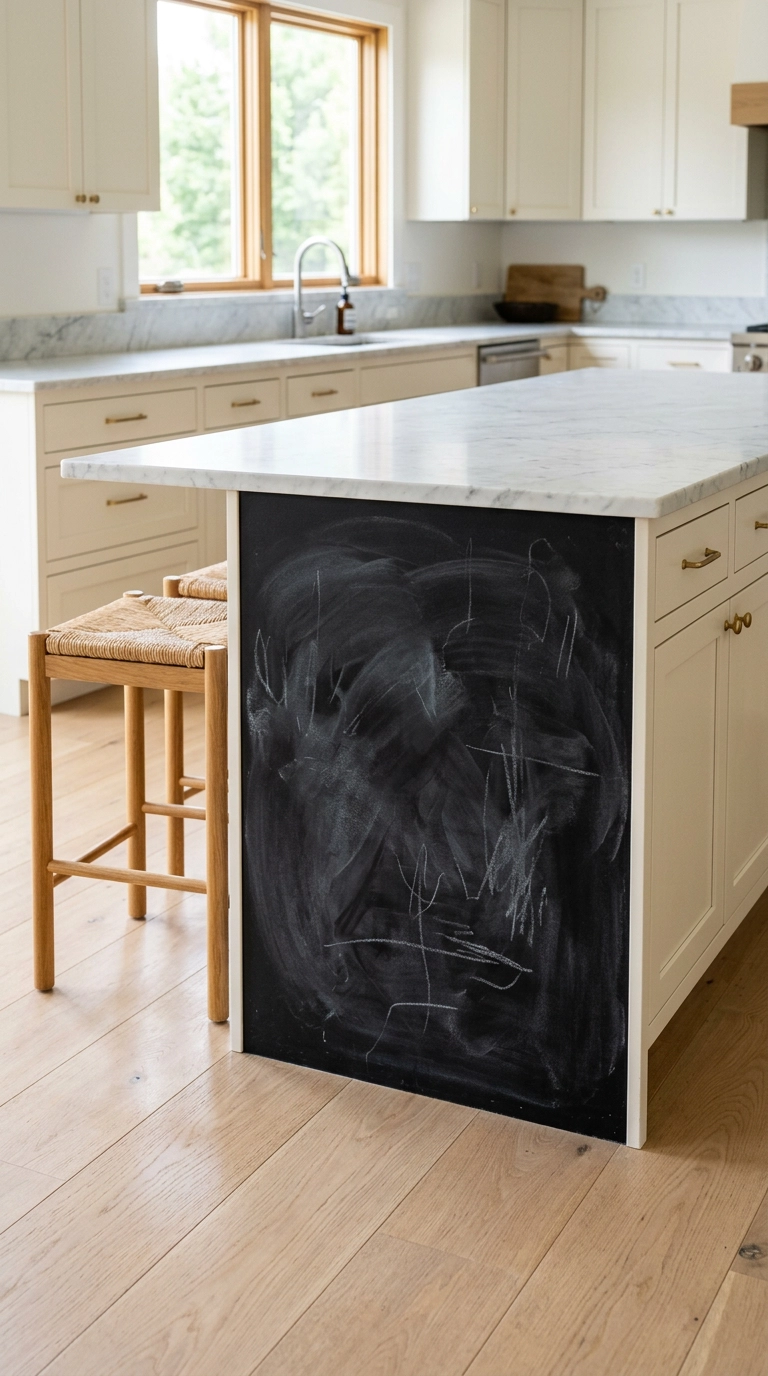
The back of an island is dead space that faces the living area, which makes it the most under-used chalkboard surface in an American open floor plan. It’s also low, so kids can reach it while you cook and stay out of the actual work zone.
21. A Laundry Room Chalkboard for the Things You Always Forget
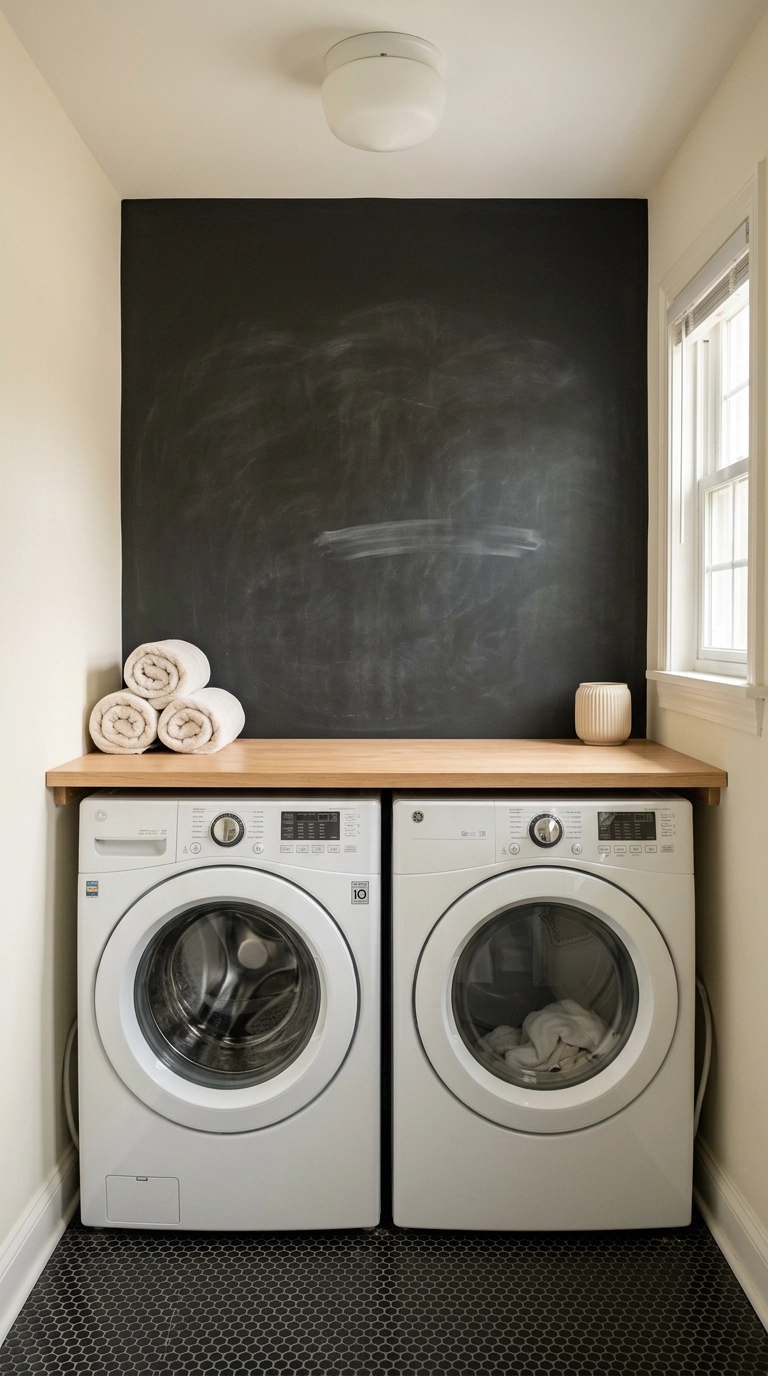
Laundry rooms are where a chalkboard is quietly practical rather than decorative – dry-clean-only items, the cycle you always second-guess, which kid’s uniform needs to be ready by Thursday. Keep it above the machines and roughly counter-width so the proportions feel built-in.
22. A Slim Chalk Ledge and Caddy That Actually Manages the Dust
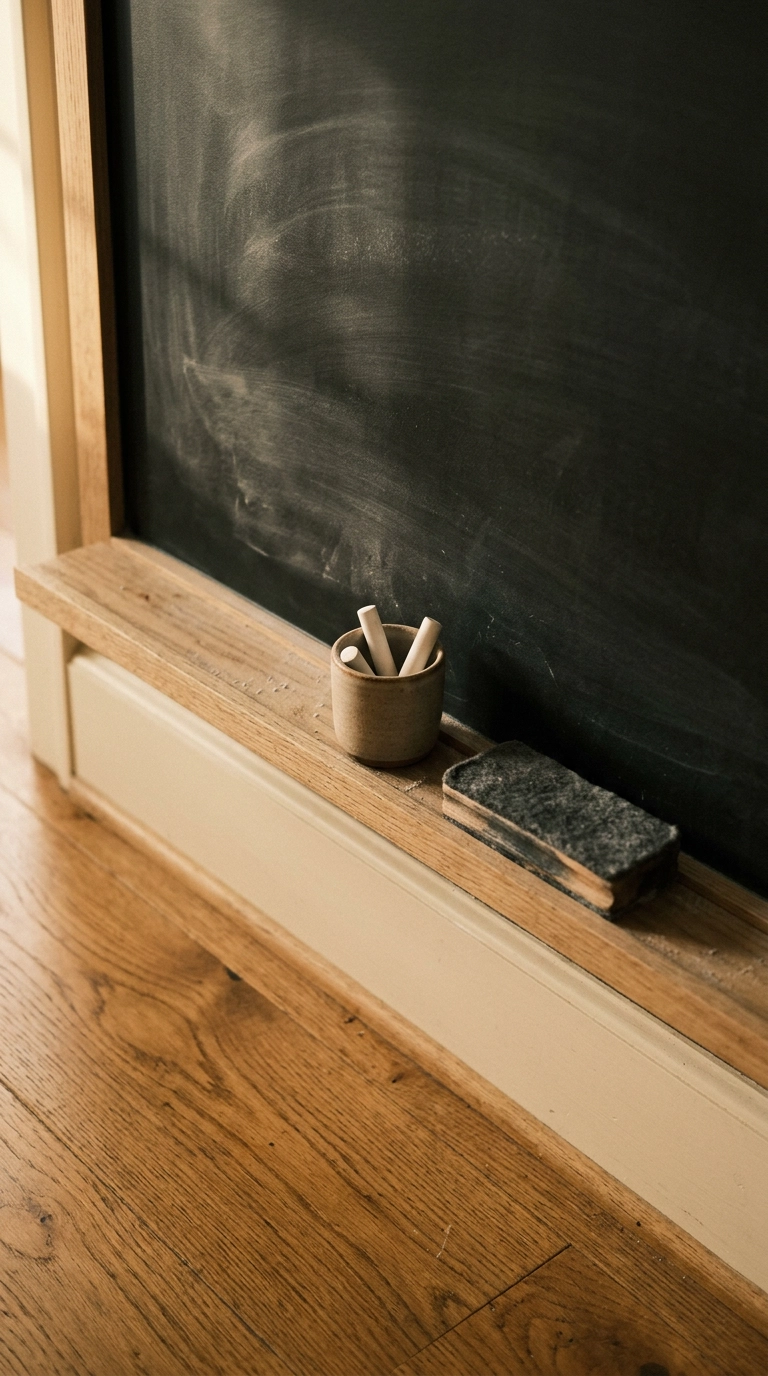
Nobody plans for the dust, and then it’s on the baseboard, the floor, the sofa arm six feet away. A two-inch ledge at the bottom of the board catches most of it and gives the chalk a home so it isn’t rolling around a drawer.
23. A Chalkboard Band Above Hallway Wainscoting
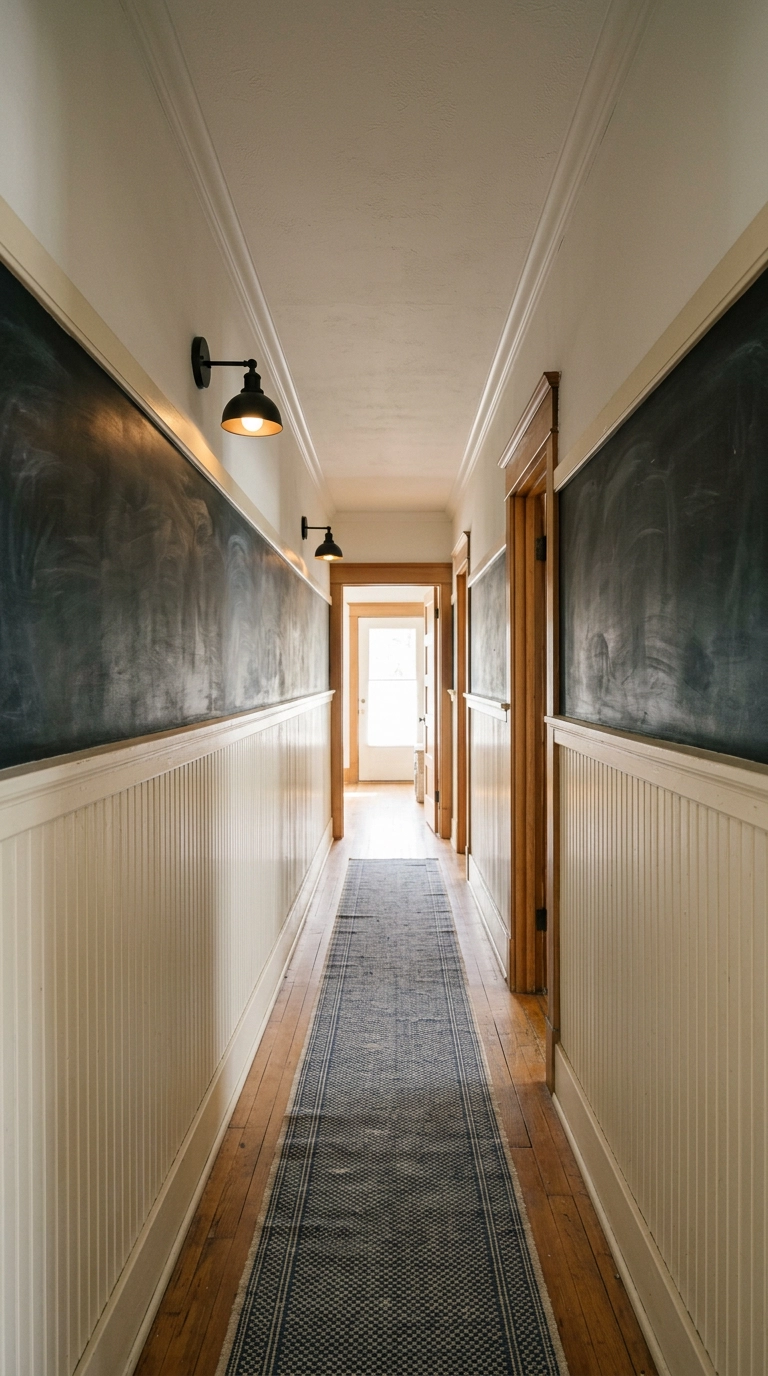
Running a dark band above wainscoting is a proportion trick borrowed from old schoolhouses, and it makes a long narrow hallway feel like it has a horizon line instead of just walls. The wainscoting also protects the lower wall from the scuffing a hallway inevitably takes.
24. A Chalkboard Panel Inside the Closet Door
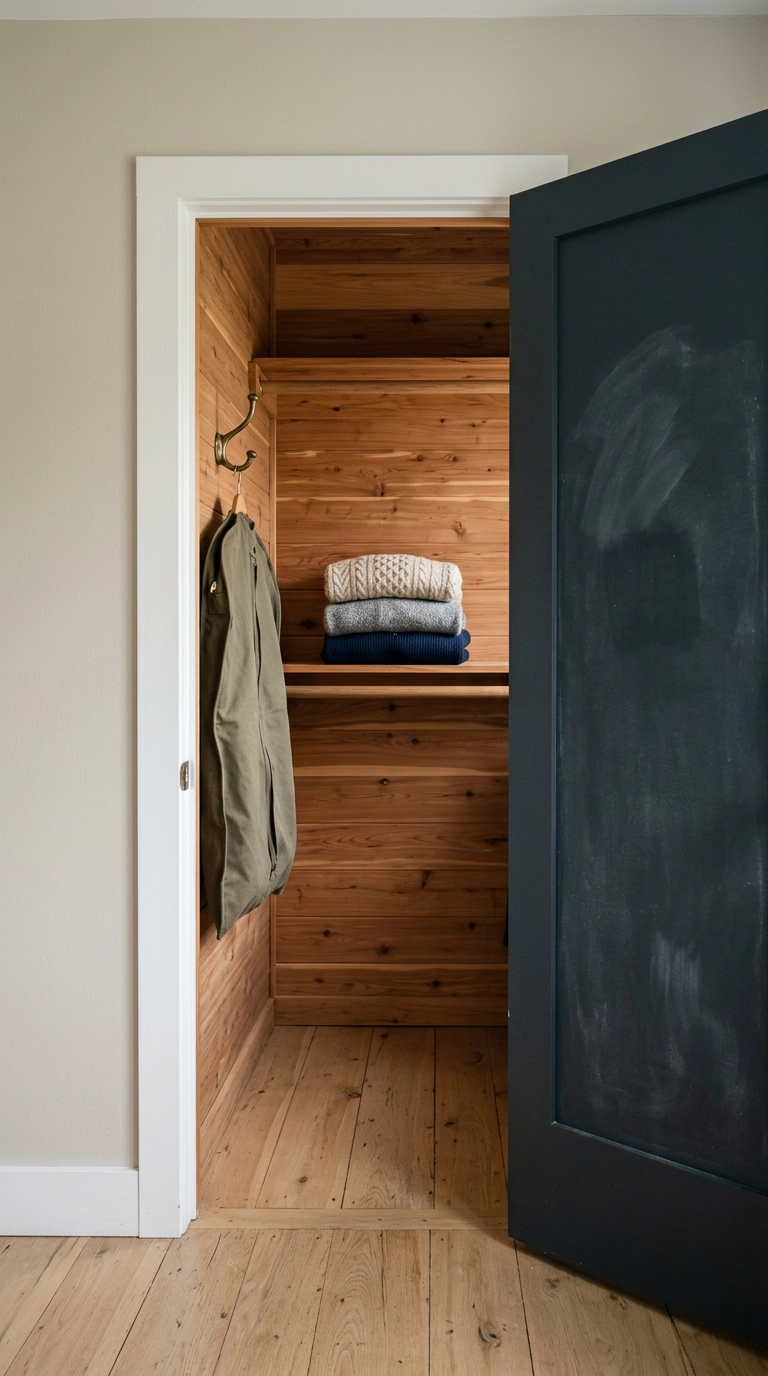
This is the version for people who want the function without a single visible dark surface in the room. Packing lists, capsule wardrobe notes, the dry cleaner reminder – all of it lives behind a closed door.
Before You Open That Can of Paint
If you take one thing from all of this, let it be that placement beats size every time. The chalkboard walls I’ve watched families actually use were in mudrooms, breakfast nooks, and pantry doors – places where somebody stops moving for thirty seconds anyway. The gorgeous full-wall installations in formal dining rooms almost always end up as an expensive dark rectangle with a faint ghost of last Thanksgiving still visible on it, which is its own kind of decor, I suppose.
What’s shifting in 2026 is the move away from stark black toward tinted chalkboard finishes in deep greens, warm charcoals, and even a muted plum, which sit far more comfortably in a room with oak floors and brass hardware. I’m also seeing a lot more restraint in the framing – picture-frame molding around a modest inset instead of a wall-to-wall blackout, which is much closer to how Nate Berkus has always treated dark accents, as a grounding element rather than the whole event. The magnetic-plus-chalkboard combination has quietly become the most requested version in family homes, and honestly, it deserves it.
My real advice: start small and cheap. Try the framed leaning panel or a single cabinet door for a month, watch whether anyone in your house actually writes on it, and only then decide whether to commit a whole wall and a three-day cure. And remember to season the surface with chalk before the first drawing, because I have personally lived with a ghosted stick figure for two years and I don’t recommend it. If you want more of this kind of unglamorous, tested-in-real-houses advice, sign up for my weekly newsletter – I send one email, it’s short, and it’s usually about the stuff nobody puts on the paint can.