28+ Elegant Italian Garden Decor Ideas that Look Expensive and Timeless in 2026

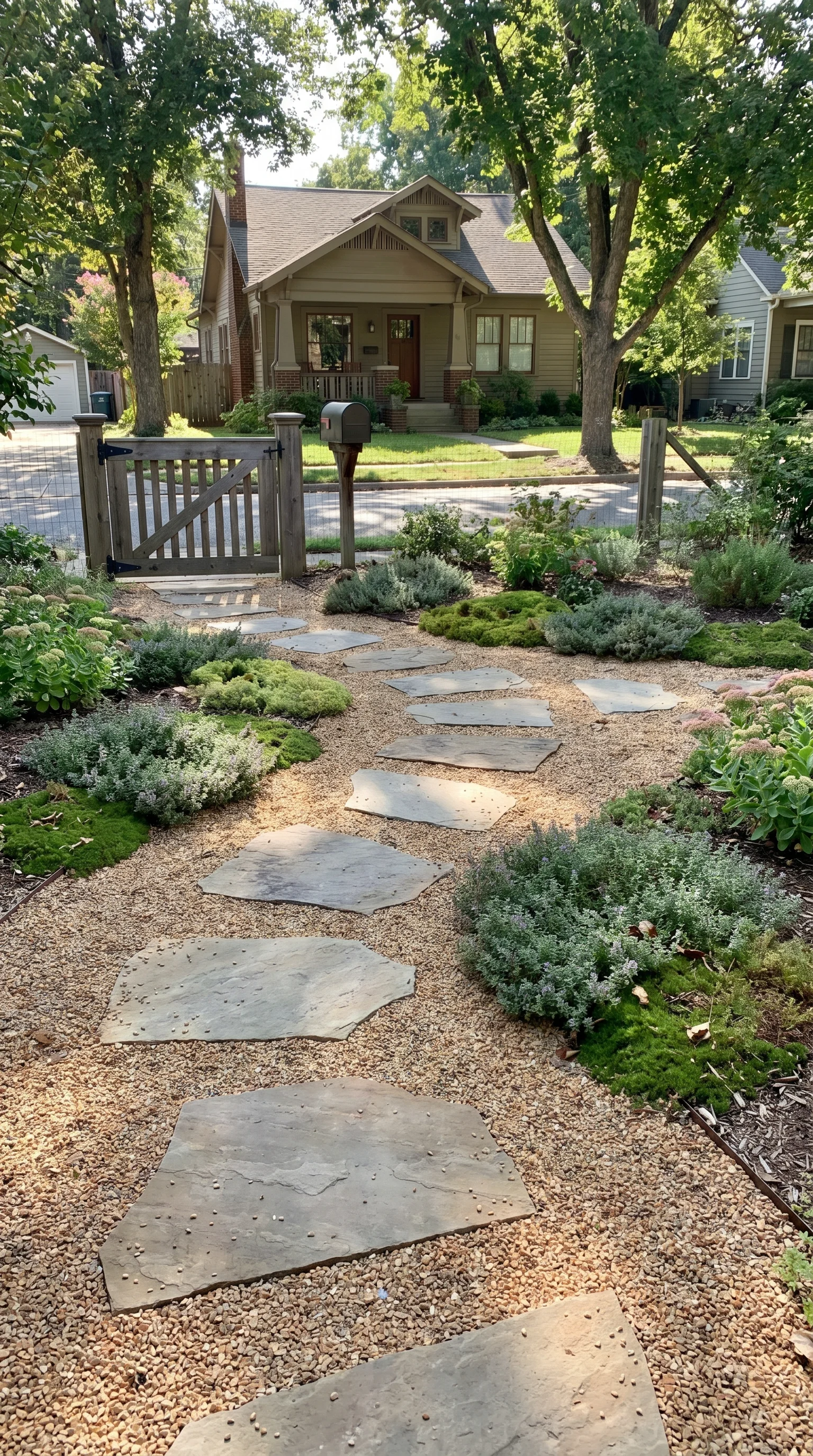
I need to say the unglamorous part first: I do not have a Tuscan villa, and neither do you. What I do have is a 22 by 30 foot backyard in a normal American subdivision, and it reads Italian anyway, because the Italian look was never about acreage. It is about structure, symmetry, gravel, terracotta, and a stubborn refusal to plant forty different flowers. Everything below works on a patio, a side yard, a courtyard, or a condo balcony, and I will tell you honestly which ones are a weekend of gravel and which ones are a real hardscape spend.
Italian Garden Decor Ideas
Two principles carry this entire list, so let me get them out of the way. First, structure beats abundance. An Italian garden is built from clipped shapes, straight lines, and repeated pots, not from a riot of blooms, which is why it still looks composed in February when everything else looks like a wet paper bag. Second, axis and focal point: pick one straight sightline through your yard, put something worth looking at on the far end of it, and mirror the planting on either side. That single move does more than any plant purchase.
The palette stays deliberately boring in the best way. Green, stone, and terracotta, with almost no bright color, because when you strip out the competing hues your eye reads texture and shape instead, and texture is what makes a small yard feel intentional rather than crowded.
1. Three Graduated Terracotta Pots Grouped at a Corner
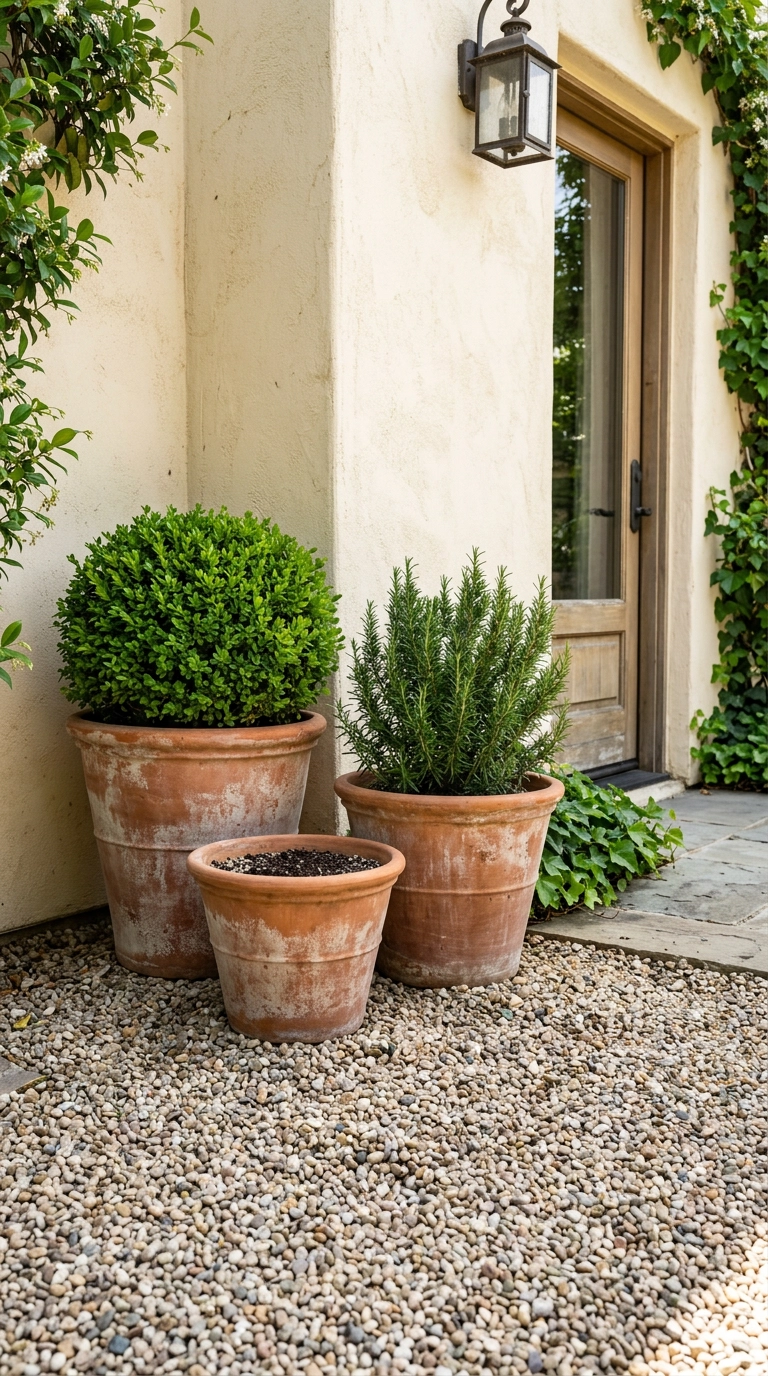
If you do one thing off this list, do this one. Buy three unglazed terracotta pots in stepped sizes, roughly a 16-inch, a 12-inch, and an 8-inch, and cluster them tight in a corner rather than spacing them out along a wall.
2. A Pea Gravel Courtyard Instead of More Lawn
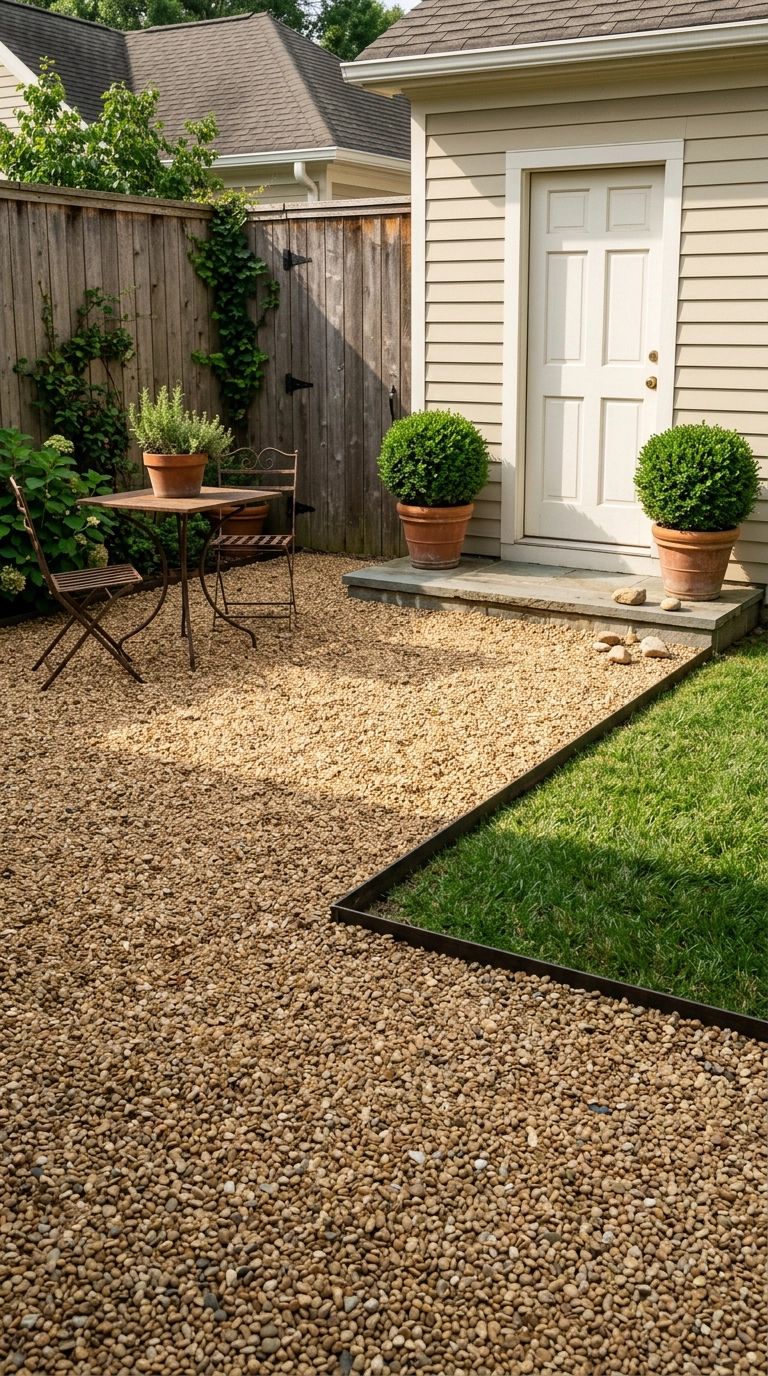
Gravel is the cheapest way to make a yard feel Italian, and honestly the cheapest way to stop mowing. Lay landscape fabric, set steel or aluminum edging, and spread about two inches of pea gravel or decomposed granite, which is roughly one weekend and a few hundred dollars for a small courtyard.
3. Italian Cypress as Vertical Punctuation
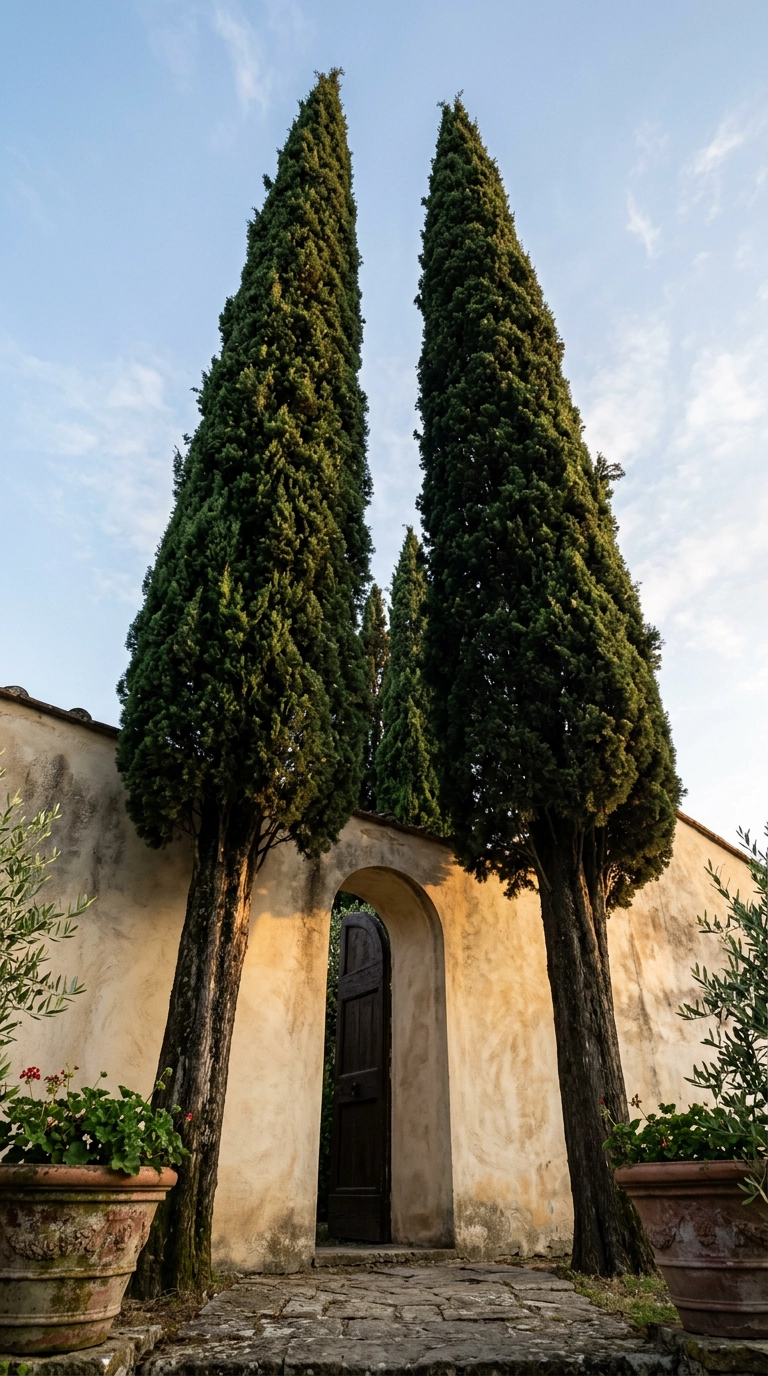
Nothing says Italy faster than one skinny dark exclamation point of a tree. Use them in pairs to frame a door, a gate, or the end of a path, never scattered randomly around the yard, because their whole job is to mark a spot.
4. A Small Boxwood Parterre You Can Actually Maintain
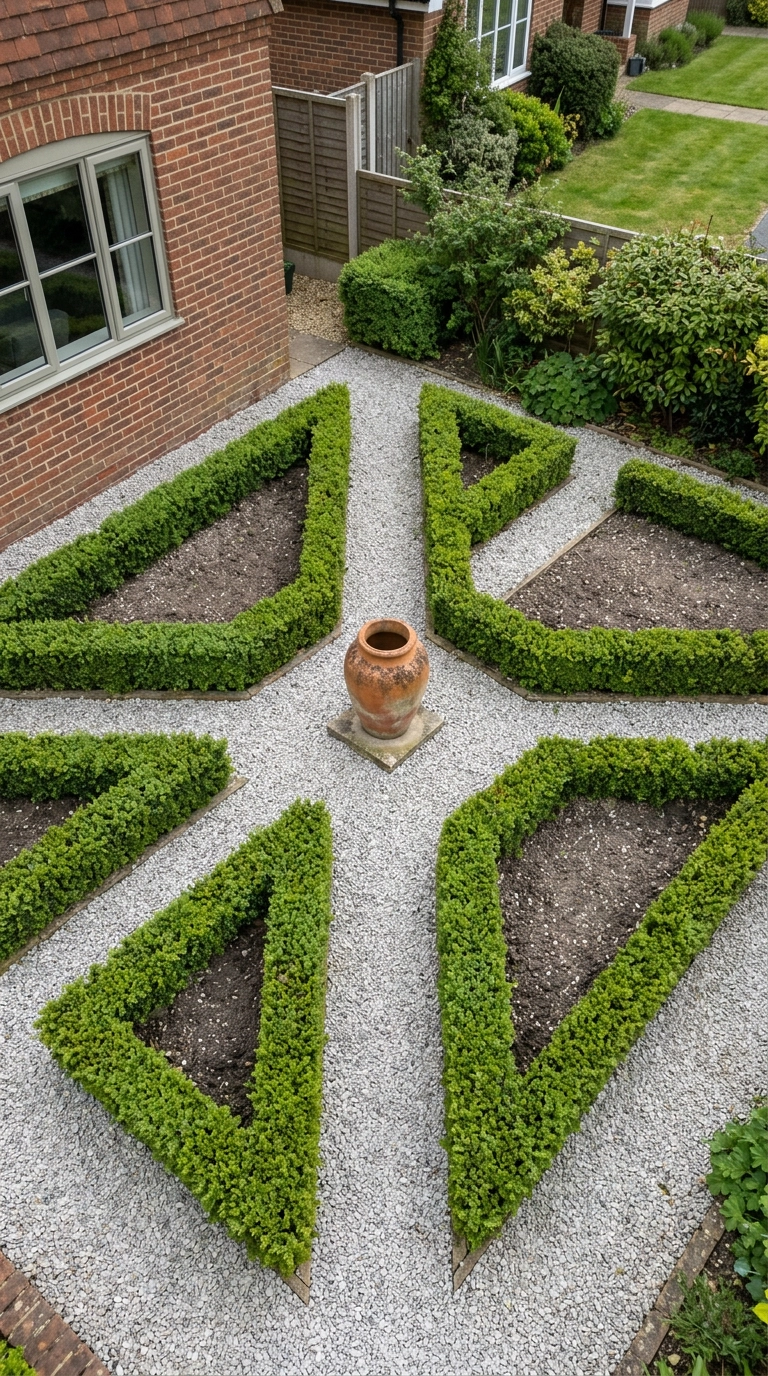
A parterre just means low hedges clipped into a pattern you look down on, and you do not need a hundred feet to pull it off. A 10 by 10 square split into four beds with gravel paths and one urn in the middle is plenty, and it looks composed all winter.
5. A Pair of Potted Olive Trees Flanking the Door
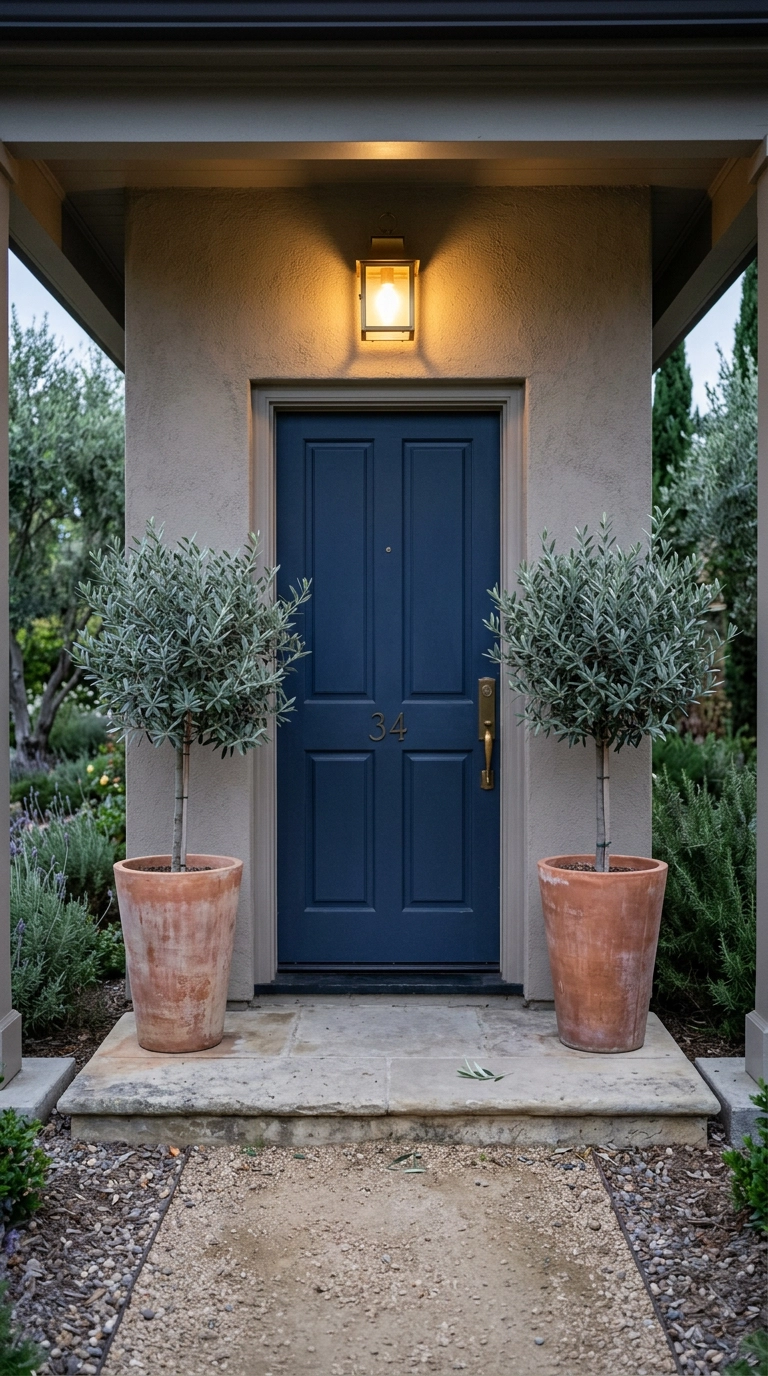
Olive is the color of an Italian garden more than the shape of one. That dusty silver-green cools down warm brick or beige stucco instantly, and a matched pair on either side of a door is the single most reliable symmetry trick there is.
6. Mirror Your Planting Down the Middle
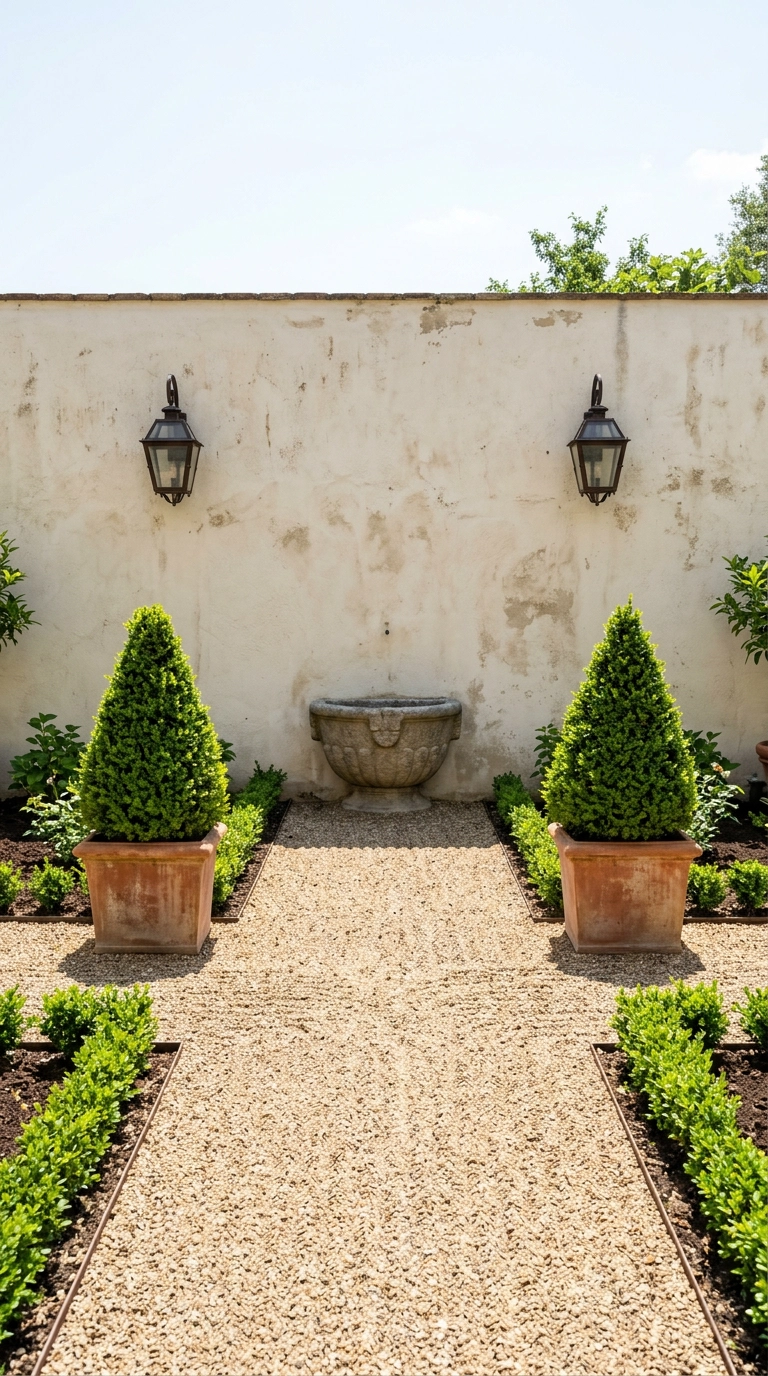
This is less a purchase and more a rule: whatever you put on the left, put its twin on the right. Two pots, two lanterns, two cypress, two clipped balls, all evenly spaced from a center line you choose and commit to.
7. A Wrought Iron Bistro Table for Two
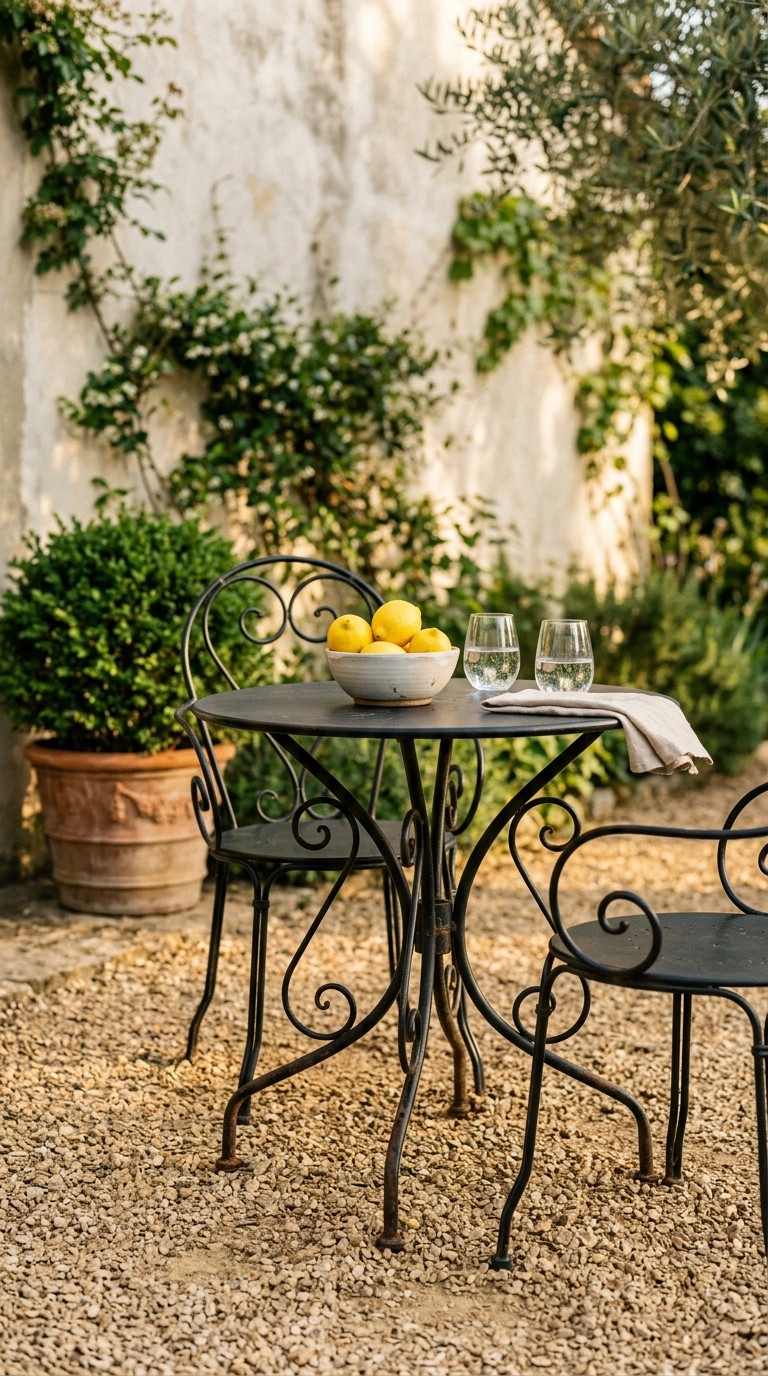
A 24 to 30 inch round iron bistro set is the highest ratio of Italian atmosphere to square footage in existence. It fits on a balcony, in a gravel nook, or at the end of a side yard where a full dining set would never go.
8. One Lemon Tree in a Pot, Overwintered Indoors
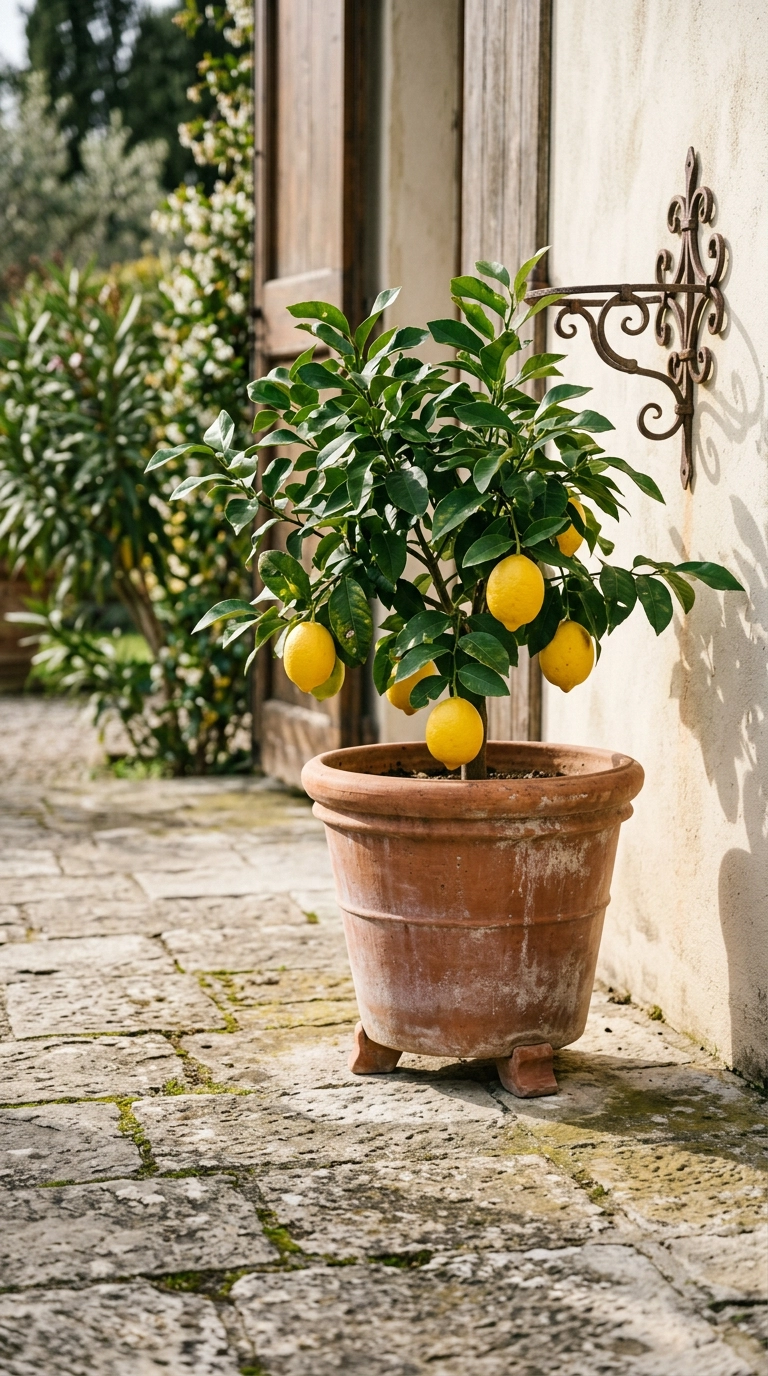
A single potted lemon is the one place I allow real color into this palette, because yellow against terracotta is the Italian pairing. Dwarf Meyer is the forgiving choice and stays manageable at four or five feet in a 16 to 20 inch pot.
9. A Long Gravel Path with Something Worth Walking Toward
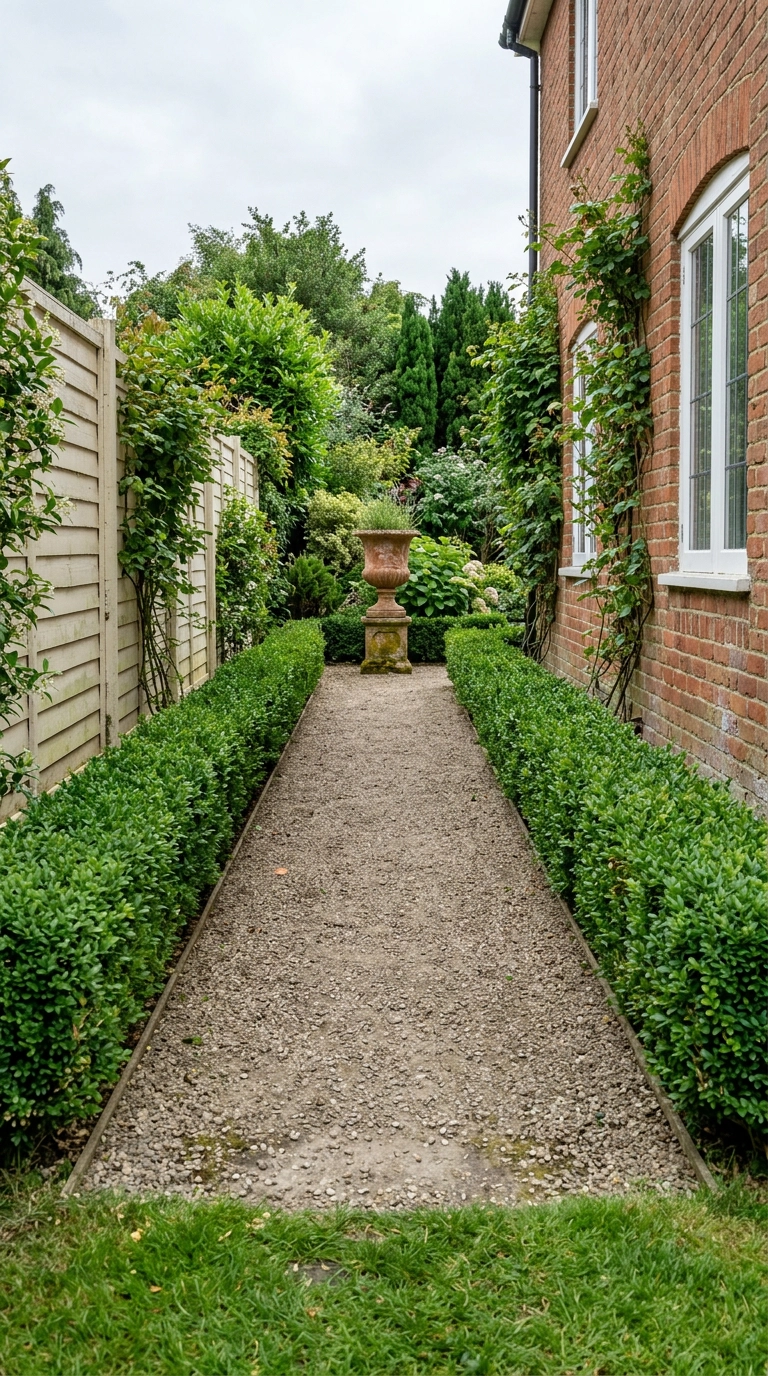
Here is the axis idea in plain English: stand at your back door, look for the longest straight view you have, and put one good object at the end of it. That is it. That is the trick that makes formal Italian gardens feel intentional.
10. Clipped Hedges as the Bones of the Whole Garden
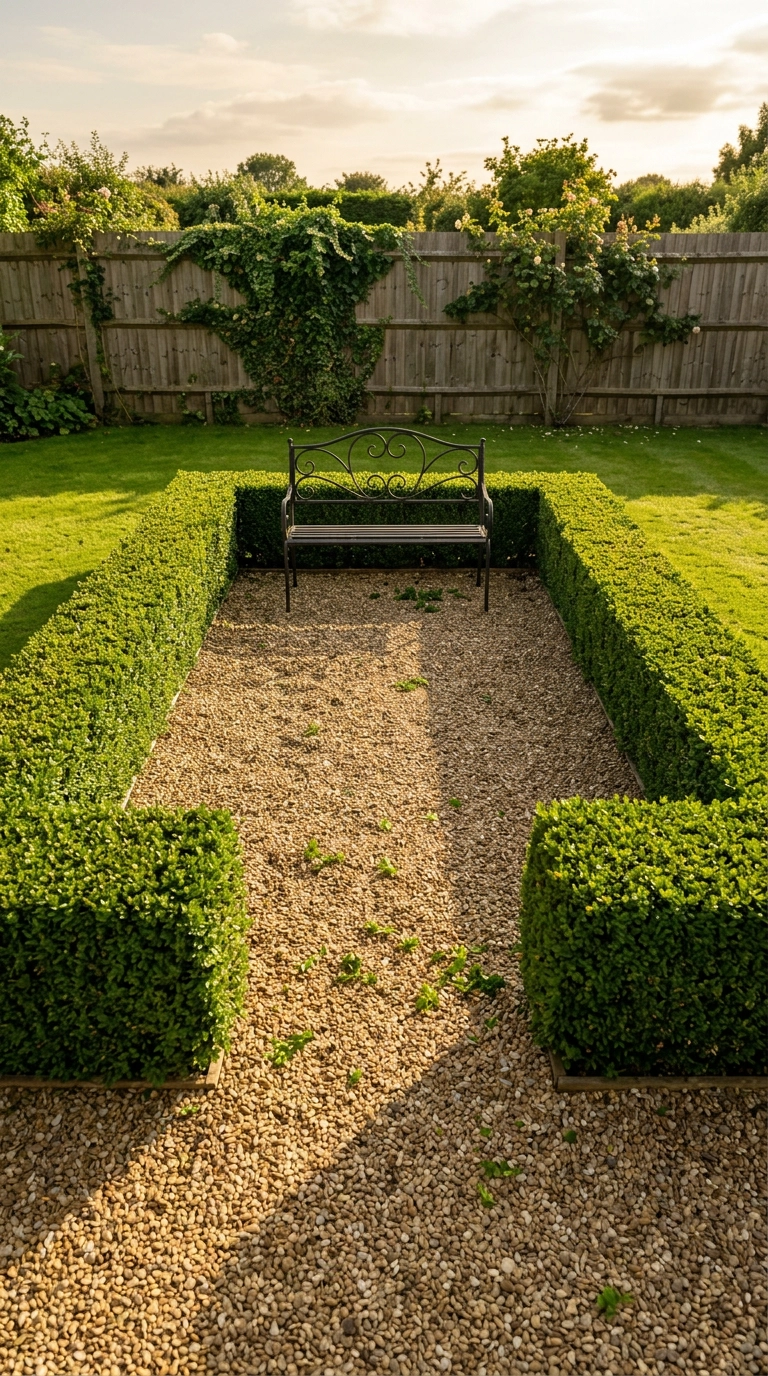
Flowers come and go, hedges hold the room together. A knee-high clipped line around a terrace or a bed does the same job an area rug does indoors, which is telling your eye where one zone stops and another starts.
11. A Tiered Pedestal Urn as the Garden’s One Sculpture
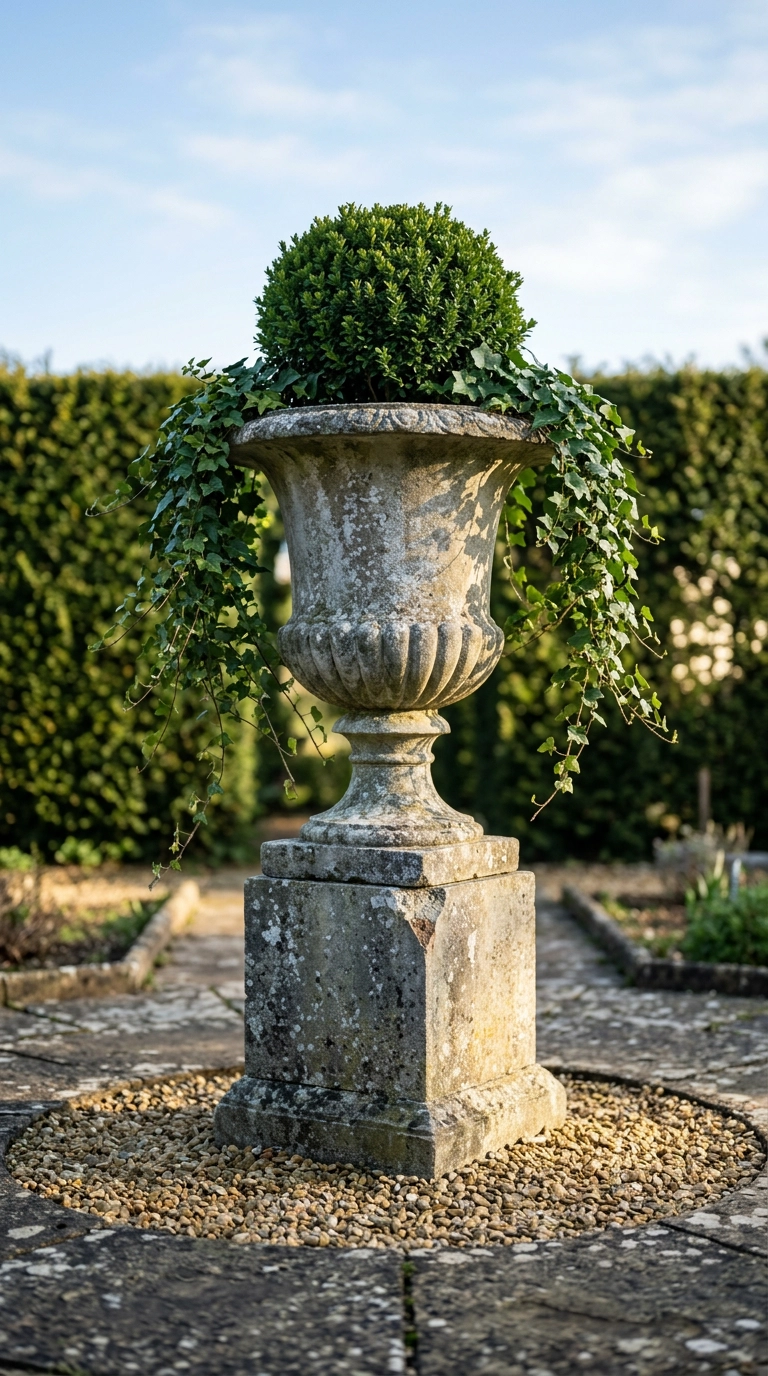
One raised urn on a plinth is the classic end-of-axis object, and it works because height plus a pale color makes it the brightest, tallest thing in a green scene. Cast stone or fiberglass-cement composites give you the look without a forklift.
12. A Rosemary and Lavender Border Instead of Flowers
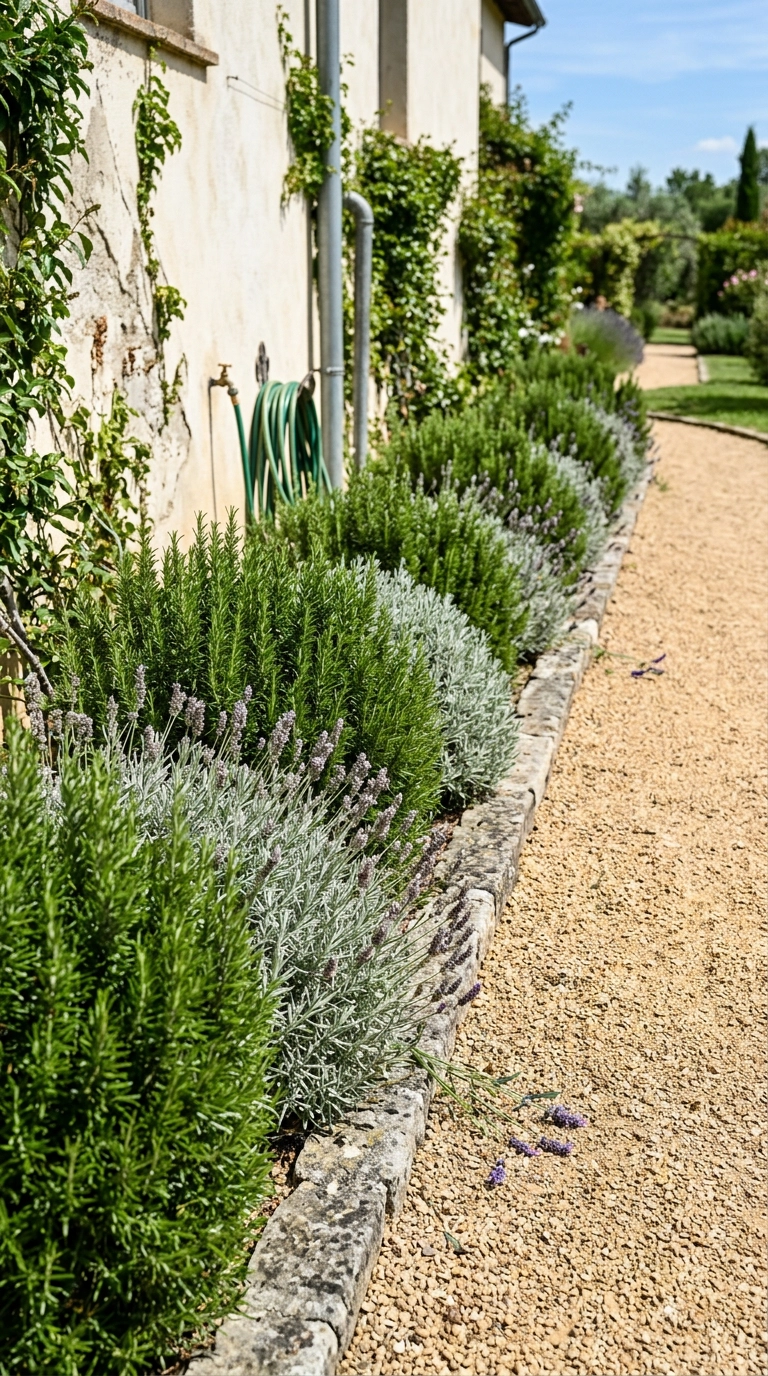
Silver-leaved herbs are the Italian answer to a flower border: they are structural, they smell incredible when you brush past, and they stay tidy if you shear them lightly after bloom. Plant them in a straight line, not a drift.
13. A Wall Fountain on the Blank Stucco Wall
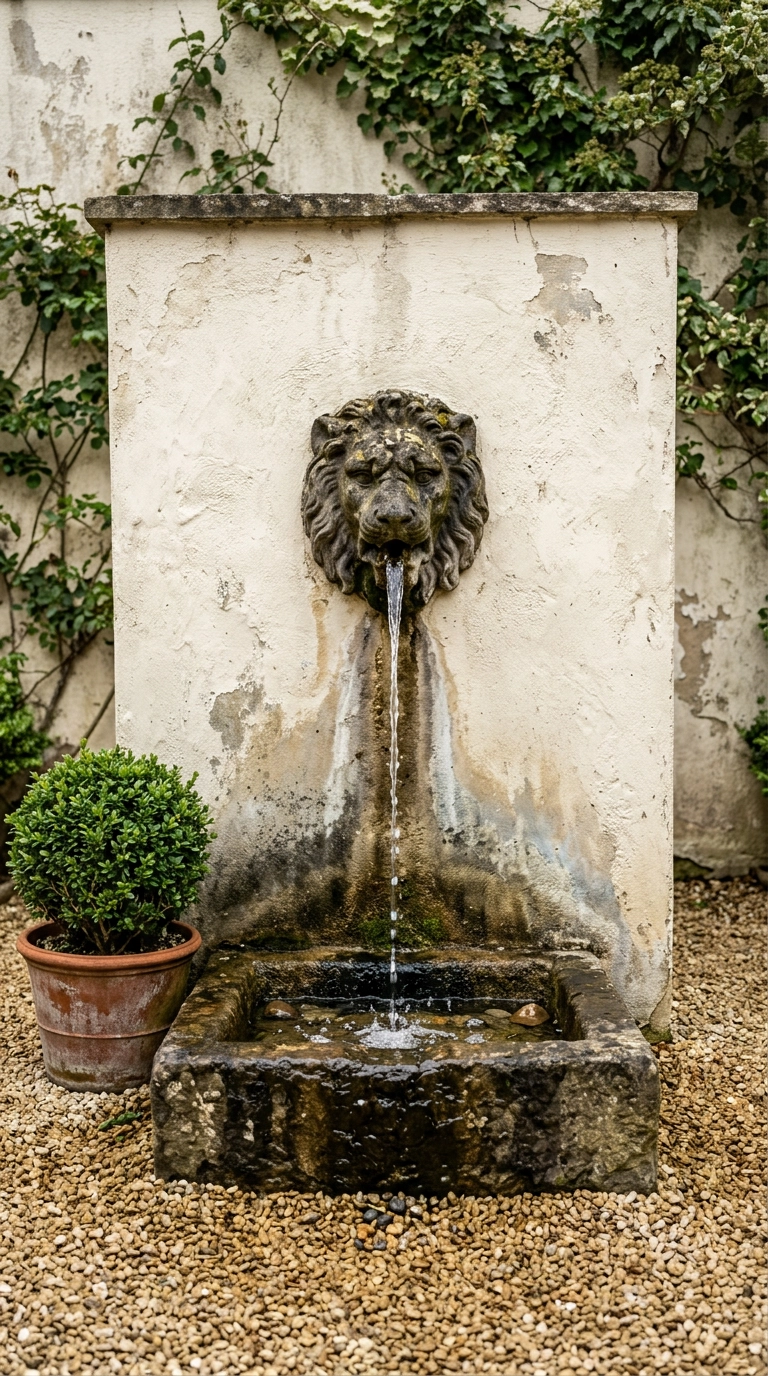
I am not going to pretend this is cheap. A real wall fountain means a mounted stone or composite mask, a basin, a recirculating pump, and a nearby outdoor outlet, and once you include the electrical it is a low-four-figure project for most people.
14. A Simple Stone Basin or Low Bubbler
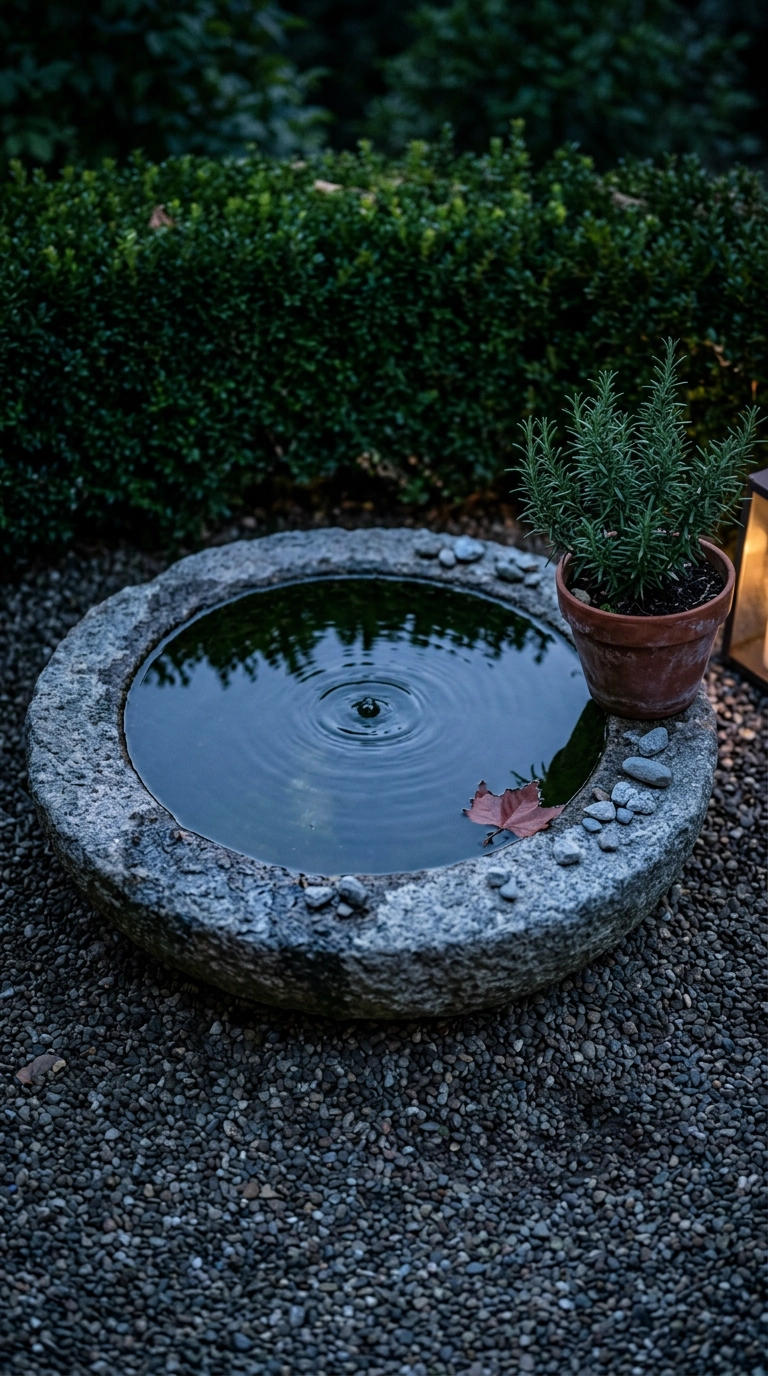
If a wall fountain is out of reach, a basin on the ground is the honest alternative and in some ways the more elegant one. A carved stone or concrete bowl with a small submersible pump running a quiet bubbler is a couple hundred dollars and an afternoon.
15. A Pergola with Grapevine or Wisteria Overhead
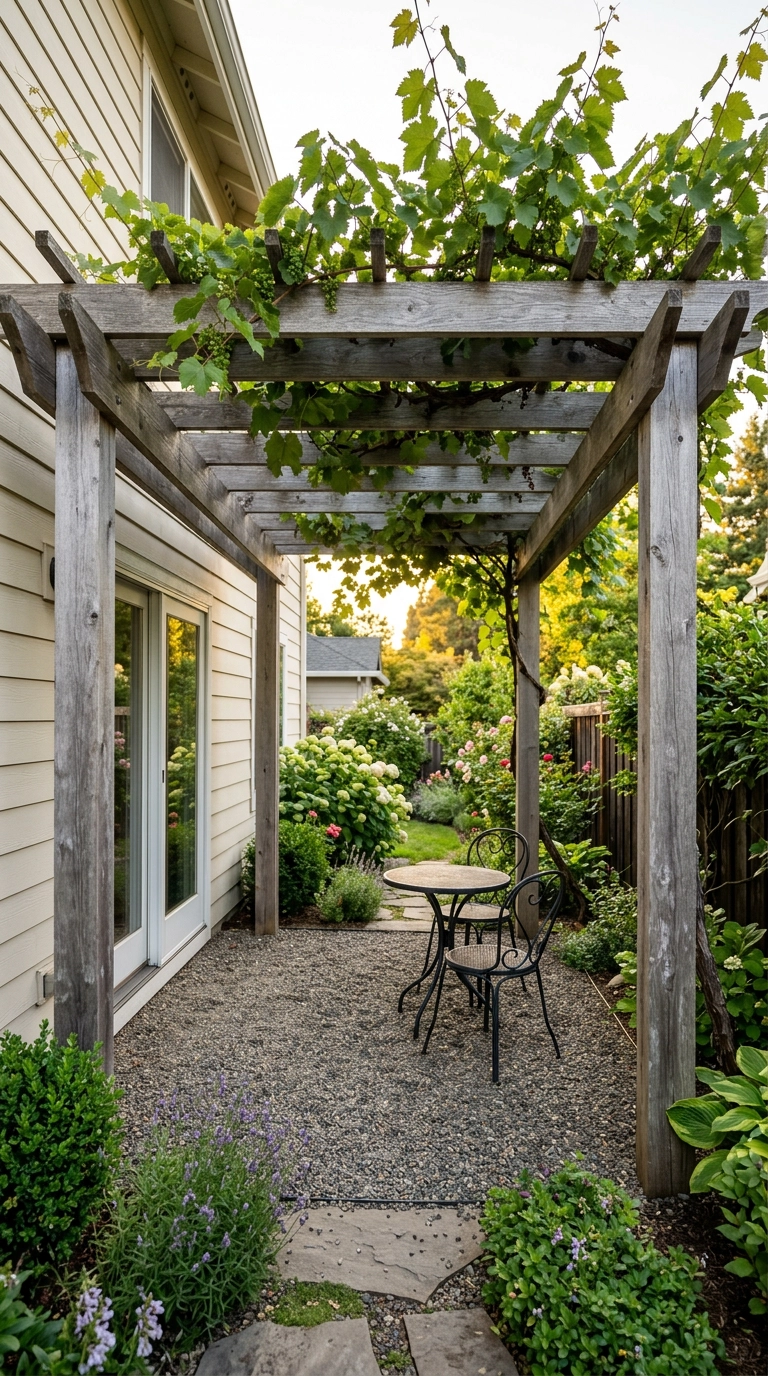
A pergola gives you the one thing a flat suburban yard lacks: a ceiling. Overhead structure makes an outdoor space feel like a room, and dappled light on gravel is the most Italian light there is.
16. A Gravel Dining Terrace Under a Canopy
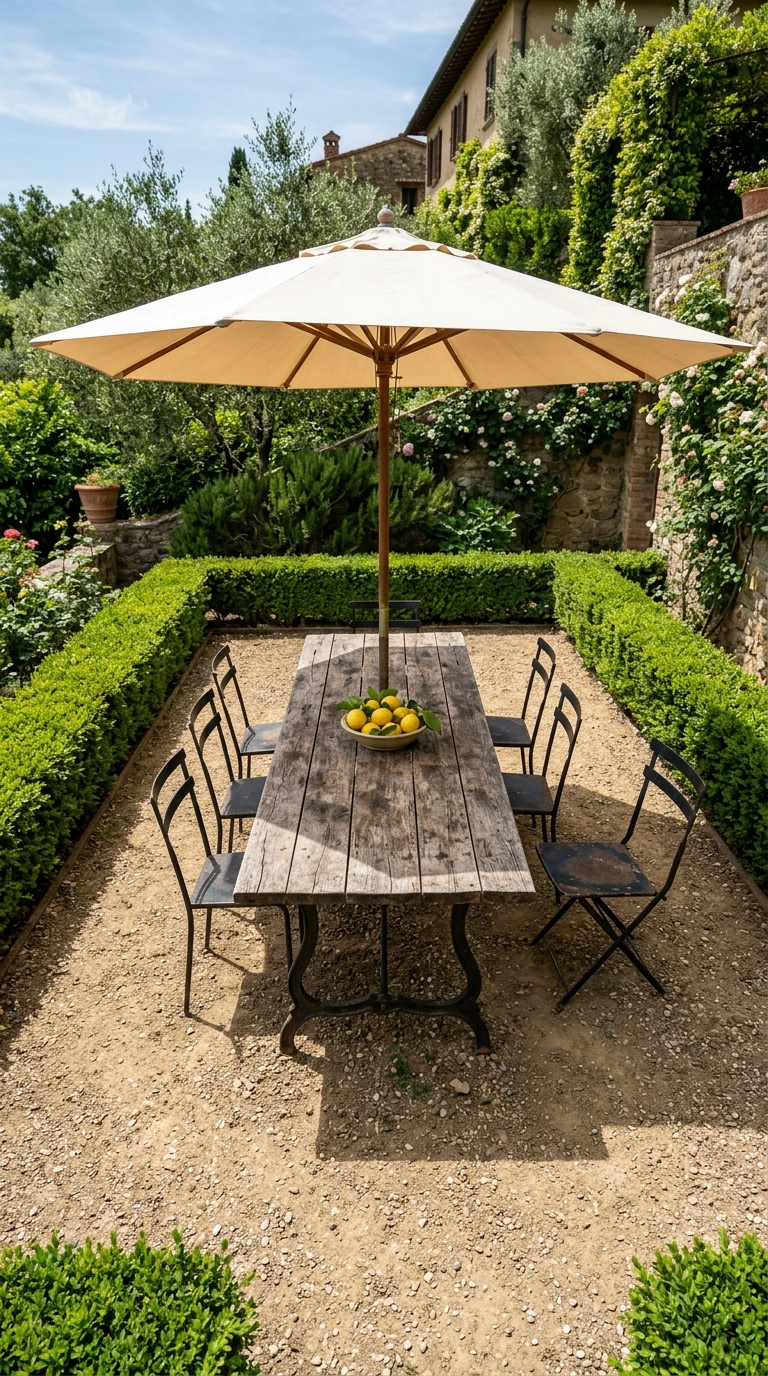
Gravel makes a better dining surface than most people expect, as long as you compact it and keep it to about two inches over a firm base. Chairs slide fine, spills disappear, and nothing needs sealing.
17. Travertine or Limestone Pavers for the Hard Terrace
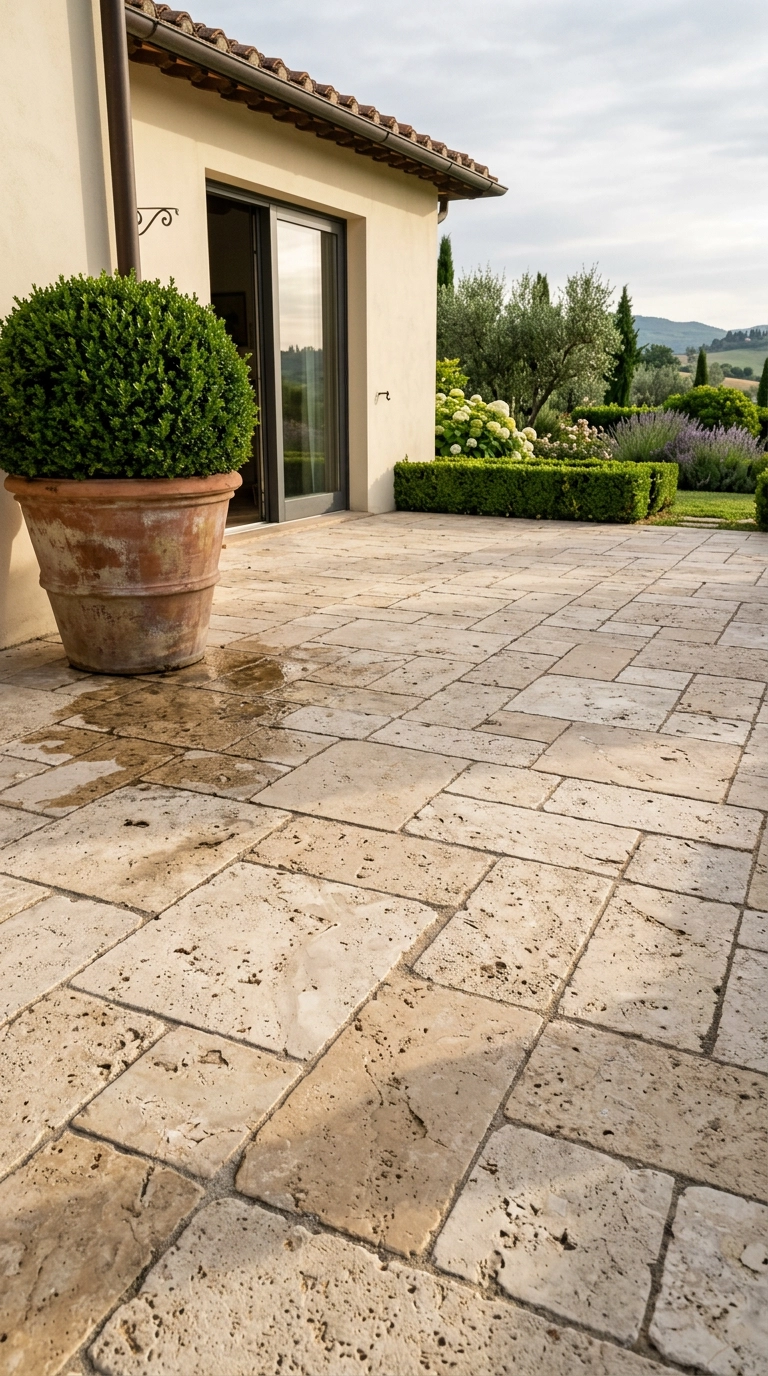
If you are replacing a slab or building new, tumbled travertine is the material that reads Italian without trying. It stays cooler underfoot than concrete or dark stone, and that warm ivory tone flatters terracotta better than grey pavers ever will.
18. Brick Laid in Herringbone
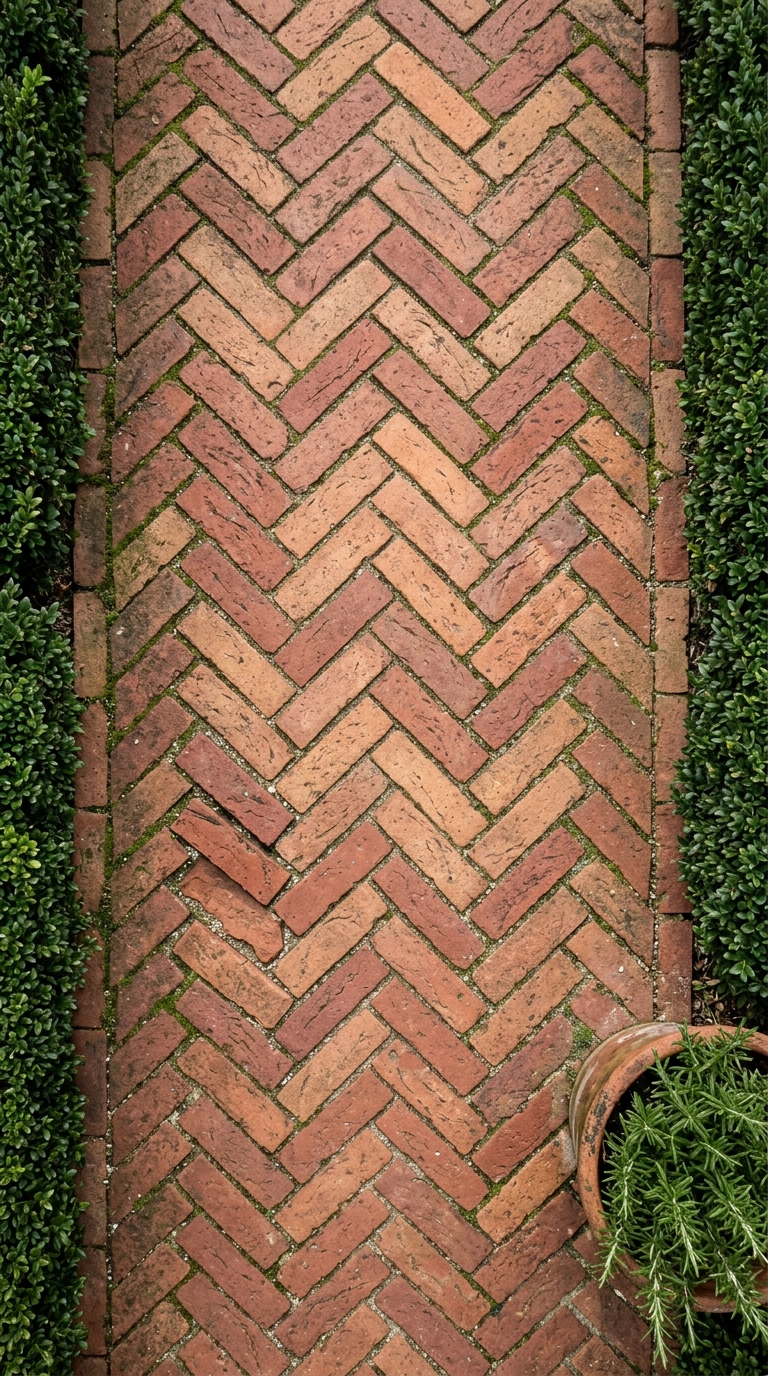
Herringbone is the pattern to use when you want brick to look old-world rather than 1990s builder. The 45-degree version, where the courses run diagonally to the path edges, is the most forgiving because it hides a slightly out-of-square layout.
19. A Limewashed or Stucco Garden Wall
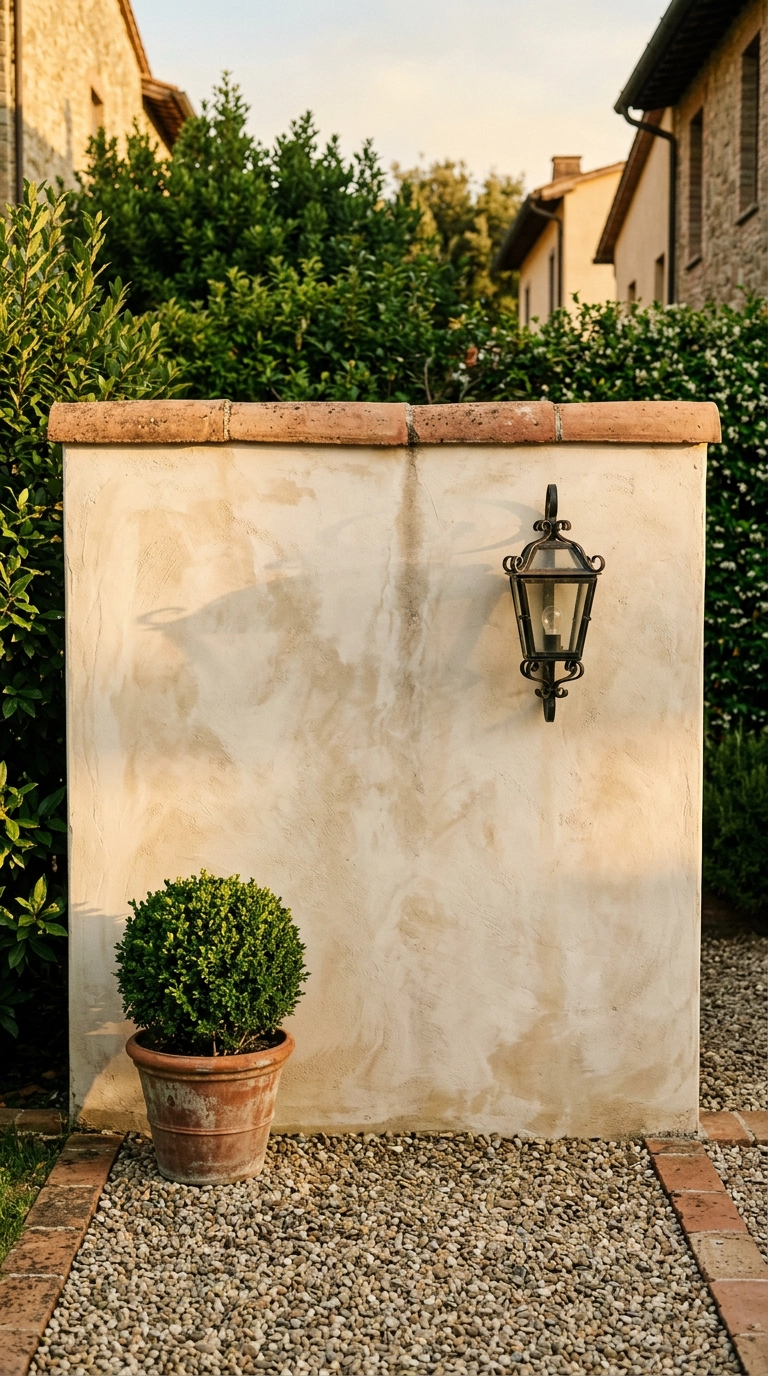
A pale wall is the backdrop that makes everything else in an Italian garden pop, because dark green and terracotta both need something light behind them to read. Even a short stretch, six or eight feet, changes a corner completely.
20. An Espaliered Fruit Tree Flat Against That Wall
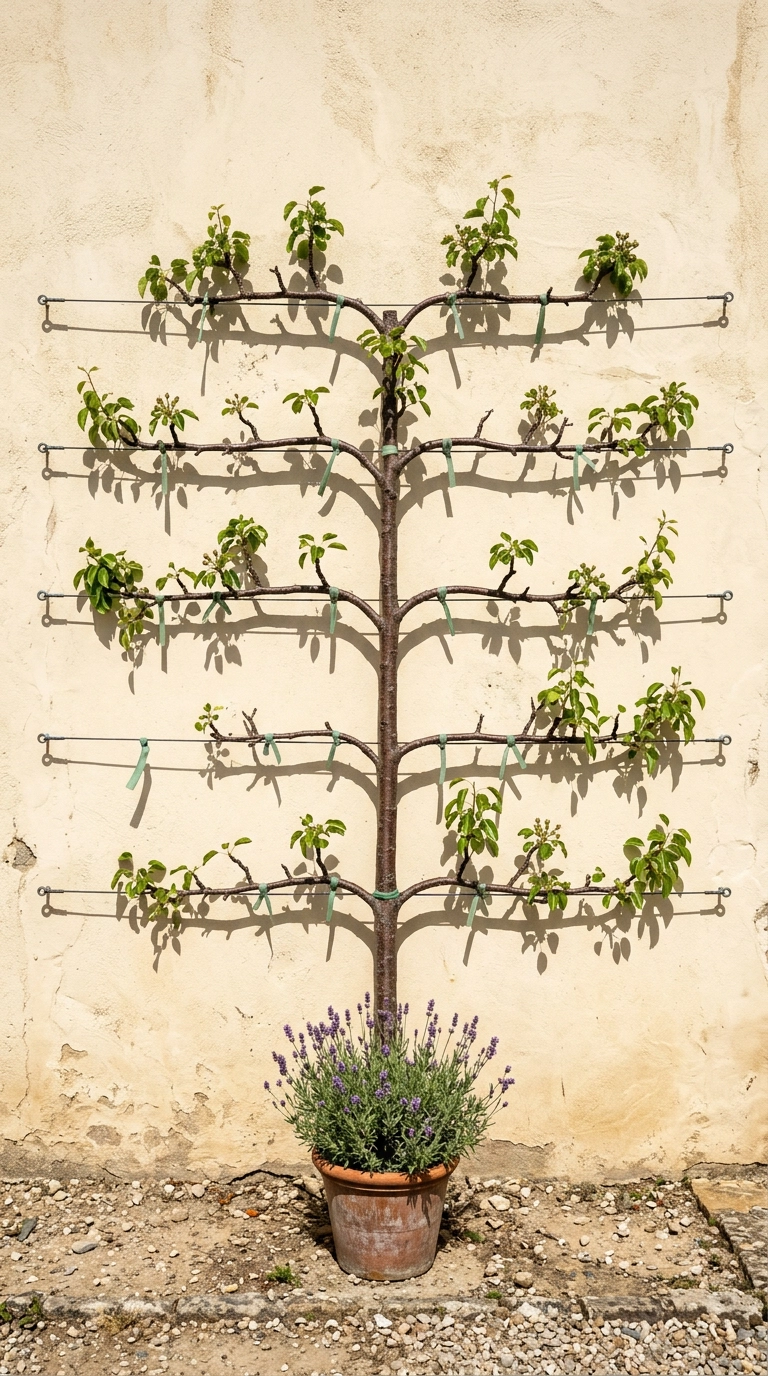
Espalier means training a tree flat against a wall in a deliberate pattern, and it is the most impressive thing you can do in twelve inches of depth. Apple and pear are the easy candidates, and a warm south-facing wall ripens fruit beautifully.
21. A Wrought Iron Gate You Can See Through
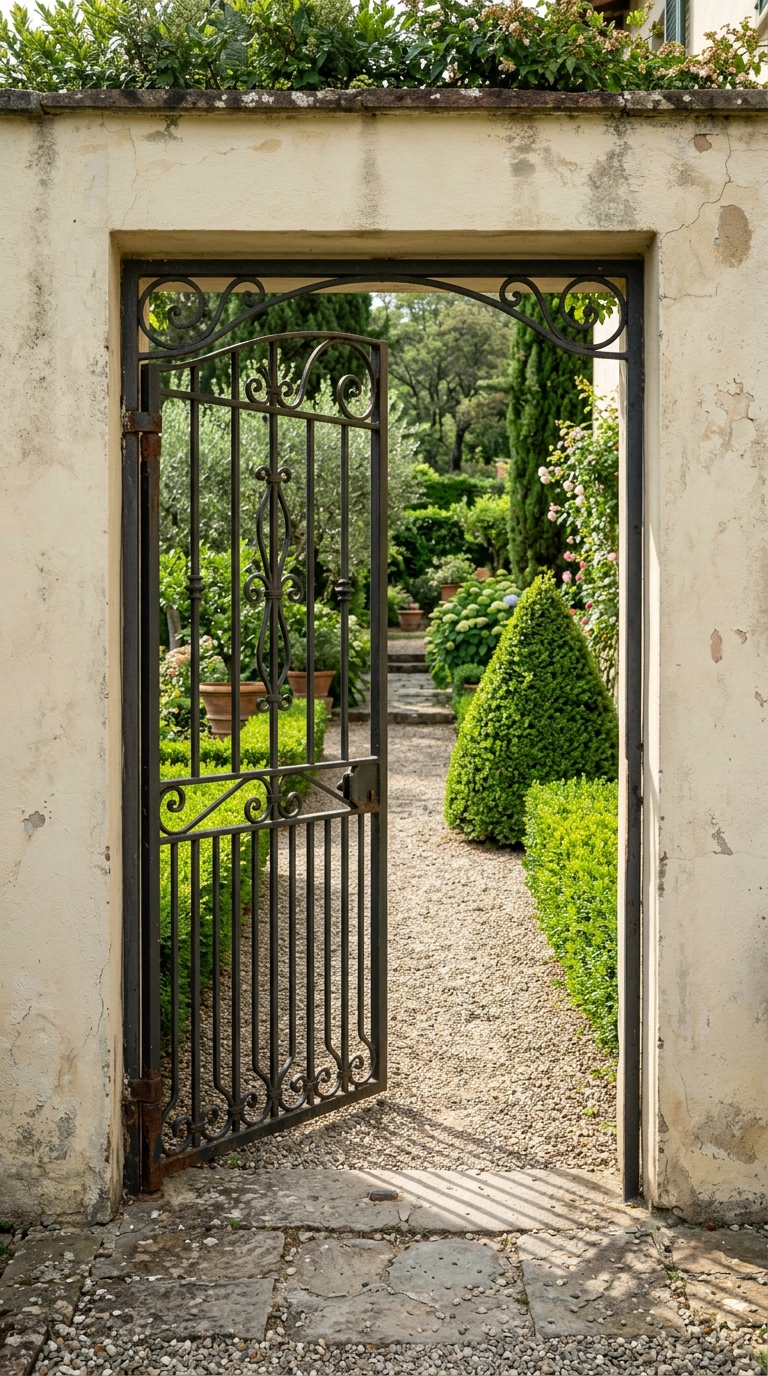
The point of an iron gate is that it hides nothing. A see-through gate borrows the view beyond it and makes a small yard feel like it continues, where a solid gate just stops your eye dead.
22. A Stone Bench Placed on the Axis
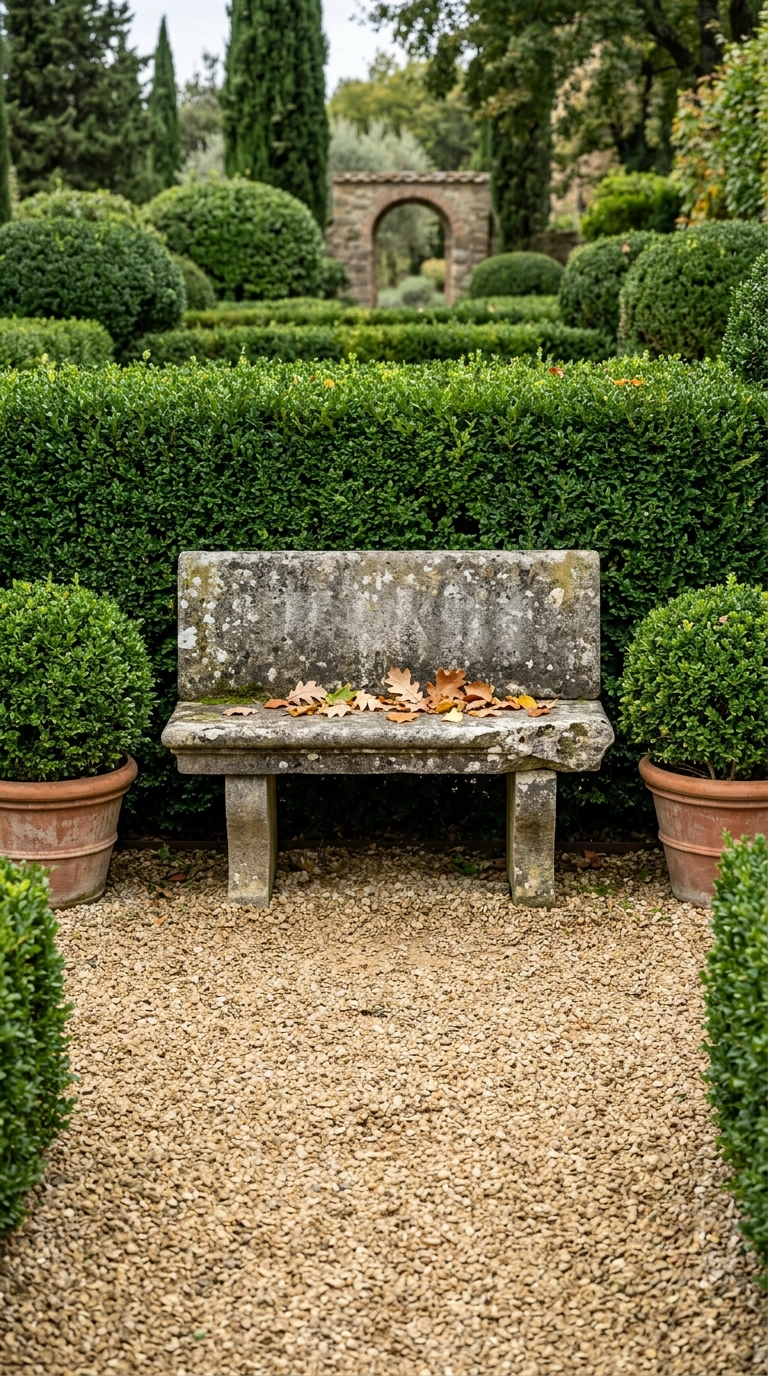
A bench at the end of an axis is doing two jobs: it is somewhere to sit, and more importantly it is the object that tells your eye where the view ends. Set it against a hedge or a wall so it has a solid backdrop.
23. A Classical Bust or Armillary on a Plinth
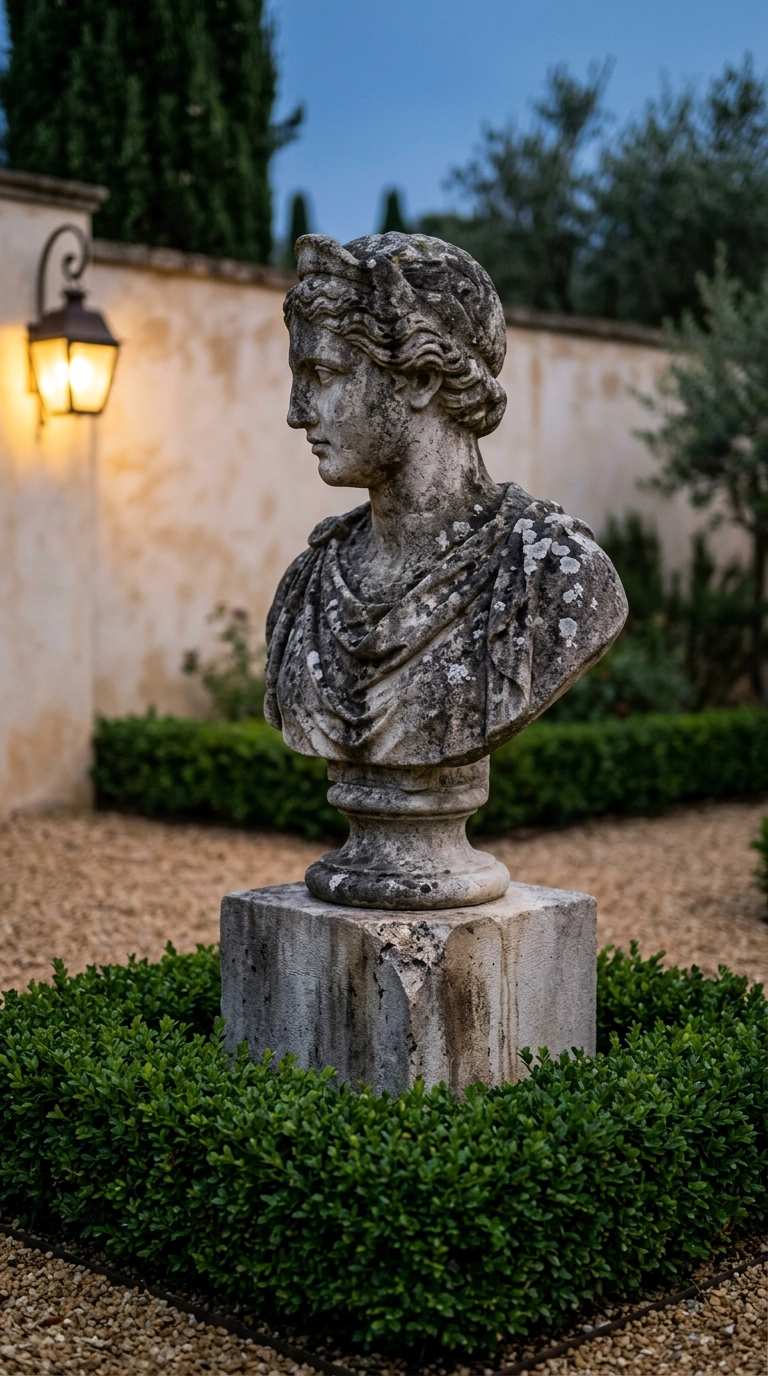
One good ornament, raised to eye level, beats five scattered on the ground. A bust, a sphere, or a brass armillary sphere on a plinth is the classical move, and the plinth is what makes it read as intentional rather than as yard art.
24. Terracotta Wall Planters on a Blank Vertical
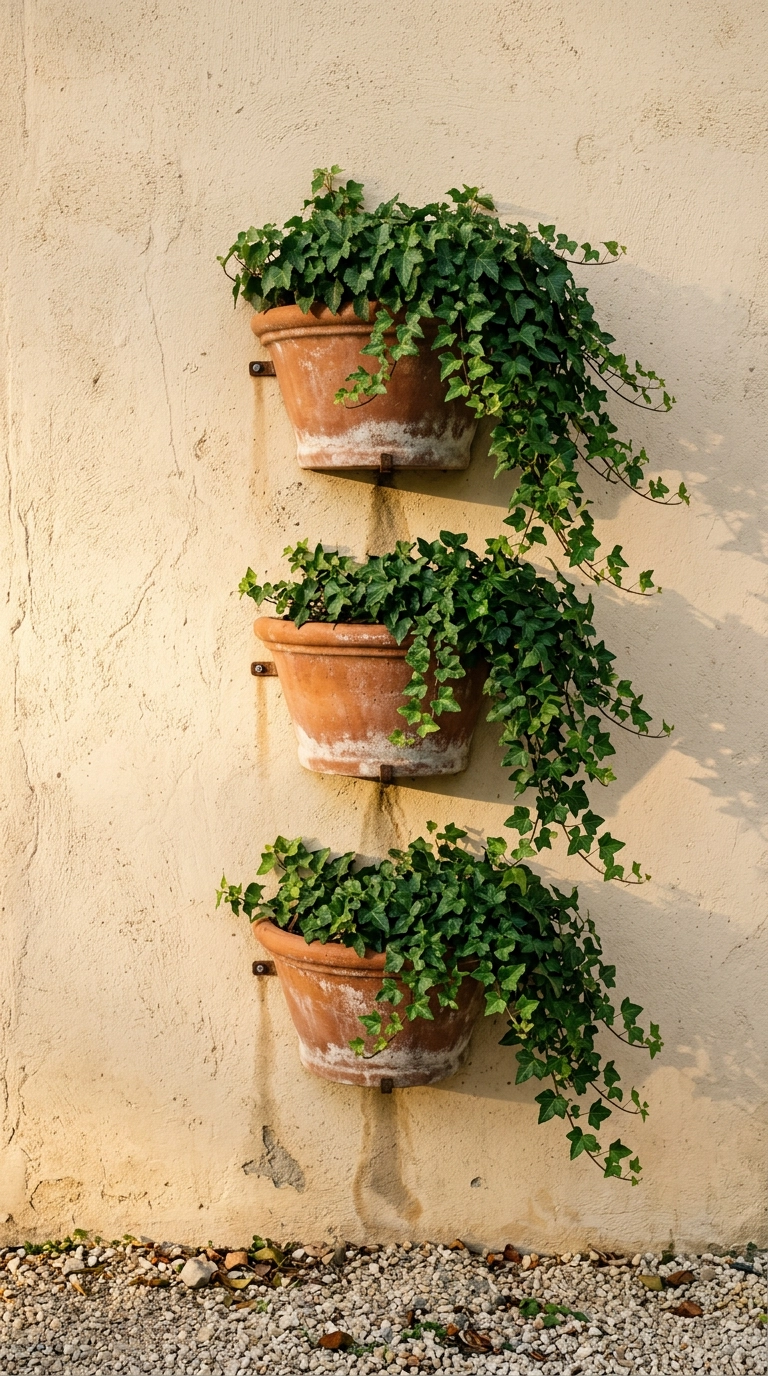
Wall planters are the cheat code for balconies and courtyards with no ground to plant in. Half-round terracotta pots mounted on a fence or wall give you the material and the color without stealing a single square foot of floor.
25. Pots of Red Geraniums Marching Up the Steps
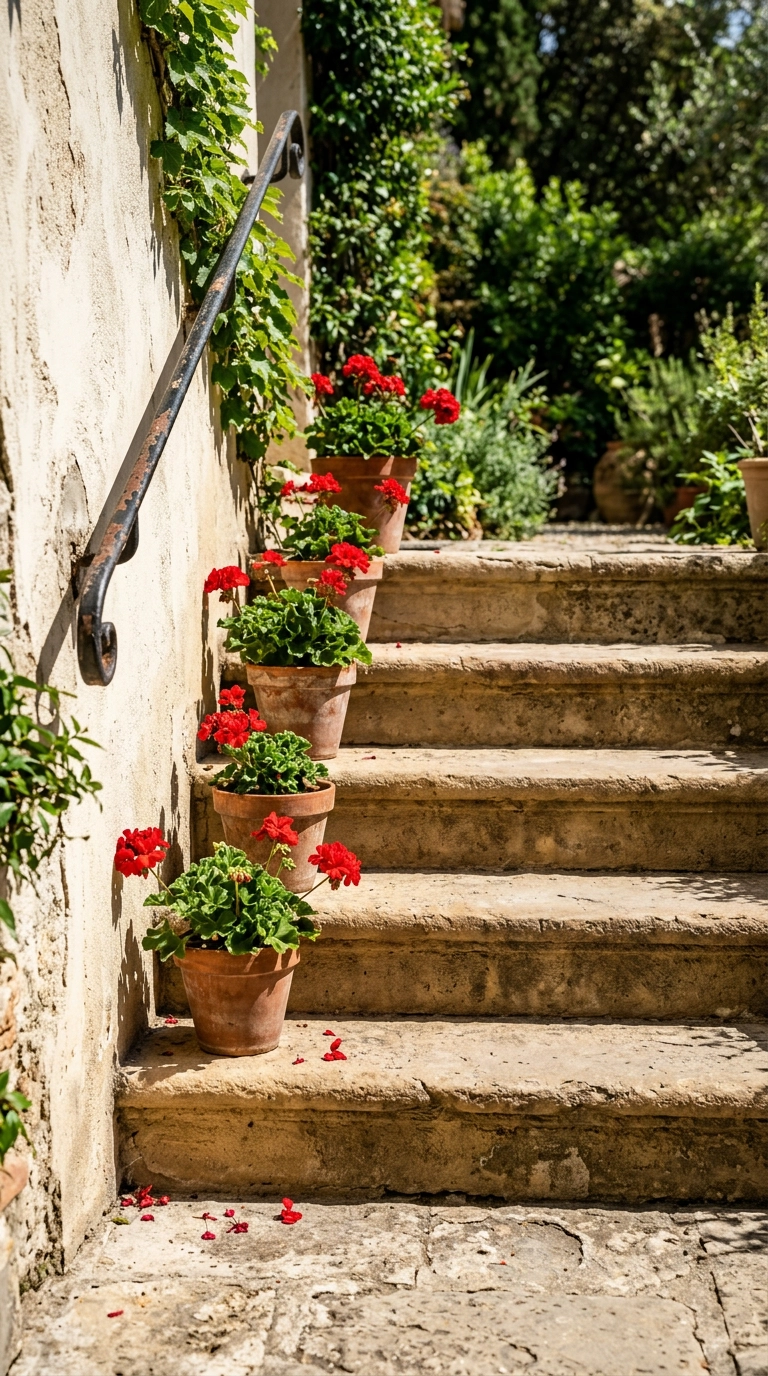
This is the one image everyone has in their head from an Italian trip, and it is genuinely easy: identical small terracotta pots, one shade of red geranium, one per step, all the way up. The repetition is what sells it.
26. String Lights Over the Terrace, Done with Restraint
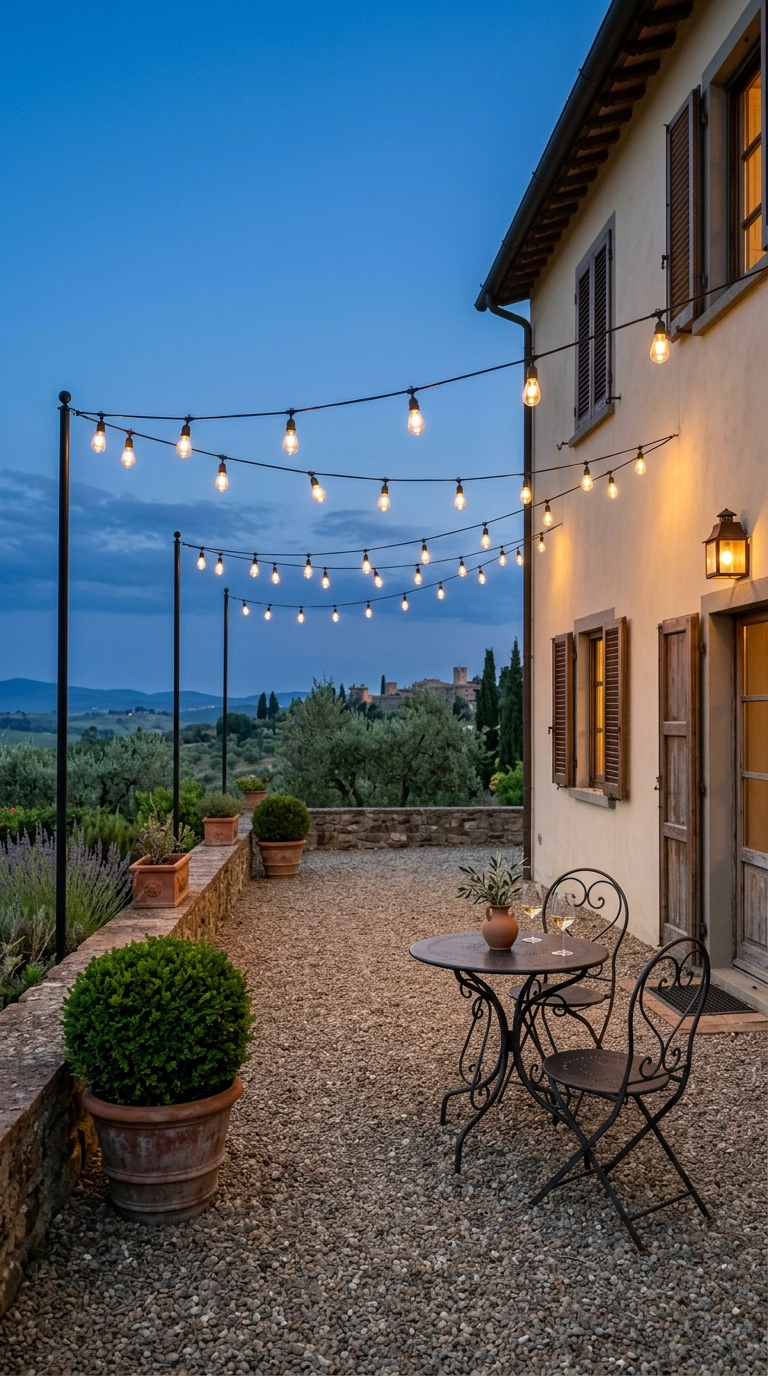
String lights go wrong when people drape them in loops like party bunting. Do the opposite: two or three taut parallel runs, pulled tight with a guy wire, at a consistent height around nine feet.
27. A Small Kitchen Garden in Raised Beds
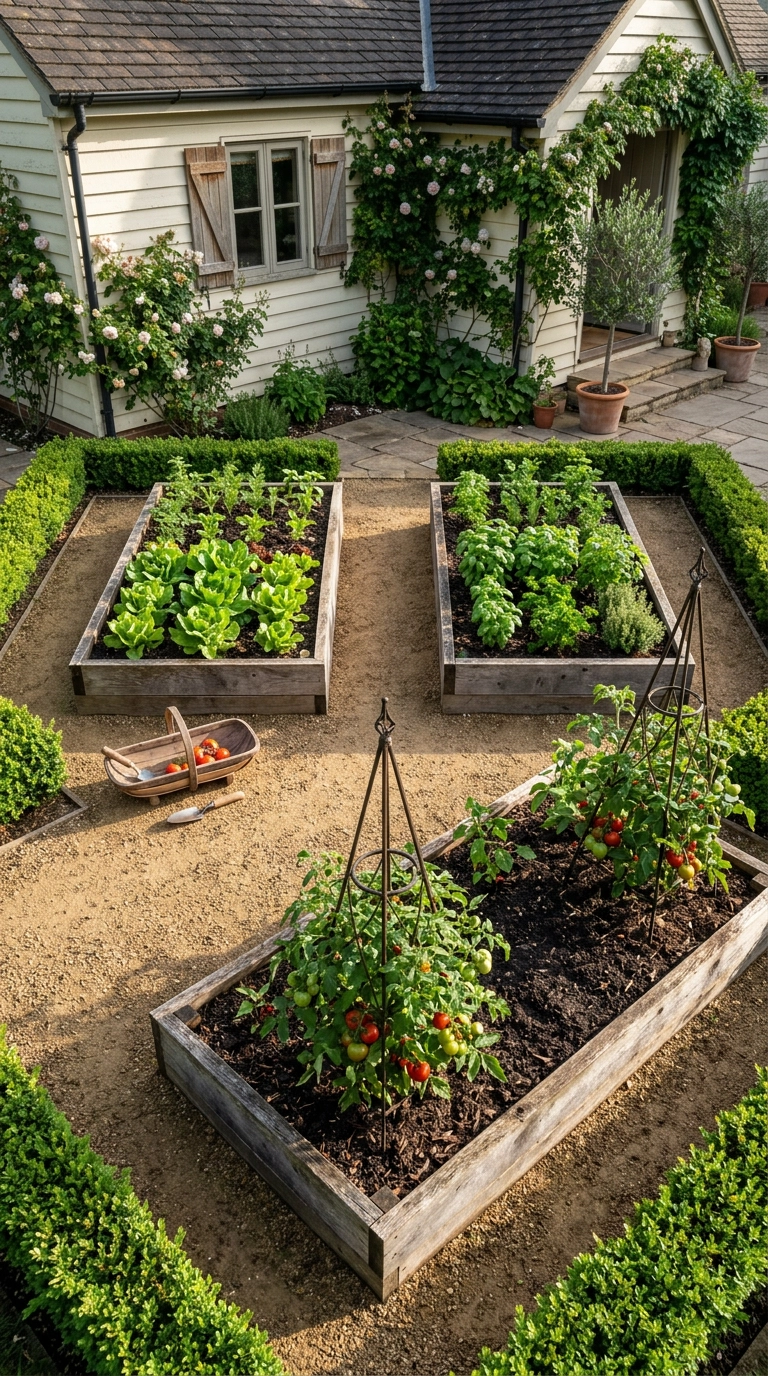
The Italian version of a vegetable garden is not a sprawling plot, it is an orto: small, geometric, and edged. Four raised beds around a gravel cross path is the classic layout and it stays handsome even in the ragged end of August.
28. A Shaded Loggia Made From the Porch You Already Have
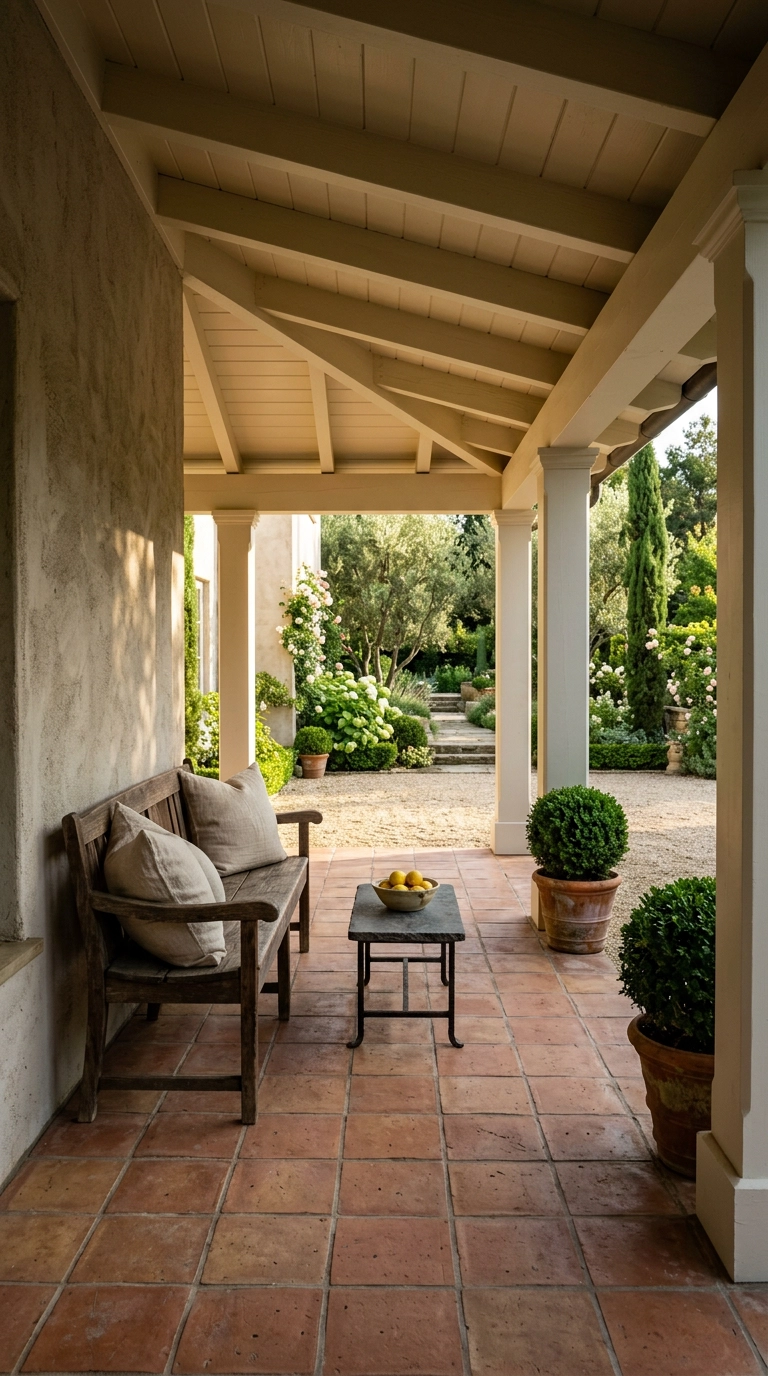
A loggia is just a covered outdoor room open on one side, which describes most American back porches already. Three changes convert one: paint or limewash the ceiling a warm cream, put something with visible texture underfoot, and furnish it like a room instead of a landing.
Bringing a Little of Italy Home
Here is what I hope stuck: the Italian look is a discipline, not a budget. If you only ever did the three graduated terracotta pots, the pea gravel over what used to be a struggling patch of lawn, and one pair of clipped boxwood mirrored on either side of your back door, your yard would already read differently by next weekend. Everything after that is just repetition and patience.
What I am seeing everywhere right now is the restraint side of it finally winning out over the maximalist garden phase we all went through. Designers like Bunny Williams have been quietly making the case for structure, gravel, and clipped evergreen for decades, and the whole limewashed-wall, potted-olive, terracotta-everything mood that has run through Mediterranean-influenced California and Texas houses is really just this same vocabulary with a US zip code. The wall fountain and the travertine terrace are the real money projects, and I would rather you nail the gravel, the symmetry, and the pots first and save the hardscape for a year when it makes sense.
And please do not let a cold zone talk you out of this. Swap the cypress for a narrow arborvitae, keep the citrus and the olive in pots that come inside in November, and the bones of the garden will still be standing there looking composed on a grey February afternoon, which is the entire point. If you want more of this, come sign up for my weekly newsletter, where I send one real project, one honest cost breakdown, and a few things I am currently obsessed with, straight to your inbox.