
23+ Stunning King Size Bedroom Decor Ideas that Look Balanced and Gorgeous in 2026

Let me be honest with you – a king bed is 76 by 80 inches of pure real estate, and it will bully your bedroom if you let it. I’ve styled dozens of these rooms, and the ones that work all follow the same math: 24 to 30 inches of walk-around clearance per side, a rug that runs 18 to 24 inches past the frame, and a headboard sized to the bed instead of the wall. Get the proportions right and a king reads as luxurious rather than jammed in, and that’s the whole game.
King Size Bedroom Decor Ideas
1. An Oversized Upholstered Headboard That Matches the Bed’s Scale
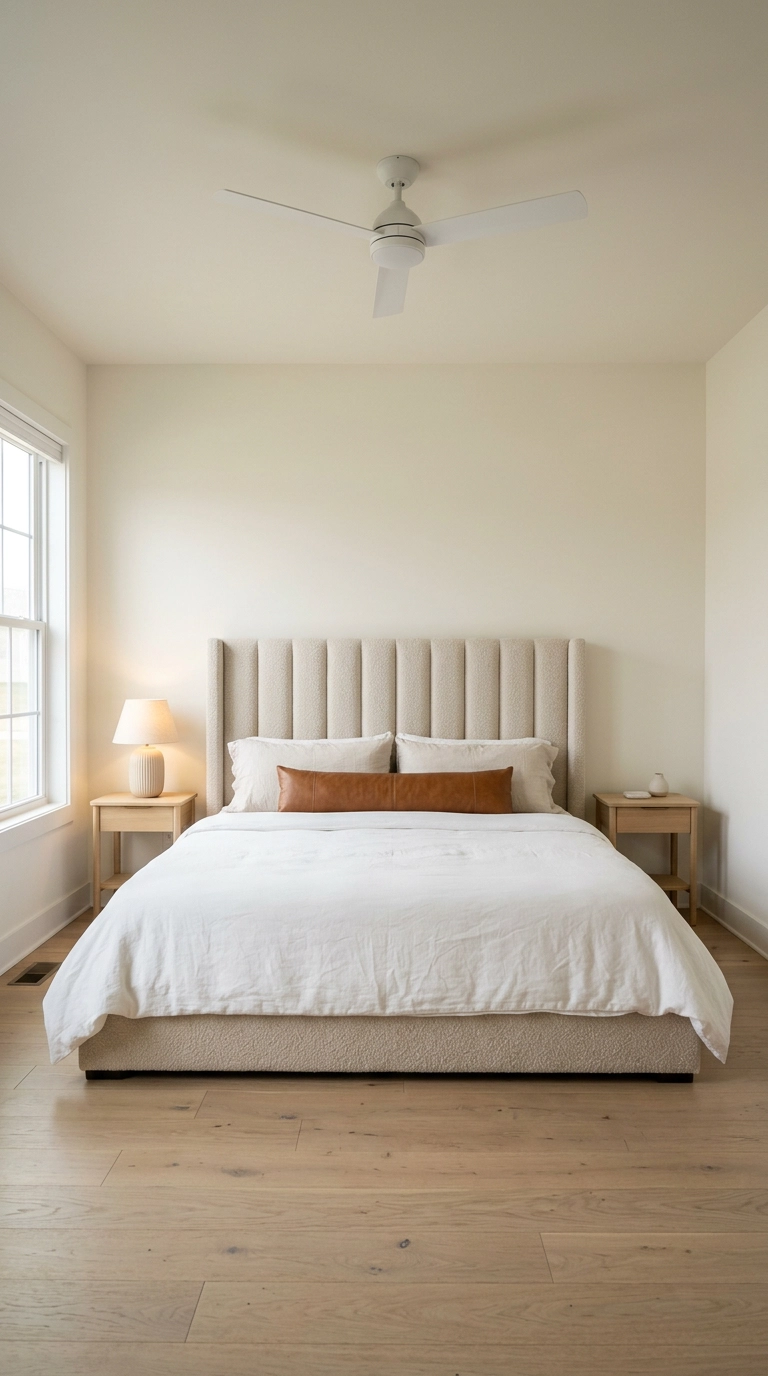
A standard 48-inch headboard on a king bed looks like a postage stamp on a moving box. I size mine at 56 to 64 inches tall and always the full 76-inch bed width, because the headboard has to carry the same visual weight as the mattress or the whole wall tips forward.
2. Get the Rug Size Right Before You Buy Anything Else
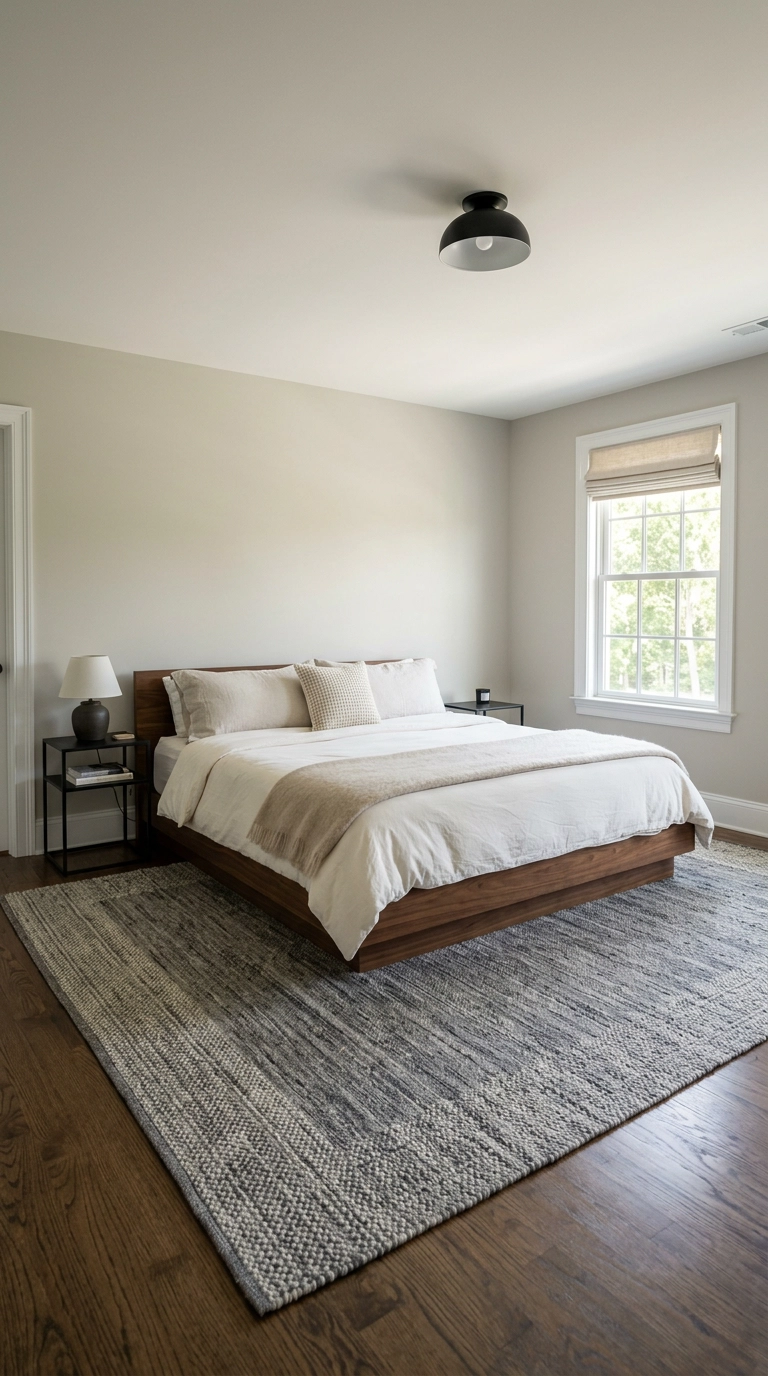
This is the mistake I see most often. A king needs a 9×12 rug to look intentional, or an 8×10 at absolute minimum, positioned so it extends 18 to 24 inches past the frame on the sides and foot.
3. Nightstands Tall Enough to Actually Reach From a King
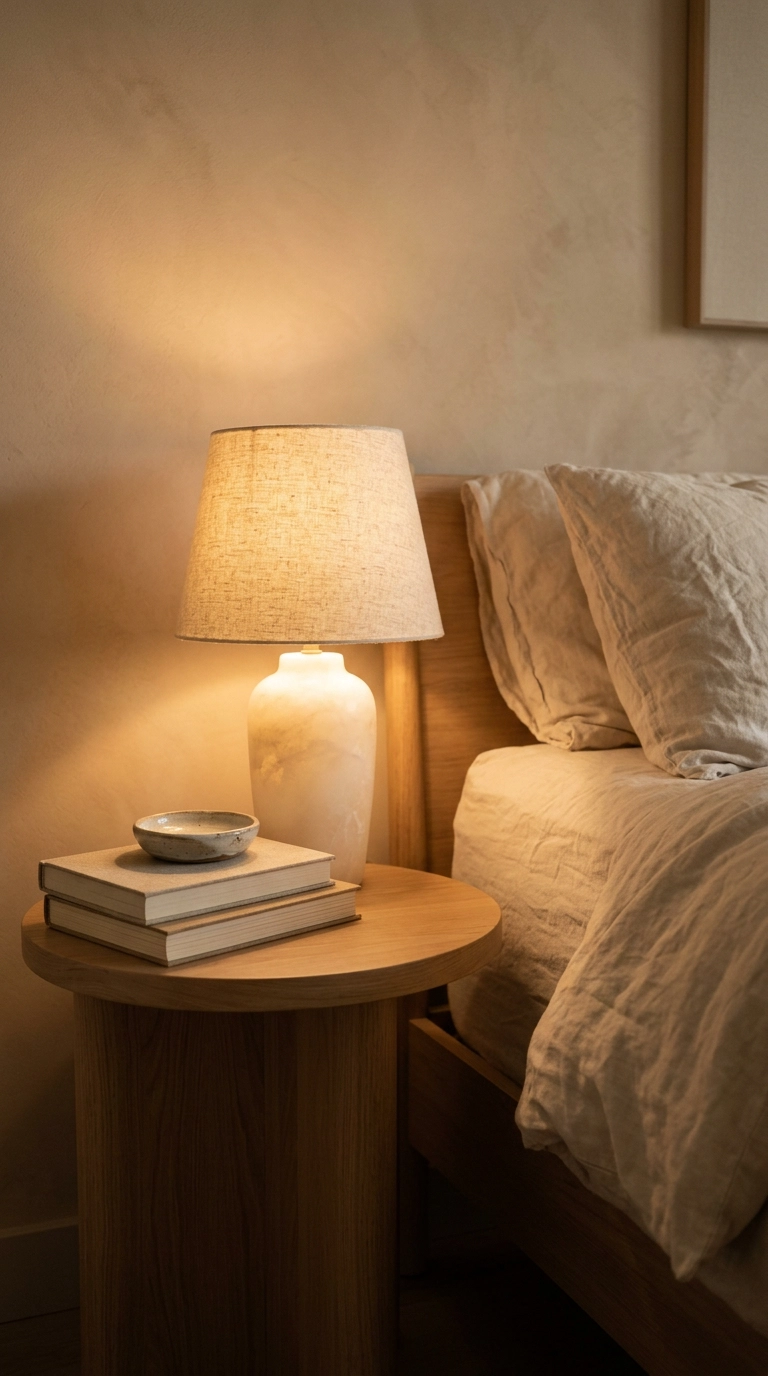
King mattresses often sit 25 to 30 inches off the floor once you add a thick mattress to a platform, so a standard 22-inch nightstand leaves you fishing for your water glass. I aim for a nightstand top within 2 inches of the mattress top, above or below.
4. Strict Flanking Symmetry to Calm All That Width
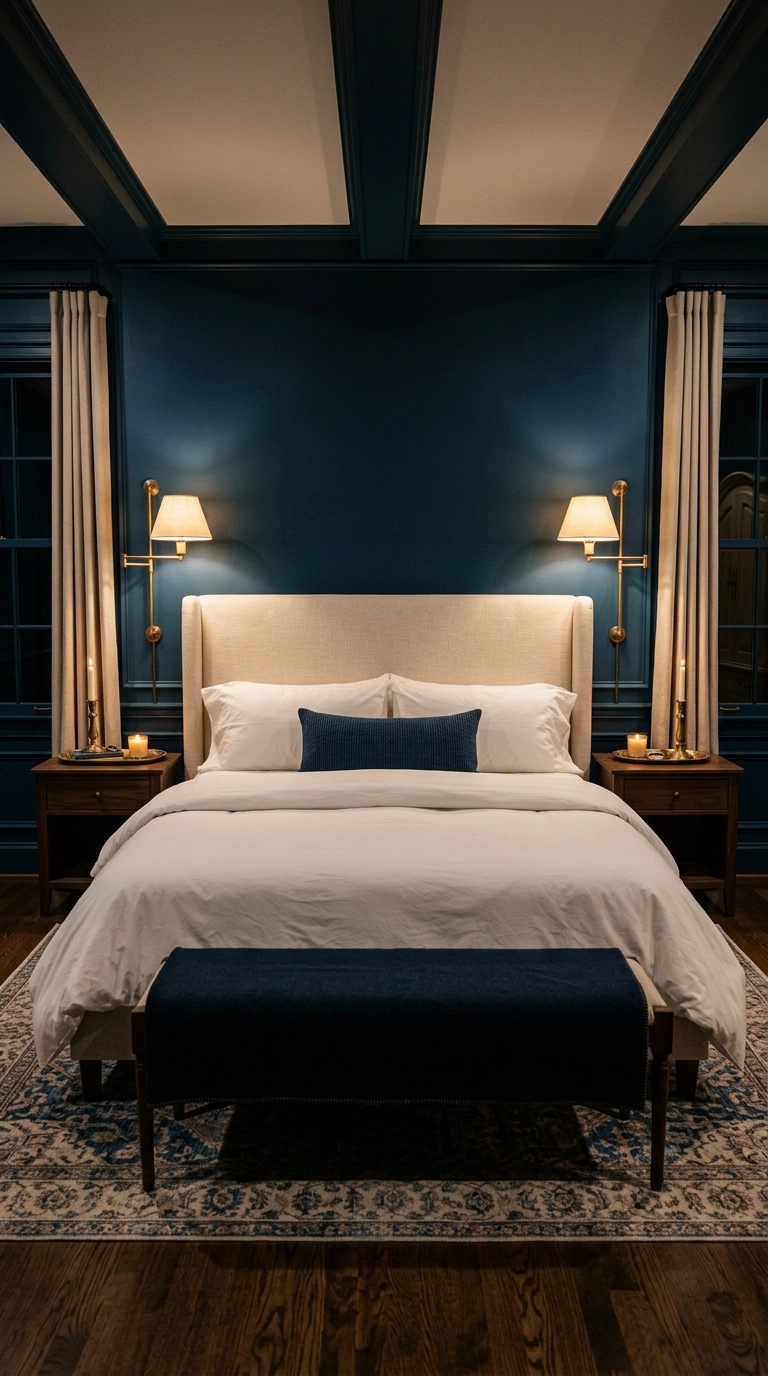
A king is the one bed size where symmetry stops being a style choice and becomes structural. Matching lamps, matching tables, sconces at the same height – the repetition gives your eye two anchors and the 76-inch span between them stops feeling like a void.
5. Layer Bedding for Width, Not Just Warmth
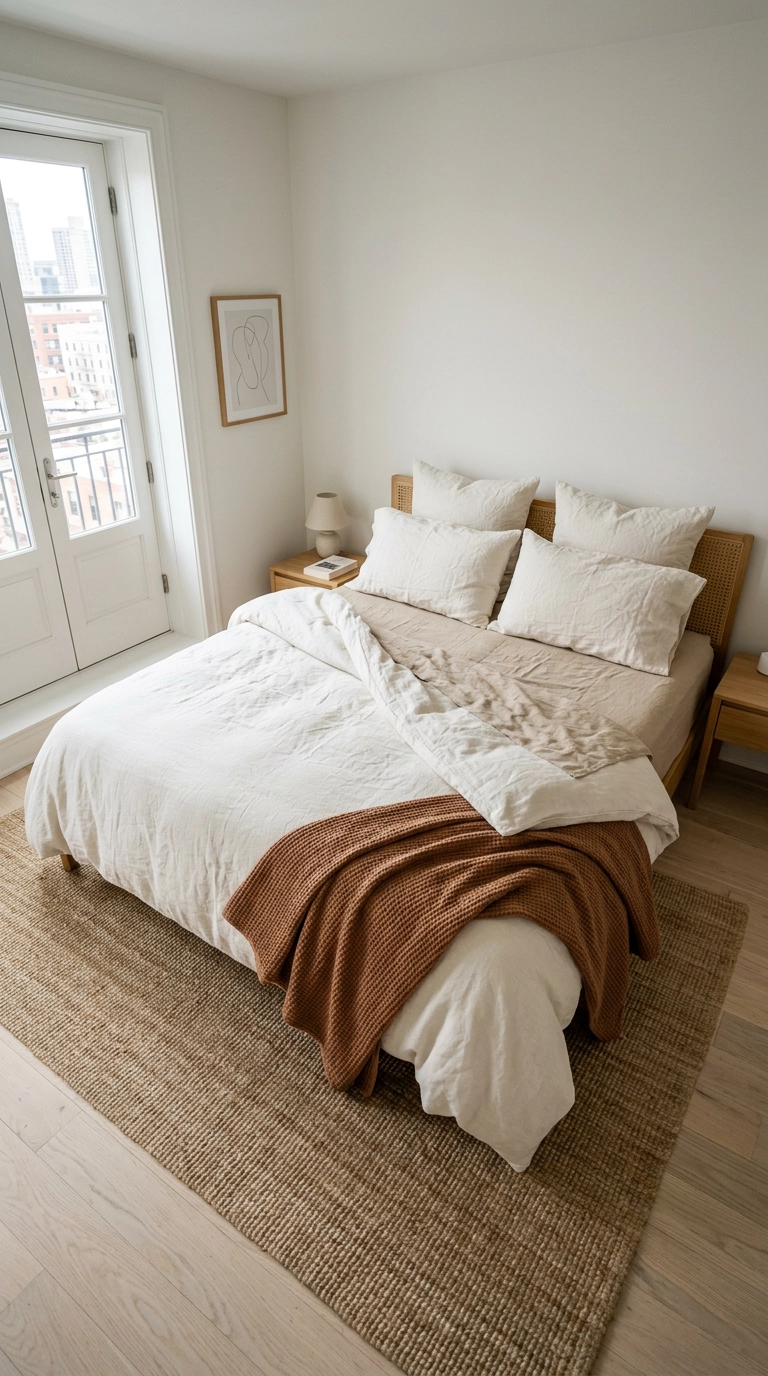
Queen bedding logic falls apart on a king because you’re looking at a much wider, flatter plane. I build in horizontal bands instead – a fitted sheet, a duvet folded back about a third of the way, then a blanket across the last 20 inches at the foot.
6. Scale Your Art to the Bed, Not the Wall
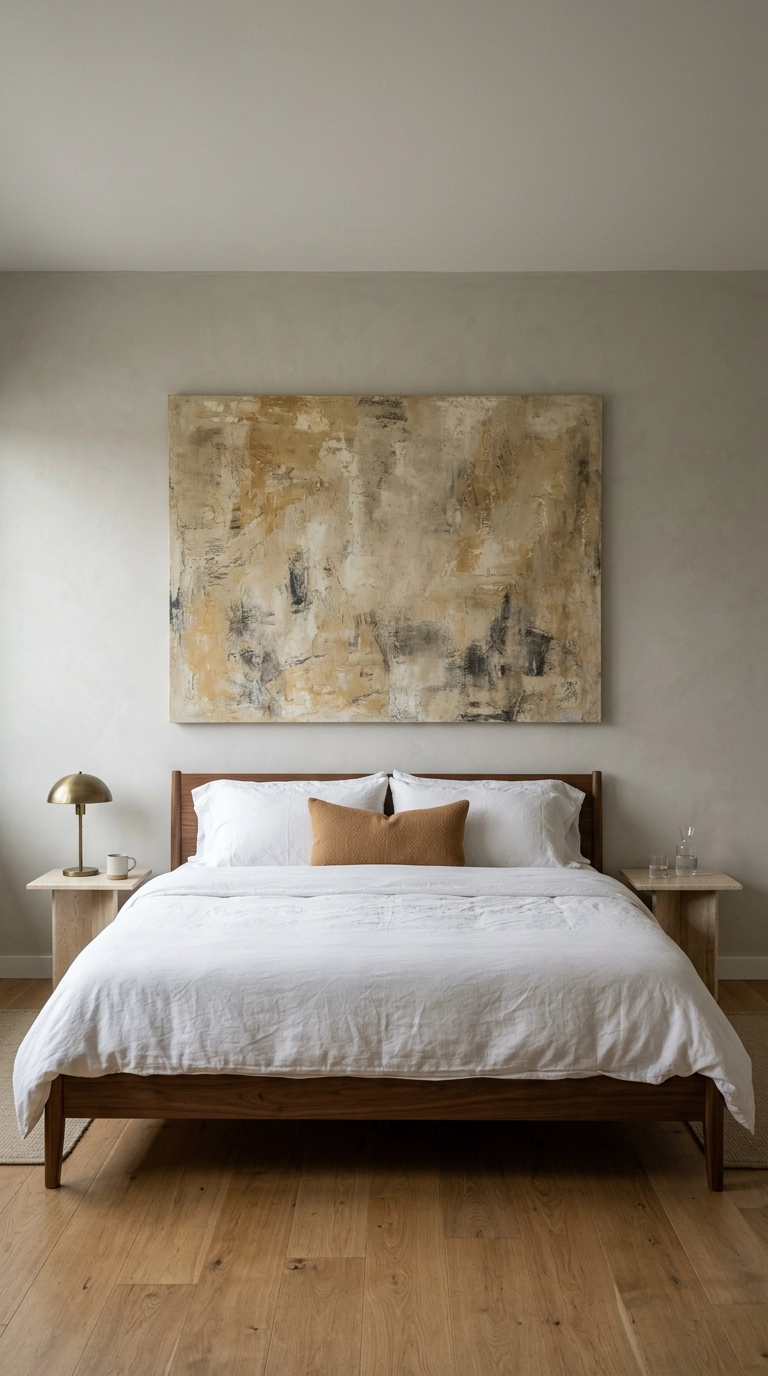
Art above a king should span roughly two-thirds to three-quarters of the bed width, so 50 to 57 inches. Anything smaller reads as an afterthought floating in space.
7. Know Whether You Need a Standard King or a California King
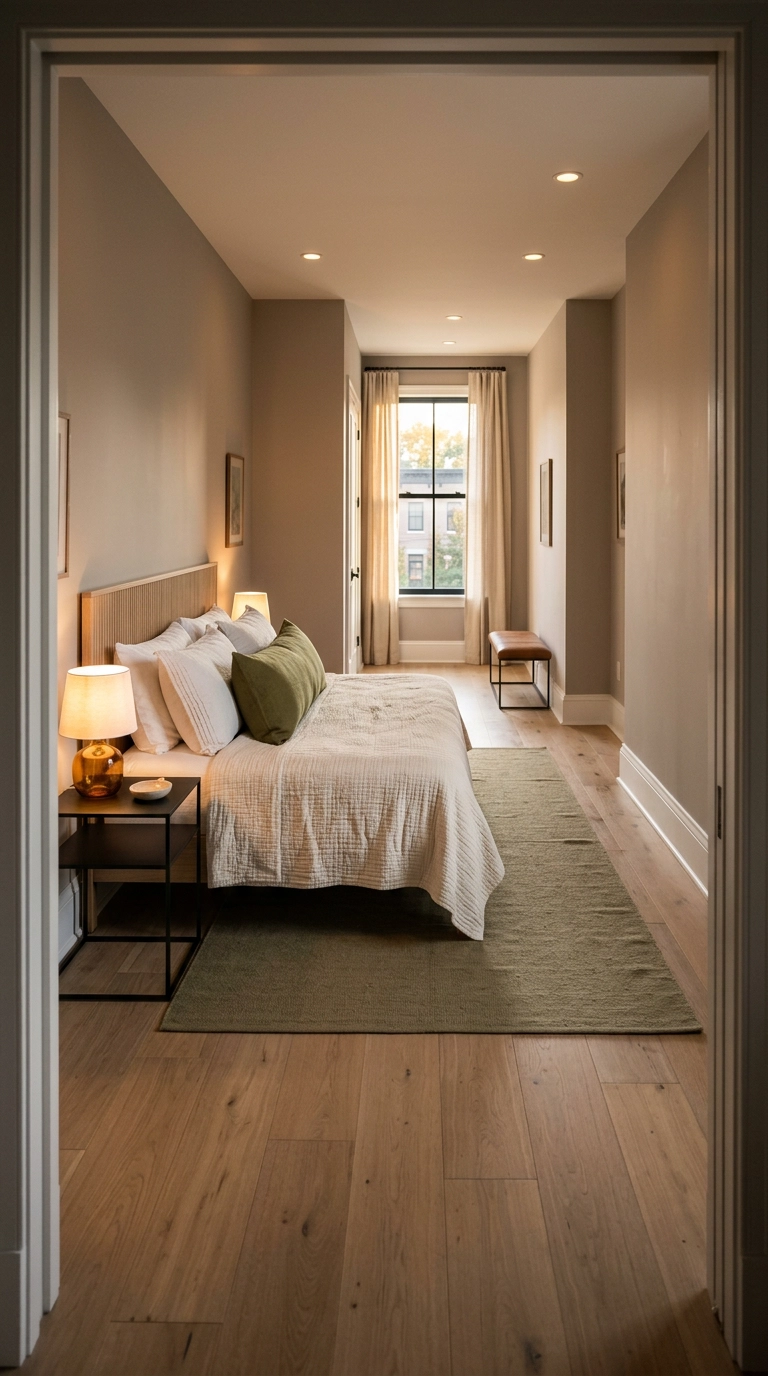
A standard king is 76 by 80 inches. A California king trades 4 inches of width for 4 inches of length at 72 by 84, which is the smarter pick in a long narrow room or if anyone in the bed is over six feet.
8. Protect 24 to 30 Inches of Clearance on Every Walking Side
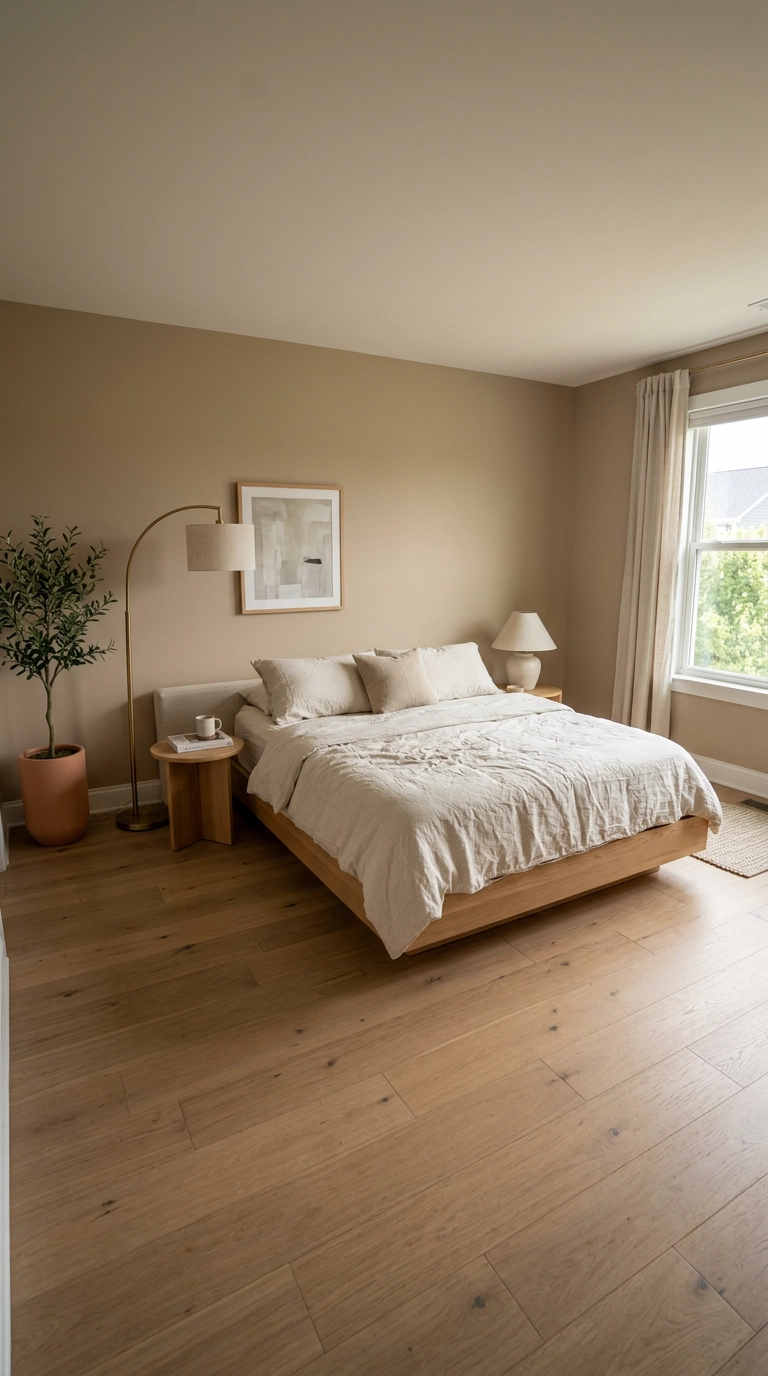
Clearance is the non-negotiable. You want 30 inches per side to walk comfortably and make the bed without side-shuffling, and 24 inches is the hard floor before the room starts feeling like an obstacle course.
9. Color Drench the Walls to Make the Bed Disappear Into the Room
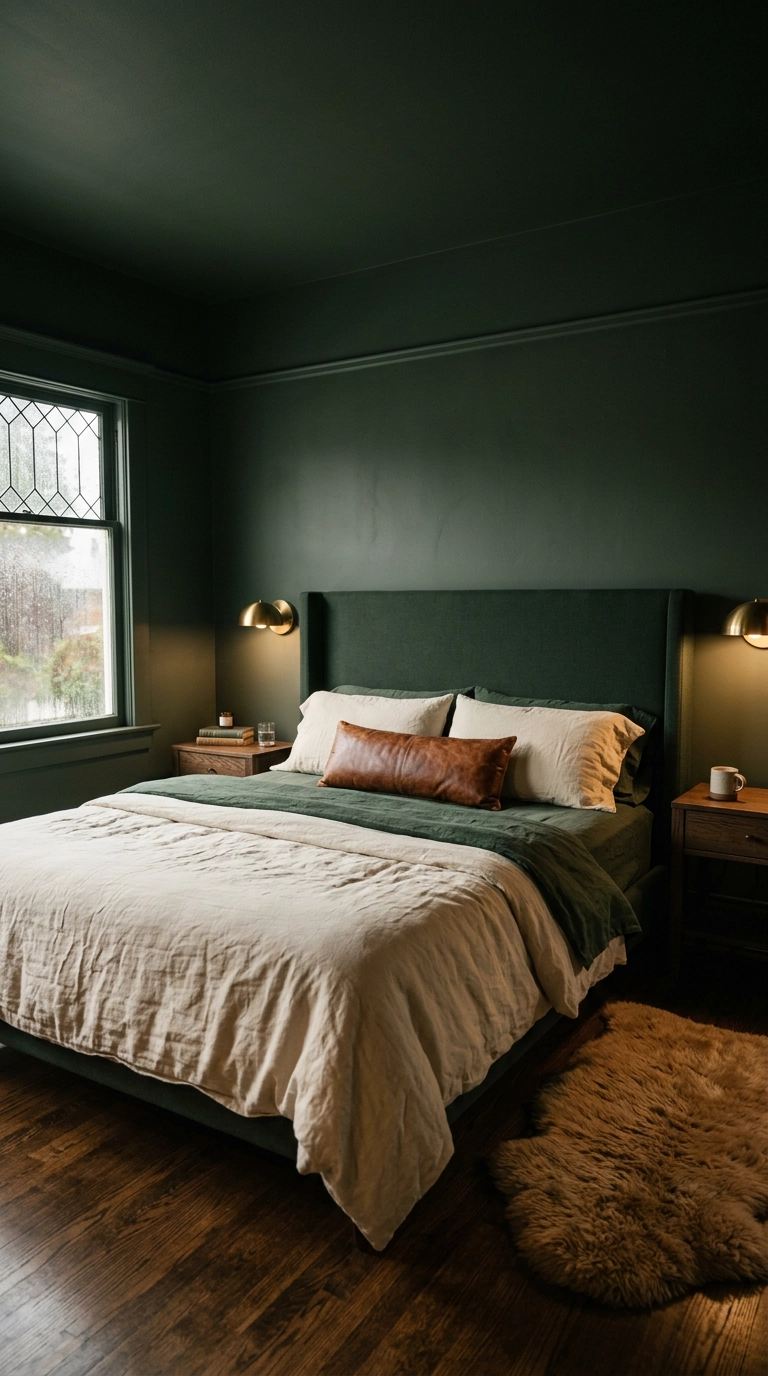
Color drenching means painting walls, trim, and ceiling the same shade so your eye finds no hard breaks. On a king that’s a trick worth knowing, because when the wall behind the bed stops competing, the bed reads as part of the architecture instead of a giant object dropped in the middle.
10. A Bench or Trunk at the Foot to Close the Composition
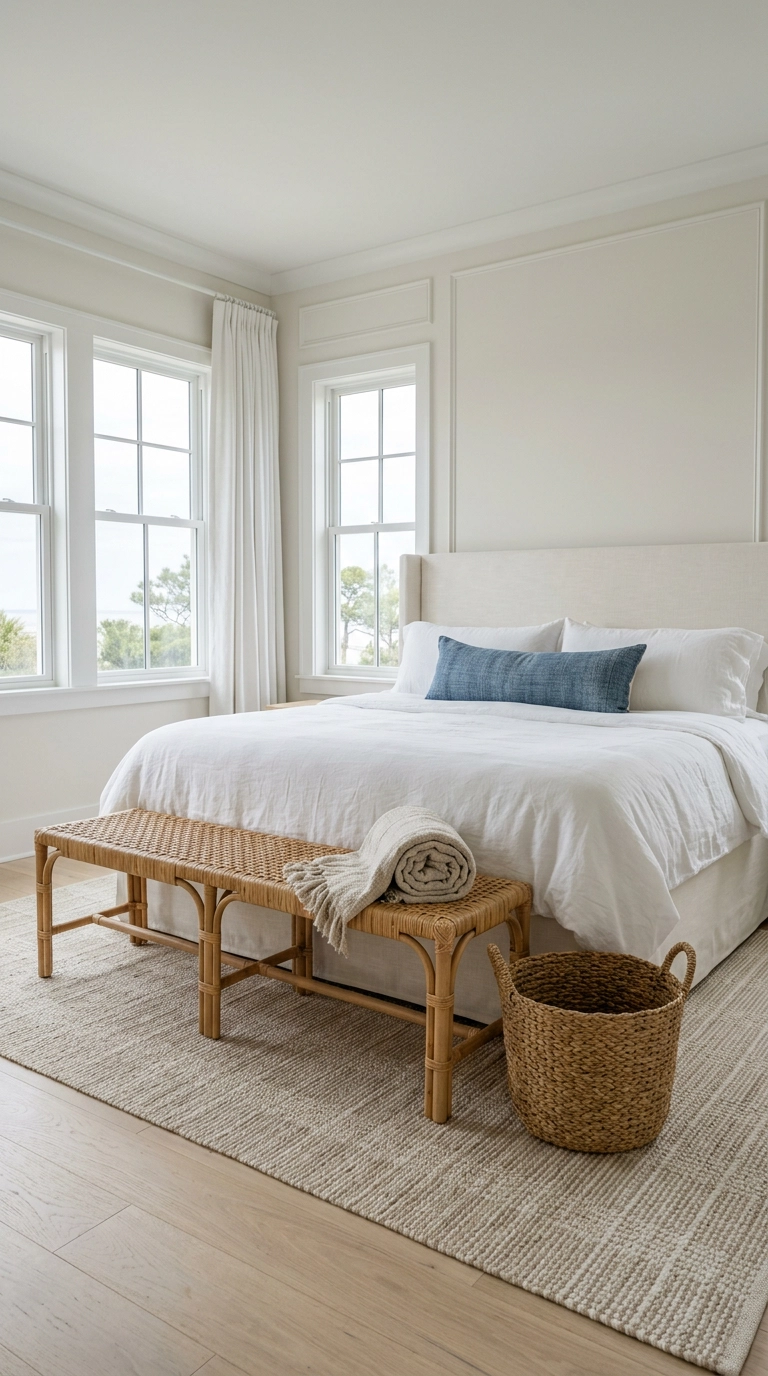
The foot of a king is a wide, unresolved edge. A bench or trunk running 48 to 60 inches wide caps it off, and it needs at least 24 inches of clearance behind it to the wall or dresser so you can still walk through.
11. When the Room Is Barely Big Enough, Cut the Nightstands First
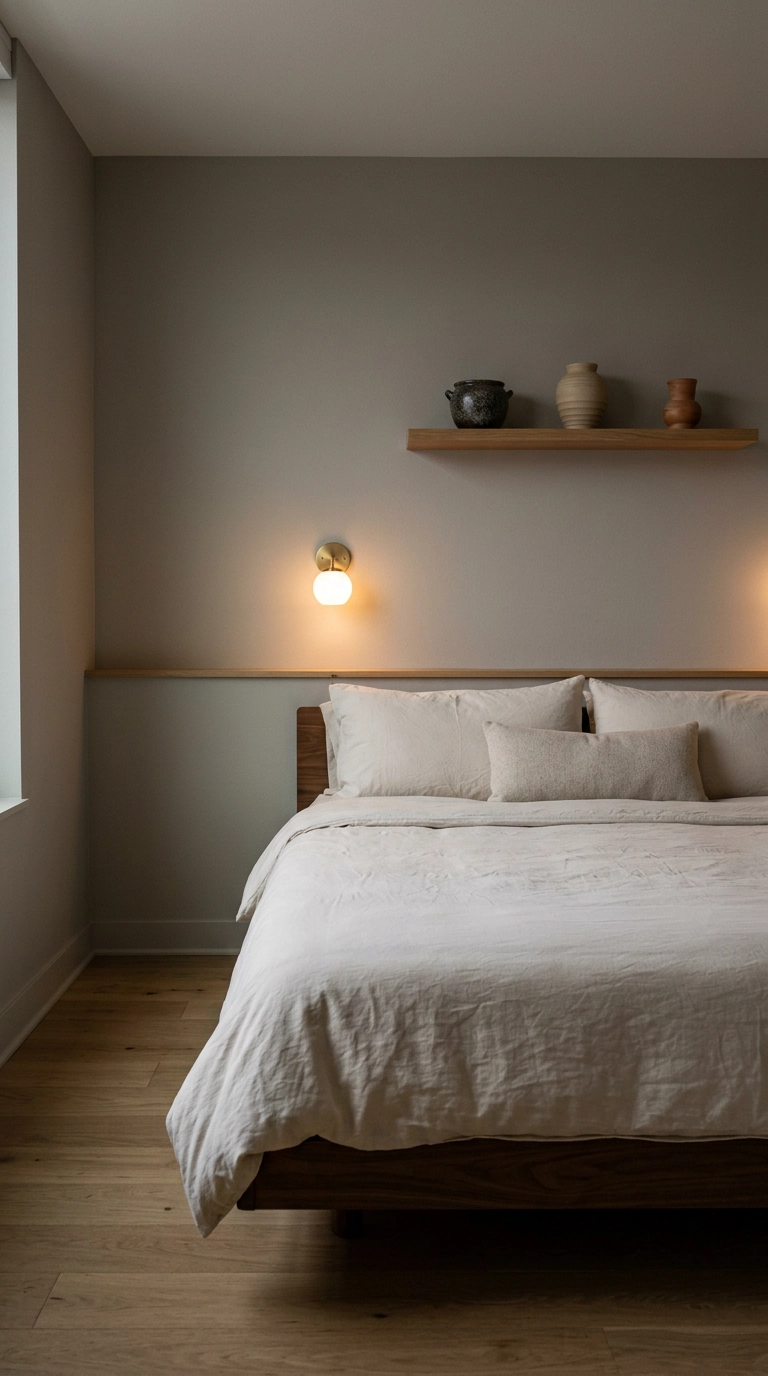
If your room is tight, the nightstands go before the bed does. A 5-inch-deep wall-mounted ledge behind the bed holds a phone, a glass, and a book, and it buys back nearly two feet of floor on each side.
12. Hang the Curtains High and Wide So the Bed Isn’t the Widest Thing in the Room
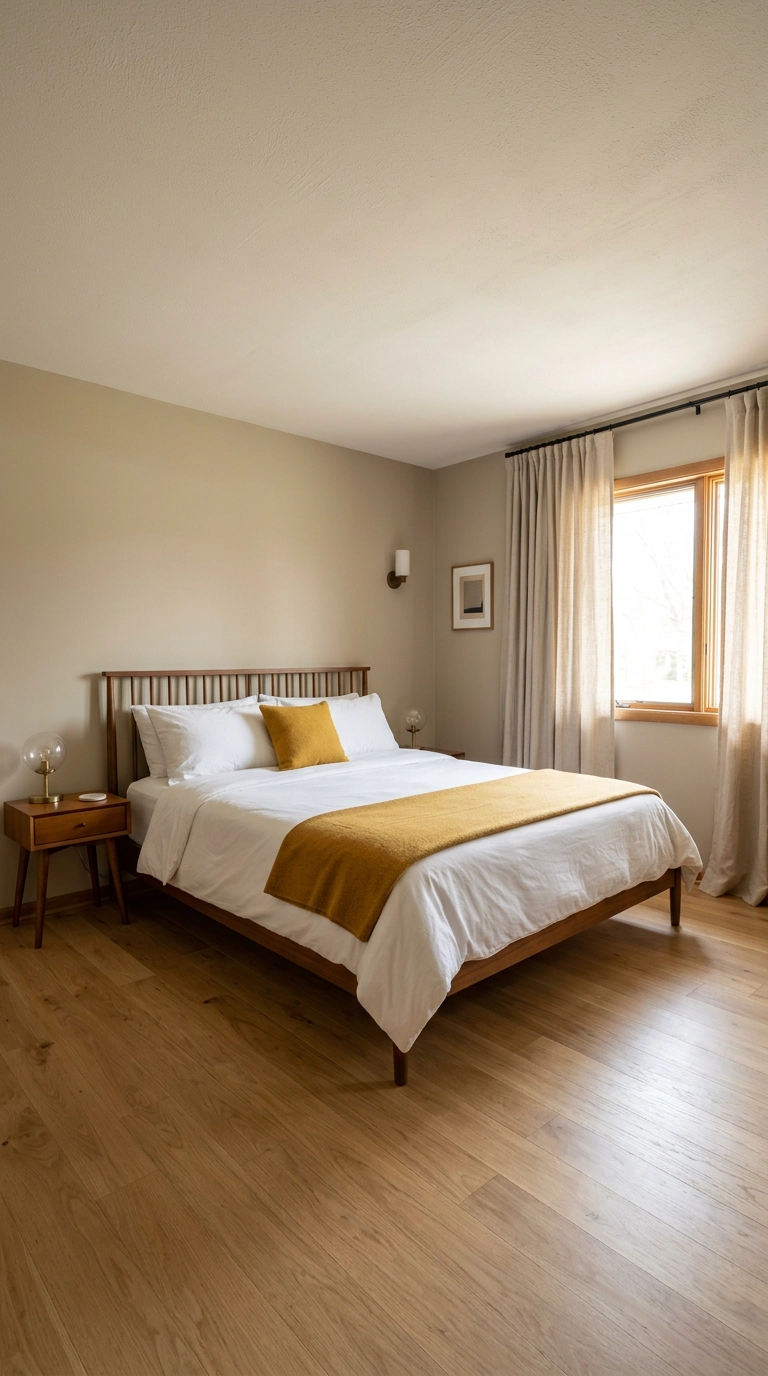
In a king room the bed is usually the widest object by a mile, and that imbalance is what makes people say the room feels crowded. Curtains fix it for cheap – mount the rod 4 to 6 inches below the ceiling and let the panels extend 8 to 12 inches past each side of the window casing.
13. Light the Room at Three Heights and Skip the Overhead Entirely
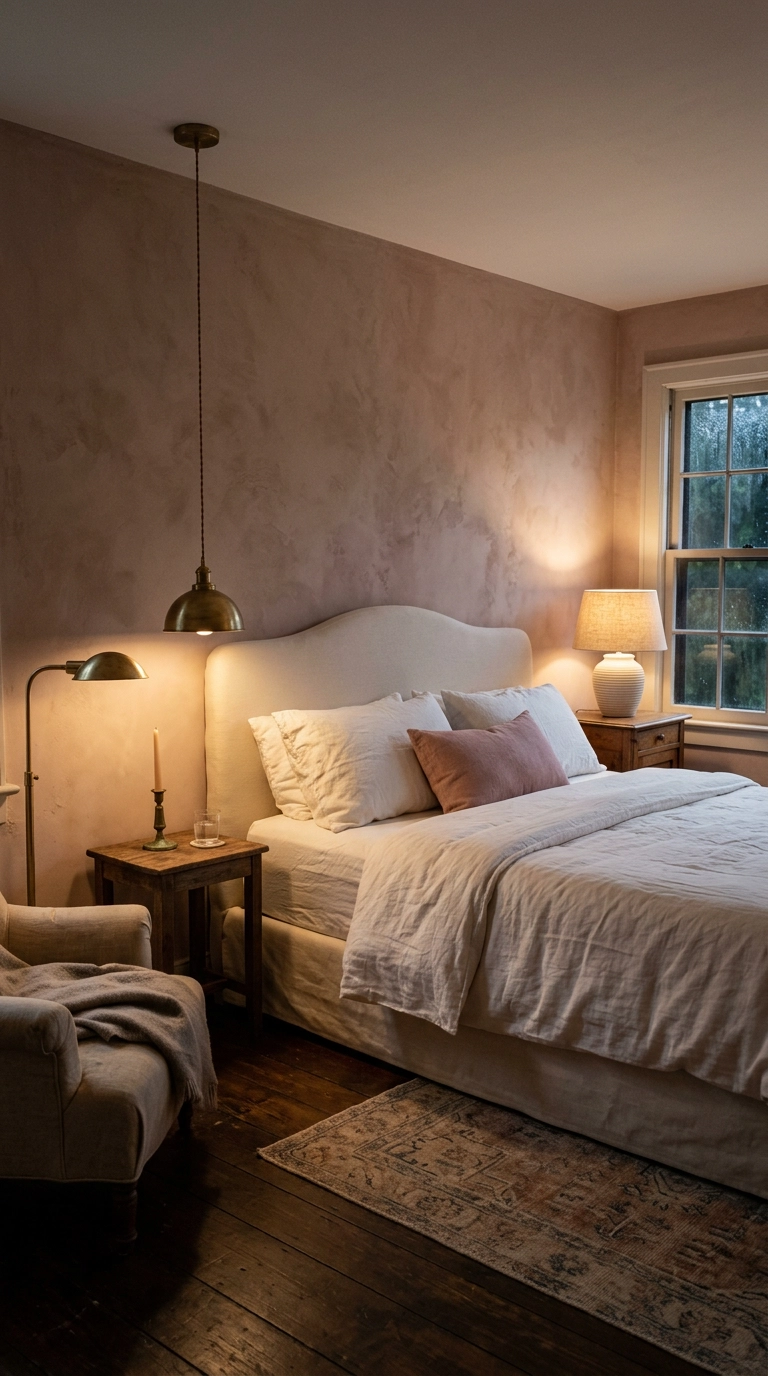
One ceiling fixture over a king bed lights the mattress and leaves the corners dead, which makes a big room feel like a cave with a spotlight in it. I run three heights instead: something at 60 to 66 inches beside the bed, something at nightstand level, and one floor lamp in the far corner.
14. Build a Slatted Wood Wall Behind the Bed Instead of Buying a Headboard
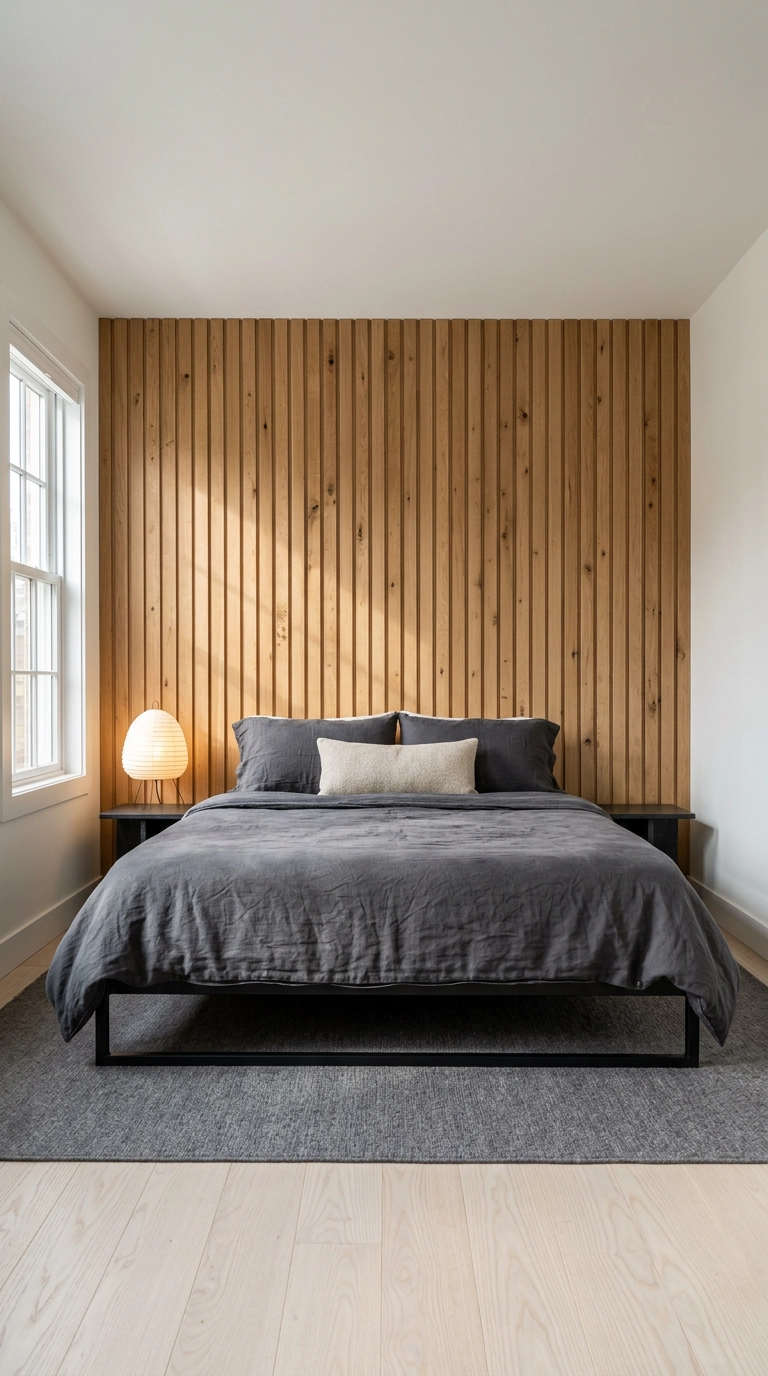
A vertical slat wood wall solves the king headboard problem sideways. Those repeating vertical lines pull your eye upward, which counteracts all the horizontal mass of the bed, and you get texture on the one wall that needs it most.
15. Give the King a Real Dresser, Not a Small One That Loses the Fight
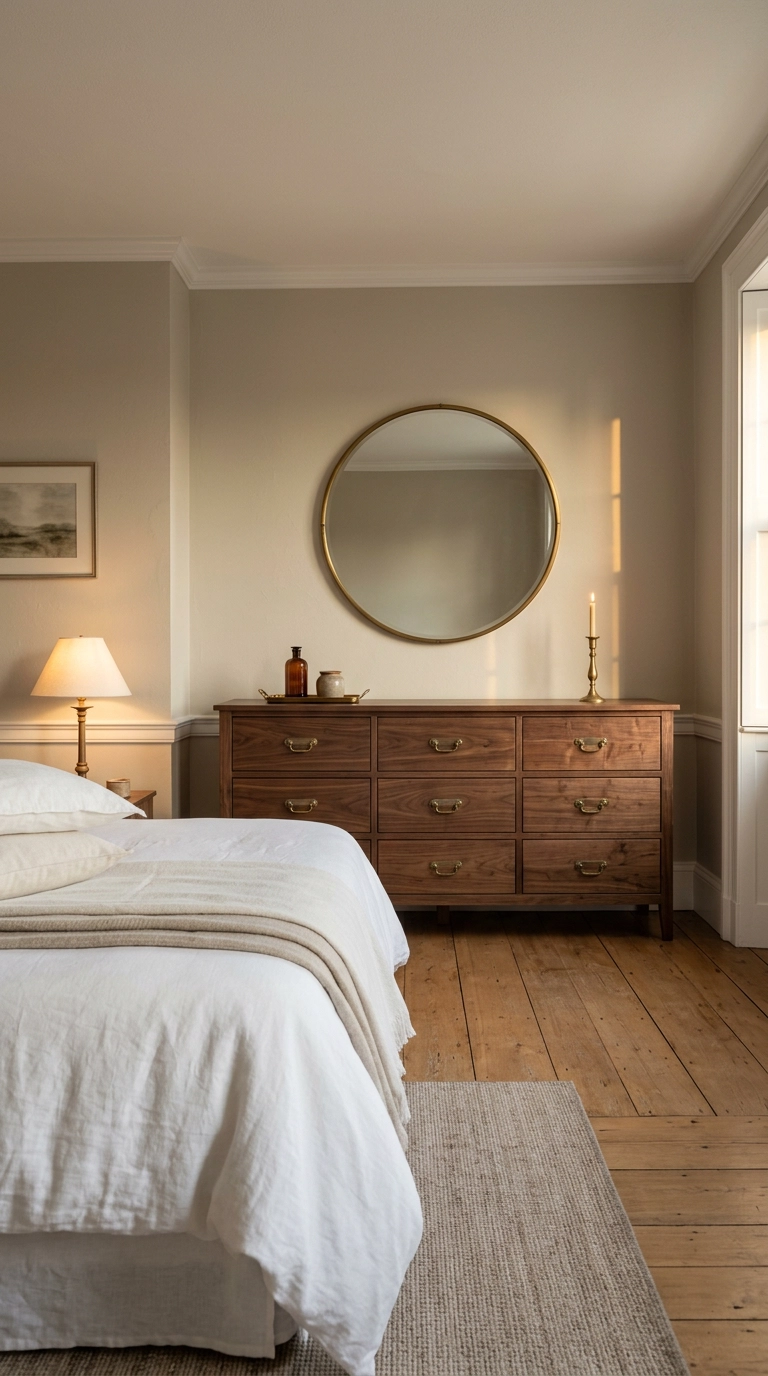
A 36-inch dresser across from a 76-inch bed looks like a rowboat next to a barge. Go 60 to 72 inches wide and keep it low, ideally under 36 inches tall, so it balances the bed’s footprint without adding a second tall object to the room.
16. Put the Pattern Behind the Bed with Removable Wallpaper
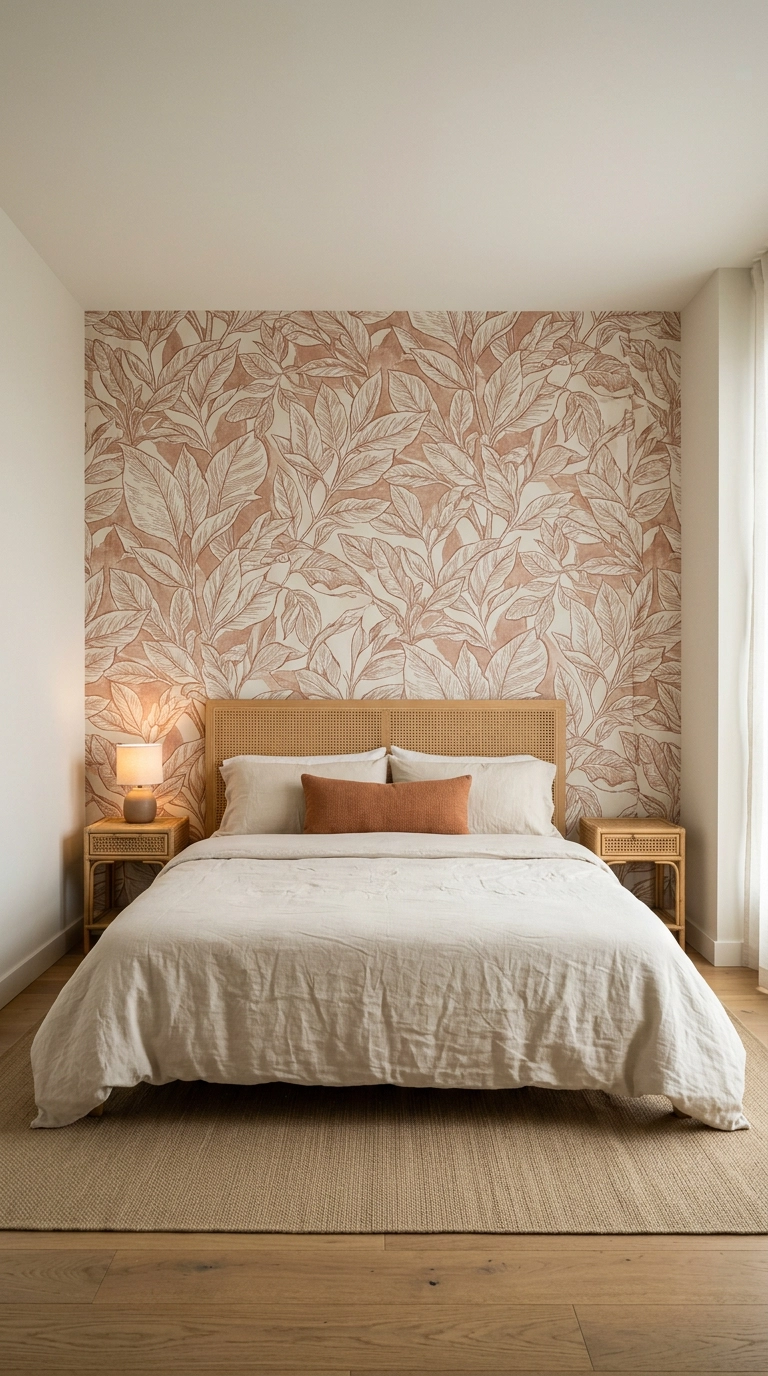
A king bed is a huge block of solid color, so the wall behind it is the one place pattern earns its keep. I keep the scale large – small repeating prints vibrate behind that much mass and read as noise from across the room.
17. A Four-Poster to Trade Width for Height
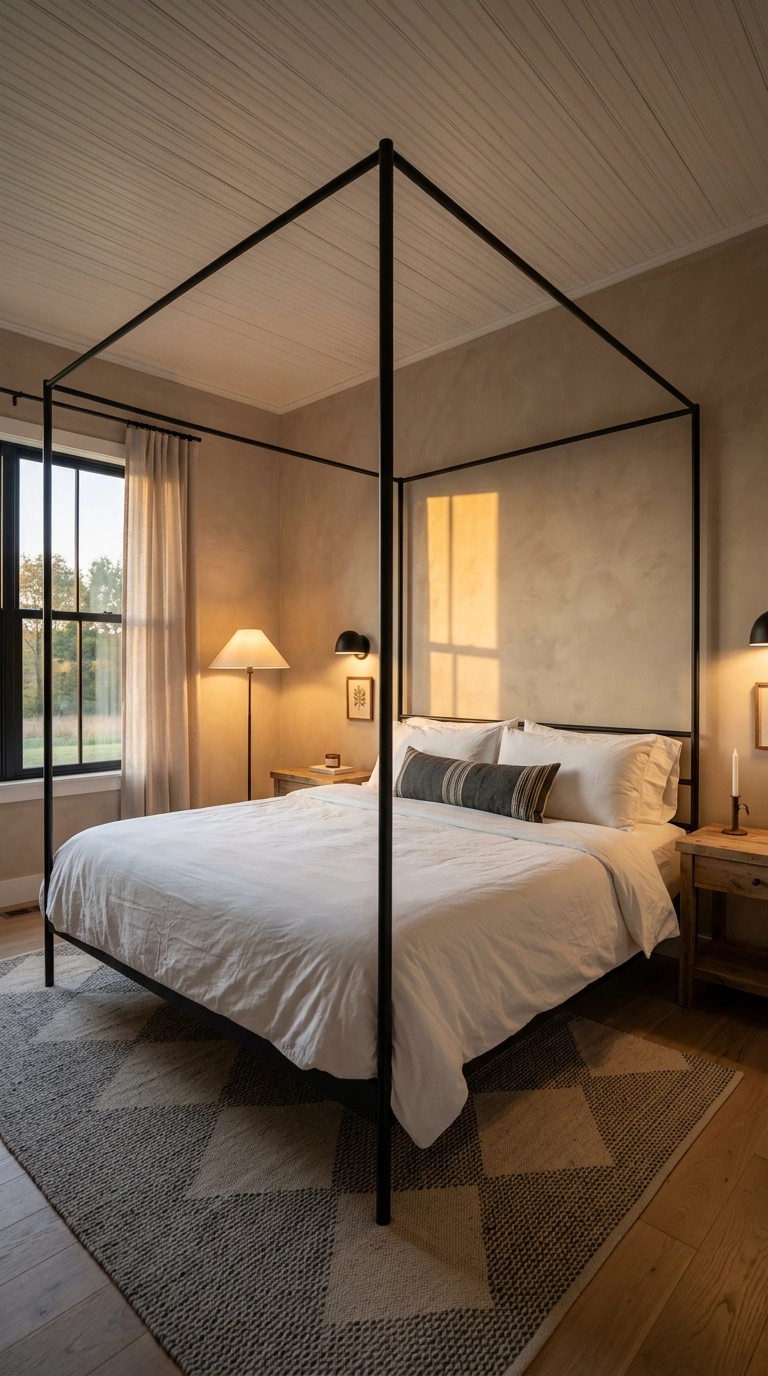
Here’s the counterintuitive one. A king already dominates the floor plan, so adding four tall posts sounds insane, but slim posts draw the eye vertically and the bed stops sprawling and starts standing.
18. Float the Bed to Carve Out a Reading Corner Behind It
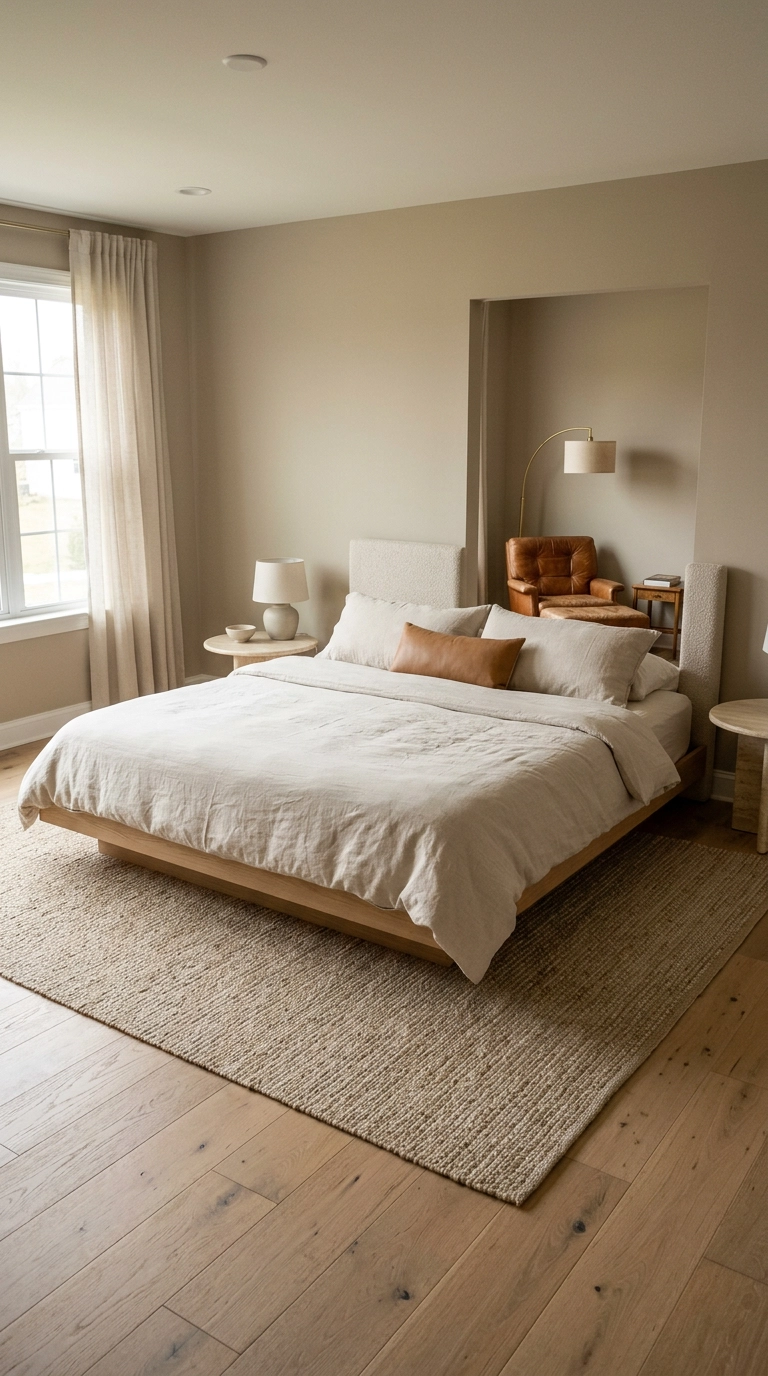
If your room runs long and you have more than 30 inches to spare behind the bed, pull it off the wall. That gap becomes a real zone – one chair, one lamp, done – and the bed suddenly feels chosen rather than shoved.
19. Warm the Cold Side of the Room With One Wood Tone
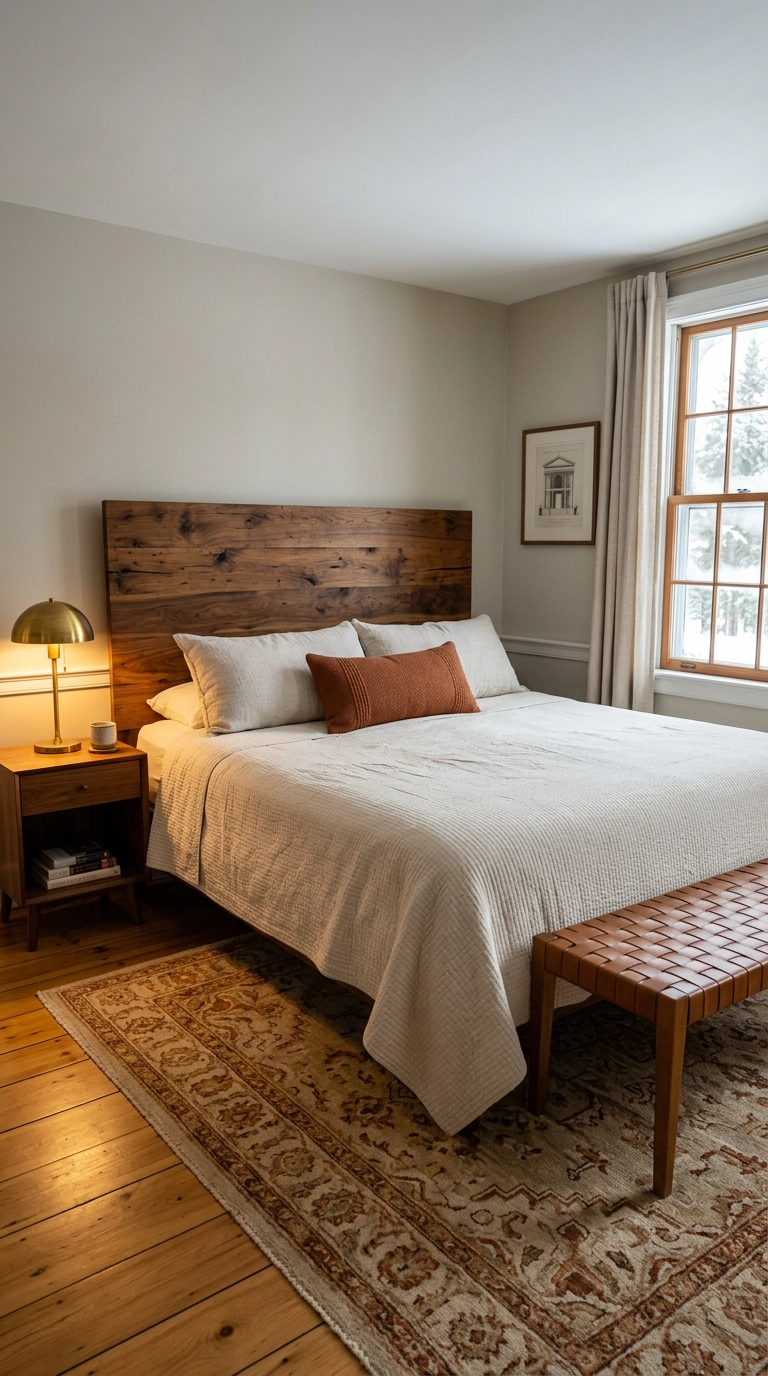
North-facing bedrooms get flat blue-grey light all day, and a king bed in crisp white bedding under that light looks like a hospital ward. One dominant warm wood tone fixes it faster than changing the paint.
20. Layer a Small Vintage Rug Over a Big Natural Fiber Base
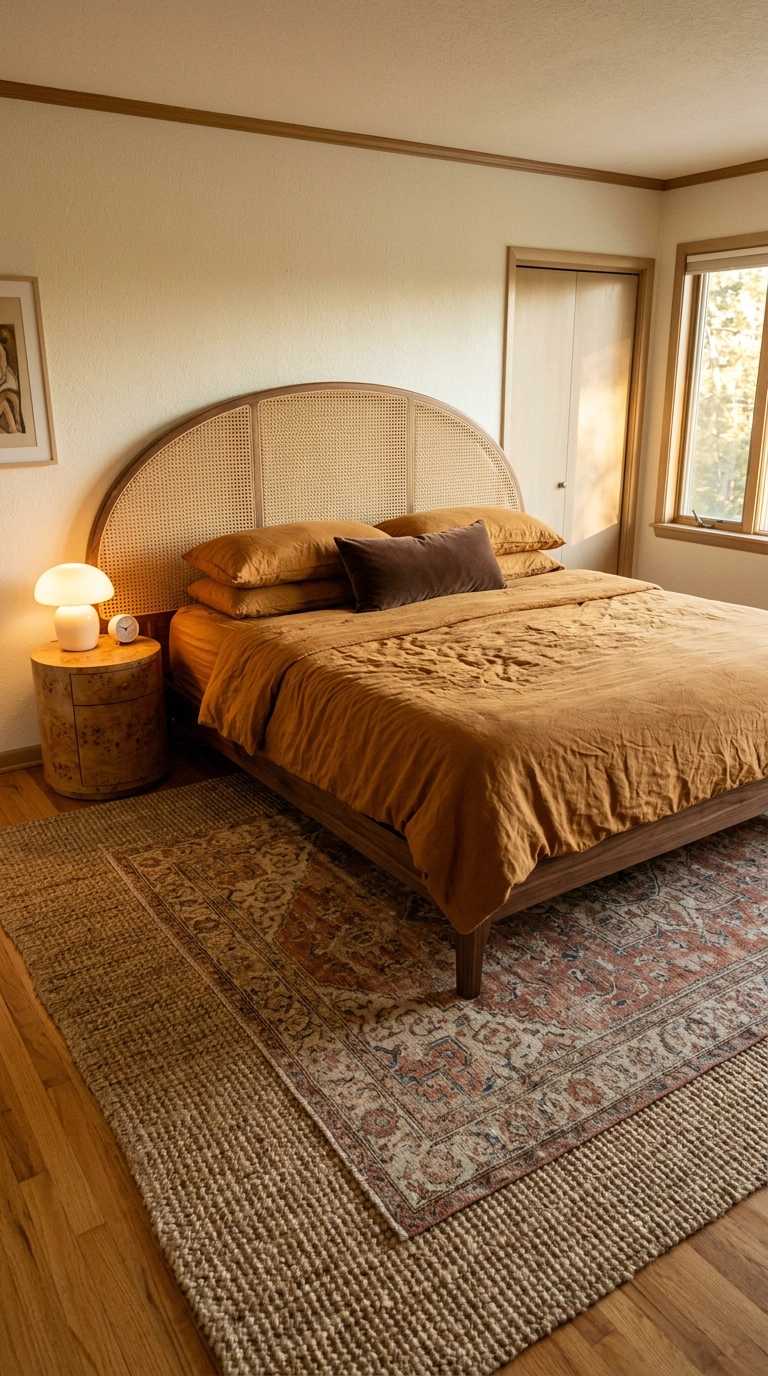
A 9×12 wool rug is the single most expensive thing in most king bedrooms, which is why so many people buy one two sizes too small. My workaround: a 9×12 jute or sisal base for the footprint, then a 5×8 vintage rug layered on top under the bottom two-thirds of the bed.
21. Paint the Ceiling and Stop Ignoring the Fifth Wall
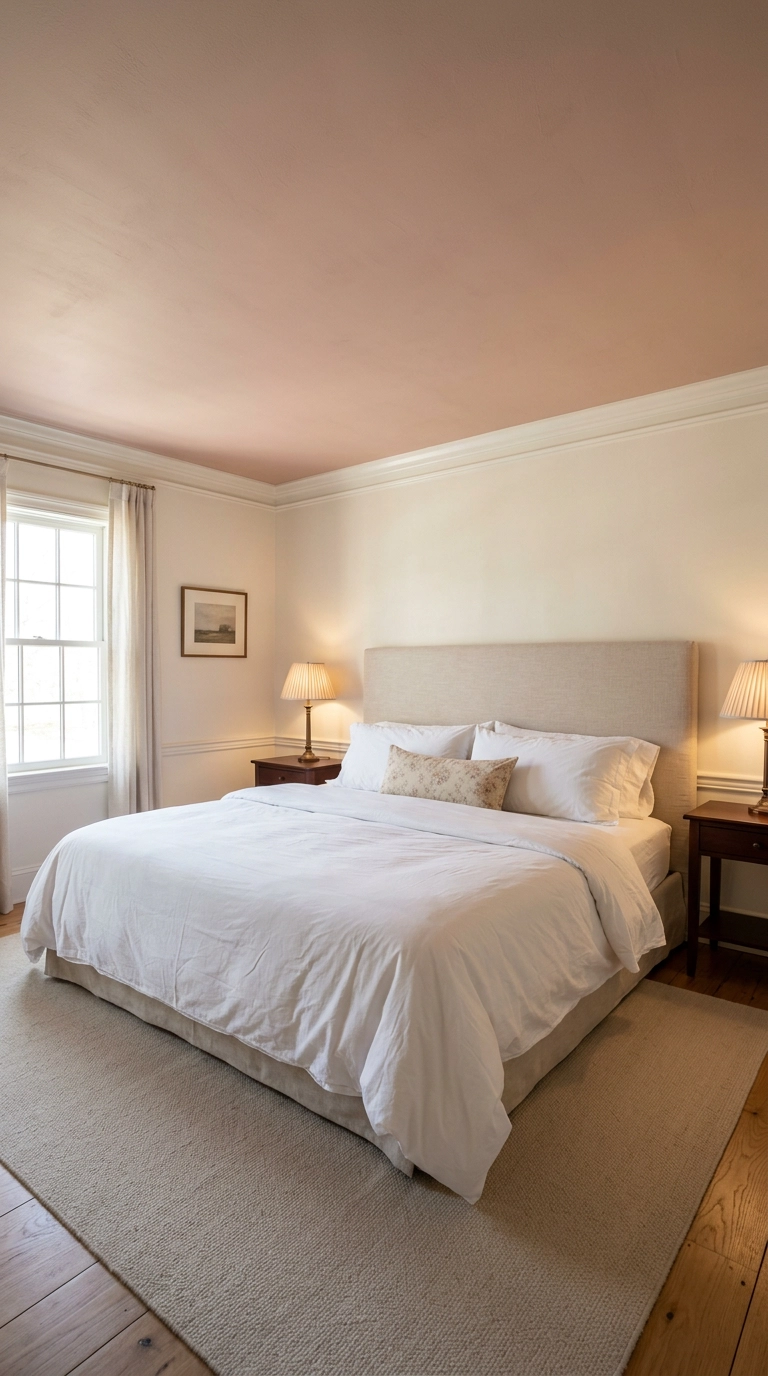
A king bed occupies the bottom third of the room and your ceiling is the only surface with nothing on it. Putting a soft color up there redistributes the visual weight, meaning your eye stops landing on the mattress first and starts reading the whole room.
22. Finish With a Canopy Frame Left Bare for Pure Architecture
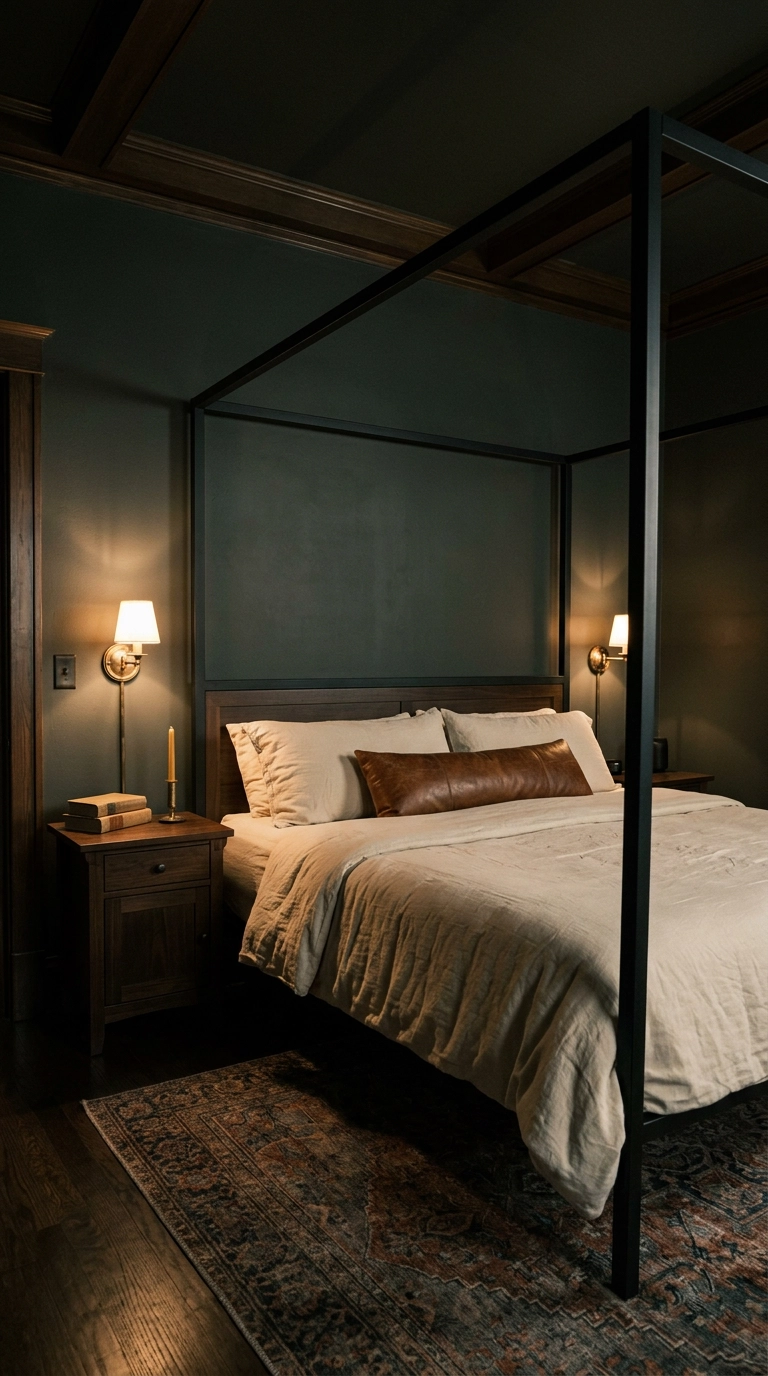
I saved my favorite for last. A bare canopy frame draws a rectangle in the air above the bed, and that outline does something no headboard can – it claims vertical volume without adding a single solid surface.
Making Peace With All That Beautiful Square Footage
Here’s what I hope stuck with you: a king bedroom isn’t a small bedroom with a bigger bed in it. It’s a genuinely different design problem, and almost every fix on this list comes back to balancing horizontal mass with something vertical, whether that’s a 60-inch headboard, a slat wall, slim four-poster posts, or curtains hung tight to the ceiling.
If you only do three things, make them the rug, the clearance, and the light. Going up to a 9×12, protecting those 30 inches per side, and killing the single overhead in favor of three warm pools will change the room more than any furniture purchase. I’m seeing color-drenched bedrooms and bare canopy frames everywhere heading into 2026, and warm plaster ceilings in shades like Farrow & Ball Setting Plaster have quietly replaced the flat white ceiling as the default in the rooms I admire most. Nate Berkus has been preaching the oversized-headboard gospel for years, and honestly, he was right the whole time.
Start with the layered jute-and-vintage rug trick if the budget is tight, or the color drench if you have a free weekend and a roller. Either one gets you most of the way there. If you want more of this in your inbox, sign up for my weekly newsletter – I send one honest room breakdown every week, complete with the measurements, the actual costs, and the mistakes I made getting there.


