
23+ Stunning Bedroom Dresser with Mirror Decor Ideas that Look Effortless in 2026

I’ll be honest with you – the dresser is the most neglected surface in almost every bedroom I walk into, and adding a mirror above it is the single fastest way to make that wall finally look intentional. I’ve styled dozens of these, from thrifted oak lowboys to inherited monsters that weighed as much as a car, and the formula is always the same: one mirror, two or three objects, and the discipline to stop there. Below are the combinations I actually use on client jobs, including the renter-safe ones.
Bedroom Dresser with Mirror Decor Ideas
1. Oversized Arched Mirror Leaned Against the Wall
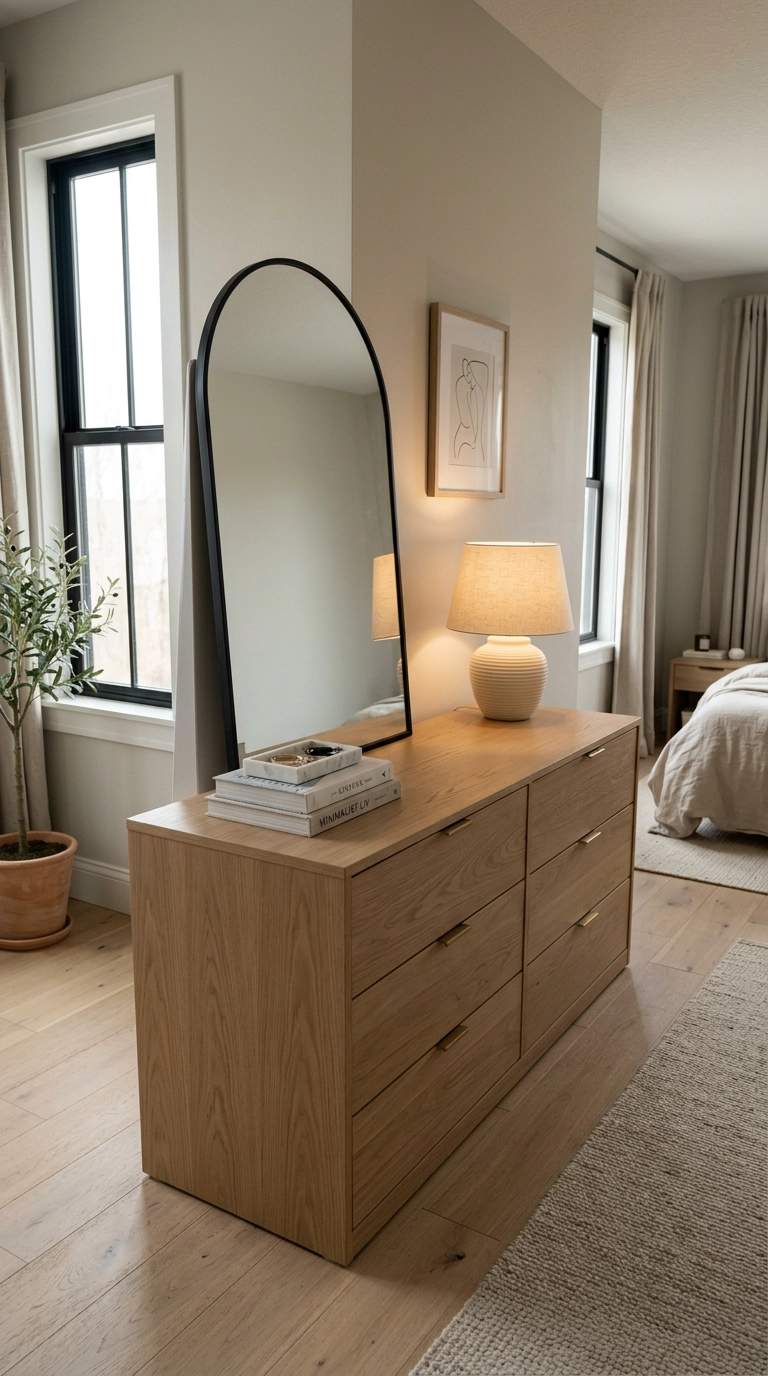
Leaning a floor-length arched mirror behind the dresser instead of hanging it is my favorite cheat, and it costs zero holes in the wall. Go big – the mirror should be at least two-thirds the width of the dresser, or it reads like a postage stamp.
2. Perfect Symmetry with a Pair of Matching Lamps
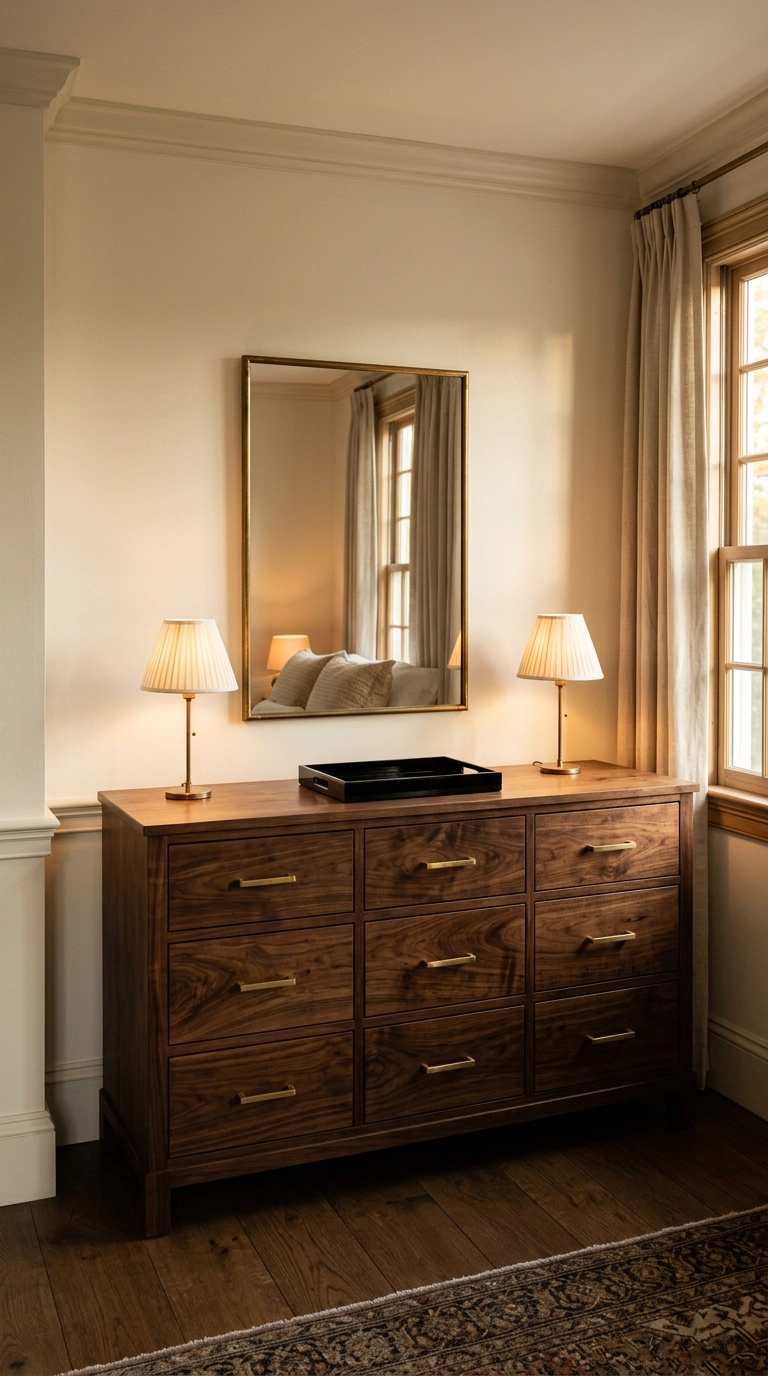
Two matching lamps flanking the mirror is the oldest trick in the book because symmetry reads as calm to the human eye before you even register why. Keep the lamps at roughly one-third the mirror’s height so they frame it instead of fighting it.
3. Round Mirror with a Deliberately Lopsided Vignette
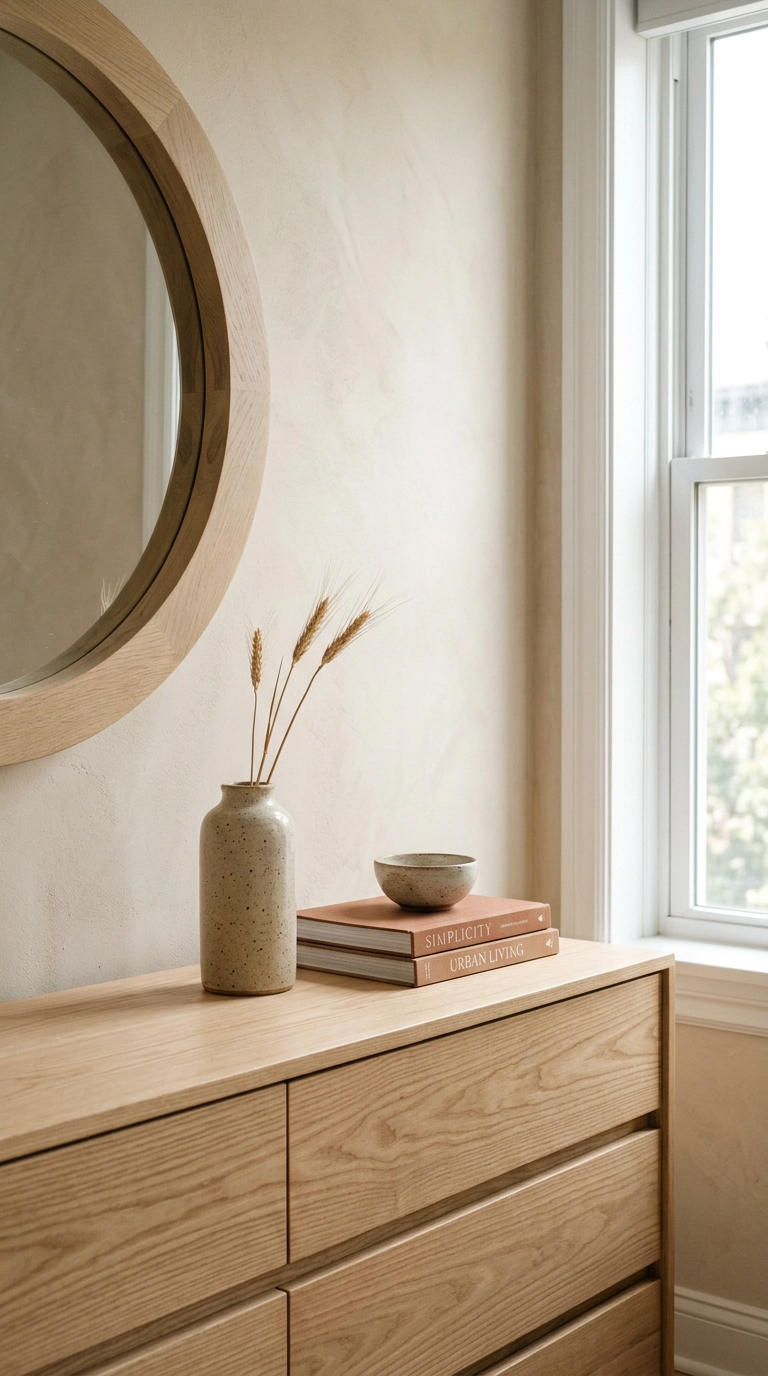
Symmetry is safe, but asymmetry is what makes a dresser look styled by a person instead of a showroom. The rule I use: tall thing on one side, low cluster on the other, and let the middle stay empty so the mirror has room to breathe.
4. Turn It Into a Real Vanity with a Tucked-In Stool
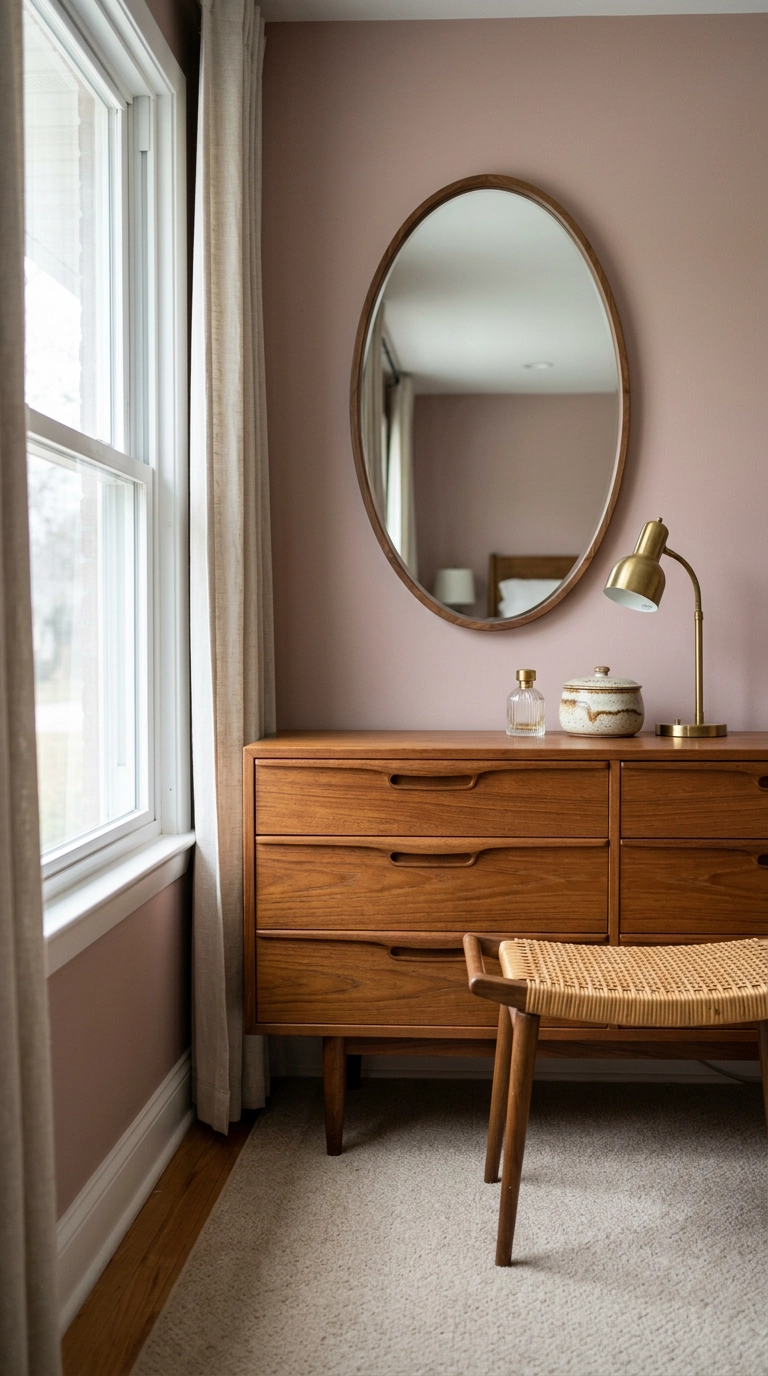
If your dresser sits at roughly 30 to 32 inches, it’s already vanity height, and adding a stool turns dead storage into a spot you’ll actually use. Any small stool works as long as the seat clears the bottom drawer by a few inches.
5. Color Drench the Wall So the Mirror Disappears Into It
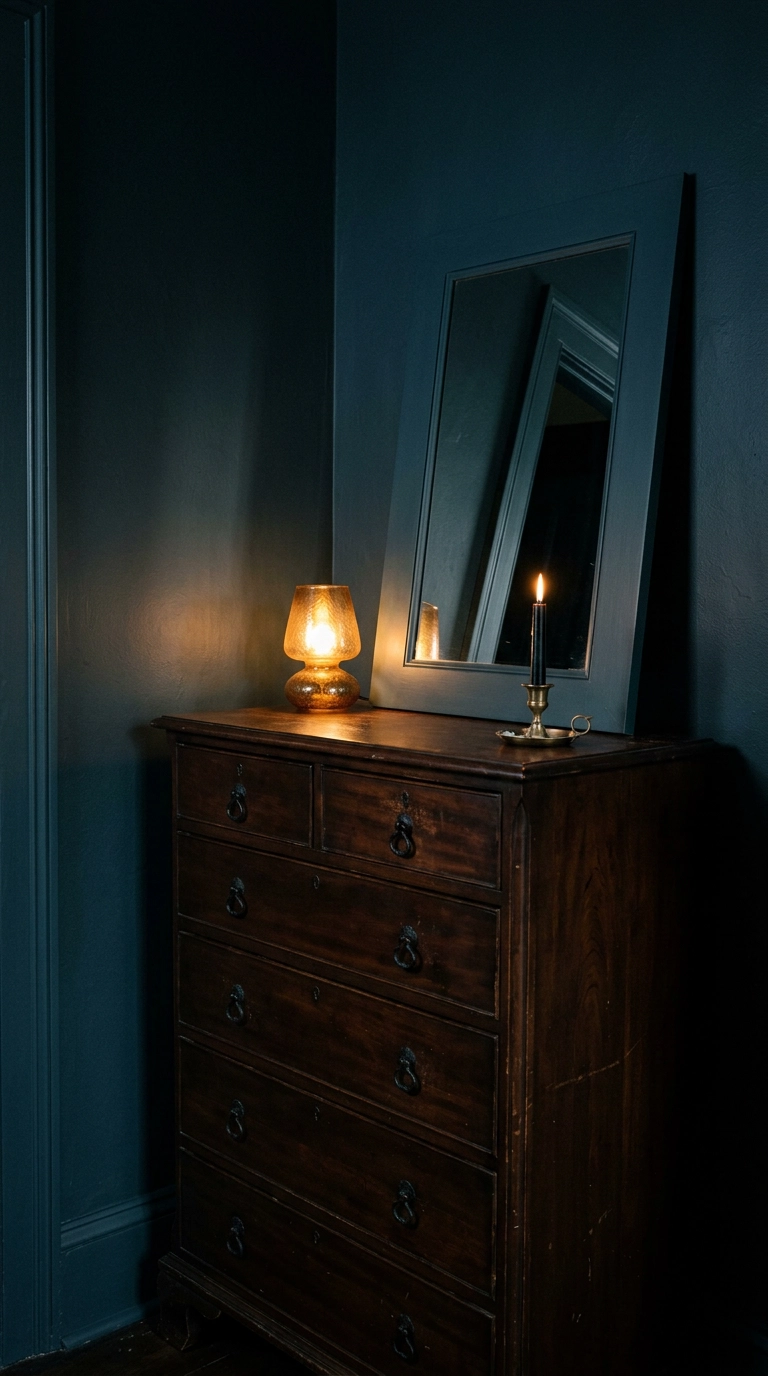
Color drenching just means painting the wall, trim, and mirror frame the same shade so the eye reads one continuous surface instead of three broken pieces. Farrow & Ball Hague Blue or Studio Green both do this beautifully on a north-facing wall that never gets direct sun.
6. Stack Two Mirrors in Different Sizes
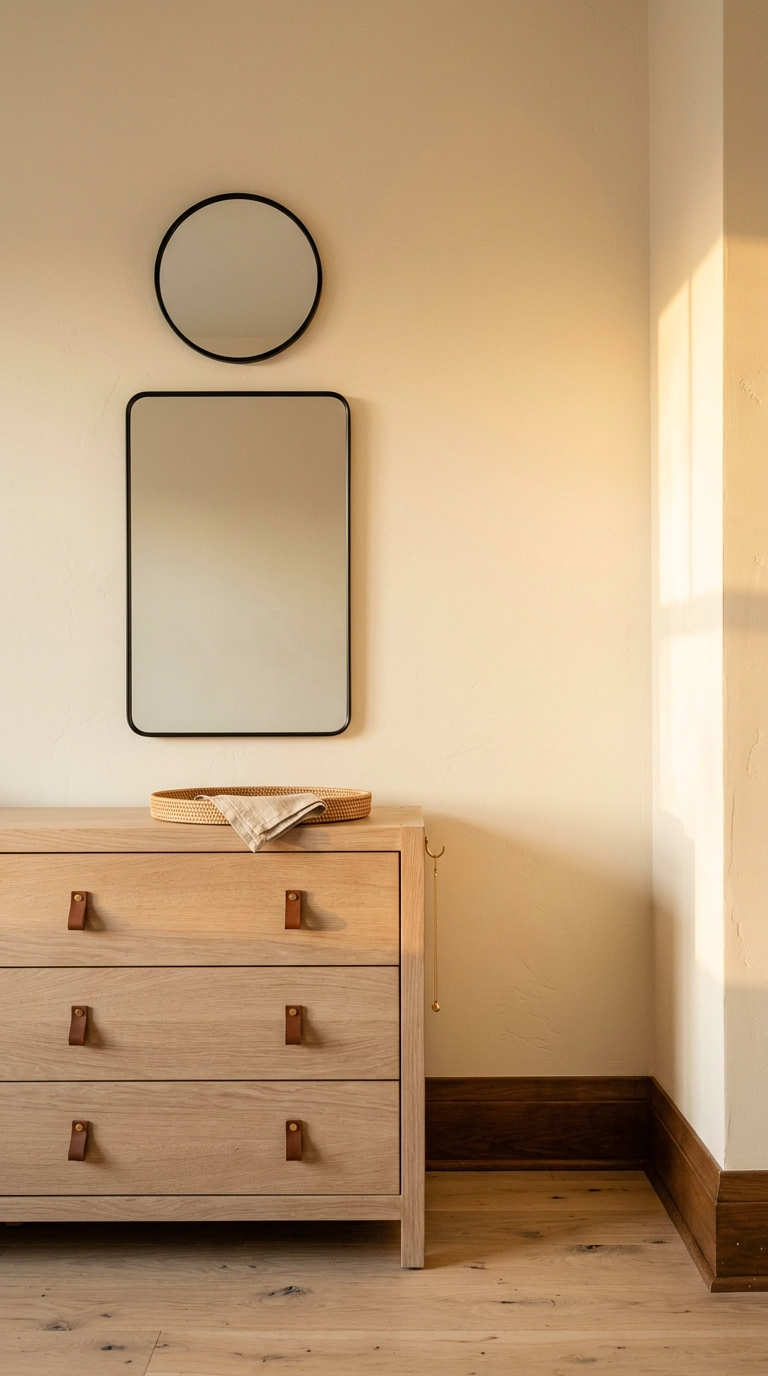
Stacking a small mirror above a larger one draws the eye upward, which is the same reason we hang curtains near the ceiling – vertical movement makes an 8-foot ceiling feel taller than it is. Leave about 3 inches between the frames so they read as a pair, not an accident.
7. Scalloped Mirror Over a Painted Cottage Dresser
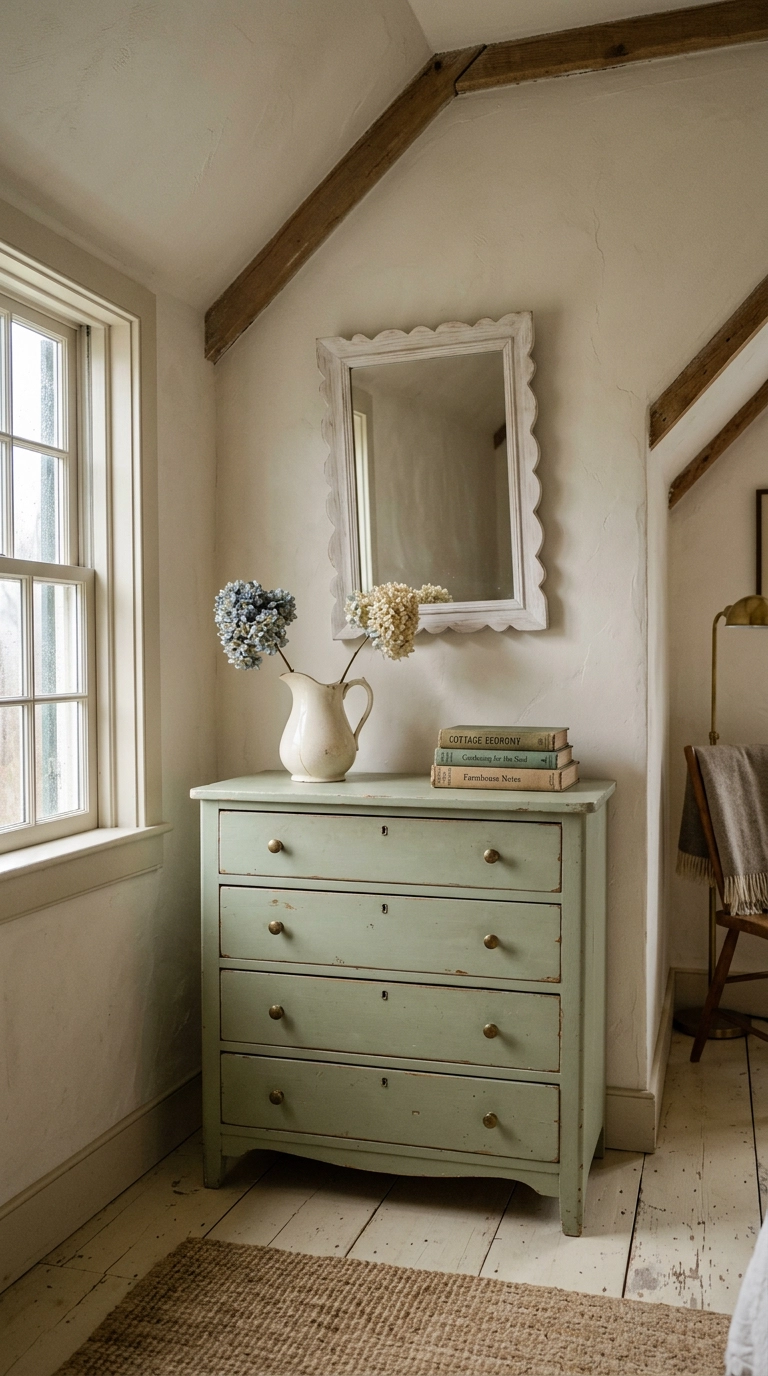
A scalloped or carved frame does all the decorative work for you, which means the dresser top can stay nearly bare. That contrast is the whole point – busy frame, quiet surface.
8. Hang Art That Overlaps the Mirror’s Edge
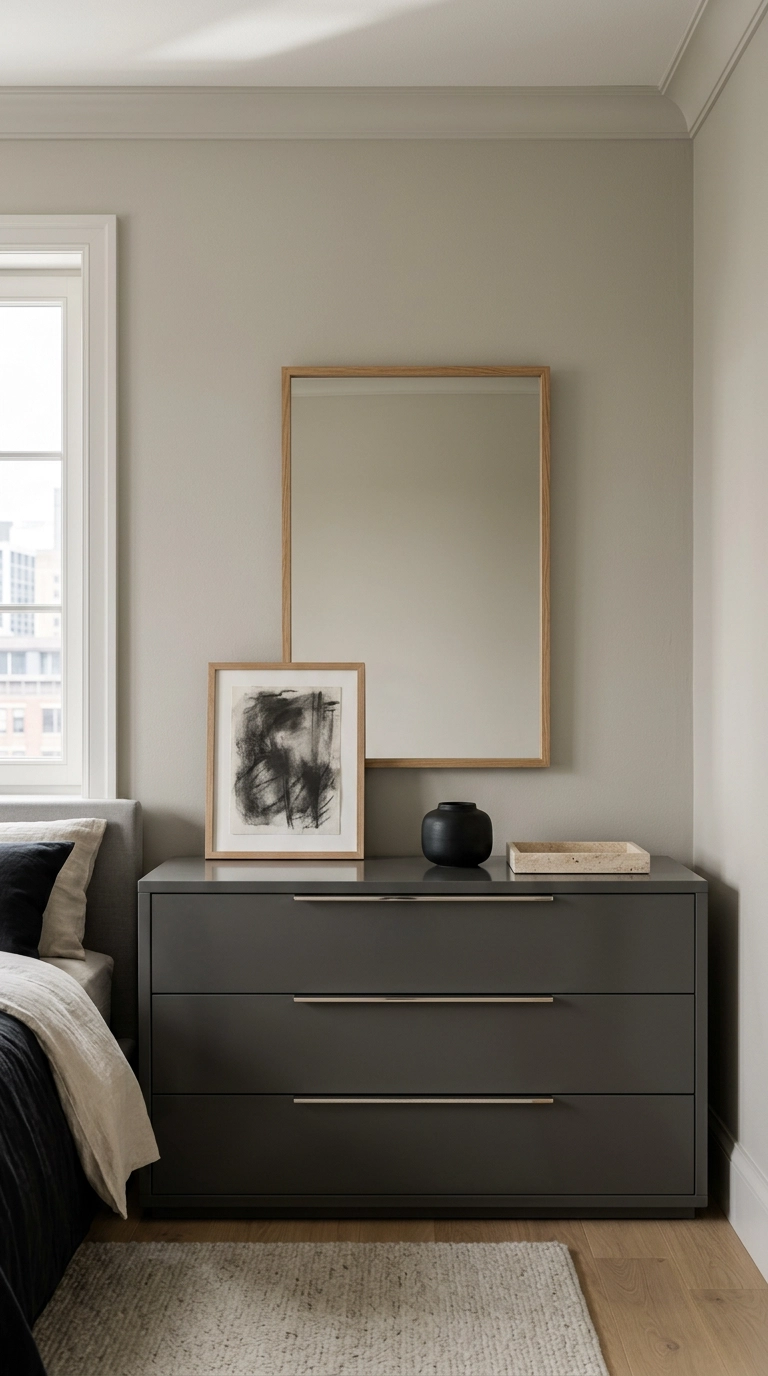
Layering a small piece of art so it overlaps the mirror instantly kills that stiff, hung-by-a-level look. Overlap by about a quarter of the artwork’s width – any less looks like you missed.
9. Plug-In Swing Arm Sconces Instead of Lamps
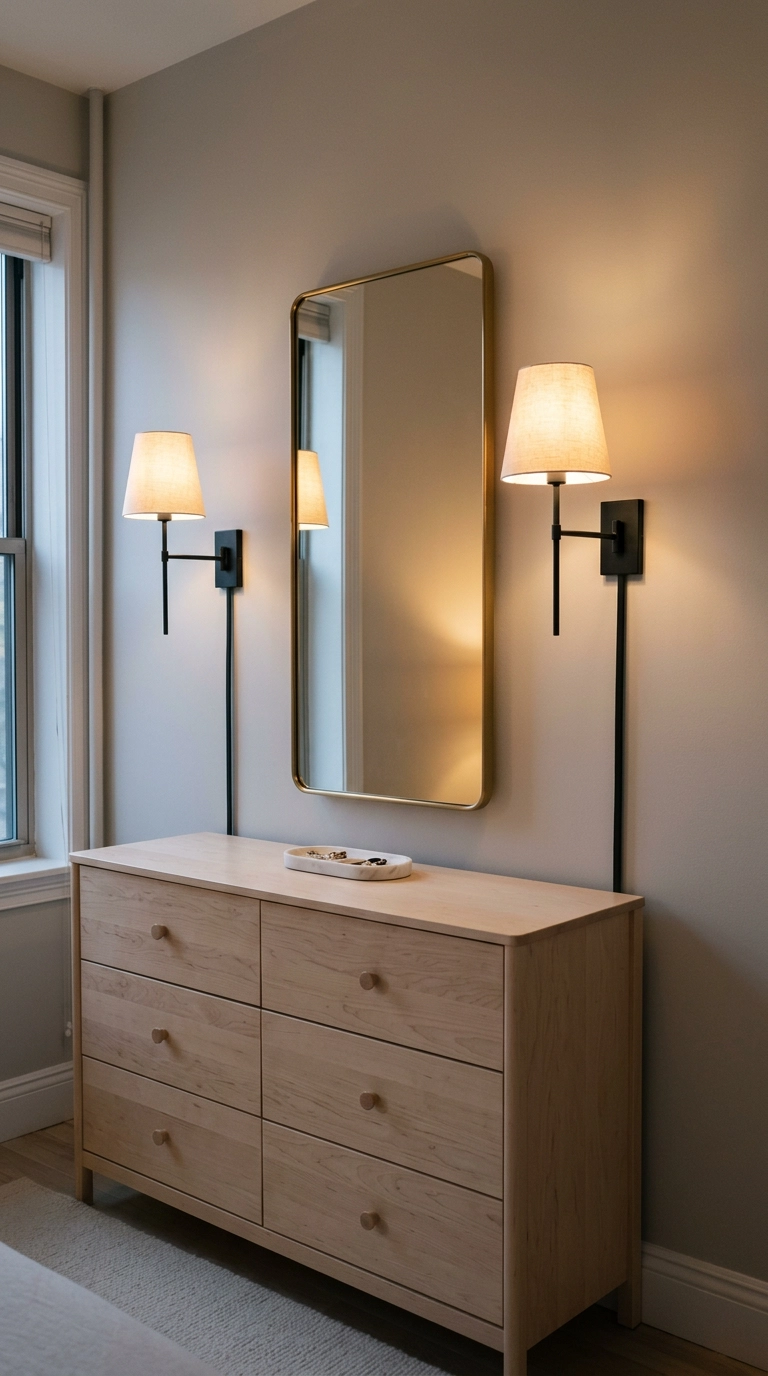
Sconces give you the glow of table lamps without eating a single inch of surface, which matters enormously on a narrow dresser. Mount them at about 60 inches from the floor so the light hits your face rather than your collarbone.
10. The Three-Object Tray Rule
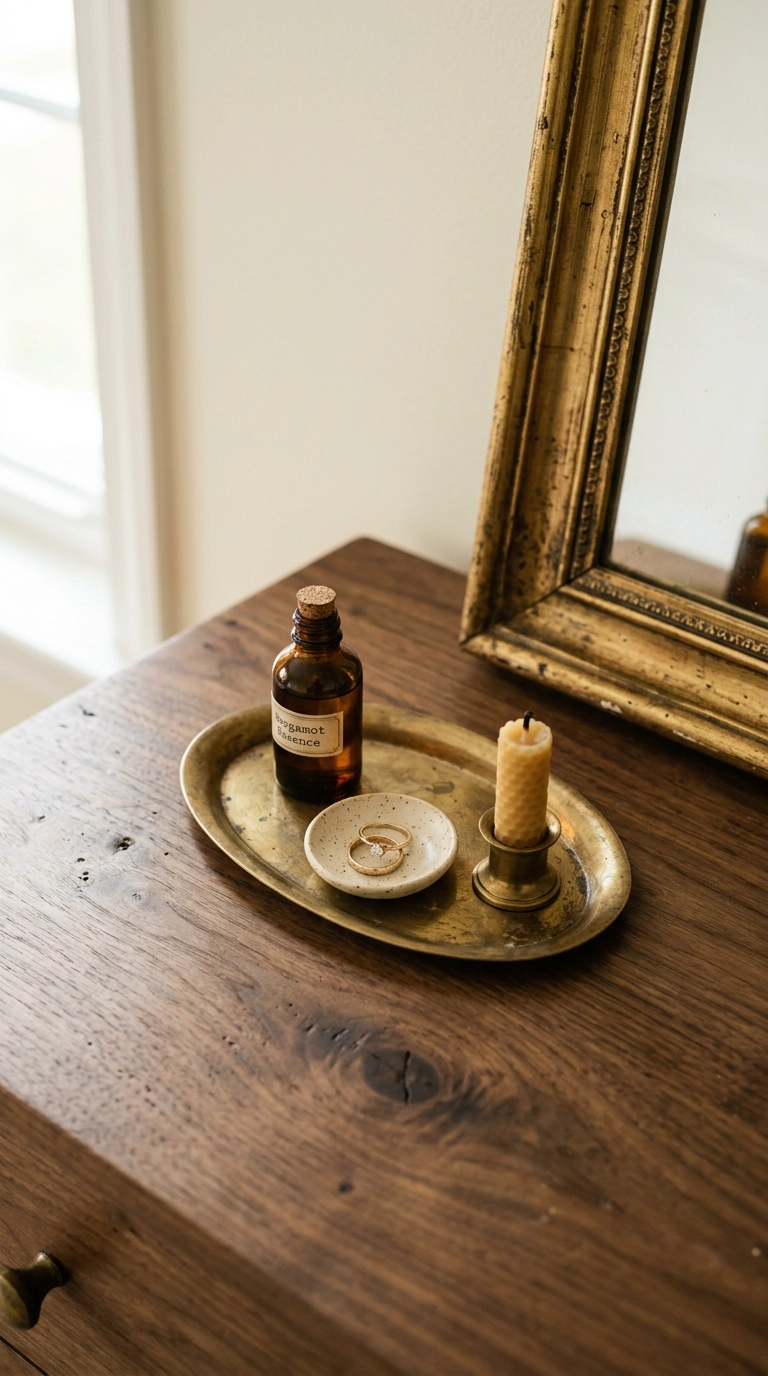
Everything on the dresser top should live inside a tray, and that tray should hold three things. Odd numbers read as intentional to the eye while even numbers read as a set, and a defined edge stops the daily creep of keys, receipts, and hair ties.
11. Full-Length Mirror Standing Beside the Dresser
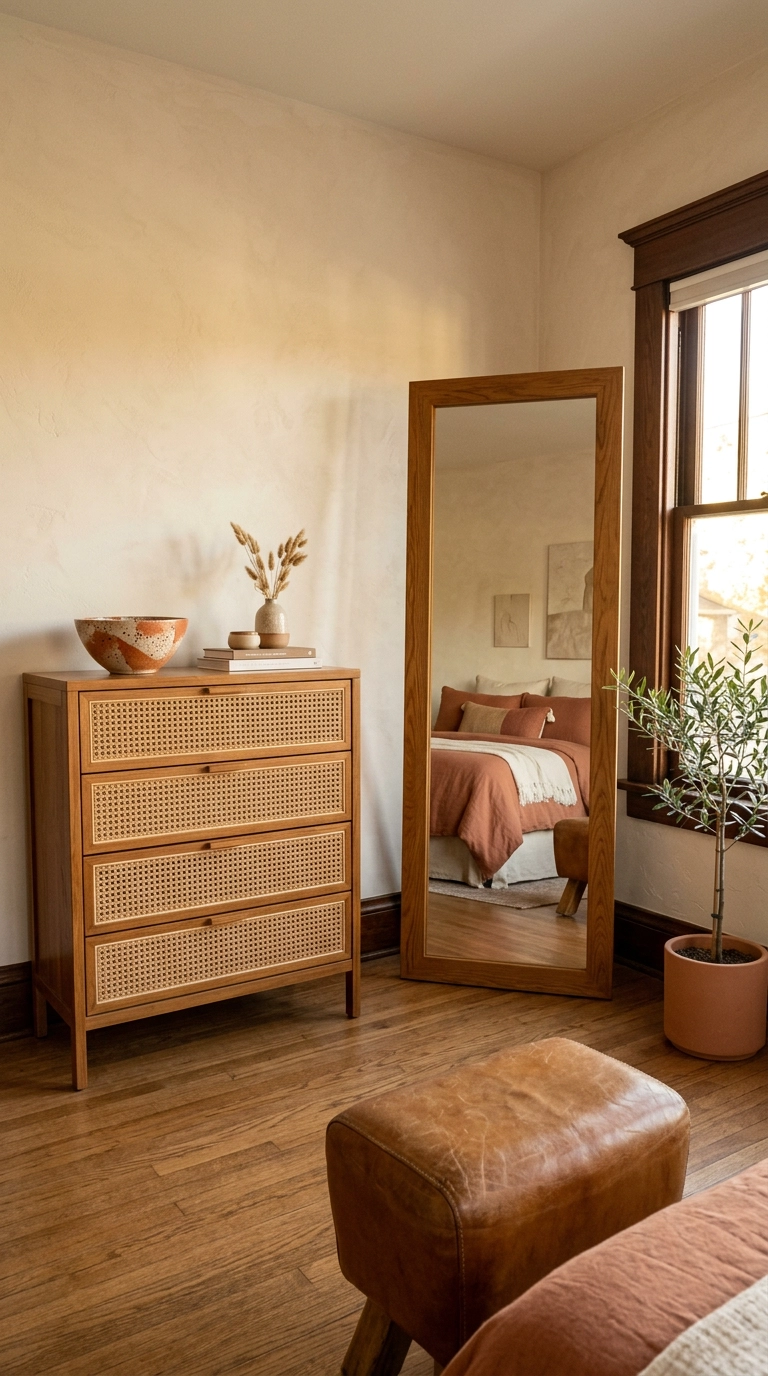
If the wall above your dresser is short or has a vent or a window in the way, put the mirror on the floor next to it instead. Angling it slightly inward gives you a proper head-to-toe view without staring at yourself from bed.
12. Wall-to-Wall Wallpaper Behind a Simple Mirror
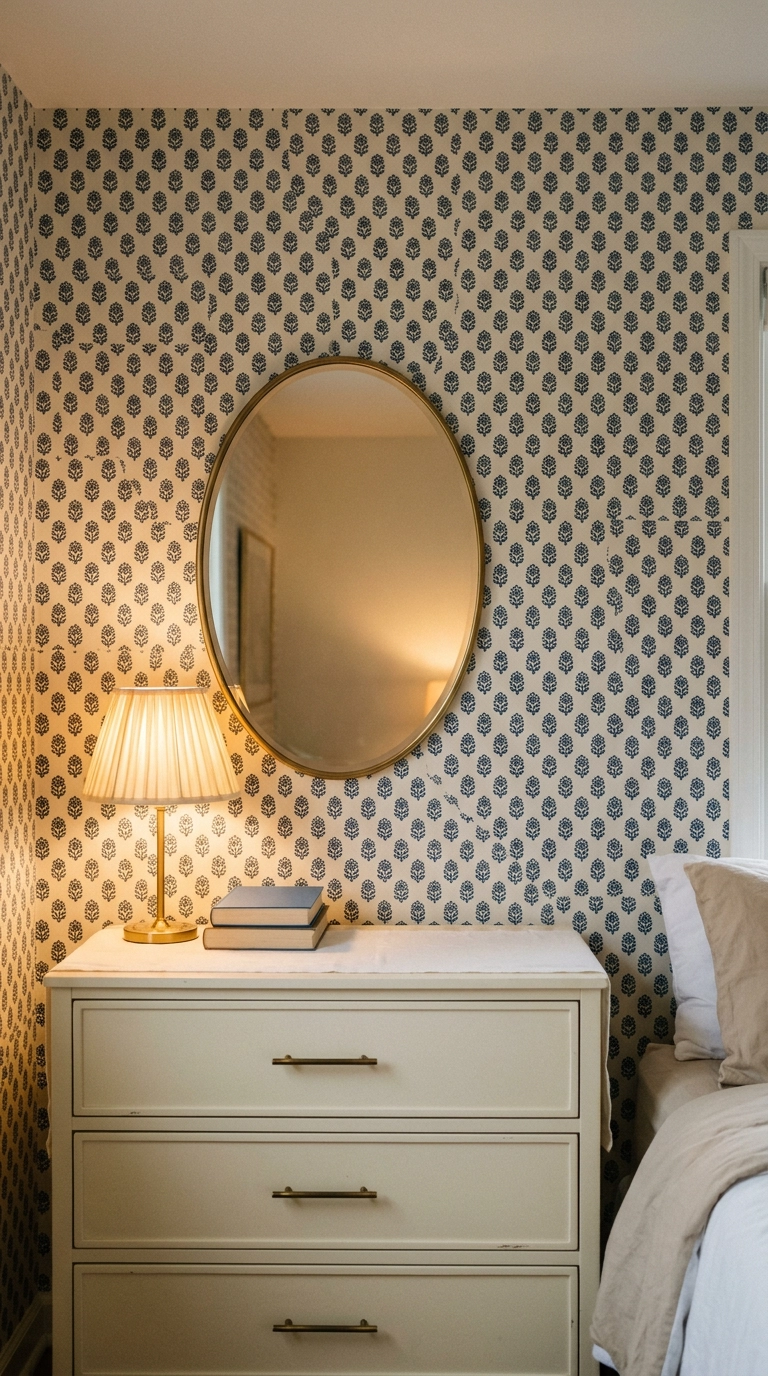
When the wall is doing the talking, the mirror should be as plain as possible – one pattern is the hero, everything else stays solid. Peel-and-stick papers have gotten genuinely good, and a single accent wall behind a dresser takes about two hours and one very patient friend.
13. Antiqued Foxed Glass for Instant Age
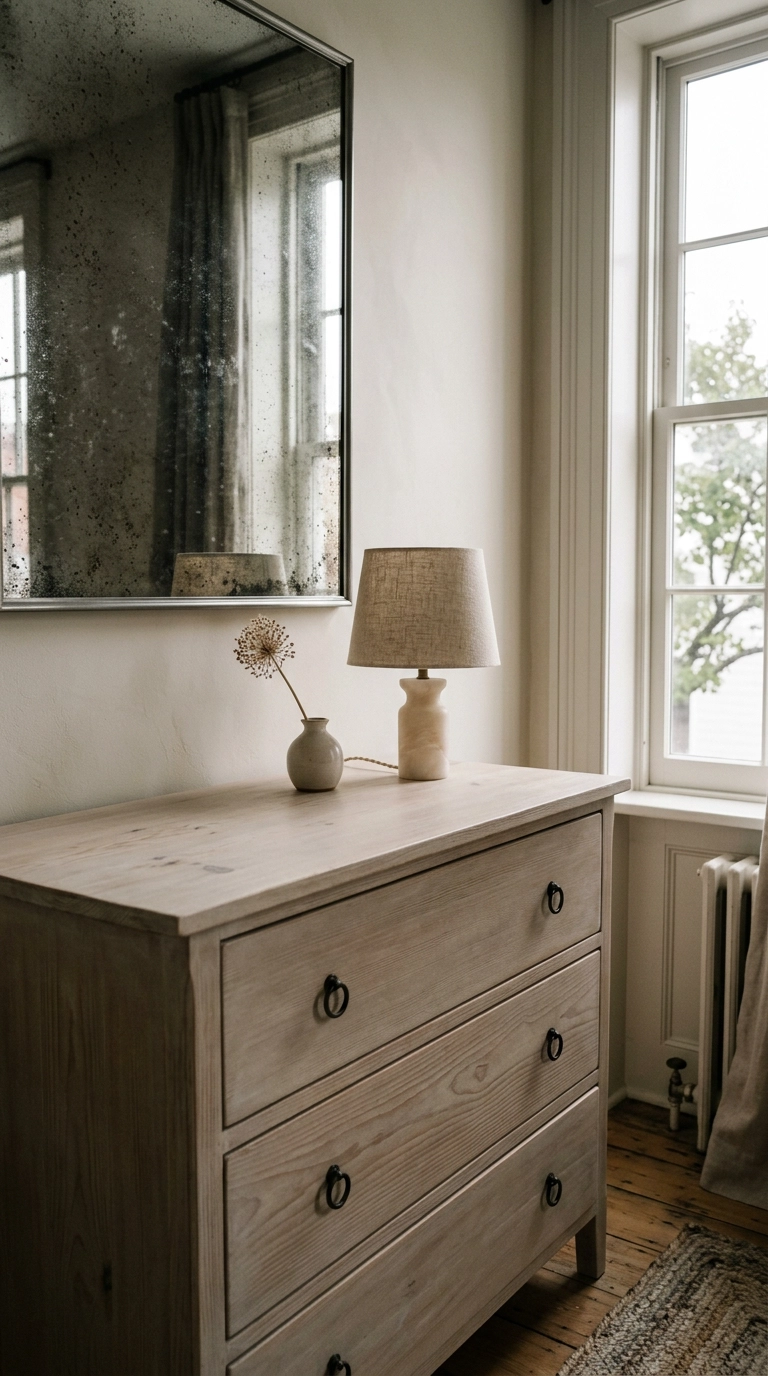
Foxed glass is mirror with the silvering deliberately speckled and clouded, and it’s the one mirror finish that makes a brand-new dresser look like it came with the house. It also hides fingerprints, which if you have a toddler is less a design decision than a survival strategy.
14. A Cluster of Small Mirrors Instead of One Big One
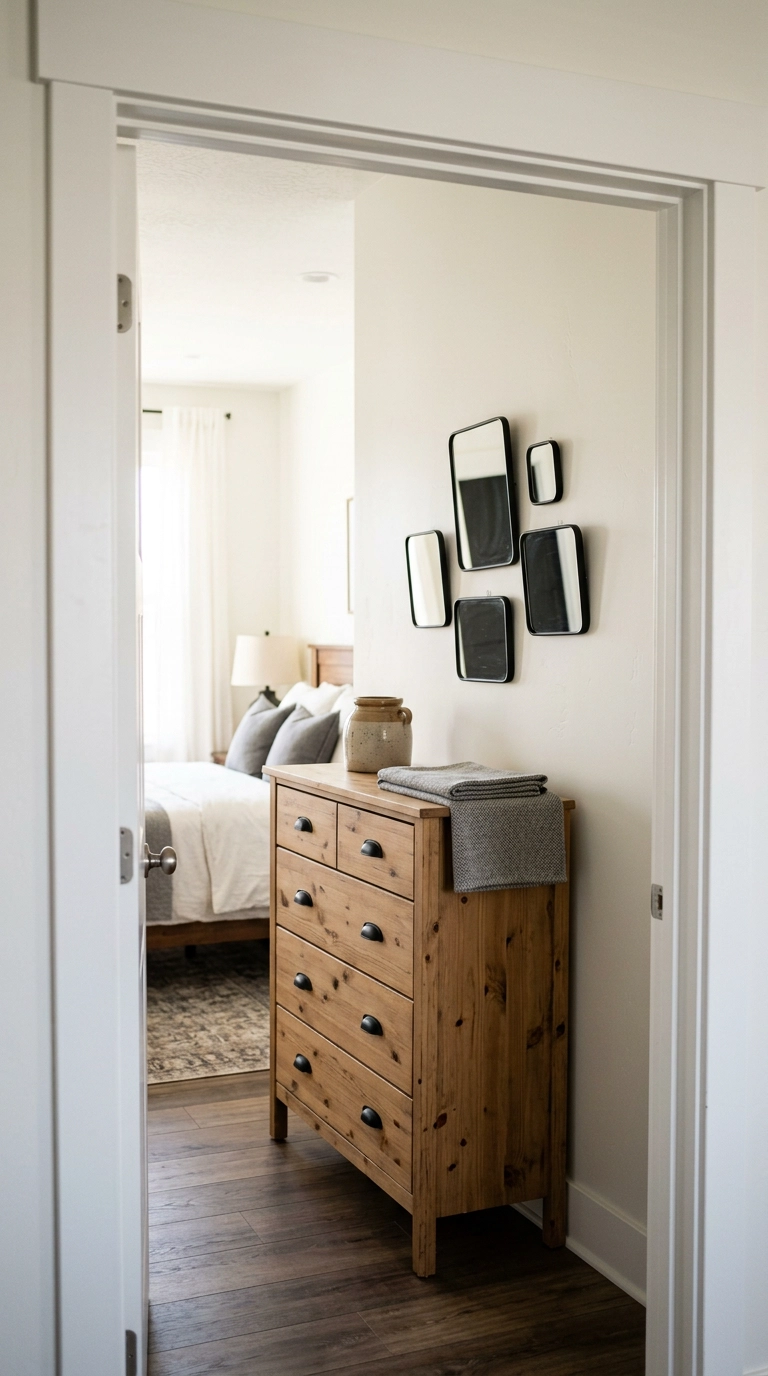
If you can’t find one mirror big enough, five small ones in matching frames do the same job and cost a third as much. Lay them out on the floor first, keep the outer edges of the whole group within the dresser’s width, and space them a consistent 2 to 3 inches apart.
15. Fluted Wood Dresser Under a Frameless Mirror
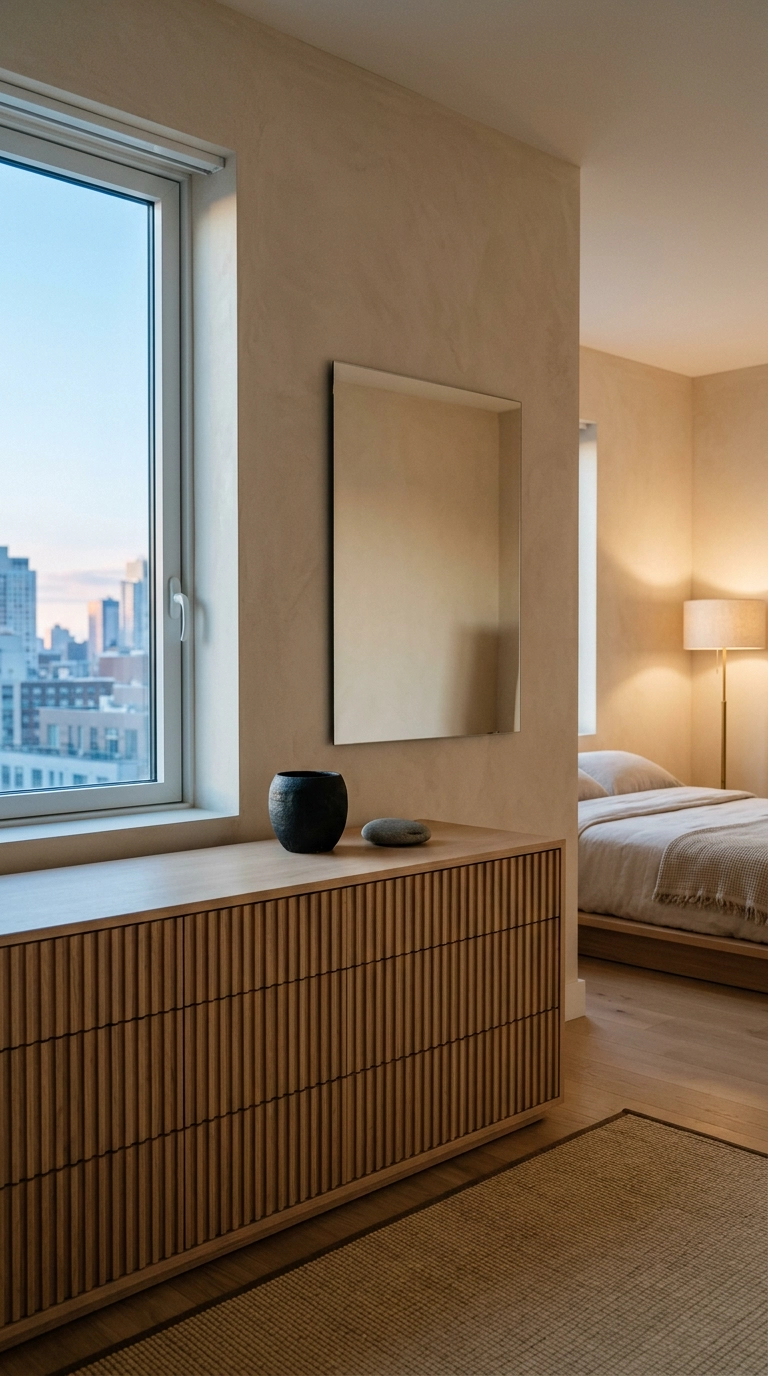
A frameless mirror is the right partner for a fluted or reeded dresser because the drawer fronts already carry all the texture the wall can handle. Those vertical grooves catch raking side light and throw tiny shadow lines, which is why a fluted piece looks expensive in photos and flat under overhead lighting.
16. Marble-Top Dresser with a Gilt Sunburst
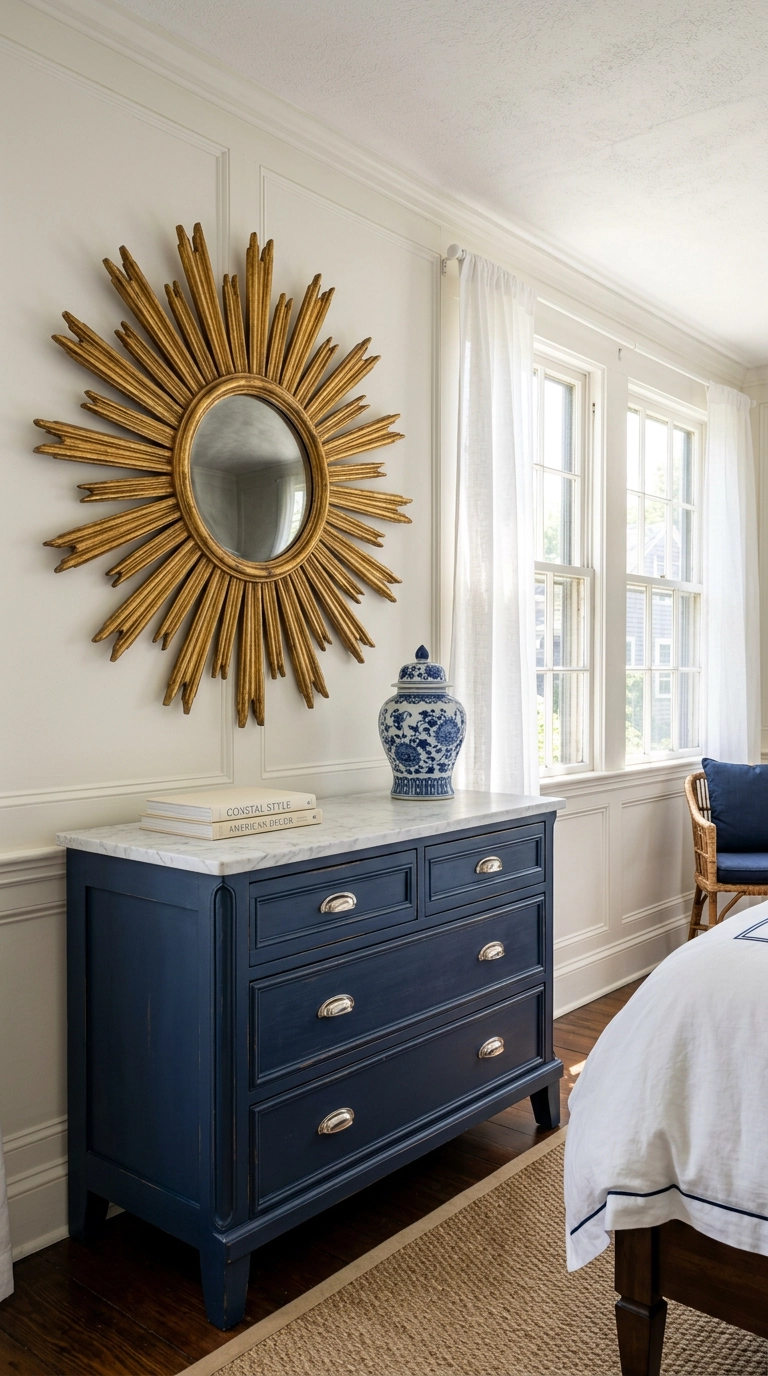
A sunburst mirror is functionally wall sculpture – nobody checks their lipstick in one, and that’s fine. Its job is to fill the awkward gap between the dresser top and the ceiling with something round and radiating, which softens a room full of straight lines.
17. Picture-Frame Molding Framing the Whole Dresser Wall
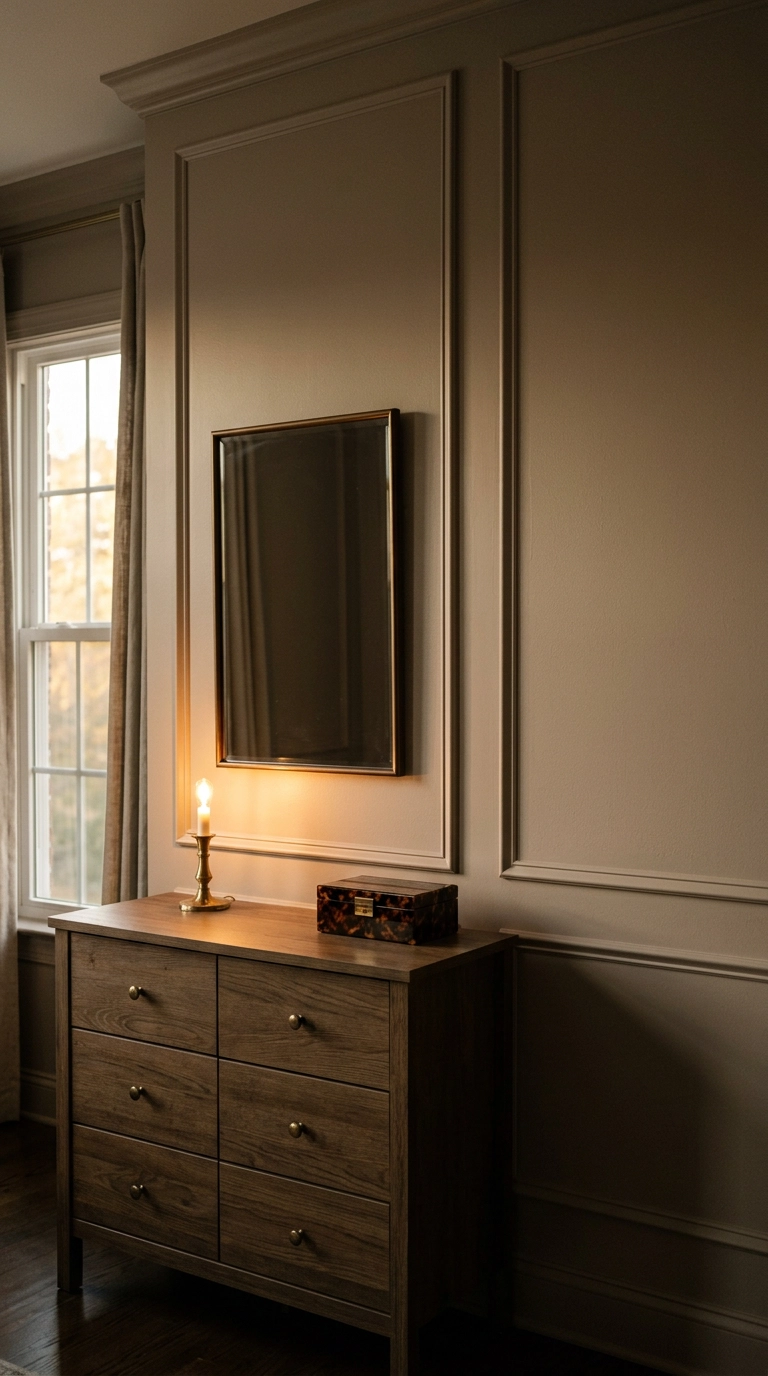
Hanging the mirror inside a molding panel rather than randomly on the wall gives you a frame around your frame, and the eye reads that nesting as deliberate architecture. Center the mirror in the panel and leave at least 4 inches of panel visible on every side or the effect collapses.
18. Mirror Layered Over an Exposed Brick Wall
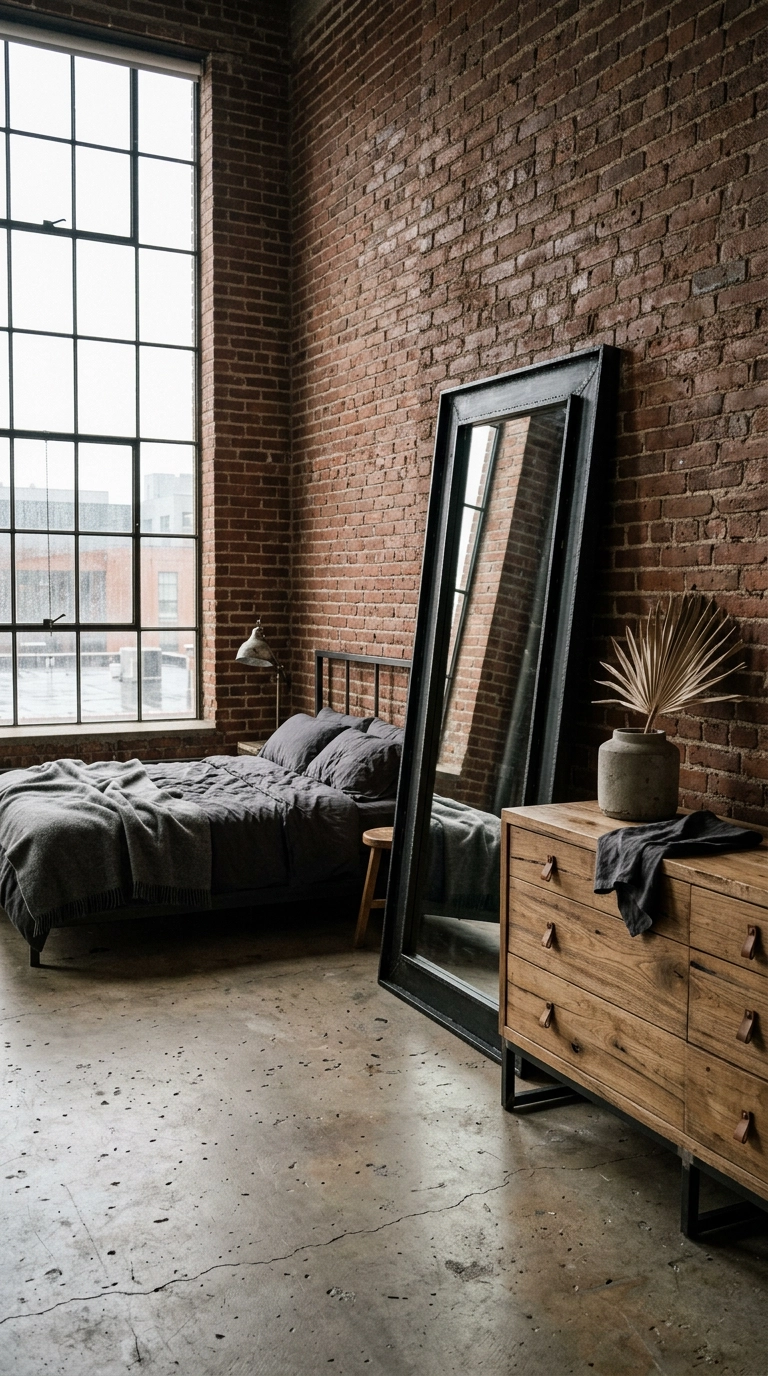
You cannot hang much on brick without a masonry bit and real commitment, so leaning is the move – and a heavy steel-framed mirror is stable enough to lean safely against a rough wall. The smooth glass against pitted brick is the whole appeal, hard texture next to a perfectly flat plane.
19. Swap the Hardware, Keep Everything Else
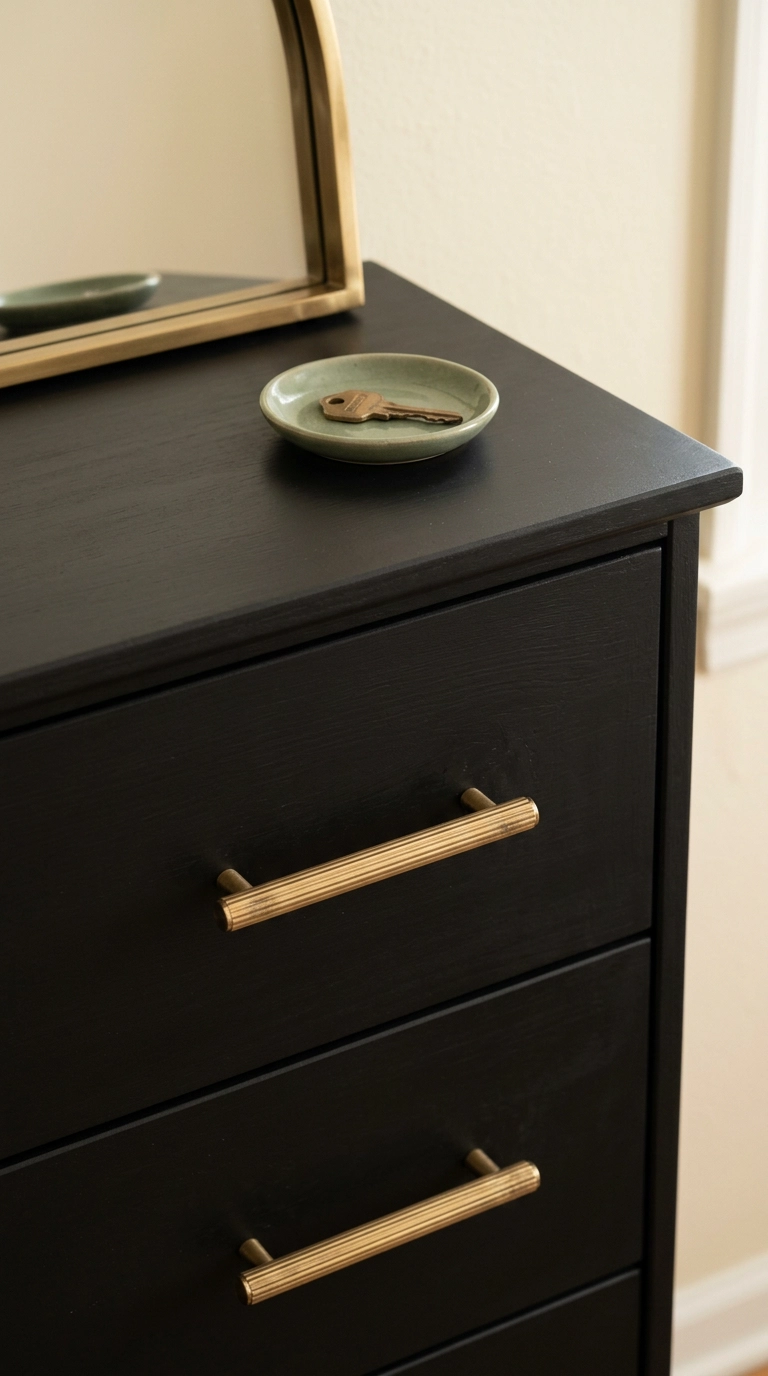
If your mirror is brass and your dresser hardware is builder-grade nickel, the whole wall fights itself. Matching drawer pulls to the mirror frame is a 30-minute fix with a screwdriver and costs less than dinner out.
20. Lean the Mirror on a Picture Ledge
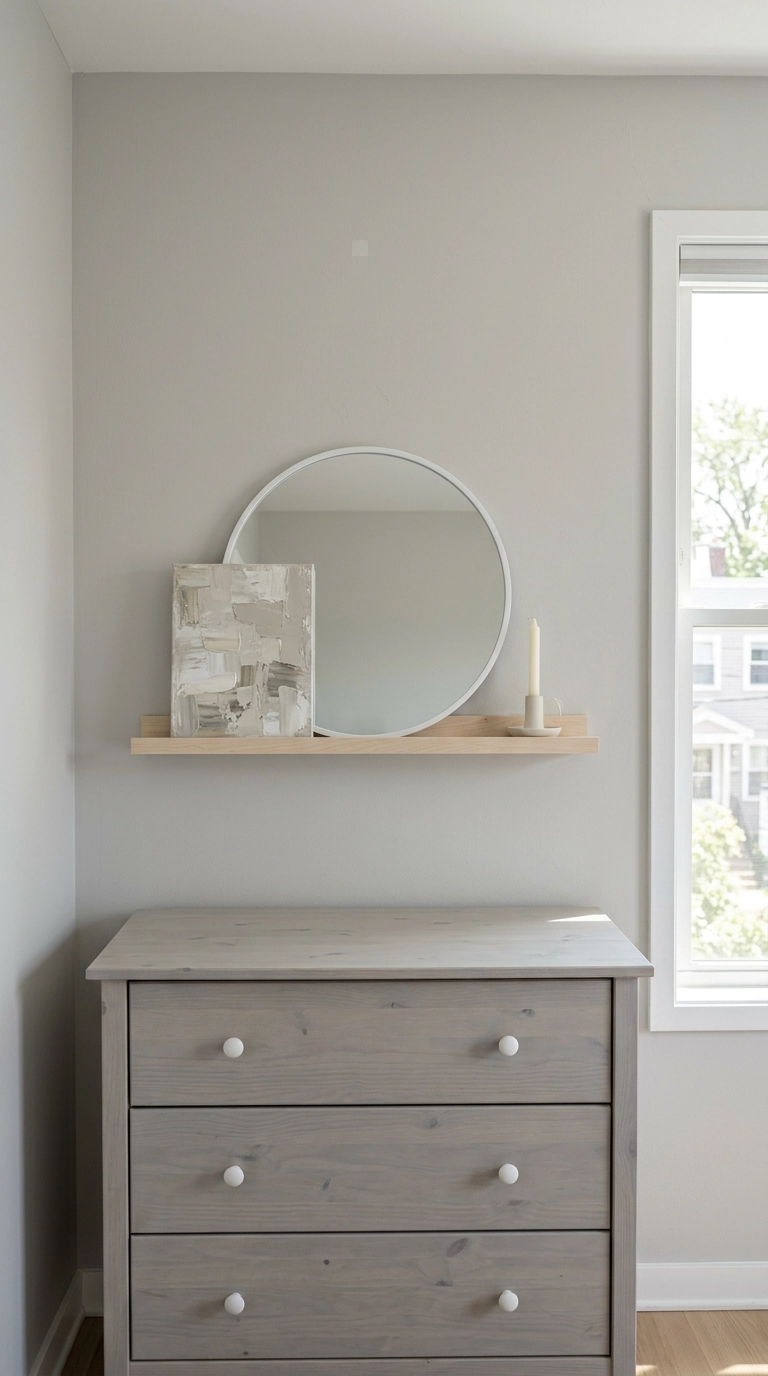
A picture ledge means one set of anchors instead of five, and you can restyle the whole wall in two minutes without touching a drill again. Mount it about 12 to 14 inches above the dresser so there’s room to reach the top drawer.
21. 70s Revival Burl Wood with a Chunky Chrome Mirror
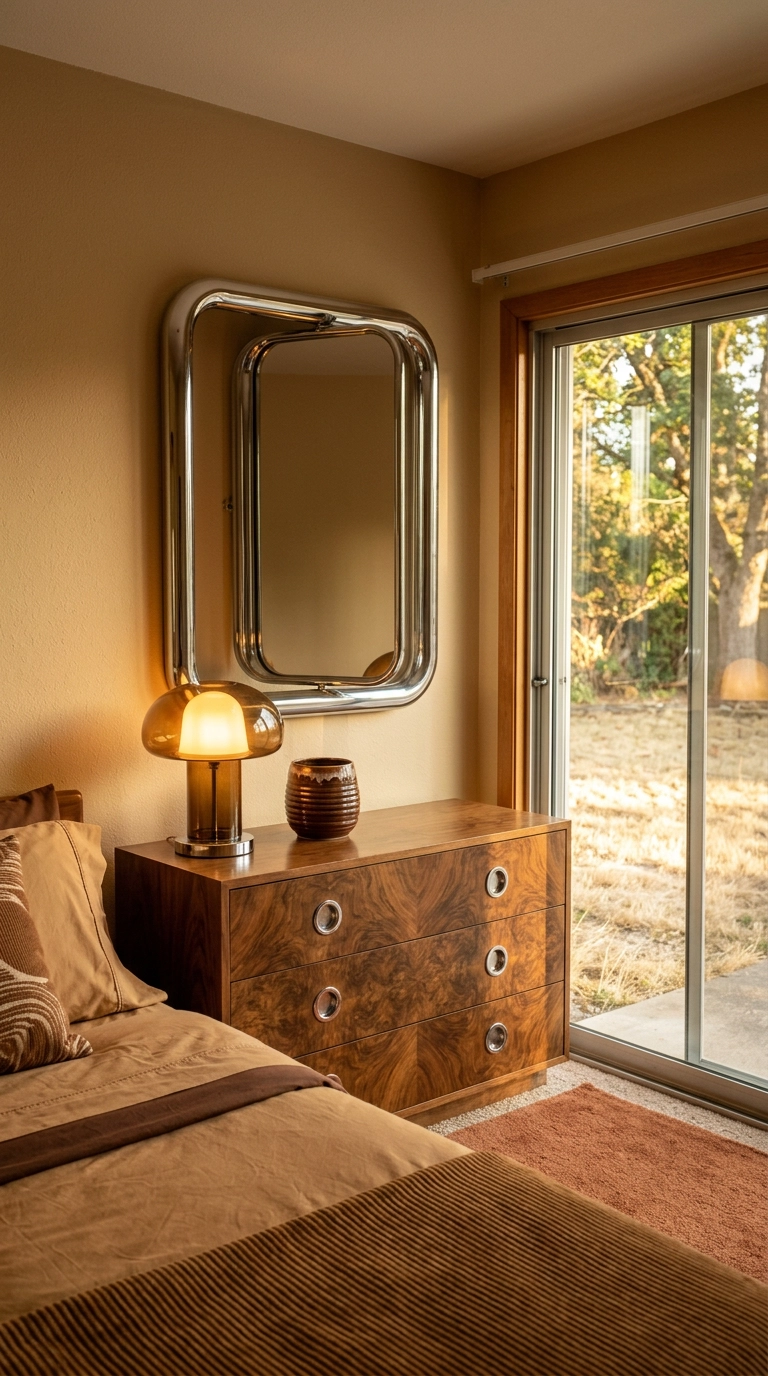
Burl veneer is having a full-on moment, and chrome rather than brass is what keeps it from tipping into costume-70s. The swirling grain is already loud, so the mirror frame should be thick but plain – no etching, no bevels, no detail.
22. Frame the Mirror in a Ring of Dried Botanicals
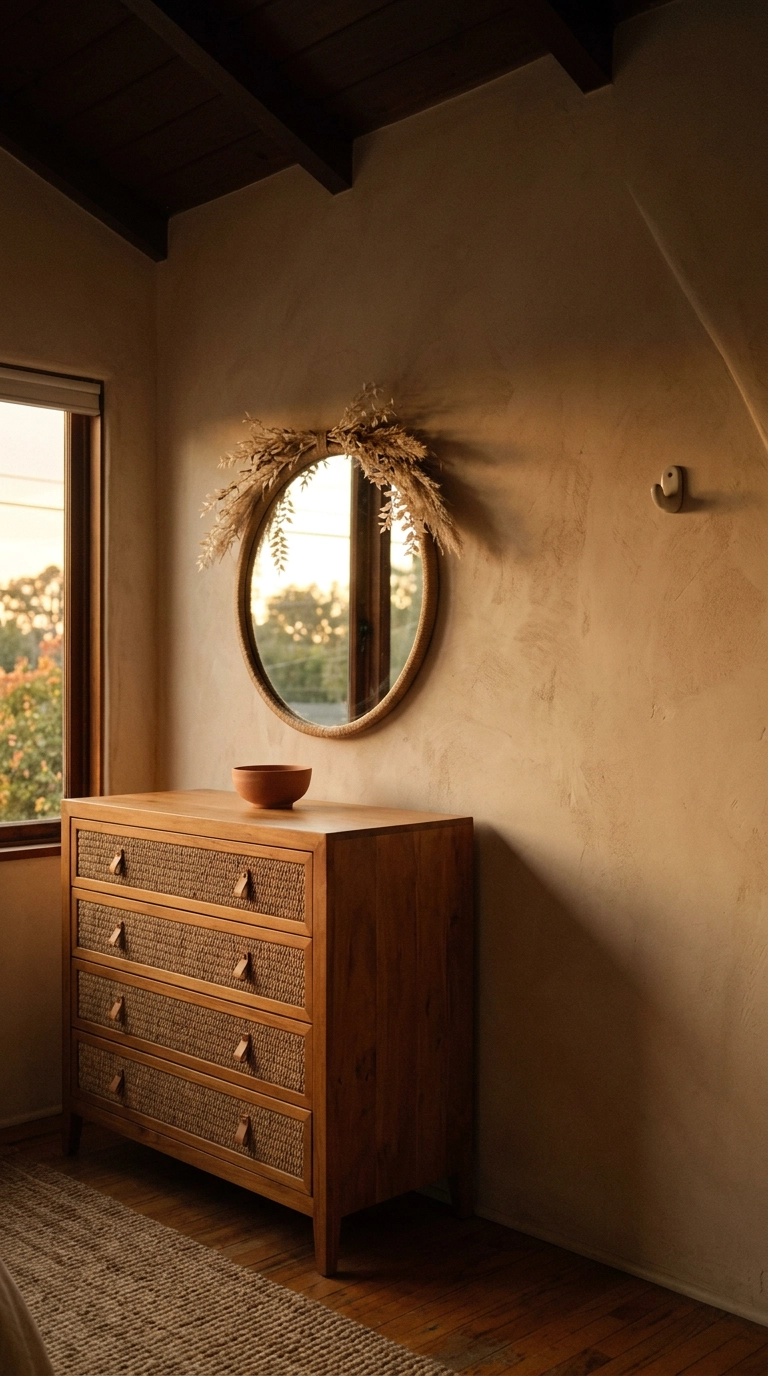
Draping a few dried stems over just the top curve of a round mirror is the one piece of boho styling I never talk clients out of, because it’s under twenty dollars and takes five minutes. Keep it sparse and asymmetrical – a full wreath around the whole frame looks like a Christmas decoration that lost its way.
Your Dresser Wall, Finally Finished
If you take one thing from this list, make it the three-object tray rule – it’s free, it takes four minutes, and it fixes more dresser tops than any mirror ever will. After that, size is everything: the mirror should be at least two-thirds the width of the dresser, whether that’s one oversized arch leaning against the wall or five small matching frames clustered together.
What I’m seeing everywhere going into 2026 is texture doing the heavy lifting instead of color – fluted white oak drawer fronts, burl veneer with chunky chrome, seagrass and limewash. Frameless and thin-metal mirrors have largely replaced the ornate carved ones, though a gilt sunburst over a navy dresser is still the fastest way to make a colonial bedroom look like Mark D. Sikes styled it. And color drenching a dresser wall in something like Farrow & Ball Hague Blue remains the single most dramatic weekend you can spend with a paint roller.
Start with whatever you already own. Move the mirror three inches lower, clear everything off the top except a tray, swap the drawer pulls to match the frame – I promise the wall will look like a different room by dinnertime. If you want more real, tested ideas like these landing in your inbox every week, sign up for my newsletter and I’ll send you the ones that actually work in normal houses.


