
24+ Timeless Traditional Bathroom Decor Ideas that Never Look Dated in 2026

Here’s the thing nobody says out loud about traditional style – the line between “timeless” and “your grandmother’s 1994 guest bath” is about four inches of trim and one wrong metal finish. I’ve renovated and restyled dozens of traditional bathrooms, and the ones that age beautifully all share the same quiet discipline: simple tile, real symmetry, one or two metals, and paint colors with actual depth instead of that flat builder beige. So let’s talk about how to get the classic bathroom that still looks right in fifteen years, at every budget from free to splurge.
Traditional Bathroom Decor Ideas
1. Marble Basketweave Floor Under Plain White Subway Walls
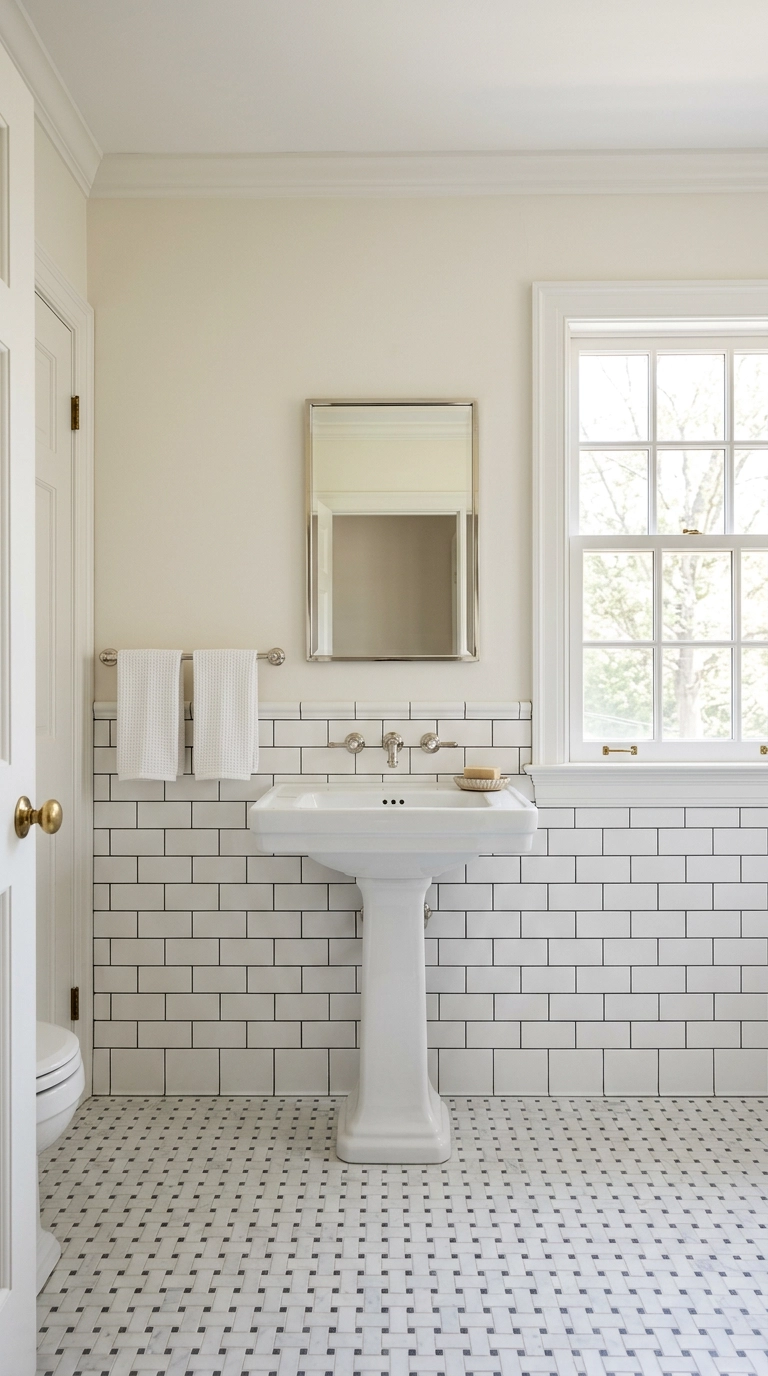
If I could only give you one move, it would be this pairing. Marble basketweave on the floor and plain subway on the walls is the backbone of American traditional bathrooms from the 1920s onward, and it has never once gone out of style.
2. Subway Tile, But Actually Done Right
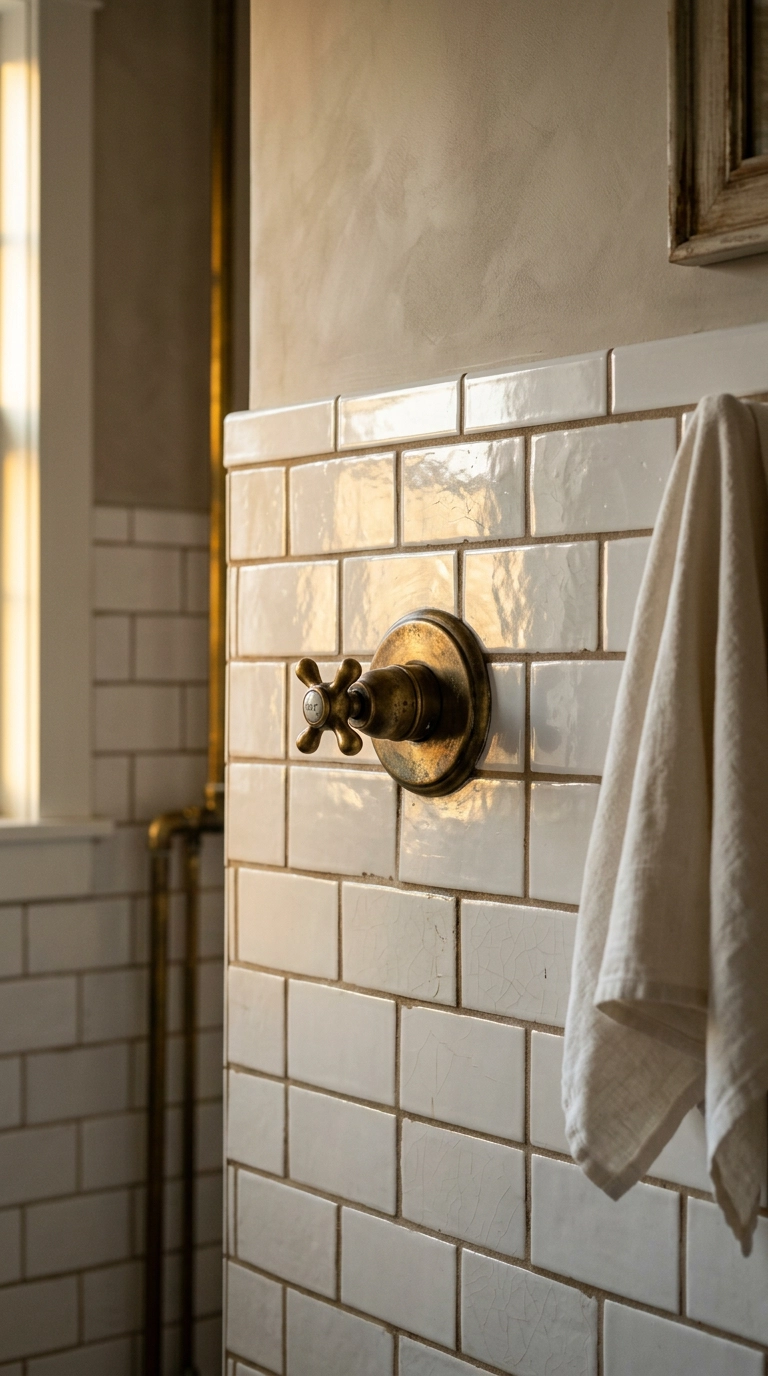
Subway tile gets blamed for looking dated, but the tile is almost never the problem. The problem is bright white grout that turns grey in six months, or the tile stopping at an unfinished raw edge.
3. Small Hex Tile Floor for Old-House Character
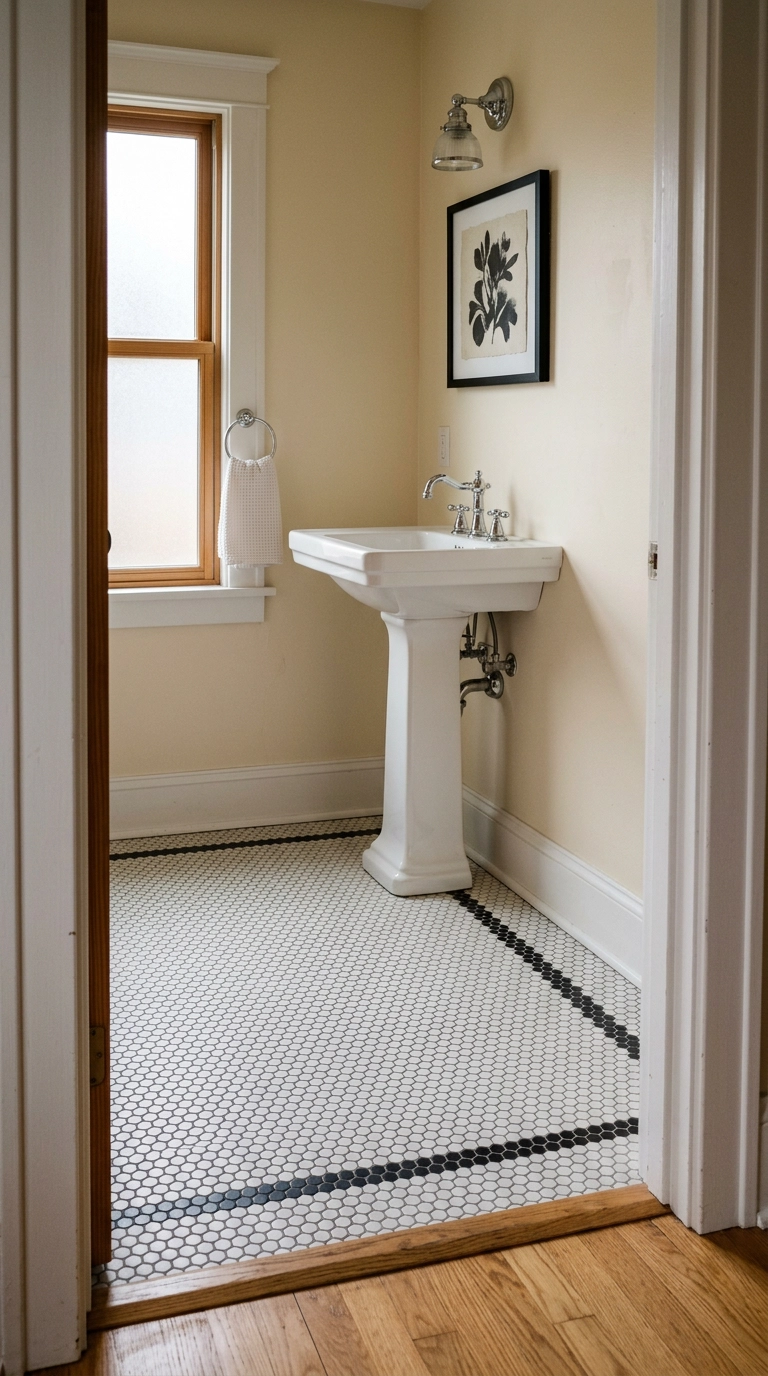
One-inch hex is the most authentically old-house floor you can buy, and it comes in sheets, so a competent DIYer can lay a powder room floor in a weekend. Add a simple single-row black border set about four inches in from the walls and it instantly reads 1915 instead of 2015.
4. Real Marble Where You Touch It, Marble-Look Where You Don’t
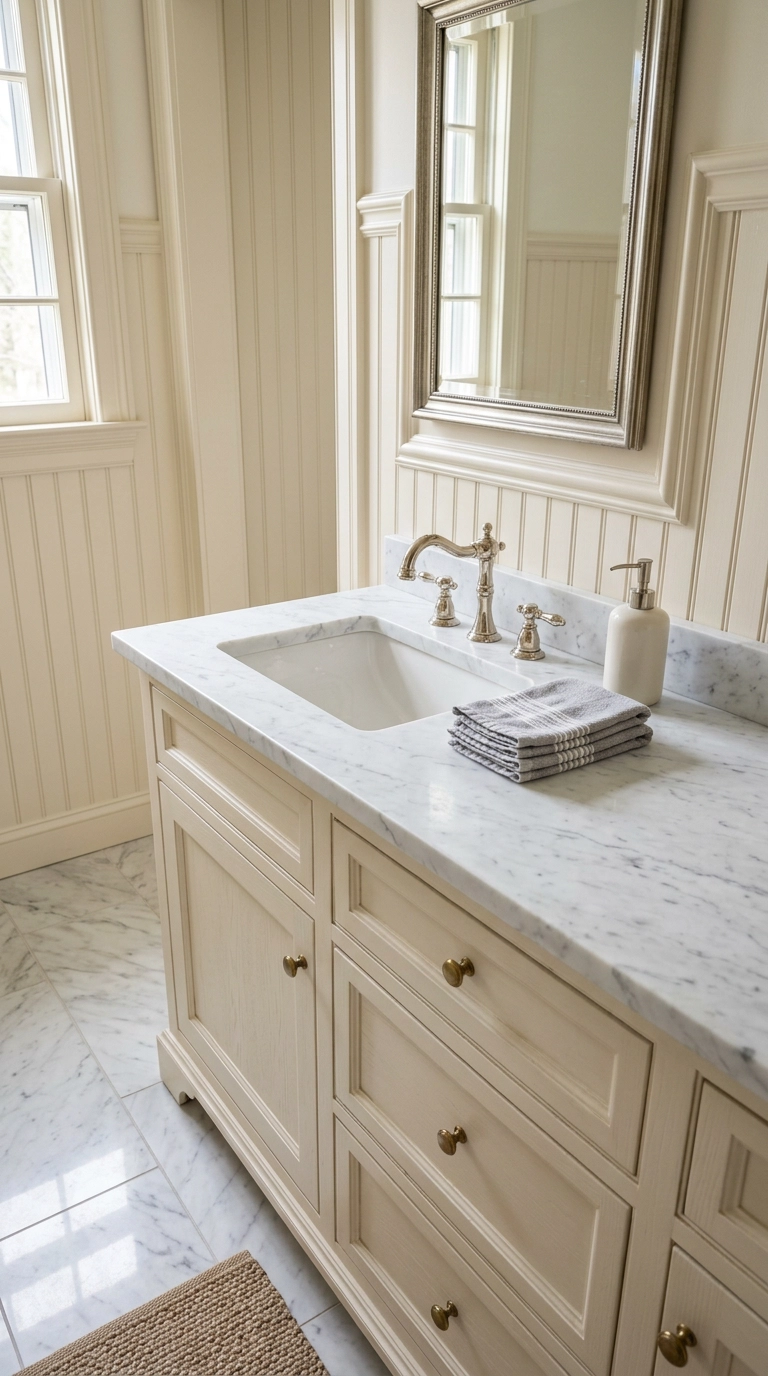
Here is my actual spending rule after years of client budget fights: put real marble on the vanity top and the small floor, use quality porcelain marble-look everywhere large. Porcelain has gotten genuinely good, and nobody is running their hand along your shower ceiling.
5. Swap the Hardware and Nothing Else (20 Minutes, Big Payoff)
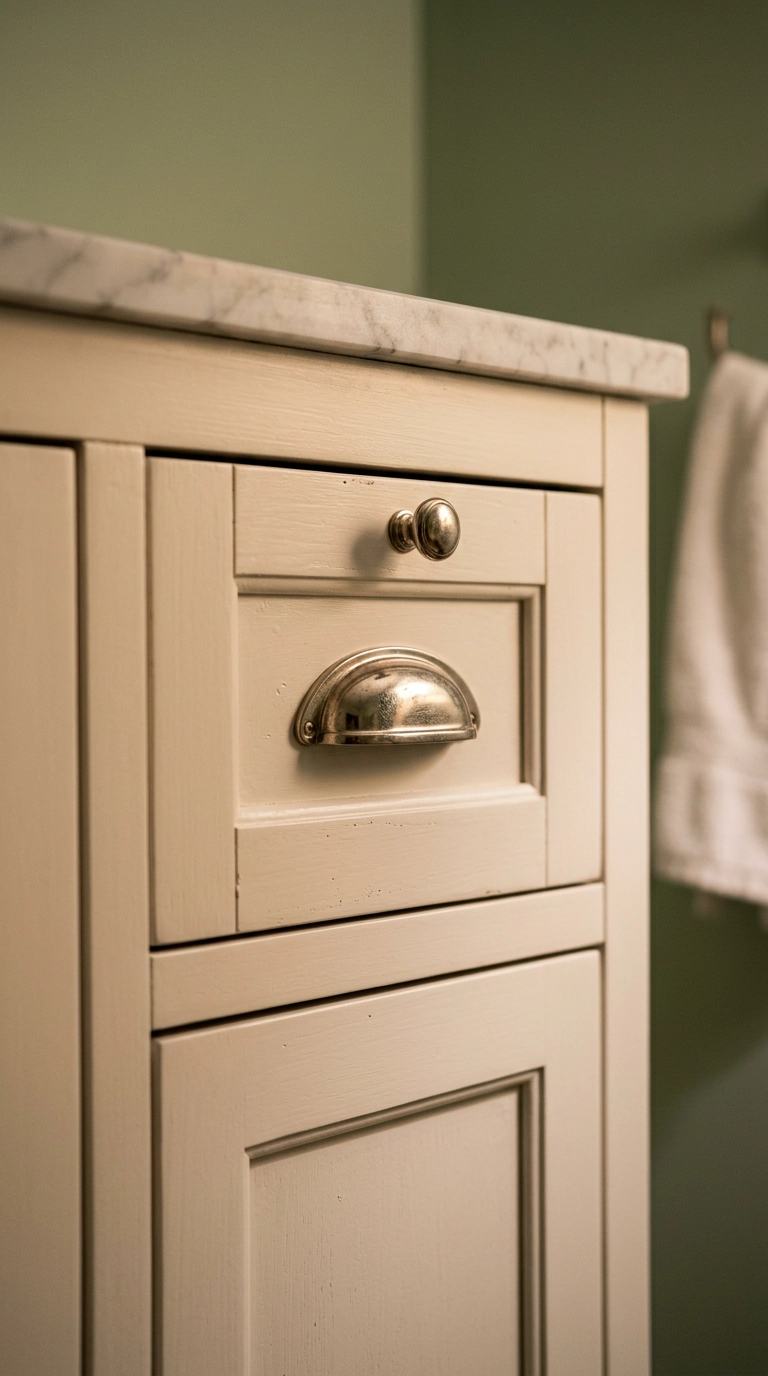
The cheapest traditional upgrade in existence: pull off the builder-grade brushed satin knobs and put on polished nickel bin pulls. A set for one vanity runs about the cost of dinner out, and it takes a screwdriver and twenty minutes.
6. Polished Nickel vs. Unlacquered Brass: Pick Your Personality
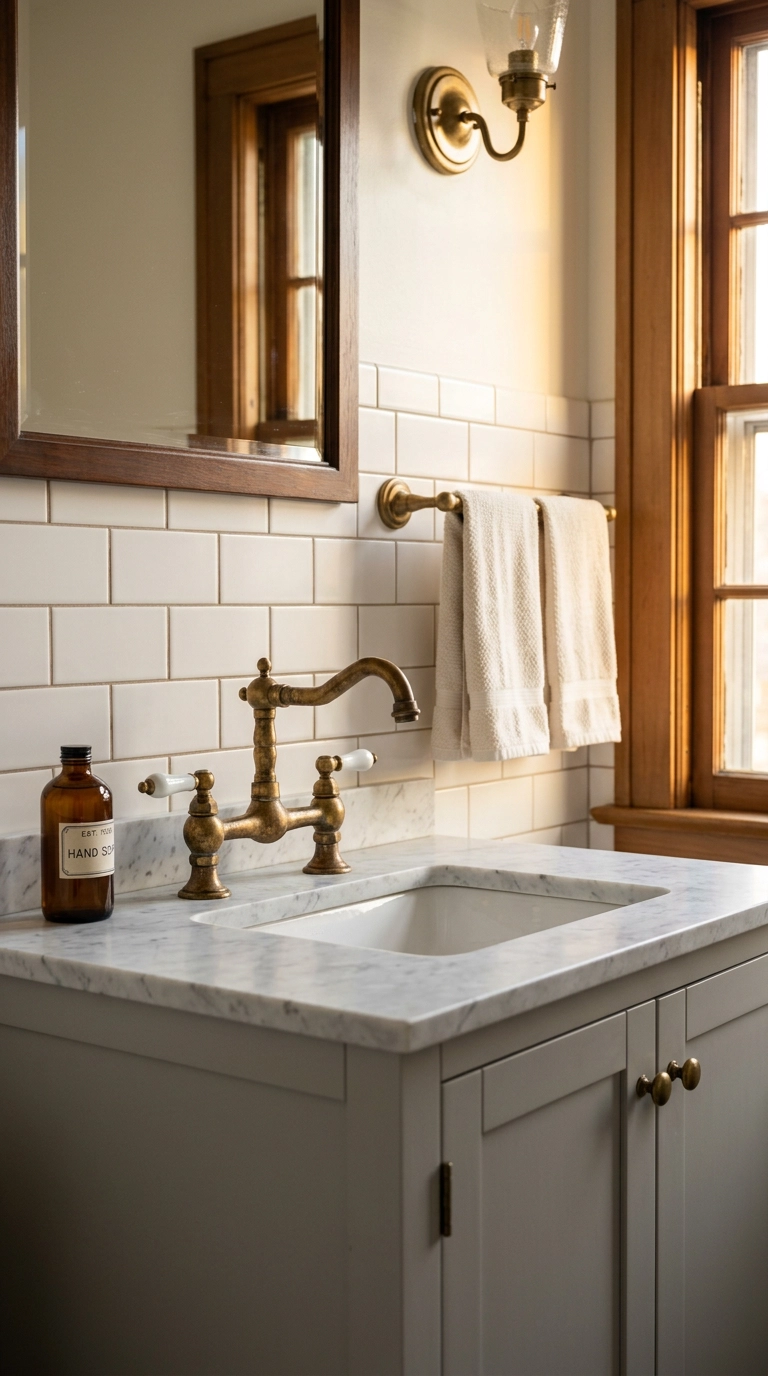
This is the decision people agonize over, so let me make it simple. Polished nickel is the safe, correct, forever choice – it’s slightly warmer and softer than chrome, it reads high-end, and it stays looking exactly the same forever. Choose it if unpredictability makes you anxious.
7. Beadboard Wainscoting at the Right Height (This Is Where People Go Wrong)
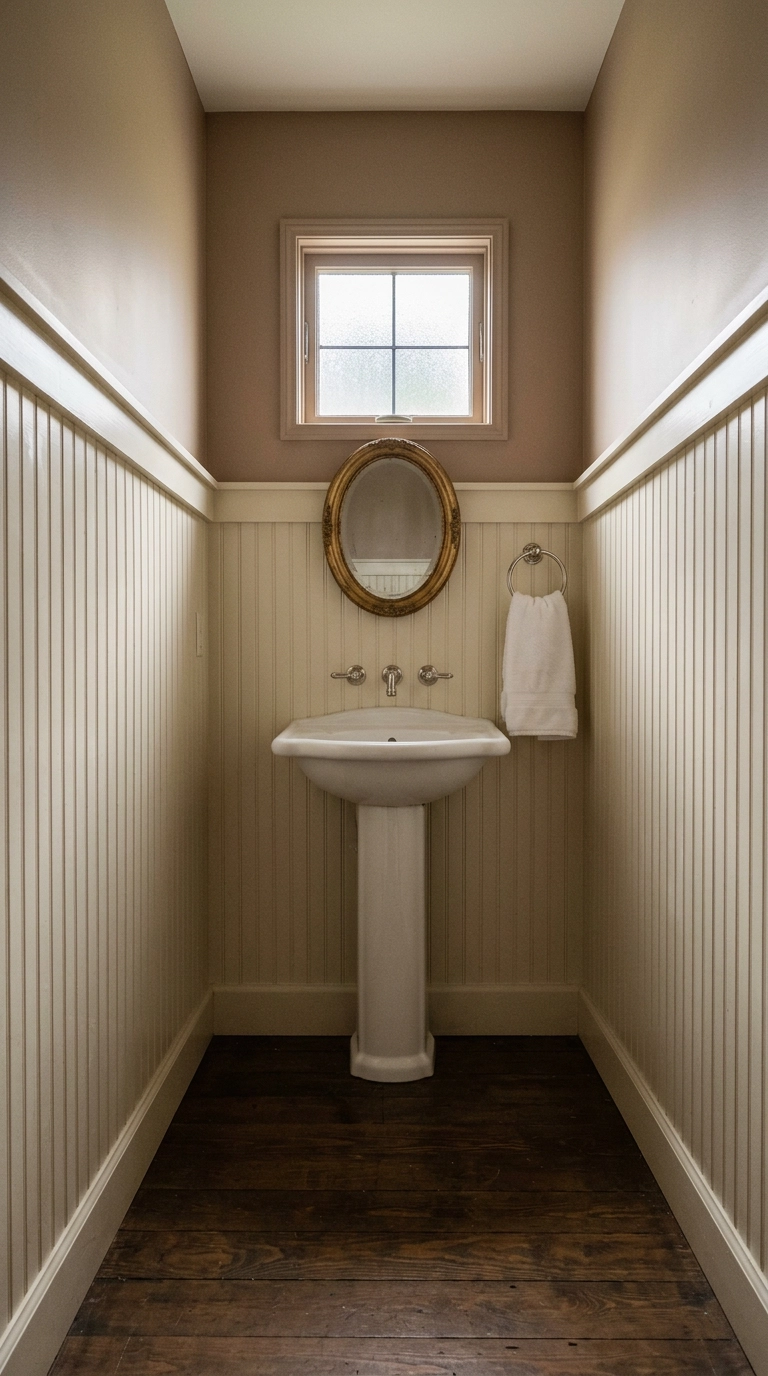
Beadboard is the friendliest traditional wall treatment there is, and a small bathroom is a very doable weekend project with 4×8 sheets. But height is everything: run it to roughly one third of the wall, about 32 to 36 inches on a standard 8-foot ceiling.
8. A Chair Rail With Panel Molding Below It
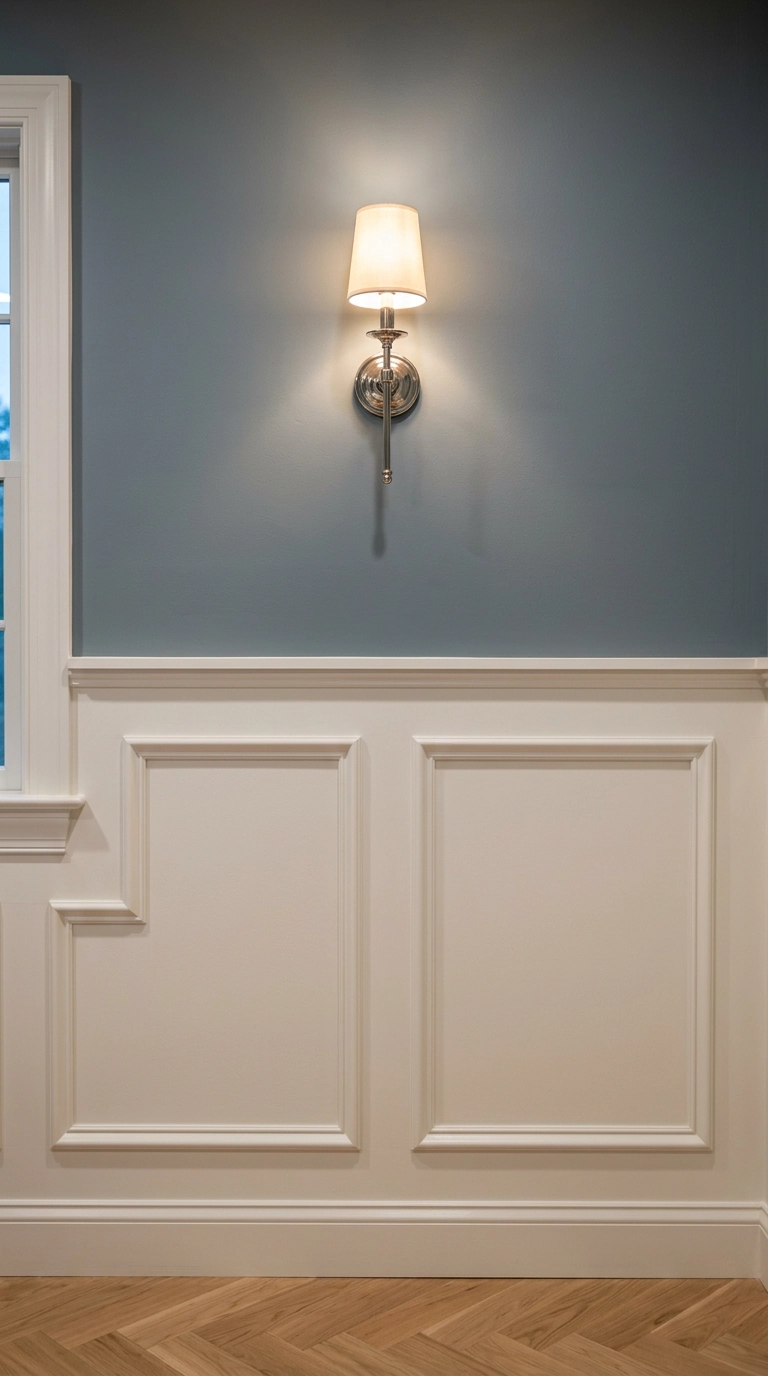
If beadboard feels too cottage for you, applied panel molding below a chair rail is the dressier cousin – think early American formal rather than farmhouse. Standard chair rail height is 32 to 36 inches, and here’s the trick most people miss: paint the rail, the panels, and the baseboard all one color in satin.
9. Symmetry Is the Whole Secret (And It’s Free)
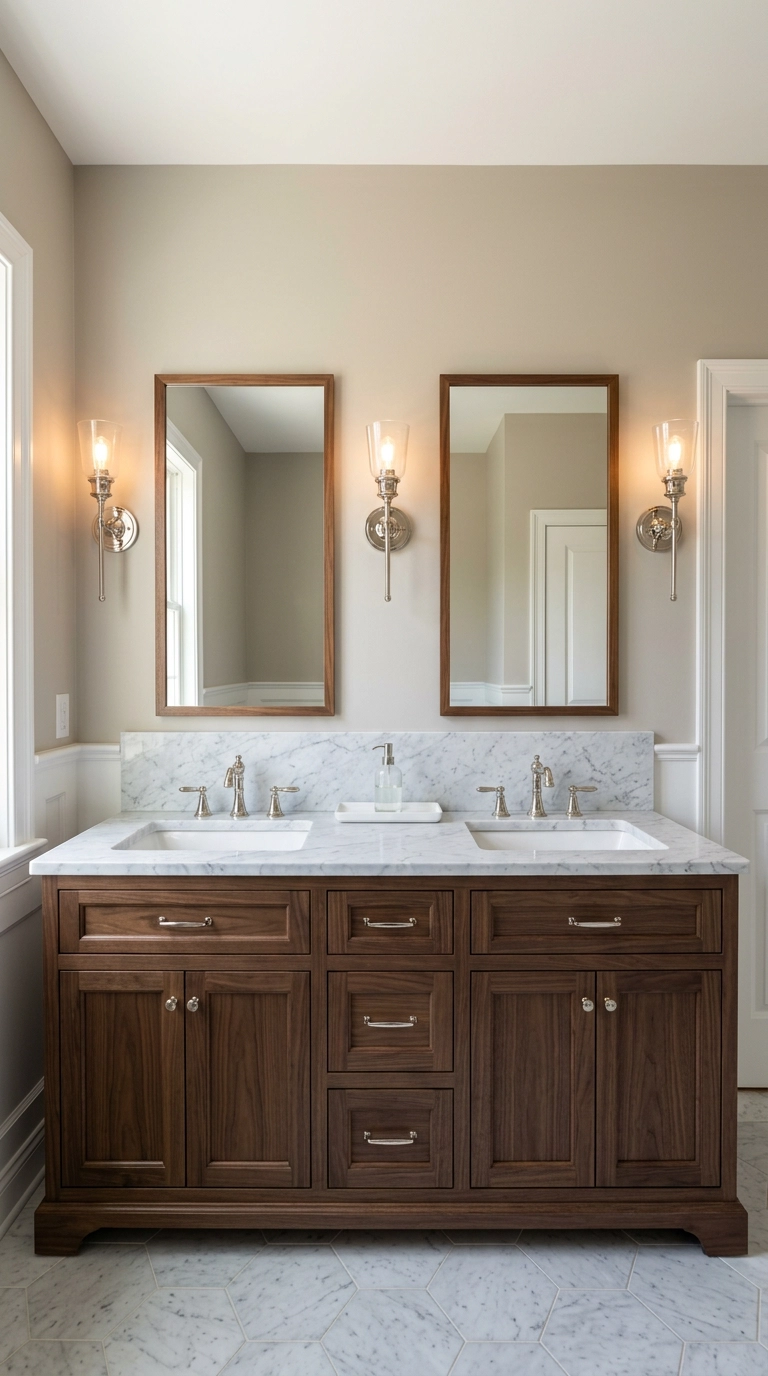
Traditional design is fundamentally about balance, and symmetry costs nothing. Two matching sconces instead of one, mirrors centered on sinks rather than centered on the vanity, a tray placed dead center between two basins.
10. A Furniture-Style Vanity With Actual Legs
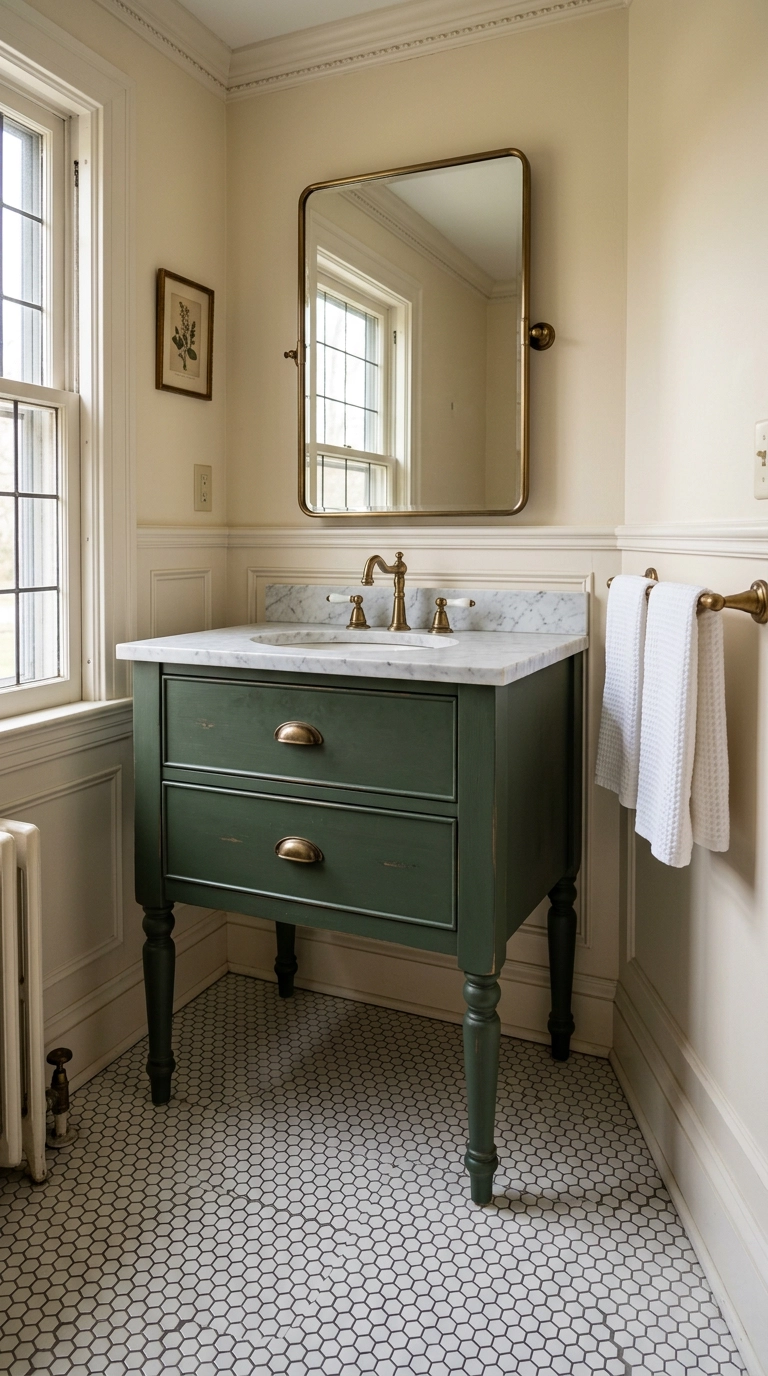
The single fastest way to make a bathroom stop looking like a builder special is a vanity that looks like a piece of furniture rather than a box glued to the wall. Legs, an apron, inset drawers, a painted finish that isn’t white.
11. Repurpose an Antique Dresser as the Vanity
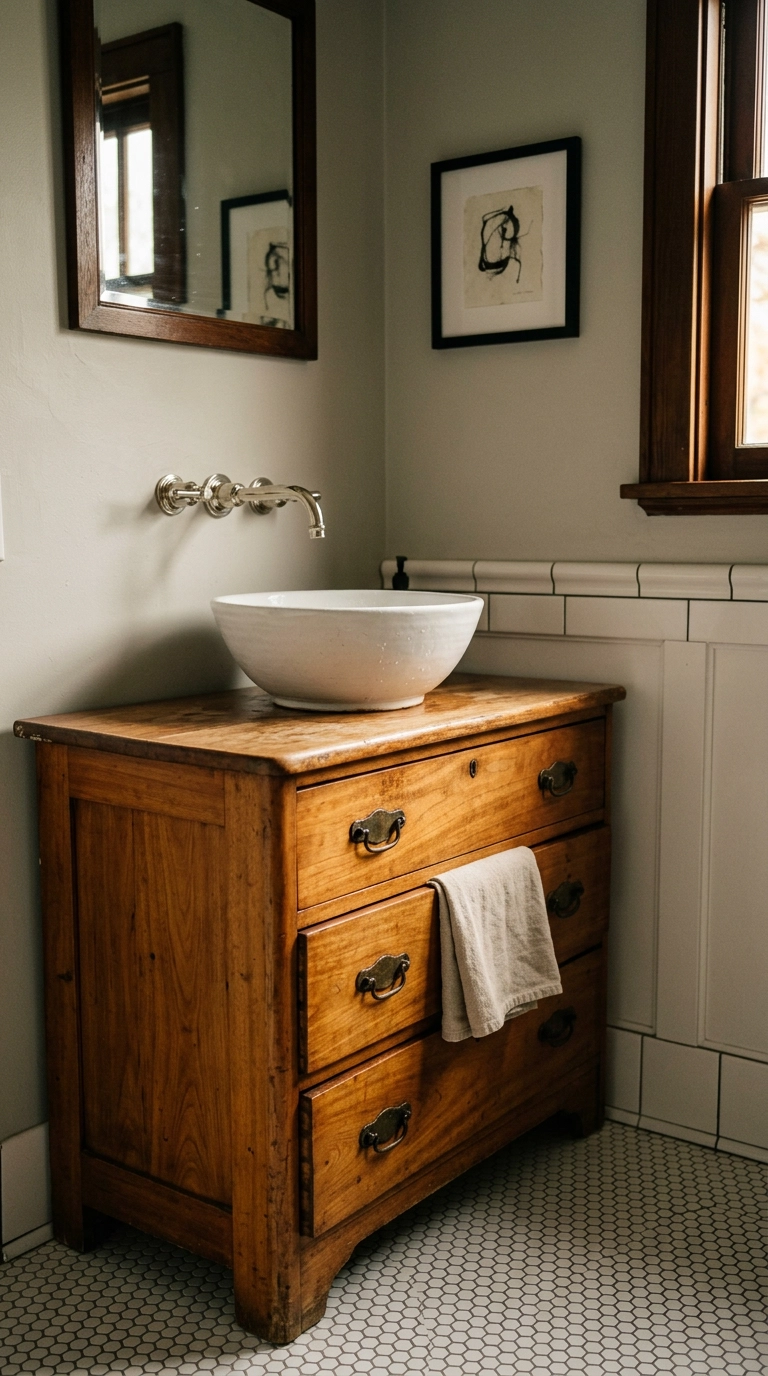
This is my favorite thrift-store move in the whole article. A solid wood dresser from a local estate sale, sealed well with a marine-grade poly, plumbed with a vessel sink and a wall-mounted faucet, gives you a bathroom nobody else has.
12. Sconces Beside the Mirror, Never Above It
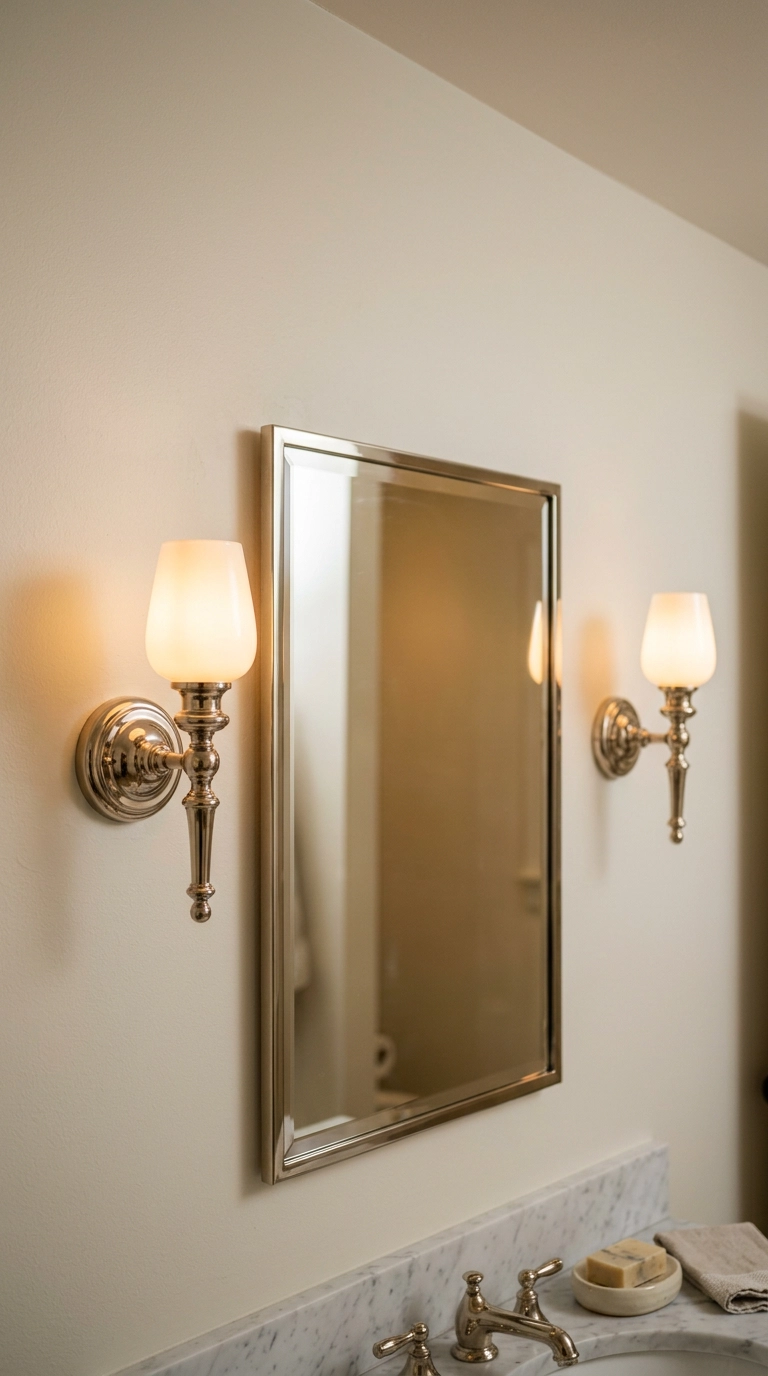
Mount sconces at roughly 64 to 66 inches from the floor, flanking the mirror about 36 to 40 inches apart. Light from the sides fills in the shadows on your face; light from above carves them, which is exactly why bathroom lighting is famously unflattering.
13. Hang Real Framed Art Over the Toilet
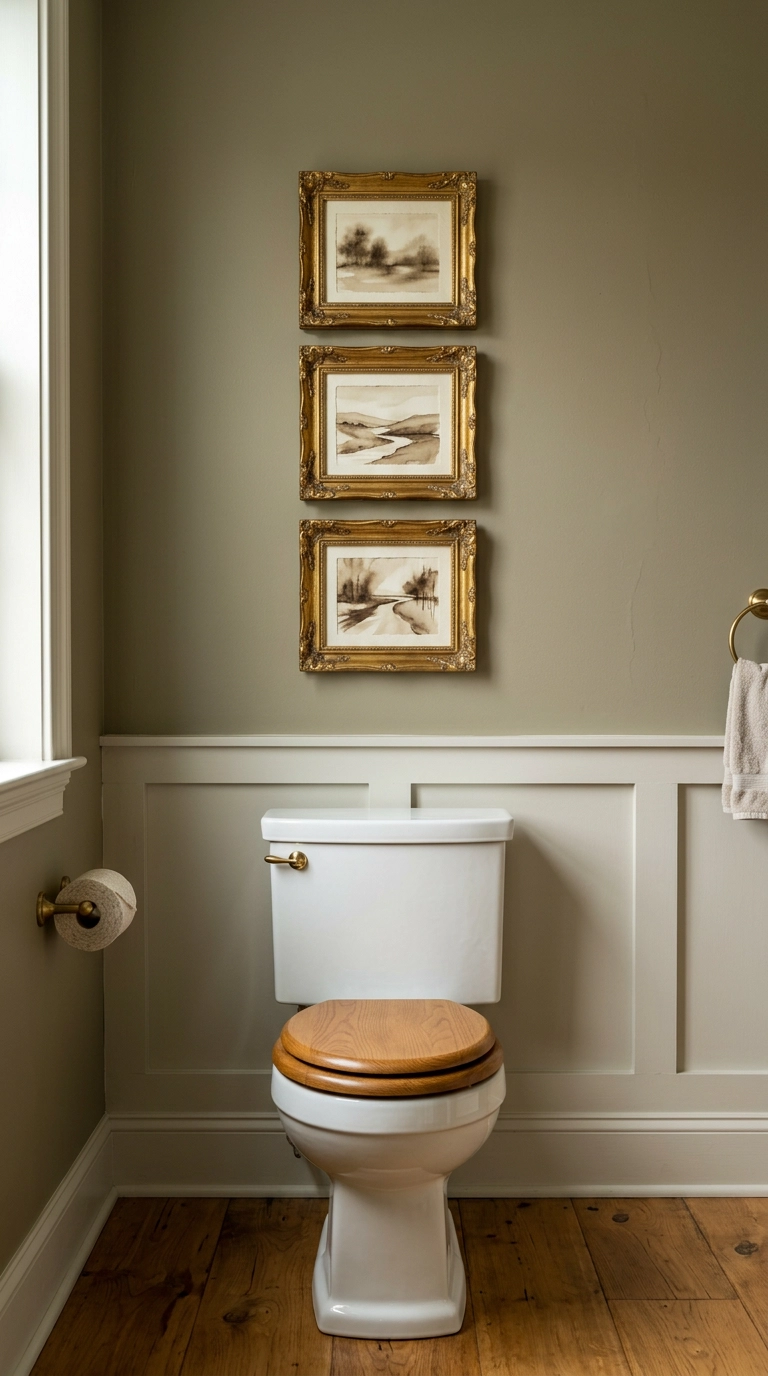
The dead giveaway of a merely functional bathroom is a bare wall over the toilet or, worse, a wire shelf. Traditional homes always treated bathrooms as rooms, which means real framed art on the wall.
14. An Antique Mirror Scaled to the Vanity, Not the Wall
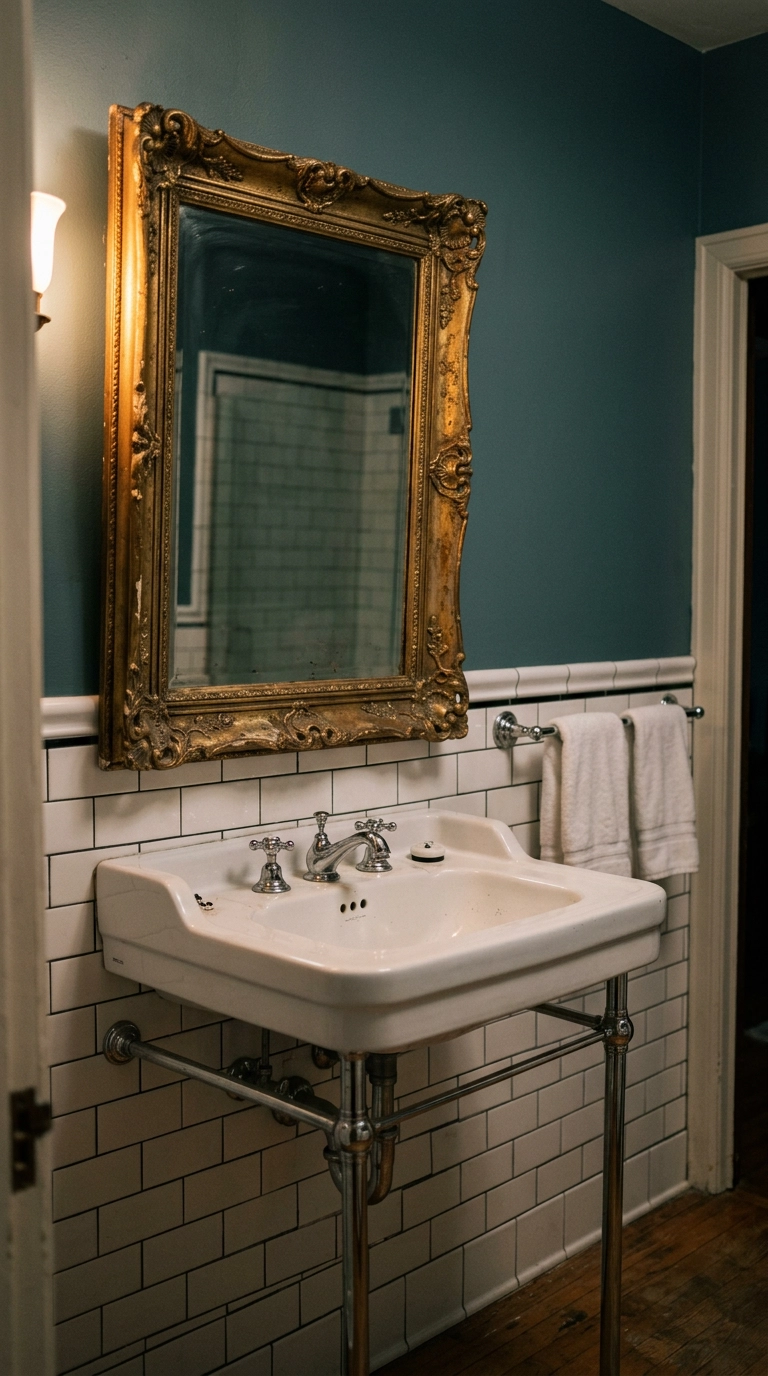
Frameless builder mirrors are the flattest, saddest thing in a bathroom. Swap in an antique or antique-style frame and the room gains fifty years of history for the price of a flea market find.
15. Shower Curtain vs. Glass in a Traditional Room
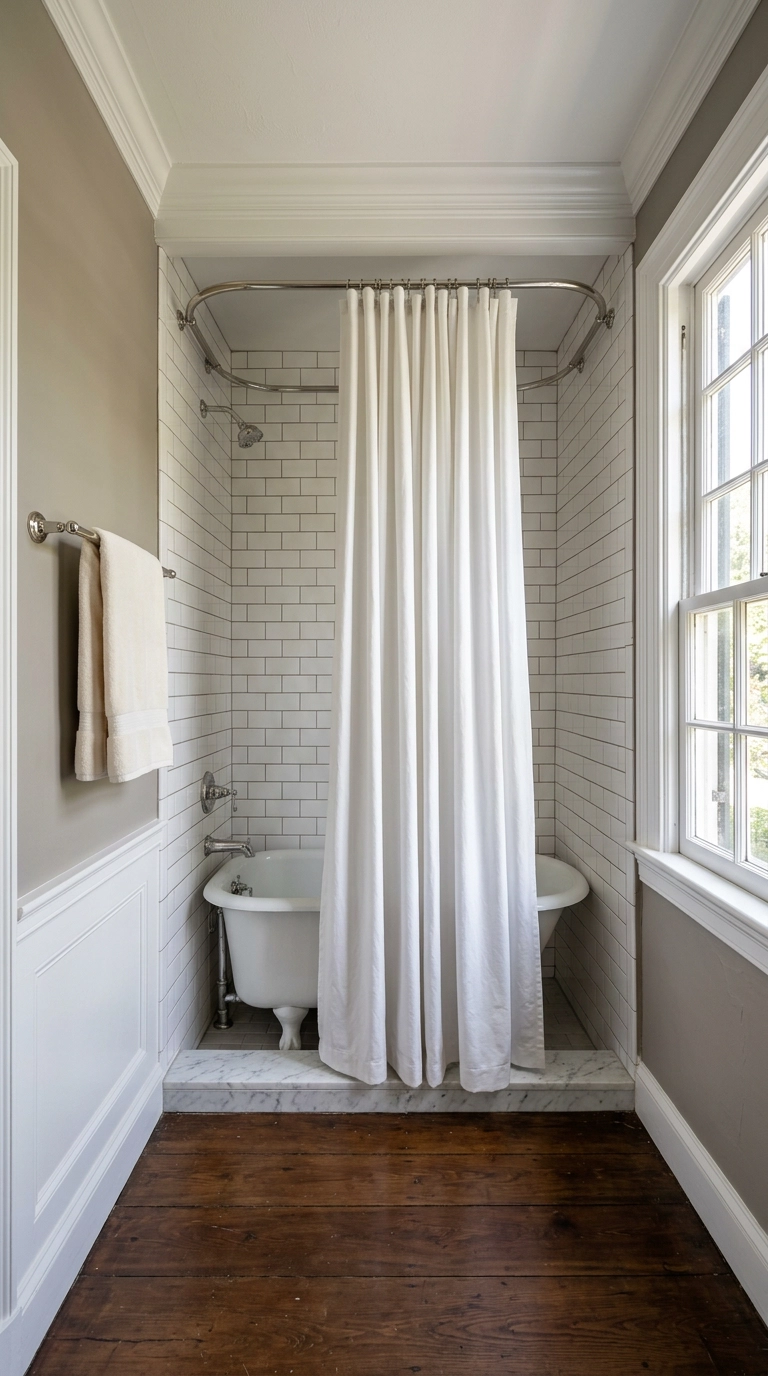
Here’s my honest take: in a truly traditional bathroom, a beautiful fabric curtain often beats glass. Glass reads modern, shows every water spot, and costs a fortune custom. Fabric adds softness to a room that is otherwise all hard surfaces.
16. A Skirted Sink to Hide a Rental Pedestal
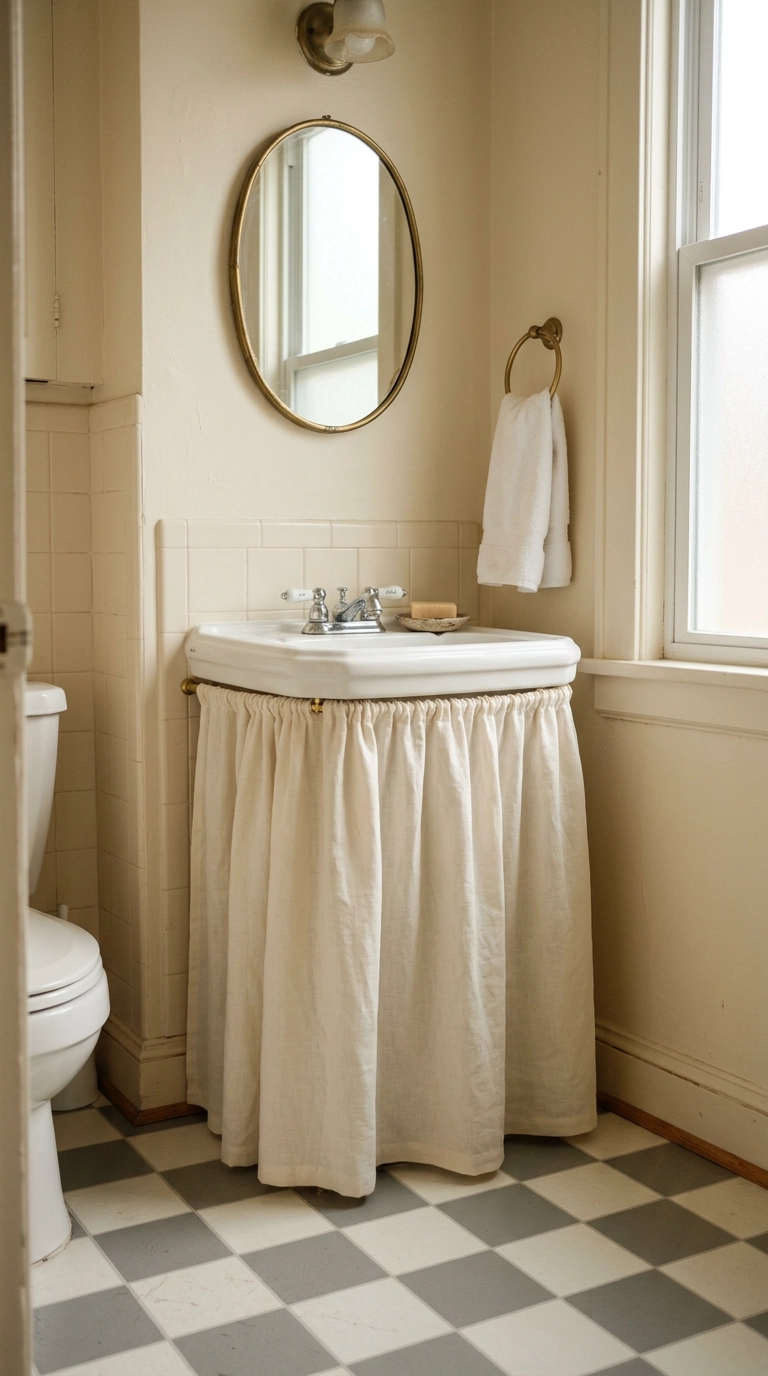
Sink skirts are having a real moment again, and they are perfect for renters. A gathered panel of natural linen on an adhesive hook-and-loop strip or a small tension rod hides plumbing and gives you a basket of storage underneath.
17. Classic Paint Colors That Read Timeless, Not Builder-Grade
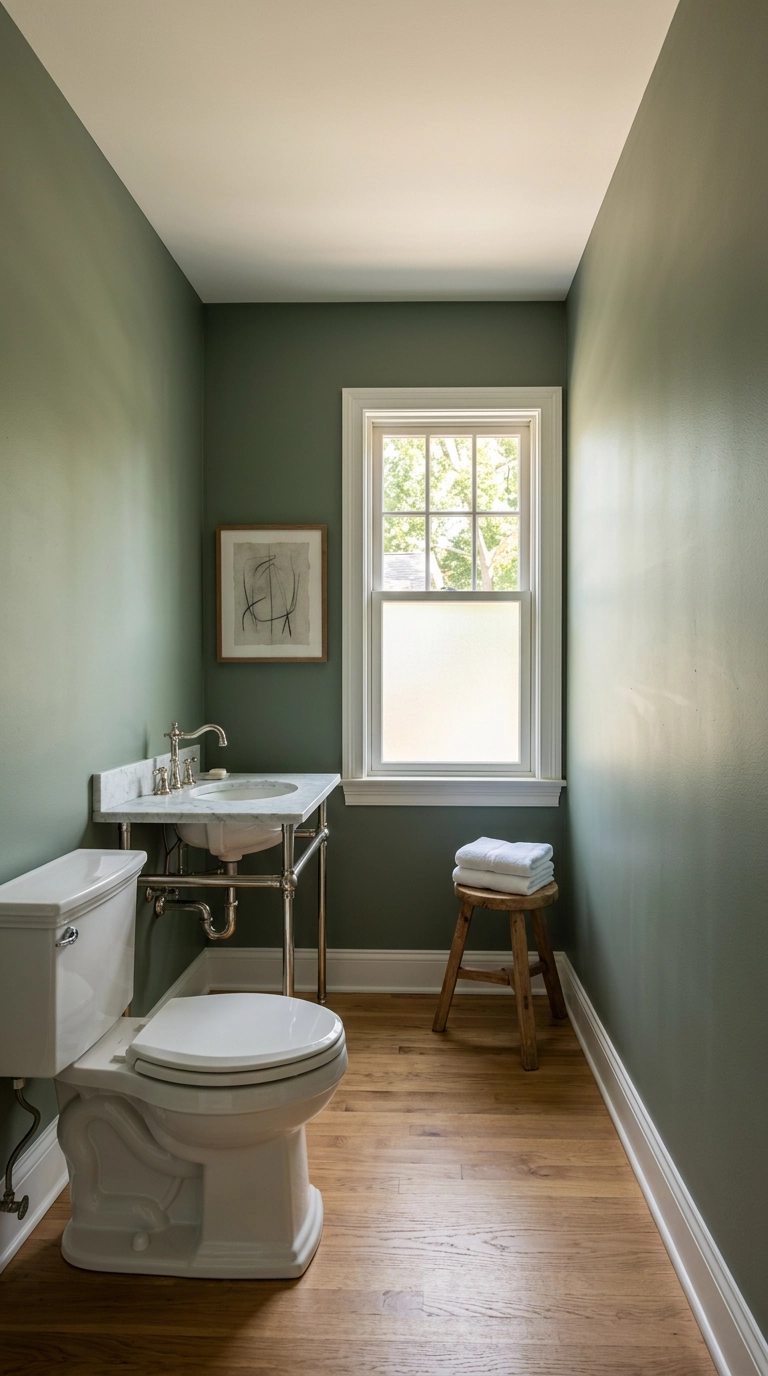
The difference between timeless and dated is almost always saturation and undertone. Builder-grade beige and cold grey are dead flat – they have no pigment complexity, so they look cheap under every light. Historic-leaning colors have grey or green mixed into them, which is why they shift beautifully through the day.
18. Small-Scale Wallpaper Above the Wainscoting
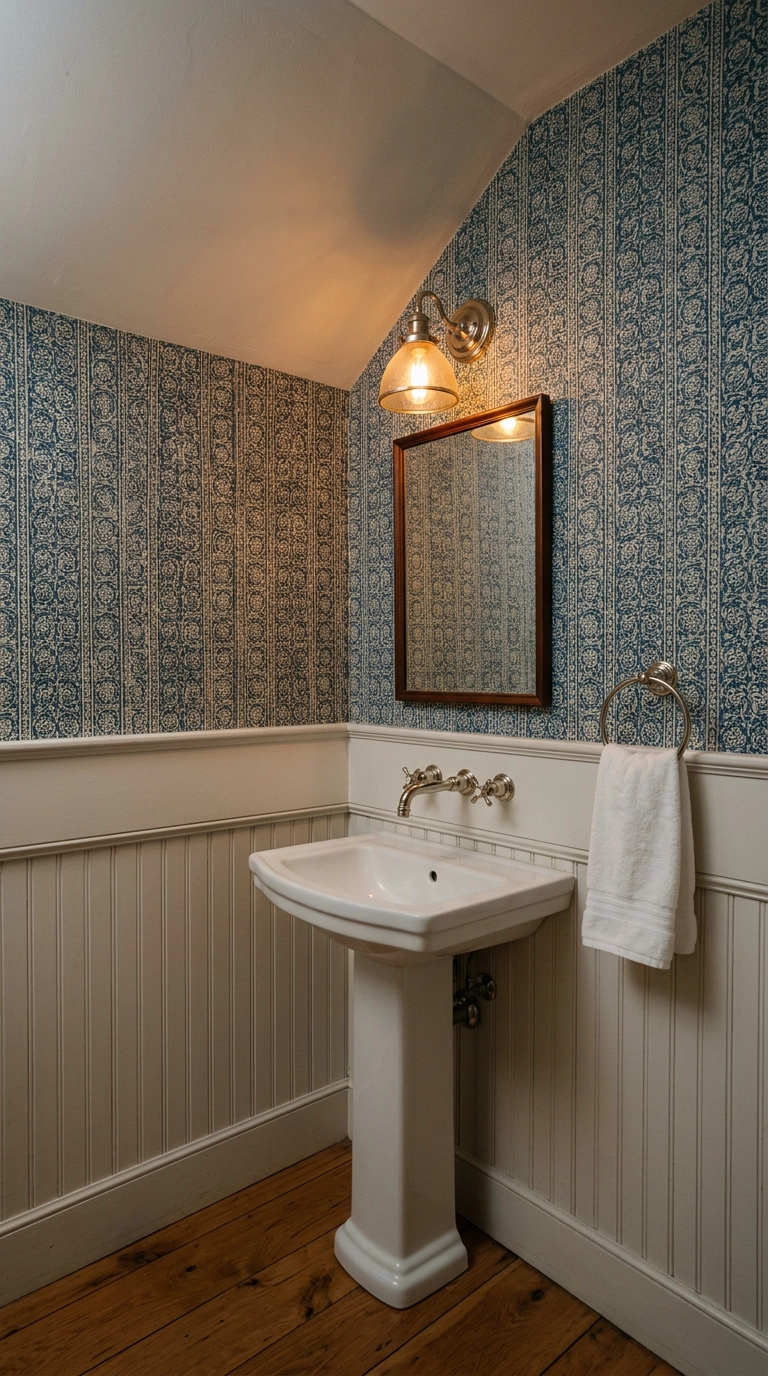
A powder room is the best place in the house to take a wallpaper risk, because you’re in there for ninety seconds at a time. Keep the pattern small in scale and limited to two colors – large tropical or oversized florals are what make wallpaper feel like a mistake you have to live with.
19. A Worn Vintage Runner on the Floor
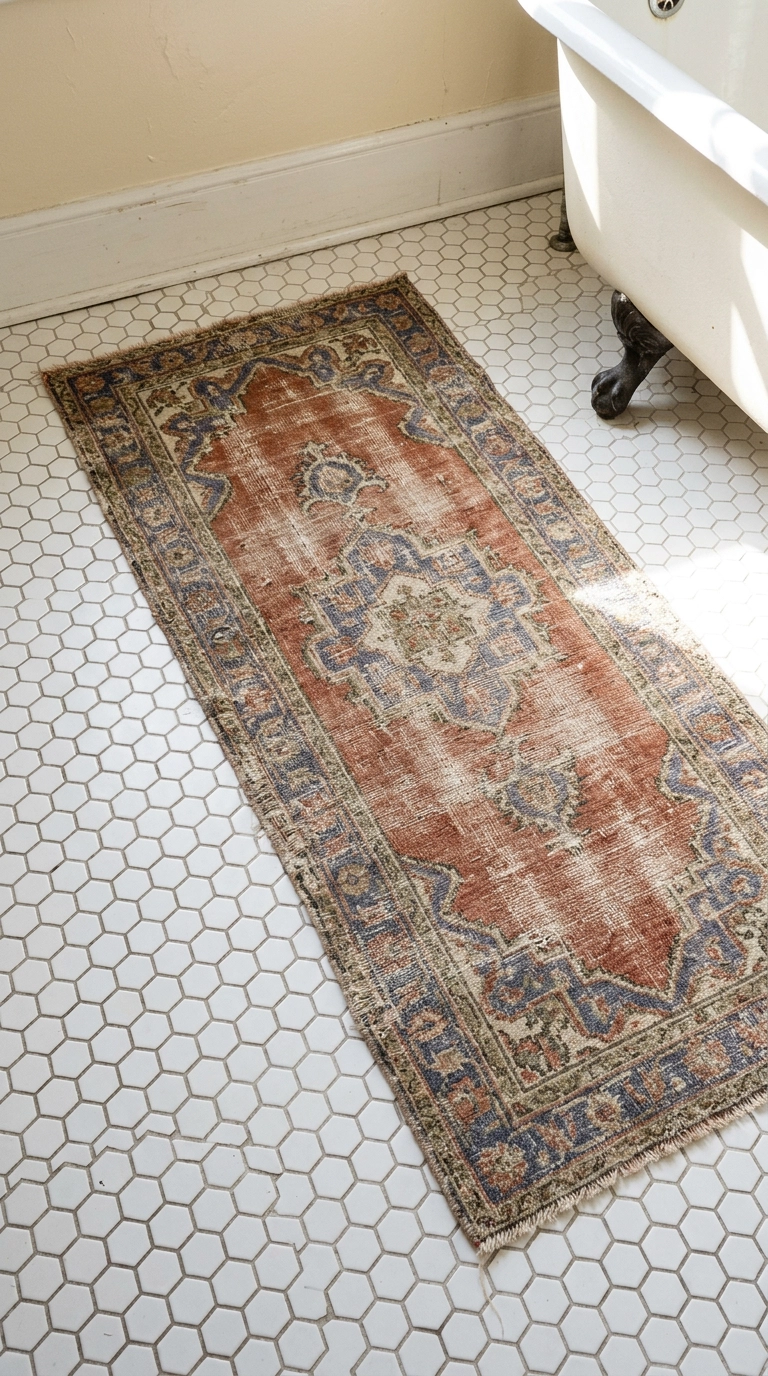
Please retire the fluffy matching bath mat set. A small worn vintage or vintage-style wool runner is what actual old houses had, and the faded rust and indigo tones warm up a bathroom full of cold white tile instantly.
20. Fold Your Towels Like a Good Hotel (Free, Ten Minutes)
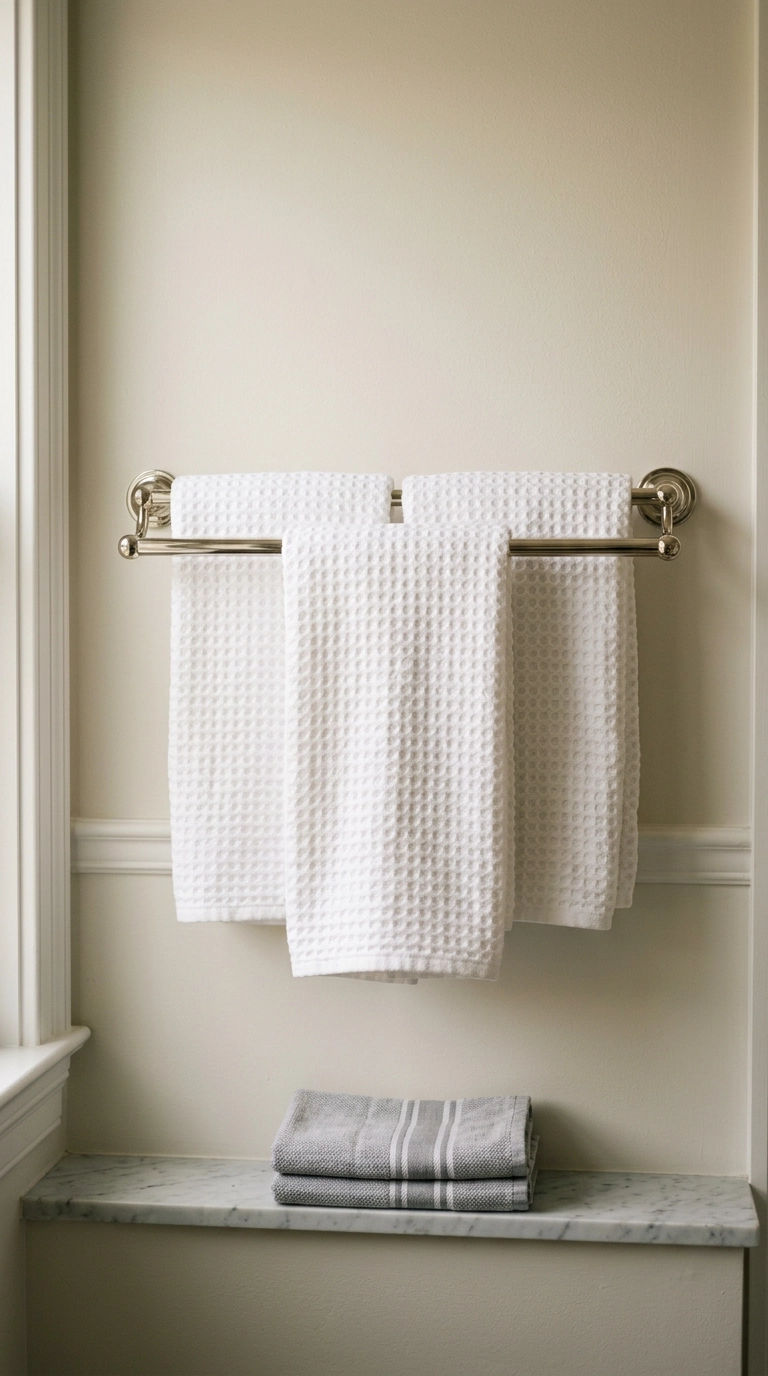
This costs nothing and it’s the highest ratio of effort to result on this entire list. Fold bath towels in even thirds lengthwise, hang them so the folded edge faces out, and keep every towel in the room the same color.
21. Café Curtains for Privacy Without Losing Light
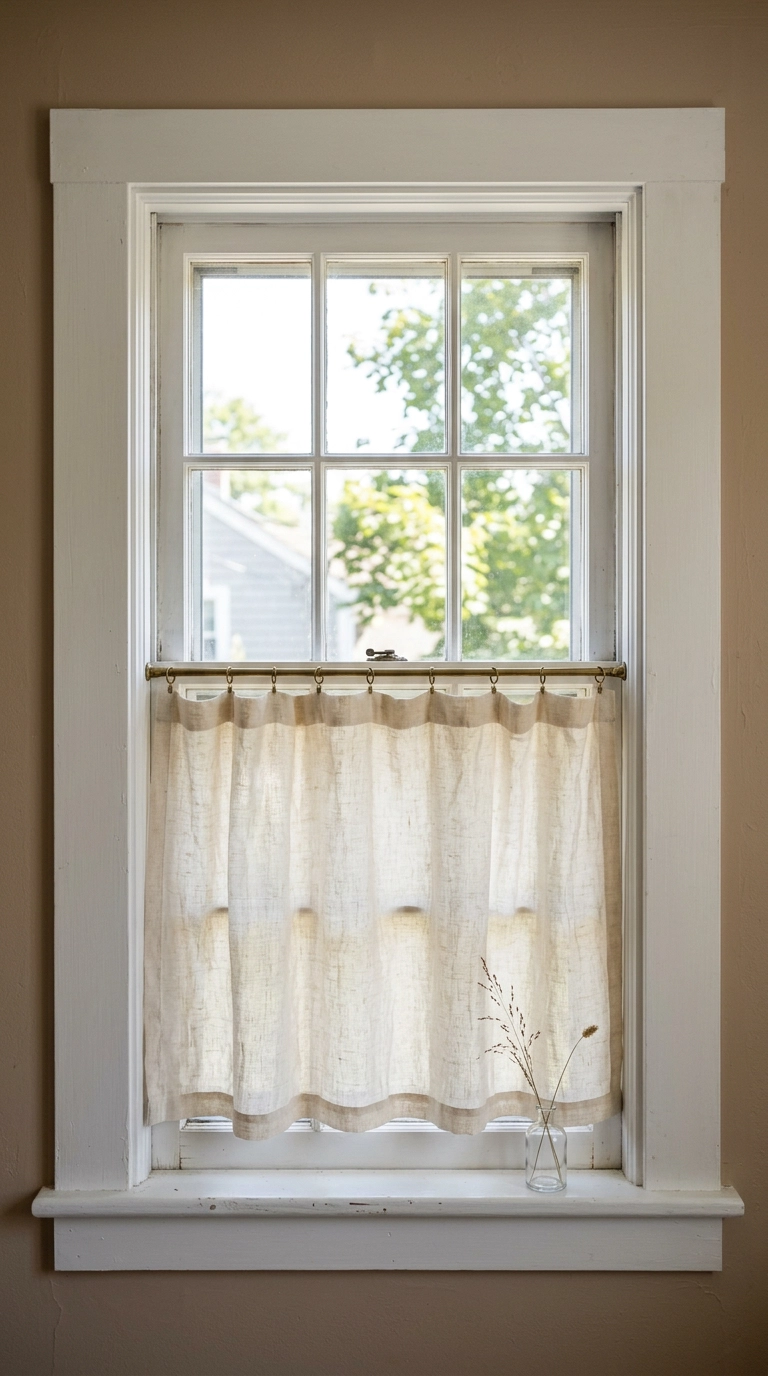
Bathroom windows are a privacy problem with an ugly default answer: a plastic blind. A café curtain covering only the bottom half of the sash solves it and is deeply traditional American, straight out of 1950s kitchens and baths.
22. One Piece of Real Wood to Break Up the Hard Surfaces
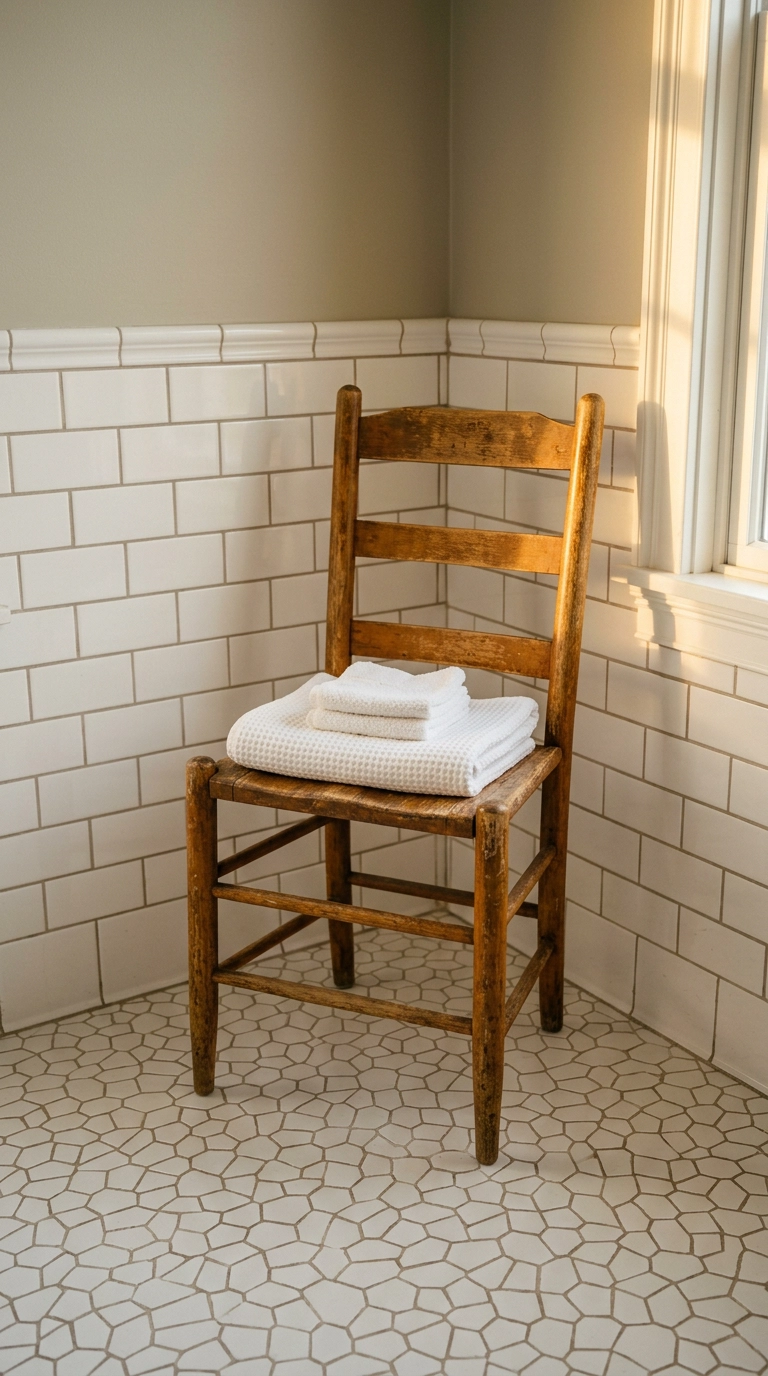
Bathrooms are the coldest rooms in any house materially – tile, porcelain, glass, metal. One piece of genuinely old wood fixes that faster than any amount of styling. An antique ladder-back chair, a small painted stool, a wooden step stool holding rolled towels.
23. Tile the Tub Alcove All the Way to the Ceiling
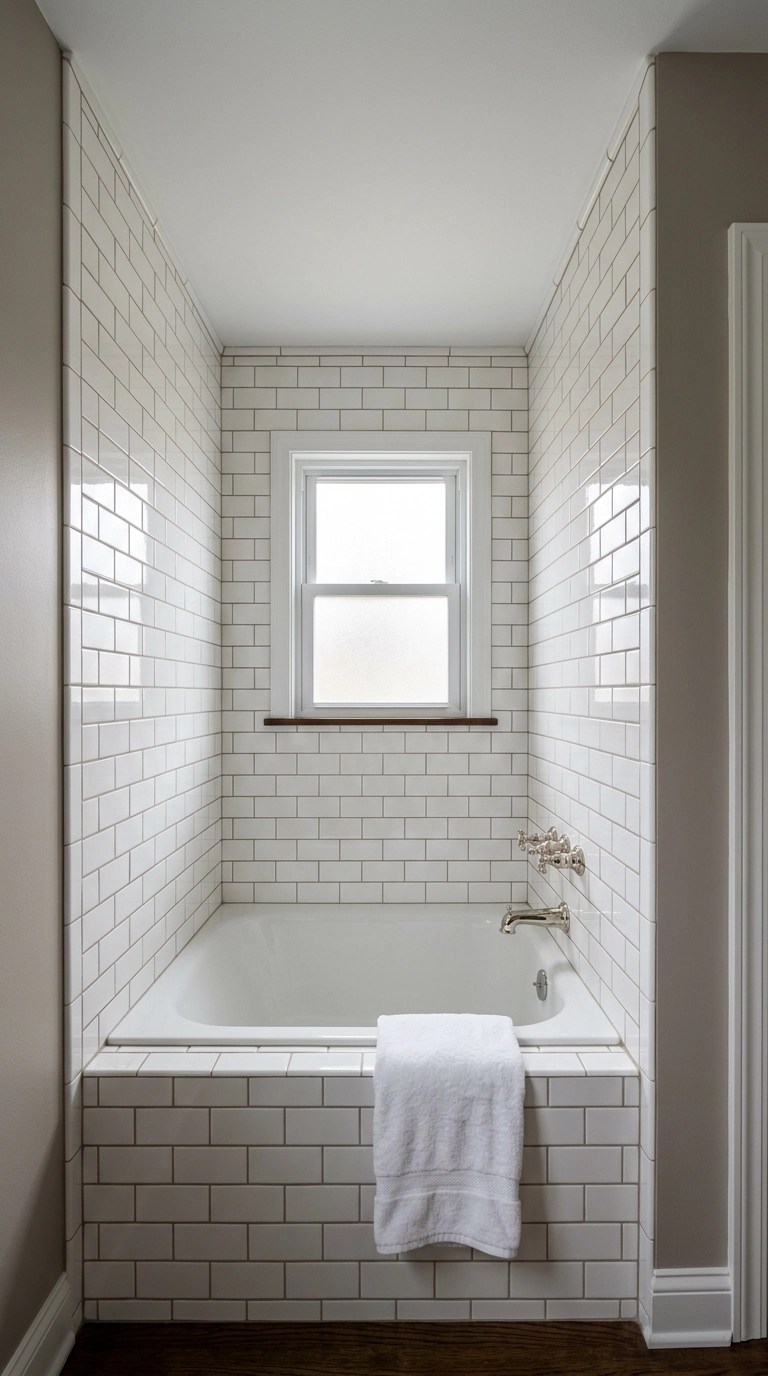
Stopping the tile a few inches above the shower head is the most common tell of a builder bathroom. Running it to the ceiling costs maybe fifteen percent more in tile and instantly reads custom, because the unbroken vertical line draws the eye up.
24. End on a Cast Iron Tub With Painted Feet
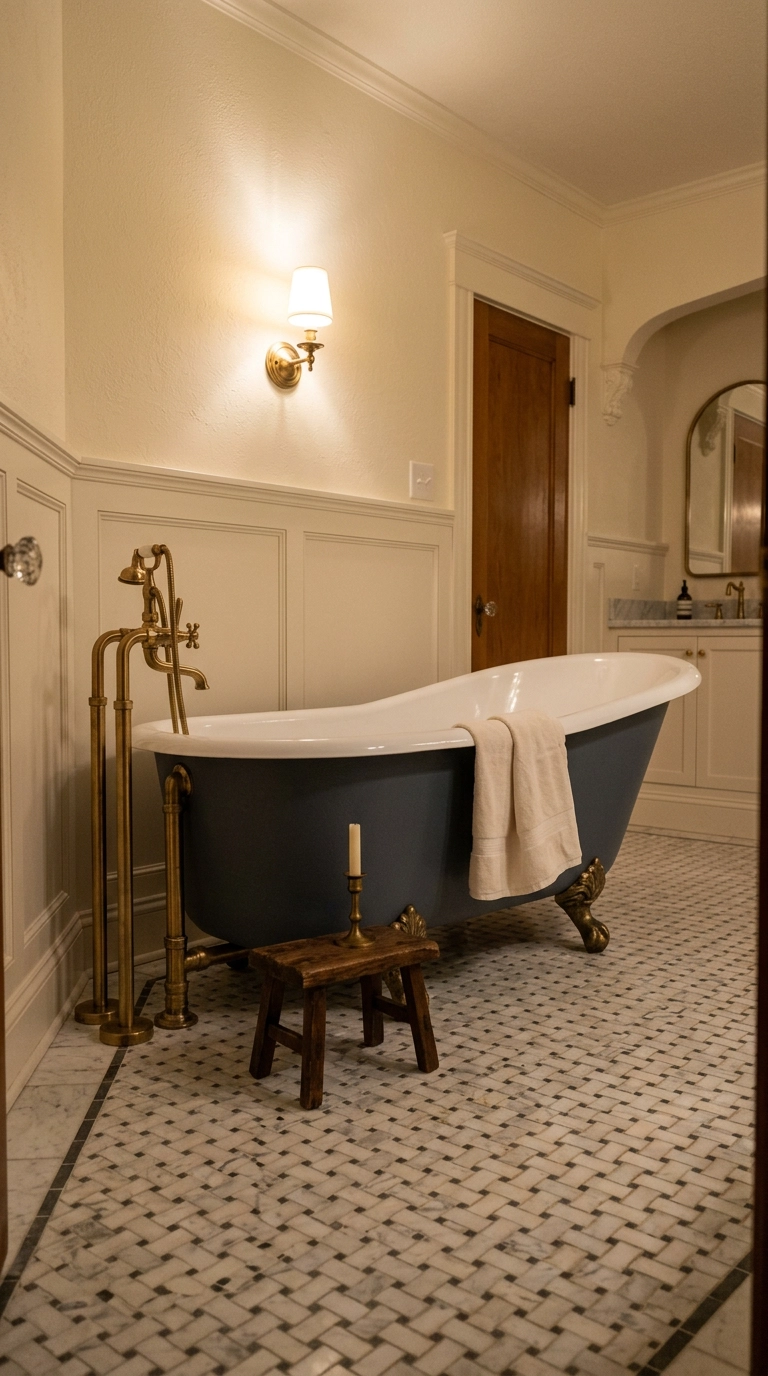
If you have the floor space and the budget, a freestanding cast iron tub is the piece that makes the whole room. Paint the exterior a deep color – charcoal blue, forest green, near-black – and leave the interior white. It costs almost nothing extra and it turns a plumbing fixture into furniture.
Bringing It All Home
If you take nothing else from this list, take the three ideas that do the most work for the least money: recenter everything for symmetry, swap the knobs for polished nickel bin pulls, and hang the shower curtain rod up near the ceiling. I have watched those three changes alone turn a builder-grade hall bath into something that looks like it was always there, all in one Saturday afternoon.
What I’m seeing gain real momentum going into 2026 is the return of the furniture-style painted vanity in deep muted greens and blues, plus unlacquered brass that people are finally letting age instead of polishing back to bright. Designers like Bunny Williams and the whole Nantucket-meets-colonial school have kept plain subway tile and marble basketweave in constant rotation for decades, and there’s a reason for that – those materials were correct in 1925 and they’ll be correct in 2050. Meanwhile brands like Rejuvenation and Kohler keep reissuing bridge faucets and cast iron tubs because the demand never actually went away.
The real anxiety underneath all of this is the fear of dated, and I’ll leave you with the honest answer: dated comes from fussiness, from too many colors, from busy patterned wallpaper and mismatched metals and towels in four shades. Timeless comes from restraint – simple tile, one or two metals, paint with real pigment depth, and symmetry you can feel even if you can’t name it. If you want more of this kind of practical, no-nonsense design help every week, come join my newsletter – I send one email with real projects, real budgets, and the shortcuts I actually use in client homes.


