
23+ Peaceful Bedroom Decor Ideas that Are Easy and Genuinely Restful in 2026

Here is the thing nobody tells you about a peaceful bedroom: it has almost nothing to do with the color of the walls. I spent years chasing calm with paint chips before I figured out that the rooms my clients actually slept well in were the ones where the light sat low, the floor was clear, the storage had doors, and there was nothing in the sightline that reminded anyone of a deadline. Peaceful is a set of mechanics, not a mood board, and once you know which levers to pull you can get most of the way there in a weekend with a lamp, a rug pad, and a slightly ruthless attitude toward your nightstand.
Peaceful Bedroom Decor Ideas
1. Retire the Ceiling Light and Light the Room at Lamp Height
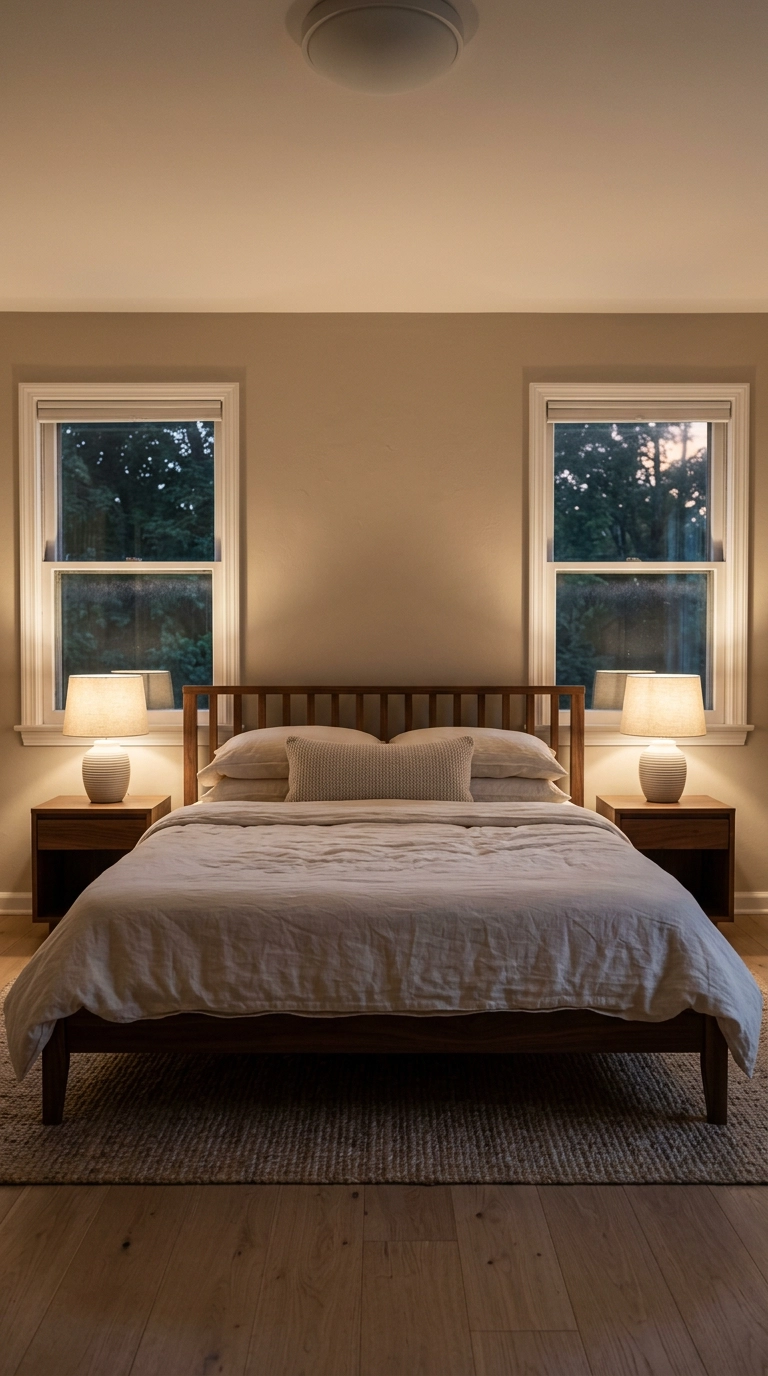
If you change one thing in your bedroom, make it this. Overhead light comes from above your eye line, which is the one direction daylight never comes from at bedtime, and your body reads it as noon. Two lamps at bedside height plus maybe a floor lamp in a corner gives you the same usable light with none of the alertness.
2. Set Your Lamp Shade at Seated Eye Level
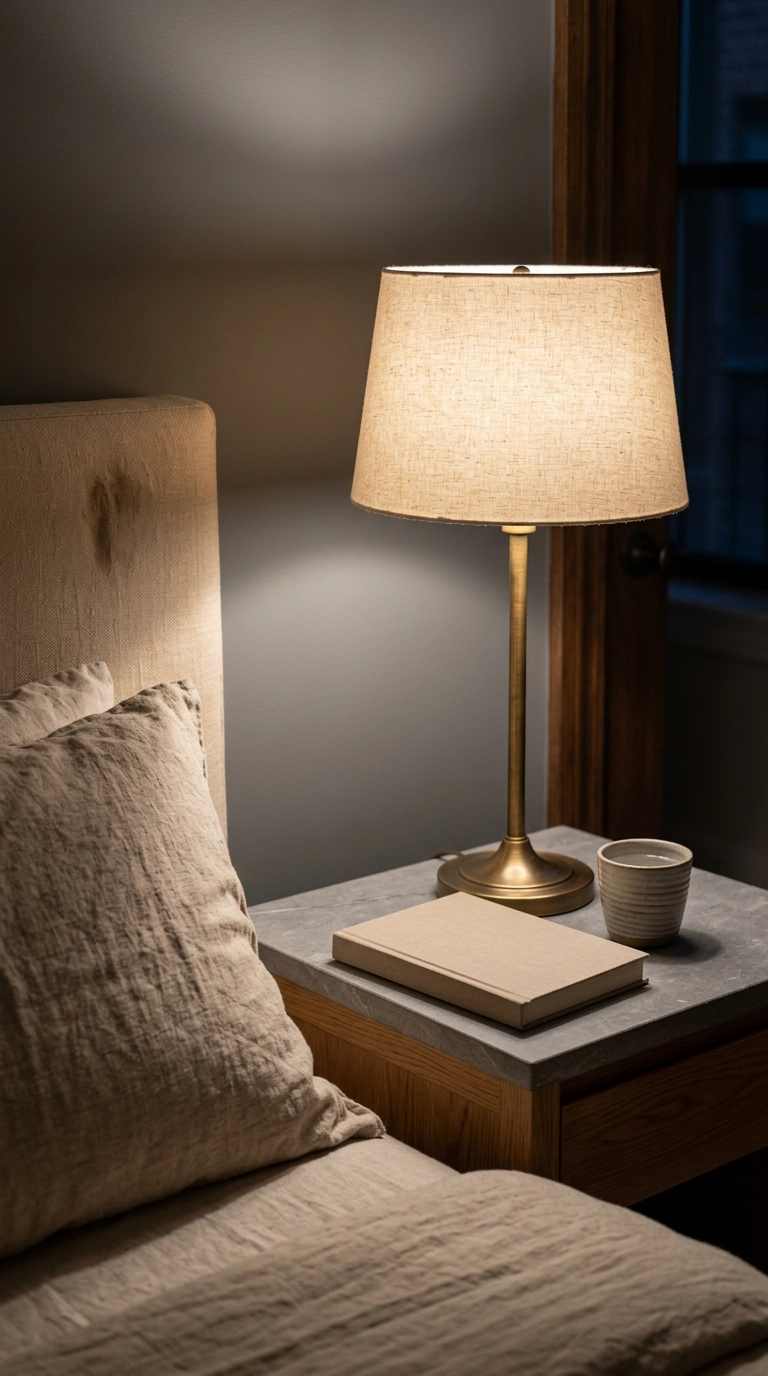
The height rule is simple and it is the difference between a lamp that soothes and a lamp that stings: the bottom edge of the shade should land roughly level with your eyes when you are sitting up in bed. That is usually 24 to 27 inches of total lamp height on a standard 25-inch-high nightstand.
3. Put Every Bulb in the Room at 2700K or Warmer
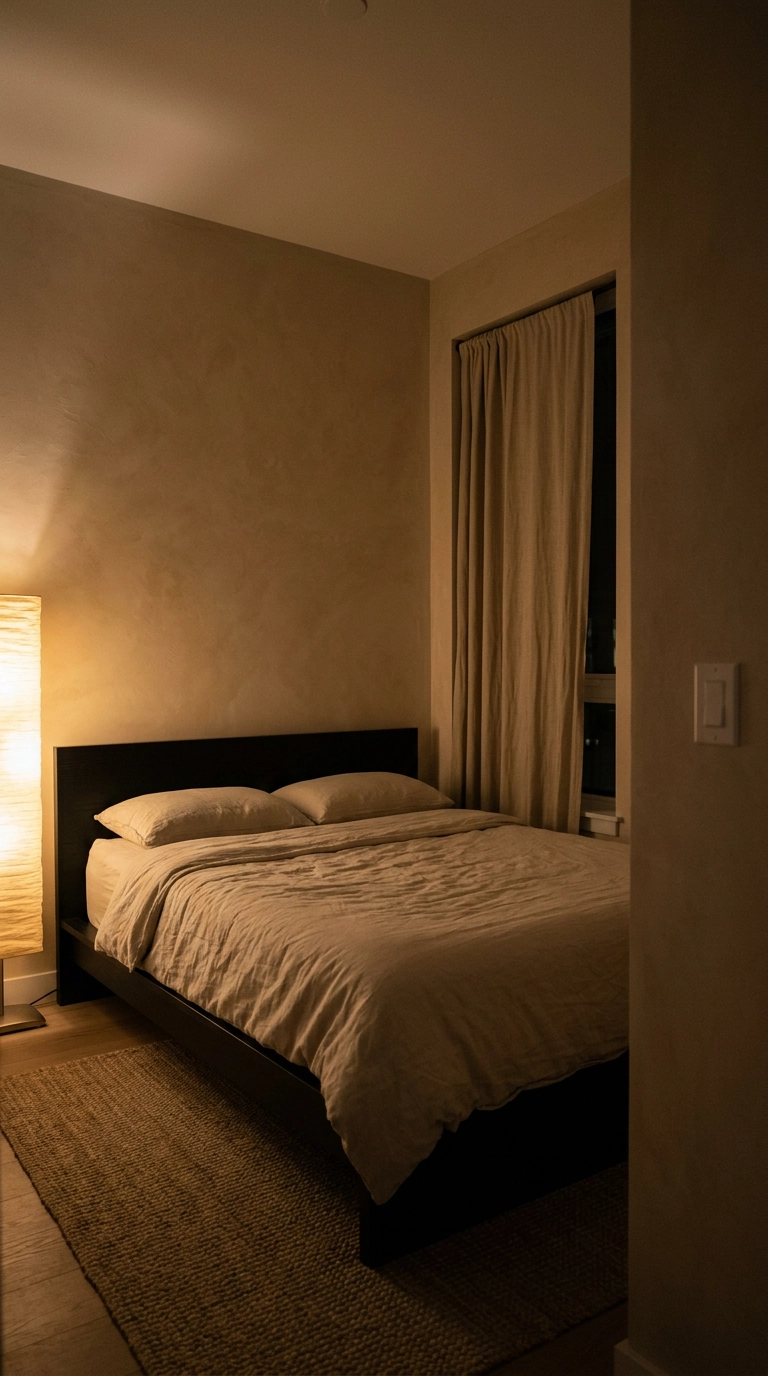
Color temperature is the cheapest sleep upgrade in the house. Anything at 3000K or above reads as daylight to your eyes, so I run 2700K everywhere in a bedroom and 2200K amber bulbs in the bedside lamps specifically.
4. Layer the Window: Light-Filtering by Day, Blackout by Night
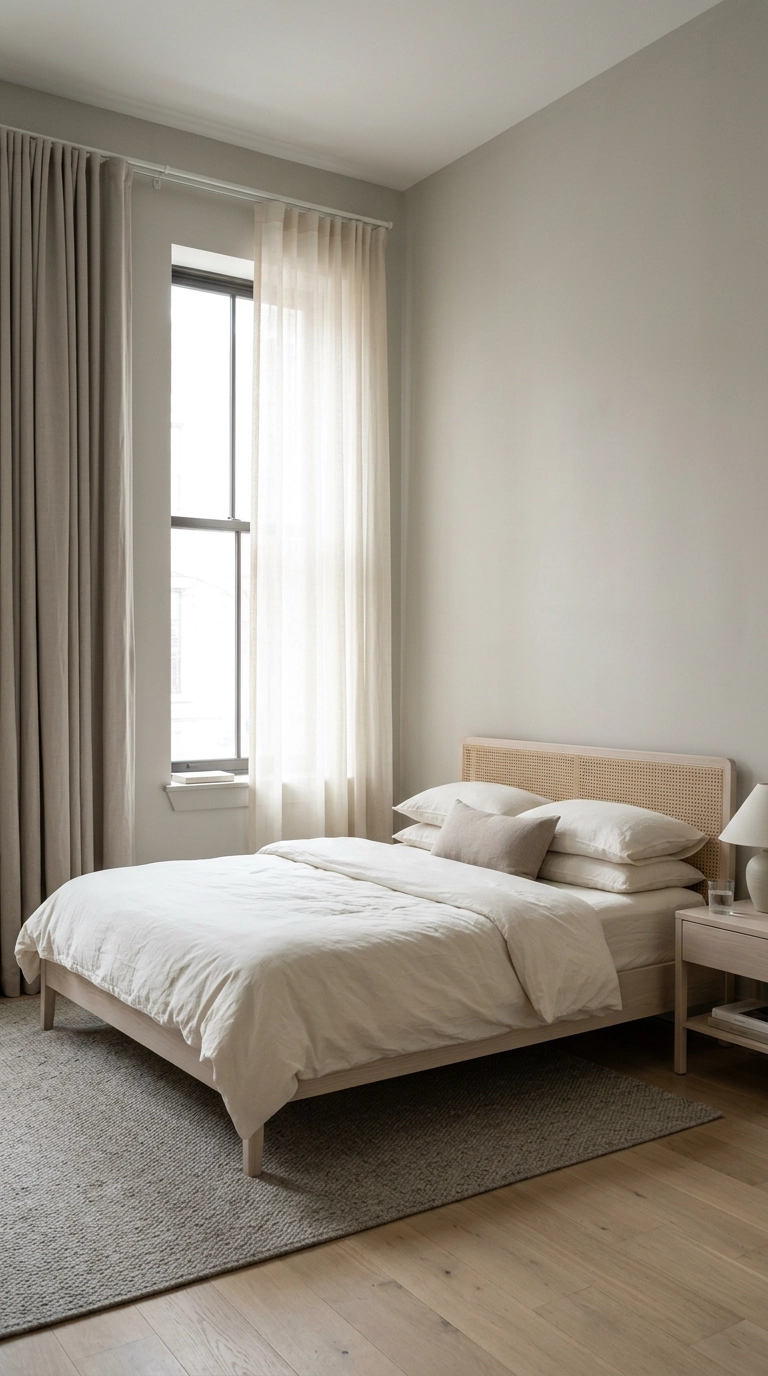
One curtain cannot do both jobs. A sheer inner panel keeps daytime light soft and diffused without making the room feel sealed, and a blackout outer layer on the same double rod handles the streetlight and the 5:40am summer sunrise.
5. Hang the Curtain Rod at the Ceiling and Wide of the Frame
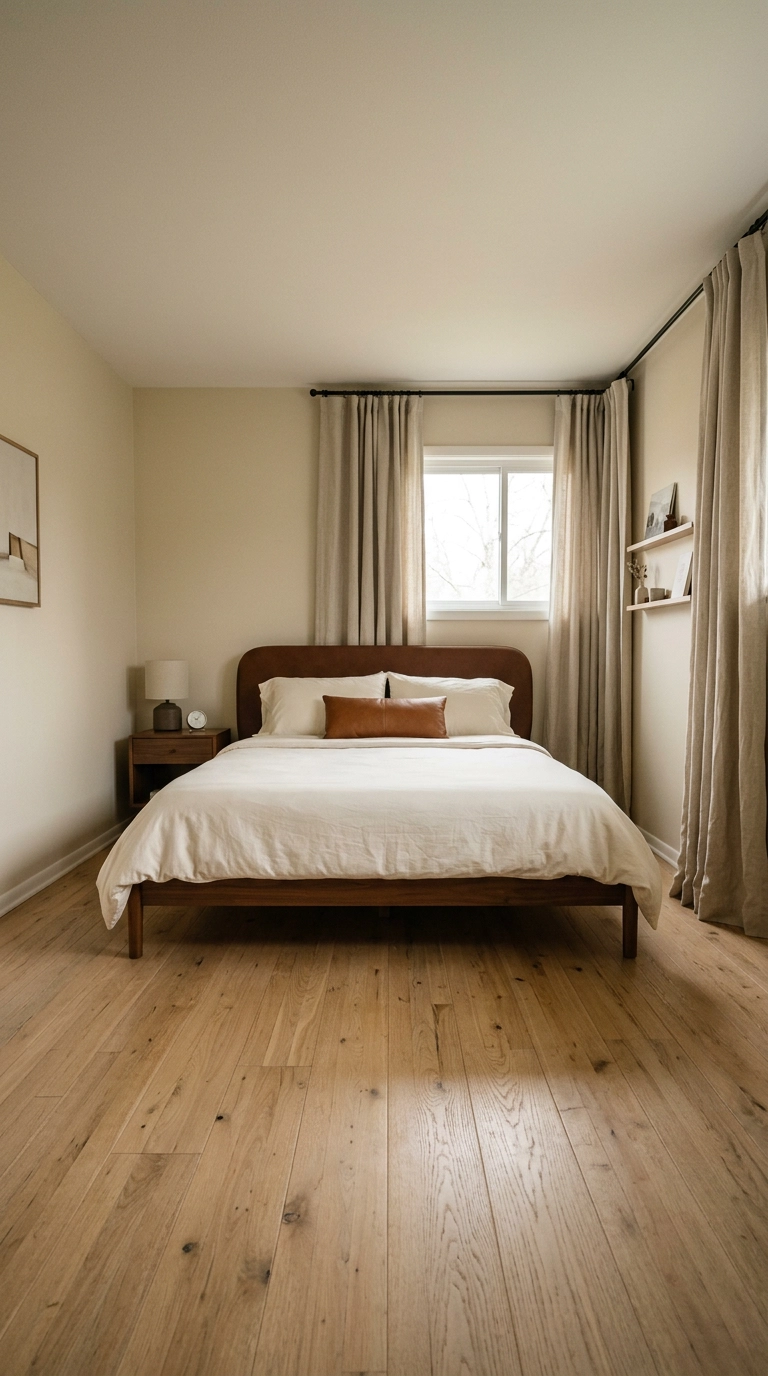
Mount the rod within two inches of the ceiling and run it eight to ten inches past the frame on each side. Your eye reads the whole curtain as the window, so the wall suddenly has a tall, generous opening instead of a small punched hole.
6. Oversize the Rug So It Extends Two Feet Past the Bed
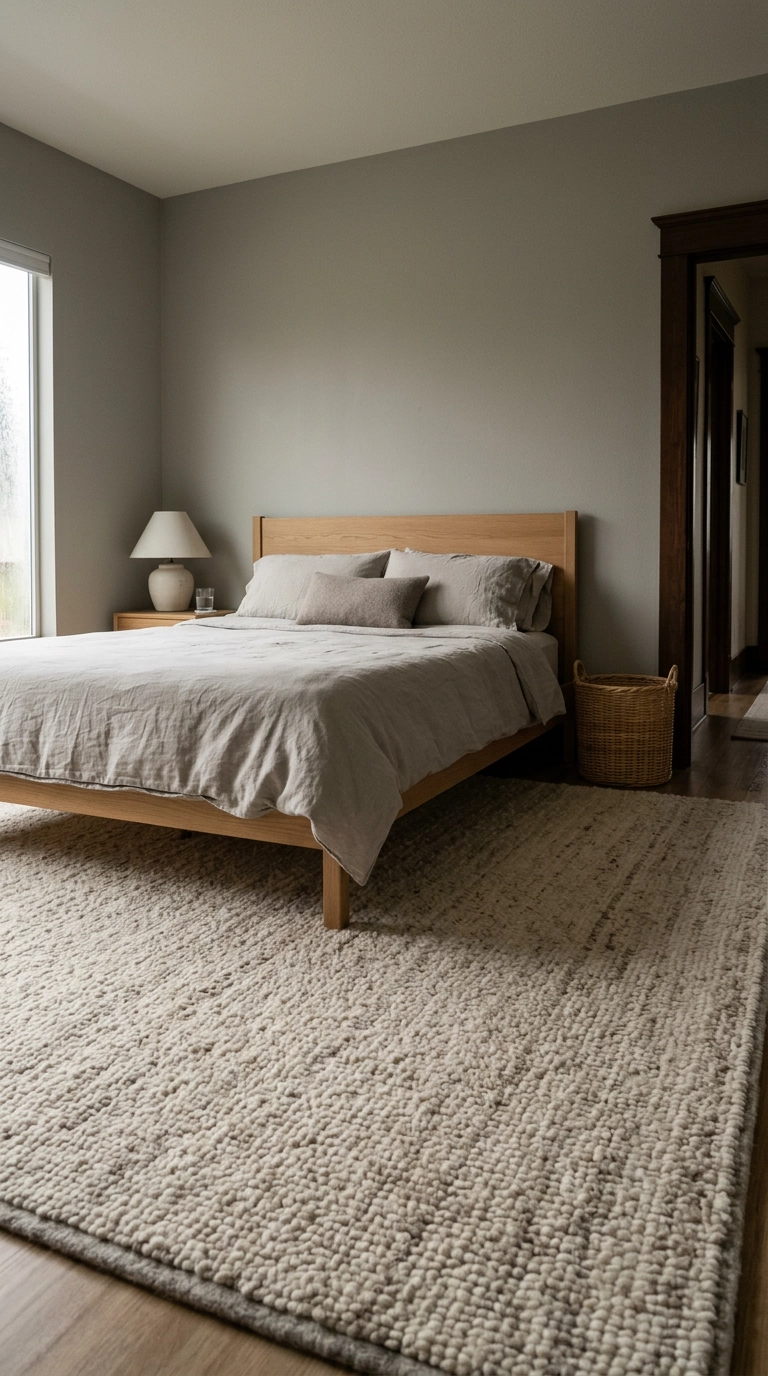
A rug in a bedroom is acoustic treatment disguised as decor. Hard floors bounce every sound in the room back at you, and a big wool rug with a thick felt pad underneath swallows most of it.
7. Give Every Bit of Storage a Door
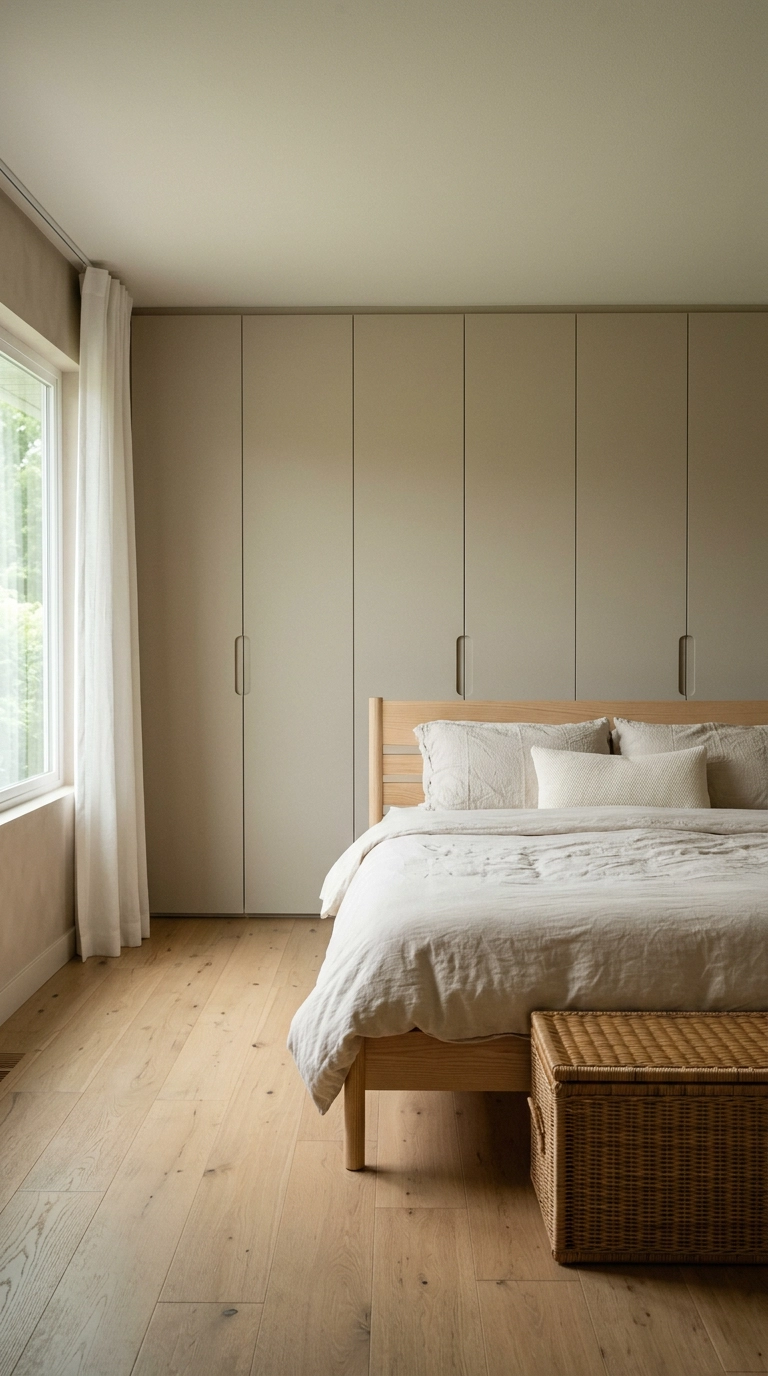
This is the idea people push back on and then thank me for. Open shelving in a bedroom means your brain is quietly cataloguing forty objects while you are trying to switch off, and closed doors delete that work entirely.
8. Keep the Wall You See on Waking Completely Bare
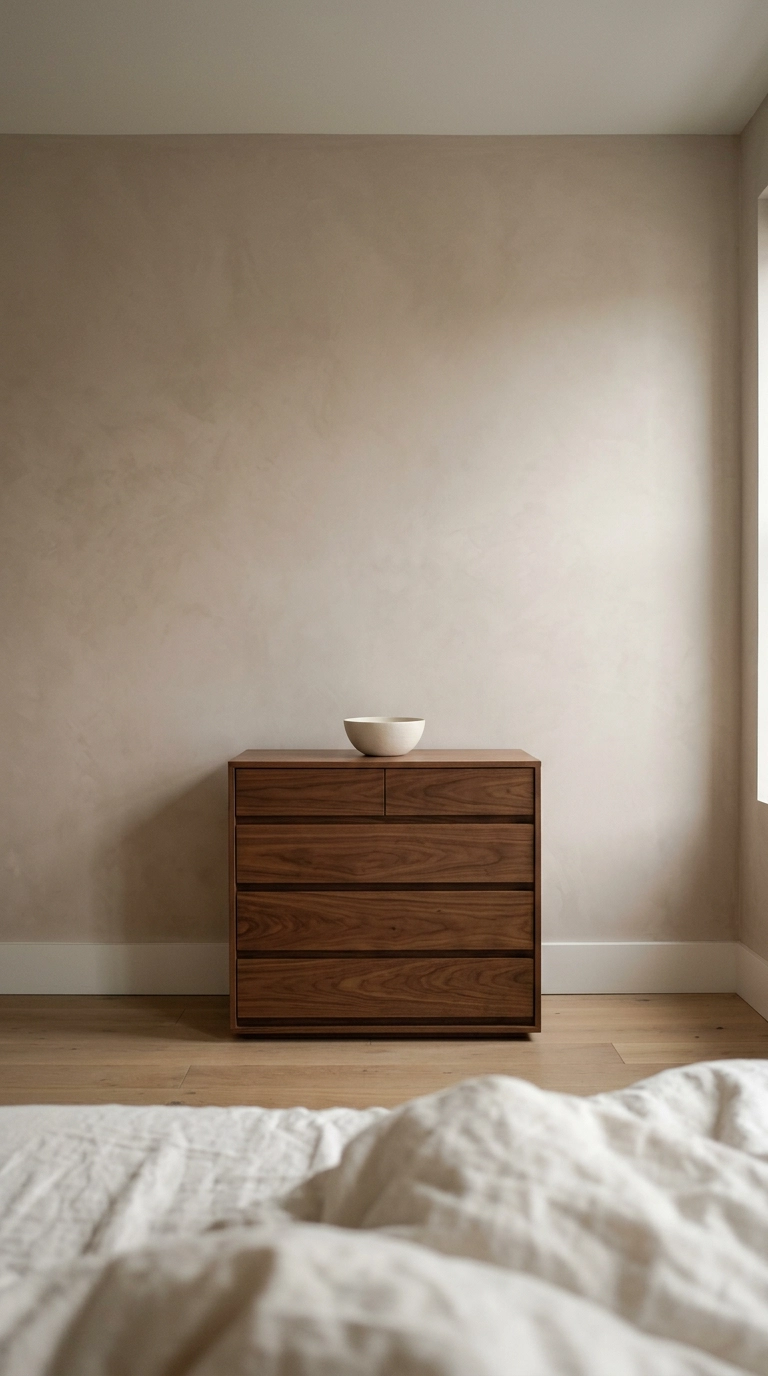
The first thing you see with your eyes open sets the tone for the next ten minutes, and in most bedrooms it is a gallery wall, a TV, or a laundry chair. Go lie down in your own bed and actually look – whatever is in that cone of vision is the wall to strip.
9. Clear a Three-Foot Perimeter of Bare Floor Around the Bed
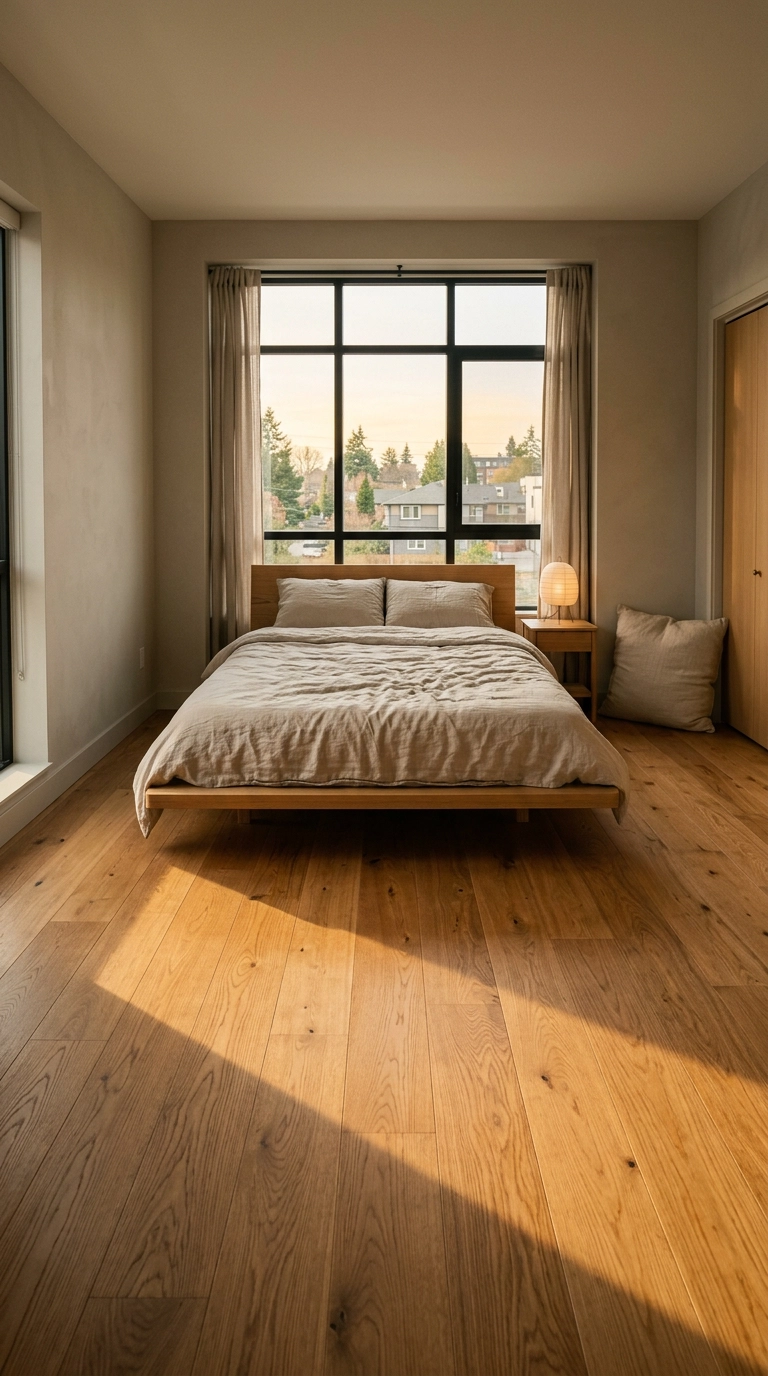
Designers call it circulation space, but the honest version is that walking around your own bed sideways is stressful and you feel it every single night. Aim for roughly 30 to 36 inches of clear floor on the sides and foot.
10. Get the Desk Out, or Shut It Behind Doors
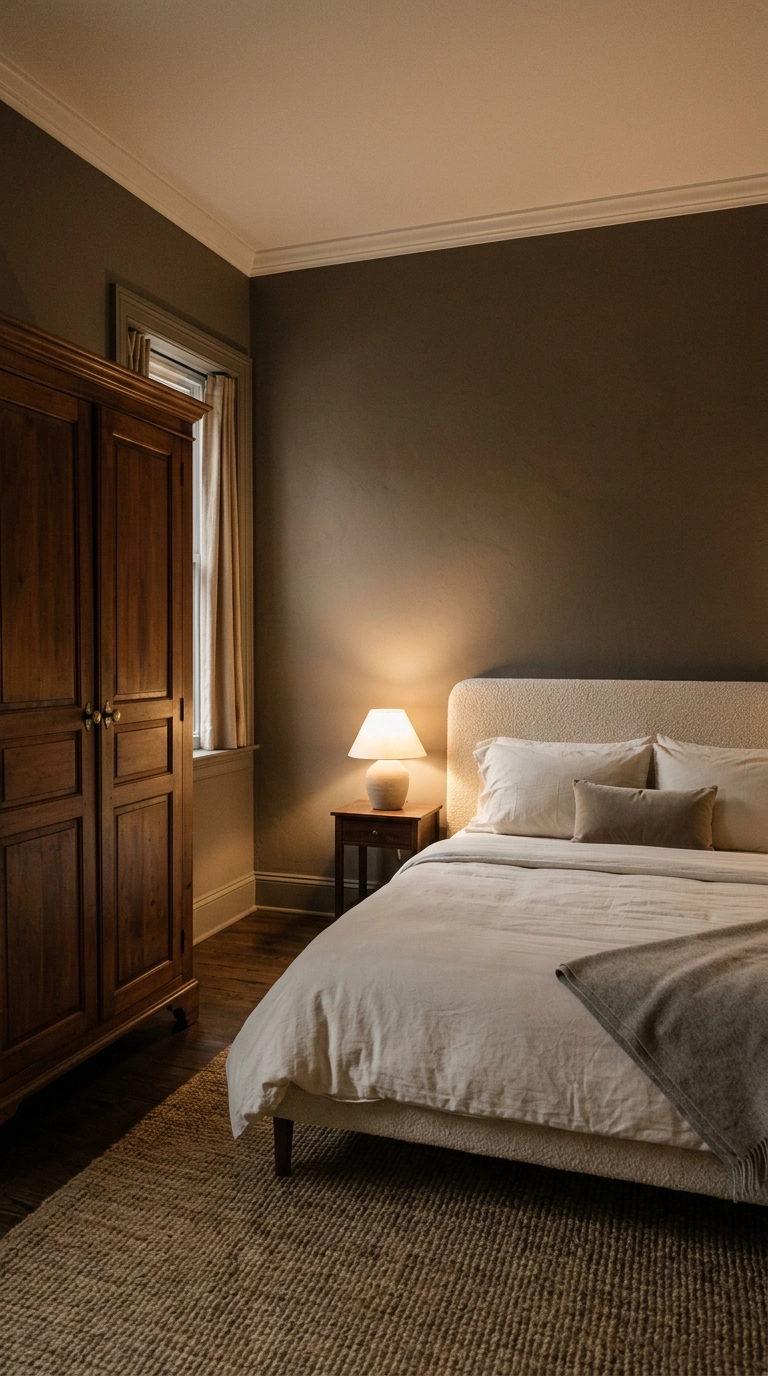
A visible work surface keeps a low hum of obligation running in the background all night. If the desk genuinely has to live in the bedroom, put it inside a cabinet or armoire with doors you can physically close at six o’clock.
11. Charge Phones in the Hallway and Put a Real Clock on the Nightstand
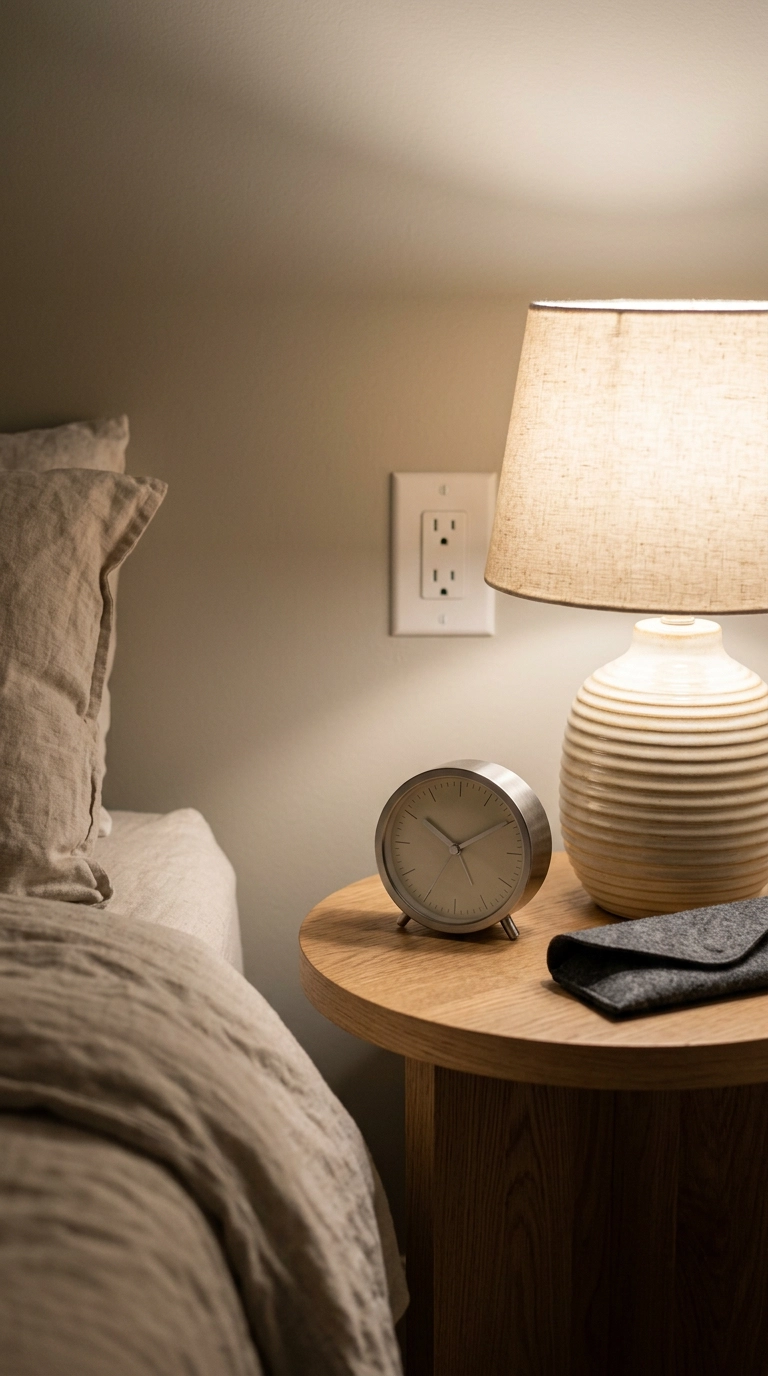
The phone is the single loudest object in a quiet bedroom even when it is face down and silent, because you know it is there. Moving the charger to the hallway is free and it is the change my clients report back on most.
12. Use Symmetry Deliberately, Because Your Brain Reads It as Safe
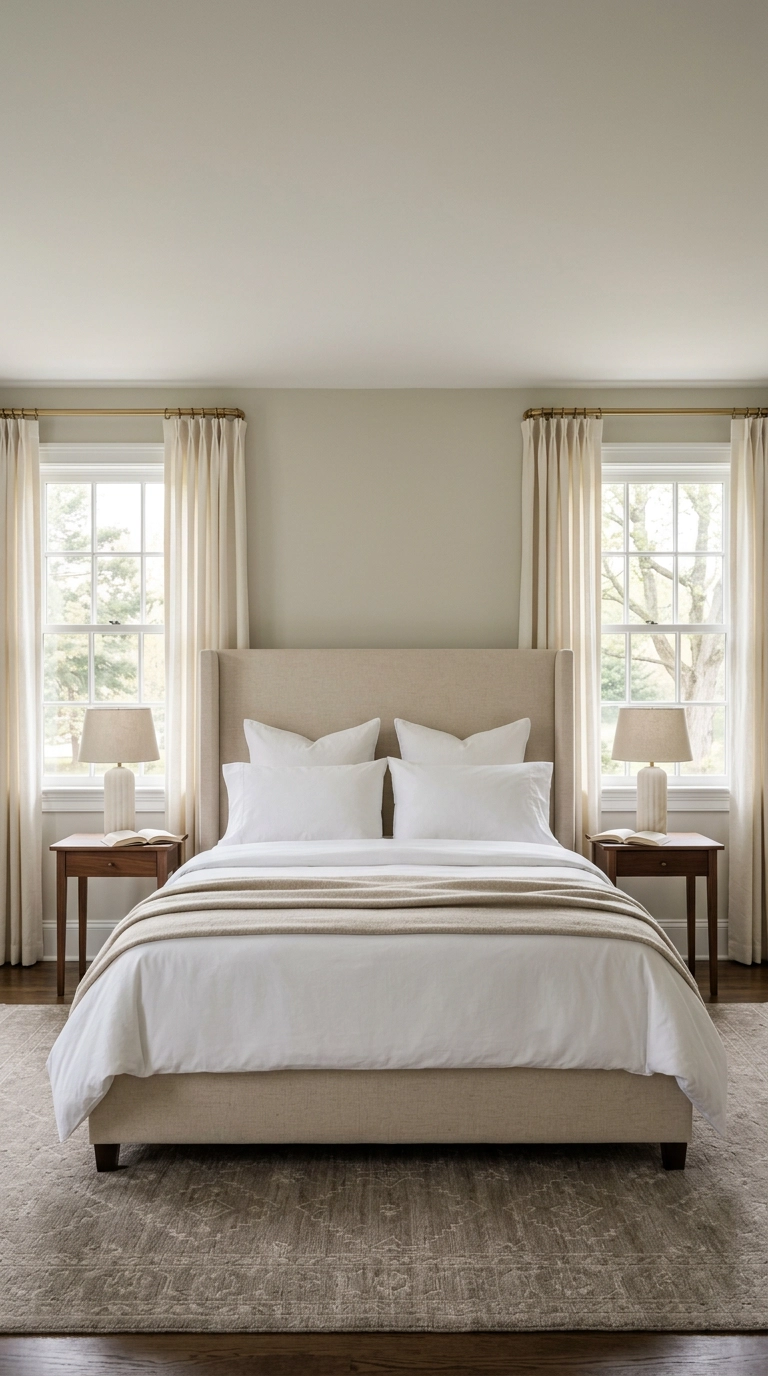
I usually preach odd numbers and asymmetry, and in a bedroom I throw that out. Symmetry requires no interpretation, so the eye resolves the wall instantly and stops working – which is exactly what you want in the last room you look at each day.
13. Hang Heavy Lined Curtains and Listen to the Room Go Quiet
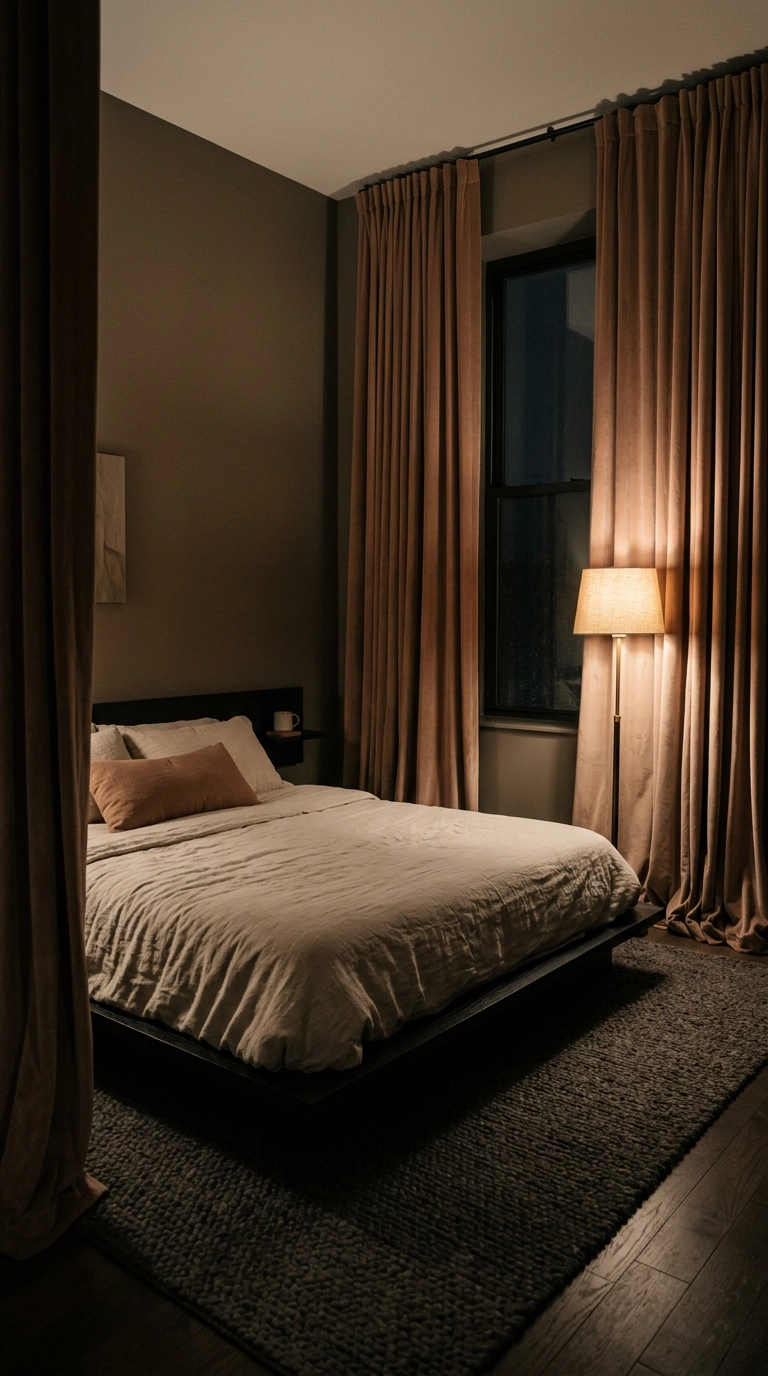
Fabric weight is acoustics. A lined velvet or heavy cotton panel absorbs mid-range noise the way a rug absorbs footsteps, and if you live on a street you will hear the difference the first night.
14. Choose an Upholstered Headboard for the Echo, Not the Look
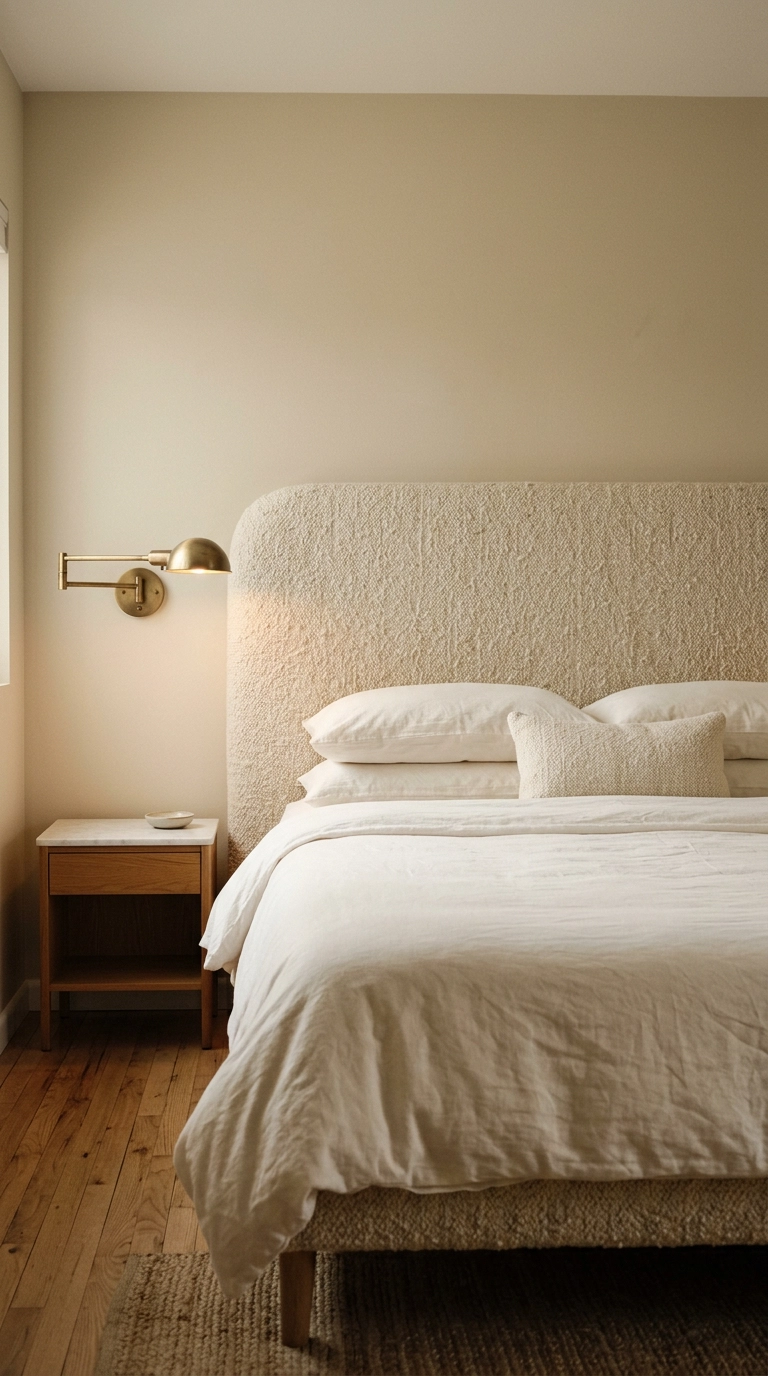
A big padded panel behind your head is a sound absorber right where your ears are. Hard headboards – metal, cane, bare wood – reflect sound straight back at the pillow, and in a bare-floor room that is a genuinely noticeable difference.
15. Go Fully Matte on the Walls and Ceiling
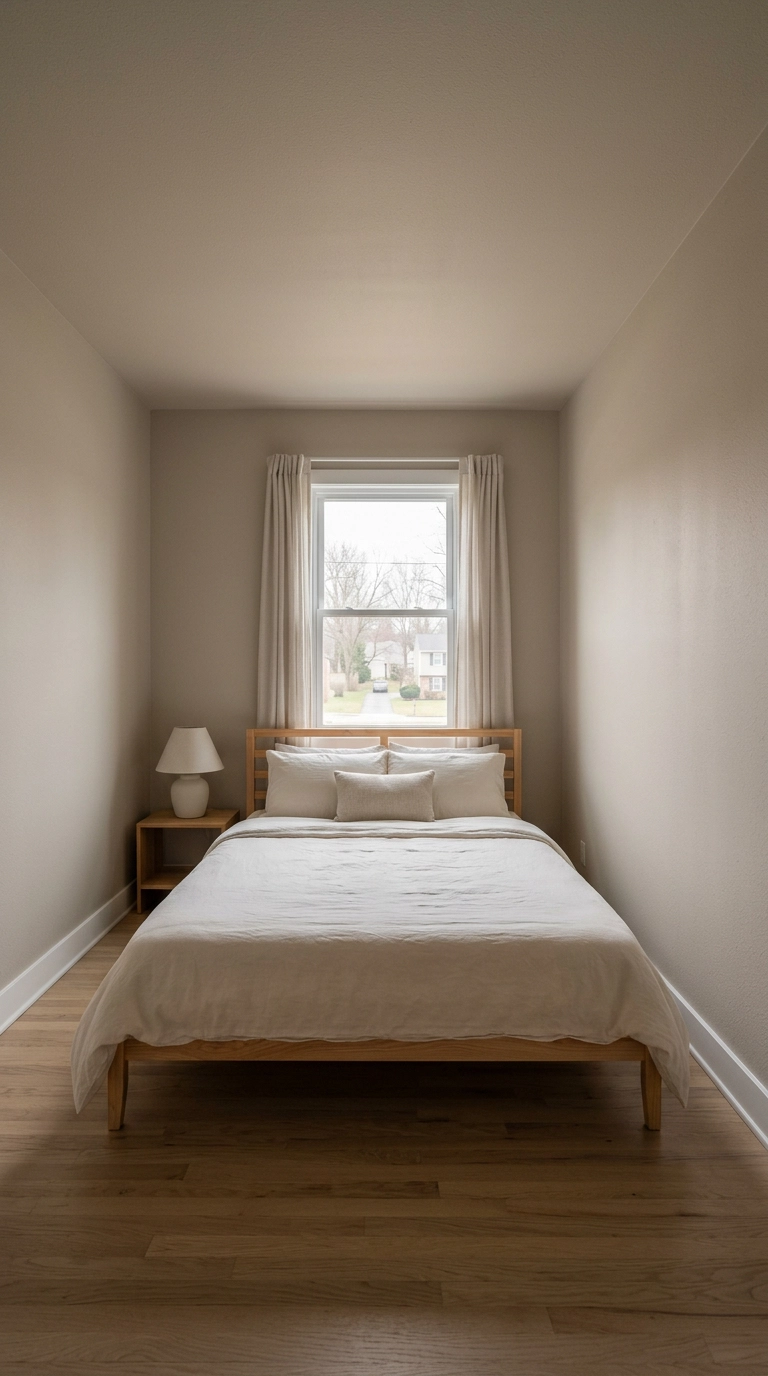
Sheen is what makes a room feel busy without you being able to say why. Eggshell and satin catch every light source and throw little bright patches across the wall, and flat matte simply absorbs it all.
16. Build the Bed From One Texture Family, Not Five
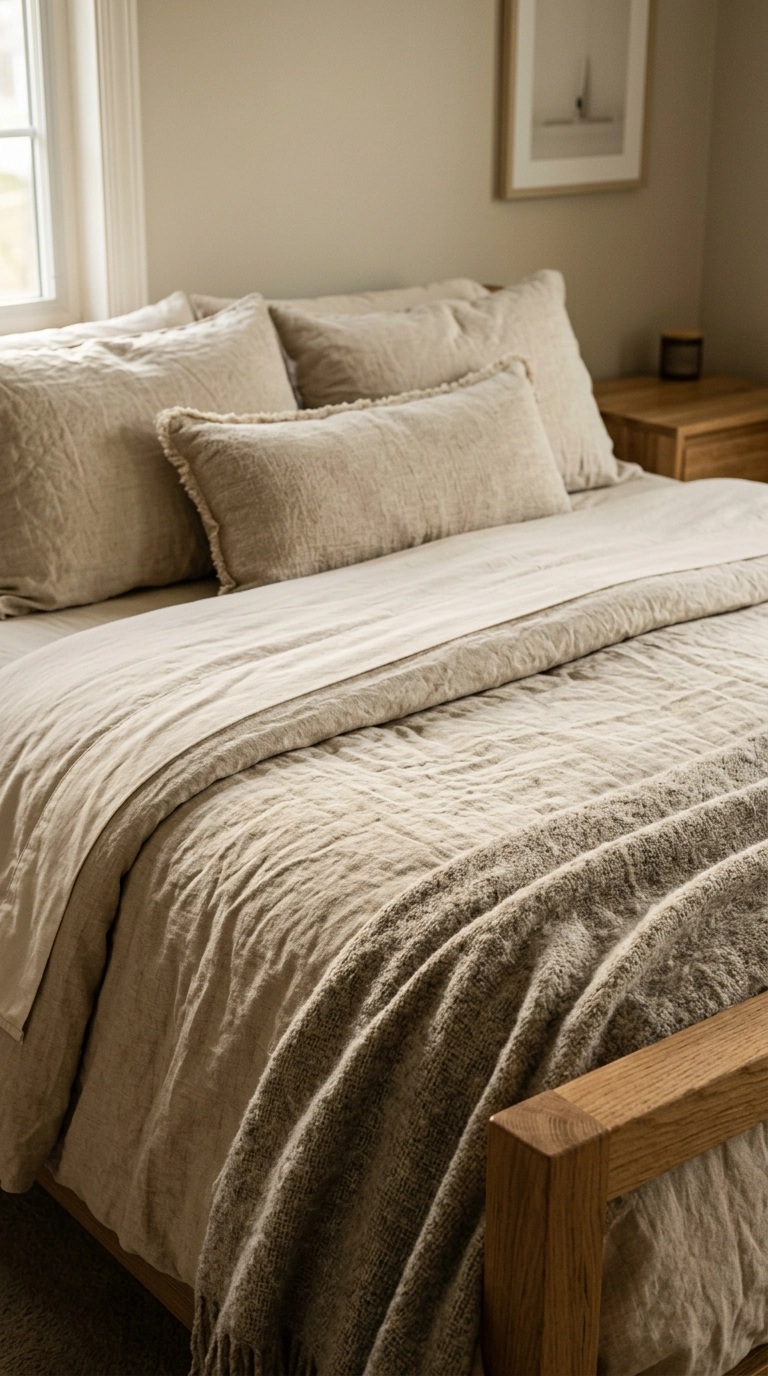
Heavy linen, brushed cotton, wool. That is the whole list, and the reason it works is that all three are matte, breathable and get better with washing, so nothing on the bed is shiny or slippery against your skin.
17. Use Unlacquered, Unfinished-Looking Wood
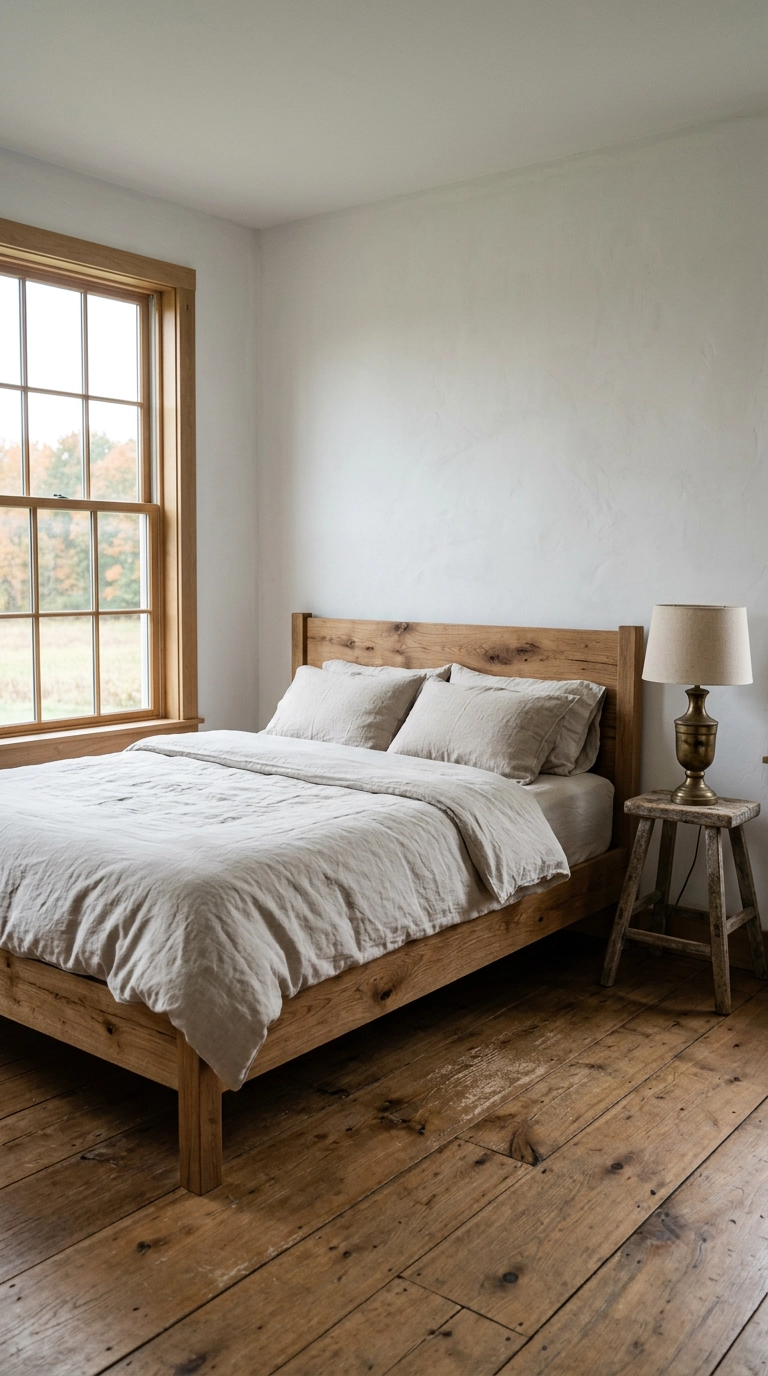
Glossy polyurethane wood always looks a little like a hotel, because the finish reflects light in a way real timber does not. Hardwax oil and raw matte finishes let you see the grain and feel it under your hand, and they take a scratch as character rather than damage.
18. Hold the Whole Room to Three Tones
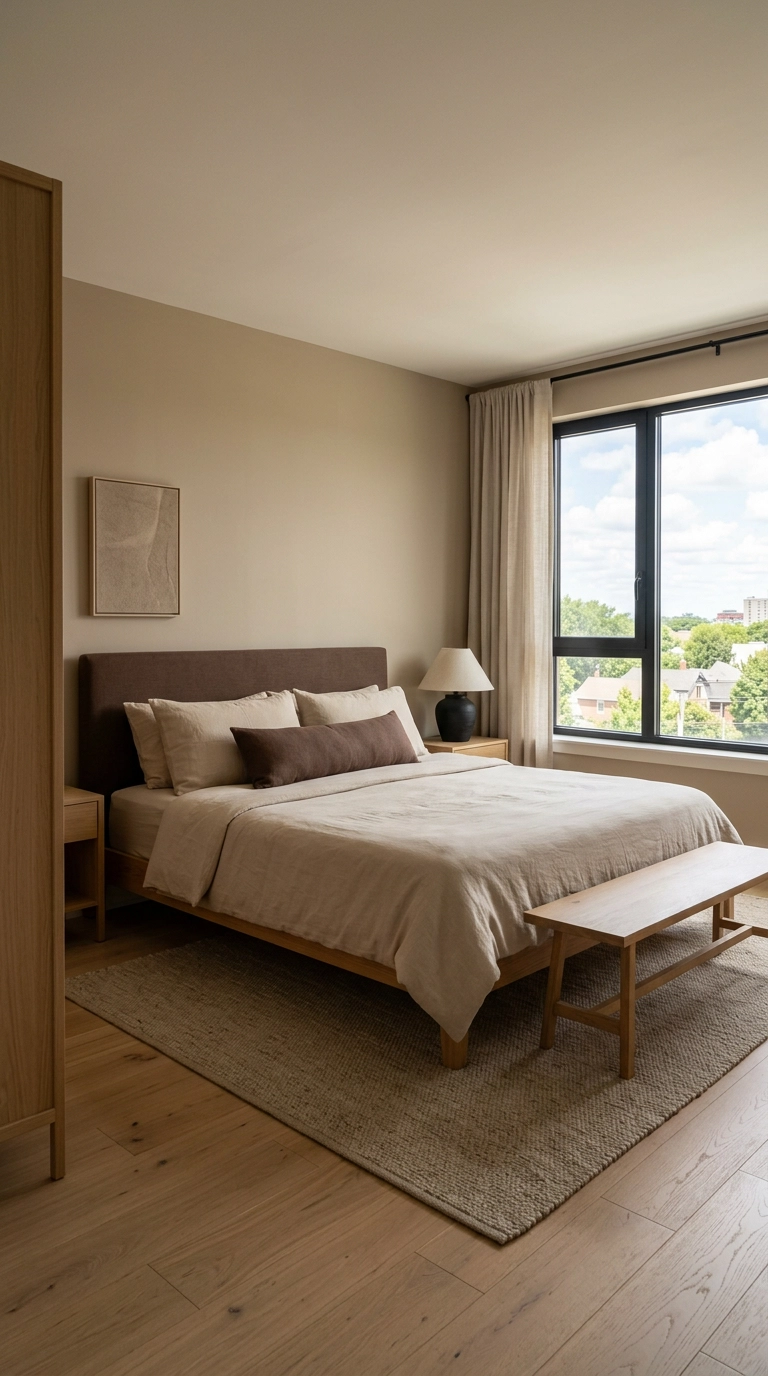
Every extra color is one more thing your eye has to sort. I keep bedrooms to three values of one warm neutral – think a clay wall, sand bedding, cocoa headboard – plus one dark accent for definition.
19. Lower Everything: Low Bed, Low Dresser, Low Sightline
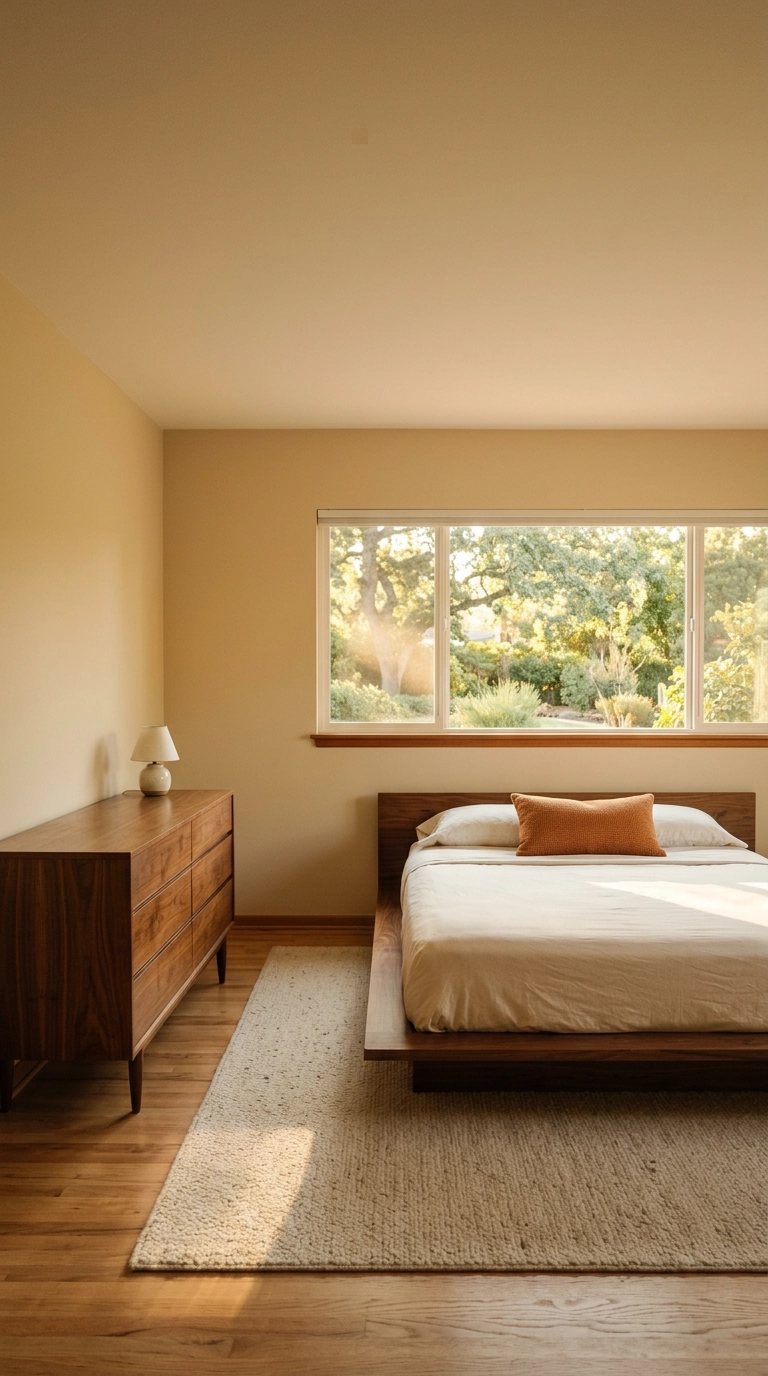
Drop the furniture and the ceiling appears to rise. A low platform bed sitting 10 to 14 inches off the floor, paired with a long low dresser, leaves a big band of quiet empty wall above everything.
20. Mount Swing-Arm Sconces and Empty the Nightstand
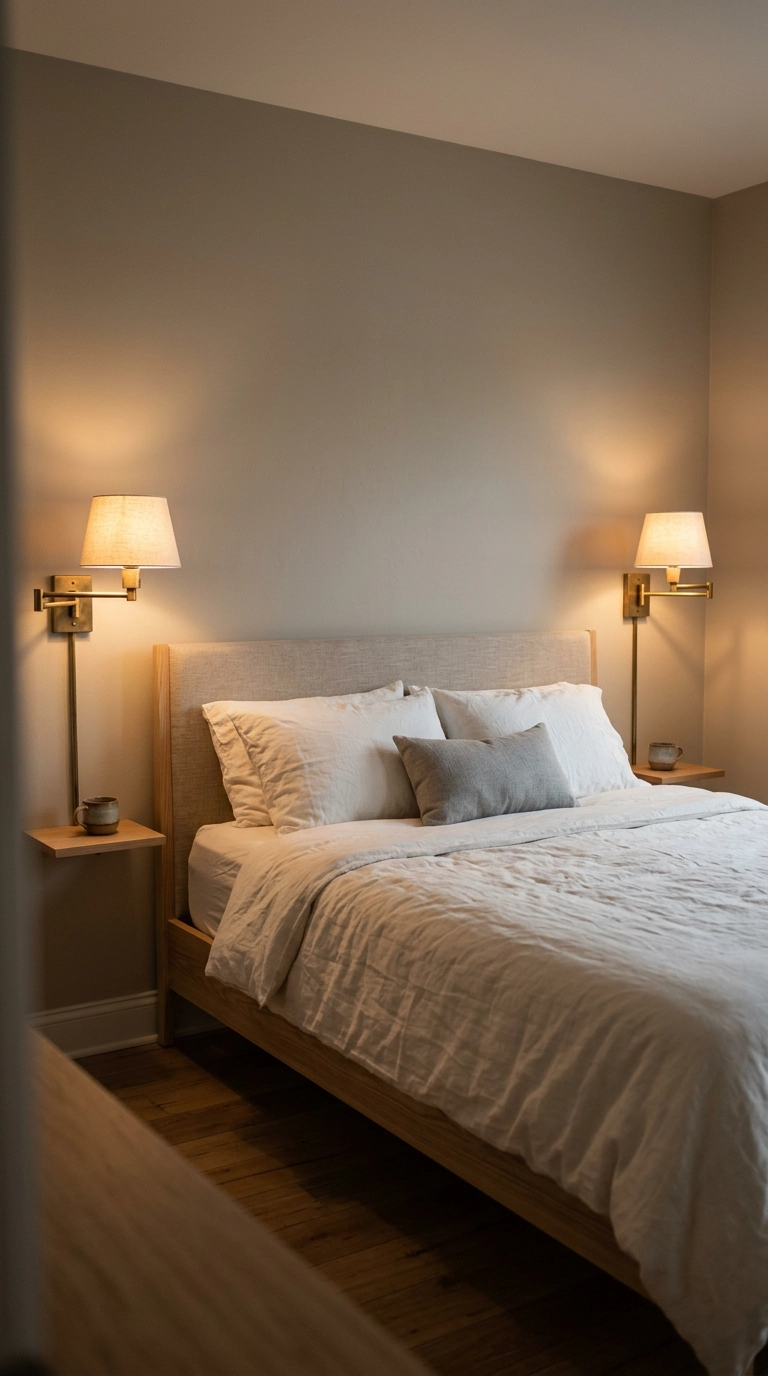
Getting the lamp off the nightstand frees up the surface and, more importantly, gets the cord out of your eyeline. Mount sconces roughly 28 to 32 inches above the mattress top and adjust from there.
21. Put a Bench at the Foot of the Bed So Clothes Have Somewhere to Land
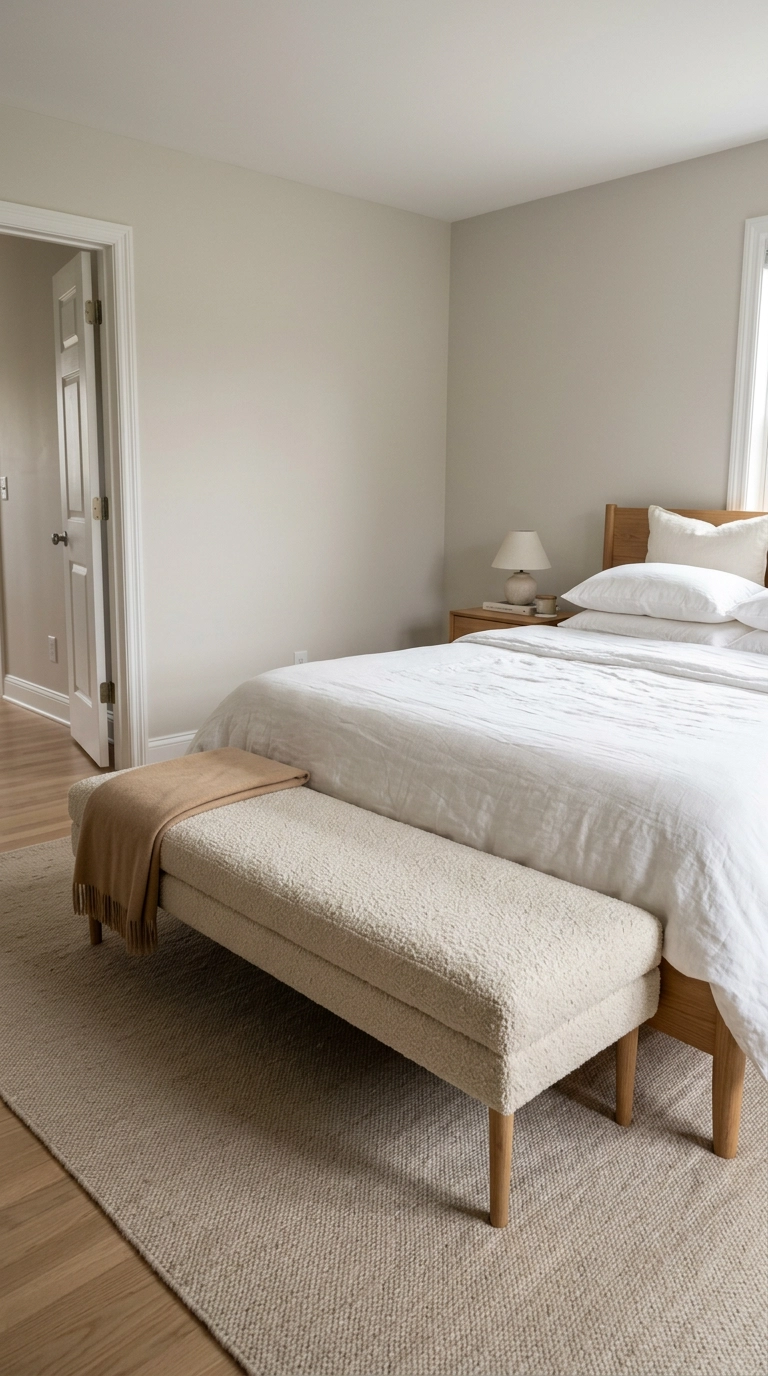
The clothes are going somewhere. Without a designated surface they go on the floor, on the chair, or on the exercise bike, and every one of those readings is visual noise.
22. Choose a Nightstand With a Drawer, Not Open Shelves
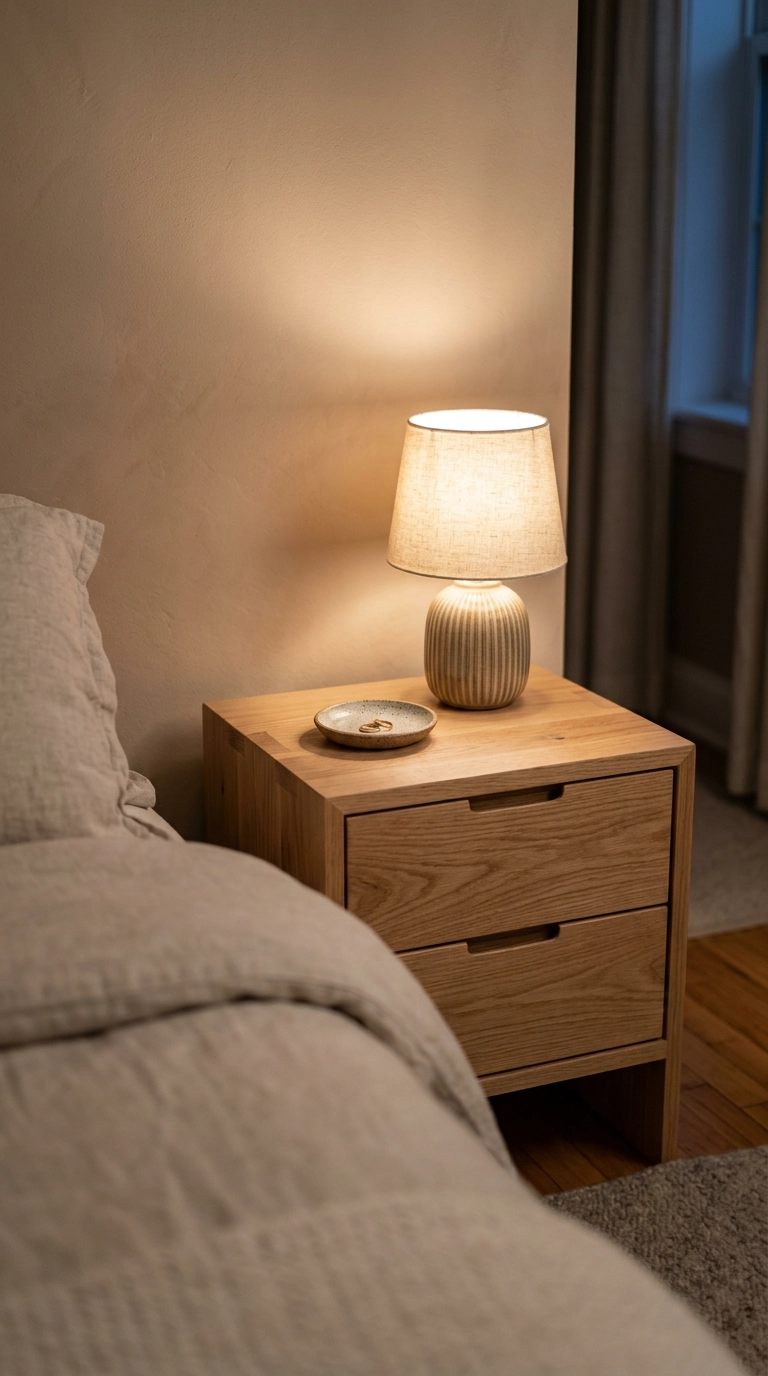
Open-shelf nightstands are a trap, because everything you use in bed ends up displayed on them. A drawer hides the eye mask, the charger, the melatonin and the ancient lip balm in one motion.
23. Kill Every Standby LED in the Room
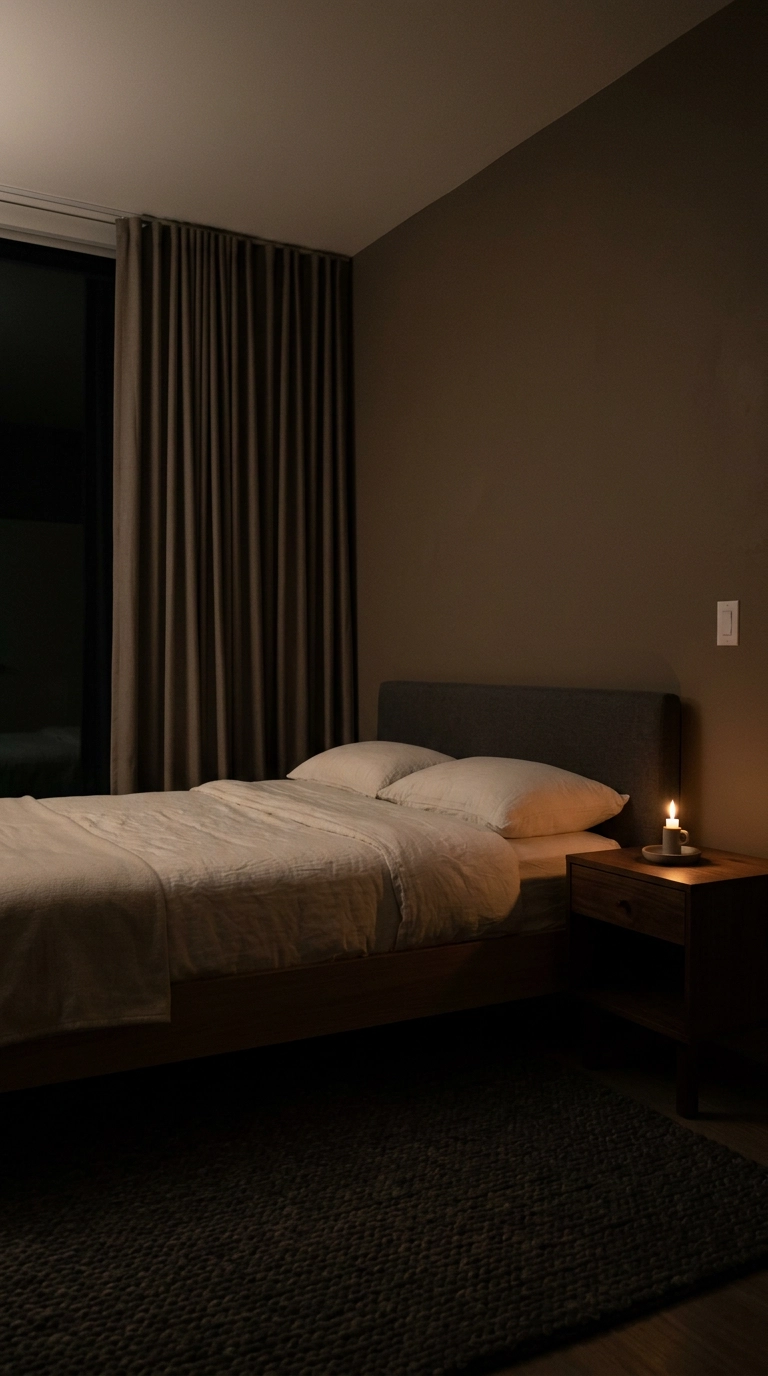
Walk into your bedroom with the lights off and count the little glowing dots – the router, the humidifier, the smoke detector, the power strip. Your eyes adapt to the darkest thing in the room, so those points are far brighter than they seem.
24. Round the Corners With Soft Shapes
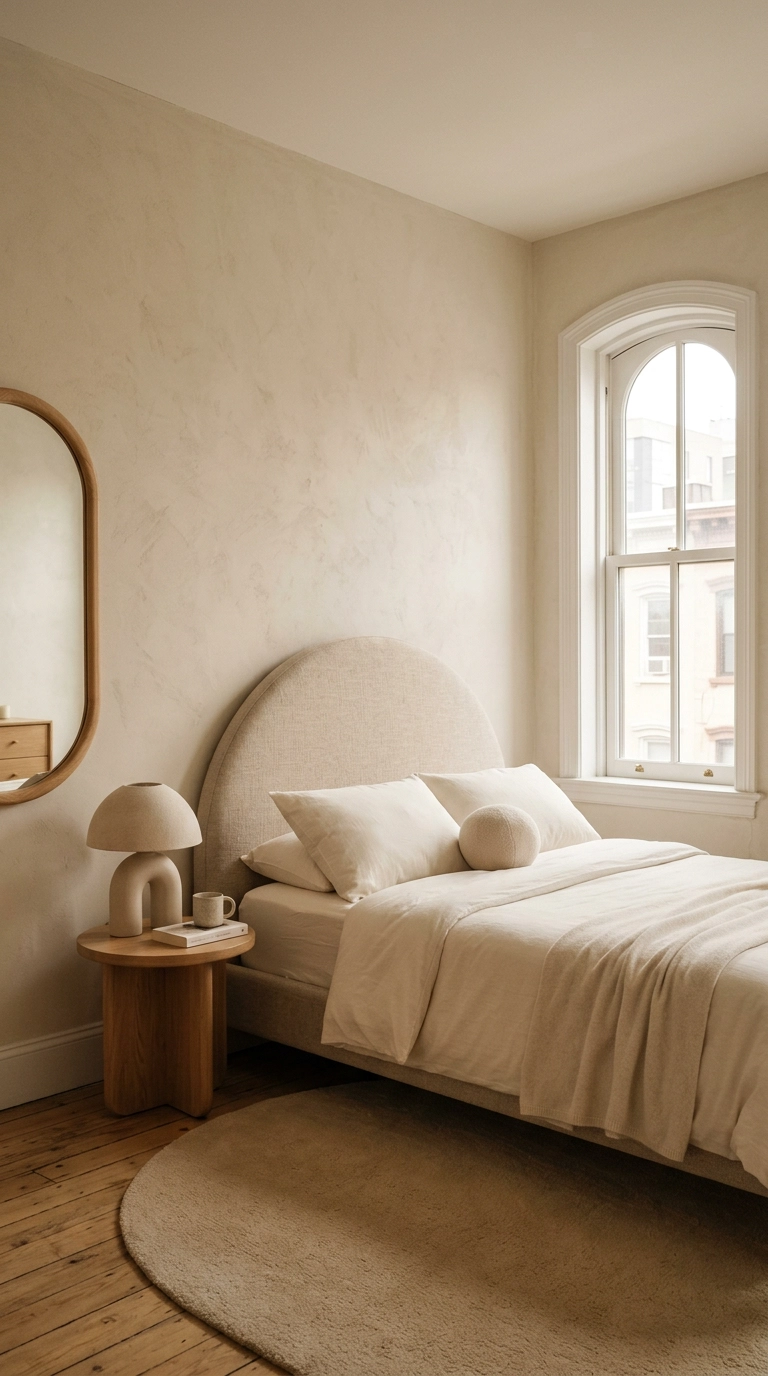
Hard corners create sharp shadow lines and your eye tracks every one of them. Curves – an arched headboard, a round nightstand, an oval rug – shade gradually instead, and the room reads softer without a single change of color.
25. Design the View From the Doorway, Because That Is the One You Get Most
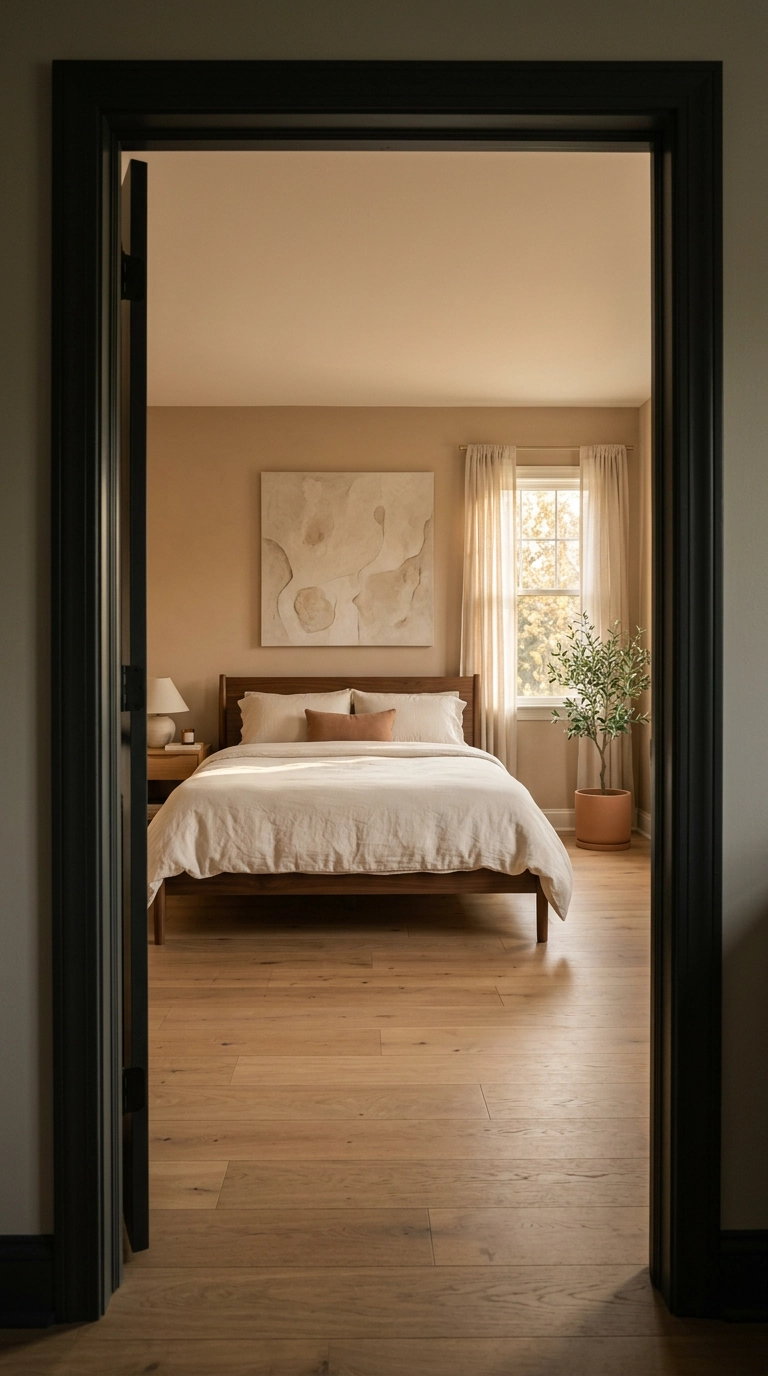
You see your bedroom from the doorway more often than from anywhere else, and almost nobody styles for that angle. Stand in the door, take a photo on your phone, and fix whatever the photo shows you – it is always the cables, the open closet, or the thing on top of the dresser.
Turning the Lights Down on This One
If there is a thread running through all twenty-five of these, it is that a peaceful bedroom is built out of subtraction and light, not out of shopping. The ideas I would do first in any house are the same three every time: retire the ceiling light, oversize the rug, and strip the wall you see when you open your eyes. None of those need a designer, a permit, or a landlord’s blessing, and together they do more than a full furniture replacement would.
What I am watching in 2026 is a real shift away from the ethereal, all-neutral bedroom toward rooms that are engineered for rest – heavier textiles, dead-flat paint, low furniture, deliberate darkness at night. Bedside sconces and dimmable warm bulbs have gone genuinely mainstream, and the low-slung Japanese-influenced bed frame that Norm Architects and the whole Japandi world made famous has quietly become the default in American condos. Even the big-box brands have caught on, with lined blackout curtains and washed linen bedding now sitting in every mainstream catalog instead of only the expensive ones.
So start with the lamp swap this weekend, live with it for a week, and see whether you stop reaching for the ceiling switch. Then work down the list in whatever order suits your room and your budget – there is no correct sequence, only the one you will actually finish. And if you want more of this, including the paint sheens I specify, the honest costs, and the ideas I am still testing in my own house, sign up for my weekly newsletter. One email, short, and usually about a room I have not fully solved yet.


