
23+ Gorgeous Bathroom Wallpaper Decor Ideas that Actually Survive the Steam in 2026

I’ll be straight with you – I’ve watched a gorgeous hand-blocked floral peel off a client’s shower wall in under four months, and it still stings. Bathroom wallpaper is the single highest-impact thing you can do to a boring beige box, but it lives or dies on two unglamorous things: what the paper is made of, and whether your exhaust fan actually works. So I’m giving you 23 ideas I’ve either installed, specified, or watched succeed in real American bathrooms, plus honest warnings about the ones that fail. Let’s get into it.
Bathroom Wallpaper Decor Ideas
1. Wrap a Powder Room in a Bold Large-Scale Pattern
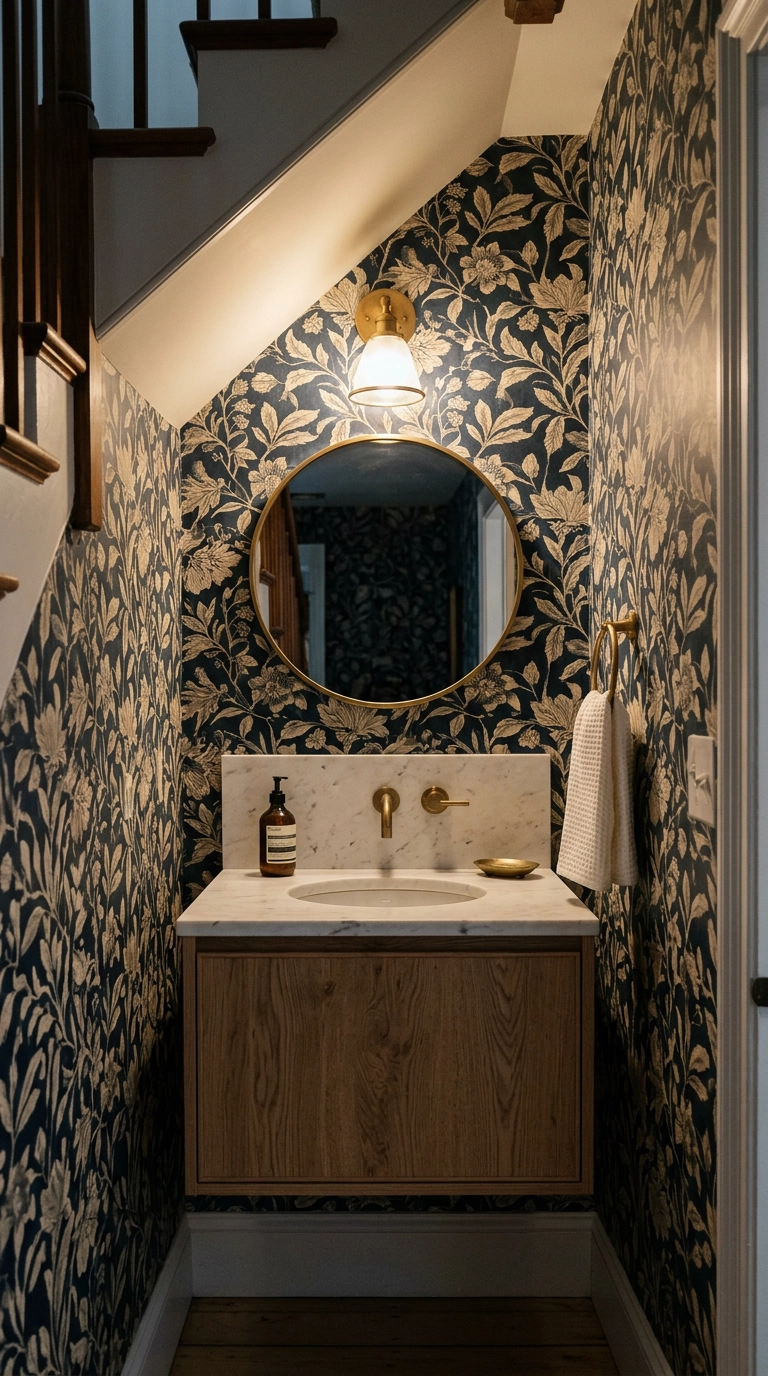
The powder room is where I tell every nervous client to go big, because it’s the one bathroom with no shower, no steam, and usually under 40 square feet of wall. That means a $200 roll goes further, and if you hate it in three years the redo is a Saturday, not a renovation.
2. Choose Non-Woven Paper if You Want It to Last
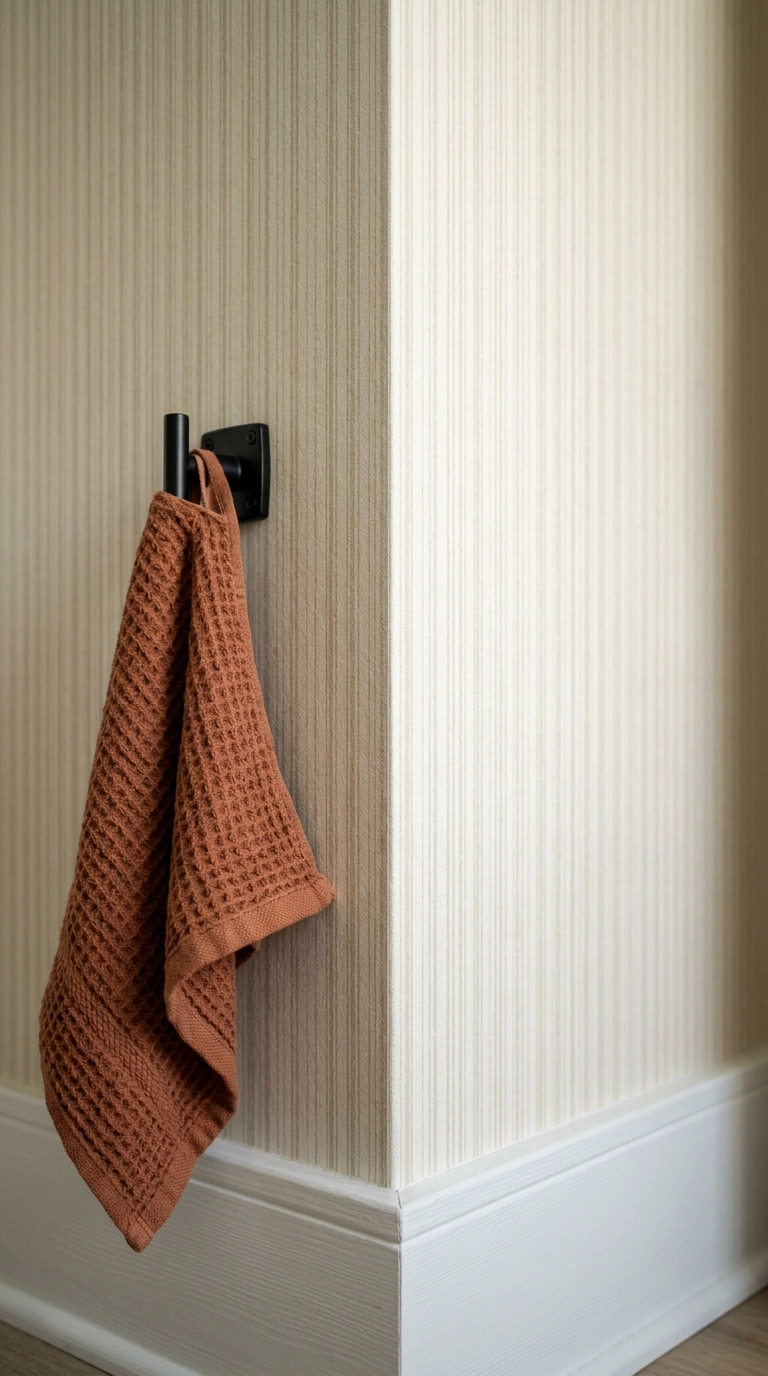
Here’s the part nobody puts on the front of the roll: traditional paper-backed wallpaper is basically a sponge, and in a bathroom it swells, bubbles, and lifts at the seams. Non-woven paper is a blend of natural and synthetic fibers that stays dimensionally stable when the room gets humid, and it’s what I spec for every bath with a shower in it.
3. Give Renters a Peel-and-Stick Accent Wall (Know Its Limits)
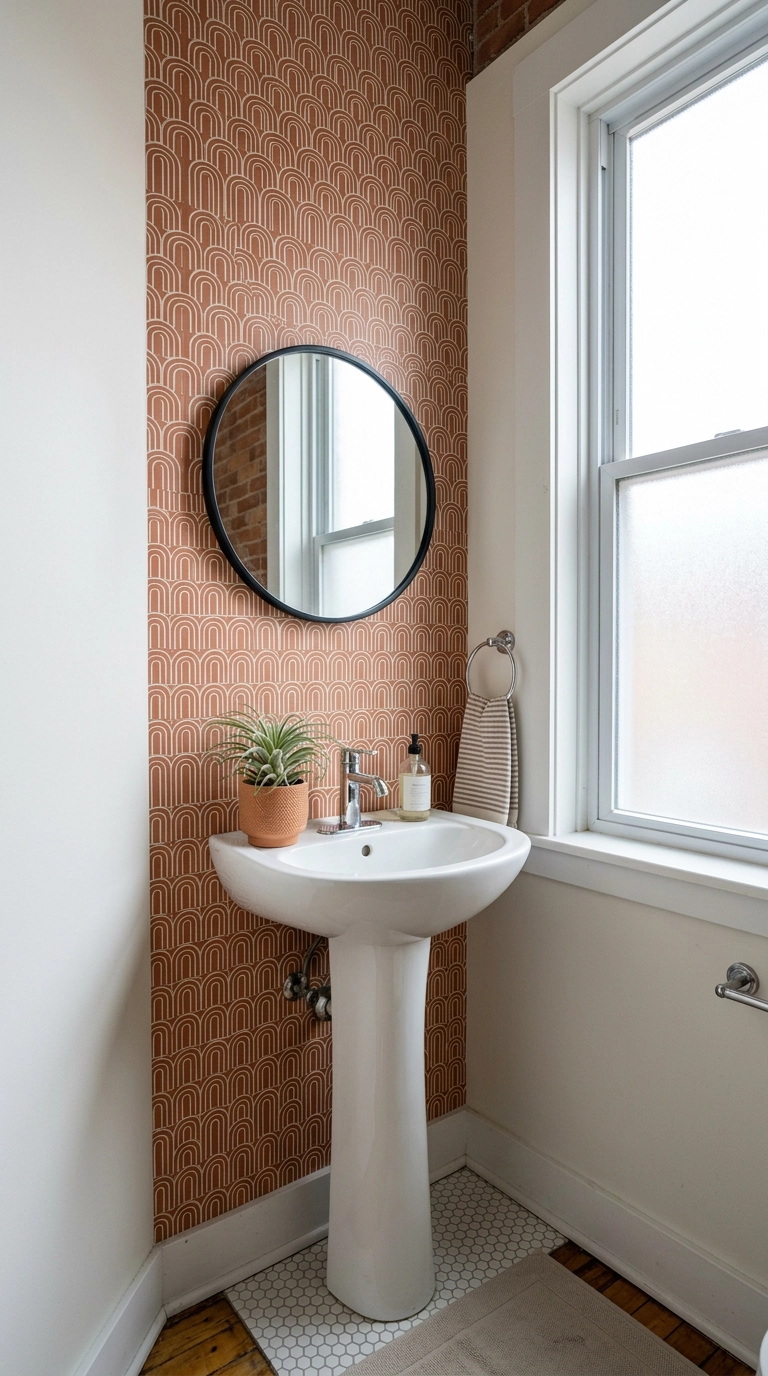
Peel-and-stick is the renter’s best friend, and it is genuinely good now – the good brands release without damaging drywall, which is the entire point. But I need to be honest about the fine print, because social media doesn’t mention it.
4. Paper Above Wainscoting or Board-and-Batten for the Classic Look
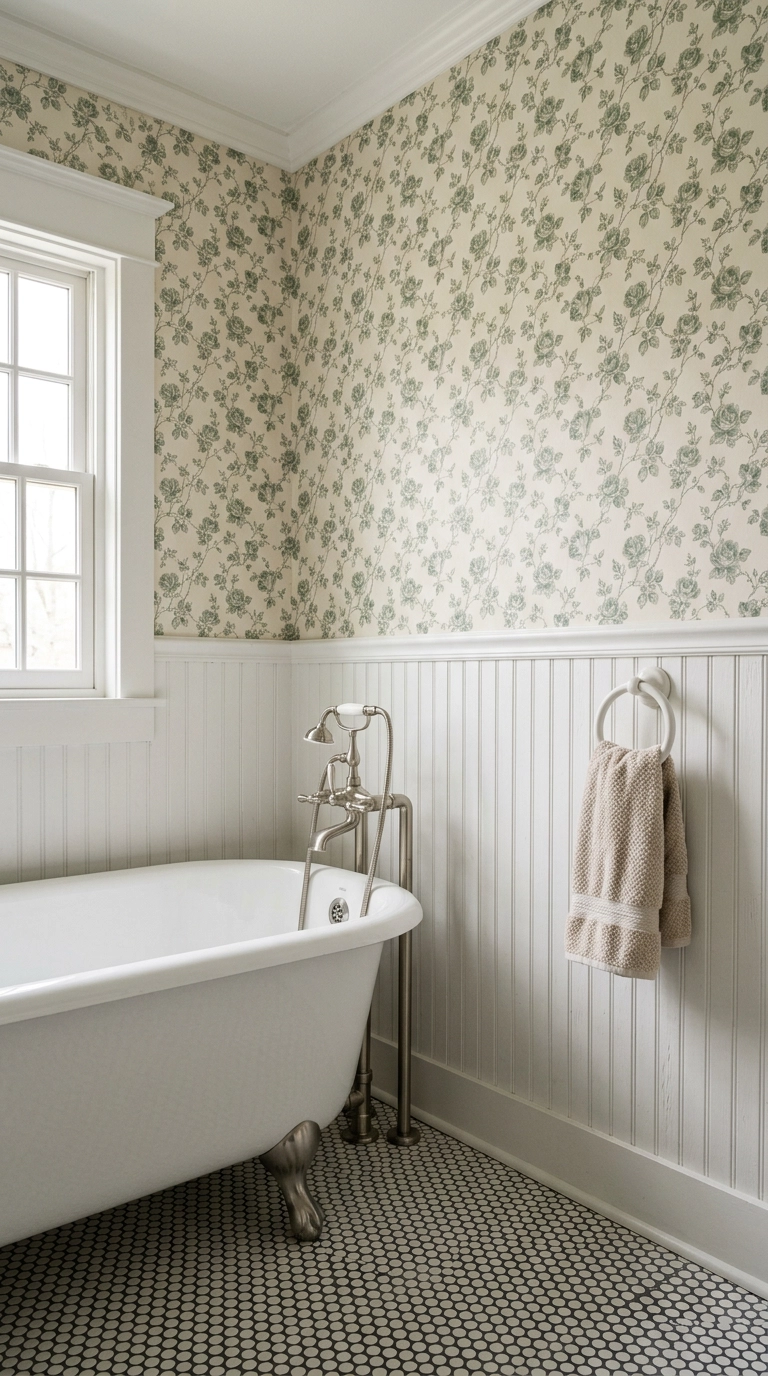
This is the old-fashioned formula that still wins every time: wainscoting or board-and-batten on the bottom 36 to 42 inches, wallpaper above. The wainscot takes the splashes, kicks, and scrubbing, while the paper gets to be the pretty thing that lives above the splash zone where moisture rarely reaches.
5. Fix the Exhaust Fan Before You Buy a Single Roll
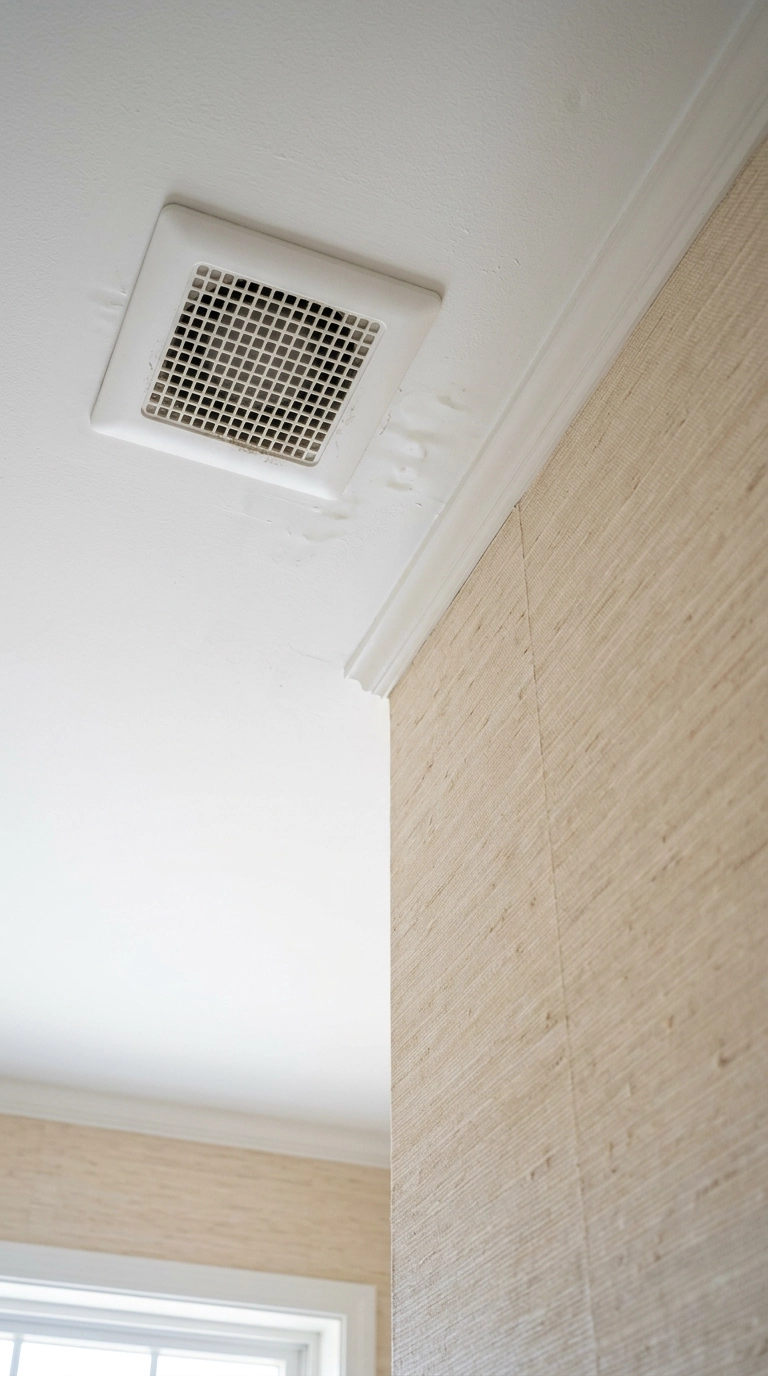
This is the least fun idea in the article and the one that decides whether any of the others work. Wallpaper does not fail because of water splashes, it fails because humid air sits against it for hours after every shower.
6. Run a Small-Scale Pattern in a Genuinely Tiny Bathroom
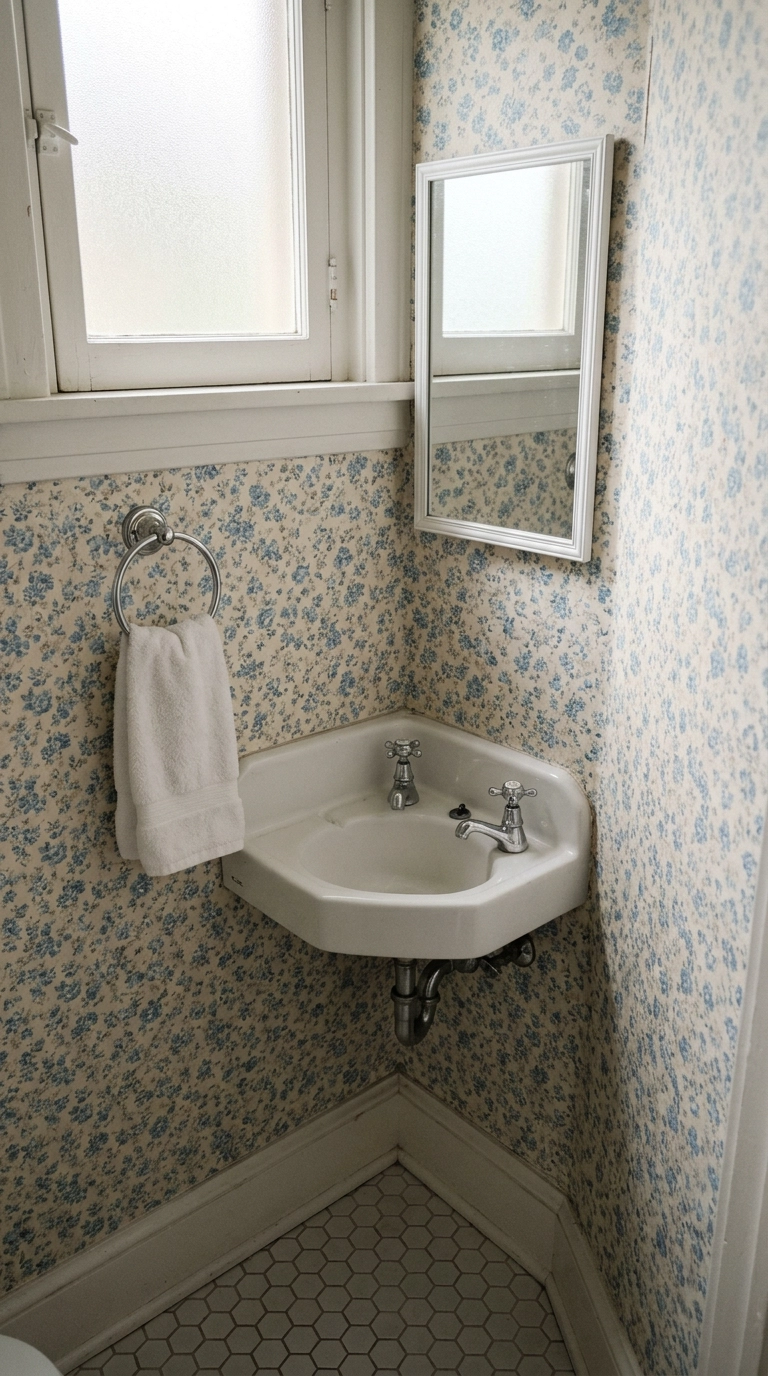
I told you to go large-scale in a powder room, and I want to complicate that, because room size and wall count both matter. In a truly tiny bath where you can touch two walls at once, a large motif gets chopped into fragments at every corner and never resolves.
7. Paper the Ceiling and Leave the Walls Quiet
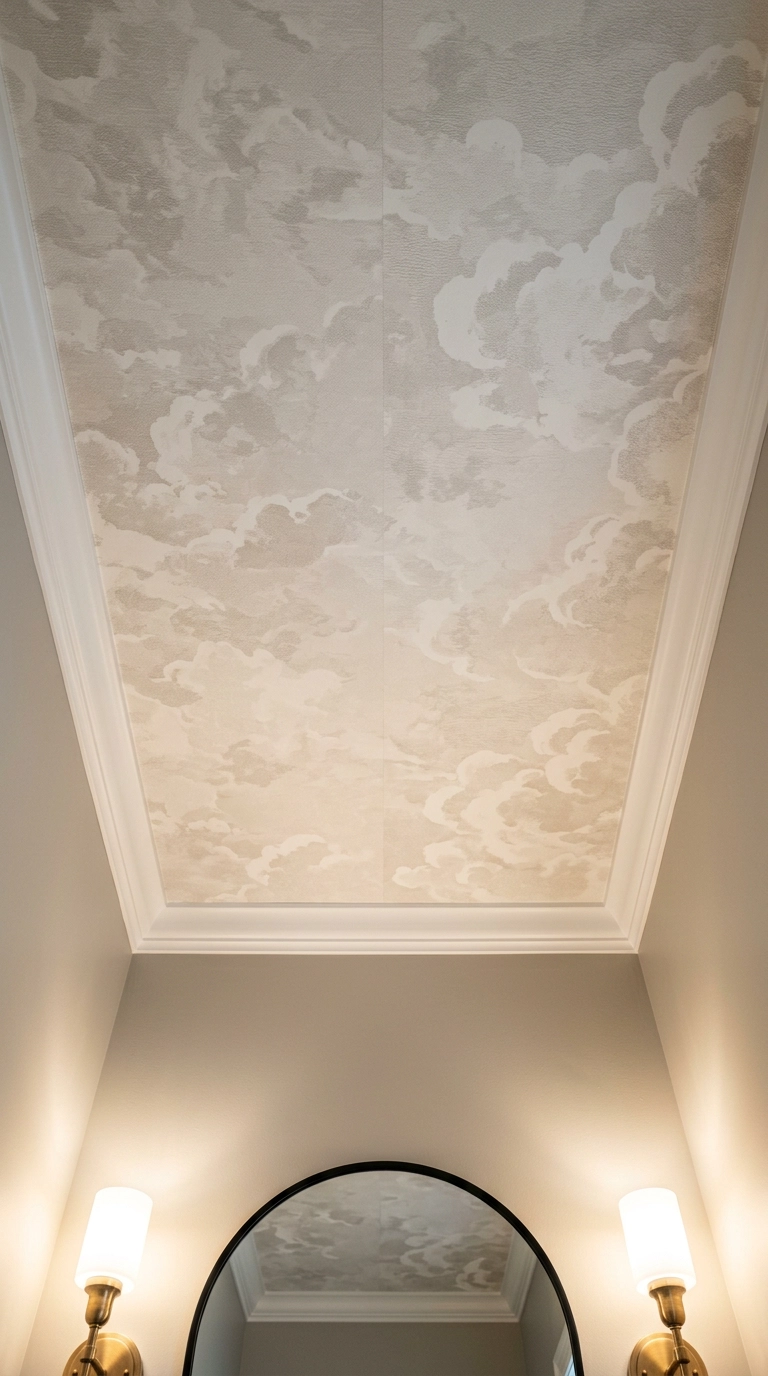
The ceiling is the wall nobody looks at until you give them a reason, and in a small bathroom it’s also the surface furthest from every water source. That makes it the safest place in the room for a delicate paper.
8. Use a Horizontal Stripe to Fix a Ceiling That’s Too Low
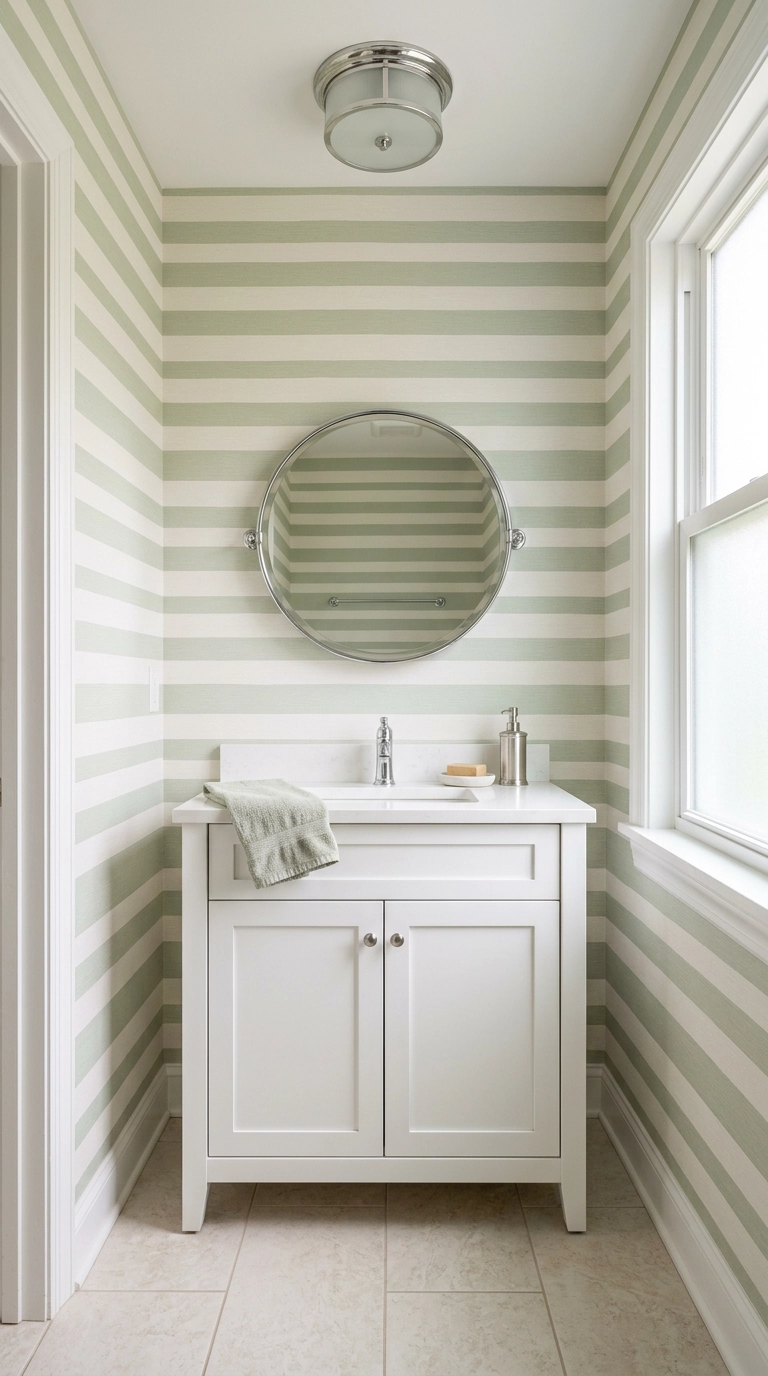
Horizontal stripes are the rare pattern that does structural work, because they visually widen a room and pull the eye across it rather than up. In a bathroom where the ceiling presses down, that’s exactly what you want.
9. Hang a Mural Behind a Freestanding Tub
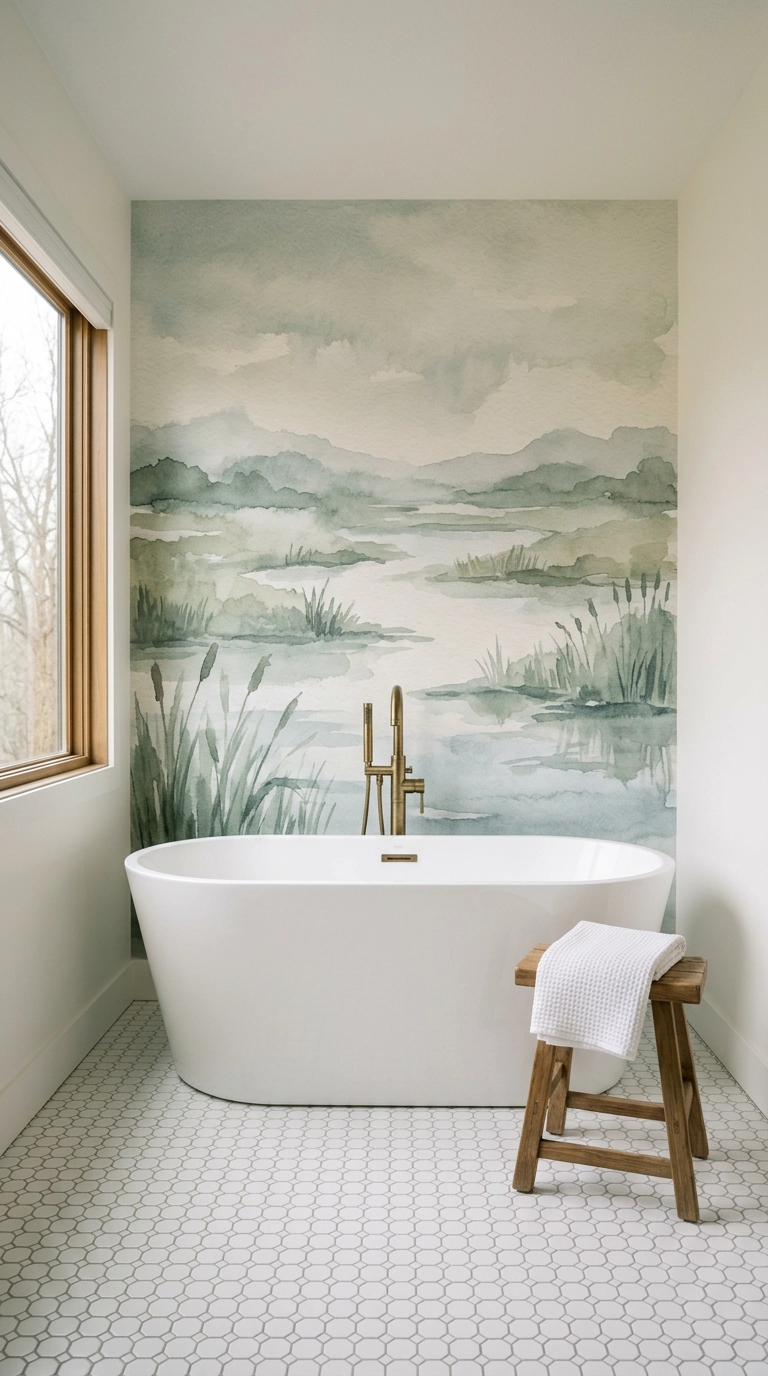
A mural is the fastest way to give a primary bath a view it doesn’t have, and the wall behind the tub is the one wall everyone will actually look at while they soak. It’s also the farthest from the splashing end, so the paper sees the least water.
10. Grasscloth, and Exactly Where It’s Allowed to Live
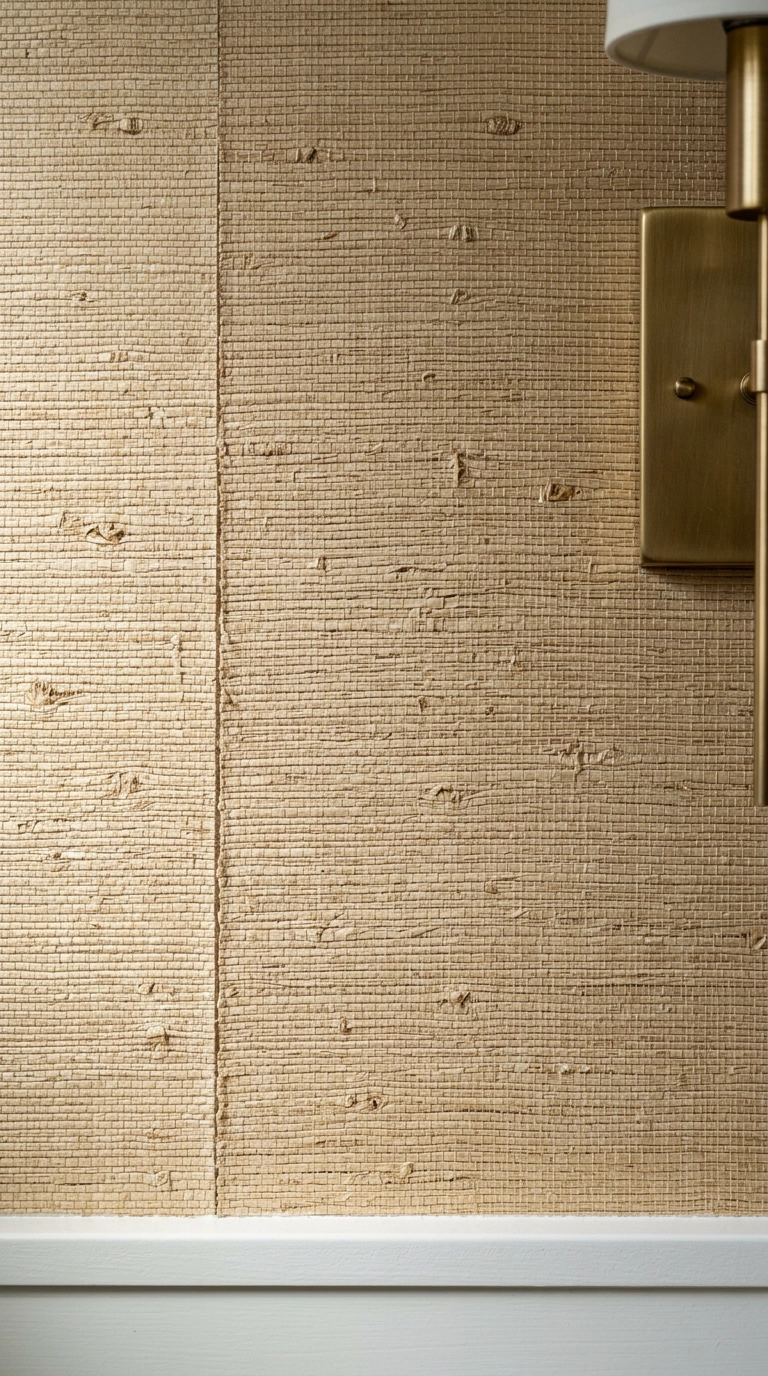
Grasscloth is the most beautiful paper in this article and the one with the strictest parole conditions. The woven fibers are cellulose, they swell when humidity hits, and the seams open like a cheap shirt.
11. Coordinate the Paper to Your Tile, Not Your Towels
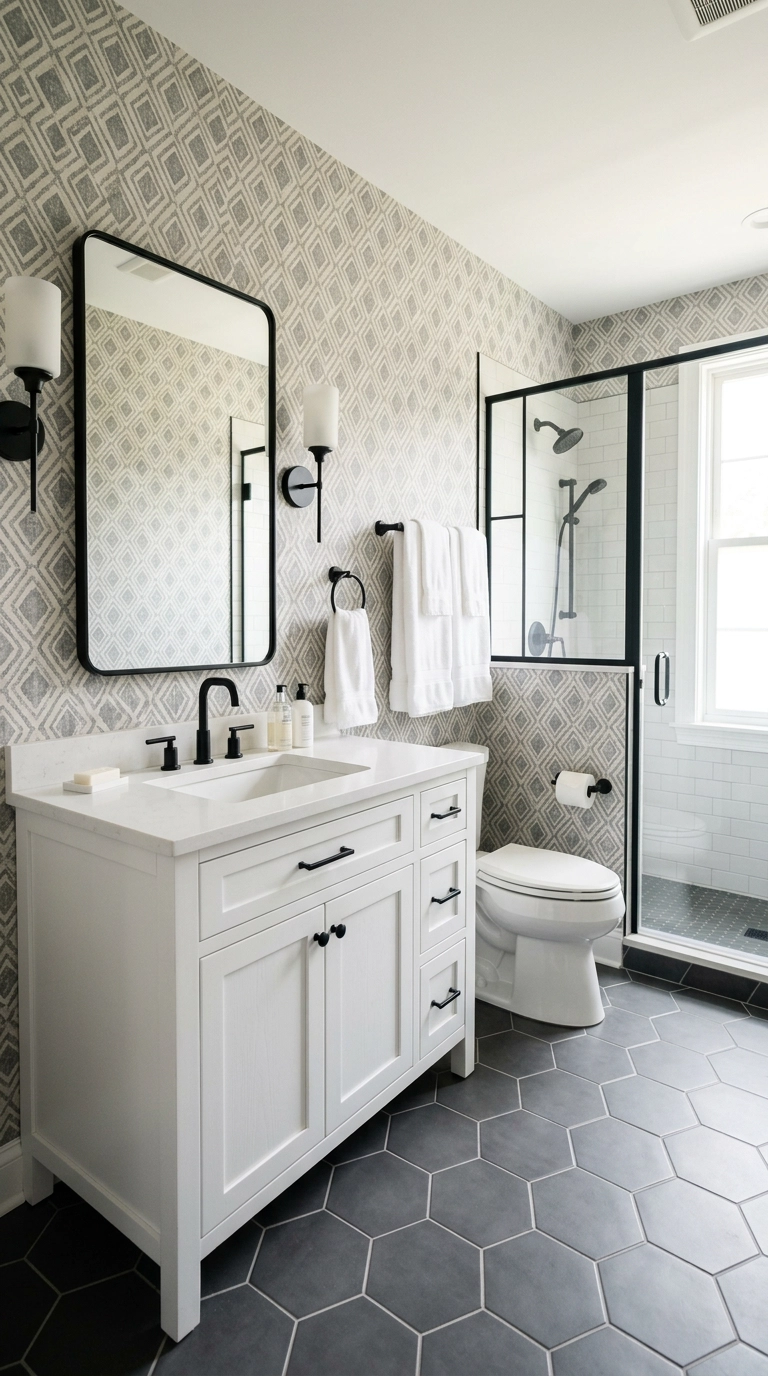
Towels get replaced every two years, tile stays for twenty. Pull one color from your existing tile or grout and let that drive the wallpaper choice, and the room will look coordinated long after your current towel set is a dust rag.
12. Seal Every Edge Near the Wet Zone
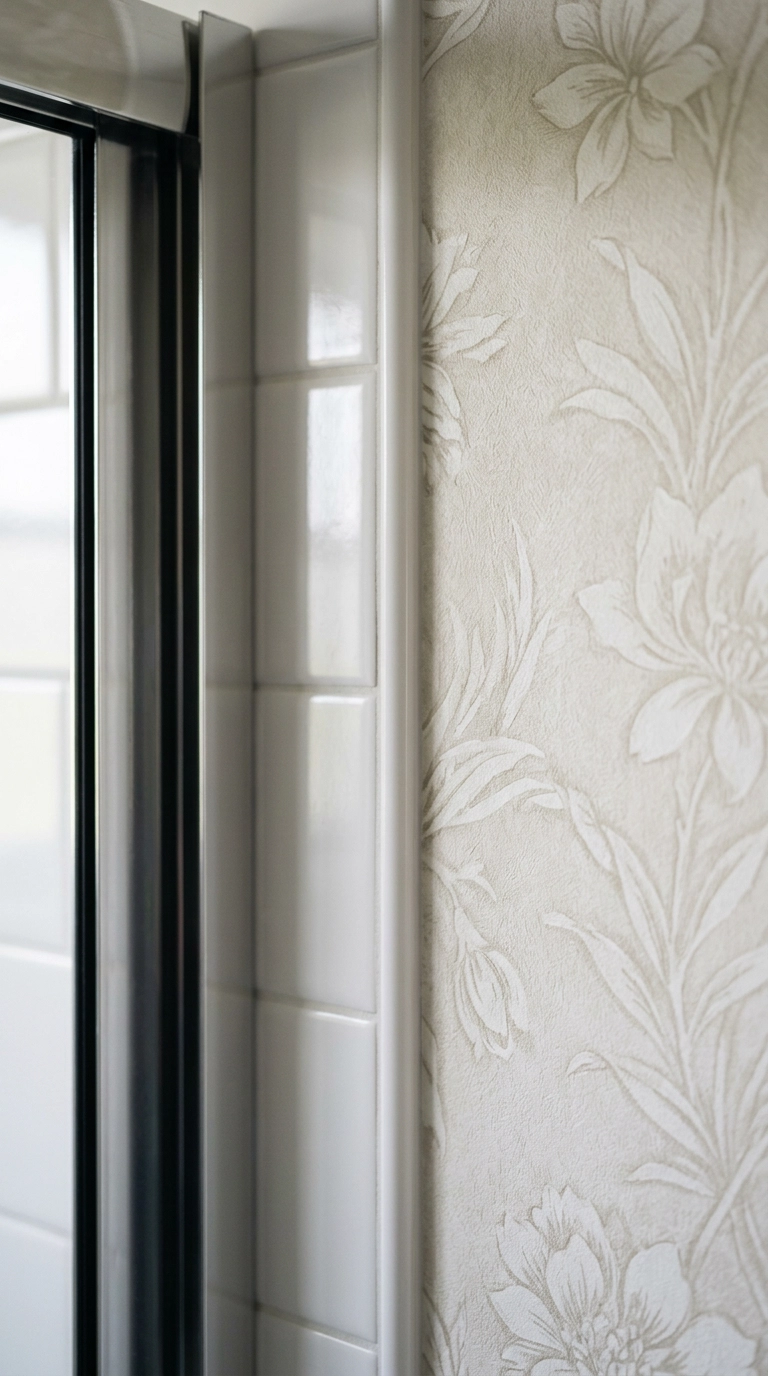
Every failure I’ve seen started at an edge. Water finds the cut line at a tile transition, a window casing, or a switch plate, wicks underneath, and lifts the paper from behind where you can’t see it happening.
13. Go Dark and Moody in a Windowless Bath
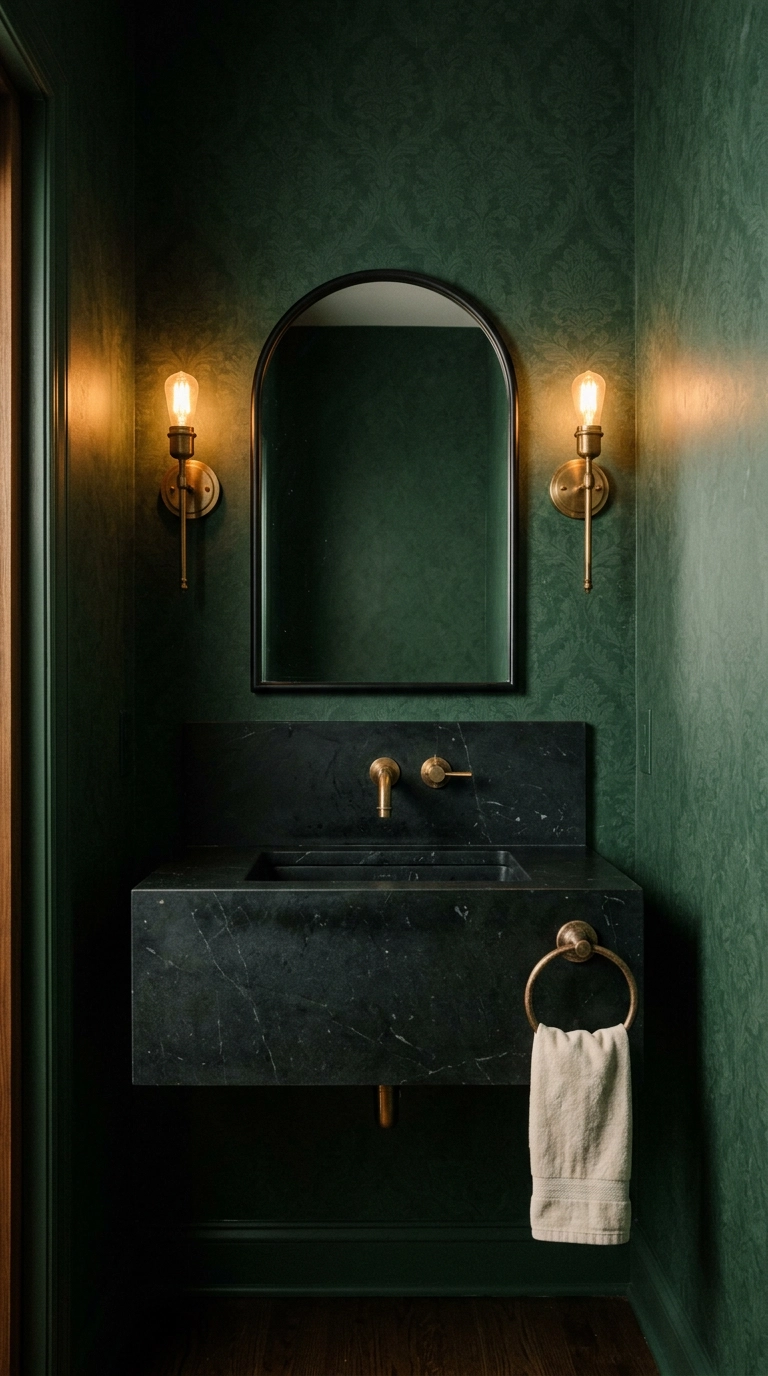
Everyone tries to brighten a windowless bathroom with pale paper, and it always looks like a dim beige box rather than a bright one. Lean the other way. A dark saturated paper in a room with no natural light stops apologizing and becomes intentional.
14. Split the Wall with Paper Below and Paint Above
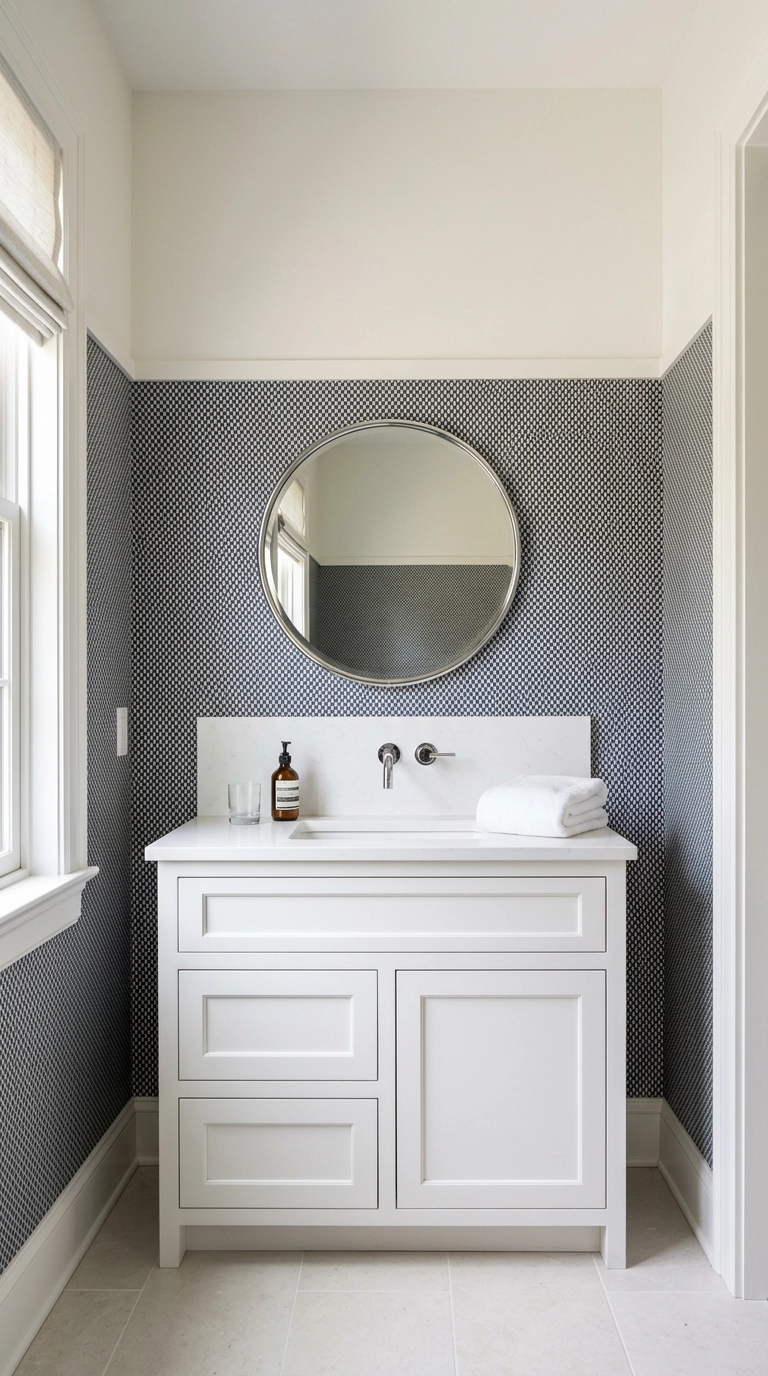
Flipping the wainscot formula gets you the same balance at a fraction of the cost: paper below, paint above. It also puts the pattern down where you see it at standing height, which is where it actually registers.
15. Paper One Wall Only to Fix a Proportion Problem
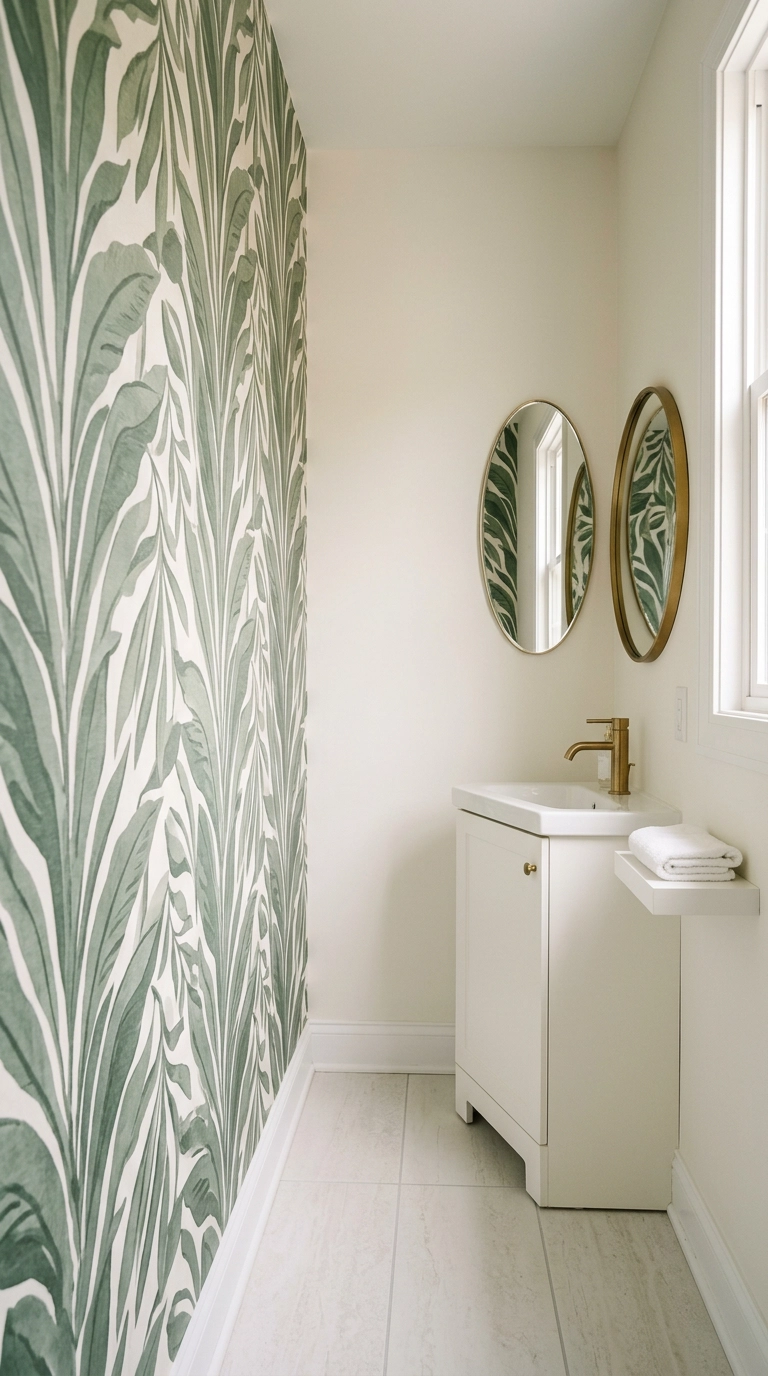
An accent wall in a bathroom is a cure for a specific disease, not a style choice: it fixes a room with an awkward proportion, like a vanity wall that’s oddly long or a room that reads as a corridor. If the room is already fine, papering one wall just makes it look like you ran out of rolls.
16. Try a Modern Striped Border as Trim Instead of Tile
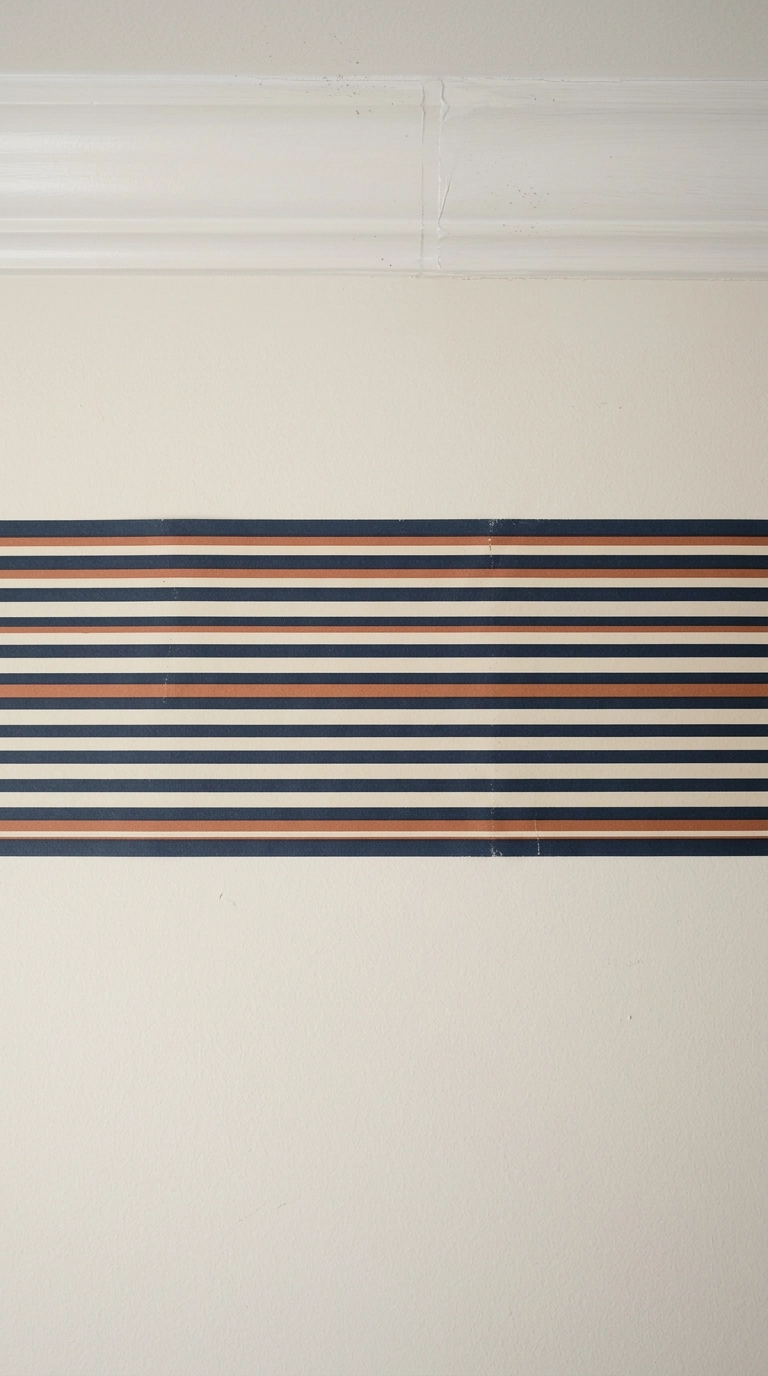
If you’re nervous about committing to wallpaper, a border is the training wheels that still look finished. A wide printed band run below the crown molding reads as architectural trim, like a tiled band that cost ten times as much.
17. Paper Inside a Niche or Alcove for a Small Dose
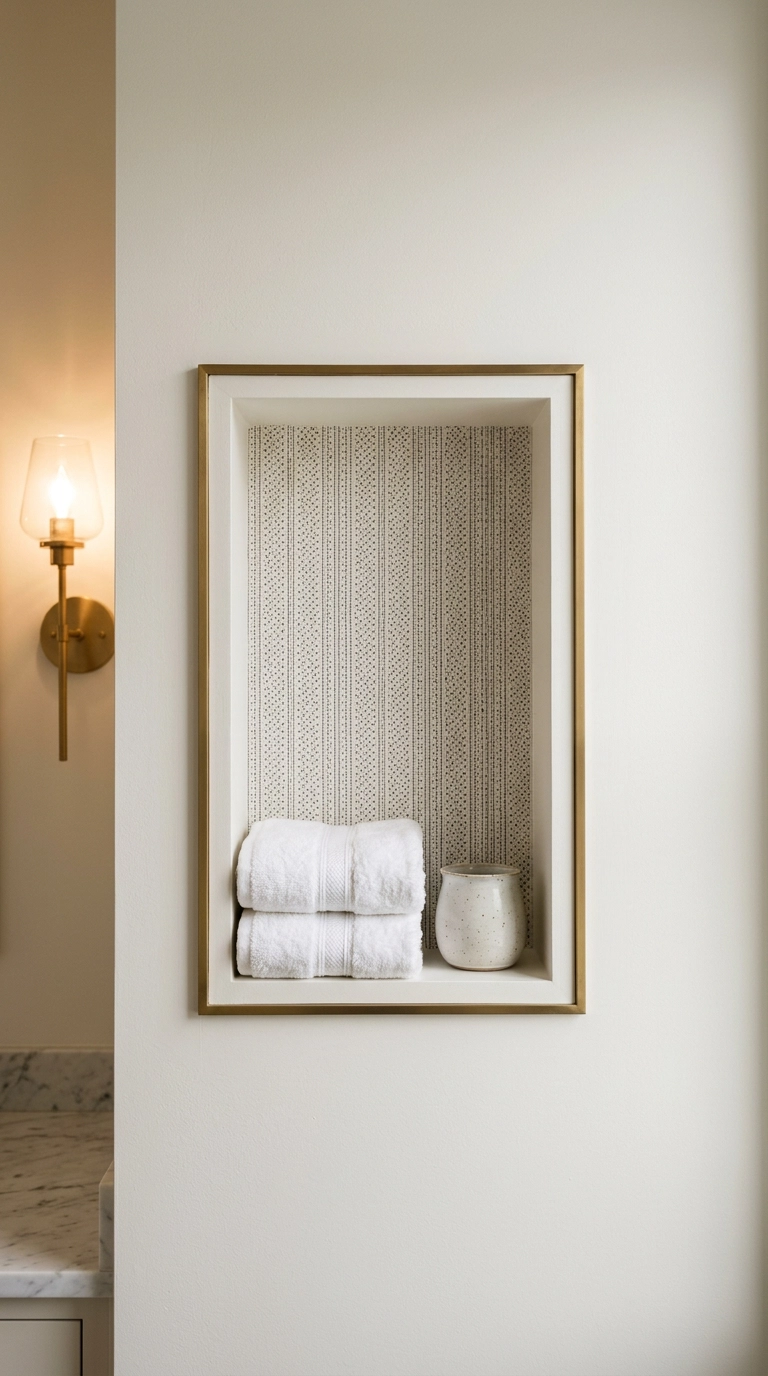
A papered niche is the smallest possible dose of pattern and often the most charming. You need less than a yard of paper, which means you can buy the expensive one you fell in love with and couldn’t justify by the roll.
18. Order a Sample and Live With It for a Week
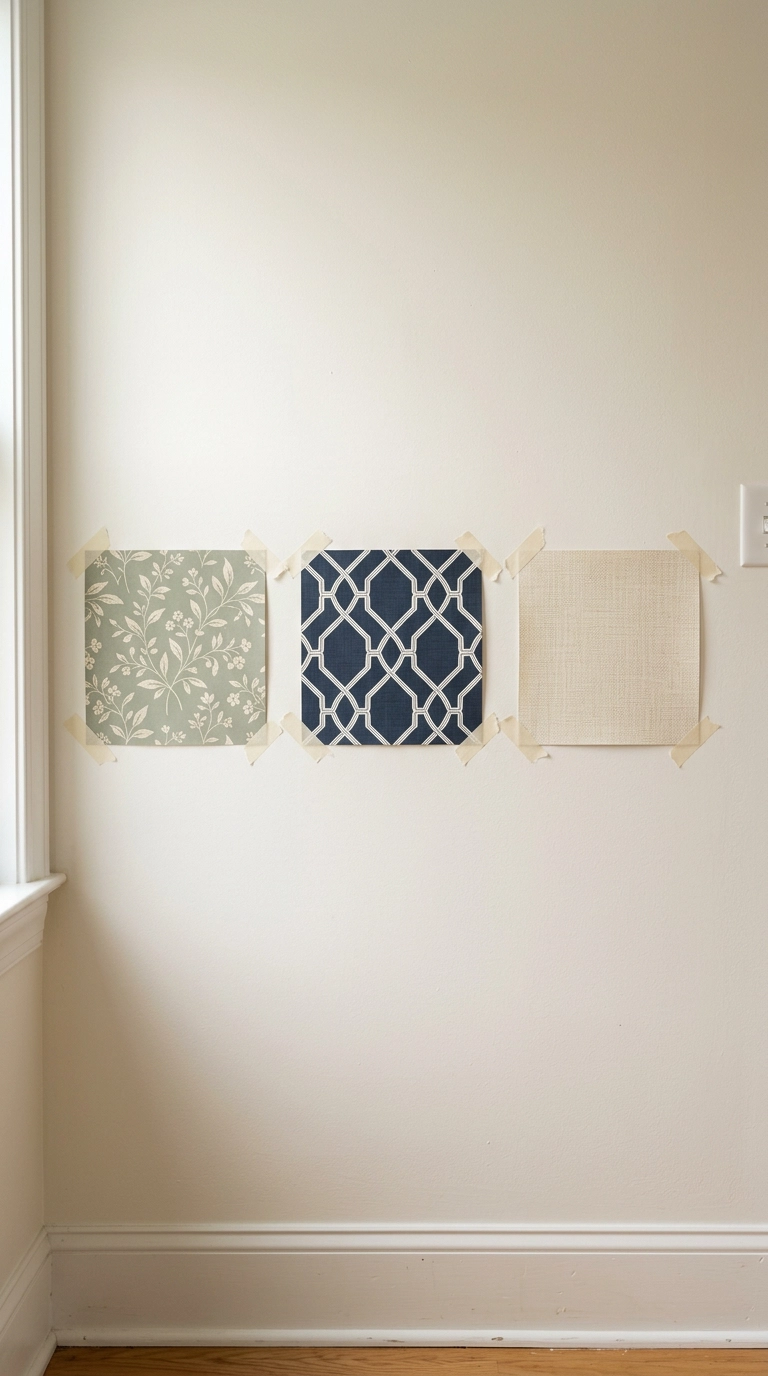
Bathroom lighting is the most unflattering in the house, usually a mix of one overhead fixture and whatever daylight makes it through a frosted window. A paper that looked beautiful on your laptop can go green or grey in that light.
19. Hire the Installer for Anything Patterned
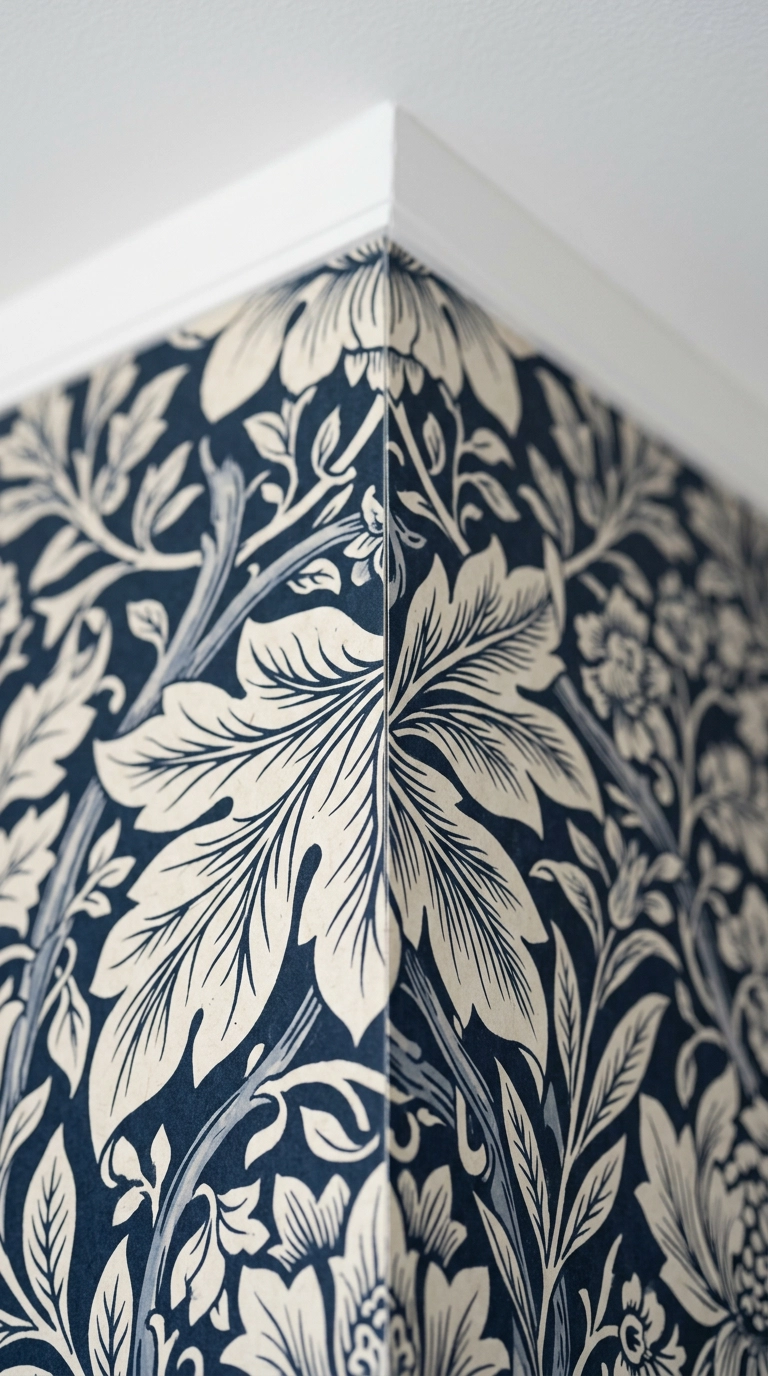
I install my own plain textures and I hire out every patterned paper, and I’ve been doing this for years. Bathrooms are full of obstacles, a toilet flange, a vanity, a window return, and every one is a place a pattern can go visibly crooked.
20. Match the Paper to the Mood, Not the Latest Post
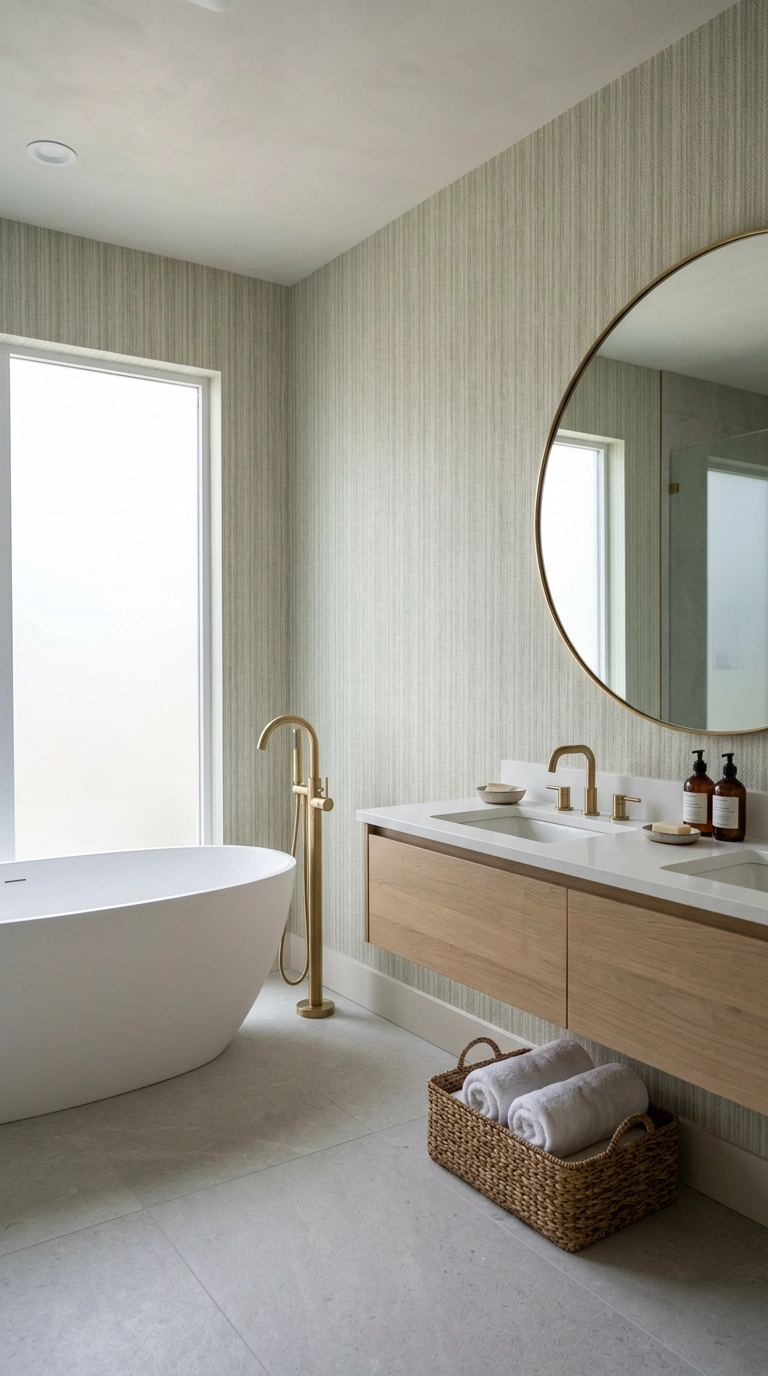
The trend cycle in wallpaper is brutal, and bathrooms get repapered on a faster cycle than any other room because the pattern is visible in every selfie and every house tour. Ignore what’s current and choose the pattern you still like after seeing it fifty times.
21. Vinyl Wallpaper in the Actual Shower Enclosure
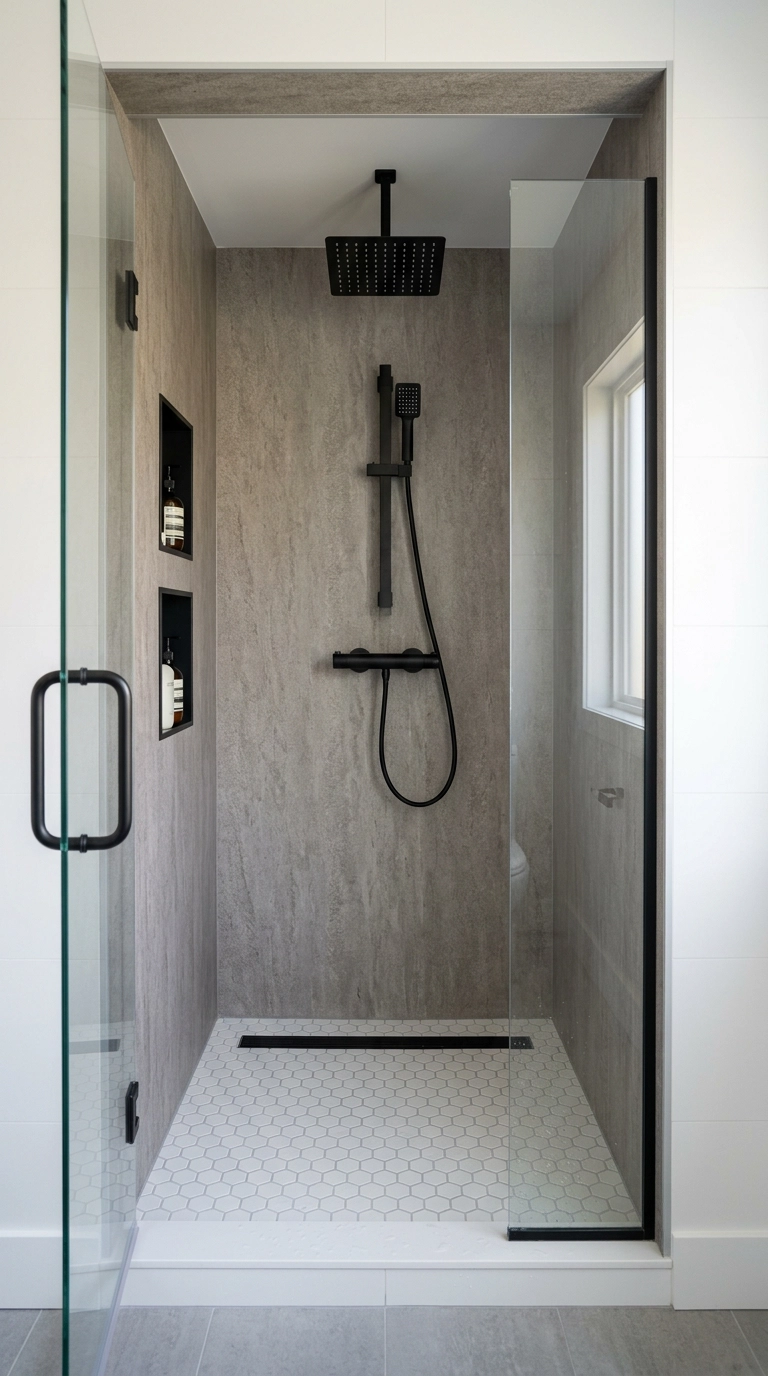
This is the one move that surprises people, and it’s legitimate: commercial-grade vinyl wallpaper inside a shower alcove, installed behind the waterproofing like any other substrate. Hotels have done it for years because it’s cheaper than tile and fully watertight when done right.
22. Use Wallpaper as a Room Divider in a Shared Bath
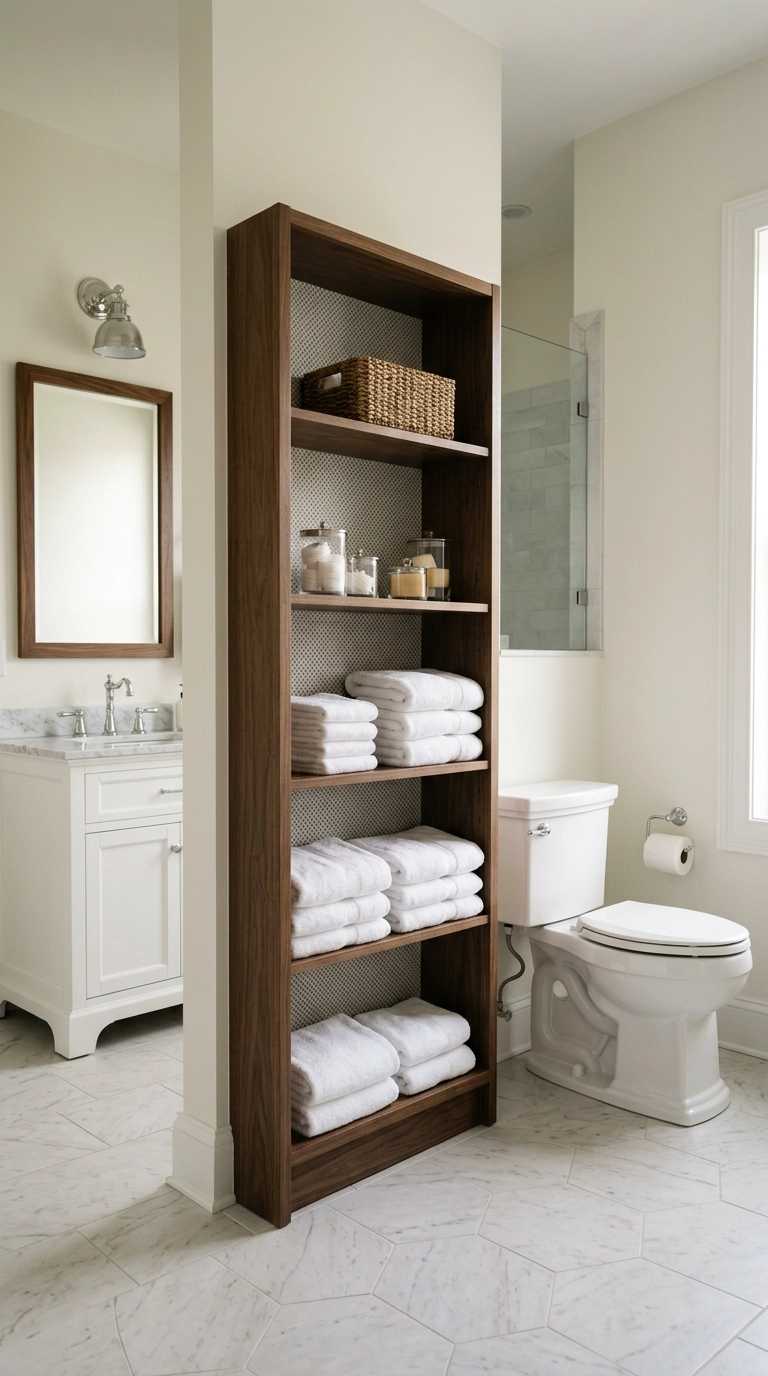
In a big family bathroom where the toilet has no door, the papered back of a room divider does what walls can’t: it signals a change of zone without building anything. The pattern reads as a boundary.
23. Accept That Bathroom Wallpaper Is a Ten-Year Finish, Not Forever
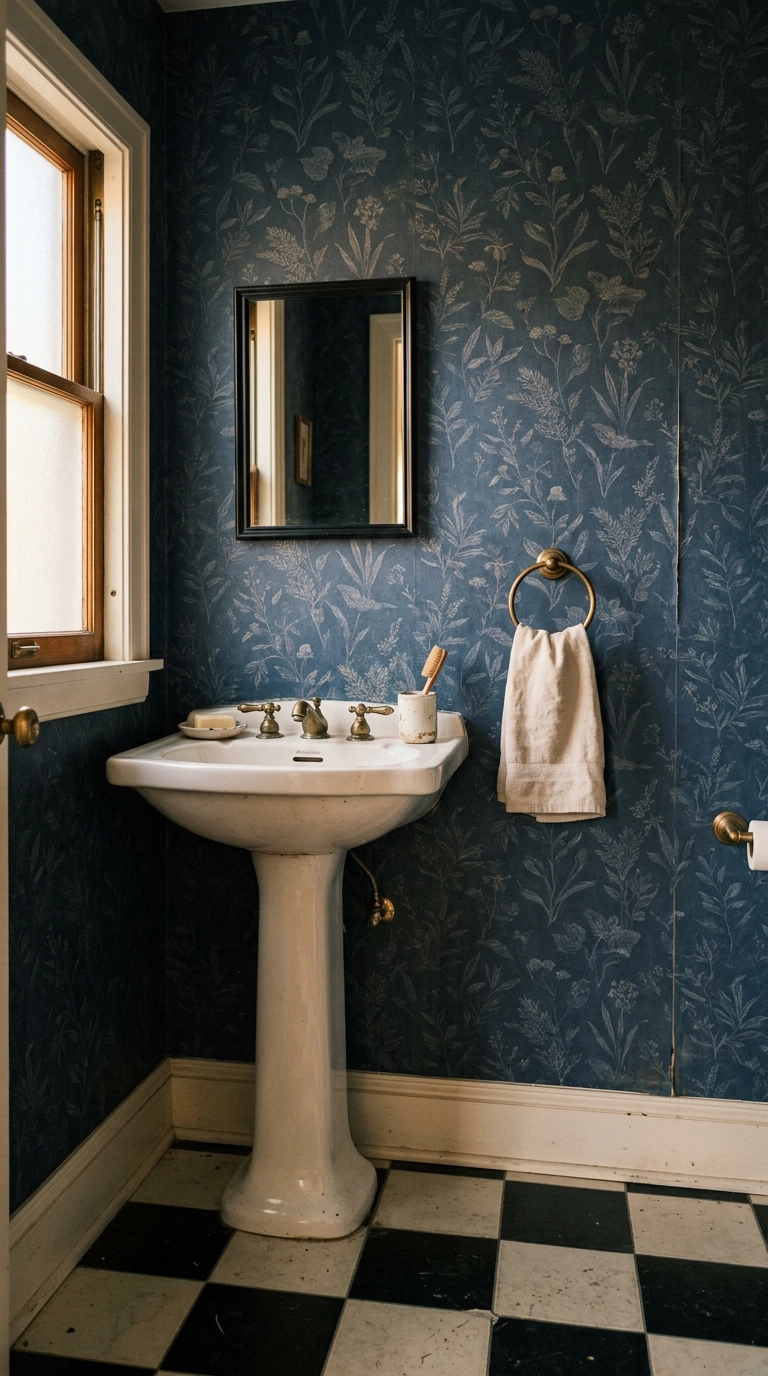
Here’s the honest closing note. Even with non-woven paper, a working fan, and sealed edges, bathroom wallpaper is a finish with a lifespan, and that lifespan is roughly a decade in a bath with a shower, longer in a powder room.
Where I’d Actually Start
Start with the fan, not the paper. Run yours with a tissue held to the grille and see whether it holds, and if it doesn’t, replace it and add a timer switch before you spend a dollar on wallpaper. Everything else in this article assumes that one thing is working.
Then order three samples and tape them up for a week. Bathroom light is unforgiving and it will change your mind at least once, which is much cheaper to discover with a $5 swatch than with eight rolls. If you’re renting, do the peel-and-stick patch test in the same week.
After that, the decision I’d push you toward is the powder room. It’s the room with no steam, the smallest square footage, and the biggest reaction from guests, which makes it the highest return on both money and nerve in the whole house. Go bolder there than you think you should, spec non-woven or vinyl, caulk the edges, and you’ll have a room that still looks intentional in 2036.


