
25+ Gorgeous Bathroom Curtain Decor Ideas that are Easy and Stunning in 2026

Let me be honest with you – the curtain is the single most overlooked thing in almost every bathroom I walk into. It’s the biggest piece of fabric in the room, it hangs at eye level, and yet nine times out of ten it’s a stiff 72×72 panel dangling three feet below the ceiling like it gave up halfway. I’ve fixed this in my own house twice and in more client bathrooms than I can count, and the good news is that most of these swaps cost less than dinner out. Below I’m covering both kinds of bathroom curtain, because “bathroom curtain” means the shower and the window, and honestly the window is where people get it most wrong.
Bathroom Curtain Decor Ideas
1. Hang an Extra-Long Shower Curtain at Ceiling Height
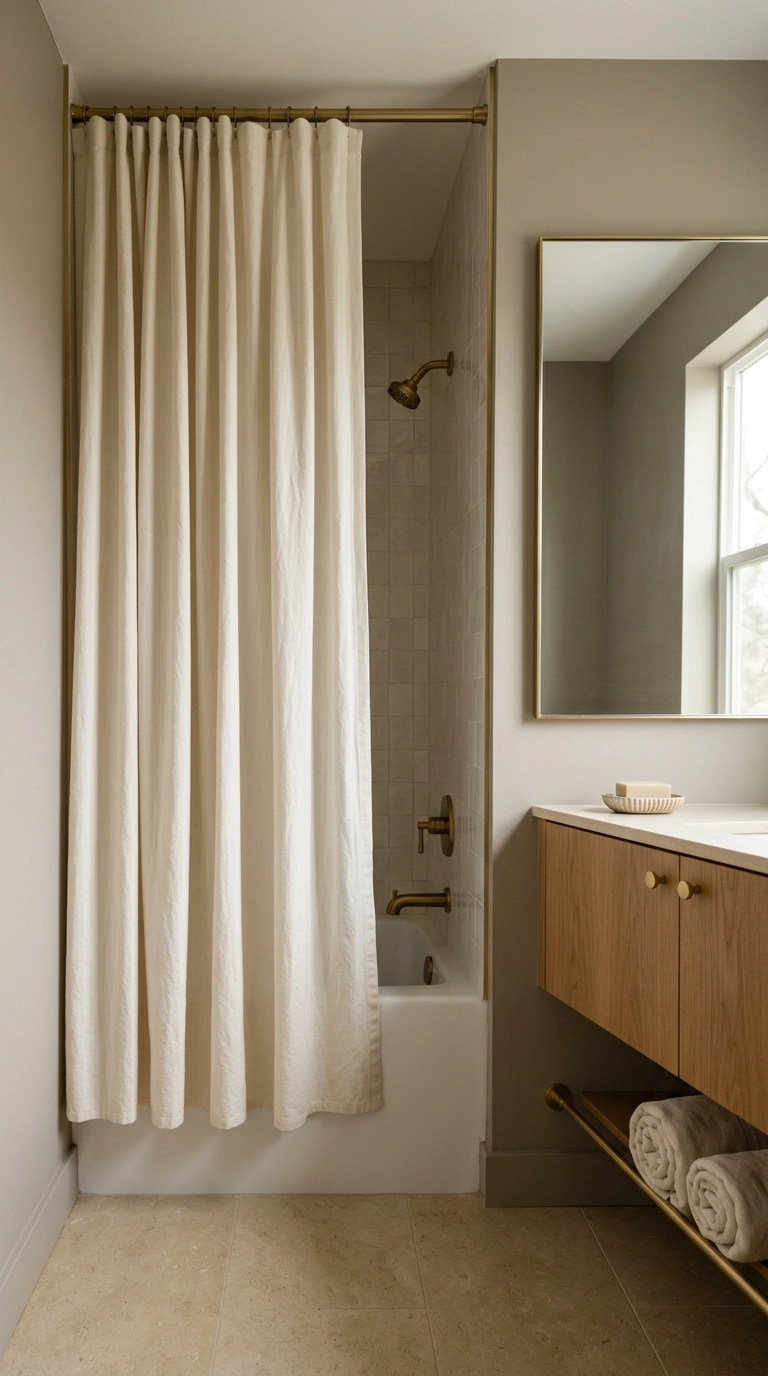
This is the one. A standard shower curtain is 72 inches long, which stops dead at the top of your tub surround and cuts the wall into two stubby halves. Move the rod up to two or three inches below the ceiling and buy an 84-inch or 96-inch panel instead, and the eye reads one tall unbroken line from floor to ceiling.
2. Use Two Narrow Panels Instead of One Wide Curtain
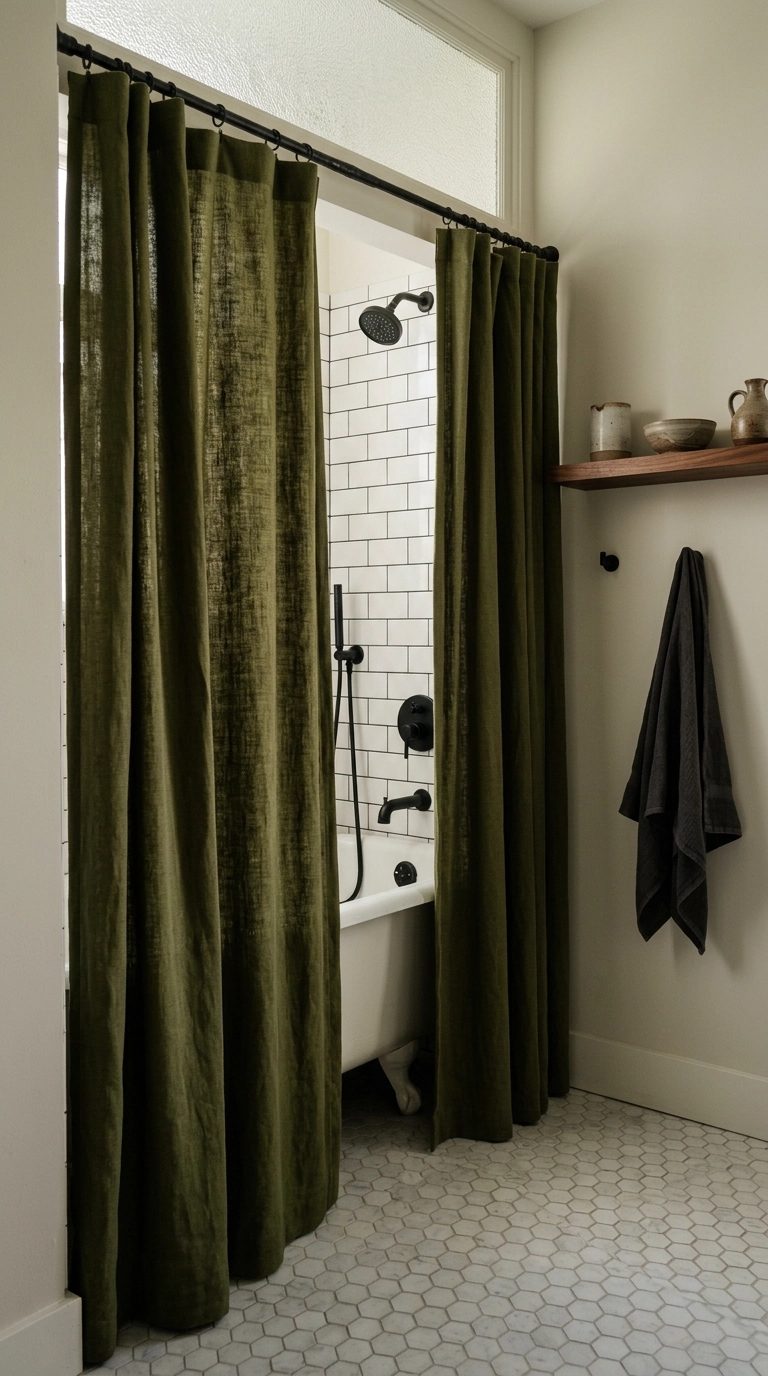
Two panels instead of one is the trick that makes a builder-grade tub read like a proper draped alcove. You get symmetry, you get real folds instead of one flat sheet, and you get to walk in from either side.
3. Swap the Rod for a Ceiling-Mounted Track
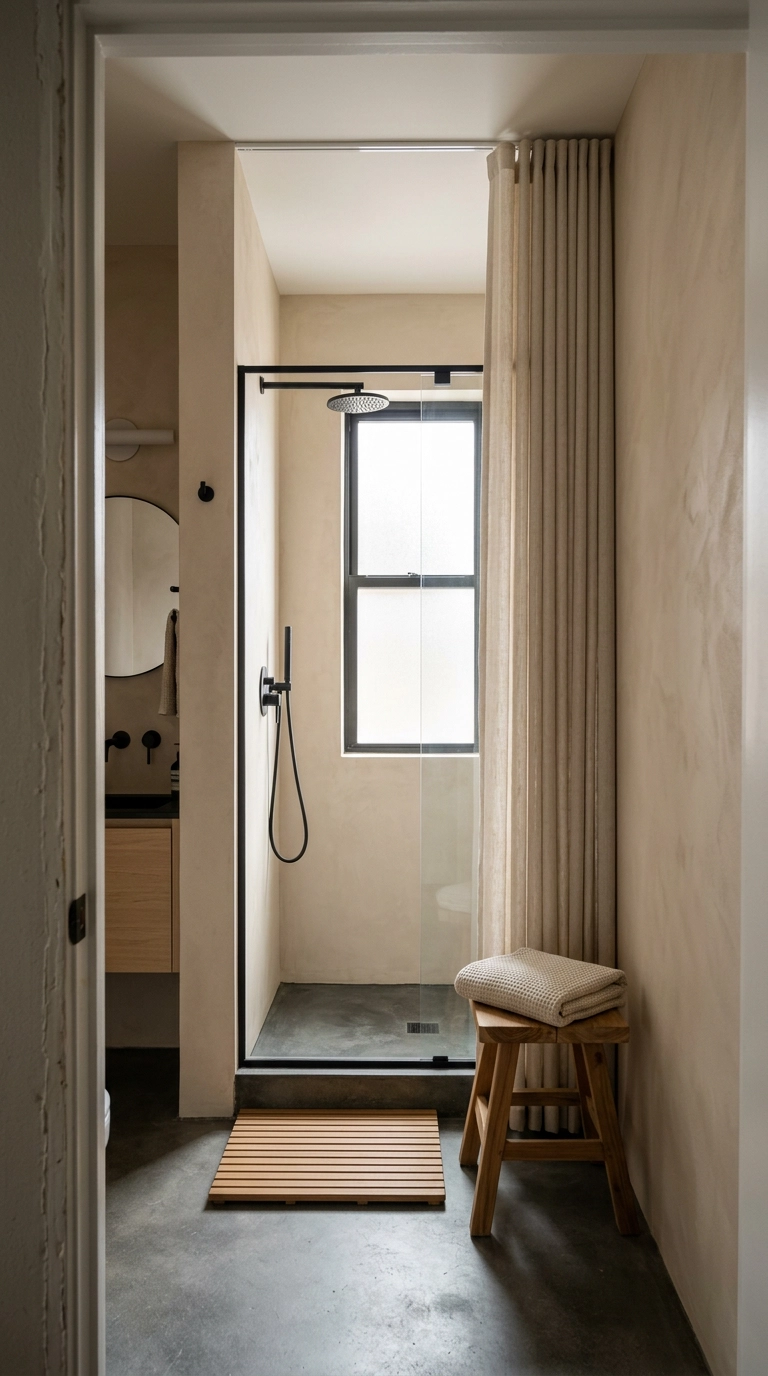
A track screwed straight into the ceiling erases the rod entirely, and without that horizontal bar chopping the wall the room instantly reads taller. This is the move if you have a walk-in shower or an awkward corner tub that no straight rod fits.
4. Go Hookless if You Are Tired of Fighting Rings
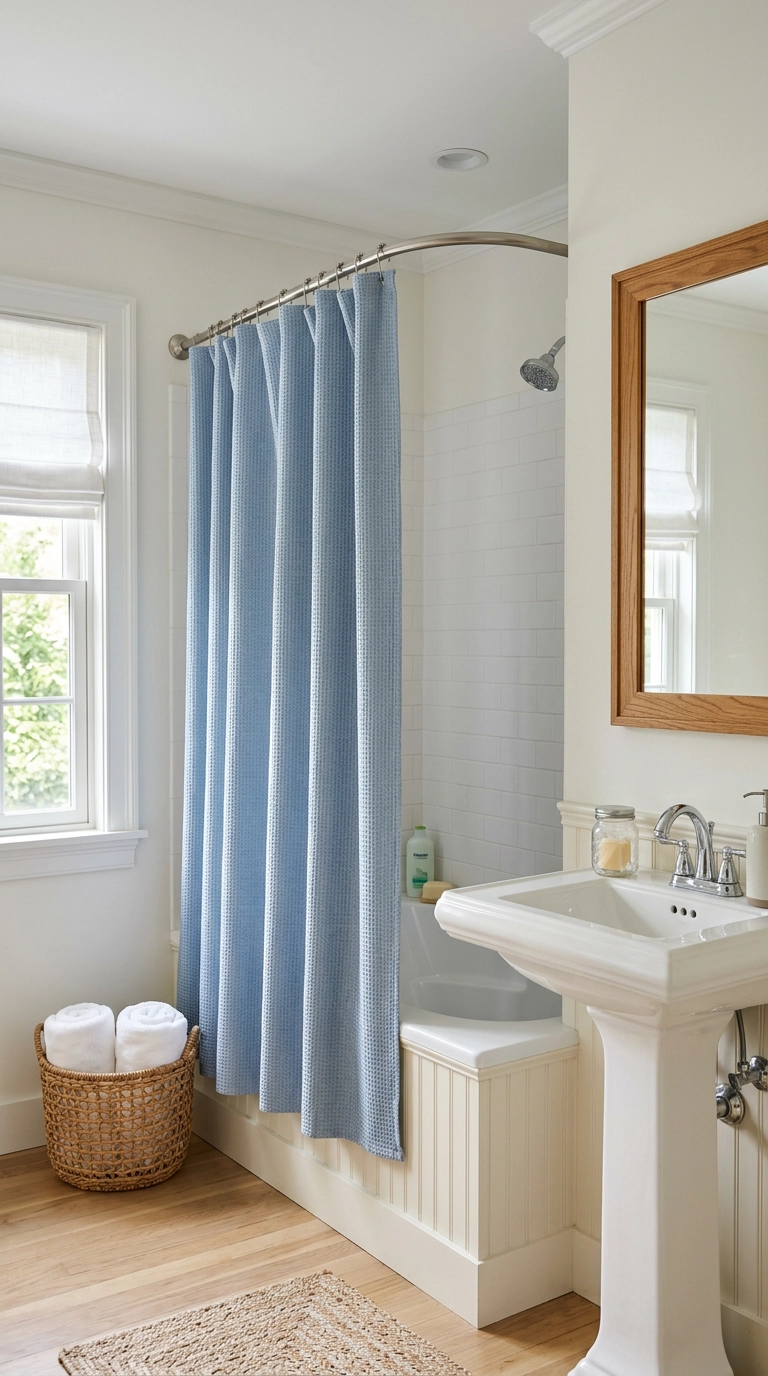
Hookless curtains have the rings sewn right into the header, so they slide on the rod in about eight seconds and there’s nothing to snap off in the wash. In a kids’ bathroom or a rental you’re leaving in a year, this is the sensible pick.
5. Trade Rings for Solid Metal S-Hooks or Decorative Rings
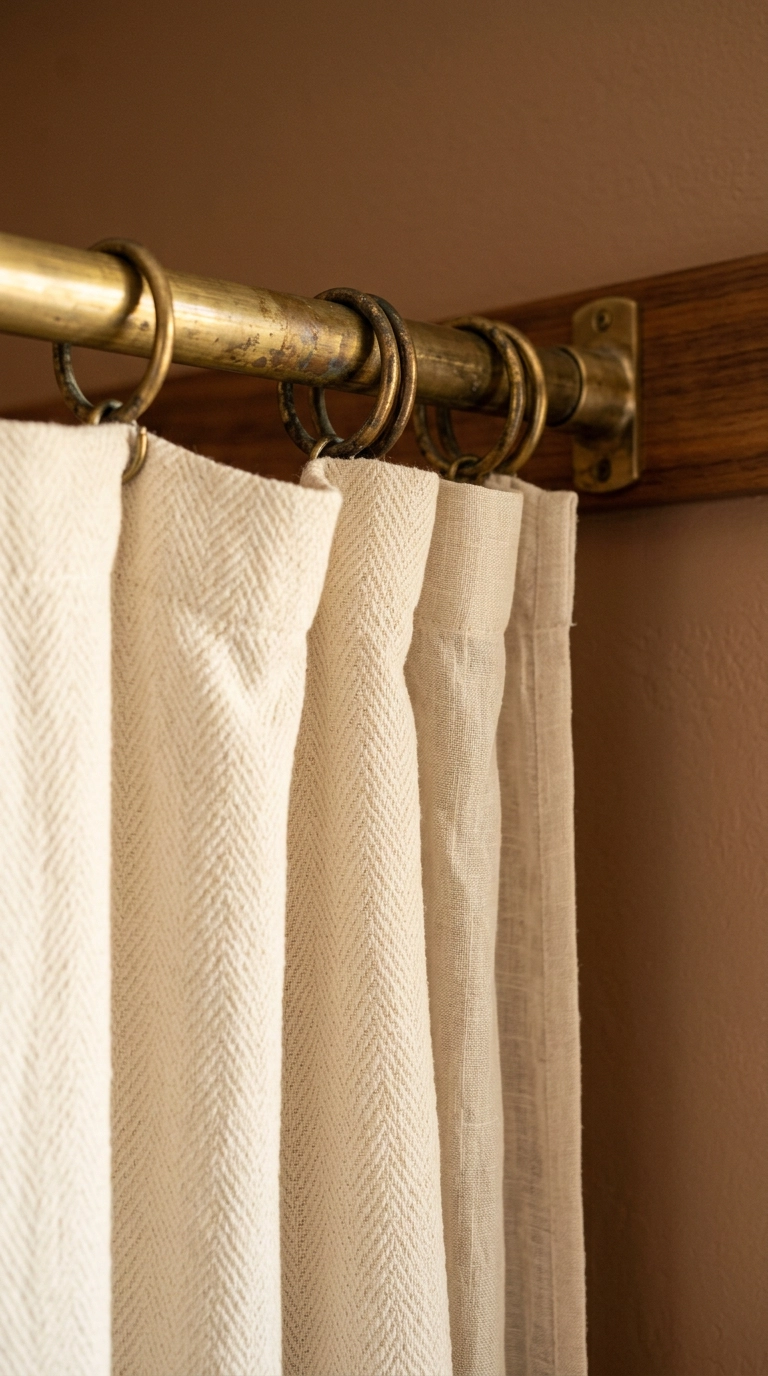
Those thin plastic rings that came in the bag are doing your bathroom no favors. Solid brass, matte black, or brushed nickel rings cost about fifteen dollars for a set of twelve and they carry real visual weight, meaning they look substantial enough to belong with the fabric they’re holding.
6. Pick a Heavy Fabric Curtain and Let the Liner Do the Wet Work
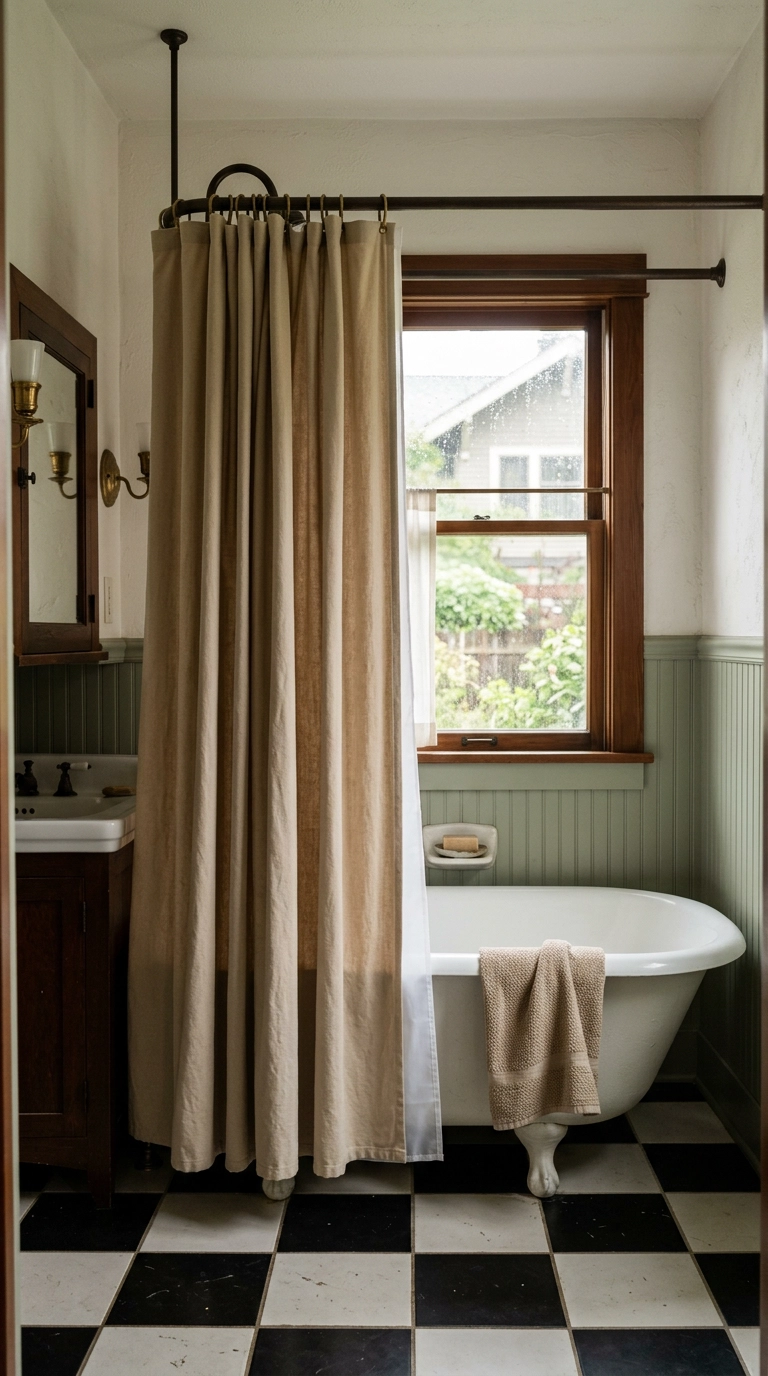
Here’s the rule that changes everything: the decorative curtain never needs to be waterproof. The liner takes the water, so the outer panel can be heavy cotton, canvas, or a linen-look blend that actually drapes.
7. Choose the Right Liner Material and Throw Out the Vinyl
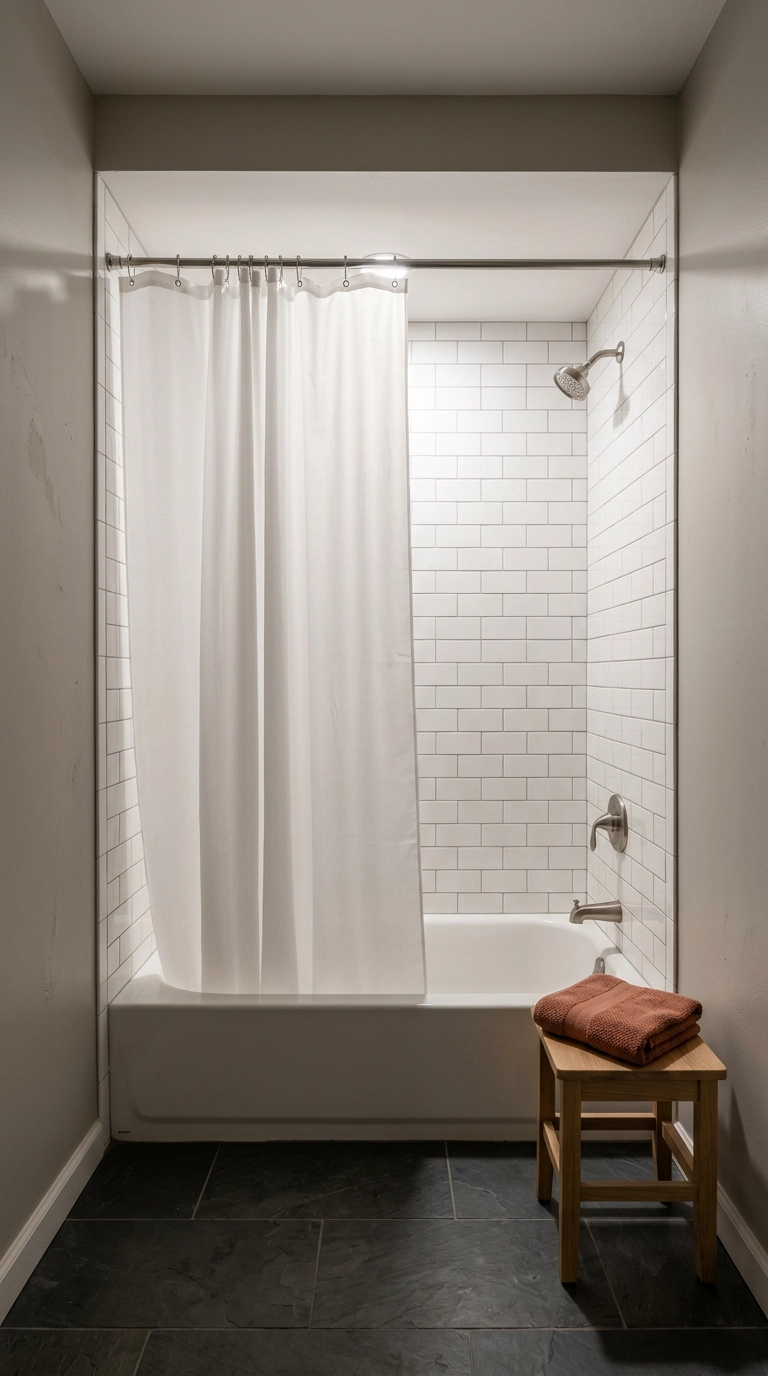
PEVA and polyester fabric liners are the two to know. Polyester fabric liners are the ones I use – they’re machine washable, they don’t smell like a new beach ball, and they hang softly against the tub instead of billowing.
8. Know Which Fabrics Mildew and Which Ones Shrug It Off
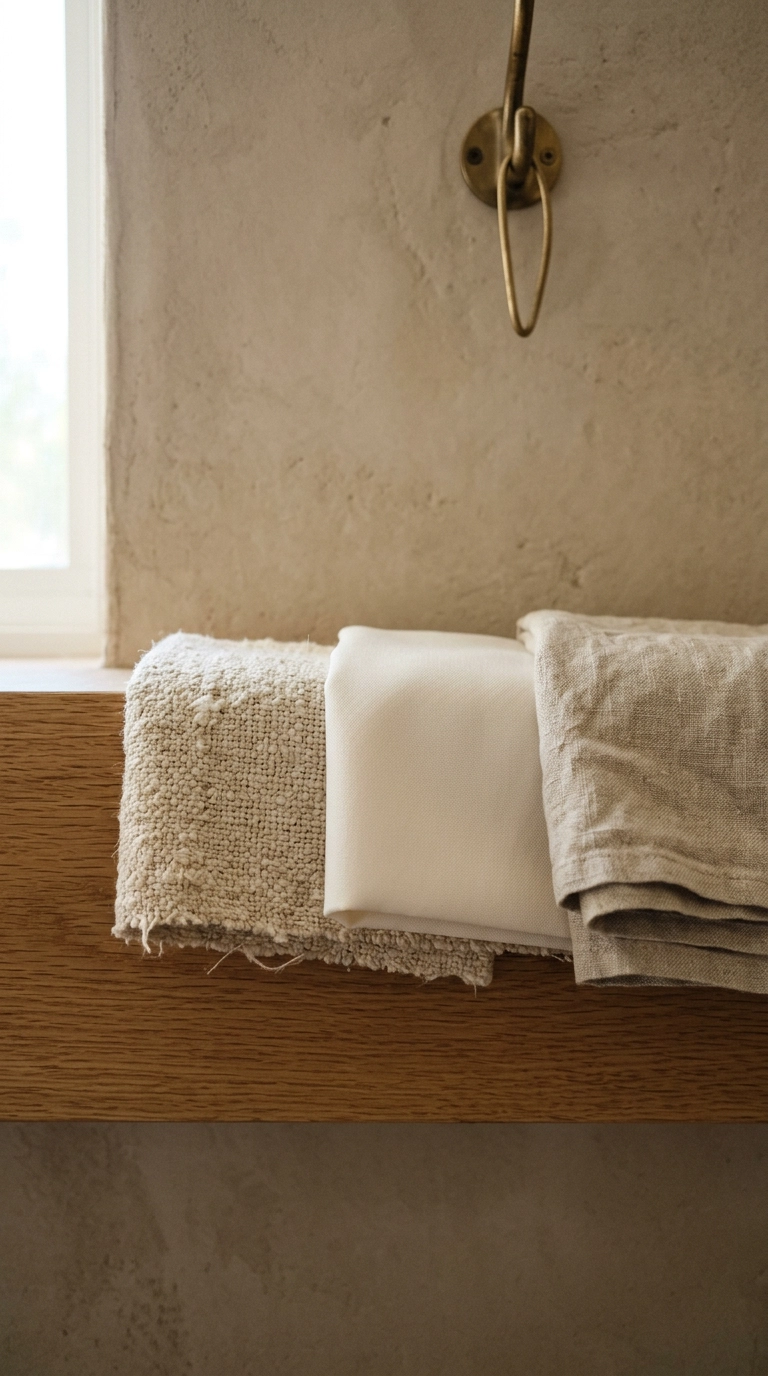
Untreated cotton and real linen are the mildew champions – they hold moisture in the fiber and spot within a season if they touch water regularly. Hemp and polyester are the opposite: hemp is naturally mildew resistant, and polyester simply doesn’t give mold anything organic to eat.
9. Use a Tension Rod the Renter-Safe Way
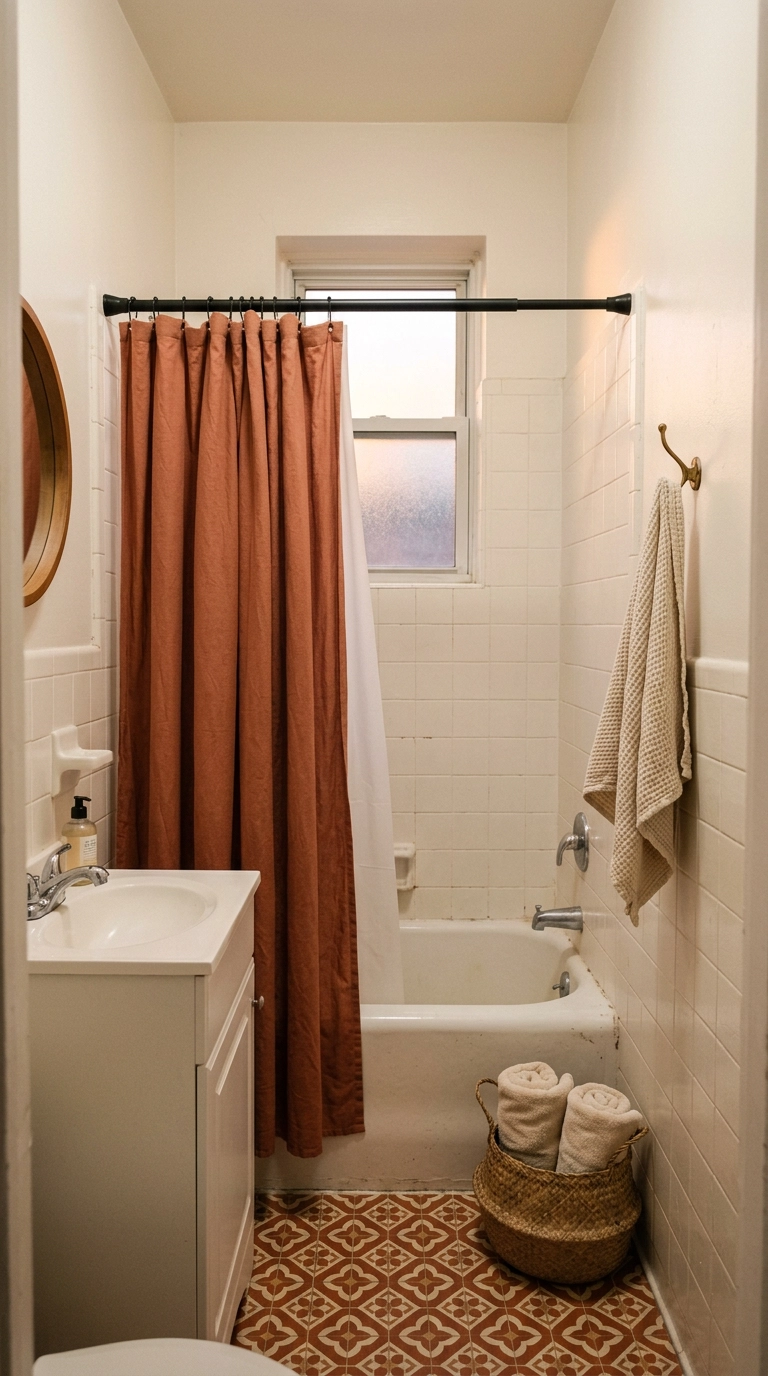
A tension rod holds fine as long as you buy the right diameter and don’t ask it to carry a heavy velvet panel. Get one rated a size up from your span, wipe both tile walls with rubbing alcohol first so the rubber feet actually grip, and set it about an inch higher than you want it before tightening.
10. Install a Curved Rod for Six More Inches of Elbow Room
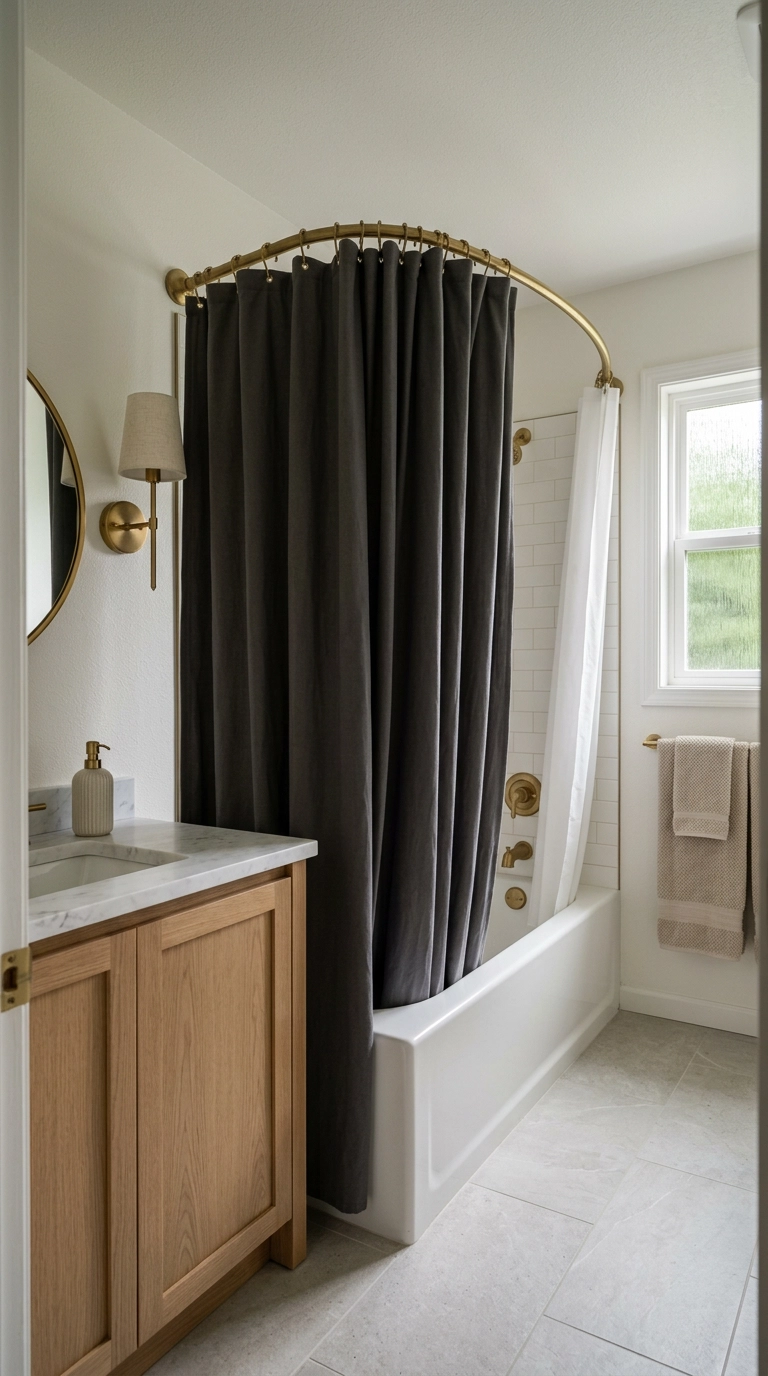
A curved rod pushes the curtain out five or six inches at the middle, which is the difference between a shower that feels like a phone booth and one that doesn’t. In a tiny bathroom it also creates a gentle arc that softens all the hard right angles.
11. Add a Faux Roman Valance Above the Shower Curtain
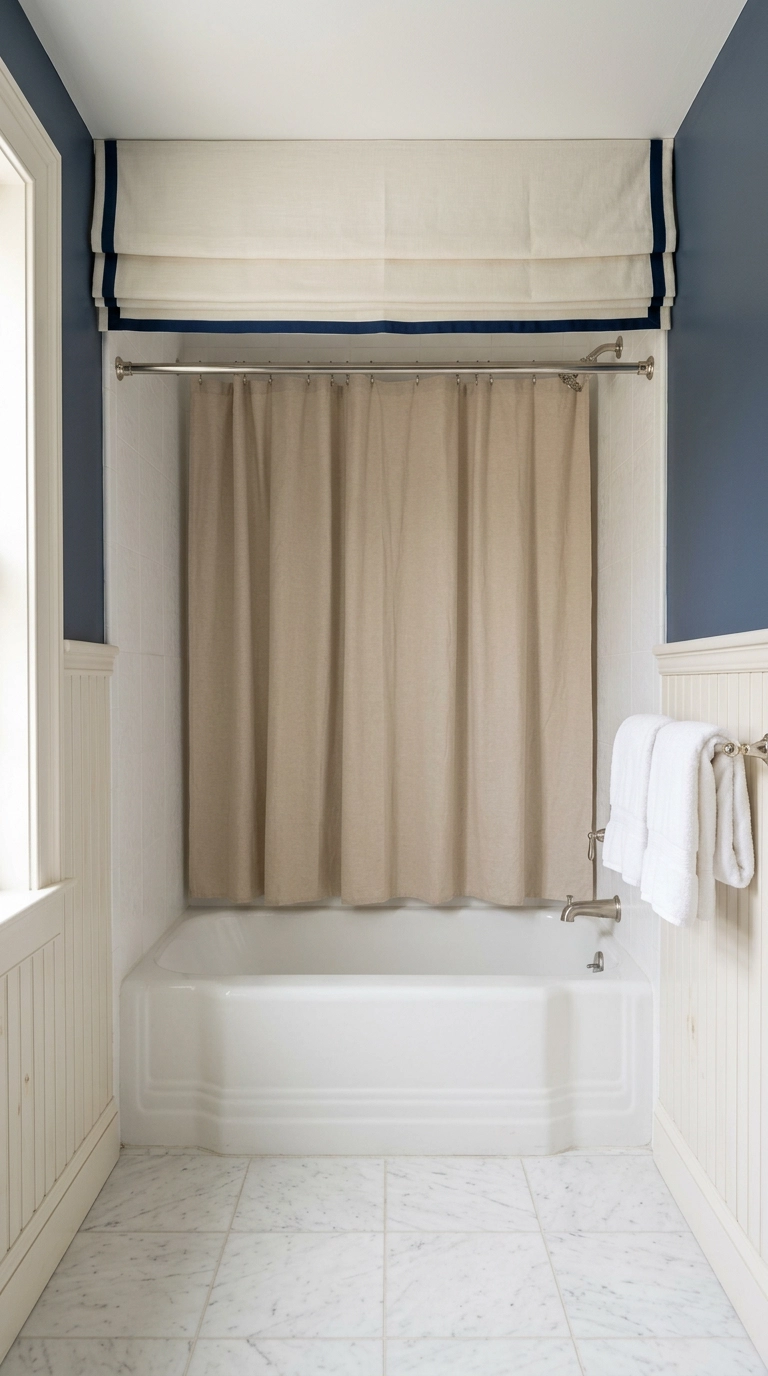
A short valance mounted at ceiling height hides the rod and stretches the wall upward without you having to buy an extra-long curtain. It’s the layered treatment you see in every good hotel bathroom and almost no residential ones.
12. Sew Grosgrain Ribbon Trim Onto a Plain White Curtain
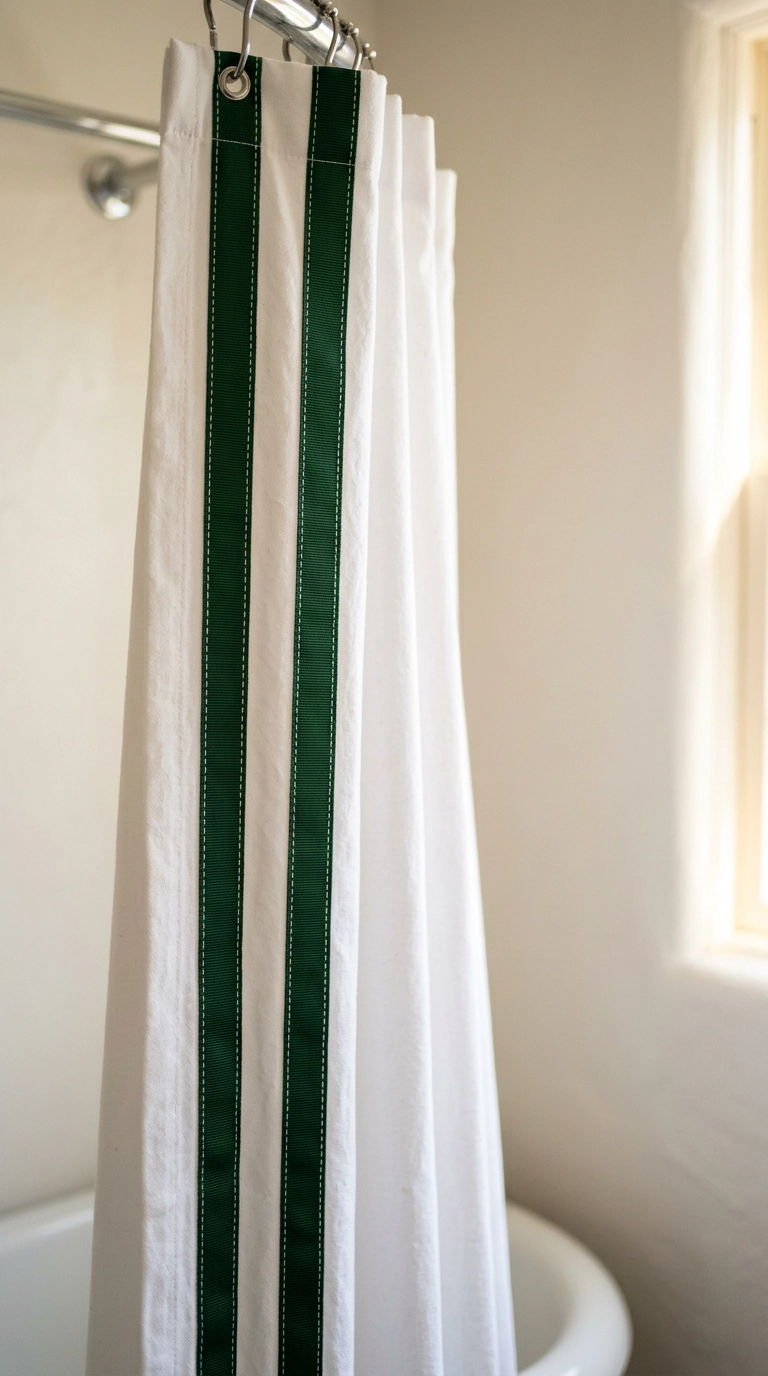
Take the cheapest heavy white cotton curtain you can find and run two parallel bands of grosgrain ribbon down the leading edge, about four and six inches in from the hem. It’s the oldest custom-drapery trick there is and it turns a twenty-dollar panel into something that looks made to order.
13. Hang a Café Curtain on the Bottom Half of the Window
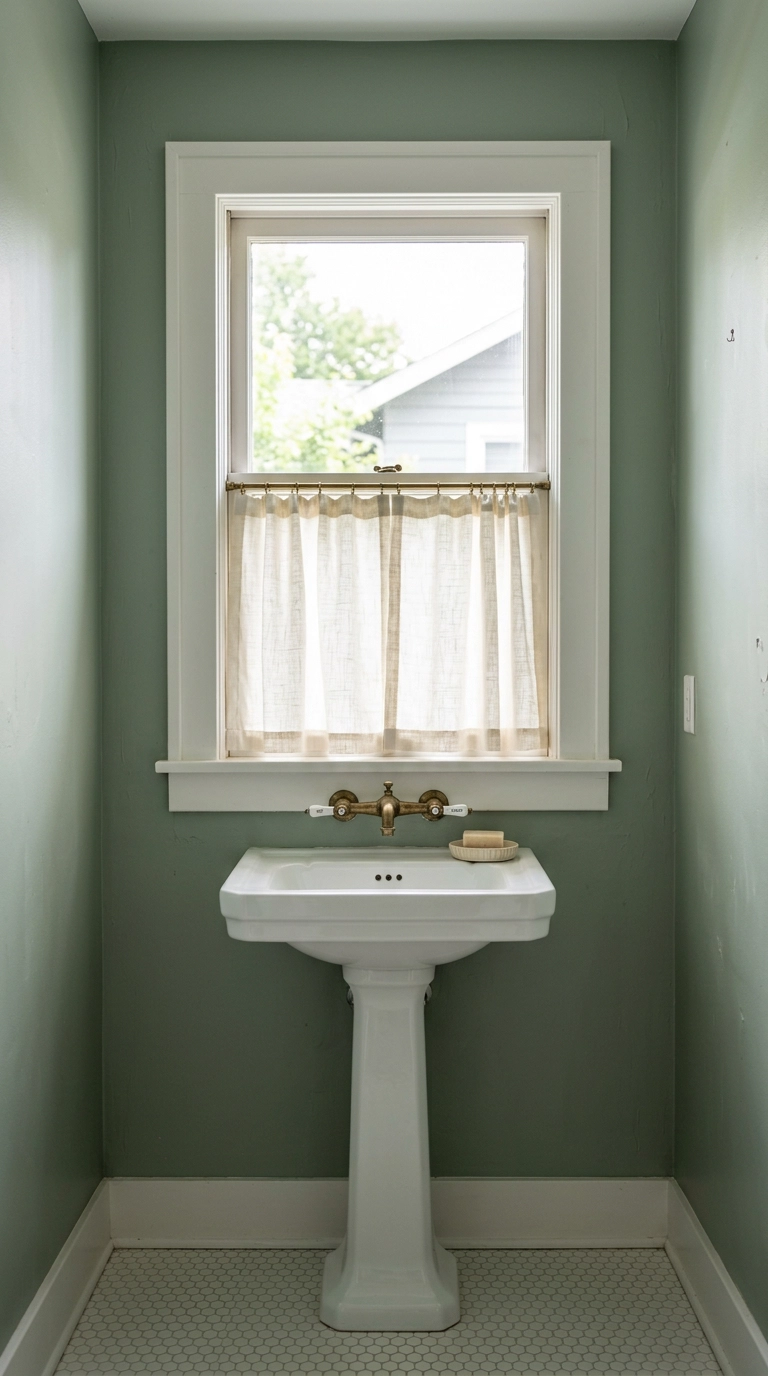
A café curtain covers you from the waist down and leaves the top sash wide open, which is exactly the trade you want in a bathroom. You get privacy where it matters and you keep the daylight, which no frosted blind or blackout panel will ever give you.
14. Layer a Sheer Panel for Privacy That Still Glows
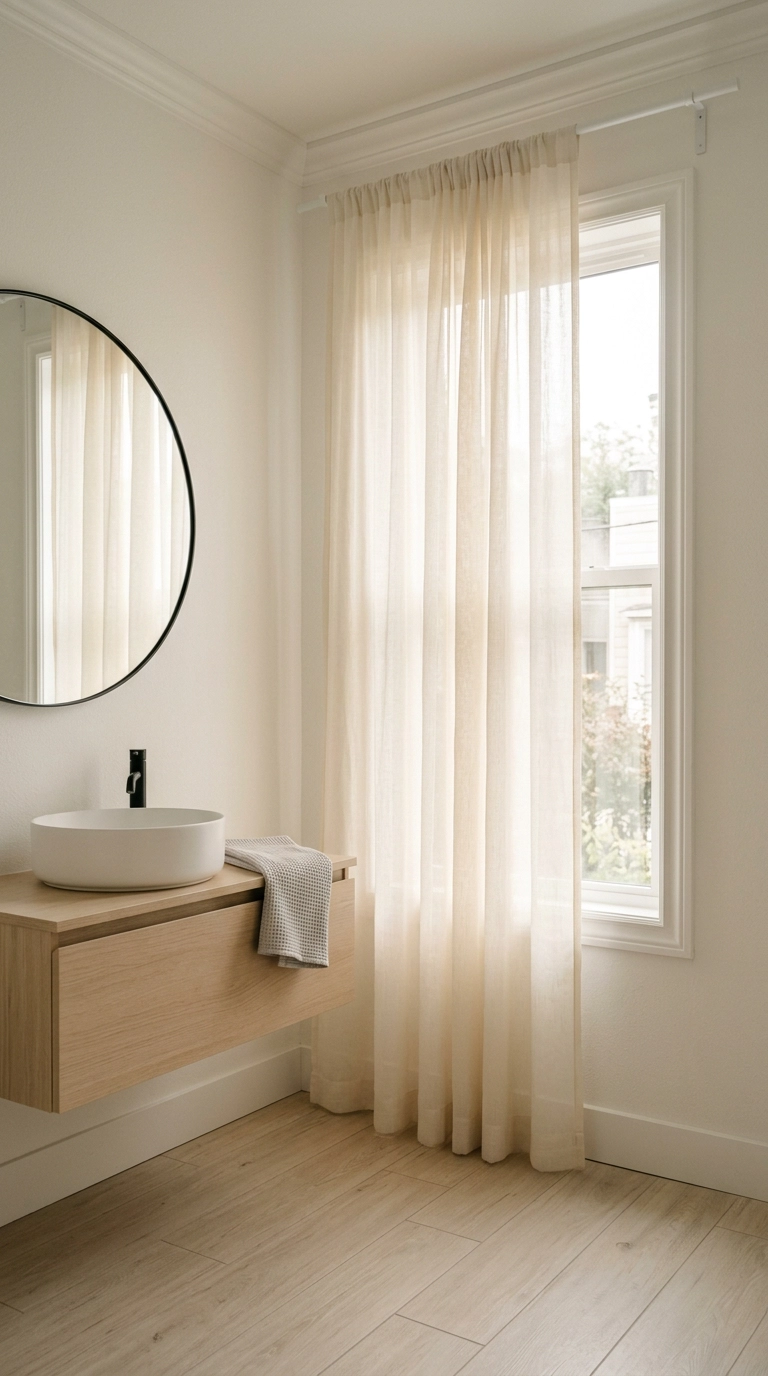
A single sheer panel blurs the view in without killing the light, and it makes the whole room glow instead of just letting in a hard bright rectangle. Look for a voile or a loose-weave polyester sheer rather than cotton, since sheers in a bathroom get damp and cotton spots.
15. Skip the Curtain Entirely and Use Frosted Window Film
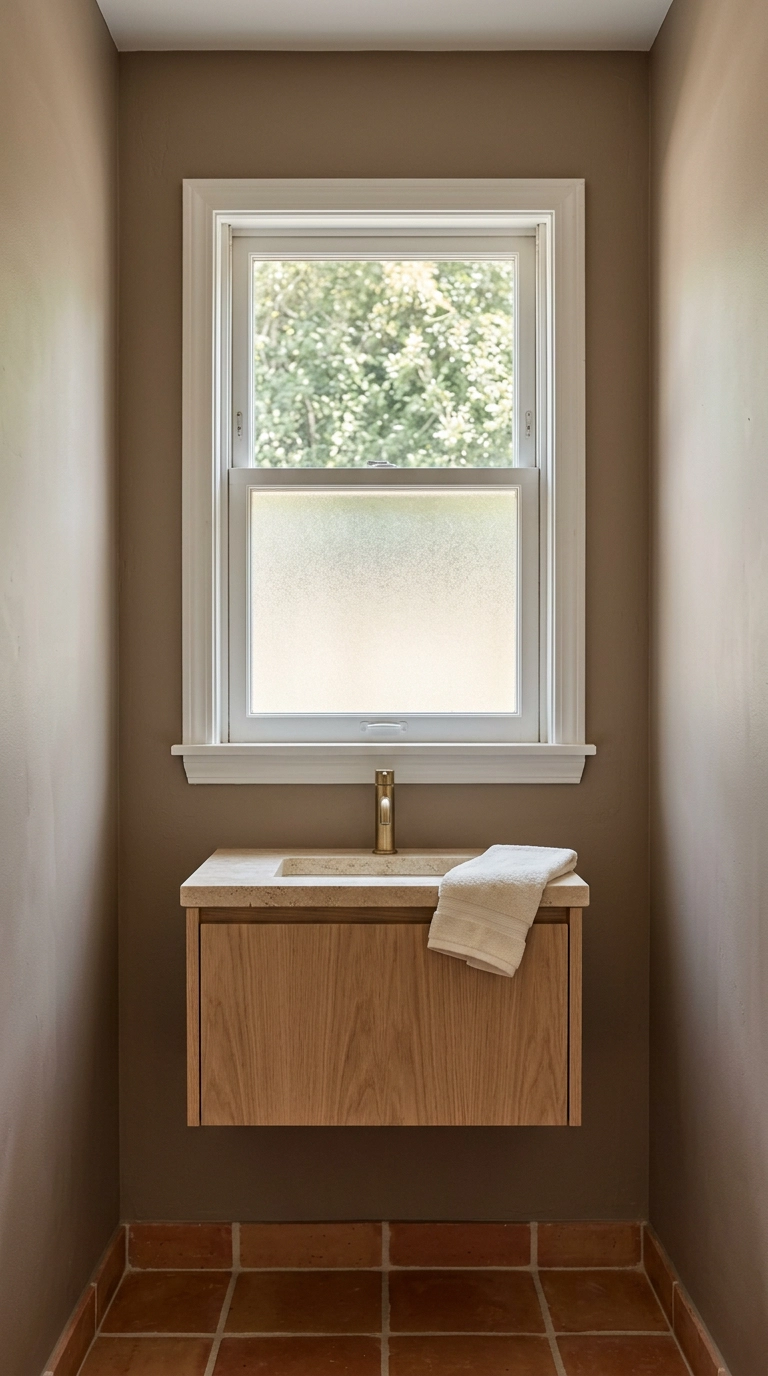
Sometimes the best bathroom window treatment is no fabric at all. Static-cling frosted film costs about fifteen dollars a roll, goes on with soapy water and a squeegee, peels off clean when you move, and never once grows mildew.
16. Pick Moisture-Tolerant Fabrics for Window Panels
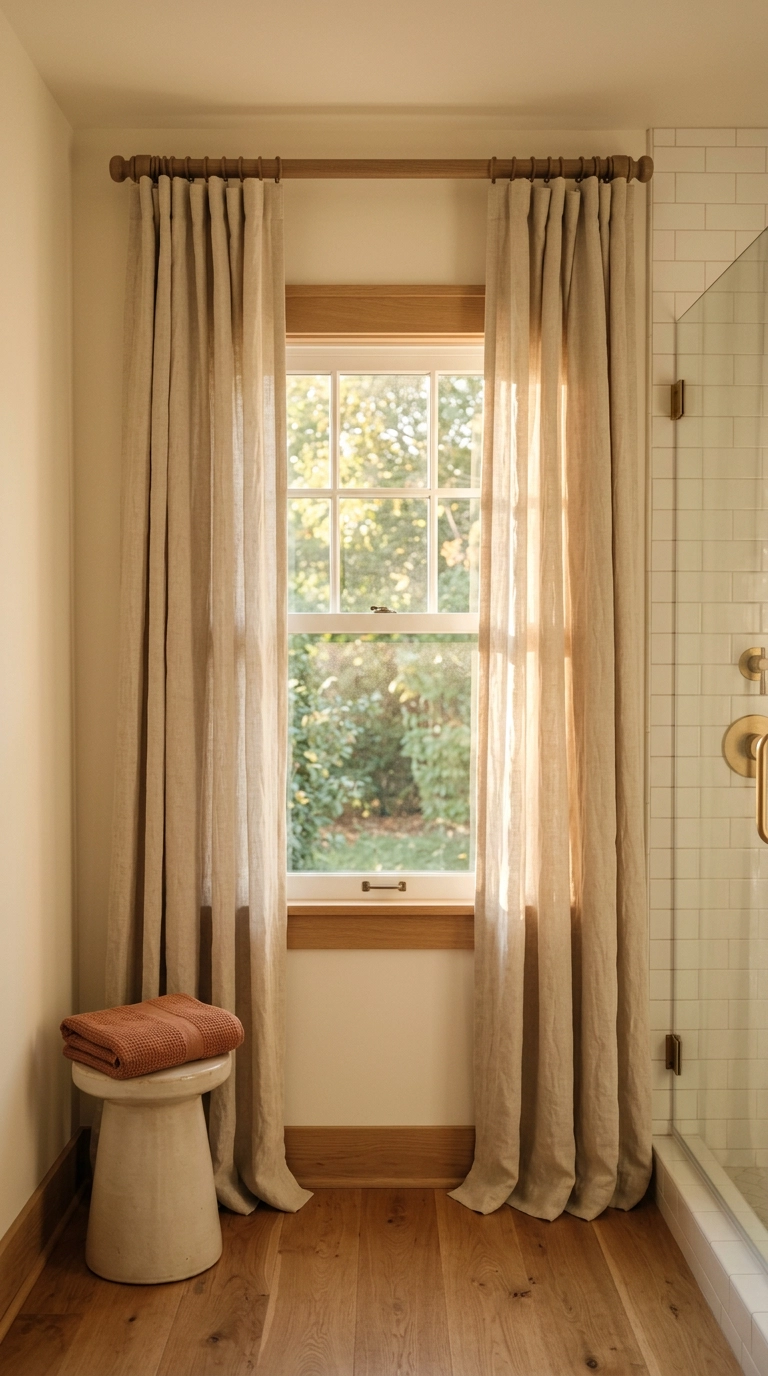
If you want real window panels in the bathroom, keep the fabric to polyester, polyester blends, or poly-cotton blends. They dry fast, they don’t hold odor, and they laugh at the humidity that ruins real linen and heavy velvet within a year.
17. Mount Window Curtains a Few Inches Above the Frame
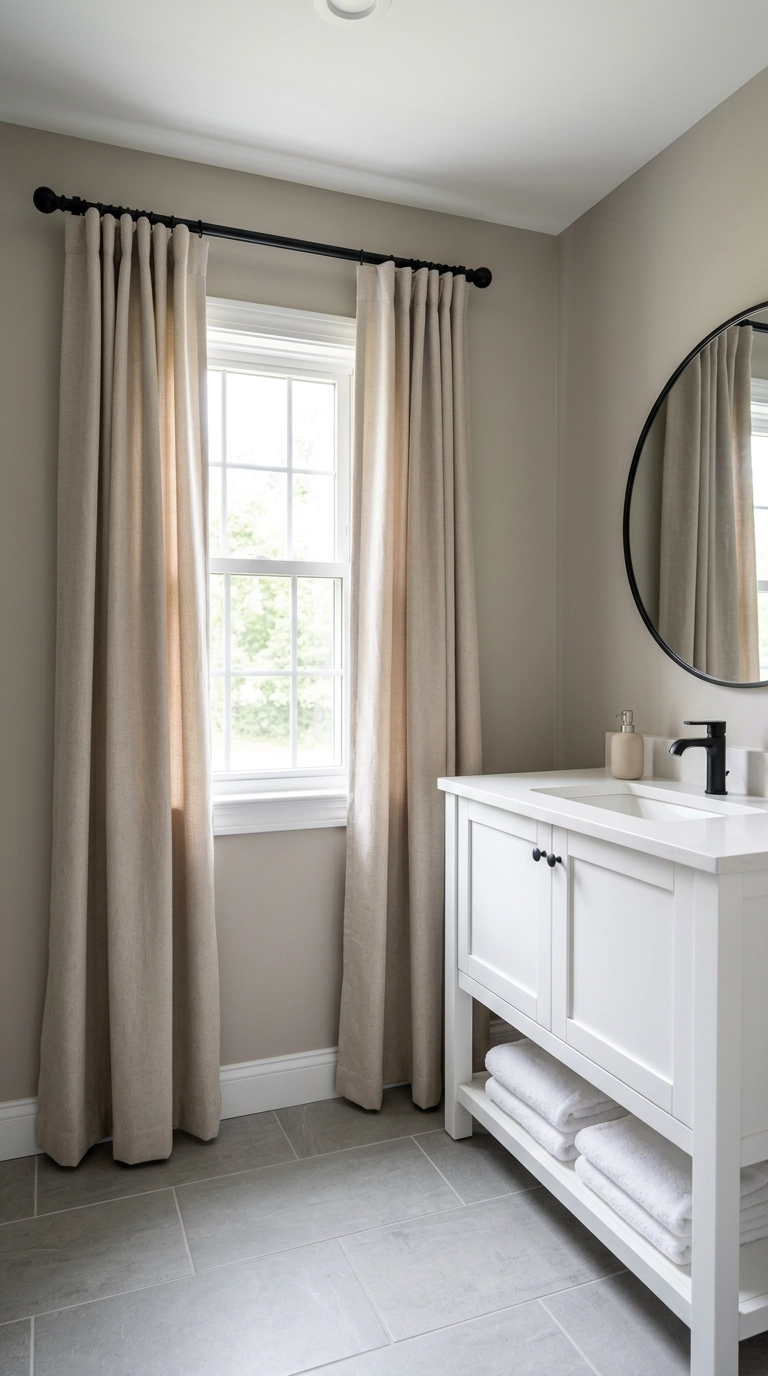
The same ceiling-height rule that fixes shower curtains fixes window curtains. Mount the rod five to eight inches above the window frame and extend it about three inches past each side, and the window suddenly reads as part of a bigger wall instead of a hole in it.
18. Hang a Window Curtain on a Tension Rod Inside the Frame
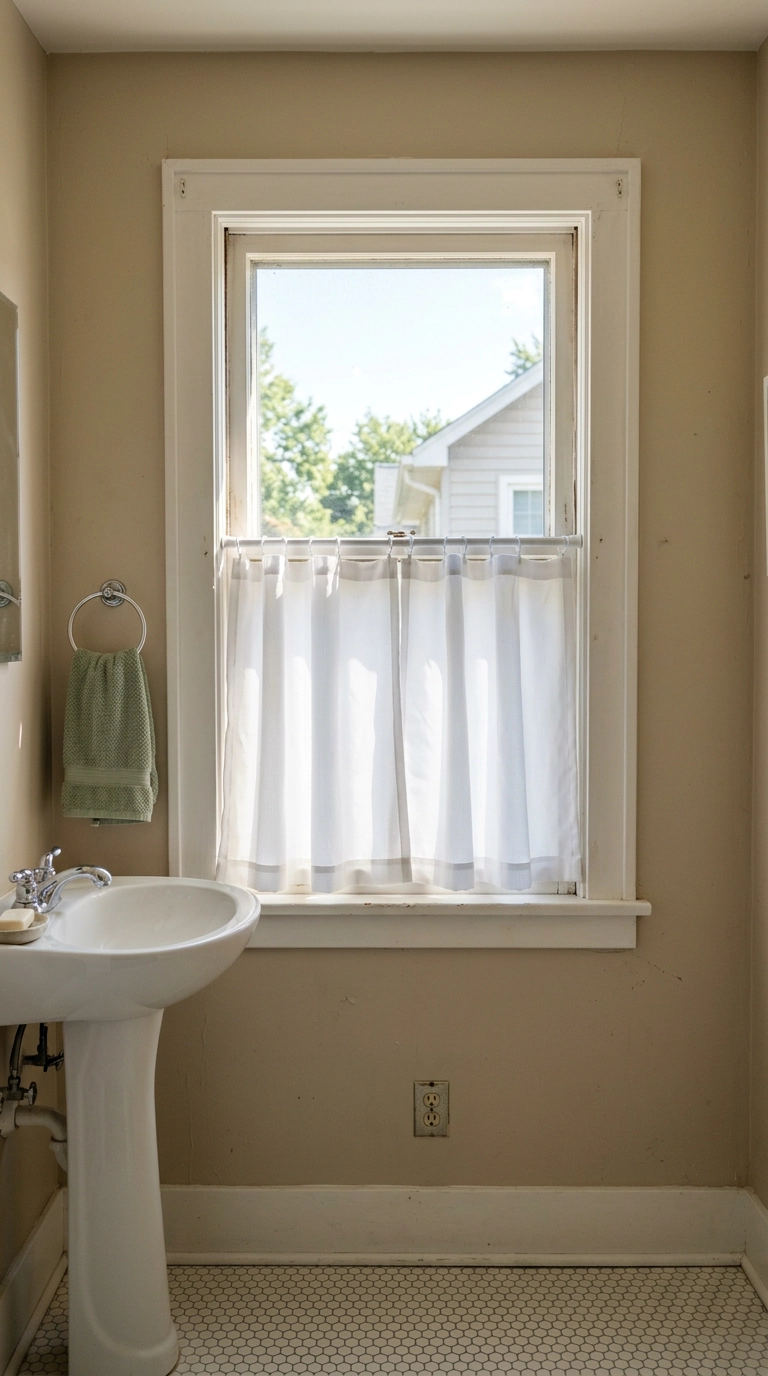
A tension rod wedged inside the window frame gives you a privacy curtain with no drilling, no patching, and no deposit drama. It’s the one window treatment a landlord can’t even see you did.
19. Add a Pleated Sink Skirt Under a Pedestal or Wall Sink
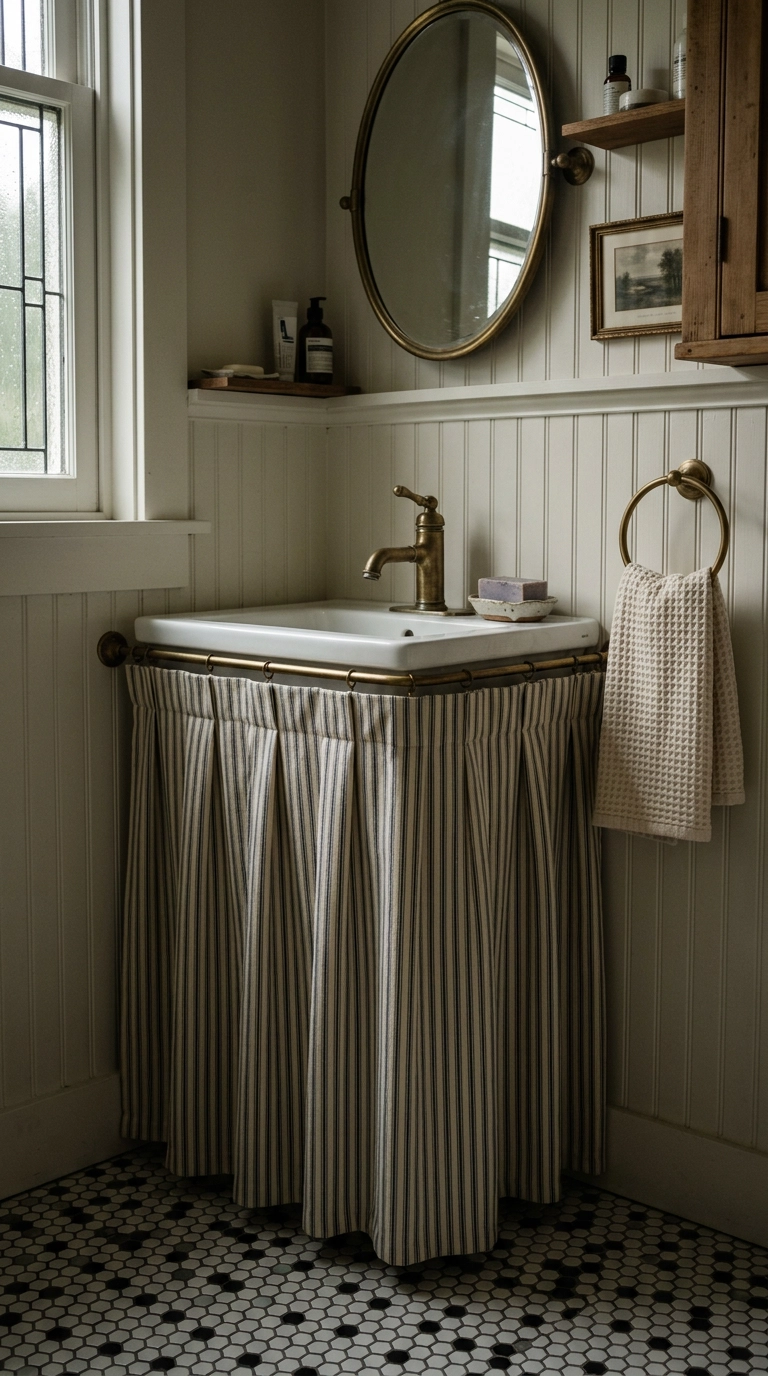
A sink skirt is the third bathroom curtain nobody talks about, and it solves two problems at once: it hides the plumbing and it turns the dead space under a pedestal sink into storage you can actually use. Two baskets tucked behind it hold everything a vanity would.
20. Attach a Sink Skirt With Hook-and-Loop Tape, No Sewing
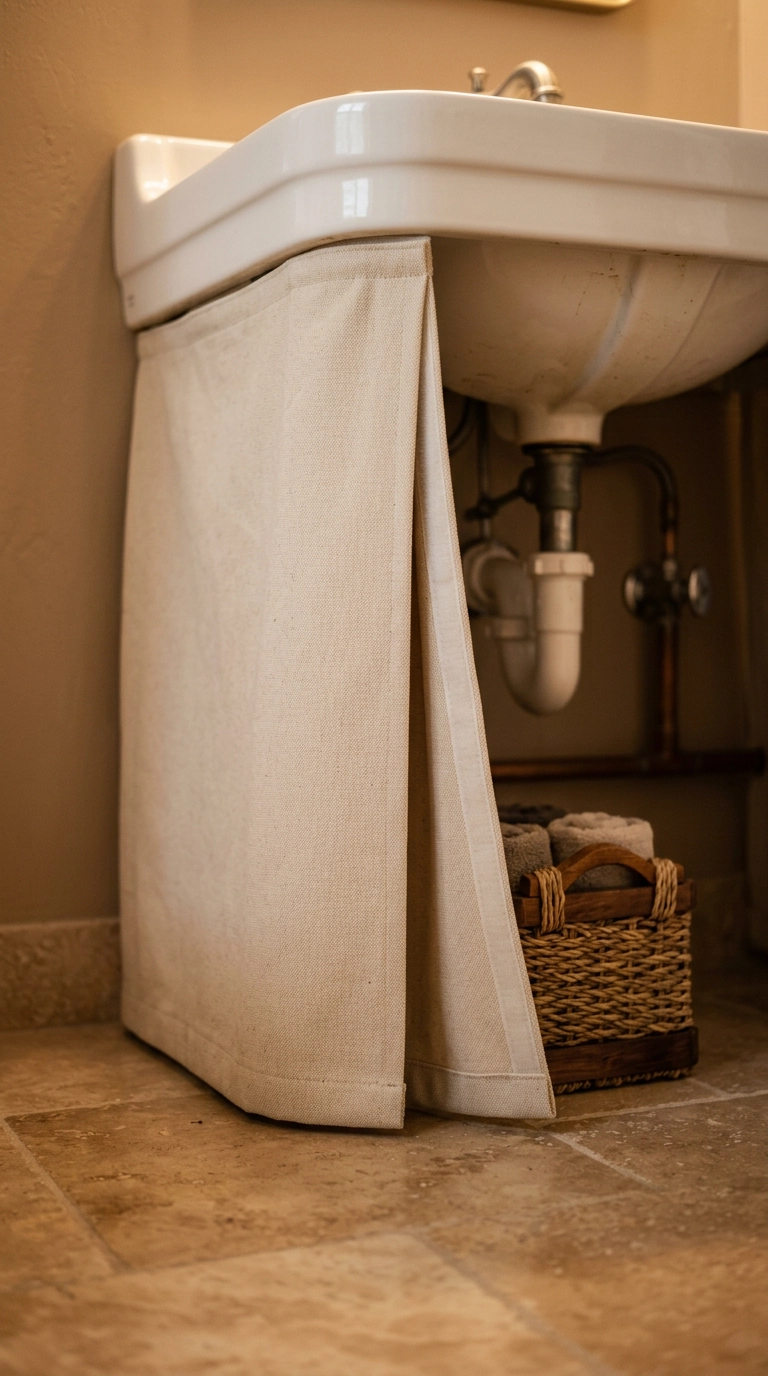
Self-adhesive hook-and-loop tape along the underside rim of the sink holds a skirt perfectly and comes off with a hair dryer and some patience. No rod, no drilling, no sewing machine, and it works on porcelain and stone alike.
21. Match the Sink Skirt to the Shower Curtain in One Fabric
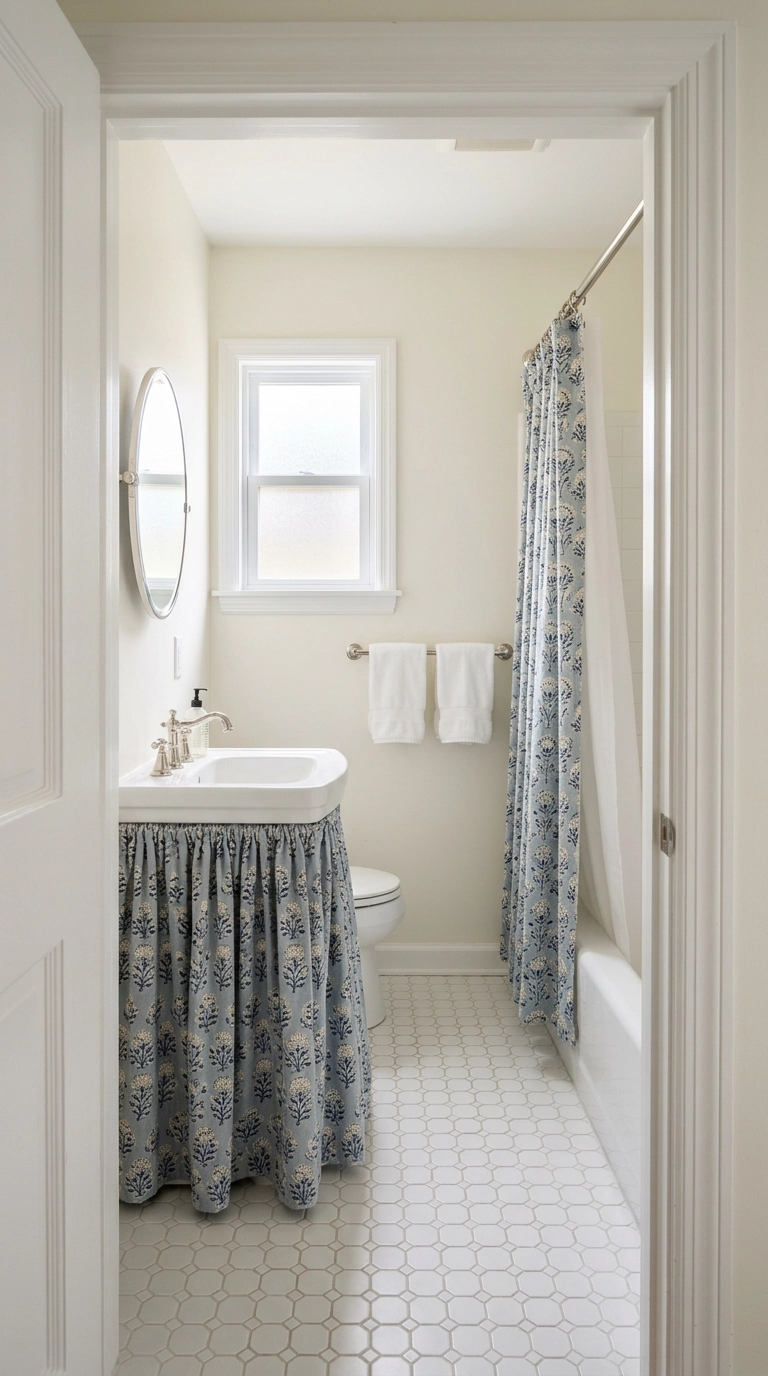
Running one fabric across both the shower curtain and the sink skirt is a decorator move that costs nothing extra and makes a small bathroom feel deliberately designed. It works because repetition creates rhythm, and rhythm reads as intentional.
22. Choose Velvet for a Splurge-Worthy Night Bathroom
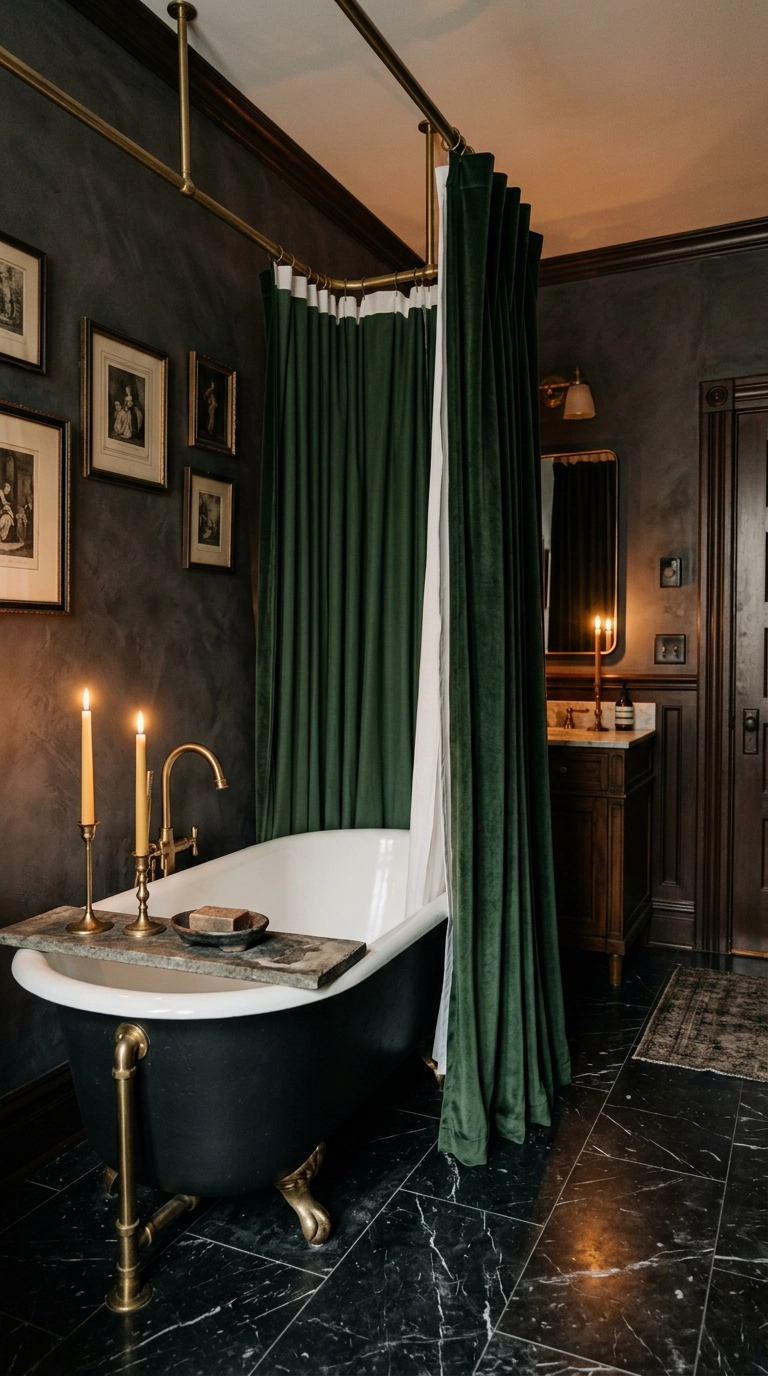
Velvet in a bathroom sounds wrong until you see it in a dim, candlelit room and understand exactly what it does. The pile drinks the light, so a small dark bathroom turns into a moody jewel box instead of a cave.
23. Weight the Hem So the Curtain Stops Attacking You
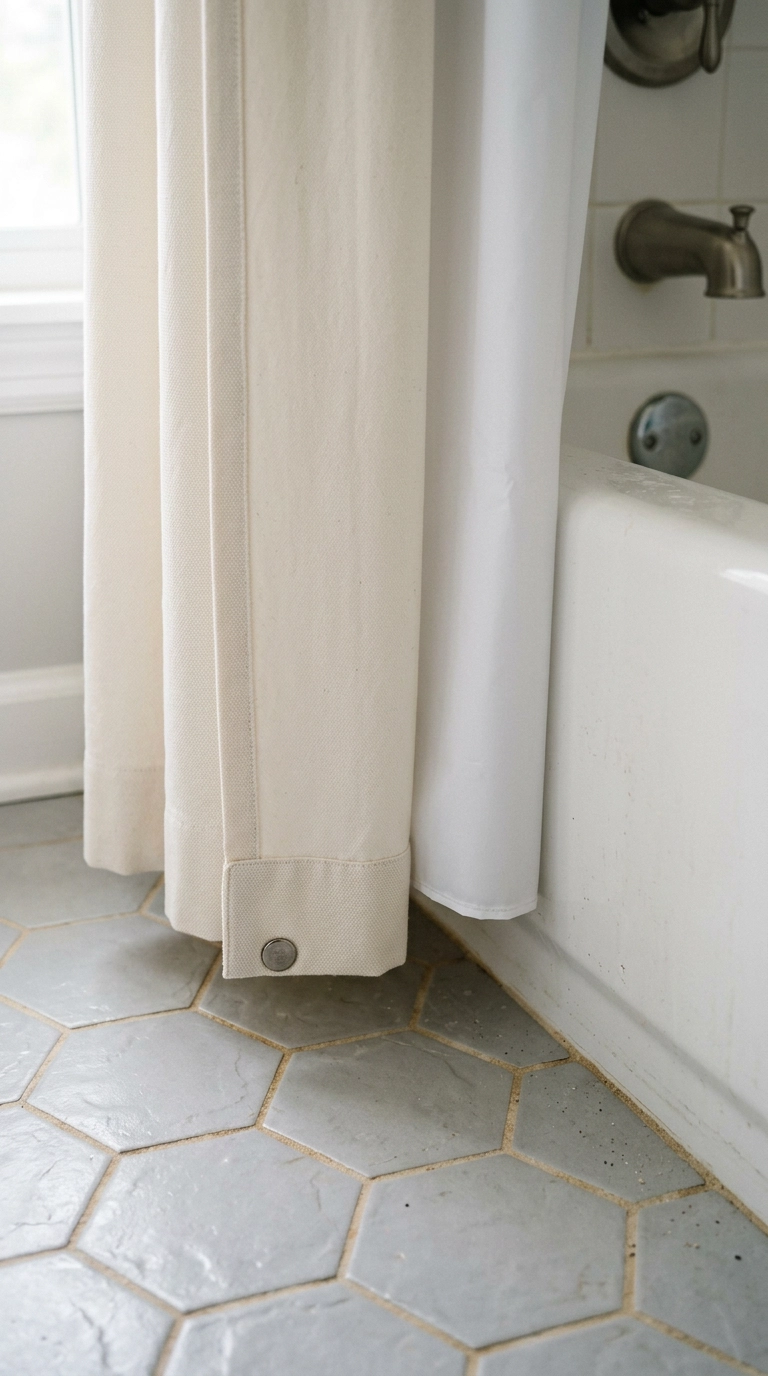
If your liner billows in and sticks to you every single shower, that’s a pressure problem, and drapery weights fix it in ten minutes. Sew or clip small penny weights into the liner hem, or buy a liner with a magnetized bottom edge that grabs a steel tub.
24. Rearrange What You Already Own for a Free Refresh
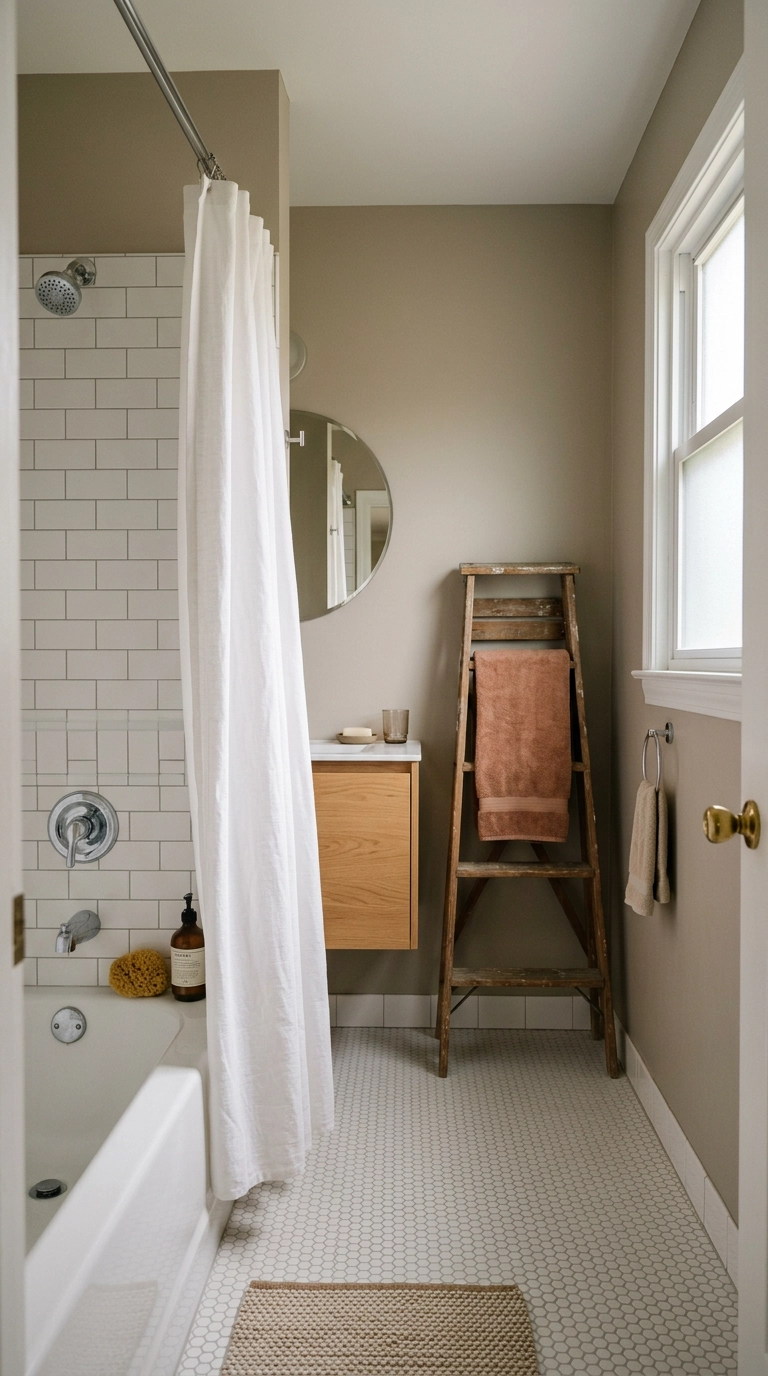
Before you buy anything, try this for free: pull the curtain fully open to one side instead of leaving it half-drawn, slide the rod up as high as the existing brackets allow, and move the liner to the inside hooks if it isn’t already. Half the sad bathrooms I see are just correctly-sized curtains hung carelessly.
25. Build a Full Draped Alcove Around a Freestanding Tub
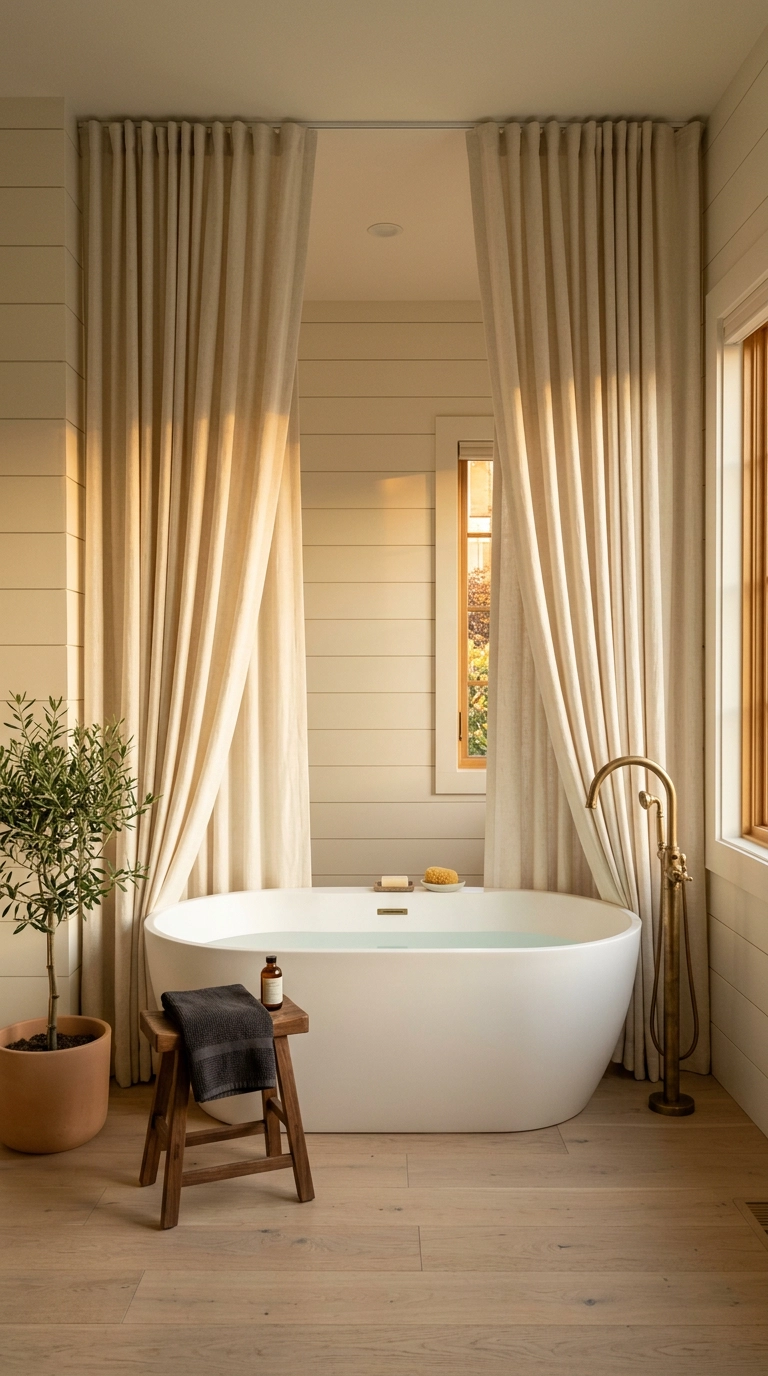
This is the weekend project worth doing if you have a freestanding tub and a wall of blank drywall behind it. Two floor-to-ceiling panels on a recessed ceiling track frame the tub like an architectural alcove that was never there, and the vertical fabric lines make even a nine-foot ceiling feel like ten.
Pulling It All Together
If you only do one thing from this list, hang the shower curtain higher and buy the 84-inch panel. I’ve watched that single swap change how people feel about a bathroom they’d written off, and it costs less than a takeout order. The runner-up is two panels instead of one, because the folds it creates are the whole difference between drapery and a plastic sheet.
What I’m seeing everywhere in 2026 is texture over pattern – waffle weaves, nubby hemp blends, and heavy ivory canvas doing the work that a loud print used to do. Sink skirts are quietly back too, and not just in cottage bathrooms; the flat, tailored, single-fabric version reads surprisingly modern. Ceiling tracks have gone from spa-hotel detail to something people actually install at home, and I’d credit the general Studio McGee-adjacent obsession with clean unbroken vertical lines for that. On the window side, café curtains and frosted film have finally beaten out the sad vinyl mini-blind, which is a win for everyone.
Start with the free stuff in idea 24 before you spend a dollar, then work up to the ribbon trim or the valance once you know what your room actually needs. And if you want more of this – real numbers, real fabric advice, and the projects that are genuinely worth your Saturday – sign up for my weekly newsletter and I’ll send the good stuff straight to your inbox.


