
23+ Gorgeous Mid Century Modern Bedroom Decor Ideas that Feel Timeless in 2026

I’ll say the unpopular thing first – most rooms sold to us as mid-century modern are just furniture-store shorthand: four tapered legs, a starburst clock, done. The real thing was a set of decisions about proportion and material, low horizontal lines, honest teak and walnut, and a palette that was warmer and dirtier than the reproductions admit. I’ve furnished these rooms from both estate sales and catalogs, so I’ll be straight with you about what’s worth hunting, what’s fine to buy new, and how to keep your bedroom from reading like a themed set at a design museum.
Mid Century Modern Bedroom Decor Ideas
1. Start With the Real Period Palette, Not the Showroom Version
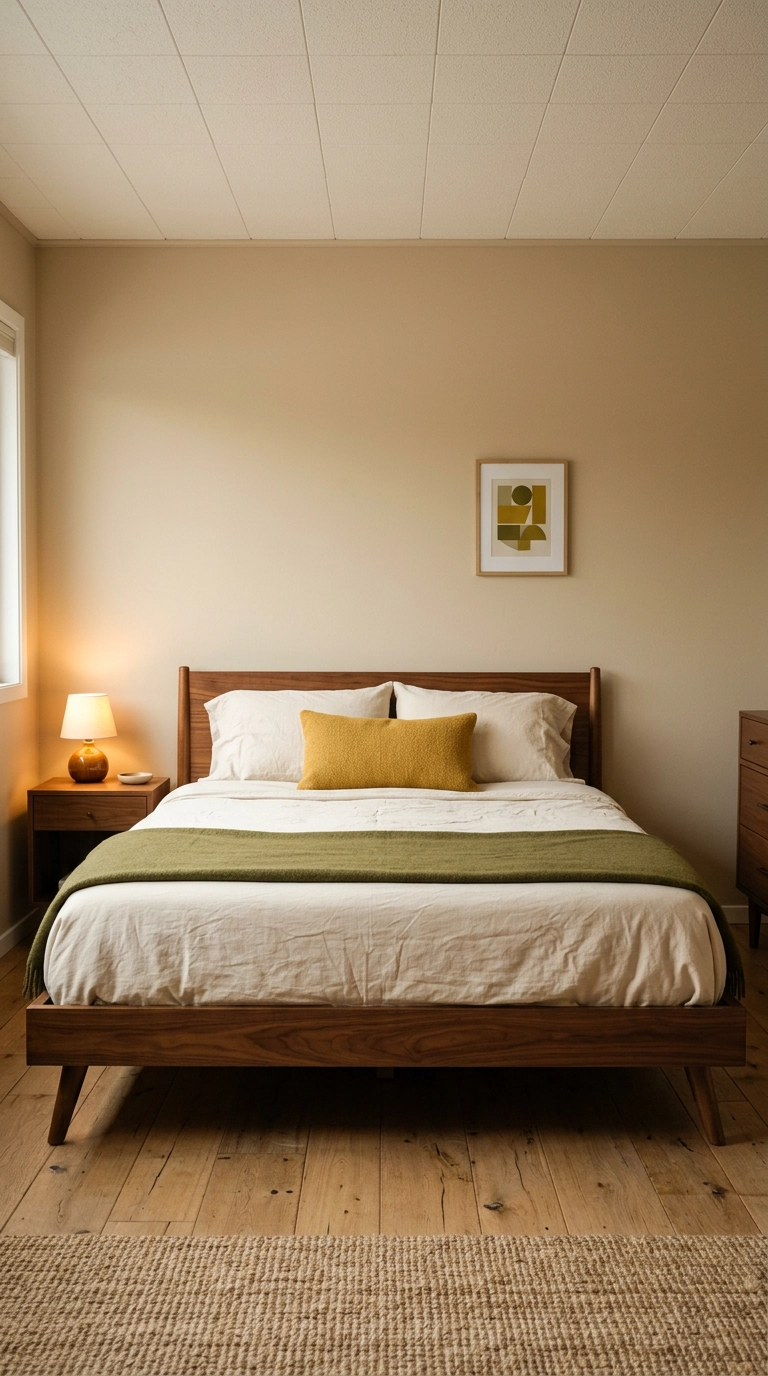
The genuine 1955-to-1968 palette was mustard, olive, rust, teal, and burnt orange sitting against a warm neutral – never against cold grey, which is how the 2010s version got so lifeless. Pick two of those saturated colors, not five, and let a warm oatmeal or camel wall carry them.
2. Hunt Tapered Legs and Get Everything Off the Floor
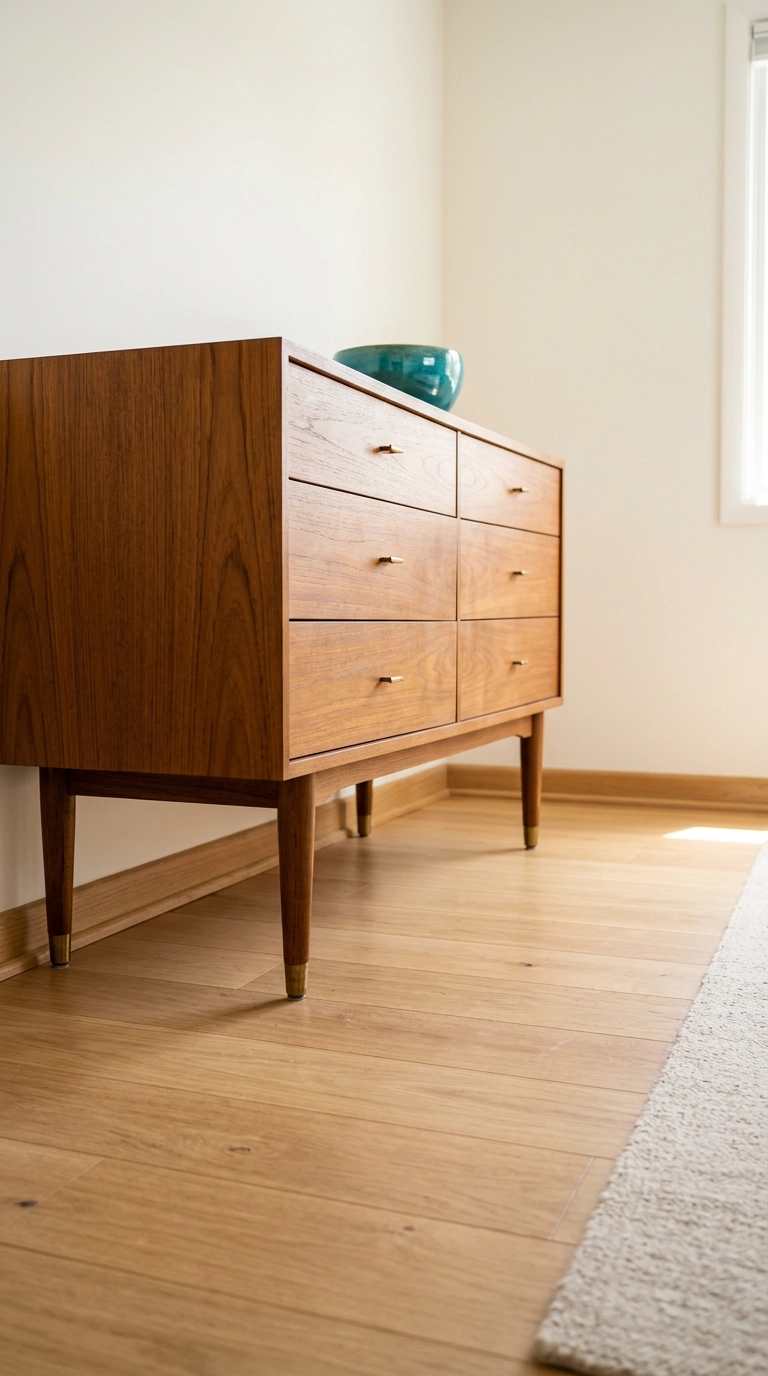
Visual weight is the whole game here. A dresser that meets the floor in a solid block reads heavy; the same dresser on four splayed legs reads light, because you can see floor continuing underneath it and your brain registers more room.
3. Swap the Chrome Hardware for Brass or Turned Walnut
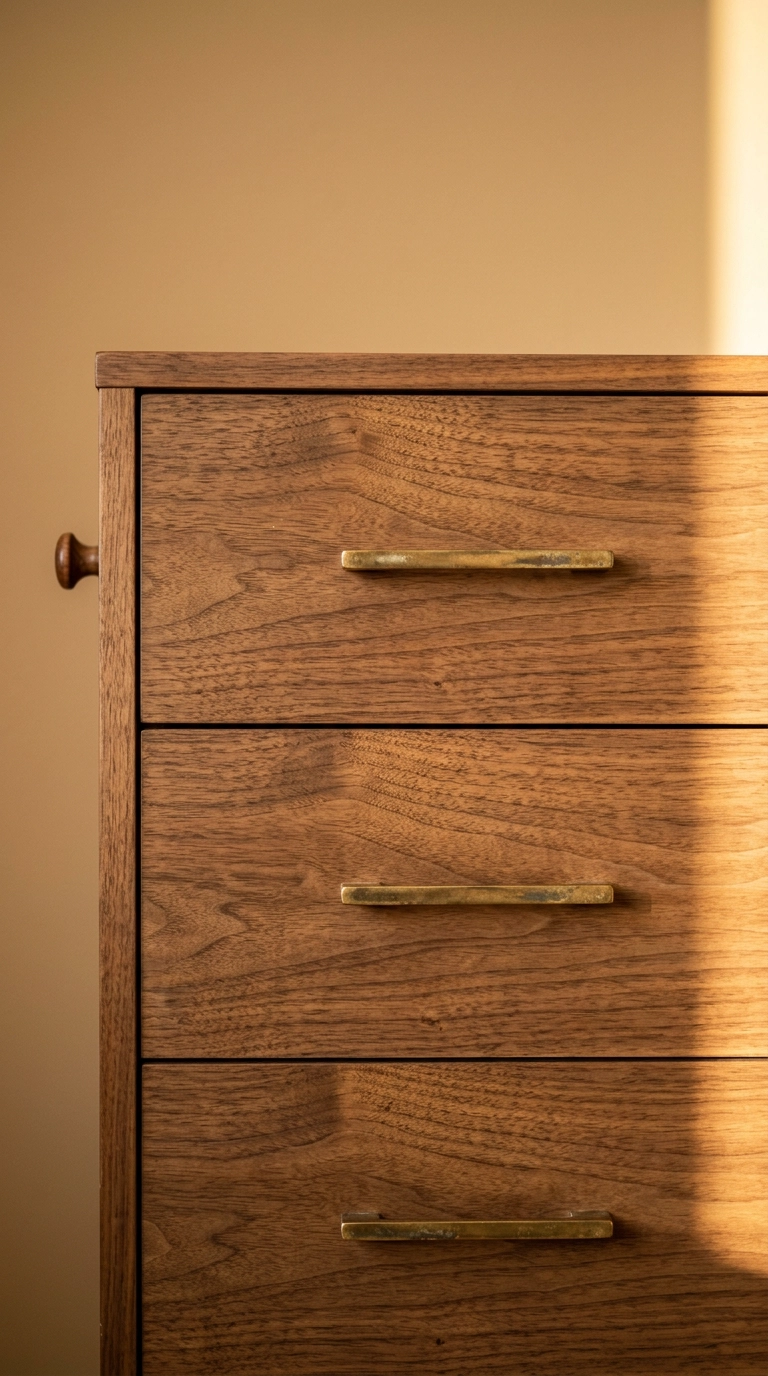
Shiny nickel and polished chrome are what date a mid-century reproduction instantly – the period used solid brass, blackened iron, and wood that was simply turned and oiled. New hardware on an existing dresser is a twenty-minute job with a screwdriver.
4. Keep the Bed Low and the Lines Horizontal
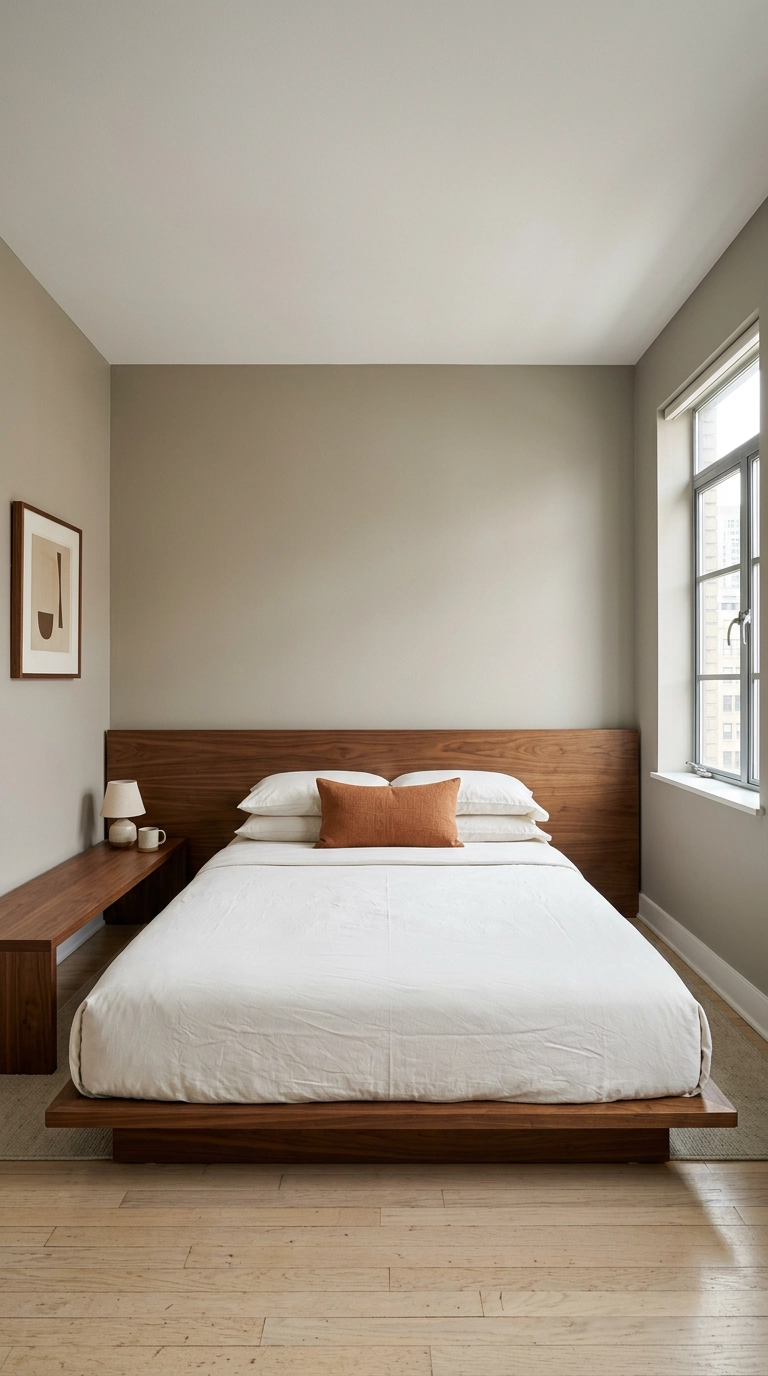
Mid-century furniture was designed for the low ceilings of postwar tract houses, which is why everything sits closer to the floor than we’re used to now. A bed with a low profile and a headboard that runs wider than the mattress pulls your eye sideways and makes an 8-foot ceiling feel taller than it is.
5. Renters: Lean a Slim Teak Mirror Instead of Hanging Art
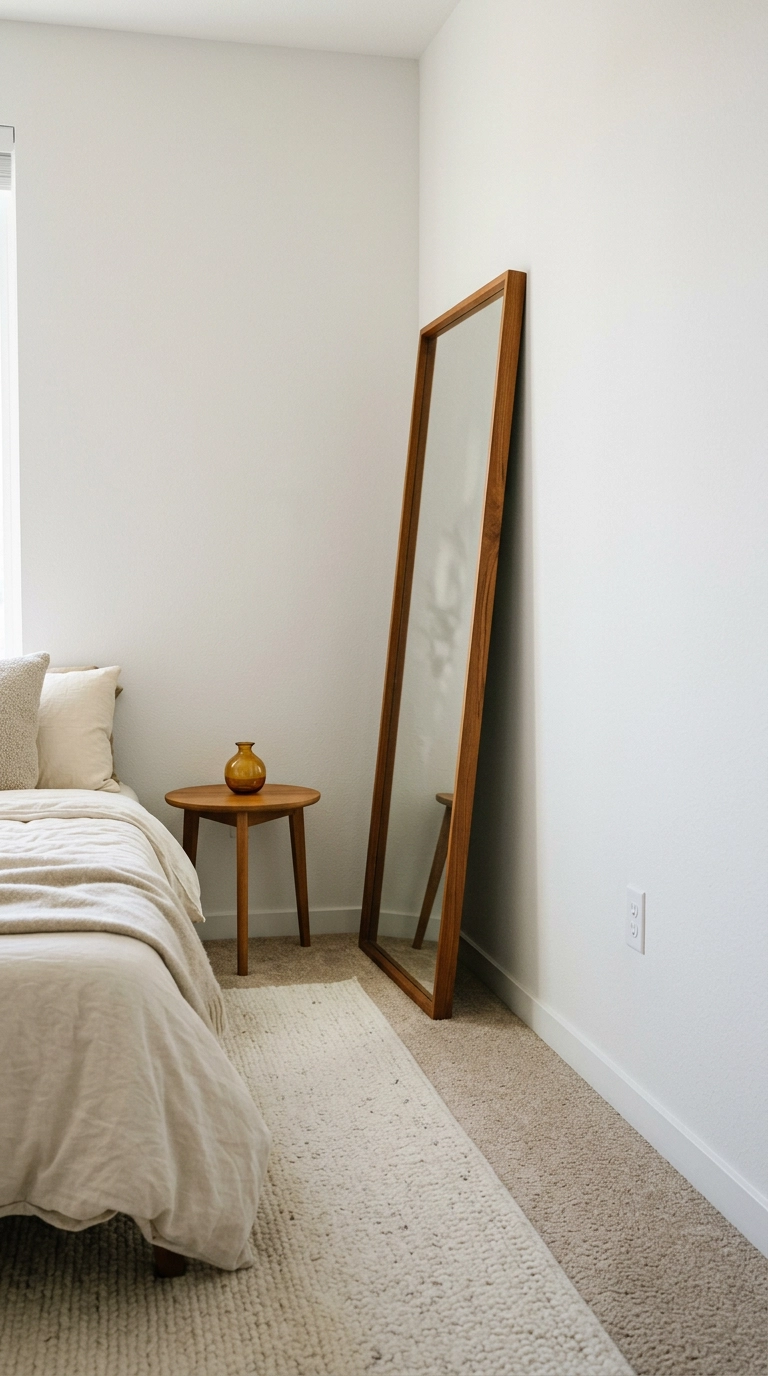
Mid-century rooms used mirrors as light-movers rather than statement pieces, and a leaning one gets you the effect without a single hole in a rental wall. Angle it slightly off-square so it throws light across the room instead of just reflecting the wall opposite.
6. Buy One Real Vintage Piece and Accept Its Flaws
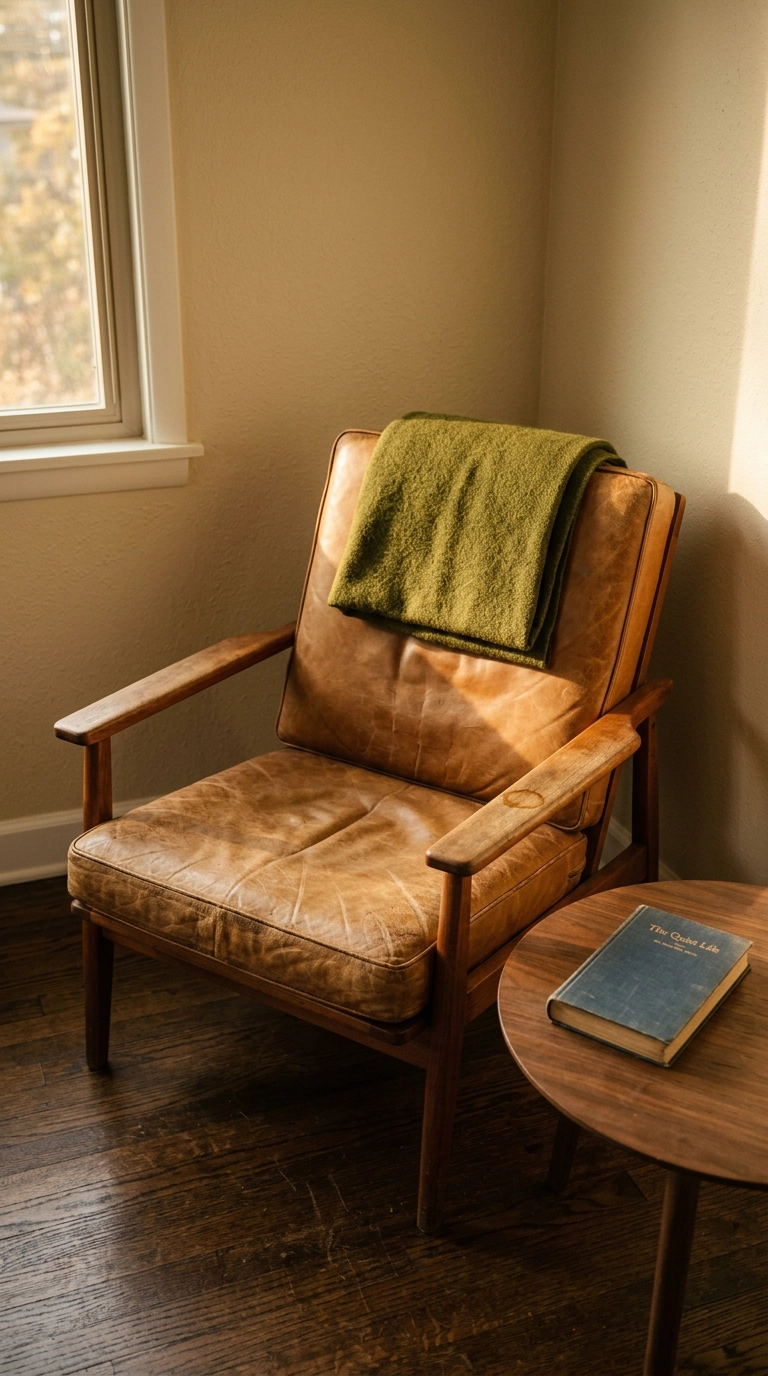
One authentically old piece does more for credibility than a whole room of reproductions, because sixty years of oxidation gives teak a depth no factory stain reproduces. Buy the one with honest wear – a faded top, a water ring, a repaired joint – and skip anything with veneer bubbling or delamination, which is the one flaw that’s genuinely expensive to fix.
7. Know When a Reproduction Is the Smarter Buy
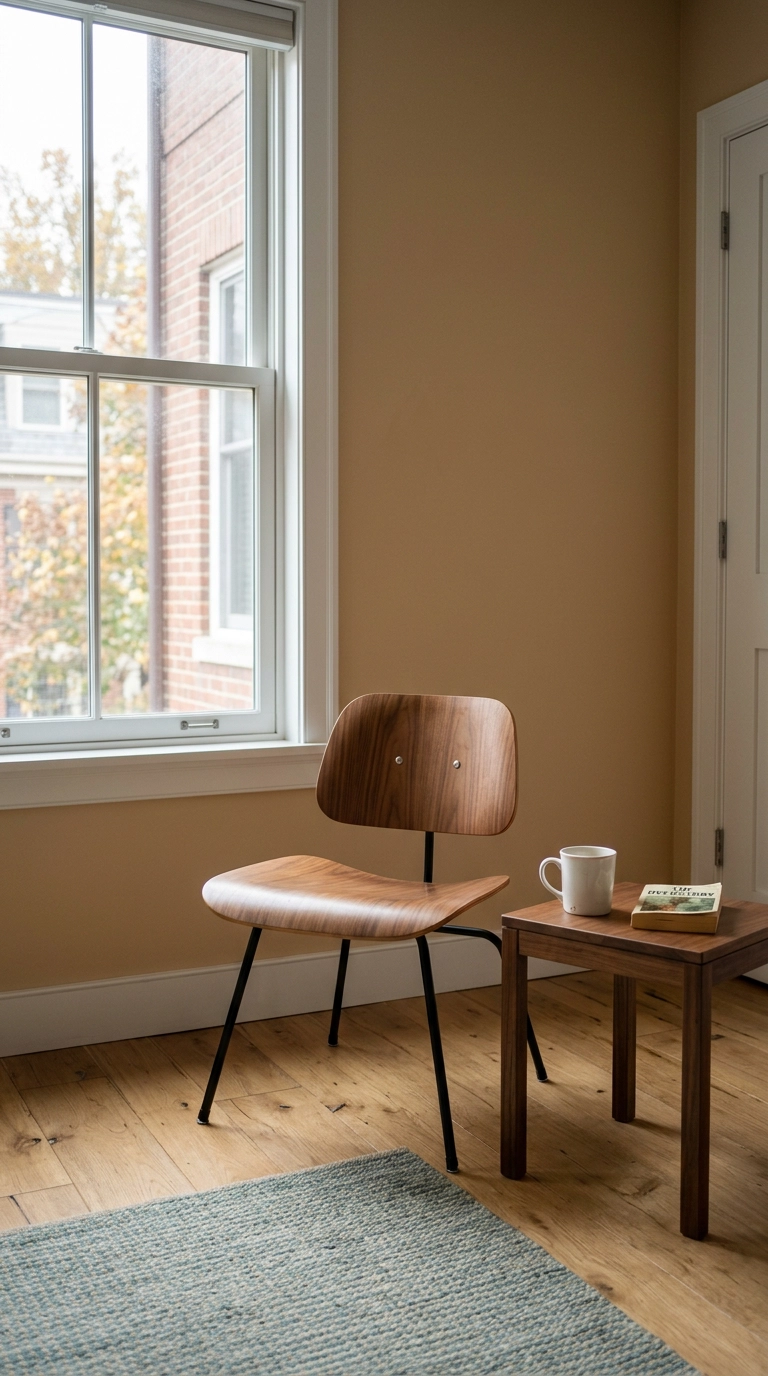
I’m not a vintage purist about everything. Anything you sleep on, sit on daily, or need in a matched pair is usually better bought new – old foam has collapsed, old webbing has stretched, and reupholstery routinely costs more than the chair did.
8. Use a Globe or Cone Pendant Instead of the Builder Dome
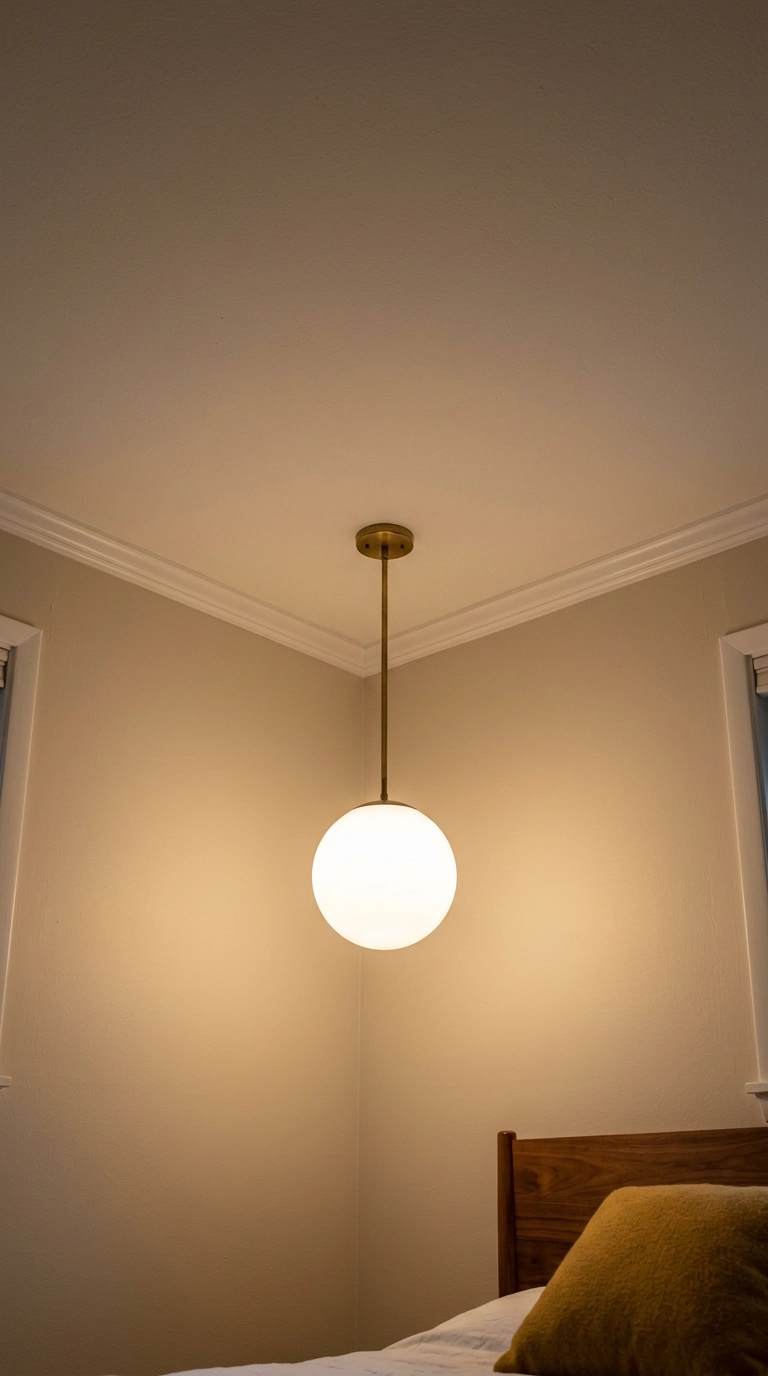
Overhead lighting is where this style is easiest to nail cheaply. A single opal glass globe or a simple metal cone shade reads instantly period-correct, and both are widely available new for $80 to $200.
9. Add a Sculptural Wall Sconce and Free Up the Nightstand
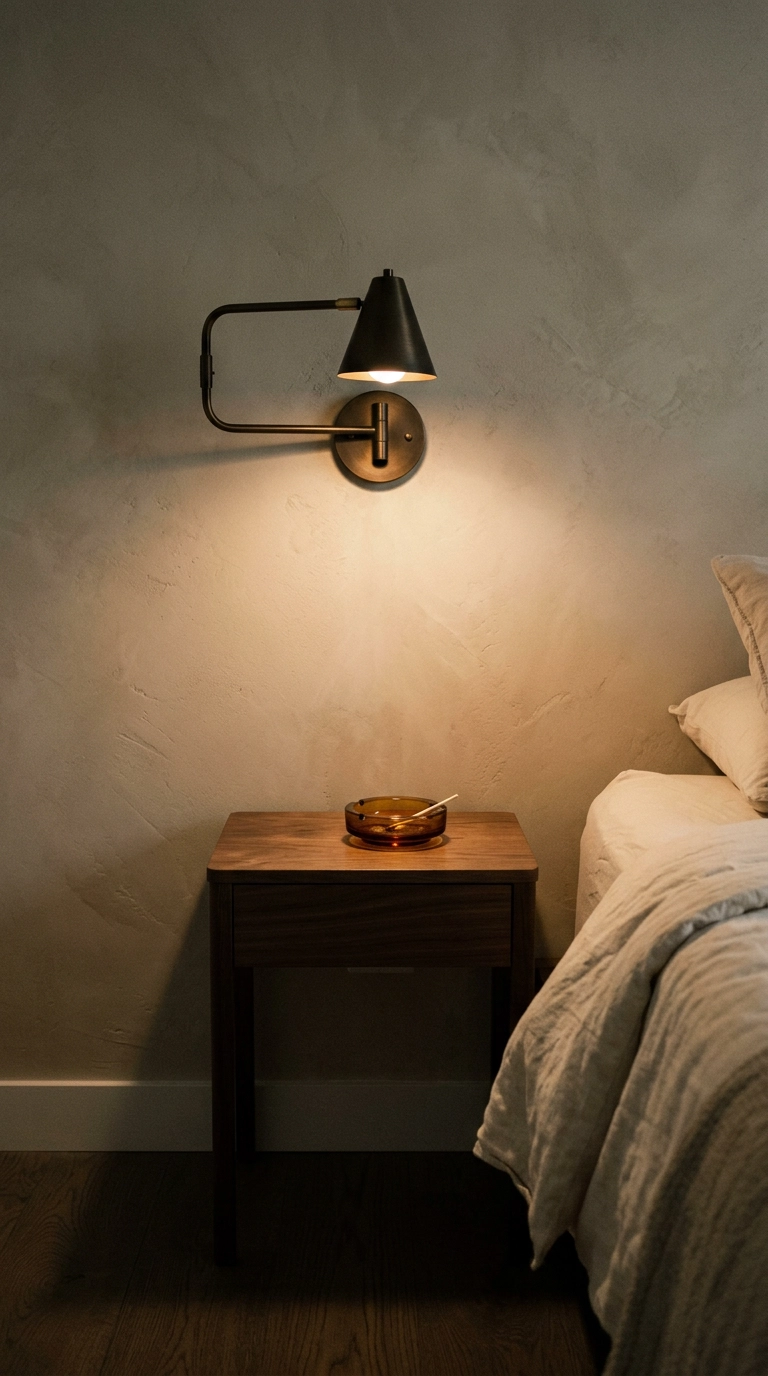
Mid-century designers loved articulated arms and adjustable joints because postwar houses were small and every surface had to earn its keep. Moving your reading light onto the wall clears the entire nightstand top, which is the single easiest way to make a small bedroom look calmer.
10. Mix Teak and Walnut on Purpose, Not by Accident
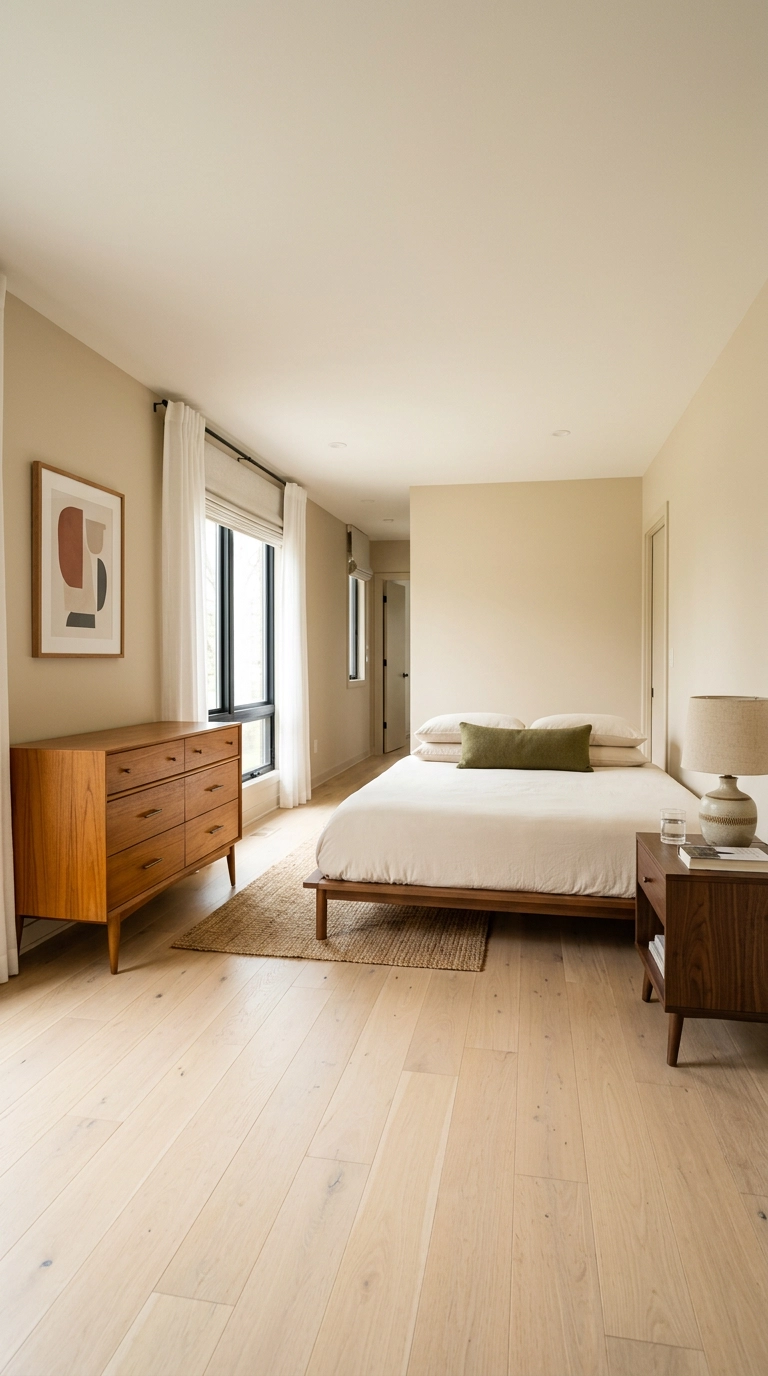
Matching every wood tone is what makes a room look like a bedroom set from a showroom floor, and matched sets are the least authentic thing you can do to this style – period rooms accumulated pieces. Two or three wood tones is right, as long as you commit to the difference.
11. Choose One Graphic Textile as the Hero Pattern
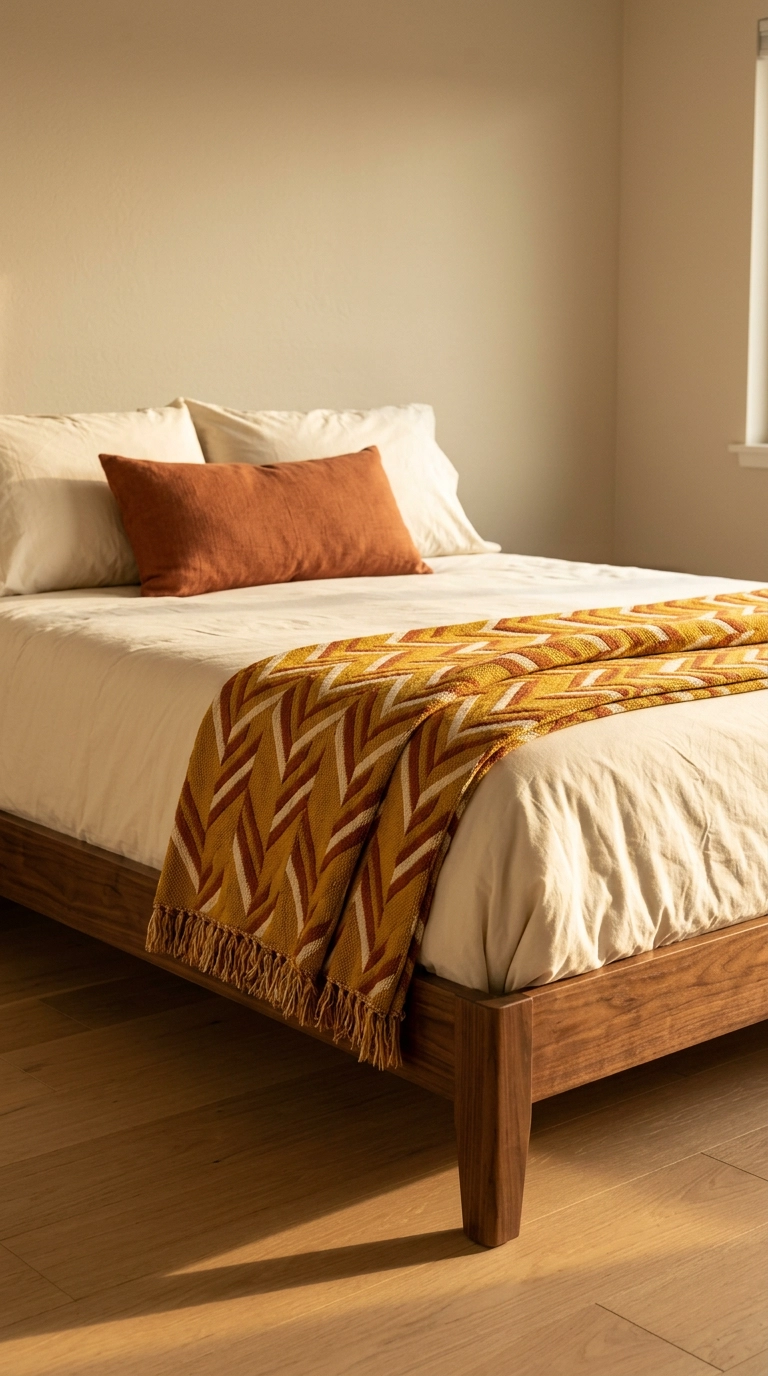
The period had genuinely great textile design – think Alexander Girard’s bold geometrics for Herman Miller, all angular repeats and confident color. One of those patterns per room is plenty, with everything else solid or subtly textured.
12. Paint the Wall Behind the Bed a Real Period Color
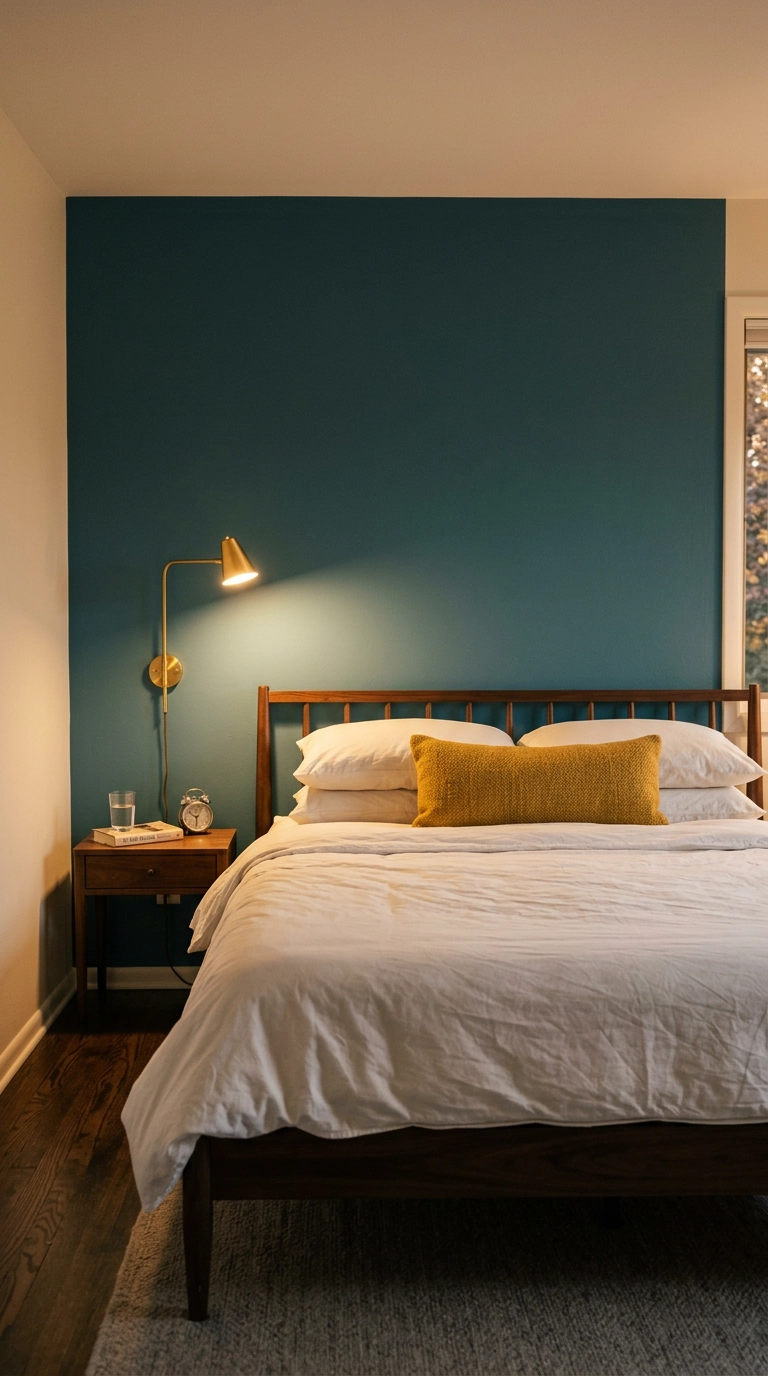
One saturated wall is the highest-impact weekend project in this whole article, and it’s the move that most reliably lifts a room out of reproduction territory. Go muted rather than bright – Farrow & Ball Vardo and Benjamin Moore Salamander both land in the right dusty teal-green range, and Sherwin-Williams Cavern Clay nails the period terracotta.
13. Hang Curtains High in a Solid, Unfussy Fabric
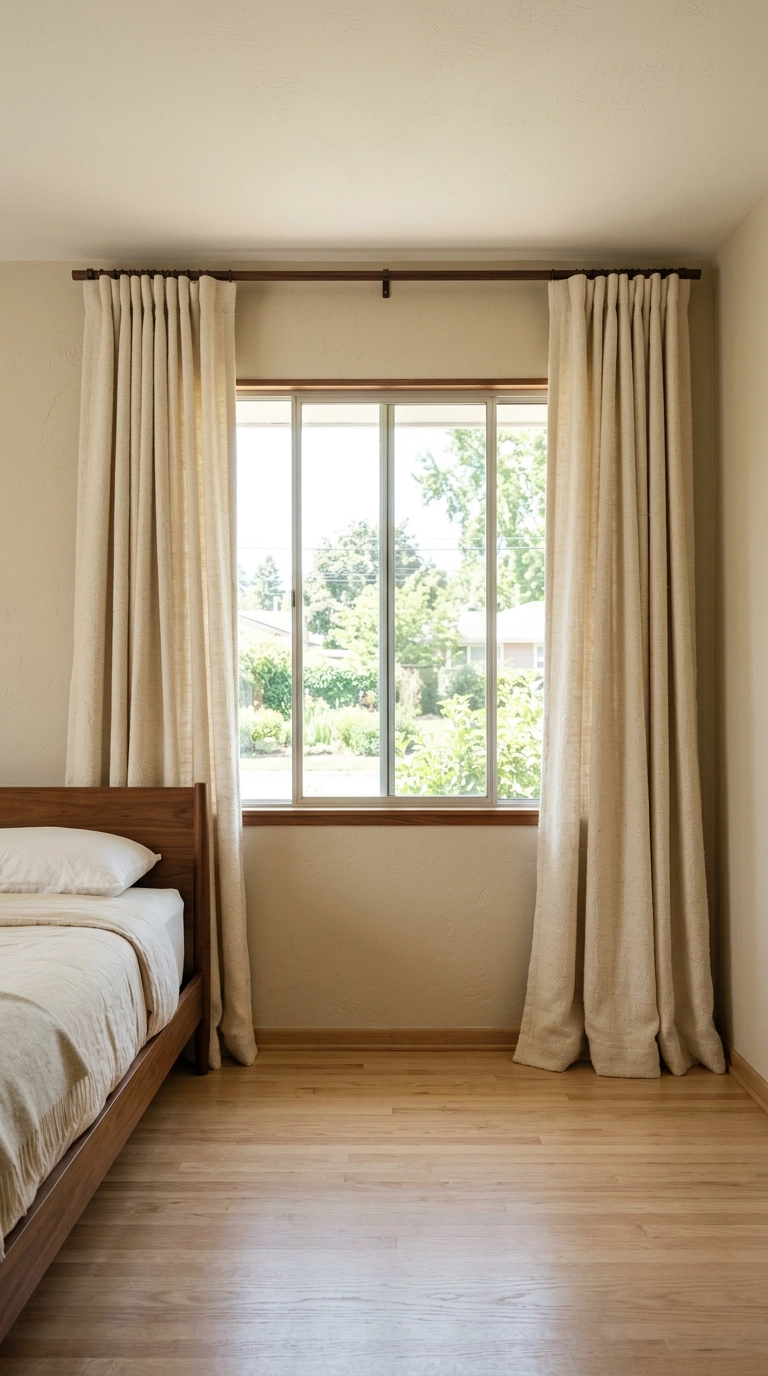
Mid-century houses had big horizontal windows, and the period treatment was simple: flat panels or a plain pinch pleat in a solid textured fabric, no swags, no valance, no tiebacks with tassels. Skip anything ruffled and you’re most of the way there.
14. Put a Low-Pile Geometric Rug Under the Bed, Not Beside It
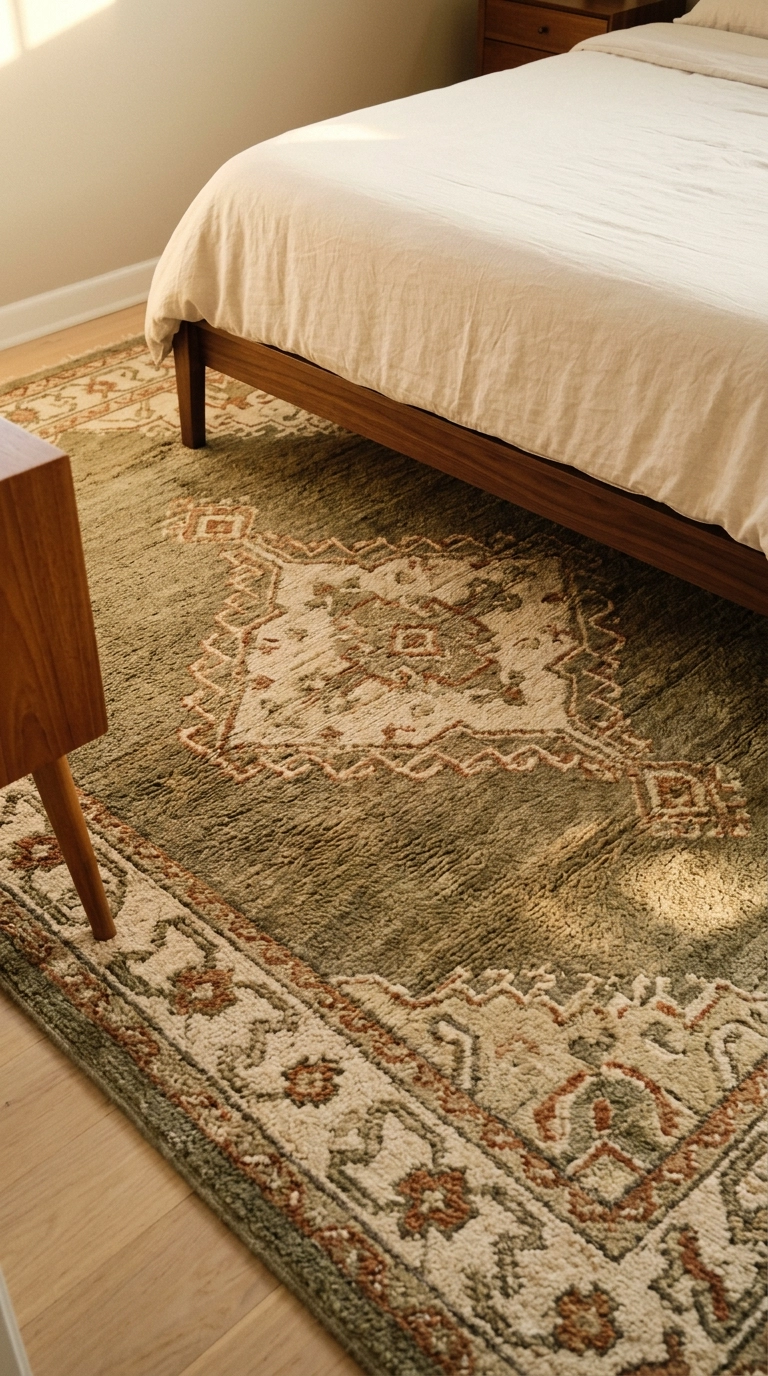
Two small runners flanking a bed is the most common rug mistake in bedrooms generally, and it’s fatal here because it chops up the horizontal plane the furniture is working so hard to establish. Buy one big rug that starts about two thirds of the way down the bed and runs at least 24 inches past each side.
15. Style the Nightstand Like a Period Photograph: Three Objects, Max

Look at any real period interior photograph and the surfaces are startlingly bare compared to how we style now. Three objects with visible space between them, and at least half the surface left empty – that restraint is doing as much work as the furniture.
16. Add Abstract Art With Hard Edges and Flat Color
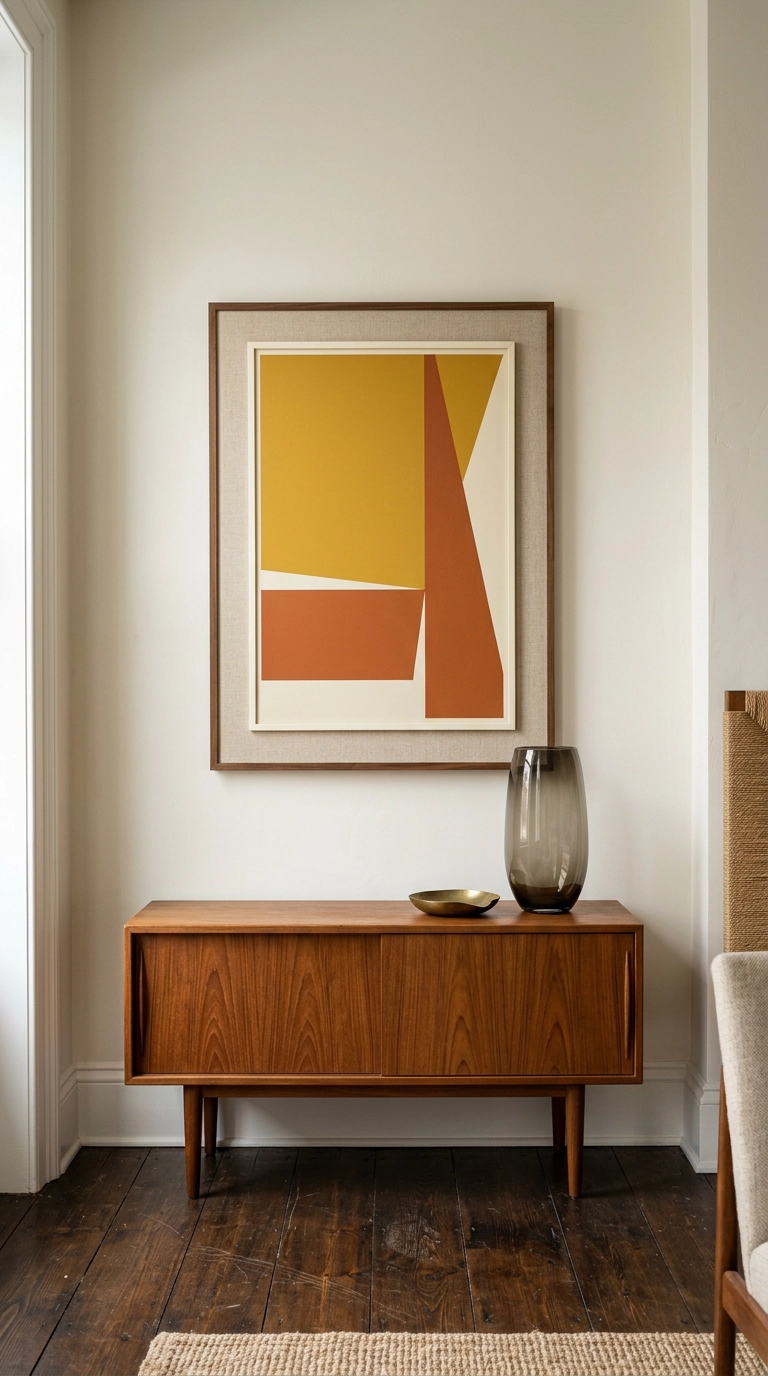
The art that belongs in these rooms is hard-edged abstraction and flat blocks of color, not soft beige washes and not a framed print of the Palm Springs house everyone has. Simple angular shapes echo the furniture geometry, which is why one big piece can pull an entire room together.
17. Break the Straight Lines With One Curved Piece
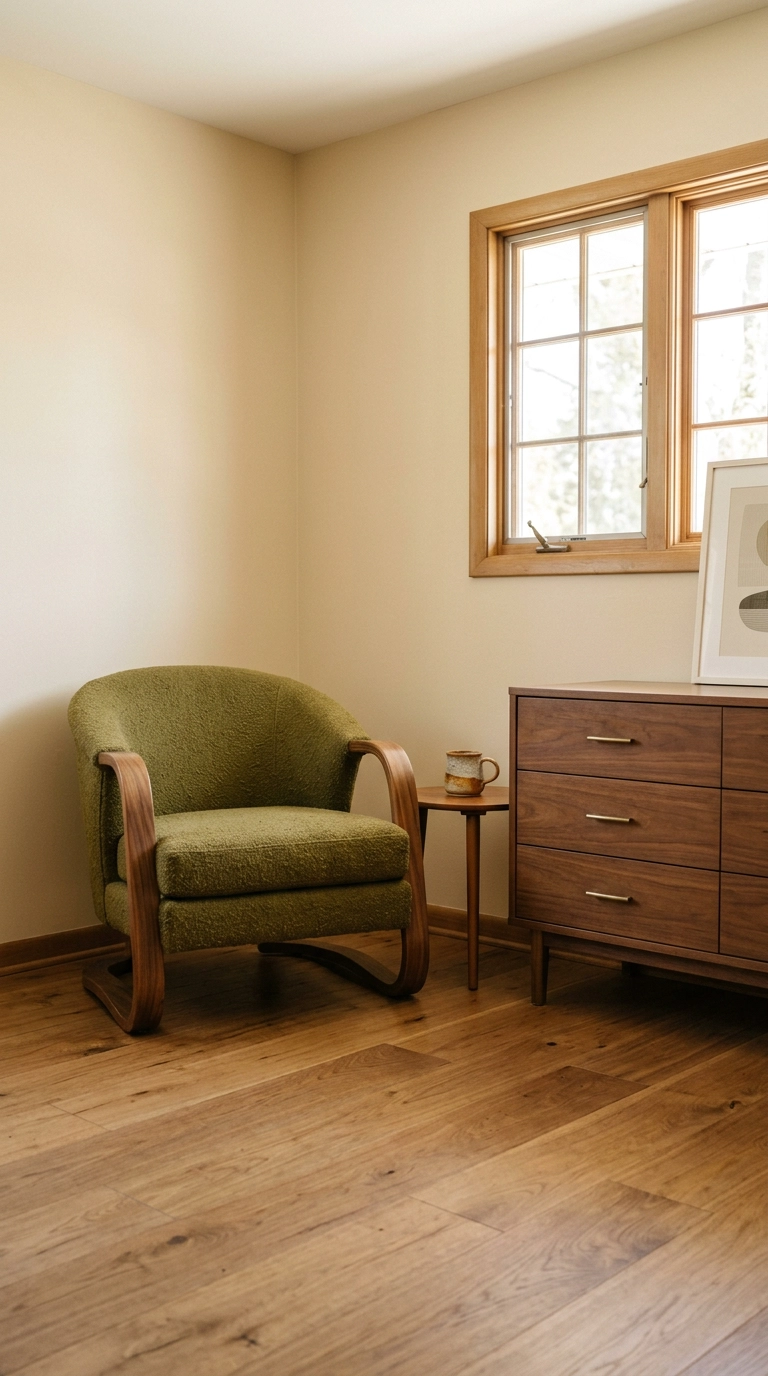
A room of nothing but rectangles and tapered legs starts to feel rigid, and the period knew it – think of the organic curves in Eero Saarinen’s tulip pedestals or the scooped shell of an Arne Jacobsen chair sitting among all that rectilinear casework. One curve is enough.
18. Use a Room Divider or Slatted Screen for Zoning
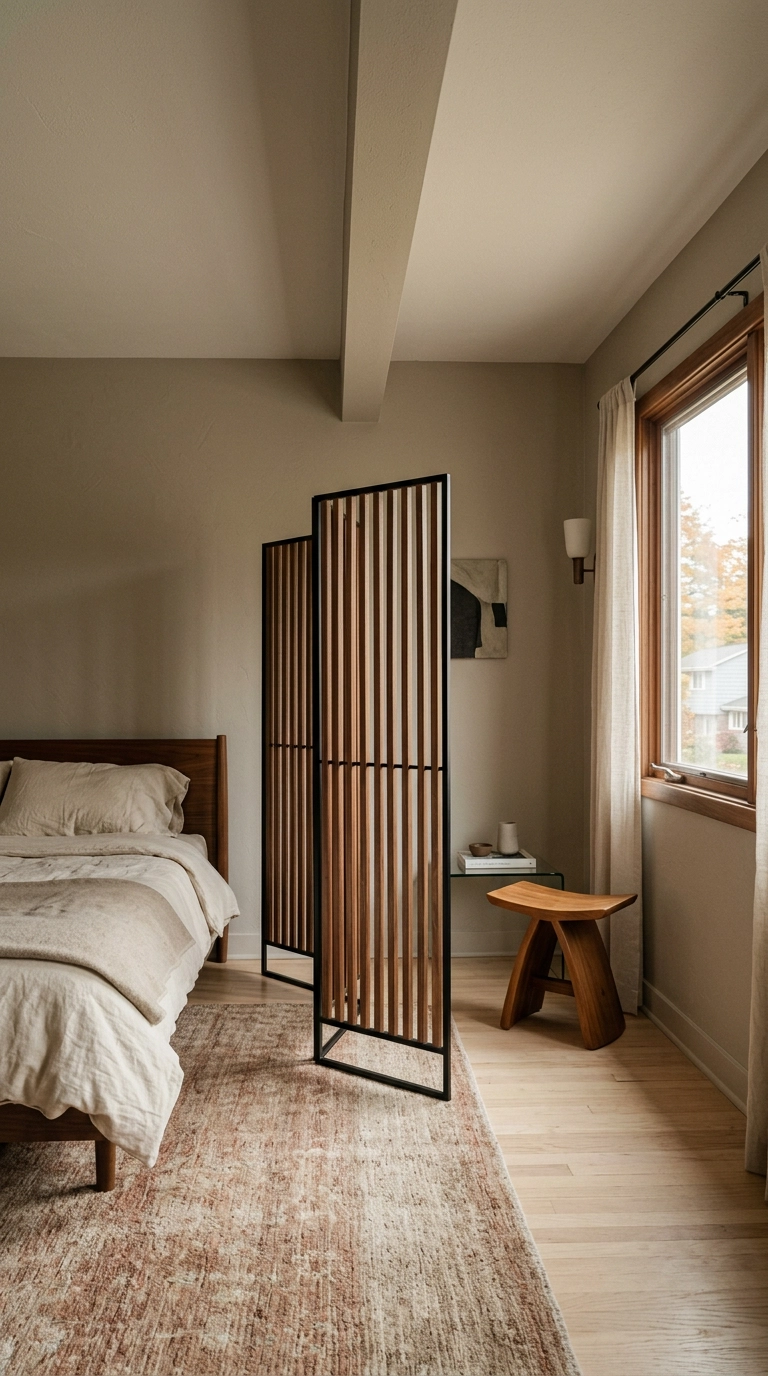
Open-plan mid-century houses used vertical slat dividers to define zones without building walls, and the same trick works in a bedroom that’s doubling as an office or a nursery. A slatted screen filters sightlines instead of blocking them, so the room still reads as one space.
19. Float the Nightstands and Wall-Mount the Storage
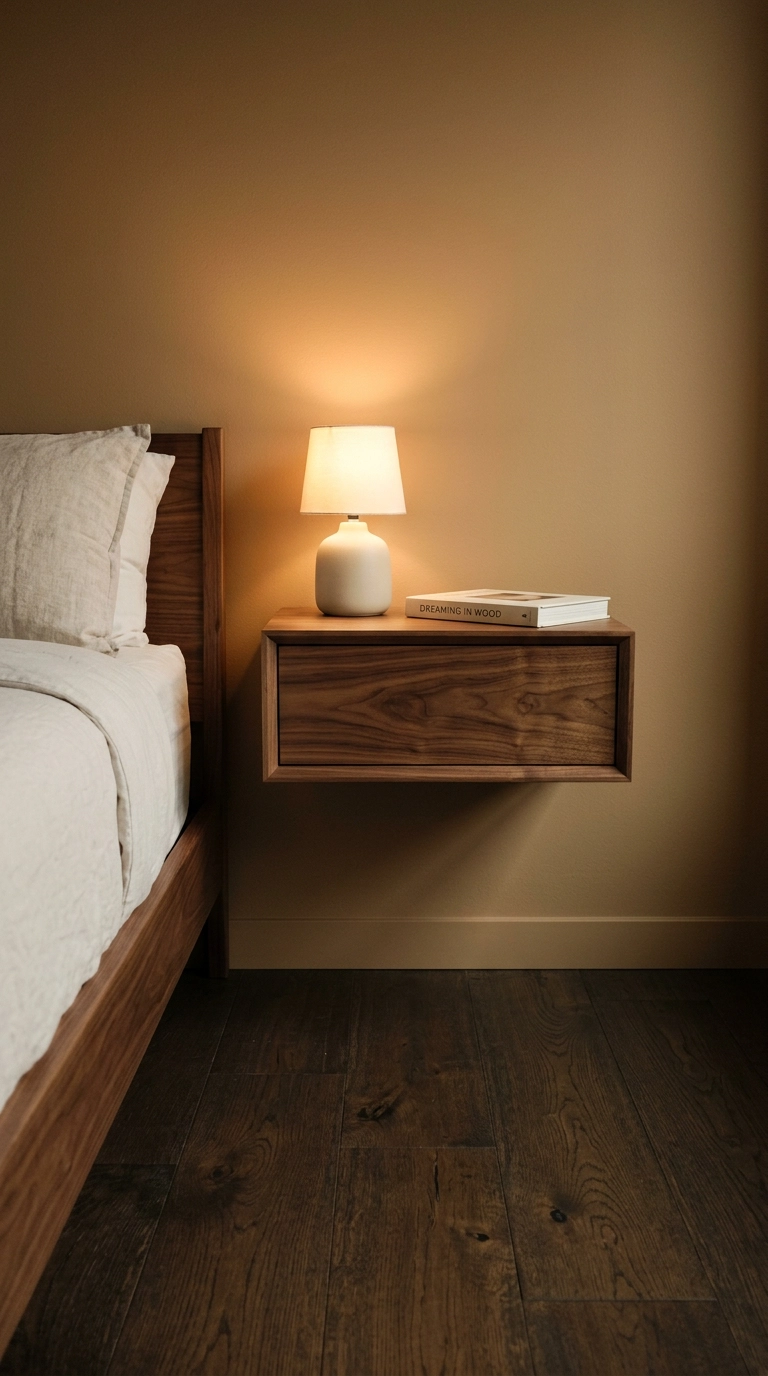
Wall-hung casework was a genuine mid-century innovation, and it’s the best small-bedroom trick in this entire style. Seeing continuous floor under a floating nightstand tricks your eye into reading more square footage, the same principle as the tapered legs but taken further.
20. Repeat One Metal Finish Exactly Three Times
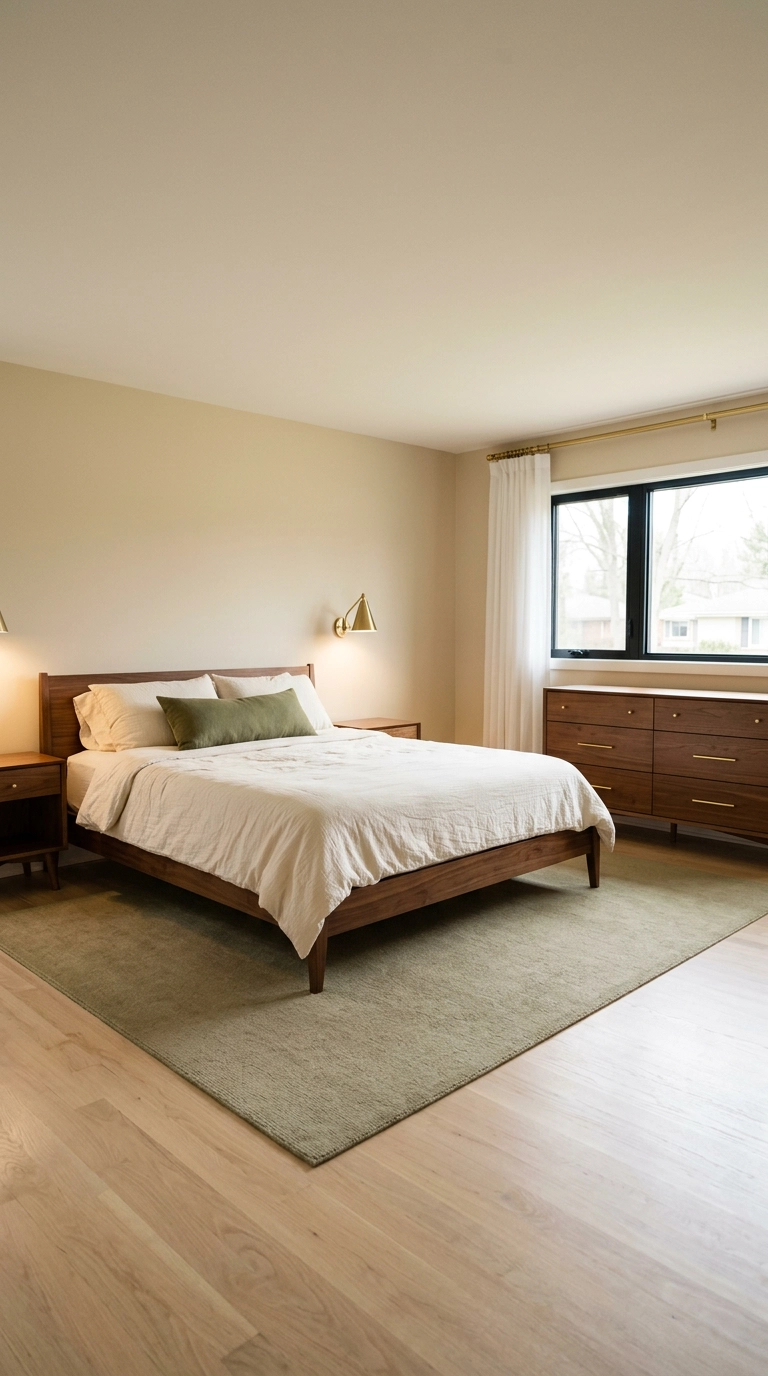
Here’s the discipline that separates a designed mid-century room from a collection of mid-century objects: pick one metal and let it appear at least three times in different roles. Brass in the sconce, the pulls, and the curtain rod reads as a decision; one brass thing among nickel and black reads as an accident.
21. Refinish a Vintage Casegood Instead of Replacing It
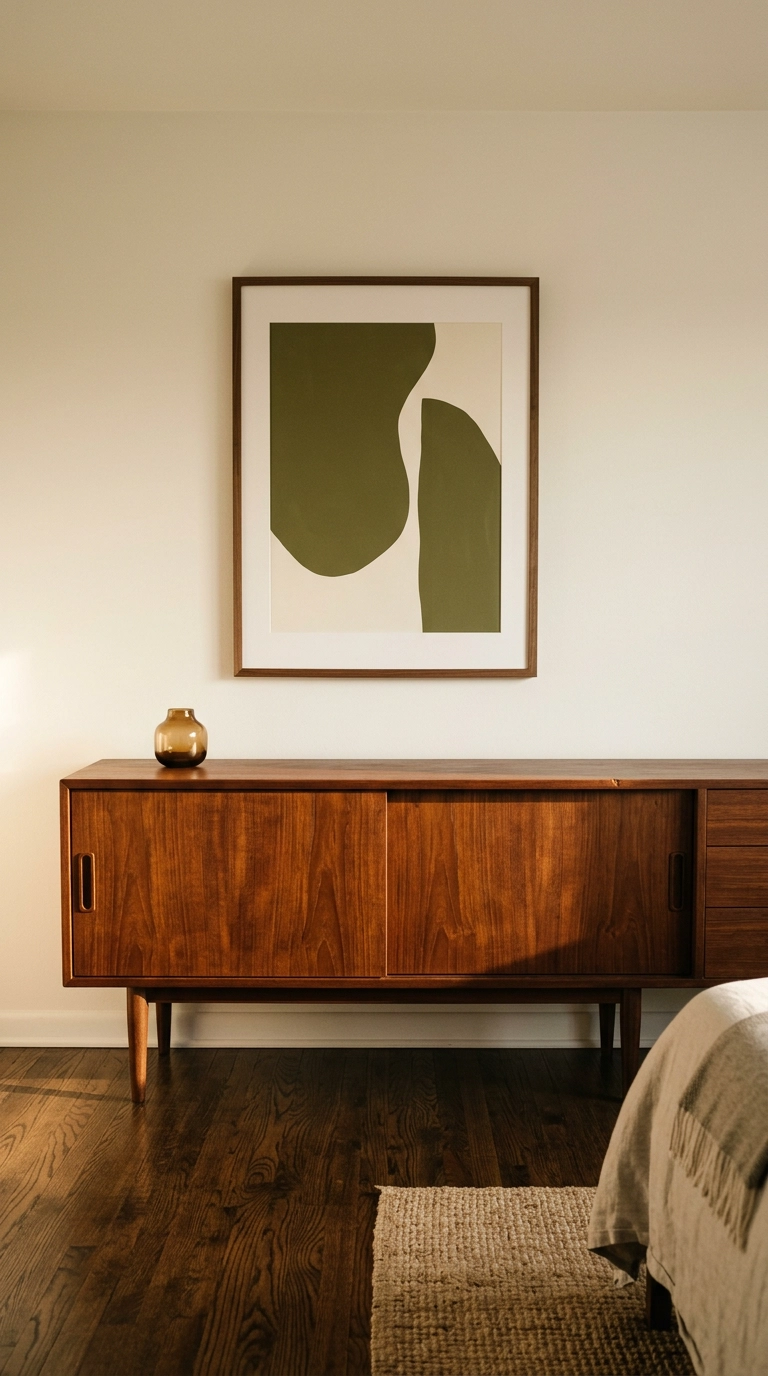
Sixty-year-old teak and walnut usually just look tired, not ruined – the original finish has dried out and gone chalky. Cleaning and re-oiling a solid-wood piece is a weekend and roughly $40 in materials, and it will look better than anything you can buy new at three times the price.
22. Build a Wall of Wood Paneling With a Horizontal Run
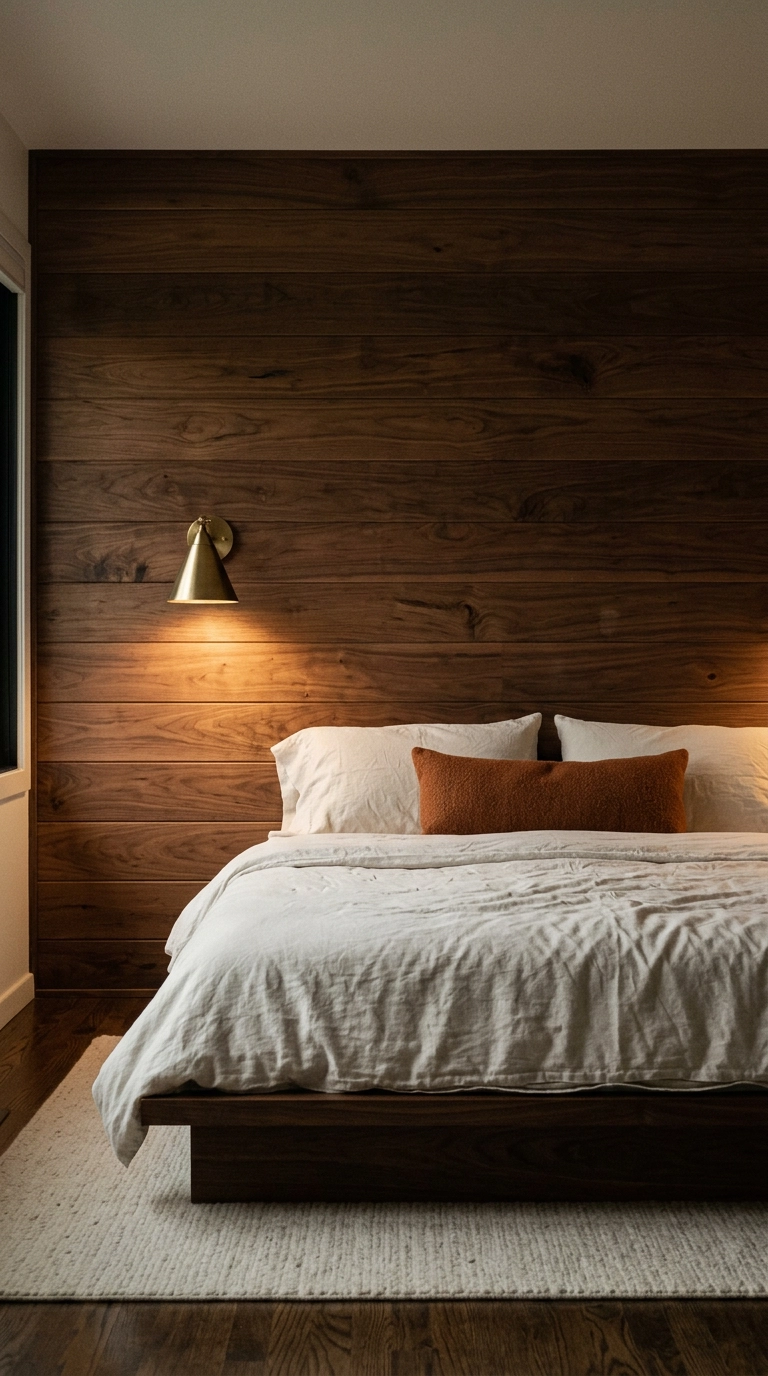
This is the biggest-commitment idea here and the one that most completely transforms a room. Run the planks horizontally rather than vertically – it stretches the wall sideways and doubles down on the low horizontal line the whole style is built on.
23. Invest in One Designer Piece and Let It Be the Whole Story
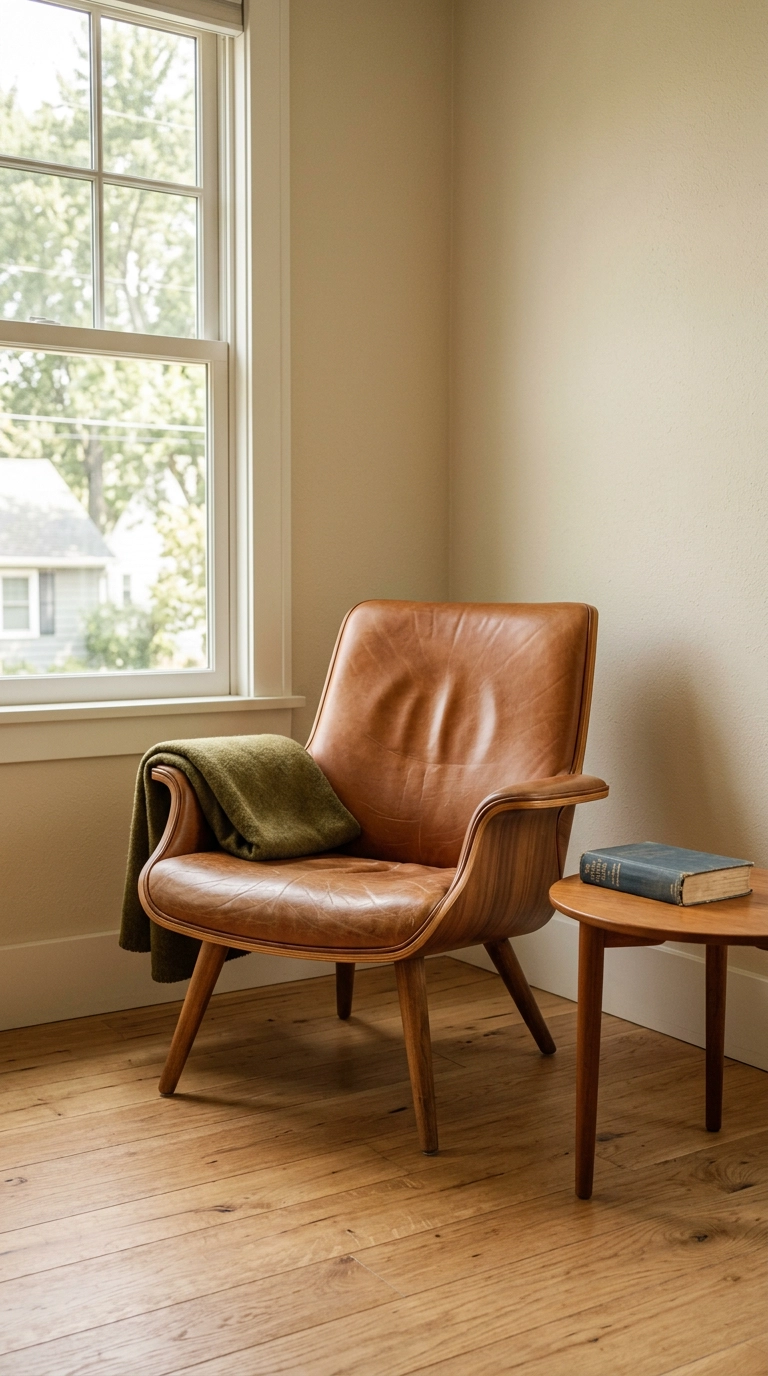
If you can only stretch for one significant thing, buy a genuinely great chair and put nothing near it. A Hans Wegner Papa Bear, a licensed Eames lounge, or a Børge Mogensen easy chair carries a room by itself, and it holds resale value in a way that almost no furniture does anymore.
Where I’d Actually Start
If this list feels like a lot, the honest shortcut is three moves: swap the hardware to unlacquered brass, add one mustard or olive textile, and take everything off the nightstand but three objects. That’s a Saturday and under $150, and it fixes the two things that make a reproduction room read as a reproduction – cold metal finishes and too much stuff on flat surfaces. Everything after that is patient upgrading, one piece at a time.
What’s genuinely shifted is that the flat grey-and-white version of this style is finally done, and the color has come back – muted teal, mustard, and rust against warm oatmeal instead of against cold grey. The pieces getting saved now are unbranded solid-wood casegoods rather than another licensed reissue, and Alexander Girard’s geometric textiles for Herman Miller keep resurfacing because one bold pattern in an otherwise solid room is still the most efficient thing you can do. Amber Lewis builds this look convincingly by mixing eras on purpose, which is the real lesson: a matched bedroom set was never authentic, and one worn 1960s chair among newer things is what keeps the room from reading like a museum display.
Pick the version that matches your lease and your budget. Leaning teak mirror, plug-in swing-arm sconce, and a big geometric rug if you’re renting; the teal accent wall if the room is yours; the horizontal walnut paneling if you’re staying a while and want the one change people can’t stop looking at. If this helped, sign up for my weekly newsletter and I’ll keep sending the paint names, estate sale finds, and wood sources I’m using in real client homes.


