
23+ Serene Asian Bedroom Decor Ideas that Feel Calm and Gorgeous in 2026

I’ll be straight with you – “Asian bedroom decor” is the most misunderstood search term I get asked about, because it isn’t one style at all. A Japanese room built around empty space, a Chinese room built around lacquer and lattice, a Balinese room built around carved teak and open air, and a Rajasthani room built around block print and jewel color are four completely different design languages, and blending them into one vague look is exactly how these rooms fall flat. So I’ve sorted the ideas below by the tradition they actually come from, with the reasoning behind each, because once you understand why low furniture changes a room’s proportion or why a paper screen softens light the way it does, you can borrow honestly instead of just buying a theme.
Asian Bedroom Decor Ideas
1. A Very Low Platform Bed in the Japandi Style
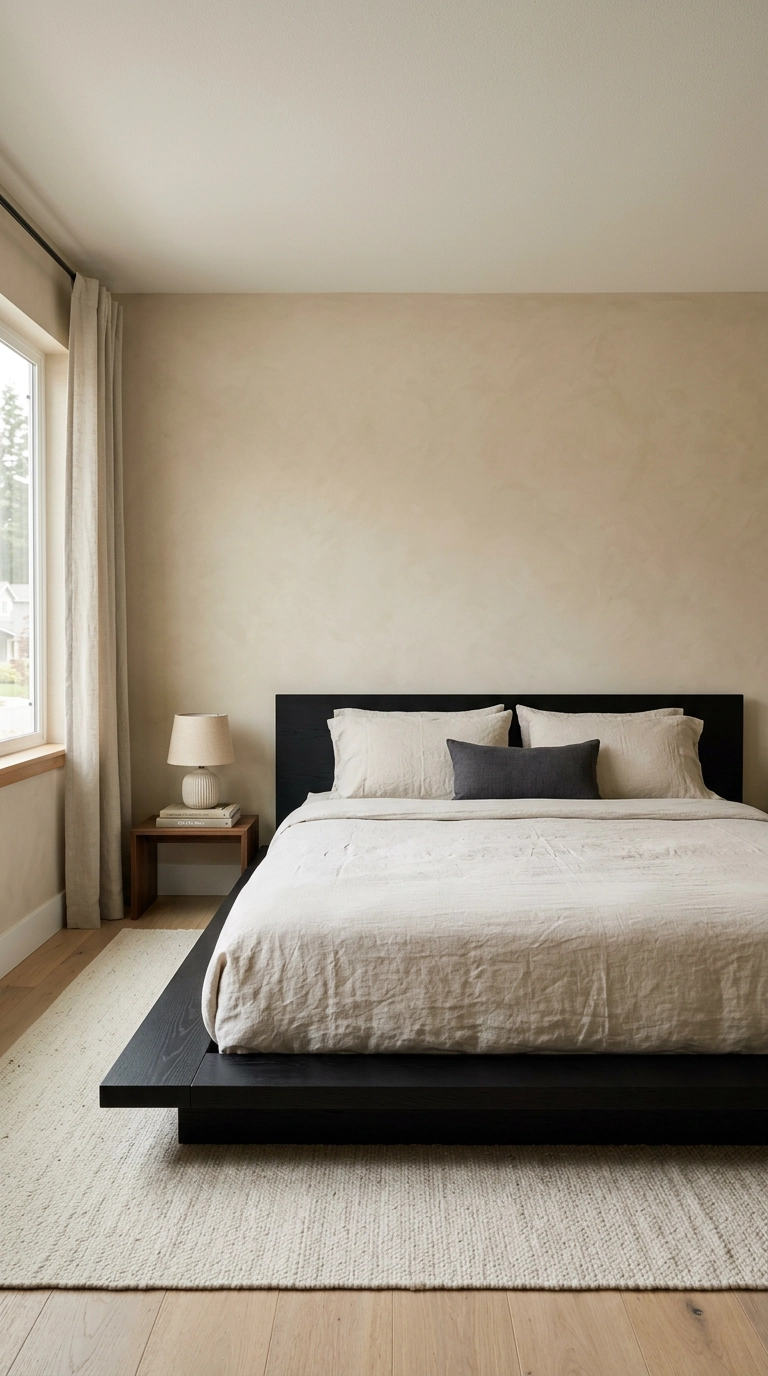
If you steal one thing from Japanese design, steal the height. Dropping your bed to roughly 10 to 14 inches off the floor instead of the standard 25 leaves a taller strip of empty wall above the headboard, and that vertical breathing room is what makes an eight-foot ceiling suddenly feel generous.
2. Sliding Wood-Frame Paper Screens Instead of Curtains
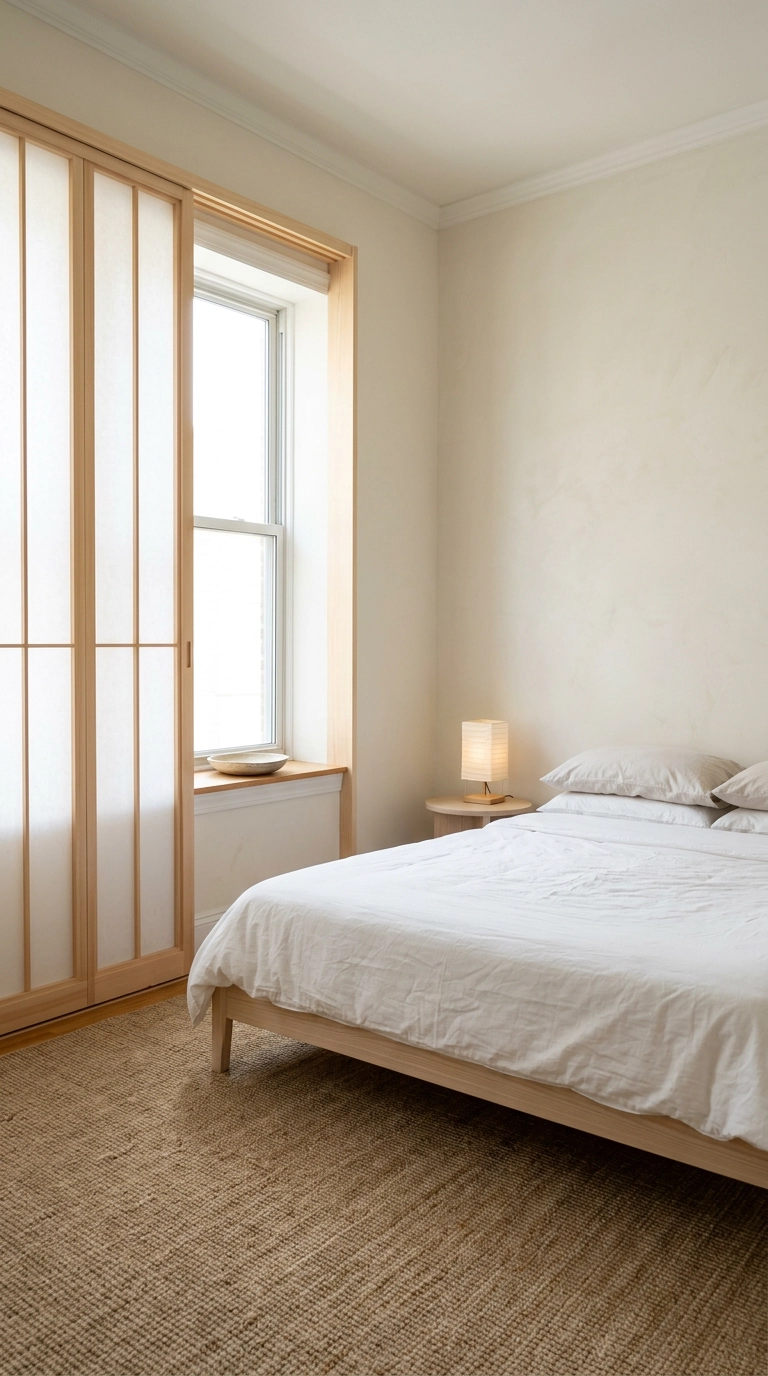
Shoji – sliding wood-frame panels filled with translucent paper – are not just a motif. Paper scatters light instead of blocking it, so a screened window fills the room with an even, almost shadowless glow rather than one harsh bright rectangle, which is why they work so well on a west-facing window that bakes at 5pm.
3. A Cane-Webbed Headboard for Vietnamese-Style Lightness
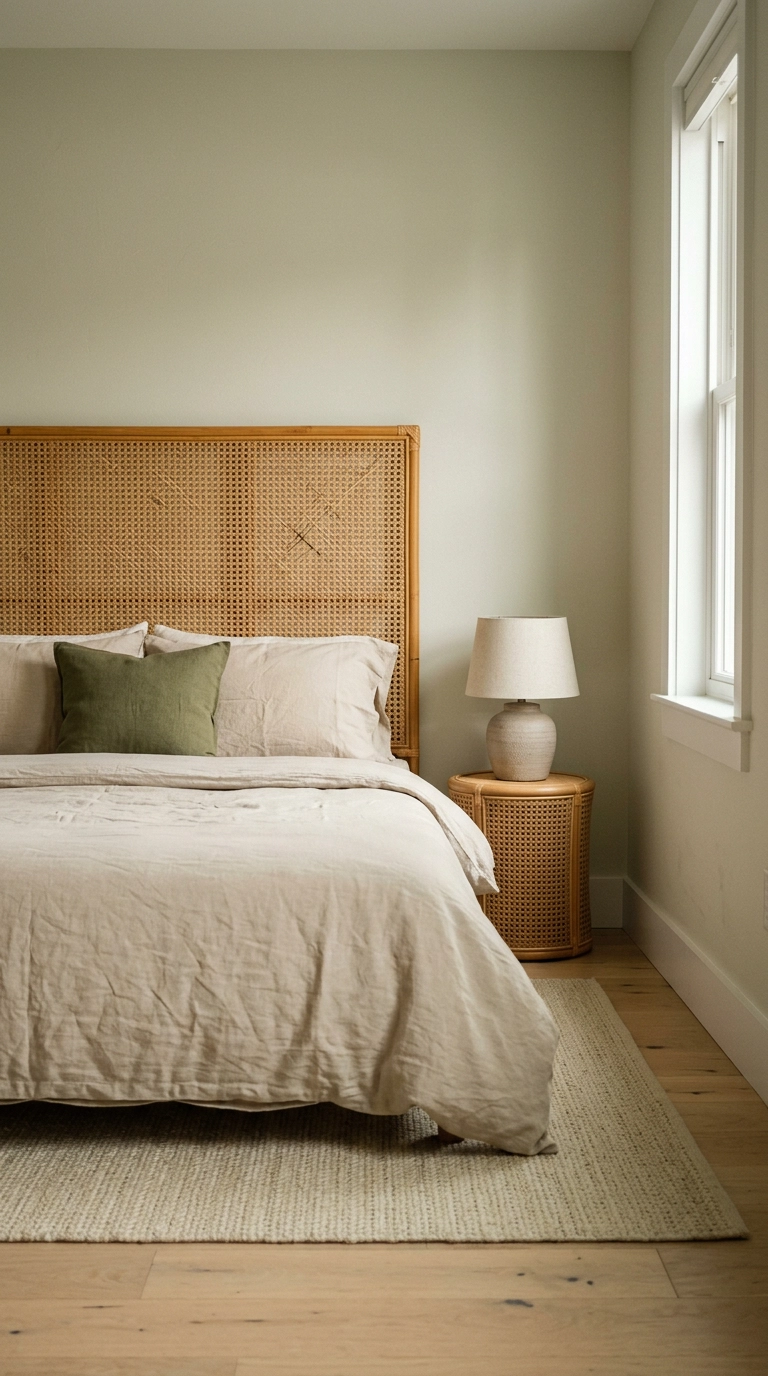
Cane webbing is the cheapest way to add real texture without adding visual weight – meaning the eye reads straight through it, so a big headboard doesn’t crowd a small room the way a solid upholstered slab does. Open weave is a hallmark of Vietnamese and Southeast Asian furniture for a practical reason: it breathes in humid air.
4. A Split Fabric Doorway Panel in Indigo Shibori
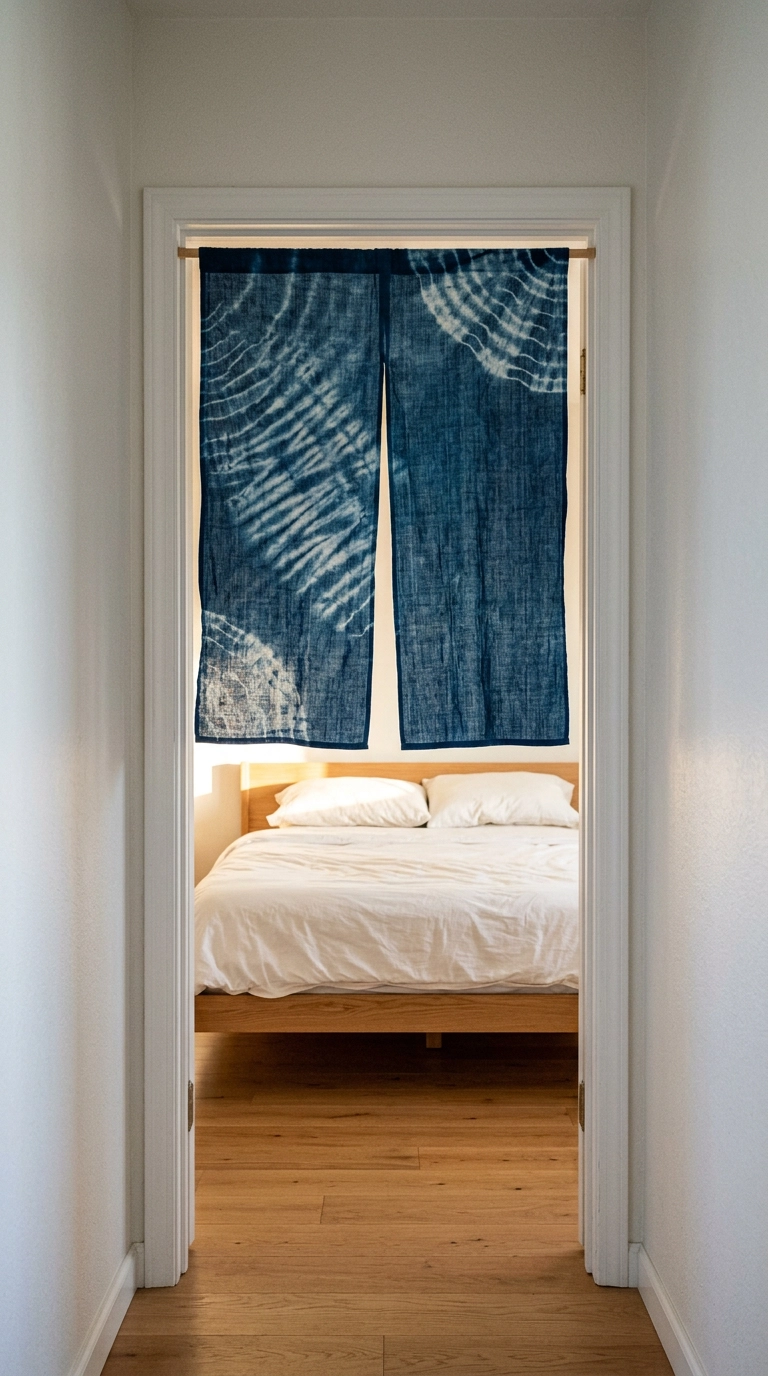
A noren is a split fabric panel hung across a doorway, and it’s the most rental-safe idea in this article – a dowel, two hooks, twenty minutes. It softens the hard rectangle of a door frame and creates a sense of threshold without actually closing anything off.
5. Woven Straw Floor Mat Panels as a Rug Alternative
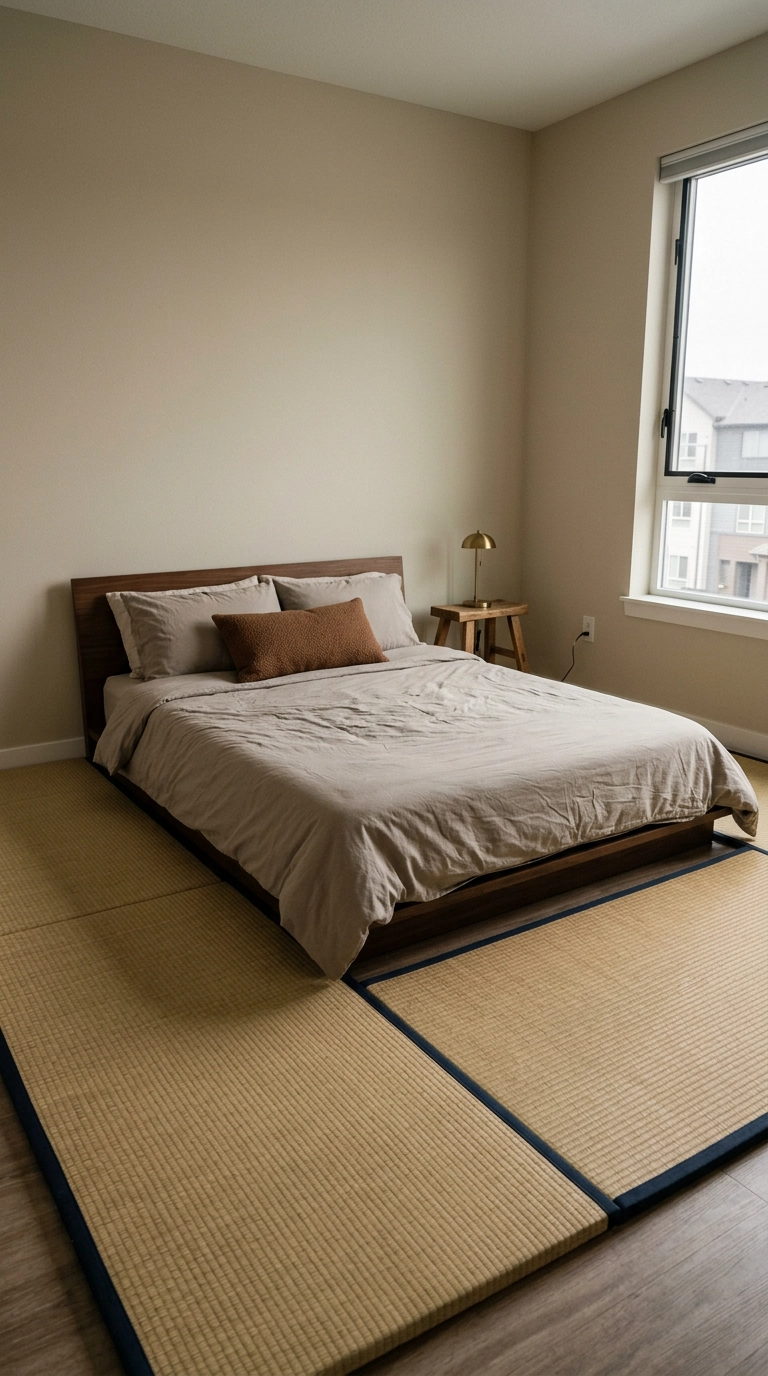
Tatami is a big part of why traditional Japanese rooms feel so quiet – woven straw absorbs sound and softens footsteps, so the room reads calmer before you’ve added a single object. A standard mat is roughly 3 by 6 feet, which is also why classic Japanese rooms are sized in mat counts rather than square feet.
6. A Recessed Display Alcove With Exactly One Object
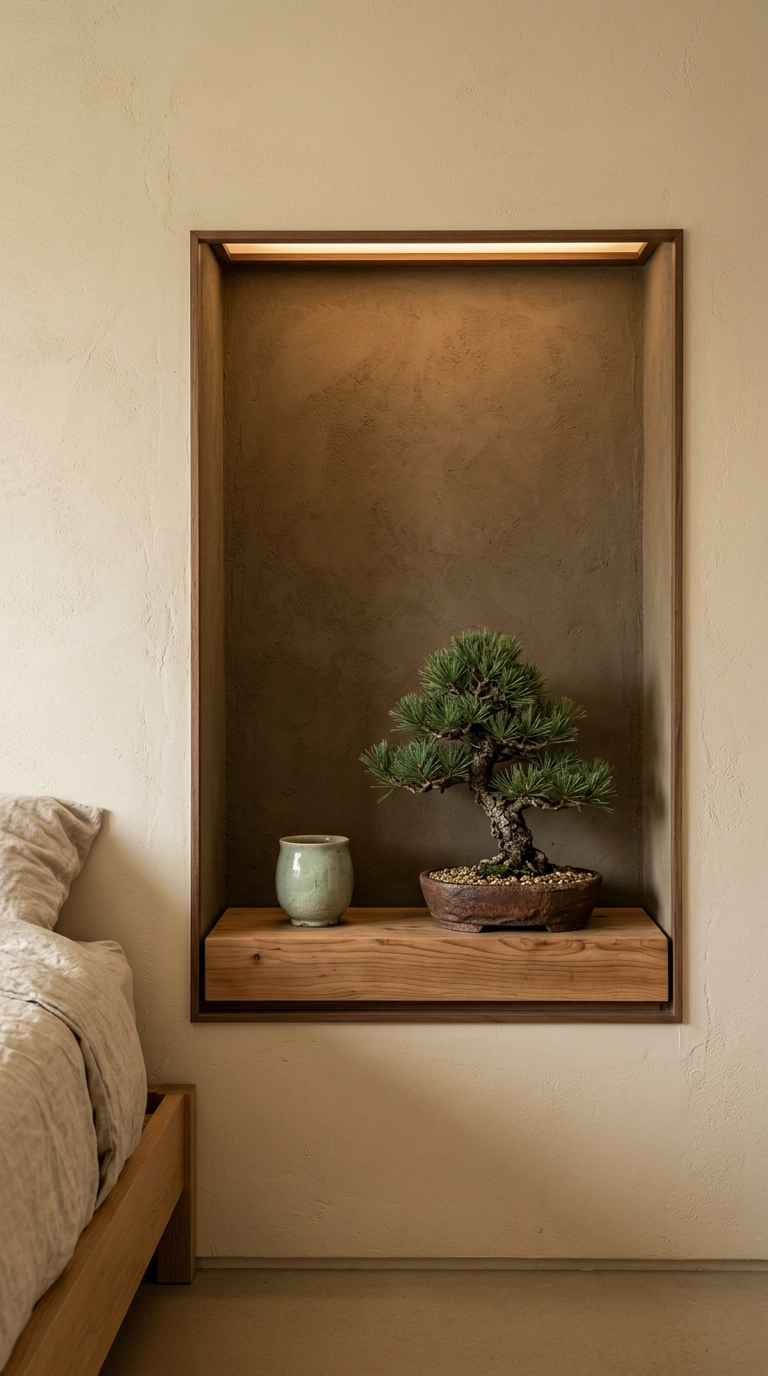
The tokonoma is a shallow built-in alcove used in Japanese rooms to hold one thing at a time, and the emptiness is doing the work – negative space, meaning the deliberate blank area around an object, is what makes that object read as important. Put three things in there and you’ve built a shelf.
7. A Carved Chinese Lattice Panel as a Room Divider
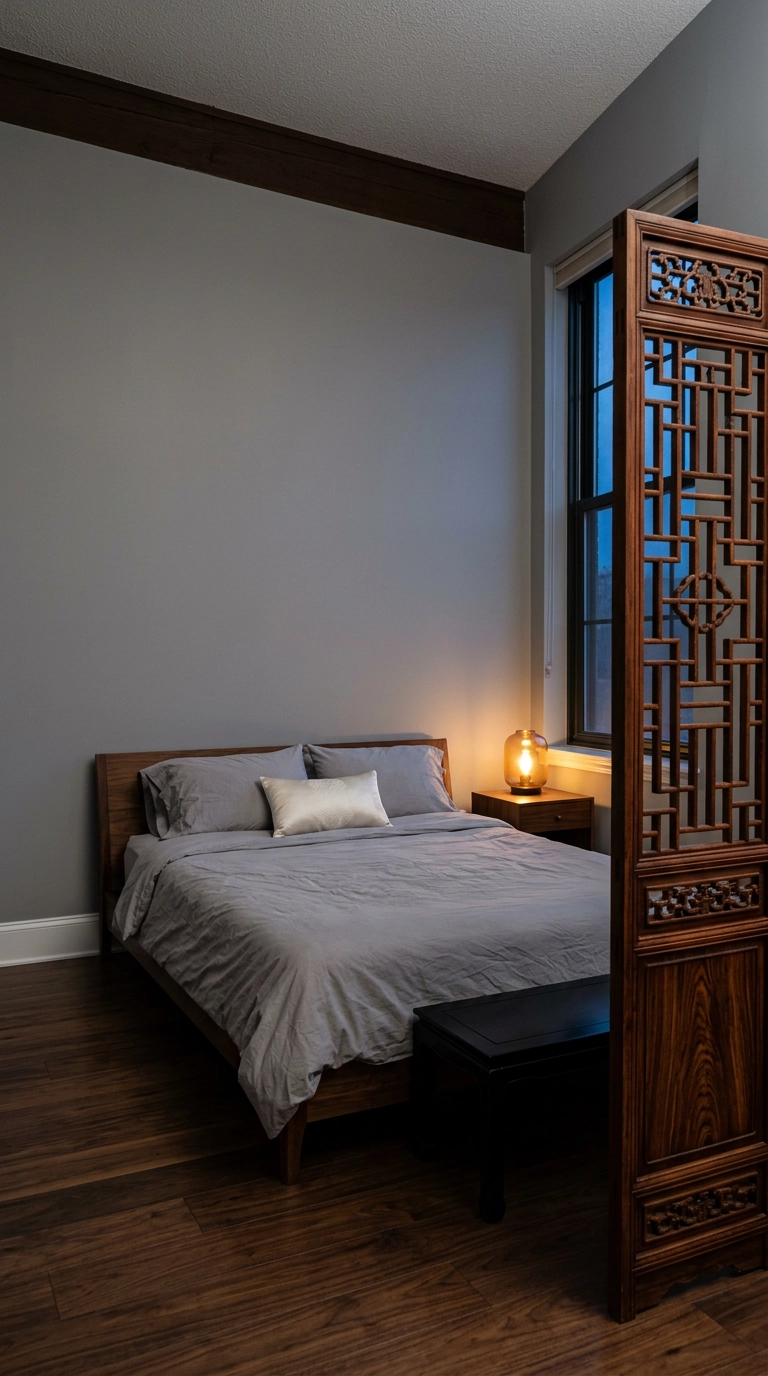
Chinese latticework is a sightline tool, not a wall. It filters the view – you sense there is more room behind it without seeing it clearly – which is exactly what you want in a studio or a long, awkward bedroom where you’re trying to imply a separate sleeping zone.
8. A Celadon and Blue-and-White Porcelain Palette
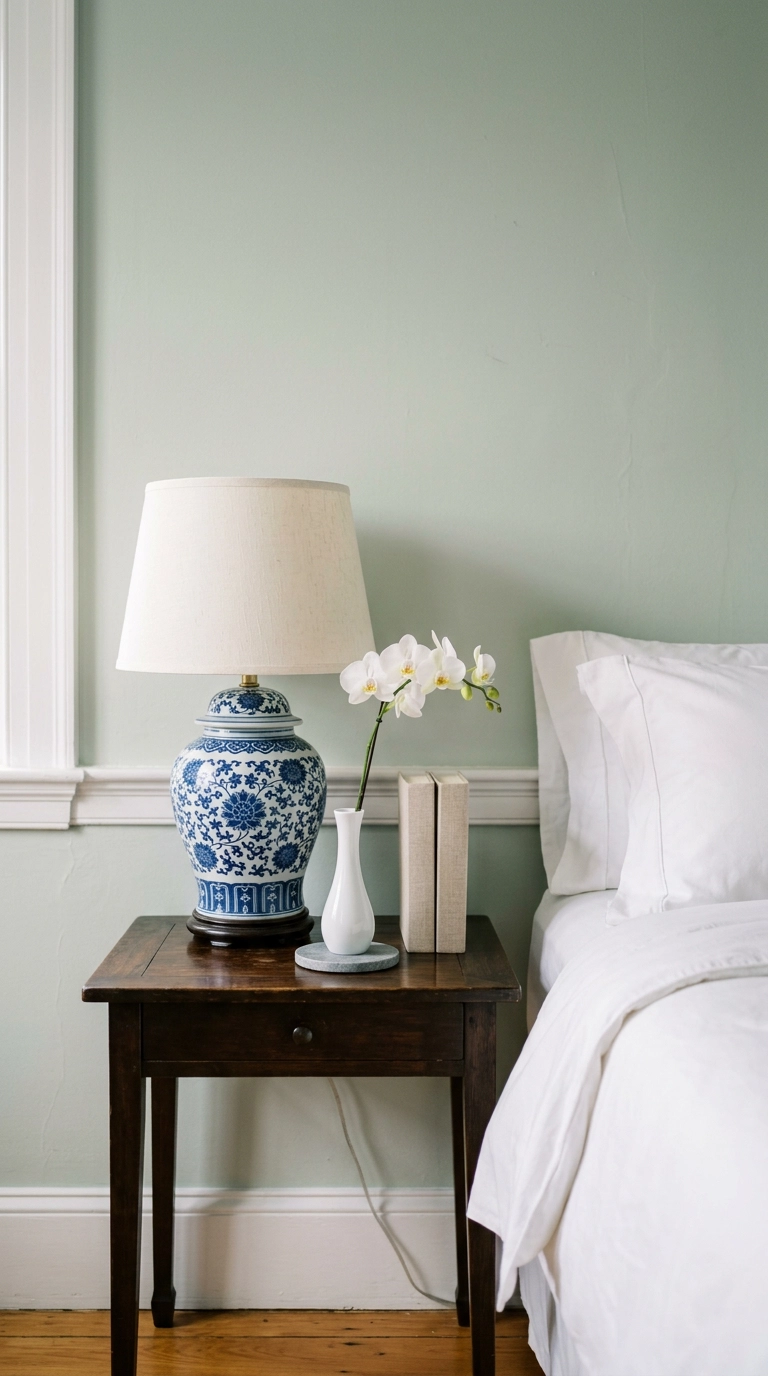
Celadon – the pale grey-green glaze Chinese potters spent centuries perfecting – is one of the most forgiving bedroom colors I know, because it reads green in bright light and nearly grey in dim light. Paired with blue-and-white porcelain, you get a palette with actual historical logic behind it rather than a random color scheme.
9. A Lacquered Chinese Cabinet Used as the Nightstand
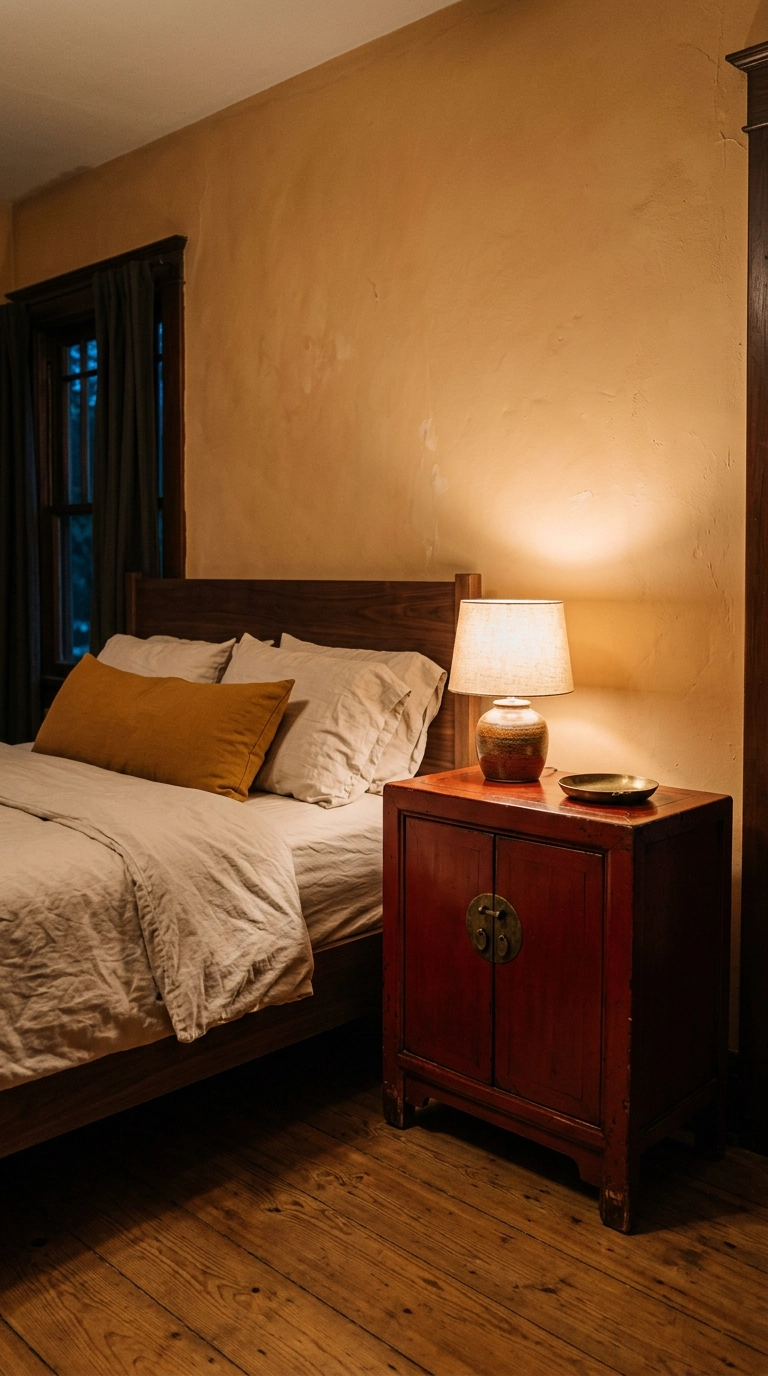
Lacquer is built up in many thin polished coats, which is why an old Chinese cabinet has that deep liquid sheen paint simply cannot fake – and why one small piece can carry an otherwise neutral room. Using a cabinet instead of an open nightstand also hides the charger cables and the pile of half-read books.
10. A Washi Paper Lantern Pendant Overhead
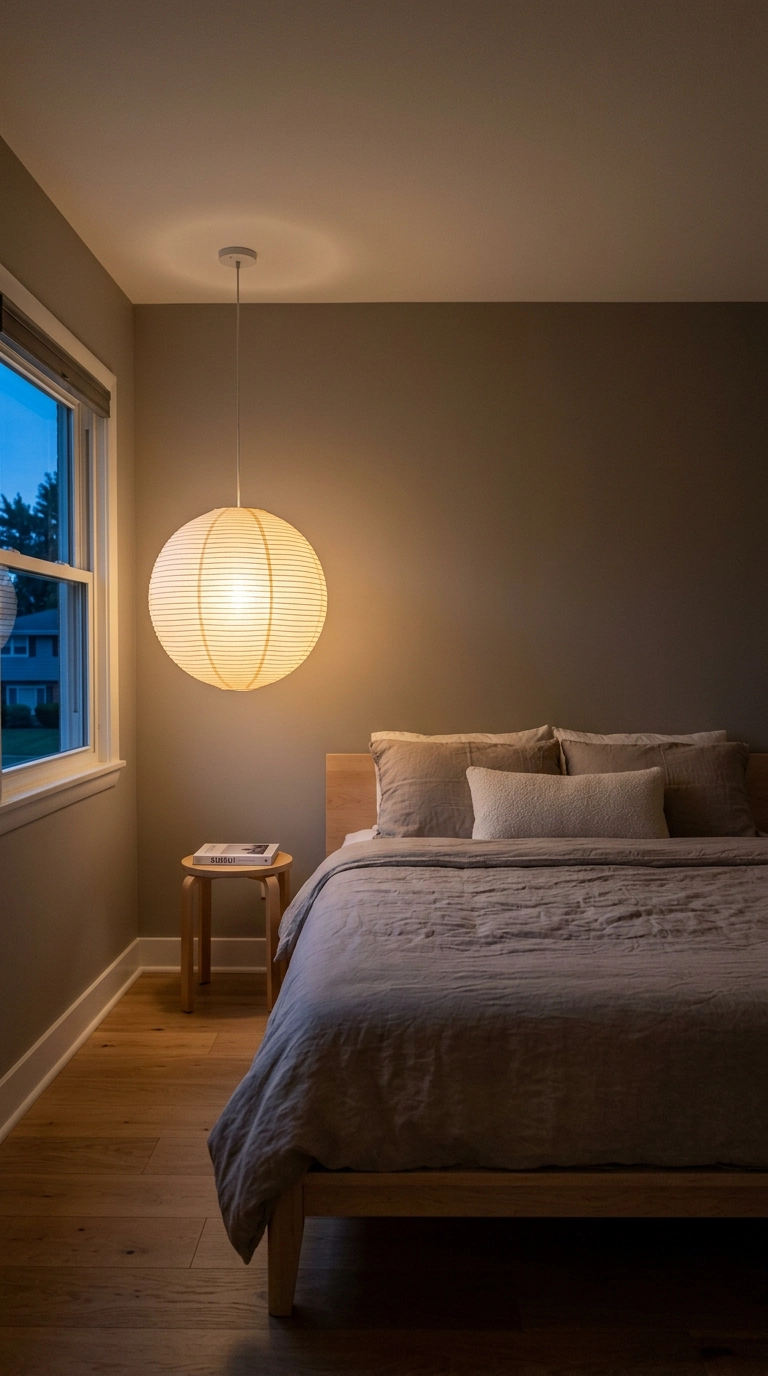
Isamu Noguchi’s Akari lanterns are the reference here – bamboo-ribbed washi paper, still made in Gifu, Japan – and they solve a real problem. Paper glows instead of glaring, so you get ambient light without the hard shadows a bare bulb throws across a bedroom.
11. Korean Hanok Proportion: Keep Everything Low and Horizontal
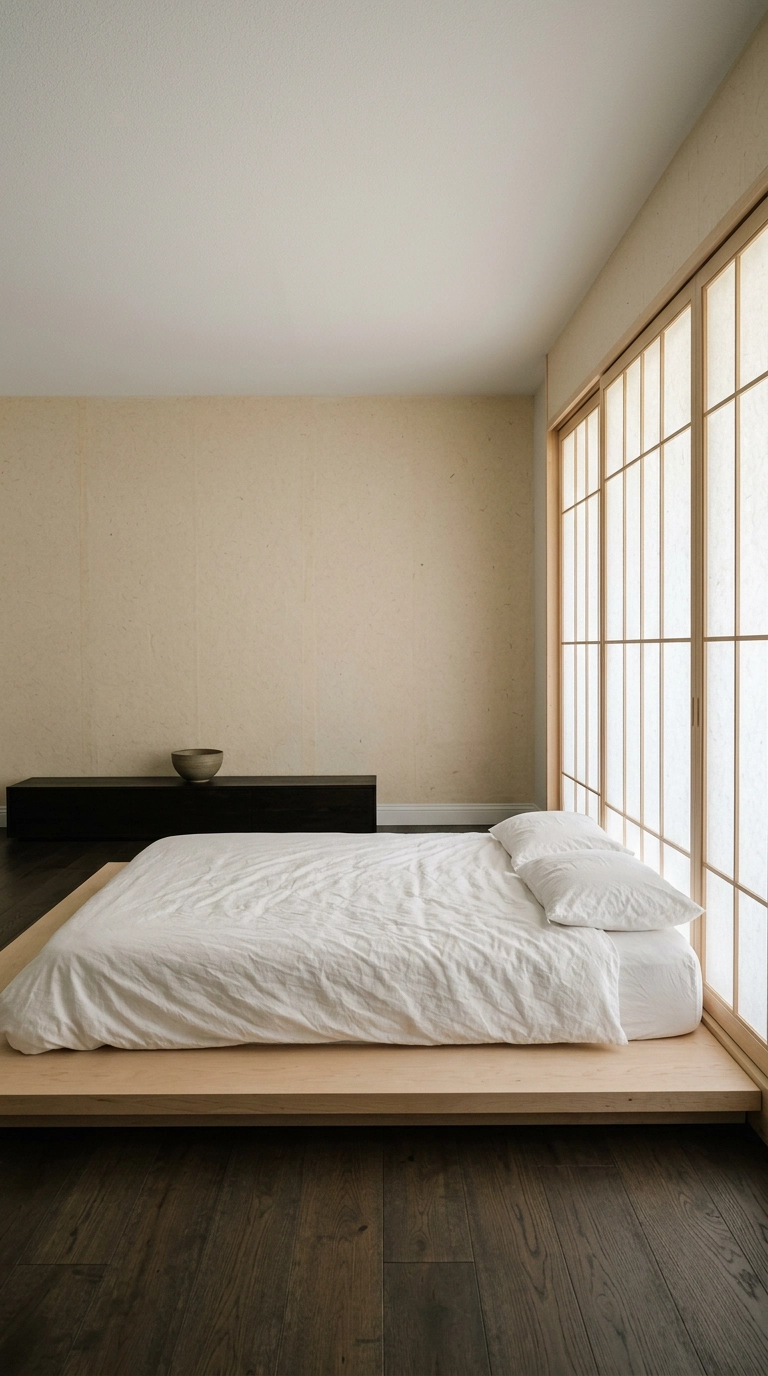
Traditional Korean hanok interiors are organized around long, low horizontals – floor line, chest height, door lintel – with almost nothing tall interrupting them. Your eye travels sideways instead of upward, which makes a room feel wider than it measures. That’s a genuinely useful move in a narrow bedroom.
12. A Warm Floor-Level Sitting Corner, Ondol Style
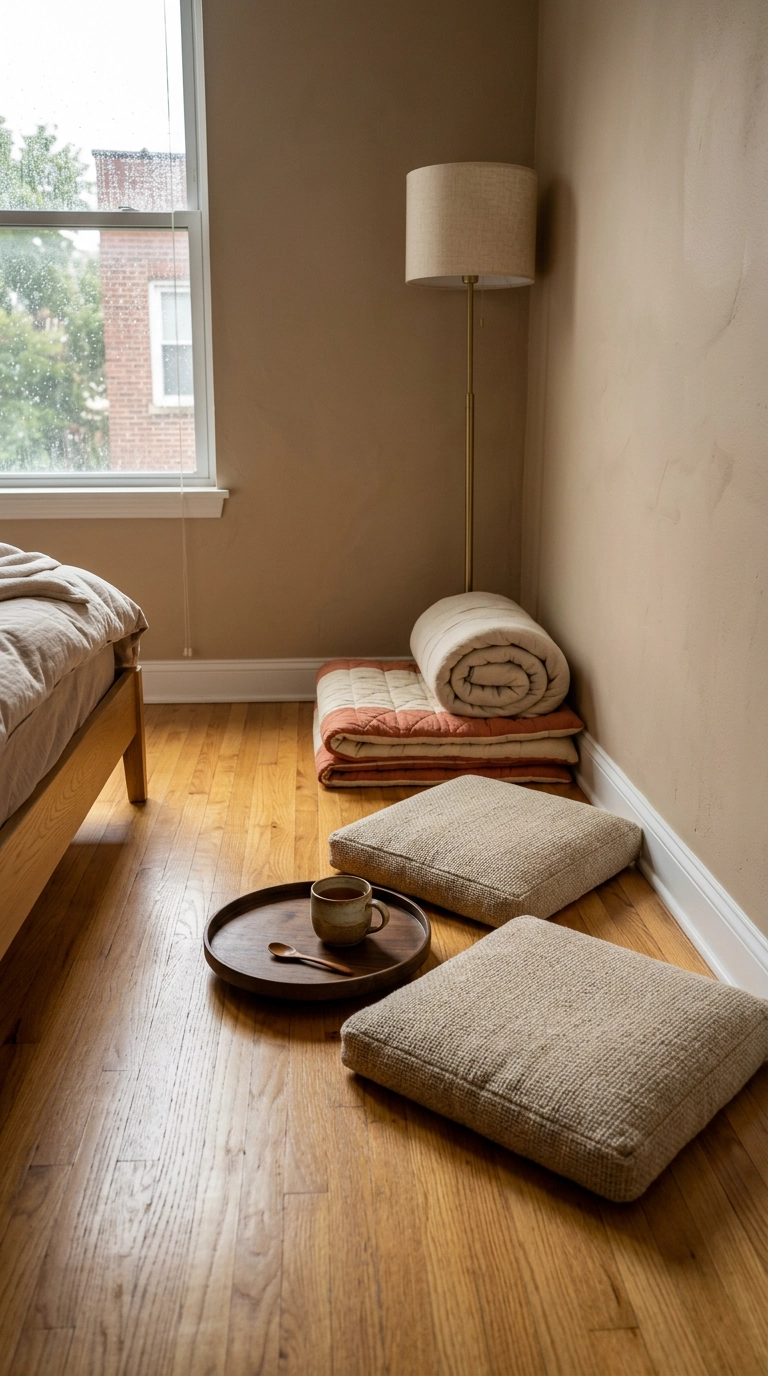
Korean homes traditionally used ondol, a heated floor system, which is why so much Korean living happens at floor level – sitting, eating, and sleeping on padded cotton mats rather than raised furniture. Once the floor is the warmest surface in the room, the whole furniture logic changes.
13. A Bojagi-Inspired Patchwork Window Panel
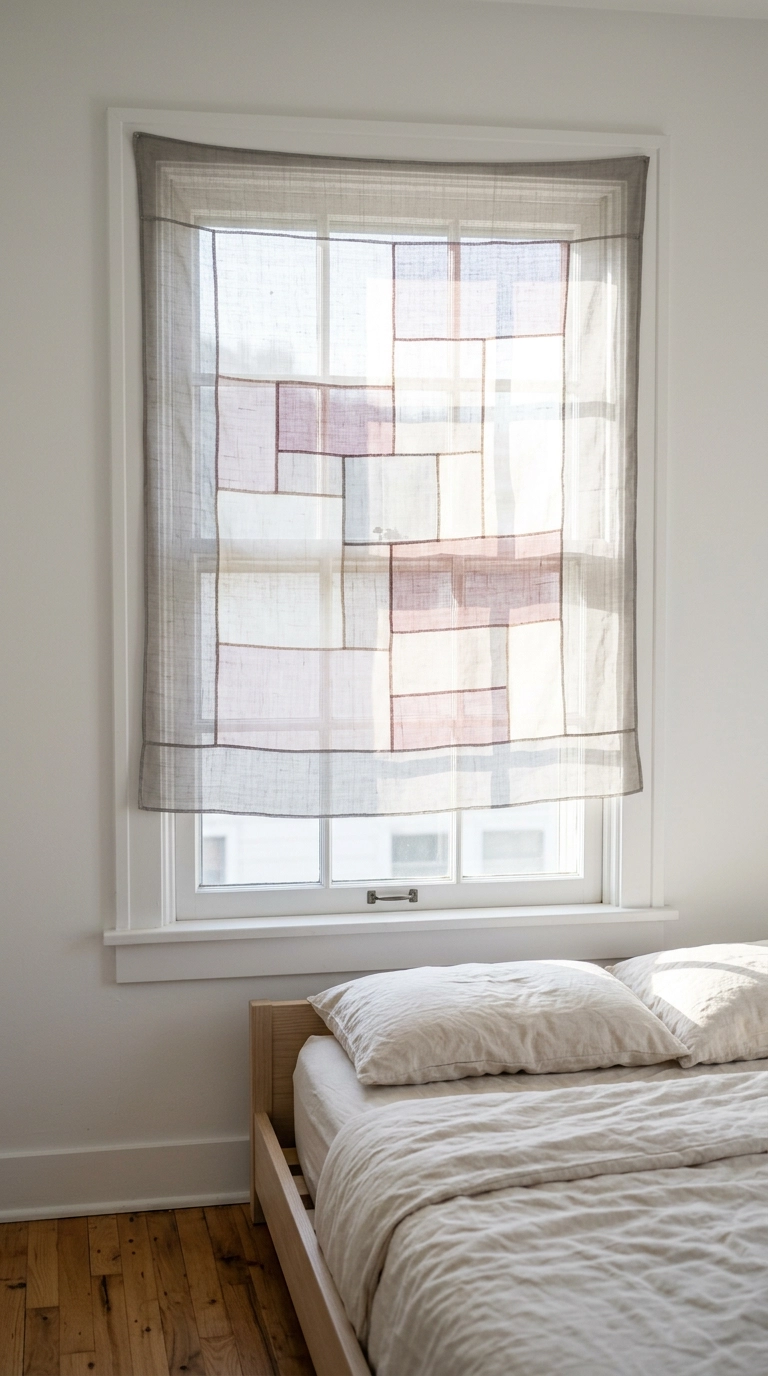
Bojagi are Korean wrapping and covering cloths, often pieced from scraps of sheer ramie or silk with visible flat seams. Backlit at a window, those seams turn into a fine grid of lines and the whole panel behaves like stained glass made of fabric.
14. Layer an Indian Block-Printed Quilt Over Plain Bedding
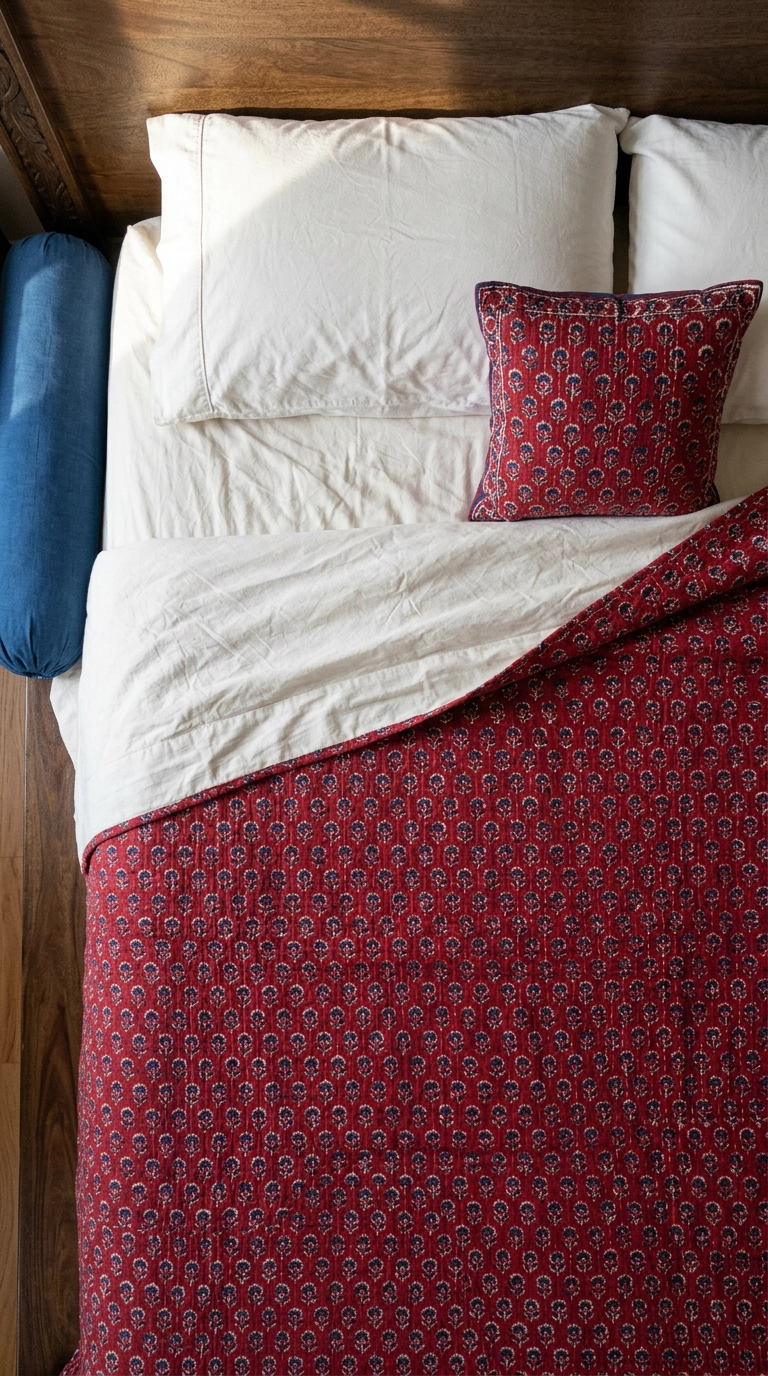
Hand block printing – carved wooden blocks stamped one color at a time – is why Indian cottons have that slight ink variation that machine prints never manage. Look closely at a good one and you’ll see the registration is a hair off in places. That’s the evidence of a human hand, not a flaw.
15. A Carved Wood Lattice Screen for Shadow Patterns
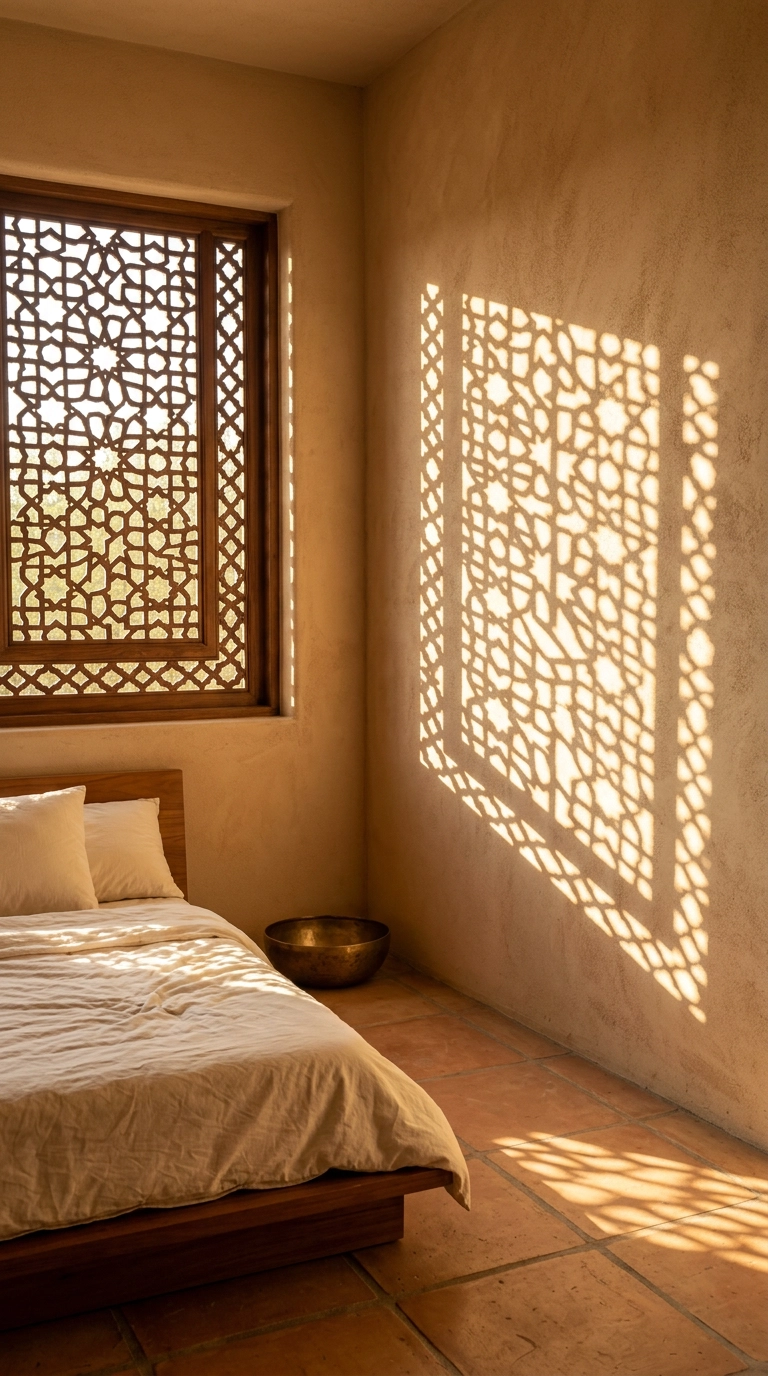
Jali screens are pierced stone or wood panels used across Indian architecture, and they do three jobs at once: they cut glare, they let air through, and they turn hard sunlight into a pattern on your wall. The shadow is the actual decoration, and it moves all afternoon.
16. Drench the Walls in One Deep Indian Jewel Tone
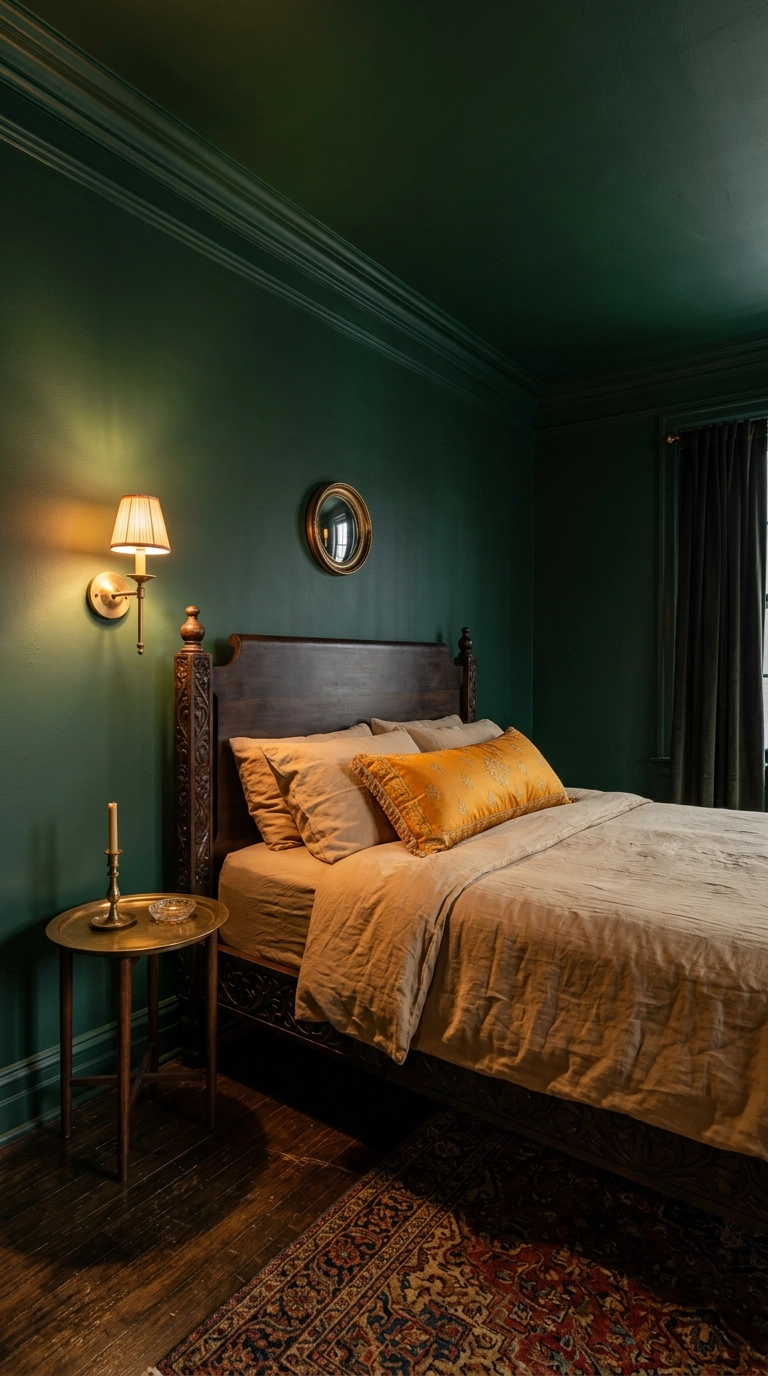
Color drenching means painting walls, trim, and ceiling the same shade so there are no hard visual breaks, and it’s how Indian palace interiors got their depth long before anyone gave the technique a name. In a dark north-facing bedroom, going deeper actually helps – you stop fighting the low light and lean into it.
17. A Carved Teak Four-Poster, Balinese Style
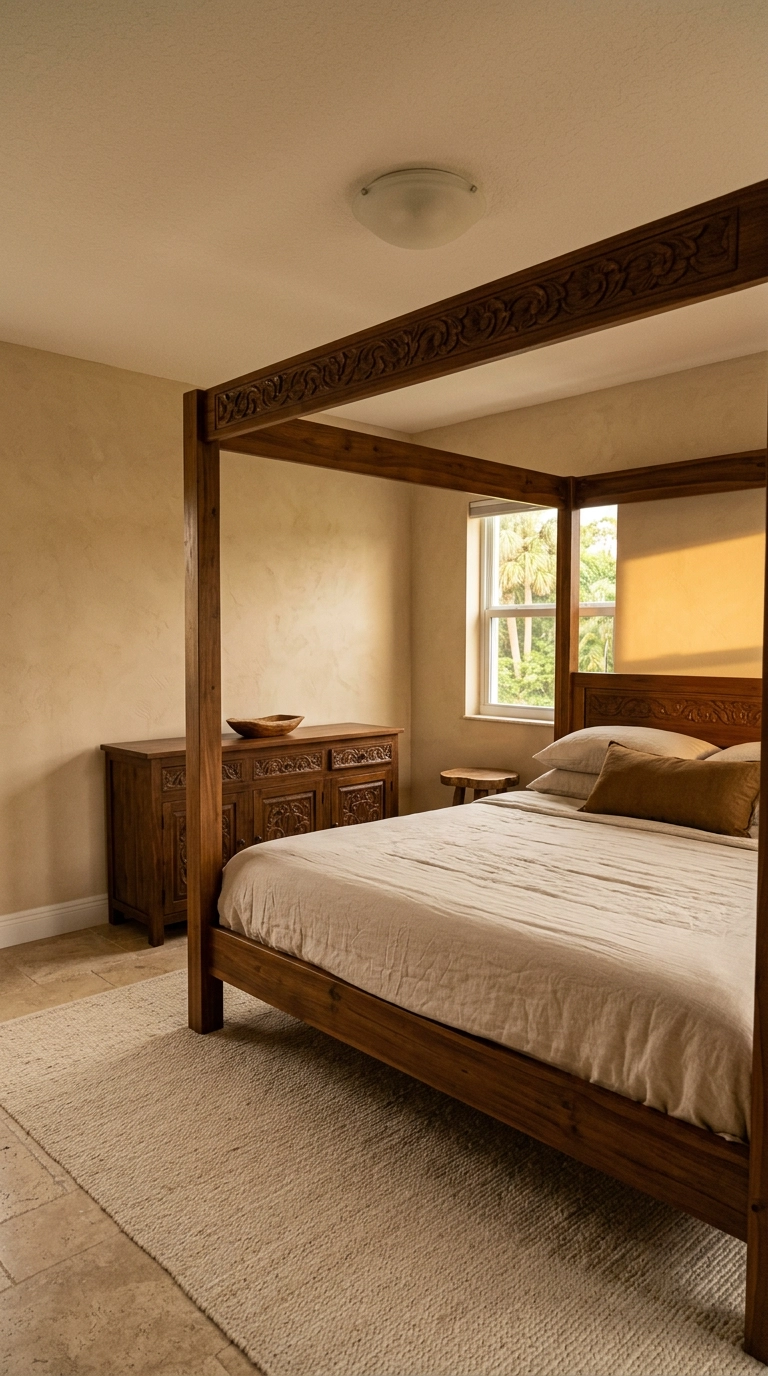
Balinese teak furniture is heavy, dark, and carved – and it needs air around it. A four-poster draws a rectangle in the air above your bed, which is why it makes a large or high-ceilinged room feel intentional and a small room feel stuffed. Under about 12 by 12, skip it.
18. Open the Room to the Outside, Balinese Indoor-Outdoor Style
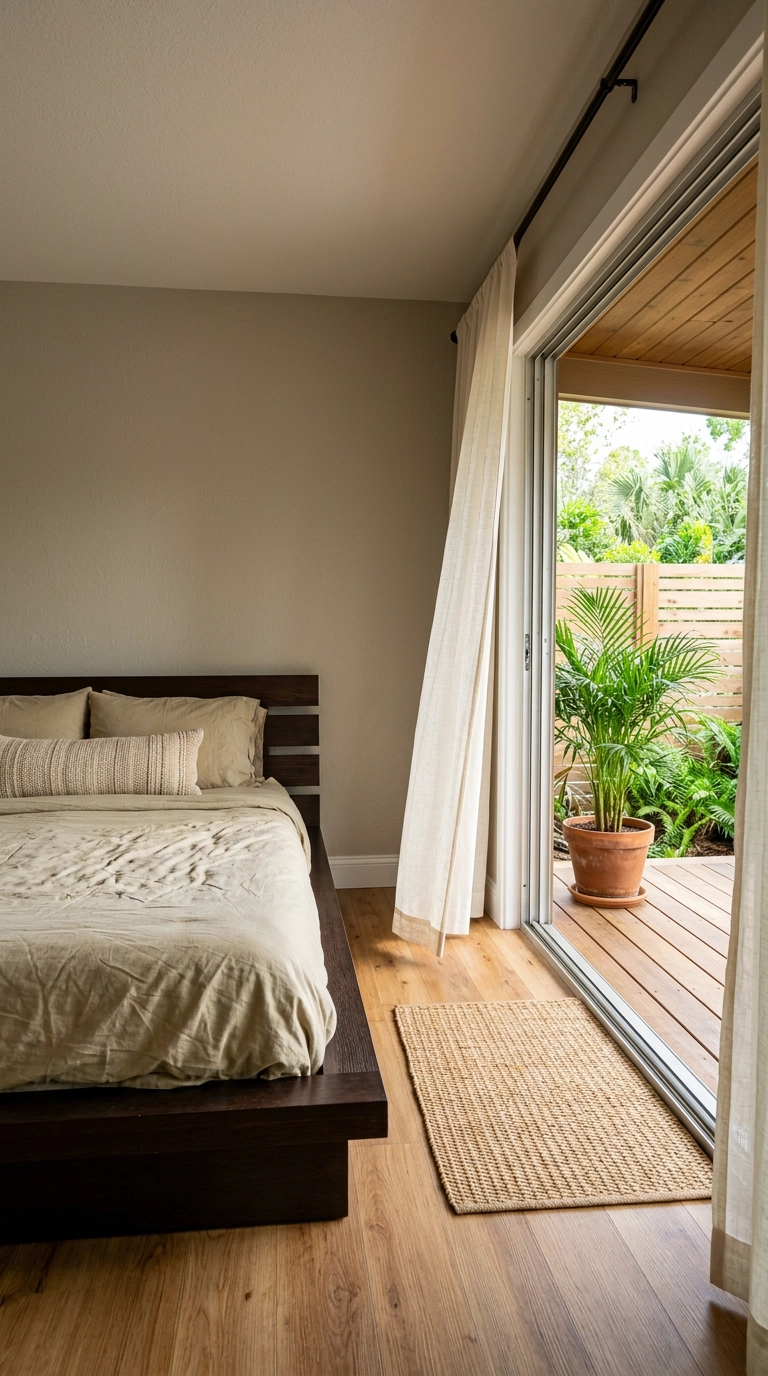
Balinese design treats the boundary between inside and outside as soft rather than fixed – wide openings, deep overhangs, screens instead of walls. If your bedroom has a slider or French doors onto a patio, unlined sheer linen curtains and matching floor material on both sides make the room read as twice its size.
19. A Carved Relief Wood Panel Where the Headboard Would Be
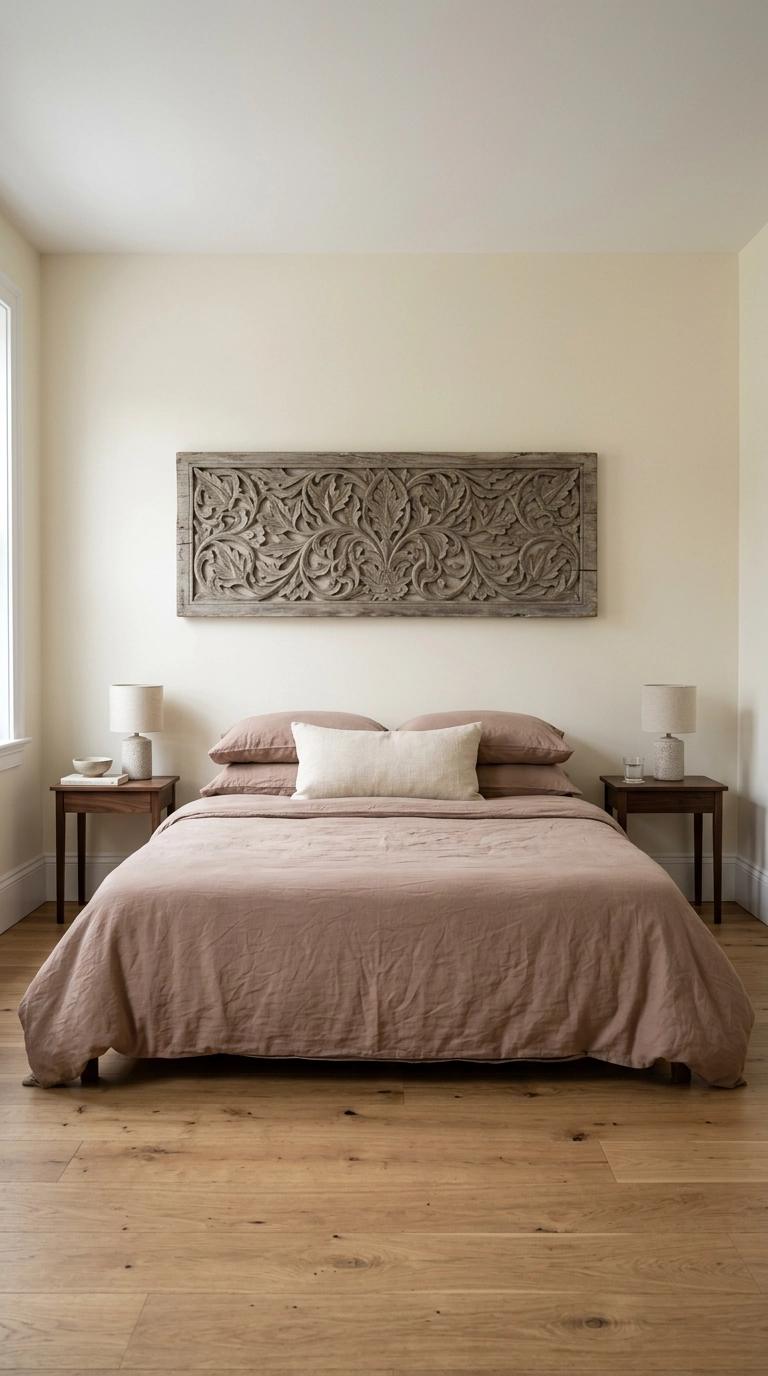
Indonesian carved relief panels are architectural fragments – door surrounds, wall panels, shutter sections – and hung horizontally above a bed one of them replaces both the headboard and the art in a single move. Choose a botanical or geometric motif rather than anything figurative or devotional; the carving is the craft, and it doesn’t need a narrative attached.
20. Use Thai Silk for the Sheen, Not the Pattern
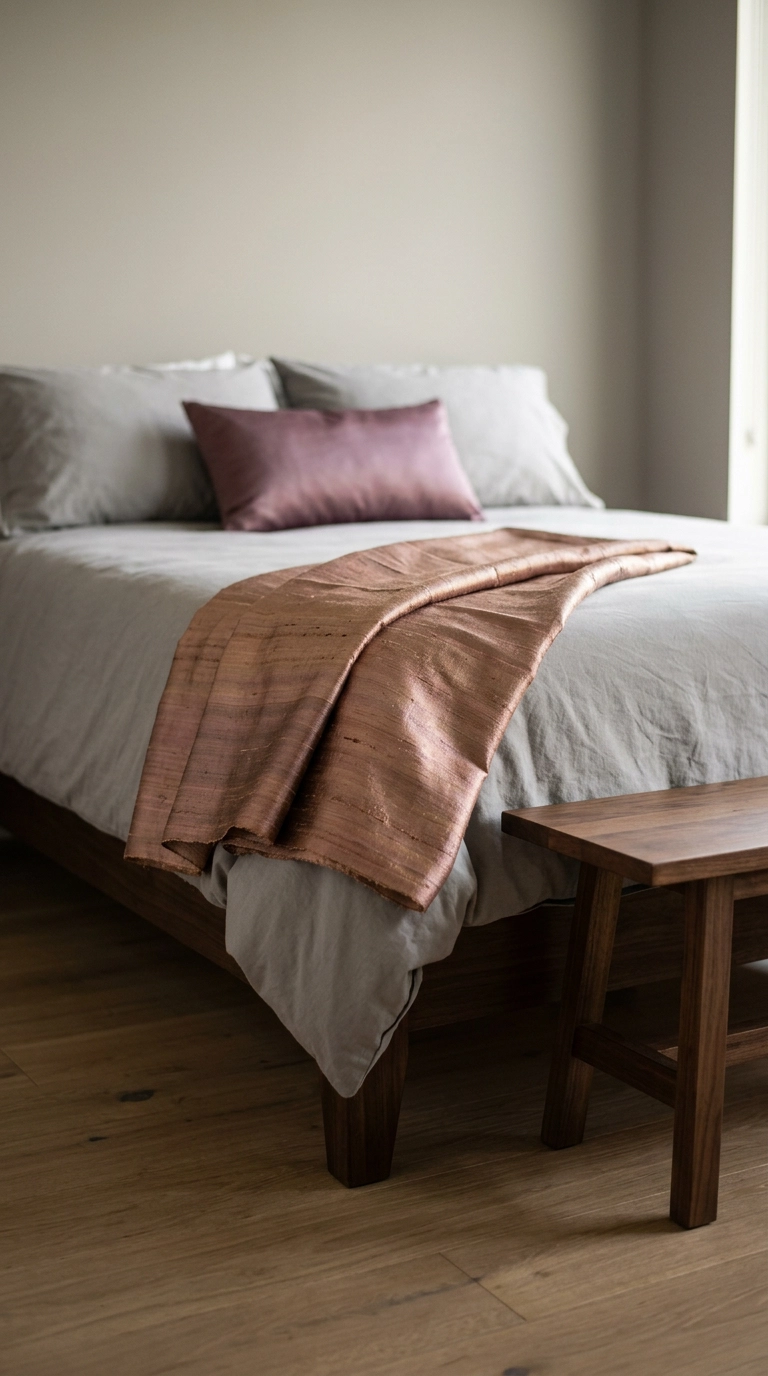
Hand-woven Thai silk is usually woven with one color in the warp and another in the weft, so it shifts between two shades as you move past it. That’s the whole appeal, and it’s why a plain silk throw beats a busy printed one – you’re buying light behavior, not pattern.
21. Build a Low Seating Corner Instead of Adding an Armchair
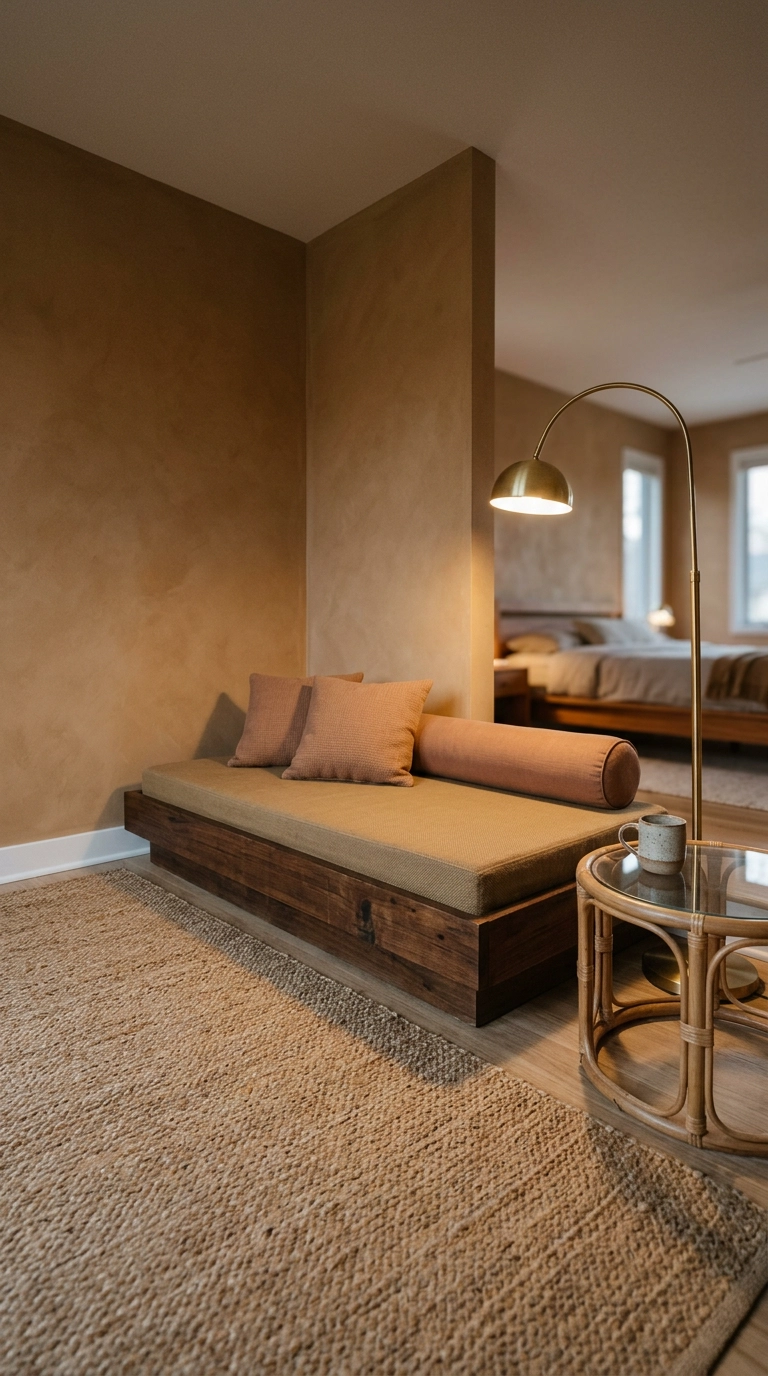
Low seating is standard across Thai and Vietnamese interiors, and there’s a proportional reason it works so well in bedrooms: a 12-inch-high daybed sits below your sightline when you’re standing, so it doesn’t visually block the room the way a 34-inch armchair back does. Same footprint, far less bulk.
22. A Deep Window Bench in Place of a Reading Chair
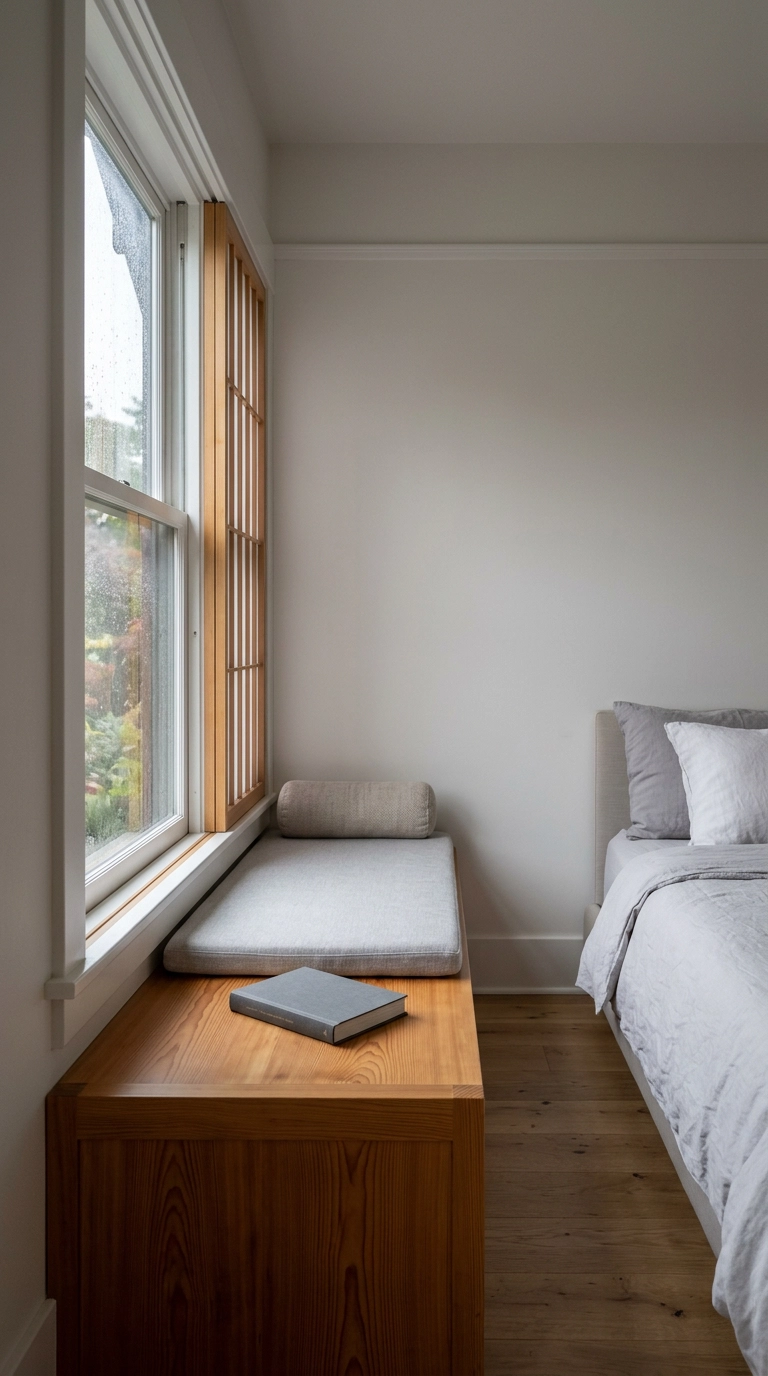
The engawa is the shallow wood veranda that wraps a traditional Japanese house – a transition strip that’s neither fully inside nor outside. A deep window bench does the same thing in a bedroom: it makes the window a place you can occupy rather than just something you look through.
23. Finish With Wabi-Sabi Restraint: Charcoal Plaster and One Imperfect Bowl
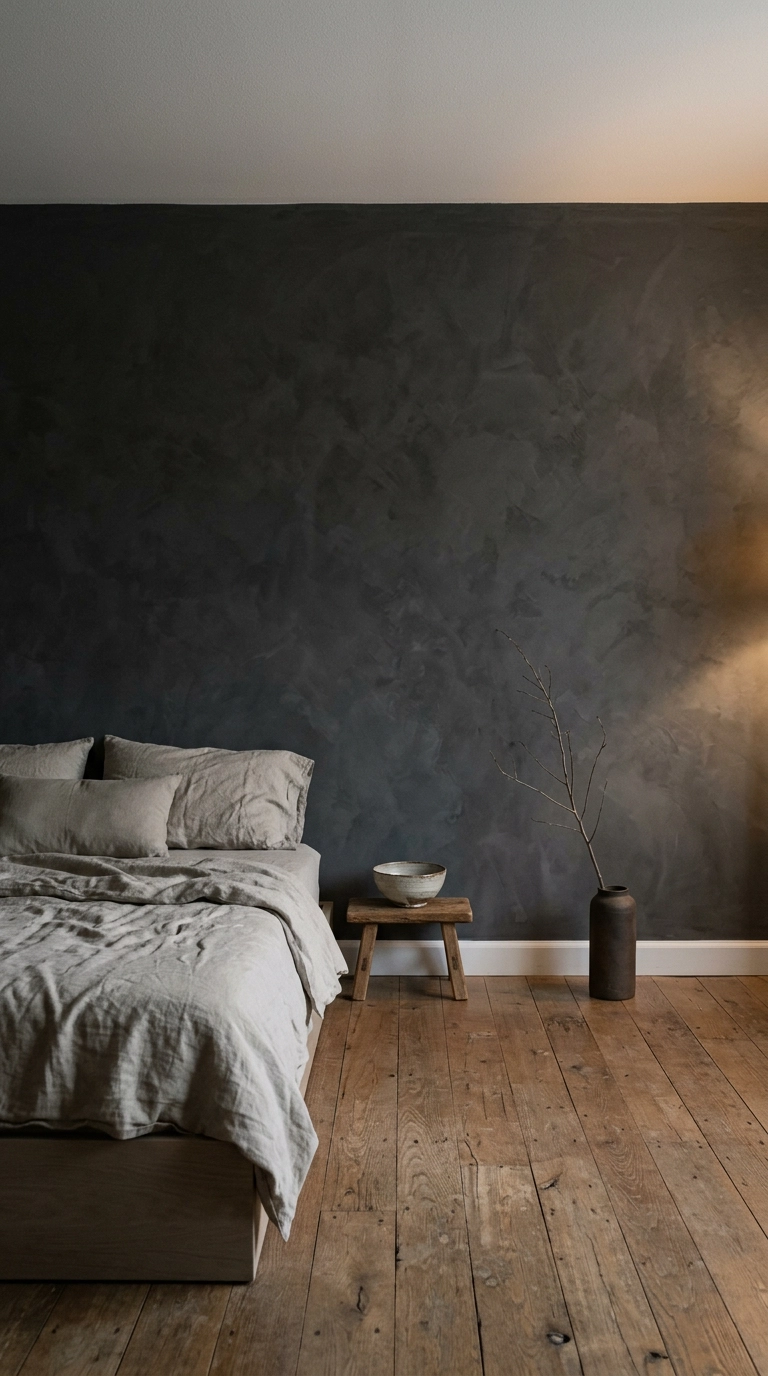
Wabi-sabi is often flattened into “rustic,” but the actual idea is narrower and more useful: value the marks of time and the hand that made a thing. A bowl with an uneven rim, a plaster wall that isn’t perfectly flat, hemp sheets that refuse to look ironed – these read as calm because nothing in the room is pretending.
What I’d Actually Do First
If you only have one weekend and a modest budget, I’d start with the bed height and the bedding. Dropping to a low platform frame and layering a hand block-printed quilt over plain white sheets changes the proportion and the palette of the room at once, and those two moves alone read as considered rather than themed. Everything else on this list is a refinement on top of that foundation.
What I’m seeing most in 2026 is people going narrower and deeper – committing to one tradition instead of sampling five. Japandi is still the biggest search on my site by a wide margin, but Korean hanok proportion is the one designers are actually excited about right now, and I’d credit Kengo Kuma’s obsession with layered wood screens for how many American bedrooms now have a slatted panel filtering a window. Noguchi’s Akari lanterns have never really gone out of style, and every major retailer has a paper pendant in the catalog because of them. Meanwhile the block-print and kantha textile trade has quietly become the most accessible way to bring real handwork into a bedroom for under $150.
The thing I hope sticks with you is that specificity is what makes these rooms good. A room that borrows carefully from one tradition – Balinese teak, or celadon and porcelain, or wabi-sabi plaster and negative space – always looks better than a room that borrows a little from everywhere, and it’s more respectful of the craftspeople whose work you’re bringing home. If you want more of this, sign up for my weekly newsletter. I send one email every Friday with a room breakdown, the exact materials, and what I’d change if I did it again. No fluff, and you can leave whenever you like.


